EP3689622A1 - Information processing apparatus, printing apparatus, and method of determining print media type - Google Patents
Information processing apparatus, printing apparatus, and method of determining print media type Download PDFInfo
- Publication number
- EP3689622A1 EP3689622A1 EP20151957.6A EP20151957A EP3689622A1 EP 3689622 A1 EP3689622 A1 EP 3689622A1 EP 20151957 A EP20151957 A EP 20151957A EP 3689622 A1 EP3689622 A1 EP 3689622A1
- Authority
- EP
- European Patent Office
- Prior art keywords
- print media
- media type
- information
- notification
- Prior art date
- Legal status (The legal status is an assumption and is not a legal conclusion. Google has not performed a legal analysis and makes no representation as to the accuracy of the status listed.)
- Granted
Links
Images





Classifications
-
- G—PHYSICS
- G06—COMPUTING OR CALCULATING; COUNTING
- G06F—ELECTRIC DIGITAL DATA PROCESSING
- G06F3/00—Input arrangements for transferring data to be processed into a form capable of being handled by the computer; Output arrangements for transferring data from processing unit to output unit, e.g. interface arrangements
- G06F3/12—Digital output to print unit, e.g. line printer, chain printer
- G06F3/1201—Dedicated interfaces to print systems
- G06F3/1223—Dedicated interfaces to print systems specifically adapted to use a particular technique
- G06F3/1237—Print job management
- G06F3/1253—Configuration of print job parameters, e.g. using UI at the client
- G06F3/1254—Automatic configuration, e.g. by driver
-
- B—PERFORMING OPERATIONS; TRANSPORTING
- B41—PRINTING; LINING MACHINES; TYPEWRITERS; STAMPS
- B41J—TYPEWRITERS; SELECTIVE PRINTING MECHANISMS, i.e. MECHANISMS PRINTING OTHERWISE THAN FROM A FORME; CORRECTION OF TYPOGRAPHICAL ERRORS
- B41J11/00—Devices or arrangements of selective printing mechanisms, e.g. ink-jet printers or thermal printers, for supporting or handling copy material in sheet or web form
- B41J11/009—Detecting type of paper, e.g. by automatic reading of a code that is printed on a paper package or on a paper roll or by sensing the grade of translucency of the paper
-
- B—PERFORMING OPERATIONS; TRANSPORTING
- B41—PRINTING; LINING MACHINES; TYPEWRITERS; STAMPS
- B41J—TYPEWRITERS; SELECTIVE PRINTING MECHANISMS, i.e. MECHANISMS PRINTING OTHERWISE THAN FROM A FORME; CORRECTION OF TYPOGRAPHICAL ERRORS
- B41J11/00—Devices or arrangements of selective printing mechanisms, e.g. ink-jet printers or thermal printers, for supporting or handling copy material in sheet or web form
- B41J11/48—Apparatus for condensed record, tally strip, or like work using two or more papers, or sets of papers, e.g. devices for switching over from handling of copy material in sheet form to handling of copy material in continuous form and vice versa or point-of-sale printers comprising means for printing on continuous copy material, e.g. journal for tills, and on single sheets, e.g. cheques or receipts
- B41J11/485—Means for selecting a type of copy material amongst different types of copy material in the printing apparatus
-
- B—PERFORMING OPERATIONS; TRANSPORTING
- B41—PRINTING; LINING MACHINES; TYPEWRITERS; STAMPS
- B41J—TYPEWRITERS; SELECTIVE PRINTING MECHANISMS, i.e. MECHANISMS PRINTING OTHERWISE THAN FROM A FORME; CORRECTION OF TYPOGRAPHICAL ERRORS
- B41J29/00—Details of, or accessories for, typewriters or selective printing mechanisms not otherwise provided for
- B41J29/38—Drives, motors, controls or automatic cut-off devices for the entire printing mechanism
- B41J29/393—Devices for controlling or analysing the entire machine ; Controlling or analysing mechanical parameters involving printing of test patterns
-
- G—PHYSICS
- G03—PHOTOGRAPHY; CINEMATOGRAPHY; ANALOGOUS TECHNIQUES USING WAVES OTHER THAN OPTICAL WAVES; ELECTROGRAPHY; HOLOGRAPHY
- G03G—ELECTROGRAPHY; ELECTROPHOTOGRAPHY; MAGNETOGRAPHY
- G03G15/00—Apparatus for electrographic processes using a charge pattern
- G03G15/50—Machine control of apparatus for electrographic processes using a charge pattern, e.g. regulating differents parts of the machine, multimode copiers, microprocessor control
- G03G15/5029—Machine control of apparatus for electrographic processes using a charge pattern, e.g. regulating differents parts of the machine, multimode copiers, microprocessor control by measuring the copy material characteristics, e.g. weight, thickness
-
- G—PHYSICS
- G06—COMPUTING OR CALCULATING; COUNTING
- G06F—ELECTRIC DIGITAL DATA PROCESSING
- G06F3/00—Input arrangements for transferring data to be processed into a form capable of being handled by the computer; Output arrangements for transferring data from processing unit to output unit, e.g. interface arrangements
- G06F3/12—Digital output to print unit, e.g. line printer, chain printer
- G06F3/1201—Dedicated interfaces to print systems
- G06F3/1202—Dedicated interfaces to print systems specifically adapted to achieve a particular effect
- G06F3/1203—Improving or facilitating administration, e.g. print management
- G06F3/1204—Improving or facilitating administration, e.g. print management resulting in reduced user or operator actions, e.g. presetting, automatic actions, using hardware token storing data
-
- G—PHYSICS
- G06—COMPUTING OR CALCULATING; COUNTING
- G06F—ELECTRIC DIGITAL DATA PROCESSING
- G06F3/00—Input arrangements for transferring data to be processed into a form capable of being handled by the computer; Output arrangements for transferring data from processing unit to output unit, e.g. interface arrangements
- G06F3/12—Digital output to print unit, e.g. line printer, chain printer
- G06F3/1201—Dedicated interfaces to print systems
- G06F3/1223—Dedicated interfaces to print systems specifically adapted to use a particular technique
- G06F3/1237—Print job management
- G06F3/1253—Configuration of print job parameters, e.g. using UI at the client
-
- H—ELECTRICITY
- H04—ELECTRIC COMMUNICATION TECHNIQUE
- H04N—PICTORIAL COMMUNICATION, e.g. TELEVISION
- H04N1/00—Scanning, transmission or reproduction of documents or the like, e.g. facsimile transmission; Details thereof
- H04N1/00681—Detecting the presence, position or size of a sheet or correcting its position before scanning
- H04N1/00684—Object of the detection
- H04N1/00724—Type of sheet, e.g. colour of paper or transparency
-
- G—PHYSICS
- G01—MEASURING; TESTING
- G01N—INVESTIGATING OR ANALYSING MATERIALS BY DETERMINING THEIR CHEMICAL OR PHYSICAL PROPERTIES
- G01N33/00—Investigating or analysing materials by specific methods not covered by groups G01N1/00 - G01N31/00
- G01N33/34—Paper
- G01N33/346—Paper sheets
-
- G—PHYSICS
- G03—PHOTOGRAPHY; CINEMATOGRAPHY; ANALOGOUS TECHNIQUES USING WAVES OTHER THAN OPTICAL WAVES; ELECTROGRAPHY; HOLOGRAPHY
- G03G—ELECTROGRAPHY; ELECTROPHOTOGRAPHY; MAGNETOGRAPHY
- G03G2215/00—Apparatus for electrophotographic processes
- G03G2215/00362—Apparatus for electrophotographic processes relating to the copy medium handling
- G03G2215/00535—Stable handling of copy medium
- G03G2215/00611—Detector details, e.g. optical detector
-
- G—PHYSICS
- G03—PHOTOGRAPHY; CINEMATOGRAPHY; ANALOGOUS TECHNIQUES USING WAVES OTHER THAN OPTICAL WAVES; ELECTROGRAPHY; HOLOGRAPHY
- G03G—ELECTROGRAPHY; ELECTROPHOTOGRAPHY; MAGNETOGRAPHY
- G03G2215/00—Apparatus for electrophotographic processes
- G03G2215/00362—Apparatus for electrophotographic processes relating to the copy medium handling
- G03G2215/00535—Stable handling of copy medium
- G03G2215/00611—Detector details, e.g. optical detector
- G03G2215/00616—Optical detector
-
- G—PHYSICS
- G03—PHOTOGRAPHY; CINEMATOGRAPHY; ANALOGOUS TECHNIQUES USING WAVES OTHER THAN OPTICAL WAVES; ELECTROGRAPHY; HOLOGRAPHY
- G03G—ELECTROGRAPHY; ELECTROPHOTOGRAPHY; MAGNETOGRAPHY
- G03G2215/00—Apparatus for electrophotographic processes
- G03G2215/00362—Apparatus for electrophotographic processes relating to the copy medium handling
- G03G2215/00535—Stable handling of copy medium
- G03G2215/00717—Detection of physical properties
-
- G—PHYSICS
- G03—PHOTOGRAPHY; CINEMATOGRAPHY; ANALOGOUS TECHNIQUES USING WAVES OTHER THAN OPTICAL WAVES; ELECTROGRAPHY; HOLOGRAPHY
- G03G—ELECTROGRAPHY; ELECTROPHOTOGRAPHY; MAGNETOGRAPHY
- G03G2215/00—Apparatus for electrophotographic processes
- G03G2215/00362—Apparatus for electrophotographic processes relating to the copy medium handling
- G03G2215/00535—Stable handling of copy medium
- G03G2215/00717—Detection of physical properties
- G03G2215/00751—Detection of physical properties of sheet type, e.g. OHP
-
- G—PHYSICS
- G06—COMPUTING OR CALCULATING; COUNTING
- G06F—ELECTRIC DIGITAL DATA PROCESSING
- G06F3/00—Input arrangements for transferring data to be processed into a form capable of being handled by the computer; Output arrangements for transferring data from processing unit to output unit, e.g. interface arrangements
- G06F3/12—Digital output to print unit, e.g. line printer, chain printer
- G06F3/1201—Dedicated interfaces to print systems
- G06F3/1202—Dedicated interfaces to print systems specifically adapted to achieve a particular effect
- G06F3/1203—Improving or facilitating administration, e.g. print management
-
- H—ELECTRICITY
- H04—ELECTRIC COMMUNICATION TECHNIQUE
- H04N—PICTORIAL COMMUNICATION, e.g. TELEVISION
- H04N1/00—Scanning, transmission or reproduction of documents or the like, e.g. facsimile transmission; Details thereof
- H04N1/0035—User-machine interface; Control console
- H04N1/00405—Output means
- H04N1/00408—Display of information to the user, e.g. menus
- H04N1/00413—Display of information to the user, e.g. menus using menus, i.e. presenting the user with a plurality of selectable options
-
- H—ELECTRICITY
- H04—ELECTRIC COMMUNICATION TECHNIQUE
- H04N—PICTORIAL COMMUNICATION, e.g. TELEVISION
- H04N1/00—Scanning, transmission or reproduction of documents or the like, e.g. facsimile transmission; Details thereof
- H04N1/0035—User-machine interface; Control console
- H04N1/00405—Output means
- H04N1/00408—Display of information to the user, e.g. menus
- H04N1/00413—Display of information to the user, e.g. menus using menus, i.e. presenting the user with a plurality of selectable options
- H04N1/00437—Intelligent menus, e.g. anticipating user selections
-
- H—ELECTRICITY
- H04—ELECTRIC COMMUNICATION TECHNIQUE
- H04N—PICTORIAL COMMUNICATION, e.g. TELEVISION
- H04N1/00—Scanning, transmission or reproduction of documents or the like, e.g. facsimile transmission; Details thereof
- H04N1/0035—User-machine interface; Control console
- H04N1/00501—Tailoring a user interface [UI] to specific requirements
-
- H—ELECTRICITY
- H04—ELECTRIC COMMUNICATION TECHNIQUE
- H04N—PICTORIAL COMMUNICATION, e.g. TELEVISION
- H04N1/00—Scanning, transmission or reproduction of documents or the like, e.g. facsimile transmission; Details thereof
- H04N1/00567—Handling of original or reproduction media, e.g. cutting, separating, stacking
Definitions
- the present invention relates to an information processing apparatus, a printing apparatus, and a method of determining a print media type.
- Some print media of different types have characteristic values similar to each other.
- the technique discussed in Japanese Patent Application Laid-Open No. 2016-215591 therefore sometimes fails to correctly determine a print media type due to measurement errors or the like. The failure can impair user convenience.
- the present invention has been made in view of the above described issue and is directed to improvement in determination of a print media type to enhance user convenience.
- an information processing apparatus as specified in claims 1 to 17.
- a printing apparatus as specified in claims 18 and 19.
- a method of determining a print media type as specified in claims 20 to 26.
- a program as specified in claim 27.
- a medium as specified in claim 28.
- Figs. 1A and 1B are perspective views illustrating the configuration of a printing apparatus according to a first exemplary embodiment.
- Fig. 1A illustrates an outer appearance of the entire printing apparatus.
- Fig. 1B illustrates an internal structure of the printing apparatus with an upper cover opened and with a casing omitted from the illustration.
- the printing apparatus 100 employs an ink jet printing method and performs printing by discharging ink droplets as a printing agent on a print medium.
- the print medium is conveyed in a Y direction which is a conveyance direction. Description will be given of an ink jet printing apparatus including what is called a serial print head.
- a carriage 101 on which a print head 102 used as printing means is mounted reciprocally moves in an X direction intersecting the Y direction.
- an ink jet printing apparatus including what is called a line printing head may be used.
- a row of nozzles is disposed across a printing width intersecting the print medium conveyance direction.
- a multifunction peripheral may also be used.
- MFP multifunction peripheral
- a scanning function, a facsimile function, a transmission function, and the like are combined together with a printing function.
- the function of the information processing apparatus for print medium determination processing for determining a print medium to be used is installed in the printing apparatus 100. The print medium determination processing is described below.
- An input/output unit 406 is disposed on an upper part of the printing apparatus 100.
- the input/output unit 406 is an operation panel and displays a remaining ink amount and a candidate or candidates of a print media type on a display device, and a user can select a print medium and input settings for printing using keys.
- the carriage 101 includes an optical sensor 201 illustrated in Fig. 2 and the print head 102 on which a discharge port surface having discharge ports through which ink is discharged.
- the carriage 101 can reciprocally move in the X direction (a moving direction of the carriage 101) along a shaft 104 by driving force transmitted from a carriage motor 415 illustrated in Fig. 4 via a conveyance belt 103 used as conveyance means.
- the printing apparatus 100 can acquire a diffused reflection characteristic value and a specular reflection characteristic value on a surface of the print medium 105 and measure a distance between the carriage 101 and the print medium 105 using the optical sensor 201.
- the print medium 105 such as roll paper, is conveyed on a platen 106 in the Y direction by conveyance rollers not illustrated. Ink droplets discharged from the print head 102 while the carriage 101 moves in the X direction on the print medium 105 conveyed on the platen 106 by the conveyance rollers so that printing is performed.
- the conveyance rollers convey the print medium 105 by a predetermined amount to move an area of the print medium 105 on which subsequent scan for printing is performed to a position where the print head 102 can perform printing. An image is printed through repetition of the above operation.
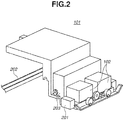
- Fig. 2 is a diagram illustrating a configuration of the carriage 101.
- the carriage 101 includes a translator 202 and a head holder 203.
- the head holder 203 includes print heads 102 and an optical sensor 201 that is a reflective sensor.
- the bottom face of the optical sensor 201 is arranged at the same level as or higher than the bottom faces of the print heads 102.
- Fig. 3 is a sectional schematic view illustrating the configuration of the optical sensor 201.
- the optical sensor 201 includes a first light-emitting diode (LED) 301, a second LED 302, a third LED 303, a first photodiode 304, a second photodiode 305, and a third photodiode 306 as optical elements.
- the first LED 301 is a light source having an irradiation angle of the normal line (90°) with respect to a surface (measured surface) of the print medium 105.
- the first photodiode 304 receives light projected from the first LED 301 and reflected from the print medium 105 at an angle of 45° in a Z direction. More specifically, the optical sensor 201 includes an optical system that detects what is called a diffused reflection component of light reflected from the print medium 105.
- the second LED 302 is a light source having an irradiation angle of 60° in the Z direction with respect to the surface (measured surface) of the print medium 105.
- the first photodiode 304 receives light projected from the second LED 302 and reflected from the print medium 105 at an angle of 60° in the Z direction. More specifically, with the angle of light emission and the angle of light reception equal to each other, the optical sensor 201 is configured to have an optical system that detects what is called a specular reflection component of light reflected from the print medium 105.
- the third LED 303 is a light source having an irradiation angle of the normal line (90°) with respect to the surface (measured surface) of the print medium 105.
- the second photodiode 305 and the third photodiode 306 receive light projected from the third LED 303 and reflected from the print medium 105.
- the amount of light received by the second photodiode 305 and the amount of light received by the third photodiode 306 are different from each other depending on a distance between the optical sensor 201 and the print medium 105, whereby the second photodiode 305 and the third photodiode 306 serve as range sensors that measure the distance between the optical sensor 201 and the print medium 105. Since the distance between the optical sensor 201 and the platen 106 is predetermined, the "paper thickness" of the print medium 105 can be acquired by measuring the distance between the optical sensor 201 and the print medium 105.
- optical sensor 201 is mounted on the carriage 101 in the present exemplary embodiment, a different configuration may be employed.
- an optical sensor may be fixed on a printing apparatus.
- an optical sensor may be provided as a measurement device separately from a printing apparatus. The measurement device measures characteristic values of diffused reflection, specular reflection, and the like of a print medium, and transmits characteristic values measured by the measurement device to the printing apparatus.
- Fig. 4 is a diagram illustrating a block configuration of a control system of the printing apparatus 100.
- a read-only memory (ROM) 402 is a non-volatile memory and stores therein a control program for controlling the printing apparatus 100 and a computer program for implementing operation according to the present exemplary embodiment, for example.
- the operation according to the present exemplary embodiment is implemented, for example, by a central processing unit (CPU) 401 reading out the computer program onto a random access memory (RAM) 403 and executing a computer program stored in the ROM 402.
- the RAM 403 used as storage means is used also as a working memory for the CPU 401.
- Electrically erasable programmable read-only memory (EEPROM) 404 stores therein data that needs to be kept after the printing apparatus 100 is powered off.
- the EEPROM 404 includes EEPROM 404a and EEPROM 404b. Using the CPU 401 and ROM 402, at least functions of the information processing apparatus for performing the print medium determination processing described below are implemented.
- the EEPROM 404a stores therein history of types of print media that have been fed. Information stored therein is handled as history information.
- the EEPROM 404b stores therein preset characteristic values for various print media types and categories of various print media. The categories broadly classified into types of print media that are five categories in the present exemplary embodiment, namely, glossy paper, plain paper, coated paper, film sheet, and special paper.
- a print medium that is standard glossy paper is classified into the glossy paper category
- a print medium that is premium plain paper is classified into the plain paper category.
- print media include those that are not paper medium, the term "sheet" is used in notification to a user in the present exemplary embodiment.
- the history information and characteristic values for various print media may be stored in a host computer or a server instead of a storage medium in a printing apparatus.
- An I/F (interface) circuit 410 connects the printing apparatus 100 to an external network, such as a local area network (LAN).
- the printing apparatus 100 transmits and receives various jobs and various kinds of data via the I/F circuit 410 to and from an external apparatus, such as a host computer.
- an external apparatus such as a host computer.
- the input/output unit 406 includes an input unit and an output unit.
- the input unit receives a power-on instruction, a print execution instruction, and instructions about settings for the various functions from a user.
- the output unit displays various kinds of apparatus information such as a power saving mode and also displays screens about settings for the various functions that can be executed by the printing apparatus 100.
- the input/output unit 406 is an operation panel on the printing apparatus 100, and the input/output unit 406 used as notification means is connected to a system bus 416 via an input/output control circuit 405 used as notification control means to transmit and receive data from and to the system bus 416.
- the CPU 401 controls information notification from the output unit.
- the input unit may be a keyboard of an external host computer, and may receive user instructions from the external host computer.
- the output unit may be an LED display device, a liquid crystal display (LCD) display device, or a display device connected to a host apparatus.
- the input/output unit 406 is a touch panel, user instructions using software keys can be received.
- the input/output unit 406 may also be a speaker and a microphone and receive speech input from a user and provide audio output to a user.
- An information processing apparatus that includes a CPU and a ROM that have the same functions as the CPU 401 and ROM 402 and is externally connected to the printing apparatus 100 may perform the print medium determination processing described below to determine a print media type to be used in the printing apparatus 100.
- the CPU 401 controls driving of an LED control circuit 407 to turn on a predetermined LED in the optical sensor 201.
- Each of the photodiodes 304 to 306 in the optical sensor 201 outputs signals based on received light.
- the signals are converted into digital signals by the analog-digital (A/D) conversion circuit 408 and are temporarily stored in the RAM 403.
- Data that is stored after power-off of the printing apparatus 100 is stored in the EEPROM 404b.
- a print head control circuit 411 supplies drive signals according to print data to a nozzle driving circuit mounted on the print head 102 and including a selector and a switch, whereby the printing operation of the print head 102 such as a drive sequence of nozzles is controlled. For example, when data to be printed is transmitted from the outside to the I/F circuit 410, the data to be printed is temporarily stored in the RAM 403. The print head control circuit 411 then drives the print head 102 based on print data to be used for printing into which the data to be printed is converted.
- a line feed (LF) motor driving circuit 412 drives a LF motor 413 based on the bandwidth of the print data and the like, whereby the conveyance rollers coupled to the LF motor 413 rotates and consequently conveys a print medium.
- a carriage (CR) motor driving circuit 414 drives a CR motor 415, whereby the carriage 101 performs scanning via the conveyance belt 103.
- Data transmitted from the I/F circuit 410 includes data to be printed and also data on specific settings set in a printer driver.
- the data to be printed may be stored in a storage unit after reception from the outside via the I/F circuit 410 or may have been stored in advance in a storage unit, such as a hard disk.
- the CPU 401 controls an image processing circuit 409 to read image data from a storage unit and convert (binarize) the image data into print data for the print head 102.
- the image processing circuit 409 executes binarization of the image data and also various kinds of image processing, such as color space conversion, horizontal-to-vertical (HV) conversion, gamma correction, and image rotation.
- HV horizontal-to-vertical
- Fig. 5 is a flowchart illustrating the print medium determination processing.
- the print medium determination processing characteristics of the print medium 105 on which printing is to be performed are measured to obtain measurement results, the input/output unit 406 is notified of candidates for a print media type based on print media type history information to determine a print media type. Based on a determined print media type, parameters such as the maximum ink usage, the heights of the print heads, the suction force to be applied to a print medium on platen 106, and the degree of correction to the conveyance amount of a print medium are set. Any other control parameters that have effects on characteristics of the print medium may also be used. Processing in steps S101 to Sill in Fig. 5 is implemented, for example, by the CPU 401 illustrated in Fig.
- the print medium determination processing may be executed using software on a host apparatus.
- the input/output unit 406 serves as an operation panel disposed on the printing apparatus 100, notification of candidates for a print media type is provided by displaying names of print media types on the operation panel.
- the input/output unit 406 may be a display device connected to a host apparatus and the host apparatus.
- the input/output unit 406 is a speaker capable of receiving speech input and providing audio output using a microphone function
- candidates for a print media type is notified via the speaker, and selection of a print media type is performed by a user voice input inputting a name of a print media type or a corresponding reference numeral to a microphone.
- the CPU 401 starts feeding the print medium 105 upon receiving a user instruction to start feeding a sheet via the operation panel included in the input/output unit 406.
- Fig. 6A is an example of display on the operation panel for receiving input of the instruction to start feeding a sheet.
- the operation panel includes a display device, two buttons to be operated by the user to move a selecting item up and down, and a select button with which the user can determine the selection.
- the print medium 105 is conveyed by the conveyance rollers to a position on the platen 106 where the optical sensor 201 can perform detection.
- the carriage 101 moves over the print medium 105 in the X direction to acquire a diffused reflection value, a specular reflection value, and a value for the thickness (hereinafter, paper thickness) of the print medium 105 () as measurement values for characteristics of the print medium 105.
- a diffused reflection value corresponds to the whiteness of a print medium
- a specular reflection value corresponds to the glossiness of a print medium.
- the width of the print medium in the X direction may be used to perform the print medium determination processing.
- the characteristics measurement of a print medium may be performed at one position on the print medium or may be performed at a plurality of positions to have an average of measurement results.
- the characteristics measurement may be performed while the optical sensor 201 is stopped or may be performed while the optical sensor 201 moves. Measurement values are temporarily stored in a memory, such as the RAM 403.
- step S102 the CPU 401 then reads out the acquired measurement values from the memory and compares the measurement values with the characteristic values of the various print media types that are previously determined and stored in the EEPROM 404b. In this processing, a print media type that has characteristics corresponding to characteristics indicated by the measurement values is extracted. Details are as described below.
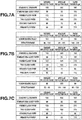
- Fig. 7A is a table illustrating characteristic values of various print media types that have been stored in the EEPROM 404b. A diffused reflection value and a specular reflection value are values obtained by A/D 10-bit conversion performed on output voltage from the optical sensor 201 receiving light.
- step S103 the CPU 401 extracts a print media type having a paper thicknesses difference of 50 ⁇ m or less from the acquired paper thickness from among the print media types stored in the EEPROM 404b.
- step S104 the CPU 401 then determines whether a print media type is extracted.
- step S109 all of the categories are displayed on the operation panel as illustrated in Fig. 6B .
- the categories are displayed in predetermined order.
- print media types that belong to the selected category are displayed as illustrated in Fig. 6C .
- Input of a print media type selected from among the displayed print media types is then received.
- Fig. 6B an item "ALL" is displayed in the lowest part under the categories of print media types.
- all of the print media types are displayed in predetermined order.
- the print media types may be displayed in chronological order with the one used latest listed on the top.
- step S104 the processing proceeds to step S105.
- step S105 the CPU 401 extracts a print media type having a value difference of 5 or less from the acquired diffused reflection value and the acquired specular reflection value from among the print media types stored in the EEPROM 404b.
- step S106 the CPU 401 determines whether a print media type is extracted. In a case where no print media type is extracted (NO in step S106), the processing proceeds to step S109.
- step S109 the categories are displayed on the operation panel as illustrated in Fig. 6B .
- step S107 the CPU 401 determines whether there is a usage history for the extracted print media type based on the history information stored in the EEPROM 404a.
- the EEPROM 404a stores therein the history information in association with information indicating how recently each of the print media types has been used in the printing apparatus 100. For the print media type that has been used a plurality of times, information on the last usage is stored in the history.
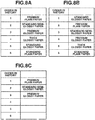
- Figs. 8A to 8C indicate that the print media type that has been used more recently has a smaller number in the "ORDER IN HISTORY" field.
- step S107 in a case where the CPU 401 determines that there is no usage history for the extracted print media type (NO in step S 107), the processing proceeds to step S109.
- step S109 the CPU 401 displays the categories as illustrated in Fig. 6C .
- the extracted print media types may be displayed in order of addresses in which the print media types are stored in the EEPROM 404b.
- the processing proceeds to step S108.
- step S108 the CPU 401 displays the extracted print media types in a sheet ranking in which the print media type that has been extracted a plurality of times is treated as one type, as illustrated Fig. 6D .
- the CPU 401 assigns higher priority to the print media type used more recently, and displays names of the print media types in higher priority order from top of the list.
- a name of "SHEET RANKING” the user can easily recognize that the names of print media types are displayed in order of precedence of selection, that is, in order of priority.
- three print media types having higher priority can be displayed in "SHEET RANKING", Fig.
- 6D illustrates an example in which only two print media types are displayed since the history information contains two types of the extracted print media types.
- a message "NO SELECTION HISTORY AVAILABLE” is displayed in faint color to be less noticeable than the two print media types, whereby the user is notified that the history information does not contain the third candidate.
- the background color on the operation panel is black
- the two print media types are displayed in white while the message "NO SELECTION HISTORY AVAILABLE” is displayed in gray having lower brightness than white.
- the sheet categories are displayed below the message “NO SELECTION HISTORY AVAILABLE”.
- Figs. 9A to 9D illustrate a method for displaying candidates for a print media type in another form of the input/output unit 406.
- candidates at lower rankings may be displayed by a scrolling operation when there is a candidate for a print media type that cannot be displayed on the operation panel at one time.
- the candidates may be displayed not in order of ranking in a case where the user can recognize the order of priority among the candidates.
- the order of priority may be represented by displaying the name of the print media type having the highest priority at the center of the operation panel or, as illustrated in Fig.
- the input/output unit 406 may be a touch panel on which selection can be performed by a touch operation without buttons for moving a cursor.
- the candidates are displayed with reference numerals 1 to 3 assigned to print media types to indicate the respective rankings.
- the standard semi-glossy paper with a number 1 is ranked highest.
- the reference numerals are used for user's recognition of the ranking, and therefore any sign or mark can be used instead of the reference numerals.
- the categories are displayed below an indication "SHEET CATEGORY"
- the categories may be displayed without the indication "SHEET CATEGORY".
- print media types may be displayed in chronological order below the candidates for the print media type.
- Fig. 9D is an example in which the candidate is displayed on a touch panel.
- "SELECT" is selected to determine the displayed print media type as the type of the print medium 105.
- the user can select an item indicating "STANDARD SEMI-GLOSSY PAPER" when selecting another print media type that has been extracted and found in the history.
- the display is shifted to the display illustrated in Fig. 9C , on which another print media type can be selected.
- step S110 in a case where the user has selected a print media type using the input/output unit 406 (YES in step S110), the processing proceeds to step S111.
- step Sill the CPU 401 updates the chronological order in the history stored in the EEPROM 404a based on the print media type selected in step S110.
- the print medium determination processing ends upon completion of step S110.
- the CPU 401 Upon completion of preparation for printing after completion of the print medium determination processing, the CPU 401 shifts to a waiting state to receive a printing job from the user. The CPU 401 then starts printing upon receiving a printing job.
- the updating of the chronological order in the history in step S111 may be performed when a printing job is transmitted from a host computer.
- the CPU 401 may not to update the history information stored in the EEPROM 404a when a print media type selected and input by the user using the input/output unit 406 is different from a print media type in the job transmitted from the host computer to the printing apparatus 100.
- a print media type having an applicable paper thickness is extracted in step S103, and a print media type having an applicable diffused reflection value and an applicable specular reflection value is extracted in step S105.
- the extraction sequence is not limited to this example, and a print media type having an applicable diffused reflection value may be extracted in the first place, for example.
- the characteristic values of a print medium set on the measurement device are acquired by the measurement device and transmitted to the printing apparatus 100.
- the CPU 401 in the printing apparatus 100 may extract a print media type based on the transmitted characteristic values and notify the input/output unit 406 of a candidate.
- step S101 The print medium determination processing is described below using a specific example.
- a range of paper thicknesses of print media types to be extracted is 140 to 230 ⁇ m as illustrated in Fig. 7B .
- step S103 the standard glossy paper, the standard semi-glossy paper, and the premium glossy paper, which have paper thicknesses in the range of 140 to 230 ⁇ m, are extracted. Since at least one print media type is extracted, the determination in step S104 results in YES, whereby the processing proceeds to step S105.
- Ranges of diffused reflection values and specular reflection values of print media types to be extracted in step S105 are 98 to 108 and 95 to 103, respectively. From among the three print media types extracted in step S103, the standard glossy paper and the standard semi-glossy paper, which have characteristic values within these ranges are extracted.
- the standard semi-glossy paper is used more recently out of the two extracted print media types. Accordingly, the standard semi-glossy paper is displayed at the top, followed by the standard glossy paper, on the input/output unit 406 as illustrated in Fig. 6D .
- the chronological order in the history is updated as illustrated in Fig. 8B .
- step S103 the standard plain paper and the premium plain paper, which have paper thicknesses in the range of 40 to 130 ⁇ m, are extracted. Since at least one print media type is extracted, the determination in step S104 results in YES, whereby the processing proceeds to step S105.
- Ranges of diffused reflection values and specular reflection values of print media types to be extracted in step S105 are 83 to 93 and 145 to 155, respectively. Neither of the three print media types extracted in step S103 is not a print media type having characteristic values in these ranges. The processing therefore proceeds to step S109, the categories are displayed on the input/output unit 406 as illustrated in Fig. 6B .
- characteristic values of a print medium that has been fed are acquired, and a print media type used more recently are displayed with a higher rank among the candidates for a print media type.
- the user can be notified of a print media type more likely to be used by the user in a prioritized manner and whereby a workload of the user for selecting a print media type desired by the user can be reduced.
- the chronological order of the print media types recently used is stored as the history information.
- the history information is not limited to this example.
- the history information the number of times of each of the print media types having been used may be stored.
- the print medium determination processing when print media types are extracted, the user is notified of the names of the print media types in descending order of the numbers of times of the print media types having been used.
- the user is notified of the names of print media types stored in the history information among the print media types extracted in step S105 that are in the history information.
- a print media type that is not in the history information is also notified by the input/output unit 406 if the print medium has been extracted.
- the same parts as those in the first exemplary embodiment is omitted.
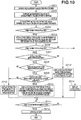
- Fig. 10 is a flowchart illustrating print medium determination processing according to the second exemplary embodiment.
- steps S201 to S206, S211, and S212 the same processing as that in S101 to S106, S110, and Sill in Fig. 7 in the first exemplary embodiment is performed.
- step S201 the CPU 401 acquires the diffused reflection value, the specular reflection value, and the paper thickness of the print medium 105 using the optical sensor 201.
- step S202 the CPU 401 then reads out the acquired measurement values from the memory and compares these measurement values with the characteristic values of the print media types that have been previously determined and stored in the EEPROM 404b. The CPU 401 then extracts a print media type having characteristics corresponding to characteristics indicated by the acquired measurement values.
- step S203 the CPU 401 extracts a print media type stored in the EEPROM 404b having a paper thickness difference of 50 ⁇ m or less from the acquired paper thickness.
- step S204 the CPU 401 determines whether any print media type is extracted. In a case where no print media type is extracted (NO in step S204), which means that no print media type has been determined to be applicable, the processing proceeds to step S214.
- step S214 the categories are displayed on the operation panel as illustrated in Fig. 6B .
- step S204 the processing proceeds to step S205.
- step S205 the CPU 401 extracts a print media type stored in the EEPROM 404b having a value difference of 5 or less in the diffused reflection value and the specular reflection value from the acquired diffused reflection value and specular reflection value.
- step S206 the CPU 401 then determines whether any print media type is extracted. In a case where no print media type is extracted (NO in step S206), the processing proceeds to step S214.
- step S214 the categories are displayed on the operation panel as illustrated in Fig. 6B .
- step S207 the CPU 401 determines whether the history information stored in the EEPROM 404a contains the extracted print media type. As illustrated in Fig. 8C , the EEPROM 404a has the history information in association with information indicating how recently each of the print media types has been used in the printing apparatus 100. For the print media type that has been used a plurality of times, the information on the latest usage is stored in the history. In the case illustrated in Fig. 8C , three print media types have been used and stored as the history information in the EEPROM 404a.
- step S213 the CPU 401 displays the extracted print media types in order of determination of how close the characteristic values of each of the extracted print media types are to the characteristic values of the print medium 105 that have been acquired in step S201.
- step S207 the processing proceeds to step S208.
- step S208 the CPU 401 determines whether any field in which a print media type is to be displayed is still available if the names of the extracted print media types that are in the history information are displayed on the operation panel. In a case where a field is not available (NO in step S208), the processing proceeds to step S215.
- step S215 the CPU 401 displays the names of all of the extracted print media types that are in the history information on the operation panel in chronological order in the history.
- step S209 the CPU 401 determines whether the print media types extracted in step S205 include a print media type that is not in the history information. In a case where the extracted print media types do not include a print media type that is not in the history information (NO in step S209), the processing proceeds to step S215. In step S215, the CPU 401 displays the names of the extracted print media types that are in the history information on the operation panel in chronological order in the history. In a case where the extracted print media types include a print media type that is not in the history information (NO in step S209), the processing proceeds to step S210.
- step S210 the CPU 401 displays the names of the extracted print media types that are in the history information in chronological order in the history from the top of the list. Further, below the names of the extracted print media types that are in the history information, the CPU 401 displays the names of the extracted print media types that are not in the history information in order of determination of how close the characteristic values of each of the print media types are to the characteristic values of the print medium 105 that have been acquired in step S210.
- step S211 in a case where user selection of a print media type is received via the operation panel which is the input/output unit 406 (YES in step S211), the selection is input to the CPU 401.
- step S212 the CPU 401 updates the chronological order in the history stored in the EEPROM 404a based on the print media type selected in step S211. The print medium determination ends upon completion of step S212.
- steps S201 to S206 the same processing as that in steps S101 to S106 in the first exemplary embodiment is performed.
- the print media types extracted in the processing in step S205 are the standard glossy paper and the standard semi-glossy paper, which means that there is at least one print media type extracted, and the processing proceeds to step S207.
- step S207 Information indicating the standard semi-glossy paper is found in the history information illustrated in Fig. 8C in step S207 (YES in step S207), and a field in which a print media type is to be displayed is still available because only one print media type has been determined to be displayed while up to three print media types can be displayed (YES in step S208).
- the processing therefore proceeds to step S210 since there is a print media type that is not in the history information but has been extracted.
- step S210 as illustrated in Fig. 6D , the extracted print media types are displayed with the standard semi-glossy paper (a print media type stored in the history information) at the top followed by the standard glossy paper (a print media type that is not in the history information but has been extracted).
- a print media type not in the history information is also displayed, whereby a workload of the user for selecting a print media type desired by the user can be reduced even when a desired print media type has not been used.
- the user is notified of candidates with print media types in the history information ranked higher that have been used.
- weights are assigned to characteristic values and the history information with respect to each print media type, and the user is notified of candidates with a print media type ranked higher that has a larger weighting index value. Description of the same parts as those in the first and the second exemplary embodiments is omitted.
- information as the history information on how recently each print media type has been used and also information on how long it has passed up to the current execution of print medium determination since the last usage of each print media type are stored in the EEPROM 404a, in association with the corresponding print media type.
- weighting index values are assigned to print mediums stored in the EEPROM 404a in accordance with how recently each print media type has been used. In this assignment, a larger weighting index value is assigned to a print media type if a shorter period of time has passed since the last usage.
- the weighting index values are assigned by the CPU 401 and temporarily stored in the RAM 403.
- the optical sensor 201 acquires the characteristic values of the print medium 105.
- the CPU 401 compares the acquired characteristic values of the print medium 105 with the characteristic values of each of the print media types stored in the EEPROM 404b and extracts print media types that have characteristics corresponding to characteristics indicated by measurement values.
- a weighting index value that indicates how close the characteristic values of each of the extracted print media types are to the characteristic values of the print medium 105 is assigned to the corresponding print media type and temporarily stored in the RAM 403.
- the weighting index values assigned to each of the extracted print media types based on the history information of the extracted print media types and the weighting index values assigned based on the characteristic values are summed, and the user is notified of the extracted print media types using the input/output unit 406 in descending order of the summation results.
- Each of the methods discussed in the above-described exemplary embodiments is a method for selecting a print media type in the "user determination mode” that includes notifying the input/output unit 406 of a plurality of print media types, notifying a user of candidates, and then prompting the user to determine a print media type.
- an "automatic determination mode” is executed. In the "automatic determination mode", if the user does not make a selection within certain period of time after being notified of a plurality of print media types, the print media type ranked the highest is determined to be a selection. Description of the same parts as those in the above-described exemplary embodiments is omitted.
- the names of candidate print media types are displayed on an operation panel that is the input/output unit 406 as illustrated in Fig. 11 in step S108.
- the names are displayed for a certain period of time and, if the user does not start any operation within the certain period of time, a print media type to which the highest priority has been given, which is the standard semi-glossy paper in the example illustrated in Fig. 11 , is determined to be the selection, and the print medium determination is ended.
- a print media type ranked highest is determined to be the selection if the user does not start any operation within the certain period of time.
- a mode may be selected and set by the user using the input/output unit 406.
- the automatic determination may be performed when a print media type having characteristic values that are closest to measurement values is ranked highest, and the automatic determination may be not performed when such a print media type is ranked second highest or lower.
- the automatic determination is performed when the reliability of detection of a print medium is high, whereby user convenience is enhanced.
- the names of a plurality of print media types are displayed and a print media type ranked highest is selected if the user does not start any operation within the certain period of time, whereby a workload of the user for selecting a print media type can be further reduced.
- the printing apparatus is an ink jet printing apparatus that discharges ink as a printing agent
- an electrophotographic printing apparatus that uses powder toner as a printing agent may be used.
- Embodiment(s) of the present invention can also be realized by a computer of a system or apparatus that reads out and executes computer executable instructions (e.g., one or more programs) recorded on a storage medium (which may also be referred to more fully as a 'non-transitory computer-readable storage medium') to perform the functions of one or more of the above-described embodiment(s) and/or that includes one or more circuits (e.g., application specific integrated circuit (ASIC)) for performing the functions of one or more of the above-described embodiment(s), and by a method performed by the computer of the system or apparatus by, for example, reading out and executing the computer executable instructions from the storage medium to perform the functions of one or more of the above-described embodiment(s) and/or controlling the one or more circuits to perform the functions of one or more of the above-described embodiment(s).
- computer executable instructions e.g., one or more programs
- a storage medium which may also be referred to more fully as
- the computer may comprise one or more processors (e.g., central processing unit (CPU), micro processing unit (MPU)) and may include a network of separate computers or separate processors to read out and execute the computer executable instructions.
- the computer executable instructions may be provided to the computer, for example, from a network or the storage medium.
- the storage medium may include, for example, one or more of a hard disk, a random-access memory (RAM), a read only memory (ROM), a storage of distributed computing systems, an optical disk (such as a compact disc (CD), digital versatile disc (DVD), or Blu-ray Disc (BD)TM), a flash memory device, a memory card, and the like.
Landscapes
- Engineering & Computer Science (AREA)
- Theoretical Computer Science (AREA)
- General Physics & Mathematics (AREA)
- Physics & Mathematics (AREA)
- Human Computer Interaction (AREA)
- General Engineering & Computer Science (AREA)
- Microelectronics & Electronic Packaging (AREA)
- Multimedia (AREA)
- Signal Processing (AREA)
- Accessory Devices And Overall Control Thereof (AREA)
- Ink Jet (AREA)
- Handling Of Sheets (AREA)
- Controlling Sheets Or Webs (AREA)
Abstract
Description
- The present invention relates to an information processing apparatus, a printing apparatus, and a method of determining a print media type.
- When images having high-definition quality are printed by printing apparatuses, printing is performed using control parameters corresponding to a print media type. In a technique discussed in Japanese Patent Application Laid-Open No.
2016-215591 - Some print media of different types have characteristic values similar to each other. The technique discussed in Japanese Patent Application Laid-Open No.
2016-215591 - The present invention has been made in view of the above described issue and is directed to improvement in determination of a print media type to enhance user convenience.
- According to a first aspect of the present invention, there is provided an information processing apparatus as specified in
claims 1 to 17. According to a second aspect of the present invention, there is provided a printing apparatus as specified in claims 18 and 19. According to a third aspect of the present invention, there is provided a method of determining a print media type as specified in claims 20 to 26. According to a fourth aspect of the present invention, there is provided a program as specified in claim 27. According to a fifth aspect of the present invention, there is provided a medium as specified in claim 28. - Further features of the present invention will become apparent from the following description of exemplary embodiments with reference to the attached drawings.
-
-
Figs. 1A and 1B are perspective views each illustrating a configuration of a printing apparatus according to a first exemplary embodiment. -
Fig. 2 is a diagram illustrating the configuration of a carriage according to the first exemplary embodiment. -
Fig. 3 is a diagram illustrating the configuration of an optical sensor according to the first exemplary embodiment. -
Fig. 4 is a diagram illustrating the block configuration of a control system in the printing apparatus according to the first exemplary embodiment. -
Fig. 5 is a flowchart illustrating print medium determination processing according to the first exemplary embodiment. -
Figs. 6A, 6B, 6C, and 6D are diagrams illustrating display forms of an input/output unit according to the first exemplary embodiment. -
Figs. 7A, 7B, and 7C are diagrams each illustrating a table for the print medium determination according to the first exemplary embodiment. -
Figs. 8A, 8B, and 8C are diagrams each illustrating a table for history information according to the first and exemplary embodiment and a second exemplary embodiment. -
Figs. 9A, 9B, 9C, and 9D are diagrams illustrating other display forms of the input/output unit. -
Fig. 10 is a flowchart illustrating print medium determination processing according to the second exemplary embodiment. -
Fig. 11 is a diagram illustrating a display form of an input/output unit according to a fourth exemplary embodiment. -
Figs. 1A and 1B are perspective views illustrating the configuration of a printing apparatus according to a first exemplary embodiment.Fig. 1A illustrates an outer appearance of the entire printing apparatus.Fig. 1B illustrates an internal structure of the printing apparatus with an upper cover opened and with a casing omitted from the illustration. Theprinting apparatus 100 according to the present exemplary embodiment employs an ink jet printing method and performs printing by discharging ink droplets as a printing agent on a print medium. The print medium is conveyed in a Y direction which is a conveyance direction. Description will be given of an ink jet printing apparatus including what is called a serial print head. In printing using the serial print head, acarriage 101 on which aprint head 102 used as printing means is mounted reciprocally moves in an X direction intersecting the Y direction. Alternatively, an ink jet printing apparatus including what is called a line printing head may be used. In the line printing head, a row of nozzles is disposed across a printing width intersecting the print medium conveyance direction. A multifunction peripheral (MFP) may also be used. In the MFP, a scanning function, a facsimile function, a transmission function, and the like are combined together with a printing function. In the present exemplary embodiment, the function of the information processing apparatus for print medium determination processing for determining a print medium to be used is installed in theprinting apparatus 100. The print medium determination processing is described below. - An input/
output unit 406 is disposed on an upper part of theprinting apparatus 100. The input/output unit 406 is an operation panel and displays a remaining ink amount and a candidate or candidates of a print media type on a display device, and a user can select a print medium and input settings for printing using keys. - The
carriage 101 includes anoptical sensor 201 illustrated inFig. 2 and theprint head 102 on which a discharge port surface having discharge ports through which ink is discharged. Thecarriage 101 can reciprocally move in the X direction (a moving direction of the carriage 101) along ashaft 104 by driving force transmitted from acarriage motor 415 illustrated inFig. 4 via aconveyance belt 103 used as conveyance means. In the present exemplary embodiment, theprinting apparatus 100 can acquire a diffused reflection characteristic value and a specular reflection characteristic value on a surface of theprint medium 105 and measure a distance between thecarriage 101 and theprint medium 105 using theoptical sensor 201. - The
print medium 105, such as roll paper, is conveyed on aplaten 106 in the Y direction by conveyance rollers not illustrated. Ink droplets discharged from theprint head 102 while thecarriage 101 moves in the X direction on theprint medium 105 conveyed on theplaten 106 by the conveyance rollers so that printing is performed. When thecarriage 101 reaches an edge of a print area on theprint medium 105, the conveyance rollers convey theprint medium 105 by a predetermined amount to move an area of theprint medium 105 on which subsequent scan for printing is performed to a position where theprint head 102 can perform printing. An image is printed through repetition of the above operation. -
Fig. 2 is a diagram illustrating a configuration of thecarriage 101. Thecarriage 101 includes atranslator 202 and ahead holder 203. Thehead holder 203 includesprint heads 102 and anoptical sensor 201 that is a reflective sensor. As illustrated inFig. 2 , the bottom face of theoptical sensor 201 is arranged at the same level as or higher than the bottom faces of theprint heads 102. -
Fig. 3 is a sectional schematic view illustrating the configuration of theoptical sensor 201. Theoptical sensor 201 includes a first light-emitting diode (LED) 301, asecond LED 302, athird LED 303, afirst photodiode 304, asecond photodiode 305, and athird photodiode 306 as optical elements. Thefirst LED 301 is a light source having an irradiation angle of the normal line (90°) with respect to a surface (measured surface) of theprint medium 105. Thefirst photodiode 304 receives light projected from thefirst LED 301 and reflected from theprint medium 105 at an angle of 45° in a Z direction. More specifically, theoptical sensor 201 includes an optical system that detects what is called a diffused reflection component of light reflected from theprint medium 105. - The
second LED 302 is a light source having an irradiation angle of 60° in the Z direction with respect to the surface (measured surface) of theprint medium 105. Thefirst photodiode 304 receives light projected from thesecond LED 302 and reflected from theprint medium 105 at an angle of 60° in the Z direction. More specifically, with the angle of light emission and the angle of light reception equal to each other, theoptical sensor 201 is configured to have an optical system that detects what is called a specular reflection component of light reflected from theprint medium 105. - The
third LED 303 is a light source having an irradiation angle of the normal line (90°) with respect to the surface (measured surface) of theprint medium 105. Thesecond photodiode 305 and thethird photodiode 306 receive light projected from thethird LED 303 and reflected from theprint medium 105. The amount of light received by thesecond photodiode 305 and the amount of light received by thethird photodiode 306 are different from each other depending on a distance between theoptical sensor 201 and theprint medium 105, whereby thesecond photodiode 305 and thethird photodiode 306 serve as range sensors that measure the distance between theoptical sensor 201 and theprint medium 105. Since the distance between theoptical sensor 201 and theplaten 106 is predetermined, the "paper thickness" of theprint medium 105 can be acquired by measuring the distance between theoptical sensor 201 and theprint medium 105. - While the
optical sensor 201 is mounted on thecarriage 101 in the present exemplary embodiment, a different configuration may be employed. For example, an optical sensor may be fixed on a printing apparatus. Yet alternatively, an optical sensor may be provided as a measurement device separately from a printing apparatus. The measurement device measures characteristic values of diffused reflection, specular reflection, and the like of a print medium, and transmits characteristic values measured by the measurement device to the printing apparatus. -
Fig. 4 is a diagram illustrating a block configuration of a control system of theprinting apparatus 100. A read-only memory (ROM) 402 is a non-volatile memory and stores therein a control program for controlling theprinting apparatus 100 and a computer program for implementing operation according to the present exemplary embodiment, for example. The operation according to the present exemplary embodiment is implemented, for example, by a central processing unit (CPU) 401 reading out the computer program onto a random access memory (RAM) 403 and executing a computer program stored in theROM 402. TheRAM 403 used as storage means is used also as a working memory for theCPU 401. Electrically erasable programmable read-only memory (EEPROM) 404 stores therein data that needs to be kept after theprinting apparatus 100 is powered off. TheEEPROM 404 includesEEPROM 404a andEEPROM 404b. Using theCPU 401 andROM 402, at least functions of the information processing apparatus for performing the print medium determination processing described below are implemented. In the present exemplary embodiment, theEEPROM 404a stores therein history of types of print media that have been fed. Information stored therein is handled as history information. TheEEPROM 404b stores therein preset characteristic values for various print media types and categories of various print media. The categories broadly classified into types of print media that are five categories in the present exemplary embodiment, namely, glossy paper, plain paper, coated paper, film sheet, and special paper. For example, a print medium that is standard glossy paper is classified into the glossy paper category, and a print medium that is premium plain paper is classified into the plain paper category. While print media include those that are not paper medium, the term "sheet" is used in notification to a user in the present exemplary embodiment. The history information and characteristic values for various print media may be stored in a host computer or a server instead of a storage medium in a printing apparatus. - An I/F (interface)
circuit 410 connects theprinting apparatus 100 to an external network, such as a local area network (LAN). Theprinting apparatus 100 transmits and receives various jobs and various kinds of data via the I/F circuit 410 to and from an external apparatus, such as a host computer. - The input/
output unit 406 includes an input unit and an output unit. The input unit receives a power-on instruction, a print execution instruction, and instructions about settings for the various functions from a user. The output unit displays various kinds of apparatus information such as a power saving mode and also displays screens about settings for the various functions that can be executed by theprinting apparatus 100. In the present exemplary embodiment, the input/output unit 406 is an operation panel on theprinting apparatus 100, and the input/output unit 406 used as notification means is connected to asystem bus 416 via an input/output control circuit 405 used as notification control means to transmit and receive data from and to thesystem bus 416. In the present exemplary embodiment, theCPU 401 controls information notification from the output unit. - The input unit may be a keyboard of an external host computer, and may receive user instructions from the external host computer. The output unit may be an LED display device, a liquid crystal display (LCD) display device, or a display device connected to a host apparatus. In a case where the input/
output unit 406 is a touch panel, user instructions using software keys can be received. The input/output unit 406 may also be a speaker and a microphone and receive speech input from a user and provide audio output to a user. - An information processing apparatus that includes a CPU and a ROM that have the same functions as the
CPU 401 andROM 402 and is externally connected to theprinting apparatus 100 may perform the print medium determination processing described below to determine a print media type to be used in theprinting apparatus 100. - When the
optical sensor 201 used as measurement means performs the measurement, theCPU 401 controls driving of anLED control circuit 407 to turn on a predetermined LED in theoptical sensor 201. Each of thephotodiodes 304 to 306 in theoptical sensor 201 outputs signals based on received light. The signals are converted into digital signals by the analog-digital (A/D)conversion circuit 408 and are temporarily stored in theRAM 403. Data that is stored after power-off of theprinting apparatus 100 is stored in theEEPROM 404b. - A print
head control circuit 411 supplies drive signals according to print data to a nozzle driving circuit mounted on theprint head 102 and including a selector and a switch, whereby the printing operation of theprint head 102 such as a drive sequence of nozzles is controlled. For example, when data to be printed is transmitted from the outside to the I/F circuit 410, the data to be printed is temporarily stored in theRAM 403. The printhead control circuit 411 then drives theprint head 102 based on print data to be used for printing into which the data to be printed is converted. In the processing, a line feed (LF)motor driving circuit 412 drives aLF motor 413 based on the bandwidth of the print data and the like, whereby the conveyance rollers coupled to theLF motor 413 rotates and consequently conveys a print medium. A carriage (CR)motor driving circuit 414 drives aCR motor 415, whereby thecarriage 101 performs scanning via theconveyance belt 103. - Data transmitted from the I/
F circuit 410 includes data to be printed and also data on specific settings set in a printer driver. The data to be printed may be stored in a storage unit after reception from the outside via the I/F circuit 410 or may have been stored in advance in a storage unit, such as a hard disk. TheCPU 401 controls animage processing circuit 409 to read image data from a storage unit and convert (binarize) the image data into print data for theprint head 102. Theimage processing circuit 409 executes binarization of the image data and also various kinds of image processing, such as color space conversion, horizontal-to-vertical (HV) conversion, gamma correction, and image rotation. -
Fig. 5 is a flowchart illustrating the print medium determination processing. In the print medium determination processing, characteristics of theprint medium 105 on which printing is to be performed are measured to obtain measurement results, the input/output unit 406 is notified of candidates for a print media type based on print media type history information to determine a print media type. Based on a determined print media type, parameters such as the maximum ink usage, the heights of the print heads, the suction force to be applied to a print medium onplaten 106, and the degree of correction to the conveyance amount of a print medium are set. Any other control parameters that have effects on characteristics of the print medium may also be used. Processing in steps S101 to Sill inFig. 5 is implemented, for example, by theCPU 401 illustrated inFig. 4 reading out the computer program onto theRAM 403 and executing a computer program stored in theROM 402. Alternatively, the print medium determination processing may be executed using software on a host apparatus. In the present exemplary embodiment, since the input/output unit 406 serves as an operation panel disposed on theprinting apparatus 100, notification of candidates for a print media type is provided by displaying names of print media types on the operation panel. The input/output unit 406 may be a display device connected to a host apparatus and the host apparatus. Alternatively, in a case where the input/output unit 406 is a speaker capable of receiving speech input and providing audio output using a microphone function, candidates for a print media type is notified via the speaker, and selection of a print media type is performed by a user voice input inputting a name of a print media type or a corresponding reference numeral to a microphone. - The
CPU 401 starts feeding theprint medium 105 upon receiving a user instruction to start feeding a sheet via the operation panel included in the input/output unit 406.Fig. 6A is an example of display on the operation panel for receiving input of the instruction to start feeding a sheet. The operation panel includes a display device, two buttons to be operated by the user to move a selecting item up and down, and a select button with which the user can determine the selection. - After start of sheet feeding, the
print medium 105 is conveyed by the conveyance rollers to a position on theplaten 106 where theoptical sensor 201 can perform detection. In step S101, thecarriage 101 moves over theprint medium 105 in the X direction to acquire a diffused reflection value, a specular reflection value, and a value for the thickness (hereinafter, paper thickness) of the print medium 105 () as measurement values for characteristics of theprint medium 105. A diffused reflection value corresponds to the whiteness of a print medium, a specular reflection value corresponds to the glossiness of a print medium. As a characteristic of a print medium, the width of the print medium in the X direction may be used to perform the print medium determination processing. The characteristics measurement of a print medium may be performed at one position on the print medium or may be performed at a plurality of positions to have an average of measurement results. The characteristics measurement may be performed while theoptical sensor 201 is stopped or may be performed while theoptical sensor 201 moves. Measurement values are temporarily stored in a memory, such as theRAM 403. - In step S102, the
CPU 401 then reads out the acquired measurement values from the memory and compares the measurement values with the characteristic values of the various print media types that are previously determined and stored in theEEPROM 404b. In this processing, a print media type that has characteristics corresponding to characteristics indicated by the measurement values is extracted. Details are as described below.Fig. 7A is a table illustrating characteristic values of various print media types that have been stored in theEEPROM 404b. A diffused reflection value and a specular reflection value are values obtained by A/D 10-bit conversion performed on output voltage from theoptical sensor 201 receiving light. In step S103, theCPU 401 extracts a print media type having a paper thicknesses difference of 50 µm or less from the acquired paper thickness from among the print media types stored in theEEPROM 404b. - In step S104, the
CPU 401 then determines whether a print media type is extracted. - In a case where no print media type is extracted (NO in step S104), which means that there is no applicable print media type, the processing proceeds to step S109. In step S109, all of the categories are displayed on the operation panel as illustrated in
Fig. 6B . The categories are displayed in predetermined order. In a case where input of a category selected by the user is received in the display of the categories, print media types that belong to the selected category are displayed as illustrated inFig. 6C . Input of a print media type selected from among the displayed print media types is then received. InFig. 6B , an item "ALL" is displayed in the lowest part under the categories of print media types. Upon selection of the item "ALL", all of the print media types are displayed in predetermined order. The print media types may be displayed in chronological order with the one used latest listed on the top. - In a case where there is a print medium extracted in step S104 (YES in step S 104), the processing proceeds to step S105. In step S105, the
CPU 401 extracts a print media type having a value difference of 5 or less from the acquired diffused reflection value and the acquired specular reflection value from among the print media types stored in theEEPROM 404b. In step S106, theCPU 401 determines whether a print media type is extracted. In a case where no print media type is extracted (NO in step S106), the processing proceeds to step S109. In step S109, the categories are displayed on the operation panel as illustrated inFig. 6B . - In a case where a print medium is extracted in step S106 (YES in step S106), the processing proceeds to step S107. In step S107, the
CPU 401 determines whether there is a usage history for the extracted print media type based on the history information stored in theEEPROM 404a. As illustrated inFig. 8A , theEEPROM 404a stores therein the history information in association with information indicating how recently each of the print media types has been used in theprinting apparatus 100. For the print media type that has been used a plurality of times, information on the last usage is stored in the history.Figs. 8A to 8C indicate that the print media type that has been used more recently has a smaller number in the "ORDER IN HISTORY" field. - In step S107, in a case where the
CPU 401 determines that there is no usage history for the extracted print media type (NO in step S 107), the processing proceeds to step S109. In step S109, theCPU 401 displays the categories as illustrated inFig. 6C . Alternatively, in a case where there is no usage history for the extracted print media type (NO in step S 107), the extracted print media types may be displayed in order of addresses in which the print media types are stored in theEEPROM 404b. In a case where theCPU 401 determines that there is a usage history for the extracted print media type (YES in step S 107), the processing proceeds to step S108. In step S108, theCPU 401 displays the extracted print media types in a sheet ranking in which the print media type that has been extracted a plurality of times is treated as one type, as illustratedFig. 6D . InFig. 6D , theCPU 401 assigns higher priority to the print media type used more recently, and displays names of the print media types in higher priority order from top of the list. With a name of "SHEET RANKING", the user can easily recognize that the names of print media types are displayed in order of precedence of selection, that is, in order of priority. In the present exemplary embodiment, while three print media types having higher priority can be displayed in "SHEET RANKING",Fig. 6D illustrates an example in which only two print media types are displayed since the history information contains two types of the extracted print media types. In the third field from the top, a message "NO SELECTION HISTORY AVAILABLE" is displayed in faint color to be less noticeable than the two print media types, whereby the user is notified that the history information does not contain the third candidate. For example, when the background color on the operation panel is black, the two print media types are displayed in white while the message "NO SELECTION HISTORY AVAILABLE" is displayed in gray having lower brightness than white. Below the message "NO SELECTION HISTORY AVAILABLE", the sheet categories are displayed. When a print media type desired by the user is not found among the print media types displayed on the input/output unit 406, the user can select a print medium of another print media type.Figs. 9A to 9D illustrate a method for displaying candidates for a print media type in another form of the input/output unit 406. As illustrated inFig. 9A , candidates at lower rankings may be displayed by a scrolling operation when there is a candidate for a print media type that cannot be displayed on the operation panel at one time. The candidates may be displayed not in order of ranking in a case where the user can recognize the order of priority among the candidates. The order of priority may be represented by displaying the name of the print media type having the highest priority at the center of the operation panel or, as illustrated inFig. 9B , by using relatively large and bold characters for displaying the names of print media types having higher priority. Furthermore, as illustrated inFig. 9C , the input/output unit 406 may be a touch panel on which selection can be performed by a touch operation without buttons for moving a cursor. InFig. 9C , the candidates are displayed withreference numerals 1 to 3 assigned to print media types to indicate the respective rankings. In the example inFig. 9C , the standard semi-glossy paper with anumber 1 is ranked highest. The reference numerals are used for user's recognition of the ranking, and therefore any sign or mark can be used instead of the reference numerals. Additionally, while the categories are displayed below an indication "SHEET CATEGORY", the categories may be displayed without the indication "SHEET CATEGORY". Instead of the categories, print media types may be displayed in chronological order below the candidates for the print media type. - Alternatively, as illustrated in
Fig. 9D , only the print media type having the highest priority may be displayed.Fig. 9D is an example in which the candidate is displayed on a touch panel. On the display, "SELECT" is selected to determine the displayed print media type as the type of theprint medium 105. In the example inFig. 9D , the user can select an item indicating "STANDARD SEMI-GLOSSY PAPER" when selecting another print media type that has been extracted and found in the history. After the selection, the display is shifted to the display illustrated inFig. 9C , on which another print media type can be selected. - In step S110, in a case where the user has selected a print media type using the input/output unit 406 (YES in step S110), the processing proceeds to step S111. In step Sill, the
CPU 401 updates the chronological order in the history stored in theEEPROM 404a based on the print media type selected in step S110. The print medium determination processing ends upon completion of step S110. - Upon completion of preparation for printing after completion of the print medium determination processing, the
CPU 401 shifts to a waiting state to receive a printing job from the user. TheCPU 401 then starts printing upon receiving a printing job. The updating of the chronological order in the history in step S111 may be performed when a printing job is transmitted from a host computer. TheCPU 401 may not to update the history information stored in theEEPROM 404a when a print media type selected and input by the user using the input/output unit 406 is different from a print media type in the job transmitted from the host computer to theprinting apparatus 100. - In the print medium determination processing in
Fig. 5 , a print media type having an applicable paper thickness is extracted in step S103, and a print media type having an applicable diffused reflection value and an applicable specular reflection value is extracted in step S105. The extraction sequence is not limited to this example, and a print media type having an applicable diffused reflection value may be extracted in the first place, for example. - In a case where the
optical sensor 201 is included in a measurement device provided separately from the printing apparatus, the characteristic values of a print medium set on the measurement device are acquired by the measurement device and transmitted to theprinting apparatus 100. TheCPU 401 in theprinting apparatus 100 may extract a print media type based on the transmitted characteristic values and notify the input/output unit 406 of a candidate. - The print medium determination processing is described below using a specific example. When the characteristics of the
print medium 105 acquired in step S101 are (diffused reflection value, specular reflection value, paper thickness) = (103, 98, 190), a range of paper thicknesses of print media types to be extracted is 140 to 230 µm as illustrated inFig. 7B . In step S103, the standard glossy paper, the standard semi-glossy paper, and the premium glossy paper, which have paper thicknesses in the range of 140 to 230 µm, are extracted. Since at least one print media type is extracted, the determination in step S104 results in YES, whereby the processing proceeds to step S105. - Ranges of diffused reflection values and specular reflection values of print media types to be extracted in step S105 are 98 to 108 and 95 to 103, respectively. From among the three print media types extracted in step S103, the standard glossy paper and the standard semi-glossy paper, which have characteristic values within these ranges are extracted.
- When the chronological order in the history in the history information stored in the
EEPROM 404a is as illustrated inFig. 8A , the standard semi-glossy paper is used more recently out of the two extracted print media types. Accordingly, the standard semi-glossy paper is displayed at the top, followed by the standard glossy paper, on the input/output unit 406 as illustrated inFig. 6D . When the standard glossy paper is selected by the user, the chronological order in the history is updated as illustrated inFig. 8B . - For example, when the characteristics of the
print medium 105 acquired in step S101 are (diffused reflection value, specular reflection value, paper thickness) = (88, 150, 90), a range of paper thicknesses of print media types to be extracted is 40 to 130 µm as illustrated inFig. 7C . In step S103, the standard plain paper and the premium plain paper, which have paper thicknesses in the range of 40 to 130 µm, are extracted. Since at least one print media type is extracted, the determination in step S104 results in YES, whereby the processing proceeds to step S105. - Ranges of diffused reflection values and specular reflection values of print media types to be extracted in step S105 are 83 to 93 and 145 to 155, respectively. Neither of the three print media types extracted in step S103 is not a print media type having characteristic values in these ranges. The processing therefore proceeds to step S109, the categories are displayed on the input/
output unit 406 as illustrated inFig. 6B . - As described above, characteristic values of a print medium that has been fed are acquired, and a print media type used more recently are displayed with a higher rank among the candidates for a print media type. With the configuration, the user can be notified of a print media type more likely to be used by the user in a prioritized manner and whereby a workload of the user for selecting a print media type desired by the user can be reduced.
- In the above exemplary embodiment, the chronological order of the print media types recently used is stored as the history information. However, the history information is not limited to this example. As the history information, the number of times of each of the print media types having been used may be stored. In the print medium determination processing, when print media types are extracted, the user is notified of the names of the print media types in descending order of the numbers of times of the print media types having been used.
- In the first exemplary embodiment, the user is notified of the names of print media types stored in the history information among the print media types extracted in step S105 that are in the history information. In a second exemplary embodiment, a print media type that is not in the history information is also notified by the input/
output unit 406 if the print medium has been extracted. In the below description, the same parts as those in the first exemplary embodiment is omitted. -
Fig. 10 is a flowchart illustrating print medium determination processing according to the second exemplary embodiment. In steps S201 to S206, S211, and S212, the same processing as that in S101 to S106, S110, and Sill inFig. 7 in the first exemplary embodiment is performed. - In step S201, the
CPU 401 acquires the diffused reflection value, the specular reflection value, and the paper thickness of theprint medium 105 using theoptical sensor 201. In step S202, theCPU 401 then reads out the acquired measurement values from the memory and compares these measurement values with the characteristic values of the print media types that have been previously determined and stored in theEEPROM 404b. TheCPU 401 then extracts a print media type having characteristics corresponding to characteristics indicated by the acquired measurement values. In step S203, theCPU 401 extracts a print media type stored in theEEPROM 404b having a paper thickness difference of 50 µm or less from the acquired paper thickness. In step S204, theCPU 401 determines whether any print media type is extracted. In a case where no print media type is extracted (NO in step S204), which means that no print media type has been determined to be applicable, the processing proceeds to step S214. In step S214, the categories are displayed on the operation panel as illustrated inFig. 6B . - In a case where any print media type is extracted in step S204 (YES in step S204), the processing proceeds to step S205. In step S205, the
CPU 401 extracts a print media type stored in theEEPROM 404b having a value difference of 5 or less in the diffused reflection value and the specular reflection value from the acquired diffused reflection value and specular reflection value. In step S206, theCPU 401 then determines whether any print media type is extracted. In a case where no print media type is extracted (NO in step S206), the processing proceeds to step S214. In step S214, the categories are displayed on the operation panel as illustrated inFig. 6B . - In a case where a print media type is extracted in step S206 (YES in step S206), the processing proceeds to step S207. In step S207, the
CPU 401 determines whether the history information stored in theEEPROM 404a contains the extracted print media type. As illustrated inFig. 8C , theEEPROM 404a has the history information in association with information indicating how recently each of the print media types has been used in theprinting apparatus 100. For the print media type that has been used a plurality of times, the information on the latest usage is stored in the history. In the case illustrated inFig. 8C , three print media types have been used and stored as the history information in theEEPROM 404a. - In a case where none of the extracted print media types are in the history information in step S207 (NO in step S207), the processing proceeds to step S213. In step S213, the
CPU 401 displays the extracted print media types in order of determination of how close the characteristic values of each of the extracted print media types are to the characteristic values of theprint medium 105 that have been acquired in step S201. - In a case where the extracted print media type is in the history information in step S207 (YES in step S207), the processing proceeds to step S208. In step S208, the
CPU 401 determines whether any field in which a print media type is to be displayed is still available if the names of the extracted print media types that are in the history information are displayed on the operation panel. In a case where a field is not available (NO in step S208), the processing proceeds to step S215. In step S215, theCPU 401 displays the names of all of the extracted print media types that are in the history information on the operation panel in chronological order in the history. - In a case where a field is available (YES in step S208), the processing proceeds to step S209. In step S209, the
CPU 401 determines whether the print media types extracted in step S205 include a print media type that is not in the history information. In a case where the extracted print media types do not include a print media type that is not in the history information (NO in step S209), the processing proceeds to step S215. In step S215, theCPU 401 displays the names of the extracted print media types that are in the history information on the operation panel in chronological order in the history. In a case where the extracted print media types include a print media type that is not in the history information (NO in step S209), the processing proceeds to step S210. In step S210, theCPU 401 displays the names of the extracted print media types that are in the history information in chronological order in the history from the top of the list. Further, below the names of the extracted print media types that are in the history information, theCPU 401 displays the names of the extracted print media types that are not in the history information in order of determination of how close the characteristic values of each of the print media types are to the characteristic values of theprint medium 105 that have been acquired in step S210. - In step S211, in a case where user selection of a print media type is received via the operation panel which is the input/output unit 406 (YES in step S211), the selection is input to the
CPU 401. In step S212, theCPU 401 updates the chronological order in the history stored in theEEPROM 404a based on the print media type selected in step S211. The print medium determination ends upon completion of step S212. - Description using a specific example is given below. In the example, the characteristics of the
print medium 105 acquired in step S201 have the same values as those in the example described in the first exemplary embodiment, which are (diffused reflection value, specular reflection value, paper thickness) = (103, 98, 190) when theEEPROM 404a has the history information as illustrated inFig. 8C . In steps S201 to S206, the same processing as that in steps S101 to S106 in the first exemplary embodiment is performed. Accordingly, the print media types extracted in the processing in step S205 are the standard glossy paper and the standard semi-glossy paper, which means that there is at least one print media type extracted, and the processing proceeds to step S207. Information indicating the standard semi-glossy paper is found in the history information illustrated inFig. 8C in step S207 (YES in step S207), and a field in which a print media type is to be displayed is still available because only one print media type has been determined to be displayed while up to three print media types can be displayed (YES in step S208). The processing therefore proceeds to step S210 since there is a print media type that is not in the history information but has been extracted. In step S210, as illustrated inFig. 6D , the extracted print media types are displayed with the standard semi-glossy paper (a print media type stored in the history information) at the top followed by the standard glossy paper (a print media type that is not in the history information but has been extracted). - With the above described configuration, a print media type not in the history information is also displayed, whereby a workload of the user for selecting a print media type desired by the user can be reduced even when a desired print media type has not been used.
- In the first and the second exemplary embodiments, the user is notified of candidates with print media types in the history information ranked higher that have been used. In a third exemplary embodiment, weights are assigned to characteristic values and the history information with respect to each print media type, and the user is notified of candidates with a print media type ranked higher that has a larger weighting index value. Description of the same parts as those in the first and the second exemplary embodiments is omitted.
- In the present exemplary embodiment, in addition to the chronological order of usage, information as the history information on how recently each print media type has been used and also information on how long it has passed up to the current execution of print medium determination since the last usage of each print media type are stored in the
EEPROM 404a, in association with the corresponding print media type. - When print medium determination processing is executed, weighting index values are assigned to print mediums stored in the
EEPROM 404a in accordance with how recently each print media type has been used. In this assignment, a larger weighting index value is assigned to a print media type if a shorter period of time has passed since the last usage. The weighting index values are assigned by theCPU 401 and temporarily stored in theRAM 403. - When the
print medium 105 is fed, theoptical sensor 201 acquires the characteristic values of theprint medium 105. TheCPU 401 compares the acquired characteristic values of theprint medium 105 with the characteristic values of each of the print media types stored in theEEPROM 404b and extracts print media types that have characteristics corresponding to characteristics indicated by measurement values. A weighting index value that indicates how close the characteristic values of each of the extracted print media types are to the characteristic values of theprint medium 105 is assigned to the corresponding print media type and temporarily stored in theRAM 403. - The weighting index values assigned to each of the extracted print media types based on the history information of the extracted print media types and the weighting index values assigned based on the characteristic values are summed, and the user is notified of the extracted print media types using the input/
output unit 406 in descending order of the summation results. - Each of the methods discussed in the above-described exemplary embodiments is a method for selecting a print media type in the "user determination mode" that includes notifying the input/
output unit 406 of a plurality of print media types, notifying a user of candidates, and then prompting the user to determine a print media type. In a fourth present exemplary embodiment, an "automatic determination mode" is executed. In the "automatic determination mode", if the user does not make a selection within certain period of time after being notified of a plurality of print media types, the print media type ranked the highest is determined to be a selection. Description of the same parts as those in the above-described exemplary embodiments is omitted. - The same processing as that in steps S101 to S109 in the print medium determination processing in
Fig. 5 according to the first exemplary embodiment is performed. In the present exemplary embodiment, the names of candidate print media types are displayed on an operation panel that is the input/output unit 406 as illustrated inFig. 11 in step S108. The names are displayed for a certain period of time and, if the user does not start any operation within the certain period of time, a print media type to which the highest priority has been given, which is the standard semi-glossy paper in the example illustrated inFig. 11 , is determined to be the selection, and the print medium determination is ended. While the names are displayed for the certain period of time, messages that an automatic selection is to be made and that the user can make a manual selection are presented at the same time as illustrated inFig. 11 . If the user starts an operation within the certain period of time, the displaying inFig. 11 is continued after the certain period of time and is continued until the user selects a print medium. In a case where the categories are displayed as in step S109, the print media type is determined when the user selects a print media type as in the case of the first exemplary embodiment. - The same processing as that in steps S201 to S210 and S213 to S215 in the print medium determination processing in
Fig. 10 according to the second exemplary embodiment may be performed. In a case where the names of a plurality of print media types are displayed on the input/output unit 406 (steps S210, S213, and S215), a print media type ranked highest is determined to be the selection if the user does not start any operation within the certain period of time. - Among the automatic determination mode and the user determination mode, a mode may be selected and set by the user using the input/
output unit 406. The automatic determination may be performed when a print media type having characteristic values that are closest to measurement values is ranked highest, and the automatic determination may be not performed when such a print media type is ranked second highest or lower. With this configuration, the automatic determination is performed when the reliability of detection of a print medium is high, whereby user convenience is enhanced. - As described above, the names of a plurality of print media types are displayed and a print media type ranked highest is selected if the user does not start any operation within the certain period of time, whereby a workload of the user for selecting a print media type can be further reduced.
- While the printing apparatus according to the above-described exemplary embodiments is an ink jet printing apparatus that discharges ink as a printing agent, an electrophotographic printing apparatus that uses powder toner as a printing agent may be used.
- Embodiment(s) of the present invention can also be realized by a computer of a system or apparatus that reads out and executes computer executable instructions (e.g., one or more programs) recorded on a storage medium (which may also be referred to more fully as a 'non-transitory computer-readable storage medium') to perform the functions of one or more of the above-described embodiment(s) and/or that includes one or more circuits (e.g., application specific integrated circuit (ASIC)) for performing the functions of one or more of the above-described embodiment(s), and by a method performed by the computer of the system or apparatus by, for example, reading out and executing the computer executable instructions from the storage medium to perform the functions of one or more of the above-described embodiment(s) and/or controlling the one or more circuits to perform the functions of one or more of the above-described embodiment(s). The computer may comprise one or more processors (e.g., central processing unit (CPU), micro processing unit (MPU)) and may include a network of separate computers or separate processors to read out and execute the computer executable instructions. The computer executable instructions may be provided to the computer, for example, from a network or the storage medium. The storage medium may include, for example, one or more of a hard disk, a random-access memory (RAM), a read only memory (ROM), a storage of distributed computing systems, an optical disk (such as a compact disc (CD), digital versatile disc (DVD), or Blu-ray Disc (BD)™), a flash memory device, a memory card, and the like.
- According to the above described exemplary embodiments, user convenience in print medium determination can be improved.
- While the present invention has been described with reference to exemplary embodiments, it is to be understood that the invention is not limited to the disclosed exemplary embodiments. The scope of the following claims is to be accorded the broadest interpretation so as to encompass all such modifications and equivalent structures and functions.
Claims (28)
- An information processing apparatus comprising:acquisition means (401) configured to acquire a measurement result obtained by measurement means (201, 304-306) that is configured to measure a characteristic of a print medium (105) to be used in a printing apparatus (100);notification control means (401, 405) configured to cause notification means (406) to provide notification of information indicating a print media type; andstorage means (404) configured to store information on a predetermined characteristic of each of a plurality of print media types,wherein, based on the measurement result acquired by the acquisition means (401) and usage history information indicating print media types used in the printing apparatus (100), the notification control means (401, 405) causes the notification means (406) to provide notification of information indicating a print media type for which information on the predetermined characteristic stored in the storage means (404) corresponds to a characteristic indicated in the measurement result and which has a usage history indicated in the usage history information.
- The information processing apparatus according to claim 1, wherein, among print media types stored in the storage means (404) of which characteristic information corresponds to the characteristic indicated in the measurement result, the notification control means (401, 405) is configured to cause the notification means (406) to provide notification of a print media type having the usage history with a priority higher than a print media type not having the usage history.
- The information processing apparatus according to claim 1 or 2, wherein, among print media types stored in the storage means (404) of which characteristic information corresponds to the characteristic indicated in the measurement result, the notification control means (401, 405) is configured to cause the notification means (406) to provide notification of a print media type having the usage history in a manner that enables a user to recognize priority order based on the usage history.
- The information processing apparatus according to claim 3, wherein the notification control means (401, 405) is configured to cause the notification means (406) to provide notification of print media types in the priority order in which a higher priority is given to print media types according to how recently each of the print media types is used based on the usage history.
- The information processing apparatus according to claim 3 or 4, wherein the notification control means (401, 405) is configured to determine the priority order based on an index value according to closeness of the predetermined characteristic of each of the plurality of print media types to the characteristic indicated by the measurement result and an index value according to shortness of a period from when each of the plurality of print media types has been used in the usage history.
- The information processing apparatus according to any one of claims 1 to 5, further comprising input means (405, 406) configured to receive notification from the notification means (406) and receive input of information corresponding to a print media type determined to be a print media type to be used in the printing apparatus (100).
- The information processing apparatus according to any one of claims 1 to 6, wherein the input means (405, 406) is configured to input the information corresponding to the print media type that is determined by a user.
- The information processing apparatus according to any one of claims 1 to 7, wherein the notification control means (401, 405) is configured to cause the notification means (406) to provide notification of information indicating a plurality of print media types and, in a case where no operation is received within a certain period of time, determines that a print media type ranked highest in the notification is set as a print medium (105) to be used.
- The information processing apparatus according to claim 7 or 8, wherein, in a case where a print media type of which information is stored in the storage means (404) as a print media type having a characteristic closest to the characteristic indicated in the measurement result is ranked highest in order in the usage history, the notification control means (401, 405) determines that the print media type is set as a print medium (105) to be used, without determination by a user.
- The information processing apparatus according to any one of claims 1 to 9, wherein the usage history information is information on print media types that have been set for printing by the printing apparatus (100).
- The information processing apparatus according to claim 10, wherein the usage history information is information on print media types that have been used for printing by the printing apparatus (100).
- The information processing apparatus according to claim 10, wherein the usage history information is information on print media types that has been input to the input means (405, 406).
- The information processing apparatus according to any one of claims 10 to 12, wherein the usage history information indicates print media types that have been set for printing by the printing apparatus (100) and order of shortness of a period from when each print media type has been used.
- The information processing apparatus according to any one of claims 1 to 13, wherein measurement values obtained by the measurement means (201, 304-306) include at least one of a diffused reflection value, a specular reflection value, and a thickness value of the print medium (105).
- The information processing apparatus according to claim 14,
wherein the measurement means (201, 304-306) includes a light-emitting diode and a photodiode,
wherein measurement values are obtained by the light-emitting projecting light and by the photodiode receiving reflected light from the print medium. - The information processing apparatus according to any one of claims 1 to 15, wherein the notification control means (401, 405) is configured to cause the notification means (406) to provide notification of a name of a print media.
- The information processing apparatus according to any one of claims 1 to 16, wherein the notification control means (401, 405) is configured to cause the notification means (406) to provide notification of information indicating a print media type.
- A printing apparatus (100) comprising:the information processing apparatus according to any one of claims 1 to 16;printing means (102) configured to provide a printing agent to a print medium (105); andconveyance means (103) configured to convey a print medium (105) to a position at which printing is performed on the print medium (105),wherein the printing means (102) is configured to perform printing on the print medium (105) in a case where the conveyance means (103) conveys the print medium (105) to a position at which the printing means (102) is able to perform printing.
- The printing apparatus (100) according to claim 18, further comprising
a carriage on which the printing means (102) is mounted and configured to be movable,
wherein the measurement means (201, 304-306) is mounted on the carriage and measures a characteristic of the print medium (105) conveyed by the conveyance means (103) to a position at which the measurement means (201, 304-306) measures the characteristic. - A method of determining a print media type, the method comprising:acquiring a measurement result obtained by measuring a characteristic of a print medium (105) to be used in a printing apparatus (100);providing notification of information indicating a print media type;storing information on a predetermined characteristic of each of a plurality of print media types; andbased on the acquired measurement result and usage history information indicating print media types used in the printing apparatus (100), providing notification of information indicating a print media type for which information on the predetermined characteristic corresponds to a characteristic indicated in the measurement result and which has a usage history indicated in the usage history information.
- The method of determining a print media type according to claim 20, among stored print media types of which characteristic information corresponds to the characteristic indicated in the measurement result, a print media type having the usage history is notified with a priority higher than a print media type not having the usage history.
- The method of determining a print media type according to claim 20 or 21, wherein, among stored print media types of which characteristic information corresponds to the characteristic indicated in the measurement result, a print media type having the usage history in a manner that enables a user to recognize priority order based on the usage history.
- The method of determining a print media type according to claim 22, wherein print media types are notified in the priority order in which a higher priority is given to print media types according to how recently each of the print media types is used based on the usage history.
- The method of determining a print media type according to any one of claim 20 to 23, further comprising:inputting information corresponding to a print media type determined to be a print media type to be used in the printing apparatus (100); andsetting a parameter to be used for printing in the printing apparatus (100), based on the print media type indicated in the input information.
- The method of determining a print media type according to any one of claim 20 to 24, further comprising:providing notification of information indicating a plurality of print media types; andin a case where no operation is received within a certain period of time after the notification, determining that a print media type ranked highest in the notification is set as a print medium (105) to be used.
- The method of determining a print media type according to any one of claim 20 to 25, wherein the usage history information is information on print media types that have been set for printing by the printing apparatus (100).
- A program that, when implemented by an information processing apparatus, causes the information processing apparatus to execute a process according to any one of claims 20 to 26.
- A computer-readable medium storing a program according to claim 27.
Priority Applications (1)
| Application Number | Priority Date | Filing Date | Title |
|---|---|---|---|
| EP25167495.8A EP4572302A3 (en) | 2019-01-31 | 2020-01-15 | Information processing apparatus, printing apparatus, and method of determining print media type |
Applications Claiming Priority (1)
| Application Number | Priority Date | Filing Date | Title |
|---|---|---|---|
| JP2019016168A JP7208041B2 (en) | 2019-01-31 | 2019-01-31 | Information processing device, recording device, method for determining type of recording medium, and program |
Related Child Applications (2)
| Application Number | Title | Priority Date | Filing Date |
|---|---|---|---|
| EP25167495.8A Division-Into EP4572302A3 (en) | 2019-01-31 | 2020-01-15 | Information processing apparatus, printing apparatus, and method of determining print media type |
| EP25167495.8A Division EP4572302A3 (en) | 2019-01-31 | 2020-01-15 | Information processing apparatus, printing apparatus, and method of determining print media type |
Publications (2)
| Publication Number | Publication Date |
|---|---|
| EP3689622A1 true EP3689622A1 (en) | 2020-08-05 |
| EP3689622B1 EP3689622B1 (en) | 2025-05-07 |
Family
ID=69172684
Family Applications (2)
| Application Number | Title | Priority Date | Filing Date |
|---|---|---|---|
| EP20151957.6A Active EP3689622B1 (en) | 2019-01-31 | 2020-01-15 | Information processing apparatus, printing apparatus, and method of determining print media type |
| EP25167495.8A Pending EP4572302A3 (en) | 2019-01-31 | 2020-01-15 | Information processing apparatus, printing apparatus, and method of determining print media type |
Family Applications After (1)
| Application Number | Title | Priority Date | Filing Date |
|---|---|---|---|
| EP25167495.8A Pending EP4572302A3 (en) | 2019-01-31 | 2020-01-15 | Information processing apparatus, printing apparatus, and method of determining print media type |
Country Status (4)
| Country | Link |
|---|---|
| US (1) | US11782659B2 (en) |
| EP (2) | EP3689622B1 (en) |
| JP (1) | JP7208041B2 (en) |
| CN (1) | CN111497463B (en) |
Cited By (1)
| Publication number | Priority date | Publication date | Assignee | Title |
|---|---|---|---|---|
| CN116100952A (en) * | 2021-11-10 | 2023-05-12 | 精工爱普生株式会社 | Recording device and method for controlling the recording device |
Families Citing this family (4)
| Publication number | Priority date | Publication date | Assignee | Title |
|---|---|---|---|---|
| JP7700449B2 (en) * | 2020-12-25 | 2025-07-01 | 富士フイルムビジネスイノベーション株式会社 | Information processing device, program and image forming system |
| JP7593168B2 (en) | 2021-03-03 | 2024-12-03 | ブラザー工業株式会社 | Printing device |
| JP7893068B2 (en) * | 2022-07-01 | 2026-07-22 | コニカミノルタ株式会社 | Image forming apparatus |
| US11983453B1 (en) * | 2023-03-29 | 2024-05-14 | Toshiba Tec Kabushiki Kaisha | Printing apparatus and printing setting method |
Citations (5)
| Publication number | Priority date | Publication date | Assignee | Title |
|---|---|---|---|---|
| US20050030334A1 (en) * | 2003-08-08 | 2005-02-10 | Canon Kabushiki Kaisha | Data processing apparatus, print control method, computer-readable storage medium, and program stored therein |
| US20110135322A1 (en) * | 2009-12-07 | 2011-06-09 | Canon Kabushiki Kaisha | Image forming apparatus, control method thereof, and storage medium |
| EP2487893A1 (en) * | 2011-02-14 | 2012-08-15 | Ricoh Company, Ltd. | Image processing apparatus, image processing method, and image processing program |
| JP2016215591A (en) | 2015-05-25 | 2016-12-22 | キヤノン株式会社 | Recording apparatus and control method |
| US20170068494A1 (en) * | 2015-09-07 | 2017-03-09 | Ricoh Company, Ltd. | Information processing apparatus, printing system, and information processing method |
Family Cites Families (15)
| Publication number | Priority date | Publication date | Assignee | Title |
|---|---|---|---|---|
| US6561643B1 (en) * | 1997-06-30 | 2003-05-13 | Hewlett-Packard Co. | Advanced media determination system for inkjet printing |
| JP2003505779A (en) | 1999-06-07 | 2003-02-12 | ヒューレット・パッカード・カンパニー | System and associated method for automatically determining a media type in a media tray of a printing device |
| CN1329207C (en) | 2002-01-11 | 2007-08-01 | 兄弟工业株式会社 | Image formation apparatus |
| JP2004122766A (en) * | 2002-09-11 | 2004-04-22 | Canon Inc | Data processing device, data processing method, and computer-readable control program |
| JP3991836B2 (en) * | 2002-10-04 | 2007-10-17 | 富士ゼロックス株式会社 | Image forming apparatus |
| JP2005038277A (en) | 2003-07-17 | 2005-02-10 | Canon Inc | Printing system |
| JP2005070877A (en) | 2003-08-28 | 2005-03-17 | Canon Inc | Data processing apparatus, printing apparatus, printing system, data processing method, storage medium storing computer-readable program, and program |
| US7724384B2 (en) * | 2005-06-29 | 2010-05-25 | Hewlett-Packard Development Company, L.P. | Displaying print job based on adjustments made to printer driver settings |
| JP2012093601A (en) | 2010-10-28 | 2012-05-17 | Canon Inc | Image forming apparatus, method for controlling image forming apparatus, and program |
| JP6102774B2 (en) | 2014-02-03 | 2017-03-29 | 富士ゼロックス株式会社 | Parameter setting system, parameter setting device and program |
| JP6459309B2 (en) | 2014-08-29 | 2019-01-30 | セイコーエプソン株式会社 | Printing device |
| JP2018146724A (en) * | 2017-03-03 | 2018-09-20 | シャープ株式会社 | Image forming apparatus and image forming method |
| EP3702968B1 (en) * | 2019-02-28 | 2023-07-05 | Canon Kabushiki Kaisha | Information processing apparatus, printing apparatus, and information processing method |
| JP7277211B2 (en) * | 2019-03-28 | 2023-05-18 | キヤノン株式会社 | Information processing device, recording device, information processing method, and program |
| JP7614755B2 (en) * | 2020-07-21 | 2025-01-16 | キヤノン株式会社 | Information processing device, recording device, information processing method, and program |
-
2019
- 2019-01-31 JP JP2019016168A patent/JP7208041B2/en active Active
-
2020
- 2020-01-15 EP EP20151957.6A patent/EP3689622B1/en active Active
- 2020-01-15 EP EP25167495.8A patent/EP4572302A3/en active Pending
- 2020-01-21 US US16/748,699 patent/US11782659B2/en active Active
- 2020-02-03 CN CN202010078970.9A patent/CN111497463B/en active Active
Patent Citations (5)
| Publication number | Priority date | Publication date | Assignee | Title |
|---|---|---|---|---|
| US20050030334A1 (en) * | 2003-08-08 | 2005-02-10 | Canon Kabushiki Kaisha | Data processing apparatus, print control method, computer-readable storage medium, and program stored therein |
| US20110135322A1 (en) * | 2009-12-07 | 2011-06-09 | Canon Kabushiki Kaisha | Image forming apparatus, control method thereof, and storage medium |
| EP2487893A1 (en) * | 2011-02-14 | 2012-08-15 | Ricoh Company, Ltd. | Image processing apparatus, image processing method, and image processing program |
| JP2016215591A (en) | 2015-05-25 | 2016-12-22 | キヤノン株式会社 | Recording apparatus and control method |
| US20170068494A1 (en) * | 2015-09-07 | 2017-03-09 | Ricoh Company, Ltd. | Information processing apparatus, printing system, and information processing method |
Cited By (2)
| Publication number | Priority date | Publication date | Assignee | Title |
|---|---|---|---|---|
| CN116100952A (en) * | 2021-11-10 | 2023-05-12 | 精工爱普生株式会社 | Recording device and method for controlling the recording device |
| US12070960B2 (en) * | 2021-11-10 | 2024-08-27 | Seiko Epson Corporation | Recording device and control method for recording device |
Also Published As
| Publication number | Publication date |
|---|---|
| JP7208041B2 (en) | 2023-01-18 |
| US11782659B2 (en) | 2023-10-10 |
| JP2020121533A (en) | 2020-08-13 |
| CN111497463A (en) | 2020-08-07 |
| EP3689622B1 (en) | 2025-05-07 |
| EP4572302A2 (en) | 2025-06-18 |
| US20200249889A1 (en) | 2020-08-06 |
| CN111497463B (en) | 2023-02-17 |
| EP4572302A3 (en) | 2025-08-06 |
Similar Documents
| Publication | Publication Date | Title |
|---|---|---|
| US11782659B2 (en) | Information processing apparatus, printing apparatus, and method of determining print media type | |
| RU2741511C1 (en) | Information processing device, printing device and information processing method | |
| US11025791B2 (en) | Information processing apparatus, printing apparatus, information processing method, and program, providing accurate identification of the type of a printing medium by increasing the opportunity to improve the accuracy of determining the type of printing medium based on measurement results | |
| JP7282549B2 (en) | Information processing device, recording device, and information processing method | |
| US11639068B2 (en) | Information processing apparatus, recording apparatus, information processing method, and storage medium | |
| EP3869777B1 (en) | Information processing apparatus, method of extracting recording medium, and program | |
| US11258914B2 (en) | Information processing apparatus, recording apparatus, determination method of printing medium, and storage medium | |
| US12420568B2 (en) | System, information processing apparatus, method for determining type of recording medium, and storage medium | |
| JP7313864B2 (en) | Information processing device, recording device, information processing method, and program | |
| US20250370664A1 (en) | Printing apparatus, method for controlling printing apparatus, and storage medium | |
| JP2021094830A (en) | Information processing device, recording device, information processing method, and program | |
| JP7558704B2 (en) | Information processing device, recording device, and information processing method | |
| JP2021006364A (en) | Recording apparatus and recording method |
Legal Events
| Date | Code | Title | Description |
|---|---|---|---|
| PUAI | Public reference made under article 153(3) epc to a published international application that has entered the european phase |
Free format text: ORIGINAL CODE: 0009012 |
|
| STAA | Information on the status of an ep patent application or granted ep patent |
Free format text: STATUS: THE APPLICATION HAS BEEN PUBLISHED |
|
| AK | Designated contracting states |
Kind code of ref document: A1 Designated state(s): AL AT BE BG CH CY CZ DE DK EE ES FI FR GB GR HR HU IE IS IT LI LT LU LV MC MK MT NL NO PL PT RO RS SE SI SK SM TR |
|
| AX | Request for extension of the european patent |
Extension state: BA ME |
|
| STAA | Information on the status of an ep patent application or granted ep patent |
Free format text: STATUS: REQUEST FOR EXAMINATION WAS MADE |
|
| 17P | Request for examination filed |
Effective date: 20210205 |
|
| RBV | Designated contracting states (corrected) |
Designated state(s): AL AT BE BG CH CY CZ DE DK EE ES FI FR GB GR HR HU IE IS IT LI LT LU LV MC MK MT NL NO PL PT RO RS SE SI SK SM TR |
|
| STAA | Information on the status of an ep patent application or granted ep patent |
Free format text: STATUS: EXAMINATION IS IN PROGRESS |
|
| 17Q | First examination report despatched |
Effective date: 20220525 |
|
| GRAP | Despatch of communication of intention to grant a patent |
Free format text: ORIGINAL CODE: EPIDOSNIGR1 |
|
| STAA | Information on the status of an ep patent application or granted ep patent |
Free format text: STATUS: GRANT OF PATENT IS INTENDED |
|
| RIC1 | Information provided on ipc code assigned before grant |
Ipc: G01N 33/34 20060101ALN20241121BHEP Ipc: H04N 1/00 20060101ALI20241121BHEP Ipc: B41J 11/00 20060101ALI20241121BHEP Ipc: G03G 15/00 20060101ALI20241121BHEP Ipc: G06F 3/12 20060101ALI20241121BHEP Ipc: B41J 11/48 20060101AFI20241121BHEP |
|
| RIC1 | Information provided on ipc code assigned before grant |
Ipc: G01N 33/34 20060101ALN20241125BHEP Ipc: H04N 1/00 20060101ALI20241125BHEP Ipc: B41J 11/00 20060101ALI20241125BHEP Ipc: G03G 15/00 20060101ALI20241125BHEP Ipc: G06F 3/12 20060101ALI20241125BHEP Ipc: B41J 11/48 20060101AFI20241125BHEP |
|
| INTG | Intention to grant announced |
Effective date: 20241211 |
|
| GRAS | Grant fee paid |
Free format text: ORIGINAL CODE: EPIDOSNIGR3 |
|
| GRAA | (expected) grant |
Free format text: ORIGINAL CODE: 0009210 |
|
| STAA | Information on the status of an ep patent application or granted ep patent |
Free format text: STATUS: THE PATENT HAS BEEN GRANTED |
|
| AK | Designated contracting states |
Kind code of ref document: B1 Designated state(s): AL AT BE BG CH CY CZ DE DK EE ES FI FR GB GR HR HU IE IS IT LI LT LU LV MC MK MT NL NO PL PT RO RS SE SI SK SM TR |
|
| REG | Reference to a national code |
Ref country code: GB Ref legal event code: FG4D |
|
| REG | Reference to a national code |
Ref country code: CH Ref legal event code: EP |
|
| REG | Reference to a national code |
Ref country code: DE Ref legal event code: R096 Ref document number: 602020050688 Country of ref document: DE |
|
| REG | Reference to a national code |
Ref country code: IE Ref legal event code: FG4D |
|
| REG | Reference to a national code |
Ref country code: NL Ref legal event code: MP Effective date: 20250507 |
|
| PG25 | Lapsed in a contracting state [announced via postgrant information from national office to epo] |
Ref country code: PT Free format text: LAPSE BECAUSE OF FAILURE TO SUBMIT A TRANSLATION OF THE DESCRIPTION OR TO PAY THE FEE WITHIN THE PRESCRIBED TIME-LIMIT Effective date: 20250908 Ref country code: FI Free format text: LAPSE BECAUSE OF FAILURE TO SUBMIT A TRANSLATION OF THE DESCRIPTION OR TO PAY THE FEE WITHIN THE PRESCRIBED TIME-LIMIT Effective date: 20250507 Ref country code: ES Free format text: LAPSE BECAUSE OF FAILURE TO SUBMIT A TRANSLATION OF THE DESCRIPTION OR TO PAY THE FEE WITHIN THE PRESCRIBED TIME-LIMIT Effective date: 20250507 |
|
| REG | Reference to a national code |
Ref country code: LT Ref legal event code: MG9D |
|
| PG25 | Lapsed in a contracting state [announced via postgrant information from national office to epo] |
Ref country code: NO Free format text: LAPSE BECAUSE OF FAILURE TO SUBMIT A TRANSLATION OF THE DESCRIPTION OR TO PAY THE FEE WITHIN THE PRESCRIBED TIME-LIMIT Effective date: 20250807 Ref country code: GR Free format text: LAPSE BECAUSE OF FAILURE TO SUBMIT A TRANSLATION OF THE DESCRIPTION OR TO PAY THE FEE WITHIN THE PRESCRIBED TIME-LIMIT Effective date: 20250808 |
|
| PG25 | Lapsed in a contracting state [announced via postgrant information from national office to epo] |
Ref country code: PL Free format text: LAPSE BECAUSE OF FAILURE TO SUBMIT A TRANSLATION OF THE DESCRIPTION OR TO PAY THE FEE WITHIN THE PRESCRIBED TIME-LIMIT Effective date: 20250507 Ref country code: NL Free format text: LAPSE BECAUSE OF FAILURE TO SUBMIT A TRANSLATION OF THE DESCRIPTION OR TO PAY THE FEE WITHIN THE PRESCRIBED TIME-LIMIT Effective date: 20250507 |
|
| REG | Reference to a national code |
Ref country code: AT Ref legal event code: MK05 Ref document number: 1792071 Country of ref document: AT Kind code of ref document: T Effective date: 20250507 |
|
| PG25 | Lapsed in a contracting state [announced via postgrant information from national office to epo] |
Ref country code: BG Free format text: LAPSE BECAUSE OF FAILURE TO SUBMIT A TRANSLATION OF THE DESCRIPTION OR TO PAY THE FEE WITHIN THE PRESCRIBED TIME-LIMIT Effective date: 20250507 |
|
| PG25 | Lapsed in a contracting state [announced via postgrant information from national office to epo] |
Ref country code: HR Free format text: LAPSE BECAUSE OF FAILURE TO SUBMIT A TRANSLATION OF THE DESCRIPTION OR TO PAY THE FEE WITHIN THE PRESCRIBED TIME-LIMIT Effective date: 20250507 |
|
| PG25 | Lapsed in a contracting state [announced via postgrant information from national office to epo] |
Ref country code: AT Free format text: LAPSE BECAUSE OF FAILURE TO SUBMIT A TRANSLATION OF THE DESCRIPTION OR TO PAY THE FEE WITHIN THE PRESCRIBED TIME-LIMIT Effective date: 20250507 |
|
| PG25 | Lapsed in a contracting state [announced via postgrant information from national office to epo] |
Ref country code: RS Free format text: LAPSE BECAUSE OF FAILURE TO SUBMIT A TRANSLATION OF THE DESCRIPTION OR TO PAY THE FEE WITHIN THE PRESCRIBED TIME-LIMIT Effective date: 20250807 |
|
| PG25 | Lapsed in a contracting state [announced via postgrant information from national office to epo] |
Ref country code: IS Free format text: LAPSE BECAUSE OF FAILURE TO SUBMIT A TRANSLATION OF THE DESCRIPTION OR TO PAY THE FEE WITHIN THE PRESCRIBED TIME-LIMIT Effective date: 20250907 |
|
| PG25 | Lapsed in a contracting state [announced via postgrant information from national office to epo] |
Ref country code: LV Free format text: LAPSE BECAUSE OF FAILURE TO SUBMIT A TRANSLATION OF THE DESCRIPTION OR TO PAY THE FEE WITHIN THE PRESCRIBED TIME-LIMIT Effective date: 20250507 |
|
| PGFP | Annual fee paid to national office [announced via postgrant information from national office to epo] |
Ref country code: GB Payment date: 20251220 Year of fee payment: 7 |
|
| PG25 | Lapsed in a contracting state [announced via postgrant information from national office to epo] |
Ref country code: SM Free format text: LAPSE BECAUSE OF FAILURE TO SUBMIT A TRANSLATION OF THE DESCRIPTION OR TO PAY THE FEE WITHIN THE PRESCRIBED TIME-LIMIT Effective date: 20250507 Ref country code: DK Free format text: LAPSE BECAUSE OF FAILURE TO SUBMIT A TRANSLATION OF THE DESCRIPTION OR TO PAY THE FEE WITHIN THE PRESCRIBED TIME-LIMIT Effective date: 20250507 |
|
| PG25 | Lapsed in a contracting state [announced via postgrant information from national office to epo] |
Ref country code: CZ Free format text: LAPSE BECAUSE OF FAILURE TO SUBMIT A TRANSLATION OF THE DESCRIPTION OR TO PAY THE FEE WITHIN THE PRESCRIBED TIME-LIMIT Effective date: 20250507 |
|
| PG25 | Lapsed in a contracting state [announced via postgrant information from national office to epo] |
Ref country code: EE Free format text: LAPSE BECAUSE OF FAILURE TO SUBMIT A TRANSLATION OF THE DESCRIPTION OR TO PAY THE FEE WITHIN THE PRESCRIBED TIME-LIMIT Effective date: 20250507 |
|
| PG25 | Lapsed in a contracting state [announced via postgrant information from national office to epo] |
Ref country code: SK Free format text: LAPSE BECAUSE OF FAILURE TO SUBMIT A TRANSLATION OF THE DESCRIPTION OR TO PAY THE FEE WITHIN THE PRESCRIBED TIME-LIMIT Effective date: 20250507 Ref country code: RO Free format text: LAPSE BECAUSE OF FAILURE TO SUBMIT A TRANSLATION OF THE DESCRIPTION OR TO PAY THE FEE WITHIN THE PRESCRIBED TIME-LIMIT Effective date: 20250507 |
|
| PG25 | Lapsed in a contracting state [announced via postgrant information from national office to epo] |
Ref country code: IT Free format text: LAPSE BECAUSE OF FAILURE TO SUBMIT A TRANSLATION OF THE DESCRIPTION OR TO PAY THE FEE WITHIN THE PRESCRIBED TIME-LIMIT Effective date: 20250507 |
|
| REG | Reference to a national code |
Ref country code: DE Ref legal event code: R097 Ref document number: 602020050688 Country of ref document: DE |
|
| PLBE | No opposition filed within time limit |
Free format text: ORIGINAL CODE: 0009261 |
|
| STAA | Information on the status of an ep patent application or granted ep patent |
Free format text: STATUS: NO OPPOSITION FILED WITHIN TIME LIMIT |
|
| REG | Reference to a national code |
Ref country code: CH Ref legal event code: L10 Free format text: ST27 STATUS EVENT CODE: U-0-0-L10-L00 (AS PROVIDED BY THE NATIONAL OFFICE) Effective date: 20260318 |
|
| PGFP | Annual fee paid to national office [announced via postgrant information from national office to epo] |
Ref country code: DE Payment date: 20251217 Year of fee payment: 7 |
|
| 26N | No opposition filed |
Effective date: 20260210 |
|
| PG25 | Lapsed in a contracting state [announced via postgrant information from national office to epo] |
Ref country code: LT Free format text: LAPSE BECAUSE OF FAILURE TO SUBMIT A TRANSLATION OF THE DESCRIPTION OR TO PAY THE FEE WITHIN THE PRESCRIBED TIME-LIMIT Effective date: 20250507 |
|
| PG25 | Lapsed in a contracting state [announced via postgrant information from national office to epo] |
Ref country code: SE Free format text: LAPSE BECAUSE OF FAILURE TO SUBMIT A TRANSLATION OF THE DESCRIPTION OR TO PAY THE FEE WITHIN THE PRESCRIBED TIME-LIMIT Effective date: 20250507 |