EP3687971B1 - Methods for providing highly pure palmitoylethanolamide (pea) - Google Patents
Methods for providing highly pure palmitoylethanolamide (pea) Download PDFInfo
- Publication number
- EP3687971B1 EP3687971B1 EP17791757.2A EP17791757A EP3687971B1 EP 3687971 B1 EP3687971 B1 EP 3687971B1 EP 17791757 A EP17791757 A EP 17791757A EP 3687971 B1 EP3687971 B1 EP 3687971B1
- Authority
- EP
- European Patent Office
- Prior art keywords
- pea
- crude
- toluene
- alcohol
- base catalyst
- Prior art date
- Legal status (The legal status is an assumption and is not a legal conclusion. Google has not performed a legal analysis and makes no representation as to the accuracy of the status listed.)
- Active
Links
Images



Classifications
-
- C—CHEMISTRY; METALLURGY
- C07—ORGANIC CHEMISTRY
- C07C—ACYCLIC OR CARBOCYCLIC COMPOUNDS
- C07C231/00—Preparation of carboxylic acid amides
- C07C231/22—Separation; Purification; Stabilisation; Use of additives
- C07C231/24—Separation; Purification
Definitions
- the invention relates to the field of medicinal chemistry. More in particular, it relates to methods for providing highly pure, pharmaceutical grade synthetic Palmitoylethanolamide (PEA), to pure PEA preparation obtainable thereby, and the uses thereof.
- PDA Palmitoylethanolamide
- Palmitoylethanolamide N-(2-hydroxyethyl)hexadecanamide, PEA) (CAS 544-31-0; EINECS 208-867-9), also known as palmitoylethanolamide or palmidrol, is a naturally occurring C16:0 fatty acid derivative wherein the carboxylate function is amidated by the primary amine of ethanolamine.
- N-acylethanolamine compounds are known to have anti-inflammatory and anti-nociceptive effects, as described in Lambert et al. ( Lambert DM, Vandevoorde S, Jonsson KO, Fowler CJ. Curr Med Chem. 2002;9:663-74 ); Lambert DM et al.
- PEA can for example be prepared via the coupling of palmitic acid and ethanolamine in the presence of a coupling reagent.
- Exemplary coupling routes for synthesis of PEA involve the use of 1-Ethyl-3-(3-dimethylaminopropyl)carbodiimide (EDCI) in the presence of 4-dimethylaminopyridine (DMAP) in methylene chloride (see WO2015/179190 ), or 1-Cyano-2-ethoxy-2-oxoethylidenaminooxy)dimethylamino-morpholino-carbenium hexafluorophosphate (COMU) in the presence of Di-isopropylethylamine (DIPEA) in a mixture of methylene chloride and acetonitrile ( Chemistry and physics or lipids 2012, 165, 705 ).
- DIPEA Di-isopropylethylamine
- Still further examples involve 2-(1H-Benzotriazole-1-yl)-1,1,3,3-tetramethylaminium tetrafluoroborate (TBTU) in the presence of triethylamine in acetonitrile ( Bioorganic and Medicinal Chemistry 2011 , 19, 1520 ), N,N' -carbodiimide (CDI) in methylene chloride ( Tetrahedron Letters 1980, 21, 841 ) or N,N' -dicyclohexylcarbodiimide (DCC) in the presence or DMAP in methylene chloride ( Chemistry Letters; (1985); p. 701 ).
- the synthesis of PEA typically involves aqueous workup and purification using flash chromatography, often in combination with crystallization.
- PEA can be prepared by reacting palmitic acid with acetic anhydride followed by ethanolamine ( J. Am. Chem. Soc., 1952, 74 (13), 3442 ), or via aminolysis of isopropyl palmitate and ethanolamine in the presence of sodium ethoxide/ethanol (see US2016/038443 ), via aminolysis of ethyl, methyl, or vinyl palmitate or the reaction of palmitoyl chloride and ethanolamine in the presence of a base.
- a procedure that is frequently used for large scale preparation of PEA for pharmaceutical use involves the direct heating of the palmitic acid in the presence of ethanolamine, followed by removal of excess of ethanolamine to provide a crude PEA preparation.
- the present inventors aimed at minimizing such impurities in crude PEA prepared from direct reaction of palmitic acid with ethanolamine. To that end, they first set out to chemically characterize the contaminants, and thereafter provide a method to minimize their presence.
- the invention provides a method for providing pure palmitoylethanolamide (PEA), comprising the steps of (i) heating a suspension of crude PEA in a solvent mixture comprising an alcohol to reflux in the presence of a base catalyst having a pKa (in water) of at least 13, thereby allowing the formation of crystalline PEA; and (ii) isolating said crystalline PEA.
- PDA palmitoylethanolamide
- the first step in a method of the invention comprises preparing a suspension of crude PEA in a suitable solvent mixture.
- a method of the invention finds its use for purifying crude PEA that is obtained from a direct reaction of palmitic acid and ethanolamine.
- the crude PEA for use as starting material in a method provided herein comprises one or more unwanted substances selected from the group consisting of N-(2-(2-aminoethoxy)ethyl)palmitamide, Myristoylethanolamide, Stearoylethanolamide, N,N' -(oxybis(ethane-2,1-diyl))dipalmitamide and 2-Palmitamidoethyl palmitate.
- the suspension may comprise about 0.1- 1 kg per liter, preferably 0.2 to 0.4 kilogram of PEA per liter of solvent mixture.
- the solvent mixture preferably comprises an aliphatic alcohol, more preferably a C 1 -C 3 alcohol, in combination with a suitable co-solvent.
- suitable co-solvents include aromatic hydrocarbons like toluene, mesitylene, benzene, xylene and ethylbenzene. Good results were obtained using toluene as co-solvent.
- the solvent mixture comprises or consists of a combination of toluene and an alcohol, preferably toluene and methanol or toluene and ethanol.
- the solvent mixture consists of toluene and methanol in a relative ratio in the range of 1.4 : 1 to 1.8 :1, preferably 1.5:1 to 1.7:1, by volume.
- the suspension of crude PEA is heated, preferably while stirring, to reflux in the presence of a strong base catalyst.
- the base catalyst has a pKa (in H 2 O) of at least 13.5, preferably at least 14.
- the base catalyst is an amidine base or a strong guanidine base.
- Such base catalysts are known in the art, see for example "Superbases for Organic Synthesis: Guanidines, Amidines, Phosphazenes and Related Organocatalysts, Amidines" in Organic Synthesis 50-91 .
- the base catalyst is an amidine base.
- Amidines are strong bases (pKa ranges from 5-12). The protonation occurs on the imino nitrogen leading to symmetrical amidinium ion which is stabilized by resonance as in the isoelectronic carboxylate anion.
- the amidine base for use in a method of the invention is selected from the group consisting of 1,8-diazabicyclo[5.4.0]undec-7-ene (DBU), 1,5-diazabicyclo[4.3.0]non-5-ene (DBN), 2,3,4,6,7,8,9,10-octahydropyrimido[1,2-a]azepine), NaHCO 3 and NaOCH 3 .
- the base catalyst is a strong guanidine base, preferably triazabicyclodecene (1,5,7-triazabicyclo[4.4.0]dec-5-ene; TBD).
- the reaction is allowed to proceed for a time period sufficient to achieve solvolysis of the impuritie(s), typically at least 0.5 hour, preferably at least 1 hour.
- the suspension is heated to reflux for about 1-2 hours.
- the reaction mixture is allowed to cool to room temperature, resulting in the formation of pure, crystalline PEA.
- the crystalline PEA is suitably isolated by methods known in the art, e.g. comprising the filtering and washing crystalline PEA.
- PEA preparation comprising at least 98%, preferably at least 99%, more preferably at least 99.5 % by weight PEA, obtainable by a method according to the invention.
- This PEA preparation is typically characterized by being essentially devoid (e.g. less than 2%, preferably less than 1.5%, more preferably less than 1% by weight in total) of unwanted substances selected from the group consisting of N-(2-(2-aminoethoxy)ethyl)palmitamide Myristoylethanolamide, Stearoylethanolamide, N,N' -(oxybis(ethane-2,1-diyl))dipalmitamide and 2-Palmitamidoethyl palmitate (PAEP).
- PAEP 2-Palmitamidoethyl palmitate
- a pure PEA preparation is advantageously used as human or veterinary supplement or medicament.
- Therapeutic applications of PEA include those already known in the art, as well as any application yet to be discovered.
- the a pure PEA preparation for use in a method of reducing or preventing pain in a mammalian subject, preferably chronic pain, neuropathic pain or a related disorder based on overactivation of glia and glia-related cells, such as in diabetes and glaucoma.
- a pure PEA preparation for use in a method of reducing or preventing symptoms associated with influenza, common cold, infections, auto-immune disease, atopic or contact dermatitis, depression, epilepsy and chronic inflammatory diseases.
- Test solution (0.5 mg/mL): weigh 25.0 mg of PEA and dissolve in 50.0 mL of MeOH. If necessary, use ultrasonication and gently warm the solution until all PEA is dissolved.
- Reference solution A (0.5 mg/mL): Weigh 25.0 mg of reference and dissolve in 50.0 mL of MeOH. If necessary, use ultrasonication and gently warm the solution until all PEA is dissolved.
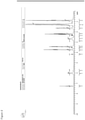
- the 1 H-NMR spectrum in Figure 2 clearly shows the presence of impurities in crude PEA.
- the presence of myristoylethanolamide (cas # 142-58-5) and stearoylethanolamide (cas # 111-57-9) in the crud can be explained by the presence of myristic acid and stearic acid in the palmitic acid starting material.
- the presence of 2-palmitamidoethyl palmitate (PAEP) cas # 55349-67-2 can be explained by unwanted ester formation under the reaction conditions.
- PAEP 2-palmitamidoethyl palmitate
- N,N' -(oxybis(ethane-2,1-diyl))dipalmitamide ( N,N -DPEA) and N-(2-(2-aminoethoxy)ethyl)palmitamide can be explained by the presence of 2,2'-oxybis(ethan-1-amine) in the crude ethanolamine starting material.
- Figure 3 shows the HPLC chromatogram of purified PEA.
- Figure 4 shows the 1 H-NMR spectrum of purified PEA.
Landscapes
- Chemical & Material Sciences (AREA)
- Organic Chemistry (AREA)
- Organic Low-Molecular-Weight Compounds And Preparation Thereof (AREA)
Description
- The invention relates to the field of medicinal chemistry. More in particular, it relates to methods for providing highly pure, pharmaceutical grade synthetic Palmitoylethanolamide (PEA), to pure PEA preparation obtainable thereby, and the uses thereof.
- Palmitoylethanolamide (N-(2-hydroxyethyl)hexadecanamide, PEA) (CAS 544-31-0; EINECS 208-867-9), also known as palmitoylethanolamide or palmidrol, is a naturally occurring C16:0 fatty acid derivative wherein the carboxylate function is amidated by the primary amine of ethanolamine. N-acylethanolamine compounds are known to have anti-inflammatory and anti-nociceptive effects, as described in Lambert et al. (Lambert DM, Vandevoorde S, Jonsson KO, Fowler CJ. Curr Med Chem. 2002;9:663-74); Lambert DM et al. (Lambert DM, DiPaolo FG, Sonveaux P, Kanyonyo M, Govaerts SJ, Hermans E, Bueb J, Delzenne NM, Tschirhart EJ. Biochim Biophys Acta. 1999;1440:266-74); Brown AJ (Br J Pharmacol. 2007;152(5):567-75); and
US 5,506,224 andUS 2005/0054730 . - A large number of scientific investigations on the effects of PEA and PEA-related compounds are available, and give rise to new therapeutic opportunities. Multiple synthetic procedures of PEA have been reported. PEA can for example be prepared via the coupling of palmitic acid and ethanolamine in the presence of a coupling reagent. Exemplary coupling routes for synthesis of PEA involve the use of 1-Ethyl-3-(3-dimethylaminopropyl)carbodiimide (EDCI) in the presence of 4-dimethylaminopyridine (DMAP) in methylene chloride (see
WO2015/179190 ), or 1-Cyano-2-ethoxy-2-oxoethylidenaminooxy)dimethylamino-morpholino-carbenium hexafluorophosphate (COMU) in the presence of Di-isopropylethylamine (DIPEA) in a mixture of methylene chloride and acetonitrile ( Chemistry and physics or lipids 2012, 165, 705). Still further examples involve 2-(1H-Benzotriazole-1-yl)-1,1,3,3-tetramethylaminium tetrafluoroborate (TBTU) in the presence of triethylamine in acetonitrile ( Bioorganic and Medicinal Chemistry 2011 , 19, 1520), N,N'-carbodiimide (CDI) in methylene chloride ( Tetrahedron Letters 1980, 21, 841) or N,N'-dicyclohexylcarbodiimide (DCC) in the presence or DMAP in methylene chloride ( Chemistry Letters; (1985); p. 701). The synthesis of PEA typically involves aqueous workup and purification using flash chromatography, often in combination with crystallization. - Alternatively, PEA can be prepared by reacting palmitic acid with acetic anhydride followed by ethanolamine ( J. Am. Chem. Soc., 1952, 74 (13), 3442), or via aminolysis of isopropyl palmitate and ethanolamine in the presence of sodium ethoxide/ethanol (see
US2016/038443 ), via aminolysis of ethyl, methyl, or vinyl palmitate or the reaction of palmitoyl chloride and ethanolamine in the presence of a base. Moreover, synthesis of PEA has been reported using activation of palmitic acid via the formation of an active ester ( Archiv der Pharmazie 342 (2009) 34;WO2006/109321 ; Chemistry Letters; (1985) 701; Chemical & Pharmaceutical Bulletin 32 (1984) 2687). - A procedure that is frequently used for large scale preparation of PEA for pharmaceutical use involves the direct heating of the palmitic acid in the presence of ethanolamine, followed by removal of excess of ethanolamine to provide a crude PEA preparation.
- It is known that crude PEA prepared from direct reaction of palmitic acid with ethanolamine is often contaminated with a number of impurities. The level of impurities can be reduced by PEA crystallization from a solvent, such as methanol. However, it was consistently observed by the present inventors that efficient removal of impurities to an acceptable level while maintaining acceptable yields failed.
- Therefore, the present inventors aimed at minimizing such impurities in crude PEA prepared from direct reaction of palmitic acid with ethanolamine. To that end, they first set out to chemically characterize the contaminants, and thereafter provide a method to minimize their presence.
- Using HPLC-MS techniques, it was observed that crude PEA contains several contaminants. These were identified as N-(2-(2-aminoethoxy)ethyl)palmitamide, Myristoylethanolamide, Stearoylethanolamide, N,N'-(oxybis(ethane-2,1-diyl))dipalmitamide and 2-Palmitamidoethyl palmitate. All impurities could be attributed either to those resulting from impurities in the starting material or to unwanted side reactions.
- It was surprisingly found that heating a suspension of crude PEA in a solvent mixture in the presence of a strong base catalyst to reflux, thereby allowing the formation of crystalline PEA, is highly effective to isolate crystalline PEA that is essentially free from impurities which remain in solution. Without wishing to be bound be any theory, it is envisioned that the presence of the more labile ester functionality in PEAP compared to the amide functionality aids in the removal of PEAP from the crude product. By adding an base catalyst as additive to the crystallization medium to facilitate solvolysis of the ester functionality, PEAP could completely be eliminated to provide PEA and methyl palmitate. After crystallization, methyl palmitate remains in solution and PEA free from unwanted impurities is obtained.
- Herewith, the invention provides a method for providing pure palmitoylethanolamide (PEA), comprising the steps of (i) heating a suspension of crude PEA in a solvent mixture comprising an alcohol to reflux in the presence of a base catalyst having a pKa (in water) of at least 13, thereby allowing the formation of crystalline PEA; and (ii) isolating said crystalline PEA.
- A schematic outline of the synthesis and subsequent refining of PEA according to the invention is exemplified in
Scheme 1.
- The first step in a method of the invention comprises preparing a suspension of crude PEA in a suitable solvent mixture. Typically, a method of the invention finds its use for purifying crude PEA that is obtained from a direct reaction of palmitic acid and ethanolamine. For example, the crude PEA for use as starting material in a method provided herein comprises one or more unwanted substances selected from the group consisting of N-(2-(2-aminoethoxy)ethyl)palmitamide, Myristoylethanolamide, Stearoylethanolamide, N,N'-(oxybis(ethane-2,1-diyl))dipalmitamide and 2-Palmitamidoethyl palmitate. The suspension may comprise about 0.1- 1 kg per liter, preferably 0.2 to 0.4 kilogram of PEA per liter of solvent mixture.
- The solvent mixture preferably comprises an aliphatic alcohol, more preferably a C1-C3 alcohol, in combination with a suitable co-solvent. Preferred co-solvents include aromatic hydrocarbons like toluene, mesitylene, benzene, xylene and ethylbenzene. Good results were obtained using toluene as co-solvent. In a preferred embodiment, the solvent mixture comprises or consists of a combination of toluene and an alcohol, preferably toluene and methanol or toluene and ethanol. For example, the solvent mixture consists of toluene and methanol in a relative ratio in the range of 1.4 : 1 to 1.8 :1, preferably 1.5:1 to 1.7:1, by volume.
- The suspension of crude PEA is heated, preferably while stirring, to reflux in the presence of a strong base catalyst. In one embodiment, the base catalyst has a pKa (in H2O) of at least 13.5, preferably at least 14.
- Good results are obtained wherein the base catalyst is an amidine base or a strong guanidine base. Such base catalysts are known in the art, see for example "Superbases for Organic Synthesis: Guanidines, Amidines, Phosphazenes and Related Organocatalysts, Amidines" in Organic Synthesis 50-91 .
- In one embodiment, the base catalyst is an amidine base. Amidines are strong bases (pKa ranges from 5-12). The protonation occurs on the imino nitrogen leading to symmetrical amidinium ion which is stabilized by resonance as in the isoelectronic carboxylate anion. Preferably, the amidine base for use in a method of the invention is selected from the group consisting of 1,8-diazabicyclo[5.4.0]undec-7-ene (DBU), 1,5-diazabicyclo[4.3.0]non-5-ene (DBN), 2,3,4,6,7,8,9,10-octahydropyrimido[1,2-a]azepine), NaHCO3 and NaOCH3.
- In another embodiment, the base catalyst is a strong guanidine base, preferably triazabicyclodecene (1,5,7-triazabicyclo[4.4.0]dec-5-ene; TBD).
- The reaction is allowed to proceed for a time period sufficient to achieve solvolysis of the impuritie(s), typically at least 0.5 hour, preferably at least 1 hour. In one embodiment, the suspension is heated to reflux for about 1-2 hours. Thereafter, the reaction mixture is allowed to cool to room temperature, resulting in the formation of pure, crystalline PEA. The crystalline PEA is suitably isolated by methods known in the art, e.g. comprising the filtering and washing crystalline PEA.
- Also disclosed herein is a pure PEA preparation comprising at least 98%, preferably at least 99%, more preferably at least 99.5 % by weight PEA, obtainable by a method according to the invention. This PEA preparation is typically characterized by being essentially devoid (e.g. less than 2%, preferably less than 1.5%, more preferably less than 1% by weight in total) of unwanted substances selected from the group consisting of N-(2-(2-aminoethoxy)ethyl)palmitamide Myristoylethanolamide, Stearoylethanolamide, N,N'-(oxybis(ethane-2,1-diyl))dipalmitamide and 2-Palmitamidoethyl palmitate (PAEP).
- A pure PEA preparation is advantageously used as human or veterinary supplement or medicament. Therapeutic applications of PEA include those already known in the art, as well as any application yet to be discovered. For example, disclosed herein is the a pure PEA preparation for use in a method of reducing or preventing pain in a mammalian subject, preferably chronic pain, neuropathic pain or a related disorder based on overactivation of glia and glia-related cells, such as in diabetes and glaucoma. Also disclosed is a pure PEA preparation for use in a method of reducing or preventing symptoms associated with influenza, common cold, infections, auto-immune disease, atopic or contact dermatitis, depression, epilepsy and chronic inflammatory diseases.
-
-
Figure 1 : HPLC chromatogram of crude PEA -
Figure 2 : 1H-NMR spectrum of crude PEA -
Figure 3 : HPLC chromatogram of purified PEA -
Figure 4 : 1H-NMR spectrum of purified PEA - Materials: crude PEA prepared by direct reaction of palmitic acid and ethanolamine was obtained from Zschimmer & Schwarz GmbH, Germany.
- The crude preparation was analyzed using HPLC according to the following procedure:
- Mobile phase A: mix 1.0 mL of formic acid with 1000 mL of Milli-Q.
- Mobile phase B: mix 1.0 mL of formic acid with 1000 mL of ACN.
- Column: Water Xbridge C18 5µm 250x3.0 mm (part number: 186003133)
- Column temperature: 40 °C
- Autosampler temperature: 18 °C
- Injection volume: 20 µL
- Detection: UV 200 nm
- Gradient elution:
Time Flow Mobile phase A Mobile phase B 0,01 min. 1.00 mL/ min 40 % 60 % 11,00 min. 1.00 mL/min 0 % 100 % 25,00 min. 1.00 mL/min 0 % 100 % 25,01 min. 1.00 mL/ min 40 % 60 % 30.00 min. 1.00 mL/ min 40 % 60 % - Test solution (0.5 mg/mL): weigh 25.0 mg of PEA and dissolve in 50.0 mL of MeOH. If necessary, use ultrasonication and gently warm the solution until all PEA is dissolved.
- Reference solution A (0.5 mg/mL): Weigh 25.0 mg of reference and dissolve in 50.0 mL of MeOH. If necessary, use ultrasonication and gently warm the solution until all PEA is dissolved.
- Inject blank MeOH, reference solution A and test solution.
- A representative HPLC chromatogram is given in
Figure 1 and the proposed structures of impurities indicated therein are given in table 1. All impurities were confirmed by independent synthesis.Table 1 List of impurities Impurity 1 N-(2 -(2 -aminoethoxy)ethyl) palmitamide Impurity 2 Myristoylethanolamide Impurity 3 Stearoylethanolamide Impurity 4 N,N'-(oxybis(ethane-2,1-diyl))dipalmitamide Impurity 5 2-Palmitamidoethyl palmitate - The 1H-NMR spectrum in
Figure 2 clearly shows the presence of impurities in crude PEA. The presence of myristoylethanolamide (cas # 142-58-5) and stearoylethanolamide (cas # 111-57-9) in the crud can be explained by the presence of myristic acid and stearic acid in the palmitic acid starting material. The presence of 2-palmitamidoethyl palmitate (PAEP) cas # 55349-67-2 can be explained by unwanted ester formation under the reaction conditions. The presence of N,N'-(oxybis(ethane-2,1-diyl))dipalmitamide (N,N-DPEA) and N-(2-(2-aminoethoxy)ethyl)palmitamide can be explained by the presence of 2,2'-oxybis(ethan-1-amine) in the crude ethanolamine starting material. - To a stirred suspension of crude PEA (1 kg, 3.34 mol) in a mixture of toluene (2.4 L) and methanol (1.6 L) 10 g DBU (1,8-Diazabicyclo[5.4.0]undec-7-ene 64 mmol (
ca 20 mol %) was added. The reaction mixture was heated to reflux for 1 h and the mixture was allowed to cool overnight. The resulting white crystals were isolated over a Buchner funnel, washed with methanol and dried overnight at 35°C to give PEA as white crystals. -
Figure 3 shows the HPLC chromatogram of purified PEA.Figure 4 shows the 1H-NMR spectrum of purified PEA. - To a stirred suspension of crude PEA (324 kg) in toluene (800 L) and methanol (500 L) was added DBU (5 kg). The reaction mixture was heated to reflux for 2.5 h and the mixture was allowed to cool overnight. The resulting white crystals were isolated over a Nutsche filter and dried using a floating bed dryer to give PEA as white crystals in ca. 75 % yield with an assay of > 99.5 %.
- To a stirred suspension of crude PEA (5 g) in toluene (12 mL) and methanol (8 mL) NaHCO3 (100 mg) was added as base catalyst. The reaction mixture was heated to reflux for 1 h and the mixture was allowed to cool overnight. The resulting white crystals were isolated over a glass filter and dried overnight at 35°C to give PEA as white crystals in ca. 65 % yield.
- To a stirred suspension of crude PEA (50 g) in toluene (125 mL) and methanol (75 mL) was added NaOMe (135 mg). The reaction mixture was heated to reflux for 2 h and the mixture was allowed to cool overnight. The resulting white crystals were isolated over a glass filter and dried overnight at 35°C to give pure PEA as white crystals in ca 70 % yield.
- To a stirred suspension of crude PEA (50 g) in toluene (125 mL) and methanol (75 mL) was added TBD (450 mg). The reaction mixture was heated to reflux for 2 h and the mixture was allowed to cool overnight. The resulting white crystals were isolated over a glass filter and dried overnight at 35°C to give pure PEA as white crystals in ca 68 % yield.
Claims (10)
- A method for providing pure palmitoyolethanolamide (PEA), comprising the steps of(i) heating a suspension of crude PEA in a solvent mixture comprising an alcohol in the presence of a base catalyst having a pKA in water of at least 13 to reflux, thereby allowing the formation of crystalline PEA; and(ii) isolating said crystalline PEA.
- Method according to claim 1, wherein said crude PEA is obtained from a direct reaction of palmitic acid and ethanolamine.
- Method according to claim 1 or 2, wherein said crude PEA comprises one or more unwanted substances selected from the group consisting of N-(2-(2-aminoethoxy)ethyl)palmitamide Myristoylethanolamide, Stearoylethanolamide, N,N'-(oxybis(ethane-2,1-diyl))dipalmitamide and 2-Palmitamidoethyl palmitate.
- Method according to any one of the preceding claims, wherein the base catalyst has a pKa (in H2O) of at least 13.5, preferably at least 14.
- Method according to any one of the preceding claims, wherein the base catalyst is an amidine base, preferably selected from the group consisting of 1,8-diazabicyclo[5.4.0]undec-7-ene (DBU)); 1,5-diazabicyclo[4.3.0]non-5-ene (DBN), 2,3,4,6,7,8,9,10-octahydropyrimido[1,2-a]azepine), NaHCO3 and NaOCH3
- Method according to any one of claims 1-4, wherein the base catalyst is a strong guanidine base, preferably triazabicyclodecene (1,5,7-Triazabicyclo[4.4.0]dec-5-ene (TBD).
- Method according to any one of the preceding claims, wherein said solvent mixture comprises a C1-C3 alcohol, preferably methanol.
- Method according to any one of the preceding claims, wherein said solvent mixture comprises or consists of an alcohol and toluene, preferably methanol and toluene.
- Method according to claim 8, wherein said mixture consists of toluene and alcohol in a relative ratio in the range of 1.4 : 1 to 1.8 :1, preferably 1.5:1 to 1.7:1, by volume.
- Method according to any one of the preceding claims, wherein said isolating comprises filtering and washing crystalline PEA.
Applications Claiming Priority (1)
| Application Number | Priority Date | Filing Date | Title |
|---|---|---|---|
| PCT/NL2017/050647 WO2019066644A1 (en) | 2017-09-28 | 2017-09-28 | Methods for providing highly pure palmitoylethanolamide (pea), pure pea preparations, and uses thereof |
Publications (2)
| Publication Number | Publication Date |
|---|---|
| EP3687971A1 EP3687971A1 (en) | 2020-08-05 |
| EP3687971B1 true EP3687971B1 (en) | 2022-02-23 |
Family
ID=60191443
Family Applications (1)
| Application Number | Title | Priority Date | Filing Date |
|---|---|---|---|
| EP17791757.2A Active EP3687971B1 (en) | 2017-09-28 | 2017-09-28 | Methods for providing highly pure palmitoylethanolamide (pea) |
Country Status (2)
| Country | Link |
|---|---|
| EP (1) | EP3687971B1 (en) |
| WO (1) | WO2019066644A1 (en) |
Families Citing this family (1)
| Publication number | Priority date | Publication date | Assignee | Title |
|---|---|---|---|---|
| IT202100014006A1 (en) | 2021-05-28 | 2022-11-28 | Epitech Group S P A | COMPOSITION OF ACYLHANOLAMIDES FROM OLIVE OIL FATTY ACIDS |
Family Cites Families (6)
| Publication number | Priority date | Publication date | Assignee | Title |
|---|---|---|---|---|
| US5506224A (en) | 1991-12-31 | 1996-04-09 | Lifegroup S.P.A. | N-acyl derivatives of aminoalcohols active as local autacoids and useful in the therapy of autoimmune processes |
| US20050054730A1 (en) | 2001-03-27 | 2005-03-10 | The Regents Of The University Of California | Compounds, compositions and treatment of oleoylethanolamide-like modulators of PPARalpha |
| WO2006109321A1 (en) | 2005-04-15 | 2006-10-19 | Morepen Laboratories Limited | An improved process for the synthesis of palmidrol |
| US9221747B2 (en) * | 2012-04-25 | 2015-12-29 | Iowa State University Research Foundation, Inc. | Method of making fatty acid N-acylalkanolamines |
| JP6341699B2 (en) | 2013-03-12 | 2018-06-13 | 花王株式会社 | Ceramide-like function-imparting agent |
| US9963444B2 (en) | 2014-05-19 | 2018-05-08 | Northeastern University | N-acylethanolamine hydrolyzing acid amidase (NAAA) inhibitors and their use thereof |
-
2017
- 2017-09-28 EP EP17791757.2A patent/EP3687971B1/en active Active
- 2017-09-28 WO PCT/NL2017/050647 patent/WO2019066644A1/en not_active Ceased
Also Published As
| Publication number | Publication date |
|---|---|
| EP3687971A1 (en) | 2020-08-05 |
| WO2019066644A1 (en) | 2019-04-04 |
Similar Documents
| Publication | Publication Date | Title |
|---|---|---|
| EP2418195B1 (en) | Agomelatine hydrohalide complex and preparation method thereof | |
| KR101456839B1 (en) | A method for preparing a photoactive agent composition | |
| CA2829511C (en) | Methods for manufacturing an antifungal agent | |
| EP3722286B1 (en) | Salt of a phenylpropionamide derivative and preparation method therefor | |
| EP3100735B1 (en) | Crystalline fosaprepitant dicyclohexylamine salt and its preparation | |
| US5008265A (en) | 2-amino-7-(alicyclomethyl)-3H,5H,-pyrrolo[3,2-d]pyrimidin-4-ones and pharmaceutical uses and compositions containing the same | |
| EP3687971A1 (en) | Methods for providing highly pure palmitoylethanolamide (pea), pure pea preparations, and uses thereof | |
| CA2934527A1 (en) | Synthesis of oxycodone hydrochloride | |
| EP4310080A1 (en) | Polymorphic forms of compound and preparation method therefor and application thereof | |
| US20170355724A1 (en) | Anthelminthic macrolide synthesis | |
| CZ293801B6 (en) | Process for preparing S-N,N -bis-[2-hydroxy-1-(hydroxymethyl)ethyl]-5-[(2-hydroxy-1-oxopropyl)amino]-2,4,6-triiodo-1,3-benzenedicarboxamide | |
| EP1456197B1 (en) | Piperidine-2,6-diones that are heterocyclically substituted in position 3 | |
| KR20240021832A (en) | How to Reduce Ivermectin Particle Size | |
| EP1506199B1 (en) | A process for the preparation of zaleplon | |
| CN113372368A (en) | Prodrug of elastase inhibitor and application thereof | |
| KR20200113102A (en) | Glutamine derivatives and Processes for synthesizing them | |
| EP1950213B1 (en) | N-{3-[3-(dimethylamino)-1-oxo-2-propenyl]phenyl}-N-ethyl-acetamide hydrochloride | |
| US11001609B2 (en) | Cell permeable cyclic peptide scaffolds | |
| HK40107150A (en) | Fenfluramine compositions and methods of preparing the same | |
| CN120665032A (en) | Preparation of milbegron disubstituted compound, product obtained by preparation and detection | |
| JP6676487B2 (en) | Method for producing amidoxime compound as intermediate of azilsartan, and method for producing azilsartan | |
| RU2575237C2 (en) | Method for antifugal agent production | |
| WO2024124043A1 (en) | Multicyclic compounds | |
| CN117083277A (en) | A kind of preparation method of nalbuphine sebacate and its intermediates | |
| HK40040106A (en) | Fenfluramine compositions and methods of preparing the same |
Legal Events
| Date | Code | Title | Description |
|---|---|---|---|
| STAA | Information on the status of an ep patent application or granted ep patent |
Free format text: STATUS: UNKNOWN |
|
| STAA | Information on the status of an ep patent application or granted ep patent |
Free format text: STATUS: THE INTERNATIONAL PUBLICATION HAS BEEN MADE |
|
| PUAI | Public reference made under article 153(3) epc to a published international application that has entered the european phase |
Free format text: ORIGINAL CODE: 0009012 |
|
| STAA | Information on the status of an ep patent application or granted ep patent |
Free format text: STATUS: REQUEST FOR EXAMINATION WAS MADE |
|
| 17P | Request for examination filed |
Effective date: 20200401 |
|
| AK | Designated contracting states |
Kind code of ref document: A1 Designated state(s): AL AT BE BG CH CY CZ DE DK EE ES FI FR GB GR HR HU IE IS IT LI LT LU LV MC MK MT NL NO PL PT RO RS SE SI SK SM TR |
|
| AX | Request for extension of the european patent |
Extension state: BA ME |
|
| DAV | Request for validation of the european patent (deleted) | ||
| RAX | Requested extension states of the european patent have changed |
Extension state: BA Payment date: 20200401 |
|
| GRAP | Despatch of communication of intention to grant a patent |
Free format text: ORIGINAL CODE: EPIDOSNIGR1 |
|
| STAA | Information on the status of an ep patent application or granted ep patent |
Free format text: STATUS: GRANT OF PATENT IS INTENDED |
|
| INTG | Intention to grant announced |
Effective date: 20210618 |
|
| RIN1 | Information on inventor provided before grant (corrected) |
Inventor name: KELLER, ERIK Inventor name: ZONNEVELD, SAMUEL JOHANNES DABBOUS |
|
| GRAS | Grant fee paid |
Free format text: ORIGINAL CODE: EPIDOSNIGR3 |
|
| GRAA | (expected) grant |
Free format text: ORIGINAL CODE: 0009210 |
|
| STAA | Information on the status of an ep patent application or granted ep patent |
Free format text: STATUS: THE PATENT HAS BEEN GRANTED |
|
| AK | Designated contracting states |
Kind code of ref document: B1 Designated state(s): AL AT BE BG CH CY CZ DE DK EE ES FI FR GB GR HR HU IE IS IT LI LT LU LV MC MK MT NL NO PL PT RO RS SE SI SK SM TR |
|
| REG | Reference to a national code |
Ref country code: GB Ref legal event code: FG4D |
|
| REG | Reference to a national code |
Ref country code: CH Ref legal event code: EP |
|
| REG | Reference to a national code |
Ref country code: AT Ref legal event code: REF Ref document number: 1470361 Country of ref document: AT Kind code of ref document: T Effective date: 20220315 |
|
| REG | Reference to a national code |
Ref country code: IE Ref legal event code: FG4D |
|
| REG | Reference to a national code |
Ref country code: DE Ref legal event code: R096 Ref document number: 602017053757 Country of ref document: DE |
|
| REG | Reference to a national code |
Ref country code: NL Ref legal event code: FP |
|
| REG | Reference to a national code |
Ref country code: LT Ref legal event code: MG9D |
|
| REG | Reference to a national code |
Ref country code: AT Ref legal event code: MK05 Ref document number: 1470361 Country of ref document: AT Kind code of ref document: T Effective date: 20220223 |
|
| PG25 | Lapsed in a contracting state [announced via postgrant information from national office to epo] |
Ref country code: SE Free format text: LAPSE BECAUSE OF FAILURE TO SUBMIT A TRANSLATION OF THE DESCRIPTION OR TO PAY THE FEE WITHIN THE PRESCRIBED TIME-LIMIT Effective date: 20220223 Ref country code: RS Free format text: LAPSE BECAUSE OF FAILURE TO SUBMIT A TRANSLATION OF THE DESCRIPTION OR TO PAY THE FEE WITHIN THE PRESCRIBED TIME-LIMIT Effective date: 20220223 Ref country code: PT Free format text: LAPSE BECAUSE OF FAILURE TO SUBMIT A TRANSLATION OF THE DESCRIPTION OR TO PAY THE FEE WITHIN THE PRESCRIBED TIME-LIMIT Effective date: 20220623 Ref country code: NO Free format text: LAPSE BECAUSE OF FAILURE TO SUBMIT A TRANSLATION OF THE DESCRIPTION OR TO PAY THE FEE WITHIN THE PRESCRIBED TIME-LIMIT Effective date: 20220523 Ref country code: LT Free format text: LAPSE BECAUSE OF FAILURE TO SUBMIT A TRANSLATION OF THE DESCRIPTION OR TO PAY THE FEE WITHIN THE PRESCRIBED TIME-LIMIT Effective date: 20220223 Ref country code: HR Free format text: LAPSE BECAUSE OF FAILURE TO SUBMIT A TRANSLATION OF THE DESCRIPTION OR TO PAY THE FEE WITHIN THE PRESCRIBED TIME-LIMIT Effective date: 20220223 Ref country code: ES Free format text: LAPSE BECAUSE OF FAILURE TO SUBMIT A TRANSLATION OF THE DESCRIPTION OR TO PAY THE FEE WITHIN THE PRESCRIBED TIME-LIMIT Effective date: 20220223 Ref country code: BG Free format text: LAPSE BECAUSE OF FAILURE TO SUBMIT A TRANSLATION OF THE DESCRIPTION OR TO PAY THE FEE WITHIN THE PRESCRIBED TIME-LIMIT Effective date: 20220523 |
|
| PG25 | Lapsed in a contracting state [announced via postgrant information from national office to epo] |
Ref country code: PL Free format text: LAPSE BECAUSE OF FAILURE TO SUBMIT A TRANSLATION OF THE DESCRIPTION OR TO PAY THE FEE WITHIN THE PRESCRIBED TIME-LIMIT Effective date: 20220223 Ref country code: LV Free format text: LAPSE BECAUSE OF FAILURE TO SUBMIT A TRANSLATION OF THE DESCRIPTION OR TO PAY THE FEE WITHIN THE PRESCRIBED TIME-LIMIT Effective date: 20220223 Ref country code: GR Free format text: LAPSE BECAUSE OF FAILURE TO SUBMIT A TRANSLATION OF THE DESCRIPTION OR TO PAY THE FEE WITHIN THE PRESCRIBED TIME-LIMIT Effective date: 20220524 Ref country code: FI Free format text: LAPSE BECAUSE OF FAILURE TO SUBMIT A TRANSLATION OF THE DESCRIPTION OR TO PAY THE FEE WITHIN THE PRESCRIBED TIME-LIMIT Effective date: 20220223 Ref country code: AT Free format text: LAPSE BECAUSE OF FAILURE TO SUBMIT A TRANSLATION OF THE DESCRIPTION OR TO PAY THE FEE WITHIN THE PRESCRIBED TIME-LIMIT Effective date: 20220223 |
|
| PG25 | Lapsed in a contracting state [announced via postgrant information from national office to epo] |
Ref country code: IS Free format text: LAPSE BECAUSE OF FAILURE TO SUBMIT A TRANSLATION OF THE DESCRIPTION OR TO PAY THE FEE WITHIN THE PRESCRIBED TIME-LIMIT Effective date: 20220623 |
|
| PG25 | Lapsed in a contracting state [announced via postgrant information from national office to epo] |
Ref country code: SM Free format text: LAPSE BECAUSE OF FAILURE TO SUBMIT A TRANSLATION OF THE DESCRIPTION OR TO PAY THE FEE WITHIN THE PRESCRIBED TIME-LIMIT Effective date: 20220223 Ref country code: SK Free format text: LAPSE BECAUSE OF FAILURE TO SUBMIT A TRANSLATION OF THE DESCRIPTION OR TO PAY THE FEE WITHIN THE PRESCRIBED TIME-LIMIT Effective date: 20220223 Ref country code: RO Free format text: LAPSE BECAUSE OF FAILURE TO SUBMIT A TRANSLATION OF THE DESCRIPTION OR TO PAY THE FEE WITHIN THE PRESCRIBED TIME-LIMIT Effective date: 20220223 Ref country code: EE Free format text: LAPSE BECAUSE OF FAILURE TO SUBMIT A TRANSLATION OF THE DESCRIPTION OR TO PAY THE FEE WITHIN THE PRESCRIBED TIME-LIMIT Effective date: 20220223 Ref country code: DK Free format text: LAPSE BECAUSE OF FAILURE TO SUBMIT A TRANSLATION OF THE DESCRIPTION OR TO PAY THE FEE WITHIN THE PRESCRIBED TIME-LIMIT Effective date: 20220223 Ref country code: CZ Free format text: LAPSE BECAUSE OF FAILURE TO SUBMIT A TRANSLATION OF THE DESCRIPTION OR TO PAY THE FEE WITHIN THE PRESCRIBED TIME-LIMIT Effective date: 20220223 |
|
| REG | Reference to a national code |
Ref country code: DE Ref legal event code: R097 Ref document number: 602017053757 Country of ref document: DE |
|
| PG25 | Lapsed in a contracting state [announced via postgrant information from national office to epo] |
Ref country code: AL Free format text: LAPSE BECAUSE OF FAILURE TO SUBMIT A TRANSLATION OF THE DESCRIPTION OR TO PAY THE FEE WITHIN THE PRESCRIBED TIME-LIMIT Effective date: 20220223 |
|
| PLBE | No opposition filed within time limit |
Free format text: ORIGINAL CODE: 0009261 |
|
| STAA | Information on the status of an ep patent application or granted ep patent |
Free format text: STATUS: NO OPPOSITION FILED WITHIN TIME LIMIT |
|
| 26N | No opposition filed |
Effective date: 20221124 |
|
| PG25 | Lapsed in a contracting state [announced via postgrant information from national office to epo] |
Ref country code: SI Free format text: LAPSE BECAUSE OF FAILURE TO SUBMIT A TRANSLATION OF THE DESCRIPTION OR TO PAY THE FEE WITHIN THE PRESCRIBED TIME-LIMIT Effective date: 20220223 |
|
| REG | Reference to a national code |
Ref country code: DE Ref legal event code: R119 Ref document number: 602017053757 Country of ref document: DE |
|
| PG25 | Lapsed in a contracting state [announced via postgrant information from national office to epo] |
Ref country code: MC Free format text: LAPSE BECAUSE OF FAILURE TO SUBMIT A TRANSLATION OF THE DESCRIPTION OR TO PAY THE FEE WITHIN THE PRESCRIBED TIME-LIMIT Effective date: 20220223 |
|
| REG | Reference to a national code |
Ref country code: CH Ref legal event code: PL |
|
| GBPC | Gb: european patent ceased through non-payment of renewal fee |
Effective date: 20220928 |
|
| REG | Reference to a national code |
Ref country code: BE Ref legal event code: MM Effective date: 20220930 |
|
| P01 | Opt-out of the competence of the unified patent court (upc) registered |
Effective date: 20230508 |
|
| PG25 | Lapsed in a contracting state [announced via postgrant information from national office to epo] |
Ref country code: LU Free format text: LAPSE BECAUSE OF NON-PAYMENT OF DUE FEES Effective date: 20220928 |
|
| PG25 | Lapsed in a contracting state [announced via postgrant information from national office to epo] |
Ref country code: LI Free format text: LAPSE BECAUSE OF NON-PAYMENT OF DUE FEES Effective date: 20220930 Ref country code: IT Free format text: LAPSE BECAUSE OF FAILURE TO SUBMIT A TRANSLATION OF THE DESCRIPTION OR TO PAY THE FEE WITHIN THE PRESCRIBED TIME-LIMIT Effective date: 20220223 Ref country code: IE Free format text: LAPSE BECAUSE OF NON-PAYMENT OF DUE FEES Effective date: 20220928 Ref country code: FR Free format text: LAPSE BECAUSE OF NON-PAYMENT OF DUE FEES Effective date: 20220930 Ref country code: DE Free format text: LAPSE BECAUSE OF NON-PAYMENT OF DUE FEES Effective date: 20230401 Ref country code: CH Free format text: LAPSE BECAUSE OF NON-PAYMENT OF DUE FEES Effective date: 20220930 |
|
| PG25 | Lapsed in a contracting state [announced via postgrant information from national office to epo] |
Ref country code: BE Free format text: LAPSE BECAUSE OF NON-PAYMENT OF DUE FEES Effective date: 20220930 |
|
| PG25 | Lapsed in a contracting state [announced via postgrant information from national office to epo] |
Ref country code: GB Free format text: LAPSE BECAUSE OF NON-PAYMENT OF DUE FEES Effective date: 20220928 |
|
| PG25 | Lapsed in a contracting state [announced via postgrant information from national office to epo] |
Ref country code: CY Free format text: LAPSE BECAUSE OF FAILURE TO SUBMIT A TRANSLATION OF THE DESCRIPTION OR TO PAY THE FEE WITHIN THE PRESCRIBED TIME-LIMIT Effective date: 20220223 |
|
| PG25 | Lapsed in a contracting state [announced via postgrant information from national office to epo] |
Ref country code: MK Free format text: LAPSE BECAUSE OF FAILURE TO SUBMIT A TRANSLATION OF THE DESCRIPTION OR TO PAY THE FEE WITHIN THE PRESCRIBED TIME-LIMIT Effective date: 20220223 Ref country code: HU Free format text: LAPSE BECAUSE OF FAILURE TO SUBMIT A TRANSLATION OF THE DESCRIPTION OR TO PAY THE FEE WITHIN THE PRESCRIBED TIME-LIMIT; INVALID AB INITIO Effective date: 20170928 |
|
| PG25 | Lapsed in a contracting state [announced via postgrant information from national office to epo] |
Ref country code: TR Free format text: LAPSE BECAUSE OF FAILURE TO SUBMIT A TRANSLATION OF THE DESCRIPTION OR TO PAY THE FEE WITHIN THE PRESCRIBED TIME-LIMIT Effective date: 20220223 |
|
| PG25 | Lapsed in a contracting state [announced via postgrant information from national office to epo] |
Ref country code: MT Free format text: LAPSE BECAUSE OF FAILURE TO SUBMIT A TRANSLATION OF THE DESCRIPTION OR TO PAY THE FEE WITHIN THE PRESCRIBED TIME-LIMIT Effective date: 20220223 |
|
| PGFP | Annual fee paid to national office [announced via postgrant information from national office to epo] |
Ref country code: NL Payment date: 20250918 Year of fee payment: 9 |