EP3686966A1 - An electrochemical energy storage device and a method for producing an anode active material for the electrochemical energy storage device - Google Patents
An electrochemical energy storage device and a method for producing an anode active material for the electrochemical energy storage device Download PDFInfo
- Publication number
- EP3686966A1 EP3686966A1 EP19153317.3A EP19153317A EP3686966A1 EP 3686966 A1 EP3686966 A1 EP 3686966A1 EP 19153317 A EP19153317 A EP 19153317A EP 3686966 A1 EP3686966 A1 EP 3686966A1
- Authority
- EP
- European Patent Office
- Prior art keywords
- active material
- energy storage
- metal
- storage device
- lithium
- Prior art date
- Legal status (The legal status is an assumption and is not a legal conclusion. Google has not performed a legal analysis and makes no representation as to the accuracy of the status listed.)
- Pending
Links
- 238000012983 electrochemical energy storage Methods 0.000 title claims abstract description 35
- 239000006183 anode active material Substances 0.000 title claims abstract description 32
- 238000004519 manufacturing process Methods 0.000 title claims description 9
- 229910052751 metal Inorganic materials 0.000 claims abstract description 26
- 239000002184 metal Substances 0.000 claims abstract description 26
- 229910016289 MxO2 Inorganic materials 0.000 claims abstract description 14
- 239000003792 electrolyte Substances 0.000 claims abstract description 5
- 239000002019 doping agent Substances 0.000 claims description 31
- OKTJSMMVPCPJKN-UHFFFAOYSA-N Carbon Chemical compound [C] OKTJSMMVPCPJKN-UHFFFAOYSA-N 0.000 claims description 26
- 229910052799 carbon Inorganic materials 0.000 claims description 26
- 229910052742 iron Inorganic materials 0.000 claims description 20
- 238000000034 method Methods 0.000 claims description 19
- 229910052744 lithium Inorganic materials 0.000 claims description 16
- WHXSMMKQMYFTQS-UHFFFAOYSA-N Lithium Chemical compound [Li] WHXSMMKQMYFTQS-UHFFFAOYSA-N 0.000 claims description 15
- 239000006182 cathode active material Substances 0.000 claims description 15
- 239000002243 precursor Substances 0.000 claims description 15
- 229910052758 niobium Inorganic materials 0.000 claims description 12
- 229910052719 titanium Inorganic materials 0.000 claims description 11
- 239000011572 manganese Substances 0.000 claims description 10
- 229910052797 bismuth Inorganic materials 0.000 claims description 9
- PXHVJJICTQNCMI-UHFFFAOYSA-N nickel Substances [Ni] PXHVJJICTQNCMI-UHFFFAOYSA-N 0.000 claims description 9
- 239000002244 precipitate Substances 0.000 claims description 9
- 239000011734 sodium Substances 0.000 claims description 9
- 229910052748 manganese Inorganic materials 0.000 claims description 8
- 229910052782 aluminium Inorganic materials 0.000 claims description 7
- DGAQECJNVWCQMB-PUAWFVPOSA-M Ilexoside XXIX Chemical compound C[C@@H]1CC[C@@]2(CC[C@@]3(C(=CC[C@H]4[C@]3(CC[C@@H]5[C@@]4(CC[C@@H](C5(C)C)OS(=O)(=O)[O-])C)C)[C@@H]2[C@]1(C)O)C)C(=O)O[C@H]6[C@@H]([C@H]([C@@H]([C@H](O6)CO)O)O)O.[Na+] DGAQECJNVWCQMB-PUAWFVPOSA-M 0.000 claims description 6
- 229910052708 sodium Inorganic materials 0.000 claims description 6
- 229910052718 tin Inorganic materials 0.000 claims description 6
- 229910052802 copper Inorganic materials 0.000 claims description 5
- 239000010949 copper Substances 0.000 claims description 5
- 229910002097 Lithium manganese(III,IV) oxide Inorganic materials 0.000 claims description 4
- 229910052804 chromium Inorganic materials 0.000 claims description 4
- 229910052738 indium Inorganic materials 0.000 claims description 4
- 229910052750 molybdenum Inorganic materials 0.000 claims description 4
- 229910052759 nickel Inorganic materials 0.000 claims description 4
- 229910052596 spinel Inorganic materials 0.000 claims description 4
- 239000011029 spinel Substances 0.000 claims description 4
- 229910052721 tungsten Inorganic materials 0.000 claims description 4
- 229910052720 vanadium Inorganic materials 0.000 claims description 4
- 229910052725 zinc Inorganic materials 0.000 claims description 4
- 239000003125 aqueous solvent Substances 0.000 claims description 3
- 238000001816 cooling Methods 0.000 claims description 3
- 229910000319 transition metal phosphate Inorganic materials 0.000 claims description 3
- 229910032387 LiCoO2 Inorganic materials 0.000 claims description 2
- 229910014330 LiNi1-x-yCoxAlyO2 Inorganic materials 0.000 claims description 2
- 229910014340 LiNi1-x-yMnxCoyO2 Inorganic materials 0.000 claims description 2
- 229910014360 LiNi1−x−yCoxAlyO2 Inorganic materials 0.000 claims description 2
- 229910014829 LiNi1−x−yMnxCoyO2 Inorganic materials 0.000 claims description 2
- GTHSQBRGZYTIIU-UHFFFAOYSA-N [Li].[Ni](=O)=O Chemical compound [Li].[Ni](=O)=O GTHSQBRGZYTIIU-UHFFFAOYSA-N 0.000 claims description 2
- OGCCXYAKZKSSGZ-UHFFFAOYSA-N [Ni]=O.[Mn].[Li] Chemical compound [Ni]=O.[Mn].[Li] OGCCXYAKZKSSGZ-UHFFFAOYSA-N 0.000 claims description 2
- NDPGDHBNXZOBJS-UHFFFAOYSA-N aluminum lithium cobalt(2+) nickel(2+) oxygen(2-) Chemical compound [Li+].[O--].[O--].[O--].[O--].[Al+3].[Co++].[Ni++] NDPGDHBNXZOBJS-UHFFFAOYSA-N 0.000 claims description 2
- 229910052787 antimony Inorganic materials 0.000 claims description 2
- 229910052793 cadmium Inorganic materials 0.000 claims description 2
- 229910052737 gold Inorganic materials 0.000 claims description 2
- 229910052735 hafnium Inorganic materials 0.000 claims description 2
- 229910052741 iridium Inorganic materials 0.000 claims description 2
- 229910002102 lithium manganese oxide Inorganic materials 0.000 claims description 2
- VGYDTVNNDKLMHX-UHFFFAOYSA-N lithium;manganese;nickel;oxocobalt Chemical compound [Li].[Mn].[Ni].[Co]=O VGYDTVNNDKLMHX-UHFFFAOYSA-N 0.000 claims description 2
- BFZPBUKRYWOWDV-UHFFFAOYSA-N lithium;oxido(oxo)cobalt Chemical compound [Li+].[O-][Co]=O BFZPBUKRYWOWDV-UHFFFAOYSA-N 0.000 claims description 2
- VLXXBCXTUVRROQ-UHFFFAOYSA-N lithium;oxido-oxo-(oxomanganiooxy)manganese Chemical compound [Li+].[O-][Mn](=O)O[Mn]=O VLXXBCXTUVRROQ-UHFFFAOYSA-N 0.000 claims description 2
- 229910052753 mercury Inorganic materials 0.000 claims description 2
- 239000010450 olivine Substances 0.000 claims description 2
- 229910052609 olivine Inorganic materials 0.000 claims description 2
- 229910052762 osmium Inorganic materials 0.000 claims description 2
- 229910052763 palladium Inorganic materials 0.000 claims description 2
- 229910052697 platinum Inorganic materials 0.000 claims description 2
- 229910052702 rhenium Inorganic materials 0.000 claims description 2
- 229910052703 rhodium Inorganic materials 0.000 claims description 2
- 229910052707 ruthenium Inorganic materials 0.000 claims description 2
- 229910052706 scandium Inorganic materials 0.000 claims description 2
- 229910052709 silver Inorganic materials 0.000 claims description 2
- 229910052715 tantalum Inorganic materials 0.000 claims description 2
- 229910000326 transition metal silicate Inorganic materials 0.000 claims description 2
- 229910052726 zirconium Inorganic materials 0.000 claims description 2
- 229910003005 LiNiO2 Inorganic materials 0.000 claims 1
- 229910000422 cerium(IV) oxide Inorganic materials 0.000 abstract description 62
- CETPSERCERDGAM-UHFFFAOYSA-N ceric oxide Chemical compound O=[Ce]=O CETPSERCERDGAM-UHFFFAOYSA-N 0.000 abstract description 58
- 229910001416 lithium ion Inorganic materials 0.000 abstract description 29
- HBBGRARXTFLTSG-UHFFFAOYSA-N Lithium ion Chemical compound [Li+] HBBGRARXTFLTSG-UHFFFAOYSA-N 0.000 abstract description 21
- 229910001415 sodium ion Inorganic materials 0.000 abstract description 14
- FKNQFGJONOIPTF-UHFFFAOYSA-N Sodium cation Chemical compound [Na+] FKNQFGJONOIPTF-UHFFFAOYSA-N 0.000 abstract description 13
- 239000011149 active material Substances 0.000 abstract description 11
- 150000002500 ions Chemical class 0.000 abstract description 4
- 230000009286 beneficial effect Effects 0.000 abstract description 3
- 230000001351 cycling effect Effects 0.000 description 13
- 239000000243 solution Substances 0.000 description 11
- 229910002099 LiNi0.5Mn1.5O4 Inorganic materials 0.000 description 10
- -1 poly(vinylpyrrolidone) Polymers 0.000 description 10
- XLYOFNOQVPJJNP-UHFFFAOYSA-N water Chemical compound O XLYOFNOQVPJJNP-UHFFFAOYSA-N 0.000 description 10
- 230000015572 biosynthetic process Effects 0.000 description 9
- 239000000463 material Substances 0.000 description 9
- 238000002441 X-ray diffraction Methods 0.000 description 7
- 239000010405 anode material Substances 0.000 description 7
- 238000003786 synthesis reaction Methods 0.000 description 7
- HEMHJVSKTPXQMS-UHFFFAOYSA-M Sodium hydroxide Chemical compound [OH-].[Na+] HEMHJVSKTPXQMS-UHFFFAOYSA-M 0.000 description 6
- 238000000576 coating method Methods 0.000 description 6
- 239000013078 crystal Substances 0.000 description 6
- 230000003247 decreasing effect Effects 0.000 description 6
- 229910001868 water Inorganic materials 0.000 description 6
- 239000011248 coating agent Substances 0.000 description 5
- 239000002105 nanoparticle Substances 0.000 description 5
- 238000003860 storage Methods 0.000 description 5
- LFQSCWFLJHTTHZ-UHFFFAOYSA-N Ethanol Chemical compound CCO LFQSCWFLJHTTHZ-UHFFFAOYSA-N 0.000 description 4
- 150000001450 anions Chemical class 0.000 description 4
- 239000011258 core-shell material Substances 0.000 description 4
- 239000008367 deionised water Substances 0.000 description 4
- 229910021641 deionized water Inorganic materials 0.000 description 4
- 238000007599 discharging Methods 0.000 description 4
- 238000006138 lithiation reaction Methods 0.000 description 4
- 239000004005 microsphere Substances 0.000 description 4
- 239000002077 nanosphere Substances 0.000 description 4
- 229910052760 oxygen Inorganic materials 0.000 description 4
- 239000001301 oxygen Substances 0.000 description 4
- 238000005192 partition Methods 0.000 description 4
- 238000003756 stirring Methods 0.000 description 4
- WQZGKKKJIJFFOK-GASJEMHNSA-N Glucose Natural products OC[C@H]1OC(O)[C@H](O)[C@@H](O)[C@@H]1O WQZGKKKJIJFFOK-GASJEMHNSA-N 0.000 description 3
- UFHFLCQGNIYNRP-UHFFFAOYSA-N Hydrogen Chemical compound [H][H] UFHFLCQGNIYNRP-UHFFFAOYSA-N 0.000 description 3
- XAGFODPZIPBFFR-UHFFFAOYSA-N aluminium Chemical compound [Al] XAGFODPZIPBFFR-UHFFFAOYSA-N 0.000 description 3
- QVGXLLKOCUKJST-UHFFFAOYSA-N atomic oxygen Chemical compound [O] QVGXLLKOCUKJST-UHFFFAOYSA-N 0.000 description 3
- 239000002134 carbon nanofiber Substances 0.000 description 3
- 239000003054 catalyst Substances 0.000 description 3
- 150000001875 compounds Chemical class 0.000 description 3
- 230000000694 effects Effects 0.000 description 3
- 239000008103 glucose Substances 0.000 description 3
- 239000001257 hydrogen Substances 0.000 description 3
- 229910052739 hydrogen Inorganic materials 0.000 description 3
- 238000001027 hydrothermal synthesis Methods 0.000 description 3
- VNWKTOKETHGBQD-UHFFFAOYSA-N methane Chemical class C VNWKTOKETHGBQD-UHFFFAOYSA-N 0.000 description 3
- 239000000203 mixture Substances 0.000 description 3
- 238000007254 oxidation reaction Methods 0.000 description 3
- 230000001699 photocatalysis Effects 0.000 description 3
- CZMRCDWAGMRECN-UGDNZRGBSA-N Sucrose Chemical compound O[C@H]1[C@H](O)[C@@H](CO)O[C@@]1(CO)O[C@@H]1[C@H](O)[C@@H](O)[C@H](O)[C@@H](CO)O1 CZMRCDWAGMRECN-UGDNZRGBSA-N 0.000 description 2
- 229930006000 Sucrose Natural products 0.000 description 2
- 238000003917 TEM image Methods 0.000 description 2
- 229910001413 alkali metal ion Inorganic materials 0.000 description 2
- 229910045601 alloy Inorganic materials 0.000 description 2
- 239000000956 alloy Substances 0.000 description 2
- WQZGKKKJIJFFOK-VFUOTHLCSA-N beta-D-glucose Chemical compound OC[C@H]1O[C@@H](O)[C@H](O)[C@@H](O)[C@@H]1O WQZGKKKJIJFFOK-VFUOTHLCSA-N 0.000 description 2
- 238000006555 catalytic reaction Methods 0.000 description 2
- 239000001913 cellulose Substances 0.000 description 2
- 229920002678 cellulose Polymers 0.000 description 2
- 238000005119 centrifugation Methods 0.000 description 2
- 239000000919 ceramic Substances 0.000 description 2
- 229910000420 cerium oxide Inorganic materials 0.000 description 2
- 238000009388 chemical precipitation Methods 0.000 description 2
- UFMZWBIQTDUYBN-UHFFFAOYSA-N cobalt dinitrate Chemical compound [Co+2].[O-][N+]([O-])=O.[O-][N+]([O-])=O UFMZWBIQTDUYBN-UHFFFAOYSA-N 0.000 description 2
- 239000002131 composite material Substances 0.000 description 2
- 238000000354 decomposition reaction Methods 0.000 description 2
- 230000001419 dependent effect Effects 0.000 description 2
- PPNKDDZCLDMRHS-UHFFFAOYSA-N dinitrooxybismuthanyl nitrate Chemical compound [Bi+3].[O-][N+]([O-])=O.[O-][N+]([O-])=O.[O-][N+]([O-])=O PPNKDDZCLDMRHS-UHFFFAOYSA-N 0.000 description 2
- 238000003487 electrochemical reaction Methods 0.000 description 2
- 230000005518 electrochemistry Effects 0.000 description 2
- 238000004146 energy storage Methods 0.000 description 2
- 230000014509 gene expression Effects 0.000 description 2
- 229910021389 graphene Inorganic materials 0.000 description 2
- 238000011065 in-situ storage Methods 0.000 description 2
- 238000010348 incorporation Methods 0.000 description 2
- 238000003780 insertion Methods 0.000 description 2
- 230000037431 insertion Effects 0.000 description 2
- 239000002114 nanocomposite Substances 0.000 description 2
- 229910001317 nickel manganese cobalt oxide (NMC) Inorganic materials 0.000 description 2
- 150000002894 organic compounds Chemical class 0.000 description 2
- BMMGVYCKOGBVEV-UHFFFAOYSA-N oxo(oxoceriooxy)cerium Chemical compound [Ce]=O.O=[Ce]=O BMMGVYCKOGBVEV-UHFFFAOYSA-N 0.000 description 2
- 238000011946 reduction process Methods 0.000 description 2
- 239000007787 solid Substances 0.000 description 2
- 239000010935 stainless steel Substances 0.000 description 2
- 229910001220 stainless steel Inorganic materials 0.000 description 2
- 239000000126 substance Substances 0.000 description 2
- 239000005720 sucrose Substances 0.000 description 2
- 239000004094 surface-active agent Substances 0.000 description 2
- 239000000725 suspension Substances 0.000 description 2
- 229910000314 transition metal oxide Inorganic materials 0.000 description 2
- 239000011701 zinc Substances 0.000 description 2
- OWEGMIWEEQEYGQ-UHFFFAOYSA-N 100676-05-9 Natural products OC1C(O)C(O)C(CO)OC1OCC1C(O)C(O)C(O)C(OC2C(OC(O)C(O)C2O)CO)O1 OWEGMIWEEQEYGQ-UHFFFAOYSA-N 0.000 description 1
- 229910016296 BiO1.5 Inorganic materials 0.000 description 1
- 229910002492 Ce(NO3)3·6H2O Inorganic materials 0.000 description 1
- 229910052684 Cerium Inorganic materials 0.000 description 1
- RYGMFSIKBFXOCR-UHFFFAOYSA-N Copper Chemical compound [Cu] RYGMFSIKBFXOCR-UHFFFAOYSA-N 0.000 description 1
- 229910002554 Fe(NO3)3·9H2O Inorganic materials 0.000 description 1
- GUBGYTABKSRVRQ-PICCSMPSSA-N Maltose Natural products O[C@@H]1[C@@H](O)[C@H](O)[C@@H](CO)O[C@@H]1O[C@@H]1[C@@H](CO)OC(O)[C@H](O)[C@H]1O GUBGYTABKSRVRQ-PICCSMPSSA-N 0.000 description 1
- 229910016677 Mn2-yNiy Inorganic materials 0.000 description 1
- WHNWPMSKXPGLAX-UHFFFAOYSA-N N-Vinyl-2-pyrrolidone Chemical compound C=CN1CCCC1=O WHNWPMSKXPGLAX-UHFFFAOYSA-N 0.000 description 1
- 229910020657 Na3V2(PO4)3 Inorganic materials 0.000 description 1
- VYPSYNLAJGMNEJ-UHFFFAOYSA-N Silicium dioxide Chemical compound O=[Si]=O VYPSYNLAJGMNEJ-UHFFFAOYSA-N 0.000 description 1
- XUIMIQQOPSSXEZ-UHFFFAOYSA-N Silicon Chemical compound [Si] XUIMIQQOPSSXEZ-UHFFFAOYSA-N 0.000 description 1
- 239000004809 Teflon Substances 0.000 description 1
- 229920006362 Teflon® Polymers 0.000 description 1
- ZMVMBTZRIMAUPN-UHFFFAOYSA-H [Na+].[V+5].[O-]P([O-])([O-])=O.[O-]P([O-])([O-])=O Chemical class [Na+].[V+5].[O-]P([O-])([O-])=O.[O-]P([O-])([O-])=O ZMVMBTZRIMAUPN-UHFFFAOYSA-H 0.000 description 1
- 229910052783 alkali metal Inorganic materials 0.000 description 1
- 150000001340 alkali metals Chemical class 0.000 description 1
- 238000004458 analytical method Methods 0.000 description 1
- 238000013459 approach Methods 0.000 description 1
- 239000012300 argon atmosphere Substances 0.000 description 1
- GUBGYTABKSRVRQ-QUYVBRFLSA-N beta-maltose Chemical compound OC[C@H]1O[C@H](O[C@H]2[C@H](O)[C@@H](O)[C@H](O)O[C@@H]2CO)[C@H](O)[C@@H](O)[C@@H]1O GUBGYTABKSRVRQ-QUYVBRFLSA-N 0.000 description 1
- 150000001720 carbohydrates Chemical class 0.000 description 1
- 230000003197 catalytic effect Effects 0.000 description 1
- 150000001768 cations Chemical class 0.000 description 1
- GWXLDORMOJMVQZ-UHFFFAOYSA-N cerium Chemical compound [Ce] GWXLDORMOJMVQZ-UHFFFAOYSA-N 0.000 description 1
- 238000012512 characterization method Methods 0.000 description 1
- 238000006243 chemical reaction Methods 0.000 description 1
- 230000007547 defect Effects 0.000 description 1
- 238000009792 diffusion process Methods 0.000 description 1
- 238000009826 distribution Methods 0.000 description 1
- 238000001035 drying Methods 0.000 description 1
- 239000012777 electrically insulating material Substances 0.000 description 1
- 230000007613 environmental effect Effects 0.000 description 1
- 230000001747 exhibiting effect Effects 0.000 description 1
- 239000007789 gas Substances 0.000 description 1
- 229910002804 graphite Inorganic materials 0.000 description 1
- 239000010439 graphite Substances 0.000 description 1
- 238000010438 heat treatment Methods 0.000 description 1
- 238000009830 intercalation Methods 0.000 description 1
- 230000002687 intercalation Effects 0.000 description 1
- 238000011835 investigation Methods 0.000 description 1
- 239000002608 ionic liquid Substances 0.000 description 1
- MIVBAHRSNUNMPP-UHFFFAOYSA-N manganese(II) nitrate Inorganic materials [Mn+2].[O-][N+]([O-])=O.[O-][N+]([O-])=O MIVBAHRSNUNMPP-UHFFFAOYSA-N 0.000 description 1
- 239000012528 membrane Substances 0.000 description 1
- 239000010955 niobium Substances 0.000 description 1
- 230000003647 oxidation Effects 0.000 description 1
- 239000011941 photocatalyst Substances 0.000 description 1
- 229920002239 polyacrylonitrile Polymers 0.000 description 1
- 238000002360 preparation method Methods 0.000 description 1
- 230000002441 reversible effect Effects 0.000 description 1
- 229910052710 silicon Inorganic materials 0.000 description 1
- 239000010703 silicon Substances 0.000 description 1
- 229910052814 silicon oxide Inorganic materials 0.000 description 1
- 150000003385 sodium Chemical class 0.000 description 1
- 239000006104 solid solution Substances 0.000 description 1
- 239000002904 solvent Substances 0.000 description 1
- 238000004729 solvothermal method Methods 0.000 description 1
- 241000894007 species Species 0.000 description 1
- 238000005118 spray pyrolysis Methods 0.000 description 1
- 230000002194 synthesizing effect Effects 0.000 description 1
- 239000011135 tin Substances 0.000 description 1
- 230000007704 transition Effects 0.000 description 1
- 238000004627 transmission electron microscopy Methods 0.000 description 1
Images






Classifications
-
- H—ELECTRICITY
- H01—ELECTRIC ELEMENTS
- H01M—PROCESSES OR MEANS, e.g. BATTERIES, FOR THE DIRECT CONVERSION OF CHEMICAL ENERGY INTO ELECTRICAL ENERGY
- H01M4/00—Electrodes
- H01M4/02—Electrodes composed of, or comprising, active material
- H01M4/13—Electrodes for accumulators with non-aqueous electrolyte, e.g. for lithium-accumulators; Processes of manufacture thereof
- H01M4/131—Electrodes based on mixed oxides or hydroxides, or on mixtures of oxides or hydroxides, e.g. LiCoOx
-
- H—ELECTRICITY
- H01—ELECTRIC ELEMENTS
- H01M—PROCESSES OR MEANS, e.g. BATTERIES, FOR THE DIRECT CONVERSION OF CHEMICAL ENERGY INTO ELECTRICAL ENERGY
- H01M4/00—Electrodes
- H01M4/02—Electrodes composed of, or comprising, active material
- H01M4/13—Electrodes for accumulators with non-aqueous electrolyte, e.g. for lithium-accumulators; Processes of manufacture thereof
- H01M4/139—Processes of manufacture
- H01M4/1391—Processes of manufacture of electrodes based on mixed oxides or hydroxides, or on mixtures of oxides or hydroxides, e.g. LiCoOx
-
- H—ELECTRICITY
- H01—ELECTRIC ELEMENTS
- H01M—PROCESSES OR MEANS, e.g. BATTERIES, FOR THE DIRECT CONVERSION OF CHEMICAL ENERGY INTO ELECTRICAL ENERGY
- H01M4/00—Electrodes
- H01M4/02—Electrodes composed of, or comprising, active material
- H01M4/36—Selection of substances as active materials, active masses, active liquids
-
- H—ELECTRICITY
- H01—ELECTRIC ELEMENTS
- H01M—PROCESSES OR MEANS, e.g. BATTERIES, FOR THE DIRECT CONVERSION OF CHEMICAL ENERGY INTO ELECTRICAL ENERGY
- H01M4/00—Electrodes
- H01M4/86—Inert electrodes with catalytic activity, e.g. for fuel cells
- H01M4/90—Selection of catalytic material
- H01M4/9016—Oxides, hydroxides or oxygenated metallic salts
-
- H—ELECTRICITY
- H01—ELECTRIC ELEMENTS
- H01M—PROCESSES OR MEANS, e.g. BATTERIES, FOR THE DIRECT CONVERSION OF CHEMICAL ENERGY INTO ELECTRICAL ENERGY
- H01M10/00—Secondary cells; Manufacture thereof
- H01M10/05—Accumulators with non-aqueous electrolyte
- H01M10/052—Li-accumulators
-
- H—ELECTRICITY
- H01—ELECTRIC ELEMENTS
- H01M—PROCESSES OR MEANS, e.g. BATTERIES, FOR THE DIRECT CONVERSION OF CHEMICAL ENERGY INTO ELECTRICAL ENERGY
- H01M10/00—Secondary cells; Manufacture thereof
- H01M10/05—Accumulators with non-aqueous electrolyte
- H01M10/054—Accumulators with insertion or intercalation of metals other than lithium, e.g. with magnesium or aluminium
-
- H—ELECTRICITY
- H01—ELECTRIC ELEMENTS
- H01M—PROCESSES OR MEANS, e.g. BATTERIES, FOR THE DIRECT CONVERSION OF CHEMICAL ENERGY INTO ELECTRICAL ENERGY
- H01M4/00—Electrodes
- H01M4/02—Electrodes composed of, or comprising, active material
- H01M2004/026—Electrodes composed of, or comprising, active material characterised by the polarity
- H01M2004/027—Negative electrodes
-
- Y—GENERAL TAGGING OF NEW TECHNOLOGICAL DEVELOPMENTS; GENERAL TAGGING OF CROSS-SECTIONAL TECHNOLOGIES SPANNING OVER SEVERAL SECTIONS OF THE IPC; TECHNICAL SUBJECTS COVERED BY FORMER USPC CROSS-REFERENCE ART COLLECTIONS [XRACs] AND DIGESTS
- Y02—TECHNOLOGIES OR APPLICATIONS FOR MITIGATION OR ADAPTATION AGAINST CLIMATE CHANGE
- Y02E—REDUCTION OF GREENHOUSE GAS [GHG] EMISSIONS, RELATED TO ENERGY GENERATION, TRANSMISSION OR DISTRIBUTION
- Y02E60/00—Enabling technologies; Technologies with a potential or indirect contribution to GHG emissions mitigation
- Y02E60/10—Energy storage using batteries
-
- Y—GENERAL TAGGING OF NEW TECHNOLOGICAL DEVELOPMENTS; GENERAL TAGGING OF CROSS-SECTIONAL TECHNOLOGIES SPANNING OVER SEVERAL SECTIONS OF THE IPC; TECHNICAL SUBJECTS COVERED BY FORMER USPC CROSS-REFERENCE ART COLLECTIONS [XRACs] AND DIGESTS
- Y02—TECHNOLOGIES OR APPLICATIONS FOR MITIGATION OR ADAPTATION AGAINST CLIMATE CHANGE
- Y02E—REDUCTION OF GREENHOUSE GAS [GHG] EMISSIONS, RELATED TO ENERGY GENERATION, TRANSMISSION OR DISTRIBUTION
- Y02E60/00—Enabling technologies; Technologies with a potential or indirect contribution to GHG emissions mitigation
- Y02E60/30—Hydrogen technology
- Y02E60/50—Fuel cells
Definitions
- the present invention relates to an electrochemical energy storage device, specifically to an electrochemical energy storage device which comprises an alternative active material for the anode of the electrochemical energy storage device, and a method for producing the alternative anode active material.
- Modern electrochemical energy storage devices specifically electrochemical cells such as primary or secondary batteries, which are widely used for storing and/or providing electrical energy from electrochemical reactions, specifically in applications covering various areas including but not limited to portable electronic devices, electric vehicles, hybrid electric vehicles, or stationary energy storage systems, comprise at least one first half-cell having at least one first electrode also denoted as "cathode” and at least one second half-cell having at least one second electrode also denoted as "anode”.
- the electrochemical energy storage device comprises at least one electrolyte being adapted for providing an ionic conducting path between the two half-cells for a transport of ions.
- a separator may, additionally, be placed between the two half-cells.
- an increase of both security and performance is desirable.
- an alternative anode material i.e. an alternative active material for the anode
- Known anode materials typically, comprise metallic lithium, silicon, silicon oxide, or graphite.
- Electrodes based on this active material showed specific capacities of more than 500 mAhg -1 , though the discharge/charge potential profile clearly reveals that the major contribution to this capacity is related to a use of an aluminum current collector, since aluminum can electrochemically alloy with lithium in the given voltage window.
- aluminum is not used herein as current collector. Instead, copper, which is electrochemically inert towards lithium in the given voltage window, is commonly used for this purpose.
- CeO 2 was studied as a potential anode material for lithium-ion batteries, synthesizing
- Bi-doped CeO 2 was reported, e.g., by G. Li, Y. Mao, L. Li, S. Feng, M. Wang, X. Yao, Solid Solubility and Transport Properties of Nanocrystalline (CeO2)1-x(BiO1.5)x by Hydrothermal Conditions, Chem. Mater. 11 (1999) 1259-1266. doi:10.1021/cm9806735 , who studied the crystalline structure as a function of the Bi content, the maximum dopant ratio prior to the formation of secondary phases, and the oxygen anion conductivity.
- Fe-doped CeO 2 was disclosed in CN 106492812 A , and reported by G. Li, R.L. Smith, H. Inomata, Synthesis of Nanoscale Ce1-xFexO2 Solid Solutions via a Low-Temperature Approach, J. Am. Chem. Soc. 123 (2001) 11091-11092. doi:10.1021/ ja016502+ , who studied the distribution of the two cations in the crystalline lattice and the concentration of oxygen vacancies.
- CeO 2 doped inter alia with Ti or Nb was reported by Chen Pei-Lin, Chen I-Wei, Grain Growth in CeO2: Dopant Effects, Defect Mechanism, and Solute Drag, Journal of the American Ceramic Society. 79 (1996) 1793-1800. doi:10.1111/j.1151-2916.1996.tb07997.x , who investigated the grain growth depending on the doping agent and its concentration.
- Fe/CeO 2 decorated carbon nanofibers was reported for use as a catalyst for supercapacitors applications by Zafar Khan Ghouri, Nasser A. M. Barakat, Al-Mahmnur Alam, Mira Park, Tae Hwan Han, Hak Yong Kim, Facile synthesis of Fe/CeO2-doped CNFs and Their Capacitance Behavior, Int. J. Electrochem. Sci., 10 (2015) 2064 - 2071 .
- the terms “have”, “comprise” or “include” or any arbitrary grammatical variations thereof are used in a non-exclusive way. Thus, these terms may refer to both a situation in which, besides the feature introduced by these terms, no further features are present in the entity described in this context and to a situation in which one or more further features are present.
- the expressions “A has B”, “A comprises B” and “A includes B” may both refer to a situation in which, besides B, no other element is present in A (i.e. a situation in which A solely and exclusively consists of B) and to a situation in which, besides B, one or more further elements are present in entity A, such as element C, elements C and D or even further elements.
- the present invention relates to an electrochemical energy storage device.
- electrochemical energy storage device which may also be denoted by the terms “electrochemical cell” or “full cell”
- electrochemical energy storage device is widely used for storing and/or providing electrical energy from electrochemical reactions which are performed within the electrochemical energy storage device, specifically in applications covering various areas including but not limited to portable electronic devices, electric vehicles, hybrid electric vehicles, or stationary energy storage systems.
- the electrochemical energy storage device comprises at least one first half-cell comprising at least one first electrode also denoted as “anode” and at least one second half-cell comprising at least one second electrode also denoted as “cathode”, wherein the two half-cells are electrically separated from each other in order to avoid a short circuit.
- electrode refers to an electrically conducting body which is adapted for providing electrical charges, or for withdrawing electrical charges, in particular electrons.
- the "anode” is defined as the type of electrode at which the electrons effect an oxidation of the anode active material whereas the “cathode” is defined as the type of electrode at which electrons are collected, whereby a reduction occurs in the cathode active material.
- the anode undergoes a reduction process during charging of the full cell and an oxidization process during discharging of the full cell, respectively.
- the cathode undergoes an oxidization process during charging of the full cell and a reduction process during discharging of the full cell, respectively.
- the anode comprises at least one active material denoted as the "anode active material” whereas the cathode comprises at least one active material denoted as the “cathode active material”.
- active material refers to a substance by the respective electrode body which is adapted to be reversibly modified between at least two electronic states, whereby electrochemical energy is converted into electrical energy, or vice versa.
- the anode comprises an anode active material selected from Ce 1-x M x O 2 , wherein M is at least one metal and x indicates a partition of Ce which is replaced by the metal M.
- the metal-doped ceria Ce 1-x M x O 2 comprises the undoped compound ceria CeO 2 in which a partition x of the Ce is being replaced by the dopant metal M.
- the dopant metal M may, for some dopants, take up a place of a Ce in a crystal structure in which the ceria is provided, wherein, however, at least one lattice parameter of the crystal structure may be amended by the incorporation of the dopant metal M.
- the dopant metal M may take up a different place in the crystal structure while the place of the Ce may remain empty, wherein it can reasonably be assumed that the latter process may result in a higher capacity of the anode active material.
- any metal M which is capable of being integrated into the crystal structure in which the ceria is provided in this manner can, in principle, be used for the anode active material according to the present invention.
- the at least one metal M as comprised by the anode active material may, preferably, be selected from the group consisting of Al, Sc, Ti, V, Cr, Mn, Fe, Co, Ni, Cu, Zn, Ga, Y, Zr, Nb, Mo, Ru, Rh, Pd, Ag, Cd, In, Sn, Sb, Hf, Ta, W, Re, Os, Ir, Pt, Au, Hg, and Bi.
- the metal M as comprised by the anode active material may be selected from the group consisting of Al, Ti, V, Cr, Mn, Fe, Co, Ni, Sn, Cu, Zn, Nb, Mo, In, Sn, W, and Bi.
- the metal M as comprised by the anode active material may be selected from the group consisting of Fe, Co, Bi, Mn, Nb, and Ti.
- the metal M as comprised by the anode active material may, as demonstrated below in more detail, be selected from the group consisting of Fe, Co, and Bi.
- a value for the partition x according to which Ce is replaced by the metal M can, in principle, be selected as long as such an amount of the metal M can be integrated into the crystal structure in which the ceria is provided in the manner according to the present invention as described elsewhere in this document in more detail.
- the partition x is selected from 0.01 ⁇ x ⁇ 0.25, preferably from 0.03 ⁇ x ⁇ 0.2, more preferred from 0.05 ⁇ x ⁇ 0.15, in particular approximately 0.07 ⁇ x ⁇ 0.12, specifically approximately 0.1.
- the electrochemical energy storage device may be an alkali metal-ion battery, particularly selected from a lithium-ion battery (LIB) or a sodium-ion battery (SIB).
- the lithium-ion battery comprises a cathode active material which allows generating lithium ions either by applying a voltage or a current to charge the electrochemical energy storage device.
- the lithium ions move through the electrochemical energy storage device from the cathode to the anode upon charging and from the anode to the cathode upon discharging of the electrochemical energy storage device, while providing a voltage or current to conduct work.
- the sodium-ion battery comprises a cathode active material which allows generating sodium ions which are adapted to move through the electrochemical energy storage device during charging and discharging thereof.
- the cathode active material of the electrochemical energy storage device is selected from a material comprising an alkali metal, in particular lithium or sodium, respectively, which can provide alkali metal ions upon application of a voltage to the electrochemical energy storage device.
- the electrochemical energy storage device may, thus, be a lithium-ion battery (LIB), wherein the cathode active material may, preferably, be selected from layered lithium cobalt(III) oxide (LiCoO 2 (LCO)); spinel lithium manganese oxide LiMn 2 O 4 (LMO); a layered lithium nickel manganese cobalt oxide (LiNi 1-x-y Mn x CO y O 2 (NMC), wherein x ⁇ 1/3, y ⁇ 1/3); olivine lithium transition metal phosphate (LiTMPO 4 (LTMP), wherein TM may, preferably, be at least one of Fe, Mn, Co, or Ni); lithium transition metal silicate (Li 2 TMSiO 4 , wherein TM may, preferably, be at least one of Fe, Mn, Co, or Ni); a spinel lithium manganese nickel oxide, such as Li 1+x Mn 2-y Ni y O 4 (LMNO), wherein x ⁇ 0.3 and
- the electrochemical energy storage device may be a sodium-ion battery (SIB), wherein the cathode active material may, preferably, be selected from sodium analogues of the cathode active materials mentioned above, and other layered sodium transition metal oxides, such as Na x Ni y Fe z Mn 1-y-z-a M a O 2 , wherein x ⁇ 0.8, y ⁇ 0.4, z ⁇ 0.3, and a ⁇ 0.2; and sodium vanadium phosphates, e.g., Na 3 V 2 (PO 4 ) 3 , wherein especially layered sodium transition metal oxides and sodium transition metal phosphates are preferred.
- SIB sodium-ion battery
- the half-cells may, preferably, be separated by an additional electrically insulating material which is, generally, denoted by the term "separator".
- the separator may, preferably, be placed between the at least one cathode and the at least one anode.
- at least one electrolyte is used, while the resulting electron flow is guided via an outer circuit, connecting the at least two electrodes.
- the separator may, preferably, assume the form of a membrane exhibiting a porous composition which is adapted for both receiving and providing the electrolyte and enabling the transport of the ions between the two different types of electrodes.
- the present invention relates to a method for producing an anode active material for the electrochemical energy storage device, in particular for the electrochemical energy storage device as described elsewhere in this document.
- the method which, may also be denoted by the term “mild hydrothermal synthesis”, comprises the following steps a) to d):
- the indicated steps may, preferably, be performed in the given order, commencing with step a) and finishing with step d). However, any or all of the indicated steps may also be repeated several times and/or preformed concurrently in part. Moreover, further steps may, in addition, be performed.
- dopant precursors which are provided according to step a) are presented in the detailed description of the method below. However, further kinds of dopant precursors may also be applicable.
- dopant precursor refers to a substance which comprises the dopant metal M, however in a different form compared to the anode active material Ce 1-x M x O 2 .
- the dopant precursor is dissolved in an aqueous solvent, whereby a solution is obtained.
- the pH of the obtained solution may be adjusted, specifically to an alkaline pH, preferably at pH ⁇ 10, more preferred at pH ⁇ 11, most preferred at pH ⁇ 12, in particular at pH ⁇ 13.
- an introduction of NaOH or KOH into the solution may be preferred.
- other kinds of alkaline species may also be feasible.
- the elevated temperature which is applied to the solution comprising the dissolved dopant precursor according to step c) may, preferably be selected from 100 °C to 300 °C, more preferred from 150 °C to 250 °C, in particular from approximately 200 °C.
- the mixture may, preferably, be cooled to room temperature, i.e. a temperature of approximately 20 °C to 25 °C.
- the anode active material which comprises the doped ceria compound Ce 1-x M x O 2 is coated with carbon after step d).
- an organic compound preferably selected from one or more of natural saccharides, such as glucose, sucrose, maltose or cellulose, or a derivative thereof, can be dissolved in a suitable solvent, such as water in the case of glucose or sucrose, or an ionic liquid in the case of cellulose, into which the doped ceria compound Ce 1-x M x O 2 can be suspended.
- a suitable solvent such as water in the case of glucose or sucrose, or an ionic liquid in the case of cellulose, into which the doped ceria compound Ce 1-x M x O 2 can be suspended.
- the obtained suspension can preferably be subjected to a further elevated temperature of 150 °C to 200 °C.
- a further obtained precipitate which can, in particular, be collected by centrifugation can, preferably, undergo a further drying procedure.
- the dry precipitate can, in addition, be thermally treated at higher temperature of 250 °C to 600 °C, preferably of 300 °C to 500 °C, in particular of approximately 400 °C, whereby a composite comprising the carbon coated doped ceria compound Ce 1-x M x O 2 is, finally, obtained.
- the doping of ceria (CeO 2 ) by the metal M has a highly beneficial impact on the potential use of ceria as the active material for lithium-ion and sodium-ion batteries and allows for capacity increases by a factor of two to three compared to non-doped ceria CeO 2 .
- the additional carbon coating process enhanced the available specific capacity, cycling stability, and rate capability for both LIBs and SIBs.
- Such electrodes have a great potential for high-power batteries, which can be discharged and charged in less than a few minutes.
- the resulting solution was further stirred for 1 h and afterwards transferred to a stainless steel autoclave, applying a temperature of 200 °C for 24 h under continuous stirring at 1000 rpm. After cooling to room temperature, the precipitate was washed several times with deionized water and ethanol and dried at 60 °C overnight.
- the pure undoped CeO 2 was synthesized by the same method without adding any dopant precursor.
- 1.2 g glucose were dissolved in 80 mL deionized water before adding 600 mg of Ce 0.9 Fe 0.1 O 2 as the corresponding anode active material under continuous stirring.
- the obtained suspension was transferred into the stainless steel autoclave and subjected to 180 °C for 13 h under stirring at 1000 rpm)
- the precipitate was collected by centrifugation, washed several times with deionized water and ethanol, and finally dried at 60 °C overnight. Subsequently, the dry composite was thermally treated at 400 °C for 2 h under argon atmosphere using a heating rate of 3 °C min -1 .
- Table 1 Anode active material Average crystallite size CeO 2 (state of the art) 131 ⁇ Ce 0.9 Fe 0.1 O 2 82 ⁇ Ce 0.9 Co 0.1 O 2 88 ⁇ Ce 0.9 Bi 0.1 O 2 77 ⁇ Ce 0.9 Mn 0.1 O 2 127 ⁇ Ce 0.9 Nb 0.1 O 2 197 ⁇ Ce 0.9 Ti 0.1 O 2 104 ⁇
- the TEM micrographs reveal a synthesis of very fine nanoparticles in all cases with a size of about 8 to 20 nm depending on the dopant nature, which is in very good agreement with the analysis of the crystallite size based on the XRD data. This good agreement clearly indicates that the nanoparticles are single-crystalline.
- Figure 3 shows that these increased capacities are also maintained when applying elevated specific currents before subsequently decreasing the current back to 100 mA g -1 .
- the capacities are superior to all other samples across all discharge/charge rates and even for specific currents as high as 5000 mA g -1 ; these samples still show specific capacities of about 100 mAh g -1 .
- the cut-off voltages were 0.01 and 3.0 V vs. Li/Li+.
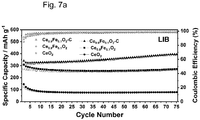
- Figure 7 shows galvanostatic cycling of electrodes based on CeO 2 (state of the art), Ce 0.9 Fe 0.1 O 2 , and carbon coated Ce 0.9 Fe 0.1 O 2 -C as the active anion material for lithium-ion battery applications, applying a constant current ( Figure 7a ) and at elevated specific currents before subsequently decreasing the current back to 100 mA g -1 ( Figure 7b ).
- the applied specific current in Figure 7a was 50 mA g -1 while the cut-off voltages in both Figures 7a and 7b were 0.01 and 3.0 V vs. Li/Li + .
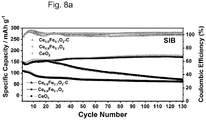
- Figure 8 shows galvanostatic cycling of electrodes based on CeO 2 (state of the art), Ce 0.9 Fe 0.1 O 2 , and carbon coated Ce 0.9 Fe 0.1 O 2 -C as the active anion material for sodium-ion battery applications, applying a constant current ( Figure 8a ), and at elevated specific currents before subsequently decreasing the current back to 100 mA g -1 ( Figure 8b ).
- the applied specific current in Figure 8A was 50 mA g -1 while the cut-off voltages in both Figures 8a and 8b were 0.01 and 3.0 V vs. Na/Na + .
- the carbon coating moreover supports a substantially improved cycling stability as shown in Figure 8a .
- lithium-ion battery full-cells were assembled using Ce 0.9 Fe 0.1 O 2 -C as the active anion material and LiNi 0.5 Mn 1.5 O 4 (LNMO) as the cathode active material.
- Ce 0.9 Fe 0.1 O 2 -C/LNMO full-cells deliver an initial discharge capacity above 90 mAh g -1 versus LNMO in the 10th cycle at 1C in a voltage window of 1 V to 4.4 V.
- the discharge/charge rate was increased to 20C, resulting in an observation that the cell can be discharged and charged in less than 3 min.
- the cell is still running, but these preliminary results show the high performance even for such fast discharge/charge rates, providing a high capacity of 60 mAh g -1 after 220 cycles and a coulombic efficiency of about 100%.
- FIG. 10 Further results for the lithium-ion battery full-cells comprising Ce 0.9 Fe 0.1 O 2 -C as the active anion material and LiNi 0.5 Mn 1.5 O 4 (LNMO) as the cathode active material are shown in Figure 10 .
- Figures 10a and 10b show respective results of galvanostatic cycling.
- Figure 10b reveals that the resulting lithium-ion battery is a 3 V full-cell.
- Figure 10d displays the resulting specific energy versus the specific power, demonstrating that this full-cell exhibits a combination of high power density at concurrently high energy density.
Landscapes
- Chemical & Material Sciences (AREA)
- Chemical Kinetics & Catalysis (AREA)
- Electrochemistry (AREA)
- General Chemical & Material Sciences (AREA)
- Engineering & Computer Science (AREA)
- Materials Engineering (AREA)
- Manufacturing & Machinery (AREA)
- Battery Electrode And Active Subsutance (AREA)
Abstract
Description
- The present invention relates to an electrochemical energy storage device, specifically to an electrochemical energy storage device which comprises an alternative active material for the anode of the electrochemical energy storage device, and a method for producing the alternative anode active material.
- Modern electrochemical energy storage devices, specifically electrochemical cells such as primary or secondary batteries, which are widely used for storing and/or providing electrical energy from electrochemical reactions, specifically in applications covering various areas including but not limited to portable electronic devices, electric vehicles, hybrid electric vehicles, or stationary energy storage systems, comprise at least one first half-cell having at least one first electrode also denoted as "cathode" and at least one second half-cell having at least one second electrode also denoted as "anode". Further, the electrochemical energy storage device comprises at least one electrolyte being adapted for providing an ionic conducting path between the two half-cells for a transport of ions. For a purpose of avoiding a short circuit, a separator may, additionally, be placed between the two half-cells.
- However, in order to further improve their performance, in particular, in electric or hybrid electric vehicles, an increase of both security and performance, the latter specifically with regard to the energy density and/or the power density, is desirable. For this purpose, using an alternative anode material, i.e. an alternative active material for the anode, appears to be promising. Known anode materials, typically, comprise metallic lithium, silicon, silicon oxide, or graphite.
- In 2007, F. Zhou, X. Zhao, H. Xu, C. Yuan, CeO2 Spherical Crystallites: Synthesis, Formation Mechanism, Size Control, and Electrochemical Property Study, J. Phys. Chem. C. 111 (2007) 1651-1657. doi:10.1021/jp0660435, investigated CeO2 spherical crystallites as potential anode material for lithium-ion batteries. Herein, these nanoparticles have been synthesized by a surfactant-assisted hydrothermal method, using poly(vinylpyrrolidone) (PVP) as surfactant. Electrodes based on this active material showed specific capacities of more than 500 mAhg-1, though the discharge/charge potential profile clearly reveals that the major contribution to this capacity is related to a use of an aluminum current collector, since aluminum can electrochemically alloy with lithium in the given voltage window. However, aluminum is not used herein as current collector. Instead, copper, which is electrochemically inert towards lithium in the given voltage window, is commonly used for this purpose.
- Subsequently, CeO2 was studied as a potential anode material for lithium-ion batteries, synthesizing
- core-shell microspheres and/or nanospheres, as reported by H. Liu, H. Liu, X. Han, Core-shell CeO2 micro/nanospheres prepared by microwave-assisted solvothermal process as high-stability anodes for Li-ion batteries, Journal of Solid State Electrochemistry. 21 (2017) 291-295. doi:10.1007/s10008-016-3320-6.);
- microrods, as reported by H. Liu, Q. Le, Synthesis and performance of cerium oxide as anode materials for lithium ion batteries by a chemical precipitation method, Journal of Alloys and Compounds. 669 (2016) 1-7. doi:10.1016/j.jallcom. 2016.01.235;
- microspheres, as reported by X. Huang, H. Liu, J. Liu, H. Liu, Synthesis of micro sphere CeO2 by a chemical precipitation method with enhanced electrochemical performance, Materials Letters. 193 (2017) 115-118. doi:10.1016/j.matlet.2017.01. 090;
- ceria/graphene nanocomposites, as reported by G. Wang, J. Bai, Y. Wang, Z. Ren, J. Bai, Preparation and electrochemical performance of a cerium oxide-graphene nanocomposite as the anode material of a lithium ion battery, Scripta Materialia. 65 (2011) 339-342. doi:10.1016/j.scriptamat.2011.05.001;
- core-shell CeO2@C nanospheres, as reported by X. Wu, H. Niu, S. Fu, J. Song, C. Mao, S. Zhang, D. Zhang, C. Chen, Core-shell CeO2@C nanospheres as enhanced anode materials for lithium ion batteries, J. Mater. Chem. A. 2 (2014) 6790-6795. doi:10.1039/C3TA15420C;
- carbon-wrapped hollow spheres, as reported by M. Ma, H. Wang, S. Liang, S. Guo, Y. Zhang, X. Du, Porous carbon-wrapped cerium oxide hollow spheres synthesized via microwave hydrothermal for long-cycle and high-rate lithium-ion batteries, Electrochimica Acta. 256 (2017) 110-118. doi:10.1016/j.electacta.2017.10.041; or
- an intercalation compound comprising crystallites as disclosed in
US 2007/ 0245546 A1 . - The study by Ma et al. indicates an achievement in capacity by introducing substantial amounts of carbon, i.e. more than 50 wt%, to enhance the electronic conductivity, though the required carbon may itself serve as active material in such case. However, the capacity values as reported greatly vary - just like the shape of the corresponding discharge/charge profiles, suggesting that the lithium storage mechanism is, firstly, differing from study to study and, secondly, far from being understood, while, thirdly, the capacity values reported may, in fact, be related to other electrode components such as carbon.
- Accordingly, the mentioned studies should be taken with care - not least, as they do not provide any information on the lithium storage mechanism. Further, such high capacities would require an uptake of more than two lithium cations per formula unit, which, however, appears questionable if one assumes an insertion mechanism, as confirmed by the very few studies, which are focused on the investigation of a delithiation/lithiation mechanism. K. Li, X. Zhou, A. Nie, S. Sun, Y.-B. He, W. Ren, B. Li, F. Kang, J.-K. Kim, T.-Y. Zhang, Discovering a First-Order Phase Transition in the Li-CeO2 System, Nano Lett. 17 (2017) 1282-1288. doi:10.1021/acs.nanolett.6b05126; and C. Hua, X. Fang, Z. Yang, Y. Gao, Z. Wang, L. Chen, Lithium storage mechanism and catalytic behavior of CeO2, Electrochemistry Communications. 25 (2012) 66-69. doi:10.1016/j.elecom.2012. 09.030, revealed a reversible lithium uptake of less than 150 mAhg-1, i.e. up to one lithium per formula unit of CeO2, indicating that lithium is inserted into the CeO2 crystalline structure without undergoing, e.g., a conversion mechanism.
- In addition, the use of metal-doped ceria for other kinds of applications was reported. Such applications comprise
- a use as catalyst for hydrogen production, specifically by Fe doping, as reported in S. Mansingh, D.K. Padhi, K.M. Parida, Enhanced photocatalytic activity of nanostructured Fe doped CeO2 for hydrogen production under visible light irradiation, International Journal of Hydrogen Energy. 41 (2016) 14133-14146. doi:10.1016/j.ijhydene.2016.05.191;
- photocatalysts, specifically by Fe doping, as reported in D. Channei, B. Inceesungvorn, N. Wetchakun, S. Phanichphant, A. Nakaruk, P. Koshy, C.C. Sorrell, Photocatalytic activity under visible light of Fe-doped CeO2 nanoparticles synthesized by flame spray pyrolysis, Ceramics International. 39 (2013) 3129-3134. doi:10.1016/j.ceramint.2012.09.093; and Y. Wang, F. Wang, Y. Chen, D. Zhang, B. Li, S. Kang, X. Li, L. Cui, Enhanced photocatalytic performance of ordered mesoporous Fe-doped CeO2 catalysts for the reduction of CO2 with H2O under simulated solar irradiation, Applied Catalysis B: Environmental. 147 (2014) 602-609. doi:10.1016/j.apcatb.2013.09.036;
- N2O decomposition as reported in F.J. Perez-Alonso, I. Melian-Cabrera, M. López-Granados, F. Kapteijn, J.L.G. Fierro, Synergy of FexCe1-xO2 mixed oxides for N2O decomposition, Journal of Catalysis 239 (2006) 340-346. doi:10.1016/j.jcat.2006. 02.008;
- a use for oxygen storage, as disclosed in
DE 10 2013 008 659 A1US 2017/ 0346088 A1 , and reported by A.B. Kehoe, D.O. Scanlon, G.W. Watson, Role of Lattice Distortions in the Oxygen Storage Capacity of Divalently Doped CeO2, Chem. Mater. 23 (2011) 4464-4468. doi:10.1021/cm201617d; or - a use as a gas diffusion layer as disclosed in
CN 105098199 A . - Further, Bi-doped CeO2 was reported, e.g., by G. Li, Y. Mao, L. Li, S. Feng, M. Wang, X. Yao, Solid Solubility and Transport Properties of Nanocrystalline (CeO2)1-x(BiO1.5)x by Hydrothermal Conditions, Chem. Mater. 11 (1999) 1259-1266. doi:10.1021/cm9806735, who studied the crystalline structure as a function of the Bi content, the maximum dopant ratio prior to the formation of secondary phases, and the oxygen anion conductivity.
- Further, Fe-doped CeO2 was disclosed in
CN 106492812 A , and reported by G. Li, R.L. Smith, H. Inomata, Synthesis of Nanoscale Ce1-xFexO2 Solid Solutions via a Low-Temperature Approach, J. Am. Chem. Soc. 123 (2001) 11091-11092. doi:10.1021/ ja016502+, who studied the distribution of the two cations in the crystalline lattice and the concentration of oxygen vacancies. - Further, CeO2 doped inter alia with Ti or Nb was reported by Chen Pei-Lin, Chen I-Wei, Grain Growth in CeO2: Dopant Effects, Defect Mechanism, and Solute Drag, Journal of the American Ceramic Society. 79 (1996) 1793-1800. doi:10.1111/j.1151-2916.1996.tb07997.x, who investigated the grain growth depending on the doping agent and its concentration.
- Further, Fe/CeO2 decorated carbon nanofibers (CNFs) was reported for use as a catalyst for supercapacitors applications by Zafar Khan Ghouri, Nasser A. M. Barakat, Al-Mahmnur Alam, Mira Park, Tae Hwan Han, Hak Yong Kim, Facile synthesis of Fe/CeO2-doped CNFs and Their Capacitance Behavior, Int. J. Electrochem. Sci., 10 (2015) 2064 - 2071.
- It is therefore an objective of the present invention to provide an electrochemical energy storage device and a method for producing an anode active material for the electrochemical energy storage device, which provide advantageous alternatives to the above-mentioned solutions as known of the state of the art.
- It is a particular objective of the present invention to provide an alternative active material for the anode of the electrochemical energy storage device which, on one hand, increases the safety of the electrochemical energy storage device and which, on the other hand, improves the performance of the electrochemical energy storage device, especially with respect to the energy density and, in particular, the power density.
- It is a further objective of the present invention to provide an advantageous manufacturing method for producing the alternative anode active material, wherein the method may be operable at low temperatures and moderate pressures.
- This problem is solved by an electrochemical energy storage device and a method for producing an anode active material for the electrochemical energy storage device with the features of the independent claims. Preferred embodiments, which might be realized in an isolated fashion or in any arbitrary combination, are listed in the dependent claims.
- As used in the following, the terms "have", "comprise" or "include" or any arbitrary grammatical variations thereof are used in a non-exclusive way. Thus, these terms may refer to both a situation in which, besides the feature introduced by these terms, no further features are present in the entity described in this context and to a situation in which one or more further features are present. As an example, the expressions "A has B", "A comprises B" and "A includes B" may both refer to a situation in which, besides B, no other element is present in A (i.e. a situation in which A solely and exclusively consists of B) and to a situation in which, besides B, one or more further elements are present in entity A, such as element C, elements C and D or even further elements.
- Further, as used in the following, the terms "preferably", "more preferably", "particularly", "more particularly", or similar terms are used in conjunction with optional features, without restricting alternative possibilities. Thus, features introduced by these terms are optional features and are not intended to restrict the scope of the claims in any way. The invention may, as the skilled person will recognize, be performed by using alternative features. Similarly, features introduced by "in an embodiment of the invention" or similar expressions are intended to be optional features, without any restriction regarding alternative embodiments of the invention, without any restrictions regarding the scope of the invention and without any restriction regarding the possibility of combining the features introduced in this way with other features of the invention.
- In a first aspect, the present invention relates to an electrochemical energy storage device. As described above, the term "electrochemical energy storage device", which may also be denoted by the terms "electrochemical cell" or "full cell", is widely used for storing and/or providing electrical energy from electrochemical reactions which are performed within the electrochemical energy storage device, specifically in applications covering various areas including but not limited to portable electronic devices, electric vehicles, hybrid electric vehicles, or stationary energy storage systems. For this purpose, the electrochemical energy storage device comprises at least one first half-cell comprising at least one first electrode also denoted as "anode" and at least one second half-cell comprising at least one second electrode also denoted as "cathode", wherein the two half-cells are electrically separated from each other in order to avoid a short circuit. As generally used, the term "electrode" refers to an electrically conducting body which is adapted for providing electrical charges, or for withdrawing electrical charges, in particular electrons. Hereby, the "anode" is defined as the type of electrode at which the electrons effect an oxidation of the anode active material whereas the "cathode" is defined as the type of electrode at which electrons are collected, whereby a reduction occurs in the cathode active material. Thus, the anode undergoes a reduction process during charging of the full cell and an oxidization process during discharging of the full cell, respectively. By analogy, the cathode undergoes an oxidization process during charging of the full cell and a reduction process during discharging of the full cell, respectively.
- For this purpose, the anode comprises at least one active material denoted as the "anode active material" whereas the cathode comprises at least one active material denoted as the "cathode active material". As generally used, the term "active material" refers to a substance by the respective electrode body which is adapted to be reversibly modified between at least two electronic states, whereby electrochemical energy is converted into electrical energy, or vice versa.
- In accordance with the present invention, the anode comprises an anode active material selected from
Ce1-xMxO2,
wherein M is at least one metal and x indicates a partition of Ce which is replaced by the metal M. Thus, in a formal consideration, the metal-doped ceria Ce1-xMxO2 comprises the undoped compound ceria CeO2 in which a partition x of the Ce is being replaced by the dopant metal M. Not wishing to be bound by theory, the dopant metal M may, for some dopants, take up a place of a Ce in a crystal structure in which the ceria is provided, wherein, however, at least one lattice parameter of the crystal structure may be amended by the incorporation of the dopant metal M. However, for other dopants, the dopant metal M may take up a different place in the crystal structure while the place of the Ce may remain empty, wherein it can reasonably be assumed that the latter process may result in a higher capacity of the anode active material. - In general, any metal M which is capable of being integrated into the crystal structure in which the ceria is provided in this manner can, in principle, be used for the anode active material according to the present invention. In a preferred embodiment, the at least one metal M as comprised by the anode active material may, preferably, be selected from the group consisting of Al, Sc, Ti, V, Cr, Mn, Fe, Co, Ni, Cu, Zn, Ga, Y, Zr, Nb, Mo, Ru, Rh, Pd, Ag, Cd, In, Sn, Sb, Hf, Ta, W, Re, Os, Ir, Pt, Au, Hg, and Bi. In a more preferred embodiment, the metal M as comprised by the anode active material may be selected from the group consisting of Al, Ti, V, Cr, Mn, Fe, Co, Ni, Sn, Cu, Zn, Nb, Mo, In, Sn, W, and Bi. In a most preferred embodiment, the metal M as comprised by the anode active material may be selected from the group consisting of Fe, Co, Bi, Mn, Nb, and Ti. In a particularly preferred embodiment, the metal M as comprised by the anode active material may, as demonstrated below in more detail, be selected from the group consisting of Fe, Co, and Bi.
- Similarly, a value for the partition x according to which Ce is replaced by the metal M can, in principle, be selected as long as such an amount of the metal M can be integrated into the crystal structure in which the ceria is provided in the manner according to the present invention as described elsewhere in this document in more detail. Thus, the partition x is selected from 0.01 ≤ x ≤ 0.25, preferably from 0.03 ≤ x ≤ 0.2, more preferred from 0.05 ≤ x ≤ 0.15, in particular approximately 0.07 ≤ x ≤ 0.12, specifically approximately 0.1.
- In a preferred embodiment, the electrochemical energy storage device may be an alkali metal-ion battery, particularly selected from a lithium-ion battery (LIB) or a sodium-ion battery (SIB). Herein, the lithium-ion battery comprises a cathode active material which allows generating lithium ions either by applying a voltage or a current to charge the electrochemical energy storage device. As a result, the lithium ions move through the electrochemical energy storage device from the cathode to the anode upon charging and from the anode to the cathode upon discharging of the electrochemical energy storage device, while providing a voltage or current to conduct work. Similarly, the sodium-ion battery comprises a cathode active material which allows generating sodium ions which are adapted to move through the electrochemical energy storage device during charging and discharging thereof. Thus, the cathode active material of the electrochemical energy storage device is selected from a material comprising an alkali metal, in particular lithium or sodium, respectively, which can provide alkali metal ions upon application of a voltage to the electrochemical energy storage device.
- In a preferred embodiment, the electrochemical energy storage device may, thus, be a lithium-ion battery (LIB), wherein the cathode active material may, preferably, be selected from layered lithium cobalt(III) oxide (LiCoO2 (LCO)); spinel lithium manganese oxide LiMn2O4 (LMO); a layered lithium nickel manganese cobalt oxide (LiNi1-x-yMnxCOyO2 (NMC), wherein x ≤ 1/3, y ≤ 1/3); olivine lithium transition metal phosphate (LiTMPO4 (LTMP), wherein TM may, preferably, be at least one of Fe, Mn, Co, or Ni); lithium transition metal silicate (Li2TMSiO4, wherein TM may, preferably, be at least one of Fe, Mn, Co, or Ni); a spinel lithium manganese nickel oxide, such as Li1+xMn2-yNiyO4 (LMNO), wherein x ≤ 0.3 and y ≤ 0.5); layered lithium nickel cobalt aluminum oxide (LiNi1-x-yCoxAlyO2 (NCA), wherein x ≤ 0.25 and y ≤ 0.2); layered lithium nickel dioxide (LiNiO2); and Li1+zNixMn1-x-yCoyO2 (LR-NMC), wherein x ≤ 0.5, y ≤ 0.2, and z ≤ 0.3), wherein NMC, LCO, LMO, LMNO, NCA, and LTMP are more preferred. However, other kinds of cathode active materials, such as those known by the skilled person, may also be feasible for being used in the electrochemical energy storage device.
- In a further preferred embodiment, the electrochemical energy storage device may be a sodium-ion battery (SIB), wherein the cathode active material may, preferably, be selected from sodium analogues of the cathode active materials mentioned above, and other layered sodium transition metal oxides, such as NaxNiyFezMn1-y-z-aMaO2, wherein x ≤ 0.8, y ≤ 0.4, z ≤ 0.3, and a ≤ 0.2; and sodium vanadium phosphates, e.g., Na3V2(PO4)3, wherein especially layered sodium transition metal oxides and sodium transition metal phosphates are preferred.
- In addition, the half-cells may, preferably, be separated by an additional electrically insulating material which is, generally, denoted by the term "separator". For this purpose, the separator may, preferably, be placed between the at least one cathode and the at least one anode. However, in order to simultaneously provide an ion conducting path between the two different types of the electrodes, generally, at least one electrolyte is used, while the resulting electron flow is guided via an outer circuit, connecting the at least two electrodes. Herein, the separator may, preferably, assume the form of a membrane exhibiting a porous composition which is adapted for both receiving and providing the electrolyte and enabling the transport of the ions between the two different types of electrodes.
- In a further aspect, the present invention relates to a method for producing an anode active material for the electrochemical energy storage device, in particular for the electrochemical energy storage device as described elsewhere in this document. The method which, may also be denoted by the term "mild hydrothermal synthesis", comprises the following steps a) to d):
- a) providing a dopant precursor, wherein the dopant precursor comprises the dopant metal M;
- b) dissolving the dopant precursor in an aqueous solvent, whereby a solution is obtained;
- c) applying an elevated temperature to the solution; and
- d) cooling the solution, whereby a precipitate is obtained, wherein the precipitate is the anode active material comprising Ce1-xMxO2, wherein M is at least one metal and 0.01 ≤ x ≤ 0.25.
- Herein, the indicated steps may, preferably, be performed in the given order, commencing with step a) and finishing with step d). However, any or all of the indicated steps may also be repeated several times and/or preformed concurrently in part. Moreover, further steps may, in addition, be performed.
- Preferred examples for the dopant precursors which are provided according to step a) are presented in the detailed description of the method below. However, further kinds of dopant precursors may also be applicable. As generally used, the term "dopant precursor" refers to a substance which comprises the dopant metal M, however in a different form compared to the anode active material Ce1-xMxO2.
- According to step b), the dopant precursor is dissolved in an aqueous solvent, whereby a solution is obtained. After or during dissolving the dopant precursor, the pH of the obtained solution may be adjusted, specifically to an alkaline pH, preferably at pH ≥ 10, more preferred at pH ≥ 11, most preferred at pH ≥ 12, in particular at pH ≥ 13. For this purpose, an introduction of NaOH or KOH into the solution may be preferred. However, other kinds of alkaline species may also be feasible.
- The elevated temperature which is applied to the solution comprising the dissolved dopant precursor according to step c) may, preferably be selected from 100 °C to 300 °C, more preferred from 150 °C to 250 °C, in particular from approximately 200 °C.
- According to step d), the mixture may, preferably, be cooled to room temperature, i.e. a temperature of approximately 20 °C to 25 °C.
- In a particularly preferred embodiment, the anode active material which comprises the doped ceria compound Ce1-xMxO2 is coated with carbon after step d). For applying the carbon coating, an organic compound, preferably selected from one or more of natural saccharides, such as glucose, sucrose, maltose or cellulose, or a derivative thereof, can be dissolved in a suitable solvent, such as water in the case of glucose or sucrose, or an ionic liquid in the case of cellulose, into which the doped ceria compound Ce1-xMxO2 can be suspended. Based on existing literature about carbon coating precursors, the skilled person can, however, use other majorly carbon-containing organic compounds, such as pitch or polyacrylonitrile. Hereinafter, the obtained suspension can preferably be subjected to a further elevated temperature of 150 °C to 200 °C. A further obtained precipitate which can, in particular, be collected by centrifugation can, preferably, undergo a further drying procedure. Subsequently, the dry precipitate can, in addition, be thermally treated at higher temperature of 250 °C to 600 °C, preferably of 300 °C to 500 °C, in particular of approximately 400 °C, whereby a composite comprising the carbon coated doped ceria compound Ce1-xMxO2 is, finally, obtained.
- For further details concerning the method, reference may be made to the detailed description of the method below as well as to the description of the electrochemical energy storage device elsewhere in this document.
- Summarizing, the doping of ceria (CeO2) by the metal M has a highly beneficial impact on the potential use of ceria as the active material for lithium-ion and sodium-ion batteries and allows for capacity increases by a factor of two to three compared to non-doped ceria CeO2. Moreover, it could be demonstrated that the additional carbon coating process enhanced the available specific capacity, cycling stability, and rate capability for both LIBs and SIBs. Such electrodes have a great potential for high-power batteries, which can be discharged and charged in less than a few minutes.
- Further optional features and embodiments of the invention will be disclosed in more detail in the subsequent description of preferred embodiments, preferably in conjunction with the dependent claims. Therein, the respective optional features may be realized in an isolated fashion as well as in any arbitrary feasible combination, as the skilled person will realize. It is emphasized here that the scope of the invention is not restricted by the preferred embodiments.
- In the Figures:
- Figure 1
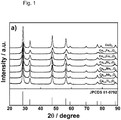
- shows a comparison of an XRD analysis between CeO2 (state of the art) and Ce1-xMxO2, wherein M is Fe, Co, Bi, Mn, Nb or Ti, respectively;
- Figure 2
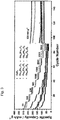
- shows constant current galvanostatic cycling of electrodes based on CeO2 (state of the art) and on Ce1-xMxO2, wherein M is Fe, Co, Bi, Mn, Nb or Ti, respectively;
- Figure 3
- shows galvanostatic cycling of electrodes based on CeO2 (state of the art) and on Ce1-xMxO2, wherein M is Fe, Co, Bi, Mn, Nb or Ti, respectively, at elevated specific currents before subsequently decreasing the current back to 100 mAg-1;
- Figure 4
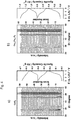
- shows a comparison of an in situ XRD analysis between CeO2 (state of the art;
Figure 4a ) and Ce0.9Fe0.1O2 (Figure 4b ), respectively, upon galvanostatic delithiation/lithiation for two subsequent discharge/charge cycles; - Figure 5
- shows galvanostatic cycling of electrodes based on CeO2 (state of the art) and on Ce1-xMxO2, wherein M is Fe, Co, Bi, or Nb, respectively, as anode active material for sodium-ion battery applications;
- Figure 6
- shows a comparison of an XRD analysis between CeO2 (state of the art), Ce0.9Fe0.1O2, and carbon coated Ce0.9Fe0.1O2-C, respectively;
- Figure 7
- shows galvanostatic cycling of electrodes based on CeO2 (state of the art), on Ce0.9Fe0.1O2, and on carbon coated Ce0.9Fe0.1O2-C, respectively, as anode active material for lithium-ion battery applications, applying a constant current (
Figure 7a ) and at elevated specific currents before subsequently decreasing the current back to 100 mAg-1 (Figure 7b ); - Figure 8
- shows galvanostatic cycling of electrodes based on CeO2 (state of the art), on Ce0.9Fe0.1O2, and on carbon coated Ce0.9Fe0.1O2-C, respectively, as anode active material for sodium-ion battery applications, applying a constant current (
Figure 8a ) and at elevated specific currents before subsequently decreasing the current back to 100 mAg-1 (Figure 8b ); - Figure 9
- shows galvanostatic cycling of Li-ion full cells using carbon coated Ce0.9Fe0.1O2-C as the anode active material and LiNi0.5Mn1.5O4 (LNMO) as the cathode active material at 20 °C after 10 initial cycles at 1C (1C = 147 mA g-1;) at a voltage range of 1 V to 4.4 V; The capacity values for the Li-ion full cell refer to an amount of active material for the capacity-limiting cathode; and
- Figure 10
- shows further experimental results for Li-ion full cells using carbon coated Ce0.9Fe0.1O2-C as the anode active material and LiNi0.5Mn1.5O4 (LNMO) as the cathode active material.
- Pure undoped CeO2, serving as reference as known from the state of the art, and metal-doped CeO2 having a general composition of Ce0.9M0.1O2 and M = Fe, Co, Bi, Mn, Nb, and Ti, were synthesized using a mild hydrothermal synthesis. For this purpose, 9 mmol Ce(NO3)3·6 H2O and 1 mmol of a corresponding dopant precursor Fe(NO3)3 · 9 H2O, Co(NO3)2 · 6 H2O, Bi(NO3)3 · 5 H2O, Mn(NO3)2 · 4 H2O, Nb(HC2O4)5 · x H2O, or C10H14O5Ti, respectively were dissolved in 75 mL deionized water in a 100 mL Teflon liner, and the solution was stirred for 1 h. Subsequently, 5M NaOH was added dropwise to the solution under continuous stirring to adjust the pH to 13. The resulting solution was further stirred for 1 h and afterwards transferred to a stainless steel autoclave, applying a temperature of 200 °C for 24 h under continuous stirring at 1000 rpm. After cooling to room temperature, the precipitate was washed several times with deionized water and ethanol and dried at 60 °C overnight. The pure undoped CeO2 was synthesized by the same method without adding any dopant precursor.
- For providing a carbon coating, 1.2 g glucose were dissolved in 80 mL deionized water before adding 600 mg of Ce0.9Fe0.1O2 as the corresponding anode active material under continuous stirring. The obtained suspension was transferred into the stainless steel autoclave and subjected to 180 °C for 13 h under stirring at 1000 rpm) The precipitate was collected by centrifugation, washed several times with deionized water and ethanol, and finally dried at 60 °C overnight. Subsequently, the dry composite was thermally treated at 400 °C for 2 h under argon atmosphere using a heating rate of 3 °C min-1.
- All as-synthesized materials were initially characterized by means of X-ray diffraction (XRD) and transmission electron microscopy (TEM). The diffraction patterns as shown in
Figure 1 reveal the successful synthesis of phase-pure materials in all cases, as indicated by the absence of any secondary phases. Moreover, the introduction of the various dopants had a substantial effect on the average crystallite size, as summarized in the following Table 1:Table 1 Anode active material Average crystallite size CeO2 (state of the art) 131 Å Ce0.9Fe0.1O2 82 Å Ce0.9Co0.1O2 88 Å Ce0.9Bi0.1O2 77 Å Ce0.9Mn0.1O2 127 Å Ce0.9Nb0.1O2 197 Å Ce0.9Ti0.1O2 104 Å - Interestingly, the introduction of Nb leads to a significant increase in crystallite size, while the introduction of all other dopants, in particular of Bi, Co, and Fe, results in a significant decrease in crystallite size.
- Further, the TEM micrographs (not depicted here) reveal a synthesis of very fine nanoparticles in all cases with a size of about 8 to 20 nm depending on the dopant nature, which is in very good agreement with the analysis of the crystallite size based on the XRD data. This good agreement clearly indicates that the nanoparticles are single-crystalline.
- In a next step, electrodes based on the as-synthesized materials were prepared and subjected to galvanostatic cycling.
Figure 2 shows that the obtained results reveal that the dopant nature plays a decisive role for the achievable capacity. While generally all Ce0.9M0.1O2 and M = Fe, Co, Bi, Mn, Nb, and Ti samples show an increased specific capacity compared to pure undoped CeO2 (state of the art), the highest increase is observed for Ce0.9Bi0.1O2 and even more for Ce0.9Co0.1O2 and Ce0.9Fe0.1O2, showing capacities which are about thrice as high as for pure undoped CeO2 (state of the art). The applied specific current was 50 mA g-1 while the cut-off voltages were 0.01 and 3.0 V vs. Li/Li+. -
Figure 3 shows that these increased capacities are also maintained when applying elevated specific currents before subsequently decreasing the current back to 100 mA g-1. Particularly for Ce0.9Co0.1O2 and Ce0.9Fe0.1O2, the capacities are superior to all other samples across all discharge/charge rates and even for specific currents as high as 5000 mA g-1; these samples still show specific capacities of about 100 mAh g-1. The cut-off voltages were 0.01 and 3.0 V vs. Li/Li+. - In order to elucidate an impact of the metal dopant on the delithiation/lithiation mechanism and, thus, to understand the dramatically enhanced capacities, an in situ XRD analysis was conducted for pure undoped CeO2 (state of the art;
Figure 4a ) and exemplarily for Ce0.9Fe0.1O2 (Figure 4b ). It is apparent that the insertion mechanism, observed for pure undoped CeO2 (state of the art;Figure 4a ), indicated by a continuous shift of reflections to lower 2θ values as a result of the increasing unit cell volume upon lithiation, is well maintained also for Ce0.9Fe0.1O2 - in fact, much more pronounced (Figure 4b ). This increased shift is in excellent agreement with the higher capacities recorded, demonstrating that a higher amount of lithium ions is reversibly inserted. The applied specific current was 50 mA g-1 while the cut-off voltages were 0.01 and 3.0 V vs. Li/Li+. - Further, a potential use of Ce0.9M0.1O2 and M = Fe, Co, Bi, and Nb for sodium-ion battery applications was studied using galvanostatic cycling. As shown in
Figure 5 , also in this case the incorporation of Fe and Co results in a substantial capacity increase of about 47 mAhg-1 and 43 mAhg-1, respectively, i.e., about 50 % compared to pure undoped CeO2 (state of the art). In addition, it is remarkable that the Ce0.9Bi0.1O2 samples reveal further improved capacity values of about twice the value obtained for pure undoped CeO2 (state of the art). The applied specific current was 50 mA g-1 while the cut-off voltages were 0.01 and 3.0 V vs. Na/Na+. - Further, carbon coated Ce0.9Fe0.1O2-C was synthesized to be investigated for lithium-ion and sodium-ion battery applications. The characterization by XRD as shown in
Figure 6 reveals that the application of the carbon coating does not impact the crystal structure while the TEM micrograph (not presented here) shows the presence of a thin, approximately 5 nm thick carbon layer on the Ce0.9Fe0.1O2-C nanoparticles. Subjecting electrodes based on the carbon-coated anode active material and comparing the data to non-coated samples and pure undoped CeO2 (state of the art) as a reference illustrates inFigures 7 and8 a beneficial effect on the achievable capacity at varying discharge/charge rates for both lithium-ion applications and sodium-ion applications. -
Figure 7 shows galvanostatic cycling of electrodes based on CeO2 (state of the art), Ce0.9Fe0.1O2, and carbon coated Ce0.9Fe0.1O2-C as the active anion material for lithium-ion battery applications, applying a constant current (Figure 7a ) and at elevated specific currents before subsequently decreasing the current back to 100 mA g-1 (Figure 7b ). The applied specific current inFigure 7a was 50 mA g-1 while the cut-off voltages in bothFigures 7a and7b were 0.01 and 3.0 V vs. Li/Li+. - Similarly,
Figure 8 shows galvanostatic cycling of electrodes based on CeO2 (state of the art), Ce0.9Fe0.1O2, and carbon coated Ce0.9Fe0.1O2-C as the active anion material for sodium-ion battery applications, applying a constant current (Figure 8a ), and at elevated specific currents before subsequently decreasing the current back to 100 mA g-1 (Figure 8b ). The applied specific current inFigure 8A was 50 mA g-1 while the cut-off voltages in bothFigures 8a and8b were 0.01 and 3.0 V vs. Na/Na+. In particular, when cycled vs. metallic sodium, the carbon coating moreover supports a substantially improved cycling stability as shown inFigure 8a . - Finally, lithium-ion battery full-cells were assembled using Ce0.9Fe0.1O2-C as the active anion material and LiNi0.5Mn1.5O4 (LNMO) as the cathode active material. As shown in
Figure 9 , such Ce0.9Fe0.1O2-C/LNMO full-cells, however, not optimized yet, deliver an initial discharge capacity above 90 mAh g-1 versus LNMO in the 10th cycle at 1C in a voltage window of 1 V to 4.4 V. Subsequently, the discharge/charge rate was increased to 20C, resulting in an observation that the cell can be discharged and charged in less than 3 min. At present, the cell is still running, but these preliminary results show the high performance even for such fast discharge/charge rates, providing a high capacity of 60 mAh g-1 after 220 cycles and a coulombic efficiency of about 100%. - Further results for the lithium-ion battery full-cells comprising Ce0.9Fe0.1O2-C as the active anion material and LiNi0.5Mn1.5O4 (LNMO) as the cathode active material are shown in
Figure 10 .Figures 10a and 10b show respective results of galvanostatic cycling.Figure 10b reveals that the resulting lithium-ion battery is a 3 V full-cell. Based on the results as presented inFigure 10c, Figure 10d displays the resulting specific energy versus the specific power, demonstrating that this full-cell exhibits a combination of high power density at concurrently high energy density.
Claims (15)
- An electrochemical energy storage device, comprising at least one first half cell having a cathode, at least one second half cell having at least one anode, and at least one electrolyte being adapted for providing an ionic conducting path between the two half-cells,
characterized in
that the anode comprises an anode active material selected from Ce1-xMxO2, wherein M is at least one metal and 0.01 ≤ x ≤ 0.25. - The electrochemical energy storage device according to the preceding claim, wherein the at least one metal M is selected from Al, Sc, Ti, V, Cr, Mn, Fe, Co, Ni, Cu, Zn, Ga, Y, Zr, Nb, Mo, Ru, Rh, Pd, Ag, Cd, In, Sn, Sb, Hf, Ta, W, Re, Os, Ir, Pt, Au, Hg, and Bi.
- The device according to the preceding claim, wherein the at least one metal M is selected from Al, Ti, V, Cr, Mn, Fe, Co, Ni, Sn, Cu, Zn, Nb, Mo, In, Sn, W, and Bi.
- The device according to the preceding claim, wherein the at least one metal M is selected from Fe, Co, and Bi.
- The device according to any one of the preceding claims, wherein 0.03 ≤ x ≤ 0.2.
- The device according to the preceding claim, wherein 0.05 ≤ x ≤ 0.15.
- The device according to the preceding claim, wherein 0.07 ≤ x ≤ 0.12.
- The device according to any one of the preceding claims, wherein the anode active material is coated with carbon.
- The device according to any one of the preceding claims, wherein the cathode active material comprises lithium or sodium.
- The device according to any one of the preceding claims, wherein the cathode active material is selected from at least one of layered lithium cobalt(III) oxide LiCoO2; spinel lithium manganese oxide LiMn2O4; a layered lithium nickel manganese cobalt oxide LiNi1-x-yMnxCoyO2, wherein x ≤ 1/3, y ≤ 1/3; olivine lithium transition metal phosphate LiTMPO4, wherein TM is at least one of Fe, Mn, Co, or Ni; lithium transition metal silicate Li2TMSiO4, wherein TM is at least one of Fe, Mn, Co, or Ni; a spinel lithium manganese nickel oxide,; layered lithium nickel cobalt aluminum oxide LiNi1-x-yCoxAlyO2, wherein x ≤ 0.25 and y ≤ 0.2; layered lithium nickel dioxide LiNiO2; and Li1-zNixMn1-x-yCoyO2, wherein x ≤ 0.5, y ≤ 0.2, and z ≤ 0.3.
- A method for producing an anode active material for the electrochemical energy storage device according to any one of the preceding claims, the method comprising the following steps:a) providing a dopant precursor, wherein the dopant precursor comprises the dopant metal M;b) dissolving the dopant precursor in an aqueous solvent, whereby a solution is obtained;c) applying an elevated temperature to the solution; andd) cooling the solution, whereby a precipitate is obtained, wherein the precipitate is the anode active material comprising Ce1-xMxO2, wherein M is at least one metal and 0.01 ≤ x ≤ 0.25.
- The method according to the preceding claim, wherein a pH of the solution obtained in step b) is adjusted to pH ≥ 10.
- The method according to any one of the preceding method claims, wherein the elevated temperature of step c) is selected from 100 °C to 300 °C.
- The method according to any one of the preceding method claims, wherein the precipitate of step d) is cooled to room temperature.
- The method according to any one of the preceding method claims, wherein the anode active material is being coated with carbon after step d).
Priority Applications (1)
| Application Number | Priority Date | Filing Date | Title |
|---|---|---|---|
| EP19153317.3A EP3686966A1 (en) | 2019-01-23 | 2019-01-23 | An electrochemical energy storage device and a method for producing an anode active material for the electrochemical energy storage device |
Applications Claiming Priority (1)
| Application Number | Priority Date | Filing Date | Title |
|---|---|---|---|
| EP19153317.3A EP3686966A1 (en) | 2019-01-23 | 2019-01-23 | An electrochemical energy storage device and a method for producing an anode active material for the electrochemical energy storage device |
Publications (1)
| Publication Number | Publication Date |
|---|---|
| EP3686966A1 true EP3686966A1 (en) | 2020-07-29 |
Family
ID=65228358
Family Applications (1)
| Application Number | Title | Priority Date | Filing Date |
|---|---|---|---|
| EP19153317.3A Pending EP3686966A1 (en) | 2019-01-23 | 2019-01-23 | An electrochemical energy storage device and a method for producing an anode active material for the electrochemical energy storage device |
Country Status (1)
| Country | Link |
|---|---|
| EP (1) | EP3686966A1 (en) |
Cited By (2)
| Publication number | Priority date | Publication date | Assignee | Title |
|---|---|---|---|---|
| CN113526627A (en) * | 2021-06-28 | 2021-10-22 | 中科嘉辞(昆山)环保科技有限公司 | Water body silicide removing system based on capacitance adsorption |
| CN113937262A (en) * | 2021-09-22 | 2022-01-14 | 浙江钠创新能源有限公司 | Metal oxide modified positive electrode material for sodium ion battery and preparation method and application thereof |
Citations (8)
| Publication number | Priority date | Publication date | Assignee | Title |
|---|---|---|---|---|
| US20070245546A1 (en) | 2004-07-26 | 2007-10-25 | Commessariat A L'energie Atomique | Electrode for a Lithium Battery, Method for Production of Such an Electrode and Lithium Battery Comprising Said Electrode |
| KR20140010690A (en) * | 2012-07-16 | 2014-01-27 | 전남대학교산학협력단 | Aluminium-doped cerium oxide, method for producing the same and air electrode for metal-air secondary battery including the same as catalyst |
| US20140223730A1 (en) * | 2008-03-18 | 2014-08-14 | Technical University Of Denmark | All ceramics solid oxide fuel cell |
| DE102013008659A1 (en) | 2013-05-18 | 2014-11-20 | Forschungszentrum Jülich GmbH | Electrochemical storage material and electrochemical storage device for storing electrical energy, comprising such a storage material |
| CN105098199A (en) | 2015-06-12 | 2015-11-25 | 中国科学院宁波材料技术与工程研究所 | Gas diffusion layer, preparation method and metal-air battery |
| CN106492812A (en) | 2016-09-14 | 2017-03-15 | 昆明理工大学 | A kind of preparation method of mesoporous CexFe1-xO2 solid solution catalyst |
| US20170346088A1 (en) | 2016-05-25 | 2017-11-30 | Saint-Gobain Ceramics & Plastics, Inc. | Electrode comprising heavily-doped ceria |
| CN108711615A (en) * | 2018-05-30 | 2018-10-26 | 广州朝锂新能源科技有限公司 | Metal-doped ceria surface modifies the nickelic positive electrode of lithium ion battery |
-
2019
- 2019-01-23 EP EP19153317.3A patent/EP3686966A1/en active Pending
Patent Citations (8)
| Publication number | Priority date | Publication date | Assignee | Title |
|---|---|---|---|---|
| US20070245546A1 (en) | 2004-07-26 | 2007-10-25 | Commessariat A L'energie Atomique | Electrode for a Lithium Battery, Method for Production of Such an Electrode and Lithium Battery Comprising Said Electrode |
| US20140223730A1 (en) * | 2008-03-18 | 2014-08-14 | Technical University Of Denmark | All ceramics solid oxide fuel cell |
| KR20140010690A (en) * | 2012-07-16 | 2014-01-27 | 전남대학교산학협력단 | Aluminium-doped cerium oxide, method for producing the same and air electrode for metal-air secondary battery including the same as catalyst |
| DE102013008659A1 (en) | 2013-05-18 | 2014-11-20 | Forschungszentrum Jülich GmbH | Electrochemical storage material and electrochemical storage device for storing electrical energy, comprising such a storage material |
| CN105098199A (en) | 2015-06-12 | 2015-11-25 | 中国科学院宁波材料技术与工程研究所 | Gas diffusion layer, preparation method and metal-air battery |
| US20170346088A1 (en) | 2016-05-25 | 2017-11-30 | Saint-Gobain Ceramics & Plastics, Inc. | Electrode comprising heavily-doped ceria |
| CN106492812A (en) | 2016-09-14 | 2017-03-15 | 昆明理工大学 | A kind of preparation method of mesoporous CexFe1-xO2 solid solution catalyst |
| CN108711615A (en) * | 2018-05-30 | 2018-10-26 | 广州朝锂新能源科技有限公司 | Metal-doped ceria surface modifies the nickelic positive electrode of lithium ion battery |
Non-Patent Citations (18)
| Title |
|---|
| A.B. KEHOE; D.O. SCANLON; G.W. WATSON: "Role of Lattice Distortions in the Oxygen Storage Capacity of Divalently Doped Ce0", CHEM. MATER., vol. 23, 2011, pages 4464 - 4468 |
| C. HUA; X. FANG; Z. YANG; Y. GAO; Z. WANG; L. CHEN: "Lithium storage mechanism and catalytic behavior of Ce0", ELECTROCHEMISTRY COMMUNICATIONS, vol. 25, 2012, pages 66 - 69 |
| CHEN PEI-LIN; CHEN I-WEI: "Grain Growth in Ce0 : Dopant Effects, Defect Mechanism, and Solute Drag", JOURNAL OF THE AMERICAN CERAMIC SOCIETY, vol. 79, 1996, pages 1793 - 1800 |
| D. CHANNEI; B. INCEESUNGVORN; N. WETCHAKUN; S. PHANICHPHANT; A. NAKARUK; P. KOSHY; C.C. SORRELL: "Photocatalytic activity under visible light of Fe-doped Ce0 nanoparticles synthesized by flame spray pyrolysis", CERAMICS INTERNATIONAL, vol. 39, 2013, pages 3129 - 3134 |
| F. ZHOU; X. ZHAO; H. XU; C. YUAN: "Ce0 Spherical Crystallites: Synthesis, Formation Mechanism, Size Control, and Electrochemical Property Study", J. PHYS. CHEM. C., vol. 111, 2007, pages 1651 - 1657 |
| F.J. PEREZ-ALONSO; I. MELIAN-CABRERA; M. LOPEZ-GRANADOS; F. KAPTEIJN; J.L.G. FIERRO: "Synergy of Fe.,Cel,0 mixed oxides for N 0 decomposition", JOURNAL OF CATALYSIS, vol. 239, 2006, pages 340 - 346 |
| G. LI; R.L. SMITH; H. INOMATA: "Synthesis of Nanoscale Ce _ Fe O Solid Solutions via a Low-Temperature Approach", J. AM. CHEM. SOC., vol. 123, 2001, pages 11091 - 11092 |
| G. LI; Y. MAO; L. LI; S. FENG; M. WANG; X. YAO: "Solid Solubility and Transport Properties of Nanocrystalline (CeO ) (BiO . ) by Hydrothermal Conditions", CHEM. MATER., vol. 11, 1999, pages 1259 - 1266 |
| G. WANG; J. BAI; Y. WANG; Z. REN; J. BAI: "Preparation and electrochemical performance of a cerium oxide-graphene nanocomposite as the anode material of a lithium ion battery", SCRIPTA MATERIALIA, vol. 65, 2011, pages 339 - 342 |
| H. LIU; H. LIU; X. HAN: "Core-shell Ce0 micro/nanospheres prepared by microwave-assisted solvothermal process as high-stability anodes for Li-ion batteries", JOURNAL OF SOLID STATE ELECTROCHEMISTRY, vol. 21, 2017, pages 291 - 295, XP036123280, DOI: doi:10.1007/s10008-016-3320-6 |
| H. LIU; Q. LE: "Synthesis and performance of cerium oxide as anode materials for lithium ion batteries by a chemical precipitation method", JOURNAL OF ALLOYS AND COMPOUNDS, vol. 669, 2016, pages 1 - 7, XP029450508, DOI: doi:10.1016/j.jallcom.2016.01.235 |
| K. LI; X. ZHOU; A. NIE; S. SUN; Y.-B. HE; W. REN; B. LI; F. KANG; J.-K. KIM; T.-Y. ZHANG: "Discovering a First-Order Phase Transition in the Li-Ce0 System", NANO LETT, vol. 17, 2017, pages 1282 - 1288 |
| M. MA; H. WANG; S. LIANG; S. GUO; Y. ZHANG; X. DU: "Porous carbon-wrapped cerium oxide hollow spheres synthesized via microwave hydrothermal for long-cycle and high-rate lithium-ion batteries", ELECTROCHIMICA ACTA, vol. 256, 2017, pages 110 - 118, XP085257121, DOI: doi:10.1016/j.electacta.2017.10.041 |
| S. MANSINGH; D.K. PADHI; K.M. PARIDA: "Enhanced photocatalytic activity of nanostructured Fe doped Ce0 for hydrogen production under visible light irradiation", INTERNATIONAL JOURNAL OF HYDROGEN ENERGY, vol. 41, 2016, pages 14133 - 14146 |
| X. HUANG; H. LIU; J. LIU; H. LIU: "Synthesis of micro sphere Ce0 by a chemical precipitation method with enhanced electrochemical performance", MATERIALS LETTERS, vol. 193, 2017, pages 115 - 118 |
| X. WU; H. NIU; S. FU; J. SONG; C. MAO; S. ZHANG; D. ZHANG; C. CHEN: "Core-shell Ce0 @C nanospheres as enhanced anode materials for lithium ion batteries", J. MATER. CHEM. A., vol. 2, 2014, pages 6790 - 6795 |
| Y. WANG; F. WANG; Y. CHEN; D. ZHANG; B. LI; S. KANG; X. LI; L. CUI: "Enhanced photocatalytic performance of ordered mesoporous Fe-doped Ce0 catalysts for the reduction of CO with H 0 under simulated solar irradiation", APPLIED CATALYSIS B: ENVIRONMENTAL, vol. 147, 2014, pages 602 - 609 |
| ZAFAR KHAN GHOURI; NASSER A. M. BARAKAT; AL-MAHMNUR ALAM; MIRA PARK; TAE HWAN HAN; HAK YONG KIM: "Facile synthesis of FelCe0 -doped CNFs and Their Capacitance Behavior", INT. J. ELECTROCHEM. SCI., vol. 10, 2015, pages 2064 - 2071 |
Cited By (2)
| Publication number | Priority date | Publication date | Assignee | Title |
|---|---|---|---|---|
| CN113526627A (en) * | 2021-06-28 | 2021-10-22 | 中科嘉辞(昆山)环保科技有限公司 | Water body silicide removing system based on capacitance adsorption |
| CN113937262A (en) * | 2021-09-22 | 2022-01-14 | 浙江钠创新能源有限公司 | Metal oxide modified positive electrode material for sodium ion battery and preparation method and application thereof |
Similar Documents
| Publication | Publication Date | Title |
|---|---|---|
| Hao et al. | Electrospun single crystalline fork-like K2V8O21 as high-performance cathode materials for lithium-ion batteries | |
| Naresh et al. | Dendrite-free Zn anodes enabled by a hierarchical zincophilic TiO2 layer for rechargeable aqueous zinc-ion batteries | |
| US8911904B2 (en) | Mesoporous metal oxide microsphere electrode compositions and their methods of making | |
| CN101283465B (en) | Cathode active material and production method thereof, and nonaqueous electrolyte battery having positive electrode containing cathode active material | |
| EP2803639B1 (en) | Metal/non-metal co-doped lithium titanate spheres with hierarchical micro/nano architectures for high rate lithium ion batteries | |
| US9515318B2 (en) | Mesoporous metal oxide microsphere electrode compositions and their methods of making | |
| JP5675989B2 (en) | Method for producing positive electrode material for lithium air secondary battery and lithium air secondary battery | |
| US10020493B2 (en) | Coating compositions for electrode compositions and their methods of making | |
| EP2985260A1 (en) | Composite for lithium air battery, method of preparing the composite, and lithium air battery employing positive electrode including the composite | |
| Ghiyasiyan-Arani et al. | Synergic and coupling effect between SnO 2 nanoparticles and hierarchical AlV 3 O 9 microspheres toward emerging electrode materials for lithium-ion battery devices | |
| CN103620830A (en) | High rate, long cycle life battery electrode materials with an open framework structure | |
| US20140099547A1 (en) | Surface modifications for electrode compositions and their methods of making | |
| KR102631886B1 (en) | Negative electrode active material for battery and manufacturing method thereof | |
| Bresser et al. | Challenges of “going nano”: enhanced electrochemical performance of cobalt oxide nanoparticles by carbothermal reduction and in situ carbon coating | |
| US20190267615A1 (en) | Oxyfluoride cathodes and a method of producing the same | |
| KR101910979B1 (en) | Anode active material, method of preparing the same, anode including the anode active material, and lithium secondary battery including the anode | |
| Wang et al. | Aqueous Zn-ion batteries using amorphous Zn-buserite with high activity and stability | |
| JP2017513181A (en) | High power electrode material | |
| JP2018055868A (en) | Polyanionic positive electrode active material and method for producing the same | |
| JP5370501B2 (en) | Method for producing composite oxide, positive electrode active material for lithium ion secondary battery, and lithium ion secondary battery | |
| Lv et al. | A free-standing Li 1.2 Mn 0.54 Ni 0.13 Co 0.13 O 2/MWCNT framework for high-energy lithium-ion batteries | |
| JPWO2019093441A1 (en) | Amorphous transition metal oxides and their uses | |
| US20190097213A1 (en) | Processes and compositions to improve high-temperature performance of nimh batteries | |
| EP4203109A1 (en) | Conductive carbon, method for producing same, method for producing conductive carbon mixture containing said conductive carbon, and method for producing electrode using said conductive carbon or conductive carbon mixture | |
| EP2478579B1 (en) | Cathode materials for lithium ion accumulators based on lithiated vanadium oxide compounds |
Legal Events
| Date | Code | Title | Description |
|---|---|---|---|
| PUAI | Public reference made under article 153(3) epc to a published international application that has entered the european phase |
Free format text: ORIGINAL CODE: 0009012 |
|
| STAA | Information on the status of an ep patent application or granted ep patent |
Free format text: STATUS: THE APPLICATION HAS BEEN PUBLISHED |
|
| AK | Designated contracting states |
Kind code of ref document: A1 Designated state(s): AL AT BE BG CH CY CZ DE DK EE ES FI FR GB GR HR HU IE IS IT LI LT LU LV MC MK MT NL NO PL PT RO RS SE SI SK SM TR |
|
| AX | Request for extension of the european patent |
Extension state: BA ME |
|
| STAA | Information on the status of an ep patent application or granted ep patent |
Free format text: STATUS: REQUEST FOR EXAMINATION WAS MADE |
|
| 17P | Request for examination filed |
Effective date: 20210126 |
|
| RBV | Designated contracting states (corrected) |
Designated state(s): AL AT BE BG CH CY CZ DE DK EE ES FI FR GB GR HR HU IE IS IT LI LT LU LV MC MK MT NL NO PL PT RO RS SE SI SK SM TR |
|
| RAP3 | Party data changed (applicant data changed or rights of an application transferred) |
Owner name: KARLSRUHER INSTITUT FUER TECHNOLOGIE |