EP3686881A1 - Information processing device, information processing terminal, information processing method, and program - Google Patents
Information processing device, information processing terminal, information processing method, and program Download PDFInfo
- Publication number
- EP3686881A1 EP3686881A1 EP18858935.2A EP18858935A EP3686881A1 EP 3686881 A1 EP3686881 A1 EP 3686881A1 EP 18858935 A EP18858935 A EP 18858935A EP 3686881 A1 EP3686881 A1 EP 3686881A1
- Authority
- EP
- European Patent Office
- Prior art keywords
- user
- output
- unit
- voice
- basis
- Prior art date
- Legal status (The legal status is an assumption and is not a legal conclusion. Google has not performed a legal analysis and makes no representation as to the accuracy of the status listed.)
- Withdrawn
Links
Images



Classifications
-
- G—PHYSICS
- G10—MUSICAL INSTRUMENTS; ACOUSTICS
- G10L—SPEECH ANALYSIS TECHNIQUES OR SPEECH SYNTHESIS; SPEECH RECOGNITION; SPEECH OR VOICE PROCESSING TECHNIQUES; SPEECH OR AUDIO CODING OR DECODING
- G10L13/00—Speech synthesis; Text to speech systems
- G10L13/02—Methods for producing synthetic speech; Speech synthesisers
- G10L13/033—Voice editing, e.g. manipulating the voice of the synthesiser
-
- G—PHYSICS
- G06—COMPUTING OR CALCULATING; COUNTING
- G06F—ELECTRIC DIGITAL DATA PROCESSING
- G06F3/00—Input arrangements for transferring data to be processed into a form capable of being handled by the computer; Output arrangements for transferring data from processing unit to output unit, e.g. interface arrangements
- G06F3/16—Sound input; Sound output
-
- G—PHYSICS
- G06—COMPUTING OR CALCULATING; COUNTING
- G06N—COMPUTING ARRANGEMENTS BASED ON SPECIFIC COMPUTATIONAL MODELS
- G06N5/00—Computing arrangements using knowledge-based models
- G06N5/04—Inference or reasoning models
-
- G—PHYSICS
- G10—MUSICAL INSTRUMENTS; ACOUSTICS
- G10L—SPEECH ANALYSIS TECHNIQUES OR SPEECH SYNTHESIS; SPEECH RECOGNITION; SPEECH OR VOICE PROCESSING TECHNIQUES; SPEECH OR AUDIO CODING OR DECODING
- G10L15/00—Speech recognition
- G10L15/22—Procedures used during a speech recognition process, e.g. man-machine dialogue
-
- G—PHYSICS
- G10—MUSICAL INSTRUMENTS; ACOUSTICS
- G10L—SPEECH ANALYSIS TECHNIQUES OR SPEECH SYNTHESIS; SPEECH RECOGNITION; SPEECH OR VOICE PROCESSING TECHNIQUES; SPEECH OR AUDIO CODING OR DECODING
- G10L25/00—Speech or voice analysis techniques not restricted to a single one of groups G10L15/00 - G10L21/00
- G10L25/48—Speech or voice analysis techniques not restricted to a single one of groups G10L15/00 - G10L21/00 specially adapted for particular use
- G10L25/51—Speech or voice analysis techniques not restricted to a single one of groups G10L15/00 - G10L21/00 specially adapted for particular use for comparison or discrimination
- G10L25/54—Speech or voice analysis techniques not restricted to a single one of groups G10L15/00 - G10L21/00 specially adapted for particular use for comparison or discrimination for retrieval
-
- H—ELECTRICITY
- H04—ELECTRIC COMMUNICATION TECHNIQUE
- H04R—LOUDSPEAKERS, MICROPHONES, GRAMOPHONE PICK-UPS OR LIKE ACOUSTIC ELECTROMECHANICAL TRANSDUCERS; ELECTRIC HEARING AIDS; PUBLIC ADDRESS SYSTEMS
- H04R3/00—Circuits for transducers
- H04R3/04—Circuits for transducers for correcting frequency response
Definitions
- the present disclosure relates to an information processing device, an information processing terminal, an information processing method, and a program.
- Patent Literature 1 discloses the technology for, in a scene in which a plurality of persons and a telephone call partner in a vehicle mutually talk by using hands-free telephones, adjusting sound quality for persons who are currently talking in the vehicle.
- Patent Literature 1 JP 2011-205389 A
- Patent Literature 1 the feature in which the output of a voice is controlled so as to be adaptive to an action purpose of a user is not taken into consideration.
- the present disclosure proposes an information processing device, an information processing terminal, an information processing method, and a program, which are capable of controlling the output of a voice so as to be adaptive to an action purpose of a user, and which are novel and improved.
- an information processing device includes: an inference unit that infers an action purpose of a user on the basis of a result of sensing by one or more sensors; and an output control unit that controls, on the basis of a result of inference by the inference unit, output of a voice to the user performed by an audio output unit.
- an information processing terminal includes: a receiving unit that receives an inference result of inferring an action purpose of a user, the action purpose of the user having been inferred on the basis of a result of sensing by one or more sensors; and an output control unit that controls output of a voice to the user on the basis of the received inference result of inferring the action purpose of the user.
- an information processing method includes: inferring an action purpose of a user on the basis of a result of sensing by one or more sensors; and on the basis of a result of the inference, controlling output of a voice to the user performed by an audio output unit.
- a program causes a computer to function as: an inference unit that infers an action purpose of a user on the basis of a result of sensing by one or more sensors; and an output control unit that controls, on the basis of a result of inference by the inference unit, output of a voice to the user performed by an audio output unit.
- the output of a voice can be controlled so as to be adaptive to an action purpose of a user. It should be noted that the effects described herein are not necessarily limited, and may be any one of the effects described in the present disclosure.
- the information processing system includes a server 10, a terminal 20, and a communication network 22.
- the server 10 is an example of the information processing device according to the present disclosure.
- the server 10 is a device that controls voice output of the undermentioned terminal 20.
- the server 10 transmits an instruction to output, for example, a voice that provides notification of various information such as weather information, a voice used to talk with a user, and the like, to the terminal 20 through the communication network 22.
- the voice may be, for example, a synthetic voice by Text To Speech (TTS) or the like, or a recording voice.
- TTS Text To Speech
- the terminal 20 is an example of the information processing terminal according to the present disclosure.
- the terminal 20 is, for example, a stationary type apparatus, a portable type apparatus, a wearable type apparatus, or the like. An explanation will be made below focusing on an example in which the terminal 20 is a stationary type apparatus
- the terminal 20 can be arranged inside a predetermined space (for example, an individual room in a predetermined facility (a house, an office building or the like), a vehicle, the outdoors, or the like).
- the terminal 20 is capable of outputting various voices to a user located in a space in which the terminal 20 is arranged according to, for example, the control of the server 10.
- the terminal 20 converts a character string given in instruction by the server 10 into a voice by TTS, and then outputs the converted voice.
- the communication network 22 is a wired or wireless transmission path of information transmitted from a device connected to the communication network 22.
- the communication network 22 may include: a public network such as a telephone network, the Internet, and a satellite communication network; various kinds of Local Area Network (LAN) and Wide Area Network (WAN) including Ethernet (registered trademark); and the like.
- the communication network 22 may include a leased line network such as Internet Protocol-Virtual Private Network (IP-VPN).
- IP-VPN Internet Protocol-Virtual Private Network
- acoustic characteristics of a room may change depending on environmental sound and a state of a user's action. Therefore, according to a kind and state of the room, acoustic characteristics of a voice that is actually conveyed to a user may differ from preset acoustic characteristics. Accordingly, in order to convey, to the user, a voice that conforms to the preset acoustic characteristics, there can be considered a method in which acoustic characteristics of a space where the terminal 20 is located are measured in detail every time, and, at the same time, in which voice output is adjusted by using results of the measurements. However, this method requires a certain length of working time. Therefore, in a scene in which a notification or the like is sent to a user, there is a possibility that immediacy will be lost.
- the server 10 infers an action purpose of a user on the basis of a result of sensing by the terminal 20, and then controls output of a voice to the user performed by the terminal 20 on the basis of a result of the inference. This enables to control the output of the voice so as to be adaptive to the user's action purpose.
- FIG. 2 is a functional block diagram illustrating a configuration example of the terminal 20 according to the first embodiment.
- the terminal 20 includes a control unit 200, a communication unit 220, a sensor unit 222, an output unit 224, and a storage unit 226.
- the sensor unit 222 can include, for example, a camera (image sensor), a microphone, and the like.
- the camera of the sensor unit 222 captures a video image in front of a lens of the camera.
- the microphone of the sensor unit 222 collects sound around the terminal 20.
- the control unit 200 can include, for example, a processing circuit such as a Central Processing Unit (CPU), and a Graphics Processing Unit (GPU).
- the control unit 200 comprehensively controls operation of the terminal 20.
- the control unit 200 includes a transmission control unit 202, and an output control unit 204.
- the transmission control unit 202 controls transmission of various kinds of information to other devices.
- the transmission control unit 202 causes the undermentioned communication unit 220 to transmit various information sensed by the sensor unit 222 to the server 10.
- the output control unit 204 controls output of information performed by the undermentioned output unit 224.
- the output control unit 204 causes the output unit 224 to output a voice according to control information received from the server 10.
- the output control unit 204 converts, by TTS, a character string given in instruction by the control information received from the server 10 into a voice, and then causes the output unit 224 to output the converted voice according to acoustic characteristics given in instruction by the control information.
- the acoustic characteristics of the voice can be physical characteristics of the voice.
- the acoustic characteristics of the voice include volume of the voice, pitch of the voice, speed of the voice, and the like.
- the communication unit 220 is an example of a receiving unit according to the present disclosure.
- the communication unit 220 transmits/receives information to/from other devices through, for example, the communication network 22.
- the communication unit 220 receives control information from the server 10, the control information being used to cause a voice to be output.
- the output unit 224 outputs various information (a voice, a video image, etc.) according to the control of the output control unit 204.
- the output unit 224 can include an audio output unit.
- the audio output unit includes, for example, a speaker, an earphone, a headphone, or the like.
- the audio output unit outputs a sound according to the control of the output control unit 204.
- the output unit 224 can include a display unit.
- the display unit includes, for example, a Liquid Crystal Display (LCD), an Organic Light Emitting Diode (OLED) etc.), a projector, or the like.
- LCD Liquid Crystal Display
- OLED Organic Light Emitting Diode
- the storage unit 226 stores various kinds of data and various kinds of software.
- FIG. 3 is a functional block diagram illustrating a configuration example of the server 10 according to the first embodiment.
- the server 10 includes a control unit 100, a communication unit 120, and a storage unit 122.
- the control unit 100 can include, for example, a processing circuit such as the undermentioned CPU 150 and a GPU.
- the control unit 100 comprehensively controls operation of the server 10.
- the control unit 100 includes a recognition unit 102, an inference unit 104, and an output control unit 106.
- the recognition unit 102 subjects a sensing result received from the terminal 20 to various recognition processing.
- the recognition unit 102 performs individual object recognition processing, user recognition processing, space recognition processing, and sound recognition processing on the basis of a sensing result received from the terminal 20.
- the recognition unit 102 subjects an image received from the terminal 20 to general object recognition by using general object recognition information DB 124 stored in the storage unit 122, and thereby recognizes kinds of individual objects included in the image.
- the general object recognition information DB 124 can be a database that stores information used to identify kinds of objects (for example, furniture, wall, window, etc.).
- the recognition unit 102 analyzes the image by using an action pattern information DB 128 stored in the storage unit 122, and thereby recognizes an action (an action pattern, etc.) of the user and a state of the user. Moreover, the recognition unit 102 is capable of identifying who the user is by using, for example, a user identification information DB 126 stored in the storage unit 122.
- the recognition unit 102 recognizes a kind of a space (for example, a room) in which the terminal 20 is located on the basis of the image received from the terminal 20, and a recognition result of recognizing the action pattern of the user (by the recognition unit 102).
- a space for example, a room
- the recognition unit 102 may recognize that the space is a "bedroom".
- the recognition unit 102 may recognize that the space is a "child's room”. Moreover, in a case where it has been recognized that there is a large screen television receiver in the space, and that a large number of persons stay in the space, the recognition unit 102 may recognize that the space is a "living room”. Further, in a case where it has been recognized that the space is a closed space, and at the same time, it has been sensed that position information of the space has changed, the recognition unit 102 may recognize that the space is "inside a vehicle”. Furthermore, in a case where there is neither furniture nor ceiling detected in the space, the recognition unit 102 may recognize that the space is "the outdoors”.
- the recognition unit 102 further recognizes environmental sound and user's speaking in the space in which the terminal 20 is located by analyzing a sound collection result received from the terminal 20.
- the recognition unit 102 identifies a sound source of the collected sound by analyzing the sound collection result using a sound source identification information DB 130 stored in the storage unit 122.
- the recognition unit 102 subjects collected voice to voice recognition, and thereby converts the voice into a character string.
- the sound source identification information DB 130 can be a database that stores, for example, frequency, duration and sound volume for each kind of sound source, sound occurrence frequency information for each time zone, and the like.
- the recognition unit 102 may successively perform various recognition processing on the basis of the newly received sensing result.
- the inference unit 104 infers an action purpose of a user on the basis of a recognition result of recognition by the recognition unit 102. For example, on the basis of a result of recognizing an action of a user by the recognition unit 102, and a result of recognizing, by the recognition unit 102, a kind of a room in which the user is located, the inference unit 104 infers an action purpose of the user. As an example, in a case where it has been recognized that a kind of the room in which the user is located is a "study room", and that the user is "sitting on a chair and has a pencil" as an action of the user, it may be inferred that the action purpose of the user is "study".
- the inference unit 104 may infer the action purpose of the user on the basis of a recognition result of recognizing a title, contents and the like of the book. For example, in a case where it has been recognized that a book referred to by the user is a textbook, an academic book or the like, it may be inferred that the action purpose of the user is "study".
- the inference unit 104 may successively infer the action purpose of the user on the basis of recognition processing that has been performed by the recognition unit 102 on the basis of the newly received sensing result.
- the inference unit 104 may infer the use of the space in which the user is located as the action purpose of the user, the use of the space having been recognized by the recognition unit 102. For example, in a case where the space in which the user is located is a "study room", the inference unit 104 may infer that the action purpose of the user is "study” (that is the use of the "study room”).
- the output control unit 106 controls voice output by the terminal 20 on the basis of a result of inference by the inference unit 104.
- the output control unit 106 causes acoustic characteristics of a voice output by (the output unit 224) of the terminal 20 to be changed on the basis of the result of inference by the inference unit 104.
- the output control unit 106 may cause the volume of the voice output by the terminal 20 to be lower than the standard, and may cause the pitch to be lower than the standard. Consequently, even in a case where the user is in the bedroom, the acoustic characteristics can be adjusted in such a manner that the user does not feel annoyed with the output voice.
- the output control unit 106 may cause the speed of the voice output by the terminal 20 to be slower than the standard. This enables the user who is a child to hear the output voice easily.
- the output control unit 106 may cause the volume of the voice output by the terminal 20 to be higher than the standard, may cause the pitch to be higher than the standard, and may cause the speed to be slower than the standard. Alternatively, in this case, the output control unit 106 may cause a variable range of values of pitch and speed of the voice output by the terminal 20 to be wider than usual. This enables exaggerated expressions. As the result, individual users can easily hear the voice, or a more active presentation can be made.
- the output control unit 106 may cause the acoustic characteristics of the voice output by the terminal 20 to be changed further on the basis of information (sound collection result, etc.) related to sound occurring in a place where the user is located. For example, acoustic characteristics of environmental sound (for example, sounds of various electronic apparatuses (an air-conditioner, a television receiver, etc.), cooking sounds, etc.) that customarily occurs, and acoustic characteristics of user's speaking, may be recorded beforehand on a room basis. In this case, the output control unit 106 may cause the acoustic characteristics of the voice output by the terminal 20 to be changed on the basis of the recorded information.
- information sound collection result, etc.
- acoustic characteristics of environmental sound for example, sounds of various electronic apparatuses (an air-conditioner, a television receiver, etc.), cooking sounds, etc.
- the output control unit 106 may cause the acoustic characteristics of the voice output by the terminal 20 to be changed on the basis of the recorded information.
- the output control unit 106 may cause the acoustic characteristics of the voice output by the terminal 20 to differ from cooking sound, and may cause the volume to be higher than the standard.
- the output control unit 106 may cause the volume of the voice output by the terminal 20 to be lower than the standard, may cause the speed to be slower than the standard, and at the same time, may cause the pitch to be lower than the standard.
- the output control unit 106 may cause the volume of the voice output by the terminal 20 to be lower than the standard. Further, with respect to a room in which a frequency of speaking to each other by a plurality of indoor users tends to be low, or a time zone having such a tendency, the output control unit 106 may cause the volume of the voice output by the terminal 20 to be lower than the standard.
- the output control unit 106 may cause the acoustic characteristics of the voice output by the terminal 20 to be changed further according to a sensing result of sensing user's speaking. For example, in a case where it has been sensed that the volume of user's speaking to the terminal 20, or the volume of speaking to each other by users, is low (for example, talking to in a whisper, etc.), the output control unit 106 may cause the terminal 20 to output a voice "in a whisper". In addition, in a case where it has been recognized that the user who is speaking is a child, the output control unit 106 may cause the terminal 20 to output a voice having childish speaking characteristics (for example, speed is slower than the standard).
- the output control unit 106 may cause the acoustic characteristics of the voice output by the terminal 20 to be changed further according to a topic corresponding to the voice output to the user. For example, when content of language learning is output by the terminal 20, the output control unit 106 may further emphasize a change in strength of acoustic characteristics of the voice (of the content) output by the terminal 20. In addition, in a case where a user is notified of an urgent schedule, the output control unit 106 may cause the speed of the voice output by the terminal 20 to be faster than the standard.
- the output control unit 106 is also capable of causing a topic corresponding to the voice output by the terminal 20 to be changed on the basis of a result of inference by the inference unit 104. For example, in a case where it has been inferred that the action purpose of the user is "happy family fireside” or "going out” (or, in a case where it has been recognized that the space in which the user is located is a "living room” or “the outdoors"), the output control unit 106 does not need to cause the terminal 20 to output a voice corresponding to privacy information, schedule or the like of the user.
- the output control unit 106 may cause the terminal 20 to output a voice that proposes a candidate of a visiting destination, or a voice that proposes event information related to an event that allows the user to participate with family members from now.
- the output control unit 106 may cause the terminal 20 to output a voice that proposes a candidate of a visiting destination of the plurality of users.
- the output control unit 106 does not need to cause the terminal 20 to output a voice corresponding to adult-oriented information (for example, economic news, etc.).
- the output control unit 106 may cause the terminal 20 to output a voice corresponding to privacy information, schedule or the like of the user.
- the output control unit 106 is also capable of causing a length of the voice for each voice output performed by the terminal 20 to be changed on the basis of the result of inference by the inference unit 104. For example, in a case where it has been inferred that the action purpose of the user is "happy family fireside" (or, in a case where it has been recognized that the space in which the user is located is a "living room"), the output control unit 106 may cause the length of the voice for each voice output performed by the terminal 20 to be longer than the standard.
- the output control unit 106 is also capable of causing a sensing frequency of sensing by (the sensor unit 222 of) the terminal 20 to be changed on the basis of the result of inference by the inference unit 104.
- a volume change and a variation in noises tend to be large. Accordingly, in a case where it has been inferred that the action purpose of the user is "cooking" (or, in a case where it has been recognized that the space in which the user is located is a "kitchen”), the output control unit 106 may cause the sensing frequency of sensing by the terminal 20 to be higher than the standard.
- the output control unit 106 may cause the sensing frequency of sensing by the terminal 20 to be lower than the standard.
- the communication unit 120 is an example of a receiving unit according to the present disclosure.
- the communication unit 120 can include the undermentioned communication device 162.
- the communication unit 120 transmits/receives information to/from other devices through, for example, the communication network 22.
- the communication unit 120 receives a sensing result of sensing by the terminal 20 from the terminal 20.
- the communication unit 120 transmits, to the terminal 20, control information used to cause a voice to be output.
- the storage unit 122 can include the undermentioned storage device 160.
- the storage unit 122 stores various kinds of data and various kinds of software.
- the storage unit 122 stores the general object recognition information DB 124, the user identification information DB 126, the action pattern information DB 128, the sound source identification information DB 130, and a speaking classification information DB 132.
- the present invention is not limited to such an example. At least one of these databases may be stored in other devices that are capable of communicating with the server 10 as an alternative to being stored in the server 10.
- the control unit 200 of the terminal 20 determines whether or not the terminal 20 has been newly installed in a certain room, or whether or not the terminal 20 has been moved to another room (S101). In a case where it has been determined that the terminal 20 is continuously located in the same room (S101: No), processing of the undermentioned S115 is executed.
- the sensor unit 222 of the terminal 20 captures an image of the room after the movement. Then, the communication unit 220 transmits the captured image to the server 10 according to the control of the transmission control unit 202 (S103).
- the sensor unit 222 senses an action of a user located in the room. Then, the communication unit 220 transmits a sensing result to the server 10 according to the control of the transmission control unit 202 (S105).
- the sensor unit 222 collects sound in the room. Then, the communication unit 220 transmits a sound collection result to the server 10 according to the control of the transmission control unit 202 (S107).
- the recognition unit 102 of the server 10 subjects the sensing results received in S103, S105 and S107 to various recognition processing. Then, the inference unit 104 infers the action purpose of the user on the basis of results of the recognition processing (S109).
- the recognition unit 102 of the server 10 subjects the sensing results received in S103, S105 and S107 to various recognition processing, and thereby identifies a change pattern of acoustic characteristics in the room (S111).
- the output control unit 106 determines whether or not it is necessary to change voice output settings on the basis of the inference result in S109, and the change pattern identified in S111 (S113). In a case where it has been determined that it is not necessary to change voice output settings (S113: No), with respect to voice output performed by the terminal 20, the output control unit 106 refers to information related to current output settings (S115). Subsequently, the output control unit 106 performs processing of the undermentioned S119.
- the output control unit 106 changes information related to voice output settings on the basis of the inference result in S109, and the change pattern obtained in S111 (S117).
- the output control unit 106 generates control information used to cause the terminal 20 to output a voice based on the information related to output settings referred to in S115, or based on information related to output settings after the change in S117.
- the communication unit 120 transmits the control information to the terminal 20 according to the control of the output control unit 106.
- the output control unit 204 of the terminal 20 causes the output unit 224 to output a voice according to the received control information (S119).
- the server 10 infers an action purpose of a user on the basis of a result of sensing by the terminal 20, and then controls output of a voice to the user performed by the terminal 20 on the basis of the inference result. This enables to control the output of the voice so as to be adaptive to the user's action purpose.
- the server 10 is capable of appropriately changing acoustic characteristics of a voice output by the terminal 20 according to the inferred action purpose of the user. Therefore, even in a case where a place in which the terminal 20 is located has been changed, acoustic characteristics (volume, etc.) of a voice output by the terminal 20 can be automatically and appropriately changed. Therefore, it is not necessary to manually set acoustic characteristics of the voice again. For example, in a scene in which a notification is sent to a user, the server 10 is capable of immediately causing the terminal 20 to output a voice with appropriate acoustic characteristics.
- acoustic characteristics of a voice output by the terminal 20 can be automatically and appropriately set (or changed).
- the first embodiment is not limited to the above-described example.
- the output control unit 106 may cause output of a voice performed by the terminal 20 to be stopped until the noises stop.
- the server 10 is also capable of controlling sensing of the terminal 20 according to accuracy of the sensing result received from the terminal 20. For example, in a case where it has been recognized that an obstacle or wall is located in an angle of view of the camera of the terminal 20, accuracy of sensing by the camera will decrease. Accordingly, in this case, the server 10 may control sensing of the terminal 20 in such a manner that a frequency of sensing by the microphone of the terminal 20 increases. Alternatively, in this case, among sensing results received from the terminal 20, the server 10 may increase a degree of use (or a degree of trust) of the sensed sound rather than the sensed image.
- the server 10 may control sensing of the terminal 20 in such a manner that a frequency of sensing by the camera of the terminal 20 increases.
- the server 10 may increase a degree of use (or a degree of trust) of the sensed image rather than the sensed sound.
- the output control unit 106 is also capable of controlling the output of the voice performed by the terminal 20 further on the basis of whether or not the action purpose of the user is business, and the number of users. For example, in a case where the action purpose of the user is "conference" (or, in a case where the space in which the user is located is a "conference room"), the output control unit 106 may cause the volume of the voice output by the terminal 20 to be higher than the standard, or may limit the topic corresponding to the voice to formal contents.
- the server 10 recognizes a size of the room, and the number of users who exist in the room, on the basis of, for example, analysis results of analyzing contents of speaking of individual users sensed by the terminal 20, and analysis results of analyzing images captured by the terminal 20, and thereby is capable of inferring whether or not the action purpose of the user is "conference".
- atmosphere expected by a user may differ depending on an action purpose of the user.
- a situation in which there is a difference between the atmosphere expected by the user and the current atmosphere of the user also often occurs.
- an output mode of a voice output by the terminal 20 can be gradually changed so as to be adaptive to an action purpose of a user. As the result, an effect of guiding the user to a direction of the atmosphere expected by the user can be produced.
- a configuration of the terminal 20 according to the second embodiment is similar to that in the first embodiment.
- FIG. 5 is a functional block diagram illustrating a configuration example of the server 10 according to the second embodiment. As illustrated in FIG. 5 , in comparison with the first embodiment, the server 10 according to the second embodiment is further provided with an inquiry unit 108. Only components each having a different function in comparison with the first embodiment will be described below.
- the inquiry unit 108 causes the terminal 20 to output a voice for inquiring of the user about an action purpose of the user. For example, in a case where reliability of the action purpose of the user inferred by the inference unit 104 is lower than a predetermined threshold value, the inquiry unit 108 causes the terminal 20 to output a voice for inquiring of the user about the action purpose of the user.
- the output control unit 106 causes an output mode of a voice output to the user by the terminal 20 to be gradually changed on the basis of a mode of target speaking corresponding to the action purpose of the user inferred by the inference unit 104.
- the output control unit 106 causes the output mode of the voice output by the terminal 20 to be gradually changed on the basis of a comparison between a mode of speaking of the user, the mode being identified by a sound collection result of speaking of the user received from the terminal 20, and a mode of target speaking corresponding to the action purpose of the user.
- the output control unit 106 controls the terminal 20 in such a manner that acoustic characteristics (for example, pitch, volume and speed, etc.) of the voice output by the terminal 20 gradually change from acoustic characteristics of first speaking of the user, which have been identified by a sound collection result of speaking of the user received from the terminal 20, to target acoustic characteristics corresponding to the action purpose of the user.
- acoustic characteristics for example, pitch, volume and speed, etc.
- data indicating correspondence relationship between the action purpose of the user and the mode of target speaking can be stored in a speaking policy DB 134.
- the speaking policy DB 134 can be stored in the storage unit 122.
- the output control unit 106 identifies acoustic characteristics of speaking of the user on the basis of a sound collection result of speaking of the user (for example, speaking of the user to the terminal 20, speaking between users, etc.), which has been first received from the terminal 20.
- the output control unit 106 sets the identified acoustic characteristics of speaking of the user as acoustic characteristics of the voice that is first output by the terminal 20.
- the output control unit 106 controls voice output by the terminal 20 in such a manner that the acoustic characteristics of the voice output by the terminal 20 are changed from the acoustic characteristics of speaking of the user to target acoustic characteristics corresponding to the action purpose of the user (inferred by the inference unit 104).
- FIG. 6 is a drawing illustrating an example of correspondence relationship between use of a room and a mode of target speaking applied in a case where a user is located in the room.
- the example illustrated in FIG. 6 is based on the assumption that a mode of first speaking of the user is a mode corresponding to a point "A" illustrated in FIG. 6 (in other words, pitch, volume and speed values are all "moderate").
- the output control unit 106 may cause all of the volume, pitch and speed of the voice output by the terminal 20 to be gradually decreased every time the voice is output by the terminal 20. Consequently, atmosphere that enables the user to easily get relaxed can be realized.
- the output control unit 106 may cause the speed of the voice output by the terminal 20 to be gradually increased, and at the same time, may cause the pitch of the voice to be gradually decreased, every time the voice is output by the terminal 20. Consequently, atmosphere in which study progresses quietly can be realized.
- FIG. 6 in a case where the space in which the user is located is a "bedroom”
- the output control unit 106 may cause the speed of the voice output by the terminal 20 to be gradually increased, and at the same time, may cause the pitch of the voice to be gradually decreased, every time the voice is output by the terminal 20. Consequently, atmosphere in which study progresses quietly can be realized.
- the output control unit 106 may cause the pitch of the voice output by the terminal 20 to be gradually increased, and at the same time, may cause the speed of the voice to be gradually decreased, every time the voice is output by the terminal 20. Consequently, atmosphere in which the user can enjoy talking can be realized. Further, as illustrated in FIG. 6 , in a case where a plurality of users are located in "the outdoors", the output control unit 106 may set upper limit values (change range) of the pitch and speed of the voice output by the terminal 20 to be higher than, for example, those for the "living room”. This enables to achieve exaggerated expressions.
- the mode of the voice output by the terminal 20 is gradually changed to the mode of target speaking corresponding to the action purpose of the user. Therefore, it can be expected that the mode of speaking of the user who is talking with, for example, the terminal 20 also gradually changes to the mode of the target speaking in tune with the voice output performed by the terminal 20. As the result, it can be expected that atmosphere corresponding to the action purpose of the user, in other words, atmosphere expected by the user, is realized.
- the output control unit 106 is also capable of causing such parameters to be changed according to the action purpose of the user inferred by the inference unit 104.
- the output control unit 106 may cause the output frequency of the voice output by the terminal 20 to be gradually changed from the frequency of first speaking of the user, which has been identified by the sound collection result of speaking of the user received from the terminal 20, to the frequency of target speaking corresponding to the action purpose of the user.
- the output control unit 106 may cause the length of the voice for each voice output performed by the terminal 20 to be gradually changed from the length of the first speaking of the user, which has been identified by the sound collection result of speaking of the user received from the terminal 20, to the length of target speaking corresponding to the action purpose of the user.
- the output control unit 106 may cause a topic corresponding to the voice output by the terminal 20 to be gradually changed from a first topic of the user, which has been identified by the sound collection result of speaking of the user received from the terminal 20, to a target topic corresponding to the action purpose of the user. It should be noted that in a case where a difference between the first topic and the target topic of the user is large, the output control unit 106 may cause the number of times the voice is output by the terminal 20 in a process of changing the topic to be larger than the initial number of times. Consequently, the topic can be gently (naturally) changed, which enables to avoid giving an unnatural impression to the user.
- the output control unit 106 is also capable of dynamically adjusting the change amount per one time of the output mode of the voice output by the terminal 20.
- the output control unit 106 may adjust the change amount per one time of the output mode of the voice output by the terminal 20 according to the frequency of speaking of the user, which has been identified by the sound collection result of speaking of the user received from the terminal 20.
- the output control unit 106 may cause the change amount per one time of the output mode of the voice output by the terminal 20 to be smaller.
- the output control unit 106 may adjust the change amount per one time of the output mode of the voice output by the terminal 20 according to the length of speaking of the user, which has been identified by the sound collection result of speaking of the user received from the terminal 20. For example, with the increase in length of speaking of the user, the output control unit 106 may cause the change amount per one time of the output mode of the voice output by the terminal 20 to be smaller.
- the output control unit 106 is also capable of adjusting (final) change amount of the output mode of the voice output by the terminal 20 according to a state of a space (a room, etc.) in which a user is located.
- the output control unit 106 may adjust the (final) change amount of the output mode of the voice output by the terminal 20 according to a noise level in the space in which the user is located.
- the output control unit 106 may set the final target volume at a value larger than the initial target volume. This enables to prevent the user from having difficulty in hearing the voice output by the terminal 20.
- the output control unit 106 may adjust the (final) change amount in the output mode of the voice output by the terminal 20 according to brightness in the space in which the user is located. For example, the darker the inside of the space is, the output control unit 106 may further decrease the target volume of the voice output by the terminal 20.
- the output control unit 106 is also capable of controlling the output of the voice performed by the terminal 20 further on the basis of a change degree to which the mode of speaking of the user has changed for each voice output to the user by the terminal 20. For example, every time a voice is output to the user once by the terminal 20, the server 10 identifies a change in the mode of speaking of the user after the output, and then is capable of recording the result of the identification. In this case, after the voice is output to the user a plurality of times by the terminal 20, by referring to the recorded information, the output control unit 106 may identify more effective voice output method used to change the mode of speaking of the user to the target speaking mode. In addition, the output control unit 106 may employ the identified output method by priority thereafter.
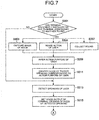
- the control unit 200 of the terminal 20 determines whether or not the terminal 20 has been newly installed in a certain room, or whether or not the terminal 20 has been moved to another room (S201). In a case where it has been determined that the terminal 20 is continuously located in the same room (S201: No), processing of the undermentioned S213 is executed.
- the output control unit 106 of the server 10 identifies a mode of target speaking corresponding to an action purpose of a user inferred in S209 by referring to the speaking policy DB 134 (S211).
- the recognition unit 102 detects speaking of the user on the basis of a sound collection result in S207 (S213).
- the output control unit 106 identifies a mode of speaking of the user on the basis of speaking detected in S213. In addition, the output control unit 106 sets an output mode of the voice output by the terminal 20 in such a manner that the output mode of the voice agrees with, or approximates to, the identified speaking mode (S215).
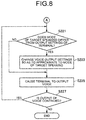
- the output control unit 106 determines whether or not there is a difference between the mode of target speaking identified in S211 and the output mode of the current voice by the terminal 20 (S221). In a case where it has been determined that there is no difference therebetween (S221: No), the server 10 performs processing of the undermentioned S225.
- the output control unit 106 changes settings of the output mode of the voice output by the terminal 20 in such a manner that the difference between the mode of target speaking and the output mode of the voice output by the terminal 20 decreases to a certain extent (S223).
- the output control unit 106 generates control information used to cause the terminal 20 to output a voice according to the output mode that has been change in S223.
- the communication unit 120 transmits the control information to the terminal 20 according to the control of the output control unit 106.
- the output control unit 204 of the terminal 20 causes the output unit 224 to output a voice according to the received control information (S225).
- the server 10 infers an action purpose of a user on the basis of a sensing result of sensing by the sensor unit 222 of the terminal 20, and then on the basis of a mode of target speaking corresponding to the inferred action purpose of the user, the server 10 causes an output mode of a voice output to the user by the terminal 20 to be gradually changed every time the voice is output by the terminal 20. Consequently, the output mode of the voice output by the terminal 20 can be gradually changed so as to be adaptive to the action purpose of the user. As the result, the user can be guided to a direction of atmosphere expected by the user. For example, user's repeated talking with the terminal 20 enables to realize the atmosphere expected by the user.
- the second embodiment is not limited to the above-described example. It can also be considered that the server 10 recognizes that, for example, the action purpose of the user has changed, or the inference result of inferring the action purpose of the user was wrong. Accordingly, as a modified example, the server 10 (the inference unit 104) is capable of identifying an action purpose of the user after the change, or a true action purpose of the user, on the basis of a sensing result newly received from the terminal 20. Then, the output control unit 106 may cause the output mode of the voice output by the terminal 20 to be changed on the basis of a mode of target speaking corresponding to the newly identified action purpose of the user.
- the inquiry unit 108 may inquire of the user about the action purpose of the user through the terminal 20. Then, in a case where an answer for the inquiry could have been obtained from the user, first of all, the output control unit 106 is capable of identifying a mode of target speaking corresponding to the answer. In addition, the output control unit 106 may cause the output mode of the voice output to the user by the terminal 20 to be gradually changed on the basis of the identified mode of target speaking.
- the output control unit 106 may cause the terminal 20 to output a predetermined sound in a mode identical to, or approximate to, the mode of target speaking corresponding to "the action purpose of the user after the change, or the true action purpose of the user", which has been temporarily inferred by the inference unit 104.
- the server 10 may recognize a reaction of the user to the sound on the basis of a new sensing result by the terminal 20.
- the server 10 may cause the output mode of the voice output by the terminal 20 to be gradually changed on the basis of the mode of target speaking corresponding to this action purpose.
- the output control unit 106 may identify the frequency of speaking of the user on the basis of a sound collection result of collecting speaking of the user received from the terminal 20, and then may cause the output frequency of the voice output by the terminal 20 to agree with, or approximate to, the identified frequency of speaking.
- the frequency of speaking of the user may be recorded on a room basis (or, on a user's action purpose basis).
- the output control unit 106 may identify the frequency of speaking suitable for the room in which the user is located (or the action purpose of the user) by referring to the recorded information, and then may cause the output frequency of the voice output by the terminal 20 to agree with, or approximate to, the identified frequency.
- the output control unit 106 may identify the length of speaking of the user on the basis of a sound collection result of collecting speaking of the user received from the terminal 20, and then may cause the length of the voice output by the terminal 20 to agree with, or approximate to, the identified length of speaking.
- the length of speaking of the user may be recorded on a room basis (or, on a user's action purpose basis).
- the output control unit 106 may identify the length of speaking suitable for the room in which the user is located (or the action purpose of the user) by referring to the recorded information, and then may cause the length of the voice output by the terminal 20 to agree with, or approximate to, the identified length.
- the server 10 is provided with the CPU 150, a Read Only Memory (ROM) 152, a Random Access Memory (RAM) 154, a bus 156, an interface 158, the storage device 160, and the communication device 162.
- ROM Read Only Memory
- RAM Random Access Memory
- the CPU 150 functions as a computation processing device and a control device, and controls the overall operation in the server 10 according to various kinds of programs. In addition, the CPU 150 realizes a function of the control unit 100 in the server 10. It should be noted that the CPU 150 is formed by a processor such as a microprocessor.
- the ROM 152 stores, for example, programs used by the CPU 150, and control data such as computation parameters.
- the RAM 154 temporarily stores, for example, programs executed by the CPU 150, data that is being used, and the like.
- the bus 156 is formed by a CPU bus and the like. This bus 156 mutually connects the CPU 150, the ROM 152 and the RAM 154.
- the interface 158 connects the storage device 160 and the communication device 162 to the bus 156.
- the storage device 160 is a data storing device that functions as the storage unit 122.
- the storage device 160 includes, for example, a storage medium, a recording device for recording data on the storage medium, a readout device for reading data from the storage medium, a deletion device for deleting data recorded on the storage medium, or the like.
- the communication device 162 is a communication interface that is used for connecting to, for example, the communication network 22 or the like, and is formed by a communication device (for example, a network card, etc.) or the like.
- the communication device 162 may be a wireless LAN supported communication device, a Long Term Evolution (LTE) supported communication device, or a wired communication device that performs wired communication. This communication device 162 functions as the communication unit 120.
- LTE Long Term Evolution
- each embodiment described above shows an example in which the output control unit 106 of the server 10 controls the output of a voice to a user performed by the terminal 20 on the basis of an inference result of inferring an action purpose of the user.
- the server 10 transmits the inference result of inferring the action purpose of the user to the terminal 20, and subsequently the output control unit 204 of the terminal 20 may control the output of the voice to the user performed by the output unit 224 on the basis of the received inference result.
- the output control unit 204 of the terminal 20 may cause the acoustic characteristics of the voice output by the output unit 224 to be changed on the basis of the received inference result of inferring the action purpose of the user.
- the output control unit 204 of the terminal 20 may further include substantially all functions of the output control unit 106 according to each embodiment described above.
- FIG. 1 illustrates only one server 10, the present invention is not limited to such an example.
- the functions of the server 10 according to each embodiment may be realized by causing a plurality of computers to operate in cooperation.
- the information processing device is not limited to the server 10.
- the information processing device may be other kinds of devices having the functions of the control unit 100 according to each embodiment.
- the information processing device may be a general-purpose Personal Computer (PC), a tablet-type terminal, a game machine, a portable telephone such as a smart phone, a portable music player, a speaker, a projector, a wearable device (for example, a Head Mounted Display (HMD), a smart watch, etc.), a vehicle-mounted device (a car navigation device, etc.), or a robot (for example, a humanoid-type robot, a drone, etc.).
- PC Personal Computer
- a tablet-type terminal a game machine
- a portable telephone such as a smart phone, a portable music player, a speaker, a projector
- a wearable device for example, a Head Mounted Display (HMD), a smart watch, etc.
- a vehicle-mounted device a car navigation device, etc.
- a robot for
- the server 10 and the terminal 20 may be configured as an integrated device as an alternative to being configured as separate devices.
- the control unit 200 of the terminal 20 may be configured to include all of components included in the control unit 100 of the server 10 according to each embodiment described above, and at the same time, the server 10 may be excluded.
- the information processing device according to the present disclosure can be the terminal 20.
- each step in the process flow in each embodiment described above is not always required to be executed according to the above-described order.
- each step may be executed with the order changed as appropriate.
- each step may be executed partially in a parallel or individual manner as an alternative to being executed in a time-series manner.
- a part of the above-described steps may be omitted, or another step may be added to the above-described steps.
- a computer program that causes hardware such as the CPU 150, the ROM 152, and the RAM 154 to serve a function equivalent to that of each configuration of the server 10 according to each embodiment can also be provided. Further, a storage medium having the computer program recorded thereon is also provided.
Landscapes
- Engineering & Computer Science (AREA)
- Physics & Mathematics (AREA)
- Theoretical Computer Science (AREA)
- Health & Medical Sciences (AREA)
- Audiology, Speech & Language Pathology (AREA)
- Human Computer Interaction (AREA)
- Acoustics & Sound (AREA)
- Computational Linguistics (AREA)
- General Engineering & Computer Science (AREA)
- General Physics & Mathematics (AREA)
- Multimedia (AREA)
- Signal Processing (AREA)
- General Health & Medical Sciences (AREA)
- Artificial Intelligence (AREA)
- Data Mining & Analysis (AREA)
- Evolutionary Computation (AREA)
- Computing Systems (AREA)
- Mathematical Physics (AREA)
- Software Systems (AREA)
- User Interface Of Digital Computer (AREA)
- Telephonic Communication Services (AREA)
Abstract
Description
- The present disclosure relates to an information processing device, an information processing terminal, an information processing method, and a program.
- Conventionally, various kinds of technologies for adjusting output characteristics of audio equipment are proposed.
- For example, the undermentioned Patent Literature 1 discloses the technology for, in a scene in which a plurality of persons and a telephone call partner in a vehicle mutually talk by using hands-free telephones, adjusting sound quality for persons who are currently talking in the vehicle.
- Patent Literature 1:
JP 2011-205389 A - However, in the technology described in Patent Literature 1, the feature in which the output of a voice is controlled so as to be adaptive to an action purpose of a user is not taken into consideration.
- Accordingly, the present disclosure proposes an information processing device, an information processing terminal, an information processing method, and a program, which are capable of controlling the output of a voice so as to be adaptive to an action purpose of a user, and which are novel and improved.
- According to the present disclosure, an information processing device is provided that includes: an inference unit that infers an action purpose of a user on the basis of a result of sensing by one or more sensors; and an output control unit that controls, on the basis of a result of inference by the inference unit, output of a voice to the user performed by an audio output unit.
- Moreover, according to the present disclosure, an information processing terminal is provided that includes: a receiving unit that receives an inference result of inferring an action purpose of a user, the action purpose of the user having been inferred on the basis of a result of sensing by one or more sensors; and an output control unit that controls output of a voice to the user on the basis of the received inference result of inferring the action purpose of the user.
- Moreover, according to the present disclosure, an information processing method is provided that includes: inferring an action purpose of a user on the basis of a result of sensing by one or more sensors; and on the basis of a result of the inference, controlling output of a voice to the user performed by an audio output unit.
- Moreover, according to the present disclosure, a program is provided that causes a computer to function as: an inference unit that infers an action purpose of a user on the basis of a result of sensing by one or more sensors; and an output control unit that controls, on the basis of a result of inference by the inference unit, output of a voice to the user performed by an audio output unit.
- As described above, according to the present disclosure, the output of a voice can be controlled so as to be adaptive to an action purpose of a user. It should be noted that the effects described herein are not necessarily limited, and may be any one of the effects described in the present disclosure.
-
-
FIG. 1 is an explanatory diagram illustrating a configuration example of an information processing system shared by each embodiment of the present disclosure. -
FIG. 2 is a functional block diagram illustrating a configuration example of aterminal 20 according to a first embodiment. -
FIG. 3 is a functional block diagram illustrating a configuration example of aserver 10 according to the first embodiment. -
FIG. 4 is a flowchart illustrating a process flow according to the first embodiment. -
FIG. 5 is a functional block diagram illustrating a configuration example of theserver 10 according to a second embodiment. -
FIG. 6 is a drawing illustrating an example of correspondence relationship between use of a room and a mode of speaking of a target. -
FIG. 7 is a flowchart illustrating a part of a process flow according to the second embodiment. -
FIG. 8 is a flowchart illustrating a part of a process flow according to the second embodiment. -
FIG. 9 is an explanatory diagram illustrating a hardware configuration example of theserver 10 shared by each embodiment. - Preferred embodiments of the present disclosure will be detailed below with reference to the accompanying drawings. It should be noted that components, described herein and on the drawings, having substantially identical functional configurations are provided with identical reference numbers, and explanation thereof will not be repeated.
- In addition, the "embodiments for carrying out the invention" will be described according to the order of items shown below.
- 1. Configuration of information processing system
- 2. First embodiment
- 3. Second embodiment
- 4. Hardware configuration
- 5. Modified examples
- First of all, a configuration example of an information processing system shared by each embodiment of the present disclosure will be described with reference to
FIG. 1 . As illustrated inFIG. 1 , the information processing system according to each embodiment includes aserver 10, aterminal 20, and acommunication network 22. - The
server 10 is an example of the information processing device according to the present disclosure. Theserver 10 is a device that controls voice output of theundermentioned terminal 20. For example, theserver 10 transmits an instruction to output, for example, a voice that provides notification of various information such as weather information, a voice used to talk with a user, and the like, to theterminal 20 through thecommunication network 22. Here, the voice may be, for example, a synthetic voice by Text To Speech (TTS) or the like, or a recording voice. An explanation will be made below focusing on an example in which the voice is a synthetic voice. - The
terminal 20 is an example of the information processing terminal according to the present disclosure. Theterminal 20 is, for example, a stationary type apparatus, a portable type apparatus, a wearable type apparatus, or the like. An explanation will be made below focusing on an example in which theterminal 20 is a stationary type apparatus - In each embodiment, the
terminal 20 can be arranged inside a predetermined space (for example, an individual room in a predetermined facility (a house, an office building or the like), a vehicle, the outdoors, or the like). In addition, theterminal 20 is capable of outputting various voices to a user located in a space in which theterminal 20 is arranged according to, for example, the control of theserver 10. For example, theterminal 20 converts a character string given in instruction by theserver 10 into a voice by TTS, and then outputs the converted voice. - The
communication network 22 is a wired or wireless transmission path of information transmitted from a device connected to thecommunication network 22. For example, thecommunication network 22 may include: a public network such as a telephone network, the Internet, and a satellite communication network; various kinds of Local Area Network (LAN) and Wide Area Network (WAN) including Ethernet (registered trademark); and the like. In addition, thecommunication network 22 may include a leased line network such as Internet Protocol-Virtual Private Network (IP-VPN). - The configuration of the information processing system shared by each embodiment has been explained above. Incidentally, in general, acoustic characteristics of a room may change depending on environmental sound and a state of a user's action. Therefore, according to a kind and state of the room, acoustic characteristics of a voice that is actually conveyed to a user may differ from preset acoustic characteristics. Accordingly, in order to convey, to the user, a voice that conforms to the preset acoustic characteristics, there can be considered a method in which acoustic characteristics of a space where the terminal 20 is located are measured in detail every time, and, at the same time, in which voice output is adjusted by using results of the measurements. However, this method requires a certain length of working time. Therefore, in a scene in which a notification or the like is sent to a user, there is a possibility that immediacy will be lost.
- As another problem, in a scene in which a voice (speaking) is output, differently from, for example, audio or the like, desirable acoustic characteristics may differ depending on a user's action purpose.
- Accordingly, considering the above-described circumstance as one viewpoint, the
server 10 according to each embodiment has been devised. Theserver 10 infers an action purpose of a user on the basis of a result of sensing by the terminal 20, and then controls output of a voice to the user performed by the terminal 20 on the basis of a result of the inference. This enables to control the output of the voice so as to be adaptive to the user's action purpose. Contents of each embodiment such as that described above will be successively detailed below. - First of all, the first embodiment will be described.
FIG. 2 is a functional block diagram illustrating a configuration example of the terminal 20 according to the first embodiment. As illustrated inFIG. 2 , the terminal 20 includes acontrol unit 200, acommunication unit 220, asensor unit 222, anoutput unit 224, and astorage unit 226. - The
sensor unit 222 can include, for example, a camera (image sensor), a microphone, and the like. For example, the camera of thesensor unit 222 captures a video image in front of a lens of the camera. In addition, the microphone of thesensor unit 222 collects sound around theterminal 20. - The
control unit 200 can include, for example, a processing circuit such as a Central Processing Unit (CPU), and a Graphics Processing Unit (GPU). Thecontrol unit 200 comprehensively controls operation of the terminal 20. In addition, as illustrated inFIG. 2 , thecontrol unit 200 includes atransmission control unit 202, and anoutput control unit 204. - The
transmission control unit 202 controls transmission of various kinds of information to other devices. For example, thetransmission control unit 202 causes theundermentioned communication unit 220 to transmit various information sensed by thesensor unit 222 to theserver 10. - The
output control unit 204 controls output of information performed by theundermentioned output unit 224. For example, theoutput control unit 204 causes theoutput unit 224 to output a voice according to control information received from theserver 10. As an example, theoutput control unit 204 converts, by TTS, a character string given in instruction by the control information received from theserver 10 into a voice, and then causes theoutput unit 224 to output the converted voice according to acoustic characteristics given in instruction by the control information. - Here, the acoustic characteristics of the voice can be physical characteristics of the voice. For example, the acoustic characteristics of the voice include volume of the voice, pitch of the voice, speed of the voice, and the like.
- The
communication unit 220 is an example of a receiving unit according to the present disclosure. Thecommunication unit 220 transmits/receives information to/from other devices through, for example, thecommunication network 22. For example, thecommunication unit 220 receives control information from theserver 10, the control information being used to cause a voice to be output. - The
output unit 224 outputs various information (a voice, a video image, etc.) according to the control of theoutput control unit 204. Theoutput unit 224 can include an audio output unit. The audio output unit includes, for example, a speaker, an earphone, a headphone, or the like. The audio output unit outputs a sound according to the control of theoutput control unit 204. - Moreover, the
output unit 224 can include a display unit. The display unit includes, for example, a Liquid Crystal Display (LCD), an Organic Light Emitting Diode (OLED) etc.), a projector, or the like. - The
storage unit 226 stores various kinds of data and various kinds of software. - Next, a configuration of the
server 10 according to the first embodiment will be described with reference toFIG. 3. FIG. 3 is a functional block diagram illustrating a configuration example of theserver 10 according to the first embodiment. As illustrated inFIG. 3 , theserver 10 includes acontrol unit 100, acommunication unit 120, and astorage unit 122. - The
control unit 100 can include, for example, a processing circuit such as theundermentioned CPU 150 and a GPU. Thecontrol unit 100 comprehensively controls operation of theserver 10. In addition, as illustrated inFIG. 3 , thecontrol unit 100 includes arecognition unit 102, aninference unit 104, and anoutput control unit 106. - The
recognition unit 102 subjects a sensing result received from the terminal 20 to various recognition processing. For example, therecognition unit 102 performs individual object recognition processing, user recognition processing, space recognition processing, and sound recognition processing on the basis of a sensing result received from the terminal 20. - First of all, contents of "individual object recognition processing" will be described. For example, the
recognition unit 102 subjects an image received from the terminal 20 to general object recognition by using general objectrecognition information DB 124 stored in thestorage unit 122, and thereby recognizes kinds of individual objects included in the image. Here, the general objectrecognition information DB 124 can be a database that stores information used to identify kinds of objects (for example, furniture, wall, window, etc.). - Next, contents of "user recognition processing" will be described. For example, in a case where an image (a moving image, etc.) received from the terminal 20 includes a user, the
recognition unit 102 analyzes the image by using an actionpattern information DB 128 stored in thestorage unit 122, and thereby recognizes an action (an action pattern, etc.) of the user and a state of the user. Moreover, therecognition unit 102 is capable of identifying who the user is by using, for example, a useridentification information DB 126 stored in thestorage unit 122. - Next, contents of "space recognition processing" will be described. For example, the
recognition unit 102 recognizes a kind of a space (for example, a room) in which the terminal 20 is located on the basis of the image received from the terminal 20, and a recognition result of recognizing the action pattern of the user (by the recognition unit 102). As an example, in a case where it has been recognized that there is a bed in the space, and that a length of stay time of the user in the space is longer than or equal to predetermined time in a midnight time zone, therecognition unit 102 may recognize that the space is a "bedroom". In addition, in a case where it has been recognized that there is a desk in the space, and that a child mainly stays in the space, therecognition unit 102 may recognize that the space is a "child's room". Moreover, in a case where it has been recognized that there is a large screen television receiver in the space, and that a large number of persons stay in the space, therecognition unit 102 may recognize that the space is a "living room". Further, in a case where it has been recognized that the space is a closed space, and at the same time, it has been sensed that position information of the space has changed, therecognition unit 102 may recognize that the space is "inside a vehicle". Furthermore, in a case where there is neither furniture nor ceiling detected in the space, therecognition unit 102 may recognize that the space is "the outdoors". - Next, contents of "sound recognition processing" will be described. For example, the
recognition unit 102 further recognizes environmental sound and user's speaking in the space in which the terminal 20 is located by analyzing a sound collection result received from the terminal 20. As an example, therecognition unit 102 identifies a sound source of the collected sound by analyzing the sound collection result using a sound sourceidentification information DB 130 stored in thestorage unit 122. In addition, therecognition unit 102 subjects collected voice to voice recognition, and thereby converts the voice into a character string. Here, the sound sourceidentification information DB 130 can be a database that stores, for example, frequency, duration and sound volume for each kind of sound source, sound occurrence frequency information for each time zone, and the like. - It should be noted that every time a sensing result is received from the terminal 20, the
recognition unit 102 may successively perform various recognition processing on the basis of the newly received sensing result. - The
inference unit 104 infers an action purpose of a user on the basis of a recognition result of recognition by therecognition unit 102. For example, on the basis of a result of recognizing an action of a user by therecognition unit 102, and a result of recognizing, by therecognition unit 102, a kind of a room in which the user is located, theinference unit 104 infers an action purpose of the user. As an example, in a case where it has been recognized that a kind of the room in which the user is located is a "study room", and that the user is "sitting on a chair and has a pencil" as an action of the user, it may be inferred that the action purpose of the user is "study". In addition, in a case where it has been recognized that a kind of the room in which the user is located is a "living room", and that the user is "studying" as an action of the user, it may be inferred that the action purpose of the user is "study". Alternatively, in a case where it has been recognized that the user is referring to a book, theinference unit 104 may infer the action purpose of the user on the basis of a recognition result of recognizing a title, contents and the like of the book. For example, in a case where it has been recognized that a book referred to by the user is a textbook, an academic book or the like, it may be inferred that the action purpose of the user is "study". - It should be noted that every time a sensing result is received from the terminal 20, the
inference unit 104 may successively infer the action purpose of the user on the basis of recognition processing that has been performed by therecognition unit 102 on the basis of the newly received sensing result. - As a modified example, in a case where it is difficult to infer an action purpose of a user from the result of action recognition of the user, the
inference unit 104 may infer the use of the space in which the user is located as the action purpose of the user, the use of the space having been recognized by therecognition unit 102. For example, in a case where the space in which the user is located is a "study room", theinference unit 104 may infer that the action purpose of the user is "study" (that is the use of the "study room"). - The
output control unit 106 controls voice output by the terminal 20 on the basis of a result of inference by theinference unit 104. For example, theoutput control unit 106 causes acoustic characteristics of a voice output by (the output unit 224) of the terminal 20 to be changed on the basis of the result of inference by theinference unit 104. As an example, in a case where it has been inferred that the action purpose of the user is "sleep" (or in a case where it has been recognized that the space in which the user is located is a "bedroom"), theoutput control unit 106 may cause the volume of the voice output by the terminal 20 to be lower than the standard, and may cause the pitch to be lower than the standard. Consequently, even in a case where the user is in the bedroom, the acoustic characteristics can be adjusted in such a manner that the user does not feel annoyed with the output voice. - In addition, in a case where it has been inferred that the action purpose of the user is "study" (or, in a case where it has been recognized that the space in which the user is located is a "study room"), the
output control unit 106 may cause the speed of the voice output by the terminal 20 to be slower than the standard. This enables the user who is a child to hear the output voice easily. - Further, in a case where it has been inferred that the action purpose of the user is "party", "happy family fireside", or the like (or, in a case where it has been recognized that the space in which the user is located is "the outdoors" or a "living room", and that a plurality of users are located in the space), the
output control unit 106 may cause the volume of the voice output by the terminal 20 to be higher than the standard, may cause the pitch to be higher than the standard, and may cause the speed to be slower than the standard. Alternatively, in this case, theoutput control unit 106 may cause a variable range of values of pitch and speed of the voice output by the terminal 20 to be wider than usual. This enables exaggerated expressions. As the result, individual users can easily hear the voice, or a more active presentation can be made. - As a modified example, the
output control unit 106 may cause the acoustic characteristics of the voice output by the terminal 20 to be changed further on the basis of information (sound collection result, etc.) related to sound occurring in a place where the user is located. For example, acoustic characteristics of environmental sound (for example, sounds of various electronic apparatuses (an air-conditioner, a television receiver, etc.), cooking sounds, etc.) that customarily occurs, and acoustic characteristics of user's speaking, may be recorded beforehand on a room basis. In this case, theoutput control unit 106 may cause the acoustic characteristics of the voice output by the terminal 20 to be changed on the basis of the recorded information. As an example, in a case where a place where the user is located is a "kitchen", and in a case where a time zone in which a voice is output by the terminal 20 is a time zone of cooking, theoutput control unit 106 may cause the acoustic characteristics of the voice output by the terminal 20 to differ from cooking sound, and may cause the volume to be higher than the standard. - In general, in a "bedroom", a late-night "living room" or the like, environmental sound steadily tends to be small. Accordingly, in a case where a place where the user is located is a "bedroom", or in a case where a time zone is late night, and at the same time, the place where the user is located is a "living room", the
output control unit 106 may cause the volume of the voice output by the terminal 20 to be lower than the standard, may cause the speed to be slower than the standard, and at the same time, may cause the pitch to be lower than the standard. - In addition, in a case where the number of users who exist in one room is small, the
output control unit 106 may cause the volume of the voice output by the terminal 20 to be lower than the standard. Further, with respect to a room in which a frequency of speaking to each other by a plurality of indoor users tends to be low, or a time zone having such a tendency, theoutput control unit 106 may cause the volume of the voice output by the terminal 20 to be lower than the standard. - As another modified example, the
output control unit 106 may cause the acoustic characteristics of the voice output by the terminal 20 to be changed further according to a sensing result of sensing user's speaking. For example, in a case where it has been sensed that the volume of user's speaking to the terminal 20, or the volume of speaking to each other by users, is low (for example, talking to in a whisper, etc.), theoutput control unit 106 may cause the terminal 20 to output a voice "in a whisper". In addition, in a case where it has been recognized that the user who is speaking is a child, theoutput control unit 106 may cause the terminal 20 to output a voice having childish speaking characteristics (for example, speed is slower than the standard). - As another modified example, the
output control unit 106 may cause the acoustic characteristics of the voice output by the terminal 20 to be changed further according to a topic corresponding to the voice output to the user. For example, when content of language learning is output by the terminal 20, theoutput control unit 106 may further emphasize a change in strength of acoustic characteristics of the voice (of the content) output by the terminal 20. In addition, in a case where a user is notified of an urgent schedule, theoutput control unit 106 may cause the speed of the voice output by the terminal 20 to be faster than the standard. - Moreover, the
output control unit 106 is also capable of causing a topic corresponding to the voice output by the terminal 20 to be changed on the basis of a result of inference by theinference unit 104. For example, in a case where it has been inferred that the action purpose of the user is "happy family fireside" or "going out" (or, in a case where it has been recognized that the space in which the user is located is a "living room" or "the outdoors"), theoutput control unit 106 does not need to cause the terminal 20 to output a voice corresponding to privacy information, schedule or the like of the user. In addition, in a case where it has been inferred that the action purpose of the user is "happy family fireside" (or, in a case where it has been recognized that the space in which the user is located is a "living room"), theoutput control unit 106 may cause the terminal 20 to output a voice that proposes a candidate of a visiting destination, or a voice that proposes event information related to an event that allows the user to participate with family members from now. In particular, in a case where a time zone is in the evening or later, and a plurality of users are located in the "living room", theoutput control unit 106 may cause the terminal 20 to output a voice that proposes a candidate of a visiting destination of the plurality of users. - In addition, in a case where it has been inferred that the action purpose of the user is "study" (or, in a case where it has been recognized that the space in which the user is located is a "children's room"), the
output control unit 106 does not need to cause the terminal 20 to output a voice corresponding to adult-oriented information (for example, economic news, etc.). Alternatively, in a case where it has been recognized that the space in which the user is located is a "private room (of the user)", theoutput control unit 106 may cause the terminal 20 to output a voice corresponding to privacy information, schedule or the like of the user. - Moreover, the
output control unit 106 is also capable of causing a length of the voice for each voice output performed by the terminal 20 to be changed on the basis of the result of inference by theinference unit 104. For example, in a case where it has been inferred that the action purpose of the user is "happy family fireside" (or, in a case where it has been recognized that the space in which the user is located is a "living room"), theoutput control unit 106 may cause the length of the voice for each voice output performed by the terminal 20 to be longer than the standard. - Moreover, the
output control unit 106 is also capable of causing a sensing frequency of sensing by (thesensor unit 222 of) the terminal 20 to be changed on the basis of the result of inference by theinference unit 104. In general, in a kitchen, a volume change and a variation in noises tend to be large. Accordingly, in a case where it has been inferred that the action purpose of the user is "cooking" (or, in a case where it has been recognized that the space in which the user is located is a "kitchen"), theoutput control unit 106 may cause the sensing frequency of sensing by the terminal 20 to be higher than the standard. In addition, in a case where it has been inferred that the action purpose of the user is "sleep" (or, in a case where it has been recognized that the space in which the user is located is a "bedroom"), theoutput control unit 106 may cause the sensing frequency of sensing by the terminal 20 to be lower than the standard. - The
communication unit 120 is an example of a receiving unit according to the present disclosure. Thecommunication unit 120 can include theundermentioned communication device 162. Thecommunication unit 120 transmits/receives information to/from other devices through, for example, thecommunication network 22. For example, thecommunication unit 120 receives a sensing result of sensing by the terminal 20 from the terminal 20. In addition, according to control of theoutput control unit 106, thecommunication unit 120 transmits, to the terminal 20, control information used to cause a voice to be output. - The
storage unit 122 can include theundermentioned storage device 160. Thestorage unit 122 stores various kinds of data and various kinds of software. For example, as illustrated inFIG. 3 , thestorage unit 122 stores the general objectrecognition information DB 124, the useridentification information DB 126, the actionpattern information DB 128, the sound sourceidentification information DB 130, and a speakingclassification information DB 132. It should be noted that the present invention is not limited to such an example. At least one of these databases may be stored in other devices that are capable of communicating with theserver 10 as an alternative to being stored in theserver 10. - The configuration of the first embodiment has been explained above. Next, an example of a process flow according to the first embodiment will be described with reference to
FIG. 4 . - As illustrated in
FIG. 4 , first of all, thecontrol unit 200 of the terminal 20 determines whether or not the terminal 20 has been newly installed in a certain room, or whether or not the terminal 20 has been moved to another room (S101). In a case where it has been determined that the terminal 20 is continuously located in the same room (S101: No), processing of the undermentioned S115 is executed. - Meanwhile, in a case where it has been determined that the terminal 20 has been newly installed, or the terminal 20 has been moved to another room (S101: Yes), the
sensor unit 222 of the terminal 20 captures an image of the room after the movement. Then, thecommunication unit 220 transmits the captured image to theserver 10 according to the control of the transmission control unit 202 (S103). - Moreover, the
sensor unit 222 senses an action of a user located in the room. Then, thecommunication unit 220 transmits a sensing result to theserver 10 according to the control of the transmission control unit 202 (S105). - Moreover, the
sensor unit 222 collects sound in the room. Then, thecommunication unit 220 transmits a sound collection result to theserver 10 according to the control of the transmission control unit 202 (S107). - Subsequently, the
recognition unit 102 of theserver 10 subjects the sensing results received in S103, S105 and S107 to various recognition processing. Then, theinference unit 104 infers the action purpose of the user on the basis of results of the recognition processing (S109). - Moreover, the
recognition unit 102 of theserver 10 subjects the sensing results received in S103, S105 and S107 to various recognition processing, and thereby identifies a change pattern of acoustic characteristics in the room (S111). - Subsequently, the
output control unit 106 determines whether or not it is necessary to change voice output settings on the basis of the inference result in S109, and the change pattern identified in S111 (S113). In a case where it has been determined that it is not necessary to change voice output settings (S113: No), with respect to voice output performed by the terminal 20, theoutput control unit 106 refers to information related to current output settings (S115). Subsequently, theoutput control unit 106 performs processing of the undermentioned S119. - Meanwhile, in a case where it has been determined that it is necessary to change voice output settings (S113: Yes), the
output control unit 106 changes information related to voice output settings on the basis of the inference result in S109, and the change pattern obtained in S111 (S117). - Then, the
output control unit 106 generates control information used to cause the terminal 20 to output a voice based on the information related to output settings referred to in S115, or based on information related to output settings after the change in S117. In addition, thecommunication unit 120 transmits the control information to the terminal 20 according to the control of theoutput control unit 106. Subsequently, theoutput control unit 204 of the terminal 20 causes theoutput unit 224 to output a voice according to the received control information (S119). - As described above, the
server 10 according to the first embodiment infers an action purpose of a user on the basis of a result of sensing by the terminal 20, and then controls output of a voice to the user performed by the terminal 20 on the basis of the inference result. This enables to control the output of the voice so as to be adaptive to the user's action purpose. - For example, the
server 10 is capable of appropriately changing acoustic characteristics of a voice output by the terminal 20 according to the inferred action purpose of the user. Therefore, even in a case where a place in which the terminal 20 is located has been changed, acoustic characteristics (volume, etc.) of a voice output by the terminal 20 can be automatically and appropriately changed. Therefore, it is not necessary to manually set acoustic characteristics of the voice again. For example, in a scene in which a notification is sent to a user, theserver 10 is capable of immediately causing the terminal 20 to output a voice with appropriate acoustic characteristics. - In addition, even in a case where, for example, noises have occurred, user's movement has changed, or the like, acoustic characteristics of a voice output by the terminal 20 can be automatically and appropriately set (or changed).
- The first embodiment is not limited to the above-described example. As a modified example, in a case where noises have been sensed by the terminal 20, and in a case where it has been recognized that the noises are temporarily occurring, the
output control unit 106 may cause output of a voice performed by the terminal 20 to be stopped until the noises stop. - As another modified example, the
server 10 is also capable of controlling sensing of the terminal 20 according to accuracy of the sensing result received from the terminal 20. For example, in a case where it has been recognized that an obstacle or wall is located in an angle of view of the camera of the terminal 20, accuracy of sensing by the camera will decrease. Accordingly, in this case, theserver 10 may control sensing of the terminal 20 in such a manner that a frequency of sensing by the microphone of the terminal 20 increases. Alternatively, in this case, among sensing results received from the terminal 20, theserver 10 may increase a degree of use (or a degree of trust) of the sensed sound rather than the sensed image. - In general, in a case where the terminal 20 is arranged in a place where stationary noises or variations in noises are large, accuracy of sensing by the microphone of the terminal 20 will decrease. Accordingly, in this case, the
server 10 may control sensing of the terminal 20 in such a manner that a frequency of sensing by the camera of the terminal 20 increases. Alternatively, in this case, among sensing results received from the terminal 20, theserver 10 may increase a degree of use (or a degree of trust) of the sensed image rather than the sensed sound. - As another modified example, the
output control unit 106 is also capable of controlling the output of the voice performed by the terminal 20 further on the basis of whether or not the action purpose of the user is business, and the number of users. For example, in a case where the action purpose of the user is "conference" (or, in a case where the space in which the user is located is a "conference room"), theoutput control unit 106 may cause the volume of the voice output by the terminal 20 to be higher than the standard, or may limit the topic corresponding to the voice to formal contents. It should be noted that theserver 10 recognizes a size of the room, and the number of users who exist in the room, on the basis of, for example, analysis results of analyzing contents of speaking of individual users sensed by the terminal 20, and analysis results of analyzing images captured by the terminal 20, and thereby is capable of inferring whether or not the action purpose of the user is "conference". - The first embodiment has been explained above. Incidentally, atmosphere expected by a user (for example, a psychological state of the user, or the like) may differ depending on an action purpose of the user. In addition, a situation in which there is a difference between the atmosphere expected by the user and the current atmosphere of the user also often occurs.
- Next, the second embodiment will be described. As described later, according to the second embodiment, an output mode of a voice output by the terminal 20 can be gradually changed so as to be adaptive to an action purpose of a user. As the result, an effect of guiding the user to a direction of the atmosphere expected by the user can be produced.
- A configuration of the terminal 20 according to the second embodiment is similar to that in the first embodiment.
-
FIG. 5 is a functional block diagram illustrating a configuration example of theserver 10 according to the second embodiment. As illustrated inFIG. 5 , in comparison with the first embodiment, theserver 10 according to the second embodiment is further provided with aninquiry unit 108. Only components each having a different function in comparison with the first embodiment will be described below. - In a case where an action purpose of a user cannot be sufficiently inferred by the
inference unit 104, theinquiry unit 108 causes the terminal 20 to output a voice for inquiring of the user about an action purpose of the user. For example, in a case where reliability of the action purpose of the user inferred by theinference unit 104 is lower than a predetermined threshold value, theinquiry unit 108 causes the terminal 20 to output a voice for inquiring of the user about the action purpose of the user. - Every time a voice is output by the terminal 20, the
output control unit 106 according to the second embodiment causes an output mode of a voice output to the user by the terminal 20 to be gradually changed on the basis of a mode of target speaking corresponding to the action purpose of the user inferred by theinference unit 104. For example, theoutput control unit 106 causes the output mode of the voice output by the terminal 20 to be gradually changed on the basis of a comparison between a mode of speaking of the user, the mode being identified by a sound collection result of speaking of the user received from the terminal 20, and a mode of target speaking corresponding to the action purpose of the user. As an example, theoutput control unit 106 controls the terminal 20 in such a manner that acoustic characteristics (for example, pitch, volume and speed, etc.) of the voice output by the terminal 20 gradually change from acoustic characteristics of first speaking of the user, which have been identified by a sound collection result of speaking of the user received from the terminal 20, to target acoustic characteristics corresponding to the action purpose of the user. It should be noted that data indicating correspondence relationship between the action purpose of the user and the mode of target speaking can be stored in a speakingpolicy DB 134. As illustrated in, for example,FIG. 5 , the speakingpolicy DB 134 can be stored in thestorage unit 122. - For example, first of all, the
output control unit 106 identifies acoustic characteristics of speaking of the user on the basis of a sound collection result of speaking of the user (for example, speaking of the user to the terminal 20, speaking between users, etc.), which has been first received from the terminal 20. Next, theoutput control unit 106 sets the identified acoustic characteristics of speaking of the user as acoustic characteristics of the voice that is first output by the terminal 20. Then, theoutput control unit 106 controls voice output by the terminal 20 in such a manner that the acoustic characteristics of the voice output by the terminal 20 are changed from the acoustic characteristics of speaking of the user to target acoustic characteristics corresponding to the action purpose of the user (inferred by the inference unit 104). - Here, the above-described function will be described in more detail with reference to
FIG. 6. FIG. 6 is a drawing illustrating an example of correspondence relationship between use of a room and a mode of target speaking applied in a case where a user is located in the room. The example illustrated inFIG. 6 is based on the assumption that a mode of first speaking of the user is a mode corresponding to a point "A" illustrated inFIG. 6 (in other words, pitch, volume and speed values are all "moderate"). - As illustrated in
FIG. 6 , in a case where the space in which the user is located is a "bedroom", theoutput control unit 106 may cause all of the volume, pitch and speed of the voice output by the terminal 20 to be gradually decreased every time the voice is output by the terminal 20. Consequently, atmosphere that enables the user to easily get relaxed can be realized. In addition, as illustrated inFIG. 6 , in a case where the space in which the user is located is a "study room", theoutput control unit 106 may cause the speed of the voice output by the terminal 20 to be gradually increased, and at the same time, may cause the pitch of the voice to be gradually decreased, every time the voice is output by the terminal 20. Consequently, atmosphere in which study progresses quietly can be realized. In addition, as illustrated inFIG. 6 , in a case where the space in which the user is located is a "living room", theoutput control unit 106 may cause the pitch of the voice output by the terminal 20 to be gradually increased, and at the same time, may cause the speed of the voice to be gradually decreased, every time the voice is output by the terminal 20. Consequently, atmosphere in which the user can enjoy talking can be realized. Further, as illustrated inFIG. 6 , in a case where a plurality of users are located in "the outdoors", theoutput control unit 106 may set upper limit values (change range) of the pitch and speed of the voice output by the terminal 20 to be higher than, for example, those for the "living room". This enables to achieve exaggerated expressions. - In general, when a person is talking with a partner, the person tends to tune a mode of his/her own speaking to a mode of speaking of the partner. According to the above-described control example, the mode of the voice output by the terminal 20 is gradually changed to the mode of target speaking corresponding to the action purpose of the user. Therefore, it can be expected that the mode of speaking of the user who is talking with, for example, the terminal 20 also gradually changes to the mode of the target speaking in tune with the voice output performed by the terminal 20. As the result, it can be expected that atmosphere corresponding to the action purpose of the user, in other words, atmosphere expected by the user, is realized.
- Moreover, with respect to other kinds of parameters other than the acoustic characteristics (for example, an output frequency of the voice, a length of the voice, and a topic corresponding to the voice, etc.) related to the voice output by the terminal 20 as well, the
output control unit 106 is also capable of causing such parameters to be changed according to the action purpose of the user inferred by theinference unit 104. For example, theoutput control unit 106 may cause the output frequency of the voice output by the terminal 20 to be gradually changed from the frequency of first speaking of the user, which has been identified by the sound collection result of speaking of the user received from the terminal 20, to the frequency of target speaking corresponding to the action purpose of the user. Alternatively, theoutput control unit 106 may cause the length of the voice for each voice output performed by the terminal 20 to be gradually changed from the length of the first speaking of the user, which has been identified by the sound collection result of speaking of the user received from the terminal 20, to the length of target speaking corresponding to the action purpose of the user. - Alternatively, the
output control unit 106 may cause a topic corresponding to the voice output by the terminal 20 to be gradually changed from a first topic of the user, which has been identified by the sound collection result of speaking of the user received from the terminal 20, to a target topic corresponding to the action purpose of the user. It should be noted that in a case where a difference between the first topic and the target topic of the user is large, theoutput control unit 106 may cause the number of times the voice is output by the terminal 20 in a process of changing the topic to be larger than the initial number of times. Consequently, the topic can be gently (naturally) changed, which enables to avoid giving an unnatural impression to the user. - As a modified example, the
output control unit 106 is also capable of dynamically adjusting the change amount per one time of the output mode of the voice output by the terminal 20. For example, theoutput control unit 106 may adjust the change amount per one time of the output mode of the voice output by the terminal 20 according to the frequency of speaking of the user, which has been identified by the sound collection result of speaking of the user received from the terminal 20. As an example, with the increase in frequency of speaking of the user, theoutput control unit 106 may cause the change amount per one time of the output mode of the voice output by the terminal 20 to be smaller. - Alternatively, the
output control unit 106 may adjust the change amount per one time of the output mode of the voice output by the terminal 20 according to the length of speaking of the user, which has been identified by the sound collection result of speaking of the user received from the terminal 20. For example, with the increase in length of speaking of the user, theoutput control unit 106 may cause the change amount per one time of the output mode of the voice output by the terminal 20 to be smaller. - As another modified example, the
output control unit 106 is also capable of adjusting (final) change amount of the output mode of the voice output by the terminal 20 according to a state of a space (a room, etc.) in which a user is located. For example, theoutput control unit 106 may adjust the (final) change amount of the output mode of the voice output by the terminal 20 according to a noise level in the space in which the user is located. As an example, with the increase in noise level of noises sensed in the space, theoutput control unit 106 may set the final target volume at a value larger than the initial target volume. This enables to prevent the user from having difficulty in hearing the voice output by the terminal 20. - Alternatively, the
output control unit 106 may adjust the (final) change amount in the output mode of the voice output by the terminal 20 according to brightness in the space in which the user is located. For example, the darker the inside of the space is, theoutput control unit 106 may further decrease the target volume of the voice output by the terminal 20. - As another modified example, the
output control unit 106 is also capable of controlling the output of the voice performed by the terminal 20 further on the basis of a change degree to which the mode of speaking of the user has changed for each voice output to the user by the terminal 20. For example, every time a voice is output to the user once by the terminal 20, theserver 10 identifies a change in the mode of speaking of the user after the output, and then is capable of recording the result of the identification. In this case, after the voice is output to the user a plurality of times by the terminal 20, by referring to the recorded information, theoutput control unit 106 may identify more effective voice output method used to change the mode of speaking of the user to the target speaking mode. In addition, theoutput control unit 106 may employ the identified output method by priority thereafter. - The configuration of the second embodiment has been explained above. Next, an example of a process flow according to the second embodiment will be described with reference to
FIGS. 7 and8 . - As illustrated in
FIG. 7 , first of all, thecontrol unit 200 of the terminal 20 determines whether or not the terminal 20 has been newly installed in a certain room, or whether or not the terminal 20 has been moved to another room (S201). In a case where it has been determined that the terminal 20 is continuously located in the same room (S201: No), processing of the undermentioned S213 is executed. - Meanwhile, in a case where it has been determined that the terminal 20 has been newly installed, or the terminal 20 has been moved to another room (S201: Yes), first of all, processing that is similar to the processing in S103 to S109 in the first embodiment is executed (S203 to S209).
- After S209, the
output control unit 106 of theserver 10 identifies a mode of target speaking corresponding to an action purpose of a user inferred in S209 by referring to the speaking policy DB 134 (S211). - Subsequently, the
recognition unit 102 detects speaking of the user on the basis of a sound collection result in S207 (S213). - Subsequently, the
output control unit 106 identifies a mode of speaking of the user on the basis of speaking detected in S213. In addition, theoutput control unit 106 sets an output mode of the voice output by the terminal 20 in such a manner that the output mode of the voice agrees with, or approximates to, the identified speaking mode (S215). - Here, a process flow after S215 will be described with reference to
FIG. 8 . As illustrated inFIG. 8 , after S215, theoutput control unit 106 determines whether or not there is a difference between the mode of target speaking identified in S211 and the output mode of the current voice by the terminal 20 (S221). In a case where it has been determined that there is no difference therebetween (S221: No), theserver 10 performs processing of the undermentioned S225. - Meanwhile, in a case where it has been determined that there is a difference therebetween (S221: Yes), the
output control unit 106 changes settings of the output mode of the voice output by the terminal 20 in such a manner that the difference between the mode of target speaking and the output mode of the voice output by the terminal 20 decreases to a certain extent (S223). - Subsequently, the
output control unit 106 generates control information used to cause the terminal 20 to output a voice according to the output mode that has been change in S223. In addition, thecommunication unit 120 transmits the control information to the terminal 20 according to the control of theoutput control unit 106. Subsequently, theoutput control unit 204 of the terminal 20 causes theoutput unit 224 to output a voice according to the received control information (S225). - Subsequently, in a case where the output of the voice by the terminal 20 is continued (S227: Yes), the processing of S221 and after is repeated again. Meanwhile, in a case where the output of the voice by the terminal 20 is not continued (S227: No), the process flow ends.
- As described above, the
server 10 according to the second embodiment infers an action purpose of a user on the basis of a sensing result of sensing by thesensor unit 222 of the terminal 20, and then on the basis of a mode of target speaking corresponding to the inferred action purpose of the user, theserver 10 causes an output mode of a voice output to the user by the terminal 20 to be gradually changed every time the voice is output by the terminal 20. Consequently, the output mode of the voice output by the terminal 20 can be gradually changed so as to be adaptive to the action purpose of the user. As the result, the user can be guided to a direction of atmosphere expected by the user. For example, user's repeated talking with the terminal 20 enables to realize the atmosphere expected by the user. - The second embodiment is not limited to the above-described example. It can also be considered that the
server 10 recognizes that, for example, the action purpose of the user has changed, or the inference result of inferring the action purpose of the user was wrong. Accordingly, as a modified example, the server 10 (the inference unit 104) is capable of identifying an action purpose of the user after the change, or a true action purpose of the user, on the basis of a sensing result newly received from the terminal 20. Then, theoutput control unit 106 may cause the output mode of the voice output by the terminal 20 to be changed on the basis of a mode of target speaking corresponding to the newly identified action purpose of the user. - Alternatively, in a case where it is difficult for the server 10 (the inference unit 104) to identify "the action purpose of the user after the change, or the true action purpose of the user", the
inquiry unit 108 may inquire of the user about the action purpose of the user through the terminal 20. Then, in a case where an answer for the inquiry could have been obtained from the user, first of all, theoutput control unit 106 is capable of identifying a mode of target speaking corresponding to the answer. In addition, theoutput control unit 106 may cause the output mode of the voice output to the user by the terminal 20 to be gradually changed on the basis of the identified mode of target speaking. - Alternatively, in this case, the
output control unit 106 may cause the terminal 20 to output a predetermined sound in a mode identical to, or approximate to, the mode of target speaking corresponding to "the action purpose of the user after the change, or the true action purpose of the user", which has been temporarily inferred by theinference unit 104. Next, theserver 10 may recognize a reaction of the user to the sound on the basis of a new sensing result by the terminal 20. In addition, in a case where it has been determined, on the basis of the recognition result, that the "temporarily inferred action purpose of the user" is correct, theserver 10 may cause the output mode of the voice output by the terminal 20 to be gradually changed on the basis of the mode of target speaking corresponding to this action purpose. - In general, for example, in a case where a user is talking with the terminal 20, in a case where a frequency of speaking of the user largely differs from an output frequency of a voice output by the terminal 20, the user may have an unnatural impression. Accordingly, as another modified example, the
output control unit 106 may identify the frequency of speaking of the user on the basis of a sound collection result of collecting speaking of the user received from the terminal 20, and then may cause the output frequency of the voice output by the terminal 20 to agree with, or approximate to, the identified frequency of speaking. - Alternatively, the frequency of speaking of the user may be recorded on a room basis (or, on a user's action purpose basis). In this case, the
output control unit 106 may identify the frequency of speaking suitable for the room in which the user is located (or the action purpose of the user) by referring to the recorded information, and then may cause the output frequency of the voice output by the terminal 20 to agree with, or approximate to, the identified frequency. - Similarly, in a case where the length of speaking of a user largely differs from the length of the voice output by the terminal 20, the user may have an unnatural impression. Accordingly, as another modified example, the
output control unit 106 may identify the length of speaking of the user on the basis of a sound collection result of collecting speaking of the user received from the terminal 20, and then may cause the length of the voice output by the terminal 20 to agree with, or approximate to, the identified length of speaking. - Alternatively, the length of speaking of the user may be recorded on a room basis (or, on a user's action purpose basis). In this case, the
output control unit 106 may identify the length of speaking suitable for the room in which the user is located (or the action purpose of the user) by referring to the recorded information, and then may cause the length of the voice output by the terminal 20 to agree with, or approximate to, the identified length. - Next, a hardware configuration example of the
server 10 shared by each embodiment will be described with reference toFIG. 9 . As illustrated inFIG. 9 , theserver 10 is provided with theCPU 150, a Read Only Memory (ROM) 152, a Random Access Memory (RAM) 154, abus 156, aninterface 158, thestorage device 160, and thecommunication device 162. - The
CPU 150 functions as a computation processing device and a control device, and controls the overall operation in theserver 10 according to various kinds of programs. In addition, theCPU 150 realizes a function of thecontrol unit 100 in theserver 10. It should be noted that theCPU 150 is formed by a processor such as a microprocessor. - The
ROM 152 stores, for example, programs used by theCPU 150, and control data such as computation parameters. - The
RAM 154 temporarily stores, for example, programs executed by theCPU 150, data that is being used, and the like. - The
bus 156 is formed by a CPU bus and the like. Thisbus 156 mutually connects theCPU 150, theROM 152 and theRAM 154. - The
interface 158 connects thestorage device 160 and thecommunication device 162 to thebus 156. - The
storage device 160 is a data storing device that functions as thestorage unit 122. Thestorage device 160 includes, for example, a storage medium, a recording device for recording data on the storage medium, a readout device for reading data from the storage medium, a deletion device for deleting data recorded on the storage medium, or the like. - The
communication device 162 is a communication interface that is used for connecting to, for example, thecommunication network 22 or the like, and is formed by a communication device (for example, a network card, etc.) or the like. In addition, thecommunication device 162 may be a wireless LAN supported communication device, a Long Term Evolution (LTE) supported communication device, or a wired communication device that performs wired communication. Thiscommunication device 162 functions as thecommunication unit 120. - The preferable embodiments of the present disclosure have been described in detail as above with reference to the accompanying drawings. However, the present disclosure is not limited to the above-described examples. It is clear that persons who have ordinary skill in the technical field to which the present disclosure belongs can conceive of various correction examples or modification examples within the category of the technical idea set forth in the claims. It should be understood that, as a matter of course, these examples also belong to the technical range of the present disclosure.
- For example, each embodiment described above shows an example in which the
output control unit 106 of theserver 10 controls the output of a voice to a user performed by the terminal 20 on the basis of an inference result of inferring an action purpose of the user. However, the present invention is not limited to such an example. For example, theserver 10 transmits the inference result of inferring the action purpose of the user to the terminal 20, and subsequently theoutput control unit 204 of the terminal 20 may control the output of the voice to the user performed by theoutput unit 224 on the basis of the received inference result. In other words, theoutput control unit 204 of the terminal 20 may cause the acoustic characteristics of the voice output by theoutput unit 224 to be changed on the basis of the received inference result of inferring the action purpose of the user. In this modified example, theoutput control unit 204 of the terminal 20 may further include substantially all functions of theoutput control unit 106 according to each embodiment described above. - As another modified example, although
FIG. 1 illustrates only oneserver 10, the present invention is not limited to such an example. The functions of theserver 10 according to each embodiment may be realized by causing a plurality of computers to operate in cooperation. - As another modified example, the information processing device according to the present disclosure is not limited to the
server 10. The information processing device may be other kinds of devices having the functions of thecontrol unit 100 according to each embodiment. For example, the information processing device may be a general-purpose Personal Computer (PC), a tablet-type terminal, a game machine, a portable telephone such as a smart phone, a portable music player, a speaker, a projector, a wearable device (for example, a Head Mounted Display (HMD), a smart watch, etc.), a vehicle-mounted device (a car navigation device, etc.), or a robot (for example, a humanoid-type robot, a drone, etc.). - As another modified example, the
server 10 and the terminal 20 may be configured as an integrated device as an alternative to being configured as separate devices. For example, thecontrol unit 200 of the terminal 20 may be configured to include all of components included in thecontrol unit 100 of theserver 10 according to each embodiment described above, and at the same time, theserver 10 may be excluded. In this case, the information processing device according to the present disclosure can be the terminal 20. - In addition, each step in the process flow in each embodiment described above is not always required to be executed according to the above-described order. For example, each step may be executed with the order changed as appropriate. In addition, each step may be executed partially in a parallel or individual manner as an alternative to being executed in a time-series manner. Moreover, a part of the above-described steps may be omitted, or another step may be added to the above-described steps.
- In addition, according to each embodiment described above, a computer program that causes hardware such as the
CPU 150, theROM 152, and theRAM 154 to serve a function equivalent to that of each configuration of theserver 10 according to each embodiment can also be provided. Further, a storage medium having the computer program recorded thereon is also provided. - Furthermore, the effects described in the present description are to be construed as merely descriptive or illustrative, and are not limitative. In other words, the technology according to the present disclosure can achieve, along with or instead of the above effects, other effects apparent to a person skilled in the art from the statement of the present description.
- It should be noted that the following configurations also belong to the technical scope of the present disclosure.
- (1) An information processing device comprising:
- an inference unit that infers an action purpose of a user on the basis of a result of sensing by one or more sensors; and
- an output control unit that controls, on the basis of a result of inference by the inference unit, output of a voice to the user performed by an audio output unit.
- (2) The information processing device according to (1), wherein
the output control unit causes acoustic characteristics of the voice output by the audio output unit to be changed on the basis of the result of inference by the inference unit. - (3) The information processing device according to (2), wherein
at least one of the one or more sensors senses sound occurring in a place where the user is located, and
the output control unit causes the acoustic characteristics of the voice output by the audio output unit to be changed further on the basis of a sensing result of sensing the sound in the place where the user is located. - (4) The information processing device according to (2) or (3), wherein
the output control unit causes the acoustic characteristics of the voice output by the audio output unit to be changed further according to a topic corresponding to the voice output to the user. - (5) The information processing device according to any one of (2) to (4), wherein
the output control unit controls the output of the voice to the user performed by the audio output unit further on the basis of whether or not an action purpose of the user is business, and the number of the users. - (6) The information processing device according to any one of (2) to (5), wherein
the output control unit causes a frequency of sensing by at least one of the one or more sensors to be further changed on the basis of the result of inference by the inference unit. - (7) The information processing device according to any one of (2) to (6), wherein
the output control unit causes a topic corresponding to the voice output by the audio output unit to be further changed on the basis of the result of inference by the inference unit. - (8) The information processing device according to any one of (2) to (7), wherein
the output control unit causes a length of the voice for each voice output to the user to be further changed on the basis of the result of inference by the inference unit. - (9) The information processing device according to any one of (1) to (8), wherein
the output control unit causes an output mode of the voice output to the user by the audio output unit to be gradually changed for each voice output by the audio output unit on the basis of a mode of target speaking corresponding to the action purpose of the user inferred by the inference unit. - (10) The information processing device according to (9), further comprising
a receiving unit that receives a sound collection result of collecting speaking of the user, wherein
the output control unit causes the output mode of the voice output by the audio output unit to be gradually changed on the basis of a comparison between a mode of speaking of the user identified by the sound collection result of collecting speaking of the user, and a mode of target speaking corresponding to the action purpose of the user. - (11) The information processing device according to (10), wherein
the output control unit causes the output mode of the voice output by the audio output unit to be gradually changed in such a manner that the output mode of the voice output by the audio output unit changes from the mode of speaking of the user identified by the sound collection result of collecting speaking of the user to the mode of target speaking corresponding to the action purpose of the user. - (12) The information processing device according to (11), wherein
the output control unit causes the acoustic characteristics of the voice output by the audio output unit to be gradually changed in such a manner that the acoustic characteristics of the voice output by the audio output unit changes from the acoustic characteristics of speaking of the user identified by the sound collection result of collecting speaking of the user to target acoustic characteristics corresponding to the action purpose of the user. - (13) The information processing device according to (11) or (12), wherein
the inference unit successively infers an action purpose of the user every time a sensing result of sensing by the one or more sensors is obtained, and
in a case where a second action purpose that differs from a first action purpose of the user initially inferred by the inference unit is inferred by the inference unit, the output control unit causes the output mode of the voice output by the audio output unit to be gradually changed on the basis of a mode of target speaking corresponding to the second action purpose. - (14) The information processing device according to any one of (11) to (13), wherein
every time a voice is output by the audio output unit, a change in mode of speaking of the user is identified, and
the output control unit causes the output mode of the voice output to the user by the audio output unit to be gradually changed further on the basis of a change degree to which the mode of speaking of the user has changed for each voice output to the user. - (15) The information processing device according to any one of (11) to (14), further comprising
an inquiry unit that, in a case where reliability of the action purpose of the user inferred by the inference unit is lower than a predetermined threshold value, inquires of the user about the action purpose of the user, wherein
the output control unit causes the output mode of the voice output to the user by the audio output unit to be gradually changed on the basis of a mode of target speaking corresponding to an answer of the user to the inquiry by the inquiry unit. - (16) The information processing device according to any one of (11) to (15), further comprising
a recognition unit that recognizes an action of the user on the basis of a sensing result of sensing by the one or more sensors, wherein
the inference unit infers an action purpose of the user on the basis of a result of recognition by the recognition unit. - (17) The information processing device according to (16), wherein
the inference unit infers an action purpose of the user further on the basis of use corresponding to a room in which the user is located, the use being identified on the basis of the result of sensing by the one or more sensors. - (18) An information processing terminal comprising:
- a receiving unit that receives an inference result of inferring an action purpose of a user, the action purpose of the user having been inferred on the basis of a result of sensing by one or more sensors; and
- an output control unit that controls output of a voice to the user on the basis of the received inference result of inferring the action purpose of the user.
- (19) An information processing method comprising:
- inferring an action purpose of a user on the basis of a result of sensing by one or more sensors; and
- on the basis of a result of the inference, controlling output of a voice to the user performed by an audio output unit.
- (20) A program causing a computer to function as:
- an inference unit that infers an action purpose of a user on the basis of a result of sensing by one or more sensors; and
- an output control unit that controls, on the basis of a result of inference by the inference unit, output of a voice to the user performed by an audio output unit.
-
- 10
- SERVER
- 20
- TERMINAL
- 22
- COMMUNICATION NETWORK
- 100, 200
- CONTROL UNIT
- 102
- RECOGNITION UNIT
- 104
- INFERENCE UNIT
- 106, 204
- OUTPUT CONTROL UNIT
- 108
- INQUIRY UNIT
- 120, 220
- COMMUNICATION UNIT
- 122
- STORAGE UNIT
- 124
- GENERAL OBJECT RECOGNITION INFORMATION DB
- 126
- USER IDENTIFICATION INFORMATION DB
- 128
- ACTION PATTERN INFORMATION DB
- 130
- SOUND SOURCE IDENTIFICATION INFORMATION DB
- 132
- SPEAKING CLASSIFICATION INFORMATION DB
- 134
- SPEAKING POLICY DB
- 202
- TRANSMISSION CONTROL UNIT
- 222
- SENSOR UNIT
- 224
- OUTPUT UNIT
- 226
- STORAGE UNIT
Claims (20)
- An information processing device comprising:an inference unit that infers an action purpose of a user on the basis of a result of sensing by one or more sensors; andan output control unit that controls, on the basis of a result of inference by the inference unit, output of a voice to the user performed by an audio output unit.
- The information processing device according to claim 1, wherein
the output control unit causes acoustic characteristics of the voice output by the audio output unit to be changed on the basis of the result of inference by the inference unit. - The information processing device according to claim 2, wherein
at least one of the one or more sensors senses sound occurring in a place where the user is located, and
the output control unit causes the acoustic characteristics of the voice output by the audio output unit to be changed further on the basis of a sensing result of sensing the sound in the place where the user is located. - The information processing device according to claim 2, wherein
the output control unit causes the acoustic characteristics of the voice output by the audio output unit to be changed further according to a topic corresponding to the voice output to the user. - The information processing device according to claim 2, wherein
the output control unit controls the output of the voice to the user performed by the audio output unit further on the basis of whether or not an action purpose of the user is business, and the number of the users. - The information processing device according to claim 2, wherein
the output control unit causes a frequency of sensing by at least one of the one or more sensors to be further changed on the basis of the result of inference by the inference unit. - The information processing device according to claim 2, wherein
the output control unit causes a topic corresponding to the voice output by the audio output unit to be further changed on the basis of the result of inference by the inference unit. - The information processing device according to claim 2, wherein
the output control unit causes a length of the voice for each voice output to the user to be further changed on the basis of the result of inference by the inference unit. - The information processing device according to claim 1, wherein
the output control unit causes an output mode of the voice output to the user by the audio output unit to be gradually changed for each voice output by the audio output unit on the basis of a mode of target speaking corresponding to the action purpose of the user inferred by the inference unit. - The information processing device according to claim 9, further comprising
a receiving unit that receives a sound collection result of collecting speaking of the user, wherein
the output control unit causes the output mode of the voice output by the audio output unit to be gradually changed on the basis of a comparison between a mode of speaking of the user identified by the sound collection result of collecting speaking of the user, and a mode of target speaking corresponding to the action purpose of the user. - The information processing device according to claim 10, wherein
the output control unit causes the output mode of the voice output by the audio output unit to be gradually changed in such a manner that the output mode of the voice output by the audio output unit changes from the mode of speaking of the user identified by the sound collection result of collecting speaking of the user to the mode of target speaking corresponding to the action purpose of the user. - The information processing device according to claim 11, wherein
the output control unit causes the acoustic characteristics of the voice output by the audio output unit to be gradually changed in such a manner that the acoustic characteristics of the voice output by the audio output unit changes from the acoustic characteristics of speaking of the user identified by the sound collection result of collecting speaking of the user to target acoustic characteristics corresponding to the action purpose of the user. - The information processing device according to claim 11, wherein
the inference unit successively infers an action purpose of the user every time a sensing result of sensing by the one or more sensors is obtained, and
in a case where a second action purpose that differs from a first action purpose of the user initially inferred by the inference unit is inferred by the inference unit, the output control unit causes the output mode of the voice output by the audio output unit to be gradually changed on the basis of a mode of target speaking corresponding to the second action purpose. - The information processing device according to claim 11, wherein
every time a voice is output by the audio output unit, a change in mode of speaking of the user is identified, and
the output control unit causes the output mode of the voice output to the user by the audio output unit to be gradually changed further on the basis of a change degree to which the mode of speaking of the user has changed for each voice output to the user. - The information processing device according to claim 11, further comprising
an inquiry unit that, in a case where reliability of the action purpose of the user inferred by the inference unit is lower than a predetermined threshold value, inquires of the user about the action purpose of the user, wherein
the output control unit causes the output mode of the voice output to the user by the audio output unit to be gradually changed on the basis of a mode of target speaking corresponding to an answer of the user to the inquiry by the inquiry unit. - The information processing device according to claim 11, further comprising
a recognition unit that recognizes an action of the user on the basis of a sensing result of sensing by the one or more sensors, wherein
the inference unit infers an action purpose of the user on the basis of a result of recognition by the recognition unit. - The information processing device according to claim 16, wherein
the inference unit infers an action purpose of the user further on the basis of use corresponding to a room in which the user is located, the use being identified on the basis of the result of sensing by the one or more sensors. - An information processing terminal comprising:a receiving unit that receives an inference result of inferring an action purpose of a user, the action purpose of the user having been inferred on the basis of a result of sensing by one or more sensors; andan output control unit that controls output of a voice to the user on the basis of the received inference result of inferring the action purpose of the user.
- An information processing method comprising:inferring an action purpose of a user on the basis of a result of sensing by one or more sensors; andon the basis of a result of the inference, controlling output of a voice to the user performed by an audio output unit.
- A program causing a computer to function as:an inference unit that infers an action purpose of a user on the basis of a result of sensing by one or more sensors; andan output control unit that controls, on the basis of a result of inference by the inference unit, output of a voice to the user performed by an audio output unit.
Applications Claiming Priority (2)
| Application Number | Priority Date | Filing Date | Title |
|---|---|---|---|
| JP2017181166 | 2017-09-21 | ||
| PCT/JP2018/023198 WO2019058673A1 (en) | 2017-09-21 | 2018-06-19 | Information processing device, information processing terminal, information processing method, and program |
Publications (2)
| Publication Number | Publication Date |
|---|---|
| EP3686881A1 true EP3686881A1 (en) | 2020-07-29 |
| EP3686881A4 EP3686881A4 (en) | 2020-10-07 |
Family
ID=65810709
Family Applications (1)
| Application Number | Title | Priority Date | Filing Date |
|---|---|---|---|
| EP18858935.2A Withdrawn EP3686881A4 (en) | 2017-09-21 | 2018-06-19 | INFORMATION PROCESSING DEVICE, INFORMATION PROCESSING TERMINAL DEVICE, INFORMATION PROCESSING METHOD AND PROGRAM |
Country Status (5)
| Country | Link |
|---|---|
| US (1) | US11586410B2 (en) |
| EP (1) | EP3686881A4 (en) |
| JP (1) | JP7222354B2 (en) |
| CN (1) | CN111108550A (en) |
| WO (1) | WO2019058673A1 (en) |
Families Citing this family (5)
| Publication number | Priority date | Publication date | Assignee | Title |
|---|---|---|---|---|
| WO2019143336A1 (en) * | 2018-01-18 | 2019-07-25 | Hewlett-Packard Development Company, L.P. | Learned quiet times for digital assistants |
| KR102884820B1 (en) * | 2019-08-16 | 2025-11-14 | 엘지전자 주식회사 | Apparatus for voice recognition using artificial intelligence and apparatus for the same |
| JP7510042B2 (en) * | 2020-01-27 | 2024-07-03 | 株式会社Mixi | Information processing system, terminal device, terminal device control method, and program |
| CN117857599B (en) * | 2024-01-09 | 2024-08-13 | 北京安真医疗科技有限公司 | Digital person dialogue intelligent management system based on Internet of things |
| DE102024107609B3 (en) * | 2024-03-18 | 2025-07-03 | Cariad Se | assistance system of a vehicle |
Family Cites Families (13)
| Publication number | Priority date | Publication date | Assignee | Title |
|---|---|---|---|---|
| JPH09329458A (en) * | 1996-06-12 | 1997-12-22 | Toyota Central Res & Dev Lab Inc | In-vehicle information sound reading device |
| JPH10288532A (en) * | 1997-04-15 | 1998-10-27 | Toyota Motor Corp | Voice guidance device for vehicles |
| JP2004226711A (en) | 2003-01-23 | 2004-08-12 | Xanavi Informatics Corp | Voice output device and navigation device |
| KR100590553B1 (en) * | 2004-05-21 | 2006-06-19 | 삼성전자주식회사 | Method and apparatus for generating dialogue rhyme structure and speech synthesis system using the same |
| JP2009099033A (en) * | 2007-10-18 | 2009-05-07 | Denso Corp | Vehicle periphery image capturing control device and program used for vehicle periphery image capturing control device |
| JP5292345B2 (en) | 2010-03-25 | 2013-09-18 | クラリオン株式会社 | Sound reproduction device having automatic sound quality adjustment function and hands-free telephone device incorporating the same |
| US9823811B2 (en) * | 2013-12-31 | 2017-11-21 | Next It Corporation | Virtual assistant team identification |
| KR102299764B1 (en) | 2014-11-28 | 2021-09-09 | 삼성전자주식회사 | Electronic device, server and method for ouptting voice |
| JPWO2016136062A1 (en) | 2015-02-27 | 2017-12-07 | ソニー株式会社 | Information processing apparatus, information processing method, and program |
| CN108475507A (en) | 2016-01-28 | 2018-08-31 | 索尼公司 | Information processing device, information processing method and program |
| US10217453B2 (en) * | 2016-10-14 | 2019-02-26 | Soundhound, Inc. | Virtual assistant configured by selection of wake-up phrase |
| US11003417B2 (en) * | 2016-12-15 | 2021-05-11 | Samsung Electronics Co., Ltd. | Speech recognition method and apparatus with activation word based on operating environment of the apparatus |
| US20180174577A1 (en) * | 2016-12-19 | 2018-06-21 | Microsoft Technology Licensing, Llc | Linguistic modeling using sets of base phonetics |
-
2018
- 2018-06-19 EP EP18858935.2A patent/EP3686881A4/en not_active Withdrawn
- 2018-06-19 CN CN201880059750.2A patent/CN111108550A/en not_active Withdrawn
- 2018-06-19 WO PCT/JP2018/023198 patent/WO2019058673A1/en not_active Ceased
- 2018-06-19 JP JP2019543419A patent/JP7222354B2/en active Active
- 2018-06-19 US US16/647,018 patent/US11586410B2/en active Active
Also Published As
| Publication number | Publication date |
|---|---|
| JP7222354B2 (en) | 2023-02-15 |
| JPWO2019058673A1 (en) | 2020-09-10 |
| CN111108550A (en) | 2020-05-05 |
| EP3686881A4 (en) | 2020-10-07 |
| WO2019058673A1 (en) | 2019-03-28 |
| US11586410B2 (en) | 2023-02-21 |
| US20200272407A1 (en) | 2020-08-27 |
Similar Documents
| Publication | Publication Date | Title |
|---|---|---|
| EP3686881A1 (en) | Information processing device, information processing terminal, information processing method, and program | |
| US11785395B2 (en) | Hearing aid with voice recognition | |
| US11979716B2 (en) | Selectively conditioning audio signals based on an audioprint of an object | |
| US11217240B2 (en) | Context-aware control for smart devices | |
| JP7694968B2 (en) | Audio signal processing method, device, electronic device, and computer program | |
| EP4085655A1 (en) | Hearing aid systems and methods | |
| CN113949956A (en) | Noise reduction processing method, device, electronic device, earphone and storage medium | |
| CN109410973B (en) | Sound changing processing method, device and computer readable storage medium | |
| US20210125610A1 (en) | Ai-driven personal assistant with adaptive response generation | |
| CN103269405A (en) | Method and device for hinting friendlily | |
| US12592243B2 (en) | Method and electronic device for personalized audio enhancement | |
| CN114710730B (en) | Volume prompt method, device, earphone and storage medium | |
| JP7685055B2 (en) | Integrating short-term context to adapt content playback | |
| CN117931114A (en) | Control method of intelligent equipment | |
| WO2019242415A1 (en) | Position prompt method, device, storage medium and electronic device | |
| CN113870861A (en) | Voice interaction method and device, storage medium and terminal | |
| US20240233741A9 (en) | Controlling local rendering of remote environmental audio | |
| US20230305797A1 (en) | Audio Output Modification | |
| CN122002202A (en) | Audio data processing methods and related devices for hearing aids in noisy environments | |
| CN121568004A (en) | Sound effect processing method and device, electronic equipment and storage medium | |
| CN120075701A (en) | Acoustic device control method and device, electronic device and storage medium | |
| CN121284153A (en) | Emotion adjustment method, electronic device and program product | |
| Nordqvist et al. | Speech Recognition in Hearing Aids |
Legal Events
| Date | Code | Title | Description |
|---|---|---|---|
| STAA | Information on the status of an ep patent application or granted ep patent |
Free format text: STATUS: THE INTERNATIONAL PUBLICATION HAS BEEN MADE |
|
| PUAI | Public reference made under article 153(3) epc to a published international application that has entered the european phase |
Free format text: ORIGINAL CODE: 0009012 |
|
| STAA | Information on the status of an ep patent application or granted ep patent |
Free format text: STATUS: REQUEST FOR EXAMINATION WAS MADE |
|
| 17P | Request for examination filed |
Effective date: 20200331 |
|
| AK | Designated contracting states |
Kind code of ref document: A1 Designated state(s): AL AT BE BG CH CY CZ DE DK EE ES FI FR GB GR HR HU IE IS IT LI LT LU LV MC MK MT NL NO PL PT RO RS SE SI SK SM TR |
|
| AX | Request for extension of the european patent |
Extension state: BA ME |
|
| REG | Reference to a national code |
Ref country code: DE Ref legal event code: R079 Free format text: PREVIOUS MAIN CLASS: G10L0013100000 Ipc: G10L0013033000 |
|
| A4 | Supplementary search report drawn up and despatched |
Effective date: 20200909 |
|
| RIC1 | Information provided on ipc code assigned before grant |
Ipc: G06F 3/16 20060101ALI20200903BHEP Ipc: G10L 15/22 20060101ALI20200903BHEP Ipc: G10L 13/033 20130101AFI20200903BHEP |
|
| DAV | Request for validation of the european patent (deleted) | ||
| DAX | Request for extension of the european patent (deleted) | ||
| RAP3 | Party data changed (applicant data changed or rights of an application transferred) |
Owner name: SONY GROUP CORPORATION |
|
| STAA | Information on the status of an ep patent application or granted ep patent |
Free format text: STATUS: EXAMINATION IS IN PROGRESS |
|
| 17Q | First examination report despatched |
Effective date: 20210817 |
|
| STAA | Information on the status of an ep patent application or granted ep patent |
Free format text: STATUS: THE APPLICATION IS DEEMED TO BE WITHDRAWN |
|
| 18D | Application deemed to be withdrawn |
Effective date: 20230103 |