EP3686212A1 - Pentacyclic triterpene compound and preparation method therefor, and pharmaceutical composition and use thereof - Google Patents
Pentacyclic triterpene compound and preparation method therefor, and pharmaceutical composition and use thereof Download PDFInfo
- Publication number
- EP3686212A1 EP3686212A1 EP18856706.9A EP18856706A EP3686212A1 EP 3686212 A1 EP3686212 A1 EP 3686212A1 EP 18856706 A EP18856706 A EP 18856706A EP 3686212 A1 EP3686212 A1 EP 3686212A1
- Authority
- EP
- European Patent Office
- Prior art keywords
- compound
- alkyl
- mmol
- group
- hydrogen
- Prior art date
- Legal status (The legal status is an assumption and is not a legal conclusion. Google has not performed a legal analysis and makes no representation as to the accuracy of the status listed.)
- Granted
Links
- 0 CC1(*)*(*)*C(*)(CC2)C1C(CC1)[C@]2(C)[C@](C)(CC2)C1[C@]1(C)C2C(*)(*)C(*)C(*)C1 Chemical compound CC1(*)*(*)*C(*)(CC2)C1C(CC1)[C@]2(C)[C@](C)(CC2)C1[C@]1(C)C2C(*)(*)C(*)C(*)C1 0.000 description 2
- UNMRMWWVQRCTRA-UHFFFAOYSA-N CC(C(C)(C)OCc1ccccc1)O Chemical compound CC(C(C)(C)OCc1ccccc1)O UNMRMWWVQRCTRA-UHFFFAOYSA-N 0.000 description 1
- BHKFEXZZTQKHBI-XHGHQTFMSA-N CC(C)[C@H](CC1)C(C(CC2)[C@@](C)(CC3)[C@](C)(CC4)C2[C@]2(C)C4C(C)(C)CCC2)[C@]13C(NCC(OCc1ccccc1)=O)=O Chemical compound CC(C)[C@H](CC1)C(C(CC2)[C@@](C)(CC3)[C@](C)(CC4)C2[C@]2(C)C4C(C)(C)CCC2)[C@]13C(NCC(OCc1ccccc1)=O)=O BHKFEXZZTQKHBI-XHGHQTFMSA-N 0.000 description 1
- YOQHICDEGOTCEU-UHWYERKRSA-N CCCC(O[C@H](CC1)C(C)(C)C(CC2)C1(C)C(CC1)[C@]2(C)[C@](C)(CC2)C1C(C(CC1)C(C)C)[C@@]21C(NC(C)C(O)=O)=O)=O Chemical compound CCCC(O[C@H](CC1)C(C)(C)C(CC2)C1(C)C(CC1)[C@]2(C)[C@](C)(CC2)C1C(C(CC1)C(C)C)[C@@]21C(NC(C)C(O)=O)=O)=O YOQHICDEGOTCEU-UHWYERKRSA-N 0.000 description 1
- CLKCLHBPLVDIOB-SUZUPGMJSA-N CCCC(O[C@H](CC1)C(C)(C)C(CC2)[C@@]1(C)C(CC1)[C@]2(C)[C@](C)(CC2)C1C([C@@H](CC1)C(C)C)[C@@]21C(NCC(O)=O)=O)=O Chemical compound CCCC(O[C@H](CC1)C(C)(C)C(CC2)[C@@]1(C)C(CC1)[C@]2(C)[C@](C)(CC2)C1C([C@@H](CC1)C(C)C)[C@@]21C(NCC(O)=O)=O)=O CLKCLHBPLVDIOB-SUZUPGMJSA-N 0.000 description 1
- MZFGVWKQOUCJGT-ZYCMFFSBSA-N CCCC(O[C@H](CC1)C(C)(C)C(CC2)[C@@]1(C)C(CC1)[C@]2(C)[C@](C)(CC2)C1C([C@@H](CC1)C(C)C)[C@@]21C(NCCS(O)(=O)=O)=O)=O Chemical compound CCCC(O[C@H](CC1)C(C)(C)C(CC2)[C@@]1(C)C(CC1)[C@]2(C)[C@](C)(CC2)C1C([C@@H](CC1)C(C)C)[C@@]21C(NCCS(O)(=O)=O)=O)=O MZFGVWKQOUCJGT-ZYCMFFSBSA-N 0.000 description 1
- YOQHICDEGOTCEU-YBEWUWSHSA-N CCCC(O[C@H](CC1)C(C)(C)C(CC2)[C@@]1(C)C(CC1)[C@]2(C)[C@](C)(CC2)C1C([C@@H](CC1)C(C)C)[C@@]21C(N[C@H](C)C(O)=O)=O)=O Chemical compound CCCC(O[C@H](CC1)C(C)(C)C(CC2)[C@@]1(C)C(CC1)[C@]2(C)[C@](C)(CC2)C1C([C@@H](CC1)C(C)C)[C@@]21C(N[C@H](C)C(O)=O)=O)=O YOQHICDEGOTCEU-YBEWUWSHSA-N 0.000 description 1
- DQYHBJPTKYGXJI-SUZUPGMJSA-N CCCC(O[C@H](CC1)C(C)(C)C(CC2)[C@@]1(C)C(CC1)[C@]2(C)[C@](C)(CC2)C1C([C@@H](CC1)C(C)C)[C@@]21C(OCC(O)=O)=O)=O Chemical compound CCCC(O[C@H](CC1)C(C)(C)C(CC2)[C@@]1(C)C(CC1)[C@]2(C)[C@](C)(CC2)C1C([C@@H](CC1)C(C)C)[C@@]21C(OCC(O)=O)=O)=O DQYHBJPTKYGXJI-SUZUPGMJSA-N 0.000 description 1
- UACCKMGDNGTWJA-QRDSGLLHSA-N CCCC(O[C@H](CC1)C(C)(C)C(CC2)[C@@]1(C)C1[C@]2(C)[C@](C)(CC[C@@]2(C3CC(C)(C)CC2)C(NCC(O)=O)=O)C3=CC1)=O Chemical compound CCCC(O[C@H](CC1)C(C)(C)C(CC2)[C@@]1(C)C1[C@]2(C)[C@](C)(CC[C@@]2(C3CC(C)(C)CC2)C(NCC(O)=O)=O)C3=CC1)=O UACCKMGDNGTWJA-QRDSGLLHSA-N 0.000 description 1
- NKINUQCNRFXOAB-MVBYCZOVSA-N CCCCC(O[C@H](CC1)C(C)(C)C(CC2)[C@@]1(C)C(CC1)[C@]2(C)[C@](C)(CC2)C1C(C(C)(CC1)C(C)C)[C@@]21C(NCC(O)=O)=O)=O Chemical compound CCCCC(O[C@H](CC1)C(C)(C)C(CC2)[C@@]1(C)C(CC1)[C@]2(C)[C@](C)(CC2)C1C(C(C)(CC1)C(C)C)[C@@]21C(NCC(O)=O)=O)=O NKINUQCNRFXOAB-MVBYCZOVSA-N 0.000 description 1
- DKJNQPAXADRCRT-ZHAFBNQSSA-N CCNC(O[C@H](CC1)C(C)(C)C(CC2)[C@@]1(C)C(CC1)[C@]2(C)[C@](C)(CC2)C1C([C@@H](CC1)C(C)C)[C@@]21C(NCC(O)=O)=O)=O Chemical compound CCNC(O[C@H](CC1)C(C)(C)C(CC2)[C@@]1(C)C(CC1)[C@]2(C)[C@](C)(CC2)C1C([C@@H](CC1)C(C)C)[C@@]21C(NCC(O)=O)=O)=O DKJNQPAXADRCRT-ZHAFBNQSSA-N 0.000 description 1
- CWBYBEFQMVECKC-AHKIJNFLSA-N CCNC(O[C@H](CC1)C(C)(C)C(CC2)[C@@]1(C)C(CC1)[C@]2(C)[C@](C)(CC2)C1[C@H]([C@@H](CC1)C(C)C)[C@@]21C(O)=O)=O Chemical compound CCNC(O[C@H](CC1)C(C)(C)C(CC2)[C@@]1(C)C(CC1)[C@]2(C)[C@](C)(CC2)C1[C@H]([C@@H](CC1)C(C)C)[C@@]21C(O)=O)=O CWBYBEFQMVECKC-AHKIJNFLSA-N 0.000 description 1
- KNTLQKFMCLILFI-WZBDQYQXSA-N CCNC(O[C@H](CC1)C(C)(C)C(CC2)[C@@]1(C)C(CC1)[C@]2(C)[C@](C)(CC2)C1[C@H]([C@@H](CC1)C(C)C)[C@@]21C(OCc1ccccc1)=O)=O Chemical compound CCNC(O[C@H](CC1)C(C)(C)C(CC2)[C@@]1(C)C(CC1)[C@]2(C)[C@](C)(CC2)C1[C@H]([C@@H](CC1)C(C)C)[C@@]21C(OCc1ccccc1)=O)=O KNTLQKFMCLILFI-WZBDQYQXSA-N 0.000 description 1
- VJOWEWYFBXWZDQ-ZHAFBNQSSA-N CCOC(O[C@H](CC1)C(C)(C)C(CC2)[C@@]1(C)C(CC1)[C@]2(C)[C@](C)(CC2)C1C([C@@H](CC1)C(C)C)[C@@]21C(NCC(O)=O)=O)=O Chemical compound CCOC(O[C@H](CC1)C(C)(C)C(CC2)[C@@]1(C)C(CC1)[C@]2(C)[C@](C)(CC2)C1C([C@@H](CC1)C(C)C)[C@@]21C(NCC(O)=O)=O)=O VJOWEWYFBXWZDQ-ZHAFBNQSSA-N 0.000 description 1
- WCBNATQNJSZYGV-MSYVFCQJSA-N CCOC(O[C@H](CC1)C(C)(C)C(CC2)[C@@]1(C)C(CC1)[C@]2(C)[C@](C)(CC2)C1C([C@@H](CC1)C(C)C)[C@@]21C(OCc1ccccc1)=O)=O Chemical compound CCOC(O[C@H](CC1)C(C)(C)C(CC2)[C@@]1(C)C(CC1)[C@]2(C)[C@](C)(CC2)C1C([C@@H](CC1)C(C)C)[C@@]21C(OCc1ccccc1)=O)=O WCBNATQNJSZYGV-MSYVFCQJSA-N 0.000 description 1
- VJOWEWYFBXWZDQ-OVXDPWFSSA-N CCOC(O[C@H](CC1)C(C)(C)C(CC2)[C@@]1(C)C(CC1)[C@]2(C)[C@](C)(CC2)C1[C@H]([C@@H](CC1)C(C)C)[C@@]21C(NCC(O)=O)=O)=O Chemical compound CCOC(O[C@H](CC1)C(C)(C)C(CC2)[C@@]1(C)C(CC1)[C@]2(C)[C@](C)(CC2)C1[C@H]([C@@H](CC1)C(C)C)[C@@]21C(NCC(O)=O)=O)=O VJOWEWYFBXWZDQ-OVXDPWFSSA-N 0.000 description 1
- ZTZYUCUKBXALRW-AHKIJNFLSA-N CCOC(O[C@H](CC1)C(C)(C)C(CC2)[C@@]1(C)C(CC1)[C@]2(C)[C@](C)(CC2)C1[C@H]([C@@H](CC1)C(C)C)[C@@]21C(O)=O)=O Chemical compound CCOC(O[C@H](CC1)C(C)(C)C(CC2)[C@@]1(C)C(CC1)[C@]2(C)[C@](C)(CC2)C1[C@H]([C@@H](CC1)C(C)C)[C@@]21C(O)=O)=O ZTZYUCUKBXALRW-AHKIJNFLSA-N 0.000 description 1
- WECASRKULACSFA-GJCPTLROSA-N CCOC(O[C@H](CC1)C(C)(C)C(CC2)[C@@]1(C)C(CC1)[C@]2(C)[C@](C)(CC[C@](CC2)(C(NCC(OCc3ccccc3)=O)=O)N)C1C[C@@H]2C(C)C)=O Chemical compound CCOC(O[C@H](CC1)C(C)(C)C(CC2)[C@@]1(C)C(CC1)[C@]2(C)[C@](C)(CC[C@](CC2)(C(NCC(OCc3ccccc3)=O)=O)N)C1C[C@@H]2C(C)C)=O WECASRKULACSFA-GJCPTLROSA-N 0.000 description 1
- KTHDTJVBEPMMGL-VKHMYHEASA-N C[C@@H](C(O)=O)NC(C)=O Chemical compound C[C@@H](C(O)=O)NC(C)=O KTHDTJVBEPMMGL-VKHMYHEASA-N 0.000 description 1
Classifications
-
- C—CHEMISTRY; METALLURGY
- C07—ORGANIC CHEMISTRY
- C07J—STEROIDS
- C07J63/00—Steroids in which the cyclopenta(a)hydrophenanthrene skeleton has been modified by expansion of only one ring by one or two atoms
- C07J63/008—Expansion of ring D by one atom, e.g. D homo steroids
-
- C—CHEMISTRY; METALLURGY
- C07—ORGANIC CHEMISTRY
- C07J—STEROIDS
- C07J63/00—Steroids in which the cyclopenta(a)hydrophenanthrene skeleton has been modified by expansion of only one ring by one or two atoms
-
- A—HUMAN NECESSITIES
- A61—MEDICAL OR VETERINARY SCIENCE; HYGIENE
- A61K—PREPARATIONS FOR MEDICAL, DENTAL OR TOILETRY PURPOSES
- A61K31/00—Medicinal preparations containing organic active ingredients
- A61K31/56—Compounds containing cyclopenta[a]hydrophenanthrene ring systems; Derivatives thereof, e.g. steroids
-
- A—HUMAN NECESSITIES
- A61—MEDICAL OR VETERINARY SCIENCE; HYGIENE
- A61K—PREPARATIONS FOR MEDICAL, DENTAL OR TOILETRY PURPOSES
- A61K31/00—Medicinal preparations containing organic active ingredients
- A61K31/56—Compounds containing cyclopenta[a]hydrophenanthrene ring systems; Derivatives thereof, e.g. steroids
- A61K31/58—Compounds containing cyclopenta[a]hydrophenanthrene ring systems; Derivatives thereof, e.g. steroids containing heterocyclic rings, e.g. danazol, stanozolol, pancuronium or digitogenin
-
- A—HUMAN NECESSITIES
- A61—MEDICAL OR VETERINARY SCIENCE; HYGIENE
- A61P—SPECIFIC THERAPEUTIC ACTIVITY OF CHEMICAL COMPOUNDS OR MEDICINAL PREPARATIONS
- A61P1/00—Drugs for disorders of the alimentary tract or the digestive system
- A61P1/16—Drugs for disorders of the alimentary tract or the digestive system for liver or gallbladder disorders, e.g. hepatoprotective agents, cholagogues, litholytics
-
- A—HUMAN NECESSITIES
- A61—MEDICAL OR VETERINARY SCIENCE; HYGIENE
- A61P—SPECIFIC THERAPEUTIC ACTIVITY OF CHEMICAL COMPOUNDS OR MEDICINAL PREPARATIONS
- A61P3/00—Drugs for disorders of the metabolism
-
- A—HUMAN NECESSITIES
- A61—MEDICAL OR VETERINARY SCIENCE; HYGIENE
- A61P—SPECIFIC THERAPEUTIC ACTIVITY OF CHEMICAL COMPOUNDS OR MEDICINAL PREPARATIONS
- A61P3/00—Drugs for disorders of the metabolism
- A61P3/06—Antihyperlipidemics
-
- A—HUMAN NECESSITIES
- A61—MEDICAL OR VETERINARY SCIENCE; HYGIENE
- A61P—SPECIFIC THERAPEUTIC ACTIVITY OF CHEMICAL COMPOUNDS OR MEDICINAL PREPARATIONS
- A61P3/00—Drugs for disorders of the metabolism
- A61P3/08—Drugs for disorders of the metabolism for glucose homeostasis
- A61P3/10—Drugs for disorders of the metabolism for glucose homeostasis for hyperglycaemia, e.g. antidiabetics
-
- C—CHEMISTRY; METALLURGY
- C07—ORGANIC CHEMISTRY
- C07J—STEROIDS
- C07J75/00—Processes for the preparation of steroids in general
Definitions
- the present invention relates to a class of FXR antagonists, in particular, to a class of pentacyclic triterpene compounds, a method for preparing the same, and a pharmaceutical composition containing the compound, use in the preparation of FXR antagonist, and use in the preparation of a medicament for the treatment of cholestasis, hyperlipidemia, and diabetes.
- the farnesoid X receptor is a member of the nuclear receptor superfamily and is highly expressed in the liver, intestine, kidney, adrenal gland and adipose tissue.
- FXR receptor plays a key role in bile acid synthesis and enterohepatic circulation.
- FXR can regulate the levels of triglycerides, low-density lipoproteins, high-density lipoproteins, and blood glucose in the body through the complex regulatory network of the enterohepatic metabolic axis.
- FXR is also involved in processes such as liver injury and inflammation, liver cancer, and regulation of intestinal flora.
- FXR modulators are expected to develop into medicament for a series of metabolic diseases such as cholestasis, hyperlipidemia, and diabetes.
- obeticholic acid a potent FXR agonist
- NASH non-alcoholic liver
- the natural product guggulsterone (GS) is the first reported FXR antagonist, but its selectivity is poor and it has effects on various nuclear receptors.
- the plant sterol stigmasterol acetate discovered by Carter et al. in 2007 and a series of marine natural products tuberatolides reported by Choi in 2011 can antagonize FXR, but due to the limited natural sources of the compounds and the difficulty of full synthesis, the structural optimization of such compounds has not been reported.
- the first non-steroidal FXR small molecule antagonist was reported by Kainuma's group in 2007, and was modified from the FXR agonist GW4064.
- Another class of representative small molecule antagonists are pyrazolone compounds discovered by Li Jian's group in 2012, which can dose-dependently reduce the levels of triglycerides and total cholesterol in pharmacodynamic experiments in cholesterol-fed mice.
- a natural product or a synthetic small-molecule FXR antagonist they generally have shortcomings such as weak activities and fewer types. Most of them are natural products with complex structures, so that it is difficult for subsequent development.
- pentacyclic triterpene compounds useful as FXR antagonists there are few reports on pentacyclic triterpenoid FXR antagonists.
- the first reported pentacyclic triterpenoid FXR antagonist is platycodin D. It is later found that oleanolic acid also has weak FXR antagonistic activity.
- Fang Weishuo's group used oleanolic acid as a starting material to synthesize a class of 3-beta-oleanolic acid derivatives, and its FXR antagonistic activity has been improved.
- no report on betulinic acid derivatives useful as FXR antagonists has been reported.
- An object of the present invention is to provide a pentacyclic triterpene compound useful as a farnesoid X receptor (FXR) antagonist.
- FXR farnesoid X receptor
- R 1 is hydrogen or hydroxyl.
- R 1 is hydrogen
- R 2 is connected to the ring in ⁇ configuration.
- R 3 and R 4 are each independently C 1 -C 4 alkyl.
- R 3 and R 4 are both methyl.
- R 5 is hydroxymethyl, formyl, or wherein X is NH or O, Rb is hydrogen, or unsubstituted or substituted C 1 -C 4 alkyl; the "substituted” means that the hydrogen on the group is substituted with one or more substituents selected from the group consisting of C 1 -C 4 alkyl, carboxyl (-COOH), and sulfo group (-SO 2 OH).
- R 5 is
- R 6 and R 7 are each independently hydrogen, methyl or ethyl;
- R 8 and R 9 are each independently hydrogen, methyl, ethyl, n-propyl, isopropyl, n-butyl, tert-butyl or isobutyl.
- the compound is: C25
- the second aspect of the preset invention provides a method for preparing the compound or pharmaceutically acceptable salt thereof according to the first aspect, wherein is used as a raw material and the compound according to the first aspect is obtained by introducing an ester group into hydroxyl at position 3, the benzyl protecting group is removed from carboxyl at position 17 by hydrogenation and then an amino acid group is introduced into carboxyl, wherein each substituent is defined as described in the first aspect.
- the compound or pharmaceutically acceptable salt thereof is prepared by the following route:
- the present invention provides a pharmaceutical composition
- a pharmaceutical composition comprising the compound or pharmaceutically acceptable salt thereof according to the first aspect; and a pharmaceutically acceptable carrier.
- the fourth aspect of the present invention provides use of the compound or pharmaceutically acceptable salt thereof of claim 1 or the use of a pharmaceutical composition according to claim 9, (i) for the manufacture of a farnesoid X receptor (FXR) antagonist; or (ii) for the manufacture of a medicament for the treatment of a metabolic disease.
- FXR farnesoid X receptor
- the metabolic disease is selected from the group consisting of: hyperlipidemia, bile acid accumulation, diabetes, obesity, non-alcoholic fatty liver, and biliary cirrhosis.
- a method for treating hyperlipidemia characterized in that the method comprises administering the compound or pharmaceutically acceptable salt thereof according to claim 1, or the pharmaceutical composition according to claim 9 to a subject in need.
- novel pentacyclic triterpenoids of the present invention can effectively antagonize FXR receptors, can antagonize FXR receptors at micromolar concentrations and has no agonistic effect on TGR5 receptor. Compared with some existing natural-derived FXR antagonists, it has richer natural sources and simpler synthetic methods.
- the inventors of the present application have developed a class of pentacyclic triterpenoids for the first time.
- the main feature is the inversion of the hydroxyl group at position 3 and the introduction of groups such as glycine or taurine into the carboxyl group at position 17.
- FXR antagonistic activity is significantly increased.
- the inventors studied the effect of this structure on the activity for the first time, and obtained a series of compounds with excellent performance. Compared with some existing natural-derived FXR antagonists, they have more abundant sources and can be synthetized simply.
- the compounds are expected to be novel medicaments acting on this target for treating metabolic diseases. Based on this, the present invention has been completed.
- the alkyl is preferably an aliphatic alkyl, which may be a linear or branched alkyl, and includes but is not limited to: methyl, ethyl, n-propyl, isopropyl, n-butyl, isobutyl, tert-butyl, etc.
- C1-C8 are intended to include those corresponding groups having 1, 2, 3, 4, 5, 6, 7, or 8 carbon atoms, for example, “C1-C8 alkyl” refers to an alkyl having 1, 2, 3, 4, 5, 6, 7, or 8 carbon atoms, and “C2-C10 alkenyl” refers to an alkenyl having 2, 3, 4, 5, 6, 7, 8, 9 or 10 carbon atoms.
- the alkenyl is preferably vinyl, propenyl, butenyl, styryl, phenylpropenyl or the like.
- halogen preferably refers to fluorine, chlorine, bromine or iodine.
- alkoxy refers to -O-(alkyl), wherein alkyl is as defined above.
- C 1-6 alkoxy refers to an alkyloxy group containing 1 to 6 carbons. Non-limiting examples include methoxy, ethoxy, propoxy, butoxy, and the like.
- the cycloalkyl may be a saturated or partially unsaturated monocyclic or polycyclic cyclic hydrocarbon substituent, including 3 to 20 carbon atoms, preferably 3 to 12 carbon atoms, and more preferably 3 to 10 carbon atoms.
- monocyclic cycloalkyl include cyclopropyl, cyclobutyl, cyclopentenyl, cyclohexyl, cyclooctyl, and the like; and polycyclic cycloalkyl includes spiro, fused and bridged cycloalkyl.
- cycloalkyloxy refers to -O-(cycloalkyl), wherein cycloalkyl is as defined above.
- the aryl refers to a 6 to 10 membered full-carbon monocyclic or fused polycyclic (that is, a ring sharing an adjacent carbon atoms pair) group, and the group has a conjugated ⁇ -electron system, such as phenyl and naphthyl.
- the aryl ring may be fused with heterocyclyl, heteroaryl, or cycloalkyl.
- Non-limiting examples include benzimidazole, benzothiazole, benzoxazole, benzoisoxazole, benzopyrazole, quinoline, benzoindole, benzodihydrofuran.
- the heteroaryl refers to a heteroaromatic system containing 1 to 4 heteroatoms and 5 to 14 ring atoms, wherein the heteroatoms include oxygen, sulfur, and nitrogen.
- Heteroaryl is preferably 5- or 6-membered, such as furyl, thienyl, pyridyl, pyrrolyl, N-alkylpyrrolyl, pyrimidinyl, pyrazinyl, imidazolyl, tetrazolyl, and the like.
- the heteroaryl may be fused to an aryl, heterocyclyl or cycloalkyl, wherein the ring connected to the parent structure is a heteroaryl ring.
- connection site In the present invention, unless otherwise indicated, indicates a connection site.
- the structure formula described herein are intended to include all tautomeric, optical, and stereoisomeric forms (e.g., enantiomers, diastereomers, geometric isomers, or conformers).
- enantiomers diastereomers
- geometric isomers or conformers
- the individual stereochemical isomers, tautomers or enantiomers, diastereomers or geometric isomers or tautomers, or a mixture of conformers of the compounds of the invention belong to the scope of the present invention.
- tautomers means that structural isomers with different energies can exceed low energy barriers and thus be converted into each other.
- proton tautomers i.e., proton shifts
- the valence tautomers include interconversions by reorganization of some bonding electrons.
- the pharmaceutically acceptable salts herein are not particularly limited, and preferably include: inorganic acid salts, organic acid salts, alkyl sulfonates, and aryl sulfonates;
- the inorganic acid salts include hydrochloride , hydrobromide, nitrate, sulfate, phosphate, etc.;
- the organic acid salts include formate, acetate, propionate, benzoate, maleate, fumarate, succinate, tartrate, citrate, etc.;
- the alkyl sulfonates include methyl sulfonate, ethyl sulfonate, etc.;
- the aryl sulfonates include benzenesulfonate, p-toluenesulfonate, and the like.
- the pentacyclic triterpene compounds of the present invention can be prepared by the following route.
- NMR was measured with a Mercury-Vx 300M instrument manufactured by Varian, and the NMR was calibrated: ⁇ H 7.26 ppm (CDCl 3 ), 2.50 ppm (DMSO- d 6 ); MS was measured with Agilent 1200 Quadrupole LC/MS instrument or SHIMADZU GCMS-QP5050A; reagents were mainly provided by Shanghai Chemical Reagent Company; the silica gel plate used in TLC thin-layer chromatography was produced by Shandong Yantai Huiyou Silica Gel Development Co., Ltd. (model HSGF 254); and the normal phase column chromatography silica gel used for compound purification was produced by branch plat of Shandong Qingdao Marine Chemical Plant (model zcx-1 1, 200-300 mesh).
- DMAP 4-dimethylaminopyridine
- DCM dichloromethane
- DMF N,N-dimethylformamide
- TFA trifluoroacetic acid
- Compound C19 was synthesized using D-alanine hydrochloride by using the same method as Example 4.
- the antagonistic activity of the compound against FXR was detected by the reporter gene experiment.
- FXR is a nuclear receptor activated by bile acids and has regulatory effects on glucose metabolism and lipid metabolism in the body. After FXR is activated, it can initiate the expression of a series of genes and respond to external stimuli.
- the Luciferase reporter gene system is a reporting system for detecting firefly luciferase activity. Luciferase can catalyze the oxidation of Luciferin, a fluorescent substrate, and cause emition of biological fluorescence at the same time. The amount of luciferase expression can be determined by detecting the fluorescence intensity.
- the test compound may target FXR
- GW4064 is a known FXR agonist, which initiates the expression of a series of genes after binding to the FXR ligand-binding domain. Therefore, the reporter gene experiment was used.
- Two plasmids, LBD (hFXR)-pbind and PGL4.31-Luc were co-transfected into HEK293 cells to express the FXR ligand-binding domain in the cells.
- Two test compounds were separately added and a blank control group was set, and then an agonist was added. If the compound has affinity for FXR, it will compete with the agonist for binding to the FXR ligand-binding domain and affect the expression of luciferase in pGL4.31-Luc.
- the Envision2101 multi-well microplate reader was used to detect the chemiluminescence count value, and the effect of the test compound on FXR activity was judged based on the fluorescence intensity.
- the compound was dissolved in DMSO to prepare a mother liquor, and the culture solution was used to dilute it to the required concentration.
- ICso is the evaluation of antagonistic activities of samples against FXR, half (50%) effective concentration.
- HEK293 cells transiently transfected with TGR5 were stimulated with compounds, and then homogeneous time-resolved fluorescence (HTRF) was used to detect whether these compounds could agitate TGR5.
- HTRF time-resolved fluorescence
- TGR5 is a bile acid membrane receptor and a member of the GPCR family. It regulates the metabolism of bile acids, lipids, and sugars. TGR5 is coupled to the Gs protein, and after activation, it further activates adenylate cyclase to produce a second messenger cAMP.
- HTRF is a method for detecting the content of cAMP and combines two techniques of fluorescence resonance energy transfer (FRET) and time-resolved fluorescence (TRF).
- FRET fluorescence resonance energy transfer
- TRF time-resolved fluorescence
- the emission spectrum of Eu-containing cave compound as a fluorescent donor has a certain overlap with fluorescence acceptor excitation spectrum. FRET induces the acceptor to generate fluorescence, and Eu has a long fluorescence lifetime.
- TRF can distinguish the fluorescent signal by the acceptor from the fluorescent background.
- the fluorescent donor is bound to a cAMP-specific antibody, and cAMP is simultaneously labeled with a fluorescent acceptor.
- the donor and acceptor approach to each other through the antigen-antibody specific recognition reaction to generate FRET, and the cAMP produced by the cell competes with the labeled cAMP for antibody binding sites, resulting in the decrease of fluorescence intensity.
- TGR5 agonist INT777 is used as a positive control to investigate the effect of compounds on TGR5.
- the compound was dissolved in DMSO to prepare a mother liquor, and the culture solution was used to dilute it to the required concentration.
- IC 50 is the evaluation of antagonistic activities of samples against FXR, half (50%) effective concentration.
- NR indicates no activity at a concentration of 100 ⁇ M.
- the cytotoxicity of the compounds was evaluated by using CCK-8 experiment.
- CCK-8 is an indicator of redox reaction.
- dehydrogenase in living cells is used to catalyze the tetrazolium salt WST-8 to form formazan dye.
- the production amount of formazan dye has a linear relationship with the number of living cells.
- the light absorption value measured at 450 nm using a microplate reader can indirectly reflect the number of living cells. Therefore, this method is used for the activity detection of some bioactive factors, large-scale anti-tumor drug screening, cell proliferation test, cytotoxicity test, and drug sensitivity test. This experiment is used to evaluate the cytotoxicity of the compounds.
- the compound was dissolved in DMSO to prepare a mother liquor, and the culture solution was used to dilute it to the required concentration.
Landscapes
- Health & Medical Sciences (AREA)
- Chemical & Material Sciences (AREA)
- Organic Chemistry (AREA)
- General Health & Medical Sciences (AREA)
- Pharmacology & Pharmacy (AREA)
- Veterinary Medicine (AREA)
- Public Health (AREA)
- Animal Behavior & Ethology (AREA)
- Medicinal Chemistry (AREA)
- Life Sciences & Earth Sciences (AREA)
- Diabetes (AREA)
- Engineering & Computer Science (AREA)
- Nuclear Medicine, Radiotherapy & Molecular Imaging (AREA)
- General Chemical & Material Sciences (AREA)
- Bioinformatics & Cheminformatics (AREA)
- Chemical Kinetics & Catalysis (AREA)
- Epidemiology (AREA)
- Obesity (AREA)
- Hematology (AREA)
- Gastroenterology & Hepatology (AREA)
- Emergency Medicine (AREA)
- Endocrinology (AREA)
- Pharmaceuticals Containing Other Organic And Inorganic Compounds (AREA)
- Steroid Compounds (AREA)
- Acyclic And Carbocyclic Compounds In Medicinal Compositions (AREA)
- Organic Low-Molecular-Weight Compounds And Preparation Thereof (AREA)
Abstract
Description
- The present invention relates to a class of FXR antagonists, in particular, to a class of pentacyclic triterpene compounds, a method for preparing the same, and a pharmaceutical composition containing the compound, use in the preparation of FXR antagonist, and use in the preparation of a medicament for the treatment of cholestasis, hyperlipidemia, and diabetes.
- The farnesoid X receptor (FXR) is a member of the nuclear receptor superfamily and is highly expressed in the liver, intestine, kidney, adrenal gland and adipose tissue. As a main regulator for endogenous bile acids, FXR receptor plays a key role in bile acid synthesis and enterohepatic circulation. FXR can regulate the levels of triglycerides, low-density lipoproteins, high-density lipoproteins, and blood glucose in the body through the complex regulatory network of the enterohepatic metabolic axis. In addition, FXR is also involved in processes such as liver injury and inflammation, liver cancer, and regulation of intestinal flora.
- Because FXR is involved in many metabolic diseases, such as bile acid metabolism disorder, lipid metabolism disorder, and abnormal glucose metabolism, FXR modulators are expected to develop into medicament for a series of metabolic diseases such as cholestasis, hyperlipidemia, and diabetes. For example, obeticholic acid, a potent FXR agonist, has been successful in the Phase III clinical treatment of primary biliary cirrhosis and has been approved for marketing. In addition, obeticholic acid is undergoing a clinical research in diabetes with non-alcoholic liver (NASH) indications. There are also many reports of FXR antagonists, and some compounds have shown some effects in lowering blood lipids, lowering blood glucose or improving bile acid accumulation in pharmacodynamic experiments in vivo. Studies have shown that gut-specific FXR gene knockout mice are less susceptible to obesity and insulin resistance, and the team has found a bile acid derivative T-β-MCA that can antagonize FXR receptor, which is related to a series of improved metabolic functions, but the compound is rapidly degraded by the bile salt hydrolase BSH secreted by intestinal bacteria. Recently, a bile acid derivative, Gly-MCA, has been reported in the literature. It can selectively shut down FXR receptor in the intestine, prevent and reverse fatty liver in mice, and increase the sensitivity to insulin and blood glucose in mice fed with high-fat diets, and will not be degraded by BSH. It can be seen that the development of FXR antagonists may provide new ideas for the treatment of certain metabolic diseases, such as obesity, hyperlipidemia, type II diabetes, fatty liver and the like.
- The FXR antagonists reported up to present mainly include two categories, natural product antagonists and synthetic small molecule antagonists. The natural product guggulsterone (GS) is the first reported FXR antagonist, but its selectivity is poor and it has effects on various nuclear receptors. The plant sterol stigmasterol acetate discovered by Carter et al. in 2007 and a series of marine natural products tuberatolides reported by Choi in 2011 can antagonize FXR, but due to the limited natural sources of the compounds and the difficulty of full synthesis, the structural optimization of such compounds has not been reported. The first non-steroidal FXR small molecule antagonist was reported by Kainuma's group in 2007, and was modified from the FXR agonist GW4064. Another class of representative small molecule antagonists are pyrazolone compounds discovered by Li Jian's group in 2012, which can dose-dependently reduce the levels of triglycerides and total cholesterol in pharmacodynamic experiments in cholesterol-fed mice. Whether a natural product or a synthetic small-molecule FXR antagonist, they generally have shortcomings such as weak activities and fewer types. Most of them are natural products with complex structures, so that it is difficult for subsequent development.
- At present, there are few reports on pentacyclic triterpene compounds useful as FXR antagonists. The first reported pentacyclic triterpenoid FXR antagonist is platycodin D. It is later found that oleanolic acid also has weak FXR antagonistic activity. Recently, Fang Weishuo's group used oleanolic acid as a starting material to synthesize a class of 3-beta-oleanolic acid derivatives, and its FXR antagonistic activity has been improved. However, no report on betulinic acid derivatives useful as FXR antagonists has been reported.
- An object of the present invention is to provide a pentacyclic triterpene compound useful as a farnesoid X receptor (FXR) antagonist.
- In the first aspect of the present invention, it provides a compound represented by formula I or a pharmaceutically acceptable salt thereof:
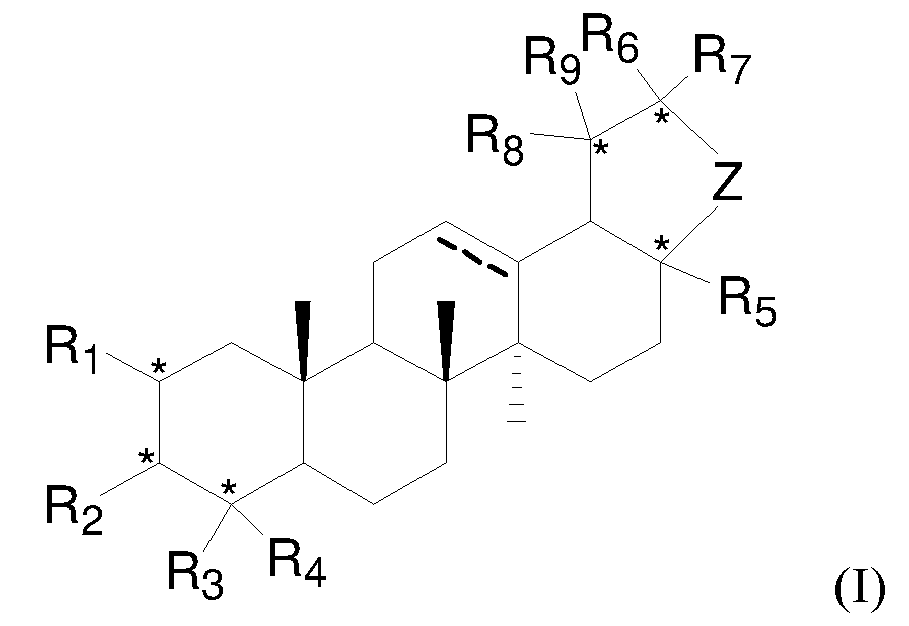
- R1 is hydrogen, hydroxyl, halogen or C1-C6 alkyl;
- R2 is hydrogen, hydroxyl, halogen, C1-C6 alkoxy, 3-10 membered cycloalkyloxy, =O, =N-OH, R-C(=O)-O-; where R is a substituted or unsubstituted following group: C1-C8 alkyl, C3-C10 cycloalkyl, C6-C10 aryl, 5-7 membered heteroaryl, RaNH- or RaO-; wherein each Ra is independently selected from the group consisting of C1-C8 alkyl, C3-C10 cycloalkyl, C6-C10 aryl and 5-7 membered heteroaryl;
- R3 and R4 are each independently unsubstituted or substituted C1-C6 alkyl;
- R5 is hydrogen, hydroxy, hydroxymethyl, formyl, or

- R6, R7, R8 and R9 are each independently hydrogen, hydroxyl or C1-C6 alkyl;
- Z is -(CH2)-n, n is 1, 2 or 3;
- represents single or double bond;

- each * independently represents R configuration, S configuration, or racemate;
- the "substituted" means that the hydrogen on the group is substituted with one or more substituents selected from the group consisting of hydroxyl, halogen, C1-C6 alkyl, C1-C6 alkoxy, carboxyl (-COOH), and sulfo group (-SO2OH).
- In another preferred embodiment, R1 is hydrogen or hydroxyl.
- In another preferred embodiment, R1 is hydrogen.
- In another preferred embodiment, R2 is hydroxyl or R-C(=O)-O-; where R is a substituted or unsubstituted following group: C1-C6 alkyl, C3-C8 cycloalkyl, C6-C10 aryl, 5-7 membered heteroaryl, RaNH- or RaO-; wherein each Ra is C1-C6 alkyl;
the "substituted" means that the hydrogen on the group is substituted with one or more substituents selected from the group consisting of halogen, C1-C6 alkyl, and C1-C6 alkoxy. - In another preferred embodiment, R2 is connected to the ring in α configuration.
- In another preferred embodiment, R3 and R4 are each independently C1-C4 alkyl.
- In another preferred embodiment, R3 and R4 are both methyl.
- In another preferred embodiment, R5 is hydroxymethyl, formyl, or

the "substituted" means that the hydrogen on the group is substituted with one or more substituents selected from the group consisting of C1-C4 alkyl, carboxyl (-COOH), and sulfo group (-SO2OH). - In another preferred embodiment, R5 is


- In another preferred embodiment, R6 and R7 are each independently hydrogen, methyl or ethyl;
R8 and R9 are each independently hydrogen, methyl, ethyl, n-propyl, isopropyl, n-butyl, tert-butyl or isobutyl. - In another preferred embodiment, the compound is:


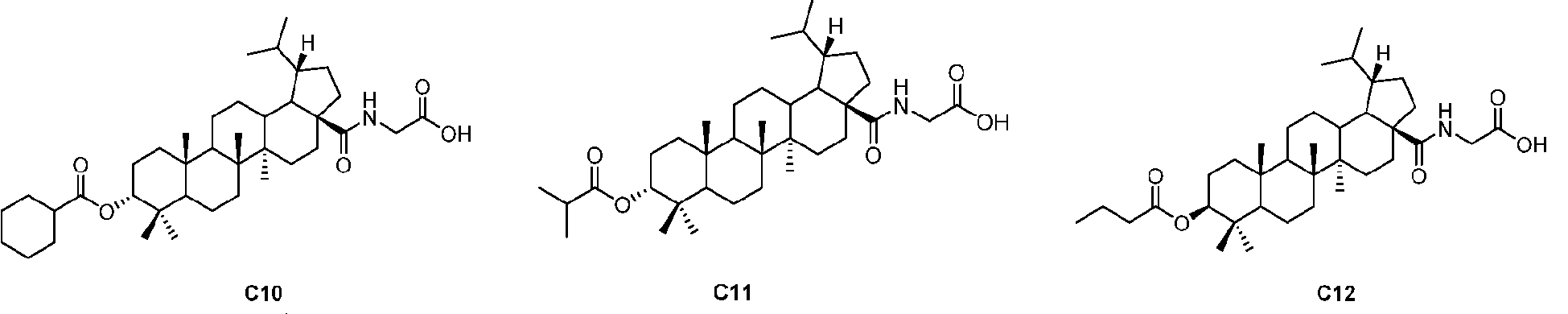


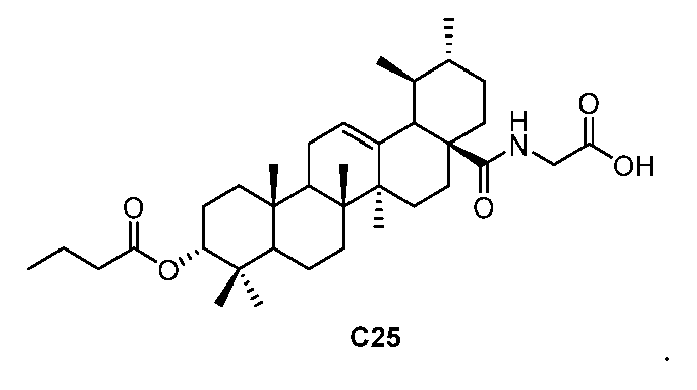
- In the second aspect of the preset invention, it provides a method for preparing the compound or pharmaceutically acceptable salt thereof according to the first aspect, wherein

- In a preferred embodiment, the compound or pharmaceutically acceptable salt thereof is prepared by the following route:
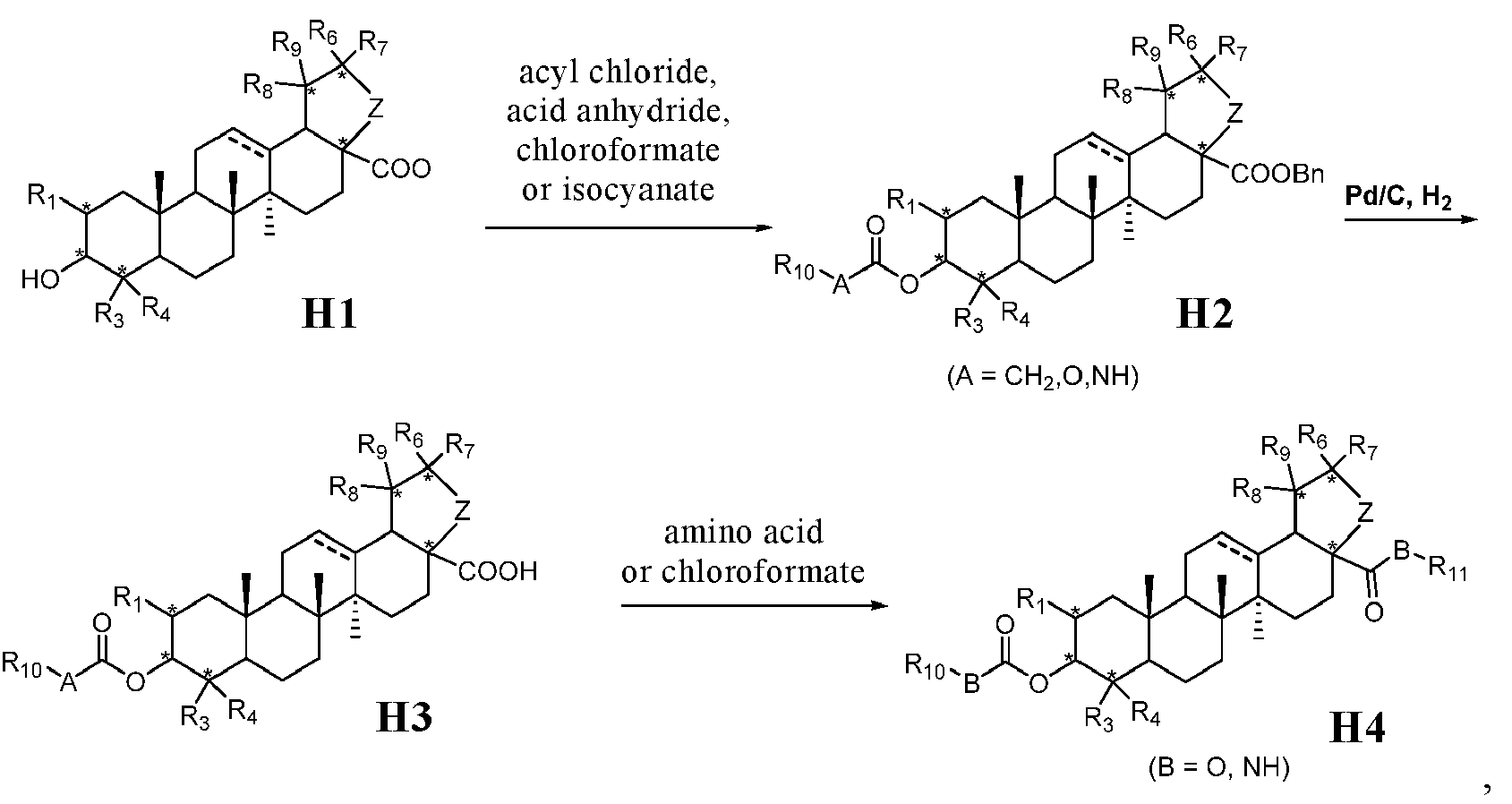
- reacting a compound of formula H1 with an acyl chloride, acid anhydride, chloroformate or isocyanate to obtain a compound of formula H2;
- removing benzyl protecting group from the compound of formula H2 to obtain a compound of formula H3;
- reacting a compound of formula H3 with an amino acid or chloroformate to obtain a compound of formula H4;
- wherein, Rio is a substituted or unsubstituted following group: C1-C8 alkyl, C3-C10 cycloalkyl, C6-C10 aryl, 5-7 membered heteroaryl, RaNH- or RaO-; wherein, each Ra is independently selected from the group consisting of C1-C8 alkyl, C3-C10 cycloalkyl, C6-C10 aryl, 5-7 membered heteroaryl; R11 is hydrogen, or unsubstituted or substituted C1-C6 alkyl.
- The definition of substitution is the same as above.
- In the third aspect of the present invention, it provides a pharmaceutical composition comprising the compound or pharmaceutically acceptable salt thereof according to the first aspect; and
a pharmaceutically acceptable carrier. - In the fourth aspect of the present invention, it provides use of the compound or pharmaceutically acceptable salt thereof of claim 1 or the use of a pharmaceutical composition according to claim 9, (i) for the manufacture of a farnesoid X receptor (FXR) antagonist; or (ii) for the manufacture of a medicament for the treatment of a metabolic disease.
- In another preferred example, the metabolic disease is selected from the group consisting of: hyperlipidemia, bile acid accumulation, diabetes, obesity, non-alcoholic fatty liver, and biliary cirrhosis.
- A method for treating hyperlipidemia, characterized in that the method comprises administering the compound or pharmaceutically acceptable salt thereof according to claim 1, or the pharmaceutical composition according to claim 9 to a subject in need.
- The novel pentacyclic triterpenoids of the present invention can effectively antagonize FXR receptors, can antagonize FXR receptors at micromolar concentrations and has no agonistic effect on TGR5 receptor. Compared with some existing natural-derived FXR antagonists, it has richer natural sources and simpler synthetic methods.
- It should be understood that, within the scope of the present invention, the above technical features of the present invention and the technical features specifically described in the following descriptions (such as the examples) can be combined with each other to form a new or preferred technical solution. Each feature disclosed in the description may be replaced by any alternative feature serving the same, equivalent, or similar purpose. Due to space limitations, they will not be repeated herein.
- After extensive and intensive research, the inventors of the present application have developed a class of pentacyclic triterpenoids for the first time. The main feature is the inversion of the hydroxyl group at position 3 and the introduction of groups such as glycine or taurine into the carboxyl group at position 17. FXR antagonistic activity is significantly increased. The inventors studied the effect of this structure on the activity for the first time, and obtained a series of compounds with excellent performance. Compared with some existing natural-derived FXR antagonists, they have more abundant sources and can be synthetized simply. The compounds are expected to be novel medicaments acting on this target for treating metabolic diseases. Based on this, the present invention has been completed.
- As used herein, the alkyl is preferably an aliphatic alkyl, which may be a linear or branched alkyl, and includes but is not limited to: methyl, ethyl, n-propyl, isopropyl, n-butyl, isobutyl, tert-butyl, etc. The expressions of the form "C1-C8" are intended to include those corresponding groups having 1, 2, 3, 4, 5, 6, 7, or 8 carbon atoms, for example, "C1-C8 alkyl" refers to an alkyl having 1, 2, 3, 4, 5, 6, 7, or 8 carbon atoms, and "C2-C10 alkenyl" refers to an alkenyl having 2, 3, 4, 5, 6, 7, 8, 9 or 10 carbon atoms.
- As used herein, the alkenyl is preferably vinyl, propenyl, butenyl, styryl, phenylpropenyl or the like.
- As used herein, halogen preferably refers to fluorine, chlorine, bromine or iodine.
- As used herein, alkoxy refers to -O-(alkyl), wherein alkyl is as defined above. "C1-6 alkoxy" refers to an alkyloxy group containing 1 to 6 carbons. Non-limiting examples include methoxy, ethoxy, propoxy, butoxy, and the like.
- As used herein, the cycloalkyl may be a saturated or partially unsaturated monocyclic or polycyclic cyclic hydrocarbon substituent, including 3 to 20 carbon atoms, preferably 3 to 12 carbon atoms, and more preferably 3 to 10 carbon atoms. Non-limiting examples of monocyclic cycloalkyl include cyclopropyl, cyclobutyl, cyclopentenyl, cyclohexyl, cyclooctyl, and the like; and polycyclic cycloalkyl includes spiro, fused and bridged cycloalkyl.
- As used herein, cycloalkyloxy refers to -O-(cycloalkyl), wherein cycloalkyl is as defined above.
- The aryl refers to a 6 to 10 membered full-carbon monocyclic or fused polycyclic (that is, a ring sharing an adjacent carbon atoms pair) group, and the group has a conjugated π-electron system, such as phenyl and naphthyl. The aryl ring may be fused with heterocyclyl, heteroaryl, or cycloalkyl. Non-limiting examples include benzimidazole, benzothiazole, benzoxazole, benzoisoxazole, benzopyrazole, quinoline, benzoindole, benzodihydrofuran.
- The heteroaryl refers to a heteroaromatic system containing 1 to 4 heteroatoms and 5 to 14 ring atoms, wherein the heteroatoms include oxygen, sulfur, and nitrogen. Heteroaryl is preferably 5- or 6-membered, such as furyl, thienyl, pyridyl, pyrrolyl, N-alkylpyrrolyl, pyrimidinyl, pyrazinyl, imidazolyl, tetrazolyl, and the like. The heteroaryl may be fused to an aryl, heterocyclyl or cycloalkyl, wherein the ring connected to the parent structure is a heteroaryl ring.
- In the present invention, unless otherwise indicated,

- Unless otherwise specified, the structure formula described herein are intended to include all tautomeric, optical, and stereoisomeric forms (e.g., enantiomers, diastereomers, geometric isomers, or conformers). For example, R and S configurations containing asymmetric centers, (Z), (E) isomers of double bonds and conformational isomers of (Z), (E). The individual stereochemical isomers, tautomers or enantiomers, diastereomers or geometric isomers or tautomers, or a mixture of conformers of the compounds of the invention belong to the scope of the present invention.
- The term "tautomers" means that structural isomers with different energies can exceed low energy barriers and thus be converted into each other. For example, proton tautomers (i.e., proton shifts) include interconversions via proton migration, such as 1H-indazole and 2H-indazole, 1H-benzo[d]imidazole and 3H-benzo[d]imidazole. The valence tautomers include interconversions by reorganization of some bonding electrons.
- The pharmaceutically acceptable salts herein are not particularly limited, and preferably include: inorganic acid salts, organic acid salts, alkyl sulfonates, and aryl sulfonates; the inorganic acid salts include hydrochloride , hydrobromide, nitrate, sulfate, phosphate, etc.; the organic acid salts include formate, acetate, propionate, benzoate, maleate, fumarate, succinate, tartrate, citrate, etc.; the alkyl sulfonates include methyl sulfonate, ethyl sulfonate, etc.; and the aryl sulfonates include benzenesulfonate, p-toluenesulfonate, and the like.
- The pentacyclic triterpene compounds of the present invention can be prepared by the following route.


- The present invention is further described below with reference to specific examples. It should be understood that these examples are only used to illustrate the present invention and not to limit the scope of the present invention. The experimental methods without specific conditions in the following examples are usually performed according to conventional conditions (such as those described in Sambrook et al., Molecular Cloning: Laboratory Manual (New York: Cold Spring Harbor Laboratory Press, 1989)) or according to conditions recommended by the manufacturer. Unless stated otherwise, percentage and part are percentage by weight and part by weight.
- Unless otherwise defined, all professional and scientific terms used in this application have the same meanings as those familiar to those skilled in the art. In addition, any methods and materials similar or equal to the contents described can be used in the method of the present invention. The preferred methods and materials described herein are for demonstration purposes only.
- In the following preparation examples, NMR was measured with a Mercury-Vx 300M instrument manufactured by Varian, and the NMR was calibrated: δ H 7.26 ppm (CDCl3), 2.50 ppm (DMSO-d6 ); MS was measured with Agilent 1200 Quadrupole LC/MS instrument or SHIMADZU GCMS-QP5050A; reagents were mainly provided by Shanghai Chemical Reagent Company; the silica gel plate used in TLC thin-layer chromatography was produced by Shandong Yantai Huiyou Silica Gel Development Co., Ltd. (model HSGF 254); and the normal phase column chromatography silica gel used for compound purification was produced by branch plat of Shandong Qingdao Marine Chemical Plant (model zcx-1 1, 200-300 mesh).
- The full term corresponding to the abbreviations in the application are as follows.
- DMAP: 4-dimethylaminopyridine; DCM: dichloromethane; DMF: N,N-dimethylformamide; TFA: trifluoroacetic acid.
-

- (1) The raw material betulinic acid S1 (1.2 g, 2.63 mmol) was dissolved in methanol (50 mL) at room temperature. After the nitrogen was charged, 10% Pd/C was quickly added, then the nitrogen was charged and then hydrogen was charged. The mixture was stirred at room temperature. After 24 hours, TLC detection showed that the reaction was complete. After the nitrogen was charged, Pd/C was filtered off, and the reaction solution was dried by rotary evaporation and separated by column chromatography using an eluent system of petroleum ether/ethyl acetate (10: 1) to obtain the compound S2 (1.04 g, 2.27 mmol) as a white solid in a molar yield of 86%. 1H NMR (300 MHz, CDCl3) δ 3.13 (t, 1H, J = 9.0, 6.9 Hz), 2.28-2.16 (m, 2H), 1.98-1.78 (m, 4H), 1.64-0.96 (m, other aliphatic ring protons), 0.96 (s, 3H), 0.93 (s, 3H), 0.92 (s, 3H), 0.90 (s, 3H), 0.89 (s, 3H), 0.87 (s, 3H), 0.78 (s, 3H).
- (2) The product S2 (1.04 g, 2.27 mmol) was dissolved in DMF (20 mL) at room temperature, anhydrous potassium carbonate (0.626 g, 4.54 mmol) was added, and benzyl chloride (0.313 mL, 2.72 mmol) was slowly added dropwise with stirring. After the addition was complete, the reaction solution was stirred at 50 °C for 3 h. The reaction was monitored by TLC. After the reaction was complete, the mixture was cooled to room temperature, diluted with 50 mL of deionized water, and extracted with ethyl acetate (2×50 mL). The combined organic layers were washed separately with deionized water and saturated brine, dried over sodium sulfate, and distilled under reduced pressure to obtain the desired compound S3 (1.21 g, 2.20 mmol) as a white solid in a molar yield of 97%, which was directly used in the next reaction.
- (3) S3 (1.21 g, 2.20 mmol) was dissolved in dichloromethane (30 mL) in an ice-water bath, and Dess-Martin oxidant (1.87 g, 4.40 mmol) was added in portions. The mixture was slowly warmed to room temperature and stirred for 1 hour. Then the reaction mixture was filtered and dried by rotary evaporation, and separated by column chromatography using an eluent system of petroleum ether/ethyl acetate (10: 1) to obtain compound S4 (0.983 g, 1.80 mmol) as a white solid in a molar yield of 82%. 1H NMR (300 MHz, CDCl3) δ 7.38-7.30 (m, 5H), 5.16-5.05 (m, 2H), 2.55-2.34 (m, 2H), 2.31-2.18 (m, 3H), 1.95-1.12 (m, other aliphatic ring protons), 1.06 (s, 3H), 1.01 (s, 3H), 0.93 (s, 3H), 0.91 (s, 3H), 0.86 (d, 3H, J = 6.9 Hz), 0.79-0.73 (m, 6H).
- (4) The product S4 (0.983 g, 1.80 mmol) and S-(-)-2-methyloxazoleborane (100 mg, 0.36 mmol) were loaded into a 100 mL dried round-bottomed flask and THF (70 mL) treated with fresh sodium wire was added. A 10 M solution of boranein tetrahydrofuran (0.32 mL) was slowly added dropwise at room temperature, wherein the drop rate was controlled and addition was completed within ten minutes. Then the mixture was stirred at room temperature for ten minutes. TLC monitoring showed that the reaction was complete. The reaction flask was moved to an ice-water bath, and methanol was slowly added to quench the reaction. After no more bubbles were formed, the solvent was removed by rotary evaporation. The residue was separated by column chromatography using an eluent system of petroleum ether/ethyl acetate (10: 1) to obtain compound S5 (827 mg, 1.51 mmol) as a white solid in a molar yield of 84%. 1H NMR (300 MHz, CDCl3) δ 7.37-7.30 (m, 5H), 5.15-5.06 (m, 2H), 3.38 (t, 1H, J = 3.0 Hz), 2.55-2.34 (m, 2H), 2.31-2.18 (m, 3H), 1.95-1.12 (m, other aliphatic ring protons), 0.94 (s, 3H), 0.93 (s, 3H), 0.91 (s, 3H), 0.85-0.82 (m, 9H), 0.75-0.73 (m, 6H).
- (5) Compound S5 (110 mg, 0.20 mmol) and a catalytic amount of DMAP (2.4 mg, 0.02 mmol) were dissolved in dichloromethane (5 mL) and triethylamine (83 µL, 0.60 mmol) was added. Butyric anhydride (98 µL, 0.60 mmol) was added dropwise under an ice-water bath and the mixture was reacted at room temperature for 12 hours. TLC showed that the reaction was complete. After the solvent was removed by concentration, the residue was diluted with ethyl acetate. The organic phase was washed separately with water and saturated aqueous sodium chloride solution, dried and concentrated over anhydrous sodium sulfate, and separated by column chromatography using an eluent system of petroleum ether/ethyl acetate (10: 1) to obtain product S9 (111 mg, 0.18 mmol) in a molar yield of 90%. 1H NMR (300 MHz, CDCl3) δ 7.38-7.30 (m, 5H), 5.15-5.06 (m, 2H), 4.62 (t, 1H, J = 3.0 Hz), 2.34-2.16 (m, 4H), 1.93-1.04 (m, other aliphatic ring protons), 0.97 (t, 6H, J = 7.2 Hz), 0.87-0.86 (m, 3H), 0.84-0.82 (m, 6H), 0.76-0.73 (m, 6H).
- (6) The product S9 (111 mg, 0.18 mmol) was dissolved in methanol (10 mL) and a small amount of ethyl acetate. After the nitrogen was charged, 10% Pd/C was quickly added, then the nitrogen was charged and then hydrogen was charged. The mixture was stirred at room temperature. After 1 hour, TLC detection showed that the reaction was complete. After the nitrogen was charged, 10% Pd/C was filtered off. The reaction solution was dried by rotary evaporation and then separated by column chromatography using an eluent system of petroleum ether/ethyl acetate (9: 1) to obtain compound S10 (79 mg, 0.15 mmol) as a white solid in a molar yield of 83%. 1H NMR (300 MHz, CDCl3) δ 4.61 (s, 1H), 2.30 (t, 2H, J = 7.5 Hz), 2.28-2.15 (m, 4H), 1.98-1.15 (m, other aliphatic ring protons), 0.94 (s, 3H), 0.91 (s, 3H), 0.90 (t, 3H, J = 6.0 Hz), 0.85 (s, 3H), 0.83 (s, 3H), 0.82 (s, 3H), 0.75 (s, 3H), 0.73 (s, 3H).
- (7) The product S10 (79 mg, 0.15 mmol) and a catalytic amount of DMF (2 µL, 0.02 mmol) were dissolved in 2 mL dried dichloromethane, and oxalyl chloride (125 µL, 1.5 mmol) was added at 0 °C. After 10 min, the mixture was warmed to room temperature and stirred for 3 hours. Dichloromethane was directly removed by rotary evaporation and the residue was dried with an oil pump and then used in next reaction. Tert-butyl glycinate hydrochloride (51 mg, 0.30 mmol) and a catalytic amount of DMAP (3.7 mg, 0.03 mmol) were dissolved in 1 mL dichloromethane and triethylamine (103 µL, 0.75 mmol) was added dropwise at 0 °C. Then 1 mL freshly prepared solution of acyl chloride in dichloromethane was added dropwise. After 10 minutes, the mixture was warmed to room temperature and reacted at room temperature for 12 hours. TLC showed that the reaction was complete. The solvent was removed by concentration and then the residue was diluted with ethyl acetate. The organic phase was washed separately with water and aqueous saturated sodium chloride solution, dried and concentrated over anhydrous sodium sulfate, and separated by column chromatography using an eluent system of petroleum ether/ethyl acetate (8: 1) to obtain the product (83 mg, 0.13 mmol) in a molar yield of 87%. 1H NMR (300 MHz, CDCl3) δ 6.02 (t, 1H, J = 5.1 Hz), 4.62 (t, 1H, J = 3.0 Hz), 3.91-3.88 (m, 2H), 2.48-2.38 (m, 1H), 2.31 (t, 2H, J = 7.5 Hz), 2.04-2.00 (m, 1H), 1.91-1.04 (m, other aliphatic ring protons), 1.47 (s, 9H), 1.04-0.95 (m, 6H), 0.92 (s, 3H), 0.86-0.82 (m, 12H), 0.74 (d, 3H, J = 6.6 Hz).
- (8) The product from previous step (83 mg, 0.13 mmol) was dissolved in 3 mL dichloromethane and 0.2 mL TFA was added. The mixture was stirred at room temperature for 1 hour, and TLC showed that the reaction was complete. The solvent was directly removed by rotary evaporation and the residue was separated by column chromatography using an eluent system of dichloromethane/methanol (20: 1) to obtain the product C4 (59 mg, 0.10 mmol) in a molar yield of 77%. 1H NMR (300 MHz, CDCl3) δ 6.16 (s, 1H), 4.63 (t, 1H, J = 2.7 Hz), 4.07 (s, 2H), 2.41-2.21 (m, 4H), 2.05-1.04 (m, other aliphatic ring protons), 1.00-0.95 (m, 6H), 0.92 (s, 3H), 0.87-0.83 (m, 12H), 0.75 (d, 3H, J = 6.9 Hz).
- The following compounds were synthesized from different acid anhydrides or acyl chlorides by using the same preparation method as example 1.
Compound Structure NMR C2 
1H NMR (300 MHz, CDCl3) δ 6.23-6.19 (m, 1H), 4.61 (s, 1H), 4.04 (d, 2H, J = 6.9 Hz), 2.42-2.33 (m, 1H), 2.31-2.23 (m, 1H), 2.07 (s, 3H), 2.02-1.05 (m, other aliphatic ring protons), 1.00 (s, 3H), 0.92 (s, 3H), 0.86-0.82 (m, 12H), 0.74 (d, 3H, J = 6.6 Hz). C3 
1H NMR (300 MHz, CDCl3) δ 6.13-6.09 (m, 1H), 4.62 (s, 1H), 4.07-4.04 (m, 2H), 2.43-1.10 (m, other aliphatic ring protons), 1.00 (s, 3H), 0.93 (s, 3H), 0.87-0.83 (m, 12H), 0.75 (d, 3H, J = 6.3 Hz). C5 
1H NMR (300 MHz, CDCl3) δ 6.16-6.13 (m, 1H), 4.62 (t, 1H, J = 2.7 Hz), 4.06-4.04 (m, 2H), 2.43-2.23 (m, 3H), 2.04-1.04 (m, other aliphatic ring protons), 1.00 (s, 3H), 0.93-0.89 (m, 6H), 0.87-0.83 (m, 12H), 0.74 (d, 3H, J = 6.6 Hz). C6 
1H NMR (300 MHz, CDCl3) δ 6.16-6.13 (m, 1H), 4.62 (t, 1H, J = 3.0 Hz), 4.06-4.04 (m, 2H), 2.43-2.40 (m, 4H), 2.04-1.04 (m, other aliphatic ring protons), 1.00 (s, 3H), 0.93-0.89 (m, 6H), 0.87-0.83 (m, 12H), 0.75 (d, 3H, J = 6.6 Hz). C7 
1H NMR (300 MHz, CDCl3) δ 6.24 (t, 1H, J = 5.1 Hz), 4.61 (t, 1H, J = 2.4 Hz), 4.04 (d, 2H, J = 5.1 Hz), 2.43-2.34 (m, 1H), 2.30-2.22 (m, 1H), 2.10-2.02 (m, 1H), 1.91-1.07 (m, other aliphatic ring protons), 1.04-0.95 (m, 5H), 0.92 (s, 3H), 0.86-0.84 (m, 14H), 0.75 (d, 3H, J = 6.6 Hz). C8 
1H NMR (300 MHz, CDCl3) δ 6.18-6.15 (m, 1H), 4.62-4.60 (m, 1H), 4.07-4.04 (m, 2H), 3.23-3.11 (m, 1H), 2.42-2.16 (m, 6H), 2.11-1.04 (m, other aliphatic ring protons), 0.99 (s, 3H), 0.92 (s, 3H), 0.87-0.83 (m, 12H), 0.75 (d, 3H, J = 6.6 Hz). C9 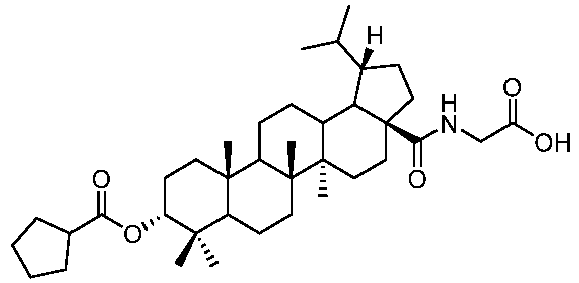
1H NMR (300 MHz, CDCl3) δ 6.16-6.12 (m, 1H), 4.60-4.58 (m, 1H), 4.07-4.04 (m, 2H), 2.83-2.73 (m, 1H), 2.44-2.34 (m, 1H), 2.31-2.24 (m, 1H), 2.04-1.04 (m, other aliphatic ring protons), 0.99 (s, 3H), 0.93 (s, 3H), 0.87-0.83 (m, 12H), 0.75 (d, 3H, J = 6.6 Hz). C10 
1H NMR (300 MHz, CDCl3) δ 6.16-6.13 (m, 1H), 4.61-4.59 (m, 1H), 4.07-4.04 (m, 2H), 2.44-2.24 (m, 3H), 2.05-1.09 (m, other aliphatic ring protons), 1.00 (s, 3H), 0.93 (s, 3H), 0.88-0.83 (m, 12H), 0.75 (d, 3H, J = 6.9 Hz). C11 
1H NMR (300 MHz, CDCl3) δ 6.20 (t, 1H, J = 5.4 Hz), 4.59 (s, 1H), 4.06-4.04 (m, 2H), 2.63-2.53 (m, 1H), 2.43-2.21 (m, 2H), 2.13-1.04 (m, other aliphatic ring protons), 1.20 (d, 3H, J = 1.5 Hz), 1.17 (d, 3H, J = 1.2 Hz), 0.99 (s, 3H), 0.92 (s, 3H), 0.87-0.83 (m, 12H), 0.74 (d, 3H, J = 6.6 Hz). C13 
1H NMR (300 MHz, CDCl3) δ 8.07-8.04 (m, 2H), 7.59-7.54 (m, 1H), 7.50-7.44 (m, 2H), 6.16-6.12 (m, 1H), 4.89 (s, 1H), 4.08-4.05 (m, 2H), 2.45-2.36 (m, 1H), 2.32-2.25 (m, 1H), 2.11-1.15 (m, other aliphatic ring protons), 1.04 (s, 3H), 0.96-0.95 (m, 6H), 0.92-0.91 (m, 6H), 0.86 (d, 3H, J = 6.9 Hz), 0.75 (d, 3H, J = 6.0 Hz) C14 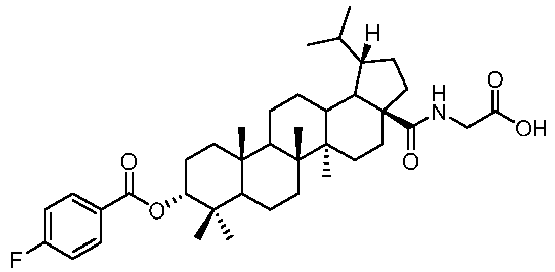
1H NMR (300 MHz, CDCl3) δ 8.08-8.03 (m, 2H), 7.17-7.11 (m, 2H), 6.14-6.11 (m, 1H), 4.87 (s, 1H), 4.08-4.05 (m, 2H), 2.45-2.37 (m, 2H), 2.32-2.24 (m, 2H), 2.08-1.13 (m, other aliphatic ring protons), 1.13 (s, 3H), 0.96 (s, 3H), 0.95 (s, 3H), 0.91 (s, 6H), 0.86 (d, 3H, J = 6.9 Hz), 0.75 (d, 3H, J = 6.9 Hz). C15 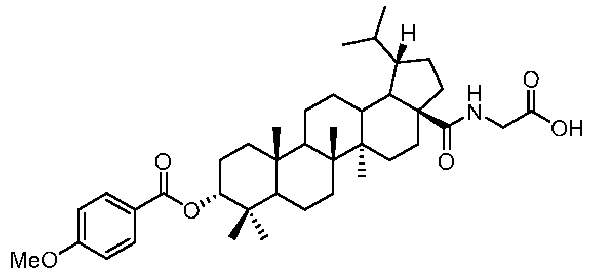
1H NMR (300 MHz, CDCl3) δ 8.01(d, 2H, J = 8.7 Hz), 6.95 (d, 2H, J = 9.0 Hz), 6.15 (t, 1H, J = 5.4 Hz), 4.85 (t, 1H, J = 3.0 Hz), 4.08-4.05 (m, 2H), 3.87 (s, 3H), 2.44-2.36 (m, 1H), 2.31-2.24 (m, 1H), 2.11-1.16 (m, other aliphatic ring protons), 1.04 (s, 3H), 0.96 (s, 3H), 0.94 (s, 3H), 0.91-0.90 (m, 6H), 0.85 (d, 3H, J = 6.9 Hz), 0.75 (d, 3H, J = 6.6 Hz). C16 
1H NMR (300 MHz, CDCl3) δ 9.26 (s, 1H), 8.83-8.81 (m, 1H), 8.41-8.37 (m, 1H), 7.53-7.48 (m, 1H), 6.17-6.14 (m, 1H), 4.94-4.92 (m, 1H), 4.08-4.05 (m, 2H), 2.45-2.38 (m, 1H), 2.32-2.25 (m, 1H), 2.06-1.97 (m, 2H), 1.84-1.16 (m, other aliphatic ring protons), 1.03 (s, 6H), 0.96 (s, 6H), 0.92 (s, 3H), 0.90 (s, 3H), 0.85 (d, 3H, J = 6.6 Hz), 0.75 (d, 3H, J = 6.9 Hz). C17 
1H NMR (300 MHz, CDCl3) δ 7.59 (s, 1H), 7.13 (d, 1H, J = 3.3 Hz), 6.52-6.50 (m, 1H), 6.14 (t, 1H, J = 5.4 Hz), 4.85 (s, 1H), 4.07-4.05 (m, 2H), 2.44-2.36 (m, 1H), 2.32-2.24 (m, 1H), 2.06-1.15 (m, other aliphatic ring protons), 1.03 (s, 6H), 0.95 (s, 6H), 0.93 (s, 3H), 0.90-0.85 (m, 9H), 0.75 (d, 3H, J = 6.6 Hz). C24 
1H NMR (300 MHz, CDCl3) δ 6.69-6.66 (m, 1H), 5.48-5.46 (m, 1H), 4.65-4.63 (m, 1H), 4.09 (dd, J = 17.7, 5.4 Hz, 1H), 3.90 (dd, J = 17.7, 5.4 Hz, 1H), 2.60-2.56 (m, 1H), 2.31 (t, J = 7.5 Hz, 2H), 2.10-1.06 (m, other aliphatic ring protons), 0.99-0.85 (m, 18H), 0.74 (s, 3H). C25 
1H NMR (300 MHz, CDCl3) δ 6.67-6.65 (m, 1H), 5.42-5.40 (m, 1H), 4.65 (s, 1H), 4.06 (dd, J = 17.7, 5.1 Hz, 1H), 3.90 (dd, J = 18.0, 4.2 Hz, 1H), 2.60-2.56 (m, 1H), 2.32 (t, J = 7.5 Hz, 2H), 2.05-1.06 (m, other aliphatic ring protons), 0.99-0.89 (m, 15H), 0.85 (s, 3H), 0.74 (s, 3H). -

- Compound C4 (42 mg, 0.07 mmol) was dissolved in a mixed solvent of methanol and water (4:1) and sodium hydroxide (28 mg, 0.7 mmol) was added at 0 °C. After 10 min, the mixture was warmed to room temperature and stirred for 12 hours. TLC showed that the reaction was complete. Methanol was removed by rotary evaporation and pH was adjusted to neutral with diluted hydrochloric acid. The mixture was diluted with ethyl acetate. Then the organic phase was washed separately with water and aqueous saturated sodium chloride solution, dried and concentrated over anhydrous sodium sulfate, and separated by column chromatography using an eluent system of dichloromethane/methanol (10: 1) to obtain product C1 (21 mg, 0.04 mmol) in a molar yield of 57%. 1H NMR (300 MHz, CDCl3) δ 6.13-6.10 (m, 1H), 4.04 (d, 2H, J = 4.8 Hz), 3.40 (t, 1H, J = 3.0 Hz), 2.43-1.12 (m, other aliphatic ring protons), 0.97 (s, 3H), 0.93 (s, 3H), 0.92 (s, 3H), 0.87-0.82 (m, 9H), 0.75 (d, 3H, J = 6.9 Hz).
-

- (1) Compound S3 (148 mg, 0.27 mmol) and a catalytic amount of DMAP (3.7 mg, 0.03 mmol) were dissolved in dichloromethane (5 mL) and triethylamine (112 µL, 0.81 mmol) was added. Butyric anhydride (132 µL, 0.81 mmol) was added dropwise under an ice-water bath and the mixture was reacted at room temperature. After 12 hours, TLC showed that the reaction was complete. After the solvent was removed by concentration, the residue was diluted with ethyl acetate. The organic phase was washed separately with water and aqueous saturated sodium chloride solution, dried and concentrated over anhydrous sodium sulfate, and separated by column chromatography using an eluent system of petroleum ether/ethyl acetate (10: 1) to obtain product S6 (142 mg, 0.23 mmol) in a molar yield of 85%. 1H NMR (300 MHz, CDCl3) δ 7.37-7.30 (m, 5H), 5.15-5.05 (m, 2H), 4.50-4.45 (m, 1H), 2.34-2.14 (m, 4H), 1.86-1.09 (m, other aliphatic ring protons), 0.99-0.92 (m, 6H), 0.85-0.79 (m, 9H), 0.75-0.73 (m, 6H).
- (2) The product S6 (142 mg, 0.23 mmol) was dissolved in methanol (15 mL) and a small amount of ethyl acetate. After the nitrogen was charged, 10% Pd/C was quickly added, then the nitrogen was charged and then hydrogen was charged. The mixture was stirred at room temperature for 1 hour and TLC detection showed that the reaction was complete. After the nitrogen was charged, Pd/C was filtered off, and the reaction solution was dried by rotary evaporation. The residue was separated by column chromatography using an eluent system of petroleum ether/ethyl acetate (8: 1) to obtain compound S7 (101 mg, 0.19 mmol) as a white solid in a molar yield of 83%. 1H NMR (300 MHz, CDCl3) δ 4.48 (t, 1H, J = 7.5 Hz), 2.28 (t, 2H, J = 7.5 Hz), 2.30-2.15 (m, 4H), 1.90-1.07 (m, other aliphatic ring protons), 0.94 (s, 3H), 0.91 (s, 3H), 0.90 (t, 3H, J = 6.0 Hz), 0.85 (s, 3H), 0.83 (s, 3H), 0.82 (s, 3H), 0.75 (s, 3H), 0.73 (s, 3H).
- (3) The product S7 (101 mg, 0.19 mmol) and a catalytic amount of DMF (2 µL, 0.02 mmol) were dissolved in 2 mL dried dichloromethane and oxalyl chloride (158 µL, 1.9 mmol) was added at 0 °C. After 10 min, the mixture was warmed to room temperature and stirred for 3 hours. Dichloromethane was directly removed by rotary evaporation and the residue was dried with an oil pump and then used in next reaction. Tert-butyl glycinate hydrochloride (65 mg, 0.38 mmol) and a catalytic amount of DMAP (3.7 mg, 0.03 mmol) were dissolved in 1 mL dichloromethane. Triethylamine (130 µL, 0.95 mmol) was added dropwise at 0 °C and then 1 mL freshly prepared solution of acyl chloride in dichloromethane was added dropwise. After 10 min, the mixture was warmed to room temperature and stirred for 12 hours. TLC showed that the reaction was complete. After the solvent was removed by concentration, the residue was diluted with ethyl acetate. The organic phase was washed separately with water and aqueous saturated sodium chloride solution, dried and concentrated over anhydrous sodium sulfate, and separated by column chromatography using an eluent system of petroleum ether/ethyl acetate (8: 1) to obtain product S8 (105 mg, 0.17 mmol) in a molar yield of 89%. 1H NMR (300 MHz, CDCl3) δ 6.01 (t, 1H, J = 5.1 Hz), 4.51-4.45 (m, 1H), 3.91-3.88 (m, 2H), 2.48-2.38 (m, 1H), 2.30-2.25 (m, 3H), 2.03-2.00 (m, 1H), 1.81-1.11 (m, other aliphatic ring protons), 1.47 (s, 9H), 0.97-0.91 (m, 9H), 0.86-0.83 (m, 12H), 0.74 (d, 3H, J = 6.6 Hz).
- (4) The product S8 (105 mg, 0.17 mmol) was dissolved in 5 mL dichloromethane and 0.2 mL TFA was added and stirred at room temperature for 1 hour. TLC showed that the reaction was complete. The solvent was directly removed by rotary evaporation and the residue was separated by column chromatography using an eluent system of dichloromethane/methanol (20: 1) to obtain product C12 (82 mg, 0.14 mmol) in a molar yield of 82%. 1H NMR (300 MHz, CDCl3) δ 6.15-6.11 (m, 1H), 4.51-4.45 (m, 1H), 4.05 (t, 1H, J = 4.8 Hz), 2.38-2.25 (m, 4H), 2.02-1.12 (m, other aliphatic ring protons), 0.97-0.90 (m, 9H), 0.86-0.83 (m, 12H), 0.75 (d, 3H, J = 6.6 Hz).
-

- (1) The product S10 (50 mg, 0.095 mmol) and a catalytic amount of DMF (1 µL, 0.01 mmol) were dissolved in 1 mL dried dichloromethane and oxalyl chloride (125 µL, 0.95 mmol) was added at 0 °C. After 10 min, the mixture was warmed to room temperature and stirred for 3 hours. Dichloromethane was directly removed by rotary evaporation and the residue was dried with an oil pump and then used in next reaction. Tert-butyl glycinate hydrochloride (36 mg, 0.19 mmol) and a catalytic amount of DMAP (2.4 mg, 0.02 mmol) were dissolved in 1 mL dichloromethane and triethylamine (67 µL, 0.48 mmol) was added dropwise at 0 °C. Then 1 mL freshly prepared solution of acyl chloride in dichloromethane was added dropwise. After 10 min, the mixture was warmed to room temperature and stirred for 12 hours. TLC showed that the reaction was complete. After the solvent was removed by concentration, the residue was diluted with ethyl acetate. The organic phase was washed separately with water and aqueous saturated sodium chloride solution, dried and concentrated over anhydrous sodium sulfate, and separated by column chromatography using an eluent system of petroleum ether/ethyl acetate (15: 1) to obtain the product (47 mg, 0.072 mmol) in a molar yield of 76%. 1H NMR (300 MHz, CDCl3) δ 6.18 (d, 1H, J = 7.2 Hz), 4.62 (t, 1H, J = 3.0 Hz), 4.48-4.38 (m, 1H), 2.44-2.27 (m, 4H), 2.01-1.03 (m, other aliphatic ring protons), 0.99-0.92 (m, 9H), 0.86-0.82 (m, 12H), 0.74 (d, 3H, J = 6.6 Hz).
- (2) The product obtained in the previous step (47 mg, 0.072 mmol) was dissolved in 2 mL dichloromethane and 0.2 mL TFA was added. The mixture was stirred at room temperature for 1 hour. TLC showed that the reaction was complete. The solvent was directly removed by rotary evaporation and the residue was separated by column chromatography using an eluent system of dichloromethane/methanol (20: 1) to obtain product C18 (36 mg, 0.060 mmol) in a molar yield of 83%. 1H NMR (300 MHz, CDCl3) δ 6.06 (d, 1H, J = 6.6 Hz), 4.63 (s, 1H), 4.59-4.49 (m, 1H), 2.41-2.28 (m, 4H), 2.00-1.08 (m, other aliphatic ring protons), 1.00-0.93 (m, 9H), 0.88-0.83 (m, 12H), 0.75 (d, 3H, J = 6.6 Hz).
- Compound C19 was synthesized using D-alanine hydrochloride by using the same method as Example 4.

- 1H NMR (300 MHz, CDCl3) δ 6.06 (d, 1H, J = 6.3 Hz), 4.63 (t, 1H, J = 3.0 Hz), 4.55-4.46 (m, 1H), 2.43-2.24 (m, 4H), 2.03-1.05 (m, other aliphatic ring protons), 1.00-0.92 (m, 9H), 0.87-0.83 (m, 12H), 0.75 (d, 3H, J = 6.6 Hz).
-

- Compound S10 (50 mg, 0.095 mmol) and a catalytic amount of DMF (1 µL, 0.01 mmol) were dissolved in 2 mL dried dichloromethane, and oxalyl chloride (80 µL, 0.95 mmol) was added at 0 °C. After 10 min, the mixture was warmed to room temperature and stirred for 3 hours. Dichloromethane was directly removed by rotary evaporation and the residue was dried with an oil pump and then used in next reaction. The freshly prepared acyl chloride and triethylamine (263 µL, 1.9 mmol) were dissolved in dioxane (3 mL), then 1 mL aqueous solution of taurine (36 mg, 0.285 mmol) and triethylamine (263 µL, 1.9 mmol) was added dropwise at 0 °C. After 10 min, the mixture was warmed to room temperature and stirred for 3 hours. TLC showed that the reaction was complete. The mixture was adjusted with diluted hydrochloric acid to acidic pH and diluted with ethyl acetate. The organic phase was washed separately with water and aqueous saturated sodium chloride solution, dried and concentrated over anhydrous sodium sulfate, and separated by column chromatography using an eluent system of dichloromethane/methanol (10: 1) to obtain product C20 (16 mg, 0.025 mmol) in a molar yield of 27%. 1H NMR (300 MHz, CDCl3) δ 7.09 (br s, 1H), 4.61 (s, 1H), 3.20-3.03 (m, 4H), 2.33-2.28 (m, 2H), 1.72-1.60 (m, 4H), 1.44-1.07 (m, other aliphatic ring protons), 0.99-0.89 (m, 9H), 0.87-0.81 (m, 12H), 0.73-0.72 (m, 3H).
-

- (1) Compound S10 (100 mg, 0.189 mmol) was dissolved in ultra-dry DMF (3 mL), anhydrous potassium carbonate (65.3 mg, 0.473 mmol) was added, and benzyl bromoacetate (0.148 mL, 0.945 mmol) was slowly added dropwise with stirring. After addition, the mixture was stirred at room temperature for 3 hours. TLC monitoring showed that the reaction was complete. The mixture was diluted with 30 mL of deionized water and extracted with ethyl acetate (2 × 30 mL). The combined organic layers were washed separately with deionized water and saturated brine, dried and concentrated over sodium sulfate, and separated by column chromatography using an eluent system of petroleum ether/ethyl acetate (30: 1) to obtain product S13 (124 mg, 0.183 mmol) in a molar yield of 97%. 1H NMR (300 MHz, CDCl3) δ 7.38-7.34 (m, 5H), 5.24-5.13 (m, 2H), 4.63-4.62 (m, 3H), 2.32 (t, 2H, J = 7.5 Hz), 2.28-2.20 (m, 2H), 1.96-1.77 (m, 3H), 1.71-1.64 (m, 2H), 1.61-1.04 (m, other aliphatic ring protons), 1.00-0.92 (m, 9H), 0.87-0.83 (m, 9H), 0.75 (d, 3H, J = 6.9 Hz).
- (2) The product S13 (124 mg, 0.183 mmol) was dissolved in methanol (15 mL) and a small amount of ethyl acetate. After the nitrogen was charged, 10% Pd/C was quickly added, then the nitrogen was charged and then hydrogen was charged. The mixture was stirred at room temperature. After 1 hour, TLC detection showed that the reaction was complete. After the nitrogen was charged, Pd/C was filtered off, and the reaction solution was dried by rotary evaporation and then separated by column chromatography using an eluent system of dichloromethane/methanol (20: 1) to obtain compound C21 (80 mg, 0.137 mmol) as a white solid in a molar yield of 75%. 1H NMR (300 MHz, CDCl3) δ 4.66-4.58 (m, 3H), 2.32 (t, 2H, J = 7.5 Hz), 2.24-2.17 (m, 3H), 1.94-1.77 (m, 4H), 1.71-1.64 (m, 2H), 1.61-1.04 (m, other aliphatic ring protons), 1.00-0.92 (m, 9H), 0.87-0.82 (m, 9H), 0.75 (d, 3H, J = 6.6 Hz).
-

- (1) Compound S5 (100 mg, 0.182 mmol), ethyl isocyanate (150 µL, 1.82 mmol), triethylamine (505 µL, 3.64 mmol) and DMAP (1.22 mg, 0.01 mmol) were dissolved in 3 mL of toluene. The tube was sealed and the mixture was reacted at 120 °C for two days. TLC monitoring showed that the reaction was complete. The mixture was diluted with 30 mL of deionized water and extracted with ethyl acetate (2 × 30 mL). The combined organic layers were washed separately with deionized water and saturated brine, dried and concentrated over sodium sulfate, and separated by column chromatography using an eluent system of petroleum ether/ethyl acetate (15: 1) to obtain product S14 (85 mg, 0.137 mmol) in a molar yield of 75%. 1H NMR (300 MHz, CDCl3) δ 7.37-7.26 (m, 5H), 5.15-5.06 (m, 2H), 4.64 (br s, 1H), 4.49 (s, 1H), 3.24-3.20 (m, 2H), 2.31-2.15 (m, 4H), 1.85-1.77 (m, 4H), 1.68-1.01 (m, other aliphatic ring protons), 0.96 (s, 3H), 0.86-0.82 (m, 12H), 0.75-0.73 (m, 6H).
- (2) The product S14 (85 mg, 0.137 mmol) was dissolved in methanol (15 mL) and a small amount of ethyl acetate. After the nitrogen was charged, 10% Pd(OH)2/C was quickly added, then the nitrogen was charged and then hydrogen was charged. The mixture was stirred at room temperature. After 1 hour, TLC detection showed that the reaction was complete. After the nitrogen was charged, Pd(OH)2/C was filtered off. The reaction solution was dried by rotary evaporation and then separated by column chromatography using an eluent system of petroleum ether/ethyl acetate (8: 1) to obtain compound S15 (61 mg, 0.115 mmol) as a white solid in a molar yield of 84%. 1H NMR (300 MHz, CDCl3) δ 4.67 (br s, 1H), 4.50 (s, 1H), 3.27-3.17 (m, 2H), 2.29-2.16 (m, 4H), 1.91-1.78 (m, 4H), 1.68-1.06 (m, other aliphatic ring protons), 0.99 (s, 3H), 0.93 (s, 3H), 0.86-0.85 (m, 12H), 0.75 (d, 3H, J = 6.9 Hz).
- (3) The product S15 (61 mg, 0.115 mmol) and a catalytic amount of DMF (1 µL, 0.01 mmol) were dissolved in 2 mL dried dichloromethane and oxalyl chloride (96 µL, 1.15 mmol) was added at 0 °C. After 10 min, the mixture was warmed to room temperature and stirred for 3 hours. Dichloromethane was directly removed by rotary evaporation and the residue was dried with an oil pump and then used in next reaction. Benzyl glycinate hydrochloride (47 mg, 0.23 mmol) and a catalytic amount of DMAP (2.4 mg, 0.02 mmol) were dissolved in 1 mL dichloromethane and triethylamine(80 µL, 0.58 mmol) was added dropwise at 0 °C. Then 1 mL freshly prepared solution of acyl chloride in dichloromethane was added dropwise. After 10 min, the mixture was warmed to room temperature and stirred for 12 hours. TLC showed that the reaction was complete. After the solvent was removed by concentration, the residue was diluted with ethyl acetate. The organic phase was washed separately with water and aqueous saturated sodium chloride solution, dried and concentrated over anhydrous sodium sulfate, and separated by column chromatography using an eluent system of petroleum ether/ethyl acetate (8: 1) to obtain product S16 (52 mg, 0.077 mmol) in a molar yield of 67%. 1H NMR (300 MHz, CDCl3) δ 7.37-7.34 (m, 5H), 6.07 (t, 1H, J = 5.4 Hz), 5.22-5.13 (m, 2H), 4.65 (br s, 1H), 4.49 (s, 1H), 4.08-3.97 (m, 2H), 3.26-3.17 (m, 2H), 2.46-2.23 (m, 3H), 2.03-1.04 (m, other aliphatic ring protons), 0.97 (s, 3H), 0.90 (s, 1H), 0.85-0.83 (m, 9H), 0.74 (d, 3H, J = 6.9 Hz)
- (4) The product S16 (52 mg, 0.077 mmol) was dissolved in methanol (10 mL) and a small amount of ethyl acetate. After the nitrogen was charged, 10% Pd/C was quickly added, then the nitrogen was charged and then hydrogen was charged. The mixture was stirred at room temperature. After 1 hour, TLC detection showed that the reaction was complete. After the nitrogen was charged, Pd/C was filtered off, and the reaction solution was dried by rotary evaporation and then separated by column chromatography using an eluent system of dichloromethane/methanol (20: 1) to obtain compound C22 (38 mg, 0.065 mmol) in a molar yield of 84%. 1H NMR (300 MHz, CDCl3) δ 6.17 (s, 1H), 4.66 (br s, 1H), 4.50 (s, 1H), 4.04-3.97 (m, 2H), 3.28-3.20 (m, 2H), 2.44-2.27 (m, 3H), 2.04-1.05 (m, other aliphatic ring protons), 0.98 (s, 3H), 0.92 (s, 3H), 0.86-0.84 (m, 9H), 0.74 (d, 3H, J = 6.6 Hz)
-

- (1) Compound S5 (130 mg, 0.237 mmol) was dissolved in 3 mL of pyridine, and ethyl chloroformate (113 µL, 1.19 mmol) was added at -20 °C. After 10 minutes, the mixture was warmed to room temperature and stirred. After 2 hours, TLC detection showed that the reaction was complete. The mixture was diluted with 30 mL of deionized water and extracted with ethyl acetate (2 × 30 mL). The combined organic layers was washed separately with dilute hydrochloric acid, deionized water and saturated brine, dried over sodium sulfate, and separated by column chromatography using an eluent system of petroleum ether/ethyl acetate (10: 1) to obtain product S17 (97 mg, 0.156 mmol) in a molar yield of 66%. 1H NMR (300 MHz, CDCl3) δ 7.38-7.30 (m, 5H), 5.15-5.06 (m, 2H), 4.46 (t, 1H, J = 2.7 Hz), 4.19 (q, 2H, J = 7.2 Hz), 2.30-2.14 (m, 4H), 1.96-1.02 (m, other aliphatic ring protons), 0.95 (s, 3H), 0.90-0.83 (m, 15H), 0.75-0.73 (m, 6H).
- (2) Compound S17 (97 mg, 0.156 mmol) was dissolved in methanol (20 mL) and a small amount of ethyl acetate. After the nitrogen was charged, 10% Pd(OH)2/C was quickly added, then the nitrogen was charged and then hydrogen was charged. The mixture was stirred at room temperature. After 1 hour, TLC detection showed that the reaction was complete. After the nitrogen was charged, Pd(OH)2/C was filtered off, and the reaction solution was dried by rotary evaporation and then separated by column chromatography using an eluent system of petroleum ether/ethyl acetate (8: 1) to obtain compound S18 (48 mg, 0.091 mmol) as a white solid in a molar yield of 58%. 1H NMR (300 MHz, CDCl3) δ 4.47 (t, 1H, J = 2.7 Hz), 4.20 (q, 2H, J = 7.2 Hz), 2.28-2.14 (m, 4H), 1.91-1.14 (m, other aliphatic ring protons), 0.98 (s, 3H), 0.93 (s, 3H), 0.90 (s, 3H), 0.88-0.84 (m, 9H), 0.75 (d, 3H, J = 6.9 Hz).
- (3)The product S18 (48 mg, 0.091 mmol) and a catalytic amount of DMF (1 µL, 0.01 mmol) were dissolved in 2 mL dried dichloromethane and oxalyl chloride (76 µL, 0.91 mmol) was added at 0 °C. After 10 min, the mixture was warmed to room temperature and stirred for 3 hours. Dichloromethane was directly removed by rotary evaporation and the residue was dried with an oil pump and then used in next reaction. Benzyl glycinate hydrochloride (37 mg, 0.18 mmol) and a catalytic amount of DMAP (2.4 mg, 0.02 mmol) were dissolved in 1 mL dichloromethane and triethylamine (64 µL, 0.46 mmol) was added dropwise at 0 °C. Then 1 mL freshly prepared solution of acyl chloride in dichloromethane was added dropwise. After 10 min, the mixture was warmed to room temperature and stirred for 12 hours. TLC showed that the reaction was complete. After the solvent was removed by concentration, the residue was diluted with ethyl acetate. The organic phase was washed separately with water and aqueous saturated sodium chloride solution, dried and concentrated over anhydrous sodium sulfate, and separated by column chromatography using an eluent system of petroleum ether/ethyl acetate (8: 1) to obtain product S19 (49 mg, 0.072 mmol) in a molar yield of 79%. 1H NMR (300 MHz, CDCl3) δ 7.37-7.35 (m, 5H), 6.04 (t, 1H, J = 5.4 Hz), 5.22-5.14 (m, 2H), 4.47 (t, 1H, J = 2.7 Hz), 4.19 (q, 2H, J = 7.2 Hz), 4.05 (d, 2H, J = 5.4 Hz), 2.46-2.37 (m, 1H), 2.31-2.23 (m, 1H), 2.02-1.10 (m, other aliphatic ring protons), 0.97 (s, 3H), 0.90-0.83 (m, 15H), 0.74 (d, 3H, J = 6.9 Hz).
- (4) The product S19 (49 mg, 0.072 mmol) was dissolved in methanol (10 mL) and a small amount of ethyl acetate. After the nitrogen was charged, 10% Pd/C was quickly added, then the nitrogen was charged and then hydrogen was charged. The mixture was stirred at room temperature. After 1 hour, TLC detection showed that the reaction was complete. After the nitrogen was charged, Pd/C was filtered off, and the reaction solution was dried by rotary evaporation and then separated by column chromatography using an eluent system of dichloromethane/methanol (20: 1) to obtain compound C23 (35 mg, 0.060 mmol) in a molar yield of 83%. 1H NMR (300 MHz, CDCl3) δ 6.15 (t, 1H, J = 5.4 Hz), 4.46 (t, 1H, J = 2.7 Hz), 4.19 (q, 2H, J = 7.2 Hz), 4.05-4.03 (m, 2H), 2.42-2.32 (m, 1H), 2.29-2.21 (m, 1H), 2.02-1.12 (m, other aliphatic ring protons), 0.97 (s, 3H), 0.91-0.84 (m, 12H), 0.74 (d, 3H, J = 6.9 Hz).
- The antagonistic activity of the compound against FXR was detected by the reporter gene experiment.
- FXR is a nuclear receptor activated by bile acids and has regulatory effects on glucose metabolism and lipid metabolism in the body. After FXR is activated, it can initiate the expression of a series of genes and respond to external stimuli. The Luciferase reporter gene system is a reporting system for detecting firefly luciferase activity. Luciferase can catalyze the oxidation of Luciferin, a fluorescent substrate, and cause emition of biological fluorescence at the same time. The amount of luciferase expression can be determined by detecting the fluorescence intensity. In this experiment, the test compound may target FXR, and GW4064 is a known FXR agonist, which initiates the expression of a series of genes after binding to the FXR ligand-binding domain. Therefore, the reporter gene experiment was used. Two plasmids, LBD (hFXR)-pbind and PGL4.31-Luc were co-transfected into HEK293 cells to express the FXR ligand-binding domain in the cells. Two test compounds were separately added and a blank control group was set, and then an agonist was added. If the compound has affinity for FXR, it will compete with the agonist for binding to the FXR ligand-binding domain and affect the expression of luciferase in pGL4.31-Luc. The Envision2101 multi-well microplate reader was used to detect the chemiluminescence count value, and the effect of the test compound on FXR activity was judged based on the fluorescence intensity.
- Before the test, the compound was dissolved in DMSO to prepare a mother liquor, and the culture solution was used to dilute it to the required concentration.
- 2 µg of the chimeric plasmid LBD(hFXR)-pbind and 2 µg of Luciferase reporter plasmid were co-transfected into 2 × 10⁶ HEK293 cells and inoculated in white opaque 96-well plates. After 24 h, the culture medium was discarded, and the test compound (diluted with serum-free culture medium, containing 1% DMSO) was added and incubated for 1 h. Then FXR agonist GW4064 (300 nM) was added to stimulate for 6 h, and finally luciferase substrate was added and shaken to lyse. Luminescence was measured on the Envision 2104 microplate reader.
- 5. Experiment results: (Six compounds such as C1 were used as examples, but not limited to these compounds)
Table 1 Test results of antagonistic activities of compounds against FXR Compound No. FXR(IC50/µM) C1 13.95 C2 6.31 C3 3.89 C4 2.05 C12 8.27 C16 5.67 - Note: ICso is the evaluation of antagonistic activities of samples against FXR, half (50%) effective concentration.
- These compounds can compete with FXR agonist GW4064 in HEK293 cells expressing the FXR ligand-binding domain, and antagonize the activation of FXR by GW4064. Their activity is dose-dependent, and IC50 values are shown in Table 1. The results indicate that these compounds are antagonists of the FXR receptor.
- HEK293 cells transiently transfected with TGR5 were stimulated with compounds, and then homogeneous time-resolved fluorescence (HTRF) was used to detect whether these compounds could agitate TGR5.
- TGR5 is a bile acid membrane receptor and a member of the GPCR family. It regulates the metabolism of bile acids, lipids, and sugars. TGR5 is coupled to the Gs protein, and after activation, it further activates adenylate cyclase to produce a second messenger cAMP. HTRF is a method for detecting the content of cAMP and combines two techniques of fluorescence resonance energy transfer (FRET) and time-resolved fluorescence (TRF). The emission spectrum of Eu-containing cave compound as a fluorescent donor has a certain overlap with fluorescence acceptor excitation spectrum. FRET induces the acceptor to generate fluorescence, and Eu has a long fluorescence lifetime. TRF can distinguish the fluorescent signal by the acceptor from the fluorescent background. The fluorescent donor is bound to a cAMP-specific antibody, and cAMP is simultaneously labeled with a fluorescent acceptor. The donor and acceptor approach to each other through the antigen-antibody specific recognition reaction to generate FRET, and the cAMP produced by the cell competes with the labeled cAMP for antibody binding sites, resulting in the decrease of fluorescence intensity. In this experiment, TGR5 agonist INT777 is used as a positive control to investigate the effect of compounds on TGR5.
- Before the test, the compound was dissolved in DMSO to prepare a mother liquor, and the culture solution was used to dilute it to the required concentration.
-
- 4.1. The test compound was prepared with 1x PBS into a solution having 2 times of the final concentration. The final concentration was 100 µM, 10 µM, 1 µM, 100 nM, 10 nM, 1 nM, 0.1 nM, DMSO (each well contains 1% DMSO).
- 4.2 Cell processing
- 4.2.1. Cells were digested with trypsin and resuspended in serum-free culture.
- 4.2.2. The cell density was determined. At the same time, IBMX (final concentration of 500mM) was added into the serum-free culture medium, and the number of cells was 2000/5 µl/well.
- 4.2.3. 5 µl of the test compound and 5 µl of the cell suspension containing IBMX were added and mixed. A 384-well plate was sealed with a foil paper. The mixtures were protected from light and reacted at room temperature for less than 30 minutes.
- 4.3. Preparation of detection substrate
- 4.3.1 1µl cAMP-d2 was diluted to 20µl by using cAMP&cGMP conjugates & lysis buffer.
- 4.3.2 1µl anti-cAMP-Cryptate was diluted to 20µl by using cAMP&cGMP conjugates&lysis buffer.
- 4.3.3 After 30 minutes, 5 µl (1.3.1) and 5 µl (1.3.2) were added and a 384-well plate was sealed with a foil paper. The mixtures were protected from light and reacted at room temperature.
- 4.4. After 60 minutes, the values were detected by Envision 2101 microplate reader (PerkinElmer).
- (Six compounds such as C1 were used as examples, but not limited to these compounds)
Table 2 Test results of TGR5 agonistic activity of compounds Compound No. FXR (IC50/µM) INT777 50.46 C1 NR C2 NR C3 NR C4 NR C12 NR C16 NR - Note: IC50 is the evaluation of antagonistic activities of samples against FXR, half (50%) effective concentration. NR indicates no activity at a concentration of 100 µM.
- These compounds are unable to increase intracellular cAMP accumulation in HEK293 cells expressing TGR5. Table 2 shows that the compounds have selective antagonistic effects on FXR.
- The cytotoxicity of the compounds was evaluated by using CCK-8 experiment.
- CCK-8 is an indicator of redox reaction. In the presence of the electron carrier 1-Methoxy PMS, dehydrogenase in living cells is used to catalyze the tetrazolium salt WST-8 to form formazan dye. The production amount of formazan dye has a linear relationship with the number of living cells. The light absorption value measured at 450 nm using a microplate reader can indirectly reflect the number of living cells. Therefore, this method is used for the activity detection of some bioactive factors, large-scale anti-tumor drug screening, cell proliferation test, cytotoxicity test, and drug sensitivity test. This experiment is used to evaluate the cytotoxicity of the compounds.
- Before the test, the compound was dissolved in DMSO to prepare a mother liquor, and the culture solution was used to dilute it to the required concentration.
- 2 µg of the chimeric plasmid LBD(hFXR)-pbind and 2 µg of Luciferase reporter plasmid were co-transfected into 2 × 10⁶ HEK293 cells and inoculated in transparent 96-well plates. After 24 h, the culture medium was discarded and the test compound (diluted in serum-free culture medium, containing 1% DMSO) was added and incubated for 1 h, then FXR agonist GW4064 (300 nM) was added to agitate for 4 h. 10 µl detection reagent for CCK-8 was added to each well. After 2 hours, absorbance values at 450 nm and 650 nm (as reference wavelength) were detected with Flextation instrument.
-
Table 3 Test results of compound CCK-8 Compound No. CCK-8 Assav (30 µM) CCK-8 Assay (100 µM) C1 no no C2 no no C3 no no C4 no no C12 no no C16 no no - The experiment results in table 3 show that these compounds have no obvious toxicity on HEK293 cells at 30 µM and 100 µM concentrations.
- All documents mentioned in the present invention are incorporated by reference in this application, as each document is individually incorporated by reference. In addition, it should be understood that after reading the above-mentioned teaching content of the present invention, those skilled in the art can make various changes or modifications to the present invention, and these equivalent forms also fall within the scope defined by the appended claims of the present application.
Claims (10)
- A compound represented by formula I or a pharmaceutically acceptable salt thereof:
 R1 is hydrogen, hydroxyl, halogen or C1-C6 alkyl;R2 is hydrogen, hydroxyl, halogen, C1-C6 alkoxy, 3-10 membered cycloalkyloxy, =O, =N-OH, R-C(=O)-O-; where R is a substituted or unsubstituted following group: C1-C8 alkyl, C3-C10 cycloalkyl, C6-C10 aryl, 5-7 membered heteroaryl, RaNH- or RaO-; wherein each Ra is independently selected from the group consisting of C1-C8 alkyl, C3-C10 cycloalkyl, C6-C10 aryl and 5-7 membered heteroaryl;R3 and R4 are each independently unsubstituted or substituted C1-C6 alkyl;R5 is hydrogen, hydroxyl, hydroxymethyl, formyl, or
 R6, R7, R8 and R9 are each independently hydrogen, hydroxyl or C1-C6 alkyl;Z is -(CH2)-n, n is 1, 2 or 3;represents single or double bond;
 each * independently represents R configuration, S configuration, or racemate;the "substituted" means that the hydrogen on the group is substituted with one or more substituents selected from the group consisting of hydroxyl, halogen, C1-C6 alkyl, C1-C6 alkoxy, carboxyl (-COOH), and sulfo group (-SO2OH).
 - The compound or pharmaceutically acceptable salt thereof according to claim 1, wherein R1 is hydrogen or hydroxyl.
- The compound or pharmaceutically acceptable salt thereof according to claim 1, wherein R2 is hydroxyl or R-C(=O)-O-; wherein R is a substituted or unsubstituted following group: C1-C6 alkyl, C3-C8 cycloalkyl, C6-C10 aryl, 5-7 membered heteroaryl, RaNH- or RaO-; wherein each Ra is independently C1-C6 alkyl;
the "substituted" means that the hydrogen on the group is substituted with one or more substituents selected from the group consisting of halogen, C1-C6 alkyl and C1-C6 alkoxy. - The compound or pharmaceutically acceptable salt thereof according to claim 1, wherein R3 and R4 are each independently C1-C4 alkyl.
- The compound or pharmaceutically acceptable salt thereof according to claim 1, wherein R5 is hydroxymethyl, formyl, or

the "substituted" means that the hydrogen on the group is substituted with one or more substituents selected from the group consisting of C1-C4 alkyl, carboxyl (-COOH), and sulfo group (-SO2OH). - The compound or pharmaceutically acceptable salt thereof according to claim 1, wherein R6 and R7 are each independently hydrogen, methyl or ethyl;
R8 and R9 are each independently hydrogen, methyl, ethyl, n-propyl, isopropyl, n-butyl, tert-butyl or isobutyl. - The compound or pharmaceutically acceptable salt thereof according to claim 1, wherein the compound is:


- A method for preparing the compound or pharmaceutically acceptable salt thereof according to claim 1, wherein

- A pharmaceutical composition, wherein the pharmaceutical composition comprises the compound or pharmaceutically acceptable salt thereof of claim 1; and
a pharmaceutically acceptable carrier. - Use of the compound or the pharmaceutically acceptable salt thereof according to claim 1, or the pharmaceutical composition according to claim 9, (i) for the manufacture of a farnesoid X receptor (FXR) antagonist; or (ii) for the manufacture of a medicament for the treatment of a metabolic disease.
Applications Claiming Priority (2)
| Application Number | Priority Date | Filing Date | Title |
|---|---|---|---|
| CN201710841681.8A CN109517022B (en) | 2017-09-18 | 2017-09-18 | Pentacyclic triterpenoid and preparation method, pharmaceutical composition and application thereof |
| PCT/CN2018/106012 WO2019052560A1 (en) | 2017-09-18 | 2018-09-17 | Pentacyclic triterpene compound and preparation method therefor, and pharmaceutical composition and use thereof |
Publications (3)
| Publication Number | Publication Date |
|---|---|
| EP3686212A1 true EP3686212A1 (en) | 2020-07-29 |
| EP3686212A4 EP3686212A4 (en) | 2021-06-09 |
| EP3686212B1 EP3686212B1 (en) | 2023-11-01 |
Family
ID=65722441
Family Applications (1)
| Application Number | Title | Priority Date | Filing Date |
|---|---|---|---|
| EP18856706.9A Active EP3686212B1 (en) | 2017-09-18 | 2018-09-17 | Pentacyclic triterpene compound and preparation method therefor, and pharmaceutical composition and use thereof |
Country Status (6)
| Country | Link |
|---|---|
| US (1) | US11192916B2 (en) |
| EP (1) | EP3686212B1 (en) |
| JP (1) | JP7029542B2 (en) |
| KR (1) | KR102402502B1 (en) |
| CN (1) | CN109517022B (en) |
| WO (1) | WO2019052560A1 (en) |
Families Citing this family (6)
| Publication number | Priority date | Publication date | Assignee | Title |
|---|---|---|---|---|
| CN110563792A (en) * | 2019-09-09 | 2019-12-13 | 南开大学 | G protein coupled bile acid receptor agonist and application thereof |
| CN112694514B (en) * | 2019-10-23 | 2022-09-23 | 中国科学院上海药物研究所 | Pentacyclic triterpenoid TGR5 receptor agonist, and preparation method and application thereof |
| CN111777657B (en) * | 2020-07-21 | 2021-08-10 | 丽水市中医院 | Saponin compound and preparation method and application thereof |
| CN115873060A (en) * | 2021-09-28 | 2023-03-31 | 中国医学科学院药物研究所 | 12-O-benzoate oleanolic acid compound and preparation and application thereof |
| CN115873061A (en) * | 2021-09-28 | 2023-03-31 | 中国医学科学院药物研究所 | Oleanolic acid 12-O-substituted acetate compound and preparation method and application thereof |
| CN117143170A (en) * | 2022-05-23 | 2023-12-01 | 中国科学院上海药物研究所 | Intestinal-targeted pentacyclic triterpenoid TGR5 receptor agonist and its preparation method and use |
Family Cites Families (16)
| Publication number | Priority date | Publication date | Assignee | Title |
|---|---|---|---|---|
| DE69832363D1 (en) * | 1998-03-18 | 2005-12-22 | Dabur Pharma Ltd | Betulinic derivatives for inhibiting cancer growth |
| JP2003508543A (en) * | 1999-09-09 | 2003-03-04 | ダブール リサーチ ファンデーション | Novel betulinic acid derivatives with anti-angiogenic activity, methods of preparing the derivatives, and their use for treating angiogenesis associated with tumors |
| US7790377B2 (en) * | 2003-08-29 | 2010-09-07 | The University Of North Carolina At Greensboro | Compounds that act to modulate insect growth and methods and systems for identifying such compounds |
| CN101337984A (en) * | 2008-08-13 | 2009-01-07 | 中国药科大学 | Ursutane-type pentacyclic triterpene amino acid derivative, its preparation method and its medical application |
| CN101519423B (en) * | 2009-03-17 | 2011-07-06 | 严洁 | Betulinic acid analogue and preparation method and application thereof |
| RU2430105C1 (en) * | 2010-03-30 | 2011-09-27 | Новосибирский институт органической химии им. Н.Н. Ворожцова Сибирского отделения Российской академии наук (НИОХ СО РАН) (статус государственного учреждения) | Potassium salt of carboxymethyl ester of 3-oxy-ursan-12-ene-28 acids exhibiting hepatoprotective, antioxidant and anti-inflammatory activity |
| EP3593802A3 (en) | 2010-05-26 | 2020-03-25 | Satiogen Pharmaceuticals, Inc. | Bile acid recycling inhibitors and satiogens for treatment of diabetes, obesity, and inflammatory gastrointestinal conditions |
| WO2014071506A1 (en) * | 2012-11-09 | 2014-05-15 | Bioniche Life Sciences Inc. | Compounds for reducing glucocorticoids, and methods of treatment thereof |
| US9637516B2 (en) * | 2012-12-31 | 2017-05-02 | Hetero Research Foundation | Betulinic acid proline derivatives as HIV inhibitors |
| CN104725456A (en) * | 2013-12-24 | 2015-06-24 | 中国药科大学 | Pentacyclic triterpenoid cholesterol ester transfer protein (CETP) inhibitor, pharmaceutical composition thereof and medical application |
| CN104910239B (en) * | 2014-03-14 | 2018-12-07 | 中国科学院上海药物研究所 | Pentacyclic triterpenoid and preparation method thereof, pharmaceutical composition and purposes |
| CN104910238B (en) * | 2014-03-14 | 2017-08-11 | 中国科学院上海药物研究所 | One class pentacyclic triterpenoid and its purposes in the medicine for preparing treatment alzheimer disease |
| WO2016086453A1 (en) * | 2014-12-04 | 2016-06-09 | 中国药科大学 | Pentacyclic triterpenoid cholesterol ester transfer protein inhibitor, pharmaceutical composition and medical use thereof |
| CN104877000A (en) * | 2015-06-25 | 2015-09-02 | 广西壮族自治区中国科学院广西植物研究所 | Ursolic acid derivative and preparation method and application thereof |
| WO2017017630A1 (en) * | 2015-07-28 | 2017-02-02 | Hetero Research Foundation | Novel betulinic substituted amide derivatives as hiv inhibitors |
| FR3042413B1 (en) * | 2015-10-20 | 2019-07-12 | Valbiotis | COMPOSITION COMPRISING A MIXTURE OF MOLECULES EXTRACTED FROM CHRYSANTHELLUM INDICUM AND CYNARA SCOLYMUS AND USE FOR ACTING ON GLUCIDIC AND / OR LIPID METABOLISM |
-
2017
- 2017-09-18 CN CN201710841681.8A patent/CN109517022B/en active Active
-
2018
- 2018-09-17 US US16/648,123 patent/US11192916B2/en active Active
- 2018-09-17 EP EP18856706.9A patent/EP3686212B1/en active Active
- 2018-09-17 WO PCT/CN2018/106012 patent/WO2019052560A1/en not_active Ceased
- 2018-09-17 KR KR1020207010183A patent/KR102402502B1/en active Active
- 2018-09-17 JP JP2020537276A patent/JP7029542B2/en active Active
Also Published As
| Publication number | Publication date |
|---|---|
| US11192916B2 (en) | 2021-12-07 |
| KR102402502B1 (en) | 2022-05-26 |
| JP7029542B2 (en) | 2022-03-03 |
| CN109517022B (en) | 2022-09-13 |
| US20200231623A1 (en) | 2020-07-23 |
| KR20200043485A (en) | 2020-04-27 |
| JP2020534358A (en) | 2020-11-26 |
| EP3686212A4 (en) | 2021-06-09 |
| EP3686212B1 (en) | 2023-11-01 |
| CN109517022A (en) | 2019-03-26 |
| WO2019052560A1 (en) | 2019-03-21 |
Similar Documents
| Publication | Publication Date | Title |
|---|---|---|
| EP3686212B1 (en) | Pentacyclic triterpene compound and preparation method therefor, and pharmaceutical composition and use thereof | |
| AU2025203873A1 (en) | Neuroactive steroids, compositions, and uses thereof | |
| IL269471A (en) | Neuroactive steroids and methods of use thereof | |
| CN104910239B (en) | Pentacyclic triterpenoid and preparation method thereof, pharmaceutical composition and purposes | |
| Kolhatkar et al. | Structural requirements of bile acid transporters: C-3 and C-7 modifications of steroidal hydroxyl groups | |
| WO2017007836A1 (en) | Oxysterols and methods of use thereof | |
| EP3617218A1 (en) | Dihydroartemisinin-steroid conjugate and preparation method and use thereof | |
| WO2020076815A1 (en) | Steroid compounds as treg modulators and uses thereof | |
| Qian et al. | Discovery of novel cholic acid derivatives as highly potent agonists for G protein-coupled bile acid receptor | |
| Katona et al. | Neurosteroid analogues. 12. Potent enhancement of GABA-mediated chloride currents at GABAA receptors by ent-androgens | |
| KR20250116731A (en) | Thyroid hormone β-receptor agonist, its crystalline form, method of preparation and use | |
| Heise et al. | Dehydroabietylamine derived bistetrazoles from ultrasound-assisted pseudo-seven-component Ugi reactions act as efficient and selective inhibitors of cholinesterases | |
| González et al. | Design, synthesis and evaluation of side-chain hydroxylated derivatives of lithocholic acid as potent agonists of the vitamin D receptor (VDR) | |
| US20180193294A1 (en) | Dehydroabietic acid (DHAA) derivatives for use as ion channel openers | |
| WO2014193832A2 (en) | Glucagon-like peptide 1 (glp-1) receptor modulators and uses thereof in regulating blood glucose levels | |
| Sethi et al. | Isolation of brassicasterol, its synthetic prodrug-crystal structure, stereochemistry and theoretical studies | |
| Regalado et al. | Acanthifoliosides, minor steroidal saponins from the Caribbean sponge Pandaros acanthifolium | |
| Chiellini et al. | Synthesis and biological properties of 2-methylene-19-nor-25-dehydro-1α-hydroxyvitamin D3-26, 23-lactones—weak agonists | |
| Denner et al. | Lupane acetates in small molecule drug hybrids: Probing their inhibitory activity for carbonic anhydrase II | |
| WO2021078150A1 (en) | Pentacyclic triterpene tgr5 receptor agonist and preparation method therefor and uses thereof | |
| DE112021004932T5 (en) | PROCESS FOR THE PREPARATION OF 21-(ACETYLOXY)-17-(1-OXOPROPOXY)-PREGN-4-EN-3,20-DIONE | |
| Honda et al. | 2-Cyano-3, 10-dioxooleana-1, 9 (11)-dien-28-oic acid anhydride. A novel and highly potent anti-inflammatory and cytoprotective agent | |
| ISHIDA et al. | Study on the bile salt from Megamouth shark. I. The structures of a new bile alcohol, 7-deoxyscymnol, and its new sodium sulfates | |
| Shen et al. | Synthesis of non-steroidal cholic acid analogues as potent and selective TGR5 allosteric agonists with antidiabetic effects | |
| Ikonen et al. | Facile synthesis of 5β-cholane-sym-triazine conjugates starting from metformin and bile acid methyl esters: Liquid and solid state NMR characterization and single crystal structure of lithocholyl triazine |
Legal Events
| Date | Code | Title | Description |
|---|---|---|---|
| STAA | Information on the status of an ep patent application or granted ep patent |
Free format text: STATUS: THE INTERNATIONAL PUBLICATION HAS BEEN MADE |
|
| PUAI | Public reference made under article 153(3) epc to a published international application that has entered the european phase |
Free format text: ORIGINAL CODE: 0009012 |
|
| STAA | Information on the status of an ep patent application or granted ep patent |
Free format text: STATUS: REQUEST FOR EXAMINATION WAS MADE |
|
| 17P | Request for examination filed |
Effective date: 20200325 |
|
| AK | Designated contracting states |
Kind code of ref document: A1 Designated state(s): AL AT BE BG CH CY CZ DE DK EE ES FI FR GB GR HR HU IE IS IT LI LT LU LV MC MK MT NL NO PL PT RO RS SE SI SK SM TR |
|
| AX | Request for extension of the european patent |
Extension state: BA ME |
|
| DAV | Request for validation of the european patent (deleted) | ||
| DAX | Request for extension of the european patent (deleted) | ||
| A4 | Supplementary search report drawn up and despatched |
Effective date: 20210510 |
|
| RIC1 | Information provided on ipc code assigned before grant |
Ipc: C07J 63/00 20060101AFI20210503BHEP Ipc: A61K 31/56 20060101ALI20210503BHEP Ipc: A61K 31/58 20060101ALI20210503BHEP Ipc: A61P 3/00 20060101ALI20210503BHEP Ipc: A61P 1/16 20060101ALI20210503BHEP Ipc: A61P 3/06 20060101ALI20210503BHEP Ipc: A61P 3/10 20060101ALI20210503BHEP |
|
| RIN1 | Information on inventor provided before grant (corrected) |
Inventor name: WANG, SIWEI Inventor name: ZHANG, YANGMING Inventor name: GUO, SHIMENG Inventor name: LIU, YAMENG Inventor name: ZHANG, CHENLU Inventor name: XIE, CEN Inventor name: XIE, XIN Inventor name: NAN, FAJUN |
|
| GRAP | Despatch of communication of intention to grant a patent |
Free format text: ORIGINAL CODE: EPIDOSNIGR1 |
|
| STAA | Information on the status of an ep patent application or granted ep patent |
Free format text: STATUS: GRANT OF PATENT IS INTENDED |
|
| RIC1 | Information provided on ipc code assigned before grant |
Ipc: A61P 3/10 20060101ALI20230420BHEP Ipc: A61P 3/06 20060101ALI20230420BHEP Ipc: A61P 1/16 20060101ALI20230420BHEP Ipc: A61P 3/00 20060101ALI20230420BHEP Ipc: A61K 31/58 20060101ALI20230420BHEP Ipc: A61K 31/56 20060101ALI20230420BHEP Ipc: C07J 63/00 20060101AFI20230420BHEP |
|
| INTG | Intention to grant announced |
Effective date: 20230511 |
|
| GRAS | Grant fee paid |
Free format text: ORIGINAL CODE: EPIDOSNIGR3 |
|
| GRAA | (expected) grant |
Free format text: ORIGINAL CODE: 0009210 |
|
| STAA | Information on the status of an ep patent application or granted ep patent |
Free format text: STATUS: THE PATENT HAS BEEN GRANTED |
|
| AK | Designated contracting states |
Kind code of ref document: B1 Designated state(s): AL AT BE BG CH CY CZ DE DK EE ES FI FR GB GR HR HU IE IS IT LI LT LU LV MC MK MT NL NO PL PT RO RS SE SI SK SM TR |
|
| REG | Reference to a national code |
Ref country code: GB Ref legal event code: FG4D |
|
| REG | Reference to a national code |
Ref country code: CH Ref legal event code: EP |
|
| REG | Reference to a national code |
Ref country code: IE Ref legal event code: FG4D |
|
| REG | Reference to a national code |
Ref country code: DE Ref legal event code: R096 Ref document number: 602018060566 Country of ref document: DE |
|
| REG | Reference to a national code |
Ref country code: LT Ref legal event code: MG9D |
|
| REG | Reference to a national code |
Ref country code: NL Ref legal event code: MP Effective date: 20231101 |
|
| PG25 | Lapsed in a contracting state [announced via postgrant information from national office to epo] |
Ref country code: GR Free format text: LAPSE BECAUSE OF FAILURE TO SUBMIT A TRANSLATION OF THE DESCRIPTION OR TO PAY THE FEE WITHIN THE PRESCRIBED TIME-LIMIT Effective date: 20240202 |
|
| PG25 | Lapsed in a contracting state [announced via postgrant information from national office to epo] |
Ref country code: IS Free format text: LAPSE BECAUSE OF FAILURE TO SUBMIT A TRANSLATION OF THE DESCRIPTION OR TO PAY THE FEE WITHIN THE PRESCRIBED TIME-LIMIT Effective date: 20240301 |
|
| PG25 | Lapsed in a contracting state [announced via postgrant information from national office to epo] |
Ref country code: LT Free format text: LAPSE BECAUSE OF FAILURE TO SUBMIT A TRANSLATION OF THE DESCRIPTION OR TO PAY THE FEE WITHIN THE PRESCRIBED TIME-LIMIT Effective date: 20231101 |
|
| REG | Reference to a national code |
Ref country code: AT Ref legal event code: MK05 Ref document number: 1627145 Country of ref document: AT Kind code of ref document: T Effective date: 20231101 |
|
| PG25 | Lapsed in a contracting state [announced via postgrant information from national office to epo] |
Ref country code: NL Free format text: LAPSE BECAUSE OF FAILURE TO SUBMIT A TRANSLATION OF THE DESCRIPTION OR TO PAY THE FEE WITHIN THE PRESCRIBED TIME-LIMIT Effective date: 20231101 |
|
| PG25 | Lapsed in a contracting state [announced via postgrant information from national office to epo] |
Ref country code: AT Free format text: LAPSE BECAUSE OF FAILURE TO SUBMIT A TRANSLATION OF THE DESCRIPTION OR TO PAY THE FEE WITHIN THE PRESCRIBED TIME-LIMIT Effective date: 20231101 |
|
| PG25 | Lapsed in a contracting state [announced via postgrant information from national office to epo] |
Ref country code: ES Free format text: LAPSE BECAUSE OF FAILURE TO SUBMIT A TRANSLATION OF THE DESCRIPTION OR TO PAY THE FEE WITHIN THE PRESCRIBED TIME-LIMIT Effective date: 20231101 |
|
| PG25 | Lapsed in a contracting state [announced via postgrant information from national office to epo] |
Ref country code: NL Free format text: LAPSE BECAUSE OF FAILURE TO SUBMIT A TRANSLATION OF THE DESCRIPTION OR TO PAY THE FEE WITHIN THE PRESCRIBED TIME-LIMIT Effective date: 20231101 Ref country code: LT Free format text: LAPSE BECAUSE OF FAILURE TO SUBMIT A TRANSLATION OF THE DESCRIPTION OR TO PAY THE FEE WITHIN THE PRESCRIBED TIME-LIMIT Effective date: 20231101 Ref country code: IS Free format text: LAPSE BECAUSE OF FAILURE TO SUBMIT A TRANSLATION OF THE DESCRIPTION OR TO PAY THE FEE WITHIN THE PRESCRIBED TIME-LIMIT Effective date: 20240301 Ref country code: GR Free format text: LAPSE BECAUSE OF FAILURE TO SUBMIT A TRANSLATION OF THE DESCRIPTION OR TO PAY THE FEE WITHIN THE PRESCRIBED TIME-LIMIT Effective date: 20240202 Ref country code: ES Free format text: LAPSE BECAUSE OF FAILURE TO SUBMIT A TRANSLATION OF THE DESCRIPTION OR TO PAY THE FEE WITHIN THE PRESCRIBED TIME-LIMIT Effective date: 20231101 Ref country code: BG Free format text: LAPSE BECAUSE OF FAILURE TO SUBMIT A TRANSLATION OF THE DESCRIPTION OR TO PAY THE FEE WITHIN THE PRESCRIBED TIME-LIMIT Effective date: 20240201 Ref country code: AT Free format text: LAPSE BECAUSE OF FAILURE TO SUBMIT A TRANSLATION OF THE DESCRIPTION OR TO PAY THE FEE WITHIN THE PRESCRIBED TIME-LIMIT Effective date: 20231101 Ref country code: PT Free format text: LAPSE BECAUSE OF FAILURE TO SUBMIT A TRANSLATION OF THE DESCRIPTION OR TO PAY THE FEE WITHIN THE PRESCRIBED TIME-LIMIT Effective date: 20240301 |
|
| PG25 | Lapsed in a contracting state [announced via postgrant information from national office to epo] |
Ref country code: SE Free format text: LAPSE BECAUSE OF FAILURE TO SUBMIT A TRANSLATION OF THE DESCRIPTION OR TO PAY THE FEE WITHIN THE PRESCRIBED TIME-LIMIT Effective date: 20231101 Ref country code: RS Free format text: LAPSE BECAUSE OF FAILURE TO SUBMIT A TRANSLATION OF THE DESCRIPTION OR TO PAY THE FEE WITHIN THE PRESCRIBED TIME-LIMIT Effective date: 20231101 Ref country code: PL Free format text: LAPSE BECAUSE OF FAILURE TO SUBMIT A TRANSLATION OF THE DESCRIPTION OR TO PAY THE FEE WITHIN THE PRESCRIBED TIME-LIMIT Effective date: 20231101 Ref country code: NO Free format text: LAPSE BECAUSE OF FAILURE TO SUBMIT A TRANSLATION OF THE DESCRIPTION OR TO PAY THE FEE WITHIN THE PRESCRIBED TIME-LIMIT Effective date: 20240201 Ref country code: LV Free format text: LAPSE BECAUSE OF FAILURE TO SUBMIT A TRANSLATION OF THE DESCRIPTION OR TO PAY THE FEE WITHIN THE PRESCRIBED TIME-LIMIT Effective date: 20231101 Ref country code: HR Free format text: LAPSE BECAUSE OF FAILURE TO SUBMIT A TRANSLATION OF THE DESCRIPTION OR TO PAY THE FEE WITHIN THE PRESCRIBED TIME-LIMIT Effective date: 20231101 |
|
| PG25 | Lapsed in a contracting state [announced via postgrant information from national office to epo] |
Ref country code: DK Free format text: LAPSE BECAUSE OF FAILURE TO SUBMIT A TRANSLATION OF THE DESCRIPTION OR TO PAY THE FEE WITHIN THE PRESCRIBED TIME-LIMIT Effective date: 20231101 |
|
| PG25 | Lapsed in a contracting state [announced via postgrant information from national office to epo] |
Ref country code: CZ Free format text: LAPSE BECAUSE OF FAILURE TO SUBMIT A TRANSLATION OF THE DESCRIPTION OR TO PAY THE FEE WITHIN THE PRESCRIBED TIME-LIMIT Effective date: 20231101 |
|
| PG25 | Lapsed in a contracting state [announced via postgrant information from national office to epo] |
Ref country code: SK Free format text: LAPSE BECAUSE OF FAILURE TO SUBMIT A TRANSLATION OF THE DESCRIPTION OR TO PAY THE FEE WITHIN THE PRESCRIBED TIME-LIMIT Effective date: 20231101 |
|
| PG25 | Lapsed in a contracting state [announced via postgrant information from national office to epo] |
Ref country code: SM Free format text: LAPSE BECAUSE OF FAILURE TO SUBMIT A TRANSLATION OF THE DESCRIPTION OR TO PAY THE FEE WITHIN THE PRESCRIBED TIME-LIMIT Effective date: 20231101 Ref country code: SK Free format text: LAPSE BECAUSE OF FAILURE TO SUBMIT A TRANSLATION OF THE DESCRIPTION OR TO PAY THE FEE WITHIN THE PRESCRIBED TIME-LIMIT Effective date: 20231101 Ref country code: IT Free format text: LAPSE BECAUSE OF FAILURE TO SUBMIT A TRANSLATION OF THE DESCRIPTION OR TO PAY THE FEE WITHIN THE PRESCRIBED TIME-LIMIT Effective date: 20231101 Ref country code: EE Free format text: LAPSE BECAUSE OF FAILURE TO SUBMIT A TRANSLATION OF THE DESCRIPTION OR TO PAY THE FEE WITHIN THE PRESCRIBED TIME-LIMIT Effective date: 20231101 Ref country code: DK Free format text: LAPSE BECAUSE OF FAILURE TO SUBMIT A TRANSLATION OF THE DESCRIPTION OR TO PAY THE FEE WITHIN THE PRESCRIBED TIME-LIMIT Effective date: 20231101 Ref country code: CZ Free format text: LAPSE BECAUSE OF FAILURE TO SUBMIT A TRANSLATION OF THE DESCRIPTION OR TO PAY THE FEE WITHIN THE PRESCRIBED TIME-LIMIT Effective date: 20231101 |
|
| REG | Reference to a national code |
Ref country code: DE Ref legal event code: R097 Ref document number: 602018060566 Country of ref document: DE |
|
| PLBE | No opposition filed within time limit |
Free format text: ORIGINAL CODE: 0009261 |
|
| STAA | Information on the status of an ep patent application or granted ep patent |
Free format text: STATUS: NO OPPOSITION FILED WITHIN TIME LIMIT |
|
| 26N | No opposition filed |
Effective date: 20240802 |
|
| PG25 | Lapsed in a contracting state [announced via postgrant information from national office to epo] |
Ref country code: SI Free format text: LAPSE BECAUSE OF FAILURE TO SUBMIT A TRANSLATION OF THE DESCRIPTION OR TO PAY THE FEE WITHIN THE PRESCRIBED TIME-LIMIT Effective date: 20231101 |
|
| PG25 | Lapsed in a contracting state [announced via postgrant information from national office to epo] |
Ref country code: SI Free format text: LAPSE BECAUSE OF FAILURE TO SUBMIT A TRANSLATION OF THE DESCRIPTION OR TO PAY THE FEE WITHIN THE PRESCRIBED TIME-LIMIT Effective date: 20231101 |
|
| REG | Reference to a national code |
Ref country code: DE Ref legal event code: R119 Ref document number: 602018060566 Country of ref document: DE |
|
| PG25 | Lapsed in a contracting state [announced via postgrant information from national office to epo] |
Ref country code: MC Free format text: LAPSE BECAUSE OF FAILURE TO SUBMIT A TRANSLATION OF THE DESCRIPTION OR TO PAY THE FEE WITHIN THE PRESCRIBED TIME-LIMIT Effective date: 20231101 |
|
| REG | Reference to a national code |
Ref country code: CH Ref legal event code: PL |
|
| PG25 | Lapsed in a contracting state [announced via postgrant information from national office to epo] |
Ref country code: LU Free format text: LAPSE BECAUSE OF NON-PAYMENT OF DUE FEES Effective date: 20240917 |
|
| GBPC | Gb: european patent ceased through non-payment of renewal fee |
Effective date: 20240917 |
|
| PG25 | Lapsed in a contracting state [announced via postgrant information from national office to epo] |
Ref country code: DE Free format text: LAPSE BECAUSE OF NON-PAYMENT OF DUE FEES Effective date: 20250401 |
|
| PG25 | Lapsed in a contracting state [announced via postgrant information from national office to epo] |
Ref country code: GB Free format text: LAPSE BECAUSE OF NON-PAYMENT OF DUE FEES Effective date: 20240917 |
|
| REG | Reference to a national code |
Ref country code: BE Ref legal event code: MM Effective date: 20240930 |
|
| PG25 | Lapsed in a contracting state [announced via postgrant information from national office to epo] |
Ref country code: BE Free format text: LAPSE BECAUSE OF NON-PAYMENT OF DUE FEES Effective date: 20240930 |
|
| PG25 | Lapsed in a contracting state [announced via postgrant information from national office to epo] |
Ref country code: FR Free format text: LAPSE BECAUSE OF NON-PAYMENT OF DUE FEES Effective date: 20240930 |
|
| PG25 | Lapsed in a contracting state [announced via postgrant information from national office to epo] |
Ref country code: CH Free format text: LAPSE BECAUSE OF NON-PAYMENT OF DUE FEES Effective date: 20240930 |
|
| PG25 | Lapsed in a contracting state [announced via postgrant information from national office to epo] |
Ref country code: IE Free format text: LAPSE BECAUSE OF NON-PAYMENT OF DUE FEES Effective date: 20240917 |
|
| PG25 | Lapsed in a contracting state [announced via postgrant information from national office to epo] |
Ref country code: FI Free format text: LAPSE BECAUSE OF FAILURE TO SUBMIT A TRANSLATION OF THE DESCRIPTION OR TO PAY THE FEE WITHIN THE PRESCRIBED TIME-LIMIT Effective date: 20231101 |
|
| PG25 | Lapsed in a contracting state [announced via postgrant information from national office to epo] |
Ref country code: RO Free format text: LAPSE BECAUSE OF FAILURE TO SUBMIT A TRANSLATION OF THE DESCRIPTION OR TO PAY THE FEE WITHIN THE PRESCRIBED TIME-LIMIT Effective date: 20231101 |
|
| PG25 | Lapsed in a contracting state [announced via postgrant information from national office to epo] |
Ref country code: CY Free format text: LAPSE BECAUSE OF FAILURE TO SUBMIT A TRANSLATION OF THE DESCRIPTION OR TO PAY THE FEE WITHIN THE PRESCRIBED TIME-LIMIT; INVALID AB INITIO Effective date: 20180917 |
|
| PG25 | Lapsed in a contracting state [announced via postgrant information from national office to epo] |
Ref country code: HU Free format text: LAPSE BECAUSE OF FAILURE TO SUBMIT A TRANSLATION OF THE DESCRIPTION OR TO PAY THE FEE WITHIN THE PRESCRIBED TIME-LIMIT; INVALID AB INITIO Effective date: 20180917 |