EP3685696A1 - Outsole and shoe - Google Patents
Outsole and shoe Download PDFInfo
- Publication number
- EP3685696A1 EP3685696A1 EP17928599.4A EP17928599A EP3685696A1 EP 3685696 A1 EP3685696 A1 EP 3685696A1 EP 17928599 A EP17928599 A EP 17928599A EP 3685696 A1 EP3685696 A1 EP 3685696A1
- Authority
- EP
- European Patent Office
- Prior art keywords
- polymer particles
- elastomer
- outsole
- sheet
- shoe
- Prior art date
- Legal status (The legal status is an assumption and is not a legal conclusion. Google has not performed a legal analysis and makes no representation as to the accuracy of the status listed.)
- Granted
Links
Images
Classifications
-
- A—HUMAN NECESSITIES
- A43—FOOTWEAR
- A43B—CHARACTERISTIC FEATURES OF FOOTWEAR; PARTS OF FOOTWEAR
- A43B13/00—Soles; Sole-and-heel integral units
- A43B13/02—Soles; Sole-and-heel integral units characterised by the material
- A43B13/12—Soles with several layers of different materials
- A43B13/122—Soles with several layers of different materials characterised by the outsole or external layer
-
- A—HUMAN NECESSITIES
- A43—FOOTWEAR
- A43B—CHARACTERISTIC FEATURES OF FOOTWEAR; PARTS OF FOOTWEAR
- A43B1/00—Footwear characterised by the material
- A43B1/10—Footwear characterised by the material made of rubber
-
- A—HUMAN NECESSITIES
- A43—FOOTWEAR
- A43B—CHARACTERISTIC FEATURES OF FOOTWEAR; PARTS OF FOOTWEAR
- A43B13/00—Soles; Sole-and-heel integral units
- A43B13/14—Soles; Sole-and-heel integral units characterised by the constructive form
- A43B13/18—Resilient soles
- A43B13/187—Resiliency achieved by the features of the material, e.g. foam, non liquid materials
-
- A—HUMAN NECESSITIES
- A43—FOOTWEAR
- A43B—CHARACTERISTIC FEATURES OF FOOTWEAR; PARTS OF FOOTWEAR
- A43B13/00—Soles; Sole-and-heel integral units
- A43B13/14—Soles; Sole-and-heel integral units characterised by the constructive form
- A43B13/22—Soles made slip-preventing or wear-resisting, e.g. by impregnation or spreading a wear-resisting layer
-
- B—PERFORMING OPERATIONS; TRANSPORTING
- B29—WORKING OF PLASTICS; WORKING OF SUBSTANCES IN A PLASTIC STATE IN GENERAL
- B29D—PRODUCING PARTICULAR ARTICLES FROM PLASTICS OR FROM SUBSTANCES IN A PLASTIC STATE
- B29D35/00—Producing footwear
- B29D35/12—Producing parts thereof, e.g. soles, heels, uppers, by a moulding technique
- B29D35/122—Soles
-
- C—CHEMISTRY; METALLURGY
- C08—ORGANIC MACROMOLECULAR COMPOUNDS; THEIR PREPARATION OR CHEMICAL WORKING-UP; COMPOSITIONS BASED THEREON
- C08L—COMPOSITIONS OF MACROMOLECULAR COMPOUNDS
- C08L21/00—Compositions of unspecified rubbers
-
- A—HUMAN NECESSITIES
- A43—FOOTWEAR
- A43B—CHARACTERISTIC FEATURES OF FOOTWEAR; PARTS OF FOOTWEAR
- A43B13/00—Soles; Sole-and-heel integral units
- A43B13/02—Soles; Sole-and-heel integral units characterised by the material
- A43B13/04—Plastics, rubber or vulcanised fibre
Definitions
- the present invention relates to an outsole and a shoe including the outsole.
- Shoes such as sports shoes conventionally are made up of many members.
- a sole is made up of members such as an inner sole, a sock liner, a midsole, and an outsole. Shoes are required to have functions of not only giving comfortable wearing feeling to the wearer, but also supporting the wearer's motion, such as running and stopping.
- a conventional shoe has a ground engaging surface provided with projections and recesses formed into complicated shapes (see Patent Literature 1 below).
- the outsole constituting such a ground engaging surface is conventionally composed of an elastomer sheet such as an uncrosslinked rubber sheet or a crosslinked rubber sheet, in order to exhibit excellent grip performance.
- Patent Literature 1 JP 2001-510389 T
- a shoe with the ground engaging surface having projections and recesses not only exhibits excellent grip performance against the ground due to the edges of the projections, but also exhibits excellent grip performance in that the projections are easily deformable to thereby allow the ground engaging surface to have a relatively large contact area with the ground.
- a shoe including an outsole having ridges and grooves arranged alternately can cause the edges of the ridges to intrude into the recesses of the ground, and even when protrusions formed, for example, of gravels are present on the ground, each adjacent ridges of the shoe are forced away from each other allowing the protrusions to intrude into the groove therebetween, thereby suppressing the ground and the outsole from being in point contact with each other.
- the aforementioned effects are remarkably exerted by the projections having a certain height.
- high projections and deep recesses formed on a shoe sole may result in a thick shoe sole and thereby result in a heavy shoe.
- a shoe provided with a ground engaging surface having deep recesses, into which gravels or the like are liable to be stuck, may impair its comfortable wearing feeling.
- an outsole including at least one elastomer sheet constituting a ground engaging surface, the at least one elastomer sheet including: a sheet body composed of an elastomer; and a plurality of polymer particles dispersed in the sheet body, and the plurality of polymer particles being foamed particles each having a plurality of voids therein.
- the present invention provides a shoe including the outsole.
- a shoe 1 of this embodiment has an upper material 2, a midsole 3, and an outsole 4.
- the shoe 1 of this embodiment has a shoe center axis Cx connecting an end of a heel portion HC and an end of a toe portion TC.
- the dimension of the shoe 1, a foot, or the like in a direction X along the shoe center axis Cx is referred to as "length”
- a direction X1 in the direction X toward the toe is referred to as, for example, "front”
- a direction X2 toward the heel is referred to as, for example, "rear”.
- a direction Y orthogonal to the length direction X and parallel to a horizontal plane HP when the shoe 1 is naturally placed on the horizontal plane HP is referred to as "width direction”
- a direction Y1 in the direction Y toward the medial side of the shoe is referred to as, for example, “inward side”
- a direction Y2 toward the lateral side of the shoe is referred to as, for example, “outward side”.
- a direction Z orthogonal to the horizontal plane HP is referred to as "height direction”, “vertical direction”, or “thickness direction”
- an ascending direction Z1 in the direction Z is referred to as, for example, “upper side”
- a descending direction Z2 is referred to as, for example, “lower side”.
- the shoe 1 of this embodiment has the entire midsole 3 covered with the outsole 4, as viewed from the side of a ground engaging surface 1a.
- the outsole 4 of this embodiment is composed of one elastomer sheet 40.
- the elastomer sheet 40 in a substantially horizontal state has an upper side adhering to a lower side of the midsole 3 and a lower side serving as the ground engaging surface 1a of the shoe.
- the elastomer sheet 40 includes a plurality of polymer particles that have been foamed, and the elastomer sheet 40 includes a sheet body 41 and a plurality of polymer particles 42 dispersed in the sheet body 41.
- a description is given by taking, for example, the case where the outsole 4 is composed of one elastomer sheet 40, the outsole 4 may be composed of a plurality of elastomer sheets 40.
- the outsole 4 is an outsole 4 including at least one elastomer sheet 40 constituting the ground engaging surface 1a, the at least one elastomer sheet 40 including: the sheet body 41 composed of an elastomer; and the plurality of polymer particles 42 dispersed in the sheet body 41, the plurality of polymer particles 42 being foamed particles having a plurality of voids therein.
- the outsole 4 of this embodiment mechanical performance characteristics vary depending on the measurement position since the elastomer sheet 40 includes the polymer particles 42 and the ground engaging surface 1a has a first area 1a 1 in which the polymer particles 42 are present thereabove and a second area 1a 2 in which no polymer particle 42 is present thereabove. More specifically, in the outsole 4 of this embodiment, the behavior of compressive deformation of the elastomer sheet 40 when pressure upward is applied to the ground engaging surface 1a is different between the first area 1a 1 in which the polymer particles 42 are present and the second area 1a 2 in which no polymer particle 42 is present.
- the portions in which the polymer particles 42 are present function as if they are recesses of an outsole having an uneven surface.
- the portions in which the polymer particles 42 are present function as if they are projections of an outsole having an uneven surface.
- the lower side of the elastomer sheet 40 of this embodiment is in a substantially flat state although having a shallow groove 40a slightly recessed upward.
- the shoe 1 of this embodiment has the ground engaging portion with no significantly uneven structure, and thus can be suppressed from having a thick shoe sole resulting from the formation of the uneven structure.
- the shoe 1 includes the outsole 4 partially composed of the foamed polymer particles 42, and thus exerts excellent lightweight properties.
- the shoe 1 of this embodiment can be easily produced in that the ground engaging surface 1a does not have an excessively complicated shape.
- the elastomer sheet 40 constituting the outsole 4 have a thickest part having a thickness of 15 mm or less in order to allow the shoe 1 to exert excellent lightweight properties. It is more preferable that the thickest part of the elastomer sheet 40 have a thickness of 10 mm or less.
- the average thickness of the elastomer sheet 40 is preferably 10 mm or less, more preferably 8 mm or less.
- the average thickness (t (mm)) is usually 1 mm or more.
- the elastomer sheet 40 of this embodiment is configured not to cause the polymer particles to protrude from its upper or lower surface in order to exert excellent adhesiveness to the midsole 3 and in order to allow the ground engaging surface 1a to provide excellent grip performance. Accordingly, in this embodiment, the thickness of each part of the elastomer sheet 40 is essentially common with the thickness of the sheet body 41. That is, the sheet body 41 of this embodiment has a thickness of about 1 to 15 mm.
- the polymer particles 42 are dispersed in this sheet body 41.
- the polymer particles 42 in this embodiment are mostly uniformly dispersed in the entire outsole.
- the proportion of the polymer particles 42 present may differ between the front side and the rear side of the shoe, or may differ between the inward side and the outward side in the width direction of the shoe.
- the polymer particles 42 each preferably have a volume of 100 mm 3 or less at the largest.
- the average volume of the polymer particles 42 is preferably 75 mm 3 or less per particle, more preferably 65 mm 3 or less per particle.
- the polymer particles should each have a certain size or larger to advantageously reduce the weight of the shoe 1.
- the average volume of the polymer particles 42 is preferably 0.5 mm 3 or more per particle, more preferably 1 mm 3 or more per particle.
- the average volume of the polymer particles can be determined by, for example, obtaining the respective volumes of 10 to 20 polymer particles 42 randomly selected from the elastomer sheet 40 and arithmetically averaging all the obtained values of the volumes.
- the proportion of the polymer particles 42 to the elastomer sheet 40 is not particularly limited, but is preferably 20 volume % or less, more preferably 10 volume % or less, further preferably 5 volume % or less, most preferably 1 volume % or less, in order to allow the outsole 4 to exert excellent strength.
- the proportion of the polymer particles 42 to the elastomer sheet 40 is not particularly limited, but is preferably 0.01 volume % or more, more preferably 0.05 volume % or more, in view of the lightweight properties of the shoe 1.
- the polymer particles 42 in the elastomer sheet 40 be not aggregated but individually isolated from each other in the sheet body, in order to effectively exert their function.
- the average value of center-to-center distances between adjacent polymer particles 42 in the elastomer sheet 40 is preferably 1 mm or more, more preferably 2 mm or more, particularly preferably 5 mm or more.
- the average value of the center-to-center distances is preferably 30 mm or less, more preferably 25 mm or less.
- the plurality of polymer particles 42 include a small proportion of polymer particles 42a that are held in contact with each other as shown in Fig. 2 but include a large proportion of isolated particles 42b that are not held in contact with each other, and that the proportion in the number of the isolated particles 42b to all the polymer particles 42 in the elastomer sheet 40 be 50% or more.
- the proportion in the number of the isolated particles 42b is preferably 60% or more, more preferably 75% or more.
- the proportion in the number and the center-to-center distances of the isolated particles 42b can be measured using the elastomer sheet 40 as it is if, for example, the sheet body 41 has light permeability and thereby allows the presence of the polymer particles 42 therein to be directly visible from outside, or allows the presence of the polymer particles 42 to be visible when the sheet body 41 is illuminated with light from a side thereof and observed from the other side. If the sheet body 41 is opaque and thus causes the presence of the polymer particles 42 to be hardly visible from outside, the proportion in the number and the center-to-center distances of the isolated particles 42b can be measured using the elastomer sheet 40 that has been, for example, sliced at the center in the thickness direction.
- the polymer particles 42 may be interposed between two elastomer sheets constituting the sheet body 41, followed by hot-pressing, to integrate the two elastomer sheets with each other.
- a specific description in this regard will be given by taking, for example, the case where the sheet body 41 is formed of a thermoplastic elastomer.
- the elastomer sheet 40 can be produced by: preparing two thermoplastic elastomer sheets each having an area larger than that of the elastomer sheet 40; interposing the polymer particles between these sheets to produce a laminated body; cutting out a preliminarily molded product having a shape corresponding to that of the elastomer sheet 40 from the laminated body; placing the preliminarily molded product in a forming mold constituted by a male mold and a female mold that form an internal space corresponding to the shape of the elastomer sheet 40 when the mold is closed; and hot-pressing the preliminarily molded product at temperature conditions at which the thermoplastic elastomer is heat-sealed.
- the elastomer sheet 40 can be produced by: preparing two uncrosslinked rubber sheets larger than the elastomer sheet 40; interposing the polymer particles between these sheets to produce a laminated body; cutting out a preliminarily molded product having a shape corresponding to that of the elastomer sheet 40 from the laminated body; placing the preliminarily molded product in the molding space; and applying pressure to the preliminarily molded product using the male mold and the female mold at temperature conditions at which the two uncrosslinked rubber sheets are crosslinked and integrated together.
- the sheet body is preferably formed of a crosslinked rubber to allow the outsole 4 to have excellent abrasion resistance.
- a crosslinked rubber At the time of crosslinking a rubber, there are some cases where the rubber partially turns into a sponge-like form to thereby fail to exert sufficient strength unless a relatively high pressure is generated in the mold.
- the polymer particles 42 are crushed to thereby decrease their degree of foaming or partially turn into a non-foamed state if the pressing is performed under high pressure when producing the elastomer sheet 40.
- foamed particles each having a plurality of voids therein are employed as the polymer particles 42 in this embodiment rather than balloon-shaped foamed particles each having only one internal void, and in terms of the abovementioned, it is preferable to employ foamed particles having excellent heat resistance as the polymer particles 42. It is preferable to employ those composed of a thermoplastic elastomer as the polymer particles 42.
- thermoplastic elastomers formed particles composed of a polyurethane-based thermoplastic elastomer (TPU) are preferable as the polymer particles 42 in that they are excellent in heat resistance and abrasion resistance.
- the polyurethane-based thermoplastic elastomer (TPU) forming the polymer particles 42 is preferable, for example, in that it has a molecular structure including a polyol-derived first structural unit and a polyisocyanate-derived second structural unit and that the elastomer having a polyether polyol-derived structural unit as the first structural unit is excellent in hydrolysis resistance.
- the polymer particles 42 are preferably foamed in advance of producing the elastomer sheet 40, but for the purpose of preventing the polymer particles 42 from being crushed in the course of producing the elastomer sheet 40, it is preferable that the polymer particles 42 have their foaming power remaining. That is, it is preferable that a foam agent included in the polymer particles 42 be used for turning the polymer particles 42 into a foamed state in advance but partially remain unused, and allow the polymer particles 42 to exert their foaming power at the time of the production of the elastomer sheet 40.
- the polymer particles 42 used for producing the elastomer sheet 40 preferably include, for example, 0.1 mass % to 3 mass % of a physical foam agent such as hydrocarbon.
- the polymer particles 42 may be coated with other polymers and dispersed in the sheet body for the purpose of achieving improved adhesiveness to the sheet body 41 or making them difficult to be deformed by external forces.
- the coating applied to the polymer particles 42 primarily for the former purpose can be performed, for example, using a coating agent including an adhesive component such as rosin, a silane coupling agent, or the like.
- the coating applied to the polymer particles 42 primarily for the latter purpose can be performed, for example, using a coating agent including a hard resin such as an epoxy resin, an inorganic filler, or the like.
- the polymer particles 42 of this embodiment are preferably formed of a polymer composition including a polyurethane-based thermoplastic elastomer as described above, but may be composed of a composition other than such a polymer composition.
- the polymer particles 42 may be composed of a polymer composition including, for example, one or more of a polyurethane-based thermoplastic elastomer (TPU), polyethylene (PE), polypropylene (PP), an ethylene-vinyl acetate copolymer (EVA), a polyamide-based elastomer (PA), polyether block amide (PEBA), polystyrene (PS), polyoxymethylene (POM), polyoxyethylene (POE) and a polyester-based elastomer (PET, PBT).
- TPU polyurethane-based thermoplastic elastomer
- PE polyethylene
- PP polypropylene
- EVA ethylene-vinyl acetate copolymer
- PA polyamide-based elastomer
- the polymer composition forming the polymer particles 42 may be selected appropriately based on thermal resistance and abrasion resistance required for the outsole, and affinity for the elastomer constituting the sheet body 41.
- the polymer constituting the polymer particles 42 may suitably include one or more of a polyurethane-based thermoplastic elastomer, polypropylene, a polyamide-based elastomer, polyether block amide, and a polyester-based elastomer.
- the elastomer constituting the sheet body 41 may be any elastomer suitable as an elastomer constituting the ground engaging surface of an outsole, such as a crosslinked rubber or a thermoplastic elastomer.
- the elastomer constituting the sheet body 41 can be appropriately selected based on hardness, durability, or the like required for the outsole.
- the shore A hardness of the elastomer constituting the sheet body 41 is preferably 40 to 90.
- outsole and shoe according to the present invention is not limited to the abovementioned embodiment, but various modifications can be made without departing from the gist of the present invention.
- the polymer particles dispersed in the sheet body may not necessarily be uniformly dispersed in the entire outsole.
- the polymer particles may concentrate in a certain portion of an outsole, such as a heel portion or a forefoot portion of the outsole.
- the mechanical performance characteristics in a desired portion of the outsole can be effectively adjusted.
Landscapes
- Chemical & Material Sciences (AREA)
- Engineering & Computer Science (AREA)
- Materials Engineering (AREA)
- Health & Medical Sciences (AREA)
- Chemical Kinetics & Catalysis (AREA)
- Medicinal Chemistry (AREA)
- Polymers & Plastics (AREA)
- Organic Chemistry (AREA)
- Mechanical Engineering (AREA)
- Footwear And Its Accessory, Manufacturing Method And Apparatuses (AREA)
Abstract
Description
- The present invention relates to an outsole and a shoe including the outsole.
- Shoes such as sports shoes conventionally are made up of many members. For example, a sole is made up of members such as an inner sole, a sock liner, a midsole, and an outsole. Shoes are required to have functions of not only giving comfortable wearing feeling to the wearer, but also supporting the wearer's motion, such as running and stopping. Thus, a conventional shoe has a ground engaging surface provided with projections and recesses formed into complicated shapes (see
Patent Literature 1 below). The outsole constituting such a ground engaging surface is conventionally composed of an elastomer sheet such as an uncrosslinked rubber sheet or a crosslinked rubber sheet, in order to exhibit excellent grip performance. - Patent Literature 1:
JP 2001-510389 T - A shoe with the ground engaging surface having projections and recesses not only exhibits excellent grip performance against the ground due to the edges of the projections, but also exhibits excellent grip performance in that the projections are easily deformable to thereby allow the ground engaging surface to have a relatively large contact area with the ground. A shoe including an outsole having ridges and grooves arranged alternately can cause the edges of the ridges to intrude into the recesses of the ground, and even when protrusions formed, for example, of gravels are present on the ground, each adjacent ridges of the shoe are forced away from each other allowing the protrusions to intrude into the groove therebetween, thereby suppressing the ground and the outsole from being in point contact with each other.
- Usually, the aforementioned effects are remarkably exerted by the projections having a certain height. However, high projections and deep recesses formed on a shoe sole may result in a thick shoe sole and thereby result in a heavy shoe. Further, a shoe provided with a ground engaging surface having deep recesses, into which gravels or the like are liable to be stuck, may impair its comfortable wearing feeling.
- It is therefore an object of the present invention to provide an outsole helpful for simplifying the structure of a ground engaging surface and useful for reducing the weight of a shoe, and to therefore provide a shoe capable of giving a wearer a feeling of lightness.
- In order to solve the above problem, provided in the present invention is an outsole including at least one elastomer sheet constituting a ground engaging surface, the at least one elastomer sheet including: a sheet body composed of an elastomer; and a plurality of polymer particles dispersed in the sheet body, and the plurality of polymer particles being foamed particles each having a plurality of voids therein.
- Further, in order to solve the above problem, the present invention provides a shoe including the outsole.
-
-
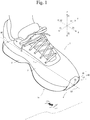
Fig. 1 is a schematic perspective view showing one form of a shoe. -
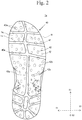
Fig. 2 is a schematic plan view showing an outsole as viewed from a ground engaging surface side of the shoe. - The present invention will be hereinafter described by way of embodiments with reference to the drawings. As shown in
Fig. 1 , ashoe 1 of this embodiment has anupper material 2, amidsole 3, and anoutsole 4. - The
shoe 1 of this embodiment has a shoe center axis Cx connecting an end of a heel portion HC and an end of a toe portion TC. Hereinafter, the dimension of theshoe 1, a foot, or the like in a direction X along the shoe center axis Cx is referred to as "length", a direction X1 in the direction X toward the toe is referred to as, for example, "front", and a direction X2 toward the heel is referred to as, for example, "rear". Further, hereinafter, a direction Y orthogonal to the length direction X and parallel to a horizontal plane HP when theshoe 1 is naturally placed on the horizontal plane HP is referred to as "width direction", and a direction Y1 in the direction Y toward the medial side of the shoe is referred to as, for example, "inward side", and a direction Y2 toward the lateral side of the shoe is referred to as, for example, "outward side". A direction Z orthogonal to the horizontal plane HP is referred to as "height direction", "vertical direction", or "thickness direction", an ascending direction Z1 in the direction Z is referred to as, for example, "upper side", and a descending direction Z2 is referred to as, for example, "lower side". - As shown in
Fig. 2 , theshoe 1 of this embodiment has theentire midsole 3 covered with theoutsole 4, as viewed from the side of a groundengaging surface 1a. Theoutsole 4 of this embodiment is composed of oneelastomer sheet 40. - The
elastomer sheet 40 in a substantially horizontal state has an upper side adhering to a lower side of themidsole 3 and a lower side serving as the groundengaging surface 1a of the shoe. Theelastomer sheet 40 includes a plurality of polymer particles that have been foamed, and theelastomer sheet 40 includes asheet body 41 and a plurality ofpolymer particles 42 dispersed in thesheet body 41. Herein, a description is given by taking, for example, the case where theoutsole 4 is composed of oneelastomer sheet 40, theoutsole 4 may be composed of a plurality ofelastomer sheets 40. That is, theoutsole 4 is anoutsole 4 including at least oneelastomer sheet 40 constituting the groundengaging surface 1a, the at least oneelastomer sheet 40 including: thesheet body 41 composed of an elastomer; and the plurality ofpolymer particles 42 dispersed in thesheet body 41, the plurality ofpolymer particles 42 being foamed particles having a plurality of voids therein. - In the
outsole 4 of this embodiment, mechanical performance characteristics vary depending on the measurement position since theelastomer sheet 40 includes thepolymer particles 42 and the groundengaging surface 1a has afirst area 1a1 in which thepolymer particles 42 are present thereabove and asecond area 1a2 in which nopolymer particle 42 is present thereabove. More specifically, in theoutsole 4 of this embodiment, the behavior of compressive deformation of theelastomer sheet 40 when pressure upward is applied to the groundengaging surface 1a is different between thefirst area 1a1 in which thepolymer particles 42 are present and thesecond area 1a2 in which nopolymer particle 42 is present. In the case where thepolymer particles 42 are less elastic than thesheet body 41, the portions in which thepolymer particles 42 are present function as if they are recesses of an outsole having an uneven surface. On the other hand, in the case where thepolymer particles 42 are more elastic than thesheet body 41, the portions in which thepolymer particles 42 are present function as if they are projections of an outsole having an uneven surface. The lower side of theelastomer sheet 40 of this embodiment is in a substantially flat state although having ashallow groove 40a slightly recessed upward. Theshoe 1 of this embodiment has the ground engaging portion with no significantly uneven structure, and thus can be suppressed from having a thick shoe sole resulting from the formation of the uneven structure. Further, theshoe 1 includes theoutsole 4 partially composed of thefoamed polymer particles 42, and thus exerts excellent lightweight properties. Theshoe 1 of this embodiment can be easily produced in that the groundengaging surface 1a does not have an excessively complicated shape. - It is preferable that the
elastomer sheet 40 constituting theoutsole 4 have a thickest part having a thickness of 15 mm or less in order to allow theshoe 1 to exert excellent lightweight properties. It is more preferable that the thickest part of theelastomer sheet 40 have a thickness of 10 mm or less. The average thickness of theelastomer sheet 40 is preferably 10 mm or less, more preferably 8 mm or less. The average thickness (t (mm)) of theelastomer sheet 40 is determined by dividing the volume (V (cm3)) of theelastomer sheet 40 by the area (S (cm2)) of the outline shape of theelastomer sheet 40 obtained by projecting theelastomer sheet 40 onto the horizontal plane HP (t = V/S). The average thickness (t (mm)) is usually 1 mm or more. - The
elastomer sheet 40 of this embodiment is configured not to cause the polymer particles to protrude from its upper or lower surface in order to exert excellent adhesiveness to themidsole 3 and in order to allow the groundengaging surface 1a to provide excellent grip performance. Accordingly, in this embodiment, the thickness of each part of theelastomer sheet 40 is essentially common with the thickness of thesheet body 41. That is, thesheet body 41 of this embodiment has a thickness of about 1 to 15 mm. - The
polymer particles 42 are dispersed in thissheet body 41. Thepolymer particles 42 in this embodiment are mostly uniformly dispersed in the entire outsole. The proportion of thepolymer particles 42 present may differ between the front side and the rear side of the shoe, or may differ between the inward side and the outward side in the width direction of the shoe. - In order to ensure that the
polymer particles 42 are present inside thesheet body 41 so that they are not exposed on the surfaces of theelastomer sheet 40, thepolymer particles 42 each preferably have a volume of 100 mm3 or less at the largest. The average volume of thepolymer particles 42 is preferably 75 mm3 or less per particle, more preferably 65 mm3 or less per particle. The polymer particles should each have a certain size or larger to advantageously reduce the weight of theshoe 1. Thus, the average volume of thepolymer particles 42 is preferably 0.5 mm3 or more per particle, more preferably 1 mm3 or more per particle. The average volume of the polymer particles can be determined by, for example, obtaining the respective volumes of 10 to 20polymer particles 42 randomly selected from theelastomer sheet 40 and arithmetically averaging all the obtained values of the volumes. - The proportion of the
polymer particles 42 to theelastomer sheet 40 is not particularly limited, but is preferably 20 volume % or less, more preferably 10 volume % or less, further preferably 5 volume % or less, most preferably 1 volume % or less, in order to allow theoutsole 4 to exert excellent strength. On the other hand, the proportion of thepolymer particles 42 to theelastomer sheet 40 is not particularly limited, but is preferably 0.01 volume % or more, more preferably 0.05 volume % or more, in view of the lightweight properties of theshoe 1. - It is preferable that the
polymer particles 42 in theelastomer sheet 40 be not aggregated but individually isolated from each other in the sheet body, in order to effectively exert their function. Specifically, the average value of center-to-center distances betweenadjacent polymer particles 42 in the elastomer sheet 40 (i.e., distances in the horizontal direction: D1, D2, D3...) is preferably 1 mm or more, more preferably 2 mm or more, particularly preferably 5 mm or more. The average value of the center-to-center distances is preferably 30 mm or less, more preferably 25 mm or less. - It is preferable that the plurality of
polymer particles 42 include a small proportion ofpolymer particles 42a that are held in contact with each other as shown inFig. 2 but include a large proportion ofisolated particles 42b that are not held in contact with each other, and that the proportion in the number of theisolated particles 42b to all thepolymer particles 42 in theelastomer sheet 40 be 50% or more. The proportion in the number of theisolated particles 42b is preferably 60% or more, more preferably 75% or more. - The proportion in the number and the center-to-center distances of the
isolated particles 42b can be measured using theelastomer sheet 40 as it is if, for example, thesheet body 41 has light permeability and thereby allows the presence of thepolymer particles 42 therein to be directly visible from outside, or allows the presence of thepolymer particles 42 to be visible when thesheet body 41 is illuminated with light from a side thereof and observed from the other side. If thesheet body 41 is opaque and thus causes the presence of thepolymer particles 42 to be hardly visible from outside, the proportion in the number and the center-to-center distances of theisolated particles 42b can be measured using theelastomer sheet 40 that has been, for example, sliced at the center in the thickness direction. - In order to better ensure to produce the
elastomer sheet 40 in a preferable condition as aforementioned, thepolymer particles 42 may be interposed between two elastomer sheets constituting thesheet body 41, followed by hot-pressing, to integrate the two elastomer sheets with each other. A specific description in this regard will be given by taking, for example, the case where thesheet body 41 is formed of a thermoplastic elastomer. Theelastomer sheet 40 can be produced by: preparing two thermoplastic elastomer sheets each having an area larger than that of theelastomer sheet 40; interposing the polymer particles between these sheets to produce a laminated body; cutting out a preliminarily molded product having a shape corresponding to that of theelastomer sheet 40 from the laminated body; placing the preliminarily molded product in a forming mold constituted by a male mold and a female mold that form an internal space corresponding to the shape of theelastomer sheet 40 when the mold is closed; and hot-pressing the preliminarily molded product at temperature conditions at which the thermoplastic elastomer is heat-sealed. - A similar hot-pressing method can be applied also in the case where a crosslinked rubber sheet is used as the
sheet body 41. That is, theelastomer sheet 40 can be produced by: preparing two uncrosslinked rubber sheets larger than theelastomer sheet 40; interposing the polymer particles between these sheets to produce a laminated body; cutting out a preliminarily molded product having a shape corresponding to that of theelastomer sheet 40 from the laminated body; placing the preliminarily molded product in the molding space; and applying pressure to the preliminarily molded product using the male mold and the female mold at temperature conditions at which the two uncrosslinked rubber sheets are crosslinked and integrated together. - The sheet body is preferably formed of a crosslinked rubber to allow the
outsole 4 to have excellent abrasion resistance. At the time of crosslinking a rubber, there are some cases where the rubber partially turns into a sponge-like form to thereby fail to exert sufficient strength unless a relatively high pressure is generated in the mold. In order to ensure that the sheet body is in a non-foamed state to be clearly distinguished from thepolymer particles 42 in terms of their behavior under compressive deformation, it is preferable to perform the hot-pressing under high pressure. However, there is a possibility that thepolymer particles 42 are crushed to thereby decrease their degree of foaming or partially turn into a non-foamed state if the pressing is performed under high pressure when producing theelastomer sheet 40. For the purpose of avoiding this possibility, foamed particles each having a plurality of voids therein are employed as thepolymer particles 42 in this embodiment rather than balloon-shaped foamed particles each having only one internal void, and in terms of the abovementioned, it is preferable to employ foamed particles having excellent heat resistance as thepolymer particles 42. It is preferable to employ those composed of a thermoplastic elastomer as thepolymer particles 42. Among the thermoplastic elastomers, formed particles composed of a polyurethane-based thermoplastic elastomer (TPU) are preferable as thepolymer particles 42 in that they are excellent in heat resistance and abrasion resistance. The polyurethane-based thermoplastic elastomer (TPU) forming thepolymer particles 42 is preferable, for example, in that it has a molecular structure including a polyol-derived first structural unit and a polyisocyanate-derived second structural unit and that the elastomer having a polyether polyol-derived structural unit as the first structural unit is excellent in hydrolysis resistance. - The
polymer particles 42 are preferably foamed in advance of producing theelastomer sheet 40, but for the purpose of preventing thepolymer particles 42 from being crushed in the course of producing theelastomer sheet 40, it is preferable that thepolymer particles 42 have their foaming power remaining. That is, it is preferable that a foam agent included in thepolymer particles 42 be used for turning thepolymer particles 42 into a foamed state in advance but partially remain unused, and allow thepolymer particles 42 to exert their foaming power at the time of the production of theelastomer sheet 40. Thepolymer particles 42 used for producing theelastomer sheet 40 preferably include, for example, 0.1 mass % to 3 mass % of a physical foam agent such as hydrocarbon. - The
polymer particles 42 may be coated with other polymers and dispersed in the sheet body for the purpose of achieving improved adhesiveness to thesheet body 41 or making them difficult to be deformed by external forces. The coating applied to thepolymer particles 42 primarily for the former purpose can be performed, for example, using a coating agent including an adhesive component such as rosin, a silane coupling agent, or the like. The coating applied to thepolymer particles 42 primarily for the latter purpose can be performed, for example, using a coating agent including a hard resin such as an epoxy resin, an inorganic filler, or the like. - The
polymer particles 42 of this embodiment are preferably formed of a polymer composition including a polyurethane-based thermoplastic elastomer as described above, but may be composed of a composition other than such a polymer composition. Thepolymer particles 42 may be composed of a polymer composition including, for example, one or more of a polyurethane-based thermoplastic elastomer (TPU), polyethylene (PE), polypropylene (PP), an ethylene-vinyl acetate copolymer (EVA), a polyamide-based elastomer (PA), polyether block amide (PEBA), polystyrene (PS), polyoxymethylene (POM), polyoxyethylene (POE) and a polyester-based elastomer (PET, PBT). The polymer composition forming thepolymer particles 42 may be selected appropriately based on thermal resistance and abrasion resistance required for the outsole, and affinity for the elastomer constituting thesheet body 41. For example, in the case where excellent heat resistance is required for theoutsole 4, the polymer constituting thepolymer particles 42 may suitably include one or more of a polyurethane-based thermoplastic elastomer, polypropylene, a polyamide-based elastomer, polyether block amide, and a polyester-based elastomer. - The elastomer constituting the
sheet body 41 may be any elastomer suitable as an elastomer constituting the ground engaging surface of an outsole, such as a crosslinked rubber or a thermoplastic elastomer. The elastomer constituting thesheet body 41 can be appropriately selected based on hardness, durability, or the like required for the outsole. For example, in the case where theoutsole 4 is an outsole for running shoes, the shore A hardness of the elastomer constituting thesheet body 41 is preferably 40 to 90. - Conventionally known materials can be used for the members other than the outsole that constitute the
shoe 1, such as theupper member 2 and themidsole 3. Theshoe 1 provided with theaforementioned outsole 4 exerts excellent lightweight properties to thereby effectively give the wearer a feeling of lightness. - The outsole and shoe according to the present invention is not limited to the abovementioned embodiment, but various modifications can be made without departing from the gist of the present invention.
- For example, in the outsole according to the present invention, the polymer particles dispersed in the sheet body may not necessarily be uniformly dispersed in the entire outsole. For example, the polymer particles may concentrate in a certain portion of an outsole, such as a heel portion or a forefoot portion of the outsole. In the case where the polymer particles concentrate in a certain portion of an outsole as described above, the mechanical performance characteristics in a desired portion of the outsole can be effectively adjusted.
-
- 1: Shoe
- 2: Upper sole
- 3: Midsole
- 4: Outsole
- 40: Elastomer sheet
- 41: Sheet body
- 42: Polymer particle
- 42b: Isolated particle
Claims (5)
- An outsole comprising:at least one elastomer sheet constituting a ground engaging surface,the at least one elastomer sheet comprising: a sheet body composed of an elastomer; and a plurality of polymer particles dispersed in the sheet body, andthe plurality of polymer particles being foamed particles each having a plurality of voids therein.
- The outsole according to claim 1, wherein the elastomer constituting the sheet body is a crosslinked rubber, and the plurality of polymer particles are thermoplastic polyurethane particles.
- The outsole according to claim 1 or 2, wherein the average volume of the plurality of polymer particles is 0.5 mm3 or more per particle and 75 mm3 or less per particle.
- The outsole according to any one of claims 1 to 3, wherein the plurality of polymer particles comprise isolated particles that are not held in contact with each other, and the proportion in the number of the isolated particles to all of the plurality of polymer particles in the at least one elastomer sheet is 50% or more.
- A shoe comprising the outsole according to any one of claims 1 to 4.
Applications Claiming Priority (1)
| Application Number | Priority Date | Filing Date | Title |
|---|---|---|---|
| PCT/JP2017/037219 WO2019073600A1 (en) | 2017-10-13 | 2017-10-13 | Outsole and shoe |
Publications (3)
| Publication Number | Publication Date |
|---|---|
| EP3685696A1 true EP3685696A1 (en) | 2020-07-29 |
| EP3685696A4 EP3685696A4 (en) | 2020-07-29 |
| EP3685696B1 EP3685696B1 (en) | 2021-12-08 |
Family
ID=66100481
Family Applications (1)
| Application Number | Title | Priority Date | Filing Date |
|---|---|---|---|
| EP17928599.4A Active EP3685696B1 (en) | 2017-10-13 | 2017-10-13 | Outsole and shoe |
Country Status (5)
| Country | Link |
|---|---|
| US (1) | US11589638B2 (en) |
| EP (1) | EP3685696B1 (en) |
| JP (1) | JP6751481B2 (en) |
| CN (1) | CN111225579B (en) |
| WO (1) | WO2019073600A1 (en) |
Families Citing this family (7)
| Publication number | Priority date | Publication date | Assignee | Title |
|---|---|---|---|---|
| USD861302S1 (en) * | 2011-10-24 | 2019-10-01 | Dynasty Footwear, Ltd. | Shoe bottom |
| JP2022101228A (en) * | 2020-12-24 | 2022-07-06 | 株式会社アシックス | Sole and shoe |
| EP4059371A1 (en) * | 2021-03-16 | 2022-09-21 | Puma Se | Systems and methods for manufacturing a portion of an article of footwear from a mold |
| WO2023195167A1 (en) * | 2022-04-08 | 2023-10-12 | 株式会社アシックス | Shoe sole member and shoe |
| US12490797B2 (en) * | 2022-08-23 | 2025-12-09 | Industrial Technology Research Institute | Sports shoe |
| FR3144144B1 (en) * | 2022-12-22 | 2024-11-15 | Arkema France | Composite comprising an elastomer comprising rubber particles and a foam layer |
| JP2024151795A (en) | 2023-04-13 | 2024-10-25 | 株式会社アシックス | Sole and shoe having said sole |
Family Cites Families (17)
| Publication number | Priority date | Publication date | Assignee | Title |
|---|---|---|---|---|
| JPS52137954U (en) * | 1976-04-08 | 1977-10-19 | ||
| JPS59223786A (en) | 1983-06-03 | 1984-12-15 | Alps Electric Co Ltd | Dichroic coloring matter for color liquid crystal display element |
| US6032388A (en) | 1998-05-01 | 2000-03-07 | Puma Ag Rudolf Dassler Sport | Thin, flexible shoe outsole with injected-through tread elements, a method of producing such an outsole and a shoe provided with such an outsole |
| JP4154502B2 (en) * | 1999-06-24 | 2008-09-24 | アキレス株式会社 | Composition for injection molded foam soles |
| US7073277B2 (en) * | 2003-06-26 | 2006-07-11 | Taylor Made Golf Company, Inc. | Shoe having an inner sole incorporating microspheres |
| WO2006015440A1 (en) * | 2004-08-12 | 2006-02-16 | Pacific Strategies Consultants Pty Ltd | Method of forming a composite material |
| WO2008087078A1 (en) | 2007-01-16 | 2008-07-24 | Basf Se | Hybrid systems consisting of foamed thermoplastic elastomers and polyurethanes |
| CN101747543B (en) * | 2009-12-09 | 2012-02-01 | 浙江仕峰实业有限公司 | Styrene-butadiene copolymer chemical foaming composition containing polystyrene micro-blocks, preparation method and application method thereof |
| CN202653296U (en) * | 2012-04-06 | 2013-01-09 | 茂泰(福建)鞋材有限公司 | High-elastic vibration reduction box structure and shoe sole embedded with high-elastic vibration reduction box |
| US9930928B2 (en) | 2013-02-13 | 2018-04-03 | Adidas Ag | Sole for a shoe |
| KR20170038852A (en) * | 2014-08-06 | 2017-04-07 | 뉴우바란스아스레틱스인코포레이팃드 | Injection molding method for forming material used in footwear and material manufactured by said method |
| CN104356496B (en) * | 2014-11-13 | 2017-01-25 | 茂泰(福建)鞋材有限公司 | Antistatic anti-slip rubber-plastic foamed shoe sole and preparation method thereof |
| CN107849286B (en) * | 2015-07-23 | 2021-01-05 | 松本油脂制药株式会社 | Rubber composition for vulcanization molding, method for producing same, and use thereof |
| CN105476172A (en) * | 2015-12-22 | 2016-04-13 | 丁荣誉 | PU puffed sole and production process thereof |
| CN106497008A (en) * | 2016-10-18 | 2017-03-15 | 宁波格林美孚新材料科技有限公司 | A kind of ultralight PU foaming composite sheet and preparation method thereof |
| WO2018142467A1 (en) | 2017-01-31 | 2018-08-09 | 株式会社アシックス | Sole member and shoe |
| CN107373884A (en) * | 2017-08-25 | 2017-11-24 | 晋江创赢新材料科技有限公司 | A kind of ETPU dampings midsole and its moulding process for being easy to cleaning |
-
2017
- 2017-10-13 WO PCT/JP2017/037219 patent/WO2019073600A1/en not_active Ceased
- 2017-10-13 JP JP2019547884A patent/JP6751481B2/en active Active
- 2017-10-13 US US16/755,149 patent/US11589638B2/en active Active
- 2017-10-13 CN CN201780095703.9A patent/CN111225579B/en active Active
- 2017-10-13 EP EP17928599.4A patent/EP3685696B1/en active Active
Also Published As
| Publication number | Publication date |
|---|---|
| US20200297062A1 (en) | 2020-09-24 |
| JP6751481B2 (en) | 2020-09-02 |
| WO2019073600A1 (en) | 2019-04-18 |
| EP3685696B1 (en) | 2021-12-08 |
| JPWO2019073600A1 (en) | 2020-07-27 |
| CN111225579A (en) | 2020-06-02 |
| EP3685696A4 (en) | 2020-07-29 |
| CN111225579B (en) | 2021-12-07 |
| US11589638B2 (en) | 2023-02-28 |
Similar Documents
| Publication | Publication Date | Title |
|---|---|---|
| US11589638B2 (en) | Outsole and shoe | |
| EP3315040B1 (en) | Article of footwear having a midsole with multiple portions and method of making the same | |
| US8424222B2 (en) | Arthritis and diabetes insole | |
| AU2017201684B2 (en) | Sandals with biomechanical foot support | |
| US6412196B1 (en) | Contoured platform and footwear made therefrom | |
| US7152343B2 (en) | Footwear system | |
| US9009991B2 (en) | Article of footwear with a cavity viewing system | |
| US20130042502A1 (en) | Gel insole | |
| US20140259759A1 (en) | Arthritis & Diabetes Insole | |
| CN101309608A (en) | Article of footwear with spherical support elements | |
| US11395523B2 (en) | Outsole and shoe | |
| US20120151793A1 (en) | Foamed shoe sole | |
| EP3402359A1 (en) | Sole structure for an article of footwear, comprising an outer sole component with a co-molded flex modifier component, and method of making said sole structure | |
| CN115697122A (en) | Modular insole assembly and method of manufacture | |
| CN217851605U (en) | Carbon fiber component for shoe sole, shoe sole and shoe | |
| US20120304490A1 (en) | Orthotic insert and method of making the same | |
| JP3152462U (en) | Shoe sole | |
| US2347872A (en) | Rubber outsole for footwear | |
| CN220987803U (en) | Polymer rubber sole | |
| CN2281101Y (en) | A plastic injection elastic insole | |
| CN214904226U (en) | A high-elasticity PU composite foam insole containing cork | |
| JP3188011U (en) | Insole and sandals using it | |
| US20150366292A1 (en) | Puncture Resistant Insole | |
| KR20240141497A (en) | Safety boots with an inner tread plate installed on the upper side of the midsole and its manufacturing method | |
| AU2008326331B2 (en) | Arthritis & diabetes insole |
Legal Events
| Date | Code | Title | Description |
|---|---|---|---|
| STAA | Information on the status of an ep patent application or granted ep patent |
Free format text: STATUS: THE INTERNATIONAL PUBLICATION HAS BEEN MADE |
|
| PUAI | Public reference made under article 153(3) epc to a published international application that has entered the european phase |
Free format text: ORIGINAL CODE: 0009012 |
|
| STAA | Information on the status of an ep patent application or granted ep patent |
Free format text: STATUS: REQUEST FOR EXAMINATION WAS MADE |
|
| 17P | Request for examination filed |
Effective date: 20200424 |
|
| A4 | Supplementary search report drawn up and despatched |
Effective date: 20200529 |
|
| AK | Designated contracting states |
Kind code of ref document: A1 Designated state(s): AL AT BE BG CH CY CZ DE DK EE ES FI FR GB GR HR HU IE IS IT LI LT LU LV MC MK MT NL NO PL PT RO RS SE SI SK SM TR |
|
| AX | Request for extension of the european patent |
Extension state: BA ME |
|
| DAV | Request for validation of the european patent (deleted) | ||
| DAX | Request for extension of the european patent (deleted) | ||
| STAA | Information on the status of an ep patent application or granted ep patent |
Free format text: STATUS: EXAMINATION IS IN PROGRESS |
|
| 17Q | First examination report despatched |
Effective date: 20210121 |
|
| GRAP | Despatch of communication of intention to grant a patent |
Free format text: ORIGINAL CODE: EPIDOSNIGR1 |
|
| STAA | Information on the status of an ep patent application or granted ep patent |
Free format text: STATUS: GRANT OF PATENT IS INTENDED |
|
| INTG | Intention to grant announced |
Effective date: 20210709 |
|
| GRAS | Grant fee paid |
Free format text: ORIGINAL CODE: EPIDOSNIGR3 |
|
| GRAA | (expected) grant |
Free format text: ORIGINAL CODE: 0009210 |
|
| STAA | Information on the status of an ep patent application or granted ep patent |
Free format text: STATUS: THE PATENT HAS BEEN GRANTED |
|
| AK | Designated contracting states |
Kind code of ref document: B1 Designated state(s): AL AT BE BG CH CY CZ DE DK EE ES FI FR GB GR HR HU IE IS IT LI LT LU LV MC MK MT NL NO PL PT RO RS SE SI SK SM TR |
|
| REG | Reference to a national code |
Ref country code: GB Ref legal event code: FG4D |
|
| REG | Reference to a national code |
Ref country code: AT Ref legal event code: REF Ref document number: 1453064 Country of ref document: AT Kind code of ref document: T Effective date: 20211215 Ref country code: CH Ref legal event code: EP |
|
| REG | Reference to a national code |
Ref country code: DE Ref legal event code: R096 Ref document number: 602017050798 Country of ref document: DE |
|
| REG | Reference to a national code |
Ref country code: IE Ref legal event code: FG4D |
|
| REG | Reference to a national code |
Ref country code: LT Ref legal event code: MG9D |
|
| REG | Reference to a national code |
Ref country code: NL Ref legal event code: MP Effective date: 20211208 |
|
| PG25 | Lapsed in a contracting state [announced via postgrant information from national office to epo] |
Ref country code: RS Free format text: LAPSE BECAUSE OF FAILURE TO SUBMIT A TRANSLATION OF THE DESCRIPTION OR TO PAY THE FEE WITHIN THE PRESCRIBED TIME-LIMIT Effective date: 20211208 Ref country code: LT Free format text: LAPSE BECAUSE OF FAILURE TO SUBMIT A TRANSLATION OF THE DESCRIPTION OR TO PAY THE FEE WITHIN THE PRESCRIBED TIME-LIMIT Effective date: 20211208 Ref country code: FI Free format text: LAPSE BECAUSE OF FAILURE TO SUBMIT A TRANSLATION OF THE DESCRIPTION OR TO PAY THE FEE WITHIN THE PRESCRIBED TIME-LIMIT Effective date: 20211208 Ref country code: BG Free format text: LAPSE BECAUSE OF FAILURE TO SUBMIT A TRANSLATION OF THE DESCRIPTION OR TO PAY THE FEE WITHIN THE PRESCRIBED TIME-LIMIT Effective date: 20220308 |
|
| REG | Reference to a national code |
Ref country code: AT Ref legal event code: MK05 Ref document number: 1453064 Country of ref document: AT Kind code of ref document: T Effective date: 20211208 |
|
| PG25 | Lapsed in a contracting state [announced via postgrant information from national office to epo] |
Ref country code: SE Free format text: LAPSE BECAUSE OF FAILURE TO SUBMIT A TRANSLATION OF THE DESCRIPTION OR TO PAY THE FEE WITHIN THE PRESCRIBED TIME-LIMIT Effective date: 20211208 Ref country code: NO Free format text: LAPSE BECAUSE OF FAILURE TO SUBMIT A TRANSLATION OF THE DESCRIPTION OR TO PAY THE FEE WITHIN THE PRESCRIBED TIME-LIMIT Effective date: 20220308 Ref country code: LV Free format text: LAPSE BECAUSE OF FAILURE TO SUBMIT A TRANSLATION OF THE DESCRIPTION OR TO PAY THE FEE WITHIN THE PRESCRIBED TIME-LIMIT Effective date: 20211208 Ref country code: HR Free format text: LAPSE BECAUSE OF FAILURE TO SUBMIT A TRANSLATION OF THE DESCRIPTION OR TO PAY THE FEE WITHIN THE PRESCRIBED TIME-LIMIT Effective date: 20211208 Ref country code: GR Free format text: LAPSE BECAUSE OF FAILURE TO SUBMIT A TRANSLATION OF THE DESCRIPTION OR TO PAY THE FEE WITHIN THE PRESCRIBED TIME-LIMIT Effective date: 20220309 Ref country code: ES Free format text: LAPSE BECAUSE OF FAILURE TO SUBMIT A TRANSLATION OF THE DESCRIPTION OR TO PAY THE FEE WITHIN THE PRESCRIBED TIME-LIMIT Effective date: 20211208 |
|
| PG25 | Lapsed in a contracting state [announced via postgrant information from national office to epo] |
Ref country code: NL Free format text: LAPSE BECAUSE OF FAILURE TO SUBMIT A TRANSLATION OF THE DESCRIPTION OR TO PAY THE FEE WITHIN THE PRESCRIBED TIME-LIMIT Effective date: 20211208 |
|
| PG25 | Lapsed in a contracting state [announced via postgrant information from national office to epo] |
Ref country code: SM Free format text: LAPSE BECAUSE OF FAILURE TO SUBMIT A TRANSLATION OF THE DESCRIPTION OR TO PAY THE FEE WITHIN THE PRESCRIBED TIME-LIMIT Effective date: 20211208 Ref country code: SK Free format text: LAPSE BECAUSE OF FAILURE TO SUBMIT A TRANSLATION OF THE DESCRIPTION OR TO PAY THE FEE WITHIN THE PRESCRIBED TIME-LIMIT Effective date: 20211208 Ref country code: RO Free format text: LAPSE BECAUSE OF FAILURE TO SUBMIT A TRANSLATION OF THE DESCRIPTION OR TO PAY THE FEE WITHIN THE PRESCRIBED TIME-LIMIT Effective date: 20211208 Ref country code: PT Free format text: LAPSE BECAUSE OF FAILURE TO SUBMIT A TRANSLATION OF THE DESCRIPTION OR TO PAY THE FEE WITHIN THE PRESCRIBED TIME-LIMIT Effective date: 20220408 Ref country code: EE Free format text: LAPSE BECAUSE OF FAILURE TO SUBMIT A TRANSLATION OF THE DESCRIPTION OR TO PAY THE FEE WITHIN THE PRESCRIBED TIME-LIMIT Effective date: 20211208 Ref country code: CZ Free format text: LAPSE BECAUSE OF FAILURE TO SUBMIT A TRANSLATION OF THE DESCRIPTION OR TO PAY THE FEE WITHIN THE PRESCRIBED TIME-LIMIT Effective date: 20211208 |
|
| PG25 | Lapsed in a contracting state [announced via postgrant information from national office to epo] |
Ref country code: PL Free format text: LAPSE BECAUSE OF FAILURE TO SUBMIT A TRANSLATION OF THE DESCRIPTION OR TO PAY THE FEE WITHIN THE PRESCRIBED TIME-LIMIT Effective date: 20211208 Ref country code: AT Free format text: LAPSE BECAUSE OF FAILURE TO SUBMIT A TRANSLATION OF THE DESCRIPTION OR TO PAY THE FEE WITHIN THE PRESCRIBED TIME-LIMIT Effective date: 20211208 |
|
| REG | Reference to a national code |
Ref country code: DE Ref legal event code: R097 Ref document number: 602017050798 Country of ref document: DE |
|
| PG25 | Lapsed in a contracting state [announced via postgrant information from national office to epo] |
Ref country code: IS Free format text: LAPSE BECAUSE OF FAILURE TO SUBMIT A TRANSLATION OF THE DESCRIPTION OR TO PAY THE FEE WITHIN THE PRESCRIBED TIME-LIMIT Effective date: 20220408 |
|
| PLBE | No opposition filed within time limit |
Free format text: ORIGINAL CODE: 0009261 |
|
| STAA | Information on the status of an ep patent application or granted ep patent |
Free format text: STATUS: NO OPPOSITION FILED WITHIN TIME LIMIT |
|
| PG25 | Lapsed in a contracting state [announced via postgrant information from national office to epo] |
Ref country code: DK Free format text: LAPSE BECAUSE OF FAILURE TO SUBMIT A TRANSLATION OF THE DESCRIPTION OR TO PAY THE FEE WITHIN THE PRESCRIBED TIME-LIMIT Effective date: 20211208 Ref country code: AL Free format text: LAPSE BECAUSE OF FAILURE TO SUBMIT A TRANSLATION OF THE DESCRIPTION OR TO PAY THE FEE WITHIN THE PRESCRIBED TIME-LIMIT Effective date: 20211208 |
|
| 26N | No opposition filed |
Effective date: 20220909 |
|
| PG25 | Lapsed in a contracting state [announced via postgrant information from national office to epo] |
Ref country code: SI Free format text: LAPSE BECAUSE OF FAILURE TO SUBMIT A TRANSLATION OF THE DESCRIPTION OR TO PAY THE FEE WITHIN THE PRESCRIBED TIME-LIMIT Effective date: 20211208 |
|
| PG25 | Lapsed in a contracting state [announced via postgrant information from national office to epo] |
Ref country code: MC Free format text: LAPSE BECAUSE OF FAILURE TO SUBMIT A TRANSLATION OF THE DESCRIPTION OR TO PAY THE FEE WITHIN THE PRESCRIBED TIME-LIMIT Effective date: 20211208 Ref country code: IT Free format text: LAPSE BECAUSE OF FAILURE TO SUBMIT A TRANSLATION OF THE DESCRIPTION OR TO PAY THE FEE WITHIN THE PRESCRIBED TIME-LIMIT Effective date: 20211208 |
|
| REG | Reference to a national code |
Ref country code: CH Ref legal event code: PL |
|
| REG | Reference to a national code |
Ref country code: BE Ref legal event code: MM Effective date: 20221031 |
|
| PG25 | Lapsed in a contracting state [announced via postgrant information from national office to epo] |
Ref country code: LU Free format text: LAPSE BECAUSE OF NON-PAYMENT OF DUE FEES Effective date: 20221013 |
|
| PG25 | Lapsed in a contracting state [announced via postgrant information from national office to epo] |
Ref country code: LI Free format text: LAPSE BECAUSE OF NON-PAYMENT OF DUE FEES Effective date: 20221031 Ref country code: CH Free format text: LAPSE BECAUSE OF NON-PAYMENT OF DUE FEES Effective date: 20221031 |
|
| PG25 | Lapsed in a contracting state [announced via postgrant information from national office to epo] |
Ref country code: BE Free format text: LAPSE BECAUSE OF NON-PAYMENT OF DUE FEES Effective date: 20221031 |
|
| PG25 | Lapsed in a contracting state [announced via postgrant information from national office to epo] |
Ref country code: IE Free format text: LAPSE BECAUSE OF NON-PAYMENT OF DUE FEES Effective date: 20221013 |
|
| PG25 | Lapsed in a contracting state [announced via postgrant information from national office to epo] |
Ref country code: HU Free format text: LAPSE BECAUSE OF FAILURE TO SUBMIT A TRANSLATION OF THE DESCRIPTION OR TO PAY THE FEE WITHIN THE PRESCRIBED TIME-LIMIT; INVALID AB INITIO Effective date: 20171013 |
|
| PG25 | Lapsed in a contracting state [announced via postgrant information from national office to epo] |
Ref country code: CY Free format text: LAPSE BECAUSE OF FAILURE TO SUBMIT A TRANSLATION OF THE DESCRIPTION OR TO PAY THE FEE WITHIN THE PRESCRIBED TIME-LIMIT Effective date: 20211208 |
|
| PG25 | Lapsed in a contracting state [announced via postgrant information from national office to epo] |
Ref country code: MK Free format text: LAPSE BECAUSE OF FAILURE TO SUBMIT A TRANSLATION OF THE DESCRIPTION OR TO PAY THE FEE WITHIN THE PRESCRIBED TIME-LIMIT Effective date: 20211208 |
|
| PG25 | Lapsed in a contracting state [announced via postgrant information from national office to epo] |
Ref country code: MT Free format text: LAPSE BECAUSE OF FAILURE TO SUBMIT A TRANSLATION OF THE DESCRIPTION OR TO PAY THE FEE WITHIN THE PRESCRIBED TIME-LIMIT Effective date: 20211208 |
|
| PGFP | Annual fee paid to national office [announced via postgrant information from national office to epo] |
Ref country code: GB Payment date: 20250828 Year of fee payment: 9 |
|
| PGFP | Annual fee paid to national office [announced via postgrant information from national office to epo] |
Ref country code: FR Payment date: 20250908 Year of fee payment: 9 |
|
| PG25 | Lapsed in a contracting state [announced via postgrant information from national office to epo] |
Ref country code: TR Free format text: LAPSE BECAUSE OF FAILURE TO SUBMIT A TRANSLATION OF THE DESCRIPTION OR TO PAY THE FEE WITHIN THE PRESCRIBED TIME-LIMIT Effective date: 20211208 |
|
| PGFP | Annual fee paid to national office [announced via postgrant information from national office to epo] |
Ref country code: DE Payment date: 20250902 Year of fee payment: 9 |