EP3685665A1 - Preservation of stem cells - Google Patents
Preservation of stem cells Download PDFInfo
- Publication number
- EP3685665A1 EP3685665A1 EP19461506.8A EP19461506A EP3685665A1 EP 3685665 A1 EP3685665 A1 EP 3685665A1 EP 19461506 A EP19461506 A EP 19461506A EP 3685665 A1 EP3685665 A1 EP 3685665A1
- Authority
- EP
- European Patent Office
- Prior art keywords
- mmol
- solution
- concentration
- stem cells
- ions
- Prior art date
- Legal status (The legal status is an assumption and is not a legal conclusion. Google has not performed a legal analysis and makes no representation as to the accuracy of the status listed.)
- Granted
Links
Images


Classifications
-
- A—HUMAN NECESSITIES
- A01—AGRICULTURE; FORESTRY; ANIMAL HUSBANDRY; HUNTING; TRAPPING; FISHING
- A01N—PRESERVATION OF BODIES OF HUMANS OR ANIMALS OR PLANTS OR PARTS THEREOF; BIOCIDES, e.g. AS DISINFECTANTS, AS PESTICIDES OR AS HERBICIDES; PEST REPELLANTS OR ATTRACTANTS; PLANT GROWTH REGULATORS
- A01N1/00—Preservation of bodies of humans or animals, or parts thereof
- A01N1/10—Preservation of living parts
- A01N1/12—Chemical aspects of preservation
- A01N1/122—Preservation or perfusion media
- A01N1/125—Freeze protecting agents, e.g. cryoprotectants or osmolarity regulators
-
- A—HUMAN NECESSITIES
- A01—AGRICULTURE; FORESTRY; ANIMAL HUSBANDRY; HUNTING; TRAPPING; FISHING
- A01N—PRESERVATION OF BODIES OF HUMANS OR ANIMALS OR PLANTS OR PARTS THEREOF; BIOCIDES, e.g. AS DISINFECTANTS, AS PESTICIDES OR AS HERBICIDES; PEST REPELLANTS OR ATTRACTANTS; PLANT GROWTH REGULATORS
- A01N1/00—Preservation of bodies of humans or animals, or parts thereof
- A01N1/10—Preservation of living parts
- A01N1/12—Chemical aspects of preservation
- A01N1/122—Preservation or perfusion media
- A01N1/126—Physiologically active agents, e.g. antioxidants or nutrients
-
- C—CHEMISTRY; METALLURGY
- C12—BIOCHEMISTRY; BEER; SPIRITS; WINE; VINEGAR; MICROBIOLOGY; ENZYMOLOGY; MUTATION OR GENETIC ENGINEERING
- C12N—MICROORGANISMS OR ENZYMES; COMPOSITIONS THEREOF; PROPAGATING, PRESERVING, OR MAINTAINING MICROORGANISMS; MUTATION OR GENETIC ENGINEERING; CULTURE MEDIA
- C12N5/00—Undifferentiated human, animal or plant cells, e.g. cell lines; Tissues; Cultivation or maintenance thereof; Culture media therefor
- C12N5/06—Animal cells or tissues; Human cells or tissues
- C12N5/0602—Vertebrate cells
- C12N5/0652—Cells of skeletal and connective tissues; Mesenchyme
- C12N5/0662—Stem cells
- C12N5/0667—Adipose-derived stem cells [ADSC]; Adipose stromal stem cells
Definitions
- the subject invention relates to a field of stem cell preservation and in particular to use of an aqueous solution comprising polyethylene glycol (PEG) having a molecular weight about 35000 Da as an extracellular agent for preserving stem cells.
- PEG polyethylene glycol
- Stem cells are widely used in scientific research and in clinical therapies because of their potential for self-renewal and multidirectional differentiation. Stem cells have many functions and applications - for example, they can be used in research relating to the growth of tissues and organs in vitro, for the development of disease models, for screening, as well as in methods of treatment. For example, mesenchymal stem cells can be used in treatment of diabetes, liver cirrhosis, skin damage, and myocardial infarction. In addition, they can strengthen the hematopoiesis, regulate the immune response.
- stem cells are increasingly advancing through preclinical and clinical trials. Improved carrier solutions used for the preservation and delivery of cells will allow for a worldwide extension of the possibility of application of stem cell-based advanced therapies. Furthermore, an increase of cells stability, understood as maintained viability and functionality, will provide the flexibility and extension of the scope of stem cells application. The quality of cells changes in time and due to the influence of a variety of external factors, such as compositions of carrier solutions, or temperature conditions during transportation.
- application of stem cells in all the indicated applications requires the development of effective methods of their preservation, ensuring not only the maintenance of high cell viability, but also protection against contamination by bacteria and pathogens, as well as reasonable costs of culturing the cells.
- preservation of organs, tissues and cells in a cold storage means using the temperature ranging from 0 to 5 °C, for example temperature of about 4 °C. So called hypothermic solutions are used for that purpose. Cells immersed in such solutions in temperature of 4 °C remain in a state called sustained hypothermia. Many solutions used for that purpose is known in the prior art, for example VIASPAN® also called University of Wisconsin solution or UW solution, or EURO-COLLINS.
- cryopreservation In case of long term storage, it is necessary to freeze the preserved materials in temperature range between their freezing temperature and temperature of liquid nitrogen (-196 °C). This process is also called cryopreservation.
- the stem cells In order to ensure the efficient transplantation, the stem cells have to be preserved in such a manner to maintain their viability. For example, in case of cryopreservation much effort was put in order to eliminate the cell death caused by freezing mainly due to the intracellular ice formation and chemo-osmotic stress. Cryoprotectants, for examples dimethyl sulfoxide (DMSO), are used for that purpose.
- DMSO dimethyl sulfoxide
- Document US 6,045,990 describes a cell-free solution for hypothermic storage of human or animal organs, tissues and cells.
- the solutions comprises at least one electrolyte selected from the group including potassium ions, sodium ions, magnesium ions and calcium ions; a macromolecular oncotic agent; a biological buffer; a nutritive effective amount of at least one simple sugar; mannitiol, an impermeant anion impermeable to cell membranes; a substrate effective for the regeneration of ATP; and glutathione.
- the application CN105145547 describes a fluid for stem cells cryopreservation comprising DMSO, umbilical cord mesenchymal stem cell conditional medium and fetal calf serum.
- CN 104770363 discloses a plasma-free solution for stem cells cryopreservation comprising DMSO and dextrane-40.
- Document CN105961374 discloses a cell cryopreservation fluid used inter alia for cryopreservation of stem cells, comprising: PBS or normal saline; a basal culture medium as a main ingredient, as well as one or more constituents selected from polyethylene glycol, propanediol, Ectoin, albumin, trehalose, proline and poloxamer 188.
- the mentioned fluid for cell cryopreservation does not contain serum and DMSO.
- the polyethylene glycol is added in order to lower the freezing temperature and to increase the dehydration of cells. Document neither discloses the molecular weight of the polyethylene glycol used, nor defines whether the fluid is of intracellular or extracellular type.
- the application CN107912419 describes a liquid for cryopreservation of human peripheral blood mononuclear cells, including stem cells, comprising: dimethyl sulfoxide, polyethylene glycol, human serum albumin, Plasmalyte-A, trehalose, hydroxyethyl starch, beta-glucan, glucose and vitamin C.
- the document does not disclose the molecular mass of polyethylene glycol.
- the polyethylene glycol is used inter alia due to its good solubility in water and low melting temperature, so as a result the extracellular solution does not form ice crystals during the cooling process.
- CN102578077 discloses a serum-free cryoprotective agent which comprises an intracellular permeation protecting agent(DMSO) and an extracellular protecting agent comprising NaCl, KCl, Na 2 HPO 4 , KH 2 PO 4 , PEG having a molecular mass in the range of 400 to 2000 Da, D-trehalose and type-IV collagen.
- DMSO intracellular permeation protecting agent
- extracellular protecting agent comprising NaCl, KCl, Na 2 HPO 4 , KH 2 PO 4 , PEG having a molecular mass in the range of 400 to 2000 Da, D-trehalose and type-IV collagen.
- the disclosed agent can be used for stem cells storage.
- Example 1 The solution described herein in Example 1, being a preferred embodiment of the subject invention, is known as a formulation used for perfusion and cold storage of organs for transplantation. This formulation is being introduced into the market by the Applicant of the present invention under the tradename StoreProtect Plus.
- cryopreservation i.e. storing cells in a frozen state.
- the main disadvantage of the known solutions and media is that the viability of the cells decreases in time (both in hypothermic conditions and during cryopreservation), also during transportation between laboratory and the recipient's location.
- the aqueous solution comprising polyethylene glycol (PEG) having a molecular weight of about 35000 Da can be successfully used as an extracellular agent for preserving stem cells, and after addition of dimethyl sulfoxide (DMSO), also as agent for cryopreservation of stem cells.
- PEG polyethylene glycol
- DMSO dimethyl sulfoxide
- the use of the subject invention allows for effective preservation of collected stem cells.
- the viability of the stem cells preserved according to the invention exceeds the results obtained for typical, commercially available storage formulations.
- the mentioned experiments proved that after addition of dimethyl sulfoxide (DMSO), the use according to the invention allows also for effective cryopreservation of stem cells. Also in this case, the obtained results were at least comparable to the results obtained for typical, commercially available formulations, and they were even exceeding them.
- DMSO dimethyl sulfoxide
- the use according to the invention allows for using broader temperature ranges during cell transportation, making the cells more resistant to prolonged transportation times and varying temperature conditions.
- the quality of the cells preserved according to the invention is also improved.
- the subject invention has been developed based on the observation made by its inventors that the aqueous solution comprising polyethylene glycol (PEG) having a defined molecular weight allows for effective preservation of stem cells while maintaining their viability.
- PEG polyethylene glycol
- PEG having molecular weight of about 35000 Da (35 kDA) also called PEG 35 is employed.
- PEG used according to the present invention can be obtained by any known method, wherein preferably it can be synthetized from PEG molecules having lower molecular weight.
- PEG may be purified by any known technique known in the prior art.
- commercially available PEG can be used.
- PEG is preferably used at a concentration from about 0.01 to about 5 mmol/l, for example at a concentration of 0.02, 0.03, 0.04, 0.05, 0.06, 0.07, 0.08, 0.09, 0.1, 0.2, 0.3, 0.4, 0.5, 0.6, 0.7, 0.8, 0.9, 1.0, 1.5, 2.0, 2.5, 3.0, 3.5, 4.0, 4,5 and 5 mmol/l.
- the PEG concentration is lower than 1 mmol/l and most preferably it is about 0.03 mmol/l.
- the employed aqueous solution is used as extracellular agent, i.e. agent, in which the sodium ions (Na + ) is greater than the concentration of potassium ions (K + ).
- agent in which the sodium ions (Na + ) is greater than the concentration of potassium ions (K + ).
- Agents of this type prevent the cell death during storage by reducing ice formation inside a cell.
- the solution contains Na + ions at a concentration of at least about 30 mmol/l and K + ions at a concentration of at least about 10 mmol/l. In the most preferred embodiment of the invention the solution contains Na + ions at a concentration of about 125 mmol/l and K + ions at a concentration of about 25 mmol/l.
- sodium ions are introduced in sodium hydroxide (NaOH), while potassium ions are introduced in potassium dihydrogen phosphate (KH 2 PO 4 ).
- the solution may contain other components used in the field of cell storageformulations, i.e. an agent comprising an impermeant anion, a compound from the group of sugars, a membrane stabilizing agent, a buffer solution and an energy source.
- an agent comprising an impermeant anion, a compound from the group of sugars, a membrane stabilizing agent, a buffer solution and an energy source.
- the mentioned solution comprises: about 20 to about 40 mmol/l of raffinose , about 70 to about 140 mmol/l of lactobionic acid, about 1 to about 10 mmol/l of MgSO 4 about 10 to about 40 mmol/l of KH 2 PO 4 , about 1 to about 6 mmol/l of glutathione about 1 to about 10 mmol/l of adenosine, about 1.5 to about 5 mmol/l of allopurinol, about 30 to about 150 mmol/l of NaOH wherein
- the anion impermeable to cell membranes whose role is to prevent the cell swelling caused by hypothermia, is lactobionic acid or its salts.
- raffinose is additional osmotic support.
- raffinose pentahydrate raffinose ⁇ 5H 2 O
- the membrane stabilizing agent is magnesium sulphate, preferably magnesium sulphate heptahydrate (MgSO 4 ⁇ 7H 2 O), which acts in orderto stabilize the electrochemical equilibrium of the cell membrane, which determines the proper transport of Na + ions, K + ions, phosphorous ions and Ca 21 ions.
- KH 2 PO 4 is a buffer system, whose role is to maintain pH of the solution, which provides the acid/base equilibrium. Additionally, it provides the potassium ions to the solution.
- Glutathione and allopurinol are agents counteracting the formation and action of free radicals.
- Adenosine is a source of ATP precursors, being the energy source.
- Water used to prepare the solution used according to the invention is a pharmaceutically acceptable water for injections.
- mentioned solution comprises: 30 mmol/l of raffinose ⁇ 5H 2 O , 100 mmol/l of lactobionic acid, 5 mmol/l of MgSO 4 ⁇ 7H 2 O, 25 mmol/l of KH 2 PO 4 , 3 mmol/l of glutathione 5 mmol/l of adenosine, 1 mmol/l of allopurinol, 0.03 mmol/l of polyethylene glycol having molecular weight of about 35000 Da and
- cryoprotectant may be any component of this type used in the cryopreservation formulations, wherein preferably it is dimethyl sulfoxide (DMSO).
- DMSO dimethyl sulfoxide
- DMSO dimethyl sulfoxide
- DMSO is used at a concentration of about 5 to about 20 vol. %, most preferably at a concentration of about 10 vol. % based on total volume of the solution.
- the solution used according to the invention does not contain calcium ions added separately or as components of the compounds included in the composition of the mentioned solution.
- the water for injections used for the preparation of the solution used according to the invention also does not contains said ions.
- the term "about” used hereinabove and hereinbelow is to be understood as +/- 5% deviation from the given value, reflecting the inaccuracies which may appear during the process of manufacturing of the composition of the invention, e.g. during measurements of the components of the solution.
- the formulation StoreProtect Plus (Manufacturer: Carnamedica) having following composition, was used: 30 mmol/l (17.84 g/l) of raffinose ⁇ 5H 2 O , 100 mmol/l (35.8 g/l) of lactobionic acid, 5 mmol/l (1.232 g/l) of MgSO 4 ⁇ 7H 2 O, 25 mmol/l (3.402 g/l) of KH 2 PO 4 , 3 mmol/l (0.922 g/l) of glutathione 5 mmol/l (1.336 g/l) of adenosine, 1 mmol/l (0.136 g/l) of allopurinol, 0.03 mmol/l (1 g/l) of polyethylene glycol having molecular weight of about 35000 Da and
- Example 1 exhibits osmolality of about 300 Osm/kg and comprises sodium ions (Na + ) at concentration of about 120 mmol/l and potassium ions (K+) at concentration of about 25 mmol/l.
- Example 1 In experiments related to cryopreservation of stem cells a formulation from Example 1 additionally comprising 10 vol. % of dimethyl sulfoxide (DMSO) in relation to the total volume of the solution, was used.
- DMSO dimethyl sulfoxide
- ADSCs adipose-derived Stem Cells isolated from 9 donors were divided into test groups and stored for up to 120h. Following experimental groups were used: (a) NaCl solution (0.9%), (b) NaCl solution (0.9%) with glucose, (c) Ringer's solution (Fresenius Kabi), (d) Plasmalyte formulation (Baxter) (comprising, per 1000 ml of the solution: 5.26 g of sodium chloride, 0.37 g of potassium chloride, 0.3 g of magnesium chloride (6H 2 O), 3.68 g of sodium acetate (3H 2 O), 5.02 g of sodium gluconate, and comprising: 140 mmol/l of sodium ions, 5 mmol/l of potassium ions, 1.5 mmol/l of magnesium ions, 98 mmol/l of chloride ions, 27 mmol/l of acetate ions (CH 3 COO - ), 23 mmol/l of gluconate ions
- the cells were labeled with propidium iodide and counted with an automatic cell counter (NanoEntec).
- Fig 1 shows the results of viability measurements obtained for experimental groups (a), (b), (d) and (e), while Fig. 2 shows the number of viable cells as a function of the preservation time for test groups (d) and (e).
- Example 2 the usability of the formulation as defined in Example 2 in stem cell cryopreservation was tested.
- the same type of stem cells was used as in Example 1.
- Certified formulation Stem-Cell Banker (Zenoaq) was used as the reference formulation.
- the experiment has been conducted in temperature of -196°C for 7 days
- the viability measurement was conducted (in the same manner as in Example 1) and the cells were transferred to the storage solutions (HypoThermosol FRS (HTS, BioLife Solutions) (reference formulation) and the solution of Example 1) in order to assess whether the change of storage conditions negatively influences the cells viability.
- HypoThermosol FRS HTS, BioLife Solutions
- Fig. 3 shows the results of stem cells viability measurements after cryopreservation. The measurements confirmed that the formulation of Example 2 provides efficient preservation of stem cells in the frozen state.
- Fig. 4 shows the results of stem cells viability measurements after thawing in selected time points for HypoThermosol FRS formulation and the solution of Example 1.
- the results presented on Fig. 4 clearly show that the solution of Example 1 exhibits better properties than the reference formulation used.
Landscapes
- Life Sciences & Earth Sciences (AREA)
- Health & Medical Sciences (AREA)
- Engineering & Computer Science (AREA)
- Wood Science & Technology (AREA)
- Zoology (AREA)
- Biomedical Technology (AREA)
- General Health & Medical Sciences (AREA)
- Organic Chemistry (AREA)
- Developmental Biology & Embryology (AREA)
- Chemical & Material Sciences (AREA)
- Biotechnology (AREA)
- Bioinformatics & Cheminformatics (AREA)
- Genetics & Genomics (AREA)
- Environmental Sciences (AREA)
- Dentistry (AREA)
- Cell Biology (AREA)
- Microbiology (AREA)
- Biochemistry (AREA)
- General Engineering & Computer Science (AREA)
- Rheumatology (AREA)
- Agricultural Chemicals And Associated Chemicals (AREA)
- Micro-Organisms Or Cultivation Processes Thereof (AREA)
- Biophysics (AREA)
- Physiology (AREA)
Abstract
Description
- The subject invention relates to a field of stem cell preservation and in particular to use of an aqueous solution comprising polyethylene glycol (PEG) having a molecular weight about 35000 Da as an extracellular agent for preserving stem cells.
- Stem cells are widely used in scientific research and in clinical therapies because of their potential for self-renewal and multidirectional differentiation. Stem cells have many functions and applications - for example, they can be used in research relating to the growth of tissues and organs in vitro, for the development of disease models, for screening, as well as in methods of treatment. For example, mesenchymal stem cells can be used in treatment of diabetes, liver cirrhosis, skin damage, and myocardial infarction. In addition, they can strengthen the hematopoiesis, regulate the immune response.
- Therapies based on stem cells are increasingly advancing through preclinical and clinical trials. Improved carrier solutions used for the preservation and delivery of cells will allow for a worldwide extension of the possibility of application of stem cell-based advanced therapies. Furthermore, an increase of cells stability, understood as maintained viability and functionality, will provide the flexibility and extension of the scope of stem cells application. The quality of cells changes in time and due to the influence of a variety of external factors, such as compositions of carrier solutions, or temperature conditions during transportation. However, application of stem cells in all the indicated applications requires the development of effective methods of their preservation, ensuring not only the maintenance of high cell viability, but also protection against contamination by bacteria and pathogens, as well as reasonable costs of culturing the cells.
- Preservation of organs, tissues and cells in a cold storage(i.e. in hypothermic conditions) means using the temperature ranging from 0 to 5 °C, for example temperature of about 4 °C. So called hypothermic solutions are used for that purpose. Cells immersed in such solutions in temperature of 4 °C remain in a state called sustained hypothermia. Many solutions used for that purpose is known in the prior art, for example VIASPAN® also called University of Wisconsin solution or UW solution, or EURO-COLLINS.
- However, only short term storage is possible in such conditions. In case of long term storage, it is necessary to freeze the preserved materials in temperature range between their freezing temperature and temperature of liquid nitrogen (-196 °C). This process is also called cryopreservation.
- Many technical solutions relating to the optimization of preservation process of the organs, tissues and cells, both in reference to the coldstorage as well as to cryopreservation, exists in the prior art.
- In order to ensure the efficient transplantation, the stem cells have to be preserved in such a manner to maintain their viability. For example, in case of cryopreservation much effort was put in order to eliminate the cell death caused by freezing mainly due to the intracellular ice formation and chemo-osmotic stress. Cryoprotectants, for examples dimethyl sulfoxide (DMSO), are used for that purpose.
- Document
US 6,045,990 describes a cell-free solution for hypothermic storage of human or animal organs, tissues and cells. The solutions comprises at least one electrolyte selected from the group including potassium ions, sodium ions, magnesium ions and calcium ions; a macromolecular oncotic agent; a biological buffer; a nutritive effective amount of at least one simple sugar; mannitiol, an impermeant anion impermeable to cell membranes; a substrate effective for the regeneration of ATP; and glutathione. - Publication by N. Matsumoto et al., 'Successful liquid storage of peripheral blood stem cells at subzero non-freezing temperature' Bone Marrow Transpl., (2002), 30, 777-784, describes experiments for several solutions during the stem cells preservation in temperatures below zero, but without freezing. (i) Mixture of plasma, ACD-A solution and heparin; (ii) Belzer UW solution - intracellular formulation comprising heparin, potassium lactobionate, KH2PO4, raffinose, adenosine, glutathione, allopurinol, hydroxyethyl starch and NaOH, as well as both of those mentioned formulations mixed with albumin, were tested.
- The application
CN105145547 describes a fluid for stem cells cryopreservation comprising DMSO, umbilical cord mesenchymal stem cell conditional medium and fetal calf serum. -
CN 104770363 discloses a plasma-free solution for stem cells cryopreservation comprising DMSO and dextrane-40. - Document
CN105961374 discloses a cell cryopreservation fluid used inter alia for cryopreservation of stem cells, comprising: PBS or normal saline; a basal culture medium as a main ingredient, as well as one or more constituents selected from polyethylene glycol, propanediol, Ectoin, albumin, trehalose, proline and poloxamer 188. The mentioned fluid for cell cryopreservation does not contain serum and DMSO. According to the contents of the patent description, the polyethylene glycol is added in order to lower the freezing temperature and to increase the dehydration of cells. Document neither discloses the molecular weight of the polyethylene glycol used, nor defines whether the fluid is of intracellular or extracellular type. - The application
CN107912419 describes a liquid for cryopreservation of human peripheral blood mononuclear cells, including stem cells, comprising: dimethyl sulfoxide, polyethylene glycol, human serum albumin, Plasmalyte-A, trehalose, hydroxyethyl starch, beta-glucan, glucose and vitamin C. The document does not disclose the molecular mass of polyethylene glycol. The polyethylene glycol is used inter alia due to its good solubility in water and low melting temperature, so as a result the extracellular solution does not form ice crystals during the cooling process. -
CN102578077 discloses a serum-free cryoprotective agent which comprises an intracellular permeation protecting agent(DMSO) and an extracellular protecting agent comprising NaCl, KCl, Na2HPO4, KH2PO4, PEG having a molecular mass in the range of 400 to 2000 Da, D-trehalose and type-IV collagen. The disclosed agent can be used for stem cells storage. - The solution described herein in Example 1, being a preferred embodiment of the subject invention, is known as a formulation used for perfusion and cold storage of organs for transplantation. This formulation is being introduced into the market by the Applicant of the present invention under the tradename StoreProtect Plus.
- Although great progress has been made in the subject field, there are still many problems associated, in particular, with cryopreservation, i.e. storing cells in a frozen state. The main disadvantage of the known solutions and media is that the viability of the cells decreases in time (both in hypothermic conditions and during cryopreservation), also during transportation between laboratory and the recipient's location.
- In the view of the prior art described above, there is an unmet need for providing an agent which could be used effectively to preserve stem cells, also in the conditions typical for cryopreservation.
- Surprisingly, it turned out that the aqueous solution comprising polyethylene glycol (PEG) having a molecular weight of about 35000 Da can be successfully used as an extracellular agent for preserving stem cells, and after addition of dimethyl sulfoxide (DMSO), also as agent for cryopreservation of stem cells.
- The subject of the invention is the use as defined in
claim 1. The preferred embodiments of the invention are defined in dependent claims 2-11. - According to the tests conducted by the present inventors, the use of the subject invention allows for effective preservation of collected stem cells. The viability of the stem cells preserved according to the invention exceeds the results obtained for typical, commercially available storage formulations.
- Additionally, the mentioned experiments proved that after addition of dimethyl sulfoxide (DMSO), the use according to the invention allows also for effective cryopreservation of stem cells. Also in this case, the obtained results were at least comparable to the results obtained for typical, commercially available formulations, and they were even exceeding them.
- Therefore, the use according to the invention allows for using broader temperature ranges during cell transportation, making the cells more resistant to prolonged transportation times and varying temperature conditions. Thus, the quality of the cells preserved according to the invention is also improved.
-
-
Figure 1 shows the results of ADSC cells viability measurements after 12, 24, 36, 48, 72, 96 and 120 hours of storage in various tested formulations. -
Figure 2 shows the number of the viable ADSC cells after 12, 24, 36, 48, 72, 96 and 120 hours of storage in HTS formulation and the solution used according to the present invention. -
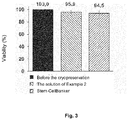
Figure 3 shows the results of ADSC cells viability measurements before and after cryopreservation. -
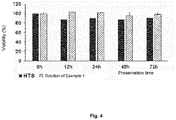
Figure 4 shows the results of ADSC cells viability measurements after thawing and after 12, 24, 36, 48 and 72 of storage in HTS formulation and the solution used according to the present invention. - The subject invention has been developed based on the observation made by its inventors that the aqueous solution comprising polyethylene glycol (PEG) having a defined molecular weight allows for effective preservation of stem cells while maintaining their viability.
- In the use according to the subject invention PEG having molecular weight of about 35000 Da (35 kDA) also called PEG 35, is employed. PEG used according to the present invention can be obtained by any known method, wherein preferably it can be synthetized from PEG molecules having lower molecular weight. In other preferred embodiment of the invention, PEG may be purified by any known technique known in the prior art. In especially preferred embodiment of the invention commercially available PEG can be used.
- According to the invention, PEG is preferably used at a concentration from about 0.01 to about 5 mmol/l, for example at a concentration of 0.02, 0.03, 0.04, 0.05, 0.06, 0.07, 0.08, 0.09, 0.1, 0.2, 0.3, 0.4, 0.5, 0.6, 0.7, 0.8, 0.9, 1.0, 1.5, 2.0, 2.5, 3.0, 3.5, 4.0, 4,5 and 5 mmol/l. In a particularly preferred embodiment of the invention, the PEG concentration is lower than 1 mmol/l and most preferably it is about 0.03 mmol/l.
- According to the subject invention, the employed aqueous solution is used as extracellular agent, i.e. agent, in which the sodium ions (Na+) is greater than the concentration of potassium ions (K+). Agents of this type prevent the cell death during storage by reducing ice formation inside a cell.
- In a preferred embodiment of the invention, the solution contains Na+ ions at a concentration of at least about 30 mmol/l and K+ ions at a concentration of at least about 10 mmol/l. In the most preferred embodiment of the invention the solution contains Na+ ions at a concentration of about 125 mmol/l and K+ ions at a concentration of about 25 mmol/l.
- Preferably, sodium ions are introduced in sodium hydroxide (NaOH), while potassium ions are introduced in potassium dihydrogen phosphate (KH2PO4).
- In a particularly preferred embodiment of the invention, besides the components mentioned above, i.e. PEG, sodium ions and potassium ions, the solution may contain other components used in the field of cell storageformulations, i.e. an agent comprising an impermeant anion, a compound from the group of sugars, a membrane stabilizing agent, a buffer solution and an energy source.
- In an especially preferred embodiment of the invention, the mentioned solution comprises:
about 20 to about 40 mmol/l of raffinose , about 70 to about 140 mmol/l of lactobionic acid, about 1 to about 10 mmol/l of MgSO4 about 10 to about 40 mmol/l of KH2PO4, about 1 to about 6 mmol/l of glutathione about 1 to about 10 mmol/l of adenosine, about 1.5 to about 5 mmol/l of allopurinol, about 30 to about 150 mmol/l of NaOH - pH of the solution is in the range of about 6,5 to about 8, and
- osmolality of the solution is in the range of about 290 to about 320 mmol/kg.
- The anion impermeable to cell membranes, whose role is to prevent the cell swelling caused by hypothermia, is lactobionic acid or its salts.
- The function of raffinose is additional osmotic support. In a preferred embodiment of the invention raffinose pentahydrate (raffinose · 5H2O) is used.
- The membrane stabilizing agent is magnesium sulphate, preferably magnesium sulphate heptahydrate (MgSO4·7H2O), which acts in orderto stabilize the electrochemical equilibrium of the cell membrane, which determines the proper transport of Na+ ions, K+ ions, phosphorous ions and Ca21 ions.
- KH2PO4 is a buffer system, whose role is to maintain pH of the solution, which provides the acid/base equilibrium. Additionally, it provides the potassium ions to the solution.
- Glutathione and allopurinol are agents counteracting the formation and action of free radicals.
- Adenosine is a source of ATP precursors, being the energy source.
- Water used to prepare the solution used according to the invention is a pharmaceutically acceptable water for injections.
- In the most preferred embodiment of the invention, mentioned solution comprises:
30 mmol/l of raffinose · 5H2O , 100 mmol/l of lactobionic acid, 5 mmol/l of MgSO4 · 7H2O, 25 mmol/l of KH2PO4, 3 mmol/l of glutathione 5 mmol/l of adenosine, 1 mmol/l of allopurinol, 0.03 mmol/l of polyethylene glycol having molecular weight of about 35000 Da - NaOH in an amount sufficient to obtain pH of about 7.4, and
- water for injections,
- wherein the solution has osmolality of 300 mmol/kg and comprises about 125 mmol/l of Na+ ions.
- When the use according to the subject invention is intended for cryopreservation, an addition of cryoprotectant is necessary. The cryoprotectant may be any component of this type used in the cryopreservation formulations, wherein preferably it is dimethyl sulfoxide (DMSO). Preferably dimethyl sulfoxide (DMSO) is used at a concentration of about 5 to about 20 vol. %, most preferably at a concentration of about 10 vol. % based on total volume of the solution.
- The solution used according to the invention does not contain calcium ions added separately or as components of the compounds included in the composition of the mentioned solution. The water for injections used for the preparation of the solution used according to the invention also does not contains said ions.
- According to the invention, the term "about" used hereinabove and hereinbelow is to be understood as +/- 5% deviation from the given value, reflecting the inaccuracies which may appear during the process of manufacturing of the composition of the invention, e.g. during measurements of the components of the solution.
- In experiments relating to the preservation of stem cells, the formulation StoreProtect Plus (Manufacturer: Carnamedica) having following composition, was used:
30 mmol/l (17.84 g/l) of raffinose · 5H2O , 100 mmol/l (35.8 g/l) of lactobionic acid, 5 mmol/l (1.232 g/l) of MgSO4 · 7H2O, 25 mmol/l (3.402 g/l) of KH2PO4, 3 mmol/l (0.922 g/l) of glutathione 5 mmol/l (1.336 g/l) of adenosine, 1 mmol/l (0.136 g/l) of allopurinol, 0.03 mmol/l (1 g/l) of polyethylene glycol having molecular weight of about 35000 Da - NaOH in an amount sufficient to obtain pH of about 7.4,
- water for injections,
- The solution of Example 1 exhibits osmolality of about 300 Osm/kg and comprises sodium ions (Na+) at concentration of about 120 mmol/l and potassium ions (K+) at concentration of about 25 mmol/l.
- In experiments related to cryopreservation of stem cells a formulation from Example 1 additionally comprising 10 vol. % of dimethyl sulfoxide (DMSO) in relation to the total volume of the solution, was used.
- Mesenchymal, adipose-derived Stem Cells (ADSCs) isolated from 9 donors were divided into test groups and stored for up to 120h. Following experimental groups were used: (a) NaCl solution (0.9%), (b) NaCl solution (0.9%) with glucose, (c) Ringer's solution (Fresenius Kabi), (d) Plasmalyte formulation (Baxter) (comprising, per 1000 ml of the solution: 5.26 g of sodium chloride, 0.37 g of potassium chloride, 0.3 g of magnesium chloride (6H2O), 3.68 g of sodium acetate (3H2O), 5.02 g of sodium gluconate, and comprising: 140 mmol/l of sodium ions, 5 mmol/l of potassium ions, 1.5 mmol/l of magnesium ions, 98 mmol/l of chloride ions, 27 mmol/l of acetate ions (CH3COO-), 23 mmol/l of gluconate ions (C6H11O7 -), wherein the theoretical osmolality of the solution is 294 mOsm/l, pH is about 7.4 (from 6.5-8.0), (e) HypoThermosol FRS formulation (HTS, BioLife Solutions) (comprising/: Trolox, Na+, K+, Ca2+, Mg2+, Cl-, H2PO4 -, HEPES, lactobionate, sucrose, mannitol, glucose, dextran-40, adenosine, glutathione) and (e) the solution as defined in Example 1. The short term preservation (maximum 120 hours) was conducted in temperature of 4°C, wherein in case of groups (d) and (e) also in room temperature. During the experiment the viability of the cells and number of viable cells were observed in selected time points.
- For the purposes of counting, the cells were labeled with propidium iodide and counted with an automatic cell counter (NanoEntec).
-
Fig 1 shows the results of viability measurements obtained for experimental groups (a), (b), (d) and (e), whileFig. 2 shows the number of viable cells as a function of the preservation time for test groups (d) and (e). - The results shown on
Fig.1 confirm that the highest stem cells viability was obtained in case of solution of the solution of Example 1 (above 90% after 120 hours). The number of viable cells after 120 hours from the beginning of the experiment was also the highest in case of solution of Example 1 (Fig. 2 ). - In the second experiment the usability of the formulation as defined in Example 2 in stem cell cryopreservation was tested. In this experiment the same type of stem cells was used as in Example 1. Certified formulation Stem-Cell Banker (Zenoaq) was used as the reference formulation. The experiment has been conducted in temperature of -196°C for 7 days
- After thawing the cells, the viability measurement was conducted (in the same manner as in Example 1) and the cells were transferred to the storage solutions (HypoThermosol FRS (HTS, BioLife Solutions) (reference formulation) and the solution of Example 1) in order to assess whether the change of storage conditions negatively influences the cells viability.
- During said preservation, cells viability was observed in selected time points (12 hours, 24 hours, 48 hours, 72 hours).
-
Fig. 3 shows the results of stem cells viability measurements after cryopreservation. The measurements confirmed that the formulation of Example 2 provides efficient preservation of stem cells in the frozen state. -
Fig. 4 shows the results of stem cells viability measurements after thawing in selected time points for HypoThermosol FRS formulation and the solution of Example 1. The results presented onFig. 4 clearly show that the solution of Example 1 exhibits better properties than the reference formulation used.
Claims (11)
- Use of aqueous solution comprising polyethylene glycol (PEG) having molecular weight of about 35000 Da as an extracellular agent for preserving stem cells.
- The use according to claim 1, wherein PEG is present in the solution at a concentration of about 0.01 to about 5 mmol/l.
- The use according to any of preceding claims, wherein PEG is present in the solution at a concentration lower than about 1 mmol/l.
- The use according to any of preceding claims, wherein PEG is present in the solution at a concentration of about 0.03 mmol/l.
- The use according to any of preceding claims, wherein the solution comprises Na+ ions at a concentration of at least about 30 mmol/l and K+ ions at a concentration of at least about 10 mmol/l.
- The use according to any of preceding claims, wherein the solution comprises Na+ ions at a concentration of about 125 mmol/l and K+ ions at a concentration of about 25 mmol/l.
- The use according to any of preceding claims, wherein the solution comprises:
about 20 to about 40 mmol/l of raffinose, about 70 to about 140 mmol/l of lactobionic acid, about 1 to about 10 mmol/l of MgSO4 about 10 to about 40 mmol/l of KH2PO4, about 1 to about 6 mmol/l of glutathione about 1 to about 10 mmol/l of adenosine, about 1.5 to about 5 mmol/l of allopurinol, about 30 to about 150 mmol/l of NaOH pH of the solution is in the range of about 6,5 to about 8, andosmolality of the solution is in the range of about 290 to about 320 mmol/kg. - The use according to any of preceding claims, wherein the solution comprises
30 mmol/l of raffinose · 5H2O , 100 mmol/l of lactobionic acid, 5 mmol/l of MgSO4 · 7H2O, 25 mmol/l of KH2PO4, 3 mmol/l of glutathione, 5 mmol/l of adenosine, 1 mmol/l of allopurinol, 0.03 mmol/l of polyethylene glycol having molecular weight of about 35000 Da NaOH in an amount sufficient to obtain pH of about 7.4, andwater for injections,wherein the solution has osmolality of 300 mmol/kg and comprises about 125 mmol/l of Na+ ions. - The use according to any of preceding claims, wherein, wherein the agent for preserving stem cells is a cryopreservation agent.
- The use according to claim 9, wherein the solution further comprises dimethyl sulfoxide (DMSO) at a concentration of about 5 to about 20 vol. % in relation to the total volume of the solution.
- The use according to claim 10, wherein the solution comprises DMSO at a concentration of about 10 vol. % in relation to the total volume of the solution.
Priority Applications (8)
| Application Number | Priority Date | Filing Date | Title |
|---|---|---|---|
| PL19461506.8T PL3685665T3 (en) | 2019-01-23 | 2019-01-23 | Use of a solution comprising peg for the preservation of stem cells |
| EP19461506.8A EP3685665B1 (en) | 2019-01-23 | 2019-01-23 | Use of a solution comprising peg for the preservation of stem cells |
| ES19461506T ES2949014T3 (en) | 2019-01-23 | 2019-01-23 | Use of a solution comprising PEG for the preservation of stem cells |
| CN202080017094.7A CN113490414B (en) | 2019-01-23 | 2020-01-23 | Preservation of Stem cells |
| BR112021014438-2A BR112021014438B1 (en) | 2019-01-23 | 2020-01-23 | STEM CELL PRESERVATION |
| PCT/EP2020/051685 WO2020152297A1 (en) | 2019-01-23 | 2020-01-23 | Preservation of stem cells |
| CA3127139A CA3127139A1 (en) | 2019-01-23 | 2020-01-23 | Preservation of stem cells |
| US17/425,383 US12495793B2 (en) | 2019-01-23 | 2020-01-23 | Preservation of stem cells |
Applications Claiming Priority (1)
| Application Number | Priority Date | Filing Date | Title |
|---|---|---|---|
| EP19461506.8A EP3685665B1 (en) | 2019-01-23 | 2019-01-23 | Use of a solution comprising peg for the preservation of stem cells |
Publications (3)
| Publication Number | Publication Date |
|---|---|
| EP3685665A1 true EP3685665A1 (en) | 2020-07-29 |
| EP3685665B1 EP3685665B1 (en) | 2023-06-07 |
| EP3685665C0 EP3685665C0 (en) | 2023-06-07 |
Family
ID=65686791
Family Applications (1)
| Application Number | Title | Priority Date | Filing Date |
|---|---|---|---|
| EP19461506.8A Active EP3685665B1 (en) | 2019-01-23 | 2019-01-23 | Use of a solution comprising peg for the preservation of stem cells |
Country Status (7)
| Country | Link |
|---|---|
| US (1) | US12495793B2 (en) |
| EP (1) | EP3685665B1 (en) |
| CN (1) | CN113490414B (en) |
| CA (1) | CA3127139A1 (en) |
| ES (1) | ES2949014T3 (en) |
| PL (1) | PL3685665T3 (en) |
| WO (1) | WO2020152297A1 (en) |
Families Citing this family (3)
| Publication number | Priority date | Publication date | Assignee | Title |
|---|---|---|---|---|
| CN113367123B (en) * | 2021-06-07 | 2022-05-13 | 南京三生生物技术股份有限公司 | A cell cryopreservation method |
| CN115349515A (en) * | 2022-08-02 | 2022-11-18 | 华院计算技术(上海)股份有限公司 | Cell preservation solution and cell preservation method |
| CN117481109B (en) * | 2023-12-26 | 2024-03-12 | 北京青藤谷禧干细胞科技研究院有限公司 | Cell storage medium and storage method |
Citations (8)
| Publication number | Priority date | Publication date | Assignee | Title |
|---|---|---|---|---|
| US6045990A (en) | 1998-07-09 | 2000-04-04 | Baust; John M. | Inclusion of apoptotic regulators in solutions for cell storage at low temperature |
| US20020068265A1 (en) * | 1999-05-18 | 2002-06-06 | Lopez Georges Antoine | Aqueous solution for preserving tissues and organs |
| US20090017438A1 (en) * | 2007-07-12 | 2009-01-15 | Warsaw Orthopedic, Inc. | Methods and compositions for the preservation of cells and tissues |
| CN102578077A (en) | 2012-01-13 | 2012-07-18 | 成都美进生物科技有限公司 | Serum-free cryoprotectits agent |
| CN104770363A (en) | 2015-04-21 | 2015-07-15 | 广州赛莱拉干细胞科技股份有限公司 | Cryopreservation solution and cryopreservation method for mesenchymal stem cells |
| CN105145547A (en) | 2015-10-28 | 2015-12-16 | 广州赛莱拉干细胞科技股份有限公司 | Cryopreservation protective fluid and method for umbilical cord mesenchymal stem cells |
| CN105961374A (en) | 2016-07-04 | 2016-09-28 | 深圳市合康生物科技股份有限公司 | Cell cryopreservation fluid |
| CN107912419A (en) | 2017-10-11 | 2018-04-17 | 重庆金时代生物技术有限公司 | The frozen stock solution and cryopreservation methods of a kind of human peripheral blood single nucleus cell |
Family Cites Families (6)
| Publication number | Priority date | Publication date | Assignee | Title |
|---|---|---|---|---|
| ES2330404B1 (en) * | 2008-05-19 | 2010-09-22 | Universidad De Barcelona | WATER SOLUTION FOR THE PRESERVATION OF FABRICS AND ORGANS. |
| FR2974708B1 (en) * | 2011-05-02 | 2013-07-05 | Groupe Igl | GRAFT OR TISSUE RINSING SOLUTION AND METHOD FOR RINSING SAID GRAFT OR FABRIC BEFORE REVASCULARIZATION |
| WO2016164693A1 (en) * | 2015-04-10 | 2016-10-13 | Board Of Regents, The University Of Texas System | Compositions and methods for prolonged cell storage |
| CN106332869B (en) * | 2016-11-01 | 2019-11-01 | 浙江译美生物科技有限公司 | Fat mesenchymal stem cell frozen stock solution and fat mesenchymal stem cell cryopreservation methods |
| CN107926933B (en) * | 2018-01-14 | 2021-04-23 | 上海慧存医疗科技有限公司 | a cell preservation solution |
| US12472475B2 (en) * | 2018-02-02 | 2025-11-18 | The General Hospital Corporation | Methods of supercooling aqueous samples |
-
2019
- 2019-01-23 ES ES19461506T patent/ES2949014T3/en active Active
- 2019-01-23 PL PL19461506.8T patent/PL3685665T3/en unknown
- 2019-01-23 EP EP19461506.8A patent/EP3685665B1/en active Active
-
2020
- 2020-01-23 US US17/425,383 patent/US12495793B2/en active Active
- 2020-01-23 CN CN202080017094.7A patent/CN113490414B/en active Active
- 2020-01-23 WO PCT/EP2020/051685 patent/WO2020152297A1/en not_active Ceased
- 2020-01-23 CA CA3127139A patent/CA3127139A1/en active Pending
Patent Citations (8)
| Publication number | Priority date | Publication date | Assignee | Title |
|---|---|---|---|---|
| US6045990A (en) | 1998-07-09 | 2000-04-04 | Baust; John M. | Inclusion of apoptotic regulators in solutions for cell storage at low temperature |
| US20020068265A1 (en) * | 1999-05-18 | 2002-06-06 | Lopez Georges Antoine | Aqueous solution for preserving tissues and organs |
| US20090017438A1 (en) * | 2007-07-12 | 2009-01-15 | Warsaw Orthopedic, Inc. | Methods and compositions for the preservation of cells and tissues |
| CN102578077A (en) | 2012-01-13 | 2012-07-18 | 成都美进生物科技有限公司 | Serum-free cryoprotectits agent |
| CN104770363A (en) | 2015-04-21 | 2015-07-15 | 广州赛莱拉干细胞科技股份有限公司 | Cryopreservation solution and cryopreservation method for mesenchymal stem cells |
| CN105145547A (en) | 2015-10-28 | 2015-12-16 | 广州赛莱拉干细胞科技股份有限公司 | Cryopreservation protective fluid and method for umbilical cord mesenchymal stem cells |
| CN105961374A (en) | 2016-07-04 | 2016-09-28 | 深圳市合康生物科技股份有限公司 | Cell cryopreservation fluid |
| CN107912419A (en) | 2017-10-11 | 2018-04-17 | 重庆金时代生物技术有限公司 | The frozen stock solution and cryopreservation methods of a kind of human peripheral blood single nucleus cell |
Non-Patent Citations (2)
| Title |
|---|
| N. MATSUMOTO ET AL.: "Successful liquid storage of peripheral blood stem cells at subzero non-freezing temperature", BONE MARROW TRANSPL., vol. 30, 2002, pages 777 - 784 |
| YONG-AN LEE ET AL: "Cryopreservation of Mouse Spermatogonial Stem Cells in Dimethylsulfoxide and Polyethylene Glycol1", BIOLOGY OF REPRODUCTION, vol. 89, no. 5, 1 November 2013 (2013-11-01), US, XP055592913, ISSN: 0006-3363, DOI: 10.1095/biolreprod.113.111195 * |
Also Published As
| Publication number | Publication date |
|---|---|
| WO2020152297A1 (en) | 2020-07-30 |
| EP3685665B1 (en) | 2023-06-07 |
| CA3127139A1 (en) | 2020-07-30 |
| CN113490414B (en) | 2023-04-21 |
| US20220079140A1 (en) | 2022-03-17 |
| CN113490414A (en) | 2021-10-08 |
| BR112021014438A2 (en) | 2021-11-09 |
| PL3685665T3 (en) | 2023-10-16 |
| ES2949014T3 (en) | 2023-09-25 |
| EP3685665C0 (en) | 2023-06-07 |
| US12495793B2 (en) | 2025-12-16 |
Similar Documents
| Publication | Publication Date | Title |
|---|---|---|
| JP5835853B2 (en) | Aqueous solution for cell preservation | |
| US6365338B1 (en) | Organ preservative solution containing trehalose, anti-oxidant, cations and an energy source | |
| US12058996B2 (en) | High subzero cryopreservation | |
| US8288084B2 (en) | Composition and method for flushing and cold/cryo preserving organs, tissues, and cells | |
| US20090123436A1 (en) | Cryopreservative compositions and methods | |
| US12495793B2 (en) | Preservation of stem cells | |
| JP4947948B2 (en) | Cell preservation solution | |
| JP2001247401A (en) | Tissue cold storage solution | |
| JP2026062731A (en) | Preservation method using trehalose and no other cryoprotectants in cryopreservation protocol | |
| NZ507865A (en) | Compositions for the preservation of living biological materials comprising trimethyl amine oxide, sodium chloride and calcium ions | |
| Matsumoto et al. | Successful liquid storage of peripheral blood stem cells at subzero non-freezing temperature | |
| He et al. | Clinical guideline for vascularized composite tissue cryopreservation | |
| Pless-Petig et al. | Serum-and albumin-free cryopreservation of endothelial monolayers with a new solution | |
| WO2008070412A2 (en) | Methods and compositions for reanimating cryopreserved oocytes | |
| JP2020527601A (en) | Preservation solution | |
| JP2014198673A (en) | Preservative for low temperature storage of animal embryo and method of storing animal embryo at low temperature | |
| Gok et al. | Treating the donor: strategies to prolong VCA preservation | |
| US11246309B2 (en) | Preserving agent for organs or tissue and preservation method for organs or tissue | |
| WO2008061148A9 (en) | Methods and compositions for cryopreserving oocytes | |
| BR112021014438B1 (en) | STEM CELL PRESERVATION | |
| JP2008104407A (en) | Cell preservation method | |
| Armitage | Effects of reduced temperature on cells |
Legal Events
| Date | Code | Title | Description |
|---|---|---|---|
| PUAI | Public reference made under article 153(3) epc to a published international application that has entered the european phase |
Free format text: ORIGINAL CODE: 0009012 |
|
| STAA | Information on the status of an ep patent application or granted ep patent |
Free format text: STATUS: THE APPLICATION HAS BEEN PUBLISHED |
|
| AK | Designated contracting states |
Kind code of ref document: A1 Designated state(s): AL AT BE BG CH CY CZ DE DK EE ES FI FR GB GR HR HU IE IS IT LI LT LU LV MC MK MT NL NO PL PT RO RS SE SI SK SM TR |
|
| AX | Request for extension of the european patent |
Extension state: BA ME |
|
| STAA | Information on the status of an ep patent application or granted ep patent |
Free format text: STATUS: REQUEST FOR EXAMINATION WAS MADE |
|
| 17P | Request for examination filed |
Effective date: 20210129 |
|
| RBV | Designated contracting states (corrected) |
Designated state(s): AL AT BE BG CH CY CZ DE DK EE ES FI FR GB GR HR HU IE IS IT LI LT LU LV MC MK MT NL NO PL PT RO RS SE SI SK SM TR |
|
| STAA | Information on the status of an ep patent application or granted ep patent |
Free format text: STATUS: EXAMINATION IS IN PROGRESS |
|
| 17Q | First examination report despatched |
Effective date: 20220412 |
|
| RIC1 | Information provided on ipc code assigned before grant |
Ipc: C12N 5/0775 20100101ALI20220929BHEP Ipc: A01N 1/02 20060101AFI20220929BHEP |
|
| GRAP | Despatch of communication of intention to grant a patent |
Free format text: ORIGINAL CODE: EPIDOSNIGR1 |
|
| STAA | Information on the status of an ep patent application or granted ep patent |
Free format text: STATUS: GRANT OF PATENT IS INTENDED |
|
| INTG | Intention to grant announced |
Effective date: 20221107 |
|
| GRAS | Grant fee paid |
Free format text: ORIGINAL CODE: EPIDOSNIGR3 |
|
| GRAA | (expected) grant |
Free format text: ORIGINAL CODE: 0009210 |
|
| STAA | Information on the status of an ep patent application or granted ep patent |
Free format text: STATUS: THE PATENT HAS BEEN GRANTED |
|
| AK | Designated contracting states |
Kind code of ref document: B1 Designated state(s): AL AT BE BG CH CY CZ DE DK EE ES FI FR GB GR HR HU IE IS IT LI LT LU LV MC MK MT NL NO PL PT RO RS SE SI SK SM TR |
|
| REG | Reference to a national code |
Ref country code: GB Ref legal event code: FG4D |
|
| REG | Reference to a national code |
Ref country code: CH Ref legal event code: EP Ref country code: AT Ref legal event code: REF Ref document number: 1571920 Country of ref document: AT Kind code of ref document: T Effective date: 20230615 |
|
| REG | Reference to a national code |
Ref country code: DE Ref legal event code: R096 Ref document number: 602019030004 Country of ref document: DE |
|
| U01 | Request for unitary effect filed |
Effective date: 20230628 |
|
| U07 | Unitary effect registered |
Designated state(s): AT BE BG DE DK EE FI FR IT LT LU LV MT NL PT SE SI Effective date: 20230707 |
|
| REG | Reference to a national code |
Ref country code: LT Ref legal event code: MG9D Ref country code: ES Ref legal event code: FG2A Ref document number: 2949014 Country of ref document: ES Kind code of ref document: T3 Effective date: 20230925 |
|
| PG25 | Lapsed in a contracting state [announced via postgrant information from national office to epo] |
Ref country code: NO Free format text: LAPSE BECAUSE OF FAILURE TO SUBMIT A TRANSLATION OF THE DESCRIPTION OR TO PAY THE FEE WITHIN THE PRESCRIBED TIME-LIMIT Effective date: 20230907 |
|
| PG25 | Lapsed in a contracting state [announced via postgrant information from national office to epo] |
Ref country code: RS Free format text: LAPSE BECAUSE OF FAILURE TO SUBMIT A TRANSLATION OF THE DESCRIPTION OR TO PAY THE FEE WITHIN THE PRESCRIBED TIME-LIMIT Effective date: 20230607 Ref country code: HR Free format text: LAPSE BECAUSE OF FAILURE TO SUBMIT A TRANSLATION OF THE DESCRIPTION OR TO PAY THE FEE WITHIN THE PRESCRIBED TIME-LIMIT Effective date: 20230607 Ref country code: GR Free format text: LAPSE BECAUSE OF FAILURE TO SUBMIT A TRANSLATION OF THE DESCRIPTION OR TO PAY THE FEE WITHIN THE PRESCRIBED TIME-LIMIT Effective date: 20230908 |
|
| PG25 | Lapsed in a contracting state [announced via postgrant information from national office to epo] |
Ref country code: SK Free format text: LAPSE BECAUSE OF FAILURE TO SUBMIT A TRANSLATION OF THE DESCRIPTION OR TO PAY THE FEE WITHIN THE PRESCRIBED TIME-LIMIT Effective date: 20230607 |
|
| PG25 | Lapsed in a contracting state [announced via postgrant information from national office to epo] |
Ref country code: IS Free format text: LAPSE BECAUSE OF FAILURE TO SUBMIT A TRANSLATION OF THE DESCRIPTION OR TO PAY THE FEE WITHIN THE PRESCRIBED TIME-LIMIT Effective date: 20231007 |
|
| U20 | Renewal fee for the european patent with unitary effect paid |
Year of fee payment: 6 Effective date: 20231219 |
|
| PG25 | Lapsed in a contracting state [announced via postgrant information from national office to epo] |
Ref country code: SM Free format text: LAPSE BECAUSE OF FAILURE TO SUBMIT A TRANSLATION OF THE DESCRIPTION OR TO PAY THE FEE WITHIN THE PRESCRIBED TIME-LIMIT Effective date: 20230607 Ref country code: SK Free format text: LAPSE BECAUSE OF FAILURE TO SUBMIT A TRANSLATION OF THE DESCRIPTION OR TO PAY THE FEE WITHIN THE PRESCRIBED TIME-LIMIT Effective date: 20230607 Ref country code: RO Free format text: LAPSE BECAUSE OF FAILURE TO SUBMIT A TRANSLATION OF THE DESCRIPTION OR TO PAY THE FEE WITHIN THE PRESCRIBED TIME-LIMIT Effective date: 20230607 Ref country code: IS Free format text: LAPSE BECAUSE OF FAILURE TO SUBMIT A TRANSLATION OF THE DESCRIPTION OR TO PAY THE FEE WITHIN THE PRESCRIBED TIME-LIMIT Effective date: 20231007 Ref country code: CZ Free format text: LAPSE BECAUSE OF FAILURE TO SUBMIT A TRANSLATION OF THE DESCRIPTION OR TO PAY THE FEE WITHIN THE PRESCRIBED TIME-LIMIT Effective date: 20230607 |
|
| REG | Reference to a national code |
Ref country code: DE Ref legal event code: R097 Ref document number: 602019030004 Country of ref document: DE |
|
| PLBE | No opposition filed within time limit |
Free format text: ORIGINAL CODE: 0009261 |
|
| STAA | Information on the status of an ep patent application or granted ep patent |
Free format text: STATUS: NO OPPOSITION FILED WITHIN TIME LIMIT |
|
| 26N | No opposition filed |
Effective date: 20240308 |
|
| PG25 | Lapsed in a contracting state [announced via postgrant information from national office to epo] |
Ref country code: MC Free format text: LAPSE BECAUSE OF FAILURE TO SUBMIT A TRANSLATION OF THE DESCRIPTION OR TO PAY THE FEE WITHIN THE PRESCRIBED TIME-LIMIT Effective date: 20230607 |
|
| PG25 | Lapsed in a contracting state [announced via postgrant information from national office to epo] |
Ref country code: MC Free format text: LAPSE BECAUSE OF FAILURE TO SUBMIT A TRANSLATION OF THE DESCRIPTION OR TO PAY THE FEE WITHIN THE PRESCRIBED TIME-LIMIT Effective date: 20230607 |
|
| REG | Reference to a national code |
Ref country code: CH Ref legal event code: PL |
|
| PG25 | Lapsed in a contracting state [announced via postgrant information from national office to epo] |
Ref country code: CH Free format text: LAPSE BECAUSE OF NON-PAYMENT OF DUE FEES Effective date: 20240131 |
|
| PG25 | Lapsed in a contracting state [announced via postgrant information from national office to epo] |
Ref country code: CH Free format text: LAPSE BECAUSE OF NON-PAYMENT OF DUE FEES Effective date: 20240131 |
|
| U20 | Renewal fee for the european patent with unitary effect paid |
Year of fee payment: 7 Effective date: 20241204 |
|
| PG25 | Lapsed in a contracting state [announced via postgrant information from national office to epo] |
Ref country code: IE Free format text: LAPSE BECAUSE OF NON-PAYMENT OF DUE FEES Effective date: 20240123 |
|
| PG25 | Lapsed in a contracting state [announced via postgrant information from national office to epo] |
Ref country code: IE Free format text: LAPSE BECAUSE OF NON-PAYMENT OF DUE FEES Effective date: 20240123 |
|
| PG25 | Lapsed in a contracting state [announced via postgrant information from national office to epo] |
Ref country code: CY Free format text: LAPSE BECAUSE OF FAILURE TO SUBMIT A TRANSLATION OF THE DESCRIPTION OR TO PAY THE FEE WITHIN THE PRESCRIBED TIME-LIMIT; INVALID AB INITIO Effective date: 20190123 |
|
| PG25 | Lapsed in a contracting state [announced via postgrant information from national office to epo] |
Ref country code: HU Free format text: LAPSE BECAUSE OF FAILURE TO SUBMIT A TRANSLATION OF THE DESCRIPTION OR TO PAY THE FEE WITHIN THE PRESCRIBED TIME-LIMIT; INVALID AB INITIO Effective date: 20190123 |
|
| PG25 | Lapsed in a contracting state [announced via postgrant information from national office to epo] |
Ref country code: TR Free format text: LAPSE BECAUSE OF FAILURE TO SUBMIT A TRANSLATION OF THE DESCRIPTION OR TO PAY THE FEE WITHIN THE PRESCRIBED TIME-LIMIT Effective date: 20230607 |
|
| U20 | Renewal fee for the european patent with unitary effect paid |
Year of fee payment: 8 Effective date: 20251119 |
|
| PGFP | Annual fee paid to national office [announced via postgrant information from national office to epo] |
Ref country code: GB Payment date: 20251105 Year of fee payment: 8 |
|
| PGFP | Annual fee paid to national office [announced via postgrant information from national office to epo] |
Ref country code: PL Payment date: 20251119 Year of fee payment: 8 |
|
| PGFP | Annual fee paid to national office [announced via postgrant information from national office to epo] |
Ref country code: ES Payment date: 20260210 Year of fee payment: 8 |