EP3684637B1 - Protective screen for glasses of vehicles - Google Patents
Protective screen for glasses of vehicles Download PDFInfo
- Publication number
- EP3684637B1 EP3684637B1 EP18792466.7A EP18792466A EP3684637B1 EP 3684637 B1 EP3684637 B1 EP 3684637B1 EP 18792466 A EP18792466 A EP 18792466A EP 3684637 B1 EP3684637 B1 EP 3684637B1
- Authority
- EP
- European Patent Office
- Prior art keywords
- layer
- protective screen
- intermediate layer
- vehicle
- screen
- Prior art date
- Legal status (The legal status is an assumption and is not a legal conclusion. Google has not performed a legal analysis and makes no representation as to the accuracy of the status listed.)
- Active
Links
Images


Classifications
-
- B—PERFORMING OPERATIONS; TRANSPORTING
- B60—VEHICLES IN GENERAL
- B60J—WINDOWS, WINDSCREENS, NON-FIXED ROOFS, DOORS, OR SIMILAR DEVICES FOR VEHICLES; REMOVABLE EXTERNAL PROTECTIVE COVERINGS SPECIALLY ADAPTED FOR VEHICLES
- B60J1/00—Windows; Windscreens; Accessories therefor
- B60J1/20—Accessories, e.g. wind deflectors, blinds
-
- B—PERFORMING OPERATIONS; TRANSPORTING
- B60—VEHICLES IN GENERAL
- B60J—WINDOWS, WINDSCREENS, NON-FIXED ROOFS, DOORS, OR SIMILAR DEVICES FOR VEHICLES; REMOVABLE EXTERNAL PROTECTIVE COVERINGS SPECIALLY ADAPTED FOR VEHICLES
- B60J1/00—Windows; Windscreens; Accessories therefor
- B60J1/20—Accessories, e.g. wind deflectors, blinds
- B60J1/2094—Protective means for window, e.g. additional panel or foil, against vandalism, dirt, wear, shattered glass, etc.
-
- B—PERFORMING OPERATIONS; TRANSPORTING
- B60—VEHICLES IN GENERAL
- B60J—WINDOWS, WINDSCREENS, NON-FIXED ROOFS, DOORS, OR SIMILAR DEVICES FOR VEHICLES; REMOVABLE EXTERNAL PROTECTIVE COVERINGS SPECIALLY ADAPTED FOR VEHICLES
- B60J11/00—Removable external protective coverings specially adapted for vehicles or parts of vehicles, e.g. parking covers
- B60J11/06—Removable external protective coverings specially adapted for vehicles or parts of vehicles, e.g. parking covers for covering only specific parts of the vehicle, e.g. for doors
- B60J11/08—Removable external protective coverings specially adapted for vehicles or parts of vehicles, e.g. parking covers for covering only specific parts of the vehicle, e.g. for doors for windows or windscreens
-
- B—PERFORMING OPERATIONS; TRANSPORTING
- B60—VEHICLES IN GENERAL
- B60R—VEHICLES, VEHICLE FITTINGS, OR VEHICLE PARTS, NOT OTHERWISE PROVIDED FOR
- B60R21/00—Arrangements or fittings on vehicles for protecting or preventing injuries to occupants or pedestrians in case of accidents or other traffic risks
- B60R21/02—Occupant safety arrangements or fittings, e.g. crash pads
- B60R21/12—Occupant safety arrangements or fittings, e.g. crash pads which protect the occupants against personal attack from the inside or the outside of the vehicle
Definitions
- the screen is particularly applicable for windows of military vehicles or armed forces, however it may also be used for windows of aircraft and boats.
- the windows of a similar vehicle generally consist of a combination of glass sheets made of polycarbonate, polymethyl methacrylate, hard polyurethane and polyethylene, with insertions made of plastic material, such as polyvinyl butyral or polyurethane or ethylene-vinyl-acetate.
- a protective screen for vehicle windows is indicated as a whole with number 10.
- the protective screen 10 is a protective screen for protecting ballistic windows, and more preferably ballistic windows of military vehicles, from solar radiation.
- ballistic windows are multi-layer windows which typically comprise a combination of glass sheets made of polycarbonate, polymethyl methacrylate, hard polyurethane and polyethylene, with insertions made of plastic material, such as polyvinyl butyral or polyurethane or ethylene-vinyl-acetate.
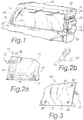
- Said protective screen 10 which is depicted by way of example in figure 1 as prepared on a windshield of a tactical military vehicle 12, comprises: a flexible protective sheet 11.
- peripheral flap 14 of said protective sheet 11 there are, on the peripheral flap 14 of said protective sheet 11, magnetic bodies 15, 16, 17 for connection with a metal frame 13 of a window, for example of a military vehicle 12.
- the magnetic bodies 15, 16, 17 each consist of a discoidal permanent magnet, for example made of neodymium.
- such magnetic bodies 15, 16, 17 are each fastened to the peripheral flap 14 of the protective sheet 11 by means of a rivet 18 passing through a corresponding through hole defined on the peripheral flap 14 and through a through hole made on the magnetic body 15, 16, 17.
- a first widened end 19 of rivet 18 is in contact with the magnetic body 15, while the opposite second widened end 20 is positioned on the opposite side of the protective sheet 11, there being interposed, between such a protective sheet 11 and the second widened end 20, a tear-proof ring 21 for protecting the protective sheet 11 from the rubbing against the second metal end 20 of the rivet 18.
- Flap 14 has a reinforcing strip 22, for example fastened according to a technology of known type, for example sewn or heat sealed.
- Such a reinforcing strip 22 strengthens the peripheral flap 14, thus making the fastening of the magnetic bodies 15, 16, and 17 firmer and more secure by means of riveting.
- Said protective screen 10 may also have a plurality of slots 23 arranged on the outer edge of flap 14. Said slots 23 are adapted to insert tie-rod elements 24. These tie-rod elements are in themselves known and consist of for example, elastic cords having couplers and/or end hooks 24. Said tie-rod elements 24 may be anchored to the slots 23 of screen 10 on one side and to elements of the body of vehicle 12 on the other side.
- tie-rod elements 24 ensures an improved fastening of screen 10 to the windows of vehicle 12 under particularly adverse weather conditions such as for example, in the case of sustained wind.
- the use of the protective screen 10 according to the invention requires the orderly application of the magnetic bodies 15, 16, 17 to the metal frame 13, made of iron or iron alloy or other metal material on which the magnetic bodies may perform their attractive force.
- the magnetic bodies 15, 16 and 17 substantially are distributed over the whole peripheral flap 14.
- the protective screen 10 is easy to be folded when not in use due to the flexible sheet 11 and therefore may be stored with little volume. The same applies for the tie-rod elements 24.
- the protective screen according to the invention may be made multicolor due to the plastic material coating by conveniently making such a coating by means of the use of catalyzed water paints suitable for infrared masking, for example with camouflage type color combinations, for example green and brown, white and brown and other similar combinations.
- Each protective screen according to the invention may be customized on the coating itself, for example by identifying the vehicle license plate to which the screen itself is applied.
- Sheet 11 comprises:
- the first layer 123 may consist of, by way of non-limiting example, an elastomeric protective technical fabric, such as that known as "Tessuto tecnico 5186371 verde nero” (Green-black technical fabric 5186371) from Novurania, which substantially has, among others, features of:
- the fabric insert of the "Tessuto tecnico 5186371 verde nero" (Green-black technical fabric 5186371) from Novurania has the following features:
- the elastomer of the "Tessuto tecnico 5186371 verde nero" (Green-black technical fabric 5186371) from Novurania has the following features:
- a second thermally insulated layer 125 opposite to the first layer 123, designed to face a window.
- the second layer 125 has a thermally insulating action so as to thermally insulate the window which it is suitable for facing.
- the second layer 125 may consist of by way of non-limiting example, the product "Polymar Polyfoam 3" from Low & Bonar Italy srl.
- an intermediate layer 124 (shown in figure 5 ) consisting of a resinated fabric, preferably wholly made of polyester (polyethylene terephthalate and polyethylene terephthalate copolymer).
- a resinated fabric preferably wholly made of polyester (polyethylene terephthalate and polyethylene terephthalate copolymer).
- such an intermediate layer 124 made of resinated fabric is a breathable layer preferably made of non-woven fabric, which is suitable for incorporating air therein, for example in the shape of air locks.
- the intermediate layer 124 may consist of by way of non-limiting example, the product "Olibond R Agu SM" from Ovattificio mulia S.a.s.
- the product "Olibond R Agu SM" from Ovattificio palatia S.a.s. has the following features:
- Such three layers 123, 124 and 125 are joined together by means of sewing, using a sewing machine which is in itself known.
- Said protective screen 210 comprises a flexible protective sheet 211.
- peripheral flap 214 of said protective sheet 211 magnetic bodies 215 for connection with a metal frame of a window.
- the peculiarity of this variant consists of the presence of one or more tabs 216 positioned on the outer perimeter of said peripheral flap 214 and protruding therefrom.
- Said tabs 216 are made of stiff rubber (3800 grams per square meter) supplied by Low & Bonar srl, or similar, and are sewn to the outer edge of the peripheral flap 214.
- Said tabs 216 are adapted to be closed inside the vehicle.
- Said screen 210 may be arranged for example, on the window of a side door of a means with reinforced hinges, and said tabs 216 may be interlocked between the body and the door in closed configuration.
- composition of the protective screen 210 may be similar to that described above and identified in figures 4 and 5 .
- a screen according to a non-claimed embodiment is indicated with reference number 310.
- Said screen consists of two layers: an outer layer made of fabric coated with PVC, for example of the type having 650 grams per square meter; an inner layer in contact with the window, made of thermally insulated fabric.
- the peculiarity of this variant is the presence of two wings 311 located at two opposite sides of screen 310.
- Said wings 311 are made in a single piece with the outer layer of PVC-coated fabric.
- Said wings are adapted to be interlocked inside the vehicle.
- Said screen 310 may be arranged for example, on the windshield and said wings 311 may be laterally interlocked between the body and the respective doors in closed configuration.
- a screen according to the invention comprising the wings 311 consists of three layers formed like the above-mentioned layers 123, 124 and 125.
- a further variant is suitable for the cases in which a metal grid 30 (e.g. a riot-control grid) is arranged on the window.
- the protective screen provides:
- the protective screen comprises at least one element 411 for air circulation configured so as to allow a passage of air through the first layer 423, the intermediate layer 424 and the second layer 425.
- the moisture between the second layer 425 and the vehicle window may advantageously be reduced when screen 400 is arranged on the vehicle under normal operating conditions.
- the formation of condensation which may cause a deterioration of the window may accordingly be reduced.
- the condensation which is formed on the window over time damages the seal around the window, thus allowing water to filter through the various layers forming the window, damaging them.
- the at least one element 411 for air circulation comprises at least one series 411 of through openings 412 for the air circulation which cross the first layer 423, the intermediate layer 424 and the second layer 425.
- arrows F1 and F2 indicate the circulation of the air through the through openings 412.
- the protective screen 400 comprises a plurality of series 411 of through openings 412 for air circulation.
- the protective screen 400 in the example comprises by way of non-limiting example, two series 411, each of which comprises a plurality of through openings 412 of air circulation, for example fifteen through openings 412.
- the through openings 412 preferably are micro holes 412 having by way of non-limiting example, a diameter equal to about 4 mm.
- the at least one series 411 of through openings 412 for air circulation is arranged so as to facilitate the passage of hot air.
- the at least one series 411 is provided on an upper portion of the protective screen 400, i.e. on a portion of the protective screen 400 which is intended to face an upper portion of the window of the vehicle when screen 400 is applied to the vehicle.
- the moisture between screen 400 and the window may conveniently be more easily reduced due to such an arrangement of the at least one series 411 of through openings 412 because the hot air which physically tends to rise upwards may be easily evacuated through the openings 412.
- the protective screen 400 comprises at least one rain-proof covering element 413 associated with the aforesaid at least one element 411 for air circulation.
- screen 400 not exhaustively comprises a rain-proof covering element 413 associated with each series 411 of through openings 412.
- the rain-proof covering elements 413 may be made by means of a covering portion 413, by way of non-limiting example made of PVC, which is arranged on the first layer 423 so as to cover the through openings 412 leaving a sufficient space for the passage of the air through the openings 412.
- screen 400 comprises at least one self-ventilation element 418 configured so as to allow a passage of air through the intermediate layer 424 and outside the protective screen 400 through the second layer 425.
- the at least one self-ventilation element 418 comprises at least one series 418 of self-ventilation through openings 419 which are provided only in the second layer 425.
- the protective screen 400 comprises a plurality of series 418, in the non-limiting example three series 418, each of which comprises a plurality of through openings 419, by way of non-limiting example, 15 through openings 419.
- the protective screen 400 comprises vehicle fastening means including magnetic bodies 414.
- the magnetic bodies 414 comprise a plurality of permanent magnets 414, in the non-limiting example fourteen permanent magnets 414, which are incorporated in the thickness of the protective screen 400. Conveniently, this allows avoiding the body or other parts of the vehicle from being scratched during the removal of the tarp from the window of the vehicle. This aspect is particularly important in the case of certain types of very tall tactical military vehicles (for example also 3 or 4 meters tall) in which the removal of screen 400 is relatively difficult.
- the fastening means of screen 400 also comprise slots 415 which may be for example, identical to the slots 23 described above.
- the protective screen 500 comprises a flexible sheet 510.
- the flexible sheet 510 is structurally identical to the flexible sheet 410 described above.
- the flexible sheet 510 preferably comprises a first layer 523, an intermediate layer (not depicted) and a second layer 525, which are identical to the above-described first layer 423, to the intermediate layer 424 and to the second layer 425, respectively.
- the protective screen 500 comprises a peripheral frame 531 configured so as to be positioned on a riot-control grid arranged on a window of the vehicle and in such a manner as to be firmly fastened to such grid.
- the protective screen 500 comprises an inner portion 532 which comprises or consists of the flexible sheet 510.
- the protective screen 500 practically differs from the above-described embodiment with reference to figures 8 and 9 mainly for the fact that the peripheral frame 531 and the inner portion 532 are made in a single piece. In other words, unlike the solution described with reference to figures 8 and 9 , the peripheral frame 531 and the inner portion 532 cannot be detached from each other.
- the protective screen 500 comprises at least one element 511 for air circulation which is identical to the above-described at least one element 411 for air circulation.
- the at least one element 511 may comprise at least one series 511 of through openings 512 for air circulation, which are identical to the openings 412.
- the protective screen 500 comprises a plurality of permanent magnets 514 which are identical to the permanent magnets 414.
- the magnets 514 are arranged along the peripheral frame 531.
- the magnets 514 are incorporated in the thickness of screen 500.
- FIG 16 With reference to figure 16 , there is shown a further embodiment of a protective screen according to the invention, which is indicated as a whole with reference number 600.
- the at least one element 611 for air circulation comprises at least one valve 611 for air circulation coupled to the flexible sheet 610.
- the at least one valve 611 is arranged on the side of the first layer 623, or in any case so as to mainly extend from the side of the first layer 623, and preferably is fastened to the flexible sheet 610 by means of a suitable fastening element 630, such as by way of non-limiting example, a fastening ring nut 630.
- the at least one valve 611 preferably defines a first channel 640 for the passage of the air which crosses said layers 623, 624, 625.
- valve 611 also defines a second channel 650 for the passage of air, which is arranged transversely and more preferably substantially orthogonal to the first channel 640.
- the at least one valve 611 is conveniently configured so as to also provide a rain-proof protection.
- the first and the second channel 640, 650 conveniently allow the air circulation through valve 611, and the second channel 650 is configured so as to allow the outflow of the rainwater without the latter being channeled into the first channel 640.
- the at least one valve 611 is also provided with a portion 660 configured so as to cause a "Venturi" effect.
- the at least one valve 611 would be self-protected in the case of rain, and holed/shaped according to the specific oblique/vertical positioning needs and would also be provided with such a shape so as to use the "Venturi" effect.
- the invention has fine-tuned a protective screen for vehicle windows, and in particular for windows of military vehicles, which by preventing the visible radiation (UV rays) from reaching the stratified window, limits the failures and deformations thereof, for example of a vehicle exposed for lengthy periods to medium-to-high temperatures, such as a military vehicle in a desert area.
- a protective screen for vehicle windows and in particular for windows of military vehicles, which by preventing the visible radiation (UV rays) from reaching the stratified window, limits the failures and deformations thereof, for example of a vehicle exposed for lengthy periods to medium-to-high temperatures, such as a military vehicle in a desert area.
- the protective screen also prevents the transparency and clarity of the crystal glass from being compromised, to the complete advantage of the safety of the driver operator.
- a protective screen according to the invention may obviously also be implemented at low temperatures with the advantage of making the vehicle to which windshield or other window it is applied immediately usable without the need to remove the ice which could be formed on the window itself.
- the invention has fine-tuned a protective screen which is easy to be positioned in use to cover a window of a vehicle, and is just as easy to be removed due to the fastening system based on the implementation of magnetic bodies, slots and elastic cords with end hooks, tabs and wings.
Landscapes
- Engineering & Computer Science (AREA)
- Mechanical Engineering (AREA)
- Laminated Bodies (AREA)
- Shielding Devices Or Components To Electric Or Magnetic Fields (AREA)
Description
- The present invention relates to a protective screen for vehicle windows. Examples of prior art protective screens are disclosed in
US 4 867 216 ,PT 107 267 CN 107 310 363 . - The screen is particularly applicable for windows of military vehicles or armed forces, however it may also be used for windows of aircraft and boats.
- Tactical military vehicles are currently known and common (such as for example the Lince vehicle by Iveco) having extreme mobility and agility, made to operate in radically different environments due to geographical location, weather conditions and characteristics of the ground, in the presence of temperatures which may vary from +58° to -32°C.
- The windows of a similar vehicle generally consist of a combination of glass sheets made of polycarbonate, polymethyl methacrylate, hard polyurethane and polyethylene, with insertions made of plastic material, such as polyvinyl butyral or polyurethane or ethylene-vinyl-acetate.
- The use of the laminated windshield, as well as of laminated side and rear windows, if any, is preferable for safety reasons because there is - due to the presence of the insertions - less probability of the release of fragments of material upon a strong impact such as may be caused by a shot from a firearm or a fragment of an explosive device or from a generic body projected following an explosion.
- The stratified window is highly resistant from a mechanical viewpoint, but very delicate from a chemical viewpoint, in particular with regards to resistance to UV rays. This is a serious limitation associated with the fact that the window may break or be deformed if exposed for lengthy periods to medium-to-high temperatures and to UV rays due to the lack of the perfect functionality of the insertions between the sheets; consequently, the transparency and clarity of the crystal glass could be compromised, thus putting in danger the driver operator; moreover, there is an increased probability of release of fragments of material upon a strong impact, with subsequent proportionally increased risks for the persons inside the vehicle.
- It is the task of the present invention to make a protective screen for vehicle windows, and in particular for windows of military vehicles, capable of preventing the breaking and deformations of a stratified window of a vehicle exposed for lengthy periods to medium-to-high temperatures. The present invention is defined by independent claims 1, 2 and 3 that present alternative forms of ventilation of the protection screen.
- Within the scope of such a task, it is an object of the invention to fine-tune a protective screen which is easy to be positioned in use to cover the windows of a vehicle and which is just as easy to be removed.
- It is another object of the invention to fine-tune a protective screen which can be stored with reduced volume.
- This task, and also these and other objects which are more apparent below, are achieved by a protective screen for vehicle windows, and in particular for windows of military vehicles, according to claims 1, 2 and 3, , optionally provided with one or more features of the dependent claims.
- Further features and advantages of the invention shall become more apparent from the description of a preferred, but not exclusive, embodiment of the protective screen according to the invention disclosed by way of non-limiting, indicative example, in the accompanying drawings, in which:
-
figure 1 shows a perspective view of a screen according to the invention, applied to a windshield of a military vehicle; -
figures 2 and 3 depict various perspective views of a corner portion of a screen according to the invention and a detail of a fastening element of a screen according to the invention; -
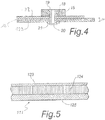
figure 4 depicts a sectioned side view of a detail of a protective screen according to the invention; -
figure 5 depicts a cross-sectioned schematic view of a variant of a protective screen according to the invention; -
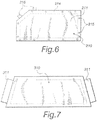
figure 6 depicts a view of a variant of a protective screen according to the invention; -
figure 7 depicts a view of a variant of a protective screen according to the invention; -
figure 8 depicts a front view of a further variant of a protective screen according to the invention; -
figure 9 is an exploded view of the components of the embodiment infigure 8 ; -
figure 10 depicts a plan front schematic view of a further embodiment of a protective screen according to the present invention; -
figure 11 depicts a plan rear schematic view of the protective screen infigure 10 ; -
figure 12 depicts a plan schematic cross-sectioned view along line A-A infigure 11 ; -
figure 13 depicts a plan schematic cross-sectioned view along line B-B infigure 11 ; -
figure 14 depicts a perspective and schematic view from the front side of a further embodiment of a protective screen according to the present invention; -
figure 15 depicts a perspective and schematic view from the rear side of the protective screen infigure 14 ; -
figure 16 depicts a plan schematic cross-sectioned view of a variant of the screen infigure 10 . - With reference to the mentioned figures, a protective screen for vehicle windows, and in particular for windows of military vehicles, is indicated as a whole with number 10. In particular, according to an advantageous embodiment, the protective screen 10 is a protective screen for protecting ballistic windows, and more preferably ballistic windows of military vehicles, from solar radiation. As is known, ballistic windows are multi-layer windows which typically comprise a combination of glass sheets made of polycarbonate, polymethyl methacrylate, hard polyurethane and polyethylene, with insertions made of plastic material, such as polyvinyl butyral or polyurethane or ethylene-vinyl-acetate.
- Said protective screen 10, which is depicted by way of example in
figure 1 as prepared on a windshield of a tacticalmilitary vehicle 12, comprises: a flexibleprotective sheet 11. - There are, on the
peripheral flap 14 of saidprotective sheet 11,magnetic bodies military vehicle 12. - The
magnetic bodies - In the non-limiting example embodiment herein described of the protective screen 10 according to the invention, such
magnetic bodies peripheral flap 14 of theprotective sheet 11 by means of arivet 18 passing through a corresponding through hole defined on theperipheral flap 14 and through a through hole made on themagnetic body - A first widened
end 19 ofrivet 18 is in contact with the magnetic body 15, while the opposite second widenedend 20 is positioned on the opposite side of theprotective sheet 11, there being interposed, between such aprotective sheet 11 and the second widenedend 20, a tear-proof ring 21 for protecting theprotective sheet 11 from the rubbing against thesecond metal end 20 of therivet 18. - Flap 14 has a reinforcing
strip 22, for example fastened according to a technology of known type, for example sewn or heat sealed. - Such a reinforcing
strip 22 strengthens theperipheral flap 14, thus making the fastening of themagnetic bodies - Said protective screen 10 may also have a plurality of
slots 23 arranged on the outer edge offlap 14. Saidslots 23 are adapted to insert tie-rod elements 24. These tie-rod elements are in themselves known and consist of for example, elastic cords having couplers and/orend hooks 24. Said tie-rod elements 24 may be anchored to theslots 23 of screen 10 on one side and to elements of the body ofvehicle 12 on the other side. - The use of said tie-
rod elements 24 ensures an improved fastening of screen 10 to the windows ofvehicle 12 under particularly adverse weather conditions such as for example, in the case of sustained wind. - The use of the protective screen 10 according to the invention requires the orderly application of the
magnetic bodies - Said protective screen 10 is dimensioned so as to completely involve a window or windshield which is intended to be covered.
- The
magnetic bodies peripheral flap 14. - The protective screen 10 is easy to be folded when not in use due to the
flexible sheet 11 and therefore may be stored with little volume. The same applies for the tie-rod elements 24. - The protective screen according to the invention may be made multicolor due to the plastic material coating by conveniently making such a coating by means of the use of catalyzed water paints suitable for infrared masking, for example with camouflage type color combinations, for example green and brown, white and brown and other similar combinations.
- Each protective screen according to the invention may be customized on the coating itself, for example by identifying the vehicle license plate to which the screen itself is applied.
- With reference to
figure 4 , the objective of saidprotective sheet 11 is to protect the window of the means in a special manner and to prevent the heat of the sun and the ultraviolet rays from damaging it. -
Sheet 11 comprises: - a first
outer layer 123, resistant to heat/cold, mechanical and chemical stresses, UV ray-shielding and having fastness to light, - a
second layer 125 made of thermally insulated fabric, designed to face a window. - The
first layer 123 may consist of, by way of non-limiting example, an elastomeric protective technical fabric, such as that known as "Tessuto tecnico 5186371 verde nero" (Green-black technical fabric 5186371) from Novurania, which substantially has, among others, features of: - mechanical strength according to Standard ISO 1421 met. 1,
- chemical resistance, in particular to dipping in acetone and hydrocarbons.
- More specifically, "Tessuto tecnico 5186371 verde nero" (Green-black technical fabric 5186371) from Novurania has the following features:
- weight: 900 +/- 70 g/m2
- thickness: 0.75 +/- 0.15 mm
- warp/weft tensile strength: ≥3600/≥3200 N/5cm
- warp/weft stretch at break: 20/29 % with tolerance ±3/±5 %
- warp/weft tear: >270/>206 N
- warp/weft adhesion: ≥65/≥65 N/5cm
- flex life: no tear
- burning behavior: regulatory
- resistance to acetone dipping: resistant
- resistance to hydrocarbon dipping: resistant
- resistance to low temperature bending (-30°C for 1 hour): resistant
- Moreover, the fabric insert of the "Tessuto tecnico 5186371 verde nero" (Green-black technical fabric 5186371) from Novurania has the following features:
- nature of the thread: PE
- weight: 230 g/m2
- Moreover, the elastomer of the "Tessuto tecnico 5186371 verde nero" (Green-black technical fabric 5186371) from Novurania has the following features:
- polymer nature: CSM - IIR
- color: green (side A) - black (side B)
- It is worth noting that the Applicant has observed that other variants in the coloring of the fabric "Tessuto tecnico 5186371 verde nero" (Green-black technical fabric 5186371) such as for example, beige, black, etc., have an equivalent technical effect on the protection of the window from solar radiation and in particular from UV rays.
- Alternatively, there may be provided for example, the product Polymar Hochglanz 8210 5240 (Mehgies Mehler Technologies) from Low & Bonar Italy srl, which substantially has features of:
- mechanical strength according to Standard ISO 1421 met. 1
- chemical resistance,
- heat/cold resistance to temperature: -30 to +70°C,
- fastness to light, in particular to infrared radiation, for example according to Standard DIN EN ISO 105 B02 > 6.
- A second thermally insulated
layer 125, opposite to thefirst layer 123, designed to face a window. In other words, thesecond layer 125 has a thermally insulating action so as to thermally insulate the window which it is suitable for facing. - The
second layer 125 may consist of by way of non-limiting example, the product "Polymar Polyfoam 3" from Low & Bonar Italy srl. - In particular, the product "Polymar Polyfoam 3" from Low & Bonar Italy srl has the following features:
- base fabric: PES
- thread count: 1100 dtex
- fabric construction: canvas 1/1
- type of coating: PVC
- total weight: 1300 g/m2
- warp/weft tensile strength: 3000/2800 N/50mm
- warp/weft tearing strength: 300/300 N
- resistance to temperature: cold-resistance -10°C /heatresistance + 70°C
- thermal conductivity (U value): 4 W/m2 K
- fastness to light > 6
- adhesion: 15 N/cm
- folding strength: no cracks formed after 100,000 folds
- flame behavior: flame-retardant class 2, NFP 92507 M2
- finishing: lacquered on the right side
- According to the invention, there is an intermediate layer 124 (shown in
figure 5 ) consisting of a resinated fabric, preferably wholly made of polyester (polyethylene terephthalate and polyethylene terephthalate copolymer). In other words, such anintermediate layer 124 made of resinated fabric is a breathable layer preferably made of non-woven fabric, which is suitable for incorporating air therein, for example in the shape of air locks. - The
intermediate layer 124 may consist of by way of non-limiting example, the product "Olibond R Agu SM" from Ovattificio Olimpia S.a.s. - More specifically, the product "Olibond R Agu SM" from Ovattificio Olimpia S.a.s. has the following features:
- composition: 100% polyester (polyethylene terephthalate and polyethylene terephthalate copolymer)
- weight: from 120 to 800 g/m2
- width: from 200 to 300 cm
- package: rolls
- packaging: cardboard
- behavior to fire: class 1 IM according to Italian regulations
- washable in water
- main use: felt for spring mattresses and mattress cover
- Such three
layers - With reference to
figure 6 , a variant of the screen according to the invention is indicated withreference number 210. Saidprotective screen 210 comprises a flexible protective sheet 211. - There are, on the peripheral flap 214 of said protective sheet 211, magnetic bodies 215 for connection with a metal frame of a window. The peculiarity of this variant consists of the presence of one or
more tabs 216 positioned on the outer perimeter of said peripheral flap 214 and protruding therefrom. Saidtabs 216 are made of stiff rubber (3800 grams per square meter) supplied by Low & Bonar srl, or similar, and are sewn to the outer edge of the peripheral flap 214. Saidtabs 216 are adapted to be closed inside the vehicle.Said screen 210 may be arranged for example, on the window of a side door of a means with reinforced hinges, and saidtabs 216 may be interlocked between the body and the door in closed configuration. - The composition of the
protective screen 210 may be similar to that described above and identified infigures 4 and 5 . - In another variant depicted in
figure 7 , a screen according to a non-claimed embodiment is indicated withreference number 310. Said screen consists of two layers: an outer layer made of fabric coated with PVC, for example of the type having 650 grams per square meter; an inner layer in contact with the window, made of thermally insulated fabric. The peculiarity of this variant is the presence of two wings 311 located at two opposite sides ofscreen 310. Said wings 311 are made in a single piece with the outer layer of PVC-coated fabric. Said wings are adapted to be interlocked inside the vehicle.Said screen 310 may be arranged for example, on the windshield and said wings 311 may be laterally interlocked between the body and the respective doors in closed configuration. - In a further variant, a screen according to the invention comprising the wings 311 consists of three layers formed like the above-mentioned
layers - A further variant (in
figure 8 ) is suitable for the cases in which a metal grid 30 (e.g. a riot-control grid) is arranged on the window. Here, the protective screen provides: - a
peripheral frame 31 to be positioned on the frame of the grid and firmly fastened thereto; - an inner
detachable portion 32 consisting of aprotective sheet 11, made according to the version indicated infigure 4 or infigure 5 . - The component materials and fastening methods remain the same as those described above.
- With reference to
figure 10 , a protective screen is shown according to a further embodiment, which is indicated as a whole withreference number 400. Theprotective screen 400 is suitable for protecting a window of a vehicle and more preferably, a ballistic window of a vehicle, from solar radiation. Theprotective screen 400 comprises afirst layer 423, anintermediate layer 424 and asecond layer 425. According to one embodiment, thefirst layer 423, theintermediate layer 424 and thesecond layer 425 are identical to the above-describedfirst layer 123, to theintermediate layer 124 and to thesecond layer 125, respectively. According to the invention,screen 400 comprises aflexible sheet 410 comprising saidlayers 423 to 425. According to the invention, the protective screen comprises at least oneelement 411 for air circulation configured so as to allow a passage of air through thefirst layer 423, theintermediate layer 424 and thesecond layer 425. Thereby, the moisture between thesecond layer 425 and the vehicle window may advantageously be reduced whenscreen 400 is arranged on the vehicle under normal operating conditions. In this way the formation of condensation which may cause a deterioration of the window may accordingly be reduced. Indeed, the condensation which is formed on the window over time damages the seal around the window, thus allowing water to filter through the various layers forming the window, damaging them. - According to one embodiment, the at least one
element 411 for air circulation comprises at least oneseries 411 of throughopenings 412 for the air circulation which cross thefirst layer 423, theintermediate layer 424 and thesecond layer 425. With reference tofigure 12 , arrows F1 and F2 indicate the circulation of the air through the throughopenings 412. According to one embodiment, theprotective screen 400 comprises a plurality ofseries 411 of throughopenings 412 for air circulation. Theprotective screen 400 in the example comprises by way of non-limiting example, twoseries 411, each of which comprises a plurality of throughopenings 412 of air circulation, for example fifteen throughopenings 412. The throughopenings 412 preferably aremicro holes 412 having by way of non-limiting example, a diameter equal to about 4 mm. - According to an advantageous embodiment, the at least one
series 411 of throughopenings 412 for air circulation is arranged so as to facilitate the passage of hot air. In other words, the at least oneseries 411 is provided on an upper portion of theprotective screen 400, i.e. on a portion of theprotective screen 400 which is intended to face an upper portion of the window of the vehicle whenscreen 400 is applied to the vehicle. The moisture betweenscreen 400 and the window may conveniently be more easily reduced due to such an arrangement of the at least oneseries 411 of throughopenings 412 because the hot air which physically tends to rise upwards may be easily evacuated through theopenings 412. - According to one embodiment, the
protective screen 400 comprises at least one rain-proof covering element 413 associated with the aforesaid at least oneelement 411 for air circulation. In the example,screen 400 not exhaustively comprises a rain-proof covering element 413 associated with eachseries 411 of throughopenings 412. According to one embodiment, the rain-proof covering elements 413 may be made by means of a coveringportion 413, by way of non-limiting example made of PVC, which is arranged on thefirst layer 423 so as to cover the throughopenings 412 leaving a sufficient space for the passage of the air through theopenings 412. - According to the invention,
screen 400 comprises at least one self-ventilation element 418 configured so as to allow a passage of air through theintermediate layer 424 and outside theprotective screen 400 through thesecond layer 425. This conveniently allows improving the cooling of theprotective screen 400 and therefore further reducing the risk of damaging the window of the vehicle. According to one embodiment, this is made possible by the fact that theintermediate layer 424 is made of a breathable resinated fabric as described above with reference to theintermediate layer 124. According to one embodiment, the at least one self-ventilation element 418 comprises at least oneseries 418 of self-ventilation throughopenings 419 which are provided only in thesecond layer 425. The passage is indeed possible, by means of such throughopenings 419, of an air flow (indicated by the double arrows F3 infigure 13 ) between theintermediate layer 424, inside of which there may be stored air in the shape for example, of airlocks, and outsidescreen 400. According to one embodiment, theprotective screen 400 comprises a plurality ofseries 418, in the non-limiting example threeseries 418, each of which comprises a plurality of throughopenings 419, by way of non-limiting example, 15 throughopenings 419. - According to a convenient embodiment, the
protective screen 400 comprises vehicle fastening means includingmagnetic bodies 414. According to an advantageous embodiment, themagnetic bodies 414 comprise a plurality ofpermanent magnets 414, in the non-limiting example fourteenpermanent magnets 414, which are incorporated in the thickness of theprotective screen 400. Conveniently, this allows avoiding the body or other parts of the vehicle from being scratched during the removal of the tarp from the window of the vehicle. This aspect is particularly important in the case of certain types of very tall tactical military vehicles (for example also 3 or 4 meters tall) in which the removal ofscreen 400 is relatively difficult. Indeed, the body of such vehicles typically is painted with special paints, for example adapted to prevent the settling of chemical components on the body of the vehicle, and it is therefore important to avoid the undesired removal thereof during the removal ofscreen 400 from the window of the vehicle. According to a convenient embodiment, thepermanent magnets 414 are permanent magnets made of neodymium. This advantageously allows ensuring a particularly effective fastening ofscreen 400 to the vehicle also if there are providedpermanent magnets 414 incorporated in the thickness ofscreen 400. - According to one embodiment, the fastening means of
screen 400 also compriseslots 415 which may be for example, identical to theslots 23 described above. - With reference to
figures 14 and 15 , there is shown a further embodiment of a protective screen according to the invention, which is indicated as a whole withreference number 500. - According to one embodiment, the
protective screen 500 comprises aflexible sheet 510. According to one embodiment, apart from the shape, theflexible sheet 510 is structurally identical to theflexible sheet 410 described above. In particular, theflexible sheet 510 preferably comprises afirst layer 523, an intermediate layer (not depicted) and a second layer 525, which are identical to the above-describedfirst layer 423, to theintermediate layer 424 and to thesecond layer 425, respectively. Theprotective screen 500 comprises aperipheral frame 531 configured so as to be positioned on a riot-control grid arranged on a window of the vehicle and in such a manner as to be firmly fastened to such grid. Moreover, theprotective screen 500 comprises aninner portion 532 which comprises or consists of theflexible sheet 510. Theprotective screen 500 practically differs from the above-described embodiment with reference tofigures 8 and 9 mainly for the fact that theperipheral frame 531 and theinner portion 532 are made in a single piece. In other words, unlike the solution described with reference tofigures 8 and 9 , theperipheral frame 531 and theinner portion 532 cannot be detached from each other. According to one embodiment, theprotective screen 500 comprises at least oneelement 511 for air circulation which is identical to the above-described at least oneelement 411 for air circulation. In other words, the at least oneelement 511 may comprise at least oneseries 511 of throughopenings 512 for air circulation, which are identical to theopenings 412. Moreover, there may be provided at least one rain-proof covering element 513 which is identical to the at least oneelement 413 associated with the aforesaid at least oneelement 511 for air circulation. According to one embodiment, theprotective screen 500 comprises at least one self-ventilation element 518 which is identical to the above-described at least one self-ventilation element 418. In other words, the at least one self-ventilation element 518 may comprise at least oneseries 518 of self-ventilation throughopenings 519 which are only provided in said second layer 525 and are identical to the throughopenings 419 described above. - According to a convenient embodiment, the
protective screen 500 comprises a plurality ofpermanent magnets 514 which are identical to thepermanent magnets 414. Preferably, themagnets 514 are arranged along theperipheral frame 531. Preferably, themagnets 514 are incorporated in the thickness ofscreen 500. - With reference to
figure 16 , there is shown a further embodiment of a protective screen according to the invention, which is indicated as a whole withreference number 600. - According to one embodiment, the
protective screen 600 comprises aflexible sheet 610. According to one embodiment, theflexible sheet 610 is structurally substantially identical to theflexible sheet 410 described above. In particular, theflexible sheet 610 comprises afirst layer 623, anintermediate layer 624 and asecond layer 625, which are identical to the above-describedfirst layer 423, to theintermediate layer 424 and to thesecond layer 425, respectively.Screen 600 practically differs fromscreen 400 for the fact of providing at least oneelement 611 for air circulation which may be provided in addition or alternatively to the at least oneelement 411 for air circulation. The at least oneelement 611 for air circulation is configured so as to allow a passage of air through thefirst layer 623, theintermediate layer 624 and thesecond layer 625. - The at least one
element 611 for air circulation comprises at least onevalve 611 for air circulation coupled to theflexible sheet 610. According to one embodiment, the at least onevalve 611 is arranged on the side of thefirst layer 623, or in any case so as to mainly extend from the side of thefirst layer 623, and preferably is fastened to theflexible sheet 610 by means of asuitable fastening element 630, such as by way of non-limiting example, afastening ring nut 630. The at least onevalve 611 preferably defines afirst channel 640 for the passage of the air which crosses saidlayers valve 611 also defines asecond channel 650 for the passage of air, which is arranged transversely and more preferably substantially orthogonal to thefirst channel 640. The at least onevalve 611 is conveniently configured so as to also provide a rain-proof protection. The first and thesecond channel valve 611, and thesecond channel 650 is configured so as to allow the outflow of the rainwater without the latter being channeled into thefirst channel 640. According to one embodiment, the at least onevalve 611 is also provided with aportion 660 configured so as to cause a "Venturi" effect. - In general, according to one embodiment, the at least one
valve 611 would be self-protected in the case of rain, and holed/shaped according to the specific oblique/vertical positioning needs and would also be provided with such a shape so as to use the "Venturi" effect. - It is worth noting that the various elements of all the embodiments of a protective screen for vehicle windows which have been described above are to be considered in general freely combinable with one another unless it is not apparent from the description that two or more such elements are incompatible with one another.
- It practically has been ascertained how the invention reaches the selected task and objects.
- In particular, the invention has fine-tuned a protective screen for vehicle windows, and in particular for windows of military vehicles, which by preventing the visible radiation (UV rays) from reaching the stratified window, limits the failures and deformations thereof, for example of a vehicle exposed for lengthy periods to medium-to-high temperatures, such as a military vehicle in a desert area.
- The protective screen also prevents the transparency and clarity of the crystal glass from being compromised, to the complete advantage of the safety of the driver operator.
- A protective screen according to the invention may obviously also be implemented at low temperatures with the advantage of making the vehicle to which windshield or other window it is applied immediately usable without the need to remove the ice which could be formed on the window itself.
- Moreover, the invention has fine-tuned a protective screen which is easy to be positioned in use to cover a window of a vehicle, and is just as easy to be removed due to the fastening system based on the implementation of magnetic bodies, slots and elastic cords with end hooks, tabs and wings.
- Moreover, the invention has fine-tuned a protective screen which can be stored with reduced volume, given that the protective screen is easy to be folded.
- So long as they are compatible with the specific use, practically any materials, as well as any dimensions and contingent shapes may be used, according to the needs and the background art.
- Where the features and techniques mentioned in any claim are followed by reference marks, such marks were only used for the purpose of increasing the intelligibility of the claims and accordingly, such reference marks have no limiting effect on the interpretation of each element identified by way of example by such reference marks.
Claims (15)
- A protective screen (400;500;600) for vehicle windows, comprising a flexible protective sheet (410;510;610) comprising vehicle fastening means, wherein said sheet (410;510;610) comprises:- a first outer layer (423;523;623), resistant to heat/cold, mechanical and chemical stresses, UV ray-shielding and having fastness to light,- a second layer (425;525;625) made of thermally insulated fabric, designed to face a window;- an intermediate layer (424;524;624) between the preceding layers;
said protective screen (400;500;600) being characterized in that:
the intermediate layer (424;524;624) is made of resinated fabric and said protective screen (400;500;600) comprises at least one self-ventilation element (418) configured so as to allow a passage of air between said intermediate layer (424;524;624) and the outside of the protective screen (400;500;600), through said second layer (425;525;625). - A protective screen (600) for vehicle windows, comprising a flexible protective sheet (610) comprising vehicle fastening means, wherein said sheet (410) comprises:- a first outer layer (623), resistant to heat/cold, mechanical and chemical stresses, UV ray-shielding and having fastness to light,- a second layer (625) made of thermally insulated fabric, designed to face a window;- an intermediate layer (624) between the preceding layers;
said protective screen comprising at least one element (611) for air circulation configured so as to allow a passage of air through said first layer (623), said intermediate layer (624) and said second layer (625);
said protective screen (600) being characterized in that:
the intermediate layer (624) is made of resinated fabric and said at least one element (611) for air circulation comprises at least one valve (611) for air circulation coupled to said flexible sheet (610). - A protective screen (400;500;600) for vehicle windows, comprising a flexible protective sheet (410;510;610) comprising vehicle fastening means, wherein said sheet (410;510;610) comprises:- a first outer layer (423;523;623), resistant to heat/cold, mechanical and chemical stresses, UV ray-shielding and having fastness to light,- a second layer (425;525;625) made of thermally insulated fabric, designed to face a window;- an intermediate layer (424;524;624) between the preceding layers;
said protective screen comprising at least one element (411;511;611) for air circulation configured so as to allow a passage of air through said first layer (423;523;623), said intermediate layer (424;524;624) and said second layer (425;525;625), wherein the at least one element (411;511;611) for air circulation comprises at least one series (411;511) of through openings (412;512) for air circulation which cross the first layer (423;523;623), the intermediate layer (424;524;624) and the second layer (425;525;625);
said protective screen (400;500;600) being characterized in that:
the intermediate layer (424;524;624) is made of resinated fabric, said through openings (412;512) for air circulation comprising micro holes (412;512) and being provided on a portion of said protective screen (400;500;600) which is intended to face an upper portion of a window of the vehicle when said protective screen (400;500;600) is applied to the vehicle so as to facilitate the passage of hot air. - A protective screen (400;500;600) for vehicle windows according to any of the preceding claims, characterized in that said first layer (423;523;623) substantially has:mechanical strength according to Standard ISO 1421 - met. 1,chemical resistance, in particular to dipping in acetone and hydrocarbons.
- A protective screen (400;500;600) for vehicle windows according to one or more of the preceding claims, characterized in that said first layer (423;523;623) is made of "Tessuto tecnico 5186371 verde nero" (Green-black technical fabric 5186371) by Novurania.
- A protective screen (400;500;600) for vehicle windows according to any claims 1 to 3, characterized in that said first layer (423;523;623) substantially has features of:- mechanical strength- chemical resistance- heat/cold resistance to temperature: -30 to +70°C- fastness to light, in particular to infrared radiation, for example according to Standard DIN EN ISO 105 B02 > 6.
- A protective screen (400;500;600) for vehicle windows according to claim 6, characterized in that said first layer (423;523;623) is made of Polymar Hochglanz 8210 5240 (Mehgies Mehler Technologies) from Low & Bonar Italy srl.
- A protective screen (400;500;600) for vehicle windows according to one or more of the preceding claims, characterized in that said second layer (425;525;625) is made of "Polymar Polyfoam 3" from Low & Bonar Italy srl.
- A protective screen (400;500;600) for vehicle windows according to one or more of the preceding claims, characterized in that said intermediate layer (424;524;624) is made of polyester.
- A protective screen (400;500;600) for vehicle windows according to one or more of the preceding claims, characterized in that said intermediate layer (424;524;624) is made of "Olibond R Agu SM" from Olimpia S.a.s.
- A protective screen according to one or more of the preceding claims, characterized in that said fastening means consist of magnetic bodies (15, 16, 17).
- A protective screen (400;500;600) according to one or more of the preceding claims, characterized in that a metal grid (30) is arranged on the window and said screen has a peripheral frame (31) configured to be positioned on the frame of said grid (30) and to be firmly fastened thereto, and a portion (32) within said peripheral frame (31).
- A protective screen (400;500;600) according to claim 2 or 3, wherein said at least one element (411) for air circulation comprises at least one series (411) of through openings (412) for air circulation which cross said first layer (423), said intermediate layer (424) and said second layer (425).
- A protective screen (400;500) according to claim 1 or 3, comprising at least one rain-proof covering element (413;513) associated with said at least one element (411;511) for air circulation.
- A protective screen (400;500;600) according to claim 1, wherein said at least one self-ventilation element (418) comprises at least one series (418;518) of self-ventilation through openings (419;519) which are provided only in said second layer (425;525;625).
Priority Applications (1)
| Application Number | Priority Date | Filing Date | Title |
|---|---|---|---|
| PL18792466T PL3684637T3 (en) | 2017-09-20 | 2018-09-20 | Protective screen for glasses of vehicles |
Applications Claiming Priority (2)
| Application Number | Priority Date | Filing Date | Title |
|---|---|---|---|
| IT102017000104871A IT201700104871A1 (en) | 2017-09-20 | 2017-09-20 | PROTECTIVE SCREEN FOR VEHICLE GLASSES |
| PCT/IB2018/057264 WO2019058306A1 (en) | 2017-09-20 | 2018-09-20 | Protective screen for glasses of vehicles |
Publications (2)
| Publication Number | Publication Date |
|---|---|
| EP3684637A1 EP3684637A1 (en) | 2020-07-29 |
| EP3684637B1 true EP3684637B1 (en) | 2022-01-12 |
Family
ID=61006181
Family Applications (1)
| Application Number | Title | Priority Date | Filing Date |
|---|---|---|---|
| EP18792466.7A Active EP3684637B1 (en) | 2017-09-20 | 2018-09-20 | Protective screen for glasses of vehicles |
Country Status (13)
| Country | Link |
|---|---|
| US (1) | US11358443B2 (en) |
| EP (1) | EP3684637B1 (en) |
| CN (1) | CN111108010B (en) |
| AU (1) | AU2018336143B2 (en) |
| BR (1) | BR112020005603B1 (en) |
| ES (1) | ES2911627T3 (en) |
| IL (1) | IL273450B2 (en) |
| IT (1) | IT201700104871A1 (en) |
| MX (1) | MX2020003207A (en) |
| PL (1) | PL3684637T3 (en) |
| PT (1) | PT3684637T (en) |
| RU (1) | RU2766140C2 (en) |
| WO (1) | WO2019058306A1 (en) |
Families Citing this family (4)
| Publication number | Priority date | Publication date | Assignee | Title |
|---|---|---|---|---|
| FR3112162B1 (en) * | 2020-07-06 | 2022-08-19 | Lemer Pax | Anti-radiation viewing window |
| US12552231B2 (en) * | 2023-08-14 | 2026-02-17 | Laura Scherker | Windshield protection cushion device |
| US20250206117A1 (en) * | 2023-12-22 | 2025-06-26 | Secure Glass, Inc. | Cover for transparent armament windows of a vehicle |
| US20250303838A1 (en) * | 2024-03-26 | 2025-10-02 | Lyman G. Lockwood | Thermal shade for vehicle with panoramic roof |
Family Cites Families (32)
| Publication number | Priority date | Publication date | Assignee | Title |
|---|---|---|---|---|
| US2614630A (en) * | 1951-02-02 | 1952-10-21 | Moszelt Steve | Windshield cover |
| US3024717A (en) * | 1959-12-18 | 1962-03-13 | Edward G Rozek | Tarpaulin ventilator |
| US3670798A (en) * | 1970-08-12 | 1972-06-20 | Marlin F Hess | Vehicle screen |
| CH618924A5 (en) * | 1976-12-04 | 1980-08-29 | Moritz Fischer | |
| US4406320A (en) * | 1980-06-24 | 1983-09-27 | Richard Bingham | Protecting cover for automobile windows |
| US5037156A (en) * | 1988-04-25 | 1991-08-06 | Lundberg Frances A | Windshield protector |
| US4867216A (en) | 1988-12-30 | 1989-09-19 | Mckee John P | Sun and snow vehicle cover |
| US4993471A (en) * | 1989-04-24 | 1991-02-19 | Golden Sandra L | Self-mounting vehicle screen |
| US5292167A (en) * | 1992-08-14 | 1994-03-08 | Sleet Sheet Company | Cover for windshields |
| US5738403A (en) * | 1996-04-26 | 1998-04-14 | Tyson; Carolyn L. | Vehicle protective cover |
| WO2003016102A1 (en) * | 2001-08-17 | 2003-02-27 | Kachelhoffer Zarius Andre | Safety devuce for motor vehicles |
| CN100572121C (en) * | 2002-09-28 | 2009-12-23 | 李红彪 | An automatic opening and closing system for vehicle and ship curtains |
| US20040074577A1 (en) * | 2002-10-01 | 2004-04-22 | Andrea Tavelli | Protective structure for vehicles |
| GB0317270D0 (en) * | 2003-07-24 | 2003-08-27 | O E Europ Plc | A sunblind |
| US7044532B2 (en) * | 2003-09-30 | 2006-05-16 | Formosa Saint Jose Corporation | Protective cover for motor vehicles |
| CN2712694Y (en) * | 2004-07-12 | 2005-07-27 | 吴宝弟 | Automobile sun-shading device with a magnetometric block |
| US20070176458A1 (en) * | 2006-01-17 | 2007-08-02 | Joseph Frederick Graham | Frost prevention device and method of use |
| CN101432184A (en) * | 2006-03-31 | 2009-05-13 | 陶氏环球技术公司 | Modular assembly for a vehicle |
| CN200975187Y (en) * | 2006-04-17 | 2007-11-14 | 陈光凤 | Heat-insulating explosion-proof glass layer |
| US20090301671A1 (en) * | 2008-06-06 | 2009-12-10 | Dino Locklear | Window cover for vehicles |
| KR20100107643A (en) * | 2009-03-26 | 2010-10-06 | (주)대원이엔지오토 | Automotive cover apparatus |
| US20120247025A1 (en) * | 2009-10-04 | 2012-10-04 | Azza Abd El-Moneim El-Segal | Fine perforated shield for automobiles |
| CN102069700A (en) * | 2010-11-23 | 2011-05-25 | 程娟萍 | Automatic awning of automobile |
| CN104736399B (en) * | 2012-10-15 | 2016-12-14 | 旭硝子株式会社 | Vehicle windshield glass |
| US9061575B2 (en) * | 2013-01-03 | 2015-06-23 | Ogle Ridout Singleton | Vehicle windshield, wiper-bay and window external, reusable cover |
| US20150101768A1 (en) * | 2013-10-10 | 2015-04-16 | Wing Lee | Vehicle Window Sunshade |
| US9676262B2 (en) * | 2013-10-28 | 2017-06-13 | Prasanna S. Peries | Protective vehicle cover |
| PT107267B (en) * | 2013-11-01 | 2017-03-31 | Amado Gomes Lda | COVERAGE FOR VEHICLE PROTECTION |
| TWI556994B (en) * | 2014-02-07 | 2016-11-11 | 聖州企業股份有限公司 | Automotive windshield cover structure |
| FR3046375A1 (en) * | 2015-12-30 | 2017-07-07 | Saint Gobain | GLAZING LIGHT OF VEHICLE WITH AMOLED SCREEN |
| WO2017125847A2 (en) | 2016-01-18 | 2017-07-27 | Gruppo Tosetto S.R.L. | Protective tarp for vehicle windows, and particularly for windows of military vehicles |
| CN107310363A (en) * | 2017-06-09 | 2017-11-03 | 黄应林 | A kind of hood |
-
2017
- 2017-09-20 IT IT102017000104871A patent/IT201700104871A1/en unknown
-
2018
- 2018-09-20 ES ES18792466T patent/ES2911627T3/en active Active
- 2018-09-20 RU RU2020110921A patent/RU2766140C2/en active
- 2018-09-20 WO PCT/IB2018/057264 patent/WO2019058306A1/en not_active Ceased
- 2018-09-20 IL IL273450A patent/IL273450B2/en unknown
- 2018-09-20 AU AU2018336143A patent/AU2018336143B2/en active Active
- 2018-09-20 PT PT187924667T patent/PT3684637T/en unknown
- 2018-09-20 EP EP18792466.7A patent/EP3684637B1/en active Active
- 2018-09-20 CN CN201880060995.7A patent/CN111108010B/en active Active
- 2018-09-20 MX MX2020003207A patent/MX2020003207A/en unknown
- 2018-09-20 US US16/649,328 patent/US11358443B2/en active Active
- 2018-09-20 PL PL18792466T patent/PL3684637T3/en unknown
- 2018-09-20 BR BR112020005603-0A patent/BR112020005603B1/en active IP Right Grant
Also Published As
| Publication number | Publication date |
|---|---|
| ES2911627T3 (en) | 2022-05-20 |
| CN111108010B (en) | 2023-09-15 |
| BR112020005603B1 (en) | 2023-12-19 |
| RU2020110921A (en) | 2021-10-20 |
| BR112020005603A2 (en) | 2020-09-29 |
| CA3075465A1 (en) | 2019-03-28 |
| WO2019058306A1 (en) | 2019-03-28 |
| RU2020110921A3 (en) | 2021-10-20 |
| PT3684637T (en) | 2022-04-12 |
| US20200276886A1 (en) | 2020-09-03 |
| MX2020003207A (en) | 2020-08-31 |
| RU2766140C2 (en) | 2022-02-08 |
| CN111108010A (en) | 2020-05-05 |
| IL273450B1 (en) | 2024-03-01 |
| IT201700104871A1 (en) | 2019-03-20 |
| PL3684637T3 (en) | 2022-06-20 |
| US11358443B2 (en) | 2022-06-14 |
| AU2018336143B2 (en) | 2024-09-19 |
| EP3684637A1 (en) | 2020-07-29 |
| IL273450B2 (en) | 2024-07-01 |
| IL273450A (en) | 2020-05-31 |
| AU2018336143A1 (en) | 2020-04-02 |
Similar Documents
| Publication | Publication Date | Title |
|---|---|---|
| EP3684637B1 (en) | Protective screen for glasses of vehicles | |
| US6818268B2 (en) | Transparent armor structure | |
| US10801815B2 (en) | Bullet proof blinds | |
| US11879707B1 (en) | Bullet proof barriers | |
| US10408576B2 (en) | High-energy impact absorbing polycarbonate mounting method | |
| US6334382B2 (en) | Armored glazing, in particular for vehicle fixed or mobile side glazing | |
| US20160209181A1 (en) | Bullet proof blinds | |
| US20110048219A1 (en) | Blast-resistant barrier | |
| US20190092154A1 (en) | Hail stone deflecting motor vehicle cover and method | |
| CA3075465C (en) | Protective screen for glasses of vehicles | |
| WO2014014241A1 (en) | Method of manufacturing bulletproof panel | |
| EP0768202B1 (en) | Protective covering for vehicles, in particular against hail | |
| US20030190439A1 (en) | Transparent armor structure | |
| WO2017125847A2 (en) | Protective tarp for vehicle windows, and particularly for windows of military vehicles | |
| WO2003068598A1 (en) | Pressure equalizer device with ballistic resistance | |
| ITMI20102300A1 (en) | DEVICE WITH SHOOTING SHEET APPLICABLE ON A ARMORED GLASS SHEET, IN PARTICULAR ON A WINDSHIELD OF A ARMORED AND ASSEMBLED MOTOR VEHICLE INCLUDING A ARMORED GLASS SHEET AND THE DEVICE WITH SHOOTING |
Legal Events
| Date | Code | Title | Description |
|---|---|---|---|
| STAA | Information on the status of an ep patent application or granted ep patent |
Free format text: STATUS: UNKNOWN |
|
| STAA | Information on the status of an ep patent application or granted ep patent |
Free format text: STATUS: THE INTERNATIONAL PUBLICATION HAS BEEN MADE |
|
| PUAI | Public reference made under article 153(3) epc to a published international application that has entered the european phase |
Free format text: ORIGINAL CODE: 0009012 |
|
| STAA | Information on the status of an ep patent application or granted ep patent |
Free format text: STATUS: REQUEST FOR EXAMINATION WAS MADE |
|
| 17P | Request for examination filed |
Effective date: 20200309 |
|
| AK | Designated contracting states |
Kind code of ref document: A1 Designated state(s): AL AT BE BG CH CY CZ DE DK EE ES FI FR GB GR HR HU IE IS IT LI LT LU LV MC MK MT NL NO PL PT RO RS SE SI SK SM TR |
|
| AX | Request for extension of the european patent |
Extension state: BA ME |
|
| DAV | Request for validation of the european patent (deleted) | ||
| RAX | Requested extension states of the european patent have changed |
Extension state: ME Payment date: 20200309 |
|
| GRAP | Despatch of communication of intention to grant a patent |
Free format text: ORIGINAL CODE: EPIDOSNIGR1 |
|
| STAA | Information on the status of an ep patent application or granted ep patent |
Free format text: STATUS: GRANT OF PATENT IS INTENDED |
|
| INTG | Intention to grant announced |
Effective date: 20210804 |
|
| GRAS | Grant fee paid |
Free format text: ORIGINAL CODE: EPIDOSNIGR3 |
|
| GRAA | (expected) grant |
Free format text: ORIGINAL CODE: 0009210 |
|
| STAA | Information on the status of an ep patent application or granted ep patent |
Free format text: STATUS: THE PATENT HAS BEEN GRANTED |
|
| AK | Designated contracting states |
Kind code of ref document: B1 Designated state(s): AL AT BE BG CH CY CZ DE DK EE ES FI FR GB GR HR HU IE IS IT LI LT LU LV MC MK MT NL NO PL PT RO RS SE SI SK SM TR |
|
| REG | Reference to a national code |
Ref country code: GB Ref legal event code: FG4D |
|
| REG | Reference to a national code |
Ref country code: CH Ref legal event code: EP |
|
| REG | Reference to a national code |
Ref country code: DE Ref legal event code: R096 Ref document number: 602018029584 Country of ref document: DE |
|
| REG | Reference to a national code |
Ref country code: IE Ref legal event code: FG4D |
|
| REG | Reference to a national code |
Ref country code: AT Ref legal event code: REF Ref document number: 1462137 Country of ref document: AT Kind code of ref document: T Effective date: 20220215 |
|
| REG | Reference to a national code |
Ref country code: RO Ref legal event code: EPE |
|
| REG | Reference to a national code |
Ref country code: PT Ref legal event code: SC4A Ref document number: 3684637 Country of ref document: PT Date of ref document: 20220412 Kind code of ref document: T Free format text: AVAILABILITY OF NATIONAL TRANSLATION Effective date: 20220406 |
|
| REG | Reference to a national code |
Ref country code: NL Ref legal event code: FP |
|
| REG | Reference to a national code |
Ref country code: SE Ref legal event code: TRGR |
|
| REG | Reference to a national code |
Ref country code: LT Ref legal event code: MG9D |
|
| REG | Reference to a national code |
Ref country code: ES Ref legal event code: FG2A Ref document number: 2911627 Country of ref document: ES Kind code of ref document: T3 Effective date: 20220520 |
|
| REG | Reference to a national code |
Ref country code: GR Ref legal event code: EP Ref document number: 20220400776 Country of ref document: GR Effective date: 20220509 |
|
| PG25 | Lapsed in a contracting state [announced via postgrant information from national office to epo] |
Ref country code: RS Free format text: LAPSE BECAUSE OF FAILURE TO SUBMIT A TRANSLATION OF THE DESCRIPTION OR TO PAY THE FEE WITHIN THE PRESCRIBED TIME-LIMIT Effective date: 20220112 Ref country code: NO Free format text: LAPSE BECAUSE OF FAILURE TO SUBMIT A TRANSLATION OF THE DESCRIPTION OR TO PAY THE FEE WITHIN THE PRESCRIBED TIME-LIMIT Effective date: 20220412 Ref country code: LT Free format text: LAPSE BECAUSE OF FAILURE TO SUBMIT A TRANSLATION OF THE DESCRIPTION OR TO PAY THE FEE WITHIN THE PRESCRIBED TIME-LIMIT Effective date: 20220112 Ref country code: HR Free format text: LAPSE BECAUSE OF FAILURE TO SUBMIT A TRANSLATION OF THE DESCRIPTION OR TO PAY THE FEE WITHIN THE PRESCRIBED TIME-LIMIT Effective date: 20220112 Ref country code: BG Free format text: LAPSE BECAUSE OF FAILURE TO SUBMIT A TRANSLATION OF THE DESCRIPTION OR TO PAY THE FEE WITHIN THE PRESCRIBED TIME-LIMIT Effective date: 20220412 |
|
| PG25 | Lapsed in a contracting state [announced via postgrant information from national office to epo] |
Ref country code: LV Free format text: LAPSE BECAUSE OF FAILURE TO SUBMIT A TRANSLATION OF THE DESCRIPTION OR TO PAY THE FEE WITHIN THE PRESCRIBED TIME-LIMIT Effective date: 20220112 Ref country code: FI Free format text: LAPSE BECAUSE OF FAILURE TO SUBMIT A TRANSLATION OF THE DESCRIPTION OR TO PAY THE FEE WITHIN THE PRESCRIBED TIME-LIMIT Effective date: 20220112 |
|
| PG25 | Lapsed in a contracting state [announced via postgrant information from national office to epo] |
Ref country code: IS Free format text: LAPSE BECAUSE OF FAILURE TO SUBMIT A TRANSLATION OF THE DESCRIPTION OR TO PAY THE FEE WITHIN THE PRESCRIBED TIME-LIMIT Effective date: 20220512 |
|
| REG | Reference to a national code |
Ref country code: DE Ref legal event code: R097 Ref document number: 602018029584 Country of ref document: DE |
|
| PG25 | Lapsed in a contracting state [announced via postgrant information from national office to epo] |
Ref country code: SM Free format text: LAPSE BECAUSE OF FAILURE TO SUBMIT A TRANSLATION OF THE DESCRIPTION OR TO PAY THE FEE WITHIN THE PRESCRIBED TIME-LIMIT Effective date: 20220112 Ref country code: EE Free format text: LAPSE BECAUSE OF FAILURE TO SUBMIT A TRANSLATION OF THE DESCRIPTION OR TO PAY THE FEE WITHIN THE PRESCRIBED TIME-LIMIT Effective date: 20220112 Ref country code: DK Free format text: LAPSE BECAUSE OF FAILURE TO SUBMIT A TRANSLATION OF THE DESCRIPTION OR TO PAY THE FEE WITHIN THE PRESCRIBED TIME-LIMIT Effective date: 20220112 |
|
| PLBE | No opposition filed within time limit |
Free format text: ORIGINAL CODE: 0009261 |
|
| STAA | Information on the status of an ep patent application or granted ep patent |
Free format text: STATUS: NO OPPOSITION FILED WITHIN TIME LIMIT |
|
| PG25 | Lapsed in a contracting state [announced via postgrant information from national office to epo] |
Ref country code: AL Free format text: LAPSE BECAUSE OF FAILURE TO SUBMIT A TRANSLATION OF THE DESCRIPTION OR TO PAY THE FEE WITHIN THE PRESCRIBED TIME-LIMIT Effective date: 20220112 |
|
| 26N | No opposition filed |
Effective date: 20221013 |
|
| PG25 | Lapsed in a contracting state [announced via postgrant information from national office to epo] |
Ref country code: SI Free format text: LAPSE BECAUSE OF FAILURE TO SUBMIT A TRANSLATION OF THE DESCRIPTION OR TO PAY THE FEE WITHIN THE PRESCRIBED TIME-LIMIT Effective date: 20220112 |
|
| PG25 | Lapsed in a contracting state [announced via postgrant information from national office to epo] |
Ref country code: MC Free format text: LAPSE BECAUSE OF FAILURE TO SUBMIT A TRANSLATION OF THE DESCRIPTION OR TO PAY THE FEE WITHIN THE PRESCRIBED TIME-LIMIT Effective date: 20220112 |
|
| REG | Reference to a national code |
Ref country code: CH Ref legal event code: PL |
|
| PG25 | Lapsed in a contracting state [announced via postgrant information from national office to epo] |
Ref country code: LU Free format text: LAPSE BECAUSE OF NON-PAYMENT OF DUE FEES Effective date: 20220920 |
|
| REG | Reference to a national code |
Ref country code: AT Ref legal event code: UEP Ref document number: 1462137 Country of ref document: AT Kind code of ref document: T Effective date: 20220112 |
|
| PG25 | Lapsed in a contracting state [announced via postgrant information from national office to epo] |
Ref country code: LI Free format text: LAPSE BECAUSE OF NON-PAYMENT OF DUE FEES Effective date: 20220930 Ref country code: IE Free format text: LAPSE BECAUSE OF NON-PAYMENT OF DUE FEES Effective date: 20220920 Ref country code: CH Free format text: LAPSE BECAUSE OF NON-PAYMENT OF DUE FEES Effective date: 20220930 |
|
| PG25 | Lapsed in a contracting state [announced via postgrant information from national office to epo] |
Ref country code: CY Free format text: LAPSE BECAUSE OF FAILURE TO SUBMIT A TRANSLATION OF THE DESCRIPTION OR TO PAY THE FEE WITHIN THE PRESCRIBED TIME-LIMIT Effective date: 20220112 |
|
| PG25 | Lapsed in a contracting state [announced via postgrant information from national office to epo] |
Ref country code: HU Free format text: LAPSE BECAUSE OF FAILURE TO SUBMIT A TRANSLATION OF THE DESCRIPTION OR TO PAY THE FEE WITHIN THE PRESCRIBED TIME-LIMIT; INVALID AB INITIO Effective date: 20180920 |
|
| PG25 | Lapsed in a contracting state [announced via postgrant information from national office to epo] |
Ref country code: AL Free format text: LAPSE BECAUSE OF FAILURE TO SUBMIT A TRANSLATION OF THE DESCRIPTION OR TO PAY THE FEE WITHIN THE PRESCRIBED TIME-LIMIT Effective date: 20220112 |
|
| PGRI | Patent reinstated in contracting state [announced from national office to epo] |
Ref country code: AL Effective date: 20220406 |
|
| PG25 | Lapsed in a contracting state [announced via postgrant information from national office to epo] |
Ref country code: MT Free format text: LAPSE BECAUSE OF FAILURE TO SUBMIT A TRANSLATION OF THE DESCRIPTION OR TO PAY THE FEE WITHIN THE PRESCRIBED TIME-LIMIT Effective date: 20220112 |
|
| PGFP | Annual fee paid to national office [announced via postgrant information from national office to epo] |
Ref country code: PT Payment date: 20250911 Year of fee payment: 8 |
|
| PGFP | Annual fee paid to national office [announced via postgrant information from national office to epo] |
Ref country code: DE Payment date: 20250923 Year of fee payment: 8 |
|
| PGFP | Annual fee paid to national office [announced via postgrant information from national office to epo] |
Ref country code: GR Payment date: 20250922 Year of fee payment: 8 |
|
| PGFP | Annual fee paid to national office [announced via postgrant information from national office to epo] |
Ref country code: NL Payment date: 20250925 Year of fee payment: 8 Ref country code: PL Payment date: 20250903 Year of fee payment: 8 Ref country code: IT Payment date: 20250827 Year of fee payment: 8 Ref country code: TR Payment date: 20250910 Year of fee payment: 8 |
|
| PGFP | Annual fee paid to national office [announced via postgrant information from national office to epo] |
Ref country code: BE Payment date: 20250918 Year of fee payment: 8 Ref country code: GB Payment date: 20250919 Year of fee payment: 8 |
|
| PGFP | Annual fee paid to national office [announced via postgrant information from national office to epo] |
Ref country code: AL Payment date: 20250919 Year of fee payment: 8 Ref country code: AT Payment date: 20250917 Year of fee payment: 8 Ref country code: FR Payment date: 20250829 Year of fee payment: 8 |
|
| PGFP | Annual fee paid to national office [announced via postgrant information from national office to epo] |
Ref country code: SE Payment date: 20250923 Year of fee payment: 8 |
|
| PGFP | Annual fee paid to national office [announced via postgrant information from national office to epo] |
Ref country code: CZ Payment date: 20250827 Year of fee payment: 8 |
|
| PGFP | Annual fee paid to national office [announced via postgrant information from national office to epo] |
Ref country code: RO Payment date: 20250915 Year of fee payment: 8 |
|
| PGFP | Annual fee paid to national office [announced via postgrant information from national office to epo] |
Ref country code: SK Payment date: 20250916 Year of fee payment: 8 |
|
| PGFP | Annual fee paid to national office [announced via postgrant information from national office to epo] |
Ref country code: MK Payment date: 20250822 Year of fee payment: 8 |
|
| PGFP | Annual fee paid to national office [announced via postgrant information from national office to epo] |
Ref country code: ES Payment date: 20251001 Year of fee payment: 8 |