EP3683219A1 - Compound inhibiting butyrylcholinesterase - Google Patents
Compound inhibiting butyrylcholinesterase Download PDFInfo
- Publication number
- EP3683219A1 EP3683219A1 EP19151900.8A EP19151900A EP3683219A1 EP 3683219 A1 EP3683219 A1 EP 3683219A1 EP 19151900 A EP19151900 A EP 19151900A EP 3683219 A1 EP3683219 A1 EP 3683219A1
- Authority
- EP
- European Patent Office
- Prior art keywords
- compound
- phthalimide
- compound according
- carbamate
- bche
- Prior art date
- Legal status (The legal status is an assumption and is not a legal conclusion. Google has not performed a legal analysis and makes no representation as to the accuracy of the status listed.)
- Withdrawn
Links
- 150000001875 compounds Chemical class 0.000 title claims abstract description 93
- 102000021944 Butyrylcholinesterase Human genes 0.000 title claims description 33
- 108010053652 Butyrylcholinesterase Proteins 0.000 title claims description 33
- 230000002401 inhibitory effect Effects 0.000 title description 5
- 230000027455 binding Effects 0.000 claims abstract description 29
- 125000000623 heterocyclic group Chemical group 0.000 claims abstract description 12
- 125000004432 carbon atom Chemical group C* 0.000 claims abstract description 9
- 125000001302 tertiary amino group Chemical group 0.000 claims abstract description 3
- KXDHJXZQYSOELW-UHFFFAOYSA-M Carbamate Chemical compound NC([O-])=O KXDHJXZQYSOELW-UHFFFAOYSA-M 0.000 claims description 37
- 230000005764 inhibitory process Effects 0.000 claims description 29
- XKJCHHZQLQNZHY-UHFFFAOYSA-N phthalimide Chemical compound C1=CC=C2C(=O)NC(=O)C2=C1 XKJCHHZQLQNZHY-UHFFFAOYSA-N 0.000 claims description 26
- 150000001412 amines Chemical class 0.000 claims description 17
- 238000011282 treatment Methods 0.000 claims description 15
- 208000024827 Alzheimer disease Diseases 0.000 claims description 14
- -1 bicyclic compound Chemical class 0.000 claims description 14
- 230000007062 hydrolysis Effects 0.000 claims description 14
- 238000006460 hydrolysis reaction Methods 0.000 claims description 14
- LFQSCWFLJHTTHZ-UHFFFAOYSA-N Ethanol Chemical compound CCO LFQSCWFLJHTTHZ-UHFFFAOYSA-N 0.000 claims description 10
- 125000001570 methylene group Chemical group [H]C([H])([*:1])[*:2] 0.000 claims description 10
- 150000001923 cyclic compounds Chemical class 0.000 claims description 9
- 238000000034 method Methods 0.000 claims description 8
- 239000011541 reaction mixture Substances 0.000 claims description 8
- UHOVQNZJYSORNB-UHFFFAOYSA-N Benzene Chemical compound C1=CC=CC=C1 UHOVQNZJYSORNB-UHFFFAOYSA-N 0.000 claims description 6
- 230000003213 activating effect Effects 0.000 claims description 6
- NXLNNXIXOYSCMB-UHFFFAOYSA-N (4-nitrophenyl) carbonochloridate Chemical compound [O-][N+](=O)C1=CC=C(OC(Cl)=O)C=C1 NXLNNXIXOYSCMB-UHFFFAOYSA-N 0.000 claims description 5
- OAKJQQAXSVQMHS-UHFFFAOYSA-N Hydrazine Chemical compound NN OAKJQQAXSVQMHS-UHFFFAOYSA-N 0.000 claims description 5
- 238000006698 hydrazinolysis reaction Methods 0.000 claims description 5
- 238000005967 Finkelstein reaction Methods 0.000 claims description 4
- 230000002378 acidificating effect Effects 0.000 claims description 4
- XAEFZNCEHLXOMS-UHFFFAOYSA-M potassium benzoate Chemical compound [K+].[O-]C(=O)C1=CC=CC=C1 XAEFZNCEHLXOMS-UHFFFAOYSA-M 0.000 claims description 4
- 230000002194 synthesizing effect Effects 0.000 claims description 4
- 125000005931 tert-butyloxycarbonyl group Chemical group [H]C([H])([H])C(OC(*)=O)(C([H])([H])[H])C([H])([H])[H] 0.000 claims description 4
- 238000010511 deprotection reaction Methods 0.000 claims description 3
- DGAQECJNVWCQMB-PUAWFVPOSA-M Ilexoside XXIX Chemical compound C[C@@H]1CC[C@@]2(CC[C@@]3(C(=CC[C@H]4[C@]3(CC[C@@H]5[C@@]4(CC[C@@H](C5(C)C)OS(=O)(=O)[O-])C)C)[C@@H]2[C@]1(C)O)C)C(=O)O[C@H]6[C@@H]([C@H]([C@@H]([C@H](O6)CO)O)O)O.[Na+] DGAQECJNVWCQMB-PUAWFVPOSA-M 0.000 claims description 2
- 150000001717 carbocyclic compounds Chemical class 0.000 claims description 2
- 238000010438 heat treatment Methods 0.000 claims description 2
- 150000002391 heterocyclic compounds Chemical class 0.000 claims description 2
- 238000000338 in vitro Methods 0.000 claims description 2
- 150000003839 salts Chemical class 0.000 claims description 2
- 229910052708 sodium Inorganic materials 0.000 claims description 2
- 239000011734 sodium Substances 0.000 claims description 2
- 239000003112 inhibitor Substances 0.000 description 41
- 102000004190 Enzymes Human genes 0.000 description 38
- 108090000790 Enzymes Proteins 0.000 description 38
- 229940088598 enzyme Drugs 0.000 description 38
- 230000000694 effects Effects 0.000 description 29
- 101000943274 Homo sapiens Cholinesterase Proteins 0.000 description 26
- 102000051276 human BCHE Human genes 0.000 description 26
- ZMXDDKWLCZADIW-UHFFFAOYSA-N N,N-Dimethylformamide Chemical compound CN(C)C=O ZMXDDKWLCZADIW-UHFFFAOYSA-N 0.000 description 24
- 125000005647 linker group Chemical group 0.000 description 18
- YNAVUWVOSKDBBP-UHFFFAOYSA-N Morpholine Chemical compound C1COCCN1 YNAVUWVOSKDBBP-UHFFFAOYSA-N 0.000 description 15
- IAZDPXIOMUYVGZ-UHFFFAOYSA-N Dimethylsulphoxide Chemical compound CS(C)=O IAZDPXIOMUYVGZ-UHFFFAOYSA-N 0.000 description 12
- AXMPFOXRWZXZFA-UHFFFAOYSA-N heptyl carbamate Chemical compound CCCCCCCOC(N)=O AXMPFOXRWZXZFA-UHFFFAOYSA-N 0.000 description 12
- 108010022752 Acetylcholinesterase Proteins 0.000 description 10
- 102100033639 Acetylcholinesterase Human genes 0.000 description 10
- KXDHJXZQYSOELW-UHFFFAOYSA-N Carbamic acid Chemical group NC(O)=O KXDHJXZQYSOELW-UHFFFAOYSA-N 0.000 description 10
- 101000801359 Homo sapiens Acetylcholinesterase Proteins 0.000 description 10
- 241000699670 Mus sp. Species 0.000 description 10
- ZMANZCXQSJIPKH-UHFFFAOYSA-N Triethylamine Chemical compound CCN(CC)CC ZMANZCXQSJIPKH-UHFFFAOYSA-N 0.000 description 10
- 238000012360 testing method Methods 0.000 description 10
- 229940022698 acetylcholinesterase Drugs 0.000 description 9
- 238000006243 chemical reaction Methods 0.000 description 9
- 230000015572 biosynthetic process Effects 0.000 description 8
- 230000002269 spontaneous effect Effects 0.000 description 8
- 238000003786 synthesis reaction Methods 0.000 description 8
- 241001465754 Metazoa Species 0.000 description 7
- 241000699666 Mus <mouse, genus> Species 0.000 description 7
- OKKJLVBELUTLKV-UHFFFAOYSA-N Methanol Chemical compound OC OKKJLVBELUTLKV-UHFFFAOYSA-N 0.000 description 6
- MTCFGRXMJLQNBG-UHFFFAOYSA-N Serine Natural products OCC(N)C(O)=O MTCFGRXMJLQNBG-UHFFFAOYSA-N 0.000 description 6
- 238000013459 approach Methods 0.000 description 6
- 230000006735 deficit Effects 0.000 description 6
- 238000001727 in vivo Methods 0.000 description 6
- 230000002093 peripheral effect Effects 0.000 description 6
- 230000036962 time dependent Effects 0.000 description 6
- 238000012546 transfer Methods 0.000 description 6
- UWYZHKAOTLEWKK-UHFFFAOYSA-N 1,2,3,4-tetrahydroisoquinoline Chemical compound C1=CC=C2CNCCC2=C1 UWYZHKAOTLEWKK-UHFFFAOYSA-N 0.000 description 5
- NQRYJNQNLNOLGT-UHFFFAOYSA-N Piperidine Chemical compound C1CCNCC1 NQRYJNQNLNOLGT-UHFFFAOYSA-N 0.000 description 5
- RWRDLPDLKQPQOW-UHFFFAOYSA-N Pyrrolidine Chemical compound C1CCNC1 RWRDLPDLKQPQOW-UHFFFAOYSA-N 0.000 description 5
- OIPILFWXSMYKGL-UHFFFAOYSA-N acetylcholine Chemical compound CC(=O)OCC[N+](C)(C)C OIPILFWXSMYKGL-UHFFFAOYSA-N 0.000 description 5
- 150000004657 carbamic acid derivatives Chemical class 0.000 description 5
- 238000011302 passive avoidance test Methods 0.000 description 5
- 230000037361 pathway Effects 0.000 description 5
- 230000003389 potentiating effect Effects 0.000 description 5
- 230000035939 shock Effects 0.000 description 5
- 150000003526 tetrahydroisoquinolines Chemical class 0.000 description 5
- KIUMMUBSPKGMOY-UHFFFAOYSA-N 3,3'-Dithiobis(6-nitrobenzoic acid) Chemical compound C1=C([N+]([O-])=O)C(C(=O)O)=CC(SSC=2C=C(C(=CC=2)[N+]([O-])=O)C(O)=O)=C1 KIUMMUBSPKGMOY-UHFFFAOYSA-N 0.000 description 4
- 0 C*(C)CC(C)(C)Br Chemical compound C*(C)CC(C)(C)Br 0.000 description 4
- 229960004373 acetylcholine Drugs 0.000 description 4
- 230000006399 behavior Effects 0.000 description 4
- 230000021235 carbamoylation Effects 0.000 description 4
- 238000002347 injection Methods 0.000 description 4
- 239000007924 injection Substances 0.000 description 4
- 230000014759 maintenance of location Effects 0.000 description 4
- 238000010992 reflux Methods 0.000 description 4
- 230000008929 regeneration Effects 0.000 description 4
- 238000011069 regeneration method Methods 0.000 description 4
- 229910000104 sodium hydride Inorganic materials 0.000 description 4
- 239000000243 solution Substances 0.000 description 4
- HYZJCKYKOHLVJF-UHFFFAOYSA-N 1H-benzimidazole Chemical compound C1=CC=C2NC=NC2=C1 HYZJCKYKOHLVJF-UHFFFAOYSA-N 0.000 description 3
- XEIVCDDCSGGZSG-UHFFFAOYSA-N 7-[3-[(3-formylphenoxy)methyl]-1,5-dimethylpyrazol-4-yl]-3-(3-naphthalen-1-yloxypropyl)-1H-indole-2-carboxylic acid Chemical compound Cc1c(c(COc2cccc(C=O)c2)nn1C)-c1cccc2c(CCCOc3cccc4ccccc34)c([nH]c12)C(O)=O XEIVCDDCSGGZSG-UHFFFAOYSA-N 0.000 description 3
- 102000003914 Cholinesterases Human genes 0.000 description 3
- 108090000322 Cholinesterases Proteins 0.000 description 3
- FAPWRFPIFSIZLT-UHFFFAOYSA-M Sodium chloride Chemical compound [Na+].[Cl-] FAPWRFPIFSIZLT-UHFFFAOYSA-M 0.000 description 3
- KDJVUTSOHYQCDQ-UHFFFAOYSA-N carbamic acid;1h-imidazole Chemical compound NC([O-])=O.[NH2+]1C=CN=C1 KDJVUTSOHYQCDQ-UHFFFAOYSA-N 0.000 description 3
- WMNMMTGBUYIWTA-UHFFFAOYSA-N carbamic acid;piperidine Chemical compound NC(O)=O.C1CCNCC1 WMNMMTGBUYIWTA-UHFFFAOYSA-N 0.000 description 3
- 230000003197 catalytic effect Effects 0.000 description 3
- 229940048961 cholinesterase Drugs 0.000 description 3
- 238000010586 diagram Methods 0.000 description 3
- 229940079593 drug Drugs 0.000 description 3
- 239000003814 drug Substances 0.000 description 3
- 238000011156 evaluation Methods 0.000 description 3
- 238000011534 incubation Methods 0.000 description 3
- 238000000185 intracerebroventricular administration Methods 0.000 description 3
- 230000002427 irreversible effect Effects 0.000 description 3
- 230000007774 longterm Effects 0.000 description 3
- 238000005259 measurement Methods 0.000 description 3
- 150000002780 morpholines Chemical class 0.000 description 3
- 230000002829 reductive effect Effects 0.000 description 3
- 230000004044 response Effects 0.000 description 3
- 230000002441 reversible effect Effects 0.000 description 3
- 230000035945 sensitivity Effects 0.000 description 3
- 239000011780 sodium chloride Substances 0.000 description 3
- 230000008685 targeting Effects 0.000 description 3
- 238000012549 training Methods 0.000 description 3
- IOEPOEDBBPRAEI-UHFFFAOYSA-N 1,2-dihydroisoquinoline Chemical compound C1=CC=C2CNC=CC2=C1 IOEPOEDBBPRAEI-UHFFFAOYSA-N 0.000 description 2
- WEQAAFZDJROSBF-UHFFFAOYSA-M 2-butanoylsulfanylethyl(trimethyl)azanium;iodide Chemical compound [I-].CCCC(=O)SCC[N+](C)(C)C WEQAAFZDJROSBF-UHFFFAOYSA-M 0.000 description 2
- CTOUNZIAEBIWAW-UHFFFAOYSA-N 3,4-dihydro-1h-quinazolin-2-one Chemical compound C1=CC=C2NC(=O)NCC2=C1 CTOUNZIAEBIWAW-UHFFFAOYSA-N 0.000 description 2
- WSYVVXHNGMBHFS-UHFFFAOYSA-N 7-[3-[(4-boronophenoxy)methyl]-1,5-dimethylpyrazolidin-4-yl]-3-(3-naphthalen-1-yloxypropyl)-2,3-dihydro-1H-indole-2-carboxylic acid Chemical compound CC1C(C(COc2ccc(cc2)B(O)O)NN1C)c1cccc2C(CCCOc3cccc4ccccc34)C(Nc12)C(O)=O WSYVVXHNGMBHFS-UHFFFAOYSA-N 0.000 description 2
- 229940124596 AChE inhibitor Drugs 0.000 description 2
- 206010012289 Dementia Diseases 0.000 description 2
- YMWUJEATGCHHMB-UHFFFAOYSA-N Dichloromethane Chemical compound ClCCl YMWUJEATGCHHMB-UHFFFAOYSA-N 0.000 description 2
- 238000005642 Gabriel synthesis reaction Methods 0.000 description 2
- 229910010084 LiAlH4 Inorganic materials 0.000 description 2
- JGFZNNIVVJXRND-UHFFFAOYSA-N N,N-Diisopropylethylamine (DIPEA) Chemical compound CCN(C(C)C)C(C)C JGFZNNIVVJXRND-UHFFFAOYSA-N 0.000 description 2
- KDLHZDBZIXYQEI-UHFFFAOYSA-N Palladium Chemical compound [Pd] KDLHZDBZIXYQEI-UHFFFAOYSA-N 0.000 description 2
- GLUUGHFHXGJENI-UHFFFAOYSA-N Piperazine Chemical compound C1CNCCN1 GLUUGHFHXGJENI-UHFFFAOYSA-N 0.000 description 2
- KEAYESYHFKHZAL-UHFFFAOYSA-N Sodium Chemical compound [Na] KEAYESYHFKHZAL-UHFFFAOYSA-N 0.000 description 2
- 230000009471 action Effects 0.000 description 2
- 239000003513 alkali Substances 0.000 description 2
- 238000000540 analysis of variance Methods 0.000 description 2
- 150000008064 anhydrides Chemical class 0.000 description 2
- 125000003118 aryl group Chemical group 0.000 description 2
- 230000003542 behavioural effect Effects 0.000 description 2
- 210000004556 brain Anatomy 0.000 description 2
- 238000004364 calculation method Methods 0.000 description 2
- 239000003153 chemical reaction reagent Substances 0.000 description 2
- 230000001713 cholinergic effect Effects 0.000 description 2
- 230000007423 decrease Effects 0.000 description 2
- 238000013461 design Methods 0.000 description 2
- 238000011161 development Methods 0.000 description 2
- 230000018109 developmental process Effects 0.000 description 2
- 238000010790 dilution Methods 0.000 description 2
- 239000012895 dilution Substances 0.000 description 2
- 201000010099 disease Diseases 0.000 description 2
- 208000037265 diseases, disorders, signs and symptoms Diseases 0.000 description 2
- ADEBPBSSDYVVLD-UHFFFAOYSA-N donepezil Chemical compound O=C1C=2C=C(OC)C(OC)=CC=2CC1CC(CC1)CCN1CC1=CC=CC=C1 ADEBPBSSDYVVLD-UHFFFAOYSA-N 0.000 description 2
- 239000002532 enzyme inhibitor Substances 0.000 description 2
- 229940125532 enzyme inhibitor Drugs 0.000 description 2
- 238000002474 experimental method Methods 0.000 description 2
- ASUTZQLVASHGKV-JDFRZJQESA-N galanthamine Chemical compound O1C(=C23)C(OC)=CC=C2CN(C)CC[C@]23[C@@H]1C[C@@H](O)C=C2 ASUTZQLVASHGKV-JDFRZJQESA-N 0.000 description 2
- 150000004678 hydrides Chemical class 0.000 description 2
- 230000003993 interaction Effects 0.000 description 2
- 150000002611 lead compounds Chemical class 0.000 description 2
- 239000012280 lithium aluminium hydride Substances 0.000 description 2
- 230000007787 long-term memory Effects 0.000 description 2
- 238000005580 one pot reaction Methods 0.000 description 2
- 229920000915 polyvinyl chloride Polymers 0.000 description 2
- 239000004800 polyvinyl chloride Substances 0.000 description 2
- BWHMMNNQKKPAPP-UHFFFAOYSA-L potassium carbonate Chemical compound [K+].[K+].[O-]C([O-])=O BWHMMNNQKKPAPP-UHFFFAOYSA-L 0.000 description 2
- FYRHIOVKTDQVFC-UHFFFAOYSA-M potassium phthalimide Chemical compound [K+].C1=CC=C2C(=O)[N-]C(=O)C2=C1 FYRHIOVKTDQVFC-UHFFFAOYSA-M 0.000 description 2
- 108090000765 processed proteins & peptides Proteins 0.000 description 2
- 230000003414 procognitive effect Effects 0.000 description 2
- 238000000746 purification Methods 0.000 description 2
- 239000012312 sodium hydride Substances 0.000 description 2
- 230000007596 spatial working memory Effects 0.000 description 2
- 238000007619 statistical method Methods 0.000 description 2
- 239000000126 substance Substances 0.000 description 2
- 239000000758 substrate Substances 0.000 description 2
- 229940086542 triethylamine Drugs 0.000 description 2
- XLYOFNOQVPJJNP-UHFFFAOYSA-N water Substances O XLYOFNOQVPJJNP-UHFFFAOYSA-N 0.000 description 2
- PKORYTIUMAOPED-UHFFFAOYSA-N 1,2,3,4-tetrahydroquinazoline Chemical compound C1=CC=C2NCNCC2=C1 PKORYTIUMAOPED-UHFFFAOYSA-N 0.000 description 1
- UNILWMWFPHPYOR-KXEYIPSPSA-M 1-[6-[2-[3-[3-[3-[2-[2-[3-[[2-[2-[[(2r)-1-[[2-[[(2r)-1-[3-[2-[2-[3-[[2-(2-amino-2-oxoethoxy)acetyl]amino]propoxy]ethoxy]ethoxy]propylamino]-3-hydroxy-1-oxopropan-2-yl]amino]-2-oxoethyl]amino]-3-[(2r)-2,3-di(hexadecanoyloxy)propyl]sulfanyl-1-oxopropan-2-yl Chemical compound O=C1C(SCCC(=O)NCCCOCCOCCOCCCNC(=O)COCC(=O)N[C@@H](CSC[C@@H](COC(=O)CCCCCCCCCCCCCCC)OC(=O)CCCCCCCCCCCCCCC)C(=O)NCC(=O)N[C@H](CO)C(=O)NCCCOCCOCCOCCCNC(=O)COCC(N)=O)CC(=O)N1CCNC(=O)CCCCCN\1C2=CC=C(S([O-])(=O)=O)C=C2CC/1=C/C=C/C=C/C1=[N+](CC)C2=CC=C(S([O-])(=O)=O)C=C2C1 UNILWMWFPHPYOR-KXEYIPSPSA-M 0.000 description 1
- BHFLSZOGGDDWQM-UHFFFAOYSA-N 1h-benzimidazole;carbamic acid Chemical compound NC(O)=O.C1=CC=C2NC=NC2=C1 BHFLSZOGGDDWQM-UHFFFAOYSA-N 0.000 description 1
- FJMQJSUOOGOWBD-UHFFFAOYSA-N 2-(2-chlorophenyl)-3-(4-chlorophenyl)-7-(2,2-difluoropropyl)-5,6-dihydropyrazolo[3,4-f][1,4]oxazepin-8-one Chemical compound O=C1N(CC(F)(F)C)CCOC=2C1=NN(C=1C(=CC=CC=1)Cl)C=2C1=CC=C(Cl)C=C1 FJMQJSUOOGOWBD-UHFFFAOYSA-N 0.000 description 1
- NTBLZMAMTZXLBP-UHFFFAOYSA-M 2-acetylsulfanylethyl(trimethyl)azanium;iodide Chemical compound [I-].CC(=O)SCC[N+](C)(C)C NTBLZMAMTZXLBP-UHFFFAOYSA-M 0.000 description 1
- 229930000680 A04AD01 - Scopolamine Natural products 0.000 description 1
- 238000010173 Alzheimer-disease mouse model Methods 0.000 description 1
- 208000000044 Amnesia Diseases 0.000 description 1
- 208000031091 Amnestic disease Diseases 0.000 description 1
- 102000013455 Amyloid beta-Peptides Human genes 0.000 description 1
- 108010090849 Amyloid beta-Peptides Proteins 0.000 description 1
- JAOGFYSXDYNYSX-UHFFFAOYSA-N CC(C)(C(N=CC(Cl)=C1)=C1C(C=CC(Cl)=C1)=C1N1C(C=C2)=CC=C2N(C2)CC2(CNC(CC2)CCC2C(O)=O)F)C1=O Chemical compound CC(C)(C(N=CC(Cl)=C1)=C1C(C=CC(Cl)=C1)=C1N1C(C=C2)=CC=C2N(C2)CC2(CNC(CC2)CCC2C(O)=O)F)C1=O JAOGFYSXDYNYSX-UHFFFAOYSA-N 0.000 description 1
- ZWYPBHDMKLVABL-UHFFFAOYSA-N CC(C)(CC(C)(C)N1CCNCC1)NC(Oc(cc1)cc2c1N(C)C(c1ccccc1CC1)N1C2)=O Chemical compound CC(C)(CC(C)(C)N1CCNCC1)NC(Oc(cc1)cc2c1N(C)C(c1ccccc1CC1)N1C2)=O ZWYPBHDMKLVABL-UHFFFAOYSA-N 0.000 description 1
- KMGUPFQVASDFGU-UHFFFAOYSA-N CC(C)(CC(C)(C)[BrH]C)N(C(c1c2cccc1)=O)C2=O Chemical compound CC(C)(CC(C)(C)[BrH]C)N(C(c1c2cccc1)=O)C2=O KMGUPFQVASDFGU-UHFFFAOYSA-N 0.000 description 1
- YKMBNBXUPNOYHE-UHFFFAOYSA-N CC(C)N(CC1)CCN1C(OC(C)(C)C)=O Chemical compound CC(C)N(CC1)CCN1C(OC(C)(C)C)=O YKMBNBXUPNOYHE-UHFFFAOYSA-N 0.000 description 1
- UMJVKPYTXOUBSB-UHFFFAOYSA-N CC(C)[n]1c2ccccc2nc1 Chemical compound CC(C)[n]1c2ccccc2nc1 UMJVKPYTXOUBSB-UHFFFAOYSA-N 0.000 description 1
- YMWULAJABIPEAC-UHFFFAOYSA-N CN(C(c1ccccc1CC1)N1C1)c(cc2)c1cc2O Chemical compound CN(C(c1ccccc1CC1)N1C1)c(cc2)c1cc2O YMWULAJABIPEAC-UHFFFAOYSA-N 0.000 description 1
- SJRJJKPEHAURKC-UHFFFAOYSA-N CN1CCOCC1 Chemical compound CN1CCOCC1 SJRJJKPEHAURKC-UHFFFAOYSA-N 0.000 description 1
- 102100023460 Choline O-acetyltransferase Human genes 0.000 description 1
- 108010058699 Choline O-acetyltransferase Proteins 0.000 description 1
- 238000001061 Dunnett's test Methods 0.000 description 1
- STECJAGHUSJQJN-GAUPFVANSA-N Hyoscine Natural products C1([C@H](CO)C(=O)OC2C[C@@H]3N([C@H](C2)[C@@H]2[C@H]3O2)C)=CC=CC=C1 STECJAGHUSJQJN-GAUPFVANSA-N 0.000 description 1
- 238000012404 In vitro experiment Methods 0.000 description 1
- FXHOOIRPVKKKFG-UHFFFAOYSA-N N,N-Dimethylacetamide Chemical compound CN(C)C(C)=O FXHOOIRPVKKKFG-UHFFFAOYSA-N 0.000 description 1
- STECJAGHUSJQJN-UHFFFAOYSA-N N-Methyl-scopolamin Natural products C1C(C2C3O2)N(C)C3CC1OC(=O)C(CO)C1=CC=CC=C1 STECJAGHUSJQJN-UHFFFAOYSA-N 0.000 description 1
- VBCPXIPWPVVTAH-UHFFFAOYSA-N O=C(c1ccccc11)N(C2(CC3)CC3CC2)C1=O Chemical compound O=C(c1ccccc11)N(C2(CC3)CC3CC2)C1=O VBCPXIPWPVVTAH-UHFFFAOYSA-N 0.000 description 1
- XSVMFMHYUFZWBK-NSHDSACASA-N Rivastigmine Chemical compound CCN(C)C(=O)OC1=CC=CC([C@H](C)N(C)C)=C1 XSVMFMHYUFZWBK-NSHDSACASA-N 0.000 description 1
- 241001522306 Serinus serinus Species 0.000 description 1
- 241000872198 Serjania polyphylla Species 0.000 description 1
- 239000002253 acid Substances 0.000 description 1
- 230000002730 additional effect Effects 0.000 description 1
- 125000003158 alcohol group Chemical group 0.000 description 1
- 125000001931 aliphatic group Chemical group 0.000 description 1
- 238000005904 alkaline hydrolysis reaction Methods 0.000 description 1
- 230000006986 amnesia Effects 0.000 description 1
- 238000010171 animal model Methods 0.000 description 1
- 125000000129 anionic group Chemical group 0.000 description 1
- 230000003215 anti-neuroinflammatory effect Effects 0.000 description 1
- 150000001491 aromatic compounds Chemical class 0.000 description 1
- 230000002238 attenuated effect Effects 0.000 description 1
- AGEZXYOZHKGVCM-UHFFFAOYSA-N benzyl bromide Chemical compound BrCC1=CC=CC=C1 AGEZXYOZHKGVCM-UHFFFAOYSA-N 0.000 description 1
- 125000001797 benzyl group Chemical group [H]C1=C([H])C([H])=C(C([H])=C1[H])C([H])([H])* 0.000 description 1
- 230000000903 blocking effect Effects 0.000 description 1
- 230000008499 blood brain barrier function Effects 0.000 description 1
- 210000001218 blood-brain barrier Anatomy 0.000 description 1
- 230000037396 body weight Effects 0.000 description 1
- 229910052799 carbon Inorganic materials 0.000 description 1
- 238000007385 chemical modification Methods 0.000 description 1
- 210000002932 cholinergic neuron Anatomy 0.000 description 1
- 239000000544 cholinesterase inhibitor Substances 0.000 description 1
- 230000019771 cognition Effects 0.000 description 1
- 208000010877 cognitive disease Diseases 0.000 description 1
- 238000007398 colorimetric assay Methods 0.000 description 1
- 230000008878 coupling Effects 0.000 description 1
- 238000010168 coupling process Methods 0.000 description 1
- 238000005859 coupling reaction Methods 0.000 description 1
- 238000006264 debenzylation reaction Methods 0.000 description 1
- 230000003247 decreasing effect Effects 0.000 description 1
- 230000001419 dependent effect Effects 0.000 description 1
- 238000010494 dissociation reaction Methods 0.000 description 1
- 230000005593 dissociations Effects 0.000 description 1
- 238000009826 distribution Methods 0.000 description 1
- 229960003530 donepezil Drugs 0.000 description 1
- 230000007071 enzymatic hydrolysis Effects 0.000 description 1
- 238000006047 enzymatic hydrolysis reaction Methods 0.000 description 1
- 238000013100 final test Methods 0.000 description 1
- 230000006870 function Effects 0.000 description 1
- 230000004927 fusion Effects 0.000 description 1
- 229960003980 galantamine Drugs 0.000 description 1
- ASUTZQLVASHGKV-UHFFFAOYSA-N galanthamine hydrochloride Natural products O1C(=C23)C(OC)=CC=C2CN(C)CCC23C1CC(O)C=C2 ASUTZQLVASHGKV-UHFFFAOYSA-N 0.000 description 1
- 238000005984 hydrogenation reaction Methods 0.000 description 1
- 230000003301 hydrolyzing effect Effects 0.000 description 1
- 125000002883 imidazolyl group Chemical group 0.000 description 1
- 238000007912 intraperitoneal administration Methods 0.000 description 1
- INQOMBQAUSQDDS-UHFFFAOYSA-N iodomethane Chemical compound IC INQOMBQAUSQDDS-UHFFFAOYSA-N 0.000 description 1
- 238000010982 kinetic investigation Methods 0.000 description 1
- 230000006742 locomotor activity Effects 0.000 description 1
- 230000007246 mechanism Effects 0.000 description 1
- 230000015654 memory Effects 0.000 description 1
- 230000003923 mental ability Effects 0.000 description 1
- 230000011987 methylation Effects 0.000 description 1
- 238000007069 methylation reaction Methods 0.000 description 1
- 239000000203 mixture Substances 0.000 description 1
- 238000012316 non-parametric ANOVA Methods 0.000 description 1
- 238000001543 one-way ANOVA Methods 0.000 description 1
- 238000005457 optimization Methods 0.000 description 1
- 125000004430 oxygen atom Chemical group O* 0.000 description 1
- 230000035515 penetration Effects 0.000 description 1
- 230000000144 pharmacologic effect Effects 0.000 description 1
- ISWSIDIOOBJBQZ-UHFFFAOYSA-N phenol group Chemical group C1(=CC=CC=C1)O ISWSIDIOOBJBQZ-UHFFFAOYSA-N 0.000 description 1
- 150000002989 phenols Chemical class 0.000 description 1
- 125000001997 phenyl group Chemical group [H]C1=C([H])C([H])=C(*)C([H])=C1[H] 0.000 description 1
- 230000008092 positive effect Effects 0.000 description 1
- 229910000027 potassium carbonate Inorganic materials 0.000 description 1
- 238000011002 quantification Methods 0.000 description 1
- 230000009257 reactivity Effects 0.000 description 1
- 238000011084 recovery Methods 0.000 description 1
- 230000009467 reduction Effects 0.000 description 1
- 229960004136 rivastigmine Drugs 0.000 description 1
- STECJAGHUSJQJN-FWXGHANASA-N scopolamine Chemical compound C1([C@@H](CO)C(=O)O[C@H]2C[C@@H]3N([C@H](C2)[C@@H]2[C@H]3O2)C)=CC=CC=C1 STECJAGHUSJQJN-FWXGHANASA-N 0.000 description 1
- 229960002646 scopolamine Drugs 0.000 description 1
- 230000009870 specific binding Effects 0.000 description 1
- 238000006467 substitution reaction Methods 0.000 description 1
- 125000003039 tetrahydroisoquinolinyl group Chemical group C1(NCCC2=CC=CC=C12)* 0.000 description 1
- ZBZJXHCVGLJWFG-UHFFFAOYSA-N trichloromethyl(.) Chemical compound Cl[C](Cl)Cl ZBZJXHCVGLJWFG-UHFFFAOYSA-N 0.000 description 1
- UCPYLLCMEDAXFR-UHFFFAOYSA-N triphosgene Chemical compound ClC(Cl)(Cl)OC(=O)OC(Cl)(Cl)Cl UCPYLLCMEDAXFR-UHFFFAOYSA-N 0.000 description 1
- 238000005303 weighing Methods 0.000 description 1
- 235000019786 weight gain Nutrition 0.000 description 1
Images


Classifications
-
- C—CHEMISTRY; METALLURGY
- C07—ORGANIC CHEMISTRY
- C07D—HETEROCYCLIC COMPOUNDS
- C07D471/00—Heterocyclic compounds containing nitrogen atoms as the only ring hetero atoms in the condensed system, at least one ring being a six-membered ring with one nitrogen atom, not provided for by groups C07D451/00 - C07D463/00
- C07D471/02—Heterocyclic compounds containing nitrogen atoms as the only ring hetero atoms in the condensed system, at least one ring being a six-membered ring with one nitrogen atom, not provided for by groups C07D451/00 - C07D463/00 in which the condensed system contains two hetero rings
- C07D471/04—Ortho-condensed systems
-
- A—HUMAN NECESSITIES
- A61—MEDICAL OR VETERINARY SCIENCE; HYGIENE
- A61P—SPECIFIC THERAPEUTIC ACTIVITY OF CHEMICAL COMPOUNDS OR MEDICINAL PREPARATIONS
- A61P25/00—Drugs for disorders of the nervous system
- A61P25/28—Drugs for disorders of the nervous system for treating neurodegenerative disorders of the central nervous system, e.g. nootropic agents, cognition enhancers, drugs for treating Alzheimer's disease or other forms of dementia
Definitions
- the invention concerns a compound inhibiting butyrylcholinesterase (BChE), the compound for use in the treatment of a disease, a use of that compound and a method for synthesizing that compound.
- BChE can be human butyrylcholinesterase (hBChE).
- AD Alzheimer's disease
- a rise of acetylcholine level by inhibiting its enzymatic hydrolysis by acetylcholinesterase (AChE) proved to slow down the progression of AD and had positive effect on patients' cognition and overall mental abilities in numerous clinical studies, both animal and human.
- Modern drugs for the treatment of AD target the two cholinesterases AChE and BChE.
- BChE activity rises in response to reduced AChE activity in later stage of AD and that BChE takes over the hydrolytic function of AChE. Therefore, inhibition of AChE is not sufficient to enhance acetylcholine (Ach) levels in this stage.
- BChE inhibitors could prove to be effective in the treatment of scopolamine induced amnesia and in an AD mouse model in vivo indicating their value for innovative treatments of dementia both from Alzheimer and other types. Significant progress on new cholinesterase inhibitors targeting both enzymes together has been reported in the last years, but inhibitors often lack selectivity and long term binding towards BChE.
- the problem to be solved by the present invention is to provide a compound being an alternative potent and selective BChE inhibitor, the compound for use in the treatment of a disease, a use of that compound and a method for synthesizing that compound.
- a compound according to formula wherein 3 ⁇ n ⁇ 11, wherein R comprises or consists of a heterocycle comprising one tertiary amino group providing the binding of R to the rest of the molecule and at least three carbon atoms, wherein all carbon atoms of the heterocycle are unsubstituted.
- synthesis of the compound according to the invention could be performed in good yield without any problems.
- the inventors found that the compound is a potent BChE inhibitor showing pro-cognitive and antineuroinflammatory properties in vivo in an animal model of AD. In vitro experiments showed that the properties are dependent on the length of the linker formed by the n methylenegroups.
- Inhibition of BChE activity was shown to be selecitve vis-à-vis AChE. Furthermore, the inhibition was shown to be pseudo-irreversble and particularly effective when n is in the range of 6 to 10, in particular when n is 6, 7 or 8 and in particular when n is 6.
- the inhibition is pseudo-irreversible because the carbamate moiety of the inhibitor is transferred onto the serine hydroxyl group in the catalytic center of the BChE. As a covalent bond is formed during the inhibition, the inhibitor is bound relatively fixed to the enzyme. However, due to chemical instability, this inhibition is not completely irreversible. Enzyme activity is recovered over time by carbamate hydrolysis.
- Duration of action of the compound on the enzyme can be controled by chemical modification and design of the carbamate moiety.
- a linker of 6 carbon atoms between carbamate group and a basic hexacylic amine has been shown to promote the long term binding to the enzyme.
- the whole heterocycle may be unsubstituted. This simplifies synthesis of the compound and enhances its enzyme inhibiting activity.
- heterocycle is a 5-, 6-, 7- or 8-membered ring.
- R can be a fused bicyclic compound comprising the heterocycle and one further cyclic compound.
- the further cyclic compound may be an aromatic cyclic compound. It can be a carbocyclic compound or a heterocyclic compound.
- the further cyclic compound may be unsubstituted. In an embodiment the further cyclic compound is benzene.
- R can be any of the following moieties: wherein Boc is a tert-butyloxycarbonyl group.
- Boc is a tert-butyloxycarbonyl group.
- R is It is particularly specific vis-à-vis inhibition of AChE activity and effective as inhibitor of BChE activity, in particular hBChE activity when n is 6, 7 or 8. In the compound most effective in vivo R was and n was 6.
- the invention further concerns a compound according to the invention for use in the treatment of Alzheimer's Disease.
- a further aspect of the invention concerns the use of the compound according to the invention for inhibition of butyrylcholinesterase (BChE) in vitro.
- BChE butyrylcholinesterase
- Another aspect of the invention concerns a method for synthesizing a compound according to the invention comprising the following steps:
- Steps a) and c) form a Gabriel-synthesis.
- the introduction of the residue R in step b) can be achieved in two different ways:
- the amine H-R may be stirred together with the haloalkylated phthalimide and triethyl amine in dry Dimethylformamide (DMF) to yield the R-alkyl phthalimide.
- DMF Dimethylformamide
- a two-step, one pot reaction may be used by activating the haloalkylated phthalimide in a Finkelstein reaction first, and then adding the respective amine H-R to alkylate it.
- the second approach may result in an improved yield vis-à-vis the first approach.
- Step e) may be performed by addition of an alkali hydride, in particular sodium hydride, and the tetrahydroisoquinazoline derivative to the carbamate.
- an alkali hydride in particular sodium hydride
- the salt of the phthalimide is the potassium salt.
- the primary dihaloalkane can be a primary dibromoalkane.
- the haloalkylated phthalimide resulting from step a) is bromoalkyl phthalimide.
- R may be wherein Boc is a tert-butyloxycarbonyl group.
- the hydrazinolysis may be performed by heating the R-alkylated phthalimide in hydrazine and ethanol.
- the hydrolysis may be an acidic or an alkaline hydrolysis.
- reaction mixture resulting from step d) which reaction mixture comprises the carbamate may be directly subjected to step e).
- Directly means that the carbamate is not purified from the reaction mixture before performing step e).
- Step e) may be performed by addition of an alkali hydride, in particular sodium hydride, and the tetrahydroisoquinazoline derivative to the reaction mixture.
- step e may be followed by a deprotection under acidic conditions resulting in compound without cleaving the main pharmacophoric carbamate and the cyclic aminal structure.
- Synthesis of the target compounds can be divided into two parts followed by the coupling of the two building blocks in the last step.
- the synthesis of the tetrahydroisoquinazoline scaffold is illustrated in Fig. 1 and known from Darras et al., ACS Med. Chem. Lett. 2012, 3, 914-919 and Sawatzky, E. et al., Tetrahedron Lett. 2014, 55, 2973-2976 . Briefly, 3-anthralinic acid 10 was reacted with triphosgen, followed by methylation to give anhydride 11. Benzyl protection of the phenolic alcohol group and subsequent ring fusion with dihydroisoquinoline followed by debenzylation under hydrogenation conditions gave dihydroquinazolinone 12. Reduction with LiAlH 4 gave tetrahydroisoquinazoline 13.
- reagents and reaction conditions were as follows: (i) 1. CO(CCl 3 ) 2 , THF, 70°C, 3-5 h; 2. Methyl iodide, DIPEA, DMAc, 40°C, 24h; (ii) 1. Benzyl bromide, K 2 CO 3 , DMF, 40°C, 4h; 2. Dihydroisoquinoline, DMF, 120°C, 18 h; 3. H 2 , Pd/C, MeOH, 50°C, 3 h; (iii) LiAlH 4 , THF, reflux, 3 h.
- the respective amine such as morpholine or 1,2,3,4-tetrahydrosioquinolin
- the respective amine such as morpholine or 1,2,3,4-tetrahydrosioquinolin
- the respective bromoalkyl phthalimide 15a-f and triethyl amine in dry DMF to yield the alkylated amine derivatives 16a-I .
- reagents and reaction conditions were as follows: (i) Potassium phthalimide, DMF, 24 h, r.t. (ii) a) R-H, NEt 3 , DMF, 24 h, 100°C or b) Nal, NEt 3 , THF, o.n.
- Pathway vii is an alternative pathway to separate pathways iv and v.
- the reaction mixture resulting from pathway iv is directly - i. e. without purification of carbamates 18a-q - used for reacting the carbamate contained in the reaction mixture with the tetrahydroisoquinazoline derivative 13.
- Table 1 Overview on synthesized compounds according to Fig.
- Ellman's colorimetric assay was conducted as described in Ellman, G. L., Arch. Biochem. Biophys 1958, 74, 443-450 and Ellman, G. L. et al., Biochem. Pharmacol. 1961, 7, 88-95 .
- DTNB 5,5'-dithiobis-(2-nitrobenzoic acid)
- Cholinesterase ChE
- inhibitor were incubated together and enzyme activity was measured after 20 min. The long incubation time was needed to allow the carbamate transfer between ChE and inhibitor.
- Table 2 shows that inhibition of h BChE and h AChE by carbamate based inhibitors 7, 9 and 19a-r and binding of these inhibitors to h BChE and h AChE depend on linker length n and residue R.
- FIG. 3 shows the IC 50 values obtained with h BChE and the two compound sets having morpholine 19a-f (symbol “ + ”) and tetrahydroisoquinoline derivatives 19g-l (symbol " x ”) as residues.
- Fig. 3 shows a strong dependency of the IC 50 values on the number n of carbon atoms in the carbon chain linker. From the IC 50 values it can be concluded, that short linker length influence enzyme inhibition in a negative manner. Elongation of the linker to 4 methylene groups as seen for compounds 19c and 19i lead to a significant increase of inhibitory potency showing two-digit nanomolar IC 50 values comparable to known inhibitors 7 and 9.
- linker length improves the activity of the morpholine compounds slightly, while for the tetrahydroisoquinoline compounds a linker length of 6 methylene groups ( 19j ) is optimal and the affinity decreases with a longer linker.
- IC 50 of heptyl carbamate 7 cannot be achieved with polar residues such as morpholine, piperidine, pyrrolidine and piperazine, but approximately 10-fold lower activity of the compounds 19d, 19o and 19p still proves the finding of new very potent and even more selective BChE inhibitors. Most IC 50 values of the investigated compounds on h AChE could not be determined due to their poor water solubility and low affinity.
- the mechanism of enzyme inhibition can be divided into three steps: In a pre-equilibrium, the carbamate based inhibitor C-X is bound to the enzyme E and a complex (EC-X) is formed reversible and can be characterized with K c . Then the carbamate C is transferred onto the enzyme E and binds covalently to form E-C with the rate constant k 3 while carrier scaffold X is released. Then E-C is hydrolyzed and enzyme activity is recovered and the amine C' is released with the rate constant k 4 , also called decarbamoylation rate.
- EC-X complex
- Fig. 4 shows the time-dependent inhibition of relative enzyme activity (rel. enz. act.) by different concentrations of compound 19j on h BChE.
- K C can be established from the slope and carbamoylation rate constant k 3 from the y-intercept.
- K c must be seen as a 'real' measure for quantification of enzyme inhibitor interactions. Due to the high costs in measurements on h BChE only some representative compounds were chosen to evaluate also in kinetic studies based on the results from IC 50 measurements (table 3). Table 3.
- K c is even smaller than the IC 50 value which is rarely the case.
- IC 50 gives an inhibitor concentration
- K c is a dissociation constant and therefore cannot be interpreted as concentration. Therefore, it is remarkable to reach very low K c values in the one-digit nanomolar range, showing that inhibitors 19j, l, m and n show a very high affinity to h BChE and outreach lead compound 7 in this regard.
- AD-like cognitive dysfunctions were induced in male Swiss mice, 6 weeks old, weighing 31-36 g by intracerebroventricular (icv) injection of the oligomerized A ⁇ 25-35 peptide into the mouse brain on day 1.
- DMSO in saline Compounds were weighed, dissolved in pure DMSO at a concentration of 1 mg/ml and diluted into final test concentrations with saline. The final percentage of DMSO in saline was 60% for all compounds. Vehicle solution used for control groups was 60% DMSO in saline. Compounds were injected intraperitoneally (ip) from day 1 to 7 and behavioral studies were conducted between day 8 and 10. Spatial working memory was evaluated using a spontaneous alternation test in a Y-maze on day 8. The Y-maze is made of grey polyvinylchloride. Each arm is 40 cm long, 13 cm high, 3 cm wide at the bottom, 10 cm wide at the top, and converging at an equal angle.
- each mouse is placed at the end of one arm and allowed to explore the maze freely for 8 min.
- the sequence of arm entries (including possible returns into the same arm) was checked visually and noted down. If the mouse enters all three arms on consecutive occasion, this is defined as an alternation. Therefore, the total number of arm entries minus two is also the maximum number of alternations.
- the percentage of alternation was calculated as (actual alternations / maximum alternations) x 100. Parameters for the evaluation of behavior are given as the percentage of alternation (memory index) and a total number of arm entries (exploration index). When an extreme behavior (Alternation percentage ⁇ 20% or > 90% or a number of arm entries ⁇ 10) was observed, animals were excluded from the calculations, which corresponded to a 4.7% attrition in this study.
- Non-spatial long-term memory was analyzed using a step-through passive avoidance test, with training on day 9 and retention on day 10.
- the setup for the experiment consists of a two-compartment (15 x 20 x 15 cm high) polyvinylchloride box, whereas one compartment is white and illuminated with a bulb (60 W, 40 cm above the apparatus) and the other black with a cover and grid floor.
- the two compartments are separated by a guillotine door.
- FIG. 6 A protocol of the experimental treatment and testing of mice is illustrated in Fig. 6 .
- the meaning of the abbreviations used in Fig. 6 is as follows: icv, intracerebroventricular injection; YMT, spontaneous alternation test in the Y-maze; ST-PA, step-through passive avoidance test.
- Figs. 7a-h show the effect of the compounds on A ⁇ 25-35 -induced spontaneous alternation deficits in mice.
- Mice received A ⁇ 25-35 (9 nmol icv) or vehicle (V) solution (3 ⁇ l icv) on day 1 and compounds 7 ( Figs. 7a, b ), 19d ( Figs. 7c, d ), 19j ( Figs. 7e, f ) and 13 ( Figs. 7g, h ), in the 0.3-3 mg/kg ip dose range once per day ( o.d. ) from day 1 to 7.
- Figs. 7a, c, e, g spontaneous alternation performance; Figs.
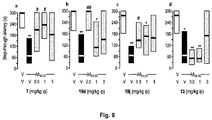
- Figs. 8a-d show the effect of the compounds on A ⁇ 25-35 -induced passive avoidance impairments in mice.
- Mice received A ⁇ 25-35 (9 nmol icv) or vehicle solution (3 ⁇ l icv) on day 1 and compounds 7 ( Fig. 8a ), 19d ( Fig. 8b ), 19j ( Fig. 8c ) and 13 ( Fig. 8d ), in the 0.3-3 mg/kg ip dose range o.d. from day 1 to 7.
- Animals were trained in the passive avoidance test on day 9, and retention (step-through latency) was analyzed on day 10. Data show median and interquartile range.
- Compound 13 was not active, with only a few animals showed improved latency at the highest dose ( Fig. 8d ).
- compounds 19d and 19j showed very promising effects on both investigated behavioral parameters. They particularly fully prevented the effects of A ⁇ injection at a dose of 1 or 3 mg/kg ip.
- ATC acetyl thiocholine iodide;
- BChE Butyrylcholinesterase;
- BTC butyryl thiocholine iodide; eq, equation;
Landscapes
- Organic Chemistry (AREA)
- Health & Medical Sciences (AREA)
- Chemical & Material Sciences (AREA)
- Neurosurgery (AREA)
- Engineering & Computer Science (AREA)
- Bioinformatics & Cheminformatics (AREA)
- Biomedical Technology (AREA)
- Neurology (AREA)
- Chemical Kinetics & Catalysis (AREA)
- Psychiatry (AREA)
- Hospice & Palliative Care (AREA)
- General Chemical & Material Sciences (AREA)
- Medicinal Chemistry (AREA)
- Nuclear Medicine, Radiotherapy & Molecular Imaging (AREA)
- Pharmacology & Pharmacy (AREA)
- Life Sciences & Earth Sciences (AREA)
- Animal Behavior & Ethology (AREA)
- General Health & Medical Sciences (AREA)
- Public Health (AREA)
- Veterinary Medicine (AREA)
- Pharmaceuticals Containing Other Organic And Inorganic Compounds (AREA)
Abstract
The invention concerns a compound according to formulawherein 3 < n < 11, wherein R comprises or consists of a heterocycle comprising one tertiary amino group providing the binding of R to the rest of the molecule and at least three carbon atoms, wherein all carbon atoms of the heterocycle are unsubstituted.
Description
- The invention concerns a compound inhibiting butyrylcholinesterase (BChE), the compound for use in the treatment of a disease, a use of that compound and a method for synthesizing that compound. The BChE can be human butyrylcholinesterase (hBChE).
- The most established theory for development of Alzheimer's disease (AD) is the cholinergic hypothesis. Briefly, patients in AD suffer from an extensive loss of cholinergic neurons and cholinergic activity caused by reduced activity of choline acetylase. A rise of acetylcholine level by inhibiting its enzymatic hydrolysis by acetylcholinesterase (AChE) proved to slow down the progression of AD and had positive effect on patients' cognition and overall mental abilities in numerous clinical studies, both animal and human. Modern drugs for the treatment of AD target the two cholinesterases AChE and BChE. Among the two reversible and selective AChE inhibitors donepezil and galantamine, there is also the carbamate based drug molecule rivastigmine, targeting both enzymes in a pseudo irreversible manner. Clinical trials showed that the approved drug molecules described above lack pharmacological action and effectivity, especially in later stages of AD, whereas they slow down the progression of dementia in early stages.
- It has been found that BChE activity rises in response to reduced AChE activity in later stage of AD and that BChE takes over the hydrolytic function of AChE. Therefore, inhibition of AChE is not sufficient to enhance acetylcholine (Ach) levels in this stage. BChE inhibitors could prove to be effective in the treatment of scopolamine induced amnesia and in an AD mouse model in vivo indicating their value for innovative treatments of dementia both from Alzheimer and other types. Significant progress on new cholinesterase inhibitors targeting both enzymes together has been reported in the last years, but inhibitors often lack selectivity and long term binding towards BChE.
- From the doctoral thesis of Edgar Sawatzky "Design and Synthesis of Selective Butyrylcholinesterase (BChE) Inhibitors for the Development of Radiotracers to Investigate the Role of BChE in Alzheimer's Disease" selective carbamate based BChE inhibitors having a tetrahydroquinazoline carrier scaffold are known. Compounds dual-targeting the Catalytic Active Site (CAS) and the Peripheral Anionic Site (PAS) of BChE such as


- The problem to be solved by the present invention is to provide a compound being an alternative potent and selective BChE inhibitor, the compound for use in the treatment of a disease, a use of that compound and a method for synthesizing that compound.
- The problem is solved by the features of
claims claims 2 to 9 and 13 to 15. - According to the invention a compound according to formula

- Inhibition of BChE activity was shown to be selecitve vis-à-vis AChE. Furthermore, the inhibition was shown to be pseudo-irreversble and particularly effective when n is in the range of 6 to 10, in particular when n is 6, 7 or 8 and in particular when n is 6. The inhibition is pseudo-irreversible because the carbamate moiety of the inhibitor is transferred onto the serine hydroxyl group in the catalytic center of the BChE. As a covalent bond is formed during the inhibition, the inhibitor is bound relatively fixed to the enzyme. However, due to chemical instability, this inhibition is not completely irreversible. Enzyme activity is recovered over time by carbamate hydrolysis. Duration of action of the compound on the enzyme can be controled by chemical modification and design of the carbamate moiety. Especially a linker of 6 carbon atoms between carbamate group and a basic hexacylic amine has been shown to promote the long term binding to the enzyme.
- The whole heterocycle may be unsubstituted. This simplifies synthesis of the compound and enhances its enzyme inhibiting activity.
- In an embodiment the heterocycle is a 5-, 6-, 7- or 8-membered ring.
- R can be a fused bicyclic compound comprising the heterocycle and one further cyclic compound. The further cyclic compound may be an aromatic cyclic compound. It can be a carbocyclic compound or a heterocyclic compound. The further cyclic compound may be unsubstituted. In an embodiment the further cyclic compound is benzene.
- R can be any of the following moieties:


- The invention further concerns a compound according to the invention for use in the treatment of Alzheimer's Disease.
- A further aspect of the invention concerns the use of the compound according to the invention for inhibition of butyrylcholinesterase (BChE) in vitro.
- Another aspect of the invention concerns a method for synthesizing a compound according to the invention comprising the following steps:
- a) Reacting a primary dihaloalkane comprising 4 to 10 methylene groups with a sodium or potassium salt of phthalimide to give the corresponding haloalkylated phthalimide,
- b) reacting the haloalkylated phthalimide with an amine and H-R or activating the haloalkylated phthalimide in a Finkelstein reaction and then reacting the resulting iodoalkylated or fluoroalkylated phthalimide with H-R to yield an R-alkylated phthalimide,
- c) subjecting the R-alkylated phthalimide to hydrazinolysis or hydrolysis to yield alkylated amines of R,
- d) activating the alkylated amines of R into a carbamate by use of 4-nitrophenyl chloroformate and
- e) reacting the carbamate with the tetrahydroisoquinazoline derivative according to formula

- Steps a) and c) form a Gabriel-synthesis. The introduction of the residue R in step b) can be achieved in two different ways: In the first approach, the amine H-R may be stirred together with the haloalkylated phthalimide and triethyl amine in dry Dimethylformamide (DMF) to yield the R-alkyl phthalimide. In the second approach, a two-step, one pot reaction may be used by activating the haloalkylated phthalimide in a Finkelstein reaction first, and then adding the respective amine H-R to alkylate it. In some cases the second approach may result in an improved yield vis-à-vis the first approach.
- Step e) may be performed by addition of an alkali hydride, in particular sodium hydride, and the tetrahydroisoquinazoline derivative to the carbamate.
- In an embodiment the salt of the phthalimide is the potassium salt. The primary dihaloalkane can be a primary dibromoalkane. In this case the haloalkylated phthalimide resulting from step a) is bromoalkyl phthalimide.
- R may be


- The hydrazinolysis may be performed by heating the R-alkylated phthalimide in hydrazine and ethanol. The hydrolysis may be an acidic or an alkaline hydrolysis.
- The reaction mixture resulting from step d) which reaction mixture comprises the carbamate may be directly subjected to step e). Directly means that the carbamate is not purified from the reaction mixture before performing step e). Step e) may be performed by addition of an alkali hydride, in particular sodium hydride, and the tetrahydroisoquinazoline derivative to the reaction mixture.
- When R is


- Embodiments of the invention:
- Fig. 1
- shows a reaction scheme for the synthesis of a compound required for the synthesis of the compound according to the invention.
- Fig. 2
- shows a reaction scheme for the synthesis of the compound according to the invention.
- Fig. 3
- shows a diagram of the results of determination of IC50 values of compounds according to the invention having different length of the linker.
- Fig. 4
- shows a diagram of the results of determination of inhibition of BChE activity over time depending on the concentration of a compound according to the invention.
- Fig. 5
- shows a diagram of the results of determination of regeneration of BChE activity over time of different compounds according to the invention.
- Fig. 6
- shows a protocol of the experimental treatment and testing of mice.
- Figs. 7a-h
- show the effect of the compounds on Aβ25-35-induced spontaneous alternation deficits in mice.
- Figs. 8a-d
- show the effect of the compounds on Aβ25-35-induced passive avoidance impairments in mice.
- Synthesis of the target compounds can be divided into two parts followed by the coupling of the two building blocks in the last step. The synthesis of the tetrahydroisoquinazoline scaffold is illustrated in
Fig. 1 and known from Darras et al., ACS Med. Chem. Lett. 2012, 3, 914-919 and Sawatzky, E. et al., Tetrahedron Lett. 2014, 55, 2973-2976. Briefly, 3-anthralinic acid 10 was reacted with triphosgen, followed by methylation to giveanhydride 11. Benzyl protection of the phenolic alcohol group and subsequent ring fusion with dihydroisoquinoline followed by debenzylation under hydrogenation conditions gavedihydroquinazolinone 12. Reduction with LiAlH4 gavetetrahydroisoquinazoline 13. - Referring to
Fig. 1 reagents and reaction conditions were as follows: (i) 1. CO(CCl3)2, THF, 70°C, 3-5 h; 2. Methyl iodide, DIPEA, DMAc, 40°C, 24h; (ii) 1. Benzyl bromide, K2CO3, DMF, 40°C, 4h; 2. Dihydroisoquinoline, DMF, 120°C, 18 h; 3. H2, Pd/C, MeOH, 50°C, 3 h; (iii) LiAlH4, THF, reflux, 3 h. - To investigate how a peripheral binding site of BChE can be addressed with carbamate based inhibitors, different alkylene linkers and residues were introduced into the carbamate part of the inhibitors by using Gabriel synthesis as illustrated in
Fig. 2 in combination with Table 1. Therefor,different dibromo alkanes 14a-f of length from 2 to 10 methylene groups were reacted in each case with potassium phthalimide in DMF to give thealkylated phthalimides 15a-f in high yields. For the introduction of the amine residues two different strategies were applied: - In a first approach, the respective amine, such as morpholine or 1,2,3,4-tetrahydrosioquinolin, was stirred together with the respective bromoalkyl phthalimide 15a-f and triethyl amine in dry DMF to yield the
alkylated amine derivatives 16a-I. - In a second approach, a two-step, one pot reaction was used by activating the bromoalkane 15d in a Finkelstein reaction first, and then adding the respective amine to alkylate it, which gave access to improved yields of 16m-q.
- Subsequent hydrazinolysis in ethanol under reflux conditions gave
respective amines 17a-q in high yields. Amines were then activated intorespective carbamates 18a-q by using 4-nitrophenyl chloroformate, which carbamates were then transferred onto thetetrahydroisoquinazoline scaffold 13 to yield the respective carbamate basedBChE inhibitors 19a-q. - Deprotection of Boc-protected piperazine 19q under acidic conditions yielded another
prospective inhibitor 19r without cleaving the main pharmacophoric carbamate and the cyclic aminal structure. - Referring to
Fig. 2 reagents and reaction conditions were as follows: (i) Potassium phthalimide, DMF, 24 h, r.t. (ii) a) R-H, NEt3, DMF, 24 h, 100°C or b) Nal, NEt3, THF, o.n. reflux, 60-91% (iii) N2H4·H2O, ethanol, 18 h, reflux, 90-100% (iv) 4-Nitrophenylchloroformate, NEt3, DCM, 1-6 h, r.t., 20-86%; (v) NaH, DCM (dry), 1-48 h, r.t., 30-80%; (vi) 1.25 M HCl in methanol, ethanol (dry), 4.5 h, 0°C → r.t., 96%; (vii) 1. 4-Nitrophenylchloroformate, NEt3, DCM, 1-6 h, r.t., no purification, 2. NaH, 13, DCM (dry), 1-48 h, r.t., 40-60%. For substitution pattern of n and R see table 1. Pathway vii is an alternative pathway to separate pathways iv and v. In pathway vii the reaction mixture resulting from pathway iv is directly - i. e. without purification ofcarbamates 18a-q - used for reacting the carbamate contained in the reaction mixture with thetetrahydroisoquinazoline derivative 13.Table 1. Overview on synthesized compounds according to Fig. 2 n R n R 14-15 a 2 - 16-19 g 2 
14-15 b 3 - 16-19 h 3 
14-15 c 4 - 16-19 i 4 
14-15 d 6 - 16-19 j 6 
14-15 e 8 - 16-19 k 8 
14-15 f 10 - 16-19 l 10 
16-19 a 2 
16-19 m 6 
16-19 b 3 
16-19 n 6 
16-19 c 4 
16-19 o 6 
16-19 d 6 
16-19 P 6 
16-19 e 8 
16-19 q 6 
16-19 f 10 
19 r 6 
- For evaluation of enzyme inhibition, Ellman's colorimetric assay was conducted as described in Ellman, G. L., Arch. Biochem. Biophys 1958, 74, 443-450 and Ellman, G. L. et al., Biochem. Pharmacol. 1961, 7, 88-95. Therefor, 5,5'-dithiobis-(2-nitrobenzoic acid) (DTNB) solution, respective Cholinesterase (ChE) and inhibitor were incubated together and enzyme activity was measured after 20 min. The long incubation time was needed to allow the carbamate transfer between ChE and inhibitor.
- The carbamate residue was altered systematically by changing residues in the terminal position of carbamate moiety and different flexible alkylene linkers were introduced. Obtained enzyme inhibition constants were reviewed with respect to
benchmark heptyl carbamate 7 described in Darras, F. H. et al., ACS Med. Chem. Lett. 2012, 3, 914-919. Ascompound 7 shows low nanomolar inhibition of human BChE (hBChE) and approximately 1000-fold higher inhibition of human AChE (hAChE), it serves as a perfect lead compound for further optimizations because of its selectivity, high potency and plasma stability. Nevertheless, it must be noted that IC50 values only serve as a first indicator of inhibitor affinity and selectivity. Due to the chemical reaction of carbamate transfer the enzyme inhibition is strongly time dependent. Kinetic investigations indicated that 20 min is usually sufficient to allow carbamate transfer.Table 2. Inhibition of hBChE and hAChE by carbamate based inhibitors 7, 9, 19a-r and binding of these inhibitors to hBChE and hAChE 
IC50 hBChE [nM] (plC50 ± SEM) IC50/ inhibition of hAChE (plC50 ± SEM) Selectivity index (IC50 hAChE/IC50 hBChE) R n 7 CH3 6 6.4* (8.19 ± 0.02) 3.8 µM (5.42 ± 0.05) * 594 9 F 7 5.2* (8.28 ± 0.02) 3.6 µM (5.44 ± 0.05) * 692 19a 
2 7772 (5.11 ± 0.04) 17%a >10 19b 
3 937.8 (6.03 ± 0.02) 13%a >100 19c 
4 50.6 (7.30 ± 0.02) 13%a >1000 19d 
6 49.3 (7.31 ± 0.02) 45%a >1000 19e 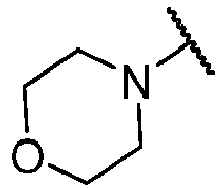
8 19.8 (7.07 ± 0.06) 22%a >1000 19f 
10 11.5 (7.94 ± 0.07) 25%a >1000 19g 
2 1720 (5.76 ± 0.05) 10%b >10 19h 
3 1160 (5.94 ± 0.05) 12%b >10 19i 
4 191.7 (6.72 ± 0.06) 16%b >100 19j 
6 26.7 (7.57 ± 0.05) 9%b >1000 19k 
8 32.6 (7.49 ± 0.03) 11%b >1000 19l 
10 41.8 (7.38 ±0.04) 15%b >1000 19m 
6 7.4 (8.13 ± 0.04) 44%c >1000 19n 
6 13.3 (7.88 ± 0.06) 18%c >1000 19o 
6 34.3 (6.47 ± 0.04) 0.88 µM (6.06 ± 0.03) 26 19p 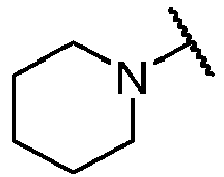
6 83.7 (7.08 ± 0.04) 1.2 µM (5.91 ± 0.03) 14 19q 
6 123.4 (6.1 ± 0.04) 15%c >100 19r 
6 80.6 (7.09 ± 0.03) 16%c >100 a100 µM; b10 µM c25 µM
* According to Sawatzky, E. et al., - Table 2 shows that inhibition of hBChE and hAChE by carbamate based
inhibitors - To investigate the influence of length of carbon chain linker between carbamate group and residue possibly targeting a second binding site located near the catalytical active serin in the center of hBChE, a set of
compounds 19a-f having a morpholine derivative residue and a further set of compounds 19g-l having a tetrahydroisoquinoline derivative residues were investigated. The compounds in each of the two sets differ from each other by the number n of carbon atoms in the carbon chain linker between carbamate group and residue.Fig. 3 shows the IC50 values obtained with hBChE and the two compoundsets having morpholine 19a-f (symbol "+") and tetrahydroisoquinoline derivatives 19g-l (symbol "x") as residues.Fig. 3 shows a strong dependency of the IC50 values on the number n of carbon atoms in the carbon chain linker. From the IC50 values it can be concluded, that short linker length influence enzyme inhibition in a negative manner. Elongation of the linker to 4 methylene groups as seen forcompounds 19c and 19i lead to a significant increase of inhibitory potency showing two-digit nanomolar IC50 values comparable to knowninhibitors heptyl carbamate 7 cannot be achieved with polar residues such as morpholine, piperidine, pyrrolidine and piperazine, but approximately 10-fold lower activity of thecompounds 19d, 19o and 19p still proves the finding of new very potent and even more selective BChE inhibitors. Most IC50 values of the investigated compounds on hAChE could not be determined due to their poor water solubility and low affinity. - From the binding data presented here, it can be concluded that hBChE tolerates a huge variety of residues, when the linker is longer than 4, better 6 methylene groups. Both very polar groups like morpholine and sterically demanding groups like tetrahydroisoquinoline and benzimidazole do not alter the inhibition of hBChE in a significant manner. These binding data do not indicate the presence of a second binding site in hBChE that can be addressed with the inhibitors.
- As carbamate based inhibitors (C-X) show a pseudo irreversible manner of binding, the IC50 values must be seen critically because two chemical reactions determine them: Carbamate (C) transfer onto the enzyme (E) and carbamate hydrolysis. So, the Kc values, k3 and k4 rate constants according to below formula were investigated for some representative compounds (c.f.
Fig. 3 andFig. 4 ).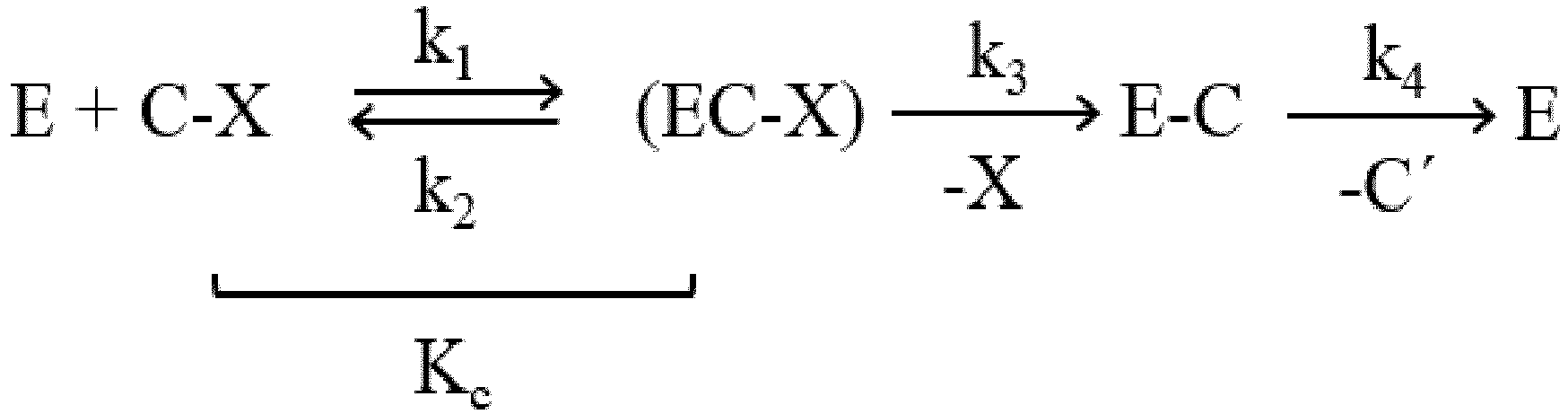
- The mechanism of enzyme inhibition can be divided into three steps: In a pre-equilibrium, the carbamate based inhibitor C-X is bound to the enzyme E and a complex (EC-X) is formed reversible and can be characterized with Kc. Then the carbamate C is transferred onto the enzyme E and binds covalently to form E-C with the rate constant k3 while carrier scaffold X is released. Then E-C is hydrolyzed and enzyme activity is recovered and the amine C' is released with the rate constant k4, also called decarbamoylation rate.
- For the determination of Kc and k3 a similar experimental setup was used compared to the evaluation of IC50 values, whereas enzyme activity was measured at various time points after addition of inhibitor.
- Thereby, inhibition with the carbamate-based inhibitors showed a first order kinetic with the apparent first order rate constant kobs, where A is the enzyme activity at time t, A0 the enzyme activity at t = 0 and A∞ the enzyme activity at t = ∞.

- Plotting the enzyme activity (in %) against the incubation times, lead to nonlinear time-dependent inhibition curves for the respective inhibitor concentrations whereby kobs can be determined with an exponential fit correspondent to equation (I).
Fig. 4 shows the time-dependent inhibition of relative enzyme activity (rel. enz. act.) by different concentrations ofcompound 19j on hBChE. - Furthermore, a hyperbolic curve is obtained, plotting the rate constant kobs against the inhibitor concentration [I], which is described by equation (II), with the substrate concentration [S] and the Michaelis-Menten constant KM.

- This equation (II) can be rearranged to the reciprocal of kobs, to get a linear plot:

- Since the substrate butyrylthiocholine iodide is not added directly to the enzyme and the inhibitor, but after the incubation of enzyme with inhibitor, [S] can be set to zero, leading to Michaelis-Menten like equation IV.

- Relating to the linear equation (IV), KC can be established from the slope and carbamoylation rate constant k3 from the y-intercept.
- As a chemical reaction is taking place, Kc must be seen as a 'real' measure for quantification of enzyme inhibitor interactions. Due to the high costs in measurements on hBChE only some representative compounds were chosen to evaluate also in kinetic studies based on the results from IC50 measurements (table 3).
Table 3. Kinetic values for carbamoylation on hBChE for selected representative compounds 
Kc [nM] hBChE k3 [min-1] h BChE R n 7 CH 36 28.5 ± 17.2 * 0.66 ± 0.32 * 9 F 7 24.3 ± 19.3 * 0.78 ± 0.48 * 19d 
6 202 ± 55 0.16 ± 0.02 19g 
2 >200000 >20 19j 
6 3.6 ± 2.9 0.18 ± 0.02 19l 
10 5.68± 2.19 0.25 ± 0.04 19m 
6 7.7 ± 4.6 0.26 ± 0.09 19n 
6 13.1 ± 14.4 0.31 ± 0.15 19q 
6 1549 ± 827 0.70 ± 0.31 19r 
6 121 ± 116 0.32 ± 0.13 * According to Sawatzky, E. et al., - From the carbamoylation rate constants k3 it can be concluded, that linker and residue do not have a big influence on the carbamate transfer from the carrier scaffold to the enzyme. No additional effect of a peripheral binding site on the binding of inhibitor could be found. The only exception is tetrahydroisoquinoline compound 19g probably forcing the inhibitor into a different binding mode because of its geometry with a very bulky residue close to the carrier scaffold. This confirms the results of the IC50 measurements.
- From this set of compounds,
compound 19j must be noted with special interest as its Kc value is even smaller than the IC50 value which is rarely the case. This might indicate a peripheral binding as Kc characterizes the equilibrium of reversible binding (Fig. 4 ), whereas IC50 also includes pseudo-irreversible binding (carbamoylation). Nevertheless, it must be noted that IC50 gives an inhibitor concentration, whereas Kc is a dissociation constant and therefore cannot be interpreted as concentration. Therefore, it is remarkable to reach very low Kc values in the one-digit nanomolar range, showing thatinhibitors 19j, l, m and n show a very high affinity to hBChE andoutreach lead compound 7 in this regard. - To further investigate the presence and nature of a peripheral binding site, also the hydrolysis of carbamate and the resulting release of the inhibitor from the enzyme was investigated by measuring the time dependent recovery of enzyme activity. To measure the decarbamoylation rate k4, dilution experiments were performed with hBChE following the procedure described in Sawatzky, E. et al., and in Bartolucci, C. et al., Biochem. J. 2012, 444, 269-277. A high concentration of enzyme and inhibitor where incubated for 1 h. The concentration of inhibitor was chosen, such that > 85% of hBChE was inhibited through carbamate transfer. Then the mixture was diluted with buffer 1:1000 to a concentration at which the enzyme is not further carbamoylated. Due to the hydrolysis and release of the carbamate from the catalytic active serine enzyme activity was recovered slowly. This regeneration of the enzyme was monitored at different time points after the dilution. Plotting the time dependent enzyme activity against time showed a first order exponential curve, with the associated equation (V).

Table 4. Kinetic values for decarbamoylation from hBChE of selected compounds R n k4 [h-1] t1/2 [E-C] [h] 7 CH 36 0.62 ± 0.04 * 1.12 ± 0.07 * 9 F 7 0.81 ±0.04 * 0.86 ± 0.04 * 19c 
4 0.48 ± 0.06 1.44 ± 0.16 19d 
6 0.042 ± 0.004 16.50 ± 1.44 19e 
8 1.58 ± 0.15 0.44 ± 0.04 19i 
4 0.028 ± 0.001 24.76 ± 0.85 19j 
6 0.025 ± 0.001 27.73 ± 1.07 19k 
8 0.83 ± 0.06 0.84 ± 0.06 19m 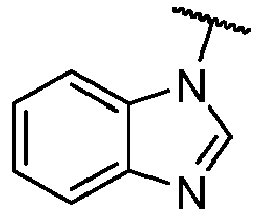
6 0.45 ± 0.04 1.55 ± 0.13 19n 
6 0.82 ± 0.03 0.85 ± 0.03 19o 
6 0.98 ± 0.04 0.71 ± 0.03 19p 
6 0.129 ± 0.006 5.37 ± 0.24 19r 
6 1.44 ± 0.07 0.48 ± 0.02 * According to Sawatzky, E. et al., - In case of the morpholine compounds a significant difference is observed comparing
compounds compound 19c is comparable to the heptylcarbamate reference compound 7,morpholine compound 19d shows a significantly reduced speed of enzyme regeneration with a half-life time t1/2 = 16.3 h compared to 1.4h forcompound 19c and 1.1 h forreference compound 7. For a linker length of n = 8 in compound 19e the half-life time is decreased significantly again, so that a linker of 6 methylene groups was considered best. This novel finding indicates the presence of a second binding site because the enzyme is recovered considerably slower and since due to the alkylene linker attached to the carbamate moiety formed with the serine, no difference in chemical reactivity of the carbamate is expected. The time dependent enzyme regeneration from carbamoylated state [E-C] fromcompounds 19d(*), 19c(+), 7 (x) is shown inFig. 5 - In contrast to the morpholine compounds the tetrahydroisoquinoline compounds did not show this behavior in such a pronounced manner. Nevertheless, two tested inhibitors showed a very long duration of inhibition.
Compound 19i and 19j inhibit the enzyme for a long duration, while a linker length of n = 8 (19k) decreases the duration of inhibition as it was observed and described above. This finding could be explained by the fact, that the residue is bigger and can target a peripheral binding site also with shorter linkers. - The finding of a slower decarbamoylation of carbamate inhibitors from hBChE could be explained both by a specific binding of the residues to a second binding region and/or unspecific blocking of water molecules from the serine in the CAS slowing down the chemical reaction of hydrolysis. Consequently, to distinguish between those two explanations more inhibitors with a linker length of n = 6 methylene groups were synthesized, including very different residues with basic and non-basic, aliphatic and aromatic, polar and non-polar properties.
- In contrast to our expectation the aromatic compounds with benzimidazole 19m and imidazole residues 19n did not show improved duration of enzyme inhibition, despite their very promising binding and affinity data. This leads to the conclusion that a specific interaction between the transferred carbamate residue is generally possible, but aromatic residues do not address the PAS specifically. In case of an unspecific steric inhibition of carbamate hydrolysis it can be expected to observe a high stability of the carbamoylated enzyme inhibitor complex (E-C) (c.f.
Fig. 4 ) when bulky residues like benzimidazole are introduced into the inhibitor. - In analogy to AChE inhibitors basic residues proved to be more promising for a binding to a PAS. Despite their comparably slightly deteriorated binding properties, most compounds bearing a basic amine function and a linker length of six methylene groups showed a decelerated hydrolysis behavior compared to the
reference compound 7. - This leads to the conclusion that both hAChE and hBChE possess a second binding site, which can be addressed with carbamate inhibitors and affects their duration of binding dramatically.
- Generally, also size and shape of residue seems to play a role for deceleration of carbamate hydrolysis, whereas hydrolysis of benzimidazole carbamate 19m (t1/2 = 1.55 ± 0.13 h) is slower than imidazole carbamate 19n (t1/2 = 0.85 ± 0.03 h). The accelerated hydrolysis of pyrrolidine compound 19o (t1/2 = 0.71 ± 0.03 h) in comparison to the bigger piperidine carbamate 19p (t1/2 = 5.37 ± 0.24 h) is in agreement with this result.
- Another explanation for this finding could be found in the conformation of the residues. The best compounds from the half-life aspect, all share a tert-piperidine moiety (tetrahydroisoquinoline, morpholine and piperidine) and exhibit a chair conformation. In this conformation, the most
potent compounds -
Compounds - AD-like cognitive dysfunctions were induced in male Swiss mice, 6 weeks old, weighing 31-36 g by intracerebroventricular (icv) injection of the oligomerized Aβ25-35 peptide into the mouse brain on
day 1. - Compounds were weighed, dissolved in pure DMSO at a concentration of 1 mg/ml and diluted into final test concentrations with saline. The final percentage of DMSO in saline was 60% for all compounds. Vehicle solution used for control groups was 60% DMSO in saline. Compounds were injected intraperitoneally (ip) from
day 1 to 7 and behavioral studies were conducted betweenday day 8. The Y-maze is made of grey polyvinylchloride. Each arm is 40 cm long, 13 cm high, 3 cm wide at the bottom, 10 cm wide at the top, and converging at an equal angle. Each mouse is placed at the end of one arm and allowed to explore the maze freely for 8 min. The sequence of arm entries (including possible returns into the same arm) was checked visually and noted down. If the mouse enters all three arms on consecutive occasion, this is defined as an alternation. Therefore, the total number of arm entries minus two is also the maximum number of alternations. The percentage of alternation was calculated as (actual alternations / maximum alternations) x 100. Parameters for the evaluation of behavior are given as the percentage of alternation (memory index) and a total number of arm entries (exploration index). When an extreme behavior (Alternation percentage < 20% or > 90% or a number of arm entries < 10) was observed, animals were excluded from the calculations, which corresponded to a 4.7% attrition in this study. - Non-spatial long-term memory was analyzed using a step-through passive avoidance test, with training on
day 9 and retention onday 10. The setup for the experiment consists of a two-compartment (15 x 20 x 15 cm high) polyvinylchloride box, whereas one compartment is white and illuminated with a bulb (60 W, 40 cm above the apparatus) and the other black with a cover and grid floor. The two compartments are separated by a guillotine door. Onday 9, during the training session, each animal was placed in the white compartment with the door closed. After 5 s, the door was opened and the mouse was allowed to enter the dark compartment. When it had placed all its paws on the grid floor, the door was closed and a foot shock was delivered (0.3 mA) for 3 s using a scrambled shock generator (Lafayette Instruments, Lafayette, USA). The time spent to enter the dark compartment (step-through latency), and the level of sensitivity to the shock was evaluated (no sign=0, flincing reactions=1, vocalizations=2). None of the treatment affected the step-through latency or shock sensitivity in the present study (data not shown). The retention test was carried out onday 10. 5 s after the mouse was placed in the white compartment, the door was opened and the mouse was allowed to explore the box. The time spent to enter the dark compartment (step-through latency) was measured up to 300 s. Animals showing latencies during the training and retention session lower than 10 s and shock sensitivity = 0 were considered as failing to learn the task and discarded from calculations. In this study, it corresponded to 0.6% attrition. - A protocol of the experimental treatment and testing of mice is illustrated in
Fig. 6 . The meaning of the abbreviations used inFig. 6 is as follows: icv, intracerebroventricular injection; YMT, spontaneous alternation test in the Y-maze; ST-PA, step-through passive avoidance test. - All values, except passive avoidance latencies, are expressed as mean ± S.E.M. Statistical analyses were performed on the different conditions using one-way ANOVA (F value), followed by the Dunnett's post-hoc multiple comparison test. Passive avoidance latencies do not follow a Gaussian distribution since upper cutoff times (300 s) are defined. Therefore, they were analyzed using a Kruskal-Wallis non-parametric ANOVA (H value), followed by a Dunn's multiple comparison test. p < 0.05 was considered as statistically significant.
- None of the treatments (ip for the compounds partially solubilized in DMSO and icv for the peptide) affected significantly the mouse body weight gain during the week of treatment showing a good tolerability. Animals gained 2.2-4.5 g during the 7 days treatment period and particularly recovered quickly from the icv injection stress after
day 1. -
Figs. 7a-h show the effect of the compounds on Aβ25-35-induced spontaneous alternation deficits in mice. Mice received Aβ25-35 (9 nmol icv) or vehicle (V) solution (3 µl icv) onday 1 and compounds 7 (Figs. 7a, b ), 19d (Figs. 7c, d ), 19j (Figs. 7e, f ) and 13 (Figs. 7g, h ), in the 0.3-3 mg/kg ip dose range once per day (o.d.) fromday 1 to 7.Figs. 7a, c, e, g : spontaneous alternation performance;Figs. 7b, d, f, h : number of arm entries in the Y-maze test performed atday 8. Data show mean ± SEM. ANOVA: F (4,79) = 2.61, p < 0.05, n = 13-18 in (a); F (4,79) = 1.32, p > 0.05 in (b); F (4,61) = 4.06, p < 0.01, n = 11-13 in (c); F (4,61) = 1.00, p > 0.05 in (d); F (4,63) = 4.30, p < 0.01, n = 11-15 in (e); F (4,63) = 4.50, p < 0.01 in (f); F (4,63) = 3.07, p < 0.05, n = 11-15 in (g); F (4,63) = 2.59, p < 0.05 in (h). * p < 0.05, ** p < 0.01 vs. (V+V)-treated group; # p < 0.05, ## p < 0.01, ### p < 0.001 vs. (Aβ25-35+V)-treated group; Dunnett's test. -
Compound 7 attenuated the Aβ25-35-induced spontaneous alternation deficits at 1 and 3 mg/kg ip doses (Fig. 7a ). However, the increases in alternation percentage remained non-significantly different from the Aβ25-35-treated group.Compounds Figs. 7c, e ). Interestingly, thephenolic compound 13 lacking BChE inhibition was not active in this response (Fig. 7g ). It must be noted that the Aβ25-35 treatment failed to affect exploratory response, measured in terms of the number of arms entered during the session (Figs. 7b, d, f, h ). Noteworthily, all compounds tended to slightly increase locomotor activity (Figs. 7b, d, f, h ) and in a significant manner forcompound 19j (Fig. 7f ). -
Figs. 8a-d show the effect of the compounds on Aβ25-35-induced passive avoidance impairments in mice. Mice received Aβ25-35 (9 nmol icv) or vehicle solution (3 µl icv) onday 1 and compounds 7 (Fig. 8a ), 19d (Fig. 8b ), 19j (Fig. 8c ) and 13 (Fig. 8d ), in the 0.3-3 mg/kg ip dose range o.d. fromday 1 to 7. Animals were trained in the passive avoidance test onday 9, and retention (step-through latency) was analyzed onday 10. Data show median and interquartile range. Kruskal-Wallis ANOVA: H = 12.3, p < 0.05, n = 16-18 in (a); H = 21.1, p < 0.05, n = 11 - 15 in (b); H = 13.5, p < 0.01, n = 11-14 in (c); H = 11.8, p < 0.01, n = 11-12 in (d). * p < 0.05, ** p < 0.01, *** p < 0.001 vs. (V+V)-treated group; # p < 0.05, ## p < 0.01 vs. (Aβ25-35+V)-treated group; Dunn's test. -
Compound 7 significantly prevented the Aβ25-35-induced passive avoidance deficits at all dose tested (Fig. 8a ). Bothcompounds Figs. 8b, c ). -
Compound 13 was not active, with only a few animals showed improved latency at the highest dose (Fig. 8d ). - In summary, as compared to the
parent compound 7,compounds - the in vivo results prove the penetration of the blood brain barrier, despite the high lipophilicity and molecular weight of compounds.
- ACh, Acetylcholine; AChE, Acetylcholinesterase; Aβ, amyloid β; AD, Alzheimer's disease; ATC, acetyl thiocholine iodide; BChE, Butyrylcholinesterase; BTC, butyryl thiocholine iodide; eq, equation; DTNB, 5,5'-dithiobis-(2-nitrobenzoic acid); icv, intracerebroventricular; ip intraperitoneal; o.d., once per day; V, vehicle, ST-PA, step-through passive avoidance test; YMT, spontaneous alternation test in the Y-maze;
Claims (15)
- Compound according to formula

- Compound according to claim 1, wherein the total heterocycle is unsubstituted.
- Compound according to claim 1 or 2, wherein the heterocycle is a 5-, 6-, 7- or 8-membered ring.
- Compound according to any of the preceding claims, wherein R is a fused bicyclic compound comprising the heterocycle and one further cyclic compound.
- Compound according to claim 4, wherein the further cyclic compound is an aromatic cyclic compound.
- Compound according to claim 4 or 5, wherein the further cyclic compound is a carbocyclic compound or a heterocyclic compound.
- Compound according to any of claims 4 to 6, wherein the further cyclic compound is unsubstituted.
- Compound according to claim 7, wherein the further cyclic compound is benzene.
- Compound according to any of the preceding claims, wherein R is


- Compound according to any of the preceding claims for use in the treatment of Alzheimer's Disease.
- Use of a compound according to any of claims 1 to 9 for inhibition of butyrylcholinesterase (BChE) in vitro.
- Method for synthesizing a compound according to any of claims 1 to 9 comprising the following steps:a) Reacting a primary dihaloalkane comprising 4 to 10 methylene groups with a sodium or potassium salt of phthalimide to give the corresponding haloalkylated phthalimide,b) reacting the haloalkylated phthalimide with an amine and H-R or activating the haloalkylated phthalimide in a Finkelstein reaction and then reacting the resulting iodoalkylated or fluoroalkylated phthalimide with H-R to yield an R-alkylated phthalimide andc) subjecting the R-alkylated phthalimide to hydrazinolysis or hydrolysis to yield alkylated amines of R,d) activating the alkylated amines of R into a carbamate by use of 4-nitrophenyl chloroformate ande) reacting the carbamate with the tetrahydroisoquinazoline derivative according to formula

- Method according to claim 12, wherein the salt of the phthalimide is the potassium salt and/or the primary dihaloalkane is a primary dibromoalkane and/or R is


- Method according to claim 12 or 13, wherein a reaction mixture resulting from step d) which reaction mixture comprises the carbamate is directly subjected to step e).
- Method according to any of claims 12 to 14, wherein R is

Priority Applications (2)
| Application Number | Priority Date | Filing Date | Title |
|---|---|---|---|
| EP19151900.8A EP3683219A1 (en) | 2019-01-15 | 2019-01-15 | Compound inhibiting butyrylcholinesterase |
| PCT/EP2020/050402 WO2020148153A1 (en) | 2019-01-15 | 2020-01-09 | Compound inhibiting butyrylcholinesterase |
Applications Claiming Priority (1)
| Application Number | Priority Date | Filing Date | Title |
|---|---|---|---|
| EP19151900.8A EP3683219A1 (en) | 2019-01-15 | 2019-01-15 | Compound inhibiting butyrylcholinesterase |
Publications (1)
| Publication Number | Publication Date |
|---|---|
| EP3683219A1 true EP3683219A1 (en) | 2020-07-22 |
Family
ID=65033410
Family Applications (1)
| Application Number | Title | Priority Date | Filing Date |
|---|---|---|---|
| EP19151900.8A Withdrawn EP3683219A1 (en) | 2019-01-15 | 2019-01-15 | Compound inhibiting butyrylcholinesterase |
Country Status (2)
| Country | Link |
|---|---|
| EP (1) | EP3683219A1 (en) |
| WO (1) | WO2020148153A1 (en) |
-
2019
- 2019-01-15 EP EP19151900.8A patent/EP3683219A1/en not_active Withdrawn
-
2020
- 2020-01-09 WO PCT/EP2020/050402 patent/WO2020148153A1/en not_active Ceased
Non-Patent Citations (11)
| Title |
|---|
| BARTOLUCCI, C. ET AL., BIOCHEM. J., vol. 444, 2012, pages 269 - 277 |
| DARRAS ET AL., ACS MED. CHEM. LETT., vol. 3, 2012, pages 914 - 919 |
| DARRAS, F. H. ET AL., ACS MED. CHEM. LETT., vol. 3, 2012, pages 914 - 919 |
| DOLLES, D. ET AL., J. MED. CHEM., vol. 61, 2018, pages 1646 - 1663 |
| EDGAR SAWATZKY: "Design and Synthesis of Selective Butyrylcholinesterase (BChE) Inhibitors for the Development of Radiotracers to Investigate the Role of BChE in Alzheimer's Disease", DISSERTATION, UNIVERSITY OF WÜRZBURG, 17 February 2016 (2016-02-17), pages 63 - 71, XP055593417, Retrieved from the Internet <URL:https://opus.bibliothek.uni-wuerzburg.de/opus4-wuerzburg/frontdoor/deliver/index/docId/14403/file/Sawatzky_Edgar_Butyrylcholinesterase.pdf> [retrieved on 20190603] * |
| ELLMAN, G. L. ET AL., BIOCHEM. PHARMACOL., vol. 7, 1961, pages 88 - 95 |
| ELLMAN, G. L., ARCH. BIOCHEM. BIOPHYS, vol. 74, 1958, pages 443 - 450 |
| LAHMY, V. ET AL., NEUROPSYCHOPHARMACOL, vol. 38, 2013, pages 1706 - 1723 |
| MAURICE, T. ET AL., BRAIN RES., vol. 706, 1996, pages 181 - 193 |
| SAWATZKY, E. ET AL., CHEMMEDCHEM, vol. 11, 2016, pages 1540 - 1550 |
| SAWATZKY, E. ET AL., TETRAHEDRON LETT., vol. 55, 2014, pages 2973 - 2976 |
Also Published As
| Publication number | Publication date |
|---|---|
| WO2020148153A1 (en) | 2020-07-23 |
Similar Documents
| Publication | Publication Date | Title |
|---|---|---|
| US8894970B2 (en) | Arginase inhibitors and methods of use thereof | |
| ES2288811T5 (en) | Procedure for the preparation of pure rocuronium bromide | |
| ITMI20011308A1 (en) | DRUGS FOR CHRONIC PAIN | |
| US8940766B2 (en) | Methods for preventing and/or treating lysosomal storage disorders | |
| WO2012112851A2 (en) | Targeted nitroxide agents | |
| EP2045239A1 (en) | Novel derivatives of phthalimide as histone deacetylase inhibitors | |
| WO1994009001A1 (en) | Pyrroloquinoline bradykinin antagonist | |
| Spatz et al. | Novel benzimidazole-based pseudo-irreversible butyrylcholinesterase inhibitors with neuroprotective activity in an Alzheimer's disease mouse model | |
| US20190337911A1 (en) | Centrally active and orally bioavailable antidotes for organophosphate exposure and methods for making and using them | |
| Khattab et al. | 1, 3, 5‐Triazino Peptide Derivatives: Synthesis, Characterization, and Preliminary Antileishmanial Activity | |
| Hsu et al. | Synthesis and biological evaluation of phenothiazine derivative-containing hydroxamic acids as potent class II histone deacetylase inhibitors | |
| US20140051712A1 (en) | Blood brain barrier-penetrating oximes for cholistenerases reactivation | |
| WO1999006369A1 (en) | Neuraminidase inhibitors | |
| WO2020148153A1 (en) | Compound inhibiting butyrylcholinesterase | |
| Kuca et al. | Reactivation of organophosphate-inhibited acetylcholinesterase by quaternary pyridinium aldoximes | |
| CN114249782A (en) | A kind of prodrug that selectively destroys senescent cell lysosomes and its preparation method and application | |
| AU2003300252B2 (en) | Drugs for chronic pain | |
| WO2009129532A1 (en) | Compounds for lysosomal modulation and methods of use | |
| PL119289B1 (en) | Process for preparing novel derivatives of isoeugenol | |
| Zulfiqar et al. | Synthesis and biological evaluation of substituted benzohydrazide Schiff base adduct as potential cholinesterase inhibitors | |
| Sharma et al. | The design, synthesis, and inhibition of Clostridioides difficile spore germination by acyclic and bicyclic tertiary amide analogs of cholate | |
| TW213455B (en) | ||
| Bello et al. | Anti-cancer activity of 5-O-alkyl 1, 4-imino-1, 4-dideoxyribitols | |
| ES2362337A1 (en) | DERIVATIVES OF AMINOCICLITOLS, PROCEDURE OF OBTAINING AND USES. | |
| WO1983001950A1 (en) | 1-piperazinocarboxylates, process for their preparation and pharmaceutical compositions containing them |
Legal Events
| Date | Code | Title | Description |
|---|---|---|---|
| PUAI | Public reference made under article 153(3) epc to a published international application that has entered the european phase |
Free format text: ORIGINAL CODE: 0009012 |
|
| STAA | Information on the status of an ep patent application or granted ep patent |
Free format text: STATUS: THE APPLICATION HAS BEEN PUBLISHED |
|
| AK | Designated contracting states |
Kind code of ref document: A1 Designated state(s): AL AT BE BG CH CY CZ DE DK EE ES FI FR GB GR HR HU IE IS IT LI LT LU LV MC MK MT NL NO PL PT RO RS SE SI SK SM TR |
|
| AX | Request for extension of the european patent |
Extension state: BA ME |
|
| STAA | Information on the status of an ep patent application or granted ep patent |
Free format text: STATUS: THE APPLICATION IS DEEMED TO BE WITHDRAWN |
|
| 18D | Application deemed to be withdrawn |
Effective date: 20210123 |