EP3678058A1 - Data sample label processing method and apparatus - Google Patents
Data sample label processing method and apparatus Download PDFInfo
- Publication number
- EP3678058A1 EP3678058A1 EP18879971.2A EP18879971A EP3678058A1 EP 3678058 A1 EP3678058 A1 EP 3678058A1 EP 18879971 A EP18879971 A EP 18879971A EP 3678058 A1 EP3678058 A1 EP 3678058A1
- Authority
- EP
- European Patent Office
- Prior art keywords
- samples
- labels
- indeterminate
- learning
- label
- Prior art date
- Legal status (The legal status is an assumption and is not a legal conclusion. Google has not performed a legal analysis and makes no representation as to the accuracy of the status listed.)
- Ceased
Links
Images


Classifications
-
- G—PHYSICS
- G06—COMPUTING OR CALCULATING; COUNTING
- G06F—ELECTRIC DIGITAL DATA PROCESSING
- G06F18/00—Pattern recognition
- G06F18/20—Analysing
- G06F18/21—Design or setup of recognition systems or techniques; Extraction of features in feature space; Blind source separation
- G06F18/214—Generating training patterns; Bootstrap methods, e.g. bagging or boosting
-
- G—PHYSICS
- G06—COMPUTING OR CALCULATING; COUNTING
- G06N—COMPUTING ARRANGEMENTS BASED ON SPECIFIC COMPUTATIONAL MODELS
- G06N20/00—Machine learning
-
- G—PHYSICS
- G06—COMPUTING OR CALCULATING; COUNTING
- G06N—COMPUTING ARRANGEMENTS BASED ON SPECIFIC COMPUTATIONAL MODELS
- G06N3/00—Computing arrangements based on biological models
- G06N3/02—Neural networks
- G06N3/04—Architecture, e.g. interconnection topology
- G06N3/045—Combinations of networks
-
- G—PHYSICS
- G06—COMPUTING OR CALCULATING; COUNTING
- G06N—COMPUTING ARRANGEMENTS BASED ON SPECIFIC COMPUTATIONAL MODELS
- G06N3/00—Computing arrangements based on biological models
- G06N3/02—Neural networks
- G06N3/04—Architecture, e.g. interconnection topology
- G06N3/047—Probabilistic or stochastic networks
-
- G—PHYSICS
- G06—COMPUTING OR CALCULATING; COUNTING
- G06N—COMPUTING ARRANGEMENTS BASED ON SPECIFIC COMPUTATIONAL MODELS
- G06N3/00—Computing arrangements based on biological models
- G06N3/02—Neural networks
- G06N3/04—Architecture, e.g. interconnection topology
- G06N3/0475—Generative networks
-
- G—PHYSICS
- G06—COMPUTING OR CALCULATING; COUNTING
- G06N—COMPUTING ARRANGEMENTS BASED ON SPECIFIC COMPUTATIONAL MODELS
- G06N3/00—Computing arrangements based on biological models
- G06N3/02—Neural networks
- G06N3/08—Learning methods
- G06N3/088—Non-supervised learning, e.g. competitive learning
-
- G—PHYSICS
- G06—COMPUTING OR CALCULATING; COUNTING
- G06N—COMPUTING ARRANGEMENTS BASED ON SPECIFIC COMPUTATIONAL MODELS
- G06N3/00—Computing arrangements based on biological models
- G06N3/02—Neural networks
- G06N3/08—Learning methods
- G06N3/0895—Weakly supervised learning, e.g. semi-supervised or self-supervised learning
-
- G—PHYSICS
- G06—COMPUTING OR CALCULATING; COUNTING
- G06N—COMPUTING ARRANGEMENTS BASED ON SPECIFIC COMPUTATIONAL MODELS
- G06N3/00—Computing arrangements based on biological models
- G06N3/02—Neural networks
- G06N3/08—Learning methods
- G06N3/09—Supervised learning
-
- G—PHYSICS
- G06—COMPUTING OR CALCULATING; COUNTING
- G06N—COMPUTING ARRANGEMENTS BASED ON SPECIFIC COMPUTATIONAL MODELS
- G06N3/00—Computing arrangements based on biological models
- G06N3/02—Neural networks
- G06N3/08—Learning methods
- G06N3/094—Adversarial learning
Definitions
- Embodiments of the present specification relate to the field of data analysis technologies, and in particular, to a data sample label processing method and apparatus.
- Machine learning may be divided into supervised learning and unsupervised learning, wherein the supervised learning is a process of using a group of data samples of known classes to adjust parameters of a prediction model, so that the prediction model meets performance requirements. All the training samples used in the supervised learning are labeled samples, i.e., each sample simultaneously comprises a "characteristic value” and a "label value.”
- Supervised learning and unsupervised learning may be respectively applicable to certain demand scenarios.
- supervised learning needs to be used to solve a problem
- data sample labels are inaccurate or even missing.
- the label of each data sample may be corrected or re-labeled in a manual manner, it is unrealistic to adopt such purely manual processing manner in big data application scenarios. Therefore, how to achieve efficient and accurate labeling for a sample with an indeterminate label has become an issue that has attracted great attention in the industry.
- a data sample label processing method comprising:
- a data model training method comprising:
- a data sample label processing apparatus comprising:
- a data model training apparatus comprising:
- the technical solutions according to the embodiments of the present specification first learn the known information of the samples with determined labels, perform preliminary labeling for a label of a sample with an indeterminate label, so as to obtain a learning label of the sample with the indeterminate label, then sample and check the learning label, and feed a checked result back to the learning phase, such that re-learning is performed using the checked result.
- learning results are continuously improved until the requirements are met.
- the indeterminate labels may be determined or corrected by paying only a small checking cost, and moreover, a prediction model applicable to samples with indeterminate labels may be obtained with respect to the features of the samples with indeterminate labels.
- each data sample carries a label, so that a prediction model is obtained through supervised learning.
- the cost of labeling data samples is high, it is inevitable to invest in the early phase of demand satisfaction so as to obtain a sufficient number of samples having labels, such that a prediction model with good performance may be obtained.
- the model When a model obtained through training satisfies a performance requirement, the model may be used to classify and predict unknown data. In an exemplary application, however, the following situation may occur: due to differences in service fields, application scenarios, and other aspects, the unknown data and data samples used for training the model don't have exactly the same features. As a result, desired effects may not be achieved when the existing model is used to predict the unknown data. For example, for the demand of "recognizing spam information," a recognition model is trained with transaction reviews on an e-commerce platform. If the recognition model is used to recognize spam information in reviews on a video website, it is very likely that many recognition errors would occur.
- Another similar problem is that a batch of data of a "new type" is provided, and it is expected that a recognition model applicable to this batch of data may be obtained through training with this batch of data.
- this batch of data has no label at all, or that all or some pieces of this batch of data have labels, but the accuracy of these labels cannot be guaranteed (e.g., probably caused by rough labeling or other reasons).
- a batch of reviews on a video website is provided, and it is expected that a model applicable to recognition of spam reviews may be obtained through training.
- a high cost is required to label this batch of data of a new type so as to meet the model training requirements.
- the embodiments of the present specification provide a solution of data sample label processing.
- the design architecture of this solution is shown in FIG. 1 , and an exemplary architecture is described below.
- samples in the "set of samples with indeterminate labels” may have no labels at all, or that all or some of the samples have labels, but the accuracy of these labels cannot be guaranteed.
- the "set of samples with determined labels” refers to a set of existing samples carrying reliable labels.
- the source of the samples is not limited in the present specification, but this part may be regarded as known information.
- the "set of samples with indeterminate labels” and the “set of samples with determined labels” have the same overall application demand, but have different data features.
- the "video website reviews” and “transaction platform reviews” in the foregoing examples are both used to recognize spam reviews, but reviews in different fields have their respective features.
- the former is equivalent to the "set of samples with indeterminate labels” and the latter is equivalent to the "set of samples with determined labels.”
- the learning module may be further divided into two sub-modules, training and labeling sub-modules (not shown):
- the model obtained from the preliminary training typically cannot achieve an ideal result (unless there are many samples with correct labeling results in U and this conclusion is known in advance. However, in this case, there is no need to use the combined samples for training). Therefore, the learning label needs to be checked.
- the checking module may provide a display function for information such as sample data, labeling results, and the like, and provide operating interfaces, such as labeling or correction, to facilitated checking by relevant personnel.
- the checking module may provide a display function for information such as sample data, labeling results, and the like, and provide operating interfaces, such as labeling or correction, to facilitated checking by relevant personnel.
- other manners may also be used to perform the checking, which is not limited in the present application.
- the checking module since the purpose of the checking module is only to provide an overall assessment of whether a labeling result is ideal, not all the learning labels need to be checked here, but only a small amount of sampled data needs to be checked, thereby lowering the checking cost.
- the assessment result is not ideal, a new round of label learning needs to be triggered.
- the data sampled from the "samples with indeterminate labels” may be used as “samples with determined labels” after the label checking. Therefore, after the checking result is fed back to the label learning system, the accuracy rate of each label learning is made to be continuously optimized.
- the two modules cooperate in the above manner, and multiple times of re-learning may be performed until a checking result meets the requirements.
- the present specification further provides a corresponding data sample label processing method.
- the method comprises the following steps: S101. Obtain a set of samples with indeterminate labels and a set of samples with determined labels.
- U may have no labels at all, or that all or some of the samples have labels, but the accuracy of these labels cannot be guaranteed.
- L refers to a set of existing samples carrying reliable labels. U and L have the same overall application demand, but have different data features.
- the combination of U and L is used as the training sample when the model is trained, while one important requirement for model training is that the model is made to be applicable to making predictions for two different data types of U and L, which requires that U and L both have a certain number of samples and the difference in proportion between U and L cannot be too large. Since a model with the performance meeting the requirements may be trained with L alone, it may be concluded here that the absolute number of samples in L is sufficient; however, the number of samples in U has great uncertainty. If the number of samples in U is too low, it will be impossible to provide sufficient data features of U during the training, and then the trained model is unable to better adapt to predictions for U-type data.
- GAN Generative Adversarial Network
- the GAN is a technology that may construct new samples according to existing true samples, and the GAN includes a generative model and a discriminative model.
- the functions of the generative model include capturing a distribution of existing sample data, and using a noise conforming to a distribution (e.g., uniform distribution, Gaussian distribution, and the like) to generate new samples similar to true samples, the more similar the better; and the discriminative model is a binary classifier and used for determining whether a sample is a true sample or a generated sample.
- one of the generative model and the discriminative model is fixed, the network weight of the other is updated, and the process is alternated and iterated in this way.
- both the generative model and the discriminative model optimize respective networks as much as possible, thereby forming a contest until the two parties reach a dynamic equilibrium.
- the generative model restores the distribution of training data (generating samples that are identical to the true samples), and the discriminative model is unable to discriminate whether a sample is a true sample or a generated sample.
- U 0 may be input into the GAN to obtain U G without labels, in which case the samples in U have the same label carrying situation as those in U 0 .
- the number of samples in U G that need to be generated may be determined according to training requirements, which include both a requirement for an absolute sample number and a requirement for a relative sample number.
- training requirements include both a requirement for an absolute sample number and a requirement for a relative sample number.
- the ratio of U to L is not lower than 1:4, and U may be larger than L.
- the ratio requirement may be designed according to the actual situation, which does not need to be limited in the present application.
- S102 Combine the current set of samples with indeterminate labels and set of samples with determined labels, and use the combined samples for training to obtain a prediction model:
- Semi-supervised learning is a technology that uses some samples with labels and some samples without labels to implement model training. It should be noted that, in the current technologies, samples with labels and samples without labels in semi-supervised learning are data samples of the same type, while U and L in the present application are two sets of samples that are not completely the same, which is therefore, strictly speaking, different from conventional application scenarios of the semi-supervised learning. Since the overall requirements are the same, a semi-supervised learning algorithm may still be used on the algorithm level. However, the training results may meet the application requirements only after multiple adjustments through subsequent checking steps.
- Models in different forms and corresponding learning algorithms may be selected according to different exemplary application scenarios, which is not limited in the present specification.
- a deep learning model may be constructed based on a Recurrent neural Network (RNN) to train text data.
- RNN Recurrent neural Network
- samples with indeterminate labels may be all the samples in U or may be a part of the samples in U.
- U (or U 0 ) may also be sampled in this step, and only a sampling result is input into the prediction model, thereby obtaining learning labels of the sampling result.
- the purpose of sampling is to lower the checking cost, which may be implemented in this step or may be implemented in subsequent steps.
- S104 Obtain a sampling subset having the learning labels according to the current set of samples with indeterminate labels, and check the learning labels of the sampling subset, so as to obtain an accuracy rate of the learning labels: If sampling processing is not performed in S103, all the samples with learning labels are sampled in this step to obtain a sampling subset; if sampling processing has been performed in S103, a result output from S103 may be directly used in this step as a sampling subset.
- sampling number may be determined according to actual needs, and the following several factors are typically considered in a comprehensive manner:
- a dynamic sampling rate may also be used in the iteration process. For example, as the iteration proceeds, the model performance gradually becomes steady, and the sampling rate may be gradually lowered.
- One of ordinary skills in the art may design a sampling solution according to actual needs, which is not limited in the present specification.
- S105 Determine if the accuracy rate of the learning labels meets a preset requirement. If yes, the method proceeds to S107; otherwise, the method proceeds to execute S106 and then return to S102.
- the ultimately output labeling result should comprise "the latest learning labels of the samples in the current U” and "labels that have been checked and confirmed to be reliable in each of the iteration processes".
- the final prediction model may also be used as another piece of output information. As shown in S108 in FIG. 4 (the other steps are the same as those shown in FIG. 2 and will not be repeated here), this model is applicable to two different data types, U and L.
- an enterprise that has already possessed mass data and a relatively mature prediction model may effectively output its own prediction capability to provide technical services to clients or partners, and at the same time, may also continuously enhance the prediction capability of its own model.
- risk control systems of e-commerce platforms and payment platforms have already had powerful text recognition capabilities, and may recognize information, such as spamming, advertisement, violence, terrorism, politics, pornography, gambling and drug abuse, from user generated contents.
- External merchants of some other industries also have similar demands, such as Micro blog, video, live streaming, and other User Generated Content (UGC) related fields. If these external merchants do not have capability to accurately label UGC samples, sample data provided by other industries may be learned based on the technical solutions provided by the present specification and in combination with spam text data and recognition models of the e-commerce platforms and payment platforms, which is more efficient and easier to realize large-scale operations compared to the manner in which external samples are fully manually labeled or corrected.
- UGC User Generated Content
- the embodiments of the present specification further provide a data sample label processing apparatus or a data model training apparatus.
- the apparatus may comprise:
- the learning module 120 may be configured, for example, to use a supervised learning algorithm to train the combined samples to obtain a prediction model.
- the learning module 120 may be configured, for example, to use a semi-supervised learning algorithm to train the combined samples to obtain a prediction model.
- the inputting module 110 may comprise:
- the learning module 120 may be configured, for example, to input the samples in the set of samples with indeterminate labels that belong to the set of to-be-processed samples into the prediction model.
- the generating sub-module 130 may be configured, for example, to input both the features and the labels of the set of to-be-processed samples into the GAN to obtain a set of generated samples that have the same distribution as the set of to-be-processed samples, all samples in the set of generated samples being samples with labels; or input the features of the set of to-be-processed samples into the GAN to obtain a set of generated samples that have the same distribution as the set of to-be-processed samples, all samples in the set of generated samples being samples without labels.
- the generating sub-module 130 may be configured, for example, to input the features of the set of to-be-processed samples into the GAN to obtain a set of generated samples that have the same distribution as the set of to-be-processed samples, all samples in the set of generated samples being samples without labels.
- the embodiments of the present specification further provide a computer device, which at least comprises a memory, a processor and a computer program stored in the memory and executable on the processor, wherein the processor, when executing the program, implements the foregoing data sample label processing method and data model training method.
- the method at least comprises: obtaining a set of samples with indeterminate labels and a set of samples with determined labels; performing an iteration process with the following steps until an accuracy rate of learning labels meets a preset requirement:
- FIG. 6 is a schematic hardware structural diagram of an exemplary computing device according to some embodiments of the present specification.
- the device may comprise: a processor 1010, a memory 1020, an input/output interface 1030, a communication interface 1040, and a bus 1050, wherein the processor 1010, the memory 1020, the input/output interface 1030, and the communication interface 1040 are in communication connection with each other inside the device via the bus 1050.
- the processor 1010 may be implemented with a general Central Processing Unit (CPU), a micro-processor, an Application Specific Integrated Circuit (ASIC), or one or more integrated circuits for executing relevant programs to achieve the technical solutions according to the embodiments of the present specification.
- CPU Central Processing Unit
- ASIC Application Specific Integrated Circuit
- the memory 1020 may be implemented in the form of a Read-Only Memory (ROM), a Random-Access Memory (RAM), a static storage device, or a dynamic storage device.
- the memory 1020 may store an operating system and other application programs. When the technical solutions according to the embodiments of the present specification are achieved through software or firmware, relevant program codes are stored in the memory 1020 and are called and executed by the processor 1010.
- the input/output interface 1030 is used to connect input/output modules for achieving information input/output.
- the input/output modules may be configured in the device as parts (not shown), or may also be connected to external devices to provide corresponding functions, wherein the input device may comprise a keyboard, a mouse, a touchscreen, a microphone, various sensors, and the like, and the output device may comprise a display, a loudspeaker, a vibration, an indicator, and the like.
- the communication interface 1040 is used to connect a communication module (not shown) to achieve communication interactions between this device and other devices, wherein the communication module may communicate in a wired manner (e.g., USB, network cable, and the like) or in a wireless manner (e.g., a mobile network, WIFI, Bluetooth, and the like).
- a communication module may communicate in a wired manner (e.g., USB, network cable, and the like) or in a wireless manner (e.g., a mobile network, WIFI, Bluetooth, and the like).
- the bus 1050 comprises a path for information transmission among various parts of the device (e.g., the processor 1010, the memory 1020, the input/output interface 1030, and the communication interface 1040).
- the device may further comprise other parts required for normal operations in an exemplary implementation process.
- the device may only comprise parts required for implementation of the solutions according to the embodiments of the present specification and does not need to comprise all the parts shown in the figure.
- the embodiments of the present specification further provide a computer readable storage medium, which stores a computer program.
- the computer program When being executed by a processor, the computer program implements the foregoing data sample label processing method and data model training method.
- the method at least comprises: obtaining a set of samples with indeterminate labels and a set of samples with determined labels; performing an iteration process with the following steps until an accuracy rate of learning labels meets a preset requirement:
- Computer readable media include permanent, volatile, mobile, and immobile media, which may implement information storage through any method or technology.
- the information may be computer readable instructions, data structures, program modules, or other data.
- Examples of storage media of computers include, but are not limited to, Phase-change Random Access Memories (PRAMs), Static Random Access Memories (SRAMs), Dynamic Random Access Memories (DRAMs), other types of Random Access Memories (RAMs), Read-Only Memories (ROMs), Electrically Erasable Programmable Read-Only Memories (EEPROMs), flash memories or other memory technologies, Compact Disk Read-Only Memories (CD-ROMs), Digital Versatile Discs (DVDs) or other optical memories, cassette tapes, cassette and disk memories or other magnetic memory devices, or any other non-transmission media, which may be used for storing information accessible to a computation device.
- the computer readable media do not include transitory media, such as modulated data signals and carriers.
- the embodiments of the present specification may be achieved through software plus a necessary general hardware platform. Based on such understanding, the technical solutions of the embodiments of the present specification, in essence, or the portion thereof that contributes to the current technologies, may be embodied in the form of a software product.
- the computer software product may be stored in a storage medium, such as a ROM/RAM, a magnetic disk, an optical disc, and the like, and includes several instructions to cause a computer device (which may be a personal computer, a server, or a network device) to execute methods according to the embodiments or some parts of the embodiments of the present specification.
- a typical implementation device is a computer.
- An exemplary form of the computer may be a personal computer, a laptop computer, a cell phone, a camera phone, a smart phone, a PDA (personal digital assistant), a media player, a navigation device, an email sending and receiving device, a game console, a tablet computer, a wearable device or a combination of any of these devices.
- the embodiments in this specification are described in a progressive manner with each embodiment focused on differences from other embodiments, and the embodiments may be mutually referenced for identical or similar parts.
- the apparatus embodiments are described in a relatively simple manner, as the apparatus embodiments are substantially similar to the method embodiments.
- the description of the method embodiments may be referenced for the related parts.
- the above-described apparatus embodiments are merely exemplary, wherein the units described as separate parts may or may not be physically separated.
- functions of various modules may be achieved in the same piece or multiple pieces of software and/or hardware.
- the objectives of the solutions of the present specification may be achieved by selecting some or all of the modules as needed, which may be understood and implemented by one of ordinary skill in the art without creative effort.
Landscapes
- Engineering & Computer Science (AREA)
- Theoretical Computer Science (AREA)
- Physics & Mathematics (AREA)
- Data Mining & Analysis (AREA)
- Software Systems (AREA)
- Artificial Intelligence (AREA)
- Evolutionary Computation (AREA)
- General Physics & Mathematics (AREA)
- General Engineering & Computer Science (AREA)
- Computing Systems (AREA)
- Mathematical Physics (AREA)
- Life Sciences & Earth Sciences (AREA)
- Biophysics (AREA)
- Molecular Biology (AREA)
- General Health & Medical Sciences (AREA)
- Computational Linguistics (AREA)
- Biomedical Technology (AREA)
- Health & Medical Sciences (AREA)
- Computer Vision & Pattern Recognition (AREA)
- Medical Informatics (AREA)
- Bioinformatics & Cheminformatics (AREA)
- Bioinformatics & Computational Biology (AREA)
- Evolutionary Biology (AREA)
- Probability & Statistics with Applications (AREA)
- Management, Administration, Business Operations System, And Electronic Commerce (AREA)
Abstract
Description
- Embodiments of the present specification relate to the field of data analysis technologies, and in particular, to a data sample label processing method and apparatus.
- In the field of machine learning, various forms of data models may be obtained through training with a large quantity of data samples, and the data models may be used to solve actual problems. Machine learning may be divided into supervised learning and unsupervised learning, wherein the supervised learning is a process of using a group of data samples of known classes to adjust parameters of a prediction model, so that the prediction model meets performance requirements. All the training samples used in the supervised learning are labeled samples, i.e., each sample simultaneously comprises a "characteristic value" and a "label value."
- Supervised learning and unsupervised learning may be respectively applicable to certain demand scenarios. In exemplary applications, however, there are often cases where supervised learning needs to be used to solve a problem, but data sample labels are inaccurate or even missing. Although theoretically the label of each data sample may be corrected or re-labeled in a manual manner, it is unrealistic to adopt such purely manual processing manner in big data application scenarios. Therefore, how to achieve efficient and accurate labeling for a sample with an indeterminate label has become an issue that has attracted great attention in the industry.
- With regard to the above technical problem, embodiments of the present specification provide a data sample label processing method and apparatus, and the technical solutions are as follows:
- According to a first aspect of the embodiments of the present specification, a data sample label processing method is provided, the method comprising:
- obtaining a set of samples with indeterminate labels and a set of samples with determined labels; performing an iteration process with the following steps until an accuracy rate of learning labels meets a preset requirement:
- combining the current set of samples with indeterminate labels and set of samples with determined labels, and using the combined samples for training to obtain a prediction model;
- inputting a sample with an indeterminate label in the set of samples with indeterminate labels into the prediction model, and determining a prediction value output by the model as a learning label of the sample with an indeterminate label;
- obtaining a sampling subset having the learning labels according to the current set of samples with indeterminate labels, checking the learning labels of the sampling subset, so as to obtain an accuracy rate of the learning labels, and if the accuracy rate of the learning labels does not meet a preset requirement, labeling the sampling subset with a label checking result, and moving the sampling subset from the set of samples with indeterminate labels to the set of samples with determined labels; and
- after the iteration process ends, labeling the samples with indeterminate labels with the current learning labels of the samples.
- According to a second aspect of the embodiments of the present specification, a data model training method is provided, the method comprising:
- obtaining a set of samples with indeterminate labels and a set of samples with determined labels; performing an iteration process with the following steps until an accuracy rate of learning labels meets a preset requirement:
- combining the current set of samples with indeterminate labels and set of samples with determined labels, and using the combined samples for training to obtain a prediction model;
- inputting a sample with an indeterminate label in the set of samples with indeterminate labels into the prediction model, and determining a prediction value output by the model as a learning label of the sample with an indeterminate label;
- sampling the set of samples with indeterminate labels having the learning label to obtain a sampling subset, checking the learning labels of the sampling subset, so as to obtain an accuracy rate of the learning labels, and if the accuracy rate of the learning labels does not meet a preset requirement, labeling the sampling subset with a label checking result, and moving the sampling subset from the set of samples with indeterminate labels to the set of samples with determined labels; and
- after the iteration process ends, determining the current prediction model as a prediction model applicable to the set of samples with indeterminate labels.
- According to a third aspect of the embodiments of the present specification, a data sample label processing apparatus is provided, the apparatus comprising:
- an inputting module configured to obtain a set of samples with indeterminate labels and a set of samples with determined labels;
- a learning module configured to combine the current set of samples with indeterminate labels and set of samples with determined labels, and use the combined samples for training to obtain a prediction model; input a sample with an indeterminate label in the set of samples with indeterminate labels into the prediction model, and determine a prediction value output by the model as a learning label of the sample with an indeterminate label;
- a checking module configured to obtain a sampling subset having the learning labels according to the current set of samples with indeterminate labels, check the learning labels of the sampling subset, so as to obtain an accuracy rate of the learning labels, and if the accuracy rate of the learning labels does not meet a preset requirement, label the sampling subset with a label checking result, and move the sampling subset from the set of samples with indeterminate labels to the set of samples with determined labels; wherein
- the learning module and the checking module cooperate with each other to execute an iteration process until an accuracy rate of learning labels meets a preset requirement; and
- an outputting module configured to label, after the iteration process ends, the samples with indeterminate labels.
- According to a fourth aspect of the embodiments of the present specification, a data model training apparatus is provided, the apparatus comprising:
- an inputting module configured to obtain a set of samples with indeterminate labels and a set of samples with determined labels;
- a learning module configured to combine the current set of samples with indeterminate labels and set of samples with determined labels, and use the combined samples for training to obtain a prediction model; input a sample with an indeterminate label in the set of samples with indeterminate labels into the prediction model, and determine a prediction value output by the model as a learning label of the sample with an indeterminate label;
- a checking module configured to obtain a sampling subset having the learning labels according to the current set of samples with indeterminate labels, check the learning labels of the sampling subset, so as to obtain an accuracy rate of the learning labels, and if the accuracy rate of the learning labels does not meet a preset requirement, label the sampling subset with a label checking result, and move the sampling subset from the set of samples with indeterminate labels to the set of samples with determined labels; wherein
- the learning module and the checking module cooperate with each other to execute the iteration process until an accuracy rate of learning labels meets a preset requirement; and
- an outputting module configured to output, after the iteration process ends, the current prediction model as a prediction model applicable to the set of samples with indeterminate labels.
- Given that there is a set of a lot of samples with determined labels, the technical solutions according to the embodiments of the present specification first learn the known information of the samples with determined labels, perform preliminary labeling for a label of a sample with an indeterminate label, so as to obtain a learning label of the sample with the indeterminate label, then sample and check the learning label, and feed a checked result back to the learning phase, such that re-learning is performed using the checked result. In the above learning manner, learning results are continuously improved until the requirements are met. By adopting the above solutions, the indeterminate labels may be determined or corrected by paying only a small checking cost, and moreover, a prediction model applicable to samples with indeterminate labels may be obtained with respect to the features of the samples with indeterminate labels.
- It should be understood that the above general description and following detailed description are merely exemplary and explanatory, which are not intended to limit embodiments of the present specification.
- In addition, none of the embodiments of the present specification is required to achieve all the above-described effects.
- To more clearly describe the technical solutions of embodiments of the present specification or of the current technologies, the accompanying drawings to be used in the description of the embodiments or the current technologies will be briefly described. Apparently, the accompanying drawings in the description below are merely some of the embodiments of the present specification. Other drawings may be obtained by one of ordinary skill in the art according to these accompanying drawings.
-
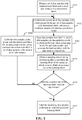
FIG. 1 is a schematic flow chart of a data sample label processing method according to some embodiments of the present specification; -
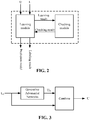
FIG. 2 is a schematic diagram of an overall design architecture according to some embodiments of the present specification; -
FIG. 3 is a schematic diagram of generating a sample with an indeterminate label according to some embodiments of the present specification; -
FIG. 4 is a schematic flow chart of a data model training method according to some embodiments of the present specification; -
FIG. 5 is a schematic structural diagram of a label processing apparatus and a training apparatus according to some embodiments of the present specification; and -
FIG. 6 is a schematic structural diagram of a device for configuring the apparatuses according to some embodiments of the present specification. - To enable one of ordinary skill in the art to better understand the technical solutions of the embodiments of the present specification, the technical solutions of the embodiments of the present specification will be described in detail below with reference to the accompanying drawings in the embodiments of the present specification. Apparently, the described embodiments are merely some, but not all, embodiments of the present specification. All other embodiments obtained, based on some embodiments of the present specification, by one of ordinary skill in the art shall fall within the protection scope of the present specification.
- In application scenarios of classifying and predicting data (for example, spam information recognition, fraud recognition, and the like), it is ideal that each data sample carries a label, so that a prediction model is obtained through supervised learning. Although the cost of labeling data samples is high, it is inevitable to invest in the early phase of demand satisfaction so as to obtain a sufficient number of samples having labels, such that a prediction model with good performance may be obtained.
- When a model obtained through training satisfies a performance requirement, the model may be used to classify and predict unknown data. In an exemplary application, however, the following situation may occur: due to differences in service fields, application scenarios, and other aspects, the unknown data and data samples used for training the model don't have exactly the same features. As a result, desired effects may not be achieved when the existing model is used to predict the unknown data. For example, for the demand of "recognizing spam information," a recognition model is trained with transaction reviews on an e-commerce platform. If the recognition model is used to recognize spam information in reviews on a video website, it is very likely that many recognition errors would occur.
- Another similar problem is that a batch of data of a "new type" is provided, and it is expected that a recognition model applicable to this batch of data may be obtained through training with this batch of data. However, it is possible that this batch of data has no label at all, or that all or some pieces of this batch of data have labels, but the accuracy of these labels cannot be guaranteed (e.g., probably caused by rough labeling or other reasons). For example, a batch of reviews on a video website is provided, and it is expected that a model applicable to recognition of spam reviews may be obtained through training. As a result, according to the current technologies, a high cost is required to label this batch of data of a new type so as to meet the model training requirements.
- With respect to the above demand, the embodiments of the present specification provide a solution of data sample label processing. The design architecture of this solution is shown in
FIG. 1 , and an exemplary architecture is described below. - "a set of samples with indeterminate labels" and "a set of samples with determined labels" are used as input information.
- Here, it is possible that samples in the "set of samples with indeterminate labels" may have no labels at all, or that all or some of the samples have labels, but the accuracy of these labels cannot be guaranteed.
- The "set of samples with determined labels" refers to a set of existing samples carrying reliable labels. The source of the samples is not limited in the present specification, but this part may be regarded as known information.
- In exemplary situations, the "set of samples with indeterminate labels" and the "set of samples with determined labels" have the same overall application demand, but have different data features. For example, the "video website reviews" and "transaction platform reviews" in the foregoing examples are both used to recognize spam reviews, but reviews in different fields have their respective features. The former is equivalent to the "set of samples with indeterminate labels" and the latter is equivalent to the "set of samples with determined labels."
- For ease of description, the signs "U" and "L" will be used below to represent the "set of samples with indeterminate labels" and the "set of samples with determined labels," respectively.
- "U labeling result" and "prediction model applicable to U" are used as output information. In an exemplary application, only one of the above two types of output information may be needed.
- The learning module may be further divided into two sub-modules, training and labeling sub-modules (not shown):
- a. training sub-module:
a prediction model is obtained through training with combination of U and L as the basis, wherein different training manners are used according to different situations of U:
If all the samples in U have labels, after U and L are combined, and a supervised learning manner is used for training to obtain the prediction model.
If none of the samples in U has any label or only some samples in U have labels, after U and L are combined, then a semi-supervised learning manner is used for training to obtain the prediction model.
Therefore, regardless of which training manner is used, the trained model is applicable to prediction for two different data types since the training data covers different features of the two types of data. - b. labeling sub-module:
the model trained with the training sub-module is used to predict data in U, and the prediction result is defined as a "learning label." - Since a lot of "samples with indeterminate labels" are used in the training process of the learning module, the model obtained from the preliminary training typically cannot achieve an ideal result (unless there are many samples with correct labeling results in U and this conclusion is known in advance. However, in this case, there is no need to use the combined samples for training). Therefore, the learning label needs to be checked.
- To ensure the reliability of a checking result, checking is performed here in a manner involving manual effort. The checking module may provide a display function for information such as sample data, labeling results, and the like, and provide operating interfaces, such as labeling or correction, to facilitated checking by relevant personnel. Provided that the reliability of a checking result may be ensured, other manners may also be used to perform the checking, which is not limited in the present application.
- It should be noted that since the purpose of the checking module is only to provide an overall assessment of whether a labeling result is ideal, not all the learning labels need to be checked here, but only a small amount of sampled data needs to be checked, thereby lowering the checking cost.
- If the assessment result is not ideal, a new round of label learning needs to be triggered. On the other hand, the data sampled from the "samples with indeterminate labels" may be used as "samples with determined labels" after the label checking. Therefore, after the checking result is fed back to the label learning system, the accuracy rate of each label learning is made to be continuously optimized. The two modules cooperate in the above manner, and multiple times of re-learning may be performed until a checking result meets the requirements.
- Based on the above design solution, the present specification further provides a corresponding data sample label processing method. Referring to
FIG. 2 , the method comprises the following steps:
S101. Obtain a set of samples with indeterminate labels and a set of samples with determined labels. - For convenience of description, the signs "U" and "L" are still used in the present embodiment to represent the "set of samples with indeterminate labels" and the "set of samples with determined labels," respectively.
- As described above, it is possible that samples in U may have no labels at all, or that all or some of the samples have labels, but the accuracy of these labels cannot be guaranteed. L refers to a set of existing samples carrying reliable labels. U and L have the same overall application demand, but have different data features.
- According to the preceding description, it may be seen that the combination of U and L is used as the training sample when the model is trained, while one important requirement for model training is that the model is made to be applicable to making predictions for two different data types of U and L, which requires that U and L both have a certain number of samples and the difference in proportion between U and L cannot be too large. Since a model with the performance meeting the requirements may be trained with L alone, it may be concluded here that the absolute number of samples in L is sufficient; however, the number of samples in U has great uncertainty. If the number of samples in U is too low, it will be impossible to provide sufficient data features of U during the training, and then the trained model is unable to better adapt to predictions for U-type data.
- If the number of samples in U is insufficient, a Generative Adversarial Network (GAN) may be used to generate some samples by simulating the U situation.
- The GAN is a technology that may construct new samples according to existing true samples, and the GAN includes a generative model and a discriminative model. The functions of the generative model include capturing a distribution of existing sample data, and using a noise conforming to a distribution (e.g., uniform distribution, Gaussian distribution, and the like) to generate new samples similar to true samples, the more similar the better; and the discriminative model is a binary classifier and used for determining whether a sample is a true sample or a generated sample.
- In the GAN training process, one of the generative model and the discriminative model is fixed, the network weight of the other is updated, and the process is alternated and iterated in this way. In this process, both the generative model and the discriminative model optimize respective networks as much as possible, thereby forming a contest until the two parties reach a dynamic equilibrium. At this point, the generative model restores the distribution of training data (generating samples that are identical to the true samples), and the discriminative model is unable to discriminate whether a sample is a true sample or a generated sample.
- Therefore, assuming that the number of initially provided to-be-processed samples (represented by U0 in the present specification) does not meet the training requirement, U0 may be input into the GAN, and the GAN outputs a set of generated samples (represented by UG in the present specification) that have the same distribution as U0; then, U0 and UG are combined, as shown in
FIG. 3 , i.e., there is the following relationship:
- It should be understood that the "same distribution" in the present specification is not the same distribution in the strict mathematical sense, but a same distribution simulated by the GAN.
- Since the GAN may both generate samples with labels and generate samples without labels, different sample generating manners are used according to different situations of Uo:
If all samples in U0 are samples with labels, there may be two processing manners: - 1) Inputting both the features and the labels of U0 into the GAN to obtain UG with labels, in which case all samples in U are samples with labels.
- 2) Only inputting the features of U0 into the GAN to obtain UG without labels, in which case only some samples in U have labels.
- If all samples in U0 are samples without labels or only some samples in U0 have labels, the features of U0 may be input into the GAN to obtain UG without labels, in which case the samples in U have the same label carrying situation as those in U0.
- The number of samples in UG that need to be generated may be determined according to training requirements, which include both a requirement for an absolute sample number and a requirement for a relative sample number. Generally speaking, it is expected that the ratio of U to L is not lower than 1:4, and U may be larger than L. The ratio requirement may be designed according to the actual situation, which does not need to be limited in the present application.
- S102. Combine the current set of samples with indeterminate labels and set of samples with determined labels, and use the combined samples for training to obtain a prediction model:
The combined sample set S (wherein S=U+L) is used for model training. Since all samples in L have labels, the label carrying situation of the samples in S is determined by the label carrying situation of the samples in U. - If all samples in U have labels, then all samples in S also have labels, and at this point, the training requirement becomes a supervised learning problem.
- If none of the samples in U has any label or only some samples in U have labels, then some of the samples in S have labels, and at this point, the training requirement becomes a semi-supervised learning problem. Semi-supervised learning is a technology that uses some samples with labels and some samples without labels to implement model training. It should be noted that, in the current technologies, samples with labels and samples without labels in semi-supervised learning are data samples of the same type, while U and L in the present application are two sets of samples that are not completely the same, which is therefore, strictly speaking, different from conventional application scenarios of the semi-supervised learning. Since the overall requirements are the same, a semi-supervised learning algorithm may still be used on the algorithm level. However, the training results may meet the application requirements only after multiple adjustments through subsequent checking steps.
- Models in different forms and corresponding learning algorithms may be selected according to different exemplary application scenarios, which is not limited in the present specification. For example, for text recognition applications, a deep learning model may be constructed based on a Recurrent neural Network (RNN) to train text data.
- S103. Input a sample with an indeterminate label in the set of samples with indeterminate labels into the prediction model, and determine a prediction value output by the model as a learning label of the sample with an indeterminate label:
With regard to the prediction model produced in S102, a sample in U may be input into this model. In the present specification, a prediction value output by the model is referred to as a "learning label" of the sample, and it should be noted that this learning label does not necessarily depend on whether a sample in U has a label or if the label is accurate. - It should be noted that the "samples with indeterminate labels" here may be all the samples in U or may be a part of the samples in U.
- For example, if the GAN is used in S101 to generate new samples, only the samples in the current U that belong to U0 may be input into the prediction model in this step. The reason for such processing is because U0 is true data, in contrary to UG, and it makes more sense to subsequently check this part of the data. Moreover, from the perspective of "labeling" requirements, only U0 is an object that truly needs to undergo the labeling processing. It should be clarified here that "the samples that belong to U0" is not equivalent to U0, since the size of U gradually decreases along with the iteration of the whole solution, and correspondingly "the samples that belong to U0" gradually decreases as well.
- In addition, U (or U0) may also be sampled in this step, and only a sampling result is input into the prediction model, thereby obtaining learning labels of the sampling result. The purpose of sampling is to lower the checking cost, which may be implemented in this step or may be implemented in subsequent steps.
- S104. Obtain a sampling subset having the learning labels according to the current set of samples with indeterminate labels, and check the learning labels of the sampling subset, so as to obtain an accuracy rate of the learning labels:
If sampling processing is not performed in S103, all the samples with learning labels are sampled in this step to obtain a sampling subset; if sampling processing has been performed in S103, a result output from S103 may be directly used in this step as a sampling subset. - The sampling number may be determined according to actual needs, and the following several factors are typically considered in a comprehensive manner:
- 1) whether the sampling number is sufficiently representative: the larger the sampling number, the more representative it is.
- 2) impact on the checking cost: the smaller the sampling number, the lower the checking cost is.
- 3) impact on the iteration speed: the larger the sampling number, the more useful information there is after each time of checking for feedback to next time of learning, which correspondingly improves the iteration speed of the overall solution.
- In an exemplary application, a dynamic sampling rate may also be used in the iteration process. For example, as the iteration proceeds, the model performance gradually becomes steady, and the sampling rate may be gradually lowered. One of ordinary skills in the art may design a sampling solution according to actual needs, which is not limited in the present specification.
- S105. Determine if the accuracy rate of the learning labels meets a preset requirement. If yes, the method proceeds to S107; otherwise, the method proceeds to execute S106 and then return to S102.
- S106. Label the sampling subset with a label checking result, and move the sampling subset from the set of samples with indeterminate labels to the set of samples with determined labels.
- S107. Determine the current learning label of the sample with an indeterminate label as the labeling result.
- Assuming that Us is used to represent a sampling subset, if the accuracy rate of the learning labels of Us reaches a criterion (e.g., 95%), it is considered that learning labels of the entire U (or U0) are trustworthy and may be output directly as labeling results; otherwise, the next round of learning needs to be triggered.
- The checked Us is equivalent to having reliable labels. In the next round of learning, Us may be used as the "samples with determined labels," i.e., U and L are updated as follows before each iteration:


- Through the iteration process in S102-S106, samples with reliable labels gradually increase and these samples are samples having "new type data" features. Therefore, the accuracy rate of each time of label learning is continuously optimized, and the model gradually adapts to predictions for the "new type data" to ultimately meet the application requirements.
- It should be understood that the U after the iteration stops is different from the initial U. Therefore, the ultimately output labeling result should comprise "the latest learning labels of the samples in the current U" and "labels that have been checked and confirmed to be reliable in each of the iteration processes".
- In addition, after the iteration stops, the final prediction model may also be used as another piece of output information. As shown in S108 in
FIG. 4 (the other steps are the same as those shown inFIG. 2 and will not be repeated here), this model is applicable to two different data types, U and L. - By applying the solution provided in the present specification, an enterprise that has already possessed mass data and a relatively mature prediction model may effectively output its own prediction capability to provide technical services to clients or partners, and at the same time, may also continuously enhance the prediction capability of its own model.
- For example, risk control systems of e-commerce platforms and payment platforms have already had powerful text recognition capabilities, and may recognize information, such as spamming, advertisement, violence, terrorism, politics, pornography, gambling and drug abuse, from user generated contents. External merchants of some other industries also have similar demands, such as Micro blog, video, live streaming, and other User Generated Content (UGC) related fields. If these external merchants do not have capability to accurately label UGC samples, sample data provided by other industries may be learned based on the technical solutions provided by the present specification and in combination with spam text data and recognition models of the e-commerce platforms and payment platforms, which is more efficient and easier to realize large-scale operations compared to the manner in which external samples are fully manually labeled or corrected.
- Corresponding to the above method embodiments, the embodiments of the present specification further provide a data sample label processing apparatus or a data model training apparatus. Referring to
FIG. 5 , the apparatus may comprise: - an
inputting module 110 configured to obtain a set of samples with indeterminate labels and a set of samples with determined labels; - a
learning module 120 configured to combine the current set of samples with indeterminate labels and set of samples with determined labels, and use the combined samples for training to obtain a prediction model; input a sample with an indeterminate label in the set of samples with indeterminate labels into the prediction model, and determine a prediction value output by the model as a learning label of the sample with an indeterminate label; - a
checking module 130 configured to obtain a sampling subset having the learning labels according to the current set of samples with indeterminate labels, check the learning labels of the sampling subset, so as to obtain an accuracy rate of the learning labels, and if the accuracy rate of the learning labels does not meet a preset requirement, label the sampling subset with a label checking result, and move the sampling subset from the set of samples with indeterminate labels to the set of samples with determined labels; wherein - the
learning module 120 and thechecking module 130 cooperate with each other to execute the iteration process until an accuracy rate of learning labels meets a preset requirement; and - an
outputting module 140 configured to label, after the iteration process ends, the samples with indeterminate labels with the current learning labels, or configured to output, after the iteration process ends, the current prediction model as a prediction model applicable to the set of samples with indeterminate labels. - In an exemplary implementation according to the present specification, if all samples in the set of samples with indeterminate labels are samples with labels, the
learning module 120 may be configured, for example, to use a supervised learning algorithm to train the combined samples to obtain a prediction model. - If all samples in the set of samples with indeterminate labels are samples without labels, or only some samples in the set of samples with indeterminate labels have labels, the
learning module 120 may be configured, for example, to use a semi-supervised learning algorithm to train the combined samples to obtain a prediction model. - In an exemplary implementation according to the present specification, the
inputting module 110 may comprise: - a generating sub-module configured to input, when a quantity of samples in an initially obtained set of to-be-processed samples does not meet a preset requirement, the set of to-be-processed samples into the GAN to obtain a set of generated samples that have the same distribution as the set of to-be-processed samples; and
- a combining sub-module configured to combine the set of to-be-processed samples and the set of generated samples to obtain a set of samples with indeterminate labels.
- In an exemplary implementation according to the present specification, the
learning module 120 may be configured, for example, to
input the samples in the set of samples with indeterminate labels that belong to the set of to-be-processed samples into the prediction model. - In an exemplary implementation according to the present specification, if all samples in the set of to-be-processed samples are samples with labels, the generating sub-module 130 may be configured, for example, to
input both the features and the labels of the set of to-be-processed samples into the GAN to obtain a set of generated samples that have the same distribution as the set of to-be-processed samples, all samples in the set of generated samples being samples with labels;
or
input the features of the set of to-be-processed samples into the GAN to obtain a set of generated samples that have the same distribution as the set of to-be-processed samples, all samples in the set of generated samples being samples without labels. - If all samples in the set of to-be-processed samples are samples without labels or only some samples in the set of to-be-processed samples have labels, the generating sub-module 130 may be configured, for example, to
input the features of the set of to-be-processed samples into the GAN to obtain a set of generated samples that have the same distribution as the set of to-be-processed samples, all samples in the set of generated samples being samples without labels. - The embodiments of the present specification further provide a computer device, which at least comprises a memory, a processor and a computer program stored in the memory and executable on the processor, wherein the processor, when executing the program, implements the foregoing data sample label processing method and data model training method. The method at least comprises:
obtaining a set of samples with indeterminate labels and a set of samples with determined labels; performing an iteration process with the following steps until an accuracy rate of learning labels meets a preset requirement: - combining the current set of samples with indeterminate labels and set of samples with determined labels, and using the combined samples for training to obtain a prediction model;
- inputting a sample with an indeterminate label in the set of samples with indeterminate labels into the prediction model, and determining a prediction value output by the model as a learning label of the sample with an indeterminate label;
- obtaining a sampling subset having the learning labels according to the current set of samples with indeterminate labels, checking the learning labels of the sampling subset, so as to obtain an accuracy rate of the learning labels, and if the accuracy rate of the learning labels does not meet a preset requirement, labeling the sampling subset with a label checking result, and moving the sampling subset from the set of samples with indeterminate labels to the set of samples with determined labels; and
- after the iteration process ends, determining the current learning label of the sample with an indeterminate label as the labeling result, or determining the current prediction model as a prediction model applicable to the set of samples with indeterminate labels.
-
FIG. 6 is a schematic hardware structural diagram of an exemplary computing device according to some embodiments of the present specification. The device may comprise: aprocessor 1010, amemory 1020, an input/output interface 1030, acommunication interface 1040, and abus 1050, wherein theprocessor 1010, thememory 1020, the input/output interface 1030, and thecommunication interface 1040 are in communication connection with each other inside the device via thebus 1050. - The
processor 1010 may be implemented with a general Central Processing Unit (CPU), a micro-processor, an Application Specific Integrated Circuit (ASIC), or one or more integrated circuits for executing relevant programs to achieve the technical solutions according to the embodiments of the present specification. - The
memory 1020 may be implemented in the form of a Read-Only Memory (ROM), a Random-Access Memory (RAM), a static storage device, or a dynamic storage device. Thememory 1020 may store an operating system and other application programs. When the technical solutions according to the embodiments of the present specification are achieved through software or firmware, relevant program codes are stored in thememory 1020 and are called and executed by theprocessor 1010. - The input/
output interface 1030 is used to connect input/output modules for achieving information input/output. The input/output modules may be configured in the device as parts (not shown), or may also be connected to external devices to provide corresponding functions, wherein the input device may comprise a keyboard, a mouse, a touchscreen, a microphone, various sensors, and the like, and the output device may comprise a display, a loudspeaker, a vibration, an indicator, and the like. - The
communication interface 1040 is used to connect a communication module (not shown) to achieve communication interactions between this device and other devices, wherein the communication module may communicate in a wired manner (e.g., USB, network cable, and the like) or in a wireless manner (e.g., a mobile network, WIFI, Bluetooth, and the like). - The
bus 1050 comprises a path for information transmission among various parts of the device (e.g., theprocessor 1010, thememory 1020, the input/output interface 1030, and the communication interface 1040). - It should be noted that although the above-described device only illustrates the
processor 1010, thememory 1020, the input/output interface 1030, thecommunication interface 1040 and thebus 1050, the device may further comprise other parts required for normal operations in an exemplary implementation process. In addition, it should be appreciated by one of ordinary skills in the art that the device may only comprise parts required for implementation of the solutions according to the embodiments of the present specification and does not need to comprise all the parts shown in the figure. - The embodiments of the present specification further provide a computer readable storage medium, which stores a computer program. When being executed by a processor, the computer program implements the foregoing data sample label processing method and data model training method. The method at least comprises:
obtaining a set of samples with indeterminate labels and a set of samples with determined labels; performing an iteration process with the following steps until an accuracy rate of learning labels meets a preset requirement: - combining the current set of samples with indeterminate labels and set of samples with determined labels, and using the combined samples for training to obtain a prediction model;
- inputting a sample with an indeterminate label in the set of samples with indeterminate labels into the prediction model, and determining a prediction value output by the model as a learning label of the sample with an indeterminate label;
- obtaining a sampling subset having the learning labels according to the current set of samples with indeterminate labels, checking the learning labels of the sampling subset, so as to obtain an accuracy rate of the learning labels, and if the accuracy rate of the learning labels does not meet a preset requirement, labeling the sampling subset with a label checking result, and moving the sampling subset from the set of samples with indeterminate labels to the set of samples with determined labels; and
- after the iteration process ends, determining the current learning label of the sample with an indeterminate label as the labeling result, or determining the current prediction model as a prediction model applicable to the set of samples with indeterminate labels.
- Computer readable media include permanent, volatile, mobile, and immobile media, which may implement information storage through any method or technology. The information may be computer readable instructions, data structures, program modules, or other data. Examples of storage media of computers include, but are not limited to, Phase-change Random Access Memories (PRAMs), Static Random Access Memories (SRAMs), Dynamic Random Access Memories (DRAMs), other types of Random Access Memories (RAMs), Read-Only Memories (ROMs), Electrically Erasable Programmable Read-Only Memories (EEPROMs), flash memories or other memory technologies, Compact Disk Read-Only Memories (CD-ROMs), Digital Versatile Discs (DVDs) or other optical memories, cassette tapes, cassette and disk memories or other magnetic memory devices, or any other non-transmission media, which may be used for storing information accessible to a computation device. According to the definitions in the specification, the computer readable media do not include transitory media, such as modulated data signals and carriers.
- With the above description of the implementations, one of ordinary skill in the art may clearly understand that the embodiments of the present specification may be achieved through software plus a necessary general hardware platform. Based on such understanding, the technical solutions of the embodiments of the present specification, in essence, or the portion thereof that contributes to the current technologies, may be embodied in the form of a software product. The computer software product may be stored in a storage medium, such as a ROM/RAM, a magnetic disk, an optical disc, and the like, and includes several instructions to cause a computer device (which may be a personal computer, a server, or a network device) to execute methods according to the embodiments or some parts of the embodiments of the present specification.
- The systems, devices, modules or units set forth in the foregoing embodiments may be achieved, for example, by computer chips or entities, or by products with certain functions. A typical implementation device is a computer. An exemplary form of the computer may be a personal computer, a laptop computer, a cell phone, a camera phone, a smart phone, a PDA (personal digital assistant), a media player, a navigation device, an email sending and receiving device, a game console, a tablet computer, a wearable device or a combination of any of these devices.
- The embodiments in this specification are described in a progressive manner with each embodiment focused on differences from other embodiments, and the embodiments may be mutually referenced for identical or similar parts. In particular, the apparatus embodiments are described in a relatively simple manner, as the apparatus embodiments are substantially similar to the method embodiments. The description of the method embodiments may be referenced for the related parts. The above-described apparatus embodiments are merely exemplary, wherein the units described as separate parts may or may not be physically separated. During implementation of the solutions of the embodiments of the present specification, functions of various modules may be achieved in the same piece or multiple pieces of software and/or hardware. Alternatively, the objectives of the solutions of the present specification may be achieved by selecting some or all of the modules as needed, which may be understood and implemented by one of ordinary skill in the art without creative effort.
- The above-described is only exemplary implementations of the embodiments of the present specification. It should be noted that one of ordinary skill in the art may make a number of improvements and modifications without departing from the principle of the embodiments of the present specification, and all these improvements and modifications shall fall within the protection scope of the embodiments of the present specification.
Claims (17)
- A data sample label processing method, comprising:
obtaining a set of samples with indeterminate labels and a set of samples with determined labels; performing an iteration process with following steps until an accuracy rate of learning labels meets a preset requirement:combining the current set of samples with indeterminate labels and the set of samples with determined labels, and using the combined samples for training to obtain a prediction model;inputting a sample with an indeterminate label in the set of samples with indeterminate labels into the prediction model, and obtaining a prediction value output by the model as a learning label of the sample with an indeterminate label;obtaining a sampling subset having learning labels according to the current set of samples with indeterminate labels, checking the learning labels of the sampling subset, so as to obtain the accuracy rate of the learning labels, and if the accuracy rate of the learning labels does not meet the preset requirement, labeling the sampling subset with a label checking result, and moving the sampling subset from the set of samples with indeterminate labels to the set of samples with determined labels; andafter the iteration process ends, labeling the samples with indeterminate labels with the current learning labels of the samples. - The method according to claim 1, wherein all samples in the set of samples with indeterminate labels are samples with labels, and the using the combined samples for training to obtain a prediction model comprises:
using a supervised learning algorithm to train the combined samples to obtain the prediction model. - The method according to claim 1, wherein all samples in the set of samples with indeterminate labels are samples without labels, or only some samples in the set of samples with indeterminate labels have labels, and the using the combined samples for training to obtain a prediction model comprises:
using a semi-supervised learning algorithm to train the combined samples to obtain the prediction model. - The method according to claim 1, wherein the obtaining a set of samples with indeterminate labels comprises:when a quantity of samples in an initially obtained set of to-be-processed samples does not meet a preset requirement, inputting the set of to-be-processed samples into a Generative Adversarial Network (GAN) to obtain a set of generated samples that have the same distribution as the set of to-be-processed samples; andcombining the set of to-be-processed samples and the set of generated samples to obtain the set of samples with indeterminate labels.
- The method according to claim 4, wherein the inputting a sample with an indeterminate label in the set of samples with indeterminate labels into the prediction model comprises:
inputting the samples in the set of samples with indeterminate labels that belong to the set of to-be-processed samples into the prediction model. - The method according to claim 4, wherein, if all samples in the set of to-be-processed samples are samples with labels, the inputting the set of to-be-processed samples into the GAN to obtain a set of generated samples that have the same distribution as the set of to-be-processed samples comprises:inputting both features and labels of the set of to-be-processed samples into the GAN to obtain a set of generated samples that have a same distribution as the set of to-be-processed samples, all samples in the set of generated samples being samples with labels;orinputting the features of the set of to-be-processed samples into the GAN to obtain a set of generated samples that have the same distribution as the set of to-be-processed samples, all samples in the set of generated samples being samples without labels.
- The method according to claim 4, wherein, if all samples in the set of to-be-processed samples are samples without labels, or only some samples in the set of to-be-processed samples have labels, the inputting the set of to-be-processed samples into the GAN to obtain a set of generated samples that have the same distribution as the set of to-be-processed samples comprises:
inputting features of the set of to-be-processed samples into the GAN to obtain a set of generated samples that have a same distribution as the set of to-be-processed samples, all samples in the set of generated samples being samples without labels. - A data model training method, comprising:
obtaining a set of samples with indeterminate labels and a set of samples with determined labels; performing an iteration process with the following steps until an accuracy rate of learning labels meets a preset requirement:combining the current set of samples with indeterminate labels and the set of samples with determined labels, and using the combined samples for training to obtain a prediction model;inputting a sample with an indeterminate label from the set of samples with indeterminate labels into the prediction model, and obtaining a prediction value output by the model as a learning label of the sample with an indeterminate label;sampling the set of samples with indeterminate labels having the learning label to obtain a sampling subset, checking the learning labels of the sampling subset, so as to obtain the accuracy rate of the learning labels, and if the accuracy rate of the learning labels does not meet the preset requirement, labeling the sampling subset with a label checking result, and moving the sampling subset from the set of samples with indeterminate labels to the set of samples with determined labels; andafter the iteration process ends, determining the current prediction model as a prediction model applicable to the set of samples with indeterminate labels. - A data sample label processing apparatus, the apparatus comprising:an inputting module configured to obtain a set of samples with indeterminate labels and a set of samples with determined labels;a learning module configured to combine the current set of samples with indeterminate labels and set of samples with determined labels, and use the combined samples for training to obtain a prediction model; input a sample with an indeterminate label in the set of samples with indeterminate labels into the prediction model, and obtain a prediction value output by the model as a learning label of the sample with an indeterminate label;a checking module configured to obtain a sampling subset having the learning labels according to the current set of samples with indeterminate labels, check the learning labels of the sampling subset, so as to obtain an accuracy rate of the learning labels, and if the accuracy rate of the learning labels does not meet a preset requirement, label the sampling subset with a label checking result, and move the sampling subset from the set of samples with indeterminate labels to the set of samples with determined labels; whereinthe learning module and the checking module cooperate with each other to execute an iteration process until the accuracy rate of learning labels meets the preset requirement; andan outputting module configured to label, after the iteration process ends, the samples with indeterminate labels with the current learning labels of the samples.
- The apparatus according to claim 9, wherein all samples in the set of samples with indeterminate labels are samples with labels, and the learning module is configured to,
use a supervised learning algorithm to train the combined samples to obtain the prediction model. - The apparatus according to claim 9, wherein all samples in the set of samples with indeterminate labels are samples without labels, or only some samples in the set of samples with indeterminate labels have labels, and the learning module is configured to,
use a semi-supervised learning algorithm to train the combined samples to obtain the prediction model. - The apparatus according to claim 9, wherein the inputting module comprises:a generating sub-module configured to input, when a quantity of samples in an initially obtained set of to-be-processed samples does not meet a preset requirement, the set of to-be-processed samples into the GAN to obtain a set of generated samples that have a same distribution as the set of to-be-processed samples; anda combining sub-module configured to combine the set of to-be-processed samples and the set of generated samples to obtain the set of samples with indeterminate labels.
- The apparatus according to claim 12, wherein the learning module is configured to,
input the samples in the set of samples with indeterminate labels that belong to the set of to-be-processed samples into the prediction model. - The apparatus according to claim 12, wherein, if all samples in the set of to-be-processed samples are samples with labels, the generating sub-module is configured to,
input both features and labels of the set of to-be-processed samples into the GAN to obtain a set of generated samples that have a same distribution as the set of to-be-processed samples, all samples in the set of generated samples being samples with labels;
or
input the features of the set of to-be-processed samples into the GAN to obtain the set of generated samples that have the same distribution as the set of to-be-processed samples, all samples in the set of generated samples being samples without labels. - The apparatus according to claim 12, wherein, if all samples in the set of to-be-processed samples are samples without labels, or only some samples in the set of to-be-processed samples have labels, the generating sub-module is configured to,
input the features of the set of to-be-processed samples into the GAN to obtain the set of generated samples that have the same distribution as the set of to-be-processed samples, all samples in the set of generated samples being samples without labels. - A data model training apparatus, comprising:an inputting module configured to obtain a set of samples with indeterminate labels and a set of samples with determined labels;a learning module configured to combine the current set of samples with indeterminate labels and set of samples with determined labels, and use the combined samples for training to obtain a prediction model; input a sample with an indeterminate label in the set of samples with indeterminate labels into the prediction model, and obtain a prediction value output by the model as a learning label of the sample with an indeterminate label;a checking module configured to obtain a sampling subset having the learning labels according to the current set of samples with indeterminate labels, check the learning labels of the sampling subset, so as to obtain an accuracy rate of the learning labels, and if the accuracy rate of the learning labels does not meet a preset requirement, label the sampling subset with a label checking result, and move the sampling subset from the set of samples with indeterminate labels to the set of samples with determined labels; whereinthe learning module and the checking module cooperate with each other to execute an iteration process until the accuracy rate of learning labels meets the preset requirement; andan outputting module configured to output, after the iteration process ends, the current prediction model as a prediction model applicable to the set of samples with indeterminate labels.
- A computer device, comprising a memory, a processor and a computer program stored in the memory and executable on the processor, wherein the processor, when executing the program, implements the method according to any one of claims 1-8.
Applications Claiming Priority (2)
| Application Number | Priority Date | Filing Date | Title |
|---|---|---|---|
| CN201711160012.0A CN108021931A (en) | 2017-11-20 | 2017-11-20 | A kind of data sample label processing method and device |
| PCT/CN2018/102732 WO2019095782A1 (en) | 2017-11-20 | 2018-08-28 | Data sample label processing method and apparatus |
Publications (2)
| Publication Number | Publication Date |
|---|---|
| EP3678058A1 true EP3678058A1 (en) | 2020-07-08 |
| EP3678058A4 EP3678058A4 (en) | 2020-12-02 |
Family
ID=62080727
Family Applications (1)
| Application Number | Title | Priority Date | Filing Date |
|---|---|---|---|
| EP18879971.2A Ceased EP3678058A4 (en) | 2017-11-20 | 2018-08-28 | METHOD AND DEVICE FOR PROCESSING DATA SAMPLE LABELS |
Country Status (6)
| Country | Link |
|---|---|
| US (1) | US11741392B2 (en) |
| EP (1) | EP3678058A4 (en) |
| CN (1) | CN108021931A (en) |
| SG (1) | SG11202002326RA (en) |
| TW (1) | TWI694341B (en) |
| WO (1) | WO2019095782A1 (en) |
Cited By (1)
| Publication number | Priority date | Publication date | Assignee | Title |
|---|---|---|---|---|
| US12566995B2 (en) | 2021-08-27 | 2026-03-03 | Wistron Corporation | Method for establishing defect detection model and electronic apparatus |
Families Citing this family (62)
| Publication number | Priority date | Publication date | Assignee | Title |
|---|---|---|---|---|
| CN108021931A (en) * | 2017-11-20 | 2018-05-11 | 阿里巴巴集团控股有限公司 | A kind of data sample label processing method and device |
| CN108959431B (en) * | 2018-06-11 | 2022-07-05 | 中国科学院上海高等研究院 | Automatic label generation method, system, computer readable storage medium and equipment |
| CN110619535B (en) * | 2018-06-19 | 2023-07-14 | 华为技术有限公司 | A data processing method and device thereof |
| CN108959474B (en) * | 2018-06-20 | 2021-12-28 | 上海交通大学 | Entity relation extraction method |
| CN108897829B (en) * | 2018-06-22 | 2020-08-04 | 广州多益网络股份有限公司 | Data label correction method, device and storage medium |
| CN109359793B (en) * | 2018-08-03 | 2020-11-17 | 创新先进技术有限公司 | Prediction model training method and device for new scene |
| CN109543713B (en) * | 2018-10-16 | 2021-03-26 | 北京奇艺世纪科技有限公司 | Training set correction method and device |
| CN109492695B (en) * | 2018-11-08 | 2021-07-23 | 北京字节跳动网络技术有限公司 | Sample processing method and device for data modeling, electronic equipment and readable medium |
| CN110008973B (en) * | 2018-11-23 | 2023-05-02 | 创新先进技术有限公司 | A model training method, a method and device for determining a target user based on a model |
| WO2020121450A1 (en) * | 2018-12-12 | 2020-06-18 | 日本電気株式会社 | Information processing device, information processing method, and recording medium |
| CN109740738B (en) * | 2018-12-29 | 2022-12-16 | 腾讯科技(深圳)有限公司 | Neural network model training method, device, equipment and medium |
| CN109727275B (en) * | 2018-12-29 | 2022-04-12 | 北京沃东天骏信息技术有限公司 | Object detection method, device, system and computer readable storage medium |
| CN111476256A (en) * | 2019-01-24 | 2020-07-31 | 北京京东尚科信息技术有限公司 | Model training method, device and electronic device based on semi-supervised learning |
| WO2020183807A1 (en) * | 2019-03-14 | 2020-09-17 | パナソニック インテレクチュアル プロパティ コーポレーション オブ アメリカ | Information processing method and information processing system |
| CN111914866B (en) * | 2019-05-10 | 2025-02-25 | 北京京东尚科信息技术有限公司 | Training method, device and storage medium for adversarial image detection model |
| CN111932287B (en) * | 2019-05-13 | 2022-05-17 | 阿里巴巴集团控股有限公司 | Data cooperative processing method, device, electronic device and computer storage medium |
| CN113743535B (en) * | 2019-05-21 | 2024-05-24 | 北京市商汤科技开发有限公司 | Neural network training method and device and image processing method and device |
| CN110245302B (en) * | 2019-05-24 | 2023-08-08 | 创新先进技术有限公司 | Policy generation method and device for identifying fraudulent cases and electronic equipment |
| CN110263824B (en) * | 2019-05-29 | 2023-09-05 | 创新先进技术有限公司 | Model training method, device, computing device, and computer-readable storage medium |
| CN112016579B (en) * | 2019-05-30 | 2024-09-27 | 阿里巴巴集团控股有限公司 | Data processing methods, risk identification methods, computer equipment, storage media |
| CN110263934B (en) * | 2019-05-31 | 2021-08-06 | 中国信息通信研究院 | Artificial intelligence data labeling method and device |
| CN110263939B (en) * | 2019-06-24 | 2024-11-29 | 腾讯科技(深圳)有限公司 | Assessment method, device, equipment and medium for representing learning model |
| CN110399804A (en) * | 2019-07-01 | 2019-11-01 | 浙江师范大学 | A food detection and recognition method based on deep learning |
| US11663655B2 (en) * | 2019-07-03 | 2023-05-30 | Capital One Services, Llc | Augmenting online transaction statements using e-commerce receipts |
| JP7293498B2 (en) * | 2019-08-22 | 2023-06-19 | グーグル エルエルシー | Active learning by sample matching evaluation |
| EP4036931B1 (en) * | 2019-09-26 | 2025-07-23 | Lunit Inc. | Training method for specializing artificial intelligence model in institution for deployment, and apparatus for training artificial intelligence model |
| CN110825980B (en) * | 2019-11-05 | 2022-07-01 | 重庆邮电大学 | Microblog topic pushing method based on countermeasure generation network |
| CN112861892B (en) * | 2019-11-27 | 2023-09-01 | 杭州海康威视数字技术股份有限公司 | Method and device for determining attributes of objects in pictures |
| CN111143577B (en) * | 2019-12-27 | 2023-06-16 | 北京百度网讯科技有限公司 | Data labeling method, device and system |
| CN111143517B (en) * | 2019-12-30 | 2023-09-05 | 浙江阿尔法人力资源有限公司 | Human selection label prediction method, device, equipment and storage medium |
| CN111243620B (en) * | 2020-01-07 | 2022-07-19 | 腾讯科技(深圳)有限公司 | Voice separation model training method and device, storage medium and computer equipment |
| CN111402865B (en) * | 2020-03-20 | 2023-08-08 | 北京达佳互联信息技术有限公司 | Method for generating voice recognition training data and method for training voice recognition model |
| CN111626047B (en) * | 2020-04-23 | 2024-11-01 | 平安科技(深圳)有限公司 | Intelligent text error correction method, device, electronic device and readable storage medium |
| CN111839495B (en) * | 2020-07-30 | 2023-04-07 | 深圳前海微众银行股份有限公司 | Detection method, device and storage medium |
| CN111915020B (en) * | 2020-08-12 | 2024-02-23 | 杭州海康威视数字技术股份有限公司 | Detection model update method, device and storage medium |
| CN112183577B (en) | 2020-08-31 | 2025-03-25 | 华为技术有限公司 | A training method, image processing method and device for a semi-supervised learning model |
| CN112052900B (en) * | 2020-09-04 | 2024-05-24 | 京东科技控股股份有限公司 | Machine learning sample weight adjustment method and device, and storage medium |
| JP7517448B2 (en) * | 2020-10-08 | 2024-07-17 | 富士通株式会社 | GENERATION METHOD, EVALUATION METHOD, GENERATION DEVICE, EVALUATION DEVICE, GENERATION PROGRAM, AND EVALUATION PROGRAM |
| CN112396513B (en) * | 2020-11-27 | 2024-02-20 | 中国银联股份有限公司 | A data processing method and device |
| CN112596024B (en) * | 2020-12-04 | 2021-10-08 | 华中科技大学 | A motion recognition method based on environmental background radio frequency signal |
| CN112633432A (en) * | 2020-12-31 | 2021-04-09 | 浙江优学智能科技有限公司 | Chinese character writing quality evaluation method based on deep learning |
| CN112800111B (en) * | 2021-01-26 | 2022-08-02 | 重庆邮电大学 | A Location Prediction Method Based on Training Data Mining |
| CN117063208A (en) * | 2021-03-17 | 2023-11-14 | 华为云计算技术有限公司 | Unsupervised multi-model joint inference system and method |
| US20220318672A1 (en) * | 2021-04-01 | 2022-10-06 | Samsung Display Co., Ltd. | Systems and methods for identifying manufacturing defects |
| US12229706B2 (en) | 2021-06-10 | 2025-02-18 | Samsung Display Co., Ltd. | Systems and methods for concept intervals clustering for defect visibility regression |
| CN113205163B (en) * | 2021-07-07 | 2021-11-19 | 数据堂(北京)科技股份有限公司 | Data labeling method and device |
| CN113627532B (en) * | 2021-08-11 | 2023-11-28 | 平安国际智慧城市科技股份有限公司 | Food safety detection method, device, equipment and storage medium |
| TWI776638B (en) * | 2021-08-17 | 2022-09-01 | 臺中榮民總醫院 | A medical care system that uses artificial intelligence technology to assist multi-disease decision-making and real-time information feedback |
| CN113627563B (en) * | 2021-08-20 | 2024-12-31 | 作业帮教育科技(北京)有限公司 | Label marking method, device and medium |
| CN113837394B (en) * | 2021-09-03 | 2024-07-05 | 合肥综合性国家科学中心人工智能研究院(安徽省人工智能实验室) | Multi-feature view data tag prediction method, system and readable storage medium |
| CN113901354A (en) * | 2021-09-06 | 2022-01-07 | 特赞(上海)信息科技有限公司 | Product review data processing method, device, equipment and storage medium |
| CN114398492B (en) * | 2021-12-24 | 2022-08-30 | 森纵艾数(北京)科技有限公司 | Knowledge graph construction method, terminal and medium in digital field |
| CN114298358A (en) * | 2021-12-27 | 2022-04-08 | 中国民航信息网络股份有限公司 | Training method and device for reservation prediction model, storage medium and electronic equipment |
| CN114266896A (en) * | 2021-12-30 | 2022-04-01 | 上海联影智能医疗科技有限公司 | Image labeling method, model training method and device, electronic equipment and medium |
| CN116645707A (en) * | 2022-02-15 | 2023-08-25 | 深圳市光鉴科技有限公司 | A face key point labeling system |
| CN114692724B (en) * | 2022-03-03 | 2023-03-28 | 支付宝(杭州)信息技术有限公司 | Training method of data classification model, data classification method and device |
| CN115409127A (en) * | 2022-09-21 | 2022-11-29 | 中国农业银行股份有限公司 | Training method and related device of contract default risk prediction model |
| US20240296295A1 (en) * | 2023-03-03 | 2024-09-05 | Microsoft Technology Licensing, Llc | Attribution verification for answers and summaries generated from large language models (llms) |
| US12572522B2 (en) * | 2023-03-24 | 2026-03-10 | Gm Cruise Holdings Llc | Identifying quality of labeled data |
| CN116522222B (en) * | 2023-04-17 | 2026-02-10 | 平安科技(深圳)有限公司 | Training methods, devices, equipment and media for pre-trained classification models |
| CN116795981A (en) * | 2023-06-02 | 2023-09-22 | 北京明略昭辉科技有限公司 | Method and device for verifying annotation data, electronic equipment and storage medium |
| CN119785128B (en) * | 2025-03-12 | 2025-05-13 | 贵州省交通规划勘察设计研究院股份有限公司 | Large-span bridge structure health monitoring abnormality identification method based on image classification |
Family Cites Families (29)
| Publication number | Priority date | Publication date | Assignee | Title |
|---|---|---|---|---|
| US5956419A (en) | 1995-04-28 | 1999-09-21 | Xerox Corporation | Unsupervised training of character templates using unsegmented samples |
| US6937994B1 (en) * | 2000-02-24 | 2005-08-30 | International Business Machines Corporation | System and method for efficiently generating models for targeting products and promotions using classification method by choosing points to be labeled |
| US7958096B2 (en) | 2000-09-20 | 2011-06-07 | Ndsu-Research Foundation | System and method for organizing, compressing and structuring data for data mining readiness |
| US7366705B2 (en) | 2004-04-15 | 2008-04-29 | Microsoft Corporation | Clustering based text classification |
| US7844567B2 (en) | 2007-08-13 | 2010-11-30 | Yahoo! Inc. | System and method for selecting a training sample from a sample test based on data sample proximity |
| US7958068B2 (en) | 2007-12-12 | 2011-06-07 | International Business Machines Corporation | Method and apparatus for model-shared subspace boosting for multi-label classification |
| JP5159368B2 (en) | 2008-02-29 | 2013-03-06 | インターナショナル・ビジネス・マシーンズ・コーポレーション | Change analysis system, method and program |
| US20100076923A1 (en) | 2008-09-25 | 2010-03-25 | Microsoft Corporation | Online multi-label active annotation of data files |
| WO2010039553A1 (en) * | 2008-10-03 | 2010-04-08 | Illumina, Inc. | Method and system for determining the accuracy of dna base identifications |
| WO2010075408A1 (en) | 2008-12-22 | 2010-07-01 | The Trustees Of Columbia University In The City Of New York | System and method for annotating and searching media |
| US8788498B2 (en) | 2009-06-15 | 2014-07-22 | Microsoft Corporation | Labeling data samples using objective questions |
| US20130097103A1 (en) | 2011-10-14 | 2013-04-18 | International Business Machines Corporation | Techniques for Generating Balanced and Class-Independent Training Data From Unlabeled Data Set |
| US20140201208A1 (en) * | 2013-01-15 | 2014-07-17 | Corporation Symantec | Classifying Samples Using Clustering |
| TWI560635B (en) * | 2013-03-15 | 2016-12-01 | Univ Nat Cheng Kung | System and method for rating and selecting models |
| US20150095017A1 (en) | 2013-09-27 | 2015-04-02 | Google Inc. | System and method for learning word embeddings using neural language models |
| US10321870B2 (en) * | 2014-05-01 | 2019-06-18 | Ramot At Tel-Aviv University Ltd. | Method and system for behavioral monitoring |
| US9953425B2 (en) * | 2014-07-30 | 2018-04-24 | Adobe Systems Incorporated | Learning image categorization using related attributes |
| CN104166706B (en) * | 2014-08-08 | 2017-11-03 | 苏州大学 | Multi-tag grader construction method based on cost-sensitive Active Learning |
| GB201517462D0 (en) * | 2015-10-02 | 2015-11-18 | Tractable Ltd | Semi-automatic labelling of datasets |
| CN107045503B (en) * | 2016-02-05 | 2019-03-05 | 华为技术有限公司 | A method and device for determining a feature set |
| US10275690B2 (en) | 2016-04-21 | 2019-04-30 | Sas Institute Inc. | Machine learning predictive labeling system |
| US10846308B2 (en) | 2016-07-27 | 2020-11-24 | Anomalee Inc. | Prioritized detection and classification of clusters of anomalous samples on high-dimensional continuous and mixed discrete/continuous feature spaces |
| US20180053097A1 (en) | 2016-08-16 | 2018-02-22 | Yahoo Holdings, Inc. | Method and system for multi-label prediction |
| CN107016406A (en) * | 2017-02-24 | 2017-08-04 | 中国科学院合肥物质科学研究院 | The pest and disease damage image generating method of network is resisted based on production |
| CN107292330B (en) * | 2017-05-02 | 2021-08-06 | 南京航空航天大学 | An Iterative Label Noise Recognition Algorithm Based on Dual Information of Supervised Learning and Semi-Supervised Learning |
| CN107220600B (en) | 2017-05-17 | 2019-09-10 | 清华大学深圳研究生院 | A kind of Picture Generation Method and generation confrontation network based on deep learning |
| US11003995B2 (en) * | 2017-05-19 | 2021-05-11 | Huawei Technologies Co., Ltd. | Semi-supervised regression with generative adversarial networks |
| CN107633218B (en) * | 2017-09-08 | 2021-06-08 | 百度在线网络技术(北京)有限公司 | Method and apparatus for generating images |
| CN108021931A (en) * | 2017-11-20 | 2018-05-11 | 阿里巴巴集团控股有限公司 | A kind of data sample label processing method and device |
-
2017
- 2017-11-20 CN CN201711160012.0A patent/CN108021931A/en active Pending
-
2018
- 2018-08-28 SG SG11202002326RA patent/SG11202002326RA/en unknown
- 2018-08-28 WO PCT/CN2018/102732 patent/WO2019095782A1/en not_active Ceased
- 2018-08-28 EP EP18879971.2A patent/EP3678058A4/en not_active Ceased
- 2018-09-14 TW TW107132422A patent/TWI694341B/en not_active IP Right Cessation
-
2020
- 2020-01-17 US US16/746,757 patent/US11741392B2/en active Active
Cited By (1)
| Publication number | Priority date | Publication date | Assignee | Title |
|---|---|---|---|---|
| US12566995B2 (en) | 2021-08-27 | 2026-03-03 | Wistron Corporation | Method for establishing defect detection model and electronic apparatus |
Also Published As
| Publication number | Publication date |
|---|---|
| SG11202002326RA (en) | 2020-04-29 |
| TWI694341B (en) | 2020-05-21 |
| US11741392B2 (en) | 2023-08-29 |
| CN108021931A (en) | 2018-05-11 |
| US20200151578A1 (en) | 2020-05-14 |
| EP3678058A4 (en) | 2020-12-02 |
| WO2019095782A1 (en) | 2019-05-23 |
| TW201923624A (en) | 2019-06-16 |
Similar Documents
| Publication | Publication Date | Title |
|---|---|---|
| US11741392B2 (en) | Data sample label processing method and apparatus | |
| US12361095B2 (en) | Detecting suitability of machine learning models for datasets | |
| CN108197652B (en) | Method and apparatus for generating information | |
| US20180322411A1 (en) | Automatic evaluation and validation of text mining algorithms | |
| CN110929799A (en) | Method, electronic device, and computer-readable medium for detecting abnormal user | |
| KR101904436B1 (en) | Machine learning based identification of broken network connections | |
| WO2015112989A1 (en) | Obtaining social relationship type of network subjects | |
| US20190334759A1 (en) | Unsupervised anomaly detection for identifying anomalies in data | |
| CN110659657A (en) | Method and device for training model | |
| US11914966B2 (en) | Techniques for generating a topic model | |
| CN113763077B (en) | Method and device for detecting false transaction orders | |
| EP4258193A1 (en) | Method and apparatus for predicting risk, electronic device, computer readable storage medium | |
| CN107291774B (en) | Error sample identification method and device | |
| CN115391661A (en) | Method for training recommendation model, method for recommending resources and device thereof | |
| US20150052232A1 (en) | Reliability of multi-state information network evaluation method and system thereof | |
| CN110633717A (en) | A training method and device for a target detection model | |
| US12443676B2 (en) | Controlling a bias of a machine learning module background | |
| US20250181842A1 (en) | Building Bots from Raw Logs and Computing Coverage of Business Logic Graph | |
| CN110347973B (en) | Method and apparatus for generating information | |
| US20240112053A1 (en) | Determination of an outlier score using extreme value theory (evt) | |
| US10873550B2 (en) | Methods for communication in a communication network for reduced data traffic | |
| CN105245380A (en) | Message transmission mode identifying method and device | |
| US12555369B2 (en) | Neural network system using separable convolution | |
| CN107423819B (en) | A knowledge base construction method and device | |
| US20250315624A1 (en) | Sentiment analysis for customers of a communication network |
Legal Events
| Date | Code | Title | Description |
|---|---|---|---|
| STAA | Information on the status of an ep patent application or granted ep patent |
Free format text: STATUS: THE INTERNATIONAL PUBLICATION HAS BEEN MADE |
|
| PUAI | Public reference made under article 153(3) epc to a published international application that has entered the european phase |
Free format text: ORIGINAL CODE: 0009012 |
|
| STAA | Information on the status of an ep patent application or granted ep patent |
Free format text: STATUS: REQUEST FOR EXAMINATION WAS MADE |
|
| 17P | Request for examination filed |
Effective date: 20200401 |
|
| AK | Designated contracting states |
Kind code of ref document: A1 Designated state(s): AL AT BE BG CH CY CZ DE DK EE ES FI FR GB GR HR HU IE IS IT LI LT LU LV MC MK MT NL NO PL PT RO RS SE SI SK SM TR |
|
| AX | Request for extension of the european patent |
Extension state: BA ME |
|
| A4 | Supplementary search report drawn up and despatched |
Effective date: 20201030 |
|
| RIC1 | Information provided on ipc code assigned before grant |
Ipc: G06K 9/62 20060101AFI20201026BHEP Ipc: G06N 3/08 20060101ALI20201026BHEP Ipc: G06N 3/04 20060101ALI20201026BHEP Ipc: G06N 20/00 20190101ALI20201026BHEP |
|
| RAP1 | Party data changed (applicant data changed or rights of an application transferred) |
Owner name: ADVANCED NEW TECHNOLOGIES CO., LTD. |
|
| DAV | Request for validation of the european patent (deleted) | ||
| DAX | Request for extension of the european patent (deleted) | ||
| STAA | Information on the status of an ep patent application or granted ep patent |
Free format text: STATUS: EXAMINATION IS IN PROGRESS |
|
| 17Q | First examination report despatched |
Effective date: 20210624 |
|
| REG | Reference to a national code |
Ref country code: DE Ref legal event code: R003 |
|
| STAA | Information on the status of an ep patent application or granted ep patent |
Free format text: STATUS: THE APPLICATION HAS BEEN REFUSED |
|
| 18R | Application refused |
Effective date: 20220714 |