EP3677851A1 - Self-cleaning control method and apparatus for air conditioner - Google Patents
Self-cleaning control method and apparatus for air conditioner Download PDFInfo
- Publication number
- EP3677851A1 EP3677851A1 EP17923422.4A EP17923422A EP3677851A1 EP 3677851 A1 EP3677851 A1 EP 3677851A1 EP 17923422 A EP17923422 A EP 17923422A EP 3677851 A1 EP3677851 A1 EP 3677851A1
- Authority
- EP
- European Patent Office
- Prior art keywords
- value
- humidity
- temperature
- current
- specified
- Prior art date
- Legal status (The legal status is an assumption and is not a legal conclusion. Google has not performed a legal analysis and makes no representation as to the accuracy of the status listed.)
- Granted
Links
Images


Classifications
-
- F—MECHANICAL ENGINEERING; LIGHTING; HEATING; WEAPONS; BLASTING
- F24—HEATING; RANGES; VENTILATING
- F24F—AIR-CONDITIONING; AIR-HUMIDIFICATION; VENTILATION; USE OF AIR CURRENTS FOR SCREENING
- F24F11/00—Control or safety arrangements
- F24F11/62—Control or safety arrangements characterised by the type of control or by internal processing, e.g. using fuzzy logic, adaptive control or estimation of values
- F24F11/63—Electronic processing
- F24F11/65—Electronic processing for selecting an operating mode
-
- F—MECHANICAL ENGINEERING; LIGHTING; HEATING; WEAPONS; BLASTING
- F24—HEATING; RANGES; VENTILATING
- F24F—AIR-CONDITIONING; AIR-HUMIDIFICATION; VENTILATION; USE OF AIR CURRENTS FOR SCREENING
- F24F11/00—Control or safety arrangements
- F24F11/70—Control systems characterised by their outputs; Constructional details thereof
- F24F11/72—Control systems characterised by their outputs; Constructional details thereof for controlling the supply of treated air, e.g. its pressure
- F24F11/74—Control systems characterised by their outputs; Constructional details thereof for controlling the supply of treated air, e.g. its pressure for controlling air flow rate or air velocity
- F24F11/77—Control systems characterised by their outputs; Constructional details thereof for controlling the supply of treated air, e.g. its pressure for controlling air flow rate or air velocity by controlling the speed of ventilators
-
- F—MECHANICAL ENGINEERING; LIGHTING; HEATING; WEAPONS; BLASTING
- F24—HEATING; RANGES; VENTILATING
- F24F—AIR-CONDITIONING; AIR-HUMIDIFICATION; VENTILATION; USE OF AIR CURRENTS FOR SCREENING
- F24F11/00—Control or safety arrangements
- F24F11/70—Control systems characterised by their outputs; Constructional details thereof
- F24F11/80—Control systems characterised by their outputs; Constructional details thereof for controlling the temperature of the supplied air
- F24F11/86—Control systems characterised by their outputs; Constructional details thereof for controlling the temperature of the supplied air by controlling compressors within refrigeration or heat pump circuits
-
- F—MECHANICAL ENGINEERING; LIGHTING; HEATING; WEAPONS; BLASTING
- F24—HEATING; RANGES; VENTILATING
- F24F—AIR-CONDITIONING; AIR-HUMIDIFICATION; VENTILATION; USE OF AIR CURRENTS FOR SCREENING
- F24F2110/00—Control inputs relating to air properties
- F24F2110/10—Temperature
-
- F—MECHANICAL ENGINEERING; LIGHTING; HEATING; WEAPONS; BLASTING
- F24—HEATING; RANGES; VENTILATING
- F24F—AIR-CONDITIONING; AIR-HUMIDIFICATION; VENTILATION; USE OF AIR CURRENTS FOR SCREENING
- F24F2110/00—Control inputs relating to air properties
- F24F2110/20—Humidity
-
- F—MECHANICAL ENGINEERING; LIGHTING; HEATING; WEAPONS; BLASTING
- F24—HEATING; RANGES; VENTILATING
- F24F—AIR-CONDITIONING; AIR-HUMIDIFICATION; VENTILATION; USE OF AIR CURRENTS FOR SCREENING
- F24F2140/00—Control inputs relating to system states
- F24F2140/20—Heat-exchange fluid temperature
-
- Y—GENERAL TAGGING OF NEW TECHNOLOGICAL DEVELOPMENTS; GENERAL TAGGING OF CROSS-SECTIONAL TECHNOLOGIES SPANNING OVER SEVERAL SECTIONS OF THE IPC; TECHNICAL SUBJECTS COVERED BY FORMER USPC CROSS-REFERENCE ART COLLECTIONS [XRACs] AND DIGESTS
- Y02—TECHNOLOGIES OR APPLICATIONS FOR MITIGATION OR ADAPTATION AGAINST CLIMATE CHANGE
- Y02B—CLIMATE CHANGE MITIGATION TECHNOLOGIES RELATED TO BUILDINGS, e.g. HOUSING, HOUSE APPLIANCES OR RELATED END-USER APPLICATIONS
- Y02B30/00—Energy efficient heating, ventilation or air conditioning [HVAC]
- Y02B30/70—Efficient control or regulation technologies, e.g. for control of refrigerant flow, motor or heating
Definitions
- the present disclosure relates to the field of air conditioner technologies, and more particularly, to a method and a device for controlling self-cleaning of an air conditioner.
- air conditioners have been commonly used. At present, most air conditioners, especially household air conditioners, use vapor compression for cooling or heating.
- a humidity of an action area of the air conditioner may be changed. For example, when a deviation between a preset temperature and an actual temperature of the action area (such as a room) of the air conditioner is relatively large, the air conditioner cools, and a compressor operates at a high frequency, at this time, a coil temperature of an indoor unit of the air conditioner is relatively low, generally lower than a dew-point temperature of an air, and thus water vapor in the air is continuously condensed, when the actual temperature of the room reaches the preset temperature, a humidity of the air may already be very low, and a human body may feel dry and uncomfortable; and when a difference between the actual temperature of the room and the preset temperature is relatively small, the air conditioner cools, and the compressor operates at a low frequency, at this time, the coil temperature relatively high, generally higher than the dew-point temperature of the air, and thus the water vapor in the air will not be condensed; and when the actual temperature of the room reaches the preset temperature,
- Embodiments of the present disclosure provide a method and a device for controlling self-cleaning of an air conditioner.
- a brief summary is given below. The summary is not a general comment, nor tends to determine key/critical constituent elements or describe a protection scope of these embodiments, and only aims to present some concepts in a simplified form as an introduction of the following detailed description.
- a method for controlling an air conditioner including:
- the current operating mode of at least one component including the fan of the air conditioner according to a specified strategy until the current temperature and humidity value meets the specified requirement.
- the switching the current operating mode of at least one component including the fan of the air conditioner according to the specified strategy includes:
- the switching the current operating mode of at least one component including the fan of the air conditioner according to the humidity parameter of the air conditioner until the current temperature and humidity value meets the specified requirement includes:
- the switching the current operating mode of at least one component including the fan of the air conditioner includes:
- the method further includes: if the temperature deviation between the current temperature value in the current temperature and humidity value and the specified temperature value is greater than the specified value, controlling the compressor of the air conditioner to operate at a second frequency until the temperature deviation is less than or equal to the specified value, wherein the second frequency is greater than a specified frequency.
- the method further includes: if the temperature deviation between the current temperature value in the current temperature and humidity value and the specified temperature value is less than or equal to the specified value, and the current humidity value in the current temperature and humidity value is in the target comfortable humidity range corresponding to the specified temperature value, keeping a current operating mode of the fan.
- a device for controlling an air conditioner including:
- the first control unit is further configured to, if the temperature deviation between the current temperature value in the current temperature and humidity value and the specified temperature value is less than or equal to the specified value, and the current humidity value in the current temperature and humidity value is not in the target comfortable humidity range corresponding to the specified temperature value, switch the current operating mode of at least one component including the fan of the air conditioner according to a specified strategy until the current temperature and humidity value meets the specified requirement.
- the first control unit is further configured to control the fan of the air conditioner to operate at a first rotational speed for a specified first duration and then to operate at a second rotational speed, wherein the first rotational speed is greater than the second rotational speed; and control the fan to operate at the second rotational speed for a specified second duration and then to operate at the first rotational speed.
- the first control unit is further configured to switch a current operating frequency of a compressor of the air conditioner to a first frequency when the fan operates at the first rotational speed; and switch the current operating frequency of the compressor of the air conditioner to a second frequency when the fan operates at the second rotational speed, wherein the first frequency is less than the second frequency.
- the device further includes: a second control unit configured to, if the temperature deviation between the current temperature value in the current temperature and humidity value and the specified temperature value is greater than the specified value, control the compressor of the air conditioner to operate at a second frequency until the temperature deviation is less than or equal to the specified value, wherein the second frequency is greater than a specified frequency.
- a second control unit configured to, if the temperature deviation between the current temperature value in the current temperature and humidity value and the specified temperature value is greater than the specified value, control the compressor of the air conditioner to operate at a second frequency until the temperature deviation is less than or equal to the specified value, wherein the second frequency is greater than a specified frequency.
- the device further includes: a third control unit configured to, if the temperature deviation between the current temperature value in the current temperature and humidity value and the specified temperature value is less than or equal to the specified value, and the current humidity value in the current temperature and humidity value is in the target comfortable humidity range corresponding to the specified temperature value, keep a current operating mode of the fan.
- a third control unit configured to, if the temperature deviation between the current temperature value in the current temperature and humidity value and the specified temperature value is less than or equal to the specified value, and the current humidity value in the current temperature and humidity value is in the target comfortable humidity range corresponding to the specified temperature value, keep a current operating mode of the fan.
- a method for controlling self-cleaning of an air conditioner including:
- a device for controlling self-cleaning of an air conditioner including:
- the technical solution provided by the embodiments of the present disclosure may include following beneficial effects: in the embodiment of the present disclosure, by controlling the operation of at least one component including the fan, the current temperature and humidity value can meet the specified requirement after the air conditioner is operated, and thus a temperature and humidity double control of the air conditioner is realized; further, the switch of the operating mode of the fan is controlled according to the humidity deviation or the coil temperature deviation, and thus the accuracy of the temperature and humidity double control is improved.
- An air conditioner is already common electrical appliance in daily life.
- the air conditioner can adjust a temperature of an indoor unit, that is, rise or drop the temperature, so that the temperature of the indoor unit can match a preset temperature set by a user.
- most air conditioners cannot adjust a humidity of the indoor unit at present.
- the current temperature and humidity value can meet the specified requirement after the air conditioner is operated, and thus a temperature and humidity double control of the air conditioner is realized.
- the air conditioner serves the user, and thus user comfort is an important indicator for determining the performance of the air conditioner.
- a target comfortable humidity range corresponds to a specified somatosensory comfortable level of a human body, for example, at the specified temperature, the humidity range corresponding to the most comfortable feeling of the human body is the target comfortable humidity range. Therefore, the target comfortable humidity range is determined according to the somatosensory comfortable level of the human body corresponding to the specified temperature of the air conditioner.
- a corresponding relationship between the temperature and the humidity range can be stored in advance, that is, for each specified temperature, multiple human bodies can be tested to obtain a corresponding humidity that is most comfortable for the human body; in a specified area of the preset temperature, a first humidity of samples collected from the multiple human bodies corresponding to the specified somatosensory comfortable level is obtained; the target comfortable humidity range corresponding to the specified temperature is determined according to the first humidity, and the corresponding relationship is saved.
- the preset temperature is 25°C
- the first humidity is between 40% and 60% of a relative humidity, most users will feel the most comfortable; therefore, multiple first humidity are included in the relative humidity of 40% to 60%, the humidity of 40% to 60% can be determined as the target comfortable humidity range corresponding to the specified temperature, and the corresponding relationship between the preset temperature of 25°C and the target comfortable humidity of 40% to 60% can be saved.
- Table 1 Temperature Target comfortable humidity range 30°C humidity 30% ⁇ 50% 28°C humidity 35% ⁇ 60% 26°C humidity 40% ⁇ 55% ... ...
- the target comfortable humidity range corresponding to the specified temperature of the air conditioner can be determined according to the stored corresponding relationship between the temperature and the humidity range. As shown in Table 1, if the specified temperature is 26°C, the target comfortable humidity range can be determined to be a humidity of 40% ⁇ 55%.
- the corresponding target comfortable humidity range can be determined, and then parts of the air conditioner can be controlled to adjust a temperature and a humidity of an action area of the air conditioner to meet a specified requirement.
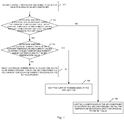
- Fig. 1 is a flowchart illustrating a method for controlling an air conditioner according to an exemplary embodiment. As shown in Fig. 1 , the method for controlling the air conditioner includes following steps.
- Step 101 a current temperature and humidity value of an action area of the air conditioner is obtained.
- the air conditioner can adjust temperature and humidity of the action area of the air conditioner, and thus the current temperature and humidity value includes: a current temperature value and a current humidity value.
- the current temperature value of the action area of the air conditioner can be obtained through a corresponding temperature sensor in an air-conditioning system, and there can be multiple ways to obtain the current humidity value in the current temperature and humidity value. If there is a humidity sensor in the air conditioner, the current humidity value of the action area of the air conditioner can be obtained through the humidity sensor. However, for some air conditioners, there is no humidity sensor, and thus the current humidity value in the current temperature and humidity value can be determined by obtaining operating parameters of the air conditioner.
- the determining the current humidity value in the current temperature and humidity value according to the obtained values may include: obtaining the current humidity value in the current temperature and humidity value through a formula (i) according to the coil temperature value of the indoor unit of the air conditioner and the operating frequency value of the compressor; or obtaining an opening value of an expansion valve in the air conditioner, and obtaining the current humidity value in the current temperature and humidity value through a formula (ii) according to the coil temperature value of the indoor unit, the operating frequency value of the compressor and the opening value.
- Rh is the current humidity value
- T1 is the current temperature value
- T2 is the coil temperature value of the indoor unit
- hz is the operating frequency value of the compressor
- f is the opening value
- A1, B1, C1, A2, B2, C2, D, E and F are constants respectively determined according to a type of the air conditioner.
- A1 is a constant greater than or equal to 8 and less than or equal to 12
- B1 is a constant greater than or equal to -12 and less than or equal to -8
- C1 is a constant greater than or equal to -2 and less than or equal to -1
- E is a constant greater than or equal to -10 and less than or equal to 20, and thus the current humidity value in the current temperature and humidity value can be obtained by the formula (1).
- preferred value ranges of A1, B1, C1, and E, or preferred value ranges of A2, B2, C2, D, and F can also be determined through many times of debugging statistics. Specific examples will not be given.
- the current humidity value can be obtained only according to the coil temperature value of the indoor unit of the air conditioner and the operating frequency value of the compressor without adding the humidity sensor, thereby reducing hardware requirements, saving space in the air conditioner, and further saving resources.
- Step 102 whether a temperature deviation between a current temperature value in the current temperature and humidity value and a specified temperature value is less than or equal to a specified value is determined; if the temperature deviation between the current temperature value in the current temperature and humidity value and the specified temperature value is less than or equal to a specified value, step 103 is performed; otherwise, step 106 is performed.
- the current temperature and humidity value include: the current temperature value and the current humidity value.
- the current temperature value is Td, when the air conditioner operates, a temperature has been set in advance, that is, a specified temperature value Ts, and a target comfortable humidity range (RH1, RH2) corresponding to the specified temperature value Ts can be determined.
- the specified temperature value is 28°C
- the corresponding target comfortable humidity range (RH1, RH2) is (35%, 60%).
- a humidity control may be performed on the air conditioner; and if the current temperature value is larger than the specified temperature value, for example, when pn>3, a temperature control may be sequentially performed on the air conditioner. Therefore, a specified value can be preset, and the specified value can be determined according to a model of the air conditioner and multiple test data. For example, the specified value is 2, 3, 3.5, and so on.
- step 103 the temperature deviation pn is compared with the specified value, if the temperature deviation is less than or equal to the specified value, step 103 can be performed; otherwise, step 106 can be performed.
- Step 103 whether a current humidity value in the current temperature and humidity value is in a target comfortable humidity range corresponding to the specified temperature value is determined; if the current humidity value in the current temperature and humidity value is not in the target comfortable humidity range corresponding to the specified temperature value, step 104 is performed; and if the current humidity value in the current temperature and humidity value is in the target comfortable humidity range corresponding to the specified temperature value, step 105 is performed.
- step 105 can be performed; and if the current humidity value RHd is not in the target comfortable humidity range (RH1, RH2), step 104 can be performed.
- Step 104 a current operating mode of at least one component including a fan of the air conditioner is switched until the current temperature and humidity value meets a specified requirement.
- the current humidity value RHd is not in the target comfortable humidity range (RH1, RH2), by controlling the operation of at least one component including the fan, the current temperature and humidity value can meet the specified requirement after the air conditioner is operated.
- the air conditioner is composed of a plurality of components, including a compressor, an evaporator, a throttle valve, and the like.
- the air conditioner further includes a fan.
- the switching the current operating mode of at least one component including the fan of the air conditioner until the current temperature and humidity value meets the specified requirement specifically includes: controlling the fan of the air conditioner to operate at a first rotational speed for a specified first duration and then to operate at a second rotational speed, wherein the first rotational speed is greater than the second rotational speed; and controlling the fan to operate at the second rotational speed for a specified second duration and then to operate at the first rotational speed.
- the air conditioner in a high temperature and high humidity environment, can be generally used to adjust the temperature and humidity of the environment. Since the current humidity value RHd is not in the target comfortable humidity range (RH1, RH2), and generally RHd>RH2, the operating mode of the fan of the air conditioner can be switched to reduce the humidity value of the action area of the air conditioner.
- the fan When the rotational speed of the fan is relatively high, for example, the fan operates at the first rotational speed, the refrigerating capacity of the sensible heat of the air conditioner can be changed quickly, so the temperature can be reduced; and when the rotational speed of the fan is relatively low, for example, the fan operates at the second rotational speed, at this time, the temperature does not change much, but dehumidification can be performed.
- the fan operates at the first rotational speed for the first duration, and then is switched to operate at the second rotational speed for the second duration; further, the fan is switched to operate at the first rotational speed for the first duration, and then is continuously switched to operate at the second rotational speed for the second duration.
- the humidity of the action area can be changed while the temperature is being stabilized; and finally, the current temperature and humidity value can meet the specified requirement by switching the operating mode of the fan.
- the air conditioner mainly depends on the operation of the compressor to adjust the temperature and humidity in the action area. Therefore, preferably, a current operating frequency of the compressor of the air conditioner is switched to a first frequency when the fan operates at the first rotational speed; and the current operating frequency of the compressor of the air conditioner is switched to a second frequency when the fan operates at the second rotational speed, wherein the first frequency is less than the second frequency.
- the first rotational speed is greater than the second rotational speed
- the first rotational speed can be set to be a high speed, which is greater than a specified speed
- the second rotational speed can be set to be a low speed, which is less than the specified speed.
- the first frequency is less than the second frequency
- the first frequency can be set to be a low frequency, which is lower than a specified frequency
- the second frequency can be set to be a high frequency, which is greater than the specified frequency.
- the compressor When the compressor operates at the second frequency and the fan operates at the second rotational speed, the compressor is at the high frequency and the fan is at the low rotational speed at this time, and dehumidification can be performed by adjusting the refrigerating capacity of the latent heat of the air conditioner. Therefore, the temperature and humidity double control of the air conditioner can be realized by switching the operating modes of the fan and the compressor.
- the timing of switching is particularly important.
- the timing may be determined in various ways, including: switching the current operating mode of at least one component including the fan of the air conditioner according to a specified strategy until the current temperature and humidity value meets the specified requirement.
- a specified first duration and a specified second duration can be determined, so that the fan of the air conditioner is controlled to operate at the first rotational speed for the specified first duration and then to operate at the second rotational speed; and the fan is controlled to operate at the second rotational speed for the specified second duration and then to operate at the first rotational speed.
- a cycle T and a high fan operating time ratio X% can be determined, therefore, the fan of the air conditioner is controlled to operate at the first rotational speed for T ⁇ X% and then to operate at the second rotational speed; and the fan is controlled to operate at the second rotational speed for T ⁇ (1-X%) and then to operate at the first rotational speed, wherein the first rotational speed is greater than the second rotational speed.
- the current operating mode of at least one component including the fan of the air conditioner is switched according to the humidity parameter of the air conditioner until the current temperature and humidity value meets the specified requirement, wherein the humidity parameter includes a humidity deviation between the obtained current humidity value and a preset target humidity value, or a coil temperature deviation between the obtained current coil temperature value of the air conditioner and a preset target coil temperature value.
- the humidity parameter includes the humidity deviation between the obtained current humidity value and the preset target humidity value, or the coil temperature deviation between the obtained current coil temperature value of the air conditioner and the preset target coil temperature value.
- the different the humidity parameter the different the corresponding A, B, and C.
- the target comfortable humidity range corresponding to the specified temperature value has been determined, and thus the determining the preset target humidity value according to the target comfortable humidity range includes: determining an average value of the target comfortable humidity range as the preset target humidity value, or randomly selecting a target humidity value from the target comfortable humidity range as the preset target humidity value. For example, if the specified temperature is 28°C, and the corresponding target comfortable humidity range (RH1, RH2) is (35%, 60%), the preset target humidity value can be determined to be 48%, or 47.5%. Then, the current humidity deviation PC d is a difference between the current humidity value and the preset target humidity value.
- T 2 115 seconds.
- the first duration T 1 can be set to 50 seconds, and thus the fan of the air conditioner is controlled to operate at the first rotational speed for 50 seconds and then to operate at the second rotational speed, and the fan is controlled to operate at the second rotational speed for 115 seconds and then to operate at the first rotational speed.
- the humidity parameter is the coil temperature deviation
- the current coil temperature value of the air conditioner and the preset target coil temperature value also need to be obtained.
- the target coil temperature value can also correspond to the specified temperature value one by one, therefore, after the specified temperature value is set, the target coil temperature value can be determined.
- the current coil temperature value of the air conditioner can also be obtained, and thus the coil temperature deviation between the current coil temperature value of the air conditioner and the target coil temperature value can be determined as the current humidity parameter PC d .
- the second duration can be determined according to the formula (1).
- Step 105 a current operating mode of the fan is kept.
- the temperature deviation is less than or equal to the specified value, and the current humidity value in the current temperature and humidity value is in the target comfortable humidity range corresponding to the specified temperature value, at this time, the rotational speed of the fan does not need to be switched, and the temperature will slowly drop until the temperature meets the specified requirement.
- Step 106 the compressor of the air conditioner is controlled to operate at a second frequency until the temperature deviation is less than or equal to the specified value.
- the second frequency is greater than a specified frequency, that is, the compressor operates at a high frequency, and thus the temperature can be quickly dropped until the temperature deviation is less than or equal to the specified value.
- the current temperature and humidity value can meet the specified requirement after the air conditioner is operated, and thus a temperature and humidity double control of the air conditioner is realized; and the switching of the operating mode of the fan can be controlled according to a specified duration strategy, and thus the efficiency of the temperature and humidity double control is improved.
- the switching of the operating mode of the fan can also be controlled according to the humidity deviation or the coil temperature deviation, and thus the accuracy of the temperature and humidity double control is further improved.
- a current operating mode of at least one component including a fan of an air conditioner is switched according to a specified strategy.
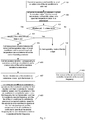
- Fig. 2 is a flowchart illustrating a method for controlling an air conditioner according to an exemplary embodiment. As shown in Fig. 2 , the method for controlling the air conditioner includes following steps.
- Step 201 a current temperature and humidity value of an action area of the air conditioner is obtained.
- Step 202 a temperature deviation pn between a current temperature value Td in the current temperature and humidity value and a specified temperature value Ts is determined.
- Step 203 whether pn ⁇ 3 is determined; if pn ⁇ 3, step 204 is performed; otherwise, step 207 is performed.
- step 204 If a specified value is 3, and pn ⁇ 3, that is, the temperature deviation is less than or equal to the specified value, step 204 is performed; otherwise, step 207 is performed.
- Step 204 whether RHd>RH2 is determined; if RHd>RH2, step 205 is performed; otherwise, step 206 is performed.
- the air conditioner is used in high temperature and humidity environments for performing a temperature and humidity double control. Therefore, it is only necessary to determine whether the current humidity value is greater than an upper limit value of the target comfortable humidity range, if the current humidity value is greater than the upper limit value of the target comfortable humidity range, step 205 is performed; otherwise, step 206 is performed.
- Step 205 the fan of the air conditioner is controlled to operate at a first rotational speed for a specified first duration and then to operate at a second rotational speed, and the compressor of the air conditioner is controlled to operate at a first frequency for the specified first duration and then to operate at a second frequency; and the fan of the air conditioner is controlled to operate at the second rotational speed for a specified second duration and then to operate at the first rotational speed, and the compressor of the air conditioner is controlled to operate at the second frequency for the specified second duration and then to operate at the first frequency.
- the first frequency can be a low-gear frequency corresponding to the compressor, i.e. low frequency, and the second frequency is a high frequency; the first rotational speed is a high-gear rotational speed corresponding to the fan, i.e. high fan, and the second rotational speed is low fan.
- Step 206 a current operating mode of the fan is kept.
- Step 207 the compressor of the air conditioner is controlled to operate at the second frequency.
- the compressor operates at the high frequency to rapidly drop the temperature.
- the current temperature and humidity value can meet the specified requirement after the air conditioner is operated, and thus a temperature and humidity double control of the air conditioner is realized; and the switching of the operating mode of the fan can be controlled according to a specified duration strategy, and thus the efficiency of the temperature and humidity double control is improved.
- a current operating mode of at least one component including a fan of the air conditioner is switched according to a humidity parameter of the air conditioner until the current temperature and humidity value meets a specified requirement, wherein the humidity parameter is a humidity deviation between the obtained current humidity value and a preset target humidity value.
- Fig. 3 is a flowchart illustrating a method for controlling an air conditioner according to an exemplary embodiment. As shown in Fig. 3 , the method for controlling the air conditioner includes following steps.
- Step 301 a current temperature and humidity value of an action area of the air conditioner is obtained.
- the current temperature value is obtained through a temperature sensor, and the humidity value is obtained through a humidity sensor.
- Step 302 a temperature deviation pn between a current temperature value Td in the current temperature and humidity value and a specified temperature value Ts is determined.
- Step 303 whether pn ⁇ 4 is determined; if pn ⁇ 4, step 304 is performed; otherwise, step 310 is performed.
- step 304 is performed; otherwise, step 310 is performed.
- Step 304 whether RH1 ⁇ RHd ⁇ RH2 is determined; if no, step 305 is performed; and if yes, step 309is performed.
- Step 305 the humidity deviation between the current humidity value and the preset target humidity value is determined as the current humidity parameter PC d .
- the preset target humidity value can be determined according to an average value of the target comfortable humidity range (RH1, RH2), and the humidity deviation between the current humidity value and the preset target humidity value is determined as the current humidity parameter PC d .
- Step 306 a humidity deviation PC m corresponding to a previous control cycle is obtained, and a change value of the humidity deviation ⁇ PC is determined.
- Step 307 a second duration T 2 is determined according to the formula (1), and a first duration T 1 is determined as a fixed duration t.
- T 2 105 seconds.
- the first duration T 1 can be set to 45 seconds.
- Step 308 the fan of the air conditioner is controlled to operate at a first rotational speed for the first duration T 1 and then to operate at a second rotational speed, and the compressor of the air conditioner is controlled to operate at a first frequency for the first duration T 1 and then to operate at a second frequency; and the fan of the air conditioner is controlled to operate at the second rotational speed for the second duration T 2 and then to operate at the first rotational speed, and the compressor of the air conditioner is controlled to operate at the second frequency for the second duration T 2 and then to operate at the first frequency.
- the first frequency can be a low-gear frequency corresponding to the compressor, i.e. low frequency, and the second frequency is a high frequency; the first rotational speed is a high-gear rotational speed corresponding to the fan, i.e. high fan, and the second rotational speed is low fan.
- Step 309 a current operating mode of the fan is kept.
- Step 310 the compressor of the air conditioner is controlled to operate at the second frequency.
- the compressor operates at the high frequency to rapidly drop the temperature.
- the current temperature and humidity value can meet the specified requirement after the air conditioner is operated, and thus a temperature and humidity double control of the air conditioner is realized; and the switching of the operating mode of the fan can be controlled according to the humidity deviation, and thus the accuracy of the temperature and humidity double control is improved.
- a current operating mode of at least one component including a fan of the air conditioner is switched according to a humidity parameter of the air conditioner until the current temperature and humidity value meets a specified requirement, wherein the humidity parameter is a coil temperature deviation between the obtained current coil temperature value of the air conditioner and a preset target coil temperature value.
- Fig. 4 is a flowchart illustrating a method for controlling an air conditioner according to an exemplary embodiment. As shown in Fig. 4 , the method for controlling the air conditioner includes following steps.
- Step 401 a current temperature and humidity value of an action area of the air conditioner is obtained.
- the current temperature value is obtained through a temperature sensor, and the humidity value is obtained through a humidity sensor or other methods.
- Step 402 a temperature deviation pn between a current temperature value Td in the current temperature and humidity value and a specified temperature value Ts is determined.
- Step 403 whether pn ⁇ 3 is determined; if pn ⁇ 3, step 404 is performed; otherwise, step 410 is performed.
- step 404 is performed; otherwise, step 410 is performed.
- Step 404 whether RH1 ⁇ RHd ⁇ RH2 is determined; if no, step 405 is performed; and if yes, step 409is performed.
- Step 405 the coil temperature deviation between the current coil temperature value of the air conditioner and the preset target coil temperature value is determined as the current humidity parameter PC d .
- the target coil temperature value is determined according to the specified temperature value, and the current coil temperature value of the air conditioner can be obtained, and thus the coil temperature deviation between the current coil temperature value of the air conditioner and the preset target coil temperature value is determined as the current humidity parameter PC d .
- Step 406 a coil temperature deviation PC m corresponding to a previous control cycle is obtained, and a change value of the coil temperature deviation ⁇ PC is determined.
- Step 407 a second duration T 2 and a first duration T 1 are determined according to the formula (1).
- Step 408 the fan of the air conditioner is controlled to operate at a first rotational speed for the first duration T 1 and then to operate at a second rotational speed, and the compressor of the air conditioner is controlled to operate at a first frequency for the first duration T 1 and then to operate at a second frequency; and the fan of the air conditioner is controlled to operate at the second rotational speed for the second duration T 2 and then to operate at the first rotational speed, and the compressor of the air conditioner is controlled to operate at the second frequency for the second duration T 2 and then to operate at the first frequency.
- the first frequency can be a low-gear frequency corresponding to the compressor, i.e. low frequency, and the second frequency is a high frequency; the first rotational speed is a high-gear rotational speed corresponding to the fan, i.e. high fan, and the second rotational speed is low fan.
- Step 409 a current operating mode of the fan is kept.
- Step 410 the compressor of the air conditioner is controlled to operate at the second frequency.
- the compressor operates at the high frequency to rapidly drop the temperature.
- the current temperature and humidity value can meet the specified requirement after the air conditioner is operated, and thus a temperature and humidity double control of the air conditioner is realized; and the switching of the operating mode of the fan can be controlled according to the coil temperature deviation, and thus the accuracy of the temperature and humidity double control is improved.
- the following are device embodiments of the present disclosure, and the device embodiments may be configured to execute the method embodiments of the present disclosure.
- a device for controlling an air conditioner can be constructed.
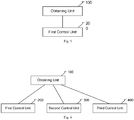
- Fig. 5 is a block diagram illustrating a device for controlling an air conditioner according to an exemplary embodiment. As shown in Fig. 5 , the device includes: an obtaining unit 100 and a first control unit 200.
- the obtaining unit 100 is configured to obtain a current temperature and humidity value of an action area of the air conditioner.
- the first control unit 200 is further configured to, if the temperature deviation between the current temperature value in the current temperature and humidity value and the specified temperature value is less than or equal to the specified value, and the current humidity value in the current temperature and humidity value is not in the target comfortable humidity range corresponding to the specified temperature value, switch the current operating mode of at least one component including the fan of the air conditioner according to a specified strategy until the current temperature and humidity value meets the specified requirement.
- the first control unit 200 is further configured to control the fan of the air conditioner to operate at a first rotational speed for a specified first duration and then to operate at a second rotational speed, wherein the first rotational speed is greater than the second rotational speed; and control the fan to operate at the second rotational speed for a specified second duration and then to operate at the first rotational speed.
- the first control unit 200 is further configured to switch the current operating mode of at least one component including the fan of the air conditioner according to the humidity parameter of the air conditioner until the current temperature and humidity value meets the specified requirement, wherein the humidity parameter includes a humidity deviation between the obtained current humidity value and a preset target humidity value, or a coil temperature deviation between the obtained current coil temperature value of the air conditioner and a preset target coil temperature value.
- the first control unit 200 is further configured to switch a current operating frequency of a compressor of the air conditioner to a first frequency when the fan operates at the first rotational speed; and switch the current operating frequency of the compressor of the air conditioner to a second frequency when the fan operates at the second rotational speed, wherein the first frequency is less than the second frequency.
- the device further includes: a second control unit configured to, if the temperature deviation between the current temperature value in the current temperature and humidity value and the specified temperature value is greater than the specified value, control the compressor of the air conditioner to operate at a second frequency until the temperature deviation is less than or equal to the specified value, wherein the second frequency is greater than a specified frequency.
- a second control unit configured to, if the temperature deviation between the current temperature value in the current temperature and humidity value and the specified temperature value is greater than the specified value, control the compressor of the air conditioner to operate at a second frequency until the temperature deviation is less than or equal to the specified value, wherein the second frequency is greater than a specified frequency.
- the device further includes: a third control unit configured to, if the temperature deviation between the current temperature value in the current temperature and humidity value and the specified temperature value is less than or equal to the specified value, and the current humidity value in the current temperature and humidity value is in the target comfortable humidity range corresponding to the specified temperature value, keep a current operating mode of the fan.
- a third control unit configured to, if the temperature deviation between the current temperature value in the current temperature and humidity value and the specified temperature value is less than or equal to the specified value, and the current humidity value in the current temperature and humidity value is in the target comfortable humidity range corresponding to the specified temperature value, keep a current operating mode of the fan.
- the device provided by the embodiment of the present disclosure is exemplified below.
- Fig. 6 is a block diagram illustrating a device for controlling an air conditioner according to an exemplary embodiment. As shown in Fig. 6 , the device includes: an obtaining unit 100, a first control unit 200, a second control unit 300, and a third control unit 400.
- the device can determine a target comfortable humidity range (RH1, RH2) corresponding to a specified temperature value Ts, and a preset target coil temperature value corresponding to the specified temperature value Ts in advance.
- a target comfortable humidity range RH1, RH2
- a preset target coil temperature value corresponding to the specified temperature value Ts in advance.
- the obtaining unit 100 obtains a current temperature value Td and a current humidity value RHd. After a temperature deviation pn between the current temperature value Td in a current temperature and humidity value and the specified temperature value Ts is determined by the device, when pn ⁇ 2 and RHd is not in the target comfortable humidity range (RH1, RH2), the first control unit 200 can switch a current operating mode of at least one component including a fan of the air conditioner until the current temperature and humidity value meets a specified requirement.
- the first control unit 200 controls the fan of the air conditioner to operate at a first rotational speed for a specified first duration and then to operate at a second rotational speed, wherein the first rotational speed is greater than the second rotational speed; controls the fan to operate at the second rotational speed for a specified second duration and then to operate at the first rotational speed, and switches a current operating frequency of a compressor of the air conditioner to a first frequency; and switches the current operating frequency of the compressor of the air conditioner to a second frequency when the fan operates at the second rotational speed, wherein the first frequency is less than the second frequency.
- the first control unit 200 switches the current operating mode of at least one component including the fan of the air conditioner according to a humidity parameter of the air conditioner, wherein the humidity parameter includes a humidity deviation between the obtained current humidity value and a preset target humidity value, or a coil temperature deviation between the obtained current coil temperature value of the air conditioner and a preset target coil temperature value.
- the humidity parameter includes a humidity deviation between the obtained current humidity value and a preset target humidity value, or a coil temperature deviation between the obtained current coil temperature value of the air conditioner and a preset target coil temperature value.
- the compressor can also be controlled according to the fan.
- the second control unit 300 can control the compressor of the air conditioner to operate at the second frequency until the temperature deviation is less than or equal to the specified value, wherein the second frequency is greater than a specified frequency.
- the third control unit 400 can maintain the current operating mode of the fan.
- the current temperature and humidity value can meet the specified requirement after the air conditioner is operated, and thus a temperature and humidity double control of the air conditioner is realized; and the switching of the operating mode of the fan can be controlled according to a specified duration strategy, and thus the efficiency of the temperature and humidity double control is improved.
- the switching of the operating mode of the fan can also be controlled according to the humidity deviation or the coil temperature deviation, and thus the accuracy of the temperature and humidity double control is further improved.
- the embodiments of the present disclosure may be provided as a method, a system, or a computer program product. Therefore, the present disclosure may use a form of hardware only embodiments, software only embodiments, or embodiments with a combination of software and hardware. Moreover, the present disclosure may use a form of a computer program product that is implemented on one or more computer-usable storage media (including but not limited to a disk memory, an optical memory, and the like) that include computer usable program code.
- computer-usable storage media including but not limited to a disk memory, an optical memory, and the like
- These computer program instructions may be provided for a general-purpose computer, a special-purpose computer, an embedded processor, or a processor of any other programmable data processing device to generate a machine, so that the instructions executed by a computer or a processor of any other programmable data processing device generate an apparatus for implementing a specific function in one or more processes in the flowcharts and/or in one or more blocks in the block diagrams.
- These computer program instructions may also be stored in a computer readable memory that can instruct the computer or any other programmable data processing device to work in a specific manner, so that the instructions stored in the computer readable memory generate an artifact that includes an instruction apparatus.
- the instruction apparatus implements a specific function in one or more processes in the flowcharts and/or in one or more blocks in the block diagrams.
- These computer program instructions may be loaded onto a computer or another programmable data processing device, so that a series of operations and steps are performed on the computer or the another programmable device, thereby generating computer-implemented processing. Therefore, the instructions executed on the computer or another programmable device provides steps for implementing a specific function in one or more processes in the flowcharts and/or in one or more blocks in the block diagrams.
Landscapes
- Engineering & Computer Science (AREA)
- Physics & Mathematics (AREA)
- Chemical & Material Sciences (AREA)
- Combustion & Propulsion (AREA)
- Mechanical Engineering (AREA)
- General Engineering & Computer Science (AREA)
- Signal Processing (AREA)
- Fluid Mechanics (AREA)
- Fuzzy Systems (AREA)
- Mathematical Physics (AREA)
- Air Conditioning Control Device (AREA)
Abstract
Description
- The application is based upon and claims priority to Chinese Patent Application No.
201710786420.0, filed September 4, 2017 - The application is based upon and claims priority to Chinese Patent Application No.
201710787704.1, filed September 4, 2017 - The present disclosure relates to the field of air conditioner technologies, and more particularly, to a method and a device for controlling self-cleaning of an air conditioner.
- With the improvement of living standards, air conditioners have been commonly used. At present, most air conditioners, especially household air conditioners, use vapor compression for cooling or heating.
- During the cooling or heating of the air conditioner, a humidity of an action area of the air conditioner may be changed. For example, when a deviation between a preset temperature and an actual temperature of the action area (such as a room) of the air conditioner is relatively large, the air conditioner cools, and a compressor operates at a high frequency, at this time, a coil temperature of an indoor unit of the air conditioner is relatively low, generally lower than a dew-point temperature of an air, and thus water vapor in the air is continuously condensed, when the actual temperature of the room reaches the preset temperature, a humidity of the air may already be very low, and a human body may feel dry and uncomfortable; and when a difference between the actual temperature of the room and the preset temperature is relatively small, the air conditioner cools, and the compressor operates at a low frequency, at this time, the coil temperature relatively high, generally higher than the dew-point temperature of the air, and thus the water vapor in the air will not be condensed; and when the actual temperature of the room reaches the preset temperature, the humidity of the air may be relatively high, and the human body also feels uncomfortable. Therefore, adjusting the humidity of the air is a problem that needs to be solved urgently in the field of current air conditioner technologies.
- Embodiments of the present disclosure provide a method and a device for controlling self-cleaning of an air conditioner. In order to basically understand some aspects of the disclosed embodiments, a brief summary is given below. The summary is not a general comment, nor tends to determine key/critical constituent elements or describe a protection scope of these embodiments, and only aims to present some concepts in a simplified form as an introduction of the following detailed description.
- According to a first aspect of the embodiments of the present disclosure, there is provided a method for controlling an air conditioner, including:
- obtaining a current temperature and humidity value of an action area of the air conditioner; and
- if a temperature deviation between a current temperature value in the current temperature and humidity value and a specified temperature value is less than or equal to a specified value, and a current humidity value in the current temperature and humidity value is not in a target comfortable humidity range corresponding to the specified temperature value, switching a current operating mode of at least one component including a fan of the air conditioner according to a humidity parameter of the air conditioner until the current temperature and humidity value meets a specified requirement, wherein the humidity parameter includes a humidity deviation between the obtained current humidity value and a preset target humidity value, or a coil temperature deviation between the obtained current coil temperature value of the air conditioner and a preset target coil temperature value.
- In an embodiment of the present disclosure, if the temperature deviation between the current temperature value in the current temperature and humidity value and the specified temperature value is less than or equal to the specified value, and the current humidity value in the current temperature and humidity value is not in the target comfortable humidity range corresponding to the specified temperature value, switching the current operating mode of at least one component including the fan of the air conditioner according to a specified strategy until the current temperature and humidity value meets the specified requirement.
- In an embodiment of the present disclosure, the switching the current operating mode of at least one component including the fan of the air conditioner according to the specified strategy includes:
- controlling the fan of the air conditioner to operate at a first rotational speed for a specified first duration and then to operate at a second rotational speed, wherein the first rotational speed is greater than the second rotational speed; and
- controlling the fan to operate at the second rotational speed for a specified second duration and then to operate at the first rotational speed.
- In an embodiment of the present disclosure, the switching the current operating mode of at least one component including the fan of the air conditioner according to the humidity parameter of the air conditioner until the current temperature and humidity value meets the specified requirement includes:
- controlling the fan of the air conditioner to operate at a first rotational speed for a first duration and then to operate at a second rotational speed, wherein the first rotational speed is greater than the second rotational speed; and
- controlling the fan to operate at the second rotational speed for a second duration and then to operate at the first rotational speed,
- wherein a process of determining the second duration includes:
- obtaining a change value of the humidity parameter (ΔPC) according to a current humidity parameter (FCd ) and a humidity parameter of a previous cycle (PCm ); and
- determining the second duration according to a formula (1), wherein,

- where T 2 is the second duration, and A , B, and C are modified operation parameters;
- the first duration T 1 is a specified duration, or the first duration T 1 is a difference between a specified total duration T and the second duration T 2.
- In an embodiment of the present disclosure, the switching the current operating mode of at least one component including the fan of the air conditioner includes:
- switching a current operating frequency of a compressor of the air conditioner to a first frequency when the fan operates at the first rotational speed; and
- switching the current operating frequency of the compressor of the air conditioner to a second frequency when the fan operates at the second rotational speed, wherein the first frequency is less than the second frequency.
- In an embodiment of the present disclosure, the method further includes:
if the temperature deviation between the current temperature value in the current temperature and humidity value and the specified temperature value is greater than the specified value, controlling the compressor of the air conditioner to operate at a second frequency until the temperature deviation is less than or equal to the specified value, wherein the second frequency is greater than a specified frequency. - In an embodiment of the present disclosure, the method further includes:
if the temperature deviation between the current temperature value in the current temperature and humidity value and the specified temperature value is less than or equal to the specified value, and the current humidity value in the current temperature and humidity value is in the target comfortable humidity range corresponding to the specified temperature value, keeping a current operating mode of the fan. - According to a second aspect of the embodiments of the present disclosure, there is provided a device for controlling an air conditioner, including:
- an obtaining unit configured to obtain a current temperature and humidity value of an action area of the air conditioner; and
- a first control unit configured to, if a temperature deviation between a current temperature value in the current temperature and humidity value and a specified temperature value is less than or equal to a specified value, and a current humidity value in the current temperature and humidity value is not in a target comfortable humidity range corresponding to the specified temperature value, switch a current operating mode of at least one component including a fan of the air conditioner according to a humidity parameter of the air conditioner until the current temperature and humidity value meets a specified requirement, wherein the humidity parameter includes a humidity deviation between the obtained current humidity value and a preset target humidity value, or a coil temperature deviation between the obtained current coil temperature value of the air conditioner and a preset target coil temperature value.
- In an embodiment of the present disclosure, the first control unit is further configured to, if the temperature deviation between the current temperature value in the current temperature and humidity value and the specified temperature value is less than or equal to the specified value, and the current humidity value in the current temperature and humidity value is not in the target comfortable humidity range corresponding to the specified temperature value, switch the current operating mode of at least one component including the fan of the air conditioner according to a specified strategy until the current temperature and humidity value meets the specified requirement.
- In an embodiment of the present disclosure, the first control unit is further configured to control the fan of the air conditioner to operate at a first rotational speed for a specified first duration and then to operate at a second rotational speed, wherein the first rotational speed is greater than the second rotational speed; and control the fan to operate at the second rotational speed for a specified second duration and then to operate at the first rotational speed.
- In an embodiment of the present disclosure, the first control unit is further configured to control the fan of the air conditioner to operate at a first rotational speed for a first duration and then to operate at a second rotational speed, wherein the first rotational speed is greater than the second rotational speed; and control the fan to operate at the second rotational speed for a second duration and then to operate at the first rotational speed, wherein a process of determining the second duration includes: obtaining a change value of the humidity parameter (ΔPC) according to a current humidity parameter (PCd ) and a humidity parameter of a previous cycle (PCm ); and determining the second duration according to a formula (1), wherein the first duration T 1 is a specified duration, or the first duration T 1 is a difference between a specified total duration T and the second duration T 2,

where T 2 is the second duration, and A , B, and C are modified operation parameters. - In an embodiment of the present disclosure, the first control unit is further configured to switch a current operating frequency of a compressor of the air conditioner to a first frequency when the fan operates at the first rotational speed; and switch the current operating frequency of the compressor of the air conditioner to a second frequency when the fan operates at the second rotational speed, wherein the first frequency is less than the second frequency.
- In an embodiment of the present disclosure, the device further includes:
a second control unit configured to, if the temperature deviation between the current temperature value in the current temperature and humidity value and the specified temperature value is greater than the specified value, control the compressor of the air conditioner to operate at a second frequency until the temperature deviation is less than or equal to the specified value, wherein the second frequency is greater than a specified frequency. - In an embodiment of the present disclosure, the device further includes:
a third control unit configured to, if the temperature deviation between the current temperature value in the current temperature and humidity value and the specified temperature value is less than or equal to the specified value, and the current humidity value in the current temperature and humidity value is in the target comfortable humidity range corresponding to the specified temperature value, keep a current operating mode of the fan. - According to a third aspect of the embodiments of the present disclosure, there is provided a method for controlling self-cleaning of an air conditioner, including:
- obtaining a current temperature and humidity value of an action area of the air conditioner; and
- if a temperature deviation between a current temperature value in the current temperature and humidity value and a specified temperature value is less than or equal to a specified value, and a current humidity value in the current temperature and humidity value is not in a target comfortable humidity range corresponding to the specified temperature value, switching a current operating mode of at least one component including a fan of the air conditioner according to a humidity parameter of the air conditioner until the current temperature and humidity value meets a specified requirement, wherein the humidity parameter includes a humidity deviation between the obtained current humidity value and a preset target humidity value, or a coil temperature deviation between the obtained current coil temperature value of the air conditioner and a preset target coil temperature value.
- According to a fourth aspect of the embodiments of the present disclosure, there is provided a device for controlling self-cleaning of an air conditioner, including:
- an obtaining unit configured to obtain a current temperature and humidity value of an action area of the air conditioner; and
- a first control unit configured to, if a temperature deviation between a current temperature value in the current temperature and humidity value and a specified temperature value is less than or equal to a specified value, and a current humidity value in the current temperature and humidity value is not in a target comfortable humidity range corresponding to the specified temperature value, switch a current operating mode of at least one component including a fan of the air conditioner according to a humidity parameter of the air conditioner until the current temperature and humidity value meets a specified requirement, wherein the humidity parameter includes a humidity deviation between the obtained current humidity value and a preset target humidity value, or a coil temperature deviation between the obtained current coil temperature value of the air conditioner and a preset target coil temperature value.
- The technical solution provided by the embodiments of the present disclosure may include following beneficial effects:
in the embodiment of the present disclosure, by controlling the operation of at least one component including the fan, the current temperature and humidity value can meet the specified requirement after the air conditioner is operated, and thus a temperature and humidity double control of the air conditioner is realized; further, the switch of the operating mode of the fan is controlled according to the humidity deviation or the coil temperature deviation, and thus the accuracy of the temperature and humidity double control is improved. - It should be understood that both the foregoing general description and the following detailed description are exemplary and explanatory only and are not intended to limit the present disclosure.
- The accompanying drawings, which are incorporated in and constitute a part of this description, illustrate embodiments consistent with the present disclosure and, together with the description, serve to explain the principles of the present disclosure.
-
Fig. 1 is a flowchart illustrating a method for controlling an air conditioner according to an exemplary embodiment. -
Fig. 2 is a flowchart illustrating a method for controlling an air conditioner according to an exemplary embodiment. -
Fig. 3 is a flowchart illustrating a method for controlling an air conditioner according to an exemplary embodiment. -
Fig. 4 is a flowchart illustrating a method for controlling an air conditioner according to an exemplary embodiment. -
Fig. 5 is a block diagram illustrating a device for controlling an air conditioner according to an exemplary embodiment. -
Fig. 6 is a block diagram illustrating a device for controlling an air conditioner according to an exemplary embodiment. - The following description and accompanying drawings fully illustrate the specific implementation solutions of the present disclosure so that a person skilled in the art can practice them. The embodiments merely represent possible changes. Unless otherwise specified explicitly, the individual component and function are optional and the operation sequence may be changed. Parts and characteristics of some implementation solutions may be included in or replace parts and characteristics of other implementation solutions. The scope of the implementation solutions of the present disclosure includes the whole scope of the claims and all available equivalents of the claims. As used herein, each implementation solution may be independently or generally expressed by "present disclosure", which is merely for convenience. As a matter of fact, if more than one disclosure is disclosed, it does not mean that the scope of the application is automatically limited to any single disclosure or disclosure concept. As used herein, terms such as "first" and "second" are merely for distinguishing one entity or operation from another entity or operation and do not require or imply any actual relationship or sequence among these entities or operations. Moreover, terms such as "comprise" and "include" or any other variants indicate a non-exclusive inclusion, so that a process, method or device including a series of elements not only include these elements, but also include other elements not explicitly listed. Without further restrictions, the element defined by the statement "includes a/an ..." does not exclude the existence of other identical elements in the process, method or device that includes the element. As used herein, each embodiment is described progressively, and contents focally described in each embodiment are different from those in other embodiments. The same or similar parts among each of the embodiments may be referred to each other. Regarding a structure, a product and the like disclosed in the embodiments, since they are corresponding to parts disclosed in the embodiments, their description is relatively simple and relevant contents can be referred to the description in the method part.
- An air conditioner is already common electrical appliance in daily life. The air conditioner can adjust a temperature of an indoor unit, that is, rise or drop the temperature, so that the temperature of the indoor unit can match a preset temperature set by a user. However, most air conditioners cannot adjust a humidity of the indoor unit at present. In the embodiment of the present disclosure, by controlling the operation of at least one component including the fan, the current temperature and humidity value can meet the specified requirement after the air conditioner is operated, and thus a temperature and humidity double control of the air conditioner is realized.
- As an electrical appliance, the air conditioner serves the user, and thus user comfort is an important indicator for determining the performance of the air conditioner. After the temperature is set by the user, in a humidity range corresponding to the specified temperature, the user will feel more comfortable in the temperature and the corresponding humidity range. Here, a target comfortable humidity range corresponds to a specified somatosensory comfortable level of a human body, for example, at the specified temperature, the humidity range corresponding to the most comfortable feeling of the human body is the target comfortable humidity range. Therefore, the target comfortable humidity range is determined according to the somatosensory comfortable level of the human body corresponding to the specified temperature of the air conditioner.
- Here, a corresponding relationship between the temperature and the humidity range can be stored in advance, that is, for each specified temperature, multiple human bodies can be tested to obtain a corresponding humidity that is most comfortable for the human body; in a specified area of the preset temperature, a first humidity of samples collected from the multiple human bodies corresponding to the specified somatosensory comfortable level is obtained; the target comfortable humidity range corresponding to the specified temperature is determined according to the first humidity, and the corresponding relationship is saved. For example, the preset temperature is 25°C, at this time, the first humidity is between 40% and 60% of a relative humidity, most users will feel the most comfortable; therefore, multiple first humidity are included in the relative humidity of 40% to 60%, the humidity of 40% to 60% can be determined as the target comfortable humidity range corresponding to the specified temperature, and the corresponding relationship between the preset temperature of 25°C and the target comfortable humidity of 40% to 60% can be saved.
- Therefore, the corresponding relationship between the stored temperature and humidity range can be shown in Table 1:
Table 1 Temperature Target comfortable humidity range 30°C humidity 30%∼50% 28°C humidity 35%∼60% 26°C humidity 40%∼55% ... ... - Here, the target comfortable humidity range corresponding to the specified temperature of the air conditioner can be determined according to the stored corresponding relationship between the temperature and the humidity range. As shown in Table 1, if the specified temperature is 26°C, the target comfortable humidity range can be determined to be a humidity of 40%∼55%.
- After the specified temperature of the air conditioner is determined, the corresponding target comfortable humidity range can be determined, and then parts of the air conditioner can be controlled to adjust a temperature and a humidity of an action area of the air conditioner to meet a specified requirement.
-
Fig. 1 is a flowchart illustrating a method for controlling an air conditioner according to an exemplary embodiment. As shown inFig. 1 , the method for controlling the air conditioner includes following steps. -
Step 101, a current temperature and humidity value of an action area of the air conditioner is obtained. - In the embodiment of the present disclosure, the air conditioner can adjust temperature and humidity of the action area of the air conditioner, and thus the current temperature and humidity value includes: a current temperature value and a current humidity value. In general, the current temperature value of the action area of the air conditioner can be obtained through a corresponding temperature sensor in an air-conditioning system, and there can be multiple ways to obtain the current humidity value in the current temperature and humidity value. If there is a humidity sensor in the air conditioner, the current humidity value of the action area of the air conditioner can be obtained through the humidity sensor. However, for some air conditioners, there is no humidity sensor, and thus the current humidity value in the current temperature and humidity value can be determined by obtaining operating parameters of the air conditioner. Therefore, not only the current temperature value in the current temperature and humidity value of the action area of the air conditioner, but also a coil temperature value of an indoor unit of the air conditioner and an operating frequency value of a compressor need to be obtained, and then the determining the current humidity value in the current temperature and humidity value according to the obtained values may include: obtaining the current humidity value in the current temperature and humidity value through a formula (i) according to the coil temperature value of the indoor unit of the air conditioner and the operating frequency value of the compressor; or obtaining an opening value of an expansion valve in the air conditioner, and obtaining the current humidity value in the current temperature and humidity value through a formula (ii) according to the coil temperature value of the indoor unit, the operating frequency value of the compressor and the opening value.


where Rh is the current humidity value, T1 is the current temperature value, T2 is the coil temperature value of the indoor unit, hz is the operating frequency value of the compressor, f is the opening value, and A1, B1, C1, A2, B2, C2, D, E and F are constants respectively determined according to a type of the air conditioner. - For example, for a type of air conditioner, after many times of debugging statistics, preferably, A1 is a constant greater than or equal to 8 and less than or equal to 12, B1 is a constant greater than or equal to -12 and less than or equal to -8, C1 is a constant greater than or equal to -2 and less than or equal to -1, and E is a constant greater than or equal to -10 and less than or equal to 20, and thus the current humidity value in the current temperature and humidity value can be obtained by the formula (1).
- If T1=25, T2=14, and hz=50, and correspondingly, A1=10, B1=-10, and C1=-1, and a corrected value E=10, therefore, the current humidity value Rh=70% can be obtained by the formula (1).
- Optionally, for other types of air conditioners, preferred value ranges of A1, B1, C1, and E, or preferred value ranges of A2, B2, C2, D, and F can also be determined through many times of debugging statistics. Specific examples will not be given.
- In this way, the current humidity value can be obtained only according to the coil temperature value of the indoor unit of the air conditioner and the operating frequency value of the compressor without adding the humidity sensor, thereby reducing hardware requirements, saving space in the air conditioner, and further saving resources.
-
Step 102, whether a temperature deviation between a current temperature value in the current temperature and humidity value and a specified temperature value is less than or equal to a specified value is determined; if the temperature deviation between the current temperature value in the current temperature and humidity value and the specified temperature value is less than or equal to a specified value,step 103 is performed; otherwise,step 106 is performed. - The current temperature and humidity value include: the current temperature value and the current humidity value. The current temperature value is Td, when the air conditioner operates, a temperature has been set in advance, that is, a specified temperature value Ts, and a target comfortable humidity range (RH1, RH2) corresponding to the specified temperature value Ts can be determined. For example, according to Table 1, the specified temperature value is 28°C, the corresponding target comfortable humidity range (RH1, RH2) is (35%, 60%).
- The temperature deviation between the current temperature value in the current temperature and humidity value and the specified temperature value can be obtained first, that is, the temperature deviation pn=Td-Ts. In the embodiment of the present disclosure, if the current temperature value is close to the specified temperature value, for example, when pn ≦ 3, a humidity control may be performed on the air conditioner; and if the current temperature value is larger than the specified temperature value, for example, when pn>3, a temperature control may be sequentially performed on the air conditioner. Therefore, a specified value can be preset, and the specified value can be determined according to a model of the air conditioner and multiple test data. For example, the specified value is 2, 3, 3.5, and so on.
- In this way, the temperature deviation pn is compared with the specified value, if the temperature deviation is less than or equal to the specified value,
step 103 can be performed; otherwise, step 106 can be performed. -
Step 103, whether a current humidity value in the current temperature and humidity value is in a target comfortable humidity range corresponding to the specified temperature value is determined; if the current humidity value in the current temperature and humidity value is not in the target comfortable humidity range corresponding to the specified temperature value,step 104 is performed; and if the current humidity value in the current temperature and humidity value is in the target comfortable humidity range corresponding to the specified temperature value,step 105 is performed. - If the temperature deviation is less than or equal to the specified value, that is, the current temperature value is close to the specified temperature value, and the humidity control can be performed on the air conditioner. Therefore, it is necessary to further determine whether the current humidity value is in the target comfortable humidity range corresponding to the specified temperature value. If the current humidity value RHd is in the target comfortable humidity range (RH1, RH2),
step 105 can be performed; and if the current humidity value RHd is not in the target comfortable humidity range (RH1, RH2),step 104 can be performed. -
Step 104, a current operating mode of at least one component including a fan of the air conditioner is switched until the current temperature and humidity value meets a specified requirement. - Since the current humidity value RHd is not in the target comfortable humidity range (RH1, RH2), by controlling the operation of at least one component including the fan, the current temperature and humidity value can meet the specified requirement after the air conditioner is operated.
- The air conditioner is composed of a plurality of components, including a compressor, an evaporator, a throttle valve, and the like. In the embodiment of the present disclosure, the air conditioner further includes a fan. The switching the current operating mode of at least one component including the fan of the air conditioner until the current temperature and humidity value meets the specified requirement specifically includes: controlling the fan of the air conditioner to operate at a first rotational speed for a specified first duration and then to operate at a second rotational speed, wherein the first rotational speed is greater than the second rotational speed; and controlling the fan to operate at the second rotational speed for a specified second duration and then to operate at the first rotational speed.
- In the embodiment of the present disclosure, in a high temperature and high humidity environment, the air conditioner can be generally used to adjust the temperature and humidity of the environment. Since the current humidity value RHd is not in the target comfortable humidity range (RH1, RH2), and generally RHd>RH2, the operating mode of the fan of the air conditioner can be switched to reduce the humidity value of the action area of the air conditioner. When the rotational speed of the fan is relatively high, for example, the fan operates at the first rotational speed, the refrigerating capacity of the sensible heat of the air conditioner can be changed quickly, so the temperature can be reduced; and when the rotational speed of the fan is relatively low, for example, the fan operates at the second rotational speed, at this time, the temperature does not change much, but dehumidification can be performed. In this way, the fan operates at the first rotational speed for the first duration, and then is switched to operate at the second rotational speed for the second duration; further, the fan is switched to operate at the first rotational speed for the first duration, and then is continuously switched to operate at the second rotational speed for the second duration. By sequentially switching the fan, the humidity of the action area can be changed while the temperature is being stabilized; and finally, the current temperature and humidity value can meet the specified requirement by switching the operating mode of the fan.
- Of course, the air conditioner mainly depends on the operation of the compressor to adjust the temperature and humidity in the action area. Therefore, preferably, a current operating frequency of the compressor of the air conditioner is switched to a first frequency when the fan operates at the first rotational speed; and the current operating frequency of the compressor of the air conditioner is switched to a second frequency when the fan operates at the second rotational speed, wherein the first frequency is less than the second frequency.
- In general, the first rotational speed is greater than the second rotational speed, the first rotational speed can be set to be a high speed, which is greater than a specified speed; and the second rotational speed can be set to be a low speed, which is less than the specified speed. The first frequency is less than the second frequency, similarly, the first frequency can be set to be a low frequency, which is lower than a specified frequency; and the second frequency can be set to be a high frequency, which is greater than the specified frequency. In this way, when the compressor operates at the first frequency and the fan operates at the first rotational speed, the compressor is at the low frequency and the fan is at the high rotational speed at this time, and the temperature can be reduced by adjusting the refrigerating capacity of the sensible heat of the air conditioner. When the compressor operates at the second frequency and the fan operates at the second rotational speed, the compressor is at the high frequency and the fan is at the low rotational speed at this time, and dehumidification can be performed by adjusting the refrigerating capacity of the latent heat of the air conditioner. Therefore, the temperature and humidity double control of the air conditioner can be realized by switching the operating modes of the fan and the compressor.
- Since it is necessary to switch the operating modes of the fan and the compressor to realize the temperature and humidity double control of the air conditioner, the timing of switching is particularly important. In the embodiment of the present disclosure, the timing may be determined in various ways, including: switching the current operating mode of at least one component including the fan of the air conditioner according to a specified strategy until the current temperature and humidity value meets the specified requirement.
- According to a performance signal of the air conditioner and test data for many times, a specified first duration and a specified second duration can be determined, so that the fan of the air conditioner is controlled to operate at the first rotational speed for the specified first duration and then to operate at the second rotational speed; and the fan is controlled to operate at the second rotational speed for the specified second duration and then to operate at the first rotational speed. Optionally, a cycle T and a high fan operating time ratio X% can be determined, therefore, the fan of the air conditioner is controlled to operate at the first rotational speed for T∗X% and then to operate at the second rotational speed; and the fan is controlled to operate at the second rotational speed for T∗(1-X%) and then to operate at the first rotational speed, wherein the first rotational speed is greater than the second rotational speed.
- Optionally, in another embodiment of the present disclosure, the current operating mode of at least one component including the fan of the air conditioner is switched according to the humidity parameter of the air conditioner until the current temperature and humidity value meets the specified requirement, wherein the humidity parameter includes a humidity deviation between the obtained current humidity value and a preset target humidity value, or a coil temperature deviation between the obtained current coil temperature value of the air conditioner and a preset target coil temperature value. Specifically, the fan of the air conditioner is controlled to operate at a first rotational speed for a first duration and then to operate at a second rotational speed, wherein the first rotational speed is greater than the second rotational speed; and the fan is controlled to operate at the second rotational speed for a second duration and then to operate at the first rotational speed, wherein a process of determining the second duration includes: obtaining a change value of the humidity parameter (ΔPC) according to a current humidity parameter (PCd ) and a humidity parameter of a previous cycle (PCm ); and determining the second duration according to a formula (1); the first duration T 1 is a specified duration, or the first duration T 1 is a difference between a specified total duration T and the second duration T 2,

where T 2 is the second duration, and A , B, and C are modified operation parameters. - In the embodiment of the present disclosure, the humidity parameter includes the humidity deviation between the obtained current humidity value and the preset target humidity value, or the coil temperature deviation between the obtained current coil temperature value of the air conditioner and the preset target coil temperature value. Of course, the different the humidity parameter, the different the corresponding A, B, and C.
- When the humidity parameter is the humidity deviation, the target comfortable humidity range corresponding to the specified temperature value has been determined, and thus the determining the preset target humidity value according to the target comfortable humidity range includes: determining an average value of the target comfortable humidity range as the preset target humidity value, or randomly selecting a target humidity value from the target comfortable humidity range as the preset target humidity value. For example, if the specified temperature is 28°C, and the corresponding target comfortable humidity range (RH1, RH2) is (35%, 60%), the preset target humidity value can be determined to be 48%, or 47.5%. Then, the current humidity deviation PCd is a difference between the current humidity value and the preset target humidity value.
- In the previous control cycle, the corresponding humidity deviation is the humidity parameter of the previous cycle PCm, and thus the change value of the humidity deviation ΔPC=PCd-PCm . Therefore, the second duration can be determined according to the formula (1).
- For example, if PCd =20, ΔPC =5, and A=3, B=5, and C=1, it can be determined that T 2 =115 seconds. At this time, the first duration T 1 can be set to 50 seconds, and thus the fan of the air conditioner is controlled to operate at the first rotational speed for 50 seconds and then to operate at the second rotational speed, and the fan is controlled to operate at the second rotational speed for 115 seconds and then to operate at the first rotational speed. Alternatively, when the cycle for controlling the air conditioner is 180 seconds, PCd =10, ΔPC=2, and A=5%, B=6%, and C=180, it can be determined that T 2=0.7∗180=126 seconds, and T 1=T-T 2=54 seconds, and thus the fan of the air conditioner is controlled to operate at the first rotational speed for 54 seconds and then to operate at the second rotational speed, and the fan is controlled to operate at the second rotational speed for 126 seconds and then to operate at the first rotational speed.
- If the humidity parameter is the coil temperature deviation, the current coil temperature value of the air conditioner and the preset target coil temperature value also need to be obtained. The target coil temperature value can also correspond to the specified temperature value one by one, therefore, after the specified temperature value is set, the target coil temperature value can be determined. In this embodiment, the current coil temperature value of the air conditioner can also be obtained, and thus the coil temperature deviation between the current coil temperature value of the air conditioner and the target coil temperature value can be determined as the current humidity parameter PCd.
- Similarly, in the previous control cycle, the corresponding coil temperature deviation, that is, the humidity parameter of the previous control cycle, can be obtained, and thus the change value of the coil temperature deviation ΔPC=PCd-PCm. Therefore, the second duration can be determined according to the formula (1).
- For example, when the cycle for controlling the air conditioner is 300 seconds, PCd =10, ΔPC=2, and A=4%, B=6%, and C=300, it can be determined that T 2=0.68∗300=204 seconds, and T 1=T-T 2=96 seconds, and thus the fan of the air conditioner is controlled to operate at the first rotational speed for 96 seconds and then to operate at the second rotational speed, and the fan is controlled to operate at the second rotational speed for 204 seconds and then to operate at the first rotational speed. Or, PCd =10, ΔPC=2, and A=4, B=6, and C=1, it can be determined that T 2 =68 seconds, and the first duration T 1=T-T 2=30 seconds, and thus the fan of the air conditioner is controlled to operate at the first rotational speed for 30 seconds and then to operate at the second rotational speed, and the fan is controlled to operate at the second rotational speed for 68 seconds and then to operate at the first rotational speed.
-
Step 105, a current operating mode of the fan is kept. - The temperature deviation is less than or equal to the specified value, and the current humidity value in the current temperature and humidity value is in the target comfortable humidity range corresponding to the specified temperature value, at this time, the rotational speed of the fan does not need to be switched, and the temperature will slowly drop until the temperature meets the specified requirement.
-
Step 106, the compressor of the air conditioner is controlled to operate at a second frequency until the temperature deviation is less than or equal to the specified value. - The second frequency is greater than a specified frequency, that is, the compressor operates at a high frequency, and thus the temperature can be quickly dropped until the temperature deviation is less than or equal to the specified value.
- It can be seen that, in the embodiment of the present disclosure, by controlling the operation of at least one component including the fan, the current temperature and humidity value can meet the specified requirement after the air conditioner is operated, and thus a temperature and humidity double control of the air conditioner is realized; and the switching of the operating mode of the fan can be controlled according to a specified duration strategy, and thus the efficiency of the temperature and humidity double control is improved. In addition, the switching of the operating mode of the fan can also be controlled according to the humidity deviation or the coil temperature deviation, and thus the accuracy of the temperature and humidity double control is further improved.
- The following describes the operation flow in specific embodiments to illustrate the methods provided by the embodiments of the present disclosure.
- First embodiment, in the embodiment of the present disclosure, a current operating mode of at least one component including a fan of an air conditioner is switched according to a specified strategy.
-
Fig. 2 is a flowchart illustrating a method for controlling an air conditioner according to an exemplary embodiment. As shown inFig. 2 , the method for controlling the air conditioner includes following steps. -
Step 201, a current temperature and humidity value of an action area of the air conditioner is obtained. - The current temperature value is obtained through a temperature sensor, further, a coil temperature value of an indoor unit and an operating frequency value of a compressor can also be obtained, and thus the current humidity value in the current temperature and humidity value can be obtained according to the following formula:

where RHd is the current humidity value, T1 is the current temperature value, T2 is the coil temperature value of the indoor unit, hz is the operating frequency value of the compressor, and A1, B1, C1, and E are constants respectively determined according to a type of the air conditioner. -
Step 202, a temperature deviation pn between a current temperature value Td in the current temperature and humidity value and a specified temperature value Ts is determined. - Here, pn=Td-Ts.
-
Step 203, whether pn ≦ 3 is determined; if pn ≦ 3,step 204 is performed; otherwise,step 207 is performed. - If a specified value is 3, and pn ≦ 3, that is, the temperature deviation is less than or equal to the specified value,
step 204 is performed; otherwise,step 207 is performed. -
Step 204, whether RHd>RH2 is determined; if RHd>RH2,step 205 is performed; otherwise,step 206 is performed. - In general, the air conditioner is used in high temperature and humidity environments for performing a temperature and humidity double control. Therefore, it is only necessary to determine whether the current humidity value is greater than an upper limit value of the target comfortable humidity range, if the current humidity value is greater than the upper limit value of the target comfortable humidity range,
step 205 is performed; otherwise,step 206 is performed. -
Step 205, the fan of the air conditioner is controlled to operate at a first rotational speed for a specified first duration and then to operate at a second rotational speed, and the compressor of the air conditioner is controlled to operate at a first frequency for the specified first duration and then to operate at a second frequency; and the fan of the air conditioner is controlled to operate at the second rotational speed for a specified second duration and then to operate at the first rotational speed, and the compressor of the air conditioner is controlled to operate at the second frequency for the specified second duration and then to operate at the first frequency. - Here, according to the specific performance of the air conditioner, the first frequency can be a low-gear frequency corresponding to the compressor, i.e. low frequency, and the second frequency is a high frequency; the first rotational speed is a high-gear rotational speed corresponding to the fan, i.e. high fan, and the second rotational speed is low fan.
-
Step 206, a current operating mode of the fan is kept. - Here, if RHd<RH2 and pn≦3, the temperature only needs to be slowly dropped to keep the current operating mode of the fan unchanged.
-
Step 207, the compressor of the air conditioner is controlled to operate at the second frequency. - Obviously, if the current temperature value is too high, the temperature needs to be further dropped. Therefore, the compressor operates at the high frequency to rapidly drop the temperature.
- It can be seen that, in the embodiment of the present disclosure, by controlling the operation of at least one component including the fan, the current temperature and humidity value can meet the specified requirement after the air conditioner is operated, and thus a temperature and humidity double control of the air conditioner is realized; and the switching of the operating mode of the fan can be controlled according to a specified duration strategy, and thus the efficiency of the temperature and humidity double control is improved.
- Second embodiment, a current operating mode of at least one component including a fan of the air conditioner is switched according to a humidity parameter of the air conditioner until the current temperature and humidity value meets a specified requirement, wherein the humidity parameter is a humidity deviation between the obtained current humidity value and a preset target humidity value.
-
Fig. 3 is a flowchart illustrating a method for controlling an air conditioner according to an exemplary embodiment. As shown inFig. 3 , the method for controlling the air conditioner includes following steps. -
Step 301, a current temperature and humidity value of an action area of the air conditioner is obtained. - The current temperature value is obtained through a temperature sensor, and the humidity value is obtained through a humidity sensor.
-
Step 302, a temperature deviation pn between a current temperature value Td in the current temperature and humidity value and a specified temperature value Ts is determined. - Here, pn=Td-Ts.
-
Step 303, whether pn ≦ 4 is determined; if pn≦4,step 304 is performed; otherwise, step 310 is performed. - If a specified value is 4, and pn≦4, that is, the temperature deviation is less than or equal to the specified value,
step 304 is performed; otherwise, step 310 is performed. -
Step 304, whether RH1<RHd<RH2 is determined; if no, step 305 is performed; and if yes, step 309is performed. -
Step 305, the humidity deviation between the current humidity value and the preset target humidity value is determined as the current humidity parameter PCd . - Here, the preset target humidity value can be determined according to an average value of the target comfortable humidity range (RH1, RH2), and the humidity deviation between the current humidity value and the preset target humidity value is determined as the current humidity parameter PCd.
-
Step 306, a humidity deviation PCm corresponding to a previous control cycle is obtained, and a change value of the humidity deviation ΔPC is determined. - In the previous control cycle, the corresponding humidity deviation is the humidity parameter of the previous cycle PCm, and thus the change value of the humidity deviation ΔPC=PCd-PCm.
-
Step 307, a second duration T 2 is determined according to the formula (1), and a first duration T 1 is determined as a fixed duration t. - For example, if PCd =15, ΔPC=5, and A=3, B=6, and C=1, it can be determined that T2=105 seconds. At this time, the first duration T 1 can be set to 45 seconds.
-
Step 308, the fan of the air conditioner is controlled to operate at a first rotational speed for the first duration T 1 and then to operate at a second rotational speed, and the compressor of the air conditioner is controlled to operate at a first frequency for the first duration T 1 and then to operate at a second frequency; and the fan of the air conditioner is controlled to operate at the second rotational speed for the second duration T 2 and then to operate at the first rotational speed, and the compressor of the air conditioner is controlled to operate at the second frequency for the second duration T 2 and then to operate at the first frequency. - Here, according to the specific performance of the air conditioner, the first frequency can be a low-gear frequency corresponding to the compressor, i.e. low frequency, and the second frequency is a high frequency; the first rotational speed is a high-gear rotational speed corresponding to the fan, i.e. high fan, and the second rotational speed is low fan.
-
Step 309, a current operating mode of the fan is kept. - Here, if RH1<RHd<RH2 and pn≦4, the temperature only needs to be slowly dropped to keep the current operating mode of the fan unchanged.
- Step 310, the compressor of the air conditioner is controlled to operate at the second frequency.
- Obviously, if the current temperature value is too high, the temperature needs to be further dropped. Therefore, the compressor operates at the high frequency to rapidly drop the temperature.
- It can be seen that, in the embodiment of the present disclosure, by controlling the operation of at least one component including the fan, the current temperature and humidity value can meet the specified requirement after the air conditioner is operated, and thus a temperature and humidity double control of the air conditioner is realized; and the switching of the operating mode of the fan can be controlled according to the humidity deviation, and thus the accuracy of the temperature and humidity double control is improved.
- Third embodiment, a current operating mode of at least one component including a fan of the air conditioner is switched according to a humidity parameter of the air conditioner until the current temperature and humidity value meets a specified requirement, wherein the humidity parameter is a coil temperature deviation between the obtained current coil temperature value of the air conditioner and a preset target coil temperature value.
-
Fig. 4 is a flowchart illustrating a method for controlling an air conditioner according to an exemplary embodiment. As shown inFig. 4 , the method for controlling the air conditioner includes following steps. -
Step 401, a current temperature and humidity value of an action area of the air conditioner is obtained. - The current temperature value is obtained through a temperature sensor, and the humidity value is obtained through a humidity sensor or other methods.
-
Step 402, a temperature deviation pn between a current temperature value Td in the current temperature and humidity value and a specified temperature value Ts is determined. - Here, pn=Td-Ts.
-
Step 403, whether pn≦3 is determined; if pn≦3,step 404 is performed; otherwise,step 410 is performed. - If a specified value is 3, and pn≦3, that is, the temperature deviation is less than or equal to the specified value,
step 404 is performed; otherwise,step 410 is performed. -
Step 404, whether RH1<RHd<RH2 is determined; if no, step 405 is performed; and if yes, step 409is performed. -
Step 405, the coil temperature deviation between the current coil temperature value of the air conditioner and the preset target coil temperature value is determined as the current humidity parameter PCd. - Here, the target coil temperature value is determined according to the specified temperature value, and the current coil temperature value of the air conditioner can be obtained, and thus the coil temperature deviation between the current coil temperature value of the air conditioner and the preset target coil temperature value is determined as the current humidity parameter PCd .
-
Step 406, a coil temperature deviation PCm corresponding to a previous control cycle is obtained, and a change value of the coil temperature deviation ΔPC is determined. - In the previous control cycle, the corresponding coil temperature deviation is the humidity parameter of the previous cycle PCm, and thus the change value of the coil temperature deviation ΔPC=PCd-PCm.
-
Step 407, a second duration T 2 and a first duration T 1 are determined according to the formula (1). - For example, if PCd =10, ΔPC =2, and A=4%, B=6%, and C=300, it can be determined that T 2=0.68∗300=204 seconds. At this time, T 1=T-T 2=96 seconds.
-
Step 408, the fan of the air conditioner is controlled to operate at a first rotational speed for the first duration T 1 and then to operate at a second rotational speed, and the compressor of the air conditioner is controlled to operate at a first frequency for the first duration T 1 and then to operate at a second frequency; and the fan of the air conditioner is controlled to operate at the second rotational speed for the second duration T 2 and then to operate at the first rotational speed, and the compressor of the air conditioner is controlled to operate at the second frequency for the second duration T 2 and then to operate at the first frequency. - Here, according to the specific performance of the air conditioner, the first frequency can be a low-gear frequency corresponding to the compressor, i.e. low frequency, and the second frequency is a high frequency; the first rotational speed is a high-gear rotational speed corresponding to the fan, i.e. high fan, and the second rotational speed is low fan.
-
Step 409, a current operating mode of the fan is kept. - Here, if RH1<RHd<RH2 and pn≦3, the temperature only needs to be slowly dropped to keep the current operating mode of the fan unchanged.
-
Step 410, the compressor of the air conditioner is controlled to operate at the second frequency. - Obviously, if the current temperature value is too high, the temperature needs to be further dropped. Therefore, the compressor operates at the high frequency to rapidly drop the temperature.
- It can be seen that, in the embodiment of the present disclosure, by controlling the operation of at least one component including the fan, the current temperature and humidity value can meet the specified requirement after the air conditioner is operated, and thus a temperature and humidity double control of the air conditioner is realized; and the switching of the operating mode of the fan can be controlled according to the coil temperature deviation, and thus the accuracy of the temperature and humidity double control is improved.
- The following are device embodiments of the present disclosure, and the device embodiments may be configured to execute the method embodiments of the present disclosure.
- According to the above-mentioned method for controlling the air conditioner, a device for controlling an air conditioner can be constructed.
-
Fig. 5 is a block diagram illustrating a device for controlling an air conditioner according to an exemplary embodiment. As shown inFig. 5 , the device includes: an obtainingunit 100 and afirst control unit 200. - The obtaining
unit 100 is configured to obtain a current temperature and humidity value of an action area of the air conditioner. - The
first control unit 200 is further configured to, if the temperature deviation between the current temperature value in the current temperature and humidity value and the specified temperature value is less than or equal to the specified value, and the current humidity value in the current temperature and humidity value is not in the target comfortable humidity range corresponding to the specified temperature value, switch the current operating mode of at least one component including the fan of the air conditioner according to a specified strategy until the current temperature and humidity value meets the specified requirement. - In an embodiment of the present disclosure, the
first control unit 200 is further configured to control the fan of the air conditioner to operate at a first rotational speed for a specified first duration and then to operate at a second rotational speed, wherein the first rotational speed is greater than the second rotational speed; and control the fan to operate at the second rotational speed for a specified second duration and then to operate at the first rotational speed. - In an embodiment of the present disclosure, the
first control unit 200 is further configured to switch the current operating mode of at least one component including the fan of the air conditioner according to the humidity parameter of the air conditioner until the current temperature and humidity value meets the specified requirement, wherein the humidity parameter includes a humidity deviation between the obtained current humidity value and a preset target humidity value, or a coil temperature deviation between the obtained current coil temperature value of the air conditioner and a preset target coil temperature value. - In an embodiment of the present disclosure, the
first control unit 200 is further configured to control the fan of the air conditioner to operate at a first rotational speed for a first duration and then to operate at a second rotational speed, wherein the first rotational speed is greater than the second rotational speed; and control the fan to operate at the second rotational speed for a second duration and then to operate at the first rotational speed, wherein a process of determining the second duration includes: obtaining a change value of the humidity parameter (VPC) according to a current humidity parameter (PCd ) and a humidity parameter of a previous cycle (PCm ); and determining the second duration according to a formula (1), wherein the first duration T 1 is a specified duration, or the first duration T 1 is a difference between a specified total duration T and the second duration T 2,
where T 2 is the second duration, and A , B, and C are modified operation parameters. - In an embodiment of the present disclosure, the
first control unit 200 is further configured to switch a current operating frequency of a compressor of the air conditioner to a first frequency when the fan operates at the first rotational speed; and switch the current operating frequency of the compressor of the air conditioner to a second frequency when the fan operates at the second rotational speed, wherein the first frequency is less than the second frequency. - In an embodiment of the present disclosure, the device further includes: a second control unit configured to, if the temperature deviation between the current temperature value in the current temperature and humidity value and the specified temperature value is greater than the specified value, control the compressor of the air conditioner to operate at a second frequency until the temperature deviation is less than or equal to the specified value, wherein the second frequency is greater than a specified frequency.
- In an embodiment of the present disclosure, the device further includes: a third control unit configured to, if the temperature deviation between the current temperature value in the current temperature and humidity value and the specified temperature value is less than or equal to the specified value, and the current humidity value in the current temperature and humidity value is in the target comfortable humidity range corresponding to the specified temperature value, keep a current operating mode of the fan.
- The device provided by the embodiment of the present disclosure is exemplified below.
-
Fig. 6 is a block diagram illustrating a device for controlling an air conditioner according to an exemplary embodiment. As shown inFig. 6 , the device includes: an obtainingunit 100, afirst control unit 200, asecond control unit 300, and athird control unit 400. - The device can determine a target comfortable humidity range (RH1, RH2) corresponding to a specified temperature value Ts, and a preset target coil temperature value corresponding to the specified temperature value Ts in advance.
- The obtaining
unit 100 obtains a current temperature value Td and a current humidity value RHd. After a temperature deviation pn between the current temperature value Td in a current temperature and humidity value and the specified temperature value Ts is determined by the device, when pn<2 and RHd is not in the target comfortable humidity range (RH1, RH2), thefirst control unit 200 can switch a current operating mode of at least one component including a fan of the air conditioner until the current temperature and humidity value meets a specified requirement. - The
first control unit 200 controls the fan of the air conditioner to operate at a first rotational speed for a specified first duration and then to operate at a second rotational speed, wherein the first rotational speed is greater than the second rotational speed; controls the fan to operate at the second rotational speed for a specified second duration and then to operate at the first rotational speed, and switches a current operating frequency of a compressor of the air conditioner to a first frequency; and switches the current operating frequency of the compressor of the air conditioner to a second frequency when the fan operates at the second rotational speed, wherein the first frequency is less than the second frequency. - Optionally, the
first control unit 200 switches the current operating mode of at least one component including the fan of the air conditioner according to a humidity parameter of the air conditioner, wherein the humidity parameter includes a humidity deviation between the obtained current humidity value and a preset target humidity value, or a coil temperature deviation between the obtained current coil temperature value of the air conditioner and a preset target coil temperature value. Specifically, thefirst control unit 200 can control the fan of the air conditioner to operate at a first rotational speed for a first duration and then to operate at a second rotational speed, wherein the first rotational speed is greater than the second rotational speed; and control the fan to operate at the second rotational speed for a second duration and then to operate at the first rotational speed, wherein a process of determining the second duration includes: obtaining a change value of the humidity parameter (VPC) according to a current humidity parameter (PCd ) and a humidity parameter of a previous cycle (PCm ); and determining the second duration according to a formula (1), wherein the first duration T 1 is a specified duration, or the first duration T 1 is a difference between a specified total duration T and the second duration T 2,
where T 2 is the second duration, and A , B, and C are modified operation parameters. - The compressor can also be controlled according to the fan.
- When pn>2, the
second control unit 300 can control the compressor of the air conditioner to operate at the second frequency until the temperature deviation is less than or equal to the specified value, wherein the second frequency is greater than a specified frequency. - When pn<2 and RHd is in the target comfortable humidity range (RH1, RH2), the
third control unit 400 can maintain the current operating mode of the fan. - It can be seen that, in the embodiment of the present disclosure, by controlling the operation of at least one component including the fan, the current temperature and humidity value can meet the specified requirement after the air conditioner is operated, and thus a temperature and humidity double control of the air conditioner is realized; and the switching of the operating mode of the fan can be controlled according to a specified duration strategy, and thus the efficiency of the temperature and humidity double control is improved. In addition, the switching of the operating mode of the fan can also be controlled according to the humidity deviation or the coil temperature deviation, and thus the accuracy of the temperature and humidity double control is further improved.
- A person skilled in the art should understand that the embodiments of the present disclosure may be provided as a method, a system, or a computer program product. Therefore, the present disclosure may use a form of hardware only embodiments, software only embodiments, or embodiments with a combination of software and hardware. Moreover, the present disclosure may use a form of a computer program product that is implemented on one or more computer-usable storage media (including but not limited to a disk memory, an optical memory, and the like) that include computer usable program code.
- The present disclosure is described with reference to the flowcharts and/or block diagrams of the method, the device (system), and the computer program product according to the present disclosure. It should be understood that computer program instructions may be used to implement each process and/or each block in the flowcharts and/or the block diagrams and a combination of a process and/or a block in the flowcharts and/or the block diagrams. These computer program instructions may be provided for a general-purpose computer, a special-purpose computer, an embedded processor, or a processor of any other programmable data processing device to generate a machine, so that the instructions executed by a computer or a processor of any other programmable data processing device generate an apparatus for implementing a specific function in one or more processes in the flowcharts and/or in one or more blocks in the block diagrams.
- These computer program instructions may also be stored in a computer readable memory that can instruct the computer or any other programmable data processing device to work in a specific manner, so that the instructions stored in the computer readable memory generate an artifact that includes an instruction apparatus. The instruction apparatus implements a specific function in one or more processes in the flowcharts and/or in one or more blocks in the block diagrams.
- These computer program instructions may be loaded onto a computer or another programmable data processing device, so that a series of operations and steps are performed on the computer or the another programmable device, thereby generating computer-implemented processing. Therefore, the instructions executed on the computer or another programmable device provides steps for implementing a specific function in one or more processes in the flowcharts and/or in one or more blocks in the block diagrams.
- It should be understood that, the present disclosure is not limited to the flowchart and structures described above and shown in the accompanying drawings, and various modifications and changes may be made without departing from the scope. The scope of the present disclosure is limited only by the appended claims.
Claims (16)
- A method for controlling an air conditioner, comprising:obtaining a current temperature and humidity value of an action area of the air conditioner; andif a temperature deviation between a current temperature value in the current temperature and humidity value and a specified temperature value is less than or equal to a specified value, and a current humidity value in the current temperature and humidity value is not in a target comfortable humidity range corresponding to the specified temperature value, switching a current operating mode of at least one component comprising a fan of the air conditioner according to a humidity parameter of the air conditioner until the current temperature and humidity value meets a specified requirement, wherein the humidity parameter comprises a humidity deviation between the obtained current humidity value and a preset target humidity value, or a coil temperature deviation between the obtained current coil temperature value of the air conditioner and a preset target coil temperature value.
- The method according to claim 1, further comprising:
if the temperature deviation between the current temperature value in the current temperature and humidity value and the specified temperature value is less than or equal to the specified value, and the current humidity value in the current temperature and humidity value is not in the target comfortable humidity range corresponding to the specified temperature value, switching the current operating mode of at least one component comprising the fan of the air conditioner according to a specified strategy until the current temperature and humidity value meets the specified requirement. - The method according to claim 2, wherein the switching the current operating mode of at least one component comprising the fan of the air conditioner according to the specified strategy comprises:controlling the fan of the air conditioner to operate at a first rotational speed for a specified first duration and then to operate at a second rotational speed, wherein the first rotational speed is greater than the second rotational speed; andcontrolling the fan to operate at the second rotational speed for a specified second duration and then to operate at the first rotational speed.
- The method according to claim 3, wherein the switching the current operating mode of at least one component comprising the fan of the air conditioner according to the humidity parameter of the air conditioner until the current temperature and humidity value meets the specified requirement comprises:controlling the fan of the air conditioner to operate at a first rotational speed for a first duration and then to operate at a second rotational speed, wherein the first rotational speed is greater than the second rotational speed; andcontrolling the fan to operate at the second rotational speed for a second duration and then to operate at the first rotational speed,wherein a process of determining the second duration comprises:obtaining a change value of the humidity parameter (ΔPC) according to a current humidity parameter (PCd ) and a humidity parameter of a previous cycle (PCm ); anddetermining the second duration according to a formula (1), wherein,
 where T 2 is the second duration, and A, B, and C are modified operation parameters;the first duration T 1 is a specified duration, or the first duration T 1 is a difference between a specified total duration T and the second duration T 2.
 - The method according to claim 3 or 4, wherein the switching the current operating mode of at least one component comprising the fan of the air conditioner comprises:switching a current operating frequency of a compressor of the air conditioner to a first frequency when the fan operates at the first rotational speed; andswitching the current operating frequency of the compressor of the air conditioner to a second frequency when the fan operates at the second rotational speed, wherein the first frequency is less than the second frequency.
- The method according to claim 1, further comprising:
if the temperature deviation between the current temperature value in the current temperature and humidity value and the specified temperature value is greater than the specified value, controlling the compressor of the air conditioner to operate at a second frequency until the temperature deviation is less than or equal to the specified value, wherein the second frequency is greater than a specified frequency. - The method according to claim 1, further comprising:
if the temperature deviation between the current temperature value in the current temperature and humidity value and the specified temperature value is less than or equal to the specified value, and the current humidity value in the current temperature and humidity value is in the target comfortable humidity range corresponding to the specified temperature value, keeping a current operating mode of the fan. - A device for controlling an air conditioner, comprising:an obtaining unit configured to obtain a current temperature and humidity value of an action area of the air conditioner; anda first control unit configured to, if a temperature deviation between a current temperature value in the current temperature and humidity value and a specified temperature value is less than or equal to a specified value, and a current humidity value in the current temperature and humidity value is not in a target comfortable humidity range corresponding to the specified temperature value, switch a current operating mode of at least one component comprising a fan of the air conditioner according to a humidity parameter of the air conditioner until the current temperature and humidity value meets a specified requirement, wherein the humidity parameter comprises a humidity deviation between the obtained current humidity value and a preset target humidity value, or a coil temperature deviation between the obtained current coil temperature value of the air conditioner and a preset target coil temperature value.
- The device according to claim 8, wherein the first control unit is further configured to, if the temperature deviation between the current temperature value in the current temperature and humidity value and the specified temperature value is less than or equal to the specified value, and the current humidity value in the current temperature and humidity value is not in the target comfortable humidity range corresponding to the specified temperature value, switch the current operating mode of at least one component comprising the fan of the air conditioner according to a specified strategy until the current temperature and humidity value meets the specified requirement.
- The device according to claim 9, wherein the first control unit is further configured to control the fan of the air conditioner to operate at a first rotational speed for a specified first duration and then to operate at a second rotational speed, wherein the first rotational speed is greater than the second rotational speed; and control the fan to operate at the second rotational speed for a specified second duration and then to operate at the first rotational speed.
- The device according to claim 8, wherein the first control unit is further configured to control the fan of the air conditioner to operate at a first rotational speed for a first duration and then to operate at a second rotational speed, wherein the first rotational speed is greater than the second rotational speed; and control the fan to operate at the second rotational speed for a second duration and then to operate at the first rotational speed, wherein a process of determining the second duration comprises: obtaining a change value of the humidity parameter (ΔPC) according to a current humidity parameter (PCd ) and a humidity parameter of a previous cycle (PCm ); and determining the second duration according to a formula (1), wherein the first duration T 1 is a specified duration, or the first duration T 1 is a difference between a specified total duration T and the second duration T 2,

- The device according to claim 10 or 11, wherein the first control unit is further configured to switch a current operating frequency of a compressor of the air conditioner to a first frequency when the fan operates at the first rotational speed; and switch the current operating frequency of the compressor of the air conditioner to a second frequency when the fan operates at the second rotational speed, wherein the first frequency is less than the second frequency.
- The device according to claim 8, further comprising:
a second control unit configured to, if the temperature deviation between the current temperature value in the current temperature and humidity value and the specified temperature value is greater than the specified value, control the compressor of the air conditioner to operate at a second frequency until the temperature deviation is less than or equal to the specified value, wherein the second frequency is greater than a specified frequency. - The device according to claim 8, further comprising:
a third control unit configured to, if the temperature deviation between the current temperature value in the current temperature and humidity value and the specified temperature value is less than or equal to the specified value, and the current humidity value in the current temperature and humidity value is in the target comfortable humidity range corresponding to the specified temperature value, keep a current operating mode of the fan. - A method for controlling self-cleaning of an air conditioner, comprising:obtaining a current temperature and humidity value of an action area of the air conditioner; andif a temperature deviation between a current temperature value in the current temperature and humidity value and a specified temperature value is less than or equal to a specified value, and a current humidity value in the current temperature and humidity value is not in a target comfortable humidity range corresponding to the specified temperature value, switching a current operating mode of at least one component comprising a fan of the air conditioner according to a humidity parameter of the air conditioner until the current temperature and humidity value meets a specified requirement, wherein the humidity parameter comprises a humidity deviation between the obtained current humidity value and a preset target humidity value, or a coil temperature deviation between the obtained current coil temperature value of the air conditioner and a preset target coil temperature value.
- A device for controlling self-cleaning of an air conditioner, comprising:an obtaining unit configured to obtain a current temperature and humidity value of an action area of the air conditioner; anda first control unit configured to, if a temperature deviation between a current temperature value in the current temperature and humidity value and a specified temperature value is less than or equal to a specified value, and a current humidity value in the current temperature and humidity value is not in a target comfortable humidity range corresponding to the specified temperature value, switch a current operating mode of at least one component comprising a fan of the air conditioner according to a humidity parameter of the air conditioner until the current temperature and humidity value meets a specified requirement, wherein the humidity parameter comprises a humidity deviation between the obtained current humidity value and a preset target humidity value, or a coil temperature deviation between the obtained current coil temperature value of the air conditioner and a preset target coil temperature value.
Applications Claiming Priority (3)
| Application Number | Priority Date | Filing Date | Title |
|---|---|---|---|
| CN201710787704.1A CN107461893B (en) | 2017-09-04 | 2017-09-04 | Air conditioner control method and device |
| CN201710786420.0A CN107477799B (en) | 2017-09-04 | 2017-09-04 | Air conditioner control method and device |
| PCT/CN2017/109305 WO2019041542A1 (en) | 2017-09-04 | 2017-11-03 | Self-cleaning control method and apparatus for air conditioner |
Publications (3)
| Publication Number | Publication Date |
|---|---|
| EP3677851A1 true EP3677851A1 (en) | 2020-07-08 |
| EP3677851A4 EP3677851A4 (en) | 2020-11-04 |
| EP3677851B1 EP3677851B1 (en) | 2026-01-14 |
Family
ID=65524799
Family Applications (1)
| Application Number | Title | Priority Date | Filing Date |
|---|---|---|---|
| EP17923422.4A Active EP3677851B1 (en) | 2017-09-04 | 2017-11-03 | Method and device for controlling an air conditioner |
Country Status (4)
| Country | Link |
|---|---|
| EP (1) | EP3677851B1 (en) |
| JP (1) | JP7033652B2 (en) |
| ES (1) | ES3060768T3 (en) |
| WO (1) | WO2019041542A1 (en) |
Cited By (1)
| Publication number | Priority date | Publication date | Assignee | Title |
|---|---|---|---|---|
| CN111854046A (en) * | 2020-07-24 | 2020-10-30 | 广东美的暖通设备有限公司 | Self-cleaning method, device, air conditioner and electronic device for air conditioner |
Families Citing this family (3)
| Publication number | Priority date | Publication date | Assignee | Title |
|---|---|---|---|---|
| CN110608520B (en) * | 2019-09-26 | 2021-07-16 | 广东美的制冷设备有限公司 | Air conditioner, control method thereof and readable storage medium |
| CN112594886B (en) * | 2020-12-15 | 2022-10-28 | 青岛海尔空调器有限总公司 | Air conditioner self-cleaning control method and air conditioner self-cleaning control system |
| CN115111721B (en) * | 2022-06-08 | 2025-05-23 | 青岛海尔空调器有限总公司 | Air conditioner control method and device and air conditioner |
Family Cites Families (17)
| Publication number | Priority date | Publication date | Assignee | Title |
|---|---|---|---|---|
| US6070110A (en) * | 1997-06-23 | 2000-05-30 | Carrier Corporation | Humidity control thermostat and method for an air conditioning system |
| US6241155B1 (en) * | 1999-02-16 | 2001-06-05 | Yiue Feng Enterprise Co., Ltd. | Automatic adjusting control system for air-conditioner |
| KR100512281B1 (en) * | 2003-01-30 | 2005-09-02 | 엘지전자 주식회사 | Method for dehumidification of air conditioner |
| JP2007139241A (en) | 2005-11-16 | 2007-06-07 | Hitachi Ltd | Air conditioner |
| JP6185251B2 (en) | 2013-02-12 | 2017-08-23 | シャープ株式会社 | Air conditioner |
| CN103557576B (en) * | 2013-10-15 | 2016-06-08 | 美的集团股份有限公司 | A kind of air-conditioning humidity control method and Controlling System |
| JP5817803B2 (en) | 2013-10-17 | 2015-11-18 | ダイキン工業株式会社 | Air conditioner |
| EP3086048B1 (en) * | 2013-12-19 | 2019-08-28 | Mitsubishi Electric Corporation | Air-conditioning device |
| EP3186687B1 (en) * | 2014-08-26 | 2024-01-03 | Johnson Solid State, LLC | Hvac control system and methods for operating same |
| CN106958928A (en) * | 2017-05-11 | 2017-07-18 | 青岛海尔空调器有限总公司 | The method and device of airconditioning control |
| CN106958927B (en) | 2017-05-11 | 2019-12-31 | 青岛海尔空调器有限总公司 | Air conditioner control method and device |
| CN107023969B (en) * | 2017-05-11 | 2020-01-31 | 青岛海尔空调器有限总公司 | Air conditioner control method and device |
| CN107101339B (en) * | 2017-05-11 | 2019-12-31 | 青岛海尔空调器有限总公司 | Method and device for air conditioning control |
| CN107084498B (en) * | 2017-05-11 | 2020-01-31 | 青岛海尔空调器有限总公司 | Air conditioner control method and device |
| CN106969476B (en) * | 2017-05-11 | 2019-12-31 | 青岛海尔空调器有限总公司 | Method and device for air conditioning control |
| CN106979598A (en) * | 2017-05-11 | 2017-07-25 | 青岛海尔空调器有限总公司 | The method and device of airconditioning control |
| CN107084497B (en) * | 2017-05-11 | 2019-10-01 | 青岛海尔空调器有限总公司 | The method and device of airconditioning control |
-
2017
- 2017-11-03 JP JP2020511902A patent/JP7033652B2/en active Active
- 2017-11-03 WO PCT/CN2017/109305 patent/WO2019041542A1/en not_active Ceased
- 2017-11-03 ES ES17923422T patent/ES3060768T3/en active Active
- 2017-11-03 EP EP17923422.4A patent/EP3677851B1/en active Active
Cited By (1)
| Publication number | Priority date | Publication date | Assignee | Title |
|---|---|---|---|---|
| CN111854046A (en) * | 2020-07-24 | 2020-10-30 | 广东美的暖通设备有限公司 | Self-cleaning method, device, air conditioner and electronic device for air conditioner |
Also Published As
| Publication number | Publication date |
|---|---|
| EP3677851A4 (en) | 2020-11-04 |
| JP7033652B2 (en) | 2022-03-10 |
| EP3677851B1 (en) | 2026-01-14 |
| ES3060768T3 (en) | 2026-03-30 |
| JP2020532700A (en) | 2020-11-12 |
| WO2019041542A1 (en) | 2019-03-07 |
Similar Documents
| Publication | Publication Date | Title |
|---|---|---|
| CN108489020B (en) | Air conditioner control method, terminal, air conditioner and computer readable storage medium | |
| EP3677851B1 (en) | Method and device for controlling an air conditioner | |
| US20210095881A1 (en) | Method and Apparatus for Controlling Air Conditioner, and Air Conditioner | |
| US11821644B2 (en) | Control terminal, control method and device for multi-split air conditioner, and storage medium | |
| CN107023969B (en) | Air conditioner control method and device | |
| CN107477799B (en) | Air conditioner control method and device | |
| CN107192090B (en) | The method and device of airconditioning control | |
| JP7026210B2 (en) | Methods, devices, and air conditioners for controlling air conditioners | |
| JP2018071886A (en) | air conditioner | |
| CN107421074A (en) | The method and device of airconditioning control | |
| CN110388727A (en) | Air conditioner control method and device and air conditioner | |
| EP3677852B1 (en) | Control method and apparatus for self-cleaning of air conditioner, and air conditioner | |
| EP4047280A1 (en) | Control method and apparatus for increasing amount of circulating refrigerant, and air conditioner | |
| CN114322271A (en) | Control method and device for air conditioner, air conditioner and storage medium | |
| CN107084497B (en) | The method and device of airconditioning control | |
| CN109028516A (en) | Air-conditioner control method, device and storage medium | |
| JP2024167361A (en) | Air conditioners | |
| CN115031382B (en) | Air conditioner control method and device, air conditioner and storage medium | |
| CN112378055A (en) | Air conditioner control method and device, air conditioner indoor unit, air conditioner system and storage medium | |
| CN106958928A (en) | The method and device of airconditioning control | |
| US10365002B2 (en) | Remote controller of air-conditioning system | |
| CN110081560B (en) | Method and device for adjusting running frequency of fan | |
| JP6328902B2 (en) | Air conditioning system | |
| KR101779797B1 (en) | Self-learning HAVC energy management system using big data, and the operating method thereof | |
| CN107084498B (en) | Air conditioner control method and device |
Legal Events
| Date | Code | Title | Description |
|---|---|---|---|
| STAA | Information on the status of an ep patent application or granted ep patent |
Free format text: STATUS: THE INTERNATIONAL PUBLICATION HAS BEEN MADE |
|
| PUAI | Public reference made under article 153(3) epc to a published international application that has entered the european phase |
Free format text: ORIGINAL CODE: 0009012 |
|
| STAA | Information on the status of an ep patent application or granted ep patent |
Free format text: STATUS: REQUEST FOR EXAMINATION WAS MADE |
|
| 17P | Request for examination filed |
Effective date: 20200331 |
|
| AK | Designated contracting states |
Kind code of ref document: A1 Designated state(s): AL AT BE BG CH CY CZ DE DK EE ES FI FR GB GR HR HU IE IS IT LI LT LU LV MC MK MT NL NO PL PT RO RS SE SI SK SM TR |
|
| AX | Request for extension of the european patent |
Extension state: BA ME |
|
| A4 | Supplementary search report drawn up and despatched |
Effective date: 20201006 |
|
| RIC1 | Information provided on ipc code assigned before grant |
Ipc: F24F 11/00 20180101AFI20200930BHEP Ipc: F24F 11/77 20180101ALI20200930BHEP Ipc: F24F 110/20 20180101ALN20200930BHEP Ipc: F24F 140/20 20180101ALN20200930BHEP Ipc: F24F 110/10 20180101ALN20200930BHEP Ipc: F24F 11/65 20180101ALI20200930BHEP |
|
| DAV | Request for validation of the european patent (deleted) | ||
| DAX | Request for extension of the european patent (deleted) | ||
| STAA | Information on the status of an ep patent application or granted ep patent |
Free format text: STATUS: EXAMINATION IS IN PROGRESS |
|
| 17Q | First examination report despatched |
Effective date: 20230103 |
|
| GRAP | Despatch of communication of intention to grant a patent |
Free format text: ORIGINAL CODE: EPIDOSNIGR1 |
|
| STAA | Information on the status of an ep patent application or granted ep patent |
Free format text: STATUS: GRANT OF PATENT IS INTENDED |
|
| RIC1 | Information provided on ipc code assigned before grant |
Ipc: F24F 11/00 20180101AFI20250708BHEP Ipc: F24F 11/65 20180101ALI20250708BHEP Ipc: F24F 11/77 20180101ALI20250708BHEP Ipc: F24F 110/10 20180101ALN20250708BHEP Ipc: F24F 110/20 20180101ALN20250708BHEP Ipc: F24F 140/20 20180101ALN20250708BHEP |
|
| RIC1 | Information provided on ipc code assigned before grant |
Ipc: F24F 11/00 20180101AFI20250722BHEP Ipc: F24F 11/65 20180101ALI20250722BHEP Ipc: F24F 11/77 20180101ALI20250722BHEP Ipc: F24F 110/10 20180101ALN20250722BHEP Ipc: F24F 110/20 20180101ALN20250722BHEP Ipc: F24F 140/20 20180101ALN20250722BHEP |
|
| INTG | Intention to grant announced |
Effective date: 20250804 |
|
| GRAS | Grant fee paid |
Free format text: ORIGINAL CODE: EPIDOSNIGR3 |
|
| GRAA | (expected) grant |
Free format text: ORIGINAL CODE: 0009210 |
|
| STAA | Information on the status of an ep patent application or granted ep patent |
Free format text: STATUS: THE PATENT HAS BEEN GRANTED |
|
| AK | Designated contracting states |
Kind code of ref document: B1 Designated state(s): AL AT BE BG CH CY CZ DE DK EE ES FI FR GB GR HR HU IE IS IT LI LT LU LV MC MK MT NL NO PL PT RO RS SE SI SK SM TR |
|
| P01 | Opt-out of the competence of the unified patent court (upc) registered |
Free format text: CASE NUMBER: UPC_APP_0016010_3677851/2025 Effective date: 20251205 |
|
| REG | Reference to a national code |
Ref country code: CH Ref legal event code: F10 Free format text: ST27 STATUS EVENT CODE: U-0-0-F10-F00 (AS PROVIDED BY THE NATIONAL OFFICE) Effective date: 20260114 Ref country code: GB Ref legal event code: FG4D |
|
| REG | Reference to a national code |
Ref country code: DE Ref legal event code: R096 Ref document number: 602017093569 Country of ref document: DE |
|
| REG | Reference to a national code |
Ref country code: IE Ref legal event code: FG4D |
|
| REG | Reference to a national code |
Ref country code: ES Ref legal event code: FG2A Ref document number: 3060768 Country of ref document: ES Kind code of ref document: T3 Effective date: 20260330 |