EP3675642B1 - Process for producing a mesophilic fermented milk product - Google Patents
Process for producing a mesophilic fermented milk product Download PDFInfo
- Publication number
- EP3675642B1 EP3675642B1 EP18759640.8A EP18759640A EP3675642B1 EP 3675642 B1 EP3675642 B1 EP 3675642B1 EP 18759640 A EP18759640 A EP 18759640A EP 3675642 B1 EP3675642 B1 EP 3675642B1
- Authority
- EP
- European Patent Office
- Prior art keywords
- lactose
- strain
- deficient
- dsm
- dsmz
- Prior art date
- Legal status (The legal status is an assumption and is not a legal conclusion. Google has not performed a legal analysis and makes no representation as to the accuracy of the status listed.)
- Active
Links
Images




Classifications
-
- A—HUMAN NECESSITIES
- A23—FOODS OR FOODSTUFFS; TREATMENT THEREOF, NOT COVERED BY OTHER CLASSES
- A23C—DAIRY PRODUCTS, e.g. MILK, BUTTER OR CHEESE; MILK OR CHEESE SUBSTITUTES; PREPARATION THEREOF
- A23C9/00—Milk preparations; Milk powder or milk powder preparations
- A23C9/12—Fermented milk preparations; Treatment using microorganisms or enzymes
- A23C9/123—Fermented milk preparations; Treatment using microorganisms or enzymes using only microorganisms of the genus lactobacteriaceae; Yoghurt
- A23C9/1238—Fermented milk preparations; Treatment using microorganisms or enzymes using only microorganisms of the genus lactobacteriaceae; Yoghurt using specific L. bulgaricus or S. thermophilus microorganisms; using entrapped or encapsulated yoghurt bacteria; Physical or chemical treatment of L. bulgaricus or S. thermophilus cultures; Fermentation only with L. bulgaricus or only with S. thermophilus
-
- A—HUMAN NECESSITIES
- A23—FOODS OR FOODSTUFFS; TREATMENT THEREOF, NOT COVERED BY OTHER CLASSES
- A23C—DAIRY PRODUCTS, e.g. MILK, BUTTER OR CHEESE; MILK OR CHEESE SUBSTITUTES; PREPARATION THEREOF
- A23C13/00—Cream; Cream preparations; Making thereof
- A23C13/12—Cream preparations
- A23C13/16—Cream preparations containing, or treated with, microorganisms, enzymes, or antibiotics; Sour cream
-
- A—HUMAN NECESSITIES
- A23—FOODS OR FOODSTUFFS; TREATMENT THEREOF, NOT COVERED BY OTHER CLASSES
- A23C—DAIRY PRODUCTS, e.g. MILK, BUTTER OR CHEESE; MILK OR CHEESE SUBSTITUTES; PREPARATION THEREOF
- A23C19/00—Cheese; Cheese preparations; Making thereof
- A23C19/02—Making cheese curd
- A23C19/032—Making cheese curd characterised by the use of specific microorganisms, or enzymes of microbial origin
- A23C19/0323—Making cheese curd characterised by the use of specific microorganisms, or enzymes of microbial origin using only lactic acid bacteria, e.g. Pediococcus and Leuconostoc species; Bifidobacteria; Microbial starters in general
-
- C—CHEMISTRY; METALLURGY
- C12—BIOCHEMISTRY; BEER; SPIRITS; WINE; VINEGAR; MICROBIOLOGY; ENZYMOLOGY; MUTATION OR GENETIC ENGINEERING
- C12N—MICROORGANISMS OR ENZYMES; COMPOSITIONS THEREOF; PROPAGATING, PRESERVING, OR MAINTAINING MICROORGANISMS; MUTATION OR GENETIC ENGINEERING; CULTURE MEDIA
- C12N1/00—Microorganisms; Compositions thereof; Processes of propagating, maintaining or preserving microorganisms or compositions thereof; Processes of preparing or isolating a composition containing a microorganism; Culture media therefor
- C12N1/20—Bacteria; Culture media therefor
- C12N1/205—Bacterial isolates
-
- A—HUMAN NECESSITIES
- A23—FOODS OR FOODSTUFFS; TREATMENT THEREOF, NOT COVERED BY OTHER CLASSES
- A23C—DAIRY PRODUCTS, e.g. MILK, BUTTER OR CHEESE; MILK OR CHEESE SUBSTITUTES; PREPARATION THEREOF
- A23C17/00—Buttermilk; Buttermilk preparations
- A23C17/02—Buttermilk; Buttermilk preparations containing, or treated with, microorganisms or enzymes
-
- A—HUMAN NECESSITIES
- A23—FOODS OR FOODSTUFFS; TREATMENT THEREOF, NOT COVERED BY OTHER CLASSES
- A23C—DAIRY PRODUCTS, e.g. MILK, BUTTER OR CHEESE; MILK OR CHEESE SUBSTITUTES; PREPARATION THEREOF
- A23C9/00—Milk preparations; Milk powder or milk powder preparations
- A23C9/12—Fermented milk preparations; Treatment using microorganisms or enzymes
- A23C9/127—Fermented milk preparations; Treatment using microorganisms or enzymes using microorganisms of the genus lactobacteriaceae and other microorganisms or enzymes, e.g. kefir, koumiss
-
- A—HUMAN NECESSITIES
- A23—FOODS OR FOODSTUFFS; TREATMENT THEREOF, NOT COVERED BY OTHER CLASSES
- A23V—INDEXING SCHEME RELATING TO FOODS, FOODSTUFFS OR NON-ALCOHOLIC BEVERAGES AND LACTIC OR PROPIONIC ACID BACTERIA USED IN FOODSTUFFS OR FOOD PREPARATION
- A23V2400/00—Lactic or propionic acid bacteria
- A23V2400/21—Streptococcus, lactococcus
- A23V2400/231—Lactis
-
- A—HUMAN NECESSITIES
- A23—FOODS OR FOODSTUFFS; TREATMENT THEREOF, NOT COVERED BY OTHER CLASSES
- A23V—INDEXING SCHEME RELATING TO FOODS, FOODSTUFFS OR NON-ALCOHOLIC BEVERAGES AND LACTIC OR PROPIONIC ACID BACTERIA USED IN FOODSTUFFS OR FOOD PREPARATION
- A23V2400/00—Lactic or propionic acid bacteria
- A23V2400/21—Streptococcus, lactococcus
- A23V2400/249—Thermophilus
-
- C—CHEMISTRY; METALLURGY
- C12—BIOCHEMISTRY; BEER; SPIRITS; WINE; VINEGAR; MICROBIOLOGY; ENZYMOLOGY; MUTATION OR GENETIC ENGINEERING
- C12R—INDEXING SCHEME ASSOCIATED WITH SUBCLASSES C12C - C12Q, RELATING TO MICROORGANISMS
- C12R2001/00—Microorganisms ; Processes using microorganisms
- C12R2001/01—Bacteria or Actinomycetales ; using bacteria or Actinomycetales
- C12R2001/46—Streptococcus ; Enterococcus; Lactococcus
Definitions
- the present invention relates to a process for producing a fermented milk product.
- Mesophilic fermented milk products are produced at a temperature between about 22°C and about 35°C, and typically the mesophilic lactic acid bacteria Lactococcus spp. and Leuconostoc spp. are used.
- Mesophilic fermented milk products include buttermilk, sour milk, cultured milk, smetana, sour cream, Kefir and fresh cheese, such as quark, tvarog and cream cheese.
- EP-A1-2 957 180 discloses a method of producing a fermented milk product using lactose-deficient lactic acid bacteria, in particular lactose-deficient Streptococcus thermophilus strains and Lactobacillus delbrueckii subsp. bulgaricus strains.
- US-A1-2017/135360 relates to methods of producing fermented milk products which provide an improved control of post acidification, thereby eliminating the need to rapidly cool the fermented milk product at a predetermined pH value to terminate fermentation.
- the object of the present invention is to provide an improved process for producing a mesophilic fermented milk product.
- the object of the present invention is obtained by a process for producing a fermented milk product comprising the steps of
- Lactose-deficient lactic acid bacteria typically grow on a non-lactose carbohydrate source, such as sucrose, galactose and glucose, added to the milk in an amount measured so as stop the fermentation process and the growth of the lactic acid bacteria by depletion of the added carbohydrate source.
- a non-lactose carbohydrate source such as sucrose, galactose and glucose
- the present invention is based on the recognition that it is possible to reduce or avoid post-acidification during storage in a mesophilic fermented milk product by using a combination of a mesophilic lactose-deficient Lactococcus lactis strain, and a lactose-deficient Streptococcus thermophilus strain.
- the present invention is further based on the experimental finding that the use of the said combination of strains also has a number of advantages in the production of the mesophilic fermented milk product.
- the use of the said combination of strains allows omitting the step of cooling the fermented milk product after fermentation and before filling into end consumer cups.
- cooling in order to reduce post-acidification is not necessary.
- the said combination of strains produces an improved texture of the mesophilic fermented milk product as compared to a corresponding culture blend comprising lactose-positive strains.
- lactose metabolism and "lactose deficient” are used in the context of the present invention to characterize LAB which either partially or completely lost the ability to use lactose as a source for cell growth or maintaining cell viability.
- Respective LAB are capable of metabolizing one or several carbohydrates selected from sucrose, galactose and/or glucose or another fermentable carbohydrate. Since these carbohydrates are not naturally present in milk in sufficient amounts to support fermentation by lactose deficient mutants, it is necessary to add these carbohydrates to the milk.
- Lactose deficient and partially deficient LAB can be characterized as white colonies on a medium containing lactose and X-Gal.
- the lactose-deficient Lactococcus lactis subsp. lactis strain is sucrose-positive.
- the lactose-deficient Lactococcus lactis subsp. lactis strain is glucose-positive.
- the lactose-deficient Streptococcus thermophilus strain is selected from the group consisting of:
- the lactose-deficient Streptococcus thermophilus strain is selected from the group consisting of:
- the lactose-deficient Streptococcus thermophilus strain is selected from the group consisting of:
- the Lactococcus lactis strain is selected from the group consisting of a Lactococcus lactis subsp. cremoris strain and a Lactococcus lactis subsp. lactis strain.
- the lactose-deficient Lactococcus lactis strain is selected from the group consisting of
- the lactose-deficient Lactococcus lactis strain is selected from the group consisting of
- the above strains 1) to 6) are glucose-positive and sucrose-negative.
- the lactose-deficient Lactococcus lactis subsp. cremoris strain is selected from the group consisting of
- the lactose-deficient Lactococcus lactis subsp. lactis strain is selected from the group consisting of
- the lactose-deficient Lactococcus lactis subsp. lactis strain is selected from the group consisting of
- the above strains 1) to 6) are glucose-negative and sucrose-positive.
- the said strains 1) to 6) are preferred in that when used in the process of the invention they produce fermented milk products with increased smoothness.
- the lactose-deficient strains are capable of metabolizing a non-lactose carbohydrate selected from the group consisting of sucrose, galactose and glucose, preferably sucrose.
- the non-lactose carbohydrate is added to the milk base at the start of the fermentation step.
- the fermentation step is terminated by a method selected from the group consisting of 1) acidification of the fermented milk rendering at least one strain of the starter culture unable to grow, 2) cooling treatment and 3) depletion of the non-lactose carbohydrate.
- the non-lactose carbohydrate is added to the milk base in an amount measured so as to become depleted and hence result in stopping the growth of lactic acid bacteria and in stopping the fermentation.
- the non-lactose carbohydrate is added to the milk base in an amount measured so as to become depleted at the target pH and hence result in stopping the growth of lactic acid bacteria and in stopping the fermentation.
- the amount of non-lactose carbohydrate to be added to the milk base depends on a number of parameters, including the lactic acid bacteria strains used in the starter culture, the composition of the milk base, the fermentation temperature and the desired target pH.
- the amount of non-lactose carbohydrate to be added to the milk base can be determined by experimentation, and it is well within the skills of a skilled person to carry out such experimentation.
- the target pH is between 3.2 and 4.8, more preferably between 4.0 and 5.2, more preferably between 4.2 and 5.0 and most preferably between 4.4 and 4.8.
- the fermentation temperature is between 15°C and 35°C, preferably between 24°C and 35°C, more preferably between 26°C and 35°C, more preferably between 28°C and 35°C, and more preferably between 30°C and 34°C.
- the fermented milk product is not subjected to a cooling step after the end of the fermentation step and before packaging.
- the fermented milk product is packaged at a temperature between 15 and 45°C.
- the pH value of the fermented milk product is maintained within a range of 0.3 pH units, preferably within a range of 0.2 pH units and most preferably within a range of 0.1 pH units, when stored after termination of the fermentation at the temperature used for fermentation over a period of 20 hours.
- the amount of added non-lactose carbohydrate is from 1 mg/g to 30 mg/g, preferably from 2 mg/g to 20 mg/g, and more preferably from 3 mg/g to 10 mg/g milk base.
- the amount of added non-lactose carbohydrate is from 0.1 % to 10 %, preferably from 0.2 % to 8 %, preferably from 0.3 % to 2 %, preferably from 0.4 % to 1.5 %, and more preferably from 0.5 % to 1.2 %, wherein % is (w/w) based on milk base.
- the starter culture further contains one or more strains selected from the group consisting of Lactococcus lactis subsp. lactis biovar. diacetylactis, Leuconostoc spp. and Bifidobacterium spp.
- the starter culture may contain a yeast.
- the Leuconostoc spp. is selected from the group consisting of Leuconostoc mesenteroides and Leuconostoc pseudomesenteroides.
- Bifidobacterium longum Bifidobacterium adolescentis
- Bifidobacterium bifidum Bifidobacterium breve
- Bifidobacterium animalis subsp. lactis Bifidobacterium dentium
- Bifidobacterium catenulatum Bifidobacterium angulatum
- Bifidobacterium magnum Bifidobacterium pseudocatenulatum and Bifidobacterium infantis.
- the milk base at the start of the fermentation step has a content of lactose of between 30.0 mg/ml and 70 mg/ml, preferably between 35 mg/ml and 65 mg/ml, more preferably between 40 mg/ml and 60 mg/ml, and most preferably between 50 mg/ml and 60 mg/ml.
- the present invention further relates to a fermented milk product produced by the process of the invention.
- the fermented milk product is a product produced by the process of the invention, which is produced using a starter culture of lactic acid bacteria strain comprising at least one lactose-deficient Streptococcus thermophilus strain and at least one lactose-deficient Lactococcus lactis strain.
- the fermented milk product is selected from the group consisting of buttermilk, sour milk, cultured milk, Smetana, sour cream, thick cream, cultured cream, ymer, fermented whey, Kefir, and fresh cheese, such as Quark, tvarog and cream cheese.
- the fermented milk product is selected from the group consisting of Quark, sour cream and Kefir.
- the fermented milk product contains a further food product selected from the group consisting of fruit beverage, cereal products, fermented cereal products, chemically acidified cereal products, soy milk products, fermented soy milk products and any mixture thereof.
- the fermented milk product typically contains protein in a level of between 1.0 % by weight to 12.0 % by weight, preferably between 2.0 % by weight to 10.0 % by weight.
- sour cream contains protein in a level of between 1.0 % by weight to 5.0 % by weight, preferably between 2.0 % by weight to 4.0 % by weight.
- Quark contains protein in a level of between 4.0 % by weight to 12.0 % by weight, preferably between 5.0 % by weight to 10.0 % by weight.
- the present invention further relates to a composition of lactic acid bacteria comprising at least one lactose-deficient Streptococcus thermophilus strain and at least one lactose-deficient Lactococcus lactis strain.
- the composition contains at least one lactose-deficient Streptococcus thermophilus strain and one lactose-deficient Lactococcus lactis strain. In a particular embodiment, the composition contains one lactose-deficient Streptococcus thermophilus strain and at least one lactose-deficient Lactococcus lactis strain.
- the composition contains two or more lactose-deficient Streptococcus thermophilus strains and at least one lactose-deficient Lactococcus lactis. In a particular embodiment, the composition contains at least one lactose-deficient Streptococcus thermophilus strain and two or more lactose-deficient Lactococcus lactis strains.
- the composition contains two or more lactose-deficient Streptococcus thermophilus strains and one lactose-deficient Lactococcus lactis. In a particular embodiment, the composition contains one lactose-deficient Streptococcus thermophilus strain and two or more lactose-deficient Lactococcus lactis strains.
- the composition contains two lactose-deficient Streptococcus thermophilus strains and one lactose-deficient Lactococcus lactis. In a particular embodiment, the composition contains one lactose-deficient Streptococcus thermophilus strain and two lactose-deficient Lactococcus lactis strains.
- the composition contains the strain deposited at DSMZ under the accession number DSM 32398, and the strain deposited at DSMZ under the accession number DSM 18882.
- the composition contains the strain deposited at DSMZ under the accession number DSM 32398, and the strain deposited at DSMZ under the accession number DSM 18893.
- the present invention further relates to use in a process for producing a fermented milk product comprising the steps of
- a particular embodiment of the use of the invention is directed to use to increase the texture measured as shear stress or gel firmness of the fermented milk product as compared to using a starter culture comprising at least one lactose-positive Streptococcus thermophilus strain, which is capable of metabolizing lactose, and at least one lactose-positive Lactococcus lactis strain, which is capable of metabolizing lactose.
- lactic acid bacteria designates a gram-positive, microaerophilic or anaerobic bacteria, which ferment sugars with the production of acids including lactic acid as the predominantly produced acid, acetic acid and propionic acid.
- the industrially most useful lactic acid bacteria are found within the order "Lactobacillales” which includes Lactococcus spp., Streptococcus spp., Lactobacillus spp., Leuconostoc spp., Pseudoleuconostoc spp., Pediococcus spp., Brevibacterium spp., Enterococcus spp. and Propionibacterium spp. These are frequently used as food cultures alone or in combination with other lactic acid bacteria.
- Lactic acid bacteria including bacteria of the species Lactobacillus sp. and Lactococcus sp., are normally supplied to the dairy industry either as frozen or freeze-dried cultures for bulk starter propagation or as so-called "Direct Vat Set” (DVS) cultures, intended for direct inoculation into a fermentation vessel or vat for the production of a dairy product, such as a fermented milk product or a cheese.
- Such lactic acid bacterial cultures are in general referred to as "starter cultures” or “starters”.
- starter cultures or starters.
- a starter culture for yogurt comprises Streptococcus thermophilus and Lactobacillus delbrueckii subsp. bulgaricus, and in most countries a yogurt is by legislation defined as a fermented milk product produced using a starter culture comprising the two said strains.
- milk is to be understood as the lacteal secretion obtained by milking of any mammal, such as cows, sheep, goats, buffaloes or camels.
- the milk is cow's milk.
- milk also includes protein/fat solutions made of plant materials, e.g. soy milk.
- milk base may be any raw and/or processed milk material that can be subjected to fermentation according to the method of the invention.
- useful milk bases include, but are not limited to, solutions/-suspensions of any milk or milk like products comprising protein, such as whole or low fat milk, skim milk, buttermilk, reconstituted milk powder, condensed milk, dried milk, whey, whey permeate, lactose, mother liquid from crystallization of lactose, whey protein concentrate, or cream.
- the milk base may originate from any mammal, e.g. being substantially pure mammalian milk, or reconstituted milk powder.
- the milk base Prior to fermentation, the milk base may be homogenized and pasteurized according to methods known in the art.
- homogenizing as used herein means intensive mixing to obtain a soluble suspension or emulsion. If homogenization is performed prior to fermentation, it may be performed so as to break up the milk fat into smaller sizes so that it no longer separates from the milk. This may be accomplished by forcing the milk at high pressure through small orifices.
- Pasteurizing as used herein means treatment of the milk base to reduce or eliminate the presence of live organisms, such as microorganisms.
- pasteurization is attained by maintaining a specified temperature for a specified period of time.
- the specified temperature is usually attained by heating.
- the temperature and duration may be selected in order to kill or inactivate certain bacteria, such as harmful bacteria.
- a rapid cooling step may follow.
- “Fermentation” in the methods of the present invention means the conversion of carbohydrates into alcohols or acids through the action of a microorganism.
- fermentation in the methods of the invention comprises conversion of lactose to lactic acid.
- Fermentation processes to be used in production of dairy products are well known and the person of skill in the art will know how to select suitable process conditions, such as temperature, oxygen, amount and characteristics of microorganism(s) and process time. Obviously, fermentation conditions are selected so as to support the achievement of the present invention, i.e. to obtain a dairy product in solid (such as a cheese) or liquid form (such as a fermented milk product).
- Fermented milk product means a food or feed product wherein the preparation of the food or feed product involves fermentation of a milk base with a lactic acid bacterium.
- Fermented milk product as used herein includes but is not limited to products such as thermophilic fermented milk products, e.g. yoghurt, mesophilic fermented milk products, e.g. sour cream and buttermilk, as well as fermented whey.
- thermophile herein refers to microorganisms that thrive best at temperatures above 35°C.
- the industrially most useful thermophilic bacteria include Streptococcus spp. and Lactobacillus spp.
- thermophilic fermentation herein refers to fermentation at a temperature above about 35°C, such as between about 35°C to about 45°C.
- thermophilic fermented milk product refers to fermented milk products prepared by thermophilic fermentation of a thermophilic starter culture and include such fermented milk products as set-yoghurt, stirred-yoghurt and drinking yoghurt, e.g. Yakult.
- mesophile herein refers to microorganisms that thrive best at moderate temperatures (15°C-35°C).
- the industrially most useful mesophilic bacteria include Lactococcus spp. and Leuconostoc spp.
- mesophilic fermentation herein refers to fermentation at a temperature between about 22°C and about 35°C.
- mesophilic fermented milk product refers to fermented milk products prepared by mesophilic fermentation of a mesophilic starter culture and include such fermented milk products as buttermilk, sour milk, cultured milk, Smetana, sour cream, thick cream, cultured cream, ymer, fermented whey, Kefir, Yakult and fresh cheese, such as Quark, tvarog and cream cheese.
- “shear stress” may be measured by the following method: Seven days after production, the fermented milk product was brought to 13°C and manually stirred gently by means of a spoon (5 times) until homogeneity of the sample. The rheological properties of the sample were assessed on a rheometer (Anton Paar Physica Rheometer with ASC, Automatic Sample Changer, Anton Paar ® GmbH, Austria) by using a bob-cup. The rheometer was set to a constant temperature of 13 °C during the time of measurement. Settings were as follows:
- Each step contained 21 measuring points over 210 s (on every 10 s).
- the shear stress at 300 1/s was chosen for further analysis, as this correlates to mouth thickness when swallowing a fermented milk product.
- gel firmness may be measured by the following method: Gel firmness is measured by a back extrusion test with a texture analyzer (TA.XT Plus, Stable Micro System, Surrey, UK) supplied with a 35mm parallel plate. The travel distance is set to 15 mm, and the travel speed to 2 mm/s. The test is performed after 7 days from production. The fermented milk product was brought to 13°C and manually stirred gently and measured in a 250 g plastic container. The maximal force (N or g) obtained by force versus distance curves is used as "gel firmness” parameter, the positive area (N*mm) as degree of deformation, the maximal negative force (N) as ropiness.
- low pH stable lactase refers to a lactase, which retains its activity at a pH of 5.0 and a temperature of 37 0 C at a level of at least 5 % as compared to its activity at the optimum pH of the lactase.
- the term "activity at the optimum pH” means the lactase activity at the pH, where the lactase has its optimum activity.
- non-lactose carbohydrate means any carbohydrate, which is not lactose, and which a lactose-deficient lactic acid bacterium used in the process of the invention is capable of metabolizing.
- non-lactose carbohydrate concentration of the non-lactose carbohydrate is zero or so low so that the starter culture is no longer capable of growing.
- the expression "at the start of the fermentation step” means shortly before, at the same time as or shortly after addition of the starter culture to the milk base.
- shortly means less than 30 minutes.
- the expression “during the fermentation step” means at any time during the fermentation after the start and before the end of the fermentation.
- the expression "at the end of the fermentation step” means shortly before, at the same time as or shortly after the target pH is reached.
- shortly means less than 30 minutes.
- target pH means the pH at which the fermentation step ends.
- the fermentation step is terminated by a method selected from the group consisting of 1) acidification of the fermented milk rendering at least one strain of the starter culture unable to grow, 2) cooling treatment and 3) depletion of the non-lactose carbohydrate.
- mutant strain should be understood as strains derived, or strains which can be derived from a strain (or their mother strain) of the invention by means of e.g. genetic engineering, radiation and/or chemical treatment.
- strains derived therefrom can also be spontaneously occurring mutants. It is preferred that the "strains derived therefrom” are functionally equivalent mutants, e.g. mutants that have substantially the same, or improved properties as their mother strain.
- mutant strains refers to strains obtained by subjecting a strain of the invention to any conventionally used mutagenization treatment including treatment with a chemical mutagen such as ethane methane sulphonate (EMS) or N-methyl-N'-nitro-N-nitroguanidine (NTG), UV light, or to a spontaneously occurring mutant.
- a mutant may have been subjected to several mutagenization treatments (a single treatment should be understood as one mutagenization step followed by a screening/selection step), but it is presently preferred that no more than 20, or no more than 10, or no more than 5, treatments (or screening/selection steps) are carried out.
- nucleotides in the bacterial genome have been replaced with another nucleotide, or deleted, compared to the mother strain.
- the Applicant requests that a sample of the deposited microorganism should be made available only to an expert approved by the Applicant.
- a reference culture was used containing a conventional lactose-positive Streptococcus thermophilus strain and a conventional lactose-positive Lactococcus lactis strain.
- the milk base for the reference culture contained 3.5 % protein and 15 % fat.
- the milk base for cultures of the invention contained 3.2 % protein and 15 % fat.
- Table 2 Composition of milk base Milk base for invention (%) Milk base for reference (%) Milk 50.74 50.63 Cream 46.87 46.87 Skimmed Milk Powder 1.67 2.49 Sugar (Sucrose) 0.71 0.0
- Fermentation was carried out at temperatures 30 °C and 34 °C.
- Samples of the stirred sour cream produced were filled into cups and stored at 6 °C and pH was measured at the end of fermentation and at days 7, 14, 21, 28, 35 and 42 after the end of fermentation.
- the reference sample was cooled to 16 °C before filling into cups.
- Fat and protein levels were determined using MilkoScan analysis.
- Compression test (correlated to gel firmness on a spoon as evaluated by a trained sensory panel)
- a back extrusion test was conducted to evaluate gel firmness.
- the samples were tempered to be 13°C for one hour prior to shear stress measurements. Stirring with spoon was applied to give a homogenous sample, i.e. stirring five times. Measurement was done by TA-XT plus, software Texture Expert Exceed v6.1.9.0.
- a cylindrical acrylic probe ( ⁇ 40mm) penetrated the yogurt to a depth of 15mm with a speed of 2mm/s and a trigger force of 5g. The positive area was used as firmness measurement.
- the fermented milk product was brought to 13°C and manually stirred gently by means of a spoon (5 times) until homogeneity of the sample.
- the rheological properties of the sample were assessed on a rheometer (Anton Paar Physica Rheometer with ASC, Automatic Sample Changer, Anton Paar ® GmbH, Austria) by using a bob-cup.
- the rheometer was set to a constant temperature of 13 °C during the time of measurement. Settings were as follows:
- Each step contained 21 measuring points over 210 s (on every 10 s).
- the shear stress at 300 1/s was chosen for further analysis, as this correlates to mouth thickness when swallowing a fermented milk product.
- the samples produced in accordance with the process of the invention had superior performance with respect to post-acidification and texture as compared to the reference sample, although the samples of the invention were not cooled before filling in contrast to the reference samples.
- the present results show that using the process of the invention it is possible to omit the step of cooling the fermented milk products before filling into end consumer cups.
- the object of this experiment is the production of Quark with a target protein content of 7.5 %.
- the milk base consists of pure milk with 3.2 % protein and 0 % fat.
- Sucrose is added to the milk bases to be used for the cultures of the invention. No sucrose is added to the milk base for the reference culture.
- the strains, culture compositions, procedure and measurements are the same as in Example 1.
- a reference culture was used containing a conventional lactose-positive Streptococcus thermophilus strain and a conventional lactose-positive Lactococcus lactis strain.
- the milk base for the reference culture contained 3.5 % protein and 15 % fat.
- the milk base for cultures of the invention contained 3.2 % protein and 15 % fat.
- Table 9 Composition of milk base Milk base for invention (kg) Milk base for reference (kg) Milk 18.34 19.66 Cream 16.40 17.34 Skimmed Milk Powder 0.025 0.002 Sugar (Glucose) 0.228 0.0
- the milk based consisted of skim milk containing either 0.7 % glucose or 0.6 % sucrose. Fermentation was carried out at 30 °C until a target pH of 4.6 was reached. Samples were stirred and cooled in ice water for approx. 15 minutes and then stored at 5 °C. Texture (shear stress) was measured at day 7.
- a reference culture was used containing a conventional lactose-positive Streptococcus thermophilus strain and a conventional lactose-positive Lactococcus lactis strain.
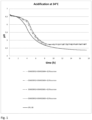
- Fig. 1 shows the acidification profiles of C1-C4 at 34 °C.
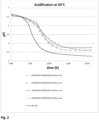
- Fig. 2 shows the acidification profiles of C1-C4 at 30 °C.
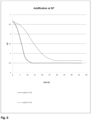
- Fig. 3 shows the acidification profile of C5 at 34 °C.
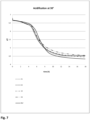
- Fig. 4 shows the acidification profile of C6 at 34 °C.
- ST1 was inoculated with 0.0065%. Fermentation was carried out at 30 °C for 24 hours LACcr1 and LACcr2 strains were inoculated directly from Pre-Inoculation Material (PIM) corresponding to 1.1E+09 cells / 200 ml milk. ST1 was inoculated with 0.0065%. Fermentation was carried out in skim milk containing 0.5 % glucose at 30 °C for 47 hours
- Fig. 5 shows the acidification profiles of LC5 + ST1 and LC7 + ST1 at 30 °C.
- Fig. 6 shows the acidification profiles of LACcr1 + ST1 and LACcr2 + ST1 at 30 °C.
- Acidification profiles and post acidification of culture blends consisting of one lactose-deficient, sucrose positive Lactococcus lactis subsp lactis (LC) strains, one lactose-deficient, glucose positive Lactococcus lactis subsp cremoris (LACcr), one lactose-deficient S. thermophilus (ST) and one mild S. thermophilus.
- LC sucrose positive Lactococcus lactis subsp lactis
- LACcr glucose positive Lactococcus lactis subsp cremoris
- ST lactose-deficient S. thermophilus
- mild S. thermophilus mild S. thermophilus.
- a reference culture was used containing a conventional lactose-positive Streptococcus thermophilus strain and a conventional lactose-positive Lactococcus lactis strain.
- Culture blends C1-C4 were acidified in skim milk containing 0.6% sucrose. Fermentation was carried out at 30 °C for 18 hours. Samples were stirred and cooled in ice water for approx. 15 minutes and then stored at 5 °C. Post-acidification (pH) was measured after a cold storage period of 28 days and shear stress was measured at day 7 using the method described in Example 1.
- Fig. 7 shows the acidification profiles of C1- C4 and the reference at 30 °C.
- Fig. 8 shows the acidification profiles of C1- C4 and the reference at 35 °C.
- the pH values of the culture blends C1-C4 stored for 28 days at 30°C are between 0.13-0.22 pH units higher than the pH of the reference culture.
- the pH values of the culture blends C1-C4 stored for 28 days at 35°C are between 0.05-0.16 pH units higher than the reference.
- the shear stress was either at the same level or higher for the culture blends C1-C4 than the shear stress for the reference culture.
- sucrose as carbohydrate source and a culture consisting one lactose-deficient, sucrose positive Lactococcus lactis subsp lactis (LC) strain, one lactose-deficient, glucose positive Lactococcus lactis subsp cremoris (CR / LACcr, one lactose-deficient S. thermophilus (ST) and one mild S. thermophilus (STmild).
- LC sucrose positive Lactococcus lactis subsp lactis
- CR / LACcr glucose positive Lactococcus lactis subsp cremoris
- ST lactose-deficient S. thermophilus
- STmild mild S. thermophilus
- a reference culture was used containing a conventional lactose-positive Streptococcus thermophilus strain and a conventional lactose-positive Lactococcus lactis strain.
- the milk base for the reference culture contained 2.7 % protein and 15 % fat.
- the milk base for cultures of the invention contained 2.4 % protein, 15 % fat and 0.45% sucrose.
- Table 21 Composition of milk base Milk base for invention (%) Milk base for reference (%) Milk 46.00 52.96 Cream 46.87 46.88 Skimmed Milk Powder 0.16 Sugar (Sucrose) 0.45 Water 6.68 Treatment Homogenization: 200/40 bar at 70°C Heat treatment: 92°C / 6 min
- Fermentation was carried out at temperatures 30 °C and 35 °C.
- Post-acidification and gel firmness were measured.
- Table 22 Post-acidification pH Day 0 (end pH) Day 1 Day 7 Day 14 Day 28 Day 1 minus Day 35 Ref. at 30°C 4.55 4.53 4.5 4.45 4.41 -0.12 C1 at 30°C 4.48 4.48 4.48 4.49 4.46 -0.02 C2 at 30°C 4.53 4.52 4.52 4.52 -0.00 C3 at 30°C 4.44 4.44 4.43 4.42 4.41 -0.03 Ref.
- sucrose as carbohydrate source and a culture consisting one lactose-deficient, sucrose positive Lactococcus lactis subsp lactis (LC) strain, one lactose-deficient, glucose positive Lactococcus lactis subsp cremoris (CR / LACcr, one lactose-deficient S. thermophilus (ST) and one mild S. thermophilus (STmild).
- LC sucrose positive Lactococcus lactis subsp lactis
- CR / LACcr glucose positive Lactococcus lactis subsp cremoris
- ST lactose-deficient S. thermophilus
- STmild mild S. thermophilus
- the milk base for the reference culture contained 3.2 % protein and 0.05 % fat.
- the milk base for cultures of the invention contained 3.2 % protein, 0.05 % fat and sucrose levels between 0.45% and 0.65% selected so as to be optimized to each specific culture composition.
- Fermentation was carried out at temperatures 30 °C and 35 °C. Culture inoculation percentage was 0.01%.
- Fig 9 shows the acidification profiles of C1- C3 and the reference at 30 °C.
- Fig 10 shows the acidification profiles of C1- C3 and the reference at 35 °C
- Post-acidification was measured at different time periods of cold storage (6°C).
- Table 24 Post-acidification pH Day 0 (end pH) Day 3 Day 8 Day 9 Day 13 Ref. at 30°C 4.68 ND 4.37 ND 4.38 C1 at 30°C 4.71 ND 4.70 ND 4.70 C2 at 30°C 4.68 ND 4.73 ND 4.73 C3 at 30°C 4.64 ND 4.68 ND 4.69 Ref. at 35°C 4.60 4.47 ND 4.48 ND C1 at 35°C 4.60 4.60 ND 4.60 ND C2 at 35°C 4.59 4.62 ND 4.61 ND C3 at 35°C 4.58 4.59 ND 4.59 ND ND: No data.
Landscapes
- Life Sciences & Earth Sciences (AREA)
- Chemical & Material Sciences (AREA)
- Engineering & Computer Science (AREA)
- Microbiology (AREA)
- Polymers & Plastics (AREA)
- Food Science & Technology (AREA)
- Health & Medical Sciences (AREA)
- Zoology (AREA)
- Bioinformatics & Cheminformatics (AREA)
- Organic Chemistry (AREA)
- Genetics & Genomics (AREA)
- Biotechnology (AREA)
- Wood Science & Technology (AREA)
- Medicinal Chemistry (AREA)
- Biochemistry (AREA)
- General Engineering & Computer Science (AREA)
- General Health & Medical Sciences (AREA)
- Biomedical Technology (AREA)
- Virology (AREA)
- Tropical Medicine & Parasitology (AREA)
- Dairy Products (AREA)
- Micro-Organisms Or Cultivation Processes Thereof (AREA)
Description
- The present invention relates to a process for producing a fermented milk product.
- Mesophilic fermented milk products are produced at a temperature between about 22°C and about 35°C, and typically the mesophilic lactic acid bacteria Lactococcus spp. and Leuconostoc spp. are used. Mesophilic fermented milk products include buttermilk, sour milk, cultured milk, smetana, sour cream, Kefir and fresh cheese, such as quark, tvarog and cream cheese.
-
EP-A1-2 957 180 discloses a method of producing a fermented milk product using lactose-deficient lactic acid bacteria, in particular lactose-deficient Streptococcus thermophilus strains and Lactobacillus delbrueckii subsp. bulgaricus strains.US-A1-2017/135360 relates to methods of producing fermented milk products which provide an improved control of post acidification, thereby eliminating the need to rapidly cool the fermented milk product at a predetermined pH value to terminate fermentation. - The object of the present invention is to provide an improved process for producing a mesophilic fermented milk product.
- The object of the present invention is obtained by a process for producing a fermented milk product comprising the steps of
- 1) adding a starter culture of lactic acid bacteria comprising at least one lactose-deficient Streptococcus thermophilus strain, which is capable of metabolizing a non-lactose carbohydrate, and at least one lactose-deficient Lactococcus lactis strain, which is capable of metabolizing the non-lactose carbohydrate, to a milk base, and
- 2) fermenting the milk for a period of time until a target pH is reached to obtain a fermented milk product,
- Lactose-deficient lactic acid bacteria typically grow on a non-lactose carbohydrate source, such as sucrose, galactose and glucose, added to the milk in an amount measured so as stop the fermentation process and the growth of the lactic acid bacteria by depletion of the added carbohydrate source. Hereby, the post-acidification during subsequent storage is lowered significantly or even fully prevented.
- The present invention is based on the recognition that it is possible to reduce or avoid post-acidification during storage in a mesophilic fermented milk product by using a combination of a mesophilic lactose-deficient Lactococcus lactis strain, and a lactose-deficient Streptococcus thermophilus strain.
- The present invention is further based on the experimental finding that the use of the said combination of strains also has a number of advantages in the production of the mesophilic fermented milk product. Firstly, in the process for producing a mesophilic fermented milk product the use of the said combination of strains allows omitting the step of cooling the fermented milk product after fermentation and before filling into end consumer cups. Thus, since no or only little post-acidification takes place after the termination of the fermentation due to the depletion of the carbohydrate growth source, cooling in order to reduce post-acidification is not necessary. Secondly, it has surprisingly been found that the said combination of strains produces an improved texture of the mesophilic fermented milk product as compared to a corresponding culture blend comprising lactose-positive strains.
-
-
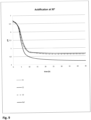
Fig. 1 shows the acidification profiles of cultures C1-C4 at 34 °C. -
Fig. 2 shows the acidification profiles of cultures C1-C4 at 30 °C. -
Fig. 3 shows the acidification profile of culture C5 at 34 °C. -
Fig. 4 shows the acidification profile of culture C6 at 34 °C. -
Fig. 5 shows the acidification profiles of culture blends LC5 + ST1 and LC7 + ST1 at 30°C. -
Fig. 6 shows the acidification profiles of culture blends LACcr1 + ST1 and LACcr2 + ST1 at 30°C. -
Fig. 7 shows the acidification profiles of culture blends C1- C4 and the reference at 30°C. -
Fig. 8 shows the acidification profiles of culture blends C1- C4 and the reference at 35°C. -
Fig 9 shows the acidification profiles of C1- C3 and the reference at 30°C. -
Fig 10 shows the acidification profiles of C1- C3 and the reference at 35°C - The terms "deficiency in lactose metabolism" and "lactose deficient" are used in the context of the present invention to characterize LAB which either partially or completely lost the ability to use lactose as a source for cell growth or maintaining cell viability. Respective LAB are capable of metabolizing one or several carbohydrates selected from sucrose, galactose and/or glucose or another fermentable carbohydrate. Since these carbohydrates are not naturally present in milk in sufficient amounts to support fermentation by lactose deficient mutants, it is necessary to add these carbohydrates to the milk. Lactose deficient and partially deficient LAB can be characterized as white colonies on a medium containing lactose and X-Gal.
- In a particular embodiment of the invention, the lactose-deficient strain is capable of metabolizing a non-lactose carbohydrate selected from the group consisting of sucrose, galactose and glucose, preferably sucrose. In a particular embodiment of the invention, the lactose-deficient strain is capable of metabolizing galactose.
- In a particular embodiment of the invention, the lactose-deficient Lactococcus lactis subsp. lactis strain is sucrose-positive.
- In a particular embodiment of the invention, the lactose-deficient Lactococcus lactis subsp. lactis strain is glucose-positive.
- In a particular embodiment of the invention, the lactose-deficient Streptococcus thermophilus strain is selected from the group consisting of:
- (a) the strain deposited with DSMZ-Deutsche Sammlung von Mikroorganismen und Zellkulturen GmbH, Inhoffenstr. 7B, D-38124 Braunschweig, on 2014-06-12 under the accession no. DSM 28952;
- (b) the strain deposited with DSMZ-Deutsche Sammlung von Mikroorganismen und Zellkulturen GmbH, Inhoffenstr. 7B, D-38124 Braunschweig, on 2014-06-12 under the accession no. DSM 28953;
- (c) the strain deposited with DSMZ-Deutsche Sammlung von Mikroorganismen und Zellkulturen GmbH, Inhoffenstr. 7B, D-38124 Braunschweig, on 2017-08-22 under the accession no. DSM 32599; and
- (d) the strain deposited with DSMZ-Deutsche Sammlung von Mikroorganismen und Zellkulturen GmbH, Inhoffenstr. 7B, D-38124 Braunschweig, on 2017-08-22 under the accession no. DSM 32600.
- In a particular embodiment of the invention, the lactose-deficient Streptococcus thermophilus strain is selected from the group consisting of:
- (a) the strain deposited with DSMZ-Deutsche Sammlung von Mikroorganismen und Zellkulturen GmbH, Inhoffenstr. 7B, D-38124 Braunschweig, on 2014-06-12 under the accession no. DSM 28952; and
- (b) the strain deposited with DSMZ-Deutsche Sammlung von Mikroorganismen und Zellkulturen GmbH, Inhoffenstr. 7B, D-38124 Braunschweig, on 2014-06-12 under the accession no. DSM 28953.
- In a particular embodiment of the invention, the lactose-deficient Streptococcus thermophilus strain is selected from the group consisting of:
- (c) the strain deposited with DSMZ-Deutsche Sammlung von Mikroorganismen und Zellkulturen GmbH, Inhoffenstr. 7B, D-38124 Braunschweig, on 2017-08-22 under the accession no. DSM 32599; and
- (d) the strain deposited with DSMZ-Deutsche Sammlung von Mikroorganismen und Zellkulturen GmbH, Inhoffenstr. 7B, D-38124 Braunschweig, on 2017-08-22 under the accession no. DSM 32600; and.
- In a particular embodiment of the invention, the Lactococcus lactis strain is selected from the group consisting of a Lactococcus lactis subsp. cremoris strain and a Lactococcus lactis subsp. lactis strain.
- In a particular embodiment of the invention, the lactose-deficient Lactococcus lactis strain is selected from the group consisting of
- 1) the strain deposited at DSMZ under the accession number DSM 32398,
- 2) the strain deposited at DSMZ under the accession number DSM 18882,
- 3) the strain deposited at DSMZ under the accession number DSM 32399,
- 4) the strain deposited at DSMZ under the accession number DSM 18893,
- 5) the strain deposited at DSMZ under the accession number DSM 32601,
- 6) the strain deposited at DSMZ under the accession number DSM 32602,
- 7) the strain deposited at DSMZ under the accession number DSM 32603,
- 8) the strain deposited at DSMZ under the accession number DSM 32604,
- 9) the strain deposited at DSMZ under the accession number DSM 32605,
- 10) the strain deposited at DSMZ under the accession number DSM 32829,
- 11) the strain deposited at DSMZ under the accession number DSM 32830, and
- 12) the strain deposited at DSMZ under the accession number DSM 32832.
- In a particular embodiment of the invention, the lactose-deficient Lactococcus lactis strain is selected from the group consisting of
- 1) the strain deposited at DSMZ under the accession number DSM 32398,
- 2) the strain deposited at DSMZ under the accession number DSM 18882,
- 3) the strain deposited at DSMZ under the accession number DSM 32399,
- 4) the strain deposited at DSMZ under the accession number DSM 18893,
- 5) the strain deposited at DSMZ under the accession number DSM 32829, and
- 6) the strain deposited at DSMZ under the accession number DSM 32830.
- The above strains 1) to 6) are glucose-positive and sucrose-negative.
- In a particular embodiment of the invention, the lactose-deficient Lactococcus lactis subsp. cremoris strain is selected from the group consisting of
- 1) the strain deposited at DSMZ under the accession number DSM 32398,
- 2) the strain deposited at DSMZ under the accession number DSM 18882,
- 3) the strain deposited at DSMZ under the accession number DSM 18893,
- 4) the strain deposited at DSMZ under the accession number DSM 32829, and
- 5) the strain deposited at DSMZ under the accession number DSM 32830.
- In a particular embodiment of the invention, the lactose-deficient Lactococcus lactis subsp. lactis strain is selected from the group consisting of
- 1) the strain deposited at DSMZ under the accession number DSM 32399.
- In a particular embodiment of the invention, the lactose-deficient Lactococcus lactis subsp. lactis strain is selected from the group consisting of
- 1) the strain deposited at DSMZ under the accession number DSM 32601,
- 2) the strain deposited at DSMZ under the accession number DSM 32602,
- 3) the strain deposited at DSMZ under the accession number DSM 32603,
- 4) the strain deposited at DSMZ under the accession number DSM 32604,
- 5) the strain deposited at DSMZ under the accession number DSM 32605, and
- 6) the strain deposited at DSMZ under the accession number DSM 32832.
- The above strains 1) to 6) are glucose-negative and sucrose-positive. The said strains 1) to 6) are preferred in that when used in the process of the invention they produce fermented milk products with increased smoothness.
- In a particular embodiment of the invention the lactose-deficient strains are capable of metabolizing a non-lactose carbohydrate selected from the group consisting of sucrose, galactose and glucose, preferably sucrose.
- In a particular embodiment of the invention, the non-lactose carbohydrate is added to the milk base at the start of the fermentation step.
- In a particular embodiment of the invention, the fermentation step is terminated by a method selected from the group consisting of 1) acidification of the fermented milk rendering at least one strain of the starter culture unable to grow, 2) cooling treatment and 3) depletion of the non-lactose carbohydrate.
- Preferably, the non-lactose carbohydrate is added to the milk base in an amount measured so as to become depleted and hence result in stopping the growth of lactic acid bacteria and in stopping the fermentation. Preferably, the non-lactose carbohydrate is added to the milk base in an amount measured so as to become depleted at the target pH and hence result in stopping the growth of lactic acid bacteria and in stopping the fermentation.
- The amount of non-lactose carbohydrate to be added to the milk base depends on a number of parameters, including the lactic acid bacteria strains used in the starter culture, the composition of the milk base, the fermentation temperature and the desired target pH. The amount of non-lactose carbohydrate to be added to the milk base can be determined by experimentation, and it is well within the skills of a skilled person to carry out such experimentation.
- In a particular embodiment of the invention the target pH is between 3.2 and 4.8, more preferably between 4.0 and 5.2, more preferably between 4.2 and 5.0 and most preferably between 4.4 and 4.8.
- In a particular embodiment of the invention the fermentation temperature is between 15°C and 35°C, preferably between 24°C and 35°C, more preferably between 26°C and 35°C, more preferably between 28°C and 35°C, and more preferably between 30°C and 34°C.
- In a particular embodiment of the invention the fermented milk product is not subjected to a cooling step after the end of the fermentation step and before packaging.
- In a particular embodiment of the invention, the fermented milk product is packaged at a temperature between 15 and 45°C.
- In a particular embodiment of the invention, the pH value of the fermented milk product is maintained within a range of 0.3 pH units, preferably within a range of 0.2 pH units and most preferably within a range of 0.1 pH units, when stored after termination of the fermentation at the temperature used for fermentation over a period of 20 hours.
- In a particular embodiment of the invention, the amount of added non-lactose carbohydrate is from 1 mg/g to 30 mg/g, preferably from 2 mg/g to 20 mg/g, and more preferably from 3 mg/g to 10 mg/g milk base.
- In a particular embodiment of the invention, the amount of added non-lactose carbohydrate is from 0.1 % to 10 %, preferably from 0.2 % to 8 %, preferably from 0.3 % to 2 %, preferably from 0.4 % to 1.5 %, and more preferably from 0.5 % to 1.2 %, wherein % is (w/w) based on milk base.
- In a particular embodiment of the invention the starter culture further contains one or more strains selected from the group consisting of Lactococcus lactis subsp. lactis biovar. diacetylactis, Leuconostoc spp. and Bifidobacterium spp. Also, the starter culture may contain a yeast. In a particular embodiment of the invention, the Leuconostoc spp. is selected from the group consisting of Leuconostoc mesenteroides and Leuconostoc pseudomesenteroides. In a particular embodiment of the invention, the Bifidobacterium spp. is selected from the group consisting of Bifidobacterium longum, Bifidobacterium adolescentis, Bifidobacterium bifidum, Bifidobacterium breve, Bifidobacterium animalis subsp. lactis, Bifidobacterium dentium, Bifidobacterium catenulatum, Bifidobacterium angulatum, Bifidobacterium magnum, Bifidobacterium pseudocatenulatum and Bifidobacterium infantis.
- In a preferred embodiment of the invention, the milk base at the start of the fermentation step has a content of lactose of between 30.0 mg/ml and 70 mg/ml, preferably between 35 mg/ml and 65 mg/ml, more preferably between 40 mg/ml and 60 mg/ml, and most preferably between 50 mg/ml and 60 mg/ml.
- The present invention further relates to a fermented milk product produced by the process of the invention.
- In the invention, the fermented milk product is a product produced by the process of the invention, which is produced using a starter culture of lactic acid bacteria strain comprising at least one lactose-deficient Streptococcus thermophilus strain and at least one lactose-deficient Lactococcus lactis strain.
- In a particular embodiment of the invention, the fermented milk product is selected from the group consisting of buttermilk, sour milk, cultured milk, Smetana, sour cream, thick cream, cultured cream, ymer, fermented whey, Kefir, and fresh cheese, such as Quark, tvarog and cream cheese. In particular, the fermented milk product is selected from the group consisting of Quark, sour cream and Kefir.
- In a preferred embodiment of the invention, the fermented milk product contains a further food product selected from the group consisting of fruit beverage, cereal products, fermented cereal products, chemically acidified cereal products, soy milk products, fermented soy milk products and any mixture thereof.
- The fermented milk product typically contains protein in a level of between 1.0 % by weight to 12.0 % by weight, preferably between 2.0 % by weight to 10.0 % by weight. In a particular embodiment, sour cream contains protein in a level of between 1.0 % by weight to 5.0 % by weight, preferably between 2.0 % by weight to 4.0 % by weight. In a particular embodiment, Quark contains protein in a level of between 4.0 % by weight to 12.0 % by weight, preferably between 5.0 % by weight to 10.0 % by weight.
- The present invention further relates to a composition of lactic acid bacteria comprising at least one lactose-deficient Streptococcus thermophilus strain and at least one lactose-deficient Lactococcus lactis strain.
- In a particular embodiment, the composition contains at least one lactose-deficient Streptococcus thermophilus strain and one lactose-deficient Lactococcus lactis strain. In a particular embodiment, the composition contains one lactose-deficient Streptococcus thermophilus strain and at least one lactose-deficient Lactococcus lactis strain.
- In a particular embodiment, the composition contains two or more lactose-deficient Streptococcus thermophilus strains and at least one lactose-deficient Lactococcus lactis. In a particular embodiment, the composition contains at least one lactose-deficient Streptococcus thermophilus strain and two or more lactose-deficient Lactococcus lactis strains.
- In a particular embodiment, the composition contains two or more lactose-deficient Streptococcus thermophilus strains and one lactose-deficient Lactococcus lactis. In a particular embodiment, the composition contains one lactose-deficient Streptococcus thermophilus strain and two or more lactose-deficient Lactococcus lactis strains.
- In a particular embodiment, the composition contains two lactose-deficient Streptococcus thermophilus strains and one lactose-deficient Lactococcus lactis. In a particular embodiment, the composition contains one lactose-deficient Streptococcus thermophilus strain and two lactose-deficient Lactococcus lactis strains.
- In a particular embodiment of the invention, the composition contains the strain deposited at DSMZ under the accession number DSM 32398, and the strain deposited at DSMZ under the accession number DSM 18882.
- In a particular embodiment of the invention, the composition contains the strain deposited at DSMZ under the accession number DSM 32398, and the strain deposited at DSMZ under the accession number DSM 18893.
- The present invention further relates to use in a process for producing a fermented milk product comprising the steps of
- 1) adding a starter culture of lactic acid bacteria strain to a milk base, and
- 2) fermenting the milk for a period of time until a target pH is reached to obtain a fermented milk product,
- A particular embodiment of the use of the invention is directed to use to increase the texture measured as shear stress or gel firmness of the fermented milk product as compared to using a starter culture comprising at least one lactose-positive Streptococcus thermophilus strain, which is capable of metabolizing lactose, and at least one lactose-positive Lactococcus lactis strain, which is capable of metabolizing lactose.
- In connection with the present invention the following definitions apply:
The expression "lactic acid bacteria" ("LAB") designates a gram-positive, microaerophilic or anaerobic bacteria, which ferment sugars with the production of acids including lactic acid as the predominantly produced acid, acetic acid and propionic acid. The industrially most useful lactic acid bacteria are found within the order "Lactobacillales" which includes Lactococcus spp., Streptococcus spp., Lactobacillus spp., Leuconostoc spp., Pseudoleuconostoc spp., Pediococcus spp., Brevibacterium spp., Enterococcus spp. and Propionibacterium spp. These are frequently used as food cultures alone or in combination with other lactic acid bacteria. - Lactic acid bacteria, including bacteria of the species Lactobacillus sp. and Lactococcus sp., are normally supplied to the dairy industry either as frozen or freeze-dried cultures for bulk starter propagation or as so-called "Direct Vat Set" (DVS) cultures, intended for direct inoculation into a fermentation vessel or vat for the production of a dairy product, such as a fermented milk product or a cheese. Such lactic acid bacterial cultures are in general referred to as "starter cultures" or "starters". Typically, a starter culture for yogurt comprises Streptococcus thermophilus and Lactobacillus delbrueckii subsp. bulgaricus, and in most countries a yogurt is by legislation defined as a fermented milk product produced using a starter culture comprising the two said strains.
- The term "milk" is to be understood as the lacteal secretion obtained by milking of any mammal, such as cows, sheep, goats, buffaloes or camels. In a preferred embodiment, the milk is cow's milk. The term milk also includes protein/fat solutions made of plant materials, e.g. soy milk.
- The term "milk base" may be any raw and/or processed milk material that can be subjected to fermentation according to the method of the invention. Thus, useful milk bases include, but are not limited to, solutions/-suspensions of any milk or milk like products comprising protein, such as whole or low fat milk, skim milk, buttermilk, reconstituted milk powder, condensed milk, dried milk, whey, whey permeate, lactose, mother liquid from crystallization of lactose, whey protein concentrate, or cream. Obviously, the milk base may originate from any mammal, e.g. being substantially pure mammalian milk, or reconstituted milk powder.
- Prior to fermentation, the milk base may be homogenized and pasteurized according to methods known in the art.
- "Homogenizing" as used herein means intensive mixing to obtain a soluble suspension or emulsion. If homogenization is performed prior to fermentation, it may be performed so as to break up the milk fat into smaller sizes so that it no longer separates from the milk. This may be accomplished by forcing the milk at high pressure through small orifices.
- "Pasteurizing" as used herein means treatment of the milk base to reduce or eliminate the presence of live organisms, such as microorganisms. Preferably, pasteurization is attained by maintaining a specified temperature for a specified period of time. The specified temperature is usually attained by heating. The temperature and duration may be selected in order to kill or inactivate certain bacteria, such as harmful bacteria. A rapid cooling step may follow.
- "Fermentation" in the methods of the present invention means the conversion of carbohydrates into alcohols or acids through the action of a microorganism. Preferably, fermentation in the methods of the invention comprises conversion of lactose to lactic acid.
- Fermentation processes to be used in production of dairy products are well known and the person of skill in the art will know how to select suitable process conditions, such as temperature, oxygen, amount and characteristics of microorganism(s) and process time. Obviously, fermentation conditions are selected so as to support the achievement of the present invention, i.e. to obtain a dairy product in solid (such as a cheese) or liquid form (such as a fermented milk product).
- The expression "fermented milk product" means a food or feed product wherein the preparation of the food or feed product involves fermentation of a milk base with a lactic acid bacterium. "Fermented milk product" as used herein includes but is not limited to products such as thermophilic fermented milk products, e.g. yoghurt, mesophilic fermented milk products, e.g. sour cream and buttermilk, as well as fermented whey.
- The term "thermophile" herein refers to microorganisms that thrive best at temperatures above 35°C. The industrially most useful thermophilic bacteria include Streptococcus spp. and Lactobacillus spp. The term "thermophilic fermentation" herein refers to fermentation at a temperature above about 35°C, such as between about 35°C to about 45°C. The term "thermophilic fermented milk product" refers to fermented milk products prepared by thermophilic fermentation of a thermophilic starter culture and include such fermented milk products as set-yoghurt, stirred-yoghurt and drinking yoghurt, e.g. Yakult.
- The term "mesophile" herein refers to microorganisms that thrive best at moderate temperatures (15°C-35°C). The industrially most useful mesophilic bacteria include Lactococcus spp. and Leuconostoc spp. The term "mesophilic fermentation" herein refers to fermentation at a temperature between about 22°C and about 35°C. The term "mesophilic fermented milk product" refers to fermented milk products prepared by mesophilic fermentation of a mesophilic starter culture and include such fermented milk products as buttermilk, sour milk, cultured milk, Smetana, sour cream, thick cream, cultured cream, ymer, fermented whey, Kefir, Yakult and fresh cheese, such as Quark, tvarog and cream cheese.
- In connection with the present invention, "shear stress" may be measured by the following method:
Seven days after production, the fermented milk product was brought to 13°C and manually stirred gently by means of a spoon (5 times) until homogeneity of the sample. The rheological properties of the sample were assessed on a rheometer (Anton Paar Physica Rheometer with ASC, Automatic Sample Changer, Anton Paar® GmbH, Austria) by using a bob-cup. The rheometer was set to a constant temperature of 13 °C during the time of measurement. Settings were as follows: - 5 minutes without any physical stress (oscillation or rotation) applied to the sample. Oscillation step (to measure the elastic and viscous modulus, G' and G", respectively, therefore calculating the complex modulus G*)
-

- 6 measuring points over 60 s (one every 10 s)
- Two steps were designed:
Shear rate = [0.3-300] 1/s and 2) Shear rate = [275-0.3] 1/s. - Each step contained 21 measuring points over 210 s (on every 10 s).
- The shear stress at 300 1/s was chosen for further analysis, as this correlates to mouth thickness when swallowing a fermented milk product.
- In connection with the present invention, "gel firmness" may be measured by the following method:
Gel firmness is measured by a back extrusion test with a texture analyzer (TA.XT Plus, Stable Micro System, Surrey, UK) supplied with a 35mm parallel plate. The travel distance is set to 15 mm, and the travel speed to 2 mm/s. The test is performed after 7 days from production. The fermented milk product was brought to 13°C and manually stirred gently and measured in a 250 g plastic container. The maximal force (N or g) obtained by force versus distance curves is used as "gel firmness" parameter, the positive area (N*mm) as degree of deformation, the maximal negative force (N) as ropiness. - The term "low pH stable lactase" herein refers to a lactase, which retains its activity at a pH of 5.0 and a temperature of 37 0C at a level of at least 5 % as compared to its activity at the optimum pH of the lactase.
- The term "activity at the optimum pH" means the lactase activity at the pH, where the lactase has its optimum activity.
- The term "non-lactose carbohydrate" means any carbohydrate, which is not lactose, and which a lactose-deficient lactic acid bacterium used in the process of the invention is capable of metabolizing.
- The term "depletion" in relation to non-lactose carbohydrate means that the concentration of the non-lactose carbohydrate is zero or so low so that the starter culture is no longer capable of growing.
- The expression "at the start of the fermentation step" means shortly before, at the same time as or shortly after addition of the starter culture to the milk base. Here, the term "shortly" means less than 30 minutes".
- The expression "during the fermentation step" means at any time during the fermentation after the start and before the end of the fermentation.
- The expression "at the end of the fermentation step" means shortly before, at the same time as or shortly after the target pH is reached. Here, the term "shortly" means less than 30 minutes".
- The term "target pH" means the pH at which the fermentation step ends. Depending on various parameters of the process, the fermentation step is terminated by a method selected from the group consisting of 1) acidification of the fermented milk rendering at least one strain of the starter culture unable to grow, 2) cooling treatment and 3) depletion of the non-lactose carbohydrate.
- In the present context, the term "mutant strain" should be understood as strains derived, or strains which can be derived from a strain (or their mother strain) of the invention by means of e.g. genetic engineering, radiation and/or chemical treatment. The "strains derived therefrom" can also be spontaneously occurring mutants. It is preferred that the "strains derived therefrom" are functionally equivalent mutants, e.g. mutants that have substantially the same, or improved properties as their mother strain. Especially, the term "mutant strains" refers to strains obtained by subjecting a strain of the invention to any conventionally used mutagenization treatment including treatment with a chemical mutagen such as ethane methane sulphonate (EMS) or N-methyl-N'-nitro-N-nitroguanidine (NTG), UV light, or to a spontaneously occurring mutant. A mutant may have been subjected to several mutagenization treatments (a single treatment should be understood as one mutagenization step followed by a screening/selection step), but it is presently preferred that no more than 20, or no more than 10, or no more than 5, treatments (or screening/selection steps) are carried out. In a presently preferred mutant less than 1%, less than 0.1%, less than 0.01%, less than 0.001% or even less than 0.0001% of the nucleotides in the bacterial genome have been replaced with another nucleotide, or deleted, compared to the mother strain.
- The Applicant requests that a sample of the deposited microorganism should be made available only to an expert approved by the Applicant.
- Streptococcus thermophilus strain deposited with DSMZ-Deutsche Sammlung von Mikroorganismen und Zellkulturen GmbH, Inhoffenstr. 7B, D-38124 Braunschweig, on 2014-06-12 under the accession no. DSM 28952.
- Streptococcus thermophilus strain deposited with DSMZ-Deutsche Sammlung von Mikroorganismen und Zellkulturen GmbH, Inhoffenstr. 7B, D-38124 Braunschweig, on 2014-06-12 under the accession no. DSM 28953.
- Streptococcus thermophilus strain deposited with DSMZ-Deutsche Sammlung von Mikroorganismen und Zellkulturen GmbH, Inhoffenstr. 7B, D-38124 Braunschweig, on 2017-08-22 under the accession no. DSM 32599.
- Streptococcus thermophilus strain deposited with DSMZ-Deutsche Sammlung von Mikroorganismen und Zellkulturen GmbH, Inhoffenstr. 7B, D-38124 Braunschweig, on 2017-08-22 under the accession no. DSM 32600.
- Lactococcus lactis subsp. cremoris strain deposited with DSMZ-Deutsche Sammlung von Mikroorganismen und Zellkulturen GmbH, Inhoffenstr. 7B, D-38124 Braunschweig, on 2016-12-06 under the accession no. DSM 32398.
- Lactococcus lactis subsp. cremoris strain deposited with DSMZ-Deutsche Sammlung von Mikroorganismen und Zellkulturen GmbH, Inhoffenstr. 7B, D-38124 Braunschweig, on 2006-12-19 under the accession no. DSM 18882.
- Lactococcus lactis subsp. cremoris strain deposited with DSMZ-Deutsche Sammlung von Mikroorganismen und Zellkulturen GmbH, Inhoffenstr. 7B, D-38124 Braunschweig, on 2006-12-19 under the accession no. DSM 18893.
- Lactococcus lactis subsp. lactis strain deposited with DSMZ-Deutsche Sammlung von Mikroorganismen und Zellkulturen GmbH, Inhoffenstr. 7B, D-38124 Braunschweig, on 2016-12-06 under the accession no. DSM 32399.
- Lactococcus lactis subsp. lactis strain deposited with DSMZ-Deutsche Sammlung von Mikroorganismen und Zellkulturen GmbH, Inhoffenstr. 7B, D-38124 Braunschweig, on 2017-08-22 under the accession no. DSM 32601.
- Lactococcus lactis subsp. lactis strain deposited with DSMZ-Deutsche Sammlung von Mikroorganismen und Zellkulturen GmbH, Inhoffenstr. 7B, D-38124 Braunschweig, on 2017-08-22 under the accession no. DSM 32602.
- Lactococcus lactis subsp. lactis strain deposited with DSMZ-Deutsche Sammlung von Mikroorganismen und Zellkulturen GmbH, Inhoffenstr. 7B, D-38124 Braunschweig, on 2017-08-22 under the accession no. DSM 32603.
- Lactococcus lactis subsp. lactis strain deposited with DSMZ-Deutsche Sammlung von Mikroorganismen und Zellkulturen GmbH, Inhoffenstr. 7B, D-38124 Braunschweig, on 2017-08-22 under the accession no. DSM 32604.
- Lactococcus lactis subsp. lactis strain deposited with DSMZ-Deutsche Sammlung von Mikroorganismen und Zellkulturen GmbH, Inhoffenstr. 7B, D-38124 Braunschweig, on 2017-08-22 under the accession no. DSM 32605.
- Lactococcus lactis subsp. cremoris strain deposited with DSMZ-Deutsche Sammlung von Mikroorganismen und Zellkulturen GmbH, Inhoffenstr. 7B, D-38124 Braunschweig, on 2018-06-05 under the accession no. DSM 32829.
- Lactococcus lactis subsp. cremoris strain deposited with DSMZ-Deutsche Sammlung von Mikroorganismen und Zellkulturen GmbH, Inhoffenstr. 7B, D-38124 Braunschweig, on 2018-06-05 under the accession no. DSM 32830.
- Lactococcus lactis subsp. lactis strain deposited with DSMZ-Deutsche Sammlung von Mikroorganismen und Zellkulturen GmbH, Inhoffenstr. 7B, D-38124 Braunschweig, on 2018-06-05 under the accession no. DSM 32832.
- The deposits were made according to the Budapest treaty on the international recognition of the deposit of microorganisms for the purposes of patent procedure.
- Production of stirred sour cream using sucrose as carbohydrate source and a culture consisting of one lactose-deficient S. thermophilus (ST) and one or two lactose-deficient L. lactis subsp. cremoris (CR)
-
- ST1: Streptococcus thermophilus DSM 28952
- CR1: Lactococcus lactis subsp. cremoris DSM 32398
- CR7: Lactococcus lactis subsp. cremoris DSM 18893
-
Table 1 ST1 (%) CR1 (%) CR7 (%) M1 72.2 27.8 0.0 M2 72.2 13.9 13.9 - As a basis of comparison a reference culture was used containing a conventional lactose-positive Streptococcus thermophilus strain and a conventional lactose-positive Lactococcus lactis strain.
- The milk base for the reference culture contained 3.5 % protein and 15 % fat. The milk base for cultures of the invention contained 3.2 % protein and 15 % fat.
Table 2: Composition of milk base Milk base for invention (%) Milk base for reference (%) Milk 50.74 50.63 Cream 46.87 46.87 Skimmed Milk Powder 1.67 2.49 Sugar (Sucrose) 0.71 0.0 - Fermentation was carried out at
temperatures 30 °C and 34 °C. - Samples of the stirred sour cream produced were filled into cups and stored at 6 °C and pH was measured at the end of fermentation and at
days - The reference sample was cooled to 16 °C before filling into cups.
- The samples produced according to the invention were not cooled prior to filling into cups.
- Post-acidification, gel firmness and shear stress were measured.
- Fat and protein levels were determined using MilkoScan analysis.
- A back extrusion test was conducted to evaluate gel firmness. The samples were tempered to be 13°C for one hour prior to shear stress measurements. Stirring with spoon was applied to give a homogenous sample, i.e. stirring five times. Measurement was done by TA-XT plus, software Texture Expert Exceed v6.1.9.0. A cylindrical acrylic probe (Ø 40mm) penetrated the yogurt to a depth of 15mm with a speed of 2mm/s and a trigger force of 5g. The positive area was used as firmness measurement.
- Seven days after incubation, the fermented milk product was brought to 13°C and manually stirred gently by means of a spoon (5 times) until homogeneity of the sample. The rheological properties of the sample were assessed on a rheometer (Anton Paar Physica Rheometer with ASC, Automatic Sample Changer, Anton Paar® GmbH, Austria) by using a bob-cup. The rheometer was set to a constant temperature of 13 °C during the time of measurement. Settings were as follows:
- 5 minutes without any physical stress (oscillation or rotation) applied to the sample. Oscillation step (to measure the elastic and viscous modulus, G' and G", respectively, therefore calculating the complex modulus G*)
- Constant strain = 0.3 %, frequency (f) = [0.5...8] Hz
- 6 measuring points over 60 s (one every 10 s)
- Two steps were designed:
1) Shear rate = [0.3-300] 1/s and 2) Shear rate = [275-0.3] 1/s. - Each step contained 21 measuring points over 210 s (on every 10 s).
- The shear stress at 300 1/s was chosen for further analysis, as this correlates to mouth thickness when swallowing a fermented milk product.
-
Table 3 Day 0 (end pH) Day 7Day 14Day 21 Day 28 Day 35Day 42 Ref. at 30 °C 4.50 4.46 4.43 4.41 4.45 4.43 4.41 M1 at 30 °C 4.48 4.48 4.47 4.45 4.45 4.45 4.45 M2 at 30 °C 4.50 4.52 4.49 4.49 4.49 4.49 4.49 Ref. at 34 °C 4.50 4.48 4.42 4.40 4.40 4.39 4.40 M1 at 34 °C 4.45 4.44 4.44 4.42 4.37 4.37 4.40 M2 at 34 °C 4.50 4.52 4.44 4.44 4.42 4.42 4.42 - As will appear for the results of Table 3, for the samples fermented at 30 °C the post-acidification of the samples produced in accordance with the process of the invention was less than that of the reference sample. For the samples fermented at 34 °C the post-acidification of sample M2 produced in accordance with the process of the invention was less than that of the reference sample, whereas the post-acidification of sample M1 was at the same level as that of the reference sample.
-
Table 4 Positive area (g.s) Ref. at 30 °C 526.8 M1 at 30 °C 560.01 M2 at 30 °C 648.28 Ref. at 34 °C 510.58 M1 at 34 °C 639.0 M2 at 34 °C 999.55 - As will appear from Table 4, the gel firmness of the samples produced in accordance with the process of the invention was significantly enhanced as compared to the corresponding reference samples.
-
Table 5 Shear stress (Pa) Ref. at 34 °C 148 M1 at 34 °C 156 M2 at 34 °C 170 - As will appear from Table 5, the shear stress of the samples produced in accordance with the process of the invention was significantly enhanced as compared to the reference sample.
- As will appear from the above results the samples produced in accordance with the process of the invention had superior performance with respect to post-acidification and texture as compared to the reference sample, although the samples of the invention were not cooled before filling in contrast to the reference samples. Thus, the present results show that using the process of the invention it is possible to omit the step of cooling the fermented milk products before filling into end consumer cups.
- The object of this experiment is the production of Quark with a target protein content of 7.5 %. The milk base consists of pure milk with 3.2 % protein and 0 % fat. Sucrose is added to the milk bases to be used for the cultures of the invention. No sucrose is added to the milk base for the reference culture. The strains, culture compositions, procedure and measurements are the same as in Example 1.
-
Table 6 Day 0 (end pH) Day 7Day 14Day 21 Day 28 Ref. at 30 °C 4.55 4.37 4.35 4.30 4.28 M1 at 30 °C 4.53 4.50 4.50 4.50 4.50 M2 at 30 °C 4.55 4.51 4.51 4.50 4.50 Ref. at 34 °C 4.54 4.45 4.43 4.40 4.39 M1 at 34 °C 4.47 4.50 4.47 4.47 4.47 M2 at 34 °C 4.53 4.50 4.48 4.48 4.48 - As will appear for the results of Table 6, the post-acidification of the samples produced in accordance with the process of the invention was less than that of the corresponding reference samples.
-
Table 7 Positive area (g.s) Ref. at 30 °C 264.12 M1 at 30 °C 283.21 M2 at 30 °C 415.88 Ref. at 34 °C 113.46 M1 at 34 °C 127.71 M2 at 34 °C 126.97 - As will appear from Table 7, the gel firmness of the samples produced in accordance with the process of the invention was significantly enhanced as compared to the corresponding reference samples.
- In this experiment glucose was used as carbohydrate source. Fermentation temperatures were 30 °C and 35 °C. The procedure and measurements were the same as in Example 1.
-
- ST1: Streptococcus thermophilus DSM 28952
- CR1: Lactococcus lactis subsp. cremoris DSM 32398
- CR2: Lactococcus lactis subsp. cremoris DSM 18882
- CR7: Lactococcus lactis subsp. cremoris DSM 18893
-
Table 8 ST1 (%) CR1 (%) CR2 (%) CR7 (%) M1.2 72.2 13.9 13.9 0.0 M1.7 72.2 13.9 0.0 13.9 - As a basis of comparison a reference culture was used containing a conventional lactose-positive Streptococcus thermophilus strain and a conventional lactose-positive Lactococcus lactis strain.
- The milk base for the reference culture contained 3.5 % protein and 15 % fat. The milk base for cultures of the invention contained 3.2 % protein and 15 % fat.
Table 9: Composition of milk base Milk base for invention (kg) Milk base for reference (kg) Milk 18.34 19.66 Cream 16.40 17.34 Skimmed Milk Powder 0.025 0.002 Sugar (Glucose) 0.228 0.0 -
Table 10 Day 0 (end pH) Day 7Day 21 Day 28 Ref. at 30 °C 4.57 4.47 4.46 4.46 M1.2 at 30 °C 4.54 4.58 4.64 4.62 M1.7 at 30 °C 4.58 4.62 4.68 4.65 Ref. at 35 °C 4.57 4.48 4.50 4.47 M1.2 at 35 °C 4.58 4.60 4.65 4.62 M1.7 at 35 °C 4.56 4.60 4.66 4.64 - As will appear for the results of Table 10, the post-acidification of the samples produced in accordance with the process of the invention was less than that of the corresponding reference samples.
-
Table 11 Positive area (g.s) Ref. at 30 °C 1650.46 M1.2 at 30 °C 1718.41 M1.7 at 30 °C 1658.08 Ref. at 35 °C 1880.56 M1.2 at 35 °C 2494.80 M1.7 at 35 °C 1970.33 - As will appear from Table 11, the gel firmness of the samples produced in accordance with the process of the invention was significantly enhanced as compared to the corresponding reference samples.
- In this experiment glucose was used as carbohydrate source. Fermentation temperature was 30 °C. The strains, culture compositions, procedure and measurements are the same as in Example 3.
-
Table 12 Milk base for invention (kg) Milk 59.61 Glucose 0.390 -
Table 13 Day 0 (end pH) Day 7Day 14Day 21 Day 28 Day 36Day 42 Day 49 Ref. at 30 °C 4.63 4.45 4.39 4.37 4.35 4.38 4.38 4.35 M1.2 at 30 °C 4.68 4.78 4.78 4.78 4.74 4.80 4.80 4.74 M1.7 at 30 °C 4.65 4.82 4.78 4.78 4.78 4.78 4.77 4.76 - As will appear for the results of Table 13, the post-acidification of the samples produced in accordance with the process of the invention was less than that of the corresponding reference samples.
-
Table 14 Positive area (g.s) Ref. at 30 °C 88.2 M1.2 at 30 °C 104.53 M1.7 at 30 °C 132.44 - As will appear from Table 14, the gel firmness of the samples produced in accordance with the process of the invention was significantly enhanced as compared to the corresponding reference samples.
- The milk based consisted of skim milk containing either 0.7 % glucose or 0.6 % sucrose. Fermentation was carried out at 30 °C until a target pH of 4.6 was reached. Samples were stirred and cooled in ice water for approx. 15 minutes and then stored at 5 °C. Texture (shear stress) was measured at
day 7. - ST2: Streptococcus thermophilus DSM 32599.
-
Table 15 ST1 (%) ST2 (%) CR1 (%) CR7 (%) M1.7_ST1 72.2 13.9 13.9 M1.7_ST2 72.2 13.9 13.9 -
Table 16 Carbohydrate Shear stress (Pa) M1.7_ST1 Glucose 30.55 M1.7_ST2 Glucose 31.15 M1.7_ST1 Sucrose 42.00 M1.7_ST2 Sucrose 39.40 - As will appear from Table 16, cultures with the two Streptococcus thermophilus produced quark with the same level of shear stress. Also, the samples grown on sucrose had a higher level of shear stress than the samples grown on glucose.
- Acidification profiles of cultures consisting of one lactose-deficient S. thermophilus (ST) and one or two lactose-deficient, sucrose-positive L. lactis subsp. lactis (LC)
-
- ST1: Streptococcus thermophilus DSM 28952
- ST2: Streptococcus thermophilus DSM 32599
- LC1: Lactococcus lactis subsp. lactis DSM 32603
- LC2: Lactococcus lactis subsp. lactis DSM 32604
- LC3: Lactococcus lactis subsp. lactis DSM 32601
- LC4: Lactococcus lactis subsp. lactis DSM 32602
- LC5: Lactococcus lactis subsp. lactis DSM 32605
-
Table 17 ST (%) ST2 (%) LC1 (%) LC2 (%) LC3 (%) LC4 (%) LC5 (%) C1 72.2 27.8 C2 72.2 27.8 C3 72.2 27.8 C4 72.2 27.8 C5 72.2 27.8 C6 72.2 27.8 - As a basis of comparison a reference culture was used containing a conventional lactose-positive Streptococcus thermophilus strain and a conventional lactose-positive Lactococcus lactis strain.
- Overnight cultures grown in M17 medium containing 1 % sucrose were inoculated in 200 ml B-milk containing 0.5 % sucrose and 0.02 g/L Na-format and incubated in water bath at either 30 °C or 34 °C. pH is followed for an extended period of time after the target pH is reached.
-
Fig. 1 shows the acidification profiles of C1-C4 at 34 °C. -
Fig. 2 shows the acidification profiles of C1-C4 at 30 °C. -
Fig. 3 shows the acidification profile of C5 at 34 °C. -
Fig. 4 shows the acidification profile of C6 at 34 °C. - As will appear from
Fig. 1 and3 for all of cultures C1-C5 at 34 °C the pH drops to a target level of approx. 4.7- 4.8 in approx. 8 hours. As will appear fromFig. 2 for cultures C1-C4 at 30 °C the pH drops to a target level of approx. 4.7- 4.8 in approx. 14 hours. As will appear fromFig. 4 for culture C6 at 34 °C the pH drops to a target level of approx. 4.7- 4.8 in approx. 10 hours. After reaching the target pH the pH remains completely constant for the following period as long as pH is measured, i.e. no post-acidification occurs. - In comparison, for the reference product the pH continues to decline for the entire period wherein pH is followed, i.e. post-acidification occurs.
- Acidification profiles of two lactose-deficient, sucrose positive Lactococcus lactis subsp. lactis (LC) strains and two lactose-deficient, glucose positive Lactococcus lactis subsp. lactis cremoris (LACcr) strains.
-
- LC5: Lactococcus lactis subsp. lactis DSM 32605
- LC7: Lactococcus lactis subsp. lactis DSM 32832
- LACcr1: Lactococcus lactis subsp. lactis DSM 32829
- LACcr2: Lactococcus lactis subsp. lactis DSM 32830
- ST1: Streptococcus thermophilus DSM 28952
-
- LC5 + ST1
- LC7 + ST1
- LACcr1 + ST1
- LACcr2 + ST1
- Overnight cultures of LC5 and LC7 were grown in autoclaved milk (A-milk) containing 2 % and used to inoculate 200 ml skim milk containing 0.5 % sucrose.
- ST1 was inoculated with 0.0065%. Fermentation was carried out at 30 °C for 24 hours
LACcr1 and LACcr2 strains were inoculated directly from Pre-Inoculation Material (PIM) corresponding to 1.1E+09 cells / 200 ml milk. ST1 was inoculated with 0.0065%. Fermentation was carried out in skim milk containing 0.5 % glucose at 30 °C for 47 hours -
Fig. 5 shows the acidification profiles of LC5 + ST1 and LC7 + ST1 at 30 °C. -
Fig. 6 shows the acidification profiles of LACcr1 + ST1 and LACcr2 + ST1 at 30 °C. - As will appear from
Fig. 5 and6 the pH drops to a stable level reflecting a termination of the fermentation due to decrease/depletion of the added carbohydrate source. After reaching the stable pH it remains completely constant for the following period for as long as pH is measured, i.e. no post-acidification occurs. - Acidification profiles and post acidification of culture blends consisting of one lactose-deficient, sucrose positive Lactococcus lactis subsp lactis (LC) strains, one lactose-deficient, glucose positive Lactococcus lactis subsp cremoris (LACcr), one lactose-deficient S. thermophilus (ST) and one mild S. thermophilus.
-
- LC5: Lactococcus lactis subsp. lactis DSM 32605
- LC7: Lactococcus lactis subsp. lactis DSM 32832
- LACcr1: Lactococcus lactis subsp. cremoris DSM 32829
- LACcr2: Lactococcus lactis subsp. cremoris DSM 32830
- ST1: Streptococcus thermophilus DSM 28952
- STmild: Commercial Streptococcus thermophilus strain with a low acidification capacity.
-
Table 18 ST1 ST mild LC5 LC7 LACcr1 LACcr C1 X X X X C2 X X X X C3 X X X X C4 X X X X - As a basis of comparison, a reference culture was used containing a conventional lactose-positive Streptococcus thermophilus strain and a conventional lactose-positive Lactococcus lactis strain.
- Culture blends C1-C4 were acidified in skim milk containing 0.6% sucrose. Fermentation was carried out at 30 °C for 18 hours. Samples were stirred and cooled in ice water for approx. 15 minutes and then stored at 5 °C. Post-acidification (pH) was measured after a cold storage period of 28 days and shear stress was measured at
day 7 using the method described in Example 1. -
Fig. 7 shows the acidification profiles of C1- C4 and the reference at 30 °C. -
Fig. 8 shows the acidification profiles of C1- C4 and the reference at 35 °C. - As will appear from the
Fig 7 (30°C) the pH stabilizes at 4.55 for the culture blends C1-C3 after approximately 13 hours and for C4 after approximately 17 hours. Acidification profiles at 35° (Fig. 8 ) show pH stabilization at approximately pH 4.60 after 11 hours for all culture blends C1-C4. For the reference culture, the pH continues to drop throughout the full period monitored (18 hours) at both 30°C and 35°C.Table 19: Long term post-acidification and shear stress Temperature pH Day 28 Shear stress at 300 1/s C1 30°C 4.45 39.90 C2 4.53 43.45 C3 4.44 41.65 C4 4.48 48.00 Ref 4.31 40.35 C1 35°C 4.43 46.80 C2 4.54 47.45 C3 4.52 50.75 C4 4.52 48.65 Ref 4.38 40.85 - As will appear from Table 19, the pH values of the culture blends C1-C4 stored for 28 days at 30°C are between 0.13-0.22 pH units higher than the pH of the reference culture. The pH values of the culture blends C1-C4 stored for 28 days at 35°C are between 0.05-0.16 pH units higher than the reference.
- For both the samples stored 30°C and at 35°C, the shear stress was either at the same level or higher for the culture blends C1-C4 than the shear stress for the reference culture.
- Production of stirred sour cream using sucrose as carbohydrate source and a culture consisting one lactose-deficient, sucrose positive Lactococcus lactis subsp lactis (LC) strain, one lactose-deficient, glucose positive Lactococcus lactis subsp cremoris (CR / LACcr, one lactose-deficient S. thermophilus (ST) and one mild S. thermophilus (STmild).
-
- LC7: Lactococcus lactis subsp. lactis DSM 32832
- LACcr1: Lactococcus lactis subsp. cremoris DSM 32829
- LACcr2: Lactococcus lactis subsp. cremoris DSM 32830
- CR7: Lactococcus lactis subsp. cremoris DSM 18893
- ST1: Streptococcus thermophilus DSM 28952
- STmild1: Commercial Streptococcus thermophilus strain with a low acidification capacity.
- STmild2: Commercial Streptococcus thermophilus strain with a low acidification capacity.
-
Table 20 ST1 STmild 1 STmild2 LC7 LACcr1 LACcr2 CR7 C1 X X X X C2 X X X X C3 X X X X - As a basis of comparison, a reference culture was used containing a conventional lactose-positive Streptococcus thermophilus strain and a conventional lactose-positive Lactococcus lactis strain.
- The milk base for the reference culture contained 2.7 % protein and 15 % fat. The milk base for cultures of the invention contained 2.4 % protein, 15 % fat and 0.45% sucrose.
Table 21: Composition of milk base Milk base for invention (%) Milk base for reference (%) Milk 46.00 52.96 Cream 46.87 46.88 Skimmed Milk Powder 0.16 Sugar (Sucrose) 0.45 Water 6.68 Treatment Homogenization: 200/40 bar at 70°C Heat treatment: 92°C / 6 min - Fermentation was carried out at
temperatures 30 °C and 35 °C. - Reference was post treated using 2 bar back pressure and cooling to 18°C. The samples produced according to the invention were post treated using 2 bar back pressure at fermentation temperature (30°c and 35°C).
- Samples were stored at 6 °C.
- Post acidification (pH) was measured after a cold storage period of 28 days and gel firmness was measured after
day 7. The procedures for texture measurements (gel firmness) were the same as in Example 1. - Post-acidification and gel firmness were measured.
Table 22: Post-acidification pH Day 0 (end pH) Day 1 Day 7Day 14Day 28 Day 1 minus Day 35Ref. at 30°C 4.55 4.53 4.5 4.45 4.41 -0.12 C1 at 30°C 4.48 4.48 4.48 4.49 4.46 -0.02 C2 at 30°C 4.53 4.52 4.52 4.52 4.52 -0.00 C3 at 30°C 4.44 4.44 4.43 4.42 4.41 -0.03 Ref. at 35°C 4.55 4.54 4.52 4.50 4.46 -0.08 C1 at 35°C 4.56 4.55 4.53 4.52 4.49 -0.06 C2 at 35°C 4.51 4.5 4.49 4.48 4.46 -0.04 C3 at 35°C 4.56 4.55 4.52 4.52 4.49 -0.06 - As will appear from the results of Table 22, the post-acidification of the samples produced in accordance with the process of the invention was less than that of the corresponding reference samples.
Table 23: Gel firmness Gel firmness Positive area (g.s) Ref. at 30°C 1299 C1 at 30°C 2164 C2 at 30°C 2789 C3 at 30°C 2832 Ref. at 35°C 1272 C1 at 35°C 2885 C2 at 35°C 2684 C3 at 35°C 3130 - As will appear from Table 23, the gel firmness of the samples produced in accordance with the process of the invention was significantly enhanced as compared to the corresponding reference samples.
- Production of stirred quark using sucrose as carbohydrate source and a culture consisting one lactose-deficient, sucrose positive Lactococcus lactis subsp lactis (LC) strain, one lactose-deficient, glucose positive Lactococcus lactis subsp cremoris (CR / LACcr, one lactose-deficient S. thermophilus (ST) and one mild S. thermophilus (STmild). The strains and culture compositions, are the same as in Example 9.
- Skimmed milk was used as milk base.
- The milk base for the reference culture contained 3.2 % protein and 0.05 % fat. The milk base for cultures of the invention contained 3.2 % protein, 0.05 % fat and sucrose levels between 0.45% and 0.65% selected so as to be optimized to each specific culture composition.
- Fermentation was carried out at
temperatures 30 °C and 35 °C. Culture inoculation percentage was 0.01%. - Samples were stored at 6°C.
-
Fig 9 shows the acidification profiles of C1- C3 and the reference at 30 °C. -
Fig 10 shows the acidification profiles of C1- C3 and the reference at 35 °C - As will appear from the
Fig 9 (30°C) the pH stabilizes for the culture blends C1-C3 after approximately 12 hours. Acidification profiles at 35° (Fig. 10 ) show pH stabilization after approximately 11 hours of fermentation. For the reference culture, the pH drops to a significant lower value during the period monitored at both 30°C and 35°C. - Post-acidification was measured at different time periods of cold storage (6°C).
Table 24: Post-acidification pH Day 0 (end pH) Day 3 Day 8Day 9 Day 13 Ref. at 30°C 4.68 ND 4.37 ND 4.38 C1 at 30°C 4.71 ND 4.70 ND 4.70 C2 at 30°C 4.68 ND 4.73 ND 4.73 C3 at 30°C 4.64 ND 4.68 ND 4.69 Ref. at 35°C 4.60 4.47 ND 4.48 ND C1 at 35°C 4.60 4.60 ND 4.60 ND C2 at 35°C 4.59 4.62 ND 4.61 ND C3 at 35°C 4.58 4.59 ND 4.59 ND ND: No data. - As will appear from the results of Table 24, the post-acidification of the samples produced in accordance with the process of the invention was less than that of the corresponding reference samples.
Table 25: Gel firmness Gel firmness Positive area (g.s) Ref. at 30°C 594.96 C1 at 30°C 744.85 C2 at 30°C 578.39 C3 at 30°C 712.14 - As will appear from Table 25, the gel firmness of the samples produced in accordance with the process of the invention at 30°C was significantly enhanced as compared to the corresponding reference sample.
Claims (12)
- A process for producing a fermented milk product comprising the steps of1) adding a starter culture of lactic acid bacteria comprising at least one lactose-deficient Streptococcus thermophilus strain, which is capable of metabolizing a non-lactose carbohydrate, and at least one lactose-deficient Lactococcus lactis strain, which is capable of metabolizing the non-lactose carbohydrate, to a milk base, and2) fermenting the milk for a period of time until a target pH is reached to obtain a fermented milk product,wherein non-lactose carbohydrate is added to the milk base at the start of the fermentation step.
- A process according to claim 1, wherein the lactose-deficient strains are capable of metabolizing a non-lactose carbohydrate selected from the group consisting of sucrose, galactose and glucose.
- A process according to claim 1 or 2, wherein the non-lactose carbohydrate is added to the milk base in an amount measured so as to become depleted at the target pH between 3.2 and 4.8 and hence result in stopping the growth of the lactic acid bacteria and in stopping the fermentation.
- A process according to any of the preceding claims, wherein the Streptococcus thermophilus lactose-deficient strain is selected from the group consisting of:(a) the strain deposited with DSMZ-Deutsche Sammlung von Mikroorganismen und Zellkulturen GmbH, Inhoffenstr. 7B, D-38124 Braunschweig, on 2014-06-12 under the accession no. DSM 28952;(b) the strain deposited with DSMZ-Deutsche Sammlung von Mikroorganismen und Zellkulturen GmbH, Inhoffenstr. 7B, D-38124 Braunschweig, on 2014-06-12 under the accession no. DSM 28953;(c) the strain deposited with DSMZ-Deutsche Sammlung von Mikroorganismen und Zellkulturen GmbH, Inhoffenstr. 7B, D-38124 Braunschweig, on 2017-08-22 under the accession no. DSM 32599; and(d) the strain deposited with DSMZ-Deutsche Sammlung von Mikroorganismen und Zellkulturen GmbH, Inhoffenstr. 7B, D-38124 Braunschweig, on 2017-08-22 under the accession no. DSM 32600.
- A process according to any of the preceding claims, wherein the Lactococcus lactis strain is selected from the group consisting of a Lactococcus lactis subsp. cremoris strain and a Lactococcus lactis subsp. lactis strain.
- A process according to any of the preceding claims, wherein the starter culture further contains one or more strains selected from the group consisting of Lactococcus lactis subsp. lactis biovar. diacetylactis, Leuconostoc spp. and Bifidobacterium spp.
- A process according to any of the preceding claims, wherein the fermented milk product produced is selected from the group consisting of buttermilk, sour milk, cultured milk, Smetana, sour cream, thick cream, cultured cream, ymer, fermented whey, Kefir, and fresh cheese, such as Quark, tvarog and cream cheese.
- A process according to any of the preceding claims, wherein the lactose-deficient Lactococcus lactis strain is selected from the group consisting of1) the strain deposited at DSMZ under the accession number DSM 32398,2) the strain deposited at DSMZ under the accession number DSM 18882,3) the strain deposited at DSMZ under the accession number DSM 32399,4) the strain deposited at DSMZ under the accession number DSM 18893,5) the strain deposited at DSMZ under the accession number DSM 32601,6) the strain deposited at DSMZ under the accession number DSM 32602,7) the strain deposited at DSMZ under the accession number DSM 32603,8) the strain deposited at DSMZ under the accession number DSM 32604,9) the strain deposited at DSMZ under the accession number DSM 32605,10) the strain deposited at DSMZ under the accession number DSM 32829,11) the strain deposited at DSMZ under the accession number DSM 32830, and12) the strain deposited at DSMZ under the accession number DSM 32832.
- A composition of lactic acid bacteria comprising at least one lactose-deficient Streptococcus thermophilus strain and at least one lactose-deficient Lactococcus lactis.
- A fermented milk product produced by the process of claims 1-8.
- Use in a process for producing a fermented milk product comprising the steps of1) adding a starter culture of lactic acid bacteria strain to a milk base, and2) fermenting the milk for a period of time until a target pH is reached to obtain a fermented milk product, of a starter culture of lactic acid bacteria comprising at least one lactose-deficient Streptococcus thermophilus strain, which is capable of metabolizing a non-lactose carbohydrate, and at least one lactose-deficient Lactococcus lactis strain, which is capable of metabolizing the non-lactose carbohydrate.
- Use according to claim 11 to increase the texture measured as shear stress or gel firmness of the fermented milk product as compared to using a starter culture comprising at least one lactose-positive Streptococcus thermophilus strain, which is capable of metabolizing lactose, and at least one lactose-positive Lactococcus lactis strain, which is capable of metabolizing lactose.
Applications Claiming Priority (2)
| Application Number | Priority Date | Filing Date | Title |
|---|---|---|---|
| EP17188549 | 2017-08-30 | ||
| PCT/EP2018/073382 WO2019043115A1 (en) | 2017-08-30 | 2018-08-30 | Process for producing a mesophilic fermented milk product |
Publications (2)
| Publication Number | Publication Date |
|---|---|
| EP3675642A1 EP3675642A1 (en) | 2020-07-08 |
| EP3675642B1 true EP3675642B1 (en) | 2024-12-18 |
Family
ID=59829163
Family Applications (1)
| Application Number | Title | Priority Date | Filing Date |
|---|---|---|---|
| EP18759640.8A Active EP3675642B1 (en) | 2017-08-30 | 2018-08-30 | Process for producing a mesophilic fermented milk product |
Country Status (12)
| Country | Link |
|---|---|
| US (2) | US20210153517A1 (en) |
| EP (1) | EP3675642B1 (en) |
| JP (1) | JP7381452B2 (en) |
| CN (1) | CN111295096A (en) |
| AU (1) | AU2018326544B2 (en) |
| CA (1) | CA3073149A1 (en) |
| DK (1) | DK3675642T3 (en) |
| EA (1) | EA202090442A1 (en) |
| ES (1) | ES3010118T3 (en) |
| MX (1) | MX2020001973A (en) |
| PL (1) | PL3675642T3 (en) |
| WO (1) | WO2019043115A1 (en) |
Families Citing this family (8)
| Publication number | Priority date | Publication date | Assignee | Title |
|---|---|---|---|---|
| JP7770925B2 (en) * | 2019-05-28 | 2025-11-17 | セーホーエル.ハンセン アクティーゼルスカブ | Process for producing fermented milk products with enhanced levels of probiotics |
| JP7455554B2 (en) * | 2019-11-12 | 2024-03-26 | 株式会社 伊藤園 | Method for producing fermented milk and method for enhancing flavor of fermented milk |
| PL3845069T3 (en) | 2019-12-30 | 2023-01-30 | Compagnie Gervais Danone | Sucrose negative streptococcus thermophilus for use in preparation of fermented products |
| CN115666252A (en) * | 2020-05-28 | 2023-01-31 | 科·汉森有限公司 | Bypassing curd washing in European-style cheese making |
| WO2022185419A1 (en) * | 2021-03-02 | 2022-09-09 | フジッコ株式会社 | Novel lactic acid bacterium strain and composition containing novel lactic acid bacterium strain |
| EP4351349A1 (en) * | 2021-06-11 | 2024-04-17 | Chr. Hansen A/S | Use of lactase and lac(-) lactic acid bacteria (lab) for producing a fermented milk product |
| WO2023082047A1 (en) * | 2021-11-09 | 2023-05-19 | Dupont Nutrition Biosciences Aps | Compositions and methods for producing fermented dairy prod-ucts for storage at ambient temperature |
| WO2025040659A1 (en) | 2023-08-21 | 2025-02-27 | Chr. Hansen A/S | Process for producing cottage cheese |
Family Cites Families (5)
| Publication number | Priority date | Publication date | Assignee | Title |
|---|---|---|---|---|
| JP2008000102A (en) * | 2006-06-26 | 2008-01-10 | Bio Ken:Kk | Spawn for producing yoghurt |
| CN103146628B (en) * | 2013-03-01 | 2014-11-05 | 苟克勉 | Food-grade recombined lactococcal lactis capable of producing conjugated linoleic acid as well as construction method and application thereof |
| JP6633552B2 (en) * | 2014-06-19 | 2020-01-22 | セーホーエル.ハンセン アクティーゼルスカブ | Process for producing fermented milk products with improved control of post-acidification |
| TR201807455T4 (en) | 2014-06-19 | 2018-06-21 | Chr Hansen As | A method for producing a fermented dairy product having improved control for acidification. |
| BR112017027640B1 (en) * | 2015-07-09 | 2022-09-06 | Chr. Hansen A/S | FERMENTED MILK INOCULATED WITH BOTH LACTIC ACID BACTERIA (LAB) AND BACILLUM |
-
2018
- 2018-08-30 EA EA202090442A patent/EA202090442A1/en unknown
- 2018-08-30 DK DK18759640.8T patent/DK3675642T3/en active
- 2018-08-30 ES ES18759640T patent/ES3010118T3/en active Active
- 2018-08-30 US US16/643,401 patent/US20210153517A1/en not_active Abandoned
- 2018-08-30 CA CA3073149A patent/CA3073149A1/en active Pending
- 2018-08-30 WO PCT/EP2018/073382 patent/WO2019043115A1/en not_active Ceased
- 2018-08-30 JP JP2020512043A patent/JP7381452B2/en active Active
- 2018-08-30 MX MX2020001973A patent/MX2020001973A/en unknown
- 2018-08-30 AU AU2018326544A patent/AU2018326544B2/en active Active
- 2018-08-30 PL PL18759640.8T patent/PL3675642T3/en unknown
- 2018-08-30 CN CN201880059193.4A patent/CN111295096A/en active Pending
- 2018-08-30 EP EP18759640.8A patent/EP3675642B1/en active Active
-
2024
- 2024-07-19 US US18/778,371 patent/US20250017227A1/en active Pending
Also Published As
| Publication number | Publication date |
|---|---|
| MX2020001973A (en) | 2020-03-24 |
| US20210153517A1 (en) | 2021-05-27 |
| AU2018326544B2 (en) | 2024-07-04 |
| PL3675642T3 (en) | 2025-03-31 |
| AU2018326544A1 (en) | 2020-02-27 |
| US20250017227A1 (en) | 2025-01-16 |
| DK3675642T3 (en) | 2025-01-27 |
| CN111295096A (en) | 2020-06-16 |
| EA202090442A1 (en) | 2020-07-20 |
| ES3010118T3 (en) | 2025-04-01 |
| JP2020531036A (en) | 2020-11-05 |
| JP7381452B2 (en) | 2023-11-15 |
| WO2019043115A1 (en) | 2019-03-07 |
| CA3073149A1 (en) | 2019-03-07 |
| EP3675642A1 (en) | 2020-07-08 |
| BR112020003693A2 (en) | 2020-09-01 |
Similar Documents
| Publication | Publication Date | Title |
|---|---|---|
| US20250017227A1 (en) | Process for producing a mesophilic fermented milk product | |
| CN103501622B (en) | Increase taste Lactobacillus rhamnosus (LACTOBACILLUS RHAMNOSUS) | |
| US12317904B2 (en) | Composition and process for producing a fermented milk product comprising application of a lactose-deficient S. thermophilus strain, a lactose-deficient L. bulgaricus strain and a probiotic strain | |
| CN102695420B (en) | For the lactic-acid-bacterium with the galactokinase expression of enzymes of modification by overexpression exocellular polysaccharide matter structure helping digestion product | |
| EP2630265B1 (en) | Texturizing lactic acid bacteria strains | |
| TR201807455T4 (en) | A method for producing a fermented dairy product having improved control for acidification. | |
| EP1869983A1 (en) | Low post-acidifying lactic acid bacteria | |
| WO2018041869A1 (en) | Process for producing a heat-treated fermented milk product | |
| EP2415859B1 (en) | Method for culturing lactic acid bacterium and method for producing fermented milk | |
| CN114502003B (en) | Lactic acid bacteria for heat treatment food products stored at ambient temperature | |
| JP4794593B2 (en) | Method for producing fermented milk using novel lactic acid bacteria | |
| US20250019641A1 (en) | Compositions and methods for producing fermented dairy products for storage at ambient temperature | |
| EA043842B1 (en) | METHOD FOR OBTAINING MESOPHILIC FERMENTED DAIRY PRODUCT | |
| BR112020003693B1 (en) | FERMENTED DAIRY PRODUCT, ITS PRODUCTION PROCESS, COMPOSITION OF LACTIC ACID BACTERIA, AND USE OF THE PROCESS FOR THE PRODUCTION OF A FERMENTED DAIRY PRODUCT | |
| EA048587B1 (en) | COMPOSITION AND METHOD FOR PRODUCING A FERMENTED MILK PRODUCT INCLUDING THE USE OF A LACTOSE-DEFICIENT STRAIN OF S. THERMOPHILUS, A LACTOSE-DEFICIENT STRAIN OF L. BULGARICUS AND A PROBIOTIC STRAIN |
Legal Events
| Date | Code | Title | Description |
|---|---|---|---|
| STAA | Information on the status of an ep patent application or granted ep patent |
Free format text: STATUS: UNKNOWN |
|
| STAA | Information on the status of an ep patent application or granted ep patent |
Free format text: STATUS: THE INTERNATIONAL PUBLICATION HAS BEEN MADE |
|
| PUAI | Public reference made under article 153(3) epc to a published international application that has entered the european phase |
Free format text: ORIGINAL CODE: 0009012 |
|
| STAA | Information on the status of an ep patent application or granted ep patent |
Free format text: STATUS: REQUEST FOR EXAMINATION WAS MADE |
|
| 17P | Request for examination filed |
Effective date: 20200330 |
|
| AK | Designated contracting states |
Kind code of ref document: A1 Designated state(s): AL AT BE BG CH CY CZ DE DK EE ES FI FR GB GR HR HU IE IS IT LI LT LU LV MC MK MT NL NO PL PT RO RS SE SI SK SM TR |
|
| AX | Request for extension of the european patent |
Extension state: BA ME |
|
| DAV | Request for validation of the european patent (deleted) | ||
| DAX | Request for extension of the european patent (deleted) | ||
| STAA | Information on the status of an ep patent application or granted ep patent |
Free format text: STATUS: EXAMINATION IS IN PROGRESS |
|
| 17Q | First examination report despatched |
Effective date: 20240411 |
|
| REG | Reference to a national code |
Ref country code: DE Ref legal event code: R079 Ref document number: 602018077718 Country of ref document: DE Free format text: PREVIOUS MAIN CLASS: A23C0009127000 Ipc: A23C0009123000 |
|
| GRAP | Despatch of communication of intention to grant a patent |
Free format text: ORIGINAL CODE: EPIDOSNIGR1 |
|
| STAA | Information on the status of an ep patent application or granted ep patent |
Free format text: STATUS: GRANT OF PATENT IS INTENDED |
|
| RIC1 | Information provided on ipc code assigned before grant |
Ipc: A23C 19/032 20060101ALI20240628BHEP Ipc: A23C 17/02 20060101ALI20240628BHEP Ipc: A23C 13/16 20060101ALI20240628BHEP Ipc: A23C 9/127 20060101ALI20240628BHEP Ipc: A23C 9/123 20060101AFI20240628BHEP |
|
| INTG | Intention to grant announced |
Effective date: 20240722 |
|
| GRAS | Grant fee paid |
Free format text: ORIGINAL CODE: EPIDOSNIGR3 |
|
| GRAA | (expected) grant |
Free format text: ORIGINAL CODE: 0009210 |
|
| STAA | Information on the status of an ep patent application or granted ep patent |
Free format text: STATUS: THE PATENT HAS BEEN GRANTED |
|
| AK | Designated contracting states |
Kind code of ref document: B1 Designated state(s): AL AT BE BG CH CY CZ DE DK EE ES FI FR GB GR HR HU IE IS IT LI LT LU LV MC MK MT NL NO PL PT RO RS SE SI SK SM TR |
|
| REG | Reference to a national code |
Ref country code: GB Ref legal event code: FG4D |
|
| REG | Reference to a national code |
Ref country code: CH Ref legal event code: EP |
|
| REG | Reference to a national code |
Ref country code: DE Ref legal event code: R096 Ref document number: 602018077718 Country of ref document: DE |
|
| REG | Reference to a national code |
Ref country code: IE Ref legal event code: FG4D |
|
| P01 | Opt-out of the competence of the unified patent court (upc) registered |
Free format text: CASE NUMBER: APP_66439/2024 Effective date: 20241216 |
|
| REG | Reference to a national code |
Ref country code: DK Ref legal event code: T3 Effective date: 20250120 |
|
| REG | Reference to a national code |
Ref country code: NL Ref legal event code: FP |
|
| REG | Reference to a national code |
Ref country code: ES Ref legal event code: FG2A Ref document number: 3010118 Country of ref document: ES Kind code of ref document: T3 Effective date: 20250401 |
|
| REG | Reference to a national code |
Ref country code: LT Ref legal event code: MG9D |
|
| PG25 | Lapsed in a contracting state [announced via postgrant information from national office to epo] |
Ref country code: HR Free format text: LAPSE BECAUSE OF FAILURE TO SUBMIT A TRANSLATION OF THE DESCRIPTION OR TO PAY THE FEE WITHIN THE PRESCRIBED TIME-LIMIT Effective date: 20241218 |
|
| PG25 | Lapsed in a contracting state [announced via postgrant information from national office to epo] |
Ref country code: FI Free format text: LAPSE BECAUSE OF FAILURE TO SUBMIT A TRANSLATION OF THE DESCRIPTION OR TO PAY THE FEE WITHIN THE PRESCRIBED TIME-LIMIT Effective date: 20241218 |
|
| PG25 | Lapsed in a contracting state [announced via postgrant information from national office to epo] |
Ref country code: BG Free format text: LAPSE BECAUSE OF FAILURE TO SUBMIT A TRANSLATION OF THE DESCRIPTION OR TO PAY THE FEE WITHIN THE PRESCRIBED TIME-LIMIT Effective date: 20241218 |
|
| PG25 | Lapsed in a contracting state [announced via postgrant information from national office to epo] |
Ref country code: NO Free format text: LAPSE BECAUSE OF FAILURE TO SUBMIT A TRANSLATION OF THE DESCRIPTION OR TO PAY THE FEE WITHIN THE PRESCRIBED TIME-LIMIT Effective date: 20250318 |
|
| PG25 | Lapsed in a contracting state [announced via postgrant information from national office to epo] |
Ref country code: LV Free format text: LAPSE BECAUSE OF FAILURE TO SUBMIT A TRANSLATION OF THE DESCRIPTION OR TO PAY THE FEE WITHIN THE PRESCRIBED TIME-LIMIT Effective date: 20241218 Ref country code: GR Free format text: LAPSE BECAUSE OF FAILURE TO SUBMIT A TRANSLATION OF THE DESCRIPTION OR TO PAY THE FEE WITHIN THE PRESCRIBED TIME-LIMIT Effective date: 20250319 |
|
| PG25 | Lapsed in a contracting state [announced via postgrant information from national office to epo] |
Ref country code: RS Free format text: LAPSE BECAUSE OF FAILURE TO SUBMIT A TRANSLATION OF THE DESCRIPTION OR TO PAY THE FEE WITHIN THE PRESCRIBED TIME-LIMIT Effective date: 20250318 |
|
| REG | Reference to a national code |
Ref country code: AT Ref legal event code: MK05 Ref document number: 1751455 Country of ref document: AT Kind code of ref document: T Effective date: 20241218 |
|
| PG25 | Lapsed in a contracting state [announced via postgrant information from national office to epo] |
Ref country code: SM Free format text: LAPSE BECAUSE OF FAILURE TO SUBMIT A TRANSLATION OF THE DESCRIPTION OR TO PAY THE FEE WITHIN THE PRESCRIBED TIME-LIMIT Effective date: 20241218 |
|
| PG25 | Lapsed in a contracting state [announced via postgrant information from national office to epo] |
Ref country code: IS Free format text: LAPSE BECAUSE OF FAILURE TO SUBMIT A TRANSLATION OF THE DESCRIPTION OR TO PAY THE FEE WITHIN THE PRESCRIBED TIME-LIMIT Effective date: 20250418 |
|
| PG25 | Lapsed in a contracting state [announced via postgrant information from national office to epo] |
Ref country code: PT Free format text: LAPSE BECAUSE OF FAILURE TO SUBMIT A TRANSLATION OF THE DESCRIPTION OR TO PAY THE FEE WITHIN THE PRESCRIBED TIME-LIMIT Effective date: 20250421 |
|
| PG25 | Lapsed in a contracting state [announced via postgrant information from national office to epo] |
Ref country code: EE Free format text: LAPSE BECAUSE OF FAILURE TO SUBMIT A TRANSLATION OF THE DESCRIPTION OR TO PAY THE FEE WITHIN THE PRESCRIBED TIME-LIMIT Effective date: 20241218 |
|
| PG25 | Lapsed in a contracting state [announced via postgrant information from national office to epo] |
Ref country code: AT Free format text: LAPSE BECAUSE OF FAILURE TO SUBMIT A TRANSLATION OF THE DESCRIPTION OR TO PAY THE FEE WITHIN THE PRESCRIBED TIME-LIMIT Effective date: 20241218 Ref country code: RO Free format text: LAPSE BECAUSE OF FAILURE TO SUBMIT A TRANSLATION OF THE DESCRIPTION OR TO PAY THE FEE WITHIN THE PRESCRIBED TIME-LIMIT Effective date: 20241218 |
|
| PG25 | Lapsed in a contracting state [announced via postgrant information from national office to epo] |
Ref country code: SK Free format text: LAPSE BECAUSE OF FAILURE TO SUBMIT A TRANSLATION OF THE DESCRIPTION OR TO PAY THE FEE WITHIN THE PRESCRIBED TIME-LIMIT Effective date: 20241218 |
|
| PG25 | Lapsed in a contracting state [announced via postgrant information from national office to epo] |
Ref country code: CZ Free format text: LAPSE BECAUSE OF FAILURE TO SUBMIT A TRANSLATION OF THE DESCRIPTION OR TO PAY THE FEE WITHIN THE PRESCRIBED TIME-LIMIT Effective date: 20241218 |
|
| PG25 | Lapsed in a contracting state [announced via postgrant information from national office to epo] |
Ref country code: IT Free format text: LAPSE BECAUSE OF FAILURE TO SUBMIT A TRANSLATION OF THE DESCRIPTION OR TO PAY THE FEE WITHIN THE PRESCRIBED TIME-LIMIT Effective date: 20241218 |
|
| PGFP | Annual fee paid to national office [announced via postgrant information from national office to epo] |
Ref country code: NL Payment date: 20250724 Year of fee payment: 8 |
|
| PG25 | Lapsed in a contracting state [announced via postgrant information from national office to epo] |
Ref country code: SE Free format text: LAPSE BECAUSE OF FAILURE TO SUBMIT A TRANSLATION OF THE DESCRIPTION OR TO PAY THE FEE WITHIN THE PRESCRIBED TIME-LIMIT Effective date: 20241218 |
|
| REG | Reference to a national code |
Ref country code: DE Ref legal event code: R097 Ref document number: 602018077718 Country of ref document: DE |
|
| PGFP | Annual fee paid to national office [announced via postgrant information from national office to epo] |
Ref country code: ES Payment date: 20250909 Year of fee payment: 8 |
|
| PGFP | Annual fee paid to national office [announced via postgrant information from national office to epo] |
Ref country code: DK Payment date: 20250814 Year of fee payment: 8 Ref country code: DE Payment date: 20250722 Year of fee payment: 8 |
|
| PGFP | Annual fee paid to national office [announced via postgrant information from national office to epo] |
Ref country code: PL Payment date: 20250729 Year of fee payment: 8 Ref country code: TR Payment date: 20250828 Year of fee payment: 8 |
|
| PGFP | Annual fee paid to national office [announced via postgrant information from national office to epo] |
Ref country code: GB Payment date: 20250717 Year of fee payment: 8 |
|
| PGFP | Annual fee paid to national office [announced via postgrant information from national office to epo] |
Ref country code: FR Payment date: 20250721 Year of fee payment: 8 |
|
| PLBE | No opposition filed within time limit |
Free format text: ORIGINAL CODE: 0009261 |
|
| STAA | Information on the status of an ep patent application or granted ep patent |
Free format text: STATUS: NO OPPOSITION FILED WITHIN TIME LIMIT |
|
| REG | Reference to a national code |
Ref country code: CH Ref legal event code: L10 Free format text: ST27 STATUS EVENT CODE: U-0-0-L10-L00 (AS PROVIDED BY THE NATIONAL OFFICE) Effective date: 20251029 |
|
| 26N | No opposition filed |
Effective date: 20250919 |
|
| REG | Reference to a national code |
Ref country code: CH Ref legal event code: H13 Free format text: ST27 STATUS EVENT CODE: U-0-0-H10-H13 (AS PROVIDED BY THE NATIONAL OFFICE) Effective date: 20260324 |
|
| PG25 | Lapsed in a contracting state [announced via postgrant information from national office to epo] |
Ref country code: MC Free format text: LAPSE BECAUSE OF FAILURE TO SUBMIT A TRANSLATION OF THE DESCRIPTION OR TO PAY THE FEE WITHIN THE PRESCRIBED TIME-LIMIT Effective date: 20241218 |
|
| PG25 | Lapsed in a contracting state [announced via postgrant information from national office to epo] |
Ref country code: LU Free format text: LAPSE BECAUSE OF NON-PAYMENT OF DUE FEES Effective date: 20250830 |
|
| PG25 | Lapsed in a contracting state [announced via postgrant information from national office to epo] |
Ref country code: CH Free format text: LAPSE BECAUSE OF NON-PAYMENT OF DUE FEES Effective date: 20250831 |