EP3675434A1 - Distributed system resource allocation method, device and system - Google Patents
Distributed system resource allocation method, device and system Download PDFInfo
- Publication number
- EP3675434A1 EP3675434A1 EP18848279.8A EP18848279A EP3675434A1 EP 3675434 A1 EP3675434 A1 EP 3675434A1 EP 18848279 A EP18848279 A EP 18848279A EP 3675434 A1 EP3675434 A1 EP 3675434A1
- Authority
- EP
- European Patent Office
- Prior art keywords
- resource
- job
- management server
- job management
- deadline
- Prior art date
- Legal status (The legal status is an assumption and is not a legal conclusion. Google has not performed a legal analysis and makes no representation as to the accuracy of the status listed.)
- Granted
Links
Images




Classifications
-
- G—PHYSICS
- G06—COMPUTING OR CALCULATING; COUNTING
- G06F—ELECTRIC DIGITAL DATA PROCESSING
- G06F9/00—Arrangements for program control, e.g. control units
- G06F9/06—Arrangements for program control, e.g. control units using stored programs, i.e. using an internal store of processing equipment to receive or retain programs
- G06F9/46—Multiprogramming arrangements
- G06F9/50—Allocation of resources, e.g. of the central processing unit [CPU]
- G06F9/5005—Allocation of resources, e.g. of the central processing unit [CPU] to service a request
- G06F9/5011—Allocation of resources, e.g. of the central processing unit [CPU] to service a request the resources being hardware resources other than CPUs, Servers and Terminals
- G06F9/5022—Mechanisms to release resources
-
- H—ELECTRICITY
- H04—ELECTRIC COMMUNICATION TECHNIQUE
- H04L—TRANSMISSION OF DIGITAL INFORMATION, e.g. TELEGRAPHIC COMMUNICATION
- H04L67/00—Network arrangements or protocols for supporting network services or applications
- H04L67/50—Network services
- H04L67/60—Scheduling or organising the servicing of application requests, e.g. requests for application data transmissions using the analysis and optimisation of the required network resources
- H04L67/61—Scheduling or organising the servicing of application requests, e.g. requests for application data transmissions using the analysis and optimisation of the required network resources taking into account QoS or priority requirements
-
- G—PHYSICS
- G06—COMPUTING OR CALCULATING; COUNTING
- G06F—ELECTRIC DIGITAL DATA PROCESSING
- G06F9/00—Arrangements for program control, e.g. control units
- G06F9/06—Arrangements for program control, e.g. control units using stored programs, i.e. using an internal store of processing equipment to receive or retain programs
- G06F9/46—Multiprogramming arrangements
- G06F9/50—Allocation of resources, e.g. of the central processing unit [CPU]
- G06F9/5005—Allocation of resources, e.g. of the central processing unit [CPU] to service a request
-
- G—PHYSICS
- G06—COMPUTING OR CALCULATING; COUNTING
- G06F—ELECTRIC DIGITAL DATA PROCESSING
- G06F9/00—Arrangements for program control, e.g. control units
- G06F9/06—Arrangements for program control, e.g. control units using stored programs, i.e. using an internal store of processing equipment to receive or retain programs
- G06F9/46—Multiprogramming arrangements
- G06F9/48—Program initiating; Program switching, e.g. by interrupt
- G06F9/4806—Task transfer initiation or dispatching
- G06F9/4812—Task transfer initiation or dispatching by interrupt, e.g. masked
- G06F9/4818—Priority circuits therefor
-
- G—PHYSICS
- G06—COMPUTING OR CALCULATING; COUNTING
- G06F—ELECTRIC DIGITAL DATA PROCESSING
- G06F9/00—Arrangements for program control, e.g. control units
- G06F9/06—Arrangements for program control, e.g. control units using stored programs, i.e. using an internal store of processing equipment to receive or retain programs
- G06F9/46—Multiprogramming arrangements
- G06F9/48—Program initiating; Program switching, e.g. by interrupt
- G06F9/4806—Task transfer initiation or dispatching
- G06F9/4843—Task transfer initiation or dispatching by program, e.g. task dispatcher, supervisor, operating system
- G06F9/485—Task life-cycle, e.g. stopping, restarting, resuming execution
-
- G—PHYSICS
- G06—COMPUTING OR CALCULATING; COUNTING
- G06F—ELECTRIC DIGITAL DATA PROCESSING
- G06F9/00—Arrangements for program control, e.g. control units
- G06F9/06—Arrangements for program control, e.g. control units using stored programs, i.e. using an internal store of processing equipment to receive or retain programs
- G06F9/46—Multiprogramming arrangements
- G06F9/50—Allocation of resources, e.g. of the central processing unit [CPU]
- G06F9/5005—Allocation of resources, e.g. of the central processing unit [CPU] to service a request
- G06F9/5027—Allocation of resources, e.g. of the central processing unit [CPU] to service a request the resource being a machine, e.g. CPUs, Servers, Terminals
- G06F9/505—Allocation of resources, e.g. of the central processing unit [CPU] to service a request the resource being a machine, e.g. CPUs, Servers, Terminals considering the load
-
- H—ELECTRICITY
- H04—ELECTRIC COMMUNICATION TECHNIQUE
- H04L—TRANSMISSION OF DIGITAL INFORMATION, e.g. TELEGRAPHIC COMMUNICATION
- H04L41/00—Arrangements for maintenance, administration or management of data switching networks, e.g. of packet switching networks
- H04L41/08—Configuration management of networks or network elements
- H04L41/0893—Assignment of logical groups to network elements
-
- H—ELECTRICITY
- H04—ELECTRIC COMMUNICATION TECHNIQUE
- H04L—TRANSMISSION OF DIGITAL INFORMATION, e.g. TELEGRAPHIC COMMUNICATION
- H04L41/00—Arrangements for maintenance, administration or management of data switching networks, e.g. of packet switching networks
- H04L41/50—Network service management, e.g. ensuring proper service fulfilment according to agreements
- H04L41/5003—Managing SLA; Interaction between SLA and QoS
- H04L41/5019—Ensuring fulfilment of SLA
- H04L41/5022—Ensuring fulfilment of SLA by giving priorities, e.g. assigning classes of service
-
- H—ELECTRICITY
- H04—ELECTRIC COMMUNICATION TECHNIQUE
- H04L—TRANSMISSION OF DIGITAL INFORMATION, e.g. TELEGRAPHIC COMMUNICATION
- H04L47/00—Traffic control in data switching networks
- H04L47/70—Admission control; Resource allocation
- H04L47/78—Architectures of resource allocation
- H04L47/783—Distributed allocation of resources, e.g. bandwidth brokers
-
- H—ELECTRICITY
- H04—ELECTRIC COMMUNICATION TECHNIQUE
- H04L—TRANSMISSION OF DIGITAL INFORMATION, e.g. TELEGRAPHIC COMMUNICATION
- H04L47/00—Traffic control in data switching networks
- H04L47/70—Admission control; Resource allocation
- H04L47/82—Miscellaneous aspects
- H04L47/827—Aggregation of resource allocation or reservation requests
-
- H—ELECTRICITY
- H04—ELECTRIC COMMUNICATION TECHNIQUE
- H04L—TRANSMISSION OF DIGITAL INFORMATION, e.g. TELEGRAPHIC COMMUNICATION
- H04L67/00—Network arrangements or protocols for supporting network services or applications
- H04L67/01—Protocols
- H04L67/10—Protocols in which an application is distributed across nodes in the network
-
- G—PHYSICS
- G06—COMPUTING OR CALCULATING; COUNTING
- G06F—ELECTRIC DIGITAL DATA PROCESSING
- G06F2209/00—Indexing scheme relating to G06F9/00
- G06F2209/48—Indexing scheme relating to G06F9/48
- G06F2209/483—Multiproc
-
- G—PHYSICS
- G06—COMPUTING OR CALCULATING; COUNTING
- G06F—ELECTRIC DIGITAL DATA PROCESSING
- G06F2209/00—Indexing scheme relating to G06F9/00
- G06F2209/50—Indexing scheme relating to G06F9/50
- G06F2209/5021—Priority
Definitions
- Embodiments of this application relate to the field of computer technologies, and in particular, to a distributed system resource allocation method, apparatus, and system.
- a job management server may send a resource application request to a resource scheduling server to apply for a certain number of machine resources for use by the job node.
- the resource scheduling server may calculate, according to remaining available resources in the distributed system, available resources that can be allocated to the job management server, generate a list of available resources, and send the list of available resources to the job management server.
- the job management server may allocate the job node to a corresponding machine node to execute a job program.
- resource application requests can be queued according to priorities, and resource requests can be periodically taken out of a waiting queue and resubmitted to request allocation of resources.
- high-priority resource requests are ranked at the top and low-priority resource requests are ranked at the bottom.
- the resource scheduling server may violently recycle low-priority job resources in order to ensure that the resources can be quickly obtained by the high-priority resource applications, thus allowing the high-priority resource applications to preempt the low-priority job resources.
- the resource scheduling server may immediately recycle the resources of the low-priority jobs; in this case, the program of the low-priority jobs being executed may be terminated immediately and forcibly. If most of the low-priority jobs have been executed, the method of immediate termination of the jobs makes it necessary for the low-priority jobs to start from scratch after resources are obtained again, which reduces the resource utilization efficiency of the whole system.
- a distributed system resource allocation method, apparatus, and system are provided in the embodiments of this application, through which the time for returning resources can be determined according to job execution information of a job management server for resource preemption and current job execution progress of a job management server for resource return, thus effectively improving the utilization of system resources and reducing resource waste.
- a distributed resource allocation system comprising a resource scheduling server, a first job management server, and a second job management server, wherein the first job management server is configured to send a resource application request to the resource scheduling server, and the resource application request comprises at least job execution information of the first job management server; the resource scheduling server is configured to determine the first job management server for resource preemption and the second job management server for resource return when it is judged that a resource preemption condition is met; send a resource preemption request to the second job management server for resource return, the resource preemption request comprising at least the job execution information corresponding to the first job management server for resource preemption; and receive a resource return request sent by the second job management server for resource return, and allocate resources corresponding to the resource return request to the first job management server for resource preemption; and the second job management server is configured to receive the resource preemption request sent by the resource scheduling server, and determine, according to the job execution information corresponding to the first job management server and comprised in the resource preemption
- a distributed system resource allocation method applied to a second job management server comprising: receiving a resource preemption request sent by a resource scheduling server, the resource preemption request comprising job execution information corresponding to a first job management server; determining, according to the job execution information corresponding to the first job management server and comprised in the resource preemption request, resources to be returned by the second job management server and a resource return deadline; and returning, according to the determined resource return deadline and a current job execution progress of the second job management server, the resources to be returned to the resource scheduling server before expiration of the resource return deadline.
- a distributed system resource allocation method applied to a resource scheduling server comprising: determining a first job management server for resource preemption and a second job management server for resource return when it is judged that a resource preemption condition is met; sending a resource preemption request to the second job management server for resource return, the resource preemption request comprising at least job execution information corresponding to the first job management server for resource preemption; and receiving a resource return request sent by the second job management server for resource return, and allocating resources corresponding to the resource return request to the first job management server for resource preemption.
- a distributed system resource allocation method applied to a first job management server comprising: sending a resource application request to a resource scheduling server, the resource application request comprising at least an output deadline of a job or a resource obtaining deadline of the job; and receiving a resource allocation request sent by the resource scheduling server, and acquiring resources corresponding to the resource allocation request.
- a second job management server comprising: a receiving unit configured to receive a resource preemption request sent by a resource scheduling server, the resource preemption request comprising job execution information corresponding to a first job management server; a determination unit configured to determine, according to the job execution information corresponding to the first job management server and comprised in the resource preemption request, resources to be returned by the second job management server and a resource return deadline; and a resource return unit configured to return, according to the determined resource return deadline and a current job execution progress of the second job management server, the resources to be returned to the resource scheduling server before expiration of the resource return deadline.
- a resource scheduling server comprising: a determination unit configured to determine a first job management server for resource preemption and a second job management server for resource return when it is judged that a resource preemption condition is met; a sending unit configured to send a resource preemption request to the second job management server for resource return, the resource preemption request comprising at least job execution information corresponding to the first job management server for resource preemption; and an allocation unit configured to receive a resource return request sent by the second job management server for resource return, and allocate resources corresponding to the resource return request to the first job management server for resource preemption.
- a first job management server comprising: a sending unit configured to send a resource application request to a resource scheduling server, the resource application request comprising at least an output deadline of a job or a resource obtaining deadline of the job; and a receiving unit configured to receive a resource allocation request sent by the resource scheduling server, and acquire resources corresponding to the resource allocation request.
- an apparatus for resource allocation comprising a memory and one or more programs, wherein the one or more programs are stored in the memory and configured to be executed by one or more processors, and the one or more programs comprise instructions for performing the following operations: receiving a resource preemption request sent by a resource scheduling server, the resource preemption request comprising job execution information corresponding to a first job management server; determining, according to the job execution information corresponding to the first job management server and comprised in the resource preemption request, resources to be returned by a second job management server and a resource return deadline; and returning, according to the determined resource return deadline and a current job execution progress of the second job management server, the resources to be returned to the resource scheduling server before expiration of the resource return deadline.
- an apparatus for resource allocation comprising a memory and one or more programs, wherein the one or more programs are stored in the memory and configured to be executed by one or more processors, and the one or more programs comprise instructions for performing the following operations: determining a first job management server for resource preemption and a second job management server for resource return when it is judged that a resource preemption condition is met; sending a resource preemption request to the second job management server for resource return, the resource preemption request comprising at least job execution information corresponding to the first job management server for resource preemption; and receiving a resource return request sent by the second job management server for resource return, and allocating resources corresponding to the resource return request to the first job management server for resource preemption.
- an apparatus for resource allocation comprising a memory and one or more programs, wherein the one or more programs are stored in the memory and configured to be executed by one or more processors, and the one or more programs comprise instructions for performing the following operations: sending a resource application request to a resource scheduling server, the resource application request comprising at least an output deadline of a job or a resource obtaining deadline of the job; and receiving a resource allocation request sent by the resource scheduling server, and acquiring resources corresponding to the resource allocation request.
- the resource scheduling server when determining that a resource preemption condition is met, can send a resource preemption request to the second job management server for resource return, and the second job management server can determine a resource return deadline according to job execution information of the first job management server comprised in the resource preemption request, and return, according to the determined resource return deadline and a current job execution progress of the second job management server, resources to be returned to the resource scheduling server before the expiration of the resource return deadline.
- a distributed system resource allocation method, apparatus, and system are provided in the embodiments of this application, through which the time for returning resources can be determined according to job execution information of a job management server for resource preemption and a current job execution progress of a job management server for resource return, the utilization of system resources can be effectively improved, and resource waste can be reduced.
- resource scheduling server (the English full name is Resource Manager) generally refers to a server that coordinates and allocates system available resources in a distributed system.
- job management server (the English full name is Job Master) generally refers to the role that controls all job nodes (Job Worker) of the job in the distributed system, responsible for applying for job resources from the resource scheduling server on behalf of all the job nodes, and sending job programs to a machine node.
- job management server generally refers to the role that controls all job nodes (Job Worker) of the job in the distributed system, responsible for applying for job resources from the resource scheduling server on behalf of all the job nodes, and sending job programs to a machine node.
- job management server the English full name is Job Master
- job management servers may be included in the distributed system.
- machine node (the English full name is Machine Node) generally refers to the role responsible for supervising the execution of a user's job program on behalf of a machine in the distributed system.
- job node (the English full name is Job Worker) generally refers to the role for executing a specific job program in the distributed system, which generally only communicates with a job management server.
- job application resources (the English full name is Request) generally refers resources applied for in the distributed system by the job management server, corresponding to a resource application request.
- job obtaining resources (the English full name is Resource) generally refers to resources obtained by the job management server from the distributed system, that is, resources allocated to the job management server by the resource scheduler.
- machine obtaining resources generally refers to resources of a certain job node obtained by a machine from the resource scheduler.
- a job node is allowed to execute a program only after the machine obtains resources of the job node from the resource scheduler. After resources of a certain job node are recycled by the resource scheduler, the machine will forcibly terminate the execution of the job node.
- Priority of the resource application request is used to describe the priority of the resource application request. A higher priority indicates that the resource request is more important and should be met preferentially.
- production job generally refers to a job executed at a fixed time each day.
- development job generally refers to an experimental job submitted by a developer to debug a program, with a variable daily execution time and a lower priority.
- job output deadline generally refers to the latest time a user job can be completely executed.
- resource obtaining deadline generally refers to the latest time the job management server obtains the resources.
- resource return deadline generally refers to the latest time the job management server returns the resources.
- job execution time generally refers to the time it takes to completely execute a job.
- the distributed resource allocation system includes a resource scheduling server 800, a first job management server 700, and a second job management server 900.
- a plurality of job management servers may be included in the distributed resource allocation system.
- the resource scheduling server may immediately recycle the resources of the low-priority job.
- the program of the low-priority job being executed may be terminated immediately and forcibly.
- the applicant has found that if the resources of the low-priority job are directly violently recycled and allocated to the high-priority job without taking into account the execution time of the high-priority job, the output deadline, and the execution progress of the low-priority job, an unnecessary preemption event will occur, thereby reducing the resource utilization of the system.
- a resource allocation method, apparatus, and system are provided in this application to replace the method of directly violently recycling allocated resources of a low-priority job.
- the resource scheduling server and a job management server of the low-priority job can perform a round of interactive negotiation at first, and comprehensively judge the resource recycle time of the low-priority job according to information such as the execution time of the high-priority job, the output deadline, and the execution progress of the low-priority job, so that it can be ensured that the high-priority job can obtain resources and the effective resource utilization of the system can be maximized at the same time.
- the distributed resource allocation system includes a resource scheduling server 800, a first job management server 700, and a second job management server 900.
- the first job management server 700 is configured to send a resource application request to the resource scheduling server, the resource application request including at least job execution information of the first job management server 700.
- the resource scheduling server 800 is configured to determine the first job management server 700 for resource preemption and the second job management server 900 for resource return when it is judged that a resource preemption condition is met; send a resource preemption request to the second job management server 900 for resource return, the resource preemption request including at least job execution information corresponding to the first job management server 700 for resource preemption; and receive a resource return request sent by the second job management server 900 for resource return, and allocate resources corresponding to the resource return request to the first job management server 700 for resource preemption.
- the second job management server 900 is configured to receive the resource preemption request sent by the resource scheduling server 800, and determine, according to the job execution information corresponding to the first job management server 700 included in the resource preemption request, a resource return deadline of the second job management server 900; and return, according to the determined resource return deadline and a current job execution progress of the second job management server 900, the resources to be returned to the resource scheduling server 700 .
- FIG. 2 a flowchart of a distributed system resource allocation method according to an embodiment of this application is shown. As shown in FIG. 2 , the method is applied to a first job management server and may include the following steps.
- the first job management server sends a resource application request to a resource scheduling server, the resource application request including at least an output deadline of a job or a resource obtaining deadline of the job.
- the first job management server that needs to obtain resources can send a resource application request to the resource scheduling server.
- the resource application request includes an output deadline of a job, that is, the latest output time of the job.
- the resource application request only includes the output deadline of the job, and the execution time of the job is calculated by the resource scheduling server.
- the resource scheduling server acquires historical data of the job and obtains the execution time of the job by calculation according to the historical data of the job.
- the execution time of the job is generally regular and can be determined by the job management server or the resource scheduling server according to historical data such as the average execution time of the job over the past 7 days.
- the resource application request can include an output deadline of a job and execution time of the job.
- the execution time of the job generally refers to the time required for completing the execution of the job. For example, it can be the duration from the time when resources are obtained and the job is started to the time when the job is completed and the resources are returned.
- the execution time of the job can be determined in the following manners. (1) A user can specify the execution time of the job. For example, when a user job is formally submitted to a distributed system for execution, offline debugging must be carried out. The execution time of the user job can be estimated through offline debugging, and the execution time of the job can be specified or set by the user when a resource application request is submitted. (2) Historical data of the job is acquired, and the execution time of the job is obtained by calculation according to the historical data of the job.
- the resource application request includes a resource obtaining deadline of the job.
- the resource application request can also include the execution time of the job, the output deadline of the job, and the resource obtaining deadline, which is not limited here.
- the first job management server receives a resource allocation request sent by the resource scheduling server, and acquires resources corresponding to the resource allocation request.
- the resource application request only includes the request submission time
- the resource application request in this application further includes execution information of the job, and a resource obtaining deadline and/or a resource return deadline of the job are/is determined accordingly.
- Resource allocation and return time can be determined more flexibly, and the resource utilization efficiency can be effectively improved.
- FIG. 3 a flowchart of a distributed system resource allocation method according to an embodiment of this application is provided. As shown in FIG. 3 , the method is applied to a resource scheduling server, and may include the following steps.
- the resource scheduling server determines a first job management server for resource preemption and a second job management server for resource return when it is judged that a resource preemption condition is met.
- the judging that a resource preemption condition is met includes: judging that the resource preemption condition is met when it is determined that the priority of the received resource application request is high and the quantity of remaining available resources of the system is less than the quantity of resources requested by the resource application request.
- the first job management server sends a resource application request C to the resource scheduling server. It is assumed that resources that the first job management server needs to apply for are CPU: 70 and MEM: 60, and the priority of the resource application request is 4. At this point, remaining available resources of the system are CPU: 0 and MEM: 0, and in this case, the remaining available resources of the system cannot meet or cannot fully meet the request of the high-priority job, and resource preemption will be triggered.
- the resource scheduling server may traverse a resource allocation queue to determine the job management server that needs to return resources. Specifically, there is a resource allocation queue in the resource scheduling server, which records resource allocation of the resource scheduling server to resource applications. This queue is ranked according to priorities of the resource applications. When a high-priority resource application is submitted to the resource scheduling server and the remaining resources of the system are insufficient to meet the resource application, the resource scheduling server will traverse the resource allocation queue in an order from low priorities to high priorities. For each resource application with a priority lower than that of the high-priority resource application, it is first assumed that all its allocated resources are recycled and then accumulated with remaining resources of a cluster. It is judged whether new remaining resources obtained after accumulation can meet the high-priority resource application.
- FIG. 4 a schematic diagram of a resource allocation queue according to an embodiment of this application is shown. For example, it is assumed that the resource allocation queue is traversed in an order from low priorities to high priorities. Assuming that allocated resources of a resource application B are all preempted, new remaining resources are CPU: 30 and MEM: 20. This is insufficient to meet the high-priority resource application. The resource application B is continuously traversed.
- the second job management server for resource return is determined as job management servers corresponding to the resource application B and the resource application A.
- the resource scheduling server sends a resource preemption request to the second job management server for resource return, the resource preemption request including at least job execution information corresponding to the first job management server for resource preemption.
- the resource scheduling server sends a resource preemption request to the second job management server for resource return to notify the second job management server that it needs to return resources to high-priority jobs.
- the resource application request sent by the first job manager to the resource scheduling server only includes an output deadline of a job
- job execution information of the first job management server included in the resource preemption request may include the output deadline of the job and execution time of the job.
- the execution time of the job is determined in the following manner: the resource scheduling server acquires historical data of the job and obtains the execution time of the job by calculation according to the historical data of the job.
- the resource application request sent by the first job manager to the resource scheduling server includes an output deadline of a job and execution time of the job
- job execution information of the first job management server included in the resource preemption request may include the output deadline of the job and the execution time of the job.
- the job execution information of the first job management server included in the resource preemption request may include a resource obtaining deadline of the job. The resource obtaining deadline of the job is determined in the following manner.
- the resource application request sent by the first job manager to the resource scheduling server includes a resource obtaining deadline of the job
- job execution information of the first job management server included in the resource preemption request may include the resource obtaining deadline of the job.
- the resource scheduling server determines that the second job management server for resource return includes a plurality of job management servers
- the resource scheduling server sends a resource preemption request to the plurality of job management servers respectively.
- the resource scheduling server receives a resource return request sent by the second job management server for resource return, and allocates resources corresponding to the resource return request to the first job management server for resource preemption.
- the resource scheduling server can record a correspondence between the first job management server and the second job management server.
- returned resources can be allocated to the corresponding first job management server and may not be allocated to other waiting job management servers, thus ensuring that high-priority jobs can quickly get the resources.
- FIG. 5 a flowchart of a distributed system resource allocation method according to an embodiment of this application is shown. As shown in FIG. 5 , the method is applied to a second job management server and may include the following steps.
- the second job management server receives a resource preemption request sent by a resource scheduling server, the resource preemption request including job execution information corresponding to a first job management server.
- the job execution information corresponding to the first job management server may include an output deadline of the job and execution time of the job, or the job execution information includes a resource obtaining deadline of the job.
- the resource preemption request may further include the quantity of returned resources, and the second job management server can determine to return part of or all the allocated resources according to the quantity of the returned resources.
- the second job management server determines, according to the job execution information corresponding to the first job management server and included in the resource preemption request, resources to be returned by the second job management server and a resource return deadline.
- the job execution information corresponding to the first job management server includes an output deadline of the job and execution time of the job
- the determining, according to the j ob execution information corresponding to the first job management server and included in the resource preemption request, resources to be returned by the second job management server and a resource return deadline includes: obtaining a resource obtaining deadline of the job according to a difference between the output deadline of the job and the execution time of the job, and taking the resource obtaining deadline of the job as the resource return deadline of the second job management server.
- the job execution information corresponding to the first job management server includes a resource obtaining deadline of the job, and the resource obtaining deadline can be taken as a resource return deadline.
- the second job management server returns, according to the determined resource return deadline and a current job execution progress of the second job management server, the resources to be returned to the resource scheduling server before expiration of the resource return deadline.
- the returning, according to the determined resource return deadline and a current job execution progress of the second job management server, the resources to be returned to the resource scheduling server before expiration of the resource return deadline includes: obtaining remaining time for completion of the current job by calculation according to the current job execution progress of the second job management server; and returning, by the second job management server, the resources to be returned to the resource scheduling server after execution of the current job is completed if it is judged that a sum of the current time and the remaining time for completion of the current job is not greater than the resource return deadline.
- the returning, according to the determined resource return deadline and a current job execution progress of the second job management server, the resources to be returned to the resource scheduling server before expiration of the resource return deadline includes: obtaining remaining time for completion of the current job by calculation according to the current job execution progress of the second job management server; and the second job management server backing up the current job, recording a backup position, and returning the resources to be returned to the resource scheduling server after the backup is completed if it is judged that a sum of the current time and the remaining time for completion of the current job is greater than the resource return deadline.
- the method also includes: receiving resources re-allocated by the resource scheduling server, acquiring the backup of the current job, and resuming the execution of the current job from the backup position.
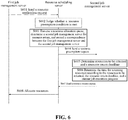
- FIG. 6 a flowchart of a distributed system resource allocation method according to an embodiment of this application is shown. As shown in FIG. 6 , the method may include the following steps.
- a first job management server sends a resource application request to a resource scheduling server.
- the resource application request includes an output deadline of a job and execution time of the job.
- the resource scheduling server receives the resource application request and judges whether a resource preemption condition is met.
- the resource scheduling server determines that the resource preemption condition is met, traverses a resource allocation queue, determines a second job management server for resource return, and records a correspondence between the first job management server and the second job management server.
- a plurality of second job management servers can be determined as a job management server for resource return.
- the resource scheduling server sends a resource preemption request to the second job management server.
- the resource preemption request includes an output deadline of a job and execution time of the job of the first job management server.
- the second job management server determines a resource return deadline.
- the second job management server obtains a resource obtaining deadline of the job according to a difference between the output deadline of the job and the execution time of the job, and takes the resource obtaining deadline of the job as the resource return deadline of the second job management server.
- the second job management server determines the time for returning resources according to the resource return deadline and a current job execution progress of the second job management server.
- the second job management server obtains the remaining time for completion of the current job by calculation according to the current job execution progress of the second job management server.
- the second job management server returns the resources to be returned to the resource scheduling server after execution of the current job is completed if it is judged that a sum of the current time and the remaining time for completion of the current job is not greater than the resource return deadline.
- the second job management server backs up the current job, records a backup position, and returns the resources to be returned to the resource scheduling server after the backup is completed if it is judged that a sum of the current time and the remaining time for completion of the current job is greater than the resource return deadline.
- the second job management server sends a resource return request.
- the resource scheduling server allocates resources to the first job management server.
- the resource utilization efficiency of the system can be improved to the greatest extent while it is ensured that resources can be quickly obtained by high-priority jobs.
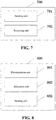
- FIG. 7 a schematic diagram of a first job management server according to an embodiment of this application is shown.
- a first job management server apparatus 700 including:
- FIG. 8 a schematic diagram of a resource scheduling server according to an embodiment of this application is shown.
- a resource scheduling server 800 including:
- the resource scheduling server further includes: a judging unit configured to judge that the resource preemption condition is met when it is determined that the priority of the received resource application request is high and the quantity of remaining available resources of the system is less than the quantity of resources requested by the resource application request.
- the job execution information corresponding to the first job management server sent by the sending unit includes an output deadline of the job and execution time of the job, or the job execution information includes a resource obtaining deadline of the job.
- the resource application request of the first job management server received by the receiving unit includes the output deadline of the job.
- the execution time of the job sent by the sending unit is determined in the following manner: acquiring historical data of the job, and obtaining the execution time of the job by calculation according to the historical data of the job.
- the resource obtaining deadline of the job sent by the sending unit is determined in the following manner: obtaining the resource obtaining deadline of the job according to a difference between the output deadline of the job and the execution time of the job.
- FIG. 9 a schematic diagram of a second job management server according to an embodiment of this application is shown.
- a second job management server 900 including:
- the job execution information corresponding to the first job management server received by the receiving unit includes an output deadline of the job and execution time of the job.
- the determination unit is configured to obtain a resource obtaining deadline of the job according to a difference between the output deadline of the job and the execution time of the job, and take the resource obtaining deadline of the job as the resource return deadline of the second job management server.
- the resource return unit is specifically configured to: obtain remaining time for completion of the current job by calculation according to the current job execution progress of the second job management server; and return, by the second job management server, the resources to be returned to the resource scheduling server after execution of the current job is completed if it is judged that a sum of the current time and the remaining time for completion of the current job is not greater than the resource return deadline.
- the resource return unit is specifically configured to: obtain remaining time for completion of the current job by calculation according to the current job execution progress of the second job management server; and back up, by the second job management server, the current job, record a backup position, and return the resources to be returned to the resource scheduling server after the backup is completed if it is judged that a sum of the current time and the remaining time for completion of the current job is greater than the resource return deadline.
- the second job management server further includes: an acquisition unit configured to receive resources re-allocated by the resource scheduling server, acquire the backup of the current job, and resume the execution of the current job from the backup position.
- the apparatus includes: at least one processor 1001 (such as a CPU), a memory 1002, and at least one communication bus 1003 configured to implement connection communications between the apparatuses.
- the processor 1001 is configured to execute executable modules stored in the memory 1002, such as computer programs.
- the memory 1002 may include a high-speed Random Access Memory (RAM), and may also include a non-volatile memory, such as at least one magnetic disk memory.
- RAM Random Access Memory
- One or more programs are stored in the memory, and configured to be executed by the one or more processors 1001, and the one or more programs include instructions for performing the following operations: receiving a resource preemption request sent by a resource scheduling server, the resource preemption request including job execution information corresponding to a first job management server; determining, according to the job execution information corresponding to the first job management server and included in the resource preemption request, resources to be returned by the second job management server and a resource return deadline; and returning, according to the determined resource return deadline and a current job execution progress of the second job management server, the resources to be returned to the resource scheduling server before expiration of the resource return deadline.
- the processor 1001 is specifically configured to execute the one or more programs including instructions for performing the following operations: when the job execution information corresponding to the first job management server includes an output deadline of the job and execution time of the job, obtaining a resource obtaining deadline of the job according to a difference between the output deadline of the job and the execution time of the job, and taking the resource obtaining deadline of the job as the resource return deadline of the second job management server.
- the processor 1001 is specifically configured to execute the one or more programs including instructions for performing the following operations: obtaining remaining time for completion of the current job by calculation according to the current job execution progress of the second job management server; and returning, by the second job management server, the resources to be returned to the resource scheduling server after execution of the current job is completed if it is judged that a sum of the current time and the remaining time for completion of the current job is not greater than the resource return deadline.
- the processor 1001 is specifically configured to execute the one or more programs including instructions for performing the following operations: obtaining remaining time for completion of the current job by calculation according to the current job execution progress of the second job management server; and the second job management server backing up the current job, recording a backup position, and returning the resources to be returned to the resource scheduling server after the backup is completed if it is judged that a sum of the current time and the remaining time for completion of the current job is greater than the resource return deadline.
- the processor 1001 is specifically configured to execute the one or more programs including instructions for performing the following operations: receiving resources re-allocated by the resource scheduling server, acquiring the backup of the current job, and continuing to execute the current job from the backup position.
- the apparatus includes: at least one processor 1101 (such as a CPU), a memory 1102, and at least one communication bus 1103 configured to implement connection communications between the apparatuses.
- the processor 1101 is configured to execute executable modules stored in the memory 1102, such as computer programs.
- the memory 1102 may include a high-speed Random Access Memory (RAM), and may also include a non-volatile memory, such as at least one magnetic disk memory.
- RAM Random Access Memory
- One or more programs are stored in the memory, and configured to be executed by the one or more processors 1101, and the one or more programs include instructions for performing the following operations: determining a first job management server for resource preemption and a second job management server for resource return when it is judged that a resource preemption condition is met; sending a resource preemption request to the second job management server for resource return, the resource preemption request including at least job execution information corresponding to the first job management server for resource preemption; and receiving a resource return request sent by the second job management server for resource return, and allocating resources corresponding to the resource return request to the first job management server for resource preemption.
- the processor 1101 is specifically configured to execute the one or more programs including instructions for performing the following operations: judging that the resource preemption condition is met when it is determined that the priority of the received resource application request is high and the quantity of remaining available resources of the system is less than the quantity of resources requested by the resource application request.
- the processor 1101 is specifically configured to execute the one or more programs including instructions for performing the following operations: acquiring historical data of the job, and obtaining the execution time of the job by calculation according to the historical data of the job; and obtaining the resource obtaining deadline of the job according to a difference between the output deadline of the job and the execution time of the job.
- the apparatus includes: at least one processor 1201 (such as a CPU), a memory 1202, and at least one communication bus 1203 configured to implement connection communications between the apparatuses.
- the processor 1201 is configured to execute executable modules stored in the memory 1202, such as computer programs.
- the memory 1202 may include a high-speed Random Access Memory (RAM), and may also include a non-volatile memory, such as at least one magnetic disk memory.
- RAM Random Access Memory
- One or more programs are stored in the memory, and configured to be executed by the one or more processors 1201, and the one or more programs include instructions for performing the following operations: sending a resource application request to a resource scheduling server, the resource application request including at least an output deadline of a job or a resource obtaining deadline of the job; and receiving a resource allocation request sent by the resource scheduling server, and acquiring resources corresponding to the resource allocation request.
- a non-volatile computer readable medium including instructions is further provided, for example, a memory 304 including instructions.
- the instructions can be executed by a processor 320 of an apparatus 300 to implement the above method.
- the non-volatile computer readable medium may be an ROM, a RAM, a CD-ROM, a magnetic tape, a floppy disk, an optical data storage device, and so on.
- a machine-readable medium is provided.
- the machine-readable medium may be a non-volatile computer readable medium.
- the apparatus can perform the deep hole measurement method as shown in FIG. 1 .
- the method includes: receiving a resource preemption request sent by a resource scheduling server, the resource preemption request including job execution information corresponding to a first job management server; determining, according to the job execution information corresponding to the first job management server, resources to be returned by the second job management server and a resource return deadline; and returning, according to the determined resources to be returned and resource return deadline and a current job execution progress of the second job management server, the resources to be returned to the resource scheduling server before expiration of the resource return deadline.
- This application may be described in a common context of a computer executable instruction executed by a computer, for example, a program module.
- the program module includes a routine, a program, an object, an assembly, a data structure, and the like for executing a specific task or implementing a specific abstract data type.
- This application may also be practiced in distributed computing environments, and in the distributed computer environments, a task is executed by using remote processing devices connected through a communications network.
- the program module may be located in local and remote computer storage media including a storage device.
- each embodiment emphasizes a difference between it and other embodiments, and identical or similar parts in the embodiments may be obtained with reference to each other.
- the apparatus embodiment is basically similar to the method embodiment, so that it is described simply.
- the apparatus embodiment described above is merely schematic.
- the units described as separate parts may or may not be physically separate, and parts displayed as units may or may not be physical units, i.e., may be located in one position, or may be distributed on a plurality of network units.
- Some of or all the modules therein may be selected according to actual needs to achieve the objectives of the solutions of the embodiments.
- Those of ordinary skill in the art can understand and implement this application without creative efforts.
- the above descriptions are merely specific implementations of this application. It should be noted that those of ordinary skill in the art can also make several improvements and modifications without departing from the principle of this application. The improvements and modifications should also be regarded as the protection scope of this application.
Landscapes
- Engineering & Computer Science (AREA)
- Software Systems (AREA)
- Theoretical Computer Science (AREA)
- Computer Networks & Wireless Communication (AREA)
- Signal Processing (AREA)
- Physics & Mathematics (AREA)
- General Engineering & Computer Science (AREA)
- General Physics & Mathematics (AREA)
- Hardware Redundancy (AREA)
- Multi Processors (AREA)
Abstract
Description
- This application claims priority to Chinese Patent Application No.
201710737516.8 filed on August 24, 2017 - Embodiments of this application relate to the field of computer technologies, and in particular, to a distributed system resource allocation method, apparatus, and system.
- In a distributed system, when a job node needs to apply for resources, a job management server may send a resource application request to a resource scheduling server to apply for a certain number of machine resources for use by the job node. After receiving the resource application request, the resource scheduling server may calculate, according to remaining available resources in the distributed system, available resources that can be allocated to the job management server, generate a list of available resources, and send the list of available resources to the job management server. After receiving the list of available resources, the job management server may allocate the job node to a corresponding machine node to execute a job program.
- Overall resources of a cluster may often be exhausted in the distributed system, which leads to the queuing of resource applications. In general, resource application requests can be queued according to priorities, and resource requests can be periodically taken out of a waiting queue and resubmitted to request allocation of resources. In the waiting queue, high-priority resource requests are ranked at the top and low-priority resource requests are ranked at the bottom. When the resource scheduling server receives a high-priority resource application request that requires immediate allocation of resources, the resource scheduling server may violently recycle low-priority job resources in order to ensure that the resources can be quickly obtained by the high-priority resource applications, thus allowing the high-priority resource applications to preempt the low-priority job resources.
- Upon study, the applicant has found that when resources of low-priority jobs are preempted by high-priority resource applications, the resource scheduling server may immediately recycle the resources of the low-priority jobs; in this case, the program of the low-priority jobs being executed may be terminated immediately and forcibly. If most of the low-priority jobs have been executed, the method of immediate termination of the jobs makes it necessary for the low-priority jobs to start from scratch after resources are obtained again, which reduces the resource utilization efficiency of the whole system.
- A distributed system resource allocation method, apparatus, and system are provided in the embodiments of this application, through which the time for returning resources can be determined according to job execution information of a job management server for resource preemption and current job execution progress of a job management server for resource return, thus effectively improving the utilization of system resources and reducing resource waste.
- To this end, the following technical solutions are provided in the embodiments of this application.
- In a first aspect, a distributed resource allocation system is provided in the embodiments of this application, comprising a resource scheduling server, a first job management server, and a second job management server, wherein the first job management server is configured to send a resource application request to the resource scheduling server, and the resource application request comprises at least job execution information of the first job management server; the resource scheduling server is configured to determine the first job management server for resource preemption and the second job management server for resource return when it is judged that a resource preemption condition is met; send a resource preemption request to the second job management server for resource return, the resource preemption request comprising at least the job execution information corresponding to the first job management server for resource preemption; and receive a resource return request sent by the second job management server for resource return, and allocate resources corresponding to the resource return request to the first job management server for resource preemption; and the second job management server is configured to receive the resource preemption request sent by the resource scheduling server, and determine, according to the job execution information corresponding to the first job management server and comprised in the resource preemption request, resources to be returned by the second job management server and a resource return deadline; and return, according to the determined resource return deadline and a current job execution progress of the second job management server, the resources to be returned to the resource scheduling server before expiration of the resource return deadline.
- In a second aspect, a distributed system resource allocation method applied to a second job management server is provided in the embodiments of this application, comprising: receiving a resource preemption request sent by a resource scheduling server, the resource preemption request comprising job execution information corresponding to a first job management server; determining, according to the job execution information corresponding to the first job management server and comprised in the resource preemption request, resources to be returned by the second job management server and a resource return deadline; and returning, according to the determined resource return deadline and a current job execution progress of the second job management server, the resources to be returned to the resource scheduling server before expiration of the resource return deadline.
- In a third aspect, a distributed system resource allocation method applied to a resource scheduling server is provided in the embodiments of this application, comprising: determining a first job management server for resource preemption and a second job management server for resource return when it is judged that a resource preemption condition is met; sending a resource preemption request to the second job management server for resource return, the resource preemption request comprising at least job execution information corresponding to the first job management server for resource preemption; and receiving a resource return request sent by the second job management server for resource return, and allocating resources corresponding to the resource return request to the first job management server for resource preemption.
- In a fourth aspect, a distributed system resource allocation method applied to a first job management server is provided in the embodiments of this application, comprising: sending a resource application request to a resource scheduling server, the resource application request comprising at least an output deadline of a job or a resource obtaining deadline of the job; and receiving a resource allocation request sent by the resource scheduling server, and acquiring resources corresponding to the resource allocation request.
- In a fifth aspect, a second job management server is provided in the embodiments of this application, comprising: a receiving unit configured to receive a resource preemption request sent by a resource scheduling server, the resource preemption request comprising job execution information corresponding to a first job management server; a determination unit configured to determine, according to the job execution information corresponding to the first job management server and comprised in the resource preemption request, resources to be returned by the second job management server and a resource return deadline; and a resource return unit configured to return, according to the determined resource return deadline and a current job execution progress of the second job management server, the resources to be returned to the resource scheduling server before expiration of the resource return deadline.
- In a sixth aspect, a resource scheduling server is provided in the embodiments of this application, comprising: a determination unit configured to determine a first job management server for resource preemption and a second job management server for resource return when it is judged that a resource preemption condition is met; a sending unit configured to send a resource preemption request to the second job management server for resource return, the resource preemption request comprising at least job execution information corresponding to the first job management server for resource preemption; and an allocation unit configured to receive a resource return request sent by the second job management server for resource return, and allocate resources corresponding to the resource return request to the first job management server for resource preemption.
- In a seventh aspect, a first job management server is provided in the embodiments of this application, comprising: a sending unit configured to send a resource application request to a resource scheduling server, the resource application request comprising at least an output deadline of a job or a resource obtaining deadline of the job; and a receiving unit configured to receive a resource allocation request sent by the resource scheduling server, and acquire resources corresponding to the resource allocation request.
- In an eighth aspect, an apparatus for resource allocation is provided in the embodiments of this application, comprising a memory and one or more programs, wherein the one or more programs are stored in the memory and configured to be executed by one or more processors, and the one or more programs comprise instructions for performing the following operations: receiving a resource preemption request sent by a resource scheduling server, the resource preemption request comprising job execution information corresponding to a first job management server; determining, according to the job execution information corresponding to the first job management server and comprised in the resource preemption request, resources to be returned by a second job management server and a resource return deadline; and returning, according to the determined resource return deadline and a current job execution progress of the second job management server, the resources to be returned to the resource scheduling server before expiration of the resource return deadline.
- In a ninth aspect, an apparatus for resource allocation is provided in the embodiments of this application, comprising a memory and one or more programs, wherein the one or more programs are stored in the memory and configured to be executed by one or more processors, and the one or more programs comprise instructions for performing the following operations: determining a first job management server for resource preemption and a second job management server for resource return when it is judged that a resource preemption condition is met; sending a resource preemption request to the second job management server for resource return, the resource preemption request comprising at least job execution information corresponding to the first job management server for resource preemption; and receiving a resource return request sent by the second job management server for resource return, and allocating resources corresponding to the resource return request to the first job management server for resource preemption.
- In a tenth aspect, an apparatus for resource allocation is provided in the embodiments of this application, comprising a memory and one or more programs, wherein the one or more programs are stored in the memory and configured to be executed by one or more processors, and the one or more programs comprise instructions for performing the following operations: sending a resource application request to a resource scheduling server, the resource application request comprising at least an output deadline of a job or a resource obtaining deadline of the job; and receiving a resource allocation request sent by the resource scheduling server, and acquiring resources corresponding to the resource allocation request.
- According to the distributed system resource allocation method, apparatus, and system provided in the embodiments of this application, when determining that a resource preemption condition is met, the resource scheduling server can send a resource preemption request to the second job management server for resource return, and the second job management server can determine a resource return deadline according to job execution information of the first job management server comprised in the resource preemption request, and return, according to the determined resource return deadline and a current job execution progress of the second job management server, resources to be returned to the resource scheduling server before the expiration of the resource return deadline. With the method provided in the embodiments of this application, when it is determined that a resource preemption condition is met, resources that have been allocated to the second job management server are not recycled immediately, but the second job management server determines a resource return time according to the job execution information of the first job management server and the current job execution progress of the second job management server, so that the second job management server can effectively utilize the resources, and at the same time, the overall resource utilization efficiency of the system can be effectively improved, and resource waste can be reduced.
- In order to illustrate the technical solutions according to the embodiments of this application or in the prior art more clearly, the accompanying drawings required for describing the embodiments or the prior art are introduced briefly below. It is apparent that the accompanying drawings in the following description are only some embodiments described in this application. Those of ordinary skill in the art can obtain other drawings according to the accompanying drawings without any creative efforts.
-
FIG. 1 is a schematic diagram of a distributed resource allocation system according to an embodiment of this application; -
FIG. 2 is a flowchart of a distributed system resource allocation method according to an embodiment of this application; -
FIG. 3 is a flowchart of a distributed system resource allocation method according to another embodiment of this application; -
FIG. 4 is a schematic diagram of a resource allocation queue according to an embodiment of this application; -
FIG. 5 is a flowchart of a distributed system resource allocation method according to yet another embodiment of this application; -
FIG. 6 is a flowchart of a distributed system resource allocation method according to still another embodiment of this application; -
FIG. 7 is a schematic diagram of a first job management server according to an embodiment of this application; -
FIG. 8 is a schematic diagram of a resource scheduling server according to an embodiment of this application; -
FIG. 9 is a schematic diagram of a second job management server according to an embodiment of this application; -
FIG. 10 is a block diagram of an apparatus for resource allocation according to an exemplary embodiment; -
FIG. 11 is a block diagram of an apparatus for resource allocation according to an exemplary embodiment; and -
FIG. 12 is a block diagram of an apparatus for resource allocation according to an exemplary embodiment. - A distributed system resource allocation method, apparatus, and system are provided in the embodiments of this application, through which the time for returning resources can be determined according to job execution information of a job management server for resource preemption and a current job execution progress of a job management server for resource return, the utilization of system resources can be effectively improved, and resource waste can be reduced.
- Terms used in the embodiments of this application are merely used for describing specific embodiments, instead of limiting this application. Singular forms "a(n)," "said," and "the" used in the embodiments of this application and the appended claims also include plural forms, unless clearly specified in the context that other meanings are denoted. It should be further understood that the term "and/or" used in this text refers to and includes any or all possible combinations of one or more associated items listed.
- The technical term "resource scheduling server" (the English full name is Resource Manager) generally refers to a server that coordinates and allocates system available resources in a distributed system.
- The technical term "job management server" (the English full name is Job Master) generally refers to the role that controls all job nodes (Job Worker) of the job in the distributed system, responsible for applying for job resources from the resource scheduling server on behalf of all the job nodes, and sending job programs to a machine node. In general, a plurality of job management servers may be included in the distributed system.
- The technical term "machine node" (the English full name is Machine Node) generally refers to the role responsible for supervising the execution of a user's job program on behalf of a machine in the distributed system.
- The technical term "job node" (the English full name is Job Worker) generally refers to the role for executing a specific job program in the distributed system, which generally only communicates with a job management server.
- The technical term "job application resources" (the English full name is Request) generally refers resources applied for in the distributed system by the job management server, corresponding to a resource application request.
- The technical term "job obtaining resources" (the English full name is Resource) generally refers to resources obtained by the job management server from the distributed system, that is, resources allocated to the job management server by the resource scheduler.
- The technical term "machine obtaining resources" (the English full name is Resource) generally refers to resources of a certain job node obtained by a machine from the resource scheduler. In general, a job node is allowed to execute a program only after the machine obtains resources of the job node from the resource scheduler. After resources of a certain job node are recycled by the resource scheduler, the machine will forcibly terminate the execution of the job node.
- The technical term "priority of the resource application request" (Priority) is used to describe the priority of the resource application request. A higher priority indicates that the resource request is more important and should be met preferentially.
- The technical term "production job" generally refers to a job executed at a fixed time each day.
- The technical term "development job" generally refers to an experimental job submitted by a developer to debug a program, with a variable daily execution time and a lower priority.
- The technical term "job output deadline" generally refers to the latest time a user job can be completely executed.
- The technical term "resource obtaining deadline" generally refers to the latest time the job management server obtains the resources.
- The technical term "resource return deadline" generally refers to the latest time the job management server returns the resources.
- The technical term "job execution time" generally refers to the time it takes to completely execute a job.
- Referring to
FIG. 1 , a distributed resource allocation system according to an embodiment of this application is shown. The distributed resource allocation system includes aresource scheduling server 800, a firstjob management server 700, and a secondjob management server 900. A plurality of job management servers may be included in the distributed resource allocation system. - It should be noted that in the prior art, when resources of a low-priority job are preempted by a high-priority resource application, the resource scheduling server may immediately recycle the resources of the low-priority job. In this case, the program of the low-priority job being executed may be terminated immediately and forcibly.
- Upon study, the applicant has found that such an implementation may have at least the following defects. (1) Assuming that a low-priority job needs to be executed for 1 hour and has been executed for 55 minutes currently, it is expected that resources can be returned after the job is executed for another 5 minutes. If a resource preemption event occurs at this point, and the resource scheduling server forcibly recycles resources of the low-priority job, the resources are also wasted in the 55 minutes from the perspective of resource utilization of the whole system. (2) If the low-priority job can only cede resources to a high-priority job during execution, the violent recycling practice will result in a complete loss of the executed portion of the low-priority job and there is no chance to make a backup. When the low-priority job obtains resources again, its execution has to start from scratch, thus reducing the execution efficiency. (3) Assuming that a high-priority job needs to be executed for 1 hour and its submission time of a resource application request is at an interval of 2 hours from the job output deadline, if the high-priority job preempts the resources of the low-priority job immediately and the low-priority job can be completely executed in only 5 minutes, such violent preemption at this point is unnecessary.
- Through the above analysis, the applicant has found that if the resources of the low-priority job are directly violently recycled and allocated to the high-priority job without taking into account the execution time of the high-priority job, the output deadline, and the execution progress of the low-priority job, an unnecessary preemption event will occur, thereby reducing the resource utilization of the system.
- In view of the above, a resource allocation method, apparatus, and system are provided in this application to replace the method of directly violently recycling allocated resources of a low-priority job. When a resource preemption event occurs, the resource scheduling server and a job management server of the low-priority job can perform a round of interactive negotiation at first, and comprehensively judge the resource recycle time of the low-priority job according to information such as the execution time of the high-priority job, the output deadline, and the execution progress of the low-priority job, so that it can be ensured that the high-priority job can obtain resources and the effective resource utilization of the system can be maximized at the same time.
- As shown in
FIG. 1 , the distributed resource allocation system includes aresource scheduling server 800, a firstjob management server 700, and a secondjob management server 900. - The first
job management server 700 is configured to send a resource application request to the resource scheduling server, the resource application request including at least job execution information of the firstjob management server 700. - The
resource scheduling server 800 is configured to determine the firstjob management server 700 for resource preemption and the secondjob management server 900 for resource return when it is judged that a resource preemption condition is met; send a resource preemption request to the secondjob management server 900 for resource return, the resource preemption request including at least job execution information corresponding to the firstjob management server 700 for resource preemption; and receive a resource return request sent by the secondjob management server 900 for resource return, and allocate resources corresponding to the resource return request to the firstjob management server 700 for resource preemption. - The second
job management server 900 is configured to receive the resource preemption request sent by theresource scheduling server 800, and determine, according to the job execution information corresponding to the firstjob management server 700 included in the resource preemption request, a resource return deadline of the secondjob management server 900; and return, according to the determined resource return deadline and a current job execution progress of the secondjob management server 900, the resources to be returned to theresource scheduling server 700 . - The resource allocation system according to the embodiment of this application is briefly introduced above. Resource allocation methods according to the embodiments of this application are introduced below from the perspective of a first job manager, a resource scheduling server, and a second job management server respectively.
- The resource allocation methods according to the embodiments of this application are introduced below with reference to
FIG. 2 to FIG. 5 . - Referring to
FIG. 2 , a flowchart of a distributed system resource allocation method according to an embodiment of this application is shown. As shown inFIG. 2 , the method is applied to a first job management server and may include the following steps. - In S201, the first job management server sends a resource application request to a resource scheduling server, the resource application request including at least an output deadline of a job or a resource obtaining deadline of the job.
- In a specific implementation, the first job management server that needs to obtain resources can send a resource application request to the resource scheduling server. In a possible implementation, the resource application request includes an output deadline of a job, that is, the latest output time of the job. In such an implementation, the resource application request only includes the output deadline of the job, and the execution time of the job is calculated by the resource scheduling server. For example, the resource scheduling server acquires historical data of the job and obtains the execution time of the job by calculation according to the historical data of the job. For example, the execution time of the job is generally regular and can be determined by the job management server or the resource scheduling server according to historical data such as the average execution time of the job over the past 7 days.
- In another possible implementation, the resource application request can include an output deadline of a job and execution time of the job. It should be noted that the execution time of the job generally refers to the time required for completing the execution of the job. For example, it can be the duration from the time when resources are obtained and the job is started to the time when the job is completed and the resources are returned. In general, the execution time of the job can be determined in the following manners. (1) A user can specify the execution time of the job. For example, when a user job is formally submitted to a distributed system for execution, offline debugging must be carried out. The execution time of the user job can be estimated through offline debugging, and the execution time of the job can be specified or set by the user when a resource application request is submitted. (2) Historical data of the job is acquired, and the execution time of the job is obtained by calculation according to the historical data of the job.
- In another possible implementation, the resource application request includes a resource obtaining deadline of the job. In a specific implementation, the first job management server can determine execution time and an output deadline of the job, and obtain the resource obtaining deadline of the job according to a difference between the output deadline of the job and the execution time of the job. For example, resource obtaining deadline TA_Recieve = output deadline - execution time. For example, an output deadline of a certain job is 22:00, the execution time of the job is 2 hours, and the resource obtaining deadline is 20:00.
- Of course, in other implementations, the resource application request can also include the execution time of the job, the output deadline of the job, and the resource obtaining deadline, which is not limited here.
- In S202, the first job management server receives a resource allocation request sent by the resource scheduling server, and acquires resources corresponding to the resource allocation request.
- It should be noted that different from the method in the prior art that the resource application request only includes the request submission time, the resource application request in this application further includes execution information of the job, and a resource obtaining deadline and/or a resource return deadline of the job are/is determined accordingly. Resource allocation and return time can be determined more flexibly, and the resource utilization efficiency can be effectively improved.
- Referring to
FIG. 3 , a flowchart of a distributed system resource allocation method according to an embodiment of this application is provided. As shown inFIG. 3 , the method is applied to a resource scheduling server, and may include the following steps. - In S301, the resource scheduling server determines a first job management server for resource preemption and a second job management server for resource return when it is judged that a resource preemption condition is met.
- In a specific implementation, the judging that a resource preemption condition is met includes: judging that the resource preemption condition is met when it is determined that the priority of the received resource application request is high and the quantity of remaining available resources of the system is less than the quantity of resources requested by the resource application request. For example, the first job management server sends a resource application request C to the resource scheduling server. It is assumed that resources that the first job management server needs to apply for are CPU: 70 and MEM: 60, and the priority of the resource application request is 4. At this point, remaining available resources of the system are CPU: 0 and MEM: 0, and in this case, the remaining available resources of the system cannot meet or cannot fully meet the request of the high-priority job, and resource preemption will be triggered. The resource scheduling server may traverse a resource allocation queue to determine the job management server that needs to return resources. Specifically, there is a resource allocation queue in the resource scheduling server, which records resource allocation of the resource scheduling server to resource applications. This queue is ranked according to priorities of the resource applications. When a high-priority resource application is submitted to the resource scheduling server and the remaining resources of the system are insufficient to meet the resource application, the resource scheduling server will traverse the resource allocation queue in an order from low priorities to high priorities. For each resource application with a priority lower than that of the high-priority resource application, it is first assumed that all its allocated resources are recycled and then accumulated with remaining resources of a cluster. It is judged whether new remaining resources obtained after accumulation can meet the high-priority resource application. If yes, the traversal is stopped. If no, the resource scheduling server continues to traverse the next low-priority resource application until the high-priority resource application can be met. Used resources of all low-priority jobs can be preempted by the high-priority job. As shown in
FIG. 4 , a schematic diagram of a resource allocation queue according to an embodiment of this application is shown. For example, it is assumed that the resource allocation queue is traversed in an order from low priorities to high priorities. Assuming that allocated resources of a resource application B are all preempted, new remaining resources are CPU: 30 and MEM: 20. This is insufficient to meet the high-priority resource application. The resource application B is continuously traversed. Assuming that its allocated resources are all preempted, new remaining resources are CPU: 70 and MEM: 60. In this case, the remaining resources can meet the high-priority resource application. Then, the second job management server for resource return is determined as job management servers corresponding to the resource application B and the resource application A. - In S302, the resource scheduling server sends a resource preemption request to the second job management server for resource return, the resource preemption request including at least job execution information corresponding to the first job management server for resource preemption.
- Different from the method of directly violently recycling allocated resources of the second job management server for resource return in the prior art, in the embodiment of this application, the resource scheduling server sends a resource preemption request to the second job management server for resource return to notify the second job management server that it needs to return resources to high-priority jobs.
- In a possible implementation, the resource application request sent by the first job manager to the resource scheduling server only includes an output deadline of a job, and job execution information of the first job management server included in the resource preemption request may include the output deadline of the job and execution time of the job. The execution time of the job is determined in the following manner: the resource scheduling server acquires historical data of the job and obtains the execution time of the job by calculation according to the historical data of the job.
- In another possible implementation, the resource application request sent by the first job manager to the resource scheduling server includes an output deadline of a job and execution time of the job, and job execution information of the first job management server included in the resource preemption request may include the output deadline of the job and the execution time of the job. Alternatively, the job execution information of the first job management server included in the resource preemption request may include a resource obtaining deadline of the job. The resource obtaining deadline of the job is determined in the following manner.
- In another possible implementation, the resource application request sent by the first job manager to the resource scheduling server includes a resource obtaining deadline of the job, and job execution information of the first job management server included in the resource preemption request may include the resource obtaining deadline of the job.
- When the resource scheduling server determines that the second job management server for resource return includes a plurality of job management servers, the resource scheduling server sends a resource preemption request to the plurality of job management servers respectively.
- In S303, the resource scheduling server receives a resource return request sent by the second job management server for resource return, and allocates resources corresponding to the resource return request to the first job management server for resource preemption.
- It should be noted that when determining a first job management server for resource preemption and a second job management server for resource return, the resource scheduling server can record a correspondence between the first job management server and the second job management server. When the second job management server sends a resource return request, returned resources can be allocated to the corresponding first job management server and may not be allocated to other waiting job management servers, thus ensuring that high-priority jobs can quickly get the resources.
- Referring to
FIG. 5 , a flowchart of a distributed system resource allocation method according to an embodiment of this application is shown. As shown inFIG. 5 , the method is applied to a second job management server and may include the following steps. - In S501, the second job management server receives a resource preemption request sent by a resource scheduling server, the resource preemption request including job execution information corresponding to a first job management server.
- The job execution information corresponding to the first job management server may include an output deadline of the job and execution time of the job, or the job execution information includes a resource obtaining deadline of the job.
- It should be noted that the resource preemption request may further include the quantity of returned resources, and the second job management server can determine to return part of or all the allocated resources according to the quantity of the returned resources.
- In S502, the second job management server determines, according to the job execution information corresponding to the first job management server and included in the resource preemption request, resources to be returned by the second job management server and a resource return deadline.
- In some implementations, the job execution information corresponding to the first job management server includes an output deadline of the job and execution time of the job, and the determining, according to the j ob execution information corresponding to the first job management server and included in the resource preemption request, resources to be returned by the second job management server and a resource return deadline includes: obtaining a resource obtaining deadline of the job according to a difference between the output deadline of the job and the execution time of the job, and taking the resource obtaining deadline of the job as the resource return deadline of the second job management server.
- In another implementation, the job execution information corresponding to the first job management server includes a resource obtaining deadline of the job, and the resource obtaining deadline can be taken as a resource return deadline.
- In S503, the second job management server returns, according to the determined resource return deadline and a current job execution progress of the second job management server, the resources to be returned to the resource scheduling server before expiration of the resource return deadline.
- In some implementations, the returning, according to the determined resource return deadline and a current job execution progress of the second job management server, the resources to be returned to the resource scheduling server before expiration of the resource return deadline includes: obtaining remaining time for completion of the current job by calculation according to the current job execution progress of the second job management server; and returning, by the second job management server, the resources to be returned to the resource scheduling server after execution of the current job is completed if it is judged that a sum of the current time and the remaining time for completion of the current job is not greater than the resource return deadline.
- In some implementations, the returning, according to the determined resource return deadline and a current job execution progress of the second job management server, the resources to be returned to the resource scheduling server before expiration of the resource return deadline includes: obtaining remaining time for completion of the current job by calculation according to the current job execution progress of the second job management server; and the second job management server backing up the current job, recording a backup position, and returning the resources to be returned to the resource scheduling server after the backup is completed if it is judged that a sum of the current time and the remaining time for completion of the current job is greater than the resource return deadline. Further, the method also includes: receiving resources re-allocated by the resource scheduling server, acquiring the backup of the current job, and resuming the execution of the current job from the backup position.
- For example, after receiving the resource preemption request sent by the resource scheduling server, the second job management server can determine the final resource return time TA Return and obtain the remaining time for completion of the job according to the time TA_run for which the current job has been executed and estimated execution time of the j ob TA_all: TA_left = TA_all - TA_run. If the current time + TA_left <= TA Return, the resources are returned naturally after the execution of the job A is completed. If the current time + TA_left > TA Return, the j ob A starts recording backups when its execution is close to the time point of TA_Return, so that the execution can be resumed from the backup position, rather than from scratch, when resources are obtained again. After the backups are completely recorded, the second job management server actively returns the resources to the resource scheduling server and at the same time, waits for the resource scheduling server to re-allocate the resources.
- In order to facilitate those skilled in the art to understand the implementation of this application more clearly, the implementation of this application is introduced below with a specific example. It should be noted that the specific example is only intended to enable those skilled in the art to understand this application more clearly, but the implementation of this application is not limited to the specific example.
- Referring to
FIG. 6 , a flowchart of a distributed system resource allocation method according to an embodiment of this application is shown. As shown inFIG. 6 , the method may include the following steps. - In S601, a first job management server sends a resource application request to a resource scheduling server.
- The resource application request includes an output deadline of a job and execution time of the job.
- In S602, the resource scheduling server receives the resource application request and judges whether a resource preemption condition is met.
- In S603, the resource scheduling server determines that the resource preemption condition is met, traverses a resource allocation queue, determines a second job management server for resource return, and records a correspondence between the first job management server and the second job management server.
- A plurality of second job management servers can be determined as a job management server for resource return.
- In S604, the resource scheduling server sends a resource preemption request to the second job management server.
- The resource preemption request includes an output deadline of a job and execution time of the job of the first job management server.
- In S605, the second job management server determines a resource return deadline.
- The second job management server obtains a resource obtaining deadline of the job according to a difference between the output deadline of the job and the execution time of the job, and takes the resource obtaining deadline of the job as the resource return deadline of the second job management server.
- In S606, the second job management server determines the time for returning resources according to the resource return deadline and a current job execution progress of the second job management server.
- The second job management server obtains the remaining time for completion of the current job by calculation according to the current job execution progress of the second job management server. The second job management server returns the resources to be returned to the resource scheduling server after execution of the current job is completed if it is judged that a sum of the current time and the remaining time for completion of the current job is not greater than the resource return deadline. The second job management server backs up the current job, records a backup position, and returns the resources to be returned to the resource scheduling server after the backup is completed if it is judged that a sum of the current time and the remaining time for completion of the current job is greater than the resource return deadline.
- In S607, the second job management server sends a resource return request.
- In S608, the resource scheduling server allocates resources to the first job management server.
- According to the resource allocation method provided in the embodiment of this application, the resource utilization efficiency of the system can be improved to the greatest extent while it is ensured that resources can be quickly obtained by high-priority jobs.
- Devices corresponding to the methods provided in the embodiments of this application are introduced below.
- Referring to
FIG. 7 , a schematic diagram of a first job management server according to an embodiment of this application is shown. - A first job
management server apparatus 700, including: - a sending
unit 701 configured to send a resource application request to a resource scheduling server, the resource application request including at least an output deadline of a job or a resource obtaining deadline of the job, wherein the specific implementation of the sendingunit 701 can be obtained with reference to S201 in the embodiment shown inFIG. 2 ; and - a receiving
unit 702 configured to receive a resource allocation request sent by the resource scheduling server, and acquire resources corresponding to the resource allocation request, wherein the specific implementation of the receivingunit 702 can be obtained with reference to S202 in the embodiment shown inFIG. 2 . - Referring to
FIG. 8 , a schematic diagram of a resource scheduling server according to an embodiment of this application is shown. - A
resource scheduling server 800, including: - a
determination unit 801 configured to determine a first job management server for resource preemption and a second job management server for resource return when it is judged that a resource preemption condition is met, wherein the specific implementation of thedetermination unit 801 can be obtained with reference to S301 in the embodiment shown inFIG. 3 ; - a sending
unit 802 configured to send a resource preemption request to the second job management server for resource return, the resource preemption request including at least job execution information corresponding to the first job management server for resource preemption, wherein the specific implementation of the sendingunit 802 can be obtained with reference to S302 in the embodiment shown inFIG. 3 ; and - an
allocation unit 803 configured to receive a resource return request sent by the second job management server for resource return, and allocate resources corresponding to the resource return request to the first job management server for resource preemption, wherein the specific implementation of theallocation unit 803 can be obtained with reference to S303 in the embodiment shown inFIG. 3 . - In some implementations, the resource scheduling server further includes:
a judging unit configured to judge that the resource preemption condition is met when it is determined that the priority of the received resource application request is high and the quantity of remaining available resources of the system is less than the quantity of resources requested by the resource application request. - In some implementations, the job execution information corresponding to the first job management server sent by the sending unit includes an output deadline of the job and execution time of the job, or the job execution information includes a resource obtaining deadline of the job.
- In some implementations, the resource application request of the first job management server received by the receiving unit includes the output deadline of the job. The execution time of the job sent by the sending unit is determined in the following manner: acquiring historical data of the job, and obtaining the execution time of the job by calculation according to the historical data of the job. The resource obtaining deadline of the job sent by the sending unit is determined in the following manner: obtaining the resource obtaining deadline of the job according to a difference between the output deadline of the job and the execution time of the job.
- Referring to
FIG. 9 , a schematic diagram of a second job management server according to an embodiment of this application is shown. - A second
job management server 900, including: - a receiving
unit 901 configured to receive a resource preemption request sent by a resource scheduling server, the resource preemption request including job execution information corresponding to a first job management server, wherein the specific implementation of the receivingunit 901 can be obtained with reference to S501 in the embodiment shown inFIG. 5 ; - a
determination unit 902 configured to determine, according to the job execution information corresponding to the first job management server and included in the resource preemption request, resources to be returned by the second job management server and a resource return deadline, wherein the specific implementation of thedetermination unit 902 can be obtained with reference to S502 in the embodiment shown inFIG. 5 ; and - a
resource return unit 903 configured to return, according to the determined resource return deadline and a current job execution progress of the second job management server, the resources to be returned to the resource scheduling server before expiration of the resource return deadline, wherein the specific implementation of theresource return unit 903 can be obtained with reference to S503 in the embodiment shown inFIG. 5 . - In some implementations, the job execution information corresponding to the first job management server received by the receiving unit includes an output deadline of the job and execution time of the job. The determination unit is configured to obtain a resource obtaining deadline of the job according to a difference between the output deadline of the job and the execution time of the job, and take the resource obtaining deadline of the job as the resource return deadline of the second job management server.
- In some implementations, the resource return unit is specifically configured to: obtain remaining time for completion of the current job by calculation according to the current job execution progress of the second job management server; and return, by the second job management server, the resources to be returned to the resource scheduling server after execution of the current job is completed if it is judged that a sum of the current time and the remaining time for completion of the current job is not greater than the resource return deadline.
- In some implementations, the resource return unit is specifically configured to: obtain remaining time for completion of the current job by calculation according to the current job execution progress of the second job management server; and back up, by the second job management server, the current job, record a backup position, and return the resources to be returned to the resource scheduling server after the backup is completed if it is judged that a sum of the current time and the remaining time for completion of the current job is greater than the resource return deadline.
- In some implementations, the second job management server further includes:
an acquisition unit configured to receive resources re-allocated by the resource scheduling server, acquire the backup of the current job, and resume the execution of the current job from the backup position. - Referring to
FIG. 10 , a block diagram of an apparatus for resource allocation according to another embodiment of this application is shown. The apparatus includes: at least one processor 1001 (such as a CPU), amemory 1002, and at least onecommunication bus 1003 configured to implement connection communications between the apparatuses. Theprocessor 1001 is configured to execute executable modules stored in thememory 1002, such as computer programs. Thememory 1002 may include a high-speed Random Access Memory (RAM), and may also include a non-volatile memory, such as at least one magnetic disk memory. One or more programs are stored in the memory, and configured to be executed by the one ormore processors 1001, and the one or more programs include instructions for performing the following operations: receiving a resource preemption request sent by a resource scheduling server, the resource preemption request including job execution information corresponding to a first job management server; determining, according to the job execution information corresponding to the first job management server and included in the resource preemption request, resources to be returned by the second job management server and a resource return deadline; and returning, according to the determined resource return deadline and a current job execution progress of the second job management server, the resources to be returned to the resource scheduling server before expiration of the resource return deadline. - In some implementations, the
processor 1001 is specifically configured to execute the one or more programs including instructions for performing the following operations: when the job execution information corresponding to the first job management server includes an output deadline of the job and execution time of the job, obtaining a resource obtaining deadline of the job according to a difference between the output deadline of the job and the execution time of the job, and taking the resource obtaining deadline of the job as the resource return deadline of the second job management server. - In some implementations, the
processor 1001 is specifically configured to execute the one or more programs including instructions for performing the following operations: obtaining remaining time for completion of the current job by calculation according to the current job execution progress of the second job management server; and returning, by the second job management server, the resources to be returned to the resource scheduling server after execution of the current job is completed if it is judged that a sum of the current time and the remaining time for completion of the current job is not greater than the resource return deadline. - In some implementations, the
processor 1001 is specifically configured to execute the one or more programs including instructions for performing the following operations: obtaining remaining time for completion of the current job by calculation according to the current job execution progress of the second job management server; and the second job management server backing up the current job, recording a backup position, and returning the resources to be returned to the resource scheduling server after the backup is completed if it is judged that a sum of the current time and the remaining time for completion of the current job is greater than the resource return deadline. - In some implementations, the
processor 1001 is specifically configured to execute the one or more programs including instructions for performing the following operations: receiving resources re-allocated by the resource scheduling server, acquiring the backup of the current job, and continuing to execute the current job from the backup position. - Referring to
FIG. 11 , a block diagram of an apparatus for resource allocation according to another embodiment of this application is shown. The apparatus includes: at least one processor 1101 (such as a CPU), amemory 1102, and at least onecommunication bus 1103 configured to implement connection communications between the apparatuses. Theprocessor 1101 is configured to execute executable modules stored in thememory 1102, such as computer programs. Thememory 1102 may include a high-speed Random Access Memory (RAM), and may also include a non-volatile memory, such as at least one magnetic disk memory. One or more programs are stored in the memory, and configured to be executed by the one ormore processors 1101, and the one or more programs include instructions for performing the following operations: determining a first job management server for resource preemption and a second job management server for resource return when it is judged that a resource preemption condition is met; sending a resource preemption request to the second job management server for resource return, the resource preemption request including at least job execution information corresponding to the first job management server for resource preemption; and receiving a resource return request sent by the second job management server for resource return, and allocating resources corresponding to the resource return request to the first job management server for resource preemption. - In some implementations, the
processor 1101 is specifically configured to execute the one or more programs including instructions for performing the following operations: judging that the resource preemption condition is met when it is determined that the priority of the received resource application request is high and the quantity of remaining available resources of the system is less than the quantity of resources requested by the resource application request. - In some implementations, the
processor 1101 is specifically configured to execute the one or more programs including instructions for performing the following operations: acquiring historical data of the job, and obtaining the execution time of the job by calculation according to the historical data of the job; and obtaining the resource obtaining deadline of the job according to a difference between the output deadline of the job and the execution time of the job. - Referring to
FIG. 12 , a block diagram of an apparatus for resource allocation according to another embodiment of this application is shown. The apparatus includes: at least one processor 1201 (such as a CPU), amemory 1202, and at least onecommunication bus 1203 configured to implement connection communications between the apparatuses. Theprocessor 1201 is configured to execute executable modules stored in thememory 1202, such as computer programs. Thememory 1202 may include a high-speed Random Access Memory (RAM), and may also include a non-volatile memory, such as at least one magnetic disk memory. One or more programs are stored in the memory, and configured to be executed by the one ormore processors 1201, and the one or more programs include instructions for performing the following operations: sending a resource application request to a resource scheduling server, the resource application request including at least an output deadline of a job or a resource obtaining deadline of the job; and receiving a resource allocation request sent by the resource scheduling server, and acquiring resources corresponding to the resource allocation request. - In an exemplary embodiment, a non-volatile computer readable medium including instructions is further provided, for example, a memory 304 including instructions. The instructions can be executed by a processor 320 of an apparatus 300 to implement the above method. For example, the non-volatile computer readable medium may be an ROM, a RAM, a CD-ROM, a magnetic tape, a floppy disk, an optical data storage device, and so on.
- A machine-readable medium is provided. For example, the machine-readable medium may be a non-volatile computer readable medium. When instructions in the medium are executed by a processor of an apparatus (a terminal or server), the apparatus can perform the deep hole measurement method as shown in
FIG. 1 . The method includes: receiving a resource preemption request sent by a resource scheduling server, the resource preemption request including job execution information corresponding to a first job management server; determining, according to the job execution information corresponding to the first job management server, resources to be returned by the second job management server and a resource return deadline; and returning, according to the determined resources to be returned and resource return deadline and a current job execution progress of the second job management server, the resources to be returned to the resource scheduling server before expiration of the resource return deadline. - The setting of the units or modules in the apparatus of this application can be implemented with reference to the methods shown in
FIG. 2 to FIG. 6 , which are not described in detail here. - After considering the specification and practicing the invention disclosed here, those skilled in the art will easily think of other implementation solutions of this application. This application is intended to cover any variations, uses or adaptive changes of this application that follow the general principle of this application and include common knowledge or common technical means in the art not disclosed in the present disclosure. The specification and embodiments are only considered exemplary and the true scope and spirit of this application are indicated by the claims below.
- It would be appreciated that this application is not limited to the precise structure described above and shown in the accompanying drawings and can be modified and altered without departing from its scope. The scope of this application is limited only by the appended claims.
- It should be noted that in this text, the relation terms such as first and second are merely used to distinguish one entity or operation from another entity or operation, and do not require or imply that the entities or operations have this actual relation or order. Moreover, the terms "include," "comprise" or other variations thereof are intended to cover non-exclusive inclusion, so that a process, method, article or device including a series of elements not only includes the elements, but also includes other elements not clearly listed, or further includes elements inherent to the process, method, article or device. In the absence of more limitations, an element defined by "including a/an..." does not exclude that the process, method, article or device including the element further has other identical elements. This application may be described in a common context of a computer executable instruction executed by a computer, for example, a program module. Generally, the program module includes a routine, a program, an object, an assembly, a data structure, and the like for executing a specific task or implementing a specific abstract data type. This application may also be practiced in distributed computing environments, and in the distributed computer environments, a task is executed by using remote processing devices connected through a communications network. In the distributed computer environments, the program module may be located in local and remote computer storage media including a storage device.
- The embodiments of this specification are all described in a progressive manner, each embodiment emphasizes a difference between it and other embodiments, and identical or similar parts in the embodiments may be obtained with reference to each other. In particular, the apparatus embodiment is basically similar to the method embodiment, so that it is described simply. For related parts, refer to the descriptions of the parts in the method embodiment. The apparatus embodiment described above is merely schematic. The units described as separate parts may or may not be physically separate, and parts displayed as units may or may not be physical units, i.e., may be located in one position, or may be distributed on a plurality of network units. Some of or all the modules therein may be selected according to actual needs to achieve the objectives of the solutions of the embodiments. Those of ordinary skill in the art can understand and implement this application without creative efforts. The above descriptions are merely specific implementations of this application. It should be noted that those of ordinary skill in the art can also make several improvements and modifications without departing from the principle of this application. The improvements and modifications should also be regarded as the protection scope of this application.
Claims (18)
- A distributed resource allocation system, comprising a resource scheduling server, a first job management server, and a second job management server, wherein
the first job management server is configured to send a resource application request to the resource scheduling server, and the resource application request comprises at least job execution information of the first job management server;
the resource scheduling server is configured to determine the first job management server for resource preemption and the second job management server for resource return when it is judged that a resource preemption condition is met; send a resource preemption request to the second job management server for resource return, the resource preemption request comprising at least the job execution information corresponding to the first job management server for resource preemption; and receive a resource return request sent by the second job management server for resource return, and allocate resources corresponding to the resource return request to the first job management server for resource preemption; and
the second job management server is configured to receive the resource preemption request sent by the resource scheduling server, and determine, according to the job execution information corresponding to the first job management server and comprised in the resource preemption request, resources to be returned by the second job management server and a resource return deadline; and return, according to the determined resources to be returned and resource return deadline and a current job execution progress of the second job management server, the resources to be returned to the resource scheduling server before expiration of the resource return deadline. - A distributed system resource allocation method applied to a second job management server, comprising:receiving a resource preemption request sent by a resource scheduling server, the resource preemption request comprising job execution information corresponding to a first job management server;determining, according to the job execution information corresponding to the first job management server, resources to be returned by the second job management server and a resource return deadline; andreturning, according to the determined resources to be returned and resource return deadline and a current job execution progress of the second job management server, the resources to be returned to the resource scheduling server before expiration of the resource return deadline.
- The method of claim 2, wherein the job execution information corresponding to the first job management server comprises an output deadline of the job and execution time of the job, and the determining, according to the job execution information corresponding to the first job management server and comprised in the resource preemption request, resources to be returned by the second job management server and a resource return deadline comprises:
obtaining a resource obtaining deadline of the job according to a difference between the output deadline of the job and the execution time of the job, and taking the resource obtaining deadline of the job as the resource return deadline of the second job management server. - The method of claim 2, wherein the returning, according to the determined resource return deadline and a current job execution progress of the second job management server, the resources to be returned to the resource scheduling server before expiration of the resource return deadline comprises:obtaining remaining time for completion of the current job by calculation according to the current job execution progress of the second job management server; andreturning, by the second job management server, the resources to be returned to the resource scheduling server after execution of the current job is completed if it is judged that a sum of the current time and the remaining time for completion of the current job is not greater than the resource return deadline.
- The method of claim 2, wherein the returning, according to the determined resource return deadline and a current job execution progress of the second job management server, the resources to be returned to the resource scheduling server before expiration of the resource return deadline comprises:obtaining remaining time for completion of the current job by calculation according to the current job execution progress of the second job management server; andthe second job management server backing up the current job, recording a backup position, and returning the resources to be returned to the resource scheduling server after the backup is completed if it is judged that a sum of the current time and the remaining time for completion of the current job is greater than the resource return deadline.
- The method of claim 5, further comprising:
receiving resources re-allocated by the resource scheduling server, acquiring the backup of the current job, and resuming the execution of the current job from the backup position. - A distributed system resource allocation method applied to a resource scheduling server, comprising:determining a first job management server for resource preemption and a second job management server for resource return when it is judged that a resource preemption condition is met;sending a resource preemption request to the second job management server for resource return, the resource preemption request comprising at least job execution information corresponding to the first job management server for resource preemption; andreceiving a resource return request sent by the second job management server for resource return, and allocating resources corresponding to the resource return request to the first job management server for resource preemption.
- The method of claim 7, wherein the judging that a resource preemption condition is met comprises:
judging that the resource preemption condition is met when it is determined that the priority of the received resource application request is high and the quantity of remaining available resources of the system is less than the quantity of resources requested by the resource application request. - The method of claim 7 or 8, wherein the job execution information corresponding to the first job management server comprises an output deadline of the job and execution time of the job, or the job execution information comprises a resource obtaining deadline of the job.
- The method of claim 9, wherein the resource application request of the first job management server comprises the output deadline of the job, and the execution time of the job is determined in the following manner:acquiring historical data of the job, and obtaining the execution time of the job by calculation according to the historical data of the job; andthe resource obtaining deadline of the job is determined in the following manner:
obtaining the resource obtaining deadline of the job according to a difference between the output deadline of the job and the execution time of the job. - A distributed system resource allocation method applied to a first job management server, comprising:sending a resource application request to a resource scheduling server, the resource application request comprising at least an output deadline of a job or a resource obtaining deadline of the job; andreceiving a resource allocation request sent by the resource scheduling server, and acquiring resources corresponding to the resource allocation request.
- A second job management server, comprising:a receiving unit configured to receive a resource preemption request sent by a resource scheduling server, the resource preemption request comprising job execution information corresponding to a first job management server;a determination unit configured to determine, according to the job execution information corresponding to the first job management server and comprised in the resource preemption request, resources to be returned by the second job management server and a resource return deadline; anda resource return unit configured to return, according to the determined resource return deadline and a current job execution progress of the second job management server, the resources to be returned to the resource scheduling server before expiration of the resource return deadline.
- A resource scheduling server, comprising:a determination unit configured to determine a first job management server for resource preemption and a second job management server for resource return when it is judged that a resource preemption condition is met;a sending unit configured to send a resource preemption request to the second job management server for resource return, the resource preemption request comprising at least job execution information corresponding to the first job management server for resource preemption; andan allocation unit configured to receive a resource return request sent by the second job management server for resource return, and allocate resources corresponding to the resource return request to the first job management server for resource preemption.
- A first job management server, comprising:a sending unit configured to send a resource application request to a resource scheduling server, the resource application request comprising at least an output deadline of a job or a resource obtaining deadline of the job; anda receiving unit configured to receive a resource allocation request sent by the resource scheduling server, and acquire resources corresponding to the resource allocation request.
- An apparatus for resource allocation comprising a memory and one or more programs, wherein the one or more programs are stored in the memory and configured to be executed by one or more processors, and the one or more programs comprise instructions for performing the following operations:receiving a resource preemption request sent by a resource scheduling server, the resource preemption request comprising job execution information corresponding to a first job management server;determining, according to the job execution information corresponding to the first job management server and comprised in the resource preemption request, resources to be returned by a second job management server and a resource return deadline; andreturning, according to the determined resource return deadline and a current job execution progress of the second job management server, the resources to be returned to the resource scheduling server before expiration of the resource return deadline.
- An apparatus for resource allocation comprising a memory and one or more programs, wherein the one or more programs are stored in the memory and configured to be executed by one or more processors, and the one or more programs comprise instructions for performing the following operations:determining a first job management server for resource preemption and a second job management server for resource return when it is judged that a resource preemption condition is met;sending a resource preemption request to the second job management server for resource return, the resource preemption request comprising at least job execution information corresponding to the first job management server for resource preemption; andreceiving a resource return request sent by the second job management server for resource return, and allocating resources corresponding to the resource return request to the first job management server for resource preemption.
- An apparatus for resource allocation comprising a memory and one or more programs, wherein the one or more programs are stored in the memory and configured to be executed by one or more processors, and the one or more programs comprise instructions for performing the following operations:sending a resource application request to a resource scheduling server, the resource application request comprising at least an output deadline of a job or a resource obtaining deadline of the job; andreceiving a resource allocation request sent by the resource scheduling server, and acquiring resources corresponding to the resource allocation request.
- A machine-readable medium storing instructions, wherein when the instructions are executed by one or more processors, an apparatus is caused to perform the resource allocation methods of one or more of claims 2 to 6.
Applications Claiming Priority (2)
| Application Number | Priority Date | Filing Date | Title |
|---|---|---|---|
| CN201710737516.8A CN109428912B (en) | 2017-08-24 | 2017-08-24 | Distributed system resource allocation method, device and system |
| PCT/CN2018/100579 WO2019037626A1 (en) | 2017-08-24 | 2018-08-15 | Distributed system resource allocation method, device and system |
Publications (3)
| Publication Number | Publication Date |
|---|---|
| EP3675434A1 true EP3675434A1 (en) | 2020-07-01 |
| EP3675434A4 EP3675434A4 (en) | 2020-09-02 |
| EP3675434B1 EP3675434B1 (en) | 2023-10-04 |
Family
ID=65438390
Family Applications (1)
| Application Number | Title | Priority Date | Filing Date |
|---|---|---|---|
| EP18848279.8A Active EP3675434B1 (en) | 2017-08-24 | 2018-08-15 | Distributed system resource allocation method, device and system |
Country Status (5)
| Country | Link |
|---|---|
| US (1) | US11372678B2 (en) |
| EP (1) | EP3675434B1 (en) |
| JP (1) | JP2020531967A (en) |
| CN (1) | CN109428912B (en) |
| WO (1) | WO2019037626A1 (en) |
Families Citing this family (16)
| Publication number | Priority date | Publication date | Assignee | Title |
|---|---|---|---|---|
| CN109428912B (en) | 2017-08-24 | 2020-07-10 | 阿里巴巴集团控股有限公司 | Distributed system resource allocation method, device and system |
| US10949241B2 (en) * | 2019-03-08 | 2021-03-16 | Google Llc | Cost-efficient high-availability multi-single-tenant services |
| CN110096357A (en) * | 2019-03-29 | 2019-08-06 | 北京奇安信科技有限公司 | A kind of the memory source method for cleaning and device of distributed system |
| CN110134521B (en) * | 2019-05-28 | 2021-06-11 | 北京达佳互联信息技术有限公司 | Resource allocation method, device, resource manager and storage medium |
| CN110362407A (en) * | 2019-07-19 | 2019-10-22 | 中国工商银行股份有限公司 | Computing resource dispatching method and device |
| CN112395077B (en) * | 2019-08-16 | 2025-02-28 | 阿里巴巴集团控股有限公司 | Resource control method, device and system |
| FR3103596B1 (en) * | 2019-11-26 | 2021-11-19 | Thales Sa | PROCESS FOR ALLOCATING RESOURCES IN RESPONSE TO REQUESTS BASED ON THEIR PRIORITY, COMPUTER PROGRAM, ASSIGNMENT CONTROL BLOCK AND ASSOCIATED COMPUTER SYSTEM |
| GB2591521B (en) * | 2020-02-03 | 2023-03-29 | Samsung Electronics Co Ltd | Improvements in and relating to a multi-access edge computing (MEC) network |
| US12395399B2 (en) * | 2020-02-04 | 2025-08-19 | Nippon Telegraph And Telephone Corporation | History management apparatus, history management method, and program |
| CN111459656B (en) * | 2020-03-06 | 2023-11-03 | 北京百度网讯科技有限公司 | Server management method, device, electronic equipment and storage medium |
| CN112416450B (en) | 2020-06-05 | 2023-02-17 | 上海哔哩哔哩科技有限公司 | Resource encryption and display method and system |
| CN113377541B (en) * | 2021-06-22 | 2024-11-15 | 云知声智能科技股份有限公司 | Cluster resource allocation and recovery method, device, electronic device and storage medium |
| CN114490082B (en) * | 2022-02-14 | 2025-04-01 | 腾讯科技(深圳)有限公司 | Graphics processor resource management method, device, equipment and storage medium |
| CN114610495B (en) * | 2022-03-17 | 2025-11-07 | 飞腾信息技术有限公司 | Resource management method, electronic device and computer readable storage medium |
| CN115311123B (en) * | 2022-08-11 | 2023-04-28 | 浙江中测新图地理信息技术有限公司 | Pixel stream GPU resource scheduling method and device |
| US20250199856A1 (en) * | 2023-12-15 | 2025-06-19 | Red Hat, Inc. | Real-time application prioritization |
Family Cites Families (32)
| Publication number | Priority date | Publication date | Assignee | Title |
|---|---|---|---|---|
| KR100247146B1 (en) * | 1995-03-31 | 2000-04-01 | 비센트 비.인그라시아 | Method and equipment of allocation communication resource |
| US6081513A (en) * | 1997-02-10 | 2000-06-27 | At&T Corp. | Providing multimedia conferencing services over a wide area network interconnecting nonguaranteed quality of services LANs |
| CA2297994A1 (en) * | 2000-02-04 | 2001-08-04 | Ibm Canada Limited-Ibm Canada Limitee | Automated testing computer system components |
| US20030022395A1 (en) * | 2001-07-17 | 2003-01-30 | Thoughtbeam, Inc. | Structure and method for fabricating an integrated phased array circuit |
| US7139846B1 (en) * | 2003-09-30 | 2006-11-21 | Veritas Operating Corporation | Computer system and method for performing low impact backup operations |
| US7234075B2 (en) * | 2003-12-30 | 2007-06-19 | Dell Products L.P. | Distributed failover aware storage area network backup of application data in an active-N high availability cluster |
| US7380711B2 (en) * | 2004-07-23 | 2008-06-03 | Checkpoint Systems, Inc. | Self-check system and method for protecting digital media |
| US20080065663A1 (en) * | 2005-04-14 | 2008-03-13 | Emc Corporation | Reestablishing process context |
| JP4688617B2 (en) * | 2005-09-16 | 2011-05-25 | 株式会社日立製作所 | Storage control system and method |
| US7844445B2 (en) * | 2005-10-12 | 2010-11-30 | Storage Appliance Corporation | Automatic connection to an online service provider from a backup system |
| JP4778916B2 (en) * | 2007-02-05 | 2011-09-21 | 富士通株式会社 | QoS request receiving program, QoS request receiving apparatus, and QoS request receiving method |
| JP4935595B2 (en) * | 2007-09-21 | 2012-05-23 | 富士通株式会社 | Job management method, job management apparatus, and job management program |
| US20090133099A1 (en) * | 2007-11-12 | 2009-05-21 | Srinidhi Varadarajan | Methods and systems for transparent software license suspension |
| US20100131959A1 (en) * | 2008-11-26 | 2010-05-27 | Spiers Adam Z | Proactive application workload management |
| US20100191881A1 (en) * | 2009-01-23 | 2010-07-29 | Computer Associates Think, Inc. | System and Method for Reserving and Provisioning IT Resources |
| CN102056268B (en) * | 2009-10-27 | 2015-06-10 | 中兴通讯股份有限公司 | Service admitting and processing method and device |
| US8627322B2 (en) * | 2010-10-29 | 2014-01-07 | Google Inc. | System and method of active risk management to reduce job de-scheduling probability in computer clusters |
| US8612597B2 (en) * | 2010-12-07 | 2013-12-17 | Microsoft Corporation | Computing scheduling using resource lend and borrow |
| CN102761469B (en) * | 2011-04-27 | 2015-05-27 | 阿里巴巴集团控股有限公司 | Allocation method and device for resource pool |
| IN2014MN02131A (en) * | 2012-04-16 | 2015-09-11 | Ericsson Telefon Ab L M | |
| US20150161749A1 (en) * | 2012-07-03 | 2015-06-11 | Xiamen Geeboo Information Technology Co. Ltd. | Network system based on digital resources and application method thereof |
| US8896867B2 (en) * | 2012-09-11 | 2014-11-25 | Xerox Corporation | Methods and systems for assigning jobs to production devices |
| CN103294533B (en) * | 2012-10-30 | 2016-09-07 | 北京安天电子设备有限公司 | task flow control method and system |
| CN104079503B (en) * | 2013-03-27 | 2018-07-20 | 华为技术有限公司 | A kind of resource allocation methods and device |
| US20150154714A1 (en) * | 2013-05-08 | 2015-06-04 | Panasonic Intellectual Property Corporation Of America | Service provision method |
| CN106817701B (en) * | 2015-11-30 | 2020-05-05 | 中兴通讯股份有限公司 | Resource allocation method and device |
| US9448842B1 (en) * | 2016-01-29 | 2016-09-20 | International Business Machines Corporation | Selecting and resizing currently executing job to accommodate execution of another job |
| US10169082B2 (en) * | 2016-04-27 | 2019-01-01 | International Business Machines Corporation | Accessing data in accordance with an execution deadline |
| US10089144B1 (en) * | 2016-06-17 | 2018-10-02 | Nutanix, Inc. | Scheduling computing jobs over forecasted demands for computing resources |
| US20180060132A1 (en) * | 2016-09-01 | 2018-03-01 | Amazon Technologies, Inc. | Stateful resource pool management for job execution |
| US10545796B2 (en) * | 2017-05-04 | 2020-01-28 | Salesforce.Com, Inc. | Systems, methods, and apparatuses for implementing a scheduler with preemptive termination of existing workloads to free resources for high priority items |
| CN109428912B (en) | 2017-08-24 | 2020-07-10 | 阿里巴巴集团控股有限公司 | Distributed system resource allocation method, device and system |
-
2017
- 2017-08-24 CN CN201710737516.8A patent/CN109428912B/en active Active
-
2018
- 2018-08-15 WO PCT/CN2018/100579 patent/WO2019037626A1/en not_active Ceased
- 2018-08-15 JP JP2020508488A patent/JP2020531967A/en active Pending
- 2018-08-15 EP EP18848279.8A patent/EP3675434B1/en active Active
-
2020
- 2020-02-24 US US16/799,616 patent/US11372678B2/en active Active
Also Published As
| Publication number | Publication date |
|---|---|
| CN109428912A (en) | 2019-03-05 |
| CN109428912B (en) | 2020-07-10 |
| JP2020531967A (en) | 2020-11-05 |
| US20200192711A1 (en) | 2020-06-18 |
| EP3675434A4 (en) | 2020-09-02 |
| EP3675434B1 (en) | 2023-10-04 |
| WO2019037626A1 (en) | 2019-02-28 |
| US11372678B2 (en) | 2022-06-28 |
Similar Documents
| Publication | Publication Date | Title |
|---|---|---|
| US11372678B2 (en) | Distributed system resource allocation method, apparatus, and system | |
| US11507420B2 (en) | Systems and methods for scheduling tasks using sliding time windows | |
| US20230179538A1 (en) | Systems and methods for provision of a guaranteed batch | |
| EP3513288B1 (en) | Utilization-aware resource scheduling in a distributed computing cluster | |
| CN107291547B (en) | Task scheduling processing method, device and system | |
| Van den Bossche et al. | Online cost-efficient scheduling of deadline-constrained workloads on hybrid clouds | |
| US10754706B1 (en) | Task scheduling for multiprocessor systems | |
| EP2802998B1 (en) | Assignment of resources in virtual machine pools | |
| JP6254949B2 (en) | Pricing resources in virtual machine pools | |
| US8020161B2 (en) | Method and system for the dynamic scheduling of a stream of computing jobs based on priority and trigger threshold | |
| US8458712B2 (en) | System and method for multi-level preemption scheduling in high performance processing | |
| US9483247B2 (en) | Automated software maintenance based on forecast usage | |
| CN103294533B (en) | task flow control method and system | |
| US20040015973A1 (en) | Resource reservation for large-scale job scheduling | |
| US10102042B2 (en) | Prioritizing and distributing workloads between storage resource classes | |
| WO2013048605A1 (en) | Network-aware coordination of virtual machine migrations in enterprise data centers and clouds | |
| CN107168777B (en) | Method and device for scheduling resources in distributed system | |
| CN109189581B (en) | A job scheduling method and device | |
| EP3274828B1 (en) | Methods and nodes for scheduling data processing | |
| EP2840513B1 (en) | Dynamic task prioritization for in-memory databases | |
| US8788601B2 (en) | Rapid notification system | |
| CN113391911A (en) | Big data resource dynamic scheduling method, device and equipment | |
| Chen et al. | Speculative slot reservation: Enforcing service isolation for dependent data-parallel computations | |
| CN115934322A (en) | Method, apparatus, device and medium for performing tasks in a computing system | |
| CN114490081A (en) | Resource scheduling method and device and electronic equipment |
Legal Events
| Date | Code | Title | Description |
|---|---|---|---|
| STAA | Information on the status of an ep patent application or granted ep patent |
Free format text: STATUS: THE INTERNATIONAL PUBLICATION HAS BEEN MADE |
|
| PUAI | Public reference made under article 153(3) epc to a published international application that has entered the european phase |
Free format text: ORIGINAL CODE: 0009012 |
|
| STAA | Information on the status of an ep patent application or granted ep patent |
Free format text: STATUS: REQUEST FOR EXAMINATION WAS MADE |
|
| 17P | Request for examination filed |
Effective date: 20200323 |
|
| AK | Designated contracting states |
Kind code of ref document: A1 Designated state(s): AL AT BE BG CH CY CZ DE DK EE ES FI FR GB GR HR HU IE IS IT LI LT LU LV MC MK MT NL NO PL PT RO RS SE SI SK SM TR |
|
| AX | Request for extension of the european patent |
Extension state: BA ME |
|
| A4 | Supplementary search report drawn up and despatched |
Effective date: 20200803 |
|
| RIC1 | Information provided on ipc code assigned before grant |
Ipc: H04L 29/08 20060101ALI20200728BHEP Ipc: G06F 9/48 20060101ALI20200728BHEP Ipc: H04L 12/58 20060101AFI20200728BHEP Ipc: G06F 9/50 20060101ALI20200728BHEP |
|
| DAV | Request for validation of the european patent (deleted) | ||
| DAX | Request for extension of the european patent (deleted) | ||
| STAA | Information on the status of an ep patent application or granted ep patent |
Free format text: STATUS: EXAMINATION IS IN PROGRESS |
|
| 17Q | First examination report despatched |
Effective date: 20220429 |
|
| REG | Reference to a national code |
Ref country code: DE Ref legal event code: R079 Ipc: G06F0009480000 Ref country code: DE Ref legal event code: R079 Ref document number: 602018058853 Country of ref document: DE Free format text: PREVIOUS MAIN CLASS: H04L0012580000 Ipc: G06F0009480000 |
|
| GRAP | Despatch of communication of intention to grant a patent |
Free format text: ORIGINAL CODE: EPIDOSNIGR1 |
|
| STAA | Information on the status of an ep patent application or granted ep patent |
Free format text: STATUS: GRANT OF PATENT IS INTENDED |
|
| RIC1 | Information provided on ipc code assigned before grant |
Ipc: G06F 9/50 20060101ALI20230323BHEP Ipc: G06F 9/48 20060101AFI20230323BHEP |
|
| INTG | Intention to grant announced |
Effective date: 20230420 |
|
| P01 | Opt-out of the competence of the unified patent court (upc) registered |
Effective date: 20230418 |
|
| GRAS | Grant fee paid |
Free format text: ORIGINAL CODE: EPIDOSNIGR3 |
|
| GRAA | (expected) grant |
Free format text: ORIGINAL CODE: 0009210 |
|
| STAA | Information on the status of an ep patent application or granted ep patent |
Free format text: STATUS: THE PATENT HAS BEEN GRANTED |
|
| AK | Designated contracting states |
Kind code of ref document: B1 Designated state(s): AL AT BE BG CH CY CZ DE DK EE ES FI FR GB GR HR HU IE IS IT LI LT LU LV MC MK MT NL NO PL PT RO RS SE SI SK SM TR |
|
| REG | Reference to a national code |
Ref country code: GB Ref legal event code: FG4D |
|
| REG | Reference to a national code |
Ref country code: CH Ref legal event code: EP |
|
| REG | Reference to a national code |
Ref country code: DE Ref legal event code: R096 Ref document number: 602018058853 Country of ref document: DE |
|
| REG | Reference to a national code |
Ref country code: IE Ref legal event code: FG4D |
|
| REG | Reference to a national code |
Ref country code: LT Ref legal event code: MG9D |
|
| REG | Reference to a national code |
Ref country code: NL Ref legal event code: MP Effective date: 20231004 |
|
| REG | Reference to a national code |
Ref country code: AT Ref legal event code: MK05 Ref document number: 1618438 Country of ref document: AT Kind code of ref document: T Effective date: 20231004 |
|
| PG25 | Lapsed in a contracting state [announced via postgrant information from national office to epo] |
Ref country code: NL Free format text: LAPSE BECAUSE OF FAILURE TO SUBMIT A TRANSLATION OF THE DESCRIPTION OR TO PAY THE FEE WITHIN THE PRESCRIBED TIME-LIMIT Effective date: 20231004 |
|
| PG25 | Lapsed in a contracting state [announced via postgrant information from national office to epo] |
Ref country code: GR Free format text: LAPSE BECAUSE OF FAILURE TO SUBMIT A TRANSLATION OF THE DESCRIPTION OR TO PAY THE FEE WITHIN THE PRESCRIBED TIME-LIMIT Effective date: 20240105 |
|
| PG25 | Lapsed in a contracting state [announced via postgrant information from national office to epo] |
Ref country code: IS Free format text: LAPSE BECAUSE OF FAILURE TO SUBMIT A TRANSLATION OF THE DESCRIPTION OR TO PAY THE FEE WITHIN THE PRESCRIBED TIME-LIMIT Effective date: 20240204 |
|
| PG25 | Lapsed in a contracting state [announced via postgrant information from national office to epo] |
Ref country code: LT Free format text: LAPSE BECAUSE OF FAILURE TO SUBMIT A TRANSLATION OF THE DESCRIPTION OR TO PAY THE FEE WITHIN THE PRESCRIBED TIME-LIMIT Effective date: 20231004 |
|
| PG25 | Lapsed in a contracting state [announced via postgrant information from national office to epo] |
Ref country code: AT Free format text: LAPSE BECAUSE OF FAILURE TO SUBMIT A TRANSLATION OF THE DESCRIPTION OR TO PAY THE FEE WITHIN THE PRESCRIBED TIME-LIMIT Effective date: 20231004 |
|
| PG25 | Lapsed in a contracting state [announced via postgrant information from national office to epo] |
Ref country code: ES Free format text: LAPSE BECAUSE OF FAILURE TO SUBMIT A TRANSLATION OF THE DESCRIPTION OR TO PAY THE FEE WITHIN THE PRESCRIBED TIME-LIMIT Effective date: 20231004 |
|
| PG25 | Lapsed in a contracting state [announced via postgrant information from national office to epo] |
Ref country code: LT Free format text: LAPSE BECAUSE OF FAILURE TO SUBMIT A TRANSLATION OF THE DESCRIPTION OR TO PAY THE FEE WITHIN THE PRESCRIBED TIME-LIMIT Effective date: 20231004 Ref country code: IS Free format text: LAPSE BECAUSE OF FAILURE TO SUBMIT A TRANSLATION OF THE DESCRIPTION OR TO PAY THE FEE WITHIN THE PRESCRIBED TIME-LIMIT Effective date: 20240204 Ref country code: GR Free format text: LAPSE BECAUSE OF FAILURE TO SUBMIT A TRANSLATION OF THE DESCRIPTION OR TO PAY THE FEE WITHIN THE PRESCRIBED TIME-LIMIT Effective date: 20240105 Ref country code: ES Free format text: LAPSE BECAUSE OF FAILURE TO SUBMIT A TRANSLATION OF THE DESCRIPTION OR TO PAY THE FEE WITHIN THE PRESCRIBED TIME-LIMIT Effective date: 20231004 Ref country code: BG Free format text: LAPSE BECAUSE OF FAILURE TO SUBMIT A TRANSLATION OF THE DESCRIPTION OR TO PAY THE FEE WITHIN THE PRESCRIBED TIME-LIMIT Effective date: 20240104 Ref country code: AT Free format text: LAPSE BECAUSE OF FAILURE TO SUBMIT A TRANSLATION OF THE DESCRIPTION OR TO PAY THE FEE WITHIN THE PRESCRIBED TIME-LIMIT Effective date: 20231004 Ref country code: PT Free format text: LAPSE BECAUSE OF FAILURE TO SUBMIT A TRANSLATION OF THE DESCRIPTION OR TO PAY THE FEE WITHIN THE PRESCRIBED TIME-LIMIT Effective date: 20240205 |
|
| PG25 | Lapsed in a contracting state [announced via postgrant information from national office to epo] |
Ref country code: SE Free format text: LAPSE BECAUSE OF FAILURE TO SUBMIT A TRANSLATION OF THE DESCRIPTION OR TO PAY THE FEE WITHIN THE PRESCRIBED TIME-LIMIT Effective date: 20231004 Ref country code: RS Free format text: LAPSE BECAUSE OF FAILURE TO SUBMIT A TRANSLATION OF THE DESCRIPTION OR TO PAY THE FEE WITHIN THE PRESCRIBED TIME-LIMIT Effective date: 20231004 Ref country code: PL Free format text: LAPSE BECAUSE OF FAILURE TO SUBMIT A TRANSLATION OF THE DESCRIPTION OR TO PAY THE FEE WITHIN THE PRESCRIBED TIME-LIMIT Effective date: 20231004 Ref country code: NO Free format text: LAPSE BECAUSE OF FAILURE TO SUBMIT A TRANSLATION OF THE DESCRIPTION OR TO PAY THE FEE WITHIN THE PRESCRIBED TIME-LIMIT Effective date: 20240104 Ref country code: LV Free format text: LAPSE BECAUSE OF FAILURE TO SUBMIT A TRANSLATION OF THE DESCRIPTION OR TO PAY THE FEE WITHIN THE PRESCRIBED TIME-LIMIT Effective date: 20231004 Ref country code: HR Free format text: LAPSE BECAUSE OF FAILURE TO SUBMIT A TRANSLATION OF THE DESCRIPTION OR TO PAY THE FEE WITHIN THE PRESCRIBED TIME-LIMIT Effective date: 20231004 |
|
| REG | Reference to a national code |
Ref country code: DE Ref legal event code: R097 Ref document number: 602018058853 Country of ref document: DE |
|
| PG25 | Lapsed in a contracting state [announced via postgrant information from national office to epo] |
Ref country code: DK Free format text: LAPSE BECAUSE OF FAILURE TO SUBMIT A TRANSLATION OF THE DESCRIPTION OR TO PAY THE FEE WITHIN THE PRESCRIBED TIME-LIMIT Effective date: 20231004 |
|
| PG25 | Lapsed in a contracting state [announced via postgrant information from national office to epo] |
Ref country code: CZ Free format text: LAPSE BECAUSE OF FAILURE TO SUBMIT A TRANSLATION OF THE DESCRIPTION OR TO PAY THE FEE WITHIN THE PRESCRIBED TIME-LIMIT Effective date: 20231004 |
|
| PG25 | Lapsed in a contracting state [announced via postgrant information from national office to epo] |
Ref country code: SK Free format text: LAPSE BECAUSE OF FAILURE TO SUBMIT A TRANSLATION OF THE DESCRIPTION OR TO PAY THE FEE WITHIN THE PRESCRIBED TIME-LIMIT Effective date: 20231004 |
|
| PG25 | Lapsed in a contracting state [announced via postgrant information from national office to epo] |
Ref country code: SM Free format text: LAPSE BECAUSE OF FAILURE TO SUBMIT A TRANSLATION OF THE DESCRIPTION OR TO PAY THE FEE WITHIN THE PRESCRIBED TIME-LIMIT Effective date: 20231004 Ref country code: SK Free format text: LAPSE BECAUSE OF FAILURE TO SUBMIT A TRANSLATION OF THE DESCRIPTION OR TO PAY THE FEE WITHIN THE PRESCRIBED TIME-LIMIT Effective date: 20231004 Ref country code: RO Free format text: LAPSE BECAUSE OF FAILURE TO SUBMIT A TRANSLATION OF THE DESCRIPTION OR TO PAY THE FEE WITHIN THE PRESCRIBED TIME-LIMIT Effective date: 20231004 Ref country code: IT Free format text: LAPSE BECAUSE OF FAILURE TO SUBMIT A TRANSLATION OF THE DESCRIPTION OR TO PAY THE FEE WITHIN THE PRESCRIBED TIME-LIMIT Effective date: 20231004 Ref country code: EE Free format text: LAPSE BECAUSE OF FAILURE TO SUBMIT A TRANSLATION OF THE DESCRIPTION OR TO PAY THE FEE WITHIN THE PRESCRIBED TIME-LIMIT Effective date: 20231004 Ref country code: DK Free format text: LAPSE BECAUSE OF FAILURE TO SUBMIT A TRANSLATION OF THE DESCRIPTION OR TO PAY THE FEE WITHIN THE PRESCRIBED TIME-LIMIT Effective date: 20231004 Ref country code: CZ Free format text: LAPSE BECAUSE OF FAILURE TO SUBMIT A TRANSLATION OF THE DESCRIPTION OR TO PAY THE FEE WITHIN THE PRESCRIBED TIME-LIMIT Effective date: 20231004 |
|
| PLBE | No opposition filed within time limit |
Free format text: ORIGINAL CODE: 0009261 |
|
| STAA | Information on the status of an ep patent application or granted ep patent |
Free format text: STATUS: NO OPPOSITION FILED WITHIN TIME LIMIT |
|
| 26N | No opposition filed |
Effective date: 20240705 |
|
| PG25 | Lapsed in a contracting state [announced via postgrant information from national office to epo] |
Ref country code: SI Free format text: LAPSE BECAUSE OF FAILURE TO SUBMIT A TRANSLATION OF THE DESCRIPTION OR TO PAY THE FEE WITHIN THE PRESCRIBED TIME-LIMIT Effective date: 20231004 |
|
| PG25 | Lapsed in a contracting state [announced via postgrant information from national office to epo] |
Ref country code: SI Free format text: LAPSE BECAUSE OF FAILURE TO SUBMIT A TRANSLATION OF THE DESCRIPTION OR TO PAY THE FEE WITHIN THE PRESCRIBED TIME-LIMIT Effective date: 20231004 |
|
| REG | Reference to a national code |
Ref country code: CH Ref legal event code: PL |
|
| PG25 | Lapsed in a contracting state [announced via postgrant information from national office to epo] |
Ref country code: LU Free format text: LAPSE BECAUSE OF NON-PAYMENT OF DUE FEES Effective date: 20240815 |
|
| PG25 | Lapsed in a contracting state [announced via postgrant information from national office to epo] |
Ref country code: CH Free format text: LAPSE BECAUSE OF NON-PAYMENT OF DUE FEES Effective date: 20240831 Ref country code: MC Free format text: LAPSE BECAUSE OF FAILURE TO SUBMIT A TRANSLATION OF THE DESCRIPTION OR TO PAY THE FEE WITHIN THE PRESCRIBED TIME-LIMIT Effective date: 20231004 |
|
| REG | Reference to a national code |
Ref country code: BE Ref legal event code: MM Effective date: 20240831 |
|
| PG25 | Lapsed in a contracting state [announced via postgrant information from national office to epo] |
Ref country code: BE Free format text: LAPSE BECAUSE OF NON-PAYMENT OF DUE FEES Effective date: 20240831 |
|
| PG25 | Lapsed in a contracting state [announced via postgrant information from national office to epo] |
Ref country code: IE Free format text: LAPSE BECAUSE OF NON-PAYMENT OF DUE FEES Effective date: 20240815 |
|
| PG25 | Lapsed in a contracting state [announced via postgrant information from national office to epo] |
Ref country code: FI Free format text: LAPSE BECAUSE OF FAILURE TO SUBMIT A TRANSLATION OF THE DESCRIPTION OR TO PAY THE FEE WITHIN THE PRESCRIBED TIME-LIMIT Effective date: 20231004 |
|
| PGFP | Annual fee paid to national office [announced via postgrant information from national office to epo] |
Ref country code: DE Payment date: 20250827 Year of fee payment: 8 |
|
| PGFP | Annual fee paid to national office [announced via postgrant information from national office to epo] |
Ref country code: GB Payment date: 20250826 Year of fee payment: 8 |
|
| PGFP | Annual fee paid to national office [announced via postgrant information from national office to epo] |
Ref country code: FR Payment date: 20250826 Year of fee payment: 8 |
|
| PG25 | Lapsed in a contracting state [announced via postgrant information from national office to epo] |
Ref country code: CY Free format text: LAPSE BECAUSE OF FAILURE TO SUBMIT A TRANSLATION OF THE DESCRIPTION OR TO PAY THE FEE WITHIN THE PRESCRIBED TIME-LIMIT; INVALID AB INITIO Effective date: 20180815 |
|
| PG25 | Lapsed in a contracting state [announced via postgrant information from national office to epo] |
Ref country code: HU Free format text: LAPSE BECAUSE OF FAILURE TO SUBMIT A TRANSLATION OF THE DESCRIPTION OR TO PAY THE FEE WITHIN THE PRESCRIBED TIME-LIMIT; INVALID AB INITIO Effective date: 20180815 |