EP3674287A1 - Cocrystals of (r)-baclofen - Google Patents
Cocrystals of (r)-baclofen Download PDFInfo
- Publication number
- EP3674287A1 EP3674287A1 EP18460088.0A EP18460088A EP3674287A1 EP 3674287 A1 EP3674287 A1 EP 3674287A1 EP 18460088 A EP18460088 A EP 18460088A EP 3674287 A1 EP3674287 A1 EP 3674287A1
- Authority
- EP
- European Patent Office
- Prior art keywords
- baclofen
- degrees
- cocrystal
- acid
- cinnamic acid
- Prior art date
- Legal status (The legal status is an assumption and is not a legal conclusion. Google has not performed a legal analysis and makes no representation as to the accuracy of the status listed.)
- Withdrawn
Links
- KPYSYYIEGFHWSV-QMMMGPOBSA-N Arbaclofen Chemical compound OC(=O)C[C@@H](CN)C1=CC=C(Cl)C=C1 KPYSYYIEGFHWSV-QMMMGPOBSA-N 0.000 title claims abstract description 130
- YGSDEFSMJLZEOE-UHFFFAOYSA-N salicylic acid Chemical compound OC(=O)C1=CC=CC=C1O YGSDEFSMJLZEOE-UHFFFAOYSA-N 0.000 claims abstract description 60
- 229940114124 ferulic acid Drugs 0.000 claims abstract description 57
- 239000005711 Benzoic acid Substances 0.000 claims abstract description 54
- 229960004889 salicylic acid Drugs 0.000 claims abstract description 54
- 229960004365 benzoic acid Drugs 0.000 claims abstract description 46
- WBYWAXJHAXSJNI-UHFFFAOYSA-N methyl p-hydroxycinnamate Natural products OC(=O)C=CC1=CC=CC=C1 WBYWAXJHAXSJNI-UHFFFAOYSA-N 0.000 claims abstract description 46
- WBYWAXJHAXSJNI-VOTSOKGWSA-M .beta-Phenylacrylic acid Natural products [O-]C(=O)\C=C\C1=CC=CC=C1 WBYWAXJHAXSJNI-VOTSOKGWSA-M 0.000 claims abstract description 40
- 235000013985 cinnamic acid Nutrition 0.000 claims abstract description 40
- 229930016911 cinnamic acid Natural products 0.000 claims abstract description 40
- WBYWAXJHAXSJNI-SREVYHEPSA-N Cinnamic acid Chemical compound OC(=O)\C=C/C1=CC=CC=C1 WBYWAXJHAXSJNI-SREVYHEPSA-N 0.000 claims abstract description 38
- WPYMKLBDIGXBTP-UHFFFAOYSA-N benzoic acid Chemical compound OC(=O)C1=CC=CC=C1 WPYMKLBDIGXBTP-UHFFFAOYSA-N 0.000 claims abstract description 38
- KSEBMYQBYZTDHS-HWKANZROSA-N ferulic acid Chemical compound COC1=CC(\C=C\C(O)=O)=CC=C1O KSEBMYQBYZTDHS-HWKANZROSA-N 0.000 claims abstract description 36
- KSEBMYQBYZTDHS-UHFFFAOYSA-N ferulic acid Natural products COC1=CC(C=CC(O)=O)=CC=C1O KSEBMYQBYZTDHS-UHFFFAOYSA-N 0.000 claims abstract description 31
- KSEBMYQBYZTDHS-HWKANZROSA-M (E)-Ferulic acid Natural products COC1=CC(\C=C\C([O-])=O)=CC=C1O KSEBMYQBYZTDHS-HWKANZROSA-M 0.000 claims abstract description 30
- 235000001785 ferulic acid Nutrition 0.000 claims abstract description 30
- QURCVMIEKCOAJU-UHFFFAOYSA-N trans-isoferulic acid Natural products COC1=CC=C(C=CC(O)=O)C=C1O QURCVMIEKCOAJU-UHFFFAOYSA-N 0.000 claims abstract description 30
- FJKROLUGYXJWQN-UHFFFAOYSA-N papa-hydroxy-benzoic acid Natural products OC(=O)C1=CC=C(O)C=C1 FJKROLUGYXJWQN-UHFFFAOYSA-N 0.000 claims abstract description 28
- 235000010233 benzoic acid Nutrition 0.000 claims abstract description 27
- 238000000034 method Methods 0.000 claims abstract description 24
- 230000008569 process Effects 0.000 claims abstract description 17
- 239000008194 pharmaceutical composition Substances 0.000 claims abstract description 14
- 208000037265 diseases, disorders, signs and symptoms Diseases 0.000 claims abstract description 11
- 201000010099 disease Diseases 0.000 claims abstract description 6
- 208000008238 Muscle Spasticity Diseases 0.000 claims abstract description 5
- 208000035475 disorder Diseases 0.000 claims abstract description 5
- 208000018198 spasticity Diseases 0.000 claims abstract description 5
- 208000007848 Alcoholism Diseases 0.000 claims abstract description 4
- 201000007930 alcohol dependence Diseases 0.000 claims abstract description 4
- 206010008129 cerebral palsy Diseases 0.000 claims abstract description 4
- 201000006417 multiple sclerosis Diseases 0.000 claims abstract description 4
- 208000020431 spinal cord injury Diseases 0.000 claims abstract description 4
- 238000000634 powder X-ray diffraction Methods 0.000 claims description 74
- XEKOWRVHYACXOJ-UHFFFAOYSA-N Ethyl acetate Chemical compound CCOC(C)=O XEKOWRVHYACXOJ-UHFFFAOYSA-N 0.000 claims description 57
- OKKJLVBELUTLKV-UHFFFAOYSA-N Methanol Chemical compound OC OKKJLVBELUTLKV-UHFFFAOYSA-N 0.000 claims description 57
- CSCPPACGZOOCGX-UHFFFAOYSA-N Acetone Chemical compound CC(C)=O CSCPPACGZOOCGX-UHFFFAOYSA-N 0.000 claims description 55
- 239000013078 crystal Substances 0.000 claims description 39
- 238000000113 differential scanning calorimetry Methods 0.000 claims description 33
- 239000000203 mixture Substances 0.000 claims description 29
- LFQSCWFLJHTTHZ-UHFFFAOYSA-N Ethanol Chemical compound CCO LFQSCWFLJHTTHZ-UHFFFAOYSA-N 0.000 claims description 27
- XLYOFNOQVPJJNP-UHFFFAOYSA-N water Substances O XLYOFNOQVPJJNP-UHFFFAOYSA-N 0.000 claims description 26
- 239000002904 solvent Substances 0.000 claims description 24
- WEVYAHXRMPXWCK-UHFFFAOYSA-N Acetonitrile Chemical compound CC#N WEVYAHXRMPXWCK-UHFFFAOYSA-N 0.000 claims description 21
- ZMXDDKWLCZADIW-UHFFFAOYSA-N N,N-Dimethylformamide Chemical compound CN(C)C=O ZMXDDKWLCZADIW-UHFFFAOYSA-N 0.000 claims description 20
- KFZMGEQAYNKOFK-UHFFFAOYSA-N Isopropanol Chemical compound CC(C)O KFZMGEQAYNKOFK-UHFFFAOYSA-N 0.000 claims description 19
- NTIZESTWPVYFNL-UHFFFAOYSA-N Methyl isobutyl ketone Chemical compound CC(C)CC(C)=O NTIZESTWPVYFNL-UHFFFAOYSA-N 0.000 claims description 15
- UIHCLUNTQKBZGK-UHFFFAOYSA-N Methyl isobutyl ketone Natural products CCC(C)C(C)=O UIHCLUNTQKBZGK-UHFFFAOYSA-N 0.000 claims description 15
- IMNFDUFMRHMDMM-UHFFFAOYSA-N N-Heptane Chemical compound CCCCCCC IMNFDUFMRHMDMM-UHFFFAOYSA-N 0.000 claims description 14
- 238000004519 manufacturing process Methods 0.000 claims description 14
- 239000000546 pharmaceutical excipient Substances 0.000 claims description 12
- BZLVMXJERCGZMT-UHFFFAOYSA-N Methyl tert-butyl ether Chemical compound COC(C)(C)C BZLVMXJERCGZMT-UHFFFAOYSA-N 0.000 claims description 11
- 229910002483 Cu Ka Inorganic materials 0.000 claims description 10
- 238000010899 nucleation Methods 0.000 claims description 10
- 230000005855 radiation Effects 0.000 claims description 10
- YMWUJEATGCHHMB-UHFFFAOYSA-N Dichloromethane Chemical compound ClCCl YMWUJEATGCHHMB-UHFFFAOYSA-N 0.000 claims description 9
- YXFVVABEGXRONW-UHFFFAOYSA-N Toluene Chemical compound CC1=CC=CC=C1 YXFVVABEGXRONW-UHFFFAOYSA-N 0.000 claims description 9
- RYHBNJHYFVUHQT-UHFFFAOYSA-N 1,4-Dioxane Chemical compound C1COCCO1 RYHBNJHYFVUHQT-UHFFFAOYSA-N 0.000 claims description 7
- WYURNTSHIVDZCO-UHFFFAOYSA-N Tetrahydrofuran Chemical compound C1CCOC1 WYURNTSHIVDZCO-UHFFFAOYSA-N 0.000 claims description 6
- XDTMQSROBMDMFD-UHFFFAOYSA-N Cyclohexane Chemical compound C1CCCCC1 XDTMQSROBMDMFD-UHFFFAOYSA-N 0.000 claims description 5
- 239000007892 solid unit dosage form Substances 0.000 claims description 2
- YLQBMQCUIZJEEH-UHFFFAOYSA-N tetrahydrofuran Natural products C=1C=COC=1 YLQBMQCUIZJEEH-UHFFFAOYSA-N 0.000 claims description 2
- 238000002360 preparation method Methods 0.000 abstract description 7
- 239000012535 impurity Substances 0.000 description 63
- 238000004128 high performance liquid chromatography Methods 0.000 description 30
- WXBLLCUINBKULX-UHFFFAOYSA-N benzoic acid Chemical compound OC(=O)C1=CC=CC=C1.OC(=O)C1=CC=CC=C1 WXBLLCUINBKULX-UHFFFAOYSA-N 0.000 description 23
- 239000000047 product Substances 0.000 description 21
- 239000007787 solid Substances 0.000 description 19
- XLYOFNOQVPJJNP-ZSJDYOACSA-N Heavy water Chemical compound [2H]O[2H] XLYOFNOQVPJJNP-ZSJDYOACSA-N 0.000 description 16
- 238000001938 differential scanning calorimetry curve Methods 0.000 description 14
- 229940079593 drug Drugs 0.000 description 13
- 239000003814 drug Substances 0.000 description 13
- VZCYOOQTPOCHFL-OWOJBTEDSA-N Fumaric acid Chemical compound OC(=O)\C=C\C(O)=O VZCYOOQTPOCHFL-OWOJBTEDSA-N 0.000 description 12
- XUKUURHRXDUEBC-SXOMAYOGSA-N (3s,5r)-7-[2-(4-fluorophenyl)-3-phenyl-4-(phenylcarbamoyl)-5-propan-2-ylpyrrol-1-yl]-3,5-dihydroxyheptanoic acid Chemical compound C=1C=CC=CC=1C1=C(C=2C=CC(F)=CC=2)N(CC[C@@H](O)C[C@H](O)CC(O)=O)C(C(C)C)=C1C(=O)NC1=CC=CC=C1 XUKUURHRXDUEBC-SXOMAYOGSA-N 0.000 description 11
- 238000005259 measurement Methods 0.000 description 11
- 239000000725 suspension Substances 0.000 description 11
- QGZKDVFQNNGYKY-UHFFFAOYSA-N Ammonia Chemical compound N QGZKDVFQNNGYKY-UHFFFAOYSA-N 0.000 description 10
- 239000000126 substance Substances 0.000 description 10
- IAZDPXIOMUYVGZ-UHFFFAOYSA-N Dimethylsulphoxide Chemical compound CS(C)=O IAZDPXIOMUYVGZ-UHFFFAOYSA-N 0.000 description 9
- HEMHJVSKTPXQMS-UHFFFAOYSA-M Sodium hydroxide Chemical compound [OH-].[Na+] HEMHJVSKTPXQMS-UHFFFAOYSA-M 0.000 description 9
- 150000003839 salts Chemical class 0.000 description 9
- 239000000523 sample Substances 0.000 description 9
- WMNUVYYLMCMHLU-QRPNPIFTSA-N (3r)-4-amino-3-(4-chlorophenyl)butanoic acid;hydron;chloride Chemical compound Cl.OC(=O)C[C@@H](CN)C1=CC=C(Cl)C=C1 WMNUVYYLMCMHLU-QRPNPIFTSA-N 0.000 description 8
- KRKNYBCHXYNGOX-UHFFFAOYSA-N citric acid Chemical compound OC(=O)CC(O)(C(O)=O)CC(O)=O KRKNYBCHXYNGOX-UHFFFAOYSA-N 0.000 description 8
- 238000004090 dissolution Methods 0.000 description 8
- 238000012216 screening Methods 0.000 description 8
- VEXZGXHMUGYJMC-UHFFFAOYSA-N Hydrochloric acid Chemical compound Cl VEXZGXHMUGYJMC-UHFFFAOYSA-N 0.000 description 7
- BTCSSZJGUNDROE-UHFFFAOYSA-N gamma-aminobutyric acid Chemical compound NCCCC(O)=O BTCSSZJGUNDROE-UHFFFAOYSA-N 0.000 description 7
- 229920000642 polymer Polymers 0.000 description 7
- 238000012360 testing method Methods 0.000 description 7
- MWOOGOJBHIARFG-UHFFFAOYSA-N vanillin Chemical compound COC1=CC(C=O)=CC=C1O MWOOGOJBHIARFG-UHFFFAOYSA-N 0.000 description 7
- WXTMDXOMEHJXQO-UHFFFAOYSA-N 2,5-dihydroxybenzoic acid Chemical compound OC(=O)C1=CC(O)=CC=C1O WXTMDXOMEHJXQO-UHFFFAOYSA-N 0.000 description 6
- XPCTZQVDEJYUGT-UHFFFAOYSA-N 3-hydroxy-2-methyl-4-pyrone Chemical compound CC=1OC=CC(=O)C=1O XPCTZQVDEJYUGT-UHFFFAOYSA-N 0.000 description 6
- ALYNCZNDIQEVRV-UHFFFAOYSA-N 4-aminobenzoic acid Chemical compound NC1=CC=C(C(O)=O)C=C1 ALYNCZNDIQEVRV-UHFFFAOYSA-N 0.000 description 6
- ZEYHEAKUIGZSGI-UHFFFAOYSA-N 4-methoxybenzoic acid Chemical compound COC1=CC=C(C(O)=O)C=C1 ZEYHEAKUIGZSGI-UHFFFAOYSA-N 0.000 description 6
- CIWBSHSKHKDKBQ-JLAZNSOCSA-N Ascorbic acid Chemical compound OC[C@H](O)[C@H]1OC(=O)C(O)=C1O CIWBSHSKHKDKBQ-JLAZNSOCSA-N 0.000 description 6
- LNTHITQWFMADLM-UHFFFAOYSA-N gallic acid Chemical compound OC(=O)C1=CC(O)=C(O)C(O)=C1 LNTHITQWFMADLM-UHFFFAOYSA-N 0.000 description 6
- 238000010992 reflux Methods 0.000 description 6
- 238000002076 thermal analysis method Methods 0.000 description 6
- RQEUFEKYXDPUSK-ZETCQYMHSA-N (1S)-1-phenylethanamine Chemical compound C[C@H](N)C1=CC=CC=C1 RQEUFEKYXDPUSK-ZETCQYMHSA-N 0.000 description 5
- KPYSYYIEGFHWSV-UHFFFAOYSA-N Baclofen Chemical compound OC(=O)CC(CN)C1=CC=C(Cl)C=C1 KPYSYYIEGFHWSV-UHFFFAOYSA-N 0.000 description 5
- 229910021529 ammonia Inorganic materials 0.000 description 5
- 235000010980 cellulose Nutrition 0.000 description 5
- 229920002678 cellulose Polymers 0.000 description 5
- 238000012512 characterization method Methods 0.000 description 5
- 238000002288 cocrystallisation Methods 0.000 description 5
- 150000001875 compounds Chemical class 0.000 description 5
- 229960003692 gamma aminobutyric acid Drugs 0.000 description 5
- 238000000425 proton nuclear magnetic resonance spectrum Methods 0.000 description 5
- 239000000243 solution Substances 0.000 description 5
- 238000005160 1H NMR spectroscopy Methods 0.000 description 4
- OKTJSMMVPCPJKN-UHFFFAOYSA-N Carbon Chemical compound [C] OKTJSMMVPCPJKN-UHFFFAOYSA-N 0.000 description 4
- AFVFQIVMOAPDHO-UHFFFAOYSA-N Methanesulfonic acid Chemical compound CS(O)(=O)=O AFVFQIVMOAPDHO-UHFFFAOYSA-N 0.000 description 4
- 239000007864 aqueous solution Substances 0.000 description 4
- 230000015572 biosynthetic process Effects 0.000 description 4
- 238000006243 chemical reaction Methods 0.000 description 4
- 239000001530 fumaric acid Substances 0.000 description 4
- 238000003860 storage Methods 0.000 description 4
- VZCYOOQTPOCHFL-UHFFFAOYSA-N trans-butenedioic acid Natural products OC(=O)C=CC(O)=O VZCYOOQTPOCHFL-UHFFFAOYSA-N 0.000 description 4
- WKOLLVMJNQIZCI-UHFFFAOYSA-N vanillic acid Chemical compound COC1=CC(C(O)=O)=CC=C1O WKOLLVMJNQIZCI-UHFFFAOYSA-N 0.000 description 4
- DPXJVFZANSGRMM-UHFFFAOYSA-N acetic acid;2,3,4,5,6-pentahydroxyhexanal;sodium Chemical compound [Na].CC(O)=O.OCC(O)C(O)C(O)C(O)C=O DPXJVFZANSGRMM-UHFFFAOYSA-N 0.000 description 3
- 239000001913 cellulose Chemical class 0.000 description 3
- 238000002474 experimental method Methods 0.000 description 3
- -1 hydroxypropyl methyl acetate succinate Chemical compound 0.000 description 3
- 235000010979 hydroxypropyl methyl cellulose Nutrition 0.000 description 3
- 239000001866 hydroxypropyl methyl cellulose Substances 0.000 description 3
- 229920003088 hydroxypropyl methyl cellulose Polymers 0.000 description 3
- UFVKGYZPFZQRLF-UHFFFAOYSA-N hydroxypropyl methyl cellulose Chemical compound OC1C(O)C(OC)OC(CO)C1OC1C(O)C(O)C(OC2C(C(O)C(OC3C(C(O)C(O)C(CO)O3)O)C(CO)O2)O)C(CO)O1 UFVKGYZPFZQRLF-UHFFFAOYSA-N 0.000 description 3
- 238000001228 spectrum Methods 0.000 description 3
- 235000012141 vanillin Nutrition 0.000 description 3
- FGQOOHJZONJGDT-UHFFFAOYSA-N vanillin Natural products COC1=CC(O)=CC(C=O)=C1 FGQOOHJZONJGDT-UHFFFAOYSA-N 0.000 description 3
- GVJHHUAWPYXKBD-UHFFFAOYSA-N (±)-α-Tocopherol Chemical compound OC1=C(C)C(C)=C2OC(CCCC(C)CCCC(C)CCCC(C)C)(C)CCC2=C1C GVJHHUAWPYXKBD-UHFFFAOYSA-N 0.000 description 2
- MYRTYDVEIRVNKP-UHFFFAOYSA-N 1,2-Divinylbenzene Chemical compound C=CC1=CC=CC=C1C=C MYRTYDVEIRVNKP-UHFFFAOYSA-N 0.000 description 2
- VHBSECWYEFJRNV-UHFFFAOYSA-N 2-hydroxybenzoic acid Chemical compound OC(=O)C1=CC=CC=C1O.OC(=O)C1=CC=CC=C1O VHBSECWYEFJRNV-UHFFFAOYSA-N 0.000 description 2
- KOZWYRYCGOBBKD-UHFFFAOYSA-N 4-(4-chlorophenyl)piperidine-2,6-dione Chemical compound C1=CC(Cl)=CC=C1C1CC(=O)NC(=O)C1 KOZWYRYCGOBBKD-UHFFFAOYSA-N 0.000 description 2
- IJGRMHOSHXDMSA-UHFFFAOYSA-N Atomic nitrogen Chemical compound N#N IJGRMHOSHXDMSA-UHFFFAOYSA-N 0.000 description 2
- 229920002785 Croscarmellose sodium Polymers 0.000 description 2
- 229920002153 Hydroxypropyl cellulose Polymers 0.000 description 2
- 239000002211 L-ascorbic acid Substances 0.000 description 2
- 235000000069 L-ascorbic acid Nutrition 0.000 description 2
- HYMLWHLQFGRFIY-UHFFFAOYSA-N Maltol Natural products CC1OC=CC(=O)C1=O HYMLWHLQFGRFIY-UHFFFAOYSA-N 0.000 description 2
- WHNWPMSKXPGLAX-UHFFFAOYSA-N N-Vinyl-2-pyrrolidone Chemical compound C=CN1CCCC1=O WHNWPMSKXPGLAX-UHFFFAOYSA-N 0.000 description 2
- 208000002193 Pain Diseases 0.000 description 2
- HEMHJVSKTPXQMS-DYCDLGHISA-M Sodium hydroxide-d Chemical compound [Na+].[2H][O-] HEMHJVSKTPXQMS-DYCDLGHISA-M 0.000 description 2
- 238000010521 absorption reaction Methods 0.000 description 2
- 239000013543 active substance Substances 0.000 description 2
- 229960004050 aminobenzoic acid Drugs 0.000 description 2
- 238000004458 analytical method Methods 0.000 description 2
- 229960005070 ascorbic acid Drugs 0.000 description 2
- 229960000794 baclofen Drugs 0.000 description 2
- 230000008901 benefit Effects 0.000 description 2
- 239000011230 binding agent Substances 0.000 description 2
- 210000003169 central nervous system Anatomy 0.000 description 2
- 229960001681 croscarmellose sodium Drugs 0.000 description 2
- 235000010947 crosslinked sodium carboxy methyl cellulose Nutrition 0.000 description 2
- 238000002425 crystallisation Methods 0.000 description 2
- 230000008025 crystallization Effects 0.000 description 2
- 238000013461 design Methods 0.000 description 2
- 239000007884 disintegrant Substances 0.000 description 2
- 239000002552 dosage form Substances 0.000 description 2
- 239000000945 filler Substances 0.000 description 2
- 229940074391 gallic acid Drugs 0.000 description 2
- 235000004515 gallic acid Nutrition 0.000 description 2
- 230000002496 gastric effect Effects 0.000 description 2
- 229960005219 gentisic acid Drugs 0.000 description 2
- 238000000227 grinding Methods 0.000 description 2
- 235000010977 hydroxypropyl cellulose Nutrition 0.000 description 2
- 239000001863 hydroxypropyl cellulose Substances 0.000 description 2
- 239000000314 lubricant Substances 0.000 description 2
- HQKMJHAJHXVSDF-UHFFFAOYSA-L magnesium stearate Chemical compound [Mg+2].CCCCCCCCCCCCCCCCCC([O-])=O.CCCCCCCCCCCCCCCCCC([O-])=O HQKMJHAJHXVSDF-UHFFFAOYSA-L 0.000 description 2
- 230000014759 maintenance of location Effects 0.000 description 2
- 229940043353 maltol Drugs 0.000 description 2
- QSHDDOUJBYECFT-UHFFFAOYSA-N mercury Chemical compound [Hg] QSHDDOUJBYECFT-UHFFFAOYSA-N 0.000 description 2
- 229910052753 mercury Inorganic materials 0.000 description 2
- 229940098779 methanesulfonic acid Drugs 0.000 description 2
- 239000002858 neurotransmitter agent Substances 0.000 description 2
- 230000003472 neutralizing effect Effects 0.000 description 2
- 238000000655 nuclear magnetic resonance spectrum Methods 0.000 description 2
- 239000003960 organic solvent Substances 0.000 description 2
- 229920000036 polyvinylpyrrolidone Polymers 0.000 description 2
- 235000013855 polyvinylpyrrolidone Nutrition 0.000 description 2
- 239000002244 precipitate Substances 0.000 description 2
- YQUVCSBJEUQKSH-UHFFFAOYSA-N protochatechuic acid Natural products OC(=O)C1=CC=C(O)C(O)=C1 YQUVCSBJEUQKSH-UHFFFAOYSA-N 0.000 description 2
- 239000012453 solvate Substances 0.000 description 2
- 239000007858 starting material Substances 0.000 description 2
- 238000003756 stirring Methods 0.000 description 2
- TUUBOHWZSQXCSW-UHFFFAOYSA-N vanillic acid Natural products COC1=CC(O)=CC(C(O)=O)=C1 TUUBOHWZSQXCSW-UHFFFAOYSA-N 0.000 description 2
- LNAZSHAWQACDHT-XIYTZBAFSA-N (2r,3r,4s,5r,6s)-4,5-dimethoxy-2-(methoxymethyl)-3-[(2s,3r,4s,5r,6r)-3,4,5-trimethoxy-6-(methoxymethyl)oxan-2-yl]oxy-6-[(2r,3r,4s,5r,6r)-4,5,6-trimethoxy-2-(methoxymethyl)oxan-3-yl]oxyoxane Chemical compound CO[C@@H]1[C@@H](OC)[C@H](OC)[C@@H](COC)O[C@H]1O[C@H]1[C@H](OC)[C@@H](OC)[C@H](O[C@H]2[C@@H]([C@@H](OC)[C@H](OC)O[C@@H]2COC)OC)O[C@@H]1COC LNAZSHAWQACDHT-XIYTZBAFSA-N 0.000 description 1
- IXPNQXFRVYWDDI-UHFFFAOYSA-N 1-methyl-2,4-dioxo-1,3-diazinane-5-carboximidamide Chemical compound CN1CC(C(N)=N)C(=O)NC1=O IXPNQXFRVYWDDI-UHFFFAOYSA-N 0.000 description 1
- QGQXAMBOYWULFX-LZWSPWQCSA-N 2-morpholin-4-ylethyl (e)-6-(4,6-dihydroxy-7-methyl-3-oxo-1h-2-benzofuran-5-yl)-4-methylhex-4-enoate Chemical compound OC=1C=2C(=O)OCC=2C(C)=C(O)C=1C\C=C(/C)CCC(=O)OCCN1CCOCC1 QGQXAMBOYWULFX-LZWSPWQCSA-N 0.000 description 1
- CDOUZKKFHVEKRI-UHFFFAOYSA-N 3-bromo-n-[(prop-2-enoylamino)methyl]propanamide Chemical compound BrCCC(=O)NCNC(=O)C=C CDOUZKKFHVEKRI-UHFFFAOYSA-N 0.000 description 1
- QCQCHGYLTSGIGX-GHXANHINSA-N 4-[[(3ar,5ar,5br,7ar,9s,11ar,11br,13as)-5a,5b,8,8,11a-pentamethyl-3a-[(5-methylpyridine-3-carbonyl)amino]-2-oxo-1-propan-2-yl-4,5,6,7,7a,9,10,11,11b,12,13,13a-dodecahydro-3h-cyclopenta[a]chrysen-9-yl]oxy]-2,2-dimethyl-4-oxobutanoic acid Chemical compound N([C@@]12CC[C@@]3(C)[C@]4(C)CC[C@H]5C(C)(C)[C@@H](OC(=O)CC(C)(C)C(O)=O)CC[C@]5(C)[C@H]4CC[C@@H]3C1=C(C(C2)=O)C(C)C)C(=O)C1=CN=CC(C)=C1 QCQCHGYLTSGIGX-GHXANHINSA-N 0.000 description 1
- NLCJVRPOYTZTMS-UHFFFAOYSA-N 5-amino-3-(4-chlorophenyl)-5-oxopentanoic acid Chemical compound NC(=O)CC(CC(O)=O)C1=CC=C(Cl)C=C1 NLCJVRPOYTZTMS-UHFFFAOYSA-N 0.000 description 1
- FHVDTGUDJYJELY-UHFFFAOYSA-N 6-{[2-carboxy-4,5-dihydroxy-6-(phosphanyloxy)oxan-3-yl]oxy}-4,5-dihydroxy-3-phosphanyloxane-2-carboxylic acid Chemical class O1C(C(O)=O)C(P)C(O)C(O)C1OC1C(C(O)=O)OC(OP)C(O)C1O FHVDTGUDJYJELY-UHFFFAOYSA-N 0.000 description 1
- QTBSBXVTEAMEQO-UHFFFAOYSA-M Acetate Chemical compound CC([O-])=O QTBSBXVTEAMEQO-UHFFFAOYSA-M 0.000 description 1
- GUBGYTABKSRVRQ-XLOQQCSPSA-N Alpha-Lactose Chemical compound O[C@@H]1[C@@H](O)[C@@H](O)[C@@H](CO)O[C@H]1O[C@@H]1[C@@H](CO)O[C@H](O)[C@H](O)[C@H]1O GUBGYTABKSRVRQ-XLOQQCSPSA-N 0.000 description 1
- NLXLAEXVIDQMFP-UHFFFAOYSA-N Ammonium chloride Substances [NH4+].[Cl-] NLXLAEXVIDQMFP-UHFFFAOYSA-N 0.000 description 1
- VHUUQVKOLVNVRT-UHFFFAOYSA-N Ammonium hydroxide Chemical compound [NH4+].[OH-] VHUUQVKOLVNVRT-UHFFFAOYSA-N 0.000 description 1
- 208000019901 Anxiety disease Diseases 0.000 description 1
- 241000416162 Astragalus gummifer Species 0.000 description 1
- NAORGNSYBDQEPT-UHFFFAOYSA-N C(C=CC1=CC=CC=C1)(=O)O.C(C=CC1=CC=CC=C1)(=O)O Chemical compound C(C=CC1=CC=CC=C1)(=O)O.C(C=CC1=CC=CC=C1)(=O)O NAORGNSYBDQEPT-UHFFFAOYSA-N 0.000 description 1
- DNEYCPFDAQDVDD-UHFFFAOYSA-N C/[O]=C(\CC(CC(O)=O)c(cc1)ccc1Cl)/N Chemical compound C/[O]=C(\CC(CC(O)=O)c(cc1)ccc1Cl)/N DNEYCPFDAQDVDD-UHFFFAOYSA-N 0.000 description 1
- RWGFKTVRMDUZSP-UHFFFAOYSA-N CC(C)c1ccccc1 Chemical compound CC(C)c1ccccc1 RWGFKTVRMDUZSP-UHFFFAOYSA-N 0.000 description 1
- 229920002134 Carboxymethyl cellulose Polymers 0.000 description 1
- 229920000623 Cellulose acetate phthalate Polymers 0.000 description 1
- 229920002261 Corn starch Polymers 0.000 description 1
- 229920000858 Cyclodextrin Polymers 0.000 description 1
- FBPFZTCFMRRESA-FSIIMWSLSA-N D-Glucitol Natural products OC[C@H](O)[C@H](O)[C@@H](O)[C@H](O)CO FBPFZTCFMRRESA-FSIIMWSLSA-N 0.000 description 1
- FBPFZTCFMRRESA-KVTDHHQDSA-N D-Mannitol Chemical compound OC[C@@H](O)[C@@H](O)[C@H](O)[C@H](O)CO FBPFZTCFMRRESA-KVTDHHQDSA-N 0.000 description 1
- FBPFZTCFMRRESA-JGWLITMVSA-N D-glucitol Chemical compound OC[C@H](O)[C@@H](O)[C@H](O)[C@H](O)CO FBPFZTCFMRRESA-JGWLITMVSA-N 0.000 description 1
- KCXVZYZYPLLWCC-UHFFFAOYSA-N EDTA Chemical compound OC(=O)CN(CC(O)=O)CCN(CC(O)=O)CC(O)=O KCXVZYZYPLLWCC-UHFFFAOYSA-N 0.000 description 1
- 229920003137 Eudragit® S polymer Polymers 0.000 description 1
- 239000005715 Fructose Substances 0.000 description 1
- 229930091371 Fructose Natural products 0.000 description 1
- RFSUNEUAIZKAJO-ARQDHWQXSA-N Fructose Chemical compound OC[C@H]1O[C@](O)(CO)[C@@H](O)[C@@H]1O RFSUNEUAIZKAJO-ARQDHWQXSA-N 0.000 description 1
- 108091006027 G proteins Proteins 0.000 description 1
- 102000030782 GTP binding Human genes 0.000 description 1
- 108091000058 GTP-Binding Proteins 0.000 description 1
- 108010010803 Gelatin Proteins 0.000 description 1
- WQZGKKKJIJFFOK-GASJEMHNSA-N Glucose Natural products OC[C@H]1OC(O)[C@H](O)[C@@H](O)[C@@H]1O WQZGKKKJIJFFOK-GASJEMHNSA-N 0.000 description 1
- 229920000084 Gum arabic Chemical class 0.000 description 1
- 208000023105 Huntington disease Diseases 0.000 description 1
- GUBGYTABKSRVRQ-QKKXKWKRSA-N Lactose Natural products OC[C@H]1O[C@@H](O[C@H]2[C@H](O)[C@@H](O)C(O)O[C@@H]2CO)[C@H](O)[C@@H](O)[C@H]1O GUBGYTABKSRVRQ-QKKXKWKRSA-N 0.000 description 1
- 235000019759 Maize starch Nutrition 0.000 description 1
- 229920002774 Maltodextrin Polymers 0.000 description 1
- 239000005913 Maltodextrin Substances 0.000 description 1
- 229930195725 Mannitol Natural products 0.000 description 1
- CERQOIWHTDAKMF-UHFFFAOYSA-N Methacrylic acid Chemical compound CC(=C)C(O)=O CERQOIWHTDAKMF-UHFFFAOYSA-N 0.000 description 1
- 229920000168 Microcrystalline cellulose Polymers 0.000 description 1
- 229920000881 Modified starch Polymers 0.000 description 1
- 206010049816 Muscle tightness Diseases 0.000 description 1
- NLCJVRPOYTZTMS-MRVPVSSYSA-M NC(C[C@H](CC([O-])=O)c(cc1)ccc1Cl)=O Chemical compound NC(C[C@H](CC([O-])=O)c(cc1)ccc1Cl)=O NLCJVRPOYTZTMS-MRVPVSSYSA-M 0.000 description 1
- 229910019142 PO4 Inorganic materials 0.000 description 1
- 229930040373 Paraformaldehyde Natural products 0.000 description 1
- 208000018737 Parkinson disease Diseases 0.000 description 1
- 229920002319 Poly(methyl acrylate) Polymers 0.000 description 1
- 239000004349 Polyvinylpyrrolidone-vinyl acetate copolymer Substances 0.000 description 1
- VYPSYNLAJGMNEJ-UHFFFAOYSA-N Silicium dioxide Chemical compound O=[Si]=O VYPSYNLAJGMNEJ-UHFFFAOYSA-N 0.000 description 1
- 239000005708 Sodium hypochlorite Substances 0.000 description 1
- DBMJMQXJHONAFJ-UHFFFAOYSA-M Sodium laurylsulphate Chemical compound [Na+].CCCCCCCCCCCCOS([O-])(=O)=O DBMJMQXJHONAFJ-UHFFFAOYSA-M 0.000 description 1
- 229920002472 Starch Polymers 0.000 description 1
- 229930006000 Sucrose Natural products 0.000 description 1
- CZMRCDWAGMRECN-UGDNZRGBSA-N Sucrose Chemical class O[C@H]1[C@H](O)[C@@H](CO)O[C@@]1(CO)O[C@@H]1[C@H](O)[C@@H](O)[C@H](O)[C@@H](CO)O1 CZMRCDWAGMRECN-UGDNZRGBSA-N 0.000 description 1
- 229920001615 Tragacanth Polymers 0.000 description 1
- 229930003427 Vitamin E Natural products 0.000 description 1
- 239000000205 acacia gum Chemical class 0.000 description 1
- 235000010489 acacia gum Nutrition 0.000 description 1
- KXKVLQRXCPHEJC-UHFFFAOYSA-N acetic acid trimethyl ester Natural products COC(C)=O KXKVLQRXCPHEJC-UHFFFAOYSA-N 0.000 description 1
- GAMPNQJDUFQVQO-UHFFFAOYSA-N acetic acid;phthalic acid Chemical compound CC(O)=O.OC(=O)C1=CC=CC=C1C(O)=O GAMPNQJDUFQVQO-UHFFFAOYSA-N 0.000 description 1
- 239000002253 acid Substances 0.000 description 1
- 150000001252 acrylic acid derivatives Chemical class 0.000 description 1
- 239000000556 agonist Substances 0.000 description 1
- XAGFODPZIPBFFR-UHFFFAOYSA-N aluminium Chemical compound [Al] XAGFODPZIPBFFR-UHFFFAOYSA-N 0.000 description 1
- 229910052782 aluminium Inorganic materials 0.000 description 1
- 235000011114 ammonium hydroxide Nutrition 0.000 description 1
- 229940124388 antispastic drug Drugs 0.000 description 1
- 230000036506 anxiety Effects 0.000 description 1
- 238000013459 approach Methods 0.000 description 1
- WQZGKKKJIJFFOK-VFUOTHLCSA-N beta-D-glucose Chemical compound OC[C@H]1O[C@@H](O)[C@H](O)[C@@H](O)[C@@H]1O WQZGKKKJIJFFOK-VFUOTHLCSA-N 0.000 description 1
- 159000000007 calcium salts Chemical class 0.000 description 1
- 235000010948 carboxy methyl cellulose Nutrition 0.000 description 1
- 239000001768 carboxy methyl cellulose Substances 0.000 description 1
- 239000008112 carboxymethyl-cellulose Substances 0.000 description 1
- 239000012159 carrier gas Substances 0.000 description 1
- 229920002301 cellulose acetate Polymers 0.000 description 1
- 229940081734 cellulose acetate phthalate Drugs 0.000 description 1
- 230000008859 change Effects 0.000 description 1
- 238000007906 compression Methods 0.000 description 1
- 230000006835 compression Effects 0.000 description 1
- 238000010205 computational analysis Methods 0.000 description 1
- 238000001816 cooling Methods 0.000 description 1
- 229920001577 copolymer Polymers 0.000 description 1
- 229960000913 crospovidone Drugs 0.000 description 1
- 229940097362 cyclodextrins Drugs 0.000 description 1
- 230000001419 dependent effect Effects 0.000 description 1
- 238000011161 development Methods 0.000 description 1
- 235000013681 dietary sucrose Nutrition 0.000 description 1
- 235000019329 dioctyl sodium sulphosuccinate Nutrition 0.000 description 1
- 150000002016 disaccharides Chemical class 0.000 description 1
- 238000009510 drug design Methods 0.000 description 1
- 238000009509 drug development Methods 0.000 description 1
- 238000012362 drug development process Methods 0.000 description 1
- 230000004064 dysfunction Effects 0.000 description 1
- 230000002708 enhancing effect Effects 0.000 description 1
- 206010015037 epilepsy Diseases 0.000 description 1
- 150000002148 esters Chemical class 0.000 description 1
- MVPICKVDHDWCJQ-UHFFFAOYSA-N ethyl 3-pyrrolidin-1-ylpropanoate Chemical compound CCOC(=O)CCN1CCCC1 MVPICKVDHDWCJQ-UHFFFAOYSA-N 0.000 description 1
- 238000001914 filtration Methods 0.000 description 1
- 239000012530 fluid Substances 0.000 description 1
- WIGCFUFOHFEKBI-UHFFFAOYSA-N gamma-tocopherol Natural products CC(C)CCCC(C)CCCC(C)CCCC1CCC2C(C)C(O)C(C)C(C)C2O1 WIGCFUFOHFEKBI-UHFFFAOYSA-N 0.000 description 1
- 229920000159 gelatin Polymers 0.000 description 1
- 239000008273 gelatin Substances 0.000 description 1
- 235000019322 gelatine Nutrition 0.000 description 1
- 235000011852 gelatine desserts Nutrition 0.000 description 1
- 239000008103 glucose Substances 0.000 description 1
- 150000004676 glycans Chemical class 0.000 description 1
- 239000008187 granular material Substances 0.000 description 1
- 238000005469 granulation Methods 0.000 description 1
- 230000003179 granulation Effects 0.000 description 1
- XLYOFNOQVPJJNP-UHFFFAOYSA-M hydroxide Chemical compound [OH-] XLYOFNOQVPJJNP-UHFFFAOYSA-M 0.000 description 1
- 229920003132 hydroxypropyl methylcellulose phthalate Polymers 0.000 description 1
- 238000000338 in vitro Methods 0.000 description 1
- 238000001727 in vivo Methods 0.000 description 1
- 239000004615 ingredient Substances 0.000 description 1
- 230000002401 inhibitory effect Effects 0.000 description 1
- 238000002347 injection Methods 0.000 description 1
- 239000007924 injection Substances 0.000 description 1
- 150000008040 ionic compounds Chemical class 0.000 description 1
- 230000001057 ionotropic effect Effects 0.000 description 1
- GJRQTCIYDGXPES-UHFFFAOYSA-N iso-butyl acetate Natural products CC(C)COC(C)=O GJRQTCIYDGXPES-UHFFFAOYSA-N 0.000 description 1
- FGKJLKRYENPLQH-UHFFFAOYSA-M isocaproate Chemical compound CC(C)CCC([O-])=O FGKJLKRYENPLQH-UHFFFAOYSA-M 0.000 description 1
- OQAGVSWESNCJJT-UHFFFAOYSA-N isovaleric acid methyl ester Natural products COC(=O)CC(C)C OQAGVSWESNCJJT-UHFFFAOYSA-N 0.000 description 1
- 239000008101 lactose Substances 0.000 description 1
- 229940031703 low substituted hydroxypropyl cellulose Drugs 0.000 description 1
- 235000019359 magnesium stearate Nutrition 0.000 description 1
- QUIOHQITLKCGNW-TYYBGVCCSA-L magnesium;(e)-but-2-enedioate Chemical compound [Mg+2].[O-]C(=O)\C=C\C([O-])=O QUIOHQITLKCGNW-TYYBGVCCSA-L 0.000 description 1
- 238000003760 magnetic stirring Methods 0.000 description 1
- 229940035034 maltodextrin Drugs 0.000 description 1
- 239000000594 mannitol Substances 0.000 description 1
- 235000010355 mannitol Nutrition 0.000 description 1
- 239000000463 material Substances 0.000 description 1
- 238000002844 melting Methods 0.000 description 1
- 230000008018 melting Effects 0.000 description 1
- 229940063559 methacrylic acid Drugs 0.000 description 1
- 229920000609 methyl cellulose Polymers 0.000 description 1
- 235000010981 methylcellulose Nutrition 0.000 description 1
- 239000001923 methylcellulose Substances 0.000 description 1
- 229940016286 microcrystalline cellulose Drugs 0.000 description 1
- 235000019813 microcrystalline cellulose Nutrition 0.000 description 1
- 239000008108 microcrystalline cellulose Substances 0.000 description 1
- 210000003205 muscle Anatomy 0.000 description 1
- 229910052757 nitrogen Inorganic materials 0.000 description 1
- 230000003287 optical effect Effects 0.000 description 1
- 238000010979 pH adjustment Methods 0.000 description 1
- 238000007911 parenteral administration Methods 0.000 description 1
- 230000001314 paroxysmal effect Effects 0.000 description 1
- 230000035699 permeability Effects 0.000 description 1
- 229940124531 pharmaceutical excipient Drugs 0.000 description 1
- 239000010452 phosphate Substances 0.000 description 1
- 229920001223 polyethylene glycol Polymers 0.000 description 1
- 229920000193 polymethacrylate Polymers 0.000 description 1
- 229920005862 polyol Polymers 0.000 description 1
- 150000003077 polyols Chemical class 0.000 description 1
- 229920006324 polyoxymethylene Polymers 0.000 description 1
- 229920001282 polysaccharide Chemical class 0.000 description 1
- 239000005017 polysaccharide Chemical class 0.000 description 1
- 229920002451 polyvinyl alcohol Polymers 0.000 description 1
- 235000019422 polyvinyl alcohol Nutrition 0.000 description 1
- 235000013809 polyvinylpolypyrrolidone Nutrition 0.000 description 1
- 229920000523 polyvinylpolypyrrolidone Polymers 0.000 description 1
- 239000001267 polyvinylpyrrolidone Substances 0.000 description 1
- 235000019448 polyvinylpyrrolidone-vinyl acetate copolymer Nutrition 0.000 description 1
- XAEFZNCEHLXOMS-UHFFFAOYSA-M potassium benzoate Chemical compound [K+].[O-]C(=O)C1=CC=CC=C1 XAEFZNCEHLXOMS-UHFFFAOYSA-M 0.000 description 1
- 208000020016 psychiatric disease Diseases 0.000 description 1
- 239000011541 reaction mixture Substances 0.000 description 1
- 230000008707 rearrangement Effects 0.000 description 1
- 229920006395 saturated elastomer Polymers 0.000 description 1
- 239000011734 sodium Substances 0.000 description 1
- 229910052708 sodium Inorganic materials 0.000 description 1
- 235000010413 sodium alginate Nutrition 0.000 description 1
- 239000000661 sodium alginate Substances 0.000 description 1
- 229940005550 sodium alginate Drugs 0.000 description 1
- SUKJFIGYRHOWBL-UHFFFAOYSA-N sodium hypochlorite Chemical compound [Na+].Cl[O-] SUKJFIGYRHOWBL-UHFFFAOYSA-N 0.000 description 1
- 235000019333 sodium laurylsulphate Nutrition 0.000 description 1
- RYYKJJJTJZKILX-UHFFFAOYSA-M sodium octadecanoate Chemical compound [Na+].CCCCCCCCCCCCCCCCCC([O-])=O RYYKJJJTJZKILX-UHFFFAOYSA-M 0.000 description 1
- 159000000000 sodium salts Chemical class 0.000 description 1
- 239000008109 sodium starch glycolate Substances 0.000 description 1
- 229920003109 sodium starch glycolate Polymers 0.000 description 1
- 229940079832 sodium starch glycolate Drugs 0.000 description 1
- 229940045902 sodium stearyl fumarate Drugs 0.000 description 1
- 239000007909 solid dosage form Substances 0.000 description 1
- 239000012265 solid product Substances 0.000 description 1
- 239000000600 sorbitol Substances 0.000 description 1
- 210000000278 spinal cord Anatomy 0.000 description 1
- 238000013112 stability test Methods 0.000 description 1
- 229940032147 starch Drugs 0.000 description 1
- 239000008107 starch Substances 0.000 description 1
- 235000019698 starch Nutrition 0.000 description 1
- 229960004793 sucrose Drugs 0.000 description 1
- 235000000346 sugar Nutrition 0.000 description 1
- 150000008163 sugars Chemical class 0.000 description 1
- 239000004094 surface-active agent Substances 0.000 description 1
- 238000003786 synthesis reaction Methods 0.000 description 1
- 229920001059 synthetic polymer Polymers 0.000 description 1
- 150000003611 tocopherol derivatives Chemical class 0.000 description 1
- 235000010487 tragacanth Nutrition 0.000 description 1
- 239000000196 tragacanth Substances 0.000 description 1
- 229940116362 tragacanth Drugs 0.000 description 1
- 206010044652 trigeminal neuralgia Diseases 0.000 description 1
- 125000005591 trimellitate group Chemical group 0.000 description 1
- 229940117958 vinyl acetate Drugs 0.000 description 1
- 229940046009 vitamin E Drugs 0.000 description 1
- 235000019165 vitamin E Nutrition 0.000 description 1
- 239000011709 vitamin E Substances 0.000 description 1
Images



Classifications
-
- C—CHEMISTRY; METALLURGY
- C07—ORGANIC CHEMISTRY
- C07C—ACYCLIC OR CARBOCYCLIC COMPOUNDS
- C07C57/00—Unsaturated compounds having carboxyl groups bound to acyclic carbon atoms
- C07C57/30—Unsaturated compounds having carboxyl groups bound to acyclic carbon atoms containing six-membered aromatic rings
- C07C57/42—Unsaturated compounds having carboxyl groups bound to acyclic carbon atoms containing six-membered aromatic rings having unsaturation outside the rings
- C07C57/44—Cinnamic acid
-
- A—HUMAN NECESSITIES
- A61—MEDICAL OR VETERINARY SCIENCE; HYGIENE
- A61P—SPECIFIC THERAPEUTIC ACTIVITY OF CHEMICAL COMPOUNDS OR MEDICINAL PREPARATIONS
- A61P21/00—Drugs for disorders of the muscular or neuromuscular system
-
- C—CHEMISTRY; METALLURGY
- C07—ORGANIC CHEMISTRY
- C07C—ACYCLIC OR CARBOCYCLIC COMPOUNDS
- C07C227/00—Preparation of compounds containing amino and carboxyl groups bound to the same carbon skeleton
- C07C227/38—Separation; Purification; Stabilisation; Use of additives
- C07C227/40—Separation; Purification
- C07C227/42—Crystallisation
-
- C—CHEMISTRY; METALLURGY
- C07—ORGANIC CHEMISTRY
- C07C—ACYCLIC OR CARBOCYCLIC COMPOUNDS
- C07C229/00—Compounds containing amino and carboxyl groups bound to the same carbon skeleton
- C07C229/02—Compounds containing amino and carboxyl groups bound to the same carbon skeleton having amino and carboxyl groups bound to acyclic carbon atoms of the same carbon skeleton
- C07C229/34—Compounds containing amino and carboxyl groups bound to the same carbon skeleton having amino and carboxyl groups bound to acyclic carbon atoms of the same carbon skeleton the carbon skeleton containing six-membered aromatic rings
-
- C—CHEMISTRY; METALLURGY
- C07—ORGANIC CHEMISTRY
- C07C—ACYCLIC OR CARBOCYCLIC COMPOUNDS
- C07C63/00—Compounds having carboxyl groups bound to a carbon atoms of six-membered aromatic rings
- C07C63/04—Monocyclic monocarboxylic acids
- C07C63/06—Benzoic acid
-
- C—CHEMISTRY; METALLURGY
- C07—ORGANIC CHEMISTRY
- C07C—ACYCLIC OR CARBOCYCLIC COMPOUNDS
- C07C65/00—Compounds having carboxyl groups bound to carbon atoms of six—membered aromatic rings and containing any of the groups OH, O—metal, —CHO, keto, ether, groups, groups, or groups
- C07C65/01—Compounds having carboxyl groups bound to carbon atoms of six—membered aromatic rings and containing any of the groups OH, O—metal, —CHO, keto, ether, groups, groups, or groups containing hydroxy or O-metal groups
- C07C65/03—Compounds having carboxyl groups bound to carbon atoms of six—membered aromatic rings and containing any of the groups OH, O—metal, —CHO, keto, ether, groups, groups, or groups containing hydroxy or O-metal groups monocyclic and having all hydroxy or O-metal groups bound to the ring
- C07C65/05—Compounds having carboxyl groups bound to carbon atoms of six—membered aromatic rings and containing any of the groups OH, O—metal, —CHO, keto, ether, groups, groups, or groups containing hydroxy or O-metal groups monocyclic and having all hydroxy or O-metal groups bound to the ring o-Hydroxy carboxylic acids
- C07C65/10—Salicylic acid
-
- C—CHEMISTRY; METALLURGY
- C07—ORGANIC CHEMISTRY
- C07B—GENERAL METHODS OF ORGANIC CHEMISTRY; APPARATUS THEREFOR
- C07B2200/00—Indexing scheme relating to specific properties of organic compounds
- C07B2200/13—Crystalline forms, e.g. polymorphs
Definitions
- the invention relates to novel cocrystals of (R)-Baclofen and processes for preparation thereof. It also refers to pharmaceutical compositions containing said cocrystals and to a use of said cocrystals or pharmaceutical compositions for the treatment of a disease or disorder selected from spasticity due to multiple sclerosis, spinal cord injury or cerebral palsy, and alcoholism.
- (R)-Baclofen i.e. (3R)-4-amino-3-(4-chlorophenyl)butanoic acid, has the following structural formula (1).
- (R)-Baclofen is an antispastic drug and an analog of the neurotransmitter 4-aminobutyric acid (GABA).
- GABA 4-Aminobutyric acid
- CNS central nervous system
- GABA A and GABA C ionotropic and GABA C
- GABA B G protein-coupled receptors.
- the dysfunction of the central GABA system is responsible for the development and outbreak of epilepsy, Huntington's and Parkinson's diseases, and other psychiatric disorders, such as anxiety and pain.
- Baclofen interacts stereospecifically with GABA B receptor and is a selective and therapeutically available GABA B agonist.
- US2009/0137819 discloses the process of preparation of optically active 4-amino-3-(4-chlorophenyl)butanoic acid by adding an aqueous solution of sodium hydroxide into an aqueous solution of a hydrochloride salt of optically active 4-amino-3-(4-chlorophenyl)butanoic acid to attain neutralizing crystallization.
- M. R. Caira et al. in Optical resolution of Baclofen via diastereomeric salt pair formation between 3-(p-chlorophenyl)glutaramic acid and (S)-(-)- ⁇ -phenylethylamine, J. Chem. Soc., Perkin Transactions 2, 1997, pp.
- EP2345634 B1 discloses crystal forms of (R)-Baclofen, i.e. crystal form A and form B. Crystal form B may be produced by the known processes described by US2009/0137819 or Caira et al.
- Crystal form A is obtained from (R)-Baclofen crystal form B by stirring crystal form B in water at the pH in the range of 7-8 for 1 hour at 65°C and then cooling down the solution. The cooled mixture is filtered off to obtain the crystal form A.
- EP2345634 B1 further discloses that in the DSC measurement the crystal form A has a higher endothermic peak and a higher exothermic peak than crystal form B, crystal form A is far better in thermal stability than crystal form B. Moreover, it is also considered that the crystal form A is better in storage stability than crystal form B.
- the solubility of crystal form A in 100 g of water ranges from 0.7 to 1.1 g (0.9 ⁇ 0.2 g) at 25°C.
- the solubility of crystal form B in 100 g of water ranges from 1.8 to 2.2 g (2.0 ⁇ 0.2 g) at 25°C, which according to USP solubility test (General Notices to point 5.30. Description and Solubility), is sparingly soluble in water.
- solubility, dissolution and gastrointestinal permeability are fundamental parameters that control rate and extent of drug absorption and its bioavailability.
- the aqueous solubility of a drug is a fundamental property that plays an important role in the absorption of the drug after oral administration. It also governs the possibility of parenteral administration of a drug and is useful in manipulating and testing of drug properties during the drug design and development process.
- the drug solubility is an equilibrium measure, but also the dissolution rate at which the solid drug or drug from the dosage form passes into solution is critically important when the dissolution time is limited.
- the objective underlying the present invention was to improve the aqueous solubility of (R)-Baclofen as well as the chemical and the crystalline stability with respect to the known crystal forms A and B of (R)-Baclofen.
- the invention relates to a cocrystal of (R)-Baclofen, i.e. (3R)-4-amino-3-(4-chlorophenyl)-butanoic acid, with a coformer, and in particular to cocrystal of (R)-Baclofen with the coformer selected from the group consisting of cinnamic acid ((2E)-3-phenylprop-2-enoic acid), benzoic acid (benzene carboxylic acid), salicylic acid (2-hydroxybenzoic acid) and ferulic acid ((E)-3-(4-hydroxy-3-methoxy-phenyl)prop-2-enoic acid), and to processes for manufacturing thereof. It also refers to pharmaceutical compositions comprising said cocrystals.
- the invention also relates to said pharmaceutical compositions for the treatment of a disease or disorder defined in the claims.
- the present invention relates to a cocrystal of (R)-Baclofen, having structural formula (1) with a coformer.
- the coformer according to the invention is selected from the group consisting of cinnamic acid, benzoic acid, salicylic acid and ferulic acid.
- the present inventors selected 2 techniques (slurrying and grinding), 18 solvents and (R)-Baclofen /coformer molar ratios of 1:1, 1:2, 1:3, 1:5 and 2:3.
- Table 1 List of screened coformers Coformer CAS Number Benzoic acid 65-85-0 Cinnamic acid 140-10-3 Gentisic acid 490-79-9 4-Aminobenzoic acid 150-13-0 Vanillic acid 121-34-6 p-Anisic acid 100-09-4 Citric acid 77-92-9 Gallic acid 149-91-7 L-Ascorbic acid 50-81-7 Fumaric acid 110-17-8 Salicylic acid 69-72-7 Vanillin 121-33-5 Maltol 118-71-8 Ferulic acid 1135-24-6
- the cocrystals disclosed herein provide various benefits over the known forms of (R)-Baclofen, in particular its known crystal forms A and B.
- First aspect of the present invention is directed to the cocrystal of (R)-Baclofen with cinnamic acid.
- the molar ratio of (R)-Baclofen to cinnamic acid in the above cocrystal is about 1:1.
- the present invention relates to a cocrystal of (R)-Baclofen with cinnamic acid Form III, further: (R)-Baclofen-cinnamic acid cocrystal Form III or cocrystal Form III, which is a morphologically homogeneous, contaminant-free and stable form. In particular, it has high aqueous solubility and thermal stability when compared to prior art crystal forms A and B of (R)-Baclofen.
- the (R)-Baclofen-cinnamic acid cocrystal Form III of the present invention has an X-ray powder diffraction pattern with peaks at 2-theta angles of 4.60 ⁇ 0.2 degrees, 9.03 ⁇ 0.2 degrees, 13.51 ⁇ 0.2 degrees, 17.99 ⁇ 0.2 degrees, 19.11 ⁇ 0.2 degrees, 19.77 ⁇ 0.2 degrees, 20.65 ⁇ 0.2 degrees, and 23.90 ⁇ 0.2 degrees, when using Cu-Ka radiation. Details of the X-ray powder diffraction measurement are provided further, in the experimental part.
- the cocrystal Form III of the present disclosure has an X-ray powder diffraction pattern with peaks and relative intensities as shown in Table 3.
- Table 3 XRPD data of (R)-Baclofen-cinnamic acid cocrystal Form III No.
- the cocrystal Form III of the present invention has a single endothermic peak in a differential scanning calorimetry plot with onset at 163.5 ⁇ 1 °C.
- the cocrystal Form III of the present invention is substantially chemically pure, i.e. it contains less than 1 area-%, or less than 0.5 area-%, preferably less than 0.1 area-%, of compounds other than (R)-Baclofen and cinnamic acid as determined by high performance liquid chromatography (HPLC).
- HPLC high performance liquid chromatography
- the cocrystal Form III of the present invention is substantially polymorphically pure, and preferably contains less than 5 wt.-% of other crystalline, non-crystalline or amorphous forms of (R)-Baclofen, cinnamic acid and cocrystals thereof.
- the present invention relates also to a process for preparing (R)-Baclofen-cinnamic acid cocrystal Form III as characterized above, wherein said process comprises the following steps:
- the present invention relates to a cocrystal of (R)-Baclofen with cinnamic acid Form IV, further: (R)-Baclofen-cinnamic acid cocrystal Form IV or cocrystal Form IV, which is a morphologically homogeneous, contaminant-free and stable form. In particular, it has high aqueous solubility and thermal stability when compared to prior art crystal forms A and B of (R)-Baclofen.
- the cocrystal Form IV of the present invention has an X-ray powder diffraction pattern with peaks at 2-theta angles of 5.15 ⁇ 0.2 degrees, 10.27 ⁇ 0.2 degrees, 12.84 ⁇ 0.2 degrees, 13.10 ⁇ 0.2 degrees, 15.42 ⁇ 0.2 degrees, 18.58 ⁇ 0.2 degrees, 21.14 ⁇ 0.2 degrees, 24.53 ⁇ 0.2 degrees, 25.34 ⁇ 0.2 degrees, and 27.14 ⁇ 0.2 degrees, when using Cu-Ka radiation. Further details of X-ray powder diffraction measurement are provided herein below.
- the cocrystal Form IV of the present disclosure has an X-ray powder diffraction pattern with peaks and relative intensities as shown in Table 4.
- Table 4 XRPD of (R)-Baclofen-cinnamic acid cocrystal Form IV No.
- the cocrystal Form IV of the present invention has a single endothermic peak in a differential scanning calorimetry plot with an onset at 161.2 ⁇ 1°C. Details of the differential scanning calorimetry measurement are provided further, in the experimental part.
- the cocrystal Form IV of the present invention is substantially chemically pure, i.e. contains less than 1 area-%, or less than 0.5 area-%, preferably less than 0.1 area-%, of compounds other than (R)-Baclofen and cinnamic acid as determined by high performance liquid chromatography (HPLC).
- HPLC high performance liquid chromatography
- the cocrystal Form IV of the present invention is substantially polymorphically pure, and preferably contains less than 5 wt.-% of other crystalline, non-crystalline or amorphous forms of (R)-Baclofen acid, cinnamic acid and cocrystals thereof.
- the present invention relates also to a process for preparing (R)-Baclofen-cinnamic acid cocrystal Form IV as characterized above, wherein said process comprises the following steps:
- the present invention relates to a cocrystal of (R)-Baclofen with benzoic acid.
- the molar ratio of (R)-Baclofen to benzoic acid in the above cocrystal is about 2:1.
- the preferred embodiment of this aspect is the cocrystal of (R)-Baclofen with benzoic acid Form II, further: (R)-Baclofen-benzoic acid cocrystal Form II or cocrystal Form II, which is morphologically homogeneous, contaminant-free and stable form. In particular, it has high aqueous solubility and thermal stability, compared to prior art crystal forms A and B of (R)-Baclofen.
- the (R)-Baclofen-benzoic acid cocrystal Form II of the present invention has an X-ray powder diffraction pattern with peaks at 2-theta angles of 3.4 ⁇ 0.2 degrees, 7.0 ⁇ 0.2 degrees, 10.9 ⁇ 0.2 degrees, 12.7 ⁇ 0.2 degrees, 16.0 ⁇ 0.2 degrees, 17.2 ⁇ 0.2 degrees, 19.2 ⁇ 0.2 degrees, 19.6 ⁇ 0.2 degrees, 20.0 ⁇ 0.2 degrees, 22.1 ⁇ 0.2 degrees, 23.7 ⁇ 0.2 degrees, 25.0 ⁇ 0.2 degrees and 28.5 ⁇ 0.2 degrees, when using Cu-Ka radiation. Further details regarding the X-ray powder diffraction measurement are provided herein below.
- the cocrystal Form II of the present invention has an X-ray powder diffraction pattern with peaks and relative intensities as shown in Table 5.
- Table 5 XRPD of (R)-Baclofen-benzoic acid cocrystal Form II No. 2-theta (deg) d-spacing [ ⁇ ] Relative intensity (%) 1 3.4 26.09 6 2 7.0 12.61 16 3 10.9 8.13 19 4 12.7 6.96 17 5 16.0 5.55 15 6 16.6 5.33 13 7 17.2 5.16 22 8 19.2 4.63 25 9 19.6 4.53 40 10 20.0 4.44 26 11 21.1 4.21 17 12 22.1 4.03 17 13 23.7 3.75 22 14 25.0 3.56 100 15 26.2 3.40 11 16 28.5 3.13 17
- the cocrystal Form II of the present invention has a first endothermic peak with an onset at 103.9 ⁇ 1 °C and a second endothermic peak with an onset at 153.4 ⁇ 1 °C. Details of the differential scanning calorimetry measurement are provided further, in the experimental part.
- the cocrystal Form II as defined above is substantially chemically pure, i.e. contains less than 1 area-%, or less than 0.5 area-%, preferably less than 0.1 area-%, of compounds other than (R)-Baclofen and benzoic acid as determined by high performance liquid chromatography (HPLC).
- HPLC high performance liquid chromatography
- the cocrystal Form II of the present invention is substantially polymorphically pure, and preferably contains less than 5 wt.-% of other crystalline, non-crystalline or amorphous forms of (R)-Baclofen, benzoic acid and cocrystals thereof.
- the present invention relates also to a process for preparing (R)-Baclofen-benzoic acid cocrystal Form II as characterised above, wherein said process comprises the following steps:
- the present invention relates to a cocrystal of (R)-Baclofen with salicylic acid.
- the molar ratio of (R)-Baclofen to salicylic acid in the above cocrystal is about 1:1.
- the cocrystal of (R)-Baclofen with salicylic acid Form VIII is morphologically homogeneous, contaminant-free and stable form. In particular, it has high aqueous solubility and thermal stability, compared to prior art crystal forms A and B of (R)-Baclofen.
- the (R)-Baclofen-salicylic acid cocrystal Form VIII of the present invention has an X-ray powder diffraction pattern with peaks at 2-theta angles of 5.5 ⁇ 0.2 degrees, 14.8 ⁇ 0.2 degrees, 16.5 ⁇ 0.2 degrees, 18.9 ⁇ 0.2 degrees, 19.7 ⁇ 0.2 degrees, 20.3 ⁇ 0.2 degrees, 20.5 ⁇ 0.2 degrees, 20.8 ⁇ 0.2 degrees, 21.4 ⁇ 0.2 degrees, 21.7 ⁇ 0.2 degrees, 25.1 ⁇ 0.2 degrees and 27.6 ⁇ 0.2 degrees, when using Cu-Ka radiation. Further details of the X-ray powder diffraction measurement are provided herein below, in the experimental part.
- the cocrystal Form VIII of the present invention has an X-ray powder diffraction pattern with peaks and/or relative intensities as shown in Table 6.
- Table 6 XRPD of (R)-Baclofen-salicylic acid cocrystal Form VIII No.
- the cocrystal Form VIII of the present invention has a first endothermic peak with an onset at 115.7 ⁇ 1 °C followed by two overlapping endothermic peaks with onsets with onsets at 140,7 ⁇ 1 °C and 142,7 ⁇ 1 °C. Details of the differential scanning calorimetry measurement are provided further, in the experimental part.
- the cocrystal Form VIII of the present invention is substantially chemically pure, i.e. contains less than 1 area-%, or less than 0.5 area-%, preferably less than 0.1 area-%, of compounds other than (R)-Baclofen and salicylic acid as determined by high performance liquid chromatography (HPLC).
- HPLC high performance liquid chromatography
- cocrystal Form VIII of the present invention is substantially polymorphically pure, and preferably contains less than 5 wt.-% of other crystalline, non-crystalline or amorphous forms of (R)-Baclofen, salicylic acid and cocrystals thereof.
- the present invention relates also to a process for preparing (R)-Baclofen-salicylic acid cocrystal Form VIII as characterised above, wherein said process comprises the following steps:
- the fourth aspect of the present invention relates to a cocrystal of (R)-Baclofen with ferulic acid.
- the molar ratio of (R)-Baclofen to ferulic acid in the above cocrystal is about 1:1.
- the preferred embodiment of this aspect of the invention relates to cocrystal of (R)-Baclofen with ferulic acid Form XII, further: (R)-Baclofen-ferulic acid cocrystal Form XII or cocrystal Form XII, is morphologically homogeneous, contaminant-free and stable form. In particular, it has high aqueous solubility and thermal stability, compared to prior art crystal forms A and B of (R)-Baclofen.
- the (R)-Baclofen-ferulic acid cocrystal Form XII of the present invention has an X-ray powder diffraction pattern with peaks at 2-theta angles of 4.62 ⁇ 0.2 degrees, 7.48 ⁇ 0.2 degrees, 8.29 ⁇ 0.2 degrees, 14.56 ⁇ 0.2 degrees, 15.84 ⁇ 0.2 degrees, 17.26 ⁇ 0.2 degrees, 20.25 ⁇ 0.2 degrees, 23.05 ⁇ 0.2 degrees, 24.54 ⁇ 0.2 degrees, and 25.67 ⁇ 0.2 degrees, when using Cu-Ka radiation. Further details of the X-ray powder diffraction measurement are provided further, in the experimental part.
- the cocrystal Form XII of the present invention has an X-ray powder diffraction pattern with peaks and relative intensities as shown in Table 7.
- Table 7 XRPD of (R)-Baclofen-ferulic acid cocrystal Form XII No.
- the cocrystal Form XII of the present invention in a differential scanning calorimetry plot has three overlapping endothermic peaks with extrapolated onsets at 116.7 ⁇ 1°C, 127.2 ⁇ 1°C and 135.7 ⁇ 1 °C. Further details of the differential scanning calorimetry measurement are provided in the experimental part.
- the cocrystal Form XII of the present invention is substantially chemically pure, i.e. it contains less than 1 area-%, or less than 0.5 area-%, preferably less than 0.1 area-%, of compounds other than (R)-Baclofen and ferulic acid as determined by high performance liquid chromatography (HPLC).
- HPLC high performance liquid chromatography
- cocrystal Form XII of the present invention is substantially polymorphically pure, and preferably contains less than 5 wt.-% of other crystalline, non-crystalline or amorphous forms of (R)-Baclofen, ferulic acid and cocrystals thereof.
- the present invention relates also to a process for preparing (R)-Baclofen-ferulic acid cocrystal Form XII as characterised above, wherein said process comprises the following steps:
- the present invention refers therefore in particular to any of the above characterised cocrystals of (R)-Baclofen with coformers.
- it relates to cocrystals of (R)-Baclofen with cinnamic acid (Forms III and IV), with benzoic acid (Form II), with salicylic acid (Form VIII) and/or with ferulic acid (Form XII).
- Crystalline stability study of the new cocrystals found during the performed screening showed that under accelerated ICH storage conditions (40°C, 75 ⁇ 5 % RH) for 1 week and 4 weeks the (R)-Baclofen-cinnamic acid cocrystal Form III, (R)-Baclofen-cinnamic acid cocrystal Form IV, (R)-Baclofen-benzoic acid cocrystal Form II, (R)-Baclofen-salicylic acid cocrystal Form VIII and (R)-Baclofen-ferulic acid cocrystal Form XII remain stable after 4 weeks at 40°C/ 75 ⁇ 5 % RH.
- crystal refers to a solid that is a crystalline single phase material composed of two or more, preferably two, different molecular or ionic compounds usually in a stoichiometric ratio, which is neither a solvate nor a simple salt.
- cocrystal refers to a crystalline form of a substance which comprises the drug component and at least one further component (coformer), e.g. (R)-Baclofen as the drug component and cinnamic acid as the coformer.
- composition comprising a cocrystal of (R)-Baclofen with a coformer, preferably a cocrystal of (R)-Baclofen with the coformer selected from cinnamic acid, benzoic acid, salicylic acid and ferulic acid, and more preferably a cocrystal selected from the group consisting of (R)-Baclofen-cinnamic acid Form III, (R)-Baclofen-cinnamic acid Form IV, (R)-Baclofen-benzoic acid Form II, (R)-Baclofen-salicylic acid Form VIII and (R)-Baclofen-ferulic acid Form XII, and at least one pharmaceutically acceptable excipient.
- a cocrystal of (R)-Baclofen with a coformer preferably a cocrystal of (R)-Baclofen with the coformer selected from cinnamic acid, be
- the pharmaceutical composition according to the present invention is formulated into a solid unit dosage form for oral administration, preferably into a tablet.
- Fillers are excipients which increase the volume of e.g. tablets.
- examples of fillers are lactose, mannitol, celluloses such as microcrystalline cellulose, synthetic polymers, Ca-phosphate, inorganic calcium salts, maize starch, polyols and pregelatinized starch.
- Binding agents are excipients which increase the adhesion of the active agents and excipients during granulation.
- binding agents are: sugars, such as sorbitol, glucose, fructose, disaccharides as saccharose, polysaccharides; acacia gum; cellulose derivatives, such as soluble celluloses like methylcellulose, hydroxypropyl methylcellulose and hydroxypropyl cellulose; tragacanth; polyvinylpyrrolidone, such as N-vinylpyrrolidone or polyvinylpyrrolidonevinyl acetate copolymer; sodium alginate and alginate derivatives and gelatin.
- Disintegrants are excipients which can take up water and swell and thus improve disintegration of a tablet or granules.
- examples of disintegrants are: croscarmellose sodium; starch (paste and pre-gelatinized), such as sodium starch glycolate, croscarmellose sodium and low substituted hydroxypropyl cellulose, methacrylic acid polymer with divinylbenzene, potassium salt, maltodextrin; and crospovidone.
- Lubricants are excipients which reduce the friction between excipients and compression tooling surfaces.
- examples of lubricants are magnesium stearate, magnesium fumarate, fumaric acid, and sodium stearyl fumarate.
- a polymer, or a plurality of polymers may be used to coat the solid dosage form, if necessary, and they include cellulose derivatives, e.g. hydroxypropyl methylcellulose, polyvinylpyrrolidones, polyethylene glycols, polyvinyl alcohols, acrylates, such as polymethacrylate, cyclodextrins and copolymers and derivatives thereof, including for example polyvinylpyrolidine-vinylacetate.
- the polymer or the plurality of polymers are pH dependent enteric polymers.
- Such polymers include cellulose derivatives, e.g.
- cellulose acetate phthalate hydroxypropyl methyl cellulose phthalates, hydroxypropyl methyl acetate succinate, hydroxypropyl methyl cellulose acetate, carboxymethylcellulose or a salt thereof, e.g. the sodium salt, cellulose acetate trimellitate, hydroxypropyl cellulose acetate phthalate, or polymethyl acrylates, e.g. Eudragit®S.
- Surfactants include but are not limited to, sorbitan fatty esters, polyoxymethylene sorbit esters, sodium lauryl sulfate, sodium docedylbenzenesulfate, dioctyl sodium sulfosuccinate, sodium stearate, EDTA or vitamin E or tocopherol derivatives.
- Formulating the cocrystals into a pharmaceutical dosage form may be carried out by applying techniques and excipients known in the art. Reference is made herein e.g. to Pharmaceutical Manufacturing Handbook; Production and Processes, ed. S.C. Gad; John Wiley and Sons, (2008 ).
- Another object of the present invention is the cocrystal of (R)-Baclofen with a coformer, in particular a cocrystal of (R)-Baclofen with the coformer selected from cinnamic acid, benzoic acid, salicylic acid and ferulic acid, and more preferably a cocrystal selected from the group consisting of (R)-Baclofen-cinnamic acid Form III, (R)-Baclofen-cinnamic acid Form IV, (R)-Baclofen-benzoic acid Form II, (R)-Baclofen-salicylic acid Form VIII and (R)-Baclofen-ferulic acid Form XII, or the pharmaceutical composition comprising any of the above cocrystals for the treatment of a disease or disorder selected from spasticity due to multiple sclerosis, spinal cord injury or cerebral palsy, and alcoholism.
- room temperature as used herein is understood to mean temperatures of about 15 °C to about 25 °C.
- the X-ray powder diffraction peaks of the cocrystals are described by their 2theta angles with a tolerance of " ⁇ 0.2". In the context of the present invention, it is also possible to use a smaller tolerance of " ⁇ 0.1 ".
- (R)-Baclofen as the starting material for preparing the cocrystals of the present invention can be prepared using any method known in the art.
- (R)-Baclofen hydrochloride obtained in example 4 can also be used as a starting material for crystallizing the cocrystals of the present invention and can be prepared using any method known in the art.
- DSC analysis were carried out using DSC 2 Mettler Toledo Stare thermal analysis system at the temperature range of 25-300°C with the gradient of 10°C/min.
- Aluminum melting crucibles with the capacity of 40 ⁇ l were used.
- Nitrogen was used as carrier gas with the flow of 50ml/min.
- Proton nuclear magnetic resonance spectra were recorded in deuterium oxide (D 2 O) using a Varian Mercury 400 MHz spectrometer equipped with a broadband probe ATB 1H/19F/X of 5 mm. Spectra were acquired for samples of 5-10 mg dissolved in 0.7ml of D 2 O.
- Sample concentration 5mg/5ml in ACN/H2O-0.1 methane sulfonic acid 20:80 Injection Volume: 10 ⁇ l; Run Time: 20.0 minutes; Column: PRIMASEP100, 4.6x150 mm;100A,5 ⁇ m; Mobile phase: gradient: ACN/H2O- 0.1 methane sulfonic acid 20:80 / ACN (95:5) -(75:25) - (95:5) Column temp.: 40°C; and Flow rate: 1 ml/min.
- the approximate solubility of a compendial substance is indicated by one of the following descriptive terms. Descriptive Term Parts of solvent required for 1 part of solute Very soluble Less than 1 Freely soluble From 1 to 10 Soluble From 10 to 30 Sparingly soluble From 30 to 100 Slightly soluble From 100 to 1000 Very slightly soluble From 1000 to 10000 Practically insoluble or insoluble Greater than or equal to 10000
- a test for stability against humidity was performed as follows: The sample is exposed to a relative humidity of 75% (+/- 5%) at 40°C (+/- 2°C) for 4 weeks.
- the expression "crystalline stability" means that no conversion into another crystalline form occurs, as determined by XRPD.
- the equilibrium relative humidity of a sample is measured by determining the relative humidity in % in the air above a test sample, after establishment of a humidity equilibrium in a closed/open system at a constant temperature.
- Diastereoisomeric salt of (R)-isomer of 3-(4-chlorophenyl)-glutaramide and (S)-(-)- ⁇ -methylbenzylamine (100 g) was dissolved in 2,5% sodium hydroxide aqueous solution (670 ml) at 20-25 °C. Methanol (670 ml) was added thereto. Then concentrated hydrochloric acid was slowly added to adjust the pH to 2.3. During addition, (3R)-(4-chlorophenyl)-glutaramide precipitated. The mixture was allowed to stand for 1 hour, and then the precipitated solid was separated by filtration to obtain (3R)-(4-chlorophenyl)-glutaramide (R-GAM). Yield: 46.5 g (70%).
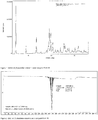
- Crystalline (R)-Baclofen-cinnamic acid cocrystal Form III can be characterized by a X-ray powder diffraction pattern having peaks at 2-theta angles of 4.60, 9.03, 13.51, 15.51,17.99, 18.70, 19.11, 19.77, 20.65 and 23.90 degrees ⁇ 0.2 degrees, in particular an X-ray powder diffraction pattern as shown in Figure 1 .
- (R)-Baclofen-cinnamic acid cocrystal Form III may be also characterized by thermal analysis.
- a representative differential scanning calorimetry (DSC) plot for (R)-Baclofen-cinnamic acid cocrystal Form III is shown in Figure 2 .
- the DSC plot comprises an endothermic peak with an onset temperature of 163.5 ⁇ 1°C.
- Figure 1 shows a representative XRPD pattern of (R)-Baclofen-cinnamic acid cocrystal Form III, wherein the numerical data are summarized in Table 8: Table 8: XRPD of (R)-Baclofen-cinnamic acid cocrystal Form III No.
- Crystalline (R)-Baclofen-cinnamic acid cocrystal Form IV can be characterized by a X-ray powder diffraction pattern having peaks at 2-theta angles of 5.15, 10.27, 12.84, 13.10, 15.42, 18.58, 21.14, 24.53, 25.34, 27.14 degrees ⁇ 0.2 degrees, in particular an X-ray powder diffraction pattern as shown in Figure 3 .
- Crystalline (R)-Baclofen-cinnamic acid cocrystal Form IV may be also characterized by thermal analysis.
- a representative DSC plot for (R)-Baclofen-cinnamic acid cocrystal Form IV is shown in Figure 4 .
- the DSC plot comprises an endothermic peak with an onset temperature of 161.2 ⁇ 1°C.
- Figure 3 shows a representative XRPD pattern of (R)-Baclofen-cinnamic acid cocrystal Form IV, wherein the numerical data are summarized in Table 9: Table 9 : XRPD of (R)-Baclofen-cinnamic acid cocrystal Form IV No.
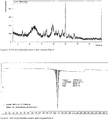
- Crystalline (R)-Baclofen-benzoic acid cocrystal Form II can be characterized by an X-ray powder diffraction pattern having peaks at 2-theta angles of 3.4, 7.0, 10.9, 12.7, 16.0, 17.2, 19.2, 19.6, 20.0, 22.1, 23.7, 25.0, 28.5 degrees ⁇ 0.2 degrees, in particular by an X-ray powder diffraction pattern as shown in Figure 5 .
- Crystalline (R)-Baclofen-benzoic acid cocrystal Form II may be also characterized by thermal analysis.
- a representative DSC plot for (R)-Baclofen-benzoic acid cocrystal Form II is shown in Figure 6 .
- the DSC plot has a first endothermic peak with an onset at 103.9 ⁇ 1 °C and a second endothermic peak with an onset at 153.4 ⁇ 1 °C.
- Figure 5 shows a representative XRPD pattern of (R)-Baclofen-benzoic acid cocrystal Form II, wherein the numerical data are summarized in Table 10: Table 10: XRPD of (R)-Baclofen-benzoic acid cocrystal Form II No.
- Crystalline (R)-Baclofen-salicylic acid cocrystal Form VIII can be characterized by an X-ray powder diffraction pattern having peaks at 2-theta angles of 5.5, 14.8, 16.5, 18.9, 19.7, 20.3, 20.5, 20.8, 21.4, 21.7, 25.1, 27.6 degrees ⁇ 0.2 degree, in particular by an X-ray powder diffraction pattern as shown in Figure 7 .
- Crystalline (R)-Baclofen- salicylic acid cocrystal Form VIII may be also characterized by thermal analysis.
- a representative DSC plot for (R)-Baclofen-salicylic acid cocrystal Form VIII is shown in Figure 8 .
- the DSC plot has a first endothermic peak with an onset at 115.7 ⁇ 1 °C followed by two overlapped endothermic peaks with onset close to 140 ⁇ 1 °C.
- Figure 7 shows a representative XRPD pattern of (R)-Baclofen-salicylic acid cocrystal Form VIII, wherein the numerical data are summarized in Table 11: Table 11: XRPD of (R)-Baclofen-salicylic acid cocrystal Form VIII No.
- Crystalline (R)-Baclofen-ferulic acid cocrystal Form XII can be characterized by an X-ray powder diffraction pattern having peaks at 2-theta angles of 4.62, 7.48, 8.29, 14.56, 15.84, 17.26, 20.25, 23.05, 24.54, 25.67 degrees ⁇ 0.2 degree, in particular by an X-ray powder diffraction pattern as shown in Figure 9 .
- Crystalline (R)-Baclofen-ferulic acid cocrystal Form XII may be also characterized by thermal analysis.
- a representative DSC plot for (R)-Baclofen-ferulic acid cocrystal Form XII is shown in Figure 10 .
- the DSC plot comprises 3 overlapping endothermic peaks with extrapolated onsets between 116.7 ⁇ 1°C and 135.7 ⁇ 1 °C.
- Figure 9 shows a representative XRPD pattern of (R)-Baclofen-ferulic acid cocrystal Form XII, wherein the numerical data are summarized in Table 12: Table 12: XRPD of (R)-Baclofen-ferulic acid cocrystal Form XII No.
- Solubility test were performed with 25 mg of (R)-Baclofen in a test tube with screw cap and magnetic stirring.
- the solvent was added in small portions of 2 volumes (mg/ml) at room temperature up to 40 volumes. After each addition, the sample was stirred for 2-5 minutes. If after addition of 40 volumes of solvent the solid did not reach complete dissolution at room temperature, the suspension was heated to reflux.
- Cocrystal screening involved 2 techniques (slurrying and grinding), 18 solvents and (R)-Baclofen /coformer molar ratios of 1:1, 1:2, 1:3, 1:5 and 2:3.
- Table 14 List of screened coformers Coformer CAS Number Benzoic acid 65-85-0 Cinnamic acid 140-10-3 Gentisic acid 490-79-9 4-aminobenzoic acid 150-13-0 Vanillic acid 121-34-6 p-Anisic acid 100-09-4 Citric acid 77-92-9 Gallic acid 149-91-7 L-Ascorbic acid 50-81-7 Fumaric acid 110-17-8 Salicylic acid 69-72-7 Vanillin 121-33-5 Maltol 118-71-8 Ferulic acid 1135-24-6
- Crystalline stability study of the new cocrystals found during the screening was performed under accelerated ICH storage conditions (40°C, 75 ⁇ 5 % RH) for 1 week and 4 weeks. The results are summarized in the Table 16: Table 16: Crystalline stability of cocrystals Form XRPD (crystallinity) Coformer [pKa] ⁇ pKa 1H NMR molar ratio (R)-Baclofen /coformer Crystalline stability study Crystalline stability study 40 °C/ 75 ⁇ 5 % RH 40 °C/ 75 ⁇ 5 % RH After 1 week After 4 weeks Form II Moderate Benzoic acid [pKa 4.10] -0.3 2:1 stable Stable Form III Good Cinnamic acid [pKa 4.10] -0.60 1:1 Stable Stable Form IV Good Stable Stable Form VII Good Fumaric acid [pKa 3.03] 0.77 2:1 Unstable Unstable Form VIII Good Salicylic acid [pKa 2.97] 0.83 1:1 Stable Stable Form I
- Retention time of (R)-Baclofen under conditions described in the Section "Measuring instruments, conditions and protocols" above, is about 13 min and the relative retention times (RRT) of known impurities are given below.
- - (3RS)-5-amino-3-(4-chlorophenyl)-5-oxopentanoic acid (Impurity B) RRT 0.3 - 3-(4-chlorophenyl)glutaric acid (Impurity C) : RRT 0.4 - (4RS)-4-(4-chlorophenyl)pyrrolidine-2-one (impurity A) : RRT 0.7
- Impurities detected in ferulic acid Table 20 Ferulic acid impurities Coformer Identification RT RRT % a/a Ferulic acid Ferulic acid (FA) 4.4 0.33 99.83 Impurity FA1 3.9 0.29 0.07 Impurity FA2 7.0 0.52 0.03 Impurity FA3 9.2 0.69 0.07
- Table 31 Aqueous solubility of (R)-Baclofen crystals (R)-Baclofen Crystal Form Solvent Crystal Form A Crystal Form B Sparingly soluble Sparingly soluble Water 0.8 g/100 ml 1 g/100 ml
- Table 32 Aqueous solubility of (R)-Baclofen cocrystals Solvent (R)-Baclofen cocrystals Cocrystal Form III Cocrystal Form IV Cocrystal Form II Cocrystal Form VIII Cocrystal Form XII Freely Soluble Freely Soluble Soluble Freely Soluble Soluble Soluble Water 10 g /100 ml 10 g /100 ml 3.33 g /100 ml 10 g /100 ml 3.33 g/100 ml
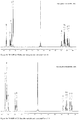
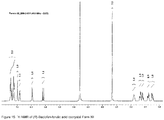
- Spectra were acquired for samples of 5-10 mg dissolved in 0.7ml of D 2 O. Few drops of deuterated sodium hydroxide solution (NaOD, 40 % w/w in D 2 O) were added to D 2 O to achieve a complete dissolution. Spectra were recorded using a Varian Mercury 400 MHz spectrometer equipped with a broadband probe ATB 1H/19F/X of 5 mm.
Landscapes
- Chemical & Material Sciences (AREA)
- Organic Chemistry (AREA)
- Health & Medical Sciences (AREA)
- General Chemical & Material Sciences (AREA)
- Nuclear Medicine, Radiotherapy & Molecular Imaging (AREA)
- Bioinformatics & Cheminformatics (AREA)
- Neurology (AREA)
- Orthopedic Medicine & Surgery (AREA)
- Physical Education & Sports Medicine (AREA)
- Chemical Kinetics & Catalysis (AREA)
- Crystallography & Structural Chemistry (AREA)
- Medicinal Chemistry (AREA)
- Engineering & Computer Science (AREA)
- Pharmacology & Pharmacy (AREA)
- Life Sciences & Earth Sciences (AREA)
- Animal Behavior & Ethology (AREA)
- General Health & Medical Sciences (AREA)
- Public Health (AREA)
- Veterinary Medicine (AREA)
- Organic Low-Molecular-Weight Compounds And Preparation Thereof (AREA)
Abstract
The invention relates to novel cocrystals of (R)-Baclofen and processes for preparation thereof, and in particular to cocrystals of (R)-Baclofen with cinnamic acid, benzoic acid, salicylic acid and ferulic acid. It also refers to pharmaceutical compositions containing said cocrystals and to a use of said cocrystals or pharmaceutical compositions for the treatment of a disease or disorder selected from spasticity due to multiple sclerosis, spinal cord injury or cerebral palsy, and alcoholism.
Description
- The invention relates to novel cocrystals of (R)-Baclofen and processes for preparation thereof. It also refers to pharmaceutical compositions containing said cocrystals and to a use of said cocrystals or pharmaceutical compositions for the treatment of a disease or disorder selected from spasticity due to multiple sclerosis, spinal cord injury or cerebral palsy, and alcoholism.
- (R)-Baclofen, i.e. (3R)-4-amino-3-(4-chlorophenyl)butanoic acid, has the following structural formula (1).

- (R)-Baclofen is an antispastic drug and an analog of the neurotransmitter 4-aminobutyric acid (GABA).
- 4-Aminobutyric acid (GABA) is the major inhibitory neurotransmitter in the mammalian central nervous system (CNS), and it operates through ionotropic (GABAA and GABAC) as well as G protein-coupled (GABAB) receptors. The dysfunction of the central GABA system is responsible for the development and outbreak of epilepsy, Huntington's and Parkinson's diseases, and other psychiatric disorders, such as anxiety and pain. Baclofen interacts stereospecifically with GABAB receptor and is a selective and therapeutically available GABAB agonist. It is used in the treatment of paroxysmal pain of trigeminal neuralgia as well as spasticity of spinal cord, a serious disease characterized by an increase in muscle tone usually perceived as muscle tightness or achiness in limbs. Although commercialized in its racemic form, the (R)-(-) isomer has been found to be the more active one and patients should greatly benefit from the administration of enantiomerically pure (R)-Baclofen.
-
US2009/0137819 discloses the process of preparation of optically active 4-amino-3-(4-chlorophenyl)butanoic acid by adding an aqueous solution of sodium hydroxide into an aqueous solution of a hydrochloride salt of optically active 4-amino-3-(4-chlorophenyl)butanoic acid to attain neutralizing crystallization. M. R. Caira et al. (in Optical resolution of Baclofen via diastereomeric salt pair formation between 3-(p-chlorophenyl)glutaramic acid and (S)-(-)-α-phenylethylamine, J. Chem. Soc., Perkin Transactions 2, 1997, pp. 763-768) disclose a method in which the same salt is yielded by adding diluted hydrochloric acid to an aqueous hydroxide solution of optically active 4-amino-3-(4-chlorophenyl)butanoic acid to attain neutralizing crystallization. Caira et al. also disclose that the crystals are further heated in methanol. -
EP2345634 B1 discloses crystal forms of (R)-Baclofen, i.e. crystal form A and form B. Crystal form B may be produced by the known processes described byUS2009/0137819 or Caira et al. - Crystal form A is obtained from (R)-Baclofen crystal form B by stirring crystal form B in water at the pH in the range of 7-8 for 1 hour at 65°C and then cooling down the solution. The cooled mixture is filtered off to obtain the crystal form A.
-
EP2345634 B1 further discloses that in the DSC measurement the crystal form A has a higher endothermic peak and a higher exothermic peak than crystal form B, crystal form A is far better in thermal stability than crystal form B. Moreover, it is also considered that the crystal form A is better in storage stability than crystal form B. - The solubility of crystal form A in 100 g of water ranges from 0.7 to 1.1 g (0.9±0.2 g) at 25°C. On the other hand, the solubility of crystal form B in 100 g of water ranges from 1.8 to 2.2 g (2.0 ± 0.2 g) at 25°C, which according to USP solubility test (General Notices to point 5.30. Description and Solubility), is sparingly soluble in water.
- There is a continuous demand in the pharmaceutical industry to be able to produce pure, morphologically homogenous and stable forms of active substances. It is also well known that solubility, dissolution and gastrointestinal permeability are fundamental parameters that control rate and extent of drug absorption and its bioavailability. The aqueous solubility of a drug is a fundamental property that plays an important role in the absorption of the drug after oral administration. It also governs the possibility of parenteral administration of a drug and is useful in manipulating and testing of drug properties during the drug design and development process. The drug solubility is an equilibrium measure, but also the dissolution rate at which the solid drug or drug from the dosage form passes into solution is critically important when the dissolution time is limited. Poor aqueous solubility and poor dissolution in the gastrointestinal fluids are limiting factors to the in vivo bioavailability after oral administration. Therefore, in vitro dissolution has been recognized as an important element in drug development and thus increasing the dissolution rate of poorly soluble drugs and enhancing their bioavailability is an important challenge to pharmaceutical scientists. Furthermore, from the point of view of the cost-effectiveness of production it is extremely important to produce the product using a procedure that may also be realized on the industrial scale that is easy to reproduce and results in a morphologically homogeneous, contaminant-free, and a stable form.
- It is well-known that the successful formation of cocrystals is neither predictable nor otherwise guaranteed. Furthermore, computational analysis cannot predict the structure or properties of cocrystals. Of particular importance is the fact that cocrystal formation is a new field where there is generally not yet much experience and knowledge available in the art. As such, general trends are not yet evident. It is also expected that the change in properties when comparing a drug polymorph with cocrystals will be far more drastic as compared with the variance in properties amongst polymorphs. This means that the chances of success for providing cocrystals having above mentioned properties, in the present case were generally low.
- It can also be expected that processes for producing cocrystals, in particular in large scale applications, will require different approaches as those which have been developed in the field of polymorphs. At present the number of drug cocrystals in pharmaceutics on the market, if any, is low.
- Accordingly, the objective underlying the present invention was to improve the aqueous solubility of (R)-Baclofen as well as the chemical and the crystalline stability with respect to the known crystal forms A and B of (R)-Baclofen.
- Our goal was to produce a new highly pure and stable, contaminant-free form of (R)-Baclofen with homogeneous morphology, which provides high aqueous solubility and thermal stability and is producible at industrial scale.
- It has unexpectedly been found that it is possible to provide cocrystals of (R)-Baclofen which are morphologically homogeneous, contaminant-free, stable and in particular have high aqueous solubility and thermal stability.
- The invention relates to a cocrystal of (R)-Baclofen, i.e. (3R)-4-amino-3-(4-chlorophenyl)-butanoic acid, with a coformer, and in particular to cocrystal of (R)-Baclofen with the coformer selected from the group consisting of cinnamic acid ((2E)-3-phenylprop-2-enoic acid), benzoic acid (benzene carboxylic acid), salicylic acid (2-hydroxybenzoic acid) and ferulic acid ((E)-3-(4-hydroxy-3-methoxy-phenyl)prop-2-enoic acid), and to processes for manufacturing thereof. It also refers to pharmaceutical compositions comprising said cocrystals. The invention also relates to said pharmaceutical compositions for the treatment of a disease or disorder defined in the claims.
-
- Figure 1:
- shows a representative XRPD pattern of (R)-Baclofen-cinnamic acid cocrystal Form III.
- Figure 2:
- shows a representative DSC plot of (R)-Baclofen-cinnamic acid cocrystal Form III.
- Figure 3:
- shows a representative XRPD pattern of (R)-Baclofen-cinnamic acid cocrystal Form IV.
- Figure 4:
- shows a representative DSC plot of (R)-Baclofen-cinnamic acid cocrystal Form IV.
- Figure 5:
- shows a representative XRPD pattern of (R)-Baclofen-benzoic acid cocrystal Form II.
- Figure 6:
- shows a representative DSC plot of (R)-Baclofen-benzoic acid cocrystal Form II.
- Figure 7:
- shows a representative XRPD pattern of (R)-Baclofen-salicylic acid cocrystal Form VIII.
- Figure 8:
- shows a representative DSC plot of (R)-Baclofen-salicylic acid cocrystal Form VIII.
- Figure 9:
- shows a representative XRPD pattern of (R)-Baclofen-ferulic acid cocrystal Form XII.
- Figure 10:
- shows a representative DSC plot of (R)-Baclofen-ferulic acid cocrystal Form XII.
- Figure 11:
- shows 1H NMR spectrum of (R)-Baclofen-cinnamic acid cocrystal Form III.
- Figure 12:
- shows 1H NMR spectrum of (R)-Baclofen-cinnamic acid cocrystal Form IV.
- Figure 13:
- shows 1H NMR spectrum of (R)-Baclofen-benzoic acid cocrystal Form II.
- Figure 14:
- shows 1H NMR spectrum of (R)-Baclofen-salicylic acid cocrystal Form VIII.
- Figure 15:
- shows 1H NMR spectrum of (R)-Baclofen-ferulic acid cocrystal Form XII.
- The present invention relates to a cocrystal of (R)-Baclofen, having structural formula (1)

- It has unexpectedly been found that it is possible to provide cocrystals of (R)-Baclofen with cinnamic acid, benzoic acid, salicylic acid and ferulic acid which are morphologically homogeneous, contaminant-free, stable and in particular have high aqueous solubility and thermal stability.
- A preliminary study of (R)-Baclofen solubility with different solvents (see Example 26 below) allowed to design a proper experimental space to obtain or detect new crystalline form and to reach the following conclusions as to solubility of (R)-Baclofen:
- (R)-Baclofen has low solubility in water and majority of commonly used organic solvents;
- (R)-Baclofen is soluble at reflux temperature in DMSO, DMF and water;
- (R)-Baclofen is insoluble in the other tested solvents even at reflux temperature.
- For the cocrystal screening the present inventors selected 2 techniques (slurrying and grinding), 18 solvents and (R)-Baclofen /coformer molar ratios of 1:1, 1:2, 1:3, 1:5 and 2:3.
- The selected coformers used for cocrystal screening are summarized in Table 1.
Table 1: List of screened coformers Coformer CAS Number Benzoic acid 65-85-0 Cinnamic acid 140-10-3 Gentisic acid 490-79-9 4-Aminobenzoic acid 150-13-0 Vanillic acid 121-34-6 p-Anisic acid 100-09-4 Citric acid 77-92-9 Gallic acid 149-91-7 L-Ascorbic acid 50-81-7 Fumaric acid 110-17-8 Salicylic acid 69-72-7 Vanillin 121-33-5 Maltol 118-71-8 Ferulic acid 1135-24-6 - Combining the above parameters, 237 representative experiments were performed. From this screening, new cocrystal forms were detected by XRPD and the results are summarized in Table 2.
Table 2: New cocrystals of (R)-Baclofen Coformer Cocrystal Form Benzoic acid Form II Cinnamic acid Forms III and IV Fumaric acid Form VII Salicylic acid Form VIII Vanillin Form IX Ferulic acid Form XII - The cocrystals disclosed herein provide various benefits over the known forms of (R)-Baclofen, in particular its known crystal forms A and B.
- First aspect of the present invention is directed to the cocrystal of (R)-Baclofen with cinnamic acid.
- The molar ratio of (R)-Baclofen to cinnamic acid in the above cocrystal is about 1:1.
- In the preferred embodiment of the above aspect, the present invention relates to a cocrystal of (R)-Baclofen with cinnamic acid Form III, further: (R)-Baclofen-cinnamic acid cocrystal Form III or cocrystal Form III, which is a morphologically homogeneous, contaminant-free and stable form. In particular, it has high aqueous solubility and thermal stability when compared to prior art crystal forms A and B of (R)-Baclofen.
- The (R)-Baclofen-cinnamic acid cocrystal Form III of the present invention has an X-ray powder diffraction pattern with peaks at 2-theta angles of 4.60±0.2 degrees, 9.03±0.2 degrees, 13.51±0.2 degrees, 17.99±0.2 degrees, 19.11±0.2 degrees, 19.77±0.2 degrees, 20.65±0.2 degrees, and 23.90±0.2 degrees, when using Cu-Ka radiation. Details of the X-ray powder diffraction measurement are provided further, in the experimental part.
- In more detail, the cocrystal Form III of the present disclosure, has an X-ray powder diffraction pattern with peaks and relative intensities as shown in Table 3.
Table 3: XRPD data of (R)-Baclofen-cinnamic acid cocrystal Form III No. 2-theta (deg) d-spacing (Å) Relative intensity (%) 1 4.6034(8) 19.180(3) 100.00 2 5.41(4) 16.31(13) 1.85 3 9.0380(16) 9.7766(17) 17.52 4 11.969(8) 7.388(5) 0.26 5 12.854(19) 6.882(10) 0.65 6 13.5154(14) 6.5462(7) 41.46 7 13.788(12) 6.418(6) 0.54 8 14.335(13) 6.174(6) 1.27 9 14.63(4) 6.052(16) 0.49 10 15.167(17) 5.837(7) 1.42 11 15.519(6) 5.705(2) 3.52 12 17.646(11) 5.022(3) 3.45 13 17.999(6) 4.9242(16) 6.51 14 18.706(7) 4.7399(17) 49.92 15 19.1137(16) 4.6396(4) 52.96 16 19.7713(17) 4.4867(4) 60.34 17 20.211(9) 4.3902(19) 9.49 18 20.651(3) 4.2975(6) 30.02 19 21.728(8) 4.0869(14) 7.06 20 22.047(7) 4.0285(13) 0.92 21 22.546(8) 3.9404(14) 6.13 22 22.991(8) 3.8652(14) 5.65 23 23.903(8) 3.7198(12) 11.82 24 24.415(13) 3.6429(19) 0.76 25 25.415(7) 3.5017(9) 33.28 26 25.772(16) 3.454(2) 22.93 27 25.945(17) 3.431(2) 5.21 28 26.35(2) 3.379(3) 4.72 29 26.922(9) 3.3091(11) 13.95 30 27.648(10) 3.2238(11) 17.46 31 28.93(2) 3.084(2) 6.08 32 29.27(3) 3.049(3) 2.99 33 30.246(11) 2.9525(10) 13.39 34 31.01(7) 2.881(6) 5.54 35 31.686(11) 2.8216(10) 17.06 36 32.23(4) 2.775(3) 2.12 37 32.43(9) 2.759(8) 5.18 38 32.951(18) 2.7161(15) 1.79 39 34.14(2) 2.6245(17) 6.57 40 34.59(5) 2.591(4) 3.31 41 34.92(4) 2.568(3) 3.28 42 35.40(9) 2.533(6) 1.09 - Furthermore, the cocrystal Form III of the present invention has a single endothermic peak in a differential scanning calorimetry plot with onset at 163.5± 1 °C.
- Details of the differential scanning calorimetry measurement are provided further, in the experimental part.
- Preferably, the cocrystal Form III of the present invention is substantially chemically pure, i.e. it contains less than 1 area-%, or less than 0.5 area-%, preferably less than 0.1 area-%, of compounds other than (R)-Baclofen and cinnamic acid as determined by high performance liquid chromatography (HPLC).
- Furthermore, the cocrystal Form III of the present invention is substantially polymorphically pure, and preferably contains less than 5 wt.-% of other crystalline, non-crystalline or amorphous forms of (R)-Baclofen, cinnamic acid and cocrystals thereof.
- The present invention relates also to a process for preparing (R)-Baclofen-cinnamic acid cocrystal Form III as characterized above, wherein said process comprises the following steps:
- a) contacting (R)-Baclofen and cinnamic acid in a molar ratio of (R)-Baclofen to cinnamic acid within a range 1:1-1:5 with a solvent selected from water, acetonitrile, methyl isobutyl ketone, heptane, cyclohexane, dimethylformamide, ethyl acetate, methanol, ethanol, isopropanol, dioxane, preferably with ethyl acetate,
- b) optionally, seeding a mixture of step a) with pre-existing crystals of Form III,
- c) crystallising the (R)-Baclofen-cinnamic acid cocrystal Form III.
- In the second embodiment the first aspect, the present invention relates to a cocrystal of (R)-Baclofen with cinnamic acid Form IV, further: (R)-Baclofen-cinnamic acid cocrystal Form IV or cocrystal Form IV, which is a morphologically homogeneous, contaminant-free and stable form. In particular, it has high aqueous solubility and thermal stability when compared to prior art crystal forms A and B of (R)-Baclofen.
- The cocrystal Form IV of the present invention has an X-ray powder diffraction pattern with peaks at 2-theta angles of 5.15±0.2 degrees, 10.27±0.2 degrees, 12.84±0.2 degrees, 13.10±0.2 degrees, 15.42±0.2 degrees, 18.58±0.2 degrees, 21.14±0.2 degrees, 24.53±0.2 degrees, 25.34±0.2 degrees, and 27.14±0.2 degrees, when using Cu-Ka radiation. Further details of X-ray powder diffraction measurement are provided herein below.
- In more detail, the cocrystal Form IV of the present disclosure, has an X-ray powder diffraction pattern with peaks and relative intensities as shown in Table 4.
Table 4: XRPD of (R)-Baclofen-cinnamic acid cocrystal Form IV No. 2-theta (deg) d-spacing (Å) Relative intensity (%) 1 5.1508(19) 17.143(6) 100.00 2 10.279(5) 8.599(4) 2.48 3 12.843(5) 6.887(3) 5.48 4 13.102(6) 6.752(3) 6.23 5 14.33(12) 6.18(5) 0.53 6 15.428(2) 5.7388(8) 36.97 7 17.28(2) 5.128(6) 12.42 8 17.673(6) 5.0144(16) 10.75 9 18.582(2) 4.7711(6) 37.61 10 19.09(3) 4.646(6) 8.77 11 19.25(2) 4.606(5) 2.61 12 21.142(3) 4.1989(5) 41.21 13 21.6200(16) 4.1071(3) 62.73 14 21.901(6) 4.0550(10) 2.38 15 22.630(7) 3.9261(12) 5.53 16 23.660(9) 3.7573(14) 6.66 17 24.531(3) 3.6258(4) 30.95 18 25.345(4) 3.5113(6) 25.74 19 25.830(4) 3.4464(6) 29.61 20 25.996(4) 3.4248(5) 46.33 21 27.140(3) 3.2829(4) 27.69 22 27.363(16) 3.2568(18) 6.38 23 27.872(8) 3.1984(9) 6.64 24 28.346(8) 3.1460(9) 4.89 25 28.87(2) 3.090(2) 0.51 26 29.54(2) 3.021(2) 2.63 27 30.48(2) 2.9303(18) 1.94 28 31.10(2) 2.873(2) 1.02 29 32.283(14) 2.7707(11) 1.24 30 32.880(8) 2.7218(6) 5.14 31 33.287(7) 2.6894(6) 4.94 32 33.96(4) 2.638(3) 0.52 33 34.350(9) 2.6086(6) 0.47 34 35.659(7) 2.5158(5) 6.18 - Furthermore, the cocrystal Form IV of the present invention has a single endothermic peak in a differential scanning calorimetry plot with an onset at 161.2 ± 1°C. Details of the differential scanning calorimetry measurement are provided further, in the experimental part.
- Furthermore, the cocrystal Form IV of the present invention is substantially chemically pure, i.e. contains less than 1 area-%, or less than 0.5 area-%, preferably less than 0.1 area-%, of compounds other than (R)-Baclofen and cinnamic acid as determined by high performance liquid chromatography (HPLC).
- Furthermore, the cocrystal Form IV of the present invention is substantially polymorphically pure, and preferably contains less than 5 wt.-% of other crystalline, non-crystalline or amorphous forms of (R)-Baclofen acid, cinnamic acid and cocrystals thereof.
- The present invention relates also to a process for preparing (R)-Baclofen-cinnamic acid cocrystal Form IV as characterized above, wherein said process comprises the following steps:
- a) contacting (R)-Baclofen and cinnamic acid in a molar ratio of (R)-Baclofen to cinnamic acid within a range 1:1-1:5 with acetone,
- b) optionally, seeding a mixture of step a) with pre-existing crystals of Form IV,
- c) crystallising the (R)-Baclofen-cinnamic acid cocrystal Form IV.
- In a second aspect, the present invention relates to a cocrystal of (R)-Baclofen with benzoic acid.
- The molar ratio of (R)-Baclofen to benzoic acid in the above cocrystal is about 2:1.
- The preferred embodiment of this aspect is the cocrystal of (R)-Baclofen with benzoic acid Form II, further: (R)-Baclofen-benzoic acid cocrystal Form II or cocrystal Form II, which is morphologically homogeneous, contaminant-free and stable form. In particular, it has high aqueous solubility and thermal stability, compared to prior art crystal forms A and B of (R)-Baclofen.
- The (R)-Baclofen-benzoic acid cocrystal Form II of the present invention has an X-ray powder diffraction pattern with peaks at 2-theta angles of 3.4±0.2 degrees, 7.0±0.2 degrees, 10.9±0.2 degrees, 12.7±0.2 degrees, 16.0±0.2 degrees, 17.2±0.2 degrees, 19.2±0.2 degrees, 19.6±0.2 degrees, 20.0±0.2 degrees, 22.1±0.2 degrees, 23.7±0.2 degrees, 25.0±0.2 degrees and 28.5±0.2 degrees, when using Cu-Ka radiation. Further details regarding the X-ray powder diffraction measurement are provided herein below.
- Furthermore, the cocrystal Form II of the present invention has an X-ray powder diffraction pattern with peaks and relative intensities as shown in Table 5.
Table 5: XRPD of (R)-Baclofen-benzoic acid cocrystal Form II No. 2-theta (deg) d-spacing [Å] Relative intensity (%) 1 3.4 26.09 6 2 7.0 12.61 16 3 10.9 8.13 19 4 12.7 6.96 17 5 16.0 5.55 15 6 16.6 5.33 13 7 17.2 5.16 22 8 19.2 4.63 25 9 19.6 4.53 40 10 20.0 4.44 26 11 21.1 4.21 17 12 22.1 4.03 17 13 23.7 3.75 22 14 25.0 3.56 100 15 26.2 3.40 11 16 28.5 3.13 17 - Furthermore, the cocrystal Form II of the present invention has a first endothermic peak with an onset at 103.9 ± 1 °C and a second endothermic peak with an onset at 153.4 ± 1 °C. Details of the differential scanning calorimetry measurement are provided further, in the experimental part.
- Preferably, the cocrystal Form II as defined above is substantially chemically pure, i.e. contains less than 1 area-%, or less than 0.5 area-%, preferably less than 0.1 area-%, of compounds other than (R)-Baclofen and benzoic acid as determined by high performance liquid chromatography (HPLC).
- Furthermore, the cocrystal Form II of the present invention is substantially polymorphically pure, and preferably contains less than 5 wt.-% of other crystalline, non-crystalline or amorphous forms of (R)-Baclofen, benzoic acid and cocrystals thereof.
- The present invention relates also to a process for preparing (R)-Baclofen-benzoic acid cocrystal Form II as characterised above, wherein said process comprises the following steps:
- a) contacting (R)-Baclofen and benzoic acid in a molar ratio of (R)-Baclofen to benzoic acid within a range 1:1-1:5 with a solvent selected from methyl isobutyl ketone, dioxane, cyclohexane, heptane, acetonitrile, ethyl acetate, methanol, ethanol, isopropanol, preferably with methyl isobutyl ketone,
- b) optionally, seeding a mixture of step a) with pre-existing crystals of Form II,
- c) crystallising the (R)-Baclofen-benzoic acid cocrystal Form II.
- In a third aspect, the present invention relates to a cocrystal of (R)-Baclofen with salicylic acid.
- The molar ratio of (R)-Baclofen to salicylic acid in the above cocrystal is about 1:1.
- In the preferred embodiment of this aspect of the present invention, the cocrystal of (R)-Baclofen with salicylic acid Form VIII, further: (R)-Baclofen-salicylic acid cocrystal Form VIII or cocrystal Form VIII, is morphologically homogeneous, contaminant-free and stable form. In particular, it has high aqueous solubility and thermal stability, compared to prior art crystal forms A and B of (R)-Baclofen.
- The (R)-Baclofen-salicylic acid cocrystal Form VIII of the present invention has an X-ray powder diffraction pattern with peaks at 2-theta angles of 5.5±0.2 degrees, 14.8±0.2 degrees, 16.5±0.2 degrees, 18.9±0.2 degrees, 19.7±0.2 degrees, 20.3±0.2 degrees, 20.5±0.2 degrees, 20.8±0.2 degrees, 21.4±0.2 degrees, 21.7±0.2 degrees, 25.1±0.2 degrees and 27.6±0.2 degrees, when using Cu-Ka radiation. Further details of the X-ray powder diffraction measurement are provided herein below, in the experimental part.
- In more detail, the cocrystal Form VIII of the present invention has an X-ray powder diffraction pattern with peaks and/or relative intensities as shown in Table 6.
Table 6: XRPD of (R)-Baclofen-salicylic acid cocrystal Form VIII No. 2-theta (deg) d-spacing [Å] Relative intensity (%) 1 3.7 24.17 3 2 5.5 16.14 100 3 10.9 8.14 6 4 12.3 7.21 8 5 14.8 6.00 7 6 16.5 5.38 14 7 18.5 4.80 7 8 18.9 4.69 11 9 19.7 4.50 29 10 20.3 4.38 44 11 20.5 4.33 18 12 20.8 4.26 12 13 21.4 4.15 14 14 21.7 4.09 18 15 23.3 3.81 6 16 24.7 3.60 9 17 25.1 3.55 10 18 26.0 3.42 5 19 27.0 3.30 5 20 27.6 3.23 12 21 28.3 3.15 5 22 29.4 3.04 6 23 30.0 2.98 2 24 31.0 2.89 3 25 32.3 2.77 2 26 33.6 2.67 2 27 35.3 2.54 3 28 37.4 2.40 3 29 38.5 2.34 2 - Furthermore, the cocrystal Form VIII of the present invention has a first endothermic peak with an onset at 115.7 ± 1 °C followed by two overlapping endothermic peaks with onsets with onsets at 140,7 ± 1 °C and 142,7 ± 1 °C. Details of the differential scanning calorimetry measurement are provided further, in the experimental part.
- Preferably, the cocrystal Form VIII of the present invention is substantially chemically pure, i.e. contains less than 1 area-%, or less than 0.5 area-%, preferably less than 0.1 area-%, of compounds other than (R)-Baclofen and salicylic acid as determined by high performance liquid chromatography (HPLC).
- Furthermore, the cocrystal Form VIII of the present invention is substantially polymorphically pure, and preferably contains less than 5 wt.-% of other crystalline, non-crystalline or amorphous forms of (R)-Baclofen, salicylic acid and cocrystals thereof.
- The present invention relates also to a process for preparing (R)-Baclofen-salicylic acid cocrystal Form VIII as characterised above, wherein said process comprises the following steps:
- a) contacting (R)-Baclofen and salicylic acid in a molar ratio of (R)-Baclofen to salicylic acid within a range 1:1-1:5 with a solvent selected from methyl isobutyl ketone, dichloromethane, dioxane, toluene, dimethylformamide, heptane, tert-butyl methyl ether, tetrahydrofuran, acetonitrile, isopropanol, ethanol, methanol, acetone, ethyl acetate, preferably from tert-butyl methyl ether,
- b) optionally, seeding a mixture of step a) with pre-existing crystals of Form VIII,
- c) crystallising the (R)-Baclofen-salicylic acid cocrystal Form VIII.
- The fourth aspect of the present invention relates to a cocrystal of (R)-Baclofen with ferulic acid.
- The molar ratio of (R)-Baclofen to ferulic acid in the above cocrystal is about 1:1.
- The preferred embodiment of this aspect of the invention relates to cocrystal of (R)-Baclofen with ferulic acid Form XII, further: (R)-Baclofen-ferulic acid cocrystal Form XII or cocrystal Form XII, is morphologically homogeneous, contaminant-free and stable form. In particular, it has high aqueous solubility and thermal stability, compared to prior art crystal forms A and B of (R)-Baclofen.
- The (R)-Baclofen-ferulic acid cocrystal Form XII of the present invention has an X-ray powder diffraction pattern with peaks at 2-theta angles of 4.62±0.2 degrees, 7.48±0.2 degrees, 8.29±0.2 degrees, 14.56±0.2 degrees, 15.84±0.2 degrees, 17.26±0.2 degrees, 20.25±0.2 degrees, 23.05±0.2 degrees, 24.54±0.2 degrees, and 25.67±0.2 degrees, when using Cu-Ka radiation. Further details of the X-ray powder diffraction measurement are provided further, in the experimental part.
- In more detail, the cocrystal Form XII of the present invention has an X-ray powder diffraction pattern with peaks and relative intensities as shown in Table 7.
Table 7: XRPD of (R)-Baclofen-ferulic acid cocrystal Form XII No. 2-theta (deg) d-spacing (Å) Relative intensity (%) 1 4.622(2) 19.104(9) 5.95 2 6.41(4) 13.78(9) 0.13 3 7.480(4) 11.809(6) 3.80 4 8.299(2) 10.645(3) 7.28 5 12.491(10) 7.081(6) 1.76 6 12.824(8) 6.898(4) 2.16 7 14.563(4) 6.0774(18) 34.38 8 14.822(11) 5.972(4) 11.94 9 15.8425(19) 5.5895(7) 100.00 10 16.567(7) 5.346(2) 9.36 11 17.262(7) 5.1330(19) 12.74 12 18.072(8) 4.905(2) 6.15 13 18.319(19) 4.839(5) 6.26 14 18.824(5) 4.7104(12) 18.16 15 19.304(6) 4.5942(13) 16.85 16 19.671(12) 4.509(3) 33.07 17 19.851(7) 4.4690(16) 21.26 18 20.132(16) 4.407(3) 14.95 19 20.254(3) 4.3810(7) 89.40 20 21.267(16) 4.174(3) 1.78 21 22.183(13) 4.004(2) 7.49 22 22.61(5) 3.930(8) 13.41 23 23.051(4) 3.8552(7) 40.72 24 23.337(12) 3.809(2) 24.49 25 24.201(13) 3.675(2) 16.07 26 24.540(8) 3.6246(12) 24.09 27 25.196(8) 3.5317(11) 20.19 28 25.673(8) 3.4672(10) 25.91 29 26.41(2) 3.373(3) 1.80 30 27.26(2) 3.269(3) 17.77 31 27.734(4) 3.2140(5) 62.18 32 28.30(3) 3.151(3) 8.35 33 28.749(18) 3.1028(19) 2.53 34 30.08(2) 2.968(2) 7.84 35 30.43(2) 2.935(2) 5.06 36 30.71(3) 2.909(2) 3.26 37 31.09(3) 2.874(3) 4.69 38 31.47(2) 2.840(2) 4.46 39 31.915(7) 2.8018(6) 3.82 40 32.421(14) 2.7593(11) 2.56 41 33.813(15) 2.6488(11) 2.90 42 34.23(3) 2.6177(19) 3.18 43 34.56(2) 2.5934(15) 2.75 44 35.65(3) 2.516(2) 2.32 - Furthermore, the cocrystal Form XII of the present invention, in a differential scanning calorimetry plot has three overlapping endothermic peaks with extrapolated onsets at 116.7± 1°C, 127.2± 1°C and 135.7± 1 °C. Further details of the differential scanning calorimetry measurement are provided in the experimental part.
- Preferably, the cocrystal Form XII of the present invention is substantially chemically pure, i.e. it contains less than 1 area-%, or less than 0.5 area-%, preferably less than 0.1 area-%, of compounds other than (R)-Baclofen and ferulic acid as determined by high performance liquid chromatography (HPLC).
- Furthermore, the cocrystal Form XII of the present invention is substantially polymorphically pure, and preferably contains less than 5 wt.-% of other crystalline, non-crystalline or amorphous forms of (R)-Baclofen, ferulic acid and cocrystals thereof.
- The present invention relates also to a process for preparing (R)-Baclofen-ferulic acid cocrystal Form XII as characterised above, wherein said process comprises the following steps:
- a) contacting (R)-Baclofen and ferulic acid in a molar ratio of (R)-Baclofen to ferulic acid within a range 1:1-1:5 with a solvent selected from a solvent selected from water, methanol, ethanol, isopropanol, acetone and a mixture thereof, preferably with acetone/water mixture,
- b) optionally, seeding a mixture of step a) with pre-existing crystals of Form XII,
- d) crystallising the (R)-Baclofen-ferulic acid cocrystal Form XII.
- The present invention refers therefore in particular to any of the above characterised cocrystals of (R)-Baclofen with coformers. In particular, it relates to cocrystals of (R)-Baclofen with cinnamic acid (Forms III and IV), with benzoic acid (Form II), with salicylic acid (Form VIII) and/or with ferulic acid (Form XII).
- Crystalline stability study of the new cocrystals found during the performed screening showed that under accelerated ICH storage conditions (40°C, 75±5 % RH) for 1 week and 4 weeks the (R)-Baclofen-cinnamic acid cocrystal Form III, (R)-Baclofen-cinnamic acid cocrystal Form IV, (R)-Baclofen-benzoic acid cocrystal Form II, (R)-Baclofen-salicylic acid cocrystal Form VIII and (R)-Baclofen-ferulic acid cocrystal Form XII remain stable after 4 weeks at 40°C/ 75 ± 5 % RH.
- The term "cocrystal" as used herein, refers to a solid that is a crystalline single phase material composed of two or more, preferably two, different molecular or ionic compounds usually in a stoichiometric ratio, which is neither a solvate nor a simple salt. As to pharmaceutical ingredients, the term "cocrystal" refers to a crystalline form of a substance which comprises the drug component and at least one further component (coformer), e.g. (R)-Baclofen as the drug component and cinnamic acid as the coformer.
- Further object of the invention is a pharmaceutical composition comprising a cocrystal of (R)-Baclofen with a coformer, preferably a cocrystal of (R)-Baclofen with the coformer selected from cinnamic acid, benzoic acid, salicylic acid and ferulic acid, and more preferably a cocrystal selected from the group consisting of (R)-Baclofen-cinnamic acid Form III, (R)-Baclofen-cinnamic acid Form IV, (R)-Baclofen-benzoic acid Form II, (R)-Baclofen-salicylic acid Form VIII and (R)-Baclofen-ferulic acid Form XII, and at least one pharmaceutically acceptable excipient.
- In the preferred embodiment of the above, the pharmaceutical composition according to the present invention is formulated into a solid unit dosage form for oral administration, preferably into a tablet.
- Exemplary pharmaceutically acceptable excipients which can be contemplated for use in the pharmaceutical composition of the present invention are described below.
- Fillers are excipients which increase the volume of e.g. tablets. Examples of fillers are lactose, mannitol, celluloses such as microcrystalline cellulose, synthetic polymers, Ca-phosphate, inorganic calcium salts, maize starch, polyols and pregelatinized starch.
- Binding agents are excipients which increase the adhesion of the active agents and excipients during granulation. Examples of binding agents are: sugars, such as sorbitol, glucose, fructose, disaccharides as saccharose, polysaccharides; acacia gum; cellulose derivatives, such as soluble celluloses like methylcellulose, hydroxypropyl methylcellulose and hydroxypropyl cellulose; tragacanth; polyvinylpyrrolidone, such as N-vinylpyrrolidone or polyvinylpyrrolidonevinyl acetate copolymer; sodium alginate and alginate derivatives and gelatin.
- Disintegrants are excipients which can take up water and swell and thus improve disintegration of a tablet or granules. Examples of disintegrants are: croscarmellose sodium; starch (paste and pre-gelatinized), such as sodium starch glycolate, croscarmellose sodium and low substituted hydroxypropyl cellulose, methacrylic acid polymer with divinylbenzene, potassium salt, maltodextrin; and crospovidone.
- Lubricants are excipients which reduce the friction between excipients and compression tooling surfaces. Examples of lubricants are magnesium stearate, magnesium fumarate, fumaric acid, and sodium stearyl fumarate.
- A polymer, or a plurality of polymers may be used to coat the solid dosage form, if necessary, and they include cellulose derivatives, e.g. hydroxypropyl methylcellulose, polyvinylpyrrolidones, polyethylene glycols, polyvinyl alcohols, acrylates, such as polymethacrylate, cyclodextrins and copolymers and derivatives thereof, including for example polyvinylpyrolidine-vinylacetate. In some preferred embodiments the polymer or the plurality of polymers are pH dependent enteric polymers. Such polymers include cellulose derivatives, e.g. cellulose acetate phthalate, hydroxypropyl methyl cellulose phthalates, hydroxypropyl methyl acetate succinate, hydroxypropyl methyl cellulose acetate, carboxymethylcellulose or a salt thereof, e.g. the sodium salt, cellulose acetate trimellitate, hydroxypropyl cellulose acetate phthalate, or polymethyl acrylates, e.g. Eudragit®S.
- Surfactants include but are not limited to, sorbitan fatty esters, polyoxymethylene sorbit esters, sodium lauryl sulfate, sodium docedylbenzenesulfate, dioctyl sodium sulfosuccinate, sodium stearate, EDTA or vitamin E or tocopherol derivatives.
- Other excipients are known in the art and can be chosen by a skilled person depending on their function. Reference may be made in this context to Handbook of Pharmaceutical Excipients, ed. by R.C. Rowe et al, 6th edition, Pharmaceutical Press (2009).
- Formulating the cocrystals into a pharmaceutical dosage form may be carried out by applying techniques and excipients known in the art. Reference is made herein e.g. to Pharmaceutical Manufacturing Handbook; Production and Processes, ed. S.C. Gad; John Wiley and Sons, (2008).
- Another object of the present invention is the cocrystal of (R)-Baclofen with a coformer, in particular a cocrystal of (R)-Baclofen with the coformer selected from cinnamic acid, benzoic acid, salicylic acid and ferulic acid, and more preferably a cocrystal selected from the group consisting of (R)-Baclofen-cinnamic acid Form III, (R)-Baclofen-cinnamic acid Form IV, (R)-Baclofen-benzoic acid Form II, (R)-Baclofen-salicylic acid Form VIII and (R)-Baclofen-ferulic acid Form XII, or the pharmaceutical composition comprising any of the above cocrystals for the treatment of a disease or disorder selected from spasticity due to multiple sclerosis, spinal cord injury or cerebral palsy, and alcoholism.
- Within the meaning of the present invention, the term "room temperature" as used herein is understood to mean temperatures of about 15 °C to about 25 °C.
- Herein, the X-ray powder diffraction peaks of the cocrystals are described by their 2theta angles with a tolerance of "±0.2". In the context of the present invention, it is also possible to use a smaller tolerance of "±0.1 ".
- Regarding the synthesis of (R)-Baclofen, reference is made to examples 1 to 3 herein, as well as to example 1 and 4 of
EP874804 B1 -
X-Ray 40 kV, 15 mA Scan speed / Duration time 6.0000 deg/ min Goniometer MiniFlex 300/600 Step width 0.0100 deg Attachment ASC-6 Scan axis Theta/2-Theta Filter K-beta(x1) Scan range 3.0000 - 36.0000 deg CBO selection slit - Incident slit 1.250deg Diffrected beam mono. None Length limiting slit 10.0mm Detector Receiving slit # 113.0mm Scan mode CONTINUOUS Receiving slit # 213.0mm - DSC analysis were carried out using
DSC 2 Mettler Toledo Stare thermal analysis system at the temperature range of 25-300°C with the gradient of 10°C/min. Aluminum melting crucibles with the capacity of 40µl were used. Nitrogen was used as carrier gas with the flow of 50ml/min. - Proton nuclear magnetic resonance spectra were recorded in deuterium oxide (D2O) using a
Varian Mercury 400 MHz spectrometer equipped with a broadband probe ATB 1H/19F/X of 5 mm. Spectra were acquired for samples of 5-10 mg dissolved in 0.7ml of D2O. - Sample concentration : 5mg/5ml in ACN/H2O-0.1 methane sulfonic acid 20:80
Injection Volume: 10 µl;
Run Time: 20.0 minutes;
Column: PRIMASEP100, 4.6x150 mm;100A,5µm;
Mobile phase: gradient: ACN/H2O- 0.1 methane sulfonic acid 20:80 / ACN (95:5) -(75:25) - (95:5)
Column temp.: 40°C; and
Flow rate: 1 ml/min. - Solubility tests were performed according to 2018 edition of USP, General Notices, point 5.30. Description and Solubility.
- The approximate solubility of a compendial substance is indicated by one of the following descriptive terms.
Descriptive Term Parts of solvent required for 1 part of solute Very soluble Less than 1 Freely soluble From 1 to 10 Soluble From 10 to 30 Sparingly soluble From 30 to 100 Slightly soluble From 100 to 1000 Very slightly soluble From 1000 to 10000 Practically insoluble or insoluble Greater than or equal to 10000 - A test for stability against humidity was performed as follows: The sample is exposed to a relative humidity of 75% (+/- 5%) at 40°C (+/- 2°C) for 4 weeks. The expression "crystalline stability" means that no conversion into another crystalline form occurs, as determined by XRPD.
- The equilibrium relative humidity of a sample is measured by determining the relative humidity in % in the air above a test sample, after establishment of a humidity equilibrium in a closed/open system at a constant temperature.
- The following examples describe the present invention in detail, but are not to be construed to limit the present invention.
-

- The reactor was charged with racemic 3-(4-chlorophenyl)-glutaramide ((R,S)-GAM) (175g), methanol (1375ml) and the resulting reaction mass was heated at 60-65 °C to dissolve ((R,S)-GAM). (S)-(-)-α-Methylbenzylamine (S-MBA) (94.5 ml) was added dropwise with stirring and the resulting 1:1 GAM:MBA solution was cooled slowly to ambient temperature (20-25°C). The crystalline GAM:MBA salt was filtered off, washed with methanol (3x33ml), and dried at 40-50°C to afford white crystals (R-GAM: S-MBA salt). Yield: 104 g (40%).
-

- Diastereoisomeric salt of (R)-isomer of 3-(4-chlorophenyl)-glutaramide and (S)-(-)-α-methylbenzylamine (R-GAM:S-MBA) (100 g) was dissolved in 2,5% sodium hydroxide aqueous solution (670 ml) at 20-25 °C. Methanol (670 ml) was added thereto. Then concentrated hydrochloric acid was slowly added to adjust the pH to 2.3. During addition, (3R)-(4-chlorophenyl)-glutaramide precipitated. The mixture was allowed to stand for 1 hour, and then the precipitated solid was separated by filtration to obtain (3R)-(4-chlorophenyl)-glutaramide (R-GAM). Yield: 46.5 g (70%).
-


- (3R)-(4-chlorophenyl)-glutaramide (R-GAM) (36 g) was dissolved in aqueous solution of NaOH (20g/200ml). Then sodium hypochlorite (108 g) was added at 0-5 °C and stirred for 6h at 35-40 °C. After completion of Hoffman rearrangement, methanol (326 ml) was added. pH was adjusted to 2.2-2.8 by addition of concentrated hydrochloric acid, and then activated carbon was added. Reaction was stirred for 1h and activated carbon was filtered off through celite bed. The product was isolated by pH adjustment to 6.5-7.0 with 15% ammonia solution and the resultant precipitate was filtered off and dried at 60°C to afford (R)-Baclofen.
Yield: 19,3 g (62%). Purity: 99.9 % by HPLC. -

- The reactor was charged with (R)-Baclofen (20 g) and ethyl acetate (250 ml). Ethyl acetate saturated with hydrochloric acid was added (32.5 ml) to the reaction mass and the resulting mixture was stirred for 1h. The precipitate was filtered off and dried at 50-60°C to afford (R)-Baclofen hydrochloride.
- Yield: 15.4 g (79%). Purity: 99.9% by HPLC.
- A round bottom flask equipped with magnetic stirrer was charged with (R)-Baclofen (2.0 g, 9.4 mmol), cinnamic acid (2.77 g, 18.7 mmol, 2 eq) and ethyl acetate (20 ml) and the reaction mixture was stirred for 15 hrs at room temperature. Obtained solid was filtered through sinter funnel and washed with ethyl acetate (3x2ml). The product was dried under vacuum at room temperature and (R)-Baclofen-cinnamic acid cocrystal Form III (as confirmed by XRPD and DSC) with a purity of above 99.90% (78% yield) was obtained.
- A round bottom flask equipped with magnetic stirrer was charged with (R)-Baclofen (2.0 g, 9.4 mmol), cinnamic acid (2.77 g, 18.7 mmol, 2 eq) and ethyl acetate (20 ml). The resulting suspension was seeded with (R)-Baclofen-cinnamic acid cocrystal Form III and stirred for 15 hrs at room temperature. Obtained solid was filtered through sinter funnel and washed with ethyl acetate (3x2ml). The product was dried under vacuum at room temperature and (R)-Baclofen-cinnamic acid cocrystal Form III (as confirmed by XRPD and DSC) with a purity of above 99.90% (82% yield) was obtained.
- A round bottom flask equipped with magnetic stirrer was charged with (R)-Baclofen hydrochloride (2.0 g, 7.9 mmol) and methanol: water mixture (20ml) (75:25), then pH was adjusted to 6,5 - 7,0 using 15% ammonia. The obtained product was filtered off and charged into another reactor containing ethyl acetate (20 ml) and cinnamic acid (1.88g). The resulting suspension was seeded with (R)-Baclofen-cinnamic acid cocrystal Form III and stirred for 15 hrs at room temperature. Obtained solid was filtered through sinter funnel and washed with ethyl acetate (3x2ml). The product was dried under vacuum at room temperature and (R)-Baclofen-cinnamic acid cocrystal Form III (as confirmed by XRPD and DSC) with a purity of above 99.90% (78% yield) was obtained.
- Crystalline (R)-Baclofen-cinnamic acid cocrystal Form III can be characterized by a X-ray powder diffraction pattern having peaks at 2-theta angles of 4.60, 9.03, 13.51, 15.51,17.99, 18.70, 19.11, 19.77, 20.65 and 23.90 degrees ± 0.2 degrees, in particular an X-ray powder diffraction pattern as shown in
Figure 1 . - (R)-Baclofen-cinnamic acid cocrystal Form III may be also characterized by thermal analysis. A representative differential scanning calorimetry (DSC) plot for (R)-Baclofen-cinnamic acid cocrystal Form III is shown in
Figure 2 . The DSC plot comprises an endothermic peak with an onset temperature of 163.5± 1°C. -
Figure 1 shows a representative XRPD pattern of (R)-Baclofen-cinnamic acid cocrystal Form III, wherein the numerical data are summarized in Table 8:Table 8: XRPD of (R)-Baclofen-cinnamic acid cocrystal Form III No. 2-theta (deg) d-spacing (Å) Relative intensity (%) 1 4.6034(8) 19.180(3) 100.00 2 5.41(4) 16.31(13) 1.85 3 9.0380(16) 9.7766(17) 17.52 4 11.969(8) 7.388(5) 0.26 5 12.854(19) 6.882(10) 0.65 6 13.5154(14) 6.5462(7) 41.46 7 13.788(12) 6.418(6) 0.54 8 14.335(13) 6.174(6) 1.27 9 14.63(4) 6.052(16) 0.49 10 15.167(17) 5.837(7) 1.42 11 15.519(6) 5.705(2) 3.52 12 17.646(11) 5.022(3) 3.45 13 17.999(6) 4.9242(16) 6.51 14 18.706(7) 4.7399(17) 49.92 15 19.1137(16) 4.6396(4) 52.96 16 19.7713(17) 4.4867(4) 60.34 17 20.211(9) 4.3902(19) 9.49 18 20.651(3) 4.2975(6) 30.02 19 21.728(8) 4.0869(14) 7.06 20 22.047(7) 4.0285(13) 0.92 21 22.546(8) 3.9404(14) 6.13 22 22.991(8) 3.8652(14) 5.65 23 23.903(8) 3.7198(12) 11.82 24 24.415(13) 3.6429(19) 0.76 25 25.415(7) 3.5017(9) 33.28 26 25.772(16) 3.454(2) 22.93 27 25.945(17) 3.431(2) 5.21 28 26.35(2) 3.379(3) 4.72 29 26.922(9) 3.3091(11) 13.95 30 27.648(10) 3.2238(11) 17.46 31 28.93(2) 3.084(2) 6.08 32 29.27(3) 3.049(3) 2.99 33 30.246(11) 2.9525(10) 13.39 34 31.01(7) 2.881(6) 5.54 35 31.686(11) 2.8216(10) 17.06 36 32.23(4) 2.775(3) 2.12 37 32.43(9) 2.759(8) 5.18 38 32.951(18) 2.7161(15) 1.79 39 34.14(2) 2.6245(17) 6.57 40 34.59(5) 2.591(4) 3.31 41 34.92(4) 2.568(3) 3.28 42 35.40(9) 2.533(6) 1.09 - A round bottom flask equipped with magnetic stirrer was charged with (R)-Baclofen (2.0 g, 9.4 mmol), cinnamic acid (2.77 g, 18.7 mmol, 2 eq) and acetone (20 ml) and the mixture was stirred for 15 hrs at room temperature. Obtained solid was filtered through sinter funnel and washed with ethyl acetate (3x2ml). The product was dried under vacuum at room temperature and (R)-Baclofen-cinnamic acid cocrystal Form IV (as confirmed by XRPD and DSC) with a purity of above 99.90% (92% yield) was obtained.
- A round bottom flask equipped with magnetic stirrer was charged with (R)-Baclofen (2.0 g, 9.4 mmol), cinnamic acid (2.77 g, 18.7 mmol, 2 eq) and acetone (20 ml). The resulting suspension was seeded with (R)-Baclofen-cinnamic acid cocrystal Form IV and stirred for 15 hrs at room temperature. Obtained solid was filtered through sinter funnel and washed with ethyl acetate (3x2ml). The product was dried under vacuum at room temperature and (R)-Baclofen-cinnamic acid cocrystal Form IV (as confirmed by XRPD and DSC) with a purity of above 99.90% (95% yield) was obtained.
- A round bottom flask equipped with magnetic stirrer was charged with (R)-Baclofen hydrochloride (2.0 g, 7.9 mmol) and methanol: water mixture (20ml) (75:25); pH was adjusted to 6,5-7,0 with 15% ammonia. The obtained product was filtered off and charged into another reactor containing acetone (20 ml) and cinnamic acid (1.88g). The resulting suspension was seeded with (R)-Baclofen-cinnamic acid cocrystal Form IV and stirred for 15 hrs at room temperature. Obtained solid was filtered through sinter funnel and washed with acetone (3x2ml). The solid product was dried under vacuum at room temperature and (R)-Baclofen-cinnamic acid cocrystal Form IV (as confirmed by XRPD and DSC) with a purity of above 99.90% (92% yield) was obtained.
- Crystalline (R)-Baclofen-cinnamic acid cocrystal Form IV can be characterized by a X-ray powder diffraction pattern having peaks at 2-theta angles of 5.15, 10.27, 12.84, 13.10, 15.42, 18.58, 21.14, 24.53, 25.34, 27.14 degrees ± 0.2 degrees, in particular an X-ray powder diffraction pattern as shown in
Figure 3 . - Crystalline (R)-Baclofen-cinnamic acid cocrystal Form IV may be also characterized by thermal analysis. A representative DSC plot for (R)-Baclofen-cinnamic acid cocrystal Form IV is shown in
Figure 4 . The DSC plot comprises an endothermic peak with an onset temperature of 161.2 ± 1°C. -
Figure 3 shows a representative XRPD pattern of (R)-Baclofen-cinnamic acid cocrystal Form IV, wherein the numerical data are summarized in Table 9:Table 9 : XRPD of (R)-Baclofen-cinnamic acid cocrystal Form IV No. 2-theta (deg) d-spacing (Å) Realtive intensity (%) 1 5.1508(19) 17.143(6) 100.00 2 10.279(5) 8.599(4) 2.48 3 12.843(5) 6.887(3) 5.48 4 13.102(6) 6.752(3) 6.23 5 14.33(12) 6.18(5) 0.53 6 15.428(2) 5.7388(8) 36.97 7 17.28(2) 5.128(6) 12.42 8 17.673(6) 5.0144(16) 10.75 9 18.582(2) 4.7711(6) 37.61 10 19.09(3) 4.646(6) 8.77 11 19.25(2) 4.606(5) 2.61 12 21.142(3) 4.1989(5) 41.21 13 21.6200(16) 4.1071(3) 62.73 14 21.901(6) 4.0550(10) 2.38 15 22.630(7) 3.9261(12) 5.53 16 23.660(9) 3.7573(14) 6.66 17 24.531(3) 3.6258(4) 30.95 18 25.345(4) 3.5113(6) 25.74 19 25.830(4) 3.4464(6) 29.61 20 25.996(4) 3.4248(5) 46.33 21 27.140(3) 3.2829(4) 27.69 22 27.363(16) 3.2568(18) 6.38 23 27.872(8) 3.1984(9) 6.64 24 28.346(8) 3.1460(9) 4.89 25 28.87(2) 3.090(2) 0.51 26 29.54(2) 3.021(2) 2.63 27 30.48(2) 2.9303(18) 1.94 28 31.10(2) 2.873(2) 1.02 29 32.283(14) 2.7707(11) 1.24 30 32.880(8) 2.7218(6) 5.14 31 33.287(7) 2.6894(6) 4.94 32 33.96(4) 2.638(3) 0.52 33 34.350(9) 2.6086(6) 0.47 34 35.659(7) 2.5158(5) 6.18 - A round bottom flask equipped with magnetic stirrer was charged with (R)-Baclofen (300 mg, 1.4 mmol), benzoic acid (857 mg, 7.02 mmol, 5 eq) and methyl isobutyl ketone (3 ml) and the mixture was stirred for 15 hrs at room temperature. Obtained solid was filtered through sinter funnel and washed with methyl isobutyl ketone (3x1ml). The product was dried under vacuum at room temperature and (R)-Baclofen-benzoic acid cocrystal Form II (as confirmed by XRPD and DSC) with a purity of above 99.90% (78% yield) was obtained.
- A round bottom flask equipped with magnetic stirrer was charged with (R)-Baclofen (300 mg, 1.4 mmol), benzoic acid (857 mg, 7.02 mmol, 5 eq) and methyl isobutyl ketone (3 ml). The resulting suspension was seeded with (R)-Baclofen-benzoic acid cocrystal Form II and stirred for 15 hrs at room temperature. Obtained solid was filtered through sinter funnel and washed with methyl isobutyl ketone (3x1ml). The product was dried under vacuum at room temperature and (R)-Baclofen-benzoic acid cocrystal Form II (as confirmed by XRPD and DSC) with a purity of above 99.90% (90% yield) was obtained.
- A round bottom flask equipped with magnetic stirrer was charged with (R)-Baclofen hydrochloride (300 mg, 1.19 mmol) and methanol: water mixture (2ml) (75:25); pH was adjusted to 6,5-7,0 with 15% ammonia. The obtained product was filtered off and charged into another reactor containing methyl isobutyl ketone (3 ml) and benzoic acid (732.36 mg). The resulting suspension was seeded with (R)-Baclofen-benzoic acid cocrystal Form II and stirred for 15 hrs at room temperature. Obtained solid was filtered through sinter funnel and washed with methyl isobutyl ketone (3x1ml). The product was dried under vacuum at room temperature and (R)-Baclofen-benzoic acid cocrystal Form II (as confirmed by XRPD and DSC) with a purity of above 99.90% (90% yield) was obtained.
- Crystalline (R)-Baclofen-benzoic acid cocrystal Form II can be characterized by an X-ray powder diffraction pattern having peaks at 2-theta angles of 3.4, 7.0, 10.9, 12.7, 16.0, 17.2, 19.2, 19.6, 20.0, 22.1, 23.7, 25.0, 28.5 degrees ± 0.2 degrees, in particular by an X-ray powder diffraction pattern as shown in
Figure 5 . - Crystalline (R)-Baclofen-benzoic acid cocrystal Form II may be also characterized by thermal analysis. A representative DSC plot for (R)-Baclofen-benzoic acid cocrystal Form II is shown in
Figure 6 . The DSC plot has a first endothermic peak with an onset at 103.9 ± 1 °C and a second endothermic peak with an onset at 153.4 ± 1 °C. -
Figure 5 shows a representative XRPD pattern of (R)-Baclofen-benzoic acid cocrystal Form II, wherein the numerical data are summarized in Table 10:Table 10: XRPD of (R)-Baclofen-benzoic acid cocrystal Form II No. 2-theta(deg) d-spacing [Å] Relative intensity (%) 1 3.4 26.09 6 2 7.0 12.61 16 3 10.9 8.13 19 4 12.7 6.96 17 5 16.0 5.55 15 6 16.6 5.33 13 7 17.2 5.16 22 8 19.2 4.63 25 9 19.6 4.53 40 10 20.0 4.44 26 11 21.1 4.21 17 12 22.1 4.03 17 13 23.7 3.75 22 14 25.0 3.56 100 15 26.2 3.40 11 16 28.5 3.13 17 - A round bottom flask equipped with magnetic stirrer was charged with (R)-Baclofen (300 mg, 1.4 mmol) and salicylic acid (582 g, 4.21 mmol, 3 eq), tert-butyl methyl ether (3ml) and the mixture was stirred for 15 hrs at room temperature. Obtained solid was filtered through sinter funnel and washed with tert-butyl methyl ether (4x 0.3ml). The product was dried under vacuum at room temperature and (R)-Baclofen-salicylic acid cocrystal Form VIII (as confirmed by XRPD and DSC) with a purity of above 99.90% (80% yield) was obtained.
- A round bottom flask equipped with magnetic stirrer was charged with (R)-Baclofen (300 mg, 1.4 mmol), salicylic acid (582 mg, 4.21 mmol, 3 eq) and tert-butyl methyl ether (3 ml). The resulting suspension was seeded with (R)-Baclofen-salicylic acid cocrystal Form VIII and stirred for 15 hrs at room temperature. Obtained solid was filtered through sinter funnel and washed with tert-butyl methyl ether (4x 0.3ml). The product was dried under vacuum at room temperature and (R)-Baclofen-salicylic acid cocrystal Form VIII (as confirmed by XRPD and DSC) with a purity of above 99.90% (85% yield) was obtained.
- A round bottom flask equipped with magnetic stirrer was charged with (R)-Baclofen hydrochloride (300 mg, 1.19 mmol) and methanol: water mixture (3ml) (75:25); pH was adjusted to 6,5-7,0 with 15% ammonia. The obtained product was filtered off and charged into another reactor containing tert-butyl methyl ether (3 ml) and salicylic acid (3.54 g). The resulting suspension was seeded with (R)-Baclofen-salicylic acid cocrystal Form VIII and stirred for 15 hrs at room temperature. Obtained solid was filtered through sinter funnel and washed with tert-butyl methyl ether (4x 0.3ml). The product was dried under vacuum at room temperature and (R)-Baclofen-salicylic acid cocrystal Form VIII (as confirmed by XRPD and DSC) with a purity of above 99.90% (82% yield) was obtained.
- Crystalline (R)-Baclofen-salicylic acid cocrystal Form VIII can be characterized by an X-ray powder diffraction pattern having peaks at 2-theta angles of 5.5, 14.8, 16.5, 18.9, 19.7, 20.3, 20.5, 20.8, 21.4, 21.7, 25.1, 27.6 degrees ± 0.2 degree, in particular by an X-ray powder diffraction pattern as shown in
Figure 7 . - Crystalline (R)-Baclofen- salicylic acid cocrystal Form VIII may be also characterized by thermal analysis. A representative DSC plot for (R)-Baclofen-salicylic acid cocrystal Form VIII is shown in
Figure 8 . The DSC plot has a first endothermic peak with an onset at 115.7 ± 1 °C followed by two overlapped endothermic peaks with onset close to 140 ± 1 °C. -
Figure 7 shows a representative XRPD pattern of (R)-Baclofen-salicylic acid cocrystal Form VIII, wherein the numerical data are summarized in Table 11:Table 11: XRPD of (R)-Baclofen-salicylic acid cocrystal Form VIII No. 2-theta(deg) d-spacing [Å] Relative intensity (%) 1 3.7 24.17 3 2 5.5 16.14 100 3 10.9 8.14 6 4 12.3 7.21 8 5 14.8 6.00 7 6 16.5 5.38 14 7 18.5 4.80 7 8 18.9 4.69 11 9 19.7 4.50 29 10 20.3 4.38 44 11 20.5 4.33 18 12 20.8 4.26 12 13 21.4 4.15 14 14 21.7 4.09 18 15 23.3 3.81 6 16 24.7 3.60 9 17 25.1 3.55 10 18 26.0 3.42 5 19 27.0 3.30 5 20 27.6 3.23 12 21 28.3 3.15 5 22 29.4 3.04 6 23 30.0 2.98 2 24 31.0 2.89 3 25 32.3 2.77 2 26 33.6 2.67 2 27 35.3 2.54 3 28 37.4 2.40 3 29 38.5 2.34 2 - A round bottom flask equipped with magnetic stirrer was charged with (R)-Baclofen (2.0 g, 9.4 mmol), ferulic acid (5.45 g, 28.1 mmol, 3 eq) and acetone/water mixture (8:2) (20 ml) and the mixture was stirred for 15 hrs at room temperature. Obtained solid was filtered through sinter funnel and washed with acetone (3×4ml). The product was dried under vacuum at room temperature and (R)-Baclofen-ferulic acid cocrystal Form XII (as confirmed by XRPD and DSC) with a purity of above 99.88% (78% yield) was obtained.
- A round bottom flask equipped with magnetic stirrer was charged with (R)-Baclofen (2.0 g, 9.4 mmol), ferulic acid (5.45 g, 28.1 mmol, 3 eq) and acetone: water mixture (8:2) (20 ml). The resulting suspension was seeded with (R)-Baclofen-ferulic acid cocrystal Form XII and stirred for 15 hrs at room temperature. Obtained solid was filtered through sinter funnel and washed with acetone (3×4ml). The product was dried under vacuum at room temperature and (R)-Baclofen-ferulic acid cocrystal Form XII (as confirmed by XRPD and DSC) with a purity of above 99.80% (95% yield) was obtained.
- A round bottom flask equipped with magnetic stirrer was charged with (R)-Baclofen hydrochloride (2.0 g, 7.9 mmol) and methanol: water mixture (20ml) (75:25); pH was adjusted to 6,5-7,0 with 15% ammonia. The obtained product was filtered and charged into another reactor containing acetone: water mixture (20 ml) (80:20) and ferulic acid (3.54 g). The resulting suspension was seeded with (R)-Baclofen-ferulic acid cocrystal Form XII and stirred for 15 hrs at room temperature. Obtained solid was filtered through sinter funnel and washed with acetone (3×4ml). The product was dried under vacuum at room temperature and (R)-Baclofen-ferulic acid cocrystal Form XII (as confirmed by XRPD and DSC) with a purity of above 99.80% (92% yield) was obtained.
- Crystalline (R)-Baclofen-ferulic acid cocrystal Form XII can be characterized by an X-ray powder diffraction pattern having peaks at 2-theta angles of 4.62, 7.48, 8.29, 14.56, 15.84, 17.26, 20.25, 23.05, 24.54, 25.67 degrees ± 0.2 degree, in particular by an X-ray powder diffraction pattern as shown in
Figure 9 . - Crystalline (R)-Baclofen-ferulic acid cocrystal Form XII may be also characterized by thermal analysis. A representative DSC plot for (R)-Baclofen-ferulic acid cocrystal Form XII is shown in
Figure 10 . The DSC plot comprises 3 overlapping endothermic peaks with extrapolated onsets between 116.7± 1°C and 135.7± 1 °C. -
Figure 9 shows a representative XRPD pattern of (R)-Baclofen-ferulic acid cocrystal Form XII, wherein the numerical data are summarized in Table 12:Table 12: XRPD of (R)-Baclofen-ferulic acid cocrystal Form XII No. 2-theta (deg) d-spacing (Å) Relative intensity (%) 1 4.622(2) 19.104(9) 5.95 2 6.41(4) 13.78(9) 0.13 3 7.480(4) 11.809(6) 3.80 4 8.299(2) 10.645(3) 7.28 5 12.491(10) 7.081(6) 1.76 6 12.824(8) 6.898(4) 2.16 7 14.563(4) 6.0774(18) 34.38 8 14.822(11) 5.972(4) 11.94 9 15.8425(19) 5.5895(7) 100.00 10 16.567(7) 5.346(2) 9.36 11 17.262(7) 5.1330(19) 12.74 12 18.072(8) 4.905(2) 6.15 13 18.319(19) 4.839(5) 6.26 14 18.824(5) 4.7104(12) 18.16 15 19.304(6) 4.5942(13) 16.85 16 19.671(12) 4.509(3) 33.07 17 19.851(7) 4.4690(16) 21.26 18 20.132(16) 4.407(3) 14.95 19 20.254(3) 4.3810(7) 89.40 20 21.267(16) 4.174(3) 1.78 21 22.183(13) 4.004(2) 7.49 22 22.61(5) 3.930(8) 13.41 23 23.051(4) 3.8552(7) 40.72 24 23.337(12) 3.809(2) 24.49 25 24.201(13) 3.675(2) 16.07 26 24.540(8) 3.6246(12) 24.09 27 25.196(8) 3.5317(11) 20.19 28 25.673(8) 3.4672(10) 25.91 29 26.41(2) 3.373(3) 1.80 30 27.26(2) 3.269(3) 17.77 31 27.734(4) 3.2140(5) 62.18 32 28.30(3) 3.151(3) 8.35 33 28.749(18) 3.1028(19) 2.53 34 30.08(2) 2.968(2) 7.84 35 30.43(2) 2.935(2) 5.06 36 30.71(3) 2.909(2) 3.26 37 31.09(3) 2.874(3) 4.69 38 31.47(2) 2.840(2) 4.46 39 31.915(7) 2.8018(6) 3.82 40 32.421(14) 2.7593(11) 2.56 41 33.813(15) 2.6488(11) 2.90 42 34.23(3) 2.6177(19) 3.18 43 34.56(2) 2.5934(15) 2.75 44 35.65(3) 2.516(2) 2.32 - (R)-Baclofen obtained as in examples 1 to 3 was used for cocrystal screening.
- A preliminary study of (R)-Baclofen solubility was performed using different solvents (18 solvents) in order to design a proper experimental space to obtain or detect a new crystalline form.
- Solubility test were performed with 25 mg of (R)-Baclofen in a test tube with screw cap and magnetic stirring. The solvent was added in small portions of 2 volumes (mg/ml) at room temperature up to 40 volumes. After each addition, the sample was stirred for 2-5 minutes. If after addition of 40 volumes of solvent the solid did not reach complete dissolution at room temperature, the suspension was heated to reflux.
- The solubility results are summarized in Table 13:
Table 13: Solubility results for (R)-Baclofen in different solvents Sample No. Solvent Solubility Conditions XRPD Volume Temperature 1 DMSO Soluble (R)-Baclofen crystal form B 2 DMF (R)-Baclofen DMF solvate Sample No. Solvent Solubility Conditions XRPD Volume Temperature 3 Water (R)-Baclofen crystal form A 4 Ethyl acetate (R)-Baclofen crystal form A 5 THF 6 Acetonitrile 40 Reflux 7 Methanol 8 Ethanol Insoluble 9 Isopropyl alcohol (R)-Baclofen crystal form B 10 Isobutyl acetate 11 Acetone 12 Methyl isobutyl ketone 13 Dioxane 14 Tert- butyl methyl ether 15 Dichloromethane 16 Heptane 17 Toluene 18 cyclohexane - The above results allow to conclude that (R)-Baclofen has low solubility in water and majority of commonly used organic solvents:
- (R)-Baclofen is soluble in 40 volume at reflux temperature in DMSO, DMF and water (samples 1-3);
- (R)-Baclofen is insoluble in 40 volume in the other tested solvents even at reflux temperature (samples 4-18).
- Cocrystal screening involved 2 techniques (slurrying and grinding), 18 solvents and (R)-Baclofen /coformer molar ratios of 1:1, 1:2, 1:3, 1:5 and 2:3.
- The selected coformer's used for cocrystal screening are summarized in Table 14:
Table 14: List of screened coformers Coformer CAS Number Benzoic acid 65-85-0 Cinnamic acid 140-10-3 Gentisic acid 490-79-9 4-aminobenzoic acid 150-13-0 Vanillic acid 121-34-6 p-Anisic acid 100-09-4 Citric acid 77-92-9 Gallic acid 149-91-7 L-Ascorbic acid 50-81-7 Fumaric acid 110-17-8 Salicylic acid 69-72-7 Vanillin 121-33-5 Maltol 118-71-8 Ferulic acid 1135-24-6 - Combining the above parameters, 237 representative experiments were performed. As a result, new cocrystal forms were detected by XRPD and the results are summarized in Table 15:
Table 15: New cocrystals of (R)-Baclofen Coformer Form Benzoic acid Form II Cinnamic acid Forms III and IV Fumaric acid Form VII Salicylic acid Form VIII Vanillin Form IX Ferulic acid Form XII - Crystalline stability study of the new cocrystals found during the screening was performed under accelerated ICH storage conditions (40°C, 75±5 % RH) for 1 week and 4 weeks. The results are summarized in the Table 16:
Table 16: Crystalline stability of cocrystals Form XRPD (crystallinity) Coformer [pKa] ΔpKa 1H NMR molar ratio (R)-Baclofen /coformer Crystalline stability study Crystalline stability study 40 °C/ 75 ± 5 % RH 40 °C/ 75 ± 5 % RH After 1 week After 4 weeks Form II Moderate Benzoic acid [pKa 4.10] -0.3 2:1 stable Stable Form III Good Cinnamic acid [pKa 4.10] -0.60 1:1 Stable Stable Form IV Good Stable Stable Form VII Good Fumaric acid [pKa 3.03] 0.77 2:1 Unstable Unstable Form VIII Good Salicylic acid [pKa 2.97] 0.83 1:1 Stable Stable Form IX Good Vanillin [pKa 7.5] -3.70 2:1 Unstable Unstable Form XII Good Ferulic acid [pKa 4.26] 1:1 Stable Stable - XRPD results show that the (R)-Baclofen-cinnamic acid cocrystal Form III, (R)-Baclofen-cinnamic acid cocrystal Form IV, (R)-Baclofen-benzoic acid cocrystal Form II, (R)-Baclofen-salicylic acid cocrystal Form VIII and (R)-Baclofen-ferulic acid cocrystal Form XII remain stable after 4 weeks at 40°C/ 75 ± 5 % RH.
- Chemical stability study of the new cocrystals (cocrystals Form III, Form IV, Form II, Form VIII and Form XII) was performed under accelerated ICH storage conditions (40°C,75±5 % RH). Samples were taken periodically (0 (start), after 1, 2, and 4 weeks) and analyzed by HPLC.
- Retention time of (R)-Baclofen under conditions described in the Section "Measuring instruments, conditions and protocols" above, is about 13 min and the relative retention times (RRT) of known impurities are given below.
- (3RS)-5-amino-3-(4-chlorophenyl)-5-oxopentanoic acid (Impurity B) : RRT 0.3 - 3-(4-chlorophenyl)glutaric acid (Impurity C) : RRT 0.4 - (4RS)-4-(4-chlorophenyl)pyrrolidine-2-one (impurity A) : RRT 0.7 - Impurities detected in cinnamic acid
Table 17: Cinnamic acid impurities Coformer Identification RT RRT % a/a Cinnamic acid Cinnamic acid (CA) 7.5 0.56 99.91 Impurity CA1 6.3 0.47 0.03 Impurity CA2 9.2 0.69 0.04 Impurity CA3 13.5 1.01 0.02 - Impurities detected in benzoic acid
Table 18: Benzoic acid impurities Coformer Identification RT RRT % a/a Benzoic acid Benzoic acid (BA) 4.53 0.40 100.0% - Impurities detected in salicylic acid
Table 19: Salicylic acid impurities Coformer Identification RT RRT % a/a salicylic acid Salicylic acid (SA) 5.23 0.47 99.95% Impurity SA1 3.70 0.33 0.05% - Impurities detected in ferulic acid
Table 20: Ferulic acid impurities Coformer Identification RT RRT % a/a Ferulic acid Ferulic acid (FA) 4.4 0.33 99.83 Impurity FA1 3.9 0.29 0.07 Impurity FA2 7.0 0.52 0.03 Impurity FA3 9.2 0.69 0.07 - (R)-Baclofen-cinnamic acid cocrystal Form III :
Table 21: HPLC Purity of cocrystal Form III Impurities (HPLC % a/a) Impurity B Impurity C Impurity CA1 Impurity A+Impurity CA2 RRT 0.3 RRT 0.4 RRT 0.48 RRT 0.7 ND ND 0.03 0.04 ND : Not detected - Cocrystal Form III stability study at 40 °C / 75 ± 5 % RH - summary of HPLC analysis
Table 22: Chemical stability of cocrystal Form III Time (Week) Impurities (HPLC % a/a) Impurity B Impurity C Impurity CA1 Impurity A+Impurity CA2 RRT 0.3 RRT 0.4 RRT 0.48 RRT 0.7 0 ND ND 0.03 0.04 1 ND ND 0.03 0.04 2 ND ND 0.03 0.04 4 ND ND 0.03 0.04 - (R)-Baclofen-cinnamic acid cocrystal Form IV :
Table 23: HPLC purity of cocrystal Form IV Impurities (HPLC % a/a) Impurity B Impurity C Impurity CA1 Impurity A+Impurity CA2 RRT 0.3 RRT 0.4 RRT 0.48 RRT 0.7 ND ND ND 0.03 - Cocrystal Form IV stability study at 40 °C / 75 ± 5 % RH - summary of HPLC analysis
Table 24: Chemical stability of cocrystal Form IV Time (Week) Impurities (HPLC % a/a) Impurity B Impurity C Impurity CA1 Impurity A+ Impurity CA2 RRT 0.3 RRT 0.4 RRT 0.48 RRT 0.7 0 ND ND ND 0.03 1 ND ND ND 0.03 2 ND ND ND 0.03 4 ND ND ND 0.03 - (R)-Baclofen-benzoic acid cocrystal Form II :
Table 25: HPLC Purity of cocrystal Form II Impurities (HPLC % a/a) Impurity B Impurity C Impurity A RRT 0.3 RRT 0.4 RRT 0.7 ND ND 0.02 - Cocrystal Form II stability study at 40 °C / 75 ± 5 % RH - summary of HPLC analysis
Table 26: Chemical stability of cocrystal Form II Time (Week) Impurities (HPLC % a/a) Impurity B Impurity C Impurity A RRT 0.3 RRT 0.4 RRT 0.7 0 ND ND 0.02 1 ND ND 0.02 2 ND ND 0.02 4 ND ND 0.02 - (R)-Baclofen-salicylic acid cocrystal Form VIII :
Table 27: HPLC purity of Form cocrystal VIII Impurities (HPLC % a/a) Impurity B Impurity SA1 Impurity C Impurity A RRT 0.3 RRT 0.33 RRT 0.4 RRT 0.7 ND 0.05 ND 0.04 - Cocrystal Form VIII stability study at 40 °C / 75 ± 5 % RH - summary of HPLC analysis
Table 28: Chemical stability of cocrystal Form VIII Time (Week) Impurities (HPLC % a/a) Impurity B Impurity SA1 Impurity C Impurity A RRT 0.3 RRT 0.33 RRT 0.4 RRT 0.7 0 ND 0.05 ND 0.04 1 ND 0.05 ND 0.04 2 ND 0.05 ND 0.04 4 ND 0.05 ND 0.04 - (R)-Baciofen-ferulic acid cocrystal Form XII :
Table 29: HPLC purity of cocrystal Form XII Impurities (HPLC % a/a) Impurity B + Impurity FA1 Impurity C Impurity FA2 Impurity A+ Impurity FA3 RRT 0.3 RRT 0.42 RRT 0.53 RRT 0.7 0.07 ND ND 0.05 - Cocrystal Form XII stability study at 40 °C / 75 ± 5 % RH - summary of HPLC analysis
Table 30: Chemical stability of cocrystal Form XII Time (Week) Impurities (HPLC % a/a) Impurity B + Impurity FA1 Impurity C Impurity CA1 Impurity A+ Impurity CA2 RRT 0.3 RRT 0.42 RRT 0.53 RRT 0.7 0 0.07 ND ND 0.05 1 0.07 ND ND 0.04 2 0.08 ND ND 0.05 4 0.07 ND ND 0.05 - HPLC results show that the (R)-Baclofen-cinnamic acid cocrystal Form III, (R)-Baclofen-cinnamic acid cocrystal Form IV, (R)-Baclofen-benzoic acid cocrystal Form II, (R)-Baclofen-salicylic acid cocrystal Form VIII and (R)-Baclofen-ferulic acid cocrystal Form XII remain stable during 0,1, 2, and 4 weeks at 40°C/ 75 ± 5 % RH.
-
Table 31: Aqueous solubility of (R)-Baclofen crystals (R)-Baclofen Crystal Form Solvent Crystal Form A Crystal Form B Sparingly soluble Sparingly soluble Water 0.8 g/100 ml 1 g/100 ml Table 32: Aqueous solubility of (R)-Baclofen cocrystals Solvent (R)-Baclofen cocrystals Cocrystal Form III Cocrystal Form IV Cocrystal Form II Cocrystal Form VIII Cocrystal Form XII Freely Soluble Freely Soluble Soluble Freely Soluble Soluble Water 10 g /100 ml 10 g /100 ml 3.33 g /100 ml 10 g /100 ml 3.33 g/100 ml - 1H-NMR analyses of (i) (R)-Baclofen-cinnamic acid cocrystal Form III (
Figure 11 ), (ii) (R)-Baclofen-cinnamic acid cocrystal Form IV (Figure 12 ), (iii) (R)-Baclofen-benzoic acid cocrystal Form II (Figure 13 ), (iv) (R)-Baclofen-salicylic acid cocrystal Form VIII (Figure 14 ), and (v) (R)-Baclofen-ferulic acid cocrystal Form XII (Figure 15 ) were performed using the conditions set forth below. - Proton nuclear magnetic resonance spectra were recorded in deuterium oxide (D2O).
- Spectra were acquired for samples of 5-10 mg dissolved in 0.7ml of D2O. Few drops of deuterated sodium hydroxide solution (NaOD, 40 % w/w in D2O) were added to D2O to achieve a complete dissolution. Spectra were recorded using a
Varian Mercury 400 MHz spectrometer equipped with a broadband probe ATB 1H/19F/X of 5 mm.
Claims (28)
- A cocrystal of (R)-Baclofen with a coformer.
- The cocrystal according to claim 1, wherein the coformer is selected from the group consisting of cinnamic acid, benzoic acid, salicylic acid and ferulic acid.
- The cocrystal according to claim 1 or 2, wherein the coformer is cinnamic acid.
- The cocrystal according to claim 3, wherein the molar ratio of (R)-Baclofen to cinnamic acid is about 1:1.
- The cocrystal of claim 3 or 4, wherein it is (R)-Baclofen-cinnamic acid cocrystal Form III having an X-ray powder diffraction pattern with peaks at 2-theta angles of 4.60±0.2 degrees, 9.03±0.2 degrees, 13.51±0.2 degrees, 17.99±0.2 degrees, 19.11±0.2 degrees, 19.77±0.2 degrees, 20.65±0.2 degrees, and 23.90±0.2 degrees when using Cu-Ka radiation.
- The cocrystal according to claim 5, wherein the cocrystal has a single endothermic peak in a differential scanning calorimetry plot at 163.5± 1 °C.
- A process for preparing (R)-Baclofen-cinnamic acid cocrystal Form III according to claim 5 or 6, wherein said process comprises the following steps:a) contacting (R)-Baclofen and cinnamic acid in a molar ratio of (R)-Baclofen to cinnamic acid within a range 1:1-1:5 with a solvent selected from water, acetonitrile, methyl isobutyl ketone, heptane, cyclohexane, dimethylformamide, ethyl acetate, methanol, ethanol, isopropanol, dioxane, preferably with ethyl acetate,b) optionally, seeding a mixture of step a) with pre-existing crystals of Form III,c) crystallising the (R)-Baclofen-cinnamic acid cocrystal Form III.
- The cocrystal according to claim 3 or 4, wherein it is (R)-Baclofen-cinnamic acid cocrystal Form IV having an X-ray powder diffraction pattern with peaks at 2-theta angles of 5.15±0.2 degrees, 10.27±0.2 degrees, 12.84±0.2 degrees, 13.10±0.2 degrees, 15.42±0.2 degrees, 18.58±0.2 degrees, 21.14±0.2 degrees, 24.53±0.2 degrees, 25.34±0.2 degrees, and 27.14±0.2 degrees, when using Cu-Ka radiation.
- The cocrystal according to claim 8, wherein the cocrystal has a single endothermic peak in a differential scanning calorimetry plot at 161.2 ± 1°C.
- A process for preparing (R)-Baclofen-cinnamic acid cocrystal Form IV according to claim 8 or 9, wherein said process comprises the following steps:a) contacting (R)-Baclofen and cinnamic acid in a molar ratio of (R)-Baclofen to cinnamic acid within a range 1:1-1:5 with acetone,b) optionally, seeding a mixture of step a) with pre-existing crystals of Form IV,c) crystallising the (R)-Baclofen-cinnamic acid cocrystal Form IV.
- The cocrystal according to claim 1 or 2, wherein the coformer is benzoic acid.
- The cocrystal according to claim 11, wherein the molar ratio of (R)-Baclofen to benzoic acid is about 2:1.
- The cocrystal of claim 12 wherein it is (R)-Baclofen-benzoic acid cocrystal Form II having an X-ray powder diffraction pattern with peaks at 2-theta angles of 3.4±0.2 degrees, 7.0±0.2 degrees, 10.9±0.2 degrees, 12.7±0.2 degrees, 16.0±0.2 degrees, 17.2±0.2 degrees, 19.2±0.2 degrees, 19.6±0.2 degrees, 20.0±0.2 degrees, 22.1±0.2 degrees, 23.7±0.2 degrees, 25.0±0.2 degrees and 28.5±0.2 degrees, when using Cu-Ka radiation.
- The cocrystal according to claim 13, wherein the cocrystal in a differential scanning calorimetry plot has a first endothermic peak with an onset at 103.9 ± 1 °C and a second endothermic peak with an onset at 153.4 ± 1 °C.
- A process for preparing (R)-Baclofen-benzoic acid cocrystal Form II according to claim 13 or 14, wherein said process comprises the following steps:a) contacting (R)-Baclofen and benzoic acid in a molar ratio of (R)-Baclofen to benzoic acid within a range 1:1-1:5 with a solvent selected from methyl isobutyl ketone, dioxane, cyclohexane, heptane, acetonitrile, ethyl acetate, methanol, ethanol, isopropanol, preferably with methyl isobutyl ketone,b) optionally, seeding a mixture of step a) with pre-existing crystals of Form II,c) crystallising the (R)-Baclofen-benzoic acid cocrystal Form II.
- The cocrystal according to claim 1 or 2, wherein the coformer is salicylic acid.
- The cocrystal according to claim 16, wherein the molar ratio of (R)-Baclofen to salicylic acid is about 1:1.
- The cocrystal of claim 17, wherein it is (R)-Baclofen-salicylic acid cocrystal Form VIII having an X-ray powder diffraction pattern with peaks at 2-theta angles of 4.62±0.2 degrees, 7.48±0.2 degrees, 8.29±0.2 degrees, 14.56±0.2 degrees, 15.84±0.2 degrees, 17.26±0.2 degrees, 20.25±0.2 degrees, 23.05±0.2 degrees, 24.54±0.2 degrees, and 25.67±0.2 degrees, when using Cu-Ka radiation.
- The cocrystal according to claim 18, wherein the cocrystal in a differential scanning calorimetry plot has a first endothermic peak with an onset at 115.7 ± 1 °C and two overlapping endothermic peaks with onsets at 140,7 ± 1 °C and 142,7 ± 1 °C.
- A process for preparing (R)-Baclofen-salicylic acid cocrystal Form VIII according claim 18 or 19, wherein said process comprises the following steps:a) contacting (R)-Baclofen and salicylic acid in a molar ratio of (R)-Baclofen to salicylic acid within a range 1:1-1:5 with a solvent selected from methyl isobutyl ketone, dichloromethane, dioxane, toluene, dimethylformamide, heptane, tert-butyl methyl ether, tetrahydrofuran, acetonitrile, isopropanol, ethanol, methanol, acetone, ethyl acetate, preferably with tert-butyl methyl ether,b) optionally, seeding a mixture of step a) with pre-existing crystals of Form VIII,c) crystallising the (R)-Baclofen-salicylic acid cocrystal Form VIII.
- The cocrystal according to claim 1 or 2, wherein the coformer is ferulic acid.
- The cocrystal of claim 21, wherein the molar ratio of (R)-Baclofen to ferulic acid is about 1:1.
- The cocrystal of claim 22, wherein it is (R)-Baclofen-ferulic acid cocrystal Form XII having an X-ray powder diffraction pattern with peaks at 2-theta angles of 4.62±0.2 degrees, 7.48±0.2 degrees, 8.29±0.2 degrees, 14.56±0.2 degrees, 15.84±0.2 degrees, 17.26±0.2 degrees, 20.25±0.2 degrees, 23.05±0.2 degrees, 24.54±0.2 degrees, and 25.67±0.2 degrees, when using Cu-Ka radiation.
- The cocrystal according to claim 23, wherein the cocrystal in a differential scanning calorimetry plot has three overlapping endothermic peaks with extrapolated onsets at 116.7± 1°C, 127.2± 1°C and 135.7± 1 °C.
- A process for preparing (R)-Baclofen-ferulic acid cocrystal Form XII according to claim 23 or 24, wherein said process comprises the following steps:a) contacting (R)-Baclofen and ferulic acid in a molar ratio of (R)-Baclofen to ferulic acid within a range 1:1 - 1:5 with a solvent selected from water, methanol, ethanol, isopropanol, acetone and a mixture thereof, preferably in acetone/water mixture,b) optionally, seeding a mixture of step a) with pre-existing crystals of Form XII,c) crystallising the (R)-Baclofen-ferulic acid cocrystal Form XII.
- Pharmaceutical composition comprising the cocrystal of any of claims 1-6, 8-9, 11-14, 16-19, 21-24 and at least one pharmaceutically acceptable excipient.
- The pharmaceutical composition of claim 26, wherein said pharmaceutical composition is formulated into a solid unit dosage form for oral administration, preferably into a tablet.
- The cocrystal of any of claims 1-6, 8-9, 11-14, 16-19, 21-24 or the pharmaceutical composition of claim 26 or 27 for the treatment of a disease or disorder selected from spasticity due to multiple sclerosis, spinal cord injury or cerebral palsy, and alcoholism.
Priority Applications (2)
| Application Number | Priority Date | Filing Date | Title |
|---|---|---|---|
| EP18460088.0A EP3674287A1 (en) | 2018-12-31 | 2018-12-31 | Cocrystals of (r)-baclofen |
| PCT/EP2019/087021 WO2020141141A1 (en) | 2018-12-31 | 2019-12-24 | Cocrystals of (r)-baclofen |
Applications Claiming Priority (1)
| Application Number | Priority Date | Filing Date | Title |
|---|---|---|---|
| EP18460088.0A EP3674287A1 (en) | 2018-12-31 | 2018-12-31 | Cocrystals of (r)-baclofen |
Publications (1)
| Publication Number | Publication Date |
|---|---|
| EP3674287A1 true EP3674287A1 (en) | 2020-07-01 |
Family
ID=65023684
Family Applications (1)
| Application Number | Title | Priority Date | Filing Date |
|---|---|---|---|
| EP18460088.0A Withdrawn EP3674287A1 (en) | 2018-12-31 | 2018-12-31 | Cocrystals of (r)-baclofen |
Country Status (2)
| Country | Link |
|---|---|
| EP (1) | EP3674287A1 (en) |
| WO (1) | WO2020141141A1 (en) |
Families Citing this family (2)
| Publication number | Priority date | Publication date | Assignee | Title |
|---|---|---|---|---|
| CN117105857B (en) * | 2022-07-01 | 2025-11-07 | 山东新时代药业有限公司 | Milrinone-cinnamic acid crystal and preparation method thereof |
| EP4622706A1 (en) | 2022-11-21 | 2025-10-01 | Ecole Polytechnique Fédérale de Lausanne (EPFL) | System for control of spasticity |
Citations (4)
| Publication number | Priority date | Publication date | Assignee | Title |
|---|---|---|---|---|
| EP0874804B1 (en) | 1995-12-20 | 2001-06-13 | FINE CHEMICALS CORPORATION (PROPRIETARY) LIMITED (Co. Reg. Nr. 1999/015732/07) | A process for the optical resolution of 3-(p-chlorophenyl)-glutaramide |
| WO2008153945A2 (en) * | 2007-06-06 | 2008-12-18 | University Of South Florida | Nutraceutical co-crystal compositions |
| US20090137819A1 (en) | 2005-12-09 | 2009-05-28 | Junichi Yasuoka | Method of Producing Optically Active 4-Amino-3-Substituted Phenylbutanoic Acid |
| EP2345634B1 (en) | 2009-12-17 | 2013-03-06 | Sumitomo Chemical Company, Limited | Optically active 4-amino-3-(4-chlorophenyl) butanoic acid |
-
2018
- 2018-12-31 EP EP18460088.0A patent/EP3674287A1/en not_active Withdrawn
-
2019
- 2019-12-24 WO PCT/EP2019/087021 patent/WO2020141141A1/en not_active Ceased
Patent Citations (4)
| Publication number | Priority date | Publication date | Assignee | Title |
|---|---|---|---|---|
| EP0874804B1 (en) | 1995-12-20 | 2001-06-13 | FINE CHEMICALS CORPORATION (PROPRIETARY) LIMITED (Co. Reg. Nr. 1999/015732/07) | A process for the optical resolution of 3-(p-chlorophenyl)-glutaramide |
| US20090137819A1 (en) | 2005-12-09 | 2009-05-28 | Junichi Yasuoka | Method of Producing Optically Active 4-Amino-3-Substituted Phenylbutanoic Acid |
| WO2008153945A2 (en) * | 2007-06-06 | 2008-12-18 | University Of South Florida | Nutraceutical co-crystal compositions |
| EP2345634B1 (en) | 2009-12-17 | 2013-03-06 | Sumitomo Chemical Company, Limited | Optically active 4-amino-3-(4-chlorophenyl) butanoic acid |
Non-Patent Citations (6)
| Title |
|---|
| "Handbook of Pharmaceutical Excipients", 2009, PHARMACEUTICAL PRESS |
| "Pharmaceutical Manufacturing Handbook", 2008, JOHN WILEY AND SONS, article "Production and Processes" |
| BÁTHORI; KILINKISSA: "Are gamma amino acids promising tools of crystal engineering? - Multicomponent crystals of baclofen", CRYSTENGCOMM, vol. 17, no. 43, 1 January 2015 (2015-01-01), GB, pages 8264 - 8272, XP055554519, ISSN: 1466-8033, DOI: 10.1039/C5CE01383F * |
| CÓRDOVA-VILLANUEVA ET AL.: "Diastereomeric Salt Formation by the [gamma]-Amino Acid RS -Baclofen and L -Malic Acid: Stabilization by Strong Heterosynthons Based on Hydrogen Bonds between RNH3+ and COOH/COO- Groups", CRYST. GROWTH DESIGN, vol. 18, no. 12, 1 November 2018 (2018-11-01), US, pages 7356 - 7367, XP055554544, ISSN: 1528-7483, DOI: 10.1021/acs.cgd.8b00990 * |
| M. R. CAIRA ET AL.: "in Optical resolution of Baclofen via diastereomeric salt pair formation between 3-(p-chlorophenyl)glutaramic acid and (S)-(-)-a- phenylethylamine", J. CHEM. SOC., PERKIN TRANSACTIONS, vol. 2, 1997, pages 763 - 768 |
| SEKHON: "Pharmaceutical co-crystals - a review", ARS PHARMACEUTICA, 1 January 2009 (2009-01-01), pages 99 - 117, XP055020300, Retrieved from the Internet <URL:http://farmacia.ugr.es/ars/pdf/462.pdf> [retrieved on 20120224] * |
Also Published As
| Publication number | Publication date |
|---|---|
| WO2020141141A1 (en) | 2020-07-09 |
Similar Documents
| Publication | Publication Date | Title |
|---|---|---|
| US12258348B2 (en) | Method for the production of lumateperone and its salts | |
| EP2603503B1 (en) | Dabigatran etexilate bismesylate salt, solid state forms and process for preparation thereof | |
| EP2582689B1 (en) | New polymorphic form of imatinib base and preparation of salts thereof | |
| US20120029083A1 (en) | Polymorphic forms of aliskiren hemifumarate and process for preparation thereof | |
| WO2010059913A2 (en) | Preparation of rasagiline and salts thereof | |
| EA029060B1 (en) | Process for the preparation of vortioxetine salts | |
| US20080033054A1 (en) | Process for preparing memantine hydrochloride substantially free of impurities | |
| NO341013B1 (en) | Process for the preparation of atazanavirbisulfate, and forms thereof | |
| US20160297821A1 (en) | Crystalline forms of ponatinib hydrochloride | |
| EP3674287A1 (en) | Cocrystals of (r)-baclofen | |
| WO2022200426A1 (en) | Preparation method of quinoline derivative compounds | |
| US10774042B2 (en) | Crystalline forms of apremilast | |
| AU2024273952A1 (en) | New polymorphs of (s)-6-chloro-2,3,4,9-tetrahydro-1h-carbazole-1-carboxamide in crystalline form | |
| KR20100135970A (en) | Solid state of aliskiren free base | |
| JP2024163194A (en) | Crystalline forms of acid addition salts of furopyrimidine compounds. | |
| JP2021510149A (en) | New crystalline form of acarabrutinib and its manufacturing method and application | |
| EP1942100A1 (en) | Amorphous and crystalline forms of rivastigmine hydrogentartrate | |
| JP6907439B2 (en) | Crystal form of hydrochloride of thienopyrimidine compound | |
| EP3339292A1 (en) | Cocrystals of apremilast | |
| US20190152918A1 (en) | Crystalline calcium salt of (s)-2-(diphenylacetyl)-1,2,3,4-tetrahydro-6-methoxy-5-(phenylmethoxy)-3-isoquinoline carboxylic acid | |
| EP4406942A1 (en) | Stable monohydrate of df2755a and process for its preparation | |
| EP4574811A1 (en) | Crystalline forms of elacestrant dihydrochloride | |
| JP2012509929A (en) | Polymorphism | |
| CA3268861A1 (en) | Novel co-crystal of enavogliflozin | |
| CN121925417A (en) | Novel crystal forms of ticoraxane sulfonate and pharmaceutical compositions comprising them |
Legal Events
| Date | Code | Title | Description |
|---|---|---|---|
| PUAI | Public reference made under article 153(3) epc to a published international application that has entered the european phase |
Free format text: ORIGINAL CODE: 0009012 |
|
| STAA | Information on the status of an ep patent application or granted ep patent |
Free format text: STATUS: THE APPLICATION HAS BEEN PUBLISHED |
|
| AK | Designated contracting states |
Kind code of ref document: A1 Designated state(s): AL AT BE BG CH CY CZ DE DK EE ES FI FR GB GR HR HU IE IS IT LI LT LU LV MC MK MT NL NO PL PT RO RS SE SI SK SM TR |
|
| AX | Request for extension of the european patent |
Extension state: BA ME |
|
| STAA | Information on the status of an ep patent application or granted ep patent |
Free format text: STATUS: THE APPLICATION IS DEEMED TO BE WITHDRAWN |
|
| 18D | Application deemed to be withdrawn |
Effective date: 20210112 |