EP3674125A1 - Synthesis of nano particles - Google Patents
Synthesis of nano particles Download PDFInfo
- Publication number
- EP3674125A1 EP3674125A1 EP19219745.7A EP19219745A EP3674125A1 EP 3674125 A1 EP3674125 A1 EP 3674125A1 EP 19219745 A EP19219745 A EP 19219745A EP 3674125 A1 EP3674125 A1 EP 3674125A1
- Authority
- EP
- European Patent Office
- Prior art keywords
- particle size
- slurry
- surfactant
- metal oxide
- grinding
- Prior art date
- Legal status (The legal status is an assumption and is not a legal conclusion. Google has not performed a legal analysis and makes no representation as to the accuracy of the status listed.)
- Pending
Links
- 239000002105 nanoparticle Substances 0.000 title claims abstract description 36
- 230000015572 biosynthetic process Effects 0.000 title claims abstract description 13
- 238000003786 synthesis reaction Methods 0.000 title claims abstract description 13
- 239000002245 particle Substances 0.000 claims abstract description 84
- 238000000034 method Methods 0.000 claims abstract description 73
- 238000000227 grinding Methods 0.000 claims abstract description 72
- 239000004094 surface-active agent Substances 0.000 claims abstract description 46
- 239000002002 slurry Substances 0.000 claims abstract description 43
- 239000000203 mixture Substances 0.000 claims abstract description 40
- 229910044991 metal oxide Inorganic materials 0.000 claims abstract description 38
- 150000004706 metal oxides Chemical class 0.000 claims abstract description 38
- 239000000843 powder Substances 0.000 claims abstract description 30
- 239000007788 liquid Substances 0.000 claims abstract description 20
- 238000012360 testing method Methods 0.000 claims abstract description 12
- 230000000737 periodic effect Effects 0.000 claims abstract description 6
- 239000002826 coolant Substances 0.000 claims description 21
- 239000001267 polyvinylpyrrolidone Substances 0.000 claims description 12
- 229920000036 polyvinylpyrrolidone Polymers 0.000 claims description 12
- 235000013855 polyvinylpyrrolidone Nutrition 0.000 claims description 12
- XLYOFNOQVPJJNP-UHFFFAOYSA-N water Chemical compound O XLYOFNOQVPJJNP-UHFFFAOYSA-N 0.000 claims description 12
- MCMNRKCIXSYSNV-UHFFFAOYSA-N Zirconium dioxide Chemical compound O=[Zr]=O MCMNRKCIXSYSNV-UHFFFAOYSA-N 0.000 claims description 10
- 239000002270 dispersing agent Substances 0.000 claims description 7
- 230000009897 systematic effect Effects 0.000 claims description 7
- VYPSYNLAJGMNEJ-UHFFFAOYSA-N Silicium dioxide Chemical compound O=[Si]=O VYPSYNLAJGMNEJ-UHFFFAOYSA-N 0.000 claims description 6
- 150000001298 alcohols Chemical class 0.000 claims description 5
- 235000000346 sugar Nutrition 0.000 claims description 5
- XEEYBQQBJWHFJM-UHFFFAOYSA-N Iron Chemical compound [Fe] XEEYBQQBJWHFJM-UHFFFAOYSA-N 0.000 claims description 4
- 150000002170 ethers Chemical class 0.000 claims description 4
- 238000010438 heat treatment Methods 0.000 claims description 4
- 238000003756 stirring Methods 0.000 claims description 4
- 229910019142 PO4 Inorganic materials 0.000 claims description 3
- 150000001412 amines Chemical class 0.000 claims description 3
- 230000002528 anti-freeze Effects 0.000 claims description 3
- 150000001735 carboxylic acids Chemical class 0.000 claims description 3
- 150000002148 esters Chemical class 0.000 claims description 3
- 235000021317 phosphate Nutrition 0.000 claims description 3
- 150000003013 phosphoric acid derivatives Chemical class 0.000 claims description 3
- 229910052726 zirconium Inorganic materials 0.000 claims description 3
- XUIMIQQOPSSXEZ-UHFFFAOYSA-N Silicon Chemical compound [Si] XUIMIQQOPSSXEZ-UHFFFAOYSA-N 0.000 claims description 2
- 229910000831 Steel Inorganic materials 0.000 claims description 2
- RTAQQCXQSZGOHL-UHFFFAOYSA-N Titanium Chemical compound [Ti] RTAQQCXQSZGOHL-UHFFFAOYSA-N 0.000 claims description 2
- HCHKCACWOHOZIP-UHFFFAOYSA-N Zinc Chemical compound [Zn] HCHKCACWOHOZIP-UHFFFAOYSA-N 0.000 claims description 2
- QCWXUUIWCKQGHC-UHFFFAOYSA-N Zirconium Chemical compound [Zr] QCWXUUIWCKQGHC-UHFFFAOYSA-N 0.000 claims description 2
- 238000007563 acoustic spectroscopy Methods 0.000 claims description 2
- 229910052782 aluminium Inorganic materials 0.000 claims description 2
- XAGFODPZIPBFFR-UHFFFAOYSA-N aluminium Chemical compound [Al] XAGFODPZIPBFFR-UHFFFAOYSA-N 0.000 claims description 2
- PNEYBMLMFCGWSK-UHFFFAOYSA-N aluminium oxide Inorganic materials [O-2].[O-2].[O-2].[Al+3].[Al+3] PNEYBMLMFCGWSK-UHFFFAOYSA-N 0.000 claims description 2
- 238000002485 combustion reaction Methods 0.000 claims description 2
- 239000012153 distilled water Substances 0.000 claims description 2
- 229910052742 iron Inorganic materials 0.000 claims description 2
- 229920000642 polymer Polymers 0.000 claims description 2
- 229910052573 porcelain Inorganic materials 0.000 claims description 2
- 229910052710 silicon Inorganic materials 0.000 claims description 2
- 239000010703 silicon Substances 0.000 claims description 2
- 239000000377 silicon dioxide Substances 0.000 claims description 2
- 239000010959 steel Substances 0.000 claims description 2
- 229910052719 titanium Inorganic materials 0.000 claims description 2
- 239000010936 titanium Substances 0.000 claims description 2
- 238000007564 ultrasound attenuation spectroscopy Methods 0.000 claims description 2
- 229910052725 zinc Inorganic materials 0.000 claims description 2
- 239000011701 zinc Substances 0.000 claims description 2
- 235000019441 ethanol Nutrition 0.000 claims 2
- 229920003171 Poly (ethylene oxide) Polymers 0.000 claims 1
- 150000001733 carboxylic acid esters Chemical class 0.000 claims 1
- 229920002689 polyvinyl acetate Polymers 0.000 claims 1
- 239000011118 polyvinyl acetate Substances 0.000 claims 1
- 150000008163 sugars Chemical class 0.000 claims 1
- 230000008569 process Effects 0.000 description 8
- 238000013459 approach Methods 0.000 description 7
- 238000004519 manufacturing process Methods 0.000 description 7
- 238000012546 transfer Methods 0.000 description 7
- XLOMVQKBTHCTTD-UHFFFAOYSA-N Zinc monoxide Chemical compound [Zn]=O XLOMVQKBTHCTTD-UHFFFAOYSA-N 0.000 description 6
- 230000009469 supplementation Effects 0.000 description 6
- 238000005260 corrosion Methods 0.000 description 5
- 230000007797 corrosion Effects 0.000 description 5
- 238000010586 diagram Methods 0.000 description 5
- LYCAIKOWRPUZTN-UHFFFAOYSA-N ethylene glycol Natural products OCCO LYCAIKOWRPUZTN-UHFFFAOYSA-N 0.000 description 5
- 239000012535 impurity Substances 0.000 description 5
- 229910052751 metal Inorganic materials 0.000 description 5
- 239000002184 metal Substances 0.000 description 5
- 239000012530 fluid Substances 0.000 description 4
- 238000003801 milling Methods 0.000 description 4
- 238000002360 preparation method Methods 0.000 description 4
- 239000000126 substance Substances 0.000 description 4
- 239000000725 suspension Substances 0.000 description 4
- DNIAPMSPPWPWGF-UHFFFAOYSA-N Propylene glycol Chemical compound CC(O)CO DNIAPMSPPWPWGF-UHFFFAOYSA-N 0.000 description 3
- 239000000654 additive Substances 0.000 description 3
- 239000006185 dispersion Substances 0.000 description 3
- 238000011049 filling Methods 0.000 description 3
- 239000003112 inhibitor Substances 0.000 description 3
- 238000003760 magnetic stirring Methods 0.000 description 3
- 150000002739 metals Chemical class 0.000 description 3
- 239000001509 sodium citrate Substances 0.000 description 3
- 238000002525 ultrasonication Methods 0.000 description 3
- FJKROLUGYXJWQN-UHFFFAOYSA-N 4-hydroxybenzoic acid Chemical compound OC(=O)C1=CC=C(O)C=C1 FJKROLUGYXJWQN-UHFFFAOYSA-N 0.000 description 2
- 230000008859 change Effects 0.000 description 2
- 238000002474 experimental method Methods 0.000 description 2
- 230000006870 function Effects 0.000 description 2
- 150000002334 glycols Chemical class 0.000 description 2
- 238000012986 modification Methods 0.000 description 2
- 230000004048 modification Effects 0.000 description 2
- 238000010951 particle size reduction Methods 0.000 description 2
- 230000009467 reduction Effects 0.000 description 2
- 239000007787 solid Substances 0.000 description 2
- HRXKRNGNAMMEHJ-UHFFFAOYSA-K trisodium citrate Chemical compound [Na+].[Na+].[Na+].[O-]C(=O)CC(O)(CC([O-])=O)C([O-])=O HRXKRNGNAMMEHJ-UHFFFAOYSA-K 0.000 description 2
- 235000019263 trisodium citrate Nutrition 0.000 description 2
- 229940038773 trisodium citrate Drugs 0.000 description 2
- 238000003828 vacuum filtration Methods 0.000 description 2
- 238000001238 wet grinding Methods 0.000 description 2
- 229940090248 4-hydroxybenzoic acid Drugs 0.000 description 1
- CMGDVUCDZOBDNL-UHFFFAOYSA-N 4-methyl-2h-benzotriazole Chemical compound CC1=CC=CC2=NNN=C12 CMGDVUCDZOBDNL-UHFFFAOYSA-N 0.000 description 1
- OKTJSMMVPCPJKN-UHFFFAOYSA-N Carbon Chemical compound [C] OKTJSMMVPCPJKN-UHFFFAOYSA-N 0.000 description 1
- QXNVGIXVLWOKEQ-UHFFFAOYSA-N Disodium Chemical compound [Na][Na] QXNVGIXVLWOKEQ-UHFFFAOYSA-N 0.000 description 1
- 239000000443 aerosol Substances 0.000 description 1
- 238000005054 agglomeration Methods 0.000 description 1
- 230000002776 aggregation Effects 0.000 description 1
- 230000003466 anti-cipated effect Effects 0.000 description 1
- 238000001479 atomic absorption spectroscopy Methods 0.000 description 1
- 239000011324 bead Substances 0.000 description 1
- 239000000872 buffer Substances 0.000 description 1
- 239000013590 bulk material Substances 0.000 description 1
- 229910021393 carbon nanotube Inorganic materials 0.000 description 1
- 239000002041 carbon nanotube Substances 0.000 description 1
- 239000001913 cellulose Substances 0.000 description 1
- 229920002678 cellulose Polymers 0.000 description 1
- 239000003153 chemical reaction reagent Substances 0.000 description 1
- 239000003086 colorant Substances 0.000 description 1
- 238000011109 contamination Methods 0.000 description 1
- 238000011161 development Methods 0.000 description 1
- 239000000975 dye Substances 0.000 description 1
- 230000005611 electricity Effects 0.000 description 1
- 238000005265 energy consumption Methods 0.000 description 1
- 230000002349 favourable effect Effects 0.000 description 1
- GNBHRKFJIUUOQI-UHFFFAOYSA-N fluorescein Chemical compound O1C(=O)C2=CC=CC=C2C21C1=CC=C(O)C=C1OC1=CC(O)=CC=C21 GNBHRKFJIUUOQI-UHFFFAOYSA-N 0.000 description 1
- -1 for example Substances 0.000 description 1
- 230000006872 improvement Effects 0.000 description 1
- 238000011068 loading method Methods 0.000 description 1
- 239000000314 lubricant Substances 0.000 description 1
- 229910001092 metal group alloy Inorganic materials 0.000 description 1
- 238000002156 mixing Methods 0.000 description 1
- 239000002086 nanomaterial Substances 0.000 description 1
- 239000003921 oil Substances 0.000 description 1
- 238000005457 optimization Methods 0.000 description 1
- 239000006174 pH buffer Substances 0.000 description 1
- 239000003973 paint Substances 0.000 description 1
- 229920005862 polyol Polymers 0.000 description 1
- 150000003077 polyols Chemical class 0.000 description 1
- 238000001556 precipitation Methods 0.000 description 1
- 239000000047 product Substances 0.000 description 1
- 230000002035 prolonged effect Effects 0.000 description 1
- NLJMYIDDQXHKNR-UHFFFAOYSA-K sodium citrate Chemical compound O.O.[Na+].[Na+].[Na+].[O-]C(=O)CC(O)(CC([O-])=O)C([O-])=O NLJMYIDDQXHKNR-UHFFFAOYSA-K 0.000 description 1
- 235000011083 sodium citrates Nutrition 0.000 description 1
- 238000001179 sorption measurement Methods 0.000 description 1
- 239000013589 supplement Substances 0.000 description 1
- 230000007704 transition Effects 0.000 description 1
- 239000011787 zinc oxide Substances 0.000 description 1
Images



Classifications
-
- C—CHEMISTRY; METALLURGY
- C01—INORGANIC CHEMISTRY
- C01G—COMPOUNDS CONTAINING METALS NOT COVERED BY SUBCLASSES C01D OR C01F
- C01G9/00—Compounds of zinc
- C01G9/02—Oxides; Hydroxides
-
- B—PERFORMING OPERATIONS; TRANSPORTING
- B22—CASTING; POWDER METALLURGY
- B22F—WORKING METALLIC POWDER; MANUFACTURE OF ARTICLES FROM METALLIC POWDER; MAKING METALLIC POWDER; APPARATUS OR DEVICES SPECIALLY ADAPTED FOR METALLIC POWDER
- B22F1/00—Metallic powder; Treatment of metallic powder, e.g. to facilitate working or to improve properties
- B22F1/05—Metallic powder characterised by the size or surface area of the particles
- B22F1/054—Nanosized particles
-
- B—PERFORMING OPERATIONS; TRANSPORTING
- B22—CASTING; POWDER METALLURGY
- B22F—WORKING METALLIC POWDER; MANUFACTURE OF ARTICLES FROM METALLIC POWDER; MAKING METALLIC POWDER; APPARATUS OR DEVICES SPECIALLY ADAPTED FOR METALLIC POWDER
- B22F1/00—Metallic powder; Treatment of metallic powder, e.g. to facilitate working or to improve properties
- B22F1/10—Metallic powder containing lubricating or binding agents; Metallic powder containing organic material
- B22F1/107—Metallic powder containing lubricating or binding agents; Metallic powder containing organic material containing organic material comprising solvents, e.g. for slip casting
-
- B—PERFORMING OPERATIONS; TRANSPORTING
- B22—CASTING; POWDER METALLURGY
- B22F—WORKING METALLIC POWDER; MANUFACTURE OF ARTICLES FROM METALLIC POWDER; MAKING METALLIC POWDER; APPARATUS OR DEVICES SPECIALLY ADAPTED FOR METALLIC POWDER
- B22F1/00—Metallic powder; Treatment of metallic powder, e.g. to facilitate working or to improve properties
- B22F1/14—Treatment of metallic powder
- B22F1/145—Chemical treatment, e.g. passivation or decarburisation
-
- B—PERFORMING OPERATIONS; TRANSPORTING
- B22—CASTING; POWDER METALLURGY
- B22F—WORKING METALLIC POWDER; MANUFACTURE OF ARTICLES FROM METALLIC POWDER; MAKING METALLIC POWDER; APPARATUS OR DEVICES SPECIALLY ADAPTED FOR METALLIC POWDER
- B22F9/00—Making metallic powder or suspensions thereof
- B22F9/02—Making metallic powder or suspensions thereof using physical processes
- B22F9/04—Making metallic powder or suspensions thereof using physical processes starting from solid material, e.g. by crushing, grinding or milling
-
- C—CHEMISTRY; METALLURGY
- C09—DYES; PAINTS; POLISHES; NATURAL RESINS; ADHESIVES; COMPOSITIONS NOT OTHERWISE PROVIDED FOR; APPLICATIONS OF MATERIALS NOT OTHERWISE PROVIDED FOR
- C09K—MATERIALS FOR MISCELLANEOUS APPLICATIONS, NOT PROVIDED FOR ELSEWHERE
- C09K5/00—Heat-transfer, heat-exchange or heat-storage materials, e.g. refrigerants; Materials for the production of heat or cold by chemical reactions other than by combustion
- C09K5/08—Materials not undergoing a change of physical state when used
- C09K5/10—Liquid materials
-
- G—PHYSICS
- G01—MEASURING; TESTING
- G01N—INVESTIGATING OR ANALYSING MATERIALS BY DETERMINING THEIR CHEMICAL OR PHYSICAL PROPERTIES
- G01N15/00—Investigating characteristics of particles; Investigating permeability, pore-volume or surface-area of porous materials
- G01N15/02—Investigating particle size or size distribution
-
- B—PERFORMING OPERATIONS; TRANSPORTING
- B22—CASTING; POWDER METALLURGY
- B22F—WORKING METALLIC POWDER; MANUFACTURE OF ARTICLES FROM METALLIC POWDER; MAKING METALLIC POWDER; APPARATUS OR DEVICES SPECIALLY ADAPTED FOR METALLIC POWDER
- B22F1/00—Metallic powder; Treatment of metallic powder, e.g. to facilitate working or to improve properties
- B22F1/14—Treatment of metallic powder
- B22F1/145—Chemical treatment, e.g. passivation or decarburisation
- B22F1/147—Making a dispersion
-
- B—PERFORMING OPERATIONS; TRANSPORTING
- B22—CASTING; POWDER METALLURGY
- B22F—WORKING METALLIC POWDER; MANUFACTURE OF ARTICLES FROM METALLIC POWDER; MAKING METALLIC POWDER; APPARATUS OR DEVICES SPECIALLY ADAPTED FOR METALLIC POWDER
- B22F9/00—Making metallic powder or suspensions thereof
- B22F9/02—Making metallic powder or suspensions thereof using physical processes
- B22F9/04—Making metallic powder or suspensions thereof using physical processes starting from solid material, e.g. by crushing, grinding or milling
- B22F2009/043—Making metallic powder or suspensions thereof using physical processes starting from solid material, e.g. by crushing, grinding or milling by ball milling
-
- B—PERFORMING OPERATIONS; TRANSPORTING
- B22—CASTING; POWDER METALLURGY
- B22F—WORKING METALLIC POWDER; MANUFACTURE OF ARTICLES FROM METALLIC POWDER; MAKING METALLIC POWDER; APPARATUS OR DEVICES SPECIALLY ADAPTED FOR METALLIC POWDER
- B22F2202/00—Treatment under specific physical conditions
- B22F2202/01—Use of vibrations
-
- B—PERFORMING OPERATIONS; TRANSPORTING
- B22—CASTING; POWDER METALLURGY
- B22F—WORKING METALLIC POWDER; MANUFACTURE OF ARTICLES FROM METALLIC POWDER; MAKING METALLIC POWDER; APPARATUS OR DEVICES SPECIALLY ADAPTED FOR METALLIC POWDER
- B22F2304/00—Physical aspects of the powder
- B22F2304/05—Submicron size particles
- B22F2304/058—Particle size above 300 nm up to 1 micrometer
-
- B—PERFORMING OPERATIONS; TRANSPORTING
- B22—CASTING; POWDER METALLURGY
- B22F—WORKING METALLIC POWDER; MANUFACTURE OF ARTICLES FROM METALLIC POWDER; MAKING METALLIC POWDER; APPARATUS OR DEVICES SPECIALLY ADAPTED FOR METALLIC POWDER
- B22F2304/00—Physical aspects of the powder
- B22F2304/10—Micron size particles, i.e. above 1 micrometer up to 500 micrometer
-
- B—PERFORMING OPERATIONS; TRANSPORTING
- B22—CASTING; POWDER METALLURGY
- B22F—WORKING METALLIC POWDER; MANUFACTURE OF ARTICLES FROM METALLIC POWDER; MAKING METALLIC POWDER; APPARATUS OR DEVICES SPECIALLY ADAPTED FOR METALLIC POWDER
- B22F2998/00—Supplementary information concerning processes or compositions relating to powder metallurgy
- B22F2998/10—Processes characterised by the sequence of their steps
-
- B—PERFORMING OPERATIONS; TRANSPORTING
- B82—NANOTECHNOLOGY
- B82Y—SPECIFIC USES OR APPLICATIONS OF NANOSTRUCTURES; MEASUREMENT OR ANALYSIS OF NANOSTRUCTURES; MANUFACTURE OR TREATMENT OF NANOSTRUCTURES
- B82Y30/00—Nanotechnology for materials or surface science, e.g. nanocomposites
-
- B—PERFORMING OPERATIONS; TRANSPORTING
- B82—NANOTECHNOLOGY
- B82Y—SPECIFIC USES OR APPLICATIONS OF NANOSTRUCTURES; MEASUREMENT OR ANALYSIS OF NANOSTRUCTURES; MANUFACTURE OR TREATMENT OF NANOSTRUCTURES
- B82Y40/00—Manufacture or treatment of nanostructures
-
- C—CHEMISTRY; METALLURGY
- C01—INORGANIC CHEMISTRY
- C01P—INDEXING SCHEME RELATING TO STRUCTURAL AND PHYSICAL ASPECTS OF SOLID INORGANIC COMPOUNDS
- C01P2004/00—Particle morphology
- C01P2004/51—Particles with a specific particle size distribution
-
- C—CHEMISTRY; METALLURGY
- C01—INORGANIC CHEMISTRY
- C01P—INDEXING SCHEME RELATING TO STRUCTURAL AND PHYSICAL ASPECTS OF SOLID INORGANIC COMPOUNDS
- C01P2004/00—Particle morphology
- C01P2004/60—Particles characterised by their size
- C01P2004/64—Nanometer sized, i.e. from 1-100 nanometer
-
- G—PHYSICS
- G01—MEASURING; TESTING
- G01N—INVESTIGATING OR ANALYSING MATERIALS BY DETERMINING THEIR CHEMICAL OR PHYSICAL PROPERTIES
- G01N15/00—Investigating characteristics of particles; Investigating permeability, pore-volume or surface-area of porous materials
- G01N2015/0038—Investigating nanoparticles
-
- G—PHYSICS
- G01—MEASURING; TESTING
- G01N—INVESTIGATING OR ANALYSING MATERIALS BY DETERMINING THEIR CHEMICAL OR PHYSICAL PROPERTIES
- G01N15/00—Investigating characteristics of particles; Investigating permeability, pore-volume or surface-area of porous materials
- G01N2015/0042—Investigating dispersion of solids
Definitions
- the present subject matter relates, in general, synthesis of nanoparticles, and, in particular, synthesis of nanoparticles dispersed in a liquid medium.
- Nanoparticles having one or more dimensions less than 100 nm are referred as nanoparticles.
- the application of nanoparticles requires to be of precise size so that it shows enhanced properties over bulk material, for example, properties like adsorption, reflection and scattering. These factors are primarily governed by the particle size.
- nanoparticles are synthesized using different ways which are broadly classified as Top-Down approach and Bottom-Up approach.
- the former method involves reducing large scale particles into nano-scale and latter deals with building up of nano-structures from atoms and molecules.
- the Top-Down approach is slow and costlier compared to Bottom-Up approach.
- Top-Down approach is scalable.
- Bottom-up approach requires exhaustive list of chemical, expertise and controlled conditions.
- Nanopartciles prepared using the above methods have various applications, one such application of nanoparticle dispersion is as coolant, generally, termed as nanocoolant or nanofluids.
- coolant generally, termed as nanocoolant or nanofluids.
- One of the many uses of nanofluids is in vehicles, used as an advanced coolant.
- Nanofluids are fluids that have engineered colloidal suspensions and contains particles size which are in the nanometer size range. Nanofluids have a variety of applications in heat transfer with their high surface area and increased thermal conductivity due to the solid particles suspended within them.
- the method includes steps of dispersing metal oxide powder in a mixture of a base liquid and a surfactant to form a primary mixture, wherein the primary mixture comprises 10 to 20 wt % of the metal oxide powder; grinding the primary mixture using a grinding media by periodically adding a surfactant solution to form a slurry, wherein varying concentration of the surfactant solution is prepared by continuous stirring and heating of the surfactant with the liquid medium; extracting a predetermined amount of sample from the slurry at periodic time intervals to obtain a testing solution to assess particle size of in the slurry using a particle size analyzer; and systematically adding the surfactant solution and the grinding media to the slurry based on the assessed particle size in the testing solution until a mean particle size of the nanoparticles is achieved, wherein the systematic addition of the surfactant solution and the grinding media facilitates achieving finer particle size in
- the method also includes vacuum filtrating the slurry to separate the grinding media from the slurry and sonicating the vacuum filtered slurry using a dispersant to obtain nanocoolant containing.
- the primary mixture comprises 10 to 20 wt% of the metal oxide powder.
- any block diagram herein represent conceptual views of illustrative systems embodying the principles of the present subject matter.
- any flow charts, flow diagrams, state transition diagrams, pseudo code, and the like represent various processes which may be substantially represented in computer readable medium and so executed by a computing device or processor, whether or not such computing device or processor is explicitly shown.
- nanoparticle dispersion is as coolant, generally, termed as nanocoolant or nanofluids.
- nanocoolant generally, termed as nanocoolant or nanofluids.
- nanofluids One of the many uses of nanofluids is in vehicles, used as an advanced coolant.
- nanocoolants As mentioned above, the prime application of nanoparticles is in preparation of nanocoolants.
- Existing commercial coolants or antifreeze which are typically mixture of water, glycols - ethylene glycol, propylene glycol, and additives like corrosion inhibitors, pH buffers, colorant etc. These coolant have relatively low overall heat transfer performance.
- Some of the additives may be added to enhance efficiency of the coolant and thus, of the nanocoolant produced using such a coolant.
- Disodium fluorescein dyes are added to help trace the source of leaks, and tolytriazole may be added as a corrosion inhibitor.
- nanocoolants As widely known, addition of nanoparticles to these commercial coolants gives improvement in thermal conductivity and overall heat transfer coefficient. However, in order to have good performance, these nanocoolants should be stable for longer time. This challenge is addressed by choosing a proper dispersant and grinding to nanometer size. However, to meet commercial requirement nanocoolants need to be produced on large quantity. Current methods of production of nanocoolant is not up to the mark in terms of efficiency to meet the requirement. The production of nanocoolant is limited by production of nanoparticles. Moreover, the existing methods for nanoparticle production through hydrothermal route, aerosol flame reactor take lot of time and consume lot of energy. There are constant efforts to invent new methods of production or modify existing method.
- wet milling is widely used method for production of nanoparticle in various industries such as pharmaceutical, specialty chemicals, paints, and the like.
- throughput of wet-milling and size of nanoparticles produced is tuned by operating parameters - operating speed, media type and composition of slurry - solid loading, % of jar filling, media to powder ratio.
- nanocoolants are used for improving efficiency of commercial engines.
- the nanocoolants also need to qualify for commercial coolant standards.
- metal oxide nanoparticles to liquid increases overall thermal conductivity of the composition.
- Such fluids called nanofluids have engineered colloidal suspensions. These suspended particles are in the nanometer size range.
- the particles can be metals, metal oxides or carbon nanotubes. These suspended particles impart enhanced thermo physical and heat transfer properties to the base fluid (usually water, oil or ethylene glycol, coolant). Therefore, care should be taken in the method of nanocoolant preparation such that no elements should be introduced which could potentially harm the engine.
- a dilute nanoparticles suspension in a coolant may enhance thermal conductivity of a base coolant by a significant amount.
- the nanocoolants may be prepared in a planetary ball mill which is a Top-Down approach and is very energy intensive.
- one of the focus of the present subject matter is to optimize power consumption to get the lowest particle size possible.
- addition of 1000 gm of a grinding media at the start of the process not only is a very large amount used unnecessarily at the outset of grinding, but also the particle size reaches a plateau without further reduction, that is around 98 nm. Therefore, by varying the amount of grinding media added at the onset as well as media added dynamically while grinding could prevent jamming of the instrument and bring the particle size down further.
- Top-Down method is preferred which is an energy intensive process.
- Bottom-Up method may be ruled out because it gives low yield and needs exhaustive list of reagents and very controlled conditions.
- the Bottom-Up method takes long time and consumes a lot of electricity.
- constant media to powder ratio is used as one of the criteria to measure the effectiveness of the process.
- One of the drawbacks of such method is use of high powder to media ratio leads to intensive grinding of seed particle, but this leads to contamination of the nanocoolant due to media to media attrition.
- the process also makes the nanocoolant unstable. In order to grind the powder to nano size one cannot reduce the media to powder ratio to a low value.
- the present embodiments provide systematic addition of media is an effective method to reduce the particle size. Therefore it is better to use a smaller amount of media at the start of the operation and supplement it periodically to prevent plateauing of particle size reduction.
- the time required to achieve finer size is less compared to the base and hence energy consumed in production is less as number of grinding hours are reduced.
- voidage in the milling pot or jar is tuned to reduce media to media attrition to achieve better quality of product.
- FIGS. 1 through 4 where similar reference characters denote corresponding features consistently throughout the figures, there are shown preferred embodiments and these embodiments are described in the context of the following exemplary system and/or method.
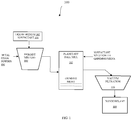
- FIG.1 illustrates a block diagram representation of an apparatus 100 implementing a method for synthesis of nanoparticles, according to an embodiment of the present subject matter. It will be understood that intermediate mixtures produced at different levels and stages of preparation of the dispersion may be produced in different batches and in various quantities, as would be understood by those skilled in the art.
- a metal oxide powder 106 which may include particles of at least one metal oxide, is dispersed in the mixture of the liquid medium 102 and the surfactant 104 to form a primary mixture 110.
- the liquid medium 102 may include water and other equivalent fluids.
- the liquid medium 102 herein may be a base coolant.
- the base coolant may include a variety of heat transfer liquids but are not limited to, water, commercially available Internal Combustion (IC) engine coolants, water based antifreezes, such as glycols, alcohols, and combination thereof, polyols, and the like.
- the liquid medium 102 includes a blend of additives, including, for example, lubricants, buffers, corrosion inhibitors, and the like.
- the liquid medium 102 may include any commercially available coolant known in the art.
- the surfactant 104 may include but not limited to sodium citrate, p-hydroxy benzoic acid, and polymeric surfactants like polyvinylpyrrolidone.
- the surfactant 104 may be a suitable substance for the chosen liquid medium 102 and may include, an organic surfactant or an inorganic surfactant.
- the organic surfactant includes but is not limited to polymeric surfactant, carboxylic acids, esters, ethers, alcohols, cellulose, sugar derivative like or combinations thereof.
- suitable surfactant 104 for the liquid medium 102 and the metal oxide powder 106 is selected which can bind to metal or metal oxide powder so that it remain suspended.
- the metal oxide powder 106 may include oxides of metals, such as titanium, iron, silicon, aluminum, zirconium, and zinc. Further, it would be appreciated that in other implementations, the metal oxide powder 106 may include particles of metals, metal alloys, or combinations thereof. In one implementation metal oxide powder is used in a crystalline form with an average particle size greater than 100 nm. For example, the particle size is in the range of about 0.1 to 1.0 microns. In an example of said implementation, average particle size of the metal oxide powder 106 is in the range of about 0.5 microns.
- the primary mixture 110 is prepared by mixing the mixture of the liquid medium 102 and the surfactant 104 with about 20 to 25 wt % of the metal oxide powder 106.
- the primary mixture 110 is dispersed using a disperser.
- the disperser may use any physical dispersing technique known in the art, such as ultra-sonication, and/or magnetic stirring, for dispersing the primary mixture 110.
- the primary mixture 110 is ground to reduce the particle size of metal oxide powder 106 and to obtain a suspension of metal oxide nano particles, in the form of a slurry.
- the primary mixture 110 dispersed is ground using a grinder 112.
- the grinder 112 may be a milling device, for example, a planetary ball mill, stirred media mill, attrition mill, or a bead mill.
- the primary mixture 110 may be ground using the planetary ball mill. Further, the grinder 112 may have multiple jars to receive and grind the primary mixture 110.
- the grinder 112 includes a grinding media, for example, the grinding media may be one of zirconia, alumina, agate, silica, porcelain and steel and shape of the grinding media may be one of spherical or non-spherical rounded bullet, cylpebs and elliptical.
- the grinding media is placed in each pot of the planetary ball mill.
- the grinding media term is alternatively used as media.
- the average particle size of the grinding media is in the range of about range of 0.4 to 0.7 millimeter (mm)
- percentage filling of the jars may be in the range of about 50 - 70%
- the ratio of the grinding media and the metal oxide powder 106 in the grinder 114, in terms of weight may be in the range of about 20 to 40
- grinding time may be in the range of about 5 to 9 hours.
- various process parameters such as the grinding time, grinding speed, size of grinding media, percentage filling of the jars, grinding media to metal oxide powder ratio, primary mixture concentration, and the amount of dispersants, may be controlled and monitored.
- particle size of the metal oxides may be analyzed at a periodic time intervals using a particle size analyzer (not shown in the figure). Also, while grinding the primary mixture, particle size of metal oxide particles in the mixture is periodically assessed such that an average particle size of metal oxide particles is less than about 80 nm. It will be understood that as the milling process (grinding process) nears completion, the time period after which the particle size are analyzed may be smaller as compared to the initial stages of the milling process.
- the particle size analyzer may utilize different techniques known in the art to analyze particle size, such as laser diffraction technique, acoustic spectroscopy technique, and ultrasound attenuation spectroscopy technique. In an example, a laser scattering particle size analyzer is used to analyze the size of particle in the grinder 114.
- a certain predetermined amount sample is taken out of the slurry as a testing solution to measure the particle size of the metal oxide powder at a given particular time.
- a surfactant solution 114 and the grinding media is systematically added to reduce the voidage created due to reduction in the particle size, until the desired mean particle size of nanoparticle (less than 70 nm) in the slurry is obtained.
- the surfactant solution 114 having varying concentration was prepared using water. The systematic addition was performed such that particle size range is in between 50 nm to 90 nm or less than 90 nm.
- the systematic addition of the grinding media and surfactant solution effectively grinds the particles and facilitates achieving a finer particle size in a steady state of the slurry. As the grinding progresses, steady state is achieved at a point where particle size cannot be reduced further. However, in the present method, with the systematic addition of the surfactant solution 114 and the grinding media, the steady state of the grinding process is prolonged and finer particle size is achieved at an earlier stage.
- single (same) surfactant may be used, while preparing the surfactant solution 114 and surfactant 104.
- combination of surfactants may be used.
- the slurry is further vacuum filtered using a vacuum filtration unit 116 to separate the grinding media from the slurry using vacuum filtration technique known in the art.
- the vacuum filtered slurry is further sonicated (not shown in figure) by adding a dispersant and a dispersing medium to the vacuum filtered slurry to obtain a diluted slurry and dispersing the diluted slurry to obtain a dispersed diluted slurry as the nanocoolant 118.
- the diluted slurry may be dispersed using one of ultra-sonication and magnetic stirring.
- the dispersant may be a suitable substance for the chosen dispersing medium and may include, but is not limited to, carboxylic acids, esters, ethers, alcohols, sugar and its derivatives or polymers, phosphates, amines, and the like or combinations thereof.
- the nanopartciles prepared through the methods described herein are of size in the range on 50 nm to 70 nm and stable over long period of time.
- the nanocoolant dispersed with the nanoparticles synthesized using the above method were tested for thermal conductivity and overall heat transfer coefficient. Typically, thus formed nanocoolant are stable over several days or months. Sometimes, loose aggregates are formed which are easily dispersed back when small energy is supplied by means of magnetic stirring or ultra-sonication.
- the particle size of the nanoparticles synthesized using the present method were measured after six months with no significant difference in the particle size of original nanoparticles (refer experiments and results below).
- 35.5 gm of zinc oxide powder was placed in each pot of a planetary ball mill.
- the zinc oxide power of 99% purity was obtained from the obtained from Loba chemie and is commercially available as zinc oxide powder.
- a mixture of surfactant and a base liquid was prepared.
- 2.5 gm of Tri-sodium citrate was dissolved in 50 ml distilled of water to form the mixture.
- the mixture was poured in each pot of the planetary mill to form a primary mixture.
- the primary mixture was ground using Zirconia (obtained from Jyothi ceramicsTM, India) as a grinding media of the size range 0.4mm-0.7mm to form a slurry.
- Tri-sodium citrate (surfactant) was used as it easily dissolves in water (liquid medium) and Polyvinylpyrrolidone was used as surfactant solution.
- Polyvinylpyrrolidone needs stirring and heating hence first solution of Polyvinylpyrrolidone was prepared and added to the grinding step.
- the Polyvinylpyrrolidone solution (the surfactant solution) and zirconia (the grinding media) was systematically added to the slurry until a mean particle size of the nanoparticles was achieved.
- the PVP solution was added and a certain amount of grinding media as per the requirement. After the particles attained the required size and the slurry was vacuum filtered and sonicated to obtain nanocoolant.
- the first sample was prepared using the method as described above, with an addition of 1000 gm of grinding media without any supplementation of the grinding media.
- the first sample without the supplementation of the media was labeled as a base sample.
- the second sample was prepared by adding 500 gm addition of the grinding media to the base sample with a supplementation of 50 gm of the grinding media at every hour till 1350 gm of total weight of the grinding media was present in totality in the slurry.
- the sample was labeled as 500_50 (that is 500gm of media at the start and 50 in total addition at every hour).
- the third sample was prepared by adding 800 gm of the grinding media to the base sample with supplementation of 50 gm of the grinding media at every hour till 1350 gm of media was present in totality.
- the sample was labeled as 800_50 (that is 800gm of media at the start and 50 in total addition at every hour).
- the fourth sample was prepared by adding 800 gm of the grinding media to the base sample with supplementation of 100 gm at every hour till 1500 gm of media was present in totality.
- the sample was labeled as 800_100 (that is 800gm of media at the start and 100 in total addition at every hour).
- the fifth sample was prepared by adding 1350 gm of the grinding media to the base without supplementation.
- the sample was labeled as (1350).
- TABLE 1 shows the values of the five samples with respect to the particle size of the zinc oxide powder (metal oxide powder) and the percentage of zirconia (grinding media) in totality of the slurry.
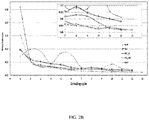
- FIG. 2A and 2B illustrate a graphical representation of comparison of mean diameters and median diameters of the particles in grinding step/cycle respectively of the five samples, in accordance with an example embodiment of the present disclosure.
- FIG. 3 illustrates a graphical representation of percentage diameters below 100 nm of the five samples, in accordance with an example embodiment of the present disclosure.
- the base sample shows the largest mean and median diameter while 1350 (fifth sample) and 800_100 (fourth sample) show competing low particle median diameters.
- FIG. 4 illustrates a graphical representation percentage of grinding media impurity in a slurry, in accordance with an example embodiment of the present disclosure.
- samples 1350 farth sample
- 800_100 fourth sample
- the high percentage of media impurities from 1350 may cause the nanocoolant to fail the ASTM corrosion test.
- the present subject matter provides nanoparticles which are thermally conductive and nanocoolant with thermal conductivity and overall heat transfer coefficient double to that of base coolant.
- a method for synthesis of nanoparticles is disclosed.
- the method provides a systematic addition of media and is an effective method to reduce particle size. It is observed that the high percentage of media impurities from can cause the nanocoolant to fail the ASTM corrosion test. Smaller amount of media was used at the start of the operation and periodically supplemented to prevent plateauing of particle size reduction.
- the present method provides a particle size of 76 nm or less with less energy consumption.
Landscapes
- Chemical & Material Sciences (AREA)
- Organic Chemistry (AREA)
- Engineering & Computer Science (AREA)
- Inorganic Chemistry (AREA)
- Chemical Kinetics & Catalysis (AREA)
- Physics & Mathematics (AREA)
- General Chemical & Material Sciences (AREA)
- Nanotechnology (AREA)
- Biochemistry (AREA)
- Immunology (AREA)
- Pathology (AREA)
- Dispersion Chemistry (AREA)
- Health & Medical Sciences (AREA)
- Life Sciences & Earth Sciences (AREA)
- Analytical Chemistry (AREA)
- General Physics & Mathematics (AREA)
- General Health & Medical Sciences (AREA)
- Combustion & Propulsion (AREA)
- Thermal Sciences (AREA)
- Materials Engineering (AREA)
- Inorganic Compounds Of Heavy Metals (AREA)
- Crushing And Grinding (AREA)
- Colloid Chemistry (AREA)
Abstract
Description
- This patent application claims priority to India Patent Application
201821049992, filed on December 31, 2018 - The present subject matter relates, in general, synthesis of nanoparticles, and, in particular, synthesis of nanoparticles dispersed in a liquid medium.
- Particles having one or more dimensions less than 100 nm are referred as nanoparticles. The application of nanoparticles requires to be of precise size so that it shows enhanced properties over bulk material, for example, properties like adsorption, reflection and scattering. These factors are primarily governed by the particle size. Conventionally, nanoparticles are synthesized using different ways which are broadly classified as Top-Down approach and Bottom-Up approach. The former method involves reducing large scale particles into nano-scale and latter deals with building up of nano-structures from atoms and molecules. The Top-Down approach is slow and costlier compared to Bottom-Up approach. However, Top-Down approach is scalable. Moreover, Bottom-up approach requires exhaustive list of chemical, expertise and controlled conditions. Using the Top-Down method of grinding is highly energy intensive, leaving room for process optimization in terms of both power used and particle size achieved.
The nanopartciles prepared using the above methods have various applications, one such application of nanoparticle dispersion is as coolant, generally, termed as nanocoolant or nanofluids. One of the many uses of nanofluids is in vehicles, used as an advanced coolant. Nanofluids are fluids that have engineered colloidal suspensions and contains particles size which are in the nanometer size range. Nanofluids have a variety of applications in heat transfer with their high surface area and increased thermal conductivity due to the solid particles suspended within them. - The following presents a simplified summary of some embodiments of the disclosure in order to provide a basic understanding of the embodiments. This summary is not an extensive overview of the embodiments. It is not intended to identify key/critical elements of the embodiments or to delineate the scope of the embodiments. Its sole purpose is to present some embodiments in a simplified form as a prelude to the more detailed description that is presented below.
- In view of the foregoing, embodiments herein provides a method for synthesis of nanoparticles dispersed in a liquid medium. In one aspect the method includes steps of dispersing metal oxide powder in a mixture of a base liquid and a surfactant to form a primary mixture, wherein the primary mixture comprises 10 to 20 wt % of the metal oxide powder; grinding the primary mixture using a grinding media by periodically adding a surfactant solution to form a slurry, wherein varying concentration of the surfactant solution is prepared by continuous stirring and heating of the surfactant with the liquid medium; extracting a predetermined amount of sample from the slurry at periodic time intervals to obtain a testing solution to assess particle size of in the slurry using a particle size analyzer; and systematically adding the surfactant solution and the grinding media to the slurry based on the assessed particle size in the testing solution until a mean particle size of the nanoparticles is achieved, wherein the systematic addition of the surfactant solution and the grinding media facilitates achieving finer particle size in a steady state of the slurry.
- The method also includes vacuum filtrating the slurry to separate the grinding media from the slurry and sonicating the vacuum filtered slurry using a dispersant to obtain nanocoolant containing. Further, the primary mixture comprises 10 to 20 wt% of the metal oxide powder. The in the aforementioned method, while grinding the primary mixture, particle size of metal oxide particles in the mixture is periodically assessed such that an average particle size of metal oxide particles is less than about 80 nm and the method is performed in a planetary ball mill, wherein the metal oxide powder is placed in each pot of the planetary ball mill.
- It should be appreciated by those skilled in the art that any block diagram herein represent conceptual views of illustrative systems embodying the principles of the present subject matter. Similarly, it will be appreciated that any flow charts, flow diagrams, state transition diagrams, pseudo code, and the like represent various processes which may be substantially represented in computer readable medium and so executed by a computing device or processor, whether or not such computing device or processor is explicitly shown.
- The embodiments herein will be better understood from the following detailed description with reference to the drawings, in which:
-
FIG. 1 illustrates a block diagram for method of synthesis of nanoparticles, in accordance with an example embodiment of the present disclosure. -
FIG. 2A illustrates a graphical representation of comparison of mean diameters and 2B illustrates a graphical representation of comparison of median diameters of the particles in grinding step, in accordance with an example embodiment of the present disclosure. -
FIG. 3 illustrates a graphical representation of percentage diameters below 100 nm, in accordance with an example embodiment of the present disclosure. -
FIG. 4 illustrates a graphical representation percentage of grinding media impurity in a slurry, in accordance with an example embodiment of the present disclosure. - The embodiments herein and the various features and advantageous details thereof are explained more fully with reference to the non-limiting embodiments that are illustrated in the accompanying drawings and detailed in the following description. The examples used herein are intended merely to facilitate an understanding of ways in which the embodiments herein may be practiced and to further enable those of skill in the art to practice the embodiments herein. Accordingly, the examples should not be construed as limiting the scope of the embodiments herein. Exemplary embodiments are described with reference to the accompanying drawings. In the figures, the left-most digit(s) of a reference number identifies the figure in which the reference number first appears. Wherever convenient, the same reference numbers are used throughout the drawings to refer to the same or like parts.
- According to an embodiment of the present subject matter, methods for synthesis of nanoparticles are described. As mentioned earlier, the synthesized nanoparticles have many applications, one such application of nanoparticle dispersion is as coolant, generally, termed as nanocoolant or nanofluids. One of the many uses of nanofluids is in vehicles, used as an advanced coolant.
- As mentioned above, the prime application of nanoparticles is in preparation of nanocoolants. Existing commercial coolants or antifreeze, which are typically mixture of water, glycols - ethylene glycol, propylene glycol, and additives like corrosion inhibitors, pH buffers, colorant etc. These coolant have relatively low overall heat transfer performance. Some of the additives may be added to enhance efficiency of the coolant and thus, of the nanocoolant produced using such a coolant. For example, Disodium fluorescein dyes are added to help trace the source of leaks, and tolytriazole may be added as a corrosion inhibitor.
- As widely known, addition of nanoparticles to these commercial coolants gives improvement in thermal conductivity and overall heat transfer coefficient. However, in order to have good performance, these nanocoolants should be stable for longer time. This challenge is addressed by choosing a proper dispersant and grinding to nanometer size. However, to meet commercial requirement nanocoolants need to be produced on large quantity. Current methods of production of nanocoolant is not up to the mark in terms of efficiency to meet the requirement. The production of nanocoolant is limited by production of nanoparticles. Moreover, the existing methods for nanoparticle production through hydrothermal route, aerosol flame reactor take lot of time and consume lot of energy. There are constant efforts to invent new methods of production or modify existing method. For example, wet milling is widely used method for production of nanoparticle in various industries such as pharmaceutical, specialty chemicals, paints, and the like. However, throughput of wet-milling and size of nanoparticles produced is tuned by operating parameters - operating speed, media type and composition of slurry - solid loading, % of jar filling, media to powder ratio.
- In general, nanocoolants are used for improving efficiency of commercial engines. The nanocoolants also need to qualify for commercial coolant standards. With addition of such formed metal, metal oxide nanoparticles to liquid increases overall thermal conductivity of the composition. Such fluids called nanofluids have engineered colloidal suspensions. These suspended particles are in the nanometer size range. The particles can be metals, metal oxides or carbon nanotubes. These suspended particles impart enhanced thermo physical and heat transfer properties to the base fluid (usually water, oil or ethylene glycol, coolant). Therefore, care should be taken in the method of nanocoolant preparation such that no elements should be introduced which could potentially harm the engine.
- For example, a dilute nanoparticles suspension in a coolant may enhance thermal conductivity of a base coolant by a significant amount. The nanocoolants may be prepared in a planetary ball mill which is a Top-Down approach and is very energy intensive. Thus one of the focus of the present subject matter is to optimize power consumption to get the lowest particle size possible. For example, in an established protocol calls for the synthesis of nanopartciles, addition of 1000 gm of a grinding media at the start of the process, not only is a very large amount used unnecessarily at the outset of grinding, but also the particle size reaches a plateau without further reduction, that is around 98 nm. Therefore, by varying the amount of grinding media added at the onset as well as media added dynamically while grinding could prevent jamming of the instrument and bring the particle size down further.
- In order to make the nanocoolant at large scale, Top-Down method is preferred which is an energy intensive process. As mentioned earlier, Bottom-Up method may be ruled out because it gives low yield and needs exhaustive list of reagents and very controlled conditions. The Bottom-Up method takes long time and consumes a lot of electricity. Furthermore, in conventionally known methods, constant media to powder ratio is used as one of the criteria to measure the effectiveness of the process. One of the drawbacks of such method is use of high powder to media ratio leads to intensive grinding of seed particle, but this leads to contamination of the nanocoolant due to media to media attrition. The process also makes the nanocoolant unstable. In order to grind the powder to nano size one cannot reduce the media to powder ratio to a low value.
- In view of the foregoing, the present embodiments provide systematic addition of media is an effective method to reduce the particle size. Therefore it is better to use a smaller amount of media at the start of the operation and supplement it periodically to prevent plateauing of particle size reduction. In the method of the present subject matter, the time required to achieve finer size is less compared to the base and hence energy consumed in production is less as number of grinding hours are reduced. Moreover, voidage in the milling pot or jar is tuned to reduce media to media attrition to achieve better quality of product.
- Referring now to the drawings, and more particularly to
FIGS. 1 through 4 , where similar reference characters denote corresponding features consistently throughout the figures, there are shown preferred embodiments and these embodiments are described in the context of the following exemplary system and/or method. -
FIG.1 illustrates a block diagram representation of anapparatus 100 implementing a method for synthesis of nanoparticles, according to an embodiment of the present subject matter. It will be understood that intermediate mixtures produced at different levels and stages of preparation of the dispersion may be produced in different batches and in various quantities, as would be understood by those skilled in the art. - Referring now to
FIG. 1 , a mixture of aliquid medium 102 and asurfactant 104 is formed. Ametal oxide powder 106, which may include particles of at least one metal oxide, is dispersed in the mixture of theliquid medium 102 and thesurfactant 104 to form aprimary mixture 110. Theliquid medium 102 may include water and other equivalent fluids. Theliquid medium 102 herein may be a base coolant. The base coolant may include a variety of heat transfer liquids but are not limited to, water, commercially available Internal Combustion (IC) engine coolants, water based antifreezes, such as glycols, alcohols, and combination thereof, polyols, and the like. Furthermore, theliquid medium 102 includes a blend of additives, including, for example, lubricants, buffers, corrosion inhibitors, and the like. In one implementation, theliquid medium 102 may include any commercially available coolant known in the art. - The
surfactant 104 may include but not limited to sodium citrate, p-hydroxy benzoic acid, and polymeric surfactants like polyvinylpyrrolidone. Thesurfactant 104 may be a suitable substance for the chosenliquid medium 102 and may include, an organic surfactant or an inorganic surfactant. The organic surfactant includes but is not limited to polymeric surfactant, carboxylic acids, esters, ethers, alcohols, cellulose, sugar derivative like or combinations thereof. In one implementation,suitable surfactant 104 for theliquid medium 102 and themetal oxide powder 106 is selected which can bind to metal or metal oxide powder so that it remain suspended. - The
metal oxide powder 106 may include oxides of metals, such as titanium, iron, silicon, aluminum, zirconium, and zinc. Further, it would be appreciated that in other implementations, themetal oxide powder 106 may include particles of metals, metal alloys, or combinations thereof. In one implementation metal oxide powder is used in a crystalline form with an average particle size greater than 100 nm. For example, the particle size is in the range of about 0.1 to 1.0 microns. In an example of said implementation, average particle size of themetal oxide powder 106 is in the range of about 0.5 microns. - In one example, the
primary mixture 110 is prepared by mixing the mixture of theliquid medium 102 and thesurfactant 104 with about 20 to 25 wt % of themetal oxide powder 106. In one implementation, to prevent agglomeration and precipitation of metal oxide particles, theprimary mixture 110 is dispersed using a disperser. The disperser may use any physical dispersing technique known in the art, such as ultra-sonication, and/or magnetic stirring, for dispersing theprimary mixture 110. - Thereafter, the
primary mixture 110 is ground to reduce the particle size ofmetal oxide powder 106 and to obtain a suspension of metal oxide nano particles, in the form of a slurry. Theprimary mixture 110 dispersed, is ground using agrinder 112. In one implementation, thegrinder 112 may be a milling device, for example, a planetary ball mill, stirred media mill, attrition mill, or a bead mill. In one implementation, theprimary mixture 110 may be ground using the planetary ball mill. Further, thegrinder 112 may have multiple jars to receive and grind theprimary mixture 110. Additionally, thegrinder 112 includes a grinding media, for example, the grinding media may be one of zirconia, alumina, agate, silica, porcelain and steel and shape of the grinding media may be one of spherical or non-spherical rounded bullet, cylpebs and elliptical. In said implementation, the grinding media is placed in each pot of the planetary ball mill. Herein in this application, the grinding media term is alternatively used as media. - In said implementation, the average particle size of the grinding media is in the range of about range of 0.4 to 0.7 millimeter (mm), percentage filling of the jars may be in the range of about 50 - 70%, the ratio of the grinding media and the
metal oxide powder 106 in thegrinder 114, in terms of weight, may be in the range of about 20 to 40, and grinding time may be in the range of about 5 to 9 hours. Furthermore, during the grinding step, various process parameters, such as the grinding time, grinding speed, size of grinding media, percentage filling of the jars, grinding media to metal oxide powder ratio, primary mixture concentration, and the amount of dispersants, may be controlled and monitored. - Further, during grinding, particle size of the metal oxides may be analyzed at a periodic time intervals using a particle size analyzer (not shown in the figure). Also, while grinding the primary mixture, particle size of metal oxide particles in the mixture is periodically assessed such that an average particle size of metal oxide particles is less than about 80 nm. It will be understood that as the milling process (grinding process) nears completion, the time period after which the particle size are analyzed may be smaller as compared to the initial stages of the milling process. The particle size analyzer may utilize different techniques known in the art to analyze particle size, such as laser diffraction technique, acoustic spectroscopy technique, and ultrasound attenuation spectroscopy technique. In an example, a laser scattering particle size analyzer is used to analyze the size of particle in the
grinder 114. - In one implementation, a certain predetermined amount sample is taken out of the slurry as a testing solution to measure the particle size of the metal oxide powder at a given particular time. Based on the particle size of the metal oxide powder in the testing solution, a
surfactant solution 114 and the grinding media is systematically added to reduce the voidage created due to reduction in the particle size, until the desired mean particle size of nanoparticle (less than 70 nm) in the slurry is obtained. In an example of said implementation, thesurfactant solution 114 having varying concentration was prepared using water. The systematic addition was performed such that particle size range is in between 50 nm to 90 nm or less than 90 nm. The systematic addition of the grinding media and surfactant solution effectively grinds the particles and facilitates achieving a finer particle size in a steady state of the slurry. As the grinding progresses, steady state is achieved at a point where particle size cannot be reduced further. However, in the present method, with the systematic addition of thesurfactant solution 114 and the grinding media, the steady state of the grinding process is prolonged and finer particle size is achieved at an earlier stage. - In one implementation, single (same) surfactant may be used, while preparing the
surfactant solution 114 andsurfactant 104. In another implementation, combination of surfactants may be used. - The slurry is further vacuum filtered using a
vacuum filtration unit 116 to separate the grinding media from the slurry using vacuum filtration technique known in the art. Also, the vacuum filtered slurry is further sonicated (not shown in figure) by adding a dispersant and a dispersing medium to the vacuum filtered slurry to obtain a diluted slurry and dispersing the diluted slurry to obtain a dispersed diluted slurry as thenanocoolant 118. The diluted slurry may be dispersed using one of ultra-sonication and magnetic stirring. The dispersant may be a suitable substance for the chosen dispersing medium and may include, but is not limited to, carboxylic acids, esters, ethers, alcohols, sugar and its derivatives or polymers, phosphates, amines, and the like or combinations thereof. - The nanopartciles prepared through the methods described herein are of size in the range on 50 nm to 70 nm and stable over long period of time. The nanocoolant dispersed with the nanoparticles synthesized using the above method were tested for thermal conductivity and overall heat transfer coefficient. Typically, thus formed nanocoolant are stable over several days or months. Sometimes, loose aggregates are formed which are easily dispersed back when small energy is supplied by means of magnetic stirring or ultra-sonication. The particle size of the nanoparticles synthesized using the present method were measured after six months with no significant difference in the particle size of original nanoparticles (refer experiments and results below).
- The results of methods for synthesis of nanopartciles have been validated using following examples. It will be understood that the examples discussed herein are only for the purpose of explanation and not to limit the scope of the present subject matter. Further, the test results are shown for a specific example of nanocoolant and should in no way be construed as the only stable nanocoolant that can be formed through the described method.
- In one embodiment, 35.5 gm of zinc oxide powder was placed in each pot of a planetary ball mill. The zinc oxide power of 99% purity was obtained from the obtained from Loba chemie and is commercially available as zinc oxide powder. A mixture of surfactant and a base liquid was prepared. In the present example, 2.5 gm of Tri-sodium citrate was dissolved in 50 ml distilled of water to form the mixture. The mixture was poured in each pot of the planetary mill to form a primary mixture. The primary mixture was ground using Zirconia (obtained from Jyothi ceramics™, India) as a grinding media of the size range 0.4mm-0.7mm to form a slurry. To the slurry a varying concentration of Polyvinylpyrrolidone (Sigma Aldrich™, 30 KDa, and PVP) as a surfactant solution was added with periodic intervals. The Polyvinylpyrrolidone (PVP) of varying concentration was prepared by continuous stirring and heating of the surfactant within distilled water. In the present example, at every hour of the grinding a predetermined amount of sample from the slurry was taken out at periodic time intervals as a testing solution. Particle size of the zinc oxide powder was assessed using a particle size analyzer. In the above, a combination of surfactant was used. For example, Tri-sodium citrate (surfactant) was used as it easily dissolves in water (liquid medium) and Polyvinylpyrrolidone was used as surfactant solution. Herein, since Polyvinylpyrrolidone needs stirring and heating hence first solution of Polyvinylpyrrolidone was prepared and added to the grinding step.
- Based on the particle size, the Polyvinylpyrrolidone solution (the surfactant solution) and zirconia (the grinding media) was systematically added to the slurry until a mean particle size of the nanoparticles was achieved. In the present example, 5 ml of the PVP solution was added and a certain amount of grinding media as per the requirement. After the particles attained the required size and the slurry was vacuum filtered and sonicated to obtain nanocoolant.
- Five types of samples were prepared using the above method (with different addition of the grinding media and surfactant solution) and compared. The comparison of the five samples are illustrated in the form of a graph and table as shown in
FIG 2 to FIG 4 and TABLE 1 respectively. - The first sample was prepared using the method as described above, with an addition of 1000 gm of grinding media without any supplementation of the grinding media. The first sample without the supplementation of the media was labeled as a base sample.
- The second sample was prepared by adding 500 gm addition of the grinding media to the base sample with a supplementation of 50 gm of the grinding media at every hour till 1350 gm of total weight of the grinding media was present in totality in the slurry. The sample was labeled as 500_50 (that is 500gm of media at the start and 50 in total addition at every hour).
- The third sample was prepared by adding 800 gm of the grinding media to the base sample with supplementation of 50 gm of the grinding media at every hour till 1350 gm of media was present in totality. The sample was labeled as 800_50 (that is 800gm of media at the start and 50 in total addition at every hour).
- The fourth sample was prepared by adding 800 gm of the grinding media to the base sample with supplementation of 100 gm at every hour till 1500 gm of media was present in totality. The sample was labeled as 800_100 (that is 800gm of media at the start and 100 in total addition at every hour).
- The fifth sample was prepared by adding 1350 gm of the grinding media to the base without supplementation. The sample was labeled as (1350).
- The following TABLE 1 shows the values of the five samples with respect to the particle size of the zinc oxide powder (metal oxide powder) and the percentage of zirconia (grinding media) in totality of the slurry.
TABLE 1 Sl. No. Sample Grinding Time (Hour) Mean Diameter (nm) Median Diameter (nm) % > 100 nm % Zr impurity 1 Base 12 102.36 91.46 61.05 10.34 2 500_50 12 94.16 88.16 66.12 11.21 3 800_100 12 87.03 82.45 77.10 7.85 4 800_50 12 86.73 82.28 77.61 7.95 5 1350 12 86.23 81.80 78.41 16.36 - All the aforementioned five samples were run for comparable amounts of time (12 hours). Further, the second sample was run for 19 hours in total (higher than the others) to study the grinding step and observe the changes in the grinding and particle size. However, the second sample with 19 hours of grinding did not show any significant change after 12 hours for supplemented samples. The particle sizes were measured using the Horiba Particle Size Analyzer and the percentage of the grinding media present in the slurry were measured by Atomic Absorption spectroscopy.
-
FIG. 2A and2B illustrate a graphical representation of comparison of mean diameters and median diameters of the particles in grinding step/cycle respectively of the five samples, in accordance with an example embodiment of the present disclosure. And,FIG. 3 illustrates a graphical representation of percentage diameters below 100 nm of the five samples, in accordance with an example embodiment of the present disclosure. As depicted in the graph, the base sample shows the largest mean and median diameter while 1350 (fifth sample) and 800_100 (fourth sample) show competing low particle median diameters. - Further,
FIG. 4 illustrates a graphical representation percentage of grinding media impurity in a slurry, in accordance with an example embodiment of the present disclosure. As depicted inFIG 4 , while both samples 1350 (fifth sample) and 800_100 (fourth sample) show competing favorable properties, the high percentage of media impurities from 1350 may cause the nanocoolant to fail the ASTM corrosion test. - Thus, the present subject matter provides nanoparticles which are thermally conductive and nanocoolant with thermal conductivity and overall heat transfer coefficient double to that of base coolant.
- The written description describes the subject matter herein to enable any person skilled in the art to make and use the embodiments. The scope of the subject matter embodiments is defined by the claims and may include other modifications that occur to those skilled in the art. Such other modifications are intended to be within the scope of the claims if they have similar elements that do not differ from the literal language of the claims or if they include equivalent elements with insubstantial differences from the literal language of the claims.
- In various embodiments of
FIGS. 1 - 4 , a method for synthesis of nanoparticles is disclosed. The method provides a systematic addition of media and is an effective method to reduce particle size. It is observed that the high percentage of media impurities from can cause the nanocoolant to fail the ASTM corrosion test. Smaller amount of media was used at the start of the operation and periodically supplemented to prevent plateauing of particle size reduction. The present method provides a particle size of 76 nm or less with less energy consumption. - Although implementations for preparation of nanoparticles has been described in language specific to structural features and/or methods, it is to be understood that the appended claims are not necessarily limited to the specific features or methods described. Rather, the specific features and methods are disclosed as examples and implementations for synthesis of nanoparticles. The order in which the method(s) are described is not intended to be construed as a limitation.
- The illustrated steps are set out to explain the exemplary embodiments shown, and it should be anticipated that ongoing technological development will change the manner in which particular functions are performed. These examples are presented herein for purposes of illustration, and not limitation. Further, the boundaries of the functional building blocks have been arbitrarily defined herein for the convenience of the description. Alternative boundaries can be defined so long as the specified functions and relationships thereof are appropriately performed. Alternatives (including equivalents, extensions, variations, deviations, etc., of those described herein) will be apparent to persons skilled in the relevant art(s) based on the teachings contained herein. Such alternatives fall within the scope and spirit of the disclosed embodiments. Also, the words "comprising," "having," "containing," and "including," and other similar forms are intended to be equivalent in meaning and be open ended in that an item or items following any one of these words is not meant to be an exhaustive listing of such item or items, or meant to be limited to only the listed item or items. It must also be noted that as used herein and in the appended claims, the singular forms "a," "an," and "the" include plural references unless the context clearly dictates otherwise.
- It is intended that the disclosure and examples be considered as exemplary only, with disclosed embodiments being indicated by the following claims.
Claims (15)
- A method for synthesis of nanoparticles, the method comprising:dispersing metal oxide powder in a mixture of a liquid medium and a surfactant to form a primary mixture;grinding the primary mixture using a grinding media by periodically adding a surfactant solution to form a slurry, wherein varying concentration of the surfactant solution is prepared by continuous stirring and heating of the surfactant with distilled water;extracting a predetermined amount of sample from the slurry at periodic time intervals to obtain a testing solution to assess particle size of the metal oxide powder in the slurry using a particle size analyzer; andsystematically adding the surfactant solution and the grinding media to the slurry based on the assessed particle size in the testing solution until a mean particle size of the nanoparticles is achieved, wherein the systematic addition of the surfactant solution and the grinding media facilitates finer particle size in a steady state of the slurry.
- The method of claim 1, further comprisesvacuum filtrating the slurry to separate the grinding media from the slurry; andsonicating the vacuum filtered slurry using a dispersant to obtain nanocoolant.
- The method of claim 2, wherein the dispersant is one of carboxylic acids, esters, ethers, alcohols, sugar and corresponding derivatives or polymers, phosphates and amines.
- The method of claim 1, wherein the primary mixture comprises 10 to 20 weighted percentage (wt%) of the metal oxide powder.
- The method of claim 1, wherein the metal oxide powder comprises particles of at least one metal oxide having an average particle size in the range of about 0.1 microns to 100 microns and of 99% purity.
- The method of claim 5, wherein the metal oxide powder comprises an oxide of at least one of aluminum, titanium, iron, silicon, zirconium and zinc.
- The method of claim 1, wherein the surfactant is one of an organic surfactant, an inorganic surfactant, or combination thereof.
- The method of claim 7, wherein the organic surfactant comprises a polymeric solution.
- The method of claim 8, wherein the polymeric solution is selected from a group consisting of Polyvinylpyrrolidone (PVP), Polyvinyl Acetate, poly (ethylene oxide), carboxylic esters, ethers, alcohols, sugars and sugar derivative, phosphates and amines.
- The method as claim 1, wherein the liquid medium is a coolant, and wherein the coolant comprises one of water, Internal Combustion (IC) engine coolants and water based antifreezes.
- The method of claim 1, wherein while grinding the primary mixture, the particle size of metal oxide particles in the mixture is periodically assessed such that an average particle size of metal oxide particles is less than about 80 nm.
- The method of claim 1, wherein the particle size analyzer analyzes the particle size using one of a laser diffraction, an acoustic spectroscopy, and an ultrasound attenuation spectroscopy.
- The method of claim 1, wherein the grinding media is selected from a group consisting of zirconia, alumina, agate, silica, porcelain and steel.
- The method of claim 1, wherein shape of the grinding media is one of spherical or non-spherical rounded bullet, cylpebs and elliptical.
- The method of claim 1, wherein the method is performed in a planetary ball mill, wherein the metal oxide powder is placed in each pot of the planetary ball mill.
Applications Claiming Priority (1)
| Application Number | Priority Date | Filing Date | Title |
|---|---|---|---|
| IN201821049992 | 2018-12-31 |
Publications (1)
| Publication Number | Publication Date |
|---|---|
| EP3674125A1 true EP3674125A1 (en) | 2020-07-01 |
Family
ID=69055691
Family Applications (1)
| Application Number | Title | Priority Date | Filing Date |
|---|---|---|---|
| EP19219745.7A Pending EP3674125A1 (en) | 2018-12-31 | 2019-12-27 | Synthesis of nano particles |
Country Status (2)
| Country | Link |
|---|---|
| US (1) | US11583924B2 (en) |
| EP (1) | EP3674125A1 (en) |
Cited By (2)
| Publication number | Priority date | Publication date | Assignee | Title |
|---|---|---|---|---|
| CN111922349A (en) * | 2020-09-21 | 2020-11-13 | 西安斯瑞先进铜合金科技有限公司 | Preparation method of special metal chromium powder for CuCr alloy electrical contact |
| CN113295583A (en) * | 2021-05-28 | 2021-08-24 | 金川镍钴研究设计院有限责任公司 | Method for determining granularity of GH4169 alloy powder |
Families Citing this family (1)
| Publication number | Priority date | Publication date | Assignee | Title |
|---|---|---|---|---|
| CN114456774B (en) * | 2022-01-11 | 2023-06-06 | 湖北工业大学 | Shell-encapsulated microcapsule phase change material and preparation method and application thereof |
Citations (2)
| Publication number | Priority date | Publication date | Assignee | Title |
|---|---|---|---|---|
| WO2013030845A1 (en) * | 2011-08-26 | 2013-03-07 | Tata Consultancy Services Limited | Nanofluids for heat transfer applications |
| CN102502781B (en) * | 2011-10-27 | 2014-04-09 | 青岛康普顿科技股份有限公司 | Method for preparing zinc oxide nanofluid |
Family Cites Families (9)
| Publication number | Priority date | Publication date | Assignee | Title |
|---|---|---|---|---|
| US6202471B1 (en) * | 1997-10-10 | 2001-03-20 | Nanomaterials Research Corporation | Low-cost multilaminate sensors |
| WO2010089295A1 (en) | 2009-02-03 | 2010-08-12 | Bühler PARTEC GmbH | Zinc oxide particles which have been modified with phosphonocarboxylic acid and use of zinc oxide particles |
| DE102009037992A1 (en) * | 2009-08-20 | 2011-02-24 | Eckart Gmbh | Process for the preparation of dispersions with metal oxide nanoparticles and dispersion |
| JP6076266B2 (en) * | 2011-02-04 | 2017-02-08 | タタ・コンサルタンシー・サーヴィシズ・リミテッド | Method for preparing suspension of nanoparticles and suspension of nanoparticles |
| KR101778164B1 (en) * | 2012-02-03 | 2017-09-13 | 엘지전자 주식회사 | Core-Shell Structured Nanoparticle having Hard-soft Magnetic Heterostructure, Magnet Prepared with Said Nanoparticle, and Preparing Method thereof |
| EP2650335B1 (en) * | 2012-04-13 | 2018-05-30 | Tata Consultancy Services Ltd. | A process for synthesis of doped titania nanoparticles having photocatalytic activity in sunlight |
| GB2502577A (en) * | 2012-05-31 | 2013-12-04 | Univ Dublin | Microparticles and a device and method for the production thereof |
| WO2015138990A1 (en) * | 2014-03-13 | 2015-09-17 | The Regents Of The University Of California | Solar energy absorbing coatings and methods of fabrication |
| CN104803408A (en) | 2015-04-02 | 2015-07-29 | 吴肖颜 | Method for preparing modified nano-zinc oxide |
-
2019
- 2019-12-26 US US16/727,757 patent/US11583924B2/en active Active
- 2019-12-27 EP EP19219745.7A patent/EP3674125A1/en active Pending
Patent Citations (2)
| Publication number | Priority date | Publication date | Assignee | Title |
|---|---|---|---|---|
| WO2013030845A1 (en) * | 2011-08-26 | 2013-03-07 | Tata Consultancy Services Limited | Nanofluids for heat transfer applications |
| CN102502781B (en) * | 2011-10-27 | 2014-04-09 | 青岛康普顿科技股份有限公司 | Method for preparing zinc oxide nanofluid |
Non-Patent Citations (3)
| Title |
|---|
| LINGLING ZHANG ET AL: "Investigation into the antibacterial behaviour of suspensions of ZnO nanoparticles (ZnO nanofluids)", JOURNAL OF NANOPARTICLE RESEARCH ; AN INTERDISCIPLINARY FORUM FOR NANOSCALE SCIENCE AND TECHNOLOGY, KLUWER ACADEMIC PUBLISHERS, DO, vol. 9, no. 3, 10 October 2006 (2006-10-10), pages 479 - 489, XP019506667, ISSN: 1572-896X * |
| MOHAMMED TAGHI ZAFARANI-MOATTAR ET AL: "Stability and rheological properties of nanofluids containing ZnO nanoparticles, poly(propylene glycol) and poly(vinyl pyrrolidone)", FLUID PHASE EQUILIBRIA, vol. 403, 20 June 2015 (2015-06-20), AMSTERDAM, NL, pages 136 - 144, XP055696491, ISSN: 0378-3812, DOI: 10.1016/j.fluid.2015.06.013 * |
| SEZER NURETTIN ET AL: "A comprehensive review on synthesis, stability, thermophysical properties, and characterization of nanofluids", POWDER TECHNOLOGY - ELECTROSTATIC PHENOMENA IN PARTICULATE PROCESSES, vol. 344, 6 December 2018 (2018-12-06), pages 404 - 431, XP085612694, ISSN: 0032-5910, DOI: 10.1016/J.POWTEC.2018.12.016 * |
Cited By (3)
| Publication number | Priority date | Publication date | Assignee | Title |
|---|---|---|---|---|
| CN111922349A (en) * | 2020-09-21 | 2020-11-13 | 西安斯瑞先进铜合金科技有限公司 | Preparation method of special metal chromium powder for CuCr alloy electrical contact |
| CN111922349B (en) * | 2020-09-21 | 2021-01-05 | 西安斯瑞先进铜合金科技有限公司 | Preparation method of special metal chromium powder for CuCr alloy electrical contact |
| CN113295583A (en) * | 2021-05-28 | 2021-08-24 | 金川镍钴研究设计院有限责任公司 | Method for determining granularity of GH4169 alloy powder |
Also Published As
| Publication number | Publication date |
|---|---|
| US11583924B2 (en) | 2023-02-21 |
| US20200206819A1 (en) | 2020-07-02 |
Similar Documents
| Publication | Publication Date | Title |
|---|---|---|
| US11583924B2 (en) | Synthesis of nano particles | |
| EP2748274B1 (en) | Nanofluids for heat transfer applications | |
| Botha et al. | Physicochemical properties of oil-based nanofluids containing hybrid structures of silver nanoparticles supported on silica | |
| CN102858683B (en) | Nano diamond dispersion solution and its preparation method | |
| Xiong et al. | Ultrasonic dispersion of nano TiC powders aided by Tween 80 addition | |
| EP2670808B1 (en) | Method for preparing a suspension of nanoparticles | |
| Deki et al. | NH2-terminated poly (ethylene oxide) containing nanosized NiO particles: synthesis, characterization, and structural considerations | |
| Xu et al. | Effect of surfactants with different ionizing properties on dispersion stability and PCMP properties of CeO2 nanoparticle polishing slurry | |
| CN106349948B (en) | A kind of preparation method of nanometer burnishing liquid | |
| CN108017998A (en) | A kind of preparation method of CMP planarization liquid | |
| CN102191118B (en) | Oil-based suspension base liquid of nano-diamond powder and its preparation process | |
| Wang et al. | Preparation of highly dispersed nano-La2O3 particles using modified carbon black as an agglomeration inhibitor | |
| CN115785822A (en) | Polishing solution and preparation method thereof | |
| Bishnoi et al. | Synthesis and characterization of TiO2 nanoparticles as brake fluid additives: viscosity modulation and impact on rheological properties | |
| Zhang et al. | Preparation of Chlorine-doped CeO2 Abrasive and Investigation of Chemical-Mechanical Polishing Properties | |
| Naghash-Hamed et al. | The catalytic performance of CuFe2O4@ CQD nanocomposite in nitroaniline group reduction: High-perform heterogeneous nanocatalyst | |
| Abdullah et al. | Optimization on the nanoparticles stability in liquid phased condition by using Taguchi analysis | |
| KR101184730B1 (en) | Method for Preparing Cerium Oxide Nano Powder Having Uniform Particle Distribution | |
| JP2015117345A (en) | Lubricant composition and method for producing the same | |
| Moon et al. | Spectroscopy of nanocrystalline TiO2: Eu3+ phosphors | |
| JP6839767B2 (en) | Method for manufacturing raw materials for cerium-based abrasives, and method for manufacturing cerium-based abrasives | |
| CN115974127B (en) | Quasi-spherical nano-cerium dioxide and its suspension, preparation method and application | |
| JP2011132107A (en) | Method of manufacturing cerium oxide fine particle | |
| Jothiramalingama et al. | Synthesis and characterization of TiO2 nano fluids formation and its optical, electrical and catalytic property analysis | |
| Abd Malek et al. | Effect of ultrasonication duration and temperature on the stability and viscosity of MXene/water nanofluid |
Legal Events
| Date | Code | Title | Description |
|---|---|---|---|
| PUAI | Public reference made under article 153(3) epc to a published international application that has entered the european phase |
Free format text: ORIGINAL CODE: 0009012 |
|
| STAA | Information on the status of an ep patent application or granted ep patent |
Free format text: STATUS: THE APPLICATION HAS BEEN PUBLISHED |
|
| AK | Designated contracting states |
Kind code of ref document: A1 Designated state(s): AL AT BE BG CH CY CZ DE DK EE ES FI FR GB GR HR HU IE IS IT LI LT LU LV MC MK MT NL NO PL PT RO RS SE SI SK SM TR |
|
| AX | Request for extension of the european patent |
Extension state: BA ME |
|
| STAA | Information on the status of an ep patent application or granted ep patent |
Free format text: STATUS: REQUEST FOR EXAMINATION WAS MADE |
|
| 17P | Request for examination filed |
Effective date: 20210108 |
|
| RBV | Designated contracting states (corrected) |
Designated state(s): AL AT BE BG CH CY CZ DE DK EE ES FI FR GB GR HR HU IE IS IT LI LT LU LV MC MK MT NL NO PL PT RO RS SE SI SK SM TR |
|
| STAA | Information on the status of an ep patent application or granted ep patent |
Free format text: STATUS: EXAMINATION IS IN PROGRESS |
|
| 17Q | First examination report despatched |
Effective date: 20240215 |