EP3672987B1 - Anti-apelin antibodies and uses thereof - Google Patents
Anti-apelin antibodies and uses thereof Download PDFInfo
- Publication number
- EP3672987B1 EP3672987B1 EP18848958.7A EP18848958A EP3672987B1 EP 3672987 B1 EP3672987 B1 EP 3672987B1 EP 18848958 A EP18848958 A EP 18848958A EP 3672987 B1 EP3672987 B1 EP 3672987B1
- Authority
- EP
- European Patent Office
- Prior art keywords
- apelin
- cancer
- antigen
- subject
- binding
- Prior art date
- Legal status (The legal status is an assumption and is not a legal conclusion. Google has not performed a legal analysis and makes no representation as to the accuracy of the status listed.)
- Active
Links
Images







Classifications
-
- C—CHEMISTRY; METALLURGY
- C07—ORGANIC CHEMISTRY
- C07K—PEPTIDES
- C07K16/00—Immunoglobulins [IG], e.g. monoclonal or polyclonal antibodies
- C07K16/18—Immunoglobulins [IG], e.g. monoclonal or polyclonal antibodies against material from animals or humans
- C07K16/26—Immunoglobulins [IG], e.g. monoclonal or polyclonal antibodies against material from animals or humans against hormones ; against hormone releasing or inhibiting factors
-
- C—CHEMISTRY; METALLURGY
- C07—ORGANIC CHEMISTRY
- C07K—PEPTIDES
- C07K16/00—Immunoglobulins [IG], e.g. monoclonal or polyclonal antibodies
- C07K16/18—Immunoglobulins [IG], e.g. monoclonal or polyclonal antibodies against material from animals or humans
-
- A—HUMAN NECESSITIES
- A61—MEDICAL OR VETERINARY SCIENCE; HYGIENE
- A61K—PREPARATIONS FOR MEDICAL, DENTAL OR TOILETRY PURPOSES
- A61K39/00—Medicinal preparations containing antigens or antibodies
- A61K39/395—Antibodies; Immunoglobulins; Immune serum, e.g. antilymphocytic serum
-
- A—HUMAN NECESSITIES
- A61—MEDICAL OR VETERINARY SCIENCE; HYGIENE
- A61P—SPECIFIC THERAPEUTIC ACTIVITY OF CHEMICAL COMPOUNDS OR MEDICINAL PREPARATIONS
- A61P27/00—Drugs for disorders of the senses
- A61P27/02—Ophthalmic agents
-
- A—HUMAN NECESSITIES
- A61—MEDICAL OR VETERINARY SCIENCE; HYGIENE
- A61P—SPECIFIC THERAPEUTIC ACTIVITY OF CHEMICAL COMPOUNDS OR MEDICINAL PREPARATIONS
- A61P9/00—Drugs for disorders of the cardiovascular system
- A61P9/10—Drugs for disorders of the cardiovascular system for treating ischaemic or atherosclerotic diseases, e.g. antianginal drugs, coronary vasodilators, drugs for myocardial infarction, retinopathy, cerebrovascula insufficiency, renal arteriosclerosis
-
- G—PHYSICS
- G01—MEASURING; TESTING
- G01N—INVESTIGATING OR ANALYSING MATERIALS BY DETERMINING THEIR CHEMICAL OR PHYSICAL PROPERTIES
- G01N33/00—Investigating or analysing materials by specific methods not covered by groups G01N1/00 - G01N31/00
- G01N33/48—Biological material, e.g. blood, urine; Haemocytometers
- G01N33/50—Chemical analysis of biological material, e.g. blood, urine; Testing involving biospecific ligand binding methods; Immunological testing
- G01N33/74—Chemical analysis of biological material, e.g. blood, urine; Testing involving biospecific ligand binding methods; Immunological testing involving hormones or other non-cytokine intercellular protein regulatory factors such as growth factors, including receptors to hormones and growth factors
-
- A—HUMAN NECESSITIES
- A61—MEDICAL OR VETERINARY SCIENCE; HYGIENE
- A61K—PREPARATIONS FOR MEDICAL, DENTAL OR TOILETRY PURPOSES
- A61K45/00—Medicinal preparations containing active ingredients not provided for in groups A61K31/00 - A61K41/00
- A61K45/06—Mixtures of active ingredients without chemical characterisation, e.g. antiphlogistics and cardiaca
Definitions
- This invention relates to monoclonal anti-apelin antibodies, nucleic acids and expression vectors encoding the antibodies, recombinant cells containing the vectors, and compositions comprising the antibodies.
- Apelin is a naturally occurring peptide with several endogenous forms. It is initially produced as a 77-amino acid precursor, preproapelin, which is proteolytically processed into apelin-36 (or apelin 36) (containing the C-terminal 36 amino acids of the apelin precursor), apelin-17 (or apelin 17) (containing the C-terminal 17 amino acids of preproapelin; K17F) and apelin-13 (or apelin 13) (containing the C-terminal 13 amino acids of preproapelin) ( Tatemoto et al., Biochem Biophys Res. Commun.
- Apelin is the endogenous ligand of apelin receptor APJ (also named apelinR, AGTRL1, or APLNR).
- APJ is a member of the G protein-coupled receptor gene family.
- Apelin binds to and activates APJ and triggers a wide range of downstream signaling events, including downregulation of forskolin-induced cAMP production and promotion of phosphorylation of extracellular signal-regulated kinases (ERKs), Akt, and p70 S6 kinase ( De Mota, Neuroendocrinology 72(6):400-7 (2000 ); Li et al., Front Biosci. 13:3786-92 (2008 ); Masri et al., Biochem Biophys Res Commun.
- K17F and pE13F can induce APJ receptor internalization.
- K17F has higher affinity than pE13F for APJ, whereas apelin-36 has similar affinity to pE13F ( Iturrioz et al., J Biol Chem.
- the apelin/APJ axis regulates many physiological functions including cardiac contractibility, blood pressure, cardiovascular tone, tissue angiogenesis, water homeostasis, gastrointestinal track physiology, proliferation of vascular smooth muscle cells (VSMCs) and other cell types, monocyte adhesion to human umbilical vein endothelial cells, cardiac repair post-myocardial infarction, and pathological fibrosis in several tissues or organs ( O'Carroll et al., J Endocrinol. 219(1):R13-35 (2013 )).
- VSMCs vascular smooth muscle cells
- Apelin plays an important role in angiogenesis and cell proliferation of endothelial cells (ECs) ( Kalin et al., Dev Biol. 305(2):599-614 (2007 ); Kasai et al., Biochem Biophys Res Commun. 325(2):395-400 (2004 )). Both apelin and APJ are expressed on ECs of newly developing blood vessels during angiogenesis ( Kidoya et al., EMBO J. 27(3):522-34 (2008 ); Saint-Geniez et al., Mech Dev. 110(1-2):183-6 (2002 )) and the expression of apelin is induced by hypoxia ( Kasai et al., Arterioscler Thromb Vasc Biol.
- Apelin knockout mice have impaired retinal vascularization and ocular development ( Kasai et al., Arterioscler Thromb Vasc Biol. 28(10):1717-22 (2008 )), implicating an important role for apelin in retinal development.
- the vitreous concentration of apelin is higher in patients with proliferative diabetic retinopathy (PDR) than in individuals without diabetes ( Tao et al., Invest Ophthalmol Vis Sci. 51(8):4237-42 (2010 )).
- PDR proliferative diabetic retinopathy
- the elevated apelin level can exert strong angiogenic and proliferative effects and lead to pathological changes in the retina of diabetes and other eye diseases.
- An apelin-neutralizing monoclonal antibody can specifically bind to apelin and block its biological activity on cells that express the apelin receptor APJ; it can also be called an anti-apelin mAb with neutralizing activity.
- Agents such as an apelin-neutralizing mAb could be used to treat diabetic retinopathy (DR), age-related macular degeneration (AMD), and diabetic macular edema (DME).
- DR diabetic retinopathy
- AMD age-related macular degeneration
- DME diabetic macular edema
- a combination of an apelin-neutralizing mAb with a VEGF blocker such as ranibizumab (Lucentis ® ) could have an additive or even synergistic therapeutic effect in patients with DR, DME, AMD, and/or other eye diseases.
- a bispecific antibody that targets both apelin and VEGF could have a similar effect.
- Apelin-13 has been shown to promote tumor proliferation in various types of cancers, including breast, hepatocellular, lymphatic, lung and ovarian cancer.
- Apelin and APJ expression is upregulated in various tumors ( Sorli et al., Oncogene. 26(55):7692-9 (2007 ); Picault et al., Eur J Cancer. 50(3):663-74 (2014 ); Zuurbier et al., Oncotarget. 8(26):42949-42961 (2017 ); Muto et al., Anticancer Res. 34(10):5313-20 (2014 )).
- Apelin is a potent activator of tumor neoangiogenesis and proliferation through binding and activation of its receptor APJ ( Sorli et al., Drug Discov Today. 11(23-24):1100-6 (2006 )).
- blockade of apelin action with an apelin-neutralizing mAb could be employed to treat various cancers where the apelin/APJ axis plays a role in cancer cell growth and/or angiogenesis near the tumor site.
- An apelin-neutralizing mAb could be combined with Avastin ® or other anti-VEGF and/or anti-angiogenic agents to achieve an additive or even synergistic effect in cancer treatment.
- an apelin-neutralizing mAb could be combined with other anti-cancer agents such as those for chemotherapy, inhibition of tumor growth or immune-oncology therapy to achieve greater efficacy.
- hypoxia and proinflammatory factors upregulate APJ expression in human HSCs and hepatocytes.
- patients with liver cirrhosis have increased serum levels of apelin.
- serum apelin level is associated with the severity of chronic liver disease.
- Apelin has been shown to promote diabetic nephropathy in rodents by enhancing the permeability of glomerular endothelial cells and inducing podocyte dysfunction ( Guo et al., J Cell Mol Med. 19(9):2273-85 (2015 )). It has also been found to be involved in the progression of diabetic nephropathy by inhibiting autophagy in podocytes ( Liu et al., Cell Death Dis. 8(8):e3006 (2017 )). Thus, an apelin-neutralizing mAb could be used in the treatment of diabetic nephropathy and chronic kidney disease.
- US2016/053000 discloses apelin antigen-binding proteins and methods of using the apelin antigen-binding proteins.
- the antigen-binding protein may comprise an antibody to apelin and can be used to treat pathological conditions involving angiogenesis, such as cancer or retinopathy and/or retinopathy-related complications.
- references to methods of treatment in this description are to be interpreted as references to the compounds, pharmaceutical compositions and medicaments of the present invention for use in those methods.
- the present invention relates to an isolated monoclonal antibody or antigen-binding fragment thereof comprising a heavy chain variable region having the polypeptide sequence of SEQ ID NO:213, and a light chain variable region having the polypeptide sequence of SEQ ID NO:215.
- the present disclosure is directed to a bispecific antibody comprising the monoclonal antibody or antigen-binding fragment thereof described herein.
- isolated nucleic acids encoding the monoclonal antibodies or antigen-binding fragment thereof of the invention disclosed herein.
- vectors comprising the isolated nucleic acids encoding the monoclonal antibodies or antigen-binding fragments thereof of the invention.
- a pharmaceutical composition comprising an isolated monoclonal antibody or antigen-binding fragment thereof of the invention and a pharmaceutically acceptable carrier.
- DR diabetic retinopathy
- ATD age-related macular degeneration
- DME diabetic macular edema
- RVO retinal vein occlusion
- mCNV myopic choroidal neovascularization
- kidney disease CKD
- methods of treating a chronic kidney disease (CKD) in a subject in need thereof comprising administering to the subject the pharmaceutical compositions of the invention.
- CKD chronic kidney disease
- NASH non-alcoholic steatohepatitis
- CNV corneal neovascularization
- ROP retinopathy of prematurity
- the terms "comprises,” “comprising,” “includes,” “including,” “has,” “having,” “contains” or “containing,” or any other variation thereof, will be understood to imply the inclusion of a stated integer or group of integers but not the exclusion of any other integer or group of integers and are intended to be non-exclusive or open-ended.
- a composition, a mixture, a process, a method, an article, or an apparatus that comprises a list of elements is not necessarily limited to only those elements but can include other elements not expressly listed or inherent to such composition, mixture, process, method, article, or apparatus.
- “or” refers to an inclusive or and not to an exclusive or. For example, a condition A or B is satisfied by any one of the following: A is true (or present) and B is false (or not present), A is false (or not present) and B is true (or present), and both A and B are true (or present).
- the conjunctive term "and/or" between multiple recited elements is understood as encompassing both individual and combined options. For instance, where two elements are conjoined by "and/or," a first option refers to the applicability of the first element without the second. A second option refers to the applicability of the second element without the first. A third option refers to the applicability of the first and second elements together. Any one of these options is understood to fall within the meaning, and therefore satisfy the requirement of the term "and/or” as used herein. Concurrent applicability of more than one of the options is also understood to fall within the meaning, and therefore satisfy the requirement of the term "and/or.”
- subject means any animal, preferably a mammal, most preferably a human.
- mammal encompasses any mammal. Examples of mammals include, but are not limited to, cows, horses, sheep, pigs, cats, dogs, mice, rats, rabbits, guinea pigs, monkeys, humans, etc., more preferably a human.
- nucleic acids or polypeptide sequences e.g., anti-apelin antibodies, apelin polypeptides, and polynucleotides that encode them
- sequences or subsequences that are the same or have a specified percentage of amino acid residues or nucleotides that are the same, when compared and aligned for maximum correspondence, as measured using one of the following sequence comparison algorithms or by visual inspection.
- sequence comparison typically one sequence acts as a reference sequence, to which test sequences are compared.
- test and reference sequences are input into a computer, subsequence coordinates are designated, if necessary, and sequence algorithm program parameters are designated.
- sequence comparison algorithm then calculates the percent sequence identity for the test sequence(s) relative to the reference sequence, based on the designated program parameters.
- Optimal alignment of sequences for comparison can be conducted, e.g., by the local homology algorithm of Smith & Waterman, Adv. Appl. Math. 2:482 (1981 ), by the homology alignment algorithm of Needleman & Wunsch, J. Mol. Biol. 48:443 (1970 ), by the search for similarity method of Pearson & Lipman, Proc. Nat'l. Acad. Sci. USA 85:2444 (1988 ), by computerized implementations of these algorithms (GAP, BESTFIT, FASTA, and TFASTA in the Wisconsin Genetics Software Package, Genetics Computer Group, 575 Science Dr., Madison, WI), or by visual inspection (see generally, Current Protocols in Molecular Biology, F.M. Ausubel et al., eds., Current Protocols, a joint venture between Greene Publishing Associates, Inc. and John Wiley & Sons, Inc., (1995 Supplement) (Ausubel )).
- Cumulative scores are calculated using, for nucleotide sequences, the parameters M (reward score for a pair of matching residues; always > 0) and N (penalty score for mismatching residues; always ⁇ 0).
- M forward score for a pair of matching residues; always > 0
- N penalty score for mismatching residues; always ⁇ 0.
- a scoring matrix is used to calculate the cumulative score. Extension of the word hits in each direction are halted when: the cumulative alignment score falls off by the quantity X from its maximum achieved value; the cumulative score goes to zero or below, due to the accumulation of one or more negative-scoring residue alignments; or the end of either sequence is reached.
- the BLAST algorithm parameters W, T, and X determine the sensitivity and speed of the alignment.
- the BLASTP program uses as defaults a wordlength (W) of 3, an expectation (E) of 10, and the BLOSUM62 scoring matrix (see Henikoff & Henikoff, Proc. Natl. Acad. Sci. USA 89:10915 (1989 )).
- the BLAST algorithm In addition to calculating percent sequence identity, the BLAST algorithm also performs a statistical analysis of the similarity between two sequences (see, e.g., Karlin & Altschul, Proc. Nat'l. Acad. Sci. USA 90:5873-5787 (1993 )).
- One measure of similarity provided by the BLAST algorithm is the smallest sum probability (P(N)), which provides an indication of the probability by which a match between two nucleotide or amino acid sequences would occur by chance.
- P(N) the smallest sum probability
- a nucleic acid is considered similar to a reference sequence if the smallest sum probability in a comparison of the test nucleic acid to the reference nucleic acid is less than about 0.1, more preferably less than about 0.01, and most preferably less than about 0.001.
- a further indication that two nucleic acid sequences or polypeptides are substantially identical is that the polypeptide encoded by the first nucleic acid is immunologically cross reactive with the polypeptide encoded by the second nucleic acid, as described below.
- a polypeptide is typically substantially identical to a second polypeptide, for example, where the two peptides differ only by conservative substitutions.
- Another indication that two nucleic acid sequences are substantially identical is that the two molecules hybridize to each other under stringent conditions.
- the terms “inhibit,” “inhibiting,” and “inhibition,” mean to decrease an activity, response, condition, disease or other biological parameter. This can include, but is not limited to complete ablation of the activity, response, condition, or disease. This can also include, for example, a 10% reduction in the activity, response, condition, or disease as compared to the native or control level. Thus, the reduction can be a 10, 20, 30, 40, 50, 60, 70, 80, 90, 100%, or any amount of reduction in between as compared to native or control levels.
- an antibody of the invention can inhibit the activity of an apelin protein. The activity of the apelin protein can be reduced or ablated relative to the native apelin protein activity.
- the invention generally relates to isolated anti-apelin antibodies, nucleic acids and expression vectors encoding the antibodies, recombinant cells containing the vectors, and compositions comprising the antibodies.
- antibody is used in a broad sense and includes immunoglobulin or antibody molecules including human, humanized, composite and chimeric antibodies and antibody fragments that are monoclonal or polyclonal. In general, antibodies are proteins or peptide chains that exhibit binding specificity to a specific antigen. Antibody structures are well known. Immunoglobulins can be assigned to five major classes (i.e., IgA, IgD, IgE, IgG and IgM), depending on the heavy chain constant domain amino acid sequence. IgA and IgG are further sub-classified as the isotypes IgA1, IgA2, IgG1, IgG2, IgG3 and IgG4.
- the antibodies of the invention can be of any of the five major classes or corresponding sub-classes.
- the antibodies of the invention are IgG1, IgG2, IgG3 or IgG4.
- Antibody light chains of vertebrate species can be assigned to one of two clearly distinct types, namely kappa and lambda, based on the amino acid sequences of their constant domains.
- the antibodies of the invention can contain a kappa or lambda light chain constant domain.
- the antibodies of the invention include heavy and/or light chain constant regions from rat or human antibodies.
- antibodies contain an antigen-binding region that is made up of a light chain variable region and a heavy chain variable region, each of which contains three domains (i.e., complementarity determining regions 1-3; (CDR1, CDR2, and CDR3)).
- the light chain variable region domains are alternatively referred to as LCDR1, LCDR2, and LCDR3, and the heavy chain variable region domains are alternatively referred to as HCDR1, HCDR2, and HCDR3.
- an "isolated antibody” refers to an antibody which is substantially free of other antibodies having different antigenic specificities (e.g., an isolated antibody that specifically binds to apelin and is substantially free of antibodies that do not bind to apelin). In addition, an isolated antibody is substantially free of other cellular material and/or chemicals.
- the term "monoclonal antibody” refers to an antibody obtained from a population of substantially homogeneous antibodies, i.e., the individual antibodies comprising the population are identical except for possible naturally occurring mutations that can be present in minor amounts.
- the monoclonal antibodies of the invention can be made by the hybridoma method, phage display technology, single lymphocyte gene cloning technology, or by recombinant DNA methods.
- the monoclonal antibodies can be produced by a hybridoma which includes a B cell obtained from a transgenic nonhuman animal, such as a transgenic mouse or rat, having a genome comprising a human heavy chain transgene and a light chain transgene.
- the term "antigen-binding fragment” refers to an antibody fragment such as, for example, a diabody, a Fab, a Fab', a F(ab')2, an Fv fragment, a disulfide stabilized Fv fragment (dsFv), a (dsFv) 2 , a bispecific dsFv (dsFv-dsFv'), a disulfide stabilized diabody (ds diabody), a single-chain antibody molecule (scFv), a single domain antibody (sdab) an scFv dimer (bivalent diabody), a multispecific antibody formed from a portion of an antibody comprising one or more CDRs, a camelized single domain antibody, a nanobody, a domain antibody, a bivalent domain antibody, or any other antibody fragment that binds to an antigen but does not comprise a complete antibody structure.
- an antibody fragment such as, for example, a diabody, a Fab,
- an antigen-binding fragment is capable of binding to the same antigen to which the parent antibody or a parent antibody fragment binds.
- the antigen-binding fragment comprises a light chain variable region, a light chain constant region, and an Fd segment of the heavy chain.
- the antigen-binding fragment comprises Fab and F(ab').
- single-chain antibody refers to a conventional single-chain antibody in the field, which comprises a heavy chain variable region and a light chain variable region connected by a short peptide of about 15 to about 20 amino acids.
- single domain antibody refers to a conventional single domain antibody in the field, which comprises a heavy chain variable region and a heavy chain constant region or which comprises only a heavy chain variable region.
- human antibody refers to an antibody produced by a human or an antibody having an amino acid sequence corresponding to an antibody produced by a human made using any technique known in the art. This definition of a human antibody includes intact or full-length antibodies, fragments thereof, and/or antibodies comprising at least one human heavy and/or light chain polypeptide.
- humanized antibody refers to a non-human antibody that is modified to increase the sequence homology to that of a human antibody, such that the antigen-binding properties of the antibody are retained, but its antigenicity in the human body is reduced.
- chimeric antibody refers to an antibody wherein the amino acid sequence of the immunoglobulin molecule is derived from two or more species.
- the variable region of both the light and heavy chains often corresponds to the variable region of an antibody derived from one species of mammal (e.g., mouse, rat, rabbit, etc.) having the desired specificity, affinity, and capability, while the constant regions correspond to the sequences of an antibody derived from another species of mammal (e.g., human) to avoid eliciting an immune response in that species.
- multispecific antibody refers to an antibody that comprises a plurality of immunoglobulin variable domain sequences, wherein a first immunoglobulin variable domain sequence of the plurality has binding specificity for a first epitope and a second immunoglobulin variable domain sequence of the plurality has binding specificity for a second epitope.
- the first and second epitopes are on the same antigen, e.g ., the same protein (or subunit of a multimeric protein).
- the first and second epitopes overlap or substantially overlap.
- the first and second epitopes do not overlap or do not substantially overlap.
- the first and second epitopes are on different antigens, e.g ., the different proteins (or different subunits of a multimeric protein).
- a multispecific antibody comprises a third, fourth, or fifth immunoglobulin variable domain.
- a multispecific antibody is a bispecific antibody molecule, a trispecific antibody, or a tetraspecific antibody molecule.
- bispecifc antibody refers to a multispecific antibody that binds no more than two epitopes or two antigens.
- a bispecific antibody is characterized by a first immunoglobulin variable domain sequence which has binding specificity for a first epitope and a second immunoglobulin variable domain sequence that has binding specificity for a second epitope.
- the first and second epitopes are on the same antigen, e.g. , the same protein (or subunit of a multimeric protein).
- the first and second epitopes overlap or substantially overlap.
- first and second epitopes are on different antigens, e.g ., the different proteins (or different subunits of a multimeric protein).
- a bispecific antibody comprises a heavy chain variable domain sequence and a light chain variable domain sequence which have binding specificity for a first epitope and a heavy chain variable domain sequence and a light chain variable domain sequence which have binding specificity for a second epitope.
- a bispecific antibody comprises a half antibody, or fragment thereof, having binding specificity for a first epitope and a half antibody, or fragment thereof, having binding specificity for a second epitope.
- an anti-apelin monoclonal antibody or antigen-binding fragment thereof of the invention and an anti-VEGF antibody (e.g., Avastin ® or a bevacizumab biosimilar agent) or antigen-binding fragment thereof are engineered to form a bispecific antibody that targets both apelin and VEGF.
- the term "apelin” refers to a 77 amino acid precursor protein, termed preproapelin, and its processed isoforms, which include apelin-13, apelin-16, apelin-17, apelin-36, apelin-55, and other forms derived from the 77-amino acid precursor.
- Each isoform has a distinct activity and acts by being a ligand for the apelin receptor APJ (also referred to as apelinR, AGTRL1, or APLNR), which is a class A, rhodopsin-like, G-protein coupled receptor (GPCR).
- the receptor binding affinities for apelin isoforms are different, which can account for different potencies in triggering intracellular signaling of the apelin receptor APJ.
- the apelin/APJ system plays important and various roles in the physiology and pathophysiology of many organs, including, but not limited to, regulation of blood pressure, cardiac contractility, cardiovascular tone, tissue angiogenesis, water homeostasis, gastrointestinal track physiology, metabolic balance, proliferation of vascular smooth muscle cell (VSMC) and other cell types, monocyte adhesion of human umbilical vein endothelial cells, cardiac repair post myocardial infarction, and pathological fibrosis in several tissues or organs.
- VSMC vascular smooth muscle cell
- monocyte adhesion of human umbilical vein endothelial cells CAD
- cardiac repair post myocardial infarction and pathological fibrosis in several tissues or organs.
- pathological fibrosis in several tissues or organs.
- human apelin refers to a apelin originated from a human.
- An exemplary amino acid sequence of the precursor human apelin is represented in GenBank Accession No. AAF25815.1 (SEQ ID NO:221).
- an antibody that "specifically binds to apelin” refers to an antibody that binds to a apelin, preferably a human apelin, with a KD of 1 ⁇ 10 -7 M or less, preferably 1 ⁇ 10 -8 M or less, more preferably 5 ⁇ 10 -9 M or less, 1 ⁇ 10 -9 M or less, 5 ⁇ 10 -10 M or less, or 1 ⁇ 10 -10 M or less.
- KD refers to the dissociation constant, which is obtained from the ratio of Kd to Ka (i.e., Kd/Ka) and is expressed as a molar concentration (M). KD values for antibodies can be determined using methods in the art in view of the present disclosure.
- the invention relates to an isolated humanized monoclonal antibody or antigen-binding fragment thereof, wherein the isolated humanized antibody or antigen-binding fragment thereof comprises: a heavy chain variable region having the polypeptide sequence of SEQ ID NO:213, and a light chain variable region having the polypeptide sequence of SEQ ID NO:215;
- the invention in another general aspect, relates to an isolated nucleic acid encoding a monoclonal antibody or antigen-binding fragment thereof of the invention.
- the coding sequence of a protein can be changed (e.g., replaced, deleted, inserted, etc.) without changing the amino acid sequence of the protein. Accordingly, it will be understood by those skilled in the art that nucleic acid sequences encoding monoclonal antibodies or antigen-binding fragments thereof of the invention can be altered without changing the amino acid sequences of the proteins.
- the invention in another general aspect, relates to a vector comprising an isolated nucleic acid encoding a monoclonal antibody or antigen-binding fragment thereof of the invention.
- Any vector known to those skilled in the art in view of the present disclosure can be used, such as a plasmid, a cosmid, a phage vector or a viral vector.
- the vector is a recombinant expression vector such as a plasmid.
- the vector can include any element to establish a conventional function of an expression vector, for example, a promoter, ribosome binding element, terminator, enhancer, selection marker, and origin of replication.
- the promoter can be a constitutive, inducible or repressible promoter.
- a number of expression vectors capable of delivering nucleic acids to a cell are known in the art and can be used herein for production of an antibody or antigen-binding fragment thereof in the cell.
- Conventional cloning techniques or artificial gene synthesis can be used to generate a recombinant expression vector according to embodiments of the invention.
- the invention in another general aspect, relates to a host cell comprising an isolated nucleic acid encoding a monoclonal antibody or antigen-binding fragment thereof of the invention.
- a host cell comprising an isolated nucleic acid encoding a monoclonal antibody or antigen-binding fragment thereof of the invention.
- Any host cell known to those skilled in the art in view of the present disclosure can be used for recombinant expression of antibodies or antigen-binding fragments thereof of the invention.
- the host cells are E. coli TG1 or BL21 cells (for expression of, e.g., an scFv or Fab antibody), CHO-DG44 or CHO-K1 cells or HEK293 cells (for expression of, e.g., a full-length IgG antibody).
- the recombinant expression vector is transformed into host cells by conventional methods such as chemical transfection, heat shock, or electroporation, where it is stably integrated into the host cell genome such that the recombinant nucleic acid is effectively expressed.
- the invention in another general aspect, relates to a pharmaceutical composition, comprising an isolated monoclonal antibody or antigen-binding fragment thereof of the invention and a pharmaceutically acceptable carrier.
- pharmaceutical composition as used herein means a product comprising an antibody of the invention together with a pharmaceutically acceptable carrier.
- Antibodies of the invention and compositions comprising them are also useful in the manufacture of a medicament for therapeutic applications mentioned herein.
- carrier refers to any excipient, diluent, filler, salt, buffer, stabilizer, solubilizer, oil, lipid, lipid containing vesicle, microsphere, liposomal encapsulation, or other material well known in the art for use in pharmaceutical formulations. It will be understood that the characteristics of the carrier, excipient or diluent will depend on the route of administration for a particular application.
- pharmaceutically acceptable carrier refers to a non-toxic material that does not interfere with the effectiveness of a composition according to the invention or the biological activity of a composition according to the invention. According to particular embodiments, in view of the present disclosure, any pharmaceutically acceptable carrier suitable for use in an antibody pharmaceutical composition can be used in the invention.
- compositions of the invention are known in the art, e.g., Remington: The Science and Practice of Pharmacy (e.g. 21st edition (2005), and any later editions).
- additional ingredients include: buffers, diluents, solvents, tonicity regulating agents, preservatives, stabilizers, and chelating agents.
- One or more pharmaceutically acceptable carriers can be used in formulating the pharmaceutical compositions of the invention.
- the pharmaceutical composition is a liquid formulation.
- a preferred example of a liquid formulation is an aqueous formulation, i.e., a formulation comprising water.
- the liquid formulation can comprise a solution, a suspension, an emulsion, a microemulsion, a gel, and the like.
- An aqueous formulation typically comprises at least 50% w/w water, or at least 60%, 70%, 75%, 80%, 85%, 90%, or at least 95% w/w of water.
- the pharmaceutical composition can be formulated as an injectable which can be injected, for example, via an injection device (e.g., a syringe or an infusion pump).
- the injection can be delivered subcutaneously, intramuscularly, intraperitoneally, intravitreally, or intravenously, for example.
- the pharmaceutical composition is a solid formulation, e.g., a freeze-dried or spray-dried composition, which can be used as is, or whereto the physician or the patient adds solvents, and/or diluents prior to use.
- Solid dosage forms can include tablets, such as compressed tablets, and/or coated tablets, and capsules (e.g., hard or soft gelatin capsules).
- the pharmaceutical composition can also be in the form of sachets, dragees, powders, granules, lozenges, or powders for reconstitution, for example.
- the dosage forms can be immediate release, in which case they can comprise a water-soluble or dispersible carrier, or they can be delayed release, sustained release, or modified release, in which case they can comprise water-insoluble polymers that regulate the rate of dissolution of the dosage form in the gastrointestinal tract or under the skin.
- the pharmaceutical composition can be delivered intranasally, intrabuccally, or sublingually.
- the pH in an aqueous formulation can be between pH 3 and pH 10.
- the pH of the formulation is from about 7.0 to about 9.5. In another embodiment of the invention, the pH of the formulation is from about 3.0 to about 7.0.
- the pharmaceutical composition comprises a buffer.
- buffers include: arginine, aspartic acid, bicine, citrate, disodium hydrogen phosphate, fumaric acid, glycine, glycylglycine, histidine, lysine, maleic acid, malic acid, sodium acetate, sodium carbonate, sodium dihydrogen phosphate, sodium phosphate, succinate, tartaric acid, tricine, and tris(hydroxymethyl)-aminomethane, and mixtures thereof.
- the buffer can be present individually or in the aggregate, in a concentration from about 0.01 mg/ml to about 50 mg/ml, for example from about 0.1 mg/ml to about 20 mg/ml. Pharmaceutical compositions comprising each one of these specific buffers constitute alternative embodiments of the invention.
- the preservative can be present individually or in the aggregate, in a concentration from about 0.01 mg/ml to about 50 mg/ml, for example from about 0.1 mg/ml to about 20 mg/ml.
- Pharmaceutical compositions comprising each one of these specific preservatives constitute alternative embodiments of the invention.
- the pharmaceutical composition comprises an isotonic agent.
- an isotonic agent such as sodium chloride
- an amino acid such as glycine, histidine, arginine, lysine, isoleucine, aspartic acid, tryptophan, and threonine
- an alditol such as glycerol, 1,2-propanediol propyleneglycol), 1,3-propanediol, and 1,3-butanediol
- polyethyleneglycol e.g. PEG400
- Another example of an isotonic agent includes a sugar.
- Non-limiting examples of sugar alcohols include mannitol, sorbitol, inositol, galactitol, dulcitol, xylitol, and arabitol.
- the isotonic agent can be present individually or in the aggregate, in a concentration from about 0.01 mg/ml to about 50 mg/ml, for example from about 0.1 mg/ml to about 20 mg/ml.
- Pharmaceutical compositions comprising each one of these specific isotonic agents constitute alternative embodiments of the invention.
- the pharmaceutical composition comprises a chelating agent.
- chelating agents include citric acid, aspartic acid, salts of ethylenediaminetetraacetic acid (EDTA), and mixtures thereof.
- the chelating agent can be present individually or in the aggregate, in a concentration from about 0.01 mg/ml to about 50 mg/ml, for example from about 0.1 mg/ml to about 20 mg/ml.
- Pharmaceutical compositions comprising each one of these specific chelating agents constitute alternative embodiments of the invention.
- the pharmaceutical composition comprises a stabilizer.
- stabilizers include one or more aggregation inhibitors, one or more oxidation inhibitors, one or more surfactants, and/or one or more protease inhibitors.
- the pharmaceutical composition comprises one or more protease inhibitors, such as, e.g., EDTA, and/or benzamidine hydrochloric acid (HCl).
- the protease inhibitor can be present individually or in the aggregate, in a concentration from about 0.1 mg/ml to about 20 mg/ml.
- Pharmaceutical compositions comprising each one of these specific protease inhibitors constitute alternative embodiments of the invention.
- the invention in another general aspect, relates to a method of producing a pharmaceutical composition comprising a monoclonal antibody or antigen-binding fragment thereof of the invention, comprising combining a monoclonal antibody or antigen-binding fragment thereof with a pharmaceutically acceptable carrier to obtain the pharmaceutical composition.
- the functional activity of antibodies and antigen-binding fragments thereof that bind apelin can be characterized by methods known in the art and as described herein.
- Methods for characterizing antibodies and antigen-binding fragments thereof that bind apelin include, but are not limited to, affinity and specificity assays including Biacore, ELISA, and OctetRed analysis; receptor ligand binding assays to detect blocking of the binding of apelin to an apelin receptor; cell-based assays to detect neutralizing activity of a mAb on apelin-stimulated intracellular signaling.
- the methods for characterizing antibodies and antigen-binding fragments thereof that bind apelin include those described below.
- the invention in another general aspect, relates to a method of treating a diabetic retinopathy (DR) in a subject in need thereof, comprising administering to the subject a pharmaceutical composition of the invention.
- DR diabetic retinopathy
- the invention in another general aspect, relates to a method of treating an age-related macular degeneration (AMD) in a subject in need thereof, comprising administering to the subject a pharmaceutical composition of the invention.
- AMD age-related macular degeneration
- the invention in another general aspect, relates to a method of treating a diabetic macular edema (DME) in a subject in need thereof, comprising administering to the subject a pharmaceutical composition of the invention.
- DME diabetic macular edema
- the invention in another general aspect, relates to a method of treating a macular edema following retinal vein occlusion (RVO) in a subject in need thereof, comprising administering to the subject a pharmaceutical composition of the invention.
- RVO retinal vein occlusion
- the invention in another general aspect, relates to a method of treating a retinal degeneration in a subject in need thereof, comprising administering to the subject a pharmaceutical composition of the invention.
- the invention in another general aspect, relates to a method of a myopic choroidal neovascularization (mCNV) in a subject in need thereof, comprising administering to the subject a pharmaceutical composition of the invention.
- mCNV myopic choroidal neovascularization
- the invention in another general aspect, relates to a method of treating a diabetic nephropathy in a subject in need thereof, comprising administering to the subject a pharmaceutical composition of the invention.
- the invention in another general aspect, relates to a method of treating a chronic kidney disease (CKD) in a subject in need thereof, comprising administering to the subject a pharmaceutical composition of the invention.
- CKD chronic kidney disease
- the invention in another general aspect, relates to a method of treating liver cirrhosis in a subject in need thereof, comprising administering to the subject a pharmaceutical composition of the invention.
- the invention in another general aspect, relates to a method of treating plaque neovascularization in a subject in need thereof, comprising administering to the subject a pharmaceutical composition of the invention.
- the invention in another general aspect, relates to a method of treating rubeosis iridis in a subject in need thereof, comprising administering to the subject a pharmaceutical composition of the invention.
- the invention in another general aspect, relates to a method of treating neovascular glaucoma in a subject in need thereof, comprising administering to the subject a pharmaceutical composition of the invention.
- the invention in another general aspect, relates to a method of treating corneal neovascularization (CNV) in a subject in need thereof, comprising administering to the subject a pharmaceutical composition of the invention.
- CNV corneal neovascularization
- the invention in another general aspect, relates to a method of treating retinopathy in a subject in need thereof, comprising administering to the subject a pharmaceutical composition of the invention.
- the invention in another general aspect, relates to a method of treating uterine bleeding in a subject in need thereof, comprising administering to the subject a pharmaceutical composition of the invention.
- the invention in another general aspect, relates to a method of treating endometriosis in a subject in need thereof, comprising administering to the subject a pharmaceutical composition of the invention.
- the invention in another general aspect, relates to a method of treating endometrial hyperplasia and cancer in a subject in need thereof, comprising administering to the subject a pharmaceutical composition of the invention.
- the invention in another general aspect, relates to a method of treating myometrial leiomyomas in a subject in need thereof, comprising administering to a subject the pharmaceutical composition of the invention.
- the invention in another general aspect, relates to a method of treating adenomyosis in a subject in need thereof, comprising administering to the subject a pharmaceutical composition of the invention.
- the invention in another general aspect, relates to a method of treating a fibrosis in a subject in need thereof, comprising administering to the subject a pharmaceutical composition of the invention.
- the fibrosis can, for example, be selected from a pathological and physiological fibrosis, a renal fibrosis, a cardiac fibrosis, a liver fibrosis, or a pulmonary fibrosis.
- the invention relates to a method of treating a cancer in a subject in need thereof, comprising administering to the subject a pharmaceutical composition of the invention.
- the cancer can be any liquid or solid cancer, for example, it can be selected from but not limited to, a lung cancer, a gastric cancer, a colon cancer, a hepatocellular carcinoma, a renal cell carcinoma, a bladder urothelial carcinoma, a cholangiocarcinoma, a metastatic melanoma, a breast cancer, an ovarian cancer, a cervical cancer, a head and neck cancer, a pancreatic cancer, a glioma, a glioblastoma, and other solid tumors, and a non-Hodgkin's lymphoma (NHL), an acute lymphocytic leukemia (ALL), a chronic lymphocytic leukemia (CLL), a chronic myelogenous leukemia (CML), a multiple myeloma (MM), an
- the pharmaceutical composition further comprises a second therapeutic anti-cancer agent.
- the second therapeutic anti-cancer agent can, for example be an anti-VEGF agent.
- the anti-VEGF agent can, for example, be Avastin ® or a bevacizumab biosimilar agent.
- the anti-VEGF agent can, for example, be a VEGFR1 and/or VEFR2 blocker.
- the anti-apelin monoclonal antibody or antigen-binding fragment thereof and the second therapeutic anti-cancer agent are co-administered in separate formulations.
- the anti-apelin monoclonal antibody or antigen-binding fragment thereof and the second therapeutic anti-cancer agent are co-administered in a single formulation.
- the therapeutically effective amount or dosage can vary according to various factors, such as the disease, disorder or condition to be treated, the means of administration, the target site, the physiological state of the subject (including, e.g., age, body weight, health), whether the subject is a human or an animal, other medications administered, and whether the treatment is prophylactic or therapeutic. Treatment dosages are optimally titrated to optimize safety and efficacy.
- the terms “treat,” “treating,” and “treatment” are all intended to refer to an amelioration or reversal of at least one measurable physical parameter related to a cancer, a diabetic retinopathy (DR) disease, disorder or condition, an age-related macular degeneration (AMD) disease, disorder or condition, a diabetic macular edema (DME) disease, disorder or condition, a macular edema following retinal vein occlusion (RVO) disease, disorder or condition, a retinal degeneration disease, disorder or condition, a myopic choroidal neovascularization (mCNV) disease, disorder or condition, a diabetic nephropathy disease, disorder or condition, a chronic kidney disease (CKD), disorder or condition, a non-alcoholic steatohepatitis (NASH) disease, disorder or condition, a liver cirrhosis disease, disorder or condition, a plaque neovascularization disease, disorder or condition, a rubeosis irid
- a composition used in the treatment of a cancer a diabetic retinopathy (DR) disease, disorder or condition, an age-related macular degeneration (AMD) disease, disorder or condition, a diabetic macular edema (DME) disease, disorder or condition, a macular edema following retinal vein occlusion (RVO) disease, disorder or condition, a retinal degeneration disease, disorder or condition, a myopic choroidal neovascularization (mCNV) disease, disorder or condition, a diabetic nephropathy disease, disorder or condition, a chronic kidney disease (CKD), disorder or condition, a non-alcoholic steatohepatitis (NASH) disease, disorder or condition, a liver cirrhosis disease, disorder or condition, a plaque neovascularization disease, disorder or condition, a rubeosis iridis disease, disorder or condition, a neovascular glaucoma disease, disorder or condition, a corneal
- ALD age-
- the composition can be used in combination with another treatment including, but not limited to, a chemotherapy, a therapy that blocks the VEGF/VEGFR1/VEGFR2 axis such as AVASTIN ® , an anti-CD20 mAb, an anti-CTLA-4 antibody, an anti-LAG-3 mAb, an anti-EGFR mAb, an anti-HER-2 mAb, an anti-CD19 mAb, an anti-CD33 mAb, an anti-CD73 mAb, an anti-CD47 mAb, an anti-DLL-3 mAb, an anti-apelin mAb, an anti-TIP-1 mAb, an anti-CLDN18.2 mAb, an anti-FOLR1 mAb, an anti-PD-L1 antibody, an anti-PD-1 antibody, a PD-1/PD-L1 therapy, or other immuno-oncology drugs, a targeted therapy, an antiangiogenic agent, a radiation therapy, or other anticancer drugs.
- Anti-apelin antibodies can be used to construct bispecific antibodies with partner mAbs against VEGF, angiopoietin-2 (ANG-2), leucine-rich alpha-2-glycoprotein 1 (LRG1), CD73, PD-1, PD-L1, LAG-3, TIM-3, CTLA-4, EGFR, HER-2, CD19, CD20, CD33, CD47, DLL3, claudin18.2, TIP-1, CD3, PDGF ⁇ , collagen type VI receptor, TGF-beta receptors, LOXL2, p75 neurotrophin receptor (NGFR p75), Insulin-like growth factor 2 receptor (IGF2R), and/or other mAbs to tumor surface antigens to treat cancers/tumors.
- VEGF angiopoietin-2
- LRG1 leucine-rich alpha-2-glycoprotein 1
- CD73 CD73
- PD-1 PD-1
- PD-L1 LAG-3
- TIM-3
- the composition can be used in combination with another treatment including, but not limited to a VEGF blocker (e.g., ranibizumab (LUCENTIS ® ), aflibercept (EYLEA ® , conbercept) or another anti-DR, anti-AMD, and/or anti-DME drug.
- a VEGF blocker e.g., ranibizumab (LUCENTIS ® ), aflibercept (EYLEA ® , conbercept
- another anti-DR, anti-AMD, and/or anti-DME drug e.g., ranibizumab (LUCENTIS ® ), aflibercept (EYLEA ® , conbercept
- Anti-apelin antibodies can be used to construct bispecific antibodies with partner mAbs against VEGF, ANG-2, and/or other mAbs to DR, AMD, and/or DME specific antigens to treat DR, AMD, and/or DME that express both apelin and the specific DR, AMD, and/or DME antigen.
- a first therapy e.g., a composition described herein
- a first therapy can be administered prior to (e.g., 5 minutes, 15 minutes, 30 minutes, 45 minutes, 1 hour, 2 hours, 4 hours, 6 hours, 12 hours, 16 hours, 24 hours, 48 hours, 72 hours, 96 hours, 1 week, 2 weeks, 3 weeks, 4 weeks, 5 weeks, 6 weeks, 8 weeks, or 12 weeks before), concomitantly with, or subsequent to (e.g., 5 minutes, 15 minutes, 30 minutes, 45 minutes, 1 hour, 2 hours, 4 hours, 6 hours, 12 hours, 16 hours, 24 hours, 48 hours, 72 hours, 96 hours, 1 week, 2 weeks, 3 weeks, 4 weeks, 5 weeks, 6 weeks, 8 weeks, or 12 weeks after) the administration of a second therapy to
- the invention in another general aspect, relates to a method of determining a level of apelin in a subject.
- the methods comprise (a) contacting a sample provided from a subject with an antibody or antigen-binding fragment thereof of the invention; and (b) determining a level of apelin in the subject.
- the level of apelin in the subject can be determined utilizing assays selected from, but not limited to, a Western blot assay, an ELISA assay, and/or a radioimmunoassay (RIA).
- Relative protein levels can be determined by utilizing Western blot analysis and immunohistochemistry (IHC), and absolute protein levels can be determined by utilizing an ELISA assay or a RIA assay.
- IHC Western blot analysis and immunohistochemistry
- absolute protein levels can be determined by utilizing an ELISA assay or a RIA assay.
- the levels of apelin can be determined between at least two samples, e.g., between samples from the same subject at different time points, between samples from different tissues in the same subject, and/or between samples from different subjects.
- the absolute level of apelin in the sample can be determined by creating a standard for the ELISA assay prior to testing the sample, and when utilizing a RIA assay, the absolute level of apelin in the sample can be determined by mixing the sample with radiolabeled apelin and a known amount of the antibodies or antigen-binding fragments thereof of the invention to allow them to bind, separating the bound apelin (including the radiolabeled and native ones) from the free (unbound) ones (also including the radiolabeled and native ones), and measuring the radioactivity of the free (unbound) apelin.
- a person skilled in the art would understand which analytical techniques to utilize to determine the level of apelin in a sample from the subject utilizing the antibodies or antigen-binding fragments thereof of the invention.
- rabbit antibody binding to pyr-apelin-13 goat anti-rabbit IgG Fc-conjugated to alkaline phosphatase was added, and antibody-antigen binding was detected by adding PNPP substrate and reading absorbance of ELISA plates at 405 nm.
- the rabbit antibody binding to pyr-apelin-13 was further confirmed by differential bindings of the antibodies to pyr-apelin-13-Cys (pE-RPRLSHKGPMPF-C (SEQ ID NO:162)), Cys-(Q) apelin-13 (CQRPRLSHKGPMPF (SEQ ID NO:164)) and Cys-apelin-17 (CKFRRQRPRLSHKGPMPF (SEQ ID NO:161)) peptides.
- rabbit IgG cDNA was made from total RNA prepared from the identified B cells, amplified by PCR, and then cloned into an expression vector.
- variable regions of the heavy and light chains were sequenced.
- the sequences of heavy and light chain variable regions of the anti-apelin mAbs are listed in Table 1 and Table 2, respectively.
- the sequences of heavy and light chain CDRs of these mAbs are listed in Table 3 and Table 4, respectively.
- the heavy and light chain CDRs for the anti-apelin mAbs were determined utilizing the Kabat method.
- the expression vector containing the rabbit IgG cDNA was transiently transfected into HEK293 cells.
- the recombinant antibodies were produced in the suspension of these HEK293 cells and purified using Protein A affinity chromatography.
- neutravidin in carbonate coating buffer was coated on high binding ELISA plates at 1 ⁇ g/ml overnight.
- Peptides were added at 4 ⁇ g/ml after the plates were blocked with 1% BSA in TBS. After incubation of the plates at room temperature for 60 minutes, the plates were washed and then purified recombinant rabbit antibodies were added at 200 ng/ml. Following rabbit antibody binding to the peptides on the plates at room temperature for 90 minutes, goat anti-rabbit IgG Fc-conjugated to alkaline phosphatase was added, and antibody-antigen binding was detected by adding PNPP substrate and reading absorbance of ELISA plates at 405 nm. Each mAb was assayed in duplicate.
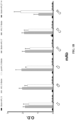
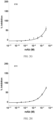
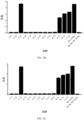
- FIG. 1A-C Binding of anti-apelin mAbs to the apelin peptides are shown in Figures 1A-C (Biotin-APL13, biotin-apelin-13; APL13-Biotin, apelin-13-biotin; pyrAPL13-Biotin, pyr-apelin-13-biotin; Biotin-APL17, biotin-apelin-17; APL17-Biotin, apelin-17-biotin; Biotin-APL27-14, biotin-apelin-(27-14)). Apelin binding by certain mAbs in FIG.
- the HitHunter ® cAMP assay was carried out using the cAMP Hunter TM CHO-K1 AGTRL1 Gi cell line (#95-0147C2) (DiscoverX; Fremont, CA; USA). Cells were seeded in 384-well white tissue culture-treated plates (Corning # 3570) (Corning; Corning, NY; USA) at 10,000 cells/well and incubated at 37°C overnight. The cells were then washed three times with serum-free media before being incubated at 37°C for 5 minutes with an apelin/mAb mixture which had been pre-incubated at 37°C for 15 minutes. The final apelin concentration incubated with the cells is 1.2 nM at this step.
- Forskolin (FSK) was added to each well so that the final FSK concentration was 15 ⁇ M and the final apelin concentration is 1 nM.
- the cAMP level was measured using the HITHUNTER ® cAMP assay kit for Biologics (DiscoverX # 90-0075LM10) according to the manufacturer's protocol.
- the chemiluminescent signal was read on an EnVision plate reader (384 US Lum) (Perkin Elmer; Waltham, MA; USA). Each mAb was assayed in triplicate at a given dilution.
- biotin-apelin-13 biotin-QRPRLSHKGPMPF (SEQ ID NO: 165)
- CM5-SA streptavidin
- Anti-apelin mAbs at four different concentrations (12.5 nM, 25 nM, 50 nM and 100 nM) were captured on the chip surface.
- the on- and off-rate for antibody-antigen binding were measured, curve fitted and calculated. The data are shown in Table 5.
- Table 5 KD values for anti-apelin mAbs from Biacore assay mAb clones KD C4 4.01 nM C5 51.3 nM C8 17.4 pM C9 14.8 nM C17 1.06 nM C24 0.401 pM C25 50.8 pM C26 119 pM C27 589 pM Table 6: KD values for anti-apelin mAbs measured with both apelin 13 and pyro-apelin 13 as measured by Biacore assay mAb clones KD Apelin 13 Pyro-apelin 13 C1 48.9 pM 0.154 pM C6 5.96 pM 0.513 pM C7 3.14 pM 0.326 pM C10 6.46 pM 0.0482 pM C11 39.3 pM 0.141 pM C12 3.55 pM 0.0555 pM C14 141 pM 6.49 pM C16 14.3 nM 6.14 nM C
- the antibody binding sites for anti-apelin mAbs C8, C24, and C25 were mapped using an ELISA-based peptide competition assay. Briefly, the mAb was captured on the ELISA plate and biotin-apelin-13 (SEQ ID NO: 165) binding to the mAb was measured. Each of the competition peptides (Table 7) was assessed for its ability to inhibit biotin-apelin-13 binding to the mAb. An inhibition signal reflects the ability of the competition peptide to bind to the mAb in solution.
- peptide competition assay goat anti-rabbit IgG in carbonate coating buffer was coated on high binding ELISA plates at 1 ⁇ g/ml overnight.
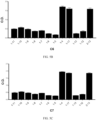
- FIGS. 3A-3C Each competition peptide or control sample was assayed in duplicate for a given mAb. Inhibition of biotin-apelin-13 (SEQ ID NO:165) binding to the anti-apelin mAbs by the competition peptides are shown in FIGS. 3A-3C . "No comp:” no competition peptide was added; “No Ab, No Comp:” neither competition peptide nor anti-apelin mAb was added. As shown in FIG. 3A , when one amino acid is deleted from the C-terminus of apelin 13, the peptide does not bind to C8. Serial deletion of the N-terminal amino acids of apelin 13 does not have effect on its binding to C8 until residue number 8 is deleted.
- mapping result indicates that C8 binds to the epitope comprising amino acids KGPMPF (SEQ ID NO:188).
- C24 and C25 The same results were observed for C24 and C25. Therefore, C8, C24, and C25 all bind to the epitope comprising amino acids KGPMPF (SEQ ID NO:188).
- alanine scanning peptides (Table 8) were generated and assessed for their ability to inhibit the binding of biotin-apelin-13 (SEQ ID NO:165) to these mAbs using the ELISA-based peptide competition assay described above. Inhibition of biotin-apelin-13 (SEQ ID NO:165) binding to the anti-apelin mAb C8, C24, or C25 by the alanine scanning peptides are shown in FIGS. 4A-4C .
- peptide 8A still blocks binding of biotin-apelin-13 (SEQ ID NO:165) to C8 but to a less extent compared with apelin 13 (peptide 1-13), 9A, or 10A.
- Peptides 11A, 12A, and 13A largely lost the ability to block the binding of biotin-apelin-13 (SEQ ID NO:165) to C8.
- the antibody binding sites for anti-apelin mAbs C1, C6, and C7 were mapped with the ELISA-based peptide competition assay described above using apelin-13-biotin (QRPRLSHKGPMPF-biotin (SEQ ID NO:165)) and the competition peptides shown in Table 9.
- Inhibition of apelin-13-biotin (SEQ ID NO:165) binding to the anti-apelin mAbs C1, C6, and C7 by the competition peptides are shown in FIGS. 5A-5C .
- FIG. 5A when one amino acid is deleted from the N-terminus of apelin 13, the peptide does not bind to C1.
- alanine scanning peptides (Table 10) were generated and assessed for their ability to inhibit the binding of apelin-13-biotin (SEQ ID NO:165) to these mAbs using the ELISA-based peptide competition assay described above. Inhibition of apelin-13-biotin (SEQ ID NO:165) binding to the anti-apelin mAb C6 or C7 by the alanine scanning peptides are shown in FIGS. 6A-6B . Each peptide or control sample was assayed in duplicate for a given mAb.
- peptides 1A, 2A, 3A, 4A and 5A lost the ability to block the binding of apelin-13-biotin (SEQ ID NO:165) to C6 or C7.
- SEQ ID NO:165 apelin-13-biotin
- Table 9 Apelin peptides used in the competition assay for anti-apelin mAbs C1, C6 and C7 Peptide Sequence SEQ ID NO: 1-17 KFRRQRPRLSHKGPMPF 166 1-13 QRPRLSHKGPMPF 165 2-13 RPRLSHKGPMPF 182 1-12 QRPRLSHKGPMP 181 1-11 QRPRLSHKGPM 198 1-10 QRPRLSHKGP 199 1-9 QRPRLSHKG 200 1-8 QRPRLSHK 201 1-7 QRPRLSH 202 1-6 QRPRLS 203 1-5 QRPRL 204 1-4 QRPR 205
- Table 10 Alanine scanning peptides derived from the epitope 1-5 used in the competition assay for anti-apelin mAbs C6 and C7 Peptide Sequence SEQ ID NO: 1A ARPRL 206 2A QAPRL 207 3A QRARL 208 4A QRPAL 209 5A QRPRA 210
- the humanized VH and VL regions were fused to human IgG1 heavy chain and kappa light chain constant regions, respectively, to generate humanized mAbs. Constructs corresponding to the mAb sequences were used for transient transfection in HEK 293 cells and the supernatants were analyzed for the affinity of each humanized mAb for apelin.
- the KD values of the humanized mAbs were determined on Biacore using biotin-apelin-13 (biotin-QRPRLSHKGPMPF (SEQ ID NO:165)). The data are shown in Table 13.
- Two additional humanized mAbs (B24 and B25) were generated with sequence modifications on A31. These three mAbs (A31, B24, and B25) were cloned on human IgG4 backbone and tested in an ELISA assay where increasing concentrations of antibodies were immobilized on plates and biotin-apelin-13 (biotin-QRPRLSHKGPMPF (SEQ ID NO: 165)) was added for binding, followed by binding with streptavidin-conjugated to alkaline phosphatase. The binding was then detected by adding PNPP substrate and reading absorbance of the ELISA plates at 405 nm. The EC50 values for the ELISA binding curves are shown in Table 14.
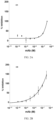
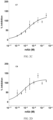
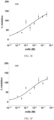
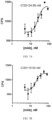
- FIG. 7A shows an IC50 graph when apelin 13 (APL13) was used in the assay;
- FIG. 7B shows an IC50 graph when pyro-apelin 13 (pyroAPL13) was used in the assay.
- CPS counts per second.
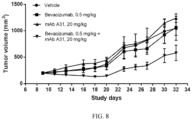
- FIG. 8 shows the tumor volumes in different groups during the study.
- Table 11 Sequences of heavy chain variable regions of humanized anti-apelin mAbs mAb clones VH A11 A21 A31 A41 A33 A43 B24 B25 VH: heavy chain variable region
- Table 12 Sequences of light chain variable regions of humanized anti-apelin mAbs mAb clones VL A11 A21 A31 A41 A33 A43 B24 B25 VL: light chain variable region
- Table 13 KD values of humanized anti-apelin mAbs from Biacore assay mAb clones KD A11 0.126 pM A21 1.65 fM A31 0.148 pM A41 0.067 pM A33 0.0143 pM A43 3.26 pM
- Table 14 ELISA binding EC50 values for humanized mAbs mAb clones EC50 (nM) A31 0.21 B24 0.79 B25
Landscapes
- Health & Medical Sciences (AREA)
- Life Sciences & Earth Sciences (AREA)
- Chemical & Material Sciences (AREA)
- Engineering & Computer Science (AREA)
- Medicinal Chemistry (AREA)
- General Health & Medical Sciences (AREA)
- Molecular Biology (AREA)
- Organic Chemistry (AREA)
- Bioinformatics & Cheminformatics (AREA)
- Immunology (AREA)
- Urology & Nephrology (AREA)
- Pharmacology & Pharmacy (AREA)
- Public Health (AREA)
- Animal Behavior & Ethology (AREA)
- Veterinary Medicine (AREA)
- Biomedical Technology (AREA)
- Hematology (AREA)
- Nuclear Medicine, Radiotherapy & Molecular Imaging (AREA)
- General Chemical & Material Sciences (AREA)
- Chemical Kinetics & Catalysis (AREA)
- Biochemistry (AREA)
- Microbiology (AREA)
- Endocrinology (AREA)
- Vascular Medicine (AREA)
- Food Science & Technology (AREA)
- Cardiology (AREA)
- Pathology (AREA)
- General Physics & Mathematics (AREA)
- Analytical Chemistry (AREA)
- Physics & Mathematics (AREA)
- Heart & Thoracic Surgery (AREA)
- Cell Biology (AREA)
- Biotechnology (AREA)
- Ophthalmology & Optometry (AREA)
- Proteomics, Peptides & Aminoacids (AREA)
- Biophysics (AREA)
- Genetics & Genomics (AREA)
- Epidemiology (AREA)
- Mycology (AREA)
- Medicines Containing Antibodies Or Antigens For Use As Internal Diagnostic Agents (AREA)
Description
- This invention relates to monoclonal anti-apelin antibodies, nucleic acids and expression vectors encoding the antibodies, recombinant cells containing the vectors, and compositions comprising the antibodies. Methods of making the antibodies, methods of using the antibodies for diagnostic purposes in measuring apelin levels in blood and/or tissue, and methods of using the antibodies to treat diseases including diabetic retinopathy (DR; including proliferative diabetic retinopathy (PDR) and non-proliferative diabetic retinopathy (NPDR)), age-related macular degeneration (AMD), diabetic macular edema (DME), macular edema following retinal vein occlusion (RVO), retinal degeneration, myopic choroidal neovascularization (mCNV), diabetic nephropathy, chronic kidney disease (CKD), non-alcoholic steatohepatitis (NASH), liver cirrhosis, plaque neovascularization, rubeosis iridis, neovascular glaucoma, corneal neovascularization (CNV), retinopathy of prematurity (ROP), retinopathy, macular degeneration, ovarian hyperstimulation syndrome (OHSS), uterine bleeding, endometriosis, endometrial hyperplasia and cancer, myometrial leiomyomas, adenomyosis, cancer (e.g., solid tumors and hematologic malignancies), fibrosis (e.g., pathological and physiological fibrosis, renal fibrosis, cardiac fibrosis, liver fibrosis, and pulmonary fibrosis), and/or associated complications are also provided.
- Apelin is a naturally occurring peptide with several endogenous forms. It is initially produced as a 77-amino acid precursor, preproapelin, which is proteolytically processed into apelin-36 (or apelin 36) (containing the C-terminal 36 amino acids of the apelin precursor), apelin-17 (or apelin 17) (containing the C-
terminal 17 amino acids of preproapelin; K17F) and apelin-13 (or apelin 13) (containing the C-terminal 13 amino acids of preproapelin) (Tatemoto et al., Biochem Biophys Res. Commun. 251(2):471-6 (1998); Habata et al., Biochim Biophys Acta 1452(1):25-35 (1999); Lee et al., J. Neurochem. 74(1):34-41 (2000)). Other forms of apelin derived from the 77-amino acid precursor have been reported as well (Mesmin et al., J Proteome Res. 10(11): 5222-31 (2011); Shin et al., Biochim Biophys Acta. 1861(8):1901-12 (2017)). The N-terminal glutamine residue of apelin 13 can be pyroglutamylated, producing the pyroglutamyl form of apelin 13 (pE13F). Apelin is the endogenous ligand of apelin receptor APJ (also named apelinR, AGTRL1, or APLNR). APJ is a member of the G protein-coupled receptor gene family. Apelin binds to and activates APJ and triggers a wide range of downstream signaling events, including downregulation of forskolin-induced cAMP production and promotion of phosphorylation of extracellular signal-regulated kinases (ERKs), Akt, and p70 S6 kinase (De Mota, Neuroendocrinology 72(6):400-7 (2000); Li et al., Front Biosci. 13:3786-92 (2008); Masri et al., Biochem Biophys Res Commun. 290(1):539-45 (2002); Liu et al., Biochem Biophys Res Commun. 468(4):617-21 (2015); Masri et al., FASEB J. 18(15):1909-11 (2004); O'Carroll et al., J Endocrinol. 219(1):R13-35 (2013)). Both K17F and pE13F can induce APJ receptor internalization. K17F has higher affinity than pE13F for APJ, whereas apelin-36 has similar affinity to pE13F (Iturrioz et al., J Biol Chem. 285(42):32627-37 (2010); Medhurst et al., J Neurochem. 84(5):1162-72 (2003)). Both apelin and APJ are expressed in the central nervous system and peripheral tissues (O'Carroll et al., J Endocrinol. 219(1):R13-35 (2013)). The apelin/APJ axis regulates many physiological functions including cardiac contractibility, blood pressure, cardiovascular tone, tissue angiogenesis, water homeostasis, gastrointestinal track physiology, proliferation of vascular smooth muscle cells (VSMCs) and other cell types, monocyte adhesion to human umbilical vein endothelial cells, cardiac repair post-myocardial infarction, and pathological fibrosis in several tissues or organs (O'Carroll et al., J Endocrinol. 219(1):R13-35 (2013)). - Apelin plays an important role in angiogenesis and cell proliferation of endothelial cells (ECs) (Kalin et al., Dev Biol. 305(2):599-614 (2007); Kasai et al., Biochem Biophys Res Commun. 325(2):395-400 (2004)). Both apelin and APJ are expressed on ECs of newly developing blood vessels during angiogenesis (Kidoya et al., EMBO J. 27(3):522-34 (2008); Saint-Geniez et al., Mech Dev. 110(1-2):183-6 (2002)) and the expression of apelin is induced by hypoxia (Kasai et al., Arterioscler Thromb Vasc Biol. 30(11):2182-7 (2010)). Apelin knockout mice have impaired retinal vascularization and ocular development (Kasai et al., Arterioscler Thromb Vasc Biol. 28(10):1717-22 (2008)), implicating an important role for apelin in retinal development. The vitreous concentration of apelin is higher in patients with proliferative diabetic retinopathy (PDR) than in individuals without diabetes (Tao et al., Invest Ophthalmol Vis Sci. 51(8):4237-42 (2010)). The elevated apelin level can exert strong angiogenic and proliferative effects and lead to pathological changes in the retina of diabetes and other eye diseases. An apelin-neutralizing monoclonal antibody (mAb) can specifically bind to apelin and block its biological activity on cells that express the apelin receptor APJ; it can also be called an anti-apelin mAb with neutralizing activity. Agents such as an apelin-neutralizing mAb could be used to treat diabetic retinopathy (DR), age-related macular degeneration (AMD), and diabetic macular edema (DME). Since the apelin/APJ axis could work with the VEGF pathway in a cooperative manner, a combination of an apelin-neutralizing mAb with a VEGF blocker such as ranibizumab (Lucentis®) could have an additive or even synergistic therapeutic effect in patients with DR, DME, AMD, and/or other eye diseases. A bispecific antibody that targets both apelin and VEGF could have a similar effect.
- Apelin-13 has been shown to promote tumor proliferation in various types of cancers, including breast, hepatocellular, lymphatic, lung and ovarian cancer. Apelin and APJ expression is upregulated in various tumors (Sorli et al., Oncogene. 26(55):7692-9 (2007); Picault et al., Eur J Cancer. 50(3):663-74 (2014); Zuurbier et al., Oncotarget. 8(26):42949-42961 (2017); Muto et al., Anticancer Res. 34(10):5313-20 (2014)). Apelin is a potent activator of tumor neoangiogenesis and proliferation through binding and activation of its receptor APJ (Sorli et al., Drug Discov Today. 11(23-24):1100-6 (2006)). Thus, blockade of apelin action with an apelin-neutralizing mAb could be employed to treat various cancers where the apelin/APJ axis plays a role in cancer cell growth and/or angiogenesis near the tumor site. An apelin-neutralizing mAb could be combined with Avastin® or other anti-VEGF and/or anti-angiogenic agents to achieve an additive or even synergistic effect in cancer treatment. Further, an apelin-neutralizing mAb could be combined with other anti-cancer agents such as those for chemotherapy, inhibition of tumor growth or immune-oncology therapy to achieve greater efficacy.
- Apelin is also associated with hepatic diseases. It is overexpressed in activated hepatic stellate cells (HSCs) of cirrhotic rats and plays an important role in both angiogenesis and fibrosis in these animals (Principe et al., Hepatology. 48(4):1193-201 (2008)). Apelin is also overexpressed in the HSCs of human cirrhotic liver (Melgar-Lesmes et al., Endocrinology. 151(11):5306-14 (2010)) as does APJ (Yokomori et al., J Gastroenterol. 46(2):222-31 (2011)). On the other hand, both hypoxia and proinflammatory factors upregulate APJ expression in human HSCs and hepatocytes. Patients with liver cirrhosis have increased serum levels of apelin. Moreover, serum apelin level is associated with the severity of chronic liver disease. These findings suggest that apelin can play an important role in the pathogenesis of liver diseases such as non-alcoholic steatohepatitis (NASH), liver fibrosis and liver cirrhosis. An apelin-neutralizing mAb could be used to treat these liver diseases.
- Apelin has been shown to promote diabetic nephropathy in rodents by enhancing the permeability of glomerular endothelial cells and inducing podocyte dysfunction (Guo et al., J Cell Mol Med. 19(9):2273-85 (2015)). It has also been found to be involved in the progression of diabetic nephropathy by inhibiting autophagy in podocytes (Liu et al., Cell Death Dis. 8(8):e3006 (2017)). Thus, an apelin-neutralizing mAb could be used in the treatment of diabetic nephropathy and chronic kidney disease.
-
US2016/053000 discloses apelin antigen-binding proteins and methods of using the apelin antigen-binding proteins. The antigen-binding protein may comprise an antibody to apelin and can be used to treat pathological conditions involving angiogenesis, such as cancer or retinopathy and/or retinopathy-related complications. - The invention is defined by the claims. Any subject matter falling outside the scope of the claims is provided for information purposes only.
- The references to methods of treatment in this description are to be interpreted as references to the compounds, pharmaceutical compositions and medicaments of the present invention for use in those methods.
- The present invention relates to an isolated monoclonal antibody or antigen-binding fragment thereof comprising a heavy chain variable region having the polypeptide sequence of SEQ ID NO:213, and a light chain variable region having the polypeptide sequence of SEQ ID NO:215.
- In an aspect, the present disclosure is directed to a bispecific antibody comprising the monoclonal antibody or antigen-binding fragment thereof described herein.
- Also provided are isolated nucleic acids encoding the monoclonal antibodies or antigen-binding fragment thereof of the invention disclosed herein.
- Also provided are vectors comprising the isolated nucleic acids encoding the monoclonal antibodies or antigen-binding fragments thereof of the invention.
- Also provided are host cells comprising the vectors comprising the isolated nucleic acids encoding the monoclonal antibodies or antigen-binding fragments thereof of the invention.
- In certain embodiments, provided is a pharmaceutical composition comprising an isolated monoclonal antibody or antigen-binding fragment thereof of the invention and a pharmaceutically acceptable carrier.
- Also provided are methods of treating a diabetic retinopathy (DR) in a subject in need thereof, comprising administering to the subject the pharmaceutical compositions of the invention.
- Also provided are methods of treating an age-related macular degeneration (AMD) in a subject in need thereof, comprising administering to the subject the pharmaceutical compositions of the invention.
- Also provided are methods of treating a diabetic macular edema (DME) in a subject in need thereof, comprising administering to the subject the pharmaceutical compositions of the invention.
- Also provided are methods of treating a macular edema following retinal vein occlusion (RVO) in a subject in need thereof, comprising administering to the subject the pharmaceutical compositions of the invention.
- Also provided are methods of treating retinal degeneration in a subject in need thereof, comprising administering to the subject the pharmaceutical compositions of the invention.
- Also provided are methods of treating myopic choroidal neovascularization (mCNV) in a subject in need thereof, comprising administering to the subject the pharmaceutical compositions of the invention.
- Also provided are methods of treating a diabetic nephropathy in a subject in need thereof, comprising administering to the subject the pharmaceutical compositions of the invention.
- Also provided are methods of treating a chronic kidney disease (CKD) in a subject in need thereof, comprising administering to the subject the pharmaceutical compositions of the invention.
- Also provided are methods of treating a non-alcoholic steatohepatitis (NASH) in a subject in need thereof, comprising administering to the subject the pharmaceutical compositions of the invention.
- Also provided are methods of treating a tissue fibrosis in a subject in need thereof, comprising administering to the subject the pharmaceutical compositions of the invention.
- Also provided are methods of treating liver cirrhosis in a subject in need thereof, comprising administering to the subject the pharmaceutical compositions of the invention.
- Also provided are methods of treating plaque neovascularization in a subject in need thereof, comprising administering to the subject the pharmaceutical compositions of the invention.
- Also provided are methods of treating rubeosis iridis in a subject in need thereof, comprising administering to the subject the pharmaceutical compositions of the invention.
- Also provided are methods of treating neovascular glaucoma in a subject in need thereof, comprising administering to the subject the pharmaceutical compositions of the invention.
- Also provided are methods of treating corneal neovascularization (CNV) in a subject in need thereof, comprising administering to the subject the pharmaceutical compositions of the invention.
- Also provided are methods of treating retinopathy of prematurity (ROP) in a subject in need thereof, comprising administering to the subject the pharmaceutical compositions of the invention.
- Also provided are methods of treating retinopathy in a subject in need thereof, comprising administering to the subject the pharmaceutical compositions of the invention.
- Also provided are methods of treating macular degeneration in a subject in need thereof, comprising administering to the subject the pharmaceutical compositions of the invention.
- Also provided are methods of treating ovarian hyperstimulation syndrome (OHSS) in a subject in need thereof, comprising administering to the subject the pharmaceutical compositions of the invention.
- Also provided are methods of treating uterine bleeding in a subject in need thereof, comprising administering to the subject the pharmaceutical compositions of the invention.
- Also provided are methods of treating endometriosis in a subject in need thereof, comprising administering to the subject the pharmaceutical compositions of the invention.
- Also provided are methods of treating endometrial hyperplasia and cancer in a subject in need thereof, comprising administering to the subject the pharmaceutical compositions of the invention.
- Also provided are methods of treating myometrial leiomyomas in a subject in need thereof, comprising administering to the subject the pharmaceutical compositions of the invention.
- Also provided are methods of treating adenomyosis in a subject in need thereof, comprising administering to the subject the pharmaceutical compositions of the invention.
- Also provided are methods of treating cancer in a subject in need thereof, comprising administering to the subject the pharmaceutical compositions of the invention. The cancer can be any liquid or solid cancer, for example, it can be selected from but not limited to, a lung cancer, a gastric cancer, a colon cancer, a hepatocellular carcinoma, a renal cell carcinoma, a bladder urothelial carcinoma, a cholangiocarcinoma, a metastatic melanoma, a breast cancer, an ovarian cancer, a cervical cancer, a head and neck cancer, a pancreatic cancer, a glioma, a glioblastoma, and other solid tumors, and a non-Hodgkin's lymphoma (NHL), an acute lymphocytic leukemia (ALL), a chronic lymphocytic leukemia (CLL), a chronic myelogenous leukemia (CML), a multiple myeloma (MM), an acute myeloid leukemia (AML), and other liquid tumors.
- In certain embodiments, the pharmaceutical composition further comprises a second therapeutic anti-cancer agent. The second therapeutic anti-cancer agent can, for example, be an anti-VEGF agent. The anti-VEGF agent can, for example, be Avastin® or a bevacizumab biosimilar agent. The anti-VEGF agent can, for example, be a VEGFR1 and/or VEGFR2 blocker.
- Also provided are methods of determining a level of apelin in a subject. The methods comprise (a) contacting a sample provided from a subject with an antibody or antigen-binding fragment thereof of the invention; and (b) determining a level of apelin in the subject. In certain embodiments, the sample is a tissue sample. The tissue sample can, for example, be a cancer tissue sample, a hepatic tissue sample, or a kidney tissue sample.
- Also provided are methods of producing the monoclonal antibody or antigen-binding fragment thereof of the invention, comprising culturing a cell comprising a nucleic acid encoding the monoclonal antibody or antigen-binding fragment under conditions to produce the monoclonal antibody or antigen-binding fragment, and recovering the antibody or antigen-binding fragment from the cell or culture.
- Also provided are methods of producing a pharmaceutical composition comprising the monoclonal antibody or antigen-binding fragment thereof of the invention, comprising combining the monoclonal antibody or antigen-binding fragment with a pharmaceutically acceptable carrier to obtain the pharmaceutical composition.
- The foregoing summary, as well as the following detailed description of preferred embodiments of the present application, will be better understood when read in conjunction with the appended drawings. It should be understood, however, that the application is not limited to the precise embodiments shown in the drawings.
-
FIGS. 1A-1C show binding of anti-apelin mAbs to various biotinylated apelin peptides measured by ELISA. Biotinylated apelin peptides were immobilized on ELISA plates coated with neutravidin and purified recombinant rabbit anti-apelin mAbs were added for binding to the peptides on the plates. The binding was detected by adding a goat anti-rabbit IgG Fc-conjugated to alkaline phosphatase and PNPP substrate, and measured as the absorbance at 405 nm.FIG. 1A shows a graph demonstrating the binding of anti-apelin mAbs C5, C8, C17, C24, C25, C26, C27, C4 and C9 to various biotinylated apelin peptides as measured by ELISA.FIG. 1B shows a graph demonstrating the binding of anti-apelin mAbs C1, C6, C7, C10, C12, and C16 to various biotinylated apelin peptides as measured by ELISA.FIG. 1C shows a graph demonstrating the binding of anti-apelin mAbs C11, C14, C22, C20, and C13 to various biotinylated apelin peptides as measured by ELISA. -
FIGS. 2A-2K show the neutralizing effect of select anti-apelin mAbs in a cell-based assay for apelin activity. Apelin activity was assessed for its ability to downregulate the forskolin (FSK)-induced cAMP production in cAMP Hunter™ CHO-K1 AGTRL1 Gi cells (DiscoverX #95-0147C2). Each mAb was assayed in triplicate at a given dilution. To calculate the % inhibition by a mAb at a given concentration, 0% inhibition was defined as the signal from the FSK-stimulated cells with apelin treatment and 100% inhibition was defined as the signal from the FSK-stimulated cells with no apelin treatment. The % inhibition was plotted against increasing concentrations of mAbs.FIG. 2A shows a graph of the activity of the anti-apelin mAb C1.FIG. 2B shows a graph of the activity of the anti-apelin mAb C6.FIG. 2C shows a graph of the activity of the anti-apelin mAb C7.FIG. 2D shows a graph of the activity of the anti-apelin mAb C8.FIG. 2E shows a graph of the activity of the anti-apelin mAb C24.FIG. 2F shows a graph of the activity of the anti-apelin mAb C25.FIG. 2G shows a graph of the activity of the anti-apelin mAb C10.FIG. 2H shows a graph of the activity of the anti-apelin mAb C11.FIG. 2I shows a graph of the activity of the anti-apelin mAb C12.FIG. 2J shows a graph of the activity of the anti-apelin mAb C22.FIG. 2K shows a graph of the activity of the anti-apelin mAb C26. -
FIGS. 3A-3C show graphs demonstrating the inhibition of biotin-apelin-13 (SEQ ID NO:165) binding to the anti-apelin mAbs C8, C24 and C25 by the competition peptides in Table 7 as measured by ELISA. Goat-anti-rabbit IgG was immobilized on an ELISA plate. A mixture of a rabbit anti-apelin mAb (C8, C24, or C25) and a competition peptide was preincubated for 30 minutes at room temperature and then biotin-apelin-13 (SEQ ID NO:165) was added, mixed and the final solution was added on the plate. The binding of biotin-apelin-13 (SEQ ID NO:165) to the immobilized anti-apelin mAb, C8 (FIG. 3A ), C24 (FIG. 3B ), and C25 (FIG. 3C ), was detected by adding streptavidin-conjugated to alkaline phosphatase and PNPP substrate, and measured as the absorbance at 405 nm. -
FIGS. 4A-4C show graphs demonstrating the inhibition of biotin-apelin-13 (SEQ ID NO:165) binding to the anti-apelin mAbs C8, C24 and C25 by the alanine scanning peptides (Table 8) derived from epitope 8-13 (KGPMPF (SEQ ID NO:188)) as measured by ELISA. Goat anti-rabbit IgG was immobilized on an ELISA plate. A mixture of a rabbit anti-apelin mAb (C8, C24, or C25) and an alanine scanning peptide was preincubated for 30 minutes at room temperature and then biotin-apelin-13 (SEQ ID NO:165) was added, mixed and the final solution was added on the plate. The binding of biotin-apelin-13 (SEQ ID: 165) to the immobilized anti-apelin mAbs, C8 (FIG. 4A ), C24 (FIG. 4B ), and C25 (FIG. 4C ), was detected by adding streptavidin-conjugated to alkaline phosphatase and PNPP substrate, and measured as the absorbance at 405 nm. Several competition peptides were used as controls. -
FIGS. 5A-5C show graphs demonstrating the inhibition of apelin-13-biotin ((QRPRLSHKGPMPF-biotin (SEQ ID NO:165)) binding to the anti-apelin mAbs C1, C6 and C7 by the competition peptides in Table 9 as measured by ELISA. Goat-anti-rabbit IgG was immobilized on an ELISA plate. A mixture of a rabbit anti-apelin mAb (C1, C6, or C7) and a competition peptide was preincubated for 30 minutes at room temperature and then apelin-13-biotin (SEQ ID NO:165) was added, mixed and the final solution was added on the plate. The binding of apelin-13-biotin (SEQ ID NO:165) to the immobilized anti-apelin mAbs, C1 (FIG. 5A ), C6 (FIG. 5B ), and C7 (FIG. 5C ), was detected by adding streptavidin-conjugated to alkaline phosphatase and PNPP substrate, and measured as the absorbance at 405 nm. -
FIGS. 6A-6B show graphs demonstrating the inhibition of apelin-13-biotin (SEQ ID NO:165) binding to the anti-apelin mAbs C6 (FIG. 6A ) and C7 (FIG. 6B ) by the alanine scanning peptides (Table 10) derived from epitope 1-5 (QRPRL (SEQ ID NO: 204)) as measured by ELISA described above. -
FIGS. 7A-7B show the IC50 curves of humanized anti-apelin mAb A31 in a cell-based assay. Apelin activity was assessed for its ability to downregulate the forskolin (FSK)-induced cAMP production in cAMP Hunter™ CHO-K1 AGTRL1 Gi cells (DiscoverX #95-0147C2) and the activity of the anti-apelin mAb was assessed for its ability to reverse the inhibitory effect of apelin.FIG. 7A shows an IC50 graph when apelin 13 (APL13) was used in the assay.FIG. 7B shows an IC50 graph when pyro-apelin 13 (pyroAPL13) was used in the assay. CPS, counts per second. -
FIG. 8 shows the effect of humanized anti-apelin mAb A31 on tumor growth in a xenograft model. The mAb was tested either alone or in combination with bevacizumab; bevacizumab alone was also included in the study. - Various publications, articles and patents are cited or described in the background and throughout the specification. Discussion of documents, acts, materials, devices, articles or the like which has been included in the present specification is for the purpose of providing context for the invention. Such discussion is not an admission that any or all of these matters form part of the prior art with respect to any inventions disclosed or claimed.
- Unless defined otherwise, all technical and scientific terms used herein have the same meaning as commonly understood to one of ordinary skill in the art to which this invention pertains. Otherwise, certain terms used herein have the meanings as set forth in the specification.
- It must be noted that as used herein and in the appended claims, the singular forms "a," "an," and "the" include plural reference unless the context clearly dictates otherwise.
- Unless otherwise stated, any numerical values, such as a concentration or a concentration range described herein, are to be understood as being modified in all instances by the term "about." Thus, a numerical value typically includes ± 10% of the recited value. For example, a concentration of 1 mg/mL includes 0.9 mg/mL to 1.1 mg/mL. Likewise, a concentration range of 1% to 10% (w/v) includes 0.9% (w/v) to 11% (w/v). As used herein, the use of a numerical range expressly includes all possible subranges, all individual numerical values within that range, including integers within such ranges and fractions of the values unless the context clearly indicates otherwise.
- Unless otherwise indicated, the term "at least" preceding a series of elements is to be understood to refer to every element in the series. Those skilled in the art will recognize, or be able to ascertain using no more than routine experimentation, many equivalents to the specific embodiments of the invention described herein. Such equivalents are intended to be encompassed by the invention.
- As used herein, the terms "comprises," "comprising," "includes," "including," "has," "having," "contains" or "containing," or any other variation thereof, will be understood to imply the inclusion of a stated integer or group of integers but not the exclusion of any other integer or group of integers and are intended to be non-exclusive or open-ended. For example, a composition, a mixture, a process, a method, an article, or an apparatus that comprises a list of elements is not necessarily limited to only those elements but can include other elements not expressly listed or inherent to such composition, mixture, process, method, article, or apparatus. Further, unless expressly stated to the contrary, "or" refers to an inclusive or and not to an exclusive or. For example, a condition A or B is satisfied by any one of the following: A is true (or present) and B is false (or not present), A is false (or not present) and B is true (or present), and both A and B are true (or present).
- As used herein, the conjunctive term "and/or" between multiple recited elements is understood as encompassing both individual and combined options. For instance, where two elements are conjoined by "and/or," a first option refers to the applicability of the first element without the second. A second option refers to the applicability of the second element without the first. A third option refers to the applicability of the first and second elements together. Any one of these options is understood to fall within the meaning, and therefore satisfy the requirement of the term "and/or" as used herein. Concurrent applicability of more than one of the options is also understood to fall within the meaning, and therefore satisfy the requirement of the term "and/or."
- As used herein, the term "consists of," or variations such as "consist of" or "consisting of," as used throughout the specification and claims, indicate the inclusion of any recited integer or group of integers, but that no additional integer or group of integers can be added to the specified method, structure, or composition.
- As used herein, the term "consists essentially of," or variations such as "consist essentially of" or "consisting essentially of," as used throughout the specification and claims, indicate the inclusion of any recited integer or group of integers, and the optional inclusion of any recited integer or group of integers that do not materially change the basic or novel properties of the specified method, structure or composition. See M.P.E.P. § 2111.03.
- As used herein, "subject" means any animal, preferably a mammal, most preferably a human. The term "mammal" as used herein, encompasses any mammal. Examples of mammals include, but are not limited to, cows, horses, sheep, pigs, cats, dogs, mice, rats, rabbits, guinea pigs, monkeys, humans, etc., more preferably a human.
- The words "right," "left," "lower," and "upper" designate directions in the drawings to which reference is made.
- It should also be understood that the terms "about," "approximately," "generally," "substantially" and like terms, used herein when referring to a dimension or characteristic of a component of the preferred invention, indicate that the described dimension/characteristic is not a strict boundary or parameter and does not exclude minor variations therefrom that are functionally the same or similar, as would be understood by one having ordinary skill in the art. At a minimum, such references that include a numerical parameter would include variations that, using mathematical and industrial principles accepted in the art (e.g., rounding, measurement or other systematic errors, manufacturing tolerances, etc.), would not vary the least significant digit.
- The terms "identical" or percent "identity," in the context of two or more nucleic acids or polypeptide sequences (e.g., anti-apelin antibodies, apelin polypeptides, and polynucleotides that encode them), refer to two or more sequences or subsequences that are the same or have a specified percentage of amino acid residues or nucleotides that are the same, when compared and aligned for maximum correspondence, as measured using one of the following sequence comparison algorithms or by visual inspection.
- For sequence comparison, typically one sequence acts as a reference sequence, to which test sequences are compared. When using a sequence comparison algorithm, test and reference sequences are input into a computer, subsequence coordinates are designated, if necessary, and sequence algorithm program parameters are designated. The sequence comparison algorithm then calculates the percent sequence identity for the test sequence(s) relative to the reference sequence, based on the designated program parameters.
- Optimal alignment of sequences for comparison can be conducted, e.g., by the local homology algorithm of Smith & Waterman, Adv. Appl. Math. 2:482 (1981), by the homology alignment algorithm of Needleman & Wunsch, J. Mol. Biol. 48:443 (1970), by the search for similarity method of Pearson & Lipman, Proc. Nat'l. Acad. Sci. USA 85:2444 (1988), by computerized implementations of these algorithms (GAP, BESTFIT, FASTA, and TFASTA in the Wisconsin Genetics Software Package, Genetics Computer Group, 575 Science Dr., Madison, WI), or by visual inspection (see generally, Current Protocols in Molecular Biology, F.M. Ausubel et al., eds., Current Protocols, a joint venture between Greene Publishing Associates, Inc. and John Wiley & Sons, Inc., (1995 Supplement) (Ausubel)).
- Examples of algorithms that are suitable for determining percent sequence identity and sequence similarity are the BLAST and BLAST 2.0 algorithms, which are described in Altschul et al. (1990) J. Mol. Biol. 215: 403-410 and Altschul et al. (1997) Nucleic Acids Res. 25: 3389-3402, respectively. Software for performing BLAST analyses is publicly available through the National Center for Biotechnology Information. This algorithm involves first identifying high scoring sequence pairs (HSPs) by identifying short words of length W in the query sequence, which either match or satisfy some positive-valued threshold score T when aligned with a word of the same length in a database sequence. T is referred to as the neighborhood word score threshold (Altschul et al, supra). These initial neighborhood word hits act as seeds for initiating searches to find longer HSPs containing them. The word hits are then extended in both directions along each sequence for as far as the cumulative alignment score can be increased.
- Cumulative scores are calculated using, for nucleotide sequences, the parameters M (reward score for a pair of matching residues; always > 0) and N (penalty score for mismatching residues; always < 0). For amino acid sequences, a scoring matrix is used to calculate the cumulative score. Extension of the word hits in each direction are halted when: the cumulative alignment score falls off by the quantity X from its maximum achieved value; the cumulative score goes to zero or below, due to the accumulation of one or more negative-scoring residue alignments; or the end of either sequence is reached. The BLAST algorithm parameters W, T, and X determine the sensitivity and speed of the alignment. The BLASTN program (for nucleotide sequences) uses as defaults a wordlength (W) of 11, an expectation (E) of 10, M=5, N=-4, and a comparison of both strands. For amino acid sequences, the BLASTP program uses as defaults a wordlength (W) of 3, an expectation (E) of 10, and the BLOSUM62 scoring matrix (see Henikoff & Henikoff, Proc. Natl. Acad. Sci. USA 89:10915 (1989)).
- In addition to calculating percent sequence identity, the BLAST algorithm also performs a statistical analysis of the similarity between two sequences (see, e.g., Karlin & Altschul, Proc. Nat'l. Acad. Sci. USA 90:5873-5787 (1993)). One measure of similarity provided by the BLAST algorithm is the smallest sum probability (P(N)), which provides an indication of the probability by which a match between two nucleotide or amino acid sequences would occur by chance. For example, a nucleic acid is considered similar to a reference sequence if the smallest sum probability in a comparison of the test nucleic acid to the reference nucleic acid is less than about 0.1, more preferably less than about 0.01, and most preferably less than about 0.001.
- A further indication that two nucleic acid sequences or polypeptides are substantially identical is that the polypeptide encoded by the first nucleic acid is immunologically cross reactive with the polypeptide encoded by the second nucleic acid, as described below. Thus, a polypeptide is typically substantially identical to a second polypeptide, for example, where the two peptides differ only by conservative substitutions. Another indication that two nucleic acid sequences are substantially identical is that the two molecules hybridize to each other under stringent conditions.
- As used herein, the terms "inhibit," "inhibiting," and "inhibition," mean to decrease an activity, response, condition, disease or other biological parameter. This can include, but is not limited to complete ablation of the activity, response, condition, or disease. This can also include, for example, a 10% reduction in the activity, response, condition, or disease as compared to the native or control level. Thus, the reduction can be a 10, 20, 30, 40, 50, 60, 70, 80, 90, 100%, or any amount of reduction in between as compared to native or control levels. By way of a non-limiting example, an antibody of the invention can inhibit the activity of an apelin protein. The activity of the apelin protein can be reduced or ablated relative to the native apelin protein activity.
- The invention generally relates to isolated anti-apelin antibodies, nucleic acids and expression vectors encoding the antibodies, recombinant cells containing the vectors, and compositions comprising the antibodies. Methods of making the antibodies, and methods of using the antibodies to treat diseases including diabetic retinopathy (DR) (including proliferative diabetic retinopathy (PDR) and non-proliferative diabetic retinopathy (NPDR)), age-related macular degeneration (AMD), diabetic macular edema (DME), macular edema following retinal vein occlusion (RVO), retinal degeneration, myopic choroidal neovascularization (mCNV), diabetic nephropathy, chronic kidney disease (CKD), non-alcoholic steatohepatitis (NASH), liver cirrhosis, plaque neovascularization, rubeosis iridis, neovascular glaucoma, corneal neovascularization (CNV), retinopathy of prematurity (ROP), retinopathy, macular degeneration, ovarian hyperstimulation syndrome (OHSS), uterine bleeding, endometriosis, endometrial hyperplasia and cancer, myometrial leiomyomas, adenomyosis, cancer (e.g., solid tumors and hematologic malignancies), and fibrosis (e.g., pathological and physiological fibrosis, renal fibrosis, cardiac fibrosis, liver fibrosis, and pulmonary fibrosis), are also provided. The antibodies of the invention possess one or more desirable functional properties, including but not limited to high-affinity binding to apelin, high specificity to apelin, and the ability to block the binding of apelin to an apelin receptor.
- As used herein, the term "antibody" is used in a broad sense and includes immunoglobulin or antibody molecules including human, humanized, composite and chimeric antibodies and antibody fragments that are monoclonal or polyclonal. In general, antibodies are proteins or peptide chains that exhibit binding specificity to a specific antigen. Antibody structures are well known. Immunoglobulins can be assigned to five major classes (i.e., IgA, IgD, IgE, IgG and IgM), depending on the heavy chain constant domain amino acid sequence. IgA and IgG are further sub-classified as the isotypes IgA1, IgA2, IgG1, IgG2, IgG3 and IgG4. Accordingly, the antibodies of the invention can be of any of the five major classes or corresponding sub-classes. Preferably, the antibodies of the invention are IgG1, IgG2, IgG3 or IgG4. Antibody light chains of vertebrate species can be assigned to one of two clearly distinct types, namely kappa and lambda, based on the amino acid sequences of their constant domains. Accordingly, the antibodies of the invention can contain a kappa or lambda light chain constant domain. According to particular embodiments, the antibodies of the invention include heavy and/or light chain constant regions from rat or human antibodies. In addition to the heavy and light constant domains, antibodies contain an antigen-binding region that is made up of a light chain variable region and a heavy chain variable region, each of which contains three domains (i.e., complementarity determining regions 1-3; (CDR1, CDR2, and CDR3)). The light chain variable region domains are alternatively referred to as LCDR1, LCDR2, and LCDR3, and the heavy chain variable region domains are alternatively referred to as HCDR1, HCDR2, and HCDR3.
- As used herein, the term an "isolated antibody" refers to an antibody which is substantially free of other antibodies having different antigenic specificities (e.g., an isolated antibody that specifically binds to apelin and is substantially free of antibodies that do not bind to apelin). In addition, an isolated antibody is substantially free of other cellular material and/or chemicals.
- As used herein, the term "monoclonal antibody" refers to an antibody obtained from a population of substantially homogeneous antibodies, i.e., the individual antibodies comprising the population are identical except for possible naturally occurring mutations that can be present in minor amounts. The monoclonal antibodies of the invention can be made by the hybridoma method, phage display technology, single lymphocyte gene cloning technology, or by recombinant DNA methods. For example, the monoclonal antibodies can be produced by a hybridoma which includes a B cell obtained from a transgenic nonhuman animal, such as a transgenic mouse or rat, having a genome comprising a human heavy chain transgene and a light chain transgene.
- As used herein, the term "antigen-binding fragment" refers to an antibody fragment such as, for example, a diabody, a Fab, a Fab', a F(ab')2, an Fv fragment, a disulfide stabilized Fv fragment (dsFv), a (dsFv)2, a bispecific dsFv (dsFv-dsFv'), a disulfide stabilized diabody (ds diabody), a single-chain antibody molecule (scFv), a single domain antibody (sdab) an scFv dimer (bivalent diabody), a multispecific antibody formed from a portion of an antibody comprising one or more CDRs, a camelized single domain antibody, a nanobody, a domain antibody, a bivalent domain antibody, or any other antibody fragment that binds to an antigen but does not comprise a complete antibody structure. An antigen-binding fragment is capable of binding to the same antigen to which the parent antibody or a parent antibody fragment binds. According to particular embodiments, the antigen-binding fragment comprises a light chain variable region, a light chain constant region, and an Fd segment of the heavy chain. According to other particular embodiments, the antigen-binding fragment comprises Fab and F(ab').
- As used herein, the term "single-chain antibody" refers to a conventional single-chain antibody in the field, which comprises a heavy chain variable region and a light chain variable region connected by a short peptide of about 15 to about 20 amino acids. As used herein, the term "single domain antibody" refers to a conventional single domain antibody in the field, which comprises a heavy chain variable region and a heavy chain constant region or which comprises only a heavy chain variable region.
- As used herein, the term "human antibody" refers to an antibody produced by a human or an antibody having an amino acid sequence corresponding to an antibody produced by a human made using any technique known in the art. This definition of a human antibody includes intact or full-length antibodies, fragments thereof, and/or antibodies comprising at least one human heavy and/or light chain polypeptide.
- As used herein, the term "humanized antibody" refers to a non-human antibody that is modified to increase the sequence homology to that of a human antibody, such that the antigen-binding properties of the antibody are retained, but its antigenicity in the human body is reduced.
- As used herein, the term "chimeric antibody" refers to an antibody wherein the amino acid sequence of the immunoglobulin molecule is derived from two or more species. The variable region of both the light and heavy chains often corresponds to the variable region of an antibody derived from one species of mammal (e.g., mouse, rat, rabbit, etc.) having the desired specificity, affinity, and capability, while the constant regions correspond to the sequences of an antibody derived from another species of mammal (e.g., human) to avoid eliciting an immune response in that species.
- As used herein, the term "multispecific antibody" refers to an antibody that comprises a plurality of immunoglobulin variable domain sequences, wherein a first immunoglobulin variable domain sequence of the plurality has binding specificity for a first epitope and a second immunoglobulin variable domain sequence of the plurality has binding specificity for a second epitope. In an embodiment, the first and second epitopes are on the same antigen, e.g., the same protein (or subunit of a multimeric protein). In an embodiment, the first and second epitopes overlap or substantially overlap. In an embodiment, the first and second epitopes do not overlap or do not substantially overlap. In an embodiment, the first and second epitopes are on different antigens, e.g., the different proteins (or different subunits of a multimeric protein). In an embodiment, a multispecific antibody comprises a third, fourth, or fifth immunoglobulin variable domain. In an embodiment, a multispecific antibody is a bispecific antibody molecule, a trispecific antibody, or a tetraspecific antibody molecule.
- As used herein, the term "bispecifc antibody" refers to a multispecific antibody that binds no more than two epitopes or two antigens. A bispecific antibody is characterized by a first immunoglobulin variable domain sequence which has binding specificity for a first epitope and a second immunoglobulin variable domain sequence that has binding specificity for a second epitope. In an embodiment, the first and second epitopes are on the same antigen, e.g., the same protein (or subunit of a multimeric protein). In an embodiment, the first and second epitopes overlap or substantially overlap. In an embodiment the first and second epitopes are on different antigens, e.g., the different proteins (or different subunits of a multimeric protein). In an embodiment a bispecific antibody comprises a heavy chain variable domain sequence and a light chain variable domain sequence which have binding specificity for a first epitope and a heavy chain variable domain sequence and a light chain variable domain sequence which have binding specificity for a second epitope. In an embodiment, a bispecific antibody comprises a half antibody, or fragment thereof, having binding specificity for a first epitope and a half antibody, or fragment thereof, having binding specificity for a second epitope. In an embodiment, a bispecific antibody comprises a scFv, or fragment thereof, having binding specificity for a first epitope, and a scFv, or fragment thereof, having binding specificity for a second epitope. In an embodiment, the first epitope is located on apelin and the second epitope is located on VEGF, Angiopoietin-2 (ANG-2), leucine-rich alpha-2-glycoprotein 1 (LRG1), PD-1, PD-L1, LAG-3, TIM-3, CTLA-4, HER-2, EGFR, CD19, CD73, CD47, CD20, CD33, DLL3, claudin18.2, TIP-1, CD3, PDGFβ, collagen type VI receptor, TGF-beta receptors, LOXL2, p75 neurotrophin receptor (NGFR p75), and/or Insulin-like growth factor 2 receptor (IGF2R). In certain embodiments, an anti-apelin monoclonal antibody or antigen-binding fragment thereof of the invention and an anti-VEGF antibody (e.g., Avastin® or a bevacizumab biosimilar agent) or antigen-binding fragment thereof are engineered to form a bispecific antibody that targets both apelin and VEGF.
- As used herein, the term "apelin" refers to a 77 amino acid precursor protein, termed preproapelin, and its processed isoforms, which include apelin-13, apelin-16, apelin-17, apelin-36, apelin-55, and other forms derived from the 77-amino acid precursor. Each isoform has a distinct activity and acts by being a ligand for the apelin receptor APJ (also referred to as apelinR, AGTRL1, or APLNR), which is a class A, rhodopsin-like, G-protein coupled receptor (GPCR). The receptor binding affinities for apelin isoforms are different, which can account for different potencies in triggering intracellular signaling of the apelin receptor APJ. The apelin/APJ system plays important and various roles in the physiology and pathophysiology of many organs, including, but not limited to, regulation of blood pressure, cardiac contractility, cardiovascular tone, tissue angiogenesis, water homeostasis, gastrointestinal track physiology, metabolic balance, proliferation of vascular smooth muscle cell (VSMC) and other cell types, monocyte adhesion of human umbilical vein endothelial cells, cardiac repair post myocardial infarction, and pathological fibrosis in several tissues or organs. The term "human apelin" refers to a apelin originated from a human. An exemplary amino acid sequence of the precursor human apelin is represented in GenBank Accession No. AAF25815.1 (SEQ ID NO:221).
- As used herein, an antibody that "specifically binds to apelin" refers to an antibody that binds to a apelin, preferably a human apelin, with a KD of 1×10⁻⁷ M or less, preferably 1×10⁻⁸ M or less, more preferably 5×10⁻⁹ M or less, 1×10⁻⁹ M or less, 5×10⁻¹⁰ M or less, or 1×10⁻¹⁰ M or less. The term "KD" refers to the dissociation constant, which is obtained from the ratio of Kd to Ka (i.e., Kd/Ka) and is expressed as a molar concentration (M). KD values for antibodies can be determined using methods in the art in view of the present disclosure. For example, the KD of an antibody can be determined by using surface plasmon resonance, such as by using a biosensor system, e.g., a Biacore® system, or by using bio-layer interferometry technology, such as a Octet RED96 system.
- The smaller the value of the KD of an antibody, the higher affinity that the antibody binds to a target antigen.
- According to aparticular aspect, the invention relates to an isolated humanized monoclonal antibody or antigen-binding fragment thereof, wherein the isolated humanized antibody or antigen-binding fragment thereof comprises:
a heavy chain variable region having the polypeptide sequence of SEQ ID NO:213, and a light chain variable region having the polypeptide sequence of SEQ ID NO:215; - In another general aspect, the invention relates to an isolated nucleic acid encoding a monoclonal antibody or antigen-binding fragment thereof of the invention. It will be appreciated by those skilled in the art that the coding sequence of a protein can be changed (e.g., replaced, deleted, inserted, etc.) without changing the amino acid sequence of the protein. Accordingly, it will be understood by those skilled in the art that nucleic acid sequences encoding monoclonal antibodies or antigen-binding fragments thereof of the invention can be altered without changing the amino acid sequences of the proteins.
- In another general aspect, the invention relates to a vector comprising an isolated nucleic acid encoding a monoclonal antibody or antigen-binding fragment thereof of the invention. Any vector known to those skilled in the art in view of the present disclosure can be used, such as a plasmid, a cosmid, a phage vector or a viral vector. In some embodiments, the vector is a recombinant expression vector such as a plasmid. The vector can include any element to establish a conventional function of an expression vector, for example, a promoter, ribosome binding element, terminator, enhancer, selection marker, and origin of replication. The promoter can be a constitutive, inducible or repressible promoter. A number of expression vectors capable of delivering nucleic acids to a cell are known in the art and can be used herein for production of an antibody or antigen-binding fragment thereof in the cell. Conventional cloning techniques or artificial gene synthesis can be used to generate a recombinant expression vector according to embodiments of the invention.
- In another general aspect, the invention relates to a host cell comprising an isolated nucleic acid encoding a monoclonal antibody or antigen-binding fragment thereof of the invention. Any host cell known to those skilled in the art in view of the present disclosure can be used for recombinant expression of antibodies or antigen-binding fragments thereof of the invention. In some embodiments, the host cells are E. coli TG1 or BL21 cells (for expression of, e.g., an scFv or Fab antibody), CHO-DG44 or CHO-K1 cells or HEK293 cells (for expression of, e.g., a full-length IgG antibody). According to particular embodiments, the recombinant expression vector is transformed into host cells by conventional methods such as chemical transfection, heat shock, or electroporation, where it is stably integrated into the host cell genome such that the recombinant nucleic acid is effectively expressed.
- In another general aspect, the invention relates to a method of producing a monoclonal antibody or antigen-binding fragment thereof of the invention, comprising culturing a cell comprising a nucleic acid encoding the monoclonal antibody or antigen-binding fragment thereof under conditions to produce a monoclonal antibody or antigen-binding fragment thereof of the invention, and recovering the antibody or antigen-binding fragment thereof from the cell or cell culture (e.g., from the supernatant). Expressed antibodies or antigen-binding fragments thereof can be harvested from the cells and purified according to conventional techniques known in the art and as described herein.
- In another general aspect, the invention relates to a pharmaceutical composition, comprising an isolated monoclonal antibody or antigen-binding fragment thereof of the invention and a pharmaceutically acceptable carrier. The term "pharmaceutical composition" as used herein means a product comprising an antibody of the invention together with a pharmaceutically acceptable carrier. Antibodies of the invention and compositions comprising them are also useful in the manufacture of a medicament for therapeutic applications mentioned herein.
- As used herein, the term "carrier" refers to any excipient, diluent, filler, salt, buffer, stabilizer, solubilizer, oil, lipid, lipid containing vesicle, microsphere, liposomal encapsulation, or other material well known in the art for use in pharmaceutical formulations. It will be understood that the characteristics of the carrier, excipient or diluent will depend on the route of administration for a particular application. As used herein, the term "pharmaceutically acceptable carrier" refers to a non-toxic material that does not interfere with the effectiveness of a composition according to the invention or the biological activity of a composition according to the invention. According to particular embodiments, in view of the present disclosure, any pharmaceutically acceptable carrier suitable for use in an antibody pharmaceutical composition can be used in the invention.
- The formulation of pharmaceutically active ingredients with pharmaceutically acceptable carriers is known in the art, e.g., Remington: The Science and Practice of Pharmacy (e.g. 21st edition (2005), and any later editions). Non-limiting examples of additional ingredients include: buffers, diluents, solvents, tonicity regulating agents, preservatives, stabilizers, and chelating agents. One or more pharmaceutically acceptable carriers can be used in formulating the pharmaceutical compositions of the invention.
- In one embodiment of the invention, the pharmaceutical composition is a liquid formulation. A preferred example of a liquid formulation is an aqueous formulation, i.e., a formulation comprising water. The liquid formulation can comprise a solution, a suspension, an emulsion, a microemulsion, a gel, and the like. An aqueous formulation typically comprises at least 50% w/w water, or at least 60%, 70%, 75%, 80%, 85%, 90%, or at least 95% w/w of water.
- In one embodiment, the pharmaceutical composition can be formulated as an injectable which can be injected, for example, via an injection device (e.g., a syringe or an infusion pump). The injection can be delivered subcutaneously, intramuscularly, intraperitoneally, intravitreally, or intravenously, for example.
- In another embodiment, the pharmaceutical composition is a solid formulation, e.g., a freeze-dried or spray-dried composition, which can be used as is, or whereto the physician or the patient adds solvents, and/or diluents prior to use. Solid dosage forms can include tablets, such as compressed tablets, and/or coated tablets, and capsules (e.g., hard or soft gelatin capsules). The pharmaceutical composition can also be in the form of sachets, dragees, powders, granules, lozenges, or powders for reconstitution, for example.
- The dosage forms can be immediate release, in which case they can comprise a water-soluble or dispersible carrier, or they can be delayed release, sustained release, or modified release, in which case they can comprise water-insoluble polymers that regulate the rate of dissolution of the dosage form in the gastrointestinal tract or under the skin.
- In other embodiments, the pharmaceutical composition can be delivered intranasally, intrabuccally, or sublingually.
- The pH in an aqueous formulation can be between
pH 3 andpH 10. In one embodiment of the invention, the pH of the formulation is from about 7.0 to about 9.5. In another embodiment of the invention, the pH of the formulation is from about 3.0 to about 7.0. - In another embodiment of the invention, the pharmaceutical composition comprises a buffer. Non-limiting examples of buffers include: arginine, aspartic acid, bicine, citrate, disodium hydrogen phosphate, fumaric acid, glycine, glycylglycine, histidine, lysine, maleic acid, malic acid, sodium acetate, sodium carbonate, sodium dihydrogen phosphate, sodium phosphate, succinate, tartaric acid, tricine, and tris(hydroxymethyl)-aminomethane, and mixtures thereof. The buffer can be present individually or in the aggregate, in a concentration from about 0.01 mg/ml to about 50 mg/ml, for example from about 0.1 mg/ml to about 20 mg/ml. Pharmaceutical compositions comprising each one of these specific buffers constitute alternative embodiments of the invention.
- In another embodiment of the invention, the pharmaceutical composition comprises a preservative. Non-limiting examples of preservatives include: benzethonium chloride, benzoic acid, benzyl alcohol, bronopol, butyl 4-hydroxybenzoate, chlorobutanol, chlorocresol, chlorohexidine, chlorphenesin, o-cresol, m-cresol, p-cresol, ethyl 4-hydroxybenzoate, imidurea, methyl 4-hydroxybenzoate, phenol, 2-phenoxyethanol, 2-phenylethanol, propyl 4-hydroxybenzoate, sodium dehydroacetate, thiomerosal, and mixtures thereof. The preservative can be present individually or in the aggregate, in a concentration from about 0.01 mg/ml to about 50 mg/ml, for example from about 0.1 mg/ml to about 20 mg/ml. Pharmaceutical compositions comprising each one of these specific preservatives constitute alternative embodiments of the invention.
- In another embodiment of the invention, the pharmaceutical composition comprises an isotonic agent. Non-limiting examples of the embodiment include a salt (such as sodium chloride), an amino acid (such as glycine, histidine, arginine, lysine, isoleucine, aspartic acid, tryptophan, and threonine), an alditol (such as glycerol, 1,2-propanediol propyleneglycol), 1,3-propanediol, and 1,3-butanediol), polyethyleneglycol (e.g. PEG400), and mixtures thereof. Another example of an isotonic agent includes a sugar. Non-limiting examples of sugars can be mono-, di-, or polysaccharides, or water-soluble glucans, including for example fructose, glucose, mannose, sorbose, xylose, maltose, lactose, sucrose, trehalose, dextran, pullulan, dextrin, cyclodextrin, alpha and beta HPCD, soluble starch, hydroxyethyl starch, and sodium carboxymethylcellulose. Another example of an isotonic agent is a sugar alcohol, wherein the term "sugar alcohol" is defined as a C(4-8) hydrocarbon having at least one -OH group. Non-limiting examples of sugar alcohols include mannitol, sorbitol, inositol, galactitol, dulcitol, xylitol, and arabitol. The isotonic agent can be present individually or in the aggregate, in a concentration from about 0.01 mg/ml to about 50 mg/ml, for example from about 0.1 mg/ml to about 20 mg/ml. Pharmaceutical compositions comprising each one of these specific isotonic agents constitute alternative embodiments of the invention.
- In another embodiment of the invention, the pharmaceutical composition comprises a chelating agent. Non-limiting examples of chelating agents include citric acid, aspartic acid, salts of ethylenediaminetetraacetic acid (EDTA), and mixtures thereof. The chelating agent can be present individually or in the aggregate, in a concentration from about 0.01 mg/ml to about 50 mg/ml, for example from about 0.1 mg/ml to about 20 mg/ml. Pharmaceutical compositions comprising each one of these specific chelating agents constitute alternative embodiments of the invention.
- In another embodiment of the invention, the pharmaceutical composition comprises a stabilizer. Non-limiting examples of stabilizers include one or more aggregation inhibitors, one or more oxidation inhibitors, one or more surfactants, and/or one or more protease inhibitors.
- In another embodiment of the invention, the pharmaceutical composition comprises a stabilizer, wherein said stabilizer is carboxy-/hydroxycellulose and derivates thereof (such as HPC, HPC-SL, HPC-L and HPMC), cyclodextrins, 2-methylthioethanol, polyethylene glycol (such as PEG 3350), polyvinyl alcohol (PVA), polyvinyl pyrrolidone, salts (such as sodium chloride), sulphur-containing substances such as monothioglycerol), or thioglycolic acid. The stabilizer can be present individually or in the aggregate, in a concentration from about 0.01 mg/ml to about 50 mg/ml, for example from about 0.1 mg/ml to about 20 mg/ml. Pharmaceutical compositions comprising each one of these specific stabilizers constitute alternative embodiments of the invention.
- In further embodiments of the invention, the pharmaceutical composition comprises one or more surfactants, preferably a surfactant, at least one surfactant, or two different surfactants. The term "surfactant" refers to any molecules or ions that are comprised of a water-soluble (hydrophilic) part, and a fat-soluble (lipophilic) part. The surfactant can, for example, be selected from the group consisting of anionic surfactants, cationic surfactants, nonionic surfactants, and/or zwitterionic surfactants. The surfactant can be present individually or in the aggregate, in a concentration from about 0.1 mg/ml to about 20 mg/ml. Pharmaceutical compositions comprising each one of these specific surfactants constitute alternative embodiments of the invention.
- In a further embodiment of the invention, the pharmaceutical composition comprises one or more protease inhibitors, such as, e.g., EDTA, and/or benzamidine hydrochloric acid (HCl). The protease inhibitor can be present individually or in the aggregate, in a concentration from about 0.1 mg/ml to about 20 mg/ml. Pharmaceutical compositions comprising each one of these specific protease inhibitors constitute alternative embodiments of the invention.
- In another general aspect, the invention relates to a method of producing a pharmaceutical composition comprising a monoclonal antibody or antigen-binding fragment thereof of the invention, comprising combining a monoclonal antibody or antigen-binding fragment thereof with a pharmaceutically acceptable carrier to obtain the pharmaceutical composition.
- The functional activity of antibodies and antigen-binding fragments thereof that bind apelin can be characterized by methods known in the art and as described herein. Methods for characterizing antibodies and antigen-binding fragments thereof that bind apelin include, but are not limited to, affinity and specificity assays including Biacore, ELISA, and OctetRed analysis; receptor ligand binding assays to detect blocking of the binding of apelin to an apelin receptor; cell-based assays to detect neutralizing activity of a mAb on apelin-stimulated intracellular signaling. According to particular embodiments, the methods for characterizing antibodies and antigen-binding fragments thereof that bind apelin include those described below.
- In another general aspect, the invention relates to a method of treating a diabetic retinopathy (DR) in a subject in need thereof, comprising administering to the subject a pharmaceutical composition of the invention.
- In another general aspect, the invention relates to a method of treating an age-related macular degeneration (AMD) in a subject in need thereof, comprising administering to the subject a pharmaceutical composition of the invention.
- In another general aspect, the invention relates to a method of treating a diabetic macular edema (DME) in a subject in need thereof, comprising administering to the subject a pharmaceutical composition of the invention.
- In another general aspect, the invention relates to a method of treating a macular edema following retinal vein occlusion (RVO) in a subject in need thereof, comprising administering to the subject a pharmaceutical composition of the invention.
- In another general aspect, the invention relates to a method of treating a retinal degeneration in a subject in need thereof, comprising administering to the subject a pharmaceutical composition of the invention.
- In another general aspect, the invention relates to a method of a myopic choroidal neovascularization (mCNV) in a subject in need thereof, comprising administering to the subject a pharmaceutical composition of the invention.
- In another general aspect, the invention relates to a method of treating a diabetic nephropathy in a subject in need thereof, comprising administering to the subject a pharmaceutical composition of the invention.
- In another general aspect, the invention relates to a method of treating a chronic kidney disease (CKD) in a subject in need thereof, comprising administering to the subject a pharmaceutical composition of the invention.
- In another general aspect, the invention relates to a method of treating a non-alcoholic steatohepatitis (NASH) in a subject in need thereof, comprising administering to the subject a pharmaceutical composition of the invention.
- In another general aspect, the invention relates to a method of treating liver cirrhosis in a subject in need thereof, comprising administering to the subject a pharmaceutical composition of the invention.
- In another general aspect, the invention relates to a method of treating plaque neovascularization in a subject in need thereof, comprising administering to the subject a pharmaceutical composition of the invention.
- In another general aspect, the invention relates to a method of treating rubeosis iridis in a subject in need thereof, comprising administering to the subject a pharmaceutical composition of the invention.
- In another general aspect, the invention relates to a method of treating neovascular glaucoma in a subject in need thereof, comprising administering to the subject a pharmaceutical composition of the invention.
- In another general aspect, the invention relates to a method of treating corneal neovascularization (CNV) in a subject in need thereof, comprising administering to the subject a pharmaceutical composition of the invention.
- In another general aspect, the invention relates to a method of treating retinopathy of prematurity (ROP) in a subject in need thereof, comprising administering to the subject a pharmaceutical composition of the invention.
- In another general aspect, the invention relates to a method of treating retinopathy in a subject in need thereof, comprising administering to the subject a pharmaceutical composition of the invention.
- In another general aspect, the invention relates to a method of treating macular degeneration in a subject in need thereof, comprising administering to the subject a pharmaceutical composition of the invention.
- In another general aspect, the invention relates to a method of treating ovarian hyperstimulation syndrome (OHSS) in a subject in need thereof, comprising administering to the subject a pharmaceutical composition of the invention.
- In another general aspect, the invention relates to a method of treating uterine bleeding in a subject in need thereof, comprising administering to the subject a pharmaceutical composition of the invention.
- In another general aspect, the invention relates to a method of treating endometriosis in a subject in need thereof, comprising administering to the subject a pharmaceutical composition of the invention.
- In another general aspect, the invention relates to a method of treating endometrial hyperplasia and cancer in a subject in need thereof, comprising administering to the subject a pharmaceutical composition of the invention.
- In another general aspect, the invention relates to a method of treating myometrial leiomyomas in a subject in need thereof, comprising administering to a subject the pharmaceutical composition of the invention.
- In another general aspect, the invention relates to a method of treating adenomyosis in a subject in need thereof, comprising administering to the subject a pharmaceutical composition of the invention.
- In another general aspect, the invention relates to a method of treating a fibrosis in a subject in need thereof, comprising administering to the subject a pharmaceutical composition of the invention. The fibrosis can, for example, be selected from a pathological and physiological fibrosis, a renal fibrosis, a cardiac fibrosis, a liver fibrosis, or a pulmonary fibrosis.
- In another general aspect, the invention relates to a method of treating a cancer in a subject in need thereof, comprising administering to the subject a pharmaceutical composition of the invention. The cancer can be any liquid or solid cancer, for example, it can be selected from but not limited to, a lung cancer, a gastric cancer, a colon cancer, a hepatocellular carcinoma, a renal cell carcinoma, a bladder urothelial carcinoma, a cholangiocarcinoma, a metastatic melanoma, a breast cancer, an ovarian cancer, a cervical cancer, a head and neck cancer, a pancreatic cancer, a glioma, a glioblastoma, and other solid tumors, and a non-Hodgkin's lymphoma (NHL), an acute lymphocytic leukemia (ALL), a chronic lymphocytic leukemia (CLL), a chronic myelogenous leukemia (CML), a multiple myeloma (MM), an acute myeloid leukemia (AML), and other liquid tumors.
- In certain embodiments, the pharmaceutical composition further comprises a second therapeutic anti-cancer agent. The second therapeutic anti-cancer agent can, for example be an anti-VEGF agent. The anti-VEGF agent can, for example, be Avastin® or a bevacizumab biosimilar agent. The anti-VEGF agent can, for example, be a VEGFR1 and/or VEFR2 blocker. In certain embodiments, the anti-apelin monoclonal antibody or antigen-binding fragment thereof and the second therapeutic anti-cancer agent are co-administered in separate formulations. In certain embodiments, the anti-apelin monoclonal antibody or antigen-binding fragment thereof and the second therapeutic anti-cancer agent are co-administered in a single formulation. In certain embodiments, the anti-apelin monoclonal antibody or antigen-binding fragment thereof and the second therapeutic anti-cancer agent, e.g., the anti-VEGF agent, such as Avastin®, are engineered to be a bispecific antibody that targets both VEGF and apelin.
- According to embodiments of the invention, the pharmaceutical composition comprises a therapeutically effective amount of the anti-apelin antibody or antigen-binding fragment thereof. As used herein, the term "therapeutically effective amount" refers to an amount of an active ingredient or component that elicits the desired biological or medicinal response in a subject. A therapeutically effective amount can be determined empirically and in a routine manner, in relation to the stated purpose.
- As used herein with reference to anti-apelin antibodies or antigen-binding fragments thereof, a therapeutically effective amount means an amount of the anti-apelin antibody or antigen-binding fragment thereof that modulates an immune response in a subject in need thereof. Also as used herein with reference to anti-apelin antibodies or antigen-binding fragments thereof, a therapeutically effective amount means an amount of the anti-apelin antibody or antigen-binding fragment thereof that results in treatment of a disease, disorder, or condition; prevents or slows the progression of the disease, disorder, or condition; or reduces or completely alleviates symptoms associated with the disease, disorder, or condition.
- According to particular embodiments, the disease, disorder or condition to be treated is a diabetic retinopathy (DR), an age-related macular degeneration (AMD), a diabetic macular edema (DME), a macular edema following retinal vein occlusion (RVO), a retinal degeneration, a myopic choroidal neovascularization (mCNV), a diabetic nephropathy, a chronic kidney disease (CKD), a non-alcoholic steatohepatitis (NASH), a liver cirrhosis, a plaque neovascularization, a rubeosis iridis, a neovascular glaucoma, a corneal neovascularization (CNV), a retinopathy of prematurity (ROP), a retinopathy, a macular degeneration, an ovarian hyperstimulation syndrome (OHSS), a uterine bleeding, an endometriosis, an endometrial hyperplasia and cancer, a myometrial leiomyomas, an adenomyosis, a fibrosis (e.g., a pathological and physiological fibrosis, a renal fibrosis, a cardiac fibrosis, a liver fibrosis, and a pulmonary fibrosis), and/or associated complications. According to other particular embodiments, the disease, disorder or condition to be treated is cancer, preferably a cancer selected from the group consisting of lung cancer, gastric cancer, colon cancer, hepatocellular carcinoma, renal cell carcinoma, bladder urothelial carcinoma, cholangiocarcinoma, metastatic melanoma, breast cancer, ovarian cancer, cervical cancer, head and neck cancer, pancreatic cancer, glioma, glioblastoma, and other solid tumors, and non-Hodgkin's lymphoma (NHL), acute lymphocytic leukemia (ALL), chronic lymphocytic leukemia (CLL), chronic myelogenous leukemia (CML), multiple myeloma (MM), acute myeloid leukemia (AML), and other liquid tumors.
- According to particular embodiments, a therapeutically effective amount refers to the amount of therapy which is sufficient to achieve one, two, three, four, or more of the following effects: (i) reduce or ameliorate the severity of the disease, disorder or condition to be treated or a symptom associated therewith; (ii) reduce the duration of the disease, disorder or condition to be treated, or a symptom associated therewith; (iii) prevent the progression of the disease, disorder or condition to be treated, or a symptom associated therewith; (iv) cause regression of the disease, disorder or condition to be treated, or a symptom associated therewith; (v) prevent the development or onset of the disease, disorder or condition to be treated, or a symptom associated therewith; (vi) prevent the recurrence of the disease, disorder or condition to be treated, or a symptom associated therewith; (vii) reduce hospitalization of a subject having the disease, disorder or condition to be treated, or a symptom associated therewith; (viii) reduce hospitalization length of a subject having the disease, disorder or condition to be treated, or a symptom associated therewith; (ix) increase the survival of a subject with the disease, disorder or condition to be treated, or a symptom associated therewith; (xi) inhibit or reduce the disease, disorder or condition to be treated, or a symptom associated therewith in a subject; and/or (xii) enhance or improve the prophylactic or therapeutic effect(s) of another therapy.
- The therapeutically effective amount or dosage can vary according to various factors, such as the disease, disorder or condition to be treated, the means of administration, the target site, the physiological state of the subject (including, e.g., age, body weight, health), whether the subject is a human or an animal, other medications administered, and whether the treatment is prophylactic or therapeutic. Treatment dosages are optimally titrated to optimize safety and efficacy.
- According to particular embodiments, the compositions described herein are formulated to be suitable for the intended route of administration to a subject. For example, the compositions described herein can be formulated to be suitable for intravenous, subcutaneous, or intramuscular administration.
- As used herein, the terms "treat," "treating," and "treatment" are all intended to refer to an amelioration or reversal of at least one measurable physical parameter related to a cancer, a diabetic retinopathy (DR) disease, disorder or condition, an age-related macular degeneration (AMD) disease, disorder or condition, a diabetic macular edema (DME) disease, disorder or condition, a macular edema following retinal vein occlusion (RVO) disease, disorder or condition, a retinal degeneration disease, disorder or condition, a myopic choroidal neovascularization (mCNV) disease, disorder or condition, a diabetic nephropathy disease, disorder or condition, a chronic kidney disease (CKD), disorder or condition, a non-alcoholic steatohepatitis (NASH) disease, disorder or condition, a liver cirrhosis disease, disorder or condition, a plaque neovascularization disease, disorder or condition, a rubeosis iridis disease, disorder or condition, a neovascular glaucoma disease, disorder or condition, a corneal neovascularization (CNV) disease, disorder or condition, a retinopathy of prematurity (ROP) disease, disorder or condition, a retinopathy disease, disorder or condition, a macular degeneration disease, disorder or condition, an ovarian hyperstimulation syndrome (OHSS) disease, disorder or condition, a uterine bleeding disease, disorder or condition, an endometriosis disease, disorder or condition, an endometrial hyperplasia and cancer disease, disorder or condition, a myometrial leiomyomas disease, disorder or condition, an adenomyosis disease, disorder or condition, and/or a fibrosis disease, disorder or condition, which is not necessarily discernible in the subject, but can be discernible in the subject. The terms "treat," "treating," and "treatment," can also refer to causing regression, preventing the progression, or at least slowing down the progression of the disease, disorder, or condition. In a particular embodiment, "treat," "treating," and "treatment" refer to an alleviation, prevention of the development or onset, or reduction in the duration of one or more symptoms associated with the disease, disorder, or condition, such as a tumor or more preferably a cancer. In a particular embodiment, "treat," "treating," and "treatment" refer to prevention of the recurrence of the disease, disorder, or condition. In a particular embodiment, "treat," "treating," and "treatment" refer to an increase in the survival of a subject having the disease, disorder, or condition. In a particular embodiment, "treat," "treating," and "treatment" refer to elimination of the disease, disorder, or condition in the subject.
- According to particular embodiments, a composition used in the treatment of a cancer, a diabetic retinopathy (DR) disease, disorder or condition, an age-related macular degeneration (AMD) disease, disorder or condition, a diabetic macular edema (DME) disease, disorder or condition, a macular edema following retinal vein occlusion (RVO) disease, disorder or condition, a retinal degeneration disease, disorder or condition, a myopic choroidal neovascularization (mCNV) disease, disorder or condition, a diabetic nephropathy disease, disorder or condition, a chronic kidney disease (CKD), disorder or condition, a non-alcoholic steatohepatitis (NASH) disease, disorder or condition, a liver cirrhosis disease, disorder or condition, a plaque neovascularization disease, disorder or condition, a rubeosis iridis disease, disorder or condition, a neovascular glaucoma disease, disorder or condition, a corneal neovascularization (CNV) disease, disorder or condition, a retinopathy of prematurity (ROP) disease, disorder or condition, a retinopathy disease, disorder or condition, a macular degeneration disease, disorder or condition, an ovarian hyperstimulation syndrome (OHSS) disease, disorder or condition, a uterine bleeding disease, disorder or condition, an endometriosis disease, disorder or condition, an endometrial hyperplasia and cancer disease, disorder or condition, a myometrial leiomyomas disease, disorder or condition, an adenomyosis disease, disorder or condition, and/or a fibrosis disease, disorder or condition, can be used in combination with another treatment. For cancer treatment, the composition can be used in combination with another treatment including, but not limited to, a chemotherapy, a therapy that blocks the VEGF/VEGFR1/VEGFR2 axis such as AVASTIN®, an anti-CD20 mAb, an anti-CTLA-4 antibody, an anti-LAG-3 mAb, an anti-EGFR mAb, an anti-HER-2 mAb, an anti-CD19 mAb, an anti-CD33 mAb, an anti-CD73 mAb, an anti-CD47 mAb, an anti-DLL-3 mAb, an anti-apelin mAb, an anti-TIP-1 mAb, an anti-CLDN18.2 mAb, an anti-FOLR1 mAb, an anti-PD-L1 antibody, an anti-PD-1 antibody, a PD-1/PD-L1 therapy, or other immuno-oncology drugs, a targeted therapy, an antiangiogenic agent, a radiation therapy, or other anticancer drugs. Anti-apelin antibodies can be used to construct bispecific antibodies with partner mAbs against VEGF, angiopoietin-2 (ANG-2), leucine-rich alpha-2-glycoprotein 1 (LRG1), CD73, PD-1, PD-L1, LAG-3, TIM-3, CTLA-4, EGFR, HER-2, CD19, CD20, CD33, CD47, DLL3, claudin18.2, TIP-1, CD3, PDGFβ, collagen type VI receptor, TGF-beta receptors, LOXL2, p75 neurotrophin receptor (NGFR p75), Insulin-like growth factor 2 receptor (IGF2R), and/or other mAbs to tumor surface antigens to treat cancers/tumors. For treatment of a diabetic retinopathy (DR), an age-related macular degeneration (AMD), and/or a diabetic macular edema (DME), the composition can be used in combination with another treatment including, but not limited to a VEGF blocker (e.g., ranibizumab (LUCENTIS®), aflibercept (EYLEA®, conbercept) or another anti-DR, anti-AMD, and/or anti-DME drug. Anti-apelin antibodies can be used to construct bispecific antibodies with partner mAbs against VEGF, ANG-2, and/or other mAbs to DR, AMD, and/or DME specific antigens to treat DR, AMD, and/or DME that express both apelin and the specific DR, AMD, and/or DME antigen.
- As used herein, the term "in combination," in the context of the administration of two or more therapies to a subject, refers to the use of more than one therapy. The use of the term "in combination" does not restrict the order in which therapies are administered to a subject. For example, a first therapy (e.g., a composition described herein) can be administered prior to (e.g., 5 minutes, 15 minutes, 30 minutes, 45 minutes, 1 hour, 2 hours, 4 hours, 6 hours, 12 hours, 16 hours, 24 hours, 48 hours, 72 hours, 96 hours, 1 week, 2 weeks, 3 weeks, 4 weeks, 5 weeks, 6 weeks, 8 weeks, or 12 weeks before), concomitantly with, or subsequent to (e.g., 5 minutes, 15 minutes, 30 minutes, 45 minutes, 1 hour, 2 hours, 4 hours, 6 hours, 12 hours, 16 hours, 24 hours, 48 hours, 72 hours, 96 hours, 1 week, 2 weeks, 3 weeks, 4 weeks, 5 weeks, 6 weeks, 8 weeks, or 12 weeks after) the administration of a second therapy to a subject.
- In another general aspect, the invention relates to a method of determining a level of apelin in a subject. The methods comprise (a) contacting a sample provided from a subject with an antibody or antigen-binding fragment thereof of the invention; and (b) determining a level of apelin in the subject.
- As used herein, "sample" refers to a biological sample isolated from a subject and can include, but is not limited to, whole blood, serum, plasma, blood cells, endothelial cells, tissue biopsies (e.g., a cancer tissue, a hepatic tissue, etc.), lymphatic fluid, ascites fluid, interstitial fluid, bone marrow, cerebrospinal fluid, saliva, mucous, sputum, sweat, urine, or any other secretion, excretion, or other bodily fluids. A "blood sample" refers to whole blood or any fraction thereof, including blood cells, serum, and plasma.
- In certain embodiments, the level of apelin in the subject can be determined utilizing assays selected from, but not limited to, a Western blot assay, an ELISA assay, and/or a radioimmunoassay (RIA). Relative protein levels can be determined by utilizing Western blot analysis and immunohistochemistry (IHC), and absolute protein levels can be determined by utilizing an ELISA assay or a RIA assay. When determining the relative levels of apelin, the levels of apelin can be determined between at least two samples, e.g., between samples from the same subject at different time points, between samples from different tissues in the same subject, and/or between samples from different subjects. Alternatively, when determining absolute levels of apelin, such as by an ELISA assay, the absolute level of apelin in the sample can be determined by creating a standard for the ELISA assay prior to testing the sample, and when utilizing a RIA assay, the absolute level of apelin in the sample can be determined by mixing the sample with radiolabeled apelin and a known amount of the antibodies or antigen-binding fragments thereof of the invention to allow them to bind, separating the bound apelin (including the radiolabeled and native ones) from the free (unbound) ones (also including the radiolabeled and native ones), and measuring the radioactivity of the free (unbound) apelin. A person skilled in the art would understand which analytical techniques to utilize to determine the level of apelin in a sample from the subject utilizing the antibodies or antigen-binding fragments thereof of the invention.
- Utilizing methods of determining a level of apelin in a sample from a subject can lead to the diagnosis of abnormal (elevated, reduced, or insufficient) apelin levels in a disease and making appropriate therapeutic decisions. Such a disease can be selected from, but not limited to, a cardiovascular disease, a heart failure, a diabetes, an obesity, a diabetic retinopathy (DR), an age-related macular degeneration (AMD), a diabetic macular edema (DME), a macular edema following retinal vein occlusion (RVO), a retinal degeneration, a myopic choroidal neovascularization (mCNV), a diabetic nephropathy, a chronic kidney disease (CKD), a non-alcoholic steatohepatitis (NASH), a liver cirrhosis, a plaque neovascularization, a rubeosis iridis, a neovascular glaucoma, a corneal neovascularization (CNV), a retinopathy of prematurity (ROP), a retinopathy, a macular degeneration, an ovarian hyperstimulation syndrome (OHSS), a uterine bleeding, an endometriosis, an endometrial hyperplasia and cancer, a myometrial leiomyomas, an adenomyosis, a fibrosis (e.g., a pathological and physiological fibrosis, a renal fibrosis, a cardiac fibrosis, a liver fibrosis, and a pulmonary fibrosis), and/or a cancer. Additionally, by monitoring the levels of apelin in a subject, the risk of developing a disease as indicated above can be determined based on the knowledge of the level of apelin in a particular disease and/or during the progression of the particular disease.
- Rabbits were immunized with Cys-apelin-17 (with a cysteine added at the N-terminus; C-KFRRQRPRLSHKGPMPF (SEQ ID NO: 161)) and pyr-apelin-13-Cys (pyroglutamylated form of apelin-13 with a cysteine added at the C-terminus; pE-RPRLSHKGPMPF-C (SEQ ID NO: 162)) peptides conjugated to KLH carrier protein. To generate rabbit mAbs, PBMCs were isolated from the whole blood of immunized rabbits and antigen specific B cells were grown in 96-well plates. B cells secreting pyr-apelin-13 (pyroglutamylated form of apelin-13; pE-RPRLSHKGPMPF (SEQ ID NO: 163))-reactive antibodies were identified by antigen-binding ELISA screening of the B cell culture supernatants. High binding ELISA plates were coated with pyr-apelin-13 in carbonate coating buffer (pH 9.6) at 1 µg/ml overnight. After the plates were blocked with 1% BSA in TBS, diluted B cell culture supernatants (1 to 10 dilution) were added and the plates were incubated at room temperature for 90 minutes. Following rabbit antibody binding to pyr-apelin-13, goat anti-rabbit IgG Fc-conjugated to alkaline phosphatase was added, and antibody-antigen binding was detected by adding PNPP substrate and reading absorbance of ELISA plates at 405 nm. The rabbit antibody binding to pyr-apelin-13 was further confirmed by differential bindings of the antibodies to pyr-apelin-13-Cys (pE-RPRLSHKGPMPF-C (SEQ ID NO:162)), Cys-(Q) apelin-13 (CQRPRLSHKGPMPF (SEQ ID NO:164)) and Cys-apelin-17 (CKFRRQRPRLSHKGPMPF (SEQ ID NO:161)) peptides. To clone the anti-apelin-13 rabbit monoclonal antibodies, rabbit IgG cDNA was made from total RNA prepared from the identified B cells, amplified by PCR, and then cloned into an expression vector.
- The variable regions of the heavy and light chains were sequenced. The sequences of heavy and light chain variable regions of the anti-apelin mAbs are listed in Table 1 and Table 2, respectively. The sequences of heavy and light chain CDRs of these mAbs are listed in Table 3 and Table 4, respectively. The heavy and light chain CDRs for the anti-apelin mAbs were determined utilizing the Kabat method.
Table 1: Sequences of heavy chain variable regions for anti-apelin monoclonal antibodies (mAbs) mAb clones VH C8 
C24 
C25 
C7 
C6 
C1 
C16 
C20 
C22 

C10 
C12 
C13 
C14 
C11 
C4 
C5 
C9 
C26 
C27 
C17 
VH: heavy chain variable region Table 2: Sequences of light chain variable regions for anti-apelin mAbs mAb clones VL C8 
C24 
C25 
C7 
C6 
C1 
C16 
C20 
C22 
C10 
C12 
C13 
C14 
C11 
C4 
C5 
C9 
C26 
C27 
C17 
VL: light chain variable region Table 3: CDR regions 1-3 of heavy chain for anti-apelin mAbs mAb clones HC CDR1 (SEQ ID NO:) CDR2 (SEQ ID NO:) CDR3 (SEQ ID NO:) C8 SNRMS (41) SIGSSPWYASWAQG (42) GGYRPGASV (43) C24 TNRVS (44) SIGSSPWYASWAQG (45) GGYRPGGSI (46) C25 TNRMS (47) SIGSSPWFASWALG (48) GGYRPGASV (49) C7 SHAMD (50) VIAPDTRTYYATWARG (51) YPIEPGANI (52) C6 NYAMD (53) VIAPNRRTYYPTWARG (54) YPIEPGANI (55) C1 SYAMD (56) VIAPNGATYYPTWARG (57) YPIDAGANI (58) C16 SYAMD (59) VIAPNHYTYYPTWARG (60) YPIESGSNI (61) C20 NYAID (62) VIAPNHYTCYPTWARG (63) YPIETGSNI (64) C22 NYAMD (65) VIAPNHYTYYPTWARG (66) YPIETGSNI (67) C10 SYAID (68) VIAPSGTTYYPTWAKG (69) YPIDPGSNI (70) C12 SYAID (71) VIAPSSTTYYPTWAKG (72) YPIDPGSNV (73) C13 SHAVD (74) VIGPGGNTYYASWAKG (75) YPIYSGDNI (76) C14 NYAMD (77) VIAPNDATYYPTWARG (78) YPIDVGANV (79) C11 SHAMD (80) VIAPNDATYYPTWARG (81) YPIDAGANV (82) C4 SSYWIC (83) CIHYGSSGTAYYASWVNG (84) FLSDMYYYNL (85) C5 GAWMN (86) VVSSDDNIYYADWAKG (87) NLGTI (88) C9 SSYWIC (89) CIYQSGDGRTWYASWAEG (90) CPHNTYSHFDL (91) C26 NYWMS (92) CIDIGSDDTYYASWAKG (93) SGGL (94) C27 NAWMN (95) TTTDDDTIYYANWAKG (96) GRI (97) C17 SNAMN (98) SMYTDGTTYYANWAKG (99) GDI (100) HC: heavy chain; CDR: complementarity determining region Table 4: CDR regions 1-3 of light chain for anti-apelin mAbs mAb clones LC CDR1 (SEQ ID NO:) CDR2 (SEQ ID NO:) CDR3 (SEQ ID NO:) C8 QSSQSVYDNNDLA (101) LASSLDS (102) AGGYSGDIYT (103) C24 QSSQSVYDNNDLG (104) LASSLDS (105) AGGYSGDIYT (106) C25 QSSQSVYDNNDLA (107) LASSLDS (108) AGGYNGDIYT (109) C7 QASESVDYNNQLS (110) YVSTLDS (111) QGGYPYNIYP (112) C6 QSSESVDYNNQLS (113) YVSTLDS (114) QGGYISNIYP (115) C1 QSSESVDNNNQLS (116) YVSTLDS (117) QGGYISNLYP (118) C16 QSSESVGMNNQLS (119) YVSTLDS (120) QGGYISNLYP (121) C20 QSSESVDMNNQLS (122) YVSTLDS (123) QGGYISNLYP (124) C22 QSSESVDMNNQLS (125) YVSTLDS (126) QGGYISNLYP (127) C10 QSSESVDYGNQLS (128) YVSILDA (129) QGGYISNLYP (130) C12 QSSESVDYGNQLS (131) YVSILDA (132) QGGYISNLYP (133) C13 QSSESVDNNNQLS (134) YASTLDS (135) QGGTATNIYP (136) C14 QSSESVDYNNQLS (137) YVSTLDS (138) QGGYISNLYP (139) C11 QSSESVDYNNQLS (140) YVSTLDS (141) QGGYISNLYP (142) C4 QASQSIYNNNQLS (143) YASTLAS (144) QGQFNCRSADCHA (145) C5 QSSQSVWSNYLS (146) GTSKLPS (147) AGGYSGHIYS (148) C9 QASQSINSWLS (149) GASNLAS (150) LGYYYSSYNSVGFWA (151) C26 QASQSVYNNNDLA (152) EASKLAS (153) AGGWSGNFYV (154) C27 QASQSVYDGNWLC (155) KASTLES (156) QGGFTSNIYP (157) C17 QSSQSVYNNNWLA (158) GTSELAS (159) LGTYSSNIHV (160) LC: light chain; CDR: complementarity determining region - To obtain the recombinant anti-apelin rabbit mAbs, the expression vector containing the rabbit IgG cDNA was transiently transfected into HEK293 cells. The recombinant antibodies were produced in the suspension of these HEK293 cells and purified using Protein A affinity chromatography.
- The specific binding of the recombinant rabbit mAbs to apelin was confirmed with ELISA using the following biotinylated apelin peptides: biotin-apelin-13 (biotin-QRPRLSHKGPMPF (SEQ ID NO: 165)), apelin-13-biotin (QRPRLSHKGPMPF-biotin (SEQ ID NO:165)), pyr-apelin-13-biotin (pE-RPRLSHKGPMPF-biotin (SEQ ID NO: 163)), biotin-apelin-17 (biotin-KFRRQRPRLSHKGPMPF (SEQ ID NO: 166)), apelin-17-biotin (KFRRQRPRLSHKGPMPF-biotin (SEQ ID NO:166)), and biotin-apelin-(27-14) (biotin-GPGAWQGGRRKFRR (SEQ ID NO: 167)). For the binding assay, neutravidin in carbonate coating buffer was coated on high binding ELISA plates at 1 µg/ml overnight. Peptides were added at 4 µg/ml after the plates were blocked with 1% BSA in TBS. After incubation of the plates at room temperature for 60 minutes, the plates were washed and then purified recombinant rabbit antibodies were added at 200 ng/ml. Following rabbit antibody binding to the peptides on the plates at room temperature for 90 minutes, goat anti-rabbit IgG Fc-conjugated to alkaline phosphatase was added, and antibody-antigen binding was detected by adding PNPP substrate and reading absorbance of ELISA plates at 405 nm. Each mAb was assayed in duplicate. Binding of anti-apelin mAbs to the apelin peptides are shown in
Figures 1A-C (Biotin-APL13, biotin-apelin-13; APL13-Biotin, apelin-13-biotin; pyrAPL13-Biotin, pyr-apelin-13-biotin; Biotin-APL17, biotin-apelin-17; APL17-Biotin, apelin-17-biotin; Biotin-APL27-14, biotin-apelin-(27-14)). Apelin binding by certain mAbs inFIG. 1A is affected by biotinylation of the C-terminus of the apelin peptides, suggesting that the C-terminal end of apelin is important for apelin binding by these mAbs. Apelin binding by certain mAbs inFigure 1B is affected by biotinylation of the N-terminus of apelin-13. The mAbs inFIG. 1C have different binding profiles from those inFIGS. 1A and1B . - The HitHunter® cAMP assay was carried out using the cAMP Hunter™ CHO-K1 AGTRL1 Gi cell line (#95-0147C2) (DiscoverX; Fremont, CA; USA). Cells were seeded in 384-well white tissue culture-treated plates (Corning # 3570) (Corning; Corning, NY; USA) at 10,000 cells/well and incubated at 37°C overnight. The cells were then washed three times with serum-free media before being incubated at 37°C for 5 minutes with an apelin/mAb mixture which had been pre-incubated at 37°C for 15 minutes. The final apelin concentration incubated with the cells is 1.2 nM at this step. Forskolin (FSK) was added to each well so that the final FSK concentration was 15 µM and the final apelin concentration is 1 nM. After incubation for 30 minutes, the cAMP level was measured using the HITHUNTER® cAMP assay kit for Biologics (DiscoverX # 90-0075LM10) according to the manufacturer's protocol. The chemiluminescent signal was read on an EnVision plate reader (384 US Lum) (Perkin Elmer; Waltham, MA; USA). Each mAb was assayed in triplicate at a given dilution. To calculate the % inhibition by a mAb at a given concentration, 0% inhibition was defined as the signal from the FSK-stimulated cells with apelin treatment and 100% inhibition was defined as the signal from the FSK-stimulated cells with no apelin treatment. The neutralizing effects of select anti-apelin mAbs are shown in
FIGS. 2A-K . - For KD determination for mAb clones C4, C5, C8, C9, C17, C24, C25, C26 and C27, biotin-apelin-13 (biotin-QRPRLSHKGPMPF (SEQ ID NO: 165)) was immobilized on CM5-SA (streptavidin) chip (GE Lifesciences; Marlborough, MA) surface. Anti-apelin mAbs at four different concentrations (12.5 nM, 25 nM, 50 nM and 100 nM) were captured on the chip surface. The on- and off-rate for antibody-antigen binding were measured, curve fitted and calculated. The data are shown in Table 5.
- For KD determination for mAb clones C1, C6, C7, C10, C11, C12, C14, C16, C20, and C22, apelin-13-biotin (QRPRLSHKGPMPF-biotin (SEQ ID NO:165)) and pyr-apelin-13-biotin (pE-RPRLSHKGPMPF-biotin (SEQ ID NO:163)) were used in the Biacore assay described above. The data are shown in Table 6.
Table 5: KD values for anti-apelin mAbs from Biacore assay mAb clones KD C4 4.01 nM C5 51.3 nM C8 17.4 pM C9 14.8 nM C17 1.06 nM C24 0.401 pM C25 50.8 pM C26 119 pM C27 589 pM Table 6: KD values for anti-apelin mAbs measured with both apelin 13 and pyro-apelin 13 as measured by Biacore assay mAb clones KD Apelin 13 Pyro-apelin 13 C1 48.9 pM 0.154 pM C6 5.96 pM 0.513 pM C7 3.14 pM 0.326 pM C10 6.46 pM 0.0482 pM C11 39.3 pM 0.141 pM C12 3.55 pM 0.0555 pM C14 141 pM 6.49 pM C16 14.3 nM 6.14 nM C20 202 pM 41.9 pM C22 107 pM 0.155 pM - The antibody binding sites for anti-apelin mAbs C8, C24, and C25 were mapped using an ELISA-based peptide competition assay. Briefly, the mAb was captured on the ELISA plate and biotin-apelin-13 (SEQ ID NO: 165) binding to the mAb was measured. Each of the competition peptides (Table 7) was assessed for its ability to inhibit biotin-apelin-13 binding to the mAb. An inhibition signal reflects the ability of the competition peptide to bind to the mAb in solution.
- For the peptide competition assay, goat anti-rabbit IgG in carbonate coating buffer was coated on high binding ELISA plates at 1 µg/ml overnight. A mixture of a rabbit mAb (C8, C24, or C25) and a competition peptide (Table 7) was preincubated for 30 minutes at room temperature and then biotin-apelin-13 (SEQ ID NO:165) was added, mixed and the final solution was added onto the ELISA plates. After incubation at room temperature for 60 minutes, the plates were washed and then streptavidin-conjugated to alkaline phosphatase was added, and the binding was detected by adding PNPP substrate and reading absorbance of ELISA plates at 405 nm. Each competition peptide or control sample was assayed in duplicate for a given mAb. Inhibition of biotin-apelin-13 (SEQ ID NO:165) binding to the anti-apelin mAbs by the competition peptides are shown in
FIGS. 3A-3C . "No comp:" no competition peptide was added; "No Ab, No Comp:" neither competition peptide nor anti-apelin mAb was added. As shown inFIG. 3A , when one amino acid is deleted from the C-terminus of apelin 13, the peptide does not bind to C8. Serial deletion of the N-terminal amino acids of apelin 13 does not have effect on its binding to C8 untilresidue number 8 is deleted. The mapping result indicates that C8 binds to the epitope comprising amino acids KGPMPF (SEQ ID NO:188). The same results were observed for C24 and C25. Therefore, C8, C24, and C25 all bind to the epitope comprising amino acids KGPMPF (SEQ ID NO:188). - To further understand the importance of the amino acids in the epitope 8-13 (KGPMPF (SEQ ID NO:188)) in the binding of the epitope by mAb C8, C14, or C25, alanine scanning peptides (Table 8) were generated and assessed for their ability to inhibit the binding of biotin-apelin-13 (SEQ ID NO:165) to these mAbs using the ELISA-based peptide competition assay described above. Inhibition of biotin-apelin-13 (SEQ ID NO:165) binding to the anti-apelin mAb C8, C24, or C25 by the alanine scanning peptides are shown in
FIGS. 4A-4C . Each peptide or control sample was assayed in duplicate for a given mAb. As shown inFIG. 4A ,peptide 8A still blocks binding of biotin-apelin-13 (SEQ ID NO:165) to C8 but to a less extent compared with apelin 13 (peptide 1-13), 9A, or 10A.Peptides residues 11, 12, and 13 are required for apelin binding to C8, and the side chain ofresidue 8 has some contribution to C8 binding; the side chains ofresidues 9 and 10 are not important for C8 binding. The same results were observed for C24 and C25 as shown inFIGS. 4B and4C .Table 7: Apelin peptides used in the competition assay for anti-apelin mAbs C8, C24, and C25. Peptide Sequence SEQ ID NO: 1-17 KFRRQRPRLSHKGPMPF 166 1-13 QRPRLSHKGPMPF 165 1-12 QRPRLSHKGPMP 181 2-13 RPRLSHKGPMPF 182 3-13 PRLSHKGPMPF 183 4-13 RLSHKGPMPF 184 5-13 LSHKGPMPF 185 6-13 SHKGPMPF 186 7-13 HKGPMPF 187 8-13 KGPMPF 188 9-13 GPMPF 189 10-13 PMPF 190 11-13 MPF 191 Table 8: Alanine scanning peptides derived from the epitope 8-13 used in the competition assay for anti-apelin mAbs C8, C24 and C25 Peptide Sequence SEQ ID NO: 8A AGPMPF 192 9A KAPMPF 193 10A KGAMPF 194 11A KGPAPF 195 12A KGPMAF 196 13A KGPMPA 197 - The antibody binding sites for anti-apelin mAbs C1, C6, and C7 were mapped with the ELISA-based peptide competition assay described above using apelin-13-biotin (QRPRLSHKGPMPF-biotin (SEQ ID NO:165)) and the competition peptides shown in Table 9. Inhibition of apelin-13-biotin (SEQ ID NO:165) binding to the anti-apelin mAbs C1, C6, and C7 by the competition peptides are shown in
FIGS. 5A-5C . As shown inFIG. 5A , when one amino acid is deleted from the N-terminus of apelin 13, the peptide does not bind to C1. Serial deletion of the C-terminal amino acids of apelin 13 does not have an effect on its binding to C1 until residue number 5 is deleted. Interestingly, C1 does not bind to apelin 17 (peptide 1-17 in Table 9), suggesting that the free N-terminal end of apelin-13 is important for C1 binding. The mapping result indicates that C1 binds to the epitope comprising amino acids QRPRL (SEQ ID NO: 204) (peptide 1-5 in Table 9). The same results were observed for C6 and C7. - To further understand the importance of the amino acids in the epitope 1-5 (QRPRL (SEQ ID NO: 204)) in the binding of the epitope by mAb C6 or C7, alanine scanning peptides (Table 10) were generated and assessed for their ability to inhibit the binding of apelin-13-biotin (SEQ ID NO:165) to these mAbs using the ELISA-based peptide competition assay described above. Inhibition of apelin-13-biotin (SEQ ID NO:165) binding to the anti-apelin mAb C6 or C7 by the alanine scanning peptides are shown in
FIGS. 6A-6B . Each peptide or control sample was assayed in duplicate for a given mAb. As shown inFIGS. 6A and 6B ,peptides residues Table 9: Apelin peptides used in the competition assay for anti-apelin mAbs C1, C6 and C7 Peptide Sequence SEQ ID NO: 1-17 KFRRQRPRLSHKGPMPF 166 1-13 QRPRLSHKGPMPF 165 2-13 RPRLSHKGPMPF 182 1-12 QRPRLSHKGPMP 181 1-11 QRPRLSHKGPM 198 1-10 QRPRLSHKGP 199 1-9 QRPRLSHKG 200 1-8 QRPRLSHK 201 1-7 QRPRLSH 202 1-6 QRPRLS 203 1-5 QRPRL 204 1-4 QRPR 205 Table 10: Alanine scanning peptides derived from the epitope 1-5 used in the competition assay for anti-apelin mAbs C6 and C7 Peptide Sequence SEQ ID NO: 1A ARPRL 206 2A QAPRL 207 3A QRARL 208 4A QRPAL 209 5A QRPRA 210 - The rabbit anti-apelin mAb C8 was humanized to reduce the potential of immunogenicity when used in human patients. The sequences of the variable regions of the heavy and light chains (VH and VL) were compared with the human antibody sequences in the Protein Data Bank (PDB) database and a homology model was built by applying SWISS-modeling. The CDRs in both the heavy and light chains of the rabbit mAb were grafted into human frameworks that have the highest possibility of maintaining the proper structure likely required for antigen binding. Backmutations from human residue to rabbit residue were designed when necessary. The sequences of the humanized VH and VL regions are shown in Table 11 and Table 12, respectively. The humanized VH and VL regions were fused to human IgG1 heavy chain and kappa light chain constant regions, respectively, to generate humanized mAbs. Constructs corresponding to the mAb sequences were used for transient transfection in HEK 293 cells and the supernatants were analyzed for the affinity of each humanized mAb for apelin. The KD values of the humanized mAbs were determined on Biacore using biotin-apelin-13 (biotin-QRPRLSHKGPMPF (SEQ ID NO:165)). The data are shown in Table 13.
- Two additional humanized mAbs (B24 and B25) were generated with sequence modifications on A31. These three mAbs (A31, B24, and B25) were cloned on human IgG4 backbone and tested in an ELISA assay where increasing concentrations of antibodies were immobilized on plates and biotin-apelin-13 (biotin-QRPRLSHKGPMPF (SEQ ID NO: 165)) was added for binding, followed by binding with streptavidin-conjugated to alkaline phosphatase. The binding was then detected by adding PNPP substrate and reading absorbance of the ELISA plates at 405 nm. The EC50 values for the ELISA binding curves are shown in Table 14.
- The IC50 curves of humanized anti-apelin mAb A31 (on human IgG1 backbone) were generated using a cell-based assay as described above. Apelin activity was assessed for its ability to downregulate the forskolin (FSK)-induced cAMP production in cAMP Hunter™ CHO-K1 AGTRL1 Gi cells (DiscoverX #95-0147C2) and the activity of the anti-apelin mAb was assessed for its ability to reverse the inhibitory effect of apelin.
FIG. 7A shows an IC50 graph when apelin 13 (APL13) was used in the assay;FIG. 7B shows an IC50 graph when pyro-apelin 13 (pyroAPL13) was used in the assay. CPS, counts per second. - The effect of anti-apelin mAb A31 (on human IgG1 backbone) on tumor growth was tested in a mouse xenograft model. HUCCT1 cells (1×10⁷) were implanted to NOD/SCID mice and grown until tumors reached 150-200 mm3. After randomization (n=3 per group), mice were dosed with either vehicle, 0.5 mg/kg bevacizumab, 20 mg/kg mAb A31, or a combination of 0.5 mg/kg bevacizumab and 20 mg/kg mAb A31. Doses were given via
intraperitoneal injection 3 times per week and tumor volumes were measured on the same day.FIG. 8 shows the tumor volumes in different groups during the study. The data indicate that the combination of mAb A31 with bevacizumab has a strong inhibitory effect on tumor growth.Table 11: Sequences of heavy chain variable regions of humanized anti-apelin mAbs mAb clones VH A11 
A21 
A31 
A41 
A33 
A43 
B24 
B25 
VH: heavy chain variable region Table 12: Sequences of light chain variable regions of humanized anti-apelin mAbs mAb clones VL A11 
A21 
A31 
A41 
A33 
A43 
B24 
B25 
VL: light chain variable region Table 13: KD values of humanized anti-apelin mAbs from Biacore assay mAb clones KD A11 0.126 pM A21 1.65 fM A31 0.148 pM A41 0.067 pM A33 0.0143 pM A43 3.26 pM Table 14: ELISA binding EC50 values for humanized mAbs mAb clones EC50 (nM) A31 0.21 B24 0.79 B25 0.47
Claims (13)
- An isolated monoclonal antibody or antigen-binding fragment thereof binding apelin and comprising a heavy chain variable region having the polypeptide sequence of SEQ ID NO: 213, and a light chain variable region having the polypeptide sequence of SEQ ID NO: 215.
- A bispecific antibody comprising the monoclonal antibody or antigen-binding fragment thereof of claim 1.
- An isolated nucleic acid encoding the monoclonal antibody or the antigen-binding fragment thereof of claim 1.
- A vector comprising the isolated nucleic acid of claim 3.
- A host cell comprising the vector of claim 4.
- A pharmaceutical composition comprising the isolated monoclonal antibody or the antigen-binding fragment thereof of claim 1 and a pharmaceutically acceptable carrier.
- The pharmaceutical composition of claim 6 for use as a medicament.
- The pharmaceutical composition of claim 6 for use in the treatment of a disease selected from the group consisting of a diabetic retinopathy, an age-related macular degeneration, a diabetic macular edema, a macular edema following retinal vein occlusion, a retinal degeneration, a myopic choroidal neovascularization, a diabetic nephropathy, a chronic kidney disease, a non-alcoholic steatohepatitis, a liver cirrhosis, a plaque neovascularization, a rubeosis iridis, a neovascular glaucoma, a corneal neovascularization, a retinopathy of prematurity, a retinopathy, a macular degeneration, an ovarian hyperstimulation syndrome, a uterine bleeding, an endometriosis, an endometrial hyperplasia, a myometrial leiomyomas, an adenomyosis, a tissue fibrosis, and a cancer, optionally wherein the cancer is a solid tumor, preferably selected from the group consisting of a lung cancer, a gastric cancer, a colon cancer, a hepatocellular carcinoma, a renal cell carcinoma, a bladder urothelial carcinoma, a cholangiocarcinoma, a metastatic melanoma, a breast cancer, an ovarian cancer, a cervical cancer, a head and neck cancer, a pancreatic cancer, a glioma, and a glioblastoma.
- The pharmaceutical composition for use of claim 8, wherein the disease is cancer and the pharmaceutical composition further comprises a second anti-cancer agent, optionally wherein the second anti-cancer agent is an anti-VEGF agent, optionally wherein the anti-VEGF agent is selected from the group consisting of bevacizumab, a bevacizumab biosimilar agent, a VEGFR1 blocker, and a VEGFR2 blocker.
- An in vitro method of determining a level of apelin in a subject, the method comprising:a. contacting a sample provided from a subject with a monoclonal antibody or antigen-binding fragment thereof of claim 1; andb. determining a level of apelin in the subject.
- The method of claim 10, wherein the sample is a blood sample or a tissue sample, optionally wherein the tissue sample is a cancer tissue sample.
- A method of producing the monoclonal antibody or the antigen-binding fragment thereof of claim 1, comprising culturing a cell comprising a nucleic acid encoding the monoclonal antibody, or the antigen-binding fragment thereof under conditions to produce the monoclonal antibody, or the antigen-binding fragment thereof, and recovering the monoclonal antibody, or the antigen-binding fragment thereof from the cell or culture.
- A method of producing a pharmaceutical composition comprising the monoclonal antibody or the antigen-binding fragment thereof of claim 1, comprising combining the monoclonal antibody, or the antigen-binding fragment thereof with a pharmaceutically acceptable carrier to obtain the pharmaceutical composition, optionally wherein the method further comprises combining the pharmaceutical composition with a second anti-cancer agent, optionally wherein the second anti-cancer agent is an anti-VEGF agent, optionally wherein the anti-VEGF agent is selected from the group consisting of bevacizumab, a bevacizumab biosimilar agent, a VEGFR1 blocker, and a VEGFR2 blocker.
Applications Claiming Priority (5)
| Application Number | Priority Date | Filing Date | Title |
|---|---|---|---|
| US201762549523P | 2017-08-24 | 2017-08-24 | |
| US201762579287P | 2017-10-31 | 2017-10-31 | |
| US201862656586P | 2018-04-12 | 2018-04-12 | |
| US201862658111P | 2018-04-16 | 2018-04-16 | |
| PCT/US2018/047144 WO2019040390A1 (en) | 2017-08-24 | 2018-08-21 | Anti-apelin antibodies and uses thereof |
Publications (4)
| Publication Number | Publication Date |
|---|---|
| EP3672987A1 EP3672987A1 (en) | 2020-07-01 |
| EP3672987A4 EP3672987A4 (en) | 2021-08-18 |
| EP3672987C0 EP3672987C0 (en) | 2025-04-16 |
| EP3672987B1 true EP3672987B1 (en) | 2025-04-16 |
Family
ID=65440110
Family Applications (1)
| Application Number | Title | Priority Date | Filing Date |
|---|---|---|---|
| EP18848958.7A Active EP3672987B1 (en) | 2017-08-24 | 2018-08-21 | Anti-apelin antibodies and uses thereof |
Country Status (12)
| Country | Link |
|---|---|
| US (1) | US11365242B2 (en) |
| EP (1) | EP3672987B1 (en) |
| JP (1) | JP7219265B2 (en) |
| KR (1) | KR20200038311A (en) |
| CN (1) | CN111032689B (en) |
| AU (1) | AU2018322452A1 (en) |
| BR (1) | BR112020003584A2 (en) |
| CA (1) | CA3072261A1 (en) |
| IL (1) | IL272476A (en) |
| MX (1) | MX2020002042A (en) |
| SG (1) | SG11202000899PA (en) |
| WO (1) | WO2019040390A1 (en) |
Families Citing this family (10)
| Publication number | Priority date | Publication date | Assignee | Title |
|---|---|---|---|---|
| CN110655577A (en) * | 2018-06-13 | 2020-01-07 | 鸿运华宁(杭州)生物医药有限公司 | APJ antibody and its fusion protein with Elabela, and pharmaceutical compositions and applications thereof |
| US20220220214A1 (en) * | 2019-06-19 | 2022-07-14 | Ab Initio Biotherapeutics, Inc. | Apj modulators and uses thereof |
| JP7900284B2 (en) * | 2019-12-17 | 2026-08-04 | フェインズ セラピューティクス,インコーポレーテッド | Bispecific antibodies with selectively matched interchain cysteine and their use |
| CN112442534B (en) * | 2020-11-06 | 2022-03-15 | 温州医科大学 | Application of circulating blood exosome miR-146a-5p as retinal vein occlusion treatment and prognosis evaluation marker |
| CN114539415B (en) * | 2020-11-24 | 2024-02-02 | 普米斯生物技术(珠海)有限公司 | An anti-PD-L1/VEGF/TGF-β multispecific antibody and its use |
| CN112480267A (en) * | 2020-12-04 | 2021-03-12 | 复旦大学附属华山医院 | Promoter molecule capable of specifically recognizing endothelial cells in proliferation state and engineering cells |
| CN112546198B (en) * | 2020-12-17 | 2022-03-25 | 温州医科大学慈溪生物医药研究院 | A pharmaceutical composition for treating cerebral apoplexy and acute cerebral infarction |
| CN114099642A (en) * | 2021-11-12 | 2022-03-01 | 南通大学 | Application of gene Apln in preparation of drugs for treating diseases related to cell angiogenesis |
| CN114031686A (en) * | 2021-12-23 | 2022-02-11 | 杭州百凌生物科技有限公司 | Antibody of alpha 5 collagen IV, detection kit and application thereof |
| CN120058948B (en) * | 2023-11-30 | 2025-12-30 | 粤港澳大湾区精准医学研究院(广州) | A monoclonal antibody against human HER2 and its application |
Family Cites Families (5)
| Publication number | Priority date | Publication date | Assignee | Title |
|---|---|---|---|---|
| US8946382B2 (en) | 2009-02-27 | 2015-02-03 | The United States Of America, As Represented By The Secretary, Department Of Health And Human Services | Apelin peptides and methods of use |
| WO2013012855A1 (en) | 2011-07-18 | 2013-01-24 | Amgen Inc. | Apelin antigen-binding proteins and uses thereof |
| JP6181152B2 (en) | 2012-04-11 | 2017-08-16 | アンスティチュ ナショナル ドゥ ラ サンテ エ ドゥ ラ ルシェルシュ メディカル | Polypeptides and their use as apelin inhibitors |
| EA201591700A1 (en) * | 2013-03-14 | 2015-12-30 | Ридженерон Фармасьютикалз, Инк. | HYBRID PROTEINS APELINA AND THEIR APPLICATION |
| JP2016521711A (en) * | 2013-06-10 | 2016-07-25 | メルク・シャープ・アンド・ドーム・コーポレーションMerck Sharp & Dohme Corp. | CMV neutralizing antigen binding protein |
-
2018
- 2018-08-21 KR KR1020207008305A patent/KR20200038311A/en not_active Withdrawn
- 2018-08-21 EP EP18848958.7A patent/EP3672987B1/en active Active
- 2018-08-21 CA CA3072261A patent/CA3072261A1/en active Pending
- 2018-08-21 MX MX2020002042A patent/MX2020002042A/en unknown
- 2018-08-21 WO PCT/US2018/047144 patent/WO2019040390A1/en not_active Ceased
- 2018-08-21 CN CN201880055019.2A patent/CN111032689B/en active Active
- 2018-08-21 BR BR112020003584-0A patent/BR112020003584A2/en not_active IP Right Cessation
- 2018-08-21 US US16/639,808 patent/US11365242B2/en not_active Expired - Fee Related
- 2018-08-21 AU AU2018322452A patent/AU2018322452A1/en not_active Abandoned
- 2018-08-21 SG SG11202000899PA patent/SG11202000899PA/en unknown
- 2018-08-21 JP JP2020511350A patent/JP7219265B2/en active Active
-
2020
- 2020-02-05 IL IL272476A patent/IL272476A/en unknown
Also Published As
| Publication number | Publication date |
|---|---|
| JP7219265B2 (en) | 2023-02-07 |
| IL272476A (en) | 2020-03-31 |
| SG11202000899PA (en) | 2020-03-30 |
| JP2020536492A (en) | 2020-12-17 |
| WO2019040390A1 (en) | 2019-02-28 |
| US20200362021A1 (en) | 2020-11-19 |
| AU2018322452A1 (en) | 2020-03-05 |
| EP3672987C0 (en) | 2025-04-16 |
| MX2020002042A (en) | 2020-08-13 |
| CN111032689B (en) | 2024-02-27 |
| BR112020003584A2 (en) | 2020-09-01 |
| EP3672987A4 (en) | 2021-08-18 |
| EP3672987A1 (en) | 2020-07-01 |
| CA3072261A1 (en) | 2019-02-28 |
| US11365242B2 (en) | 2022-06-21 |
| CN111032689A (en) | 2020-04-17 |
| KR20200038311A (en) | 2020-04-10 |
Similar Documents
| Publication | Publication Date | Title |
|---|---|---|
| US11365242B2 (en) | Anti-apelin antibodies and uses thereof | |
| AU2018312222B2 (en) | Anti-CD47 antibodies and uses thereof | |
| AU2019232762B2 (en) | Anti-claudin 18.2 antibodies and uses thereof | |
| US11214615B2 (en) | Anti-TIM-3 antibodies and uses thereof | |
| US11390679B2 (en) | Anti-LAG-3 antibodies and uses thereof | |
| AU2019231172A1 (en) | Anti-CD73 antibodies and uses thereof | |
| AU2019236091B2 (en) | Anti-folate receptor 1 antibodies and uses thereof | |
| US11306151B2 (en) | Anti-TIP-1 antibodies and uses thereof | |
| HK40019122A (en) | Anti-apelin antibodies and uses thereof | |
| HK40019122B (en) | Anti-apelin antibodies and uses thereof | |
| HK40039992A (en) | Anti-dll3 antibodies and uses thereof |
Legal Events
| Date | Code | Title | Description |
|---|---|---|---|
| STAA | Information on the status of an ep patent application or granted ep patent |
Free format text: STATUS: THE INTERNATIONAL PUBLICATION HAS BEEN MADE |
|
| PUAI | Public reference made under article 153(3) epc to a published international application that has entered the european phase |
Free format text: ORIGINAL CODE: 0009012 |
|
| STAA | Information on the status of an ep patent application or granted ep patent |
Free format text: STATUS: REQUEST FOR EXAMINATION WAS MADE |
|
| 17P | Request for examination filed |
Effective date: 20200311 |
|
| AK | Designated contracting states |
Kind code of ref document: A1 Designated state(s): AL AT BE BG CH CY CZ DE DK EE ES FI FR GB GR HR HU IE IS IT LI LT LU LV MC MK MT NL NO PL PT RO RS SE SI SK SM TR |
|
| AX | Request for extension of the european patent |
Extension state: BA ME |
|
| DAV | Request for validation of the european patent (deleted) | ||
| DAX | Request for extension of the european patent (deleted) | ||
| RIC1 | Information provided on ipc code assigned before grant |
Ipc: C07K 16/18 20060101AFI20210414BHEP Ipc: C07K 16/28 20060101ALI20210414BHEP Ipc: A61K 39/395 20060101ALI20210414BHEP Ipc: G01N 33/74 20060101ALI20210414BHEP Ipc: A61P 27/02 20060101ALI20210414BHEP Ipc: A61P 9/10 20060101ALI20210414BHEP |
|
| A4 | Supplementary search report drawn up and despatched |
Effective date: 20210721 |
|
| RIC1 | Information provided on ipc code assigned before grant |
Ipc: C07K 16/18 20060101AFI20210715BHEP Ipc: C07K 16/28 20060101ALI20210715BHEP Ipc: A61K 39/395 20060101ALI20210715BHEP Ipc: G01N 33/74 20060101ALI20210715BHEP Ipc: A61P 27/02 20060101ALI20210715BHEP Ipc: A61P 9/10 20060101ALI20210715BHEP |
|
| STAA | Information on the status of an ep patent application or granted ep patent |
Free format text: STATUS: EXAMINATION IS IN PROGRESS |
|
| 17Q | First examination report despatched |
Effective date: 20221121 |
|
| GRAP | Despatch of communication of intention to grant a patent |
Free format text: ORIGINAL CODE: EPIDOSNIGR1 |
|
| STAA | Information on the status of an ep patent application or granted ep patent |
Free format text: STATUS: GRANT OF PATENT IS INTENDED |
|
| GRAJ | Information related to disapproval of communication of intention to grant by the applicant or resumption of examination proceedings by the epo deleted |
Free format text: ORIGINAL CODE: EPIDOSDIGR1 |
|
| STAA | Information on the status of an ep patent application or granted ep patent |
Free format text: STATUS: EXAMINATION IS IN PROGRESS |
|
| GRAP | Despatch of communication of intention to grant a patent |
Free format text: ORIGINAL CODE: EPIDOSNIGR1 |
|
| STAA | Information on the status of an ep patent application or granted ep patent |
Free format text: STATUS: GRANT OF PATENT IS INTENDED |
|
| INTG | Intention to grant announced |
Effective date: 20241029 |
|
| INTC | Intention to grant announced (deleted) | ||
| INTG | Intention to grant announced |
Effective date: 20241112 |
|
| GRAS | Grant fee paid |
Free format text: ORIGINAL CODE: EPIDOSNIGR3 |
|
| GRAA | (expected) grant |
Free format text: ORIGINAL CODE: 0009210 |
|
| STAA | Information on the status of an ep patent application or granted ep patent |
Free format text: STATUS: THE PATENT HAS BEEN GRANTED |
|
| RAP3 | Party data changed (applicant data changed or rights of an application transferred) |
Owner name: PHANES THERAPEUTICS, INC. |
|
| AK | Designated contracting states |
Kind code of ref document: B1 Designated state(s): AL AT BE BG CH CY CZ DE DK EE ES FI FR GB GR HR HU IE IS IT LI LT LU LV MC MK MT NL NO PL PT RO RS SE SI SK SM TR |
|
| REG | Reference to a national code |
Ref country code: GB Ref legal event code: FG4D |
|
| REG | Reference to a national code |
Ref country code: CH Ref legal event code: EP |
|
| REG | Reference to a national code |
Ref country code: IE Ref legal event code: FG4D |
|
| REG | Reference to a national code |
Ref country code: DE Ref legal event code: R096 Ref document number: 602018081186 Country of ref document: DE |
|
| U01 | Request for unitary effect filed |
Effective date: 20250508 |
|
| U07 | Unitary effect registered |
Designated state(s): AT BE BG DE DK EE FI FR IT LT LU LV MT NL PT RO SE SI Effective date: 20250515 |
|
| U20 | Renewal fee for the european patent with unitary effect paid |
Year of fee payment: 8 Effective date: 20250827 |
|
| PG25 | Lapsed in a contracting state [announced via postgrant information from national office to epo] |
Ref country code: ES Free format text: LAPSE BECAUSE OF FAILURE TO SUBMIT A TRANSLATION OF THE DESCRIPTION OR TO PAY THE FEE WITHIN THE PRESCRIBED TIME-LIMIT Effective date: 20250416 |
|
| PG25 | Lapsed in a contracting state [announced via postgrant information from national office to epo] |
Ref country code: NO Free format text: LAPSE BECAUSE OF FAILURE TO SUBMIT A TRANSLATION OF THE DESCRIPTION OR TO PAY THE FEE WITHIN THE PRESCRIBED TIME-LIMIT Effective date: 20250716 Ref country code: GR Free format text: LAPSE BECAUSE OF FAILURE TO SUBMIT A TRANSLATION OF THE DESCRIPTION OR TO PAY THE FEE WITHIN THE PRESCRIBED TIME-LIMIT Effective date: 20250717 |
|
| PG25 | Lapsed in a contracting state [announced via postgrant information from national office to epo] |
Ref country code: PL Free format text: LAPSE BECAUSE OF FAILURE TO SUBMIT A TRANSLATION OF THE DESCRIPTION OR TO PAY THE FEE WITHIN THE PRESCRIBED TIME-LIMIT Effective date: 20250416 |
|
| PGFP | Annual fee paid to national office [announced via postgrant information from national office to epo] |
Ref country code: GB Payment date: 20250827 Year of fee payment: 8 |
|
| PG25 | Lapsed in a contracting state [announced via postgrant information from national office to epo] |
Ref country code: HR Free format text: LAPSE BECAUSE OF FAILURE TO SUBMIT A TRANSLATION OF THE DESCRIPTION OR TO PAY THE FEE WITHIN THE PRESCRIBED TIME-LIMIT Effective date: 20250416 |
|
| PG25 | Lapsed in a contracting state [announced via postgrant information from national office to epo] |
Ref country code: RS Free format text: LAPSE BECAUSE OF FAILURE TO SUBMIT A TRANSLATION OF THE DESCRIPTION OR TO PAY THE FEE WITHIN THE PRESCRIBED TIME-LIMIT Effective date: 20250716 |
|
| PG25 | Lapsed in a contracting state [announced via postgrant information from national office to epo] |
Ref country code: IS Free format text: LAPSE BECAUSE OF FAILURE TO SUBMIT A TRANSLATION OF THE DESCRIPTION OR TO PAY THE FEE WITHIN THE PRESCRIBED TIME-LIMIT Effective date: 20250816 |
|
| PG25 | Lapsed in a contracting state [announced via postgrant information from national office to epo] |
Ref country code: SM Free format text: LAPSE BECAUSE OF FAILURE TO SUBMIT A TRANSLATION OF THE DESCRIPTION OR TO PAY THE FEE WITHIN THE PRESCRIBED TIME-LIMIT Effective date: 20250416 |
|
| PG25 | Lapsed in a contracting state [announced via postgrant information from national office to epo] |
Ref country code: CZ Free format text: LAPSE BECAUSE OF FAILURE TO SUBMIT A TRANSLATION OF THE DESCRIPTION OR TO PAY THE FEE WITHIN THE PRESCRIBED TIME-LIMIT Effective date: 20250416 |
|
| PG25 | Lapsed in a contracting state [announced via postgrant information from national office to epo] |
Ref country code: SK Free format text: LAPSE BECAUSE OF FAILURE TO SUBMIT A TRANSLATION OF THE DESCRIPTION OR TO PAY THE FEE WITHIN THE PRESCRIBED TIME-LIMIT Effective date: 20250416 |
|
| PLBE | No opposition filed within time limit |
Free format text: ORIGINAL CODE: 0009261 |
|
| STAA | Information on the status of an ep patent application or granted ep patent |
Free format text: STATUS: NO OPPOSITION FILED WITHIN TIME LIMIT |
|
| REG | Reference to a national code |
Ref country code: CH Ref legal event code: L10 Free format text: ST27 STATUS EVENT CODE: U-0-0-L10-L00 (AS PROVIDED BY THE NATIONAL OFFICE) Effective date: 20260225 |
|
| REG | Reference to a national code |
Ref country code: CH Ref legal event code: H13 Free format text: ST27 STATUS EVENT CODE: U-0-0-H10-H13 (AS PROVIDED BY THE NATIONAL OFFICE) Effective date: 20260324 |
|
| 26N | No opposition filed |
Effective date: 20260119 |
|
| PG25 | Lapsed in a contracting state [announced via postgrant information from national office to epo] |
Ref country code: MC Free format text: LAPSE BECAUSE OF FAILURE TO SUBMIT A TRANSLATION OF THE DESCRIPTION OR TO PAY THE FEE WITHIN THE PRESCRIBED TIME-LIMIT Effective date: 20250416 |
|
| PG25 | Lapsed in a contracting state [announced via postgrant information from national office to epo] |
Ref country code: CH Free format text: LAPSE BECAUSE OF NON-PAYMENT OF DUE FEES Effective date: 20250831 |
|
| PG25 | Lapsed in a contracting state [announced via postgrant information from national office to epo] |
Ref country code: IE Free format text: LAPSE BECAUSE OF NON-PAYMENT OF DUE FEES Effective date: 20250821 |