EP3672723B1 - Method for making improved hlb copolymers - Google Patents
Method for making improved hlb copolymers Download PDFInfo
- Publication number
- EP3672723B1 EP3672723B1 EP18765334.0A EP18765334A EP3672723B1 EP 3672723 B1 EP3672723 B1 EP 3672723B1 EP 18765334 A EP18765334 A EP 18765334A EP 3672723 B1 EP3672723 B1 EP 3672723B1
- Authority
- EP
- European Patent Office
- Prior art keywords
- hlb
- analytes
- experimental
- acrylonitrile
- adsorbents
- Prior art date
- Legal status (The legal status is an assumption and is not a legal conclusion. Google has not performed a legal analysis and makes no representation as to the accuracy of the status listed.)
- Active
Links
Images





Classifications
-
- B—PERFORMING OPERATIONS; TRANSPORTING
- B01—PHYSICAL OR CHEMICAL PROCESSES OR APPARATUS IN GENERAL
- B01J—CHEMICAL OR PHYSICAL PROCESSES, e.g. CATALYSIS OR COLLOID CHEMISTRY; THEIR RELEVANT APPARATUS
- B01J20/00—Solid sorbent compositions or filter aid compositions; Sorbents for chromatography; Processes for preparing, regenerating or reactivating thereof
- B01J20/22—Solid sorbent compositions or filter aid compositions; Sorbents for chromatography; Processes for preparing, regenerating or reactivating thereof comprising organic material
- B01J20/26—Synthetic macromolecular compounds
- B01J20/261—Synthetic macromolecular compounds obtained by reactions only involving carbon to carbon unsaturated bonds
-
- B—PERFORMING OPERATIONS; TRANSPORTING
- B01—PHYSICAL OR CHEMICAL PROCESSES OR APPARATUS IN GENERAL
- B01J—CHEMICAL OR PHYSICAL PROCESSES, e.g. CATALYSIS OR COLLOID CHEMISTRY; THEIR RELEVANT APPARATUS
- B01J20/00—Solid sorbent compositions or filter aid compositions; Sorbents for chromatography; Processes for preparing, regenerating or reactivating thereof
- B01J20/22—Solid sorbent compositions or filter aid compositions; Sorbents for chromatography; Processes for preparing, regenerating or reactivating thereof comprising organic material
- B01J20/26—Synthetic macromolecular compounds
- B01J20/264—Synthetic macromolecular compounds derived from different types of monomers, e.g. linear or branched copolymers, block copolymers, graft copolymers
-
- B—PERFORMING OPERATIONS; TRANSPORTING
- B01—PHYSICAL OR CHEMICAL PROCESSES OR APPARATUS IN GENERAL
- B01J—CHEMICAL OR PHYSICAL PROCESSES, e.g. CATALYSIS OR COLLOID CHEMISTRY; THEIR RELEVANT APPARATUS
- B01J20/00—Solid sorbent compositions or filter aid compositions; Sorbents for chromatography; Processes for preparing, regenerating or reactivating thereof
- B01J20/22—Solid sorbent compositions or filter aid compositions; Sorbents for chromatography; Processes for preparing, regenerating or reactivating thereof comprising organic material
- B01J20/26—Synthetic macromolecular compounds
- B01J20/265—Synthetic macromolecular compounds modified or post-treated polymers
- B01J20/267—Cross-linked polymers
-
- B—PERFORMING OPERATIONS; TRANSPORTING
- B01—PHYSICAL OR CHEMICAL PROCESSES OR APPARATUS IN GENERAL
- B01J—CHEMICAL OR PHYSICAL PROCESSES, e.g. CATALYSIS OR COLLOID CHEMISTRY; THEIR RELEVANT APPARATUS
- B01J20/00—Solid sorbent compositions or filter aid compositions; Sorbents for chromatography; Processes for preparing, regenerating or reactivating thereof
- B01J20/28—Solid sorbent compositions or filter aid compositions; Sorbents for chromatography; Processes for preparing, regenerating or reactivating thereof characterised by their form or physical properties
- B01J20/28002—Solid sorbent compositions or filter aid compositions; Sorbents for chromatography; Processes for preparing, regenerating or reactivating thereof characterised by their form or physical properties characterised by their physical properties
- B01J20/28004—Sorbent size or size distribution, e.g. particle size
-
- B—PERFORMING OPERATIONS; TRANSPORTING
- B01—PHYSICAL OR CHEMICAL PROCESSES OR APPARATUS IN GENERAL
- B01J—CHEMICAL OR PHYSICAL PROCESSES, e.g. CATALYSIS OR COLLOID CHEMISTRY; THEIR RELEVANT APPARATUS
- B01J20/00—Solid sorbent compositions or filter aid compositions; Sorbents for chromatography; Processes for preparing, regenerating or reactivating thereof
- B01J20/28—Solid sorbent compositions or filter aid compositions; Sorbents for chromatography; Processes for preparing, regenerating or reactivating thereof characterised by their form or physical properties
- B01J20/28014—Solid sorbent compositions or filter aid compositions; Sorbents for chromatography; Processes for preparing, regenerating or reactivating thereof characterised by their form or physical properties characterised by their form
- B01J20/28016—Particle form
- B01J20/28019—Spherical, ellipsoidal or cylindrical
-
- B—PERFORMING OPERATIONS; TRANSPORTING
- B01—PHYSICAL OR CHEMICAL PROCESSES OR APPARATUS IN GENERAL
- B01J—CHEMICAL OR PHYSICAL PROCESSES, e.g. CATALYSIS OR COLLOID CHEMISTRY; THEIR RELEVANT APPARATUS
- B01J20/00—Solid sorbent compositions or filter aid compositions; Sorbents for chromatography; Processes for preparing, regenerating or reactivating thereof
- B01J20/28—Solid sorbent compositions or filter aid compositions; Sorbents for chromatography; Processes for preparing, regenerating or reactivating thereof characterised by their form or physical properties
- B01J20/28014—Solid sorbent compositions or filter aid compositions; Sorbents for chromatography; Processes for preparing, regenerating or reactivating thereof characterised by their form or physical properties characterised by their form
- B01J20/28028—Particles immobilised within fibres or filaments
-
- B—PERFORMING OPERATIONS; TRANSPORTING
- B01—PHYSICAL OR CHEMICAL PROCESSES OR APPARATUS IN GENERAL
- B01J—CHEMICAL OR PHYSICAL PROCESSES, e.g. CATALYSIS OR COLLOID CHEMISTRY; THEIR RELEVANT APPARATUS
- B01J20/00—Solid sorbent compositions or filter aid compositions; Sorbents for chromatography; Processes for preparing, regenerating or reactivating thereof
- B01J20/28—Solid sorbent compositions or filter aid compositions; Sorbents for chromatography; Processes for preparing, regenerating or reactivating thereof characterised by their form or physical properties
- B01J20/28014—Solid sorbent compositions or filter aid compositions; Sorbents for chromatography; Processes for preparing, regenerating or reactivating thereof characterised by their form or physical properties characterised by their form
- B01J20/2803—Sorbents comprising a binder, e.g. for forming aggregated, agglomerated or granulated products
-
- B—PERFORMING OPERATIONS; TRANSPORTING
- B01—PHYSICAL OR CHEMICAL PROCESSES OR APPARATUS IN GENERAL
- B01J—CHEMICAL OR PHYSICAL PROCESSES, e.g. CATALYSIS OR COLLOID CHEMISTRY; THEIR RELEVANT APPARATUS
- B01J20/00—Solid sorbent compositions or filter aid compositions; Sorbents for chromatography; Processes for preparing, regenerating or reactivating thereof
- B01J20/28—Solid sorbent compositions or filter aid compositions; Sorbents for chromatography; Processes for preparing, regenerating or reactivating thereof characterised by their form or physical properties
- B01J20/28054—Solid sorbent compositions or filter aid compositions; Sorbents for chromatography; Processes for preparing, regenerating or reactivating thereof characterised by their form or physical properties characterised by their surface properties or porosity
- B01J20/28057—Surface area, e.g. B.E.T specific surface area
-
- B—PERFORMING OPERATIONS; TRANSPORTING
- B01—PHYSICAL OR CHEMICAL PROCESSES OR APPARATUS IN GENERAL
- B01J—CHEMICAL OR PHYSICAL PROCESSES, e.g. CATALYSIS OR COLLOID CHEMISTRY; THEIR RELEVANT APPARATUS
- B01J20/00—Solid sorbent compositions or filter aid compositions; Sorbents for chromatography; Processes for preparing, regenerating or reactivating thereof
- B01J20/28—Solid sorbent compositions or filter aid compositions; Sorbents for chromatography; Processes for preparing, regenerating or reactivating thereof characterised by their form or physical properties
- B01J20/28054—Solid sorbent compositions or filter aid compositions; Sorbents for chromatography; Processes for preparing, regenerating or reactivating thereof characterised by their form or physical properties characterised by their surface properties or porosity
- B01J20/28057—Surface area, e.g. B.E.T specific surface area
- B01J20/28061—Surface area, e.g. B.E.T specific surface area being in the range 100-500 m2/g
-
- B—PERFORMING OPERATIONS; TRANSPORTING
- B01—PHYSICAL OR CHEMICAL PROCESSES OR APPARATUS IN GENERAL
- B01J—CHEMICAL OR PHYSICAL PROCESSES, e.g. CATALYSIS OR COLLOID CHEMISTRY; THEIR RELEVANT APPARATUS
- B01J20/00—Solid sorbent compositions or filter aid compositions; Sorbents for chromatography; Processes for preparing, regenerating or reactivating thereof
- B01J20/28—Solid sorbent compositions or filter aid compositions; Sorbents for chromatography; Processes for preparing, regenerating or reactivating thereof characterised by their form or physical properties
- B01J20/28054—Solid sorbent compositions or filter aid compositions; Sorbents for chromatography; Processes for preparing, regenerating or reactivating thereof characterised by their form or physical properties characterised by their surface properties or porosity
- B01J20/28057—Surface area, e.g. B.E.T specific surface area
- B01J20/28064—Surface area, e.g. B.E.T specific surface area being in the range 500-1000 m2/g
-
- B—PERFORMING OPERATIONS; TRANSPORTING
- B01—PHYSICAL OR CHEMICAL PROCESSES OR APPARATUS IN GENERAL
- B01J—CHEMICAL OR PHYSICAL PROCESSES, e.g. CATALYSIS OR COLLOID CHEMISTRY; THEIR RELEVANT APPARATUS
- B01J20/00—Solid sorbent compositions or filter aid compositions; Sorbents for chromatography; Processes for preparing, regenerating or reactivating thereof
- B01J20/28—Solid sorbent compositions or filter aid compositions; Sorbents for chromatography; Processes for preparing, regenerating or reactivating thereof characterised by their form or physical properties
- B01J20/28054—Solid sorbent compositions or filter aid compositions; Sorbents for chromatography; Processes for preparing, regenerating or reactivating thereof characterised by their form or physical properties characterised by their surface properties or porosity
- B01J20/28078—Pore diameter
- B01J20/28083—Pore diameter being in the range 2-50 nm, i.e. mesopores
-
- B—PERFORMING OPERATIONS; TRANSPORTING
- B01—PHYSICAL OR CHEMICAL PROCESSES OR APPARATUS IN GENERAL
- B01J—CHEMICAL OR PHYSICAL PROCESSES, e.g. CATALYSIS OR COLLOID CHEMISTRY; THEIR RELEVANT APPARATUS
- B01J20/00—Solid sorbent compositions or filter aid compositions; Sorbents for chromatography; Processes for preparing, regenerating or reactivating thereof
- B01J20/28—Solid sorbent compositions or filter aid compositions; Sorbents for chromatography; Processes for preparing, regenerating or reactivating thereof characterised by their form or physical properties
- B01J20/28054—Solid sorbent compositions or filter aid compositions; Sorbents for chromatography; Processes for preparing, regenerating or reactivating thereof characterised by their form or physical properties characterised by their surface properties or porosity
- B01J20/28078—Pore diameter
- B01J20/28085—Pore diameter being more than 50 nm, i.e. macropores
-
- B—PERFORMING OPERATIONS; TRANSPORTING
- B01—PHYSICAL OR CHEMICAL PROCESSES OR APPARATUS IN GENERAL
- B01J—CHEMICAL OR PHYSICAL PROCESSES, e.g. CATALYSIS OR COLLOID CHEMISTRY; THEIR RELEVANT APPARATUS
- B01J20/00—Solid sorbent compositions or filter aid compositions; Sorbents for chromatography; Processes for preparing, regenerating or reactivating thereof
- B01J20/281—Sorbents specially adapted for preparative, analytical or investigative chromatography
- B01J20/286—Phases chemically bonded to a substrate, e.g. to silica or to polymers
- B01J20/287—Non-polar phases; Reversed phases
-
- B—PERFORMING OPERATIONS; TRANSPORTING
- B01—PHYSICAL OR CHEMICAL PROCESSES OR APPARATUS IN GENERAL
- B01J—CHEMICAL OR PHYSICAL PROCESSES, e.g. CATALYSIS OR COLLOID CHEMISTRY; THEIR RELEVANT APPARATUS
- B01J20/00—Solid sorbent compositions or filter aid compositions; Sorbents for chromatography; Processes for preparing, regenerating or reactivating thereof
- B01J20/30—Processes for preparing, regenerating, or reactivating
- B01J20/3042—Use of binding agents; addition of materials ameliorating the mechanical properties of the produced sorbent
-
- B—PERFORMING OPERATIONS; TRANSPORTING
- B01—PHYSICAL OR CHEMICAL PROCESSES OR APPARATUS IN GENERAL
- B01J—CHEMICAL OR PHYSICAL PROCESSES, e.g. CATALYSIS OR COLLOID CHEMISTRY; THEIR RELEVANT APPARATUS
- B01J20/00—Solid sorbent compositions or filter aid compositions; Sorbents for chromatography; Processes for preparing, regenerating or reactivating thereof
- B01J20/30—Processes for preparing, regenerating, or reactivating
- B01J20/3085—Chemical treatments not covered by groups B01J20/3007 - B01J20/3078
-
- B—PERFORMING OPERATIONS; TRANSPORTING
- B01—PHYSICAL OR CHEMICAL PROCESSES OR APPARATUS IN GENERAL
- B01J—CHEMICAL OR PHYSICAL PROCESSES, e.g. CATALYSIS OR COLLOID CHEMISTRY; THEIR RELEVANT APPARATUS
- B01J20/00—Solid sorbent compositions or filter aid compositions; Sorbents for chromatography; Processes for preparing, regenerating or reactivating thereof
- B01J20/30—Processes for preparing, regenerating, or reactivating
- B01J20/3092—Packing of a container, e.g. packing a cartridge or column
-
- B—PERFORMING OPERATIONS; TRANSPORTING
- B01—PHYSICAL OR CHEMICAL PROCESSES OR APPARATUS IN GENERAL
- B01J—CHEMICAL OR PHYSICAL PROCESSES, e.g. CATALYSIS OR COLLOID CHEMISTRY; THEIR RELEVANT APPARATUS
- B01J20/00—Solid sorbent compositions or filter aid compositions; Sorbents for chromatography; Processes for preparing, regenerating or reactivating thereof
- B01J20/30—Processes for preparing, regenerating, or reactivating
- B01J20/32—Impregnating or coating ; Solid sorbent compositions obtained from processes involving impregnating or coating
- B01J20/3202—Impregnating or coating ; Solid sorbent compositions obtained from processes involving impregnating or coating characterised by the carrier, support or substrate used for impregnation or coating
- B01J20/3204—Inorganic carriers, supports or substrates
-
- B—PERFORMING OPERATIONS; TRANSPORTING
- B01—PHYSICAL OR CHEMICAL PROCESSES OR APPARATUS IN GENERAL
- B01J—CHEMICAL OR PHYSICAL PROCESSES, e.g. CATALYSIS OR COLLOID CHEMISTRY; THEIR RELEVANT APPARATUS
- B01J20/00—Solid sorbent compositions or filter aid compositions; Sorbents for chromatography; Processes for preparing, regenerating or reactivating thereof
- B01J20/30—Processes for preparing, regenerating, or reactivating
- B01J20/32—Impregnating or coating ; Solid sorbent compositions obtained from processes involving impregnating or coating
- B01J20/3231—Impregnating or coating ; Solid sorbent compositions obtained from processes involving impregnating or coating characterised by the coating or impregnating layer
- B01J20/3242—Layers with a functional group, e.g. an affinity material, a ligand, a reactant or a complexing group
- B01J20/3268—Macromolecular compounds
- B01J20/327—Polymers obtained by reactions involving only carbon to carbon unsaturated bonds
-
- B—PERFORMING OPERATIONS; TRANSPORTING
- B01—PHYSICAL OR CHEMICAL PROCESSES OR APPARATUS IN GENERAL
- B01J—CHEMICAL OR PHYSICAL PROCESSES, e.g. CATALYSIS OR COLLOID CHEMISTRY; THEIR RELEVANT APPARATUS
- B01J20/00—Solid sorbent compositions or filter aid compositions; Sorbents for chromatography; Processes for preparing, regenerating or reactivating thereof
- B01J20/30—Processes for preparing, regenerating, or reactivating
- B01J20/32—Impregnating or coating ; Solid sorbent compositions obtained from processes involving impregnating or coating
- B01J20/3231—Impregnating or coating ; Solid sorbent compositions obtained from processes involving impregnating or coating characterised by the coating or impregnating layer
- B01J20/3242—Layers with a functional group, e.g. an affinity material, a ligand, a reactant or a complexing group
- B01J20/3268—Macromolecular compounds
- B01J20/3276—Copolymers
-
- B—PERFORMING OPERATIONS; TRANSPORTING
- B01—PHYSICAL OR CHEMICAL PROCESSES OR APPARATUS IN GENERAL
- B01J—CHEMICAL OR PHYSICAL PROCESSES, e.g. CATALYSIS OR COLLOID CHEMISTRY; THEIR RELEVANT APPARATUS
- B01J20/00—Solid sorbent compositions or filter aid compositions; Sorbents for chromatography; Processes for preparing, regenerating or reactivating thereof
- B01J20/30—Processes for preparing, regenerating, or reactivating
- B01J20/32—Impregnating or coating ; Solid sorbent compositions obtained from processes involving impregnating or coating
- B01J20/3231—Impregnating or coating ; Solid sorbent compositions obtained from processes involving impregnating or coating characterised by the coating or impregnating layer
- B01J20/3242—Layers with a functional group, e.g. an affinity material, a ligand, a reactant or a complexing group
- B01J20/3268—Macromolecular compounds
- B01J20/328—Polymers on the carrier being further modified
- B01J20/3282—Crosslinked polymers
-
- C—CHEMISTRY; METALLURGY
- C08—ORGANIC MACROMOLECULAR COMPOUNDS; THEIR PREPARATION OR CHEMICAL WORKING-UP; COMPOSITIONS BASED THEREON
- C08F—MACROMOLECULAR COMPOUNDS OBTAINED BY REACTIONS ONLY INVOLVING CARBON-TO-CARBON UNSATURATED BONDS
- C08F212/00—Copolymers of compounds having one or more unsaturated aliphatic radicals, each having only one carbon-to-carbon double bond, and at least one being terminated by an aromatic carbocyclic ring
- C08F212/34—Monomers containing two or more unsaturated aliphatic radicals
- C08F212/36—Divinylbenzene
-
- C—CHEMISTRY; METALLURGY
- C08—ORGANIC MACROMOLECULAR COMPOUNDS; THEIR PREPARATION OR CHEMICAL WORKING-UP; COMPOSITIONS BASED THEREON
- C08F—MACROMOLECULAR COMPOUNDS OBTAINED BY REACTIONS ONLY INVOLVING CARBON-TO-CARBON UNSATURATED BONDS
- C08F220/00—Copolymers of compounds having one or more unsaturated aliphatic radicals, each having only one carbon-to-carbon double bond, and only one being terminated by only one carboxyl radical or a salt, anhydride ester, amide, imide or nitrile thereof
- C08F220/02—Monocarboxylic acids having less than ten carbon atoms; Derivatives thereof
- C08F220/42—Nitriles
- C08F220/44—Acrylonitrile
-
- G—PHYSICS
- G01—MEASURING; TESTING
- G01N—INVESTIGATING OR ANALYSING MATERIALS BY DETERMINING THEIR CHEMICAL OR PHYSICAL PROPERTIES
- G01N1/00—Sampling; Preparing specimens for investigation
- G01N1/28—Preparing specimens for investigation including physical details of (bio-)chemical methods covered elsewhere, e.g. G01N33/50, C12Q
- G01N1/40—Concentrating samples
- G01N1/405—Concentrating samples by adsorption or absorption
-
- B—PERFORMING OPERATIONS; TRANSPORTING
- B01—PHYSICAL OR CHEMICAL PROCESSES OR APPARATUS IN GENERAL
- B01D—SEPARATION
- B01D15/00—Separating processes involving the treatment of liquids with solid sorbents; Apparatus therefor
- B01D15/08—Selective adsorption, e.g. chromatography
- B01D15/26—Selective adsorption, e.g. chromatography characterised by the separation mechanism
- B01D15/32—Bonded phase chromatography
- B01D15/325—Reversed phase
-
- B—PERFORMING OPERATIONS; TRANSPORTING
- B01—PHYSICAL OR CHEMICAL PROCESSES OR APPARATUS IN GENERAL
- B01J—CHEMICAL OR PHYSICAL PROCESSES, e.g. CATALYSIS OR COLLOID CHEMISTRY; THEIR RELEVANT APPARATUS
- B01J2220/00—Aspects relating to sorbent materials
- B01J2220/50—Aspects relating to the use of sorbent or filter aid materials
- B01J2220/54—Sorbents specially adapted for analytical or investigative chromatography
-
- B—PERFORMING OPERATIONS; TRANSPORTING
- B01—PHYSICAL OR CHEMICAL PROCESSES OR APPARATUS IN GENERAL
- B01J—CHEMICAL OR PHYSICAL PROCESSES, e.g. CATALYSIS OR COLLOID CHEMISTRY; THEIR RELEVANT APPARATUS
- B01J2220/00—Aspects relating to sorbent materials
- B01J2220/50—Aspects relating to the use of sorbent or filter aid materials
- B01J2220/62—In a cartridge
Definitions
- SPE Solid phase extraction
- adsorbents consist of silica, carbon or other adsorbents typically used as liquid chromatography (LC) and HPLC packing. These adsorbents are limited first in the unwanted analytes that can be removed from a sample as each may work well for some classes of analytes, but not as well for others. Additionally, these materials must be activated or pre-treated prior to use to allow for optimal performance, adding additional steps and time necessary for an analysis. Additionally, performance can be lost if the material is allowed to dry during use - a problem known as the overdrying effect.
- HLB hydrophilic-lipophilic balance
- hydrophilic monomer increases the retention of polar analytes, allowing a single extraction to be effective for a wide range of analytes (e.g ., acids, neutrals, bases, polar, and non-polar).
- HLB SPE High-density polyethylene glycol
- VP N -vinylpyrrolidone
- DVB divinylbenzene
- vinylpyrrolidone-divinylbenzene copolymers While widely used for HLB SPE applications, the nature of vinylpyrrolidone-divinylbenzene copolymers, however, limits their usefulness. These vinylpyrrolidone and divinylbenzene copolymers are not repeatable and result in retention and peak shape variability in chromatographic separation processes. The water solubility of vinylpyrrolidone results in the polymerization of the vinylpyrrolidone at the co-monomer droplet/water interface during the suspension polymerization process. The use of vinylpyrrolidone, which is also extensively used as a surface surfactant in suspension polymerization processes, leads to irreproducibility in the copolymer sequence.
- the new polymers would be useful for efficient, simultaneous extraction of analytes of varying properties including acids, bases, neutral analytes, strongly polar, moderately polar, and non-polar analytes, and of varying size, including small molecules and large molecules, in a variety of solvents and over a wide pH range.
- Such new polymeric adsorbents should ideally be resistant to overdrying effects seen with many conventional adsorbents, thus allowing their use in a simplified workflow.
- EP 2664366 A2 discloses chromatographic system for monolithic macro porous materials.
- analytes may include acids, bases, neutrals, strongly polar, moderately polar, and non-polar analytes, and may include small molecules, large molecules, or a combination of both.
- the methods described are useful for both nonpolar and polar solvents and are useful over a broad range of pH values.
- the methods described can remove a plurality of different solutes having varying properties.
- HLB copolymers described herein also referred to as adsorbents, offer improved separation and removal of a wide variety of analytes of varying properties, including acids, bases, neutral analytes, strongly polar, moderately polar, and non-polar analytes, and of varying size, including small molecules and large molecules, in a variety of solvents. Additionally, they are suitable for use without the need for conditioning and equilibrium steps within the SPE workflow. In addition to being useful for solid phase extraction (SPE) techniques, they are also suitable for solid phase microextraction (SPME) and can also be adapted for HPLC or UHLPC columns.
- SPE solid phase extraction
- SPME solid phase microextraction
- the HLB adsorbents for solid phase extraction are formed by copolymerizing at least one hydrophobic monomer and at least one hydrophilic monomer.
- the hydrophobic monomer includes divinylbenzene and the hydrophilic monomer includes acrylonitrile.
- Other hydrophobic monomers that could be used in addition to divinylbenzene include monovinyl and polyvinyl monomers such as styrene, trivinylbenzene, divinyltoluene, divinylnaphthalene, divinylpyridine, vinylpyridine, ethylvinylbenzene and divinylxylene.
- Non-aromatic monomers such as 1,5-hexadiene, 2,5-dimethyl-hexadiene, 1,7-octadiene, trivinylcyclohexane, polyvinylidine chloride, polyvinyl chloride, and combinations thereof are included.
- Other hydrophilic monomers that can be used in addition to acrylonitrile include methyl methacrylate, ethyl methacrylate, ethylene glycol diacrylate, diethyleneglycol divinyl ether, 2-cyanoethyl methacrylate, dimethacrylic ester, vinylquinolines and combinations thereof.
- the copolymer adsorbent includes only divinylbenzene and acrylonitrile.
- acrylonitrile is the hydrophilic monomer in the HLB copolymers described herein, as it has been found that it offers many advantages over the traditional hydrophilic monomer used in HLB adsorbents, N-vinylpyrrolidone. With a log P of 0.25, it is more hydrophilic than N-vinylpyrrolidone (log P of 0.37). Acrylonitrile is also more effectively incorporated within the polymer across a broader range of monomer ratios, thus allowing for an ability to extract incredibly hydrophilic analytes (log P ⁇ 0) and very lipophilic analytes (log P > 6), simultaneously, as shown in Figure 8 , discussed below.
- Acrylonitrile is also a hygroscopic material, a fact that led to it being used in the development of the super sluper polymer by the U.S. F.D.A. in the 1960s - a polymer that was able to hold 400x its weight.
- the inventors have found that utilizing a hygroscopic monomer allows for improved performance of this material for SPE and SPME. This allows the material to perform well without the need for a pre-treatment step, commonly referred to as conditioning and equilibration.
- the SPE procedure can be simplified from 5 total steps (conditioning, equilibration, sample loading, washing, and elution) to either 3 steps (sample loading, washing, and elution) or 1 step (sample loading/elution).
- Porogens are solvents that are added to polymerization to affect the properties of the polymer being formed. Porogens can affect many properties of a polymer, including, but not limited to surface area, pore volume, pore size, porosity, and hydrophobic-hydrophilic properties. Particular porogens, or combinations of porogens are preferably added to tune the properties of the resulting polymer.
- nonpolar porogens are used in the methods according to the invention.
- Preferred nonpolar porogens used in the preparation of the HLB copolymers described herein include toluene, xylenes, benzene, hexane, cyclohexane, pentane, heptane, octane, nonane, decane, dodecane, isooctane, dichloromethane, chloroform, carbon tetrachloride, and combinations thereof.
- Preferred polar porogens used in the preparation of the HLB copolymers described herein include benzyl alcohol, butanol, pentanol, hexanol, heptanol, 4- methyl-2-pentanol, isoamyl alcohol, dodecanol, ethyl acetate, 2-ethylhexanol, cyclohexanol, and combinations thereof.
- One skilled in the art would also be able to choose additional suitable nonpolar and polar porogens to tune the properties of the resulting polymers.
- a combination of o-xylene and 4-methyl-2-pentanol are used for porogens.
- the ratio of divinylbenzene and acrylonitrile monomers used in forming the polymeric adsorbent can vary greatly while still achieving suitable separation properties necessary for an HLB polymer.
- the ratio of hydrophobic monomer to hydrophilic monomer is in the range from 10:90 (wt. %) to 90:10 (wt. %). In further embodiments, ratio of hydrophobic monomer to hydrophilic monomer is in the range from 30:70 (wt. %) to 70:30(wt. %). In further embodiments the ratio of hydrophobic monomerto hydrophilic monomer is in the range from 15:85 (wt. %) to 85:15 (wt. %); from 20:80 (wt. %) to 80:20 (wt. %); from 25:75 (wt. %) to 75:25 (wt. %); from 30:70 (wt. %) to 70:30 (wt.
- the ratio of hydrophobic monomerto hydrophilic monomer is about 63:37 (wt. %).
- the polymeric adsorbent is poly(divinylbenzene-co-acrylonitrile).
- the ratio of divinylbenzene to acrylonitrile is in the range from 90:10 (wt. %) to 10:90 (wt. %).
- the ratio of divinylbenzene to acrylonitrile is in the range from 15:85 (wt. %) to 85:15 (wt. %); from 20:80 (wt. %) to 80:20 (wt. %); from 25:75 (wt. %) to 75:25 (wt. %); from 30:70 (wt. %) to 70:30 (wt. %), from 35:65 (wt.
- the ratio of divinylbenzene to acrylonitrile is about 75:25 (wt. %). In still further preferred embodiments, the ratio of divinylbenzene to acrylonitrile is about 63:37 (wt. %).
- the polymeric adsorbent disclosed herein is adapted to simultaneously adsorb a plurality of analytes including acids, bases, neutrals, strongly polar, moderately polar, and non-polar analytes.
- exemplary analytes may include small molecules, large molecules, proteins, phospholipids, and pharmaceutically relevant molecules.
- Some typical analytes of interest may include, but are not limited to compounds fitting into these broad classes: essential oils, food preservatives, vitamins, plasticizers, pesticides, steroids, hydrocarbons, pollutants, amines, alcohols, dyes, phenols, alkaloids, mycotoxins, amino acids, flavonoids, heterocyclic compounds, lipids, steroids, organic acids, terpenes, surfactants, carbohydrates, catecholamines, antibiotics, amino acids, nucleic acids, nucleic acid bases, proteins, and peptides.
- Some non-limiting examples of pharmaceutical analytes of interest include: acetaminophen, amiloride, amitriptyline, atrazine, benzoylecgonine, buspirone, clarithromycin, 2,7-dihydroxynaphthalene, doxepin, haloperidol, hydroquinidine, imidacloprid, imipramine, imiquimod, loratadine, losartan, mesoridazine, methapyrilene, mianserin, mirtazapine, nefazodone, nevirapine, nizatidine, procainamide, propranolol, and p-toluamide.
- the polymeric adsorbent may be a porous spherical particle.
- the particle size is not particularly limited. Particles can be formed with favorable, reproducible particle size distributions over a wide range, allowing use of these HLB copolymers in a variety of applications, including, but not limited to SPE, SPME and HPLC.
- the HLB adsorbents may be porous spherical particles having a diameter in the range from about 10 nm to about 1 mm. In some disclosures, the porous spherical particles have diameters in the range from about 20 ⁇ m to about 125 ⁇ m. In certain disclosures, the porous spherical particle has a diameter in the range from about 30 ⁇ m to about 85 ⁇ m. For use in SPE, the spherical particles have a diameter in the range from about 40 to about 75 ⁇ m. In a preferred disclosure for SPE, the spherical particles have a diameter of approximately 50 ⁇ m.
- the porous spherical particle has a diameter in the range from about 10 nm to about 10 ⁇ m.
- the spherical particles preferably have a diameter in the range from about 0.5 ⁇ m to about 4 ⁇ m; and more preferably, a diameter in the range from about 0.8 ⁇ m to about 2 ⁇ m.
- the use of monodispersed particle sizes is desirable for improved sample preparation processes.
- the porous spherical particles have a surface area in the range from about 10 m 2 /g to 1000 m 2 /g. In some disclosures, the porous spherical particles have a surface area in the range from about 350 m 2 /g to about 675 m 2 /g.
- the surface area is about 350 m 2 /g; in other disclosures, the surface area is about 375 m 2 /g, in other disclosures, the surface area is about 400 m 2 /g; in other disclosures, the surface area is about 425 m 2 /g; in other disclosures, the surface area is about 450 m 2 /g; in other disclosures, the surface area is about 475 m 2 /g; in other disclosures, the surface area is about 500 m 2 /g; in other disclosures, the surface area is about 525 m 2 /g; in other disclosures, the surface area is about 550 m 2 /g; in other disclosures, the surface area is about 575 m 2 /g; in other disclosures, the surface area is about 600 m 2 /g; in other disclosures, the surface area is about 625 m 2 /g; in other disclosures, the surface area is about 650 m 2 /g; in still other disclosures, the surface area is about 6
- the porous spherical particles have an average pore diameter in the range from about 50 ⁇ to about 105 ⁇ .
- the average pore diameter for the HLB adsorbents described herein may be about 50 ⁇ , about 55 ⁇ , about 60 ⁇ , about 65 ⁇ , about 70 ⁇ , about 75 ⁇ , about 80 ⁇ , about 85 ⁇ , about 90 ⁇ , about 95 ⁇ , about 100 ⁇ , about 105 ⁇ , or about 110 ⁇ .
- the polymeric adsorbent is coated on a substrate.
- Suitable substrates may include carbon, silica, and metal, among other things.
- the may be particulate, while in other disclosures, the substrate may be a fiber.
- the polymeric adsorbent may be coated directly onto the fiber.
- an adhesive or a binder is used to adhere the polymeric adsorbent to the fiber. Suitable binders are known to those skilled in the art.
- Some non-limiting examples of adhesives that may be used in accordance with the HLP adsorbents described herein includes, polydimethylsiloxane (PDMS), epoxy resins, polysilazane, acrylic resins, phenol formaldehyde resins, polyvinyl acetate (PVA, white glue), yellow carpenter's glue (aliphatic resin), polyvinylpyrrolidone (PVP or PVA based), polyester resin, resorcinol resin, urea-resin glue (plastic resin) or combinations thereof.
- PDMS polydimethylsiloxane
- the use of PDMS as a binder to adhere adsorbents to a structure is disclosed in US Patents No.
- a binder i.e., that does not exhibit cross-linking characteristics
- binders may include, but are not limited to polyacrylonitrile (PAN), TEFLON (PTFE and similar fluorinated polymers/plastics), gelatin, cellulose, cellulose derivatives, polyvinylpyrrolidone, starch, sucrose and polyethylene glycol.
- the HLB fibers provided herein may be used without a conditioning step. As explained above, this simplification of the extraction process is very desirable from a time standpoint, allowing for analysis of many more samples in a shorter length of time.
- the solute may then be eluted from the polymeric adsorbent.
- the solution has a polar solvent.
- the polar solvent is an aqueous solvent.
- the polar solvent is an organic solvent.
- the HLB adsorbents are useful for removing at least 6 solutes, interfering analytes, or analytes of interest from a solution. In some disclosures, the HLB adsorbents are useful for removing at least 8 solutes from a solution. In further disclosures, the HLB adsorbents are useful for removing at least 10 solutes from a solution. In still further disclosures, the HLB adsorbents are useful for removing at least 15 solutes from a solution. In a preferred disclosure, the HLB adsorbents are useful for removing at least 20 solutes from a solution.
- the HLB adsorbents are useful for removing a several different types of solutes, interfering analytes, or analytes of interest from a solution.
- the solutes, interfering analytes, or analytes may include one or more proteins, one or more pharmaceutically relevant analytes, and one or more phospholipids.
- the HLB adsorbents remove at least about 75% of the solutes are removed from the solution with a recovery of at least 50%. In another preferred disclosure, the HLB adsorbents remove at least about 80% of the solutes are removed from the solution with a recovery of at least 50%. In another preferred disclosure, the HLB adsorbents remove at least about 85% of the solutes are removed from the solution with a recovery of at least 50%. In another preferred disclosure, the HLB adsorbents remove at least about 90% of the solutes are removed from the solution with a recovery of at least 50%. In yet another preferred disclosure, the HLB adsorbents remove at least about 95% of the solutes are removed from the solution with a recovery of at least 50%.
- the HLB adsorbents remove at least about 75% of the solutes are removed from the solution with a recovery of at least 70%. In another preferred disclosure, the HLB adsorbents remove at least about 80% of the solutes are removed from the solution with a recovery of at least 70%. In another preferred disclosure, the HLB adsorbents remove at least about 85% of the solutes are removed from the solution with a recovery of at least 70%. In another preferred disclosure, the HLB adsorbents remove at least about 90% of the solutes are removed from the solution with a recovery of at least 70%. In another preferred disclosure, the HLB adsorbents remove at least about 95% of the solutes are removed from the solution with a recovery of at least 70%.
- Also described herein is a method for selective removal of interfering solutes from a solution comprising the step of contacting the solution with a polymeric HLB adsorbent as described herein, wherein the solutes are either adsorbed onto the polymer, or washed off the polymer in the wash step of the method, and wherein the solutes are selected from the group consisting of proteins, phospholipids, inorganic salts, combinations thereof, and wherein at least about 90% of the interfering solutes are removed.
- cartridges containing the HLB adsorbents described herein include spherical particles of HLB adsorbent. In other disclosures, the cartridges include spherical silica particles coated with the HLB adsorbent.
- HLB materials described herein may be referred to as "polymers,” “copolymers,” “resins,” and “adsorbents” interchangeably. Any of these terms may be substituted for another and the use of one term over another does not connote a difference in the composition or the function of the HLB material.
- HLB adsorbents described herein are useful for adsorbing analytes, either for the function of removal for purification or removal for concentrating. It is understood “removing” or “adsorbing” may be used interchangeably or substituted with other terms such as “extracting” without changing the meaning. It is further understood that the terms “analytes,” “analytes of interest,” “solutes,” and “interfering solutes” may be used interchangeably as the substances that are adsorbed or removed by the HLB copolymers described herein.
- HLB copolymers described herein The following illustrates the synthesis, use, and properties of the HLB copolymers described herein. To illustrate the improved properties of these polymers, the new HLB copolymers described herein were tested against various conventional HLB adsorbents currently available, identified as Conventional HLB A, Conventional HLB B, Conventional HLB C, and so forth, and those labels are used consistently with the same materials throughout.
- the HLB copolymers described herein are copolymers of divinylbenzene (DVB) and acrylonitrile (AN) made using a suspension or dispersion polymerization process.
- DVD divinylbenzene
- AN acrylonitrile
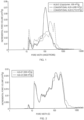
- Figure 1 shows a pore plot overlay illustrating the pore structure of one of the HLB copolymer adsorbents described herein, Conventional HLB A and Conventional HBL B materials.
- the DVB/AN copolymer was prepared using both hydrophobic and hydrophilic phase extenders, to achieve the necessary microporosity and mesoporosity, as shown in Table 1.
- An organic phase was prepared by combining a mixture of technical grade divinylbenzene (100g), technical grade acrylonitrile (43g), benzoyl peroxide (6.9g), o-xylene (54g) and 4-methyl-2-pentanol (54g).
- An aqueous phase was prepared by combining: sodium dodecyl sulfate (1.2g), culminal (1.2g, high molecular weight methyl cellulose), boric acid (32g) and bulk water (794g).
- the organic phase was charged to the aqueous phase in a reactor. Agitation was applied to disperse the organic phase into fine droplets, and the reactor was heated to 80°C for approximately 16 hours to initiate and complete polymerization. The result was a spherical, white powder with a yield of approximately 140g.
- the HLB copolymers made by the process described herein were found to have good batch to batch synthetic reproducibility, as shown in Figure 2 .
- the pore strucure was shown to be reproducible throughout the microporous and mesoporous ranges to one batch to the next.
- HLB copolymer coated Silica The process of coating the silica is as follows. First, HPLC grade silica (3.0 ⁇ m, 300 ⁇ ), is vacuum dried overnight at 140°C. The dried silica is charged to a rotary evaporator flask. Divinylbenzene (4.5g), acrylonitrile (1.5g), benzoyl peroxide (0.18g) and dichloromethane (90g, bulk solvent) are pre-mixed, then the premixed solution is charged to the flask. The flask is rotated at 50 rpms for 2 hours at ambient temperature to allow for equilibration.
- the flask is heated stepwise to slowly evaporate the dichloromethane, as follows: (1) hold two hours at ambient conditions; (2) raise the temperature from ambient to 60 °C and hold for one hour; (3) hold for one hour at 60-65°C; then (4) raise the temperature from 65 to 80°C and hold 16 hours.
- the silica may also be encapped, for example with trimethylchlorosilane or oleic acid, prior to polymer coating.
- copolymer coated silica possesses a typical particle size range of 2 to 4 ⁇ m, and possesses similar pore structure and surface chemistry characteristics to the silica hard template. However, it is noted that the copolymer coated silica can be in the range from about 30 nm to about 5 ⁇ m, depending on the application of interest.
- example HLB-65 was chosen.
- the silicas chosen for this material possessed pore diameters of: 100 ⁇ , 200 ⁇ and 300 ⁇ .
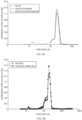
- wash procedures were chosen to determine copolymer loss. No loss was detected, as shown in Figure 3A.
- Figure 3B illustrates the uniform pore decrease using the above-mentioned silica coating process.
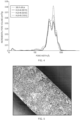
- Figure 4 illustrates the coatings using varying copolymer ratios.
- HLB-65 W No dry down HLB-65 sox (Neutral) No dry down HLB-65 W (Acidic) No dry down HLB-65 sox (Acidic) No dry down >70% 18 17 12 20 50-70% 2 4 5 1 ⁇ 50% 5 4 8 4 Table 4 Effect of washing on relative recoveries obtained using experimental HLB-65.
- Figure 5 is an scanning electron micrograph of a typical silica coated SPME fiber.
- the adhesive used for the bonding of the 3.0 um polymer coated silica is the polydimethylsiloxane (PDMS) described herein.
- Analyte recovery evaluations Six Analyte Preliminary Screen.
- a 1 mg/mL stock was prepared by solvating 50 mg of the following analytes in 50 mL of methanol: acetaminophen, procainamide, p-toluamide, 2,7-dihydroxynaphthalene, propranolol, and doxepin.
- a 10 ⁇ g/mL analytical stock was prepared by transferring 500 ⁇ L of 1 mg/mL stock into 49.5 mL of 20 mM potassium phosphate buffer. Reagents were prepared using volumetric flasks filled according to standard procedure.
- Protocol I this protocol utilized a 20 analyte mix consisting of the following: amiloride, amitriptyline, atrazine, benzoylecgonine, buspirone, clarithromycin, haloperidol, hydroquinidine, imidacloprid, imipramine, imiquimod, loratadine, mesoridazine, methapyrilene, mianserin, mirtazapine, nefazodone, nevirapine, nizatidine, and losartan.
- newborn calf serum was spiked with analyte at a concentration of 200 ng/mL. The spiked serum was then diluted 1:1 with a 0.4% formic acid solution. These solutions were also spiked with an internal standard mixture, allowing for final concentrations of 100 ng/mL analyte and 50 ng/mL internal standards.
- the SPE procedure is described in Table 7.
- Protocol O Newborn calf serum was diluted 1:1 with 4% phosphoric acid (final analyte concentration: 100 ng/mL; final internal standard concentration: 50 ng/mL). The previously described procedure was followed using 100% MeOH as the elution solvent. Sample eluates were dried down and reconstituted in the starting mobile phase. Samples were also prepared following a "5-step protocol", this simply involved adding a conditioning (1 mL MeOH) and equilibration (1 mL water) step prior to sample loading. The 20 analyte mix was used for this evaluation.
- Protocol P Newborn calf serum was diluted 1:1 with 4% phosphoric acid (final analyte concentration: 100 ng/mL; final internal standard concentration: 50 ng/mL). The procedure described in Table 5 was followed using 100% MeOH as the elution solvent. Sample eluates were directly analyzed via LC-MS/MS. An eight analyte mix containing azidothymidine, phenacetin, betamethasone, alprazolam, naproxen, propranolol, protriptyline, and amitriptyline was used for this evaluation.
- LC-MS/MS Analysis Analysis of Protocol I and Protocol O HLB protocol samples. Samples were analyzed using an Agilent 1290 Infinity UHPLC coupled with an Agilent 6460 triple quadrupole mass spectrometer. Table 8 and Table 9 display the specific UHPLC and MS source parameters. Table 10 and Table 11 display the compounds specific MS parameters for the analysis of analytes in positive and negative mode, respectively. Table 9 MS source parameters used for analysis of in-house protocol and conventional 5-step protocol samples. MS source parameters Capillary Voltage (V) 3500 Gas Temp.
- MS source parameters Capillary Voltage (V) 3500 Gas Temp. (C) 300 Gas Flow (L/min) 10 Nebulizer (psi) 20 Sheath Gas Heater 400 Sheath Gas Flow 12 Cell Accelerator (V) 7 Polarity Positive ⁇ EMV 200 Dwell 30
- MS source parameters Capillary Voltage (V) 3500 Gas Temp. (C) 300 Gas Flow (L/min) 10 Nebulizer (psi) 20 Sheath Gas Heater 400 Sheath Gas Flow 12 Cell Accelerator (V) 7 Polarity Positive ⁇ EMV 200 Dwell 30
- V Capillary Voltage
- C 300 Gas Flow (L/min) 10
- Table 14 Compound Parameters for positive mode analysis of in-house protocol and conventional 3-step protocol samples.
- a total of eight co-polymer resins were prepared for preliminary screening. These resins were designed to study the role of copolymer ratios and pore structure on analyte recovery. Of these resins, HLB-01, HLB-03, HLB-05 and HLB-10 are according to the invention. Table 19 describes the co-polymer composition of each experimental resin. The o-xylene:MIBC (w:w) ratio was varied in several resins in order to vary the pore structure. Table 19 Co-polymer composition of preliminarily screened experimental resins. DVB: divinyl benzene; AcrylN: acrylonitrile; VP: N-vinylpyrrolidone; MIBC: methyl isobutyl carbinol.
- Conventional HLB A and Conventional HLB B also differ.
- Conventional HLB B has a greater surface area and a smaller pore diameter than the Conventional HLB A material.
- the second protocol utilized a 3-step process: loading, washing, and elution.
- the 3-step protocol was unknown, so extractions were performed at neutral pH.
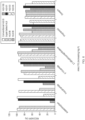
- the results of this experiment can be found in Figure 7 .
- the best performing experimental resin was again found to be HLB-01, with greater than 80% recoveries and RSDs typically ⁇ 5% for all 6 analytes.
- Table 23 contains the co-polymer compositions and the porosity characteristics of the additional resins: HLB-22 and HLB-26, compared with HLB-01. Table 23 Co-polymer compositions and porosity characteristics of additional experimental resins.
- Resin ID DVB (%) AcrylN (%) o -xylene: MIBC (w:w) % micropores (surface area) (m 2 /g) % micropores (volume) (cc/g) HLB-01 63 37 150:150 16.8 13.5 HLB-22 75 25 150:150 28.7 17.6 HLB-26 75 25 50:150 33.6 26.4
- Figure 8 and Table 24 compare the recoveries of 20 analytes extracted out of spiked serum under acidic conditions for the three experimental co-polymeric resins.
- resin HLB-22 was found to have improved performance over resins HLB-01 and HLB-26.
- This resin has a starting monomer ratio of 75:25 (divinylbenzene/acrylonitrile).
- Table 24 Number of analytes within each absolute recovery category for three experimental resins. Number of Analytes Recovery (%) HLB-01 HLB-22 HLB-26 >70% 12 16 12 50-70% 7 2 6 ⁇ 50% 1 2 2
- FIG. 9 displays an overlay of MRM traces of unextracted calf serum with samples that had been extracted with various experimental resins and Conventional HLB A. All experimental resins were capable of removing >95% of phospholipids present. HLB-22 was found to result in 98.7% removal when acidic extraction conditions were utilized.
- HLB copolymer HLB-01 was evaluated for possible overdrying effects by measuring absolute of a six-analyte mixture using the following procedure.
- a 1 mg/mL stock was prepared by solvating 50 mg of the following analytes in 50 mL of methanol: acetaminophen, procainamide, p-toluamide, 2,7 dihydroxynaphthalene, propranolol, and doxepin.
- a 10 ⁇ g/mL analytical stock was prepared by transferring 500 ⁇ L of 1 mg/mL stock into 49.5 mL of 20 mM potassium phosphate buffer. Reagents were prepared using volumetric flasks filled according to standard procedure. Three mL SPE cartridge formats with 60 mg bed weights were utilized.
- HPLC parameters Analysis was performed using an Agilent 1190 HPLC coupled with a UV detector. Method parameters can be found in Table 31.
- Figure 13 shows the absolute recovery of six analytes using an acrylonitrile-containing HLB copolymer described herein (HLB-01) to extract from a buffer solution.
- HLB-01 acrylonitrile-containing HLB copolymer described herein
- HLB copolymer HLB-01 was then evaluated against a conventional vinylpyrrolidone-containing HLB, Conventional HLB A, by measuring the recovery of the same six analytes but using the 3-step process.
- the same solution preparation and HPLC analysis was followed as described above.
- the SPE procedure was slightly altered as shown in Table 32.
- Table 32 3-step SPE protocol for Figure 14 data. 3-step Protocol: Load: 1 mL sample in 20 mM phosphate buffer Wash: 1 mL 5% MeOH Elute: 1 mL 90:10 (ACN/MeOH) Evaporate: 40°C, 10 psi nitrogen stream Reconstitute: 1 mL 20 mM phosphate buffer
- Figure 14 shows a comparison of the absolute recovery of acrylonitrile-containing HLB material (HLB-01) and a vinylpyrrolidone-containing conventional HLB material (Conventional HLB A) when a simplified 3-step protocol is utilized (no conditioning or equilibration prior to sample loading) to extract from spiked serum.
- This set of compounds in Figure 14 represents a log P range of 0.5-4.3.
- HLB copolymer HLB-65 was coated on silica particles as described above.
- the HLB-coated silica particles were used as follows.
- a 20-analyte mixture including the following: amiloride, amitriptyline, atrazine, benzoylecgonine, buspirone, clarithromycin, haloperidol, hydroquinidine, imidacloprid, imipramine, imiquimod, loratadine, mesoridazine, methapyrilene, mianserin, mirtazapine, nefazodone, nevirapine, nizatidine, and losartan was utilized.
- the SPE procedure is described in Table 33. Table 33 SPE procedure used for evaluation of polymer coated silica (used for Figure 15 data). SPE Procedure Load 1 mL sample (diluted 1:1 with 20 mM ammonium acetate) onto a dry bed (60 mg bed weight).
- LC-MS/MS Analysis Samples were analyzed using an Agilent 1290 Infinity UHPLC coupled with an Agilent 6460 triple quadrupole mass spectrometer. Table 34 and Table 35 show the specific UHPLC and MS source parameters. Table 36 and Table 37 display the compounds specific MS parameters for the analysis of analytes in positive and negative mode, respectively. Table 35 MS source parameters used for analysis of the 20-analyte mix (used for Figure 15 and 16 data). MS source parameters Capillary Voltage (V) 3500 Gas Temp.
- experimental HLB-79 showed a more consistent recovery for the 20-analyte mixture than vinylpyrrolidone-containing Conventional HLB B when a simplified 3-step protocol was utilized to extract analytes from spiked serum.
- This 20-analyte set of compounds represents a log P range of -0.3-6.1. Due to the increased polarity of acrylonitrile and the ability to incorporate within divinyl benzene, improved recoveries were obtained, particularly for analytes with lower log P values.
- the HLB copolymers provided herein have been shown to be useful in a variety of SPE applications. Using the methods described herein, the improved HLB adsorbents are capable of consistently extracting at least 18/20 analytes with recoveries >70% when using either 5-step or 3-step methods. Advantageously, the improved HLB adsorbents provided herein are well-suited to a 3-step protocol, where conditioning and equilibration steps were not required. The improved HLB material was also found to remove >98% of phospholipids present within a serum sample, on average.
Landscapes
- Chemical & Material Sciences (AREA)
- Analytical Chemistry (AREA)
- Organic Chemistry (AREA)
- Chemical Kinetics & Catalysis (AREA)
- Health & Medical Sciences (AREA)
- Medicinal Chemistry (AREA)
- Polymers & Plastics (AREA)
- Nanotechnology (AREA)
- Engineering & Computer Science (AREA)
- Inorganic Chemistry (AREA)
- Physics & Mathematics (AREA)
- Life Sciences & Earth Sciences (AREA)
- Biochemistry (AREA)
- General Health & Medical Sciences (AREA)
- General Physics & Mathematics (AREA)
- Immunology (AREA)
- Pathology (AREA)
- Solid-Sorbent Or Filter-Aiding Compositions (AREA)
- Treatment Of Liquids With Adsorbents In General (AREA)
Description
- This application claims the benefit of priority of
U.S. Provisional Patent Application No. 62/549,771 filed August 24, 2017 - An omnipresent desire within analytical chemistry is the development of a "universal" approach to sample preparation that is useful for a wide variety of matrices, from environmental and agrochemical samples, to biological samples, to pharmaceutical samples, to foods and beverages. These samples typically include both analytes of interest as well as unwanted or interfering analytes. Solid phase extraction (SPE) has long been used as a sample preparation technique, capable of matrix simplification by removing unwanted analytes, as well as trace enrichment for analytes of interest.
- For SPE applications, typical adsorbents consist of silica, carbon or other adsorbents typically used as liquid chromatography (LC) and HPLC packing. These adsorbents are limited first in the unwanted analytes that can be removed from a sample as each may work well for some classes of analytes, but not as well for others. Additionally, these materials must be activated or pre-treated prior to use to allow for optimal performance, adding additional steps and time necessary for an analysis. Additionally, performance can be lost if the material is allowed to dry during use - a problem known as the overdrying effect.
- Although the number and variety of analytes in any given sample has posed a great challenge, the discovery of hydrophilic-lipophilic balance (HLB) polymers for solid phase extraction (SPE) has increased the feasibility of the idea of a generic SPE sorbent. HLB technology is the most widely used SPE material due to the versatility and wide range of analytes encompassed. HLB resins are copolymers made up of a hydrophilic monomer and a lipophilic monomer. Although still considered a reversed-phase sorbent, the presence of the hydrophilic monomer increases the retention of polar analytes, allowing a single extraction to be effective for a wide range of analytes (e.g., acids, neutrals, bases, polar, and non-polar).
- Currently, there are several HLB SPE products on the market. The most common HLB sorbent is a co-polymer containing N-vinylpyrrolidone (VP) as the hydrophilic component and divinylbenzene (DVB) as the lipophilic monomer.
- While widely used for HLB SPE applications, the nature of vinylpyrrolidone-divinylbenzene copolymers, however, limits their usefulness. These vinylpyrrolidone and divinylbenzene copolymers are not repeatable and result in retention and peak shape variability in chromatographic separation processes. The water solubility of vinylpyrrolidone results in the polymerization of the vinylpyrrolidone at the co-monomer droplet/water interface during the suspension polymerization process. The use of vinylpyrrolidone, which is also extensively used as a surface surfactant in suspension polymerization processes, leads to irreproducibility in the copolymer sequence. Therefore, an increase in the divinylbenzene (hydrophobic) surface in the deeper pores of the spherical, porous polymer leads to biased selectivity within the porous copolymer. This biased selectivity has limited the development of HLB adsorbents capable of effectively adsorbing analytes over a wide range of sizes and chemistries. A need exists for improved HLB adsorbents that can effectively, and simultaneously, remove analytes that vary greatly in both size and properties.
- Additionally, conventional SPE products typically follow a traditional SPE workflow having 5 steps: conditioning, equilibration, loading, washing, and elution. The ability of a HLB sorbent to successfully extract a variety of analytes can reduce the total number of extractions that are required, however the process can still be quite time consuming. While some HLB adsorbents have been adapted to work in a simplified process, a need still exists for improved HLB adsorbents capable of extracting analytes without the need for conditioning and equilibrium steps.
- Accordingly, it would be useful to develop new polymeric adsorbents useful for SPE and other separation techniques. Ideally, the new polymers would be useful for efficient, simultaneous extraction of analytes of varying properties including acids, bases, neutral analytes, strongly polar, moderately polar, and non-polar analytes, and of varying size, including small molecules and large molecules, in a variety of solvents and over a wide pH range. Such new polymeric adsorbents should ideally be resistant to overdrying effects seen with many conventional adsorbents, thus allowing their use in a simplified workflow.
-
EP 2664366 A2 discloses chromatographic system for monolithic macro porous materials. - Provided herein are methods for preparing improved hydrophilic-lipophilic balance polymeric adsorbents for solid phase extraction (SPE) including a divinylbenzene- acrylonitrile copolymer capable of simultaneously adsorbing a plurality of analytes. Such analytes may include acids, bases, neutrals, strongly polar, moderately polar, and non-polar analytes, and may include small molecules, large molecules, or a combination of both.
- Provided herein is a method for preparing a HLB adsorbent for solid phase extraction according to
claim 1. - Also described herein are methods for removing one or more solutes from a solution by contacting the solution with the provided polymeric adsorbent. The methods described are useful for both nonpolar and polar solvents and are useful over a broad range of pH values. The methods described can remove a plurality of different solutes having varying properties.
-
-
Figure 1 is a pore plot overlay illustrating the pore structure of the HLB adsorbent described herein (HLB-67) and two conventional HLB products. -
Figure 2 is a chart illustrating the batch to batch synthetic reproducibility of the HLB copolymers described herein. -
Figure 3A shows a density functional theory (DFT) plot for experimental HLB adsorbent HLB-65 on silica particles before and after washing with acetonitrile.Figure 3B shows a density functional theory (DFT) pore plot illustrating the uniform pore decrease using the silica coating process described herein. -
Figure 4 shows a DFT overlay plot for three experimental HLB adsorbents, HLB-44, HLB-48, and HLB-49, having varying copolymer ratios. -
Figure 5 is a scanning electron micrograph of an HLB polymer bonded to a SPME fiber. -
Figure 6 compares the recoveries of components of a six-analyte mix using six experimental HLB adsorbents and two conventional HLB adsorbents. A traditional 5-step protocol that incorporated a dry step following conditioning and equilibration was used. -
Figure 7 compares the recoveries of components of a six-analyte mix using four experimental HLB adsorbents and two conventional HLB adsorbents. A 3-step protocol was used; no conditioning or equilibration was performed. -
Figure 8 shows the absolute recoveries of 20 analytes extracted from spiked serum under acidic conditions using experimental resins HLB-01, HLB-22, and HLB-26. -
Figure 9A shows serum removal data of unextracted calf serum using experimental resins HLB-01, HLB-22, HLB-26, and Conventional HLB A;Figure 9B shows the same with an expanded y-axis. -
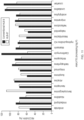
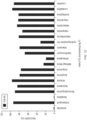
Figure 10 shows a comparison of absolute analyte recoveries from spiked matrix samples extracted using a standard 5-step protocol with experimental HLB-67 and Conventional HLB B. -
Figure 11 shows a comparison of absolute analyte recoveries from spiked matrix samples extracted using a simplified 3-step protocol with experimental HLB-67 and Conventional HLB B. -
Figure 12 is a comparison of absolute recoveries from spiked matrix samples extracted using a 3-step protocol with experimental HLB-67 and Conventional HLB A. -
Figure 13 shows the absolute recovery of six analytes using experimental HLB-01 to extract from a buffer solution. -
Figure 14 shows a comparison of the absolute recovery of an acrylonitrile-containing HLB copolymer described herein, HLB-01, with Conventional HLB A-a vinylpyrrolidone-containing HLB material. -
Figure 15 shows the absolute recovery of a variety of analytes using silica coated with experimental adsorbent HLB-65. -
Figure 16 shows a comparison of an HLB copolymer HLB-79 coated a silica substrate versus a conventional HLB adsorbent using a 3-step SPE protocol. - The HLB copolymers described herein, also referred to as adsorbents, offer improved separation and removal of a wide variety of analytes of varying properties, including acids, bases, neutral analytes, strongly polar, moderately polar, and non-polar analytes, and of varying size, including small molecules and large molecules, in a variety of solvents. Additionally, they are suitable for use without the need for conditioning and equilibrium steps within the SPE workflow. In addition to being useful for solid phase extraction (SPE) techniques, they are also suitable for solid phase microextraction (SPME) and can also be adapted for HPLC or UHLPC columns.
- The HLB adsorbents for solid phase extraction (SPE) are formed by copolymerizing at least one hydrophobic monomer and at least one hydrophilic monomer. The hydrophobic monomer includes divinylbenzene and the hydrophilic monomer includes acrylonitrile. Other hydrophobic monomers that could be used in addition to divinylbenzene include monovinyl and polyvinyl monomers such as styrene, trivinylbenzene, divinyltoluene, divinylnaphthalene, divinylpyridine, vinylpyridine, ethylvinylbenzene and divinylxylene. Non-aromatic monomers such as 1,5-hexadiene, 2,5-dimethyl-hexadiene, 1,7-octadiene, trivinylcyclohexane, polyvinylidine chloride, polyvinyl chloride, and combinations thereof are included. Other hydrophilic monomers that can be used in addition to acrylonitrile include methyl methacrylate, ethyl methacrylate, ethylene glycol diacrylate, diethyleneglycol divinyl ether, 2-cyanoethyl methacrylate, dimethacrylic ester, vinylquinolines and combinations thereof. In a particularly preferred embodiment, the copolymer adsorbent includes only divinylbenzene and acrylonitrile.
- Although not traditionally used in HLB copolymers, acrylonitrile is the hydrophilic monomer in the HLB copolymers described herein, as it has been found that it offers many advantages over the traditional hydrophilic monomer used in HLB adsorbents, N-vinylpyrrolidone. With a log P of 0.25, it is more hydrophilic than N-vinylpyrrolidone (log P of 0.37). Acrylonitrile is also more effectively incorporated within the polymer across a broader range of monomer ratios, thus allowing for an ability to extract incredibly hydrophilic analytes (log P < 0) and very lipophilic analytes (log P > 6), simultaneously, as shown in
Figure 8 , discussed below. - Acrylonitrile is also a hygroscopic material, a fact that led to it being used in the development of the super sluper polymer by the U.S. F.D.A. in the 1960s - a polymer that was able to hold 400x its weight. The inventors have found that utilizing a hygroscopic monomer allows for improved performance of this material for SPE and SPME. This allows the material to perform well without the need for a pre-treatment step, commonly referred to as conditioning and equilibration. Therefore, the SPE procedure can be simplified from 5 total steps (conditioning, equilibration, sample loading, washing, and elution) to either 3 steps (sample loading, washing, and elution) or 1 step (sample loading/elution).
- A porogen is added to the synthesis process to control the pore size distribution of the HLB copolymer. Porogens, formerly referred to as phase extenders, are solvents that are added to polymerization to affect the properties of the polymer being formed. Porogens can affect many properties of a polymer, including, but not limited to surface area, pore volume, pore size, porosity, and hydrophobic-hydrophilic properties. Particular porogens, or combinations of porogens are preferably added to tune the properties of the resulting polymer.
- A combination of nonpolar and polar porogens are used in the methods according to the invention. Preferred nonpolar porogens used in the preparation of the HLB copolymers described herein include toluene, xylenes, benzene, hexane, cyclohexane, pentane, heptane, octane, nonane, decane, dodecane, isooctane, dichloromethane, chloroform, carbon tetrachloride, and combinations thereof. Preferred polar porogens used in the preparation of the HLB copolymers described herein include benzyl alcohol, butanol, pentanol, hexanol, heptanol, 4- methyl-2-pentanol, isoamyl alcohol, dodecanol, ethyl acetate, 2-ethylhexanol, cyclohexanol, and combinations thereof. One skilled in the art would also be able to choose additional suitable nonpolar and polar porogens to tune the properties of the resulting polymers. In a particularly preferred embodiment, a combination of o-xylene and 4-methyl-2-pentanol are used for porogens.
- In accordance with the methods described herein, the ratio of divinylbenzene and acrylonitrile monomers used in forming the polymeric adsorbent can vary greatly while still achieving suitable separation properties necessary for an HLB polymer.
- In some embodiments, the ratio of hydrophobic monomer to hydrophilic monomer is in the range from 10:90 (wt. %) to 90:10 (wt. %). In further embodiments, ratio of hydrophobic monomer to hydrophilic monomer is in the range from 30:70 (wt. %) to 70:30(wt. %). In further embodiments the ratio of hydrophobic monomerto hydrophilic monomer is in the range from 15:85 (wt. %) to 85:15 (wt. %); from 20:80 (wt. %) to 80:20 (wt. %); from 25:75 (wt. %) to 75:25 (wt. %); from 30:70 (wt. %) to 70:30 (wt. %), from 35:65 (wt. %) to 65:35 (wt. %); from 40:60 (wt. %) to 60:40 (wt. %); from 55:45 (wt. %) to 45:55 (wt. %); or approximately 50:50 (wt. %). In a preferred embodiment, the ratio of hydrophobic monomerto hydrophilic monomer is about 63:37 (wt. %).
- In one preferred embodiment, the polymeric adsorbent is poly(divinylbenzene-co-acrylonitrile). In some embodiments, the ratio of divinylbenzene to acrylonitrile is in the range from 90:10 (wt. %) to 10:90 (wt. %). In further embodiments the ratio of divinylbenzene to acrylonitrile is in the range from 15:85 (wt. %) to 85:15 (wt. %); from 20:80 (wt. %) to 80:20 (wt. %); from 25:75 (wt. %) to 75:25 (wt. %); from 30:70 (wt. %) to 70:30 (wt. %), from 35:65 (wt. %) to 65:35 (wt. %); from 40:60 (wt. %) to 60:40 (wt. %). In one preferred embodiment, the ratio of divinylbenzene to acrylonitrile is about 75:25 (wt. %). In still further preferred embodiments, the ratio of divinylbenzene to acrylonitrile is about 63:37 (wt. %).
- In certain preferred embodiments, the polymeric adsorbent disclosed herein is adapted to simultaneously adsorb a plurality of analytes including acids, bases, neutrals, strongly polar, moderately polar, and non-polar analytes. Exemplary analytes may include small molecules, large molecules, proteins, phospholipids, and pharmaceutically relevant molecules.
- Some typical analytes of interest may include, but are not limited to compounds fitting into these broad classes: essential oils, food preservatives, vitamins, plasticizers, pesticides, steroids, hydrocarbons, pollutants, amines, alcohols, dyes, phenols, alkaloids, mycotoxins, amino acids, flavonoids, heterocyclic compounds, lipids, steroids, organic acids, terpenes, surfactants, carbohydrates, catecholamines, antibiotics, amino acids, nucleic acids, nucleic acid bases, proteins, and peptides.
- Some non-limiting examples of pharmaceutical analytes of interest include: acetaminophen, amiloride, amitriptyline, atrazine, benzoylecgonine, buspirone, clarithromycin, 2,7-dihydroxynaphthalene, doxepin, haloperidol, hydroquinidine, imidacloprid, imipramine, imiquimod, loratadine, losartan, mesoridazine, methapyrilene, mianserin, mirtazapine, nefazodone, nevirapine, nizatidine, procainamide, propranolol, and p-toluamide.
- The polymeric adsorbent may be a porous spherical particle. When spherical particles are desired, the particle size is not particularly limited. Particles can be formed with favorable, reproducible particle size distributions over a wide range, allowing use of these HLB copolymers in a variety of applications, including, but not limited to SPE, SPME and HPLC.
- The HLB adsorbents may be porous spherical particles having a diameter in the range from about 10 nm to about 1 mm. In some disclosures, the porous spherical particles have diameters in the range from about 20 µm to about 125 µm. In certain disclosures, the porous spherical particle has a diameter in the range from about 30 µm to about 85 µm. For use in SPE, the spherical particles have a diameter in the range from about 40 to about 75 µm. In a preferred disclosure for SPE, the spherical particles have a diameter of approximately 50 µm. In some disclosures, the porous spherical particle has a diameter in the range from about 10 nm to about 10 µm. For SPME, the spherical particles preferably have a diameter in the range from about 0.5 µm to about 4 µm; and more preferably, a diameter in the range from about 0.8 µm to about 2 µm. The use of monodispersed particle sizes is desirable for improved sample preparation processes.
- In some disclosures, the porous spherical particles have a surface area in the range from about 10 m2/g to 1000 m2/g. In some disclosures, the porous spherical particles have a surface area in the range from about 350 m2/g to about 675 m2/g. In some disclosures, the surface area is about 350 m2/g; in other disclosures, the surface area is about 375 m2/g, in other disclosures, the surface area is about 400 m2/g; in other disclosures, the surface area is about 425 m2/g; in other disclosures, the surface area is about 450 m2/g; in other disclosures, the surface area is about 475 m2/g; in other disclosures, the surface area is about 500 m2/g; in other disclosures, the surface area is about 525 m2/g; in other disclosures, the surface area is about 550 m2/g; in other disclosures, the surface area is about 575 m2/g; in other disclosures, the surface area is about 600 m2/g; in other disclosures, the surface area is about 625 m2/g; in other disclosures, the surface area is about 650 m2/g; in still other disclosures, the surface area is about 675 m2/g; and in still other disclosures, the surface area is about 700 m2/g.
- In some disclosures, the porous spherical particles have an average pore diameter in the range from about 50 Å to about 105 Å. Moreover, the average pore diameter for the HLB adsorbents described herein may be about 50 Å, about 55 Å, about 60 Å, about 65 Å, about 70 Å, about 75 Å, about 80 Å, about 85 Å, about 90 Å, about 95 Å, about 100 Å, about 105 Å, or about 110 Å.
- In certain disclosures, the polymeric adsorbent is coated on a substrate. Suitable substrates may include carbon, silica, and metal, among other things. In some disclosures, the may be particulate, while in other disclosures, the substrate may be a fiber.
- When the substrate is a fiber, the polymeric adsorbent may be coated directly onto the fiber. In some disclosures, an adhesive or a binder is used to adhere the polymeric adsorbent to the fiber. Suitable binders are known to those skilled in the art. Some non-limiting examples of adhesives that may be used in accordance with the HLP adsorbents described herein includes, polydimethylsiloxane (PDMS), epoxy resins, polysilazane, acrylic resins, phenol formaldehyde resins, polyvinyl acetate (PVA, white glue), yellow carpenter's glue (aliphatic resin), polyvinylpyrrolidone (PVP or PVA based), polyester resin, resorcinol resin, urea-resin glue (plastic resin) or combinations thereof. A particularly preferred adhesive is polydimethylsiloxane (PDMS). The use of PDMS as a binder to adhere adsorbents to a structure is disclosed in
US Patents No. 5,559,445 and7,815,864 , for example. In other disclosures, a binder, i.e., that does not exhibit cross-linking characteristics, can be used. Such binders may include, but are not limited to polyacrylonitrile (PAN), TEFLON (PTFE and similar fluorinated polymers/plastics), gelatin, cellulose, cellulose derivatives, polyvinylpyrrolidone, starch, sucrose and polyethylene glycol. - Notably, unlike conventional HLB coated fibers, the HLB fibers provided herein may be used without a conditioning step. As explained above, this simplification of the extraction process is very desirable from a time standpoint, allowing for analysis of many more samples in a shorter length of time.
- Also described herein are methods for removing one or more solutes from a solution by contacting the solution with a polymeric adsorbent as described herein whereby the solute is adsorbed onto the polymeric adsorbent. In some disclosures, the solute may then be eluted from the polymeric adsorbent.
- In some disclosures of this method, the solution has a polar solvent. In a preferred disclosure, the polar solvent is an aqueous solvent. In another preferred disclosure, the polar solvent is an organic solvent.
- In accordance with the methods described herein, the HLB adsorbents are useful for removing at least 6 solutes, interfering analytes, or analytes of interest from a solution. In some disclosures, the HLB adsorbents are useful for removing at least 8 solutes from a solution. In further disclosures, the HLB adsorbents are useful for removing at least 10 solutes from a solution. In still further disclosures, the HLB adsorbents are useful for removing at least 15 solutes from a solution. In a preferred disclosure, the HLB adsorbents are useful for removing at least 20 solutes from a solution. In accordance with the methods described herein the HLB adsorbents are useful for removing a several different types of solutes, interfering analytes, or analytes of interest from a solution. The solutes, interfering analytes, or analytes may include one or more proteins, one or more pharmaceutically relevant analytes, and one or more phospholipids.
- In a preferred disclosure, the HLB adsorbents remove at least about 75% of the solutes are removed from the solution with a recovery of at least 50%. In another preferred disclosure, the HLB adsorbents remove at least about 80% of the solutes are removed from the solution with a recovery of at least 50%. In another preferred disclosure, the HLB adsorbents remove at least about 85% of the solutes are removed from the solution with a recovery of at least 50%. In another preferred disclosure, the HLB adsorbents remove at least about 90% of the solutes are removed from the solution with a recovery of at least 50%. In yet another preferred disclosure, the HLB adsorbents remove at least about 95% of the solutes are removed from the solution with a recovery of at least 50%.
- In still another preferred disclosure, the HLB adsorbents remove at least about 75% of the solutes are removed from the solution with a recovery of at least 70%. In another preferred disclosure, the HLB adsorbents remove at least about 80% of the solutes are removed from the solution with a recovery of at least 70%. In another preferred disclosure, the HLB adsorbents remove at least about 85% of the solutes are removed from the solution with a recovery of at least 70%. In another preferred disclosure, the HLB adsorbents remove at least about 90% of the solutes are removed from the solution with a recovery of at least 70%. In another preferred disclosure, the HLB adsorbents remove at least about 95% of the solutes are removed from the solution with a recovery of at least 70%.
- Also described herein is a method for selective removal of interfering solutes from a solution comprising the step of contacting the solution with a polymeric HLB adsorbent as described herein, wherein the solutes are either adsorbed onto the polymer, or washed off the polymer in the wash step of the method, and wherein the solutes are selected from the group consisting of proteins, phospholipids, inorganic salts, combinations thereof, and wherein at least about 90% of the interfering solutes are removed.
- Also described herein are cartridges containing the HLB adsorbents described herein. In some disclosures, the cartridges include spherical particles of HLB adsorbent. In other disclosures, the cartridges include spherical silica particles coated with the HLB adsorbent.
- The HLB materials described herein may be referred to as "polymers," "copolymers," "resins," and "adsorbents" interchangeably. Any of these terms may be substituted for another and the use of one term over another does not connote a difference in the composition or the function of the HLB material.
- The HLB adsorbents described herein are useful for adsorbing analytes, either for the function of removal for purification or removal for concentrating. It is understood "removing" or "adsorbing" may be used interchangeably or substituted with other terms such as "extracting" without changing the meaning. It is further understood that the terms "analytes," "analytes of interest," "solutes," and "interfering solutes" may be used interchangeably as the substances that are adsorbed or removed by the HLB copolymers described herein.
- The procedures, experiments and examples provided herein are meant to be illustrative of the improved HLB copolymers provided herein and are not meant to limit the invention.
- The following illustrates the synthesis, use, and properties of the HLB copolymers described herein. To illustrate the improved properties of these polymers, the new HLB copolymers described herein were tested against various conventional HLB adsorbents currently available, identified as Conventional HLB A, Conventional HLB B, Conventional HLB C, and so forth, and those labels are used consistently with the same materials throughout.
- As described above, the HLB copolymers described herein are copolymers of divinylbenzene (DVB) and acrylonitrile (AN) made using a suspension or dispersion polymerization process.
-
Figure 1 shows a pore plot overlay illustrating the pore structure of one of the HLB copolymer adsorbents described herein, Conventional HLB A and Conventional HBL B materials. The DVB/AN copolymer was prepared using both hydrophobic and hydrophilic phase extenders, to achieve the necessary microporosity and mesoporosity, as shown in Table 1.Table 1 Copolymer surface area and porosity of conventional products and several HLB copolymers described herein Resin ID Diameter (µm) Surface area (m2/g) Single point total pore volume (mL/g) Average pore diameter (Å) Conventional HLB A 438 1.04 95 Conventional HLB B 716 1.29 72 Conventional HLBC 201 0.958 190 HLB-96 38-75 423 1.02 97 HLB-99 38-75 448 1.17 105 HLB-100 38-75 667 1.21 73 HLB-01 38-75 346 0.74 85 HLB-03 38-75 401 0.67 66 HLB-05 38-75 658 0.82 50 - Example: Synthesis of an Exemplary HLB copolymer. An organic phase was prepared by combining a mixture of technical grade divinylbenzene (100g), technical grade acrylonitrile (43g), benzoyl peroxide (6.9g), o-xylene (54g) and 4-methyl-2-pentanol (54g). An aqueous phase was prepared by combining: sodium dodecyl sulfate (1.2g), culminal (1.2g, high molecular weight methyl cellulose), boric acid (32g) and bulk water (794g). The organic phase was charged to the aqueous phase in a reactor. Agitation was applied to disperse the organic phase into fine droplets, and the reactor was heated to 80°C for approximately 16 hours to initiate and complete polymerization. The result was a spherical, white powder with a yield of approximately 140g.
- The HLB copolymers made by the process described herein were found to have good batch to batch synthetic reproducibility, as shown in
Figure 2 . As illustrated inFigure 2 , the pore strucure was shown to be reproducible throughout the microporous and mesoporous ranges to one batch to the next. - HLB copolymer coated Silica The process of coating the silica is as follows. First, HPLC grade silica (3.0µm, 300Å), is vacuum dried overnight at 140°C. The dried silica is charged to a rotary evaporator flask. Divinylbenzene (4.5g), acrylonitrile (1.5g), benzoyl peroxide (0.18g) and dichloromethane (90g, bulk solvent) are pre-mixed, then the premixed solution is charged to the flask. The flask is rotated at 50 rpms for 2 hours at ambient temperature to allow for equilibration. The flask is heated stepwise to slowly evaporate the dichloromethane, as follows: (1) hold two hours at ambient conditions; (2) raise the temperature from ambient to 60 °C and hold for one hour; (3) hold for one hour at 60-65°C; then (4) raise the temperature from 65 to 80°C and hold 16 hours. The silica may also be encapped, for example with trimethylchlorosilane or oleic acid, prior to polymer coating.
- For SPME, copolymer coated silica possesses a typical particle size range of 2 to 4 µm, and possesses similar pore structure and surface chemistry characteristics to the silica hard template. However, it is noted that the copolymer coated silica can be in the range from about 30 nm to about 5 µm, depending on the application of interest.
- To investigate the suitability of coating the HLB copolymers described herein on silica, example HLB-65 was chosen. The silicas chosen for this material possessed pore diameters of: 100Å, 200Å and 300Å. To ensure copolymerization of the DVB and ACN monomers on the surface of the silica, wash procedures were chosen to determine copolymer loss. No loss was detected, as shown in
Figure 3A. Figure 3B illustrates the uniform pore decrease using the above-mentioned silica coating process.Figure 4 illustrates the coatings using varying copolymer ratios. - The effect of washing on analyte recovery was investigated using experimental HLB copolymer HLB-65. The testing used the procedures for analsys of twenty analytes described below. The results are summarized in Table 2, Table 3, and Table 4 below.
Table 2 Effect of washing on absolute recoveries obtained using experimental HLB-65. Number of Analytes (Absolute Recoveries) Recovery (%) HLB-65 W (Neutral) No dry down HLB-65 sox (Neutral) No dry down HLB-65 W (Acidic) No dry down HLB-65 sox (Acidic) No dry down >70% 8 12 8 17 50-70% 11 8 6 3 <50% 6 5 11 5 Table 3 Effect of washing on matrix matched recoveries obtained using experimental HLB-65. Number of Analytes (Matrix Matched Recoveries) Recovery (%) HLB-65 W (Neutral) No dry down HLB-65 sox (Neutral) No dry down HLB-65 W (Acidic) No dry down HLB-65 sox (Acidic) No dry down >70% 18 17 12 20 50-70% 2 4 5 1 <50% 5 4 8 4 Table 4 Effect of washing on relative recoveries obtained using experimental HLB-65. Number of Analytes (Relative Recoveries) Recovery (%) HLB-65 W (Neutral) No dry down HLB-65 sox (Neutral) No dry down HLB-65 W (Acidic) No dry down HLB-65 sox (Acidic) No dry down >120% 3 3 3 1 80-120% 11 6 7 12 <80% 1 6 5 3 - For illustration,
Figure 5 is an scanning electron micrograph of a typical silica coated SPME fiber. The adhesive used for the bonding of the 3.0 um polymer coated silica is the polydimethylsiloxane (PDMS) described herein. - Further evaluation of the HLB copolymers described herein was done as follows:
- Analyte recovery evaluations: Six Analyte Preliminary Screen. A 1 mg/mL stock was prepared by solvating 50 mg of the following analytes in 50 mL of methanol: acetaminophen, procainamide, p-toluamide, 2,7-dihydroxynaphthalene, propranolol, and doxepin. A 10 µg/mL analytical stock was prepared by transferring 500 µL of 1 mg/mL stock into 49.5 mL of 20 mM potassium phosphate buffer. Reagents were prepared using volumetric flasks filled according to standard procedure.
- For experimental resins or conventional comparisons, 3 mL SPE cartridge formats with 60 mg bed weights were utilized. Samples were processed utilizing the protocol described in Table 5.
Table 5 3-step SPE protocol used for basic screening. SPE Protocol Load: 1 mL sample in 20 mM phosphate buffer Wash: 1 mL 5% methanol aq.Elute: 1 mL 90:10 ACN: Methanol Evaporate: 40°C, 10 psi nitrogen stream Reconstitute: 1 mL 20 mM phosphate buffer - Drop rates were maintained at 1 drop per second or less. Analyte stocks were initially dissolved in methanol at 1 mg/mL concentrations and were then diluted to 10 µg/ mL in 20 mM potassium phosphate buffer (pH 7) to produce the loading stock. After evaporation all samples were vortexed 30 seconds in 20 mM potassium phosphate buffer (pH 7) to reconstitute for analysis. Three aliquots of 10 µg/mL loading solution were analyzed and the average area count for each compound was used as a reference to calculate recovery of the respective compounds.
- HPLC parameters. Analysis was performed using an Agilent 1190 HPLC coupled with a UV detector. Method parameters can be found in Table 6.

- Protocol I: this protocol utilized a 20 analyte mix consisting of the following: amiloride, amitriptyline, atrazine, benzoylecgonine, buspirone, clarithromycin, haloperidol, hydroquinidine, imidacloprid, imipramine, imiquimod, loratadine, mesoridazine, methapyrilene, mianserin, mirtazapine, nefazodone, nevirapine, nizatidine, and losartan. For acidic matrix extractions, newborn calf serum was spiked with analyte at a concentration of 200 ng/mL. The spiked serum was then diluted 1:1 with a 0.4% formic acid solution. These solutions were also spiked with an internal standard mixture, allowing for final concentrations of 100 ng/mL analyte and 50 ng/mL internal standards. The SPE procedure is described in Table 7.
- It is noted that all cartridges containing experimental materials were packed with soxhlet washed polyethylene frits in order to remove lipophilic interferences that would otherwise be co-extracted with the analytes.
Table 7 SPE procedure used for Protocol I. SPE Procedure Load 1 mL sample onto a dry bed (60 mg bed weight). Wash cartridge with 1 mL of 5% MeOH (aq.) Elute with 1 mL of elution solvent. Evaporate samples to dryness at 40°C with 5 psi nitrogen stream. Reconstitute in 1 mL of starting mobile phase. - Protocol O: Newborn calf serum was diluted 1:1 with 4% phosphoric acid (final analyte concentration: 100 ng/mL; final internal standard concentration: 50 ng/mL). The previously described procedure was followed using 100% MeOH as the elution solvent. Sample eluates were dried down and reconstituted in the starting mobile phase. Samples were also prepared following a "5-step protocol", this simply involved adding a conditioning (1 mL MeOH) and equilibration (1 mL water) step prior to sample loading. The 20 analyte mix was used for this evaluation.
- It is noted that all cartridges containing experimental materials were packed with soxhlet washed polyethylene frits in order to remove lipophilic interferences that would otherwise be co-extracted with the analytes.
- Protocol P: Newborn calf serum was diluted 1:1 with 4% phosphoric acid (final analyte concentration: 100 ng/mL; final internal standard concentration: 50 ng/mL). The procedure described in Table 5 was followed using 100% MeOH as the elution solvent. Sample eluates were directly analyzed via LC-MS/MS. An eight analyte mix containing azidothymidine, phenacetin, betamethasone, alprazolam, naproxen, propranolol, protriptyline, and amitriptyline was used for this evaluation.
- It is noted that all cartridges containing experimental materials were packed with soxhlet washed polyethylene frits in order to remove lipophilic interferences that would otherwise be co-extracted with the analytes.
- LC-MS/MS Analysis: Analysis of Protocol I and Protocol O HLB protocol samples. Samples were analyzed using an Agilent 1290 Infinity UHPLC coupled with an Agilent 6460 triple quadrupole mass spectrometer. Table 8 and Table 9 display the specific UHPLC and MS source parameters. Table 10 and Table 11 display the compounds specific MS parameters for the analysis of analytes in positive and negative mode, respectively.

Table 9 MS source parameters used for analysis of in-house protocol and conventional 5-step protocol samples. MS source parameters Capillary Voltage (V) 3500 Gas Temp. (°C) 350 Gas Flow (L/min) 8 Nebulizer (psi) 45 Sheath Gas Heater 350 Sheath Gas Flow 12 Cell Accelerator (V) 7 Polarity Positive and Negative (2 separate analyses) ΔEMV 200 Table 10 Compound Parameters for positive mode analysis of in-house protocol and conventional 5-step protocol samples. Analyte Precursor (m/z) Product (m/z) Fragmentor (V) Collision Energy (V) t, (min) Retention Window (min) 5-(N,N-dimethyl) Amiloride 259 199.9 100 15 5.32 1.5 Abacavir 287 191 135 20 4.04 1.5 Amiloride 230.1 170.9 100 17 3.15 1.5 Amitriptyline 278.19 91 110 25 7.15 1.5 Amitriptyline-d 3 281.44 91 100 25 7.15 1.5 Atrazine 216.1 173.9 115 17 7.79 1.5 Atrazine-d 5 222 179.7 115 20 7.74 1.5 Benzoylecgonine 290.14 168 115 17 3.87 1.5 Benzoylecgonine-d 3 293.31 171 120 16 3.86 1.5 Buspirone 386.21 122 165 33 5.58 1.5 Buspirone-d 8 394.21 121.9 185 36 5.56 1.5 Clarithromycin 748.51 158 165 29 7.50 3 Haloperidol 376.15 122.9 130 45 6.96 1.5 Haloperidol-d 4 380.9 126.9 120 45 6.94 1.5 Hydroquinidine 327.21 55.1 150 45 5.59 1.5 Imidacloprid 256.06 209 95 9 4.83 1.5 Imidacloprid-d 4 260.7 131.4 100 33 5.32 1.5 Imipramine 281.2 86.1 105 13 6.93 1.5 Imipramine-d 3 284.2 193 100 40 6.93 1.5 Imiquimod 241.1 168.1 150 40 6.40 1.5 Loratadine 383.11 337 150 21 10.92 1.5 Loratadine-d 5 388 337 150 25 10.95 1.5 MCPP-d 8 206 159 135 20 4.47 1.5 Mesoridazine 387.2 98.1 150 40 6.16 1.5 Methapyrilene 262.1 97 150 40 5.30 1.5 Methapyrilene-dimethyl-d 6 268 97 150 20 5.28 1.5 Mianserin 265.2 58.2 128 24 6.33 1.5 Mianserin-d 3 268.4 61.2 130 25 6.31 1.5 Mirtazapine 266.2 72.2 128 16 4.98 1.5 N-desmethyl-mirtazapine 252.34 195 115 21 4.90 1.5 Nefazodone 470.2 246.1 150 20 7.91 1.5 Nevirapine 267.1 80 150 40 5.57 1.5 Nizatidine 332.1 58.1 150 40 1.50 1.5 Quinine 325.42 79 145 45 5.28 1.5 Table 11 Compound Parameters for negative mode analysis of in-house protocol and conventional 5-step protocol samples. Analyte Precursor (m/z) Product (m/z) Fragmentor (V) Collision Energy (V) Retention Time (min) Losartan 421 127 150 40 7.89 - Analysis of 3-step protocol samples. Samples were analyzed using an Agilent 1290 Infinity UHPLC coupled with an Agilent 6460 triple quadrupole mass spectrometer. Table 12 and Table 13 display the specific UHPLC and MS source parameters. Table 14 displays the compound specific MS parameters.
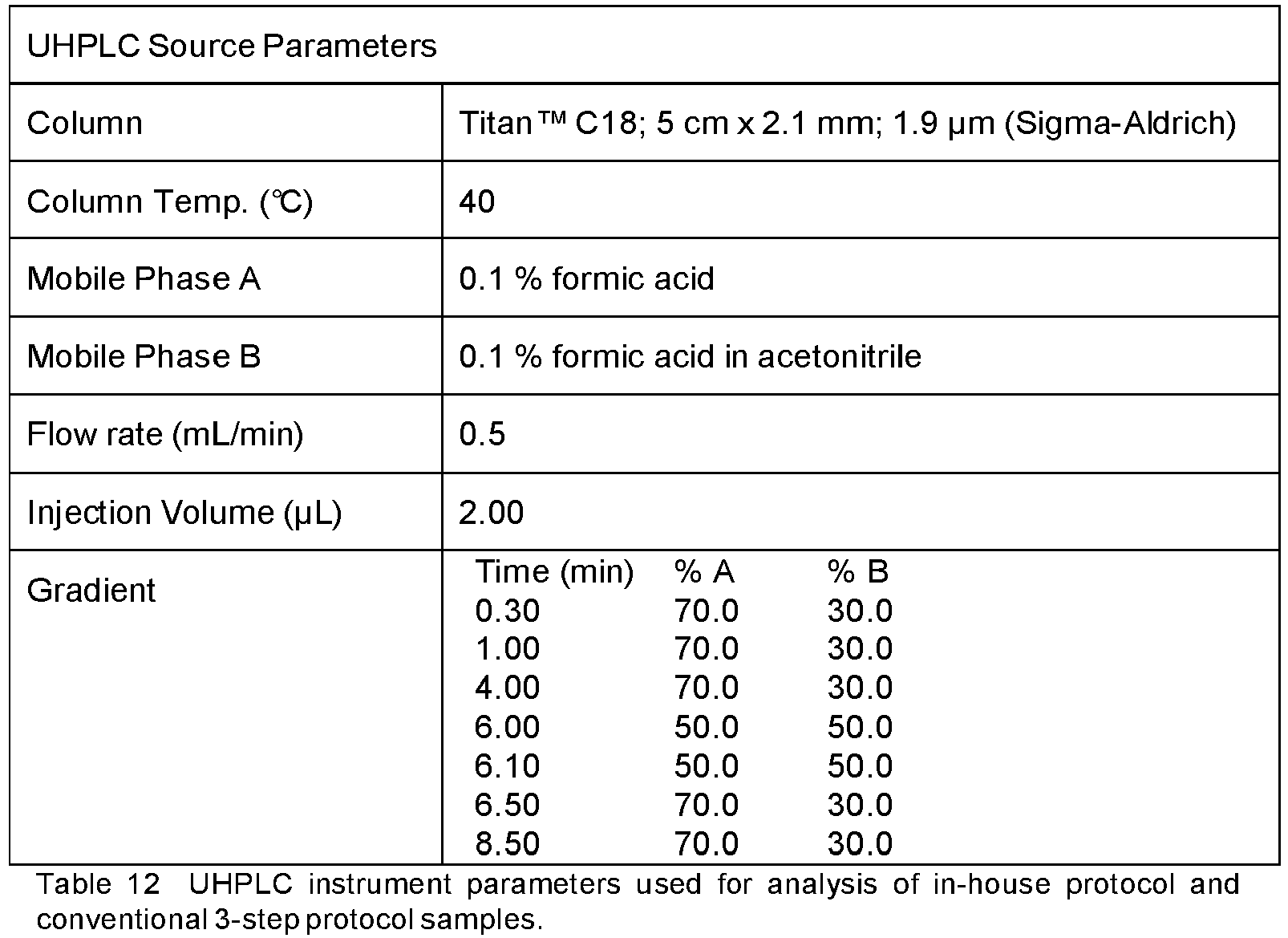
Table 13 MS source parameters used for analysis of in-house protocol and Protocol P protocol samples. MS source parameters Capillary Voltage (V) 3500 Gas Temp. (C) 300 Gas Flow (L/min) 10 Nebulizer (psi) 20 Sheath Gas Heater 400 Sheath Gas Flow 12 Cell Accelerator (V) 7 Polarity Positive ΔEMV 200 Dwell 30 Table 14 Compound Parameters for positive mode analysis of in-house protocol and conventional 3-step protocol samples. Analyte Precursor (m/z) Product (m/z) Fragmentor (V) Collision Energy (V) Betamethasone 393.01 373.1 100 1 Prednisolone 361.01 147 95 25 Alprazolam-d 5 314.01 286 170 25 Alprazolam 309.01 281 160 25 Oxazepam 288.01 241.9 115 17 Abacavir 287.01 191 110 17 Amitriptyline-d 3 281.01 105 110 21 Amitriptyline 278.2 58.2 113 24 Azidothymidine 268.01 126.9 110 9 Protriptyline-d 3 267.01 155 123 24 Propranolol-d 7 267.01 56.2 120 28 Protriptyline 264.2 155.1 123 24 Propranolol 260.2 116 125 16 Ketoprofen 255.29 104.9 115 24 Naproxen 231.31 185 80 8 Phenacetin 180.1 65 125 44 - Phospholipid monitoring. Samples were analyzed using an Agilent 1290 Infinity UHPLC coupled with an Agilent 6460 triple quadrupole mass spectrometer. Table 15 and Table 16 display the specific UHPLC and MS source parameters. Table 17 displays the compound specific MS parameters.
Table 15 UHPLC instrument parameters used for phospholipid monitoring. UHPLC instrument parameters Column Ascentis® Express C18; 5 cm x 2.1 mm; 2.7 µm (Sigma-Aldrich) Column Temp. (°C) 40 Mobile Phase 5 mM ammonium formate in 90:10 (MeOH/water) Flow rate (mL/min) 0.5 Injection Volume (µL) 2.00 Table 16 MS source parameters used for phospholipid monitoring. MS source parameters Capillary Voltage (V) 5000 Gas Temp. (°C) 350 Gas Flow (L/min) 8 Nebulizer (psi) 45 Sheath Gas Heater 350 Sheath Gas Flow 12 Cell Accelerator (V) 7 Polarity Positive Table 17 Compound Parameters for phospholipid monitoring. Analyte Precursor (m/z) Product (m/z) Fragmentor (V) Collision Energy (V) Phospholipid 1184 104 160 80 Phospholipid 2496 184 160 80 Phospholipid 3524 184 160 80 Phospholipid 4704 184 160 80 Phospholipid 5758 184 160 80 Phospholipid 6786 184 160 80 Phospholipid 7 806 184 160 80 - Preliminary Studies. The focus of preliminary studies was to screen a series of co-polymer resins for recovery of a six analyte mix out of buffer. The analytes of interest were selected due to their variety of hydrophobic character (Table 18). Although a simple screen, the results were useful in identifying potential resins to evaluate further.
Table 18 Analytes of interest utilized for the preliminary screen. Analyte Log P Acetaminophen 0.5 Procainamide 0.9 p-Toluamide 1.2 2,7-dihydroxynaphthalene 2.3 Propranolol 3.0 Doxepin 4.3 - A total of eight co-polymer resins were prepared for preliminary screening. These resins were designed to study the role of copolymer ratios and pore structure on analyte recovery. Of these resins, HLB-01, HLB-03, HLB-05 and HLB-10 are according to the invention. Table 19 describes the co-polymer composition of each experimental resin. The o-xylene:MIBC (w:w) ratio was varied in several resins in order to vary the pore structure.
Table 19 Co-polymer composition of preliminarily screened experimental resins. DVB: divinyl benzene; AcrylN: acrylonitrile; VP: N-vinylpyrrolidone; MIBC: methyl isobutyl carbinol. Resin ID DVB (%) AcrylN (%) VP (%) o-xylene: MIBC (w:w) HLB-96 91.5 8.5 0 HLB-98 90.9 9.1 0 HLB-99 90.9 0 9.1 HLB-100 63 0 37 150:150 HLB-01 63 37 0 150:150 HLB-03 63 37 0 225:75 HLB-05 63 0 37 225:75 HLB-10 25 75 0 150:150 - Several experimental resins were further analyzed to better understand their chemistries. These resins were evaluated for CHN composition (Table 20) and surface area and porosity (Table 21). Conventional HLB A, Conventional HLB B, and Conventional HLB C materials were also evaluated for comparison.
Table 20 CHN composition of conventional products and several experimental resins. Resin ID N (%) C (%) H (%) Total (%) Conventional HLB A 0.70 35.47 3.72 39.89 Conventional HLB B 2.35 86.14 8.27 96.76 Conventional HLB C 2.42 85.61 8.10 96.13 HLB-96 2.00 87.56 7.84 97.40 HLB-98 1.88 89.37 7.89 99.14 HLB-99 ≤ 0.02 90.01 8.02 98.03 HLB-100 1.05 88.10 8.13 97.28 HLB-01 9.22 82.75 7.35 99.32 HLB-03 8.82 82.75 7.37 98.94 HLB-05 0.97 87.49 7.92 96.38 Comparative Sample ≤ 0.02 90.84 7.92 98.76 - In terms of CHN composition it became apparent that Conventional HLB B and Conventional HLB C materials are very similar. However Conventional HLB A material greatly differs, with only 35.47% carbon.
Table 21 Co-polymer surface area and porosity of conventional HLB products and several experimental HLB resins. Resin ID Diameter (µm) Surface area (m2/g) Single point total pore volume (mL/g) Average pore diameter (Å) Conventional HLBA 438 1.04 95 Conventional HLB B 716 1.29 72 Conventional HLBC 201 0.958 190 HLB-96 38-75 423 1.02 97 HLB-99 38-75 448 1.17 105 HLB-100 38-75 667 1.21 73 HLB-01 38-75 346 0.74 85 HLB-03 38-75 401 0.67 66 HLB-05 38-75 658 0.82 50 - In terms of surface area and porosity, Conventional HLB A and Conventional HLB B also differ. Conventional HLB B has a greater surface area and a smaller pore diameter than the Conventional HLB A material.
- Each experimental resin was evaluated for the ability to recover the six analytes of interest following two protocols. The first protocol was modeled after a conventional HLB method, however the bed was dried following conditioning and equilibration. The results of this experiment can be found in
Figure 6 . As expected, the Conventional HLB B product resulted in high recoveries for all 6 analytes, with the lowest recovery of 79% for the most lipophilic analyte, doxepin. Screening of the experimental resins revealed great differences. The highest performing resin at this stage was determined to be HLB-01. Recoveries were greater than 80% for all six analytes. - The second protocol utilized a 3-step process: loading, washing, and elution. At the time of these experiments, the 3-step protocol was unknown, so extractions were performed at neutral pH. The results of this experiment can be found in
Figure 7 . Surprisingly, only 3 out of the 6 analytes were recovered using the Conventional HLB A product. These results may reveal a weakness with the product, or may simply be due to these initial extractions being performed at neutral pH. The best performing experimental resin was again found to be HLB-01, with greater than 80% recoveries and RSDs typically ≤ 5% for all 6 analytes. - The preliminary screening revealed that the next level of experimentation should center around resin HLB-01. This resin was prepared starting with a monomer ratio of 63:37 (DVB/AN) and a phase extender ratio of 150:150 (o-xylene/MIBC). This resin performed better than HLB-03, which only differed by the phase extender ratio, resulting in less macroporosity; and HLB-100, which differed in the hydrophilic monomer (substituting N-vinylpyrrolidone for acrylonitrile).
- Extended Screening. 20 additional analytes were chosen in order to perform an extended screening to further optimize the experimental HLB resin. Table 22 displays all 20 analytes and their log P values. This mix represents a wider range of hydrophobic character. This variety should aid in finding an even more ideal HLB resin.
Table 22 20-analyte mix utilized for extended screening of experimental resins Analyte Loq P Amiloride -0.30 Imidacloprid 0.57 Nizatidine 1.10 Benzoylecgonine 1.71 Nevirapine 2.50 Atrazine 2.61 Buspirone 2.63 Imiquimod 2.70 Methapyrilene 2.87 Mirtazapine 2.90 Clarithromycin 3.16 Mianserin 3.52 Hydroquinidine 3.77 Mesoridazine 3.90 Haloperidol 4.30 Nefazodone 4.70 Imipramine 4.80 Amitriptyline 5.10 Loratadine 5.20 Losartan 6.10 - During preliminary screening, large changes were made in the polymer chemistry in order to identify conditions of interest. In order to further optimize the HLB resin, small changes were made to the chemistry during extended screening. This will allow for a "fine tuning" of the polymer chemistry. Table 23 contains the co-polymer compositions and the porosity characteristics of the additional resins: HLB-22 and HLB-26, compared with HLB-01.
Table 23 Co-polymer compositions and porosity characteristics of additional experimental resins. Resin ID DVB (%) AcrylN (%) o-xylene: MIBC (w:w) % micropores (surface area) (m2/g) % micropores (volume) (cc/g) HLB-01 63 37 150:150 16.8 13.5 HLB-22 75 25 150:150 28.7 17.6 HLB-26 75 25 50:150 33.6 26.4 -
Figure 8 and Table 24 compare the recoveries of 20 analytes extracted out of spiked serum under acidic conditions for the three experimental co-polymeric resins. In this analysis, resin HLB-22 was found to have improved performance over resins HLB-01 and HLB-26. This resin has a starting monomer ratio of 75:25 (divinylbenzene/acrylonitrile).Table 24 Number of analytes within each absolute recovery category for three experimental resins. Number of Analytes Recovery (%) HLB-01 HLB-22 HLB-26 >70% 12 16 12 50-70% 7 2 6 <50% 1 2 2 - Each experimental resin was also evaluated for the ability to remove phospholipids from matrix samples.
Figure 9 displays an overlay of MRM traces of unextracted calf serum with samples that had been extracted with various experimental resins and Conventional HLB A. All experimental resins were capable of removing >95% of phospholipids present. HLB-22 was found to result in 98.7% removal when acidic extraction conditions were utilized. - Next, a polymer coated silica was also investigated. A material was prepared that was successful in >99% phospholipid removal. After identifying the optimal polymer conditions, the next stage was to compare the performance of this experimental polymer against two conventional products: Conventional HLB A and Conventional HLB B.
- The first comparison was performed using the 5-step protocol with the 20-analyte mixture detailed in Table 22.
Figure 10 compares absolute analyte recoveries across the 20 analytes using experimental polymer HLB-67 and Conventional HLB B. When using the same extraction methodologies, experimental copolymer HLB-67 was able to extract all 20 analytes with recoveries >70%. For Conventional HLB B, 18/20 analytes had high absolute recoveries. This result confirms that the materials described herein have the potential to be used as a direct replacement for existing conventional 5-step methods. - Next, the potential of experimental resin HLB-67 to outperform Conventional HLB B was evaluated. This involved again extracting the 20-analyte mix from spiked serum under acidic conditions, however during this evaluation a simplified 3-step protocol was used. No conditioning or equilibration steps were included. The results of this evaluation can be seen in
Figure 11 . Only 14/20 analytes were found to have absolute recoveries >70% when Conventional HLB B was used with a 3-step method. For our experimental resin HLB-67, 17/20 analytes had >70% recovery when a sample was loaded onto a dry bed. This suggests that the experimental resin has an advantage over the conventional product. Since the conditioning and equilibration steps are not required, a user can save time and steps using the 3-step, rather than 5-step, method. - Experimental HLB resin HLB-67 was then tested against Conventional HLB A. For this, an eight-analyte mix was chosen. Table 25 lists the eight analytes and their log P values.
Table 25 Analytes used for the 3-step protocol evaluations. Analyte Log P Azidothymidine (AZT) 0.05 Phenacetin 1.58 Betamethasone 1.94 Alprazolam 2.12 Naproxen 3.18 Propranolol 3.48 Protriptyline 4.70 Amitriptyline 4.92 - The experimental HLB copolymeric resin HLB-67 was found to perform almost identically to Conventional HLB A (
Figure 12 ). These results also demonstrate that the HLB material described herein is suitable for 3-step SPE methods. - The next comparison that was made with conventional HLB products was matrix removal. This was accomplished by monitoring seven different MRM transitions that represent different classes of phospholipids. Total peak areas were compared between extracted samples and unextracted serum to determine the average percentage of phospholipid removal. Table 26 compares matrix removal between an experimental resin, Conventional HLB A and Conventional HLB B. The experimental material was shown to remove a comparable amount of phospholipids from the sample as the conventional materials.
Table 26 Comparison of phospholipid removal accomplished using an experimental resin and two conventional resins. Resin Used Average % Phospholipid Removal Experimental HLB 98.8 Conventional HLB A 98.9 Conventional HLB B 98.7 - After establishing that the experimental copolymeric resins described herein are suitable as both a direct replacement and improvement over various conventional products, the final stage of evaluation was focused on determining the reproducibility of material preparation. A total of five small scale lots were prepared: 3 research-scale lots (HLB-22, HLB-67, and HLB-79) and 2 manufacturing lots. Each material was evaluated using the 20-analyte protocol outlined above: a 3-step method using 50:50 (ACN/MeOH) as the elution solvent. Table 27, Table 28 and Table 29 display the absolute, matrix matched, and relative recoveries of each material, respectively.
Table 27 Comparison of absolute recoveries out of spiked serum across different lots of experimental resin. Number of Analytes (Absolute Recoveries) Recovery (%) R&D Lot 1 HLB-22R&D Lot 2 HLB-67R&D Lot 3 HLB-79Manuf. Lot 1Manuf. Lot 2Conventional HLBA (reference) >70% 17 18 18 17 19 17 50-70% 3 2 2 3 1 3 <50% 0 0 0 0 0 0 Table 28 Comparison of matrix matched recoveries out of spiked serum across different lots of experimental resin. Number of Analytes (Matrix Matched Recoveries) Recovery (%) R&D Lot 1 HLB-22R&D Lot 2 HLB-67R&D Lot 3 HLB-79Manuf. Lot 1Manuf. Lot 2Conventional HLBA (reference) >70% 18 18 19 20 20 18 50-70% 2 2 1 0 0 2 <50% 0 0 0 0 0 0 Table 29 Comparison of relative recoveries out of spiked serum across different lots of experimental resin. Number of Analytes (Relative Recoveries) Recovery (%) R&D Lot 1 HLB-22R&D Lot 2 HLB-67R&D Lot 3 HLB-79Manuf. Lot 1Manuf. Lot 2>120% 1 0 0 0 0 80-120% 13 15 15 15 15 <80% 2 1 1 1 1 - Experimental HLB copolymer HLB-01 was evaluated for possible overdrying effects by measuring absolute of a six-analyte mixture using the following procedure. A 1 mg/mL stock was prepared by solvating 50 mg of the following analytes in 50 mL of methanol: acetaminophen, procainamide, p-toluamide, 2,7 dihydroxynaphthalene, propranolol, and doxepin. A 10 µg/mL analytical stock was prepared by transferring 500 µL of 1 mg/mL stock into 49.5 mL of 20 mM potassium phosphate buffer. Reagents were prepared using volumetric flasks filled according to standard procedure. Three mL SPE cartridge formats with 60 mg bed weights were utilized. Samples were processed utilizing the protocol described in Table 30.
Table 30 5-step SPE protocol with dry step (used for Figure 13 data). 5-step Protocol: Conditioning: 1 mL of MeOH Equilibration: 1 mL of 20 mM phosphate buffer Dry: applied 10" Hg vacuum for 10 min Load: 1 mL sample in 20 mM phosphate buffer Wash: 1 mL 5% MeOHElute: 1 mL MeOH Evaporate: 40°C, 10 psi nitrogen stream Reconstitute: 1 mL 20 mM phosphate buffer - Drop rates were maintained at 1 drop per second or less. Analyte stocks were initially dissolved in methanol at 1 mg/mL concentrations and were then diluted to 10 µg/ mL in 20 mM potassium phosphate buffer (pH 7) to produce the loading stock. After evaporation all samples were vortexed 30 seconds in 20 mM potassium phosphate buffer (pH 7) to reconstitute for analysis. Three aliquots of 10 µg/mL loading solution were analyzed and the average area count for each compound was used as a reference to calculate recovery of the respective compounds.
- HPLC parameters: Analysis was performed using an Agilent 1190 HPLC coupled with a UV detector. Method parameters can be found in Table 31.

-
Figure 13 shows the absolute recovery of six analytes using an acrylonitrile-containing HLB copolymer described herein (HLB-01) to extract from a buffer solution. The material was dried following pre-treatment, showing that the overdrying effect is not an issue when working with the new HLB material. These analytes represent a log P range of 0.5-4.3. - HLB copolymer HLB-01 was then evaluated against a conventional vinylpyrrolidone-containing HLB, Conventional HLB A, by measuring the recovery of the same six analytes but using the 3-step process. The same solution preparation and HPLC analysis was followed as described above. The SPE procedure was slightly altered as shown in Table 32.
Table 32 3-step SPE protocol for Figure 14 data. 3-step Protocol: Load: 1 mL sample in 20 mM phosphate buffer Wash: 1 mL 5% MeOHElute: 1 mL 90:10 (ACN/MeOH) Evaporate: 40°C, 10 psi nitrogen stream Reconstitute: 1 mL 20 mM phosphate buffer -
Figure 14 shows a comparison of the absolute recovery of acrylonitrile-containing HLB material (HLB-01) and a vinylpyrrolidone-containing conventional HLB material (Conventional HLB A) when a simplified 3-step protocol is utilized (no conditioning or equilibration prior to sample loading) to extract from spiked serum. This set of compounds inFigure 14 represents a log P range of 0.5-4.3. - Experimental HLB copolymer HLB-65 was coated on silica particles as described above. The HLB-coated silica particles were used as follows. A 20-analyte mixture including the following: amiloride, amitriptyline, atrazine, benzoylecgonine, buspirone, clarithromycin, haloperidol, hydroquinidine, imidacloprid, imipramine, imiquimod, loratadine, mesoridazine, methapyrilene, mianserin, mirtazapine, nefazodone, nevirapine, nizatidine, and losartan was utilized. A 20 mM ammonium acetate buffer, pH 7.4, was spiked with analyte at a concentration of 200 ng/mL. The spiked sample was then diluted 1:1 with 20 mM ammonium acetate. These solutions were also spiked with an internal standard mixture, allowing for final concentrations of 100 ng/mL analyte and 50 ng/mL internal standards. The SPE procedure is described in Table 33.
Table 33 SPE procedure used for evaluation of polymer coated silica (used for Figure 15 data). SPE Procedure Load 1 mL sample (diluted 1:1 with 20 mM ammonium acetate) onto a dry bed (60 mg bed weight). Wash cartridge with 1 mL of 5% MeOH (aq.) Elute with 1 mL of 50:50 (ACN/MeOH). Evaporate samples to dryness at 40°C with 10 psi nitrogen stream. Reconstitute in 1 mL of starting mobile phase. - LC-MS/MS Analysis: Samples were analyzed using an Agilent 1290 Infinity UHPLC coupled with an Agilent 6460 triple quadrupole mass spectrometer. Table 34 and Table 35 show the specific UHPLC and MS source parameters. Table 36 and Table 37 display the compounds specific MS parameters for the analysis of analytes in positive and negative mode, respectively.

Table 35 MS source parameters used for analysis of the 20-analyte mix (used for Figure 15 and 16 data). MS source parameters Capillary Voltage (V) 3500 Gas Temp. (`C) 350 Gas Flow (L/min) 8 Nebulizer(psi) 45 Sheath Gas Heater 350 Sheath Gas Flow 12 Cell Accelerator (V) 7 Polarity Positive and Negative (2 separate analyses) ΔEMV 200 Table 36 Compound Parameters for positive mode analysis of the 20-analyte mix (used for Figure 15 and 16 data). Analyte Precursor (m/z) Product (m/z) Fragmentor (V) Collision Energy (V) tr (min) Retention Window (min) 5-(N,N-dimethyl) Amiloride 259 199.9 100 15 5.32 1.5 Abacavir 287 191 135 20 4.04 1.5 Amiloride 230.1 170.9 100 17 3.15 1.5 Amitriptyline 278.19 91 110 25 7.15 1.5 Amitriptyline-d 3 281.44 91 100 25 7.15 1.5 Atrazine 216.1 173.9 115 17 7.79 1.5 Atrazine-d 5 222 179.7 115 20 7.74 1.5 Benzoylecgonine 290.14 168 115 17 3.87 1.5 Benzoylecgonine-d 3 293.31 171 120 16 3.86 1.5 Buspirone 386.21 122 165 33 5.58 1.5 Buspirone-d 8 394.21 121.9 185 36 5.56 1.5 Clarithromycin 748.51 158 165 29 7.50 3 Haloperidol 376.15 122.9 130 45 6.96 1.5 Haloperidol-d 4 380.9 126.9 120 45 6.94 1.5 Hydroquinidine 327.21 55.1 150 45 5.59 1.5 Imidacloprid 256.06 209 95 9 4.83 1.5 Imidacloprid-d 4 260.7 131.4 100 33 5.32 1.5 Imipramine 281.2 86.1 105 13 6.93 1.5 Imipramine-d 3 284.2 193 100 40 6.93 1.5 Imiquimod 241.1 168.1 150 40 6.40 1.5 Loratadine 383.11 337 150 21 10.92 1.5 Loratadine-d 5 388 337 150 25 10.95 1.5 MCPP-d 8 206 159 135 20 4.47 1.5 Mesoridazine 387.2 98.1 150 40 6.16 1.5 Methapyrilene 262.1 97 150 40 5.30 1.5 Methapyrilene-dimethyl-d 6 268 97 150 20 5.28 1.5 Mianserin 265.2 58.2 128 24 6.33 1.5 Mianserin-d 3 268.4 61.2 130 25 6.31 1.5 Mirtazapine 266.2 72.2 128 16 4.98 1.5 N-desmethyl-mirtazapine 252.34 195 115 21 4.90 1.5 Nefazodone 470.2 246.1 150 20 7.91 1.5 Nevirapine 267.1 80 150 40 5.57 1.5 Nizatidine 332.1 58.1 150 40 1.50 1.5 Quinine 325.42 79 145 45 5.28 1.5 Table 37 Compound Parameters for negative mode analysis of the 20-analyte mix (used for Figure 15 and 16 data). Analyte Precursor (m/z) Product (m/z) Fragmentor (V) Collision Energy (V) Retention Time (min) Losartan 421 127 150 40 7.89 - The absolute recoveries of the analytes using silica coated with experimental HLB-65 is shown in
Figure 15 . Silica coated with this HLB copolymer extracted a variety of analytes from spiked serum samples using a traditional 5-step SPE procedure. - Evaluation of Conventional HLB B and experimental HLB material HLB-79 (data shown in
Figure 16 ). Table 38 displays the SPE procedure. The previously described LC-MS/MS method was used.Table 38 SPE procedure used for evaluation of polymer coated silica (used for Figure 16 data). SPE Procedure Load 1 mL sample (diluted 1:1 with 2% phosphoric acid for Conventional HLB B; 0.4% formic acid for experimental HLB-79) onto a dry bed (60 mg bed weight). Wash cartridge with 1 mL of 5% MeOH (aq.) Elute with 1 mL of MeOH (for Conventional HLB B); 50:50 MeOH:ACN (for HLB-79) Evaporate samples to dryness at 40°C with 10 psi nitrogen stream. Reconstitute in 1 mL of starting mobile phase. - As shown in
Figure 16 , experimental HLB-79 showed a more consistent recovery for the 20-analyte mixture than vinylpyrrolidone-containing Conventional HLB B when a simplified 3-step protocol was utilized to extract analytes from spiked serum. This 20-analyte set of compounds represents a log P range of -0.3-6.1. Due to the increased polarity of acrylonitrile and the ability to incorporate within divinyl benzene, improved recoveries were obtained, particularly for analytes with lower log P values. - The HLB copolymers provided herein have been shown to be useful in a variety of SPE applications. Using the methods described herein, the improved HLB adsorbents are capable of consistently extracting at least 18/20 analytes with recoveries >70% when using either 5-step or 3-step methods. Advantageously, the improved HLB adsorbents provided herein are well-suited to a 3-step protocol, where conditioning and equilibration steps were not required. The improved HLB material was also found to remove >98% of phospholipids present within a serum sample, on average.
Claims (7)
- A method for preparing an HLB adsorbent for solid phase extraction, the method comprising copolymerizing at least one hydrophobic monomer and at least one hydrophilic monomer in the presence of a non-polar porogen and a polar porogen, wherein the hydrophobic monomer comprises divinylbenzene and the hydrophilic monomer comprises acrylonitrile.
- The method of claim 1 wherein the nonpolar porogen is selected from the group consisting of toluene, xylenes, benzene, hexane, cyclohexane, pentane, heptane, octane, nonane, decane, dodecane, isooctane, dichloromethane, chloroform, carbon tetrachloride, and combinations thereof.
- The method of claim 1 wherein the polar porogen is selected from the group consisting of benzyl alcohol, butanol, pentanol, hexanol, heptanol, 4-methyl-2-pentanol, isoamyl alcohol, dodecanol, ethyl acetate, 2-ethylhexanol, cyclohexanol, and combinations thereof.
- The method of claim 1 wherein the nonpolar porogen comprises o-xylene and the polar porogen comprises 4-methyl-2-pentanol.
- The method of claim 1 wherein:(A) the ratio of hydrophobic monomer to hydrophilic monomer is in the range from 10:90 (wt. %) to 90:10 (wt. %);(B) the ratio of hydrophobic monomer to hydrophilic monomer is in the range from 30:70 (wt. %) to 70:30 (wt. %); or(C) the ratio of hydrophobic monomer to hydrophilic monomer is 63:37 (wt. %).
- The method of claim 1 wherein the HLB adsorbent is poly(divinylbenzene-co-acrylonitrile).
- The method of claim 6 wherein:(A) the ratio of divinylbenzene to acrylonitrile is in the range from 90:10 (wt. %) to 10:90 (wt. %);(B) the ratio of divinylbenzene to acrylonitrile is in the range from 25:75 (wt. %) to 75:25 (wt. %); or(C) the ratio of divinylbenzene to acrylonitrile is 63:37 (wt. %).
Applications Claiming Priority (2)
| Application Number | Priority Date | Filing Date | Title |
|---|---|---|---|
| US201762549771P | 2017-08-24 | 2017-08-24 | |
| PCT/US2018/047950 WO2019040868A1 (en) | 2017-08-24 | 2018-08-24 | Improved hlb copolymers |
Publications (2)
| Publication Number | Publication Date |
|---|---|
| EP3672723A1 EP3672723A1 (en) | 2020-07-01 |
| EP3672723B1 true EP3672723B1 (en) | 2023-10-18 |
Family
ID=63490779
Family Applications (1)
| Application Number | Title | Priority Date | Filing Date |
|---|---|---|---|
| EP18765334.0A Active EP3672723B1 (en) | 2017-08-24 | 2018-08-24 | Method for making improved hlb copolymers |
Country Status (6)
| Country | Link |
|---|---|
| US (1) | US11896953B2 (en) |
| EP (1) | EP3672723B1 (en) |
| JP (1) | JP7240380B2 (en) |
| CN (1) | CN111295242B (en) |
| ES (1) | ES2967925T3 (en) |
| WO (1) | WO2019040868A1 (en) |
Families Citing this family (5)
| Publication number | Priority date | Publication date | Assignee | Title |
|---|---|---|---|---|
| US20210220814A1 (en) * | 2011-05-20 | 2021-07-22 | Waters Technologies Corporation | Porous materials for solid phase extraction and chromatography and processes for preparation and use thereof |
| JP7240380B2 (en) | 2017-08-24 | 2023-03-15 | シグマ-アルドリッチ・カンパニー・リミテッド・ライアビリティ・カンパニー | Improved HLB copolymer |
| WO2020243345A1 (en) | 2019-05-31 | 2020-12-03 | Sigma-Aldrich Co. Llc | Monodispersed nanocarbons prepared from polysulfonated nanopolymers |
| WO2022120365A1 (en) | 2020-12-03 | 2022-06-09 | Sigma-Aldrich Co. Llc | Drying processes for bio-compatible spme coatings |
| CN114669280B (en) * | 2022-03-15 | 2023-10-27 | 深圳市易瑞生物技术股份有限公司 | Purifying filler for sulfonamide residue and pretreatment method |
Family Cites Families (17)
| Publication number | Priority date | Publication date | Assignee | Title |
|---|---|---|---|---|
| JPS5247355B2 (en) | 1974-10-15 | 1977-12-01 | ||
| US4883596A (en) | 1987-03-31 | 1989-11-28 | Tokyo Organic Chemical Industries, Ltd. | Carbonaceous adsorbent for removal of pyrogen and method of producing pure water using same |
| US5104530A (en) | 1988-01-29 | 1992-04-14 | Maroldo Stephen G | Chromatography column with carbonaceous adsorbents from pyrolyzed polysulfonated polymers |
| US5094754A (en) | 1988-01-29 | 1992-03-10 | Rohm And Haas Company | Carbonaceous adsorbents from pyrolyzed polysulfonated polymers |
| US4839331A (en) | 1988-01-29 | 1989-06-13 | Rohm And Haas Company | Carbonaceous adsorbents from pyrolyzed polysulfonated polymers |
| US4957897A (en) | 1988-01-29 | 1990-09-18 | Rohm And Haas Company | Carbonaceous adsorbents from pyrolyzed polysulfonated polymers |
| ZA934092B (en) * | 1992-06-25 | 1993-12-27 | Rohm & Haas | Preparation of carbonaceous particles |
| US5653875A (en) | 1994-02-04 | 1997-08-05 | Supelco, Inc. | Nucleophilic bodies bonded to siloxane and use thereof for separations from sample matrices |
| US5559445A (en) | 1994-11-03 | 1996-09-24 | Motorola, Inc. | Adapter for testing integrated circuits |
| US5882521A (en) | 1996-04-18 | 1999-03-16 | Waters Investment Ltd. | Water-wettable chromatographic media for solid phase extraction |
| US20040191537A1 (en) * | 2001-06-13 | 2004-09-30 | Dieter Lubda | Restricted access material for spme |
| US20090026122A1 (en) * | 2002-03-11 | 2009-01-29 | Janusz | Biocompatible solid-phase microextraction coatings and methods for their preparation |
| US6926823B2 (en) | 2002-06-03 | 2005-08-09 | Varian, Inc. | Polymer with superior polar retention for sample pretreatment |
| US6749749B2 (en) | 2002-06-26 | 2004-06-15 | Isco, Inc. | Separation system, components of a separation system and methods of making and using them |
| US20050107581A1 (en) * | 2003-11-17 | 2005-05-19 | Bruce Rosenbaum | Process for the removal of porogens from temperature sensitive macroreticular polymers using steam at reduced pressure |
| US7815864B2 (en) | 2003-11-20 | 2010-10-19 | Sigma-Aldrich Co. | Polysilazane thermosetting polymers for use in chromatographic systems and applications |
| JP7240380B2 (en) | 2017-08-24 | 2023-03-15 | シグマ-アルドリッチ・カンパニー・リミテッド・ライアビリティ・カンパニー | Improved HLB copolymer |
-
2018
- 2018-08-24 JP JP2020511153A patent/JP7240380B2/en active Active
- 2018-08-24 CN CN201880069725.2A patent/CN111295242B/en active Active
- 2018-08-24 WO PCT/US2018/047950 patent/WO2019040868A1/en not_active Ceased
- 2018-08-24 ES ES18765334T patent/ES2967925T3/en active Active
- 2018-08-24 US US16/640,575 patent/US11896953B2/en active Active
- 2018-08-24 EP EP18765334.0A patent/EP3672723B1/en active Active
Also Published As
| Publication number | Publication date |
|---|---|
| JP2020531263A (en) | 2020-11-05 |
| US20200197907A1 (en) | 2020-06-25 |
| ES2967925T3 (en) | 2024-05-06 |
| US11896953B2 (en) | 2024-02-13 |
| CN111295242B (en) | 2023-06-13 |
| WO2019040868A1 (en) | 2019-02-28 |
| EP3672723A1 (en) | 2020-07-01 |
| CN111295242A (en) | 2020-06-16 |
| JP7240380B2 (en) | 2023-03-15 |
Similar Documents
| Publication | Publication Date | Title |
|---|---|---|
| US11896953B2 (en) | HLB copolymers | |
| Turiel et al. | Molecularly imprinted polymers | |
| US6635201B1 (en) | Cast membrane structures for sample preparation | |
| US5882521A (en) | Water-wettable chromatographic media for solid phase extraction | |
| JP4796693B2 (en) | Recovery of organic solutes from aqueous solutions | |
| US11161057B2 (en) | Device for solid phase extraction and method for use thereof | |
| US7311832B2 (en) | Adsorption membranes, method of producing same and equipment, including the adsorption membranes | |
| US7304017B2 (en) | Sorbent for use in process of solid phase extraction | |
| Hsieh et al. | Single-step approach for fabrication of vancomycin-bonded silica monolith as chiral stationary phase | |
| EP1232787A1 (en) | Hydrophilic separating carrier particle and process for producing the same | |
| CN108395567B (en) | Preparation of monolithic gel composites and their efficient separation of proteins and small molecules in human serum | |
| Davankov et al. | Hypercrosslinked polystyrene as column packing material in HPLC | |
| Tsiasioti et al. | Synthesis of sol–gel poly (ethylene glycol) coated foams for the microextraction of multiclass pesticides from apple juice samples | |
| Martín-Esteban | Recent molecularly imprinted polymer-based methods for sample preparation | |
| WO2022120363A1 (en) | Pre-coatings for biocompatible solid phase microextraction devices |
Legal Events
| Date | Code | Title | Description |
|---|---|---|---|
| STAA | Information on the status of an ep patent application or granted ep patent |
Free format text: STATUS: UNKNOWN |
|
| STAA | Information on the status of an ep patent application or granted ep patent |
Free format text: STATUS: THE INTERNATIONAL PUBLICATION HAS BEEN MADE |
|
| PUAI | Public reference made under article 153(3) epc to a published international application that has entered the european phase |
Free format text: ORIGINAL CODE: 0009012 |
|
| STAA | Information on the status of an ep patent application or granted ep patent |
Free format text: STATUS: REQUEST FOR EXAMINATION WAS MADE |
|
| 17P | Request for examination filed |
Effective date: 20200323 |
|
| AK | Designated contracting states |
Kind code of ref document: A1 Designated state(s): AL AT BE BG CH CY CZ DE DK EE ES FI FR GB GR HR HU IE IS IT LI LT LU LV MC MK MT NL NO PL PT RO RS SE SI SK SM TR |
|
| AX | Request for extension of the european patent |
Extension state: BA ME |
|
| DAV | Request for validation of the european patent (deleted) | ||
| DAX | Request for extension of the european patent (deleted) | ||
| STAA | Information on the status of an ep patent application or granted ep patent |
Free format text: STATUS: EXAMINATION IS IN PROGRESS |
|
| 17Q | First examination report despatched |
Effective date: 20210812 |
|
| GRAP | Despatch of communication of intention to grant a patent |
Free format text: ORIGINAL CODE: EPIDOSNIGR1 |
|
| STAA | Information on the status of an ep patent application or granted ep patent |
Free format text: STATUS: GRANT OF PATENT IS INTENDED |
|
| INTG | Intention to grant announced |
Effective date: 20230511 |
|
| P01 | Opt-out of the competence of the unified patent court (upc) registered |
Effective date: 20230602 |
|
| GRAS | Grant fee paid |
Free format text: ORIGINAL CODE: EPIDOSNIGR3 |
|
| GRAA | (expected) grant |
Free format text: ORIGINAL CODE: 0009210 |
|
| STAA | Information on the status of an ep patent application or granted ep patent |
Free format text: STATUS: THE PATENT HAS BEEN GRANTED |
|
| AK | Designated contracting states |
Kind code of ref document: B1 Designated state(s): AL AT BE BG CH CY CZ DE DK EE ES FI FR GB GR HR HU IE IS IT LI LT LU LV MC MK MT NL NO PL PT RO RS SE SI SK SM TR |
|
| REG | Reference to a national code |
Ref country code: GB Ref legal event code: FG4D |
|
| REG | Reference to a national code |
Ref country code: CH Ref legal event code: EP |
|
| REG | Reference to a national code |
Ref country code: IE Ref legal event code: FG4D |
|
| REG | Reference to a national code |
Ref country code: DE Ref legal event code: R096 Ref document number: 602018059610 Country of ref document: DE |
|
| REG | Reference to a national code |
Ref country code: NL Ref legal event code: FP |
|
| REG | Reference to a national code |
Ref country code: LT Ref legal event code: MG9D |
|
| REG | Reference to a national code |
Ref country code: AT Ref legal event code: MK05 Ref document number: 1621930 Country of ref document: AT Kind code of ref document: T Effective date: 20231018 |
|
| PG25 | Lapsed in a contracting state [announced via postgrant information from national office to epo] |
Ref country code: GR Free format text: LAPSE BECAUSE OF FAILURE TO SUBMIT A TRANSLATION OF THE DESCRIPTION OR TO PAY THE FEE WITHIN THE PRESCRIBED TIME-LIMIT Effective date: 20240119 |
|
| PG25 | Lapsed in a contracting state [announced via postgrant information from national office to epo] |
Ref country code: IS Free format text: LAPSE BECAUSE OF FAILURE TO SUBMIT A TRANSLATION OF THE DESCRIPTION OR TO PAY THE FEE WITHIN THE PRESCRIBED TIME-LIMIT Effective date: 20240218 |
|
| PG25 | Lapsed in a contracting state [announced via postgrant information from national office to epo] |
Ref country code: LT Free format text: LAPSE BECAUSE OF FAILURE TO SUBMIT A TRANSLATION OF THE DESCRIPTION OR TO PAY THE FEE WITHIN THE PRESCRIBED TIME-LIMIT Effective date: 20231018 |
|
| PG25 | Lapsed in a contracting state [announced via postgrant information from national office to epo] |
Ref country code: AT Free format text: LAPSE BECAUSE OF FAILURE TO SUBMIT A TRANSLATION OF THE DESCRIPTION OR TO PAY THE FEE WITHIN THE PRESCRIBED TIME-LIMIT Effective date: 20231018 |
|
| PG25 | Lapsed in a contracting state [announced via postgrant information from national office to epo] |
Ref country code: LT Free format text: LAPSE BECAUSE OF FAILURE TO SUBMIT A TRANSLATION OF THE DESCRIPTION OR TO PAY THE FEE WITHIN THE PRESCRIBED TIME-LIMIT Effective date: 20231018 Ref country code: IS Free format text: LAPSE BECAUSE OF FAILURE TO SUBMIT A TRANSLATION OF THE DESCRIPTION OR TO PAY THE FEE WITHIN THE PRESCRIBED TIME-LIMIT Effective date: 20240218 Ref country code: GR Free format text: LAPSE BECAUSE OF FAILURE TO SUBMIT A TRANSLATION OF THE DESCRIPTION OR TO PAY THE FEE WITHIN THE PRESCRIBED TIME-LIMIT Effective date: 20240119 Ref country code: BG Free format text: LAPSE BECAUSE OF FAILURE TO SUBMIT A TRANSLATION OF THE DESCRIPTION OR TO PAY THE FEE WITHIN THE PRESCRIBED TIME-LIMIT Effective date: 20240118 Ref country code: AT Free format text: LAPSE BECAUSE OF FAILURE TO SUBMIT A TRANSLATION OF THE DESCRIPTION OR TO PAY THE FEE WITHIN THE PRESCRIBED TIME-LIMIT Effective date: 20231018 Ref country code: PT Free format text: LAPSE BECAUSE OF FAILURE TO SUBMIT A TRANSLATION OF THE DESCRIPTION OR TO PAY THE FEE WITHIN THE PRESCRIBED TIME-LIMIT Effective date: 20240219 |
|
| REG | Reference to a national code |
Ref country code: ES Ref legal event code: FG2A Ref document number: 2967925 Country of ref document: ES Kind code of ref document: T3 Effective date: 20240506 |
|
| PG25 | Lapsed in a contracting state [announced via postgrant information from national office to epo] |
Ref country code: SE Free format text: LAPSE BECAUSE OF FAILURE TO SUBMIT A TRANSLATION OF THE DESCRIPTION OR TO PAY THE FEE WITHIN THE PRESCRIBED TIME-LIMIT Effective date: 20231018 Ref country code: RS Free format text: LAPSE BECAUSE OF FAILURE TO SUBMIT A TRANSLATION OF THE DESCRIPTION OR TO PAY THE FEE WITHIN THE PRESCRIBED TIME-LIMIT Effective date: 20231018 Ref country code: PL Free format text: LAPSE BECAUSE OF FAILURE TO SUBMIT A TRANSLATION OF THE DESCRIPTION OR TO PAY THE FEE WITHIN THE PRESCRIBED TIME-LIMIT Effective date: 20231018 Ref country code: NO Free format text: LAPSE BECAUSE OF FAILURE TO SUBMIT A TRANSLATION OF THE DESCRIPTION OR TO PAY THE FEE WITHIN THE PRESCRIBED TIME-LIMIT Effective date: 20240118 Ref country code: LV Free format text: LAPSE BECAUSE OF FAILURE TO SUBMIT A TRANSLATION OF THE DESCRIPTION OR TO PAY THE FEE WITHIN THE PRESCRIBED TIME-LIMIT Effective date: 20231018 Ref country code: HR Free format text: LAPSE BECAUSE OF FAILURE TO SUBMIT A TRANSLATION OF THE DESCRIPTION OR TO PAY THE FEE WITHIN THE PRESCRIBED TIME-LIMIT Effective date: 20231018 |
|
| PG25 | Lapsed in a contracting state [announced via postgrant information from national office to epo] |
Ref country code: DK Free format text: LAPSE BECAUSE OF FAILURE TO SUBMIT A TRANSLATION OF THE DESCRIPTION OR TO PAY THE FEE WITHIN THE PRESCRIBED TIME-LIMIT Effective date: 20231018 |
|
| REG | Reference to a national code |
Ref country code: DE Ref legal event code: R097 Ref document number: 602018059610 Country of ref document: DE |
|
| PG25 | Lapsed in a contracting state [announced via postgrant information from national office to epo] |
Ref country code: CZ Free format text: LAPSE BECAUSE OF FAILURE TO SUBMIT A TRANSLATION OF THE DESCRIPTION OR TO PAY THE FEE WITHIN THE PRESCRIBED TIME-LIMIT Effective date: 20231018 |
|
| PG25 | Lapsed in a contracting state [announced via postgrant information from national office to epo] |
Ref country code: SK Free format text: LAPSE BECAUSE OF FAILURE TO SUBMIT A TRANSLATION OF THE DESCRIPTION OR TO PAY THE FEE WITHIN THE PRESCRIBED TIME-LIMIT Effective date: 20231018 |
|
| PG25 | Lapsed in a contracting state [announced via postgrant information from national office to epo] |
Ref country code: SM Free format text: LAPSE BECAUSE OF FAILURE TO SUBMIT A TRANSLATION OF THE DESCRIPTION OR TO PAY THE FEE WITHIN THE PRESCRIBED TIME-LIMIT Effective date: 20231018 Ref country code: SK Free format text: LAPSE BECAUSE OF FAILURE TO SUBMIT A TRANSLATION OF THE DESCRIPTION OR TO PAY THE FEE WITHIN THE PRESCRIBED TIME-LIMIT Effective date: 20231018 Ref country code: RO Free format text: LAPSE BECAUSE OF FAILURE TO SUBMIT A TRANSLATION OF THE DESCRIPTION OR TO PAY THE FEE WITHIN THE PRESCRIBED TIME-LIMIT Effective date: 20231018 Ref country code: EE Free format text: LAPSE BECAUSE OF FAILURE TO SUBMIT A TRANSLATION OF THE DESCRIPTION OR TO PAY THE FEE WITHIN THE PRESCRIBED TIME-LIMIT Effective date: 20231018 Ref country code: DK Free format text: LAPSE BECAUSE OF FAILURE TO SUBMIT A TRANSLATION OF THE DESCRIPTION OR TO PAY THE FEE WITHIN THE PRESCRIBED TIME-LIMIT Effective date: 20231018 Ref country code: CZ Free format text: LAPSE BECAUSE OF FAILURE TO SUBMIT A TRANSLATION OF THE DESCRIPTION OR TO PAY THE FEE WITHIN THE PRESCRIBED TIME-LIMIT Effective date: 20231018 |
|
| PLBE | No opposition filed within time limit |
Free format text: ORIGINAL CODE: 0009261 |
|
| STAA | Information on the status of an ep patent application or granted ep patent |
Free format text: STATUS: NO OPPOSITION FILED WITHIN TIME LIMIT |
|
| 26N | No opposition filed |
Effective date: 20240719 |
|
| PG25 | Lapsed in a contracting state [announced via postgrant information from national office to epo] |
Ref country code: SI Free format text: LAPSE BECAUSE OF FAILURE TO SUBMIT A TRANSLATION OF THE DESCRIPTION OR TO PAY THE FEE WITHIN THE PRESCRIBED TIME-LIMIT Effective date: 20231018 |
|
| PG25 | Lapsed in a contracting state [announced via postgrant information from national office to epo] |
Ref country code: SI Free format text: LAPSE BECAUSE OF FAILURE TO SUBMIT A TRANSLATION OF THE DESCRIPTION OR TO PAY THE FEE WITHIN THE PRESCRIBED TIME-LIMIT Effective date: 20231018 |
|
| PG25 | Lapsed in a contracting state [announced via postgrant information from national office to epo] |
Ref country code: LU Free format text: LAPSE BECAUSE OF NON-PAYMENT OF DUE FEES Effective date: 20240824 |
|
| PG25 | Lapsed in a contracting state [announced via postgrant information from national office to epo] |
Ref country code: MC Free format text: LAPSE BECAUSE OF FAILURE TO SUBMIT A TRANSLATION OF THE DESCRIPTION OR TO PAY THE FEE WITHIN THE PRESCRIBED TIME-LIMIT Effective date: 20231018 |
|
| PG25 | Lapsed in a contracting state [announced via postgrant information from national office to epo] |
Ref country code: IE Free format text: LAPSE BECAUSE OF NON-PAYMENT OF DUE FEES Effective date: 20240824 |
|
| PGFP | Annual fee paid to national office [announced via postgrant information from national office to epo] |
Ref country code: NL Payment date: 20250723 Year of fee payment: 8 |
|
| PG25 | Lapsed in a contracting state [announced via postgrant information from national office to epo] |
Ref country code: FI Free format text: LAPSE BECAUSE OF FAILURE TO SUBMIT A TRANSLATION OF THE DESCRIPTION OR TO PAY THE FEE WITHIN THE PRESCRIBED TIME-LIMIT Effective date: 20231019 |
|
| PGFP | Annual fee paid to national office [announced via postgrant information from national office to epo] |
Ref country code: ES Payment date: 20250901 Year of fee payment: 8 |
|
| PGFP | Annual fee paid to national office [announced via postgrant information from national office to epo] |
Ref country code: DE Payment date: 20250724 Year of fee payment: 8 |
|
| PGFP | Annual fee paid to national office [announced via postgrant information from national office to epo] |
Ref country code: IT Payment date: 20250723 Year of fee payment: 8 |
|
| PGFP | Annual fee paid to national office [announced via postgrant information from national office to epo] |
Ref country code: BE Payment date: 20250723 Year of fee payment: 8 Ref country code: GB Payment date: 20250725 Year of fee payment: 8 |
|
| PGFP | Annual fee paid to national office [announced via postgrant information from national office to epo] |
Ref country code: FR Payment date: 20250723 Year of fee payment: 8 |
|
| PGFP | Annual fee paid to national office [announced via postgrant information from national office to epo] |
Ref country code: CH Payment date: 20250901 Year of fee payment: 8 |
|
| PG25 | Lapsed in a contracting state [announced via postgrant information from national office to epo] |
Ref country code: CY Free format text: LAPSE BECAUSE OF FAILURE TO SUBMIT A TRANSLATION OF THE DESCRIPTION OR TO PAY THE FEE WITHIN THE PRESCRIBED TIME-LIMIT; INVALID AB INITIO Effective date: 20180824 |
|
| PG25 | Lapsed in a contracting state [announced via postgrant information from national office to epo] |
Ref country code: HU Free format text: LAPSE BECAUSE OF FAILURE TO SUBMIT A TRANSLATION OF THE DESCRIPTION OR TO PAY THE FEE WITHIN THE PRESCRIBED TIME-LIMIT; INVALID AB INITIO Effective date: 20180824 |
|
| PG25 | Lapsed in a contracting state [announced via postgrant information from national office to epo] |
Ref country code: TR Free format text: LAPSE BECAUSE OF FAILURE TO SUBMIT A TRANSLATION OF THE DESCRIPTION OR TO PAY THE FEE WITHIN THE PRESCRIBED TIME-LIMIT Effective date: 20231018 |