EP3671702A1 - Indicator tags that exhibit color transition - Google Patents
Indicator tags that exhibit color transition Download PDFInfo
- Publication number
- EP3671702A1 EP3671702A1 EP19217224.5A EP19217224A EP3671702A1 EP 3671702 A1 EP3671702 A1 EP 3671702A1 EP 19217224 A EP19217224 A EP 19217224A EP 3671702 A1 EP3671702 A1 EP 3671702A1
- Authority
- EP
- European Patent Office
- Prior art keywords
- membrane
- dye
- dimensional mesh
- mesh
- indicator tag
- Prior art date
- Legal status (The legal status is an assumption and is not a legal conclusion. Google has not performed a legal analysis and makes no representation as to the accuracy of the status listed.)
- Granted
Links
Images

Classifications
-
- G—PHYSICS
- G01—MEASURING; TESTING
- G01K—MEASURING TEMPERATURE; MEASURING QUANTITY OF HEAT; THERMALLY-SENSITIVE ELEMENTS NOT OTHERWISE PROVIDED FOR
- G01K11/00—Measuring temperature based upon physical or chemical changes not covered by groups G01K3/00, G01K5/00, G01K7/00 or G01K9/00
- G01K11/12—Measuring temperature based upon physical or chemical changes not covered by groups G01K3/00, G01K5/00, G01K7/00 or G01K9/00 using changes in colour, translucency or reflectance
-
- G—PHYSICS
- G09—EDUCATION; CRYPTOGRAPHY; DISPLAY; ADVERTISING; SEALS
- G09F—DISPLAYING; ADVERTISING; SIGNS; LABELS OR NAME-PLATES; SEALS
- G09F3/00—Labels, tag tickets, or similar identification or indication means; Seals; Postage or like stamps
- G09F3/02—Forms or constructions
- G09F3/0291—Labels or tickets undergoing a change under particular conditions, e.g. heat, radiation, passage of time
-
- H—ELECTRICITY
- H10—SEMICONDUCTOR DEVICES; ELECTRIC SOLID-STATE DEVICES NOT OTHERWISE PROVIDED FOR
- H10P—GENERIC PROCESSES OR APPARATUS FOR THE MANUFACTURE OR TREATMENT OF DEVICES COVERED BY CLASS H10
- H10P72/00—Handling or holding of wafers, substrates or devices during manufacture or treatment thereof
- H10P72/04—Apparatus for manufacture or treatment
- H10P72/0448—Apparatus for applying a liquid, a resin, an ink or the like
-
- G—PHYSICS
- G01—MEASURING; TESTING
- G01N—INVESTIGATING OR ANALYSING MATERIALS BY DETERMINING THEIR CHEMICAL OR PHYSICAL PROPERTIES
- G01N21/00—Investigating or analysing materials by the use of optical means, i.e. using sub-millimetre waves, infrared, visible or ultraviolet light
- G01N21/75—Systems in which material is subjected to a chemical reaction, the progress or the result of the reaction being investigated
- G01N21/77—Systems in which material is subjected to a chemical reaction, the progress or the result of the reaction being investigated by observing the effect on a chemical indicator
- G01N21/78—Systems in which material is subjected to a chemical reaction, the progress or the result of the reaction being investigated by observing the effect on a chemical indicator producing a change of colour
-
- B—PERFORMING OPERATIONS; TRANSPORTING
- B32—LAYERED PRODUCTS
- B32B—LAYERED PRODUCTS, i.e. PRODUCTS BUILT-UP OF STRATA OF FLAT OR NON-FLAT, e.g. CELLULAR OR HONEYCOMB, FORM
- B32B27/00—Layered products comprising a layer of synthetic resin
- B32B27/06—Layered products comprising a layer of synthetic resin as the main or only constituent of a layer, which is next to another layer of the same or of a different material
- B32B27/08—Layered products comprising a layer of synthetic resin as the main or only constituent of a layer, which is next to another layer of the same or of a different material of synthetic resin
-
- B—PERFORMING OPERATIONS; TRANSPORTING
- B32—LAYERED PRODUCTS
- B32B—LAYERED PRODUCTS, i.e. PRODUCTS BUILT-UP OF STRATA OF FLAT OR NON-FLAT, e.g. CELLULAR OR HONEYCOMB, FORM
- B32B27/00—Layered products comprising a layer of synthetic resin
- B32B27/18—Layered products comprising a layer of synthetic resin characterised by the use of special additives
- B32B27/20—Layered products comprising a layer of synthetic resin characterised by the use of special additives using fillers, pigments, thixotroping agents
-
- B—PERFORMING OPERATIONS; TRANSPORTING
- B32—LAYERED PRODUCTS
- B32B—LAYERED PRODUCTS, i.e. PRODUCTS BUILT-UP OF STRATA OF FLAT OR NON-FLAT, e.g. CELLULAR OR HONEYCOMB, FORM
- B32B3/00—Layered products comprising a layer with external or internal discontinuities or unevennesses, or a layer of non-planar shape; Layered products comprising a layer having particular features of form
- B32B3/10—Layered products comprising a layer with external or internal discontinuities or unevennesses, or a layer of non-planar shape; Layered products comprising a layer having particular features of form characterised by a discontinuous layer, i.e. formed of separate pieces of material
- B32B3/12—Layered products comprising a layer with external or internal discontinuities or unevennesses, or a layer of non-planar shape; Layered products comprising a layer having particular features of form characterised by a discontinuous layer, i.e. formed of separate pieces of material characterised by a layer of regularly- arranged cells, e.g. a honeycomb structure
-
- B—PERFORMING OPERATIONS; TRANSPORTING
- B41—PRINTING; LINING MACHINES; TYPEWRITERS; STAMPS
- B41M—PRINTING, DUPLICATING, MARKING, OR COPYING PROCESSES; COLOUR PRINTING
- B41M5/00—Duplicating or marking methods; Sheet materials for use therein
- B41M5/26—Thermography ; Marking by high energetic means, e.g. laser otherwise than by burning, and characterised by the material used
- B41M5/382—Contact thermal transfer or sublimation processes
- B41M5/392—Additives, other than colour forming substances, dyes or pigments, e.g. sensitisers, transfer promoting agents
-
- G—PHYSICS
- G01—MEASURING; TESTING
- G01K—MEASURING TEMPERATURE; MEASURING QUANTITY OF HEAT; THERMALLY-SENSITIVE ELEMENTS NOT OTHERWISE PROVIDED FOR
- G01K3/00—Thermometers giving results other than momentary value of temperature
- G01K3/005—Circuits arrangements for indicating a predetermined temperature
-
- G—PHYSICS
- G01—MEASURING; TESTING
- G01L—MEASURING FORCE, STRESS, TORQUE, WORK, MECHANICAL POWER, MECHANICAL EFFICIENCY, OR FLUID PRESSURE
- G01L11/00—Measuring steady or quasi-steady pressure of a fluid or a fluent solid material by means not provided for in group G01L7/00 or G01L9/00
- G01L11/02—Measuring steady or quasi-steady pressure of a fluid or a fluent solid material by means not provided for in group G01L7/00 or G01L9/00 by optical means
-
- G—PHYSICS
- G01—MEASURING; TESTING
- G01N—INVESTIGATING OR ANALYSING MATERIALS BY DETERMINING THEIR CHEMICAL OR PHYSICAL PROPERTIES
- G01N31/00—Investigating or analysing non-biological materials by the use of the chemical methods specified in the subgroup; Apparatus specially adapted for such methods
- G01N31/22—Investigating or analysing non-biological materials by the use of the chemical methods specified in the subgroup; Apparatus specially adapted for such methods using chemical indicators
- G01N31/229—Investigating or analysing non-biological materials by the use of the chemical methods specified in the subgroup; Apparatus specially adapted for such methods using chemical indicators for investigating time/temperature history
-
- G—PHYSICS
- G09—EDUCATION; CRYPTOGRAPHY; DISPLAY; ADVERTISING; SEALS
- G09F—DISPLAYING; ADVERTISING; SIGNS; LABELS OR NAME-PLATES; SEALS
- G09F3/00—Labels, tag tickets, or similar identification or indication means; Seals; Postage or like stamps
- G09F3/02—Forms or constructions
-
- G—PHYSICS
- G09—EDUCATION; CRYPTOGRAPHY; DISPLAY; ADVERTISING; SEALS
- G09F—DISPLAYING; ADVERTISING; SIGNS; LABELS OR NAME-PLATES; SEALS
- G09F3/00—Labels, tag tickets, or similar identification or indication means; Seals; Postage or like stamps
- G09F3/02—Forms or constructions
- G09F3/03—Forms or constructions of security seals
- G09F3/0376—Forms or constructions of security seals using a special technique to detect tampering, e.g. by ultrasonic or optical means
-
- H—ELECTRICITY
- H10—SEMICONDUCTOR DEVICES; ELECTRIC SOLID-STATE DEVICES NOT OTHERWISE PROVIDED FOR
- H10P—GENERIC PROCESSES OR APPARATUS FOR THE MANUFACTURE OR TREATMENT OF DEVICES COVERED BY CLASS H10
- H10P72/00—Handling or holding of wafers, substrates or devices during manufacture or treatment thereof
- H10P72/06—Apparatus for monitoring, sorting, marking, testing or measuring
- H10P72/0614—Marking devices
-
- B—PERFORMING OPERATIONS; TRANSPORTING
- B32—LAYERED PRODUCTS
- B32B—LAYERED PRODUCTS, i.e. PRODUCTS BUILT-UP OF STRATA OF FLAT OR NON-FLAT, e.g. CELLULAR OR HONEYCOMB, FORM
- B32B2307/00—Properties of the layers or laminate
- B32B2307/30—Properties of the layers or laminate having particular thermal properties
-
- G—PHYSICS
- G09—EDUCATION; CRYPTOGRAPHY; DISPLAY; ADVERTISING; SEALS
- G09F—DISPLAYING; ADVERTISING; SIGNS; LABELS OR NAME-PLATES; SEALS
- G09F3/00—Labels, tag tickets, or similar identification or indication means; Seals; Postage or like stamps
- G09F3/02—Forms or constructions
- G09F2003/0214—Stock management
-
- G—PHYSICS
- G09—EDUCATION; CRYPTOGRAPHY; DISPLAY; ADVERTISING; SEALS
- G09F—DISPLAYING; ADVERTISING; SIGNS; LABELS OR NAME-PLATES; SEALS
- G09F3/00—Labels, tag tickets, or similar identification or indication means; Seals; Postage or like stamps
- G09F3/02—Forms or constructions
- G09F2003/0276—Safety features, e.g. colour, prominent part, logo
-
- G—PHYSICS
- G09—EDUCATION; CRYPTOGRAPHY; DISPLAY; ADVERTISING; SEALS
- G09F—DISPLAYING; ADVERTISING; SIGNS; LABELS OR NAME-PLATES; SEALS
- G09F3/00—Labels, tag tickets, or similar identification or indication means; Seals; Postage or like stamps
- G09F3/08—Fastening or securing by means not forming part of the material of the label itself
- G09F3/18—Casings, frames or enclosures for labels
Definitions
- the present disclosure relates generally to various indicator tags and, more particularly, to an indicator tag that exhibits color transition and a method for making the same.
- Various products are produced that have an expiration.
- foods and drugs can have a time expiration. After a certain period of time, the foods may spoil or the drugs may be ineffective.
- products may have limits on exposure.
- some electronics may have temperature limits or pressure limits. For example, when the electronics are exposed to certain high temperatures or pressures, the electronics may tend to fail.
- Some previous solutions may be to manually write a date to indicate the date of expiration.
- the user may be responsible for preventing exposure to the high temperatures and/or pressure.
- these manual solutions may not be reliable.
- an indicator tag and a method for fabricating the same.
- One disclosed feature of the embodiments is an indicator tag that comprises a three-dimensional mesh comprising a plurality of pores, wherein the three-dimensional mesh is printed with a water soluble and ultra-violet (UV) light curable ink, a container enclosing the three-dimensional mesh, a membrane coupled to the three-dimensional mesh, and a dye dispensed on top of the membrane, wherein the three-dimensional mesh interacts with the dye when in contact with the dye to provide an indication.
- UV ultra-violet
- the method comprises printing, by a printing device, a three-dimensional mesh with a water soluble and ultra-violet (UV) light curable ink, wherein the three-dimensional mesh is printed with a plurality of pores, enclosing the three-dimensional mesh with a container, applying a membrane on top of the three-dimensional mesh, and dispensing a dye on top of the membrane, wherein the three-dimensional mesh interacts with the dye when in contact with the dye to provide an indication.
- a printing device a three-dimensional mesh with a water soluble and ultra-violet (UV) light curable ink
- UV ultra-violet
- the present disclosure broadly discloses indicator tags that exhibit color transition and methods for making the same.
- various products may have an expiration or may have a possibility of failure when exposed to certain temperatures or pressure.
- trying to rely on manual solutions or expensive electronic solutions to indicate the expiration or exposure to certain temperatures and pressure may not be feasible.
- the present disclosure provides a low cost printable indicator tag that can exhibit a color transition to provide different indications.
- the indicator tag can be printed using a three dimensional printer.
- the indicator tag can be manufactured to indicate various amounts of time, temperature, and/or pressure.
- FIG. 1 illustrates an isometric view of an example indicator tag 100 of the present disclosure.
- the indicator tag 100 includes a container 102, a mesh 104, a membrane 106, and a dye 108.
- the container 102 may enclose the mesh 104.
- the mesh 104 may be a three-dimensional (3D) mesh.
- the mesh 104 may be printed via a printing device.
- the mesh 104 may be printed with a water soluble and ultra-violet (UV) light curable ink.
- the printing device may have printheads that dispense the water soluble UV curable ink onto a platform or surface.
- the ink may be cured under UV lights.
- the ink when cured may have a firm structure.
- the UV cured ink may have a rigid texture.
- the water soluble UV curable ink may be used to print raised images on various different surfaces. However, the water soluble UV curable ink may be printed in additional layers to build the mesh 104.
- the membrane 106 may be applied to the top of the mesh 104. In one embodiment, the membrane 106 may be applied to the outer perimeter of the container 102 to create a gap between the membrane 106 and the mesh. The gap may allow the membrane 106 to be punctured in some instances.
- the membrane 106 may be fabricated from a variety of different materials to provide different indications, as discussed in further details below.
- the indicator tag 100 may also include a dye 108 that is dispensed on top of the membrane 106.
- the dye 108 may be enclosed on top of the membrane 106.
- another membrane or layer may be applied to contain the dye 108.
- the dye 108 may be a water based ink that may be used to interact with the mesh 104.
- the dye 108 when the dye 108 contacts the mesh 104, the dye 108 may dissolve the mesh 104.
- the membrane 106 may be removed, may be dissolved due to an indication, may open due to an indication, may be punctured, and the like.
- the mesh 104 may be designed to provide any desired indication of an expiration of time. Based on how the mesh 104 is designed and fabricated, the indication of the expiration of time may be provided when the dye 108 completely dissolves the mesh 104. In one embodiment, the amount of dye 108 that is dispensed may be based on the desired indication and sufficient to dissolve the mesh 104 within the indication.
- the color of the dye 108 and the color of the water soluble UV curable ink that is used to print the mesh 104 may be complementary colors.
- the dye 108 may be yellow and the mesh 104 may be green.
- the remaining liquid may be a blue liquid.
- a user may know that the indication is present when the remaining liquid is completely blue. For example, if the indication was an expiration of time (e.g., 3 months), the user may know that the expiration of time has not been reached until the mesh 104 is completely dissolved and the liquid that remains is blue.
- an expiration of time e.g. 3 months
- the container 102 may have a lip 120.
- the lip 120 may ensure that the dye 108 does not overflow and spill out of the container 102.
- the container 102 may have a length and width that is approximately the same as the mesh 104.
- the container 102 may be printed with the water soluble UV curable ink. In other words, the container 102 and the mesh 104 may be a single unitary printed part.
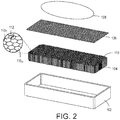
- FIG. 2 illustrates an exploded isometric view of the example indicator tag 100.
- FIG. 2 illustrates the container 102, the mesh 104, the membrane 106, and the dye 108.
- FIG. 2 illustrates the container 102 and the mesh 104 as separate components, it should be noted that the container 102 and the mesh 104 may be printed as a single unitary piece, as noted above.
- the mesh 104 may include pores 110 1 to 110 n (hereinafter also referred to individually as a pore 110 or collectively as pores 110).
- the mesh 104 may be printed to provide a desired indication.
- the pores 110 may have a diameter 112 or opening size.
- the diameter 112 of the pores 110 may be varied to achieve a desired indication. The larger the pores 110, the more quickly the dye 108 may enter the mesh 104 and dissolve the mesh 104. In some applications, it may be desired to have an instantaneous indication. Thus, the diameter 112 of the pores 110 may be made large to allow the dye 108 to almost instantly dissolve the mesh 104 upon contact.
- the diameter 112 of the pores 110 may be made smaller to prevent the dye 108 from entering the mesh 104 too quickly. Thus, the dye 108 may slowly dissolve the mesh 104.
- the indication may be an expiration of time as noted above. As a result, the diameter 112 of the pores 110 may be made to allow the dye 108 to fully dissolve the mesh 104 in the desired amount of time.
- the mesh 104 may be printed to have a lattice-like structure with a finite pore size.
- the lattice-like structure of the mesh 104 may have a controlled dissolution in the presence of the dye 108.
- the decay function may be bound by a maximum value of a, which may be user selected.
- the value of b may represent a pore size in the mesh 104. The smaller the value of b, the more time it takes for the decay function to reach equilibrium (e.g., the complete dissolution of the mesh 104 in the dye 108).
- the indicator tag 100 may be designed to provide a variety of different indications.
- the indications may include an expiration of time as noted above, an exposure to a temperature, an exposure to a temperature for a predefined amount of time, a pressure, or the like.
- the mesh 104 may be designed to dissolve in three months to indicate an expiration of a medicine.
- the cap of a prescription bottle may include the indicator tag 100. When the user opens the cap, the user may puncture the membrane 106 to allow the dye 108 to contact the mesh 104. After three months the mesh 104 may be completely dissolved by the dye 108.
- the indicator tag 100 may be used for day passes to an amusement park.
- the mesh 104 may be designed to dissolve after 24 hours.
- the membrane 106 may be punctured or removed to allow the dye 108 to contact the mesh 104.
- the mesh 104 may dissolve after 24 hours.
- the remaining liquid may be of a complementary color to the dye 108 and the mesh 104.
- the dye 108 may be yellow and the mesh 104 may be green.
- the remaining liquid may turn blue.
- the membrane 106 may be made to burst or dissolve at a predefined temperature.
- the membrane 106 may be a material that burns or melts at 100 degrees Celsius (°C).
- the mesh 104 may be designed to dissolve instantly when contacted with the dye 108. As a result, a user may see that the indicator tag 100 has been exposed to a temperature of 100 °C or greater.
- a manufacturer may void a warranty for an electronic device if the device has been exposed to temperatures of 100 °C or greater.
- a user may leave his or her laptop in her car in the summer when the temperature inside the car may be greater than 100 °C. The laptop may fail and the user may want to return the laptop.
- the manufacture may check the indicator tag 100 to see that the mesh 104 has melted indicating that the indicator tag 100 (and the laptop) have been exposed to temperatures greater than 100 °C and deny the return.
- the membrane 106 may be made from a material that can slowly melt or dissolve over a period of time.
- the membrane 106 may be a paraffin wax that melts when exposed to temperatures greater than a predefined temperature for a predefined period of time (e.g., 150 °C for 30 minutes).
- a manufacturer may void a warranty for an electronic device if the device has been exposed to a certain temperature for longer than a predefined amount of time. For example, it may be known that exposing a camera to temperatures of greater than 150 °C for longer than 2 hours may damage the camera. Thus, if the user tries to claim a manufacturing defect on the camera, the manufacturer may check the indicator tag 100 to see that the mesh 104 is completely dissolved by the dye 108. Thus, the manufacturer may know that the camera has been exposed to temperatures greater than 150 °C for longer than 2 hours.
- the membrane 106 may be made from a material that bursts at a predefined pressure.
- a gas may be injected between the membrane 106 and the mesh 104. The gas may expand under a predefined pressure. When the indicator tag 100 is exposed to the predefined pressure, the gas may expand causing the membrane 106 to burst and allow the dye 108 to fall into the mesh 104.
- the membrane 106 may be made from a porous material.
- the pores may remain closed when exposed to a pressure below a predefined pressure. However, when the pressure exceeds the predefined pressure, the pores may open allowing the dye 108 to fall into the mesh 104.
- a watch manufacturer may warranty a watch for use only up to 10 meters underwater. If the watch goes deeper than 10 meters, the pressure may cause the watch to malfunction. A user may go diving with a watch hundreds of meters deep. The pressure may cause the membrane 106 to burst or the pores to open allowing the dye 108 to contact the mesh 104. As a result, the mesh 104 may be completely dissolved by the dye 108. The watch manufacturer may see this and void a warranty on the watch since the indicator tag 100 indicates that the watch has been exposed to pressures greater than the pressure at a depth of the recommended 10 meters.
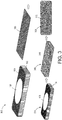
- FIG. 3 illustrates an example operational flow diagram of activating the indicator tag 100.
- the membrane 106 may be removed.
- the membrane 106 may be removed in several different ways depending on the indication that is provided by the indicator tag 100. For example, the membrane 106 may be peeled away from the container 102, the membrane 106 may be punctured, the membrane 106 may be melted, the membrane 106 may burst, the membrane 106 may have pores that open and close, and the like.
- the dye 108 may contact mesh 104.
- the dye 108 may begin entering the pores 110 of the mesh 104 to dissolve the mesh 104.
- the dye 108 and the dissolved portions of the mesh 104 may begin to mix to form an intermediary mixture 310.
- the intermediary mixture 310 may be a mixture of the dye 108 and the dissolved portions of the mesh 104 and may appear to be more of the color of the dye 108 or the mesh 104. In other words, the intermediary mixture 310 may be formed when the mesh 104 has not completely dissolved to form a complementary color to the dye 108 and the mesh 104.
- the mesh 104 may be completely dissolved.
- the dissolved mesh 104 and the dye 108 may mix to form the complementary color mixture 312.
- the dye 108 and the mesh 104 may be colors that mix together to form a third complementary color.
- the dye 108 can be red and the mesh 104 can be yellow to form an orange complementary color mixture 312.
- the dye 108 can be red and the mesh 104 can be blue to form a purple complementary color mixture 312, and so forth.
- the speed at which the mesh 104 is dissolved by the dye 108 may be a function of a design of the mesh 104 (e.g., the diameter 112 or opening size of the pores 110).
- the design of the mesh 104 may be based on a desired indication.
- the mesh 104 may be designed to dissolve over a predetermined amount of time to indicate a particular expiration of time or the mesh 104 may be designed to dissolve instantaneously to indicate exposure to a particular temperature or pressure.
- the present disclosure provides a low cost and effective indicator tag 100 that can be used to provide a variety of different indications.
- the indicator tag 100 can be used to indicate an expiration of time, an exposure to a certain temperature, an exposure to a certain pressure, or any combination thereof.
- the indicator tag 100 can be produced using existing printers that can dispense and cure water soluble UV curable inks to form the mesh 104.
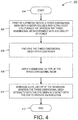
- FIG. 4 illustrates a flowchart of an example method 400 for fabricating an indicator tag of the present disclosure.
- one or more steps or operations of the method 400 may be performed by a printer that dispenses or prints water soluble UV curable ink and/or one or more items of manufacturing equipment as part of an assembly line or manufacturing facility.
- the method 400 begins.
- the method 400 prints, by a printing device, a three-dimensional mesh with a water soluble and ultra-violet (UV) light curable ink, wherein the three-dimensional mesh is printed with a plurality of pores.
- an external computing device may be used to design and model the mesh.
- the 3D model may be transmitted to the printer.
- the printer may then dispense the water soluble UV curable ink layer by layer.
- the water soluble UV curable ink may be dispensed on a first layer and then cured.
- the printer may then dispense the water soluble UV curable ink on a second layer and then cured, and so forth.
- the water soluble UV curable ink may be dispensed in accordance with a design of the 3D model of the mesh.
- the design may include features such as a plurality of pores in the mesh, a size of the pores (e.g., an average diameter), and the like.
- the method 400 encloses the three-dimensional mesh with a container.
- the container may be a non-soluble material.
- the container may be fabricated from a plastic or metal.
- the container may also be printed.
- the container may be printed as part of the mesh. In other words, the container and the mesh may be printed as a single unitary piece.
- the method 400 applies a membrane on top of the three-dimensional mesh.
- the membrane may be applied directly on top of the three-dimensional mesh.
- the membrane may be placed over the top of the three-dimensional mesh by applying the membrane around the outer edge of the container.
- the membrane may be fabricated from a variety of different materials depending on the indication provided by the indicator tag, as discussed above.
- the membrane may be any thin piece of plastic that can be punctured, the membrane may be a material that melts (e.g., paraffin wax), the membrane may be a material that bursts, the membrane material may be a porous material that has pores that open under certain pressure, and the like.
- the method 400 dispenses a dye on top of the membrane, wherein the three-dimensional mesh interacts with the dye when in contact with the dye to provide an indication.
- the color of the dye and the three-dimensional mesh may be complementary colors to form a third color when mixed.
- the indication may be an expiration of time, an exposure to a predefined temperature, an exposure to a predefined pressure, and the like.
- one or more steps, functions, or operations of the method 400 described above may include a storing, displaying and/or outputting step as required for a particular application.
- any data, records, fields, and/or intermediate results discussed in the methods can be stored, displayed, and/or outputted to another device as required for a particular application.
- the use of the term "optional" in the above disclosure does not mean that any other steps not labeled as "optional” are not optional.
- any claims not reciting a step that is not labeled as optional is not to be deemed as missing an essential step, but instead should be deemed as reciting an embodiment where such omitted steps are deemed to be optional in that embodiment.
Landscapes
- Physics & Mathematics (AREA)
- General Physics & Mathematics (AREA)
- Engineering & Computer Science (AREA)
- Life Sciences & Earth Sciences (AREA)
- Health & Medical Sciences (AREA)
- Chemical & Material Sciences (AREA)
- Theoretical Computer Science (AREA)
- Immunology (AREA)
- General Health & Medical Sciences (AREA)
- Biochemistry (AREA)
- Analytical Chemistry (AREA)
- Pathology (AREA)
- Optics & Photonics (AREA)
- Molecular Biology (AREA)
- Chemical Kinetics & Catalysis (AREA)
- Plasma & Fusion (AREA)
- Biophysics (AREA)
- Computer Security & Cryptography (AREA)
- Measuring Temperature Or Quantity Of Heat (AREA)
- Details Of Rigid Or Semi-Rigid Containers (AREA)
Abstract
Description
- The present disclosure relates generally to various indicator tags and, more particularly, to an indicator tag that exhibits color transition and a method for making the same.
- Various products are produced that have an expiration. For example, foods and drugs can have a time expiration. After a certain period of time, the foods may spoil or the drugs may be ineffective. In other industries, products may have limits on exposure. For example, some electronics may have temperature limits or pressure limits. For example, when the electronics are exposed to certain high temperatures or pressures, the electronics may tend to fail.
- Some previous solutions may be to manually write a date to indicate the date of expiration. For electronics, the user may be responsible for preventing exposure to the high temperatures and/or pressure. However, these manual solutions may not be reliable.
- In addition, it may not be economically or practically feasible to use previous automated solutions. For example, putting a clock or other type of electronic/battery operated timer on a food item or drug may not make practical or economic sense. Putting electronic sensors on the electronic devices may also add costs to the manufacture and/or production of these electronic devices.
- According to aspects illustrated herein, there are provided an indicator tag and a method for fabricating the same. One disclosed feature of the embodiments is an indicator tag that comprises a three-dimensional mesh comprising a plurality of pores, wherein the three-dimensional mesh is printed with a water soluble and ultra-violet (UV) light curable ink, a container enclosing the three-dimensional mesh, a membrane coupled to the three-dimensional mesh, and a dye dispensed on top of the membrane, wherein the three-dimensional mesh interacts with the dye when in contact with the dye to provide an indication.
- Another disclosed feature of the embodiments is a method for fabricating an indicator tag. In one embodiment, the method comprises printing, by a printing device, a three-dimensional mesh with a water soluble and ultra-violet (UV) light curable ink, wherein the three-dimensional mesh is printed with a plurality of pores, enclosing the three-dimensional mesh with a container, applying a membrane on top of the three-dimensional mesh, and dispensing a dye on top of the membrane, wherein the three-dimensional mesh interacts with the dye when in contact with the dye to provide an indication.
-
FIG. 1 illustrates an isometric view of an example indicator tag of the present disclosure; -
FIG. 2 illustrates an exploded isometric view of the example indicator tag of the present disclosure; -
FIG. 3 illustrates an operational flow diagram of activating the indicator tag of the present disclosure; and -
FIG. 4 illustrates a flowchart of an example method for fabricating an indicator tag of the present disclosure. - The present disclosure broadly discloses indicator tags that exhibit color transition and methods for making the same. As discussed above, various products may have an expiration or may have a possibility of failure when exposed to certain temperatures or pressure. As noted above, trying to rely on manual solutions or expensive electronic solutions to indicate the expiration or exposure to certain temperatures and pressure may not be feasible.
- The present disclosure provides a low cost printable indicator tag that can exhibit a color transition to provide different indications. The indicator tag can be printed using a three dimensional printer. The indicator tag can be manufactured to indicate various amounts of time, temperature, and/or pressure.
-
FIG. 1 illustrates an isometric view of anexample indicator tag 100 of the present disclosure. In one embodiment, theindicator tag 100 includes acontainer 102, amesh 104, amembrane 106, and adye 108. Thecontainer 102 may enclose themesh 104. - In one embodiment, the
mesh 104 may be a three-dimensional (3D) mesh. Themesh 104 may be printed via a printing device. For example, themesh 104 may be printed with a water soluble and ultra-violet (UV) light curable ink. The printing device may have printheads that dispense the water soluble UV curable ink onto a platform or surface. The ink may be cured under UV lights. - In one embodiment, the ink when cured may have a firm structure. In other words, the UV cured ink may have a rigid texture. The water soluble UV curable ink may be used to print raised images on various different surfaces. However, the water soluble UV curable ink may be printed in additional layers to build the
mesh 104. - In one embodiment, the
membrane 106 may be applied to the top of themesh 104. In one embodiment, themembrane 106 may be applied to the outer perimeter of thecontainer 102 to create a gap between themembrane 106 and the mesh. The gap may allow themembrane 106 to be punctured in some instances. Themembrane 106 may be fabricated from a variety of different materials to provide different indications, as discussed in further details below. - In one embodiment, the
indicator tag 100 may also include adye 108 that is dispensed on top of themembrane 106. In one embodiment, thedye 108 may be enclosed on top of themembrane 106. For example, another membrane or layer may be applied to contain thedye 108. Thedye 108 may be a water based ink that may be used to interact with themesh 104. - In one embodiment, when the
dye 108 contacts themesh 104, thedye 108 may dissolve themesh 104. For example, themembrane 106 may be removed, may be dissolved due to an indication, may open due to an indication, may be punctured, and the like. - In one embodiment, the
mesh 104 may be designed to provide any desired indication of an expiration of time. Based on how themesh 104 is designed and fabricated, the indication of the expiration of time may be provided when thedye 108 completely dissolves themesh 104. In one embodiment, the amount ofdye 108 that is dispensed may be based on the desired indication and sufficient to dissolve themesh 104 within the indication. - In one embodiment, the color of the
dye 108 and the color of the water soluble UV curable ink that is used to print themesh 104 may be complementary colors. For instance, thedye 108 may be yellow and themesh 104 may be green. As a result, when thedye 108 completely dissolves themesh 104, the remaining liquid may be a blue liquid. - A user may know that the indication is present when the remaining liquid is completely blue. For example, if the indication was an expiration of time (e.g., 3 months), the user may know that the expiration of time has not been reached until the
mesh 104 is completely dissolved and the liquid that remains is blue. - In one embodiment, the
container 102 may have alip 120. Thelip 120 may ensure that thedye 108 does not overflow and spill out of thecontainer 102. Thecontainer 102 may have a length and width that is approximately the same as themesh 104. In one embodiment, thecontainer 102 may be printed with the water soluble UV curable ink. In other words, thecontainer 102 and themesh 104 may be a single unitary printed part. -
FIG. 2 illustrates an exploded isometric view of theexample indicator tag 100.FIG. 2 illustrates thecontainer 102, themesh 104, themembrane 106, and thedye 108. AlthoughFIG. 2 illustrates thecontainer 102 and themesh 104 as separate components, it should be noted that thecontainer 102 and themesh 104 may be printed as a single unitary piece, as noted above. - In one embodiment, the
mesh 104 may includepores 1101 to 110n (hereinafter also referred to individually as apore 110 or collectively as pores 110). As noted above, themesh 104 may be printed to provide a desired indication. For example, thepores 110 may have adiameter 112 or opening size. In one embodiment, thediameter 112 of thepores 110 may be varied to achieve a desired indication. The larger thepores 110, the more quickly thedye 108 may enter themesh 104 and dissolve themesh 104. In some applications, it may be desired to have an instantaneous indication. Thus, thediameter 112 of thepores 110 may be made large to allow thedye 108 to almost instantly dissolve themesh 104 upon contact. - In another embodiment, it may be desired to have a slower indication. Thus, the
diameter 112 of thepores 110 may be made smaller to prevent thedye 108 from entering themesh 104 too quickly. Thus, thedye 108 may slowly dissolve themesh 104. In one example, the indication may be an expiration of time as noted above. As a result, thediameter 112 of thepores 110 may be made to allow thedye 108 to fully dissolve themesh 104 in the desired amount of time. - In one embodiment, the
mesh 104 may be printed to have a lattice-like structure with a finite pore size. The lattice-like structure of themesh 104 may have a controlled dissolution in the presence of thedye 108. In one example, the interaction of themesh 104 and thedye 108 may follow a two-dimensional hyperbolic decay function, such as y = a(1-e-bt), where a and b are constants, e is an exponential function, and t is time. The decay function may be bound by a maximum value of a, which may be user selected. The value of b may represent a pore size in themesh 104. The smaller the value of b, the more time it takes for the decay function to reach equilibrium (e.g., the complete dissolution of themesh 104 in the dye 108). - The
indicator tag 100 may be designed to provide a variety of different indications. For example, the indications may include an expiration of time as noted above, an exposure to a temperature, an exposure to a temperature for a predefined amount of time, a pressure, or the like. In the example of the expiration of time, themesh 104 may be designed to dissolve in three months to indicate an expiration of a medicine. The cap of a prescription bottle may include theindicator tag 100. When the user opens the cap, the user may puncture themembrane 106 to allow thedye 108 to contact themesh 104. After three months themesh 104 may be completely dissolved by thedye 108. - In another example for expiration of time, the
indicator tag 100 may be used for day passes to an amusement park. For example, themesh 104 may be designed to dissolve after 24 hours. As a result, when a patron enters the park, themembrane 106 may be punctured or removed to allow thedye 108 to contact themesh 104. Themesh 104 may dissolve after 24 hours. Thus, if the patron tries to use the pass again, an employee may easily see that themesh 104 has been completely dissolved by the dye. - In one embodiment, the remaining liquid may be of a complementary color to the
dye 108 and themesh 104. For example, thedye 108 may be yellow and themesh 104 may be green. When themesh 104 is completely dissolved, the remaining liquid may turn blue. - In the example of temperature, the
membrane 106 may be made to burst or dissolve at a predefined temperature. For example, themembrane 106 may be a material that burns or melts at 100 degrees Celsius (°C). Themesh 104 may be designed to dissolve instantly when contacted with thedye 108. As a result, a user may see that theindicator tag 100 has been exposed to a temperature of 100 °C or greater. - For example, a manufacturer may void a warranty for an electronic device if the device has been exposed to temperatures of 100 °C or greater. A user may leave his or her laptop in her car in the summer when the temperature inside the car may be greater than 100 °C. The laptop may fail and the user may want to return the laptop. However, the manufacture may check the
indicator tag 100 to see that themesh 104 has melted indicating that the indicator tag 100 (and the laptop) have been exposed to temperatures greater than 100 °C and deny the return. - In the example of temperature and time, the
membrane 106 may be made from a material that can slowly melt or dissolve over a period of time. For example, themembrane 106 may be a paraffin wax that melts when exposed to temperatures greater than a predefined temperature for a predefined period of time (e.g., 150 °C for 30 minutes). - For example, a manufacturer may void a warranty for an electronic device if the device has been exposed to a certain temperature for longer than a predefined amount of time. For example, it may be known that exposing a camera to temperatures of greater than 150 °C for longer than 2 hours may damage the camera. Thus, if the user tries to claim a manufacturing defect on the camera, the manufacturer may check the
indicator tag 100 to see that themesh 104 is completely dissolved by thedye 108. Thus, the manufacturer may know that the camera has been exposed to temperatures greater than 150 °C for longer than 2 hours. - In an example of pressure, the
membrane 106 may be made from a material that bursts at a predefined pressure. For example, a gas may be injected between themembrane 106 and themesh 104. The gas may expand under a predefined pressure. When theindicator tag 100 is exposed to the predefined pressure, the gas may expand causing themembrane 106 to burst and allow thedye 108 to fall into themesh 104. - In another embodiment, the
membrane 106 may be made from a porous material. The pores may remain closed when exposed to a pressure below a predefined pressure. However, when the pressure exceeds the predefined pressure, the pores may open allowing thedye 108 to fall into themesh 104. - For example, a watch manufacturer may warranty a watch for use only up to 10 meters underwater. If the watch goes deeper than 10 meters, the pressure may cause the watch to malfunction. A user may go diving with a watch hundreds of meters deep. The pressure may cause the
membrane 106 to burst or the pores to open allowing thedye 108 to contact themesh 104. As a result, themesh 104 may be completely dissolved by thedye 108. The watch manufacturer may see this and void a warranty on the watch since theindicator tag 100 indicates that the watch has been exposed to pressures greater than the pressure at a depth of the recommended 10 meters. -
FIG. 3 illustrates an example operational flow diagram of activating theindicator tag 100. Atblock 302, themembrane 106 may be removed. As noted above, themembrane 106 may be removed in several different ways depending on the indication that is provided by theindicator tag 100. For example, themembrane 106 may be peeled away from thecontainer 102, themembrane 106 may be punctured, themembrane 106 may be melted, themembrane 106 may burst, themembrane 106 may have pores that open and close, and the like. - At
block 304, thedye 108 may contactmesh 104. Thedye 108 may begin entering thepores 110 of themesh 104 to dissolve themesh 104. - At
block 306, thedye 108 and the dissolved portions of themesh 104 may begin to mix to form anintermediary mixture 310. Theintermediary mixture 310 may be a mixture of thedye 108 and the dissolved portions of themesh 104 and may appear to be more of the color of thedye 108 or themesh 104. In other words, theintermediary mixture 310 may be formed when themesh 104 has not completely dissolved to form a complementary color to thedye 108 and themesh 104. - At
block 308, themesh 104 may be completely dissolved. As a result the dissolvedmesh 104 and thedye 108 may mix to form thecomplementary color mixture 312. As discussed above, thedye 108 and themesh 104 may be colors that mix together to form a third complementary color. For example, thedye 108 can be red and themesh 104 can be yellow to form an orangecomplementary color mixture 312. Thedye 108 can be red and themesh 104 can be blue to form a purplecomplementary color mixture 312, and so forth. - As discussed above, the speed at which the
mesh 104 is dissolved by thedye 108 may be a function of a design of the mesh 104 (e.g., thediameter 112 or opening size of the pores 110). In addition, the design of themesh 104 may be based on a desired indication. For example, themesh 104 may be designed to dissolve over a predetermined amount of time to indicate a particular expiration of time or themesh 104 may be designed to dissolve instantaneously to indicate exposure to a particular temperature or pressure. - Thus, the present disclosure provides a low cost and
effective indicator tag 100 that can be used to provide a variety of different indications. For example, theindicator tag 100 can be used to indicate an expiration of time, an exposure to a certain temperature, an exposure to a certain pressure, or any combination thereof. Theindicator tag 100 can be produced using existing printers that can dispense and cure water soluble UV curable inks to form themesh 104. -
FIG. 4 illustrates a flowchart of anexample method 400 for fabricating an indicator tag of the present disclosure. In one embodiment, one or more steps or operations of themethod 400 may be performed by a printer that dispenses or prints water soluble UV curable ink and/or one or more items of manufacturing equipment as part of an assembly line or manufacturing facility. - At block 402, the
method 400 begins. Atblock 404, themethod 400 prints, by a printing device, a three-dimensional mesh with a water soluble and ultra-violet (UV) light curable ink, wherein the three-dimensional mesh is printed with a plurality of pores. In one example, an external computing device may be used to design and model the mesh. The 3D model may be transmitted to the printer. The printer may then dispense the water soluble UV curable ink layer by layer. For example, the water soluble UV curable ink may be dispensed on a first layer and then cured. The printer may then dispense the water soluble UV curable ink on a second layer and then cured, and so forth. - The water soluble UV curable ink may be dispensed in accordance with a design of the 3D model of the mesh. The design may include features such as a plurality of pores in the mesh, a size of the pores (e.g., an average diameter), and the like.
- At
block 406, themethod 400 encloses the three-dimensional mesh with a container. For example, the container may be a non-soluble material. For example, the container may be fabricated from a plastic or metal. In another embodiment, the container may also be printed. The container may be printed as part of the mesh. In other words, the container and the mesh may be printed as a single unitary piece. - At
block 408, themethod 400 applies a membrane on top of the three-dimensional mesh. In one embodiment, the membrane may be applied directly on top of the three-dimensional mesh. In one embodiment, the membrane may be placed over the top of the three-dimensional mesh by applying the membrane around the outer edge of the container. - The membrane may be fabricated from a variety of different materials depending on the indication provided by the indicator tag, as discussed above. The membrane may be any thin piece of plastic that can be punctured, the membrane may be a material that melts (e.g., paraffin wax), the membrane may be a material that bursts, the membrane material may be a porous material that has pores that open under certain pressure, and the like.
- At
block 410, themethod 400 dispenses a dye on top of the membrane, wherein the three-dimensional mesh interacts with the dye when in contact with the dye to provide an indication. As discussed above, the color of the dye and the three-dimensional mesh may be complementary colors to form a third color when mixed. The indication may be an expiration of time, an exposure to a predefined temperature, an exposure to a predefined pressure, and the like. Atblock 412, themethod 400 ends. - It should be noted that although not explicitly specified, one or more steps, functions, or operations of the
method 400 described above may include a storing, displaying and/or outputting step as required for a particular application. In other words, any data, records, fields, and/or intermediate results discussed in the methods can be stored, displayed, and/or outputted to another device as required for a particular application. Furthermore, the use of the term "optional" in the above disclosure does not mean that any other steps not labeled as "optional" are not optional. As such, any claims not reciting a step that is not labeled as optional is not to be deemed as missing an essential step, but instead should be deemed as reciting an embodiment where such omitted steps are deemed to be optional in that embodiment.
Claims (20)
- An indicator tag, comprising:a three-dimensional mesh comprising a plurality of pores, wherein the three-dimensional mesh is printed with a water soluble and ultra-violet (UV) light curable ink;a container enclosing the three-dimensional mesh;a membrane coupled to the three-dimensional mesh; anda dye dispensed on top of the membrane, wherein the three-dimensional mesh interacts with the dye when in contact with the dye to provide an indication.
- The indicator tag of claim 1, wherein the membrane is removably coupled to a top side of the three-dimensional mesh, wherein the membrane is removed to expose the three-dimensional mesh to the dye.
- The indicator tag of claim 1, wherein the membrane is coupled to the top side of the three-dimensional mesh via an adhesive, wherein the membrane is punctured to expose the three-dimensional mesh to the dye.
- The indicator tag of claim 1, wherein the membrane comprises a non-permeable membrane and the indication comprises an expiration of time.
- The indicator tag of claim 4, wherein the plurality of pores are sized as a function of time to change color and completely dissolve when in contact with the dye.
- The indicator tag of claim 1, wherein the membrane comprises a temperature sensitive membrane and the indication comprises a temperature.
- The indicator tag of claim 6, wherein the plurality of pores have a diameter that causes an instant reaction when contact with the dye when the temperature sensitive membrane is removed by exposure to a temperature above a threshold.
- The indicator tag of claim 1, wherein the membrane comprises a time and temperature sensitive membrane wherein the indication comprises an expiration of time and a temperature.
- The indicator tag of claim 8, wherein the membrane comprises a paraffin wax that dissolves after exposure to a predefined amount of time at a predefined temperature.
- The indicator tag of claim 1, wherein the membrane comprises a material that bursts under a predefined amount of pressure and the indication comprises an amount of pressure.
- The indicator tag of claim 1, wherein the membrane comprises a porous material, wherein membrane pores of the membrane open to release the dye when exposed to a predefined amount of pressure.
- The indicator tag of claim 1, wherein a color of water soluble and UV light curable ink is a complementary color of a color of the dye.
- The indicator tag of claim 1, wherein the three-dimensional mesh completely dissolves to form a liquid of the complementary color when exposed to the dye.
- A method for fabricating a magnetic material with variable magnetic alignment, comprising:printing, by a printing device, a three-dimensional mesh with a water soluble and ultra-violet (UV) light curable ink, wherein the three-dimensional mesh is printed with a plurality of pores;enclosing the three-dimensional mesh with a container;applying a membrane on top of the three-dimensional mesh; anddispensing a dye on top of the membrane, wherein the three-dimensional mesh interacts with the dye when in contact with the dye to provide an indication.
- The method of claim 14, further comprising:
removing the membrane to expose the three-dimensional mesh to the dye to provide the indication. - The method of claim 14, wherein the membrane comprises a non-permeable membrane and the indication comprises an expiration of time.
- The method of claim 14, wherein the membrane comprises a temperature sensitive membrane and the indication comprises a temperature.
- The method of claim 14, wherein the membrane comprises a time and temperature sensitive membrane wherein the indication comprises an expiration of time and a temperature.
- The method of claim 14, wherein the membrane comprises a material that bursts under a predefined amount of pressure and the indication comprises an amount of pressure.
- An indicator tag, comprising:a three-dimensional mesh comprising a plurality of pores, wherein the three-dimensional mesh is printed with a water soluble and ultra-violet (UV) light curable ink, wherein an average diameter of the plurality of pores is a function of a desired rate of an indication;a container enclosing the three-dimensional mesh, wherein a height of the container is higher than a height of the three-dimensional mesh;a membrane coupled to the container over the three-dimensional mesh; anda dye dispensed on top of the membrane and inside of the container, wherein the three-dimensional mesh interacts with the dye when the membrane is removed and the dye contacts the three-dimensional mesh to provide an indication, wherein the indication comprises at least one of: an expiration of time based on average diameter of the plurality of pores of the three-dimensional mesh, a temperature based on a membrane that melts at a predefined temperature, or a pressure based on a membrane that comprises a membrane pores that open when exposed to a predefined pressure.
Applications Claiming Priority (1)
| Application Number | Priority Date | Filing Date | Title |
|---|---|---|---|
| US16/228,340 US11243121B2 (en) | 2018-12-20 | 2018-12-20 | Indicator tags that exhibit color transition |
Publications (2)
| Publication Number | Publication Date |
|---|---|
| EP3671702A1 true EP3671702A1 (en) | 2020-06-24 |
| EP3671702B1 EP3671702B1 (en) | 2023-03-01 |
Family
ID=68944357
Family Applications (1)
| Application Number | Title | Priority Date | Filing Date |
|---|---|---|---|
| EP19217224.5A Active EP3671702B1 (en) | 2018-12-20 | 2019-12-17 | Indicator tags that exhibit color transition |
Country Status (6)
| Country | Link |
|---|---|
| US (1) | US11243121B2 (en) |
| EP (1) | EP3671702B1 (en) |
| JP (1) | JP7304277B2 (en) |
| KR (1) | KR102585397B1 (en) |
| CN (1) | CN111354659B (en) |
| CA (1) | CA3065200C (en) |
Cited By (1)
| Publication number | Priority date | Publication date | Assignee | Title |
|---|---|---|---|---|
| US11551777B2 (en) * | 2019-08-09 | 2023-01-10 | Micron Technology, Inc. | Apparatus with circuit-locating mechanism |
Families Citing this family (3)
| Publication number | Priority date | Publication date | Assignee | Title |
|---|---|---|---|---|
| JP6963744B2 (en) * | 2017-07-05 | 2021-11-10 | 大日本印刷株式会社 | Cap with pressure sensitive indicator and its manufacturing method |
| FR3097636B1 (en) * | 2019-06-20 | 2021-07-02 | Christian Hug | Autonomous and irreversible pressure variation detector |
| US12492069B2 (en) * | 2020-08-27 | 2025-12-09 | Akimoto Seisakusyo Co., Ltd. | Container |
Citations (3)
| Publication number | Priority date | Publication date | Assignee | Title |
|---|---|---|---|---|
| US20040240324A1 (en) * | 2001-07-11 | 2004-12-02 | Reuben Isbitsky | Time indicator and method of manufacturing same |
| US20050005839A1 (en) * | 1998-01-16 | 2005-01-13 | Robert Moule | Barrier materials and products produced therewith |
| WO2007050281A2 (en) * | 2005-10-25 | 2007-05-03 | Ultradent Products, Inc. | Method for indicating shelf-life after mixing pre-dosed, pre-packaged two-part dental compositions |
Family Cites Families (5)
| Publication number | Priority date | Publication date | Assignee | Title |
|---|---|---|---|---|
| US8007578B2 (en) * | 2005-10-07 | 2011-08-30 | Hewlett-Packard Development Company, L.P. | Pigmented ink having infrared absorption and low visible color |
| WO2009103611A1 (en) * | 2008-02-21 | 2009-08-27 | Basf Se | Uv-dose indicator films |
| US20150241288A1 (en) * | 2014-02-24 | 2015-08-27 | Mc10. Inc. | Conformal electronics with deformation indicators |
| US9920883B2 (en) * | 2014-07-10 | 2018-03-20 | Quantum Fuel Systems Llc | Damage indicator for a composite pressure tank |
| US20160033383A1 (en) * | 2014-08-01 | 2016-02-04 | Trustees Of Boston University | Portable sensors for determination of liquid surface tension, and methods of uses thereof |
-
2018
- 2018-12-20 US US16/228,340 patent/US11243121B2/en active Active
-
2019
- 2019-11-21 CN CN201911153683.3A patent/CN111354659B/en not_active Expired - Fee Related
- 2019-12-02 JP JP2019217663A patent/JP7304277B2/en active Active
- 2019-12-05 KR KR1020190161075A patent/KR102585397B1/en active Active
- 2019-12-16 CA CA3065200A patent/CA3065200C/en active Active
- 2019-12-17 EP EP19217224.5A patent/EP3671702B1/en active Active
Patent Citations (3)
| Publication number | Priority date | Publication date | Assignee | Title |
|---|---|---|---|---|
| US20050005839A1 (en) * | 1998-01-16 | 2005-01-13 | Robert Moule | Barrier materials and products produced therewith |
| US20040240324A1 (en) * | 2001-07-11 | 2004-12-02 | Reuben Isbitsky | Time indicator and method of manufacturing same |
| WO2007050281A2 (en) * | 2005-10-25 | 2007-05-03 | Ultradent Products, Inc. | Method for indicating shelf-life after mixing pre-dosed, pre-packaged two-part dental compositions |
Cited By (3)
| Publication number | Priority date | Publication date | Assignee | Title |
|---|---|---|---|---|
| US11551777B2 (en) * | 2019-08-09 | 2023-01-10 | Micron Technology, Inc. | Apparatus with circuit-locating mechanism |
| US11967390B2 (en) | 2019-08-09 | 2024-04-23 | Micron Technology, Inc. | Apparatus with circuit-locating mechanism |
| US12266411B2 (en) | 2019-08-09 | 2025-04-01 | Micron Technology, Inc. | Apparatus with circuit-locating mechanism |
Also Published As
| Publication number | Publication date |
|---|---|
| KR102585397B1 (en) | 2023-10-10 |
| CA3065200C (en) | 2023-05-09 |
| KR20200077412A (en) | 2020-06-30 |
| US11243121B2 (en) | 2022-02-08 |
| CA3065200A1 (en) | 2020-06-20 |
| CN111354659B (en) | 2023-03-14 |
| US20200200611A1 (en) | 2020-06-25 |
| EP3671702B1 (en) | 2023-03-01 |
| JP2020101797A (en) | 2020-07-02 |
| JP7304277B2 (en) | 2023-07-06 |
| CN111354659A (en) | 2020-06-30 |
Similar Documents
| Publication | Publication Date | Title |
|---|---|---|
| CA3065200C (en) | Indicator tags that exhibit color transition | |
| US11781922B2 (en) | Thermochromic ink indicia for activatable quality labels | |
| US5633835A (en) | Long term rapid color changing time indicator | |
| KR101123956B1 (en) | Critical temperature indicator and manufacturing method thereof | |
| DE3784106T2 (en) | TEMPERATURE-SENSITIVE DEVICES. | |
| US5699326A (en) | Time indicator | |
| US8968662B2 (en) | Time temperature indicator | |
| EP0906591A1 (en) | Long-term rapid color changing time indicator employing dye absorbing viewing layer | |
| EP1842113B1 (en) | Open life indicator label for food produce and suchlike | |
| US20160244250A1 (en) | Disposable Single Serve Coffee Pod Usage Indicator and Messaging System | |
| US9241872B2 (en) | Timed sequence indicators | |
| JP2020101797A5 (en) | ||
| FR3128405A1 (en) | Customizable Supplies for Elevated Temperature Exposure Monitoring | |
| WO2017038292A1 (en) | Temperature history indicator | |
| CN108603796B (en) | Time temperature indicating module and manufacturing method thereof | |
| WO2007075418A2 (en) | Three-dimensional dye migration time indicator | |
| CN104122001B (en) | Freeze indicators | |
| JP2003065862A (en) | Temperature display | |
| JP6511408B2 (en) | Temperature history indicator, method of manufacturing the same, and method of using the same | |
| DE69817138T2 (en) | Improved time-temperature indicator and process for its manufacture | |
| JP2004257828A (en) | Heat sensitive device showing thermal history to specified temperature | |
| JP2006133190A (en) | Thermal history management sheet and thermal history management method | |
| RU231492U1 (en) | Irreversible temperature violation indicator with visual registration | |
| EP3996929B1 (en) | Monitoring system for perishable products | |
| US20250383238A1 (en) | Activatable temperature exposure indicator and method of manufacturing same |
Legal Events
| Date | Code | Title | Description |
|---|---|---|---|
| PUAI | Public reference made under article 153(3) epc to a published international application that has entered the european phase |
Free format text: ORIGINAL CODE: 0009012 |
|
| STAA | Information on the status of an ep patent application or granted ep patent |
Free format text: STATUS: THE APPLICATION HAS BEEN PUBLISHED |
|
| AK | Designated contracting states |
Kind code of ref document: A1 Designated state(s): AL AT BE BG CH CY CZ DE DK EE ES FI FR GB GR HR HU IE IS IT LI LT LU LV MC MK MT NL NO PL PT RO RS SE SI SK SM TR |
|
| AX | Request for extension of the european patent |
Extension state: BA ME |
|
| STAA | Information on the status of an ep patent application or granted ep patent |
Free format text: STATUS: REQUEST FOR EXAMINATION WAS MADE |
|
| 17P | Request for examination filed |
Effective date: 20210111 |
|
| RBV | Designated contracting states (corrected) |
Designated state(s): AL AT BE BG CH CY CZ DE DK EE ES FI FR GB GR HR HU IE IS IT LI LT LU LV MC MK MT NL NO PL PT RO RS SE SI SK SM TR |
|
| STAA | Information on the status of an ep patent application or granted ep patent |
Free format text: STATUS: EXAMINATION IS IN PROGRESS |
|
| 17Q | First examination report despatched |
Effective date: 20211021 |
|
| GRAP | Despatch of communication of intention to grant a patent |
Free format text: ORIGINAL CODE: EPIDOSNIGR1 |
|
| STAA | Information on the status of an ep patent application or granted ep patent |
Free format text: STATUS: GRANT OF PATENT IS INTENDED |
|
| RIC1 | Information provided on ipc code assigned before grant |
Ipc: G09F 3/18 20060101ALN20220823BHEP Ipc: G09F 3/02 20060101ALN20220823BHEP Ipc: G09F 3/03 20060101ALI20220823BHEP Ipc: G09F 3/00 20060101AFI20220823BHEP |
|
| INTG | Intention to grant announced |
Effective date: 20220928 |
|
| GRAS | Grant fee paid |
Free format text: ORIGINAL CODE: EPIDOSNIGR3 |
|
| GRAA | (expected) grant |
Free format text: ORIGINAL CODE: 0009210 |
|
| STAA | Information on the status of an ep patent application or granted ep patent |
Free format text: STATUS: THE PATENT HAS BEEN GRANTED |
|
| AK | Designated contracting states |
Kind code of ref document: B1 Designated state(s): AL AT BE BG CH CY CZ DE DK EE ES FI FR GB GR HR HU IE IS IT LI LT LU LV MC MK MT NL NO PL PT RO RS SE SI SK SM TR |
|
| REG | Reference to a national code |
Ref country code: GB Ref legal event code: FG4D |
|
| REG | Reference to a national code |
Ref country code: CH Ref legal event code: EP Ref country code: AT Ref legal event code: REF Ref document number: 1551547 Country of ref document: AT Kind code of ref document: T Effective date: 20230315 |
|
| REG | Reference to a national code |
Ref country code: DE Ref legal event code: R096 Ref document number: 602019025799 Country of ref document: DE |
|
| REG | Reference to a national code |
Ref country code: IE Ref legal event code: FG4D |
|
| REG | Reference to a national code |
Ref country code: LT Ref legal event code: MG9D |
|
| REG | Reference to a national code |
Ref country code: NL Ref legal event code: MP Effective date: 20230301 |
|
| PG25 | Lapsed in a contracting state [announced via postgrant information from national office to epo] |
Ref country code: RS Free format text: LAPSE BECAUSE OF FAILURE TO SUBMIT A TRANSLATION OF THE DESCRIPTION OR TO PAY THE FEE WITHIN THE PRESCRIBED TIME-LIMIT Effective date: 20230301 Ref country code: NO Free format text: LAPSE BECAUSE OF FAILURE TO SUBMIT A TRANSLATION OF THE DESCRIPTION OR TO PAY THE FEE WITHIN THE PRESCRIBED TIME-LIMIT Effective date: 20230601 Ref country code: LV Free format text: LAPSE BECAUSE OF FAILURE TO SUBMIT A TRANSLATION OF THE DESCRIPTION OR TO PAY THE FEE WITHIN THE PRESCRIBED TIME-LIMIT Effective date: 20230301 Ref country code: LT Free format text: LAPSE BECAUSE OF FAILURE TO SUBMIT A TRANSLATION OF THE DESCRIPTION OR TO PAY THE FEE WITHIN THE PRESCRIBED TIME-LIMIT Effective date: 20230301 Ref country code: HR Free format text: LAPSE BECAUSE OF FAILURE TO SUBMIT A TRANSLATION OF THE DESCRIPTION OR TO PAY THE FEE WITHIN THE PRESCRIBED TIME-LIMIT Effective date: 20230301 Ref country code: ES Free format text: LAPSE BECAUSE OF FAILURE TO SUBMIT A TRANSLATION OF THE DESCRIPTION OR TO PAY THE FEE WITHIN THE PRESCRIBED TIME-LIMIT Effective date: 20230301 |
|
| REG | Reference to a national code |
Ref country code: AT Ref legal event code: MK05 Ref document number: 1551547 Country of ref document: AT Kind code of ref document: T Effective date: 20230301 |
|
| PG25 | Lapsed in a contracting state [announced via postgrant information from national office to epo] |
Ref country code: SE Free format text: LAPSE BECAUSE OF FAILURE TO SUBMIT A TRANSLATION OF THE DESCRIPTION OR TO PAY THE FEE WITHIN THE PRESCRIBED TIME-LIMIT Effective date: 20230301 Ref country code: PL Free format text: LAPSE BECAUSE OF FAILURE TO SUBMIT A TRANSLATION OF THE DESCRIPTION OR TO PAY THE FEE WITHIN THE PRESCRIBED TIME-LIMIT Effective date: 20230301 Ref country code: NL Free format text: LAPSE BECAUSE OF FAILURE TO SUBMIT A TRANSLATION OF THE DESCRIPTION OR TO PAY THE FEE WITHIN THE PRESCRIBED TIME-LIMIT Effective date: 20230301 Ref country code: GR Free format text: LAPSE BECAUSE OF FAILURE TO SUBMIT A TRANSLATION OF THE DESCRIPTION OR TO PAY THE FEE WITHIN THE PRESCRIBED TIME-LIMIT Effective date: 20230602 Ref country code: FI Free format text: LAPSE BECAUSE OF FAILURE TO SUBMIT A TRANSLATION OF THE DESCRIPTION OR TO PAY THE FEE WITHIN THE PRESCRIBED TIME-LIMIT Effective date: 20230301 |
|
| PG25 | Lapsed in a contracting state [announced via postgrant information from national office to epo] |
Ref country code: SM Free format text: LAPSE BECAUSE OF FAILURE TO SUBMIT A TRANSLATION OF THE DESCRIPTION OR TO PAY THE FEE WITHIN THE PRESCRIBED TIME-LIMIT Effective date: 20230301 Ref country code: RO Free format text: LAPSE BECAUSE OF FAILURE TO SUBMIT A TRANSLATION OF THE DESCRIPTION OR TO PAY THE FEE WITHIN THE PRESCRIBED TIME-LIMIT Effective date: 20230301 Ref country code: PT Free format text: LAPSE BECAUSE OF FAILURE TO SUBMIT A TRANSLATION OF THE DESCRIPTION OR TO PAY THE FEE WITHIN THE PRESCRIBED TIME-LIMIT Effective date: 20230703 Ref country code: EE Free format text: LAPSE BECAUSE OF FAILURE TO SUBMIT A TRANSLATION OF THE DESCRIPTION OR TO PAY THE FEE WITHIN THE PRESCRIBED TIME-LIMIT Effective date: 20230301 Ref country code: CZ Free format text: LAPSE BECAUSE OF FAILURE TO SUBMIT A TRANSLATION OF THE DESCRIPTION OR TO PAY THE FEE WITHIN THE PRESCRIBED TIME-LIMIT Effective date: 20230301 Ref country code: AT Free format text: LAPSE BECAUSE OF FAILURE TO SUBMIT A TRANSLATION OF THE DESCRIPTION OR TO PAY THE FEE WITHIN THE PRESCRIBED TIME-LIMIT Effective date: 20230301 |
|
| PG25 | Lapsed in a contracting state [announced via postgrant information from national office to epo] |
Ref country code: SK Free format text: LAPSE BECAUSE OF FAILURE TO SUBMIT A TRANSLATION OF THE DESCRIPTION OR TO PAY THE FEE WITHIN THE PRESCRIBED TIME-LIMIT Effective date: 20230301 Ref country code: IS Free format text: LAPSE BECAUSE OF FAILURE TO SUBMIT A TRANSLATION OF THE DESCRIPTION OR TO PAY THE FEE WITHIN THE PRESCRIBED TIME-LIMIT Effective date: 20230701 |
|
| REG | Reference to a national code |
Ref country code: DE Ref legal event code: R097 Ref document number: 602019025799 Country of ref document: DE |
|
| PLBE | No opposition filed within time limit |
Free format text: ORIGINAL CODE: 0009261 |
|
| STAA | Information on the status of an ep patent application or granted ep patent |
Free format text: STATUS: NO OPPOSITION FILED WITHIN TIME LIMIT |
|
| PGFP | Annual fee paid to national office [announced via postgrant information from national office to epo] |
Ref country code: GB Payment date: 20231121 Year of fee payment: 5 |
|
| PG25 | Lapsed in a contracting state [announced via postgrant information from national office to epo] |
Ref country code: SI Free format text: LAPSE BECAUSE OF FAILURE TO SUBMIT A TRANSLATION OF THE DESCRIPTION OR TO PAY THE FEE WITHIN THE PRESCRIBED TIME-LIMIT Effective date: 20230301 Ref country code: DK Free format text: LAPSE BECAUSE OF FAILURE TO SUBMIT A TRANSLATION OF THE DESCRIPTION OR TO PAY THE FEE WITHIN THE PRESCRIBED TIME-LIMIT Effective date: 20230301 |
|
| PGFP | Annual fee paid to national office [announced via postgrant information from national office to epo] |
Ref country code: FR Payment date: 20231122 Year of fee payment: 5 Ref country code: DE Payment date: 20231121 Year of fee payment: 5 |
|
| 26N | No opposition filed |
Effective date: 20231204 |
|
| PG25 | Lapsed in a contracting state [announced via postgrant information from national office to epo] |
Ref country code: IT Free format text: LAPSE BECAUSE OF FAILURE TO SUBMIT A TRANSLATION OF THE DESCRIPTION OR TO PAY THE FEE WITHIN THE PRESCRIBED TIME-LIMIT Effective date: 20230301 |
|
| REG | Reference to a national code |
Ref country code: CH Ref legal event code: PL |
|
| PG25 | Lapsed in a contracting state [announced via postgrant information from national office to epo] |
Ref country code: LU Free format text: LAPSE BECAUSE OF NON-PAYMENT OF DUE FEES Effective date: 20231217 |
|
| PG25 | Lapsed in a contracting state [announced via postgrant information from national office to epo] |
Ref country code: MC Free format text: LAPSE BECAUSE OF FAILURE TO SUBMIT A TRANSLATION OF THE DESCRIPTION OR TO PAY THE FEE WITHIN THE PRESCRIBED TIME-LIMIT Effective date: 20230301 |
|
| REG | Reference to a national code |
Ref country code: BE Ref legal event code: MM Effective date: 20231231 |
|
| PG25 | Lapsed in a contracting state [announced via postgrant information from national office to epo] |
Ref country code: MC Free format text: LAPSE BECAUSE OF FAILURE TO SUBMIT A TRANSLATION OF THE DESCRIPTION OR TO PAY THE FEE WITHIN THE PRESCRIBED TIME-LIMIT Effective date: 20230301 Ref country code: LU Free format text: LAPSE BECAUSE OF NON-PAYMENT OF DUE FEES Effective date: 20231217 |
|
| REG | Reference to a national code |
Ref country code: IE Ref legal event code: MM4A |
|
| PG25 | Lapsed in a contracting state [announced via postgrant information from national office to epo] |
Ref country code: IE Free format text: LAPSE BECAUSE OF NON-PAYMENT OF DUE FEES Effective date: 20231217 |
|
| PG25 | Lapsed in a contracting state [announced via postgrant information from national office to epo] |
Ref country code: BE Free format text: LAPSE BECAUSE OF NON-PAYMENT OF DUE FEES Effective date: 20231231 |
|
| PG25 | Lapsed in a contracting state [announced via postgrant information from national office to epo] |
Ref country code: CH Free format text: LAPSE BECAUSE OF NON-PAYMENT OF DUE FEES Effective date: 20231231 |
|
| PG25 | Lapsed in a contracting state [announced via postgrant information from national office to epo] |
Ref country code: IE Free format text: LAPSE BECAUSE OF NON-PAYMENT OF DUE FEES Effective date: 20231217 Ref country code: CH Free format text: LAPSE BECAUSE OF NON-PAYMENT OF DUE FEES Effective date: 20231231 Ref country code: BE Free format text: LAPSE BECAUSE OF NON-PAYMENT OF DUE FEES Effective date: 20231231 |
|
| PG25 | Lapsed in a contracting state [announced via postgrant information from national office to epo] |
Ref country code: BG Free format text: LAPSE BECAUSE OF FAILURE TO SUBMIT A TRANSLATION OF THE DESCRIPTION OR TO PAY THE FEE WITHIN THE PRESCRIBED TIME-LIMIT Effective date: 20230301 |
|
| PG25 | Lapsed in a contracting state [announced via postgrant information from national office to epo] |
Ref country code: BG Free format text: LAPSE BECAUSE OF FAILURE TO SUBMIT A TRANSLATION OF THE DESCRIPTION OR TO PAY THE FEE WITHIN THE PRESCRIBED TIME-LIMIT Effective date: 20230301 |
|
| REG | Reference to a national code |
Ref country code: DE Ref legal event code: R119 Ref document number: 602019025799 Country of ref document: DE |
|
| PG25 | Lapsed in a contracting state [announced via postgrant information from national office to epo] |
Ref country code: CY Free format text: LAPSE BECAUSE OF FAILURE TO SUBMIT A TRANSLATION OF THE DESCRIPTION OR TO PAY THE FEE WITHIN THE PRESCRIBED TIME-LIMIT; INVALID AB INITIO Effective date: 20191217 |
|
| PG25 | Lapsed in a contracting state [announced via postgrant information from national office to epo] |
Ref country code: HU Free format text: LAPSE BECAUSE OF FAILURE TO SUBMIT A TRANSLATION OF THE DESCRIPTION OR TO PAY THE FEE WITHIN THE PRESCRIBED TIME-LIMIT; INVALID AB INITIO Effective date: 20191217 |
|
| GBPC | Gb: european patent ceased through non-payment of renewal fee |
Effective date: 20241217 |
|
| PG25 | Lapsed in a contracting state [announced via postgrant information from national office to epo] |
Ref country code: DE Free format text: LAPSE BECAUSE OF NON-PAYMENT OF DUE FEES Effective date: 20250701 |
|
| PG25 | Lapsed in a contracting state [announced via postgrant information from national office to epo] |
Ref country code: GB Free format text: LAPSE BECAUSE OF NON-PAYMENT OF DUE FEES Effective date: 20241217 |
|
| PG25 | Lapsed in a contracting state [announced via postgrant information from national office to epo] |
Ref country code: FR Free format text: LAPSE BECAUSE OF NON-PAYMENT OF DUE FEES Effective date: 20241231 |
|
| PG25 | Lapsed in a contracting state [announced via postgrant information from national office to epo] |
Ref country code: TR Free format text: LAPSE BECAUSE OF FAILURE TO SUBMIT A TRANSLATION OF THE DESCRIPTION OR TO PAY THE FEE WITHIN THE PRESCRIBED TIME-LIMIT Effective date: 20230301 |