EP3671507A1 - Vehicle safety system and vehicle safety method - Google Patents
Vehicle safety system and vehicle safety method Download PDFInfo
- Publication number
- EP3671507A1 EP3671507A1 EP18845857.4A EP18845857A EP3671507A1 EP 3671507 A1 EP3671507 A1 EP 3671507A1 EP 18845857 A EP18845857 A EP 18845857A EP 3671507 A1 EP3671507 A1 EP 3671507A1
- Authority
- EP
- European Patent Office
- Prior art keywords
- vehicle
- token
- terminal
- server
- terminal device
- Prior art date
- Legal status (The legal status is an assumption and is not a legal conclusion. Google has not performed a legal analysis and makes no representation as to the accuracy of the status listed.)
- Granted
Links
Images




Classifications
-
- G—PHYSICS
- G06—COMPUTING OR CALCULATING; COUNTING
- G06F—ELECTRIC DIGITAL DATA PROCESSING
- G06F21/00—Security arrangements for protecting computers, components thereof, programs or data against unauthorised activity
- G06F21/30—Authentication, i.e. establishing the identity or authorisation of security principals
- G06F21/31—User authentication
-
- H—ELECTRICITY
- H04—ELECTRIC COMMUNICATION TECHNIQUE
- H04L—TRANSMISSION OF DIGITAL INFORMATION, e.g. TELEGRAPHIC COMMUNICATION
- H04L63/00—Network architectures or network communication protocols for network security
- H04L63/08—Network architectures or network communication protocols for network security for authentication of entities
- H04L63/0876—Network architectures or network communication protocols for network security for authentication of entities based on the identity of the terminal or configuration, e.g. MAC address, hardware or software configuration or device fingerprint
-
- H—ELECTRICITY
- H04—ELECTRIC COMMUNICATION TECHNIQUE
- H04L—TRANSMISSION OF DIGITAL INFORMATION, e.g. TELEGRAPHIC COMMUNICATION
- H04L63/00—Network architectures or network communication protocols for network security
- H04L63/08—Network architectures or network communication protocols for network security for authentication of entities
- H04L63/0853—Network architectures or network communication protocols for network security for authentication of entities using an additional device, e.g. smartcard, SIM or a different communication terminal
-
- H—ELECTRICITY
- H04—ELECTRIC COMMUNICATION TECHNIQUE
- H04L—TRANSMISSION OF DIGITAL INFORMATION, e.g. TELEGRAPHIC COMMUNICATION
- H04L9/00—Cryptographic mechanisms or cryptographic arrangements for secret or secure communications; Network security protocols
- H04L9/08—Key distribution or management, e.g. generation, sharing or updating, of cryptographic keys or passwords
- H04L9/0861—Generation of secret information including derivation or calculation of cryptographic keys or passwords
- H04L9/0863—Generation of secret information including derivation or calculation of cryptographic keys or passwords involving passwords or one-time passwords
-
- H—ELECTRICITY
- H04—ELECTRIC COMMUNICATION TECHNIQUE
- H04L—TRANSMISSION OF DIGITAL INFORMATION, e.g. TELEGRAPHIC COMMUNICATION
- H04L9/00—Cryptographic mechanisms or cryptographic arrangements for secret or secure communications; Network security protocols
- H04L9/32—Cryptographic mechanisms or cryptographic arrangements for secret or secure communications; Network security protocols including means for verifying the identity or authority of a user of the system or for message authentication, e.g. authorization, entity authentication, data integrity or data verification, non-repudiation, key authentication or verification of credentials
- H04L9/321—Cryptographic mechanisms or cryptographic arrangements for secret or secure communications; Network security protocols including means for verifying the identity or authority of a user of the system or for message authentication, e.g. authorization, entity authentication, data integrity or data verification, non-repudiation, key authentication or verification of credentials involving a third party or a trusted authority
- H04L9/3213—Cryptographic mechanisms or cryptographic arrangements for secret or secure communications; Network security protocols including means for verifying the identity or authority of a user of the system or for message authentication, e.g. authorization, entity authentication, data integrity or data verification, non-repudiation, key authentication or verification of credentials involving a third party or a trusted authority using tickets or tokens, e.g. Kerberos
-
- H—ELECTRICITY
- H04—ELECTRIC COMMUNICATION TECHNIQUE
- H04L—TRANSMISSION OF DIGITAL INFORMATION, e.g. TELEGRAPHIC COMMUNICATION
- H04L9/00—Cryptographic mechanisms or cryptographic arrangements for secret or secure communications; Network security protocols
- H04L9/32—Cryptographic mechanisms or cryptographic arrangements for secret or secure communications; Network security protocols including means for verifying the identity or authority of a user of the system or for message authentication, e.g. authorization, entity authentication, data integrity or data verification, non-repudiation, key authentication or verification of credentials
- H04L9/3226—Cryptographic mechanisms or cryptographic arrangements for secret or secure communications; Network security protocols including means for verifying the identity or authority of a user of the system or for message authentication, e.g. authorization, entity authentication, data integrity or data verification, non-repudiation, key authentication or verification of credentials using a predetermined code, e.g. password, passphrase or PIN
-
- G—PHYSICS
- G06—COMPUTING OR CALCULATING; COUNTING
- G06F—ELECTRIC DIGITAL DATA PROCESSING
- G06F21/00—Security arrangements for protecting computers, components thereof, programs or data against unauthorised activity
- G06F21/30—Authentication, i.e. establishing the identity or authorisation of security principals
- G06F21/44—Program or device authentication
-
- H—ELECTRICITY
- H04—ELECTRIC COMMUNICATION TECHNIQUE
- H04L—TRANSMISSION OF DIGITAL INFORMATION, e.g. TELEGRAPHIC COMMUNICATION
- H04L2209/00—Additional information or applications relating to cryptographic mechanisms or cryptographic arrangements for secret or secure communication H04L9/00
- H04L2209/84—Vehicles
-
- H—ELECTRICITY
- H04—ELECTRIC COMMUNICATION TECHNIQUE
- H04W—WIRELESS COMMUNICATION NETWORKS
- H04W12/00—Security arrangements; Authentication; Protecting privacy or anonymity
- H04W12/06—Authentication
- H04W12/069—Authentication using certificates or pre-shared keys
Definitions
- the present invention relates a vehicle security system and a vehicle security method.
- a car has an electronic control unit (ECU), and implements a function such as engine control through the ECU.
- the ECU is a type of computer and implements a desired function through a computer program.
- security technology for an in-vehicle control system configured by connecting a plurality of ECUs to a controller area network (CAN) is described in Non-Patent Literature 1.
- Keisuke TAKEMORI "In-vehicle Network Security Using Secure Elements: Discussion of Security Technologies", Institute of Electronics, Information and Communication Engineers, Technical Report, vol. 114, no. 508, pp. 73-78, March 2015
- One problem to be solved is to improve security when an operation, for example, such as starting and stopping of an air conditioner of a car, or unlocking of a door of the car, or monitoring of a state of the car, or the like, is performed by means of communication from a terminal device such as a smartphone.
- the present invention has been made in consideration of such circumstances and an objective of the present invention is to improve security when a vehicle such as a car is accessed by means of communication from a terminal device such as a smartphone.
- a vehicle such as a car is accessed by means of communication from a terminal device such as a smartphone.
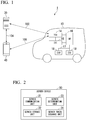
- Fig. 1 is a schematic configuration diagram of a vehicle security system 1 according to the present embodiment.
- a vehicle security system 1 includes a car 10, a server device 30, and a terminal device 40.
- the car 10 includes a telecommunication unit (TCU) 14, an in-vehicle infotainment (IVI) device 15, a gateway (GW) device 16, a communication network 17, and a plurality of electronic control devices (ECUs) 18.
- TCU telecommunication unit
- IVI in-vehicle infotainment
- GW gateway
- ECUs electronice control devices
- the ECU 18 is an in-vehicle computer provided in the car 10.
- the ECU 18 has a control function such as engine control of the car 10. Examples of the ECU 18 include an ECU having an engine control function, an ECU having a steering-wheel control function, an ECU having a brake control function, and the like.
- the gateway device 16 has a function of data security (security) applied to the ECU 18 installed in the car 10. Also, any ECU installed in the car 10 may function as the gateway device 16.
- the gateway device 16 and the plurality of ECUs 18 are connected to a communication network (hereinafter referred to as an in-vehicle network) 17 provided in the car 10.
- the in-vehicle network 17 may be, for example, a controller area network (CAN).
- the CAN is known as one of communication networks installed in vehicles.
- the gateway device 16 exchanges data with each ECU 18 via the in-vehicle network 17.
- the ECU 18 exchanges data with other ECUs 18 via the in-vehicle network 17.
- a communication network other than the CAN is provided in the car 10.
- the exchange of data between the gateway device 16 and the ECU 18 and between the ECUs 18 may be performed via the communication network other than the CAN.
- the car 10 may include a local interconnect network (LIN).
- the CAN and the LIN may be provided in the car 10.
- the ECU 18 connected to the LIN may be provided in the car 10.
- the gateway device 16 may be connected to the CAN and the LIN.
- the gateway device 16 may exchange data with the ECU 18 connected to the CAN via the CAN and exchange data with the ECU 18 connected to the LIN via the LIN.
- the ECUs 18 may exchange data with each other via the LIN.
- An in-vehicle computer system of the car 10 is configured by connecting the gateway device 16 and the plurality of ECUs 18 to the in-vehicle network 17.
- the gateway device 16 monitors communication between inside and outside of the in-vehicle computer system of the car 10.
- the ECU 18 communicates with devices outside the in-vehicle computer system via the gateway device 16.
- the in-vehicle network 17 may include a plurality of buses (communication lines) and the plurality of buses may be connected to the gateway device 16.
- one or more ECUs 18 are connected to one bus.
- the TCU 14 is a communication device.
- the TCU 14 communicates with devices outside the car 10.
- the TCU 14 may perform wireless communication or may perform wired communication.
- the TCU 14 performs wireless communication using a wireless communication network.
- the TCU 14 communicates with the server device 30 via the communication path 102.
- the communication path 102 is a communication path including a wireless communication path of a wireless communication network used by the TCU 14.
- the communication path 102 may be configured from a wireless communication path and a wired communication path.
- the TCU 14 performs near-field wireless communication.
- the TCU 14 communicates with the terminal device 40 via the communication path 106.
- the communication path 106 may be, for example, a wireless communication path of near-field wireless communication or the like.
- the communication path 106 may be, for example, a wireless communication path of a wireless LAN such as "Wi-Fi (registered trademark)" or may be a wireless communication path of "Bluetooth (registered trademark)".
- the server device 30 communicates with the TCU 14 of the car 10 via the communication path 102.
- the server device 30 communicates with devices installed in the car 10 via the TCU 14 of the car 10.
- the terminal device 40 communicates with the TCU 14 of the car 10 via the communication path 106.
- the terminal device 40 communicates with a device installed in the car 10 via the TCU 14 of the car 10.
- the TCU 14 is connected to the IVI device 15 and the gateway device 16.
- the IVI device 15 is connected to the TCU 14 and the gateway device 16.
- the IVI device 15 communicates with devices outside the car 10 via the TCU 14.
- the IVI device 15 may communicate with the server device 30 via the TCU 14 or may communicate with the terminal device 40 via the TCU 14.
- the IVI device 15 communicates with the ECU 18 via the gateway device 16.
- the server device 30 communicates with the terminal device 40 via a communication path 104.
- the communication path 104 may be a wireless communication path or a wired communication path or may include a wireless communication path and a wired communication path.
- the server device 30 and the terminal device 40 may be connected by a communication cable.
- the server device 30 and the terminal device 40 may be configured to perform communication via a wired or wireless communication network.
- the server device 30 and the terminal device 40 may be connected by a wired or wireless local area network (LAN).
- LAN local area network
- Fig. 2 is a schematic configuration diagram of the server device 30 according to the present embodiment.
- the server device 30 includes a server communication unit 31, a server storage unit 32, a server determination unit 33, and a server token issuance unit 34.
- the server communication unit 31 communicates with the car 10 via the communication path 102.
- the server communication unit 31 communicates with the terminal device 40 via the communication path 104.
- the server storage unit 32 stores data.
- the server determination unit 33 determines a token.
- the token is information (authentication identification information) used to authenticate the terminal device 40.
- the token is information including token identification information for identifying the token.
- the server token issuance unit 34 issues a token.
- the function of the server device 30 is implemented by a central processing unit (CPU) provided in the server device 30 executing a computer program. Also, the server device 30 may be configured using a general-purpose computer device or may be configured as a dedicated hardware device.
- CPU central processing unit
- Fig. 3 is a schematic configuration diagram of the terminal device 40 according to the present embodiment.
- the terminal device 40 includes a terminal communication unit 41, a terminal storage unit 42, a token acquisition unit 43, and a terminal position information acquisition unit 44.
- the terminal communication unit 41 communicates with the server device 30 via the communication path 104.
- the terminal communication unit 41 communicates with the car 10 via the communication path 106.
- the terminal storage unit 42 stores data.
- the token acquisition unit 43 acquires the token.
- the token acquisition unit 43 includes a data input means corresponding to a type of data including the token. For example, when the data including the token is text data, the token acquisition unit 43 includes a text data input means. For example, when the data including the token is image data, the token acquisition unit 43 includes an input means for the image data.
- the terminal position information acquisition unit 44 acquires terminal position information indicating a position of the terminal device 40.
- a global positioning system GPS
- GPS global positioning system
- the function of the terminal device 40 is implemented by a CPU provided in the terminal device 40 executing a computer program. Also, the terminal device 40 may be configured using a general-purpose computer device or may be configured as a dedicated hardware device. Also, a portable communication terminal device such as a smartphone, a tablet computer device (a tablet PC), or the like may be used as the terminal device 40.
- Fig. 4 is a block diagram showing an example of a hardware configuration of the TCU 14 according to the present embodiment.
- the TCU 14 includes a CPU 141, a storage unit 142, an interface unit 143, a communication module 144, and a near-field communication module 145. These units are configured to exchange data.
- the communication module 144 includes a subscriber identity module (SIM) 80.
- the CPU 141 controls the TCU 14. This control function is implemented by the CPU 141 executing a computer program.
- the storage unit 142 stores a computer program to be executed by the CPU 141 and various types of data.
- the storage unit 142 stores a computer program for implementing various types of functions of the TCU 14.
- Various types of functions of the TCU 14 are implemented by the CPU 141 executing the computer program.
- the interface unit 143 exchanges data with a device outside the TCU 14.
- the interface unit 143 includes an interface for exchanging data with the IVI device 15 and an interface for exchanging data with the gateway device 16.
- the communication module 144 performs wireless communication using a wireless communication network.
- the communication module 144 includes the SIM 80.
- the SIM 80 is a SIM to which information using the wireless communication network is written.
- the communication module 144 can be connected to the wireless communication network using the SIM 80 to perform wireless communication.
- the communication path 102 is a communication path including a wireless communication path of a wireless communication network to which the communication module 144 is connected by the SIM 80.
- an embedded subscriber identity module may be used as the SIM 80.
- the SIM and the eSIM are examples of a secure element (SE).
- SE secure element
- the SIM and the eSIM are tamper-resistant.
- the near-field communication module 145 performs near-field wireless communication.
- Wi-Fi registered trademark
- Bluetooth registered trademark
- the communication path 106 is a wireless communication path established by the near-field communication module 145 with the terminal device 40.
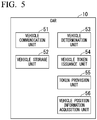
- Fig. 5 is a diagram showing an example of a functional configuration of the car 10 according to the present embodiment.
- the car 10 includes a vehicle communication unit 51, a vehicle storage unit 52, a vehicle determination unit 53, a vehicle token issuance unit 54, a token provision unit 55, and a vehicle position information acquisition unit 56.
- the vehicle communication unit 51 communicates with the server device 30 via the communication path 102.
- the vehicle communication unit 51 communicates with the terminal device 40 via the communication path 106.
- the vehicle storage unit 52 stores data.
- the vehicle determination unit 53 determines a token.
- the vehicle token issuance unit 54 issues the token.
- the token provision unit 55 provides the issued token of the car 10 inside the car 10.
- the vehicle position information acquisition unit 56 acquires vehicle position information indicating the position of own car 10. For example, a GPS can be applied as the vehicle position information acquisition unit 56.
- the functions of the respective units of the car 10 shown in Fig. 5 are implemented by the CPU 141 of the TCU 14 executing a computer program.
- the function of the vehicle communication unit 51 is implemented by the CPU 141 controlling the communication module 144 and the near-field communication module 145.
- the function of the vehicle storage unit 52 is implemented by the CPU 141 controlling the storage unit 142.
- the function of the vehicle determination unit 53 is implemented by the CPU 141 executing a computer program for implementing the function of the vehicle determination unit 53.
- the function of the vehicle token issuance unit 54 is implemented by the CPU 141 executing a computer program for implementing the function of the vehicle token issuance unit 54.
- the function of the token provision unit 55 is implemented by the CPU 141 executing a computer program for implementing the function of the token provision unit 55.
- an in-vehicle device other than the TCU 14 installed in the car 10 may be configured to implement all or some of the functions of the car 10 shown in Fig. 5 .
- the IVI device 15 or the gateway device 16 may be configured to implement all or some of the functions of the car 10 shown in Fig. 5 .
- the TCU 14 may be configured to implement the function of the vehicle communication unit 51 and the IVI device 15 or the gateway device 16 may be configured to implement the functions of the units 52 to 55 other than the vehicle communication unit 51.
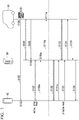
- Example 1 of the vehicle security method according to the present embodiment will be described with reference to Fig. 6.
- Fig. 6 is a sequence chart showing Example 1 of the vehicle security method according to the present embodiment.
- Example 1 of the vehicle security method according to the present embodiment includes the step of registering the terminal device 40 in the server device 30 and the car 10 (an initial setup phase) and the step of accessing the car 10 by means of communication from the terminal device 40 (an operation phase).
- Step S100 The vehicle token issuance unit 54 of the car 10 generates a token of the car 10.
- the token is information (authentication identification information) used to authenticate the terminal device 40.
- the token is information including token identification information for identifying the token.
- the vehicle storage unit 52 stores (holds) the token generated by the vehicle token issuance unit 54.
- the token provision unit 55 of the car 10 generates a two-dimensional barcode including a uniform resource locator (URL), which is information of an access destination for the server device 30, a vehicle identification number (VIN) of the car 10, and a token generated by the vehicle token issuance unit 54.
- the token provision unit 55 causes the two-dimensional barcode to be displayed on a display device inside the car 10.
- a display device for displaying the two-dimensional barcode for example, a display device of the IVI device 15 can be applied.
- the two-dimensional barcode may be displayed on an instrument panel of the car 10.
- the VIN is an example of vehicle identification information.
- Step S102 The user of the car 10 reads the two-dimensional barcode displayed on the display device of the car 10 by means of the terminal device 40.
- Step S103 The token acquisition unit 43 of the terminal device 40 reads a two-dimensional barcode (data including a token) and acquires the URL of the server device 30 and the VIN and the token of the car 10 from the two-dimensional barcode.
- the terminal storage unit 42 stores (holds) the URL of the server device 30 and the VIN and the token of the car 10 that have been acquired in association.
- Step S104 The vehicle communication unit 51 of the car 10 accesses the URL of the server device 30.
- the server communication unit 31 of the server device 30 and the vehicle communication unit 51 of the car 10 construct a virtual private network (VPN) circuit. Thereafter, in the initial setup phase, the server communication unit 31 and the vehicle communication unit 51 communicate using the VPN circuit.
- VPN virtual private network
- the token provision unit 55 of the car 10 transmits a terminal registration notification message to the server device 30.
- the terminal registration notification message is a message including the VIN and the token of the car 10 included in the two-dimensional barcode.
- Step S106 The server communication unit 31 of the server device 30 receives the terminal registration notification message from the car 10.
- the server device 30 recognizes that access from the terminal device 40 is scheduled according to the terminal registration notification message.
- the server storage unit 32 stores (holds) the VIN and the token of the terminal registration notification message in association.
- Step S107 The terminal communication unit 41 of the terminal device 40 accesses the URL of the server device 30.
- the terminal communication unit 41 of the terminal device 40 and the server communication unit 31 of the server device 30 construct a VPN circuit. Thereafter, in the initial setup phase, the terminal communication unit 41 and the server communication unit 31 communicate using the VPN circuit.
- the terminal communication unit 41 of the terminal device 40 transmits terminal identification information (a terminal ID) of the terminal device 40 and the VIN and the token of the terminal storage unit 42 to the server device 30.
- terminal ID for example, an integrated circuit card ID (ICCID), an international mobile subscriber identity (IMSI), an international mobile equipment identity (IMEI), a telephone number, or the like can be applied.
- the server communication unit 31 of the server device 30 receives the terminal ID, the VIN, and the token from the terminal device 40.
- the server determination unit 33 compares the received token with the token of the server storage unit 32 associated with the received VIN. When a comparison result indicates that the two tokens match, the verification of the received token succeeds. When the comparison result indicates that the two tokens do not match, the verification of the received token fails.
- the server storage unit 32 stores (holds) the terminal ID and the VIN received from the terminal device 40 in association in the server storage unit 32. Thereby, the terminal ID, the VIN, and the token are associated and stored in the server storage unit 32.
- the verification of the token succeeds, the authentication in the server device 30 at the time of registration of the terminal device 40 succeeds.
- the subsequent processing is performed.
- the initial setup phase is ended.
- the authentication in the server device 30 at the time of registration of the terminal device 40 fails.
- Step S110 The server communication unit 31 of the server device 30 transmits the terminal ID and the token of the terminal device 40 for which the verification of the token has succeeded to the car 10.
- Step S111 The vehicle communication unit 51 of the car 10 receives the terminal ID and the token from the server device 30.
- the vehicle determination unit 53 compares the received token with the token of the vehicle storage unit 52. When a comparison result indicates that the two tokens match, the verification of the received token succeeds. When the comparison result indicates that the two tokens do not match, the verification of the received token fails.
- the vehicle storage unit 52 stores (holds) the terminal ID received from the server device 30.
- the verification of the token succeeds, the authentication in the car 10 at the time of registration of the terminal device 40 of the terminal ID succeeds.
- the initial setup phase is ended.
- the verification of the token fails, the authentication in the car 10 at the time of registration of the terminal device 40 of the terminal ID fails.
- Step S130 The terminal communication unit 41 of the terminal device 40 accesses the URL of the server device 30.
- the terminal communication unit 41 of the terminal device 40 and the server communication unit 31 of the server device 30 construct a VPN circuit. Thereafter, in the operation phase, the terminal communication unit 41 and the server communication unit 31 communicate using the VPN circuit.
- Step S131 The terminal communication unit 41 of the terminal device 40 transmits a login message including the terminal ID of the terminal device 40 and the token of the terminal storage unit 42 to the server device 30.
- the server communication unit 31 of the server device 30 receives the login message from the terminal device 40.
- the server determination unit 33 compares the token of the received login message with a token of the server storage unit 32 associated with the terminal ID of the received login message. When a comparison result indicates that the two tokens match, the verification of the token of the received login message succeeds. When the comparison result indicates that the two tokens do not match, the verification of the token of the received login message fails.
- a result of determining the login message is authentication success and the authentication in the server device 30 at the time of an operation of the terminal device 40 succeeds. When the verification of the token succeeds, the subsequent processing is performed.
- the operation phase is ended.
- the result of determining the login message is authentication failure and the authentication in the server device 30 at the time of an operation of the terminal device 40 fails.
- Step S132 The server communication unit 31 of the server device 30 accesses the car 10 of the VIN of the server storage unit 32 associated with the terminal ID of the login message when the result of determining the login message is authentication success.
- the server communication unit 31 of the server device 30 and the vehicle communication unit 51 of the car 10 construct a VPN circuit. Thereafter, in the operation phase, the server communication unit 31 and the vehicle communication unit 51 communicate using the VPN circuit.
- Step S133 The terminal communication unit 41 of the terminal device 40 transmits an operation command of the car 10 to the server device 30.
- the operation command of the car 10 include an operation command for executing an operation of an in-vehicle device of the car 10, for example, an operation of starting and stopping an air conditioner, unlocking a door, or the like.
- the operation command of the car 10 may be an operation command for implementing the monitoring of a state of the car 10 by means of communication.
- the operation command corresponds to vehicle control information.
- Step S134 The server communication unit 31 of the server device 30 receives the operation command from the terminal device 40 and transmits the received operation command to the car 10.
- Step S135) The vehicle communication unit 51 of the car 10 receives the operation command from the server device 30.
- the car 10 executes the received operation command.
- the vehicle communication unit 51 returns a result of executing the operation command to the server device 30.
- Step S136 The server communication unit 31 of the server device 30 receives the result of executing the operation command from the car 10 and transmits the received result of executing the operation command to the terminal device 40. Also, the server device 30 may record a log related to the operation command in the server storage unit 32. The log stores an execution date and time of the operation command, the operation command, the result of executing the operation command, the terminal ID of the terminal device 40 that is a transmission source of the operation command, and the like.
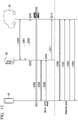
- Example 2 of the vehicle security method according to the present embodiment will be described with reference to Fig. 7.
- Fig. 7 is a sequence chart showing Example 2 of the vehicle security method according to the present embodiment.
- parts corresponding to the respective steps of Fig. 6 are denoted by the same reference signs.
- Example 2 of the vehicle security method according to the present embodiment includes an initial setup phase and an operation phase as in Example 1 of the vehicle security method.
- Steps S100 to S107 are the same as those of the above-described Example 1 ( Fig. 6 ) of the vehicle security method. After steps S100 to S107, step S108a is executed.
- Step S108a The terminal communication unit 41 of the terminal device 40 transmits a terminal ID of the terminal device 40, a VIN and a token of the terminal storage unit 42, and a password to the server device 30.
- the password is input to the terminal device 40 by the user.
- Step S109a The server communication unit 31 of the server device 30 receives the terminal ID, the VIN, the token, and the password from the terminal device 40.
- the server determination unit 33 compares the received token with a token of the server storage unit 32 associated with the received VIN. When a comparison result indicates that the two tokens match, the verification of the received token succeeds. When the comparison result indicates that the two tokens do not match, the verification of the received token fails.
- the server storage unit 32 stores the terminal ID, the password, and the VIN received from the terminal device 40 in association in the server storage unit 32. Thereby, the terminal ID, the password, the VIN, and the token are associated and stored (held) in the server storage unit 32.
- the verification of the token succeeds, the authentication in the server device 30 at the time of registration of the terminal device 40 succeeds.
- the subsequent processing is performed.
- the initial setup phase is ended.
- the authentication in the server device 30 at the time of registration of the terminal device 40 fails.
- Step S110a The server communication unit 31 of the server device 30 transmits the terminal ID, the password, and the token of the terminal device 40 for which the verification of the token has succeeded to the car 10.
- Step S111a The vehicle communication unit 51 of the car 10 receives the terminal ID, the password, and the token from the server device 30.
- the vehicle determination unit 53 compares the received token with the token of the vehicle storage unit 52. When a comparison result indicates that the two tokens match, the verification of the received token succeeds. When the comparison result indicates that the two tokens do not match, the verification of the received token fails.
- the vehicle storage unit 52 stores (holds) the terminal ID and the password received from the server device 30 in association.
- the verification of the token succeeds, the authentication in the car 10 at the time of registration of the terminal device 40 of the terminal ID succeeds.
- the initial setup phase is ended. When the verification of the token fails, the authentication in the car 10 at the time of registration of the terminal device 40 of the terminal ID fails.
- Step S130 is the same as that of the above-described Example 1 ( Fig. 6 ) of the vehicle security method. After step S130, step S131a is executed.
- Step S131a The terminal communication unit 41 of the terminal device 40 transmits a login message including the terminal ID and the password of the terminal device 40 to the server device 30.
- the password may be a password input to the terminal device 40 by the user in step S131a or may be a password that is saved after being input from the user in step S108a of the initial setup phase.
- the server communication unit 31 of the server device 30 receives the login message from the terminal device 40.
- the server determination unit 33 compares the password of the received login message with a password of the server storage unit 32 associated with the terminal ID of the received login message. When a comparison result indicates that the two passwords match, the verification of the password of the received login message succeeds. When the comparison result indicates that the two passwords do not match, the verification of the password of the received login message fails.
- a result of determining the login message is authentication success and the authentication in the server device 30 at the time of an operation of the terminal device 40 succeeds. When the verification of the password succeeds, the subsequent processing is performed.
- the operation phase is ended.
- the result of determining the login message is authentication failure and the authentication in the server device 30 at the time of an operation of the terminal device 40 fails.
- Steps S132 to S136 are the same as those of the above-described Example 1 ( Fig. 6 ) of the vehicle security method.
- Example 3 of the vehicle security method according to the present embodiment will be described with reference to Fig. 8.
- Fig. 8 is a sequence chart showing Example 3 of the vehicle security method according to the present embodiment.
- parts corresponding to the respective steps of Fig. 6 are denoted by the same reference signs.
- Example 3 of the vehicle security method according to the present embodiment includes an initial setup phase and an operation phase as in Example 1 of the vehicle security method.
- Step S200 The vehicle communication unit 51 of the car 10 accesses a URL of the server device 30.
- the server communication unit 31 of the server device 30 and the vehicle communication unit 51 of the car 10 construct a VPN circuit. Thereafter, in the initial setup phase, the server communication unit 31 and the vehicle communication unit 51 communicate using the VPN circuit.
- Step S201 The vehicle communication unit 51 of the car 10 transmits a login message including user identification information ID and a password PWD and a VIN of the car 10 to the server device 30.
- the user identification information ID and the password PWD are registered as a user in advance in the server device 30.
- the server storage unit 32 of the server device 30 stores a set of user identification information ID and password PWD registered as the user.
- the server communication unit 31 of the server device 30 receives the login message and the VIN from the car 10.
- the server determination unit 33 compares the password PWD of the received login message with a password PWD of the server storage unit 32 associated with the user identification information ID of the received login message. When a comparison result indicates that the two passwords match, a result of determining the received login message is authentication success. When the comparison result indicates that the two passwords do not match, the result of determining the received login message is authentication failure. When the result of determining the received login message is authentication success, the subsequent processing is performed. On the other hand, when the result of determining the received login message is authentication failure, the initial setup phase is ended.
- Step S202 The server token issuance unit 34 of the server device 30 generates a token of the car 10.
- the server storage unit 32 stores (holds) the token generated by the server token issuance unit 34 and the VIN received from the car 10 in association.
- Step S203 The server communication unit 31 of the server device 30 transmits the token generated by the server token issuance unit 34 to the car 10.
- Step S204 The vehicle communication unit 51 of the car 10 receives the token from the server device 30.
- the vehicle storage unit 52 stores (holds) the received token.
- Step S205 The token provision unit 55 of the car 10 generates a two-dimensional barcode including the URL of the server device 30, the VIN of the car 10, and the token received from the server device 30.
- the token provision unit 55 causes the two-dimensional barcode to be displayed on the display device inside own car 10.
- Step S206 The user of the car 10 reads the two-dimensional barcode displayed on the display device of the car 10 by the terminal device 40.
- the two-dimensional barcode includes the URL of the server device 30, the VIN of the car 10, and the token received from the server device 30.
- Step S207 The token acquisition unit 43 of the terminal device 40 reads the two-dimensional barcode (barcode reader) and acquires the URL of the server device 30 and the VIN and the token of the car 10 from the two-dimensional barcode.
- the terminal storage unit 42 stores (holds) the URL of the server device 30 and the VIN and the token of the car 10 that have been acquired in association.
- Step S208 The terminal communication unit 41 of the terminal device 40 accesses the URL of the server device 30.
- the terminal communication unit 41 of the terminal device 40 and the server communication unit 31 of the server device 30 construct a VPN circuit. Thereafter, in the initial setup phase, the terminal communication unit 41 and the server communication unit 31 communicate using the VPN circuit.
- Step S209 The terminal communication unit 41 of the terminal device 40 transmits the terminal ID of the terminal device 40 and the VIN and the token of the terminal storage unit 42 to the server device 30.
- Step S210 The server communication unit 31 of the server device 30 receives the terminal ID, the VIN, and the token from the terminal device 40.
- the server determination unit 33 compares the received token with the token of the server storage unit 32 associated with the received VIN. When a comparison result indicates that the two tokens match, the verification of the received token succeeds. When the comparison result indicates that the two tokens do not match, the verification of the received token fails.
- the server storage unit 32 stores (holds) the terminal ID and the VIN received from the terminal device 40 in association in the server storage unit 32. Thereby, the terminal ID, the VIN, and the token are associated and stored in the server storage unit 32.
- the verification of the token succeeds, the authentication in the server device 30 at the time of registration of the terminal device 40 succeeds.
- the subsequent processing is performed.
- the initial setup phase is ended.
- the authentication in the server device 30 at the time of registration of the terminal device 40 fails.
- Step S211 The server communication unit 31 of the server device 30 transmits the terminal ID and the token of the terminal device 40 for which the verification of the token has succeeded to the car 10.
- Step S212 The vehicle communication unit 51 of the car 10 receives the terminal ID and the token from the server device 30.
- the vehicle determination unit 53 compares the received token with the token of the vehicle storage unit 52. When a comparison result indicates that the two tokens match, the verification of the received token succeeds. When the comparison result indicates that the two tokens do not match, the verification of the received token fails.
- the vehicle storage unit 52 stores (holds) the terminal ID received from the server device 30.
- the verification of the token succeeds, the authentication in the car 10 at the time of registration of the terminal device 40 of the terminal ID succeeds.
- the initial setup phase is ended.
- the verification of the token fails, the authentication in the car 10 at the time of registration of the terminal device 40 of the terminal ID fails.
- Example 3 of the vehicle security method is the same as that of the above-described Example 1 ( Fig. 6 ) of the vehicle security method.
- Example 4 of the vehicle security method according to the present embodiment will be described with reference to Fig. 9.
- Fig. 9 is a sequence chart showing Example 4 of the vehicle security method according to the present embodiment.
- parts corresponding to the respective steps of Figs. 7 and 8 are denoted by the same reference signs.
- Example 4 of the vehicle security method according to the present embodiment includes an initial setup phase and an operation phase as in Example 1 of the vehicle security method.
- Steps S200 to S208 are the same as those of the above-described Example 3 ( Fig. 8 ) of the vehicle security method.
- step S209a is executed.
- Step S209a The terminal communication unit 41 of the terminal device 40 transmits a terminal ID of the terminal device 40, a VIN and a token of the terminal storage unit 42, and a password to the server device 30.
- the password is input to the terminal device 40 by the user.
- Step S210a The server communication unit 31 of the server device 30 receives the terminal ID, the VIN, the token, and the password from the terminal device 40.
- the server determination unit 33 compares the received token with a token of the server storage unit 32 associated with the received VIN. When a comparison result indicates that the two tokens match, the verification of the received token succeeds. When the comparison result indicates that the two tokens do not match, the verification of the received token fails.
- the server storage unit 32 stores (holds) the terminal ID, the password, and the VIN received from the terminal device 40 in association in the server storage unit 32. Thereby, the terminal ID, the password, the VIN, and the token are associated and stored in the server storage unit 32.
- the verification of the token succeeds, the authentication in the server device 30 at the time of registration of the terminal device 40 succeeds.
- the subsequent processing is performed.
- the initial setup phase is ended.
- the authentication in the server device 30 at the time of registration of the terminal device 40 fails.
- Step S211a The server communication unit 31 of the server device 30 transmits the terminal ID, the password, and the token of the terminal device 40 for which the verification of the token has succeeded to the car 10.
- Step S212a The vehicle communication unit 51 of the car 10 receives the terminal ID, the password, and the token from the server device 30.
- the vehicle determination unit 53 compares the received token with the token of the vehicle storage unit 52. When a comparison result indicates that the two tokens match, the verification of the received token succeeds. When the comparison result indicates that the two tokens do not match, the verification of the received token fails.
- the vehicle storage unit 52 stores (holds) the terminal ID and the password received from the server device 30 in association.
- the verification of the token succeeds, the authentication in the car 10 at the time of registration of the terminal device 40 of the terminal ID succeeds.
- the initial setup phase is ended. When the verification of the token fails, the authentication in the car 10 at the time of registration of the terminal device 40 of the terminal ID fails.
- step S130, S131a, and S132 to S136 of Example 4 of the vehicle security method is the same as that of the above-described Example 2 ( Fig. 7 ) of the vehicle security method.
- Example 5 of the vehicle security method according to the present embodiment will be described with reference to Fig. 10.
- Fig. 10 is a sequence chart showing Example 5 of the vehicle security method according to the present embodiment.
- parts corresponding to the respective steps of Fig. 6 are denoted by the same reference signs.
- Example 5 of the vehicle security method according to the present embodiment includes an initial setup phase and an operation phase as in Example 1 ( Fig. 6 ) of the vehicle security method.
- the initial setup phase (steps S100 and S111) of Example 5 of the vehicle security method is the same as that of the above-described Example 1 ( Fig. 6 ) of the vehicle security method.
- Step S300 The terminal communication unit 41 of the terminal device 40 and the vehicle communication unit 51 of the car 10 establish the communication path 106 of a near-field wireless communication scheme. Thereafter, in the operation phase, the terminal communication unit 41 and the vehicle communication unit 51 perform near-field wireless communication via the communication path 106.
- Step S301 The terminal communication unit 41 of the terminal device 40 transmits a login message including a terminal ID of the terminal device 40 and a token of the terminal storage unit 42 to the car 10.
- the vehicle communication unit 51 of the car 10 receives the login message from the terminal device 40.
- the vehicle determination unit 53 compares the token of the received login message with a token of the vehicle storage unit 52. When a comparison result indicates that the two tokens match, the verification of the token of the received login message succeeds. When the comparison result indicates that the two tokens do not match, the verification of the token of the received login message fails. When the verification of the token succeeds, a result of determining the login message is authentication success and the authentication at the time of an operation of the terminal device 40 succeeds. When the verification of the token succeeds, the subsequent processing is performed.
- the operation phase is ended.
- the result of determining the login message is authentication failure and the authentication at the time of an operation of the terminal device 40 fails.
- Step S302 The terminal communication unit 41 of the terminal device 40 transmits an operation command to the car 10.
- Step S303 The vehicle communication unit 51 of the car 10 receives the operation command from the terminal device 40.
- the car 10 executes the received operation command.
- the vehicle communication unit 51 returns a result of executing the operation command to the terminal device 40.
- the car 10 may record a log related to the operation command in the vehicle storage unit 52.
- the log stores an execution date and time of the operation command, the operation command, the result of executing the operation command, a terminal ID of the terminal device 40 that is a transmission source of the operation command, and the like.
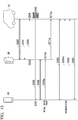
- Example 6 of the vehicle security method according to the present embodiment will be described with reference to Fig. 11.
- Fig. 11 is a sequence chart showing Example 6 of the vehicle security method according to the present embodiment.
- parts corresponding to the respective steps of Figs. 7 and 10 are denoted by the same reference signs.
- Example 6 of the vehicle security method according to the present embodiment includes an initial setup phase and an operation phase as in Example 1 of the vehicle security method.
- the initial setup phase (steps S100 to S107 and S108a to S111a) of Example 6 of the vehicle security method is the same as that of above-described Example 2 ( Fig. 7 ) of the vehicle security method.
- Step S300 The terminal communication unit 41 of the terminal device 40 and the vehicle communication unit 51 of the car 10 establish the communication path 106 of a near-field wireless communication scheme. Thereafter, in the operation phase, the terminal communication unit 41 and the vehicle communication unit 51 perform near-field wireless communication via the communication path 106.
- Step S301a The terminal communication unit 41 of the terminal device 40 transmits a login message including a terminal ID and a password of the terminal device 40 to the car 10.
- the password may be a password input to the terminal device 40 by the user in step S301a or may be a password that is saved after being input by the user in S108a of the initial setup phase.
- the vehicle communication unit 51 of the car 10 receives the login message from the terminal device 40.
- the vehicle determination unit 53 compares the password of the received login message with a password of the vehicle storage unit 52 associated with the terminal ID of the received login message.
- a comparison result indicates that the two passwords match
- the verification of the password of the received login message succeeds.
- the comparison result indicates that the two passwords do not match
- the verification of the password of the received login message fails.
- a result of determining the login message is authentication success and the authentication at the time of an operation of the terminal device 40 succeeds.
- the subsequent processing is performed.
- the operation phase is ended.
- the result of determining the login message is authentication failure and the authentication at the time of an operation of the terminal device 40 fails.
- Steps S302 and S303 are executed. Steps S302 and S303 are the same as those of the above-described Example 5 ( Fig. 10 ) of the vehicle security method.
- Example 7 of the vehicle security method according to the present embodiment will be described with reference to Fig. 12.
- Fig. 12 is a sequence chart showing Example 7 of the vehicle security method according to the present embodiment.
- parts corresponding to the respective steps of Figs. 8 and 10 are denoted by the same reference signs.
- Example 6 of the vehicle security method according to the present embodiment includes an initial setup phase and an operation phase as in Example 1 of the vehicle security method.
- the initial setup phase (steps S200 to S212) of Example 7 of the vehicle security method is the same as that of the above-described Example 3 ( Fig. 8 ) of the vehicle security method.
- Example 7 of the vehicle security method is the same as that of the above-described Example 5 ( Fig. 10 ) of the vehicle security method.
- Example 8 of the vehicle security method according to the present embodiment will be described with reference to Fig. 13.
- Fig. 13 is a sequence chart showing Example 8 of the vehicle security method according to the present embodiment.
- parts corresponding to the respective steps of Figs. 9 and 11 are denoted by the same reference signs.
- Example 6 of the vehicle security method according to the present embodiment includes an initial setup phase and an operation phase as in Example 1 of the vehicle security method.
- the initial setup phase (steps S200 to S208 and S209a to S212a) of Example 8 of the vehicle security method is the same as that of the above-described Example 4 ( Fig. 9 ) of the vehicle security method.
- Example 8 of the vehicle security method is the same as that of the above-described Example 6 ( Fig. 11 ) of the vehicle security method.
- the terminal device 40 (the terminal ID) that is valid with respect to the car 10 is registered on the basis of the token in the initial setup phase. Thereby, it is possible to improve the security when the car 10 is accessed by means of communication from the terminal device 40 such as a smartphone. For example, whether the car 10 has been illegally accessed by spoofing of the terminal device 40 can be checked. Also, the association between the terminal device 40 and the car 10 can be managed via the server device 30.
- the car 10 in the operation phase, can execute the operation command from the terminal device 40 (the terminal ID) registered in the initial setup phase and the car 10 cannot execute the operation command from the terminal device 40 (the terminal ID) unregistered in the initial setup phase.
- an operation command from the terminal device 40 is transmitted to the car 10 via the server device 30.
- the access from the terminal device 40 to the car 10 can be optionally stopped.
- Example 2 Fig. 7
- Example 4 Fig. 9
- Example 6 Fig. 11
- Example 8 Fig. 13
- a two-dimensional barcode is displayed on the display device in the above-described embodiment, the two-dimensional barcode may be printed and attached to the inside of the car 10.
- data of the URL of the server device 30 and the VIN and the token of the car 10 may be provided to the terminal device 40 by means of another method.
- a configuration in which data of the URL of the server device 30 and the VIN and the token of the car 10 may be transmitted within the car 10 using a near-field communication (NFC) tag may be adopted.
- NFC near-field communication
- the token of the car 10 can be provided to a valid user who owns the immobilizer.
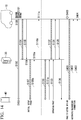
- Example 9 of the vehicle security method according to the present embodiment will be described with reference to Fig. 14.
- Fig. 14 is a sequence chart showing Example 9 of the vehicle security method according to the present embodiment.
- Example 9 of the vehicle security method is a modified example of the above-described examples 1 to 8 of the vehicle security method.
- a modified example of the above-described Example 2 ( Fig. 7 ) of the vehicle security method will be described as an example.
- parts corresponding to the respective steps of Fig. 7 are denoted by the same reference signs.
- Example 9 of the vehicle security method according to the present embodiment includes an initial setup phase and an operation phase as in the above-described examples 1 to 8 of the vehicle security method and further includes a phase for getting into the car when the user gets into the car 10.
- the initial setup phase (steps S100 to S107 and S108a to S111a) and the operation phase (steps S130, S131a, and S132 to S136) are the same as those of the above-described Example 2 ( Fig. 7 ) of the vehicle security method.
- Step S400 The user gets into the car 10 and turns on an ignition switch (IG-ON).
- IG-ON an ignition switch
- a process of turning on the ignition switch corresponds to a process of turning on a main power switch.
- Step S401 The vehicle communication unit 51 of the car 10 executes a connection of the near-field wireless communication to the terminal device 40 of the terminal ID of the vehicle storage unit 52.
- the terminal communication unit 41 of the terminal device 40 and the vehicle communication unit 51 of the car 10 establish the communication path 106 of a near-field wireless communication scheme.
- the terminal communication unit 41 and the vehicle communication unit 51 perform near-field wireless communication via the communication path 106 in the phase for getting into the car thereafter.
- the vehicle communication unit 51 of the car 10 cannot establish the communication path 106 of the near-field wireless communication scheme with the terminal device 40 of the terminal ID.
- the terminal communication unit 41 of the terminal device 40 and the vehicle communication unit 51 of the car 10 cannot establish the communication path 106 of the near-field wireless communication scheme, the phase for getting into the car is ended.
- Step S402 The terminal communication unit 41 of the terminal device 40 transmits a login message including the terminal ID and the password of the terminal device 40 to the car 10.
- the transmission of the login message of the terminal device 40 in the phase for getting into the car may be set so that the terminal device 40 automatically performs transmission (automatic background connection setup).
- the password may be a password input to the terminal device 40 by the user in step S402 or may be a password that is saved after being input from the user in step S108a of the initial setup phase.
- the vehicle communication unit 51 of the car 10 receives the login message from the terminal device 40.
- the vehicle determination unit 53 compares the password of the received login message with a password of the vehicle storage unit 52 associated with the terminal ID of the received login message.
- a comparison result indicates that the two passwords match
- the verification of the password of the received login message succeeds.
- the comparison result indicates that the two passwords do not match
- the verification of the password of the received login message fails.
- a result of determining the login message is authentication success and the authentication of the terminal device 40 at the time of getting into the car succeeds.
- the subsequent processing is performed.
- the operation phase is ended.
- a result of determining the login message is authentication failure and the authentication of the terminal device 40 at the time of getting into the car fails.
- Step S403 The terminal position information acquisition unit 44 of the terminal device 40 acquires terminal position information indicating a position of the terminal device 40.
- the terminal communication unit 41 transmits the terminal position information acquired by the terminal position information acquisition unit 44 to the car 10.
- the vehicle communication unit 51 of the car 10 receives the terminal position information from the terminal device 40.
- Step S404 The vehicle determination unit 53 of the car 10 determines whether or not the terminal device 40 registered in the car 10 (the terminal ID registered in step S111a) is valid. An example of this registered terminal determination method is shown below.
- the vehicle determination unit 53 executes a process of setting the terminal ID as invalid information in accordance with the absence (failure) of the authentication of the terminal device 40 of the terminal ID of the vehicle storage unit 52 after the ignition switch of the car 10 is turned on. Also, when the car 10 is an electric car, an on state of the ignition switch corresponds to an on state of the main power switch.
- the vehicle determination unit 53 executes a process of setting the terminal ID as invalid information when the authentication of the terminal device 40 using the login message of the terminal ID of the vehicle storage unit 52 continuously fails a prescribed number of times (N times) after the ignition switch of the car 10 is turned on.
- the process of setting the terminal ID as invalid information includes a process of deleting the terminal ID from the vehicle storage unit 52 and a process of deleting the terminal ID from the registration information of the server storage unit 32 by notifying the server device 30 of the invalidity of the terminal ID.
- Example 1 of a registered terminal determination method it is determined whether or not the terminal device 40 (the terminal ID) registered in the car 10 is valid and the terminal device 40 (the terminal ID) determined to be invalid is deleted from the registration information of the car 10. Thereby, the registration of the terminal device 40 (the terminal ID) in the car 10 can be invalidated. For example, when it is determined that the terminal device 40 (the terminal ID) registered in the car 10 is not valid if the owner or the user of the car 10 is changed due to resale or the like, the registration of the terminal device 40 (the terminal ID) in the car 10 can be invalidated. Also, a similar effect can be obtained when the user of the car 10 changes his own terminal device 40 due to a model change or the like.
- a process of setting the terminal ID as invalid information may be executed when the authentication of the terminal device 40 using the login message of the terminal ID of the vehicle storage unit 52 fails during a fixed period.
- the vehicle position information acquisition unit 56 of the car 10 acquires vehicle position information indicating the position of the car 10.
- the vehicle determination unit 53 causes the terminal ID to be stored as valid information in the vehicle storage unit 52 when a position indicated by the terminal position information received from the terminal device 40 of the terminal ID of the vehicle storage unit 52 and a position indicated by the vehicle position information acquired by the vehicle position information acquisition unit 56 are present within a prescribed range after the ignition switch of the car 10 is turned on.
- the prescribed range may be narrower than a communication range of the near-field wireless communication scheme.
- the prescribed range may be within the car 10.
- the terminal ID is held as valid information in the vehicle storage unit 52.
- Example 2 of the registered terminal determination method when the position of the terminal device 40 of the terminal ID of the vehicle storage unit 52 and the position of the car 10 are present within a prescribed range (for example, within the car 10) after the ignition switch of the car 10 is turned on, the registration of the terminal device 40 (the terminal ID) in the car 10 can be validly kept.
- the vehicle determination unit 53 may execute a process of setting the terminal ID as invalid information when the position indicated by the terminal position information received from the terminal device 40 of the terminal ID of the vehicle storage unit 52 and the position indicated by the vehicle position information acquired by the vehicle position information acquisition unit 56 are not present within the prescribed range after the ignition switch of the car 10 is turned on (a modified example of Example 2 of the registered terminal determination method).
- Example 1 of the registered terminal determination method and Example 2 of the registered terminal determination method may be combined and applied.
- registration in the car 10 may be validly kept according to Example 2 of the registered terminal determination method with respect to the terminal device 40 (the terminal ID) determined to be invalid according to Example 1 of the registered terminal determination method.
- the registration in the car 10 is invalidated according to a modified example of Example 2 of the registered terminal determination method with respect to the terminal device 40 (the terminal ID) that is not determined to be invalid according to Example 1 of the registered terminal determination method.
- this can be applied to a case in which the terminal device 40 of a resale source is present at a position where the near-field wireless communication with the car 10 can be performed by chance such as, for example, a case in which the resale source and a resale destination are acquaintances or neighbors.
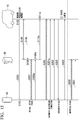
- Example 10 of the vehicle security method according to the present embodiment will be described with reference to Fig. 15.
- Fig. 15 is a sequence chart showing Example 10 of the vehicle security method according to the present embodiment.
- Example 10 of the vehicle security method is a modified example of the above-described examples 5 to 8 of the vehicle security method.
- a modified example of the above-described Example 6 ( Fig. 11 ) of the vehicle security method will be described as an example.
- parts corresponding to the respective steps of Figs. 11 and 14 are denoted by the same reference signs.
- Example 10 of the vehicle security method according to the present embodiment includes an initial setup phase and an operation phase as in the above-described Example 5 to 8 of the vehicle security method, and further includes a phase for getting into a car when the user gets into the car 10 and a subsequent reporting phase.
- the initial setup phase (steps S100 to S107 and S108a to S111a) is the same as that of the above-described Example 6 ( Fig. 11 ) of the vehicle security method.
- steps S300, S301a, S302, and S303 are the same as those of the above-described Example 6 ( Fig. 11 ) of the vehicle security method.
- the transmission of the login message of the terminal device 40 (step S301a) may be set so that the terminal device 40 automatically performs transmission (automatic background connection setup).
- steps S400, S403 and S404 are executed.
- Steps S400, S403, and S404 are the same as those of the phase for getting into the car in the above-described Example 9 ( Fig. 14 ) of the vehicle security method.
- Example 10 of the vehicle security method in step S404, the above-described Example 2 of the registered terminal determination method or a modified example of Example 2 of the registered terminal determination method is performed. Alternatively, both the above-described Example 2 of the registered terminal determination method and the modified example of Example 2 of the registered terminal determination method may be performed.
- Step S500 The terminal communication unit 41 of the terminal device 40 accesses a URL of the server device 30.
- the terminal communication unit 41 of the terminal device 40 and the server communication unit 31 of the server device 30 construct a VPN circuit. Thereafter, in the reporting phase, the terminal communication unit 41 and the server communication unit 31 communicate using the VPN circuit.
- Step S501 The terminal communication unit 41 of the terminal device 40 transmits a terminal ID of the terminal device 40, a VIN of the terminal storage unit 42, a password, and a result of executing an operation command to the server device 30.
- the password may be a password input to the terminal device 40 by the user in step S501 or may be a password which is saved after being input by the user in S108a of the initial setup phase.
- the server communication unit 31 of the server device 30 receives the terminal ID, the VIN, the password, and the result of executing the operation command from the terminal device 40.
- the server determination unit 33 compares the received password with a password of the server storage unit 32 associated with the received terminal ID. When a comparison result indicates that the two passwords match, the verification of the received password succeeds. When the comparison result indicates that the two passwords do not match, the verification of the received password fails. When the verification of the password succeeds, the server storage unit 32 stores the received terminal ID, the received VIN, and the received result of executing the operation command in association. On the other hand, when the verification of the password fails, the received result of executing the operation command is discarded and the received result of executing the operation command is not stored in the server storage unit 32.
- processes may be performed by recording a computer program for implementing functions of each device described above on a computer-readable recording medium and causing a computer system to read and execute the program recorded on the recording medium.
- the "computer system” described here may include an operating system (OS) and hardware such as peripheral devices.
- the "computer-readable recording medium” refers to a storage device including a flexible disk, a magneto-optical disc, a read-only memory (ROM), a writable non-volatile memory such as a flash memory, a portable medium such as a digital versatile disc (DVD), and a hard disk embedded in the computer system.
- ROM read-only memory
- DVD digital versatile disc
- the "computer-readable recording medium” is assumed to include a medium that holds a program for a fixed period of time, such as a volatile memory (for example, a dynamic random access memory (DRAM)) inside a computer system serving as a server or a client when the program is transmitted via a network such as the Internet or a communication circuit such as a telephone circuit.
- a volatile memory for example, a dynamic random access memory (DRAM)
- DRAM dynamic random access memory
- the above-described program may be transmitted from a computer system storing the program in a storage device or the like via a transmission medium or transmitted to another computer system by transmission waves in a transmission medium.
- the "transmission medium” for transmitting the program refers to a medium having a function of transmitting information, such as a network (a communication network) like the Internet or a communication circuit (a communication line) like a telephone circuit.
- the above-described program may be a program for implementing some of the above-described functions.
- the above-described program may be a program capable of implementing the above-described functions in combination with a program already recorded on the computer system, i.e., a so-called differential file (differential program).
- a vehicle such as a car is accessed by means of communication from a terminal device such as a smartphone.
Landscapes
- Engineering & Computer Science (AREA)
- Computer Security & Cryptography (AREA)
- Computer Networks & Wireless Communication (AREA)
- Signal Processing (AREA)
- Theoretical Computer Science (AREA)
- General Engineering & Computer Science (AREA)
- Computer Hardware Design (AREA)
- Physics & Mathematics (AREA)
- Software Systems (AREA)
- General Physics & Mathematics (AREA)
- Computing Systems (AREA)
- Power Engineering (AREA)
- Traffic Control Systems (AREA)
- Telephonic Communication Services (AREA)
- Small-Scale Networks (AREA)
Abstract
Description
- The present invention relates a vehicle security system and a vehicle security method.
- Priority is claimed on Japanese Patent Application No.
2017-156488, filed August 14, 2017 - Conventionally, a car has an electronic control unit (ECU), and implements a function such as engine control through the ECU. The ECU is a type of computer and implements a desired function through a computer program. For example, security technology for an in-vehicle control system configured by connecting a plurality of ECUs to a controller area network (CAN) is described in Non-Patent
Literature 1. - Keisuke TAKEMORI, "In-vehicle Network Security Using Secure Elements: Discussion of Security Technologies", Institute of Electronics, Information and Communication Engineers, Technical Report, vol. 114, no. 508, pp. 73-78, March 2015
- One problem to be solved is to improve security when an operation, for example, such as starting and stopping of an air conditioner of a car, or unlocking of a door of the car, or monitoring of a state of the car, or the like, is performed by means of communication from a terminal device such as a smartphone.
- The present invention has been made in consideration of such circumstances and an objective of the present invention is to improve security when a vehicle such as a car is accessed by means of communication from a terminal device such as a smartphone.
-
- (1) According to an aspect of the present invention, a vehicle security system includes: a terminal device; a server device; and a vehicle, wherein the terminal device includes a token acquisition unit configured to acquire a token of the vehicle; and a terminal communication unit configured to transmit the token acquired by the token acquisition unit, terminal identification information of the terminal device, and vehicle identification information of the vehicle to the server device, wherein the server device includes a server communication unit configured to receive the token, the terminal identification information, and the vehicle identification information from the terminal device; a server determination unit configured to determine that authentication has succeeded when the token of the vehicle is the same as the token received from the terminal device by the server communication unit; and a server storage unit configured to store the terminal identification information and the vehicle identification information received from an authenticated terminal device for which a result of determining the token in the server determination unit is authentication success in association, wherein the server communication unit transmits the token and the terminal identification information received from the authenticated terminal device to the vehicle of the vehicle identification information received from the authenticated terminal device, and wherein the vehicle includes a vehicle communication unit configured to receive the token and the terminal identification information from the server device; a vehicle determination unit configured to determine that authentication has succeeded when the token of the vehicle is the same as the token received from the server device by the vehicle communication unit; and a vehicle storage unit configured to store the terminal identification information received from the server device in association with the token for which a result of determining the token in the vehicle determination unit is authentication success.
- (2) According to an aspect of the present invention, in the vehicle security system of the above-described (1), the vehicle includes a vehicle token issuance unit configured to issue the token of the vehicle and supply the token to the server device.
- (3) According to an aspect of the present invention, in the vehicle security system of the above-described (1), the server device includes a server token issuance unit configured to issue the token of the vehicle and supply the token to the vehicle.
- (4) According to an aspect of the present invention, in the vehicle security system of any one of the above-described (1) to (3), the vehicle includes a token provision unit configured to provide the token of the vehicle within the vehicle.
- (5) According to an aspect of the present invention, in the vehicle security system of any one of the above-described (1) to (4), the terminal communication unit transmits a password to the server device in addition to the token acquired by the token acquisition unit, the terminal identification information of the terminal device, and the vehicle identification information of the vehicle, the server communication unit receives the password in addition to the token, the terminal identification information, and the vehicle identification information from the terminal device, the server storage unit associates and stores the password in addition to the terminal identification information and the vehicle identification information received from the authenticated terminal device, the server communication unit transmits the password to the vehicle of the vehicle identification information received from the authenticated terminal device in addition to the token and the terminal identification information received from the authenticated terminal device, the vehicle communication unit receives the password in addition to the token and the terminal identification information from the server device, and the vehicle storage unit associates and stores the terminal identification information and the password received from the server device in association with the token for which the result of determining the token in the vehicle determination unit is authentication success.
- (6) According to an aspect of the present invention, in the vehicle security system of any one of the above-described (1) to (4), the terminal communication unit transmits a message including the terminal identification information of the terminal device and the token acquired by the token acquisition unit to the server device, the server communication unit receives the message from the terminal device, the server determination unit determines that authentication has succeeded when the token of the vehicle is the same as the token included in the message received from the terminal device by the server communication unit, the server communication unit transmits vehicle control information received from the terminal device of a transmission source of the message to the vehicle of the vehicle identification information stored in the server storage unit in association with the terminal identification information included in the message when a result of determining the message in the server determination unit is authentication success, and the server communication unit does not transmit the vehicle control information received from the terminal device of the transmission source of the message to the vehicle when the result of determining the message in the server determination unit is authentication failure.
- (7) According to an aspect of the present invention, in the vehicle security system of the above-described (5), the terminal communication unit transmits a message including the terminal identification information of the terminal device and the password to the server device, the server communication unit receives the message from the terminal device, the server determination unit determines that authentication has succeeded when a password stored in the server storage unit in association with the terminal identification information included in the message received from the terminal device by the server communication unit is the same as the password included in the message, the server communication unit transmits vehicle control information received from the terminal device of a transmission source of the message to the vehicle of the vehicle identification information stored in the server storage unit in association with the terminal identification information included in the message when a result of determining the message in the server determination unit is authentication success, and the server communication unit does not transmit the vehicle control information received from the terminal device of the transmission source of the message to the vehicle when the result of determining the message in the server determination unit is authentication failure.
- (8) According to an aspect of the present invention, in the vehicle security system of any one of the above-described (1) to (4), the terminal communication unit transmits a message including the terminal identification information of the terminal device and the token acquired by the token acquisition unit to the vehicle, the vehicle communication unit receives the message from the terminal device, the vehicle determination unit determines that authentication has succeeded when the token of the vehicle is the same as the token of the message received from the terminal device by the vehicle communication unit, the vehicle executes process based on vehicle control information received from the terminal device of a transmission source of the message when a result of determining the message in the vehicle determination unit is authentication success, and the vehicle does not execute process based on the vehicle control information received from the terminal device of the transmission source of the message when the result of determining the message in the vehicle determination unit is authentication failure.
- (9) According to an aspect of the present invention, in the vehicle security system of the above-described (5), the terminal communication unit transmits a message including the terminal identification information of the terminal device and the password to the vehicle, the vehicle communication unit receives the message from the terminal device, the vehicle determination unit determines that authentication has succeeded when the password stored in the vehicle storage unit in association with the terminal identification information included in the message received from the terminal device by the vehicle communication unit is the same as the password included in the message, the vehicle executes process based on vehicle control information received from the terminal device of a transmission source of the message when a result of determining the message in the vehicle determination unit is authentication success, and the vehicle does not execute process based on the vehicle control information received from the terminal device of the transmission source of the message when the result of determining the message in the vehicle determination unit is authentication failure.
- (10) According to an aspect of the present invention, in the vehicle security system of any one of the above-described (1) to (9), the vehicle communication unit executes a connection of communication to the terminal device of the terminal identification information stored in the vehicle storage unit after an ignition switch of the vehicle is turned on, and the vehicle determination unit executes a process of setting the terminal identification information as invalid information in accordance with an absence of authentication of the terminal device of the terminal identification information stored in the vehicle storage unit after the ignition switch of the vehicle is turned on.
- (11) According to an aspect of the present invention, in the vehicle security system of any one of the above-described (1) to (10), the terminal device includes a terminal position information acquisition unit configured to acquire terminal position information indicating a position of the terminal device, the vehicle includes a vehicle position information acquisition unit configured to acquire vehicle position information indicating a position of the vehicle, the terminal communication unit transmits the terminal position information of the terminal device to the vehicle, the vehicle communication unit receives the terminal position information from the terminal device, and the vehicle determination unit causes the vehicle storage unit to hold the terminal identification information as valid information when a first position indicated by the terminal position information received from the terminal device of the terminal identification information stored the vehicle storage unit and a second position indicated by the vehicle position information acquired by the vehicle position information acquisition unit are present within a prescribed range after an ignition switch of the vehicle is turned on.
- (12) According to an aspect of the present invention, a vehicle security method includes: acquiring, by a terminal device, a token of a vehicle; transmitting, by the terminal device, the acquired token, terminal identification information of the terminal device, and vehicle identification information of the vehicle to a server device; receiving, by the server device, the token, the terminal identification information, and the vehicle identification information from the terminal device; determining, by the server device, that authentication has succeeded when the token of the vehicle is the same as the token received from the terminal device; storing, by the server device, the terminal identification information and the vehicle identification information received from an authenticated terminal device for which a result of determining the token is authentication success in association in a server storage unit; transmitting, by the server device, the token and the terminal identification information received from the authenticated terminal device to the vehicle of the vehicle identification information received from the authenticated terminal device; receiving, by the vehicle, the token and the terminal identification information from the server device; determining, by the vehicle, that authentication has succeeded when the token of the vehicle is the same as the token received from the server device; and storing, by the vehicle, the terminal identification information received from the server device in association with the token for which a result of determining the token is authentication success in a vehicle storage unit.
- According to the present invention, it is possible to improve security when a vehicle such as a car is accessed by means of communication from a terminal device such as a smartphone.
-
-
Fig. 1 is a schematic configuration diagram of a vehicle security system according to an embodiment. -
Fig. 2 is a schematic configuration diagram of a server device according to an embodiment. -
Fig. 3 is a schematic configuration diagram of a terminal device according to an embodiment. -
Fig. 4 is a block diagram showing an example of a hardware configuration of a TCU according to an embodiment. -
Fig. 5 is a diagram showing an example of a functional configuration of a vehicle according to an embodiment. -
Fig. 6 is a sequence chart showing Example 1 of a vehicle security method according to an embodiment. -
Fig. 7 is a sequence chart showing Example 2 of a vehicle security method according to an embodiment. -
Fig. 8 is a sequence chart showing Example 3 of a vehicle security method according to an embodiment. -
Fig. 9 is a sequence chart showing Example 4 of a vehicle security method according to an embodiment. -
Fig. 10 is a sequence chart showing Example 5 of a vehicle security method according to an embodiment. -
Fig. 11 is a sequence chart showing Example 6 of a vehicle security method according to an embodiment. -
Fig. 12 is a sequence chart showing Example 7 of a vehicle security method according to an embodiment. -
Fig. 13 is a sequence chart showing Example 8 of a vehicle security method according to an embodiment. -
Fig. 14 is a sequence chart showing Example 9 of a vehicle security method according to an embodiment. -
Fig. 15 is a sequence chart showing Example 10 of a vehicle security method according to an embodiment. - Hereinafter, embodiments of the present invention will be described with reference to the drawings. Also, in the following embodiments, an example in which a car is used as a vehicle will be described.
-
Fig. 1 is a schematic configuration diagram of avehicle security system 1 according to the present embodiment. InFig. 1 , avehicle security system 1 includes acar 10, aserver device 30, and aterminal device 40. Thecar 10 includes a telecommunication unit (TCU) 14, an in-vehicle infotainment (IVI)device 15, a gateway (GW)device 16, acommunication network 17, and a plurality of electronic control devices (ECUs) 18. - The ECU 18 is an in-vehicle computer provided in the
car 10. The ECU 18 has a control function such as engine control of thecar 10. Examples of theECU 18 include an ECU having an engine control function, an ECU having a steering-wheel control function, an ECU having a brake control function, and the like. Thegateway device 16 has a function of data security (security) applied to the ECU 18 installed in thecar 10. Also, any ECU installed in thecar 10 may function as thegateway device 16. - The
gateway device 16 and the plurality ofECUs 18 are connected to a communication network (hereinafter referred to as an in-vehicle network) 17 provided in thecar 10. The in-vehicle network 17 may be, for example, a controller area network (CAN). The CAN is known as one of communication networks installed in vehicles. Thegateway device 16 exchanges data with each ECU 18 via the in-vehicle network 17. The ECU 18 exchanges data withother ECUs 18 via the in-vehicle network 17. - Also, as a communication network installed in a vehicle, a communication network other than the CAN is provided in the
car 10. The exchange of data between thegateway device 16 and theECU 18 and between theECUs 18 may be performed via the communication network other than the CAN. For example, thecar 10 may include a local interconnect network (LIN). Also, the CAN and the LIN may be provided in thecar 10. Also, the ECU 18 connected to the LIN may be provided in thecar 10. Also, thegateway device 16 may be connected to the CAN and the LIN. Also, thegateway device 16 may exchange data with theECU 18 connected to the CAN via the CAN and exchange data with theECU 18 connected to the LIN via the LIN. Also, theECUs 18 may exchange data with each other via the LIN. - An in-vehicle computer system of the
car 10 is configured by connecting thegateway device 16 and the plurality ofECUs 18 to the in-vehicle network 17. Thegateway device 16 monitors communication between inside and outside of the in-vehicle computer system of thecar 10. TheECU 18 communicates with devices outside the in-vehicle computer system via thegateway device 16. - Also, for the configuration of the in-
vehicle network 17, the in-vehicle network 17 may include a plurality of buses (communication lines) and the plurality of buses may be connected to thegateway device 16. In this case, one ormore ECUs 18 are connected to one bus. - The
TCU 14 is a communication device. TheTCU 14 communicates with devices outside thecar 10. TheTCU 14 may perform wireless communication or may perform wired communication. As an example according to the present embodiment, theTCU 14 performs wireless communication using a wireless communication network. TheTCU 14 communicates with theserver device 30 via thecommunication path 102. Thecommunication path 102 is a communication path including a wireless communication path of a wireless communication network used by theTCU 14. Thecommunication path 102 may be configured from a wireless communication path and a wired communication path. - Also, as an example according to the present embodiment, the
TCU 14 performs near-field wireless communication. TheTCU 14 communicates with theterminal device 40 via thecommunication path 106. Thecommunication path 106 may be, for example, a wireless communication path of near-field wireless communication or the like. Thecommunication path 106 may be, for example, a wireless communication path of a wireless LAN such as "Wi-Fi (registered trademark)" or may be a wireless communication path of "Bluetooth (registered trademark)". - The
server device 30 communicates with theTCU 14 of thecar 10 via thecommunication path 102. Theserver device 30 communicates with devices installed in thecar 10 via theTCU 14 of thecar 10. Theterminal device 40 communicates with theTCU 14 of thecar 10 via thecommunication path 106. Theterminal device 40 communicates with a device installed in thecar 10 via theTCU 14 of thecar 10. - The
TCU 14 is connected to theIVI device 15 and thegateway device 16. TheIVI device 15 is connected to theTCU 14 and thegateway device 16. TheIVI device 15 communicates with devices outside thecar 10 via theTCU 14. TheIVI device 15 may communicate with theserver device 30 via theTCU 14 or may communicate with theterminal device 40 via theTCU 14. TheIVI device 15 communicates with theECU 18 via thegateway device 16. - The
server device 30 communicates with theterminal device 40 via acommunication path 104. Thecommunication path 104 may be a wireless communication path or a wired communication path or may include a wireless communication path and a wired communication path. For example, theserver device 30 and theterminal device 40 may be connected by a communication cable. Alternatively, theserver device 30 and theterminal device 40 may be configured to perform communication via a wired or wireless communication network. For example, theserver device 30 and theterminal device 40 may be connected by a wired or wireless local area network (LAN). -
Fig. 2 is a schematic configuration diagram of theserver device 30 according to the present embodiment. InFig. 2 , theserver device 30 includes aserver communication unit 31, aserver storage unit 32, aserver determination unit 33, and a servertoken issuance unit 34. Theserver communication unit 31 communicates with thecar 10 via thecommunication path 102. Theserver communication unit 31 communicates with theterminal device 40 via thecommunication path 104. Theserver storage unit 32 stores data. Theserver determination unit 33 determines a token. The token is information (authentication identification information) used to authenticate theterminal device 40. The token is information including token identification information for identifying the token. The servertoken issuance unit 34 issues a token. - The function of the
server device 30 is implemented by a central processing unit (CPU) provided in theserver device 30 executing a computer program. Also, theserver device 30 may be configured using a general-purpose computer device or may be configured as a dedicated hardware device. -
Fig. 3 is a schematic configuration diagram of theterminal device 40 according to the present embodiment. InFig. 3 , theterminal device 40 includes aterminal communication unit 41, aterminal storage unit 42, atoken acquisition unit 43, and a terminal positioninformation acquisition unit 44. Theterminal communication unit 41 communicates with theserver device 30 via thecommunication path 104. Theterminal communication unit 41 communicates with thecar 10 via thecommunication path 106. Theterminal storage unit 42 stores data. - The
token acquisition unit 43 acquires the token. Thetoken acquisition unit 43 includes a data input means corresponding to a type of data including the token. For example, when the data including the token is text data, thetoken acquisition unit 43 includes a text data input means. For example, when the data including the token is image data, thetoken acquisition unit 43 includes an input means for the image data. - The terminal position
information acquisition unit 44 acquires terminal position information indicating a position of theterminal device 40. For example, a global positioning system (GPS) can be applied as the terminal positioninformation acquisition unit 44. - The function of the
terminal device 40 is implemented by a CPU provided in theterminal device 40 executing a computer program. Also, theterminal device 40 may be configured using a general-purpose computer device or may be configured as a dedicated hardware device. Also, a portable communication terminal device such as a smartphone, a tablet computer device (a tablet PC), or the like may be used as theterminal device 40. -
Fig. 4 is a block diagram showing an example of a hardware configuration of theTCU 14 according to the present embodiment. - In
Fig. 4 , theTCU 14 includes aCPU 141, astorage unit 142, aninterface unit 143, acommunication module 144, and a near-field communication module 145. These units are configured to exchange data. Thecommunication module 144 includes a subscriber identity module (SIM) 80. - The
CPU 141 controls theTCU 14. This control function is implemented by theCPU 141 executing a computer program. Thestorage unit 142 stores a computer program to be executed by theCPU 141 and various types of data. Thestorage unit 142 stores a computer program for implementing various types of functions of theTCU 14. Various types of functions of theTCU 14 are implemented by theCPU 141 executing the computer program. - The
interface unit 143 exchanges data with a device outside theTCU 14. Theinterface unit 143 includes an interface for exchanging data with theIVI device 15 and an interface for exchanging data with thegateway device 16. - The
communication module 144 performs wireless communication using a wireless communication network. Thecommunication module 144 includes theSIM 80. TheSIM 80 is a SIM to which information using the wireless communication network is written. Thecommunication module 144 can be connected to the wireless communication network using theSIM 80 to perform wireless communication. As an example according to the present embodiment, thecommunication path 102 is a communication path including a wireless communication path of a wireless communication network to which thecommunication module 144 is connected by theSIM 80. - Also, as the
SIM 80, an embedded subscriber identity module (eSIM) may be used. The SIM and the eSIM are examples of a secure element (SE). The SIM and the eSIM are tamper-resistant. - The near-
field communication module 145 performs near-field wireless communication. For example, "Wi-Fi (registered trademark)", "Bluetooth (registered trademark)", or the like can be applied as a near-field wireless communication scheme. As an example according to the present embodiment, thecommunication path 106 is a wireless communication path established by the near-field communication module 145 with theterminal device 40. -
Fig. 5 is a diagram showing an example of a functional configuration of thecar 10 according to the present embodiment. InFig. 5 , thecar 10 includes avehicle communication unit 51, avehicle storage unit 52, avehicle determination unit 53, a vehicletoken issuance unit 54, atoken provision unit 55, and a vehicle positioninformation acquisition unit 56. - The
vehicle communication unit 51 communicates with theserver device 30 via thecommunication path 102. Thevehicle communication unit 51 communicates with theterminal device 40 via thecommunication path 106. Thevehicle storage unit 52 stores data. Thevehicle determination unit 53 determines a token. The vehicletoken issuance unit 54 issues the token. Thetoken provision unit 55 provides the issued token of thecar 10 inside thecar 10. The vehicle positioninformation acquisition unit 56 acquires vehicle position information indicating the position ofown car 10. For example, a GPS can be applied as the vehicle positioninformation acquisition unit 56. - As an example according to the present embodiment, the functions of the respective units of the
car 10 shown inFig. 5 are implemented by theCPU 141 of theTCU 14 executing a computer program. As an example according to the present embodiment, the function of thevehicle communication unit 51 is implemented by theCPU 141 controlling thecommunication module 144 and the near-field communication module 145. As an example according to the present embodiment, the function of thevehicle storage unit 52 is implemented by theCPU 141 controlling thestorage unit 142. As an example according to the present embodiment, the function of thevehicle determination unit 53 is implemented by theCPU 141 executing a computer program for implementing the function of thevehicle determination unit 53. As an example according to the present embodiment, the function of the vehicletoken issuance unit 54 is implemented by theCPU 141 executing a computer program for implementing the function of the vehicletoken issuance unit 54. As an example according to the present embodiment, the function of thetoken provision unit 55 is implemented by theCPU 141 executing a computer program for implementing the function of thetoken provision unit 55. - Also, although the
TCU 14 implements the functions of each part of thecar 10 shown inFig. 5 in the present embodiment, an in-vehicle device other than theTCU 14 installed in thecar 10 may be configured to implement all or some of the functions of thecar 10 shown inFig. 5 . For example, theIVI device 15 or thegateway device 16 may be configured to implement all or some of the functions of thecar 10 shown inFig. 5 . For example, theTCU 14 may be configured to implement the function of thevehicle communication unit 51 and theIVI device 15 or thegateway device 16 may be configured to implement the functions of theunits 52 to 55 other than thevehicle communication unit 51. - Next, Example 1 of the vehicle security method according to the present embodiment will be described with reference to
Fig. 6. Fig. 6 is a sequence chart showing Example 1 of the vehicle security method according to the present embodiment. Example 1 of the vehicle security method according to the present embodiment includes the step of registering theterminal device 40 in theserver device 30 and the car 10 (an initial setup phase) and the step of accessing thecar 10 by means of communication from the terminal device 40 (an operation phase). - (Step S100) The vehicle
token issuance unit 54 of thecar 10 generates a token of thecar 10. The token is information (authentication identification information) used to authenticate theterminal device 40. The token is information including token identification information for identifying the token. Thevehicle storage unit 52 stores (holds) the token generated by the vehicletoken issuance unit 54. - (Step S101) The
token provision unit 55 of thecar 10 generates a two-dimensional barcode including a uniform resource locator (URL), which is information of an access destination for theserver device 30, a vehicle identification number (VIN) of thecar 10, and a token generated by the vehicletoken issuance unit 54. Thetoken provision unit 55 causes the two-dimensional barcode to be displayed on a display device inside thecar 10. As the display device for displaying the two-dimensional barcode, for example, a display device of theIVI device 15 can be applied. Alternatively, the two-dimensional barcode may be displayed on an instrument panel of thecar 10. The VIN is an example of vehicle identification information. - (Step S102) The user of the
car 10 reads the two-dimensional barcode displayed on the display device of thecar 10 by means of theterminal device 40. - (Step S103) The
token acquisition unit 43 of theterminal device 40 reads a two-dimensional barcode (data including a token) and acquires the URL of theserver device 30 and the VIN and the token of thecar 10 from the two-dimensional barcode. Theterminal storage unit 42 stores (holds) the URL of theserver device 30 and the VIN and the token of thecar 10 that have been acquired in association. - (Step S104) The
vehicle communication unit 51 of thecar 10 accesses the URL of theserver device 30. Theserver communication unit 31 of theserver device 30 and thevehicle communication unit 51 of thecar 10 construct a virtual private network (VPN) circuit. Thereafter, in the initial setup phase, theserver communication unit 31 and thevehicle communication unit 51 communicate using the VPN circuit. - (Step S105) The
token provision unit 55 of thecar 10 transmits a terminal registration notification message to theserver device 30. The terminal registration notification message is a message including the VIN and the token of thecar 10 included in the two-dimensional barcode. - (Step S106) The
server communication unit 31 of theserver device 30 receives the terminal registration notification message from thecar 10. Theserver device 30 recognizes that access from theterminal device 40 is scheduled according to the terminal registration notification message. Theserver storage unit 32 stores (holds) the VIN and the token of the terminal registration notification message in association. - (Step S107) The
terminal communication unit 41 of theterminal device 40 accesses the URL of theserver device 30. Theterminal communication unit 41 of theterminal device 40 and theserver communication unit 31 of theserver device 30 construct a VPN circuit. Thereafter, in the initial setup phase, theterminal communication unit 41 and theserver communication unit 31 communicate using the VPN circuit. - (Step S108) The
terminal communication unit 41 of theterminal device 40 transmits terminal identification information (a terminal ID) of theterminal device 40 and the VIN and the token of theterminal storage unit 42 to theserver device 30. As the terminal ID, for example, an integrated circuit card ID (ICCID), an international mobile subscriber identity (IMSI), an international mobile equipment identity (IMEI), a telephone number, or the like can be applied. - (Step S109) The
server communication unit 31 of theserver device 30 receives the terminal ID, the VIN, and the token from theterminal device 40. Theserver determination unit 33 compares the received token with the token of theserver storage unit 32 associated with the received VIN. When a comparison result indicates that the two tokens match, the verification of the received token succeeds. When the comparison result indicates that the two tokens do not match, the verification of the received token fails. When the verification of the token succeeds, theserver storage unit 32 stores (holds) the terminal ID and the VIN received from theterminal device 40 in association in theserver storage unit 32. Thereby, the terminal ID, the VIN, and the token are associated and stored in theserver storage unit 32. When the verification of the token succeeds, the authentication in theserver device 30 at the time of registration of theterminal device 40 succeeds. When the verification of the token succeeds, the subsequent processing is performed. - On the other hand, when the verification of the token fails, the initial setup phase is ended. When the verification of the token fails, the authentication in the
server device 30 at the time of registration of theterminal device 40 fails. - (Step S110) The
server communication unit 31 of theserver device 30 transmits the terminal ID and the token of theterminal device 40 for which the verification of the token has succeeded to thecar 10. - (Step S111) The
vehicle communication unit 51 of thecar 10 receives the terminal ID and the token from theserver device 30. Thevehicle determination unit 53 compares the received token with the token of thevehicle storage unit 52. When a comparison result indicates that the two tokens match, the verification of the received token succeeds. When the comparison result indicates that the two tokens do not match, the verification of the received token fails. - When the verification of the token succeeds, the
vehicle storage unit 52 stores (holds) the terminal ID received from theserver device 30. When the verification of the token succeeds, the authentication in thecar 10 at the time of registration of theterminal device 40 of the terminal ID succeeds. On the other hand, when the verification of the token fails, the initial setup phase is ended. When the verification of the token fails, the authentication in thecar 10 at the time of registration of theterminal device 40 of the terminal ID fails. - (Step S130) The
terminal communication unit 41 of theterminal device 40 accesses the URL of theserver device 30. Theterminal communication unit 41 of theterminal device 40 and theserver communication unit 31 of theserver device 30 construct a VPN circuit. Thereafter, in the operation phase, theterminal communication unit 41 and theserver communication unit 31 communicate using the VPN circuit. - (Step S131) The
terminal communication unit 41 of theterminal device 40 transmits a login message including the terminal ID of theterminal device 40 and the token of theterminal storage unit 42 to theserver device 30. - The
server communication unit 31 of theserver device 30 receives the login message from theterminal device 40. Theserver determination unit 33 compares the token of the received login message with a token of theserver storage unit 32 associated with the terminal ID of the received login message. When a comparison result indicates that the two tokens match, the verification of the token of the received login message succeeds. When the comparison result indicates that the two tokens do not match, the verification of the token of the received login message fails. When the verification of the token succeeds, a result of determining the login message is authentication success and the authentication in theserver device 30 at the time of an operation of theterminal device 40 succeeds. When the verification of the token succeeds, the subsequent processing is performed. - On the other hand, when the verification of the token fails, the operation phase is ended. When the verification of the token fails, the result of determining the login message is authentication failure and the authentication in the
server device 30 at the time of an operation of theterminal device 40 fails. - (Step S132) The
server communication unit 31 of theserver device 30 accesses thecar 10 of the VIN of theserver storage unit 32 associated with the terminal ID of the login message when the result of determining the login message is authentication success. Theserver communication unit 31 of theserver device 30 and thevehicle communication unit 51 of thecar 10 construct a VPN circuit. Thereafter, in the operation phase, theserver communication unit 31 and thevehicle communication unit 51 communicate using the VPN circuit. - (Step S133) The
terminal communication unit 41 of theterminal device 40 transmits an operation command of thecar 10 to theserver device 30. Examples of the operation command of thecar 10 include an operation command for executing an operation of an in-vehicle device of thecar 10, for example, an operation of starting and stopping an air conditioner, unlocking a door, or the like. Also, the operation command of thecar 10 may be an operation command for implementing the monitoring of a state of thecar 10 by means of communication. The operation command corresponds to vehicle control information. - (Step S134) The
server communication unit 31 of theserver device 30 receives the operation command from theterminal device 40 and transmits the received operation command to thecar 10. - (Step S135) The
vehicle communication unit 51 of thecar 10 receives the operation command from theserver device 30. Thecar 10 executes the received operation command. Thevehicle communication unit 51 returns a result of executing the operation command to theserver device 30. - (Step S136) The
server communication unit 31 of theserver device 30 receives the result of executing the operation command from thecar 10 and transmits the received result of executing the operation command to theterminal device 40. Also, theserver device 30 may record a log related to the operation command in theserver storage unit 32. The log stores an execution date and time of the operation command, the operation command, the result of executing the operation command, the terminal ID of theterminal device 40 that is a transmission source of the operation command, and the like. - Next, Example 2 of the vehicle security method according to the present embodiment will be described with reference to
Fig. 7. Fig. 7 is a sequence chart showing Example 2 of the vehicle security method according to the present embodiment. InFig. 7 , parts corresponding to the respective steps ofFig. 6 are denoted by the same reference signs. Example 2 of the vehicle security method according to the present embodiment includes an initial setup phase and an operation phase as in Example 1 of the vehicle security method. - Steps S100 to S107 are the same as those of the above-described Example 1 (
Fig. 6 ) of the vehicle security method. After steps S100 to S107, step S108a is executed. - (Step S108a) The
terminal communication unit 41 of theterminal device 40 transmits a terminal ID of theterminal device 40, a VIN and a token of theterminal storage unit 42, and a password to theserver device 30. The password is input to theterminal device 40 by the user. - (Step S109a) The
server communication unit 31 of theserver device 30 receives the terminal ID, the VIN, the token, and the password from theterminal device 40. Theserver determination unit 33 compares the received token with a token of theserver storage unit 32 associated with the received VIN. When a comparison result indicates that the two tokens match, the verification of the received token succeeds. When the comparison result indicates that the two tokens do not match, the verification of the received token fails. When the verification of the token succeeds, theserver storage unit 32 stores the terminal ID, the password, and the VIN received from theterminal device 40 in association in theserver storage unit 32. Thereby, the terminal ID, the password, the VIN, and the token are associated and stored (held) in theserver storage unit 32. When the verification of the token succeeds, the authentication in theserver device 30 at the time of registration of theterminal device 40 succeeds. When the verification of the token succeeds, the subsequent processing is performed. - On the other hand, when the verification of the token fails, the initial setup phase is ended. When the verification of the token fails, the authentication in the
server device 30 at the time of registration of theterminal device 40 fails. - (Step S110a) The
server communication unit 31 of theserver device 30 transmits the terminal ID, the password, and the token of theterminal device 40 for which the verification of the token has succeeded to thecar 10. - (Step S111a) The
vehicle communication unit 51 of thecar 10 receives the terminal ID, the password, and the token from theserver device 30. Thevehicle determination unit 53 compares the received token with the token of thevehicle storage unit 52. When a comparison result indicates that the two tokens match, the verification of the received token succeeds. When the comparison result indicates that the two tokens do not match, the verification of the received token fails. When the verification of the token succeeds, thevehicle storage unit 52 stores (holds) the terminal ID and the password received from theserver device 30 in association. When the verification of the token succeeds, the authentication in thecar 10 at the time of registration of theterminal device 40 of the terminal ID succeeds. On the other hand, when the verification of the token fails, the initial setup phase is ended. When the verification of the token fails, the authentication in thecar 10 at the time of registration of theterminal device 40 of the terminal ID fails. - Step S130 is the same as that of the above-described Example 1 (
Fig. 6 ) of the vehicle security method. After step S130, step S131a is executed. - (Step S131a) The
terminal communication unit 41 of theterminal device 40 transmits a login message including the terminal ID and the password of theterminal device 40 to theserver device 30. The password may be a password input to theterminal device 40 by the user in step S131a or may be a password that is saved after being input from the user in step S108a of the initial setup phase. - The
server communication unit 31 of theserver device 30 receives the login message from theterminal device 40. Theserver determination unit 33 compares the password of the received login message with a password of theserver storage unit 32 associated with the terminal ID of the received login message. When a comparison result indicates that the two passwords match, the verification of the password of the received login message succeeds. When the comparison result indicates that the two passwords do not match, the verification of the password of the received login message fails. When the verification of the password succeeds, a result of determining the login message is authentication success and the authentication in theserver device 30 at the time of an operation of theterminal device 40 succeeds. When the verification of the password succeeds, the subsequent processing is performed. - On the other hand, when the verification of the password fails, the operation phase is ended. When the verification of the password fails, the result of determining the login message is authentication failure and the authentication in the
server device 30 at the time of an operation of theterminal device 40 fails. - Next, steps S132 to S136 are performed. Steps S132 to S136 are the same as those of the above-described Example 1 (
Fig. 6 ) of the vehicle security method. - Next, Example 3 of the vehicle security method according to the present embodiment will be described with reference to
Fig. 8. Fig. 8 is a sequence chart showing Example 3 of the vehicle security method according to the present embodiment. InFig. 8 , parts corresponding to the respective steps ofFig. 6 are denoted by the same reference signs. Example 3 of the vehicle security method according to the present embodiment includes an initial setup phase and an operation phase as in Example 1 of the vehicle security method. - (Step S200) The
vehicle communication unit 51 of thecar 10 accesses a URL of theserver device 30. Theserver communication unit 31 of theserver device 30 and thevehicle communication unit 51 of thecar 10 construct a VPN circuit. Thereafter, in the initial setup phase, theserver communication unit 31 and thevehicle communication unit 51 communicate using the VPN circuit. - (Step S201) The
vehicle communication unit 51 of thecar 10 transmits a login message including user identification information ID and a password PWD and a VIN of thecar 10 to theserver device 30. The user identification information ID and the password PWD are registered as a user in advance in theserver device 30. Theserver storage unit 32 of theserver device 30 stores a set of user identification information ID and password PWD registered as the user. - The
server communication unit 31 of theserver device 30 receives the login message and the VIN from thecar 10. Theserver determination unit 33 compares the password PWD of the received login message with a password PWD of theserver storage unit 32 associated with the user identification information ID of the received login message. When a comparison result indicates that the two passwords match, a result of determining the received login message is authentication success. When the comparison result indicates that the two passwords do not match, the result of determining the received login message is authentication failure. When the result of determining the received login message is authentication success, the subsequent processing is performed. On the other hand, when the result of determining the received login message is authentication failure, the initial setup phase is ended. - (Step S202) The server
token issuance unit 34 of theserver device 30 generates a token of thecar 10. Theserver storage unit 32 stores (holds) the token generated by the servertoken issuance unit 34 and the VIN received from thecar 10 in association. - (Step S203) The
server communication unit 31 of theserver device 30 transmits the token generated by the servertoken issuance unit 34 to thecar 10. - (Step S204) The
vehicle communication unit 51 of thecar 10 receives the token from theserver device 30. Thevehicle storage unit 52 stores (holds) the received token. - (Step S205) The
token provision unit 55 of thecar 10 generates a two-dimensional barcode including the URL of theserver device 30, the VIN of thecar 10, and the token received from theserver device 30. Thetoken provision unit 55 causes the two-dimensional barcode to be displayed on the display device insideown car 10. - (Step S206) The user of the
car 10 reads the two-dimensional barcode displayed on the display device of thecar 10 by theterminal device 40. As described above, the two-dimensional barcode includes the URL of theserver device 30, the VIN of thecar 10, and the token received from theserver device 30. - (Step S207) The
token acquisition unit 43 of theterminal device 40 reads the two-dimensional barcode (barcode reader) and acquires the URL of theserver device 30 and the VIN and the token of thecar 10 from the two-dimensional barcode. Theterminal storage unit 42 stores (holds) the URL of theserver device 30 and the VIN and the token of thecar 10 that have been acquired in association. - (Step S208) The
terminal communication unit 41 of theterminal device 40 accesses the URL of theserver device 30. Theterminal communication unit 41 of theterminal device 40 and theserver communication unit 31 of theserver device 30 construct a VPN circuit. Thereafter, in the initial setup phase, theterminal communication unit 41 and theserver communication unit 31 communicate using the VPN circuit. - (Step S209) The
terminal communication unit 41 of theterminal device 40 transmits the terminal ID of theterminal device 40 and the VIN and the token of theterminal storage unit 42 to theserver device 30. - (Step S210) The
server communication unit 31 of theserver device 30 receives the terminal ID, the VIN, and the token from theterminal device 40. Theserver determination unit 33 compares the received token with the token of theserver storage unit 32 associated with the received VIN. When a comparison result indicates that the two tokens match, the verification of the received token succeeds. When the comparison result indicates that the two tokens do not match, the verification of the received token fails. When the verification of the token succeeds, theserver storage unit 32 stores (holds) the terminal ID and the VIN received from theterminal device 40 in association in theserver storage unit 32. Thereby, the terminal ID, the VIN, and the token are associated and stored in theserver storage unit 32. When the verification of the token succeeds, the authentication in theserver device 30 at the time of registration of theterminal device 40 succeeds. When the verification of the token succeeds, the subsequent processing is performed. - On the other hand, when the verification of the token fails, the initial setup phase is ended. When the verification of the token fails, the authentication in the
server device 30 at the time of registration of theterminal device 40 fails. - (Step S211) The
server communication unit 31 of theserver device 30 transmits the terminal ID and the token of theterminal device 40 for which the verification of the token has succeeded to thecar 10. - (Step S212) The
vehicle communication unit 51 of thecar 10 receives the terminal ID and the token from theserver device 30. Thevehicle determination unit 53 compares the received token with the token of thevehicle storage unit 52. When a comparison result indicates that the two tokens match, the verification of the received token succeeds. When the comparison result indicates that the two tokens do not match, the verification of the received token fails. - When the verification of the token succeeds, the
vehicle storage unit 52 stores (holds) the terminal ID received from theserver device 30. When the verification of the token succeeds, the authentication in thecar 10 at the time of registration of theterminal device 40 of the terminal ID succeeds. On the other hand, when the verification of the token fails, the initial setup phase is ended. When the verification of the token fails, the authentication in thecar 10 at the time of registration of theterminal device 40 of the terminal ID fails. - The operation phase (steps S130 to S136) of Example 3 of the vehicle security method is the same as that of the above-described Example 1 (
Fig. 6 ) of the vehicle security method. - Next, Example 4 of the vehicle security method according to the present embodiment will be described with reference to
Fig. 9. Fig. 9 is a sequence chart showing Example 4 of the vehicle security method according to the present embodiment. InFig. 9 , parts corresponding to the respective steps ofFigs. 7 and8 are denoted by the same reference signs. Example 4 of the vehicle security method according to the present embodiment includes an initial setup phase and an operation phase as in Example 1 of the vehicle security method. - Steps S200 to S208 are the same as those of the above-described Example 3 (
Fig. 8 ) of the vehicle security method. - After steps S200 to S208, step S209a is executed.
- (Step S209a) The
terminal communication unit 41 of theterminal device 40 transmits a terminal ID of theterminal device 40, a VIN and a token of theterminal storage unit 42, and a password to theserver device 30. The password is input to theterminal device 40 by the user. - (Step S210a) The
server communication unit 31 of theserver device 30 receives the terminal ID, the VIN, the token, and the password from theterminal device 40. Theserver determination unit 33 compares the received token with a token of theserver storage unit 32 associated with the received VIN. When a comparison result indicates that the two tokens match, the verification of the received token succeeds. When the comparison result indicates that the two tokens do not match, the verification of the received token fails. When the verification of the token succeeds, theserver storage unit 32 stores (holds) the terminal ID, the password, and the VIN received from theterminal device 40 in association in theserver storage unit 32. Thereby, the terminal ID, the password, the VIN, and the token are associated and stored in theserver storage unit 32. When the verification of the token succeeds, the authentication in theserver device 30 at the time of registration of theterminal device 40 succeeds. When the verification of the token succeeds, the subsequent processing is performed. - On the other hand, when the verification of the token fails, the initial setup phase is ended. When the verification of the token fails, the authentication in the
server device 30 at the time of registration of theterminal device 40 fails. - (Step S211a) The
server communication unit 31 of theserver device 30 transmits the terminal ID, the password, and the token of theterminal device 40 for which the verification of the token has succeeded to thecar 10. - (Step S212a) The
vehicle communication unit 51 of thecar 10 receives the terminal ID, the password, and the token from theserver device 30. Thevehicle determination unit 53 compares the received token with the token of thevehicle storage unit 52. When a comparison result indicates that the two tokens match, the verification of the received token succeeds. When the comparison result indicates that the two tokens do not match, the verification of the received token fails. When the verification of the token succeeds, thevehicle storage unit 52 stores (holds) the terminal ID and the password received from theserver device 30 in association. When the verification of the token succeeds, the authentication in thecar 10 at the time of registration of theterminal device 40 of the terminal ID succeeds. On the other hand, when the verification of the token fails, the initial setup phase is ended. When the verification of the token fails, the authentication in thecar 10 at the time of registration of theterminal device 40 of the terminal ID fails. - The operation phase (steps S130, S131a, and S132 to S136) of Example 4 of the vehicle security method is the same as that of the above-described Example 2 (
Fig. 7 ) of the vehicle security method. - Next, Example 5 of the vehicle security method according to the present embodiment will be described with reference to
Fig. 10. Fig. 10 is a sequence chart showing Example 5 of the vehicle security method according to the present embodiment. InFig. 10 , parts corresponding to the respective steps ofFig. 6 are denoted by the same reference signs. Example 5 of the vehicle security method according to the present embodiment includes an initial setup phase and an operation phase as in Example 1 (Fig. 6 ) of the vehicle security method. - The initial setup phase (steps S100 and S111) of Example 5 of the vehicle security method is the same as that of the above-described Example 1 (
Fig. 6 ) of the vehicle security method. - (Step S300) The
terminal communication unit 41 of theterminal device 40 and thevehicle communication unit 51 of thecar 10 establish thecommunication path 106 of a near-field wireless communication scheme. Thereafter, in the operation phase, theterminal communication unit 41 and thevehicle communication unit 51 perform near-field wireless communication via thecommunication path 106. - (Step S301) The
terminal communication unit 41 of theterminal device 40 transmits a login message including a terminal ID of theterminal device 40 and a token of theterminal storage unit 42 to thecar 10. - The
vehicle communication unit 51 of thecar 10 receives the login message from theterminal device 40. - The
vehicle determination unit 53 compares the token of the received login message with a token of thevehicle storage unit 52. When a comparison result indicates that the two tokens match, the verification of the token of the received login message succeeds. When the comparison result indicates that the two tokens do not match, the verification of the token of the received login message fails. When the verification of the token succeeds, a result of determining the login message is authentication success and the authentication at the time of an operation of theterminal device 40 succeeds. When the verification of the token succeeds, the subsequent processing is performed. - On the other hand, when the verification of the token fails, the operation phase is ended. When the verification of the token fails, the result of determining the login message is authentication failure and the authentication at the time of an operation of the
terminal device 40 fails. - (Step S302) The
terminal communication unit 41 of theterminal device 40 transmits an operation command to thecar 10. - (Step S303) The
vehicle communication unit 51 of thecar 10 receives the operation command from theterminal device 40. Thecar 10 executes the received operation command. Thevehicle communication unit 51 returns a result of executing the operation command to theterminal device 40. Also, thecar 10 may record a log related to the operation command in thevehicle storage unit 52. The log stores an execution date and time of the operation command, the operation command, the result of executing the operation command, a terminal ID of theterminal device 40 that is a transmission source of the operation command, and the like. - Next, Example 6 of the vehicle security method according to the present embodiment will be described with reference to
Fig. 11. Fig. 11 is a sequence chart showing Example 6 of the vehicle security method according to the present embodiment. InFig. 11 , parts corresponding to the respective steps ofFigs. 7 and10 are denoted by the same reference signs. Example 6 of the vehicle security method according to the present embodiment includes an initial setup phase and an operation phase as in Example 1 of the vehicle security method. - The initial setup phase (steps S100 to S107 and S108a to S111a) of Example 6 of the vehicle security method is the same as that of above-described Example 2 (
Fig. 7 ) of the vehicle security method. - (Step S300) The
terminal communication unit 41 of theterminal device 40 and thevehicle communication unit 51 of thecar 10 establish thecommunication path 106 of a near-field wireless communication scheme. Thereafter, in the operation phase, theterminal communication unit 41 and thevehicle communication unit 51 perform near-field wireless communication via thecommunication path 106. - (Step S301a) The
terminal communication unit 41 of theterminal device 40 transmits a login message including a terminal ID and a password of theterminal device 40 to thecar 10. The password may be a password input to theterminal device 40 by the user in step S301a or may be a password that is saved after being input by the user in S108a of the initial setup phase. - The
vehicle communication unit 51 of thecar 10 receives the login message from theterminal device 40. Thevehicle determination unit 53 compares the password of the received login message with a password of thevehicle storage unit 52 associated with the terminal ID of the received login message. - When a comparison result indicates that the two passwords match, the verification of the password of the received login message succeeds. When the comparison result indicates that the two passwords do not match, the verification of the password of the received login message fails. When the verification of the password succeeds, a result of determining the login message is authentication success and the authentication at the time of an operation of the
terminal device 40 succeeds. When the verification of the password succeeds, the subsequent processing is performed. - On the other hand, when the verification of the password fails, the operation phase is ended. When the verification of the password fails, the result of determining the login message is authentication failure and the authentication at the time of an operation of the
terminal device 40 fails. - Next, steps S302 and S303 are executed. Steps S302 and S303 are the same as those of the above-described Example 5 (
Fig. 10 ) of the vehicle security method. - Next, Example 7 of the vehicle security method according to the present embodiment will be described with reference to
Fig. 12. Fig. 12 is a sequence chart showing Example 7 of the vehicle security method according to the present embodiment. InFig. 12 , parts corresponding to the respective steps ofFigs. 8 and10 are denoted by the same reference signs. Example 6 of the vehicle security method according to the present embodiment includes an initial setup phase and an operation phase as in Example 1 of the vehicle security method. - The initial setup phase (steps S200 to S212) of Example 7 of the vehicle security method is the same as that of the above-described Example 3 (
Fig. 8 ) of the vehicle security method. - The operation phase (steps S300 to S303) of Example 7 of the vehicle security method is the same as that of the above-described Example 5 (
Fig. 10 ) of the vehicle security method. - Next, Example 8 of the vehicle security method according to the present embodiment will be described with reference to
Fig. 13. Fig. 13 is a sequence chart showing Example 8 of the vehicle security method according to the present embodiment. InFig. 13 , parts corresponding to the respective steps ofFigs. 9 and11 are denoted by the same reference signs. Example 6 of the vehicle security method according to the present embodiment includes an initial setup phase and an operation phase as in Example 1 of the vehicle security method. - The initial setup phase (steps S200 to S208 and S209a to S212a) of Example 8 of the vehicle security method is the same as that of the above-described Example 4 (
Fig. 9 ) of the vehicle security method. - The operation phase (steps S300, S301a, S302, and S303) of Example 8 of the vehicle security method is the same as that of the above-described Example 6 (
Fig. 11 ) of the vehicle security method. - The above provides descriptions of examples 1 to 8 of the vehicle security method.
- According to the above-described examples 1 to 8 of the vehicle security method, the terminal device 40 (the terminal ID) that is valid with respect to the
car 10 is registered on the basis of the token in the initial setup phase. Thereby, it is possible to improve the security when thecar 10 is accessed by means of communication from theterminal device 40 such as a smartphone. For example, whether thecar 10 has been illegally accessed by spoofing of theterminal device 40 can be checked. Also, the association between theterminal device 40 and thecar 10 can be managed via theserver device 30. - Also, according to the above-described examples 1 to 8 of the vehicle security method, in the operation phase, the
car 10 can execute the operation command from the terminal device 40 (the terminal ID) registered in the initial setup phase and thecar 10 cannot execute the operation command from the terminal device 40 (the terminal ID) unregistered in the initial setup phase. - Also, according to the above-described examples 1 to 4 (
Figs. 6 to 9 ) of the vehicle security method, in the operation phase, an operation command from theterminal device 40 is transmitted to thecar 10 via theserver device 30. Thereby, in theserver device 30, the access from theterminal device 40 to thecar 10 can be optionally stopped. - Also, according to Example 2 (
Fig. 7 ), Example 4 (Fig. 9 ), Example 6 (Fig. 11 ) and Example 8 (Fig. 13 ) of the vehicle security method described above, it is possible to authenticate theterminal device 40 according to a password input from the user by registering a password corresponding to the token. Thereby, the intention of the user who uses theterminal device 40 can be confirmed. - Also, although a two-dimensional barcode is displayed on the display device in the above-described embodiment, the two-dimensional barcode may be printed and attached to the inside of the
car 10. Also, instead of the two-dimensional barcode, data of the URL of theserver device 30 and the VIN and the token of thecar 10 may be provided to theterminal device 40 by means of another method. For example, a configuration in which data of the URL of theserver device 30 and the VIN and the token of thecar 10 may be transmitted within thecar 10 using a near-field communication (NFC) tag may be adopted. - As described above, it is possible to contribute to the provision of the token of the
car 10 to the valid user of thecar 10 by providing the token of thecar 10 within thecar 10 by displaying the two-dimensional barcode on the display device installed in thecar 10 or the like. For example, when there is no owner of an immobilizer of thecar 10 and no one can enter thecar 10, the token of thecar 10 can be provided to a valid user who owns the immobilizer. - Next, Example 9 of the vehicle security method according to the present embodiment will be described with reference to
Fig. 14. Fig. 14 is a sequence chart showing Example 9 of the vehicle security method according to the present embodiment. Example 9 of the vehicle security method is a modified example of the above-described examples 1 to 8 of the vehicle security method. Here, a modified example of the above-described Example 2 (Fig. 7 ) of the vehicle security method will be described as an example. InFig. 14 , parts corresponding to the respective steps ofFig. 7 are denoted by the same reference signs. Example 9 of the vehicle security method according to the present embodiment includes an initial setup phase and an operation phase as in the above-described examples 1 to 8 of the vehicle security method and further includes a phase for getting into the car when the user gets into thecar 10. - In
Fig. 14 , the initial setup phase (steps S100 to S107 and S108a to S111a) and the operation phase (steps S130, S131a, and S132 to S136) are the same as those of the above-described Example 2 (Fig. 7 ) of the vehicle security method. - (Step S400) The user gets into the
car 10 and turns on an ignition switch (IG-ON). When thecar 10 is an electric car, a process of turning on the ignition switch corresponds to a process of turning on a main power switch. - (Step S401) The
vehicle communication unit 51 of thecar 10 executes a connection of the near-field wireless communication to theterminal device 40 of the terminal ID of thevehicle storage unit 52. Here, if the user carries theterminal device 40 of the terminal ID, theterminal communication unit 41 of theterminal device 40 and thevehicle communication unit 51 of thecar 10 establish thecommunication path 106 of a near-field wireless communication scheme. When theterminal communication unit 41 of theterminal device 40 and thevehicle communication unit 51 of thecar 10 establish thecommunication path 106 of the near-field wireless communication scheme, theterminal communication unit 41 and thevehicle communication unit 51 perform near-field wireless communication via thecommunication path 106 in the phase for getting into the car thereafter. - On the other hand, if the user does not carry the
terminal device 40 of the terminal ID, thevehicle communication unit 51 of thecar 10 cannot establish thecommunication path 106 of the near-field wireless communication scheme with theterminal device 40 of the terminal ID. When theterminal communication unit 41 of theterminal device 40 and thevehicle communication unit 51 of thecar 10 cannot establish thecommunication path 106 of the near-field wireless communication scheme, the phase for getting into the car is ended. - (Step S402) The
terminal communication unit 41 of theterminal device 40 transmits a login message including the terminal ID and the password of theterminal device 40 to thecar 10. The transmission of the login message of theterminal device 40 in the phase for getting into the car may be set so that theterminal device 40 automatically performs transmission (automatic background connection setup). Also, the password may be a password input to theterminal device 40 by the user in step S402 or may be a password that is saved after being input from the user in step S108a of the initial setup phase. - The
vehicle communication unit 51 of thecar 10 receives the login message from theterminal device 40. Thevehicle determination unit 53 compares the password of the received login message with a password of thevehicle storage unit 52 associated with the terminal ID of the received login message. - When a comparison result indicates that the two passwords match, the verification of the password of the received login message succeeds. When the comparison result indicates that the two passwords do not match, the verification of the password of the received login message fails. When the verification of the password succeeds, a result of determining the login message is authentication success and the authentication of the
terminal device 40 at the time of getting into the car succeeds. When the verification of the password succeeds, the subsequent processing is performed. - On the other hand, when the verification of the password fails, the operation phase is ended. When the verification of the password fails, a result of determining the login message is authentication failure and the authentication of the
terminal device 40 at the time of getting into the car fails. - (Step S403) The terminal position
information acquisition unit 44 of theterminal device 40 acquires terminal position information indicating a position of theterminal device 40. Theterminal communication unit 41 transmits the terminal position information acquired by the terminal positioninformation acquisition unit 44 to thecar 10. Thevehicle communication unit 51 of thecar 10 receives the terminal position information from theterminal device 40. - (Step S404) The
vehicle determination unit 53 of thecar 10 determines whether or not theterminal device 40 registered in the car 10 (the terminal ID registered in step S111a) is valid. An example of this registered terminal determination method is shown below. - The
vehicle determination unit 53 executes a process of setting the terminal ID as invalid information in accordance with the absence (failure) of the authentication of theterminal device 40 of the terminal ID of thevehicle storage unit 52 after the ignition switch of thecar 10 is turned on. Also, when thecar 10 is an electric car, an on state of the ignition switch corresponds to an on state of the main power switch. - As an example of the present embodiment, the
vehicle determination unit 53 executes a process of setting the terminal ID as invalid information when the authentication of theterminal device 40 using the login message of the terminal ID of thevehicle storage unit 52 continuously fails a prescribed number of times (N times) after the ignition switch of thecar 10 is turned on. The process of setting the terminal ID as invalid information includes a process of deleting the terminal ID from thevehicle storage unit 52 and a process of deleting the terminal ID from the registration information of theserver storage unit 32 by notifying theserver device 30 of the invalidity of the terminal ID. - According to Example 1 of a registered terminal determination method, it is determined whether or not the terminal device 40 (the terminal ID) registered in the
car 10 is valid and the terminal device 40 (the terminal ID) determined to be invalid is deleted from the registration information of thecar 10. Thereby, the registration of the terminal device 40 (the terminal ID) in thecar 10 can be invalidated. For example, when it is determined that the terminal device 40 (the terminal ID) registered in thecar 10 is not valid if the owner or the user of thecar 10 is changed due to resale or the like, the registration of the terminal device 40 (the terminal ID) in thecar 10 can be invalidated. Also, a similar effect can be obtained when the user of thecar 10 changes his ownterminal device 40 due to a model change or the like. - Also, as a modified example of Example 1 of the registered terminal determination method, a process of setting the terminal ID as invalid information may be executed when the authentication of the
terminal device 40 using the login message of the terminal ID of thevehicle storage unit 52 fails during a fixed period. - The vehicle position
information acquisition unit 56 of thecar 10 acquires vehicle position information indicating the position of thecar 10. Thevehicle determination unit 53 causes the terminal ID to be stored as valid information in thevehicle storage unit 52 when a position indicated by the terminal position information received from theterminal device 40 of the terminal ID of thevehicle storage unit 52 and a position indicated by the vehicle position information acquired by the vehicle positioninformation acquisition unit 56 are present within a prescribed range after the ignition switch of thecar 10 is turned on. The prescribed range may be narrower than a communication range of the near-field wireless communication scheme. For example, the prescribed range may be within thecar 10. For example, when a distance between the position indicated by the terminal position information and the position indicated by the vehicle position information is within 1 meter, the terminal ID is held as valid information in thevehicle storage unit 52. - According to Example 2 of the registered terminal determination method, when the position of the
terminal device 40 of the terminal ID of thevehicle storage unit 52 and the position of thecar 10 are present within a prescribed range (for example, within the car 10) after the ignition switch of thecar 10 is turned on, the registration of the terminal device 40 (the terminal ID) in thecar 10 can be validly kept. - Also, the
vehicle determination unit 53 may execute a process of setting the terminal ID as invalid information when the position indicated by the terminal position information received from theterminal device 40 of the terminal ID of thevehicle storage unit 52 and the position indicated by the vehicle position information acquired by the vehicle positioninformation acquisition unit 56 are not present within the prescribed range after the ignition switch of thecar 10 is turned on (a modified example of Example 2 of the registered terminal determination method). - Also, Example 1 of the registered terminal determination method and Example 2 of the registered terminal determination method may be combined and applied.
- For example, registration in the
car 10 may be validly kept according to Example 2 of the registered terminal determination method with respect to the terminal device 40 (the terminal ID) determined to be invalid according to Example 1 of the registered terminal determination method. - In contrast, the registration in the
car 10 is invalidated according to a modified example of Example 2 of the registered terminal determination method with respect to the terminal device 40 (the terminal ID) that is not determined to be invalid according to Example 1 of the registered terminal determination method. Thereby, this can be applied to a case in which theterminal device 40 of a resale source is present at a position where the near-field wireless communication with thecar 10 can be performed by chance such as, for example, a case in which the resale source and a resale destination are acquaintances or neighbors. In this case, even if the authentication of theterminal device 40 using the login message from theterminal device 40 of the resale source succeeds, it is possible to invalidate the registration of the terminal device 40 (the terminal ID) of the resale source in thecar 10 when theterminal device 40 of the resale source is not present within thecar 10. - Next, Example 10 of the vehicle security method according to the present embodiment will be described with reference to
Fig. 15. Fig. 15 is a sequence chart showing Example 10 of the vehicle security method according to the present embodiment. Example 10 of the vehicle security method is a modified example of the above-described examples 5 to 8 of the vehicle security method. Here, a modified example of the above-described Example 6 (Fig. 11 ) of the vehicle security method will be described as an example. InFig. 15 , parts corresponding to the respective steps ofFigs. 11 and14 are denoted by the same reference signs. Example 10 of the vehicle security method according to the present embodiment includes an initial setup phase and an operation phase as in the above-described Example 5 to 8 of the vehicle security method, and further includes a phase for getting into a car when the user gets into thecar 10 and a subsequent reporting phase. - In
Fig. 15 , the initial setup phase (steps S100 to S107 and S108a to S111a) is the same as that of the above-described Example 6 (Fig. 11 ) of the vehicle security method. Also, in the operation phase, steps S300, S301a, S302, and S303 are the same as those of the above-described Example 6 (Fig. 11 ) of the vehicle security method. Also, the transmission of the login message of the terminal device 40 (step S301a) may be set so that theterminal device 40 automatically performs transmission (automatic background connection setup). - After steps S300, S301a, S302, and S303, steps S400, S403 and S404 are executed. Steps S400, S403, and S404 are the same as those of the phase for getting into the car in the above-described Example 9 (
Fig. 14 ) of the vehicle security method. In Example 10 of the vehicle security method, in step S404, the above-described Example 2 of the registered terminal determination method or a modified example of Example 2 of the registered terminal determination method is performed. Alternatively, both the above-described Example 2 of the registered terminal determination method and the modified example of Example 2 of the registered terminal determination method may be performed. - (Step S500) The
terminal communication unit 41 of theterminal device 40 accesses a URL of theserver device 30. Theterminal communication unit 41 of theterminal device 40 and theserver communication unit 31 of theserver device 30 construct a VPN circuit. Thereafter, in the reporting phase, theterminal communication unit 41 and theserver communication unit 31 communicate using the VPN circuit. - (Step S501) The
terminal communication unit 41 of theterminal device 40 transmits a terminal ID of theterminal device 40, a VIN of theterminal storage unit 42, a password, and a result of executing an operation command to theserver device 30. The password may be a password input to theterminal device 40 by the user in step S501 or may be a password which is saved after being input by the user in S108a of the initial setup phase. - The
server communication unit 31 of theserver device 30 receives the terminal ID, the VIN, the password, and the result of executing the operation command from theterminal device 40. Theserver determination unit 33 compares the received password with a password of theserver storage unit 32 associated with the received terminal ID. When a comparison result indicates that the two passwords match, the verification of the received password succeeds. When the comparison result indicates that the two passwords do not match, the verification of the received password fails. When the verification of the password succeeds, theserver storage unit 32 stores the received terminal ID, the received VIN, and the received result of executing the operation command in association. On the other hand, when the verification of the password fails, the received result of executing the operation command is discarded and the received result of executing the operation command is not stored in theserver storage unit 32. - Although embodiments of the present invention have been described above with reference to the drawings, specific configurations are not limited to the embodiments, and design changes and the like may also be included without departing from the scope of the present invention.
- Also, processes may be performed by recording a computer program for implementing functions of each device described above on a computer-readable recording medium and causing a computer system to read and execute the program recorded on the recording medium. Also, the "computer system" described here may include an operating system (OS) and hardware such as peripheral devices.
- Also, the "computer-readable recording medium" refers to a storage device including a flexible disk, a magneto-optical disc, a read-only memory (ROM), a writable non-volatile memory such as a flash memory, a portable medium such as a digital versatile disc (DVD), and a hard disk embedded in the computer system.
- Furthermore, the "computer-readable recording medium" is assumed to include a medium that holds a program for a fixed period of time, such as a volatile memory (for example, a dynamic random access memory (DRAM)) inside a computer system serving as a server or a client when the program is transmitted via a network such as the Internet or a communication circuit such as a telephone circuit.
- Also, the above-described program may be transmitted from a computer system storing the program in a storage device or the like via a transmission medium or transmitted to another computer system by transmission waves in a transmission medium. Here, the "transmission medium" for transmitting the program refers to a medium having a function of transmitting information, such as a network (a communication network) like the Internet or a communication circuit (a communication line) like a telephone circuit.
- Also, the above-described program may be a program for implementing some of the above-described functions.
- Further, the above-described program may be a program capable of implementing the above-described functions in combination with a program already recorded on the computer system, i.e., a so-called differential file (differential program).
- According to the present invention, it is possible to improve security when a vehicle such as a car is accessed by means of communication from a terminal device such as a smartphone.
-
- 1
- Vehicle security system
- 10
- Car
- 14
- TCU
- 15
- IVI device
- 16
- Gateway device
- 17
- In-vehicle network
- 18
- ECU
- 30
- Server device
- 31
- Server communication unit
- 32
- Server storage unit
- 33
- Server determination unit
- 34
- Server token issuance unit
- 40
- Terminal device
- 41
- Terminal communication unit
- 42
- Terminal storage unit
- 43
- Token acquisition unit
- 44
- Terminal position information acquisition unit
- 51
- Vehicle communication unit
- 52
- Vehicle storage unit
- 53
- Vehicle determination unit
- 54
- Vehicle token issuance unit
- 55
- Token provision unit
- 56
- Vehicle position information acquisition unit
- 80
- SIM
- 141
- CPU
- 142
- Storage unit
- 143
- Interface unit
- 144
- Communication module
- 145
- Near-field communication module
Claims (12)
- A vehicle security system, comprising:a terminal device;a server device; anda vehicle,wherein the terminal device includes:a token acquisition unit configured to acquire a token of the vehicle; anda terminal communication unit configured to transmit the token acquired by the token acquisition unit, terminal identification information of the terminal device, and vehicle identification information of the vehicle to the server device,wherein the server device includes:a server communication unit configured to receive the token, the terminal identification information, and the vehicle identification information from the terminal device;a server determination unit configured to determine that authentication has succeeded when the token of the vehicle is the same as the token received from the terminal device by the server communication unit; anda server storage unit configured to store the terminal identification information and the vehicle identification information received from an authenticated terminal device for which a result of determining the token in the server determination unit is authentication success in association,wherein the server communication unit transmits the token and the terminal identification information received from the authenticated terminal device to the vehicle of the vehicle identification information received from the authenticated terminal device, andwherein the vehicle includes:a vehicle communication unit configured to receive the token and the terminal identification information from the server device;a vehicle determination unit configured to determine that authentication has succeeded when the token of the vehicle is the same as the token received from the server device by the vehicle communication unit; anda vehicle storage unit configured to store the terminal identification information received from the server device in association with the token for which a result of determining the token in the vehicle determination unit is authentication success.
- The vehicle security system according to Claim 1, wherein the vehicle includes a vehicle token issuance unit configured to issue the token of the vehicle and supply the token to the server device.
- The vehicle security system according to Claim 1, wherein the server device includes a server token issuance unit configured to issue the token of the vehicle and supply the token to the vehicle.
- The vehicle security system according to any one of Claims 1 to 3, wherein the vehicle includes a token provision unit configured to provide the token of the vehicle within the vehicle.
- The vehicle security system according to any one of Claims 1 to 4,
wherein the terminal communication unit transmits a password to the server device in addition to the token acquired by the token acquisition unit, the terminal identification information of the terminal device, and the vehicle identification information of the vehicle,
wherein the server communication unit receives the password in addition to the token, the terminal identification information, and the vehicle identification information from the terminal device,
wherein the server storage unit associates and stores the password in addition to the terminal identification information and the vehicle identification information received from the authenticated terminal device,
wherein the server communication unit transmits the password to the vehicle of the vehicle identification information received from the authenticated terminal device in addition to the token and the terminal identification information received from the authenticated terminal device,
wherein the vehicle communication unit receives the password in addition to the token and the terminal identification information from the server device, and
wherein the vehicle storage unit associates and stores the terminal identification information and the password received from the server device in association with the token for which the result of determining the token in the vehicle determination unit is authentication success. - The vehicle security system according to any one of Claims 1 to 4,
wherein the terminal communication unit transmits a message including the terminal identification information of the terminal device and the token acquired by the token acquisition unit to the server device,
wherein the server communication unit receives the message from the terminal device,
wherein the server determination unit determines that authentication has succeeded when the token of the vehicle is the same as the token included in the message received from the terminal device by the server communication unit,
wherein the server communication unit transmits vehicle control information received from the terminal device of a transmission source of the message to the vehicle of the vehicle identification information stored in the server storage unit in association with the terminal identification information included in the message when a result of determining the message in the server determination unit is authentication success, and
wherein the server communication unit does not transmit the vehicle control information received from the terminal device of the transmission source of the message to the vehicle when the result of determining the message in the server determination unit is authentication failure. - The vehicle security system according to Claim 5,
wherein the terminal communication unit transmits a message including the terminal identification information of the terminal device and the password to the server device,
wherein the server communication unit receives the message from the terminal device,
wherein the server determination unit determines that authentication has succeeded when a password stored in the server storage unit in association with the terminal identification information included in the message received from the terminal device by the server communication unit is the same as the password included in the message,
wherein the server communication unit transmits vehicle control information received from the terminal device of a transmission source of the message to the vehicle of the vehicle identification information stored in the server storage unit in association with the terminal identification information included in the message when a result of determining the message in the server determination unit is authentication success, and
wherein the server communication unit does not transmit the vehicle control information received from the terminal device of the transmission source of the message to the vehicle when the result of determining the message in the server determination unit is authentication failure. - The vehicle security system according to any one of Claims 1 to 4,
wherein the terminal communication unit transmits a message including the terminal identification information of the terminal device and the token acquired by the token acquisition unit to the vehicle,
wherein the vehicle communication unit receives the message from the terminal device,
wherein the vehicle determination unit determines that authentication has succeeded when the token of the vehicle is the same as the token of the message received from the terminal device by the vehicle communication unit,
wherein the vehicle executes process based on vehicle control information received from the terminal device of a transmission source of the message when a result of determining the message in the vehicle determination unit is authentication success, and
wherein the vehicle does not execute process based on the vehicle control information received from the terminal device of the transmission source of the message when the result of determining the message in the vehicle determination unit is authentication failure. - The vehicle security system according to Claim 5,
wherein the terminal communication unit transmits a message including the terminal identification information of the terminal device and the password to the vehicle,
wherein the vehicle communication unit receives the message from the terminal device,
wherein the vehicle determination unit determines that authentication has succeeded when the password stored in the vehicle storage unit in association with the terminal identification information included in the message received from the terminal device by the vehicle communication unit is the same as the password included in the message,
wherein the vehicle executes process based on vehicle control information received from the terminal device of a transmission source of the message when a result of determining the message in the vehicle determination unit is authentication success, and
wherein the vehicle does not execute process based on the vehicle control information received from the terminal device of the transmission source of the message when the result of determining the message in the vehicle determination unit is authentication failure. - The vehicle security system according to any one of Claims 1 to 9,
wherein the vehicle communication unit executes a connection of communication to the terminal device of the terminal identification information stored in the vehicle storage unit after an ignition switch of the vehicle is turned on, and
wherein the vehicle determination unit executes a process of setting the terminal identification information as invalid information in accordance with an absence of authentication of the terminal device of the terminal identification information stored in the vehicle storage unit after the ignition switch of the vehicle is turned on. - The vehicle security system according to any one of Claims 1 to 10,
wherein the terminal device includes a terminal position information acquisition unit configured to acquire terminal position information indicating a position of the terminal device,
wherein the vehicle includes a vehicle position information acquisition unit configured to acquire vehicle position information indicating a position of the vehicle,
wherein the terminal communication unit transmits the terminal position information of the terminal device to the vehicle,
wherein the vehicle communication unit receives the terminal position information from the terminal device, and
wherein the vehicle determination unit causes the vehicle storage unit to hold the terminal identification information as valid information when a first position indicated by the terminal position information received from the terminal device of the terminal identification information stored the vehicle storage unit and a second position indicated by the vehicle position information acquired by the vehicle position information acquisition unit are present within a prescribed range after an ignition switch of the vehicle is turned on. - A vehicle security method, comprising:acquiring, by a terminal device, a token of a vehicle;transmitting, by the terminal device, the acquired token, terminal identification information of the terminal device, and vehicle identification information of the vehicle to a server device;receiving, by the server device, the token, the terminal identification information, and the vehicle identification information from the terminal device;determining, by the server device, that authentication has succeeded when the token of the vehicle is the same as the token received from the terminal device;storing, by the server device, the terminal identification information and the vehicle identification information received from an authenticated terminal device for which a result of determining the token is authentication success in association in a server storage unit;transmitting, by the server device, the token and the terminal identification information received from the authenticated terminal device to the vehicle of the vehicle identification information received from the authenticated terminal device;receiving, by the vehicle, the token and the terminal identification information from the server device;determining, by the vehicle, that authentication has succeeded when the token of the vehicle is the same as the token received from the server device; andstoring, by the vehicle, the terminal identification information received from the server device in association with the token for which a result of determining the token is authentication success in a vehicle storage unit.
Applications Claiming Priority (2)
| Application Number | Priority Date | Filing Date | Title |
|---|---|---|---|
| JP2017156488A JP6696942B2 (en) | 2017-08-14 | 2017-08-14 | Vehicle security system and vehicle security method |
| PCT/JP2018/023624 WO2019035275A1 (en) | 2017-08-14 | 2018-06-21 | Vehicle safety system and vehicle safety method |
Publications (3)
| Publication Number | Publication Date |
|---|---|
| EP3671507A1 true EP3671507A1 (en) | 2020-06-24 |
| EP3671507A4 EP3671507A4 (en) | 2021-05-12 |
| EP3671507B1 EP3671507B1 (en) | 2023-08-23 |
Family
ID=65362729
Family Applications (1)
| Application Number | Title | Priority Date | Filing Date |
|---|---|---|---|
| EP18845857.4A Active EP3671507B1 (en) | 2017-08-14 | 2018-06-21 | Vehicle security system and vehicle security method |
Country Status (5)
| Country | Link |
|---|---|
| US (1) | US11366885B2 (en) |
| EP (1) | EP3671507B1 (en) |
| JP (1) | JP6696942B2 (en) |
| CN (1) | CN111033503A (en) |
| WO (1) | WO2019035275A1 (en) |
Cited By (1)
| Publication number | Priority date | Publication date | Assignee | Title |
|---|---|---|---|---|
| EP4722958A1 (en) * | 2024-10-04 | 2026-04-08 | Kubota Corporation | Service system, server, and service tool for vehicle access |
Families Citing this family (15)
| Publication number | Priority date | Publication date | Assignee | Title |
|---|---|---|---|---|
| JP6731887B2 (en) * | 2017-06-27 | 2020-07-29 | Kddi株式会社 | Maintenance system and maintenance method |
| JP6958273B2 (en) * | 2017-11-16 | 2021-11-02 | トヨタ自動車株式会社 | Driverless transportation system |
| US10973060B2 (en) * | 2018-02-15 | 2021-04-06 | Honda Motor Co., Ltd. | Methods and systems for management of an association between a user and a vehicle |
| WO2020154561A1 (en) * | 2019-01-25 | 2020-07-30 | Thor Tech, Inc. | Mobile device tools for authenticated smart vehicle pairing and wireless routing configuration and methods of use |
| KR102188931B1 (en) * | 2019-06-24 | 2020-12-09 | 주식회사 지아이티 | Mobile device and method for providing service for vehicle |
| JP7331563B2 (en) * | 2019-09-04 | 2023-08-23 | トヨタ自動車株式会社 | Terminal, vehicle operation system, vehicle operation method and program |
| JP7463882B2 (en) * | 2020-06-29 | 2024-04-09 | 株式会社デンソーウェーブ | Air conditioning control system, and authentication program for equipment and operation terminal |
| CN114329411A (en) * | 2020-10-12 | 2022-04-12 | 中移智行网络科技有限公司 | Identity authentication method, device, equipment, system and computer storage medium |
| CN112584350B (en) * | 2020-12-10 | 2023-02-28 | 阿波罗智联(北京)科技有限公司 | Method, device and equipment for processing information and readable storage medium |
| JP2022114574A (en) * | 2021-01-27 | 2022-08-08 | 富士フイルムビジネスイノベーション株式会社 | Image processing system and program |
| DE102021004935B4 (en) * | 2021-10-01 | 2023-01-12 | Mercedes-Benz Group AG | Procedure for anonymous transmission of data |
| JP2023139616A (en) * | 2022-03-22 | 2023-10-04 | ダイハツ工業株式会社 | Authentication system and authentication application program |
| JP2024067804A (en) * | 2022-11-07 | 2024-05-17 | セイコーエプソン株式会社 | Electronic information processing system, electronic information processing method, and program |
| WO2025004126A1 (en) * | 2023-06-26 | 2025-01-02 | 日立Astemo株式会社 | In-vehicle device and vehicle authentication system |
| JP2025050449A (en) * | 2023-09-22 | 2025-04-04 | トヨタ自動車株式会社 | Management server, management method and program |
Family Cites Families (86)
| Publication number | Priority date | Publication date | Assignee | Title |
|---|---|---|---|---|
| JPS5460090A (en) | 1977-10-20 | 1979-05-15 | Kume Kiden Kougiyou Kk | Method of detecting and sorting lack of goods |
| US20030005326A1 (en) * | 2001-06-29 | 2003-01-02 | Todd Flemming | Method and system for implementing a security application services provider |
| JP3928941B2 (en) * | 2002-07-02 | 2007-06-13 | 株式会社日立製作所 | Access management apparatus, method and program thereof, and monitoring and maintenance center system |
| US20070245369A1 (en) * | 2003-09-05 | 2007-10-18 | Remote Security Systems, Llc | Lockbox management system and method |
| US20050154923A1 (en) * | 2004-01-09 | 2005-07-14 | Simon Lok | Single use secure token appliance |
| US7924709B2 (en) * | 2004-05-12 | 2011-04-12 | Hewlett-Packard Development Company, L.P. | Access control of resources using tokens |
| US7314169B1 (en) * | 2004-09-29 | 2008-01-01 | Rockwell Automation Technologies, Inc. | Device that issues authority for automation systems by issuing an encrypted time pass |
| US7711965B2 (en) * | 2004-10-20 | 2010-05-04 | Intel Corporation | Data security |
| US7788499B2 (en) * | 2005-12-19 | 2010-08-31 | Microsoft Corporation | Security tokens including displayable claims |
| JP4859493B2 (en) * | 2006-03-15 | 2012-01-25 | オムロンオートモーティブエレクトロニクス株式会社 | Authentication processing system, authentication processing method, authentication apparatus, and authentication method |
| JP4957148B2 (en) * | 2006-09-26 | 2012-06-20 | 富士通株式会社 | Secure element having key management function and information processing apparatus |
| US8239092B2 (en) * | 2007-05-08 | 2012-08-07 | Smartdrive Systems Inc. | Distributed vehicle event recorder systems having a portable memory data transfer system |
| US20100031321A1 (en) * | 2007-06-11 | 2010-02-04 | Protegrity Corporation | Method and system for preventing impersonation of computer system user |
| US8943580B2 (en) * | 2007-09-24 | 2015-01-27 | Apple Inc. | Embedded authentication systems in an electronic device |
| JPWO2009147734A1 (en) * | 2008-06-04 | 2011-10-20 | ルネサスエレクトロニクス株式会社 | Vehicle, maintenance device, maintenance service system, and maintenance service method |
| WO2010124707A1 (en) * | 2009-04-30 | 2010-11-04 | Siemens Aktiengesellschaft | Access controller for automation devices |
| US8351454B2 (en) * | 2009-05-20 | 2013-01-08 | Robert Bosch Gmbh | Security system and method for wireless communication within a vehicle |
| US8984282B1 (en) * | 2009-06-03 | 2015-03-17 | James F. Kragh | Identity validation and verification system and associated methods |
| CA2781735A1 (en) * | 2009-11-24 | 2011-06-03 | John Anthony Joyce | A method and system for providing an internet based transaction |
| JP5788636B2 (en) | 2009-12-16 | 2015-10-07 | ソニー株式会社 | Electric vehicle, management device, drive management method, and charging device |
| US9832026B2 (en) * | 2010-04-30 | 2017-11-28 | T-Central, Inc. | System and method from Internet of Things (IoT) security and management |
| US9716595B1 (en) * | 2010-04-30 | 2017-07-25 | T-Central, Inc. | System and method for internet of things (IOT) security and management |
| US8347080B2 (en) * | 2010-05-10 | 2013-01-01 | Research In Motion Limited | System and method for multi-certificate and certificate authority strategy |
| US9032493B2 (en) * | 2011-03-31 | 2015-05-12 | Intel Corporation | Connecting mobile devices, internet-connected vehicles, and cloud services |
| US8789146B2 (en) * | 2011-04-14 | 2014-07-22 | Yubico Inc. | Dual interface device for access control and a method therefor |
| US9003492B2 (en) * | 2011-06-21 | 2015-04-07 | Qualcomm Incorporated | Secure client authentication and service authorization in a shared communication network |
| KR101160681B1 (en) * | 2011-10-19 | 2012-06-28 | 배경덕 | Method, mobile communication terminal and computer-readable recording medium for operating specific function when activaing of mobile communication terminal |
| US9330245B2 (en) * | 2011-12-01 | 2016-05-03 | Dashlane SAS | Cloud-based data backup and sync with secure local storage of access keys |
| CN102521968B (en) * | 2011-12-15 | 2014-01-15 | 上海一嗨汽车租赁有限公司 | Self-help vehicle renting method based on dynamic password verification |
| JP2013124522A (en) * | 2011-12-15 | 2013-06-24 | Mitsubishi Motors Corp | Lock, unlock, and start system |
| JP5950225B2 (en) * | 2012-01-10 | 2016-07-13 | クラリオン株式会社 | Server device, in-vehicle terminal, information communication method, and information distribution system |
| WO2013122869A1 (en) * | 2012-02-13 | 2013-08-22 | Eugene Shablygin | Sharing secure data |
| JP5729337B2 (en) | 2012-03-21 | 2015-06-03 | 株式会社デンソー | VEHICLE AUTHENTICATION DEVICE AND VEHICLE AUTHENTICATION SYSTEM |
| DE102012012565A1 (en) | 2012-06-23 | 2013-12-24 | Audi Ag | Method for entering identification data of a vehicle in a user database of an Internet server device |
| EP2903248B1 (en) * | 2012-09-28 | 2020-06-24 | Kubota Corporation | Data communication system for work machine |
| US9471697B2 (en) | 2012-12-27 | 2016-10-18 | Intel Corporation | URI-Based host to mobile device setup and pairing |
| US9059977B2 (en) * | 2013-03-13 | 2015-06-16 | Route1 Inc. | Distribution of secure or cryptographic material |
| US9904579B2 (en) * | 2013-03-15 | 2018-02-27 | Advanced Elemental Technologies, Inc. | Methods and systems for purposeful computing |
| US9760697B1 (en) * | 2013-06-27 | 2017-09-12 | Interacvault Inc. | Secure interactive electronic vault with dynamic access controls |
| US20150024688A1 (en) | 2013-07-16 | 2015-01-22 | GM Global Technology Operations LLC | Automatic Pairing of a Vehicle and a Mobile Communications Device |
| US9407620B2 (en) * | 2013-08-23 | 2016-08-02 | Morphotrust Usa, Llc | System and method for identity management |
| US9204302B1 (en) * | 2013-10-29 | 2015-12-01 | Sprint Spectrum L.P. | Method for secure voicemail access |
| CN103746969A (en) * | 2013-12-24 | 2014-04-23 | 深圳市领华卫通数码科技有限公司 | Vehicle terminal authentication method and authentication server |
| US9398397B2 (en) * | 2014-01-09 | 2016-07-19 | Ford Global Technologies, Llc | Secure manipulation of embedded modem connection settings through short messaging service communication |
| JP6078686B2 (en) * | 2014-02-28 | 2017-02-08 | 日立オートモティブシステムズ株式会社 | Authentication system, in-vehicle control device |
| US9674194B1 (en) * | 2014-03-12 | 2017-06-06 | Amazon Technologies, Inc. | Privilege distribution through signed permissions grants |
| CN106696894B (en) * | 2014-07-28 | 2018-12-21 | 保汇通(厦门)网络科技有限公司 | A kind of automotive keyless entering system based on smart phone |
| JP6354541B2 (en) * | 2014-11-26 | 2018-07-11 | 株式会社デンソー | Vehicle remote control system, portable communication device |
| FR3030818B1 (en) * | 2014-12-23 | 2016-12-23 | Valeo Comfort & Driving Assistance | METHOD FOR SECURELY TRANSMITTING A VIRTUAL KEY AND METHOD OF AUTHENTICATING A MOBILE TERMINAL |
| WO2016113897A1 (en) * | 2015-01-16 | 2016-07-21 | 株式会社オートネットワーク技術研究所 | Communication system and comparison method |
| JP2016152438A (en) * | 2015-02-16 | 2016-08-22 | パナソニックIpマネジメント株式会社 | Software updating device, portable terminal and software updating system |
| US20160323351A1 (en) * | 2015-04-29 | 2016-11-03 | Box, Inc. | Low latency and low defect media file transcoding using optimized storage, retrieval, partitioning, and delivery techniques |
| CN104890623A (en) * | 2015-05-21 | 2015-09-09 | 深圳市德艾卡科技有限公司 | Vehicle-mounted intelligent terminal control system and control method |
| JP6365410B2 (en) * | 2015-05-22 | 2018-08-01 | 株式会社デンソー | Vehicle communication system |
| JP6444263B2 (en) * | 2015-05-27 | 2018-12-26 | クラリオン株式会社 | Content distribution system and content distribution method |
| KR20160146343A (en) * | 2015-06-12 | 2016-12-21 | 엘지전자 주식회사 | Blackbox image sharing method considering location information and terminal using the method |
| CN106257861B (en) * | 2015-06-18 | 2019-10-25 | 严俨 | By control equipment come the authentication method and its system with auto communication |
| ES2628907T3 (en) * | 2015-06-30 | 2017-08-04 | Skidata Ag | Method for the configuration of electronic devices, particularly for the configuration of components of an access control system |
| US9888035B2 (en) * | 2015-06-30 | 2018-02-06 | Symantec Corporation | Systems and methods for detecting man-in-the-middle attacks |
| US10395253B2 (en) * | 2015-07-01 | 2019-08-27 | Liveensure, Inc. | System and method for securing and monetizing peer-to-peer digital content |
| US10140600B2 (en) * | 2015-07-01 | 2018-11-27 | Liveensure, Inc. | System and method for mobile peer authentication and asset control |
| WO2017022821A1 (en) * | 2015-08-05 | 2017-02-09 | Kddi株式会社 | Management device, management system, key generation device, key generation system, key management system, vehicle, management method, key generation method, and computer program |
| US9923717B2 (en) * | 2015-10-07 | 2018-03-20 | International Business Machines Corporation | Refresh of shared cryptographic keys |
| KR101618692B1 (en) * | 2016-01-06 | 2016-05-09 | 주식회사 센스톤 | User authentication method for security enhancement |
| JP6260066B2 (en) * | 2016-01-18 | 2018-01-17 | Kddi株式会社 | In-vehicle computer system and vehicle |
| DE102016201603A1 (en) * | 2016-02-03 | 2017-08-03 | Continental Automotive Gmbh | Method and devices for unlocking a motor vehicle with an engine start and / or vehicle access system |
| US10855664B1 (en) * | 2016-02-08 | 2020-12-01 | Microstrategy Incorporated | Proximity-based logical access |
| JP2017156488A (en) | 2016-03-01 | 2017-09-07 | 株式会社沖データ | Development device and image formation apparatus |
| US20190110195A1 (en) * | 2016-04-27 | 2019-04-11 | Nec Corporation | Key derivation method, communication system, communication terminal, and communication device |
| US10270762B2 (en) * | 2016-04-28 | 2019-04-23 | SSenStone Inc. | User authentication method for enhancing integrity and security |
| CN105847282B (en) * | 2016-05-13 | 2020-06-23 | 智车优行科技(北京)有限公司 | Vehicle control method, server and system |
| CN106023458B (en) * | 2016-05-13 | 2019-08-13 | 智车优行科技(北京)有限公司 | Vehicle control method, device, terminal, vehicle, server and system |
| JP6792959B2 (en) * | 2016-05-16 | 2020-12-02 | クラリオン株式会社 | Information terminal, communication terminal, license transfer system, license transfer method |
| US10580226B2 (en) * | 2016-06-27 | 2020-03-03 | Snap-On Incorporated | System and method for generating vehicle data report with tool measurement |
| KR102510868B1 (en) * | 2016-07-07 | 2023-03-16 | 삼성에스디에스 주식회사 | Method for authenticating client system, client device and authentication server |
| CN106534071A (en) * | 2016-10-09 | 2017-03-22 | 清华大学 | Internet-of-vehicles link security authentication method and system based on device whitelist management |
| JP6683588B2 (en) * | 2016-11-10 | 2020-04-22 | Kddi株式会社 | Reuse system, server device, reuse method, and computer program |
| JP6288219B1 (en) * | 2016-11-18 | 2018-03-07 | Kddi株式会社 | Communications system |
| DE112017007149T5 (en) * | 2017-03-31 | 2019-12-12 | Ford Global Technologies, Llc | TONE FROM VEHICLE WINDOWS |
| US10816644B2 (en) * | 2017-04-07 | 2020-10-27 | Ford Global Technologies, Llc | Modulated infrared lighting |
| US10373402B2 (en) * | 2017-04-25 | 2019-08-06 | TrueLite Trace, Inc. | Commercial driver electronic logging rule compliance and vehicle inspection voice assistant system |
| CN107274570B (en) * | 2017-05-05 | 2018-03-06 | 北京摩拜科技有限公司 | Vehicles management method, the management equipment on vehicle and vehicle |
| US10455416B2 (en) * | 2017-05-26 | 2019-10-22 | Honeywell International Inc. | Systems and methods for providing a secured password and authentication mechanism for programming and updating software or firmware |
| JP6902630B2 (en) * | 2017-07-31 | 2021-07-14 | デジパーツ, インコーポレーテッドDigiparts, Inc. | Connected gateway server system for real-time vehicle control services |
| JP6969216B2 (en) * | 2017-08-09 | 2021-11-24 | トヨタ自動車株式会社 | Unlocking control system |
| US10627245B2 (en) * | 2017-10-05 | 2020-04-21 | Ford Global Technologies, Llc | Vehicle service control |
-
2017
- 2017-08-14 JP JP2017156488A patent/JP6696942B2/en active Active
-
2018
- 2018-06-21 US US16/629,452 patent/US11366885B2/en active Active
- 2018-06-21 WO PCT/JP2018/023624 patent/WO2019035275A1/en not_active Ceased
- 2018-06-21 EP EP18845857.4A patent/EP3671507B1/en active Active
- 2018-06-21 CN CN201880050162.2A patent/CN111033503A/en active Pending
Cited By (1)
| Publication number | Priority date | Publication date | Assignee | Title |
|---|---|---|---|---|
| EP4722958A1 (en) * | 2024-10-04 | 2026-04-08 | Kubota Corporation | Service system, server, and service tool for vehicle access |
Also Published As
| Publication number | Publication date |
|---|---|
| EP3671507B1 (en) | 2023-08-23 |
| US20200201959A1 (en) | 2020-06-25 |
| CN111033503A (en) | 2020-04-17 |
| EP3671507A4 (en) | 2021-05-12 |
| JP6696942B2 (en) | 2020-05-20 |
| WO2019035275A1 (en) | 2019-02-21 |
| US11366885B2 (en) | 2022-06-21 |
| JP2019036091A (en) | 2019-03-07 |
Similar Documents
| Publication | Publication Date | Title |
|---|---|---|
| EP3671507B1 (en) | Vehicle security system and vehicle security method | |
| US10027672B2 (en) | Access restriction device, on-board communication system and method for communication restriction | |
| KR101881167B1 (en) | Car control system | |
| US9906492B2 (en) | Gateway device, and service providing system | |
| US9635151B2 (en) | In-vehicle communication system and in-vehicle relay apparatus | |
| CN103477666B (en) | Mobile device is connected, is connected to vehicle and the cloud service of internet | |
| RU2580810C2 (en) | Device and method of controlling wireless network access rights | |
| EP3362995B1 (en) | System and method for access control | |
| US9569403B2 (en) | Methods and systems for authenticating one or more users of a vehicle communications and information system | |
| KR20190038550A (en) | Communication Flow during Identification and Identification Inspection | |
| US10939296B2 (en) | Vehicle smart connection | |
| JP2013193598A (en) | Vehicle authentication device, and vehicle authentication system | |
| CN110557256A (en) | Temporary and customized vehicle access | |
| US20150195282A1 (en) | Technique for configuring secured access to a host network for an invited terminal | |
| JP2026062784A (en) | Digital key issuance method and program | |
| JP2009302681A (en) | Communication relay system, communication relay method, gateway device, and communication device | |
| US10652932B2 (en) | Device, method, and computer program for establishing a communication link between an information system and a mobile device | |
| CN109074247B (en) | Vehicle Computer Update Certification | |
| CN104022874A (en) | Method for information processing and electronic equipment | |
| CN115022835B (en) | A management method and device for non-sensing vehicle entry | |
| US12043211B2 (en) | Autonomous vehicle security | |
| JP2018136598A (en) | Mobile terminal, information processing apparatus, information processing method, and program | |
| US12255884B2 (en) | Method, ledger and system for establishing a secure connection from a chip to a network and corresponding network | |
| JP2021177591A (en) | Communication management device | |
| JP2025134522A (en) | Method, information processing device and program |
Legal Events
| Date | Code | Title | Description |
|---|---|---|---|
| STAA | Information on the status of an ep patent application or granted ep patent |
Free format text: STATUS: THE INTERNATIONAL PUBLICATION HAS BEEN MADE |
|
| PUAI | Public reference made under article 153(3) epc to a published international application that has entered the european phase |
Free format text: ORIGINAL CODE: 0009012 |
|
| STAA | Information on the status of an ep patent application or granted ep patent |
Free format text: STATUS: REQUEST FOR EXAMINATION WAS MADE |
|
| 17P | Request for examination filed |
Effective date: 20200108 |
|
| AK | Designated contracting states |
Kind code of ref document: A1 Designated state(s): AL AT BE BG CH CY CZ DE DK EE ES FI FR GB GR HR HU IE IS IT LI LT LU LV MC MK MT NL NO PL PT RO RS SE SI SK SM TR |
|
| AX | Request for extension of the european patent |
Extension state: BA ME |
|
| DAV | Request for validation of the european patent (deleted) | ||
| DAX | Request for extension of the european patent (deleted) | ||
| A4 | Supplementary search report drawn up and despatched |
Effective date: 20210413 |
|
| RIC1 | Information provided on ipc code assigned before grant |
Ipc: G06F 21/44 20130101AFI20210407BHEP Ipc: G06F 21/31 20130101ALI20210407BHEP Ipc: G08G 1/09 20060101ALI20210407BHEP Ipc: H04L 9/32 20060101ALI20210407BHEP Ipc: H04L 29/06 20060101ALI20210407BHEP |
|
| GRAP | Despatch of communication of intention to grant a patent |
Free format text: ORIGINAL CODE: EPIDOSNIGR1 |
|
| STAA | Information on the status of an ep patent application or granted ep patent |
Free format text: STATUS: GRANT OF PATENT IS INTENDED |
|
| RIC1 | Information provided on ipc code assigned before grant |
Ipc: H04L 9/40 20220101ALI20230309BHEP Ipc: H04L 9/32 20060101ALI20230309BHEP Ipc: G08G 1/09 20060101ALI20230309BHEP Ipc: G06F 21/31 20130101ALI20230309BHEP Ipc: G06F 21/44 20130101AFI20230309BHEP |
|
| INTG | Intention to grant announced |
Effective date: 20230406 |
|
| GRAS | Grant fee paid |
Free format text: ORIGINAL CODE: EPIDOSNIGR3 |
|
| GRAA | (expected) grant |
Free format text: ORIGINAL CODE: 0009210 |
|
| STAA | Information on the status of an ep patent application or granted ep patent |
Free format text: STATUS: THE PATENT HAS BEEN GRANTED |
|
| AK | Designated contracting states |
Kind code of ref document: B1 Designated state(s): AL AT BE BG CH CY CZ DE DK EE ES FI FR GB GR HR HU IE IS IT LI LT LU LV MC MK MT NL NO PL PT RO RS SE SI SK SM TR |
|
| REG | Reference to a national code |
Ref country code: GB Ref legal event code: FG4D |
|
| REG | Reference to a national code |
Ref country code: CH Ref legal event code: EP |
|
| REG | Reference to a national code |
Ref country code: IE Ref legal event code: FG4D |
|
| REG | Reference to a national code |
Ref country code: DE Ref legal event code: R096 Ref document number: 602018056108 Country of ref document: DE |
|
| REG | Reference to a national code |
Ref country code: LT Ref legal event code: MG9D |
|
| REG | Reference to a national code |
Ref country code: NL Ref legal event code: MP Effective date: 20230823 |
|
| REG | Reference to a national code |
Ref country code: AT Ref legal event code: MK05 Ref document number: 1603439 Country of ref document: AT Kind code of ref document: T Effective date: 20230823 |
|
| PG25 | Lapsed in a contracting state [announced via postgrant information from national office to epo] |
Ref country code: GR Free format text: LAPSE BECAUSE OF FAILURE TO SUBMIT A TRANSLATION OF THE DESCRIPTION OR TO PAY THE FEE WITHIN THE PRESCRIBED TIME-LIMIT Effective date: 20231124 |
|
| PG25 | Lapsed in a contracting state [announced via postgrant information from national office to epo] |
Ref country code: IS Free format text: LAPSE BECAUSE OF FAILURE TO SUBMIT A TRANSLATION OF THE DESCRIPTION OR TO PAY THE FEE WITHIN THE PRESCRIBED TIME-LIMIT Effective date: 20231223 |
|
| PG25 | Lapsed in a contracting state [announced via postgrant information from national office to epo] |
Ref country code: SE Free format text: LAPSE BECAUSE OF FAILURE TO SUBMIT A TRANSLATION OF THE DESCRIPTION OR TO PAY THE FEE WITHIN THE PRESCRIBED TIME-LIMIT Effective date: 20230823 Ref country code: RS Free format text: LAPSE BECAUSE OF FAILURE TO SUBMIT A TRANSLATION OF THE DESCRIPTION OR TO PAY THE FEE WITHIN THE PRESCRIBED TIME-LIMIT Effective date: 20230823 Ref country code: PT Free format text: LAPSE BECAUSE OF FAILURE TO SUBMIT A TRANSLATION OF THE DESCRIPTION OR TO PAY THE FEE WITHIN THE PRESCRIBED TIME-LIMIT Effective date: 20231226 Ref country code: NO Free format text: LAPSE BECAUSE OF FAILURE TO SUBMIT A TRANSLATION OF THE DESCRIPTION OR TO PAY THE FEE WITHIN THE PRESCRIBED TIME-LIMIT Effective date: 20231123 Ref country code: NL Free format text: LAPSE BECAUSE OF FAILURE TO SUBMIT A TRANSLATION OF THE DESCRIPTION OR TO PAY THE FEE WITHIN THE PRESCRIBED TIME-LIMIT Effective date: 20230823 Ref country code: LV Free format text: LAPSE BECAUSE OF FAILURE TO SUBMIT A TRANSLATION OF THE DESCRIPTION OR TO PAY THE FEE WITHIN THE PRESCRIBED TIME-LIMIT Effective date: 20230823 Ref country code: LT Free format text: LAPSE BECAUSE OF FAILURE TO SUBMIT A TRANSLATION OF THE DESCRIPTION OR TO PAY THE FEE WITHIN THE PRESCRIBED TIME-LIMIT Effective date: 20230823 Ref country code: IS Free format text: LAPSE BECAUSE OF FAILURE TO SUBMIT A TRANSLATION OF THE DESCRIPTION OR TO PAY THE FEE WITHIN THE PRESCRIBED TIME-LIMIT Effective date: 20231223 Ref country code: HR Free format text: LAPSE BECAUSE OF FAILURE TO SUBMIT A TRANSLATION OF THE DESCRIPTION OR TO PAY THE FEE WITHIN THE PRESCRIBED TIME-LIMIT Effective date: 20230823 Ref country code: GR Free format text: LAPSE BECAUSE OF FAILURE TO SUBMIT A TRANSLATION OF THE DESCRIPTION OR TO PAY THE FEE WITHIN THE PRESCRIBED TIME-LIMIT Effective date: 20231124 Ref country code: FI Free format text: LAPSE BECAUSE OF FAILURE TO SUBMIT A TRANSLATION OF THE DESCRIPTION OR TO PAY THE FEE WITHIN THE PRESCRIBED TIME-LIMIT Effective date: 20230823 Ref country code: AT Free format text: LAPSE BECAUSE OF FAILURE TO SUBMIT A TRANSLATION OF THE DESCRIPTION OR TO PAY THE FEE WITHIN THE PRESCRIBED TIME-LIMIT Effective date: 20230823 |
|
| PG25 | Lapsed in a contracting state [announced via postgrant information from national office to epo] |
Ref country code: PL Free format text: LAPSE BECAUSE OF FAILURE TO SUBMIT A TRANSLATION OF THE DESCRIPTION OR TO PAY THE FEE WITHIN THE PRESCRIBED TIME-LIMIT Effective date: 20230823 |
|
| PG25 | Lapsed in a contracting state [announced via postgrant information from national office to epo] |
Ref country code: ES Free format text: LAPSE BECAUSE OF FAILURE TO SUBMIT A TRANSLATION OF THE DESCRIPTION OR TO PAY THE FEE WITHIN THE PRESCRIBED TIME-LIMIT Effective date: 20230823 |
|
| PG25 | Lapsed in a contracting state [announced via postgrant information from national office to epo] |
Ref country code: SM Free format text: LAPSE BECAUSE OF FAILURE TO SUBMIT A TRANSLATION OF THE DESCRIPTION OR TO PAY THE FEE WITHIN THE PRESCRIBED TIME-LIMIT Effective date: 20230823 Ref country code: RO Free format text: LAPSE BECAUSE OF FAILURE TO SUBMIT A TRANSLATION OF THE DESCRIPTION OR TO PAY THE FEE WITHIN THE PRESCRIBED TIME-LIMIT Effective date: 20230823 Ref country code: ES Free format text: LAPSE BECAUSE OF FAILURE TO SUBMIT A TRANSLATION OF THE DESCRIPTION OR TO PAY THE FEE WITHIN THE PRESCRIBED TIME-LIMIT Effective date: 20230823 Ref country code: EE Free format text: LAPSE BECAUSE OF FAILURE TO SUBMIT A TRANSLATION OF THE DESCRIPTION OR TO PAY THE FEE WITHIN THE PRESCRIBED TIME-LIMIT Effective date: 20230823 Ref country code: DK Free format text: LAPSE BECAUSE OF FAILURE TO SUBMIT A TRANSLATION OF THE DESCRIPTION OR TO PAY THE FEE WITHIN THE PRESCRIBED TIME-LIMIT Effective date: 20230823 Ref country code: CZ Free format text: LAPSE BECAUSE OF FAILURE TO SUBMIT A TRANSLATION OF THE DESCRIPTION OR TO PAY THE FEE WITHIN THE PRESCRIBED TIME-LIMIT Effective date: 20230823 Ref country code: SK Free format text: LAPSE BECAUSE OF FAILURE TO SUBMIT A TRANSLATION OF THE DESCRIPTION OR TO PAY THE FEE WITHIN THE PRESCRIBED TIME-LIMIT Effective date: 20230823 |
|
| REG | Reference to a national code |
Ref country code: DE Ref legal event code: R097 Ref document number: 602018056108 Country of ref document: DE |
|
| PG25 | Lapsed in a contracting state [announced via postgrant information from national office to epo] |
Ref country code: IT Free format text: LAPSE BECAUSE OF FAILURE TO SUBMIT A TRANSLATION OF THE DESCRIPTION OR TO PAY THE FEE WITHIN THE PRESCRIBED TIME-LIMIT Effective date: 20230823 |
|
| PLBE | No opposition filed within time limit |
Free format text: ORIGINAL CODE: 0009261 |
|
| STAA | Information on the status of an ep patent application or granted ep patent |
Free format text: STATUS: NO OPPOSITION FILED WITHIN TIME LIMIT |
|
| PGFP | Annual fee paid to national office [announced via postgrant information from national office to epo] |
Ref country code: GB Payment date: 20240621 Year of fee payment: 7 |
|
| PGFP | Annual fee paid to national office [announced via postgrant information from national office to epo] |
Ref country code: DE Payment date: 20240619 Year of fee payment: 7 |
|
| 26N | No opposition filed |
Effective date: 20240524 |
|
| PG25 | Lapsed in a contracting state [announced via postgrant information from national office to epo] |
Ref country code: SI Free format text: LAPSE BECAUSE OF FAILURE TO SUBMIT A TRANSLATION OF THE DESCRIPTION OR TO PAY THE FEE WITHIN THE PRESCRIBED TIME-LIMIT Effective date: 20230823 |
|
| PGFP | Annual fee paid to national office [announced via postgrant information from national office to epo] |
Ref country code: FR Payment date: 20240628 Year of fee payment: 7 |
|
| PG25 | Lapsed in a contracting state [announced via postgrant information from national office to epo] |
Ref country code: BG Free format text: LAPSE BECAUSE OF FAILURE TO SUBMIT A TRANSLATION OF THE DESCRIPTION OR TO PAY THE FEE WITHIN THE PRESCRIBED TIME-LIMIT Effective date: 20230823 |
|
| PG25 | Lapsed in a contracting state [announced via postgrant information from national office to epo] |
Ref country code: BG Free format text: LAPSE BECAUSE OF FAILURE TO SUBMIT A TRANSLATION OF THE DESCRIPTION OR TO PAY THE FEE WITHIN THE PRESCRIBED TIME-LIMIT Effective date: 20230823 |
|
| PG25 | Lapsed in a contracting state [announced via postgrant information from national office to epo] |
Ref country code: MC Free format text: LAPSE BECAUSE OF FAILURE TO SUBMIT A TRANSLATION OF THE DESCRIPTION OR TO PAY THE FEE WITHIN THE PRESCRIBED TIME-LIMIT Effective date: 20230823 |
|
| REG | Reference to a national code |
Ref country code: CH Ref legal event code: PL |
|
| PG25 | Lapsed in a contracting state [announced via postgrant information from national office to epo] |
Ref country code: LU Free format text: LAPSE BECAUSE OF NON-PAYMENT OF DUE FEES Effective date: 20240621 |
|
| PG25 | Lapsed in a contracting state [announced via postgrant information from national office to epo] |
Ref country code: IE Free format text: LAPSE BECAUSE OF NON-PAYMENT OF DUE FEES Effective date: 20240621 |
|
| PG25 | Lapsed in a contracting state [announced via postgrant information from national office to epo] |
Ref country code: BE Free format text: LAPSE BECAUSE OF NON-PAYMENT OF DUE FEES Effective date: 20240630 Ref country code: CH Free format text: LAPSE BECAUSE OF NON-PAYMENT OF DUE FEES Effective date: 20240630 |
|
| REG | Reference to a national code |
Ref country code: BE Ref legal event code: MM Effective date: 20240630 |
|
| PG25 | Lapsed in a contracting state [announced via postgrant information from national office to epo] |
Ref country code: CY Free format text: LAPSE BECAUSE OF FAILURE TO SUBMIT A TRANSLATION OF THE DESCRIPTION OR TO PAY THE FEE WITHIN THE PRESCRIBED TIME-LIMIT; INVALID AB INITIO Effective date: 20180621 |
|
| REG | Reference to a national code |
Ref country code: DE Ref legal event code: R119 Ref document number: 602018056108 Country of ref document: DE |
|
| GBPC | Gb: european patent ceased through non-payment of renewal fee |
Effective date: 20250621 |
|
| PG25 | Lapsed in a contracting state [announced via postgrant information from national office to epo] |
Ref country code: HU Free format text: LAPSE BECAUSE OF FAILURE TO SUBMIT A TRANSLATION OF THE DESCRIPTION OR TO PAY THE FEE WITHIN THE PRESCRIBED TIME-LIMIT; INVALID AB INITIO Effective date: 20180621 |
|
| PG25 | Lapsed in a contracting state [announced via postgrant information from national office to epo] |
Ref country code: GB Free format text: LAPSE BECAUSE OF NON-PAYMENT OF DUE FEES Effective date: 20250621 |
|
| PG25 | Lapsed in a contracting state [announced via postgrant information from national office to epo] |
Ref country code: DE Free format text: LAPSE BECAUSE OF NON-PAYMENT OF DUE FEES Effective date: 20260101 |
|
| PG25 | Lapsed in a contracting state [announced via postgrant information from national office to epo] |
Ref country code: FR Free format text: LAPSE BECAUSE OF NON-PAYMENT OF DUE FEES Effective date: 20250630 |