EP3671192A1 - Method for qualitatively analyzing insoluble pigment compound - Google Patents
Method for qualitatively analyzing insoluble pigment compound Download PDFInfo
- Publication number
- EP3671192A1 EP3671192A1 EP18846639.5A EP18846639A EP3671192A1 EP 3671192 A1 EP3671192 A1 EP 3671192A1 EP 18846639 A EP18846639 A EP 18846639A EP 3671192 A1 EP3671192 A1 EP 3671192A1
- Authority
- EP
- European Patent Office
- Prior art keywords
- insoluble pigment
- laser
- pigment compound
- compound
- pigment
- Prior art date
- Legal status (The legal status is an assumption and is not a legal conclusion. Google has not performed a legal analysis and makes no representation as to the accuracy of the status listed.)
- Granted
Links
Images




Classifications
-
- G—PHYSICS
- G01—MEASURING; TESTING
- G01N—INVESTIGATING OR ANALYSING MATERIALS BY DETERMINING THEIR CHEMICAL OR PHYSICAL PROPERTIES
- G01N1/00—Sampling; Preparing specimens for investigation
- G01N1/28—Preparing specimens for investigation including physical details of (bio-)chemical methods covered elsewhere, e.g. G01N33/50, C12Q
-
- G—PHYSICS
- G01—MEASURING; TESTING
- G01N—INVESTIGATING OR ANALYSING MATERIALS BY DETERMINING THEIR CHEMICAL OR PHYSICAL PROPERTIES
- G01N24/00—Investigating or analyzing materials by the use of nuclear magnetic resonance, electron paramagnetic resonance or other spin effects
- G01N24/08—Investigating or analyzing materials by the use of nuclear magnetic resonance, electron paramagnetic resonance or other spin effects by using nuclear magnetic resonance
- G01N24/087—Structure determination of a chemical compound, e.g. of a biomolecule such as a protein
-
- G—PHYSICS
- G01—MEASURING; TESTING
- G01N—INVESTIGATING OR ANALYSING MATERIALS BY DETERMINING THEIR CHEMICAL OR PHYSICAL PROPERTIES
- G01N1/00—Sampling; Preparing specimens for investigation
- G01N1/28—Preparing specimens for investigation including physical details of (bio-)chemical methods covered elsewhere, e.g. G01N33/50, C12Q
- G01N1/40—Concentrating samples
- G01N1/4055—Concentrating samples by solubility techniques
-
- G—PHYSICS
- G01—MEASURING; TESTING
- G01N—INVESTIGATING OR ANALYSING MATERIALS BY DETERMINING THEIR CHEMICAL OR PHYSICAL PROPERTIES
- G01N30/00—Investigating or analysing materials by separation into components using adsorption, absorption or similar phenomena or using ion-exchange, e.g. chromatography or field flow fractionation
- G01N30/02—Column chromatography
- G01N30/62—Detectors specially adapted therefor
- G01N30/72—Mass spectrometers
- G01N30/7233—Mass spectrometers interfaced to liquid or supercritical fluid chromatograph
-
- H—ELECTRICITY
- H01—ELECTRIC ELEMENTS
- H01J—ELECTRIC DISCHARGE TUBES OR DISCHARGE LAMPS
- H01J49/00—Particle spectrometers or separator tubes
- H01J49/26—Mass spectrometers or separator tubes
-
- G—PHYSICS
- G01—MEASURING; TESTING
- G01N—INVESTIGATING OR ANALYSING MATERIALS BY DETERMINING THEIR CHEMICAL OR PHYSICAL PROPERTIES
- G01N1/00—Sampling; Preparing specimens for investigation
- G01N1/28—Preparing specimens for investigation including physical details of (bio-)chemical methods covered elsewhere, e.g. G01N33/50, C12Q
- G01N1/40—Concentrating samples
- G01N2001/4038—Concentrating samples electric methods, e.g. electromigration, electrophoresis, ionisation
-
- G—PHYSICS
- G01—MEASURING; TESTING
- G01N—INVESTIGATING OR ANALYSING MATERIALS BY DETERMINING THEIR CHEMICAL OR PHYSICAL PROPERTIES
- G01N1/00—Sampling; Preparing specimens for investigation
- G01N1/28—Preparing specimens for investigation including physical details of (bio-)chemical methods covered elsewhere, e.g. G01N33/50, C12Q
- G01N1/40—Concentrating samples
- G01N1/4077—Concentrating samples by other techniques involving separation of suspended solids
- G01N2001/4094—Concentrating samples by other techniques involving separation of suspended solids using ultrasound
-
- G—PHYSICS
- G01—MEASURING; TESTING
- G01N—INVESTIGATING OR ANALYSING MATERIALS BY DETERMINING THEIR CHEMICAL OR PHYSICAL PROPERTIES
- G01N24/00—Investigating or analyzing materials by the use of nuclear magnetic resonance, electron paramagnetic resonance or other spin effects
- G01N24/08—Investigating or analyzing materials by the use of nuclear magnetic resonance, electron paramagnetic resonance or other spin effects by using nuclear magnetic resonance
Definitions
- the present invention relates to a method for qualitative analysis of insoluble pigment compounds, and more particularly to a pretreatment method for qualitative analysis of insoluble pigment compounds.
- Pigments are used in photoresist for color filters (R, G, B) of a liquid crystal display (LCD) or in many industrial areas such as coloring paints, inks, plastics, textiles, cosmetics, etc.
- R, G, B color filters
- LCD liquid crystal display
- Various analytical methods such as mass spectrometry (MS), nuclear magnetic resonance (NMR), energy dispersive x-ray spectroscopy (EDS), and X-ray fluorescence (XRF) can be used for qualitative analysis of unknown pigments.
- MS mass spectrometry
- NMR nuclear magnetic resonance
- EDS energy dispersive x-ray spectroscopy
- XRF X-ray fluorescence
- the object of the present invention is to provide a pretreatment method for analyzing a structure of an insoluble pigment compound.
- a method for qualitative analysis of an insoluble pigment compound comprising a pretreatment step by ultrasonic degradation of an insoluble pigment compound to improve the solubility of the compound or by fragmentation of a pigment molecule with a laser.
- the present invention provides, in one embodiment, a method for qualitative analysis of an insoluble pigment compound, comprising the steps of:
- the ultrasonic treatment may be performed by applying ultrasonic waves of 40 kHz for 1 to 24 hours, for example 12 hours.
- the laser irradiation is carried out with a laser intensity of 20% to accumulate 600 shots while maintaining a laser attenuator at 68% at 20 Hz.
- the insoluble pigment compound may be a bis-oxodihydro-indolylene-benzodifuranone derivative.
- the solvent may be THF, CHCl 3 or the like.
- the present invention enables to predict the partial structures of an insoluble pigment compound with LC/MS and NMR by ultrasonic degradation of the compound or with detection of m/z by fragmentation of the compound.
- the currently used pigment analysis methods are to determine molecular weights of the pigments by using MALDI-TOF MS or DART-MS and to determine their structures by using Py-GC/MS. However, it is difficult to predict the structures if not detected in Py-GC/MS.
- the present invention provides a method of analyzing a pigment structure with LC/MS or NMR, by developing a pretreatment method of an insoluble pigment.
- the method for analyzing a structure of an insoluble pigment compound according to the present invention comprises a pretreatment step by ultrasonic degradation of an insoluble pigment compound to improve the solubility of the compound or by fragmentation of a pigment molecule with a laser.
- a method for qualitative analysis of an insoluble pigment compound according to the present invention comprises the steps of:
- the ultrasonic treatment may be performed by applying ultrasonic waves of 40 kHz for 12 hours using Branson 5810 model, but it may be appropriately adjusted according to the characteristics and structure of the pigment.
- selective laser irradiation of the compound corresponding to the parent mass peak is carried out, by setting the Smartbeam laser parameter to 3_medium and irradiating with a laser intensity of 50% at 1000 Hz to accumulate 2500 shots.
- the partial structures of the pigment molecule by bringing the pigment molecule into degradation using ultrasonic waves or by fragmenting the pigment molecule using a laser to analyze the structures of the cleaved pigment molecule in various methods.
- the structure of the original pigment molecule can be predicted through the prediction of the partial structures.
- the insoluble pigment compound may be diketopoyrrolopyrrole-based derivatives.
- the solvent may be THF, CHCl 3 , etc.
- the MALDI-TOF MS is a method in which a low molecular weight (100 to 300 Da) organic or inorganic matrix and a cationic medium are mixed to form uniform crystals in order to desorb polymer substances that are easily degraded even by a small energy, and then a strong pulse N 2 laser of -337 nm is irradiated to the crystals to accomplish precise mass analyses by TOF-MS.
- the method enables to measure molecular weights of the polymer substances having a molecular weight of 300 Da or more, to analyze the samples at femtomolar level due to high sensitivity of the method, and to significantly reduce cleavage of the compounds to be analyzed at the time of ionization. Thus, it may be more suitable to analyze the original pigment molecules without cleavage.
- the resolution of the peaks may typically be in the range of ⁇ 2Da to ⁇ 8Da.
- Example 1 Analysis of structure of pigment using ultrasonic treatment
- Pigment sample Powder B582 ( WO 2010/081756 ), a black pigment manufactured by BASF.
- Analysis method 2.1 Equipment: LTQ Orbitrap Elite MS and MALDI-TOF MS 2.2.
- LC/MS conditions Organic solvent: THF Ionization: APCI positive HPLC conditions Column: Capcellpak C18 (4.6mm ID x 50mm L x 3 ⁇ m) A: ACN/TFA 100/0.1 B: H 2 O/TFA 100/0.01 Time (min) A (%) B (%) 0 30 70 5 30 70 10 100 0 20 100 0
- a molecular weight was obtained by analyzing the B582 sample in a solid state with MALDI-TOF MS, and the results are shown in Fig. 1 .
- a single substance having a molecular weight of 448 was detected.
- a substance having a molecular weight of 319 was detected.
- the substance having a molecular weight of 319 is presumed to be a compound broken out from the black pigment sample.
- the predicted structures of the substance having a molecular weight of 448 and the substance having a molecular weight of 319 are as follows:
- the B582 sample was dissolved in THF at a concentration of 5 mg/mL and a solution of the sample was sonicated.
- Fig. 6 shows 13 C MAS SSNMR spectrum of the pigment itself (solid state).
- Example 2 Analysis of structure of pigment by using a laser
- Red 264 (3,6-di([1,1'-biphenyl]-4-yl)-2,5-dihydropyrrolo[3,4-c]pyrrole-1,4-dione], which is mainly used as a pigment for mobile phone exterior materials, have a structure as follows:
- Red 264 was analyzed by using MALDI-TOF/TOF MS (Bruker, UltrafleXtreme).
- N 2 gas was flowed over the sample placed on the target plate to remove the solid lump.
- the sample was analyzed according to the procedure of SOP [SOP-0494-0k (Standard operating procedure of Bruker MALDI-TOF/TOF(UltrafleXtreme)) and SOP-0496-0k (MS/MS standard operating procedure employing Bruker MALDI-TOF/TOF(UltrafleXtreme))] operating the instrument under the above analysis conditions.
- Fig. 7 shows the analysis result of a parent mass peak by the MALDI-TOF MS of pigment Red 264.
- the parent mass peak was obtained at m/z 441.
- Fig. 8 shows MALDI-TOF/TOF MS/MS spectrum of pigment Red 264. From the MS/MS spectrum, it is found that peaks are present at m/z 424, 412, 286, 232, 205 and 180. The peaks at m/z 424, 412, 286, 232, 205, and 180 can be expected to represent peaks for the following fragments, respectively.
- Comparative Example 1 Analysis of structure of pigment Red 264 by using Py-GC/MS
- Red 264 was analyzed by using Py-GC/MS. The results are shown in Table below and Figs. 9a and 9b .
- Red 264 Methyl methacrylate, benzyl methacrylate Dispersant for binder and binder monomer Acetic acid, butanoic acid, 5-hexenoic acid Biphenyl, 4-methyl biphenyl, 4-vinyldiphenyl, p-phenylbenzonitrile
- Sample Ingredient Remark Red 264 Methyl methacrylate, benzyl methacrylate Dispersant for binder and binder monomer Acetic acid, butanoic acid, 5-hexenoic acid Biphenyl, 4-methyl biphenyl, 4-vinyldiphenyl, p-phenylbenzonitrile
Landscapes
- Physics & Mathematics (AREA)
- Chemical & Material Sciences (AREA)
- Health & Medical Sciences (AREA)
- Life Sciences & Earth Sciences (AREA)
- Analytical Chemistry (AREA)
- General Health & Medical Sciences (AREA)
- Biochemistry (AREA)
- General Physics & Mathematics (AREA)
- Immunology (AREA)
- Pathology (AREA)
- High Energy & Nuclear Physics (AREA)
- Crystallography & Structural Chemistry (AREA)
- Molecular Biology (AREA)
- Spectroscopy & Molecular Physics (AREA)
- Other Investigation Or Analysis Of Materials By Electrical Means (AREA)
Abstract
Description
- This application claims the benefit of priority to Korean Patent Application No.
10-2017-0104324, filed on August 17, 2017 - The present invention relates to a method for qualitative analysis of insoluble pigment compounds, and more particularly to a pretreatment method for qualitative analysis of insoluble pigment compounds.
- Pigments are used in photoresist for color filters (R, G, B) of a liquid crystal display (LCD) or in many industrial areas such as coloring paints, inks, plastics, textiles, cosmetics, etc. As pigments are used in various industrial fields, quantitative and qualitative analyses of pigments are required. Various analytical methods such as mass spectrometry (MS), nuclear magnetic resonance (NMR), energy dispersive x-ray spectroscopy (EDS), and X-ray fluorescence (XRF) can be used for qualitative analysis of unknown pigments. However, since pigments have low solubility in organic solvents and often contain metals, there are many restrictions on the selection of a method for determining their structures.
- For the pigments with low solubility in organic solvents, it is difficult to determine their structures by using LC/MS and NMR. For the pigments containing paramagnetic metals, it is difficult to determine their structure by using NMR.
- In the currently used analysis methods of pigments, their molecular weights are determined with MALDI-TOF MS (matrix-assisted laser desorption ionization mass spectrometry) or DART-MS (direct analysis in real time mass spectrometry) and their structures are determined with Py-GC/MS (pyrolysis-GC/MS) and are predicted through investigations of related technical literatures. However, when it is not possible to predict structures of the pigments through investigations of literatures or to determine their structures with Py-GC/MS, the information only about their molecular weight is often obtained. Therefore, there is a need to develop pretreatment methods of pigments to analyze with LC/MS or NMR.
- The object of the present invention is to provide a pretreatment method for analyzing a structure of an insoluble pigment compound.
- In order to achieve the above object, there is provided a method for qualitative analysis of an insoluble pigment compound, comprising a pretreatment step by ultrasonic degradation of an insoluble pigment compound to improve the solubility of the compound or by fragmentation of a pigment molecule with a laser.
- Specifically, the present invention provides, in one embodiment, a method for qualitative analysis of an insoluble pigment compound, comprising the steps of:
- (1) determining a molecular weight of the insoluble pigment compound with MS; and
- (2) bringing the pigment compound into degradation by ultrasonic treatment in a solvent to formpartial structural compounds and analyzing the partial structural compounds by LC/MS and NMR, or
- (1) selecting a parent mass in MALDI-TOF MS for the insoluble pigment compound; and
- (2) applying a laser only to a compound corresponding to the peak of the parent mass to fragment the compound, and then detecting each fragment ion by MS.
- According to one embodiment, the ultrasonic treatment may be performed by applying ultrasonic waves of 40 kHz for 1 to 24 hours, for example 12 hours.
- According to one embodiment, in case of using N2 laser of Bruker Ultraflex, the laser irradiation is carried out with a laser intensity of 20% to accumulate 600 shots while maintaining a laser attenuator at 68% at 20 Hz.
- According to one embodiment, the insoluble pigment compound may be a bis-oxodihydro-indolylene-benzodifuranone derivative.
- According to one embodiment, the solvent may be THF, CHCl3 or the like.
- The present invention enables to predict the partial structures of an insoluble pigment compound with LC/MS and NMR by ultrasonic degradation of the compound or with detection of m/z by fragmentation of the compound.
-
-
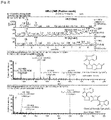
Fig. 1 shows a molecular weight of a solid state B582 (BASF black pigment) sample obtained by MALDI-TOF MS. -
Fig. 2 shows a result of HR LC/MS analysis of B582 dissolved in THF. -
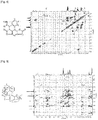
Fig. 3 shows a result of 1H NMR analysis of B582 dissolved in THF. -
Fig. 4 shows a result of gCOSY NMR analysis of B582 dissolved in THF. -
Fig. 5 shows a result of gHMBC NMR analysis of B582 dissolved in THF. -
Fig. 6 shows 13C MAS SSNMR spectrum of B582 in a solid state. -
Fig. 7 shows a parent mass peak selected in the MALDI-TOF MS of pigment Red 264. -
Fig. 8 shows MALDI-TOF/TOF MS/MS spectrum of pigment Red 264. -
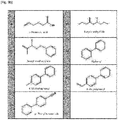
Fig. 9a and9b show the structures by Py-GC/MS of pigment Red 264. - Since various modifications and variations can be made in the present invention, particular embodiments are illustrated in the drawings and will be described in detail in the detailed description. It should be understood, however, that the invention is not intended to be limited to the particular embodiments, but includes all modifications, equivalents, and alternatives falling within the spirit and scope of the invention. In the following description of the present invention, detailed description of known functions will be omitted if it is determined that it may obscure the gist of the present invention.
- In the analyses of pigment structures by conventional techniques, there was a difficulty analysis of pigment structures by the application of LC/MS and the usage of NMR due to low solubility of pigments in organic solvents. Particularly, in case of pigments containing paramagnetic metals, it was very difficult to analyze them with NMR.
- The currently used pigment analysis methods are to determine molecular weights of the pigments by using MALDI-TOF MS or DART-MS and to determine their structures by using Py-GC/MS. However, it is difficult to predict the structures if not detected in Py-GC/MS.
- In order to solve the above problems, the present invention provides a method of analyzing a pigment structure with LC/MS or NMR, by developing a pretreatment method of an insoluble pigment.
- The method for analyzing a structure of an insoluble pigment compound according to the present invention comprises a pretreatment step by ultrasonic degradation of an insoluble pigment compound to improve the solubility of the compound or by fragmentation of a pigment molecule with a laser.
- More specifically, a method for qualitative analysis of an insoluble pigment compound according to the present invention comprises the steps of:
- (1) determining a molecular weight of the insoluble pigment compound with MS; and
- (2) bringing the pigment compound into degradation by ultrasonic treatment in a solvent to formpartial structural compounds and analyzing the partial structural compounds by LC/MS and NMR,, or
- (1) selecting a parent mass in MALDI-TOF MS for the insoluble pigment compound; and
- (2) applying a laser only to a compound corresponding to the peak of the parent mass to fragment the compound, and then detecting each fragment ion by MS.
- According to one embodiment, the ultrasonic treatment may be performed by applying ultrasonic waves of 40 kHz for 12 hours using Branson 5810 model, but it may be appropriately adjusted according to the characteristics and structure of the pigment.
- According to one embodiment, in case of using a Bruker UltrafleXetreme, selective laser irradiation of the compound corresponding to the parent mass peak is carried out, by setting the Smartbeam laser parameter to 3_medium and irradiating with a laser intensity of 50% at 1000 Hz to accumulate 2500 shots.
- That is, it is possible to predict the partial structures of the pigment molecule by bringing the pigment molecule into degradation using ultrasonic waves or by fragmenting the pigment molecule using a laser to analyze the structures of the cleaved pigment molecule in various methods. The structure of the original pigment molecule can be predicted through the prediction of the partial structures.
- According to one embodiment, the insoluble pigment compound may be diketopoyrrolopyrrole-based derivatives.
- According to one embodiment, the solvent may be THF, CHCl3, etc.
- The MALDI-TOF MS is a method in which a low molecular weight (100 to 300 Da) organic or inorganic matrix and a cationic medium are mixed to form uniform crystals in order to desorb polymer substances that are easily degraded even by a small energy, and then a strong pulse N2 laser of -337 nm is irradiated to the crystals to accomplish precise mass analyses by TOF-MS. The method enables to measure molecular weights of the polymer substances having a molecular weight of 300 Da or more, to analyze the samples at femtomolar level due to high sensitivity of the method, and to significantly reduce cleavage of the compounds to be analyzed at the time of ionization. Thus, it may be more suitable to analyze the original pigment molecules without cleavage.
- For selective laser irradiation on the compound corresponding to the parent mass peak, the resolution of the peaks may typically be in the range of ±2Da to ±8Da.
- Hereinafter, embodiments of the present invention will be described in detail so that those skilled in the art can easily carry out the present invention. The present invention may, however, be embodied in many different forms and should not be construed as limited to the embodiments set forth herein.
-
1. Pigment sample: Powder B582 (WO 2010/081756 ), a black pigment manufactured by BASF.
2. Analysis method
2.1 Equipment: LTQ Orbitrap Elite MS and MALDI-TOF MS
2.2. LC/MS conditions
Organic solvent: THF
Ionization: APCI positive
HPLC conditions
Column: Capcellpak C18 (4.6mm ID x 50mm L x 3µm)
A: ACN/TFA 100/0.1 B: H2O/TFA 100/0.01Time (min) A (%) B (%) 0 30 70 5 30 70 10 100 0 20 100 0 - Flow rate: 1 mL/min
- Column temperature: 40 °C
- A molecular weight was obtained by analyzing the B582 sample in a solid state with MALDI-TOF MS, and the results are shown in
Fig. 1 . As a result of the MALDI-TOF MS measurement, a single substance having a molecular weight of 448 was detected. As a result of analyzing the component dissolved in THF by LC/MS, a substance having a molecular weight of 319 was detected. The substance having a molecular weight of 319 is presumed to be a compound broken out from the black pigment sample. The predicted structures of the substance having a molecular weight of 448 and the substance having a molecular weight of 319 are as follows: -

-

- The B582 sample was dissolved in THF at a concentration of 5 mg/mL and a solution of the sample was sonicated.
- By using a Branson 5810 model, an ultrasonic wave of 40 kHz was applied to the B582 sample at room temperature for 12 hours.
- The results of analysis of the elemental composition of the B582 sample slightly dissolved in THF are shown in
Fig. 2 (HR LC/MS),Fig. 3 (1H NMR),Fig. 4 (gCOSY NMR) andFig. 5 (gHMBC NMR). - From analysis results of the solution sample by HR LC/MS (
Fig. 2 ) and NMR (Fig. 3 ,Fig. 4 and Fig. 5 ), the structure predicted from the MS analysis could be supported and the component dissolved in THF was presumed to have the structure of the substance having a molecular weight of 319 which was determined by MS analysis. The substance having a molecular weight of 319 does not correspond to a main structure. There were structures other than the above structure, but their exact structures were not identified. -
Fig. 6 shows 13C MAS SSNMR spectrum of the pigment itself (solid state). As a result of the measurement by 13C MAS SSNMR, it was found that there were no aliphatic structures other than the structure predicted by MS analysis, and there were aromatic rings, double bonds and carbonyl carbon. - Red 264 (3,6-di([1,1'-biphenyl]-4-yl)-2,5-dihydropyrrolo[3,4-c]pyrrole-1,4-dione], which is mainly used as a pigment for mobile phone exterior materials, have a structure as follows:
-

- In this example, the structure of Red 264 was analyzed by using MALDI-TOF/TOF MS (Bruker, UltrafleXtreme).
- 2 mg of Red 264 sample was placed on a MALDI target plate with a spatula.
- N2 gas was flowed over the sample placed on the target plate to remove the solid lump.
-
- 3.1 Analysis condition of MALDI-TOF/TOF MS
- 3.1.1 As for FlexControl method, Litf.Itf was used.
Contidions of MS and LIFT
Reflectron Positive Mode
Ion Source 1: 7.50 kV
Ion Source 2: 6.75 kV
Lens: 3.50 kV
Reflector 1: 29.50 kV
Reflector 2: 14.00 kV
Pulsed Ion extraction: 80 ns
LIFT 1: 19.00 kV
LIFT 2: 3.40 kV
Conditions of laser and parent mass
Laser intensity:Laser 50% (1000 Hz), 2500 shots
Smartbeam parameter set: 3_medium
CID OFF mode
Parent mass: m/z 441 - The sample was analyzed according to the procedure of SOP [SOP-0494-0k (Standard operating procedure of Bruker MALDI-TOF/TOF(UltrafleXtreme)) and SOP-0496-0k (MS/MS standard operating procedure employing Bruker MALDI-TOF/TOF(UltrafleXtreme))] operating the instrument under the above analysis conditions.
-
Fig. 7 shows the analysis result of a parent mass peak by the MALDI-TOF MS of pigment Red 264. The parent mass peak was obtained at m/z 441. -
Fig. 8 shows MALDI-TOF/TOF MS/MS spectrum of pigment Red 264. From the MS/MS spectrum, it is found that peaks are present at m/z 424, 412, 286, 232, 205 and 180. The peaks at m/z 424, 412, 286, 232, 205, and 180 can be expected to represent peaks for the following fragments, respectively. -

- The structure of Red 264 was analyzed by using Py-GC/MS. The results are shown in Table below and
Figs. 9a and9b . - In the analysis of the structure of Red 264 by using Py-GC/MS, the functional groups derived from a dispersant for binder and the like are detected together, which makes it difficult to predict the exact structure of the pigment.
Sample Ingredient Remark Red 264 Methyl methacrylate, benzyl methacrylate Dispersant for binder and binder monomer Acetic acid, butanoic acid, 5-hexenoic acid Biphenyl, 4-methyl biphenyl, 4-vinyldiphenyl, p-phenylbenzonitrile Expected to be the material derived from pigments - While the present invention has been particularly shown and described with reference to specific embodiments thereof, it will be apparent to those skilled in the art that this specific description is merely a preferred embodiment and that the scope of the invention is not limited thereby. It is therefore intended that the scope of the invention be defined by the claims appended hereto and their equivalents.
2.3 MALDI-TOF MS conditions
1 mg of a B582 sample and 9 mg of a matrix (DCTB) were ground together in a mortar and then applied to a plate in a solid state to prepare an analytical sample (solvent free method).
Method: RP_12kDa (Reflector, positive)
3. Analysis results
Claims (5)
- A method for qualitative analysis of an insoluble pigment compound, comprising the steps of:(1) determining a molecular weight of the insoluble pigment compound with MS; and(2) (2) bringing the pigment compound into degradation by ultrasonic treatment in a solvent to formpartial structural compounds and analyzing the partial structural compounds by LC/MS and NMR,, or(1) selecting a parent mass in MALDI-TOF MS for the insoluble pigment compound; and(2) applying a laser only to a compound corresponding to the peak of the parent mass to fragment the compound, and then detecting each fragment ion by MS.
- The method for qualitative analysis of an insoluble pigment compound according to claim 1, wherein the insoluble pigment compound is bis-oxodihydro-indolylene-benzodifuranone-based derivatives or diketopoyrrolopyrrole-based derivatives.
- The method for qualitative analysis of an insoluble pigment compound according to claim 1, wherein the solvent is THF or CHCl3.
- The method for qualitative analysis of an insoluble pigment compound according to claim 1, wherein the ultrasonic treatment is performed by applying ultrasonic waves of 40 kHz for 1 to 24 hours.
- The method for qualitative analysis of an insoluble pigment compound according to claim 1, wherein the laser irradiation in case of using N2 laser is carried out with a laser intensity of 20% to accumulate 600 shots while maintaining a laser attenuator at 68% at 20 Hz or the laser irradiation is carried out by setting the Smartbeam laser parameter to 3_medium and irradiating with a laser intensity of 50% at 1000 Hz to accumulate 2500 shots.
Applications Claiming Priority (2)
| Application Number | Priority Date | Filing Date | Title |
|---|---|---|---|
| KR1020170104324A KR102174436B1 (en) | 2017-08-17 | 2017-08-17 | Qualitative analysis method of insoluble pigment compounds |
| PCT/KR2018/001328 WO2019035521A1 (en) | 2017-08-17 | 2018-01-31 | Method for qualitatively analyzing insoluble pigment compound |
Publications (3)
| Publication Number | Publication Date |
|---|---|
| EP3671192A1 true EP3671192A1 (en) | 2020-06-24 |
| EP3671192A4 EP3671192A4 (en) | 2020-07-29 |
| EP3671192B1 EP3671192B1 (en) | 2022-09-21 |
Family
ID=65361988
Family Applications (1)
| Application Number | Title | Priority Date | Filing Date |
|---|---|---|---|
| EP18846639.5A Active EP3671192B1 (en) | 2017-08-17 | 2018-01-31 | Method for qualitatively analyzing insoluble pigment compound |
Country Status (5)
| Country | Link |
|---|---|
| US (1) | US11397138B2 (en) |
| EP (1) | EP3671192B1 (en) |
| JP (1) | JP6923168B2 (en) |
| KR (1) | KR102174436B1 (en) |
| WO (1) | WO2019035521A1 (en) |
Family Cites Families (38)
| Publication number | Priority date | Publication date | Assignee | Title |
|---|---|---|---|---|
| GB8718756D0 (en) * | 1987-08-07 | 1987-09-16 | Unilever Plc | Supporting means |
| US7108970B2 (en) | 2000-01-07 | 2006-09-19 | Transform Pharmaceuticals, Inc. | Rapid identification of conditions, compounds, or compositions that inhibit, prevent, induce, modify, or reverse transitions of physical state |
| TW593567B (en) | 2000-07-31 | 2004-06-21 | Ciba Sc Holding Ag | Dispersant compositions improving the heat stability of transparent pigments |
| US7973936B2 (en) * | 2001-01-30 | 2011-07-05 | Board Of Trustees Of Michigan State University | Control system and apparatus for use with ultra-fast laser |
| JP4455495B2 (en) * | 2003-05-15 | 2010-04-21 | 株式会社資生堂 | Sample injection method |
| US20060261267A1 (en) * | 2005-05-20 | 2006-11-23 | Agency For Science, Technology And Research | Composite MALDI matrix material and methods of using it and kits thereof in MALDI |
| PL2740773T3 (en) * | 2006-10-11 | 2019-05-31 | Agfa Nv | Curable pigment inkjet ink sets and methods for preparing the said ink sets |
| WO2009034971A1 (en) * | 2007-09-12 | 2009-03-19 | Fujifilm Corporation | Process for production of desubstituted compounds, organic semiconductor film and process for production of the film |
| TW200925216A (en) * | 2007-12-07 | 2009-06-16 | Univ Nat Taiwan | Method for dispersing pigment into solvent |
| KR100976097B1 (en) * | 2008-12-05 | 2010-08-16 | 주식회사 대웅제약 | How to selectively crystallize the isomers of iopromide |
| US8674006B2 (en) | 2009-01-19 | 2014-03-18 | BASF SE Ludwigshafen | Black pigment dispersion |
| US20120171773A1 (en) * | 2009-05-29 | 2012-07-05 | Waters Technologies Corporation | Temperature Control Of Enrichment And Separation Columns In Chromatography |
| JP2011053094A (en) * | 2009-09-02 | 2011-03-17 | Kao Corp | Method of measuring amount of adsorption of dispersant |
| KR101156795B1 (en) | 2010-03-10 | 2012-06-18 | 삼성전기주식회사 | Graphene Coated Target of MALDI-TOF Mass Spectrometry for Analysing Sample and MALDI-TOF Mass Spectrometry Device comprising The Same |
| AP2012006533A0 (en) | 2010-05-24 | 2012-10-31 | Xyleco Inc | Processing chemicals |
| DE112011102286B4 (en) * | 2010-07-07 | 2018-11-15 | Thermo Fisher Scientific Gmbh | Mass spectrometric quantification of analytes using a universal reporter |
| US20120071615A1 (en) * | 2010-09-14 | 2012-03-22 | Lg Chem, Ltd. | Bi-Nuclear Metallocene Compound and the Preparation Method of Polyolefin Using the Same |
| WO2012058619A1 (en) * | 2010-10-29 | 2012-05-03 | Cohesive Technologies Inc. | Lc-ms configuration for purification and detection of analytes having a broad range of hydrophobicities |
| KR101281105B1 (en) * | 2011-01-06 | 2013-07-02 | 한국수력원자력 주식회사 | The method of quantitative analysis for uranium in an aqueous solution |
| JP2012181378A (en) * | 2011-03-02 | 2012-09-20 | Toyo Ink Sc Holdings Co Ltd | Pigment composition for color filter, coloring composition and color filter |
| KR101895047B1 (en) * | 2011-12-30 | 2018-09-06 | 한미사이언스 주식회사 | A site-specific GLP-2 conjugate using an immunoglobulin fragment |
| CA2862378C (en) * | 2012-03-06 | 2019-11-12 | Oce-Technologies B.V. | Ink composition |
| KR101665009B1 (en) * | 2012-03-09 | 2016-10-11 | 한미사이언스 주식회사 | Pharmaceutical composition for the prevention or treatment of non-alcoholic fatty liver disease |
| KR20140009641A (en) * | 2012-07-12 | 2014-01-23 | 서울대학교산학협력단 | Process for obtaining maldi mass spectrum of ions formed at a specified temperature |
| US9646810B2 (en) | 2012-07-17 | 2017-05-09 | Snu R&Db Foundation | Method for improving mass spectrum reproducibility and quantitative analysis method using same |
| KR101689255B1 (en) | 2013-01-03 | 2016-12-26 | 주식회사 아스타 | Quantitative analysis method using mass spectrometry wherein laser pulse energy is adjusted |
| KR101689254B1 (en) | 2013-01-03 | 2016-12-26 | 서울대학교산학협력단 | Method for obtaining mass spectrum of ions generated at constant temperature by measuring total ion count, and use of matrix for quantitative analysis using maldi mass spectrometry |
| GB201310214D0 (en) * | 2013-06-07 | 2013-07-24 | Medical Res Council | Separation and Analysis Systems and Methods |
| EP2818859A1 (en) * | 2013-06-28 | 2014-12-31 | Ruprecht-Karls-Universität Heidelberg | Chromatographic Device and Method |
| US20150248072A1 (en) * | 2014-02-28 | 2015-09-03 | Canon Kabushiki Kaisha | Toner |
| US9570277B2 (en) | 2014-05-13 | 2017-02-14 | University Of Houston System | System and method for MALDI-TOF mass spectrometry |
| KR20160009740A (en) * | 2014-07-16 | 2016-01-27 | 연세대학교 산학협력단 | Sample plate using MALDI-TOF mass spectrometer and manufacturing method of the sample plate and a method for mess spectrometry using the sample plate |
| JP6488143B2 (en) * | 2015-02-13 | 2019-03-20 | 株式会社Dnpファインケミカル | Diketopyrrolopyrrole pigment derivative composition, pigment composition, pigment dispersion, colored resin composition, color filter, and display device |
| JP6734505B2 (en) * | 2015-02-27 | 2020-08-05 | 御国色素株式会社 | Fine pigment particles, pigment dispersion, photosensitive coloring composition and color filter |
| KR101692314B1 (en) | 2015-03-27 | 2017-01-03 | 주식회사 주빅 | Dissolution system of lipophilic drugs into biodegradable polymer: Smart Polymer System |
| KR101761484B1 (en) | 2015-10-30 | 2017-07-26 | 국방과학연구소 | Method of organic matrix solution for matrix-assisted laser desorption/ionization-mass spectroscopy and organic matrix manufactured by thereof |
| KR101811744B1 (en) | 2016-03-07 | 2017-12-22 | (주)아이투에이시스템즈 | Torque sensor using optical sensor and apparatus for measuring torque having the same |
| CN105854715B (en) | 2016-04-21 | 2019-03-05 | 北京百思声创科技有限公司 | Container is stirred by ultrasonic |
-
2017
- 2017-08-17 KR KR1020170104324A patent/KR102174436B1/en active Active
-
2018
- 2018-01-31 WO PCT/KR2018/001328 patent/WO2019035521A1/en not_active Ceased
- 2018-01-31 EP EP18846639.5A patent/EP3671192B1/en active Active
- 2018-01-31 JP JP2019549568A patent/JP6923168B2/en active Active
-
2020
- 2020-01-31 US US16/778,600 patent/US11397138B2/en active Active
Also Published As
| Publication number | Publication date |
|---|---|
| JP6923168B2 (en) | 2021-08-18 |
| KR102174436B1 (en) | 2020-11-04 |
| WO2019035521A1 (en) | 2019-02-21 |
| JP2020514744A (en) | 2020-05-21 |
| KR20190019436A (en) | 2019-02-27 |
| EP3671192B1 (en) | 2022-09-21 |
| US11397138B2 (en) | 2022-07-26 |
| EP3671192A4 (en) | 2020-07-29 |
| US20200166437A1 (en) | 2020-05-28 |
Similar Documents
| Publication | Publication Date | Title |
|---|---|---|
| McCombie et al. | Small-molecule MALDI using the matrix suppression effect to reduce or eliminate matrix background interferences | |
| Huang et al. | Characterization of the chemical components on the surface of different solids with electrospray‐assisted laser desorption ionization mass spectrometry | |
| Lafaye et al. | Metabolite profiling in rat urine by liquid chromatography/electrospray ion trap mass spectrometry. Application to the study of heavy metal toxicity | |
| Brady et al. | Mass spectrometry of intact neutral macromolecules using intense non‐resonant femtosecond laser vaporization with electrospray post‐ionization | |
| Aranda et al. | New method for caffeine quantification by planar chromatography coupled with electropray ionization mass spectrometry using stable isotope dilution analysis | |
| Gruendling et al. | Design of experiment (DoE) as a tool for the optimization of source conditions in SEC‐ESI‐MS of functional synthetic polymers synthesized via ATRP | |
| EP3671192B1 (en) | Method for qualitatively analyzing insoluble pigment compound | |
| Creaser et al. | Recent developments in analytical ion trap mass spectrometry | |
| Teearu et al. | Method development for the analysis of resinous materials with MALDI‐FT‐ICR‐MS: novel internal standards and a new matrix material for negative ion mode | |
| CN108463728A (en) | isobaric mass marker | |
| KR101907758B1 (en) | Device for analyzing sugar based on MALDI-Tof mass spectrometry and method of analyzing the same | |
| Jones et al. | Urinary porphyrin profiles by laser desorption/ionization time‐of‐flight mass spectrometry without the use of classical matrices | |
| Buijs et al. | A new method for the accurate determination of the isotopic state of single amide hydrogens within peptides using Fourier transform ion cyclotron resonance mass spectrometry | |
| Sachon et al. | MALDI TOF‐TOF characterization of a light stabilizer polymer contaminant from polypropylene or polyethylene plastic test tubes | |
| EP3708996B1 (en) | Method for producing test pieces of water-insoluble material for maldi mass spectrometry and method for quantitative analysis of water-insoluble material using maldi mass spectrometry | |
| Ring et al. | A comparative study of a liquid and a solid matrix in matrix‐assisted laser desorption/ionization time‐of‐flight mass spectrometry and collision cross section measurements | |
| Ropero-Miller et al. | Comparison of the novel direct analysis in real time time-of-flight mass spectrometry (AccuTOF-DART™) and signature analysis for the identification of constituents of refined illicit cocaine | |
| JP6774619B2 (en) | Matrix-assisted laser desorption mass spectrometry for high molecular weight polyoxyethylene derivatives | |
| Asakawa et al. | Negative‐mode MALDI mass spectrometry for the analysis of pigments using tetrathiafulvalene as a matrix | |
| Aceña et al. | Liquid chromatography–mass spectrometry: quantification and confirmation aspects | |
| Lay Jr et al. | Detection and characterization of DNA adducts at the femtomole level by desorption ionization mass spectrometry | |
| Young | Evaluation of the Polymer Characterization Capabilities of Matrix-Assisted Laser Desorption/Ionization (Literature Review) | |
| Bashir et al. | Matrix-assisted laser desorption/ionization mass spectrometry with re-engineered 2, 5-dihydroxybenzoic acid derivative | |
| Hirata et al. | Direct Analysis of Bio-Molecules in Solid Materials Using Electrospray Ionisation Mass Spectrometry Coupled with Laser Ablation and a Liquid Sampling Technique | |
| Karas et al. | Laser desorption ionization mass spectrometry of bioorganic molecules |
Legal Events
| Date | Code | Title | Description |
|---|---|---|---|
| STAA | Information on the status of an ep patent application or granted ep patent |
Free format text: STATUS: THE INTERNATIONAL PUBLICATION HAS BEEN MADE |
|
| PUAI | Public reference made under article 153(3) epc to a published international application that has entered the european phase |
Free format text: ORIGINAL CODE: 0009012 |
|
| STAA | Information on the status of an ep patent application or granted ep patent |
Free format text: STATUS: REQUEST FOR EXAMINATION WAS MADE |
|
| 17P | Request for examination filed |
Effective date: 20190911 |
|
| AK | Designated contracting states |
Kind code of ref document: A1 Designated state(s): AL AT BE BG CH CY CZ DE DK EE ES FI FR GB GR HR HU IE IS IT LI LT LU LV MC MK MT NL NO PL PT RO RS SE SI SK SM TR |
|
| AX | Request for extension of the european patent |
Extension state: BA ME |
|
| A4 | Supplementary search report drawn up and despatched |
Effective date: 20200630 |
|
| RIC1 | Information provided on ipc code assigned before grant |
Ipc: G01N 24/08 20060101ALN20200624BHEP Ipc: G01N 1/28 20060101AFI20200624BHEP |
|
| DAV | Request for validation of the european patent (deleted) | ||
| DAX | Request for extension of the european patent (deleted) | ||
| REG | Reference to a national code |
Ref country code: DE Ref legal event code: R079 Ref document number: 602018040977 Country of ref document: DE Free format text: PREVIOUS MAIN CLASS: G01N0024080000 Ipc: G01N0001280000 |
|
| GRAP | Despatch of communication of intention to grant a patent |
Free format text: ORIGINAL CODE: EPIDOSNIGR1 |
|
| STAA | Information on the status of an ep patent application or granted ep patent |
Free format text: STATUS: GRANT OF PATENT IS INTENDED |
|
| RIC1 | Information provided on ipc code assigned before grant |
Ipc: G01N 24/08 20060101ALN20220429BHEP Ipc: G01N 1/28 20060101AFI20220429BHEP |
|
| RIC1 | Information provided on ipc code assigned before grant |
Ipc: G01N 24/08 20060101ALN20220509BHEP Ipc: G01N 1/28 20060101AFI20220509BHEP |
|
| INTG | Intention to grant announced |
Effective date: 20220523 |
|
| GRAS | Grant fee paid |
Free format text: ORIGINAL CODE: EPIDOSNIGR3 |
|
| GRAA | (expected) grant |
Free format text: ORIGINAL CODE: 0009210 |
|
| STAA | Information on the status of an ep patent application or granted ep patent |
Free format text: STATUS: THE PATENT HAS BEEN GRANTED |
|
| AK | Designated contracting states |
Kind code of ref document: B1 Designated state(s): AL AT BE BG CH CY CZ DE DK EE ES FI FR GB GR HR HU IE IS IT LI LT LU LV MC MK MT NL NO PL PT RO RS SE SI SK SM TR |
|
| REG | Reference to a national code |
Ref country code: GB Ref legal event code: FG4D |
|
| REG | Reference to a national code |
Ref country code: CH Ref legal event code: EP |
|
| REG | Reference to a national code |
Ref country code: IE Ref legal event code: FG4D |
|
| REG | Reference to a national code |
Ref country code: DE Ref legal event code: R096 Ref document number: 602018040977 Country of ref document: DE |
|
| REG | Reference to a national code |
Ref country code: AT Ref legal event code: REF Ref document number: 1520162 Country of ref document: AT Kind code of ref document: T Effective date: 20221015 |
|
| REG | Reference to a national code |
Ref country code: LT Ref legal event code: MG9D |
|
| REG | Reference to a national code |
Ref country code: NL Ref legal event code: MP Effective date: 20220921 |
|
| PG25 | Lapsed in a contracting state [announced via postgrant information from national office to epo] |
Ref country code: SE Free format text: LAPSE BECAUSE OF FAILURE TO SUBMIT A TRANSLATION OF THE DESCRIPTION OR TO PAY THE FEE WITHIN THE PRESCRIBED TIME-LIMIT Effective date: 20220921 Ref country code: RS Free format text: LAPSE BECAUSE OF FAILURE TO SUBMIT A TRANSLATION OF THE DESCRIPTION OR TO PAY THE FEE WITHIN THE PRESCRIBED TIME-LIMIT Effective date: 20220921 Ref country code: NO Free format text: LAPSE BECAUSE OF FAILURE TO SUBMIT A TRANSLATION OF THE DESCRIPTION OR TO PAY THE FEE WITHIN THE PRESCRIBED TIME-LIMIT Effective date: 20221221 Ref country code: LV Free format text: LAPSE BECAUSE OF FAILURE TO SUBMIT A TRANSLATION OF THE DESCRIPTION OR TO PAY THE FEE WITHIN THE PRESCRIBED TIME-LIMIT Effective date: 20220921 Ref country code: LT Free format text: LAPSE BECAUSE OF FAILURE TO SUBMIT A TRANSLATION OF THE DESCRIPTION OR TO PAY THE FEE WITHIN THE PRESCRIBED TIME-LIMIT Effective date: 20220921 Ref country code: FI Free format text: LAPSE BECAUSE OF FAILURE TO SUBMIT A TRANSLATION OF THE DESCRIPTION OR TO PAY THE FEE WITHIN THE PRESCRIBED TIME-LIMIT Effective date: 20220921 |
|
| REG | Reference to a national code |
Ref country code: AT Ref legal event code: MK05 Ref document number: 1520162 Country of ref document: AT Kind code of ref document: T Effective date: 20220921 |
|
| PG25 | Lapsed in a contracting state [announced via postgrant information from national office to epo] |
Ref country code: HR Free format text: LAPSE BECAUSE OF FAILURE TO SUBMIT A TRANSLATION OF THE DESCRIPTION OR TO PAY THE FEE WITHIN THE PRESCRIBED TIME-LIMIT Effective date: 20220921 Ref country code: GR Free format text: LAPSE BECAUSE OF FAILURE TO SUBMIT A TRANSLATION OF THE DESCRIPTION OR TO PAY THE FEE WITHIN THE PRESCRIBED TIME-LIMIT Effective date: 20221222 |
|
| PG25 | Lapsed in a contracting state [announced via postgrant information from national office to epo] |
Ref country code: SM Free format text: LAPSE BECAUSE OF FAILURE TO SUBMIT A TRANSLATION OF THE DESCRIPTION OR TO PAY THE FEE WITHIN THE PRESCRIBED TIME-LIMIT Effective date: 20220921 Ref country code: RO Free format text: LAPSE BECAUSE OF FAILURE TO SUBMIT A TRANSLATION OF THE DESCRIPTION OR TO PAY THE FEE WITHIN THE PRESCRIBED TIME-LIMIT Effective date: 20220921 Ref country code: PT Free format text: LAPSE BECAUSE OF FAILURE TO SUBMIT A TRANSLATION OF THE DESCRIPTION OR TO PAY THE FEE WITHIN THE PRESCRIBED TIME-LIMIT Effective date: 20230123 Ref country code: ES Free format text: LAPSE BECAUSE OF FAILURE TO SUBMIT A TRANSLATION OF THE DESCRIPTION OR TO PAY THE FEE WITHIN THE PRESCRIBED TIME-LIMIT Effective date: 20220921 Ref country code: CZ Free format text: LAPSE BECAUSE OF FAILURE TO SUBMIT A TRANSLATION OF THE DESCRIPTION OR TO PAY THE FEE WITHIN THE PRESCRIBED TIME-LIMIT Effective date: 20220921 Ref country code: AT Free format text: LAPSE BECAUSE OF FAILURE TO SUBMIT A TRANSLATION OF THE DESCRIPTION OR TO PAY THE FEE WITHIN THE PRESCRIBED TIME-LIMIT Effective date: 20220921 |
|
| PG25 | Lapsed in a contracting state [announced via postgrant information from national office to epo] |
Ref country code: SK Free format text: LAPSE BECAUSE OF FAILURE TO SUBMIT A TRANSLATION OF THE DESCRIPTION OR TO PAY THE FEE WITHIN THE PRESCRIBED TIME-LIMIT Effective date: 20220921 Ref country code: PL Free format text: LAPSE BECAUSE OF FAILURE TO SUBMIT A TRANSLATION OF THE DESCRIPTION OR TO PAY THE FEE WITHIN THE PRESCRIBED TIME-LIMIT Effective date: 20220921 Ref country code: IS Free format text: LAPSE BECAUSE OF FAILURE TO SUBMIT A TRANSLATION OF THE DESCRIPTION OR TO PAY THE FEE WITHIN THE PRESCRIBED TIME-LIMIT Effective date: 20230121 Ref country code: EE Free format text: LAPSE BECAUSE OF FAILURE TO SUBMIT A TRANSLATION OF THE DESCRIPTION OR TO PAY THE FEE WITHIN THE PRESCRIBED TIME-LIMIT Effective date: 20220921 |
|
| REG | Reference to a national code |
Ref country code: DE Ref legal event code: R097 Ref document number: 602018040977 Country of ref document: DE |
|
| PG25 | Lapsed in a contracting state [announced via postgrant information from national office to epo] |
Ref country code: NL Free format text: LAPSE BECAUSE OF FAILURE TO SUBMIT A TRANSLATION OF THE DESCRIPTION OR TO PAY THE FEE WITHIN THE PRESCRIBED TIME-LIMIT Effective date: 20220921 Ref country code: AL Free format text: LAPSE BECAUSE OF FAILURE TO SUBMIT A TRANSLATION OF THE DESCRIPTION OR TO PAY THE FEE WITHIN THE PRESCRIBED TIME-LIMIT Effective date: 20220921 |
|
| PLBE | No opposition filed within time limit |
Free format text: ORIGINAL CODE: 0009261 |
|
| STAA | Information on the status of an ep patent application or granted ep patent |
Free format text: STATUS: NO OPPOSITION FILED WITHIN TIME LIMIT |
|
| PG25 | Lapsed in a contracting state [announced via postgrant information from national office to epo] |
Ref country code: DK Free format text: LAPSE BECAUSE OF FAILURE TO SUBMIT A TRANSLATION OF THE DESCRIPTION OR TO PAY THE FEE WITHIN THE PRESCRIBED TIME-LIMIT Effective date: 20220921 |
|
| 26N | No opposition filed |
Effective date: 20230622 |
|
| PG25 | Lapsed in a contracting state [announced via postgrant information from national office to epo] |
Ref country code: SI Free format text: LAPSE BECAUSE OF FAILURE TO SUBMIT A TRANSLATION OF THE DESCRIPTION OR TO PAY THE FEE WITHIN THE PRESCRIBED TIME-LIMIT Effective date: 20220921 |
|
| REG | Reference to a national code |
Ref country code: CH Ref legal event code: PL |
|
| PG25 | Lapsed in a contracting state [announced via postgrant information from national office to epo] |
Ref country code: LU Free format text: LAPSE BECAUSE OF NON-PAYMENT OF DUE FEES Effective date: 20230131 |
|
| REG | Reference to a national code |
Ref country code: BE Ref legal event code: MM Effective date: 20230131 |
|
| PG25 | Lapsed in a contracting state [announced via postgrant information from national office to epo] |
Ref country code: LI Free format text: LAPSE BECAUSE OF NON-PAYMENT OF DUE FEES Effective date: 20230131 Ref country code: CH Free format text: LAPSE BECAUSE OF NON-PAYMENT OF DUE FEES Effective date: 20230131 |
|
| PG25 | Lapsed in a contracting state [announced via postgrant information from national office to epo] |
Ref country code: BE Free format text: LAPSE BECAUSE OF NON-PAYMENT OF DUE FEES Effective date: 20230131 |
|
| PG25 | Lapsed in a contracting state [announced via postgrant information from national office to epo] |
Ref country code: IE Free format text: LAPSE BECAUSE OF NON-PAYMENT OF DUE FEES Effective date: 20230131 |
|
| PG25 | Lapsed in a contracting state [announced via postgrant information from national office to epo] |
Ref country code: IT Free format text: LAPSE BECAUSE OF FAILURE TO SUBMIT A TRANSLATION OF THE DESCRIPTION OR TO PAY THE FEE WITHIN THE PRESCRIBED TIME-LIMIT Effective date: 20220921 |
|
| PG25 | Lapsed in a contracting state [announced via postgrant information from national office to epo] |
Ref country code: MC Free format text: LAPSE BECAUSE OF FAILURE TO SUBMIT A TRANSLATION OF THE DESCRIPTION OR TO PAY THE FEE WITHIN THE PRESCRIBED TIME-LIMIT Effective date: 20220921 |
|
| PG25 | Lapsed in a contracting state [announced via postgrant information from national office to epo] |
Ref country code: MC Free format text: LAPSE BECAUSE OF FAILURE TO SUBMIT A TRANSLATION OF THE DESCRIPTION OR TO PAY THE FEE WITHIN THE PRESCRIBED TIME-LIMIT Effective date: 20220921 |
|
| PG25 | Lapsed in a contracting state [announced via postgrant information from national office to epo] |
Ref country code: BG Free format text: LAPSE BECAUSE OF FAILURE TO SUBMIT A TRANSLATION OF THE DESCRIPTION OR TO PAY THE FEE WITHIN THE PRESCRIBED TIME-LIMIT Effective date: 20220921 |
|
| PG25 | Lapsed in a contracting state [announced via postgrant information from national office to epo] |
Ref country code: BG Free format text: LAPSE BECAUSE OF FAILURE TO SUBMIT A TRANSLATION OF THE DESCRIPTION OR TO PAY THE FEE WITHIN THE PRESCRIBED TIME-LIMIT Effective date: 20220921 |
|
| PG25 | Lapsed in a contracting state [announced via postgrant information from national office to epo] |
Ref country code: CY Free format text: LAPSE BECAUSE OF FAILURE TO SUBMIT A TRANSLATION OF THE DESCRIPTION OR TO PAY THE FEE WITHIN THE PRESCRIBED TIME-LIMIT; INVALID AB INITIO Effective date: 20180131 |
|
| PG25 | Lapsed in a contracting state [announced via postgrant information from national office to epo] |
Ref country code: HU Free format text: LAPSE BECAUSE OF FAILURE TO SUBMIT A TRANSLATION OF THE DESCRIPTION OR TO PAY THE FEE WITHIN THE PRESCRIBED TIME-LIMIT; INVALID AB INITIO Effective date: 20180131 |
|
| PG25 | Lapsed in a contracting state [announced via postgrant information from national office to epo] |
Ref country code: TR Free format text: LAPSE BECAUSE OF FAILURE TO SUBMIT A TRANSLATION OF THE DESCRIPTION OR TO PAY THE FEE WITHIN THE PRESCRIBED TIME-LIMIT Effective date: 20220921 |
|
| PGFP | Annual fee paid to national office [announced via postgrant information from national office to epo] |
Ref country code: GB Payment date: 20251222 Year of fee payment: 9 |
|
| PGFP | Annual fee paid to national office [announced via postgrant information from national office to epo] |
Ref country code: FR Payment date: 20251223 Year of fee payment: 9 |
|
| PGFP | Annual fee paid to national office [announced via postgrant information from national office to epo] |
Ref country code: DE Payment date: 20251222 Year of fee payment: 9 |