EP3670648A1 - Method for preparation of fungal mutant with high hydrolytic activity - Google Patents
Method for preparation of fungal mutant with high hydrolytic activity Download PDFInfo
- Publication number
- EP3670648A1 EP3670648A1 EP19217758.2A EP19217758A EP3670648A1 EP 3670648 A1 EP3670648 A1 EP 3670648A1 EP 19217758 A EP19217758 A EP 19217758A EP 3670648 A1 EP3670648 A1 EP 3670648A1
- Authority
- EP
- European Patent Office
- Prior art keywords
- enzyme
- mutant
- fermentation
- biomass
- glucose
- Prior art date
- Legal status (The legal status is an assumption and is not a legal conclusion. Google has not performed a legal analysis and makes no representation as to the accuracy of the status listed.)
- Pending
Links
Images
Classifications
-
- C—CHEMISTRY; METALLURGY
- C12—BIOCHEMISTRY; BEER; SPIRITS; WINE; VINEGAR; MICROBIOLOGY; ENZYMOLOGY; MUTATION OR GENETIC ENGINEERING
- C12P—FERMENTATION OR ENZYME-USING PROCESSES TO SYNTHESISE A DESIRED CHEMICAL COMPOUND OR COMPOSITION OR TO SEPARATE OPTICAL ISOMERS FROM A RACEMIC MIXTURE
- C12P21/00—Preparation of peptides or proteins
- C12P21/02—Preparation of peptides or proteins having a known sequence of two or more amino acids, e.g. glutathione
-
- C—CHEMISTRY; METALLURGY
- C12—BIOCHEMISTRY; BEER; SPIRITS; WINE; VINEGAR; MICROBIOLOGY; ENZYMOLOGY; MUTATION OR GENETIC ENGINEERING
- C12N—MICROORGANISMS OR ENZYMES; COMPOSITIONS THEREOF; PROPAGATING, PRESERVING, OR MAINTAINING MICROORGANISMS; MUTATION OR GENETIC ENGINEERING; CULTURE MEDIA
- C12N1/00—Microorganisms; Compositions thereof; Processes of propagating, maintaining or preserving microorganisms or compositions thereof; Processes of preparing or isolating a composition containing a microorganism; Culture media therefor
- C12N1/14—Fungi; Culture media therefor
-
- C—CHEMISTRY; METALLURGY
- C12—BIOCHEMISTRY; BEER; SPIRITS; WINE; VINEGAR; MICROBIOLOGY; ENZYMOLOGY; MUTATION OR GENETIC ENGINEERING
- C12N—MICROORGANISMS OR ENZYMES; COMPOSITIONS THEREOF; PROPAGATING, PRESERVING, OR MAINTAINING MICROORGANISMS; MUTATION OR GENETIC ENGINEERING; CULTURE MEDIA
- C12N1/00—Microorganisms; Compositions thereof; Processes of propagating, maintaining or preserving microorganisms or compositions thereof; Processes of preparing or isolating a composition containing a microorganism; Culture media therefor
- C12N1/22—Processes using, or culture media containing, cellulose or hydrolysates thereof
-
- C—CHEMISTRY; METALLURGY
- C12—BIOCHEMISTRY; BEER; SPIRITS; WINE; VINEGAR; MICROBIOLOGY; ENZYMOLOGY; MUTATION OR GENETIC ENGINEERING
- C12N—MICROORGANISMS OR ENZYMES; COMPOSITIONS THEREOF; PROPAGATING, PRESERVING, OR MAINTAINING MICROORGANISMS; MUTATION OR GENETIC ENGINEERING; CULTURE MEDIA
- C12N1/00—Microorganisms; Compositions thereof; Processes of propagating, maintaining or preserving microorganisms or compositions thereof; Processes of preparing or isolating a composition containing a microorganism; Culture media therefor
- C12N1/38—Chemical stimulation of growth or activity by addition of chemical compounds which are not essential growth factors; Stimulation of growth by removal of a chemical compound
-
- C—CHEMISTRY; METALLURGY
- C12—BIOCHEMISTRY; BEER; SPIRITS; WINE; VINEGAR; MICROBIOLOGY; ENZYMOLOGY; MUTATION OR GENETIC ENGINEERING
- C12N—MICROORGANISMS OR ENZYMES; COMPOSITIONS THEREOF; PROPAGATING, PRESERVING, OR MAINTAINING MICROORGANISMS; MUTATION OR GENETIC ENGINEERING; CULTURE MEDIA
- C12N5/00—Undifferentiated human, animal or plant cells, e.g. cell lines; Tissues; Cultivation or maintenance thereof; Culture media therefor
- C12N5/0018—Culture media for cell or tissue culture
-
- C—CHEMISTRY; METALLURGY
- C12—BIOCHEMISTRY; BEER; SPIRITS; WINE; VINEGAR; MICROBIOLOGY; ENZYMOLOGY; MUTATION OR GENETIC ENGINEERING
- C12N—MICROORGANISMS OR ENZYMES; COMPOSITIONS THEREOF; PROPAGATING, PRESERVING, OR MAINTAINING MICROORGANISMS; MUTATION OR GENETIC ENGINEERING; CULTURE MEDIA
- C12N9/00—Enzymes; Proenzymes; Compositions thereof; Processes for preparing, activating, inhibiting, separating or purifying enzymes
- C12N9/14—Hydrolases (3)
- C12N9/24—Hydrolases (3) acting on glycosyl compounds (3.2)
- C12N9/2402—Hydrolases (3) acting on glycosyl compounds (3.2) hydrolysing O- and S- glycosyl compounds (3.2.1)
- C12N9/2405—Glucanases
- C12N9/2434—Glucanases acting on beta-1,4-glucosidic bonds
- C12N9/2437—Cellulases (3.2.1.4; 3.2.1.74; 3.2.1.91; 3.2.1.150)
-
- C—CHEMISTRY; METALLURGY
- C12—BIOCHEMISTRY; BEER; SPIRITS; WINE; VINEGAR; MICROBIOLOGY; ENZYMOLOGY; MUTATION OR GENETIC ENGINEERING
- C12N—MICROORGANISMS OR ENZYMES; COMPOSITIONS THEREOF; PROPAGATING, PRESERVING, OR MAINTAINING MICROORGANISMS; MUTATION OR GENETIC ENGINEERING; CULTURE MEDIA
- C12N1/00—Microorganisms; Compositions thereof; Processes of propagating, maintaining or preserving microorganisms or compositions thereof; Processes of preparing or isolating a composition containing a microorganism; Culture media therefor
- C12N1/14—Fungi; Culture media therefor
- C12N1/145—Fungi isolates
-
- C—CHEMISTRY; METALLURGY
- C12—BIOCHEMISTRY; BEER; SPIRITS; WINE; VINEGAR; MICROBIOLOGY; ENZYMOLOGY; MUTATION OR GENETIC ENGINEERING
- C12N—MICROORGANISMS OR ENZYMES; COMPOSITIONS THEREOF; PROPAGATING, PRESERVING, OR MAINTAINING MICROORGANISMS; MUTATION OR GENETIC ENGINEERING; CULTURE MEDIA
- C12N2500/00—Specific components of cell culture medium
- C12N2500/05—Inorganic components
- C12N2500/10—Metals; Metal chelators
- C12N2500/12—Light metals, i.e. alkali, alkaline earth, Be, Al, Mg
- C12N2500/14—Calcium; Ca chelators; Calcitonin
-
- C—CHEMISTRY; METALLURGY
- C12—BIOCHEMISTRY; BEER; SPIRITS; WINE; VINEGAR; MICROBIOLOGY; ENZYMOLOGY; MUTATION OR GENETIC ENGINEERING
- C12N—MICROORGANISMS OR ENZYMES; COMPOSITIONS THEREOF; PROPAGATING, PRESERVING, OR MAINTAINING MICROORGANISMS; MUTATION OR GENETIC ENGINEERING; CULTURE MEDIA
- C12N2500/00—Specific components of cell culture medium
- C12N2500/05—Inorganic components
- C12N2500/10—Metals; Metal chelators
- C12N2500/12—Light metals, i.e. alkali, alkaline earth, Be, Al, Mg
- C12N2500/16—Magnesium; Mg chelators
-
- C—CHEMISTRY; METALLURGY
- C12—BIOCHEMISTRY; BEER; SPIRITS; WINE; VINEGAR; MICROBIOLOGY; ENZYMOLOGY; MUTATION OR GENETIC ENGINEERING
- C12N—MICROORGANISMS OR ENZYMES; COMPOSITIONS THEREOF; PROPAGATING, PRESERVING, OR MAINTAINING MICROORGANISMS; MUTATION OR GENETIC ENGINEERING; CULTURE MEDIA
- C12N2500/00—Specific components of cell culture medium
- C12N2500/30—Organic components
- C12N2500/34—Sugars
-
- C—CHEMISTRY; METALLURGY
- C12—BIOCHEMISTRY; BEER; SPIRITS; WINE; VINEGAR; MICROBIOLOGY; ENZYMOLOGY; MUTATION OR GENETIC ENGINEERING
- C12R—INDEXING SCHEME ASSOCIATED WITH SUBCLASSES C12C - C12Q, RELATING TO MICROORGANISMS
- C12R2001/00—Microorganisms ; Processes using microorganisms
- C12R2001/645—Fungi ; Processes using fungi
- C12R2001/80—Penicillium
Definitions
- the present invention relates to a hyper-cellulolytic catabolite derepressed mutant of ascomycetes fungus, Penicillim funiculosum.
- the present invention also relates to a process for screening and creating hyper-cellulolytic catabolite derepressed mutants of ascomycetes fungus, especially variants of Penicillium funiculosum MRJ-16(parent) and ID-10 (mutant) of which ID-10(mutant) has an ability to produce higher titer of cellulases enzymes especially FPase and ⁇ -glucosidase activity than the parent Penicillim funiculosum MRJ-16.
- Enzymes remain a significant cost factor in cellulosic ethanol process.
- the development of economically viable enzyme production process with high enzyme productivity, specificity and cocktail mixture appropriate for the hydrolysis of lignocellulosic biomass can reduce the problem in commercialization of second generation biofuels.
- Second generation lignocellulosic biomass based biofuels are highly advantageous as the biomass is readily available, cheap and renewable. It has been stated by numerous researchers that ethanol derived from lignocellulosic biomass can decrease green house gas emission by more than 80% (Soam et al. 2016).
- Lignocelluloses biomass is a complex mixture of cellulose, hemicelluloses and lignin.
- Fungal mutant Strains should be selected on the basis of their sensitivity to catabolite repression, easy to handle, can use cost effective carbon, nitrogen and mineral requirement and high titer of enzyme production.
- Penicillium mutant strain produces a well balanced cocktail mixture of ⁇ -glucosidase, endo-glucanases and exo-glucanase, resulting in desire performance in hydrolyzing lignocellulosic biomass.
- Other proteins which are vital for the hydrolysis of biomass are also secreted by this fungus.
- Mutagenesis is an extensive method to improve the efficiency of fungi to secrete cellulose degrading enzyme at high titer. Mutagenesis technique include physical mutagens like UV-light, gamma rays, X-rays, infra-red rays etc and chemical mutagens like methyl nitrosoguanidine, nitrous oxide, ethyl-methane-sulphonate, hydroxylamine, dimethyl sulphate etc. Jafari N et al (2017) has improved the cellulolytic activity of Aspergillus niger using UV-light, resulting in the mutant with two fold increase in filter paper activity (FPA).
- FPA filter paper activity
- Atroviride TUB F-1724 produce high levels of ⁇ -glucosidase and extracellular cellulases using pretreated willow.
- the catalytic efficiency and optimum pH of T. reesei endo- ⁇ -1,4-glucanase II were improved by saturation mutagenesis followed by random mutagenesis and two rounds of DNA shuffling.
- the pH optimum of the variant (Q139R/L218H/W276R/N342T) was shifted from 4.8 to 6.2, while the enzyme activity was improved more than 4.5-fold (Qin Y et al. 2008).
- US 2014/0363846 describes the process for cellulases enzyme production using fungal cells of genus Myceliophthora by submerged fermentation and soluble non cellulase-inducing carbon sources were used.
- Carbon sources used were glucose, glycerol, xylose, glucose: xylose (90:10), sucrose, glucose and inducing substrate like sophorose, gentibiose and cellobiose, molasses, fructose and glucose: fructose (50:50).
- Similar protein and Filter paper activity (FPU) was observed when glucose alone and with inducing substrate was used as carbon sources. Maximum of average 0.55 FPU/mg proteins was observed when xylose was used.
- CN103045484B mentioned the production of cellulases enzyme using Penicillium decumbens (CCTCC M2011195) mutant strain.
- a mutant strain was developed using UV irradiation and a chemical mutagen NTG (N-methyl-N'-nitro-N-nitrosoguanidine).
- the fermentation medium was composed of fishing xylose, wheat bran, microcrystalline cellulose, ammonium sulfate, potassium phosphate monobasic and magnesium salt.
- Enzyme activity obtained was filter paper 10 IU/ml, endoglucanase activity 30 IU/ml, exo-glucanase activity 1. 5 IU/ml and ⁇ glucosidase 8 IU/ml.
- the enzyme cocktail produced by the researchers will be insufficient if used for biomass hydrolysis because of low ⁇ -glucosidase titer in comparison to filter paper activity, thus more enzymes need to be doped. Furthermore, the choice of carbon source as fishing xylose and nitrogen source as wheat bran may makes this process rather uneconomical and non-sustainable.
- Patent application no. CN102559506A (2013 ), Penicillium oxalicum CGMCC No. 4357 strain was isolated and identified to produce cellulases enzymes using corn stover flour as carbon source. They claim that the process of enzyme production was fast (7 days) with shaking cultured to reach peak endoglucanases, exoglucanases and ⁇ - glucosidase activity of 228.17 IU/ml, 109.90 IU/ml and 81.45 IU/ml respectively. Enzyme was used for corn stover straw saccharification at 9% (w/v) cellulose concentration; saccharification rate was calculated to be more than 80% when 25ml of enzyme (50% of total volume) was used. The amount of enzyme used by the claimants is very high and substrate concentration is low, which is not economically viable for industrial scale process.
- the present invention relates to creating hyper-cellulolytic catabolite de-repressed mutant of ascomycetes fungus, especially variant of Penicillium funiculosum MRJ-16, where higher D-glucose level cannot inhibit the enzymes secretion.
- the present invention further relates to creating hyper-cellulolytic catabolite de-repressed mutants of ascomycetes fungus, especially variant of Penicillium funiculosum, which has an ability to produce higher titer of cellulases enzymes especially FPase and ⁇ -glucosidase activity than the parent Penicillim funiculosum MRJ-16 mutant strain developed earlier in lab and under patent protection.
- the present invention also relates to a method for producing cellulases and/or hemi-cellulases using the mutant microorganisms, and to a method for degrading or saccharifying biomass using the secreted enzymes. It was observed that since, the amount of enzyme use for saccharification of biomass was reduced; this will bring down the production cost of industrial process which utilizes sugar released after saccharification to produce valuable products eg. Bioethanol.
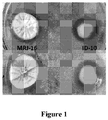
- Figure 1 Penicillium funiculosum MRJ-16 (parent) and ID-10 mutant colony on screening media plate.
- the present invention discloses a mutant fungal strain derived from Penicillim funiculosum MRJ-16, which has an ability to produce higher titer of cellulases enzymes especially FPase and ⁇ -glucosidase activity than the parent Penicillim funiculosum MRJ-16.
- the present invention in particluar discloses a mutant fungal strain Penicillin funiculosum ID-10 (acc no. MTCC 25224 deposited on 23 October 2018), which possesses different growth, morphology and cellulose hydrolyzing properties in the presence of glucose than the parent strain from which it was derived.
- Present invention also discloses a method of preparing a mutant fungal strain from MRJ-16 which comprises: subjecting Penicillium funiculosum MRJ-16 to aerobic culture media followed by treatment with UV light and/or NTG (N-methyl-N'-nitro-N-nitrosoguanidine) and/ or EMS (Ethyl methanesulfonate) and screening colonies for higher cellulolytic activity followed by several more mutations.
- Another aspect of the present invention discloses a method of selection of mutual fungal strain by visually selection on basis of cream colored pigmentation and measuring the amorphous cellulose hydrolyzed zone.
- a mutant strain, Penicillium funiculosum ID-10 characterized by (A) higher cellulase activity than Penicillium funiculosum MRJ-16 (parent strain) and (B) much higher ⁇ -glucosidase activity obtained by subjecting Penicillium funiculosum MRJ-16 to aerobic culture media followed by treatment with UV light and/or NTG and or EMS and screening colonies for higher cellulolytic activity followed by several more mutations.
- the process of screening mutant was done using solid media comprises amorphous cellulose ranging from 0.1% to about 0.4% and a catabolite repressor molecule like glucose and or xylose. Mutants were selected by measuring the diameter of hydrolyzed zone.
- Enzyme production from Penicillium funiculosum ID-10 mutant strain was done using cellulose or pretreated lignocellulosic biomass (rice straw, wheat straw or baggase) as carbon source.
- the enzyme preparation produced has mixture of necessary enzyme such as FPase, CMCase, Cellobiase, ⁇ -glucosidase, ⁇ -L arabinofuranosidase, ⁇ -xylosidase, cellobiohydrase, oxidases or mixture thereof.
- a part of enzyme produced is harvested and used as it was without downstream processing ie enzyme along with fungal mycelia and another part of enzyme was separated from mycelia, concentrated and used for pretreated lignocellulosic biomass saccharification.
- the parent strain Penicillium funiculosum MRJ-16 mutant strain was used to create mutants for enzyme production. Mutations were done using UV or NTG or EMS mutagens alone or all together. The mutant strains were obtained after repeated multistage mutagenesis process. Mutants were selected sequentially on specially designed media containing amorphous cellulose and glucose at different concentration from 1- 4% (w/w) (screening media composition in table no. 1). Mutant strain that hydrolyzes the amorphous cellulose in the presence of 4% glucose was selected after visualizing and measuring the hydrolyzed zone. Stability of mutant stain for enzyme production capability was tested for multiple cycles and then used for further study. Table no. 1 Screening media composition S. No.
- Fermentation process was carried out in aerated stirred tank bioreactor of 2 L glass jacketed vessel, with 1.8 L working volume.
- the media components of fermentation media used were ammonium sulphate 3.5 g/L, KH 2 PO 4 4 g/L, MgSO 4 .7H 2 O 0.5 g/L, CaCO 3 2.5 g/L, Glycerol 2.5 g/L, Corn steep solids 20 g/L, cellulose 20 g/L and Tween-80 2 ml/L.
- the fermenter containing 1.5 L medium was sterilized at 120°C for 20 min.
- parent MRJ-16 produces 15 g/L of protein, 62 IU/ml of ⁇ -glucosidase and 6.4 FPU/ml of filter paper activity
- ID-10 produces 16 g/L of protein, 87 IU/ml of ⁇ -glucosidase and 9.3 FPU/ml of filter paper activity.
- Fermentation process was carried out in aerated stirred tank bioreactor of 2 L glass jacketed vessel, with 1.8 L working volume.
- the media components of fermentation media used were ammonium sulphate 5 g/L, KH 2 PO 4 6 g/L, MgSO 4 .7H 2 O 1 g/L, CaCO 3 5 g/L, Glycerol 2.5 g/L, Corn steep solids 30 g/L, cellulose 30 g/L and Tween-80 2 ml/L.
- the fermenter containing 1.5 L medium was sterilized at 120°C for 20 min. After cooling, the temperature was kept at 30°C, pH adjusted to 5.5 and inoculated with 10% active liquid seed (seed media composition in table no.
- parent MRJ-16 produces 16.2 g/L of protein, 64 IU/ml of ⁇ -glucosidase and 6.2 FPU/ml of filter paper activity
- ID-10 produces 16 g/L of protein, 98 IU/ml of ⁇ -glucosidase and 10.2 FPU/ml of filter paper activity.
- Cellulases enzymes production using Penicillium funiculosum ID-10 mutant strain was performed according to example no.2.
- the secretome analyses were done it is comprise enzyme activities of ⁇ -glucosidase 87 IU/ml, Filter paper activity 9.3 FPU/ml, endoglucanase 125 IU/ml, ⁇ -L arabinofuranosidase 0.05 IU/ml, ⁇ -xylosidase 1.2 IU/ml, xylanase 227 IU/ml, pectinase 97 IU/ml and oxidases 6.54 IU/ml analyzed using respective substrates.
- Cellulases enzymes production using Penicillium funiculosum ID-10 mutant strain was performed according to example no.3.
- the secretome analyses were done it is comprise enzyme activities of ⁇ -glucosidase 98 IU/ml, Filter paper activity 10.2 FPU/ml, endoglucanase 132 IU/ml, ⁇ -L arabinofuranosidase 0.05 IU/ml, ⁇ -xylosidase 1.2 IU/ml, xylanase 247 IU/ml, pectinase 95 IU/ml and oxidases 5.23 IU/ml analyzed using respective substrates.
- the efficiency of enzyme produced was determined by its ability to hydrolyze lignocellulosic biomass such as acid pretreated rice straw and produce sugars.
- Enzyme broth produced in example no.6 was used as such without any downstream processing. Hydrolysis was performed at high substrate loading of biomass i.e. 20% at pH 4-5, 50mM citrate buffer, temperature 50°C at enzyme loadings of 6 FPU/g of dry biomass. Sugars released were determined at regular interval of time by HPLC. Enzyme cocktail worked efficiently and leads to 63% glucan conversion in 48 h.
Landscapes
- Life Sciences & Earth Sciences (AREA)
- Health & Medical Sciences (AREA)
- Chemical & Material Sciences (AREA)
- Engineering & Computer Science (AREA)
- Organic Chemistry (AREA)
- Wood Science & Technology (AREA)
- Zoology (AREA)
- Biotechnology (AREA)
- Bioinformatics & Cheminformatics (AREA)
- Genetics & Genomics (AREA)
- Biomedical Technology (AREA)
- General Engineering & Computer Science (AREA)
- Biochemistry (AREA)
- Microbiology (AREA)
- General Health & Medical Sciences (AREA)
- Medicinal Chemistry (AREA)
- Virology (AREA)
- Tropical Medicine & Parasitology (AREA)
- Mycology (AREA)
- Botany (AREA)
- Molecular Biology (AREA)
- General Chemical & Material Sciences (AREA)
- Cell Biology (AREA)
- Proteomics, Peptides & Aminoacids (AREA)
- Chemical Kinetics & Catalysis (AREA)
- Enzymes And Modification Thereof (AREA)
- Micro-Organisms Or Cultivation Processes Thereof (AREA)
- Preparation Of Compounds By Using Micro-Organisms (AREA)
Abstract
Description
- The present invention relates to a hyper-cellulolytic catabolite derepressed mutant of ascomycetes fungus, Penicillim funiculosum. The present invention also relates to a process for screening and creating hyper-cellulolytic catabolite derepressed mutants of ascomycetes fungus, especially variants of Penicillium funiculosum MRJ-16(parent) and ID-10 (mutant) of which ID-10(mutant) has an ability to produce higher titer of cellulases enzymes especially FPase and β-glucosidase activity than the parent Penicillim funiculosum MRJ-16.
- Enzymes remain a significant cost factor in cellulosic ethanol process. The development of economically viable enzyme production process with high enzyme productivity, specificity and cocktail mixture appropriate for the hydrolysis of lignocellulosic biomass can reduce the problem in commercialization of second generation biofuels. Second generation lignocellulosic biomass based biofuels are highly advantageous as the biomass is readily available, cheap and renewable. It has been stated by numerous researchers that ethanol derived from lignocellulosic biomass can decrease green house gas emission by more than 80% (Soam et al. 2016). Lignocelluloses biomass is a complex mixture of cellulose, hemicelluloses and lignin. These substrates have to undergo various pretreatment processes in order to improve the accessibility for enzymatic hydrolysis to release sugars for ethanol production. Sugars released after enzymatic hydrolysis can be converted into other platform chemicals such as butanol, methanol, dimethyl ether, succinic acid, fumaric acid, glutamic acid and sorbitol etc.
- Till date there is no viable technology in India which can produce indigenous cellulases enzyme for biomass hydrolysis in cost effective manner. Lack of hyper cellulolytic microorganisms, less enzyme titer and high cost of growth media constituents are major limiting factors which in turn makes its application processes quite expensive. So, the reduction of overall enzyme production cost and development of industrially viable strain are the major goals of enzyme manufacturing industries. To economize the process, high titer of cellulolytic and hemicellulolytic enzymes, efficiency of enzyme cocktail for biomass hydrolysis, time required for enzyme production and handling of overall process are important area to focus.
- Many fungal and bacterial species are efficient producers of cellulases enzymes but preferences have been given to the fungal microorganisms because of their ability to secrete complete cellulase system in the medium at high titer. Various recombinant or mutant strains of ascomycetes filamentous fungi like Trichoderma, Penicillium, Fusarium, Humicola and Aspergillus species were developed for industrial production of cellulases. Wild type fungal strains do not produce sufficient amount of cellulases enzymes required for efficient hydrolysis of lignocellulosic biomass and produce small amounts of β-glucosidase. Conventional mutational techniques have permitted the strain of Penicillium to be selected for hyper-producing cellulases. Fungal mutant Strains should be selected on the basis of their sensitivity to catabolite repression, easy to handle, can use cost effective carbon, nitrogen and mineral requirement and high titer of enzyme production. Penicillium mutant strain produces a well balanced cocktail mixture of β-glucosidase, endo-glucanases and exo-glucanase, resulting in desire performance in hydrolyzing lignocellulosic biomass. Other proteins which are vital for the hydrolysis of biomass are also secreted by this fungus.
- Mutagenesis is an extensive method to improve the efficiency of fungi to secrete cellulose degrading enzyme at high titer. Mutagenesis technique include physical mutagens like UV-light, gamma rays, X-rays, infra-red rays etc and chemical mutagens like methyl nitrosoguanidine, nitrous oxide, ethyl-methane-sulphonate, hydroxylamine, dimethyl sulphate etc. Jafari N et al (2017) has improved the cellulolytic activity of Aspergillus niger using UV-light, resulting in the mutant with two fold increase in filter paper activity (FPA). Similarly, cellulase and xylanase activities in Penicillium verruculosum 28K mutants were improved about 3-fold using four cycles of UV mutagenesis. The enzyme production was further improved by 2- to 3-fold in a two-stage fermentation process using wheat bran, yeast extract medium and microcrystalline cellulose as the inducer (Solov'eva IV et al. 2005). Trichoderma atroviride mutants were created by mutagenesis using N-methyl-N'-nitro-N-nitrosoguanidine (NTG) as well as UV-light by Kovács and et al. (2008). These T. atroviride mutants (e.g. T. atroviride TUB F-1724) produce high levels of β-glucosidase and extracellular cellulases using pretreated willow. In another study, the catalytic efficiency and optimum pH of T. reesei endo-β-1,4-glucanase II were improved by saturation mutagenesis followed by random mutagenesis and two rounds of DNA shuffling. The pH optimum of the variant (Q139R/L218H/W276R/N342T) was shifted from 4.8 to 6.2, while the enzyme activity was improved more than 4.5-fold (Qin Y et al. 2008).
-
US 2014/0363846 describes the process for cellulases enzyme production using fungal cells of genus Myceliophthora by submerged fermentation and soluble non cellulase-inducing carbon sources were used. Carbon sources used were glucose, glycerol, xylose, glucose: xylose (90:10), sucrose, glucose and inducing substrate like sophorose, gentibiose and cellobiose, molasses, fructose and glucose: fructose (50:50). Similar protein and Filter paper activity (FPU) was observed when glucose alone and with inducing substrate was used as carbon sources. Maximum of average 0.55 FPU/mg proteins was observed when xylose was used. Claimants of the patent mentioned about the variety of cellulases, hemicellulases, lignin degrading enzymes, estrases, swollenin, expansins and many more additional enzymes secreted by the Myceliophthora thermophila strain (ATCC No. 42464) used but didn't present any of the activity of above these in patent expect Filter paper activity. -
CN103045484B mentioned the production of cellulases enzyme using Penicillium decumbens (CCTCC M2011195) mutant strain. A mutant strain was developed using UV irradiation and a chemical mutagen NTG (N-methyl-N'-nitro-N-nitrosoguanidine). The fermentation medium was composed of fishing xylose, wheat bran, microcrystalline cellulose, ammonium sulfate, potassium phosphate monobasic and magnesium salt. Enzyme activity obtained wasfilter paper 10 IU/ml, endoglucanase activity 30 IU/ml, exo-glucanase activity 1. 5 IU/ml and β - glucosidase 8 IU/ml. The enzyme cocktail produced by the researchers will be insufficient if used for biomass hydrolysis because of low β-glucosidase titer in comparison to filter paper activity, thus more enzymes need to be doped. Furthermore, the choice of carbon source as fishing xylose and nitrogen source as wheat bran may makes this process rather uneconomical and non-sustainable. - Patent application no.
CN102559506A (2013 ), Penicillium oxalicum CGMCC No. 4357 strain was isolated and identified to produce cellulases enzymes using corn stover flour as carbon source. They claim that the process of enzyme production was fast (7 days) with shaking cultured to reach peak endoglucanases, exoglucanases and β - glucosidase activity of 228.17 IU/ml, 109.90 IU/ml and 81.45 IU/ml respectively. Enzyme was used for corn stover straw saccharification at 9% (w/v) cellulose concentration; saccharification rate was calculated to be more than 80% when 25ml of enzyme (50% of total volume) was used. The amount of enzyme used by the claimants is very high and substrate concentration is low, which is not economically viable for industrial scale process. - The present invention relates to creating hyper-cellulolytic catabolite de-repressed mutant of ascomycetes fungus, especially variant of Penicillium funiculosum MRJ-16, where higher D-glucose level cannot inhibit the enzymes secretion. The present invention further relates to creating hyper-cellulolytic catabolite de-repressed mutants of ascomycetes fungus, especially variant of Penicillium funiculosum, which has an ability to produce higher titer of cellulases enzymes especially FPase and β-glucosidase activity than the parent Penicillim funiculosum MRJ-16 mutant strain developed earlier in lab and under patent protection. The present invention also relates to a method for producing cellulases and/or hemi-cellulases using the mutant microorganisms, and to a method for degrading or saccharifying biomass using the secreted enzymes. It was observed that since, the amount of enzyme use for saccharification of biomass was reduced; this will bring down the production cost of industrial process which utilizes sugar released after saccharification to produce valuable products eg. Bioethanol.
-
Figure 1 . Penicillium funiculosum MRJ-16 (parent) and ID-10 mutant colony on screening media plate. - The present invention discloses a mutant fungal strain derived from Penicillim funiculosum MRJ-16, which has an ability to produce higher titer of cellulases enzymes especially FPase and β-glucosidase activity than the parent Penicillim funiculosum MRJ-16. The present invention in particluar discloses a mutant fungal strain Penicillin funiculosum ID-10 (acc no. MTCC 25224 deposited on 23 October 2018), which possesses different growth, morphology and cellulose hydrolyzing properties in the presence of glucose than the parent strain from which it was derived.
- Present invention also discloses a method of preparing a mutant fungal strain from MRJ-16 which comprises: subjecting Penicillium funiculosum MRJ-16 to aerobic culture media followed by treatment with UV light and/or NTG (N-methyl-N'-nitro-N-nitrosoguanidine) and/ or EMS (Ethyl methanesulfonate) and screening colonies for higher cellulolytic activity followed by several more mutations.
- Another aspect of the present invention discloses a method of selection of mutual fungal strain by visually selection on basis of cream colored pigmentation and measuring the amorphous cellulose hydrolyzed zone.
- In accordance with the present invention, a mutant strain, Penicillium funiculosum ID-10, characterized by (A) higher cellulase activity than Penicillium funiculosum MRJ-16 (parent strain) and (B) much higher β-glucosidase activity obtained by subjecting Penicillium funiculosum MRJ-16 to aerobic culture media followed by treatment with UV light and/or NTG and or EMS and screening colonies for higher cellulolytic activity followed by several more mutations. The process of screening mutant was done using solid media comprises amorphous cellulose ranging from 0.1% to about 0.4% and a catabolite repressor molecule like glucose and or xylose. Mutants were selected by measuring the diameter of hydrolyzed zone. Enzyme production from Penicillium funiculosum ID-10 mutant strain was done using cellulose or pretreated lignocellulosic biomass (rice straw, wheat straw or baggase) as carbon source. The enzyme preparation produced has mixture of necessary enzyme such as FPase, CMCase, Cellobiase, β-glucosidase, α-L arabinofuranosidase, β-xylosidase, cellobiohydrase, oxidases or mixture thereof. A part of enzyme produced is harvested and used as it was without downstream processing ie enzyme along with fungal mycelia and another part of enzyme was separated from mycelia, concentrated and used for pretreated lignocellulosic biomass saccharification.
- Having described the basic aspects of the present invention, the following non-limiting examples illustrate specific embodiments thereof.
- The parent strain Penicillium funiculosum MRJ-16 mutant strain was used to create mutants for enzyme production. Mutations were done using UV or NTG or EMS mutagens alone or all together. The mutant strains were obtained after repeated multistage mutagenesis process. Mutants were selected sequentially on specially designed media containing amorphous cellulose and glucose at different concentration from 1- 4% (w/w) (screening media composition in table no. 1). Mutant strain that hydrolyzes the amorphous cellulose in the presence of 4% glucose was selected after visualizing and measuring the hydrolyzed zone. Stability of mutant stain for enzyme production capability was tested for multiple cycles and then used for further study.
Table no. 1 Screening media composition S. No. Chemical Components Quantity (g/L) 1 Ammonium sulphate 1.4 2 KH2PO4 2.0 3 MgSO4.7H2O 0.3 4 CaCl2.3H2O 0.3 5 Urea 0.3 6 Tween-80 0.1 7 Peptone 0.25 8 Yeast Extract 0.10 9 ZnSO4.7H2O 0.0014 10 FeSO4.7H2O 0.005 11 MnSO4.H2O 0.0016 12 CoCl2.6H2O 0.002 13 Glucose 30-40 14 Amorphous cellulose 1-4 15 Agar 20 16 pH 5.0 - The visual observation of the Penicillium funiculosum MRJ-16 (parent) and mutant (ID-10) cultured on screening media plate showed that in the presence of 4% glucose, ID-10 mycelia remains cream colored till 10-13 days of incubation, while MRJ-16 started turning yellow before the onset of spores as shown in
Fig. 1 . More wrinkled surface was observed in case of MRJ-16 than ID-10. ID-10 produces small colony with wide hydrolysis zone than MRJ-16 mutant with colony diameter and hydrolyzed zone diameter of 12 mm and 20 mm respectively. - Fermentation process was carried out in aerated stirred tank bioreactor of 2 L glass jacketed vessel, with 1.8 L working volume. The media components of fermentation media used were ammonium sulphate 3.5 g/L, KH2PO4 4 g/L, MgSO4.7H2O 0.5 g/L, CaCO3 2.5 g/L, Glycerol 2.5 g/L, Corn steep solids 20 g/L, cellulose 20 g/L and Tween-80 2 ml/L. The fermenter containing 1.5 L medium was sterilized at 120°C for 20 min. After cooling, the temperature was kept at 30°C, pH adjusted to 5.5 and inoculated with 10% active liquid seed (seed media composition in table no.2) of Penicillium ID-10 mutant strain. After 96 h of fermentation, the enzyme broth was collected, centrifuged and analysis of clear enzyme broth was done.
Table no.2 Seed/Inoculum Media composition S. No. Chemical Components Quantity (g/L) 1 Ammonium Sulphate 4 2 KH2PO4 3 3 MgSO4.7H2O 0.1 4 CaCO3 2 5 Sucrose 5 6 Corn Steep Liquor 15 7 Cellulose 10 8 Tween-80 2 9 pH 5.5 - The results obtained after 96 hr of incubation were; parent MRJ-16 produces 15 g/L of protein, 62 IU/ml of β-glucosidase and 6.4 FPU/ml of filter paper activity, while ID-10 produces 16 g/L of protein, 87 IU/ml of β-glucosidase and 9.3 FPU/ml of filter paper activity.
- Fermentation process was carried out in aerated stirred tank bioreactor of 2 L glass jacketed vessel, with 1.8 L working volume. The media components of fermentation media used were ammonium sulphate 5 g/L, KH2PO4 6 g/L, MgSO4.7H2O 1 g/L, CaCO3 5 g/L, Glycerol 2.5 g/L, Corn steep solids 30 g/L, cellulose 30 g/L and Tween-80 2 ml/L. The fermenter containing 1.5 L medium was sterilized at 120°C for 20 min. After cooling, the temperature was kept at 30°C, pH adjusted to 5.5 and inoculated with 10% active liquid seed (seed media composition in table no. 3) of Penicillium ID-10 mutant strain. After 96 h of fermentation, the enzyme broth was collected, centrifuged and analysis of clear enzyme broth was done.
Table no.3 Seed/Inoculum Media composition S. No. Chemical Components Quantity (g/L) 1 Ammonium Sulphate 5 2 KH2PO4 6 3 MgSO4.7H2O 1 4 CaCO3 2.5 5 Sucrose 10 6 Corn Steep Liquor 10 7 Cellulose 20 8 Tween-80 2 9 pH 5.5 - The results obtained after 96 hr of incubation were; parent MRJ-16 produces 16.2 g/L of protein, 64 IU/ml of β-glucosidase and 6.2 FPU/ml of filter paper activity, while ID-10 produces 16 g/L of protein, 98 IU/ml of β-glucosidase and 10.2 FPU/ml of filter paper activity.
- In order to demonstrate the glucose repression on enzyme production, cellulose used as carbon source was replaced with glucose. Enzyme production from Penicillium funiculosum ID-10 mutant strain was carried out under the conditions and media composition as described in example no.2 and 3 except cellulose. Concentrated solution of glucose was autoclaved separately and added into media at 4% w/v concentration. Fermentation was lasted approximately for 120 h, enzyme harvested and analyses were done (Table 5).
Table no.4 Enzyme production from MRJ-16 and parent strain in the presence of glucose Mutants Concentration (% w/v) FPU/ml BGL (IU/ml) Penicillium funiculosum MRJ-16 mutant (Parent strain) Cellulose 3% 6.47 62 Glucose 4% 0.12 ND Penicillium funiculosum ID-10 Cellulose 3% 10.3 97 Glucose 4% 3.21 29 - Cellulases enzymes production using Penicillium funiculosum ID-10 mutant strain was performed according to example no.2. The secretome analyses were done it is comprise enzyme activities of β-glucosidase 87 IU/ml, Filter paper activity 9.3 FPU/ml, endoglucanase 125 IU/ml, α-L arabinofuranosidase 0.05 IU/ml, β-xylosidase 1.2 IU/ml, xylanase 227 IU/ml, pectinase 97 IU/ml and oxidases 6.54 IU/ml analyzed using respective substrates.
- Cellulases enzymes production using Penicillium funiculosum ID-10 mutant strain was performed according to example no.3. The secretome analyses were done it is comprise enzyme activities of β-glucosidase 98 IU/ml, Filter paper activity 10.2 FPU/ml, endoglucanase 132 IU/ml, α-L arabinofuranosidase 0.05 IU/ml, β-xylosidase 1.2 IU/ml, xylanase 247 IU/ml, pectinase 95 IU/ml and oxidases 5.23 IU/ml analyzed using respective substrates.
- The efficiency of enzyme produced was determined by its ability to hydrolyze lignocellulosic biomass such as acid pretreated rice straw and produce sugars. Enzyme broth produced in example no.6 was used as such without any downstream processing. Hydrolysis was performed at high substrate loading of biomass i.e. 20% at pH 4-5, 50mM citrate buffer, temperature 50°C at enzyme loadings of 6 FPU/g of dry biomass. Sugars released were determined at regular interval of time by HPLC. Enzyme cocktail worked efficiently and leads to 63% glucan conversion in 48 h.
Claims (11)
- A method of preparing a mutant fungal strain comprising of:-(a) preparing a mutant fungal strain using UV or NTG or EMS mutagens alone or all together;(b) screening of the mutant fungal strains by aerobic fermentation in a fermentation medium under conditions suitable for the production of enzymes;(c) screening the efficiency of the enzyme produced by mutant fungal strains by hydrolyzing biomass.
- The method as claimed in claim 1 wherein the mutant fungal strain is Penicillium funiculosum ID-10.
- The method as claimed in claim 1 or 2 wherein the fermentation media used in the step (b) is amorphous cellulose and glucose at different concentrations basically from 1- 4% (w/w).
- The method as claimed in any one of claims 1 to 3 wherein the fermentation uses 4% glucose in the media.
- The method as claimed in any preceding claim wherein fermentation in step (b) is carried out in aerated stirred tank having glass jacketed vessel of 2 L and working volume of 1.8L.
- The method as claimed in in any preceding claim wherein the fermentation media comprises ammonium sulphate 5 g/L, KH2PO4 6 g/L, MgSO4.7H2O 1 g/L, CaCO3 5 g/L, Glycerol 2.5 g/L, Corn steep solids 30 g/L, cellulose 30 g/L and Tween-80 2 ml/L
- The method as claimed in in any preceding claim wherein the method uses the fermenter which was sterilized at 120°C for 20 minutes and cooled at 30°C along with maintaining pH of reaction mixture was adjusted to 5.5.
- The method as claimed in in any preceding claim where in the step (b) discloses production of enzyme which is cellulase enzyme.
- The method as claimed in in any preceding claim wherein production of cellulase enzyme is performed using mutant fungal strain Penicillium funiculosum ID-10 using secretome analysis.
- The method as claimed in in any preceding claim wherein the efficiency of enzymes produced by mutant strains was analyzed by its ability to hydrolyse biomass i.e. pretreated rice straw to produce sugar.
- The method as claimed in in any preceding claim wherein the efficiency of enzyme produced in step (b) was analyzed by hydrolysis of biomass in step (c) at high substrate loading biomass i.e. 20% at pH 4-5, 50mM citrate buffer at temperature of 50°C.
Applications Claiming Priority (1)
| Application Number | Priority Date | Filing Date | Title |
|---|---|---|---|
| IN201821048196 | 2018-12-19 |
Publications (1)
| Publication Number | Publication Date |
|---|---|
| EP3670648A1 true EP3670648A1 (en) | 2020-06-24 |
Family
ID=68965746
Family Applications (1)
| Application Number | Title | Priority Date | Filing Date |
|---|---|---|---|
| EP19217758.2A Pending EP3670648A1 (en) | 2018-12-19 | 2019-12-18 | Method for preparation of fungal mutant with high hydrolytic activity |
Country Status (2)
| Country | Link |
|---|---|
| US (1) | US11261419B2 (en) |
| EP (1) | EP3670648A1 (en) |
Cited By (1)
| Publication number | Priority date | Publication date | Assignee | Title |
|---|---|---|---|---|
| EP3725891A1 (en) * | 2019-04-17 | 2020-10-21 | Indian Oil Corporation Limited | Bio-refinery waste utilization for enzyme production using novel penicillium funiculosum mrj-16 fungal strain |
Citations (6)
| Publication number | Priority date | Publication date | Assignee | Title |
|---|---|---|---|---|
| WO1980001080A1 (en) * | 1978-11-20 | 1980-05-29 | Us Commerce | Cellulase-producing microorganism |
| WO2007114729A1 (en) * | 2006-04-04 | 2007-10-11 | Sinitsyn Arkady Panteleimonovi | Method of lignocellulose materials saccharification using enzymes produced by penicillium fimiculosum |
| WO2008139641A1 (en) * | 2007-05-07 | 2008-11-20 | National Institute Of Advanced Industrial Science And Technology | Method for producing cellulase and hemicellulase having high hydrolytic activity |
| CN102559506A (en) | 2010-12-07 | 2012-07-11 | 中国农业科学院作物科学研究所 | Penicillium oxalicum and application thereof |
| CN103045484A (en) | 2011-10-11 | 2013-04-17 | 济南圣泉集团股份有限公司 | Penicillium strain producing cellulase and application in cellulose enzymatic hydrolysis thereof |
| US20140363846A1 (en) | 2011-08-26 | 2014-12-11 | Iogen Energy Corporation | Process for producing cellulase mixtures from myceliophthora and related organisms |
-
2019
- 2019-12-18 US US16/719,630 patent/US11261419B2/en active Active
- 2019-12-18 EP EP19217758.2A patent/EP3670648A1/en active Pending
Patent Citations (6)
| Publication number | Priority date | Publication date | Assignee | Title |
|---|---|---|---|---|
| WO1980001080A1 (en) * | 1978-11-20 | 1980-05-29 | Us Commerce | Cellulase-producing microorganism |
| WO2007114729A1 (en) * | 2006-04-04 | 2007-10-11 | Sinitsyn Arkady Panteleimonovi | Method of lignocellulose materials saccharification using enzymes produced by penicillium fimiculosum |
| WO2008139641A1 (en) * | 2007-05-07 | 2008-11-20 | National Institute Of Advanced Industrial Science And Technology | Method for producing cellulase and hemicellulase having high hydrolytic activity |
| CN102559506A (en) | 2010-12-07 | 2012-07-11 | 中国农业科学院作物科学研究所 | Penicillium oxalicum and application thereof |
| US20140363846A1 (en) | 2011-08-26 | 2014-12-11 | Iogen Energy Corporation | Process for producing cellulase mixtures from myceliophthora and related organisms |
| CN103045484A (en) | 2011-10-11 | 2013-04-17 | 济南圣泉集团股份有限公司 | Penicillium strain producing cellulase and application in cellulose enzymatic hydrolysis thereof |
Non-Patent Citations (4)
| Title |
|---|
| ADSUL ET AL: "Strain improvement of Penicillium janthinellum NCIM 1171 for increased cellulase production", BIORESOURCE TECHNOLOGY, ELSEVIER, AMSTERDAM, NL, vol. 98, no. 7, 31 December 2006 (2006-12-31), pages 1467 - 1473, XP005819374, ISSN: 0960-8524, DOI: 10.1016/J.BIORTECH.2006.02.036 * |
| ANMOLDEEP RANDHAWA ET AL: "Disruption of zinc finger DNA binding domain in catabolite repressor Mig1 increases growth rate, hyphal branching, and cellulase expression in hypercellulolytic fungus Penicillium funiculosum NCIM1228", BIOTECHNOLOGY FOR BIOFUELS, vol. 11, no. 1, 25 January 2018 (2018-01-25), XP055659316, DOI: 10.1186/s13068-018-1011-5 * |
| ANWAR M N ET AL: "Isolation of mutants of Penicillium purpurogenum resistant to catabolite repression", APPLIED MICROBIOLOGY AND BIOTECHNOLOGY, SPRINGER, BERLIN, DE, vol. 45, no. 5, 1 June 1996 (1996-06-01), pages 684 - 687, XP035171360, ISSN: 1432-0614, DOI: 10.1007/S002530050748 * |
| LACHKE A H ET AL: "Isolation of a hypercellulolytic mutant (Cu-1) of Penicillium funiculosum", ENZYME AND MICROBIAL TECHNOLOGY, STONEHAM, MA, US, vol. 8, no. 2, 1 February 1986 (1986-02-01), pages 105 - 108, XP023678676, ISSN: 0141-0229, [retrieved on 19860201], DOI: 10.1016/0141-0229(86)90081-5 * |
Cited By (1)
| Publication number | Priority date | Publication date | Assignee | Title |
|---|---|---|---|---|
| EP3725891A1 (en) * | 2019-04-17 | 2020-10-21 | Indian Oil Corporation Limited | Bio-refinery waste utilization for enzyme production using novel penicillium funiculosum mrj-16 fungal strain |
Also Published As
| Publication number | Publication date |
|---|---|
| US11261419B2 (en) | 2022-03-01 |
| US20200199522A1 (en) | 2020-06-25 |
| BR102019027128A2 (en) | 2020-10-06 |
Similar Documents
| Publication | Publication Date | Title |
|---|---|---|
| Gao et al. | Production and characterization of cellulolytic enzymes from the thermoacidophilic fungal Aspergillus terreus M11 under solid-state cultivation of corn stover | |
| Kovács et al. | Comparative enzymatic hydrolysis of pretreated spruce by supernatants, whole fermentation broths and washed mycelia of Trichoderma reesei and Trichoderma atroviride | |
| Braga et al. | Addition of feruloyl esterase and xylanase produced on-site improves sugarcane bagasse hydrolysis | |
| RU2508403C2 (en) | Method for obtaining alcohol in biorefining context | |
| RU2361918C1 (en) | Strain of mycelial mushroom penicillium verruculosum - producer of complex of cellulase, xylanase and xyloglucanase and way of reception of fermental preparation of complex of cellulase, xylanase and xyloglucanase for hydrolysis of cellulose and hemicellulose | |
| Kim et al. | Production of cellulases by Penicillium sp. in a solid-state fermentation of oil palm empty fruit bunch | |
| US11407974B2 (en) | Method for preparation and screening of fungal mutant with high hydrolytic activity and catabolite derepressed character | |
| KR101410719B1 (en) | Fungal strain Penicillium oxalicum KL1 and production method of lignocellulose-degrading enzymes using the strain | |
| Kovacs et al. | Enzymatic hydrolysis and simultaneous saccharification and fermentation of steam-pretreated spruce using crude Trichoderma reesei and Trichoderma atroviride enzymes | |
| Giese et al. | Cellulase production by Trichosporon laibachii | |
| US11242507B2 (en) | Mutant strain Aspergillus aculeatus for producing cellulase and xylanase and preparation method thereof | |
| US10030236B2 (en) | Process for the production of an enzymatic cocktail using liquid residues from a process for the biochemical conversion of lignocellulosic materials | |
| US10053680B2 (en) | Strain and a method to produce cellulase and its use | |
| Garcia-Kirchner et al. | Mixed submerged fermentation with two filamentous fungi for cellulolytic and xylanolytic enzyme production | |
| US11261419B2 (en) | Method for preparation of fungal mutant with high hydrolytic activity | |
| EP3660150B1 (en) | Provident method of cellulases enzymes production by penicillium funiculosum mrj-16 using low cost media components | |
| KR20220131857A (en) | Novel Arslopsis sp. strains and uses thereof | |
| KR101650892B1 (en) | Novel Fungi TG2 Having High Glycosylase Activity and Method for Producing Bioethanol Using the same | |
| US12252726B2 (en) | Process for simultaneous production of citric acid and cellulolytic enzymes | |
| US11242549B2 (en) | Bio-refinery waste utilization for enzyme production using novel penicillium funiculosum MRJ-16 fungal strain | |
| Elbanawy et al. | Production of Cellulases Via Solid State Fermentation by Different Fungal Isolates using Various Agricultural Wastes as a Substrate | |
| KR20110051984A (en) | Use for Schizofilum comb and saccharification to produce cellulase | |
| Kanotra et al. | Isolation and partial characterization of a mutant of trichoderma reesei and its application in solid‐state fermentation of paddy straw alone or in combination with pleurotus sajor‐caju | |
| BR102019027128B1 (en) | METHOD FOR PREPARING A MUTANT FUNGAL STRAIN | |
| Majumdar et al. | Important Enzymes by Employing Co-cultivation of Fungi |
Legal Events
| Date | Code | Title | Description |
|---|---|---|---|
| PUAI | Public reference made under article 153(3) epc to a published international application that has entered the european phase |
Free format text: ORIGINAL CODE: 0009012 |
|
| STAA | Information on the status of an ep patent application or granted ep patent |
Free format text: STATUS: THE APPLICATION HAS BEEN PUBLISHED |
|
| AK | Designated contracting states |
Kind code of ref document: A1 Designated state(s): AL AT BE BG CH CY CZ DE DK EE ES FI FR GB GR HR HU IE IS IT LI LT LU LV MC MK MT NL NO PL PT RO RS SE SI SK SM TR |
|
| AX | Request for extension of the european patent |
Extension state: BA ME |
|
| STAA | Information on the status of an ep patent application or granted ep patent |
Free format text: STATUS: REQUEST FOR EXAMINATION WAS MADE |
|
| 17P | Request for examination filed |
Effective date: 20201222 |
|
| RBV | Designated contracting states (corrected) |
Designated state(s): AL AT BE BG CH CY CZ DE DK EE ES FI FR GB GR HR HU IE IS IT LI LT LU LV MC MK MT NL NO PL PT RO RS SE SI SK SM TR |
|
| P01 | Opt-out of the competence of the unified patent court (upc) registered |
Effective date: 20230712 |
|
| STAA | Information on the status of an ep patent application or granted ep patent |
Free format text: STATUS: EXAMINATION IS IN PROGRESS |
|
| 17Q | First examination report despatched |
Effective date: 20250714 |