EP3670451A1 - Method for producing zeolite having controlled aluminum content by adjusting composition of synthesis mother liquor - Google Patents
Method for producing zeolite having controlled aluminum content by adjusting composition of synthesis mother liquor Download PDFInfo
- Publication number
- EP3670451A1 EP3670451A1 EP18846389.7A EP18846389A EP3670451A1 EP 3670451 A1 EP3670451 A1 EP 3670451A1 EP 18846389 A EP18846389 A EP 18846389A EP 3670451 A1 EP3670451 A1 EP 3670451A1
- Authority
- EP
- European Patent Office
- Prior art keywords
- cha
- aluminum content
- preparation example
- synthesis mixture
- zeolite
- Prior art date
- Legal status (The legal status is an assumption and is not a legal conclusion. Google has not performed a legal analysis and makes no representation as to the accuracy of the status listed.)
- Pending
Links
Images




Classifications
-
- C—CHEMISTRY; METALLURGY
- C01—INORGANIC CHEMISTRY
- C01B—NON-METALLIC ELEMENTS; COMPOUNDS THEREOF; METALLOIDS OR COMPOUNDS THEREOF NOT COVERED BY SUBCLASS C01C
- C01B39/00—Compounds having molecular sieve and base-exchange properties, e.g. crystalline zeolites; Their preparation; After-treatment, e.g. ion-exchange or dealumination
- C01B39/02—Crystalline aluminosilicate zeolites; Isomorphous compounds thereof; Direct preparation thereof; Preparation thereof starting from a reaction mixture containing a crystalline zeolite of another type, or from preformed reactants; After-treatment thereof
- C01B39/46—Other types characterised by their X-ray diffraction pattern and their defined composition
- C01B39/48—Other types characterised by their X-ray diffraction pattern and their defined composition using at least one organic template directing agent
-
- B—PERFORMING OPERATIONS; TRANSPORTING
- B01—PHYSICAL OR CHEMICAL PROCESSES OR APPARATUS IN GENERAL
- B01J—CHEMICAL OR PHYSICAL PROCESSES, e.g. CATALYSIS OR COLLOID CHEMISTRY; THEIR RELEVANT APPARATUS
- B01J29/00—Catalysts comprising molecular sieves
- B01J29/04—Catalysts comprising molecular sieves having base-exchange properties, e.g. crystalline zeolites
- B01J29/06—Crystalline aluminosilicate zeolites; Isomorphous compounds thereof
- B01J29/70—Crystalline aluminosilicate zeolites; Isomorphous compounds thereof of types characterised by their specific structure not provided for in groups B01J29/08 - B01J29/65
- B01J29/7015—CHA-type, e.g. Chabazite, LZ-218
-
- B—PERFORMING OPERATIONS; TRANSPORTING
- B01—PHYSICAL OR CHEMICAL PROCESSES OR APPARATUS IN GENERAL
- B01J—CHEMICAL OR PHYSICAL PROCESSES, e.g. CATALYSIS OR COLLOID CHEMISTRY; THEIR RELEVANT APPARATUS
- B01J37/00—Processes, in general, for preparing catalysts; Processes, in general, for activation of catalysts
- B01J37/08—Heat treatment
-
- C—CHEMISTRY; METALLURGY
- C01—INORGANIC CHEMISTRY
- C01B—NON-METALLIC ELEMENTS; COMPOUNDS THEREOF; METALLOIDS OR COMPOUNDS THEREOF NOT COVERED BY SUBCLASS C01C
- C01B39/00—Compounds having molecular sieve and base-exchange properties, e.g. crystalline zeolites; Their preparation; After-treatment, e.g. ion-exchange or dealumination
- C01B39/02—Crystalline aluminosilicate zeolites; Isomorphous compounds thereof; Direct preparation thereof; Preparation thereof starting from a reaction mixture containing a crystalline zeolite of another type, or from preformed reactants; After-treatment thereof
- C01B39/026—After-treatment
-
- C—CHEMISTRY; METALLURGY
- C01—INORGANIC CHEMISTRY
- C01B—NON-METALLIC ELEMENTS; COMPOUNDS THEREOF; METALLOIDS OR COMPOUNDS THEREOF NOT COVERED BY SUBCLASS C01C
- C01B39/00—Compounds having molecular sieve and base-exchange properties, e.g. crystalline zeolites; Their preparation; After-treatment, e.g. ion-exchange or dealumination
- C01B39/02—Crystalline aluminosilicate zeolites; Isomorphous compounds thereof; Direct preparation thereof; Preparation thereof starting from a reaction mixture containing a crystalline zeolite of another type, or from preformed reactants; After-treatment thereof
- C01B39/04—Crystalline aluminosilicate zeolites; Isomorphous compounds thereof; Direct preparation thereof; Preparation thereof starting from a reaction mixture containing a crystalline zeolite of another type, or from preformed reactants; After-treatment thereof using at least one organic template directing agent, e.g. an ionic quaternary ammonium compound or an aminated compound
-
- C—CHEMISTRY; METALLURGY
- C01—INORGANIC CHEMISTRY
- C01P—INDEXING SCHEME RELATING TO STRUCTURAL AND PHYSICAL ASPECTS OF SOLID INORGANIC COMPOUNDS
- C01P2002/00—Crystal-structural characteristics
- C01P2002/70—Crystal-structural characteristics defined by measured X-ray, neutron or electron diffraction data
- C01P2002/72—Crystal-structural characteristics defined by measured X-ray, neutron or electron diffraction data by d-values or two theta-values, e.g. as X-ray diagram
-
- C—CHEMISTRY; METALLURGY
- C01—INORGANIC CHEMISTRY
- C01P—INDEXING SCHEME RELATING TO STRUCTURAL AND PHYSICAL ASPECTS OF SOLID INORGANIC COMPOUNDS
- C01P2002/00—Crystal-structural characteristics
- C01P2002/80—Crystal-structural characteristics defined by measured data other than those specified in group C01P2002/70
- C01P2002/85—Crystal-structural characteristics defined by measured data other than those specified in group C01P2002/70 by XPS, EDX or EDAX data
-
- C—CHEMISTRY; METALLURGY
- C01—INORGANIC CHEMISTRY
- C01P—INDEXING SCHEME RELATING TO STRUCTURAL AND PHYSICAL ASPECTS OF SOLID INORGANIC COMPOUNDS
- C01P2002/00—Crystal-structural characteristics
- C01P2002/80—Crystal-structural characteristics defined by measured data other than those specified in group C01P2002/70
- C01P2002/86—Crystal-structural characteristics defined by measured data other than those specified in group C01P2002/70 by NMR- or ESR-data
-
- C—CHEMISTRY; METALLURGY
- C01—INORGANIC CHEMISTRY
- C01P—INDEXING SCHEME RELATING TO STRUCTURAL AND PHYSICAL ASPECTS OF SOLID INORGANIC COMPOUNDS
- C01P2004/00—Particle morphology
- C01P2004/01—Particle morphology depicted by an image
- C01P2004/03—Particle morphology depicted by an image obtained by SEM
Definitions
- the present invention relates to zeolite, and more particularly, to a method of producing a zeolite having a controlled aluminum content by adjusting the composition of synthesis mixture.
- Zeolites have a unique three-dimensional crystal structure of aluminosilicate, and due to having a large surface area and a wide control of acidity, they have been widely used as a catalyst, an adsorbent, a molecular sieve, an ion exchanger, and the like.
- zeolites Since acid sites with low electron density are generated therein due to the aluminum atoms present in the zeolite framework, zeolites have a wide range of acidity depending on the aluminum content, and thus are widely applied to various acid catalysis. Zeolites with a high aluminum content have the disadvantage of low hydrothermal stability because, when exposed to high temperature in the presence of water, the aluminum atoms in the tetrahedral coordination in the zeolite framework escape from the framework, causing the zeolite structure to collapse. On the other hand, zeolites with an excessively low aluminum content have low catalytic performance as acid catalysts, and therefore, zeolites with an appropriate aluminum content are required depending on the reaction.
- the present invention is directed to providing a method of producing a zeolite which has a controlled aluminum content so as to have improved activity and improved hydrothermal stability when used as a catalyst.
- One aspect of the present invention provides a method of producing a zeolite having a controlled aluminum content, the method including: a first step of preparing a synthesis mixture by adjusting the compositions of a structure directing agent and sodium hydroxide based on zeolite Y; and a second step of preparing CHA by subjecting the synthesis mixture to a hydrothermal reaction and calcination.
- zeolite Y may be a raw material as silica and alumina.
- the structure directing agent may be trimethyladamantylammonium hydroxide (AdaOH), benzyl ammonium hydroxide, benzyl ammonium chloride, or choline chloride.
- the structure directing agent in the synthesis mixture, may be included at a concentration of 0.1 to 0.4 mole based on 1 mole of silica (SiO 2 ).
- the sodium hydroxide in the synthesis mixture, may be included at a concentration of 0.1 to 0.7 mole based on 1 mole of silica (SiO 2 ).
- the hydrothermal reaction may be carried out at 120 to 140 °C for 2 to 6 days under rotation of 0 to 60 rpm, resulting in CHA production.
- the prepared CHA zeolite can be applied to various fields because the characteristic properties are different by controlling the aluminum content in the CHA framework.
- FIG. 1 is a flowchart illustrating a method of producing a zeolite having a controlled aluminum content according to one embodiment of the present invention.
- FIG. 1 discloses a method of producing a zeolite having a controlled aluminum content.
- S100 is a first step in which a synthesis mixture is prepared by adjusting the composition of a structure directing agent and sodium hydroxide based on zeolite Y.
- zeolite Y may be a raw material as silica and alumina source.
- silica sources may include zeolites, silicates, silica hydrogels, silicic acid, colloidal silica, fumed silica, tetraalkyl orthosilicates, silica hydroxides, and precipitated silica.
- examples of alumina sources may include sodium aluminate (NaAlO 2 ), AlCl 3 , Al 2 (SO 4 ) 3 , aluminum hydroxide (Al(OH) 3 ), kaolin, clay, and zeolites.
- the structure directing agent may be trimethyladamantylammonium hydroxide (AdaOH), benzyl ammonium hydroxide, benzyl ammonium chloride, or choline chloride, and in addition, other materials commonly used in the preparation of CHA may be included.
- AdaOH trimethyladamantylammonium hydroxide
- benzyl ammonium hydroxide benzyl ammonium chloride
- choline chloride choline chloride
- the synthesis mixture may be a hydrogel in which the molar concentrations of the sodium hydroxide and the structure directing agent have been adjusted.
- the sodium hydroxide may be included at a concentration of, for example, 0.1 to 0.7 mole based on 1 mole of silica (SiO 2 ), in which case the structure directing agent may be included at a concentration of 0.1 to 0.4 mole. Therefore, the aluminum content in the structure of the prepared CHA may vary depending on the usage amount of the sodium hydroxide.
- S200 is a second step in which the above-described synthesis mixture is subjected to a hydrothermal reaction and calcination to prepare CHA zeolite.
- a hydrothermal reaction is carried out at 120 to 140 °C for 2 to 6 days under rotation of 0 to 60 rpm.
- the product is recovered by centrifugation, washed, and then calcined at 550 °C for 12 h, CHA may be obtained.
- a synthesis mixture having a molar composition of 1.0 SiO 2 :0.2 NaOH:0.15 AdaOH:22 H 2 O was subjected to a hydrothermal reaction for 4 days at 140 °C under rotation of 40 rpm. The product was recovered by centrifugation, washed, and calcined at 550 °C for 12 h, and thereby CHA was obtained.
- CHA was synthesized in the same manner as in Preparation Example 1 except that a NaOH molar concentration of 0.3 was used for the preparation of a synthesis mixture.
- CHA was synthesized in the same manner as in Preparation Example 1 except that a NaOH molar concentration of 0.4 was used for the preparation of a synthesis mixture.
- CHA was synthesized in the same manner as in Preparation Example 1 except that a NaOH molar concentration of 0.45 was used for the preparation of a synthesis mixture.
- CHA was synthesized in the same manner as in Preparation Example 1 except that a NaOH molar concentration of 0.5 was used for the preparation of a synthesis mixture.
- CHA was synthesized in the same manner as in Preparation Example 1 except that a NaOH molar concentration of 0.6 was used for the preparation of a synthesis mixture.
- a synthesis mixture having a molar composition of 1.0 SiO 2 :0.2 NaOH:0.14 AdaOH:22 H 2 O was subjected to a hydrothermal reaction for 4 days at 140 °C in a stationary state without rotation. The product was recovered by centrifugation, washed and then calcined at 550 °C for 12 h, and thereby CHA was obtained.
- CHA was synthesized in the same manner as in Preparation Example 7 except that a NaOH molar concentration of 0.3 was used for the preparation of a synthesis mixture.
- CHA was synthesized in the same manner as in Preparation Example 7 except that a NaOH molar concentration of 0.4 was used for the preparation of a synthesis mixture.
- CHA was synthesized in the same manner as in Preparation Example 7 except that a NaOH molar concentration of 0.45 was used for the preparation of a synthesis mixture.
- CHA was synthesized in the same manner as in Preparation Example 7 except that a NaOH molar concentration of 0.5 was used for the preparation of a synthesis mixture.
- FIG. 2 shows XRD patterns of Preparation Examples 1 to 6 of the present invention before and after calcination.
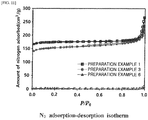
- FIG. 3 is nitrogen adsorption-desorption isotherms of Preparation Examples 1 to 6 of the present invention.
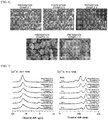
- FIG. 4 shows SEM images of Preparation Examples 1 to 6 of the present invention.
- FIG. 5 is XRD patterns of Preparation Examples 7 to 11 of the present invention after a hydrothermal reaction was carried out in a stationary state.
- FIG. 6 shows SEM images of Preparation Examples 7 to 11 of the present invention.
- FIG. 7 is NMR spectra for determining the chemical state of the aluminum and silicon of Preparation Examples 1 to 6 of the present invention.
- the Si/Al molar ratios obtained from the EDX result and the 29 Si MAS NMR spectrum decreased as the sodium hydroxide concentration of the synthesis mixture increased.
- This result indicates that the aluminum content in the zeolite framework increased, and shows that by varying the sodium hydroxide concentration of the synthesis mixture, it is possible to adjust the Si/Al molar ratio over a wide range of 4 to 14.
- FIG. 8 is ammonia temperature-programmed desorption (TPD) curves of Preparation Examples 1 to 6 of the present invention.
- the amount of weak acid sites is calculated from the peak area corresponding to a temperature below 300 °C in the TPD curves of FIG. 8
- the amount of strong acid sites is calculated from the peak area corresponding to a temperature above 300 °C in the TPD curves of FIG. 8
- the total amount of acid sites is the sum of the amount of weak and strong acid sites, respectively.
- FIG. 9 shows correlation curves between the Si/Al molar ratio of the product changes with respect to the Na/Si molar ratio of a synthesis mixture according to one embodiment of the present invention.
- (a) simulates the correlation between the Na/Si molar ratio of the synthesis mixture and the Si/Al molar ratio of the product from the EDX result
- (b) is the correlation curves between the Na/Si molar ratio of the synthesis mixture and the Si/Al molar ratio of the product from the NMR spectra.
- the correlation between the Na/Si molar ratio of the synthesis mixture and the Si/Al molar ratio of the CHA synthesized can be well simulated as a quadratic function. Therefore, by adjusting the sodium hydroxide concentration of the synthesis mixture, it is possible to easily and reproducibly adjust the aluminum content of CHA to a target value.
- FIGS. 10 and 11 shows the hydrothermal stability of Preparation Examples 1, 3, and 6 of the present invention.
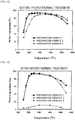
- FIGS. 12 and 13 are graphs showing the catalytic performance (NH 3 -SCR) of Preparation Examples 1, 3, and 6 of the present invention.
- CHA having a higher aluminum content (Preparation Example 6) exhibited higher NH3-SCR activity than other catalysts at high temperatures and lower NH3-SCR activity than other catalysts at below 400 °C.
- the activity at high temperatures was lower as the aluminum content was higher, and particularly in the case of CHA having the highest aluminum content (Preparation Example 6), almost no activity was exhibited over the entire temperature range. Therefore, since the hydrothermal stability of CHA becomes very low when the aluminum content is high, it can be seen that by controlling the sodium hydroxide content in the synthesis mixture, the hydrothermal stability of the produced CHA can be greatly improved.
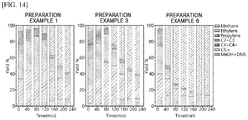
- FIG. 14 shows graphs illustrating the catalytic performance (methanol-to-olefins (MTO) reaction) of Preparation Examples 1, 3, and 6 of the present invention.
- the CHA can be applied to various fields.
Landscapes
- Chemical & Material Sciences (AREA)
- Organic Chemistry (AREA)
- Life Sciences & Earth Sciences (AREA)
- General Life Sciences & Earth Sciences (AREA)
- Geology (AREA)
- Materials Engineering (AREA)
- Chemical Kinetics & Catalysis (AREA)
- Engineering & Computer Science (AREA)
- Inorganic Chemistry (AREA)
- Crystallography & Structural Chemistry (AREA)
- Physics & Mathematics (AREA)
- Thermal Sciences (AREA)
- Silicates, Zeolites, And Molecular Sieves (AREA)
- Catalysts (AREA)
- Solid-Sorbent Or Filter-Aiding Compositions (AREA)
Abstract
Description
- The present invention relates to zeolite, and more particularly, to a method of producing a zeolite having a controlled aluminum content by adjusting the composition of synthesis mixture.
- Zeolites have a unique three-dimensional crystal structure of aluminosilicate, and due to having a large surface area and a wide control of acidity, they have been widely used as a catalyst, an adsorbent, a molecular sieve, an ion exchanger, and the like.
- Since acid sites with low electron density are generated therein due to the aluminum atoms present in the zeolite framework, zeolites have a wide range of acidity depending on the aluminum content, and thus are widely applied to various acid catalysis. Zeolites with a high aluminum content have the disadvantage of low hydrothermal stability because, when exposed to high temperature in the presence of water, the aluminum atoms in the tetrahedral coordination in the zeolite framework escape from the framework, causing the zeolite structure to collapse. On the other hand, zeolites with an excessively low aluminum content have low catalytic performance as acid catalysts, and therefore, zeolites with an appropriate aluminum content are required depending on the reaction. Since a Si/Al molar ratio indicating such aluminum content is an important factor in determining catalyst properties, many studies have been conducted to control the Si/Al molar ratio by appropriately adjusting the synthesis conditions. In particular, copper ion-exchanged Cu/SSZ-13 (CHA), which is used in a selective catalytic reduction (SCR) catalyst for removing nitrogen oxides from automobile exhaust, exhibits high activity over a wide temperature range and has excellent hydrothermal stability compared to other zeolites, and thus is in the spotlight as an automotive post-treatment catalyst. However, since high hydrothermal stability is indispensable for a SCR catalyst of automotive post-treatment system, the zeolite catalysts which are currently commercialized have limitations in use.
- The present invention is directed to providing a method of producing a zeolite which has a controlled aluminum content so as to have improved activity and improved hydrothermal stability when used as a catalyst.
- However, the technical objectives of the present invention are not limited to those described above, and other unmentioned technical objectives will be clearly understood by those skilled in the art from the following description.
- One aspect of the present invention provides a method of producing a zeolite having a controlled aluminum content, the method including: a first step of preparing a synthesis mixture by adjusting the compositions of a structure directing agent and sodium hydroxide based on zeolite Y; and a second step of preparing CHA by subjecting the synthesis mixture to a hydrothermal reaction and calcination.
- In the method of producing a zeolite having a controlled aluminum content of the present invention, zeolite Y may be a raw material as silica and alumina.
- In the method of producing a zeolite having a controlled aluminum content of the present invention, the structure directing agent may be trimethyladamantylammonium hydroxide (AdaOH), benzyl ammonium hydroxide, benzyl ammonium chloride, or choline chloride.
- In the method of producing a zeolite having a controlled aluminum content of the present invention, in the synthesis mixture, the structure directing agent may be included at a concentration of 0.1 to 0.4 mole based on 1 mole of silica (SiO2).
- In the method of producing a zeolite having a controlled aluminum content of the present invention, in the synthesis mixture, the sodium hydroxide may be included at a concentration of 0.1 to 0.7 mole based on 1 mole of silica (SiO2).
- In the method of producing a zeolite having a controlled aluminum content of the present invention, the hydrothermal reaction may be carried out at 120 to 140 °C for 2 to 6 days under rotation of 0 to 60 rpm, resulting in CHA production.
- When the zeolite produced by controlling the aluminum content in a CHA structure according to the present invention as described above is used as a catalyst, an effect of improving the catalytic activity and hydrothermal stability of zeolite can be produced.
- In addition, the prepared CHA zeolite can be applied to various fields because the characteristic properties are different by controlling the aluminum content in the CHA framework.
- However, the effects of the present invention are not limited to the effects described above, and other unmentioned effects will be clearly understood by those skilled in the art from the following description.
-
-
FIG. 1 is a flowchart illustrating a method of producing a zeolite having a controlled aluminum content according to one embodiment of the present invention. -
FIG. 2 shows X-ray diffraction (XRD) patterns of Preparation Examples 1 to 6 of the present invention before and after calcination. -
FIG. 3 is nitrogen adsorption isotherms of Preparation Examples 1 to 6 of the present invention. -
FIG. 4 shows SEM images of Preparation Examples 1 to 6 of the present invention. -
FIG. 5 is XRD patterns of Preparation Examples 7 to 11 of the present invention after a hydrothermal reaction was carried out under the stationary state. -
FIG. 6 shows SEM images of Preparation Examples 7 to 11 of the present invention. -
FIG. 7 is NMR spectra for determining the chemical state of the aluminum and silicon of Preparation Examples 1 to 6 of the present invention. -
FIG. 8 is ammonia temperature-programmed desorption (TPD) curves of Preparation Examples 1 to 6 of the present invention. -
FIG. 9 shows correlation curves between the Si/Al molar ratio of the product changes with respect to the Na/Si molar ratio of a synthesis mixture according to one embodiment of the present invention. -
FIGS. 10 and11 shows the hydrothermal stability of Preparation Examples 1, 3, and 6 of the present invention. -
FIGS. 12 and 13 are graphs showing the catalytic performance (NH3-SCR) of Preparation Examples 1, 3, and 6 of the present invention. -
FIG. 14 shows graphs illustrating the catalytic performance (methanol-to-olefins (MTO) reaction) of Preparation Examples 1, 3, and 6 of the present invention. - Hereinafter, exemplary embodiments of the present invention will be described in detail with reference to the accompanying drawings.
- However, the embodiments of the present invention may be modified into various other forms, and the scope of the present invention is not limited to the embodiments described below. In addition, the embodiments of the present invention are provided to more completely explain the present invention to those of ordinary skill in the art. Therefore, the shape, size, and the like of elements may be exaggerated in the drawings for clarity, and the elements denoted by the same reference numerals in the drawings are the same elements.
-
FIG. 1 is a flowchart illustrating a method of producing a zeolite having a controlled aluminum content according to one embodiment of the present invention. -
FIG. 1 discloses a method of producing a zeolite having a controlled aluminum content. - S100 is a first step in which a synthesis mixture is prepared by adjusting the composition of a structure directing agent and sodium hydroxide based on zeolite Y. Here, zeolite Y may be a raw material as silica and alumina source. Examples of silica sources may include zeolites, silicates, silica hydrogels, silicic acid, colloidal silica, fumed silica, tetraalkyl orthosilicates, silica hydroxides, and precipitated silica. In addition, examples of alumina sources may include sodium aluminate (NaAlO2), AlCl3, Al2(SO4)3, aluminum hydroxide (Al(OH)3), kaolin, clay, and zeolites.
- The structure directing agent may be trimethyladamantylammonium hydroxide (AdaOH), benzyl ammonium hydroxide, benzyl ammonium chloride, or choline chloride, and in addition, other materials commonly used in the preparation of CHA may be included.
- The synthesis mixture may be a hydrogel in which the molar concentrations of the sodium hydroxide and the structure directing agent have been adjusted. In the synthesis mixture, the sodium hydroxide may be included at a concentration of, for example, 0.1 to 0.7 mole based on 1 mole of silica (SiO2), in which case the structure directing agent may be included at a concentration of 0.1 to 0.4 mole. Therefore, the aluminum content in the structure of the prepared CHA may vary depending on the usage amount of the sodium hydroxide.
- S200 is a second step in which the above-described synthesis mixture is subjected to a hydrothermal reaction and calcination to prepare CHA zeolite. After adding the synthesis mixture to an autoclave, a hydrothermal reaction is carried out at 120 to 140 °C for 2 to 6 days under rotation of 0 to 60 rpm. The product is recovered by centrifugation, washed, and then calcined at 550 °C for 12 h, CHA may be obtained.
- Hereinafter, experimental examples will be provided to facilitate understanding of the present invention. However, the following experimental examples are provided only to facilitate understanding of the present invention and are not intended to limit the present invention.
- The following Table 1 summarizes synthesis conditions of the experimental examples for preparing a CHA synthesis mixture.
[Table 1] Molar composition of synthesis mixture (SiO2:NaOH:AdaOH:H2O) Synthesis conditions Temperature (°C) Time (d) Rotation speed (rpm) Preparation Example 1 1.0 : 0.2 : 0.15 : 22 140 4 40 Preparation Example 2 1.0: 0.3 : 0.15 : 22 Preparation Example 3 1.0 : 0.4 : 0.15 : 22 Preparation Example 4 1.0 : 0.45 : 0.15 : 22 Preparation Example 5 1.0 : 0.5 : 0.15 : 22 Preparation Example 6 1.0 : 0.6 : 0.15 : 22 Preparation Example 7 1.0 : 0.2 : 0.14 : 22 0 Preparation Example 8 1.0 : 0.3 : 0.14 : 22 Preparation Example 9 1.0 : 0.4 : 0.14 : 22 Preparation Example 10 1.0 : 0.45 : 0.14 : 22 Preparation Example 11 1.0 : 0.5 : 0.14 : 22 - A synthesis mixture having a molar composition of 1.0 SiO2:0.2 NaOH:0.15 AdaOH:22 H2O was subjected to a hydrothermal reaction for 4 days at 140 °C under rotation of 40 rpm. The product was recovered by centrifugation, washed, and calcined at 550 °C for 12 h, and thereby CHA was obtained.
- CHA was synthesized in the same manner as in Preparation Example 1 except that a NaOH molar concentration of 0.3 was used for the preparation of a synthesis mixture.
- CHA was synthesized in the same manner as in Preparation Example 1 except that a NaOH molar concentration of 0.4 was used for the preparation of a synthesis mixture.
- CHA was synthesized in the same manner as in Preparation Example 1 except that a NaOH molar concentration of 0.45 was used for the preparation of a synthesis mixture.
- CHA was synthesized in the same manner as in Preparation Example 1 except that a NaOH molar concentration of 0.5 was used for the preparation of a synthesis mixture.
- CHA was synthesized in the same manner as in Preparation Example 1 except that a NaOH molar concentration of 0.6 was used for the preparation of a synthesis mixture.
- A synthesis mixture having a molar composition of 1.0 SiO2:0.2 NaOH:0.14 AdaOH:22 H2O was subjected to a hydrothermal reaction for 4 days at 140 °C in a stationary state without rotation. The product was recovered by centrifugation, washed and then calcined at 550 °C for 12 h, and thereby CHA was obtained.
- CHA was synthesized in the same manner as in Preparation Example 7 except that a NaOH molar concentration of 0.3 was used for the preparation of a synthesis mixture.
- CHA was synthesized in the same manner as in Preparation Example 7 except that a NaOH molar concentration of 0.4 was used for the preparation of a synthesis mixture.
- CHA was synthesized in the same manner as in Preparation Example 7 except that a NaOH molar concentration of 0.45 was used for the preparation of a synthesis mixture.
- CHA was synthesized in the same manner as in Preparation Example 7 except that a NaOH molar concentration of 0.5 was used for the preparation of a synthesis mixture.
-
FIG. 2 shows XRD patterns of Preparation Examples 1 to 6 of the present invention before and after calcination. - Referring to
FIG. 2 , it can be seen that CHA with excellent crystallinity was produced in all of Preparation Examples 1 to 6 regardless of the molar concentration of sodium hydroxide in the synthesis mixture. In addition, it can be seen that the crystallinity of CHA was well maintained even after calcination. -
FIG. 3 is nitrogen adsorption-desorption isotherms of Preparation Examples 1 to 6 of the present invention. - Referring to
FIG. 3 , it can be seen that CHA having a large surface area and a large pore volume as shown in Table 2 was obtained due to the development of micropores.[Table 2] BET surface area (m2g-1) Pore volumea (cm3g-1) Preparation Example 1 857 0.33 Preparation Example 2 834 0.31 Preparation Example 3 813 0.32 Preparation Example 4 793 0.32 Preparation Example 5 781 0.31 Preparation Example 6 682 0.27 a Total pore volume calculated when P/P0 is 0.99 - Referring to Table 2, it can be seen that as the molar concentration (i.e., addition amount) of the sodium hydroxide increased, the surface area decreased but the pore volume did not significantly change, except for the case where CHA was prepared from a synthesis mixture having a high sodium hydroxide molar concentration of 0.6, whose surface area and pore volume were significantly small compared to other Preparation Examples.
-
FIG. 4 shows SEM images of Preparation Examples 1 to 6 of the present invention. - Referring to
FIG. 4 , it can be seen that particles of a uniform size were produced in all of Preparation Examples 1 to 6 and that the particle size varied according to the sodium hydroxide concentration of the synthesis mixture. Therefore, by adjusting the sodium hydroxide concentration of the synthesis mixture, it is possible to adjust the particle size over a wide range of 0.1 to 5.0 µm. -
FIG. 5 is XRD patterns of Preparation Examples 7 to 11 of the present invention after a hydrothermal reaction was carried out in a stationary state. - Referring to
FIG. 5 , it can be seen that CHA was successfully synthesized even in Preparation Examples 7 to 11, where the hydrothermal reaction was carried out under the stationary state. -
FIG. 6 shows SEM images of Preparation Examples 7 to 11 of the present invention. - Referring to
FIG. 6 , it can be seen that particles of a uniform size were produced even in Preparation Examples 7 to 11, where the hydrothermal reaction was carried out under the stationary state. In addition, it can be seen that even when the hydrothermal reaction was carried out under the stationary state, it is possible to adjust the particle size to a range of 0.1 to 5.0 µm similarly to the case where the synthesis was carried out under rotation. -
FIG. 7 is NMR spectra for determining the chemical state of the aluminum and silicon of Preparation Examples 1 to 6 of the present invention. - Referring to
FIG. 7 , it can be seen that all the aluminum and silicon atoms of the CHA prepared in Preparation Examples 1 to 6 were in tetrahedral coordination in the zeolite framework. - The following Table 3 summarizes the values calculated from
FIG. 7 .[Table 3] Na/Si molar ratio of synthesis mixture Na/Al molar ratio of producta Si/Al molar ratio of product EDXa NMRb Preparation Example 1 0.20 0.40 14.2 12.5 Preparation Example 2 0.30 0.33 12.8 11.4 Preparation Example 3 0.40 0.48 9.9 9.2 Preparation Example 4 0.45 0.53 8.9 9.3 Preparation Example 5 0.50 0.68 5.9 6.7 Preparation Example 6 0.60 0.67 4.5 4.4 Preparation Example 7 0.20 0.36 11.7 - Preparation Example 8 0.30 0.45 11.0 - Preparation Example 9 0.40 0.48 10.1 - Preparation Example 10 0.50 0.74 5.6 - Preparation Example 11 0.60 0.86 3.7 - a Values calculated from the EDX result; bValues calculated from the 29Si MAS NMR spectrum - Referring to Table 3, the Si/Al molar ratios obtained from the EDX result and the 29Si MAS NMR spectrum decreased as the sodium hydroxide concentration of the synthesis mixture increased. This result indicates that the aluminum content in the zeolite framework increased, and shows that by varying the sodium hydroxide concentration of the synthesis mixture, it is possible to adjust the Si/Al molar ratio over a wide range of 4 to 14.
-
FIG. 8 is ammonia temperature-programmed desorption (TPD) curves of Preparation Examples 1 to 6 of the present invention. - Referring to
FIG. 8 , it can be seen that as the sodium hydroxide content of the synthesis mixture varies, the aluminum content of the CHA prepared in Preparation Examples 1 to 6 changes and, accordingly, the strength and amount of strong acid sites and weak acid sites are different. - The following Table 4 summarizes the values calculated from
FIG. 8 .[Table 4] Amount of weak acid sites (mmol/g) Amount of strong acid sites (mmol/g) Total amount of acid sites (mmol/g) Preparation Example 1 0.521 0.443 0.964 Preparation Example 2 0.585 0.441 1.026 Preparation Example 3 0.698 0.440 1.138 Preparation Example 4 0.776 0.463 1.239 Preparation Example 5 1.050 0.678 1.728 Preparation Example 6 0.982 0.513 1.495 - In Table 4, the amount of weak acid sites is calculated from the peak area corresponding to a temperature below 300 °C in the TPD curves of
FIG. 8 , the amount of strong acid sites is calculated from the peak area corresponding to a temperature above 300 °C in the TPD curves ofFIG. 8 , and the total amount of acid sites is the sum of the amount of weak and strong acid sites, respectively. Here, it can be seen that the higher the sodium hydroxide concentration of the synthesis mixture, the higher the aluminum content of the synthesized CHA, resulting in an increase in the total amount of acid sites. -
FIG. 9 shows correlation curves between the Si/Al molar ratio of the product changes with respect to the Na/Si molar ratio of a synthesis mixture according to one embodiment of the present invention. - In
FIG. 9 , (a) simulates the correlation between the Na/Si molar ratio of the synthesis mixture and the Si/Al molar ratio of the product from the EDX result, and (b) is the correlation curves between the Na/Si molar ratio of the synthesis mixture and the Si/Al molar ratio of the product from the NMR spectra. The correlation between the Na/Si molar ratio of the synthesis mixture and the Si/Al molar ratio of the CHA synthesized can be well simulated as a quadratic function. Therefore, by adjusting the sodium hydroxide concentration of the synthesis mixture, it is possible to easily and reproducibly adjust the aluminum content of CHA to a target value. -
FIGS. 10 and11 shows the hydrothermal stability of Preparation Examples 1, 3, and 6 of the present invention. - Referring to
FIGS. 10 and11 , it can be seen that when the addition amount of sodium hydroxide was large (Preparation Example 6), CHA having a high aluminum content was synthesized, in which case, the crystal structure collapsed and the surface area drastically decreased even after 800 °C hydrothermal treatment. On the other hand, it can be seen that in the case of Preparation Example 1 where the aluminum content was relatively low, the amount of nitrogen adsorption hardly decreased even after 800 °C hydrothermal treatment, which indicates that the hydrothermal stability was quite excellent. -
FIGS. 12 and 13 are graphs showing the catalytic performance (NH3-SCR) of Preparation Examples 1, 3, and 6 of the present invention. - Referring to
FIGS. 12 and 13 , it can be seen that before hydrothermal treatment, CHA having a higher aluminum content (Preparation Example 6) exhibited higher NH3-SCR activity than other catalysts at high temperatures and lower NH3-SCR activity than other catalysts at below 400 °C. After hydrothermal treatment, the activity at high temperatures was lower as the aluminum content was higher, and particularly in the case of CHA having the highest aluminum content (Preparation Example 6), almost no activity was exhibited over the entire temperature range. Therefore, since the hydrothermal stability of CHA becomes very low when the aluminum content is high, it can be seen that by controlling the sodium hydroxide content in the synthesis mixture, the hydrothermal stability of the produced CHA can be greatly improved. -
FIG. 14 shows graphs illustrating the catalytic performance (methanol-to-olefins (MTO) reaction) of Preparation Examples 1, 3, and 6 of the present invention. - Referring to
FIG. 14 , it can be seen that in the case of Preparation Examples 1 and 3 where the aluminum content was appropriate, high selectivity to ethylene and propylene and a slow deactivation of the MTO reaction were observed, whereas in the case of Preparation Example 6 where the aluminum content was high, a rapid deactivation was observed due to coke formation in the zeolite pores. - Therefore, by properly adjusting the molar concentration of sodium hydroxide in the preparation of a zeolite synthesis mixture, it is possible to adjust the aluminum content of CHA synthesized and, accordingly, improve the activity and hydrothermal stability of zeolite used as a catalyst.
- In addition, since the control of the aluminum content in CHA structure causes the properties of the prepared CHA to be significantly changed, the CHA can be applied to various fields.
Claims (6)
- A method of producing a zeolite having a controlled aluminum content, the method comprising:a first step of preparing a synthesis mixture by adjusting the composition of a structure directing agent and a sodium hydroxide based on zeolite Y; anda second step of preparing CHA by subjecting the synthesis mixture to a hydrothermal reaction and calcination.
- The method of claim 1, wherein zeolite Y are raw material as silica and alumina source.
- The method of claim 1, wherein the structure directing agent is trimethyladamantylammonium hydroxide (AdaOH), benzyl ammonium hydroxide, benzyl ammonium chloride, or choline chloride.
- The method of claim 1, wherein, in the synthesis mixture, the structure directing agent is included at a molar concentration of 0.1 to 0.4 based on 1 of silica (SiO2).
- The method of claim 1, wherein, in the synthesis mixture, the sodium hydroxide is included at a molar concentration of 0.1 to 0.7 based on 1 of silica (SiO2).
- The method of claim 1, wherein the hydrothermal reaction is carried out at 120 °C to 140 °C for 2 days to 6 days under rotation of 0 rpm to 60 rpm, resulting in CHA production.
Applications Claiming Priority (2)
| Application Number | Priority Date | Filing Date | Title |
|---|---|---|---|
| KR1020170102840A KR101940409B1 (en) | 2017-08-14 | 2017-08-14 | Method for preparation of zeolite with controlled aluminum content by controlling composition of synthetic mixture |
| PCT/KR2018/009315 WO2019035628A1 (en) | 2017-08-14 | 2018-08-14 | Method for producing zeolite having controlled aluminum content by adjusting composition of synthesis mother liquor |
Publications (2)
| Publication Number | Publication Date |
|---|---|
| EP3670451A1 true EP3670451A1 (en) | 2020-06-24 |
| EP3670451A4 EP3670451A4 (en) | 2021-03-03 |
Family
ID=65277499
Family Applications (1)
| Application Number | Title | Priority Date | Filing Date |
|---|---|---|---|
| EP18846389.7A Pending EP3670451A4 (en) | 2017-08-14 | 2018-08-14 | PROCESS FOR THE PRODUCTION OF ZEOLITH WITH AN ALUMINUM CONTENT REGULATED BY ADJUSTING THE COMPOSITION OF SYNTHETIC MOTHER LIQUEUR |
Country Status (6)
| Country | Link |
|---|---|
| US (1) | US10927011B2 (en) |
| EP (1) | EP3670451A4 (en) |
| JP (1) | JP7020658B2 (en) |
| KR (1) | KR101940409B1 (en) |
| CN (1) | CN111032571B (en) |
| WO (1) | WO2019035628A1 (en) |
Cited By (1)
| Publication number | Priority date | Publication date | Assignee | Title |
|---|---|---|---|---|
| WO2022029525A1 (en) * | 2020-08-03 | 2022-02-10 | Chevron U.S.A. Inc. | Low pressure synthesis of zeolite ssz-13 |
Families Citing this family (3)
| Publication number | Priority date | Publication date | Assignee | Title |
|---|---|---|---|---|
| CN112520753B (en) * | 2020-10-19 | 2022-09-23 | 郑州大学 | Method for improving mechanical strength of titanium silicalite TS-1 |
| KR20220060316A (en) * | 2020-11-04 | 2022-05-11 | 현대자동차주식회사 | NOx STORAGE CATALYST AND METHOD FOR PREPARING THE SAME |
| KR102474955B1 (en) * | 2021-01-13 | 2022-12-05 | 전남대학교산학협력단 | Method for synthesizing high-crystalline CHA zeolite by addition of organic acid |
Family Cites Families (11)
| Publication number | Priority date | Publication date | Assignee | Title |
|---|---|---|---|---|
| US4544538A (en) * | 1982-07-09 | 1985-10-01 | Chevron Research Company | Zeolite SSZ-13 and its method of preparation |
| US5225179A (en) * | 1992-08-27 | 1993-07-06 | Chevron Research And Technology Company | Method of making molecular sieves |
| US8007764B2 (en) * | 2006-12-27 | 2011-08-30 | Chevron U.S.A. Inc. | Preparation of molecular sieve SSZ-13 |
| US7597874B1 (en) * | 2008-06-23 | 2009-10-06 | Chevron U.S.A. Inc. | Preparation of zeolites using novel structure directing agents |
| US8883119B2 (en) * | 2009-11-24 | 2014-11-11 | Basf Se | Process for the preparation of zeolites having CHA structure |
| US9296620B2 (en) * | 2013-08-09 | 2016-03-29 | Chevron U.S.A. Inc. | Preparation of high-silica cha-type molecular sieves using a mixed template |
| JP6442329B2 (en) | 2015-03-12 | 2018-12-19 | 国立大学法人横浜国立大学 | Production of CHA-type zeolite with high Si / Al ratio |
| CN106185971B (en) * | 2015-05-27 | 2018-03-09 | 中国石油天然气股份有限公司 | A kind of preparation method of SAPO‑34 molecular sieve |
| JP6911354B2 (en) | 2016-01-12 | 2021-07-28 | 東ソー株式会社 | Method for producing CHA-type zeolite |
| CN106145137B (en) * | 2016-06-27 | 2018-06-05 | 杨晓波 | A kind of method of silica alumina ratio chabasie in direct hydrothermal synthesis |
| CN106185983A (en) * | 2016-07-29 | 2016-12-07 | 中国科学院上海高等研究院 | The solvent-free method preparing SAPO 18 or SAPO 34 molecular sieve |
-
2017
- 2017-08-14 KR KR1020170102840A patent/KR101940409B1/en active Active
-
2018
- 2018-08-14 US US16/639,553 patent/US10927011B2/en active Active
- 2018-08-14 WO PCT/KR2018/009315 patent/WO2019035628A1/en not_active Ceased
- 2018-08-14 EP EP18846389.7A patent/EP3670451A4/en active Pending
- 2018-08-14 JP JP2020508387A patent/JP7020658B2/en active Active
- 2018-08-14 CN CN201880052483.6A patent/CN111032571B/en active Active
Cited By (2)
| Publication number | Priority date | Publication date | Assignee | Title |
|---|---|---|---|---|
| WO2022029525A1 (en) * | 2020-08-03 | 2022-02-10 | Chevron U.S.A. Inc. | Low pressure synthesis of zeolite ssz-13 |
| US11708277B2 (en) | 2020-08-03 | 2023-07-25 | Chevron U.S.A. Inc. | Low pressure synthesis of zeolite SSZ-13 |
Also Published As
| Publication number | Publication date |
|---|---|
| JP2020535095A (en) | 2020-12-03 |
| EP3670451A4 (en) | 2021-03-03 |
| US10927011B2 (en) | 2021-02-23 |
| CN111032571B (en) | 2023-06-30 |
| WO2019035628A1 (en) | 2019-02-21 |
| KR101940409B1 (en) | 2019-01-21 |
| JP7020658B2 (en) | 2022-02-16 |
| US20200223707A1 (en) | 2020-07-16 |
| CN111032571A (en) | 2020-04-17 |
Similar Documents
| Publication | Publication Date | Title |
|---|---|---|
| CN104321280B (en) | Beta-type zeolite and its production method | |
| CA2778370C (en) | Method of preparing zsm-5 zeolite using nanocrystalline zsm-5 seeds | |
| ES2750826T3 (en) | Procedure for preparing a molecular sieve | |
| KR101428120B1 (en) | Production method of molecular sieve SSZ-13 | |
| JP5576123B2 (en) | Preparation of pore molecular sieve | |
| US10927011B2 (en) | Method for producing zeolite having controlled aluminum content by adjusting composition of synthesis mixture | |
| CN112694100B (en) | Fe-ZSM-5 molecular sieve, preparation method and application thereof | |
| JP6505323B2 (en) | MWF type zeolite | |
| EP3257813B1 (en) | Method for producing beta zeolite | |
| CN103626199A (en) | Method for preparation of mesoporous zeolites | |
| KR101940410B1 (en) | Method for preparation of transition metal ion-exchanged zeolite with improved hydrothermal stability | |
| CN104428248B (en) | Manufacturing method of MAZ type zeolite | |
| CN109996783A (en) | Method for converting monoethanolamine to ethylenediamine using copper-modified zeolite with MOR framework structure | |
| CN104703916A (en) | Molecular sieve ssz-85 composition of matter and synthesis thereof | |
| KR20210082526A (en) | Zeolite RHO in high siliceous form | |
| KR101902694B1 (en) | Method for preparing transition metal ion-exchanged zeolite | |
| CN112978749B (en) | A kind of preparation method and application of multi-stage porous SSZ-13 molecular sieve, and method for producing olefin from methanol | |
| CN104321281B (en) | Production method of PAU type zeolite | |
| CN114514198B (en) | Small crystal SSZ-27, synthesis and use thereof | |
| CN119898790A (en) | A single crystal multi-level pore ZSM-5 molecular sieve and its preparation method and application | |
| CN120829171A (en) | A SCM-54 molecular sieve and its preparation method | |
| KR20090094124A (en) | Preparation of small pore molecular sieves |
Legal Events
| Date | Code | Title | Description |
|---|---|---|---|
| STAA | Information on the status of an ep patent application or granted ep patent |
Free format text: STATUS: THE INTERNATIONAL PUBLICATION HAS BEEN MADE |
|
| PUAI | Public reference made under article 153(3) epc to a published international application that has entered the european phase |
Free format text: ORIGINAL CODE: 0009012 |
|
| STAA | Information on the status of an ep patent application or granted ep patent |
Free format text: STATUS: REQUEST FOR EXAMINATION WAS MADE |
|
| 17P | Request for examination filed |
Effective date: 20200206 |
|
| AK | Designated contracting states |
Kind code of ref document: A1 Designated state(s): AL AT BE BG CH CY CZ DE DK EE ES FI FR GB GR HR HU IE IS IT LI LT LU LV MC MK MT NL NO PL PT RO RS SE SI SK SM TR |
|
| AX | Request for extension of the european patent |
Extension state: BA ME |
|
| DAV | Request for validation of the european patent (deleted) | ||
| DAX | Request for extension of the european patent (deleted) | ||
| A4 | Supplementary search report drawn up and despatched |
Effective date: 20210201 |
|
| RIC1 | Information provided on ipc code assigned before grant |
Ipc: C01B 39/48 20060101AFI20210126BHEP |