EP3670262A1 - Method for correcting a light pattern and automotive lighting device assembly - Google Patents
Method for correcting a light pattern and automotive lighting device assembly Download PDFInfo
- Publication number
- EP3670262A1 EP3670262A1 EP18214121.8A EP18214121A EP3670262A1 EP 3670262 A1 EP3670262 A1 EP 3670262A1 EP 18214121 A EP18214121 A EP 18214121A EP 3670262 A1 EP3670262 A1 EP 3670262A1
- Authority
- EP
- European Patent Office
- Prior art keywords
- light sources
- lighting device
- group
- affected
- light
- Prior art date
- Legal status (The legal status is an assumption and is not a legal conclusion. Google has not performed a legal analysis and makes no representation as to the accuracy of the status listed.)
- Withdrawn
Links
- 238000000034 method Methods 0.000 title claims abstract description 42
- 239000011159 matrix material Substances 0.000 claims description 30
- 238000004364 calculation method Methods 0.000 claims description 4
- 230000003287 optical effect Effects 0.000 description 8
- 239000004065 semiconductor Substances 0.000 description 4
- 239000000758 substrate Substances 0.000 description 4
- 230000000694 effects Effects 0.000 description 3
- 238000005286 illumination Methods 0.000 description 3
- 239000000463 material Substances 0.000 description 3
- 230000002238 attenuated effect Effects 0.000 description 2
- 230000005611 electricity Effects 0.000 description 2
- 238000005516 engineering process Methods 0.000 description 2
- 239000007787 solid Substances 0.000 description 2
- 230000003213 activating effect Effects 0.000 description 1
- 238000004458 analytical method Methods 0.000 description 1
- 230000005540 biological transmission Effects 0.000 description 1
- 230000001419 dependent effect Effects 0.000 description 1
- 238000009795 derivation Methods 0.000 description 1
- 238000006073 displacement reaction Methods 0.000 description 1
- 238000005401 electroluminescence Methods 0.000 description 1
- 239000011521 glass Substances 0.000 description 1
- 230000020169 heat generation Effects 0.000 description 1
- 239000012212 insulator Substances 0.000 description 1
- 229910052751 metal Inorganic materials 0.000 description 1
- 239000002184 metal Substances 0.000 description 1
- 150000002739 metals Chemical class 0.000 description 1
- 238000012986 modification Methods 0.000 description 1
- 230000004048 modification Effects 0.000 description 1
- 230000005693 optoelectronics Effects 0.000 description 1
- 230000021715 photosynthesis, light harvesting Effects 0.000 description 1
- 229920000642 polymer Polymers 0.000 description 1
- 229920006395 saturated elastomer Polymers 0.000 description 1
- 230000035939 shock Effects 0.000 description 1
- 230000001360 synchronised effect Effects 0.000 description 1
- 238000002207 thermal evaporation Methods 0.000 description 1
Images


Classifications
-
- B—PERFORMING OPERATIONS; TRANSPORTING
- B60—VEHICLES IN GENERAL
- B60Q—ARRANGEMENT OF SIGNALLING OR LIGHTING DEVICES, THE MOUNTING OR SUPPORTING THEREOF OR CIRCUITS THEREFOR, FOR VEHICLES IN GENERAL
- B60Q1/00—Arrangement of optical signalling or lighting devices, the mounting or supporting thereof or circuits therefor
- B60Q1/02—Arrangement of optical signalling or lighting devices, the mounting or supporting thereof or circuits therefor the devices being primarily intended to illuminate the way ahead or to illuminate other areas of way or environments
- B60Q1/04—Arrangement of optical signalling or lighting devices, the mounting or supporting thereof or circuits therefor the devices being primarily intended to illuminate the way ahead or to illuminate other areas of way or environments the devices being headlights
- B60Q1/06—Arrangement of optical signalling or lighting devices, the mounting or supporting thereof or circuits therefor the devices being primarily intended to illuminate the way ahead or to illuminate other areas of way or environments the devices being headlights adjustable, e.g. remotely-controlled from inside vehicle
- B60Q1/08—Arrangement of optical signalling or lighting devices, the mounting or supporting thereof or circuits therefor the devices being primarily intended to illuminate the way ahead or to illuminate other areas of way or environments the devices being headlights adjustable, e.g. remotely-controlled from inside vehicle automatically
- B60Q1/085—Arrangement of optical signalling or lighting devices, the mounting or supporting thereof or circuits therefor the devices being primarily intended to illuminate the way ahead or to illuminate other areas of way or environments the devices being headlights adjustable, e.g. remotely-controlled from inside vehicle automatically due to special conditions, e.g. adverse weather, type of road, badly illuminated road signs or potential dangers
-
- B—PERFORMING OPERATIONS; TRANSPORTING
- B60—VEHICLES IN GENERAL
- B60Q—ARRANGEMENT OF SIGNALLING OR LIGHTING DEVICES, THE MOUNTING OR SUPPORTING THEREOF OR CIRCUITS THEREFOR, FOR VEHICLES IN GENERAL
- B60Q2300/00—Indexing codes for automatically adjustable headlamps or automatically dimmable headlamps
- B60Q2300/05—Special features for controlling or switching of the light beam
- B60Q2300/054—Variable non-standard intensity, i.e. emission of various beam intensities different from standard intensities, e.g. continuous or stepped transitions of intensity
Definitions
- This invention is related to the field of automotive lighting devices, and more particularly, to the way light patterns are managed when the light pattern projected by two lighting devices generate an overlapping section.
- Digital lighting devices are being increasingly adopted by car makers for middle and high market products.
- the invention provides an alternative solution for this optical butting effect by a method for correcting a light pattern according to claim 1 and an automotive lighting device according to claim 10.
- Preferred embodiments of the invention are defined in dependent claims.
- the invention provides a method for correcting a light pattern provided by a first lighting device and a second lighting device, wherein
- the position of the affected light sources is calculated in several steps. Firstly, an overlapping zone is estimated. The contribution of each group of light sources is classified depending on the projection distance that this group of light sources performs. For example, in a lighting device, some light sources aim to project light in 10-20 m from the lighting device, other group aims to project light in 20-30 m and other group on 30-50 m. Secondly, the region of overlapping is divided accordingly: a first zone from 10 to 20 m from the lighting device, another zone from 20 to 30 m from the lighting device and a final zone from 30 to 50 m from the lighting device. For each zone (i.e., for each group of light sources), the size of the overlapping region is used to calculate how many light sources are associated to this overlapping region at this projection distance. Finally, the intensity of these affected light sources is attenuated in every group of both lighting devices. The attenuation of the intensity of the affected light sources aims to correct or even solve the problem of overlapping.
- the step of attenuation is symmetrical in both lighting devices.
- the step of attenuation comprises attenuating the luminous intensity to the 50% in all the affected light sources.
- each lighting device Since the nominal luminous intensity is 100%, the overlapping will be solved if, for each overlapping region, each lighting device contributes with the 50% of the nominal luminous intensity. The sum of the intensities of both lighting devices will be 100% without any excess of luminosity.
- each light source corresponds to an angle range, so that when the overlapping angle is calculated, the number of affected light sources in each group is easily obtained.
- each group of light sources comprises more than one column of light sources, in such a way that each column is associated to an angle range, so that for a given angle, a number of columns are associated to this angle in each group.
- solid state refers to light emitted by solid-state electroluminescence, which uses semiconductors to convert electricity into light. Compared to incandescent lighting, solid state lighting creates visible light with reduced heat generation and less energy dissipation.
- the typically small mass of a solid-state electronic lighting device provides for greater resistance to shock and vibration compared to brittle glass tubes/bulbs and long, thin filament wires. They also eliminate filament evaporation, potentially increasing the life span of the illumination device.
- Some examples of these types of lighting comprise semiconductor light-emitting diodes (LEDs), organic light-emitting diodes (OLED), or polymer light-emitting diodes (PLED) as sources of illumination rather than electrical filaments, plasma or gas.
- a matrix arrangement is a typical example for this method.
- the rows may be grouped in projecting distance ranges and each column of each group represent an angle interval. This angle value depends on the resolution of the matrix arrangement, which is typically comprised between 0.01° per column and 0.5° per column. As a consequence, when the overlapping angle is calculated, the number of affected columns is very easy to obtain. E. g., in a matrix with a resolution of 0.1° per column, if the overlapping angle for a particular group is 2.5°, 25 columns of this group will be affected, and then dimmed.
- the method further comprises the step of performing a linear interpolation in the calculation of the affected light sources for each row.
- a linear interpolation between groups may be made: if one group has 10 rows and, after the calculation, has 10 columns of affected light sources, and the adjacent one has 20 columns affected, instead of having 10 rows of 10 light sources and then 10 rows of 20 light sources, a linear interpolation may be adopted between the 20 rows of both groups.
- the method further comprises the step of capping the number of affected light sources for the groups of rows which has a projection distance which is infinite.
- the method further comprises the step of applying a dithering operation on the affected light sources.
- a dithering operation may be advantageous to obtain a more homogeneous combined light pattern.
- the invention provides an automotive lighting device assembly comprising a first lighting device and a second lighting device, each lighting device comprising
- This lighting device assembly solves the problem of the overlapping region between the two lighting devices.
- the matrix arrangement comprises at least 2000 solid-state light sources.
- Figure 1 shows a general perspective view of an automotive lighting device assembly according to the invention.
- This lighting device assembly is installed in an automotive vehicle 100 and comprises a first lighting device 1 and a second lighting device 2.
- Each lighting device 1, 2 comprises
- the first lighting device 1 projects a first light pattern 11 and the second lighting device 2 projects a second light pattern 12.
- These two light patterns 11, 12 create an overlapping zone 4, where the luminous intensity of both patterns is summed.
- the intensity in this overlapping zone would be 200%, compared to the 100% in the rest of the light patterns.
- This matrix configuration is a high-resolution module, having a resolution greater than 1000 pixels. However, no restriction is attached to the technology used for producing the projection modules.
- a first example of this matrix configuration comprises a monolithic source.
- This monolithic source comprises a matrix of monolithic electroluminescent elements arranged in several columns by several rows.
- the electroluminescent elements can be grown from a common substrate and are electrically connected to be selectively activatable either individually or by a subset of electroluminescent elements.
- the substrate may be predominantly made of a semiconductor material.
- the substrate may comprise one or more other materials, for example non-semiconductors (metals and insulators).
- each electroluminescent element/group can form a light pixel and can therefore emit light when its/their material is supplied with electricity.
- the configuration of such a monolithic matrix allows the arrangement of selectively activatable pixels very close to each other, compared to conventional light-emitting diodes intended to be soldered to printed circuit boards.
- the monolithic matrix may comprise electroluminescent elements whose main dimension of height, measured perpendicularly to the common substrate, is substantially equal to one micrometre.
- the monolithic matrix is coupled to the control centre so as to control the generation and/or the projection of a pixilated light beam by the matrix arrangement.
- the control centre is thus able to individually control the light emission of each pixel of the matrix arrangement.
- the matrix arrangement may comprise a main light source coupled to a matrix of mirrors.
- the pixelated light source is formed by the assembly of at least one main light source formed of at least one light emitting diode emitting light and an array of optoelectronic elements, for example a matrix of micro-mirrors, also known by the acronym DMD, for "Digital Micro-mirror Device", which directs the light rays from the main light source by reflection to a projection optical element.
- DMD Digital Micro-mirror Device
- an auxiliary optical element can collect the rays of at least one light source to focus and direct them to the surface of the micro-mirror array.
- Each micro-mirror can pivot between two fixed positions, a first position in which the light rays are reflected towards the projection optical element, and a second position in which the light rays are reflected in a different direction from the projection optical element.
- the two fixed positions are oriented in the same manner for all the micro-mirrors and form, with respect to a reference plane supporting the matrix of micro-mirrors, a characteristic angle of the matrix of micro-mirrors defined in its specifications. Such an angle is generally less than 20° and may be usually about 12°.
- each micro-mirror reflecting a part of the light beams which are incident on the matrix of micro-mirrors forms an elementary emitter of the pixelated light source.
- the actuation and control of the change of position of the mirrors for selectively activating this elementary emitter to emit or not an elementary light beam is controlled by the control centre.
- the matrix arrangement may comprise a scanning laser system wherein a laser light source emits a laser beam towards a scanning element which is configured to explore the surface of a wavelength converter with the laser beam. An image of this surface is captured by the projection optical element.
- the exploration of the scanning element may be performed at a speed sufficiently high so that the human eye does not perceive any displacement in the projected image.
- the scanning means may be a mobile micro-mirror for scanning the surface of the wavelength converter element by reflection of the laser beam.
- the micro-mirrors mentioned as scanning means are for example MEMS type, for "Micro-Electro-Mechanical Systems".
- the invention is not limited to such a scanning means and can use other kinds of scanning means, such as a series of mirrors arranged on a rotating element, the rotation of the element causing a scanning of the transmission surface by the laser beam.
- the light source may be complex and include both at least one segment of light elements, such as light emitting diodes, and a surface portion of a monolithic light source.
- Figure 2 shows a closer view of one of the lighting devices of a particular embodiment of a lighting device assembly according to the invention.
- each lighting device (in this figure only first lighting device 1 is represented) comprises a matrix arrangement of LEDs 3, with columns and rows.
- Each column projects a light beam in a determined angle
- each row projects a light beam in a predetermined projecting distance.
- each row may be associated to a projecting distance and each column may be associated to an angle range. The difference between rows and between columns depends on the resolution of the matrix arrangement.
- the pitch angle of the lighting device will cause that, from a determined row and above, the projecting distance is infinite, because the beam will be projected parallel to the road or even with a positive angle.
- Figure 3 shows a map of the overlapping zone and the relation with the projecting distance. For each projecting distance, which are labelled as Dp0, Dp1, Dp2, etc, the overlapping zone varies, and the angle of the light pattern which is affected by the overlapping zone varies as well.
- Dp0 there is no overlapping zone, so the rows of LEDs which project light at this distance or at a lower distance will not be affected by the correction defined by the method of the invention.
- Dp1 there is an overlapping zone with an overlapping angle ⁇ 1
- Dp2 there is an overlapping zone with an overlapping angle ⁇ 2.
- the method of the invention may analyse any number of different projecting distances, depending on the accuracy that is required.
- This angle ⁇ may be obtained as a function of some geometric parameters, as will be shown in figure 4 .
- the method of the invention comprises dimming the luminous intensity of some affected light sources in each row to mitigate or even solve the problem of the overlapping zone.
- each row defines a projection distance and, for each row, each column defines an angle range, it is straightforward to assign the affected light sources in each row.
- Figures 5 to 8 will develop more detailed examples of choosing these affected light sources.
- Figure 4 shows how to obtain the angle ⁇ as a function of the projecting distance Dp and other geometric parameters.
- the two lighting devices are separated at a distance D1, and both of them project a symmetric light pattern which has an inner angle ⁇ 0 .
- a is the distance between one of the lighting devices and the point where the overlapping zone 4 starts and c is the distance between the same lighting device and the most outer point where the overlapping zone 4 finishes.
- Figure 5 shows a first example of the attenuation steps of a method according to the invention.
- each row group is associated to a range of projecting distance.
- five groups are defined: a first group of rows 31 from 0 to 20 m of projecting distance, a second group of rows 32 from 20 to 40 m of projecting distance, a third group or rows 33 from 40 m to 60 m of projecting distance, a fourth group of rows 34 from 60 m to infinite and a fifth group of rows 35 which projects in a positive angle with respect of the plane of the road.
- 1° corresponds to 20 m of projecting distance
- 2° corresponds to 40 m of projecting distance
- 3° corresponds to 60 m of projecting distance.
- the resolution of the matrix is 0.2° per column.
- the range includes the projecting distance for 1°, so 5 columns (each column corresponds to 0.2°, so to reach 1°, 5 columns are necessary) will be affected.
- the second group which includes the projection distance for 2°
- 10 columns will be affected
- the third group which includes the projection distance for 3°
- 15 columns will be affected.
- 4° is a value which is not reached with this configuration.
- Figure 6 shows a second example of such a method.
- Figure 7 shows a third example of such a method.
- the number of affected light sources for the rows comprised in the fourth and fifth groups have been capped, since in these groups there is no need of dimming more light sources than in the rows of the third group.
- Figure 8 shows a fourth example of such a method.
- a dithering operation is applied on the affected light sources, to achieve a more homogeneous beam.
- the attenuation is not constant for every affected light source, but is symmetric with respect to both lighting devices.
Landscapes
- Engineering & Computer Science (AREA)
- Mechanical Engineering (AREA)
- Lighting Device Outwards From Vehicle And Optical Signal (AREA)
Abstract
The invention is related to a method for correcting a light pattern provided by a first lighting device (1) and a second lighting device (2). The first lighting device (1) projects a first light pattern (11) and the second lighting device (2) projects a second light pattern (12). There is an overlapping zone (4) between the first light pattern (11) and the second light pattern (12). The method comprises the steps of, for each lighting device (1, 2), dividing the light sources in groups, each group being associated to a projection distance, calculating an overlapping region as a function of the projection distance, calculating a number of affected light sources for each group as a function of a representative dimension of the overlapping region and attenuate the intensity of the light emitted by the affected light sources in each group. The invention also provides an automotive lighting device assembly with control means to perform the steps of this method.
Description
- This invention is related to the field of automotive lighting devices, and more particularly, to the way light patterns are managed when the light pattern projected by two lighting devices generate an overlapping section.
- Digital lighting devices are being increasingly adopted by car makers for middle and high market products.
- These products can be distinguished by a higher resolution with respect to the old lighting technologies. But these lighting elements may lead to some technical issues, which are more visible with high definition projections and requires a controlled solution, such as "optical butting" problem.
- When different beams coming from different light modules intersect on the road, the overlapped area is differently exposed than the rest of the zones, which do not suffer this overlapping. This situation causes a zone with saturated illumination and the corresponding lack of homogeneity between the different beams. This overlapping zone usually has a triangular shape with respect to the distance of projection. This effect is commonly known as "optical butting effect".
- Solutions are often focused on avoid glaring on pedestrians or other vehicles, but no solution is known to face this problem.
- The invention provides an alternative solution for this optical butting effect by a method for correcting a light pattern according to
claim 1 and an automotive lighting device according to claim 10. Preferred embodiments of the invention are defined in dependent claims. - Unless otherwise defined, all terms (including technical and scientific terms) used herein are to be interpreted as is customary in the art. It will be further understood that terms in common usage should also be interpreted as is customary in the relevant art and not in an idealised or overly formal sense unless expressly so defined herein.
- In this text, the term "comprises" and its derivations (such as "comprising", etc.) should not be understood in an excluding sense, that is, these terms should not be interpreted as excluding the possibility that what is described and defined may include further elements, steps, etc.
- In a first inventive aspect, the invention provides a method for correcting a light pattern provided by a first lighting device and a second lighting device, wherein
- the first lighting device comprises a plurality of light sources and projects a first light pattern;
- the second lighting device comprises a plurality of light sources and projects a second light pattern; and
- there is an overlapping zone between the first light pattern and the second light pattern,
- for each lighting device, dividing the light sources in groups, each group being associated to a projection distance,
- calculating an overlapping region as a function of the projection distance;
- calculating a number of affected light sources for each group as a function of a representative dimension of the overlapping region;
- attenuate the intensity of the light emitted by the affected light sources in each group.
- The position of the affected light sources is calculated in several steps. Firstly, an overlapping zone is estimated. The contribution of each group of light sources is classified depending on the projection distance that this group of light sources performs. For example, in a lighting device, some light sources aim to project light in 10-20 m from the lighting device, other group aims to project light in 20-30 m and other group on 30-50 m. Secondly, the region of overlapping is divided accordingly: a first zone from 10 to 20 m from the lighting device, another zone from 20 to 30 m from the lighting device and a final zone from 30 to 50 m from the lighting device. For each zone (i.e., for each group of light sources), the size of the overlapping region is used to calculate how many light sources are associated to this overlapping region at this projection distance. Finally, the intensity of these affected light sources is attenuated in every group of both lighting devices. The attenuation of the intensity of the affected light sources aims to correct or even solve the problem of overlapping.
- In some particular embodiments of this method, the step of attenuation is symmetrical in both lighting devices.
- When the contribution to the overlapping zone is symmetrical in both lighting devices, a single calculation may be made, and then be applied symmetrically to the affected light sources of both projectors.
- In some particular embodiments of this method, the step of attenuation comprises attenuating the luminous intensity to the 50% in all the affected light sources.
- Since the nominal luminous intensity is 100%, the overlapping will be solved if, for each overlapping region, each lighting device contributes with the 50% of the nominal luminous intensity. The sum of the intensities of both lighting devices will be 100% without any excess of luminosity.
- In some particular embodiments of this method,
- the step of calculating a region of overlapping comprises calculating an angle of overlapping in each lighting device as a function of the projection distance; and
- the step of calculating a number of affected light sources comprises calculating a number of affected light sources for each group as a function of the angle of overlapping.
- Since the lighting devices usually projects a triangular beam, which causes a triangular overlapping zone, the angle of overlapping is a useful magnitude. In each light group, each light source corresponds to an angle range, so that when the overlapping angle is calculated, the number of affected light sources in each group is easily obtained.
- In some particular embodiments of this method, each group of light sources comprises more than one column of light sources, in such a way that each column is associated to an angle range, so that for a given angle, a number of columns are associated to this angle in each group.
- In some particular embodiments of this method,
- each lighting device comprises a matrix arrangement of solid-state light sources, with columns and rows;
- the step of dividing the solid-state light sources in groups comprising dividing the rows into groups of rows, so that each group of rows correspond to a range of projection distance;
- the step of attenuation comprises attenuate all the affected light sources of each group with the same attenuation percentage.
- The term "solid state" refers to light emitted by solid-state electroluminescence, which uses semiconductors to convert electricity into light. Compared to incandescent lighting, solid state lighting creates visible light with reduced heat generation and less energy dissipation. The typically small mass of a solid-state electronic lighting device provides for greater resistance to shock and vibration compared to brittle glass tubes/bulbs and long, thin filament wires. They also eliminate filament evaporation, potentially increasing the life span of the illumination device. Some examples of these types of lighting comprise semiconductor light-emitting diodes (LEDs), organic light-emitting diodes (OLED), or polymer light-emitting diodes (PLED) as sources of illumination rather than electrical filaments, plasma or gas.
- A matrix arrangement is a typical example for this method. The rows may be grouped in projecting distance ranges and each column of each group represent an angle interval. This angle value depends on the resolution of the matrix arrangement, which is typically comprised between 0.01° per column and 0.5° per column. As a consequence, when the overlapping angle is calculated, the number of affected columns is very easy to obtain. E. g., in a matrix with a resolution of 0.1° per column, if the overlapping angle for a particular group is 2.5°, 25 columns of this group will be affected, and then dimmed.
- In some particular embodiments, the method further comprises the step of performing a linear interpolation in the calculation of the affected light sources for each row.
- If a group comprises several rows, instead of actuating on all the light sources of the columns, a linear interpolation between groups may be made: if one group has 10 rows and, after the calculation, has 10 columns of affected light sources, and the adjacent one has 20 columns affected, instead of having 10 rows of 10 light sources and then 10 rows of 20 light sources, a linear interpolation may be adopted between the 20 rows of both groups.
- In some particular embodiments, the method further comprises the step of capping the number of affected light sources for the groups of rows which has a projection distance which is infinite.
- Due to the pitch angle of the lighting devices, there are some rows which project to the infinite (pitch angle = 0°) or even higher (pitch angle > 0°). For those rows, there is no need of following a linear progression, since all the rows above the row which projects in 0° will have the same number of affected light sources.
- In some particular embodiments, the method further comprises the step of applying a dithering operation on the affected light sources.
- A dithering operation may be advantageous to obtain a more homogeneous combined light pattern.
- In a second inventive aspect, the invention provides an automotive lighting device assembly comprising a first lighting device and a second lighting device, each lighting device comprising
- a matrix arrangement of solid-state light sources, intended to provide a light pattern;
- control means for accomplishing the steps of the method according to any of the preceding claims.
- This lighting device assembly solves the problem of the overlapping region between the two lighting devices.
- In some particular embodiments, the matrix arrangement comprises at least 2000 solid-state light sources.
- To complete the description and in order to provide for a better understanding of the invention, a set of drawings is provided. Said drawings form an integral part of the description and illustrate an embodiment of the invention, which should not be interpreted as restricting the scope of the invention, but just as an example of how the invention can be carried out. The drawings comprise the following figures:
-
Figure 1 shows a general perspective view of an automotive lighting device assembly according to the invention. -
Figure 2 shows a closer view of one of the lighting devices of a particular embodiment of a lighting device assembly according to the invention. -
Figure 3 shows a map of the overlapping zone and the relation with the projecting distance in an automotive lighting device assembly according to the invention. -
Figure 4 shows how to obtain geometric parameters for a method according to the invention. -
Figures 5 to 8 show examples of embodiments of a method according to the invention. - Elements of the example embodiments are consistently denoted by the same reference numerals throughout the drawings and detailed description where appropriate:
- 1
- First lighting device
- 11
- First light pattern of the first lighting device
- 2
- Second lighting device
- 12
- Second light pattern of the second lighting device
- 3
- LED
- 31
- First group of LEDs
- 32
- Second group of LEDs
- 33
- Third group of LEDs
- 34
- Fourth group of LEDs
- 35
- Fifth group of LEDs
- 4
- Overlapping zone
- 100
- Automotive vehicle
- The example embodiments are described in sufficient detail to enable those of ordinary skill in the art to embody and implement the systems and processes herein described. It is important to understand that embodiments can be provided in many alternate forms and should not be construed as limited to the examples set forth herein.
- Accordingly, while embodiment can be modified in various ways and take on various alternative forms, specific embodiments thereof are shown in the drawings and described in detail below as examples. There is no intent to limit to the particular forms disclosed. On the contrary, all modifications, equivalents, and alternatives falling within the scope of the appended claims should be included.
-
Figure 1 shows a general perspective view of an automotive lighting device assembly according to the invention. - This lighting device assembly is installed in an
automotive vehicle 100 and comprises afirst lighting device 1 and asecond lighting device 2. - Each
lighting device - a matrix arrangement of LEDs, intended to provide a light pattern;
- control means for controlling the intensity of each LED, to perform lighting functions and, particularly, to control the intensity in the overlapping zone between the two lighting devices.
- As may be seen in this figure, the
first lighting device 1 projects afirst light pattern 11 and thesecond lighting device 2 projects a secondlight pattern 12. These twolight patterns - This matrix configuration is a high-resolution module, having a resolution greater than 1000 pixels. However, no restriction is attached to the technology used for producing the projection modules.
- A first example of this matrix configuration comprises a monolithic source. This monolithic source comprises a matrix of monolithic electroluminescent elements arranged in several columns by several rows. In a monolithic matrix, the electroluminescent elements can be grown from a common substrate and are electrically connected to be selectively activatable either individually or by a subset of electroluminescent elements. The substrate may be predominantly made of a semiconductor material. The substrate may comprise one or more other materials, for example non-semiconductors (metals and insulators). Thus, each electroluminescent element/group can form a light pixel and can therefore emit light when its/their material is supplied with electricity. The configuration of such a monolithic matrix allows the arrangement of selectively activatable pixels very close to each other, compared to conventional light-emitting diodes intended to be soldered to printed circuit boards. The monolithic matrix may comprise electroluminescent elements whose main dimension of height, measured perpendicularly to the common substrate, is substantially equal to one micrometre.
- The monolithic matrix is coupled to the control centre so as to control the generation and/or the projection of a pixilated light beam by the matrix arrangement. The control centre is thus able to individually control the light emission of each pixel of the matrix arrangement.
- Alternatively to what has been presented above, the matrix arrangement may comprise a main light source coupled to a matrix of mirrors. Thus, the pixelated light source is formed by the assembly of at least one main light source formed of at least one light emitting diode emitting light and an array of optoelectronic elements, for example a matrix of micro-mirrors, also known by the acronym DMD, for "Digital Micro-mirror Device", which directs the light rays from the main light source by reflection to a projection optical element. Where appropriate, an auxiliary optical element can collect the rays of at least one light source to focus and direct them to the surface of the micro-mirror array.
- Each micro-mirror can pivot between two fixed positions, a first position in which the light rays are reflected towards the projection optical element, and a second position in which the light rays are reflected in a different direction from the projection optical element. The two fixed positions are oriented in the same manner for all the micro-mirrors and form, with respect to a reference plane supporting the matrix of micro-mirrors, a characteristic angle of the matrix of micro-mirrors defined in its specifications. Such an angle is generally less than 20° and may be usually about 12°. Thus, each micro-mirror reflecting a part of the light beams which are incident on the matrix of micro-mirrors forms an elementary emitter of the pixelated light source. The actuation and control of the change of position of the mirrors for selectively activating this elementary emitter to emit or not an elementary light beam is controlled by the control centre.
- In different embodiments, the matrix arrangement may comprise a scanning laser system wherein a laser light source emits a laser beam towards a scanning element which is configured to explore the surface of a wavelength converter with the laser beam. An image of this surface is captured by the projection optical element.
- The exploration of the scanning element may be performed at a speed sufficiently high so that the human eye does not perceive any displacement in the projected image.
- The synchronized control of the ignition of the laser source and the scanning movement of the beam makes it possible to generate a matrix of elementary emitters that can be activated selectively at the surface of the wavelength converter element. The scanning means may be a mobile micro-mirror for scanning the surface of the wavelength converter element by reflection of the laser beam. The micro-mirrors mentioned as scanning means are for example MEMS type, for "Micro-Electro-Mechanical Systems". However, the invention is not limited to such a scanning means and can use other kinds of scanning means, such as a series of mirrors arranged on a rotating element, the rotation of the element causing a scanning of the transmission surface by the laser beam.
- In another variant, the light source may be complex and include both at least one segment of light elements, such as light emitting diodes, and a surface portion of a monolithic light source.
-
Figure 2 shows a closer view of one of the lighting devices of a particular embodiment of a lighting device assembly according to the invention. - As mentioned above, each lighting device (in this figure only
first lighting device 1 is represented) comprises a matrix arrangement ofLEDs 3, with columns and rows. Each column projects a light beam in a determined angle, and each row projects a light beam in a predetermined projecting distance. As a consequence, each row may be associated to a projecting distance and each column may be associated to an angle range. The difference between rows and between columns depends on the resolution of the matrix arrangement. - The pitch angle of the lighting device will cause that, from a determined row and above, the projecting distance is infinite, because the beam will be projected parallel to the road or even with a positive angle.
-
Figure 3 shows a map of the overlapping zone and the relation with the projecting distance. For each projecting distance, which are labelled as Dp0, Dp1, Dp2, etc, the overlapping zone varies, and the angle of the light pattern which is affected by the overlapping zone varies as well. - For example, for Dp0, there is no overlapping zone, so the rows of LEDs which project light at this distance or at a lower distance will not be affected by the correction defined by the method of the invention. For Dp1, there is an overlapping zone with an overlapping angle α1, and for Dp2, there is an overlapping zone with an overlapping angle α2. Of course, only three projecting distances have been analysed in this figure, but the method of the invention may analyse any number of different projecting distances, depending on the accuracy that is required.
- This angle α may be obtained as a function of some geometric parameters, as will be shown in
figure 4 . Once this angle α is calculated as a function of the projecting distance Dp, the method of the invention comprises dimming the luminous intensity of some affected light sources in each row to mitigate or even solve the problem of the overlapping zone. As each row defines a projection distance and, for each row, each column defines an angle range, it is straightforward to assign the affected light sources in each row.Figures 5 to 8 will develop more detailed examples of choosing these affected light sources. -
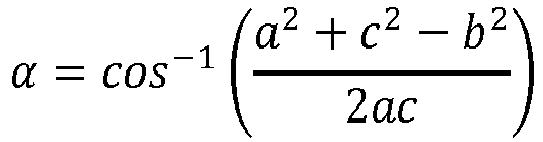
Figure 4 shows how to obtain the angle α as a function of the projecting distance Dp and other geometric parameters. - As may be seen in this figure, the two lighting devices are separated at a distance D1, and both of them project a symmetric light pattern which has an inner angle α0. For a projecting distance Dp1, there is an overlapping zone 4 which defines a side b in a triangle a-b-c, where a is the distance between one of the lighting devices and the point where the overlapping zone 4 starts and c is the distance between the same lighting device and the most outer point where the overlapping zone 4 finishes.
- Using conventional geometric relations, it may be shown that the three sides of the triangle may be expressed as a function of the initial data and the projecting distance Dp.


- And the angle α, using the Al-Kashi theorem, may be expressed as a function of these three sides:
- Once this angle is calculated as a function of the projecting distance,
figures 5, 6 and 7 will show particular examples of choosing the affected light sources in each row. -
Figure 5 shows a first example of the attenuation steps of a method according to the invention. - In this figure, the rows have been grouped into row groups, so that each row group is associated to a range of projecting distance. For the sake of convenience, in this example, five groups are defined: a first group of rows 31 from 0 to 20 m of projecting distance, a second group of
rows 32 from 20 to 40 m of projecting distance, a third group orrows 33 from 40 m to 60 m of projecting distance, a fourth group ofrows 34 from 60 m to infinite and a fifth group ofrows 35 which projects in a positive angle with respect of the plane of the road. - In this example, when calculating α as a function of the projecting distance, 1° corresponds to 20 m of projecting distance, 2° corresponds to 40 m of projecting distance and 3° corresponds to 60 m of projecting distance. The resolution of the matrix is 0.2° per column.
- Hence, in the first group, the range includes the projecting distance for 1°, so 5 columns (each column corresponds to 0.2°, so to reach 1°, 5 columns are necessary) will be affected. In the second group, which includes the projection distance for 2°, 10 columns will be affected, and in the third group, which includes the projection distance for 3°, 15 columns will be affected. In the fourth and fifth groups, 15 columns will be affected as well, since 4° is a value which is not reached with this configuration.
- In the affected light sources, light intensity is attenuated to the 50%, so that the sum of the intensities of both light devices will sum 100% for the overlapping region.
-
Figure 6 shows a second example of such a method. - In this case, a linear interpolation is carried out row by row, starting from the results of the method illustrated in the previous figure.
-
Figure 7 shows a third example of such a method. - In this case, starting from the results of the method illustrated in the previous figure, the number of affected light sources for the rows comprised in the fourth and fifth groups have been capped, since in these groups there is no need of dimming more light sources than in the rows of the third group.
-
Figure 8 shows a fourth example of such a method. - In this case, starting from the results of the method illustrated in the previous figure a dithering operation is applied on the affected light sources, to achieve a more homogeneous beam. In this case, the attenuation is not constant for every affected light source, but is symmetric with respect to both lighting devices.
Claims (11)
- Method for correcting a light pattern provided by a first lighting device (1) and a second lighting device (2), whereinthe first lighting device (1) comprises a plurality of light sources (3) and projects a first light pattern (11);the second lighting device (2) comprises a plurality of light sources (3) and projects a second light pattern (12); andthere is an overlapping zone (4) between the first light pattern (11) and the second light pattern (12),wherein the method comprises the steps offor each lighting device (1, 2), dividing the light sources in groups, each group being associated to a projection distance,calculating an overlapping region as a function of the projection distance (Dp);calculating a number of affected light sources for each group as a function of a representative dimension of the overlapping region;attenuate the intensity of the light emitted by the affected light sources in each group.
- Method according to claim 1, wherein the step of attenuation is symmetrical in both lighting devices (1, 2).
- Method according to any of the preceding claims, wherein the step of attenuation comprises attenuating the luminous intensity to the 50% in all the affected light sources (3).
- Method according to any of the preceding claims, whereinthe step of calculating a region of overlapping comprises calculating an angle of overlapping (a) in each lighting device as a function of the projection distance (Dp); andthe step of calculating a number of affected light sources comprises calculating a number of affected light sources for each group as a function of the angle of overlapping (a).
- Method according to claim 4, wherein each group of light sources comprises more than one column of light sources, in such a way that each column is associated to an angle range, so that for a given angle, a number of columns are associated to this angle in each group.
- Method according to claims 4 or 5, whereineach lighting device comprises a matrix arrangement of solid-state light sources (3), with columns and rows;the step of dividing the solid-state light sources (3) in groups comprising dividing the rows into groups of rows, so that each group of rows correspond to a range of projection distance (Dp);the step of attenuation comprises attenuate all the affected light sources of each group with the same attenuation percentage.
- Method according to claim 6, further comprising the step of performing a linear interpolation in the calculation of the affected light sources for each row.
- Method according to claim 7, further comprising the step of capping the number of affected light sources for the groups of rows which has a projection distance which is infinite.
- Method according to any of claims 6 to 8, further comprising the step of applying a dithering operation on the affected light sources.
- Automotive lighting device assembly comprising a first lighting device and a second lighting device, each lighting device comprisinga matrix arrangement of solid-state light sources (3), intended to provide a light pattern (11, 12);control means for accomplishing the steps of the method according to any of the preceding claims.
- Automotive lighting device assembly according to claim 10, wherein the matrix arrangement comprises at least 2000 solid-state light sources (3).
Priority Applications (1)
| Application Number | Priority Date | Filing Date | Title |
|---|---|---|---|
| EP18214121.8A EP3670262A1 (en) | 2018-12-19 | 2018-12-19 | Method for correcting a light pattern and automotive lighting device assembly |
Applications Claiming Priority (1)
| Application Number | Priority Date | Filing Date | Title |
|---|---|---|---|
| EP18214121.8A EP3670262A1 (en) | 2018-12-19 | 2018-12-19 | Method for correcting a light pattern and automotive lighting device assembly |
Publications (1)
| Publication Number | Publication Date |
|---|---|
| EP3670262A1 true EP3670262A1 (en) | 2020-06-24 |
Family
ID=64746209
Family Applications (1)
| Application Number | Title | Priority Date | Filing Date |
|---|---|---|---|
| EP18214121.8A Withdrawn EP3670262A1 (en) | 2018-12-19 | 2018-12-19 | Method for correcting a light pattern and automotive lighting device assembly |
Country Status (1)
| Country | Link |
|---|---|
| EP (1) | EP3670262A1 (en) |
Cited By (2)
| Publication number | Priority date | Publication date | Assignee | Title |
|---|---|---|---|---|
| US20240283950A1 (en) * | 2021-06-24 | 2024-08-22 | Valeo Vision | Method for managing an image in an automotive lighting device and an automotive lighting device |
| EP4422923A1 (en) * | 2021-10-27 | 2024-09-04 | Stellantis Auto SAS | Headlamp device of a vehicle and method for illuminating a projection field composed of a first projection region and a second projection region |
Citations (8)
| Publication number | Priority date | Publication date | Assignee | Title |
|---|---|---|---|---|
| US20050225999A1 (en) * | 2004-04-08 | 2005-10-13 | Bucher Lloyd K | Projector lamp headlight with chromatic aberration correction |
| DE102013114264A1 (en) * | 2013-12-18 | 2015-07-16 | Hella Kgaa Hueck & Co. | Headlights for vehicles |
| WO2015193714A1 (en) * | 2014-06-17 | 2015-12-23 | Toyota Jidosha Kabushiki Kaisha | Vehicle headlamp device |
| EP2979923A1 (en) * | 2014-08-01 | 2016-02-03 | Toyota Jidosha Kabushiki Kaisha | Illumination system |
| US20160347237A1 (en) * | 2015-05-28 | 2016-12-01 | Texas Instruments Incorporated | Methods and Apparatus for Light Efficient Programmable Headlamp with Anamorphic Optics |
| DE102016122499A1 (en) * | 2016-11-22 | 2018-05-24 | HELLA GmbH & Co. KGaA | Distribution of a total light distribution to individual headlamp modules, taking into account specific lighting properties and malfunctions |
| DE102016122492A1 (en) * | 2016-11-22 | 2018-05-24 | HELLA GmbH & Co. KGaA | Generation of a homogeneous light distribution as a function of the topography and the measured luminance |
| WO2018096523A1 (en) * | 2016-11-28 | 2018-05-31 | Magna Mirrors Of America, Inc. | Exterior illumination and icon projection module for vehicle |
-
2018
- 2018-12-19 EP EP18214121.8A patent/EP3670262A1/en not_active Withdrawn
Patent Citations (8)
| Publication number | Priority date | Publication date | Assignee | Title |
|---|---|---|---|---|
| US20050225999A1 (en) * | 2004-04-08 | 2005-10-13 | Bucher Lloyd K | Projector lamp headlight with chromatic aberration correction |
| DE102013114264A1 (en) * | 2013-12-18 | 2015-07-16 | Hella Kgaa Hueck & Co. | Headlights for vehicles |
| WO2015193714A1 (en) * | 2014-06-17 | 2015-12-23 | Toyota Jidosha Kabushiki Kaisha | Vehicle headlamp device |
| EP2979923A1 (en) * | 2014-08-01 | 2016-02-03 | Toyota Jidosha Kabushiki Kaisha | Illumination system |
| US20160347237A1 (en) * | 2015-05-28 | 2016-12-01 | Texas Instruments Incorporated | Methods and Apparatus for Light Efficient Programmable Headlamp with Anamorphic Optics |
| DE102016122499A1 (en) * | 2016-11-22 | 2018-05-24 | HELLA GmbH & Co. KGaA | Distribution of a total light distribution to individual headlamp modules, taking into account specific lighting properties and malfunctions |
| DE102016122492A1 (en) * | 2016-11-22 | 2018-05-24 | HELLA GmbH & Co. KGaA | Generation of a homogeneous light distribution as a function of the topography and the measured luminance |
| WO2018096523A1 (en) * | 2016-11-28 | 2018-05-31 | Magna Mirrors Of America, Inc. | Exterior illumination and icon projection module for vehicle |
Cited By (3)
| Publication number | Priority date | Publication date | Assignee | Title |
|---|---|---|---|---|
| US20240283950A1 (en) * | 2021-06-24 | 2024-08-22 | Valeo Vision | Method for managing an image in an automotive lighting device and an automotive lighting device |
| EP4422923A1 (en) * | 2021-10-27 | 2024-09-04 | Stellantis Auto SAS | Headlamp device of a vehicle and method for illuminating a projection field composed of a first projection region and a second projection region |
| EP4422923B1 (en) * | 2021-10-27 | 2025-08-27 | Stellantis Auto SAS | Headlamp device of a vehicle and method for illuminating a projection field composed of a first projection region and a second projection region |
Similar Documents
| Publication | Publication Date | Title |
|---|---|---|
| US11505112B2 (en) | Method for controlling a light pattern using a matrix of light sources responsive to steering angle | |
| US11435052B2 (en) | Method for correcting a light pattern and automotive lighting device | |
| US11472330B2 (en) | Method for correcting a light pattern and automotive lighting device assembly | |
| JP7191242B2 (en) | Method for correcting light patterns and lighting system for motor vehicle | |
| US11761850B2 (en) | Method for correcting a light pattern, automotive lighting device and automotive lighting assembly | |
| EP3670262A1 (en) | Method for correcting a light pattern and automotive lighting device assembly | |
| EP3672369B1 (en) | Method for controlling a light pattern and automotive lighting device | |
| EP3730836A1 (en) | Method for providing a light pattern, automotive lighting device and automotive lighting assembly | |
| US12063722B2 (en) | Method for correcting a light pattern, automotive lighting device and automotive lighting assembly | |
| EP4117964B1 (en) | Method for controlling a light pattern and automotive lighting device | |
| EP3702215B1 (en) | Method for correcting a light pattern and automotive lighting device | |
| US12479355B2 (en) | Method for controlling a light pattern and automotive lighting device |
Legal Events
| Date | Code | Title | Description |
|---|---|---|---|
| PUAI | Public reference made under article 153(3) epc to a published international application that has entered the european phase |
Free format text: ORIGINAL CODE: 0009012 |
|
| STAA | Information on the status of an ep patent application or granted ep patent |
Free format text: STATUS: REQUEST FOR EXAMINATION WAS MADE |
|
| 17P | Request for examination filed |
Effective date: 20181219 |
|
| AK | Designated contracting states |
Kind code of ref document: A1 Designated state(s): AL AT BE BG CH CY CZ DE DK EE ES FI FR GB GR HR HU IE IS IT LI LT LU LV MC MK MT NL NO PL PT RO RS SE SI SK SM TR |
|
| AX | Request for extension of the european patent |
Extension state: BA ME |
|
| STAA | Information on the status of an ep patent application or granted ep patent |
Free format text: STATUS: THE APPLICATION HAS BEEN WITHDRAWN |
|
| 18W | Application withdrawn |
Effective date: 20200925 |