EP3669900A1 - Genetically manipulated cornea for transplantation - Google Patents
Genetically manipulated cornea for transplantation Download PDFInfo
- Publication number
- EP3669900A1 EP3669900A1 EP18215701.6A EP18215701A EP3669900A1 EP 3669900 A1 EP3669900 A1 EP 3669900A1 EP 18215701 A EP18215701 A EP 18215701A EP 3669900 A1 EP3669900 A1 EP 3669900A1
- Authority
- EP
- European Patent Office
- Prior art keywords
- cornea
- chain
- alpha
- transplantation
- specific
- Prior art date
- Legal status (The legal status is an assumption and is not a legal conclusion. Google has not performed a legal analysis and makes no representation as to the accuracy of the status listed.)
- Granted
Links
Images


Classifications
-
- A—HUMAN NECESSITIES
- A61—MEDICAL OR VETERINARY SCIENCE; HYGIENE
- A61L—METHODS OR APPARATUS FOR STERILISING MATERIALS OR OBJECTS IN GENERAL; DISINFECTION, STERILISATION OR DEODORISATION OF AIR; CHEMICAL ASPECTS OF BANDAGES, DRESSINGS, ABSORBENT PADS OR SURGICAL ARTICLES; MATERIALS FOR BANDAGES, DRESSINGS, ABSORBENT PADS OR SURGICAL ARTICLES
- A61L27/00—Materials for grafts or prostheses or for coating grafts or prostheses
- A61L27/50—Materials characterised by their function or physical properties, e.g. injectable or lubricating compositions, shape-memory materials, surface modified materials
- A61L27/54—Biologically active materials, e.g. therapeutic substances
-
- A—HUMAN NECESSITIES
- A61—MEDICAL OR VETERINARY SCIENCE; HYGIENE
- A61L—METHODS OR APPARATUS FOR STERILISING MATERIALS OR OBJECTS IN GENERAL; DISINFECTION, STERILISATION OR DEODORISATION OF AIR; CHEMICAL ASPECTS OF BANDAGES, DRESSINGS, ABSORBENT PADS OR SURGICAL ARTICLES; MATERIALS FOR BANDAGES, DRESSINGS, ABSORBENT PADS OR SURGICAL ARTICLES
- A61L27/00—Materials for grafts or prostheses or for coating grafts or prostheses
- A61L27/36—Materials for grafts or prostheses or for coating grafts or prostheses containing ingredients of undetermined constitution or reaction products thereof, e.g. transplant tissue, natural bone, extracellular matrix
- A61L27/3683—Materials for grafts or prostheses or for coating grafts or prostheses containing ingredients of undetermined constitution or reaction products thereof, e.g. transplant tissue, natural bone, extracellular matrix subjected to a specific treatment prior to implantation, e.g. decellularising, demineralising, grinding, cellular disruption/non-collagenous protein removal, anti-calcification, crosslinking, supercritical fluid extraction, enzyme treatment
- A61L27/3687—Materials for grafts or prostheses or for coating grafts or prostheses containing ingredients of undetermined constitution or reaction products thereof, e.g. transplant tissue, natural bone, extracellular matrix subjected to a specific treatment prior to implantation, e.g. decellularising, demineralising, grinding, cellular disruption/non-collagenous protein removal, anti-calcification, crosslinking, supercritical fluid extraction, enzyme treatment characterised by the use of chemical agents in the treatment, e.g. specific enzymes, detergents, capping agents, crosslinkers, anticalcification agents
-
- A—HUMAN NECESSITIES
- A61—MEDICAL OR VETERINARY SCIENCE; HYGIENE
- A61L—METHODS OR APPARATUS FOR STERILISING MATERIALS OR OBJECTS IN GENERAL; DISINFECTION, STERILISATION OR DEODORISATION OF AIR; CHEMICAL ASPECTS OF BANDAGES, DRESSINGS, ABSORBENT PADS OR SURGICAL ARTICLES; MATERIALS FOR BANDAGES, DRESSINGS, ABSORBENT PADS OR SURGICAL ARTICLES
- A61L27/00—Materials for grafts or prostheses or for coating grafts or prostheses
- A61L27/36—Materials for grafts or prostheses or for coating grafts or prostheses containing ingredients of undetermined constitution or reaction products thereof, e.g. transplant tissue, natural bone, extracellular matrix
- A61L27/3604—Materials for grafts or prostheses or for coating grafts or prostheses containing ingredients of undetermined constitution or reaction products thereof, e.g. transplant tissue, natural bone, extracellular matrix characterised by the human or animal origin of the biological material, e.g. hair, fascia, fish scales, silk, shellac, pericardium, pleura, renal tissue, amniotic membrane, parenchymal tissue, fetal tissue, muscle tissue, fat tissue, enamel
-
- A—HUMAN NECESSITIES
- A61—MEDICAL OR VETERINARY SCIENCE; HYGIENE
- A61P—SPECIFIC THERAPEUTIC ACTIVITY OF CHEMICAL COMPOUNDS OR MEDICINAL PREPARATIONS
- A61P27/00—Drugs for disorders of the senses
-
- C—CHEMISTRY; METALLURGY
- C12—BIOCHEMISTRY; BEER; SPIRITS; WINE; VINEGAR; MICROBIOLOGY; ENZYMOLOGY; MUTATION OR GENETIC ENGINEERING
- C12N—MICROORGANISMS OR ENZYMES; COMPOSITIONS THEREOF; PROPAGATING, PRESERVING, OR MAINTAINING MICROORGANISMS; MUTATION OR GENETIC ENGINEERING; CULTURE MEDIA
- C12N15/00—Mutation or genetic engineering; DNA or RNA concerning genetic engineering, vectors, e.g. plasmids, or their isolation, preparation or purification; Use of hosts therefor
- C12N15/09—Recombinant DNA-technology
- C12N15/11—DNA or RNA fragments; Modified forms thereof; Non-coding nucleic acids having a biological activity
- C12N15/113—Non-coding nucleic acids modulating the expression of genes, e.g. antisense oligonucleotides; Antisense DNA or RNA; Triplex- forming oligonucleotides; Catalytic nucleic acids, e.g. ribozymes; Nucleic acids used in co-suppression or gene silencing
- C12N15/1138—Non-coding nucleic acids modulating the expression of genes, e.g. antisense oligonucleotides; Antisense DNA or RNA; Triplex- forming oligonucleotides; Catalytic nucleic acids, e.g. ribozymes; Nucleic acids used in co-suppression or gene silencing against receptors or cell surface proteins
-
- C—CHEMISTRY; METALLURGY
- C12—BIOCHEMISTRY; BEER; SPIRITS; WINE; VINEGAR; MICROBIOLOGY; ENZYMOLOGY; MUTATION OR GENETIC ENGINEERING
- C12N—MICROORGANISMS OR ENZYMES; COMPOSITIONS THEREOF; PROPAGATING, PRESERVING, OR MAINTAINING MICROORGANISMS; MUTATION OR GENETIC ENGINEERING; CULTURE MEDIA
- C12N15/00—Mutation or genetic engineering; DNA or RNA concerning genetic engineering, vectors, e.g. plasmids, or their isolation, preparation or purification; Use of hosts therefor
- C12N15/09—Recombinant DNA-technology
- C12N15/63—Introduction of foreign genetic material using vectors; Vectors; Use of hosts therefor; Regulation of expression
- C12N15/79—Vectors or expression systems specially adapted for eukaryotic hosts
- C12N15/85—Vectors or expression systems specially adapted for eukaryotic hosts for animal cells
- C12N15/86—Viral vectors
- C12N15/867—Retroviral vectors
-
- A—HUMAN NECESSITIES
- A61—MEDICAL OR VETERINARY SCIENCE; HYGIENE
- A61L—METHODS OR APPARATUS FOR STERILISING MATERIALS OR OBJECTS IN GENERAL; DISINFECTION, STERILISATION OR DEODORISATION OF AIR; CHEMICAL ASPECTS OF BANDAGES, DRESSINGS, ABSORBENT PADS OR SURGICAL ARTICLES; MATERIALS FOR BANDAGES, DRESSINGS, ABSORBENT PADS OR SURGICAL ARTICLES
- A61L2300/00—Biologically active materials used in bandages, wound dressings, absorbent pads or medical devices
- A61L2300/20—Biologically active materials used in bandages, wound dressings, absorbent pads or medical devices containing or releasing organic materials
- A61L2300/258—Genetic materials, DNA, RNA, genes, vectors, e.g. plasmids
-
- A—HUMAN NECESSITIES
- A61—MEDICAL OR VETERINARY SCIENCE; HYGIENE
- A61L—METHODS OR APPARATUS FOR STERILISING MATERIALS OR OBJECTS IN GENERAL; DISINFECTION, STERILISATION OR DEODORISATION OF AIR; CHEMICAL ASPECTS OF BANDAGES, DRESSINGS, ABSORBENT PADS OR SURGICAL ARTICLES; MATERIALS FOR BANDAGES, DRESSINGS, ABSORBENT PADS OR SURGICAL ARTICLES
- A61L2300/00—Biologically active materials used in bandages, wound dressings, absorbent pads or medical devices
- A61L2300/40—Biologically active materials used in bandages, wound dressings, absorbent pads or medical devices characterised by a specific therapeutic activity or mode of action
- A61L2300/432—Inhibitors, antagonists
- A61L2300/436—Inhibitors, antagonists of receptors
-
- A—HUMAN NECESSITIES
- A61—MEDICAL OR VETERINARY SCIENCE; HYGIENE
- A61L—METHODS OR APPARATUS FOR STERILISING MATERIALS OR OBJECTS IN GENERAL; DISINFECTION, STERILISATION OR DEODORISATION OF AIR; CHEMICAL ASPECTS OF BANDAGES, DRESSINGS, ABSORBENT PADS OR SURGICAL ARTICLES; MATERIALS FOR BANDAGES, DRESSINGS, ABSORBENT PADS OR SURGICAL ARTICLES
- A61L2430/00—Materials or treatment for tissue regeneration
- A61L2430/16—Materials or treatment for tissue regeneration for reconstruction of eye parts, e.g. intraocular lens, cornea
-
- A—HUMAN NECESSITIES
- A61—MEDICAL OR VETERINARY SCIENCE; HYGIENE
- A61L—METHODS OR APPARATUS FOR STERILISING MATERIALS OR OBJECTS IN GENERAL; DISINFECTION, STERILISATION OR DEODORISATION OF AIR; CHEMICAL ASPECTS OF BANDAGES, DRESSINGS, ABSORBENT PADS OR SURGICAL ARTICLES; MATERIALS FOR BANDAGES, DRESSINGS, ABSORBENT PADS OR SURGICAL ARTICLES
- A61L27/00—Materials for grafts or prostheses or for coating grafts or prostheses
- A61L27/36—Materials for grafts or prostheses or for coating grafts or prostheses containing ingredients of undetermined constitution or reaction products thereof, e.g. transplant tissue, natural bone, extracellular matrix
- A61L27/3641—Materials for grafts or prostheses or for coating grafts or prostheses containing ingredients of undetermined constitution or reaction products thereof, e.g. transplant tissue, natural bone, extracellular matrix characterised by the site of application in the body
-
- A—HUMAN NECESSITIES
- A61—MEDICAL OR VETERINARY SCIENCE; HYGIENE
- A61L—METHODS OR APPARATUS FOR STERILISING MATERIALS OR OBJECTS IN GENERAL; DISINFECTION, STERILISATION OR DEODORISATION OF AIR; CHEMICAL ASPECTS OF BANDAGES, DRESSINGS, ABSORBENT PADS OR SURGICAL ARTICLES; MATERIALS FOR BANDAGES, DRESSINGS, ABSORBENT PADS OR SURGICAL ARTICLES
- A61L27/00—Materials for grafts or prostheses or for coating grafts or prostheses
- A61L27/36—Materials for grafts or prostheses or for coating grafts or prostheses containing ingredients of undetermined constitution or reaction products thereof, e.g. transplant tissue, natural bone, extracellular matrix
- A61L27/3683—Materials for grafts or prostheses or for coating grafts or prostheses containing ingredients of undetermined constitution or reaction products thereof, e.g. transplant tissue, natural bone, extracellular matrix subjected to a specific treatment prior to implantation, e.g. decellularising, demineralising, grinding, cellular disruption/non-collagenous protein removal, anti-calcification, crosslinking, supercritical fluid extraction, enzyme treatment
-
- C—CHEMISTRY; METALLURGY
- C12—BIOCHEMISTRY; BEER; SPIRITS; WINE; VINEGAR; MICROBIOLOGY; ENZYMOLOGY; MUTATION OR GENETIC ENGINEERING
- C12N—MICROORGANISMS OR ENZYMES; COMPOSITIONS THEREOF; PROPAGATING, PRESERVING, OR MAINTAINING MICROORGANISMS; MUTATION OR GENETIC ENGINEERING; CULTURE MEDIA
- C12N2310/00—Structure or type of the nucleic acid
- C12N2310/10—Type of nucleic acid
- C12N2310/14—Type of nucleic acid interfering nucleic acids [NA]
-
- C—CHEMISTRY; METALLURGY
- C12—BIOCHEMISTRY; BEER; SPIRITS; WINE; VINEGAR; MICROBIOLOGY; ENZYMOLOGY; MUTATION OR GENETIC ENGINEERING
- C12N—MICROORGANISMS OR ENZYMES; COMPOSITIONS THEREOF; PROPAGATING, PRESERVING, OR MAINTAINING MICROORGANISMS; MUTATION OR GENETIC ENGINEERING; CULTURE MEDIA
- C12N2310/00—Structure or type of the nucleic acid
- C12N2310/10—Type of nucleic acid
- C12N2310/17—Immunomodulatory nucleic acids
-
- C—CHEMISTRY; METALLURGY
- C12—BIOCHEMISTRY; BEER; SPIRITS; WINE; VINEGAR; MICROBIOLOGY; ENZYMOLOGY; MUTATION OR GENETIC ENGINEERING
- C12N—MICROORGANISMS OR ENZYMES; COMPOSITIONS THEREOF; PROPAGATING, PRESERVING, OR MAINTAINING MICROORGANISMS; MUTATION OR GENETIC ENGINEERING; CULTURE MEDIA
- C12N2310/00—Structure or type of the nucleic acid
- C12N2310/50—Physical structure
- C12N2310/53—Physical structure partially self-complementary or closed
- C12N2310/531—Stem-loop; Hairpin
-
- C—CHEMISTRY; METALLURGY
- C12—BIOCHEMISTRY; BEER; SPIRITS; WINE; VINEGAR; MICROBIOLOGY; ENZYMOLOGY; MUTATION OR GENETIC ENGINEERING
- C12N—MICROORGANISMS OR ENZYMES; COMPOSITIONS THEREOF; PROPAGATING, PRESERVING, OR MAINTAINING MICROORGANISMS; MUTATION OR GENETIC ENGINEERING; CULTURE MEDIA
- C12N2500/00—Specific components of cell culture medium
- C12N2500/90—Serum-free medium, which may still contain naturally-sourced components
Definitions
- the present invention relates to an ex vivo genetically manipulated cornea for use in allogeneic transplantation, especially for use in transplantation to patients lacking the immune privilege of the eye, e.g. in patients who have developed adaptive or humoral immune response, e.g. who have previously received a cornea transplant, have neovascularization and/or an inflammation in the eye. Further, the invention relates to the ex vivo method of production of the genetically manipulated cornea for use in allogeneic transplantation, and to the use of nucleic acid constructs, e.g. viral vectors and viral particles, in the method of production.
- nucleic acid constructs e.g. viral vectors and viral particles
- Figueiredo and Blasczyk, INTECH, p. 314 describe lentiviral genetic manipulation of allograft tissue to express shRNA directed against ⁇ 2-microglobulin or against the ⁇ -chain of HLA-DR for decreasing immunogenicity of the tissue.
- An object of the invention is to provide an alternative ex vivo genetically manipulated cornea for use in allogeneic transplantation and that preferably is less immunogenic, and an alternative ex vivo method of production of ex vivo genetically manipulating a cornea, wherein the method preferably produces a cornea which is less immunogenic.
- the invention provides a cornea, which is ex vivo, e.g. isolated, for use in transplantation and a method for production of a cornea, which is performed on an initial ex vivo, e.g. isolated cornea, for use in transplantation according to the claims.
- the cornea can be for use in the treatment of cornea defects.
- the cornea is genetically manipulated in order to only elicit a reduced immune response in an allogeneic recipient, preferably in order to not elicit an immune response in an allogeneic recipient
- the initial cornea is alive, e.g. an explanted cornea from an allogeneic donor, and kept under cell culture conditions, preferably in a serum-free cell-culture medium.
- This initial cornea is immunologically not compatible with the later recipient, e.g. the initial cornea is MHC-mismatched with the MHC of the later recipient.
- the initial cornea is isolated, e.g. maintained in organ culture medium.
- the initial cornea is of non-human origin.
- the cornea is genetically manipulated to contain a nucleic acid construct containing an expression cassette encoding inhibitory RNA sequences, e.g. siRNA, preferably short-hairpin RNA (shRNA), for use in human initial corneas is specific for the transcript of at least one of, preferably of all of the alpha or beta-chain of HLA-DR, DQ and DP molecules, respectively for murine initial corneas encoding inhibitory RNA sequences specific for the transcript of the alpha-chain of the H2E gene, and/or in each case encoding an inhibitory RNA (shRNA) specific for the transcript of the class II transactivator gene (CIITA), preferably further in combination with an expression cassette encoding an inhibitory RNA e.g.
- inhibitory RNA sequences e.g. siRNA, preferably short-hairpin RNA (shRNA)
- shRNA short-hairpin RNA
- siRNA preferably short-hairpin RNA (shRNA), specific for the transcript of the ⁇ 2-microglobulin ( ⁇ 2m) gene.
- shRNA short-hairpin RNA
- the cornea obtained by the process is for use as a transplant, e.g. as a replacement for a damaged cornea, in an immunologically non-compatible recipient, especially for use in a recipient whose MHC is not compatible to the MHC of the cornea initially used in the method for production.
- the expression cassettes contain a promoter controlling the transcription of the encoded gene, preferably a constitutive promoter, e.g. the H1 promoter (SEQ ID NO: 5) or the U6 promoter (SEQ ID NO: 13) or the elongation factor short (EFS) promoter (SEQ ID NO: 6) or the EF1 alpha promoter (SEQ ID NO: 7).
- a constitutive promoter e.g. the H1 promoter (SEQ ID NO: 5) or the U6 promoter (SEQ ID NO: 13) or the elongation factor short (EFS) promoter (SEQ ID NO: 6) or the EF1 alpha promoter (SEQ ID NO: 7).
- the nucleic acid construct can be contained in a viral vector, e.g. in a lentiviral vector, preferably packaged in lentiviral particles.
- An ex vivo cornea containing an expression cassette encoding siRNA specific for the transcript of the alpha-chain or of the beta-chain of HLA class II genes e.g. specific for the transcript of at least one of HLA-DR, DQ and DP molecules, preferably of all of the alpha-chain of HLA-DR, DQ and DP molecules and/or at least one of, preferably all of, the beta-chain of HLA-DR, DQ and DP molecules, and/or an expression cassette encoding siRNA specific for the transcript of the class II transactivator gene (CIITA), preferably also an expression cassette encoding siRNA specific for the transcript of ⁇ 2m has been found to effect significantly less immunologic responses after transplantation, e.g.
- CIITA class II transactivator gene
- siRNA specific for the transcript of the human alpha-chain or of the beta-chain of HLA class II gene for an initial human cornea respectively encoding siRNA specific for the transcript of the murine alpha-chain of the H2E gene for an initial murine cornea
- introduction of an expression cassette encoding siRNA specific for the transcript of the class II transactivator gene (CIITA) has been found to result in the reduction, respectively suppression of the translation of MHC II in the cornea
- introduction of an expression cassette encoding shRNA specific for the transcript of ⁇ 2m has been found to result in the reduction, respectively suppression of the translation of MHC I in the cornea.
- transplantation of a cornea expressing siRNA specific for the transcript of the alpha-chain of the H2E gene and/or expressing siRNA specific for the transcript of the class II transactivator gene (CIITA), preferably also expressing shRNA specific for the transcript of ⁇ 2m does not induce an immunogenic reaction by the recipient, e.g. no de novo formation of alloantibodies, and does not result in graft rejection in vivo.
- the genetically manipulated cornea of the invention after transplantation does not elicit an immune response in the recipient.
- an shRNA specific for the mouse ⁇ 2m gene transcript (MM_sh ⁇ 2m) can comprise or consist of SEQ ID NO: 1, corresponding to the nucleotide sequence of 51 nt (nucleotides) starting at nucleotide No. 209 of X01838 (European Nucleotide Archive), an shRNA specific for the mouse alpha-chain of the H2E gene transcript can comprise of consist of SEQ ID NO: 2, corresponding to the nucleotide sequence of 51 nt starting at nucleotide No. 324 of U13648.1 (European Nucleotide Archive).
- an shRNA specific for the human ⁇ 2m gene transcript can comprise or consist of SEQ ID NO: 3, corresponding to the nucleotide sequence of 47 nt (nucleotides) starting at nucleotide No. 244 of NM_004048.2 (NCBI databank), an shRNA specific for the human class II transactivator gene transcript (HS-shCIITA) can comprise of consist of SEQ ID NO: 4, corresponding to the nucleotide sequence of 51 nt starting at nucleotide No. 400 of NM_000246 at (NCBI databank).
- the shRNA loop contained is TTCAAGAGA.
- a preferred promoter for driving the transcription of the shRNA encoding sequences is the H1 promoter, e.g. comprising or consisting of SEQ ID NO: 5.
- the elongation factor short (EFS) promoter preferably comprises or consists of SEQ ID NO: 6, the EF1-alpha promoter preferably comprises or consists of SEQ ID NO: 7.
- An exemplary lentiviral vector backbone has SEQ ID NO: 8, which contains a shRNA cloning site at nt 5312, and 5629.
- shRNA of SEQ ID NO: 10 or of SEQ ID NO: 11 or a combination of these can be used.
- shRNA of SEQ ID NO: 12 (start nt 400, aa 90) can be used.
- an explanted live cornea is washed, e.g. in serum-free organ culture medium.
- a preferred organ culture medium is Human Endothelial SFM (Gibco) or Culture Medium II (Biochrom) supplemented with 10ng/ml FGF-2.
- the cornea is kept in serum-free organ culture medium and transfected with the nucleic acid construct containing the expression cassettes encoding siRNA specific for the transcript of the alpha-chain of the H2E gene and/or expressing siRNA specific for the transcript of the class II transactivator gene (CIITA), preferably also expressing siRNA specific for the transcript of ⁇ 2m.
- the nucleic acid construct is contained in a viral vector, e.g.
- the cornea is washed, e.g. in organ culture medium, and optionally incubated in fresh organ culture medium, e.g. for 48h at 37°C. Following this incubation, the cornea can be transplanted into a recipient.
- Corneas from C3H/HeJ (MHC haplotype H-2 k ) or from Balb/cJ (control, MHC matched) mice were explanted and transduced with lentiviral particles containing nucleic acid constructs encoding an expression cassette for shRNA specific for silencing mRNA for ⁇ 2-microglobulin of SEQ ID NO: 1, and/or encoding an expression cassette for shRNA of SEQ ID NO: 9 (shRNA specific for the murine_shCIITA, NM_001302618.1 (start 992, aa304), GCTGACCTCCCGTGTAAATGA TTCAAGAGA TCATTTACACGGGAGGTCAGC) specific for silencing murine CIITA transcripts, and/or encoding shRNA of SEQ ID NO: 2 specific for silencing the murine alpha-chain of H2E.
- the expression cassettes were contained in a lentiviral vector according to SEQ ID NO: 8, which was packaged in lentiviral particles.
- the corneas were incubated in organ culture medium (culture medium II, Biochrom) containing 8 ⁇ g/mL protamine sulfate for 2h at 37°C.
- the medium containing the viral was replaced with fresh organ culture medium and the corneas were incubated for 48h at 37°C to produce the genetically manipulated corneas.
- the genetically manipulated corneas (MHC haplotype H-2 d ) were transplanted into new C3H/HeJ (MHC haplotype H-2 k ) mice which were completely mismatched for MHC.
- the organ culture medium could be replaced by cell culture medium.
- Fig. 2 shows histological analyses of the corneas in cross-sections in hematoxylin and eosin (HE) staining, in A of a freshly explanted mouse cornea, in B of a non-transduced cornea after two days of culture in organ culture medium at 37°C, and in C a cornea produced by the in vitro method of production for the genetic manipulation by transduction. These analyses show that the method of production essentially maintains the structure of the cornea.
- HE hematoxylin and eosin
- mice 9 weeks after transplantation, mice were killed and the antibody levels in the sera as well as the tissue of the transplanted corneas were analysed.
- the results which are depicted in Fig. 3 , show a significant decrease in the levels of IgA, IgG1 and IgM antibodies in animals transplanted with a MHC class I silenced corneas.
- significant decreases in the levels of IgG1, IgG2a and IgG2b were detectable in the sera of animals transplanted with a MHC class II silenced cornea.
- lower levels of IgA and IgM were detectable in these animals in comparison to those receiving non-modified corneas or expressing a non-specific shRNA.
- T-cell infiltration showed that significantly (p ⁇ 0.05) lower rates of T-cells were observed in MHC-mismatched corneas expressing one of shRNA specific for silencing ⁇ 2-microglobulin, shRNA specific for silencing CIITA or shRNA specific for silencing the alpha-chain of H2E.
- Fig. 4B The results are shown in Fig. 4B , which were obtained from the tissue analyses of Fig. 4A using Luminex technology and classifying infiltration by T-cells to scores 1 (little or no T-cell infiltration) to 4 (massive T-cell infiltration).
- Fig. 4 shows histological analyses of the corneas that were transplanted after 9 weeks in the recipient, in cross-sections with antibody staining for CD3 T-cells, and HE staining.
- non-manipulated cornea from a Balb/c mouse that was transplanted into a Balb/c recipient mouse is shown, and a non-manipulated cornea transplanted and then retrieved from a C3H mouse, a C3H cornea expressing shNS, and the cornea that was genetically manipulated to express shRNA specific for silencing ⁇ 2-microglobulin (sh ⁇ 2m) and the cornea that was genetically manipulated to express shRNA specific for silencing the alpha-chain of H2E (shH2E).
- sh ⁇ 2-microglobulin showed a significantly decrease in immune cell infiltration and a better tissue structure.
- MHC class II silenced corneas according to the invention showed a tendency for decreased T-cell infiltration.
Landscapes
- Health & Medical Sciences (AREA)
- Life Sciences & Earth Sciences (AREA)
- Engineering & Computer Science (AREA)
- Chemical & Material Sciences (AREA)
- Biomedical Technology (AREA)
- Genetics & Genomics (AREA)
- Molecular Biology (AREA)
- Zoology (AREA)
- General Health & Medical Sciences (AREA)
- Organic Chemistry (AREA)
- Bioinformatics & Cheminformatics (AREA)
- Wood Science & Technology (AREA)
- General Engineering & Computer Science (AREA)
- Biotechnology (AREA)
- Medicinal Chemistry (AREA)
- Chemical Kinetics & Catalysis (AREA)
- Veterinary Medicine (AREA)
- Animal Behavior & Ethology (AREA)
- Public Health (AREA)
- Oral & Maxillofacial Surgery (AREA)
- Epidemiology (AREA)
- Dermatology (AREA)
- Transplantation (AREA)
- Botany (AREA)
- Microbiology (AREA)
- Plant Pathology (AREA)
- Biophysics (AREA)
- Physics & Mathematics (AREA)
- Biochemistry (AREA)
- General Chemical & Material Sciences (AREA)
- Urology & Nephrology (AREA)
- Nuclear Medicine, Radiotherapy & Molecular Imaging (AREA)
- Pharmacology & Pharmacy (AREA)
- Virology (AREA)
- Micro-Organisms Or Cultivation Processes Thereof (AREA)
- Medicines That Contain Protein Lipid Enzymes And Other Medicines (AREA)
- Medicines Containing Material From Animals Or Micro-Organisms (AREA)
Abstract
Description
- The present invention relates to an ex vivo genetically manipulated cornea for use in allogeneic transplantation, especially for use in transplantation to patients lacking the immune privilege of the eye, e.g. in patients who have developed adaptive or humoral immune response, e.g. who have previously received a cornea transplant, have neovascularization and/or an inflammation in the eye. Further, the invention relates to the ex vivo method of production of the genetically manipulated cornea for use in allogeneic transplantation, and to the use of nucleic acid constructs, e.g. viral vectors and viral particles, in the method of production.
- Figueiredo et al., Suppl. to Transplantation 1572 (2012) describes corneal transplants expressing shRNA directed against β2-microglobulin.
- Figueiredo and Blasczyk, INTECH, p. 314 (2016) describe lentiviral genetic manipulation of allograft tissue to express shRNA directed against β2-microglobulin or against the α-chain of HLA-DR for decreasing immunogenicity of the tissue.
- An object of the invention is to provide an alternative ex vivo genetically manipulated cornea for use in allogeneic transplantation and that preferably is less immunogenic, and an alternative ex vivo method of production of ex vivo genetically manipulating a cornea, wherein the method preferably produces a cornea which is less immunogenic.
- The invention provides a cornea, which is ex vivo, e.g. isolated, for use in transplantation and a method for production of a cornea, which is performed on an initial ex vivo, e.g. isolated cornea, for use in transplantation according to the claims. Accordingly, the cornea can be for use in the treatment of cornea defects. The cornea is genetically manipulated in order to only elicit a reduced immune response in an allogeneic recipient, preferably in order to not elicit an immune response in an allogeneic recipient Specifically, the initial cornea is alive, e.g. an explanted cornea from an allogeneic donor, and kept under cell culture conditions, preferably in a serum-free cell-culture medium. This initial cornea is immunologically not compatible with the later recipient, e.g. the initial cornea is MHC-mismatched with the MHC of the later recipient. The initial cornea is isolated, e.g. maintained in organ culture medium. Optionally, the initial cornea is of non-human origin.
- The cornea is genetically manipulated to contain a nucleic acid construct containing an expression cassette encoding inhibitory RNA sequences, e.g. siRNA, preferably short-hairpin RNA (shRNA), for use in human initial corneas is specific for the transcript of at least one of, preferably of all of the alpha or beta-chain of HLA-DR, DQ and DP molecules, respectively for murine initial corneas encoding inhibitory RNA sequences specific for the transcript of the alpha-chain of the H2E gene, and/or in each case encoding an inhibitory RNA (shRNA) specific for the transcript of the class II transactivator gene (CIITA), preferably further in combination with an expression cassette encoding an inhibitory RNA e.g. siRNA, preferably short-hairpin RNA (shRNA), specific for the transcript of the β2-microglobulin (β2m) gene. The cornea obtained by the process is for use as a transplant, e.g. as a replacement for a damaged cornea, in an immunologically non-compatible recipient, especially for use in a recipient whose MHC is not compatible to the MHC of the cornea initially used in the method for production.
- The expression cassettes contain a promoter controlling the transcription of the encoded gene, preferably a constitutive promoter, e.g. the H1 promoter (SEQ ID NO: 5) or the U6 promoter (SEQ ID NO: 13) or the elongation factor short (EFS) promoter (SEQ ID NO: 6) or the EF1 alpha promoter (SEQ ID NO: 7).
- For introduction of the nucleic acid construct into the cornea, the nucleic acid construct can be contained in a viral vector, e.g. in a lentiviral vector, preferably packaged in lentiviral particles.
- An ex vivo cornea containing an expression cassette encoding siRNA specific for the transcript of the alpha-chain or of the beta-chain of HLA class II genes, e.g. specific for the transcript of at least one of HLA-DR, DQ and DP molecules, preferably of all of the alpha-chain of HLA-DR, DQ and DP molecules and/or at least one of, preferably all of, the beta-chain of HLA-DR, DQ and DP molecules, and/or an expression cassette encoding siRNA specific for the transcript of the class II transactivator gene (CIITA), preferably also an expression cassette encoding siRNA specific for the transcript of β2m has been found to effect significantly less immunologic responses after transplantation, e.g. essentially no significant immunologic response after transplantation, even e.g. in recipients having neovascularizations in the eye, previous or present inflammation in the eye and/or previous contact with allogenic tissue, e.g. patients who have developed an immune response against allogenic HLA molecules, e.g. patients who had previously received an allogeneic transplant.
- The introduction of an expression cassette encoding siRNA specific for the transcript of the human alpha-chain or of the beta-chain of HLA class II gene for an initial human cornea, respectively encoding siRNA specific for the transcript of the murine alpha-chain of the H2E gene for an initial murine cornea, and/or, in each case, introduction of an expression cassette encoding siRNA specific for the transcript of the class II transactivator gene (CIITA) has been found to result in the reduction, respectively suppression of the translation of MHC II in the cornea, and introduction of an expression cassette encoding shRNA specific for the transcript of β2m has been found to result in the reduction, respectively suppression of the translation of MHC I in the cornea.
- It was found that transplantation of a cornea expressing siRNA specific for the transcript of the alpha-chain of the H2E gene and/or expressing siRNA specific for the transcript of the class II transactivator gene (CIITA), preferably also expressing shRNA specific for the transcript of β2m, does not induce an immunogenic reaction by the recipient, e.g. no de novo formation of alloantibodies, and does not result in graft rejection in vivo. Preferably, the genetically manipulated cornea of the invention after transplantation does not elicit an immune response in the recipient.
- An shRNA specific for the mouse β2m gene transcript (MM_shβ2m) can comprise or consist of SEQ ID NO: 1, corresponding to the nucleotide sequence of 51 nt (nucleotides) starting at nucleotide No. 209 of X01838 (European Nucleotide Archive), an shRNA specific for the mouse alpha-chain of the H2E gene transcript can comprise of consist of SEQ ID NO: 2, corresponding to the nucleotide sequence of 51 nt starting at nucleotide No. 324 of U13648.1 (European Nucleotide Archive).
- An shRNA specific for the human β2m gene transcript (HS_shβ2m) can comprise or consist of SEQ ID NO: 3, corresponding to the nucleotide sequence of 47 nt (nucleotides) starting at nucleotide No. 244 of NM_004048.2 (NCBI databank), an shRNA specific for the human class II transactivator gene transcript (HS-shCIITA) can comprise of consist of SEQ ID NO: 4, corresponding to the nucleotide sequence of 51 nt starting at nucleotide No. 400 of NM_000246 at (NCBI databank).
- The shRNA loop contained is TTCAAGAGA.
- A preferred promoter for driving the transcription of the shRNA encoding sequences is the H1 promoter, e.g. comprising or consisting of SEQ ID NO: 5.
- The elongation factor short (EFS) promoter preferably comprises or consists of SEQ ID NO: 6, the EF1-alpha promoter preferably comprises or consists of SEQ ID NO: 7.
- An exemplary lentiviral vector backbone has SEQ ID NO: 8, which contains a shRNA cloning site at nt 5312, and 5629.
- For simultaneously targeting and inibiting HLA-DRA, HLA-DPA1 and HLA-DQA, shRNA of SEQ ID NO: 10 or of SEQ ID NO: 11 or a combination of these can be used.
- For inhibiting CIITA, shRNA of SEQ ID NO: 12 (start nt 400, aa 90) can be used.
- In the process for producing the genetically manipulated cornea, an explanted live cornea is washed, e.g. in serum-free organ culture medium. A preferred organ culture medium is Human Endothelial SFM (Gibco) or Culture Medium II (Biochrom) supplemented with 10ng/ml FGF-2. The cornea is kept in serum-free organ culture medium and transfected with the nucleic acid construct containing the expression cassettes encoding siRNA specific for the transcript of the alpha-chain of the H2E gene and/or expressing siRNA specific for the transcript of the class II transactivator gene (CIITA), preferably also expressing siRNA specific for the transcript of β2m. Preferably, the nucleic acid construct is contained in a viral vector, e.g. in a lentiviral vector, packaged into lentiviral particles, and introduced into the medium. Following an incubation period, e.g. for 2h at 37 °C under cell culture conditions, the cornea is washed, e.g. in organ culture medium, and optionally incubated in fresh organ culture medium, e.g. for 48h at 37°C. Following this incubation, the cornea can be transplanted into a recipient.
- Corneas from C3H/HeJ (MHC haplotype H-2k) or from Balb/cJ (control, MHC matched) mice were explanted and transduced with lentiviral particles containing nucleic acid constructs encoding an expression cassette for shRNA specific for silencing mRNA for β2-microglobulin of SEQ ID NO: 1, and/or encoding an expression cassette for shRNA of SEQ ID NO: 9 (shRNA specific for the murine_shCIITA, NM_001302618.1 (start 992, aa304), GCTGACCTCCCGTGTAAATGA TTCAAGAGA TCATTTACACGGGAGGTCAGC) specific for silencing murine CIITA transcripts, and/or encoding shRNA of SEQ ID NO: 2 specific for silencing the murine alpha-chain of H2E. The expression cassettes were contained in a lentiviral vector according to SEQ ID NO: 8, which was packaged in lentiviral particles. For transduction, the corneas were incubated in organ culture medium (culture medium II, Biochrom) containing 8 µg/mL protamine sulfate for 2h at 37°C. Afterwards, the medium containing the viral was replaced with fresh organ culture medium and the corneas were incubated for 48h at 37°C to produce the genetically manipulated corneas. Then, the genetically manipulated corneas (MHC haplotype H-2d) were transplanted into new C3H/HeJ (MHC haplotype H-2k) mice which were completely mismatched for MHC.
- The organ culture medium could be replaced by cell culture medium.
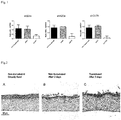
- From the corneas that were genetically manipulated in vitro, resp. ex vivo, a section was taken and analysed by quantitative RT-PCR for transcripts of β2-microglobulin, of the alpha-chain of H2E, and of the CIITA. The results of the analyses for corneas that were transduced with a lentiviral nucleic acid construct containing an expression cassette for one of shRNA specific for silencing β2-microglobulin (shβ2m), shRNA specific for silencing the alpha-chain of H2E (shH2Ea) or shRNA specific for silencing CIITA (shCIITA) are depicted in
Fig. 1 , each normalized for the concentration of the mRNA for GAPDH. For comparison, non-transduced corneas and corneas transduced with an expression cassette encoding for the control shRNA shNS are shown. These results show that silencing of β2-microglobulin, of the alpha-chain of H2E, or of the CIITA was effective. -
Fig. 2 shows histological analyses of the corneas in cross-sections in hematoxylin and eosin (HE) staining, in A of a freshly explanted mouse cornea, in B of a non-transduced cornea after two days of culture in organ culture medium at 37°C, and in C a cornea produced by the in vitro method of production for the genetic manipulation by transduction. These analyses show that the method of production essentially maintains the structure of the cornea. - 9 weeks after transplantation, mice were killed and the antibody levels in the sera as well as the tissue of the transplanted corneas were analysed. The results, which are depicted in
Fig. 3 , show a significant decrease in the levels of IgA, IgG1 and IgM antibodies in animals transplanted with a MHC class I silenced corneas. Interestingly, significant decreases in the levels of IgG1, IgG2a and IgG2b were detectable in the sera of animals transplanted with a MHC class II silenced cornea. Also, lower levels of IgA and IgM were detectable in these animals in comparison to those receiving non-modified corneas or expressing a non-specific shRNA. These data shows that both MHC class I and class II corneas are significantly less immunogenic and trigger a much weaker antibody mediated alloimmune response in comparison to fully MHC expressing corneas. - Analysis for T-cell infiltration showed that significantly (p<0.05) lower rates of T-cells were observed in MHC-mismatched corneas expressing one of shRNA specific for silencing β2-microglobulin, shRNA specific for silencing CIITA or shRNA specific for silencing the alpha-chain of H2E.
- The results are shown in
Fig. 4B , which were obtained from the tissue analyses ofFig. 4A using Luminex technology and classifying infiltration by T-cells to scores 1 (little or no T-cell infiltration) to 4 (massive T-cell infiltration). -
Fig. 4 shows histological analyses of the corneas that were transplanted after 9 weeks in the recipient, in cross-sections with antibody staining for CD3 T-cells, and HE staining. For comparison, non-manipulated cornea from a Balb/c mouse that was transplanted into a Balb/c recipient mouse is shown, and a non-manipulated cornea transplanted and then retrieved from a C3H mouse, a C3H cornea expressing shNS, and the cornea that was genetically manipulated to express shRNA specific for silencing β2-microglobulin (shβ2m) and the cornea that was genetically manipulated to express shRNA specific for silencing the alpha-chain of H2E (shH2E). These results show that corneas silenced for β2-microglobulin showed a significantly decrease in immune cell infiltration and a better tissue structure. MHC class II silenced corneas according to the invention showed a tendency for decreased T-cell infiltration.


Claims (10)
- Cornea, ex vivo, for use in transplantation to a recipient that is immunologically non-compatible to an initial live isolated cornea, characterized in that the initial live cornea is genetically manipulated to contain an expression cassette expressing at least one inhibitory RNA specific for the alpha-chain and/or for the beta-chain of the MHC II gene and/or an expression cassette expressing an inhibitory RNA specific for the class II transactivator gene (CIITA).
- Cornea for use in transplantation according to claim 1, characterized in that the cornea is genetically manipulated to additionally contain an expression cassette expressing an inhibitory RNA specific for the β2-microglobulin mRNA.
- Cornea for use in transplantation according to one of the preceding claims, characterized in that the inhibitory RNA specific for the alpha-chain and/or for the beta-chain of the MHC II gene is specific for at least one of, preferably of all of the alpha-chain and/or beta-chain of HLA-DR, DQ and DP molecules.
- Cornea for use in transplantation according to one of the preceding claims, characterized in that the initial cornea is of non-human origin or of human origin.
- Cornea for use in transplantation in the treatment of a defective cornea according to one of the preceding claims.
- Method for producing a cornea by genetically manipulating an initial isolated live cornea to contain an expression cassette expressing an inhibitory RNA specific for the alpha-chain and/or beta-chain of MHC II gene and/or an expression cassette expressing an inhibitory RNA specific for the class II transactivator gene (CIITA).
- Method according to claim 6, characterized in that the inhibitory RNA specific for the alpha-chain and/or for the beta-chain of the MHC II gene is specific for at least one of, preferably of all of the alpha-chain and/or beta-chain of HLA-DR, DQ and DP molecules.
- Method according to claim 6 or 7, characterized in that the cornea is genetically manipulated to additionally contain an expression cassette expressing an inhibitory RNA specific for the β2-microglobulin mRNA.
- Method according to one of claims 6 to 8, characterized in that the initial cornea is maintained in serum-free organ culture medium, at least one nucleic acid construct containing the expression cassettes packaged in viral particles is added to the medium, the cornea is kept in the medium for an incubation period, and the medium is replaced by fresh serum-free medium for an incubation period sufficient for transcription of the expression cassettes.
- Method according to one of claims 6 to 9, characterized in that the at least one nucleic acid construct which is added to the medium is a lentiviral vector which is packaged in lentiviral particles.
Priority Applications (2)
| Application Number | Priority Date | Filing Date | Title |
|---|---|---|---|
| EP18215701.6A EP3669900B1 (en) | 2018-12-21 | 2018-12-21 | Genetically manipulated cornea for transplantation |
| US16/715,983 US20200197569A1 (en) | 2018-12-21 | 2019-12-16 | Genetically manipulated cornea for transplantation |
Applications Claiming Priority (1)
| Application Number | Priority Date | Filing Date | Title |
|---|---|---|---|
| EP18215701.6A EP3669900B1 (en) | 2018-12-21 | 2018-12-21 | Genetically manipulated cornea for transplantation |
Publications (2)
| Publication Number | Publication Date |
|---|---|
| EP3669900A1 true EP3669900A1 (en) | 2020-06-24 |
| EP3669900B1 EP3669900B1 (en) | 2022-03-16 |
Family
ID=65030881
Family Applications (1)
| Application Number | Title | Priority Date | Filing Date |
|---|---|---|---|
| EP18215701.6A Active EP3669900B1 (en) | 2018-12-21 | 2018-12-21 | Genetically manipulated cornea for transplantation |
Country Status (2)
| Country | Link |
|---|---|
| US (1) | US20200197569A1 (en) |
| EP (1) | EP3669900B1 (en) |
Citations (2)
| Publication number | Priority date | Publication date | Assignee | Title |
|---|---|---|---|---|
| US20050287129A1 (en) * | 2004-05-18 | 2005-12-29 | Cicciarelli James C | Vectors and methods for long-term immune evasion to prolong transplant viability |
| WO2016057536A1 (en) * | 2014-10-06 | 2016-04-14 | Myostar, Llc | Methods for preparing donor tissue for transplantation |
-
2018
- 2018-12-21 EP EP18215701.6A patent/EP3669900B1/en active Active
-
2019
- 2019-12-16 US US16/715,983 patent/US20200197569A1/en not_active Abandoned
Patent Citations (2)
| Publication number | Priority date | Publication date | Assignee | Title |
|---|---|---|---|---|
| US20050287129A1 (en) * | 2004-05-18 | 2005-12-29 | Cicciarelli James C | Vectors and methods for long-term immune evasion to prolong transplant viability |
| WO2016057536A1 (en) * | 2014-10-06 | 2016-04-14 | Myostar, Llc | Methods for preparing donor tissue for transplantation |
Non-Patent Citations (2)
| Title |
|---|
| FIGUEIREDO ET AL., SUPPL. TO TRANSPLANTATION, vol. 1572, 2012 |
| FIGUEIREDO; BLASCZYK, INTECH, 2016, pages 314 |
Also Published As
| Publication number | Publication date |
|---|---|
| US20200197569A1 (en) | 2020-06-25 |
| EP3669900B1 (en) | 2022-03-16 |
Similar Documents
| Publication | Publication Date | Title |
|---|---|---|
| US12465029B2 (en) | Genetically modified cells, tissues, and organs for treating disease | |
| US10251376B2 (en) | Increasing healthy lifespan and delaying progression of age-related phenotypes by selectively removing senescent cells | |
| KR20210032449A (en) | Chimeric antigen receptor T cells derived from immunoengineered pluripotent stem cells | |
| JP2022081637A (en) | Pig genital respiratory syndrome virus resistant animals | |
| US20180184630A1 (en) | Transgenic pigs with genetic modifications of sla | |
| Creusot et al. | A short pulse of IL-4 delivered by DCs electroporated with modified mRNA can both prevent and treat autoimmune diabetes in NOD mice | |
| CN110139675A (en) | Methods of treating autoimmune diseases with CD 4T cells having engineered stable expression of endogenous FOXP3 gene | |
| IL279535B2 (en) | Production of transgenic dendritic cells and their uses | |
| EP3662915A1 (en) | Stem cells for transplantation | |
| JP7395159B2 (en) | Method of inducing deletion in genomic DNA | |
| Heggestad et al. | Transposon-based RNAi delivery system for generating knockdown cell lines | |
| EP3669900B1 (en) | Genetically manipulated cornea for transplantation | |
| KR20240099180A (en) | Multitransgenic pigs containing 10 genetic modifications for xenotransplantation | |
| JP7791526B2 (en) | Gene editing for the treatment of epidermolysis bullosa | |
| US20230010683A1 (en) | Tissue for use as allogeneic or xenogeneic transplant and method for its production | |
| Jun et al. | Recipient dendritic cells modified by RNA interference targeting CD80 and CD86 elicit T cell hyporesponsiveness via enhanced T cell apoptosis | |
| US20260131023A1 (en) | Compositions and methods for the prevention and treatment of transplant rejection | |
| US20250121063A1 (en) | Compositions of leukocytes with resistance to prostanoids and related methods of use | |
| EP3942298B1 (en) | Method for increasing cell susceptibility to complement-mediated lysis | |
| US20150118257A1 (en) | Methods and Compositions for Manipulating the Immune System | |
| リアン クイーン | Studies on genome editing techniques using CRISPR/Cas9 in porcine embryos | |
| CN121487745A (en) | Cells | |
| WO2026090415A2 (en) | Porcine sla class ii knockout products and methods | |
| WO2026002274A1 (en) | Method for constructing flt3-gene-knockout mouse and method for constructing mouse having humanized immune system | |
| KR20260070185A (en) | Chimeric antigen receptor t cells derived from immunoengineered pluripotent stem cells |
Legal Events
| Date | Code | Title | Description |
|---|---|---|---|
| PUAI | Public reference made under article 153(3) epc to a published international application that has entered the european phase |
Free format text: ORIGINAL CODE: 0009012 |
|
| STAA | Information on the status of an ep patent application or granted ep patent |
Free format text: STATUS: THE APPLICATION HAS BEEN PUBLISHED |
|
| AK | Designated contracting states |
Kind code of ref document: A1 Designated state(s): AL AT BE BG CH CY CZ DE DK EE ES FI FR GB GR HR HU IE IS IT LI LT LU LV MC MK MT NL NO PL PT RO RS SE SI SK SM TR |
|
| AX | Request for extension of the european patent |
Extension state: BA ME |
|
| STAA | Information on the status of an ep patent application or granted ep patent |
Free format text: STATUS: REQUEST FOR EXAMINATION WAS MADE |
|
| 17P | Request for examination filed |
Effective date: 20201218 |
|
| RBV | Designated contracting states (corrected) |
Designated state(s): AL AT BE BG CH CY CZ DE DK EE ES FI FR GB GR HR HU IE IS IT LI LT LU LV MC MK MT NL NO PL PT RO RS SE SI SK SM TR |
|
| GRAP | Despatch of communication of intention to grant a patent |
Free format text: ORIGINAL CODE: EPIDOSNIGR1 |
|
| RIC1 | Information provided on ipc code assigned before grant |
Ipc: A61P 27/00 20060101ALI20211213BHEP Ipc: C12N 15/867 20060101ALI20211213BHEP Ipc: C12N 15/113 20100101ALI20211213BHEP Ipc: A61L 27/54 20060101ALI20211213BHEP Ipc: A61L 27/36 20060101AFI20211213BHEP |
|
| STAA | Information on the status of an ep patent application or granted ep patent |
Free format text: STATUS: GRANT OF PATENT IS INTENDED |
|
| GRAS | Grant fee paid |
Free format text: ORIGINAL CODE: EPIDOSNIGR3 |
|
| GRAA | (expected) grant |
Free format text: ORIGINAL CODE: 0009210 |
|
| STAA | Information on the status of an ep patent application or granted ep patent |
Free format text: STATUS: THE PATENT HAS BEEN GRANTED |
|
| INTG | Intention to grant announced |
Effective date: 20220120 |
|
| AK | Designated contracting states |
Kind code of ref document: B1 Designated state(s): AL AT BE BG CH CY CZ DE DK EE ES FI FR GB GR HR HU IE IS IT LI LT LU LV MC MK MT NL NO PL PT RO RS SE SI SK SM TR |
|
| REG | Reference to a national code |
Ref country code: GB Ref legal event code: FG4D |
|
| REG | Reference to a national code |
Ref country code: CH Ref legal event code: EP Ref country code: DE Ref legal event code: R096 Ref document number: 602018032270 Country of ref document: DE |
|
| REG | Reference to a national code |
Ref country code: IE Ref legal event code: FG4D |
|
| REG | Reference to a national code |
Ref country code: AT Ref legal event code: REF Ref document number: 1475438 Country of ref document: AT Kind code of ref document: T Effective date: 20220415 |
|
| REG | Reference to a national code |
Ref country code: LT Ref legal event code: MG9D |
|
| REG | Reference to a national code |
Ref country code: NL Ref legal event code: MP Effective date: 20220316 |
|
| PG25 | Lapsed in a contracting state [announced via postgrant information from national office to epo] |
Ref country code: SE Free format text: LAPSE BECAUSE OF FAILURE TO SUBMIT A TRANSLATION OF THE DESCRIPTION OR TO PAY THE FEE WITHIN THE PRESCRIBED TIME-LIMIT Effective date: 20220316 Ref country code: RS Free format text: LAPSE BECAUSE OF FAILURE TO SUBMIT A TRANSLATION OF THE DESCRIPTION OR TO PAY THE FEE WITHIN THE PRESCRIBED TIME-LIMIT Effective date: 20220316 Ref country code: NO Free format text: LAPSE BECAUSE OF FAILURE TO SUBMIT A TRANSLATION OF THE DESCRIPTION OR TO PAY THE FEE WITHIN THE PRESCRIBED TIME-LIMIT Effective date: 20220616 Ref country code: LT Free format text: LAPSE BECAUSE OF FAILURE TO SUBMIT A TRANSLATION OF THE DESCRIPTION OR TO PAY THE FEE WITHIN THE PRESCRIBED TIME-LIMIT Effective date: 20220316 Ref country code: HR Free format text: LAPSE BECAUSE OF FAILURE TO SUBMIT A TRANSLATION OF THE DESCRIPTION OR TO PAY THE FEE WITHIN THE PRESCRIBED TIME-LIMIT Effective date: 20220316 Ref country code: BG Free format text: LAPSE BECAUSE OF FAILURE TO SUBMIT A TRANSLATION OF THE DESCRIPTION OR TO PAY THE FEE WITHIN THE PRESCRIBED TIME-LIMIT Effective date: 20220616 |
|
| REG | Reference to a national code |
Ref country code: AT Ref legal event code: MK05 Ref document number: 1475438 Country of ref document: AT Kind code of ref document: T Effective date: 20220316 |
|
| PG25 | Lapsed in a contracting state [announced via postgrant information from national office to epo] |
Ref country code: LV Free format text: LAPSE BECAUSE OF FAILURE TO SUBMIT A TRANSLATION OF THE DESCRIPTION OR TO PAY THE FEE WITHIN THE PRESCRIBED TIME-LIMIT Effective date: 20220316 Ref country code: GR Free format text: LAPSE BECAUSE OF FAILURE TO SUBMIT A TRANSLATION OF THE DESCRIPTION OR TO PAY THE FEE WITHIN THE PRESCRIBED TIME-LIMIT Effective date: 20220617 Ref country code: FI Free format text: LAPSE BECAUSE OF FAILURE TO SUBMIT A TRANSLATION OF THE DESCRIPTION OR TO PAY THE FEE WITHIN THE PRESCRIBED TIME-LIMIT Effective date: 20220316 |
|
| PG25 | Lapsed in a contracting state [announced via postgrant information from national office to epo] |
Ref country code: NL Free format text: LAPSE BECAUSE OF FAILURE TO SUBMIT A TRANSLATION OF THE DESCRIPTION OR TO PAY THE FEE WITHIN THE PRESCRIBED TIME-LIMIT Effective date: 20220316 |
|
| PG25 | Lapsed in a contracting state [announced via postgrant information from national office to epo] |
Ref country code: SM Free format text: LAPSE BECAUSE OF FAILURE TO SUBMIT A TRANSLATION OF THE DESCRIPTION OR TO PAY THE FEE WITHIN THE PRESCRIBED TIME-LIMIT Effective date: 20220316 Ref country code: SK Free format text: LAPSE BECAUSE OF FAILURE TO SUBMIT A TRANSLATION OF THE DESCRIPTION OR TO PAY THE FEE WITHIN THE PRESCRIBED TIME-LIMIT Effective date: 20220316 Ref country code: RO Free format text: LAPSE BECAUSE OF FAILURE TO SUBMIT A TRANSLATION OF THE DESCRIPTION OR TO PAY THE FEE WITHIN THE PRESCRIBED TIME-LIMIT Effective date: 20220316 Ref country code: PT Free format text: LAPSE BECAUSE OF FAILURE TO SUBMIT A TRANSLATION OF THE DESCRIPTION OR TO PAY THE FEE WITHIN THE PRESCRIBED TIME-LIMIT Effective date: 20220718 Ref country code: ES Free format text: LAPSE BECAUSE OF FAILURE TO SUBMIT A TRANSLATION OF THE DESCRIPTION OR TO PAY THE FEE WITHIN THE PRESCRIBED TIME-LIMIT Effective date: 20220316 Ref country code: EE Free format text: LAPSE BECAUSE OF FAILURE TO SUBMIT A TRANSLATION OF THE DESCRIPTION OR TO PAY THE FEE WITHIN THE PRESCRIBED TIME-LIMIT Effective date: 20220316 Ref country code: CZ Free format text: LAPSE BECAUSE OF FAILURE TO SUBMIT A TRANSLATION OF THE DESCRIPTION OR TO PAY THE FEE WITHIN THE PRESCRIBED TIME-LIMIT Effective date: 20220316 Ref country code: AT Free format text: LAPSE BECAUSE OF FAILURE TO SUBMIT A TRANSLATION OF THE DESCRIPTION OR TO PAY THE FEE WITHIN THE PRESCRIBED TIME-LIMIT Effective date: 20220316 |
|
| PG25 | Lapsed in a contracting state [announced via postgrant information from national office to epo] |
Ref country code: PL Free format text: LAPSE BECAUSE OF FAILURE TO SUBMIT A TRANSLATION OF THE DESCRIPTION OR TO PAY THE FEE WITHIN THE PRESCRIBED TIME-LIMIT Effective date: 20220316 Ref country code: IS Free format text: LAPSE BECAUSE OF FAILURE TO SUBMIT A TRANSLATION OF THE DESCRIPTION OR TO PAY THE FEE WITHIN THE PRESCRIBED TIME-LIMIT Effective date: 20220716 Ref country code: AL Free format text: LAPSE BECAUSE OF FAILURE TO SUBMIT A TRANSLATION OF THE DESCRIPTION OR TO PAY THE FEE WITHIN THE PRESCRIBED TIME-LIMIT Effective date: 20220316 |
|
| REG | Reference to a national code |
Ref country code: DE Ref legal event code: R097 Ref document number: 602018032270 Country of ref document: DE |
|
| PLBE | No opposition filed within time limit |
Free format text: ORIGINAL CODE: 0009261 |
|
| STAA | Information on the status of an ep patent application or granted ep patent |
Free format text: STATUS: NO OPPOSITION FILED WITHIN TIME LIMIT |
|
| PG25 | Lapsed in a contracting state [announced via postgrant information from national office to epo] |
Ref country code: DK Free format text: LAPSE BECAUSE OF FAILURE TO SUBMIT A TRANSLATION OF THE DESCRIPTION OR TO PAY THE FEE WITHIN THE PRESCRIBED TIME-LIMIT Effective date: 20220316 |
|
| 26N | No opposition filed |
Effective date: 20221219 |
|
| PG25 | Lapsed in a contracting state [announced via postgrant information from national office to epo] |
Ref country code: SI Free format text: LAPSE BECAUSE OF FAILURE TO SUBMIT A TRANSLATION OF THE DESCRIPTION OR TO PAY THE FEE WITHIN THE PRESCRIBED TIME-LIMIT Effective date: 20220316 |
|
| REG | Reference to a national code |
Ref country code: BE Ref legal event code: MM Effective date: 20221231 |
|
| PG25 | Lapsed in a contracting state [announced via postgrant information from national office to epo] |
Ref country code: LU Free format text: LAPSE BECAUSE OF NON-PAYMENT OF DUE FEES Effective date: 20221221 |
|
| PG25 | Lapsed in a contracting state [announced via postgrant information from national office to epo] |
Ref country code: IE Free format text: LAPSE BECAUSE OF NON-PAYMENT OF DUE FEES Effective date: 20221221 |
|
| PG25 | Lapsed in a contracting state [announced via postgrant information from national office to epo] |
Ref country code: BE Free format text: LAPSE BECAUSE OF NON-PAYMENT OF DUE FEES Effective date: 20221231 |
|
| PG25 | Lapsed in a contracting state [announced via postgrant information from national office to epo] |
Ref country code: HU Free format text: LAPSE BECAUSE OF FAILURE TO SUBMIT A TRANSLATION OF THE DESCRIPTION OR TO PAY THE FEE WITHIN THE PRESCRIBED TIME-LIMIT; INVALID AB INITIO Effective date: 20181221 |
|
| PG25 | Lapsed in a contracting state [announced via postgrant information from national office to epo] |
Ref country code: CY Free format text: LAPSE BECAUSE OF FAILURE TO SUBMIT A TRANSLATION OF THE DESCRIPTION OR TO PAY THE FEE WITHIN THE PRESCRIBED TIME-LIMIT Effective date: 20220316 |
|
| PG25 | Lapsed in a contracting state [announced via postgrant information from national office to epo] |
Ref country code: MK Free format text: LAPSE BECAUSE OF FAILURE TO SUBMIT A TRANSLATION OF THE DESCRIPTION OR TO PAY THE FEE WITHIN THE PRESCRIBED TIME-LIMIT Effective date: 20220316 |
|
| PG25 | Lapsed in a contracting state [announced via postgrant information from national office to epo] |
Ref country code: MC Free format text: LAPSE BECAUSE OF FAILURE TO SUBMIT A TRANSLATION OF THE DESCRIPTION OR TO PAY THE FEE WITHIN THE PRESCRIBED TIME-LIMIT Effective date: 20220316 |
|
| PG25 | Lapsed in a contracting state [announced via postgrant information from national office to epo] |
Ref country code: MC Free format text: LAPSE BECAUSE OF FAILURE TO SUBMIT A TRANSLATION OF THE DESCRIPTION OR TO PAY THE FEE WITHIN THE PRESCRIBED TIME-LIMIT Effective date: 20220316 |
|
| PG25 | Lapsed in a contracting state [announced via postgrant information from national office to epo] |
Ref country code: MT Free format text: LAPSE BECAUSE OF FAILURE TO SUBMIT A TRANSLATION OF THE DESCRIPTION OR TO PAY THE FEE WITHIN THE PRESCRIBED TIME-LIMIT Effective date: 20220316 |
|
| PG25 | Lapsed in a contracting state [announced via postgrant information from national office to epo] |
Ref country code: TR Free format text: LAPSE BECAUSE OF FAILURE TO SUBMIT A TRANSLATION OF THE DESCRIPTION OR TO PAY THE FEE WITHIN THE PRESCRIBED TIME-LIMIT Effective date: 20220316 |
|
| REG | Reference to a national code |
Ref country code: CH Ref legal event code: U11 Free format text: ST27 STATUS EVENT CODE: U-0-0-U10-U11 (AS PROVIDED BY THE NATIONAL OFFICE) Effective date: 20260101 |
|
| PGFP | Annual fee paid to national office [announced via postgrant information from national office to epo] |
Ref country code: DE Payment date: 20251103 Year of fee payment: 8 |
|
| PGFP | Annual fee paid to national office [announced via postgrant information from national office to epo] |
Ref country code: GB Payment date: 20251218 Year of fee payment: 8 |
|
| PGFP | Annual fee paid to national office [announced via postgrant information from national office to epo] |
Ref country code: FR Payment date: 20251218 Year of fee payment: 8 |
|
| PGFP | Annual fee paid to national office [announced via postgrant information from national office to epo] |
Ref country code: IT Payment date: 20251231 Year of fee payment: 8 |
|
| PGFP | Annual fee paid to national office [announced via postgrant information from national office to epo] |
Ref country code: CH Payment date: 20260101 Year of fee payment: 8 |