EP3667661A1 - Speech to dual-tone multifrequency system and method - Google Patents
Speech to dual-tone multifrequency system and method Download PDFInfo
- Publication number
- EP3667661A1 EP3667661A1 EP19212324.8A EP19212324A EP3667661A1 EP 3667661 A1 EP3667661 A1 EP 3667661A1 EP 19212324 A EP19212324 A EP 19212324A EP 3667661 A1 EP3667661 A1 EP 3667661A1
- Authority
- EP
- European Patent Office
- Prior art keywords
- communication
- communication device
- tone
- speech
- signal
- Prior art date
- Legal status (The legal status is an assumption and is not a legal conclusion. Google has not performed a legal analysis and makes no representation as to the accuracy of the status listed.)
- Granted
Links
Images
Classifications
-
- H—ELECTRICITY
- H04—ELECTRIC COMMUNICATION TECHNIQUE
- H04M—TELEPHONIC COMMUNICATION
- H04M3/00—Automatic or semi-automatic exchanges
- H04M3/42—Systems providing special services or facilities to subscribers
- H04M3/487—Arrangements for providing information services, e.g. recorded voice services or time announcements
- H04M3/493—Interactive information services, e.g. directory enquiries ; Arrangements therefor, e.g. interactive voice response [IVR] systems or voice portals
-
- H—ELECTRICITY
- H04—ELECTRIC COMMUNICATION TECHNIQUE
- H04M—TELEPHONIC COMMUNICATION
- H04M1/00—Substation equipment, e.g. for use by subscribers
- H04M1/72—Mobile telephones; Cordless telephones, i.e. devices for establishing wireless links to base stations without route selection
- H04M1/724—User interfaces specially adapted for cordless or mobile telephones
- H04M1/72403—User interfaces specially adapted for cordless or mobile telephones with means for local support of applications that increase the functionality
-
- G—PHYSICS
- G10—MUSICAL INSTRUMENTS; ACOUSTICS
- G10L—SPEECH ANALYSIS TECHNIQUES OR SPEECH SYNTHESIS; SPEECH RECOGNITION; SPEECH OR VOICE PROCESSING TECHNIQUES; SPEECH OR AUDIO CODING OR DECODING
- G10L15/00—Speech recognition
- G10L15/22—Procedures used during a speech recognition process, e.g. man-machine dialogue
-
- H—ELECTRICITY
- H04—ELECTRIC COMMUNICATION TECHNIQUE
- H04M—TELEPHONIC COMMUNICATION
- H04M7/00—Arrangements for interconnection between switching centres
- H04M7/12—Arrangements for interconnection between switching centres for working between exchanges having different types of switching equipment, e.g. power-driven and step by step or decimal and non-decimal
- H04M7/1205—Arrangements for interconnection between switching centres for working between exchanges having different types of switching equipment, e.g. power-driven and step by step or decimal and non-decimal where the types of switching equipement comprises PSTN/ISDN equipment and switching equipment of networks other than PSTN/ISDN, e.g. Internet Protocol networks
- H04M7/1295—Details of dual tone multiple frequency signalling
-
- G—PHYSICS
- G10—MUSICAL INSTRUMENTS; ACOUSTICS
- G10L—SPEECH ANALYSIS TECHNIQUES OR SPEECH SYNTHESIS; SPEECH RECOGNITION; SPEECH OR VOICE PROCESSING TECHNIQUES; SPEECH OR AUDIO CODING OR DECODING
- G10L15/00—Speech recognition
- G10L15/22—Procedures used during a speech recognition process, e.g. man-machine dialogue
- G10L2015/223—Execution procedure of a spoken command
-
- H—ELECTRICITY
- H04—ELECTRIC COMMUNICATION TECHNIQUE
- H04M—TELEPHONIC COMMUNICATION
- H04M2201/00—Electronic components, circuits, software, systems or apparatus used in telephone systems
- H04M2201/40—Electronic components, circuits, software, systems or apparatus used in telephone systems using speech recognition
-
- H—ELECTRICITY
- H04—ELECTRIC COMMUNICATION TECHNIQUE
- H04M—TELEPHONIC COMMUNICATION
- H04M2250/00—Details of telephonic subscriber devices
- H04M2250/74—Details of telephonic subscriber devices with voice recognition means
-
- H—ELECTRICITY
- H04—ELECTRIC COMMUNICATION TECHNIQUE
- H04Q—SELECTING
- H04Q2213/00—Indexing scheme relating to selecting arrangements in general and for multiplex systems
- H04Q2213/13405—Dual frequency signaling, DTMF
Definitions
- the present disclosure generally relates to electronic communication methods and systems. More particularly, the disclosure relates to electronic communication methods and systems that employ dual-tone multifrequency technology.
- IVR systems allow users to interact with a computer via use of dual-tone multifrequency (DTMF) tones input on a user's device and/or via speech recognition.
- IVR systems often provide pre-recorded or dynamically generated audio information to a user. Users can respond to the audio information by selecting numbers on a keypad of the user's device, such as a phone, or, if the IVR is capable of speech recognition, by speaking the response. In the case of selecting numbers (e.g., using a keypad on the device or phone application), the user device can send a signal, comprising DTFM tones, corresponding to the selected number(s), to the IVR.
- DTFM dual-tone multifrequency
- Responding to an IVR by selecting numbers on a keypad may be undesirable in a number of cases. For example, users may not want to select numbers on a keypad while driving, operating machinery, in other situations where the user does not want the added distraction, and the like. And, using a keypad to respond to an IVR request may be dangerous and/or undesirably cumbersome. Further, some users may be tactile challenged and have a difficult time selecting numbers on a keypad.
- some systems allow a user to select a key, e.g., 0, on a keypad to speak to an operator.
- Other systems may detect long no response times and switch the call to an operator if the period of no response is longer than a predetermined time. While such techniques can work in some situations, the techniques can require undesired wait times for the user, expense for the service provider, and in the first situation, still require activation of a key on a device. For at least these reasons, improved methods and systems that allow users to respond to IVR requests, particularly to IVR requests that do not recognize voice commands, are desired.
- exemplary embodiments of the disclosure relate to electronic communication systems that allow a user to respond to a dual-tone multifrequency (DTMF) system, such as an interactive voice response (IVR) system using voice commands, wherein a user communication device converts speech to dual-tone multifrequency (DTMF) tones.
- DTMF dual-tone multifrequency
- IVR interactive voice response
- DTMF dual-tone multifrequency
- Exemplary systems and methods can convert speech into DTMF tones during a call and on a user device and send the DTMF tones corresponding to the spoken words to the DTMF-enabled system. This allows users to respond to DTMF-enabled systems without the distraction or burden of pressing keys.
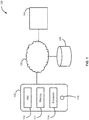
- FIG. 1 illustrates an electronic communication system 100 in accordance with exemplary embodiments of the disclosure.
- Electronic communication system 100 includes one or more communication devices 102; a DTMF-enabled system 104; a network 106; and optionally a database 108.
- Communication device 102 can be or include any suitable device with wired or wireless communication features that can connect to network 106.
- communication device 102 can be or include a wearable device, a tablet computer, a wired phone, a mobile phone, a personal (e.g., laptop or desktop) computer, a streaming device, such as a game console or other media streaming device, or the like.
- Communication device 102 includes a speech-to-tone application 110, memory 112, and a processor 114 to perform various functions set forth herein.
- speech-to-tone application 110, memory 112, and processor 114 can be used to cause spoken words received on a microphone 116 of communication device 102 to be converted to DTMF tones and to cause the DTMF tones to be transmitted to DTMF-enabled system 104 using wired and/or wireless communication protocols.
- such DTMF signals may not be sent to a speaker on device 102, so as to mitigate distraction of a user of device 102.
- Communication device 102 can be configured to determine when a communication, such as a phone call, is initiated and upon detecting that the communication is initiated, automatically launch speech-to-tone application 110.
- communication device 102 and speech-to-tone application 110 can be configured to automatically launch speech-to-tone application 110 when a dialing application is initiated, when a communication application is launched, when a phone number in a database, such as database 108, is dialed, when a communication is established, when information is transmitted to a speaker on the communication device using a communication application, or after a communication is established and a silent period greater than a predetermined time (e.g., 1, 2, 3, 4, or 5 seconds) is detected during an established call.
- a predetermined time e.g., 1, 2, 3, 4, or 5 seconds
- Speech-to-tone application 110 can be a stand-alone application that overlays a communication application, such as a phone application on a communication device. Alternatively, speech-to-tone application 110 can form part of the communication application and/or part of an operating system.
- speech-to-tone application 110 monitors information (e.g., speech) communicated to microphone 116 for predetermined words and converts the predetermined words to DTMF tones for transmission to DTMF-enabled system 104.
- information e.g., speech
- speech-to-tone application 110 can monitor information on microphone 116 for numbers 0 through 9, star, and pound or hashtag. If any of these words are spoken during a communication, corresponding DTMF tones are transmitted using device 102. Conversely, speech-to-tone application 110 may not convert other words to DTMF tones, such that only relevant DTMF tones are sent to DTMF-enabled system 104.
- speech-to-tone application 110 is configured to recognized pre-defined words, such as numbers and/or symbols located on a touch-tone device.
- the predefined words can be stored in memory 112.
- speech-to-tone application 110 is configured to only recognize such numbers and symbols, to reduce an amount of memory storage space used by speech-to-tone application 110.
- speech-to-tone application 110 additionally or alternatively recognizes individual letters of an alphabet.
- the words can be in one or more languages.
- Speech-to-tone application 110 can be further configured to monitor a communication for a word or a string of words that correspond to information stored in database 108. When the word(s) are detected, corresponding information can be pulled from database 108. For example, a string of words, such as "check bank balance" can correspond to a string of numbers and/or symbols, and the corresponding DTMF tones can be transmitted using communication device 102. As described in more detail below, database 108 can be part of device 102 or be elsewhere and accessible by device 102.
- Memory 112 can include a random access memory (RAM) or another type of dynamic storage device that stores information and instructions for execution by processor 114.
- Memory 112 can also include a read-only memory (ROM) or another type of static storage device that stores static information and instructions for processor 114.
- Memory 112 may further include other types of magnetic or optical recording medium and its corresponding drive for storing information and/or instructions.
- Processor 114 can include one or more processing units or microprocessors that interpret and execute coded instructions. In other implementations, processor 114 may be implemented by or include one or more application-specific integrated circuits (ASICs), field programmable gate arrays (FPGAs), or the like.
- ASICs application-specific integrated circuits
- FPGAs field programmable gate arrays
- DTMF-enabled system 104 can include a DTMF decoder that can receive DTMF signals from device 102 and convert the DTMF signals into information, such as numbers and symbols that can be used by DTMF-enabled system 104.
- DTMF-enabled system 104 can be or include an IVR system that can be used to allow customers to input information using DTMF tones.
- Network 106 can include or be, for example, an internet protocol (IP) network.
- IP internet protocol
- Exemplary types of networks suitable for network 106 include a local area network, a wide-area network, a metropolitan area network, wireless networks, or the Internet.
- Various components of network 106 can be coupled to one or more other components using an Ethernet connection, other wired connections, and/or wireless interfaces.
- Network 106 can be coupled to other networks and/or to other devices typically coupled to networks.
- network 106 can include a communication network.
- system 100 can also include a private branch exchange (PBX), a Public Switched Telephone Network (PSTN) and/or mobile network to allow one or more of devices 102 to couple to DTMF-enabled system 104.
- PBX private branch exchange
- PSTN Public Switched Telephone Network
- Database 108 can include one or more devices, such as computers or servers to store user information, numbers, information corresponding to DTMF tones, and/or one or more words associated with a string of numbers and/or symbols of a keypad of a communication device (e.g. a phone). Although separately illustrated, database 108 can form part of communication device 102 or network 106. If separate from device 102, application 110 can retrieve information in database 108.
- devices such as computers or servers to store user information, numbers, information corresponding to DTMF tones, and/or one or more words associated with a string of numbers and/or symbols of a keypad of a communication device (e.g. a phone).
- a communication device e.g. a phone
- database 108 can form part of communication device 102 or network 106. If separate from device 102, application 110 can retrieve information in database 108.
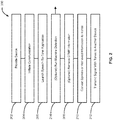
- Electronic communication method 200 includes the steps of providing a communication device (step 202); using the communication device, determining when a communication is initiated (step 204); upon detecting initiation of the communication, automatically launching a speech-to-tone application on the communication device (step 206); using the speech-to-tone application, during the communication, (optional) determining when pre-defined words are spoken and retrieving corresponding information from a database (step 208); (optional) running machine detection (step 214); performing one or more of converting the pre-defined words to a signal comprising a tone using the communication device and converting a stored key sequence to a signal comprising a tone using the communication device (step 210); and using the communication device, transmitting the signal to another device (step 212).
- Step 202 can include providing any suitable communication device that includes an application to perform various steps described herein.
- Suitable communication devices include communication devices 102 described above.
- the communication device determines when a communication is initiated.
- a communication can be initiated when a communication application is started, when a phone application is activated, when a communication is connected-e.g., when the communication device communicatively connects with another device, or using other techniques, such as those described above in connection with FIG. 1 .
- the speech-to-tone application is launched (step 206).
- the speech-to-tone application is automatically launched once a determination is made that a communication has initiated.
- the speech-to-tone application may not launch until after a communication has been established and thereafter after a predetermined amount of time, such as described above, has passed with no response from a user of the communication device. This silence can be a trigger to call the speech-to-tone application.
- the application can be manually opened by a user.
- Electronic communication method 200 optionally includes a step of running machine detection to determine whether a machine that is waiting for a DTMF response is or such a machine is likely is connected to the communication (step 214).
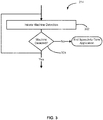
- FIG. 3 illustrates optional step 214 in greater detail.
- Step 214 can include a sub step 302 of initiating machine detection (step 302) and a sub step of determining whether a machine, such as an IVR is detected (step 304).
- step 302 can automatically launch when or soon after step 206.
- the speech-to-tone application can cause the machine detection (which can be part of the speech-to-tone application) to launch.
- Step 304 can be configured to determine whether a machine (e.g., an IVR) is detected periodically-e.g., every 30 seconds, minute, 90 seconds, two minutes, or the like.
- step 214 can include repeating steps 302 and 304 until at step 304, it is determined that a machine is not connected to the communication. For example, a period of time, such as 30 seconds, a minute, 90 seconds, two minutes, or the like without a machine connected to the communication is detected. Steps 302 and 304 can be repeating in the background while method 200 proceeds to steps 208-212. Once step 213 determines that no machine is connected to the communication, the speech-to-text application may be terminated to save power of the communication device.
- number and/or symbol strings corresponding to words received by a microphone on a communication device are retrieved from a database, such as database 108.
- a database such as database 108.
- a user may speak "check voicemail" into a microphone (e.g., microphone 116) of a communication device, and the speech-to-tone application on the communication device can cause to be retrieved a string of numbers and/or symbols, such as those found on the communication device, and cause those numbers and/or symbols to be converted to DTMF tones.
- information corresponding to the DTMF tones can be store in a database, such as database 108.
- the speech-to-tone application detects predetermined words (step 210), such as numbers, symbols, and/or letters typically found on a keypad of a communication device, and causes the communication device to generate DTMF tones (or other tone, generally referred to herein as tone or tones) corresponding to the spoken words.
- predetermined words such as numbers, symbols, and/or letters typically found on a keypad of a communication device
- DTMF tones or other tone, generally referred to herein as tone or tones
- only words received by a microphone on the communication device are converted to DTMF tones. For example, words received on a speaker of the communication device, but not on the microphone of the communication device, are not converted to DTMF tones.
- the generated DTMF (or other) tones are transmitted to a DTMF-enabled system using the communication-i.e., the same communication initiated during step 204.
- the DTMF tones are not transmitted to a speaker on the communication device, so that the user is not distracted during the communication.
- the speech-to-tone application can tear down after a period (e.g., greater than about 10 or 20 seconds) of silence or when the communication ends. This may be particularly useful when electronic communication method 200 does not include optional step 214.
- users are able to interact with the DTMF-enabled system that may not have voice recognition and without having to press keys on a keypad.
Landscapes
- Engineering & Computer Science (AREA)
- Signal Processing (AREA)
- Computer Networks & Wireless Communication (AREA)
- Human Computer Interaction (AREA)
- Computational Linguistics (AREA)
- Health & Medical Sciences (AREA)
- Audiology, Speech & Language Pathology (AREA)
- Physics & Mathematics (AREA)
- Acoustics & Sound (AREA)
- Multimedia (AREA)
- Telephone Function (AREA)
- Telephonic Communication Services (AREA)
Abstract
Description
- The present disclosure generally relates to electronic communication methods and systems. More particularly, the disclosure relates to electronic communication methods and systems that employ dual-tone multifrequency technology.
- Interactive voice response (IVR) systems allow users to interact with a computer via use of dual-tone multifrequency (DTMF) tones input on a user's device and/or via speech recognition. IVR systems often provide pre-recorded or dynamically generated audio information to a user. Users can respond to the audio information by selecting numbers on a keypad of the user's device, such as a phone, or, if the IVR is capable of speech recognition, by speaking the response. In the case of selecting numbers (e.g., using a keypad on the device or phone application), the user device can send a signal, comprising DTFM tones, corresponding to the selected number(s), to the IVR.
- Responding to an IVR by selecting numbers on a keypad may be undesirable in a number of cases. For example, users may not want to select numbers on a keypad while driving, operating machinery, in other situations where the user does not want the added distraction, and the like. And, using a keypad to respond to an IVR request may be dangerous and/or undesirably cumbersome. Further, some users may be tactile challenged and have a difficult time selecting numbers on a keypad.
- To overcome some of these problems, some systems allow a user to select a key, e.g., 0, on a keypad to speak to an operator. Other systems may detect long no response times and switch the call to an operator if the period of no response is longer than a predetermined time. While such techniques can work in some situations, the techniques can require undesired wait times for the user, expense for the service provider, and in the first situation, still require activation of a key on a device. For at least these reasons, improved methods and systems that allow users to respond to IVR requests, particularly to IVR requests that do not recognize voice commands, are desired.
- Upgrading IVR systems that do not include speech recognition can be expensive and time consuming. Accordingly, improved systems and methods that can economically address the issues noted above are further desired.
- The subject matter of the present disclosure is particularly pointed out and distinctly claimed in the concluding portion of the specification. A more complete understanding of the present disclosure, however, may best be obtained by referring to the detailed description and claims when considered in connection with the drawing figures, wherein like numerals denote like elements and wherein:
-
FIG. 1 illustrates an electronic communication system in accordance with exemplary embodiments of the disclosure. -
FIG. 2 illustrates an electronic communication method in accordance with exemplary embodiments of the disclosure. -
FIG. 3 illustrates a portion of the electronic communication method illustrated inFIG. 2 in greater detail. - It will be appreciated that elements in the figures are illustrated for simplicity and clarity and have not necessarily been drawn to scale. For example, the dimensions of some of the elements in the figures may be exaggerated relative to other elements to help to improve understanding of illustrated embodiments of the present invention.
- The description of exemplary embodiments of the present invention provided below is merely exemplary and is intended for purposes of illustration only; the following description is not intended to limit the scope of the invention disclosed herein. Moreover, recitation of multiple embodiments having stated features is not intended to exclude other embodiments having additional features or other embodiments incorporating different combinations of the stated features.
- As set forth in more detail below, exemplary embodiments of the disclosure relate to electronic communication systems that allow a user to respond to a dual-tone multifrequency (DTMF) system, such as an interactive voice response (IVR) system using voice commands, wherein a user communication device converts speech to dual-tone multifrequency (DTMF) tones. While the ways in which the present disclosure addresses various drawbacks of prior systems and methods are described in more detail below, in general, various systems and methods described herein can be implemented without requiring changes to or upgrades of legacy DTMF-enabled systems. Further, as set forth in more detail below, the methods and systems described herein are not limited to particular DTMF-enabled systems, but rather can be used with any DTMF-enabled system. Exemplary systems and methods can convert speech into DTMF tones during a call and on a user device and send the DTMF tones corresponding to the spoken words to the DTMF-enabled system. This allows users to respond to DTMF-enabled systems without the distraction or burden of pressing keys.
- Turning now to the figures,
FIG. 1 illustrates anelectronic communication system 100 in accordance with exemplary embodiments of the disclosure.Electronic communication system 100 includes one ormore communication devices 102; a DTMF-enabledsystem 104; anetwork 106; and optionally adatabase 108. -
Communication device 102 can be or include any suitable device with wired or wireless communication features that can connect tonetwork 106. For example,communication device 102 can be or include a wearable device, a tablet computer, a wired phone, a mobile phone, a personal (e.g., laptop or desktop) computer, a streaming device, such as a game console or other media streaming device, or the like. -
Communication device 102 includes a speech-to-tone application 110,memory 112, and aprocessor 114 to perform various functions set forth herein. For example, speech-to-tone application 110,memory 112, andprocessor 114 can be used to cause spoken words received on amicrophone 116 ofcommunication device 102 to be converted to DTMF tones and to cause the DTMF tones to be transmitted to DTMF-enabledsystem 104 using wired and/or wireless communication protocols. In accordance with further examples of the disclosure, such DTMF signals may not be sent to a speaker ondevice 102, so as to mitigate distraction of a user ofdevice 102. -
Communication device 102 can be configured to determine when a communication, such as a phone call, is initiated and upon detecting that the communication is initiated, automatically launch speech-to-tone application 110. For example,communication device 102 and speech-to-tone application 110 can be configured to automatically launch speech-to-tone application 110 when a dialing application is initiated, when a communication application is launched, when a phone number in a database, such asdatabase 108, is dialed, when a communication is established, when information is transmitted to a speaker on the communication device using a communication application, or after a communication is established and a silent period greater than a predetermined time (e.g., 1, 2, 3, 4, or 5 seconds) is detected during an established call. By not continually running the application oncommunication device 102, battery power ofcommunication device 102 can be preserved. - Speech-to-
tone application 110 can be a stand-alone application that overlays a communication application, such as a phone application on a communication device. Alternatively, speech-to-tone application 110 can form part of the communication application and/or part of an operating system. - Once launched, speech-to-
tone application 110 monitors information (e.g., speech) communicated tomicrophone 116 for predetermined words and converts the predetermined words to DTMF tones for transmission to DTMF-enabledsystem 104. By way of examples, speech-to-tone application 110 can monitor information onmicrophone 116 for numbers 0 through 9, star, and pound or hashtag. If any of these words are spoken during a communication, corresponding DTMF tones are transmitted usingdevice 102. Conversely, speech-to-tone application 110 may not convert other words to DTMF tones, such that only relevant DTMF tones are sent to DTMF-enabledsystem 104. - In accordance with exemplary embodiments of the disclosure, speech-to-
tone application 110 is configured to recognized pre-defined words, such as numbers and/or symbols located on a touch-tone device. The predefined words can be stored inmemory 112. In some cases, speech-to-tone application 110 is configured to only recognize such numbers and symbols, to reduce an amount of memory storage space used by speech-to-tone application 110. In some cases, speech-to-tone application 110 additionally or alternatively recognizes individual letters of an alphabet. The words can be in one or more languages. - Speech-to-
tone application 110 can be further configured to monitor a communication for a word or a string of words that correspond to information stored indatabase 108. When the word(s) are detected, corresponding information can be pulled fromdatabase 108. For example, a string of words, such as "check bank balance" can correspond to a string of numbers and/or symbols, and the corresponding DTMF tones can be transmitted usingcommunication device 102. As described in more detail below,database 108 can be part ofdevice 102 or be elsewhere and accessible bydevice 102. -
Memory 112 can include a random access memory (RAM) or another type of dynamic storage device that stores information and instructions for execution byprocessor 114.Memory 112 can also include a read-only memory (ROM) or another type of static storage device that stores static information and instructions forprocessor 114.Memory 112 may further include other types of magnetic or optical recording medium and its corresponding drive for storing information and/or instructions. -
Processor 114 can include one or more processing units or microprocessors that interpret and execute coded instructions. In other implementations,processor 114 may be implemented by or include one or more application-specific integrated circuits (ASICs), field programmable gate arrays (FPGAs), or the like. - DTMF-enabled
system 104 can include a DTMF decoder that can receive DTMF signals fromdevice 102 and convert the DTMF signals into information, such as numbers and symbols that can be used by DTMF-enabledsystem 104. By way of examples, DTMF-enabledsystem 104 can be or include an IVR system that can be used to allow customers to input information using DTMF tones. -
Network 106 can include or be, for example, an internet protocol (IP) network. Exemplary types of networks suitable fornetwork 106 include a local area network, a wide-area network, a metropolitan area network, wireless networks, or the Internet. Various components ofnetwork 106 can be coupled to one or more other components using an Ethernet connection, other wired connections, and/or wireless interfaces.Network 106 can be coupled to other networks and/or to other devices typically coupled to networks. By way of particular examples,network 106 can include a communication network. Additionally or alternatively,system 100 can also include a private branch exchange (PBX), a Public Switched Telephone Network (PSTN) and/or mobile network to allow one or more ofdevices 102 to couple to DTMF-enabledsystem 104. -
Database 108 can include one or more devices, such as computers or servers to store user information, numbers, information corresponding to DTMF tones, and/or one or more words associated with a string of numbers and/or symbols of a keypad of a communication device (e.g. a phone). Although separately illustrated,database 108 can form part ofcommunication device 102 ornetwork 106. If separate fromdevice 102,application 110 can retrieve information indatabase 108. - Turning now to
FIG. 2 , anelectronic communication method 200 in accordance with various embodiments of the disclosure is illustrated.Electronic communication method 200 includes the steps of providing a communication device (step 202); using the communication device, determining when a communication is initiated (step 204); upon detecting initiation of the communication, automatically launching a speech-to-tone application on the communication device (step 206); using the speech-to-tone application, during the communication, (optional) determining when pre-defined words are spoken and retrieving corresponding information from a database (step 208); (optional) running machine detection (step 214); performing one or more of converting the pre-defined words to a signal comprising a tone using the communication device and converting a stored key sequence to a signal comprising a tone using the communication device (step 210); and using the communication device, transmitting the signal to another device (step 212). - Step 202 can include providing any suitable communication device that includes an application to perform various steps described herein. Suitable communication devices include
communication devices 102 described above. - During
step 204, the communication device determines when a communication is initiated. By way of examples, a communication can be initiated when a communication application is started, when a phone application is activated, when a communication is connected-e.g., when the communication device communicatively connects with another device, or using other techniques, such as those described above in connection withFIG. 1 . - Once the communication is established, the speech-to-tone application is launched (step 206). In accordance with some examples of the disclosure, the speech-to-tone application is automatically launched once a determination is made that a communication has initiated. However, in accordance with other examples, the speech-to-tone application may not launch until after a communication has been established and thereafter after a predetermined amount of time, such as described above, has passed with no response from a user of the communication device. This silence can be a trigger to call the speech-to-tone application. Alternatively, the application can be manually opened by a user.
-
Electronic communication method 200 optionally includes a step of running machine detection to determine whether a machine that is waiting for a DTMF response is or such a machine is likely is connected to the communication (step 214).FIG. 3 illustratesoptional step 214 in greater detail. Step 214 can include asub step 302 of initiating machine detection (step 302) and a sub step of determining whether a machine, such as an IVR is detected (step 304). Whenstep 214 is employed, step 302 can automatically launch when or soon afterstep 206. For example, the speech-to-tone application can cause the machine detection (which can be part of the speech-to-tone application) to launch. Step 304 can be configured to determine whether a machine (e.g., an IVR) is detected periodically-e.g., every 30 seconds, minute, 90 seconds, two minutes, or the like. - As illustrated,
step 214 can includerepeating steps step 304, it is determined that a machine is not connected to the communication. For example, a period of time, such as 30 seconds, a minute, 90 seconds, two minutes, or the like without a machine connected to the communication is detected.Steps method 200 proceeds to steps 208-212. Once step 213 determines that no machine is connected to the communication, the speech-to-text application may be terminated to save power of the communication device. - Exemplary systems and methods for detecting whether a machine, such as an IVR is connected to a communication are disclosed in Great Britain Publication No.
GB2293723B GB2513924A PCT Publication No. WO2013154972A1 , the relevant contents of which are hereby incorporated herein by reference to the extent such contents do not conflict with the present disclosure. - During
optional step 208, number and/or symbol strings corresponding to words received by a microphone on a communication device are retrieved from a database, such asdatabase 108. For example, a user may speak "check voicemail" into a microphone (e.g., microphone 116) of a communication device, and the speech-to-tone application on the communication device can cause to be retrieved a string of numbers and/or symbols, such as those found on the communication device, and cause those numbers and/or symbols to be converted to DTMF tones. Additionally or alternatively, information corresponding to the DTMF tones can be store in a database, such asdatabase 108. - Once the speech-to-tone application is launched, during a communication, the speech-to-tone application detects predetermined words (step 210), such as numbers, symbols, and/or letters typically found on a keypad of a communication device, and causes the communication device to generate DTMF tones (or other tone, generally referred to herein as tone or tones) corresponding to the spoken words. In accordance with aspects of these embodiments, only words received by a microphone on the communication device are converted to DTMF tones. For example, words received on a speaker of the communication device, but not on the microphone of the communication device, are not converted to DTMF tones.
- During
step 212, the generated DTMF (or other) tones are transmitted to a DTMF-enabled system using the communication-i.e., the same communication initiated duringstep 204. In accordance with various aspects of these embodiments, the DTMF tones are not transmitted to a speaker on the communication device, so that the user is not distracted during the communication. - The speech-to-tone application can tear down after a period (e.g., greater than about 10 or 20 seconds) of silence or when the communication ends. This may be particularly useful when
electronic communication method 200 does not includeoptional step 214. - Using the systems and methods described above, users are able to interact with the DTMF-enabled system that may not have voice recognition and without having to press keys on a keypad.
- The present invention has been described above with reference to a number of exemplary embodiments and examples. It should be appreciated that the particular embodiments shown and described herein are illustrative of the invention and its best mode and are not intended to limit in any way the scope of the invention as set forth in the claims. For example, although various examples are described above in connection with DTMF tones, other tones may be transmitted or stored in lieu of or in addition to the DTMF tones. The features of the various embodiments may stand alone or be combined in any combination. Further, unless otherwise noted, various illustrated steps of a method can be performed sequentially or at the same time, and not necessarily be performed in the order illustrated. It will be recognized that changes and modifications may be made to the exemplary embodiments without departing from the scope of the present invention. These and other changes or modifications are intended to be included within the scope of the present invention, as expressed in the following claims.
Claims (15)
- An electronic communication method comprising the steps of:providing a communication device;using the communication device, determining when a communication is initiated;upon detecting initiation of the communication, automatically launching a speech-to-tone application on the communication device;using the speech-to-tone application, during the communication, determining when pre-defined words are spoken;performing one or more of converting the pre-defined words to a signal comprising a tone using the communication device and converting a stored key sequence to a signal comprising a tone using the communication device; andusing the communication device, transmitting the signal to another device.
- The electronic communication method of claim 1, wherein the pre-defined words consist of words corresponding to numbers and/or symbols and optionally wherein the pre-defined words consist of words corresponding to keypad numbers and/or symbols.
- The electronic communication method of claim 1 or claim 2, wherein the sequence is stored on the communication device.
- The electronic communication method of claim 1 or claim 2, wherein the sequence is stored on a remote device.
- The electronic communication method of any of claims 1 to 4, wherein the step of determining when a communication is initiated comprises detecting a number being dialed.
- The electronic communication method of any of claims 1 to 4, wherein the step of determining when a communication is initiated comprises detecting when a call is connected.
- The electronic communication method of any of claims 1 to 4, wherein the step of determining when a communication is initiated comprises detecting a signal transmitted to a speaker of the communication device.
- The electronic communication method of any of claims 1 to 4, wherein the step of determining when a communication is initiated comprises determining when a phone application is launched.
- The electronic communication method of any preceding claim, further comprising:accessing a database comprising the key sequence and an associated phone number; anddetecting when the phone number is dialed.
- A communication device comprising:at least one processor; anda memory operatively coupled to the processor, the memory storing program instructions that when executed by the processor, causes the processor to:determine when a communication is initiated;upon detecting initiation of the communication, automatically launching a speech-to-tone application on the communication device;determine when pre-defined words are spoken;perform one or more of converting the pre-defined words to a signal comprising a tone using the communication device and converting a stored key sequence to a signal comprising a tone using the communication device; andtransmit the signal to another device.
- The communication device of claim 10, further comprising a database comprising the key sequence and optionally wherein the database comprises a phone number corresponding to the key sequence.
- A system comprising the communication device of claim 10 or claim 11.
- The system of claim 12, further comprising an interactive voice response server.
- The system of claim 12 or claim 13, further comprising a database comprising the key sequence.
- The system of any of claims 12 to 14, further comprising a network coupled between the communication device and a DTMF-enabled system.
Applications Claiming Priority (1)
| Application Number | Priority Date | Filing Date | Title |
|---|---|---|---|
| US16/215,212 US10958775B2 (en) | 2018-12-10 | 2018-12-10 | Speech to dual-tone multifrequency system and method |
Publications (2)
| Publication Number | Publication Date |
|---|---|
| EP3667661A1 true EP3667661A1 (en) | 2020-06-17 |
| EP3667661B1 EP3667661B1 (en) | 2024-07-03 |
Family
ID=68732781
Family Applications (1)
| Application Number | Title | Priority Date | Filing Date |
|---|---|---|---|
| EP19212324.8A Active EP3667661B1 (en) | 2018-12-10 | 2019-11-28 | Speech to dual-tone multifrequency system and method |
Country Status (3)
| Country | Link |
|---|---|
| US (1) | US10958775B2 (en) |
| EP (1) | EP3667661B1 (en) |
| CA (1) | CA3061796A1 (en) |
Citations (6)
| Publication number | Priority date | Publication date | Assignee | Title |
|---|---|---|---|---|
| GB2293723B (en) | 1994-09-28 | 1999-04-14 | Rockwell International Corp | Automatic call distributor with answer machine detection apparatus and method |
| WO2000067497A1 (en) * | 1999-05-03 | 2000-11-09 | Neopoint, Inc. | Voice command system and method |
| WO2013154972A1 (en) | 2012-04-10 | 2013-10-17 | Raytheon Bbn Technologies Corp. | System and method for removing sensitive data from a recording |
| GB2513924A (en) | 2013-05-10 | 2014-11-12 | Noetica Ltd | Live person detection in an automated calling system |
| US20160088142A1 (en) * | 2001-01-10 | 2016-03-24 | At&T Intellectual Property Ii, L.P. | Voice-operated interface for dtmf-controlled systems |
| US20180338037A1 (en) * | 2017-05-16 | 2018-11-22 | Google Llc | Handling calls on a shared speech-enabled device |
Family Cites Families (9)
| Publication number | Priority date | Publication date | Assignee | Title |
|---|---|---|---|---|
| JP2002199023A (en) * | 2000-12-25 | 2002-07-12 | Ibm Japan Ltd | Mail communication method using facsimile communication procedure, mail transmission device, mail reception device, and mail communication system |
| US6934377B2 (en) * | 2001-09-25 | 2005-08-23 | Bellsouth Intellectual Property Corporation | On demand call re-termination |
| JP2005268984A (en) * | 2004-03-17 | 2005-09-29 | Hitachi Ltd | Information processing apparatus and software |
| US7386103B1 (en) * | 2004-12-14 | 2008-06-10 | 3Com Corporation | Method and system for providing prompt navigation in interactive voice response (IVR) system |
| JP4881711B2 (en) * | 2006-12-14 | 2012-02-22 | 株式会社日立製作所 | Thin client system and communication device |
| US8494126B2 (en) * | 2010-01-29 | 2013-07-23 | Research In Motion Limited | Method and apparatus for providing IVR system requested data |
| US8990071B2 (en) * | 2010-03-29 | 2015-03-24 | Microsoft Technology Licensing, Llc | Telephony service interaction management |
| US9420097B2 (en) * | 2014-01-30 | 2016-08-16 | Plantronics, Inc. | Automated traversal of interactive voice response systems |
| US10122854B2 (en) * | 2017-02-18 | 2018-11-06 | Motorola Mobility Llc | Interactive voice response (IVR) using voice input for tactile input based on context |
-
2018
- 2018-12-10 US US16/215,212 patent/US10958775B2/en active Active
-
2019
- 2019-11-15 CA CA3061796A patent/CA3061796A1/en active Pending
- 2019-11-28 EP EP19212324.8A patent/EP3667661B1/en active Active
Patent Citations (6)
| Publication number | Priority date | Publication date | Assignee | Title |
|---|---|---|---|---|
| GB2293723B (en) | 1994-09-28 | 1999-04-14 | Rockwell International Corp | Automatic call distributor with answer machine detection apparatus and method |
| WO2000067497A1 (en) * | 1999-05-03 | 2000-11-09 | Neopoint, Inc. | Voice command system and method |
| US20160088142A1 (en) * | 2001-01-10 | 2016-03-24 | At&T Intellectual Property Ii, L.P. | Voice-operated interface for dtmf-controlled systems |
| WO2013154972A1 (en) | 2012-04-10 | 2013-10-17 | Raytheon Bbn Technologies Corp. | System and method for removing sensitive data from a recording |
| GB2513924A (en) | 2013-05-10 | 2014-11-12 | Noetica Ltd | Live person detection in an automated calling system |
| US20180338037A1 (en) * | 2017-05-16 | 2018-11-22 | Google Llc | Handling calls on a shared speech-enabled device |
Also Published As
| Publication number | Publication date |
|---|---|
| US20200186637A1 (en) | 2020-06-11 |
| CA3061796A1 (en) | 2020-06-10 |
| EP3667661B1 (en) | 2024-07-03 |
| US10958775B2 (en) | 2021-03-23 |
Similar Documents
| Publication | Publication Date | Title |
|---|---|---|
| JP7668309B2 (en) | Handling phone calls on a shared voice-enabled device | |
| US8000969B2 (en) | Inferring switching conditions for switching between modalities in a speech application environment extended for interactive text exchanges | |
| US9386154B2 (en) | System, method and software program for enabling communications between customer service agents and users of communication devices | |
| EP1506666B1 (en) | Dynamic content generation for voice messages | |
| US6629071B1 (en) | Speech recognition system | |
| US20040117179A1 (en) | Method and apparatus for selective speech recognition | |
| US20100299150A1 (en) | Language Translation System | |
| CN1894946A (en) | Method and apparatus for automatic telephone menu navigation | |
| US7555533B2 (en) | System for communicating information from a server via a mobile communication device | |
| US9088655B2 (en) | Automated response system | |
| US9875238B2 (en) | Systems and methods for establishing a language translation setting for a telephony communication | |
| US11349974B2 (en) | Method and system for providing caller information | |
| US10958775B2 (en) | Speech to dual-tone multifrequency system and method | |
| US8396193B2 (en) | System and method for voice activated signaling |
Legal Events
| Date | Code | Title | Description |
|---|---|---|---|
| PUAI | Public reference made under article 153(3) epc to a published international application that has entered the european phase |
Free format text: ORIGINAL CODE: 0009012 |
|
| STAA | Information on the status of an ep patent application or granted ep patent |
Free format text: STATUS: THE APPLICATION HAS BEEN PUBLISHED |
|
| AK | Designated contracting states |
Kind code of ref document: A1 Designated state(s): AL AT BE BG CH CY CZ DE DK EE ES FI FR GB GR HR HU IE IS IT LI LT LU LV MC MK MT NL NO PL PT RO RS SE SI SK SM TR |
|
| AX | Request for extension of the european patent |
Extension state: BA ME |
|
| STAA | Information on the status of an ep patent application or granted ep patent |
Free format text: STATUS: REQUEST FOR EXAMINATION WAS MADE |
|
| 17P | Request for examination filed |
Effective date: 20201217 |
|
| RBV | Designated contracting states (corrected) |
Designated state(s): AL AT BE BG CH CY CZ DE DK EE ES FI FR GB GR HR HU IE IS IT LI LT LU LV MC MK MT NL NO PL PT RO RS SE SI SK SM TR |
|
| STAA | Information on the status of an ep patent application or granted ep patent |
Free format text: STATUS: EXAMINATION IS IN PROGRESS |
|
| 17Q | First examination report despatched |
Effective date: 20211004 |
|
| RAP3 | Party data changed (applicant data changed or rights of an application transferred) |
Owner name: MITEL NETWORKS CORPORATION |
|
| GRAP | Despatch of communication of intention to grant a patent |
Free format text: ORIGINAL CODE: EPIDOSNIGR1 |
|
| STAA | Information on the status of an ep patent application or granted ep patent |
Free format text: STATUS: GRANT OF PATENT IS INTENDED |
|
| INTG | Intention to grant announced |
Effective date: 20240327 |
|
| GRAS | Grant fee paid |
Free format text: ORIGINAL CODE: EPIDOSNIGR3 |
|
| GRAA | (expected) grant |
Free format text: ORIGINAL CODE: 0009210 |
|
| STAA | Information on the status of an ep patent application or granted ep patent |
Free format text: STATUS: THE PATENT HAS BEEN GRANTED |
|
| AK | Designated contracting states |
Kind code of ref document: B1 Designated state(s): AL AT BE BG CH CY CZ DE DK EE ES FI FR GB GR HR HU IE IS IT LI LT LU LV MC MK MT NL NO PL PT RO RS SE SI SK SM TR |
|
| REG | Reference to a national code |
Ref country code: CH Ref legal event code: EP |
|
| REG | Reference to a national code |
Ref country code: DE Ref legal event code: R096 Ref document number: 602019054505 Country of ref document: DE |
|
| REG | Reference to a national code |
Ref country code: LT Ref legal event code: MG9D |
|
| REG | Reference to a national code |
Ref country code: NL Ref legal event code: MP Effective date: 20240703 |
|
| PG25 | Lapsed in a contracting state [announced via postgrant information from national office to epo] |
Ref country code: PT Free format text: LAPSE BECAUSE OF FAILURE TO SUBMIT A TRANSLATION OF THE DESCRIPTION OR TO PAY THE FEE WITHIN THE PRESCRIBED TIME-LIMIT Effective date: 20241104 |
|
| REG | Reference to a national code |
Ref country code: AT Ref legal event code: MK05 Ref document number: 1700683 Country of ref document: AT Kind code of ref document: T Effective date: 20240703 |
|
| PG25 | Lapsed in a contracting state [announced via postgrant information from national office to epo] |
Ref country code: NL Free format text: LAPSE BECAUSE OF FAILURE TO SUBMIT A TRANSLATION OF THE DESCRIPTION OR TO PAY THE FEE WITHIN THE PRESCRIBED TIME-LIMIT Effective date: 20240703 |
|
| PG25 | Lapsed in a contracting state [announced via postgrant information from national office to epo] |
Ref country code: PT Free format text: LAPSE BECAUSE OF FAILURE TO SUBMIT A TRANSLATION OF THE DESCRIPTION OR TO PAY THE FEE WITHIN THE PRESCRIBED TIME-LIMIT Effective date: 20241104 Ref country code: NL Free format text: LAPSE BECAUSE OF FAILURE TO SUBMIT A TRANSLATION OF THE DESCRIPTION OR TO PAY THE FEE WITHIN THE PRESCRIBED TIME-LIMIT Effective date: 20240703 |
|
| PG25 | Lapsed in a contracting state [announced via postgrant information from national office to epo] |
Ref country code: NO Free format text: LAPSE BECAUSE OF FAILURE TO SUBMIT A TRANSLATION OF THE DESCRIPTION OR TO PAY THE FEE WITHIN THE PRESCRIBED TIME-LIMIT Effective date: 20241003 |
|
| PG25 | Lapsed in a contracting state [announced via postgrant information from national office to epo] |
Ref country code: GR Free format text: LAPSE BECAUSE OF FAILURE TO SUBMIT A TRANSLATION OF THE DESCRIPTION OR TO PAY THE FEE WITHIN THE PRESCRIBED TIME-LIMIT Effective date: 20241004 Ref country code: FI Free format text: LAPSE BECAUSE OF FAILURE TO SUBMIT A TRANSLATION OF THE DESCRIPTION OR TO PAY THE FEE WITHIN THE PRESCRIBED TIME-LIMIT Effective date: 20240703 Ref country code: PL Free format text: LAPSE BECAUSE OF FAILURE TO SUBMIT A TRANSLATION OF THE DESCRIPTION OR TO PAY THE FEE WITHIN THE PRESCRIBED TIME-LIMIT Effective date: 20240703 |
|
| PG25 | Lapsed in a contracting state [announced via postgrant information from national office to epo] |
Ref country code: BG Free format text: LAPSE BECAUSE OF FAILURE TO SUBMIT A TRANSLATION OF THE DESCRIPTION OR TO PAY THE FEE WITHIN THE PRESCRIBED TIME-LIMIT Effective date: 20240703 |
|
| PG25 | Lapsed in a contracting state [announced via postgrant information from national office to epo] |
Ref country code: LV Free format text: LAPSE BECAUSE OF FAILURE TO SUBMIT A TRANSLATION OF THE DESCRIPTION OR TO PAY THE FEE WITHIN THE PRESCRIBED TIME-LIMIT Effective date: 20240703 |
|
| PG25 | Lapsed in a contracting state [announced via postgrant information from national office to epo] |
Ref country code: IS Free format text: LAPSE BECAUSE OF FAILURE TO SUBMIT A TRANSLATION OF THE DESCRIPTION OR TO PAY THE FEE WITHIN THE PRESCRIBED TIME-LIMIT Effective date: 20241103 Ref country code: AT Free format text: LAPSE BECAUSE OF FAILURE TO SUBMIT A TRANSLATION OF THE DESCRIPTION OR TO PAY THE FEE WITHIN THE PRESCRIBED TIME-LIMIT Effective date: 20240703 |
|
| PG25 | Lapsed in a contracting state [announced via postgrant information from national office to epo] |
Ref country code: HR Free format text: LAPSE BECAUSE OF FAILURE TO SUBMIT A TRANSLATION OF THE DESCRIPTION OR TO PAY THE FEE WITHIN THE PRESCRIBED TIME-LIMIT Effective date: 20240703 Ref country code: CZ Free format text: LAPSE BECAUSE OF FAILURE TO SUBMIT A TRANSLATION OF THE DESCRIPTION OR TO PAY THE FEE WITHIN THE PRESCRIBED TIME-LIMIT Effective date: 20240703 |
|
| PG25 | Lapsed in a contracting state [announced via postgrant information from national office to epo] |
Ref country code: RS Free format text: LAPSE BECAUSE OF FAILURE TO SUBMIT A TRANSLATION OF THE DESCRIPTION OR TO PAY THE FEE WITHIN THE PRESCRIBED TIME-LIMIT Effective date: 20241003 Ref country code: ES Free format text: LAPSE BECAUSE OF FAILURE TO SUBMIT A TRANSLATION OF THE DESCRIPTION OR TO PAY THE FEE WITHIN THE PRESCRIBED TIME-LIMIT Effective date: 20240703 |
|
| PG25 | Lapsed in a contracting state [announced via postgrant information from national office to epo] |
Ref country code: RS Free format text: LAPSE BECAUSE OF FAILURE TO SUBMIT A TRANSLATION OF THE DESCRIPTION OR TO PAY THE FEE WITHIN THE PRESCRIBED TIME-LIMIT Effective date: 20241003 Ref country code: PL Free format text: LAPSE BECAUSE OF FAILURE TO SUBMIT A TRANSLATION OF THE DESCRIPTION OR TO PAY THE FEE WITHIN THE PRESCRIBED TIME-LIMIT Effective date: 20240703 Ref country code: NO Free format text: LAPSE BECAUSE OF FAILURE TO SUBMIT A TRANSLATION OF THE DESCRIPTION OR TO PAY THE FEE WITHIN THE PRESCRIBED TIME-LIMIT Effective date: 20241003 Ref country code: LV Free format text: LAPSE BECAUSE OF FAILURE TO SUBMIT A TRANSLATION OF THE DESCRIPTION OR TO PAY THE FEE WITHIN THE PRESCRIBED TIME-LIMIT Effective date: 20240703 Ref country code: IS Free format text: LAPSE BECAUSE OF FAILURE TO SUBMIT A TRANSLATION OF THE DESCRIPTION OR TO PAY THE FEE WITHIN THE PRESCRIBED TIME-LIMIT Effective date: 20241103 Ref country code: HR Free format text: LAPSE BECAUSE OF FAILURE TO SUBMIT A TRANSLATION OF THE DESCRIPTION OR TO PAY THE FEE WITHIN THE PRESCRIBED TIME-LIMIT Effective date: 20240703 Ref country code: GR Free format text: LAPSE BECAUSE OF FAILURE TO SUBMIT A TRANSLATION OF THE DESCRIPTION OR TO PAY THE FEE WITHIN THE PRESCRIBED TIME-LIMIT Effective date: 20241004 Ref country code: FI Free format text: LAPSE BECAUSE OF FAILURE TO SUBMIT A TRANSLATION OF THE DESCRIPTION OR TO PAY THE FEE WITHIN THE PRESCRIBED TIME-LIMIT Effective date: 20240703 Ref country code: ES Free format text: LAPSE BECAUSE OF FAILURE TO SUBMIT A TRANSLATION OF THE DESCRIPTION OR TO PAY THE FEE WITHIN THE PRESCRIBED TIME-LIMIT Effective date: 20240703 Ref country code: CZ Free format text: LAPSE BECAUSE OF FAILURE TO SUBMIT A TRANSLATION OF THE DESCRIPTION OR TO PAY THE FEE WITHIN THE PRESCRIBED TIME-LIMIT Effective date: 20240703 Ref country code: BG Free format text: LAPSE BECAUSE OF FAILURE TO SUBMIT A TRANSLATION OF THE DESCRIPTION OR TO PAY THE FEE WITHIN THE PRESCRIBED TIME-LIMIT Effective date: 20240703 Ref country code: AT Free format text: LAPSE BECAUSE OF FAILURE TO SUBMIT A TRANSLATION OF THE DESCRIPTION OR TO PAY THE FEE WITHIN THE PRESCRIBED TIME-LIMIT Effective date: 20240703 |
|
| REG | Reference to a national code |
Ref country code: DE Ref legal event code: R097 Ref document number: 602019054505 Country of ref document: DE |
|
| PG25 | Lapsed in a contracting state [announced via postgrant information from national office to epo] |
Ref country code: RO Free format text: LAPSE BECAUSE OF FAILURE TO SUBMIT A TRANSLATION OF THE DESCRIPTION OR TO PAY THE FEE WITHIN THE PRESCRIBED TIME-LIMIT Effective date: 20240703 Ref country code: DK Free format text: LAPSE BECAUSE OF FAILURE TO SUBMIT A TRANSLATION OF THE DESCRIPTION OR TO PAY THE FEE WITHIN THE PRESCRIBED TIME-LIMIT Effective date: 20240703 Ref country code: SM Free format text: LAPSE BECAUSE OF FAILURE TO SUBMIT A TRANSLATION OF THE DESCRIPTION OR TO PAY THE FEE WITHIN THE PRESCRIBED TIME-LIMIT Effective date: 20240703 |
|
| PG25 | Lapsed in a contracting state [announced via postgrant information from national office to epo] |
Ref country code: EE Free format text: LAPSE BECAUSE OF FAILURE TO SUBMIT A TRANSLATION OF THE DESCRIPTION OR TO PAY THE FEE WITHIN THE PRESCRIBED TIME-LIMIT Effective date: 20240703 |
|
| PG25 | Lapsed in a contracting state [announced via postgrant information from national office to epo] |
Ref country code: IT Free format text: LAPSE BECAUSE OF FAILURE TO SUBMIT A TRANSLATION OF THE DESCRIPTION OR TO PAY THE FEE WITHIN THE PRESCRIBED TIME-LIMIT Effective date: 20240703 Ref country code: SK Free format text: LAPSE BECAUSE OF FAILURE TO SUBMIT A TRANSLATION OF THE DESCRIPTION OR TO PAY THE FEE WITHIN THE PRESCRIBED TIME-LIMIT Effective date: 20240703 |
|
| PLBE | No opposition filed within time limit |
Free format text: ORIGINAL CODE: 0009261 |
|
| STAA | Information on the status of an ep patent application or granted ep patent |
Free format text: STATUS: NO OPPOSITION FILED WITHIN TIME LIMIT |
|
| 26N | No opposition filed |
Effective date: 20250404 |
|
| REG | Reference to a national code |
Ref country code: CH Ref legal event code: PL |
|
| PG25 | Lapsed in a contracting state [announced via postgrant information from national office to epo] |
Ref country code: MC Free format text: LAPSE BECAUSE OF FAILURE TO SUBMIT A TRANSLATION OF THE DESCRIPTION OR TO PAY THE FEE WITHIN THE PRESCRIBED TIME-LIMIT Effective date: 20240703 |
|
| PG25 | Lapsed in a contracting state [announced via postgrant information from national office to epo] |
Ref country code: LU Free format text: LAPSE BECAUSE OF NON-PAYMENT OF DUE FEES Effective date: 20241128 |
|
| REG | Reference to a national code |
Ref country code: CH Ref legal event code: PL |
|
| PG25 | Lapsed in a contracting state [announced via postgrant information from national office to epo] |
Ref country code: CH Free format text: LAPSE BECAUSE OF NON-PAYMENT OF DUE FEES Effective date: 20241130 |
|
| REG | Reference to a national code |
Ref country code: BE Ref legal event code: MM Effective date: 20241130 |
|
| PG25 | Lapsed in a contracting state [announced via postgrant information from national office to epo] |
Ref country code: SE Free format text: LAPSE BECAUSE OF FAILURE TO SUBMIT A TRANSLATION OF THE DESCRIPTION OR TO PAY THE FEE WITHIN THE PRESCRIBED TIME-LIMIT Effective date: 20240703 |
|
| PG25 | Lapsed in a contracting state [announced via postgrant information from national office to epo] |
Ref country code: BE Free format text: LAPSE BECAUSE OF NON-PAYMENT OF DUE FEES Effective date: 20241130 |
|
| PGFP | Annual fee paid to national office [announced via postgrant information from national office to epo] |
Ref country code: FR Payment date: 20250930 Year of fee payment: 7 |
|
| PG25 | Lapsed in a contracting state [announced via postgrant information from national office to epo] |
Ref country code: IE Free format text: LAPSE BECAUSE OF NON-PAYMENT OF DUE FEES Effective date: 20241128 |
|
| PGFP | Annual fee paid to national office [announced via postgrant information from national office to epo] |
Ref country code: DE Payment date: 20250930 Year of fee payment: 7 |
|
| PGFP | Annual fee paid to national office [announced via postgrant information from national office to epo] |
Ref country code: GB Payment date: 20251001 Year of fee payment: 7 |
|
| PG25 | Lapsed in a contracting state [announced via postgrant information from national office to epo] |
Ref country code: HU Free format text: LAPSE BECAUSE OF FAILURE TO SUBMIT A TRANSLATION OF THE DESCRIPTION OR TO PAY THE FEE WITHIN THE PRESCRIBED TIME-LIMIT; INVALID AB INITIO Effective date: 20191128 |
|
| PG25 | Lapsed in a contracting state [announced via postgrant information from national office to epo] |
Ref country code: CY Free format text: LAPSE BECAUSE OF FAILURE TO SUBMIT A TRANSLATION OF THE DESCRIPTION OR TO PAY THE FEE WITHIN THE PRESCRIBED TIME-LIMIT; INVALID AB INITIO Effective date: 20191128 |