EP3667659B1 - System and method for controlling engine tone by artificial intelligence based on sound index of vehicle - Google Patents
System and method for controlling engine tone by artificial intelligence based on sound index of vehicle Download PDFInfo
- Publication number
- EP3667659B1 EP3667659B1 EP19210302.6A EP19210302A EP3667659B1 EP 3667659 B1 EP3667659 B1 EP 3667659B1 EP 19210302 A EP19210302 A EP 19210302A EP 3667659 B1 EP3667659 B1 EP 3667659B1
- Authority
- EP
- European Patent Office
- Prior art keywords
- engine
- sound
- vehicle
- tone
- noise
- Prior art date
- Legal status (The legal status is an assumption and is not a legal conclusion. Google has not performed a legal analysis and makes no representation as to the accuracy of the status listed.)
- Active
Links
Images



Classifications
-
- G—PHYSICS
- G10—MUSICAL INSTRUMENTS; ACOUSTICS
- G10K—SOUND-PRODUCING DEVICES; METHODS OR DEVICES FOR PROTECTING AGAINST, OR FOR DAMPING, NOISE OR OTHER ACOUSTIC WAVES IN GENERAL; ACOUSTICS NOT OTHERWISE PROVIDED FOR
- G10K15/00—Acoustics not otherwise provided for
- G10K15/02—Synthesis of acoustic waves
-
- G—PHYSICS
- G10—MUSICAL INSTRUMENTS; ACOUSTICS
- G10K—SOUND-PRODUCING DEVICES; METHODS OR DEVICES FOR PROTECTING AGAINST, OR FOR DAMPING, NOISE OR OTHER ACOUSTIC WAVES IN GENERAL; ACOUSTICS NOT OTHERWISE PROVIDED FOR
- G10K15/00—Acoustics not otherwise provided for
- G10K15/04—Sound-producing devices
-
- F—MECHANICAL ENGINEERING; LIGHTING; HEATING; WEAPONS; BLASTING
- F02—COMBUSTION ENGINES; HOT-GAS OR COMBUSTION-PRODUCT ENGINE PLANTS
- F02D—CONTROLLING COMBUSTION ENGINES
- F02D29/00—Controlling engines, such controlling being peculiar to the devices driven thereby, the devices being other than parts or accessories essential to engine operation, e.g. controlling of engines by signals external thereto
- F02D29/02—Controlling engines, such controlling being peculiar to the devices driven thereby, the devices being other than parts or accessories essential to engine operation, e.g. controlling of engines by signals external thereto peculiar to engines driving vehicles; peculiar to engines driving variable pitch propellers
-
- G—PHYSICS
- G10—MUSICAL INSTRUMENTS; ACOUSTICS
- G10K—SOUND-PRODUCING DEVICES; METHODS OR DEVICES FOR PROTECTING AGAINST, OR FOR DAMPING, NOISE OR OTHER ACOUSTIC WAVES IN GENERAL; ACOUSTICS NOT OTHERWISE PROVIDED FOR
- G10K11/00—Methods or devices for transmitting, conducting or directing sound in general; Methods or devices for protecting against, or for damping, noise or other acoustic waves in general
- G10K11/16—Methods or devices for protecting against, or for damping, noise or other acoustic waves in general
- G10K11/175—Methods or devices for protecting against, or for damping, noise or other acoustic waves in general using interference effects; Masking sound
- G10K11/178—Methods or devices for protecting against, or for damping, noise or other acoustic waves in general using interference effects; Masking sound by electro-acoustically regenerating the original acoustic waves in anti-phase
- G10K11/1783—Methods or devices for protecting against, or for damping, noise or other acoustic waves in general using interference effects; Masking sound by electro-acoustically regenerating the original acoustic waves in anti-phase handling or detecting of non-standard events or conditions, e.g. changing operating modes under specific operating conditions
- G10K11/17833—Methods or devices for protecting against, or for damping, noise or other acoustic waves in general using interference effects; Masking sound by electro-acoustically regenerating the original acoustic waves in anti-phase handling or detecting of non-standard events or conditions, e.g. changing operating modes under specific operating conditions by using a self-diagnostic function or a malfunction prevention function, e.g. detecting abnormal output levels
-
- B—PERFORMING OPERATIONS; TRANSPORTING
- B60—VEHICLES IN GENERAL
- B60Q—ARRANGEMENT OF SIGNALLING OR LIGHTING DEVICES, THE MOUNTING OR SUPPORTING THEREOF OR CIRCUITS THEREFOR, FOR VEHICLES IN GENERAL
- B60Q5/00—Arrangement or adaptation of acoustic signal devices
- B60Q5/005—Arrangement or adaptation of acoustic signal devices automatically actuated
- B60Q5/008—Arrangement or adaptation of acoustic signal devices automatically actuated for signaling silent vehicles, e.g. for warning that a hybrid or electric vehicle is approaching
-
- B—PERFORMING OPERATIONS; TRANSPORTING
- B60—VEHICLES IN GENERAL
- B60R—VEHICLES, VEHICLE FITTINGS, OR VEHICLE PARTS, NOT OTHERWISE PROVIDED FOR
- B60R16/00—Electric or fluid circuits specially adapted for vehicles and not otherwise provided for; Arrangement of elements of electric or fluid circuits specially adapted for vehicles and not otherwise provided for
- B60R16/02—Electric or fluid circuits specially adapted for vehicles and not otherwise provided for; Arrangement of elements of electric or fluid circuits specially adapted for vehicles and not otherwise provided for electric constitutive elements
- B60R16/023—Electric or fluid circuits specially adapted for vehicles and not otherwise provided for; Arrangement of elements of electric or fluid circuits specially adapted for vehicles and not otherwise provided for electric constitutive elements for transmission of signals between vehicle parts or subsystems
-
- F—MECHANICAL ENGINEERING; LIGHTING; HEATING; WEAPONS; BLASTING
- F02—COMBUSTION ENGINES; HOT-GAS OR COMBUSTION-PRODUCT ENGINE PLANTS
- F02B—INTERNAL-COMBUSTION PISTON ENGINES; COMBUSTION ENGINES IN GENERAL
- F02B77/00—Component parts, details or accessories, not otherwise provided for
- F02B77/08—Safety, indicating, or supervising devices
-
- F—MECHANICAL ENGINEERING; LIGHTING; HEATING; WEAPONS; BLASTING
- F02—COMBUSTION ENGINES; HOT-GAS OR COMBUSTION-PRODUCT ENGINE PLANTS
- F02D—CONTROLLING COMBUSTION ENGINES
- F02D41/00—Electrical control of supply of combustible mixture or its constituents
- F02D41/02—Circuit arrangements for generating control signals
- F02D41/04—Introducing corrections for particular operating conditions
-
- F—MECHANICAL ENGINEERING; LIGHTING; HEATING; WEAPONS; BLASTING
- F02—COMBUSTION ENGINES; HOT-GAS OR COMBUSTION-PRODUCT ENGINE PLANTS
- F02D—CONTROLLING COMBUSTION ENGINES
- F02D41/00—Electrical control of supply of combustible mixture or its constituents
- F02D41/24—Electrical control of supply of combustible mixture or its constituents characterised by the use of digital means
- F02D41/26—Electrical control of supply of combustible mixture or its constituents characterised by the use of digital means using computer, e.g. microprocessor
- F02D41/28—Interface circuits
-
- G—PHYSICS
- G05—CONTROLLING; REGULATING
- G05B—CONTROL OR REGULATING SYSTEMS IN GENERAL; FUNCTIONAL ELEMENTS OF SUCH SYSTEMS; MONITORING OR TESTING ARRANGEMENTS FOR SUCH SYSTEMS OR ELEMENTS
- G05B13/00—Adaptive control systems, i.e. systems automatically adjusting themselves to have a performance which is optimum according to some preassigned criterion
- G05B13/02—Adaptive control systems, i.e. systems automatically adjusting themselves to have a performance which is optimum according to some preassigned criterion electric
- G05B13/0265—Adaptive control systems, i.e. systems automatically adjusting themselves to have a performance which is optimum according to some preassigned criterion electric the criterion being a learning criterion
-
- G—PHYSICS
- G06—COMPUTING OR CALCULATING; COUNTING
- G06N—COMPUTING ARRANGEMENTS BASED ON SPECIFIC COMPUTATIONAL MODELS
- G06N3/00—Computing arrangements based on biological models
- G06N3/02—Neural networks
- G06N3/08—Learning methods
-
- G—PHYSICS
- G10—MUSICAL INSTRUMENTS; ACOUSTICS
- G10K—SOUND-PRODUCING DEVICES; METHODS OR DEVICES FOR PROTECTING AGAINST, OR FOR DAMPING, NOISE OR OTHER ACOUSTIC WAVES IN GENERAL; ACOUSTICS NOT OTHERWISE PROVIDED FOR
- G10K11/00—Methods or devices for transmitting, conducting or directing sound in general; Methods or devices for protecting against, or for damping, noise or other acoustic waves in general
- G10K11/16—Methods or devices for protecting against, or for damping, noise or other acoustic waves in general
- G10K11/175—Methods or devices for protecting against, or for damping, noise or other acoustic waves in general using interference effects; Masking sound
- G10K11/178—Methods or devices for protecting against, or for damping, noise or other acoustic waves in general using interference effects; Masking sound by electro-acoustically regenerating the original acoustic waves in anti-phase
-
- G—PHYSICS
- G10—MUSICAL INSTRUMENTS; ACOUSTICS
- G10K—SOUND-PRODUCING DEVICES; METHODS OR DEVICES FOR PROTECTING AGAINST, OR FOR DAMPING, NOISE OR OTHER ACOUSTIC WAVES IN GENERAL; ACOUSTICS NOT OTHERWISE PROVIDED FOR
- G10K11/00—Methods or devices for transmitting, conducting or directing sound in general; Methods or devices for protecting against, or for damping, noise or other acoustic waves in general
- G10K11/16—Methods or devices for protecting against, or for damping, noise or other acoustic waves in general
- G10K11/175—Methods or devices for protecting against, or for damping, noise or other acoustic waves in general using interference effects; Masking sound
- G10K11/178—Methods or devices for protecting against, or for damping, noise or other acoustic waves in general using interference effects; Masking sound by electro-acoustically regenerating the original acoustic waves in anti-phase
- G10K11/1787—General system configurations
- G10K11/17885—General system configurations additionally using a desired external signal, e.g. pass-through audio such as music or speech
-
- G—PHYSICS
- G10—MUSICAL INSTRUMENTS; ACOUSTICS
- G10L—SPEECH ANALYSIS TECHNIQUES OR SPEECH SYNTHESIS; SPEECH RECOGNITION; SPEECH OR VOICE PROCESSING TECHNIQUES; SPEECH OR AUDIO CODING OR DECODING
- G10L25/00—Speech or voice analysis techniques not restricted to a single one of groups G10L15/00 - G10L21/00
- G10L25/48—Speech or voice analysis techniques not restricted to a single one of groups G10L15/00 - G10L21/00 specially adapted for particular use
- G10L25/51—Speech or voice analysis techniques not restricted to a single one of groups G10L15/00 - G10L21/00 specially adapted for particular use for comparison or discrimination
-
- H—ELECTRICITY
- H04—ELECTRIC COMMUNICATION TECHNIQUE
- H04R—LOUDSPEAKERS, MICROPHONES, GRAMOPHONE PICK-UPS OR LIKE ACOUSTIC ELECTROMECHANICAL TRANSDUCERS; ELECTRIC HEARING AIDS; PUBLIC ADDRESS SYSTEMS
- H04R1/00—Details of transducers, loudspeakers or microphones
- H04R1/02—Casings; Cabinets ; Supports therefor; Mountings therein
- H04R1/025—Arrangements for fixing loudspeaker transducers, e.g. in a box, furniture
-
- H—ELECTRICITY
- H04—ELECTRIC COMMUNICATION TECHNIQUE
- H04R—LOUDSPEAKERS, MICROPHONES, GRAMOPHONE PICK-UPS OR LIKE ACOUSTIC ELECTROMECHANICAL TRANSDUCERS; ELECTRIC HEARING AIDS; PUBLIC ADDRESS SYSTEMS
- H04R3/00—Circuits for transducers
- H04R3/04—Circuits for transducers for correcting frequency response
-
- F—MECHANICAL ENGINEERING; LIGHTING; HEATING; WEAPONS; BLASTING
- F02—COMBUSTION ENGINES; HOT-GAS OR COMBUSTION-PRODUCT ENGINE PLANTS
- F02D—CONTROLLING COMBUSTION ENGINES
- F02D41/00—Electrical control of supply of combustible mixture or its constituents
- F02D41/24—Electrical control of supply of combustible mixture or its constituents characterised by the use of digital means
- F02D41/26—Electrical control of supply of combustible mixture or its constituents characterised by the use of digital means using computer, e.g. microprocessor
- F02D41/28—Interface circuits
- F02D2041/281—Interface circuits between sensors and control unit
- F02D2041/285—Interface circuits between sensors and control unit the sensor having a signal processing unit external to the engine control unit
-
- G—PHYSICS
- G10—MUSICAL INSTRUMENTS; ACOUSTICS
- G10K—SOUND-PRODUCING DEVICES; METHODS OR DEVICES FOR PROTECTING AGAINST, OR FOR DAMPING, NOISE OR OTHER ACOUSTIC WAVES IN GENERAL; ACOUSTICS NOT OTHERWISE PROVIDED FOR
- G10K2210/00—Details of active noise control [ANC] covered by G10K11/178 but not provided for in any of its subgroups
- G10K2210/10—Applications
- G10K2210/12—Rooms, e.g. ANC inside a room, office, concert hall or automobile cabin
-
- G—PHYSICS
- G10—MUSICAL INSTRUMENTS; ACOUSTICS
- G10K—SOUND-PRODUCING DEVICES; METHODS OR DEVICES FOR PROTECTING AGAINST, OR FOR DAMPING, NOISE OR OTHER ACOUSTIC WAVES IN GENERAL; ACOUSTICS NOT OTHERWISE PROVIDED FOR
- G10K2210/00—Details of active noise control [ANC] covered by G10K11/178 but not provided for in any of its subgroups
- G10K2210/10—Applications
- G10K2210/128—Vehicles
-
- G—PHYSICS
- G10—MUSICAL INSTRUMENTS; ACOUSTICS
- G10K—SOUND-PRODUCING DEVICES; METHODS OR DEVICES FOR PROTECTING AGAINST, OR FOR DAMPING, NOISE OR OTHER ACOUSTIC WAVES IN GENERAL; ACOUSTICS NOT OTHERWISE PROVIDED FOR
- G10K2210/00—Details of active noise control [ANC] covered by G10K11/178 but not provided for in any of its subgroups
- G10K2210/10—Applications
- G10K2210/128—Vehicles
- G10K2210/1282—Automobiles
-
- G—PHYSICS
- G10—MUSICAL INSTRUMENTS; ACOUSTICS
- G10K—SOUND-PRODUCING DEVICES; METHODS OR DEVICES FOR PROTECTING AGAINST, OR FOR DAMPING, NOISE OR OTHER ACOUSTIC WAVES IN GENERAL; ACOUSTICS NOT OTHERWISE PROVIDED FOR
- G10K2210/00—Details of active noise control [ANC] covered by G10K11/178 but not provided for in any of its subgroups
- G10K2210/30—Means
- G10K2210/301—Computational
- G10K2210/3038—Neural networks
-
- G—PHYSICS
- G10—MUSICAL INSTRUMENTS; ACOUSTICS
- G10K—SOUND-PRODUCING DEVICES; METHODS OR DEVICES FOR PROTECTING AGAINST, OR FOR DAMPING, NOISE OR OTHER ACOUSTIC WAVES IN GENERAL; ACOUSTICS NOT OTHERWISE PROVIDED FOR
- G10K2210/00—Details of active noise control [ANC] covered by G10K11/178 but not provided for in any of its subgroups
- G10K2210/50—Miscellaneous
- G10K2210/51—Improving tonal quality, e.g. mimicking sports cars
-
- H—ELECTRICITY
- H04—ELECTRIC COMMUNICATION TECHNIQUE
- H04R—LOUDSPEAKERS, MICROPHONES, GRAMOPHONE PICK-UPS OR LIKE ACOUSTIC ELECTROMECHANICAL TRANSDUCERS; ELECTRIC HEARING AIDS; PUBLIC ADDRESS SYSTEMS
- H04R2499/00—Aspects covered by H04R or H04S not otherwise provided for in their subgroups
- H04R2499/10—General applications
- H04R2499/13—Acoustic transducers and sound field adaptation in vehicles
Definitions
- Exemplary embodiments of the present disclosure relate to a system and a method for controlling an engine tone by an artificial intelligence based on a sound index of a vehicle.
- the driving mode refers to a function to adjust ride comfort and change driving performance by controlling a suspension or an engine.
- the sound generator is a device for artificially generating a sound similar to, e.g., an engine sound through vehicle-mounted speakers.
- conventional sound generators merely plays an engine tone stored therein, or merely works in conjunction with an acceleration pedal to artificially amplify output sound pressure in proportion to engine speed. Therefore, it was natural that drivers could very easily aware that the sound is nothing but an artificial sound coming from speakers, not a natural engine tone. As a result, this caused a problem that driving pleasure is reduced. On the other hand, it could not be bound to dynamically evolve the engine sound recklessly for the sake of driving pleasure. The reason is that drivers are emotional animals and thus sometimes feel the dynamic sound as loud noise.
- EP 1 577 879 A1 relates to an active noise control system and method for controlling an acoustic noise generated by a noise source at a listening location, in which system and method sound is picked up in the surroundings of the listening location by means of a sound sensor, an electrical noise signal which corresponds to the acoustic noise of the noise source is generated and filtered adaptively in accordance with control signals.
- the adaptively filtered noise signal is irradiated into the surroundings of the listening location by means of a sound reproduction device, whereby a secondary path transfer function extending between the sound reproduction device and sound sensor.
- the noise signal is filtered with a transfer function which models the secondary path transfer function.
- the Signals which provided by the sound sensor after first filtering serve as control signals for the adaptive filtering.
- An object of the present disclosure is to provide to a system and a method for controlling an engine tone by an artificial intelligence based on a sound index of a vehicle according to claim 1 and 10, respectively.
- the signal processing controller further receives at least one of vehicle driving information emerged through controller area network (CAN) communication or information of the interior noise measured by a microphone.
- CAN controller area network
- the signal processing controller outputs an engine tone calculated by the tone control operation unit through an interior audio.
- a sound quality index of the measured interior noise is any one of a powerful index, a pleasant index, a dynamic index, or a sporty index.
- the sound output device is at least one of a speaker in an engine room, a speaker in the vehicle interior, or a speaker outside the vehicle.
- the system further comprises a proportional-integral-differential (PID) controller for controlling the sound output device such that the engine sound is reinforced by the reinforcing sound due to output of the engine tone.
- PID proportional-integral-differential
- the reinforcing sound and the target tone are stored as data and reinforcing the engine sound is implemented based on the stored data.
- the stored data is active sound design (ASD).
- ASD active sound design
- information of the sound source characteristics of the engine sound is an engine noise characteristic of at least one of engine vibration, combustion pressure, boost pressure, or exhaust pressure.
- the vehicle driving information is an engine noise characteristic of at least one of vehicle speed, pedaling, engine speed, or a driving mode.
- input variables of the artificial intelligence comprise at least one of vehicle sound characteristics or a driving pattern of the driver.
- a method for controlling an engine tone by an artificial intelligence of a tone control operation unit based on a sound quality index of a vehicle is provided according to claim 10.
- a control value satisfying the output sound quality index is output through a speaker in the vehicle interior.
- the output engine sound of the vehicle interior is monitored to calculate a changed sound quality index, and feedback control is performed again.
- the engine noise characteristic information is an engine noise characteristic of at least one of engine vibration, combustion pressure, boost pressure, or exhaust pressure.
- the vehicle driving information is an engine noise characteristic of at least one of vehicle speed, pedaling, engine speed, or a driving mode.
- Input variables of the artificial intelligence comprise a target tone requested by a driver and preferably a driving pattern of the driver.
- first component may be designated as a second component and similarly a second component may be designated as a first component without departing from the scope of the present disclosure.
- the term "and/or" includes all combinations or any of a plurality of the associated listed items.
- Fig. 1 is a flowchart of a first exemplary embodiment of the present disclosure.
- a system 1-1 for controlling an engine tone by an artificial intelligence based on a sound quality index of a vehicle 1 comprises a sound output device 100, an interior noise measurement sensor 200, an engine characteristic measurement sensor 300, vehicle driving information detector 400 from a controller area network, a tone control operation unit 500 and a signal processing controller 600.
- the sound output device 100 refers to an output device for outputting a sound source generated based on values from the engine characteristic measurement sensor.
- the sound output device 100 refers to a sound output system for generating a reinforcing sound to reinforce an engine sound of a vehicle.
- the sound output device 100 may be at least one of a speaker in an engine room, a speaker in the vehicle interior, or a speaker outside the vehicle.
- the sound output device 100 may be arranged in at least one of the interior of the engine room, the interior of the vehicle, or the outside of the vehicle.
- the sound output device 100 arranged outside the vehicle may be contemplated for the purpose of pedestrian protection.
- the sound output device 100 may be provided for a specific frequency band output and may be provided in various types such as a thin type device or a membrane type replayable device.
- the interior noise measurement sensor 200 measures interior noise of the vehicle.
- a microphone capable of measuring interior noise may be arranged in the vehicle interior.
- the microphone can measure change of a tone of the vehicle interior noise in real time wherein a plurality of microphones can be arranged in the vehicle.
- the interior noise which will be described below refers to a driving performance sound including an engine tone and an exhaust sound, which are heard in the vehicle interior and related to vehicle driving in a state where an engine of the vehicle is started, but it is different from a radio sound or a music sound provided in a car entertainment system.
- a driving performance sound desired by a driver is a target tone.
- the interior noise measurement sensor 200 may measure a reference signal for proportional-integral-differential controller (PID) control. (See FIG. 5 )
- the interior noise measurement sensor 200 can be used for measuring change of an engine tone of the vehicle and measuring a difference between the engine tone and the target tone.
- the interior noise measurement sensor 200 is used for determining a sound domain to be reinforced and a sound domain to be reduced in order to correct the driving performance sound so as to be close to the target tone.
- the engine characteristic measurement sensor 300 measures characteristics of the sound source of the engine sound.
- the information of the sound source characteristics of the engine sound refers to power characteristic information capable of determining the tone of the engine sound.
- the information of the sound source characteristics of the engine sound may be engine noise characteristic of at least one of engine vibration, combustion pressure, boost pressure, or exhaust pressure.
- the engine noise characteristic refers to noise characteristic of a power system which is detected by the engine characteristic measurement sensor 300.
- the sound source characteristics of the engine sound can be determined from at least one of vibration data, combustion pressure data, boost pressure data, exhaust pressure data, or intake pressure data.
- the engine characteristic measurement sensor 300 is a sensor for measuring the information of the sound source characteristics of the engine sound.
- the engine characteristic measurement sensor 300 may be a vibration sensor, a combustion pressure sensor, a boost pressure sensor, an exhaust pressure sensor, an intake pressure sensor, or the like.
- the vibration sensor may comprise a uniaxial accelerometer (not shown) or a multiaxial accelerometer (not shown).
- the vehicle driving information may be engine noise characteristic of at least one of vehicle speed, pedaling, engine speed (RPM), or a driving mode.
- the vehicle driving information detector 400 from the CAN is vehicle driving information which is necessary for real-time control of the vehicle.
- the vehicle driving information detector 400 from the CAN makes it possible to determine driving will and driving pattern of the driver.
- a command mediator for transmitting driving information relating to the vehicle driving of the driver to the vehicle in real time may include a steering wheel, an accelerator pedal, a brake pedal, a gear knob (paddle shift), a driving mode button and the like.
- the driver may vary the degree of depressing the accelerator pedal or the brake pedal depending on a given situation.
- the driver may sometimes pursue sports driving that prioritizes running, or otherwise want comfort driving that prioritizes ride comfort.
- the driving mode is a given setting mode for achieving the driving will of the driver.
- the driving performance sound of the vehicle also needs to be changed in response to the selected driving mode.
- the driving performance sound corresponds to a sound quality index 700 which refers to the target tone.
- the sound quality index 700 can be selected directly by the driver.
- Fig. 2 is a schematic diagram of the tone control operation unit 500 according to an exemplary embodiment of the present disclosure.
- the tone control operation unit 500 may be a processor (e.g., computer, microprocessor, CPU, ASIC, circuitry, logic circuits, etc.).
- the processor may include an associated non-transitory memory storing software instructions which, when executed by the processor, provides the functionalities of an input variables module 510 and a hidden learning layers module 520.
- the memory and the processor may be implemented as separate semiconductor circuits.
- the memory and the processor may be implemented as a single integrated semiconductor circuit.
- the processor may embody one or more processor(s).
- the tone control operation unit 500 outputs output variables 530.
- the output variables 530 means an order array 531, an order level 532, a noise reduction array and a noise reduction level 533 outputted as the result of the hidden learning layers module 520.
- the input variables module 510 of the tone control operation unit 500 collects data values input from the interior noise measurement sensor 200, the engine characteristic measurement sensor 300 and the vehicle driving information detector 400 from the CAN, as described above. In this case. the input variables module 510 means the input values provided in plural sensors.
- input variables of the artificial intelligence comprise a target tone requested by the driver and preferably at least one of vehicle sound characteristics or a driving pattern of the driver.
- the tone control operation unit 500 is capable of real-time active control of the engine tone based on deep learning.
- the active control based on the deep learning determines and outputs the order array 531 and the order level 532 of the output variables 530 as factors for controlling the target tone based on a target tone requested by the driver and the measured interior noise.
- the active control based on the deep learning determines the order array 531 and the order level 532 of the output variables 530 as factors for controlling the target tone based on a target tone requested by the driver and the measured interior noise with respect to a noise source required to be reduced and controls an unnecessary frequency band to be reduced.
- the hidden learning layers module 520 of the tone control operation unit 500 analyzes data of the input variables of the input variables module 510 by means of the deep learning and output the analyzed data as the output variables 530.
- the order array 531 of the output variables 530 refers to an array of frequencies arranged depending on the engine speed (i.e. Revolution per Minute) and the order level 532 of the output variables 530 refers to magnitude of the frequencies of the order array.
- the tone control operation unit 500 outputs unnecessary noise to the noise reduction array and the noise reduction level 533 of the output variables 530.
- Fig. 3 is a graph 540 of engine tone reinforcement and amplification control of the tone control operation unit 500 according to an exemplary embodiment of the present disclosure.
- an engine tone 542 before being amplified is amplified such that a first middle band 543 and a first low band 544 are amplified and then changed into an engine tone 541 after being amplified.
- the tone control operation unit 500 utilizes the input variables of the input variables module 510 and seizes both the first middle band 543 and the first low band 544 which need to be amplified in the engine tone 542 before being amplified and then amplifies frequencies of the corresponding sections. In this case, the amplification is made of the frequency magnitude of the order level 532 of the output variables 530.
- the tone control operation unit 500 extracts components of the order based on a fast Fourier transform (FFT) analysis and determines necessary order array and order level and then reinforces level of the engine tone in the acceleration section.
- FFT fast Fourier transform
- Fig. 4 is a graph 550 of engine tone reinforcement and noise reduction control of the tone control operation unit 500 according to an exemplary embodiment of the present disclosure.
- the graph 550 of the engine tone reinforcement and noise reduction control is amplified together in the graph 540 of the engine tone amplification control to reduce a second low band 554 where noise is excessively generated.
- the reduction is made of the frequency magnitude of the order level 532 of the output variables 530.
- this generates the reverse phase output reducing the order array and the order level of a section that is necessary for keeping balance of sound pressure in the vehicle interior and linearity of the order.
- a second middle band 553 which is a section lacking amplification in the graph 540 of the engine tone reinforcement and amplification control is forced to be further amplified such that the engine tone 552 before being optimized becomes the engine tone 551 having been optimized.
- the optimized engine tone 551 is changed into a form increasing linearly in proportion to the engine speed.
- Fig. 5 is a diagram illustrating the operational effects of the entire algorithm according to an exemplary embodiment of the present disclosure.
- the algorithm is loaded in the signal processing controller 600 as a whole program or as a partial program in each of the signal processing controller 600 and the tone control operation unit 500.
- a vehicle sound 10 before applying the algorithm of the present disclosure is shown at the upper right side of Fig. 5 .
- components necessary for engine tone control are extracted from an engine characteristic measurement signal 310 of the engine characteristic measurement sensor 300 in real time. (See FIG. 7 )
- vibration frequency, combustion pressure, exhaust pressure, boost pressure, accelerometer signal and other engine characteristic measurement data and information such as engine speed (RPM), vehicle speed, gear stage and driving mode are utilized as the real-time detecting values of an engine characteristic measurement signal 310.
- the graph 540 of the engine tone reinforcement and amplification control is a result of amplifying the engine tone as FIG. 3 .
- the graph 540 of the engine tone reinforcement and amplification control shows that it is necessary to reduce noise of a specific frequency band and that some order levels of components of the amplified engine order are required to be reduced.
- the graph 550 of the engine tone enhancement and reduction control is a result of amplifying the engine tone as FIG. 4 . Therefore, the graph 550 is a result of amplifying necessary components and reducing unnecessary components.
- output values 560 of results of real-time measurement of sound quality output results of real-time calculation of the sound quality index are given to the tone control operation unit 500 as input variables.
- the output values 560 of results of real-time measurement of the sound quality may be any one of a powerful index score, a dynamic index score, a pleasant index score, or a sporty index score.
- the index is illustrated by a sound quality index 700 of FIG. 6 .
- the tone control operation unit 500 outputs results acquired from information of the output values 560 of results of real-time measurement of the input sound quality to the signal processing controller 600.
- the signal processing controller 600 performs control based on a vehicle sound quality index big data using from information of the output values 560.
- the control of a vehicle sound quality index big data performs addition and removal control of an engine order array, amplification and reduction control of an engine order level and reduction control of unnecessary frequency bands and then outputs result values of these control to the sound output device 100.
- the sound output from the sound output device 100 is feedback controlled while being reflected to the engine characteristic measurement signal 310 again.
- the system 1-1 for controlling an engine tone by an artificial intelligence based on a sound quality index of a vehicle may comprise a PID controller 100-1.
- the PID controller 100-1 connects the signal processing controller 600 and the sound output device 100.
- the sound output device 100 may be controlled by the PID controller 100-1.
- the PID controller 100-1 reinforces the engine sound by means of the reinforcing sound by output of the engine tone.
- Fig. 6 is a diagram illustrating the sound quality index 700 according to an exemplary embodiment of the present disclosure.
- the sound quality index 700 of the measured interior noise is any one of a powerful index 710, a dynamic index 720, a pleasant index 730, or a sporty index 740.
- the driver may directly select as a target tone any one out of the powerful index 710, the dynamic index 720, the pleasant index 730, or the sporty index 740.
- the sound quality index 700 such that any one of the powerful index 710, the dynamic index 720, the pleasant index 730, or the sporty index 740 is selected automatically in response to selection of a desired driving mode by the driver.
- the signal processing controller 600 outputs an engine tone calculated by the tone control operation unit 500 through an interior audio of the vehicle.
- the signal processing controller 600 may output stronger sound than the pleasant index 730, such as the powerful index 710, the dynamic index 720 or the sporty index 740.
- the signal processing controller 600 may output mild sound like the pleasant index 730 through the sound output device 100.
- the signal processing controller 600 further receives at least one of vehicle driving information of the vehicle driving information detector 400 emerged through the CAN (Controller Area Network) communication or information of the interior noise measured by the microphone of the interior noise measurement sensor 200.
- CAN Controller Area Network
- the signal processing controller 600 receives the measured signal from the engine characteristic measurement sensor 300 in real time and controls the sound output device 100 so as to reach the target tone desired by the driver.
- the tone control operation unit 500 is connected to the signal processing controller 600 and optimizes the sound quality index 700 by using the vehicle sound quality index big data using from information of the output values 560 so as to reach the target tone through an artificial intelligence.
- the tone control operation unit 500 can amplify and reduce necessary engine order arrays and order levels and calculate unnecessary frequency bands in real time by using the order array 531, the order level 532 and the noise reduction array and a noise reduction level 533 of the output variables 530.
- the tone control operation unit 500 may control sound pressure enhancement for reinforcing the engine tone through the engine characteristic measurement sensor 300, or otherwise may control sound pressure reduction for noise reduction control.
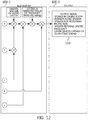
- Figs. 7 to 9 are diagrams of the entire algorithm of a first exemplary embodiment of the present disclosure.
- the algorithm of the first exemplary embodiment comprises an input device 600-1, an algorithm device 600-2 and an output device 600-3.
- the operation of the input device 600-1 is as follows.
- Input signal of the input device 600-1 includes engine characteristic measurement signal 310, engine speed 411, interior tone measurement signal 210, pedal opening amount 412, vehicle speed data 413, driving modes and gear stages 414 and a sound quality index 700.
- the engine characteristic measurement signal 310 includes data values obtained from an accelerometer, a combustion pressure sensor, a boost pressure sensor, an exhaust pressure sensor and other engine characteristic measurement sensors 300.
- the engine speed 411 of the vehicle driving information detector 400 is data emerged through the CAN.
- the interior tone measurement signal 210 of the interior noise measurement sensor 200 includes data values obtained from an interior microphone arranged in the vehicle interior and an engine room microphone arranged in an engine room respectively.
- a plurality of interior microphones and a plurality of engine room microphones may be provided.
- the pedal opening amount 412, the vehicle speed data 413, the driving modes and the gear stages 414 are data relating to the vehicle driving information detector 400 from the CAN.
- the sound quality index 700 is a target tone selected directly by the driver.
- the operation of the algorithm device 600-2 is as follows.
- a weighted value of engine speed that is obtained from the engine speed 411 is reflected to master volume of an audio system together with the real time engine speed wherein a weighted value of the pedal opening amount that is obtained from the pedal opening amount 412 and a value of the real time position of the pedal are reflected thereto.
- a constant speed or acceleration condition is determined from the vehicle speed data 413 based on differential values of change in the vehicle speed wherein in case of the constant speed condition, the weighted value is adjusted downward to keep quietness whereas in case of the acceleration condition, the weighted value is adjusted upward to increase acceleration feeling. Then, the adjusted weighted value is reflected immediately before output of the sound output device 100.
- a weighted value of the engine order level for each component of the engine order according to change in the driving mode is applied variably and reflected between setting master volume of the audio system and setting a weighted value of the frequency band.
- Frequency characteristic is analyzed (FFT analysis) from the engine characteristic measurement signal 310 wherein frequencies of components of the main engine order that are obtained from the engine speed 411 are calculated and reflected.
- the order level is derived by extracting a main component of the engine order, combination of the engine order arrays is generated, and the engine speed 411 is reflected in the process of realizing the target tone.
- a level for amplifying components of the engine order arranged like the graph 540 of the engine tone reinforcement and amplification control is determined and controlled to be amplified in real time. (See FIG. 3 .)
- a tone in the vehicle interior is measured in real time and a result value of the interior noise measurement sensor 200 corresponding to the level of the sound index is output to the input device 600-1 as input data.
- input variables 510 containing information on change in the engine order array, change in the engine order level and reduction of unnecessary order level, which is obtained through calculation of the sound index, are input to the tone control operation unit 500.
- the tone control operation unit 500 outputs an order array 531, an order level 532 and a noise reduction array and noise reduction level 533 as output variables 530 for optimizing target tone control factors based on depth learning through the hidden learning layers 520.
- the order array 531 and the order level 532 out of the final control factors output by the tone control operation unit 500 are reflected in realizing the target tone. (See FIG. 2 to FIG. 5 .)
- the noise reduction array and noise reduction level 533 out of the final control factors output by the tone control operation unit 500 is used for calculating components of the order required to be removed from the interior tone measurement signal 210, that is, necessary reduction level, and determining a reverse phase output range corresponding to a frequency band required to be reduced and then applying the determined reverse phase output range to master volume of the audio system. (See FIG. 4 .)
- the operation of the output device 600-3 is as follows.
- the data value closer to the target tone by the tone control operation unit 500 is output through the master volume of the audio system and finally through a sound output 110 of the sound output device 100.
- the sound output 110 from the sound output device 100 is feedback controlled so as to be reflected again to the engine characteristic measurement signal 310 and the interior tone measurement signal 210 in accordance with the algorithm as described above.
- the driver can enjoy a vehicle sound of the desired target tone more quickly and accurately by virtue of the feedback control with the above-mentioned tone control operation unit 500 interposed.
- figs. 10 to 12 are diagrams of the entire algorithm of a second exemplary embodiment not forming part of the invention.
- the algorithm is executed through the input device 600-1, the algorithm device 600-2 and the output device 600-3 as in the algorithm of the first exemplary embodiment.
- the algorithm of the second exemplary embodiment differs from the algorithm of the first exemplary embodiment does not include the sound quality index 700. Also the algorithm of the second exemplary embodiment differs from the algorithm of the first exemplary embodiment does not reflect the result 610 of the target tone obtained by the tone control operation unit 500.
- fig. 13 is a diagram of a system including a sound source storage unit according to an exemplary embodiment of the present disclosure.
- the system for controlling an engine tone by an artificial intelligence based on a sound quality index of a vehicle may comprise a sound source storage unit 800.
- the sound source storage unit 800 may store the reinforcing sound and the target tone as data.
- the sound output device 100 may be connected to the sound source storage unit 800 to reinforce the engine tone based on the data stored in the sound source storage unit.
- the data stored in the sound source storage unit 800 is preferably available in ASD (active sound design).
- the sound source storage unit 800 may include at least one type of storage medium among a flash memory type, a hard disk type, a multimedia card micro type such as an SD or XD memory, a random access memory (RAM), a static RAM (SRAM), a read-only memory (ROM), an electrically erasable programmable read-only memory (EEPROM), a programmable read-only memory (PROM), a magnetic memory, a magnetic disk, and an optical disk, etc.
- a flash memory type such as an SD or XD memory
- RAM random access memory
- SRAM static RAM
- ROM read-only memory
- EEPROM electrically erasable programmable read-only memory
- PROM programmable read-only memory
- magnetic memory a magnetic disk, and an optical disk, etc.
Landscapes
- Engineering & Computer Science (AREA)
- Physics & Mathematics (AREA)
- Acoustics & Sound (AREA)
- Multimedia (AREA)
- Health & Medical Sciences (AREA)
- Mechanical Engineering (AREA)
- General Engineering & Computer Science (AREA)
- Combustion & Propulsion (AREA)
- Audiology, Speech & Language Pathology (AREA)
- General Health & Medical Sciences (AREA)
- Chemical & Material Sciences (AREA)
- Signal Processing (AREA)
- Artificial Intelligence (AREA)
- General Physics & Mathematics (AREA)
- Theoretical Computer Science (AREA)
- Software Systems (AREA)
- Computational Linguistics (AREA)
- Evolutionary Computation (AREA)
- Data Mining & Analysis (AREA)
- Medical Informatics (AREA)
- Molecular Biology (AREA)
- Mathematical Physics (AREA)
- Biophysics (AREA)
- Biomedical Technology (AREA)
- Computer Hardware Design (AREA)
- Microelectronics & Electronic Packaging (AREA)
- Computer Vision & Pattern Recognition (AREA)
- Computing Systems (AREA)
- Automation & Control Theory (AREA)
- Life Sciences & Earth Sciences (AREA)
- Human Computer Interaction (AREA)
- Fittings On The Vehicle Exterior For Carrying Loads, And Devices For Holding Or Mounting Articles (AREA)
- Soundproofing, Sound Blocking, And Sound Damping (AREA)
- Measurement Of Mechanical Vibrations Or Ultrasonic Waves (AREA)
- Circuit For Audible Band Transducer (AREA)
Description
- Exemplary embodiments of the present disclosure relate to a system and a method for controlling an engine tone by an artificial intelligence based on a sound index of a vehicle.
- Today's automobiles are becoming an enjoyable object beyond a mere transport means. Driving performance would be one of the pleasures that automobiles give drivers. In recent years, automobile consumers are trending toward demanding both sporty driving and comfortable driving.
Currently, the automobile industry is trying to develop a vehicle that can change a driving mode in order to satisfy such troubles. The driving mode refers to a function to adjust ride comfort and change driving performance by controlling a suspension or an engine. - However, there is a limitation in enhancing the driving performance in that manufacturing cost is excessively required to resolve troubles relating to the enhancement of the driving performance only through physical and mechanical approaches. Of course, this may not matter to an expensive sports car. However, most common vehicle manufacturers have no choice but to deliberate how to maximize the effect of the driving performance while maintaining reasonable manufacturing cost.
- Drivers are very sensitive to the sense of hearing as well as the sense of sight. Particularly, a dynamic engine sound acts as a crucial factor that multiplies driving pleasure. Some automakers, therefore, have also worked with an orchestra to create an attractive engine sound while adopting high displacement engines. However, such a technology development is limited to a specific high displacement engine and has a limitation in that the manufacturing cost is high.
- To this end, the latest technology developed to avoid this is a sound generator. The sound generator is a device for artificially generating a sound similar to, e.g., an engine sound through vehicle-mounted speakers. However, conventional sound generators merely plays an engine tone stored therein, or merely works in conjunction with an acceleration pedal to artificially amplify output sound pressure in proportion to engine speed. Therefore, it was natural that drivers could very easily aware that the sound is nothing but an artificial sound coming from speakers, not a natural engine tone. As a result, this caused a problem that driving pleasure is reduced. On the other hand, it could not be bound to dynamically evolve the engine sound recklessly for the sake of driving pleasure. The reason is that drivers are emotional animals and thus sometimes feel the dynamic sound as loud noise.
- Therefore, if necessary, it is also necessary to reduce the engine sound and other noise to be felt by drivers to create a quieter interior atmosphere.
EP 1 577 879 A1 relates to an active noise control system and method for controlling an acoustic noise generated by a noise source at a listening location, in which system and method sound is picked up in the surroundings of the listening location by means of a sound sensor, an electrical noise signal which corresponds to the acoustic noise of the noise source is generated and filtered adaptively in accordance with control signals. The adaptively filtered noise signal is irradiated into the surroundings of the listening location by means of a sound reproduction device, whereby a secondary path transfer function extending between the sound reproduction device and sound sensor. The noise signal is filtered with a transfer function which models the secondary path transfer function. The Signals which provided by the sound sensor after first filtering serve as control signals for the adaptive filtering. - An object of the present disclosure is to provide to a system and a method for controlling an engine tone by an artificial intelligence based on a sound index of a vehicle according to
claim 1 and 10, respectively. - Other objects and advantages of the present disclosure can be understood by the following description and become apparent with reference to the embodiments of the present disclosure. It should be noted and understood that there can be improvements and modifications made of the present invention described in detail above without departing from the scope of the invention as set forth in the accompanying claims.
- Preferably, the signal processing controller further receives at least one of vehicle driving information emerged through controller area network (CAN) communication or information of the interior noise measured by a microphone.
- Preferably, the signal processing controller outputs an engine tone calculated by the tone control operation unit through an interior audio.
- Preferably, a sound quality index of the measured interior noise is any one of a powerful index, a pleasant index, a dynamic index, or a sporty index.
- Preferably, the sound output device is at least one of a speaker in an engine room, a speaker in the vehicle interior, or a speaker outside the vehicle.
- Preferably, the system further comprises a proportional-integral-differential (PID) controller for controlling the sound output device such that the engine sound is reinforced by the reinforcing sound due to output of the engine tone.
- Preferably, the reinforcing sound and the target tone are stored as data and reinforcing the engine sound is implemented based on the stored data.
- Preferably, the stored data is active sound design (ASD).
- Preferably, information of the sound source characteristics of the engine sound is an engine noise characteristic of at least one of engine vibration, combustion pressure, boost pressure, or exhaust pressure.
- Preferably, the vehicle driving information is an engine noise characteristic of at least one of vehicle speed, pedaling, engine speed, or a driving mode.
- Preferably, input variables of the artificial intelligence comprise at least one of vehicle sound characteristics or a driving pattern of the driver.
- In accordance with another aspect of the present disclosure, a method for controlling an engine tone by an artificial intelligence of a tone control operation unit based on a sound quality index of a vehicle is provided according to
claim 10. - Preferably, a control value satisfying the output sound quality index is output through a speaker in the vehicle interior.
- Preferably, the output engine sound of the vehicle interior is monitored to calculate a changed sound quality index, and feedback control is performed again.
- Preferably, the engine noise characteristic information is an engine noise characteristic of at least one of engine vibration, combustion pressure, boost pressure, or exhaust pressure.
- Preferably, the vehicle driving information is an engine noise characteristic of at least one of vehicle speed, pedaling, engine speed, or a driving mode.
- Input variables of the artificial intelligence comprise a target tone requested by a driver and preferably a driving pattern of the driver.
- According to various aspects of the present disclosure as described herein, the following advantageous effects can be obtained:
- First, as an index for objectively evaluating a sound of a vehicle is used for setting a target tone, it is possible to perform active control through optimization of various target tones.
- Second, there is a strong advantage in that a target tone can be controlled more accurately and quickly because the target tone is optimized by deep learning of an artificial intelligence.
- Third, various target tones corresponding to an actual engine sound can be provided in response to a driving mode, thereby providing pleasure of driving and feeling of movement.
- Fourth, as the sound output through speakers is feedback again, it is possible to provide an engine tone closer to an actual sound.
- Fifth, as the sound source stored previously can be used, the system and method disclosed herein can be easily applied to existing vehicles.
- It is to be understood that both the foregoing general description and the following detailed description of the present disclosure are exemplary and explanatory and are intended to provide further explanation of the disclosure as claimed.
- The above and other objects, features and other advantages of the present disclosure will be more clearly understood from the following detailed description taken in conjunction with the accompanying drawings, in which:
-
Fig. 1 is a flowchart of a first exemplary embodiment of the present disclosure; -
Fig. 2 is a schematic diagram of a tonecontrol operation unit 500 according to an exemplary embodiment of the present disclosure; -
Fig. 3 is a graph of engine tone reinforcement control of a tonecontrol operation unit 500 according to an exemplary embodiment of the present disclosure; -
Fig. 4 is a graph of engine tone reinforcement and noise reduction control of a tonecontrol operation unit 500 according to an exemplary embodiment of the present disclosure; -
Fig. 5 is a diagram illustrating operational effects of the entire algorithm according to an exemplary embodiment of the present disclosure; -
Fig. 6 is a diagram illustrating asound quality index 700 according to an exemplary embodiment of the present disclosure; -
Figs. 7 to 9 are diagrams of the entire algorithm of a first exemplary embodiment of the present disclosure; -
Figs. 10 to 12 are diagrams of the entire algorithm of a second exemplary embodiment of the present disclosure; and -
Fig. 13 is a diagram of a system including a sound source storage unit according to an exemplary embodiment of the present disclosure. - The present disclosure may be implemented in many altered forms and have various embodiments. Therefore, an exemplary specific embodiment is illustrated in the drawings and described in detail in the following description. However, the disclosure herein is not intended to limit the present disclosure to a specific embodiment.
- Like reference numerals are used to designate like elements throughout the drawings and the description with reference to the drawings.
- Although the terms "first," "second," etc. may be used herein to describe various components, these components should not be limited by these terms. These terms are used merely to distinguish one element from another.
- For example, a first component may be designated as a second component and similarly a second component may be designated as a first component without departing from the scope of the present disclosure. The term "and/or" includes all combinations or any of a plurality of the associated listed items.
- All terms including technical or scientific terms, unless being defined otherwise, have the same meaning generally understood by a person having ordinary skill in the art pertaining to the present disclosure.
- The terms that are the same as the ones defined in a commonly-used dictionary should be interpreted as including the meaning consistent with the meaning in the context of the related art and should not be interpreted as being ideally or excessively formal meaning unless they are explicitly defined otherwise herein.
- Firstly, it will be described about a system for controlling an engine tone by an artificial intelligence based on a sound quality index of a vehicle according to a first exemplary embodiment of the present disclosure.
- Deep learning will be described below.
-
Fig. 1 is a flowchart of a first exemplary embodiment of the present disclosure. - A system 1-1 for controlling an engine tone by an artificial intelligence based on a sound quality index of a vehicle 1 comprises a
sound output device 100, an interiornoise measurement sensor 200, an enginecharacteristic measurement sensor 300, vehicle drivinginformation detector 400 from a controller area network, a tonecontrol operation unit 500 and asignal processing controller 600. - The
sound output device 100 refers to an output device for outputting a sound source generated based on values from the engine characteristic measurement sensor. - More specifically, the
sound output device 100 refers to a sound output system for generating a reinforcing sound to reinforce an engine sound of a vehicle. - The
sound output device 100 may be at least one of a speaker in an engine room, a speaker in the vehicle interior, or a speaker outside the vehicle. - In other words, the
sound output device 100 may be arranged in at least one of the interior of the engine room, the interior of the vehicle, or the outside of the vehicle. - The
sound output device 100 arranged outside the vehicle may be contemplated for the purpose of pedestrian protection. - The
sound output device 100 may be provided for a specific frequency band output and may be provided in various types such as a thin type device or a membrane type replayable device. - The interior
noise measurement sensor 200 measures interior noise of the vehicle. - As an example of the interior
noise measurement sensor 200, a microphone (not shown) capable of measuring interior noise may be arranged in the vehicle interior. - The microphone can measure change of a tone of the vehicle interior noise in real time wherein a plurality of microphones can be arranged in the vehicle.
- It is to be noted that the interior noise which will be described below refers to a driving performance sound including an engine tone and an exhaust sound, which are heard in the vehicle interior and related to vehicle driving in a state where an engine of the vehicle is started, but it is different from a radio sound or a music sound provided in a car entertainment system.
- On the other hand, a driving performance sound desired by a driver is a target tone.
- The interior
noise measurement sensor 200 may measure a reference signal for proportional-integral-differential controller (PID) control. (SeeFIG. 5 ) - The interior
noise measurement sensor 200 can be used for measuring change of an engine tone of the vehicle and measuring a difference between the engine tone and the target tone. - More specifically, the interior
noise measurement sensor 200 is used for determining a sound domain to be reinforced and a sound domain to be reduced in order to correct the driving performance sound so as to be close to the target tone. - The engine
characteristic measurement sensor 300 measures characteristics of the sound source of the engine sound. - The information of the sound source characteristics of the engine sound refers to power characteristic information capable of determining the tone of the engine sound.
- The information of the sound source characteristics of the engine sound may be engine noise characteristic of at least one of engine vibration, combustion pressure, boost pressure, or exhaust pressure.
- The engine noise characteristic refers to noise characteristic of a power system which is detected by the engine
characteristic measurement sensor 300. - In other words, the sound source characteristics of the engine sound can be determined from at least one of vibration data, combustion pressure data, boost pressure data, exhaust pressure data, or intake pressure data.
- The engine
characteristic measurement sensor 300 is a sensor for measuring the information of the sound source characteristics of the engine sound. - The engine
characteristic measurement sensor 300 may be a vibration sensor, a combustion pressure sensor, a boost pressure sensor, an exhaust pressure sensor, an intake pressure sensor, or the like. - In particular, the vibration sensor may comprise a uniaxial accelerometer (not shown) or a multiaxial accelerometer (not shown).
- The vehicle driving information may be engine noise characteristic of at least one of vehicle speed, pedaling, engine speed (RPM), or a driving mode.
- The vehicle driving
information detector 400 from the CAN (Controller Area Network) is vehicle driving information which is necessary for real-time control of the vehicle. - The vehicle driving
information detector 400 from the CAN makes it possible to determine driving will and driving pattern of the driver. - A command mediator for transmitting driving information relating to the vehicle driving of the driver to the vehicle in real time may include a steering wheel, an accelerator pedal, a brake pedal, a gear knob (paddle shift), a driving mode button and the like.
- The driver may vary the degree of depressing the accelerator pedal or the brake pedal depending on a given situation.
- Upon attempting to overtake a front vehicle, the driver instantaneously depresses the accelerator pedal deeply. At this time, a gear box of the vehicle shifts down the gear in response to the driver's acceleration will to increase the engine speed, thereby increasing vehicle speed.
- On the other hand, the driver may sometimes pursue sports driving that prioritizes running, or otherwise want comfort driving that prioritizes ride comfort.
- This is solved by selecting a driving mode through a driving mode system mounted on the vehicle.
- The driving mode is a given setting mode for achieving the driving will of the driver.
- The driving performance sound of the vehicle also needs to be changed in response to the selected driving mode.
- The driving performance sound corresponds to a
sound quality index 700 which refers to the target tone. - The
sound quality index 700 can be selected directly by the driver. - Next, the tone
control operation unit 500 according to an exemplary embodiment of the present disclosure will be described in detail. -
Fig. 2 is a schematic diagram of the tonecontrol operation unit 500 according to an exemplary embodiment of the present disclosure. - The tone
control operation unit 500 according to an exemplary embodiment of the present disclosure may be a processor (e.g., computer, microprocessor, CPU, ASIC, circuitry, logic circuits, etc.). The processor may include an associated non-transitory memory storing software instructions which, when executed by the processor, provides the functionalities of aninput variables module 510 and a hiddenlearning layers module 520. Herein, the memory and the processor may be implemented as separate semiconductor circuits. Alternatively, the memory and the processor may be implemented as a single integrated semiconductor circuit. The processor may embody one or more processor(s). - The tone
control operation unit 500outputs output variables 530. In this case. theoutput variables 530 means anorder array 531, anorder level 532, a noise reduction array and anoise reduction level 533 outputted as the result of the hiddenlearning layers module 520. - The
input variables module 510 of the tonecontrol operation unit 500 collects data values input from the interiornoise measurement sensor 200, the enginecharacteristic measurement sensor 300 and the vehicle drivinginformation detector 400 from the CAN, as described above. In this case. theinput variables module 510 means the input values provided in plural sensors. - More specifically, input variables of the artificial intelligence comprise a target tone requested by the driver and preferably at least one of vehicle sound characteristics or a driving pattern of the driver.
- The tone
control operation unit 500 is capable of real-time active control of the engine tone based on deep learning. - The active control based on the deep learning determines and outputs the
order array 531 and theorder level 532 of theoutput variables 530 as factors for controlling the target tone based on a target tone requested by the driver and the measured interior noise. - On the other hand, the active control based on the deep learning determines the
order array 531 and theorder level 532 of theoutput variables 530 as factors for controlling the target tone based on a target tone requested by the driver and the measured interior noise with respect to a noise source required to be reduced and controls an unnecessary frequency band to be reduced. - The hidden
learning layers module 520 of the tonecontrol operation unit 500 analyzes data of the input variables of theinput variables module 510 by means of the deep learning and output the analyzed data as theoutput variables 530. - The
order array 531 of theoutput variables 530 refers to an array of frequencies arranged depending on the engine speed (i.e. Revolution per Minute) and theorder level 532 of theoutput variables 530 refers to magnitude of the frequencies of the order array. - The tone
control operation unit 500 outputs unnecessary noise to the noise reduction array and thenoise reduction level 533 of theoutput variables 530. -
Fig. 3 is agraph 540 of engine tone reinforcement and amplification control of the tonecontrol operation unit 500 according to an exemplary embodiment of the present disclosure. - As shown in
Fig. 3 , when the driver accelerates by operating the accelerator pedal of the vehicle, anengine tone 542 before being amplified is amplified such that a firstmiddle band 543 and a firstlow band 544 are amplified and then changed into anengine tone 541 after being amplified. - The tone
control operation unit 500 utilizes the input variables of theinput variables module 510 and seizes both the firstmiddle band 543 and the firstlow band 544 which need to be amplified in theengine tone 542 before being amplified and then amplifies frequencies of the corresponding sections. In this case, the amplification is made of the frequency magnitude of theorder level 532 of theoutput variables 530. - In other words, the tone
control operation unit 500 extracts components of the order based on a fast Fourier transform (FFT) analysis and determines necessary order array and order level and then reinforces level of the engine tone in the acceleration section. -
Fig. 4 is agraph 550 of engine tone reinforcement and noise reduction control of the tonecontrol operation unit 500 according to an exemplary embodiment of the present disclosure. - The
graph 550 of the engine tone reinforcement and noise reduction control is amplified together in thegraph 540 of the engine tone amplification control to reduce a secondlow band 554 where noise is excessively generated. In this case, the reduction is made of the frequency magnitude of theorder level 532 of theoutput variables 530. - This is to perform noise reduction control in consideration of the amplified tone, which can be accomplished by applying a reverse phase output of the frequency band in question.
- In other words, this generates the reverse phase output reducing the order array and the order level of a section that is necessary for keeping balance of sound pressure in the vehicle interior and linearity of the order.
- A second
middle band 553 which is a section lacking amplification in thegraph 540 of the engine tone reinforcement and amplification control is forced to be further amplified such that theengine tone 552 before being optimized becomes theengine tone 551 having been optimized. - As a result, the optimized
engine tone 551 is changed into a form increasing linearly in proportion to the engine speed. - Such operational effects are illustrated in
Fig. 5 . -
Fig. 5 is a diagram illustrating the operational effects of the entire algorithm according to an exemplary embodiment of the present disclosure. In this case, the algorithm is loaded in thesignal processing controller 600 as a whole program or as a partial program in each of thesignal processing controller 600 and the tonecontrol operation unit 500. - A
vehicle sound 10 before applying the algorithm of the present disclosure is shown at the upper right side ofFig. 5 . - First, components necessary for engine tone control are extracted from an engine
characteristic measurement signal 310 of the enginecharacteristic measurement sensor 300 in real time. (SeeFIG. 7 ) - Here, vibration frequency, combustion pressure, exhaust pressure, boost pressure, accelerometer signal and other engine characteristic measurement data and information such as engine speed (RPM), vehicle speed, gear stage and driving mode are utilized as the real-time detecting values of an engine
characteristic measurement signal 310. - The
graph 540 of the engine tone reinforcement and amplification control is a result of amplifying the engine tone asFIG. 3 . - The
graph 540 of the engine tone reinforcement and amplification control shows that it is necessary to reduce noise of a specific frequency band and that some order levels of components of the amplified engine order are required to be reduced. - The
graph 550 of the engine tone enhancement and reduction control is a result of amplifying the engine tone asFIG. 4 . Therefore, thegraph 550 is a result of amplifying necessary components and reducing unnecessary components. - As a result,
output values 560 of results of real-time measurement of sound quality output results of real-time calculation of the sound quality index and are given to the tonecontrol operation unit 500 as input variables. - The output values 560 of results of real-time measurement of the sound quality may be any one of a powerful index score, a dynamic index score, a pleasant index score, or a sporty index score. In this case, the index is illustrated by a
sound quality index 700 ofFIG. 6 . - The tone
control operation unit 500 outputs results acquired from information of the output values 560 of results of real-time measurement of the input sound quality to thesignal processing controller 600. - The
signal processing controller 600 performs control based on a vehicle sound quality index big data using from information of the output values 560. The control of a vehicle sound quality index big data performs addition and removal control of an engine order array, amplification and reduction control of an engine order level and reduction control of unnecessary frequency bands and then outputs result values of these control to thesound output device 100. - The sound output from the
sound output device 100 is feedback controlled while being reflected to the enginecharacteristic measurement signal 310 again. - Meanwhile, the system 1-1 for controlling an engine tone by an artificial intelligence based on a sound quality index of a vehicle may comprise a PID controller 100-1. In this case, the PID controller 100-1 connects the
signal processing controller 600 and thesound output device 100. - The
sound output device 100 may be controlled by the PID controller 100-1. - The PID controller 100-1 reinforces the engine sound by means of the reinforcing sound by output of the engine tone.
-
Fig. 6 is a diagram illustrating thesound quality index 700 according to an exemplary embodiment of the present disclosure. - In this case, the
sound quality index 700 of the measured interior noise is any one of apowerful index 710, adynamic index 720, apleasant index 730, or asporty index 740. - The driver may directly select as a target tone any one out of the
powerful index 710, thedynamic index 720, thepleasant index 730, or thesporty index 740. - On the other hand, it is possible to configure the
sound quality index 700 such that any one of thepowerful index 710, thedynamic index 720, thepleasant index 730, or thesporty index 740 is selected automatically in response to selection of a desired driving mode by the driver. - The
signal processing controller 600 outputs an engine tone calculated by the tonecontrol operation unit 500 through an interior audio of the vehicle. - Consequently, if the driver pursues a sound for the sports driving, the
signal processing controller 600 may output stronger sound than thepleasant index 730, such as thepowerful index 710, thedynamic index 720 or thesporty index 740. - On the contrary, if the driver wants a sound for comfort driving, the
signal processing controller 600 may output mild sound like thepleasant index 730 through thesound output device 100. - On the other hand, the
signal processing controller 600 further receives at least one of vehicle driving information of the vehicle drivinginformation detector 400 emerged through the CAN (Controller Area Network) communication or information of the interior noise measured by the microphone of the interiornoise measurement sensor 200. - The
signal processing controller 600 receives the measured signal from the enginecharacteristic measurement sensor 300 in real time and controls thesound output device 100 so as to reach the target tone desired by the driver. - In this case, the tone
control operation unit 500 is connected to thesignal processing controller 600 and optimizes thesound quality index 700 by using the vehicle sound quality index big data using from information of the output values 560 so as to reach the target tone through an artificial intelligence. - More specifically, the tone
control operation unit 500 can amplify and reduce necessary engine order arrays and order levels and calculate unnecessary frequency bands in real time by using theorder array 531, theorder level 532 and the noise reduction array and anoise reduction level 533 of theoutput variables 530. - In other words, the tone
control operation unit 500 may control sound pressure enhancement for reinforcing the engine tone through the enginecharacteristic measurement sensor 300, or otherwise may control sound pressure reduction for noise reduction control. - Accordingly, it is possible to maintain balance of sound pressure in the vehicle interior and realize the target tone by reinforcing a necessary tone and controlling unnecessary noise to be reduced in real time.
- Next, it will be described about the entire algorithm of an exemplary embodiment of the present disclosure.
-
Figs. 7 to 9 are diagrams of the entire algorithm of a first exemplary embodiment of the present disclosure. In this case, the algorithm of the first exemplary embodiment comprises an input device 600-1, an algorithm device 600-2 and an output device 600-3. - The operation of the input device 600-1 is as follows.
- Input signal of the input device 600-1 includes engine
characteristic measurement signal 310,engine speed 411, interiortone measurement signal 210,pedal opening amount 412,vehicle speed data 413, driving modes and gear stages 414 and asound quality index 700. - The engine
characteristic measurement signal 310 includes data values obtained from an accelerometer, a combustion pressure sensor, a boost pressure sensor, an exhaust pressure sensor and other enginecharacteristic measurement sensors 300. - The
engine speed 411 of the vehicle drivinginformation detector 400 is data emerged through the CAN. - The interior
tone measurement signal 210 of the interiornoise measurement sensor 200 includes data values obtained from an interior microphone arranged in the vehicle interior and an engine room microphone arranged in an engine room respectively. - In this case, a plurality of interior microphones and a plurality of engine room microphones may be provided.
- The
pedal opening amount 412, thevehicle speed data 413, the driving modes and the gear stages 414 are data relating to the vehicle drivinginformation detector 400 from the CAN. - The
sound quality index 700 is a target tone selected directly by the driver. - The operation of the algorithm device 600-2 is as follows.
- A weighted value of engine speed that is obtained from the
engine speed 411 is reflected to master volume of an audio system together with the real time engine speed wherein a weighted value of the pedal opening amount that is obtained from thepedal opening amount 412 and a value of the real time position of the pedal are reflected thereto. - A constant speed or acceleration condition is determined from the
vehicle speed data 413 based on differential values of change in the vehicle speed wherein in case of the constant speed condition, the weighted value is adjusted downward to keep quietness whereas in case of the acceleration condition, the weighted value is adjusted upward to increase acceleration feeling. Then, the adjusted weighted value is reflected immediately before output of thesound output device 100. - On the other hand, a weighted value of the engine order level for each component of the engine order according to change in the driving mode, which is obtained from the driving mode and the gear stages 414, is applied variably and reflected between setting master volume of the audio system and setting a weighted value of the frequency band.
- Frequency characteristic is analyzed (FFT analysis) from the engine
characteristic measurement signal 310 wherein frequencies of components of the main engine order that are obtained from theengine speed 411 are calculated and reflected. - The order level is derived by extracting a main component of the engine order, combination of the engine order arrays is generated, and the
engine speed 411 is reflected in the process of realizing the target tone. - When the order level is derived, a level for amplifying components of the engine order arranged like the
graph 540 of the engine tone reinforcement and amplification control is determined and controlled to be amplified in real time. (SeeFIG. 3 .) - At this time, a
result 610 of the target tone obtained by the tonecontrol operation unit 500 by means of the artificial intelligence based on the sound quality index is reflected. - In other words, when the driver selects the
sound quality index 700, a tone in the vehicle interior is measured in real time and a result value of the interiornoise measurement sensor 200 corresponding to the level of the sound index is output to the input device 600-1 as input data. - Next,
input variables 510 containing information on change in the engine order array, change in the engine order level and reduction of unnecessary order level, which is obtained through calculation of the sound index, are input to the tonecontrol operation unit 500. - The tone
control operation unit 500 outputs anorder array 531, anorder level 532 and a noise reduction array andnoise reduction level 533 asoutput variables 530 for optimizing target tone control factors based on depth learning through the hidden learning layers 520. Theorder array 531 and theorder level 532 out of the final control factors output by the tonecontrol operation unit 500 are reflected in realizing the target tone. (SeeFIG. 2 to FIG. 5 .) - On the other hand, the noise reduction array and
noise reduction level 533 out of the final control factors output by the tonecontrol operation unit 500 is used for calculating components of the order required to be removed from the interiortone measurement signal 210, that is, necessary reduction level, and determining a reverse phase output range corresponding to a frequency band required to be reduced and then applying the determined reverse phase output range to master volume of the audio system. (SeeFIG. 4 .) - The operation of the output device 600-3 is as follows.
- The data value closer to the target tone by the tone
control operation unit 500 is output through the master volume of the audio system and finally through asound output 110 of thesound output device 100. - The
sound output 110 from thesound output device 100 is feedback controlled so as to be reflected again to the enginecharacteristic measurement signal 310 and the interiortone measurement signal 210 in accordance with the algorithm as described above. - The driver can enjoy a vehicle sound of the desired target tone more quickly and accurately by virtue of the feedback control with the above-mentioned tone
control operation unit 500 interposed. - On the other hand,
figs. 10 to 12 are diagrams of the entire algorithm of a second exemplary embodiment not forming part of the invention. In this case, the algorithm is executed through the input device 600-1, the algorithm device 600-2 and the output device 600-3 as in the algorithm of the first exemplary embodiment. - However, the algorithm of the second exemplary embodiment differs from the algorithm of the first exemplary embodiment does not include the
sound quality index 700. Also the algorithm of the second exemplary embodiment differs from the algorithm of the first exemplary embodiment does not reflect theresult 610 of the target tone obtained by the tonecontrol operation unit 500. - On the other hand,
fig. 13 is a diagram of a system including a sound source storage unit according to an exemplary embodiment of the present disclosure. - Referring to
fig. 13 , the system for controlling an engine tone by an artificial intelligence based on a sound quality index of a vehicle may comprise a soundsource storage unit 800. - The sound
source storage unit 800 may store the reinforcing sound and the target tone as data. In this case, thesound output device 100 may be connected to the soundsource storage unit 800 to reinforce the engine tone based on the data stored in the sound source storage unit. - In this case, the data stored in the sound
source storage unit 800 is preferably available in ASD (active sound design). - The sound
source storage unit 800 may include at least one type of storage medium among a flash memory type, a hard disk type, a multimedia card micro type such as an SD or XD memory, a random access memory (RAM), a static RAM (SRAM), a read-only memory (ROM), an electrically erasable programmable read-only memory (EEPROM), a programmable read-only memory (PROM), a magnetic memory, a magnetic disk, and an optical disk, etc. - It should be noted and understood that there can be improvements and modifications made of the present invention described in detail above without departing from the scope of the invention as set forth in the accompanying claims.
Claims (14)
- A system (1-1) for controlling an engine tone by an artificial intelligence based on a sound quality index of a vehicle (1), comprising:a sound output device (100) for generating a reinforcing sound to reinforce an engine sound of the vehicle (1);an engine characteristic measurement sensor (300) for measuring sound source characteristics of the engine sound;an interior noise measurement sensor (200) for detecting interior noise of the vehicle (1);a signal processing controller (600) that receives signals from the engine characteristic measurement sensor (300) in real time and controls the sound output device (100) such that the engine sound reaches a target tone; anda processor (500) connected to the signal processing controller (600) to optimize the sound quality index such that the engine sound reaches the target tone through the artificial intelligence,characterized in thatthe processor (500) performs real-time active control of the engine tone based on deep learning, and wherein the active control based on the deep learning determines and outputs an order array and an order level as factors for controlling the target tone based on a target tone requested by a driver and the measured interior noise, or wherein the active control based on the deep learning determines an order array and an order level as factors for controlling the target tone based on a target tone requested by a driver and the measured interior noise with respect to a noise source required to be reduced, and controls an unnecessary frequency band to be reduced.
- The system (1-1) according to claim 1, wherein the signal processing controller (600) further receives at least one of vehicle driving information emerged through controller area network, CAN, communication or information of the interior noise measured by a microphone, and/or
wherein the signal processing controller (600) outputs an engine tone calculated by the processor through an interior audio. - The system (1-1) according to claim 1, or 2, wherein the sound quality index is any one of a powerful index, a pleasant index, a dynamic index, or a sporty index.
- The system (1-1) according to one of claims 1 to 3, wherein the sound output device (100) is at least one of a speaker in an engine room, a speaker in the vehicle interior, or a speaker outside the vehicle (1).
- The system (1-1) according to one of claims 1 to 4, further comprising a proportional-integral-differential, PID, controller (100-1) for controlling the sound output device (100) such that the engine sound is reinforced by the reinforcing sound due to output of the engine tone.
- The system (1-1) according to one of claims 1 to 5, wherein the reinforcing sound and the target tone are stored as data and reinforcing the engine sound is implemented based on the stored data, wherein the stored data is preferably active sound design, ASD.
- The system (1-1) according to one of claims 1 to 6, wherein information of the sound source characteristics of the engine sound is an engine noise characteristic of at least one of engine vibration, combustion pressure, boost pressure, or exhaust pressure.
- The system (1-1) according to claim 2, wherein the vehicle driving information is an engine noise characteristic of at least one of vehicle speed, pedaling, engine speed, or a driving mode.
- The system (1-1) according to one of claims 1 to 8, wherein input variables of the artificial intelligence comprise at least one of plural vehicle sound characteristics and a driving pattern of the driver.
- A method for controlling an engine tone by an artificial intelligence based on a sound quality index of a vehicle (1), comprising:outputting a sound having an engine tone calculated by a signal processing controller (600) based on engine noise characteristic information and interior noise information and optionally vehicle driving information, andoptimizing the sound quality index by a processor (500) based on the artificial intelligence, such that an engine sound reaches a target tone through the artificial intelligence,characterized in that
the processor (500) performs real-time active control of the engine tone based on deep learning, and wherein the active control based on the deep learning determines and outputs an order array and an order level as factors for controlling the target tone based on a target tone requested by a driver and the measured interior noise, or wherein the active control based on the deep learning determines an order array and an order level as factors for controlling the target tone based on a target tone requested by a driver and the measured interior noise with respect to a noise source required to be reduced, and controls an unnecessary frequency band to be reduced. - The method according to claim 10, wherein the sound quality index is output as output variables of the artificial intelligence when an engine order array (531) and an engine order level (532) are changed, wherein the engine order array (531) is an array of frequencies arranged depending on the engine speed and the engine order level (532) is a magnitude of the frequencies of the engine order array (531), and/or
wherein a control value satisfying the output sound quality index is output in the vehicle interior through a speaker. - The method according to claim 10 or 11, wherein the output engine sound of the vehicle interior is monitored to calculate a changed sound quality index, and feedback control is performed again, and/or
wherein the engine noise characteristic information is an engine noise characteristic of at least one of engine vibration, combustion pressure, boost pressure, or exhaust pressure. - The method according to one of claims 10 to 12, wherein the vehicle driving information is an engine noise characteristic of at least one of vehicle speed, pedaling, engine speed, or a driving mode.
- The method according to claims 10 to 13, wherein input variables of the artificial intelligence comprise at least one of vehicle sound characteristics or a driving pattern of the driver.
Applications Claiming Priority (1)
| Application Number | Priority Date | Filing Date | Title |
|---|---|---|---|
| KR1020180160475A KR102692478B1 (en) | 2018-12-13 | 2018-12-13 | A control system for making car sound index based engine sound in use with deep-learing and the method of it |
Publications (2)
| Publication Number | Publication Date |
|---|---|
| EP3667659A1 EP3667659A1 (en) | 2020-06-17 |
| EP3667659B1 true EP3667659B1 (en) | 2021-10-20 |
Family
ID=68847928
Family Applications (1)
| Application Number | Title | Priority Date | Filing Date |
|---|---|---|---|
| EP19210302.6A Active EP3667659B1 (en) | 2018-12-13 | 2019-11-20 | System and method for controlling engine tone by artificial intelligence based on sound index of vehicle |
Country Status (5)
| Country | Link |
|---|---|
| US (1) | US11049489B2 (en) |
| EP (1) | EP3667659B1 (en) |
| JP (1) | JP7511336B2 (en) |
| KR (1) | KR102692478B1 (en) |
| CN (1) | CN111322163B (en) |
Cited By (1)
| Publication number | Priority date | Publication date | Assignee | Title |
|---|---|---|---|---|
| FR3138232A1 (en) * | 2022-07-19 | 2024-01-26 | Psa Automobiles Sa | Characterization and quantification of noise in the passenger compartment of a motor vehicle using artificial intelligence |
Families Citing this family (15)
| Publication number | Priority date | Publication date | Assignee | Title |
|---|---|---|---|---|
| KR102867181B1 (en) * | 2020-06-26 | 2025-10-01 | 현대자동차주식회사 | Vehicle and control method for the same |
| CN112019994B (en) * | 2020-08-12 | 2022-02-08 | 武汉理工大学 | Method and device for constructing in-vehicle diffusion sound field environment based on virtual loudspeaker |
| CN112259067A (en) * | 2020-10-21 | 2021-01-22 | 奇瑞商用车(安徽)有限公司 | Automobile active sound wave device and control method thereof |
| KR20220109845A (en) * | 2021-01-29 | 2022-08-05 | 현대자동차주식회사 | Apparatus and method for outputting sound of vehicle |
| KR20220120741A (en) | 2021-02-22 | 2022-08-31 | 현대자동차주식회사 | Vehicle and its control method |
| CN114954284B (en) * | 2021-02-24 | 2025-05-27 | 广州汽车集团股份有限公司 | Creep start noise monitoring device and method |
| KR20220150689A (en) * | 2021-05-04 | 2022-11-11 | 현대자동차주식회사 | Apparatus for tuning active sound design of vehicle and method thereof |
| DE102021119125B3 (en) | 2021-07-23 | 2022-10-27 | Dr. Ing. H.C. F. Porsche Aktiengesellschaft | Electrically or partially electrically powered vehicle with a device for active sound design |
| KR20230053940A (en) * | 2021-10-15 | 2023-04-24 | 현대자동차주식회사 | Indoor sound control method for car and sound control apparatus providing the same |
| CN114162042A (en) * | 2021-12-31 | 2022-03-11 | 江苏理工学院 | An adaptive car horn based on BP neural network development |
| US11900911B2 (en) * | 2022-04-19 | 2024-02-13 | Harman International Industries, Incorporated | Occupant detection and identification based audio system with music, noise cancellation and vehicle sound synthesis |
| KR20240165516A (en) | 2023-05-15 | 2024-11-25 | 현대자동차주식회사 | Apparatus for controlling a vehicle, and method thereof |
| CN117990378B (en) * | 2024-04-07 | 2024-07-19 | 潍柴动力股份有限公司 | Engine sound quality evaluation method, device, electronic equipment and storage medium |
| US20250380102A1 (en) * | 2024-06-05 | 2025-12-11 | Harman Becker Automotive Systems Gmbh | Spatial audio rendering of vehicle sounds in a vehicle interior |
| WO2026000157A1 (en) * | 2024-06-25 | 2026-01-02 | 瑞声开泰声学科技(上海)有限公司 | Vehicle sound wave synthesis method, apparatus, device, and readable storage medium |
Family Cites Families (16)
| Publication number | Priority date | Publication date | Assignee | Title |
|---|---|---|---|---|
| GB0023207D0 (en) * | 2000-09-21 | 2000-11-01 | Royal College Of Art | Apparatus for acoustically improving an environment |
| JP4140607B2 (en) * | 2004-03-10 | 2008-08-27 | ヤマハ株式会社 | Engine sound processing device |
| ATE402468T1 (en) * | 2004-03-17 | 2008-08-15 | Harman Becker Automotive Sys | SOUND TUNING DEVICE, USE THEREOF AND SOUND TUNING METHOD |
| JP4314212B2 (en) * | 2005-05-30 | 2009-08-12 | 本田技研工業株式会社 | Active noise / vibration / sound effect generation control system for vehicle and vehicle equipped with the system |
| US8542844B2 (en) | 2011-04-07 | 2013-09-24 | Visteon Global Technologies, Inc. | Sound modification system and method |
| CN104718110B (en) * | 2012-10-15 | 2016-10-12 | 三菱电机株式会社 | The audio quality adjustment device of vehicle approach notification device, vehicle approach notification device simulator and vehicle approach notification device |
| KR101637627B1 (en) * | 2013-11-01 | 2016-07-07 | 현대자동차주식회사 | Active noise control system and method using smartphone |
| KR101631872B1 (en) * | 2014-11-21 | 2016-06-20 | 현대자동차주식회사 | Vehicle, control method of vehicle and vehicle driving sound control apparatus |
| ITUB20159781A1 (en) * | 2015-01-13 | 2017-06-30 | Ask Ind Spa | ENGINE SOUND ENHANCEMENT SYSTEM IN A VEHICLE. |
| US9812113B2 (en) | 2015-03-24 | 2017-11-07 | Bose Corporation | Vehicle engine harmonic sound control |
| US20170125038A1 (en) * | 2015-11-03 | 2017-05-04 | Ford Global Technologies, Llc | Transfer function to generate lombard speech from neutral speech |
| DE102016224984A1 (en) | 2015-12-15 | 2017-06-22 | Deutsche Telekom Ag | Method and system for theft protection of a, in particular not yet sold, telecommunication terminal, system, computer program and computer program product |
| KR101841934B1 (en) | 2016-05-16 | 2018-03-29 | 주식회사 에프에스코리아 | Double hair brush |
| KR101876022B1 (en) * | 2016-05-16 | 2018-08-02 | 현대자동차주식회사 | An apparatus for controlling engine noise to reflect engine vibration and driving condition |
| US10224017B2 (en) * | 2017-04-26 | 2019-03-05 | Ford Global Technologies, Llc | Active sound desensitization to tonal noise in a vehicle |
| KR102383461B1 (en) * | 2017-10-17 | 2022-04-06 | 현대자동차주식회사 | Engine Sound Color Control Method based on Engine Dynamic Characteristic with Artificial Intelligence and Vehicle thereof |
-
2018
- 2018-12-13 KR KR1020180160475A patent/KR102692478B1/en active Active
-
2019
- 2019-11-20 EP EP19210302.6A patent/EP3667659B1/en active Active
- 2019-11-21 JP JP2019210179A patent/JP7511336B2/en active Active
- 2019-11-22 CN CN201911153899.XA patent/CN111322163B/en active Active
- 2019-11-22 US US16/692,271 patent/US11049489B2/en active Active
Cited By (1)
| Publication number | Priority date | Publication date | Assignee | Title |
|---|---|---|---|---|
| FR3138232A1 (en) * | 2022-07-19 | 2024-01-26 | Psa Automobiles Sa | Characterization and quantification of noise in the passenger compartment of a motor vehicle using artificial intelligence |
Also Published As
| Publication number | Publication date |
|---|---|
| KR20200075144A (en) | 2020-06-26 |
| JP7511336B2 (en) | 2024-07-05 |
| EP3667659A1 (en) | 2020-06-17 |
| CN111322163A (en) | 2020-06-23 |
| US20200193960A1 (en) | 2020-06-18 |
| KR102692478B1 (en) | 2024-08-07 |
| JP2020095260A (en) | 2020-06-18 |
| CN111322163B (en) | 2023-10-20 |
| US11049489B2 (en) | 2021-06-29 |
Similar Documents
| Publication | Publication Date | Title |
|---|---|---|
| EP3667659B1 (en) | System and method for controlling engine tone by artificial intelligence based on sound index of vehicle | |
| US10195902B1 (en) | Real-time engine sound reproduction method and vehicle using the real-time engine sound reproduction method | |
| US10625671B2 (en) | Engine sound color control method based on engine dynamic characteristic with artificial intelligence and vehicle thereof | |
| CN111284400B (en) | Electric vehicle driving sound control system and control method | |
| US11981259B2 (en) | Sound generation device for vehicle | |
| KR101876022B1 (en) | An apparatus for controlling engine noise to reflect engine vibration and driving condition | |
| JP5778163B2 (en) | System for simulated multi-gear vehicle sound generation | |
| CN113752943B (en) | Method for controlling the tone of electric vehicles based on motor vibration | |
| EP3882908B1 (en) | Systems and methods for vehicle sound enhancement | |
| CN109131063B (en) | Electric vehicle sound warning device and method | |
| US11260792B1 (en) | Method of controlling tone of electric vehicle based on motor vibration in deceleration or regenerative braking conditions | |
| EP2671758B1 (en) | Acceleration information transmission device | |
| KR102166703B1 (en) | Separate sound field forming apparatus used in a car and method for forming separate sound filed used in the car | |
| KR20230137104A (en) | Apparatus and method for generating virtual sound | |
| JP6586983B2 (en) | Vehicle acoustic control device | |
| JP4539634B2 (en) | Engine sound processing device | |
| US20250174219A1 (en) | Method of controlling traveling sound of electric vehicle using motor vibration and virtual transmission signal |
Legal Events
| Date | Code | Title | Description |
|---|---|---|---|
| PUAI | Public reference made under article 153(3) epc to a published international application that has entered the european phase |
Free format text: ORIGINAL CODE: 0009012 |
|
| STAA | Information on the status of an ep patent application or granted ep patent |
Free format text: STATUS: THE APPLICATION HAS BEEN PUBLISHED |
|
| AK | Designated contracting states |
Kind code of ref document: A1 Designated state(s): AL AT BE BG CH CY CZ DE DK EE ES FI FR GB GR HR HU IE IS IT LI LT LU LV MC MK MT NL NO PL PT RO RS SE SI SK SM TR |
|
| AX | Request for extension of the european patent |
Extension state: BA ME |
|
| RIN1 | Information on inventor provided before grant (corrected) |
Inventor name: JUNG, IN-SOO Inventor name: LEE, DONG-CHUL |
|
| STAA | Information on the status of an ep patent application or granted ep patent |
Free format text: STATUS: REQUEST FOR EXAMINATION WAS MADE |
|
| 17P | Request for examination filed |
Effective date: 20201208 |
|
| RBV | Designated contracting states (corrected) |
Designated state(s): AL AT BE BG CH CY CZ DE DK EE ES FI FR GB GR HR HU IE IS IT LI LT LU LV MC MK MT NL NO PL PT RO RS SE SI SK SM TR |
|
| GRAP | Despatch of communication of intention to grant a patent |
Free format text: ORIGINAL CODE: EPIDOSNIGR1 |
|
| STAA | Information on the status of an ep patent application or granted ep patent |
Free format text: STATUS: GRANT OF PATENT IS INTENDED |
|
| INTG | Intention to grant announced |
Effective date: 20210622 |
|
| RAP3 | Party data changed (applicant data changed or rights of an application transferred) |
Owner name: KIA CORPORATION Owner name: HYUNDAI MOTOR COMPANY |
|
| GRAS | Grant fee paid |
Free format text: ORIGINAL CODE: EPIDOSNIGR3 |
|
| GRAA | (expected) grant |
Free format text: ORIGINAL CODE: 0009210 |
|
| STAA | Information on the status of an ep patent application or granted ep patent |
Free format text: STATUS: THE PATENT HAS BEEN GRANTED |
|
| AK | Designated contracting states |
Kind code of ref document: B1 Designated state(s): AL AT BE BG CH CY CZ DE DK EE ES FI FR GB GR HR HU IE IS IT LI LT LU LV MC MK MT NL NO PL PT RO RS SE SI SK SM TR |
|
| REG | Reference to a national code |
Ref country code: GB Ref legal event code: FG4D |
|
| REG | Reference to a national code |
Ref country code: CH Ref legal event code: EP |
|
| REG | Reference to a national code |
Ref country code: IE Ref legal event code: FG4D |
|
| REG | Reference to a national code |
Ref country code: DE Ref legal event code: R096 Ref document number: 602019008518 Country of ref document: DE |
|
| REG | Reference to a national code |
Ref country code: AT Ref legal event code: REF Ref document number: 1440581 Country of ref document: AT Kind code of ref document: T Effective date: 20211115 |
|
| REG | Reference to a national code |
Ref country code: LT Ref legal event code: MG9D |
|
| REG | Reference to a national code |
Ref country code: NL Ref legal event code: MP Effective date: 20211020 |
|
| REG | Reference to a national code |
Ref country code: AT Ref legal event code: MK05 Ref document number: 1440581 Country of ref document: AT Kind code of ref document: T Effective date: 20211020 |
|
| PG25 | Lapsed in a contracting state [announced via postgrant information from national office to epo] |
Ref country code: RS Free format text: LAPSE BECAUSE OF FAILURE TO SUBMIT A TRANSLATION OF THE DESCRIPTION OR TO PAY THE FEE WITHIN THE PRESCRIBED TIME-LIMIT Effective date: 20211020 Ref country code: LT Free format text: LAPSE BECAUSE OF FAILURE TO SUBMIT A TRANSLATION OF THE DESCRIPTION OR TO PAY THE FEE WITHIN THE PRESCRIBED TIME-LIMIT Effective date: 20211020 Ref country code: FI Free format text: LAPSE BECAUSE OF FAILURE TO SUBMIT A TRANSLATION OF THE DESCRIPTION OR TO PAY THE FEE WITHIN THE PRESCRIBED TIME-LIMIT Effective date: 20211020 Ref country code: BG Free format text: LAPSE BECAUSE OF FAILURE TO SUBMIT A TRANSLATION OF THE DESCRIPTION OR TO PAY THE FEE WITHIN THE PRESCRIBED TIME-LIMIT Effective date: 20220120 Ref country code: AT Free format text: LAPSE BECAUSE OF FAILURE TO SUBMIT A TRANSLATION OF THE DESCRIPTION OR TO PAY THE FEE WITHIN THE PRESCRIBED TIME-LIMIT Effective date: 20211020 |
|
| PG25 | Lapsed in a contracting state [announced via postgrant information from national office to epo] |
Ref country code: IS Free format text: LAPSE BECAUSE OF FAILURE TO SUBMIT A TRANSLATION OF THE DESCRIPTION OR TO PAY THE FEE WITHIN THE PRESCRIBED TIME-LIMIT Effective date: 20220220 Ref country code: SE Free format text: LAPSE BECAUSE OF FAILURE TO SUBMIT A TRANSLATION OF THE DESCRIPTION OR TO PAY THE FEE WITHIN THE PRESCRIBED TIME-LIMIT Effective date: 20211020 Ref country code: PT Free format text: LAPSE BECAUSE OF FAILURE TO SUBMIT A TRANSLATION OF THE DESCRIPTION OR TO PAY THE FEE WITHIN THE PRESCRIBED TIME-LIMIT Effective date: 20220221 Ref country code: PL Free format text: LAPSE BECAUSE OF FAILURE TO SUBMIT A TRANSLATION OF THE DESCRIPTION OR TO PAY THE FEE WITHIN THE PRESCRIBED TIME-LIMIT Effective date: 20211020 Ref country code: NO Free format text: LAPSE BECAUSE OF FAILURE TO SUBMIT A TRANSLATION OF THE DESCRIPTION OR TO PAY THE FEE WITHIN THE PRESCRIBED TIME-LIMIT Effective date: 20220120 Ref country code: NL Free format text: LAPSE BECAUSE OF FAILURE TO SUBMIT A TRANSLATION OF THE DESCRIPTION OR TO PAY THE FEE WITHIN THE PRESCRIBED TIME-LIMIT Effective date: 20211020 Ref country code: LV Free format text: LAPSE BECAUSE OF FAILURE TO SUBMIT A TRANSLATION OF THE DESCRIPTION OR TO PAY THE FEE WITHIN THE PRESCRIBED TIME-LIMIT Effective date: 20211020 Ref country code: HR Free format text: LAPSE BECAUSE OF FAILURE TO SUBMIT A TRANSLATION OF THE DESCRIPTION OR TO PAY THE FEE WITHIN THE PRESCRIBED TIME-LIMIT Effective date: 20211020 Ref country code: GR Free format text: LAPSE BECAUSE OF FAILURE TO SUBMIT A TRANSLATION OF THE DESCRIPTION OR TO PAY THE FEE WITHIN THE PRESCRIBED TIME-LIMIT Effective date: 20220121 Ref country code: ES Free format text: LAPSE BECAUSE OF FAILURE TO SUBMIT A TRANSLATION OF THE DESCRIPTION OR TO PAY THE FEE WITHIN THE PRESCRIBED TIME-LIMIT Effective date: 20211020 |
|
| REG | Reference to a national code |
Ref country code: DE Ref legal event code: R097 Ref document number: 602019008518 Country of ref document: DE |
|
| PG25 | Lapsed in a contracting state [announced via postgrant information from national office to epo] |
Ref country code: SM Free format text: LAPSE BECAUSE OF FAILURE TO SUBMIT A TRANSLATION OF THE DESCRIPTION OR TO PAY THE FEE WITHIN THE PRESCRIBED TIME-LIMIT Effective date: 20211020 Ref country code: SK Free format text: LAPSE BECAUSE OF FAILURE TO SUBMIT A TRANSLATION OF THE DESCRIPTION OR TO PAY THE FEE WITHIN THE PRESCRIBED TIME-LIMIT Effective date: 20211020 Ref country code: RO Free format text: LAPSE BECAUSE OF FAILURE TO SUBMIT A TRANSLATION OF THE DESCRIPTION OR TO PAY THE FEE WITHIN THE PRESCRIBED TIME-LIMIT Effective date: 20211020 Ref country code: MC Free format text: LAPSE BECAUSE OF FAILURE TO SUBMIT A TRANSLATION OF THE DESCRIPTION OR TO PAY THE FEE WITHIN THE PRESCRIBED TIME-LIMIT Effective date: 20211020 Ref country code: LU Free format text: LAPSE BECAUSE OF NON-PAYMENT OF DUE FEES Effective date: 20211120 Ref country code: EE Free format text: LAPSE BECAUSE OF FAILURE TO SUBMIT A TRANSLATION OF THE DESCRIPTION OR TO PAY THE FEE WITHIN THE PRESCRIBED TIME-LIMIT Effective date: 20211020 Ref country code: DK Free format text: LAPSE BECAUSE OF FAILURE TO SUBMIT A TRANSLATION OF THE DESCRIPTION OR TO PAY THE FEE WITHIN THE PRESCRIBED TIME-LIMIT Effective date: 20211020 Ref country code: CZ Free format text: LAPSE BECAUSE OF FAILURE TO SUBMIT A TRANSLATION OF THE DESCRIPTION OR TO PAY THE FEE WITHIN THE PRESCRIBED TIME-LIMIT Effective date: 20211020 Ref country code: BE Free format text: LAPSE BECAUSE OF NON-PAYMENT OF DUE FEES Effective date: 20211130 |
|
| REG | Reference to a national code |
Ref country code: BE Ref legal event code: MM Effective date: 20211130 |
|
| PLBE | No opposition filed within time limit |
Free format text: ORIGINAL CODE: 0009261 |
|
| STAA | Information on the status of an ep patent application or granted ep patent |
Free format text: STATUS: NO OPPOSITION FILED WITHIN TIME LIMIT |
|
| 26N | No opposition filed |
Effective date: 20220721 |
|
| PG25 | Lapsed in a contracting state [announced via postgrant information from national office to epo] |
Ref country code: IE Free format text: LAPSE BECAUSE OF NON-PAYMENT OF DUE FEES Effective date: 20211120 Ref country code: AL Free format text: LAPSE BECAUSE OF FAILURE TO SUBMIT A TRANSLATION OF THE DESCRIPTION OR TO PAY THE FEE WITHIN THE PRESCRIBED TIME-LIMIT Effective date: 20211020 |
|
| PG25 | Lapsed in a contracting state [announced via postgrant information from national office to epo] |
Ref country code: SI Free format text: LAPSE BECAUSE OF FAILURE TO SUBMIT A TRANSLATION OF THE DESCRIPTION OR TO PAY THE FEE WITHIN THE PRESCRIBED TIME-LIMIT Effective date: 20211020 |
|
| PG25 | Lapsed in a contracting state [announced via postgrant information from national office to epo] |
Ref country code: IT Free format text: LAPSE BECAUSE OF FAILURE TO SUBMIT A TRANSLATION OF THE DESCRIPTION OR TO PAY THE FEE WITHIN THE PRESCRIBED TIME-LIMIT Effective date: 20211020 |
|
| P01 | Opt-out of the competence of the unified patent court (upc) registered |
Effective date: 20230428 |
|
| PG25 | Lapsed in a contracting state [announced via postgrant information from national office to epo] |
Ref country code: CY Free format text: LAPSE BECAUSE OF FAILURE TO SUBMIT A TRANSLATION OF THE DESCRIPTION OR TO PAY THE FEE WITHIN THE PRESCRIBED TIME-LIMIT Effective date: 20211020 |
|
| REG | Reference to a national code |
Ref country code: CH Ref legal event code: PL |
|
| PG25 | Lapsed in a contracting state [announced via postgrant information from national office to epo] |
Ref country code: LI Free format text: LAPSE BECAUSE OF NON-PAYMENT OF DUE FEES Effective date: 20221130 Ref country code: HU Free format text: LAPSE BECAUSE OF FAILURE TO SUBMIT A TRANSLATION OF THE DESCRIPTION OR TO PAY THE FEE WITHIN THE PRESCRIBED TIME-LIMIT; INVALID AB INITIO Effective date: 20191120 Ref country code: CH Free format text: LAPSE BECAUSE OF NON-PAYMENT OF DUE FEES Effective date: 20221130 |
|
| PG25 | Lapsed in a contracting state [announced via postgrant information from national office to epo] |
Ref country code: MK Free format text: LAPSE BECAUSE OF FAILURE TO SUBMIT A TRANSLATION OF THE DESCRIPTION OR TO PAY THE FEE WITHIN THE PRESCRIBED TIME-LIMIT Effective date: 20211020 |
|
| PG25 | Lapsed in a contracting state [announced via postgrant information from national office to epo] |
Ref country code: MT Free format text: LAPSE BECAUSE OF FAILURE TO SUBMIT A TRANSLATION OF THE DESCRIPTION OR TO PAY THE FEE WITHIN THE PRESCRIBED TIME-LIMIT Effective date: 20211020 |
|
| PGFP | Annual fee paid to national office [announced via postgrant information from national office to epo] |
Ref country code: GB Payment date: 20241021 Year of fee payment: 6 |
|
| PGFP | Annual fee paid to national office [announced via postgrant information from national office to epo] |
Ref country code: FR Payment date: 20241022 Year of fee payment: 6 |
|
| PG25 | Lapsed in a contracting state [announced via postgrant information from national office to epo] |
Ref country code: TR Free format text: LAPSE BECAUSE OF FAILURE TO SUBMIT A TRANSLATION OF THE DESCRIPTION OR TO PAY THE FEE WITHIN THE PRESCRIBED TIME-LIMIT Effective date: 20211020 |
|
| PGFP | Annual fee paid to national office [announced via postgrant information from national office to epo] |
Ref country code: DE Payment date: 20251020 Year of fee payment: 7 |