EP3666772A1 - Diarylthiohydantoin compound as androgen receptor antagonist - Google Patents
Diarylthiohydantoin compound as androgen receptor antagonist Download PDFInfo
- Publication number
- EP3666772A1 EP3666772A1 EP18844090.3A EP18844090A EP3666772A1 EP 3666772 A1 EP3666772 A1 EP 3666772A1 EP 18844090 A EP18844090 A EP 18844090A EP 3666772 A1 EP3666772 A1 EP 3666772A1
- Authority
- EP
- European Patent Office
- Prior art keywords
- compound
- alkyl
- formula
- hydroxyl
- pharmaceutically acceptable
- Prior art date
- Legal status (The legal status is an assumption and is not a legal conclusion. Google has not performed a legal analysis and makes no representation as to the accuracy of the status listed.)
- Pending
Links
- 0 CCC(CCC*(CNC=CC12C(C)CC(C)C1C2C)*(C)C(C)CC(C)C)N1CC(C)C(C)C1 Chemical compound CCC(CCC*(CNC=CC12C(C)CC(C)C1C2C)*(C)C(C)CC(C)C)N1CC(C)C(C)C1 0.000 description 43
- TYXKOMAQTWRDCR-UHFFFAOYSA-N N#Cc(cc1)c(C(F)(F)F)cc1N=C=S Chemical compound N#Cc(cc1)c(C(F)(F)F)cc1N=C=S TYXKOMAQTWRDCR-UHFFFAOYSA-N 0.000 description 5
- VSYNUYKXZQWFEH-UHFFFAOYSA-N CC(C)(C(N(C1=S)c(cc2C(F)(F)F)ccc2C#N)=O)N1c(cc1)cc2c1c(NC)ncn2 Chemical compound CC(C)(C(N(C1=S)c(cc2C(F)(F)F)ccc2C#N)=O)N1c(cc1)cc2c1c(NC)ncn2 VSYNUYKXZQWFEH-UHFFFAOYSA-N 0.000 description 2
- FUOOLUPWFVMBKG-UHFFFAOYSA-N CC(C)(C(O)=O)N Chemical compound CC(C)(C(O)=O)N FUOOLUPWFVMBKG-UHFFFAOYSA-N 0.000 description 2
- DPKIRFUTIUXTQM-UHFFFAOYSA-N CC(C)(C(O)=O)NC(C=C1F)=CN2C1=NC(OCCOC)=CC2=O Chemical compound CC(C)(C(O)=O)NC(C=C1F)=CN2C1=NC(OCCOC)=CC2=O DPKIRFUTIUXTQM-UHFFFAOYSA-N 0.000 description 2
- OKXZAJPUXIWKHL-UHFFFAOYSA-N CCC(N=C(C(F)=C1)N2C=C1N)=CC2=O Chemical compound CCC(N=C(C(F)=C1)N2C=C1N)=CC2=O OKXZAJPUXIWKHL-UHFFFAOYSA-N 0.000 description 2
- AYHLXRPWJDRRNF-WOJBJXKFSA-N CCc1nc(O[C@H](COC2)[C@@H]2O)c(cc(cc2F)N(C(C)(C)C(N3c(cc4)cc(C(F)(F)F)c4C#N)=O)C3=S)c2n1 Chemical compound CCc1nc(O[C@H](COC2)[C@@H]2O)c(cc(cc2F)N(C(C)(C)C(N3c(cc4)cc(C(F)(F)F)c4C#N)=O)C3=S)c2n1 AYHLXRPWJDRRNF-WOJBJXKFSA-N 0.000 description 2
- XQLXTBQWNDUUSW-UHFFFAOYSA-N CNC(c(c(F)c1)ccc1N(c1c(N2c(cc3C(F)(F)F)ccc3C#N)nccc1)C2=S)=O Chemical compound CNC(c(c(F)c1)ccc1N(c1c(N2c(cc3C(F)(F)F)ccc3C#N)nccc1)C2=S)=O XQLXTBQWNDUUSW-UHFFFAOYSA-N 0.000 description 2
- DLEVBJWMIJDTGK-UHFFFAOYSA-N Cc(ccnc1N(C2=S)c(cc3)cc(C(F)(F)F)c3C#N)c1N2c(cc1)cc(F)c1C(NC)=O Chemical compound Cc(ccnc1N(C2=S)c(cc3)cc(C(F)(F)F)c3C#N)c1N2c(cc1)cc(F)c1C(NC)=O DLEVBJWMIJDTGK-UHFFFAOYSA-N 0.000 description 2
- PMDYLCUKSLBUHO-UHFFFAOYSA-N Nc(cc1)cc(C(F)(F)F)c1C#N Chemical compound Nc(cc1)cc(C(F)(F)F)c1C#N PMDYLCUKSLBUHO-UHFFFAOYSA-N 0.000 description 2
- GELXRKMOUJYAIM-QPJJXVBHSA-N CC(C)(C(N(C1=S)c(cc2)cc(C(/C=C/C)(F)F)c2C#N)=O)N1c(cc1F)cc2c1ncnc2OCCO Chemical compound CC(C)(C(N(C1=S)c(cc2)cc(C(/C=C/C)(F)F)c2C#N)=O)N1c(cc1F)cc2c1ncnc2OCCO GELXRKMOUJYAIM-QPJJXVBHSA-N 0.000 description 1
- SZTMCVKWRRISIV-RUDMXATFSA-N CC(C)(C(N(C1=S)c(cc2)cc(C(/C=C/C)(F)F)c2C#N)=O)N1c(ccc1n2)cc1cnc2OCCO Chemical compound CC(C)(C(N(C1=S)c(cc2)cc(C(/C=C/C)(F)F)c2C#N)=O)N1c(ccc1n2)cc1cnc2OCCO SZTMCVKWRRISIV-RUDMXATFSA-N 0.000 description 1
- GAIRRAKXYAVYTK-UHFFFAOYSA-N CC(C)(C(N(C1=S)c(cc2C(F)(F)F)ccc2C#N)=O)N1c(cc(c1nc(C(F)F)n2)F)cc1c2OCCO Chemical compound CC(C)(C(N(C1=S)c(cc2C(F)(F)F)ccc2C#N)=O)N1c(cc(c1nc(C(F)F)n2)F)cc1c2OCCO GAIRRAKXYAVYTK-UHFFFAOYSA-N 0.000 description 1
- KNHMZELZWUQASI-UHFFFAOYSA-N CC(C)(C(N(C1=S)c(cc2C(F)(F)F)ccc2C#N)=O)N1c(cc(c1nc(C2CC2)n2)F)cc1c2OCCO Chemical compound CC(C)(C(N(C1=S)c(cc2C(F)(F)F)ccc2C#N)=O)N1c(cc(c1nc(C2CC2)n2)F)cc1c2OCCO KNHMZELZWUQASI-UHFFFAOYSA-N 0.000 description 1
- GEIMUEFDAJZKNL-UHFFFAOYSA-N CC(C)(C(N(C1=S)c(cc2C(F)(F)F)ccc2C#N)=O)N1c(ccc1nc(C2CC2)n2)cc1c2OCCO Chemical compound CC(C)(C(N(C1=S)c(cc2C(F)(F)F)ccc2C#N)=O)N1c(ccc1nc(C2CC2)n2)cc1c2OCCO GEIMUEFDAJZKNL-UHFFFAOYSA-N 0.000 description 1
- KHHVLCOQASRENE-UHFFFAOYSA-N CC(C)(C(N(C1=S)c(cc2C(F)(F)F)ccc2C#N)=O)N1c(ccc1nc(NC)n2)cc1c2OCCO Chemical compound CC(C)(C(N(C1=S)c(cc2C(F)(F)F)ccc2C#N)=O)N1c(ccc1nc(NC)n2)cc1c2OCCO KHHVLCOQASRENE-UHFFFAOYSA-N 0.000 description 1
- GRGSEXOOQJIFKR-UHFFFAOYSA-N CC(C)(C(O)=O)NC(C=C1F)=CN2C1=NC(OC)=CC2=O Chemical compound CC(C)(C(O)=O)NC(C=C1F)=CN2C1=NC(OC)=CC2=O GRGSEXOOQJIFKR-UHFFFAOYSA-N 0.000 description 1
- MRJQYLDNUYWXTA-DOKATHEUSA-N CC(C)(C(O)=O)Nc(cc1F)cc2c1N=C(C(CCC1[C@@H](COC(C(C)(C)NC(CC34C)=CC(F)=C3N=C(C(C)(F)F)NC4=O)=O)C1)(F)F)NC2=O Chemical compound CC(C)(C(O)=O)Nc(cc1F)cc2c1N=C(C(CCC1[C@@H](COC(C(C)(C)NC(CC34C)=CC(F)=C3N=C(C(C)(F)F)NC4=O)=O)C1)(F)F)NC2=O MRJQYLDNUYWXTA-DOKATHEUSA-N 0.000 description 1
- MGPWXZUIRHJKNW-UHFFFAOYSA-N CC(C)(C(O)=O)Nc(cc1OCCC(C2)=C)ccc1C2=O Chemical compound CC(C)(C(O)=O)Nc(cc1OCCC(C2)=C)ccc1C2=O MGPWXZUIRHJKNW-UHFFFAOYSA-N 0.000 description 1
- LFLWWEQMZFSUJK-UHFFFAOYSA-N CC(C)(C(OC)=O)NC(C=C1F)=CN2C1=NC(OCCOC)=CC2=O Chemical compound CC(C)(C(OC)=O)NC(C=C1F)=CN2C1=NC(OCCOC)=CC2=O LFLWWEQMZFSUJK-UHFFFAOYSA-N 0.000 description 1
- FYTCCGQPWQUYFC-UHFFFAOYSA-N CC(C)(C(OC)=O)Nc(cc1F)cc2c1N=C(C(C)(F)F)NC2=O Chemical compound CC(C)(C(OC)=O)Nc(cc1F)cc2c1N=C(C(C)(F)F)NC2=O FYTCCGQPWQUYFC-UHFFFAOYSA-N 0.000 description 1
- KHJISLRBMOKJLP-UHFFFAOYSA-N CC(C)(C(OC)=O)Nc(cc1F)cc2c1nc(C(C)(F)F)nc2Cl Chemical compound CC(C)(C(OC)=O)Nc(cc1F)cc2c1nc(C(C)(F)F)nc2Cl KHJISLRBMOKJLP-UHFFFAOYSA-N 0.000 description 1
- GDXKDFOEGGQUJB-UHFFFAOYSA-N CC(C)(C(OC)=O)Nc1ccc2[nH]ncc2c1 Chemical compound CC(C)(C(OC)=O)Nc1ccc2[nH]ncc2c1 GDXKDFOEGGQUJB-UHFFFAOYSA-N 0.000 description 1
- FPLJZJFTLLLQQB-UHFFFAOYSA-N CC(C)(C)OC(NC(C=C1F)=CN2C1=NC(C(F)F)=CC2=O)=O Chemical compound CC(C)(C)OC(NC(C=C1F)=CN2C1=NC(C(F)F)=CC2=O)=O FPLJZJFTLLLQQB-UHFFFAOYSA-N 0.000 description 1
- NBLFDVBKYKNGTL-UHFFFAOYSA-N CC(C)(C)OC(OCCOc1c(cc(cc2F)N(C(C)(C)C(N3c(cc4C(F)(F)F)ccc4C#N)=O)C3=S)c2ncn1)=O Chemical compound CC(C)(C)OC(OCCOc1c(cc(cc2F)N(C(C)(C)C(N3c(cc4C(F)(F)F)ccc4C#N)=O)C3=S)c2ncn1)=O NBLFDVBKYKNGTL-UHFFFAOYSA-N 0.000 description 1
- GUCJREMDNOVKLH-UHFFFAOYSA-N CC(C)(C)OC(OCCOc1c(cc(cc2F)NC(C)(C)C(OC)=O)c2nc(C(F)F)n1)=O Chemical compound CC(C)(C)OC(OCCOc1c(cc(cc2F)NC(C)(C)C(OC)=O)c2nc(C(F)F)n1)=O GUCJREMDNOVKLH-UHFFFAOYSA-N 0.000 description 1
- GGRVHNHTWUYYSU-AFPNSQJFSA-N CC(C)[C@@H](C)C(COC1)C1O Chemical compound CC(C)[C@@H](C)C(COC1)C1O GGRVHNHTWUYYSU-AFPNSQJFSA-N 0.000 description 1
- GLFBRBMHFJOBCU-UHFFFAOYSA-N CC(C1)C1C12N(C)C(C)C1CC2 Chemical compound CC(C1)C1C12N(C)C(C)C1CC2 GLFBRBMHFJOBCU-UHFFFAOYSA-N 0.000 description 1
- OXMMXWMLJBXQEM-UHFFFAOYSA-N CC(C=C1F)=CN2C1=NC(C(F)F)=CC2=O Chemical compound CC(C=C1F)=CN2C1=NC(C(F)F)=CC2=O OXMMXWMLJBXQEM-UHFFFAOYSA-N 0.000 description 1
- RMZFPJZRXBMDMP-UHFFFAOYSA-N CC(c1nc(OCCO)c(cc(cc2F)N(C(C)(C)C(N3C4C=C(C(F)(F)F)C(C#N)=CC4)=O)C3=S)c2n1)(F)F Chemical compound CC(c1nc(OCCO)c(cc(cc2F)N(C(C)(C)C(N3C4C=C(C(F)(F)F)C(C#N)=CC4)=O)C3=S)c2n1)(F)F RMZFPJZRXBMDMP-UHFFFAOYSA-N 0.000 description 1
- POHZKPYGBMYVSG-SOFGYWHQSA-N CC/C(/N)=N/CC/C=C(\C=C)/Br Chemical compound CC/C(/N)=N/CC/C=C(\C=C)/Br POHZKPYGBMYVSG-SOFGYWHQSA-N 0.000 description 1
- RJKDXPSZLFBTDJ-UHFFFAOYSA-N CCC(N=C(C(F)=C1)N2C=C1NC(C)(C)C#N)=CC2=O Chemical compound CCC(N=C(C(F)=C1)N2C=C1NC(C)(C)C#N)=CC2=O RJKDXPSZLFBTDJ-UHFFFAOYSA-N 0.000 description 1
- UVVZLMNXEWXGOA-UHFFFAOYSA-N CCC(N=C(C(F)=C1)N2C=C1NC1(CCC1)C#N)=CC2=O Chemical compound CCC(N=C(C(F)=C1)N2C=C1NC1(CCC1)C#N)=CC2=O UVVZLMNXEWXGOA-UHFFFAOYSA-N 0.000 description 1
- IYNYFLBCUSUSPH-UHFFFAOYSA-N CCC(N=C(C(F)=CC(C)=C1)N1C1=O)=C1OC Chemical compound CCC(N=C(C(F)=CC(C)=C1)N1C1=O)=C1OC IYNYFLBCUSUSPH-UHFFFAOYSA-N 0.000 description 1
- BGNYCMQWQGKGQR-UHFFFAOYSA-N CCC(N=C(C(F)=CC(N(C(C)(C)C(N1c(cc2)cc(C(F)(F)F)c2C#N)=O)C1=S)=C1)N1C1=O)=C1OCC(NC)=O Chemical compound CCC(N=C(C(F)=CC(N(C(C)(C)C(N1c(cc2)cc(C(F)(F)F)c2C#N)=O)C1=S)=C1)N1C1=O)=C1OCC(NC)=O BGNYCMQWQGKGQR-UHFFFAOYSA-N 0.000 description 1
- WIRPKUPLIZMSGO-UHFFFAOYSA-N CCC(N=C(C(F)=CC(NC(C)(C)C(O)=O)=C1)N1C1=O)=C1OC Chemical compound CCC(N=C(C(F)=CC(NC(C)(C)C(O)=O)=C1)N1C1=O)=C1OC WIRPKUPLIZMSGO-UHFFFAOYSA-N 0.000 description 1
- KLBQTGLYPPTCOI-UHFFFAOYSA-N CCC(N=C(C(F)=CC(NC(C)(C)C(OC)=O)=C1)N1C1=O)=C1O Chemical compound CCC(N=C(C(F)=CC(NC(C)(C)C(OC)=O)=C1)N1C1=O)=C1O KLBQTGLYPPTCOI-UHFFFAOYSA-N 0.000 description 1
- QAQLCLHXZOXZKF-UHFFFAOYSA-N CCC(N=C(C=CC(C)=C1)N1C1=O)=C1O Chemical compound CCC(N=C(C=CC(C)=C1)N1C1=O)=C1O QAQLCLHXZOXZKF-UHFFFAOYSA-N 0.000 description 1
- YTONAYFNXMTBCZ-UHFFFAOYSA-N CCC(N=C(C=CC(C)=C1)N1C1=O)=C1OC Chemical compound CCC(N=C(C=CC(C)=C1)N1C1=O)=C1OC YTONAYFNXMTBCZ-UHFFFAOYSA-N 0.000 description 1
- PFRDVPNHSAWTPJ-UHFFFAOYSA-N CCC(N=C(C=CC(N(C(C)(C)C(N1c(cc2)cc(C(F)(F)F)c2C#N)=O)C1=S)=C1)N1C1=O)=C1O Chemical compound CCC(N=C(C=CC(N(C(C)(C)C(N1c(cc2)cc(C(F)(F)F)c2C#N)=O)C1=S)=C1)N1C1=O)=C1O PFRDVPNHSAWTPJ-UHFFFAOYSA-N 0.000 description 1
- CWSLFUASAGVZQG-UHFFFAOYSA-N CCC(N=C(C=CC(NC(C)(C)C(OC)=O)=C1)N1C1=O)=C1O Chemical compound CCC(N=C(C=CC(NC(C)(C)C(OC)=O)=C1)N1C1=O)=C1O CWSLFUASAGVZQG-UHFFFAOYSA-N 0.000 description 1
- VJXDBPGWYFFXSK-UHFFFAOYSA-N CCC(N=C(C=CC(NC(C)(C)C(OCCOC1=C(CC)N=C(C=CC(NC(C)(C)C(OC)=O)=C2)N2C1=O)=O)=C1)N1C1=O)=C1O Chemical compound CCC(N=C(C=CC(NC(C)(C)C(OCCOC1=C(CC)N=C(C=CC(NC(C)(C)C(OC)=O)=C2)N2C1=O)=O)=C1)N1C1=O)=C1O VJXDBPGWYFFXSK-UHFFFAOYSA-N 0.000 description 1
- ZFPWEYLNKMETHW-UHFFFAOYSA-N CCC(N=C1N2C=C(C)C=C1)=CC2=O Chemical compound CCC(N=C1N2C=C(C)C=C1)=CC2=O ZFPWEYLNKMETHW-UHFFFAOYSA-N 0.000 description 1
- BKACAKOCHLEXIE-UHFFFAOYSA-N CCC(NC1OC)=Nc(cc2)c1cc2Nc(c(C)ccn1)c1Cl Chemical compound CCC(NC1OC)=Nc(cc2)c1cc2Nc(c(C)ccn1)c1Cl BKACAKOCHLEXIE-UHFFFAOYSA-N 0.000 description 1
- BOYTVIPXQVTUKL-UHFFFAOYSA-N CCC(Nc(c1c2)ccc2Br)=NC1=O Chemical compound CCC(Nc(c1c2)ccc2Br)=NC1=O BOYTVIPXQVTUKL-UHFFFAOYSA-N 0.000 description 1
- QUFUZDHZASVWQK-UHFFFAOYSA-N CCC(Nc(c1c2)ccc2NC(C)(C)C(O)=O)=NC1=O Chemical compound CCC(Nc(c1c2)ccc2NC(C)(C)C(O)=O)=NC1=O QUFUZDHZASVWQK-UHFFFAOYSA-N 0.000 description 1
- WPLLWIGNRUPCQA-UHFFFAOYSA-N CCC(c(cc(cc1)N(C(C(C)(C)N2C(C=C(C3=NC(CC)=C4OCC(N)=O)F)=CN3C4=O)=O)C2=S)c1C#N)(F)F Chemical compound CCC(c(cc(cc1)N(C(C(C)(C)N2C(C=C(C3=NC(CC)=C4OCC(N)=O)F)=CN3C4=O)=O)C2=S)c1C#N)(F)F WPLLWIGNRUPCQA-UHFFFAOYSA-N 0.000 description 1
- JSOWLSBIFRKOIR-UHFFFAOYSA-N CCC(c1cc(N(C(C(C)(C)N2c(cc(c3nc(CC)n4)F)cc3c4OCC3COC3)=O)C2=S)ccc1C#N)(F)F Chemical compound CCC(c1cc(N(C(C(C)(C)N2c(cc(c3nc(CC)n4)F)cc3c4OCC3COC3)=O)C2=S)ccc1C#N)(F)F JSOWLSBIFRKOIR-UHFFFAOYSA-N 0.000 description 1
- LYJOXRLLNZPERD-UHFFFAOYSA-N CCN(CCOc1cc(NC(C)(C)C(O)=O)ccc11)C1=O Chemical compound CCN(CCOc1cc(NC(C)(C)C(O)=O)ccc11)C1=O LYJOXRLLNZPERD-UHFFFAOYSA-N 0.000 description 1
- WRPZQWUZKQIVIM-UHFFFAOYSA-N CCOc1nc(OCCOC(OC(C)(C)C)=O)c(cc(cc2F)NC(C)(C)C(OC)=O)c2n1 Chemical compound CCOc1nc(OCCOC(OC(C)(C)C)=O)c(cc(cc2F)NC(C)(C)C(OC)=O)c2n1 WRPZQWUZKQIVIM-UHFFFAOYSA-N 0.000 description 1
- ZZLNKBPEQNTQLB-UHFFFAOYSA-N CCOc1nc(OCCOC(OC(C)(C)C)=O)c(cc(cc2F)NC(C)(C)C([O]=C)=O)c2n1 Chemical compound CCOc1nc(OCCOC(OC(C)(C)C)=O)c(cc(cc2F)NC(C)(C)C([O]=C)=O)c2n1 ZZLNKBPEQNTQLB-UHFFFAOYSA-N 0.000 description 1
- NCWGAWGMPZSONA-UHFFFAOYSA-N CCc1c(C)c(c(F)cc(N(C(C)(C)C(N2c(cc3C(F)F)ccc3C#N)=O)C2=S)c2)c2c(OCCO)n1 Chemical compound CCc1c(C)c(c(F)cc(N(C(C)(C)C(N2c(cc3C(F)F)ccc3C#N)=O)C2=S)c2)c2c(OCCO)n1 NCWGAWGMPZSONA-UHFFFAOYSA-N 0.000 description 1
- AYHLXRPWJDRRNF-UHFFFAOYSA-N CCc1nc(OC(COC2)C2O)c(cc(cc2F)N(C(C)(C)C(N3c(cc4C(F)(F)F)ccc4C#N)=O)C3=S)c2n1 Chemical compound CCc1nc(OC(COC2)C2O)c(cc(cc2F)N(C(C)(C)C(N3c(cc4C(F)(F)F)ccc4C#N)=O)C3=S)c2n1 AYHLXRPWJDRRNF-UHFFFAOYSA-N 0.000 description 1
- GGXPSJSAYNOAJE-UHFFFAOYSA-N CCc1nc(OC2CCOCC2)c(cc(cc2F)N(C(C)(C)C(N3c(cc4C(F)(F)F)ccc4C#N)=O)C3=S)c2n1 Chemical compound CCc1nc(OC2CCOCC2)c(cc(cc2F)N(C(C)(C)C(N3c(cc4C(F)(F)F)ccc4C#N)=O)C3=S)c2n1 GGXPSJSAYNOAJE-UHFFFAOYSA-N 0.000 description 1
- YAOZKOFSOWQSRG-UHFFFAOYSA-N CCc1nc(OC2CCOCC2)c(cc(cc2F)NC(C)(C)C(C)=O)c2n1 Chemical compound CCc1nc(OC2CCOCC2)c(cc(cc2F)NC(C)(C)C(C)=O)c2n1 YAOZKOFSOWQSRG-UHFFFAOYSA-N 0.000 description 1
- LFOGSTOIFHQIGD-UHFFFAOYSA-N CCc1nc(OC2CCOCC2)c(cc(cc2F)NC(C)(C)C(OC)=O)c2n1 Chemical compound CCc1nc(OC2CCOCC2)c(cc(cc2F)NC(C)(C)C(OC)=O)c2n1 LFOGSTOIFHQIGD-UHFFFAOYSA-N 0.000 description 1
- QMPLCONASOJPPO-CAOOACKPSA-N CCc1nc(OCC(N)=O)c(cc(cc2F)N(C(C)(C)C(N3c(cc4C(/C=C/C)(F)F)ccc4C#[N]CCC(N=C(C=CC(N(C(C)(C)C(N4c(cc5)cc(C(F)(F)F)c5C#N)=O)C4=S)=C4)N4C4=O)=C4OC)=O)C3=S)c2n1 Chemical compound CCc1nc(OCC(N)=O)c(cc(cc2F)N(C(C)(C)C(N3c(cc4C(/C=C/C)(F)F)ccc4C#[N]CCC(N=C(C=CC(N(C(C)(C)C(N4c(cc5)cc(C(F)(F)F)c5C#N)=O)C4=S)=C4)N4C4=O)=C4OC)=O)C3=S)c2n1 QMPLCONASOJPPO-CAOOACKPSA-N 0.000 description 1
- YSXFQQYRMBMMLM-UHFFFAOYSA-N CCc1nc(OCC2COC2)c(cc(cc2F)NC(C)(C)C(OC)=O)c2n1 Chemical compound CCc1nc(OCC2COC2)c(cc(cc2F)NC(C)(C)C(OC)=O)c2n1 YSXFQQYRMBMMLM-UHFFFAOYSA-N 0.000 description 1
- NZHLXWMGRXPLRD-UHFFFAOYSA-N CCc1nc(OCCO)c(CC(C=C2)N(C(C)(C)C(N3c(cc4C(F)F)ccc4C#N)=O)C3=S)c2n1 Chemical compound CCc1nc(OCCO)c(CC(C=C2)N(C(C)(C)C(N3c(cc4C(F)F)ccc4C#N)=O)C3=S)c2n1 NZHLXWMGRXPLRD-UHFFFAOYSA-N 0.000 description 1
- QPYPBBOVRDLQFB-UHFFFAOYSA-N CCc1nc(OCCO)c(cc(cc2)N(C3(CCC3)C(N3c(cc4C(F)(F)F)ccc4C#N)=O)C3=S)c2n1 Chemical compound CCc1nc(OCCO)c(cc(cc2)N(C3(CCC3)C(N3c(cc4C(F)(F)F)ccc4C#N)=O)C3=S)c2n1 QPYPBBOVRDLQFB-UHFFFAOYSA-N 0.000 description 1
- YMXWZSRXKLAVGI-UHFFFAOYSA-N CCc1nc(c(C)cc(Br)c2)c2c(Cl)n1 Chemical compound CCc1nc(c(C)cc(Br)c2)c2c(Cl)n1 YMXWZSRXKLAVGI-UHFFFAOYSA-N 0.000 description 1
- BADDFIYXHIVITC-BJMVGYQFSA-N CCc1nc(c(F)cc(N(C(C)(C)C(N2c(cc3)cc(C(/C=C/C)(F)F)c3C#N)=O)C2=S)c2)c2c(-c2n[nH]cc2)n1 Chemical compound CCc1nc(c(F)cc(N(C(C)(C)C(N2c(cc3)cc(C(/C=C/C)(F)F)c3C#N)=O)C2=S)c2)c2c(-c2n[nH]cc2)n1 BADDFIYXHIVITC-BJMVGYQFSA-N 0.000 description 1
- UHWRGNZZMNLJCH-WEVVVXLNSA-N CCc1nc(c(F)cc(N(C(C)(C)C(N2c(cc3)cc(C(/C=C/C)(F)F)c3C#N)=O)C2=S)c2)c2c(Cl)n1 Chemical compound CCc1nc(c(F)cc(N(C(C)(C)C(N2c(cc3)cc(C(/C=C/C)(F)F)c3C#N)=O)C2=S)c2)c2c(Cl)n1 UHWRGNZZMNLJCH-WEVVVXLNSA-N 0.000 description 1
- UHNASQQINNPPNJ-FPYGCLRLSA-N CCc1nc(c(F)cc(N(C2(CCC2)C(N2c(cc3)cc(C(/C=C/C)(F)F)c3C#N)=O)C2=S)c2)c2c(OCCO)n1 Chemical compound CCc1nc(c(F)cc(N(C2(CCC2)C(N2c(cc3)cc(C(/C=C/C)(F)F)c3C#N)=O)C2=S)c2)c2c(OCCO)n1 UHNASQQINNPPNJ-FPYGCLRLSA-N 0.000 description 1
- JAEIIOYMFOTCND-UHFFFAOYSA-N CCc1nc(c(F)cc(NC2(CCC2)C#N)c2)c2c(OCCOC(OC(C)(C)C)=O)n1 Chemical compound CCc1nc(c(F)cc(NC2(CCC2)C#N)c2)c2c(OCCOC(OC(C)(C)C)=O)n1 JAEIIOYMFOTCND-UHFFFAOYSA-N 0.000 description 1
- KDZZOQBKPORPIA-UHFFFAOYSA-N CCc1nc(ccc(Nc2c(C)ccnc2Nc(cc2C(F)(F)F)ccc2C#N)c2)c2c(OC)n1 Chemical compound CCc1nc(ccc(Nc2c(C)ccnc2Nc(cc2C(F)(F)F)ccc2C#N)c2)c2c(OC)n1 KDZZOQBKPORPIA-UHFFFAOYSA-N 0.000 description 1
- PDJIZFCTNOPNCI-UHFFFAOYSA-N COC(N=C(C(F)=C1)N2C=C1Br)=CC2=O Chemical compound COC(N=C(C(F)=C1)N2C=C1Br)=CC2=O PDJIZFCTNOPNCI-UHFFFAOYSA-N 0.000 description 1
- DLILIUSWDLJMCE-UHFFFAOYSA-N COC(c(ccc(Br)c1)c1F)=O Chemical compound COC(c(ccc(Br)c1)c1F)=O DLILIUSWDLJMCE-UHFFFAOYSA-N 0.000 description 1
- MYMSOEGMBFIREG-UHFFFAOYSA-N COCCOC(N=C(C(F)=C1)N2C=C1Br)=CC2=O Chemical compound COCCOC(N=C(C(F)=C1)N2C=C1Br)=CC2=O MYMSOEGMBFIREG-UHFFFAOYSA-N 0.000 description 1
- CZFJHSANBWVABC-UHFFFAOYSA-N Cc(ccnc1Cl)c1Nc1ccc(C(OC)=O)c(F)c1 Chemical compound Cc(ccnc1Cl)c1Nc1ccc(C(OC)=O)c(F)c1 CZFJHSANBWVABC-UHFFFAOYSA-N 0.000 description 1
- XRHQWGMXEMOHPH-UHFFFAOYSA-N NC(C=C1F)=CN2C1=NC(C(F)F)=CC2=O Chemical compound NC(C=C1F)=CN2C1=NC(C(F)F)=CC2=O XRHQWGMXEMOHPH-UHFFFAOYSA-N 0.000 description 1
- LHAJKJQNMKXZSZ-UHFFFAOYSA-N NC(c1cc(Br)ccc1N)=O Chemical compound NC(c1cc(Br)ccc1N)=O LHAJKJQNMKXZSZ-UHFFFAOYSA-N 0.000 description 1
- YHZFJOWUBRABGZ-DHZHZOJOSA-N O/N=C(\CCOc1c2)/c1ccc2Br Chemical compound O/N=C(\CCOc1c2)/c1ccc2Br YHZFJOWUBRABGZ-DHZHZOJOSA-N 0.000 description 1
- DHDHYSZJXLGHKJ-UHFFFAOYSA-N O=C(c1cc(Br)c2)NC(C(F)F)=Nc1c2F Chemical compound O=C(c1cc(Br)c2)NC(C(F)F)=Nc1c2F DHDHYSZJXLGHKJ-UHFFFAOYSA-N 0.000 description 1
- JZDVFUAHGLJVQG-UHFFFAOYSA-N O=C(c1cc(Br)ccc1N1)NC1=O Chemical compound O=C(c1cc(Br)ccc1N1)NC1=O JZDVFUAHGLJVQG-UHFFFAOYSA-N 0.000 description 1
- OQXPXEVRPQEGOM-UHFFFAOYSA-N O=C1NCCOc2cc(Br)ccc12 Chemical compound O=C1NCCOc2cc(Br)ccc12 OQXPXEVRPQEGOM-UHFFFAOYSA-N 0.000 description 1
- ZQQSRVPOAHYHEL-UHFFFAOYSA-N OC(c(c(F)c1)ccc1Br)=O Chemical compound OC(c(c(F)c1)ccc1Br)=O ZQQSRVPOAHYHEL-UHFFFAOYSA-N 0.000 description 1
- QGLPENLBOUYHON-UHFFFAOYSA-N OCCOc1c(cc(cc2F)Br)c2nc(C(F)F)n1 Chemical compound OCCOc1c(cc(cc2F)Br)c2nc(C(F)F)n1 QGLPENLBOUYHON-UHFFFAOYSA-N 0.000 description 1
Classifications
-
- C—CHEMISTRY; METALLURGY
- C07—ORGANIC CHEMISTRY
- C07D—HETEROCYCLIC COMPOUNDS
- C07D403/00—Heterocyclic compounds containing two or more hetero rings, having nitrogen atoms as the only ring hetero atoms, not provided for by group C07D401/00
- C07D403/02—Heterocyclic compounds containing two or more hetero rings, having nitrogen atoms as the only ring hetero atoms, not provided for by group C07D401/00 containing two hetero rings
- C07D403/04—Heterocyclic compounds containing two or more hetero rings, having nitrogen atoms as the only ring hetero atoms, not provided for by group C07D401/00 containing two hetero rings directly linked by a ring-member-to-ring-member bond
-
- A—HUMAN NECESSITIES
- A61—MEDICAL OR VETERINARY SCIENCE; HYGIENE
- A61K—PREPARATIONS FOR MEDICAL, DENTAL OR TOILETRY PURPOSES
- A61K31/00—Medicinal preparations containing organic active ingredients
- A61K31/33—Heterocyclic compounds
- A61K31/395—Heterocyclic compounds having nitrogen as a ring hetero atom, e.g. guanethidine or rifamycins
- A61K31/41—Heterocyclic compounds having nitrogen as a ring hetero atom, e.g. guanethidine or rifamycins having five-membered rings with two or more ring hetero atoms, at least one of which being nitrogen, e.g. tetrazole
- A61K31/4164—1,3-Diazoles
- A61K31/4178—1,3-Diazoles not condensed 1,3-diazoles and containing further heterocyclic rings, e.g. pilocarpine, nitrofurantoin
-
- A—HUMAN NECESSITIES
- A61—MEDICAL OR VETERINARY SCIENCE; HYGIENE
- A61K—PREPARATIONS FOR MEDICAL, DENTAL OR TOILETRY PURPOSES
- A61K31/00—Medicinal preparations containing organic active ingredients
- A61K31/33—Heterocyclic compounds
- A61K31/395—Heterocyclic compounds having nitrogen as a ring hetero atom, e.g. guanethidine or rifamycins
- A61K31/41—Heterocyclic compounds having nitrogen as a ring hetero atom, e.g. guanethidine or rifamycins having five-membered rings with two or more ring hetero atoms, at least one of which being nitrogen, e.g. tetrazole
- A61K31/4164—1,3-Diazoles
- A61K31/4184—1,3-Diazoles condensed with carbocyclic rings, e.g. benzimidazoles
-
- A—HUMAN NECESSITIES
- A61—MEDICAL OR VETERINARY SCIENCE; HYGIENE
- A61K—PREPARATIONS FOR MEDICAL, DENTAL OR TOILETRY PURPOSES
- A61K31/00—Medicinal preparations containing organic active ingredients
- A61K31/33—Heterocyclic compounds
- A61K31/395—Heterocyclic compounds having nitrogen as a ring hetero atom, e.g. guanethidine or rifamycins
- A61K31/435—Heterocyclic compounds having nitrogen as a ring hetero atom, e.g. guanethidine or rifamycins having six-membered rings with one nitrogen as the only ring hetero atom
- A61K31/4353—Heterocyclic compounds having nitrogen as a ring hetero atom, e.g. guanethidine or rifamycins having six-membered rings with one nitrogen as the only ring hetero atom ortho- or peri-condensed with heterocyclic ring systems
- A61K31/437—Heterocyclic compounds having nitrogen as a ring hetero atom, e.g. guanethidine or rifamycins having six-membered rings with one nitrogen as the only ring hetero atom ortho- or peri-condensed with heterocyclic ring systems the heterocyclic ring system containing a five-membered ring having nitrogen as a ring hetero atom, e.g. indolizine, beta-carboline
-
- A—HUMAN NECESSITIES
- A61—MEDICAL OR VETERINARY SCIENCE; HYGIENE
- A61K—PREPARATIONS FOR MEDICAL, DENTAL OR TOILETRY PURPOSES
- A61K31/00—Medicinal preparations containing organic active ingredients
- A61K31/33—Heterocyclic compounds
- A61K31/395—Heterocyclic compounds having nitrogen as a ring hetero atom, e.g. guanethidine or rifamycins
- A61K31/495—Heterocyclic compounds having nitrogen as a ring hetero atom, e.g. guanethidine or rifamycins having six-membered rings with two or more nitrogen atoms as the only ring heteroatoms, e.g. piperazine or tetrazines
- A61K31/505—Pyrimidines; Hydrogenated pyrimidines, e.g. trimethoprim
- A61K31/517—Pyrimidines; Hydrogenated pyrimidines, e.g. trimethoprim ortho- or peri-condensed with carbocyclic ring systems, e.g. quinazoline, perimidine
-
- A—HUMAN NECESSITIES
- A61—MEDICAL OR VETERINARY SCIENCE; HYGIENE
- A61K—PREPARATIONS FOR MEDICAL, DENTAL OR TOILETRY PURPOSES
- A61K31/00—Medicinal preparations containing organic active ingredients
- A61K31/33—Heterocyclic compounds
- A61K31/395—Heterocyclic compounds having nitrogen as a ring hetero atom, e.g. guanethidine or rifamycins
- A61K31/55—Heterocyclic compounds having nitrogen as a ring hetero atom, e.g. guanethidine or rifamycins having seven-membered rings, e.g. azelastine, pentylenetetrazole
- A61K31/553—Heterocyclic compounds having nitrogen as a ring hetero atom, e.g. guanethidine or rifamycins having seven-membered rings, e.g. azelastine, pentylenetetrazole having at least one nitrogen and one oxygen as ring hetero atoms, e.g. loxapine, staurosporine
-
- A—HUMAN NECESSITIES
- A61—MEDICAL OR VETERINARY SCIENCE; HYGIENE
- A61P—SPECIFIC THERAPEUTIC ACTIVITY OF CHEMICAL COMPOUNDS OR MEDICINAL PREPARATIONS
- A61P19/00—Drugs for skeletal disorders
-
- A—HUMAN NECESSITIES
- A61—MEDICAL OR VETERINARY SCIENCE; HYGIENE
- A61P—SPECIFIC THERAPEUTIC ACTIVITY OF CHEMICAL COMPOUNDS OR MEDICINAL PREPARATIONS
- A61P35/00—Antineoplastic agents
-
- C—CHEMISTRY; METALLURGY
- C07—ORGANIC CHEMISTRY
- C07D—HETEROCYCLIC COMPOUNDS
- C07D401/00—Heterocyclic compounds containing two or more hetero rings, having nitrogen atoms as the only ring hetero atoms, at least one ring being a six-membered ring with only one nitrogen atom
- C07D401/14—Heterocyclic compounds containing two or more hetero rings, having nitrogen atoms as the only ring hetero atoms, at least one ring being a six-membered ring with only one nitrogen atom containing three or more hetero rings
-
- C—CHEMISTRY; METALLURGY
- C07—ORGANIC CHEMISTRY
- C07D—HETEROCYCLIC COMPOUNDS
- C07D403/00—Heterocyclic compounds containing two or more hetero rings, having nitrogen atoms as the only ring hetero atoms, not provided for by group C07D401/00
- C07D403/02—Heterocyclic compounds containing two or more hetero rings, having nitrogen atoms as the only ring hetero atoms, not provided for by group C07D401/00 containing two hetero rings
- C07D403/10—Heterocyclic compounds containing two or more hetero rings, having nitrogen atoms as the only ring hetero atoms, not provided for by group C07D401/00 containing two hetero rings linked by a carbon chain containing aromatic rings
-
- C—CHEMISTRY; METALLURGY
- C07—ORGANIC CHEMISTRY
- C07D—HETEROCYCLIC COMPOUNDS
- C07D403/00—Heterocyclic compounds containing two or more hetero rings, having nitrogen atoms as the only ring hetero atoms, not provided for by group C07D401/00
- C07D403/14—Heterocyclic compounds containing two or more hetero rings, having nitrogen atoms as the only ring hetero atoms, not provided for by group C07D401/00 containing three or more hetero rings
-
- C—CHEMISTRY; METALLURGY
- C07—ORGANIC CHEMISTRY
- C07D—HETEROCYCLIC COMPOUNDS
- C07D405/00—Heterocyclic compounds containing both one or more hetero rings having oxygen atoms as the only ring hetero atoms, and one or more rings having nitrogen as the only ring hetero atom
- C07D405/14—Heterocyclic compounds containing both one or more hetero rings having oxygen atoms as the only ring hetero atoms, and one or more rings having nitrogen as the only ring hetero atom containing three or more hetero rings
-
- C—CHEMISTRY; METALLURGY
- C07—ORGANIC CHEMISTRY
- C07D—HETEROCYCLIC COMPOUNDS
- C07D413/00—Heterocyclic compounds containing two or more hetero rings, at least one ring having nitrogen and oxygen atoms as the only ring hetero atoms
- C07D413/02—Heterocyclic compounds containing two or more hetero rings, at least one ring having nitrogen and oxygen atoms as the only ring hetero atoms containing two hetero rings
- C07D413/04—Heterocyclic compounds containing two or more hetero rings, at least one ring having nitrogen and oxygen atoms as the only ring hetero atoms containing two hetero rings directly linked by a ring-member-to-ring-member bond
-
- C—CHEMISTRY; METALLURGY
- C07—ORGANIC CHEMISTRY
- C07D—HETEROCYCLIC COMPOUNDS
- C07D413/00—Heterocyclic compounds containing two or more hetero rings, at least one ring having nitrogen and oxygen atoms as the only ring hetero atoms
- C07D413/02—Heterocyclic compounds containing two or more hetero rings, at least one ring having nitrogen and oxygen atoms as the only ring hetero atoms containing two hetero rings
- C07D413/10—Heterocyclic compounds containing two or more hetero rings, at least one ring having nitrogen and oxygen atoms as the only ring hetero atoms containing two hetero rings linked by a carbon chain containing aromatic rings
-
- C—CHEMISTRY; METALLURGY
- C07—ORGANIC CHEMISTRY
- C07D—HETEROCYCLIC COMPOUNDS
- C07D471/00—Heterocyclic compounds containing nitrogen atoms as the only ring hetero atoms in the condensed system, at least one ring being a six-membered ring with one nitrogen atom, not provided for by groups C07D451/00 - C07D463/00
- C07D471/02—Heterocyclic compounds containing nitrogen atoms as the only ring hetero atoms in the condensed system, at least one ring being a six-membered ring with one nitrogen atom, not provided for by groups C07D451/00 - C07D463/00 in which the condensed system contains two hetero rings
- C07D471/04—Ortho-condensed systems
-
- C—CHEMISTRY; METALLURGY
- C07—ORGANIC CHEMISTRY
- C07D—HETEROCYCLIC COMPOUNDS
- C07D491/00—Heterocyclic compounds containing in the condensed ring system both one or more rings having oxygen atoms as the only ring hetero atoms and one or more rings having nitrogen atoms as the only ring hetero atoms, not provided for by groups C07D451/00 - C07D459/00, C07D463/00, C07D477/00 or C07D489/00
- C07D491/02—Heterocyclic compounds containing in the condensed ring system both one or more rings having oxygen atoms as the only ring hetero atoms and one or more rings having nitrogen atoms as the only ring hetero atoms, not provided for by groups C07D451/00 - C07D459/00, C07D463/00, C07D477/00 or C07D489/00 in which the condensed system contains two hetero rings
- C07D491/10—Spiro-condensed systems
- C07D491/107—Spiro-condensed systems with only one oxygen atom as ring hetero atom in the oxygen-containing ring
Definitions
- the present application belongs to the field of medicine, and specifically relates to a compound of Formula (I) or a pharmaceutically acceptable salt thereof, a preparation method thereof, a pharmaceutical composition comprising the compound, and use thereof in the preparation of a medicament for the treatment of androgen-mediated related diseases.
- An androgen receptor belongs to a steroid receptor of the nuclear receptor superfamily. When bound to androgen (such as testosterone and dihydrotestosterone), the AR is released from a complex formed by heat shock proteins, undergoes a phosphorylation reaction to form a dimer, which is transferred into a nucleus, and is bound to a DNA fragment associated with it, thereby stimulating the transcription of its target gene.
- the transcriptional activity of the androgen receptor activated by ligand binding is accomplished by the protein coordination of co-activators.
- AR antagonists The main role of AR antagonists is to directly prevent testosterone or dihydrotestosterone from binding to the androgen receptors, block the effect of the androgens on cells, play a role of an antiandrogen, inhibit cell growth, and ultimately promote apoptosis and achieve an important role in treating prostatic cancer.
- a compound as a pharmaceutical active ingredient need to have excellent properties in the following aspects: bioactivity, safety, bioavailability, stability, and the like.
- the present invention provides a diarylthiohydantoin compound having a novel structure for use as an androgen receptor antagonist, and finds that a compound having such a structure exhibits excellent antitumor effects and has the above-metioned excellent properties.
- the present application relates to a compound of Formula (I) or a pharmaceutically acceptable salt thereof, wherein,
- the present application relates to a pharmaceutical composition, comprising the compound of Formula (I) or a pharmaceutically acceptable salt thereof of the present application.
- the pharmaceutical composition of the present application further comprises a pharmaceutically acceptable excipient.
- the present application relates to a method for treating an androgen-mediated disease in a mammal, comprising administering to a mammal, preferably a human, in need of the treatment a therapeutically effective amount of the compound of Formula (I) or a pharmaceutically acceptable salt thereof or the pharmaceutical composition thereof; and the disease includes, but is not limited to, cell proliferative diseases (e.g., cancer).
- a mammal preferably a human
- the disease includes, but is not limited to, cell proliferative diseases (e.g., cancer).
- the present application relates to use of the compound of Formula (I) or a pharmaceutically acceptable salt thereof or the pharmaceutical composition thereof in the preparation of a medicament for the treatment of an androgen-mediated disease, and the disease includes, but is not limited to, cell proliferative diseases (e.g., cancer).
- cell proliferative diseases e.g., cancer
- the present application relates to use of the compound of Formula (I) or a pharmaceutically acceptable salt thereof or the pharmaceutical composition in the treatment of an androgen-mediated disease, and the disease includes, but is not limited to, cell proliferative diseases (e.g., cancer).
- cell proliferative diseases e.g., cancer
- the present application relates to the compound of Formula (I) or a pharmaceutically acceptable salt thereof or the pharmaceutical composition for use in preventing or treating an androgen-mediated disease, and the disease includes, but is not limited to, a cell proliferative disease (e.g., a cancer).
- a cell proliferative disease e.g., a cancer
- the present application relates to a compound of Formula (I) or a pharmaceutically acceptable salt thereof, wherein,
- heteroatom(s) in the heterocycloalkyl or heteroaryl described herein is(are) usually 1, 2, or 3 heteroatoms independently selected from the group consisting of sulfur, oxygen, and/or nitrogen; and in some embodiments, the heterocycloalkyl contains 1 or 2 O atoms, and the heteroaryl contains 1 or 2 N atoms.
- R 1 is selected from the group consisting of hydrogen, halogen, C 1-6 alkyl, and halogen-substituted C 1-6 alkyl; in some embodiments, R 1 is selected from the group consisting of halogen and halogen-substituted C 1-4 alkyl; in some embodiments, R 1 is selected from the group consisting of fluoro, chloro, bromo, and fluoro-substituted C 1-4 alkyl; in some embodiments, R 1 is selected from the group consisting of fluoro, chloro, and fluoro-substituted methyl; and in some embodiments, R 1 is selected from the group consisting of fluoro, chloro, difluoromethyl, and trifluoromethyl.
- R 1 is selected from halogen-substituted C 1-4 alkyl; in some embodiments, R 1 is selected from fluoro-substituted C 1-4 alkyl; in some embodiments, R 1 is selected from fluoro-substituted methyl; and in some embodiments, R 1 is selected from trifluoromethyl.
- X 1 , X 2 , X 3 , and X 4 are each independently selected from the group consisting of CH and N, and one or two of X 1 , X 2 , X 3 , and X 4 are N, and the others are CH.
- X 1 , X 2 , X 3 , and X 4 are each independently selected from the group consisting of CH and N, and one of X 1 , X 2 , X 3 , and X 4 is N, and the others are CH.
- the ring A is selected from the group consisting of wherein X 1 and X 2 are each independently selected from the group consisting of CH and N, and at least one of them is N, and n is 0, 1, 2, or 3.
- the ring A is selected from the group consisting of and n is 0 or 1.
- the ring A is selected from the group consisting of and n is 0 or 1.
- R 2 and R 3 are each independently selected from C 1-6 alkyl, or R 2 and R 3 are connected to each other to form a 3- to 6-membered cycloalkyl together; in some embodiments, R 2 and R 3 are each independently selected from C 1-4 alkyl, or R 2 and R 3 are connected to each other to form a 3- to 4-membered cycloalkyl together; in some embodiments, R 2 and R 3 are each independently selected from the group consisting of methyl and ethyl, or R 2 and R 3 are connected to each other to form a 3- to 4-membered cycloalkyl together; and in some embodiments, R 2 and R 3 are selected from methyl, or R 2 and R 3 are connected to each other to form cyclobutyl together.
- the ring A is selected from the group consisting of
- each R 4 is independently selected from C 1-6 alkyl; in some embodiments, each R 4 is independently selected from C 1-4 alkyl; and in some embodiments, each R 4 is independently selected from methyl.
- the ring A is selected from the group consisting of
- the ring B is
- R 5 is selected from the group consisting of hydrogen, C 1-6 alkyl, C 1-6 alkoxy, and halogen; in some embodiments, R 5 is selected from the group consisting of hydrogen, C 1-4 alkyl, C 1-4 alkoxy, and halogen; in some embodiments, R 5 is selected from the group consisting of hydrogen, methyl, methoxy, fluoro, chloro, bromo, and iodo; and in some embodiments, R 5 is selected from the group consisting of hydrogen, methyl, methoxy, fluoro, and chloro.
- R 5 is selected from the group consisting of hydrogen and halogen.
- R 5 is selected from the group consisting of hydrogen and fluoro.
- the structural unit and in some embodiments, the structural unit are identical to one another.
- R 6 is selected from C 1-6 alkylaminocarbonyl; in some embodiments, R 6 is selected from C 1-4 alkylaminocarbonyl; and in some embodiments, R 6 is selected from methylaminocarbonyl.
- X 5 , X 6 , and X 7 are each independently selected from the group consisting of CH, N, and N(-R a ), and at least two of X 5 , X 6 , and X 7 are N and N(-R a ), respectively, and the other is CH or N.
- X 5 , X 6 , and X 7 are each independently selected from the group consisting of CH, N, and N(-R a ), and two of X 5 , X 6 , and X 7 are N and N(-R a ), respectively, and the other is CH or N.
- X 5 , X 6 , and X 7 are each independently selected from the group consisting of CH, N, and N(-R a ), and are different from each other.
- the structural unit is selected from the group consisting of in some embodiments, the structural unit is selected from the group consisting of and in some embodiments, the structural unit is selected from the group consisting of
- R a is selected from 3- to 7-membered heterocycloalkyl, wherein the heterocycloalkyl is optionally substituted by halogen, C 1-6 alkyl, C 2-6 alkenyl, C 2-6 alkynyl, 3- to 6-membered cycloalkyl, 3- to 6-membered heterocycloalkyl, C 1-6 alkoxy, hydroxyl, or amino; in some embodiments, R a is selected from 5-membered heterocycloalkyl, wherein the heterocycloalkyl is optionally substituted by halogen, C 1-4 alkyl, C 2-4 alkenyl, C 2-4 alkynyl, 3- to 6-membered cycloalkyl, 3- to 6-membered heterocycloalkyl, C 1-4 alkoxy, hydroxyl, or amino; in some embodiments, R a is selected from 5-membered oxacycloalkyl, wherein the oxacycloalkyl is substituted by
- the structural unit and the structural unit are identical to the structural unit and the structural unit.
- the structural unit is selected from the group consisting of
- the R b substitutes the hydrogen on NH or CH.
- the R b substitutes the hydrogen on NH.
- the structural unit is selected from the group consisting of and in some embodiments, the structural unit is selected from the group consisting of
- the structural unit is selected from the group consisting of and in some embodiments, the structural unit is selected from the group consisting of
- R b is selected from C 1-6 alkyl, wherein the C 1-6 alkyl is optionally substituted by fluoro or chloro; in some embodiments, R b is selected from C 1-4 alkyl, wherein the C 1-4 alkyl is optionally substituted by fluoro; in some embodiments, R b is selected from ethyl, wherein the ethyl is optionally substituted by fluoro; and in some embodiments, R b is selected from the group consisting of -CH2CH3 and -CH2CF3.
- R b is selected from C 1-6 alkyl, wherein the C 1-6 alkyl is substituted by fluoro or chloro; in some embodiments, R b is selected from C 1-4 alkyl, wherein the C 1-4 alkyl is substituted by fluoro; in some embodiments, R b is selected from ethyl, wherein the ethyl is substituted by fluoro; and in some embodiments, R b is selected from -CH2CF3.
- the structural unit the structural unit and the structural unit is
- the structural unit is selected from the group consisting of
- Y 8 , Y 9 , Y 10 , and Y 11 are each independently selected from the group consisting of CH and N, and two of Y 8 , Y 9 , Y 10 , and Y 11 are N, and the others are CH.
- the structural unit and in some embodiments, the structural unit are identical to one another.
- R c , R d , and R e are each independently selected from the group consisting of hydrogen, C 1-12 alkyl, 3- to 10-membered cycloalkyl, 3- to 10-membered heterocycloalkyl, C 1-12 alkoxy, hydroxyl, and amino.
- R c , R d , and R e are each independently selected from the group consisting of hydrogen, C 1-6 alkyl, 3- to 6-membered cycloalkyl, 3- to 6-membered heterocycloalkyl, C 1-6 alkoxy, hydroxyl, and amino; in some embodiments, R c , R d , and R e are each independently selected from C 1-4 alkyl; and in some embodiments, R c , R d and R e are each independently selected from methyl.
- R c , R d , R e , R f , and R g are each independently selected from the group consisting of hydrogen, C 1-6 alkyl, 3- to 6-membered cycloalkyl, 3- to 6-membered heterocycloalkyl, C 1-6 alkoxy, hydroxyl, and amino; in some embodiments, R c , R d , R e , R f , and R g are each independently selected from the group consisting of hydrogen and C 1-4 alkyl; and in some embodiments, R c , R d , R e , R f , and R g are each independently selected from the group consisting of hydrogen and methyl.
- m is 1 or 2.
- the R 7 substitutes the hydrogen on CH.
- each R 7 is independently selected from the group consisting of methyl, ethyl, cyclopropyl, difluoromethyl, methylamino, methoxy, ethoxy,
- each R 7 is independently selected from the group consisting of methyl, ethyl, cyclopropyl, difluoromethyl, methylamino, methoxy, ethoxy,
- each R 7 is independently selected from the group consisting of methyl, ethyl, cyclopropyl, hydroxyl, difluoromethyl, methylamino,
- the structural unit is
- each R 71 is independently selected from the group consisting of
- each R 71 is independently selected from the group consisting of hydroxyl
- each R 72 is independently selected from the group consisting of C 1-4 alkyl, hydroxyl, C 1-4 alkoxy, 3- to 6-membered cycloalkyl, and C 1-4 alkylamino, wherein the C 1-4 alkyl, 3- to 6-membered cycloalkyl, or C 1-4 alkylamino is optionally substituted by halogen, and wherein the hydroxyl is substituted by: -C 1-4 alkyl-OH.
- each R 72 is independently selected from the group consisting of methyl, ethyl, hydroxyl, methoxy, ethoxy, cyclopropyl, and methylamino, wherein the methyl, ethyl, or cyclopropyl is optionally substituted by fluoro; wherein the hydroxyl is substituted by: -ethyl-OH.
- each R 72 is independently selected from the group consisting of methyl, ethyl, cyclopropyl, hydroxyl, methoxy, ethoxy, difluoromethyl, difluoroethyl, and methylamino, wherein the hydroxyl is substituted by: -ethyl-OH.
- each R 72 is independently selected from the group consisting of methyl, ethyl, cyclopropyl, difluoromethyl, methoxy, ethoxy, methylamino, and
- each R 71 is independently selected from the group consisting of
- each R 72 is independently selected from the group consisting of C 1-4 alkyl, hydroxyl, 3- to 6-membered cycloalkyl, and C 1-4 alkylamino, wherein the C 1-4 alkyl, 3- to 6-membered cycloalkyl, or C 1-4 alkylamino is optionally substituted by halogen, wherein the hydroxyl is substituted by: -C 1-4 alkyl-OH.
- each R 72 is independently selected from the group consisting of methyl, ethyl, hydroxyl, cyclopropyl, and methylamino, wherein the methyl, ethyl, or cyclopropyl is optionally substituted by fluoro; and wherein the hydroxyl is substituted by: -ethyl-OH.
- each R 72 is independently selected from the group consisting of methyl, ethyl, cyclopropyl, hydroxyl, difluoromethyl, and methylamino, wherein the hydroxyl is substituted by: -ethyl-OH.
- each R 72 is independently selected from the group consisting of methyl, ethyl, cyclopropyl, hydroxyl, difluoromethyl, methylamino, and
- the structural unit or is selected from the group consisting of
- the structural unit is selected from the group consisting of
- j is 1 or 2.
- each R 9 is independently selected from the group consisting of ethyl, hydroxyl, methoxy, fluoro, ethoxy, difluoromethyl, and
- R 91 is selected from the group consisting of C 1-6 alkyl, C 1-6 alkoxy, and hydroxyl, wherein the C 1-6 alkyl is optionally substituted by C 1-6 alkoxy or halogen, and wherein the hydroxyl is optionally substituted by -C 1-6 alkyl-OH or -C 1-6 alkyl-O-C 1-6 alkyl.
- R 91 is selected from the group consisting of C 1-4 alkyl, C 1-4 alkoxy, and hydroxyl, wherein the C 1-4 alkyl is optionally substituted by C 1-4 alkoxy or halogen, and wherein the hydroxyl is optionally substituted by -C 1-4 alkyl-OH or -C 1-4 alkyl-O-C 1-4 alkyl.
- R 91 is selected from the group consisting of methyl, ethyl, methoxy, ethoxy, and hydroxyl, wherein the methyl or ethyl is optionally substituted by halogen or methoxy, and wherein the hydroxyl is optionally substituted by -ethyl-O-methyl or -ethyl-OH.
- R 91 is selected from the group consisting of methyl, ethyl, methoxy, ethoxy, and hydroxyl, wherein the methyl or ethyl is optionally substituted by fluoro or methoxy, and wherein the hydroxyl is optionally substituted by -ethyl-O-methyl or -ethyl-OH.
- R 91 is selected from the group consisting of ethyl, methoxy, ethoxy, difluoromethyl,
- R 92 is selected from the group consisting of hydroxyl, methoxy, and fluoro.
- the structural unit is selected from the group consisting of
- the structural unit and in some embodiments, the structural unit are identical to one another.
- each R 8 is independently selected from the group consisting of hydrogen, C 1-6 alkyl, hydroxyl, amino, 3- to 6-membered cycloalkyl, C 1-6 alkoxy, 3- to 6-membered heterocycloalkyl, and C 1-6 alkylamino; in some embodiments, each R 8 is independently selected from C 1-4 alkyl; and in some embodiments, each R 8 is independently selected from ethyl.
- q is 0, 1, or 2; in some embodiments, q is 1 or 2; and in some embodiments, q is 1.
- the structural unit is
- the present application provides a compound of Formula (II) or a pharmaceutically acceptable salt thereof: wherein,
- T is selected from CH.
- the present application provides a compound of Formula (III-1) or a compound of Formula (III-2) or a pharmaceutically acceptable salt thereof: wherein,
- the present application provides a compound of Formula (111-21) or a compound of Formula (111-22) or a pharmaceutically acceptable salt thereof: wherein,
- the structural unit wherein the definition of the structural unit is as mentioned above.
- the present application provides a compound of Formula (IV) or a pharmaceutically acceptable salt thereof: wherein,
- T is selected from CH.
- the present application provides a compound of Formula (V) or a pharmaceutically acceptable salt thereof: wherein the structural units and T, R 4 , n, R 5 , and R 6 are as defined in the compound of Formula (I).
- T is selected from CH.
- the present application provides a compound of Formula (VI) or a pharmaceutically acceptable salt thereof: wherein, the structural unit and T, R 1 , R 5 , R 9 , Z 8 , Z 9 , Z 10 , Z 11 , and j are as defined in the compound of Formula (I); and R 2 and R 3 are selected from methyl, or R 2 and R 3 are connected to each other to form cyclobutyl together.
- R 1 is selected from the group consisting of fluoro, chloro, and trifluoromethyl.
- the present application provides a compound of Formula (VI-1) or a pharmaceutically acceptable salt thereof: wherein, T, R 1 , R 5 , R 9 , and j are as defined in the compound of Formula (I); and R 2 and R 3 are selected from methyl, or R 2 and R 3 are connected to each other to form cyclobutyl together.
- the structural unit is wherein the definition of the structural unit is as mentioned above.
- R 1 is selected from the group consisting of fluoro, chloro, and trifluoromethyl.
- the present application provides a compound of Formula (VII) or a pharmaceutically acceptable salt thereof: wherein,
- the present application provides the following compounds or a pharmaceutically acceptable salt thereof:
- the present application relates to a pharmaceutical composition, comprising the compound of Formula (I), Formula (II), Formula (III-1), Formula (III-2), Formula (111-21), Formula (111-22), Formula (IV), Formula (V), Formula (VI), Formula (VI-1), or Formula (VII), or a pharmaceutically acceptable salt thereof according to the present application.
- the pharmaceutical composition of the present application further comprises a pharmaceutically acceptable excipient.
- the present application relates to a method for treating an androgen-mediated disease in a mammal, comprising administering to a mammal, preferably a human, in need of the treatment a therapeutically effective amount of the compound of Formula (I), Formula (II), Formula (III-1), Formula (III-2), Formula (111-21), Formula (111-22), Formula (IV), Formula (V), Formula (VI), Formula (VI-1), or Formula (VII), or a pharmaceutically acceptable salt thereof, or the pharmaceutical composition thereof; and the disease includes, but is not limited to, cell proliferative diseases (e.g., cancer).
- a mammal preferably a human
- the disease includes, but is not limited to, cell proliferative diseases (e.g., cancer).
- the present application relates to use of the compound of Formula (I), Formula (II), Formula (III-1), Formula (III-2), Formula (111-21), Formula (111-22), Formula (IV), Formula (V), Formula (VI), Formula (VI-1), or Formula (VII), or a pharmaceutically acceptable salt thereof, or the pharmaceutical composition thereof in the preparation of a medicament for the treatment of an androgen-mediated disease, and the disease includes, but is not limited to, cell proliferative diseases (e.g., cancer).
- cell proliferative diseases e.g., cancer
- the present application relates to use of the compound of Formula (I), Formula (II), Formula (III-1), Formula (III-2), Formula (111-21), Formula (111-22), Formula (IV), Formula (V), Formula (VI), Formula (VI-1), or Formula (VII), or a pharmaceutically acceptable salt thereof, or the pharmaceutical composition in the treatment of an androgen-mediated disease, and the disease includes, but is not limited to, cell proliferative diseases (e.g., cancer).
- cell proliferative diseases e.g., cancer
- the present application relates to the compound of Formula (I), Formula (II), Formula (III-1), Formula (III-2), Formula (111-21), Formula (111-22), Formula (IV), Formula (V), Formula (VI), Formula (VI-1), or Formula (VII), or a pharmaceutically acceptable salt thereof, or the pharmaceutical composition thereof for use in preventing or treating an androgen-mediated disease, and the disease includes, but is not limited to, cell proliferative diseases (e.g., cancer).
- cell proliferative diseases e.g., cancer
- substituted means that any one or more hydrogen atoms on a speific atom are replaced by substituents, as long as the valence of the specific atom is normal and the substituted compound is stable.
- it means that two hydrogen atoms are substituted.
- ethyl is "optionally” substituted with fluoro or chloro, it is intended to mean that the ethyl may be unsubstituted (e.g., -CH 2 CH 3 ), monosubstituted ( e.g., -CH 2 CH 2 F, -CHFCH 3 ), polysubstituted ( e.g., -CHFCH2F, -CHClCH 2 F, -CH 2 CHCl 2 , -CH 2 CHF 2 and the like), or compeletely substituted (-CFCICF3, -CF2CF3).
- the structural unit includes but does not include
- C m-n as used herein means that this moiety has an integer number of carbon atoms in the given range.
- C 1-6 means that the group may have 1 carbon atom, 2 carbon atoms, 3 carbon atoms, 4 carbon atoms, 5 carbon atoms, or 6 carbon atoms; and “C 3-6” means that the group may have 3 carbon atoms, 4 carbon atoms, 5 carbon atoms, or 6 carbon atoms.
- variable e.g., R 7
- halo or halogen refers to fluoro, chloro, bromo, and iodo.
- hydroxyl refers to -OH group.
- amino refers to -NH2 group.
- trifluoromethyl refers to -CF3 group.
- alkyl refers to a hydrocarbyl having a general formula C n H 2n+1 .
- the alkyl may be straight or branched.
- C 1-6 alkyl refers to an alkyl containing 1 to 6 carbon atoms (e.g., methyl, ethyl, n-propyl, isopropyl, n-butyl, isobutyl, sec-butyl, tert-butyl, n-pentyl, 1-methylbutyl, 2-methylbutyl, 3-methylbutyl, neopentyl, hexyl, 2-methylpentyl and the like).
- alkyl moiety i.e., an alkyl
- alkoxy has the same definition as above; and the term "C 1-3 alkyl” refers to an alkyl containing 1 to 3 carbon atoms (e.g., methyl, ethyl, n-propyl, or isopropyl).
- alkoxy refers to -O-alkyl
- alkylamino refers to -NH-alkyl
- alkenyl refers to a straight or branched unsaturated aliphatic hydrocarbonyl consisting of carbon atoms and hydrogen atoms and having at least one double bond.
- alkenyl include, but are not limited to, ethenyl, 1-propenyl, 2-propenyl, 1-butenyl, isobutenyl, 1,3-butadienyl, and the like.
- C 2-6 alkenyl refers to an alkenyl containing 2 to 6 carbon atoms
- C 2 -C 3 alkenyl refers to an alkenyl containing 2 to 3 carbon atoms (e.g., ethenyl, 1-propenyl, or 2-propenyl).
- alkynyl refers to a straight or branched unsaturated aliphatic hydrocarbonyl consisting of carbon atoms and hydrogen atoms and having at least one triple bond.
- alkynyl include, but are not limited to, ethynyl (-C ⁇ CH), 1-propynyl (-C ⁇ C-CH 3 ), 2-propynyl (-CH 2 -C ⁇ CH), 1,3-butadiynyl (-C ⁇ CC ⁇ CH), and the like.
- cycloalkyl refers to a fully saturated carbon ring that may exist as a monocyclic ring, a bridged ring, or a spiro ring. Unless otherwise specified, the carbon ring is usually a 3- to 10-membered ring.
- Non-limiting examples of the cycloalkyl include, but are not limited to, cyclopropyl, cyclobutyl, cyclopentyl, cyclohexyl, norbornyl (bicyclo[2.2.1]heptyl), bicyclo[2.2.2]octyl, adamantyl, and the like.
- the cycloalkyl is preferably a monocyclic cycloalkyl having 3 to 6 ring atoms.
- heterocycloalkyl refers to a fully saturated cyclic group that may exist as a monocyclic ring, a bicyclic ring, or a spiro ring. Unless otherwise indicated, the heterocyclic ring is usually a 3- to 7-membered ring containing 1 to 3 heteroatoms (preferably 1 or 2 heteroatoms) independently selected from the group consisting of sulfur, oxygen, and/or nitrogen.
- Examples of a 3-membered heterocycloalkyl include, but are not limited to, epoxyethyl, cyclothioethyl, and azirdinyl; non-limiting examples of a 4-membered heterocycloalkyl include, but are not limited to, azetidinyl, oxetanyl, and thietanyl; examples of a 5-membered heterocycloalkyl include, but are not limited to, tetrahydrofuranyl, tetrahydrothienyl, pyrrolidinyl, isooxazolidinyl, oxazolidinyl, isothiazolidinyl, thiazolidinyl, imidazolidinyl, tetrahydropyrazolyl, and pyrrolinyl; examples of a 6-membered heterocycloalkyl include, but are not limited to, piperidinyl, tetrahydropyranyl, tetrahydrothi
- heteroaryl refers to a monocyclic or fused polycyclic ring system containing at least one ring atom selected from the group consisting of N, O, and S, the other ring atoms being C, and having at least one aromatic ring.
- a preferable heteroaryl has a single 4-to 8-membered ring, and particularly a 5- to 8-membered ring, or a plurality of fused rings containing 6 to 14, and particularly 6 to 10, ring atoms.
- heteroaryl examples include, but are not limited to, pyrrolyl, furanyl, thienyl, imidazolyl, oxazolyl, pyrazolyl, pyridinyl, pyrimidinyl, pyrazinyl, quinolyl, isoquinolyl, tetrazolyl, triazolyl, triazinyl, benzofuranyl, benzothienyl, indolyl, isoindolyl, and the like.
- the "-C 1-12 alkyl-(3- to 10-membered cycloalkyl)" herein represents a C 1-12 alkyl substituted by a 3- to 10-membered cycloalkyl, and other similar expressions should be understood similarly.
- the "-C 1-12 alkyl-(3- to 10-membered cycloalkyl) optionally substituted by halogen or hydroxyl” means that any hydrogen atom of the -C 1-12 alkyl-(3- to 10-membered cycloalkyl) may be substituted by halogen or hydroxyl, and other similar expressions should be understood similarly.
- the structural unit represents a benzoheterocyclic ring system.
- the bond " ---- " correspondingly represents a single bond or a double bond according to a specific option of X 5 , X 6 , X 7 , X 8 , X 9 , X 10 , X 11 , Y 8 , Y 9 , Y 10 , or Y 11 in the present application, and will not violate the valence bond theory.
- the bond " ---- " correspondingly represents a single bond or a double bond according to a specific option of Z 8 , Z 9 , Z 10 , or Z 11 in the present application, and will not violate the valence bond theory.
- a wedge-shaped bond and a dotted bond denote an absolute configuration of a stereocenter, while a wavy line denotes one of the absolute configurations of a stereocenter (e.g., one of or ), and and denote a relative configuration of a stereocenter.
- a wavy line denotes one of the absolute configurations of a stereocenter (e.g., one of or ), and and denote a relative configuration of a stereocenter.
- the compounds of the present application may exist in specific geometrical isomers or stereoisomeric forms. All such compounds are contemplated in the present application, including tautomers, cis- and trans-isomers, (-)- and (+)-enantiomers, (R)- and (S)-enantiomers, diastereomers, (D)-isomers, (L)-isomers, and their racemic mixtures and other mixtures, such as enantiomer or diastereomer enriched mixtures. All such mixtures are included in the scope of the present application. Substituents such as an alkyl group may have additional unsymmetrical carbon atoms. All such isomers and mixtures thereof are included within the scope of the present application.
- treating means administering the compounds or preparations according to the present application to prevent, ameliorate, or eliminate a disease or one or more symptoms associated with the disease, and includes:
- terapéuticaally effective amount is intended to refer to an amount of the compound of the present application for (i) treating or preventing a particular disease, condition, or disorder, (ii) relieving, ameliorating, or eliminating one or more symptoms of the particular disease, condition, or disorder, or (iii) preventing or delaying onset of one or more symptoms of the particular disease, condition, or disorder described herein.
- the amount of the compound of the present application constituting the "therapeutically effective amount” will vary depending on the compound, the disease condition and its severity, the administration method, and the age of the mammal to be treated, but may be routinely determined by those skilled in the art based on their own knowledge and the present disclosure.
- pharmaceutically acceptable refers to those compounds, materials, compositions and/or dosage forms that are, within the scope of sound medical judgment, suitable for use in contact with the tissues of human being and animals without excessive toxicity, irritation, allergic response or other problems or complications, commensurate with a reasonable benefit/risk ratio.
- salts of organic bases for example, metal salts, ammonium salts, salts of organic bases, salts of inorganic acids, salts of organic acids, salts of alkaline or acidic amino acids may be mentioned.
- pharmaceutical composition refers to a mixture of one or more of the compounds or salts thereof of the present application and a pharmaceutically acceptable excipient.
- An object of the pharmaceutical composition is to facilitate administering the compound of the present application to an organism.
- pharmaceutically acceptable excipient refers to the excipients that neither have obvious irritation effects on an organism, nor will impair the bioactivity and properties of the active compound.
- Appropriate excipients are well known to those skilled in the art, such as carbohydrates, waxes, water-soluble and/or water-swellable polymers, hydrophilic or hydrophobic materials, gelatin, oils, solvents, water and the like.
- tautomer or "tautomeric form” refers to structural isomers of different energies which are interconvertible via a low energy barrier.
- proton tautomers also known as prototropic tautomers
- proton tautomers include interconversions via migration of a proton, such as keto-enol and imine-enamine isomerizations.
- a specific example of proton tautomers is an imidazole moiety, wherein a proton can migrate between the two nitrogen atoms of the ring.
- Valence tautomers include interconversions by reorganization of some of the bond-forming electrons.
- the present application also includes isotopically-labeled compounds of the present application that are identical to those described herein, but in which one or more atoms are replaced with atoms having an atomic weight or mass number different from that normally found in nature.
- isotopes that can be incorporated into the compounds of the present application include isotopes of hydrogen, carbon, nitrogen, oxygen, phosphorus, sulfur, fluorine, iodine, and chlorine.
- the isotopes are 2 H, 3 H, 11 C, 13 C, 14 C, 13 N, 15 N, 15 O, 17 O, 18 O, 31 P, 32 P, 35 S, 18 F, 123 I, 125 I, and 36 Cl, respectively.
- Certain isotopically-labeled compounds of the present application can be used in compound and/or substrate tissue distribution assays.
- Tritium (i.e., 3 H) and carbon-14 (i.e., 14 C) isotopes are particularly preferred due to their ease of preparation and detectability.
- Positron emitting isotopes, such as 15 O, 13 N, 11 C, and 18 F, can be used in Positron Emission Topography (PET) studies to determine substrate occupancy.
- PET Positron Emission Topography
- Isotopically-labeled compounds of the present application can generally be prepared by the procedures similar to those disclosed in the schemes and/or examples below, by replacing non-isotopically-labeled reagents with isotopically-labeled reagents.
- the substitution with heavier isotopes may afford certain therapeutic advantages resulting from greater metabolic stability, for example, increased in vivo half-life or reduced dosage requirements, and thus may be preferable in some circumstances, wherein the deuterium substitution may be partial or complete, and the partial deuterium substitution means that at least one hydrogen is substituted with at least one deuterium.
- the compounds of the present application may be asymmetric, for example, having one or more stereoisomers. Unless otherwise stated, all the stereoisomers are included, such as enantiomers and diastereoisomers.
- the compounds containing asymmetric carbon atoms of the present application can be isolated in optically active pure forms or racemic forms. Optically active pure forms can be resolved from racemic mixtures or synthesized by using chiral starting materials or chiral reagents.
- the pharmaceutical composition of the present application can be prepared by combining the compound of the present application with a suitable pharmaceutically acceptable excipient, and for example, it can be formulated into solid, semi-solid, liquid or gaseous preparations, such as tablets, pills, capsules, powders, granules, ointments, emulsions, suspensions, suppositories, injections, inhalants, gels, microparticles, aerosols and the like.
- Typical routes for administering the compound or a pharmaceutically acceptable salt thereof, or the pharmaceutical composition thereof of the present application include, but are not limited to, oral, rectal, topical, inhalational, parenteral, sublingual, intravaginal, intranasal, intraocular, intraperitoneal, intramuscular, subcutaneous, and intravenous administration.
- the pharmaceutical composition of the present application can be manufactured by using well-known methods in the art, such as a conventional mixing method, a dissolution method, a granulation method, a method for preparing sugar-coated pills, a grinding method, a emulsification method, lyophilization and the like.
- the pharmaceutical composition is in an oral form.
- the pharmaceutical composition can be formulated by mixing an active compound with a pharmaceutically acceptable excipient well known in the art. These excipients enable the compound of the present application to be formulated into tablets, pills, pastilles, dragees, capsules, liquids, gels, slurries, suspensions, and the like, for oral administration to a patient.
- a solid oral composition can be prepared by conventional mixing, filling or tableting methods. For example, it can be obtained by the following method: mixing the active compound with a solid excipient, optionally grinding the resulting mixture, adding other suitable excipients, if necessary, and then processing the mixture into granules to obtain a core of a tablet or a dragee.
- suitable excipients include, but are not limited to: binders, diluents, disintegrants, lubricants, glidants, sweeteners, or flavoring agents.
- the pharmaceutical composition may also be suitable for parenteral administration, such as sterile solutions, suspensions or lyophilized products in suitable unit dosage forms.
- the daily dose is 0.01 to 200 mg/kg body weight, in the form of separate or divided doses.
- the compounds of the present application can be prepared by a variety of synthetic methods well known to those skilled in the art, including the specific embodiments listed below, the embodiments obtained by combining the specific embodiments listed below with other chemical synthesis methods, and equivalents well known to those skilled in the art.
- the preferred embodiments include, but are not limited to, the examples of the present application.
- the compounds of Formula (I) of the present application may be prepared by those skilled in the field of organic synthesis through the following steps and routes:
- DMF represents N,N-dimethylformamide
- DMSO represents dimethyl sulfoxide
- LCMS liquid chromatography-mass spectrometry
- TLC represents thin layer chromatography
- HPLC high performance liquid chromatography
- Boc represents tert-butoxycarbonyl
- TMSCHN2 represents trimethylsilyldiazomethane
- TMSCN represents trimethylsilyl cyanide
- diBoc represents di-tert-butyl dicarbonate
- NBS represents N-bromosuccinimide
- CDI represents 1,1'-carbonyldiimidazole
- Boc-NH2 represents tert-butyl carbamate
- Boc 2 O represents di-tert-butyl dicarbonate
- EDTA-K2 represents dipotassium ethylenediamine tetraacetate
- DAST represents diethylaminosulfur trifluoride
- NMP represents 1-methyl-2-pyrrolidone
- CMC represents carboxymethyl
- TMS ⁇ 0.00
- the nuclear magnetic resonance hydrogen spectrum data are recorded in the format of: peak pattern (s: singlet; d: doublet; t: triplet; q: quartet; m: multiplet), coupling constant (unit: Hertz Hz), and the number of protons.
- SHIMADUZU LCMS-2010 is used as the instrument for mass spectrometry.
- methylamine hydrochloride (5 mg, 78.54 ⁇ mol), triethylamine (20 mg, 196.35 ⁇ mol), and O-(7-azabenzotriazol-1-yl)-N,N,N',N'-tetramethyluronium hexafluorophosphate (30 mg, 78.54 ⁇ mol) were added to a solution of Compound 2-8 (30 mg, 65.45 ⁇ mol) in dichloromethane (2 mL). The resulting mixture was stirred at 20 °C for 1 h.
- Zinc powder (3.98 g, 60.84 mmol) and ammonium chloride (3.25 g, 60.84 mmol) were added to a solution of Compound 3-1 (2.10 g, 12.17 mmol) in methanol (20 mL) and dichloromethane (10 mL). The resulting reaction mixture was stirred at 15 °C for 24 h. The reaction mixture was filtered, and the filter cake was washed with dichlorometahne (40 mL). The resulting filtrate was concentrated under reduced pressure to obtain Compound 3-2.
- Lithium hydroxide (9 mg, 205.58 ⁇ mol) was added to a solution of Compound 3-6 (50 mg, 102.79 ⁇ mol) in tetrahydrofuran (1.2 mL) and water (0.3 mL). The resulting reaction mixture was stirred at 5 °C for 16 h. 1M hydrochloric acid solution (10 mL) and ethyl acetate (20 mL) were added to the reaction mixture for liquid separation. The organic phase was washed with saturated brine (15 mL), dried over anhydrous sodium sulfate, filtered, and concentrated under reduced pressure to obtain the target compound 3-7. LCMS (ESI) m/z: 473 (M+1).
- Triethylamine (1.34 g, 13.22 mmol) and hydroxylamine hydrochloride (918 mg, 13.22 mmol) were added to a solution of Compound 4-1 (2.00 g, 8.81 mmol) in methanol (30 mL).
- the resulting reaction mixture was stirred at 10 °C for 16 h, heated to 30 °C and stirred for 16 h.
- the reaction mixture was concentrated under reduced pressure, and then ethyl acetate (50 mL) and water (40 mL) were added.
- the organic phase was washed with saturated brine (40 mL), dried over anhydrous sodium sulfate, and concentrated under reduced pressure to obtain Compound 4-2.
- a turbid liquid of Compound 4-4 (100 mg, 370.21 ⁇ mol), Compound 1-4 (57 mg, 555.32 ⁇ mol), cuprous chloride (7 mg, 74.04 ⁇ mol), 2-acetylcyclohexanone (10 mg, 74.04 ⁇ mol), and potassium carbonate (128 mg, 925.53 ⁇ mol) in DMF (1.5 mL) and water (0.08 mL) was added to a microwave tube, and kept at 130 °C for microwave reaction for 1 h. The reaction mixture was filtered through Celite, washed with ethyl acetate (5 mL), and concentrated under reduced pressure.
- a turbid liquid of Compound 5-1 (300 mg, 976.98 ⁇ mol), Compound 1-4 (151 mg, 1.47 mmol), cuprous chloride (19 mg, 195.40 ⁇ mol), 2-acetylcyclohexanone (27 mg, 195.40 ⁇ mol), and potassium carbonate (338 mg, 2.44 mmol) in DMF (3 mL) and water (0.15 mL) was added to a microwave tube, and kept at 130 °C for microwave reaction for 1 h. The reaction mixture was filtered through Celite, washed with ethyl acetate (10 mL), and concentrated under reduced pressure.
- 1,1,1-Trifluoro-2-iodoethane (933 mg, 4.44 mmol) was added to a solution of Compound 6-1 (500 mg, 2.22 mmol) and cesium carbonate (869 mg, 2.66 mmol) in DMF (8 mL). The reaction mixture was stirred at 100 °C for 16 h. The reaction mixture was cooled, and then filtered to remove cesium carbonate. The filtrate was poured into water (10 mL), and extracted with ethyl acetate (10 mL ⁇ 3). The organic phase was washed with saturated brine (15 mL), dried over anhydrous sodium sulfate, and concentrated under reduced pressure.
- a turbid liquid of Compound 6-2 (300 mg, 976.98 ⁇ mol), Compound 1-4 (151 mg, 1.47 mmol), cuprous chloride (19 mg, 195.40 ⁇ mol), 2-acetylcyclohexanone (27 mg, 195.40 ⁇ mol), and potassium carbonate (338 mg, 2.44 mmol) in DMF (3 mL) and water (0.15 mL) was added to a microwave tube, and kept at 130 °C for microwave reaction for 1 h. The reaction mixture was filtered through Celite, washed with ethyl acetate (10 mL), and concentrated under reduced pressure.
- Ammonia water (51.52 g, 396.90 mmol) (purity: 27%) was added to a solution of Compound 10-2 (30.96 g, 132.30 mmol), O-(7-azabenzotriazol-1-yl)-N,N,N',N'-tetramethyluronium hexafluorophosphate (70.42 g, 185.22 mmol), and triethylamine (26.77 g, 264.60 mmol) in DMF (500 mL). The resulting mixture was stirred at 20 °C for 4 h. 2000 mL of water was added to the reaction mixture, and the resulting mixture was stirred for 1 h, and filtered.
- Propionyl chloride (28.39 g, 306.80 mmol) was added to a turbid liquid of Compound 10-3 (14.30 g, 61.36 mmol) in trichloromethane (200 mL). The resulting mixture was stirred at 70 °C for 16 h. The reaction mixture was cooled to 15 °C, methanol (5 mL) was added, and then the resulting mixture was concentrated to dryness under reduced pressure. The residue obtained from the concentration was dissolved in a saturated sodium bicarbonate solution (100 mL), and extracted with dichloromethane/methanol (10/1, 200 mL ⁇ 3).
- Triethylamine (275 mg, 2.72 mmol), 4-dimethylaminopyridine (22 mg, 181.14 ⁇ mol), and diBoc (495 mg, 2.72 mmol) were added dropwise to a solution of Compound 11-4 (280 mg, 905.68 ⁇ mol) in dichloromethane (10 mL). The resulting mixture was stirred at 15 °C for 17 h. The reaction mixture was diluted with dichlorometahne (20 mL). Water (20 mL) was added to the resulting mixture, then 2 mol/L dilute hydrochloric acid (5 drops) was added dropwise, and the resulting mixture was washed three times.
- Trifluoroacetic acid (2 mL) was added to a solution of Compound 11-8 (50 mg, 77.92 ⁇ mol) in dichloromethane (6 mL), and then the resulting mixture was stirred at 15 °C for 3 h.
- the reaction mixture was diluted with dichloromethane (10 mL), and washed with a saturated aqueous solution of sodium bicarbonate (20 mL ⁇ 3) and water (20 mL), respectively.
- the combined organic phase was washed with saturated brine (20 mL), dried over anhydrous sodium sulfate, filtered, and concentrated to obtain a crude product.
- the crude product was purified by preparative HPLC to obtain Compound 11.
- Triethylamine (4.51 g, 44.58 mmol) and diBoc (8.10 g, 37.15 mmol) were added dropwise to a solution of Compound 12-2 (4.00 g, 14.86 mmol) and 4-dimethylaminopyridine (363 mg, 2.97 mmol) in dichloromethane (30 mL).
- the resulting mixture was stirred at 15 °C for 3 h.
- the reaction mixture was diluted with dichloromethane (20 mL).
- the resulting mixture was washed with dilute hydrochloric acid (30 mL ⁇ 4) (the dilute hydrochloric acid was obtained by diluting 2 mol/L dilute hydrochloric acid (4 mL) with water (120 mL)).
- Trifluoroacetic acid (0.4 mL) was added to a solution of Compound 13-6 (100 mg, 161.40 ⁇ mol) in dichloromethane (2 mL). The resulting reaction mixture was stirred at 10 °C for 2 h. A saturated aqueous solution of sodium bicarbonate was added to the reaction mixture (pH about 7), which was extracted with dichloromethane (30 mL). The organic phase was washed with saturated brine (30 mL), dried over anhydrous sodium sulfate, and concentrated under reduced pressure. The residue obtained from the concentration was purified by a preparative TLC plate, and then purified by preparative HPLC to obtain Compound 13.
- Phosphorus oxychloride (182 mg, 1.18 mmol, 0.11 mL) and N,N -diisopropylethylamine (29 mg, 224.40 ⁇ mol) were added to a mixed solution of Compound 14-1 (50 mg, 222.18 ⁇ mol) and anhydrous methylbenzene (1 mL). The resulting reaction mixture was stirred at 10 °C for 0.5 h, heated to 110 °C, and stirred for 5 h. The reaction mixture was concentrated under reduced pressure. Ethanediol (138 mg, 2.22 mmol) and triethylamine (73 mg, 722.08 ⁇ mol, 0.1 mL) were added to the residue obtained from the concentration.
- Trifluoroacetic acid (0.1 mL) was added to a solution of Compound 14-6 (10 mg, 16.62 ⁇ mol) in dichloromethane (1 mL). The resulting reaction mixture was stirred at 15 °C for 1 h. A saturated aqueous solution of sodium bicarbonate was added to the reaction mixture (pH about 8), and the resulting mixture was extracted with dichloromethane (10 mL). The organic phase was washed with saturated brine (10 mL), dried over anhydrous sodium sulfate, and concentrated under reduced pressure. The residue obtained from the concentration was purified by a preparative TLC plate to obtain Compound 14.
- CDI (11.31 g, 69.75 mmol) was added to a turbid liquid of Compound 11-1 (10 g, 46.50 mmol) in tetrahydrofuran (100 mL). The resulting mixture was stirred at 75 °C for 18 h. The reaction mixture was cooled to room temperature, and a solid precipitated, and was filtered. The filter cake was washed with tetrahydrofuran (10 mL ⁇ 3). The filter cake was concentrated to dryness under reduced pressure to obtain Compound 16-1.
- N,N -diisopropylethylamine (5.87 g, 45.43 mmol) was added dropwise to a solution of Compound 16-1 (7.3 g, 30.29 mmol) in phosphorus oxychloride (100 mL). The resulting mixture was stirred at 110 °C for 2 h. The reaction mixture was cooled to room temperature, diluted with dichloromethane (400 mL), slowly added to water (500 mL) under stirring, extracted with dichloromethane (50 mL ⁇ 3), and washed with saturated brine (50 mL ⁇ 3). The organic phases were combined, dried over anhydrous sodium sulfate, and filtered. The filtrate was concentrated under reduced pressure to obtain Compound 16-2. LCMS (ESI) m/z: 279 (M+3).
- Propionyl chloride (12.91 g, 139.50 mmol) was added to a solution of Compound 11-1 (10.00 g, 46.50 mmol) in trichloromethane (200 mL) at 20 °C. The reaction mixture was heated to 70 °C, and reacted for 12 h. The reaction mixture was cooled to room temperature, and concentrated to obtain a crude product. Ethyl acetate (100 mL) was added to the crude product and the resulting mixture was stirred at 25 °C for 0.5 h, and filtered. The collected filter cake was dried in a drying oven to obtain Compound 17-1. LCMS (ESI) m/z: 253 (M+1).
- 2-Bromoethanol (1.24 g, 9.88 mmol, 0.7 mL) was added to a mixed solution of Compound 17-1 (1.00 g, 3.95 mmol), potassium carbonate (1.36 g, 9.88 mmol), benzyltriethylammonium chloride (90 mg, 395.00 ⁇ mol), and dimethoxyethane (20 mL).
- the resulting reaction mixture was heated to 90 °C, and stirred for 16 h.
- 2-Bromoethanol (1.24 g, 9.88 mmol, 0.7 mL) and benzyltriethylammonium chloride (135 mg, 592.70 ⁇ mol) were supplemented to the reaction mixture.
- Trifluoroacetic acid (0.2 mL) was added to a solution of Compound 17-4 (85 mg, 196.08 ⁇ mol) in dichloromethane (2 mL). The resulting reaction mixture was stirred at 15 °C for 12 h. A saturated aqueous solution of sodium bicarbonate was added to the reaction mixture (pH about 8), which was extracted with dichloromethane (20 mL). The organic phase was washed with saturated brine (20 mL), dried over anhydrous sodium sulfate, and concentrated under reduced pressure.
- Trimethylsilyl cyanide 25 mg, 252.00 ⁇ mol
- zinc chloride 4 mg, 29.32 ⁇ mol
- a mixed solution of Compound 17-5 (20 mg, 85.74 ⁇ mol), cyclobutanone (36 mg, 513.63 ⁇ mol), sodium sulfate (50 mg, 352.01 ⁇ mol) and tetrahydrofuran (2 mL).
- the resulting reaction mixture was stirred at 10 °C for 19 h.
- An aqueous solution of sodium sulfite (5 mL) was added to the reaction mixture, which was extracted with ethyl acetate (5 mL ⁇ 3).
- the organic phase was washed with saturated brine (10 mL), dried over anhydrous sodium sulfate, and concentrated under reduced pressure to obtain Compound 17-6.
- Trifluoroacetic acid (0.2 mL) was added to a solution of Compound 17-8 (30 mg, 46.75 ⁇ mol) in dichloromethane (1 mL). The resulting reaction mixture was stirred at 10 °C for 2 h. A saturated aqueous solution of sodium bicarbonate was added to the reaction mixture (pH about 8), which was extracted with dichloromethane (10 mL ⁇ 3). The organic phase was washed with saturated brine (15 mL), dried over anhydrous sodium sulfate, and concentrated under reduced pressure. The residue obtained from the concentration was purified by a preparative TLC plate to obtain Compound 17.
- Trifluoroacetic acid (2 mL) was added to a solution of Compound 20-3 (750 mg, 1.66 mmol) in anhydrous dichloromethane (8 mL). The resulting reaction mixture was stirred at 10 °C for 3 h. A saturated aqueous solution of sodium bicarbonate was added to the reaction mixture (pH about 7), which was extracted with dichloromethane (30 mL). The organic phase was washed with saturated brine (20 mL), dried over anhydrous sodium sulfate, and concentrated under reduced pressure.
- Trimethylsilyl cyanide (232 mg, 2.34 mmol) and zinc chloride (33 mg, 241.98 ⁇ mol) were added to a mixed solution of Compound 20-4 (200 mg, 796.00 ⁇ mol), cyclobutanone (334 mg, 4.77 mmol), sodium sulfate (453 mg, 3.19 mmol) and tetrahydrofuran (5 mL).
- the resulting reaction mixture was stirred at 10 °C for 16 h.
- An aqueous solution of sodium sulfite (20 mL) was added to the reaction mixture, and the resulting mixture was extracted with ethyl acetate (15 mL ⁇ 3). The organic phase was washed with saturated brine (20 mL), dried over anhydrous sodium sulfate, and concentrated under reduced pressure to obtain Compound 20-5.
- Trifluoroacetic acid (0.4 mL) was added to a solution of Compound 20-7 (70 mg, 106.12 ⁇ mol) in anhydrous dichloromethane (2 mL). The resulting reaction mixture was stirred at 10 °C for 1 h. A saturated aqueous solution of sodium bicarbonate was added to the reaction mixture (pH about 8), which was extracted with dichloromethane (10 mL ⁇ 3). The organic phase was washed with saturated brine (15 mL), dried over anhydrous sodium sulfate, and concentrated under reduced pressure. The residue obtained from the concentration was purified by preparative HPLC to obtain Compound 20.
- the reaction mixture was cooled to room temperature, water (100 mL) was added to the reaction mixture, and the resulting mixture was extracted with ethyl acetate (80 mL ⁇ 3). The organic phases were combined, dried over anhydrous sodium sulfate, and filtered. The filtrate was concentrated to dryness under reduced pressure. The residue obtained from the concentration was purified by a silica gel column to obtain Compound 23-4.
- Zinc cyanide (4.16 g, 35.42 mmol) was added to a solution of Compound 23-4 (7.1 g, 22.42 mmol) in DMF (100 mL).
- 1,1'-Bis(diphenylphosphino)ferrocene (4.53 g, 4.48 mmol) was added after nitrogen displacement three times, and then bis(dibenzylideneacetone)palladium (2.58 g, 4.48 mmol) was added after nitrogen displacement three times. After nitrogen displacement three times, the resulting mixture was heated to 150 °C and stirred for 50 min under nitrogen protection. The reaction mixture was cooled to room temperature, and concentrated to dryness under reduced pressure.
- Trifluoroacetic acid (0.4 mL) was added to a solution of Compound 25-1 (90 mg, 136.23 ⁇ mol) in dichloromethane (2 mL). The resulting reaction mixture was stirred at 10 °C for 1 h. A saturated aqueous solution of sodium bicarbonate was added to the reaction mixture (pH about 8), which was extracted with dichloromethane (10 mL ⁇ 3). The organic phase was washed with saturated brine (15 mL), dried over anhydrous sodium sulfate, and concentrated under reduced pressure. The residue obtained from the concentration was purified by preparative HPLC to obtain Compound 25.
- TMSCHN2 (2M, 4.70 mL) was added dropwise to a solution of Compound 28-2 (1.10 g) in dichloromethane (20 mL) and methanol (2 mL). After the completion of the dropwise addition, the mixture reacted at 18 °C for 2 h. The reaction mixture was concentrated, and the concentrate was purified by thin layer chromatography to obtain Compound 28-3. LCMS (ESI) m/z: 380 (M+1).
- HATU 75 mg was added to a solution of Compound 28-5 (80 mg), methylamine hydrochloride (16 mg), and triethylamine (50 mg) in dichloromethane (5 mL). Then, the resulting mixture was stirred at 15 °C for 1 h. The reaction mixture was concentrated, and the concentrate was purified by thin layer chromatography. The resulting sample was further purified by HPLC (alkaline) to obtain Compound 28.
- Methyl propionylacetate (4.00 g) was added to a solution of Compound 34-1 (4.00 g) in acetic acid (40 mL). The resulting mixture was heated to 110 °C, and stirred for 94 h. Methyl propionylacetate (8.26 g) was supplemented to the reaction mixture, and the reaction mixture was further stirred for 16 h. The reaction mixture was concentrated. The concentrate was diluted with ethyl acetate (80 mL), and a saturated aqueous solution of sodium bicarbonate (80 mL) was added. After liquid separation, the organic phase was washed with saturated brine (80 mL), dried over anhydrous sodium sulfate, filtered, and concentrated.
Landscapes
- Chemical & Material Sciences (AREA)
- Organic Chemistry (AREA)
- Health & Medical Sciences (AREA)
- General Health & Medical Sciences (AREA)
- Veterinary Medicine (AREA)
- Medicinal Chemistry (AREA)
- Public Health (AREA)
- Pharmacology & Pharmacy (AREA)
- Life Sciences & Earth Sciences (AREA)
- Animal Behavior & Ethology (AREA)
- Epidemiology (AREA)
- Chemical Kinetics & Catalysis (AREA)
- Nuclear Medicine, Radiotherapy & Molecular Imaging (AREA)
- General Chemical & Material Sciences (AREA)
- Engineering & Computer Science (AREA)
- Bioinformatics & Cheminformatics (AREA)
- Physical Education & Sports Medicine (AREA)
- Pharmaceuticals Containing Other Organic And Inorganic Compounds (AREA)
- Plural Heterocyclic Compounds (AREA)
- Nitrogen Condensed Heterocyclic Rings (AREA)
- Nitrogen And Oxygen Or Sulfur-Condensed Heterocyclic Ring Systems (AREA)
Abstract
Description
- The present application claims the priorities to and benifits of the Chinese Invention Patent Application No.
201710667860.4 201810333652.5 - The present application belongs to the field of medicine, and specifically relates to a compound of Formula (I) or a pharmaceutically acceptable salt thereof, a preparation method thereof, a pharmaceutical composition comprising the compound, and use thereof in the preparation of a medicament for the treatment of androgen-mediated related diseases.
- An androgen receptor (AR) belongs to a steroid receptor of the nuclear receptor superfamily. When bound to androgen (such as testosterone and dihydrotestosterone), the AR is released from a complex formed by heat shock proteins, undergoes a phosphorylation reaction to form a dimer, which is transferred into a nucleus, and is bound to a DNA fragment associated with it, thereby stimulating the transcription of its target gene. The transcriptional activity of the androgen receptor activated by ligand binding is accomplished by the protein coordination of co-activators. The main role of AR antagonists is to directly prevent testosterone or dihydrotestosterone from binding to the androgen receptors, block the effect of the androgens on cells, play a role of an antiandrogen, inhibit cell growth, and ultimately promote apoptosis and achieve an important role in treating prostatic cancer. Enzalutamide, an androgen receptor antagonist developed by Medivation & Astell as, has been marketed.
- In view of the important role of androgen receptor antagonists, it is particularly important to develop androgen receptor antagonists suitable as therapeutic drugs. In general, a compound as a pharmaceutical active ingredient need to have excellent properties in the following aspects: bioactivity, safety, bioavailability, stability, and the like. The present invention provides a diarylthiohydantoin compound having a novel structure for use as an androgen receptor antagonist, and finds that a compound having such a structure exhibits excellent antitumor effects and has the above-metioned excellent properties.
- In one aspect, the present application relates to a compound of Formula (I) or a pharmaceutically acceptable salt thereof,

- T is selected from the group consisting of CH and N;
- R1 is selected from the group consisting of hydrogen, halogen, C1-12 alkyl, and halogen-substituted C1-12 alkyl;
- the ring A is selected from the group consisting of

- R2 and R3 are each independently selected from C1-12 alkyl, or R2 and R3 are connected to each other to form a 3- to 6-membered cycloalkyl together;
- X1, X2, X3, and X4 are each independently selected from the group consisting of CH and N, and at least one of them is N;
- n is 0, 1, 2, or 3;
- each R4 is independently selected from C1-12 alkyl;
- the ring B is


- R5 is selected from the group consisting of hydrogen, C1-12 alkyl, C1-12 alkoxy, and halogen;
- R6 is selected from C1-12 alkylaminocarbonyl;
- one of X5, X6, and X7 is N(-Ra), and the others are CH or N;
- Ra is selected from 5-membered heterocycloalkyl, wherein the heterocycloalkyl is optionally substituted by halogen, C1-4 alkyl, C2-4 alkenyl, C2-4 alkynyl, 3- to 6-membered cycloalkyl, 3- to 6-membered heterocycloalkyl, C1-4 alkoxy, hydroxyl, or amino;
- X8, X9, X10, and X11 are each independently selected from the group consisting of CH, C(=O), N, and NH, and three of X8, X9, X10, and X11 are C(=O), N, and NH, respectively;
- Rb is selected from C1-12 alkyl, wherein the C1-12 alkyl is optionally substituted by halogen;
- Y8, Y9, Y10, and Y11 are each independently selected from the group consisting of CH and N, and at least two of Y8, Y9, Y10, and Y11 are N;
- m is 0, 1, or 2;
- each R7 is independently selected from the group consisting of halogen, C1-12 alkyl, hydroxyl, C1-12 alkoxy, amino, 3- to 10-membered cycloalkyl, 3- to 10-membered heterocycloalkyl, 5- to 10-membered heteroaryl, and C1-12 alkylamino, wherein the C1-12 alkyl, 3-to 10-membered cycloalkyl, 3- to 10-membered heterocycloalkyl, 5- to 10-membered heteroaryl, or C1-12 alkylamino is optionally substituted by halogen, and wherein the hydroxyl is substituted by: -C1-12 alkyl-OH, -C1-12 alkyl-(3- to 10-membered heterocycloalkyl), -C1-12 alkyl-S(=O)2Rc, -C1-12 alkyl-NRdRe, -C1-12 alkyl-C(=O)NRfRg, -C1-12 alkyl-(3- to 10-membered cycloalkyl) optionally substituted by halogen or hydroxyl, or 3- to 10-membered heterocycloalkyl optionally substituted by halogen or hydroxyl;
- Z8, Z9, Z10, and Z11 are each independently selected from the group consisting of CH, C(=O), and N;
- j is 0, 1, or 2;
- each R9 is independently selected from the group consisting of halogen, C1-12 alkyl, C1-12 alkoxy, and hydroxyl, wherein the C1-12 alkyl is optionally substituted by halogen or C1-12 alkoxy, and wherein the hydroxyl is optionally substituted by: -C1-12 alkyl-O-C1-12 alkyl, -C1-12 alkyl-OH, or -C1-12 alkyl-C(=O)NRfRg;
- Rc, Rd, Re, Rf, and Rg are each independently selected from the group consisting of hydrogen, C1-12 alkyl, 3- to 10-membered cycloalkyl, 3- to 10-membered heterocycloalkyl, C1-12 alkoxy, hydroxyl, and amino;
- two of X12, X13, X14, X15, and X16 are NH and C(=O), respectively, and the others are CH2, O, or S;
- q is 0, 1, 2, 3, or 4; and
- each R8 is independently selected from the group consisting of halogen, C1-12 alkyl, hydroxyl, amino, 3- to 10-membered cycloalkyl, C1-12 alkoxy, 3- to 10-membered heterocycloalkyl, and C1-12 alkylamino;
- provided that: when the ring A is selected from


- In another aspect, the present application relates to a pharmaceutical composition, comprising the compound of Formula (I) or a pharmaceutically acceptable salt thereof of the present application. In some embodiments, the pharmaceutical composition of the present application further comprises a pharmaceutically acceptable excipient.
- In still another aspect, the present application relates to a method for treating an androgen-mediated disease in a mammal, comprising administering to a mammal, preferably a human, in need of the treatment a therapeutically effective amount of the compound of Formula (I) or a pharmaceutically acceptable salt thereof or the pharmaceutical composition thereof; and the disease includes, but is not limited to, cell proliferative diseases (e.g., cancer).
- In yet another aspect, the present application relates to use of the compound of Formula (I) or a pharmaceutically acceptable salt thereof or the pharmaceutical composition thereof in the preparation of a medicament for the treatment of an androgen-mediated disease, and the disease includes, but is not limited to, cell proliferative diseases (e.g., cancer).
- In still yet another aspect, the present application relates to use of the compound of Formula (I) or a pharmaceutically acceptable salt thereof or the pharmaceutical composition in the treatment of an androgen-mediated disease, and the disease includes, but is not limited to, cell proliferative diseases (e.g., cancer).
- In a further aspect, the present application relates to the compound of Formula (I) or a pharmaceutically acceptable salt thereof or the pharmaceutical composition for use in preventing or treating an androgen-mediated disease, and the disease includes, but is not limited to, a cell proliferative disease (e.g., a cancer).
- In one aspect, the present application relates to a compound of Formula (I) or a pharmaceutically acceptable salt thereof,

- T is selected from the group consisting of CH and N;
- R1 is selected from the group consisting of hydrogen, halogen, C1-12 alkyl, and halogen-substituted C1-12 alkyl;
- the ring A is selected from the group consisting of

- R2 and R3 are each independently selected from C1-12 alkyl, or R2 and R3 are connected to each other to form a 3- to 6-membered cycloalkyl together;
- X1, X2, X3, and X4 are each independently selected from the group consisting of CH and N, and at least one of them is N;
- n is 0, 1, 2, or 3;
- each R4 is independently selected from C1-12 alkyl;
- the ring B is


- R5 is selected from the group consisting of hydrogen, C1-12 alkyl, C1-12 alkoxy, and halogen;
- R6 is selected from C1-12 alkylaminocarbonyl;
- one of X5, X6, and X7 is N(-Ra), and the others are CH or N;
- Ra is selected from 3- to 10-membered heterocycloalkyl, wherein the heterocycloalkyl is optionally substituted by halogen, C1-12 alkyl, C2-12 alkenyl, C2-12 alkynyl, 3-to 10-membered cycloalkyl, 3- to 10-membered heterocycloalkyl, C1-12 alkoxy, hydroxyl, or amino;
- X8, X9, X10, and X11 are each independently selected from the group consisting of CH, C(=O), N, and NH, and three of X8, X9, X10, and X11 are C(=O), N, and NH, respectively;
- Rb is selected from C1-12 alkyl, wherein the C1-12 alkyl is optionally substituted by halogen;
- Y8, Y9, Y10, and Y11 are each independently selected from the group consisting of CH and N, and at least two of Y8, Y9, Y10, and Y11 are N;
- m is 0, 1, or 2;
- each R7 is independently selected from the group consisting of halogen, C1-12 alkyl, hydroxyl, C1-12 alkoxy, amino, 3- to 10-membered cycloalkyl, 3- to 10-membered heterocycloalkyl, 5- to 10-membered heteroaryl, and C1-12 alkylamino, wherein the C1-12 alkyl, 3-to 10-membered cycloalkyl, 3- to 10-membered heterocycloalkyl, 5- to 10-membered heteroaryl, or C1-12 alkylamino is optionally substituted by halogen, and wherein the hydroxyl is optionally substituted by: -C1-12 alkyl-OH, -C1-12 alkyl-(3- to 10-membered heterocycloalkyl), -C1-12 alkyl-S(=O)2Rc, -C1-12 alkyl-NRdRe, -C1-12 alkyl-C(=O)NRfRg, -C1-12 alkyl-(3- to 10-membered cycloalkyl) optionally substituted by halogen or hydroxyl, or 3- to 10-membered heterocycloalkyl optionally substituted by halogen or hydroxyl;
- Z8, Z9, Z10, and Z11 are each independently selected from the group consisting of CH, C(=O), and N;
- j is 0, 1, or 2;
- each R9 is independently selected from the group consisting of halogen, C1-12 alkyl, C1-12 alkoxy, and hydroxyl, wherein the C1-12 alkyl is optionally substituted by halogen or C1-12 alkoxy, and wherein the hydroxyl is optionally substituted by: -C1-12 alkyl-O-C1-12 alkyl, -C1-12 alkyl-OH, or -C1-12 alkyl-C(=O)NRfRg;
- Rc, Rd, Re, Rf, and Rg are each independently selected from the group consisting of hydrogen, C1-12 alkyl, 3- to 10-membered cycloalkyl, 3- to 10-membered heterocycloalkyl, C1-12 alkoxy, hydroxyl, and amino;
- two of X12, X13, X14, X15, and X16 are NH and C(=O), respectively, and the others are CH2, O, or S;
- q is 0, 1, 2, 3, or 4; and
- each R8 is independently selected from the group consisting of halogen, C1-12 alkyl, hydroxyl, amino, 3- to 10-membered cycloalkyl, C1-12 alkoxy, 3- to 10-membered heterocycloalkyl, and C1-12 alkylamino;
- provided that: when the ring A is selected from


- The heteroatom(s) in the heterocycloalkyl or heteroaryl described herein is(are) usually 1, 2, or 3 heteroatoms independently selected from the group consisting of sulfur, oxygen, and/or nitrogen; and in some embodiments, the heterocycloalkyl contains 1 or 2 O atoms, and the heteroaryl contains 1 or 2 N atoms.
- In some embodiments, R1 is selected from the group consisting of hydrogen, halogen, C1-6 alkyl, and halogen-substituted C1-6 alkyl; in some embodiments, R1 is selected from the group consisting of halogen and halogen-substituted C1-4 alkyl; in some embodiments, R1 is selected from the group consisting of fluoro, chloro, bromo, and fluoro-substituted C1-4 alkyl; in some embodiments, R1 is selected from the group consisting of fluoro, chloro, and fluoro-substituted methyl; and in some embodiments, R1 is selected from the group consisting of fluoro, chloro, difluoromethyl, and trifluoromethyl.
- In some embodiments, R1 is selected from halogen-substituted C1-4 alkyl; in some embodiments, R1 is selected from fluoro-substituted C1-4 alkyl; in some embodiments, R1 is selected from fluoro-substituted methyl; and in some embodiments, R1 is selected from trifluoromethyl.
- In some embodiments, X1, X2, X3, and X4 are each independently selected from the group consisting of CH and N, and one or two of X1, X2, X3, and X4 are N, and the others are CH.
- In some embodiments, X1, X2, X3, and X4 are each independently selected from the group consisting of CH and N, and one of X1, X2, X3, and X4 is N, and the others are CH.
- In some embodiments, the ring A is selected from the group consisting of

- In some embodiments, the ring A is selected from the group consisting of

- In some embodiments, the ring A is selected from the group consisting of

- In some embodiments, R2 and R3 are each independently selected from C1-6 alkyl, or R2 and R3 are connected to each other to form a 3- to 6-membered cycloalkyl together; in some embodiments, R2 and R3 are each independently selected from C1-4 alkyl, or R2 and R3 are connected to each other to form a 3- to 4-membered cycloalkyl together; in some embodiments, R2 and R3 are each independently selected from the group consisting of methyl and ethyl, or R2 and R3 are connected to each other to form a 3- to 4-membered cycloalkyl together; and in some embodiments, R2 and R3 are selected from methyl, or R2 and R3 are connected to each other to form cyclobutyl together.
- In some specific embodiments, the ring A is selected from the group consisting of

- In some embodiments, each R4 is independently selected from C1-6 alkyl; in some embodiments, each R4 is independently selected from C1-4 alkyl; and in some embodiments, each R4 is independently selected from methyl.
- In some specific embodiments, the ring A is selected from the group consisting of

- In some embodiments, the ring B is


- In some embodiments, R5 is selected from the group consisting of hydrogen, C1-6 alkyl, C1-6 alkoxy, and halogen; in some embodiments, R5 is selected from the group consisting of hydrogen, C1-4 alkyl, C1-4 alkoxy, and halogen; in some embodiments, R5 is selected from the group consisting of hydrogen, methyl, methoxy, fluoro, chloro, bromo, and iodo; and in some embodiments, R5 is selected from the group consisting of hydrogen, methyl, methoxy, fluoro, and chloro.
- In some embodiments, R5 is selected from the group consisting of hydrogen and halogen.
- In some other embodiments, R5 is selected from the group consisting of hydrogen and fluoro.
- In some embodiments, the structural unit


- In some embodiments, R6 is selected from C1-6 alkylaminocarbonyl; in some embodiments, R6 is selected from C1-4 alkylaminocarbonyl; and in some embodiments, R6 is selected from methylaminocarbonyl.
- In some specific embodiments, the structural unit

- In some embodiments, X5, X6, and X7 are each independently selected from the group consisting of CH, N, and N(-Ra), and at least two of X5, X6, and X7 are N and N(-Ra), respectively, and the other is CH or N.
- In some embodiments, X5, X6, and X7 are each independently selected from the group consisting of CH, N, and N(-Ra), and two of X5, X6, and X7 are N and N(-Ra), respectively, and the other is CH or N.
- In some embodiments, X5, X6, and X7 are each independently selected from the group consisting of CH, N, and N(-Ra), and are different from each other.
- In some embodiments, the structural unit


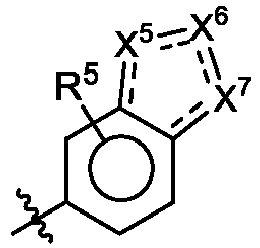
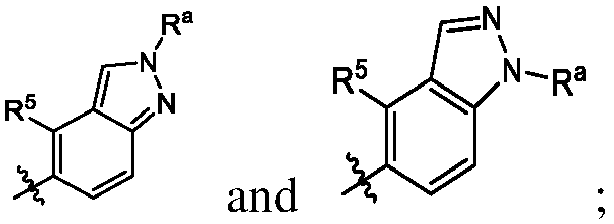


- In some embodiments, Ra is selected from 3- to 7-membered heterocycloalkyl, wherein the heterocycloalkyl is optionally substituted by halogen, C1-6 alkyl, C2-6 alkenyl, C2-6 alkynyl, 3- to 6-membered cycloalkyl, 3- to 6-membered heterocycloalkyl, C1-6 alkoxy, hydroxyl, or amino; in some embodiments, Ra is selected from 5-membered heterocycloalkyl, wherein the heterocycloalkyl is optionally substituted by halogen, C1-4 alkyl, C2-4 alkenyl, C2-4 alkynyl, 3- to 6-membered cycloalkyl, 3- to 6-membered heterocycloalkyl, C1-4 alkoxy, hydroxyl, or amino; in some embodiments, Ra is selected from 5-membered oxacycloalkyl, wherein the oxacycloalkyl is substituted by hydroxyl; and in some embodiments, Ra is selected from

- In some specific embodiments, the structural unit


- In some specific embodiments, the structural unit


- In some embodiments, X8, X9, X10, and X11 are each independently selected from the group consisting of CH, C(=O), N, and NH, and they are different from each other.
- In some embodiments, the Rb substitutes the hydrogen on NH or CH.
- In some embodiments, the Rb substitutes the hydrogen on NH.
- In some embodiments, the structural unit


- In some embodiments, the structural unit


- In some embodiments, Rb is selected from C1-6 alkyl, wherein the C1-6 alkyl is optionally substituted by fluoro or chloro; in some embodiments, Rb is selected from C1-4 alkyl, wherein the C1-4 alkyl is optionally substituted by fluoro; in some embodiments, Rb is selected from ethyl, wherein the ethyl is optionally substituted by fluoro; and in some embodiments, Rb is selected from the group consisting of -CH2CH3 and -CH2CF3.
- In some embodiments, Rb is selected from C1-6 alkyl, wherein the C1-6 alkyl is substituted by fluoro or chloro; in some embodiments, Rb is selected from C1-4 alkyl, wherein the C1-4 alkyl is substituted by fluoro; in some embodiments, Rb is selected from ethyl, wherein the ethyl is substituted by fluoro; and in some embodiments, Rb is selected from -CH2CF3.
- In some specific embodiments, the structural unit

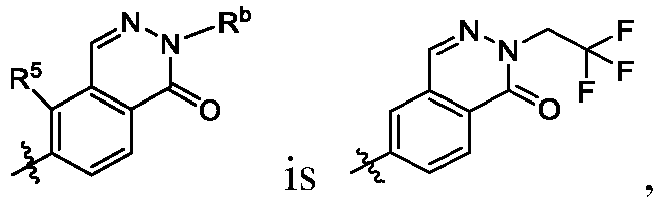


- In some specific embodiments, the structural unit


- In some embodiments, Y8, Y9, Y10, and Y11 are each independently selected from the group consisting of CH and N, and two of Y8, Y9, Y10, and Y11 are N, and the others are CH.
- In some embodiments, the structural unit


- In some embodiments, the structural unit


- In some embodiments, the structural unit

- In some embodiments, Rc, Rd, and Re are each independently selected from the group consisting of hydrogen, C1-12 alkyl, 3- to 10-membered cycloalkyl, 3- to 10-membered heterocycloalkyl, C1-12 alkoxy, hydroxyl, and amino. In some embodiments, Rc, Rd, and Re are each independently selected from the group consisting of hydrogen, C1-6 alkyl, 3- to 6-membered cycloalkyl, 3- to 6-membered heterocycloalkyl, C1-6 alkoxy, hydroxyl, and amino; in some embodiments, Rc, Rd, and Re are each independently selected from C1-4 alkyl; and in some embodiments, Rc, Rd and Re are each independently selected from methyl.
- In some embodiments, Rc, Rd, Re, Rf, and Rg are each independently selected from the group consisting of hydrogen, C1-6 alkyl, 3- to 6-membered cycloalkyl, 3- to 6-membered heterocycloalkyl, C1-6 alkoxy, hydroxyl, and amino; in some embodiments, Rc, Rd, Re, Rf, and Rg are each independently selected from the group consisting of hydrogen and C1-4 alkyl; and in some embodiments, Rc, Rd, Re, Rf, and Rg are each independently selected from the group consisting of hydrogen and methyl.
- In some embodiments, m is 1 or 2.
- In some embodiments, the R7 substitutes the hydrogen on CH.
- In some embodiments, each R7 is independently selected from the group consisting of halogen, C1-6 alkyl, hydroxyl, C1-6 alkoxy, amino, 3- to 6-membered cycloalkyl, 3- to 6-membered heterocycloalkyl, 5- to 6- membered heteroaryl, and C1-6 alkylamino, wherein the C1-6 alkyl, 3- to 6-membered cycloalkyl, 3- to 6-membered heterocycloalkyl, 5- to 6-membered heteroaryl, or C1-6 alkylamino is optionally substituted by halogen, and wherein the hydroxyl is optionally substituted by: -C1-6 alkyl-OH, -C1-6 alkyl-(3- to 6-membered heterocycloalkyl), -C1-6 alkyl-S(=O)2Rc, -C1-6 alkyl-NRdRe, -C1-6 alkyl-C(=O)NRfRg, -C1-6 alkyl-(3- to 6-membered cycloalkyl) optionally substituted by halogen or hydroxyl, or 3- to 6-membered heterocycloalkyl optionally substituted by halogen or hydroxyl, provided that: when R7 is selected from C1-6 alkoxy, R7 substitutes the hydrogen on Y9, Y10, or Y11. In some embodiments, each R7 is independently selected from the group consisting of halogen, C1-4 alkyl, hydroxyl, C1-4 alkoxy, amino, 3- to 6-membered cycloalkyl, 5- to 6-membered heteroaryl, and C1-4 alkylamino, wherein the C1-4 alkyl, 3- to 6-membered cycloalkyl, or C1-4 alkylamino is optionally substituted by halogen, and wherein the hydroxyl is optionally substituted by: -C1-4 alkyl-OH, -C1-4 alkyl-(3- to 6-membered heterocycloalkyl), -C1-4 alkyl-S(=O)2Rc, -C1-4 alkyl-NRdRe, -C1-4 alkyl-C(=O)NRfRg, -C1-4 alkyl-(3- to 6-membered cycloalkyl) optionally substituted by halogen or hydroxyl, or 5- to 6-membered heterocycloalkyl optionally substituted by halogen or hydroxyl, provided that: when R7 is selected from C1-4 alkoxy, R7 substitutes the hydrogen on Y9, Y10, or Y11. In some embodiments, each R7 is independently selected from the group consisting of methyl, ethyl, hydroxyl, methoxy, ethoxy, cyclopropyl, pyrazolyl, imidazolyl, and methylamino, wherein the methyl, ethyl, or cyclopropyl is optionally substituted by fluoro, and wherein the hydroxyl is optionally substituted by: -ethyl-OH, tetrahydropyranyl, -methyl-(oxetane), -propyl-S(=O)2Rc, -ethyl-NRdRe, -methyl-C(=O)NRfRg, cyclopropylmethyl- optionally substituted by hydroxyl, or tetrahydrofuranyl optionally substituted by hydroxyl, provided that: when R7 is selected from methoxy or ethoxy, R7 substitutes the hydrogen on Y9, Y10, or Y11. In some embodiments, each R7 is independently selected from the group consisting of methyl, ethyl, hydroxyl, methoxy, ethoxy, cyclopropyl, pyrazolyl, imidazolyl, and methylamino, wherein the methyl or ethyl is optionally substituted by fluoro, and wherein the hydroxyl is optionally substituted by: -ethyl-OH,


- In some specific embodiments, each R7 is independently selected from the group consisting of methyl, ethyl, cyclopropyl, difluoromethyl,


- In some more specific embodiments, each R7 is independently selected from the group consisting of methyl, ethyl, cyclopropyl, difluoromethyl,


- In some embodiments, each R7 is independently selected from the group consisting of halogen, C1-12 alkyl, hydroxyl, amino, 3- to 10-membered cycloalkyl, 3- to 10-membered heterocycloalkyl, and C1-12 alkylamino, wherein the hydroxyl is substituted by: -C1-12 alkyl-OH, 3- to 10-membered heterocycloalkyl, -C1-12 alkyl-S(=O)2Rc, or -C1-12 alkyl-NRdRe, wherein the C1-12 alkyl, 3- to 10-membered cycloalkyl, 3- to 10-membered heterocycloalkyl, or C1-12 alkylamino is optionally substituted by halogen.
- In some embodiments, each R7 is independently selected from the group consisting of halogen, C1-6 alkyl, hydroxyl, amino, 3- to 6-membered cycloalkyl, 3- to 6-membered heterocycloalkyl, and C1-6 alkylamino, wherein the hydroxyl is substituted by: -C1-6 alkyl-OH, 3-to 6-membered heterocycloalkyl, -C1-6 alkyl-S(=O)2Rc, or -C1-6 alkyl-NRdRe, wherein the C1-6 alkyl, 3- to 6-membered cycloalkyl, 3- to 6-membered heterocycloalkyl, or C1-6 alkylamino is optionally substituted by halogen. In some embodiments, each R7 is independently selected from the group consisting of halogen, C1-4 alkyl, hydroxyl, amino, 3- to 6-membered cycloalkyl, and C1-4 alkylamino, wherein the hydroxyl is substituted by: -C1-4 alkyl-OH, 5- to 6-membered heterocycloalkyl, -C1-4 alkyl-S(=O)2Rc, or -C1-4 alkyl-NRdRe, wherein the C1-4 alkyl, 3- to 6-membered cycloalkyl, or C1-4 alkylamino is optionally substituted by halogen. In some embodiments, each R7 is independently selected from the group consisting of methyl, ethyl, hydroxyl, cyclopropyl, and methylamino, wherein the hydroxyl is substituted by: -ethyl-OH, tetrahydropyranyl, -propyl-S(=O)2Rc, or -ethyl-NRdRe, wherein the methyl, ethyl, cyclopropyl or methylamino is optionally substituted by fluoro. In some embodiments, each R7 is independently selected from the group consisting of methyl, ethyl, hydroxyl, cyclopropyl, and methylamino, wherein the hydroxyl is substituted by: -ethyl-OH,


- In some specific embodiments, each R7 is independently selected from the group consisting of methyl, ethyl, cyclopropyl, hydroxyl, difluoromethyl, methylamino,


- In some specific embodiments, the structural unit


- In some more specific embodiments, the structural unit


- In some embodiments, each R71 is independently selected from the group consisting of hydroxyl and 5- to 6-membered heteroaryl, the hydroxyl is optionally substituted by: -C1-6 alkyl-OH, -C1-6 alkyl-(3- to 6-membered heterocycloalkyl), -C1-6 alkyl-S(=O)2Rc, -C1-6 alkyl-NRdRe, -C1-6 alkyl-C(=O)NRfRg, -C1-6 alkyl-(3- to 6-membered cycloalkyl) optionally substituted by halogen or hydroxyl, or 3- to 6-membered heterocycloalkyl optionally substituted by halogen or hydroxyl. In some embodiments, each R71 is independently selected from the group consisting of hydroxyl and 5- to 6-membered heteroaryl, wherein the hydroxyl is optionally substituted by: -C1-4 alkyl-OH, -C1-4 alkyl-(3- to 6-membered heterocycloalkyl), -C1-4 alkyl-S(=O)2Rc, -C1-4 alkyl-NRdRe, -C1-4 alkyl-C(=O)NRfRg, -C1-4 alkyl-(3- to 6-membered cycloalkyl) optionally substituted by halogen or hydroxyl, or 5- to 6-membered heterocycloalkyl optionally substituted by halogen or hydroxyl. In some embodiments, each R71 is independently selected from the group consisting of hydroxyl, pyrazolyl, and imidazolyl, wherein the hydroxyl is optionally substituted by: -ethyl-OH, tetrahydropyranyl, -methyl-(oxetane), -propyl-S(=O)2Rc, -ethyl-NRdRe, -methyl-C(=O)NRfRg, cyclopropylmethyl- optionally substituted by hydroxyl, or tetrahydrofuranyl optionally substituted by hydroxyl. In some embodiments, each R71 is independently selected from the group consisting of hydroxyl, pyrazolyl, and imidazolyl, wherein the hydroxyl is optionally substituted by: -ethyl-OH,
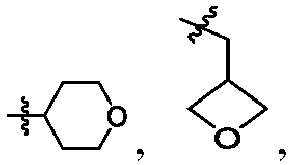
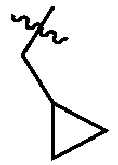

- In some specific embodiments, each R71 is independently selected from the group consisting of


- In some more specific embodiments, each R71 is independently selected from the group consisting of hydroxyl,


- In some embodiments, each R72 is independently selected from the group consisting of C1-6 alkyl, hydroxyl, C1-6 alkoxy, 3- to 6-membered cycloalkyl, and C1-6 alkylamino, wherein the C1-6 alkyl, 3- to 6-membered cycloalkyl, or C1-6 alkylamino is optionally substituted by halogen, and wherein the hydroxyl is substituted by: -C1-6 alkyl-OH, 5- to 6-membered heterocycloalkyl, -C1-6 alkyl-S(=O)2Rc, or -C1-6 alkyl-NRdRe. In some embodiments, each R72 is independently selected from the group consisting of C1-4 alkyl, hydroxyl, C1-4 alkoxy, 3- to 6-membered cycloalkyl, and C1-4 alkylamino, wherein the C1-4 alkyl, 3- to 6-membered cycloalkyl, or C1-4 alkylamino is optionally substituted by halogen, and wherein the hydroxyl is substituted by: -C1-4 alkyl-OH. In some embodiments, each R72 is independently selected from the group consisting of methyl, ethyl, hydroxyl, methoxy, ethoxy, cyclopropyl, and methylamino, wherein the methyl, ethyl, or cyclopropyl is optionally substituted by fluoro; wherein the hydroxyl is substituted by: -ethyl-OH. In some embodiments, each R72 is independently selected from the group consisting of methyl, ethyl, cyclopropyl, hydroxyl, methoxy, ethoxy, difluoromethyl, difluoroethyl, and methylamino, wherein the hydroxyl is substituted by: -ethyl-OH.
- In some specific embodiments, each R72 is independently selected from the group consisting of methyl, ethyl, cyclopropyl, difluoromethyl,


- In some embodiments, the structural unit


- In some embodiments, each R71 is independently selected from hydroxyl, and the hydroxyl is substituted by: -C1-6 alkyl-OH, 3- to 6-membered heterocycloalkyl, -C1-6 alkyl-S(=O)2Rc, or -C1-6 alkyl-NRdRe. In some embodiments, each R71 is independently selected from hydroxyl, wherein the hydroxyl is substituted by: -C1-4 alkyl-OH, 5- to 6-membered heterocycloalkyl, -C1-4 alkyl-S(=O)2Rc, or -C1-4 alkyl-NRdRe. In some embodiments, each R71 is independently selected from hydroxyl, wherein the hydroxyl is substituted by: -ethyl-OH, epoxyhexyl, -propyl-S(=O)2Rc, or -ethyl-NRdRe. In some embodiments, each R71 is independently selected from hydroxyl, wherein the hydroxyl is substituted by: -ethyl-OH,

- In some specific embodiments, each R71 is independently selected from the group consisting of

- In some embodiments, each R72 is independently selected from the group consisting of C1-6 alkyl, hydroxyl, 3- to 6-membered cycloalkyl, and C1-6 alkylamino, wherein the C1-6 alkyl, 3- to 6-membered cycloalkyl, or C1-6 alkylamino is optionally substituted by halogen, and wherein the hydroxyl is substituted by: -C1-6 alkyl-OH, 5- to 6-membered heterocycloalkyl, -C1-6 alkyl-S(=O)2Rc, or -C1-6 alkyl-NRdRe. In some embodiments, each R72 is independently selected from the group consisting of C1-4 alkyl, hydroxyl, 3- to 6-membered cycloalkyl, and C1-4 alkylamino, wherein the C1-4 alkyl, 3- to 6-membered cycloalkyl, or C1-4 alkylamino is optionally substituted by halogen, wherein the hydroxyl is substituted by: -C1-4 alkyl-OH. In some embodiments, each R72 is independently selected from the group consisting of methyl, ethyl, hydroxyl, cyclopropyl, and methylamino, wherein the methyl, ethyl, or cyclopropyl is optionally substituted by fluoro; and wherein the hydroxyl is substituted by: -ethyl-OH. In some embodiments, each R72 is independently selected from the group consisting of methyl, ethyl, cyclopropyl, hydroxyl, difluoromethyl, and methylamino, wherein the hydroxyl is substituted by: -ethyl-OH.
- In some specific embodiments, each R72 is independently selected from the group consisting of methyl, ethyl, cyclopropyl, hydroxyl, difluoromethyl, methylamino, and
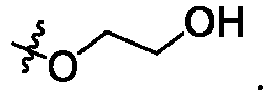
- In some specific embodiments, the structural unit


- In some specific embodiments,
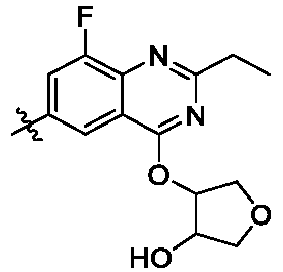

- In some specific embodiments, the structural unit

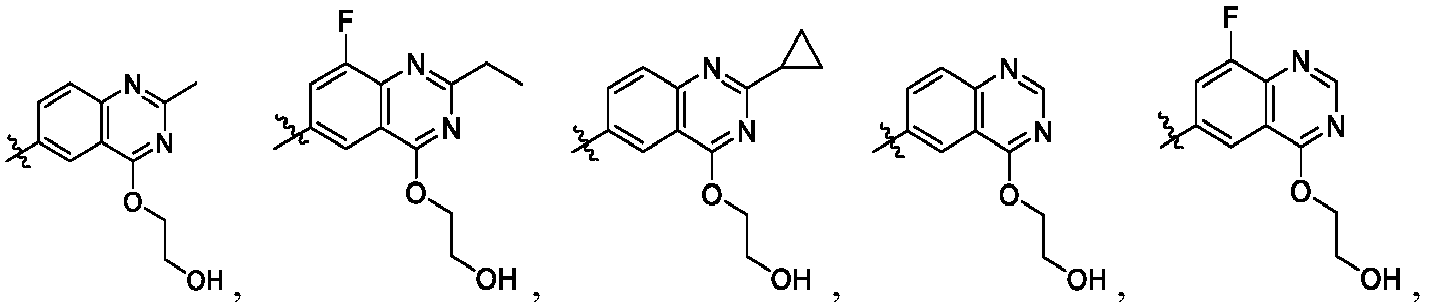


- In some embodiments, Z8, Z9, Z10, and Z11 are each independently selected from the group consisting of CH, C(=O), and N, and at least one of them is selected from N; in some embodiments, at least one of them is selected from C(=O), and at least one of them is selected from N; and in some embodiments, one of them is selected from C(=O), another one of them is selected from N, and the other two are each CH.
- In some embodiments, the structural unit
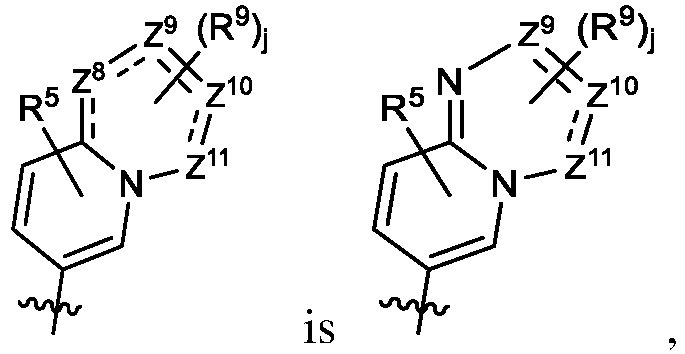


- In some embodiments, j is 1 or 2.
- In some embodiments, each R9 is independently selected from the group consisting of halogen, C1-6 alkyl, C1-6 alkoxy, and hydroxyl, wherein the C1-6 alkyl is optionally substituted by halogen or C1-6 alkoxy, and wherein the hydroxyl is optionally substituted by: -C1-6 alkyl-O-C1-6 alkyl, -C1-6 alkyl-OH, or -C1-6 alkyl-C(=O)NRfRg. In some embodiments, each R9 is independently selected from the group consisting of halogen, C1-4 alkyl, C1-4 alkoxy, and hydroxyl, wherein the C1-4 alkyl is optionally substituted by halogen or C1-4 alkoxy, and wherein the hydroxyl is optionally substituted by: -C1-4 alkyl-O-C1-4 alkyl, -C1-4 alkyl-OH, or -C1-4 alkyl-C(=O)NRfRg. In some embodiments, each R9 is independently selected from the group consisting of halogen, methyl, ethyl, methoxy, ethoxy, and hydroxyl, wherein the methyl or ethyl is optionally substituted by halogen or methoxy, and wherein the hydroxyl is optionally substituted by: -ethyl-O-methyl, -ethyl-OH, or -methyl-C(=O)NRfRg. In some embodiments, each R9 is independently selected from the group consisting of halogen, methyl, ethyl, methoxy, ethoxy, and hydroxyl, wherein the methyl or ethyl is optionally substituted by fluoro or methoxy, and wherein the hydroxyl is optionally substituted by: -ethyl-O-methyl, -ethyl-OH, -CH2C(=O)NHCH3, or -CH2C(=O)NH2.
- In some specific embodiments, each R9 is independently selected from the group consisting of ethyl, hydroxyl, methoxy,


- In some embodiments, the structural unit


- In some embodiments, R91 is selected from the group consisting of C1-6 alkyl, C1-6 alkoxy, and hydroxyl, wherein the C1-6 alkyl is optionally substituted by C1-6 alkoxy or halogen, and wherein the hydroxyl is optionally substituted by -C1-6 alkyl-OH or -C1-6 alkyl-O-C1-6 alkyl. In some embodiments, R91 is selected from the group consisting of C1-4 alkyl, C1-4 alkoxy, and hydroxyl, wherein the C1-4 alkyl is optionally substituted by C1-4 alkoxy or halogen, and wherein the hydroxyl is optionally substituted by -C1-4 alkyl-OH or -C1-4 alkyl-O-C1-4 alkyl. In some embodiments, R91 is selected from the group consisting of methyl, ethyl, methoxy, ethoxy, and hydroxyl, wherein the methyl or ethyl is optionally substituted by halogen or methoxy, and wherein the hydroxyl is optionally substituted by -ethyl-O-methyl or -ethyl-OH. In some embodiments, R91 is selected from the group consisting of methyl, ethyl, methoxy, ethoxy, and hydroxyl, wherein the methyl or ethyl is optionally substituted by fluoro or methoxy, and wherein the hydroxyl is optionally substituted by -ethyl-O-methyl or -ethyl-OH.
- In some specific embodiments, R91 is selected from the group consisting of ethyl, methoxy, ethoxy, difluoromethyl,

- In some embodiments, R92 is selected from the group consisting of hydroxyl, C1-6 alkoxy, and halogen, wherein the hydroxyl is optionally substituted by -C1-6 alkyl-OH, -C1-6 alkyl-O-C1-6 alkyl, or -C1-6 alkyl-C(=O)NRfRg. In some embodiments, R92 is selected from the group consisting of hydroxyl, C1-4 alkoxy, and halogen, wherein the hydroxyl is optionally substituted by -C1-4 alkyl-OH, -C1-4 alkyl-O-C1-4 alkyl, or -C1-4 alkyl-C(=O)NRfRg. In some embodiments, R92 is selected from the group consisting of hydroxyl, methoxy, and halogen, wherein the hydroxyl is optionally substituted by -ethyl-OH, -ethyl-O-methyl, or -methyl-C(=O)NRfRg. In some embodiments, R92 is selected from the group consisting of hydroxyl, methoxy, and halogen, wherein the hydroxyl is optionally substituted by -ethyl-OH, -ethyl-O-methyl, -CH2C(=O)NHCH3, or -CH2C(=O)NH2.
- In some specific embodiments, R92 is selected from the group consisting of hydroxyl, methoxy,

- In some specific embodiments, the structural unit


- In some embodiments, two of X12, X13, X14, X15, and X16 are NH and C(=O), respectively, and the others are CH2 or O.
- In some embodiments, the structural unit


- In some embodiments, each R8 is independently selected from the group consisting of hydrogen, C1-6 alkyl, hydroxyl, amino, 3- to 6-membered cycloalkyl, C1-6 alkoxy, 3- to 6-membered heterocycloalkyl, and C1-6 alkylamino; in some embodiments, each R8 is independently selected from C1-4 alkyl; and in some embodiments, each R8 is independently selected from ethyl.
- In some embodiments, q is 0, 1, or 2; in some embodiments, q is 1 or 2; and in some embodiments, q is 1.
- In some embodiments, the structural unit

- In some specific embodiments, the structural unit


- In another aspect, the present application provides a compound of Formula (II) or a pharmaceutically acceptable salt thereof:

- R2 and R3 are selected from methyl, or R2 and R3 are connected to each other to form cyclobutyl together; and
- the structural unit

- In some embodiments of the present invention, T is selected from CH.
- In still another aspect, the present application provides a compound of Formula (III-1) or a compound of Formula (III-2) or a pharmaceutically acceptable salt thereof:

- R2 and R3 are selected from methyl, or R2 and R3 are connected to each other to form cyclobutyl together; and
- the structural units

- In yet another aspect, the present application provides a compound of Formula (111-21) or a compound of Formula (111-22) or a pharmaceutically acceptable salt thereof:

- m is 1 or 2; R2 and R3 are selected from methyl, or R2 and R3 are connected to each other to form cyclobutyl together; and
- the structural unit

- In some embodiments, the structural unit


- In still yet another aspect, the present application provides a compound of Formula (IV) or a pharmaceutically acceptable salt thereof:

- q is 1 or 2; R2 and R3 are selected from methyl, or R2 and R3 are connected to each other to form cyclobutyl together; and
- the structural unit

- In some embodiments of the present application, T is selected from CH.
- In a further aspect, the present application provides a compound of Formula (V) or a pharmaceutically acceptable salt thereof:
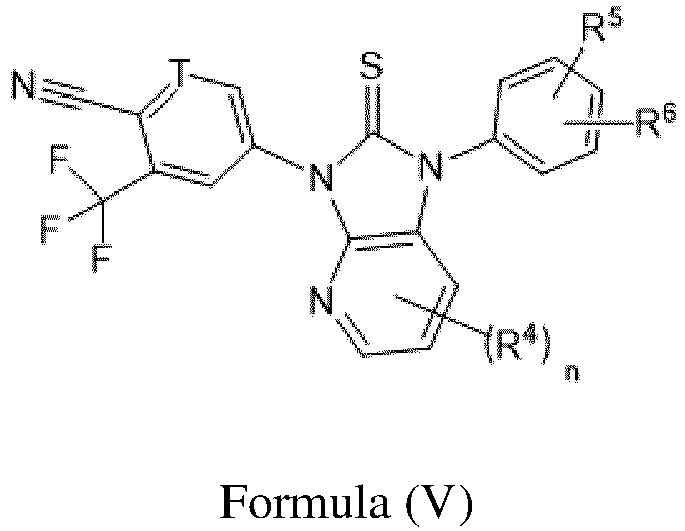

- In some embodiments of the present application, T is selected from CH.
- Preferably, the present application provides a compound of Formula (VI) or a pharmaceutically acceptable salt thereof:


R2 and R3 are selected from methyl, or R2 and R3 are connected to each other to form cyclobutyl together. - In some specific embodiments, R1 is selected from the group consisting of fluoro, chloro, and trifluoromethyl.
- Preferably, the present application provides a compound of Formula (VI-1) or a pharmaceutically acceptable salt thereof:

T, R1, R5, R9, and j are as defined in the compound of Formula (I); and R2 and R3 are selected from methyl, or R2 and R3 are connected to each other to form cyclobutyl together. - In some embodiments, the structural unit


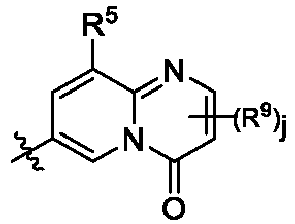
- In some specific embodiments, R1 is selected from the group consisting of fluoro, chloro, and trifluoromethyl.
- In another aspect, the present application provides a compound of Formula (VII) or a pharmaceutically acceptable salt thereof:

- T, R1, R4, and n are as defined in the compound of Formula (I); and
- the ring B is selected from the group consisting of


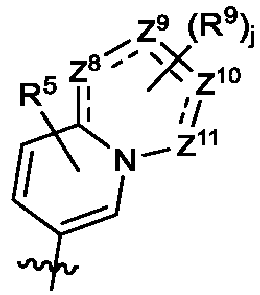
- In still another aspect, the present application provides the following compounds or a pharmaceutically acceptable salt thereof:







- In yet another aspect, the present application relates to a pharmaceutical composition, comprising the compound of Formula (I), Formula (II), Formula (III-1), Formula (III-2), Formula (111-21), Formula (111-22), Formula (IV), Formula (V), Formula (VI), Formula (VI-1), or Formula (VII), or a pharmaceutically acceptable salt thereof according to the present application. In some embodiments, the pharmaceutical composition of the present application further comprises a pharmaceutically acceptable excipient.
- In still yet another aspect, the present application relates to a method for treating an androgen-mediated disease in a mammal, comprising administering to a mammal, preferably a human, in need of the treatment a therapeutically effective amount of the compound of Formula (I), Formula (II), Formula (III-1), Formula (III-2), Formula (111-21), Formula (111-22), Formula (IV), Formula (V), Formula (VI), Formula (VI-1), or Formula (VII), or a pharmaceutically acceptable salt thereof, or the pharmaceutical composition thereof; and the disease includes, but is not limited to, cell proliferative diseases (e.g., cancer).
- In a further aspect, the present application relates to use of the compound of Formula (I), Formula (II), Formula (III-1), Formula (III-2), Formula (111-21), Formula (111-22), Formula (IV), Formula (V), Formula (VI), Formula (VI-1), or Formula (VII), or a pharmaceutically acceptable salt thereof, or the pharmaceutical composition thereof in the preparation of a medicament for the treatment of an androgen-mediated disease, and the disease includes, but is not limited to, cell proliferative diseases (e.g., cancer).
- In still a further aspect, the present application relates to use of the compound of Formula (I), Formula (II), Formula (III-1), Formula (III-2), Formula (111-21), Formula (111-22), Formula (IV), Formula (V), Formula (VI), Formula (VI-1), or Formula (VII), or a pharmaceutically acceptable salt thereof, or the pharmaceutical composition in the treatment of an androgen-mediated disease, and the disease includes, but is not limited to, cell proliferative diseases (e.g., cancer).
- In yet a further aspect, the present application relates to the compound of Formula (I), Formula (II), Formula (III-1), Formula (III-2), Formula (111-21), Formula (111-22), Formula (IV), Formula (V), Formula (VI), Formula (VI-1), or Formula (VII), or a pharmaceutically acceptable salt thereof, or the pharmaceutical composition thereof for use in preventing or treating an androgen-mediated disease, and the disease includes, but is not limited to, cell proliferative diseases (e.g., cancer).
- Unless specified otherwise, the following terms used herein have the following meanings. If a particular term is not specifically defined, it cannot be considered to be indefinite or unclear, and shall be understood according to the ordinary meaning in the art. Where a trade name is cited herein, it is intended to indicate the corresponding product or its active ingredient.
- The term "substituted" means that any one or more hydrogen atoms on a speific atom are replaced by substituents, as long as the valence of the specific atom is normal and the substituted compound is stable. When the substituent is oxo or keto (i.e., =O), it means that two hydrogen atoms are substituted.
- The term "optional" or "optionally" is intended to mean that the subsequently described event or circumstance may or may not occur, and that the description includes instances where said event or circumstance occurs and instances where said event or circumstance does not occur. For example, when ethyl is "optionally" substituted with fluoro or chloro, it is intended to mean that the ethyl may be unsubstituted (e.g., -CH2CH3), monosubstituted (e.g., -CH2CH2F, -CHFCH3), polysubstituted (e.g., -CHFCH2F, -CHClCH2F, -CH2CHCl2, -CH2CHF2 and the like), or compeletely substituted (-CFCICF3, -CF2CF3). It will be understood by those skilled in the art, with respect to any groups containing one or more substituents, that such groups are not intended to introduce any substitutions or substitution patterns which are sterically impractical and/or synthetically non-feasible. Unless otherwise specified, the kinds and numbers of substituents may be arbitrary on the basis that they are chemically achievable .
- When a substituent may be connected to more than one atom on a ring, such a substituent may be bound to any atom on the ring, for example, the structural unit


- "Cm-n" as used herein means that this moiety has an integer number of carbon atoms in the given range. For example, "C1-6" means that the group may have 1 carbon atom, 2 carbon atoms, 3 carbon atoms, 4 carbon atoms, 5 carbon atoms, or 6 carbon atoms; and "C3-6" means that the group may have 3 carbon atoms, 4 carbon atoms, 5 carbon atoms, or 6 carbon atoms.
- When any variable (e.g., R7) occurs in the composition or structure of a compound more than once, the variable at each occurrence is independent defined. Therefore, for example, (R7)m represents a group substituted by m R7, and each R7 has independent options; and specifically, for example, when m=2, one group is substituted by 2 R7, and each R7 has independent options.
- The term "halo" or "halogen" refers to fluoro, chloro, bromo, and iodo.
- The term "hydroxyl" refers to -OH group.
- The term "amino" refers to -NH2 group.
- The term "trifluoromethyl" refers to -CF3 group.
- The term "alkyl" refers to a hydrocarbyl having a general formula CnH2n+1. The alkyl may be straight or branched. For example, the term "C1-6 alkyl"" refers to an alkyl containing 1 to 6 carbon atoms (e.g., methyl, ethyl, n-propyl, isopropyl, n-butyl, isobutyl, sec-butyl, tert-butyl, n-pentyl, 1-methylbutyl, 2-methylbutyl, 3-methylbutyl, neopentyl, hexyl, 2-methylpentyl and the like). Similarly, the alkyl moiety (i.e., an alkyl) of an alkoxy has the same definition as above; and the term "C1-3 alkyl" refers to an alkyl containing 1 to 3 carbon atoms (e.g., methyl, ethyl, n-propyl, or isopropyl).
- The term "alkoxy" refers to -O-alkyl.
- The term "alkylamino" refers to -NH-alkyl.
- The term "alkylaminocarbonyl" refers to -C(=O)-NH-alkyl.
- The term "alkenyl" refers to a straight or branched unsaturated aliphatic hydrocarbonyl consisting of carbon atoms and hydrogen atoms and having at least one double bond. Non-limiting examples of the alkenyl include, but are not limited to, ethenyl, 1-propenyl, 2-propenyl, 1-butenyl, isobutenyl, 1,3-butadienyl, and the like. For example, the term "C2-6 alkenyl" refers to an alkenyl containing 2 to 6 carbon atoms; and the term "C2-C3 alkenyl" refers to an alkenyl containing 2 to 3 carbon atoms (e.g., ethenyl, 1-propenyl, or 2-propenyl).
- The term "alkynyl" refers to a straight or branched unsaturated aliphatic hydrocarbonyl consisting of carbon atoms and hydrogen atoms and having at least one triple bond. Non-limiting examples of the alkynyl include, but are not limited to, ethynyl (-C≡CH), 1-propynyl (-C≡C-CH3), 2-propynyl (-CH2-C≡CH), 1,3-butadiynyl (-C≡CC≡CH), and the like.
- The term "cycloalkyl" refers to a fully saturated carbon ring that may exist as a monocyclic ring, a bridged ring, or a spiro ring. Unless otherwise specified, the carbon ring is usually a 3- to 10-membered ring. Non-limiting examples of the cycloalkyl include, but are not limited to, cyclopropyl, cyclobutyl, cyclopentyl, cyclohexyl, norbornyl (bicyclo[2.2.1]heptyl), bicyclo[2.2.2]octyl, adamantyl, and the like. The cycloalkyl is preferably a monocyclic cycloalkyl having 3 to 6 ring atoms.
- The term "heterocycloalkyl" refers to a fully saturated cyclic group that may exist as a monocyclic ring, a bicyclic ring, or a spiro ring. Unless otherwise indicated, the heterocyclic ring is usually a 3- to 7-membered ring containing 1 to 3 heteroatoms (preferably 1 or 2 heteroatoms) independently selected from the group consisting of sulfur, oxygen, and/or nitrogen. Examples of a 3-membered heterocycloalkyl include, but are not limited to, epoxyethyl, cyclothioethyl, and azirdinyl; non-limiting examples of a 4-membered heterocycloalkyl include, but are not limited to, azetidinyl, oxetanyl, and thietanyl; examples of a 5-membered heterocycloalkyl include, but are not limited to, tetrahydrofuranyl, tetrahydrothienyl, pyrrolidinyl, isooxazolidinyl, oxazolidinyl, isothiazolidinyl, thiazolidinyl, imidazolidinyl, tetrahydropyrazolyl, and pyrrolinyl; examples of a 6-membered heterocycloalkyl include, but are not limited to, piperidinyl, tetrahydropyranyl, tetrahydrothiopyranyl, morpholinyl, piperazinyl, 1,4-thioxanyl, 1,4-dioxanyl, thiomorpholinyl, 1,2-dithioalkyl, 1,4-dithioalkyl, and tetrahydropyranyl; and examples of a 7-membered heterocycloalkyl include, but are not limited to, azacycloheptyl, oxacycloheptyl, and thiacycloheptyl. The heterocycloalkyl is preferably a monocyclic heterocycloalkyl having 5 to 6 ring atoms.
- The term "heteroaryl" refers to a monocyclic or fused polycyclic ring system containing at least one ring atom selected from the group consisting of N, O, and S, the other ring atoms being C, and having at least one aromatic ring. A preferable heteroaryl has a single 4-to 8-membered ring, and particularly a 5- to 8-membered ring, or a plurality of fused rings containing 6 to 14, and particularly 6 to 10, ring atoms. Non-limiting examples of the heteroaryl include, but are not limited to, pyrrolyl, furanyl, thienyl, imidazolyl, oxazolyl, pyrazolyl, pyridinyl, pyrimidinyl, pyrazinyl, quinolyl, isoquinolyl, tetrazolyl, triazolyl, triazinyl, benzofuranyl, benzothienyl, indolyl, isoindolyl, and the like.
- The "-C1-12 alkyl-(3- to 10-membered cycloalkyl)" herein represents a C1-12 alkyl substituted by a 3- to 10-membered cycloalkyl, and other similar expressions should be understood similarly.
- Herein, the "-C1-12 alkyl-(3- to 10-membered cycloalkyl) optionally substituted by halogen or hydroxyl" means that any hydrogen atom of the -C1-12 alkyl-(3- to 10-membered cycloalkyl) may be substituted by halogen or hydroxyl, and other similar expressions should be understood similarly.
- The structural unit
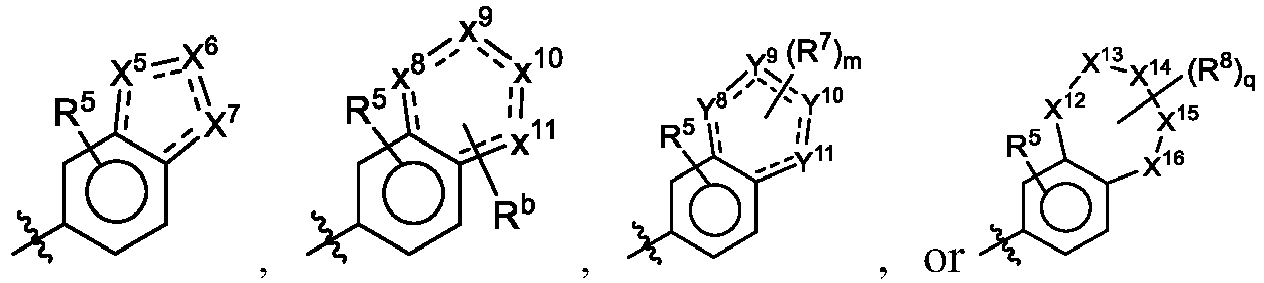
---- " correspondingly represents a single bond or a double bond according to a specific option of X5, X6, X7, X8, X9, X10, X11, Y8, Y9, Y10, or Y11 in the present application, and will not violate the valence bond theory. For example, when X5 is CH, X6 is N (-Ra), and X7 is N, the structural unit
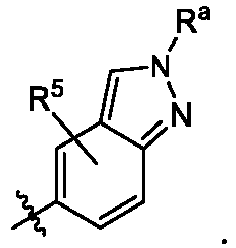
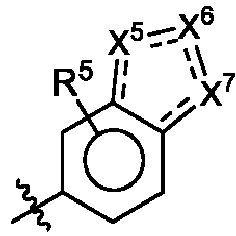
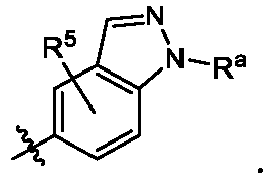

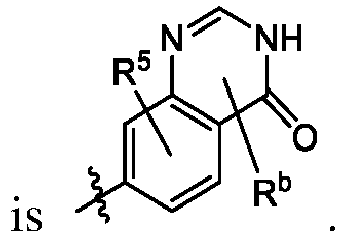


---- " correspondingly represents a single bond or a double bond according to a specific option of Z8, Z9, Z10, or Z11 in the present application, and will not violate the valence bond theory. - Unless otherwise indicated, a wedge-shaped bond and a dotted bond (
 ) denote an absolute configuration of a stereocenter, while a wavy line
 denotes one of the absolute configurations of a stereocenter (e.g., one of
 or
or ), and
 and
and denote a relative configuration of a stereocenter. When the compounds of the present application contain olefinic double bonds or other geometrically asymmetric centers, they include E and Z geometric isomers, unless otherwise specified. Likewise, all tautomeric forms are included within the scope of the present application.
- The compounds of the present application may exist in specific geometrical isomers or stereoisomeric forms. All such compounds are contemplated in the present application, including tautomers, cis- and trans-isomers, (-)- and (+)-enantiomers, (R)- and (S)-enantiomers, diastereomers, (D)-isomers, (L)-isomers, and their racemic mixtures and other mixtures, such as enantiomer or diastereomer enriched mixtures. All such mixtures are included in the scope of the present application. Substituents such as an alkyl group may have additional unsymmetrical carbon atoms. All such isomers and mixtures thereof are included within the scope of the present application.
- The term "treating" or "treatment" means administering the compounds or preparations according to the present application to prevent, ameliorate, or eliminate a disease or one or more symptoms associated with the disease, and includes:
- (i) preventing the occurrence of a disease or condition in a mammal, particularly when such an mammal is susceptible to the condition, but has not yet been diagnosed as having the condition;
- (ii) inhibiting a disease or condition, i.e., arresting its development; and
- (iii) alleviating a disease or condition, i.e., causing regression of the disease or condition .
- The term "therapeutically effective amount" is intended to refer to an amount of the compound of the present application for (i) treating or preventing a particular disease, condition, or disorder, (ii) relieving, ameliorating, or eliminating one or more symptoms of the particular disease, condition, or disorder, or (iii) preventing or delaying onset of one or more symptoms of the particular disease, condition, or disorder described herein. The amount of the compound of the present application constituting the "therapeutically effective amount" will vary depending on the compound, the disease condition and its severity, the administration method, and the age of the mammal to be treated, but may be routinely determined by those skilled in the art based on their own knowledge and the present disclosure.
- The term "pharmaceutically acceptable" refers to those compounds, materials, compositions and/or dosage forms that are, within the scope of sound medical judgment, suitable for use in contact with the tissues of human being and animals without excessive toxicity, irritation, allergic response or other problems or complications, commensurate with a reasonable benefit/risk ratio.
- As the pharmaceutically acceptable salts, for example, metal salts, ammonium salts, salts of organic bases, salts of inorganic acids, salts of organic acids, salts of alkaline or acidic amino acids may be mentioned.
- The term "pharmaceutical composition" refers to a mixture of one or more of the compounds or salts thereof of the present application and a pharmaceutically acceptable excipient. An object of the pharmaceutical composition is to facilitate administering the compound of the present application to an organism.
- The term "pharmaceutically acceptable excipient" refer to the excipients that neither have obvious irritation effects on an organism, nor will impair the bioactivity and properties of the active compound. Appropriate excipients are well known to those skilled in the art, such as carbohydrates, waxes, water-soluble and/or water-swellable polymers, hydrophilic or hydrophobic materials, gelatin, oils, solvents, water and the like.
- The wording "comprise" and English variations thereof (such as "comprises" and "comprising") should be understood as open and non-exclusive meanings, i.e. "include but not limited to".
- The intermediates and compounds according to the present application may also exist in the form of different tautomers, and all such forms are included in the scope of the present application. The term "tautomer" or "tautomeric form" refers to structural isomers of different energies which are interconvertible via a low energy barrier. For example, proton tautomers (also known as prototropic tautomers) include interconversions via migration of a proton, such as keto-enol and imine-enamine isomerizations. A specific example of proton tautomers is an imidazole moiety, wherein a proton can migrate between the two nitrogen atoms of the ring. Valence tautomers include interconversions by reorganization of some of the bond-forming electrons.
- The present application also includes isotopically-labeled compounds of the present application that are identical to those described herein, but in which one or more atoms are replaced with atoms having an atomic weight or mass number different from that normally found in nature. Examples of the isotopes that can be incorporated into the compounds of the present application include isotopes of hydrogen, carbon, nitrogen, oxygen, phosphorus, sulfur, fluorine, iodine, and chlorine. For example, the isotopes are 2H, 3H, 11C, 13C, 14C, 13N, 15N, 15O, 17O, 18O, 31P, 32P, 35S, 18F, 123I, 125I, and 36Cl, respectively.
- Certain isotopically-labeled compounds of the present application (e.g., those labeled with 3H and 14C) can be used in compound and/or substrate tissue distribution assays. Tritium (i.e., 3H) and carbon-14 (i.e., 14C) isotopes are particularly preferred due to their ease of preparation and detectability. Positron emitting isotopes, such as 15O, 13N, 11C, and 18F, can be used in Positron Emission Topography (PET) studies to determine substrate occupancy. Isotopically-labeled compounds of the present application can generally be prepared by the procedures similar to those disclosed in the schemes and/or examples below, by replacing non-isotopically-labeled reagents with isotopically-labeled reagents.
- Furthermore, the substitution with heavier isotopes (such as deuterium, i.e. 2H) may afford certain therapeutic advantages resulting from greater metabolic stability, for example, increased in vivo half-life or reduced dosage requirements, and thus may be preferable in some circumstances, wherein the deuterium substitution may be partial or complete, and the partial deuterium substitution means that at least one hydrogen is substituted with at least one deuterium.
- The compounds of the present application may be asymmetric, for example, having one or more stereoisomers. Unless otherwise stated, all the stereoisomers are included, such as enantiomers and diastereoisomers. The compounds containing asymmetric carbon atoms of the present application can be isolated in optically active pure forms or racemic forms. Optically active pure forms can be resolved from racemic mixtures or synthesized by using chiral starting materials or chiral reagents.
- The pharmaceutical composition of the present application can be prepared by combining the compound of the present application with a suitable pharmaceutically acceptable excipient, and for example, it can be formulated into solid, semi-solid, liquid or gaseous preparations, such as tablets, pills, capsules, powders, granules, ointments, emulsions, suspensions, suppositories, injections, inhalants, gels, microparticles, aerosols and the like.
- Typical routes for administering the compound or a pharmaceutically acceptable salt thereof, or the pharmaceutical composition thereof of the present application include, but are not limited to, oral, rectal, topical, inhalational, parenteral, sublingual, intravaginal, intranasal, intraocular, intraperitoneal, intramuscular, subcutaneous, and intravenous administration.
- The pharmaceutical composition of the present application can be manufactured by using well-known methods in the art, such as a conventional mixing method, a dissolution method, a granulation method, a method for preparing sugar-coated pills, a grinding method, a emulsification method, lyophilization and the like.
- In some embodiments, the pharmaceutical composition is in an oral form. For the oral administration, the pharmaceutical composition can be formulated by mixing an active compound with a pharmaceutically acceptable excipient well known in the art. These excipients enable the compound of the present application to be formulated into tablets, pills, pastilles, dragees, capsules, liquids, gels, slurries, suspensions, and the like, for oral administration to a patient.
- A solid oral composition can be prepared by conventional mixing, filling or tableting methods. For example, it can be obtained by the following method: mixing the active compound with a solid excipient, optionally grinding the resulting mixture, adding other suitable excipients, if necessary, and then processing the mixture into granules to obtain a core of a tablet or a dragee. Suitable excipients include, but are not limited to: binders, diluents, disintegrants, lubricants, glidants, sweeteners, or flavoring agents.
- The pharmaceutical composition may also be suitable for parenteral administration, such as sterile solutions, suspensions or lyophilized products in suitable unit dosage forms.
- In all the administration methods for the compounds of Formula (I), Formula (II), Formula (III-1), Formula (III-2), Formula (111-21), Formula (111-22), Formula (IV), Formula (V), Formula (VI), Formula (VI-1), or Formula (VII) according to the present application, the daily dose is 0.01 to 200 mg/kg body weight, in the form of separate or divided doses.
- The compounds of the present application can be prepared by a variety of synthetic methods well known to those skilled in the art, including the specific embodiments listed below, the embodiments obtained by combining the specific embodiments listed below with other chemical synthesis methods, and equivalents well known to those skilled in the art. The preferred embodiments include, but are not limited to, the examples of the present application.
- The chemical reactions in the specific embodiments of the present application are carried out in suitable solvents which are suitable for the chemical changes of the present application and the required reagents and materials thereof. In order to obtain the compounds of the present application, it is sometimes necessary for those skilled in the art to modify or select the synthetic steps or reaction schemes based on the existing embodiments.
- It is one important consideration factor for planning a synthesis scheme in the art to select appropriate protecting groups for the reactive functional groups (such as the hydroxyl group in the present application). For example, reference may be made to Greene's Protective Groups in Organic Synthesis (4th Ed). Hoboken, New Jersey: John Wiley & Sons, Inc. All references cited in the present application are incorporated herein by reference in their entirety.
- In some embodiments, the compounds of Formula (I) of the present application may be prepared by those skilled in the field of organic synthesis through the following steps and routes:
-

-

-

-

-

-

-

-
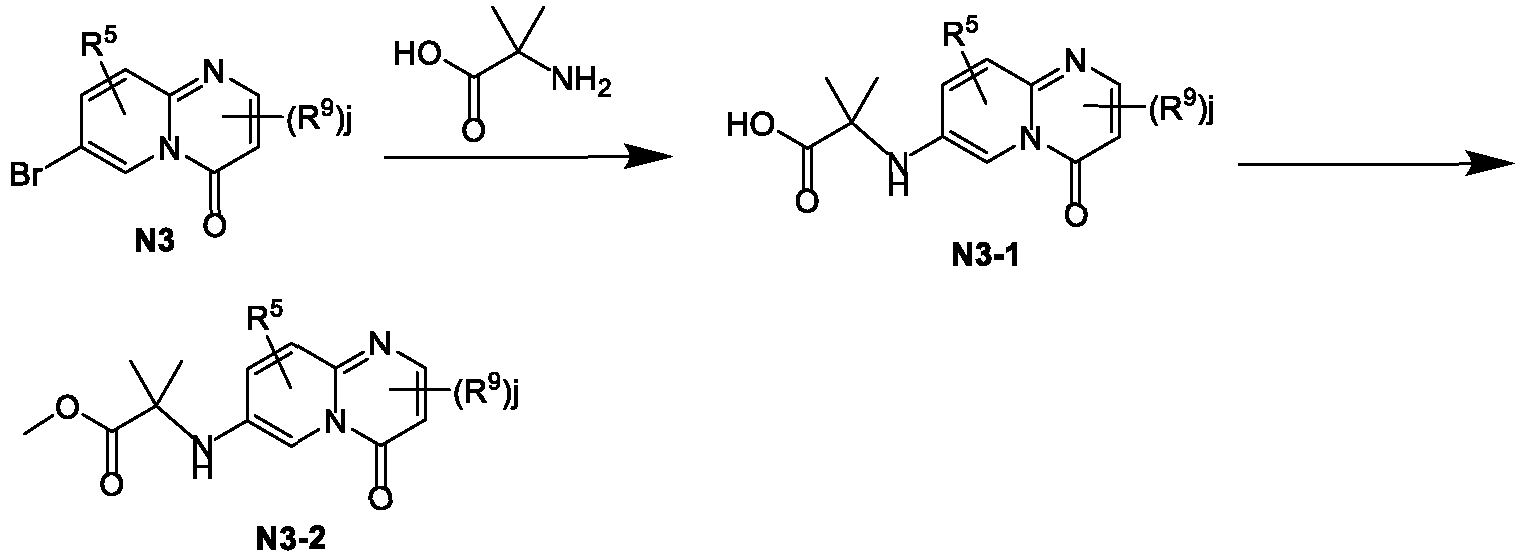
-

-

-

-

-

-

-

-

- In the above routes,
each R71 is independently selected from the group consisting of hydroxyl and 5- to 10-membered heteroaryl, and the hydroxyl is optionally substituted by: -C1-12 alkyl-(3- to 10-membered heterocycloalkyl), -C1-12 alkyl-S(=O)2Rc, -C1-12 alkyl-NRdRe, -C1-12 alkyl-C(=O)NRfRg, -C1-12 alkyl-(3- to 10-membered cycloalkyl) optionally substituted by halogen or hydroxyl, or 3- to 10-membered heterocycloalkyl optionally substituted by halogen or hydroxyl; or each R71 is independently selected from hydroxyl, and the hydroxyl is optionally substituted by: heterocycloalkyl, -alkyl-S(=O)2Rc, or -alkyl-NRdRe, wherein Rc, Rd and Re are as defined in the present application; and
R10 is selected from the group consisting of R72 and H, and j, T, R1, R5, R9, and R72 are as defined in the present application. - The following abbreviations are used in the present application:
DMF represents N,N-dimethylformamide, DMSO represents dimethyl sulfoxide, LCMS represents liquid chromatography-mass spectrometry, TLC represents thin layer chromatography, HPLC represents high performance liquid chromatography, Boc represents tert-butoxycarbonyl, TMSCHN2 represents trimethylsilyldiazomethane, TMSCN represents trimethylsilyl cyanide, diBoc represents di-tert-butyl dicarbonate, NBS represents N-bromosuccinimide, CDI represents 1,1'-carbonyldiimidazole, Boc-NH2 represents tert-butyl carbamate, Boc2O represents di-tert-butyl dicarbonate, EDTA-K2 represents dipotassium ethylenediamine tetraacetate, DAST represents diethylaminosulfur trifluoride, NMP represents 1-methyl-2-pyrrolidone, CMC represents carboxymethyl cellulose, HATU represents 2-(7-azabenzotriazol-1-yl)-N,N,N',N'-tetramethyluronium hexafluorophosphate; v/v represents a volume ratio; RLU represents a relative luminous intensity; Solutol represents polyethylene glycol-15 hydroxystearate; PEG400 represents polyethylene glycol 400; PO represents oral administation; QD represents the frequency of administration; PMB represents p-methoxybenzyl; and DPPF represents 1,1'-bis(diphenylphosphino)ferrocene. - The present application will be described below in detail in conjunction with examples, but it is not intended to impose any unfavorable limitation to the present invention. The present application has been described in detail herein, and specific embodiments thereof are also disclosed. It will be apparent for those skilled in the art to make various modifications and improvements of the specific embodiments of the present application without departing from the spirit and scope of the present application. All solvents used in the present application are commercially available, and can be used without further purification. The starting compound materials used for synthesis in the present application are commercially available, or may be prepared by methods in the prior art.
- The nuclear magnetic resonance chromatography (NMR) in the present application is determined by using BRUKER 400 nuclear magnetic resonance spectrometer with tetramethylsilane (TMS=δ 0.00) as the internal standard of the chemical shift. The nuclear magnetic resonance hydrogen spectrum data are recorded in the format of: peak pattern (s: singlet; d: doublet; t: triplet; q: quartet; m: multiplet), coupling constant (unit: Hertz Hz), and the number of protons. SHIMADUZU LCMS-2010 is used as the instrument for mass spectrometry.
-

-

- 0.5 mL of dichlorosulfoxide was added dropwise to a solution of Compound 1-1 (300 mg, 1.33 mmol) in 5 mL of DMF. The reaction mixture was heated to 80 °C, and stirred at this temperature for 6 h. The reaction mixture was spin-dried under reduced pressure. The resulting solid was dissolved in 30 mL of ethyl acetate, washed with 20 mL of water and 20 mL of saturated brine respectively, dried over anhydrous sodium sulfate, filtered, and concentrated, to obtain Compound 1-2. LCMS (ESI) m/z: 245 (M+3).
-

- In a microwave tube, Compound 1-2 (150 mg, 616.04 µmol) and a solution of methylamine in ethanol (750 µL, 20-30% purity) were dissolved in tert-butanol (4 mL). The reaction mixture was kept at 90 °C for microwave reaction for 0.5 h, and then concentrated under reduced pressure. The resulting residue was dissolved in 20 mL of ethyl acetate, washed with 10 mL of water and 20 mL of saturated brine respectively, dried over anhydrous sodium sulfate, filtered, and concentrated, to obtain Compound 1-3. 1H NMR (400 MHz, CDCl3) δ ppm 8.45 (s, 1 H), 7.85(d, J=3.2Hz, 2 H), 7.67 (s, 1H), 3.07 (s, 3 H); LCMS (ESI) m/z: 240 (M+3).
-

- In a microwave tube, Compound 1-3 (250 mg, 961.86 µmol), Compound 1-4 (149 mg, 1.44 mmol), potassium carbonate (332 mg, 2.40 mmol), cuprous chloride (19 mg, 192.37 µmol) and 2-acetylcyclohexanone (27 mg, 192.37 µmol) were dissolved in a mixed solution of DMF (5 mL) and water (0.5 mL), and the resulting mixture was kept at 130 °C for microwave reaction for 1.5 h. The reaction mixture was cooled, and then filtered. 12 mL of water was added to the filtrate, and the resulting mixture was then extracted with ethyl acetate (20 mL×3), and the aqueous phase was concentrated under reduced pressure to obtain Compound 1-5. LCMS (ESI) m/z: 261 (M+1).
-

- Dichlorosulfoxide (500 µL) was added dropwise to a solution of Compound 1-5 (300 mg, 1.15 mmol) in methanol (4 mL) in an ice bath. Then, the resulting mixture was heated to 26 °C, and stirred at this temperature for 6 h. The reaction mixture was concentrated under reduced pressure, and 10 mL of water was added to the residue. The resulting mixture was extracted with ethyl acetate (15 mL×3), and the aqueous phase was adjusted to pH=10 with a saturated sodium bicarbonate solution. A brown solid precipitated, and was filtered. The filter cake was collected to obtain Compound 1-6. 1H NMR (400 MHz, CDCl3) δ ppm 8.22 (s, 1H), 7.80-7.78 (dd, J=4.4, 8.8 Hz, 2 H), 6.78-6.76 (d, J=9.2Hz, 1H), 6.71(s, 1H), 6.25 (s, 1H), 3.59 (s, 3H), 2.91 (s, 3H), 1.49 (s, 6 H).
-

- Compound 1-6 (150 mg, 546.81 µmol) and Compound 1-7 (250 mg, 1.09 mmol) were dissolved in a mixed solution of DMF (500 µL) and methylbenzene (2 mL), and the resulting mixture was heated to 90 °C, and stirred at this temperature in a nitrogen atmosphere for 48 h. 3 mL of methanol was added dropwise to the reaction mixture, and the resulting mixture was stirred at room temperature for 0.5 h. Then, the reaction mixture was spin-dried under reduced pressure. The resulting solid was dissolved in 15 mL of ethyl acetate, then washed with 15 mL of water and 30 mL of saturated brine respectively, dried over anhydrous sodium sulfate, filtered, and spin-dried. The crude product was purified by a preparative TLC plate and preparative HPLC method to obtain Compound 1. 1H NMR(400MHz, CDCl3) δ ppm 8.76 (s, 1 H), 8.02 (d, J=8Hz, 2 H), 7.83-7.91 (m, 3H), 7.44 (dd, J=2, 2.2 Hz, 1H), 5.89 (d, J=4.4Hz,1H), 3.27 (d, J=4.8Hz, 3H), 1.70 (s, 6H); LCMS (ESI) m/z: 471 (M+1).
-

-

- Dichlorosulfoxide (1.96 g, 16.44 mmol) was added dropwise to a solution of Compound 2-1 (850 mg, 5.48 mmol) in methanol (10 mL) at 0 °C. After the completion of the dropwise addition, the resulting mixture was stirred at 25 °C for 12 h. The reaction mixture was concentrated, and the resulting residue was basified with a saturated sodium bicarbonate solution (30 mL), and extracted with dichloromethane (20 mL×2). The combined organic phase was washed with water (50 mL), dried over anhydrous sodium sulfate, filtered, and concentrated to obtain Compound 2-2. LCMS (ESI) m/z: 170 (M+1).
-

- Compound 2-2 (300 mg, 1.77 mmol), Compound 2-3 (637 mg, 2.66 mmol), 4,5-bis(diphenylphosphino)-9,9-dimethylxanthene (103 mg, 177.36 µmol), bis(dibenzylideneacetone) palladium (102 mg, 177.36 µmol), and cesium carbonate (1.16 g, 3.55 mmol) were added to a microwave tube filled with methylbenzene (5 mL). Then, the resulting mixture was kept at 120 °C for microwave reaction for 2 h. The reaction mixture was diluted with dichloromethane (5 mL), and filtered. The filtrate was concentrated. The resulting crude product was purified by a chromatographic column to obtain Compound 2-4. LCMS (ESI) m/z: 281 (M+1).
-

- Compound 2-4 (200 mg, 712.56 µmol), Compound 2-5 (159 mg, 855.07 µmol), 4,5-bis(diphenylphosphino)-9,9-dimethylxanthene (41 mg, 71.26 µmol), cesium carbonate (464 mg, 1.43 mmol), and bis(dibenzylideneacetone)palladium (41 mg, 71.26 µmol) were added to a microwave tube filled with methylbenzene (5 mL). Then, the resulting mixture was kept at 120 °C for microwave reaction for 2 h. The reaction mixture was diluted with dichloromethane (20 mL), and filtered. The filtrate was concentrated. The resulting crude product was purified by a preparative chromatoplate to obtain Compound 2-6. LCMS (ESI) m/z: 431 (M+1).
-

- Thiophosgene (107 mg, 929.48 µmol) was added dropwise to a solution of Compound 2-6 (200 mg, 464.74 µmol) and sodium tert-butoxide (223 mg, 2.32 mmol) in tetrahydrofuran (2 mL) at 0 °C. After the completion of the dropwise addition, the resulting mixture was stirred at 60 °C for 12 h. The reaction mixture was cooled to 20 °C and then water (10 mL) was added to quench the reaction. The resulting mixture was diluted with dichloromethane (10 mL), and extracted with dichloromethane (10 mL×2). The combined organic phase was washed with saturated brine (20 mL), dried over anhydrous sodium sulfate, filtered, and concentrated. The resulting crude product was purified by a preparative chromatoplate to obtain Compound 2-7. LCMS (ESI) m/z: 473 (M+1).
-

- An aqueous solution of lithium hydroxide (1 M, 1 mL) was added dropwise to a solution of Compound 2-7 (40 mg, 84.67 µmol) in tetrahydrofuran (4 mL) at room temperature (20 °C). After the completion of the dropwise addition, the resulting mixture was heated to 80 °C, and stirred for 2 h. The reaction mixture was acidified to pH=5-6 with 1M dilute hydrochloric acid, and extracted with dichloromethane (10 mL×3). The combined organic phase was washed with saturated brine (20 mL), dried over anhydrous sodium sulfate, filtered, and concentrated to obtain Compound 2-8. LCMS (ESI) m/z: 459 (M+1).
-

- At room temperature (20 °C), methylamine hydrochloride (5 mg, 78.54 µmol), triethylamine (20 mg, 196.35 µmol), and O-(7-azabenzotriazol-1-yl)-N,N,N',N'-tetramethyluronium hexafluorophosphate (30 mg, 78.54 µmol) were added to a solution of Compound 2-8 (30 mg, 65.45 µmol) in dichloromethane (2 mL). The resulting mixture was stirred at 20 °C for 1 h. Water (10 mL) was added to the reaction mixture, and then the resulting mixture was diluted with dichloromethane (10 mL), and extracted with dichloromethane (10 mL×2). The combined organic phase was washed with saturated brine (20 mL), dried over anhydrous sodium sulfate, filtered, and concentrated. The resulting crude product was purified by a preparative TLC plate and preparative HPLC method to obtain Compound 2. 1H NMR (400 MHz, CDCl3) δ ppm 8.40-8.38(m, 1H), 8.27-8.24 (m, 2H), 8.18-8.16 (m, 1H), 8.10-8.09 (m, 1H), 7.53-7.49 (m, 2H), 7.38-7.36 (m, 1H), 7.28-7.27 (m, 1H), 3.11 (d, J=4.8Hz, 3H); LCMS (ESI) m/z: 472 (M+1).
-

-

- Zinc powder (3.98 g, 60.84 mmol) and ammonium chloride (3.25 g, 60.84 mmol) were added to a solution of Compound 3-1 (2.10 g, 12.17 mmol) in methanol (20 mL) and dichloromethane (10 mL). The resulting reaction mixture was stirred at 15 °C for 24 h. The reaction mixture was filtered, and the filter cake was washed with dichlorometahne (40 mL). The resulting filtrate was concentrated under reduced pressure to obtain Compound 3-2. LCMS (ESI) m/z: 143 (M+1).
-

- Dichlorosulfoxide (13.12 g, 110.31 mmol) was added to a solution of Compound 3-9 (4.00 g, 18.26 mmol) in anhydrous methanol (40 mL) at 0 °C. The resulting reaction mixture was stirred at 15 °C for 16 h. The reaction mixture was concentrated under reduced pressure, and the residue obtained from the concentration was purified by a silica gel column to obtain Compound 3-3.
-

- A mixture of Compound 3-3 (1.08 g, 4.63 mmol), Compound 3-2 (600 mg, 4.21 mmol), bis(dibenzylideneacetone)palladium (242 mg, 420.79 µmol), 4,5-bis(diphenylphosphino)-9,9-dimethylxanthene (244 mg, 420.79 µmol), cesium carbonate (2.74 g, 8.42 mmol), and methylbenzene (15 mL) was added to a microwave tube. The microwave tube was sealed, and then heated to 130 °C for microwave reaction for 2 h. The reaction mixture was filtered and concentrated under reduced pressure. The residue obtained from the concentration was purified by a silica gel column to obtain Compound 3-4. 1H NMR (400 MHz, CDCl3) δ ppm 8.23 (d, J=5.0 Hz, 1H), 7.85 (t, J=8.4 Hz, 1H), 7.22 (d, J=5.0 Hz, 1H), 6.42 (dd, J=2.3, 8.5 Hz, 1H), 6.21 (dd, J=2.3, 12.8 Hz, 1H), 5.94 (s, 1H), 3.90 (s, 3H), 2.28 (s, 3H); LCMS (ESI) m/z: 295 (M+1).
-

- Compound 3-4 (500 mg, 1.70 mmol), Compound 2-5 (348 mg, 1.87 mmol), bis(dibenzylideneacetone)palladium (98 mg, 170.00 µmol), 4,5-bis(diphenylphosphino)-9,9-dimethylxanthene (98 mg, 170.00 µmol), cesium carbonate (1.11 g, 3.40 mmol), and methylbenzene (8 mL) were added to a microwave tube. The microwave tube was sealed, and then heated to 130 °C for microwave reaction for 2 h. The reaction mixture was filtered and concentrated under reduced pressure. The residue obtained from the concentration was purified by a silica gel column to obtain Compound 3-5. LCMS (ESI) m/z: 445 (M+1).
-

- Potassium tert-butoxide (216 mg, 2.25 mmol) and thiophosgene (104 mg, 900.12 µmol) were added to a solution of Compound 3-5 (100 mg, 225.03 µmol) in tetrahydrofuran (2 mL) and methylbenzene (2 mL). The resulting reaction mixture was heated to 100 °C, and stirred for 16 h. Ethyl acetate (20 mL) and water (20 mL) were added to the reaction mixture for liquid separation. The organic phase was washed with saturated brine (20 mL), dried over anhydrous sodium sulfate, filtered, and concentrated under reduced pressure. The residue obtained from the concentration was purified by a preparative TLC plate to obtain Compound 3-6. 1H NMR (400 MHz, CDCl3) δ ppm 8.27 (d, J=1.5 Hz, 1H), 8.21 (t, J=7.9 Hz, 1H), 8.17-8.10 (m, 2H), 8.09-8.04 (m, 1H), 7.43-7.32 (m, 2H), 7.02 (d, J=5.0 Hz, 1H), 4.01 (s, 3H), 1.98 (s, 3H); LCMS (ESI) m/z: 487 (M+1)
-
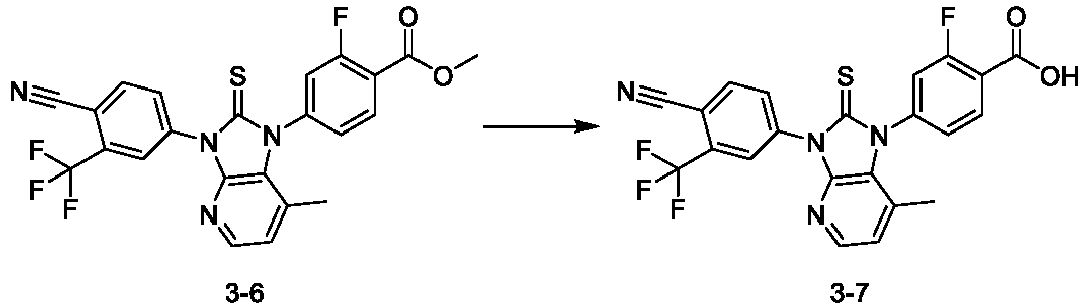
- Lithium hydroxide (9 mg, 205.58 µmol) was added to a solution of Compound 3-6 (50 mg, 102.79 µmol) in tetrahydrofuran (1.2 mL) and water (0.3 mL). The resulting reaction mixture was stirred at 5 °C for 16 h. 1M hydrochloric acid solution (10 mL) and ethyl acetate (20 mL) were added to the reaction mixture for liquid separation. The organic phase was washed with saturated brine (15 mL), dried over anhydrous sodium sulfate, filtered, and concentrated under reduced pressure to obtain the target compound 3-7. LCMS (ESI) m/z: 473 (M+1).
-

- O-(7-azabenzotriazol-1-yl)-N,N,N',N'-tetramethyluronium hexafluorophosphate (39 mg, 101.60 µmol), triethylamine (26 mg, 254.01 µmol), and methylamine hydrochloride (9 mg, 127.01 µmol) were added to a solution of Compound 3-7 (40 mg, 84.67 µmol) in dichloromethane (1 mL). The resulting reaction mixture was stirred at 5 °C for 16 h. Dichloromethane (15 mL) and water (10 mL) were added to the reaction mixture for liquid separation. The organic phase was washed with saturated brine (10 mL), dried over anhydrous sodium sulfate, filtered, and concentrated under reduced pressure. The residue obtained from the concentration was purified by preparative HPLC to obtain the Compound 3. 1H NMR (400 MHz, CDC13) δ ppm 8.37 (t, J=8.3 Hz, 1H), 8.27 (s, 1H), 8.18-8.10 (m, 2H), 8.10-8.04 (m, 1H), 7.45-7.33 (m, 2H), 7.01 (d, J=5.0 Hz, 1H), 6.76 (br s, 1H), 3.10 (d, J=4.5 Hz, 3H), 1.97 (s, 3H); LCMS (ESI) m/z: 486 (M+1).
-

-

- Triethylamine (1.34 g, 13.22 mmol) and hydroxylamine hydrochloride (918 mg, 13.22 mmol) were added to a solution of Compound 4-1 (2.00 g, 8.81 mmol) in methanol (30 mL). The resulting reaction mixture was stirred at 10 °C for 16 h, heated to 30 °C and stirred for 16 h. The reaction mixture was concentrated under reduced pressure, and then ethyl acetate (50 mL) and water (40 mL) were added. The organic phase was washed with saturated brine (40 mL), dried over anhydrous sodium sulfate, and concentrated under reduced pressure to obtain Compound 4-2. LCMS (ESI) m/z: 242 (M+1).
-
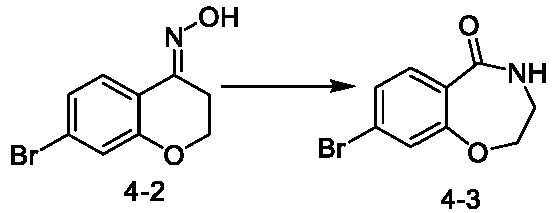
- A mixture of Compound 4-2 (2.00 g, 8.26 mmol) and polyphosphoric acid (20 mL) was heated to 95 °C and stirred for 3 h. 150 mL of water was added to the reaction mixture, and then the resulting mixture was stirred for 30 min, and extracted with ethyl acetate (100 mL×3). The organic phase was washed with saturated brine (150 mL), dried over anhydrous sodium sulfate, and concentrated under reduced pressure. The residue obtained from the concentration was purified by a preparative TLC plate to obtain Compound 4-3. LCMS (ESI) m/z: 242 (M+1).
-

- 60% Sodium hydride (50 mg, 1.25 mmol) was added to a solution of Compound 4-3 (200 mg, 826.21 µmol) in DMF (4 mL), and the resulting mixture was stirred at 10 °C for 10 min. Then, iodoethane (155 mg, 993.78 µmol) was added. The resulting reaction mixture was stirred at 10 °C for 30 min. The reaction mixture was slowly poured into water (30 mL), and extracted with ethyl acetate (20 mL×3). The organic phase was washed with saturated brine (40 mL), dried over anhydrous sodium sulfate, and concentrated under reduced pressure. The residue obtained from the concentration was purified by preparative TLC to obtain Compound 4-4. 1H NMR (400 MHz, CDC13) δ ppm 7.70 (d, J=8.3 Hz, 1H), 7.26 (dd, J=1.8, 8.3 Hz, 1H), 7.16 (d, J=1.8 Hz, 1H), 4.38 (t, J=5.0 Hz, 2H), 3.64 (q, J=7.3 Hz, 2H), 3.50 (t, J=5.0 Hz, 2H), 1.23 (t, J=7.2 Hz, 3H).
-

- A turbid liquid of Compound 4-4 (100 mg, 370.21 µmol), Compound 1-4 (57 mg, 555.32 µmol), cuprous chloride (7 mg, 74.04 µmol), 2-acetylcyclohexanone (10 mg, 74.04 µmol), and potassium carbonate (128 mg, 925.53 µmol) in DMF (1.5 mL) and water (0.08 mL) was added to a microwave tube, and kept at 130 °C for microwave reaction for 1 h. The reaction mixture was filtered through Celite, washed with ethyl acetate (5 mL), and concentrated under reduced pressure. The residue obtained from the concentration was dissolved in water (10 mL), and extracted with ethyl acetate (5 mL). Concentrated hydrochloric acid (0.5 mL) was added to the aqueous phase, and the resulting turbid aqueous solution was concentrated under reduced pressure. The residue obtained from the concentration was slurried with dichloromethane/methanol (10/1, 20 mL), and filtered. The filtrate was concentrated under reduced pressure to obtain Compound 4-5. LCMS (ESI) m/z: 293 (M+1).
-

- Dichlorosulfoxide (407 mg, 3.42 mmol) was carefully added dropwise (exothermic) to a turbid liquid of Compound 4-5 (100 mg, 342.08 µmol) in methanol (4 mL). The resulting yellow clear solution was stirred at 40 °C for 16 h. The reaction mixture was concentrated under reduced pressure. The residue obtained from the concentration was purified by a preparative TLC plate to obtain Compound 4-6. LCMS (ESI) m/z: 307 (M+1).
-
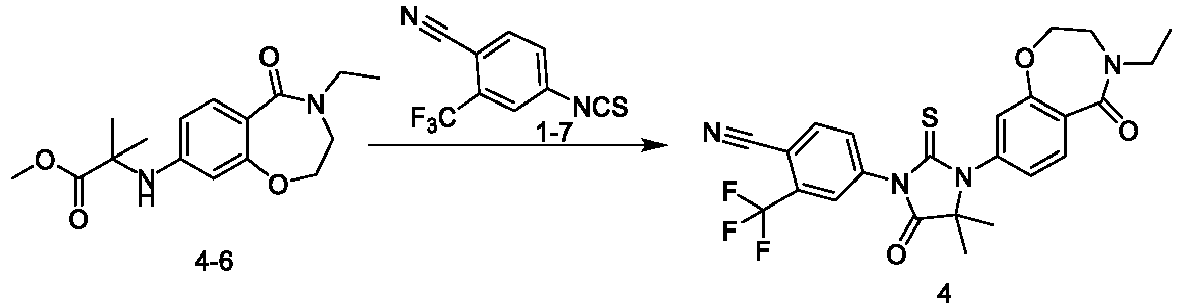
- Compound 1-7 (186 mg, 816.05 µmol) was added to a solution of Compound 4-6 (50 mg, 163.21 µmol) in methylbenzene (1 mL) and DMF (0.02 mL). The resulting reaction mixture was heated to 100 °C, and stirred for 24 h. Methanol (2 mL) was added to the reaction mixture, and the resulting mixture was stirred for 5 min, and then concentrated under reduced pressure. The residue obtained from the concentration was purified by a preparative TLC plate, and then purified by preparative HPLC to obtain Compound 4. 1H NMR (400 MHz, CDCl3) δ ppm 7.98 (d, J=8.3 Hz, 1H), 7.95-7.84 (m, 2H), 7.77 (dd, J=1.9, 8.2 Hz, 1H), 7.01 (dd, J=2.0, 8.5 Hz, 1H), 6.89 (d, J=2.0 Hz, 1H), 4.40 (t, J=4.8 Hz, 2H), 3.62 (q, J=7.2 Hz, 2H), 3.56 (t, J=4.9 Hz, 2H), 1.52 (s, 6H), 1.20 (t, J=7.2 Hz, 3H); LCMS (ESI) m/z: 503 (M+1).
-

-

- Cesium carbonate (869 mg, 2.66 mmol) and 1,1,1-trifluoro-2-iodoethane (933 mg, 4.44 mmol) were added to a solution of Compound 1-1 (500 mg, 2.22 mmol) in DMF (10 mL). The resulting reaction mixture was stirred at 100 °C for 16 h. The reaction mixture was cooled, and then filtered to remove cesium carbonate. The filtrate was poured into water (40 mL), and extracted with ethyl acetate (30 mL×3). The organic phase was washed with saturated brine (50 mL), dried over anhydrous sodium sulfate, and concentrated under reduced pressure. The residue obtained from the concentration was slurried with petroleum ether/ethyl acetate (10 mL, 10/1), and filtered to obtain Compound 5-1. 1H NMR (400 MHz, CDCl3) δ ppm 8.11 (d, J=8.5 Hz, 1H), 7.96 (s, 1H), 7.85 (d, J=1.8 Hz, 1H), 7.60 (dd, J=1.8, 8.5 Hz, 1H), 4.59 (q, J=8.4 Hz, 2H).
-

- A turbid liquid of Compound 5-1 (300 mg, 976.98 µmol), Compound 1-4 (151 mg, 1.47 mmol), cuprous chloride (19 mg, 195.40 µmol), 2-acetylcyclohexanone (27 mg, 195.40 µmol), and potassium carbonate (338 mg, 2.44 mmol) in DMF (3 mL) and water (0.15 mL) was added to a microwave tube, and kept at 130 °C for microwave reaction for 1 h. The reaction mixture was filtered through Celite, washed with ethyl acetate (10 mL), and concentrated under reduced pressure. The residue obtained from the concentration was dissolved in water (30 mL), and extracted with ethyl acetate (5 mL). Concentrated hydrochloric acid (1 mL) was added to the aqueous phase, and the resulting turbid aqueous solution was concentrated under reduced pressure. The residue obtained from the concentration was slurried with dichloromethane/methanol (10/1, 20 mL), and filtered. The filtrate was concentrated under reduced pressure to obtain Compound 5-2. LCMS (ESI) m/z: 330 (M+1).
-

- Dichlorosulfoxide (1.15 g, 9.65 mmol, 0.7 mL) was carefully added dropwise (exothermic) to a turbid liquid of Compound 5-2 (500 mg, 945.42 µmol) in methanol (5 mL). The resulting yellow clear solution was stirred at 40 °C for 16 h. The reaction mixture was concentrated under reduced pressure. The residue obtained from the concentration was purified by a preparative TLC plate to obtain Compound 5-3. LCMS (ESI) m/z: 344 (M+1).
-

- Compound 1-7 (166 mg, 728.25 µmol) was added to a solution of Compound 5-3 (50 mg, 145.65 µmol) in methylbenzene (1 mL) and DMF (0.05 mL). The resulting reaction mixture was heated to 120 °C, and stirred for 48 h. Methanol (2 mL) was added to the reaction mixture, and the resulting mixture was stirred for 5 min, and then concentrated under reduced pressure. The residue obtained from the concentration was purified by preparative HPLC to obtain Compound 5. 1H NMR (400 MHz, CDCl3) δ ppm 8.42 (d, J=8.5 Hz, 1H), 8.03 (s, 1H), 7.95-7.89 (m, 2H), 7.79 (dd, J=2.0, 8.3 Hz, 1H), 7.65 (d, J=1.8 Hz, 1H), 7.43 (dd, J=2.0, 8.5 Hz, 1H), 4.64 (q, J=8.3 Hz, 2H), 1.58 (s, 6H); LCMS (ESI) m/z: 540 (M+1).
-

-

- 1,1,1-Trifluoro-2-iodoethane (933 mg, 4.44 mmol) was added to a solution of Compound 6-1 (500 mg, 2.22 mmol) and cesium carbonate (869 mg, 2.66 mmol) in DMF (8 mL). The reaction mixture was stirred at 100 °C for 16 h. The reaction mixture was cooled, and then filtered to remove cesium carbonate. The filtrate was poured into water (10 mL), and extracted with ethyl acetate (10 mL×3). The organic phase was washed with saturated brine (15 mL), dried over anhydrous sodium sulfate, and concentrated under reduced pressure. The residue obtained from the concentration was slurried with petroleum ether/ethyl acetate (10 mL, 10/1), and filtered to obtain Compound 6-2. 1H NMR (400 MHz, CDCl3) δ ppm 8.32 (d, J=8.3 Hz, 1H), 8.14 (s, 1H), 7.95-7.89 (m, 2H), 4.87 (q, J=8.3 Hz, 2H).
-

- A turbid liquid of Compound 6-2 (300 mg, 976.98 µmol), Compound 1-4 (151 mg, 1.47 mmol), cuprous chloride (19 mg, 195.40 µmol), 2-acetylcyclohexanone (27 mg, 195.40 µmol), and potassium carbonate (338 mg, 2.44 mmol) in DMF (3 mL) and water (0.15 mL) was added to a microwave tube, and kept at 130 °C for microwave reaction for 1 h. The reaction mixture was filtered through Celite, washed with ethyl acetate (10 mL), and concentrated under reduced pressure. The residue obtained from the concentration was dissolved in water (10 mL), and extracted with ethyl acetate (5 mL). Concentrated hydrochloric acid (0.5 mL) was added to the aqueous phase, and the resulting turbid aqueous solution was concentrated under reduced pressure. The residue obtained from the concentration was slurried with dichloromethane/methanol (10/1, 40 mL), and filtered. The filtrate was concentrated under reduced pressure to obtain Compound 6-3. LCMS (ESI) m/z: 330 (M+1).
-

- Dichlorosulfoxide (1.31 g, 11.03 mmol, 0.8 mL) was carefully added dropwise (exothermic) to a turbid liquid of Compound 6-3 (500 mg, 1.17 mmol) in methanol (5 mL). The resulting yellow clear solution was stirred at 40 °C for 16 h. The reaction mixture was concentrated under reduced pressure. The residue obtained from the concentration was purified by a preparative TLC plate to obtain Compound 6-4. LCMS (ESI) m/z: 344 (M+1).
-

- Compound 1-7 (299 mg, 1.31 mmol) was added to a solution of Compound 6-4 (90 mg, 262.16 µmol) in methylbenzene (2 mL) and DMF (0.1 mL). The resulting reaction mixture was heated to 120 °C, and stirred for 48 h. Methanol (2 mL) was added to the reaction mixture, and the resulting mixture was stirred for 5 min, and then concentrated under reduced pressure. The residue obtained from the concentration was purified by a preparative TLC plate, and then purified by preparative HPLC to obtain Compound 6. 1H NMR (400 MHz, CDCl3) δ ppm 8.56 (d, J=8.3 Hz, 1H), 8.17 (s, 1H), 7.94 (d, J=8.3 Hz, 1H), 7.90 (s, 1H), 7.77 (dd, J=1.8, 8.3 Hz, 1H), 7.69-7.62 (m, 2H), 4.82 (q, J=8.5 Hz, 2H), 1.59 (s, 6H); LCMS (ESI) m/z: 540 (M+1).
-

-

- In a microwave tube, Compound 7-1 (1.00 g, 5.08 mmol), Compound 1-4 (785 mg, 7.61 mmol), 2-acetylcyclohexanone (142 mg, 1.02 mmol), cuprous chloride (100 mg, 1.02 mmol), and potassium carbonate (1.75 g, 12.69 mmol) were dissolved in DMF (5 mL) and water (90 µL) at 15 °C. Then, the resulting mixture was microwave-heated to 130 °C, and stirred at this temperature for 1.2 h. The reaction mixture was directly filtered, and spin-dried. 15 mL of water was added, and then the resulting mixture was extracted with ethyl acetate (15 mL×2). Then, the aqueous phase was concentrated to obtain Compound 7-2. LCMS (ESI) m/z: 220 (M+1).
-

- Dichlorosulfoxide (5.84 g, 49.08 mmol) was added dropwise to a solution of Compound 7-2 (800 mg, 3.65 mmol) in methanol (10 mL) in an ice water bath. After the completion of the dropwise addition, the resulting mixture was stirred at 50 °C for 12 h. The reaction mixture was directly concentrated to obtain Compound 7-3. LCMS (ESI) m/z: 234 (M+1).
-

- Compound 7-3 (400 mg, 1.71 mmol) and Compound 1-7 (1.17 g, 5.14 mmol) were dissolved in DMF (1.5 mL) and methylbenzene (6 mL) at 15 °C. After three times of nitrogen displacement, the mixture was heated to 100 °C and stirred for 12 h under nitrogen protection. 5 mL of methanol was added to the reaction mixture, and then the resulting mixture was stirred for 20 min, and concentrated under reduced pressure. The crude product was purified by flash column chromatography to obtain Compound 7-4. LCMS (ESI) m/z: 430 (M+1).
-

- Compound 7-4 (100 mg, 233 µmol), Compound 7-5 (24 mg, 279.44 µmol), and cesium carbonate (114 mg, 349.30 µmol) were put into N,N-dimethylacetamide (5 mL) at 15 °C, and the resulting mixture was heated to 120 °C, and stirred for 2.5 h. The reaction mixture was filtered. 10 mL of water was added to the filtrate, and the resulting mixture was then extracted with ethyl acetate (10 mL×2). The organic phase was washed with 20 mL of saturated brine, dried over anhydrous sodium sulfate, filtered, and spin-dried. The crude product was purified by a preparative chromatoplate and preparative HPLC to obtain Compound 7 and Compound 8.
1H NMR (400 MHz, CDCl3) δ ppm 8.14 (s, 1 H), 8.04-7.99 (m, 2 H), 7.89 (br d, J=8.28 Hz, 1 H), 7.74-7.69 (m, 2 H), 7.34 (br d, J=8.78 Hz, 1 H), 5.14 (br s, 1 H), 4.81 (br s, 1 H), 4.55-4.49 (m, 1 H), 4.40-4.29 (m, 2 H), 3.97 (br d, J=7.03 Hz, 1 H), 2.15 (br d, J=5.27 Hz, 1 H), 1.65 (s, 6 H); LCMS (ESI) m/z: 516 (M+1) (Compound 7).
1H NMR (400 MHz, CDCl3) δ ppm 8.17 (s, 1 H), 7.97-8.02 (m, 2 H), 7.89-7.83 (m, 2 H) 7.64 (s, 1 H), 7.16 (dd, J=9.03, 2.01 Hz, 1 H), 5.09 (br s, 1 H), 4.75 (br s, 1 H), 4.48 (dd, J=10.16, 6.15 Hz, 1 H), 4.39-4.31 (m, 2 H), 4.00-3.86 (m, 1 H), 2.51 (br s, 1 H), 1.63 (s, 6 H); LCMS (ESI) m/z: 516 (M+1) (Compound 8). -

-

- A mixture of Compound 9-1 (2.00 g, 9.26 mmol), triethyl orthoacetate (3.00 g, 25.00 mmol), and aminomethanol (20 mL) (15% wt.) was added to an airtight jar, and stirred at 110 °C for 4 h. The reaction mixture was concentrated under reduced pressure. The residue obtained from the concentration was slurried with methanol (30 mL), and filtered to obtain a white solid. The filtrate was concentrated under reduced pressure, re-slurried with methanol (15 mL), and filtered to obtain a white solid. The two batches of white solids were combined to obtain Compound 9-2. 1H NMR (400 MHz, DMSO-d6) δ ppm 12.38 (br s, 1H), 8.14 (d, J=2.3 Hz, 1H), 7.91 (dd, J=2.4, 8.7 Hz, 1H), 7.53 (d, J=8.8 Hz, 1H), 2.34 (s, 3H).
-

- Compound 9-2 (600 mg, 2.51 mmol), Compound 1-4 (388 mg, 3.76 mmol), potassium carbonate (867 mg, 6.28 mmol), cuprous chloride (50 mg, 502.00 µmol), 2-acetylcyclohexanone (70 mg, 502.00 µmol), DMF (7 mL), and water (350 µL) were added to a 20 mL microwave tube. The resulting mixture was kept at 130 °C for microwave reaction for 1 h. The reaction mixture was filtered, and the filtrate was concentrated to dryness under reduced pressure. The residue obtained from the concentration was dissolved in water (50 mL), and washed with dichloromethane (30 mL×3). Concentrated hydrochloric acid (1.5 mL) was added to the aqueous phase, such that the aqueous phase was acidic (pH about 6), and then the aqueous phase was concentrated under reduced pressure. The residue obtained from the concentration was slurried with dichloromethane/methanol (30 mL/30 mL) at 29 °C for 2 min, filtered, and concentrated under reduced pressure to obtain Compound 9-3. LCMS (ESI) m/z: 262 (M+1).
-

- Compound 9-3 (1.18 g, 2.58 mmol) was dissolved in anhydrous methanol (20 mL), and dichlorosulfoxide (3.28 g, 27.58 mmol, 2.00 mL) was added dropwise at 0 °C. The resulting mixture was heated to 50 °C, and stirred for 18 h. The reaction mixture was concentrated under reduced pressure, a saturated sodium bicarbonate solution (50 mL) was added, and the resulting mixture was extracted with dichloromethane (30 mL×3). The organic phases were combined, washed with saturated brine (50 mL), dried over anhydrous sodium sulfate, and filtered. The filtrate was concentrated to dryness under reduced pressure. The residue obtained from the concentration was slurried with dichloromethane/ethyl acetate (10 mL/10 mL) at 29 °C for 0.5 h, and filtered. The resulting filter cake was Compound 9-4. 1H NMR (400 MHz, CDCl3) δppm 10.94 (s, 1H), 7.52-7.50 (d, J=9.2 Hz, 1H), 7.30-7.29 (d, J=2.8 Hz, 1H), 7.06-7.04(m, 1H), 4.45 (s, 1H), 3.76 (s, 3H), 2.52 (s, 3H), 1.65(s, 6H); LCMS (ESI) m/z: 276 (M+1).
-

- Compound 9-4 (300 mg, 933.89 µmol) and Compound 1-7 (864 mg, 3.79 mmol) were dissolved in DMF (1.5 mL) and methylbenzene (6 mL). The resulting mixture was heated to 120 °C, and stirred for 18 h. The reaction mixture was concentrated to dryness under reduced pressure. The residue obtained from the concentration was purified by a preparative chromatoplate to obtain Compound 9-5. LCMS (ESI) m/z: 472 (M+1).
-
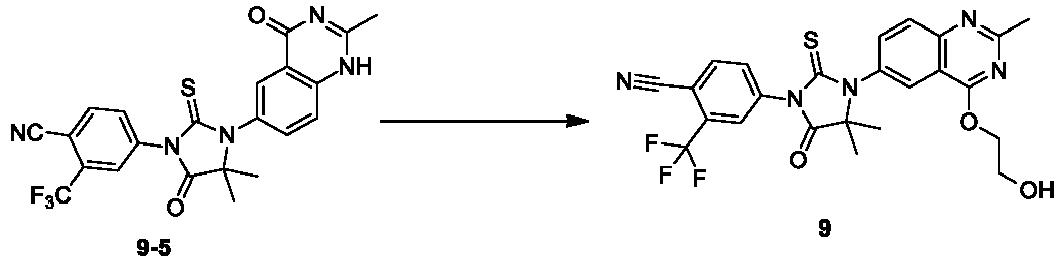
- A turbid liquid of Compound 9-5 (130 mg, 275.74 µmol), 2-bromoethanol (83 mg, 661.78 µmol), and potassium carbonate (100 mg, 722.44 µmol) in DMF (3mL) was stirred at 29 °C for 67 h. The reaction mixture was filtered directly. The filtrate was separated and purified by preparative HPLC to obtain Compound 9. 1HNMR (400 MHz, CDCl3) δ ppm 8.04 (d, J=2.4Hz,1H) , 7.96-7.92 (m, 3H), 7.91-7.80 (dd, J=45.6 Hz, 1H), 7.65-7.64 (dd, J=2.8 Hz, 1H), 4.721-4.71 (m, 2H), 4.70 (s, 2H), 2.69 (s, 3H), 1.59(s, 6H); LCMS (ESI) m/z: 516 (M+1).
-

-

- Compound 10-1 (20.00 g, 128.92 mmol) was dissolved in dichloromethane (200 mL), and NBS (22.95 g, 128.92 mmol) was added. The resulting mixture was stirred at 20 °C for 2 h. The reaction mixture was filtered, and the filter cake was washed with dichloromethane (75 mL×3). The resulting filter cake was dried under reduced pressure to obtain Compound 10-2. 1H NMR (400 MHz, DMSO-d6) δppm7.66-7.61 (m, 1H), 7.52 (dd, J=2.3, 10.8 Hz, 1H); LCMS (ESI) m/z: 234 (M+1).
-

- Ammonia water (51.52 g, 396.90 mmol) (purity: 27%) was added to a solution of Compound 10-2 (30.96 g, 132.30 mmol), O-(7-azabenzotriazol-1-yl)-N,N,N',N'-tetramethyluronium hexafluorophosphate (70.42 g, 185.22 mmol), and triethylamine (26.77 g, 264.60 mmol) in DMF (500 mL). The resulting mixture was stirred at 20 °C for 4 h. 2000 mL of water was added to the reaction mixture, and the resulting mixture was stirred for 1 h, and filtered. The filter cake was washed with water (50 mL×3), and the resulting white solid was dried in an infrared oven. The filtrate was extracted with dichloromethane (100 mL×3). The resulting organic phase was concentrated under reduced pressure. The residue obtained from the concentration was slurried with water (500 mL) at 20 °C for 20 min, and filtered. The filter cake was dried in the infrared oven. The two dried white solids were combined to obtain Compound 10-3. 1H NMR (400 MHz, CDCl3) δ ppm 7.35 (br d, J=7.0 Hz, 1H), 7.18-7.08 (m, 1H); LCMS (ESI) m/z: 235 (M+3).
-

- Propionyl chloride (28.39 g, 306.80 mmol) was added to a turbid liquid of Compound 10-3 (14.30 g, 61.36 mmol) in trichloromethane (200 mL). The resulting mixture was stirred at 70 °C for 16 h. The reaction mixture was cooled to 15 °C, methanol (5 mL) was added, and then the resulting mixture was concentrated to dryness under reduced pressure. The residue obtained from the concentration was dissolved in a saturated sodium bicarbonate solution (100 mL), and extracted with dichloromethane/methanol (10/1, 200 mL×3). The organic phases were combined, washed with saturated brine (100 mL), dried over anhydrous sodium sulfate, and filtered. The filtrate was concentrated to dryness under reduced pressure. The residue obtained from the concentration was slurried with ethyl acetate (100 mL) at 15 °C for 30 min, and filtered. The filter cake was washed with ethyl acetate (10 mL×3), and then dried in an infrared oven to obtain Compound 10-4. 1H NMR (400 MHz, CDCl3) δ ppm 8.00 (br d, J=1.3 Hz, 1H), 7.57-7.48 (m, 1H), 2.95 (s, 1H), 2.62 (q, J=7.5 Hz, 2H), 1.33-1.22 (m, 3H); LCMS (ESI) m/z: 273 (M+3).
-

- Compound 10-4 (1.50 g, 5.53 mmol), Compound 1-4 (855 mg, 8.30 mmol), cuprous chloride (220 mg, 2.22 mmol), 2-acetylcyclohexanone (310 mg, 2.22 mmol), potassium carbonate (1.91 g, 13.83 mmol), DMF (10 mL), and water (500 µL) were added to a 30 mL microwave tube, respectively. The resulting mixture was kept at 130 °C for microwave reaction for 80 min. The reaction mixture was filtered, and the filter cake was washed with DMF (10 mL×3). The resulting aqueous phase was acidified to a pH of about 6 with dilute hydrochloric acid (2 mol/L). The aqueous phase was concentrated to dryness under reduced pressure. The residue obtained from the concentration was slurried with dichloromethane/methanol (10/1, 30 mL) at 15 °C for 2 min, and filtered. The filtrate was concentrated under reduced pressure to obtain Compound 10-5. LCMS (ESI) m/z: 294 (M+1).
-

- Dichlorosulfoxide (29.94 g, 251.64 mmol) was added dropwise to a solution of Compound 10-5 (7.30 g, 24.89 mmol) in methanol (80 mL) at 0 °C. After the completion of the dropwise addition, the resulting mixture was heated to 50 °C, and stirred for 18 h. The reaction mixture was cooled to 15 °C, and concentrated to dryness under reduced pressure. The residue obtained from the concentration was dissolved in a saturated sodium bicarbonate solution (40 mL), and extracted with dichloromethane/methanol (10/1, 60 mL×4). The organic phases were combined, washed with saturated brine (50 mL), dried over anhydrous sodium sulfate, and filtered. The filtrate was concentrated to dryness under reduced pressure. The residue obtained from the concentration was purified by a silica gel column to obtain Compound 10-6. 1H NMR (400 MHz, CDCl3) δ ppm 7.01 (d, J=2.5 Hz, 1H), 6.72 (dd, J=2.5, 12.3 Hz, 1H), 3.68 (s, 3H), 2.72 (q, J=7.6 Hz, 2H), 1.56 (s, 6H), 1.36-1.31 (m, 3H); LCMS (ESI) m/z: 308 (M+1).
-

- Under nitrogen protection, Compound 10-6 (2.10 g, 6.83 mmol) and Compound 1-7 (6.23 g, 27.32 mmol) were dissolved in DMF (5 mL) and methylbenzene (50 mL), and the resulting mixture was heated to 120 °C, and stirred for 18 h. The reaction mixture was concentrated to dryness under reduced pressure. The residue obtained from the concentration was purified by a silica gel column to obtain Compound 10-7. 1H NMR (400 MHz, CDCl3) δppm 7.99-7.93 (m, 2H), 7.78 (dd, J=1.6, 8.2 Hz, 1H), 7.58 (d, J=8.3 Hz, 1H), 7.40 (dd, J=2.1, 9.9 Hz, 1H), 2.86-2.77 (m, 3H), 1.59 (s, 6H), 1.44-1.33 (m, 3H); LCMS (ESI) m/z: 504 (M+1).
-

- Under nitrogen protection, a turbid liquid of Compound 10-7 (1.32 g, 2.62 mmol), 2-bromoethanol (4.10 g, 32.75 mmol), potassium carbonate (1.45 g, 10.48 mmol), and DMF (50 mL) was stirred at 40 °C for 78 h. The reaction mixture was filtered directly. The filtrate was separated and purified by preparative HPLC and preparative chromatography to obtain Compound 10. 1H NMR (400 MHz, CDCl3) δ ppm 7.94 (d, J=8.0 Hz, 1H), 7.90 (d, J=1.5 Hz, 1H), 7.85 (s, 1H), 7.78 (dd, J=1.8, 8.3 Hz, 1H), 7.39 (dd, J=2.1, 9.9 Hz, 1H), 4.76-4.71 (m, 2H), 4.03 (br d, J=3.8 Hz, 2H), 2.98 (q, J=7.5 Hz, 2H), 2.72 (br s, 1H), 1.60 (s, 6H), 1.35 (t, J=7.7 Hz, 3H); LCMS (ESI) m/z: 548 (M+1).
-

-
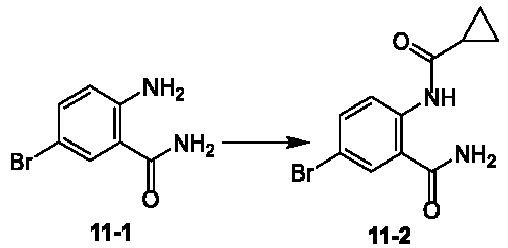
- Cyclopropylformyl chloride (8.55 g, 81.84 mmol) was added dropwise to a solution of Compound 11-1 (4.40 g, 20.46 mmol) in trichloromethane (100 mL) at 20 °C. The reaction mixture was heated to 65 °C and reacted for 12 h. The reaction mixture was cooled to room temperature, and concentrated to obtain Compound 11-2. LCMS (ESI) m/z: 285 (M+3).
-

- Sodium methoxide (4.12 g, 76.28 mmol) was added to a solution of Compound 11-2 (5.40 g, 19.07 mmol) in methanol (100 mL) at 20 °C. The reaction mixture reacted at 20 °C for 12 h. The reaction mixture was cooled to room temperature, and concentrated to obtain a crude product. The crude product was added in water (100 mL), and neutralized with 1M aqueous solution of hydrochloric acid to pH=7. A large amount of gray solids precipitated. After filtration, the filter cake was collected and dried to obtain Compound 11-3. 1H NMR (400 MHz, DMSO-d6) δ ppm 8.09 (d, J=2.26 Hz,1H), 7.68 (d, J=2.26Hz, 1H), 7.41 (d, J=8.78Hz, 1H), 7.24 (dd, J=8.78, 2.26Hz, 1H), 2.00-1.86 (m, 1H), 1.13-0.97(m, 4H); LCMS (ESI) m/z: 267 (M+3).
-

- DMF (414 mg, 5.66 mmol) was added dropwise to a solution of Compound 11-3 (1.50 g, 5.66 mmol) and dichlorosulfoxide (20 mL), and the resulting mixture was stirred at 80 °C for 3 h. The reaction mixture was concentrated to dryness under reduced pressure, and the residue was dissolved in ethanediol (20 mL). Triethylamine (344 mg, 3.40 mmol) was added, and the resulting mixture was further stirred at 80 °C for 1 h. The reaction mixture was cooled to 20 °C. Dichloromethane (80 mL) was added to the resulting mixture, which was washed with water (50 mL×3). The organic phase was dried over anhydrous sodium sulfate, and filtered. The filtrate was concentrated to dryness under reduced pressure. The residue obtained from the concentration was purified by a silica gel column to obtain Compound 11-4. LCMS (ESI) m/z: 309 (M+1).
-

- Triethylamine (275 mg, 2.72 mmol), 4-dimethylaminopyridine (22 mg, 181.14 µmol), and diBoc (495 mg, 2.72 mmol) were added dropwise to a solution of Compound 11-4 (280 mg, 905.68 µmol) in dichloromethane (10 mL). The resulting mixture was stirred at 15 °C for 17 h. The reaction mixture was diluted with dichlorometahne (20 mL). Water (20 mL) was added to the resulting mixture, then 2 mol/L dilute hydrochloric acid (5 drops) was added dropwise, and the resulting mixture was washed three times. The organic phase was washed with a saturated sodium carbonate solution (20 mL), dried over anhydrous sodium sulfate, and filtered. The filtrate was concentrated under reduced pressure to obtain Compound 11-5. LCMS (ESI) m/z: 411 (M+3).
-

- Compound 11-5 (250 mg, 610.84 µmol), Compound 1-4 (95 mg, 916.27 µmol), potassium carbonate (338 mg, 2.44 mmol), cuprous chloride (12 mg, 122.17 µmol), 2-acetylcyclohexanone (17 mg, 122.17 µmol), DMF (5 mL), and water (0.1 mL) were added to a 10 mL microwave tube. The resulting mixture was kept at 130 °C for microwave reaction for 1 h. The reaction mixture was filtered, and the filter cake was washed with DMF (5 mL×2). The filtrate was concentrated to dryness under reduced pressure. The residue obtained from the concentration was slurried with dichloromethane (20 mL) at 15 °C for 2 min, and filtered. The filtrate was concentrated under reduced pressure to obtain Compound 11-6. LCMS (ESI) m/z: 432 (M+1).
-

- A solution of TMSCHN2 in n-hexane (2M, 1.74 mL, 3.48 mmol) was added dropwise to a solution of Compound 11-6 (500 mg, 1.16 mmol) in dichloromethane (5 mL) and methanol (500 µL). The resulting mixture was stirred at 20 °C for 1.5 h. The reaction mixture was concentrated to dryness under reduced pressure. The residue obtained from the concentration was purified by a preparative chromatoplate to obtain Compound 11-7. LCMS (ESI) m/z: 446 (M+1).
-

- Compound 11-7 (85 mg, 190.79 µmol) and Compound 1-7 (131 mg, 572.38 µmol) were dissolved in DMF (500 µL) and methylbenzene (3 mL). The resulting mixture was stirred at 120 °C for 16 h under nitrogen protection. The reaction mixture was cooled to room temperature, and then concentrated under reduced pressure. The residue obtained from the concentration was purified by a preparative chromatoplate to obtain Compound 11-8. LCMS (ESI) m/z: 642 (M+1).
-

- Trifluoroacetic acid (2 mL) was added to a solution of Compound 11-8 (50 mg, 77.92 µmol) in dichloromethane (6 mL), and then the resulting mixture was stirred at 15 °C for 3 h. The reaction mixture was diluted with dichloromethane (10 mL), and washed with a saturated aqueous solution of sodium bicarbonate (20 mL×3) and water (20 mL), respectively. The combined organic phase was washed with saturated brine (20 mL), dried over anhydrous sodium sulfate, filtered, and concentrated to obtain a crude product. The crude product was purified by preparative HPLC to obtain Compound 11. 1H NMR (400 MHz, CDCl3) δ ppm 8.02-7.97 (m, 1H), 7.95-7.88 (m, 3H), 7.79 (dd, J=8.28, 1.76 Hz, 1H), 7.59 (dd, J=8.91, 2.38Hz, 1H), 4.66-4.62 (m, 2 H), 4.00 (br s, 2H), 2.52 (br s, 1H), 2.26-2.17 (m, 1H), 1.58 (s, 6 H), 1.19-1.12(m, 2H), 1.09-1.01 (m, 2H); LCMS (ESI) m/z: 542 (M+1).
-

-
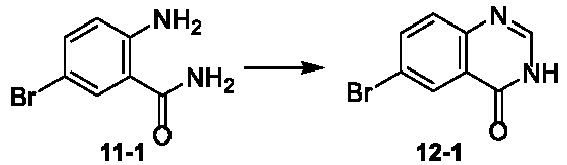
- P-methylbenzenesulfonic acid (218 mg, 1.40 mmol) and Compound 11-1 (3.00 g, 13.95 mmol) were added to trimethyl orthoformate (29.10 g, 274.22 mmol) at room temperature (10 °C). The reaction mixture was heated to 110 °C, and reacted for 1 h. The reaction mixture was cooled to room temperature, and directly concentrated to obtain Compound 12-1. LCMS (ESI) m/z: 225 (M+1).
-

- DMF (578 mg, 7.90 mmol) was added to a solution of Compound 12-1 (2.00 g, 8.89 mmol) in dichlorosulfoxide (10 mL) at 20 °C. The reaction mixture was heated to 80 °C, and reacted for 2 h, and then concentrated. The resulting yellow solid was dissolved in ethanediol (10 mL), triethylamine (4.00 g, 39.50 mmol) was added, and the resulting mixture was stirred at 80 °C for 1 h. The reaction mixture was diluted with water (50 mL), and extracted with dichloromethane (50 mL×3). The organic phase was dried over anhydrous sodium sulfate, filtered, and concentrated to obtain Compound 12-2. LCMS (ESI) m/z: 269 (M+1).
-

- Triethylamine (4.51 g, 44.58 mmol) and diBoc (8.10 g, 37.15 mmol) were added dropwise to a solution of Compound 12-2 (4.00 g, 14.86 mmol) and 4-dimethylaminopyridine (363 mg, 2.97 mmol) in dichloromethane (30 mL). The resulting mixture was stirred at 15 °C for 3 h. The reaction mixture was diluted with dichloromethane (20 mL). The resulting mixture was washed with dilute hydrochloric acid (30 mL×4) (the dilute hydrochloric acid was obtained by diluting 2 mol/L dilute hydrochloric acid (4 mL) with water (120 mL)). The organic phase was washed with a saturated sodium carbonate solution (30 mL), dried over anhydrous sodium sulfate, and filtered. The filtrate was concentrated to dryness under reduced pressure. The residue obtained from the concentration was purified by a silica gel column to obtain Compound 12-3. 1H NMR (400 MHz, CDCl3) δ ppm 8.78 (s, 1H), 8.42-8.20 (m, 1H), 7.98-7.75 (m, 2H), 4.80 (br d, J=3.5 Hz, 2H), 4.63-4.45 (m, 2H), 1.50 (s, 9H); LCMS (ESI) m/z: 369 (M+1).
-

- Compound 12-3 (1.00 g, 2.71 mmol), Compound 1-4 (419 mg, 4.07 mmol), potassium carbonate (562 mg, 4.07 mmol), cuprous chloride (107 mg, 1.08 mmol), 2-acetylcyclohexanone (152 mg, 1.08 mmol), DMF (8 mL), and water (800 µL) were added to a 30 mL microwave tube. The resulting mixture was kept at 130 °C for microwave reaction for 40 min. The reaction mixture was filtered, and the filter cake was washed with DMF (3 mL×3). Dilute hydrochloric acid (2 mol/L) was added dropwise to the filtrate to adjust the pH to about 7, and then the resulting mixture was concentrated to dryness under reduced pressure. The residue obtained from the concentration was slurried with dichloromethane/methanol (10/1, 20 mL) at 15 °C for 2 min, and filtered. The filtrate was concentrated under reduced pressure to obtain Compound 12-4. LCMS (ESI) m/z: 392 (M+1).
-

- With reference to the synthesis method of Compound 11-7, Compound 12-5 was prepared with Compound 12-4 as the starting material. LCMS (ESI) m/z: 406 (M+1).
-

- With reference to the synthesis of Compound 11-8, Compound 12-6 was prepared with Compound 12-5 as the starting material. LCMS (ESI) m/z: 602 (M+1).
-
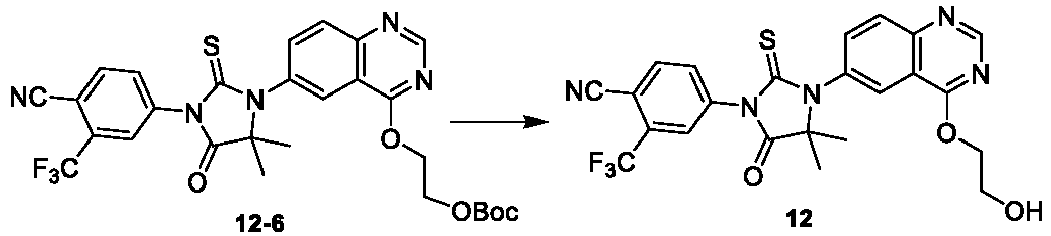
- With reference to the synthesis of Compound 11, Compound 12 was prepared with Compound 12-6 as the starting material. 1H NMR (400 MHz, CDCl3) δ ppm 8.90 (s, 1H), 8.19 (d, J=2.3 Hz, 1H), 8.15 (d, J=8.8 Hz, 1H), 8.05-7.99 (m, 2H), 7.88 (dd, J=2.0, 8.3 Hz, 1H), 7.79 (dd, J=2.4, 8.9 Hz, 1H), 4.85-4.79 (m, 2H), 4.15-4.08 (m, 2H), 2.74 (br s, 1H), 1.69 (s, 6H); LCMS (ESI) m/z: 502 (M+1).
-

-
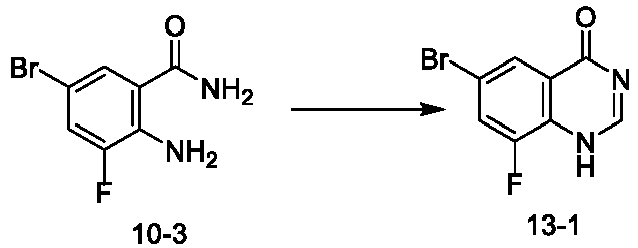
- P-methylbenzenesulfonic acid (245 mg, 1.29 mmol) was added to a solution of Compound 10-3 (3.00 g, 12.87 mmol) and trimethyl orthoformate (30 mL). The resulting white turbid liquid was heated to 110 °C, and stirred for 16 h. The reaction mixture was concentrated under reduced pressure to obtain a white solid. Ethyl acetate (50 mL) was added to the white solid, and the resulting mixture was stirred for 30 min, and then filtered. The resulting white filter cake was dried under reduced pressure to obtain Compound 13-1. 1H NMR (400 MHz, DMSO-d6) δ ppm 12.65 (brs, 1H), 8.19 (s, 1H), 8.07-7.98 (m, 2H).
-

- DMF (15 mg, 206.0 µmol) was added to a mixed solution of Compound 13-1 (500 mg, 2.06 mmol) and dichlorosulfoxide (4.92 g, 41.36 mmol, 3 mL). The resulting reaction mixture was heated to 80 °C, and stirred for 2 h. The reaction mixture was concentrated under reduced pressure. Dichloromethane (3 mL), ethanediol (1.11 g, 17.88 mmol, 1 mL), and triethylamine (657 mg, 6.49 mmol, 0.9 mL) were added to the residue (light yellow solid) obtained from the concentration. The resulting reaction mixture was heated to 80 °C, and stirred for 1 h. The reaction mixture was filtered. The filtrate was poured into water (40 mL), and extracted with ethyl acetate (30 mL). The organic phase was washed with saturated brine (20 mL), dried over anhydrous sodium sulfate, and concentrated under reduced pressure to obtain Compound 13-2. LCMS (ESI) m/z: 289 (M+3).
-

- diBoc (570 mg, 2.61 mmol, 0.6 mL), triethylamine (475 mg, 4.69 mmol, 0.65 mL), and 4-dimethylaminopyridine (27 mg, 221.00 µmol) were added to a mixed solution of Compound 13-2 (630 mg, 2.19 mmol) in dichloromethane (10 mL). The resulting reaction mixture was stirred at 10 °C for 1 h. The reaction mixture was concentrated under reduced pressure, and the residue obtained from the concentration was purified by a silica gel column to obtain Compound 13-3. 1H NMR (400 MHz, CDCl3) δ ppm 8.84 (s, 1H), 8.15 (t, J=1.5 Hz, 1H), 7.68 (dd, J=2.0, 9.3 Hz, 1H), 4.86-4.78 (m, 2H), 4.59-4.52 (m, 2H), 1.51 (s, 9H).
-

- Compound 13-3 (300 mg, 774.79 µmol), Compound 1-4 (120 mg, 1.16 mmol), potassium carbonate (268 mg, 1.94 mmol), cuprous chloride (15 mg, 151.52 µmol), 2-acetylcyclohexanone (22 mg, 156.94 µmol), DMF (2 mL), and water (0.1 mL) were added to a microwave tube. The microwave tube was sealed, and kept at 130 °C for microwave reaction for 40 min. The reaction mixture was filtered, and washed with ethyl acetate (20 mL). The filtrate was concentrated under reduced pressure. 1M hydrochloric acid was added to the residue obtained from the concentration (pH=6-7), and the resulting mixture was extracted with ethyl acetate (30 mL). The organic phase was washed with saturated brine (30 mL), dried over anhydrous sodium sulfate, and concentrated under reduced pressure to obtain Compound 13-4. LCMS (ESI) m/z: 410 (M+1).
-

- A solution of TMSCHN2 in n-hexane (2M, 1 mL) was added to a solution of Compound 13-4 (290 mg, 708.34 µmol) in dichloromethane (5 mL) and methanol (0.5 mL). The resulting reaction mixture was stirred at 10 °C for 1 h. The reaction mixture was concentrated under reduced pressure. The residue obtained from the concentration was purified by a preparative TLC plate to obtain Compound 13-5. LCMS (ESI) m/z: 424 (M+1).
-

- A mixed solution of Compound 13-5 (100 mg, 236.17 µmol), Compound 1-7 (270 mg, 1.18 mmol), methylbenzene (2 mL), and DMF (0.5 mL) was heated to 110 °C, and stirred for 16 h. Compound 1-7 (270 mg, 1.18 mmol) was supplemented to the reaction mixture. The reaction mixture was further stirred at 110 °C for 16 h. Methanol (2 mL) was added to the reaction mixture, which was stirred for 30 min, and then concentrated under reduced pressure. The residue obtained from the concentration was purified by a preparative TLC plate to obtain Compound 13-6. LCMS (ESI) m/z: 620 (M+1).
-

- Trifluoroacetic acid (0.4 mL) was added to a solution of Compound 13-6 (100 mg, 161.40 µmol) in dichloromethane (2 mL). The resulting reaction mixture was stirred at 10 °C for 2 h. A saturated aqueous solution of sodium bicarbonate was added to the reaction mixture (pH about 7), which was extracted with dichloromethane (30 mL). The organic phase was washed with saturated brine (30 mL), dried over anhydrous sodium sulfate, and concentrated under reduced pressure. The residue obtained from the concentration was purified by a preparative TLC plate, and then purified by preparative HPLC to obtain Compound 13. 1H NMR (400 MHz, CDCl3) δppm 8.94 (s, 1H), 8.06-7.94 (m, 3H), 7.86 (dd, J=1.9, 8.2 Hz, 1H), 7.53 (dd, J=2.1, 9.9 Hz, 1H), 4.86-4.76 (m, 2H), 4.17-4.07 (m, 2H), 2.47 (br t, J=5.5 Hz, 1H), 1.69 (s, 6H); LCMS (ESI) m/z: 520 (M+1).
-
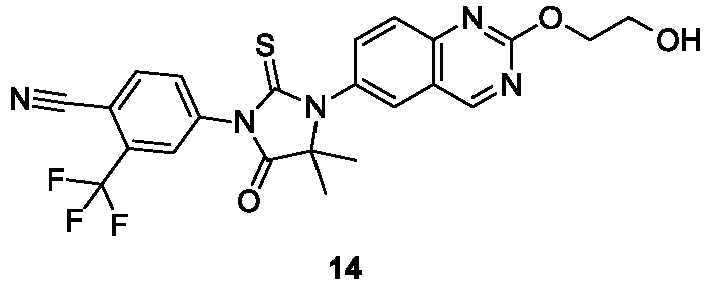
-

- Phosphorus oxychloride (182 mg, 1.18 mmol, 0.11 mL) and N,N-diisopropylethylamine (29 mg, 224.40 µmol) were added to a mixed solution of Compound 14-1 (50 mg, 222.18 µmol) and anhydrous methylbenzene (1 mL). The resulting reaction mixture was stirred at 10 °C for 0.5 h, heated to 110 °C, and stirred for 5 h. The reaction mixture was concentrated under reduced pressure. Ethanediol (138 mg, 2.22 mmol) and triethylamine (73 mg, 722.08 µmol, 0.1 mL) were added to the residue obtained from the concentration. The resulting mixed solution was stirred at 110 °C for 16 h. The reaction mixture was concentrated under reduced pressure. The residue obtained from the concentration was diluted with dichloromethane (20 mL), and washed with water (10 mL) and saturated brine (15 mL). The organic phase was dried over anhydrous sodium sulfate, and concentrated under reduced pressure to obtain Compound 14-2. LCMS (ESI) m/z: 269 (M+1).
-

- diBoc (30 mg, 137.46 µmol), triethylamine (23 mg, 227.30 µmol), and 4-dimethylaminopyridine (2 mg, 16.37 µmol) were added to a mixed solution of Compound 14-2 (30 mg, 111.49 µmol) in dichloromethane (1 mL). The resulting reaction mixture was stirred at 10 °C for 1 h. The reaction mixture was concentrated under reduced pressure. The residue obtained from the concentration was purified by a preparative TLC plate to obtain Compound 14-3. LCMS (ESI) m/z: 391 (M+23).
-

- Compound 14-3 (20 mg, 54.17 µmol), Compound 1-4 (9 mg, 87.28 µmol), potassium carbonate (20 mg, 144.63 µmol), cuprous chloride (2 mg, 20.20 µmol), 2-acetylcyclohexanone (2 mg, 14.27 µmol), DMF (1 mL), and water (0.05 mL) were added to a microwave tube. The microwave tube was sealed, and kept at 130 °C for microwave reaction for 30 min. The reaction mixture was filtered, and washed with ethyl acetate (10 mL). The filtrate was concentrated under reduced pressure. 1N hydrochloric acid was added to the residue obtained from the concentration (pH 6-7), which was extracted with ethyl acetate (20 mL). The organic phase was washed with saturated brine (20 mL), dried over anhydrous sodium sulfate, and concentrated under reduced pressure to obtain Compound 14-4. LCMS (ESI) m/z: 392 (M+1).
-

- A solution of TMSCHN2 in n-hexane (2M, 0.1 mL) was added to a solution of Compound 14-4 (25 mg, 63.87 µmol) in dichloromethane (1 mL) and methanol (0.1 mL). The resulting reaction mixture was stirred at 10 °C for 1 h. The reaction mixture was concentrated under reduced pressure. The residue obtained from the concentration was purified by a preparative TLC plate to obtain Compound 14-5. LCMS (ESI) m/z: 428 (M+23).
-

- A mixed solution of Compound 14-5 (10 mg, 24.66 µmol), Compound 1-7 (28 mg, 122.81 µmol), methylbenzene (1 mL), and DMF (0.2 mL) was heated to 110 °C, and stirred for 16 h. Compound 1-7 (28 mg, 122.81 µmol) was supplemented to the reaction mixture, and the resulting reaction mixture was further stirred at 110 °C for 8 h. Methanol (1 mL) was added to the reaction mixture, which was stirred for 30 min, and then concentrated under reduced pressure. The residue obtained from the concentration was purified by a preparative TLC plate to obtain Compound 14-6. LCMS (ESI) m/z: 624 (M+23).
-

- Trifluoroacetic acid (0.1 mL) was added to a solution of Compound 14-6 (10 mg, 16.62 µmol) in dichloromethane (1 mL). The resulting reaction mixture was stirred at 15 °C for 1 h. A saturated aqueous solution of sodium bicarbonate was added to the reaction mixture (pH about 8), and the resulting mixture was extracted with dichloromethane (10 mL). The organic phase was washed with saturated brine (10 mL), dried over anhydrous sodium sulfate, and concentrated under reduced pressure. The residue obtained from the concentration was purified by a preparative TLC plate to obtain Compound 14. 1H NMR (400 MHz, CDCl3) δ ppm 9.33 (s, 1H), 8.04-7.96 (m, 3H), 7.90-7.83 (m, 2H), 7.76 (dd, J=2.3, 8.8 Hz, 1H), 4.76-4.65 (m, 2H), 4.14-4.02 (m, 2H), 2.67 (br s, 1H), 1.67 (s, 6H); LCMS (ESI) m/z: 502 (M+1).
-

-

- At room temperature (10 °C), O-(7-azabenzotriazol-1-yl)-N,N,N',N'-tetramethyluronium hexafluorophosphate (7.82 g, 20.55 mmol) was added to a solution of Compound 11-1 (3.40 g, 15.81 mmol), 2,2-difluoroacetic acid (3.04 g, 31.62 mmol), and triethylamine (4.80 g, 47.43 mmol) in dichloromethane (50 mL).The reaction mixture reacted at 10 °C for 12 h. The reaction mixture was directly concentrated to obtain a crude product. The crude product was purified by flash column chromatography to obtain Compound 15-1. 1H NMR (400 MHz, CDCl3) δ ppm 12.72 (br s, 1 H), 8.34 (br d, J=8.78 Hz, 1 H), 8.05 (br s, 1 H), 7.87 (br s, 1 H), 7.41 (br d, J=9.03 Hz, 1 H), 6.57 (br s, 1 H), 6.01-5.65 (m, 1 H).
-

- Sodium methoxide (1.77 g, 32.76 mmol) was added to a solution of Compound 15-1 (3.20 g, 10.92 mmol) in methanol (10 mL) at room temperature (10 °C). The reaction mixture reacted at 30 °C for 12 h. The reaction mixture was cooled to room temperature, and concentrated to obtain a crude product. The crude product was purified by flash column chromatography to obtain Compound 15-2. 1H NMR (400 MHz, CDCl3) δ ppm 12.69 (br s, 1 H), 8.28 (s, 1 H), 7.75 (br d, J=8.78 Hz, 1 H), 7.52 (d, J=8.53 Hz, 1 H), 6.51-6.18 (m, 1 H); LCMS (ESI) m/z: 277 (M+3).
-

- With reference to the synthesis of Compound 11-4, Compound 15-3 was prepared with Compound 15-2 as the starting material. LCMS (ESI) m/z: 321 (M+3).
-

- With reference to the synthesis of Compound 11-5, Compound 15-4 was prepared with Compound 15-3 as the starting material. LCMS (ESI) m/z: 419 (M+1).
-

- With reference to the synthesis of Compound 11-6, Compound 15-5 was prepared with Compound 15-4 as the starting material. LCMS (ESI) m/z: 442 (M+1).
-

- With reference to the synthesis of Compound 11-7, Compound 15-6 was prepared with Compound 15-5 as the starting material. LCMS (ESI) m/z: 456 (M+1).
-

- With reference to the synthesis of Compound 11-8, Compound 15-7 was prepared with Compound 15-6 as the starting material. LCMS (ESI) m/z: 652 (M+1).
-

- With reference to the synthesis of Compound 11, Compound 15 was prepared with Compound 15-7 as the starting material. 1H NMR (400 MHz, CDCl3) δ ppm 8.26-8.20 (m, 2H), 8.06-8.00 (m, 2H), 7.91-7.83 (m, 2H), 6.85-6.52 (m, 1H), 4.92-4.87 (m, 2H), 4.15 (br d, J=3.8 Hz, 2H), 2.40 (br s, 1H), 1.70 (s, 6H); LCMS (ESI) m/z: 552 (M+1).
-

-

- CDI (11.31 g, 69.75 mmol) was added to a turbid liquid of Compound 11-1 (10 g, 46.50 mmol) in tetrahydrofuran (100 mL). The resulting mixture was stirred at 75 °C for 18 h. The reaction mixture was cooled to room temperature, and a solid precipitated, and was filtered. The filter cake was washed with tetrahydrofuran (10 mL×3). The filter cake was concentrated to dryness under reduced pressure to obtain Compound 16-1. 1H NMR (400 MHz, DMSO-d6) δ ppm 11.47-11.16 (m, 2H), 7.92 (d, J=2.3 Hz, 1H), 7.77 (dd, J=2.3, 8.8 Hz, 1H), 7.10 (d, J=8.5 Hz, 1H).
-

- N,N-diisopropylethylamine (5.87 g, 45.43 mmol) was added dropwise to a solution of Compound 16-1 (7.3 g, 30.29 mmol) in phosphorus oxychloride (100 mL). The resulting mixture was stirred at 110 °C for 2 h. The reaction mixture was cooled to room temperature, diluted with dichloromethane (400 mL), slowly added to water (500 mL) under stirring, extracted with dichloromethane (50 mL×3), and washed with saturated brine (50 mL×3). The organic phases were combined, dried over anhydrous sodium sulfate, and filtered. The filtrate was concentrated under reduced pressure to obtain Compound 16-2. LCMS (ESI) m/z: 279 (M+3).
-

- Sodium hydride (173 mg, 4.32 mmol, 60% purity) was added to a solution of Compound 16-2 (1 g, 3.60 mmol) and ethanediol (268 mg, 4.32 mmol) in tetrahydrofuran (50 mL). The mixture was stirred at 10 °C for 1 h. The reaction mixture was quenched with water (20 mL), and the resulting mixture was extracted with dichloromethane (20 mL×3). The combined organic phase was washed with saturated brine (20 mL), dried over anhydrous sodium sulfate, filtered, and concentrated to obtain Compound 16-3. LCMS (ESI) m/z: 305 (M+3).
-

- At 10 °C, triethylamine (1.10 g, 10.87 mmol) was added to a mixture of Compound 16-3 (1.1 g, 3.62 mmol), diBoc (1.19 g, 5.44 mmol), and 4-dimethylaminopyridine (88.55 mg, 724.78 µmol) in dichloromethane (20 mL). The reaction mixture reacted at 10 °C for 1 h. The reaction mixture was washed with 1M dilute hydrochloric acid (20 mL) and water (20 mL×2) respectively, dried over anhydrous sodium sulfate, filtered, and concentrated to obtain Compound 16-4. 1HNMR (400 MHz, CDCl3) δ ppm 8.23 (d, J=2.26Hz, 1H), 7.66 (d, J=9.03Hz, 1H), 7.85 (dd, J=8.78, 2.26 Hz, 1H), 4.75 (dt, J=4.27, 2.38 Hz, 2H), 4.48 (dt, J=4.20, 2.29Hz, 2H), 1.44 (s, 9H).
-

- A solution of methylamine in tetrahydrofuran (2.0 M, 2.5 mL) was added to a solution of Compound 16-4 (1 g, 2.48 mmol) in tetrahydrofuran (3 mL) at 10 °C. The reaction mixture was kept at 80 °C for microwave reaction for 0.5 h. The reaction mixture was directly concentrated to obtain a crude product. The crude product was purified by flash column chromatography to obtain Compound 16-5. LCMS (ESI) m/z: 400 (M+3).
-

- With reference to the synthesis of Compound 11-6, Compound 16-6 was prepared with Compound 16-5 as the starting material. LCMS (ESI) m/z: 421 (M+1).
-

- With reference to the synthesis of Compound 11-7, Compound 16-7 was prepared with Compound 16-6 as the starting material. LCMS (ESI) m/z: 435 (M+1).
-

- With reference to the synthesis of Compound 11-8, Compound 16-8 was prepared with Compound 16-7 as the starting material. LCMS (ESI) m/z: 631 (M+1).
-

- With reference to the synthesis of Compound 11, Compound 16 was prepared with Compound 16-8 as the starting material. 1H NMR (400 MHz, CDCl3) δ ppm 7.99-7.87 (m, 2H), 7.85-7.74 (m, 2H), 7.58 (br d, J=8.03Hz, 1H), 7.42 (dd, J=8.78, 2.26Hz, 1H), 4.59 (br s, 2H), 4.09-3.85 (m, 2H), 3.08-2.98 (m, 3H), 1.56 (s, 6H); LCMS (ESI) m/z: 531 (M+1).
-

-

- Propionyl chloride (12.91 g, 139.50 mmol) was added to a solution of Compound 11-1 (10.00 g, 46.50 mmol) in trichloromethane (200 mL) at 20 °C. The reaction mixture was heated to 70 °C, and reacted for 12 h. The reaction mixture was cooled to room temperature, and concentrated to obtain a crude product. Ethyl acetate (100 mL) was added to the crude product and the resulting mixture was stirred at 25 °C for 0.5 h, and filtered. The collected filter cake was dried in a drying oven to obtain Compound 17-1. LCMS (ESI) m/z: 253 (M+1).
-

- 2-Bromoethanol (1.24 g, 9.88 mmol, 0.7 mL) was added to a mixed solution of Compound 17-1 (1.00 g, 3.95 mmol), potassium carbonate (1.36 g, 9.88 mmol), benzyltriethylammonium chloride (90 mg, 395.00 µmol), and dimethoxyethane (20 mL). The resulting reaction mixture was heated to 90 °C, and stirred for 16 h. 2-Bromoethanol (1.24 g, 9.88 mmol, 0.7 mL) and benzyltriethylammonium chloride (135 mg, 592.70 µmol) were supplemented to the reaction mixture. The resulting reaction mixture was heated to 90 °C, and stirred for 16 h. The reaction mixture was filtered, and the filtrate was concentrated under reduced pressure. The residue obtained from the concentration was purified by a silica gel column to obtain Compound 17-2. 1H NMR (400 MHz, CDCl3) δ ppm 8.30 (d, J=2.0 Hz, 1H), 7.87 (dd, J=2.3, 8.8 Hz, 1H), 7.75 (d, J=8.8 Hz, 1H), 4.80-4.72 (m, 2H), 4.08 (br d, J=3.5 Hz, 2H), 3.31 (br s, 1H), 2.96 (q, J=7.5 Hz, 2H), 1.40 (t, J=7.7 Hz, 3H).
-

- diBoc (171 mg, 783.51 µmol), triethylamine (139 mg, 1.37 mmol, 0.19 mL), and 4-dimethylaminopyridine (10 mg, 81.85 µmol) were added to a mixed solution of Compound 17-2 (200 mg, 673.06 µmol) in dichloromethane (4 mL). The resulting reaction mixture was stirred at 10 °C for 1 h. The reaction mixture was concentrated under reduced pressure. The residue obtained from the concentration was purified by a silica gel column to obtain Compound 17-3. LCMS (ESI) m/z: 397 (M+1).
-

- A mixture of Compound 17-3 (130 mg, 327.24 µmol), Boc-NH2 (50 mg, 426.80 µmol), cesium carbonate (266 mg, 816.40 µmol), bis(dibenzylideneacetone)palladium (20 mg, 34.78 µmol), 4,5-bis(diphenylphosphino)-9,9-dimethylxanthene (20 mg, 34.56 µmol), and methylbenzene (2 mL) was added to a microwave tube, and kept at 120 °C for microwave reaction for 0.5 h. The reaction mixture was filtered through Celite. The filtrate was diluted with ethyl acetate (30 mL), washed with water (20 mL) and saturated brine (20 mL), dried over anhydrous sodium sulfate, and concentrated under reduced pressure. The residue obtained from the concentration was purified by a preparative TLC plate to obtain Compound 17-4. LCMS (ESI) m/z: 434 (M+1).
-

- Trifluoroacetic acid (0.2 mL) was added to a solution of Compound 17-4 (85 mg, 196.08 µmol) in dichloromethane (2 mL). The resulting reaction mixture was stirred at 15 °C for 12 h. A saturated aqueous solution of sodium bicarbonate was added to the reaction mixture (pH about 8), which was extracted with dichloromethane (20 mL). The organic phase was washed with saturated brine (20 mL), dried over anhydrous sodium sulfate, and concentrated under reduced pressure. Lithium hydroxide (82 mg, 1.95 mmol) was added to a solution of the resulting yellow oil (64 mg, 194.37 µmol) in tetrahydrofuran (2 mL) and water (0.5 mL). The resulting reaction mixture was stirred at 15 °C for 16 h. The reaction mixture was dried over anhydrous sodium sulfate, and concentrated under reduced pressure to obtain Compound 17-5. LCMS (ESI) m/z: 234 (M+1).
-

- Trimethylsilyl cyanide (25 mg, 252.00 µmol) and zinc chloride (4 mg, 29.32 µmol) were added to a mixed solution of Compound 17-5 (20 mg, 85.74 µmol), cyclobutanone (36 mg, 513.63 µmol), sodium sulfate (50 mg, 352.01 µmol) and tetrahydrofuran (2 mL). The resulting reaction mixture was stirred at 10 °C for 19 h. An aqueous solution of sodium sulfite (5 mL) was added to the reaction mixture, which was extracted with ethyl acetate (5 mL×3). The organic phase was washed with saturated brine (10 mL), dried over anhydrous sodium sulfate, and concentrated under reduced pressure to obtain Compound 17-6. LCMS (ESI) m/z: 313 (M+1).
-

- diBoc (23 mg, 105.39 µmol), triethylamine (20 mg, 197.65 µmol), and 4-dimethylaminopyridine (2 mg, 16.37 µmol) were added to a mixed solution of Compound 17-6 (30 mg, 96.04 µmol) in dichloromethane (1 mL). The resulting reaction mixture was stirred at 10 °C for 1 h. The reaction mixture was concentrated under reduced pressure. The residue obtained from the concentration was purified by a preparative TLC plate to obtain Compound 17-7. LCMS (ESI) m/z: 413 (M+1).
-

- A mixed solution of Compound 17-7 (20 mg, 48.49 µmol), Compound 1-7 (28 mg, 122.70 µmol), methylbenzene (1 mL), and DMF (0.2 mL) was heated to 110 °C, and stirred for 16 h. Compound 1-7 (54 mg, 236.64 µmol) was supplemented to the reaction mixture, and the resulting mixture was further stirred at 110 °C for 4 h. Methanol (1 mL) was added to the reaction mixture, which was stirred for 30 min, and then concentrated under reduced pressure. The residue obtained from the concentration was purified by a preparative TLC plate (petroleum ether/ethyl acetate=1/1) to obtain Compound 17-8. LCMS (ESI) m/z: 642 (M+1).
-

- Trifluoroacetic acid (0.2 mL) was added to a solution of Compound 17-8 (30 mg, 46.75 µmol) in dichloromethane (1 mL). The resulting reaction mixture was stirred at 10 °C for 2 h. A saturated aqueous solution of sodium bicarbonate was added to the reaction mixture (pH about 8), which was extracted with dichloromethane (10 mL×3). The organic phase was washed with saturated brine (15 mL), dried over anhydrous sodium sulfate, and concentrated under reduced pressure. The residue obtained from the concentration was purified by a preparative TLC plate to obtain Compound 17. 1H NMR (400 MHz, CDCl3) δppm 8.09 (d, J=2.3 Hz, 1H), 8.01 (d, J=8.8 Hz, 1H), 7.92 (dd, J=3.1, 5.1Hz, 2H), 7.80 (dd, J=1.8,8.3Hz,1H), 7.64 (dd, J=2.5,8.8 Hz,1H), 4.77-4.69 (m,2H), 4.07-3.98 (m,2H), 3.12-2.81 (m, 3H), 2.73-2.62 (m, 2H), 2.59-2.46 (m, 2H), 2.26-2.13 (m, 1H), 1.65-1.55 (m, 1H), 1.38-1.33 (m, 3H); LCMS (ESI) m/z: 542 (M+1).
-

-

- With reference to the synthesis of Compound 11-2, Compound 18-1 was prepared with Compound 10-3 as the starting material. LCMS (ESI) m/z: 301 (M+1).
-

- A solution of potassium tert-butoxide in tetrahydrofuran (1M, 81 mL) was added to a solution of Compound 18-1 (8.1 g, 26.90 mmol) in tetrahydrofuran (150 mL). The resulting mixture was stirred at 30 °C for 16 h. The reaction mixture was cooled to room temperature, and concentrated to dryness under reduced pressure. The residue obtained from the concentration was dissolved in water (40 mL), and adjusted to a pH of about 7 with dilute hydrochloric acid (2 mol/L), and a white solid precipitated. The turbid liquid was filtered, and the filter cake was washed with water (10 mL×2). The resulting filter cake was dried in an infrared oven to obtain Compound 18-2. LCMS (ESI) m/z: 285 (M+3).
-

- With reference to the synthesis of Compound 11-4, Compound 18-3 was prepared with Compound 18-2 as the starting material. LCMS (ESI) m/z: 329 (M+3).
-

- With reference to the synthesis of Compound 11-5, Compound 18-4 was prepared with Compound 18-3 as the starting material. LCMS (ESI) m/z: 429 (M+3).
-

- With reference to the synthesis of Compound 11-6, Compound 18-5 was prepared with Compound 18-4 as the starting material. LCMS (ESI) m/z: 450(M+1).
-

- With reference to the synthesis of Compound 11-7, Compound 18-6 was prepared with Compound 18-5 as the starting material. LCMS (ESI) m/z: 464(M+1).
-

- With reference to the synthesis of Compound 11-8, Compound 18-7 was prepared with Compound 18-6 as the starting material. LCMS (ESI) m/z: 660(M+1).
-

- With reference to the synthesis of Compound 11, Compound 18 was prepared with Compound 18-7 as the starting material. 1H NMR (400 MHz, CDCl3) δ ppm 8.05-7.96 (m, 2H), 7.90-7.84 (m, 2H), 7.44 (dd, J=2.3, 10.0 Hz, 1H), 4.77-4.70 (m, 2H), 4.10 (br s, 2H), 2.44-2.36 (m, 1H), 2.32 (br s, 1H), 1.68 (s, 6H), 1.31-1.24 (m, 2H), 1.21-1.13 (m, 2H); LCMS (ESI) m/z: 560(M+1).
-

-

- P-methylbenzenesulfonic acid (1 g, 5.26 mmol) was added to a turbid liquid of Compound 10-3 (10 g, 42.44 mmol) and trimethyl orthoformate (60 mL). The resulting turbid liquid was heated to 120 °C, and stirred for 32 h. The reaction mixture was concentrated under reduced pressure. The residue obtained from the concentration was purified by a silica gel column to obtain Compound 19-1. LCMS (ESI) m/z: 271 (M+1).
-

- DMF (742 mg, 5.74 mmol, 1 mL) was added to a mixed solution of Compound 19-1 (1 g, 3.69 mmol) and phosphorus oxychloride (19.3 g, 125.87 mmol, 11.7 mL). The resulting reaction mixture was heated to 110 °C, and stirred for 4 h. The reaction mixture was concentrated under reduced pressure, diluted with dichloromethane (100 mL), and then slowly poured into water (80 mL). The resulting mixture was extracted with dichloromethane (50 mL×2), and the organic phase was successively washed with a saturated aqueous solution of sodium bicarbonate (pH about 7) and saturated brine (150 mL), dried over anhydrous sodium sulfate, and concentrated under reduced pressure to obtain Compound 19-2. LCMS (ESI) m/z: 289 (M+1).
-

- Sodium hydride (166 mg, 4.14 mmol, 60% purity) was added to a solution of Compound 19-2 (1 g, 3.45 mmol) and tetrahydropyran-4-ol (423 mg, 4.14 mmol) in tetrahydrofuran (30 mL). The mixture was stirred at 13 °C for 1 h, and further stirred at 10 °C for 12 h. Tetrahydropyran-4-ol (176 mg, 1.73 mmol) and sodium hydride (69 mg, 1.73 mmol, 60% purity) were supplemented, and the resulting mixture was further stirred at 14 °C for 12 h. The reaction mixture was quenched with water (20 mL), and extracted with dichloromethane (20 mL×3). The combined organic phase was washed with saturated brine (20 mL), dried over anhydrous sodium sulfate, filtered, and concentrated to obtain a crude product. The crude product was purified by flash column chromatography to obtain Compound 19-3. LCMS (ESI) m/z: 355 (M+1).
-

- With reference to the synthesis of Compound 11-6, Compound 19-4 was prepared with Compound 19-3 as the starting material. LCMS (ESI) m/z: 378 (M+1).
-
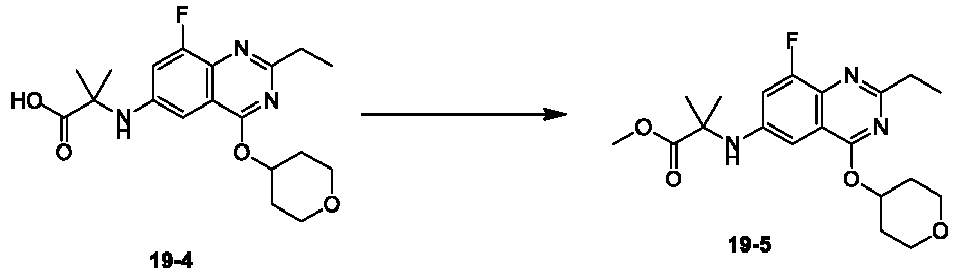
- With reference to the synthesis of Compound 11-7, Compound 19-5 was prepared with Compound 19-4 as the starting material. LCMS (ESI) m/z: 392 (M+1).
-

- With reference to the synthesis of Compound 11-8, Compound 19 was prepared with Compound 19-5 as the starting material. 1H NMR (400 MHz, CDCl3) δ ppm 8.06-7.98 (m, 2H), 7.92-7.83 (m, 2H), 7.47 (dd, J=10.04, 2.26 Hz, 1H), 5.66 (tt, J=8.63, 4.30Hz, 1H), 4.06 (dt, J=11.80, 4.52Hz, 2H), 3.70 (ddd, J=11.86, 9.10, 2.89 Hz, 2H), 3.06 (q, J=7.70Hz, 2H), 2.26-2.16 (m, 2H), 2.02-1.89 (m, 2H), 1.69 (s, 6H), 1.43 (t, J=7.53Hz, 3H); LCMS (ESI) m/z: 588 (M+1).
-

-

- Sodium hydride (170 mg, 4.25 mmol, 60%) was added to a solution of Compound 19-2 (1 g, 3.45 mmol) and ethanediol (266 mg, 4.29 mmol) in tetrahydrofuran (10 mL). The resulting reaction mixture was stirred at 10 °C for 6 h. The reaction mixture was quenched with a saturated aqueous solution of ammonium chloride (100 mL), and then extracted with dichloromethane (100 mL×2). The organic phase was washed with saturated brine (100 mL), dried over anhydrous sodium sulfate, and concentrated under reduced pressure to obtain Compound 20-1. LCMS (ESI) m/z: 315 (M+1).
-

- diBoc (835 mg, 3.83 mmol), triethylamine (654 mg, 6.47 mmol, 0.9 mL), and 4-dimethylaminopyridine (46 mg, 376.53 µmol) were added to a mixed solution of Compound 20-1 (1 g, 3.17 mmol) in dichloromethane (10 mL). The resulting reaction mixture was stirred at 10 °C for 1 h. The reaction mixture was concentrated under reduced pressure. The residue obtained from the concentration was purified by a silica gel column to obtain Compound 20-2. 1H NMR (400 MHz, CDCl3) δ ppm 8.12-8.06 (m, 1H), 7.62 (dd, J=2.0, 9.5 Hz, 1H), 4.84-4.76 (m, 2H), 4.58-4.51 (m, 2H), 2.99 (q, J=7.5 Hz, 2H), 1.51 (s, 9H), 1.39 (t, J=7.7 Hz, 3H).
-

- A mixture of Compound 20-2 (800 mg, 1.93 mmol), Boc-NH2 (339 mg, 2.89 mmol), cesium carbonate (1.57 g, 4.82 mmol), bis(dibenzylideneacetone)palladium (111 mg, 193.04 µmol), 4,5-bis(diphenylphosphino)-9,9-dimethylxanthene (112 mg, 193.56 µmol), and methylbenzene (10 mL) was added to a microwave tube, and kept at 120 °C for microwave reaction for 0.5 h. The reaction mixture was filtered through Celite, and the filtrate was concentrated under reduced pressure. The residue obtained from the concentration was purified by a silica gel column to obtain Compound 20-3. LCMS (ESI) m/z: 452 (M+1).
-

- Trifluoroacetic acid (2 mL) was added to a solution of Compound 20-3 (750 mg, 1.66 mmol) in anhydrous dichloromethane (8 mL). The resulting reaction mixture was stirred at 10 °C for 3 h. A saturated aqueous solution of sodium bicarbonate was added to the reaction mixture (pH about 7), which was extracted with dichloromethane (30 mL). The organic phase was washed with saturated brine (20 mL), dried over anhydrous sodium sulfate, and concentrated under reduced pressure. Lithium hydroxide (520 mg, 12.39 mmol) was added to a solution of the resulting yellow oil (430 mg, 1.24 mmol) in tetrahydrofuran (6 mL) and water (1.5 mL). The resulting reaction mixture was stirred at 10 °C for 3 h. The reaction mixture was dried over anhydrous sodium sulfate, and concentrated under reduced pressure to obtain Compound 20-4. LCMS (ESI) m/z: 252 (M+1).
-

- Trimethylsilyl cyanide (232 mg, 2.34 mmol) and zinc chloride (33 mg, 241.98 µmol) were added to a mixed solution of Compound 20-4 (200 mg, 796.00 µmol), cyclobutanone (334 mg, 4.77 mmol), sodium sulfate (453 mg, 3.19 mmol) and tetrahydrofuran (5 mL). The resulting reaction mixture was stirred at 10 °C for 16 h. An aqueous solution of sodium sulfite (20 mL) was added to the reaction mixture, and the resulting mixture was extracted with ethyl acetate (15 mL×3). The organic phase was washed with saturated brine (20 mL), dried over anhydrous sodium sulfate, and concentrated under reduced pressure to obtain Compound 20-5. LCMS (ESI) m/z: 331 (M+1).
-

- diBoc (237 mg, 1.09 mmol), triethylamine (189 mg, 1.87 mmol), and 4-dimethylaminopyridine (12 mg, 98.23 µmol) were added to a mixed solution of Compound 20-5 (300 mg, 908.11 µmol) in dichloromethane (4 mL). The resulting reaction mixture was stirred at 10 °C for 16 h. The reaction mixture was concentrated under reduced pressure. The residue obtained from the concentration was purified by a silica gel column to obtain Compound 20-6. LCMS (ESI) m/z: 431 (M+1).
-

- A mixed solution of Compound 20-6 (80 mg, 185.84 µmol), Compound 1-7 (170 mg, 744.98 µmol), methylbenzene (2 mL), and DMF (0.5 mL) was heated to 110 °C, and stirred for 16 h. Methanol (1 mL) was added to the reaction mixture, which was stirred for 30 min, and then concentrated under reduced pressure. The residue obtained from the concentration was purified by a preparative TLC plate to obtain Compound 20-7. LCMS (ESI) m/z: 660 (M+1).
-

- Trifluoroacetic acid (0.4 mL) was added to a solution of Compound 20-7 (70 mg, 106.12 µmol) in anhydrous dichloromethane (2 mL). The resulting reaction mixture was stirred at 10 °C for 1 h. A saturated aqueous solution of sodium bicarbonate was added to the reaction mixture (pH about 8), which was extracted with dichloromethane (10 mL×3). The organic phase was washed with saturated brine (15 mL), dried over anhydrous sodium sulfate, and concentrated under reduced pressure. The residue obtained from the concentration was purified by preparative HPLC to obtain Compound 20. 1H NMR (400 MHz, CDCl3) δppm7.98-7.86 (m, 3H), 7.79 (br d, J=8.0 Hz, 1H), 7.40 (br d, J=9.8 Hz, 1H), 4.79-4.68 (m, 2H), 4.03 (br s, 2H), 2.99 (q, J=7.5 Hz, 2H), 2.76-2.60 (m, 3H), 2.59-2.46 (m, 2H), 2.30-2.14 (m, 1H), 1.52 (br s, 1H), 1.36 (t, J=7.5 Hz, 3H); LCMS (ESI) m/z: 560 (M+1).
-

-

- At room temperature (10 °C), O-(7-azabenzotriazol-1-yl)-N,N,N',N'-tetramethyluronium hexafluorophosphate (10.61 g, 27.89 mmol) was added to a solution of Compound 10-3 (5 g, 21.46 mmol), 2,2-difluoroacetic acid (6.18 g, 64.37 mmol), and triethylamine (8.68 g, 85.82 mmol) in dichloromethane (10 mL). The reaction mixture was kept at 10 °C for 13 h. The reaction mixture was concentrated to obtain a crude product. The crude product was purified by flash column chromatography to obtain Compound 21-1. 1H NMR (400 MHz, CDCl3) δ ppm 12.90 (br s, 1 H), 7.79 (s, 1 H), 7.38-7.29 (m, 1 H), 6.50-5.96 (m, 1 H).
-

- With reference to the synthesis of Compound 11-4, Compound 21-2 was prepared with Compound 21-1 as the starting material. LCMS (ESI) m/z: 337 (M+1).
-

- With reference to the synthesis of Compound 11-5, Compound 21-3 was prepared with Compound 21-2 as the starting material. LCMS (ESI) m/z: 439 (M+3).
-

- Compound 21-3 (1.5 g, 3.43 mmol), Compound 1-4 (531 mg, 5.15 mmol), cuprous chloride (34 mg, 343.09 µmol), 2-acetylcyclohexanone (48 mg, 343.09 µmol), and potassium carbonate (948 mg, 6.86 mmol) were added to a microwave tube filled with DMF (15 mL) and water (1.5 mL). After nitrogen purge for 1 min, the resulting mixture was kept at 130 °C for microwave reaction for 20 min. The reaction mixture was cooled to room temperature, and filtered. The filter cake was washed with DMF (5 mL×2). The filtrates were combined, acidified to pH=6-7 with an aqueous solution of dilute hydrochloric acid (2M), and concentrated. The resulting oil was added to dichloromethane/methanol (30 mL/3 mL), stirred at room temperature (20 °C) for 10 min, and filtered to remove insolubles. The filtrate was concentrated to obtain a mixture of Compound 21-4 and Compound 21-4A. LCMS (ESI) m/z: 360 (M+1); 460 (M+1).
-

- At 0 °C, a solution of TMSCHN2 in n-hexane (2M, 5 mL) was added dropwise to a solution of Compound 21-4 (2.3 g, 5.01 mmol) (a mixture containing Compound 21-4A) in dichloromethane (20 mL) and methanol (4mL), and then the resulting mixture was further stirred at 10 °C for 2 h. The reaction mixture was concentrated to obtain a crude product. The crude product was purified by flash column chromatography to obtain Compound 21-5. LCMS (ESI) m/z: 374 (M+1).
-

- With reference to the synthesis of Compound 11-5, Compound 21-6 was prepared with Compound 21-5 as the starting material. LCMS (ESI) m/z: 474 (M+1).
-

- With reference to the synthesis of Compound 11-8, Compound 21-7 was prepared with Compound 21-6 as the starting material. LCMS (ESI) m/z: 670 (M+1).
-

- With reference to the synthesis of Compound 11, Compound 21 was prepared with Compound 21-7 as the starting material. 1H NMR (400 MHz, CDCl3) δ ppm 7.95 (s, 3H), 7.78 (dd, J=8.28, 2.01Hz, 1H), 7.52 (dd, J=9.79, 2.01 Hz, 1H), 6.84-6.36 (m, 1H), 4.89-4.75 (m, 2H), 4.17-4.00(m, 2H), 2.25-2.12 (m, 1H), 1.61 (s, 6H); LCMS (ESI) m/z: 570 (M+1).
-

-

- Sodium hydride (166 mg, 4.14 mmol, 60% purity) was added to a solution of Compound 19-2 (1 g, 3.45 mmol) and 3-(methylsulfonyl)-1-propanol (573 mg, 4.14 mmol) in tetrahydrofuran (20 mL). The mixture was stirred at 16 °C for 1 h. Water (20 mL) was added to the reaction mixture, which was extracted with dichloromethane (20 mL×2). The combined organic phase was washed with saturated brine (20 mL), dried over anhydrous sodium sulfate, filtered, and concentrated to obtain Compound 22-1. LCMS (ESI) m/z: 393 (M+3).
-

- With reference to the synthesis of Compound 11-6, Compound 22-2 was prepared with Compound 22-1 as the starting material. LCMS (ESI) m/z: 414 (M+1).
-

- With reference to the synthesis of Compound 11-7, Compound 22-3 was prepared with Compound 22-2 as the starting material. LCMS (ESI) m/z: 428 (M+1).
-

- With reference to the synthesis of Compound 11-8, Compound 22 was prepared with Compound 22-3 as the starting material. 1H NMR (400 MHz, CDCl3) δ ppm 8.07-7.99 (m, 2H), 7.94-7.83 (m, 2H), 7.48 (dd, J=10.04, 2.26 Hz, 1H), 4.81 (t, J=6.27Hz, 2H), 3.37-3.23 (m, 2H), 3.07 (q, J=7.53Hz, 2H), 3.00 (s, 3H), 2.57-2.47 (m, 2H), 1.69 (s, 6H), 1.44 (t, J=7.53Hz, 3H); LCMS (ESI) m/z: 624 (M+1).
-

-

- Compound 23-1 (10 g, 61.31 mmol) was dissolved in a mixed solution of acetonitrile (50 mL) and DMF (50 mL), and NBS (13.79 g, 61.31 mmol) was added. The resulting mixture was heated to 80 °C, and stirred for 2 h. The reaction mixture was cooled to room temperature. 1 mol/L sodium bicarbonate solution (62 mL) was added to the reaction mixture, and stirred for 5 min. The resulting mixture was concentrated to dryness under reduced pressure. Water (80 mL) was added to the residue obtained from the concentration, and the resulting mixture was extracted with dichloromethane (100 mL×4). The organic phases were combined, dried over anhydrous sodium sulfate, and filtered. The filtrate was concentrated to dryness under reduced pressure. At room temperature, dichloromethane (15 mL) was added to the residue obtained from the concentration. The resulting mixture was stirred for 5 min, and filtered. The filter cake was washed with dichloromethane (5 mL), and the filter cake was dried under reduced pressure to obtain Compound 23-2. 1H NMR (400 MHz, DMSO-d6) δ ppm 12.57 (br s, 1H), 8.00 (s, 1H), 7.99-7.97 (m, 1H); LCMS (ESI) m/z: 290 (M+1).
-

- DMF (8 mL) was added to a solution of Compound 23-2 (8.1 g, 28.03 mmol) in phosphorus oxychloride (21.38 g, 139.58 mmol). The resulting mixture was stirred at 110 °C for 80 min. The reaction mixture was cooled to room temperature, and slowly added dropwise to water (150 mL) which was stirred at room temperature. The resulting mixture was adjusted to a pH of about 8 with a saturated sodium bicarbonate solution, and extracted with dichloromethane (40 mL×4). The organic phases were combined, dried over anhydrous sodium sulfate, and filtered. The filtrate was concentrated under reduced pressure to obtain Compound 23-3. 1H NMR (400 MHz, CDCl3) δ ppm 8.71 (d, J=1.8 Hz, 1H), 8.21 (d, J=2.0 Hz, 1H).
-

- P-methoxybenzylamine (3.25 g, 23.68 mmol), bis(dibenzylideneacetone)palladium (2.72 g, 4.74 mmol), 4,5-bis(diphenylphosphino)-9,9-dimethylxanthene (2.74 g, 4.74 mmol), and sodium tert-butoxide (3.41 g, 35.52 mmol) were added to a solution of Compound 23-3 (7.28 g, 23.68 mmol) in methylbenzene (100 mL). The resulting mixture was subjected to nitrogen displacement four times, heated to 110 °C and stirred for 1 h under nitrogen protection. The reaction mixture was cooled to room temperature, water (100 mL) was added to the reaction mixture, and the resulting mixture was extracted with ethyl acetate (80 mL×3). The organic phases were combined, dried over anhydrous sodium sulfate, and filtered. The filtrate was concentrated to dryness under reduced pressure. The residue obtained from the concentration was purified by a silica gel column to obtain Compound 23-4. 1H NMR (400 MHz, CDCl3) δ ppm 7.84 (d, J=2.8Hz, 1H), 7.18 (d, J=8.0Hz, 2H), 7.13-7.09 (m, 1H), 6.84-6.80 (m, 2H), 4.20 (d, J=5.5Hz, 2H), 3.73 (s, 3H); LCMS (ESI) m/z:317 (M+1).
-

- Zinc cyanide (4.16 g, 35.42 mmol) was added to a solution of Compound 23-4 (7.1 g, 22.42 mmol) in DMF (100 mL). 1,1'-Bis(diphenylphosphino)ferrocene (4.53 g, 4.48 mmol) was added after nitrogen displacement three times, and then bis(dibenzylideneacetone)palladium (2.58 g, 4.48 mmol) was added after nitrogen displacement three times. After nitrogen displacement three times, the resulting mixture was heated to 150 °C and stirred for 50 min under nitrogen protection. The reaction mixture was cooled to room temperature, and concentrated to dryness under reduced pressure. The residue obtained from the concentration was purified by a silica gel column to obtain Compound 23-5. 1H NMR (400 MHz, CDCl3) δ ppm 8.18 (d, J=2.5 Hz, 1H), 7.27 (d, J=8.5 Hz, 2H), 7.09 (d, J=2.8 Hz, 1H), 6.93 (d, J=8.5 Hz, 2H), 5.07 (br s, 1H), 4.38 (d, J=5.3 Hz, 2H), 3.83 (s, 3H); LCMS (ESI) m/z: 308 (M+1).
-

- Compound 23-5 (3.4 g, 11.07 mmol) was dissolved in a mixed solution of dichloromethane (4 mL) and trifluoroacetic acid (16 mL). The resulting mixture was stirred at 10 °C for 2 h. The reaction mixture was concentrated to dryness under reduced pressure. The residue obtained from the concentration was diluted with ethyl acetate (50 mL), and washed with a saturated sodium bicarbonate solution (50 mL×3). The resulting organic phase was dried over anhydrous sodium sulfate, and filtered. The filtrate was concentrated to dryness under reduced pressure. The residue obtained from the concentration was slurried with ethyl acetate (20 mL) at room temperature for 20 min, and filtered. The filter cake was concentrated under reduced pressure to obtain Compound 23-6. 1H NMR (400 MHz, DMSO-d6) δ ppm 8.19 (d, J=2.3 Hz, 1H), 7.29 (d, J=2.5 Hz, 1H), 7.00 (s, 2H).
-
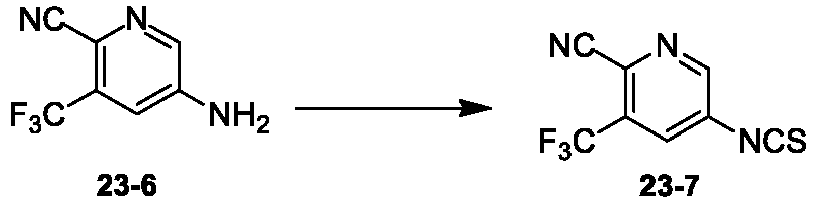
- Thiophosgene (1.76 g, 15.28 mmol) was added dropwise to water (50 mL), and the resulting mixture was stirred at 10 °C for 30 min. Then, Compound 23-6 (1.43 g, 7.64 mmol) was added in batches, and the resulting mixture was stirred at 10 °C for 5 h. The reaction mixture was extracted with dichloromethane (40 mL×2). The organic phases were combined, dried over anhydrous sodium sulfate, and filtered. The filtrate was concentrated under reduced pressure to obtain Compound 23-7.
-

- With reference to the synthesis of Compound 11-8, Compound 23-8 was prepared with Compound 18-6 and Compound 23-7 as the starting materials. LCMS (ESI) m/z: 661(M+1).
-

- With reference to the synthesis of Compound 11, Compound 23 was prepared with Compound 23-8 as the starting material. 1H NMR (400 MHz, CDCl3) δ ppm 9.12 (d, J=2.01Hz, 1H), 8.39 (d, J=2.26Hz, 1H), 7.88 (s, 1H), 7.43 (dd, J=9.91, 2.13Hz, 1H), 4.79-4.68 (m, 2H), 4.15-4.05 (m, 2H), 2.45-2.35 (m, 1H), 2.30 (t, J=5.65Hz, 1H), 1.75-1.73 (m, 1H), 1.70 (s, 5 H), 1.31-1.25 (m, 2H), 1.20-1.15 (m, 2H); LCMS (ESI) m/z: 561 (M+1).
-

-

- Sodium hydride (166 mg, 4.15 mmol, 60%) was added to a solution of Compound 19-2 (1 g, 3.45 mmol) and N,N-dimethylethanolamine (370 mg, 4.15 mmol) in tetrahydrofuran (20 mL). The resulting reaction mixture was stirred at 10 °C for 1 h. The reaction mixture was quenched with a saturated aqueous solution of ammonium chloride (50 mL), and then extracted with dichloromethane (40 mL×2). The organic phase was washed with saturated brine (50 mL), dried over anhydrous sodium sulfate, and concentrated under reduced pressure. The residue obtained from the concentration was purified by a silica gel column to obtain Compound 24-1. 1H NMR (400 MHz, CDCl3) δ ppm 8.10-8.04 (m, 1H), 7.60 (dd, J=2.1, 9.7 Hz, 1H), 4.70 (t, J=5.8 Hz, 2H), 2.99 (q, J=7.5 Hz, 2H), 2.84 (t, J=5.8 Hz, 2H), 2.38 (s, 6H), 1.40 (t, J=7.7 Hz, 3H).
-

- Compound 24-1 (400 mg, 1.17 mmol), Compound 1-4 (180 mg, 1.75 mmol), potassium carbonate (404 mg, 2.92 mmol), cuprous chloride (23 mg, 232.32 µmol), 2-acetylcyclohexanone (33 mg, 235.41 µmol), DMF (4 mL), and water (0.2 mL) were added to a microwave tube. The microwave tube was sealed, and kept at 130 °C for microwave reaction for 40 min. The reaction mixture was filtered, and washed with ethyl acetate (20 mL). The filtrate was concentrated under reduced pressure. 1N hydrochloric acid was added to the residue obtained from the concentration (pH 6-7). The resulting mixture was freeze-dried. Dichloromethane/methanol (20 mL, 10/1) were added to the resulting solid, and the resulting mixture was dried over anhydrous sodium sulfate, filtered, and concentrated under reduced pressure to obtain Compound 24-2. LCMS (ESI) m/z: 365 (M+1).
-

- A solution of TMSCHN2 in n-hexane (2M, 0.4 mL) was added to a solution of Compound 24-2 (0.25 g, 686.03 µmol) in dichloromethane (2 mL) and methanol (0.2 mL). The resulting reaction mixture was stirred at 10 °C for 1 h. Water was poured into the reaction mixture, which was extracted with dichloromethane (20 mL). The organic phase was washed with saturated brine (15 mL), dried over anhydrous sodium sulfate, and concentrated under reduced pressure. The residue obtained from the concentration was purified by a preparative TLC plate to obtain Compound 24-3. LCMS (ESI) m/z: 379 (M+1).
-

- A mixed solution of Compound 24-3 (60 mg, 158.55 µmol), Compound 1-7 (120 mg, 525.87 µmol), methylbenzene (2 mL), and DMF (0.5 mL) was heated to 110 °C, and stirred for 16 h. Methanol (1 mL) was added to the reaction mixture, and the resulting mixture was stirred for 30 min, and then concentrated under reduced pressure. The residue obtained from the concentration was purified by a preparative TLC plate, and then purified by preparative HPLC to obtain Compound 24. 1H NMR (400 MHz, CDCl3) δ ppm 7.97-7.84 (m, 3H), 7.79 (br d, J=10.0 Hz, 1H), 7.37 (dd, J=2.1, 10.2 Hz, 1H), 4.70 (t, J=5.9 Hz, 2H), 2.98 (q, J=7.5 Hz, 2H), 2.83 (br s, 2H), 2.36 (br s, 6H), 1.59 (s, 6H), 1.35 (t, J=7.5 Hz, 3H); LCMS (ESI) m/z: 575.0 (M+1).
-

-

- A mixed solution of Compound 20-6 (80 mg, 185.84 µmol), Compound 23-7 (130 mg, 567.24 µmol), methylbenzene (2 mL), and DMF (0.5 mL) was heated to 110 °C, and stirred for 16 h. Methanol (1 mL) was added to the reaction mixture, and the resulting mixture was stirred for 30 min, and then concentrated under reduced pressure. The residue obtained from the concentration was purified by a preparative TLC plate to obtain Compound 25-1. LCMS (ESI) m/z: 661 (M+1).
-
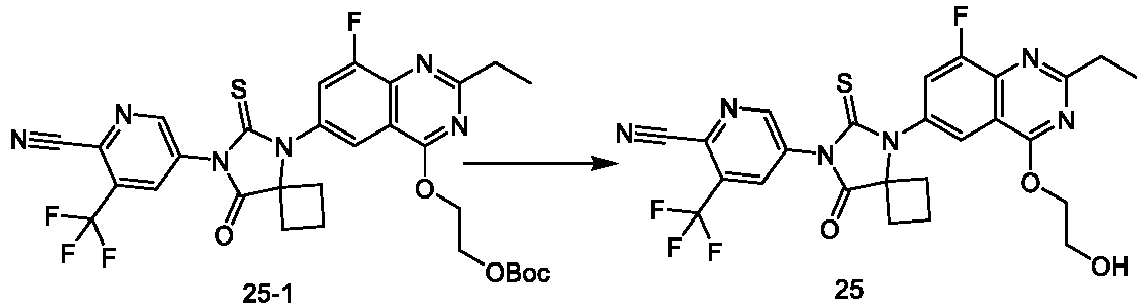
- Trifluoroacetic acid (0.4 mL) was added to a solution of Compound 25-1 (90 mg, 136.23 µmol) in dichloromethane (2 mL). The resulting reaction mixture was stirred at 10 °C for 1 h. A saturated aqueous solution of sodium bicarbonate was added to the reaction mixture (pH about 8), which was extracted with dichloromethane (10 mL×3). The organic phase was washed with saturated brine (15 mL), dried over anhydrous sodium sulfate, and concentrated under reduced pressure. The residue obtained from the concentration was purified by preparative HPLC to obtain Compound 25. 1H NMR (400 MHz, CDCl3) δppm 9.03 (d, J=1.8 Hz, 1H), 8.30 (d, J=1.8 Hz, 1H), 7.91 (s, 1H), 7.39 (dd, J=2.0, 9.8 Hz, 1H), 4.78-4.69 (m, 2H), 4.08-3.97 (m, 2H), 2.99 (q, J=7.5 Hz, 2H), 2.70 (br t, J=9.4 Hz, 2H), 2.61-2.48 (m, 2H), 2.30-2.13 (m, 1H), 1.73-1.55 (m, 2H), 1.36 (t, J=7.7 Hz, 3H); LCMS (ESI) m/z: 561 (M+1).
-

-

- With reference to the synthesis of Compound 11-8, Compound 26-1 was prepared with Compound 21-6 as the starting material. LCMS (ESI) m/z: 671 (M+1).
-

- With reference to the synthesis of Compound 11, Compound 26 was prepared with Compound 26-1 as the starting material. 1H NMR (400 MHz, CDCl3) δ ppm 9.03 (d, J=1.76Hz, 1H), 8.29 (d, J=2.01Hz, 1H), 7.96 (s, 1H), 7.58-7.45 (m, 1H), 6.85-6.44(m, 1H), 4.89-4.76 (m, 2H), 4.07 (br d, J=3.76Hz, 2H), 2.16 (br s, 1H), 1.64 (s, 6H); LCMS (ESI) m/z: 571 (M+1).
-

-
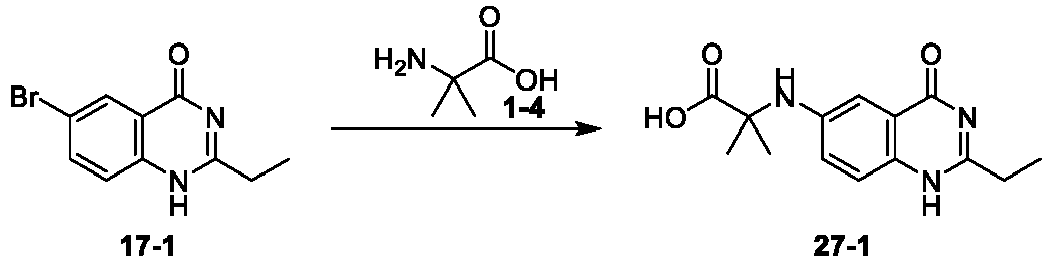
- Compound 17-1 (1.50 g, 5.93 mmol), Compound 1-4 (917 mg, 8.89 mmol), cuprous chloride (117 mg, 1.19 mmol), 2-acetylcyclohexanone (166 mg, 1.19 mmol), potassium carbonate (2.05 g, 14.82 mmol), N,N-dimethylformamide (10 mL), and water (2.5 mL) were added to a 30 mL microwave tube. The resulting mixture was kept at 130 °C for microwave reaction for 1 h. The reaction mixture was filtered, and the filter cake was washed with DMF (10 mL×3). Dilute hydrochloric acid (2 mol/L) was added dropwise to the filtrate, such that the filtrate was weakly acidic (pH about 6). The filtrate was concentrated to dryness under reduced pressure. The residue obtained from the concentration was slurried with dichloromethane/methanol (10/1, 30 mL) at 15 °C for 2 min, and filtered. The filtrate was concentrated to dryness under reduced pressure to obtain Compound 27-1. LCMS (ESI) m/z: 276 (M+1).
-

- Compound 27-1 (4.40 g, 15.98 mmol) was dissolved in methanol (40 mL), and dichlorosulfoxide (19.01 g, 159.80 mmol, 11.59 mL) was added dropwise at 0 °C. The resulting mixture was heated to 50 °C, and stirred for 18 h. The reaction mixture was cooled to 15 °C, and concentrated to dryness under reduced pressure. The residue obtained from the concentration was dissolved in a saturated sodium bicarbonate solution (50 mL), and extracted with dichloromethane/methanol (10:1, 80 mL×4). The organic phases were combined, washed with saturated brine (50 mL), dried over anhydrous sodium sulfate, and filtered. The filtrate was concentrated to dryness under reduced pressure. The residue obtained from the concentration was purified by a silica gel column to obtain Compound 27-2. LCMS (ESI) m/z: 290 (M+1).
-

- Under nitrogen protection, Compound 27-2 (560 mg, 1.94 mmol) and Compound 1-7 (1.77 g, 7.74 mmol) were dissolved in N,N-dimethylformamide (2 mL) and methylbenzene (20 mL), and the resulting mixture was heated to 120 °C, and stirred for 18 h. The reaction mixture was cooled to room temperature, and concentrated to dryness under reduced pressure. The residue obtained from the concentration was purified by a silica gel column to obtain Compound 27-3. LCMS (ESI) m/z: 486 (M+1).
-

- Under nitrogen protection, a turbid liquid of Compound 27-3 (789 mg, 1.63 mmol), 2-bromoethanol (609 mg, 4.88 mmol), potassium carbonate (674 mg, 4.88 mmol), and N,N-dimethylformamide (10 mL) was stirred at 30 °C for 17 h, supplemented with 2-bromoethanol (609 mg, 4.88 mmol) and further stirred at 30 °C for 5 h, and supplemented with 2-bromoethanol (609 mg, 4.88 mmol) and further stirred at 30 °C for 18 h. The reaction mixture was cooled to room temperature, and then directly filtered. The filtrate was separated and purified by preparative HPLC to obtain Compound 27. 1HNMR (400 MHz, CDCl3) δ ppm 8.13 (d, J=2.5 Hz, 1H), 8.08-7.99 (m, 3H), 7.88 (dd, J=2.0, 8.3 Hz, 1H), 7.73 (dd, J=2.4, 8.9 Hz, 1H), 4.85-4.78 (m, 2H), 4.14-4.07 (m, 2H), 3.16 (t, J=5.6 Hz, 1H), 3.03 (q, J=7.5 Hz, 2H), 1.68 (s, 6H), 1.44 (t, J=7.5 Hz, 3H); LCMS (ESI) m/z: 530 (M+1).
-

-

- Sodium hydride (166 mg, 60% purity) was added to a solution of Compound 19-2 (1.00 g) and methyl 2-hydroxyacetate (373 mg) in tetrahydrofuran (20 mL). The mixture was stirred at 16 °C for 1 h. The reaction mixture was quenched with water (20 mL), and extracted with dichloromethane (20 mL×3). The combined organic phase was washed with saturated brine (20 mL), dried over anhydrous sodium sulfate, filtered, and concentrated to obtain Compound 28-1. LCMS (ESI) m/z: 345 (M+3).
-

- Compound 28-1 (600 mg), Compound 1-4 (270 mg), cuprous chloride (17 mg), 2-acetylcyclohexanone (25 mg), and potassium carbonate (604 mg) were added to a microwave tube filled with DMF (10 mL) and water (2 mL). After nitrogen purge for 1 min, the resulting mixture was kept at 130 °C for microwave reaction for 1 h, and filtered, and the filter cake was washed with DMF (2 mL). The filtrate was adjusted to pH=7 with 2M hydrochloric acid, and then concentrated. Dichloromethane/methanol (10/1, 20 mL) was added to the resulting oil to precipitate a solid. After filtration, the resulting filtrate was concentrated to obtain Compound 28-2. LCMS (ESI) m/z: 352 (M+1).
-

- TMSCHN2 (2M, 4.70 mL) was added dropwise to a solution of Compound 28-2 (1.10 g) in dichloromethane (20 mL) and methanol (2 mL). After the completion of the dropwise addition, the mixture reacted at 18 °C for 2 h. The reaction mixture was concentrated, and the concentrate was purified by thin layer chromatography to obtain Compound 28-3. LCMS (ESI) m/z: 380 (M+1).
-

- Compound 1-7 (230 mg) was added to Compound 28-3 (130 mg) in a mixed solvent of methylbenzene (4 mL) and DMF (1 mL), and then the resulting mixture was heated to 120 °C, and stirred for 28 h. The reaction mixture was cooled to room temperature, and concentrated. The concentrate was purified by thin layer chromatography to obtain Compound 28-4. LCMS (ESI) m/z: 576 (M+1).
-

- Lithium hydroxide (1M, 0.5 mL) was added to a solution of Compound 28-4 (90 mg) in tetrahydrofuran (3 mL), and the resulting mixture was stirred at 15 °C for 1 h. Then, the reaction mixture was adjusted to a pH of about 6 with 1M dilute hydrochloric acid, and extracted with dichloromethane (20 mL×2). The combined organic phase was washed with saturated brine (20 mL), dried over anhydrous sodium sulfate, filtered, and concentrated to obtain Compound 28-5. LCMS (ESI) m/z: 562 (M+1).
-

- HATU (75 mg) was added to a solution of Compound 28-5 (80 mg), methylamine hydrochloride (16 mg), and triethylamine (50 mg) in dichloromethane (5 mL). Then, the resulting mixture was stirred at 15 °C for 1 h. The reaction mixture was concentrated, and the concentrate was purified by thin layer chromatography. The resulting sample was further purified by HPLC (alkaline) to obtain Compound 28. 1H NMR (400 MHz, CDCl3) δppm 7.97-8.08 (m, 2H), 7.94 (s, 1H), 7.87 (dd, J=8.28, 1.76Hz, 1H), 7.52 (dd, J=10.04, 2.01Hz, 1H), 6.12 (br s, 1H), 5.17 (s, 2H), 3.08 (q, J=7.53Hz, 2H), 2.94 (d, J=4.77Hz, 3H), 1.70 (s, 6H), 1.42 (t, J=7.53Hz, 3H); LCMS (ESI) m/z: 575 (M+1).
-

-

- With reference to the synthesis of Compound 28-1, Compound 29-2 was prepared with Compound 19-2 as the starting material. LCMS (ESI) m/z: 343 (M+3).
-

- With reference to the synthesis of Compound 28-2, Compound 29-3 was prepared with Compound 29-2 as the starting material. LCMS (ESI) m/z: 364 (M+1).
-

- With reference to the synthesis of Compound 28-3, Compound 29-4 was prepared with Compound 29-3 as the starting material. 1H NMR (400 MHz, CDCl3) δ ppm 6.71 (dd, J=12.17, 2.64Hz, 1H), 6.64 (d, J=2.01Hz, 1H), 4.76 (dd, J=7.78, 6.27Hz, 2H), 4.62 (d, J=6.27Hz, 2H), 4.53 (t, J=6.15Hz, 2H), 4.29 (s, 1H), 3.58 (s, 3H), 3.35-3.45 (m, 1H), 2.79 (q, J=7.53Hz, 2H), 1.47 (s, 6H), 1.22 (t, J=7.65 Hz, 3 H); LCMS (ESI) m/z: 378 (M+1).
-

- With reference to the synthesis of Compound 28-4, Compound 29 was prepared with Compound 29-4 as the starting material. 1H NMR (400 MHz, CDCl3) δ ppm 7.88-7.98 (m, 2H), 7.74-7.84 (m, 2H), 7.39 (dd, J=10.04, 2.01Hz, 1H), 4.85 (dd, J=7.78, 6.27Hz, 2H), 4.79 (d, J=6.27Hz, 2H), 4.59 (t, J=6.15Hz, 2H), 3.44-3.55 (m, 1H), 2.98 (q, J=7.53Hz, 2H), 1.58 (s, 6H), 1.32-1.40 (m, 3H); LCMS (ESI) m/z: 574 (M+1).
-

-

- Compound 30-1 (20.00 g) and Compound 30-2 (16.67 g) were added to acetic acid (250 mL). Then, the resulting mixture was heated to 120 °C, and stirred at this temperature for 16 h. The reaction mixture was concentrated under reduced pressure, diluted with 200 mL of water, and extracted with ethyl acetate (200 mL×3). After liquid separation, the organic phases were collected, and combined. The combined organic phase was dried over anhydrous sodium sulfate, filtered, and concentrated under reduced pressure. The concentrate was slurried with petroleum ether to obtain Compound 30-3. 1H NMR (400 MHz, CDCl3) δppm 9.16 (d, J=1.98Hz, 1H), 7.73 (dd, J=9.48, 2.21Hz, 1H), 7.48 (d, J=9.48Hz, 1H), 6.39 (s, 1H), 2.72 (q, J=7.64Hz, 2H), 1.32 (t, J=7.61Hz, 3H).
-

- Compound 30-3 (1.50 g), Compound 1-4 (916 mg), cuprous chloride (58 mg), 2-acetylcyclohexanone (83 mg), and potassium carbonate (2.05 g) were added to a microwave reaction tube. Then, the solvent of DMF (15 mL) and water (3 mL) was added, and the resulting mixture was kept at 130 °C for microwave reaction for 1 h. The reaction mixture was filtered, and the filter cake was washed with DMF (10 mL×3). The combined filtrate was concentrated to obtain Compound 30-4. LCMS (ESI) m/z: 276 (M+1).
-

- A solution of methanol/hydrochloric acid (100 mL) was added to Compound 30-4 (3.76 g). The resulting mixture was heated to 70 °C, and stirred at this temperature for 16 h. The reaction mixture was concentrated, adjusted to pH=7 with a saturated sodium bicarbonate solution, and extracted with ethyl acetate (25 mL×3). The organic phases were combined, and were successively washed with saturated brine (25 mL×3), dried over anhydrous sodium sulfate, filtered, and concentrated. The concentrate was purified by column chromatography to obtain Compound 30-5. LCMS (ESI) m/z: 290 (M+1).
-

- Compound 30-5 (200 mg) and Compound 1-7 (315 mg) were dissolved in a mixed solution of methylbenzene (4 mL) and DMF (1 mL), and the resulting mixture was heated to 120 °C, and stirred at this temperature in a nitrogen atmosphere for 16 h. The reaction mixture was concentrated under reduced pressure, dissolved in acetonitrile, and purified by preparative HPLC to obtain Compound 30. 1H NMR (400 MHz, CDCl3) δppm 9.02 (d, J=1.98Hz, 1H), 8.02 (d, J=8.38Hz, 1H), 7.96 (s, 1H), 7.82-7.88 (m, 1H), 7.67-7.73 (m, 1H), 7.60-7.66 (m, 1H), 6.44 (s, 1H), 2.77 (q, J=7.57Hz, 2H), 1.35 (t, J=7.61Hz, 3H). LCMS (ESI) m/z: 486 (M+1).
-

-

- In a dry single-necked flask, iodobenzene diacetate (16.09 g) and methanol (250 mL) were added, then a solution of boron trifluoride diethyl etherate (7.09 g) was added dropwise, and then Compound 30-2 (6.86 g) was added. The resulting mixture was stirred at 25 °C for 28 h. After the completion of the reaction, the reaction mixture was concentrated. 50 mL of a saturated aqueous solution of sodium bicarbonate was added, and the resulting mixture was extracted with ethyl acetate (75 mL×3). After liquid separation, the organic phase was washed with 50 ml of saturated brine, dried over anhydrous sodium sulfate, filtered, and concentrated. The concentrate was purified by a chromatographic column to obtain Compound 31-1. 1H NMR (400 MHz, CDCl3) δppm 4.27-4.18 (m, 3H), 3.43 (s, 3H), 2.67-2.51 (m, 2H), 1.26 (t, J=7.2 Hz, 3H), 1.02 (t, J=7.3 Hz, 3H), LCMS (ESI) m/z: 175 (M+1).
-

- In a dry reaction flask, Compound 31-1 (2.15g) and Compound 31-2 (2.14 g) were added, and then ethanol (22 mL) and acetic acid (2.2 mL) were added. The resulting mixture was heated to 90 °C, stirred for 72 h, and concentrated to dryness to remove the solvent. 50 mL of water was added to the residue, and the resulting mixture was fully stirred, and extracted with ethyl acetate (30 mL×3). The organic phase was dried over anhydrous sodium sulfate, and filtered. The filtrate was concentrated, and the concentrate was purified by a chromatographic column to obtain Compound 31-4. 1H NMR (400 MHz, CDCl3) δppm 9.08-9.07 (m, 1H), 7.59 (dd, J=2.2, 9.5Hz, 1H), 7.44 (dd, J=0.7, 9.5Hz, 1H), 3.97 (s, 3H), 2.81 (q, J=7.7 Hz, 2H), 1.27 (t, J=7.6 Hz, 3H).
-

- In a microwave tube, Compound 31-4 (250 mg), Compound 2-aminoisobutyric acid (149 mg), potassium carbonate (332 mg), cuprous chloride (19 mg), and 2-acetylcyclohexanone (27 mg, 192 (µmol) were dissolved in a mixed solvent of DMF (5 mL) and water (0.5 mL), and the resulting mixture was kept at 130 °C for microwave reaction for 1.5 h. The reaction mixture was cooled, and then filtered. 12 mL of water was added to the filtrate, which was then extracted with ethyl acetate (20 mL×3), and the aqueous phase was concentrated under reduced pressure to obtain Compound 31-5. LCMS (ESI) m/z: 306 (M+1).
-

- In a pre-dried single-necked flask, Compound 31-5 (5.50 g) and a solution of hydrochloric acid in methanol (4N, 50 mL) were added, and the resulting mixture was heated to 90 °C and stirred for 12 h under nitrogen protection. A solid residue was obtained by concentration under reduced pressure. The solid residue was dissolved in 100 mL of ethyl acetate, and then washed with a saturated aqueous solution of sodium bicarbonate (50 mL×1). After liquid separation, the organic phase was collected, washed with saturated brine (50 mL×1), dried over anhydrous sodium sulfate, and filtered. The filtrate was concentrated, and the resulting concentrate was purified by a chromatographic column to obtain Compound 31-6. 1H NMR (400 MHz, CDCl3) δppm 8.15 (d, J=2.2Hz, 1H), 7.44 (d, J=9.5Hz, 1H), 7.15 (dd, J=2.8, 9.6 Hz, 1H), 4.28 (s, 1H), 3.95 (s, 3H), 3.77 (s, 3H), 2.78 (q, J=7.6 Hz, 2H), 1.62 (s, 6H), 1.26 (t, J=7.6Hz, 3H). LCMS (ESI) m/z: 320 (M+1).
-

- In a dry single-necked flask, Compound 31-6 (200 mg), DMF (1.5 mL) and methylbenzene (6 mL) were added, and then Compound 1-7 (429 mg) was added. Under nitrogen protection, the resulting mixture was heated to 80 °C, and stirred at this temperature for 3 h. After concentration under reduced pressure, the concentrate was purified by preparative HPLC method to obtain Compound 31. 1H NMR (400 MHz, CDCl3) δppm 8.97 (d, J=2.2Hz, 1H), 8.02 (d, J=8.2Hz, 1H), 7.97 (s, 1H), 7.85 (br d, J=8.4 Hz, 1H), 7.68 (d, J=9.5 Hz, 1H), 7.51 (dd, J=2.2, 9.5 Hz, 1H), 4.02 (s, 3H), 2.88 (q, J=7.6 Hz, 2H), 1.69 (s, 6H), 1.32 (t, J=7.6 Hz, 3H). LCMS (ESI) m/z: 516 (M+1).
-

-

- In a dry reaction flask, Compound 19-2 (1.00 g), methyl 2-hydroxyacetate (466 mg) and tetrahydrofuran (10 mL) were added, and then NaH (207 mg, 60% purity) was added in batches. The reaction mixture reacted at 20 °C for 1 h, then was diluted with a saturated aqueous solution of ammonium chloride (50 mL), and extracted with ethyl acetate (30 mL×3). The organic phases were combined, and concentrated. The resulting concentrate was purified by a chromatographic column to obtain Compound 32-1. 1H NMR (400 MHz, CDCl3) δ ppm 8.16-8.20 (m, 1H), 7.67 (dd, J=9.54, 2.13Hz, 1H), 5.15 (s, 2H), 3.82 (s, 3H), 2.99 (q, J=7.57Hz, 2H), 1.37 (t, J=7.53Hz, 3H).
-
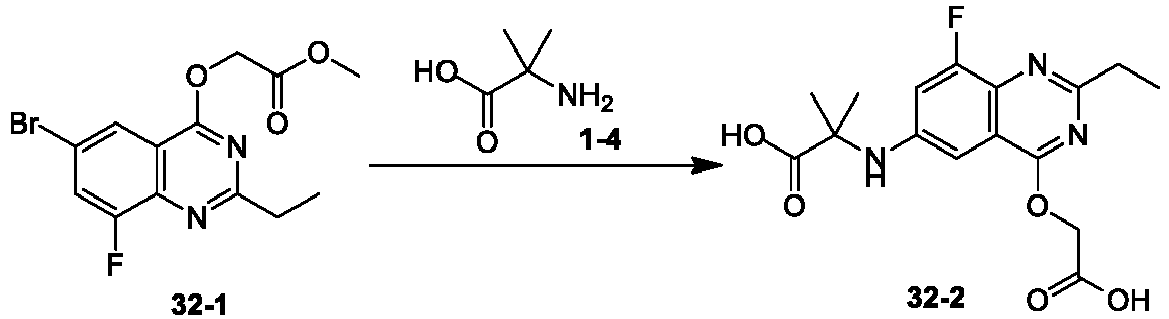
- In a microwave tube, Compound 32-1 (500 mg), Compound 1-4 (225 mg), cuprous chloride (14 mg), 2-acetylcyclohexanone (20 mg), and potassium carbonate (402 mg) were added, and then DMF (4 mL) and water (0.5 mL) were added. After nitrogen purge for 1 min, the resulting mixture was kept at 130 °C for microwave reaction for 1 h. The reaction mixture was filtered in the presence of Celite, and the filter cake was washed with DMF (5 mL×2). The filtrate was collected, and concentrated to dryness under reduced pressure, to obtain Compound 32-2. LCMS (ESI) m/z: 352 (M+1).
-

- A solution of TMSCHN2 in n-hexane (2M, 4.70 mL) was added dropwise to a solution of Compound 32-2 (1.10 g) in dichloromethane (20 mL) and methanol (2 mL). The resulting mixture reacted at 20 °C for 2 h. TMSCHN2 (2M, 4.70 mL) was supplemented, and then the mixture was stirred for 16 h. The reaction mixture was concentrated to dryness. The residue was purified by a chromatographic column to obtain Compound 32-3. 1H NMR (400 MHz, CDCl3) δ ppm 6.84-6.91 (m, 2H) 5.04-5.12 (m, 2 H) 4.48 (s, 1H) 3.79 (s, 3H) 3.75 (s, 3H) 2.91 (q, J=7.53Hz, 2H) 1.64 (s, 6H) 1.32 (t, J=7.59Hz, 3H).
-

- In a dry single-necked flask, Compound 32-3 (630 mg) and Compound 1-7 (378 mg) were added, and then methylbenzene (4 mL) and DMF (1 mL) were added. The resulting mixture reacted at 120 °C for 24 h. The reaction mixture was concentrated under reduced pressure. The resulting residue was purified by preparative HPLC to obtain Compound 32-4. LCMS (ESI) m/z: 576 (M+1).
-

- In a pre-dried single-necked flask, Compound 32-4 (55 mg) and tetrahydrofuran (4 mL) were added, and then a solution of lithium hydroxide monohydrate (6 mg) in water (1 mL) was added. The resulting mixture was stirred at 25 °C for 2 h. A saturated ammonium chloride solution (5 mL) and ethyl acetate (10 mL) were added to the reaction mixture for liquid separation. The aqueous phase was extracted with ethyl acetate (5 mL×3). The organic phases were combined, dried over sodium sulfate, and concentrated. The resulting residue was purified by preparative TLC to obtain Compound 32-5. LCMS (ESI) m/z: 562 (M+1).
-

- In a 10 mL dry reaction flask, Compound 32-5 (37 mg) and dichloromethane (2 mL) were added, and then HATU (30 mg), ammonium chloride (5 mg), and triethylamine (20 mg) were added at 0 °C. The resulting mixture was stirred at 25 °C for 16 h, then diluted with 4 mL of water, extracted with dichloromethane (5 mL×3), dried, and concentrated. The resulting residue was separated by preparative HPLC to obtain Compound 32. 1H NMR (400 MHz, CDCl3) δ ppm 7.99 (d, J=8.16Hz, 1H), 7.95 (s, 1H), 7.90 (s, 1H), 7.83 (dd, J=8.27, 1.87Hz, 1H), 7.48 (dd, J=9.81, 2.09Hz, 1H), 6.03 (br s, 1H), 5.59 (br s, 1H), 5.13 (s, 2H), 3.05 (q, J=7.57Hz, 2H),1.66 (s, 6H), 1.40 (t, J=7.61Hz, 3H); LCMS (ESI) m/z: 561 (M+1).
-

-

- In a dry single-necked flask, Compound 31 (50 mg) and dichloromethane (2 mL) were added, and then boron tribromide (97 mg) was added in an ice bath. The resulting mixture was controlled at a temperature of 0 °C, and stirred for 2 h. At 0 °C, 0.5 mL of ice water was added to the reaction mixture to quench the reaction, and then a small amount of sodium bicarbonate solids were added to adjust the pH to 7-8. After dichloromethane was removed under reduced pressure at 0 °C, 3 mL of DMSO was added to the residue to dissolve the mixture. After filtration, the resulting solution was purified by preparative HPLC method to obtain Compound 33. 1H NMR (400 MHz, CDCl3) δ ppm 8.83 (d, J=1.5 Hz, 1H), 8.02 (d, J=8.4 Hz, 1H), 7.97 (d, J=2.0 Hz, 1H), 7.85 (dd, J=2.0, 8.2 Hz, 1H), 7.70-7.67 (m, 1H), 7.40 (dd, J=2.3, 9.6 Hz, 1H), 2.92 (q, J=7.6 Hz, 2H), 1.69 (s, 6H), 1.35 (t, J=7.6 Hz, 3H); LCMS (ESI) m/z: 502 (M+1).
-

-

- Compound 31-1 (5.03 g) was added to a solution of Compound 34-1 (2.00 g) in acetic acid (20 mL), and the resulting mixture was heated to 110 °C, and stirred for 16 h. The reaction mixture was concentrated. The concentrate was diluted with dichloromethane (30 mL), washed with a saturated sodium bicarbonate solution (30 mL×2) and saturated brine (30 mL) respectively, dried over anhydrous sodium sulfate, filtered, and concentrated. The concentrate was purified by flash column chromatography (model: ISCO-RF150) to obtain Compound 34-2. LCMS (ESI) m/z: 301 (M+1).
-

- With reference to the synthesis of Compound 31-5, Compound 34-3 was prepared with Compound 34-2 as the starting material. LCMS (ESI) m/z: 324 (M+1).
-

- With reference to the synthesis of Compound 31-6, Compound 34-4 was prepared with Compound 34-3 as the starting material. 1H NMR (400 MHz, CDCl3) δ ppm 7.92 (dd, J=2.38, 0.88 Hz, 1 H), 6.90 (dd, J=10.42, 2.38 Hz, 1 H), 3.89-3.94 (m, 1 H), 3.91 (s, 2 H), 3.73 (s, 3 H), 2.77 (q, J=7.70 Hz, 2 H), 1.57 (s, 6 H), 1.21 (t, J=7.53 Hz, 3 H); LCMS (ESI) m/z: 337.9 (M+1).
-

- With reference to the synthesis of Compound 31, Compound 34 was prepared with Compound 34-4 as the starting material. 1H NMR (400 MHz, CDCl3) δ ppm 8.74-8.85 (m, 1 H), 8.02 (d, J=8.28 Hz, 1 H), 7.95 (d, J=2.01 Hz, 1 H), 7.83 (dd, J=8.28, 2.01 Hz, 1 H), 7.27-7.31 (m, 1 H), 4.03 (s, 3 H), 2.91 (q, J=7.53 Hz, 2 H), 1.69 (s, 6 H), 1.33 (t, J=7.53 Hz, 3 H); LCMS (ESI) m/z: 534 (M+1).
-

-

- Methyl propionylacetate (4.00 g) was added to a solution of Compound 34-1 (4.00 g) in acetic acid (40 mL). The resulting mixture was heated to 110 °C, and stirred for 94 h. Methyl propionylacetate (8.26 g) was supplemented to the reaction mixture, and the reaction mixture was further stirred for 16 h. The reaction mixture was concentrated. The concentrate was diluted with ethyl acetate (80 mL), and a saturated aqueous solution of sodium bicarbonate (80 mL) was added. After liquid separation, the organic phase was washed with saturated brine (80 mL), dried over anhydrous sodium sulfate, filtered, and concentrated. The residue obtained from the concentration was purified by a silica gel column to obtain Compound 35-1. 1H NMR (400MHz, CDCl3) δ ppm 8.89 (s, 1H), 7.45 (dd, J=2.0, 8.0 Hz, 1H), 6.36 (s, 1H), 2.70 (q, J=7.5 Hz, 2H), 1.25 (t, J=7.5 Hz, 3H).
-

- Compound 35-1 (400 mg), Compound 1-4 (228 mg), potassium carbonate (510 mg), cuprous chloride (30 mg), 2-acetylcyclohexanone (42 mg), N,N-dimethylformamide (4 mL), and water (0.2 mL) were added to a microwave tube. The microwave tube was sealed, and kept at 130 °C for microwave reaction for 30 min. The reaction mixture was filtered, and washed with ethyl acetate (20 mL). The filtrate was concentrated. 1N hydrochloric acid was added to the residue obtained from the concentration (to adjust the pH to 6-7), and the resulting mixture was concentrated. Dichloromethane/methanol (40 mL, 10/1) were added to the residue obtained from the concentration, and the resulting mixture was dried over anhydrous sodium sulfate, and filtered. The filtrate was concentrated under reduced pressure to obtain Compound 35-2. LCMS (ESI) m/z: 294 (M+1).
-

- A solution of trimethylsilyldiazomethane in n-hexane (2M, 1.2 mL) was added to a solution of Compound 35-2 (500 mg) in dichloromethane (10 mL) and methanol (1 mL). The resulting mixture was stirred at 15 °C for 2 h. The reaction mixture was concentrated. The residue obtained from the concentration was purified by a silica gel column to obtain Compound 35-3. 1H NMR (400 MHz, CDCl3) δ ppm 8.01 (d, J=1.3 Hz, 1H), 7.04 (dd, J=2.4, 10.4 Hz, 1H), 6.26 (s, 1H), 4.43 (br s, 1H), 3.72 (s, 3H), 2.66 (q, J=7.5 Hz, 2H), 1.56 (s, 6H), 1.23 (t, J=7.5 Hz, 3H).
-

- A mixed solution of Compound 35-3 (100 mg) and Compound 1-7 (297 mg) in N,N-dimethylformamide (0.5 mL) and methylbenzene (2 mL) was heated to 120 °C, and stirred for 16 h. Methanol (0.5 mL) was added to the reaction mixture, which was stirred for 30 min, and then concentrated under reduced pressure. The residue obtained from the concentration was purified by a preparative chromatoplate to obtain Compound 35. 1H NMR (400 MHz, CDCl3) δ ppm 8.76 (d, J=1.8 Hz, 1H), 7.94 (d, J=8.3 Hz, 1H), 7.88 (d, J=2.0 Hz, 1H), 7.76 (dd, J=2.0, 8.3 Hz, 1H), 7.33 (dd, J=2.3, 8.8 Hz, 1H), 6.42 (s, 1H), 2.74 (q, J=7.7 Hz, 2H), 1.62 (s, 6H), 1.28 (t, J=7.5 Hz, 3H); LCMS (ESI) m/z: 504 (M+1).
-

-

- In a 50 mL dry single-necked flask, Compound 19-1 (1.00 g), Compound 1-4 (571 mg), water (2.5 mL) and DMF (10 mL) were added, and then cuprous chloride (36 mg), 2-acetylcyclohexanone (52 mg), and potassium carbonate (1.02 g) were added. The resulting mixture was stirred at 130 °C for 90 min. Water (10 mL) was added, the mixture was adjusted to pH=2-3 with 1M dilute hydrochloric acid, and ethyl acetate (40 mL) was added. The aqueous phase was extracted with ethyl acetate (40 mL×3). The organic phases were combined, and concentrated to remove the solvent. Dichloromethane (5 mL) was added to the concentrate, and stirred for 5 min. Petroleum ether (10 mL) was slowly added dropwise, and the resulting mixture was stirred for 10 min. The mixture was filtered, and the filter cake was dried to obtain Compound 36-1. LCMS (ESI) m/z: 294 (M+1).
-
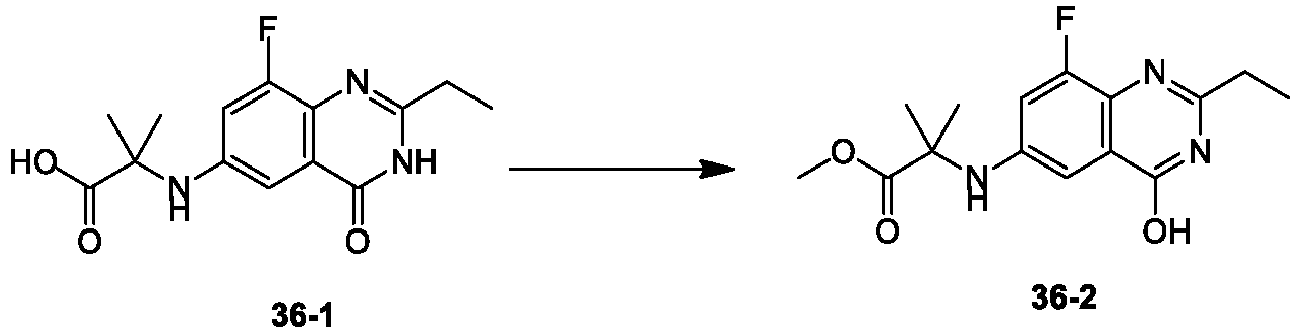
- In a 50 mL dry single-necked flask, Compound 36-1 (3.00 g) and a hydrochloric acid/methanol solution (30 mL) were added, and the resulting mixture was stirred at 60 °C for 16 h, and then concentrated. Ethyl acetate (20 mL) and a saturated potassium carbonate solution (20 mL) were added to the residue obtained from the concentration. After liquid separation, the resulting organic phase was dried over anhydrous sodium sulfate, and filtered. The filtrate was concentrated to obtain Compound 36-2. LCMS (ESI) m/z: 308 (M+1).
-

- In a single-necked flask, Compound 36-2 (2.10 g), Compound 1-7 (4.68 g), methylbenzene (20 mL), and DMF (5 mL) were added, and the resulting mixture reacted at 120 °C for 16 h under nitrogen protection, and then was concentrated to remove methylbenzene and DMF. The residue obtained from the concentration was purified by column chromatography to obtain Compound 36-3. 1H NMR (400 MHz, CDCl3) δ ppm 7.97-8.06 (m, 4 H), 7.86 (dd, J=8.22, 1.82 Hz, 1 H), 7.48 (dd, J=9.79, 2.26 Hz, 1 H), 2.85-2.91 (m, 2 H), 1.67 (s, 6 H), 1.47 (t, J=7.59 Hz, 3 H).
-

- In a single-necked flask, Compound 36-3 (200 mg) and phosphorus oxychloride (3.30 g) were added. Under nitrogen protection, N,N-diisopropylethylamine (80 mg) was added, and the resulting mixture reacted at 110 °C for 0.5 h. Phosphorus oxychloride was removed from the reaction mixture under reduced pressure. The resulting residue was dissolved in 10 mL of dichloromethane in an ice water bath, and then 30 mL of a saturated sodium bicarbonate solution was added. After liquid separation, the aqueous phase was extracted with dichloromethane (10 mL×3). The organic phases were combined, washed with 10 mL of saturated brine, dried over anhydrous sodium sulfate, and filtered. The filtrate was concentrated under reduced pressure at 45 °C to obtain Compound 36-4. LCMS (ESI) m/z: 522 (M+1).
-

- In a reaction flask, Compound 36-4 (100 mg), Compound 36-5 (25 mg), and tetrahydrofuran (1 mL) were added. Under nitrogen protection, sodium hydride (11 mg, 60% purity) was added at 0 °C, and the resulting mixture reacted at 20 °C for 0.5 h. The reaction was quenched with a saturated ammonium chloride solution (3 mL). After extraction with ethyl acetate (3 mL×3), the organic phase was washed with saturated brine (1 mL), dried over anhydrous sodium sulfate, and filtered. The filtrate was concentrated at 45 °C. The residue obtained from the concentration was purified by preparative HPLC method to obtain Compound 36. 1H NMR (400 MHz, CDCl3) δ ppm 8.02 (d, J=8.16Hz, 1H), 7.99 (s, 1H), 7.94 (s, 1H), 7.86 (br d, J=8.41Hz, 1H), 7.48 (dd, J=10.04, 2.26Hz, 1H), 4.76 (s, 2H), 4.05 (s, 1H), 3.06 (q, J=7.49Hz, 2H), 1.68 (s, 6H), 1.43 (t, J=7.59Hz, 3H), 0.98-1.02 (m, 2H), 0.82-0.86 (m, 2H). LCMS (ESI) m/z: 574 (M+1).
-

-

- Boron tribromide (2.40 g) was added dropwise to a solution of Compound 31-6 (300 mg) in dichloromethane (8 mL) at 0 °C. The resulting mixture was stirred at 0 °C for 2 h. The reaction was quenched with 3 g of ice water, and the reaction mixture was concentrated under reduced pressure to obtain Compound 37-1. LCMS (ESI) m/z: 292 (M+1).
-

- Methanol/hydrochloric acid (4M, 100 mL) as a solvent was added to Compound 37-1 (2.02 g), and the resulting mixture was stirred at 70 °C for 16 h. The reaction mixture was concentrated, the residue obtained from the concentration was neutralized to a neutral pH with a saturated sodium bicarbonate solution, and filtered. The filtrate was freeze-dried to obtain Compound 37-2. LCMS (ESI) m/z: 306 (M+1).
-

- Compound 37-2 (200 mg) and Compound 1-7 (448 mg) were dissolved in a mixed solution of DMF (4 mL) and methylbenzene (1 mL). The resulting mixture was heated to 120 °C, and stirred for 16 h. The reaction mixture was concentrated, dissolved in acetonitrile, and purified by preparative HPLC method to obtain Compound 37-3. LCMS (ESI) m/z: 502 (M+1).
-

- Compound 37-3 (75 mg), Compound 37-4 (25 mg), and potassium carbonate (62 mg) were dissolved in DMF (1 mL). The resulting mixture was heated to 110 °C, and stirred at this temperature for 3 h. Compound 37 was obtained by preparative HPLC. 1H NMR (400 MHz, CDCl3) δ ppm 8.95 (d, J=2.21Hz, 1H), 8.02 (d, J=8.16Hz, 1H), 7.97 (s, 1H), 7.82-7.88 (m, 1H), 7.68 (d, J=9.26Hz, 1H), 7.51 (dd, J=9.48, 2.43Hz, 1H), 4.37-4.42 (m, 2H), 3.72-3.77 (m, 2H), 3.46 (s, 3H), 2.93 (q, J=7.50Hz, 2H), 1.68 (s, 6H), 1.33 (t, J=7.61Hz, 3H). LCMS (ESI) m/z: 560 (M+1).
-

-

- Compound 37-3 (100 mg), Compound 38-1 (41 mg), and potassium carbonate (82 mg) were added to DMF (1 mL), and the resulting mixture was heated to 110 °C, and stirred at this temperature for 3 h. Compound 38 was obtained through purification by preparative HPLC method. 1H NMR (400 MHz, CDCl3) δ ppm 8.94 (d, J=1.98Hz, 1H), 8.00 (d, J=8.38Hz, 1H), 7.94 (s, 1H), 7.83 (br d, J=8.38Hz, 1H), 7.69 (d, J=9.70Hz, 1H), 7.54 (dd, J=9.59, 2.32Hz, 1H), 4.19-4.25 (m, 2H), 4.05-4.12 (m, 1H), 3.87-3.94 (m, 2H), 2.89 (q, J=7.50 Hz, 2H), 1.67 (s, 6H), 1.33 (t, J=7.61 Hz, 3H); LCMS (ESI) m/z: 546 (M+1).
-

-

- Boron tribromide (0.4 mL) was added to a solution of Compound 34-4 (320 mg) in anhydrous dichloromethane (8 mL) at 0 °C. The resulting mixture was stirred at 0 °C for 2 h, diluted with dichloromethane (40 mL), slowly poured into water (20 mL), and extracted with dichloromethane/methanol (10/1, 40 mL). The organic phase was dried over anhydrous sodium sulfate, filtered, and concentrated to obtain Compound 39-1. LCMS (ESI) m/z: 310 (M+1).
-

- A solution of trimethylsilyldiazomethane in n-hexane (2M, 0.3 mL) was added to a solution of Compound 39-1 (120 mg) in dichloromethane (3 mL) and methanol (0.3 mL). The resulting mixture was stirred at 20 °C for 1 h. The reaction mixture was concentrated under reduced pressure. The residue obtained from the concentration was purified by a preparative chromatoplate to obtain Compound 39-2. 1H NMR (400 MHz, CDCl3) δ ppm 7.73 (s, 1H), 6.80 (br d, J=9.5 Hz, 1H), 6.22 (br s, 1H), 4.21 (br s, 1H), 3.73 (s, 3H), 2.81 (q, J=7.5 Hz, 2H), 1.57 (s, 6H), 1.24 (t, J=7.7 Hz, 3H).
-

- A mixture of Compound 39-2 (30 mg), Compound 1-7 (100 mg), methylbenzene (1 mL), and N,N-dimethylformamide (0.2 mL) was heated to 110 °C, and stirred for 16 h. Methanol (1 mL) was added to the reaction mixture, which was stirred for 30 min, and then concentrated under reduced pressure. The residue obtained from the concentration was separated and purified successively by a preparative chromatoplate and preparative HPLC to obtain Compound 39. 1H NMR (400 MHz, CDCl3) δ ppm 8.58 (s, 1H), 7.94 (d, J=8.3 Hz, 1H), 7.88 (s, 1H), 7.76 (br d, J=8.0 Hz, 1H), 7.11 (dd, J=2.0, 9.0 Hz, 1H), 2.88 (q, J=7.4 Hz, 2H), 1.62 (s, 6H), 1.28 (t, J=7.7 Hz, 3H); LCMS (ESI) m/z: 520 (M+1).
-

-

- 1-Bromo-2-methoxy-ethane (41 mg) and potassium carbonate (54 mg) were added to a solution of Compound 39 (100 mg) in N,N-dimethylformamide (2 mL). The resulting mixture was stirred at 80 °C for 1 h, and filtered. The filtrate was separated and purified by preparative HPLC to obtain Compound 40. 1H NMR (400 MHz, CDCl3) δ ppm 8.69 (br s, 1H), 8.03-7.69 (m, 3H), 7.20 (br s, 1H), 4.33 (br s, 2H), 3.66 (br s, 2H), 3.37 (br s, 3H), 2.88 (br d, J=7.3 Hz, 2H), 1.61 (br s, 6H), 1.26 (br t, J=7.0 Hz, 3H); LCMS (ESI) m/z: 578 (M+1).
-

-

- Potassium carbonate (60 mg) was added to a solution of Compound 39 (100 mg) and 2-bromoethanol (40 mg) in DMF (2 mL), and the resulting mixture was heated to 100 °C and stirred for 1 h under nitrogen protection. The reaction mixture was cooled to room temperature, and concentrated. The concentrate was purified successively by preparative TLC and preparative HPLC to obtain Compound 41. 1H NMR (400 MHz, CDCl3) δ ppm 8.80 (d, J=1.5Hz, 1H), 8.04 (d, J=8.3Hz, 1H), 7.97 (s, 1H), 7.85 (dd, J=8.3, 2.0Hz, 1H), 7.35 (dd, J=8.8, 2.0Hz, 1H), 4.23-4.35 (m, 2H), 3.95 (br s, 2H), 3.77 (br s, 1H), 2.97 (q, J=7.7Hz, 2H), 1.71 (s, 6H), 1.38 ppm (t, J=7.5Hz, 3H); LCMS (ESI) m/z: 564 (M+1).
-

-
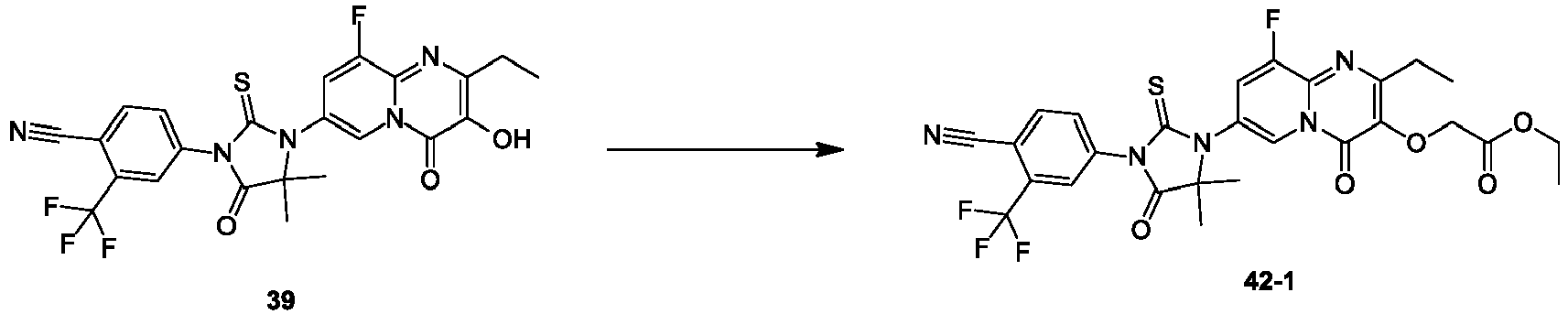
- Potassium carbonate (110 mg) was added to a solution of Compound 39 (200 mg) and ethyl 2-bromoacetate (100 mg) in DMF (5 mL), and the resulting mixture heated to 80 °C and stirred for 1 h under nitrogen protection. The reaction mixture was cooled to room temperature, and filtered. The filter cake was washed with ethyl acetate (2 mL). The filtrate was concentrated to obtain Compound 42-1. LCMS (ESI) m/z: 606 (M+1).
-

- An aqueous solution of lithium hydroxide monohydrate (1M, 0.7 mL) was added to a solution of Compound 42-1 (200 mg) in tetrahydrofuran (5 mL), and the resulting mixture was stirred at 26 °C for 1 h under nitrogen protection. The reaction mixture was acidified to pH=5-6 with an aqueous solution of dilute hydrochloric acid (1M), and extracted with ethyl acetate (20 mL×3). The combined organic phase was washed with saturated brine (20 mL), dried over anhydrous sodium sulfate, filtered, and concentrated to obtain Compound 42-2. LCMS (ESI) m/z: 578 (M+1).
-

- Methylamine hydrochloride (18 mg) was added to a solution of Compound 42-2 (100 mg), HATU (80 mg), and triethylamine (50 mg, 494.12 µmol) in dichloromethane (5 mL), and the resulting mixture was stirred at 26 °C for 1 h. The reaction mixture was acidified to pH=5-6 with an aqueous solution of dilute hydrochloric acid (1M), and extracted with ethyl acetate (20 mL×3). The combined organic phase was washed with saturated brine (20 mL), dried over anhydrous sodium sulfate, filtered, and concentrated. The residue obtained from the concentration was purified by preparative TLC and preparative HPLC to obtain Compound 42. 1H NMR (400 MHz, CDCl3) δ ppm 8.68 (s, 1H), 7.95 (d, J=8.3Hz, 1H), 7.88 (d, J=1.5Hz, 1H), 7.76 (dd, J=8.3, 1.8Hz, 1H), 7.31-7.36 (m, 1H), 7.29 (dd, J=8.8, 2.0Hz, 1H), 4.51 (s, 2H), 2.90 (d, J=5.0Hz, 3H), 2.84 (q, J=7.7Hz, 2H), 1.62 (s, 6H), 1.29 ppm (t, J=7.5Hz, 3H); LCMS (ESI) m/z: 591 (M+1).
-

-

- Ammonia water (30 mg) was added to a solution of Compound 42-2 (100 mg), HATU (79 mg), and triethylamine (53 mg) in DMF (5 mL), and the resulting mixture was stirred at 26 °C for 1 h. The reaction mixture was acidified to pH=5-6 with an aqueous solution of dilute hydrochloric acid (1M), and extracted with ethyl acetate (20 mL×3). The combined organic phase was washed with saturated brine (20 mL), dried over anhydrous sodium sulfate, filtered, and concentrated. The concentrate was purified by preparative TLC and preparative HPLC to obtain Compound 43. 1H NMR (400 MHz, CDCl3) δ ppm 8.69 (s, 1H), 7.91-7.99 (m, 1H), 7.88 (s, 1H), 7.76 (dd, J=8.3, 1.8Hz, 1H), 7.29 (dd, J=8.8, 2.0Hz, 2H), 5.62 (br s, 1H), 4.53 (s, 2H), 2.77-2.95 (m, 1H), 1.62 (s, 6H), 1.26-1.34 ppm (m, 3H); LCMS (ESI) m/z: 577.0 (M+1).
-

-

- In a dry single-necked flask, Compound 7-5 (5.00 g), benzoic acid (21.28 g), and methylbenzene (5 mL) were added. Under nitrogen protection, diphenyl phosphate (1.45 g) was added, and the resulting mixture reacted at 25 °C for 16 h. The reaction mixture was seperated successively by a chromatographic column and a preparative SFC method (instrument model: Thar SFC80 preparative SFC) to obtain Compound 44-2 and Compound 44-3. LCMS (ESI) m/z: 209(M+1).
-

- In a dry reaction flask, Compound 36-4 (200 mg), Compound 44-2 (120 mg), and tetrahydrofuran (2 mL) were added. Under nitrogen protection, sodium hydride (23 mg, 60% purity) was added, and the resulting mixture reacted at 25 °C for 0.5 h. The reaction was quenched with a saturated ammonium chloride solution (2 mL). After extraction with dichloromethane (3 mL×3), the organic phase was washed with saturated brine (10 mL), dried over anhydrous sodium sulfate, and filtered. The filtrate was concentrated under reduced pressure at 45 °C. The residue obtained from the concentration was purified by a preparative TLC plate, to obtain Compound 44-4. LCMS (ESI) m/z: 694 (M+1).
-

- In a dry reaction flask, Compound 44-4 (140 mg), LiOH.H2O (13 mg), water (0.8 mL), and tetrahydrofuran (1.5 mL) were added, and the resulting mixture reacted at 25 °C for 3 h under nitrogen protection. The reaction mixture was directly spin-dried, and purified by preparative HPLC method to obtain Compound 44. 1H NMR (400 MHz, CDCl3) δ ppm 8.02 (d, J=8.38Hz, 1H), 7.98 (s, 1H), 7.83-7.88 (m, 2H), 7.49 (dd, J=9.92, 2.21Hz, 1H), 5.46-5.50 (m, 1H), 4.52 (br s, 1H), 4.36 (dd, J=11.03, 5.73Hz, 1H), 4.23 (dd, J=10.03, 5.84Hz, 1H), 4.16 (dd, J=10.58, 2.87Hz, 1H), 3.82 (dd, J=9.81, 4.74Hz, 1H), 3.40 (d, J=2.65Hz, 1H), 3.09 (q, J=7.50Hz, 2H), 1.67 (s, 6H), 1.45 (t, J=7.50Hz, 3H).
-

-

- In a dry single-necked flask, methanol (2 mL) and sodium (24 mg) were added, and the resulting mixture was stirred at 25 °C until sodium disappeared. Then, a readily prepared solution of sodium methoxide in methanol was added to a dry single-necked flask filled with Compound 19-2 (300 mg), and the resulting mixture was stirred at 25 °C for 2 h. After filtration, the filter cake was washed with ethyl acetate (10 mL). The filtrate was collected, and concentrated under reduced pressure to obtain Compound 45-1. 1H NMR (400 MHz, CDCl3) δ ppm 8.00 (dd, J=1.3, 2.0Hz, 1H), 7.54 (dd, J=2.1, 9.6Hz, 1H), 4.12-4.09 (m, 3H), 2.93 (q, J=7.5Hz, 2H), 1.34 (t, J=7.6Hz, 3H). LCMS (ESI) m/z: 285 (M+1).
-

- In a dry microwave tube, Compound 45-1 (888 mg), Compound 3-2 (489 mg), cesium carbonate (2.54 g), 4,5-bis(diphenylphosphino)-9,9-dimethylxanthene (180 mg), bis(dibenzylideneacetone)palladium (179 mg), and methylbenzene (18 mL) were added. After nitrogen purge for five min, the resulting mixture was microwaved and stirred at 130 °C for 4 h, and then was concentrated to dryness under reduced pressure to remove the solvent. The residue obtained from the concentration was purified by a chromatographic column to obtain Compound 45-2. 1H NMR (400 MHz, CDCl3) δ ppm 8.19 (d, J=4.9Hz, 1H), 7.20 (d, J=4.9Hz, 1H), 6.96 (dd, J=2.5, 11.6Hz, 1H), 6.81-6.77 (m, 1H), 5.79 (s, 1H), 4.09 (s, 3H), 3.00-2.91 (m, 2H), 2.24 (s, 3H), 1.38 (t, J=7.5 Hz, 3H). LCMS (ESI) m/z: 347 (M+1).
-

- In a dry microwave tube, Compound 45-2 (190 mg), Compound 2-5 (112 mg), 4,5-bis(diphenylphosphino)-9,9-dimethylxanthene (31 mg), bis(dibenzylideneacetone)palladium (31 mg), and cesium carbonate (357 mg) were added, and then methylbenzene (5 mL) was added. After nitrogen purge for 5 min, the microwave tube was sealed. The resulting mixture was microwaved and stirred at 130 °C for 4 h, and then was concentrated to dryness under reduced pressure to remove the solvent. The residue obtained from the concentration was purified by a chromatographic column to obtain a crude product of Compound 45-3. The resulting crude product was slurried with 5 mL of methyl tert-butyl ether to obtain Compound 45-3. 1H NMR (400 MHz, CDCl3) δppm 8.27 (d, J=2.2 Hz, 1H), 8.15 (d, J=5.1Hz, 1H), 8.00 (dd, J=2.1, 8.7Hz, 1H), 7.72 (d, J=8.8Hz, 1H), 7.14 (dd, J=2.5, 12.5Hz, 1H), 7.00 (d, J=5.7Hz, 1H), 6.56-6.53 (m, 1H), 4.02 (s, 3H), 3.19 (s, 3H), 2.85 (q, J=7.5Hz, 2H), 1.33 (t, J=7.6Hz, 3H). LCMS (ESI) m/z: 497 (M+1).
-

- In a dry single-necked flask, Compound 45-3 (65 mg), tetrahydrofuran (0.5 mL), and methylbenzene (0.5 mL) were added, and then sodium tert-butoxide (50 mg) was added. The resulting mixture was stirred at 30 °C for 1 h, and then thiophosgene (45 mg) was added at 30 °C. The resulting mixture was stirred at 30 °C for 1 h under nitrogen protection, and then was concentrated to dryness under reduced pressure to remove the solvent. The residue obtained from the concentration was purified by a chromatographic column to obtain Compound 45-4. LCMS (ESI) m/z: 539 (M+1).
-

- In a dry single-necked flask, Compound 45-4 (45 mg), hydrochloric acid (2M, 2 mL), and tetrahydrofuran (2 mL) were added. The resulting mixture was stirred at 30 °C for 1 h under nitrogen protection, and was concentrated to dryness under reduced pressure to remove the solvent. The residue obtained from the concentration was purified by preparative HPLC method to obtain Compound 45. 1H NMR (400 MHz, CDCl3) δ ppm 10.55 (br s, 1H), 8.30 (br s, 1H), 8.17 (br d, J=19.6 Hz, 3H), 8.09 (br s, 1H), 7.67 (br s, 1H), 7.03 (br s, 1H), 2.87 (br s, 2H), 1.99 (br s, 3H), 1.47 (br s, 3H). LCMS (ESI) m/z: 525 (M+1).
-

-

- In a dry reaction flask, Compound 36-4 (200 mg), Compound 44-3 (120 mg), and tetrahydrofuran (2 mL) were added. Under nitrogen protection, sodium hydride (23 mg, 60% purity) was added, and the resulting mixture reacted at 25 °C for 0.5 h. The reaction was quenched with a saturated ammonium chloride solution (5 mL). After extraction with dichloromethane (5 mL×3), the organic phase was washed with saturated brine (10 mL), dried over anhydrous sodium sulfate, and filtered. The filtrate was concentrated under reduced pressure at 45 °C. The residue was purified by a preparative TLC plate to obtain Compound 46-1. LCMS (ESI) m/z: 694 (M+1).
-

- In a dry reaction flask, Compound 46-1 (130 mg), lithium hydroxide monohydrate (12 mg), water (0.5 mL), and tetrahydrofuran (1 mL) were added, and the resulting mixture reacted at 25 °C for 4 h under nitrogen protection. The reaction mixture was directly concentrated to dryness, and the residue obtained from the concentration was purified by preparative HPLC method to obtain Compound 46. 1H NMR (400 MHz, CDCl3) δ ppm 8.02 (d, J=8.38Hz, 1H), 7.98 (s, 1H), 7.83-7.89 (m, 2H), 7.49 (dd, J=9.81, 2.09Hz, 1H), 5.45-5.51 (m, 1H), 4.52 (br s, 1H), 4.36 (dd, J=10.80, 5.95Hz, 1H), 4.23 (dd, J=9.92, 5.73Hz, 1H), 4.16 (dd, J=10.80, 3.09Hz, 1H), 3.82 (dd, J=9.70, 4.85Hz, 1H), 3.40 (d, J=2.65Hz, 1H), 3.09 (q, J=7.57Hz, 2H), 1.67 (s, 6H), 1.45 (t, J=7.61Hz, 3H). LCMS (ESI) m/z: 590 (M+1).
-

-

- Compound 47-1 (23.00 g) and propionyl chloride (50.14 g) were successively added to a solution of sodium ethoxide (22.13 g) and triethylamine (1.10 g) in tetrahydrofuran (220 mL) at 5 °C. After the completion of the addition, the resulting mixture was stirred at 25 °C for 16 h. The reaction mixture was concentrated under reduced pressure, and then distilled under reduced pressure, to obtain Compound 47-2 by collecting fractions at the temperatures of 36 °C, 40 °C, and 60 °C, respectively.
-

- Compound 34-1 (5.00 g) and Compound 47-2 (5.52 g) were added to polyphosphoric acid (15.00 g), and the resulting mixture was heated to 110 °C, and stirred for 16 h. The reaction mixture was diluted with 50 mL of water, adjusted to a neutral pH with a saturated sodium hydroxide solution, and extracted with ethyl acetate (30 mL×3). The organic phase was collected, dried, filtered and concentrated. The residue was purified by column chromatography to obtain Compound 47-3. 1H NMR (400 MHz, CDCl3) δ ppm 8.93 (t, J=1.65Hz, 1H), 7.49 (dd, J=8.16, 1.76Hz, 1H), 2.90 (qd, J=7.61, 2.98Hz, 2H), 1.35 (t, J=7.61Hz, 3H).
-

- Compound 47-3 (800 mg), tert-butyl carbamate (972 mg), cesium carbonate (2.25 g), 4,5-bis(diphenylphosphino)-9,9-dimethylxanthene (160.13 mg), and bis(dibenzylideneacetone)palladium (159 mg) were added to a microwave tube filled with methylbenzene (8 mL). The resulting mixture reacted at 120 °C for microwave reaction for 50 min. The reaction mixture was concentrated under reduced pressure, and the residue obtained from the concentration was purified by column chromatography to obtain Compound 47-4. 1H NMR (400 MHz, CDCl3) δ ppm 9.00 (s, 1H) 7.31-7.37 (m, 1H) 2.92 (qd, J=7.57, 2.87Hz, 2 H) 1.57 (s, 9H) 1.36 (t, J=7.61 Hz, 3H).
-

- Compound 47-4 (400 mg) was added to a solution of hydrochloric acid-methanol (4M, 20 mL), and the resulting mixture was stirred at 25 °C for 1 h. The reaction mixture was concentrated under reduced pressure. Water (25 mL) was added to the residue obtained from the concentration, and the resulting mixture was extracted with ethyl acetate (30 mL×3). The organic phase was collected, dried, filtered, and concentrated under reduced pressure to obtain Compound 47-5. LCMS (ESI) m/z: 226 (M+1).
-

- In a reaction flask, Compound 47-5 (200 mg), zinc chloride (36 mg), sodium sulfate (504 mg), acetone (331 mg), TMSCN (264 mg), and tetrahydrofuran (2 mL) were added, and the resulting mixture reacted at 25 °C for 16 h. The reaction mixture was concentrated under reduced pressure, and the residue obtained from the concentration was purified by a preparative chromatoplate to obtain Compound 47-6. 1H NMR (400 MHz, CDCl3) δ ppm 8.48 (s, 1H), 7.30 (dd, J=10.03, 2.32Hz, 1H), 4.28 (s, 1H), 3.50 (s, 1H), 2.90 (qd, J=7.61, 2.98Hz, 2H), 1.80 (s, 5H), 1.31-1.39 (m, 3H).
-

- In a reaction flask, Compound 47-6 (100 mg), Compound 1-7 (312 mg), methylbenzene (2 mL), and DMF (0.5 mL) were added, and the resulting mixture was stirred at 25 °C. Then, sodium hydride (21 mg, 60% purity) was added, and the resulting mixture reacted for 4 h under stirring. The reaction mixture was concentrated under reduced pressure, and the residue obtained from the concentration was purified by preparative HPLC to obtain Compound 47-7. LCMS (ESI) m/z: 521 (M+1).
-

- In a reaction flask, Compound 47-7 (20 mg), methylbenzene (2 mL), and acetic acid (0.5 mL) were added, and the resulting mixture was refluxed at 120 °C for 16 h. The reaction mixture was concentrated under reduced pressure, and the residue obtained from the concentration was purified by preparative HPLC to obtain Compound 47. 1H NMR (400 MHz, CDCl3) δ ppm 8.80 (s, 1H), 8.02 (d, J=8.38Hz, 1H), 7.95 (s, 1H), 7.83 (d, J=9.04Hz, 1H), 7.37 (d, J=7.28Hz, 1H), 2.95 (dd, J=7.72, 3.09Hz, 2H), 1.70 (s, 6H), 1.38 (t, J=7.61Hz, 3H). LCMS (ESI) m/z: 522 (M+1).
-

-

- Potassium nitrate (4.10 g) was added to a solution of Compound 48-1 (5.00 g) in concentrated sulfuric acid (40 mL) at 0 °C. The resulting mixture was stirred at 0 °C for 1 h. The reaction mixture was slowly poured into ice water (150 mL) which was stirred for dilution, and a solid precipitated. After filtration, the filter cake was washed with water (50 mL), dissolved in ethyl acetate (150 mL), dried over anhydrous sodium sulfate, filtered, and concentrated to obtain Compound 48-2. 1H NMR (400 MHz, CDCl3) δ ppm 10.27-10.35 (m, 1H), 8.65 (d, J=2.8Hz, 1H), 8.23 (dd, J=8.8, 2.8Hz, 1H), 7.82 ppm (d, J=8.5Hz, 1H).
-

- DAST (8.54 g) was added to a solution of Compound 48-2 (6 g) in dichloromethane (100 mL) at 0 °C. The resulting mixture was stirred at 0 °C for 1 h, and then cooled to 0 °C. A saturated sodium bicarbonate solution (50 mL) was added to quench the reaction. After extraction with dichloromethane (50 mL), the organic phase was washed with saturated brine (50 mL), dried over anhydrous sodium sulfate, filtered, and concentrated. The residue obtained from the concentration was purified by flash column chromatography (model: ISCO-RF150) to obtain Compound 48-3. 1H NMR (400 MHz, CDCl3) δ ppm 8.45 (d, J=2.5Hz, 1H), 8.14 (dd, J=8.8, 2.8Hz, 1H), 7.77 (d, J=8.8Hz, 1H), 6.71-7.01 ppm (m, 1H).
-

- Zinc cyanide (4.00 g), zinc powder (1.60 g, 24.47 mmol), DPPF (1.76 g) and bis(dibenzylideneacetone)palladium (1.83 g) were successively added to a solution of Compound 48-3 (4.00 g) in DMF (15 mL). After nitrogen purge for 30 sec, the resulting mixture was heated to 130 °C for microwave reaction for 1 h, then cooled to room temperature, and filtered. The filtrate was concentrated, and the residue obtained from the concentration was purified by flash column chromatography (ISCO-RF150) to obtain Compound 48-4. 1H NMR (400 MHz, CDCl3) δ ppm 7.41 (d, J=8.3 Hz, 1H), 6.58-6.90 (m, 3H), 4.32 ppm (br s, 2H).
-

- At 29 °C, thiophosgene (900 mg) was added to H2O (10 mL) to form a solution, and the resulting mixture was stirred for half an hour. Then, Compound 48-4 (500 mg) was added to the above mixture, and the mixture was further stirred at 29 °C for 2 h. The reaction mixture was extracted with dichloromethane (30 mL×2). The combined organic phase was washed with saturated brine (20 mL), dried over anhydrous sodium sulfate, filtered, and concentrated to obtain Compound 48-5. 1H NMR (400 MHz, CDCl3) δ ppm 7.69 (d, J=8.3Hz, 1H), 7.50 (s, 1H), 7.28-7.39 (m, 1H), 6.64-6.99 ppm (m, 1H).
-

- Compound 17-3 (200 mg), Compound 1-4 (100 mg), cuprous chloride (10 mg), 2-acetylcyclohexanone (10 mg), and potassium carbonate (180 mg) were added to a microwave tube filled with DMF (5 mL) and water (1 mL). After nitrogen purge for 1 min, the resulting mixture was kept at 130 °C for microwave reaction for 1.5 h. The reaction mixture was filtered, and the filter cake was washed with DMF (2 mL). The filtrate was neutralized with 1M dilute hydrochloric acid to pH=7, and concentrated. The residue obtained from the concentration was added to DCM/MeOH (20 mL, v/v=10/1) to precipitate a solid, and filtered. The filtrate was concentrated to obtain Compound 48-6. LCMS (ESI) m/z: 320 (M+1).
-

- A solution of TMSCHN2 in n-hexane (2M, 0.75 mL) was added dropwise to a solution of Compound 48-6 (320 mg) in dichloromethane (10 mL) and methanol (1 mL) at 29 °C. After the completion of the dropwise addition, the resulting mixture reacted at 29 °C for 1 h. The reaction mixture was concentrated, and the residue obtained from the concentration was purified by preparative TLC to obtain Compound 48-7. LCMS (ESI) m/z: 334 (M+1).
-

- Boc2O (160 mg) was added to a solution of Compound 48-7 (220 mg), triethylamine (170 mg), and DMAP (20 mg) in dichloromethane (10 mL) at 29 °C. After the completion of the dropwise addition, the resulting mixture reacted at 29 °C for 0.5 h. The reaction mixture was concentrated, and the residue obtained from the concentration was purified by preparative TLC to obtain Compound 48-8. LCMS (ESI) m/z: 434 (M+1).
-

- Compound 48-5 (75 mg) was added to Compound 48-8 (50 mg) in a mixed solvent of methylbenzene (15 mL) and DMF (3 mL), and then the resulting mixture was heated to 120 °C and stirred for 12 h under nitrogen protection. The reaction mixture was cooled to room temperature, and concentrated to obtain a crude product. The crude product was purified by preparative TLC to obtain Compound 48-9. LCMS (ESI) m/z: 612 (M+1).
-

- Trifluoroacetic acid (581 mg) was added dropwise to a solution of Compound 48-9 (35 mg) in dichloromethane (5 mL). Then, the resulting mixture was stirred at 28 °C for 0.5 h. The reaction mixture was neutralized with a saturated sodium bicarbonate solution to pH=∼7, and extracted with dichloromethane (20 mL×2). The combined organic phase was washed with saturated brine (20 mL), dried over anhydrous sodium sulfate, filtered, and concentrated to obtain a crude product. The crude product was purified by preparative TLC to obtain Compound 48. 1H NMR (400 MHz, CDCl3) δ ppm 8.05 (d, J=2.0Hz, 1H), 7.97 (d, J=9.0Hz, 1H), 7.86 (br d, J=4.5Hz, 2H), 7.58-7.73 (m, 2H), 6.75-7.10 (m, 1H), 4.62-4.84 (m, 2H), 4.02 (br s, 2H), 3.10 (br s, 1H), 2.94 (q, J=7.7Hz, 2H), 1.58 (s, 6H), 1.35 ppm (t, J=7.7Hz, 3H); LCMS (ESI) m/z: 512 (M+1).
-

-

- In a dry reaction flask, Compound 10-3 (10.00 g) and Compound 49-1 (5.67 g) were added, and then trimethylsilyl polyphosphate (42.91 mmol) was added. The resulting mixture was heated to 130 °C and stirred for 12 h under nitrogen protection. 100 mL of water and 100 mL of ethyl acetate were added to the reaction mixture. After liquid separation, the organic phase was collected, dried over anhydrous sodium sulfate, filtered, and concentrated. The residue obtained from the concentration was purified by a chromatographic column to obtain a crude product. The resulting crude product was slurried with 20 mL of ethyl acetate and 40 mL of methyl tert-butyl ether to obtain Compound 49-2. 1H NMR (400MHz, CDCl3) δ ppm 8.09-8.00 (m, 2H), 2.00 (t, J=19.3 Hz, 3H). LCMS (ESI) m/z: 307 (M+1).
-

- In a dry microwave tube, Compound 49-2 (1.00 g), Compound 1-4 (1.01 g), DMF (20 mL), water (4 mL), potassium carbonate (2.25 g), and 2-acetylcyclohexanone (91 mg) were added, and then cuprous chloride (645 mg) was added. After nitrogen purge for five min, the microwave tube was sealed, and then the resulting mixture was microwaved and stirred at 90 °C for 1 h. The mixture was concentrated under reduced pressure to obtain Compound 49-3. LCMS (ESI) m/z: 330 (M+1).
-

- In a dry single-necked flask, Compound 49-3 (8.58 g) and a solution of hydrochloric acid-methanol (4M, 250 mL) were added, and the resulting mixture was stirred at 80 °C for 12 h, and then concentrated to dryness under reduced pressure to remove the solvent and obtain a solid. The solid was purified by a chromatographic column to obtain Compound 49-4. 1H NMR (400 MHz, CDCl3) δ ppm 9.33 (br s, 1H), 7.08 (d, J=1.8Hz, 1H), 6.77 (dd, J=2.8, 12.0Hz, 1H), 4.68 (s, 1H), 3.75 (s, 3H), 2.09 (t, J=19.0Hz, 3H), 1.63 (s, 6H). LCMS (ESI) m/z: 344 (M+1).
-

- In a dry single-necked flask, Compound 49-4 (2.85 g, 8.30 mmol) and phosphorus oxychloride (43.29 g) were added, and then diisopropylethylamine (1.67 g) was added. The resulting mixture was stirred at 110 °C for 4 h, and then was concentrated under reduced pressure to remove the solvent. The solid obtained from the concentration was dissolved in 26 mL of ethyl acetate, and the resulting solution was slowly added dropwise to a mixed solution of 31 mL of methanol and 110 mL of triethylamine at a controlled temperature of 0-10 °C. After the completion of the dropwise addition, the resulting mixture was filtered. The filtrate was collected, and was concentrated to dryness under reduced pressure at 40 °C to remove the solvent. The residue obtained from the concentration was purified by a chromatographic column to obtain Compound 49-5. LCMS (ESI) m/z: 362 (M+1).
-

- In a dry single-necked flask, Compound 49-5 (4.00 g) was added, then methanol (100 mL) was added, and then sodium methoxide (2.99 g) was added. The resulting mixture was stirred at 30 °C for 0.5 h under nitrogen protection. 200 mL of ethyl acetate was added to the reaction mixture, and the resulting mixture was filtered. A solution of hydrochloric acid-methanol (4M, 3 mL) was added to the filtrate. The resulting mixture was concentrated under reduced pressure at 30 °C to 100 mL, and filtered. The filtrate was concentrated to dryness under reduced pressure at 30 °C, and the residue obtained from the concentration was purified by a chromatographic column to obtain Compound 49-6. 1H NMR (400 MHz, CDCl3) δ ppm 6.89 (dd, J=2.5, 11.8Hz, 1H), 6.78 (d, J=1.8Hz, 1H), 4.60 (br s, 1H), 4.18 (s, 3H), 3.73 (s, 3H), 2.09 (t, J=18.5Hz, 3H), 1.67-1.63 (m, 6H). LCMS (ESI) m/z: 358 (M+1).
-

- In a dry single-necked flask, Compound 49-6 (2.66 g), Compound 1-7 (3.40 g), DMF (3.6 mL), and methylbenzene (18 mL) were added. Under nitrogen protection, the resulting mixture was stirred at 90 °C for 48 h, and then was concentrated under reduced pressure to remove the solvent. The residue obtained from the concentration was purified by column chromatography to obtain Compound 49-7. 1H NMR (400 MHz, CDCl3) δ ppm 8.00 (d, J=8.4Hz, 1H), 7.98-7.95 (m, 2H), 7.84 (dd, J=1.9, 8.3Hz, 1H), 7.54 (dd, J=2.2, 9.7Hz, 1H), 4.28 (s, 3H), 2.14 (t, J=18.5Hz, 3H), 1.67 (s, 6H). LCMS (ESI) m/z: 554 (M+1).
-

- In a dry single-necked flask, Compound 49-7 (200 mg) was added, and then tetrahydrofuran (1 mL) and concentrated hydrochloric acid (12M, 1 mL) were added, and the resulting mixture was stirred at 25 °C for 5 min. Dichloromethane (5 mL) was added to the reaction mixture. After liquid separation, the organic phase was dried over anhydrous sodium sulfate, filtered, and concentrated to dryness under reduced pressure to remove the solvent and obtain Compound 49-8. 1H NMR (400 MHz, CDCl3) δ ppm 9.73 (br s, 1H), 8.05 (s, 1H), 8.00 (d, J=8.4Hz, 1H), 7.95 (s, 1H), 7.83 (d, J=8.2Hz, 1H), 7.53 (dd, J=2.2, 9.5Hz, 1H), 2.15 (t, J=19.2Hz, 3H), 1.65 (s, 6H). LCMS (ESI) m/z: 540 (M+1).
-

- In a dry single-necked flask, Compound 49-8 (300 mg) and phosphorus oxychloride (2.90 g) were added, and then diisopropylethylamine (112 mg) was added. The resulting mixture was heated to 110 °C, and stirred for 12 h, and then concentrated to dryness under reduced pressure to remove the solvent. Dichloromethane (5 mL) was added to the residue obtained from the concentration, and the resulting mixture was washed with 10 mL of an iced saturated sodium bicarbonate solution. After liquid separation, the organic phase was washed with saturated brine, dried over anhydrous sodium sulfate, filtered, and concentrated to dryness under reduced pressure to remove the solvent, and the residue obtained from the concentration was purified by preparative TLC to obtain Compound 49-9. 1H NMR (400 MHz, CDCl3) δ ppm 8.11-8.08 (m, 1H), 8.02 (d, J=8.2Hz, 1H), 7.97 (d, J=2.0Hz, 1H), 7.84 (dd, J=2.1, 8.3Hz, 1H), 7.72 (dd, J=2.1, 9.2Hz, 1H), 2.18 (t, J=18.5Hz, 3H), 1.70 (s, 6H). LCMS (ESI) m/z: 558 (M+1).
-

- In a dry single-necked flask, Compound 49-9 (44 mg), ethanediol (45 mg), and tetrahydrofuran (0.5 mL) were added, and then sodium hydride (9 mg, 60% purity) was added. The resulting mixture was stirred at 25 °C for 1 h. The reaction mixture was purified successively by a preparative TLC plate and preparative HPLC method to obtain Compound 49. 1H NMR (400 MHz, CDCl3) δ ppm 8.05-7.99 (m, 2H), 7.98 (s, 1H), 7.85 (br d, J=7.5Hz, 1H), 7.58 (br d, J=9.5Hz, 1H), 4.91-4.85 (m, 2H), 4.13 (br d, J=3.5Hz, 2H), 2.47 (t, J=5.7 Hz, 1H), 2.15 (t, J=18.5Hz, 3H), 1.69 (s, 6H); LCMS (ESI) m/z: 584.
-

-

- With reference to the synthesis of Compound 48-6, Compound 50-1 was prepared with Compound 20-1 as the starting material. LCMS (ESI) m/z: 338 (M+1).
-

- With reference to the synthesis of Compound 48-7, Compound 50-2 was prepared with Compound 50-1 as the starting material. LCMS (ESI) m/z: 352 (M+1).
-

- With reference to the synthesis of Compound 48-8, Compound 50-3 was prepared with Compound 50-2 as the starting material. LCMS (ESI) m/z: 452 (M+1).
-

- With reference to the synthesis of Compound 48-9, Compound 50-4 was prepared with Compound 50-3 and Compound 48-5 as the starting materials. LCMS (ESI) m/z: 630 (M+1).
-

- With reference to the synthesis of Compound 48, Compound 50 was prepared with Compound 50-4 as the starting material. 1H NMR (400 MHz, CDCl3) δ ppm 7.80-7.91 (m, 3H), 7.69 (d, J=8.3Hz, 1H), 7.40 (dd, J=10.0, 2.0Hz, 1H), 6.75-7.08 (m, 1H), 4.68-4.78 (m, 2H), 4.02 (br s, 2H), 2.98 (q, J=7.6Hz, 2H), 2.74 (br s, 1H), 1.59 (s, 6H), 1.35 ppm (t, J=7.5Hz, 3H); LCMS (ESI) m/z: 530 (M+1).
-
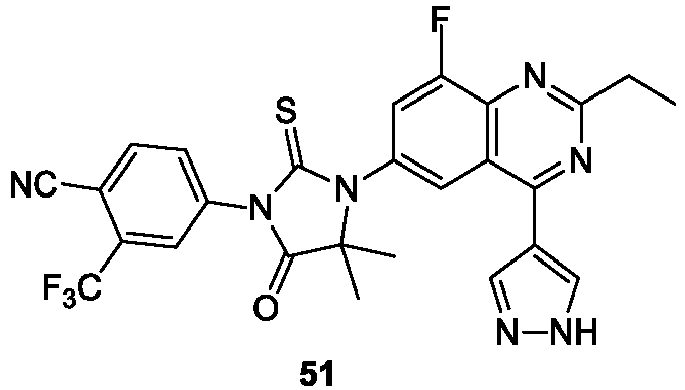
-

- In a dry microwave tube, Compound 36-4 (500 mg), Compound 55-1 (564 mg), sodium carbonate (2M, 800 µL, an aqueous solution), 1,2-dichloroethane (7 mL), and water (3 mL) were added. After nitrogen purge, dichlorobis(triphenylphosphine)palladium (67 mg) was added, and the resulting mixture reacted at 140 °C for 10 min. The reaction mixture was concentrated, and the residue obtained from the concentration was purified successively by a preparative TLC plate and preparative HPLC method to obtain Compound 51. 1H NMR (400 MHz, CDCl3) δ ppm 8.28 (s, 2H), 8.08 (s, 1H), 8.03 (d, J=8.16Hz, 1H), 7.99 (s, 1H), 7.86 (d, J=8.16Hz, 1H), 7.51-7.55 (m, 1H), 3.23 (q, J=7.50Hz, 2H), 1.69 (s, 6H), 1.51 (t, J=7.72Hz, 3H). LCMS (ESI) m/z: 554 (M+1).
-

-

- In a dry single-necked flask, Compound 36-4 (300 mg), Compound 52-1 (129 mg), sodium carbonate (102 mg), 1,2-dichloroethane (2.1 mL), and water (0.9 mL) were added. After nitrogen purge, dichlorobis(triphenylphosphine)palladium (40 mg) was added, and the resulting mixture was refluxed at 100 °C and reacted for 16 h. The reaction mixture was concentrated, and the residue obtained from the concentration was purified successively by a preparative TLC plate and preparative HPLC method to obtain Compound 52. 1H NMR (400 MHz, CDCl3) δ ppm 9.52-9.55 (m, 1H), 8.93 (d, J=2.89Hz, 1H), 7.98-8.04 (m, 2H), 7.92 (d, J=0.88Hz, 1H), 7.86-7.91 (m, 1H), 7.59 (dd, J=9.91, 2.13Hz, 1H), 6.60 (dd, J=2.89, 1.63Hz, 1H), 3.20 (q, J=7.53Hz, 2H), 1.73 (s, 5H), 1.67-1.77 (m, 1H), 1.50 (t, J=7.59Hz, 3H). LCMS (ESI) m/z: 554 (M+1).
-

-

- A mixed solution of Compound 35-4 (100 mg), Compound 23-7 (299 mg), N,N-dimethylformamide (0.5 mL), and methylbenzene (2 mL) was heated to 120 °C, and stirred for 16 h. Methanol (5 mL) was added to the reaction mixture, and the resulting mixture was stirred for 30 min, and then concentrated under reduced pressure. The residue obtained from the concentration was purified successively by a silica gel column and preparative HPLC to obtain Compound 53. 1H NMR (400 MHz, CDCl3) δ ppm 9.01 (d, J=1.5Hz, 1H), 8.76 (s, 1H), 8.28 (d, J=1.8Hz, 1H), 7.32 (dd, J=1.8, 8.8Hz, 1H), 6.42 (s, 1H), 2.75 (q, J=7.5Hz, 2H), 1.64 (s, 6H), 1.29 (t, J=7.5Hz, 3H); LCMS (ESI) m/z: 505 (M+1).
-

-

- In a microwave tube, Compound 35-2 (500 mg), tert-butyl carbamate (324 mg), cesium carbonate (1.50 g), 4,5-bis(diphenylphosphino)-9,9-dimethylxanthene (107 mg), bis(dibenzylideneacetone)palladium (170 mg), and methylbenzene (6 mL) were added. The microwave tube was sealed, and the resulting mixture was kept at 120 °C for microwave reaction for 30 min. The reaction mixture was filtered, and washed with ethyl acetate (20 mL). The filtrate was concentrated under reduced pressure. The residue obtained from the concentration was purified by a silica gel column to obtain Compound 54-1. 1H NMR (400 MHz, CDCl3) δ ppm 8.90 (s, 1H), 8.15 (br s, 1H), 7.57 (br s, 1H), 6.32 (s, 1H), 2.71 (q, J=7.5Hz, 2H), 1.49 (s, 9H), 1.26 (t, J=7.5Hz, 3H).
-

- Trifluoroacetic acid (0.4 mL) was added to a solution of Compound 54-1 (200 mg) in dichloromethane (2 mL). The resulting reaction mixture was stirred at 26 °C for 4 h. A saturated aqueous solution of sodium bicarbonate (pH about 7) was added to the reaction mixture, which was extracted with dichloromethane (20 mL). The organic phase was washed with saturated brine (15 mL), dried over anhydrous sodium sulfate, and concentrated under reduced pressure to obtain Compound 54-2. LCMS (ESI) m/z: 208 (M+1).
-

- Cyclobutanone (115 mg) and zinc chloride (12 mg) were added to a mixed solution of Compound 54-2 (60 mg), trimethylsilyl cyanide (81 mg), sodium sulfate (154 mg), and tetrahydrofuran (2 mL). The resulting reaction mixture was stirred at 25 °C for 16 h. An aqueous solution of sodium sulfite (10 mL) was added to the reaction mixture, and the resulting mixture was extracted with ethyl acetate (10 mL×3). The organic phase was washed with saturated brine (10 mL), dried over anhydrous sodium sulfate, and concentrated under reduced pressure. The residue obtained from the concentration was purified by a silica gel column to obtain Compound 54-3. LCMS (ESI) m/z: 287 (M+1).
-

- Compound 1-7 (224 mg) was added to a solution of Compound 54-3 (70 mg), N,N-dimethylformamide (0.5 mL), and methylbenzene (2 mL). The resulting mixture was heated to 120 °C, and stirred for 16 h. Compound 1-7 (224 mg) was supplemented to the reaction mixture, which was further stirred for 16 h. Methanol (5 mL) was added to the reaction mixture, which was stirred for 30 min, and then concentrated under reduced pressure. The residue obtained from the concentration was purified successively by a silica gel column and preparative HPLC to obtain Compound 54. 1H NMR (400 MHz, CDCl3) δ ppm 8.82 (s, 1H), 7.94 (d, J=8.3Hz, 1H), 7.89 (s, 1H), 7.76 (br d, J=8.3Hz, 1H), 7.33 (dd, J=1.8, 8.8Hz, 1H), 6.43 (s, 1H), 2.82-2.63 (m, 4H), 2.58-2.43 (m, 2H), 2.34-2.18 (m, 1H), 1.73 (q, J=10.5Hz, 1H), 1.29 (t, J=7.5Hz, 3H); LCMS (ESI) m/z: 516 (M+1).
-

-

- In a dry single-necked flask, Compound 34-1 (15.00 g) and dichloromethane (150 mL) were added, and cooled to -40 °C. Then, malonyl dichloride (14.72 g) was added. The resulting mixture was slowly warmed to 25 °C, and stirred for 24 h. After filtration, a solid was collected. The resulting solid was slurried with a mixed solvent of 100 mL of methanol and 100 mL of dichloromethane, and filtered to obtain Compound 55-1. 1H NMR (400 MHz, DMSO-d6) δ ppm 8.73 (t, J=1.7Hz, 1H), 8.20 (dd, J=2.0, 9.3Hz, 1H), 5.54 (s, 1H). LCMS (ESI) m/z: 259 (M+1).
-

- In a dry single-necked flask, Compound 55-1 (1.00 g), potassium carbonate (1.07 g), iodoethane (682 mg), and NMP (10 mL) were added. Under nitrogen protection, the resulting mixture was heated to 60 °C, and stirred for 48 h. Iodoethane (682 mg) was supplemented, and the resulting mixture was heated to 60 °C, and refluxed for 12 h. 100 mL of saturated brine and 100 mL of ethyl acetate were successively added to the reaction mixture, which was filtered to remove the solid. After liquid separation of the filtrate, the organic phase was collected, dried over anhydrous sodium sulfate, filtered, and concentrated to dryness under reduced pressure. The residue obtained from the concentration was successively purified by a chromatographic column, and slurried with 20 mL of methyl tert-butyl ether to obtain Compound 55-2. 1H NMR (400MHz, CDCl3) δ ppm 8.98 (t, J=1.7Hz, 1H), 7.56 (dd, J=2.1, 7.8Hz, 1H), 5.82 (s, 1H), 4.42 (q, J=7.1Hz, 2H), 1.42 (t, J=7.1Hz, 3H). LCMS (ESI) m/z: 287 (M+1).
-

- In a dry microwave tube, Compound 55-2 (600 mg), 2-aminoisobutyric acid (646 mg), 2-acetylcyclohexanone (59 mg), potassium carbonate (578 mg), DMF (12 mL), and water (2.4 mL) were added, and then cuprous chloride (41 mg) was added. After nitrogen purge for 5 min, the microwave tube was sealed. The resulting mixture was microwaved and stirred at 90 °C for 2 h. 2-Acetylcyclohexanone (59 mg) and cuprous chloride (41 mg) were supplemented, and the resulting mixture was microwaved and stirred for 1.5 h, and then concentrated under reduced pressure to obtain Compound 55-3. LCMS (ESI) m/z: 310 (M+1).
-

- In a dry single-necked flask, Compound 55-3 (1.20 g), a solution of TMSCHN2 in n-hexane (2M, 3.88 mL), dichloromethane (20 mL), and methanol (3 mL) were added. Under nitrogen protection, the resulting mixture was stirred at 25 °C for 12 h. A solution of TMSCHN2 in n-hexane (2M, 3.88 mL) was supplemented, and the resulting mixture was stirred at 25 °C for 6 h; a solution of TMSCHN2 in n-hexane (2M, 3.88 mL) was supplemented, and the resulting mixture was stirred at 25 °C for 12 h; a solution of TMSCHN2 in n-hexane (2M, 3.88 mL) was supplemented, and the resulting mixture was stirred at 25 °C for 6 h; and a solution of TMSCHN2 in n-hexane (2M, 7.76 mL) was supplemented, and the resulting mixture was stirred at 25 °C for 12 h. The resulting mixture was concentrated to dryness under reduced pressure to remove the solvent. The resulting crude product was purified by a chromatographic column to obtain Compound 55-4. LCMS (ESI) m/z: 324 (M+1).
-

- In a dry single-necked flask, Compound 55-4 (80 mg), DMF (0.4 mL), and methylbenzene (2 mL) were added, and then Compound 1-7 (624 mg) was added. Under nitrogen protection, the resulting mixture was heated to 90 °C, and stirred for 10 h, and then concentrated to dryness under reduced pressure to remove the solvent. The crude product was purified successively by a preparative TLC plate and preparative HPLC method to obtain Compound 55. 1H NMR (400 MHz, CDCl3) δ ppm 8.80 (s, 1H), 7.94 (d, J=8.4 Hz, 1H), 7.87 (s, 1H), 7.75 (br d, J=7.7 Hz, 1H), 7.39 (br d, J=8.6 Hz, 1H), 5.82 (s, 1H), 4.41 (q, J=7.2 Hz, 2H), 1.61 (s, 6H), 1.39 (t, J=7.1 Hz, 3H). LCMS (ESI) m/z: 520 (M+1).
-

-

- In a reaction flask, phosphorous oxychloride (50 mL) was added, Compound 17-1 (5.00 g) was slowly added, and then N,N-diisopropylethylamine (3.98 g) was added. The resulting mixture reacted at 110 °C for 2 h. The reaction mixture was concentrated under reduced pressure to obtain a crude product. The crude product was dissolved in 80 mL of ethyl acetate, and 20 mL of ice water was added for liquid separation. 40 mL of an iced saturated sodium bicarbonate solution was added to the organic phase. After liquid separation, the organic phase was dried over anhydrous sodium sulfate, filtered, and concentrated under reduced pressure, to obtain Compound 56-1.
-

- In a round-bottomed flask, Compound 56-1 (4.65 g), sodium methoxide (4.63 g), and methanol (47 mL) were added, and reacted at 25 °C for 60 min. After the completion of the reaction, the resulting mixture was concentrated, and the residue obtained from the concentration was purified by flash column chromatography to obtain Compound 56-2. 1H NMR (400 MHz, CDCl3) δ ppm 8.25 (d, J=2.21Hz, 1H), 7.83 (dd, J=8.93, 2.32Hz, 1H), 7.70-7.74 (m, 1H), 4.13-4.20 (m, 3H), 2.96 (q, J=7.50Hz, 2H), 1.41 (t, J=7.50Hz, 3H).
-

- In a reaction flask, Compound 56-2 (500 mg), Compound 3-2 (801 mg), 4,5-bis(diphenylphosphino)-9,9-dimethylxanthene (108 mg), cesium carbonate (1.52 g), and DMF (5 mL) were added. After nitrogen purge for 1 min, bis(dibenzylideneacetone)palladium (107 mg) was added, and the resulting mixture reacted at 80 °C for 16 h. The reaction mixture was concentrated under reduced pressure to obtain a crude product. The crude product was separated and purified by flash column chromatography to obtain Compound 56-3. 1H NMR (400 MHz, CDCl3) δ ppm 8.18 (d, J=4.85Hz, 1H), 7.79 (d, J=9.04Hz, 1H), 7.29 (d, J=2.87Hz, 1H), 7.20 (d, J=4.85Hz, 1H), 6.99 (d, J=2.65Hz, 1H), 5.84 (s, 1H), 4.10 (s, 3H), 2.90-2.98 (m, 2H), 2.23 (s, 3H), 1.40 (t, J=7.61Hz, 3H).
-

- In a microwave tube, Compound 56-3 (500 mg), Compound 2-5 (311 mg), 4,5-bis(diphenylphosphino)-9,9-dimethylxanthene (88 mg), cesium carbonate (991 mg), and methylbenzene (5 mL) were added. Under nitrogen purge, Pd(dba)2 (87 mg) was added, and after nitrogen purge for 1 min, the resulting mixture was kept at 130 °C for microwave reaction for 2 h. The reaction mixture was concentrated under reduced pressure to obtain a crude product. The crude product was purified by column chromatography to obtain Compound 56-4. 1H NMR (400 MHz, CDCl3) δ ppm 8.23 (d, J=5.02Hz, 1H), 8.16 (d, J=2.13Hz, 1H), 7.98 (dd, J=8.66, 2.26Hz, 1H), 7.79 (d, J=8.91Hz, 1H), 7.76 (s, 1H), 7.68 (d, J=8.66Hz, 1H), 7.00 (d, J=2.64Hz, 1H), 6.91 (d, J=5.14Hz, 1H), 5.31 (s, 1H), 5.27 (s, 1H), 4.07 (s, 3H), 2.93 (q, J=7.57Hz, 2H), 2.21 (s, 3H), 1.39 (t, J=7.59Hz, 3H).
-

- At 0 °C, in a reaction flask, Compound 56-4 (79 mg) and tetrahydrofuran (0.8 mL) were added, and fully stirred, and then sodium hydride (22 mg, 60% purity) was added. After the resulting mixture reacted for 0.5 h, thiophosgene (30 mg) was added, and the reaction mixture was stirred at 25 °C for 15.5 h. The reaction mixture was concentrated under reduced pressure to obtain a crude product. The crude product was purified by a silica gel plate of thin layer chromatography to obtain Compound 56-5. 1H NMR (400 MHz, CDCl3) δ ppm 8.29 (s, 1H), 8.27 (d, J=2.43Hz, 1H), 8.24-8.28 (m, 1H), 8.08-8.12 (d, J=5.07Hz, 1H), 8.07 (s, 1H), 8.05 (s, 1H), 7.84 (dd, J=8.82, 2.43Hz, 1H), 6.97-7.01 (m, 1H), 4.17 (s, 3H), 2.98-3.07 (m, 2H), 1.88 (s, 3H), 1.44 (t, J=7.50Hz, 3H).
-

- In a reaction flask, Compound 56-5 (70 mg), an aqueous solution of hydrochloric acid (2M, 1 mL), and tetrahydrofuran (1 mL) were added, and stirred at 30 °C for 16 h. The reaction mixture was concentrated under reduced pressure to obtain a crude product. The crude product was purified by preparative HPLC method to obtain Compound 56. 1H NMR (400 MHz, CDCl3) δ ppm 9.28 (br s, 1H), 8.36 (d, J=1.98Hz, 1H), 8.31 (s, 1H), 8.19 (d, J=8.16z, 1H), 8.13 (d, J=5.07 Hz, 1H), 8.08 (d, J=8.38Hz, 1H), 7.91-7.95 (m, 1H), 7.85-7.90 (m, 1H), 6.99-7.02 (m, 1H), 2.81 (q, J=7.64Hz, 2H), 1.93 (s, 3H), 1.45 (t, J=7.61Hz, 3H). LCMS (ESI) m/z: 507 (M+1).
-

-

- Methyl propionylacetate (2.56 g) was added to a solution of Compound 57-1 (1.00 g) in acetic acid (10 mL). The resulting mixture was heated to 110 °C, and stirred for 16 h. The reaction mixture was concentrated under reduced pressure. The residue obtained from the concentration was diluted with ethyl acetate (30 mL), and a saturated aqueous solution of sodium bicarbonate (30 mL) was added. After liquid separation, the organic phase was washed with saturated brine (30 mL), dried over anhydrous sodium sulfate, filtered, and concentrated. The residue obtained from the concentration was purified by a silica gel column to obtain Compound 57-2. 1H NMR (400 MHz, CDCl3) δ ppm 8.83 (s, 1H), 7.05 (s, 1H), 6.44 (s, 1H), 4.08 (s, 3H), 2.82 (q, J=7.5Hz, 2H), 1.34 (t, J=7.7Hz, 3H).
-
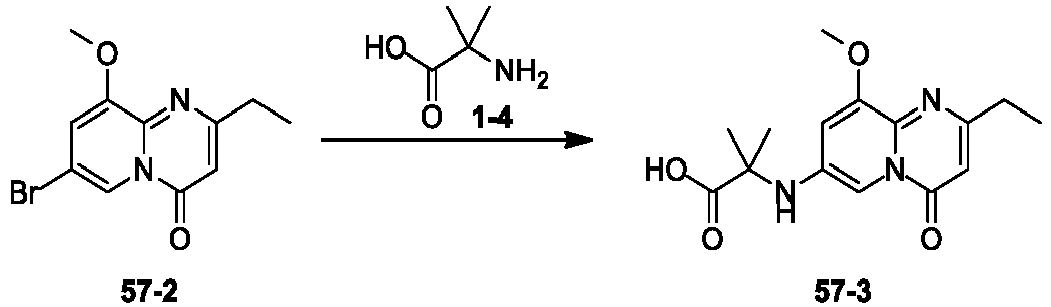
- Compound 57-2 (300 mg), Compound 1-4 (165 mg), potassium carbonate (366 mg), 2-acetylcyclohexanone (30 mg), cuprous chloride (21 mg), N,N-dimethylformamide (2 mL), and water (0.1 mL) were added to a microwave tube. The microwave tube was sealed, and the resulting mixture was kept at 130 °C for microwave reaction for 30 min. The reaction mixture was filtered, the filter cake was washed with ethyl acetate (20 mL), and the filtrate was concentrated under reduced pressure. 1N hydrochloric acid was added to the residue obtained from the concentration (pH 6-7). The resulting mixture was extracted with ethyl acetate (20 mL×3), and the organic phase was washed with saturated brine (30 mL), dried over anhydrous sodium sulfate, and filtered. The filtrate was concentrated. Dichloromethane/methanol (10/1, 20 mL) were added to the residue obtained from the concentration. The resulting mixture was filtered, and the filtrate was concentrated under reduced pressure to obtain Compound 57-3. LCMS (ESI) m/z: 306(M+1).
-

- A solution of trimethylsilyldiazomethane in n-hexane (2M, 0.8 mL) was added to a solution of Compound 57-3 (300 mg), dichloromethane (5 mL) and methanol (0.5 mL). The resulting reaction mixture was stirred at 20 °C for 16 h. The reaction mixture was concentrated under reduced pressure. The residue obtained from the concentration was purified by a silica gel column to obtain Compound 57-4. 1H NMR (400 MHz, CDCl3) δ ppm 7.88 (d, J=2.3Hz, 1H), 6.55 (d, J=1.8Hz, 1H), 6.26 (s, 1H), 3.94 (s, 3H), 3.72 (s, 3H), 2.72 (q, J=7.4Hz, 2H), 1.57 (s, 6H), 1.24 (t, J=7.5Hz, 3H).
-

- A mixed solution of Compound 57-4 (150 mg), Compound 1-7 (430 mg), N,N-dimethylformamide (0.5 mL), and methylbenzene (2 mL) was heated to 120 °C, and stirred for 16 h. Methanol (5 mL) was added to the reaction mixture, which was stirred for 30 min, and then concentrated under reduced pressure. The residue obtained from the concentration was purified successively by a silica gel column and preparative HPLC to obtain Compound 57. 1H NMR (400 MHz, CDCl3) δ ppm 8.71 (d, J=2.0Hz, 1H), 8.03 (d, J=8.3Hz, 1H), 7.98 (d, J=1.5Hz, 1H), 7.86 (dd, J=2.0, 8.3Hz, 1H), 6.90 (d, J=2.0Hz, 1H), 6.49 (s, 1H), 4.09 (s, 3H), 2.86 (q, J=7.5Hz, 2H), 1.72 (s, 6H), 1.37 (t, J=7.5Hz, 3H); LCMS (ESI) m/z: 516 (M+1).
-

-

- In a dry reaction flask, Compound 54-2 (300 mg), zinc chloride (59 mg), sodium sulfate (823 mg), acetone (505 mg), trimethylsilyl cyanide (431 mg), and tetrahydrofuran (3 mL) were added, and reacted at 25 °C for 4 h under nitrogen protection. The reaction mixture was directly concentrated, and the residue obtained from the concentration was purified by preparative TLC method to obtain Compound 58-1. 1H NMR (400 MHz, CDCl3) δ ppm 8.52 (s, 1H), 7.33 (dd, J=9.98, 2.32Hz, 1H), 6.46 (s, 1H), 2.78 (q, J=7.65Hz, 2H), 1.78 (s, 6H), 1.33 (t, J=7.59Hz, 3H).
-

- Water (10 mL) was added to a single-necked flask, and then thiophosgene (1.13 g) was added dropwise. After stirring at 25 °C for 0.5 h under nitrogen protection, Compound 58-2 (1.00 g) was added in batches, and the resulting mixture further reacted at 25 °C for 2 h. The reaction mixture was extracted with dichloromethane (10 mL×3). The organic phase was washed with saturated brine (15 mL), dried over anhydrous sodium sulfate, and filtered. The filtrate was concentrated. The residue obtained from the concentration was purified by column chromatography to obtain Compound 58-3. 1H NMR (400 MHz, CDCl3) δ ppm 7.67 (d, J=8.38Hz, 1H), 7.37 (d, J=1.98Hz, 1H) 7.21 (dd, J=8.38, 1.98Hz, 1H).
-

- In a dry reaction flask, Compound 58-1 (200 mg), Compound 58-3 (568 mg), methylbenzene (2 mL), and DMF (0.5 mL) were added. Under nitrogen protection, sodium hydride (44 mg, 60% purity) was added, and the resulting mixture reacted at 25 °C for 0.5 h. The reaction mixture was concentrated, and the residue obtained from the concentration was purified by column chromatography to obtain Compound 58-4. LCMS (ESI) m/z: 469 (M+1).
-

- In a dry reaction flask, Compound 58-4 (110 mg), methylbenzene (1.1 mL), and glacial acetic acid (1.1 mL) were added, and kept at 110 °C for 16 h under nitrogen protection. The reaction mixture was concentrated, and the residue obtained from the concentration was purified by preparative HPLC to obtain Compound 58. 1H NMR (400 MHz, CDCl3) δ ppm 8.83 (s, 1H), 7.84 (d, J=8.16Hz, 1H), 7.68 (d, J=1.98Hz, 1H), 7.51 (dd, J=8.27, 2.09Hz, 1H), 7.41 (dd, J=8.71, 2.09Hz, 1H), 6.49 (s, 1H), 2.82 (q, J=7.57Hz, 2H),1.68 (s, 6H), 1.36 (t, J=7.61Hz, 3H). LCMS (ESI) m/z: 470 (M+1).
-
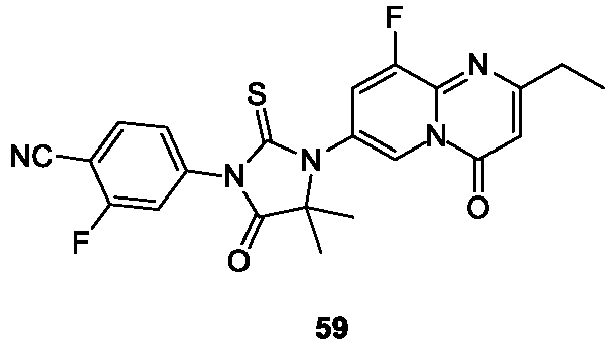
-
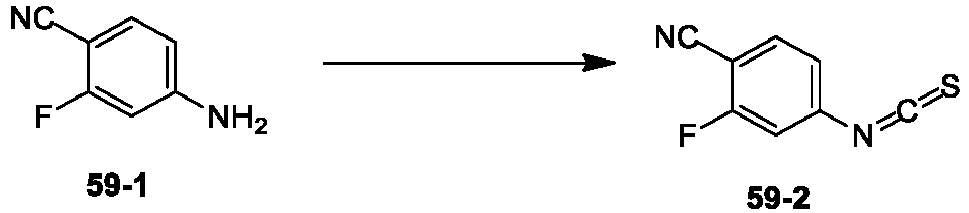
- Water (10 mL) was added to a single-necked flask, and then thiophosgene (1.27g) was added dropwise. After stirring at 25 °C for 0.5 h under nitrogen protection, Compound 59-1 (1.00 g) was added in batches, and the resulting mixture further reacted at 25 °C for 2 h. The reaction mixture was extracted with dichloromethane (10 mL×3). The organic phase was washed with saturated brine (15 mL), dried over anhydrous sodium sulfate, and filtered. The filtrate was concentrated. The residue obtained from the concentration was purified by column chromatography to obtain Compound 59-2. 1H NMR (400 MHz, CDCl3) δ ppm 7.63(dd, J=8.38, 7.06Hz, 1H), 7.10-7.15 (m, 1H), 7.07 (dd, J=9.15, 1.87Hz, 1H).
-

- In a dry reaction flask, Compound 58-1 (200 mg), Compound 59-2 (520 mg), methylbenzene (2 mL), and DMF (0.5 mL) were added. Under nitrogen protection, sodium hydride (44 mg, 60% purity) was added, and the resulting mixture reacted at 25 °C for 0.5 h. The reaction mixture was concentrated, and the residue obtained from the concentration was purified by column chromatography to obtain Compound 59-3. LCMS (ESI) m/z: 453 (M+1).
-

- In a dry reaction flask, Compound 59-3 (80 mg), methylbenzene (0.8 mL), and glacial acetic acid (0.8 mL) were added, and reacted at 110 °C for 16 h under nitrogen protection. The reaction mixture was concentrated to obtain a crude product, and the crude product was purified by preparative HPLC to obtain Compound 59. 1H NMR (400 MHz, CDCl3) δ ppm 8.83 (s, 1H) 7.77-7.84 (m, 1H) 7.38-7.45 (m, 3H) 6.49 (s, 1H) 2.82 (q, J=7.35Hz, 2H) 1.68 (s, 6H) 1.36 (t, J=7.61Hz, 3H).
-

-
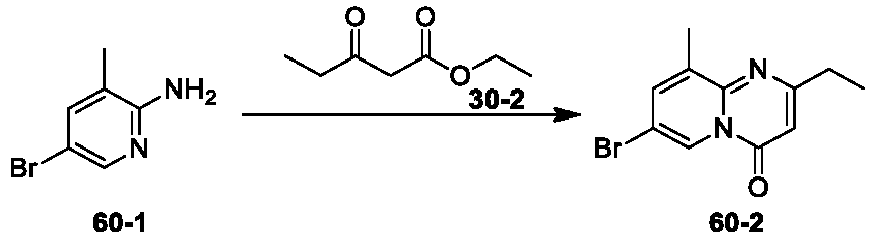
- In a dry single-necked flask, Compound 60-1 (10.00 g), Compound 30-2 (10.02 g), and polyphosphoric acid (30 g) were added, heated to 110 °C and stirred for 16 h under nitrogen protection. The reaction mixture was poured to 200 mL of ice water, and then adjusted to pH=7 with a sodium bicarbonate solid. 200 mL of ethyl acetate was added. After liquid separation, the organic phase was collected, dried over anhydrous sodium sulfate, and filtered. The filtrate was concentrated under reduced pressure, and the residue obtained from the concentration was purified by a chromatographic column to obtain Compound 60-2. 1H NMR (400 MHz, DMSO-d6) δ ppm 8.81 (d, J=1.8Hz, 1H), 7.94 (d, J=0.9 Hz, 1H), 6.31 (s, 1H), 2.62 (q, J=7.5Hz, 2H), 2.44 (s, 3H), 1.21 (t, J=7.5Hz, 3H). LCMS (ESI) m/z: 267 (M+1).
-

- In a dry microwave tube, Compound 60-2 (500 mg), 2-aminoisobutyric acid (579 mg), 2-acetylcyclohexanone (52 mg), potassium carbonate (517 mg), DMF (4 mL), and water (1 mL) were added, and then cuprous chloride (37 mg) was added. After nitrogen purge for 5 min, the microwave tube was sealed, and the resulting mixture was microwaved and stirred at 90 °C for 4 h. The reaction mixture was concentrated under reduced pressure to obtain Compound 60-3. LCMS (ESI) m/z: 290 (M+1).
-

- In a dry single-necked flask, Compound 60-3 (800 mg) and a solution of hydrochloric acid-methanol (4M, 25 mL) were added, heated to 90 °C and refluxed for 2 h under nitrogen protection. The reaction mixture was concentrated, and 20 mL of a saturated sodium bicarbonate solution and 20 mL of ethyl acetate were added to the residue obtained from the concentration. After liquid separation, the organic phase was collected, dried over anhydrous sodium sulfate, filtered, and concentrated under reduced pressure to obtain a crude product, which was purified by a chromatographic column to obtain Compound 60-4. 1H NMR (400 MHz, CDCl3) δ ppm 8.18 (d, J=2.6 Hz, 1H), 7.13 (d, J=1.5Hz, 1H), 7.14-7.11 (m, 1H), 6.49-5.91 (m, 1H), 3.77 (s, 3H), 2.68 (q, J=7.6Hz, 2H), 2.53 (s, 3H), 1.61 (s, 6H), 1.29 (t, J=7.5Hz, 3H). LCMS (ESI) m/z: 304 (M+1).
-

- In a dry single-necked flask, Compound 60-4 (110 mg), Compound 1-7 (165 mg), DMF (0.2 mL), and methylbenzene (1 mL) were added, heated to 90 °C and stirred for 48 h under nitrogen protection. The reaction mixture was concentrated to dryness, and the resulting crude product was purified by preparative HPLC to obtain Compound 60. 1H NMR (400 MHz, CDCl3) δ ppm 8.95 (d, J=2.0 Hz, 1H), 8.03 (d, J=8.4Hz, 1H), 7.98 (s, 1H), 7.86 (br d, J=8.2Hz, 1H), 7.48 (s, 1H), 6.44 (s, 1H), 2.79 (q, J=7.6Hz, 2H), 2.64 (s, 3H), 1.69 (s, 6H), 1.37 (t, J=7.5Hz, 3H). LCMS (ESI) m/z: 500 (M+1).
-

-

- In a dry single-necked flask, Compound 61-1 (5.00 g) and acetonitrile (50 mL) were added, and the temperature was controlled at 0 °C, and NBS (6.92 g) dissolved in acetonitrile (50 mL) was slowly added dropwise to the reaction flask and the temperature was controlled to no more than 10 °C. After the completion of the dropwise addition, the resulting mixture was stirred at 20 °C for 20 h, and then was concentrated to dryness under reduced pressure to remove the solvent. A solid crude product was obtained, and 200 mL of a saturated sodium bicarbonate solution was added thereto. After ultrasonic processing for 1 h and then filtration, the filter cake was washed with 100 mL of water, to obtain Compound 61-2. 1H NMR (400MHz, CDCl3) δ ppm 8.06 (br s, 1H), 7.63 (d, J=2.0Hz, 1H), 4.93 (br s, 2H). LCMS (ESI) m/z: 207 (M+1).
-

- In a dry single-necked flask, Compound 61-2 (5.00 g), Compound 30-2 (4.52 g), and polyphosphoric acid (15 g) were added, and stirred at 110 °C for 16 h under nitrogen protection. 200 mL of water was added to the reaction mixture, and the resulting mixture was stirred until dissolution. 200 mL of ethyl acetate was added for extraction. After liquid separation, the organic phase was dried over anhydrous sodium sulfate, filtered, and concentrated to dryness under reduced pressure to remove the solvent. The obtained crude product was purified by a chromatographic column to obtain Compound 61-3. 1H NMR (400 MHz, CDCl3) δ ppm 9.06 (d, J=2.0Hz, 1H), 7.89 (d, J=2.0Hz, 1H), 6.40 (s, 1H), 2.76 (q, J=7.6Hz, 2H), 1.32 (t, J=7.5Hz, 3H). LCMS (ESI) m/z: 288 (M+1).
-

- In a dry microwave tube, Compound 61-3 (500 mg), 2-aminoisobutyric acid (538 mg), 2-acetylcyclohexanone (49 mg), potassium carbonate (481 mg), DMF (4 mL), and water (1 mL) were added, and then cuprous chloride (34 mg) was added. After nitrogen purge for 5 min, the microwave tube was sealed, and the resulting mixture was microwaved and stirred at 110 °C for 1 h. The reaction mixture was concentrated under reduced pressure to obtain Compound 61-4. LCMS (ESI) m/z: 310 (M+1).
-

- In a dry single-necked flask, Compound 61-4 (300 mg) and a solution of hydrochloric acid-methanol (4M, 8.76 mL) were added, heated to 90 °C and refluxed for 2 h under nitrogen protection. The reaction mixture was concentrated to dryness under reduced pressure. 50 mL of a saturated sodium bicarbonate solution and 50 mL of ethyl acetate were added to the residual solid product. After liquid separation, the organic phase was dried over anhydrous sodium sulfate, filtered, and concentrated to dryness to remove the solvent. The obtained crude product was purified by a chromatographic column to obtain Compound 61-5. 1H NMR (400 MHz, CDCl3) δ ppm 8.21 (d, J=2.6Hz, 1H), 7.48 (d, J=2.6Hz, 1H), 6.30 (s, 1H), 4.41 (s, 1H), 3.77 (s, 3H), 2.73 (q, J=7.6Hz, 2H), 1.61 (s, 6H), 1.29 (t, J=7.6Hz, 3H). LCMS (ESI) m/z: 323.77 (M+1).
-

- In a dry single-necked flask, Compound 61-5 (110 mg), Compound 1-7 (155 mg), DMF (0.2 mL), and methylbenzene (1 mL) were added, and stirred at 90 °C for 20 h under nitrogen protection. The resulting mixture was concentrated to dryness under reduced pressure, and the obtained crude product was purified by preparative HPLC to obtain Compound 61. 1H NMR (400 MHz, CDC13) δ ppm 8.94 (d, J=2.4 Hz, 1H), 8.00 (d, J=8.4Hz, 1H), 7.94 (s, 1H), 7.82 (d, J=8.2Hz, 1H), 7.78 (d, J=2.2Hz, 1H), 6.46 (s, 1H), 2.81 (q, J=7.4Hz, 2H), 1.68 (s, 6H), 1.36 (t, J=7.5Hz, 3H). LCMS (ESI) m/z: 520 (M+1).
-

-
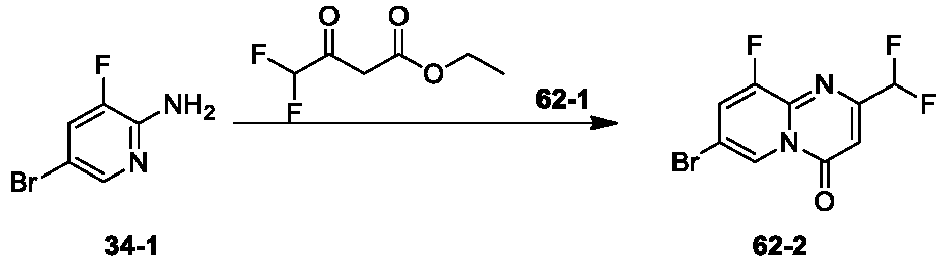
- In a dry single-necked flask, Compound 34-1 (5.00 g) and Compound 62-1 (5.65 g) were added, and then polyphosphoric acid (15.00 g) was added. The resulting mixture was heated to 110 °C and stirred at this temperature for 16 h under nitrogen protection. The reaction mixture was slowly added to an iced aqueous solution of sodium bicarbonate (about 500 mL), adjusted to pH=7, and extracted with ethyl acetate (200 mL×4). The organic phases were combined, dried over anhydrous sodium sulfate, filtered, and concentrated. The resulting residue was purified by column chromatography to obtain Compound 62-2. 1H NMR (400 MHz, CDCl3) δ ppm 9.04 (t, J=1.57Hz, 1H), 7.67 (dd, J=7.78, 2.01Hz, 1H), 6.84 (s, 1H), 6.37-6.70 (m, 1H).
-

- In a dry single-necked flask, Compound 62-2 (1.00 g), tert-butyl carbamate (1.20 g), cesium carbonate (2.78 g), 4,5-bis(diphenylphosphino)-9,9-dimethylxanthene (197 mg), and methylbenzene (20 mL) were added. Under nitrogen protection, bis(dibenzylideneacetone)palladium (196 mg) was added, and the resulting mixture was refluxed at 120 °C for 2 h. The reaction mixture was diluted with water (30 mL), and extracted with ethyl acetate (30 mL×3). The organic phases were combined, dried over anhydrous sodium sulfate, filtered, and concentrated under reduced pressure. The residue obtained from the concentration was purified by column chromatography to obtain Compound 62-3. 1H NMR (400 MHz, CDCl3) δ ppm 9.10 (s, 1H), 8.35 (br s, 1H), 7.88 (br s, 1H), 6.77 (s, 1H), 6.40-6.70 (m, 1H), 1.57 (s, 9H).
-

- In a dry single-necked flask, Compound 62-3 (1.50 g) and a solution of hydrochloric acid/methanol (4M, 576.92 mL) were added, and stirred at 25 °C for 16 h. The reaction mixture was concentrated to dryness under reduced pressure. The resulting residue was dissolved in 50 mL of water, adjusted to pH=8-9 by adding a saturated sodium bicarbonate solution, extracted with ethyl acetate (50 mL×3), washed with saturated brine (50 mL), dried over anhydrous sodium sulfate, filtered, and concentrated under reduced pressure. The concentrate was purified by column chromatography to obtain Compound 62-4. LCMS (ESI) m/z: 230 (M+1).
-

- In a dry reaction flask, Compound 62-4 (450 mg), zinc chloride (80 mg), sodium sulfate (1.12 g), acetone (684 mg), trimethylsilyl cyanide (584 mg), and tetrahydrofuran (4.5 mL) were added, and reacted at 30 °C for 4 h under nitrogen protection. The reaction mixture was directly spin-dried, and purified by column chromatography to obtain Compound 62-5. 1H NMR (400 MHz, CDCl3) δ ppm 8.55 (s, 1H), 7.38 (dd, J=9.79, 2.51Hz, 1H), 6.78 (s, 1H), 6.40-6.69 (m, 1H), 2.02-2.21 (m, 1H), 1.82 (s, 6H).
-

- In a dry reaction flask, Compound 62-5 (200 mg), Compound 1-7 (616 mg), methylbenzene (2 mL), and DMF (0.5 mL) were added. Under nitrogen protection, sodium hydride (40 mg, 60% purity) was added, and the resulting mixture reacted at 25 °C for 0.5 h. The reaction mixture was directly spin-dried, and purified by preparative HPLC. After the completion of separation, the product was left to stand still in a separation system (water (0.05% HCl)-acetonitrile) for 16 h, then adjusted to pH=8 with a saturated aqueous solution of sodium bicarbonate, and extracted with dichloromethane (10 mL×3). The combined organic phase was dried over anhydrous sodium sulfate, filtered, and concentrated. The resulting solid was dissolved in water (40 mL) and acetonitrile (8 mL), and the resulting solution was freeze-dried to obtain Compound 62. 1H NMR (400 MHz, CDCl3) δ ppm 8.89 (s, 1H), 8.03 (d, J=8.38Hz, 1H), 7.95 (s, 1H), 7.81-7.85 (m, 1H), 7.56 (dd, J=8.49, 2.09Hz, 1H), 6.90 (s, 1H), 6.43-6.72 (m, 1H), 1.71 (s, 6H).
-

-

- In a dry single-necked flask, Compound 63-1 (1.00 g), DMF (10 mL), and triethylamine (620 mg) were added. Under nitrogen protection, Compound 63-2 (1.44 g) was added, and the resulting mixture reacted at 20 °C for 16 h. The reaction mixture was diluted with 10 mL of ice water, and then filtered. The filter cake was collected, and slurried with 3 mL of methyl tert-butyl ether for purification. The solid was collected to obtain Compound 63-3. 1H NMR (400 MHz, CDCl3) δ ppm 7.34-7.38 (m, 9 H), 7.33 (d, J=1.38 Hz, 1 H), 7.10-7.15 (m, 6 H), 6.92 (d, J=1.38 Hz, 1 H).
-

- In a dry reaction flask, Compound 63-3 (167 mg) and tetrahydrofuran (1.2 mL) were added. Under nitrogen protection, a solution of ethyl magnesium bromide in tetrahydrofuran (3M, 147 µL) was quickly added, and the resulting mixture reacted at room temperature (15 °C) for 0.17 h. A solution of zinc chloride in diethyl ether (1M, 766 µL) was quickly added to the reaction system, and the resulting mixture further reacted at 15 °C for 2 h. Then, under nitrogen protection, the reaction system was transferred to a dry reaction flask filled with Compound 36-4 (0.10 g) and tetrakis(triphenylphosphine) palladium (22 mg), heated to 95 °C, and refluxed for 12 h. The reaction mixture was concentrated, and the obtained crude product was purified successively by a preparative TLC plate and preparative HPLC method to obtain Compound 63. 1H NMR (400 MHz, CDCl3) δ ppm 8.29 (s, 1H), 8.02 (d, J=8.16Hz, 1H), 7.97 (s, 1H), 7.94 (d, J=1.54Hz, 1H), 7.85 (dd, J=8.27, 1.87Hz, 1H), 7.69 (t, J=1.43Hz, 1H), 7.61 (dd, J=9.59, 2.09Hz, 1H), 7.36 (s, 1H), 3.24 (q, J=7.57Hz, 2H), 1.68 (s, 6H), 1.51 (t, J=7.61Hz, 3H).
-

-

- In a dry single-necked flask, Compound 55-4 (5 mg), Compound 23-7 (7 mg), DMF (0.1 mL), and methylbenzene (0.5 mL) were added, heated to 90 °C and stirred for 48 h under nitrogen protection. The reaction mixture was concentrated to dryness to remove the solvent, and the obatined crude product was purified by preparative HPLC method to obtain Compound 64. 1H NMR (400 MHz, CDCl3) δ ppm 9.08 (s, 1H), 8.87 (s, 1H), 8.34 (s, 1H), 7.44 (br d, J=8.4Hz, 1H), 5.89 (s, 1H), 4.48 (q, J=6.9Hz, 2H), 1.71 (s, 6H), 1.46 (t, J=6.9Hz, 3H); LCMS (ESI) m/z: 521 (M+1).
-

-

- In a dry single-necked flask, Compound 55-1 (500 mg), potassium carbonate (533 mg), 2-bromoethyl methyl ether (606 mg), and NMP (5 mL) were added, heated to 70 °C and stirred for 72 h under nitrogen protection. 100 mL of saturated brine and 100 mL of ethyl acetate were successively added to the reaction mixture. After liquid separation, the organic phase was collected, dried over anhydrous sodium sulfate, and filtered. The filtrate was concentrated under reduced pressure. The obtained crude product was purified by a chromatographic column, slurried with 10 mL of methyl tert-butyl ether, and filtered to obtain Compound 65-1. 1H NMR (400 MHz, CDCl3) δ ppm 8.99 (d, J=1.3Hz, 1H), 7.57 (dd, J=1.8, 7.7Hz, 1H), 5.90 (s, 1H), 4.56 (dd, J=4.0, 5.3Hz, 2H), 3.74 (dd, J=4.0, 5.3Hz, 2H), 3.43 (d, J=1.1Hz, 3H). LCMS (ESI) m/z: 317 (M+1).
-
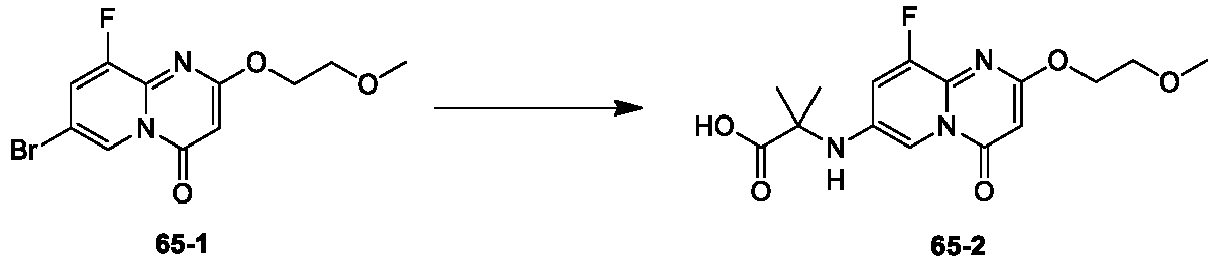
- In a dry microwave tube, Compound 65-1 (230 mg), 2-aminoisobutyric acid (224 mg), 2-acetylcyclohexanone (20 mg), potassium carbonate (200 mg), DMF (2 mL), and water (0.4 mL) were added, and then cuprous chloride (14 mg) was added. After nitrogen purge for 5 min, the microwave tube was sealed, and the resulting mixture was microwaved and stirred at 90 °C for 4 h. The reaction mixture was concentrated, and the obtained crude product was purified by a chromatographic column to obtain Compound 65-2. LCMS (ESI) m/z: 340 (M+1).
-

- In a dry single-necked flask, Compound 65-2 (320 mg), dichloromethane (6 mL), and methanol (1 mL) were added, and then TMSCHN2 (2M, 1.89 mL) was added. Under nitrogen protection, the resulting mixture was stirred at 18 °C for 1 h. TMSCHN2 (2M, 1.89 mL) was supplemented, and the reaction was continued for additional 2 h. The reaction mixture was concentrated to dryness under reduced pressure to remove the solvent, and the obtained crude product was purified by preparative HPLC to obtain Compound 65-3. LCMS (ESI) m/z: 354 (M+1).
-

- In a dry single-necked flask, Compound 65-3 (30 mg), Compound 1-7 (39 mg), DMF (0.1 mL), and methylbenzene (0.5 mL) were added, kept at 90 °C and stirred for 48 h under nitrogen protection. The reaction mixture was concentrated to dryness under reduced pressure. The resulting crude product was purified by preparative HPLC method to obtain Compound 65. 1H NMR (400 MHz, CDCl3) δ ppm 8.88 (s, 1H), 8.01 (d, J=8.4Hz, 1H), 7.94 (s, 1H), 7.82 (dd, J=2.0, 8.4Hz, 1H), 7.47 (dd, J=2.1, 8.5Hz, 1H), 5.96 (s, 1H), 4.64-4.60 (m, 2H), 3.79-3.74 (m, 2H), 3.45 (s, 3H), 1.68 (s, 6H). LCMS (ESI) m/z: 550 (M+1).
-

-

- In a reaction flask, Compound 35-2 (500 mg), Compound 3-2 (789 mg), 4,5-bis(diphenylphosphino)-9,9-dimethylxanthene (107 mg), cesium carbonate (1.50 g), and methylbenzene (5 mL) were added. Under nitrogen protection, bis(dibenzylideneacetone)palladium (106 mg) was added, and the resulting mixture reacted at 90 °C for 16 h. The reaction mixture was concentrated under reduced pressure, and the resulting crude product was separated by column chromatography to obtain Compound 66-1. LCMS (ESI) m/z: 333 (M+1).
-

- In a microwave tube, Compound 66-1 (200 mg), Compound 2-5 (123 mg), cesium carbonate (392 mg), 4,5-bis(diphenylphosphino)-9,9-dimethylxanthene (35 mg), and methylbenzene (2 mL) were added. Under nitrogen protection, bis(dibenzylideneacetone)palladium (34.56 mg) was added, and the resulting mixture was kept at 130 °C for microwave reaction for 2 h. The reaction mixture was concentrated under reduced pressure to obtain a crude product, which was purified by preparative HPLC to obtain Compound 66-2. 1H NMR (400 MHz, CDCl3) δ ppm 8.21-8.26 (m, 2H), 8.07-8.12 (m, 2H), 7.85 (s, 1H), 7.70 (d, J=8.38Hz, 1H), 7.08 (br d, J=7.50Hz, 1H), 6.90 (d, J=5.29Hz, 1H), 6.33 (s, 1H), 5.63 (br s, 1H), 2.74 (q, J=7.64Hz, 2H), 2.25 (s, 3H), 1.22-1.24 (t, J=7.61Hz, 3H).
-

- At 0 °C, in a reaction flask, Compound 66-3 (40 mg) and tetrahydrofuran (0.4 mL) were added, and fully stirred, and then NaH (11 mg, 60% purity) was added. After reaction for 0.5 h, thiophosgene (19 mg) was added, and the reaction mixture was stirred at 25 °C for 15.5 h. The reaction mixture was concentrated under reduced pressure to obtain a crude product, which was purified successively by a preparative TLC plate and preparative HPLC to obtain Compound 66. 1H NMR (400 MHz, CDCl3) δ ppm 9.01 (s, 1H), 8.28 (s, 1H), 8.17 (d, J=5.07Hz, 1H), 8.15 (d, J=1.98Hz, 1H), 8.07-8.12 (m, 1H), 7.63 (dd, J=8.49, 2.32Hz, 1H), 7.07 (d, J=5.29Hz, 1H), 6.52 (s, 1H), 2.85 (q, J=7.50Hz, 2H), 2.15 (s, 3H), 1.39 (t, J=7.50Hz, 3H). LCMS (ESI) m/z: 525 (M+1).
-
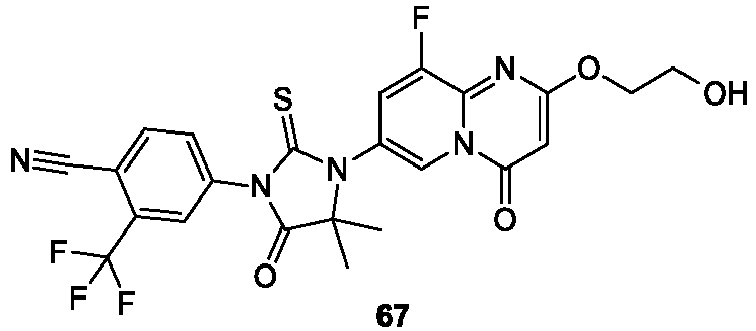
-

- In a dry reaction flask, Compound 65 (40 mg) and dichloromethane (0.5 mL) were added. Under nitrogen protection, boron tribromide (73 mg) was added at 0 °C, and the resulting mixture was warmed to 15 °C and reacted for 2 h. The reaction was quenched with a saturated sodium bicarbonate solution (15 mL). The resulting mixture was extracted with dichloromethane (10 mL×3), dried over anhydrous sodium sulfate, and filtered. The filtrate was concentrated. The residue obtained from the concentration was purified by preparative HPLC to obtain Compound 67. 1H NMR (400 MHz, CDCl3) δ ppm 8.89 (s, 1H), 7.99-8.05 (m, 1H), 7.95 (br s, 1H), 7.83 (br d, J=8.16Hz, 1H), 7.51 (br d, J=7.72Hz, 1H), 5.96 (d, J=3.09Hz, 1H), 4.59 (br d, J=4.41Hz, 2H), 4.01 (br s, 2H), 2.53 (br s, 1H), 1.69 (d, J=2.87Hz, 6H). LCMS (ESI) m/z: 536 (M+1).
-
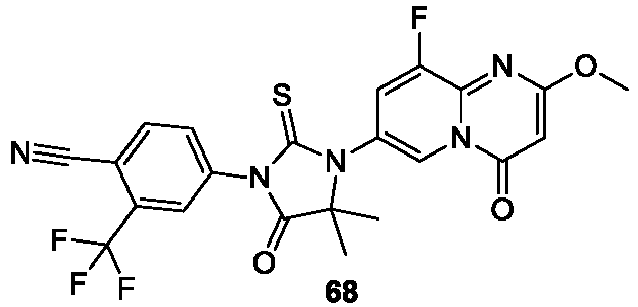
-

- In a dry single-necked flask, Compound 55-1 (1.00 g), N-methylpyrrolidone (10 mL), and potassium carbonate (1.07 g) were added. Under nitrogen protection, iodomethane (1.24 g) was added, and the resulting mixture reacted at 40 °C for 16 h. The reaction mixture was diluted with water (200 mL), and extracted with ethyl acetate (150 mL×2). The organic phases were combined, dried over anhydrous sodium sulfate, and filtered. The filtrate was concentrated to dryness to obtain Compound 68-1. 1H NMR (400 MHz, CDCl3) δ ppm 9.01 (s, 1H), 7.60 (dd, J=7.84, 2.07Hz, 1H), 5.87 (s, 1H), 4.04 (s, 3H).
-

- In a microwave tube, Compound 68-1 (600 mg), Compound 1-4 (340 mg), DMF (12 mL), water (2.4 mL), potassium carbonate (607 mg), and 2-acetylcyclohexanone (31 mg) were added. Under nitrogen purge, cuprous chloride (22 mg) was added, and the resulting mixture was kept at 110 °C for microwave reaction for 3 h. The reaction mixture was directly concentrated, and the residue obtained from the concentration was purified by column chromatography to obtain Compound 68-2. 1H NMR (400 MHz, CD3OD) δ ppm 7.98 (br s, 1H), 7.40-7.49 (m, 1H), 5.74 (s, 1H),3.98 (s, 3H), 1.60 (s, 6H), 1.58-1.62 (m, 1H).
-

- In a dry single-necked flask, Compound 68-2 (530 mg), dichloromethane (10 mL), and methanol (1.7 mL) were added. Under nitrogen protection, a solution of trimethylsilyldiazomethane in n-hexane (2M, 3.59 mL) was added, and the resulting mixture reacted at 15 °C for 16 h. The reaction mixture was concentrated, and the residue obtained from the concentration was purified by column chromatography to obtain Compound 68-3. 1H NMR (400 MHz, CDCl3) δ ppm 8.16 (d, J=1.38Hz, 1H), 7.14 (dd, J=10.16, 2.51Hz, 1H), 5.80 (s, 1H), 4.32 (br s, 1H), 3.99 (s, 3H), 3.80 (s, 3H), 1.63 (s, 6H).
-
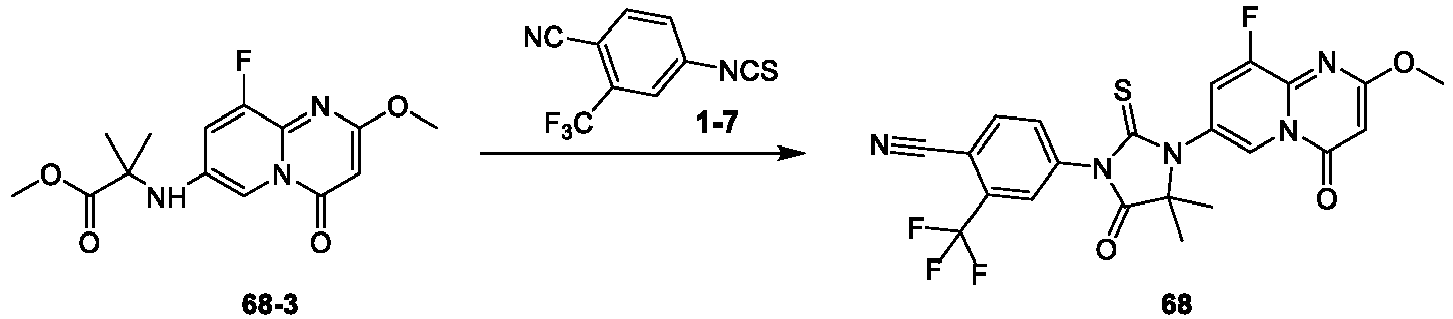
- In a dry reaction flask, Compound 68-3 (120 mg), methylbenzene (2.5 mL), and DMF (0.5 mL) were added. Under nitrogen protection, Compound 1-7 (177 mg) was added, and the resulting mixture reacted at 90 °C for 16 h. The reaction mixture was purified by preparative HPLC to obtain Compound 68. 1H NMR (400 MHz, CDCl3) δ ppm 8.89 (s, 1H), 8.02 (d, J=8.38Hz, 1H), 7.95 (s, 1H), 7.83 (d, J=7.72Hz, 1H), 7.48 (br d, J=8.16Hz, 1H), 5.92 (s, 1H), 4.08 (s, 3H), 1.69 (s, 6H). LCMS (ESI) m/z: 506 (M+1).
-

-

- In a dry single-necked flask, Compound 34-1 (3.00 g) and polyphosphoric acid (20 mL) were added, and then Compound 69-1 (4.59 g, 31.41 mmol) was added. Under nitrogen protection, the resulting mixture was heated to 110 °C and stirred for 16 h. 200 mL of water was added to the reaction mixture, and then 200 mL of ethyl acetate was added. The resulting mixture was filtered to remove insolubles. The filtrate was left to stand still for stratification. The organic phase was collected, dried over anhydrous sodium sulfate, and filtered. The filtrate was concentrated to dryness under reduced pressure to remove the solvent. The resulting crude product was purified by a chromatographic column to obtain Compound 69-2. 1H NMR (400 MHz, CDCl3) δ ppm 9.01 (t, J=1.6Hz, 1H), 7.57 (dd, J=2.0, 8.0Hz, 1H), 6.74 (s, 1H), 4.53 (s, 2H), 3.56-3.53 (m, 3H)∘ LCMS (ESI) m/z: 287 (M+1).
-

- In a dry single-necked flask, Compound 69-2 (200 mg), 2-aminoisobutyric acid (216 mg), potassium carbonate (193 mg), DMF (4 mL), water (1 mL), and 2-acetylcyclohexanone (19 mg) were added, and then cuprous chloride (14 mg) was added. After nitrogen purge for 5 min, the single-necked flask was sealed, and then the resulting mixture was microwaved and stirred at 90 °C for 3 h. The reaction mixture was concentrated to dryness under reduced pressure to remove the solvent, and the resulting crude product was purified by a chromatographic column to obtain Compound 69-3. LCMS (ESI) m/z: 310 (M+1).
-

- In a dry single-necked flask, Compound 69-3 (150 mg), dichloromethane (3 mL), and methanol (0.45 mL) were added, and then a solution of TMSCHN2 in n-hexane (2M, 1.94 mL) was added. Under nitrogen protection, the resulting mixture was stirred at 18 °C for 2 h. The reaction mixture was concentrated to dryness under reduced pressure to remove the solvent, and the resulting crude product was purified by a chromatographic column to obtain Compound 69-4. LCMS (ESI) m/z: 324 (M+1).
-

- In a dry single-necked flask, Compound 69-4 (130 mg), DMF (0.2 mL), and methylbenzene (1.5 mL) were added, and then Compound 1-7 (276 mg) was added. Under nitrogen protection, the resulting mixture was heated to 90 °C, and stirred for 16 h. The reaction mixture was concentrated to dryness under reduced pressure. The resulting crude product was purified by preparative HPLC to obtain Compound 69. 1H NMR (400 MHz, CDCl3) δ ppm 8.87 (s, 1H), 8.04 (d, J=8.3Hz, 1H), 7.97 (s, 1H), 7.85 (dd, J=1.9, 8.3Hz, 1H), 7.45 (dd, J=2.2, 8.7Hz, 1H), 6.81 (s, 1H), 4.58 (s, 2H), 3.57 (s, 3H), 1.72 (s, 6H). LCMS (ESI) m/z: 520 (M+1).
-

-

- 1,1'-Carbonyldiimidazole (1.04 g) was added to a solution of Compound 10-3 (1.00 g) in tetrahydrofuran (10 mL). The resulting mixture was stirred at 70 °C for 16 h. The reaction mixture was filtered, and the filter cake was dried under reduced pressure to obtain Compound 70-1. 1H NMR (400 MHz, DMSO-d6) δ ppm 11.59 (br s, 2H), 7.91 (dd, J=2.0, 10.0Hz, 1H), 7.80 (s, 1H).
-

- N,N-diisopropylethylamine (7.18 g) was added dropwise to a solution of Compound 70-1 (9.60 g) in phosphorus oxychloride (50 mL). The resulting mixture was stirred at 110 °C for 2 h. The reaction mixture was concentrated under reduced pressure, diluted with heated dichloromethane (200 mL), and then slowly poured into ice water (150 mL). After liquid separation, the aqueous layer was extracted with dichloromethane (100 mL×2), and the organic phases were combined, successively washed with a saturated aqueous solution of sodium bicarbonate (200 mL) and saturated brine (200 mL), dried over anhydrous sodium sulfate, filtered, and concentrated. The residue obtained from the concentration was purified by a silica gel column to obtain Compound 70-2. 1H NMR (400 MHz, CDCl3) δ ppm 8.17 (t, J=1.6Hz, 1H), 7.76 (dd, J=1.9, 8.7Hz, 1H); LCMS (ESI) m/z: 297 (M+1).
-
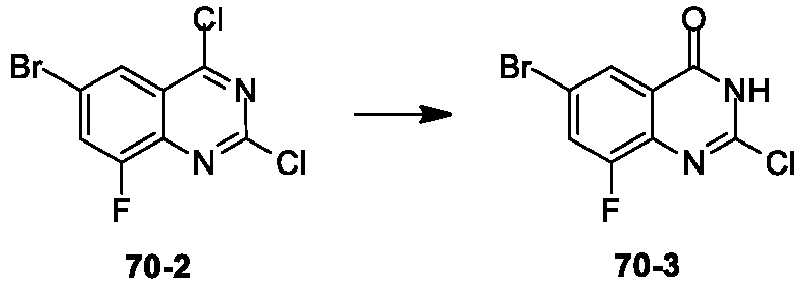
- An aqueous solution of sodium hydroxide (1M, 40 mL) was added to a solution of Compound 70-2 (4.00 g) in tetrahydrofuran (50 mL), and the resulting mixture was further stirred at 10 °C for 3 h. The reaction mixture was poured into an aqueous solution of hydrochloric acid (1N) (pH about 7), and extracted with ethyl acetate (100 mL×3). The organic phase was washed with saturated brine (150 mL), dried over anhydrous sodium sulfate, filtered, and concentrated to obtain Compound 70-3. LCMS (ESI) m/z: 279 (M+1).
-

- In a microwave tube, sodium ethoxide (660 mg) was added to a mixed solution of Compound 70-3 (900 mg) and ethanol (12 mL). The reslting mixture was kept at 110 °C for microwave reaction for 1 h. The reaction mixture was concentrated under reduced pressure. The residue obtained from the concentration was dissolved in water (30 mL), and extracted with ethyl acetate (30 mL×3). Then, the aqueous phase was extracted with dichloromethane/methanol (v/v=10/1, 30 mL×3). The organic phases were combined, dried over anhydrous sodium sulfate, filtered, and concentrated to obtain Compound 70-4. 1H NMR (400 MHz, DMSO-d6) δ ppm 7.84 (s, 1H), 7.69 (dd, J=2.0, 10.3Hz, 1H), 4.35 (q, J=7.0Hz, 2H), 1.30 (t, J=7.0Hz, 3H).
-

- N,N-diisopropylethylamine (742 mg) was added dropwise to a solution of Compound 70-4 (1.10 g) in phosphorus oxychloride (8 mL), and the resulting mixture was stirred at 110 °C for 3 h. The reaction mixture was concentrated under reduced pressure. The residue obtained from the concentration was diluted with dichloromethane (150 mL), and poured into ice water. After liquid separation, the organic phase was successively washed with a saturated aqueous solution of sodium bicarbonate (150 mL) and saturated brine (150 mL), dried over anhydrous sodium sulfate, and filtered. The filtrate was concentrated to obtain Compound 70-5. LCMS (ESI) m/z: 307 (M+3).
-

- Sodium hydride (190 mg, 60% purity) was added to a solution of Compound 70-5 (1.20 g) and ethanediol (360 mg) in tetrahydrofuran (20 mL), and the resulting mixture was stirred at 10 °C for 24 h. The reaction mixture was poured into a saturated aqueous solution of ammonium chloride (50 mL), and extracted with ethyl acetate (50 mLx3). The organic phase was washed with saturated brine (50 mL), dried over anhydrous sodium sulfate, and filtered. The filtrate was concentrated to obtain Compound 70-6. LCMS (ESI) m/z: 333 (M+3).
-

- Triethylamine (1.19 g) and 4-dimethylaminopyridine (48 mg) were added to a mixed solution of Compound 70-6 (1.30 g), di-tert-butyl dicarbonate (1.03 g), and dichloromethane (20 mL), and the resulting mixture was stirred at 15 °C for 1 h. The reaction mixture was concentrated under reduced pressure. The residue obtained from the concentration was purified by a silica gel column to obtain Compound 70-7. 1H NMR (400 MHz, CDCl3) δ ppm 7.96-7.92 (m, 1H), 7.49 (dd, J=2.1, 9.7Hz, 1H), 4.73-4.69 (m, 2H), 4.52-4.44 (m, 4H), 1.44 (s, 9H), 1.40 (t, J=7.0Hz, 3H).
-

- Compound 70-7 (600 mg), Compound 1-4 (215 mg), potassium carbonate (480 mg), cuprous chloride (28 mg), 2-acetylcyclohexanone (39 mg), N,N-dimethylformamide (6 mL), and water (0.3 mL) were added to a microwave tube. The microwave tube was sealed, and the resulting mixture was kept at 120 °C for microwave reaction for 1 h. The reaction mixture was filtered, and washed with ethyl acetate (10 mL). The filtrate was concentrated under reduced pressure. 1N hydrochloric acid was added to the residue obtained from the concentration (pH=6-7), and the resulting mixture was extracted with tetrahydrofuran/ethyl acetate (1/3, 20 mL×3) for liquid separation. The organic phase was washed with saturated brine (30 mL), dried over anhydrous sodium sulfate, and filtered. The filtrate was concentrated under reduced pressure to obtain Compound 70-8. LCMS (ESI) m/z: 454 (M+1).
-

- A solution of trimethylsilyldiazomethane in n-hexane (2M, 1.1 mL) was added to a solution of Compound 70-8 (650 mg), dichloromethane (10 mL), and methanol (1 mL), and the resulting mixture was stirred at 10 °C for 2 h. The reaction mixture was concentrated under reduced pressure. The residue obtained from the concentration was purified by a silica gel column to obtain Compound 70-9. LCMS (ESI) m/z: 468 (M+3).
-

- A mixed solution of Compound 70-9 (100 mg), Compound 1-7 (196 mg), N,N-dimethylformamide (0.5 mL), and methylbenzene (2 mL) was heated to 120 °C, and stirred for 16 h. Methanol (2 mL) was added to the reaction mixture, which was stirred for 30 min, and then concentrated under reduced pressure. The residue obtained from the concentration was purified by a preparative chromatoplate to obtain Compound 70-10. LCMS (ESI) m/z: 664 (M+1).
-

- Trifluoroacetic acid (1 mL) was added to a solution of Compound 70-10 (180 mg) in dichloromethane (4 mL), and the resulting mixture was stirred at 10 °C for 2 h. A saturated aqueous solution of sodium bicarbonate was added to the reaction mixture (pH about 8), which was extracted with dichloromethane (10 mL×3). The organic phase was washed with saturated brine (15 mL), dried over anhydrous sodium sulfate, and concentrated under reduced pressure. The residue obtained from the concentration was separated and purified successively by a preparative chromatoplate and preparative HPLC to obtain Compound 70. 1H NMR (400 MHz, CDCl3) δ ppm 7.93 (d, J=8.3Hz, 1H), 7.90 (d, J=1.5Hz, 1H), 7.81-7.74 (m, 2H), 7.33 (dd, J=2.0, 10.0Hz, 1H), 4.73-4.65 (m, 2H), 4.54 (q, J=7.0Hz, 2H), 4.01 (br d, J=3.3Hz, 2H), 2.17 (br s, 1H), 1.58 (s, 6H), 1.43 (t, J=7.2Hz, 3H); LCMS (ESI) m/z: 564 (M+1).
-

-

- In a microwave tube, sodium methoxide (520 mg) was added to a solution of Compound 70-3 (900 mg) in methanol (10 mL). The resulting mixture was kept at 100 °C for microwave reaction for 1.5 h. The reaction mixture was concentrated under reduced pressure. Tetrahydrofuran (100 mL) was added to the residue obtained from the concentration. The resulting mixture was stirred for 20 min, and then filtered. The filtrate was concentrated under reduced pressure to obtain Compound 71-1. 1H NMR (400 MHz, DMSO-d6) δ ppm 7.78-7.73 (m, 1H), 7.42 (dd, J=2.3, 10.3Hz, 1H), 3.72 (s, 3H).
-

- N,N-diisopropylethylamine (618 mg) was added dropwise to a solution of Compound 71-1 (870 mg) in phosphorus oxychloride (6 mL), and the resulting mixture was stirred at 110 °C for 4 h. The reaction mixture was concentrated under reduced pressure. The residue obtained from the concentration was diluted with dichloromethane (20 mL), and poured into ice water. After liquid separation, the organic phase was successively washed with a saturated aqueous solution of sodium bicarbonate (15 mL) and saturated brine (15 mL), dried over anhydrous sodium sulfate, and filtered. The filtrate was concentrated under reduced pressure to obtain Compound 71-2. LCMS (ESI) m/z: 293 (M+3).
-

- Sodium hydride (165 mg, 60% purity) was added to a solution of Compound 71-2 (1.00 g) and ethanediol (320 mg) in tetrahydrofuran (20 mL), and the resulting mixture was stirred at 10 °C for 4 h. The reaction mixture was poured into a saturated aqueous solution of ammonium chloride (40 mL), and extracted with ethyl acetate (50 mLx3). The organic phase was washed with saturated brine (50 mL), dried over anhydrous sodium sulfate, and filtered. The filtrate was concentrated under reduced pressure to obtain Compound 71-3. LCMS (ESI) m/z: 319 (M+3).
-

- Triethylamine (1.05 g) and 4-dimethylaminopyridine (43 mg) were added to a mixed solution of Compound 71-3 (1.10 g), di-tert-butyl dicarbonate (908 mg), and dichloromethane (20 mL), and the resulting mixture was stirred at 15 °C for 1 h. The reaction mixture was concentrated under reduced pressure. The residue obtained from the concentration was purified by a silica gel column to obtain Compound 71-4. 1H NMR (400 MHz, CDCl3) δ ppm 7.98-7.93 (m, 1H), 7.51 (dd, J=2.0, 9.5 Hz, 1H), 4.75-4.67 (m, 2H), 4.49-4.43 (m, 2H), 4.05 (s, 3H), 1.44 (s, 9H).
-

- Compound 71-4 (500 mg), Compound 1-4 (185 mg), potassium carbonate (414 mg), cuprous chloride (24 mg), 2-acetylcyclohexanone (34 mg), N,N-dimethylformamide (4 mL), and water (0.2 mL) were added to a microwave tube. The microwave tube was sealed, and the resulting mixture was kept at 120 °C for microwave reaction for 1 h. The reaction mixture was filtered, and washed with ethyl acetate (10 mL). The filtrate was concentrated under reduced pressure. 1N hydrochloric acid was added to the residue obtained from the concentration (pH 6-7), and the resulting mixture was extracted with tetrahydrofuran/ethyl acetate (1/3, 20 mL×3) for liquid separation. The organic phase was washed with saturated brine (30 mL), dried over anhydrous sodium sulfate, and filtered. The filtrate was concentrated under reduced pressure to obtain Compound 71-5. LCMS (ESI) m/z: 440 (M+1).
-

- A solution of trimethylsilyldiazomethane in n-hexane (2M, 1.1 mL) was added to a solution of Compound 71-5 (470 mg) in dichloromethane (5 mL) and methanol (1 mL), and the resulting mixture was stirred at 10 °C for 4 h. The reaction mixture was concentrated under reduced pressure. The residue obtained from the concentration was purified by a silica gel column to obtain Compound 71-6. LCMS (ESI) m/z: 454 (M+1).
-

- A mixed solution of Compound 71-6 (100 mg), Compound 1-7 (202 mg), N,N-dimethylformamide (0.5 mL), and methylbenzene (2 mL) was heated to 120 °C, and stirred for 16 h. Methanol (2 mL) was added to the reaction mixture, which was stirred for 30 min, and then concentrated under reduced pressure. The residue obtained from the concentration was purified by a preparative chromatoplate to obtain Compound 71-7. LCMS (ESI) m/z: 650 (M+1).
-

- Trifluoroacetic acid (0.5 mL) was added to a solution of Compound 71-7 (100mg) in dichloromethane (2 mL), and the resulting mixture was stirred at 10 °C for 2 h. A saturated aqueous solution of sodium bicarbonate was added to the reaction mixture (pH about 8), and the resulting mixture was extracted with dichloromethane (10 mL×3). The organic phase was washed with saturated brine (15 mL), dried over anhydrous sodium sulfate, and concentrated under reduced pressure. The residue obtained from the concentration was purified successively by a preparative chromatoplate and preparative HPLC to obtain Compound 71. 1H NMR (400 MHz, CDCl3) δ ppm 7.97-7.87 (m, 2H), 7.83-7.73 (m, 2H), 7.35 (dd, J=2.3, 10.0Hz, 1H), 4.73-4.65 (m, 2H), 4.09 (s, 3H), 4.02 (br d, J=3.5Hz, 2H), 2.21 (br t, J=5.4Hz, 1H), 1.59 (s, 6H); LCMS (ESI) m/z: 550 (M+1).
-

-

- A mixed solution of Compound 70-9 (60 mg), Compound 23-7 (118 mg), N,N-dimethylformamide (0.5 mL), and methylbenzene (2 mL) was heated to 120 °C, and stirred for 16 h. Methanol (2 mL) was added to the reaction mixture, which was stirred for 30 min, and then concentrated under reduced pressure. The residue obtained from the concentration was purified by a preparative chromatoplate to obtain Compound 72-1. LCMS (ESI) m/z: 665 (M+1).
-

- Trifluoroacetic acid (0.2 mL) was added to a solution of Compound 72-1 (45 mg) in dichloromethane (1 mL). The resulting reaction mixture was stirred at 10 °C for 2 h. A saturated aqueous solution of sodium bicarbonate was added to the reaction mixture (pH about 8), and the resulting mixture was extracted with dichloromethane (10 mL×3). The organic phase was washed with saturated brine (15 mL), dried over anhydrous sodium sulfate, and concentrated under reduced pressure. The residue obtained from the concentration was separated and purified by preparative HPLC to obtain Compound 72. 1H NMR (400 MHz, CDCl3) δ ppm 9.03 (d, J=2.3Hz, 1H), 8.29 (d, J=2.3Hz, 1H), 7.77 (d, J=1.5Hz, 1H), 7.32 (dd, J=2.3, 10.0Hz, 1H), 4.70 (dd, J=3.8, 5.3Hz, 2H), 4.54 (q, J=7.2Hz, 2H), 4.01 (br s, 2H), 2.15 (br s, 1H), 1.61 (s, 6H), 1.43 (t, J=7.2Hz, 3H); LCMS (ESI) m/z: 565 (M+1).
-

-

- A mixed solution of Compound 71-6 (55 mg), Compound 23-7 (112 mg), N,N-dimethylformamide (0.5 mL), and methylbenzene (2 mL) was heated to 120 °C, and stirred for 16 h. Methanol (2 mL) was added to the reaction mixture, which was stirred for 30 min, and then concentrated under reduced pressure. The residue obtained from the concentration was purified by a preparative chromatoplate to obtain Compound 73-1. LCMS (ESI) m/z: 651 (M+1).
-

- Trifluoroacetic acid (0.2 mL) was added to a solution of Compound 73-1 (50 mg) in dichloromethane (1 mL). The resulting reaction mixture was stirred at 10 °C for 2 h. A saturated aqueous solution of sodium bicarbonate was added to the reaction mixture (pH about 8), and the resulting mixture was extracted with dichloromethane (10 mL×3). The organic phase was washed with saturated brine (15 mL), dried over anhydrous sodium sulfate, and concentrated under reduced pressure. The residue obtained from the concentration was separated and purified by preparative HPLC to obtain Compound 73. 1H NMR (400 MHz, CDCl3) δ ppm 9.02 (d, J=2.0Hz, 1H), 8.29 (d, J=2.0Hz, 1H), 7.78 (s, 1H), 7.33 (dd, J=2.3, 10.0Hz, 1H), 4.73-4.65 (m, 2H), 4.10 (s, 3H), 4.02 (br s, 2H), 2.21 (br s, 1H), 1.61 (s, 6H); LCMS (ESI) m/z: 551 (M+1).
-

-

- In a dry reaction flask, Compound 62-5 (100 mg), Compound 23-7 (309 mg), DMF (0.25 mL), and methylbenzene (1 mL) were added. Under nitrogen protection, sodium hydride (20 mg, 60% purity) was added, and the resulting mixture reacted at 25 °C for 0.5 h. The reaction mixture was concentrated. The residue obtained from the concentration was purified by acidic preparative HPLC method. Then, the product was left to stand still in a separation eluent (water (0.05% HCl)-acetonitrile), then adjusted to pH=8 with a saturated aqueous solution of sodium bicarbonate, and extracted with dichloromethane (10 mL×3). The combined organic phase was dried over anhydrous sodium sulfate, filtered, and concentrated. The resulting concentrate was dissolved in water (20 mL) and acetonitrile (8 mL), and then freeze-dried to obtain Compound 74. 1H NMR (400 MHz, CDCl3) δ ppm 9.09 (d, J=2.13Hz, 1H), 8.89 (s, 1H), 8.35 (d, J=2.01Hz, 1H), 7.54 (dd, J=8.34, 2.07Hz, 1H), 6.91 (s, 1H), 6.42-6.75 (m, 1H), 1.74 (s, 6H). LCMS (ESI) m/z: 527 (M+1).
-

-

- Tris(dibenzylideneacetone)dipalladium (421 mg) and 4,5-bis(diphenylphosphino) -9,9-dimethylxanthene (532 mg) were added to a mixed solution of Compound 75-1 (2.00 g), tert-butyl carbamate (1.08 g), sodium tert-butoxide (2.21 g), and methylbenzene (40 mL). Under nitrogen protection, the resulting mixture was stirred at 100 °C for 3 h. The reaction mixture was filtered through Celite, and the filtrate was concentrated under reduced pressure. The residue obtained from the concentration was purified by a silica gel column to obtain Compound 75-2. 1H NMR (400 MHz, CDCl3) δ ppm 8.40 (s, 1H), 8.33 (d, J=2.3Hz, 1H), 6.98 (br s, 1H), 1.55 (s, 9H).
-

- Trifluoroacetic acid (8 mL) was added to a mixed solution of Compound 75-2 (1.70 g) and dichloromethane (20 mL). The resulting reaction mixture was stirred at 10 °C for 3 h. The reaction mixture was concentrated under reduced pressure. The residue obtained from the concentration was diluted with ethyl acetate (60 mL), and washed with a saturated sodium bicarbonate solution (50 mL×3). The resulting organic phase was washed with saturated brine (50 mL), dried over anhydrous sodium sulfate, and filtered. The filtrate was concentrated under reduced pressure. The residue obtained from the concentration was purified by a silica gel column to obtain Compound 75-3. LCMS (ESI) m/z: 154 (M+1).
-

- At 10 °C, thiophosgene (900 mg) was added dropwise to water (20 mL), and then Compound 75-3 (920 mg) was added in batches. The resulting mixture was stirred at 10 °C for 1 h. The reaction mixture was extracted with dichloromethane (30 mL×2). The organic phases were combined, dried over anhydrous sodium sulfate, and filtered. The filtrate was concentrated to dryness under reduced pressure to obtain Compound 75-4.
-

- A mixed solution of Compound 35-5 (300 mg) and Compound 75-4 (764 mg) in N,N-dimethylformamide (1.5 mL) and methylbenzene (6 mL) was heated to 120 °C, and stirred for 16 h. Methanol (5 mL) was added to the reaction mixture, which was stirred for 30 min, and then concentrated under reduced pressure. The residue obtained from the concentration was purified successively by a silica gel column and preparative HPLC to obtain Compound 75. 1H NMR (400 MHz, CDCl3) δ ppm 8.82 (s, 1H), 8.78 (d, J=2.0Hz, 1H), 8.10 (d, J=2.0Hz, 1H), 7.39 (dd, J=2.1, 8.7Hz, 1H), 6.49 (s, 1H), 2.82 (q, J=7.5Hz, 2H), 1.69 (s, 6H), 1.36 (t, J=7.5Hz, 3H); LCMS (ESI) m/z: 471 (M+1).
-
- 1. PathHunter NHR cell lines were recovered and cultured for amplification.
- 2. The cells were inoculated onto a 384-well plate prior to testing, and incubated at 37 °C. The serum for culture was filtered with charcoal-dextran to reduce the hormone level therein.
- 3. In the detection of the antagonistic function, a compound was added to the cells and incubated for 60 min. The working concentration of the test compound was diluted from 10 µM at a 3-fold concentration gradient, respectively including: 10000, 3333.3, 1111.1, 370.4, 123.5, 41.2, 13.7, and 4.67 nM. Then, an agonist 6a-Fluorotestosterone 0.06 µM (concentration: EC80, i.e., 80% agonistic compound concentration) was added, and the mixture was incubated at 37 °C or at room temperature for 3-16 h.
- 4. Signal detection: 12.5 µL or 15 µL (50%, v/v) PathHunter detection mixed solution (kit: DiscoverX product catalog number: 93-0001 series) was added, and incubated at room temperature for 1 h. The chemiluminescent signal was read with a PerkinElmer Envision™ instrument.
- 5. Data analysis: The compound activity was analyzed with CBIS data analysis software (ChemInnovation, CA). The calculation formula of the inhibition percent of the antagonist is as follows: IC50 inhibition ratio (%) = 100%×(1-(average RLU value of the test compound - average RLU value of the blank control group)/(average RLU value of EC80 control group - average RLU value of the blank control group)).
- Test results of the antagonism of the compounds on nuclear translocation of the androgen receptor (AR) are as shown in Table 1 below.
Table 1 Test Results of Antagonism of Compounds on Nuclear Translocation of Androgen Receptor Compound No. IC50 Compound No. IC50 1 >10 µM 39 5.95 µM 2 >10 µM 40 2.15 µM 3 1.40 µM 41 2.75 µM 4 2.19 µM 42 2.20 µM 5 3.65 µM 43 3.50 µM 6 3.07 µM 44 3.76 µM 7 4.26 µM 45 2.64 µM 8 4.27 µM 46 3.08 µM 9 5.35 µM 47 2.57 µM 10 1.71 µM 48 3.67 µM 11 1.14 µM 49 1.43 µM 12 3.26 µM 50 3.45 µM 13 6.02 µM 51 0.64 µM 14 4.90 µM 52 1.23 µM 15 1.12 µM 53 2.11 µM 16 3.91 µM 54 2.50 µM 17 0.65 µM 55 1.40 µM 18 2.84 µM 56 2.86 µM 19 1.86 µM 57 5.47 µM 20 1.56 µM 58 0.95 µM 21 1.89 µM 59 8.92 µM 22 2.36 µM 60 1.83 µM 23 1.15 µM 61 1.45 µM 24 3.10 µM 62 1.69 µM 25 1.22 µM 63 1.34 µM 26 1.71 µM 64 2.81 µM 27 2.21 µM 65 2.09 µM 28 8.88 µM 66 7.12 µM 29 0.83 µM 67 2.30 µM 30 2.54 µM 68 1.91 µM 31 3.80 µM 69 4.00 µM 32 6.76 µM 70 4.27 µM 33 9.58 µM 71 2.76 µM 34 3.23 µM 72 2.41 µM 35 2.31 µM 73 2.13 µM 36 5.65 µM 74 2.96 µM 37 4.47 µM 75 0.92 µM 38 3.58 µM - Taking male CD-1 mice as test animals, drug concentrations in plasma at different moments after intravenous and intragastric administration of Compound 10 to the mice were determined by the LC/MS/MS method. The pharmacokinetic behavior of Compound 10 in mice was investigated and its pharmacokinetic profile was evaluated.
- 2.2 Test Animals: Four healthy adult male CD-1 mice were divided into 2 groups, with 2 mice in each group, according to the principle of similar body weight. The animals were purchased from Shanghai Super-BK Laboratory Animal Co., Ltd., with Animal Production License No.: SCXK (Shanghai) 2013-0016.
- An appropriate amount of sample was weighed, and an appropriate amount of DMSO, PEG400 and water were added successively at a volume ratio of 10:40:50. After stirring and ultrasonic processing, the resulting mixture reached a clear solution state of 0.4 mg/mL for intravenous administration.
- An appropriate amount of sample was weighed, and dissolved in a solution of 0.5% CMC+0.2% Tween 80. After stirring and ultrasonic processing, the resulting mixture reached a uniform suspension state of 0.4 mg/mL for intragastric administration.
- Four male CD-1 mice were divided into 2 groups, and fasted overnight. The first group was intravenously administered at an administration volume of 2.5 mL/kg in a dose of 1 mg/kg; and the second group was intragastrically administered at an administration volume of 5 mL/kg in a dose of 2 mg/kg.
- After Compound 10 was intravenously administered to the male CD-1 mice, 30 µL of blood was collected at 0.0833, 0.25, 0.5, 1, 2, 4, 8, and 24 h respectively, and placed in test tubes containing 2 µL of EDTA-K2. After Compound 10 was administered to the intragastric administration group, 30 µL of blood was collected at 0.25, 0.5, 1, 2, 4, 8, and 24 h respectively, and placed in test tubes containing 2 µL of EDTA-K2. The test tubes were centrifuged at 3000 g for 15 min to separate the plasma, which was stored at -60 °C. The animals were allowed to eat 2 hours after administration.
- After intravenous and intragastric administration to the mice, the content of the test compound in plasma was determined by the LC/MS/MS method. The linear range of the method was 2.00-6000 nmol/L; and the plasma samples were analyzed after the treatment with acetonitrile precipitated protein. Pharmacokinetic test results of Compound 10 are shown in Table 2 below.
Table 2 Pharmacokinetic Test Results of Compound 10 Mode of Administration Administration Dose Plasma Concentration Time to Peak Half Life Apparent Volume of Distribution Clearance Rate Curve Area (0-t) Curve Area (0-inf) Bioavailability Cmax (nM) Tmax (h) T1/2 (h) Vdss (L/kg) Cl (mL/min/ kg) AUC0-last (nM.h) AUC0-inf (nM.h) Bioavailability (%) Intravenous Administration 1 mg/kg - - 4.88 0.384 0.912 32316 33486 - Intragastric Administration 2 mg/kg 2765 4.00 5.50 - - 26261 27935 41.7 Note: "-" means that the item does not need to be tested. - With reference to Example 76, the pharmacokinetic behaviors of Compound 35 and Compound 58 in mice were investigated and their pharmacokinetic profiles were evaluated .
- After Compound 35 and Compound 58 were intravenously administered to the male CD-1 mice, 30 µL of blood was cross-collected at 0.0833, 0.25, 0.5, 1, 2, 4, 8, 24, and 48 h respectively, and placed in test tubes containing 2 µL of EDTA-K2. After Compound 35 and Compound 58 were administered to the intragastric administration group, 30 µL of blood was cross-collected at 0.25, 0.5, 1, 2, 4, 8, 24, and 48 h respectively, and placed in test tubes containing 2 µL of EDTA-K2. The test tubes was centrifuged at 3000 g for 15 min to separate the plasma, which was stored at -60 °C. The animals were allowed to eat 4 hours after administration.
- After intravenous and intragastric administration to the mice, the content of the test compound in plasma was determined by the LC/MS/MS method. The linear range of the method was 2.00-6000 nmol/L; and the plasma samples were analyzed after the treatment with acetonitrile precipitated protein.
- Pharmacokinetic test results of Compound 35 and Compound 58 are shown in Table 3 below.
Table 3 Pharmacokinetic Test Results of Compound 35 and Compound 58 Test Compound Mode of Administration Administration Dose Plasma Concentration Time to Peak Half Life Apparent Volume of Distribution Clearance Rate Curve Area (0-t) Curve Area (0-inf) Bioavailability Cmax (nM) Tmax (h) T1/2 (h) Vdss (L/kg) Cl (mL/min/ kg) AUC0-last (nM.h) AUC0-inf (nM.h) Bioavailability (%) Compound 35 Intravenous Administration 1 mg/kg - - 45.1 0.667 0.189 58694 194448 - Intragastric Administration 2 mg/kg 5775 6.00 ND - - 110377 ND 94 Compound 58 Intravenous Administration 1 mg/kg - - 36.6 0.248 0.0794 271453 447238 - Intragastric Administration 2 mg/kg 12850 8.00 ND - - 369659 ND 68.1 Note: "-" means that the item does not need to be tested; and "ND" means that the data are not detected. - Taking male CD-1 mice as test animals, drug concentrations in plasma and brain after intragastric administration of Compound 27 and Compound 10 to the mice were determined by the LC/MS/MS method, respectively.
- 2.2 Test Animals: Six healthy adult male CD-1 mice were divided into 2 groups, with 3 mice in each group, according to the principle of similar body weight. The animals were purchased from Shanghai Super-BK Laboratory Animal Co., Ltd., with Animal Production License No.: SCXK (Shanghai) 2013-0016.
- An appropriate amount of sample was weighed, and an appropriate amount of DMSO, PEG400 and water were added successively at a volume ratio of 10:40:50. After stirring and ultrasonic processing, the resulting mixture reached a clear solution state of 0.4 mg/mL.
- Six male CD-1 mice were divided into 2 groups, fasted overnight, and intragastrically administered at an administration volume of 5 mL/kg in a dose of 2 mg/kg.
- After Compound 27 and Compound 10 were intragastrically administered to the male CD-1 mice, 100 µL of blood was collected by cardiac puncture at 2 h, placed in a test tube containing 2 µl of EDTA-K2, and centrifuged at 3000 g for 15 min to separate 50 µL of plasma, which was stored at -60 °C. Meanwhile, brain tissues were collected, washed, then homogenized with 5-fold 15 mM PBS/MeOH (v:v, 2:1), and stored at -60 °C. The animals were allowed to eat 2 hours after administration.
- After intragastric administration to the mice, the content of the test compound in plasma and brain was determined by the LC/MS/MS method. The linear range of the method was 2.00-6000 nmol/L; and the plasma samples were analyzed after the treatment with acetonitrile precipitated protein.
- The results of tissue distribution parameters are shown in Table 4.
Table 4 Results of Tissue Distribution Parameters Compound Plasma Concentration Concentration in Brain Brain to Blood Ratio (nM) (nmol/kg) Compound 27 9250±2112 85.2±21.9 0.00917±0.0004 compound 10 5000±3156 67.38±44.5 0.0133±0.0006 - Taking male CD-1 mice as test animals, drug concentrations in plasma and brain after intragastric administration of Compound 35 and Compound 58 to the mice were determined by the LC/MS/MS method, respectively.
- 2.2 Test Animals: Two healthy adult male CD-1 mice. The animals were purchased from Shanghai Sippr-BK Laboratory Animal Co., Ltd.
- An appropriate amount of sample was weighed, and added in a solution of 0.5% CMC+0.2% Tween in water. After stirring and ultrasonic processing, the resulting mixture reached a suspension state of 0.4 mg/mL.
- Two male CD-1 mice were fasted overnight, and intragastrically administered at an administration volume of 5 mL/kg in a dose of 2 mg/kg.
- After Compound 35 and Compound 58 were intragastrically administered to the male CD-1 mice, 100 µL of blood was collected by cardiac puncture at 4 h, placed in a test tube containing 2 µl of EDTA-K2, and centrifuged at 3000 g for 15 min to separate 30 µL of plasma, which was stored at -60 °C. Meanwhile, brain tissues were collected, washed, then homogenized with 9-fold 15 mM PBS/MeOH (v:v, 2:1), and stored at -60 °C. The animals were allowed to eat 4 hours after administration.
- After intragastric administration to the mice, the content of the test compound in plasma and brain was determined by the LC/MS/MS method. The linear range of the method was 2.00-6000 nmol/L; and the plasma samples were analyzed after the treatment with acetonitrile precipitated protein.
- The tissue distribution test results are shown in Table 5.
Table 5 Tissue Distribution Test Results Compound Plasma Concentration Concentration in Brain Brain to Blood Ratio (nM) (nmol/kg) Compound 35 4125 281 0.0742 Compound 58 8260 265 0.0322 -
Table 6 Preparation Method of Test Compound Compound Preparation Method Concentration (mg/mL) Storage Condition Vehicle 5%DMSO+40%PEG400+10%Solutol+45%H2O - 4 °C Compound 27 50 mg/kg 9.15 mg of Compound 27 was weighed, and added to a brown bottle. 90 µL of DMSO was added, and fully vortex-mixed. Then, 0.72 mL of PEG400 and 180 µL of Solutol were added, and fully vortex-mixed. Finally, 0.81 mL of H2O was added, and fully vortex-mixed to obtain Compound 27 at 5 mg/mL. 5 4 °C Compound 10 50 mg/kg 9.05 mg of Compound 10 was weighed, and added to a brown bottle. 90 µL of DMSO was added, and fully vortex-mixed. Then, 0.72 mL of PEG400 and 180 µL of Solutol were added, and fully vortex-mixed. Finally, 0.81 mL of H2O was added, and fully vortex-mixed to obtain Compound 10 at 5 mg/mL. 5 4 °C Compound 35 10 mg/kg 12.64 mg of Compound 35 was weighed, 0.63 mL of DMSO was added, and vortexed until dissolution. 5.04 mL of PEG400, 1.26 mL of Solutol, and 5.67 mL of H2O were added, and fully vortexed to obtain a homogeneous solution. 1 4 °C Compound 35 20 mg/kg 25.27 mg of Compound 35 was weighed, 0.63 mL of DMSO was added, and vortexed until dissolution. 5.04 mL of PEG400, 1.26 mL of Solutol, and 5.67 mL of H2O were added, and fully vortexed to obtain a homogeneous solution. 2 4 °C Compound 58 10 mg/kg 12.6 mg of Compound 58 was weighed, 0.63 mL of DMSO was added, and vortexed until dissolution. 5.04 mL of PEG400, 1.26 mL of Solutol, and 5.67 mL of H2O were added, and fully vortexed to obtain a homogeneous solution. 1 4 °C Compound 58 20 mg/kg 25.2 mg of Compound 58 was weighed, 0.63 mL of DMSO was added, and vortexed until dissolution. 5.04 mL of PEG400, 1.26 mL of Solutol, and 5.67 mL of H2O were added, and fully vortexed to obtain a homogeneous solution. 2 4 °C Note: The drug needs to be thoroughly mixed gently right before administration to the animals. Table 7 Animal Grouping and Administration Regimen of in vivo Pharmacodynamic Experiment Group Number of Animals Compound Therapy Dose (mg/kg) Administration Volume Parameters (µL/g) Route of Administration Administration Frequency 1 6 Vehicle - 10 PO QDx21 days 2 6 Compound 27 50 10 PO QDx21 days 3 6 Compound 10 50 10 PO QDx21 days 4 6 Compound 35 10 10 PO QDx21 days 5 6 Compound 35 20 10 PO QDx21 days 6 6 Compound 58 10 10 PO QDx21 days 7 6 Compound 58 20 10 PO QDx21 days -
- Species: Mice
- Strain: CB-17 SCID mice
- Week age and body weight: 6-8 weeks old, 18-22 g body weight
- Gender: male
- Supplier: Beijing Vital River Laboratory Animal Technology Co., Ltd
- Animal Certificate No.: 11400700184227
- Human prostate cancer LNCaP-FGC cells (ATCC, Manassas, Virginia) were cultured in vitro monolayers under the culture conditions of RPMI1640 medium supplemented with 10% fetal bovine serum at 37°C with 5% CO2. Routine digestion treatment with trypsin-EDTA was performed twice a week for passage. When the cell saturation was 80%-90%, the cells were collected, counted, and inoculated.
- 0.2 mL (10×106) of LNCaP-FGC cells (10×106+Matrigel, 1:1) was inoculated subcutaneously to the right back of each CB-17 SCID mouse. When the average tumor volume reached 100-150 mm3, administration in groups was started.
- The tumor diameters were measured with a vernier caliper twice a week. The calculation formula of the tumor volume is: V = 0.5a × b 2 , wherein a and b represent the long diameter and the short diameter of the tumor, respectively. The antitumor efficacy of the compounds were evaluated by TGI (%) or a relative tumor proliferation rate T/C (%). TGI(%)=[(1-(average tumor volume of a treatment group at the end of drug administration - average tumor volume of the treatment group at the beginning of drug administration))/(average tumor volume of the vehicle control group at the end of treatment - average tumor volume of the vehicle control group at the beginning of treatment)] × 100%. The calculation formula of the relative tumor proliferation rate T/C (%) is as follows: T/C% = TRTV/CRTV × 100% (TRTV: RTV of a treatment group; CRTV: RTV of a negative control group). The relative tumor volume (RTV) is calculated based on the tumor measurement results, and the calculation formula is RTV = Vt/V0, wherein V0 is the average tumor volume measured at the time of administration in groups (i.e., do), Vt is the average tumor volume at one measurement, and TRTV and CRTV are the data obtained on the same day.
- The statistical analysis includes mean and standard error of mean (SEM) of the tumor volume at each time point for each group. The treatment group showed the best therapeutic effect on the 21st day after administration at the end of the test, and therefore statistical analysis was performed to evaluate the differences between the groups based on the data. The comparison between two groups was analyzed by T-test, and the comparison between three or more groups was analyzed by one-way ANOVA. If there was a significant difference in the F value, the Games-Howell method was used for testing. If there was no significant difference in the F value, the Dunnet (2-sided) method was used for analysis. All data analysis was performed by using SPSS 17.0. "p<0.05" was considered a significant difference.
- After 21 days of administration, the test Compound 10 had a significant antitumor effect in the 50 mg/kg group compared with the solvent control group (T/C=23.8%, TGI=83.0%, p≤0.001); and the test Compound 27 had a significant antitumor effect in the 50 mg/kg group compared with the solvent control group (T/C=53.1%, TGI=51.0%, p=0.002). At the same time, the animals had good tolerances to the above test compounds.
- After 21 days of administration, the test Compound 35 had significant antitumor effects in the 10 mg/kg group and the 20 mg/kg group compared with the solvent control group (T/C = 47.39% and 32.47%, respectively; TGI = 59.36% and 76.00%, respectively; p = 0.006 and p<0.001, respectively); and Compound 58 had significant antitumor effects in the 10 mg/kg group and the 20 mg/kg group compared with the solvent control group (T/C = 43.93% and 32.37%, respectively; TGI = 62.75% and 76.16%, respectively; p = 0.003 and p<0.001, respectively). At the same time, the animals had good tolerances to the above test compounds.
Claims (85)
- A compound of Formula (I) or a pharmaceutically acceptable salt thereof,
 T is selected from the group consisting of CH and N;R1 is selected from the group consisting of hydrogen, halogen, C1-12 alkyl, and halogen-substituted C1-12 alkyl;the ring A is selected from the group consisting of
 R2 and R3 are each independently selected from C1-12 alkyl, or R2 and R3 are connected to each other to form a 3- to 6-membered cycloalkyl together;X1, X2, X3, and X4 are each independently selected from the group consisting of CH and N, and at least one of them is N;n is 0, 1, 2, or 3;each R4 is independently selected from C1-12 alkyl;the ring B is
 R5 is selected from the group consisting of hydrogen, C1-12 alkyl, C1-12 alkoxy, and halogen;R6 is selected from C1-12 alkylaminocarbonyl;one of X5, X6, and X7 is N(-Ra), and the others are CH or N;Ra is selected from 5-membered heterocycloalkyl, wherein the heterocycloalkyl is optionally substituted by halogen, C1-4 alkyl, C2-4 alkenyl, C2-4 alkynyl, 3- to 6-membered cycloalkyl, 3- to 6-membered heterocycloalkyl, C1-4 alkoxy, hydroxyl, or amino;X8, X9, X10, and X11 are each independently selected from the group consisting of CH, C(=O), N, and NH, and three of X8, X9, X10, and X11 are C(=O), N, and NH, respectively;Rb is selected from C1-12 alkyl, wherein the C1-12 alkyl is optionally substituted by halogen;Y8, Y9, Y10, and Y11 are each independently selected from the group consisting of CH and N, and at least two of Y8, Y9, Y10, and Y11 are N;m is 0, 1, or 2;each R7 is independently selected from the group consisting of halogen, C1-12 alkyl, hydroxyl, C1-12 alkoxy, amino, 3- to 10-membered cycloalkyl, 3- to 10-membered heterocycloalkyl, 5- to 10-membered heteroaryl, and C1-12 alkylamino, wherein the C1-12 alkyl, 3- to 10-membered cycloalkyl, 3- to 10-membered heterocycloalkyl, 5- to 10-membered heteroaryl, or C1-12 alkylamino is optionally substituted by halogen, and wherein the hydroxyl is substituted by: -C1-12 alkyl-OH, -C1-12 alkyl-(3- to 10-membered heterocycloalkyl), -C1-12 alkyl-S(=O)2Rc, -C1-12 alkyl-NRdRe, -C1-12 alkyl-C(=O)NRfRg, -C1-12 alkyl-(3- to 10-membered cycloalkyl) optionally substituted by halogen or hydroxyl, or 3- to 10-membered heterocycloalkyl optionally substituted by halogen or hydroxyl;Z8, Z9, Z10, and Z11 are each independently selected from the group consisting of CH, C(=O), and N;j is 0, 1, or 2;each R9 is independently selected from the group consisting of halogen, C1-12 alkyl, C1-12 alkoxy, and hydroxyl, wherein the C1-12 alkyl is optionally substituted by halogen or C1-12 alkoxy, and wherein the hydroxyl is optionally substituted by: -C1-12 alkyl-O-C1-12 alkyl, -C1-12 alkyl-OH, or -C1-12 alkyl-C(=O)NRfRg;Rc, Rd, Re, Rf, and Rg are each independently selected from the group consisting of hydrogen, C1-12 alkyl, 3- to 10-membered cycloalkyl, 3- to 10-membered heterocycloalkyl, C1-12 alkoxy, hydroxyl, and amino;two of X12, X13, X14, X15, and X16 are NH and C(=O), respectively, and the others are CH2, O, or S;q is 0, 1, 2, 3, or 4; andeach R8 is independently selected from the group consisting of halogen, C1-12 alkyl, hydroxyl, amino, 3- to 10-membered cycloalkyl, C1-12 alkoxy, 3- to 10-membered heterocycloalkyl, and C1-12 alkylamino;provided that: when the ring A is selected from

- The compound of Formula (I) or a pharmaceutically acceptable salt thereof according to claim 1, wherein X1, X2, X3, and X4 are each independently selected from the group consisting of CH and N, and one or two of X1, X2, X3, and X4 are N, and the others are CH.
- The compound of Formula (I) or a pharmaceutically acceptable salt thereof according to claim 1, wherein the ring A is selected from the group consisting of

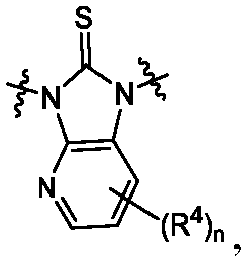
- The compound of Formula (I) or a pharmaceutically acceptable salt thereof according to claim 1, wherein R2 and R3 are each independently selected from C1-6 alkyl, or R2 and R3 are connected to each other to form a 3- to 6-membered cycloalkyl together.
- The compound of Formula (I) or a pharmaceutically acceptable salt thereof according to claim 4, wherein R2 and R3 are each independently selected from the group consisting of methyl and ethyl, or R2 and R3 are connected to each other to form a 3- to 4-membered cycloalkyl together.
- The compound of Formula (I) or a pharmaceutically acceptable salt thereof according to claim 5, wherein R2 and R3 are each independently selected from methyl, or R2 and R3 are connected to each other to form cyclobutyl together.
- The compound of Formula (I) or a pharmaceutically acceptable salt thereof according to claim 1, wherein R1 is selected from the group consisting of hydrogen, halogen, C1-6 alkyl, and halogen-substituted C1-6 alkyl.
- The compound of Formula (I) or a pharmaceutically acceptable salt thereof according to claim 7, wherein R1 is selected from the group consisting of fluoro, chloro, bromo, and fluoro-substituted C1-4 alkyl.
- The compound of Formula (I) or a pharmaceutically acceptable salt thereof according to claim 8, wherein R1 is selected from the group consisting of fluoro, chloro, and fluoro-substituted methyl.
- The compound of Formula (I) or a pharmaceutically acceptable salt thereof according to claim 9, wherein R1 is selected from the group consisting of fluoro, chloro, difluoromethyl, and trifluoromethyl.
- The compound of Formula (I) or a pharmaceutically acceptable salt thereof according to claim 1, wherein each R4 is independently selected from C1-6 alkyl.
- The compound of Formula (I) or a pharmaceutically acceptable salt thereof according to claim 11, wherein each R4 is independently selected from methyl.
- The compound of Formula (I) or a pharmaceutically acceptable salt thereof according to claim 1, wherein R5 is selected from the group consisting of hydrogen, C1-6 alkyl, C1-6 alkoxy, and halogen.
- The compound of Formula (I) or a pharmaceutically acceptable salt thereof according to claim 13, wherein R5 is selected from the group consisting of hydrogen, methyl, methoxy, fluoro, chloro, bromo, and iodo.
- The compound of Formula (I) or a pharmaceutically acceptable salt thereof according to claim 1, wherein R6 is selected from methylaminocarbonyl.
- The compound of Formula (I) or a pharmaceutically acceptable salt thereof according to claim 1, wherein X5, X6, and X7 are each independently selected from the group consisting of CH, N, and N(-Ra), and are different to each other.
- The compound of Formula (I) or a pharmaceutically acceptable salt thereof according to claim 1, wherein the structural unit


- The compound of Formula (I) or a pharmaceutically acceptable salt thereof according to claim 1, wherein Ra is selected from 5-membered oxacycloalkyl, wherein the oxacycloalkyl is substituted with hydroxyl.
- The compound of Formula (I) or a pharmaceutically acceptable salt thereof according to claim 18, wherein Ra is selected from

- The compound of Formula (I) or a pharmaceutically acceptable salt thereof according to claim 1, wherein X8, X9, X10, and X11 are each independently selected from the group consisting of CH, C(=O), N, and NH, and are different to each other.
- The compound of Formula (I) or a pharmaceutically acceptable salt thereof according to claim 1, wherein Rb substitutes the hydrogen on NH or CH.
- The compound of Formula (I) or a pharmaceutically acceptable salt thereof according to claim 1, wherein the structural unit


- The compound of Formula (I) or a pharmaceutically acceptable salt thereof according to claim 1, wherein Rb is selected from C1-6 alkyl, wherein the C1-6 alkyl is optionally substituted by fluoro or chloro.
- The compound of Formula (I) or a pharmaceutically acceptable salt thereof according to claim 23, wherein Rb is selected from the group consisting of -CH2CH3 and -CH2CF3.
- The compound of Formula (I) or a pharmaceutically acceptable salt thereof according to claim 1, wherein Y8, Y9, Y10, and Y11 are each independently selected from the group consisting of CH and N, and two of Y8, Y9, Y10, and Y11 are N, and the others are CH.
- The compound of Formula (I) or a pharmaceutically acceptable salt thereof according to claim 25, wherein the structural unit


- The compound of Formula (I) or a pharmaceutically acceptable salt thereof according to claim 26, wherein the structural unit


- The compound of Formula (I) or a pharmaceutically acceptable salt thereof according to claim 1, wherein Rc, Rd, Re, Rf, and Rg are each independently selected from the group consisting of hydrogen, C1-6 alkyl, 3- to 6-membered cycloalkyl, 3- to 6-membered heterocycloalkyl, C1-6 alkoxy, hydroxyl, and amino.
- The compound of Formula (I) or a pharmaceutically acceptable salt thereof according to claim 28, wherein Rc, Rd, Re, Rf, and Rg are each independently selected from the group consisting of hydrogen and C1-4 alkyl.
- The compound of Formula (I) or a pharmaceutically acceptable salt thereof according to claim 29, wherein Rc, Rd, Re, Rf, and Rg are each independently selected from the group consisting of hydrogen and methyl.
- The compound of Formula (I) or a pharmaceutically acceptable salt thereof according to claim 1, wherein m is 1 or 2.
- The compound of Formula (I) or a pharmaceutically acceptable salt thereof according to claim 1, wherein R7 substitutes the hydrogen on CH.
- The compound of Formula (I) or a pharmaceutically acceptable salt thereof according to claim 32, wherein each R7 is independently selected from the group consisting of halogen, C1-6 alkyl, hydroxyl, C1-6 alkoxy, amino, 3- to 6-membered cycloalkyl, 3- to 6-membered heterocycloalkyl, 5- to 6-membered heteroaryl, and C1-6 alkylamino, wherein the C1-6 alkyl, 3- to 6-membered cycloalkyl, 3- to 6-membered heterocycloalkyl, 5- to 6-membered heteroaryl, or C1-6 alkylamino is optionally substituted by halogen, and wherein the hydroxyl is substituted by: -C1-6 alkyl-OH, -C1-6 alkyl-(3- to 6-membered heterocycloalkyl), -C1-6 alkyl-S(=O)2Rc, -C1-6 alkyl-NRdRe, -C1-6 alkyl-C(=O)NRfRg, -C1-6 alkyl-(3- to 6-membered cycloalkyl) optionally substituted by halogen or hydroxyl, or 3- to 6-membered heterocycloalkyl optionally substituted by halogen or hydroxyl.
- The compound of Formula (I) or a pharmaceutically acceptable salt thereof according to claim 33, wherein each R7 is independently selected from the group consisting of halogen, C1-4 alkyl, hydroxyl, C1-4 alkoxy, amino, 3- to 6-membered cycloalkyl, 5- to 6-membered heteroaryl, and C1-4 alkylamino, wherein the C1-4 alkyl, 3- to 6-membered cycloalkyl, or C1-4 alkylamino is optionally substituted by halogen, and wherein the hydroxyl is substituted by: -C1-4 alkyl-OH, -C1-4 alkyl-(3- to 6-membered heterocycloalkyl), -C1-4 alkyl-S(=O)2Rc, -C1-4 alkyl-NRdRe, -C1-4 alkyl-C(=O)NRfRg, -C1-4 alkyl-(3- to 6-membered cycloalkyl) optionally substituted by halogen or hydroxyl, or 5- to 6-membered heterocycloalkyl optionally substituted by halogen or hydroxyl.
- The compound of Formula (I) or a pharmaceutically acceptable salt thereof according to claim 34, wherein each R7 is independently selected from the group consisting of methyl, ethyl, hydroxyl, methoxy, ethoxy, cyclopropyl, pyrazolyl, imidazolyl, and methylamino, wherein the methyl, ethyl, or cyclopropyl is optionally substituted by fluoro, and wherein the hydroxyl is substituted by: -ethyl-OH, tetrahydropyranyl, -methyl-(oxetane), -propyl-S(=O)2Rc, -ethyl-NRdRe, -methyl-C(=O)NRfRg, cyclopropylmethyl optionally substituted by hydroxyl, or tetrahydrofuranyl optionally substituted by hydroxyl.
- The compound of Formula (I) or a pharmaceutically acceptable salt thereof according to claim 35, wherein each R7 is independently selected from the group consisting of methyl, ethyl, cyclopropyl, hydroxyl, methoxy, ethoxy, pyrazolyl, imidazolyl, difluoromethyl, difluoroethyl, and methylamino, and wherein the hydroxyl is substituted by: -ethyl-OH,

- The compound of Formula (I) or a pharmaceutically acceptable salt thereof according to claim 1, wherein the structural unit


- The compound of Formula (I) or a pharmaceutically acceptable salt thereof according to claim 37, wherein each R71 is independently selected from the group consisting of hydroxyl and 5- to 6-membered heteroaryl, and the hydroxyl is substituted by: -C1-6 alkyl-OH, -C1-6 alkyl-(3- to 6-membered heterocycloalkyl), -C1-6 alkyl-S(=O)2Rc, -C1-6 alkyl-NRdRe, -C1-6 alkyl-C(=O)NRfRg, -C1-6 alkyl-(3- to 6-membered cycloalkyl) optionally substituted by halogen or hydroxyl, or 3- to 6-membered heterocycloalkyl optionally substituted by halogen or hydroxyl.
- The compound of Formula (I) or a pharmaceutically acceptable salt thereof according to claim 38, wherein each R71 is independently selected from the group consisting of hydroxyl and 5- to 6-membered heteroaryl, wherein the hydroxyl is substituted by: -C1-4 alkyl-OH, -C1-4 alkyl-(3- to 6-membered heterocycloalkyl), -C1-4 alkyl-S(=O)2Rc, -C1-4 alkyl-NRdRe, -C1-4 alkyl-C(=O)NRfRg, -C1-4 alkyl-(3- to 6-membered cycloalkyl) optionally substituted by halogen or hydroxyl, or 5- to 6-membered heterocycloalkyl optionally substituted by halogen or hydroxyl.
- The compound of Formula (I) or a pharmaceutically acceptable salt thereof according to claim 39, wherein each R71 is independently selected from the group consisting of hydroxyl, pyrazolyl, and imidazolyl, wherein the hydroxyl is substituted by: -ethyl-OH, tetrahydropyranyl, -methyl-(oxetane), -propyl-S(=O)2Rc, -ethyl-NRdRe, -methyl-C(=O)NRfRg, cyclopropylmethyl- optionally substituted by hydroxyl, or tetrahydrofuranyl optionally substituted by hydroxyl.
- The compound of Formula (I) or a pharmaceutically acceptable salt thereof according to claim 40, wherein each R71 is independently selected from the group consisting of hydroxyl, pyrazolyl, and imidazolyl, wherein the hydroxyl is substituted by: -ethyl-OH,

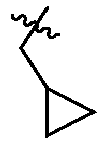

- The compound of Formula (I) or a pharmaceutically acceptable salt thereof according to claim 37, wherein each R72 is independently selected from the group consisting of C1-6 alkyl, hydroxyl, C1-6 alkoxy, 3- to 6-membered cycloalkyl, and C1-6 alkylamino, wherein the C1-6 alkyl, 3- to 6-membered cycloalkyl, or C1-6 alkylamino is optionally substituted by halogen, and wherein the hydroxyl is substituted by: -C1-6 alkyl-OH, 5- to 6-membered heterocycloalkyl, -C1-6 alkyl-S(=O)2Rc, or -C1-6 alkyl-NRdRe.
- The compound of Formula (I) or a pharmaceutically acceptable salt thereof according to claim 42, wherein each R72 is independently selected from the group consisting of C1-4 alkyl, hydroxyl, C1-4 alkoxy, 3- to 6-membered cycloalkyl, and C1-4 alkylamino, wherein the C1-4 alkyl, 3- to 6-membered cycloalkyl, or C1-4 alkylamino is optionally substituted by halogen, and wherein the hydroxyl is substituted by: -Cl-4 alkyl-OH.
- The compound of Formula (I) or a pharmaceutically acceptable salt thereof according to claim 43, wherein each R72 is independently selected from the group consisting of methyl, ethyl, hydroxyl, methoxy, ethoxy, cyclopropyl, and methylamino, wherein the methyl, ethyl, or cyclopropyl is optionally substituted by fluoro; and wherein the hydroxyl is substituted by: -ethyl-OH.
- The compound of Formula (I) or a pharmaceutically acceptable salt thereof according to claim 44, wherein each R72 is independently selected from the group consisting of methyl, ethyl, cyclopropyl, hydroxyl, methoxy, ethoxy, difluoromethyl, difluoroethyl, and methylamino, and wherein the hydroxyl is substituted by: -ethyl-OH.
- The compound of Formula (I) or a pharmaceutically acceptable salt thereof according to claim 1, wherein Z8, Z9, Z10, and Z11 are each independently selected from the group consisting of CH, C(=O), and N, and wherein at least one of them is selected from N.
- The compound of Formula (I) or a pharmaceutically acceptable salt thereof according to claim 46, wherein Z8, Z9, Z10, and Z11 are each independently selected from the group consisting of CH, C(=O), and N, and wherein at least one of them is selected from C(=O), and at least one of them is selected from N.
- The compound of Formula (I) or a pharmaceutically acceptable salt thereof according to claim 47, wherein Z8, Z9, Z10, and Z11 are each independently selected from the group consisting of CH, C(=O), and N, wherein one of them is selected from C(=O), another one is selected from N, and the other two are each CH.
- The compound of Formula (I) or a pharmaceutically acceptable salt thereof according to claim 1, wherein the structural unit

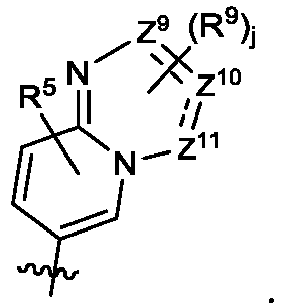
- The compound of Formula (I) or a pharmaceutically acceptable salt thereof according to claim 49, wherein the structural unit


- The compound of Formula (I) or a pharmaceutically acceptable salt thereof according to claim 50, wherein the structural unit


- The compound of Formula (I) or a pharmaceutically acceptable salt thereof according to claim 1, wherein j is 1 or 2.
- The compound of Formula (I) or a pharmaceutically acceptable salt thereof according to claim 1, wherein each R9 is independently selected from the group consisting of halogen, C1-6 alkyl, C1-6 alkoxy, and hydroxyl, wherein the C1-6 alkyl is optionally substituted by halogen or C1-6 alkoxy, and wherein the hydroxyl is optionally substituted by: -C1-6 alkyl-O-C1-6 alkyl, -C1-6 alkyl-OH, or -C1-6 alkyl-C(=O)NRfRg.
- The compound of Formula (I) or a pharmaceutically acceptable salt thereof according to claim 53, wherein each R9 is independently selected from the group consisting of halogen, C1-4 alkyl, C1-4 alkoxy, and hydroxyl, wherein the C1-4 alkyl is optionally substituted by halogen or C1-4 alkoxy, and wherein the hydroxyl is optionally substituted by: -C1-4 alkyl-O-C1-4 alkyl, -C1-4 alkyl-OH, or -C1-4 alkyl-C(=O)NRfRg.
- The compound of Formula (I) or a pharmaceutically acceptable salt thereof according to claim 54, wherein each R9 is independently selected from the group consisting of halogen, methyl, ethyl, methoxy, ethoxy, and hydroxyl, wherein the methyl or ethyl is optionally substituted by halogen or methoxy, and wherein the hydroxyl is optionally substituted by: -ethyl-O-methyl, -ethyl-OH, or -methyl-C(=O)NRfRg.
- The compound of Formula (I) or a pharmaceutically acceptable salt thereof according to claim 55, wherein each R9 is independently selected from the group consisting of halogen, methyl, ethyl, methoxy, ethoxy, and hydroxyl, wherein the methyl or ethyl is optionally substituted by fluoro or methoxy, and wherein the hydroxyl is optionally substituted by: -ethyl-O-methyl, -ethyl-OH, -CH2C(=O)NHCH3, or -CH2C(=O)NH2.
- The compound of Formula (I) or a pharmaceutically acceptable salt thereof according to claim 1, wherein the structural unit


- The compound of Formula (I) or a pharmaceutically acceptable salt thereof according to claim 57, wherein each R91 is independently selected from the group consisting of C1-6 alkyl, C1-6 alkoxy, and hydroxyl, wherein the C1-6 alkyl is optionally substituted by C1-6 alkoxy or halogen, and wherein the hydroxyl is optionally substituted by -C1-6 alkyl-OH or -C1-6 alkyl-O-C1-6 alkyl.
- The compound of Formula (I) or a pharmaceutically acceptable salt thereof according to claim 58, wherein each R91 is independently selected from the group consisting of C1-4 alkyl, C1-4 alkoxy, and hydroxyl, wherein the C1-4 alkyl is optionally substituted by C1-4 alkoxy or halogen, and wherein the hydroxyl is optionally substituted by -Cl-4 alkyl-OH or -C1-4 alkyl-O-C1-4 alkyl.
- The compound of Formula (I) or a pharmaceutically acceptable salt thereof according to claim 59, wherein each R91 is independently selected from the group consisting of methyl, ethyl, methoxy, ethoxy, and hydroxyl, wherein the methyl or ethyl is optionally substituted by halogen or methoxy, and wherein the hydroxyl is optionally substituted by -ethyl-O-methyl or -ethyl-OH.
- The compound of Formula (I) or a pharmaceutically acceptable salt thereof according to claim 60, wherein each R91 is independently selected from the group consisting of methyl, ethyl, methoxy, ethoxy, and hydroxyl, wherein the methyl or ethyl is optionally substituted by fluoro or methoxy, and wherein the hydroxyl is optionally substituted by -ethyl-O-methyl or -ethyl-OH.
- The compound of Formula (I) or a pharmaceutically acceptable salt thereof according to claim 57, wherein each R92 is independently selected from the group consisting of hydroxyl, C1-6 alkoxy, and halogen, wherein the hydroxyl is optionally substituted by -C1-6 alkyl-OH, -C1-6 alkyl-O-C1-6 alkyl, or -C1-6 alkyl-C(=O)NRfRg.
- The compound of Formula (I) or a pharmaceutically acceptable salt thereof according to claim 62, wherein each R92 is independently selected from the group consisting of hydroxyl, C1-4 alkoxy, and halogen, and wherein the hydroxyl is optionally substituted by -C1-4 alkyl-OH, -C1-4 alkyl-O-C1-4 alkyl, or -C1-4 alkyl-C(=O)NRfRg.
- The compound of Formula (I) or a pharmaceutically acceptable salt thereof according to claim 63, wherein each R92 is independently selected from the group consisting of hydroxyl, methoxy, and halogen, wherein the hydroxyl is optionally substituted by -ethyl-OH, -ethyl-O-methyl, or -methyl-C(=O)NRfRg.
- The compound of Formula (I) or a pharmaceutically acceptable salt thereof according to claim 64, wherein each R92 is independently selected from the group consisting of hydroxyl, methoxy, and halogen, wherein the hydroxyl is optionally substituted by -ethyl-OH, -ethyl-O-methyl, -CH2C(=O)NHCH3, or -CH2C(=O)NH2.
- The compound of Formula (I) or a pharmaceutically acceptable salt thereof according to claim 1, wherein the structural unit




- The compound of Formula (I) or a pharmaceutically acceptable salt thereof according to claim 1, wherein two of X12, X13, X14, X15, and X16 are NH and C(=O), respectively, and the others are CH2 or O.
- The compound of Formula (I) or a pharmaceutically acceptable salt thereof according to claim 67, wherein the structural unit


- The compound of Formula (I) or a pharmaceutically acceptable salt thereof according to claim 1, wherein each R8 is independently selected from C1-4 alkyl.
- The compound of Formula (I) or a pharmaceutically acceptable salt thereof according to claim 69, wherein each R8 is independently selected from ethyl.
- The compound of Formula (I) or a pharmaceutically acceptable salt thereof according to claim 1, wherein q is 0, 1 or 2.
- The compound of Formula (I) or a pharmaceutically acceptable salt thereof according to claim 1, wherein the compound of Formula (I) is a compound of Formula (III-1) or a compound of Formula (III-2):
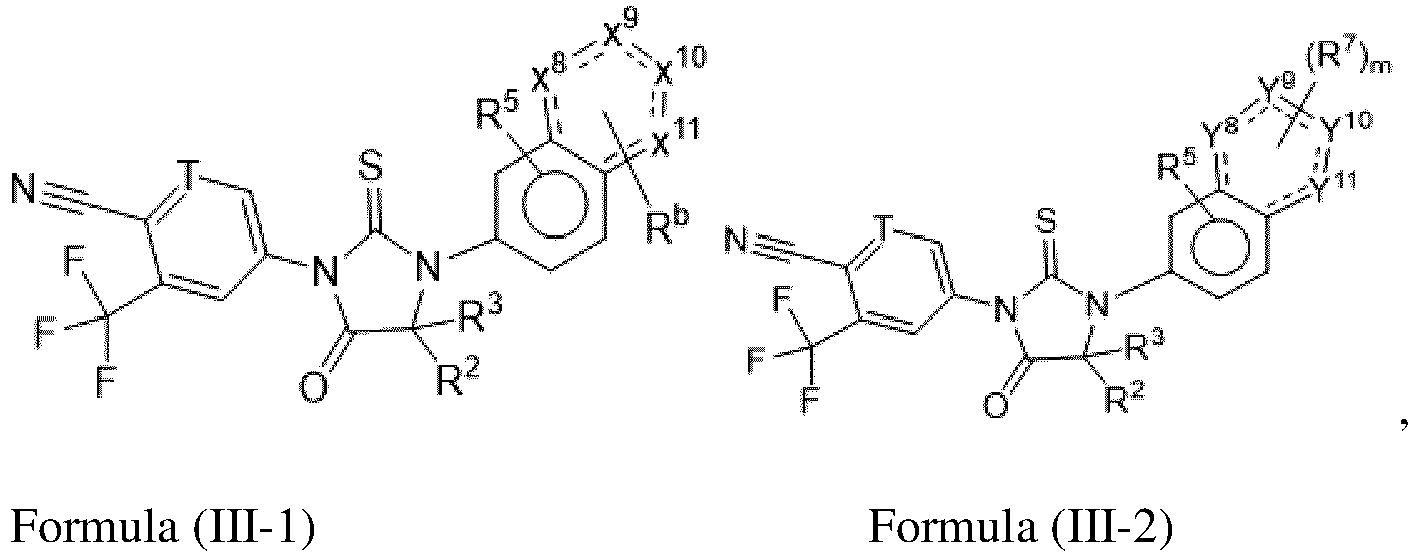
- The compound of Formula (I) or a pharmaceutically acceptable salt thereof according to claim 1, wherein the compound of Formula (I) is a compound of Formula (III-21) or a compound of Formula (III-22):

- The compound of Formula (I) or a pharmaceutically acceptable salt thereof according to claim 73, wherein the structural unit
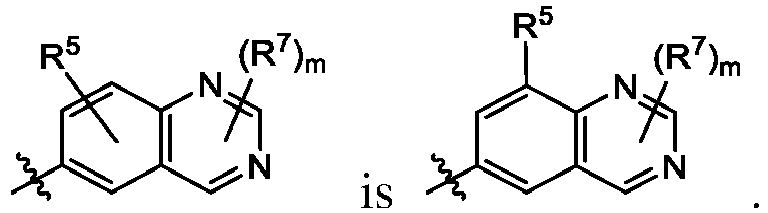
- The compound of Formula (I) or a pharmaceutically acceptable salt thereof according to claim 1, wherein the compound of Formula (I) is a compound of Formula (VI):

- The compound of Formula (I) or a pharmaceutically acceptable salt thereof according to claim 75, wherein R1 is selected from the group consisting of fluoro, chloro, and trifluoromethyl.
- The compound of Formula (I) or a pharmaceutically acceptable salt thereof according to claim 1, wherein the compound of Formula (I) is a compound of Formula (VI-1):

- The compound of Formula (I) or a pharmaceutically acceptable salt thereof according to claim 77, wherein R1 is selected from the group consisting of fluoro, chloro, and trifluoromethyl.
- The compound of Formula (I) or a pharmaceutically acceptable salt thereof according to claim 1, wherein the compound of Formula (I) is a compound of Formula (VII)


- The compound of Formula (I) or a pharmaceutically acceptable salt thereof according to claim 1, selected from the group consisting of the following compounds:








- A pharmaceutical composition, comprising the compound of Formula (I) or a pharmaceutically acceptable salt thereof according to any one of claims 1-80.
- Use of the compound of Formula (I) or a pharmaceutically acceptable salt thereof according to any one of claims 1-80 or the pharmaceutical composition according to claim 81 in the preparation of a medicament for the treatment of an androgen-mediated disease.
- A method for treating an androgen-mediated disease in a mammal, comprising administering to a mammal in need of the treatment a therapeutically effective amount of the compound of Formula (I) or a pharmaceutically acceptable salt thereof according to any one of claims 1-80 or the pharmaceutical composition according to claim 81.
- Use of the compound of Formula (I) or a pharmaceutically acceptable salt thereof according to any one of claims 1-80 or the pharmaceutical composition according to claim 81 in the treatment of an androgen-mediated disease.
- The compound of Formula (I) or a pharmaceutically acceptable salt thereof according to any one of claims 1-80 or the pharmaceutical composition according to claim 81 for use in preventing or treating an androgen-mediated disease.
Applications Claiming Priority (3)
| Application Number | Priority Date | Filing Date | Title |
|---|---|---|---|
| CN201710667860 | 2017-08-07 | ||
| CN201810333652 | 2018-04-13 | ||
| PCT/CN2018/099161 WO2019029521A1 (en) | 2017-08-07 | 2018-08-07 | Diarylthiohydantoin compound as androgen receptor antagonist |
Publications (2)
| Publication Number | Publication Date |
|---|---|
| EP3666772A1 true EP3666772A1 (en) | 2020-06-17 |
| EP3666772A4 EP3666772A4 (en) | 2021-01-20 |
Family
ID=65270909
Family Applications (1)
| Application Number | Title | Priority Date | Filing Date |
|---|---|---|---|
| EP18844090.3A Pending EP3666772A4 (en) | 2017-08-07 | 2018-08-07 | DIARYLTHIOHYDANTOIN COMPOUND USED AS AN ANTAGONIST OF ANDROGEN RECEPTOR |
Country Status (8)
| Country | Link |
|---|---|
| US (2) | US11332465B2 (en) |
| EP (1) | EP3666772A4 (en) |
| JP (1) | JP7285838B2 (en) |
| KR (1) | KR102658095B1 (en) |
| CN (3) | CN111032644B (en) |
| AU (1) | AU2018314980B2 (en) |
| CA (1) | CA3072269A1 (en) |
| WO (1) | WO2019029521A1 (en) |
Families Citing this family (8)
| Publication number | Priority date | Publication date | Assignee | Title |
|---|---|---|---|---|
| JP7285838B2 (en) | 2017-08-07 | 2023-06-02 | 正大天晴▲藥▼▲業▼集▲団▼股▲フン▼有限公司 | Diarylthiohydantoin compounds used as androgen receptor antagonists |
| CN109422737B (en) * | 2017-08-22 | 2021-07-30 | 上海时莱生物技术有限公司 | Imidazolone androgen receptor antagonist, preparation method and application thereof |
| CN113439083B (en) * | 2019-02-01 | 2023-01-24 | 正大天晴药业集团股份有限公司 | Crystal of diarylthiohydantoin compound |
| CN110452166A (en) * | 2019-09-06 | 2019-11-15 | 浙江朗华制药有限公司 | A kind of preparation method of the different sulphur cyanato -3- trifluoromethyl -2- cyanopyridine of 5- |
| CN114929702B (en) * | 2020-01-19 | 2024-05-31 | 正大天晴药业集团股份有限公司 | Diarylthiohydantoin compounds as AR antagonists |
| CN120112517A (en) * | 2022-10-28 | 2025-06-06 | 南京明德新药研发有限公司 | Bridged ring compounds and their pharmaceutical applications |
| CN115724759B (en) * | 2022-11-23 | 2024-06-25 | 爱斯特(成都)生物制药股份有限公司 | A preparation method of enzalutamide intermediate |
| CN116444444A (en) * | 2023-03-27 | 2023-07-18 | 盐城工业职业技术学院 | Method for preparing 2-substituted quinazolinone compound |
Family Cites Families (16)
| Publication number | Priority date | Publication date | Assignee | Title |
|---|---|---|---|---|
| ES2689292T3 (en) | 2006-03-27 | 2018-11-13 | The Regents Of The University Of California | Androgen receptor modulator for the treatment of prostate cancer and diseases associated with the androgen receptor |
| CN101817787B (en) * | 2009-02-26 | 2013-07-24 | 童友之 | Androgen receptor antagonist for resisting prostate cancer |
| SG10201907588XA (en) * | 2010-02-16 | 2019-09-27 | Aragon Pharmaceuticals Inc | Androgen Receptor Modulators And Uses Thereof |
| KR20140098242A (en) | 2011-12-05 | 2014-08-07 | 노파르티스 아게 | Cyclic urea derivatives as androgen receptor antagonists |
| WO2014075387A1 (en) | 2012-11-14 | 2014-05-22 | 上海医药集团股份有限公司 | Diaryl hydantoin derivative, and preparation method, pharmaceutical composition and use thereof |
| WO2015018356A1 (en) | 2013-08-08 | 2015-02-12 | 上海医药集团股份有限公司 | Diarylhydantoin derivative, and preparation method, pharmaceutical composition, and application thereof |
| CN104341352A (en) * | 2013-08-09 | 2015-02-11 | 南京衡杰生物科技有限公司 | Diaryl hydantoin compound as androgen receptor antagonist and applications of diaryl hydantoin compound |
| CN104341342B (en) | 2014-10-23 | 2016-04-13 | 中国电子科技集团公司第四十六研究所 | A kind of high yield, highly purified DAST source powder synthesis technique |
| CN106146474A (en) | 2015-04-24 | 2016-11-23 | 成都贝斯凯瑞生物科技有限公司 | Thiocarbamoyl imidazole diketone and Imidazole diketone compound and application thereof |
| TWI726969B (en) * | 2016-01-11 | 2021-05-11 | 比利時商健生藥品公司 | Substituted thiohydantoin derivatives as androgen receptor antagonists |
| CN110023297A (en) | 2016-07-08 | 2019-07-16 | 詹森药业有限公司 | Substituted hydantoins and thio hydantoin derivative as androgen receptor antagonist |
| MX2019002097A (en) * | 2016-08-22 | 2019-05-15 | Janssen Pharmaceutica Nv | Thiohydantoin androgen receptor antagonists for the treatment of cancer. |
| JP7285838B2 (en) | 2017-08-07 | 2023-06-02 | 正大天晴▲藥▼▲業▼集▲団▼股▲フン▼有限公司 | Diarylthiohydantoin compounds used as androgen receptor antagonists |
| CN109422737B (en) * | 2017-08-22 | 2021-07-30 | 上海时莱生物技术有限公司 | Imidazolone androgen receptor antagonist, preparation method and application thereof |
| CN113439083B (en) | 2019-02-01 | 2023-01-24 | 正大天晴药业集团股份有限公司 | Crystal of diarylthiohydantoin compound |
| CN114929702B (en) * | 2020-01-19 | 2024-05-31 | 正大天晴药业集团股份有限公司 | Diarylthiohydantoin compounds as AR antagonists |
-
2018
- 2018-08-07 JP JP2020529797A patent/JP7285838B2/en active Active
- 2018-08-07 AU AU2018314980A patent/AU2018314980B2/en active Active
- 2018-08-07 CN CN201880055633.9A patent/CN111032644B/en active Active
- 2018-08-07 CA CA3072269A patent/CA3072269A1/en active Pending
- 2018-08-07 US US16/637,236 patent/US11332465B2/en active Active
- 2018-08-07 KR KR1020207006521A patent/KR102658095B1/en active Active
- 2018-08-07 CN CN202110901351.XA patent/CN113563311A/en active Pending
- 2018-08-07 CN CN202110900404.6A patent/CN113582977B/en active Active
- 2018-08-07 EP EP18844090.3A patent/EP3666772A4/en active Pending
- 2018-08-07 WO PCT/CN2018/099161 patent/WO2019029521A1/en not_active Ceased
-
2021
- 2021-10-15 US US17/503,141 patent/US11866433B2/en active Active
Also Published As
| Publication number | Publication date |
|---|---|
| CA3072269A1 (en) | 2019-02-14 |
| WO2019029521A1 (en) | 2019-02-14 |
| JP7285838B2 (en) | 2023-06-02 |
| US11866433B2 (en) | 2024-01-09 |
| KR20200043407A (en) | 2020-04-27 |
| CN111032644B (en) | 2021-08-10 |
| KR102658095B1 (en) | 2024-04-19 |
| AU2018314980B2 (en) | 2022-05-19 |
| US20230035184A1 (en) | 2023-02-02 |
| CN113582977B (en) | 2023-04-14 |
| CN111032644A (en) | 2020-04-17 |
| US20200277290A1 (en) | 2020-09-03 |
| US11332465B2 (en) | 2022-05-17 |
| JP2020530490A (en) | 2020-10-22 |
| EP3666772A4 (en) | 2021-01-20 |
| AU2018314980A1 (en) | 2020-03-05 |
| CN113582977A (en) | 2021-11-02 |
| CN113563311A (en) | 2021-10-29 |
Similar Documents
| Publication | Publication Date | Title |
|---|---|---|
| US11866433B2 (en) | Diarylthiohydantoin compound as androgen receptor antagonist | |
| EP3932919B1 (en) | Jak inhibitor compound and use thereof | |
| EP4606803A1 (en) | Kras g12d degradation agent, and preparation method and use therefor | |
| EP3230281B1 (en) | 1,3-thiazol-2-yl substituted benzamides | |
| EP3138842B1 (en) | Polyfluorinated compounds acting as bruton's tyrosine kinase inhibitors | |
| EP4371991A1 (en) | Benzopyrimidine compounds and use thereof | |
| EP3728207B1 (en) | Quinazolinones as parp14 inhibitors | |
| EP3386992B1 (en) | Inhibitors of bruton's tyrosine kinase and methods of their use | |
| EP4159738A1 (en) | Macrocyclic jak inhibitor and uses thereof | |
| WO2015073763A1 (en) | Substituted 4,5,6,7-tetrahydropyrazolo[1,5-a]pyrazine derivatives as casein kinase 1 d/e inhibitors | |
| EP3336084A1 (en) | 6-(5-hydroxy-1h-pyrazol-1-yl)nicotinamide derivatives and their use as phd inhibitors | |
| EP4364804A2 (en) | Inhibitors of keap1-nrf2 protein-protein interaction | |
| EP3719022A1 (en) | Polycyclic compounds as inhibitors of bruton's tyrosine kinase | |
| EP4137484A1 (en) | Tricyclic compounds as egfr inhibitors | |
| EP2740730B1 (en) | Dibenzooxepin derivative | |
| EP3992193A1 (en) | Pyrazolopyrimidine compound, preparation method for same, and applications thereof | |
| EP4373817B1 (en) | Substituted pyrazine-2-carboxamides as hpk1 inhibitors for the treatment of cancer | |
| EP1897871A1 (en) | Benzenoid ansamycin derivative | |
| RU2804108C9 (en) | Use of diarylthiohydantoin compound as an androgen receptor antagonist | |
| RU2804108C1 (en) | Use of diarylthiohydantoin compound as an androgen receptor antagonist | |
| EP4180434A1 (en) | Pb2 inhibitor, and preparation method therefor and use thereof | |
| HK40062758A (en) | Diarylthiohydantoin compound as androgen receptor antagonist | |
| HK40062758B (en) | Diarylthiohydantoin compound as androgen receptor antagonist | |
| EP4310084A1 (en) | Pyridopyrimidine-based compound and application thereof | |
| HK40019862B (en) | Diarylthiohydantoin compound as androgen receptor antagonist |
Legal Events
| Date | Code | Title | Description |
|---|---|---|---|
| STAA | Information on the status of an ep patent application or granted ep patent |
Free format text: STATUS: THE INTERNATIONAL PUBLICATION HAS BEEN MADE |
|
| PUAI | Public reference made under article 153(3) epc to a published international application that has entered the european phase |
Free format text: ORIGINAL CODE: 0009012 |
|
| STAA | Information on the status of an ep patent application or granted ep patent |
Free format text: STATUS: REQUEST FOR EXAMINATION WAS MADE |
|
| 17P | Request for examination filed |
Effective date: 20200227 |
|
| AK | Designated contracting states |
Kind code of ref document: A1 Designated state(s): AL AT BE BG CH CY CZ DE DK EE ES FI FR GB GR HR HU IE IS IT LI LT LU LV MC MK MT NL NO PL PT RO RS SE SI SK SM TR |
|
| AX | Request for extension of the european patent |
Extension state: BA ME |
|
| DAV | Request for validation of the european patent (deleted) | ||
| DAX | Request for extension of the european patent (deleted) | ||
| A4 | Supplementary search report drawn up and despatched |
Effective date: 20201222 |
|
| RIC1 | Information provided on ipc code assigned before grant |
Ipc: A61P 19/00 20060101ALI20201216BHEP Ipc: C07D 491/107 20060101ALI20201216BHEP Ipc: C07D 401/14 20060101ALI20201216BHEP Ipc: A61K 31/4184 20060101ALI20201216BHEP Ipc: C07D 405/14 20060101ALI20201216BHEP Ipc: A61K 31/4178 20060101ALI20201216BHEP Ipc: C07D 413/04 20060101ALI20201216BHEP Ipc: C07D 403/04 20060101AFI20201216BHEP Ipc: C07D 471/04 20060101ALI20201216BHEP Ipc: A61P 35/00 20060101ALI20201216BHEP |
|
| RAP1 | Party data changed (applicant data changed or rights of an application transferred) |
Owner name: CHIA TAI TIANQING PHARMACEUTICAL GROUP CO., LTD. |
|
| STAA | Information on the status of an ep patent application or granted ep patent |
Free format text: STATUS: EXAMINATION IS IN PROGRESS |
|
| 17Q | First examination report despatched |
Effective date: 20220912 |