EP3661134A1 - Intermediate system to intermediate system routing protocol based notification method and apparatus - Google Patents
Intermediate system to intermediate system routing protocol based notification method and apparatus Download PDFInfo
- Publication number
- EP3661134A1 EP3661134A1 EP18838340.0A EP18838340A EP3661134A1 EP 3661134 A1 EP3661134 A1 EP 3661134A1 EP 18838340 A EP18838340 A EP 18838340A EP 3661134 A1 EP3661134 A1 EP 3661134A1
- Authority
- EP
- European Patent Office
- Prior art keywords
- link
- new neighbor
- metric
- traffic
- delay period
- Prior art date
- Legal status (The legal status is an assumption and is not a legal conclusion. Google has not performed a legal analysis and makes no representation as to the accuracy of the status listed.)
- Granted
Links
Images
Classifications
-
- H—ELECTRICITY
- H04—ELECTRIC COMMUNICATION TECHNIQUE
- H04L—TRANSMISSION OF DIGITAL INFORMATION, e.g. TELEGRAPHIC COMMUNICATION
- H04L45/00—Routing or path finding of packets in data switching networks
- H04L45/02—Topology update or discovery
- H04L45/03—Topology update or discovery by updating link state protocols
-
- H—ELECTRICITY
- H04—ELECTRIC COMMUNICATION TECHNIQUE
- H04L—TRANSMISSION OF DIGITAL INFORMATION, e.g. TELEGRAPHIC COMMUNICATION
- H04L45/00—Routing or path finding of packets in data switching networks
- H04L45/12—Shortest path evaluation
- H04L45/123—Evaluation of link metrics
-
- H—ELECTRICITY
- H04—ELECTRIC COMMUNICATION TECHNIQUE
- H04L—TRANSMISSION OF DIGITAL INFORMATION, e.g. TELEGRAPHIC COMMUNICATION
- H04L45/00—Routing or path finding of packets in data switching networks
- H04L45/02—Topology update or discovery
-
- H—ELECTRICITY
- H04—ELECTRIC COMMUNICATION TECHNIQUE
- H04L—TRANSMISSION OF DIGITAL INFORMATION, e.g. TELEGRAPHIC COMMUNICATION
- H04L45/00—Routing or path finding of packets in data switching networks
- H04L45/02—Topology update or discovery
- H04L45/023—Delayed use of routing table updates
-
- H—ELECTRICITY
- H04—ELECTRIC COMMUNICATION TECHNIQUE
- H04L—TRANSMISSION OF DIGITAL INFORMATION, e.g. TELEGRAPHIC COMMUNICATION
- H04L45/00—Routing or path finding of packets in data switching networks
- H04L45/12—Shortest path evaluation
- H04L45/121—Shortest path evaluation by minimising delays
-
- H—ELECTRICITY
- H04—ELECTRIC COMMUNICATION TECHNIQUE
- H04L—TRANSMISSION OF DIGITAL INFORMATION, e.g. TELEGRAPHIC COMMUNICATION
- H04L45/00—Routing or path finding of packets in data switching networks
- H04L45/12—Shortest path evaluation
- H04L45/124—Shortest path evaluation using a combination of metrics
-
- H—ELECTRICITY
- H04—ELECTRIC COMMUNICATION TECHNIQUE
- H04L—TRANSMISSION OF DIGITAL INFORMATION, e.g. TELEGRAPHIC COMMUNICATION
- H04L45/00—Routing or path finding of packets in data switching networks
- H04L45/28—Routing or path finding of packets in data switching networks using route fault recovery
Definitions
- the present disclosure relates to communications, for example, to an intermediate system to intermediate system routing protocol based notification method and an apparatus.
- ISIS protocol An intermediate system to intermediate system routing protocol (ISIS protocol) is a dynamic, interior gateway protocol (IGP) based on a link state. After a neighbor relationship is established through hello message interactive negotiation in the ISIS protocol, each IS generates a link-state protocol (LSP) data packet to describe link state information thereof, and sends the LSP data packet to a network, and also stores LSP data packets sent from all ISs on the network topology, so as to form a link state database (LSDB). ISIS is used for calculating, based on the LSDB, a best route to a destination address through a shortest path first (SPF) algorithm.
- LSP link-state protocol
- SPF shortest path first
- the IS After a relationship between an IS and a new neighbor is established (i.e., UP), the IS is immediately triggered to regenerate a LSP, and notifies of the generations of the new neighbor through the LSP. Meanwhile, the IS also performs the topology calculation and the routing calculation again.
- the neighbor oscillates frequently between the UP and the DOWN because a link on which the neighbor is located has a problem, all ISs on the network frequently respond to this oscillation, and frequently perform the topology calculation and the routing calculation. And all ISs on the network frequently performing the topology calculation and the routing calculation always has a short-term loop, thereby affecting traffic forwarding in the network, and the traffic is intermittent.
- Embodiments of the present disclosure provide an intermediate system to intermediate system routing protocol based notification method and apparatus for at least solving the problem in the existing art of neighbor oscillation caused by a problem of a link on which the neighbor is located.
- an intermediate system to intermediate system routing protocol based notification method includes: within a delay period since an intermediate system (IS) establishes a new neighbor, notifying the outside through a link state protocol (LSP) data packet that a METRIC for traffic of the IS reaching the new neighbor is a preset value; after the delay period expires, restoring the METRIC to a normal value, where the preset value is greater than the normal value.
- IS intermediate system
- LSP link state protocol
- an intermediate system to intermediate system routing protocol based notification apparatus includes: a notification module configured to, within a delay period since an intermediate system (IS) establishes a new neighbor, notify the outside through a link state protocol (LSP) data packet that a METRIC for traffic of the IS reaching the new neighbor is a preset value; and a restoring module configured to restore the METRIC to a normal value after the delay period expires, where the preset value is greater than the normal value.
- IS intermediate system
- LSP link state protocol
- a computer-readable storage medium is further provided.
- the storage medium is configured to store computer programs which, when executed by a professor, implement the above method.
- the storage medium is further configured to store program codes for executing the following steps: within a delay period since an intermediate system (IS) establishes a new neighbor, notifying the outside through a link state protocol (LSP) data packet that a METRIC for traffic of the IS reaching the new neighbor is a preset value; restoring the METRIC to a normal value after the delay period expires, where the preset value is greater than the normal value.
- IS intermediate system
- LSP link state protocol
- a processor is further provided by another embodiment of the present disclosure.
- the processor is configured to execute a program for executing the above method.
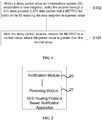
- FIG. 1 is a flowchart of an ISIS routing protocol based notification method according to an embodiment of the present disclosure. As shown in FIG. 1 , the process includes steps described below.
- step S102 within a delay period since an intermediate system (IS) establishes a new neighbor, the outside is notified through a link state protocol (LSP) data packet that a METRIC for traffic of the IS reaching the new neighbor is a preset value.
- IS intermediate system
- LSP link state protocol
- step S104 after the delay period expires, the METRIC is restored to a normal value, where the preset value is greater than the normal value.
- the outside since the outside is notified during the delay period that the METRIC for traffic of the IS reaching the new neighbor is a preset value, and the METRIC is restored to the normal value after the delay period expires, the technical problem of neighbor oscillation caused by the problem of a link on which the neighbor is located is solved, the network topology and routing oscillation caused by the neighbor oscillation is suppressed, and poor user experience caused by traffic intermittent is eliminated.
- the outside may be understood as all ISs other than the IS in a network where the IS is located.
- the above steps maybe executed by various devices supporting the ISIS protocol, such as a router, a switch and the like, but the present disclosure is not limited to this.
- the preset value includes at least one of: a maximum protocol value and a sum of a value and the normal value, such as a maximum value 16777214 and a default configuration value 10 plus 3000, and the normal value is an actual configured value.
- the solution of this embodiment further includes: within the delay period since the IS establishes the new neighbor, a topology calculation or a routing calculation is performed according to the preset value.
- the delay period since the IS establishes the new neighbor includes one of: a delay period since the IS establishes the new neighbor on a broadcast link; a delay period since the IS establishes the new neighbor on a point-to-point link. That is, a scenario in which the IS establishes the new neighbor on the broadcast link, and a scenario in which the IS establishes the new neighbor on the point-to-point link.
- step S102 includes: in a case where a link between the IS and the new neighbor is the broadcast link, notifying the outside through the LSP data packet that a METRIC for the traffic of the IS reaching a pseudo node on the broadcast link is the preset value; and in a case where a link between the IS and the new neighbor is the point-to-point link, notifying the outside through the LSP data packet that the METRIC for the traffic of the IS reaching the new neighbor is the preset value.
- Step 104 includes: in the case where the link between the IS and the new neighbor is the broadcast link, restoring the METRIC for the traffic of the IS reaching the pseudo node to a first normal value; and in a case where a link between the IS and the new neighbor is the point-to-point link, restoring the METRIC for the traffic of the IS reaching the new neighbor to a second normal value.
- the first normal value and the second normal value may be the same or different.
- the method in the embodiment described above may be implemented by software plus a general-purpose hardware platform, or may of course be implemented by hardware. However, in many cases, the former is a preferred implementation mode.
- the solution provided by the present disclosure may be embodied in the form of a software product.
- the computer software product is stored in a storage medium (such as a read-only memory (ROM), a random-access memory (RAM), a magnetic disk or an optical disk) and the storage medium includes multiple instructions for enabling a terminal device (which may be a mobile phone, a computer, a server, or a network device) to execute the method described in each embodiment of the present disclosure.
- An embodiment of the present disclosure further provides an ISIS routing protocol based notification apparatus.
- the apparatus is configured to implement the embodiment and implementation mode described above. What has been described will not be repeated.
- a term "module" may be software, hardware or a combination thereof capable of implementing predetermined functions.
- the apparatus in the embodiment described below is preferably implemented by software, but implementation by hardware or by a combination of software and hardware is also possible and conceived.
- FIG. 2 is a block diagram of an ISIS routing protocol based notification apparatus according to an embodiment of the present disclosure.
- the apparatus may be applied to various devices supporting the ISIS, such as a router and a switch.
- the apparatus includes: a notification module 20, which is configured to, within a delay period since an intermediate system (IS) establishes a new neighbor, notify the outside through a link state protocol (LSP) data packet that a METRIC for traffic of the IS reaching the new neighbor is a preset value; a restoring module 22, which is configured to restore the METRIC to a normal value after the delay period expires, where the preset value is greater than the normal value.
- IS intermediate system
- LSP link state protocol
- the preset value includes one of: a maximum protocol value and a sum of a value and the normal value.
- the delay period since the IS establishes the new neighbor includes one of: a delay period since the IS establishes the new neighbor on a broadcast link; a delay period since the IS establishes the new neighbor on a point-to-point link.
- the notification module 20 is configured to: in a case where a link between the IS and the new neighbor is the broadcast link, notify the outside through the LSP data packet that a METRIC for the traffic of the IS reaching a pseudo node on the broadcast link is the preset value; and in a case where a link between the IS and the new neighbor is a point-to-point link, notify the outside through the LSP data packet that the METRIC for the traffic of the IS reaching the new neighbor is the preset value.
- the restoring module 22 is configured to: in a case where a link between the IS and the new neighbor is the broadcast link, restore the METRIC for the traffic of the IS reaching the pseudo node to a first normal value; and in a case where a link between the IS and the new neighbor is the point-to-point link, restore the METRIC for the traffic of the IS reaching the new neighbor to a second normal value.
- the notification module 20 is further configured to: within the delay period since the IS establishes the new neighbor, perform a topology calculation or a routing calculation according to the preset value.
- each module described above may be implemented by software or hardware. Implementation by hardware may, but may not necessarily, be performed in the following manners: the each module is located in a different processor in any combination form.
- This embodiment is an optional embodiment of the present disclosure, used for describing the present application in detail in conjunction with examples and scenarios.
- the present disclosure provides a delay method for routing calculation after a neighbor is established by the ISIS protocol.
- the IS notifies through a LSP data packet that a METRIC of the related neighbor is a maximum value or an increased value, and performs topology and routing calculations according to the related METRIC; after the delay period expires, the IS restores the METRIC to a normal value, and uses the normal value to perform the topology and routing calculations.
- This method suppresses network topology and routing oscillation brought by the neighbor oscillation, and eliminates poor user experience caused by traffic intermittent.
- the present disclosure proposes a method for delaying routing calculation after a neighbor is established.
- This embodiment further includes implementation examples described below.
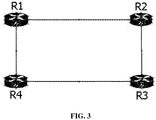
- FIG. 3 is a schematic diagram of a network architecture according to an embodiment of the present disclosure.
- a network is formed by routers R1, R2, R3 and R4.
- the METRIC of a link from R1 to R2 is 1
- the METRIC of a link from R2 to R3 is 1
- the METRIC of a link from R3 to R4 is 1
- the METRIC of a link from R1 to R4 is 10. All routers establish neighbor relationships based on a broadcast network.
- the traffic from R1 to R4 also oscillates between the traffic on the route R1-> R4 and the traffic on the route R1-> R2-> R3-> R4, and packet loss occurs due to a convergence process, thus the traffic from R1 to R4 is intermittent.
- the traffic from R1 to R4 directly goes through R1->R4. If the neighbor relationship from R1 to R2 is established, R1 notifies through the LSP that the METRIC for reaching a pseudo node between R1 and R2 is the maximum value 16777214. Hence, the METRIC of 10 for the traffic from R1 to R4 going through R1->R4 is still the best path. If a problem exists on the link between R1 and R2 in this case, which causes the neighbor relationship from R1 to R2 to oscillate, then the traffic from R1 to R4 always goes through R1-> R4.
- R1 notifies through the LSP that the METRIC for reaching the pseudo node between R1 and R2 is restored to 1. In this case, the traffic is switched to go through the route R1->R2->R3->R4. Hence, the method in the present disclosure suppresses overall network oscillation caused by the neighbor oscillation to a certain extent.
- a network is formed by routers R1, R2, R3 and R4.
- the METRIC of a link from R1 to R2 is 1
- the METRIC of a link from R2 to R3 is 1
- the METRIC of a link from R3 to R4 is 1
- the METRIC of a link from R1 to R4 is 10. All routers establish point-to-point neighbor relationships.
- the traffic from R1 to R4 also oscillates between the traffic on the route R1-> R4 and the traffic on the route R1-> R2-> R3-> R4, and packet loss occurs due to the convergence process, thus the traffic from R1 to R4 is intermittent.
- the traffic from R1 to R4 directly goes through R1->R4. If the neighbor relationship from R1 to R2 is established, R1 notifies through the LSP that the METRIC for reaching R2 is the maximum value 16777214. Hence, the METRIC of 10 for the traffic from R1 to R4 going through R1->R4 is still the best path. If a problem exists on the link between R1 and R2 in this case, which causes the neighbor relationship from R1 to R2 to oscillate, then the traffic from R1 to R4 always goes through R1-> R4.
- R1 notifies through the LSP That the METRIC for reaching R2 is restored to 1.
- the traffic is switched to the route R1->R2->R3->R4.
- This delay method for routing calculation after a neighbor is established by the ISIS protocol has the following advantages: suppressing severe impacts of the neighbor oscillation. Frequent neighbor oscillation causes frequent updating of LSPs and that all intermediate systems on the network frequent trigger topology and routing calculations, and that frequent traffic route switch brings severe intermittent impacts to the user.
- An embodiment of the present disclosure further provides a storage medium.
- the storage medium is configured to store program codes for executing steps described below.
- step S1 within a delay period since an intermediate system (IS) establishes a new neighbor, the outside is notified through a link state protocol (LSP) data packet that an METRIC for traffic of the IS reaching the new neighbor is a preset value.
- LSP link state protocol
- step S2 after the delay period expires, the METRIC is restored to a normal value, where the preset value is greater than the normal value.
- the storage medium may include, but is not limited to, a universal serial bus flash disk, a read-only memory (ROM), a random access memory (RAM), a mobile hard disk, a magnetic disk, an optical disk or another medium capable of storing program codes.
- ROM read-only memory
- RAM random access memory
- mobile hard disk a magnetic disk
- optical disk another medium capable of storing program codes.
- a processor is used to execute the following steps according to the program codes stored in the storage medium: within a delay period since an intermediate system (IS) establishes a new neighbor, notifying the outside through a link state protocol (LSP) data packet that a METRIC for the traffic of the IS reaching a pseudo node is a preset value.
- IS intermediate system
- LSP link state protocol
- the processor is configured to, according to the program codes stored in the storage medium, restore the METRIC to a normal value after the delay period expires, where the preset value is greater than the normal value.
- each of the above-mentioned modules or steps of the present disclosure may be implemented by a general-purpose computing apparatus, the modules or steps may be concentrated on a single computing apparatus or distributed on a network composed of multiple computing apparatuses, in an embodiment, the modules or steps may be implemented by program codes executable by the computing apparatuses, so that the modules or steps may be stored in a storage apparatus and executed by the computing apparatuses.
- the illustrated or described steps may be executed in sequences different from those described herein, or the modules or steps may be made into various integrated circuit modules separately, or multiple modules or steps therein may be made into a single integrated circuit module for implementation. In this way, the present disclosure is not limited to any specific combination of hardware and software.
Landscapes
- Engineering & Computer Science (AREA)
- Computer Networks & Wireless Communication (AREA)
- Signal Processing (AREA)
- Data Exchanges In Wide-Area Networks (AREA)
Abstract
Description
- The present application claims priority to Chinese patent application No.
201710622913.0 filed on July 27, 2017 - The present disclosure relates to communications, for example, to an intermediate system to intermediate system routing protocol based notification method and an apparatus.
- An intermediate system to intermediate system routing protocol (ISIS protocol) is a dynamic, interior gateway protocol (IGP) based on a link state. After a neighbor relationship is established through hello message interactive negotiation in the ISIS protocol, each IS generates a link-state protocol (LSP) data packet to describe link state information thereof, and sends the LSP data packet to a network, and also stores LSP data packets sent from all ISs on the network topology, so as to form a link state database (LSDB). ISIS is used for calculating, based on the LSDB, a best route to a destination address through a shortest path first (SPF) algorithm.
- After a relationship between an IS and a new neighbor is established (i.e., UP), the IS is immediately triggered to regenerate a LSP, and notifies of the generations of the new neighbor through the LSP. Meanwhile, the IS also performs the topology calculation and the routing calculation again. However, there exists a problem at this time. If the neighbor oscillates frequently between the UP and the DOWN because a link on which the neighbor is located has a problem, all ISs on the network frequently respond to this oscillation, and frequently perform the topology calculation and the routing calculation. And all ISs on the network frequently performing the topology calculation and the routing calculation always has a short-term loop, thereby affecting traffic forwarding in the network, and the traffic is intermittent.
- Embodiments of the present disclosure provide an intermediate system to intermediate system routing protocol based notification method and apparatus for at least solving the problem in the existing art of neighbor oscillation caused by a problem of a link on which the neighbor is located.
- According to an embodiment of the present disclosure, an intermediate system to intermediate system routing protocol based notification method is provided. The method includes: within a delay period since an intermediate system (IS) establishes a new neighbor, notifying the outside through a link state protocol (LSP) data packet that a METRIC for traffic of the IS reaching the new neighbor is a preset value; after the delay period expires, restoring the METRIC to a normal value, where the preset value is greater than the normal value.
- According to another embodiment of the present disclosure, an intermediate system to intermediate system routing protocol based notification apparatus is provided. The apparatus includes: a notification module configured to, within a delay period since an intermediate system (IS) establishes a new neighbor, notify the outside through a link state protocol (LSP) data packet that a METRIC for traffic of the IS reaching the new neighbor is a preset value; and a restoring module configured to restore the METRIC to a normal value after the delay period expires, where the preset value is greater than the normal value.
- According to another embodiment of the present disclosure, a computer-readable storage medium is further provided. The storage medium is configured to store computer programs which, when executed by a professor, implement the above method.
- In an embodiment, the storage medium is further configured to store program codes for executing the following steps: within a delay period since an intermediate system (IS) establishes a new neighbor, notifying the outside through a link state protocol (LSP) data packet that a METRIC for traffic of the IS reaching the new neighbor is a preset value; restoring the METRIC to a normal value after the delay period expires, where the preset value is greater than the normal value.
- A processor is further provided by another embodiment of the present disclosure. The processor is configured to execute a program for executing the above method.
- The drawings described herein are used to provide an understanding of the present disclosure, and form a part of the present application. The exemplary embodiments and descriptions thereof in the present disclosure are used to explain the present disclosure and do not limit the present disclosure in any improper way. In the drawings:
-
FIG. 1 is a flowchart of an ISIS routing protocol based notification method according to an embodiment of the present disclosure; -
FIG. 2 is a block diagram of an ISIS routing protocol based notification apparatus according to an embodiment of the present disclosure; and -
FIG. 3 is a schematic diagram of a network architecture according to an embodiment of the present disclosure. - The present disclosure will be described hereinafter in detail with reference to the drawings and in conjunction with embodiments. The terms "first", "second" and the like in the description, claims and above drawings of the present disclosure are used to distinguish between similar objects and are not necessarily used to describe a particular order or sequence.
- The embodiment provides an ISIS routing protocol based notification method.
FIG. 1 is a flowchart of an ISIS routing protocol based notification method according to an embodiment of the present disclosure. As shown inFIG. 1 , the process includes steps described below. - In step S102, within a delay period since an intermediate system (IS) establishes a new neighbor, the outside is notified through a link state protocol (LSP) data packet that a METRIC for traffic of the IS reaching the new neighbor is a preset value.
- In step S104, after the delay period expires, the METRIC is restored to a normal value, where the preset value is greater than the normal value.
- Through the above steps, since the outside is notified during the delay period that the METRIC for traffic of the IS reaching the new neighbor is a preset value, and the METRIC is restored to the normal value after the delay period expires, the technical problem of neighbor oscillation caused by the problem of a link on which the neighbor is located is solved, the network topology and routing oscillation caused by the neighbor oscillation is suppressed, and poor user experience caused by traffic intermittent is eliminated. In an embodiment, the outside may be understood as all ISs other than the IS in a network where the IS is located.
- In an embodiment, the above steps maybe executed by various devices supporting the ISIS protocol, such as a router, a switch and the like, but the present disclosure is not limited to this.
- In an embodiment, the preset value includes at least one of: a maximum protocol value and a sum of a value and the normal value, such as a maximum value 16777214 and a default configuration value 10 plus 3000, and the normal value is an actual configured value.
- In an embodiment, the solution of this embodiment further includes: within the delay period since the IS establishes the new neighbor, a topology calculation or a routing calculation is performed according to the preset value.
- In an optional implementation mode of this embodiment, two different scenarios are related. The delay period since the IS establishes the new neighbor includes one of: a delay period since the IS establishes the new neighbor on a broadcast link; a delay period since the IS establishes the new neighbor on a point-to-point link. That is, a scenario in which the IS establishes the new neighbor on the broadcast link, and a scenario in which the IS establishes the new neighbor on the point-to-point link.
- According to the above different scenarios, step S102 includes: in a case where a link between the IS and the new neighbor is the broadcast link, notifying the outside through the LSP data packet that a METRIC for the traffic of the IS reaching a pseudo node on the broadcast link is the preset value; and in a case where a link between the IS and the new neighbor is the point-to-point link, notifying the outside through the LSP data packet that the METRIC for the traffic of the IS reaching the new neighbor is the preset value.
- According to different scenarios, Step 104 includes: in the case where the link between the IS and the new neighbor is the broadcast link, restoring the METRIC for the traffic of the IS reaching the pseudo node to a first normal value; and in a case where a link between the IS and the new neighbor is the point-to-point link, restoring the METRIC for the traffic of the IS reaching the new neighbor to a second normal value.
- In an embodiment, the first normal value and the second normal value may be the same or different.
- From the description of the embodiment described above, it will be apparent to those skilled in the art that the method in the embodiment described above may be implemented by software plus a general-purpose hardware platform, or may of course be implemented by hardware. However, in many cases, the former is a preferred implementation mode. Based on such understanding, the solution provided by the present disclosure may be embodied in the form of a software product. The computer software product is stored in a storage medium (such as a read-only memory (ROM), a random-access memory (RAM), a magnetic disk or an optical disk) and the storage medium includes multiple instructions for enabling a terminal device (which may be a mobile phone, a computer, a server, or a network device) to execute the method described in each embodiment of the present disclosure.
- An embodiment of the present disclosure further provides an ISIS routing protocol based notification apparatus. The apparatus is configured to implement the embodiment and implementation mode described above. What has been described will not be repeated. As used below, a term "module" may be software, hardware or a combination thereof capable of implementing predetermined functions. The apparatus in the embodiment described below is preferably implemented by software, but implementation by hardware or by a combination of software and hardware is also possible and conceived.
-
FIG. 2 is a block diagram of an ISIS routing protocol based notification apparatus according to an embodiment of the present disclosure. The apparatus may be applied to various devices supporting the ISIS, such as a router and a switch. As shown inFIG. 2 , the apparatus includes: anotification module 20, which is configured to, within a delay period since an intermediate system (IS) establishes a new neighbor, notify the outside through a link state protocol (LSP) data packet that a METRIC for traffic of the IS reaching the new neighbor is a preset value; arestoring module 22, which is configured to restore the METRIC to a normal value after the delay period expires, where the preset value is greater than the normal value. - In this embodiment, the preset value includes one of: a maximum protocol value and a sum of a value and the normal value.
- In an embodiment, the delay period since the IS establishes the new neighbor includes one of: a delay period since the IS establishes the new neighbor on a broadcast link; a delay period since the IS establishes the new neighbor on a point-to-point link.
- In an embodiment, the
notification module 20 is configured to: in a case where a link between the IS and the new neighbor is the broadcast link, notify the outside through the LSP data packet that a METRIC for the traffic of the IS reaching a pseudo node on the broadcast link is the preset value; and in a case where a link between the IS and the new neighbor is a point-to-point link, notify the outside through the LSP data packet that the METRIC for the traffic of the IS reaching the new neighbor is the preset value. - In an embodiment, the restoring
module 22 is configured to: in a case where a link between the IS and the new neighbor is the broadcast link, restore the METRIC for the traffic of the IS reaching the pseudo node to a first normal value; and in a case where a link between the IS and the new neighbor is the point-to-point link, restore the METRIC for the traffic of the IS reaching the new neighbor to a second normal value. - In an embodiment, the
notification module 20 is further configured to:
within the delay period since the IS establishes the new neighbor, perform a topology calculation or a routing calculation according to the preset value. - In one embodiment, each module described above may be implemented by software or hardware. Implementation by hardware may, but may not necessarily, be performed in the following manners: the each module is located in a different processor in any combination form.
- This embodiment is an optional embodiment of the present disclosure, used for describing the present application in detail in conjunction with examples and scenarios.
- The present disclosure provides a delay method for routing calculation after a neighbor is established by the ISIS protocol. Within a delay period since the neighbor is established, the IS notifies through a LSP data packet that a METRIC of the related neighbor is a maximum value or an increased value, and performs topology and routing calculations according to the related METRIC; after the delay period expires, the IS restores the METRIC to a normal value, and uses the normal value to perform the topology and routing calculations. This method suppresses network topology and routing oscillation brought by the neighbor oscillation, and eliminates poor user experience caused by traffic intermittent.
- With respect to the condition where the link has the problem and causes the neighbor oscillation described above, the present disclosure proposes a method for delaying routing calculation after a neighbor is established.
- To solve the above problem, technical solutions in the present disclosure are implemented as follows.
- (1) Within a delay period since an IS establishes a new neighbor on a broadcast link, ,the IS notifies the outside through a LSP generated by the IS itself that an METRIC for traffic of the IS reaching a pseudo node on the link is a maximum value 16777214 or a normal configuration value plus a value (such as: a default configuration value 10 plus 3000). Meanwhile, the IS performs a topology calculation or a routing calculation according to the METRIC for the traffic of the IS reaching the new neighbor in the delay period, which is the maximum value 16777214 or the normal configuration value plus a value. In an embodiment, the maximum value 16777214 is only an example, and is not intended to limit the present disclosure.
- (2) Within a delay period since an IS establishes a new neighbor on a point-to-point link, the IS notifies the outside through a LSP generated by the IS itself that an METRIC for traffic of the IS reaching the new neighbor is a maximum value 16777214 or a normal configuration value plus a value (such as: a default configuration value 10 plus 3000). Meanwhile, the IS performs a topology calculation or a routing calculation according to the METRIC for the traffic of the IS reaching the new neighbor in the delay period, which is the maximum value 16777214 or the normal configuration value plus a value.
- (3) After the delay period since an IS establishes a new neighbor on a broadcast link expires, the IS updates the METRIC for the traffic of the IS reaching the pseudo node included on the link to be a normal value, and a default normal value is 10. Meanwhile, the IS performs the topology calculation or the routing calculation according to the METRIC for the traffic of the IS reaching the pseudo node in the delay period, which is the normal value (10 by default).
- (4) After the delay period since an IS establishes a new neighbor on a point-to-point link expires, the IS updates the METRIC for the traffic of the IS reaching the new neighbor included on the link to be a normal value, and a default normal value is 10. Meanwhile, the IS performs the topology calculation or the routing calculation according to the METRIC for the traffic of the IS reaching the new neighbor in the delay period, which is the normal value (10 by default). In an embodiment, the normal value may be determined according to the actual application.
- This embodiment further includes implementation examples described below.
-
FIG. 3 is a schematic diagram of a network architecture according to an embodiment of the present disclosure. As shown inFIG. 3 , a network is formed by routers R1, R2, R3 and R4. The METRIC of a link from R1 to R2 is 1, the METRIC of a link from R2 to R3 is 1, the METRIC of a link from R3 to R4 is 1, and the METRIC of a link from R1 to R4 is 10. All routers establish neighbor relationships based on a broadcast network. - In the existing art, assuming to pay attention to traffic from R1 to R4, before a neighbor relationship from R1 to R2 is established, the traffic from R1 to R4 goes through R1->R4. If the neighbor relationship from R1 to R2 is established, the traffic from R1 to R4 is switched to R1->R2->R3->R4. If a problem exists on the link between R1 and R2, a neighbor relationship from R1 to R2 is caused to oscillate. As a result, all devices of the network formed by R1, R2, R3 and R4 undergo dramatic topology and route oscillation. Meanwhile, the traffic from R1 to R4 also oscillates between the traffic on the route R1-> R4 and the traffic on the route R1-> R2-> R3-> R4, and packet loss occurs due to a convergence process, thus the traffic from R1 to R4 is intermittent.
- Though the solutions of the present disclosure, before the neighbor relationship from R1 to R2 is established, the traffic from R1 to R4 directly goes through R1->R4. If the neighbor relationship from R1 to R2 is established, R1 notifies through the LSP that the METRIC for reaching a pseudo node between R1 and R2 is the maximum value 16777214. Apparently, the METRIC of 10 for the traffic from R1 to R4 going through R1->R4 is still the best path. If a problem exists on the link between R1 and R2 in this case, which causes the neighbor relationship from R1 to R2 to oscillate, then the traffic from R1 to R4 always goes through R1-> R4. If the neighbor relationship from R1 to R2 is established and is in a stable state for a delay period, then R1 notifies through the LSP that the METRIC for reaching the pseudo node between R1 and R2 is restored to 1. In this case, the traffic is switched to go through the route R1->R2->R3->R4. Apparently, the method in the present disclosure suppresses overall network oscillation caused by the neighbor oscillation to a certain extent.
- As shown in
FIG. 3 , a network is formed by routers R1, R2, R3 and R4. The METRIC of a link from R1 to R2 is 1, the METRIC of a link from R2 to R3 is 1, the METRIC of a link from R3 to R4 is 1, and the METRIC of a link from R1 to R4 is 10. All routers establish point-to-point neighbor relationships. - In the existing art, assuming to pay attention to traffic from R1 to R4, before a neighbor relationship from R1 to R2 is established, the traffic from R1 to R4 goes through R1->R4. If the neighbor relationship from R1 to R2 is established, the traffic from R1 to R4 is switched to R1->R2->R3->R4. If a problem exists on the link between R1 and R2 in this case, a neighbor relationship from R1 to R2 is caused to oscillate. As a result, all devices of the network formed by R1, R2, R3 and R4 undergo dramatic topology and route oscillation. Meanwhile, the traffic from R1 to R4 also oscillates between the traffic on the route R1-> R4 and the traffic on the route R1-> R2-> R3-> R4, and packet loss occurs due to the convergence process, thus the traffic from R1 to R4 is intermittent.
- Through the solutions of the present disclosure, before the neighbor relationship from R1 to R2 is established, the traffic from R1 to R4 directly goes through R1->R4. If the neighbor relationship from R1 to R2 is established, R1 notifies through the LSP that the METRIC for reaching R2 is the maximum value 16777214. Apparently, the METRIC of 10 for the traffic from R1 to R4 going through R1->R4 is still the best path. If a problem exists on the link between R1 and R2 in this case, which causes the neighbor relationship from R1 to R2 to oscillate, then the traffic from R1 to R4 always goes through R1-> R4. If the neighbor relationship from R1 to R2 is established and still in a stable state for a delay period, then R1 notifies through the LSP That the METRIC for reaching R2 is restored to 1. In this case, the traffic is switched to the route R1->R2->R3->R4. Apparently, the method in the present disclosure suppresses overall network oscillation caused by the neighbor oscillation to a certain extent.
- This delay method for routing calculation after a neighbor is established by the ISIS protocol has the following advantages: suppressing severe impacts of the neighbor oscillation. Frequent neighbor oscillation causes frequent updating of LSPs and that all intermediate systems on the network frequent trigger topology and routing calculations, and that frequent traffic route switch brings severe intermittent impacts to the user.
- An embodiment of the present disclosure further provides a storage medium. In this embodiment, the storage medium is configured to store program codes for executing steps described below.
- In step S1, within a delay period since an intermediate system (IS) establishes a new neighbor, the outside is notified through a link state protocol (LSP) data packet that an METRIC for traffic of the IS reaching the new neighbor is a preset value.
- In step S2, after the delay period expires, the METRIC is restored to a normal value, where the preset value is greater than the normal value.
- In this embodiment, the storage medium may include, but is not limited to, a universal serial bus flash disk, a read-only memory (ROM), a random access memory (RAM), a mobile hard disk, a magnetic disk, an optical disk or another medium capable of storing program codes.
- In this embodiment, a processor is used to execute the following steps according to the program codes stored in the storage medium: within a delay period since an intermediate system (IS) establishes a new neighbor, notifying the outside through a link state protocol (LSP) data packet that a METRIC for the traffic of the IS reaching a pseudo node is a preset value.
- In this embodiment, the processor is configured to, according to the program codes stored in the storage medium, restore the METRIC to a normal value after the delay period expires, where the preset value is greater than the normal value.
- For specific examples in the embodiment, reference may be made to the examples described in the above embodiments and optional implementation modes, and the specific examples will not be repeated in this embodiment.
- Apparently, it is to be understood by those skilled in the art that each of the above-mentioned modules or steps of the present disclosure may be implemented by a general-purpose computing apparatus, the modules or steps may be concentrated on a single computing apparatus or distributed on a network composed of multiple computing apparatuses, in an embodiment, the modules or steps may be implemented by program codes executable by the computing apparatuses, so that the modules or steps may be stored in a storage apparatus and executed by the computing apparatuses. In some circumstances, the illustrated or described steps may be executed in sequences different from those described herein, or the modules or steps may be made into various integrated circuit modules separately, or multiple modules or steps therein may be made into a single integrated circuit module for implementation. In this way, the present disclosure is not limited to any specific combination of hardware and software.
Claims (14)
- An intermediate system to intermediate system routing protocol based notification method, comprising:within a delay period since an intermediate system (IS) establishes a new neighbor, notifying the outside through a link state protocol (LSP) data packet that a METRIC for traffic of the IS reaching the new neighbor is a preset value;after the delay period expires, restoring the METRIC to a normal value, wherein the preset value is greater than the normal value.
- The method of claim 1, wherein the preset value comprises at least one of:a maximum protocol value; anda sum of one value and the normal value.
- The method of claim 1 or 2, wherein the delay period since the IS establishes the new neighbor comprises one of:a delay period since the IS establishes the new neighbor on a broadcast link; anda delay period since the IS establishes the new neighbor on a point-to-point link.
- The method of claim 3, wherein notifying the outside through a link state protocol (LSP) data packet that a METRIC for traffic of the IS reaching the new neighbor is a preset value comprises:in response to determining that a link between the IS and the new neighbor is a broadcast link, notifying the outside through the LSP data packet that the METRIC for the traffic of the IS reaching a pseudo node on the broadcast link is the preset value; andin response to determining that a link between the IS and the new neighbor is a point-to-point link, notifying the outside through the LSP data packet that the METRIC for the traffic of the IS reaching the new neighbor is the preset value.
- The method of claim 3, wherein restoring the METRIC to a normal value comprises:in response to determining that a link between the IS and the new neighbor is a broadcast link, restoring the METRIC for the traffic of the IS reaching a pseudo node to a first normal value; andin response to determining that a link between the IS and the new neighbor is a point-to-point link, restoring the METRIC for the traffic of the IS reaching the new neighbor to a second normal value.
- The method of claim 1, further comprising:
within the delay period since the IS establishes the new neighbor, performing a topology calculation or a routing calculation according to the preset value. - An intermediate system to intermediate system routing protocol based notification apparatus, comprising
a notification module, configured to, within a delay period since an intermediate system (IS) establishes a new neighbor, notify the outside through a link state protocol (LSP) data packet that a METRIC for traffic of the IS reaching the new neighbor is a preset value; and
a restoring module, configured to restore the METRIC to a normal value after the delay period expires, wherein the preset value is greater than the normal value. - The apparatus of claim 7, wherein the preset value comprises at least one of:a maximum protocol value;a sum of one value and the normal value.
- The apparatus of claim 7 or 8, wherein the delay period since the IS establishes the new neighbor comprises one of:a delay period since the IS establishes the new neighbor on a broadcast link; anda delay period since the IS establishes the new neighbor on a point-to-point link.
- The apparatus of claim 9, wherein the notification module is further configured to:in response to determining that a link between the IS and the new neighbor is a broadcast link, notify the outside through the LSP data packet that the METRIC for the traffic of the IS reaching a pseudo node on the broadcast link is the preset value; andin response to determining that a link between the IS and the new neighbor is a point-to-point link, notify the outside through the LSP data packet that the METRIC for the traffic of the IS reaching the new neighbor is the preset value.
- The apparatus of claim 9, wherein the restoring module is further configured to:in response to determining that a link between the IS and the new neighbor is a broadcast link, restore the METRIC for the traffic of the IS reaching a pseudo node to a first normal value; andin response to determining that a link between the IS and the new neighbor is a point-to-point link, restore the METRIC for the traffic of the IS reaching the new neighbor to a second normal value.
- The apparatus of claim 7, wherein the notification module is further configured to:
within the delay period since the IS establishes the new neighbor, perform a topology calculation or a routing calculation according to the preset value. - A computer-readable storage medium storing computer programs that when executed by a processor cause the processor to perform the method of any one of claims 1 to 6.
- A processor for executing programs, wherein the programs are used for performing the method of any one of claims 1 to 6.
Applications Claiming Priority (2)
| Application Number | Priority Date | Filing Date | Title |
|---|---|---|---|
| CN201710622913.0A CN109309616B (en) | 2017-07-27 | 2017-07-27 | Notification method and device based on ISIS protocol |
| PCT/CN2018/097510 WO2019020113A1 (en) | 2017-07-27 | 2018-07-27 | Intermediate system to intermediate system routing protocol based notification method and apparatus |
Publications (3)
| Publication Number | Publication Date |
|---|---|
| EP3661134A1 true EP3661134A1 (en) | 2020-06-03 |
| EP3661134A4 EP3661134A4 (en) | 2020-12-23 |
| EP3661134B1 EP3661134B1 (en) | 2024-08-07 |
Family
ID=65039985
Family Applications (1)
| Application Number | Title | Priority Date | Filing Date |
|---|---|---|---|
| EP18838340.0A Active EP3661134B1 (en) | 2017-07-27 | 2018-07-27 | Intermediate system to intermediate system routing protocol based notification method and apparatus |
Country Status (5)
| Country | Link |
|---|---|
| US (1) | US11196658B2 (en) |
| EP (1) | EP3661134B1 (en) |
| JP (1) | JP7099677B2 (en) |
| CN (1) | CN109309616B (en) |
| WO (1) | WO2019020113A1 (en) |
Families Citing this family (2)
| Publication number | Priority date | Publication date | Assignee | Title |
|---|---|---|---|---|
| CN113746747B (en) * | 2021-08-31 | 2023-05-30 | 烽火通信科技股份有限公司 | LSP message flow control method and system |
| CN114143247A (en) * | 2021-11-03 | 2022-03-04 | 中盈优创资讯科技有限公司 | IP relay circuit flow emigration and emigration method and device |
Family Cites Families (25)
| Publication number | Priority date | Publication date | Assignee | Title |
|---|---|---|---|---|
| US5251205A (en) * | 1990-09-04 | 1993-10-05 | Digital Equipment Corporation | Multiple protocol routing |
| WO2002031806A1 (en) * | 2000-10-13 | 2002-04-18 | Bokhour, Edward | Method of and system for low-bandwidth transmission of color video |
| US20030117950A1 (en) * | 2001-12-26 | 2003-06-26 | Huang Gail G | Link redial for mesh protection |
| US20050089027A1 (en) * | 2002-06-18 | 2005-04-28 | Colton John R. | Intelligent optical data switching system |
| EP1387527A1 (en) * | 2002-07-30 | 2004-02-04 | Agilent Technologies Inc. | Identifying network routers and paths |
| US8717899B2 (en) * | 2004-10-13 | 2014-05-06 | Cisco Technology, Inc. | System and method for reporting out-of-resources (OOR) conditions in a data network |
| CN100568852C (en) * | 2006-03-22 | 2009-12-09 | 中兴通讯股份有限公司 | Method for establishing single-topology adjacency relationship with routers running IS-ISv6 |
| DE102006041058B4 (en) * | 2006-09-01 | 2008-09-11 | Nokia Siemens Networks Gmbh & Co.Kg | Method for tracking network parameters |
| FR2906430A1 (en) * | 2006-09-25 | 2008-03-28 | France Telecom | ROUTING METHOD IN A LABEL SWITCHING NETWORK |
| CN101136730A (en) * | 2007-10-19 | 2008-03-05 | 武汉烽火网络有限责任公司 | Credible synchronization method of distributed network equipment |
| US8000323B2 (en) * | 2008-04-30 | 2011-08-16 | Verizon Patent And Licensing Inc. | Method and system for announcing traffic engineering parameters of composite transport groups |
| US8102883B2 (en) * | 2009-03-04 | 2012-01-24 | Telefonaktiebolaget L M Ericsson (Publ) | LDP IGP synchronization for broadcast networks |
| US8477795B2 (en) * | 2009-08-24 | 2013-07-02 | Telefonaktiebolaget L M Ericsson (Publ) | LDP IGP synchronization for broadcast networks |
| US8243587B2 (en) * | 2009-10-22 | 2012-08-14 | Verizon Business Global Llc | Label distribution protocol synchronization in multi-protocol label switching environments |
| US9231851B2 (en) * | 2011-01-31 | 2016-01-05 | Futurewei Technologies, Inc. | System and method for computing point-to-point label switched path crossing multiple domains |
| US8830867B2 (en) * | 2011-07-21 | 2014-09-09 | Telefonaktiebolaget L M Ericsson (Publ) | Methods and network elements operable to specify and determine complete sets of link state messages for link state routing protocols |
| CN102546426B (en) * | 2012-02-02 | 2014-09-24 | 杭州华三通信技术有限公司 | Route generation method and device for implementing fiber channel over Ethernet |
| CN102664809B (en) * | 2012-04-28 | 2015-05-13 | 杭州华三通信技术有限公司 | Method for implementing Internet gateway protocol (IGP) and label distribution protocol (LDP) synchronization in broadcast network, and router |
| EP3059913B1 (en) | 2013-10-16 | 2018-12-26 | ZTE Corporation | Lsp data packet generating method and device |
| US9667559B2 (en) * | 2014-02-03 | 2017-05-30 | Ciena Corporation | MPLS and GMPLS tunnel flap dampening in traffic engineered networks |
| CN105323163A (en) * | 2014-07-01 | 2016-02-10 | 中兴通讯股份有限公司 | Routing calculation method and device based on ISIS |
| CN104506374A (en) * | 2015-01-15 | 2015-04-08 | 安徽皖通邮电股份有限公司 | Method of specifying routing administrative distance through ISIS protocol |
| WO2016168603A1 (en) * | 2015-04-15 | 2016-10-20 | Nokia Solutions And Networks Oy | Self-organizing network concepts for small cells backhauling |
| CN106572008A (en) * | 2015-10-13 | 2017-04-19 | 中兴通讯股份有限公司 | Method and apparatus for suppressing neighbor oscillation |
| US10277505B2 (en) * | 2016-03-30 | 2019-04-30 | Juniper Networks, Inc. | Routing inter-AS LSPs with centralized controller |
-
2017
- 2017-07-27 CN CN201710622913.0A patent/CN109309616B/en active Active
-
2018
- 2018-07-27 US US16/627,829 patent/US11196658B2/en not_active Expired - Fee Related
- 2018-07-27 WO PCT/CN2018/097510 patent/WO2019020113A1/en not_active Ceased
- 2018-07-27 EP EP18838340.0A patent/EP3661134B1/en active Active
- 2018-07-27 JP JP2019572218A patent/JP7099677B2/en not_active Expired - Fee Related
Also Published As
| Publication number | Publication date |
|---|---|
| CN109309616B (en) | 2022-03-01 |
| EP3661134A4 (en) | 2020-12-23 |
| CN109309616A (en) | 2019-02-05 |
| EP3661134B1 (en) | 2024-08-07 |
| JP7099677B2 (en) | 2022-07-12 |
| US20200169497A1 (en) | 2020-05-28 |
| JP2020527879A (en) | 2020-09-10 |
| US11196658B2 (en) | 2021-12-07 |
| WO2019020113A1 (en) | 2019-01-31 |
Similar Documents
| Publication | Publication Date | Title |
|---|---|---|
| US8797913B2 (en) | Reduction of message and computational overhead in networks | |
| US9325626B2 (en) | Method and apparatus to reduce cumulative effect of dynamic metric advertisement in smart grid/sensor networks | |
| CN103200093B (en) | A kind of method and apparatus improving the handling property of many VRRP backup group | |
| EP2989771A1 (en) | Realizing graceful restart in is-is network | |
| CN106878072B (en) | Message transmission method and device | |
| CN113810275A (en) | Method and device for sending message | |
| US9081567B1 (en) | Method and apparatus to control routing convergence during node reboot by entering a freeze state that inhibits routing convergence during the reboot process | |
| EP3157211B1 (en) | Isis-based flooding method and device | |
| WO2017162202A1 (en) | Link state information processing | |
| US11196658B2 (en) | Intermediate system to intermediate system routing protocol based notification method and apparatus | |
| CN103560947B (en) | A kind of method and device avoiding intermediate system neighborhood to shake | |
| CN105991388A (en) | Routing convergence method, device and virtual private network (VPN) system | |
| US20190334814A1 (en) | Path establishment method and device, and network node | |
| US12355657B2 (en) | Message sending method, message receiving method, electronic device, message sending and receiving system, and storage medium | |
| US8699376B2 (en) | Method and system for de-synchronizing link state message refreshes | |
| CN102316029A (en) | Fast rerouting method and routing equipment | |
| CN114553761B (en) | Exception handling method, device, network equipment and storage medium | |
| CN106302164A (en) | IP reachability information announcement method, route determining methods and device | |
| CN115361338A (en) | Route processing method, device and network equipment | |
| CN106789715B (en) | LSP message length updating method, neighbor negotiation method and device | |
| CN112737937A (en) | Information cross-domain notification method, system and boundary router | |
| US12224951B2 (en) | Dynamic resource reservation protocol resource handling and deadlock avoidance | |
| US20260039580A1 (en) | Border gateway protocol dynamic address family identifier and subsequent address family identifier capability exchange | |
| CN110784410A (en) | Route establishing method and related equipment | |
| WO2023039747A1 (en) | Method and apparatus for designated router seamless switchover |
Legal Events
| Date | Code | Title | Description |
|---|---|---|---|
| STAA | Information on the status of an ep patent application or granted ep patent |
Free format text: STATUS: THE INTERNATIONAL PUBLICATION HAS BEEN MADE |
|
| PUAI | Public reference made under article 153(3) epc to a published international application that has entered the european phase |
Free format text: ORIGINAL CODE: 0009012 |
|
| STAA | Information on the status of an ep patent application or granted ep patent |
Free format text: STATUS: REQUEST FOR EXAMINATION WAS MADE |
|
| 17P | Request for examination filed |
Effective date: 20191220 |
|
| AK | Designated contracting states |
Kind code of ref document: A1 Designated state(s): AL AT BE BG CH CY CZ DE DK EE ES FI FR GB GR HR HU IE IS IT LI LT LU LV MC MK MT NL NO PL PT RO RS SE SI SK SM TR |
|
| AX | Request for extension of the european patent |
Extension state: BA ME |
|
| DAV | Request for validation of the european patent (deleted) | ||
| DAX | Request for extension of the european patent (deleted) | ||
| A4 | Supplementary search report drawn up and despatched |
Effective date: 20201120 |
|
| RIC1 | Information provided on ipc code assigned before grant |
Ipc: H04L 12/751 20130101ALI20201116BHEP Ipc: H04L 12/721 20130101AFI20201116BHEP |
|
| STAA | Information on the status of an ep patent application or granted ep patent |
Free format text: STATUS: EXAMINATION IS IN PROGRESS |
|
| 17Q | First examination report despatched |
Effective date: 20230629 |
|
| REG | Reference to a national code |
Ref country code: DE Ref legal event code: R079 Free format text: PREVIOUS MAIN CLASS: H04L0012721000 Ipc: H04L0045030000 Ref country code: DE Ref legal event code: R079 Ref document number: 602018072885 Country of ref document: DE Free format text: PREVIOUS MAIN CLASS: H04L0012721000 Ipc: H04L0045030000 |
|
| GRAP | Despatch of communication of intention to grant a patent |
Free format text: ORIGINAL CODE: EPIDOSNIGR1 |
|
| STAA | Information on the status of an ep patent application or granted ep patent |
Free format text: STATUS: GRANT OF PATENT IS INTENDED |
|
| RIC1 | Information provided on ipc code assigned before grant |
Ipc: H04L 45/03 20220101AFI20240319BHEP |
|
| INTG | Intention to grant announced |
Effective date: 20240412 |
|
| GRAS | Grant fee paid |
Free format text: ORIGINAL CODE: EPIDOSNIGR3 |
|
| GRAA | (expected) grant |
Free format text: ORIGINAL CODE: 0009210 |
|
| STAA | Information on the status of an ep patent application or granted ep patent |
Free format text: STATUS: THE PATENT HAS BEEN GRANTED |
|
| AK | Designated contracting states |
Kind code of ref document: B1 Designated state(s): AL AT BE BG CH CY CZ DE DK EE ES FI FR GB GR HR HU IE IS IT LI LT LU LV MC MK MT NL NO PL PT RO RS SE SI SK SM TR |
|
| REG | Reference to a national code |
Ref country code: GB Ref legal event code: FG4D |
|
| REG | Reference to a national code |
Ref country code: CH Ref legal event code: EP |
|
| REG | Reference to a national code |
Ref country code: IE Ref legal event code: FG4D |
|
| REG | Reference to a national code |
Ref country code: DE Ref legal event code: R096 Ref document number: 602018072885 Country of ref document: DE |
|
| REG | Reference to a national code |
Ref country code: LT Ref legal event code: MG9D |
|
| REG | Reference to a national code |
Ref country code: NL Ref legal event code: MP Effective date: 20240807 |
|
| PG25 | Lapsed in a contracting state [announced via postgrant information from national office to epo] |
Ref country code: NO Free format text: LAPSE BECAUSE OF FAILURE TO SUBMIT A TRANSLATION OF THE DESCRIPTION OR TO PAY THE FEE WITHIN THE PRESCRIBED TIME-LIMIT Effective date: 20241107 |
|
| REG | Reference to a national code |
Ref country code: AT Ref legal event code: MK05 Ref document number: 1712136 Country of ref document: AT Kind code of ref document: T Effective date: 20240807 |
|
| PG25 | Lapsed in a contracting state [announced via postgrant information from national office to epo] |
Ref country code: PT Free format text: LAPSE BECAUSE OF FAILURE TO SUBMIT A TRANSLATION OF THE DESCRIPTION OR TO PAY THE FEE WITHIN THE PRESCRIBED TIME-LIMIT Effective date: 20241209 Ref country code: NL Free format text: LAPSE BECAUSE OF FAILURE TO SUBMIT A TRANSLATION OF THE DESCRIPTION OR TO PAY THE FEE WITHIN THE PRESCRIBED TIME-LIMIT Effective date: 20240807 Ref country code: PL Free format text: LAPSE BECAUSE OF FAILURE TO SUBMIT A TRANSLATION OF THE DESCRIPTION OR TO PAY THE FEE WITHIN THE PRESCRIBED TIME-LIMIT Effective date: 20240807 Ref country code: FI Free format text: LAPSE BECAUSE OF FAILURE TO SUBMIT A TRANSLATION OF THE DESCRIPTION OR TO PAY THE FEE WITHIN THE PRESCRIBED TIME-LIMIT Effective date: 20240807 Ref country code: GR Free format text: LAPSE BECAUSE OF FAILURE TO SUBMIT A TRANSLATION OF THE DESCRIPTION OR TO PAY THE FEE WITHIN THE PRESCRIBED TIME-LIMIT Effective date: 20241108 |
|
| PG25 | Lapsed in a contracting state [announced via postgrant information from national office to epo] |
Ref country code: BG Free format text: LAPSE BECAUSE OF FAILURE TO SUBMIT A TRANSLATION OF THE DESCRIPTION OR TO PAY THE FEE WITHIN THE PRESCRIBED TIME-LIMIT Effective date: 20240807 |
|
| PG25 | Lapsed in a contracting state [announced via postgrant information from national office to epo] |
Ref country code: LV Free format text: LAPSE BECAUSE OF FAILURE TO SUBMIT A TRANSLATION OF THE DESCRIPTION OR TO PAY THE FEE WITHIN THE PRESCRIBED TIME-LIMIT Effective date: 20240807 |
|
| PG25 | Lapsed in a contracting state [announced via postgrant information from national office to epo] |
Ref country code: IS Free format text: LAPSE BECAUSE OF FAILURE TO SUBMIT A TRANSLATION OF THE DESCRIPTION OR TO PAY THE FEE WITHIN THE PRESCRIBED TIME-LIMIT Effective date: 20241207 Ref country code: AT Free format text: LAPSE BECAUSE OF FAILURE TO SUBMIT A TRANSLATION OF THE DESCRIPTION OR TO PAY THE FEE WITHIN THE PRESCRIBED TIME-LIMIT Effective date: 20240807 |
|
| PG25 | Lapsed in a contracting state [announced via postgrant information from national office to epo] |
Ref country code: HR Free format text: LAPSE BECAUSE OF FAILURE TO SUBMIT A TRANSLATION OF THE DESCRIPTION OR TO PAY THE FEE WITHIN THE PRESCRIBED TIME-LIMIT Effective date: 20240807 |
|
| PG25 | Lapsed in a contracting state [announced via postgrant information from national office to epo] |
Ref country code: RS Free format text: LAPSE BECAUSE OF FAILURE TO SUBMIT A TRANSLATION OF THE DESCRIPTION OR TO PAY THE FEE WITHIN THE PRESCRIBED TIME-LIMIT Effective date: 20241107 Ref country code: ES Free format text: LAPSE BECAUSE OF FAILURE TO SUBMIT A TRANSLATION OF THE DESCRIPTION OR TO PAY THE FEE WITHIN THE PRESCRIBED TIME-LIMIT Effective date: 20240807 |
|
| PG25 | Lapsed in a contracting state [announced via postgrant information from national office to epo] |
Ref country code: RS Free format text: LAPSE BECAUSE OF FAILURE TO SUBMIT A TRANSLATION OF THE DESCRIPTION OR TO PAY THE FEE WITHIN THE PRESCRIBED TIME-LIMIT Effective date: 20241107 Ref country code: PT Free format text: LAPSE BECAUSE OF FAILURE TO SUBMIT A TRANSLATION OF THE DESCRIPTION OR TO PAY THE FEE WITHIN THE PRESCRIBED TIME-LIMIT Effective date: 20241209 Ref country code: PL Free format text: LAPSE BECAUSE OF FAILURE TO SUBMIT A TRANSLATION OF THE DESCRIPTION OR TO PAY THE FEE WITHIN THE PRESCRIBED TIME-LIMIT Effective date: 20240807 Ref country code: NO Free format text: LAPSE BECAUSE OF FAILURE TO SUBMIT A TRANSLATION OF THE DESCRIPTION OR TO PAY THE FEE WITHIN THE PRESCRIBED TIME-LIMIT Effective date: 20241107 Ref country code: NL Free format text: LAPSE BECAUSE OF FAILURE TO SUBMIT A TRANSLATION OF THE DESCRIPTION OR TO PAY THE FEE WITHIN THE PRESCRIBED TIME-LIMIT Effective date: 20240807 Ref country code: LV Free format text: LAPSE BECAUSE OF FAILURE TO SUBMIT A TRANSLATION OF THE DESCRIPTION OR TO PAY THE FEE WITHIN THE PRESCRIBED TIME-LIMIT Effective date: 20240807 Ref country code: IS Free format text: LAPSE BECAUSE OF FAILURE TO SUBMIT A TRANSLATION OF THE DESCRIPTION OR TO PAY THE FEE WITHIN THE PRESCRIBED TIME-LIMIT Effective date: 20241207 Ref country code: HR Free format text: LAPSE BECAUSE OF FAILURE TO SUBMIT A TRANSLATION OF THE DESCRIPTION OR TO PAY THE FEE WITHIN THE PRESCRIBED TIME-LIMIT Effective date: 20240807 Ref country code: GR Free format text: LAPSE BECAUSE OF FAILURE TO SUBMIT A TRANSLATION OF THE DESCRIPTION OR TO PAY THE FEE WITHIN THE PRESCRIBED TIME-LIMIT Effective date: 20241108 Ref country code: FI Free format text: LAPSE BECAUSE OF FAILURE TO SUBMIT A TRANSLATION OF THE DESCRIPTION OR TO PAY THE FEE WITHIN THE PRESCRIBED TIME-LIMIT Effective date: 20240807 Ref country code: ES Free format text: LAPSE BECAUSE OF FAILURE TO SUBMIT A TRANSLATION OF THE DESCRIPTION OR TO PAY THE FEE WITHIN THE PRESCRIBED TIME-LIMIT Effective date: 20240807 Ref country code: BG Free format text: LAPSE BECAUSE OF FAILURE TO SUBMIT A TRANSLATION OF THE DESCRIPTION OR TO PAY THE FEE WITHIN THE PRESCRIBED TIME-LIMIT Effective date: 20240807 Ref country code: AT Free format text: LAPSE BECAUSE OF FAILURE TO SUBMIT A TRANSLATION OF THE DESCRIPTION OR TO PAY THE FEE WITHIN THE PRESCRIBED TIME-LIMIT Effective date: 20240807 |
|
| PG25 | Lapsed in a contracting state [announced via postgrant information from national office to epo] |
Ref country code: RO Free format text: LAPSE BECAUSE OF FAILURE TO SUBMIT A TRANSLATION OF THE DESCRIPTION OR TO PAY THE FEE WITHIN THE PRESCRIBED TIME-LIMIT Effective date: 20240807 Ref country code: DK Free format text: LAPSE BECAUSE OF FAILURE TO SUBMIT A TRANSLATION OF THE DESCRIPTION OR TO PAY THE FEE WITHIN THE PRESCRIBED TIME-LIMIT Effective date: 20240807 Ref country code: SM Free format text: LAPSE BECAUSE OF FAILURE TO SUBMIT A TRANSLATION OF THE DESCRIPTION OR TO PAY THE FEE WITHIN THE PRESCRIBED TIME-LIMIT Effective date: 20240807 |
|
| PG25 | Lapsed in a contracting state [announced via postgrant information from national office to epo] |
Ref country code: EE Free format text: LAPSE BECAUSE OF FAILURE TO SUBMIT A TRANSLATION OF THE DESCRIPTION OR TO PAY THE FEE WITHIN THE PRESCRIBED TIME-LIMIT Effective date: 20240807 |
|
| PG25 | Lapsed in a contracting state [announced via postgrant information from national office to epo] |
Ref country code: CZ Free format text: LAPSE BECAUSE OF FAILURE TO SUBMIT A TRANSLATION OF THE DESCRIPTION OR TO PAY THE FEE WITHIN THE PRESCRIBED TIME-LIMIT Effective date: 20240807 |
|
| PG25 | Lapsed in a contracting state [announced via postgrant information from national office to epo] |
Ref country code: SK Free format text: LAPSE BECAUSE OF FAILURE TO SUBMIT A TRANSLATION OF THE DESCRIPTION OR TO PAY THE FEE WITHIN THE PRESCRIBED TIME-LIMIT Effective date: 20240807 |
|
| REG | Reference to a national code |
Ref country code: DE Ref legal event code: R097 Ref document number: 602018072885 Country of ref document: DE |
|
| PLBE | No opposition filed within time limit |
Free format text: ORIGINAL CODE: 0009261 |
|
| STAA | Information on the status of an ep patent application or granted ep patent |
Free format text: STATUS: NO OPPOSITION FILED WITHIN TIME LIMIT |
|
| 26N | No opposition filed |
Effective date: 20250508 |
|
| PG25 | Lapsed in a contracting state [announced via postgrant information from national office to epo] |
Ref country code: SE Free format text: LAPSE BECAUSE OF FAILURE TO SUBMIT A TRANSLATION OF THE DESCRIPTION OR TO PAY THE FEE WITHIN THE PRESCRIBED TIME-LIMIT Effective date: 20240807 |
|
| PG25 | Lapsed in a contracting state [announced via postgrant information from national office to epo] |
Ref country code: IT Free format text: LAPSE BECAUSE OF FAILURE TO SUBMIT A TRANSLATION OF THE DESCRIPTION OR TO PAY THE FEE WITHIN THE PRESCRIBED TIME-LIMIT Effective date: 20240807 |
|
| REG | Reference to a national code |
Ref country code: DE Ref legal event code: R119 Ref document number: 602018072885 Country of ref document: DE |
|
| REG | Reference to a national code |
Ref country code: CH Ref legal event code: H13 Free format text: ST27 STATUS EVENT CODE: U-0-0-H10-H13 (AS PROVIDED BY THE NATIONAL OFFICE) Effective date: 20260224 |
|
| PG25 | Lapsed in a contracting state [announced via postgrant information from national office to epo] |
Ref country code: LU Free format text: LAPSE BECAUSE OF NON-PAYMENT OF DUE FEES Effective date: 20250727 |
|
| GBPC | Gb: european patent ceased through non-payment of renewal fee |
Effective date: 20250727 |
|
| REG | Reference to a national code |
Ref country code: BE Ref legal event code: MM Effective date: 20250731 |
|
| PG25 | Lapsed in a contracting state [announced via postgrant information from national office to epo] |
Ref country code: GB Free format text: LAPSE BECAUSE OF NON-PAYMENT OF DUE FEES Effective date: 20250727 |
|
| PG25 | Lapsed in a contracting state [announced via postgrant information from national office to epo] |
Ref country code: DE Free format text: LAPSE BECAUSE OF NON-PAYMENT OF DUE FEES Effective date: 20260203 |
|
| PG25 | Lapsed in a contracting state [announced via postgrant information from national office to epo] |
Ref country code: BE Free format text: LAPSE BECAUSE OF NON-PAYMENT OF DUE FEES Effective date: 20250731 |
|
| PG25 | Lapsed in a contracting state [announced via postgrant information from national office to epo] |
Ref country code: FR Free format text: LAPSE BECAUSE OF NON-PAYMENT OF DUE FEES Effective date: 20250731 |
|
| PG25 | Lapsed in a contracting state [announced via postgrant information from national office to epo] |
Ref country code: CH Free format text: LAPSE BECAUSE OF NON-PAYMENT OF DUE FEES Effective date: 20250731 |