EP3660838A1 - Information processing device, information processing method, and program - Google Patents
Information processing device, information processing method, and program Download PDFInfo
- Publication number
- EP3660838A1 EP3660838A1 EP18839071.0A EP18839071A EP3660838A1 EP 3660838 A1 EP3660838 A1 EP 3660838A1 EP 18839071 A EP18839071 A EP 18839071A EP 3660838 A1 EP3660838 A1 EP 3660838A1
- Authority
- EP
- European Patent Office
- Prior art keywords
- information processing
- output
- user
- information
- important part
- Prior art date
- Legal status (The legal status is an assumption and is not a legal conclusion. Google has not performed a legal analysis and makes no representation as to the accuracy of the status listed.)
- Withdrawn
Links
Images





Classifications
-
- G—PHYSICS
- G10—MUSICAL INSTRUMENTS; ACOUSTICS
- G10L—SPEECH ANALYSIS TECHNIQUES OR SPEECH SYNTHESIS; SPEECH RECOGNITION; SPEECH OR VOICE PROCESSING TECHNIQUES; SPEECH OR AUDIO CODING OR DECODING
- G10L21/00—Speech or voice signal processing techniques to produce another audible or non-audible signal, e.g. visual or tactile, in order to modify its quality or its intelligibility
- G10L21/06—Transformation of speech into a non-audible representation, e.g. speech visualisation or speech processing for tactile aids
- G10L21/10—Transforming into visible information
- G10L21/12—Transforming into visible information by displaying time domain information
-
- G—PHYSICS
- G10—MUSICAL INSTRUMENTS; ACOUSTICS
- G10L—SPEECH ANALYSIS TECHNIQUES OR SPEECH SYNTHESIS; SPEECH RECOGNITION; SPEECH OR VOICE PROCESSING TECHNIQUES; SPEECH OR AUDIO CODING OR DECODING
- G10L15/00—Speech recognition
- G10L15/22—Procedures used during a speech recognition process, e.g. man-machine dialogue
- G10L15/222—Barge in, i.e. overridable guidance for interrupting prompts
-
- G—PHYSICS
- G06—COMPUTING OR CALCULATING; COUNTING
- G06F—ELECTRIC DIGITAL DATA PROCESSING
- G06F3/00—Input arrangements for transferring data to be processed into a form capable of being handled by the computer; Output arrangements for transferring data from processing unit to output unit, e.g. interface arrangements
- G06F3/16—Sound input; Sound output
-
- G—PHYSICS
- G06—COMPUTING OR CALCULATING; COUNTING
- G06F—ELECTRIC DIGITAL DATA PROCESSING
- G06F3/00—Input arrangements for transferring data to be processed into a form capable of being handled by the computer; Output arrangements for transferring data from processing unit to output unit, e.g. interface arrangements
- G06F3/16—Sound input; Sound output
- G06F3/167—Audio in a user interface, e.g. using voice commands for navigating, audio feedback
-
- G—PHYSICS
- G10—MUSICAL INSTRUMENTS; ACOUSTICS
- G10L—SPEECH ANALYSIS TECHNIQUES OR SPEECH SYNTHESIS; SPEECH RECOGNITION; SPEECH OR VOICE PROCESSING TECHNIQUES; SPEECH OR AUDIO CODING OR DECODING
- G10L13/00—Speech synthesis; Text to speech systems
-
- G—PHYSICS
- G10—MUSICAL INSTRUMENTS; ACOUSTICS
- G10L—SPEECH ANALYSIS TECHNIQUES OR SPEECH SYNTHESIS; SPEECH RECOGNITION; SPEECH OR VOICE PROCESSING TECHNIQUES; SPEECH OR AUDIO CODING OR DECODING
- G10L25/00—Speech or voice analysis techniques not restricted to a single one of groups G10L15/00 - G10L21/00
- G10L25/48—Speech or voice analysis techniques not restricted to a single one of groups G10L15/00 - G10L21/00 specially adapted for particular use
- G10L25/51—Speech or voice analysis techniques not restricted to a single one of groups G10L15/00 - G10L21/00 specially adapted for particular use for comparison or discrimination
- G10L25/57—Speech or voice analysis techniques not restricted to a single one of groups G10L15/00 - G10L21/00 specially adapted for particular use for comparison or discrimination for processing of video signals
-
- G—PHYSICS
- G10—MUSICAL INSTRUMENTS; ACOUSTICS
- G10L—SPEECH ANALYSIS TECHNIQUES OR SPEECH SYNTHESIS; SPEECH RECOGNITION; SPEECH OR VOICE PROCESSING TECHNIQUES; SPEECH OR AUDIO CODING OR DECODING
- G10L15/00—Speech recognition
- G10L15/22—Procedures used during a speech recognition process, e.g. man-machine dialogue
- G10L2015/223—Execution procedure of a spoken command
Definitions
- the outline of one embodiment of the present disclosure is described.
- various devices for presenting information to users by spoken utterances have become widespread.
- the devices as described above can present an answer to an inquiry made by an utterance of a user to the user by using voice or visual information.
- the information processing server 20 may output an output position of an important part of the spoken utterance to the information processing terminal 10 as the visual information VI1. More specifically, the information processing server 20 according to the present embodiment outputs the visual information VI1 including a bar B indicating the entire output length of the spoken utterance SO1 and a pointer P indicating the current position of the output of the spoken utterance SO1 to the information processing terminal 10.
- the pointer P is information indicating progress of the output of the spoken utterance SO1.
- the information processing server 20 can set a plurality of important parts. For example, when the priorities of money information and word-of-mouth information are high in the information presentation related to the restaurant A, the information processing server 20 may set section including the money information and the word-of-mouth information in the spoken utterance as important parts.
- the network 30 has a function of connecting the information processing terminal 10 and the information processing server 20.
- the network 30 may include a public line network such as the Internet, a telephone network, or a satellite communication network, and various kinds of local area networks (LANs) and wide area networks (WANs) including Ethernet (registered trademark).
- the network 30 may include a dedicated line network such as an Internet protocol-virtual private network (IP-VPN).
- IP-VPN Internet protocol-virtual private network
- the network 30 may include wireless communication networks such as Wi-Fi (registered trademark) and Bluetooth (registered trademark).
- one feature of the information processing server 20 according to the present embodiment is to output a spoken utterance including an important part and a non-important part and visually display an output position of the important part of the spoken utterance.
- the above-mentioned feature of the information processing server 20 enables a user to clearly perceive an output position of an important part of a spoken utterance to greatly improve the convenience of information presentation using the spoken utterance.
- the output control unit 230 may control output of spoken utterances and visual information based on operation input detected before an important part is output. For example, in the case where the user U1 makes the utterance UO6, which is a barge-in utterance, at the timing illustrated in FIG. 11 , the output control unit 230 may shift to presentation of the next restaurant information after voice output corresponding to the important part IP2 is completed based on the fact that the voice output of the important part IP2 has not been completed. The output control unit 230 may shift to presentation of the next restaurant information after location information corresponding to the important part IP2 is displayed as the visual information VI8.
- the output control unit 230 may receive operation input made by the user U1 and shift to presentation of the next restaurant information based on the fact that it is detected that the degree of concentration of the user U2 is low during the voice output of the important part IP2.
- the above-mentioned function of the output control unit 230 according to the present embodiment can eliminate the influence of a user who is not concentrated in a spoken utterance and preferentially receive an instruction from another user to efficiently improve the overall convenience.
- the output control unit 230 may control output of information presentation by a virtual character C. Specifically, the output control unit 230 controls visual information related to the virtual character C and output of a spoken utterance SO11 corresponding to a script of the virtual character C. The output control unit 230 displays output positions of the important parts IP1 and IP2 in the spoken utterance SO11 by using the bar B and the pointer P.
- the user U2 can grasp that the user U1 is concentrated in the voice output corresponding to the important part IP1 by visually recognizing the icon 12.
- the above-mentioned function of the output control unit 230 can cause a user to visually grasp the degree of concentration of another user to prevent unintentional hindrance of listening behavior of the other user.
- connection port 882 is, for example, a port for connecting the external connection device 902, such as a universal serial bus (USB) port, an IEEE 1394 port, a small computer system interface (SCSI), an RS-232C port, or an optical audio terminal.
- USB universal serial bus
- SCSI small computer system interface
- RS-232C small computer system interface
- optical audio terminal optical audio terminal
Landscapes
- Engineering & Computer Science (AREA)
- Health & Medical Sciences (AREA)
- Audiology, Speech & Language Pathology (AREA)
- Human Computer Interaction (AREA)
- Physics & Mathematics (AREA)
- Multimedia (AREA)
- Computational Linguistics (AREA)
- Acoustics & Sound (AREA)
- Theoretical Computer Science (AREA)
- Signal Processing (AREA)
- General Physics & Mathematics (AREA)
- General Engineering & Computer Science (AREA)
- General Health & Medical Sciences (AREA)
- Data Mining & Analysis (AREA)
- Quality & Reliability (AREA)
- User Interface Of Digital Computer (AREA)
- Information Retrieval, Db Structures And Fs Structures Therefor (AREA)
Abstract
Description
- The present disclosure relates to an information processing device, an information processing method, and a computer program.
- In recent years, various kinds of devices for presenting information to users by using voice have become widespread. Regarding information presentation by voice, many technologies for enhancing convenience for users have been developed. For example,
Patent Literature 1 discloses a voice synthesis device for displaying an utterance time related to synthesized voice. - Patent Literature 1: Japanese Utility Model Application Laid-open No.
S60-3898 - The voice synthesis device disclosed in
Patent Literature 1 enables a user to grasp the length of output voice. However, it is difficult for the technology disclosed inPatent Literature 1 to cause the user to perceive when voice corresponding to information desired by the user is output. - Thus, the present disclosure proposes a novel and improved information processing device, information processing method, and computer program capable of causing a user to perceive an output position of an important part in information presentation by a spoken utterance.
- According to the present disclosure, an information processing device is provided that includes an output control unit that controls output of a spoken utterance related to information presentation, wherein the output control unit outputs the spoken utterance, and visually displays an output position of an important part of the spoken utterance.
- Moreover, according to the present disclosure, an information processing method is provided that includes controlling, by a processor, output of a spoken utterance related to information presentation, wherein the controlling further includes outputting the spoken utterance and visually displaying an output position of an important part of the spoken utterance.
- Moreover, according to the present disclosure, a computer program is provided that causes a computer to function as an information processing device comprising an output control unit that controls output of a spoken utterance related to information presentation, wherein the output control unit outputs the spoken utterance, and visually displays an output position of an important part of the spoken utterance.
- As described above, the present disclosure enables a user to perceive an output position of an important part in information presentation by a spoken utterance.
- The above-mentioned effect is not necessarily limited, and any effect described herein or other effects that could be understood from the specification may be exhibited together with or in place of the above-mentioned effect.
-
-
FIG. 1 is a diagram for describing the outline of one embodiment of the present disclosure. -
FIG. 2 is a block diagram illustrating a system configuration example of an information processing system according to the embodiment. -
FIG. 3 is a block diagram illustrating a functional configuration example of aninformation processing terminal 10 according to the embodiment. -
FIG. 4 is a block diagram illustrating a functional configuration example of aninformation processing server 20 according to the embodiment. -
FIG. 5 is a diagram for describing generation of an individual model based on an inquiry utterance according to the embodiment. -
FIG. 6A is a diagram for describing generation of an individual model based on a response utterance of a user according to the embodiment. -
FIG. 6B is a diagram for describing generation of an individual model based on a response utterance of a user according to the embodiment. -
FIG. 7 is a diagram for describing generation of an individual model based on reaction of a user to information presentation according to the embodiment. -
FIG. 8 is a diagram for describing output control based on a common model according to the embodiment. -
FIG. 9 is a diagram for describing output control using a common model corresponding to an attribute of a user according to the embodiment. -
FIG. 10 is a diagram for describing output control corresponding to a plurality of users according to the embodiment. -
FIG. 11 is a diagram for describing control as to whether operation input can be received according to the embodiment. -
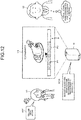
FIG. 12 is a diagram for describing control as to whether operation input can be received based on the degree of concentration of a user according to the embodiment. -
FIG. 13 is a diagram for describing display control of the degree of concentration according to the embodiment. -
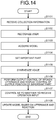
FIG. 14 is a flowchart illustrating the flow of processing by the information processing server according to the embodiment. -
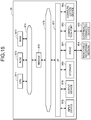
FIG. 15 is a hardware configuration example common to the information processing terminal and the information processing server according to one embodiment of the present disclosure. - Referring to the accompanying drawings, exemplary embodiments of the present disclosure are described in detail below. In the specification and the drawings, components having substantially the same functional configurations are denoted by the same reference symbols to omit overlapping descriptions.
- The descriptions are given in the following order:
- 1. Embodiment
- 1.1. Outline of embodiment
- 1.2. System configuration example
- 1.3. Functional configuration example of
information processing terminal 10 - 1.4. Functional configuration example of
information processing server 20 - 1.5. Details of model construction and output control
- 1.6. Output control corresponding to users
- 1.7. Flow of processing
- 2. Hardware configuration example
- 3. Conclusion
- First, the outline of one embodiment of the present disclosure is described. As described above, in recent years, various devices for presenting information to users by spoken utterances have become widespread. For example, the devices as described above can present an answer to an inquiry made by an utterance of a user to the user by using voice or visual information.
- The devices as described above can transmit various kinds of information to users in addition to answers to inquiries. For example, the devices as described above may present recommendation information corresponding to learned preferences of users to the users by spoken utterances and visual information.
- In general, however, it is difficult for users to grasp when important information is output in the information presentation by spoken utterances. Thus, the users need to listen to spoken utterances until desired information is output, and are required to have high power of concentration.
- Even when a user listens to spoken utterances until the last, the case where information desired by the user is not output is assumed. In this case, the time of the user is unnecessarily consumed, which may be a cause to reduce the convenience.
- The technical concept according to the present disclosure has been conceived by focusing on the above-mentioned matter, and enables a user to perceive an output position of an important part in information presentation by spoken utterances. Thus, one feature of an information processing device, an information processing method, and a computer program according to one embodiment of the present disclosure is to output a spoken utterance and visually display an output position of an important part of the spoken utterance.
-
FIG. 1 is a diagram for describing the outline of one embodiment of the present disclosure.FIG. 1 illustrates an example where aninformation processing terminal 10 presents restaurant information to a user U1 by using a spoken utterance SO1 and visual information VI1. Theinformation processing terminal 10 may execute the above-mentioned processing based on control by aninformation processing server 20 described later. For example, theinformation processing server 20 according to one embodiment of the present disclosure can output information on a restaurant A to theinformation processing terminal 10 as an answer to an inquiry from the user U1. - In this case, as illustrated in
FIG. 1 , theinformation processing server 20 according to the present embodiment may output an output position of an important part of the spoken utterance to theinformation processing terminal 10 as the visual information VI1. More specifically, theinformation processing server 20 according to the present embodiment outputs the visual information VI1 including a bar B indicating the entire output length of the spoken utterance SO1 and a pointer P indicating the current position of the output of the spoken utterance SO1 to theinformation processing terminal 10. In other words, the pointer P is information indicating progress of the output of the spoken utterance SO1. By visually recognizing the bar B and the pointer P, the user U1 can grasp the degree of progress of the output of the spoken utterance SO1. - Furthermore, as illustrated in
FIG. 1 , theinformation processing server 20 according to the present embodiment can display an output position of the important part IP of the spoken utterance SO1 on the bar B. The above-mentioned important part IP may be a section including information that is estimated to have a higher priority for a user in the spoken utterance. - Examples of information presentation related to the restaurant A include various kinds of information such as the location, budget, atmosphere, and words of mouth related to the restaurant A. In this case, in the above-mentioned information presentation, the
information processing server 20 according to the present embodiment estimates information having a higher priority for the user U1, and sets a section including information having the high priority in a spoken utterance corresponding to the information presentation as an important part IP. Theinformation processing server 20 can display an output position of the set important part IP on the bar B. - In one example illustrated in
FIG. 1 , theinformation processing server 20 sets a section including money information that is estimated to have a higher priority for the user U1 as an important part IP, and sets sections including information having priority that is lower than the money information, such as the location and atmosphere, as non-important parts. Theinformation processing server 20 controls theinformation processing terminal 10 to output a spoken utterance including the important part IP and the non-important parts, and displays an output position of the important part IP of the spoken utterance. - The
information processing server 20 according to the present embodiment can set the priority and the important part based on preferences, characteristics, and attributes of users. For example, theinformation processing server 20 may calculate the priority for each category of presented information based on preferences, characteristics, and attributes of users, and set a section including information having priority that is equal to or higher than a threshold as an important part. Theinformation processing server 20 may set a section including information having a higher priority in presented information as an important part. - The
information processing server 20 can set a plurality of important parts. For example, when the priorities of money information and word-of-mouth information are high in the information presentation related to the restaurant A, theinformation processing server 20 may set section including the money information and the word-of-mouth information in the spoken utterance as important parts. - In this manner, the
information processing server 20 according to the present embodiment enables the user U1 to visually recognize an output position of the important part IP of the spoken utterance SO1. Consequently, the user U1 can moderately pretend to listen to the spoken utterance SO1 until the important part IP is output, and perform operation input such as stop processing and a barge-in utterance on the spoken utterance SO1 after the important part IP is output, thereby more effectively using time. The above-mentioned functions of theinformation processing server 20 according to the present embodiment are described in detail below. - Next, a system configuration example of the information processing system according to one embodiment of the present disclosure is described.
FIG. 2 is a block diagram illustrating a system configuration example of the information processing system according to the present embodiment. Referring toFIG. 2 , the information processing system according to the present embodiment includes aninformation processing terminal 10 and aninformation processing server 20. Theinformation processing terminal 10 and theinformation processing server 20 are connected via anetwork 30 so as to communicate with each other. - The
information processing terminal 10 according to the present embodiment is an information processing device for presenting information using spoken utterances and visual information to a user based on control by theinformation processing server 20. In this case, one feature of theinformation processing terminal 10 according to the present embodiment is to visually display an output position of an important part of spoken utterances. - The
information processing terminal 10 according to the present embodiment can be implemented as various kinds of devices having a voice output function and a display function. Theinformation processing terminal 10 according to the present embodiment may be, for example, a mobile phone, a smartphone, a table, a wearable device, a computer, or a stationary or autonomous dedicated device. - The
information processing server 20 according to the present embodiment is an information processing device having a function of controlling output of spoken utterances and visual information by theinformation processing terminal 10. In this case, one feature of theinformation processing server 20 according to the present embodiment is to visually display an output position of an important part of a spoken utterance on theinformation processing terminal 10. - The
network 30 has a function of connecting theinformation processing terminal 10 and theinformation processing server 20. Thenetwork 30 may include a public line network such as the Internet, a telephone network, or a satellite communication network, and various kinds of local area networks (LANs) and wide area networks (WANs) including Ethernet (registered trademark). Thenetwork 30 may include a dedicated line network such as an Internet protocol-virtual private network (IP-VPN). Thenetwork 30 may include wireless communication networks such as Wi-Fi (registered trademark) and Bluetooth (registered trademark). - The system configuration example of the information processing system according to the present embodiment has been described. The above-mentioned configuration described above with reference to
FIG. 2 is merely an example, and the configuration of the information processing system according to the present embodiment is not limited to the example. For example, the functions of theinformation processing terminal 10 and theinformation processing server 20 according to the present embodiment may be implemented by a single device. The configuration of the information processing system according to the present embodiment can be flexibly modified depending on specification and operation. - Next, a functional configuration example of the
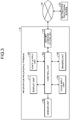
information processing terminal 10 according to the present embodiment is described.FIG. 3 is a block diagram illustrating a functional configuration example of theinformation processing terminal 10 according to the present embodiment. Referring toFIG. 3 , theinformation processing terminal 10 according to the present embodiment includes a display unit 110, avoice output unit 120, a voice input unit 130, an imaging unit 140, asensor unit 150, acontrol unit 160, and a server communication unit 170. - The display unit 110 according to the present embodiment has a function of outputting visual information such as images and texts. For example, the display unit 110 according to the present embodiment can visually display an output position of an important part of a spoken utterance based on control by the
information processing server 20. - Thus, the display unit 110 according to the present embodiment includes a display device for presenting visual information. Examples of the display device include a liquid crystal display (LCD) device, an organic light emitting diode (OLED) device, and a touch panel. The display unit 110 according to the present embodiment may output visual information by a projection function.
- The
voice output unit 120 according to the present embodiment has a function of outputting auditory information including spoken utterances. For example, thevoice output unit 120 according to the present embodiment can output an answer to an inquiry from a user by a spoken utterance based on control by theinformation processing server 20. Thus, thevoice output unit 120 according to the present embodiment includes a voice output device such as a speaker and an amplifier. - The voice input unit 130 according to the present embodiment has a function of collecting sound information such as utterances by users and background noise. The sound information collected by the voice input unit 130 is used for voice recognition and behavior recognition by the
information processing server 20. The voice input unit 130 according to the embodiment includes a microphone for collecting sound information. - The imaging unit 140 according to the present embodiment has a function of taking images including users and ambient environments. The images taken by the imaging unit 140 are used for user recognition and behavior recognition by the
information processing server 20. The imaging unit 140 according to the present embodiment includes an imaging device capable of taking images. The above-mentioned images include still images and moving images. - The
sensor unit 150 according to the present embodiment has a function of collecting various kinds of sensor information on the behavior of users. The sensor information collected by thesensor unit 150 is used for user state recognition and behavior recognition by theinformation processing server 20. For example, thesensor unit 150 includes an acceleration sensor, a gyro sensor, a geomagnetic sensor, a heat sensor, an optical sensor, a vibration sensor, or a global navigation satellite system (GNSS) signal reception device. - The
control unit 160 according to the present embodiment has a function of controlling the configurations in theinformation processing terminal 10. For example, thecontrol unit 160 controls the start and stop of each configuration. Thecontrol unit 160 can input control signals generated by theinformation processing server 20 to the display unit 110 and thevoice output unit 120. Thecontrol unit 160 according to the present embodiment may have the same function as anoutput control unit 230 as theinformation processing server 20 described later. - The server communication unit 170 according to the present embodiment has a function of communicating information to the
information processing server 20 via thenetwork 30. Specifically, the server communication unit 170 transmits sound information collected by the voice input unit 130, image information taken by the imaging unit 140, and sensor information collected by thesensor unit 150 to theinformation processing server 20. The server communication unit 170 receives control signals related to output of visual information and spoken utterances and artificial voice from theinformation processing server 20. - The functional configuration example of the
information processing terminal 10 according to the present embodiment has been described above. The above-mentioned configurations described with reference toFIG. 3 are merely an example, and the functional configurations of theinformation processing terminal 10 according to the present embodiment are not limited to the example. For example, theinformation processing terminal 10 according to the present embodiment is not necessarily required to include all the configurations illustrated inFIG. 3 . Theinformation processing terminal 10 may exclude the imaging unit 140 and thesensor unit 150. As described above, thecontrol unit 160 according to the present embodiment may have the same function as theoutput control unit 230 in theinformation processing server 20. The functional configuration of theinformation processing terminal 10 according to the present embodiment can be flexibly modified depending on specifications and operation. - Next, a functional configuration example of the
information processing server 20 according to the present embodiment is described.FIG. 4 is a block diagram illustrating a functional configuration example of theinformation processing server 20 according to the present embodiment. Referring toFIG. 4 , theinformation processing server 20 according to the present embodiment includes arecognition unit 210, asetting unit 220, anoutput control unit 230, avoice synthesis unit 240, astorage unit 250, and aterminal communication unit 260. Thestorage unit 250 includes auser DB 252, amodel DB 254, and acontent DB 256. - The
recognition unit 210 according to the present embodiment has a function of performing various kinds of recognition of users. For example, therecognition unit 210 can recognize users by comparing utterances and images of users collected by theinformation processing terminal 10 with voice features and images of the users stored in theuser DB 252 in advance. - The
recognition unit 210 can recognize the behavior and state of users based on sound information, image, and sensor information collected by theinformation processing terminal 10. For example, therecognition unit 210 can recognize voice based on utterances of users collected by theinformation processing terminal 10, and detect inquiries and barge-in utterances of users. For example, therecognition unit 210 can recognize the line of sight, expression, gesture, and behavior of users based on images and sensor information collected by theinformation processing terminal 10. - The
setting unit 220 according to the present embodiment has a function of setting an important part of a spoken utterance. Thesetting unit 220 sets a section including information that is estimated to have a higher priority for a user in a spoken utterance as an important part. In this case, thesetting unit 220 according to the present embodiment may set the priority and the important part based on an individual model set for each user or a common model set for a plurality of users in common. For example, thesetting unit 220 can acquire an individual model corresponding to a user recognized by therecognition unit 210 from themodel DB 254 described later, and set the priority and the important part. - For example, when the
recognition unit 210 cannot recognize a user, thesetting unit 220 may set an important part based on a common model that is common to all users. Thesetting unit 220 may acquire, based on an attribute of a user recognized by therecognition unit 210, a common model corresponding to the attribute from a plurality of common models, and set an important part. For example, thesetting unit 220 can acquire the common model based on the sex, age, and use language of the user recognized by therecognition unit 210. - The
setting unit 220 according to the present embodiment has a function of generating an individual model based on a response utterance or reaction of a user to a spoken utterance. Details of the function of thesetting unit 220 are additionally described later. - The
output control unit 230 according to the present embodiment has a function of controlling output of spoken utterances related to information presentation. Theoutput control unit 230 according to the present embodiment has a function of outputting a spoken utterance and visually displaying an output position of an important part of the spoken utterance. In this case, as illustrated inFIG. 1 , theoutput control unit 230 according to the present embodiment may use a bar B and a pointer P to display progress related to the output of the spoken utterance in association with the output position of the important part. - The
output control unit 230 according to the present embodiment has a function of controlling whether operation input can be received during the output of the spoken utterance. Details of the function of theoutput control unit 230 according to the present embodiment are additionally described later. - The
voice synthesis unit 240 according to the present embodiment has a function of synthesizing artificial voice output from theinformation processing terminal 10 based on control by theoutput control unit 230. - The
storage unit 250 according to the present embodiment includes auser DB 252, amodel DB 254, and acontent DB 256. - The
user DB 252 according to the present embodiment stores therein various kinds of information on users. For example, theuser DB 252 stores face images and voice features of users therein. Theuser DB 252 may store information such as the sex, age, preferences, and tendency of users therein. - The
model DB 254 according to the present embodiment stores therein an individual model set for each user and a common model common to a plurality of users. As described above, the above-mentioned common model may be a model common to all users, or may be a model set for each attribute of users. Thesetting unit 220 can acquire a corresponding model from themodel DB 254 based on a recognition result of a user by therecognition unit 210, and set an important part. - For example, the
content DB 256 according to the present embodiment stores therein various kinds of contents such as information on restaurants. Theoutput control unit 230 according to the present embodiment can use information stored in thecontent DB 256 to output an answer to an inquiry from a user, recommendation information, and advertisements by using spoken utterances and visual information. The contents according to the present embodiment are not necessarily stored in thecontent DB 256. For example, theoutput control unit 230 according to the present embodiment may acquire contents from another device through thenetwork 30. - The
terminal communication unit 260 according to the present embodiment has a function of communicating information to theinformation processing terminal 10 via thenetwork 30. Specifically, theterminal communication unit 260 receives sound information such as utterances, image information, and sensor information from theinformation processing terminal 10. Theterminal communication unit 260 transmits control signals generated by theoutput control unit 230 and artificial voice synthesized by thevoice synthesis unit 240 to theinformation processing terminal 10. - The functional configuration example of the
information processing server 20 according to the present embodiment has been described above. The above-mentioned functional configurations described with reference toFIG. 4 are merely an example, and the functional configuration of theinformation processing server 20 according to the present embodiment is not limited to the example. For example, theinformation processing server 20 is not necessarily required to include all the configurations illustrated inFIG. 4 . Therecognition unit 210, thesetting unit 220, thevoice synthesis unit 240, and thestorage unit 250 may be included in another device different from theinformation processing server 20. The functional configuration of theinformation processing server 20 according to the present embodiment can be flexibly modified depending on specifications and operation. - Next, the details of model construction and output control by the
information processing server 20 according to the present embodiment are described. As described above, one feature of theinformation processing server 20 according to the present embodiment is to output a spoken utterance including an important part and a non-important part and visually display an output position of the important part of the spoken utterance. The above-mentioned feature of theinformation processing server 20 enables a user to clearly perceive an output position of an important part of a spoken utterance to greatly improve the convenience of information presentation using the spoken utterance. - In this case, the
information processing server 20 according to the present embodiment can use a model corresponding to a recognized user to set the priority and an important part. More specifically, thesetting unit 220 according to the present embodiment can acquire, based on the result of recognition by therecognition unit 210, an individual model set for each user or a common model set for a plurality of users in common, and set the priority and an important part. - As described above, an important part according to the present embodiment is a section including information that is estimated to have a higher priority for a user in information presented by a spoken utterance. For example, in the case of information presentation related to a restaurant exemplified in
FIG. 1 , it is estimated that important information, that is, information having a high priority, differs depending on users. For example, one user may be interested in price information but another user may give importance to the atmosphere or location. - Thus, the
information processing server 20 according to the present embodiment generates an individual model for each user, and sets an important part based on the individual model, thereby being capable of implementing output control corresponding to the need for each user. In this case, for example, thesetting unit 220 according to the present embodiment may generate an individual model based on an utterance of a user. Examples of the utterance of the user include an utterance related to an inquiry. -
FIG. 5 is a diagram for describing the generation of an individual model based on an inquiry utterance according to the present embodiment.FIG. 5 illustrates a situation where a user U1 makes an inquiry to theinformation processing terminal 10 by utterances UO1 and UO2. Both the utterances UO1 and UO2 related to the inquiry may be requests for information presentation of restaurants. - In this case, the
setting unit 220 according to the present embodiment can generate an individual model corresponding to the user U1 based on vocabularies included in the utterances UO1 and UO2 of the user U1 recognized by therecognition unit 210. For example, thesetting unit 220 may estimate that the user U1 tends to give importance to the price based on a vocabulary "inexpensive store" included in the utterance UO1 or a vocabulary "budget is 3,000 yen" included in the utterance UO2, and generate an individual model reflecting the estimation result. - The above-mentioned utterance of the user is not limited to an inquiry. The
setting unit 220 according to the present embodiment may generate an individual model based on a response utterance of the user to an output spoken utterance. -
FIGS. 6A and6B are diagrams for describing the generation of an individual model based on a response utterance of a user.FIG. 6A illustrates a situation where the user U1 makes an utterance UO3 indicating a response to a spoken utterance SO2 output by theinformation processing terminal 10. In this case, the user U1 makes the utterance UO3 at a timing at which price information included in the spoken utterance SO2 is output, and the utterance UO3 is a barge-in utterance that instructs output of the next restaurant information. - In this case, the
setting unit 220 according to the present embodiment may estimate that the user U1 tends to give importance to the price based on the fact that information that has been output when the utterance UO3 indicating a response is detected is price information and the fact that the utterance UO3 is a barge-in utterance that instructs output of the next restaurant information, and generate an individual model reflecting the estimation result. -
FIG. 6B illustrates a situation where the user U1 makes an utterance UO4 indicating a response to a spoken utterance SO3 output by theinformation processing terminal 10. In this case, the user U1 makes the utterance UO4 at a timing at which price information included in the spoken utterance SO3 is output, and the utterance UO4 is a barge-in utterance that instructs output of detailed information. - In this case, the
setting unit 220 according to the present embodiment can estimate that the user U1 tends to give importance to the price based on the fact that information that has been output when the utterance UO4 indicating a response is detected is price information and the fact that the utterance UO4 is a barge-in utterance that instructs output of detailed information, and generate an individual model reflecting the estimation result. - In this manner, the
setting unit 220 according to the present embodiment can estimate an item important for a user and generate an individual model based on a response utterance such as a barge-in utterance and a spoken utterance that is being output. With the above-mentioned function of thesetting unit 220 according to the present embodiment, a response utterance of a user to an output spoken utterance can be monitored to estimate an item important for a user with high accuracy. - The
setting unit 220 according to the present embodiment may generate an individual model based on a reaction of a user independent from an utterance.FIG. 7 is a diagram for describing the generation of an individual model based on a reaction of a user to information presentation.FIG. 7 illustrates a reaction of the user U1 to a spoken utterance SO4 and visual information VI4 output by theinformation processing terminal 10. Examples of the reaction include the expression, line of sight, gesture, and behavior of the user. One example illustrated inFIG. 7 indicates a situation where the user U1 gazes at price information included in the visual information VI4. - In this case, the
setting unit 220 according to the present embodiment can estimate that the user U1 tends to give importance to the price based on the fact that the user U1 gazes at the displayed price information, and generate an individual model reflecting the estimation result. - For example, in the case where it is recognized that the user U1 is not listening with concentration to voice output of information related to the location or atmosphere during the voice output, the
setting unit 220 may estimate that the user U1 does not give importance to the location or atmosphere, and reflect the estimation result to an individual model. In this manner, thesetting unit 220 according to the present embodiment can generate highly accurate individual models based on various reactions of users. - The details of the individual model according to the present embodiment have been described above. Subsequently, the details of output control based on a common model according to the present embodiment are described. Situations where output control based on individual models is difficult to perform on individual users are assumed, such as when information on tendencies of users has not been sufficiently accumulated and when the
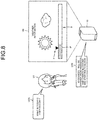
information processing terminal 10 is a device used by an unspecified number of users. In such cases, theinformation processing server 20 according to the present embodiment may display an output position of an important part based on a common model set for a plurality of users in common. -
FIG. 8 is a diagram for describing output control based on a common model according to the present embodiment.FIG. 8 illustrates an utterance UO5 of the user U1 related to an inquiry about weather, and a spoken utterance SO5 and visual information VI5 output by theinformation processing terminal 10 in response to the utterance UO5. - In this case, the
setting unit 220 according to the present embodiment can set an important part in accordance with a common model common to users. In one example illustrated inFIG. 8 , thesetting unit 220 sets, as an important part, information corresponding to an answer related to the inquiry from the user U1 in information included in the spoken utterance SO5. Specifically, thesetting unit 220 may set an answer part "10 degrees" corresponding to the utterance UO5 related to the inquiry in the information included in the spoken utterance SO5 as an important part. In this manner, in the output control based on a common model according to the present embodiment, an answer part for an inquiry from a user is set as an important part, thus enabling the user to perceive the output position of information having a higher priority for the user. - The
information processing server 20 according to the present embodiment may display an output position of an important part based on a common model corresponding to an attribute of a user. For example, it is assumed that a male user in his 50s and a female user in 20s tend to give importance to different items. Thus, thesetting unit 220 according to the present embodiment sets an important part by using a common model corresponding to an attribute of a user recognized by therecognition unit 210, thus being capable of implementing the highly accurate setting of the important part. -
FIG. 9 is a diagram for describing output control using a common model corresponding to an attribute of a user according to the present embodiment. In one example illustrated inFIG. 9 , thesetting unit 220 can estimate that a user with the attribute corresponding to the user U1 tends to give importance to price information based on a common model acquired based on the sex and age of the user U1 recognized by therecognition unit 210, and set the price information as an important part. - The above-mentioned function of the
setting unit 220 according to the present embodiment enables highly accurate estimation of important parts to be implemented to enhance the convenience for users even when user's personal data is insufficient or absent. The common model corresponding to the attribute of the user may be set in advance or may be generated by diverting the individual model. For example, thesetting unit 220 may generate a common model corresponding to the attribute by averaging a plurality of generated individual models for each attribute. - The output control based on the individual model and the common model according to the present embodiment has been described above. In the above description, examples where the
output control unit 230 uses a bar B and a pointer P to visually display an output position of an important part have been mainly described. However, theoutput control unit 230 according to the present embodiment can perform various kind of output control without being limited to the above-mentioned examples. - For example, as illustrated in
FIG. 9 , theoutput control unit 230 according to the present embodiment may display a countdown C to more explicitly present a time until voice of an important part IP is output to a user. For example, theoutput control unit 230 can visually present an important part to a user by including price information "3,000 yen" in the visual information IV6 in advance. - The
output control unit 230 may control an output form of a spoken utterance of an important part. For example, in one example illustrated inFIG. 9 , theoutput control unit 230 emphasizes that an important part is output to the user U1 by outputting a spoken utterance SO6 including an emphasized phrase "Listen, deeply". Theoutput control unit 230 may cause the user U1 to pay attention by controlling the volume, tone, and rhythm related to the voice output SO6. - Next, output control corresponding to users according to the present embodiment is described. In the above description, the output control for a single user has been described. On the other hand, even when there are users, the
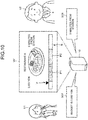
information processing server 20 according to the present embodiment can appropriately control the display of an output position of an important part corresponding to each user. -
FIG. 10 is a diagram for describing output control corresponding to users according to the present embodiment.FIG. 10 illustrates users U1 and U2 and visual information IV7 and spoken utterances SO7 and SO8 output by theinformation processing terminal 10. - In this case, the
setting unit 220 according to the present embodiment acquires models corresponding to the users U1 and U2 recognized by therecognition unit 210 from themodel DB 254, and individually sets important parts to the users U1 and U2. In one example illustrated inFIG. 10 , thesetting unit 220 sets price information as an important part for the user U1, and sets location information as an important part for the user U2. - The
output control unit 230 displays output positions of important parts IP1 and IP2 corresponding to the users U1 and U2, respectively, based on the degrees of importance set by thesetting unit 220. In this manner, even when there are users, theinformation processing server 20 according to the present embodiment can display the output positions of the important parts corresponding to the respective users based on the individual models corresponding to the users. The above-mentioned function of theinformation processing server 20 according to the present embodiment enables respective users to grasp when desired information is output, thus being capable of implementing more convenient information presentation. - In this case, the
output control unit 230 according to the present embodiment may control the output of spoken utterances and visual information depending on the position of a recognized user. For example, in one example illustrated inFIG. 10 , theoutput control unit 230 outputs the spoken utterance SO7 including price information in a direction in which the user U1 is located, and outputs the spoken utterance SO8 including location information in a direction in which the user U2 is located. Theoutput control unit 230 can implement the above-mentioned processing by controlling a beamforming function of thevoice output unit 120. - As illustrated in
FIG. 10 , theoutput control unit 230 may display the price information, which is important for the user U1, at a position that is easily visually recognized by the user U1, and display the location information, which is important for the user U2, at a position that is easily visually recognized by the user U2. The above-mentioned function of theoutput control unit 230 according to the present embodiment enables a user to more easily perceive information related to an important part to enhance the convenience of information presentation. - The
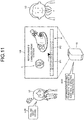
output control unit 230 according to the present embodiment may control whether operation input can be received during output of a spoken utterance depending on output positions of important parts related to users.FIG. 11 is a diagram for describing control as to whether operation input can be received according to the present embodiment. Similarly to the case inFIG. 10 ,FIG. 11 illustrates the output positions of the important parts IP1 and IP2 corresponding to the users U1 and U2, respectively, as visual information VI8. - In this case, the user U1 makes an utterance UO6 that instructs output of the next restaurant information at a timing at which the output of the important part IP1 corresponding to price information that is important for the user U1 is finished. Referring to
FIG. 11 , however, it is understood that voice output of the important part IP2 corresponding to the location information that is important for the user U2 has not been completed at the above-mentioned timing. - In such a case, the
output control unit 230 according to the present embodiment may control not to receive operation input made by the user U1 until the voice output corresponding to the important part IP2 corresponding to the user U2 is completed. Specifically, theoutput control unit 230 according to the present embodiment refuses receiving the operation input made by a second user (user U1) before or during output of an important part corresponding to a first user (user U2), so that the first user can be prevented from failing to hear a spoken utterance corresponding to the important part. - In this case, as illustrated in
FIG. 11 , theoutput control unit 230 may display an icon I1 to explicitly indicate that operation input cannot be received. The above-mentioned operation input includes a barge-in utterance as illustrated inFIG. 11 and stop processing of information output made by a button operation. The above-mentioned function of theoutput control unit 230 according to the present embodiment can effectively prevent cut-in processing by another user before voice output of an important part is completed. - The
output control unit 230 according to the present embodiment may control output of spoken utterances and visual information based on operation input detected before an important part is output. For example, in the case where the user U1 makes the utterance UO6, which is a barge-in utterance, at the timing illustrated inFIG. 11 , theoutput control unit 230 may shift to presentation of the next restaurant information after voice output corresponding to the important part IP2 is completed based on the fact that the voice output of the important part IP2 has not been completed. Theoutput control unit 230 may shift to presentation of the next restaurant information after location information corresponding to the important part IP2 is displayed as the visual information VI8. - On the other hand, in the case where operation input made by the second user is detected during the output of an important part corresponding to the first user, the
output control unit 230 according to the present embodiment may control as to whether the operation input can be received based on the degree of concentration of the first user. -
FIG. 12 is a diagram for describing control as whether operation input can be received based on the degree of concentration of a user according to the present embodiment. In one example illustrated inFIG. 12 , similarly to the case inFIG. 11 , the user U1 makes an utterance UO7 that instructs output of the next restaurant information at the timing at which the voice output of the important part IP1 corresponding to price information that is important for the user U1 is finished. - In one example illustrated in
FIG. 12 , on the other hand, the user U2 does not listen to a spoken utterance SO10 though voice output of the important part IP2 corresponding to location information that is important for the user U2 has been started. In such a case, theoutput control unit 230 according to the present embodiment may receive operation input made by the user U1 and shift to presentation of the next restaurant information based on the fact that it is detected that the degree of concentration of the user U2 is low during the voice output of the important part IP2. The above-mentioned function of theoutput control unit 230 according to the present embodiment can eliminate the influence of a user who is not concentrated in a spoken utterance and preferentially receive an instruction from another user to efficiently improve the overall convenience. - The
output control unit 230 according to the present embodiment may visually display the degree of concentration of a user detected by therecognition unit 210.FIG. 13 is a diagram for describing display control of the degree of concentration according to the present embodiment.FIG. 13 illustrates visual information VI10 displayed in a virtual space shared by users. In this manner, for example, theoutput control unit 230 according to the present embodiment can implement output control of the visual information VI10 displayed by a head-mount displayinformation processing terminal 10. - In this case, for example, the
output control unit 230 may control output of information presentation by a virtual character C. Specifically, theoutput control unit 230 controls visual information related to the virtual character C and output of a spoken utterance SO11 corresponding to a script of the virtual character C. Theoutput control unit 230 displays output positions of the important parts IP1 and IP2 in the spoken utterance SO11 by using the bar B and the pointer P. - In such a virtual space, the users cannot perceive their substances in many cases, and, for example, each user can grasp the states of other users through avatars A. Thus, it is difficult for each user to determine how other users are actually concentrated in listening to the utterance voice SO11.
- In view of the above, the
output control unit 230 according to the present embodiment displays an avatar A in association with an icon I2 indicating the degree of concentration of a user corresponding to the avatar A, so that other users can be caused to perceive the degree of concentration corresponding to the spoken utterance SO11 of the user corresponding to the avatar A. - For example, when the visual information VI10 is the line of sight of the user U2 illustrated in
FIG. 12 and the user corresponding to the avatar A is the user U1, the user U2 can grasp that the user U1 is concentrated in the voice output corresponding to the important part IP1 by visually recognizing theicon 12. In this manner, the above-mentioned function of theoutput control unit 230 according to the present embodiment can cause a user to visually grasp the degree of concentration of another user to prevent unintentional hindrance of listening behavior of the other user. - Next, the flow of processing by the
information processing server 20 according to the present embodiment is described in detail.FIG. 14 is a flowchart illustrating the flow of processing by theinformation processing server 20 according to the present embodiment. - Referring to
FIG. 14 , first, theterminal communication unit 260 in theinformation processing server 20 receives collection information collected by the information processing terminal 10 (S1101). The above-mentioned collection information includes sound information including utterances of a user, image information including the user, and sensor information related to the user. - Subsequently, the
recognition unit 210 recognizes the user based on the collection information received at Step S1101 (S1102). Therecognition unit 210 may continuously recognize the state or behavior of the user to calculate the degree of concentration. - Next, the
setting unit 220 acquires a model corresponding to the user recognized at Step S1102 from the model DB 254 (S1103). In this case, thesetting unit 220 may acquire an individual model corresponding to the user specified at Step S1102, or may acquire a common model corresponding to an attribute of the recognized user. - Subsequently, the
setting unit 220 sets an important part of a spoken utterance based on the model acquired at Step S1103 (S1104) . - Next, the
output control unit 230 controls thevoice synthesis unit 240 to synthesize artificial voice corresponding to the spoken utterance including the important part set at Step S1104 (S1105) . - Subsequently, the
output control unit 230 controls the output of the spoken utterance, and displays an output position of the important part calculated based on the important part set at Step S1103 and the artificial voice synthesized at Step S1105 on the display unit 110 (S1106). - In parallel with the output control at Step S1106, the
output control unit 230 controls whether operation input by the user can be received (S1107). - When a response utterance or reaction of the user to the spoken utterance is detected, the
setting unit 220 updates the corresponding model based on the response utterance or the reaction (S1108) . - Next, a hardware configuration example common to the
information processing terminal 10 and theinformation processing server 20 according to one embodiment of the present disclosure is described.FIG. 15 is a block diagram illustrating a hardware configuration example of theinformation processing terminal 10 and theinformation processing server 20 according to one embodiment of the present disclosure. Referring toFIG. 15 , theinformation processing terminal 10 and theinformation processing server 20 include, for example, aCPU 871, aROM 872, aRAM 873, ahost bus 874, abridge 875, anexternal bus 876, aninterface 877, aninput device 878, anoutput device 879,storage 880, adrive 881, aconnection port 882, and acommunication device 883. The illustrated hardware configuration is an example, and a part of the components may be omitted. The hardware configuration may further include a component other than the illustrated components. - The
CPU 871 functions as, for example, an arithmetic processing unit or a control device, and controls the overall or partial operation of each component based on various control programs recorded in theROM 872, theRAM 873, thestorage 880, or aremovable recording medium 901. - The
ROM 872 is means for storing therein computer programs read onto theCPU 871 and data used for calculation. In theRAM 873, for example, computer programs read onto theCPU 871 and various parameters that change as appropriate when the computer programs are executed are temporarily or permanently stored. - For example, the
CPU 871, theROM 872, and theRAM 873 are mutually connected through thehost bus 874 capable of high-speed data transmission. On the other hand, for example, thehost bus 874 is connected to theexternal bus 876 the data transmission speed of which is relatively low through thebridge 875. Theexternal bus 876 is connected to various components through theinterface 877. - For the
input device 878, for example, a mouse, a keyboard, a touch panel, a button, a switch, and a lever are used. For theinput device 878, a remote controller capable of transmitting control signals by using infrared rays or other radio waves may be used. Theinput device 878 includes a voice input device such as a microphone. - The
output device 879 is a device capable of visually or aurally notifying a user of acquired information, for example, a display device such as a cathode ray tube (CRT), an LCD, or an organic EL, an audio output device such as a speaker or headphones, a printer, a mobile phone, or a facsimile machine. Theoutput device 879 according to the present disclosure includes various vibration devices capable of outputting tactile stimulation. - The
storage 880 is a device for storing various kinds of data therein. For thestorage 880, for example, a magnetic storage device such as a hard disk drive (HDD), a semiconductor storage device, an optical storage device, or a magnetooptical storage device is used. - The
drive 881 is, for example, a device for reading information recorded in theremovable recording medium 901 such as a magnetic disk, an optical disc, a magnetooptical disk, or a semiconductor memory, or writing information into theremovable recording medium 901. - The
removable recording medium 901 is, for example, a DVD medium, a Blu-ray (registered trademark) medium, an HD DVD medium, or various kinds of semiconductor storage media. It should be understood that theremovable recording medium 901 may be, for example, an IC card having a noncontact IC chip mounted thereon, or an electronic device. - The
connection port 882 is, for example, a port for connecting theexternal connection device 902, such as a universal serial bus (USB) port, an IEEE 1394 port, a small computer system interface (SCSI), an RS-232C port, or an optical audio terminal. - The
external connection device 902 is, for example, a printer, a portable music player, a digital camera, a digital video camera, or an IC recorder. - The
communication device 883 is a communication device for connection to a network, and is, for example, a communication card for wired or wireless LAN, Bluetooth (registered trademark), or wireless USB (WUSB), a router for optical communication, a router for asymmetric digital subscriber line (ADSL), or a modem for various kinds of communication. - As described above, the
information processing server 20 according to one embodiment of the present disclosure can output a spoken utterance to theinformation processing terminal 10, and visually display an output position of an important part of the spoken utterance. This configuration enables a user to perceive the output position of the important part in information presentation made by the spoken utterance. - While exemplary embodiments of the present disclosure have been described above in detail with reference to the accompanying drawings, the technical scope of the present disclosure is not limited to the examples. It is obvious that a person with ordinary skills in the technical field of the present disclosure could conceive of various kinds of changes and modifications within the range of the technical concept described in the claims. It should be understood that the changes and the modifications belong to the technical scope of the present disclosure.
- The effects described herein are merely demonstrative or illustrative and are not limited. In other words, the features according to the present disclosure could exhibit other effects obvious to a person skilled in the art from the descriptions herein together with or in place of the above-mentioned effects.
- The steps related to the processing of the
information processing server 20 herein are not necessarily required to be processed in chronological order described in the flowchart. For example, the steps related to the processing of theinformation processing server 20 may be processed in an order different from the order described in the flowchart, or may be processed in parallel. - The following configurations also belong to the technical scope of the present disclosure.
- (1) An information processing device, comprising an output control unit that controls output of a spoken utterance related to information presentation, wherein
the output control unit outputs the spoken utterance, and visually displays an output position of an important part of the spoken utterance. - (2) The information processing device according to (1), wherein the spoken utterance includes:
- the important part including information that is estimated to have a high priority for a user; and
- a non-important part including information having priority that is lower than the priority of the important part.
- (3) The information processing device according to (1) or (2), wherein the output control unit outputs progress related to the output of the spoken utterance in association with the output position of the important part.
- (4) The information processing device according to any one of (1) to (3), wherein the output control unit displays the output position of the important part based on an individual model set for each of users.
- (5) The information processing device according to (4), wherein the output control unit displays the output position of the important part corresponding to each of the users based on the individual model related to each of the users.
- (6) The information processing device according to any one of (1) to (3), wherein the output control unit displays the output position of the important part based on a common model set for a plurality of users in common.
- (7) The information processing device according to (6), wherein the output control unit displays the output position of the important part based on the common model corresponding to an attribute of the user.
- (8) The information processing device according to any one of (1) to (7), wherein the output control unit controls whether to receive an operation input during the output of the spoken utterance.
- (9) The information processing device according to (8), wherein the output control unit refuses receiving the operation input made by a second user before or during output of the important part corresponding to a first user.
- (10) The information processing device according to (8), wherein, when the output control unit detects the operation input made by a second user during output of the important part corresponding to a first user, the output control unit controls whether to receive the operation input based on a degree of concentration of the first user.
- (11) The information processing device according to any one of (8) to (10), wherein the output control unit controls output of at least one of the spoken utterance and visual information based on the operation input detected before or during output of the important part.
- (12) The information processing device according to any one of (8) to (11), wherein the operation input includes a barge-in utterance.
- (13) The information processing device according to (4) or (5), wherein the individual model is generated based on an utterance of the user.
- (14) The information processing device according to (4), 5, or 13, wherein the individual model is generated based on reaction of the user to the information presentation.
- (15) The information processing device according to any one of (1) to (14), further comprising a setting unit that sets the important part based on a recognized user.
- (16) The information processing device according to (15), wherein the setting unit generates an individual model corresponding to each of the users.
- (17) The information processing device according to any one of (1) to (16), further comprising a display unit that displays the output position of the important part based on control by the output control unit.
- (18) The information processing device according to any one of (1) to (17), further comprising a voice output unit that outputs the spoken utterance based on control by the output control unit.
- (19) An information processing method, comprising controlling, by a processor, output of a spoken utterance related to information presentation, wherein
the controlling further includes outputting the spoken utterance and visually displaying an output position of an important part of the spoken utterance. - (20) A computer program for causing a computer to function as an information processing device comprising an output control unit that controls output of a spoken utterance related to information presentation, wherein
the output control unit outputs the spoken utterance, and visually displays an output position of an important part of the spoken utterance. -
- 10
- information processing terminal
- 110
- display unit
- 120
- voice output unit
- 130
- voice input unit
- 140
- imaging unit
- 150
- sensor unit
- 160
- control unit
- 170
- server communication unit
- 20
- information processing server
- 210
- recognition unit
- 220
- setting unit
- 230
- output control unit
- 240
- voice synthesis unit
- 250
- storage unit
- 252
- user DB
- 254
- model DB
- 256
- content DB
- 260
- terminal communication unit
Claims (20)
- An information processing device, comprising an output control unit that controls output of a spoken utterance related to information presentation, wherein
the output control unit outputs the spoken utterance, and visually displays an output position of an important part of the spoken utterance. - The information processing device according to claim 1, wherein the spoken utterance includes:the important part including information that is estimated to have a high priority for a user; anda non-important part including information having priority that is lower than the priority of the important part.
- The information processing device according to claim 1, wherein the output control unit outputs progress related to the output of the spoken utterance in association with the output position of the important part.
- The information processing device according to claim 1, wherein the output control unit displays the output position of the important part based on an individual model set for each of users.
- The information processing device according to claim 4, wherein the output control unit displays the output position of the important part corresponding to each of the users based on the individual model related to each of the users.
- The information processing device according to claim 1, wherein the output control unit displays the output position of the important part based on a common model set for a plurality of users in common.
- The information processing device according to claim 6, wherein the output control unit displays the output position of the important part based on the common model corresponding to an attribute of the user.
- The information processing device according to claim 1, wherein the output control unit controls whether to receive an operation input during the output of the spoken utterance.
- The information processing device according to claim 8, wherein the output control unit refuses receiving the operation input made by a second user before or during output of the important part corresponding to a first user.
- The information processing device according to claim 8, wherein, when the output control unit detects the operation input made by a second user during output of the important part corresponding to a first user, the output control unit controls whether to receive the operation input based on a degree of concentration of the first user.
- The information processing device according to claim 8, wherein the output control unit controls output of at least one of the spoken utterance and visual information based on the operation input detected before or during output of the important part.
- The information processing device according to claim 8, wherein the operation input includes a barge-in utterance.
- The information processing device according to claim 4, wherein the individual model is generated based on an utterance of the user.
- The information processing device according to claim 4, wherein the individual model is generated based on reaction of the user to the information presentation.
- The information processing device according to claim 1, further comprising a setting unit that sets the important part based on a recognized user.
- The information processing device according to claim 15, wherein the setting unit generates an individual model corresponding to each of the users.
- The information processing device according to claim 1, further comprising a display unit that displays the output position of the important part based on control by the output control unit.
- The information processing device according to claim 1, further comprising a voice output unit that outputs the spoken utterance based on control by the output control unit.
- An information processing method, comprising controlling, by a processor, output of a spoken utterance related to information presentation, wherein
the controlling further includes outputting the spoken utterance and visually displaying an output position of an important part of the spoken utterance. - A computer program for causing a computer to function as an information processing device comprising an output control unit that controls output of a spoken utterance related to information presentation, wherein
the output control unit outputs the spoken utterance, and visually displays an output position of an important part of the spoken utterance.
Applications Claiming Priority (2)
| Application Number | Priority Date | Filing Date | Title |
|---|---|---|---|
| JP2017144362 | 2017-07-26 | ||
| PCT/JP2018/016400 WO2019021553A1 (en) | 2017-07-26 | 2018-04-23 | Information processing device, information processing method, and program |
Publications (2)
| Publication Number | Publication Date |
|---|---|
| EP3660838A1 true EP3660838A1 (en) | 2020-06-03 |
| EP3660838A4 EP3660838A4 (en) | 2020-09-09 |
Family
ID=65039515
Family Applications (1)
| Application Number | Title | Priority Date | Filing Date |
|---|---|---|---|
| EP18839071.0A Withdrawn EP3660838A4 (en) | 2017-07-26 | 2018-04-23 | INFORMATION PROCESSING DEVICE, INFORMATION PROCESSING METHOD AND PROGRAM |
Country Status (3)
| Country | Link |
|---|---|
| US (1) | US11244682B2 (en) |
| EP (1) | EP3660838A4 (en) |
| WO (1) | WO2019021553A1 (en) |
Cited By (1)
| Publication number | Priority date | Publication date | Assignee | Title |
|---|---|---|---|---|
| EP3664080A4 (en) * | 2017-08-01 | 2020-08-05 | Sony Corporation | INFORMATION PROCESSING DEVICE, INFORMATION PROCESSING PROCESS AND PROGRAM |
Families Citing this family (7)
| Publication number | Priority date | Publication date | Assignee | Title |
|---|---|---|---|---|
| US11004449B2 (en) * | 2018-11-29 | 2021-05-11 | International Business Machines Corporation | Vocal utterance based item inventory actions |
| US11520079B2 (en) | 2019-02-01 | 2022-12-06 | Vidubly Ltd | Personalizing weather forecast |
| US11202131B2 (en) * | 2019-03-10 | 2021-12-14 | Vidubly Ltd | Maintaining original volume changes of a character in revoiced media stream |
| CN110125946B (en) * | 2019-04-23 | 2021-08-27 | 北京淇瑀信息科技有限公司 | Automatic call method, automatic call device, electronic equipment and computer readable medium |
| US20230057835A1 (en) | 2021-10-31 | 2023-02-23 | Ron Zass | Analyzing Image Data to Report Events |
| US12282755B2 (en) | 2022-09-10 | 2025-04-22 | Nikolas Louis Ciminelli | Generation of user interfaces from free text |
| US12380736B2 (en) | 2023-08-29 | 2025-08-05 | Ben Avi Ingel | Generating and operating personalized artificial entities |
Family Cites Families (15)
| Publication number | Priority date | Publication date | Assignee | Title |
|---|---|---|---|---|
| JPS603898U (en) | 1983-06-20 | 1985-01-12 | 三洋電機株式会社 | speech synthesizer |
| US7743340B2 (en) * | 2000-03-16 | 2010-06-22 | Microsoft Corporation | Positioning and rendering notification heralds based on user's focus of attention and activity |
| GB2372864B (en) * | 2001-02-28 | 2005-09-07 | Vox Generation Ltd | Spoken language interface |
| US10489449B2 (en) * | 2002-05-23 | 2019-11-26 | Gula Consulting Limited Liability Company | Computer accepting voice input and/or generating audible output |
| US7412389B2 (en) * | 2005-03-02 | 2008-08-12 | Yang George L | Document animation system |
| KR101741698B1 (en) | 2010-10-18 | 2017-05-31 | 삼성전자주식회사 | Method for providing search service and display apparatus applying the same |
| JP4996750B1 (en) | 2011-01-31 | 2012-08-08 | 株式会社東芝 | Electronics |
| US9449526B1 (en) | 2011-09-23 | 2016-09-20 | Amazon Technologies, Inc. | Generating a game related to a digital work |
| US9639518B1 (en) | 2011-09-23 | 2017-05-02 | Amazon Technologies, Inc. | Identifying entities in a digital work |
| US9613003B1 (en) | 2011-09-23 | 2017-04-04 | Amazon Technologies, Inc. | Identifying topics in a digital work |
| US10108706B2 (en) | 2011-09-23 | 2018-10-23 | Amazon Technologies, Inc. | Visual representation of supplemental information for a digital work |
| JP5634455B2 (en) | 2012-08-16 | 2014-12-03 | 株式会社東芝 | Speech learning apparatus, method and program |
| KR102184987B1 (en) | 2013-11-15 | 2020-12-01 | 엘지전자 주식회사 | Picture display device and operating method thereof |
| KR101827795B1 (en) * | 2016-03-02 | 2018-03-22 | (주)아이쿱 | Medical consulting system and Computer readable medium recording a medical consultation program |
| WO2019098037A1 (en) * | 2017-11-15 | 2019-05-23 | ソニー株式会社 | Information processing terminal, information processing device, and information processing method |
-
2018
- 2018-04-23 EP EP18839071.0A patent/EP3660838A4/en not_active Withdrawn
- 2018-04-23 WO PCT/JP2018/016400 patent/WO2019021553A1/en not_active Ceased
- 2018-04-23 US US16/631,889 patent/US11244682B2/en not_active Expired - Fee Related
Cited By (1)
| Publication number | Priority date | Publication date | Assignee | Title |
|---|---|---|---|---|
| EP3664080A4 (en) * | 2017-08-01 | 2020-08-05 | Sony Corporation | INFORMATION PROCESSING DEVICE, INFORMATION PROCESSING PROCESS AND PROGRAM |
Also Published As
| Publication number | Publication date |
|---|---|
| US20200143813A1 (en) | 2020-05-07 |
| WO2019021553A1 (en) | 2019-01-31 |
| US11244682B2 (en) | 2022-02-08 |
| EP3660838A4 (en) | 2020-09-09 |
Similar Documents
| Publication | Publication Date | Title |
|---|---|---|
| EP3660838A1 (en) | Information processing device, information processing method, and program | |
| KR101617665B1 (en) | Automatically adapting user interfaces for hands-free interaction | |
| JP6606301B1 (en) | Long-distance extension of digital assistant service | |
| US10515655B2 (en) | Emotion type classification for interactive dialog system | |
| CN109814832B (en) | Method for providing digital assistant service, electronic device and storage medium | |
| CN106663427B (en) | Cache device for serving speech pronunciations | |
| US9348554B2 (en) | Managing playback of supplemental information | |
| CN111919248B (en) | System for processing user's voice and control method thereof | |
| KR20200039030A (en) | Far-field extension for digital assistant services | |
| CN117033578A (en) | Proactive assistance based on conversational communication between devices | |
| EP3438974A1 (en) | Information processing device, information processing method, and program | |
| CN110248019A (en) | For enabling the method, computer storage medium and equipment of the dialog interface of voice | |
| EP3593346B1 (en) | Graphical data selection and presentation of digital content | |
| EP3550438A1 (en) | Information processing apparatus, information processing method, program, and information processing system | |
| EP3664080A1 (en) | Information processing device, information processing method, and program | |
| US11688268B2 (en) | Information processing apparatus and information processing method | |
| EP3663933A1 (en) | Information processing device and information processing method | |
| EP3460791A1 (en) | Information processing device | |
| US20200234187A1 (en) | Information processing apparatus, information processing method, and program | |
| EP3599549A1 (en) | Information processing device and information processing method | |
| EP3657496A1 (en) | Information processing device and information processing method | |
| US11430429B2 (en) | Information processing apparatus and information processing method | |
| CN109257942B (en) | User-specific acoustic models | |
| EP3825829B1 (en) | Information processing device, information processing method, and program | |
| EP3745236A1 (en) | Information processing device and information processing method |
Legal Events
| Date | Code | Title | Description |
|---|---|---|---|
| STAA | Information on the status of an ep patent application or granted ep patent |
Free format text: STATUS: THE INTERNATIONAL PUBLICATION HAS BEEN MADE |
|
| PUAI | Public reference made under article 153(3) epc to a published international application that has entered the european phase |
Free format text: ORIGINAL CODE: 0009012 |
|
| STAA | Information on the status of an ep patent application or granted ep patent |
Free format text: STATUS: REQUEST FOR EXAMINATION WAS MADE |
|
| 17P | Request for examination filed |
Effective date: 20200224 |
|
| AK | Designated contracting states |
Kind code of ref document: A1 Designated state(s): AL AT BE BG CH CY CZ DE DK EE ES FI FR GB GR HR HU IE IS IT LI LT LU LV MC MK MT NL NO PL PT RO RS SE SI SK SM TR |
|
| AX | Request for extension of the european patent |
Extension state: BA ME |
|
| A4 | Supplementary search report drawn up and despatched |
Effective date: 20200810 |
|
| RIC1 | Information provided on ipc code assigned before grant |
Ipc: G10L 15/22 20060101ALI20200804BHEP Ipc: G10L 25/57 20130101ALI20200804BHEP Ipc: G10L 13/00 20060101AFI20200804BHEP Ipc: G06F 3/16 20060101ALI20200804BHEP Ipc: G10L 21/12 20130101ALI20200804BHEP |
|
| DAV | Request for validation of the european patent (deleted) | ||
| DAX | Request for extension of the european patent (deleted) | ||
| RAP3 | Party data changed (applicant data changed or rights of an application transferred) |
Owner name: SONY GROUP CORPORATION |
|
| STAA | Information on the status of an ep patent application or granted ep patent |
Free format text: STATUS: THE APPLICATION HAS BEEN WITHDRAWN |
|
| 18W | Application withdrawn |
Effective date: 20220621 |