EP3660707A1 - Translation method, target information determining method and related device, and storage medium - Google Patents
Translation method, target information determining method and related device, and storage medium Download PDFInfo
- Publication number
- EP3660707A1 EP3660707A1 EP18837956.4A EP18837956A EP3660707A1 EP 3660707 A1 EP3660707 A1 EP 3660707A1 EP 18837956 A EP18837956 A EP 18837956A EP 3660707 A1 EP3660707 A1 EP 3660707A1
- Authority
- EP
- European Patent Office
- Prior art keywords
- vector
- source
- moment
- translation
- translation vector
- Prior art date
- Legal status (The legal status is an assumption and is not a legal conclusion. Google has not performed a legal analysis and makes no representation as to the accuracy of the status listed.)
- Ceased
Links
Images





Classifications
-
- G—PHYSICS
- G06—COMPUTING OR CALCULATING; COUNTING
- G06F—ELECTRIC DIGITAL DATA PROCESSING
- G06F40/00—Handling natural language data
- G06F40/40—Processing or translation of natural language
- G06F40/58—Use of machine translation, e.g. for multi-lingual retrieval, for server-side translation for client devices or for real-time translation
-
- G—PHYSICS
- G06—COMPUTING OR CALCULATING; COUNTING
- G06F—ELECTRIC DIGITAL DATA PROCESSING
- G06F40/00—Handling natural language data
- G06F40/40—Processing or translation of natural language
- G06F40/42—Data-driven translation
- G06F40/44—Statistical methods, e.g. probability models
-
- G—PHYSICS
- G06—COMPUTING OR CALCULATING; COUNTING
- G06N—COMPUTING ARRANGEMENTS BASED ON SPECIFIC COMPUTATIONAL MODELS
- G06N3/00—Computing arrangements based on biological models
- G06N3/02—Neural networks
- G06N3/04—Architecture, e.g. interconnection topology
-
- G—PHYSICS
- G06—COMPUTING OR CALCULATING; COUNTING
- G06N—COMPUTING ARRANGEMENTS BASED ON SPECIFIC COMPUTATIONAL MODELS
- G06N3/00—Computing arrangements based on biological models
- G06N3/02—Neural networks
- G06N3/04—Architecture, e.g. interconnection topology
- G06N3/044—Recurrent networks, e.g. Hopfield networks
- G06N3/0442—Recurrent networks, e.g. Hopfield networks characterised by memory or gating, e.g. long short-term memory [LSTM] or gated recurrent units [GRU]
-
- G—PHYSICS
- G06—COMPUTING OR CALCULATING; COUNTING
- G06N—COMPUTING ARRANGEMENTS BASED ON SPECIFIC COMPUTATIONAL MODELS
- G06N3/00—Computing arrangements based on biological models
- G06N3/02—Neural networks
- G06N3/04—Architecture, e.g. interconnection topology
- G06N3/045—Combinations of networks
- G06N3/0455—Auto-encoder networks; Encoder-decoder networks
-
- G—PHYSICS
- G06—COMPUTING OR CALCULATING; COUNTING
- G06N—COMPUTING ARRANGEMENTS BASED ON SPECIFIC COMPUTATIONAL MODELS
- G06N3/00—Computing arrangements based on biological models
- G06N3/02—Neural networks
- G06N3/08—Learning methods
-
- G—PHYSICS
- G06—COMPUTING OR CALCULATING; COUNTING
- G06N—COMPUTING ARRANGEMENTS BASED ON SPECIFIC COMPUTATIONAL MODELS
- G06N3/00—Computing arrangements based on biological models
- G06N3/02—Neural networks
- G06N3/08—Learning methods
- G06N3/09—Supervised learning
Definitions
- Embodiments of the present disclosure relate to the field of computer technologies, and in particular, to a translation method, a target information determining method, a related apparatus, and a storage medium.
- Machine translation is a procedure of transforming a text or a speech from a language to another language with a content of the same meaning by using a machine.
- MT Machine translation
- NMT neural machine translation
- Embodiments of the present disclosure provide a translation method, a target information determining method, a related apparatus, and a storage medium.
- the present disclosure provides a translation method.
- the method is applied to a neural machine translation (NMT) system and includes: encoding to-be-processed text information by using an encoder, to obtain a source vector representing sequence, the to-be-processed text information belonging to a first language; obtaining a source context vector corresponding to a first moment according to the source vector representing sequence, the source context vector corresponding to the first moment being used for indicating a to-be-processed source content in the to-be-processed text information at the first moment; determining a translation vector according to the source vector representing sequence and the source context vector, the translation vector including a first translation vector and/or a second translation vector, the first translation vector being a vector corresponding to an untranslated source content in the source vector representing sequence at the first moment, the second translation vector being a vector corresponding to a translated source content in the source vector representing sequence at a second moment, and the second moment being an adjacent moment before the first moment; and decoding the translation vector and the source
- the present disclosure provides a target information determining method, including: encoding to-be-processed text information, to obtain a source vector representing sequence; obtaining a source context vector corresponding to a first moment according to the source vector representing sequence, the source context vector corresponding to the first moment being used for indicating a to-be-processed source content in the to-be-processed text information at the first moment; determining a translation vector according to the source vector representing sequence and the source context vector, the translation vector including a first translation vector and/or a second translation vector, the first translation vector being a vector corresponding to an untranslated source content in the source vector representing sequence at the first moment, the second translation vector being a vector corresponding to a translated source content in the source vector representing sequence at a second moment, and the second moment being an adjacent moment before the first moment; and decoding the translation vector and the source context vector, to obtain target information of the first moment.
- the present disclosure provides a target information determining apparatus, including at least one memory and at least one processor, the at least one memory storing at least one instruction module, configured to be executed by the at least one processor, the at least one instruction module including: an encoding module, configured to encode to-be-processed text information, to obtain a source vector representing sequence; a first obtaining module, configured to obtain a source context vector corresponding to a first moment according to the source vector representing sequence, the source context vector corresponding to the first moment being used for indicating a to-be-processed source content in the to-be-processed text information at the first moment; a first determining module, configured to determine a translation vector according to the source vector representing sequence and the source context vector, the translation vector including a first translation vector and/or a second translation vector, the first translation vector being a vector corresponding to an untranslated source content in the source vector representing sequence at the first moment, the second translation vector being a vector corresponding to a translated source content in the source vector representing sequence
- the present disclosure provides a target information determining apparatus, including a memory, a processor, and a bus system, the memory being configured to store a program; the processor being configured to execute the program in the memory, which includes the following operations: encoding to-be-processed text information, to obtain a source vector representing sequence; obtaining a source context vector corresponding to a first moment according to the source vector representing sequence, the source context vector corresponding to the first moment being used for indicating a to-be-processed source content in the to-be-processed text information at the first moment; determining a translation vector according to the source vector representing sequence and the source context vector, the translation vector including a first translation vector and/or a second translation vector, the first translation vector being a vector corresponding to an untranslated source content in the source vector representing sequence at the first moment, the second translation vector being a vector corresponding to a translated source content in the source vector representing sequence at a second moment, and the second moment being an adjacent moment before the first moment; and decoding
- the present disclosure provides a computer readable storage medium.
- the computer readable storage medium stores an instruction. When run on a computer, the instruction causes the computer to perform the method according to the foregoing aspects.
- the present disclosure provides a target information determining method.
- the method is performed by an electronic device and includes: encoding to-be-processed text information, to obtain a source vector representing sequence; obtaining a source context vector corresponding to a first moment according to the source vector representing sequence, the source context vector corresponding to the first moment being used for indicating a to-be-processed source content in the to-be-processed text information at the first moment; determining a translation vector according to the source vector representing sequence and the source context vector, the translation vector including a first translation vector and/or a second translation vector, the first translation vector being a vector corresponding to an untranslated source content in the source vector representing sequence at the first moment, the second translation vector being a vector corresponding to a translated source content in the source vector representing sequence at a second moment, and the second moment being an adjacent moment before the first moment; and decoding the translation vector and the source context vector, to obtain target information of the first moment.
- the embodiments of the present disclosure provide a translation method, a target information determining method, and a related apparatus, which can model an untranslated source content and/or a translated source content in a source vector representing sequence, that is, separate the contents from an original language model for training, thereby reducing a difficulty of model training of a decoder, and improving a translation effect of a translation system.
- any other variants mean to cover the non-exclusive inclusion, for example, a process, method, system, product, or device that includes a list of steps or units is not necessarily limited to those expressly listed steps or units, but may include other steps or units not expressly listed or inherent to such a process, method, product, or device.
- the embodiments of the present disclosure are mainly applied to an encoder-decoder model, where encoding is transforming an input sequence into a vector with a length, and the decoding is transforming a vector sequence generated by an encoder into an output sequence.
- the encoder-decoder model is applied to many fields, such as translation, document abstract, and a question-answering system.
- the input sequence is a to-be-translated text
- the output sequence is a translated text.
- the input sequence is a raised question
- the output sequence is an answer.
- the encoder and the decoder are not fixed, which are optionally a convolutional neural network (CNN), a recurrent neural network (RNN), a gated recurrent unit (GRU), a long short term memory (LSTM), a bidirectional recurrent neural network (BiRNN), and the like.
- CNN convolutional neural network
- RNN recurrent neural network
- GRU gated recurrent unit
- LSTM long short term memory
- BiRNN bidirectional recurrent neural network
- Different neural networks may be used during encoding and decoding.
- the BiRNN is used during encoding and the RNN is used during decoding
- the RNN is used during encoding and the LSTM is used during decoding. This is not limited herein.
- FIG. 1 is an architectural diagram of a target information determining apparatus according to the embodiments of the present disclosure.
- two hidden layers are additionally introduced in a decoder, and the two hidden layers may be represented by using vector sequences.
- the s t ⁇ 1 P in the figure represents a second translation vector corresponding to a (t-1) th moment, and the second translation vector is a translated source content, that is, a past translation vector.
- the s t F in the figure represents a first translation vector corresponding to a t th moment, and the first translation vector is an untranslated source content, that is, a future translation vector.
- the c t in the figure represents a source context vector corresponding to the t th moment.
- the s t in the figure represents a decoder state of the t th moment.
- the present disclosure by introducing the additional hidden layers, directly models a past translation (a translated content) and a future translation (an untranslated content) on a semantic level, separates related contents from the decoder state, and improves storing and applications of a neural network translation system on the related contents, thereby improving a translation system effect.
- the method provided in the present disclosure can be applied to a mainstream neural machine translation (NMT) system.
- NMT neural machine translation
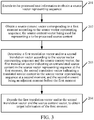
- FIG. 2 is a schematic flowchart of a target information determining method according to an embodiment of the present disclosure. As shown in FIG. 2 , the method is specifically:
- an encoder module S1 inputs a to-be-processed sentence in step S101, and then the encoder module S1 outputs a source vector representing sequence.
- an attention module S2, a past-future module S3, and a decoder module S4 repeat the following steps until an entire translated text is generated.
- the attention module S2 reads in a past translation vector and a future translation vector of a (t-1) th moment.
- the past translation vector is initially a zero vector, representing that there is no translated source content
- the future translation vector is initially a last vector of the source vector representing sequence, representing a summary of a source sentence.
- the attention module S2 outputs a source context vector of a current moment, that is, a t th moment, in step S103.
- the past-future module S3 reads the source context vector of the current moment, and updates a past translation vector and a future translation vector of the t th moment in step S104.
- the decoder module S4 reads the future translation vector of the t th moment, the past translation vector of the (t-1) th moment, the source context vector of the t th moment, and another standard input, and generates a target word of the t th moment in step S105.
- the present disclosure can be applied to an NMT system.
- a translation method provided in the present disclosure is described below, and an embodiment of the translation method according to the embodiments of the present disclosure includes:
- to-be-processed text information is encoded by using an encoder, to obtain a source vector representing sequence.
- the to-be-processed text information belongs to a first language, for example, Chinese. It may be understood that, in actual application, the first language may be other types of languages.
- the encoding process is specifically: inputting the to-be-processed text information into an encoder in the NMT system, then encoding the to-be-processed text information by using the encoder, and obtaining the source vector representing sequence according to an encoding result, Source vectors in the source vector representing sequence belong to the first language.
- the to-be-processed text information may be a Chinese sentence, and the sentence includes a plurality of phrases.
- the source vector representing sequence may be obtained, and a source context vector corresponding to a current moment, that is, a first moment, is further obtained.
- the source context vector i used for representing a to-be-processed source content, and the source content may be specifically a word in the Chinese sentence.
- the source context vector corresponding to the first moment is used for indicating a to-be-processed source content in the to-be-processed text information at the first moment.
- the NMT system determines a first translation vector and/or a second translation vector according to the source vector representing sequence and the source context vector.
- the first translation vector indicates an untranslated source content in the source vector representing sequence at the first moment
- the second translation vector indicates a translated source content in the source vector representing sequence at a second moment
- the second moment is an adjacent moment before the first moment. If the first moment is the t th moment, the second moment is the (t-1) th moment.
- the first translation vector and/or the second translation vector may be referred to as a translation vector.
- the translation vector may be the first translation vector, may be the second translation vector, or may be the first translation vector and the second translation vector.
- the first translation vector is a vector corresponding to the untranslated source content in the source vector representing sequence at the first moment
- the second translation vector is a vector corresponding to the translated source content in the source vector representing sequence at the second moment.
- the source content corresponding to the source vector representing sequence is “ 1300 ".
- Words corresponding to the source vectors are “ “, “ “”, “ “”, “ “”, “ “”, “ “ and “1300 “. If the word " " is to be translated at the current moment, the future translation vector may be understood as vectors respectively corresponding to the untranslated “ “, “ “, “ “, “ “ and “1300 “, and the past translation vector may be understood as vectors corresponding to the translated “ “ and “”.
- the first translation vector and/or the second translation vector and the source context vector are decoded by using a decoder, to obtain target information of the first moment.
- the target information belongs to a second language. It may be understood that, the second language is a language different from the first language, and may be English, French, Japanese, and the like. This is not limited herein.
- the outputted target information may be "all parts of the world", that is, the first language is Chinese, and the second language is English. The procedure of machine translation ends here.
- a translation method which can model an untranslated source content and/or a translated source content in a source vector representing sequence, that is, separate the contents from an original language model for training, thereby reducing a difficulty of model training of a decoder, and improving a translation effect of a translation system.
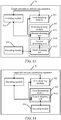
- a target information determining method of the present disclosure is described below, and the method may be performed by an electronic device. Referring to FIG. 3 , an embodiment of the target information determining method according to the embodiments of the present disclosure includes the following steps:
- the to-be-processed text information is encoded by an encoder in a target information determining apparatus.
- the to-be-processed text information may be a to-be-translated sentence, for example, " ". After the sentence is encoded, the source vector representing sequence may be obtained.
- Each vector in the source vector representing sequence corresponds to a source content (source word).
- source word For example, in the sentence “ “ “, the source contents are respectively “ “, “ “”, “ “”, “ “, “”, “ ⁇ ” and “ ⁇ eos>”.
- the decoder in the target information determining apparatus generates a translated text word by word.
- 202 Obtain a source context vector corresponding to a first moment according to the source vector representing sequence, the source context vector being used for representing a to-be-processed source content.
- the source context vector corresponding to the first moment is used for indicating a to-be-processed source content in the to-be-processed text information at the first moment.
- the target information determining apparatus may obtain the source context vector corresponding to the first moment according to the source vector representing sequence.
- the first moment is the t th moment in this embodiment of the present disclosure
- the source context vector is used for representing the to-be-processed source content.
- the target information determining apparatus outputs an alignment probability, for example, 0.0 or 0.2, for each source content.
- a sum of the alignment probabilities in the source vector representing sequence is 1, and a greater alignment probability represents that the source content is more related to to-be-generated target information.
- the source context vector of the t th moment may be generated.
- 203 Determine a first translation vector and/or a second translation vector according to the source vector representing sequence and the source context vector, the first translation vector indicating an untranslated source content in the source vector representing sequence at the first moment, the second translation vector indicating a translated source content in the source vector representing sequence at a second moment, and the second moment being an adjacent moment before the first moment.
- first translation vector and/or the second translation may be referred to as a translation vector.
- the target information determining apparatus may determine the first translation vector according to the source vector representing sequence and the source context vector, or determine the second translation vector according to the source vector representing sequence and the source context vector, or determine the first translation vector and the second translation vector according to the source vector representing sequence and the source context vector.
- the first translation vector indicates the untranslated source content in the source vector representing sequence at the first moment
- the second translation vector indicates the translated source content in the source vector representing sequence at the second moment
- the second moment is an adjacent moment before the first moment.
- the first translation vector represents a future translation vector of the t th moment
- the second translation vector represents a past translation vector of the (t-1) th moment.
- a corresponding source context vector c t is added to a past translation vector of a previous moment to obtain a new past translation vector, and c t is subtracted from a future translation vector of the previous moment to obtain a new future translation vector.
- the decoder in the target information determining apparatus may decode the first translation vector and the source context vector by using a neural network output layer, to obtain the target information of the first moment.
- the decoder may decode the second translation vector and the source context vector, to obtain the target information of the first moment.
- the decoder may decode the first translation vector, the second translation vector, and the source context vector, to obtain the target information of the first moment.
- a plurality of pieces of to-be-selected information may be generated in a procedure of generating the target information, and one word with a highest similarity is finally outputted as the target information.
- the " " may be translated into “many” and “much”.
- it may be known from semantic knowledge stored in a decoder state vector that, "many” is used before a countable noun, and therefore, the " " herein is finally translated into “many”.
- a target information determining method encodes to-be-processed text information, to obtain a source vector representing sequence; then obtains a source context vector corresponding to a first moment according to the source vector representing sequence, the source context vector being used for representing a to-be-processed source content; and determines a first translation vector and/or a second translation vector according to the source vector representing sequence and the source context vector, the first translation vector indicating an untranslated source content in the source vector representing sequence at the first moment, the second translation vector indicating a translated source content in the source vector representing sequence at a second moment, and the second moment is an adjacent moment before the first moment.
- the target information determining apparatus decodes the first translation vector and/or the second translation vector and the source context vector, to obtain target information of the first moment.
- the determining a first translation vector according to the source vector representing sequence and the source context vector may include:
- the third translation vector is a vector corresponding to an untranslated source content in the source vector representing sequence at the second moment.
- the procedure that the target information determining apparatus determines the first translation vector according to the source vector representing sequence and the source context vector may include: first obtaining the third translation vector corresponding to the second moment according to the source vector representing sequence; and then processing the third translation vector and the source context vector by using the preset neural network model, to obtain the first translation vector.
- the target information determining apparatus needs to read in the source context vector of the first moment (representing the translated source content at the first moment), and further update the stored future translation vector.
- s t F represents the future translation vector of the t th moment, that is, the first translation vector
- s t ⁇ 1 F represents the future translation vector of the (t-1) th moment, that is, the third translation vector
- c t represents the source context vector of the t th moment
- RNN ( ) represents that calculation is performed by using an RNN model.
- the RNN is merely an example of the preset neural network model herein, and in actual application, the preset neural network model may be the LSTM, a latency network model or a gated convolutional neural network, or may be other types of neural network structures. This is not limited herein.
- the third translation vector corresponding to the second moment is obtained according to the source vector representing sequence; and then the third translation vector and the source context vector are processed by using the preset neural network model, to obtain the first translation vector.
- the first translation vector is outputted by using the preset neural network model, which can improve accuracy of the future translation vector.
- the determining a first translation vector and a second translation vector according to the source vector representing sequence and the source context vector may include:
- the fourth translation vector is a vector corresponding to a translated source content in the source vector representing sequence at the first moment.
- the source context vector that is, a source semantic content that is being translated
- c t which is obtained by an attention module
- s t F represents the future translation vector of the t th moment, that is, the first translation vector
- s t ⁇ 1 F represents the future translation vector of the (t-1) th moment, that is, the third translation vector
- c t represents the source context vector of the t th moment
- RNN ( ) represents that calculation is performed by using an RNN model.
- s t P represents the past translation vector of the t th moment, that is, the fourth translation vector
- s t ⁇ 1 P represents the past translation vector of the (t-1) th moment, that is, the second translation vector
- c t represents the source context vector of the t th moment
- RNN ( ) represents that calculation is performed by using an RNN model.
- the RNN is merely an example of the preset neural network model, and in actual application, the preset neural network model may be the LSTM, a latency network model or a gated convolutional neural network, or may be other types of neural network structures. This is not limited herein.
- the third translation vector corresponding to the second moment is obtained according to the source vector representing sequence; and then the third translation vector and the source context vector are processed by using the preset neural network model, to obtain the first translation vector, and further, the second translation vector may be obtained according to the location of the source context vector in the source vector representing sequence, the second translation vector being used for updating the fourth translation vector corresponding to the first moment, and the fourth translation vector being obtained by processing the second translation vector and the source context vector by using the preset neural network model.
- the determining a second translation vector according to the source vector representing sequence and the source context vector may include:
- the second translation vector is used for generating a fourth translation vector corresponding to the first moment, and the fourth translation vector being obtained by processing the second translation vector and the source context vector by using a preset neural network model.
- the target information determining apparatus may obtain the second translation vector of the second moment according to a location of the source context vector of the first moment in the source vector representing sequence.
- the target information determining apparatus needs to read in a source context vector of a (t-2) th moment and a past translation vector of the (t-2) th moment, then process the source context vector of the (t-2) th moment and the past translation vector of the (t-2) th moment by using the preset neural network model, to obtain the past translation vector of the (t-1) th moment.
- s t P represents the past translation vector of the t th moment, that is, the fourth translation vector
- s t ⁇ 1 P represents the past translation vector of the (t-1) th moment, that is, the second translation vector
- c t represents the source context vector of the t th moment
- RNN ( ) represents that calculation is performed by using an RNN model.
- the RNN is merely an example of the preset neural network model, and in actual application, the preset neural network model may be the LSTM, a latency network model or a gated convolutional neural network, or may be other types of neural network structures. This is not limited herein.
- the second translation vector is obtained according to the location of the source context vector in the source vector representing sequence, the second translation vector being used for generating the fourth translation vector corresponding to the first moment, and the fourth translation vector being obtained by processing the second translation vector and the source context vector by using the preset neural network model.
- the second translation vector is outputted by using the preset neural network model, which can improve accuracy of the past translation vector.
- the processing the third translation vector and the source context vector by using the preset neural network model, to obtain the first translation vector may include: subtracting the source context vector from the third translation vector by using a GRU, to obtain the first translation vector.
- the GRU is an abbreviation of the Gated Recurrent Unit.
- the source context vector c t of the first moment (the translated source content at the first moment) is subtracted from the third translation vector (a vector corresponding to a source content that is not translated till the second moment).
- a plurality of types of structures is designed to model the rule of "degression”.
- the present disclosure may be applied to a plurality of types of RNN structures, and herein description is provided by using a mainstream GRU as an example.
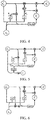
- FIG. 4 is a schematic structural diagram of a GRU according to an embodiment of the present disclosure
- s t F represents the future translation vector of the t th moment, that is, the first translation vector
- s t ⁇ 1 F represents the future translation vector of the (t-1) th moment, that is, the third translation vector
- c t represents the source context vector of the first moment
- u t represents an update gate of the first moment
- s ⁇ t F represents an update state candidate generated by the GRU, that is, a middle vector
- r t represents an outputted weight vector
- tanh ( ) represents a hyperbolic tangent function
- ⁇ ( ) represents a sigmoid function.
- U, W , U r , W r , U u and W u represent parameters related to the functions, and the parameters are trained together with other parameters of the neural network translation system.
- FIG. 5 is another schematic structural diagram of a GRU according to an embodiment of the present disclosure, and in this structure, first the source context vector c t of the first moment (that is, the t th moment) is subtracted from the future translation vector of the second moment (that is, the (t-1) th moment). The future translation vector of the second moment is the third translation vector. After the needed first translation vector is obtained, the first translation vector is transmitted into the GRU structure.
- M s t ⁇ 1 F c t represents subtracting c t from s t ⁇ 1 F
- U m and W m represent parameters related to the functions, and the parameters are trained together with other parameters of the neural network translation system.
- the GRU can be used to subtract the source context vector from the third translation vector, to obtain the first translation vector, and further transmit the obtained first translation vector into the GRU structure.
- the signal of decreasing can be provided in the GRU, which helps to learn the rule, thereby improving accuracy of model training.
- the processing the third translation vector and the source context vector by using the preset neural network model, to obtain the first translation vector may include:
- s ⁇ t F represents an update state candidate generated by the GRU, that is, a middle vector
- r t represents an output weight vector
- tanh ( ) represents a hyperbolic tangent function
- s t ⁇ 1 F the future translation vector of the (t-1) th moment, that is, the third translation vector
- c t represents the source context vector of the first moment.
- an interpolation combination may be performed on s ⁇ t F and the third translation vector of the (t-1) th moment, to obtain the final first translation vector s t F .
- a past translation vector and a future translation vector may be obtained at each moment.
- s t P represents a translated source content till the t th moment
- s t F represents an untranslated source content till the t th moment.
- a procedure that the target information determining apparatus processes the third translation vector and the source context vector by using a preset neural network model, to obtain the first translation vector may be: first processing the third translation vector and the source context vector by using the GRU, to obtain a middle vector, and performing an interpolation combination on the middle vector and the third translation vector, to obtain the first translation vector.
- the obtaining a source context vector corresponding to a first moment according to the source vector representing sequence may include:
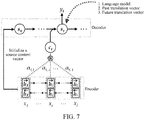
- FIG. 7 is a schematic diagram of an embodiment of an enhancement attention module according to the embodiments of the present disclosure.
- the target information determining apparatus includes an encoder and a decoder, a decoder state S t-1 of the decoder at the second moment, the second translation vector s t ⁇ 1 P , the third translation vector s t ⁇ 1 F , and the vector h i of the source content in the source vector representing sequence, the alignment probability ⁇ t,i of the source content is determined.
- ⁇ t,i is an alignment probability distribution output by an attention mechanism for each source content, a sum of the alignment probability distributions being 1, h i is a vector representation for an i th source content in the input sentence by the encoder, and Soft max ( ) represents a normalization operation.
- a value inputted by the neural network is usually a positive or negative value. Therefore, an index value of the value is usually transformed into a positive value first, and then all the index values are normalized, to obtain the probability distribution.
- a( ) is an operation of the attention module.
- the alignment probability of the source content may be determined according to the decoder state of the second moment, the second translation vector, the third translation vector, and the vector of the source content in the source vector representing sequence, and then the source context vector of the first moment is determined according to the alignment probability of the source content and the semantic vector of the source content.
- the method may further include: determining a decoder state of the first moment according to the decoder state of the second moment, target information of the second moment, the source context vector, the first translation vector, and the second translation vector; and
- the decoding the first translation vector and/or the second translation vector and the source context vector, to obtain target information of the first moment may include: decoding the decoder state of the first moment, the source context vector, and the first translation vector and/or the second translation vector, to obtain the target information of the first moment.
- the decoder state of the first moment needs to be first determined according to the decoder state of the second moment, the target information of the second moment, the source context vector, the first translation vector, and the second translation vector.
- the first moment is the t th moment, and is also used as the current moment
- the second moment is the (t-1) th moment, and is also used as the last moment.
- FIG. 8 is a schematic diagram of an embodiment of an enhancement decoder state according to the embodiments of the present disclosure.
- the decoder state of the second moment is s t-1
- the target information of the second moment is y t-1
- the source context vector is c t
- the first translation vector is s t F
- the second translation vector is s t ⁇ 1 P .
- f ( ) represents an activation function that updates the decoder state, which is a standard configuration of a neural network translation model. An input of the activation function may be flexibly changed as needed.
- the decoder state of the first moment needs to be determined according to the decoder state of the second moment, the target information of the second moment, the source context vector, the first translation vector, and the second translation vector, and then the decoder state of the first moment, the source context vector, the first translation vector and/or the second translation vector are decoded, to obtain the target information of the first moment.
- models of the first translation vector and/or the second translation vector are separated from the decoder state, and may form a complete source semantic vector representation with the source context vector outputted by the attention module at the first moment, to be transmitted to the decoder, to generate more accurate target information.
- another optional embodiment of the target information determining method provided in the embodiments of the present disclosure may further include:
- a method of adding the training target is further provided, and by adding the training target, the preset neural network model may be better trained and obtained.
- training the future translation vector is described as an example, and it may be understood that, the manner of training the future translation vector is similar to the manner of training the past translation vector, and is not described herein again.
- ⁇ t F s t ⁇ 1 F ⁇ s t F ⁇ c t needs to be achieved as far as possible, that is, an information gap between two translation vectors of adjacent moments is roughly the same as a source content being translated at this moment, to meet a model of the future translation vector.
- a new indicator expected value is defined to directly evaluate the consistency between the future translation vector change and the corresponding generated target information on a semantic level.
- E(y t ) represents the target information
- y t is a vector representation of the target information
- E y t is an indicator expected value that evaluates whether the future translation vector is updated as expected (for example, an update volume is basically the same as the translated source content). As the indicator expected value is greater, the expectation is more corresponded.
- ⁇ t F is an absolute value of a difference between the first translation vector s t F and the third translation vector s t ⁇ 1 F .
- ⁇ t P is obtained by calculating according to the second translation vector s t ⁇ 1 P and the fourth translation vector s t P , and further the second indicator expected value loss ⁇ t P , E y t is obtained.
- J( ⁇ , ⁇ ) represents a parameter obtained by training, and is a general representation of the training target.
- ⁇ represents a parameter of the NMT system
- Y represents a newly introduced parameter of the past-future module
- arg max ⁇ , ⁇ represents a parameter corresponding to a training target that obtains a highest point (that is, the likelihood, the future loss, and the past loss in the formula).
- y ⁇ t , x ; ⁇ , ⁇ ⁇ likekihood represents a training target of a standard neural network translation module, that is, a generation probability of maximizing each piece of target information, or may be expressed as a likelihood point generated to maximize the target word.
- ⁇ ⁇ FUTURE loss represents the first indicator expected value of the future translation vector
- ⁇ ⁇ PAST loss represents the second indicator expected value of the past translation vector
- the first indicator expected value is obtained according to the first translation vector and the third translation vector
- the second indicator expected value is obtained according to the second translation vector and the fourth translation vector
- the training target is determined according to the first indicator expected value and the second indicator expected value.
- the training target is used for building the preset neural network model.
- FIG. 9 is a schematic diagram of an embodiment of translating a first source content in a source vector representing sequence in an application scenario of the present disclosure.
- the procedure is specifically as follows:
- An encoder reads in an input sentence " ⁇ eos>".
- ⁇ eos> represents a sentence end symbol, and then a source vector representing sequence is output, where each vector (that is, dots and lines in FIG. 9 ) corresponds to a source content.
- the decoder generates a translated text according to the source vector representing sequence.
- the alignment probability and the semantic vector are weighted, to generate the source context vector c 1 of the first moment, and the alignment probability is 0.5, 0.2, 0.2, 0.1, 0.0 and 0.0 in FIG. 9 .
- s 1 T represents a past translation vector of the first moment
- s 0 P represents a past translation vector of an initial moment
- s 1 F represents a future translation vector of the first moment
- s 0 F represents a future translation vector of the initial moment.
- the decoder decodes c 1 , s 1 F , s 0 P and a decoder state s 0 of the initial moment, which can update a decoder state s 1 of the first moment.
- a neural network output layer is used according to s 0 and c 1 , and is compared with all target words, in which a word with a highest similarity is used as the target information y 1 , where y 1 is the translation "many" of " ".
- FIG. 10 is a schematic diagram of an embodiment of translating a second source content in the source vector representing sequence in an application scenario of the present disclosure.
- the alignment probability and the semantic vector are weighted, to generate the source context vector c 2 of the second moment, and the alignment probability is 0.3, 0.6, 0.1, 0.0, 0.0 and 0.0 in FIG. 10 .
- s 2 P represents a past translation vector of the second moment
- s 1 P represents the past translation vector of the first moment
- s 2 P represents a future translation vector of the second moment
- s 1 F represents the future translation vector of the first moment.
- the decoder decodes c 2 , s 1 F , s 1 P and the decoder state s 1 of the first moment, which can update a decoder state of the second moment.
- a neural network output layer is used according to s 1 , c 2 and the target information y 1 generated previously, and is compared with all target words, in which a word with a highest similarity is used as the target information y 2 , where y 2 is the translation "airports" of " ".
- the entire input sentence is translated based on the foregoing.
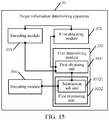
- a target information determining apparatus 30 in an embodiment of the present disclosure includes at least one memory and at least one processor.
- the at least one memory stores at least one instruction module, configured to be executed by the at least one processor.
- the at least one instruction module includes: an encoding module 301, configured to encode to-be-processed text information, to obtain a source vector representing sequence; a first obtaining module 302, configured to obtain, according to the source vector representing sequence obtained by the encoding module 301 through encoding, a source context vector corresponding to a first moment, the source context vector being used for representing a to-be-processed source content; a first determining module 303, configured to determine a first translation vector and/or a second translation vector according to the source vector representing sequence obtained by the encoding module 301 through encoding and the source context vector obtained by the first obtaining module 302, the first translation vector indicating an untranslated source content in the source vector representing sequence at the first moment, the second translation vector indicating a translated source content in the source vector representing sequence at a second moment, and the second moment being an adjacent moment before the first moment; and a decoding module 304, configured to decode the first translation vector and/or the second translation vector determined by the first determining module
- the encoding module 301 encodes t o-be-processed text information, to obtain a source vector representing sequence.
- the first obtaining module 302 obtains, according to the source vector representing sequence obtained by the encoding module 301 through encoding, a source context vector corresponding to a first moment, the source context vector being used for representing a to-be-processed source content.
- the first determining module 303 determines a first translation vector and/or a second translation vector according to the source vector representing sequence obtained by the encoding module 301 through encoding and the source context vector obtained by the first obtaining module 302, the first translation vector indicating an untranslated source content in the source vector representing sequence at the first moment, the second translation vector indicating a translated source content in the source vector representing sequence at a second moment, and the second moment being an adjacent moment before the first moment.
- the decoding module 304 decodes the first translation vector and/or the second translation vector determined by the first determining module 303 and the source context vector, to obtain target information of the first moment.
- a target information determining apparatus encodes to-be-processed text information, to obtain a source vector representing sequence; then obtains, according to the source vector representing sequence, a source context vector corresponding to a first moment, the source context vector being used for representing a to-be-processed source content; and determines a first translation vector and/or a second translation vector according to the source vector representing sequence and the source context vector, the first translation vector indicating an untranslated source content in the source vector representing sequence at the first moment, the second translation vector indicating a translated source content in the source vector representing sequence at a second moment, and the second moment is an adjacent moment before the first moment.
- the target information determining apparatus decodes the first translation vector and/or the second translation vector and the source context vector, to obtain target information of the first moment.
- the first determining module 303 includes: a first obtaining unit 3031, configured to obtain, according to the source vector representing sequence, a third translation vector corresponding to the second moment; and a first processing unit 3032, configured to process the third translation vector obtained by the first obtaining unit 3031 and the source context vector by using a preset neural network model, to obtain the first translation vector.
- the third translation vector corresponding to the second moment is obtained according to the source vector representing sequence; and then the third translation vector and the source context vector are processed by using the preset neural network model, to obtain the first translation vector.
- the first translation vector is outputted by using the preset neural network model, which can improve accuracy of a future translation vector.
- the first determining module 303 includes: a second obtaining unit 3033, configured to obtain, according to the source vector representing sequence, a third translation vector corresponding to the second moment; a second processing unit 3034, configured to process the third translation vector obtained by the second obtaining unit 3033 and the source context vector by using a preset neural network model, to obtain the first translation vector; and a third obtaining unit 3035, configured to obtain the second translation vector according to a location of the source context vector in the source vector representing sequence, the second translation vector being used for updating a fourth translation vector corresponding to the first moment, and the fourth translation vector being obtained by processing the second translation vector and the source context vector by using the preset neural network model.
- the third translation vector corresponding to the second moment is obtained according to the source vector representing sequence; and then the third translation vector and the source context vector are processed by using the preset neural network model, to obtain the first translation vector, and further, the second translation vector may be obtained according to the location of the source context vector in the source vector representing sequence, the second translation vector being used for updating the fourth translation vector corresponding to the first moment, and the fourth translation vector being obtained by processing the second translation vector and the source context vector by using the preset neural network model.
- the first obtaining unit 303 includes: a fourth obtaining unit 3036, configured to obtain the second translation vector according to a location of the source context vector in the source vector representing sequence, the second translation vector being used for generating a fourth translation vector corresponding to the first moment, and the fourth translation vector being obtained by processing the second translation vector and the source context vector by using the preset neural network model.
- the second translation vector is obtained according to the location of the source context vector in the source vector representing sequence, the second translation vector being used for generating the fourth translation vector corresponding to the first moment, and the fourth translation vector being obtained by processing the second translation vector and the source context vector by using the preset neural network model.
- the second translation vector is outputted by using the preset neural network model, which can improve accuracy of a past translation vector.
- the first processing unit 3032 includes: a subtraction subunit 30321, configured to subtract the source context vector form the third translation vector by using a GRU, to obtain the first translation vector.
- the GRU can be used to subtract the source context vector from the third translation vector, to obtain the first translation vector, and further transmit the obtained first translation vector into the GRU structure.
- the signal of decreasing can be provided in the GRU, which helps to learn the rule, thereby improving accuracy of model training.
- the first processing unit 3032 includes: a processing subunit 30322, configured to process the third translation vector and the source context vector by using a GRU, to obtain a middle vector; and a combination subunit 30323, configured to perform an interpolation combination on the middle vector obtained by the processing subunit 30322 through processing and the third translation vector, to obtain the first translation vector.
- a procedure that the target information determining apparatus processes the third translation vector and the source context vector by using a preset neural network model, to obtain the first translation vector may be: first processing the third translation vector and the source context vector by using a GRU, to obtain a middle vector, and performing an interpolation combination on the middle vector and the third translation vector, to obtain the first translation vector.
- the first obtaining module 302 includes: a first determining unit 3021, configured to determine an alignment probability of the source content according to a decoder state of the second moment, the second translation vector, a third translation vector, and a vector of a source content in the source vector representing sequence; and a second determining unit 3022, configured to determine, according to the alignment probability of the source content determined by the first determining unit 3021 and a semantic vector of the source content, the source context vector corresponding to the first moment.
- the alignment probability of the source content may be determined according to the decoder state of the second moment, the second translation vector, the third translation vector, and the vector of the source content in the source vector representing sequence, and then the source context vector of the first moment is determined according to the alignment probability of the source content and the semantic vector of the source content.
- the target information determining apparatus 30 may further include: a second determining module 305, configured to: before the decoding module 304 decodes the first translation vector and/or the second translation vector and the source context vector, to obtain target information of the first moment, determine a decoder state of the first moment according to a decoder state of the second moment, target information of the second moment, the source context vector, the first translation vector, and the second translation vector; and the decoding module 304 includes: a decoding unit 3041, configured to decode the decoder state of the first moment, the source context vector, the first translation vector and/or the second translation vector, to obtain the target information of the first moment.
- the decoder state of the first moment needs to be determined according to the decoder state of the second moment, the target information of the second moment, the source context vector, the first translation vector and the second translation vector, and then the decoder state of the first moment, the source context vector, the first translation vector and/or the second translation vector are decoded, to obtain the target information of the first moment.
- models of the first translation vector and/or the second translation vector are separated from the decoder state, and may form a complete source semantic vector representation with the source context vector outputted by the attention module at the first moment, to be transmitted to the decoder to generate more accurate target information.
- the target information determining apparatus 30 may further include: a second obtaining module 306, configured to obtain a first indicator expected value according to the first translation vector and the third translation vector, the first indicator expected value being used for representing a consistency situation of semantics between a future translation vector change and the target information of the first moment; a third obtaining module 307, configured to obtain a second indicator expected value according to the second translation vector and the fourth translation vector, the second indicator expected value being used for representing a consistency situation of semantics between a past translation vector change and the target information of the first moment; and a second determining module 308, configured to determine a training target according to the first indicator expected value obtained by the second obtaining module 306 and the second indicator expected value obtained by the third obtaining module 307, the training target being used for building a preset neural network model.
- a second obtaining module 306 configured to obtain a first indicator expected value according to the first translation vector and the third translation vector, the first indicator expected value being used for representing a consistency situation of semantics between a future translation vector change and the target
- the first indicator expected value is obtained according to the first translation vector and the third translation vector
- the second indicator expected value is obtained according to the second translation vector and the fourth translation vector
- the training target is determined according to the first indicator expected value and the second indicator expected value, the training target being used for building the preset neural network model.
- FIG. 20 is a schematic structural diagram of a target information determining apparatus according to an embodiment of the present disclosure.
- the target information determining apparatus 300 may vary greatly due to different configurations or performance, and may include one or more central processing units (CPUs) 322 (for example, one or more processors), a memory 332, and one or more storage media 330 (for example, one or more mass storage devices) that store applications 342 or data 344.
- the memory 332 and the storage medium 330 may be transient or persistent storages.
- the program stored in the storage medium 330 may include one or more modules (not shown in the figure), and each module may include a series of instructions and operations for the target information determining apparatus.
- the CPU 322 may be configured to communicate with the storage medium 330, and perform, on the target information determining apparatus 300, the series of instructions and operations in the storage medium 330.
- the target information determining apparatus 300 may further include one or more power supplies 326, one or more wired or wireless network interfaces 350, one or more input/output interfaces 358, and/or one or more operating systems 341, for example, Windows ServerTM, Mac OS XTM, UnixTM, LinuxTM, or FreeBSDTM.
- Steps performed by the target information determining apparatus in the foregoing embodiments may be based on the structure of the target information determining apparatus shown in FIG. 20 .
- the CPU 322 is configured to perform the following steps: encoding to-be-processed text information, to obtain a source vector representing sequence; obtaining, according to the source vector representing sequence, a source context vector corresponding to a first moment, the source context vector being used for representing a to-be-processed source content; determining a first translation vector and/or a second translation vector according to the source vector representing sequence and the source context vector, the first translation vector indicating an untranslated source content in the source vector representing sequence at the first moment, the second translation vector indicating a translated source content in the source vector representing sequence at a second moment, and the second moment is an adjacent moment before the first moment; and decoding the first translation vector and/or the second translation vector and the source context vector, to obtain target information of the first moment.
- the CPU 322 is specifically configured to perform the following steps: obtaining, according to the source vector representing sequence, a third translation vector corresponding to the second moment; and processing the third translation vector and the source context vector by using a preset neural network model, to obtain the first translation vector.
- the CPU 322 is specifically configured to perform the following steps: obtaining, according to the source vector representing sequence, a third translation vector corresponding to the second moment; processing the third translation vector and the source context vector by using a preset neural network model, to obtain the first translation vector; and obtaining the second translation vector according to a location of the source context vector in the source vector representing sequence, the second translation vector being used for updating a fourth translation vector corresponding to the first moment, and the fourth translation vector being obtained by processing the second translation vector and the source context vector by using the preset neural network model.
- the CPU 322 is specifically configured to perform the following step: obtaining the second translation vector according to a location of the source context vector in the source vector representing sequence, the second translation vector being used for generating a fourth translation vector corresponding to the first moment, and the fourth translation vector being obtained by processing the second translation vector and the source context vector by using the preset neural network model.
- the CPU 322 is specifically configured to perform the following step: subtracting the source context vector from the third translation vector by using a GRU, to obtain the first translation vector.
- the CPU 322 is specifically configured to perform the following steps: processing the third translation vector and the source context vector by using a GRU, to obtain a middle vector; and performing an interpolation combination on the middle vector and the third translation vector, to obtain the first translation vector.
- the CPU 322 is specifically configured to perform the following steps: determining an alignment probability of a source content according to a decoder state of the second moment, the second translation vector, the third translation vector, and a vector of the source content in the source vector representing sequence; and determining the source context vector corresponding to the first moment according to the alignment probability of the source content and a semantic vector of the source content.
- the CPU 322 is further configured to perform the following step: determining a decoder state of the first moment according to a decoder state of the second moment, target information of the second moment, the source context vector, the first translation vector, and the second translation vector.
- the CPU 322 is specifically configured to perform the following step: decoding the decoder state of the first moment, the first translation vector, the second translation vector, and the source context vector, to obtain the target information of the first moment.
- the CPU 322 is specifically configured to perform the following steps: obtaining a first indicator expected value according to the first translation vector and the third translation vector, where the first indicator expected value is used for representing a consistency situation of semantics between a future translation vector change and the target information of the first moment; obtaining a second indicator expected value according to the second translation vector and the fourth translation vector, where the second indicator expected value is used for representing a consistency situation of semantics between a past translation vector change and the target information of the first moment; and determining a training target according to the first indicator expected value and the second indicator expected value, where the training target is used for building a preset neural network model.
- the disclosed system, apparatus, and method may be implemented in other manners.
- the described apparatus embodiment is merely an example.
- the unit division is merely logical function division and may be other division during actual implementation.
- a plurality of units or components may be combined or integrated into another system, or some features may be ignored or not performed.
- the displayed or discussed mutual couplings or direct couplings or communication connections may be implemented by using some interfaces.
- the indirect couplings or communication connections between the apparatuses or units may be implemented in electronic, mechanical, or other forms.
- the units described as separate parts may or may not be physically separate, and parts displayed as units may or may not be physical units, may be located in one position, or may be distributed on a plurality of network units. Some or all of the units may be selected according to actual requirements to achieve the objectives of the solutions of the embodiments.
- functional units in the embodiments of the present disclosure may be integrated into one processing unit, or each of the units may exist alone physically, or two or more units are integrated into one unit.
- the integrated unit may be implemented in the form of hardware, or may be implemented in the form of a software functional unit.
- the integrated unit When the integrated unit is implemented in the form of a software functional unit and sold or used as an independent product, the integrated unit may be stored in a computer-readable storage medium. Based on such an understanding, the technical solutions of the present disclosure essentially, or the part contributing to the related art, or all or some of the technical solutions may be implemented in a form of a software product.
- the computer software product is stored in a storage medium, and includes several instructions for instructing a computer device (which may be a personal computer, a server, a network device, or the like) to perform all or some of the steps of the methods described in the embodiments of the present disclosure.
- the foregoing storage medium includes: any medium that can store program code, such as a USB flash memory drive, a removable hard disk, a read-only memory (ROM), a random access memory (RAM), a magnetic disk, or an optical disc. Therefore, an embodiment of the present disclosure further provides a computer-readable storage medium including an instruction. When run on a computer, the instruction causes the computer to perform the foregoing method.
- program code such as a USB flash memory drive, a removable hard disk, a read-only memory (ROM), a random access memory (RAM), a magnetic disk, or an optical disc. Therefore, an embodiment of the present disclosure further provides a computer-readable storage medium including an instruction. When run on a computer, the instruction causes the computer to perform the foregoing method.
Landscapes
- Engineering & Computer Science (AREA)
- Theoretical Computer Science (AREA)
- Physics & Mathematics (AREA)
- Artificial Intelligence (AREA)
- Health & Medical Sciences (AREA)
- Computational Linguistics (AREA)
- General Health & Medical Sciences (AREA)
- General Engineering & Computer Science (AREA)
- General Physics & Mathematics (AREA)
- Life Sciences & Earth Sciences (AREA)
- Biomedical Technology (AREA)
- Biophysics (AREA)
- Data Mining & Analysis (AREA)
- Evolutionary Computation (AREA)
- Molecular Biology (AREA)
- Computing Systems (AREA)
- Mathematical Physics (AREA)
- Software Systems (AREA)
- Audiology, Speech & Language Pathology (AREA)
- Probability & Statistics with Applications (AREA)
- Machine Translation (AREA)
Abstract
Description
- This application claims priority to Chinese Patent Application No.
201710612833.7 - Embodiments of the present disclosure relate to the field of computer technologies, and in particular, to a translation method, a target information determining method, a related apparatus, and a storage medium.
- Machine translation (MT) is a procedure of transforming a text or a speech from a language to another language with a content of the same meaning by using a machine. As deep learning develops, a deep neural network technology is also applied to MT in recent years, and neural machine translation (NMT) becomes a new generation of translation technology.
- Embodiments of the present disclosure provide a translation method, a target information determining method, a related apparatus, and a storage medium.
- According to an aspect, the present disclosure provides a translation method. The method is applied to a neural machine translation (NMT) system and includes: encoding to-be-processed text information by using an encoder, to obtain a source vector representing sequence, the to-be-processed text information belonging to a first language; obtaining a source context vector corresponding to a first moment according to the source vector representing sequence, the source context vector corresponding to the first moment being used for indicating a to-be-processed source content in the to-be-processed text information at the first moment; determining a translation vector according to the source vector representing sequence and the source context vector, the translation vector including a first translation vector and/or a second translation vector, the first translation vector being a vector corresponding to an untranslated source content in the source vector representing sequence at the first moment, the second translation vector being a vector corresponding to a translated source content in the source vector representing sequence at a second moment, and the second moment being an adjacent moment before the first moment; and decoding the translation vector and the source context vector by using a decoder, to obtain target information of the first moment, the target information belonging to a second language different from the first language.
- According to another aspect, the present disclosure provides a target information determining method, including: encoding to-be-processed text information, to obtain a source vector representing sequence; obtaining a source context vector corresponding to a first moment according to the source vector representing sequence, the source context vector corresponding to the first moment being used for indicating a to-be-processed source content in the to-be-processed text information at the first moment; determining a translation vector according to the source vector representing sequence and the source context vector, the translation vector including a first translation vector and/or a second translation vector, the first translation vector being a vector corresponding to an untranslated source content in the source vector representing sequence at the first moment, the second translation vector being a vector corresponding to a translated source content in the source vector representing sequence at a second moment, and the second moment being an adjacent moment before the first moment; and decoding the translation vector and the source context vector, to obtain target information of the first moment.
- According to another aspect, the present disclosure provides a target information determining apparatus, including at least one memory and at least one processor, the at least one memory storing at least one instruction module, configured to be executed by the at least one processor, the at least one instruction module including: an encoding module, configured to encode to-be-processed text information, to obtain a source vector representing sequence; a first obtaining module, configured to obtain a source context vector corresponding to a first moment according to the source vector representing sequence, the source context vector corresponding to the first moment being used for indicating a to-be-processed source content in the to-be-processed text information at the first moment; a first determining module, configured to determine a translation vector according to the source vector representing sequence and the source context vector, the translation vector including a first translation vector and/or a second translation vector, the first translation vector being a vector corresponding to an untranslated source content in the source vector representing sequence at the first moment, the second translation vector being a vector corresponding to a translated source content in the source vector representing sequence at a second moment, and the second moment being an adjacent moment before the first moment; and a decoding module, configured to decode the translation vector and the source context vector, to obtain target information of the first moment.
- According to another aspect, the present disclosure provides a target information determining apparatus, including a memory, a processor, and a bus system, the memory being configured to store a program; the processor being configured to execute the program in the memory, which includes the following operations: encoding to-be-processed text information, to obtain a source vector representing sequence; obtaining a source context vector corresponding to a first moment according to the source vector representing sequence, the source context vector corresponding to the first moment being used for indicating a to-be-processed source content in the to-be-processed text information at the first moment; determining a translation vector according to the source vector representing sequence and the source context vector, the translation vector including a first translation vector and/or a second translation vector, the first translation vector being a vector corresponding to an untranslated source content in the source vector representing sequence at the first moment, the second translation vector being a vector corresponding to a translated source content in the source vector representing sequence at a second moment, and the second moment being an adjacent moment before the first moment; and decoding the translation vector and the source context vector, to obtain target information of the first moment; and the bus system being configured to connect the memory and the processor, so that the memory communicates with the processor.
- According to another aspect, the present disclosure provides a computer readable storage medium. The computer readable storage medium stores an instruction. When run on a computer, the instruction causes the computer to perform the method according to the foregoing aspects.
- According to another aspect, the present disclosure provides a target information determining method. The method is performed by an electronic device and includes: encoding to-be-processed text information, to obtain a source vector representing sequence; obtaining a source context vector corresponding to a first moment according to the source vector representing sequence, the source context vector corresponding to the first moment being used for indicating a to-be-processed source content in the to-be-processed text information at the first moment; determining a translation vector according to the source vector representing sequence and the source context vector, the translation vector including a first translation vector and/or a second translation vector, the first translation vector being a vector corresponding to an untranslated source content in the source vector representing sequence at the first moment, the second translation vector being a vector corresponding to a translated source content in the source vector representing sequence at a second moment, and the second moment being an adjacent moment before the first moment; and decoding the translation vector and the source context vector, to obtain target information of the first moment.
-
-
FIG. 1 is an architectural diagram of a target information determining apparatus according to the embodiments of the present disclosure. -
FIG. 2 is a schematic flowchart of a target information determining method according to an embodiment of the present disclosure. -
FIG. 3 is a schematic diagram of an embodiment of the target information determining method according to the embodiments of the present disclosure. -
FIG. 4 is a schematic structural diagram of a gated recurrent unit (GRU) according to an embodiment of the present disclosure. -
FIG. 5 is another schematic structural diagram of a GRU according to an embodiment of the present disclosure. -
FIG. 6 is another schematic structural diagram of a GRU according to an embodiment of the present disclosure. -
FIG. 7 is a schematic diagram of an embodiment of an enhancement attention module according to the embodiments of the present disclosure. -
FIG. 8 is a schematic diagram of an embodiment of an enhancement decoder state according to the embodiments of the present disclosure. -
FIG. 9 is a schematic diagram of an embodiment of translating a first source content in a source vector representing sequence in an application scenario of the present disclosure. -
FIG. 10 is a schematic diagram of an embodiment of translating a second source content in the source vector representing sequence in the application scenario of the present disclosure. -
FIG. 11 is a schematic diagram of an embodiment of the target information determining apparatus according to the embodiments of the present disclosure. -
FIG. 12 is a schematic diagram of another embodiment of the target information determining apparatus according to the embodiments of the present disclosure. -
FIG. 13 is a schematic diagram of another embodiment of the target information determining apparatus according to the embodiments of the present disclosure. -
FIG. 14 is a schematic diagram of another embodiment of the target information determining apparatus according to the embodiments of the present disclosure. -
FIG. 15 is a schematic diagram of another embodiment of the target information determining apparatus according to the embodiments of the present disclosure. -
FIG. 16 is a schematic diagram of another embodiment of the target information determining apparatus according to the embodiments of the present disclosure. -
FIG. 17 is a schematic diagram of another embodiment of the target information determining apparatus according to the embodiments of the present disclosure. -
FIG. 18 is a schematic diagram of another embodiment of the target information determining apparatus according to the embodiments of the present disclosure. -
FIG. 19 is a schematic diagram of another embodiment of the target information determining apparatus according to the embodiments of the present disclosure. -
FIG. 20 is a schematic structural diagram of the target information determining apparatus according to an embodiment of the present disclosure. - The embodiments of the present disclosure provide a translation method, a target information determining method, and a related apparatus, which can model an untranslated source content and/or a translated source content in a source vector representing sequence, that is, separate the contents from an original language model for training, thereby reducing a difficulty of model training of a decoder, and improving a translation effect of a translation system.
- The terms "first", "second", "third", "fourth", and the like (if exists) in the specification and the claims of the present disclosure and the foregoing accompanying drawings are used for distinguishing similar objects, and do not need to be used for describing a particular sequence or order. It may be understood that data used in this way is interchangeable in a suitable case, so that the embodiments of the present disclosure described herein can be implemented in a sequence in addition to the sequence shown or described herein. In addition, the terms "include", "contain" and any other variants mean to cover the non-exclusive inclusion, for example, a process, method, system, product, or device that includes a list of steps or units is not necessarily limited to those expressly listed steps or units, but may include other steps or units not expressly listed or inherent to such a process, method, product, or device.
- It may be understood that, the embodiments of the present disclosure are mainly applied to an encoder-decoder model, where encoding is transforming an input sequence into a vector with a length, and the decoding is transforming a vector sequence generated by an encoder into an output sequence. The encoder-decoder model is applied to many fields, such as translation, document abstract, and a question-answering system. During translation, the input sequence is a to-be-translated text, and the output sequence is a translated text. In the question-answering system, the input sequence is a raised question, and the output sequence is an answer.
- It may be understood that, during a specific implementation, the encoder and the decoder are not fixed, which are optionally a convolutional neural network (CNN), a recurrent neural network (RNN), a gated recurrent unit (GRU), a long short term memory (LSTM), a bidirectional recurrent neural network (BiRNN), and the like. Different neural networks may be used during encoding and decoding. For example, the BiRNN is used during encoding and the RNN is used during decoding, or the RNN is used during encoding and the LSTM is used during decoding. This is not limited herein.
- Referring to
FIG. 1, FIG. 1 is an architectural diagram of a target information determining apparatus according to the embodiments of the present disclosure. As shown inFIG. 1 , two hidden layers are additionally introduced in a decoder, and the two hidden layers may be represented by using vector sequences. The

- The present disclosure, by introducing the additional hidden layers, directly models a past translation (a translated content) and a future translation (an untranslated content) on a semantic level, separates related contents from the decoder state, and improves storing and applications of a neural network translation system on the related contents, thereby improving a translation system effect. The method provided in the present disclosure can be applied to a mainstream neural machine translation (NMT) system.
- For ease of understanding, referring to
FIG. 2, FIG. 2 is a schematic flowchart of a target information determining method according to an embodiment of the present disclosure. As shown inFIG. 2 , the method is specifically: - First, an encoder module S1 inputs a to-be-processed sentence in step S101, and then the encoder module S1 outputs a source vector representing sequence. Next, an attention module S2, a past-future module S3, and a decoder module S4 repeat the following steps until an entire translated text is generated.
- The attention module S2 reads in a past translation vector and a future translation vector of a (t-1)th moment. The past translation vector is initially a zero vector, representing that there is no translated source content, and the future translation vector is initially a last vector of the source vector representing sequence, representing a summary of a source sentence. The attention module S2 outputs a source context vector of a current moment, that is, a tth moment, in step S103. The past-future module S3 reads the source context vector of the current moment, and updates a past translation vector and a future translation vector of the tth moment in step S104. The decoder module S4 reads the future translation vector of the tth moment, the past translation vector of the (t-1)th moment, the source context vector of the tth moment, and another standard input, and generates a target word of the tth moment in step S105.
- The present disclosure can be applied to an NMT system. A translation method provided in the present disclosure is described below, and an embodiment of the translation method according to the embodiments of the present disclosure includes:
- In the NMT system, first, to-be-processed text information is encoded by using an encoder, to obtain a source vector representing sequence. The to-be-processed text information belongs to a first language, for example, Chinese. It may be understood that, in actual application, the first language may be other types of languages.
- The encoding process is specifically: inputting the to-be-processed text information into an encoder in the NMT system, then encoding the to-be-processed text information by using the encoder, and obtaining the source vector representing sequence according to an encoding result, Source vectors in the source vector representing sequence belong to the first language.
- Assuming that the first language is Chinese, the to-be-processed text information may be a Chinese sentence, and the sentence includes a plurality of phrases. After the Chinese sentence is encoded, the source vector representing sequence may be obtained, and a source context vector corresponding to a current moment, that is, a first moment, is further obtained. The source context vector i used for representing a to-be-processed source content, and the source content may be specifically a word in the Chinese sentence.
- It may be understood that, the source context vector corresponding to the first moment is used for indicating a to-be-processed source content in the to-be-processed text information at the first moment.
- Next, the NMT system determines a first translation vector and/or a second translation vector according to the source vector representing sequence and the source context vector. The first translation vector indicates an untranslated source content in the source vector representing sequence at the first moment, the second translation vector indicates a translated source content in the source vector representing sequence at a second moment, and the second moment is an adjacent moment before the first moment. If the first moment is the tth moment, the second moment is the (t-1)th moment.
- For ease of description, the first translation vector and/or the second translation vector may be referred to as a translation vector. The translation vector may be the first translation vector, may be the second translation vector, or may be the first translation vector and the second translation vector.
- That is, the first translation vector is a vector corresponding to the untranslated source content in the source vector representing sequence at the first moment, and the second translation vector is a vector corresponding to the translated source content in the source vector representing sequence at the second moment.
- For example, it is assumed that the source content corresponding to the source vector representing sequence is "1300
 ". Words corresponding to the source vectors are "
 ", "
", " ", "
", " ", "
", " ", "
", " ", "
", " " and "1300
 ". If the word "
 " is to be translated at the current moment, the future translation vector may be understood as vectors respectively corresponding to the untranslated "", "", "", "
 " and "1300
 ", and the past translation vector may be understood as vectors corresponding to the translated "" and "".
 - Finally, in the NMT system, the first translation vector and/or the second translation vector and the source context vector are decoded by using a decoder, to obtain target information of the first moment. The target information belongs to a second language. It may be understood that, the second language is a language different from the first language, and may be English, French, Japanese, and the like. This is not limited herein.
- Assuming that the word "" is to be translated at the first moment, the outputted target information may be "all parts of the world", that is, the first language is Chinese, and the second language is English. The procedure of machine translation ends here.
- In this embodiment of the present disclosure, a translation method is provided, which can model an untranslated source content and/or a translated source content in a source vector representing sequence, that is, separate the contents from an original language model for training, thereby reducing a difficulty of model training of a decoder, and improving a translation effect of a translation system.
- A target information determining method of the present disclosure is described below, and the method may be performed by an electronic device. Referring to
FIG. 3 , an embodiment of the target information determining method according to the embodiments of the present disclosure includes the following steps: - 201: Encode to-be-processed text information, to obtain a source vector representing sequence.
- In this embodiment, the to-be-processed text information is encoded by an encoder in a target information determining apparatus. The to-be-processed text information may be a to-be-translated sentence, for example, "". After the sentence is encoded, the source vector representing sequence may be obtained.

- Each vector in the source vector representing sequence corresponds to a source content (source word). For example, in the sentence "", the source contents are respectively "", "
 ", "
", " ", "
", " ", "∘" and "<eos>". According to the sequence, the decoder in the target information determining apparatus generates a translated text word by word.
- 202: Obtain a source context vector corresponding to a first moment according to the source vector representing sequence, the source context vector being used for representing a to-be-processed source content.
- It may be understood that, the source context vector corresponding to the first moment is used for indicating a to-be-processed source content in the to-be-processed text information at the first moment.
- In this embodiment, the target information determining apparatus may obtain the source context vector corresponding to the first moment according to the source vector representing sequence. The first moment is the tth moment in this embodiment of the present disclosure, and the source context vector is used for representing the to-be-processed source content.
- Specifically, the target information determining apparatus outputs an alignment probability, for example, 0.0 or 0.2, for each source content. A sum of the alignment probabilities in the source vector representing sequence is 1, and a greater alignment probability represents that the source content is more related to to-be-generated target information. By weighting the alignment probability and a semantic vector, the source context vector of the tth moment may be generated.
- 203: Determine a first translation vector and/or a second translation vector according to the source vector representing sequence and the source context vector, the first translation vector indicating an untranslated source content in the source vector representing sequence at the first moment, the second translation vector indicating a translated source content in the source vector representing sequence at a second moment, and the second moment being an adjacent moment before the first moment.
- It may be understood that, the first translation vector and/or the second translation may be referred to as a translation vector.
- In this embodiment, the target information determining apparatus may determine the first translation vector according to the source vector representing sequence and the source context vector, or determine the second translation vector according to the source vector representing sequence and the source context vector, or determine the first translation vector and the second translation vector according to the source vector representing sequence and the source context vector. The first translation vector indicates the untranslated source content in the source vector representing sequence at the first moment, the second translation vector indicates the translated source content in the source vector representing sequence at the second moment, and the second moment is an adjacent moment before the first moment.
- Specifically, the first translation vector represents a future translation vector of the tth moment, and the second translation vector represents a past translation vector of the (t-1)th moment.
- When one piece of target information is generated, a corresponding source context vector ct is added to a past translation vector of a previous moment to obtain a new past translation vector, and ct is subtracted from a future translation vector of the previous moment to obtain a new future translation vector.
- 204: Decode the first translation vector and/or the second translation vector and the source context vector, to obtain target information of the first moment.
- In this embodiment, the decoder in the target information determining apparatus may decode the first translation vector and the source context vector by using a neural network output layer, to obtain the target information of the first moment. Alternatively, the decoder may decode the second translation vector and the source context vector, to obtain the target information of the first moment. Alternatively, the decoder may decode the first translation vector, the second translation vector, and the source context vector, to obtain the target information of the first moment.
- A plurality of pieces of to-be-selected information may be generated in a procedure of generating the target information, and one word with a highest similarity is finally outputted as the target information. For example, in the sentence "", the "" may be translated into "many" and "much". However, it may be known from semantic knowledge stored in a decoder state vector that, "many" is used before a countable noun, and therefore, the "" herein is finally translated into "many".
- In the embodiments of the present disclosure, a target information determining method is provided. First a target information determining apparatus encodes to-be-processed text information, to obtain a source vector representing sequence; then obtains a source context vector corresponding to a first moment according to the source vector representing sequence, the source context vector being used for representing a to-be-processed source content; and determines a first translation vector and/or a second translation vector according to the source vector representing sequence and the source context vector, the first translation vector indicating an untranslated source content in the source vector representing sequence at the first moment, the second translation vector indicating a translated source content in the source vector representing sequence at a second moment, and the second moment is an adjacent moment before the first moment. Finally, the target information determining apparatus decodes the first translation vector and/or the second translation vector and the source context vector, to obtain target information of the first moment. Through the foregoing manner, the untranslated source content and/or the translated source content in the source vector representing sequence can be modeled, that is, the contents can be separated from an original language model for training, thereby reducing a difficulty of model training of a decoder, and improving a translation effect of a translation system.
- Optionally, based on the embodiment corresponding to
FIG. 3 , in an optional embodiment of the target information determining method provided in the embodiments of the present disclosure, the determining a first translation vector according to the source vector representing sequence and the source context vector may include: - obtaining a third translation vector corresponding to the second moment according to the source vector representing sequence; and
- processing the third translation vector and the source context vector by using a preset neural network model, to obtain the first translation vector.
- It may be understood that, the third translation vector is a vector corresponding to an untranslated source content in the source vector representing sequence at the second moment.
- In this embodiment, the procedure that the target information determining apparatus determines the first translation vector according to the source vector representing sequence and the source context vector may include: first obtaining the third translation vector corresponding to the second moment according to the source vector representing sequence; and then processing the third translation vector and the source context vector by using the preset neural network model, to obtain the first translation vector.
- Specifically, assuming that the first moment is the tth moment and the second moment is the (t-1)th moment, the target information determining apparatus needs to read in the source context vector of the first moment (representing the translated source content at the first moment), and further update the stored future translation vector. The future translation vector is initialized as a summary (usually a last vector of the source vector representing sequence) of the source sentence, representing that no initial source contents are translated. Therefore, at each moment, updating is as follows:


- The RNN is merely an example of the preset neural network model herein, and in actual application, the preset neural network model may be the LSTM, a latency network model or a gated convolutional neural network, or may be other types of neural network structures. This is not limited herein.
- Second, in this embodiment of the present disclosure, how to determine the first translation vector according to the source vector representing sequence and the source context vector is described. That is, the third translation vector corresponding to the second moment is obtained according to the source vector representing sequence; and then the third translation vector and the source context vector are processed by using the preset neural network model, to obtain the first translation vector. Through the foregoing manner, the first translation vector is outputted by using the preset neural network model, which can improve accuracy of the future translation vector.
- Optionally, based on the embodiment corresponding to
FIG. 3 , in another optional embodiment of the target information determining method provided in the embodiments of the present disclosure, the determining a first translation vector and a second translation vector according to the source vector representing sequence and the source context vector may include: - obtaining a third translation vector corresponding to the second moment according to the source vector representing sequence;
- processing the third translation vector and the source context vector by using a preset neural network model, to obtain the first translation vector; and
- obtaining the second translation vector according to a location of the source context vector in the source vector representing sequence, the second translation vector being used for updating a fourth translation vector corresponding to the first moment, and the fourth translation vector being obtained by processing the second translation vector and the source context vector by using the preset neural network model.
- It may be understood that, the fourth translation vector is a vector corresponding to a translated source content in the source vector representing sequence at the first moment.
- In this embodiment, assuming that the first moment is the tth moment and the second moment is the (t-1)th moment, the source context vector (that is, a source semantic content that is being translated) of the first moment is represented as ct, which is obtained by an attention module, and ct is also used for updating the past translation vector and the future translation vector. The updating is as follows:


- The RNN is merely an example of the preset neural network model, and in actual application, the preset neural network model may be the LSTM, a latency network model or a gated convolutional neural network, or may be other types of neural network structures. This is not limited herein.
- It is expected that a rule of "accumulation" can be achieved by modeling, that is, the source context vector ct (the source content that is being translated at the tth moment) of the tth moment and the past translation vector (the translated source content till the (t-1)th moment) of the (t-1)th moment are accumulated. Therefore, the RNN structure is selected, because the RNN can well summarize historical information till the tth moment, which corresponds to the expectation. For example,


- Second, in this embodiment of the present disclosure, how to determine the first translation vector and the second translation vector according to the source vector representing sequence and the source context vector is described. That is, the third translation vector corresponding to the second moment is obtained according to the source vector representing sequence; and then the third translation vector and the source context vector are processed by using the preset neural network model, to obtain the first translation vector, and further, the second translation vector may be obtained according to the location of the source context vector in the source vector representing sequence, the second translation vector being used for updating the fourth translation vector corresponding to the first moment, and the fourth translation vector being obtained by processing the second translation vector and the source context vector by using the preset neural network model. Through the foregoing manner, accuracy of the past translation vector and the future translation vector can be improved.
- Optionally, based on the embodiment corresponding to
FIG. 3 , in another optional embodiment of the target information determining method provided in the embodiments of the present disclosure, the determining a second translation vector according to the source vector representing sequence and the source context vector may include: - obtaining the second translation vector according to a location of the source context vector in the source vector representing sequence, the second translation vector being used for generating a fourth translation vector corresponding to the first moment, and the fourth translation vector being obtained by processing the second translation vector and the source context vector by using a preset neural network model.
- In this embodiment, the target information determining apparatus may obtain the second translation vector of the second moment according to a location of the source context vector of the first moment in the source vector representing sequence.
- Specifically, assuming that the first moment is the tth moment and the second moment is the (t-1)th moment, the target information determining apparatus needs to read in a source context vector of a (t-2)th moment and a past translation vector of the (t-2)th moment, then process the source context vector of the (t-2)th moment and the past translation vector of the (t-2)th moment by using the preset neural network model, to obtain the past translation vector of the (t-1)th moment. The past translation vector is initialized as a zero vector


- The RNN is merely an example of the preset neural network model, and in actual application, the preset neural network model may be the LSTM, a latency network model or a gated convolutional neural network, or may be other types of neural network structures. This is not limited herein.
- Second, in this embodiment of the present disclosure, how to determine the second translation vector according to the source vector representing sequence and the source context vector is described. That is, the second translation vector is obtained according to the location of the source context vector in the source vector representing sequence, the second translation vector being used for generating the fourth translation vector corresponding to the first moment, and the fourth translation vector being obtained by processing the second translation vector and the source context vector by using the preset neural network model. Through the foregoing manner, the second translation vector is outputted by using the preset neural network model, which can improve accuracy of the past translation vector.
- Optionally, based on any one of the foregoing two embodiments corresponding to
FIG. 3 , in another optional embodiment of the target information determining method provided in the embodiments of the present disclosure, the processing the third translation vector and the source context vector by using the preset neural network model, to obtain the first translation vector may include:
subtracting the source context vector from the third translation vector by using a GRU, to obtain the first translation vector. - It may be understood that, the GRU is an abbreviation of the Gated Recurrent Unit.
- In this embodiment, in the procedure of obtaining the future translation vector, modeling is needed to achieve a rule of "degression". Assuming that the first moment is the tth moment and the second moment is the (t-1)th moment, the source context vector ct of the first moment (the translated source content at the first moment) is subtracted from the third translation vector (a vector corresponding to a source content that is not translated till the second moment). Herein a plurality of types of structures is designed to model the rule of "degression". The present disclosure may be applied to a plurality of types of RNN structures, and herein description is provided by using a mainstream GRU as an example.
- Referring to
FIG. 4, FIG. 4 is a schematic structural diagram of a GRU according to an embodiment of the present disclosure, a "decreasing" model may be established according to a standard GRU structure corresponding toFIG. 4 , and it is expected that parameters of the GRU can automatically learn the following rules:


- However, the GRU structure corresponding to
FIG. 4 does not provide a signal that needs to be "decreased", and in this way, difficulty that the GRU learns the rule is increased. Therefore, the GRU structure can be improved, to obtain a GRU-o structure corresponding toFIG. 5 . Referring toFIG. 5, FIG. 5 is another schematic structural diagram of a GRU according to an embodiment of the present disclosure, and in this structure, first the source context vector ct of the first moment (that is, the tth moment) is subtracted from the future translation vector of the second moment (that is, the (t-1)th moment). The future translation vector of the second moment is the third translation vector. After the needed first translation vector is obtained, the first translation vector is transmitted into the GRU structure. Specifically, refer to the following formulas:


- Again, in this embodiment of the present disclosure, the GRU can be used to subtract the source context vector from the third translation vector, to obtain the first translation vector, and further transmit the obtained first translation vector into the GRU structure. Through the foregoing manner, the signal of decreasing can be provided in the GRU, which helps to learn the rule, thereby improving accuracy of model training.
- Optionally, based on any one of the foregoing two embodiments corresponding to
FIG. 3 , in another optional embodiment of the target information determining method provided in the embodiments of the present disclosure, the processing the third translation vector and the source context vector by using the preset neural network model, to obtain the first translation vector may include: - processing the third translation vector and the source context vector by using the GRU, to obtain a middle vector; and
- performing an interpolation combination on the middle vector and the third translation vector, to obtain the first translation vector.
- In this embodiment, an operation of "degression" can be performed inside the GRU. Referring to
FIG. 6, FIG. 6 is another schematic structural diagram of a GRU according to an embodiment of the present disclosure. Assuming that the first moment is the tth moment and the second moment is the (t-1)th moment, parameters of the GRU can automatically learn the following rule:


- After


- Through the foregoing operation, a past translation vector and a future translation vector may be obtained at each moment.


- Again, in this embodiment of the present disclosure, a procedure that the target information determining apparatus processes the third translation vector and the source context vector by using a preset neural network model, to obtain the first translation vector may be: first processing the third translation vector and the source context vector by using the GRU, to obtain a middle vector, and performing an interpolation combination on the middle vector and the third translation vector, to obtain the first translation vector. Through the foregoing manner, performing the operation of decreasing inside the GRU helps to improve operating accuracy and operating efficiency.
- Optionally, based on the embodiment corresponding to
FIG. 3 , in another optional embodiment of the target information determining method provided in the embodiments of the present disclosure, the obtaining a source context vector corresponding to a first moment according to the source vector representing sequence may include: - determining an alignment probability of the source content according to a decoder state of the second moment, the second translation vector, the third translation vector, and a vector of the source content in the source vector representing sequence; and
- determining the source context vector corresponding to the first moment according to the alignment probability of the source content and a semantic vector of the source content.
- In this embodiment, how the target information determining apparatus obtains a source context vector corresponding to a first moment according to the source vector representing sequence is described. For ease of understanding, referring to
FIG. 7, FIG. 7 is a schematic diagram of an embodiment of an enhancement attention module according to the embodiments of the present disclosure. Specifically, assuming that the first moment is the tth moment, the second moment is the (t-1)th moment, and the target information determining apparatus includes an encoder and a decoder, a decoder state St-1 of the decoder at the second moment, the second translation vector

- That is, the alignment probability αt,i is calculated by using the following formula:

- αt,i is an alignment probability distribution output by an attention mechanism for each source content, a sum of the alignment probability distributions being 1, hi is a vector representation for an ith source content in the input sentence by the encoder, and Soft max ( ) represents a normalization operation. A value inputted by the neural network is usually a positive or negative value. Therefore, an index value of the value is usually transformed into a positive value first, and then all the index values are normalized, to obtain the probability distribution. a( ) is an operation of the attention module.
- After the alignment probability αt,i of the source content is obtained, αt,i is weighted and summed with the corresponding semantic vector xi of the source content, to obtain the source context vector corresponding to the first moment. For example, if αt,1 of the first moment is 0.5, αt,2 is 0.3, αt,3 is 0.2, x1 is 2, x2 is 4, and x3 is 6, a calculation manner of the source context vector ct corresponding to the first moment is:

- It may be understood that, in actual application, a calculation manner of the alignment probability αt,i may also be


- Second, in this embodiment of the present disclosure, first the alignment probability of the source content may be determined according to the decoder state of the second moment, the second translation vector, the third translation vector, and the vector of the source content in the source vector representing sequence, and then the source context vector of the first moment is determined according to the alignment probability of the source content and the semantic vector of the source content. Through the foregoing manner, the attention module in the target information determining apparatus can learn which source contents have been translated, and which source contents have not been translated, so that more attention is paid on the untranslated contents while less attention is paid on the translated contents, thereby alleviating the problem of missing translation and repeated translation.
- Optionally, based on the embodiment corresponding to
FIG. 3 , in another optional embodiment of the target information determining method provided in the embodiments of the present disclosure, before the decoding the first translation vector and/or the second translation vector and the source context vector, to obtain target information of the first moment, the method may further include: determining a decoder state of the first moment according to the decoder state of the second moment, target information of the second moment, the source context vector, the first translation vector, and the second translation vector; and - correspondingly, the decoding the first translation vector and/or the second translation vector and the source context vector, to obtain target information of the first moment may include: decoding the decoder state of the first moment, the source context vector, and the first translation vector and/or the second translation vector, to obtain the target information of the first moment.
- In this embodiment, before the target information determining apparatus obtains the target information of the first moment, the decoder state of the first moment needs to be first determined according to the decoder state of the second moment, the target information of the second moment, the source context vector, the first translation vector, and the second translation vector. The first moment is the tth moment, and is also used as the current moment, and the second moment is the (t-1)th moment, and is also used as the last moment.
- Specifically, referring to
FIG. 8, FIG. 8 is a schematic diagram of an embodiment of an enhancement decoder state according to the embodiments of the present disclosure. The decoder state of the second moment is st-1, the target information of the second moment is yt-1, the source context vector is ct, the first translation vector is


- f ( ) represents an activation function that updates the decoder state, which is a standard configuration of a neural network translation model. An input of the activation function may be flexibly changed as needed.
- Second, in this embodiment of the present disclosure, first the decoder state of the first moment needs to be determined according to the decoder state of the second moment, the target information of the second moment, the source context vector, the first translation vector, and the second translation vector, and then the decoder state of the first moment, the source context vector, the first translation vector and/or the second translation vector are decoded, to obtain the target information of the first moment. Through the foregoing manner, models of the first translation vector and/or the second translation vector are separated from the decoder state, and may form a complete source semantic vector representation with the source context vector outputted by the attention module at the first moment, to be transmitted to the decoder, to generate more accurate target information.
- Optionally, based on any one of the rear two embodiments corresponding to
FIG. 3 , another optional embodiment of the target information determining method provided in the embodiments of the present disclosure may further include: - obtaining a first indicator expected value according to the first translation vector and the third translation vector, where the first indicator expected value is used for representing a consistency situation of semantics between a future translation vector change and the target information of the first moment;
- obtaining a second indicator expected value according to the second translation vector and the fourth translation vector, where the second indicator expected value is used for representing a consistency situation of semantics between a past translation vector change and the target information of the first moment; and
- determining a training target according to the first indicator expected value and the second indicator expected value, where the training target is used for building a preset neural network model.
- In this embodiment, a method of adding the training target is further provided, and by adding the training target, the preset neural network model may be better trained and obtained. For ease of description, training the future translation vector is described as an example, and it may be understood that, the manner of training the future translation vector is similar to the manner of training the past translation vector, and is not described herein again. Using the future translation vector as an example,

- The first indicator expected value may be calculated by using the following manner:

- E(yt) represents the target information, yt is a vector representation of the target information, and loss
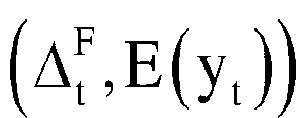


- Similarly, for the second indicator expected value,


- The training target may be calculated by using the following manner according to the first indicator expected value and the second indicator expected value:

- J(θ,γ) represents a parameter obtained by training, and is a general representation of the training target. θ represents a parameter of the NMT system, Y represents a newly introduced parameter of the past-future module, and


- Again, in this embodiment of the present disclosure, the first indicator expected value is obtained according to the first translation vector and the third translation vector, the second indicator expected value is obtained according to the second translation vector and the fourth translation vector, and then the training target is determined according to the first indicator expected value and the second indicator expected value. The training target is used for building the preset neural network model. Through the foregoing manner, the training target can be added, and the training target of this part can meet the consistency of the semantic level, thereby improving accuracy and feasibility of training.
- For ease of understanding, a procedure of determining the target information in the present disclosure may be described below in detail by using a specific application scenario. Referring to
FIG. 9, FIG. 9 is a schematic diagram of an embodiment of translating a first source content in a source vector representing sequence in an application scenario of the present disclosure. The procedure is specifically as follows: - An encoder reads in an input sentence "<eos>". <eos> represents a sentence end symbol, and then a source vector representing sequence is output, where each vector (that is, dots and lines in

FIG. 9 ) corresponds to a source content. The decoder generates a translated text according to the source vector representing sequence. - First, the alignment probability and the semantic vector are weighted, to generate the source context vector c1 of the first moment, and the alignment probability is 0.5, 0.2, 0.2, 0.1, 0.0 and 0.0 in
FIG. 9 . Then the past translation vector and the future translation vector are updated according to c1, that is, the following formulas are used:


- The decoder decodes c1,

 ".
". - Referring to
FIG. 10, FIG. 10 is a schematic diagram of an embodiment of translating a second source content in the source vector representing sequence in an application scenario of the present disclosure. As shown inFIG. 10 , first, the alignment probability and the semantic vector are weighted, to generate the source context vector c2 of the second moment, and the alignment probability is 0.3, 0.6, 0.1, 0.0, 0.0 and 0.0 inFIG. 10 . Then the past translation vector and the future translation vector are updated according to c2, that is, the following formulas are used:


- The decoder decodes c2,

 ".
". - The entire input sentence is translated based on the foregoing.
- The target information determining apparatus of the present disclosure is described in detail below. Referring to
FIG. 11 , a targetinformation determining apparatus 30 in an embodiment of the present disclosure includes at least one memory and at least one processor. The at least one memory stores at least one instruction module, configured to be executed by the at least one processor. The at least one instruction module includes: anencoding module 301, configured to encode to-be-processed text information, to obtain a source vector representing sequence; a first obtainingmodule 302, configured to obtain, according to the source vector representing sequence obtained by theencoding module 301 through encoding, a source context vector corresponding to a first moment, the source context vector being used for representing a to-be-processed source content; a first determiningmodule 303, configured to determine a first translation vector and/or a second translation vector according to the source vector representing sequence obtained by theencoding module 301 through encoding and the source context vector obtained by the first obtainingmodule 302, the first translation vector indicating an untranslated source content in the source vector representing sequence at the first moment, the second translation vector indicating a translated source content in the source vector representing sequence at a second moment, and the second moment being an adjacent moment before the first moment; and adecoding module 304, configured to decode the first translation vector and/or the second translation vector determined by the first determiningmodule 303 and the source context vector, to obtain target information of the first moment. - In this embodiment, the
encoding module 301 encodes t o-be-processed text information, to obtain a source vector representing sequence. The first obtainingmodule 302 obtains, according to the source vector representing sequence obtained by theencoding module 301 through encoding, a source context vector corresponding to a first moment, the source context vector being used for representing a to-be-processed source content. The first determiningmodule 303 determines a first translation vector and/or a second translation vector according to the source vector representing sequence obtained by theencoding module 301 through encoding and the source context vector obtained by the first obtainingmodule 302, the first translation vector indicating an untranslated source content in the source vector representing sequence at the first moment, the second translation vector indicating a translated source content in the source vector representing sequence at a second moment, and the second moment being an adjacent moment before the first moment. Thedecoding module 304 decodes the first translation vector and/or the second translation vector determined by the first determiningmodule 303 and the source context vector, to obtain target information of the first moment. - In an embodiment of the present disclosure, a target information determining apparatus is provided. First, the target information determining apparatus encodes to-be-processed text information, to obtain a source vector representing sequence; then obtains, according to the source vector representing sequence, a source context vector corresponding to a first moment, the source context vector being used for representing a to-be-processed source content; and determines a first translation vector and/or a second translation vector according to the source vector representing sequence and the source context vector, the first translation vector indicating an untranslated source content in the source vector representing sequence at the first moment, the second translation vector indicating a translated source content in the source vector representing sequence at a second moment, and the second moment is an adjacent moment before the first moment. Finally, the target information determining apparatus decodes the first translation vector and/or the second translation vector and the source context vector, to obtain target information of the first moment. Through the foregoing manner, the untranslated source content and/or the translated source content in the source vector representing sequence can be modeled, that is, the contents can be separated from an original language model for training, thereby reducing a difficulty of model training of a decoder, and improving a translation effect of a translation system.
- Optionally, based on the embodiment corresponding to
FIG. 11 , referring toFIG. 12 , in another embodiment of the targetinformation determining apparatus 30 provided in the embodiments of the present disclosure, - the first determining
module 303 includes: a first obtainingunit 3031, configured to obtain, according to the source vector representing sequence, a third translation vector corresponding to the second moment; and afirst processing unit 3032, configured to process the third translation vector obtained by the first obtainingunit 3031 and the source context vector by using a preset neural network model, to obtain the first translation vector. - Second, in this embodiment of the present disclosure, how to determine the first translation vector according to the source vector representing sequence and the source context vector is described. That is, the third translation vector corresponding to the second moment is obtained according to the source vector representing sequence; and then the third translation vector and the source context vector are processed by using the preset neural network model, to obtain the first translation vector. Through the foregoing manner, the first translation vector is outputted by using the preset neural network model, which can improve accuracy of a future translation vector.
- Optionally, based on the embodiment corresponding to
FIG. 11 , referring toFIG. 13 , in another embodiment of the targetinformation determining apparatus 30 provided in the embodiments of the present disclosure, - the first determining
module 303 includes: a second obtainingunit 3033, configured to obtain, according to the source vector representing sequence, a third translation vector corresponding to the second moment; asecond processing unit 3034, configured to process the third translation vector obtained by the second obtainingunit 3033 and the source context vector by using a preset neural network model, to obtain the first translation vector; and a third obtainingunit 3035, configured to obtain the second translation vector according to a location of the source context vector in the source vector representing sequence, the second translation vector being used for updating a fourth translation vector corresponding to the first moment, and the fourth translation vector being obtained by processing the second translation vector and the source context vector by using the preset neural network model. - Second, in this embodiment of the present disclosure, how to determine the first translation vector and the second translation vector according to the source vector representing sequence and the source context vector is described. That is, the third translation vector corresponding to the second moment is obtained according to the source vector representing sequence; and then the third translation vector and the source context vector are processed by using the preset neural network model, to obtain the first translation vector, and further, the second translation vector may be obtained according to the location of the source context vector in the source vector representing sequence, the second translation vector being used for updating the fourth translation vector corresponding to the first moment, and the fourth translation vector being obtained by processing the second translation vector and the source context vector by using the preset neural network model. Through the foregoing manner, accuracy of a past translation vector and a future translation vector can be improved.
- Optionally, based on the embodiment corresponding to
FIG. 11 , referring toFIG. 14 , in another embodiment of the targetinformation determining apparatus 30 provided in the embodiments of the present disclosure, the first obtainingunit 303 includes: a fourth obtainingunit 3036, configured to obtain the second translation vector according to a location of the source context vector in the source vector representing sequence, the second translation vector being used for generating a fourth translation vector corresponding to the first moment, and the fourth translation vector being obtained by processing the second translation vector and the source context vector by using the preset neural network model. - Second, in this embodiment of the present disclosure, how to determine the second translation vector according to the source vector representing sequence and the source context vector is described. That is, the second translation vector is obtained according to the location of the source context vector in the source vector representing sequence, the second translation vector being used for generating the fourth translation vector corresponding to the first moment, and the fourth translation vector being obtained by processing the second translation vector and the source context vector by using the preset neural network model. Through the foregoing manner, the second translation vector is outputted by using the preset neural network model, which can improve accuracy of a past translation vector.
- Optionally, based on the embodiment corresponding to
FIG. 12 orFIG. 13 , referring toFIG. 15 , in another embodiment of the targetinformation determining apparatus 30 provided in the embodiments of the present disclosure, thefirst processing unit 3032 includes: asubtraction subunit 30321, configured to subtract the source context vector form the third translation vector by using a GRU, to obtain the first translation vector. - Again, in this embodiment of the present disclosure, the GRU can be used to subtract the source context vector from the third translation vector, to obtain the first translation vector, and further transmit the obtained first translation vector into the GRU structure. Through the foregoing manner, the signal of decreasing can be provided in the GRU, which helps to learn the rule, thereby improving accuracy of model training.
- Optionally, based on the embodiment corresponding to
FIG. 12 orFIG. 13 , referring toFIG. 16 , in another embodiment of the targetinformation determining apparatus 30 provided in the embodiments of the present disclosure, thefirst processing unit 3032 includes: aprocessing subunit 30322, configured to process the third translation vector and the source context vector by using a GRU, to obtain a middle vector; and acombination subunit 30323, configured to perform an interpolation combination on the middle vector obtained by theprocessing subunit 30322 through processing and the third translation vector, to obtain the first translation vector. - Again, in this embodiment of the present disclosure, a procedure that the target information determining apparatus processes the third translation vector and the source context vector by using a preset neural network model, to obtain the first translation vector may be: first processing the third translation vector and the source context vector by using a GRU, to obtain a middle vector, and performing an interpolation combination on the middle vector and the third translation vector, to obtain the first translation vector. Through the foregoing manner, performing the operation of decreasing inside the GRU helps to improve operating accuracy and operating efficiency.
- Optionally, based on the embodiment corresponding to
FIG. 11 , referring toFIG. 17 , in another embodiment of the targetinformation determining apparatus 30 provided in the embodiments of the present disclosure, the first obtainingmodule 302 includes: a first determiningunit 3021, configured to determine an alignment probability of the source content according to a decoder state of the second moment, the second translation vector, a third translation vector, and a vector of a source content in the source vector representing sequence; and a second determiningunit 3022, configured to determine, according to the alignment probability of the source content determined by the first determiningunit 3021 and a semantic vector of the source content, the source context vector corresponding to the first moment. - Second, in this embodiment, first the alignment probability of the source content may be determined according to the decoder state of the second moment, the second translation vector, the third translation vector, and the vector of the source content in the source vector representing sequence, and then the source context vector of the first moment is determined according to the alignment probability of the source content and the semantic vector of the source content. Through the foregoing manner, the attention module in the target information determining apparatus can learn which source contents have been translated, and which source contents have not been translated, so that more attention is paid on the untranslated contents while less attention is paid on the translated contents, thereby alleviating the problem of missing translation and repeated translation.
- Optionally, based on the embodiment corresponding to
FIG. 11 , referring toFIG. 18 , in another embodiment of the targetinformation determining apparatus 30 provided in the embodiments of the present disclosure, the targetinformation determining apparatus 30 may further include: a second determiningmodule 305, configured to: before thedecoding module 304 decodes the first translation vector and/or the second translation vector and the source context vector, to obtain target information of the first moment, determine a decoder state of the first moment according to a decoder state of the second moment, target information of the second moment, the source context vector, the first translation vector, and the second translation vector; and thedecoding module 304 includes: adecoding unit 3041, configured to decode the decoder state of the first moment, the source context vector, the first translation vector and/or the second translation vector, to obtain the target information of the first moment. - Second, in this embodiment of the present disclosure, first the decoder state of the first moment needs to be determined according to the decoder state of the second moment, the target information of the second moment, the source context vector, the first translation vector and the second translation vector, and then the decoder state of the first moment, the source context vector, the first translation vector and/or the second translation vector are decoded, to obtain the target information of the first moment. Through the foregoing manner, models of the first translation vector and/or the second translation vector are separated from the decoder state, and may form a complete source semantic vector representation with the source context vector outputted by the attention module at the first moment, to be transmitted to the decoder to generate more accurate target information.
- Optionally, based on the embodiment corresponding to
FIG. 17 or FIG. 18 , referring toFIG. 19 , in another embodiment of the targetinformation determining apparatus 30 provided in the embodiments of the present disclosure, the targetinformation determining apparatus 30 may further include: a second obtainingmodule 306, configured to obtain a first indicator expected value according to the first translation vector and the third translation vector, the first indicator expected value being used for representing a consistency situation of semantics between a future translation vector change and the target information of the first moment; a third obtainingmodule 307, configured to obtain a second indicator expected value according to the second translation vector and the fourth translation vector, the second indicator expected value being used for representing a consistency situation of semantics between a past translation vector change and the target information of the first moment; and a second determiningmodule 308, configured to determine a training target according to the first indicator expected value obtained by the second obtainingmodule 306 and the second indicator expected value obtained by the third obtainingmodule 307, the training target being used for building a preset neural network model. - Again, in this embodiment of the present disclosure, the first indicator expected value is obtained according to the first translation vector and the third translation vector, and the second indicator expected value is obtained according to the second translation vector and the fourth translation vector, and then the training target is determined according to the first indicator expected value and the second indicator expected value, the training target being used for building the preset neural network model. Through the foregoing manner, the training target can be added, and the training target of this part can meet the consistency of the semantic level, thereby improving accuracy and feasibility of training.
-
FIG. 20 is a schematic structural diagram of a target information determining apparatus according to an embodiment of the present disclosure. The targetinformation determining apparatus 300 may vary greatly due to different configurations or performance, and may include one or more central processing units (CPUs) 322 (for example, one or more processors), amemory 332, and one or more storage media 330 (for example, one or more mass storage devices) thatstore applications 342 ordata 344. Thememory 332 and thestorage medium 330 may be transient or persistent storages. The program stored in thestorage medium 330 may include one or more modules (not shown in the figure), and each module may include a series of instructions and operations for the target information determining apparatus. Further, theCPU 322 may be configured to communicate with thestorage medium 330, and perform, on the targetinformation determining apparatus 300, the series of instructions and operations in thestorage medium 330. - The target
information determining apparatus 300 may further include one ormore power supplies 326, one or more wired or wireless network interfaces 350, one or more input/output interfaces 358, and/or one ormore operating systems 341, for example, Windows ServerTM, Mac OS XTM, UnixTM, LinuxTM, or FreeBSDTM. - Steps performed by the target information determining apparatus in the foregoing embodiments may be based on the structure of the target information determining apparatus shown in
FIG. 20 . - The
CPU 322 is configured to perform the following steps: encoding to-be-processed text information, to obtain a source vector representing sequence; obtaining, according to the source vector representing sequence, a source context vector corresponding to a first moment, the source context vector being used for representing a to-be-processed source content; determining a first translation vector and/or a second translation vector according to the source vector representing sequence and the source context vector, the first translation vector indicating an untranslated source content in the source vector representing sequence at the first moment, the second translation vector indicating a translated source content in the source vector representing sequence at a second moment, and the second moment is an adjacent moment before the first moment; and decoding the first translation vector and/or the second translation vector and the source context vector, to obtain target information of the first moment. - Optionally, the
CPU 322 is specifically configured to perform the following steps: obtaining, according to the source vector representing sequence, a third translation vector corresponding to the second moment; and processing the third translation vector and the source context vector by using a preset neural network model, to obtain the first translation vector. - Optionally, the
CPU 322 is specifically configured to perform the following steps: obtaining, according to the source vector representing sequence, a third translation vector corresponding to the second moment; processing the third translation vector and the source context vector by using a preset neural network model, to obtain the first translation vector; and obtaining the second translation vector according to a location of the source context vector in the source vector representing sequence, the second translation vector being used for updating a fourth translation vector corresponding to the first moment, and the fourth translation vector being obtained by processing the second translation vector and the source context vector by using the preset neural network model. - Optionally, the
CPU 322 is specifically configured to perform the following step: obtaining the second translation vector according to a location of the source context vector in the source vector representing sequence, the second translation vector being used for generating a fourth translation vector corresponding to the first moment, and the fourth translation vector being obtained by processing the second translation vector and the source context vector by using the preset neural network model. - Optionally, the
CPU 322 is specifically configured to perform the following step: subtracting the source context vector from the third translation vector by using a GRU, to obtain the first translation vector. - Optionally, the
CPU 322 is specifically configured to perform the following steps: processing the third translation vector and the source context vector by using a GRU, to obtain a middle vector; and performing an interpolation combination on the middle vector and the third translation vector, to obtain the first translation vector. - Optionally, the
CPU 322 is specifically configured to perform the following steps: determining an alignment probability of a source content according to a decoder state of the second moment, the second translation vector, the third translation vector, and a vector of the source content in the source vector representing sequence; and determining the source context vector corresponding to the first moment according to the alignment probability of the source content and a semantic vector of the source content. - Optionally, the
CPU 322 is further configured to perform the following step: determining a decoder state of the first moment according to a decoder state of the second moment, target information of the second moment, the source context vector, the first translation vector, and the second translation vector. - The
CPU 322 is specifically configured to perform the following step: decoding the decoder state of the first moment, the first translation vector, the second translation vector, and the source context vector, to obtain the target information of the first moment. - Optionally, the
CPU 322 is specifically configured to perform the following steps: obtaining a first indicator expected value according to the first translation vector and the third translation vector, where the first indicator expected value is used for representing a consistency situation of semantics between a future translation vector change and the target information of the first moment; obtaining a second indicator expected value according to the second translation vector and the fourth translation vector, where the second indicator expected value is used for representing a consistency situation of semantics between a past translation vector change and the target information of the first moment; and determining a training target according to the first indicator expected value and the second indicator expected value, where the training target is used for building a preset neural network model. - It may be clearly understood by persons skilled in the art that for convenience and brevity of description, for a detailed working process of the foregoing system, apparatus, and unit, reference may be made to a corresponding process in the foregoing manner embodiments, and details are not described herein again.
- In the several embodiments provided in this application, it is to be understood that the disclosed system, apparatus, and method may be implemented in other manners. For example, the described apparatus embodiment is merely an example. For example, the unit division is merely logical function division and may be other division during actual implementation. For example, a plurality of units or components may be combined or integrated into another system, or some features may be ignored or not performed. In addition, the displayed or discussed mutual couplings or direct couplings or communication connections may be implemented by using some interfaces. The indirect couplings or communication connections between the apparatuses or units may be implemented in electronic, mechanical, or other forms.
- The units described as separate parts may or may not be physically separate, and parts displayed as units may or may not be physical units, may be located in one position, or may be distributed on a plurality of network units. Some or all of the units may be selected according to actual requirements to achieve the objectives of the solutions of the embodiments.
- In addition, functional units in the embodiments of the present disclosure may be integrated into one processing unit, or each of the units may exist alone physically, or two or more units are integrated into one unit. The integrated unit may be implemented in the form of hardware, or may be implemented in the form of a software functional unit.
- When the integrated unit is implemented in the form of a software functional unit and sold or used as an independent product, the integrated unit may be stored in a computer-readable storage medium. Based on such an understanding, the technical solutions of the present disclosure essentially, or the part contributing to the related art, or all or some of the technical solutions may be implemented in a form of a software product. The computer software product is stored in a storage medium, and includes several instructions for instructing a computer device (which may be a personal computer, a server, a network device, or the like) to perform all or some of the steps of the methods described in the embodiments of the present disclosure. The foregoing storage medium includes: any medium that can store program code, such as a USB flash memory drive, a removable hard disk, a read-only memory (ROM), a random access memory (RAM), a magnetic disk, or an optical disc. Therefore, an embodiment of the present disclosure further provides a computer-readable storage medium including an instruction. When run on a computer, the instruction causes the computer to perform the foregoing method.
- The foregoing embodiments are merely intended to describe the technical solutions of the present disclosure, but not to limit the present disclosure. Although the present disclosure is described in detail with reference to the foregoing embodiments, it is to be understood by persons of ordinary skill in the art that they may still make modifications to the technical solutions described in the foregoing embodiments or make equivalent replacements to some technical features thereof, without departing from the spirit and scope of the technical solutions of the embodiments of the present disclosure.
Claims (16)
- A translation method, applied to a neural machine translation (NMT) system, the method comprising:encoding to-be-processed text information by using an encoder, to obtain a source vector representing sequence, the to-be-processed text information belonging to a first language;obtaining a source context vector corresponding to a first moment according to the source vector representing sequence, the source context vector corresponding to the first moment being used for indicating a to-be-processed source content in the to-be-processed text information at the first moment;determining a translation vector according to the source vector representing sequence and the source context vector, the translation vector comprising a first translation vector and/or a second translation vector, the first translation vector being a vector corresponding to an untranslated source content in the source vector representing sequence at the first moment, the second translation vector being a vector corresponding to a translated source content in the source vector representing sequence at a second moment, and the second moment being an adjacent moment before the first moment; anddecoding the translation vector and the source context vector by using a decoder, to obtain target information of the first moment, the target information belonging to a second language different from the first language.
- The method according to claim 1, wherein the encoding to-be-processed text information by using an encoder, to obtain a source vector representing sequence comprises:inputting the to-be-processed text information to the encoder;encoding the to-be-processed text information by using the encoder; andobtaining the source vector representing sequence according to an encoding result, wherein source vectors in the source vector representing sequence belong to the first language.
- The method according to claim 1 or 2, wherein the decoding the translation vector and the source context vector by using a decoder, to obtain target information of the first moment comprises:inputting the translation vector and the source context vector to the decoder;decoding the translation vector and the source context vector by using the decoder; andobtaining a translation content of the to-be-processed source content according to a decoding result, wherein the translation content is the target information of the first moment.
- A target information determining method, comprising:encoding to-be-processed text information, to obtain a source vector representing sequence;obtaining a source context vector corresponding to a first moment according to the source vector representing sequence, the source context vector corresponding to the first moment being used for indicating a to-be-processed source content in the to-be-processed text information at the first moment;determining a translation vector according to the source vector representing sequence and the source context vector, the translation vector comprising a first translation vector and/or a second translation vector, the first translation vector being a vector corresponding to an untranslated source content in the source vector representing sequence at the first moment, the second translation vector being a vector corresponding to a translated source content in the source vector representing sequence at a second moment, and the second moment being an adjacent moment before the first moment; anddecoding the translation vector and the source context vector, to obtain target information of the first moment.
- The method according to claim 4, wherein the determining a first translation vector according to the source vector representing sequence and the source context vector comprises:obtaining a third translation vector according to the source vector representing sequence, the third translation vector being a vector corresponding to an untranslated source content in the source vector representing sequence at the second moment; andprocessing the third translation vector and the source context vector by using a preset neural network model, to obtain the first translation vector.
- The method according to claim 4, wherein the determining a first translation vector and a second translation vector according to the source vector representing sequence and the source context vector comprises:obtaining a third translation vector according to the source vector representing sequence, the third translation vector being a vector corresponding to an untranslated source content in the source vector representing sequence at the second moment; andprocessing the third translation vector and the source context vector by using a preset neural network model, to obtain the first translation vector; andobtaining the second translation vector according to a location of the source context vector in the source vector representing sequence, wherein the second translation vector is used for updating a fourth translation vector, the fourth translation vector is a vector corresponding to a translated source content in the source vector representing sequence at the first moment, and the fourth translation vector is obtained by processing the second translation vector and the source context vector by using the preset neural network model.
- The method according to claim 4, wherein the determining a second translation vector according to the source vector representing sequence and the source context vector comprises:
obtaining the second translation vector according to a location of the source context vector in the source vector representing sequence, wherein the second translation vector is used for generating a fourth translation vector, the fourth translation vector is a vector corresponding to a translated source content in the source vector representing sequence at the first moment, and the fourth translation vector is obtained by processing the second translation vector and the source context vector by using the preset neural network model. - The method according to claim 5 or 6, wherein the processing the third translation vector and the source context vector by using a preset neural network model, to obtain the first translation vector comprises:
subtracting the source context vector from the third translation vector by using a gated recurrent unit (GRU), to obtain the first translation vector. - The method according to claim 5 or 6, wherein the processing the third translation vector and the source context vector by using a preset neural network model, to obtain the first translation vector comprises:processing the third translation vector and the source context vector by using a GRU, to obtain a middle vector; andperforming an interpolation combination on the middle vector and the third translation vector, to obtain the first translation vector.
- The method according to claim 4, wherein the obtaining a source context vector corresponding to a first moment according to the source vector representing sequence comprises:determining an alignment probability of the source content according to a decoder state of the second moment, the second translation vector, the third translation vector and a vector of the source content in the source vector representing sequence, the third translation vector being a vector corresponding to an untranslated source content in the source vector representing sequence at the second moment; anddetermining the source context vector corresponding to the first moment according to the alignment probability of the source content and a semantic vector of the source content.
- The method according to claim 4, wherein before the decoding the translation vector and the source context vector, to obtain target information of the first moment, the method further comprises: determining a decoder state of the first moment according to the decoder state of the second moment, target information of the second moment, the source context vector, and the translation vector; and
correspondingly, the decoding the translation vector and the source context vector, to obtain target information of the first moment comprises: decoding the decoder state of the first moment, the source context vector, and the translation vector, to obtain the target information of the first moment. - The method according to claim 10 or 11, further comprising:obtaining a first indicator expected value according to the first translation vector and the third translation vector, wherein the first indicator expected value is used for representing a consistency situation of semantics between a future translation vector change and the target information of the first moment;obtaining a second indicator expected value according to the second translation vector and the fourth translation vector, wherein the second indicator expected value is used for representing a consistency situation of semantics between a past translation vector change and the target information of the first moment; anddetermining a training target according to the first indicator expected value and the second indicator expected value, wherein the training target is used for building a preset neural network model.
- A target information determining apparatus, comprising at least one memory and at least one processor, the at least one memory storing at least one instruction module, configured to be executed by the at least one processor, the at least one instruction module comprising: a encoding module, configured to encode to-be-processed text information, to obtain a source vector representing sequence; a first obtaining module, configured to obtain a source context vector corresponding to a first moment according to the source vector representing sequence, the source context vector corresponding to the first moment being used for indicating a to-be-processed source content in the to-be-processed text information at the first moment; a first determining module, configured to determine a translation vector according to the source vector representing sequence and the source context vector, the translation vector comprising a first translation vector and/or a second translation vector, the first translation vector being a vector corresponding to an untranslated source content in the source vector representing sequence at the first moment, the second translation vector being a vector corresponding to a translated source content in the source vector representing sequence at a second moment, and the second moment being an adjacent moment before the first moment; and a decoding module, configured to decode the translation vector and the source context vector, to obtain target information of the first moment.
- A target information determining apparatus, comprising a memory, a processor, and a bus system, the memory being configured to store a program; the processor being configured to execute the program in the memory, which comprises the following operations: encoding to-be-processed text information, to obtain a source vector representing sequence; obtaining a source context vector corresponding to a first moment according to the source vector representing sequence, the source context vector corresponding to the first moment being used for indicating a to-be-processed source content in the to-be-processed text information at the first moment; determining a translation vector according to the source vector representing sequence and the source context vector, the translation vector comprising a first translation vector and/or a second translation vector, the first translation vector being a vector corresponding to an untranslated source content in the source vector representing sequence at the first moment, the second translation vector being a vector corresponding to a translated source content in the source vector representing sequence at a second moment, and the second moment being an adjacent moment before the first moment; and decoding the translation vector and the source context vector, to obtain target information of the first moment; and the bus system being configured to connect the memory and the processor, so that the memory communicates with the processor.
- A computer readable storage medium, comprising an instruction, the instruction, when run on a computer, causing the computer to perform the method according to claims 1 to 12.
- A target information determining method, performed by an electronic device and comprising:encoding to-be-processed text information, to obtain a source vector representing sequence;obtaining a source context vector corresponding to a first moment according to the source vector representing sequence, the source context vector corresponding to the first moment being used for indicating a to-be-processed source content in the to-be-processed text information at the first moment;determining a translation vector according to the source vector representing sequence and the source context vector, the translation vector comprising a first translation vector and/or a second translation vector, the first translation vector being a vector corresponding to an untranslated source content in the source vector representing sequence at the first moment, the second translation vector being a vector corresponding to a translated source content in the source vector representing sequence at a second moment, and the second moment being an adjacent moment before the first moment; anddecoding the translation vector and the source context vector, to obtain target information of the first moment.
Applications Claiming Priority (2)
| Application Number | Priority Date | Filing Date | Title |
|---|---|---|---|
| CN201710612833.7A CN107368476B (en) | 2017-07-25 | 2017-07-25 | Translation method, target information determination method and related device |
| PCT/CN2018/095231 WO2019019916A1 (en) | 2017-07-25 | 2018-07-11 | Translation method, target information determining method and related device, and storage medium |
Publications (2)
| Publication Number | Publication Date |
|---|---|
| EP3660707A1 true EP3660707A1 (en) | 2020-06-03 |
| EP3660707A4 EP3660707A4 (en) | 2020-08-05 |
Family
ID=60306920
Family Applications (1)
| Application Number | Title | Priority Date | Filing Date |
|---|---|---|---|
| EP18837956.4A Ceased EP3660707A4 (en) | 2017-07-25 | 2018-07-11 | TRANSLATION PROCEDURES, TARGET INFORMATION DETERMINATION PROCESS AND ASSOCIATED DEVICE AND STORAGE MEDIUM |
Country Status (6)
| Country | Link |
|---|---|
| US (2) | US11928439B2 (en) |
| EP (1) | EP3660707A4 (en) |
| JP (1) | JP7025090B2 (en) |
| KR (1) | KR102382499B1 (en) |
| CN (1) | CN107368476B (en) |
| WO (1) | WO2019019916A1 (en) |
Families Citing this family (30)
| Publication number | Priority date | Publication date | Assignee | Title |
|---|---|---|---|---|
| CN107368476B (en) | 2017-07-25 | 2020-11-03 | 深圳市腾讯计算机系统有限公司 | Translation method, target information determination method and related device |
| CN108363763B (en) * | 2018-02-05 | 2020-12-01 | 深圳市腾讯计算机系统有限公司 | Automatic question answering method, device and storage medium |
| CN108197123A (en) * | 2018-02-07 | 2018-06-22 | 云南衍那科技有限公司 | A kind of cloud translation system and method based on smartwatch |
| CN111401084B (en) | 2018-02-08 | 2022-12-23 | 腾讯科技(深圳)有限公司 | Method, device and computer-readable storage medium for machine translation |
| CN108388549B (en) * | 2018-02-26 | 2021-02-19 | 腾讯科技(深圳)有限公司 | Information conversion method, information conversion device, storage medium and electronic device |
| CN110489761B (en) * | 2018-05-15 | 2021-02-02 | 科大讯飞股份有限公司 | A method and device for text-level translation |
| CN108984539B (en) * | 2018-07-17 | 2022-05-17 | 苏州大学 | A neural machine translation method based on simulating translation information in future moments |
| CN109062897A (en) * | 2018-07-26 | 2018-12-21 | 苏州大学 | Sentence alignment method based on deep neural network |
| CN109274814B (en) * | 2018-08-20 | 2020-10-23 | 维沃移动通信有限公司 | A message prompting method, device and terminal device |
| CN109271646B (en) * | 2018-09-04 | 2022-07-08 | 腾讯科技(深圳)有限公司 | Text translation method and device, readable storage medium and computer equipment |
| CN109146064B (en) * | 2018-09-05 | 2023-07-25 | 腾讯科技(深圳)有限公司 | Neural network training method, device, computer equipment and storage medium |
| CN109446534B (en) * | 2018-09-21 | 2020-07-31 | 清华大学 | Machine translation method and device |
| CN111104806B (en) * | 2018-10-26 | 2024-09-20 | 澳门大学 | Neural machine translation model construction method and device, translation method and device |
| CN109543195B (en) * | 2018-11-19 | 2022-04-12 | 腾讯科技(深圳)有限公司 | Text translation method, information processing method and device |
| CN111178099B (en) * | 2018-11-28 | 2023-03-10 | 腾讯科技(深圳)有限公司 | A text translation method and related device |
| CN109858045B (en) * | 2019-02-01 | 2020-07-10 | 北京字节跳动网络技术有限公司 | Machine translation method and device |
| CN109933809B (en) * | 2019-03-15 | 2023-09-15 | 北京金山数字娱乐科技有限公司 | Translation method and device, and training method and device of translation model |
| CN111783435B (en) * | 2019-03-18 | 2024-06-25 | 株式会社理光 | Shared vocabulary selection method, device and storage medium |
| CN110110337B (en) * | 2019-05-08 | 2023-04-18 | 网易有道信息技术(北京)有限公司 | Translation model training method, medium, device and computing equipment |
| CN110472255B (en) * | 2019-08-20 | 2021-03-02 | 腾讯科技(深圳)有限公司 | Neural network machine translation method, model, electronic terminal, and storage medium |
| CN111209395B (en) * | 2019-12-27 | 2022-11-11 | 铜陵中科汇联科技有限公司 | Short text similarity calculation system and training method thereof |
| CN111597829B (en) * | 2020-05-19 | 2021-08-27 | 腾讯科技(深圳)有限公司 | Translation method and device, storage medium and electronic equipment |
| US11741317B2 (en) * | 2020-05-25 | 2023-08-29 | Rajiv Trehan | Method and system for processing multilingual user inputs using single natural language processing model |
| CN114254660A (en) | 2020-09-22 | 2022-03-29 | 北京三星通信技术研究有限公司 | Multi-modal translation method and device, electronic equipment and computer-readable storage medium |
| KR20220056004A (en) * | 2020-10-27 | 2022-05-04 | 삼성전자주식회사 | Electronic device and Method for controlling the electronic device thereof |
| JP7805309B2 (en) * | 2020-11-13 | 2026-01-23 | 株式会社Nttドコモ | Sentence generation model generating device, sentence generation model and sentence generation device |
| WO2023063569A1 (en) * | 2021-10-15 | 2023-04-20 | 삼성전자주식회사 | Electronic device and control method thereof |
| CN114118282B (en) * | 2021-12-01 | 2024-11-26 | 盐城工学院 | A bearing fault diagnosis method based on attention mechanism and convolutional gated recurrent unit model |
| KR102916057B1 (en) * | 2022-03-17 | 2026-01-21 | 주식회사 아론티어 | Retrosynthetic translation using an atom environments with transformer and the apparatus therefor |
| CN114936566A (en) * | 2022-04-26 | 2022-08-23 | 北京百度网讯科技有限公司 | Machine translation method, device, equipment and storage medium |
Family Cites Families (35)
| Publication number | Priority date | Publication date | Assignee | Title |
|---|---|---|---|---|
| US7346487B2 (en) * | 2003-07-23 | 2008-03-18 | Microsoft Corporation | Method and apparatus for identifying translations |
| CA2612404C (en) * | 2005-06-17 | 2014-05-27 | National Research Council Of Canada | Means and method for adapted language translation |
| US7536295B2 (en) * | 2005-12-22 | 2009-05-19 | Xerox Corporation | Machine translation using non-contiguous fragments of text |
| US7542893B2 (en) * | 2006-05-10 | 2009-06-02 | Xerox Corporation | Machine translation using elastic chunks |
| US20090182547A1 (en) * | 2008-01-16 | 2009-07-16 | Microsoft Corporation | Adaptive Web Mining of Bilingual Lexicon for Query Translation |
| EP2649567B1 (en) * | 2010-12-10 | 2016-08-17 | Siemens Aktiengesellschaft | Method for the computer-based modeling of a technical system |
| US9471565B2 (en) * | 2011-07-29 | 2016-10-18 | At&T Intellectual Property I, L.P. | System and method for locating bilingual web sites |
| SG11201404225WA (en) * | 2012-01-27 | 2014-08-28 | Nec Corp | Term translation acquisition method and term translation acquisition apparatus |
| JP6296592B2 (en) * | 2013-05-29 | 2018-03-20 | 国立研究開発法人情報通信研究機構 | Translation word order information output device, machine translation device, learning device, translation word order information output method, learning method, and program |
| JP2014235599A (en) * | 2013-06-03 | 2014-12-15 | 独立行政法人情報通信研究機構 | Translation device, learning device, translation method, and program |
| US9535960B2 (en) * | 2014-04-14 | 2017-01-03 | Microsoft Corporation | Context-sensitive search using a deep learning model |
| US9846836B2 (en) * | 2014-06-13 | 2017-12-19 | Microsoft Technology Licensing, Llc | Modeling interestingness with deep neural networks |
| WO2016065327A1 (en) | 2014-10-24 | 2016-04-28 | Google Inc. | Neural machine translation systems with rare word processing |
| US9778929B2 (en) * | 2015-05-29 | 2017-10-03 | Microsoft Technology Licensing, Llc | Automated efficient translation context delivery |
| CN105068998B (en) * | 2015-07-29 | 2017-12-15 | 百度在线网络技术(北京)有限公司 | Interpretation method and device based on neural network model |
| CN106484681B (en) * | 2015-08-25 | 2019-07-09 | 阿里巴巴集团控股有限公司 | A kind of method, apparatus and electronic equipment generating candidate translation |
| CN106484682B (en) * | 2015-08-25 | 2019-06-25 | 阿里巴巴集团控股有限公司 | Statistics-based machine translation method, device and electronic device |
| CN106672058A (en) * | 2015-11-08 | 2017-05-17 | 匡桃红 | Shake-free folding joint for baby stroller |
| US10332509B2 (en) * | 2015-11-25 | 2019-06-25 | Baidu USA, LLC | End-to-end speech recognition |
| US9792534B2 (en) * | 2016-01-13 | 2017-10-17 | Adobe Systems Incorporated | Semantic natural language vector space |
| CN106126507B (en) * | 2016-06-22 | 2019-08-09 | 哈尔滨工业大学深圳研究生院 | A deep neural translation method and system based on character encoding |
| US11449744B2 (en) * | 2016-06-23 | 2022-09-20 | Microsoft Technology Licensing, Llc | End-to-end memory networks for contextual language understanding |
| KR102565275B1 (en) * | 2016-08-10 | 2023-08-09 | 삼성전자주식회사 | Translating method and apparatus based on parallel processing |
| CN106372058B (en) * | 2016-08-29 | 2019-10-15 | 中译语通科技股份有限公司 | A kind of short text Emotional Factors abstracting method and device based on deep learning |
| US10706351B2 (en) * | 2016-08-30 | 2020-07-07 | American Software Safety Reliability Company | Recurrent encoder and decoder |
| CN106649288B (en) * | 2016-12-12 | 2020-06-23 | 北京百度网讯科技有限公司 | Artificial intelligence based translation method and device |
| US20180197080A1 (en) * | 2017-01-11 | 2018-07-12 | International Business Machines Corporation | Learning apparatus and method for bidirectional learning of predictive model based on data sequence |
| KR102637338B1 (en) * | 2017-01-26 | 2024-02-16 | 삼성전자주식회사 | Apparatus and method for correcting translation, and translation system |
| US10839790B2 (en) * | 2017-02-06 | 2020-11-17 | Facebook, Inc. | Sequence-to-sequence convolutional architecture |
| CN107092664B (en) * | 2017-03-30 | 2020-04-28 | 华为技术有限公司 | A content interpretation method and device |
| KR102329127B1 (en) * | 2017-04-11 | 2021-11-22 | 삼성전자주식회사 | Apparatus and method for converting dialect into standard language |
| US10733380B2 (en) * | 2017-05-15 | 2020-08-04 | Thomson Reuters Enterprise Center Gmbh | Neural paraphrase generator |
| CN108959312B (en) * | 2017-05-23 | 2021-01-29 | 华为技术有限公司 | Method, device and terminal for generating multi-document abstract |
| CN107368476B (en) * | 2017-07-25 | 2020-11-03 | 深圳市腾讯计算机系统有限公司 | Translation method, target information determination method and related device |
| CN110309839B (en) * | 2019-08-27 | 2019-12-03 | 北京金山数字娱乐科技有限公司 | A kind of method and device of iamge description |
-
2017
- 2017-07-25 CN CN201710612833.7A patent/CN107368476B/en active Active
-
2018
- 2018-07-11 EP EP18837956.4A patent/EP3660707A4/en not_active Ceased
- 2018-07-11 KR KR1020207002392A patent/KR102382499B1/en active Active
- 2018-07-11 JP JP2020503957A patent/JP7025090B2/en active Active
- 2018-07-11 WO PCT/CN2018/095231 patent/WO2019019916A1/en not_active Ceased
-
2020
- 2020-01-22 US US16/749,243 patent/US11928439B2/en active Active
-
2023
- 2023-12-20 US US18/390,153 patent/US12493756B2/en active Active
Also Published As
| Publication number | Publication date |
|---|---|
| KR20200019740A (en) | 2020-02-24 |
| US20240169166A1 (en) | 2024-05-23 |
| CN107368476A (en) | 2017-11-21 |
| EP3660707A4 (en) | 2020-08-05 |
| WO2019019916A1 (en) | 2019-01-31 |
| JP7025090B2 (en) | 2022-02-24 |
| US20200226328A1 (en) | 2020-07-16 |
| CN107368476B (en) | 2020-11-03 |
| JP2020528625A (en) | 2020-09-24 |
| KR102382499B1 (en) | 2022-04-01 |
| US12493756B2 (en) | 2025-12-09 |
| US11928439B2 (en) | 2024-03-12 |
Similar Documents
| Publication | Publication Date | Title |
|---|---|---|
| US12493756B2 (en) | Translation method, target information determining method, related apparatus, and storage medium | |
| KR102541306B1 (en) | Method, apparatus, and electronic device for training text generation model | |
| CN112016332B (en) | A Multimodal Machine Translation Approach Based on Variational Inference and Multitask Learning | |
| US11593571B2 (en) | Machine translation method, device, and computer-readable storage medium | |
| US20210232948A1 (en) | Question responding apparatus, question responding method and program | |
| US11562144B2 (en) | Generative text summarization system and method | |
| CN111191468B (en) | Term replacement method and device | |
| CN111144140B (en) | Chinese-Thai bilingual corpus generation method and device based on zero-shot learning | |
| US20240202499A1 (en) | Element text processing method and apparatus, electronic device, and storage medium | |
| EP4116865A2 (en) | Method and apparatus for training non-autoregressive translation model | |
| CN111832699A (en) | Computationally Efficient and Expressive Output Layers for Neural Networks | |
| KR20240129068A (en) | Attention neural network with gated attention units | |
| CN111178097B (en) | Method and device for generating Chinese-Thai bilingual corpus based on multi-level translation model | |
| Hu et al. | Improved beam search with constrained softmax for nmt | |
| CN110852063B (en) | Word vector generation method and device based on bidirectional LSTM neural network | |
| CN117290515B (en) | Training method of text annotation model, method and device for generating text graph | |
| Mao et al. | A neural joint model with bert for burmese syllable segmentation, word segmentation, and pos tagging | |
| WO2025073037A1 (en) | Methods and systems for prompting token-efficient output from large language model | |
| CN115906854A (en) | A Multi-level Adversarial Model Training Method for Cross-lingual Named Entity Recognition | |
| US20230116268A1 (en) | System and a method for phonetic-based transliteration | |
| Yadav et al. | Transliteration from Hindi to English Using Image Processing | |
| Wang et al. | Research on Russian Cultural Transliteration Algorithm Based on Hidden Markov Model | |
| HK40037746B (en) | Method and device for dialog prediction | |
| Platform | Applied Mathematics and Nonlinear Sciences | |
| CN114896993A (en) | Translation model generation method and device, electronic equipment and storage medium |
Legal Events
| Date | Code | Title | Description |
|---|---|---|---|
| STAA | Information on the status of an ep patent application or granted ep patent |
Free format text: STATUS: THE INTERNATIONAL PUBLICATION HAS BEEN MADE |
|
| PUAI | Public reference made under article 153(3) epc to a published international application that has entered the european phase |
Free format text: ORIGINAL CODE: 0009012 |
|
| STAA | Information on the status of an ep patent application or granted ep patent |
Free format text: STATUS: REQUEST FOR EXAMINATION WAS MADE |
|
| 17P | Request for examination filed |
Effective date: 20200120 |
|
| AK | Designated contracting states |
Kind code of ref document: A1 Designated state(s): AL AT BE BG CH CY CZ DE DK EE ES FI FR GB GR HR HU IE IS IT LI LT LU LV MC MK MT NL NO PL PT RO RS SE SI SK SM TR |
|
| AX | Request for extension of the european patent |
Extension state: BA ME |
|
| REG | Reference to a national code |
Ref country code: DE Ref legal event code: R079 Free format text: PREVIOUS MAIN CLASS: G06F0017280000 Ipc: G06F0040440000 |
|
| A4 | Supplementary search report drawn up and despatched |
Effective date: 20200702 |
|
| RIC1 | Information provided on ipc code assigned before grant |
Ipc: G06F 40/44 20200101AFI20200626BHEP |
|
| DAV | Request for validation of the european patent (deleted) | ||
| DAX | Request for extension of the european patent (deleted) | ||
| STAA | Information on the status of an ep patent application or granted ep patent |
Free format text: STATUS: EXAMINATION IS IN PROGRESS |
|
| 17Q | First examination report despatched |
Effective date: 20210928 |
|
| RAP3 | Party data changed (applicant data changed or rights of an application transferred) |
Owner name: TENCENT TECHNOLOGY (SHENZHEN) COMPANY LIMITED |
|
| REG | Reference to a national code |
Ref country code: DE Ref legal event code: R003 |
|
| STAA | Information on the status of an ep patent application or granted ep patent |
Free format text: STATUS: THE APPLICATION HAS BEEN REFUSED |
|
| 18R | Application refused |
Effective date: 20230918 |