EP3660503A1 - Device for solid phase extraction and method for use thereof - Google Patents
Device for solid phase extraction and method for use thereof Download PDFInfo
- Publication number
- EP3660503A1 EP3660503A1 EP19217707.9A EP19217707A EP3660503A1 EP 3660503 A1 EP3660503 A1 EP 3660503A1 EP 19217707 A EP19217707 A EP 19217707A EP 3660503 A1 EP3660503 A1 EP 3660503A1
- Authority
- EP
- European Patent Office
- Prior art keywords
- sorbent
- sorbents
- hlb
- phospholipids
- chromatographic column
- Prior art date
- Legal status (The legal status is an assumption and is not a legal conclusion. Google has not performed a legal analysis and makes no representation as to the accuracy of the status listed.)
- Pending
Links
- 238000002414 normal-phase solid-phase extraction Methods 0.000 title abstract description 54
- 238000010532 solid phase synthesis reaction Methods 0.000 title 1
- 239000002594 sorbent Substances 0.000 claims abstract description 623
- 150000003904 phospholipids Chemical class 0.000 claims abstract description 174
- 239000011159 matrix material Substances 0.000 claims abstract description 120
- 230000002209 hydrophobic effect Effects 0.000 claims abstract description 97
- XLYOFNOQVPJJNP-UHFFFAOYSA-N water Substances O XLYOFNOQVPJJNP-UHFFFAOYSA-N 0.000 claims description 80
- 238000010828 elution Methods 0.000 claims description 69
- VYPSYNLAJGMNEJ-UHFFFAOYSA-N Silicium dioxide Chemical compound O=[Si]=O VYPSYNLAJGMNEJ-UHFFFAOYSA-N 0.000 claims description 55
- 239000000243 solution Substances 0.000 claims description 53
- 230000014759 maintenance of location Effects 0.000 claims description 36
- 239000010410 layer Substances 0.000 claims description 31
- 239000000377 silicon dioxide Substances 0.000 claims description 27
- 239000002356 single layer Substances 0.000 claims description 23
- OKTJSMMVPCPJKN-UHFFFAOYSA-N Carbon Chemical compound [C] OKTJSMMVPCPJKN-UHFFFAOYSA-N 0.000 claims description 21
- 229920000642 polymer Polymers 0.000 claims description 19
- PNEYBMLMFCGWSK-UHFFFAOYSA-N aluminium oxide Inorganic materials [O-2].[O-2].[O-2].[Al+3].[Al+3] PNEYBMLMFCGWSK-UHFFFAOYSA-N 0.000 claims description 14
- 239000003960 organic solvent Substances 0.000 claims description 11
- 125000000217 alkyl group Chemical group 0.000 claims description 10
- 239000007864 aqueous solution Substances 0.000 claims description 10
- 125000004079 stearyl group Chemical group [H]C([*])([H])C([H])([H])C([H])([H])C([H])([H])C([H])([H])C([H])([H])C([H])([H])C([H])([H])C([H])([H])C([H])([H])C([H])([H])C([H])([H])C([H])([H])C([H])([H])C([H])([H])C([H])([H])C([H])([H])C([H])([H])[H] 0.000 claims description 10
- RTAQQCXQSZGOHL-UHFFFAOYSA-N Titanium Chemical compound [Ti] RTAQQCXQSZGOHL-UHFFFAOYSA-N 0.000 claims description 7
- 229910052799 carbon Inorganic materials 0.000 claims description 7
- RVTZCBVAJQQJTK-UHFFFAOYSA-N oxygen(2-);zirconium(4+) Chemical class [O-2].[O-2].[Zr+4] RVTZCBVAJQQJTK-UHFFFAOYSA-N 0.000 claims description 7
- 239000010936 titanium Substances 0.000 claims description 7
- OGIDPMRJRNCKJF-UHFFFAOYSA-N titanium oxide Inorganic materials [Ti]=O OGIDPMRJRNCKJF-UHFFFAOYSA-N 0.000 claims description 7
- 229910001928 zirconium oxide Inorganic materials 0.000 claims description 7
- MYRTYDVEIRVNKP-UHFFFAOYSA-N 1,2-Divinylbenzene Chemical compound C=CC1=CC=CC=C1C=C MYRTYDVEIRVNKP-UHFFFAOYSA-N 0.000 claims description 6
- 238000000034 method Methods 0.000 abstract description 121
- 230000000694 effects Effects 0.000 abstract description 68
- 238000004949 mass spectrometry Methods 0.000 abstract description 64
- 150000003839 salts Chemical class 0.000 abstract description 24
- 239000000306 component Substances 0.000 description 192
- OKKJLVBELUTLKV-UHFFFAOYSA-N Methanol Chemical compound OC OKKJLVBELUTLKV-UHFFFAOYSA-N 0.000 description 157
- 229940067631 phospholipid Drugs 0.000 description 156
- 239000000523 sample Substances 0.000 description 114
- 238000011084 recovery Methods 0.000 description 76
- 238000004458 analytical method Methods 0.000 description 59
- 239000012491 analyte Substances 0.000 description 57
- WEVYAHXRMPXWCK-UHFFFAOYSA-N Acetonitrile Chemical compound CC#N WEVYAHXRMPXWCK-UHFFFAOYSA-N 0.000 description 53
- 238000000926 separation method Methods 0.000 description 42
- 210000002381 plasma Anatomy 0.000 description 39
- 239000000203 mixture Substances 0.000 description 37
- 239000012071 phase Substances 0.000 description 29
- 238000000605 extraction Methods 0.000 description 25
- 239000002245 particle Substances 0.000 description 25
- BDAGIHXWWSANSR-UHFFFAOYSA-N Formic acid Chemical compound OC=O BDAGIHXWWSANSR-UHFFFAOYSA-N 0.000 description 20
- 150000001875 compounds Chemical class 0.000 description 20
- 230000007704 transition Effects 0.000 description 20
- 238000004811 liquid chromatography Methods 0.000 description 19
- 108090000623 proteins and genes Proteins 0.000 description 19
- 102000004169 proteins and genes Human genes 0.000 description 19
- 239000002904 solvent Substances 0.000 description 19
- 238000005406 washing Methods 0.000 description 18
- 239000012472 biological sample Substances 0.000 description 17
- 230000003750 conditioning effect Effects 0.000 description 17
- 235000013336 milk Nutrition 0.000 description 17
- 239000008267 milk Substances 0.000 description 17
- 210000004080 milk Anatomy 0.000 description 17
- VCHHHSMPMLNVGS-UHFFFAOYSA-N 1-Butyl-3-(1-naphthoyl)indole Chemical compound C12=CC=CC=C2N(CCCC)C=C1C(=O)C1=CC=CC2=CC=CC=C12 VCHHHSMPMLNVGS-UHFFFAOYSA-N 0.000 description 16
- 238000000132 electrospray ionisation Methods 0.000 description 16
- 239000012156 elution solvent Substances 0.000 description 16
- JDNLPKCAXICMBW-UHFFFAOYSA-N JWH 018 Chemical compound C12=CC=CC=C2N(CCCCC)C=C1C(=O)C1=CC=CC2=CC=CC=C12 JDNLPKCAXICMBW-UHFFFAOYSA-N 0.000 description 15
- 238000011068 loading method Methods 0.000 description 15
- 238000001556 precipitation Methods 0.000 description 15
- 239000000047 product Substances 0.000 description 15
- 230000001965 increasing effect Effects 0.000 description 14
- 150000002500 ions Chemical class 0.000 description 14
- 238000002156 mixing Methods 0.000 description 14
- OZCYJKDWRUIFFE-UHFFFAOYSA-N rcs-4 Chemical compound C12=CC=CC=C2N(CCCCC)C=C1C(=O)C1=CC=C(OC)C=C1 OZCYJKDWRUIFFE-UHFFFAOYSA-N 0.000 description 14
- 241000894007 species Species 0.000 description 14
- 239000003643 water by type Substances 0.000 description 14
- 229930003827 cannabinoid Natural products 0.000 description 13
- 239000003557 cannabinoid Substances 0.000 description 13
- 238000000956 solid--liquid extraction Methods 0.000 description 13
- 210000004369 blood Anatomy 0.000 description 12
- 239000008280 blood Substances 0.000 description 12
- 239000000463 material Substances 0.000 description 11
- 230000004044 response Effects 0.000 description 11
- 239000006228 supernatant Substances 0.000 description 11
- 230000001629 suppression Effects 0.000 description 11
- KFZMGEQAYNKOFK-UHFFFAOYSA-N Isopropanol Chemical compound CC(C)O KFZMGEQAYNKOFK-UHFFFAOYSA-N 0.000 description 10
- NBIIXXVUZAFLBC-UHFFFAOYSA-N Phosphoric acid Chemical compound OP(O)(O)=O NBIIXXVUZAFLBC-UHFFFAOYSA-N 0.000 description 10
- YDINKDBAZJOSLV-UHFFFAOYSA-N jwh-203 Chemical compound C12=CC=CC=C2N(CCCCC)C=C1C(=O)CC1=CC=CC=C1Cl YDINKDBAZJOSLV-UHFFFAOYSA-N 0.000 description 10
- 150000002632 lipids Chemical class 0.000 description 10
- 230000007935 neutral effect Effects 0.000 description 10
- 239000011347 resin Substances 0.000 description 10
- 229920005989 resin Polymers 0.000 description 10
- OSWFIVFLDKOXQC-UHFFFAOYSA-N 4-(3-methoxyphenyl)aniline Chemical compound COC1=CC=CC(C=2C=CC(N)=CC=2)=C1 OSWFIVFLDKOXQC-UHFFFAOYSA-N 0.000 description 9
- YNPNZTXNASCQKK-UHFFFAOYSA-N Phenanthrene Natural products C1=CC=C2C3=CC=CC=C3C=CC2=C1 YNPNZTXNASCQKK-UHFFFAOYSA-N 0.000 description 9
- DGEZNRSVGBDHLK-UHFFFAOYSA-N [1,10]phenanthroline Chemical compound C1=CN=C2C3=NC=CC=C3C=CC2=C1 DGEZNRSVGBDHLK-UHFFFAOYSA-N 0.000 description 9
- 229940065144 cannabinoids Drugs 0.000 description 9
- 239000000284 extract Substances 0.000 description 9
- 239000012530 fluid Substances 0.000 description 9
- 235000019253 formic acid Nutrition 0.000 description 9
- WTJKGGKOPKCXLL-RRHRGVEJSA-N phosphatidylcholine Chemical compound CCCCCCCCCCCCCCCC(=O)OC[C@H](COP([O-])(=O)OCC[N+](C)(C)C)OC(=O)CCCCCCCC=CCCCCCCCC WTJKGGKOPKCXLL-RRHRGVEJSA-N 0.000 description 9
- 238000004704 ultra performance liquid chromatography Methods 0.000 description 9
- 230000002378 acidificating effect Effects 0.000 description 8
- 229960002537 betamethasone Drugs 0.000 description 8
- UREBDLICKHMUKA-DVTGEIKXSA-N betamethasone Chemical compound C1CC2=CC(=O)C=C[C@]2(C)[C@]2(F)[C@@H]1[C@@H]1C[C@H](C)[C@@](C(=O)CO)(O)[C@@]1(C)C[C@@H]2O UREBDLICKHMUKA-DVTGEIKXSA-N 0.000 description 8
- 210000004027 cell Anatomy 0.000 description 8
- 235000013305 food Nutrition 0.000 description 8
- JYGXADMDTFJGBT-VWUMJDOOSA-N hydrocortisone Chemical compound O=C1CC[C@]2(C)[C@H]3[C@@H](O)C[C@](C)([C@@](CC4)(O)C(=O)CO)[C@@H]4[C@@H]3CCC2=C1 JYGXADMDTFJGBT-VWUMJDOOSA-N 0.000 description 8
- 230000002452 interceptive effect Effects 0.000 description 8
- 238000001294 liquid chromatography-tandem mass spectrometry Methods 0.000 description 8
- 238000001906 matrix-assisted laser desorption--ionisation mass spectrometry Methods 0.000 description 8
- 239000000178 monomer Substances 0.000 description 8
- 230000002829 reductive effect Effects 0.000 description 8
- 239000000126 substance Substances 0.000 description 8
- HBOMLICNUCNMMY-XLPZGREQSA-N zidovudine Chemical compound O=C1NC(=O)C(C)=CN1[C@@H]1O[C@H](CO)[C@@H](N=[N+]=[N-])C1 HBOMLICNUCNMMY-XLPZGREQSA-N 0.000 description 8
- 238000005119 centrifugation Methods 0.000 description 7
- 238000001514 detection method Methods 0.000 description 7
- 239000007924 injection Substances 0.000 description 7
- 238000002347 injection Methods 0.000 description 7
- 230000003993 interaction Effects 0.000 description 7
- 238000000581 reactive spray deposition Methods 0.000 description 7
- 101150041393 rsd gene Proteins 0.000 description 7
- 239000012488 sample solution Substances 0.000 description 7
- 239000007787 solid Substances 0.000 description 7
- 150000003431 steroids Chemical class 0.000 description 7
- 210000001519 tissue Anatomy 0.000 description 7
- 229960002555 zidovudine Drugs 0.000 description 7
- KSLCYQTUSSEGPT-UHFFFAOYSA-N (2-iodophenyl)-[1-[(1-methylpiperidin-2-yl)methyl]indol-3-yl]methanone Chemical compound CN1CCCCC1CN1C2=CC=CC=C2C(C(=O)C=2C(=CC=CC=2)I)=C1 KSLCYQTUSSEGPT-UHFFFAOYSA-N 0.000 description 6
- KBPLFHHGFOOTCA-UHFFFAOYSA-N 1-Octanol Chemical compound CCCCCCCCO KBPLFHHGFOOTCA-UHFFFAOYSA-N 0.000 description 6
- KFYRPLNVJVHZGT-UHFFFAOYSA-N Amitriptyline hydrochloride Chemical compound Cl.C1CC2=CC=CC=C2C(=CCCN(C)C)C2=CC=CC=C21 KFYRPLNVJVHZGT-UHFFFAOYSA-N 0.000 description 6
- YMWUJEATGCHHMB-UHFFFAOYSA-N Dichloromethane Chemical compound ClCCl YMWUJEATGCHHMB-UHFFFAOYSA-N 0.000 description 6
- IAZDPXIOMUYVGZ-UHFFFAOYSA-N Dimethylsulphoxide Chemical compound CS(C)=O IAZDPXIOMUYVGZ-UHFFFAOYSA-N 0.000 description 6
- 239000013060 biological fluid Substances 0.000 description 6
- MYSWGUAQZAJSOK-UHFFFAOYSA-N ciprofloxacin Chemical compound C12=CC(N3CCNCC3)=C(F)C=C2C(=O)C(C(=O)O)=CN1C1CC1 MYSWGUAQZAJSOK-UHFFFAOYSA-N 0.000 description 6
- 238000004807 desolvation Methods 0.000 description 6
- 238000011161 development Methods 0.000 description 6
- 238000011067 equilibration Methods 0.000 description 6
- 238000004895 liquid chromatography mass spectrometry Methods 0.000 description 6
- AQHHHDLHHXJYJD-UHFFFAOYSA-N propranolol Chemical compound C1=CC=C2C(OCC(O)CNC(C)C)=CC=CC2=C1 AQHHHDLHHXJYJD-UHFFFAOYSA-N 0.000 description 6
- 230000000717 retained effect Effects 0.000 description 6
- 230000002441 reversible effect Effects 0.000 description 6
- 238000004885 tandem mass spectrometry Methods 0.000 description 6
- LJSBBBWQTLXQEN-UHFFFAOYSA-N (2-methyl-1-propyl-3-indolyl)-(1-naphthalenyl)methanone Chemical compound C12=CC=CC=C2N(CCC)C(C)=C1C(=O)C1=CC=CC2=CC=CC=C12 LJSBBBWQTLXQEN-UHFFFAOYSA-N 0.000 description 5
- DBPWSSGDRRHUNT-CEGNMAFCSA-N 17α-hydroxyprogesterone Chemical compound C1CC2=CC(=O)CC[C@]2(C)[C@@H]2[C@@H]1[C@@H]1CC[C@@](C(=O)C)(O)[C@@]1(C)CC2 DBPWSSGDRRHUNT-CEGNMAFCSA-N 0.000 description 5
- UCTCCIPCJZKWEZ-UHFFFAOYSA-N AKB48 Chemical compound C12=CC=CC=C2N(CCCCC)N=C1C(=O)NC1(C2)CC(C3)CC2CC3C1 UCTCCIPCJZKWEZ-UHFFFAOYSA-N 0.000 description 5
- IVVCMEGHVSDGFJ-UHFFFAOYSA-N JWH022 Chemical compound C12=CC=CC=C2N(CCCC=C)C=C1C(=O)C1=CC=CC2=CC=CC=C12 IVVCMEGHVSDGFJ-UHFFFAOYSA-N 0.000 description 5
- LACIUQLUNACUKC-UHFFFAOYSA-N JWH182 Chemical compound C12=CC=CC=C2N(CCCCC)C=C1C(=O)C1=CC=C(CC)C2=CC=CC=C12 LACIUQLUNACUKC-UHFFFAOYSA-N 0.000 description 5
- PXLDPUUMIHVLEC-UHFFFAOYSA-N [1-(5-fluoropentyl)indol-3-yl]-(2,2,3,3-tetramethylcyclopropyl)methanone Chemical compound CC1(C)C(C)(C)C1C(=O)C1=CN(CCCCCF)C2=CC=CC=C12 PXLDPUUMIHVLEC-UHFFFAOYSA-N 0.000 description 5
- 230000001143 conditioned effect Effects 0.000 description 5
- 230000007613 environmental effect Effects 0.000 description 5
- 238000002474 experimental method Methods 0.000 description 5
- 125000000524 functional group Chemical group 0.000 description 5
- 239000007789 gas Substances 0.000 description 5
- 239000002207 metabolite Substances 0.000 description 5
- 238000002360 preparation method Methods 0.000 description 5
- 230000008569 process Effects 0.000 description 5
- 108090000765 processed proteins & peptides Proteins 0.000 description 5
- 102000004196 processed proteins & peptides Human genes 0.000 description 5
- 230000006920 protein precipitation Effects 0.000 description 5
- 210000002700 urine Anatomy 0.000 description 5
- RYCNUMLMNKHWPZ-SNVBAGLBSA-N 1-acetyl-sn-glycero-3-phosphocholine Chemical compound CC(=O)OC[C@@H](O)COP([O-])(=O)OCC[N+](C)(C)C RYCNUMLMNKHWPZ-SNVBAGLBSA-N 0.000 description 4
- CSCPPACGZOOCGX-UHFFFAOYSA-N Acetone Chemical compound CC(C)=O CSCPPACGZOOCGX-UHFFFAOYSA-N 0.000 description 4
- SPFYMRJSYKOXGV-UHFFFAOYSA-N Baytril Chemical compound C1CN(CC)CCN1C(C(=C1)F)=CC2=C1C(=O)C(C(O)=O)=CN2C1CC1 SPFYMRJSYKOXGV-UHFFFAOYSA-N 0.000 description 4
- LFQSCWFLJHTTHZ-UHFFFAOYSA-N Ethanol Chemical compound CCO LFQSCWFLJHTTHZ-UHFFFAOYSA-N 0.000 description 4
- 239000004100 Oxytetracycline Substances 0.000 description 4
- AEMFNILZOJDQLW-QAGGRKNESA-N androst-4-ene-3,17-dione Chemical compound O=C1CC[C@]2(C)[C@H]3CC[C@](C)(C(CC4)=O)[C@@H]4[C@@H]3CCC2=C1 AEMFNILZOJDQLW-QAGGRKNESA-N 0.000 description 4
- 238000004364 calculation method Methods 0.000 description 4
- 238000004587 chromatography analysis Methods 0.000 description 4
- 229920001577 copolymer Polymers 0.000 description 4
- 239000003246 corticosteroid Substances 0.000 description 4
- 238000010790 dilution Methods 0.000 description 4
- 239000012895 dilution Substances 0.000 description 4
- 229960000740 enrofloxacin Drugs 0.000 description 4
- 229960000890 hydrocortisone Drugs 0.000 description 4
- 230000006872 improvement Effects 0.000 description 4
- 238000005342 ion exchange Methods 0.000 description 4
- 239000007788 liquid Substances 0.000 description 4
- 229960002009 naproxen Drugs 0.000 description 4
- CMWTZPSULFXXJA-VIFPVBQESA-N naproxen Chemical compound C1=C([C@H](C)C(O)=O)C=CC2=CC(OC)=CC=C21 CMWTZPSULFXXJA-VIFPVBQESA-N 0.000 description 4
- 229960000625 oxytetracycline Drugs 0.000 description 4
- IWVCMVBTMGNXQD-PXOLEDIWSA-N oxytetracycline Chemical compound C1=CC=C2[C@](O)(C)[C@H]3[C@H](O)[C@H]4[C@H](N(C)C)C(O)=C(C(N)=O)C(=O)[C@@]4(O)C(O)=C3C(=O)C2=C1O IWVCMVBTMGNXQD-PXOLEDIWSA-N 0.000 description 4
- 235000019366 oxytetracycline Nutrition 0.000 description 4
- CPJSUEIXXCENMM-UHFFFAOYSA-N phenacetin Chemical compound CCOC1=CC=C(NC(C)=O)C=C1 CPJSUEIXXCENMM-UHFFFAOYSA-N 0.000 description 4
- 235000011007 phosphoric acid Nutrition 0.000 description 4
- 239000002243 precursor Substances 0.000 description 4
- 238000005464 sample preparation method Methods 0.000 description 4
- 238000001179 sorption measurement Methods 0.000 description 4
- FKHIFSZMMVMEQY-UHFFFAOYSA-N talc Chemical compound [Mg+2].[O-][Si]([O-])=O FKHIFSZMMVMEQY-UHFFFAOYSA-N 0.000 description 4
- IWVCMVBTMGNXQD-UHFFFAOYSA-N terramycin dehydrate Natural products C1=CC=C2C(O)(C)C3C(O)C4C(N(C)C)C(O)=C(C(N)=O)C(=O)C4(O)C(O)=C3C(=O)C2=C1O IWVCMVBTMGNXQD-UHFFFAOYSA-N 0.000 description 4
- 241001465754 Metazoa Species 0.000 description 3
- 239000003929 acidic solution Substances 0.000 description 3
- 229960005471 androstenedione Drugs 0.000 description 3
- AEMFNILZOJDQLW-UHFFFAOYSA-N androstenedione Natural products O=C1CCC2(C)C3CCC(C)(C(CC4)=O)C4C3CCC2=C1 AEMFNILZOJDQLW-UHFFFAOYSA-N 0.000 description 3
- 238000013459 approach Methods 0.000 description 3
- 238000000065 atmospheric pressure chemical ionisation Methods 0.000 description 3
- 239000003637 basic solution Substances 0.000 description 3
- 230000008901 benefit Effects 0.000 description 3
- 239000000872 buffer Substances 0.000 description 3
- 125000003178 carboxy group Chemical group [H]OC(*)=O 0.000 description 3
- 229960003405 ciprofloxacin Drugs 0.000 description 3
- 238000004140 cleaning Methods 0.000 description 3
- -1 cofactors Substances 0.000 description 3
- 230000000052 comparative effect Effects 0.000 description 3
- 229940079593 drug Drugs 0.000 description 3
- 239000003814 drug Substances 0.000 description 3
- 230000005484 gravity Effects 0.000 description 3
- 238000004128 high performance liquid chromatography Methods 0.000 description 3
- 210000003000 inclusion body Anatomy 0.000 description 3
- 230000036961 partial effect Effects 0.000 description 3
- 239000008188 pellet Substances 0.000 description 3
- 239000000843 powder Substances 0.000 description 3
- 229960003712 propranolol Drugs 0.000 description 3
- 238000003908 quality control method Methods 0.000 description 3
- 238000004445 quantitative analysis Methods 0.000 description 3
- BSQFBMXCQIKYNI-UHFFFAOYSA-N rcs-8 Chemical compound COC1=CC=CC=C1CC(=O)C(C1=CC=CC=C11)=CN1CCC1CCCCC1 BSQFBMXCQIKYNI-UHFFFAOYSA-N 0.000 description 3
- 210000002966 serum Anatomy 0.000 description 3
- 150000003384 small molecules Chemical class 0.000 description 3
- 210000001179 synovial fluid Anatomy 0.000 description 3
- ORHBXUUXSCNDEV-UHFFFAOYSA-N umbelliferone Chemical compound C1=CC(=O)OC2=CC(O)=CC=C21 ORHBXUUXSCNDEV-UHFFFAOYSA-N 0.000 description 3
- 239000000273 veterinary drug Substances 0.000 description 3
- DBPWSSGDRRHUNT-UHFFFAOYSA-N 17alpha-hydroxy progesterone Natural products C1CC2=CC(=O)CCC2(C)C2C1C1CCC(C(=O)C)(O)C1(C)CC2 DBPWSSGDRRHUNT-UHFFFAOYSA-N 0.000 description 2
- CJIJXIFQYOPWTF-UHFFFAOYSA-N 7-hydroxycoumarin Natural products O1C(=O)C=CC2=CC(O)=CC=C21 CJIJXIFQYOPWTF-UHFFFAOYSA-N 0.000 description 2
- IJGRMHOSHXDMSA-UHFFFAOYSA-N Atomic nitrogen Chemical compound N#N IJGRMHOSHXDMSA-UHFFFAOYSA-N 0.000 description 2
- KCXVZYZYPLLWCC-UHFFFAOYSA-N EDTA Chemical compound OC(=O)CN(CC(O)=O)CCN(CC(O)=O)CC(O)=O KCXVZYZYPLLWCC-UHFFFAOYSA-N 0.000 description 2
- ULGZDMOVFRHVEP-RWJQBGPGSA-N Erythromycin Chemical compound O([C@@H]1[C@@H](C)C(=O)O[C@@H]([C@@]([C@H](O)[C@@H](C)C(=O)[C@H](C)C[C@@](C)(O)[C@H](O[C@H]2[C@@H]([C@H](C[C@@H](C)O2)N(C)C)O)[C@H]1C)(C)O)CC)[C@H]1C[C@@](C)(OC)[C@@H](O)[C@H](C)O1 ULGZDMOVFRHVEP-RWJQBGPGSA-N 0.000 description 2
- 239000012901 Milli-Q water Substances 0.000 description 2
- 238000005481 NMR spectroscopy Methods 0.000 description 2
- CMWTZPSULFXXJA-UHFFFAOYSA-N Naproxen Natural products C1=C(C(C)C(O)=O)C=CC2=CC(OC)=CC=C21 CMWTZPSULFXXJA-UHFFFAOYSA-N 0.000 description 2
- JAUOIFJMECXRGI-UHFFFAOYSA-N Neoclaritin Chemical compound C=1C(Cl)=CC=C2C=1CCC1=CC=CN=C1C2=C1CCNCC1 JAUOIFJMECXRGI-UHFFFAOYSA-N 0.000 description 2
- 239000004696 Poly ether ether ketone Substances 0.000 description 2
- 239000004793 Polystyrene Substances 0.000 description 2
- 206010037660 Pyrexia Diseases 0.000 description 2
- VREFGVBLTWBCJP-UHFFFAOYSA-N alprazolam Chemical compound C12=CC(Cl)=CC=C2N2C(C)=NN=C2CN=C1C1=CC=CC=C1 VREFGVBLTWBCJP-UHFFFAOYSA-N 0.000 description 2
- 229960004538 alprazolam Drugs 0.000 description 2
- 229960000836 amitriptyline Drugs 0.000 description 2
- KRMDCWKBEZIMAB-UHFFFAOYSA-N amitriptyline Chemical compound C1CC2=CC=CC=C2C(=CCCN(C)C)C2=CC=CC=C21 KRMDCWKBEZIMAB-UHFFFAOYSA-N 0.000 description 2
- VZTDIZULWFCMLS-UHFFFAOYSA-N ammonium formate Chemical compound [NH4+].[O-]C=O VZTDIZULWFCMLS-UHFFFAOYSA-N 0.000 description 2
- 230000001430 anti-depressive effect Effects 0.000 description 2
- 239000000935 antidepressant agent Substances 0.000 description 2
- 229940005513 antidepressants Drugs 0.000 description 2
- 210000005013 brain tissue Anatomy 0.000 description 2
- 239000007853 buffer solution Substances 0.000 description 2
- RYYVLZVUVIJVGH-UHFFFAOYSA-N caffeine Chemical compound CN1C(=O)N(C)C(=O)C2=C1N=CN2C RYYVLZVUVIJVGH-UHFFFAOYSA-N 0.000 description 2
- 238000002045 capillary electrochromatography Methods 0.000 description 2
- 238000004113 cell culture Methods 0.000 description 2
- 210000001175 cerebrospinal fluid Anatomy 0.000 description 2
- 239000003153 chemical reaction reagent Substances 0.000 description 2
- 239000003638 chemical reducing agent Substances 0.000 description 2
- 229960004170 clozapine Drugs 0.000 description 2
- QZUDBNBUXVUHMW-UHFFFAOYSA-N clozapine Chemical compound C1CN(C)CCN1C1=NC2=CC(Cl)=CC=C2NC2=CC=CC=C12 QZUDBNBUXVUHMW-UHFFFAOYSA-N 0.000 description 2
- 238000011109 contamination Methods 0.000 description 2
- 229960001334 corticosteroids Drugs 0.000 description 2
- 239000012228 culture supernatant Substances 0.000 description 2
- 229960001271 desloratadine Drugs 0.000 description 2
- 230000003292 diminished effect Effects 0.000 description 2
- 150000002013 dioxins Chemical class 0.000 description 2
- 230000002349 favourable effect Effects 0.000 description 2
- 238000004401 flow injection analysis Methods 0.000 description 2
- 238000004817 gas chromatography Methods 0.000 description 2
- 238000002290 gas chromatography-mass spectrometry Methods 0.000 description 2
- 210000005003 heart tissue Anatomy 0.000 description 2
- 210000004251 human milk Anatomy 0.000 description 2
- 235000020256 human milk Nutrition 0.000 description 2
- 125000001165 hydrophobic group Chemical group 0.000 description 2
- 229950000801 hydroxyprogesterone caproate Drugs 0.000 description 2
- 238000001802 infusion Methods 0.000 description 2
- 239000003978 infusion fluid Substances 0.000 description 2
- 239000003446 ligand Substances 0.000 description 2
- 210000005228 liver tissue Anatomy 0.000 description 2
- 238000005259 measurement Methods 0.000 description 2
- 230000007246 mechanism Effects 0.000 description 2
- 210000004379 membrane Anatomy 0.000 description 2
- 239000012528 membrane Substances 0.000 description 2
- 210000004400 mucous membrane Anatomy 0.000 description 2
- 210000003205 muscle Anatomy 0.000 description 2
- 238000002663 nebulization Methods 0.000 description 2
- 238000012856 packing Methods 0.000 description 2
- 238000005192 partition Methods 0.000 description 2
- 239000000575 pesticide Substances 0.000 description 2
- 239000008177 pharmaceutical agent Substances 0.000 description 2
- 229960003893 phenacetin Drugs 0.000 description 2
- 150000003071 polychlorinated biphenyls Chemical class 0.000 description 2
- 229920002530 polyetherether ketone Polymers 0.000 description 2
- 239000011148 porous material Substances 0.000 description 2
- REQCZEXYDRLIBE-UHFFFAOYSA-N procainamide Chemical compound CCN(CC)CCNC(=O)C1=CC=C(N)C=C1 REQCZEXYDRLIBE-UHFFFAOYSA-N 0.000 description 2
- 229960000244 procainamide Drugs 0.000 description 2
- BDERNNFJNOPAEC-UHFFFAOYSA-N propan-1-ol Chemical compound CCCO BDERNNFJNOPAEC-UHFFFAOYSA-N 0.000 description 2
- 229960002601 protriptyline Drugs 0.000 description 2
- BWPIARFWQZKAIA-UHFFFAOYSA-N protriptyline Chemical compound C1=CC2=CC=CC=C2C(CCCNC)C2=CC=CC=C21 BWPIARFWQZKAIA-UHFFFAOYSA-N 0.000 description 2
- 238000011002 quantification Methods 0.000 description 2
- 230000009467 reduction Effects 0.000 description 2
- 229960001534 risperidone Drugs 0.000 description 2
- RAPZEAPATHNIPO-UHFFFAOYSA-N risperidone Chemical compound FC1=CC=C2C(C3CCN(CC3)CCC=3C(=O)N4CCCCC4=NC=3C)=NOC2=C1 RAPZEAPATHNIPO-UHFFFAOYSA-N 0.000 description 2
- YGSDEFSMJLZEOE-UHFFFAOYSA-N salicylic acid Chemical compound OC(=O)C1=CC=CC=C1O YGSDEFSMJLZEOE-UHFFFAOYSA-N 0.000 description 2
- 238000005070 sampling Methods 0.000 description 2
- 238000012106 screening analysis Methods 0.000 description 2
- 230000018528 secretion by tissue Effects 0.000 description 2
- 210000000582 semen Anatomy 0.000 description 2
- 230000035945 sensitivity Effects 0.000 description 2
- 238000000638 solvent extraction Methods 0.000 description 2
- 230000008685 targeting Effects 0.000 description 2
- 210000001138 tear Anatomy 0.000 description 2
- 238000001195 ultra high performance liquid chromatography Methods 0.000 description 2
- 238000000825 ultraviolet detection Methods 0.000 description 2
- 239000012855 volatile organic compound Substances 0.000 description 2
- NWONKYPBYAMBJT-UHFFFAOYSA-L zinc sulfate Chemical compound [Zn+2].[O-]S([O-])(=O)=O NWONKYPBYAMBJT-UHFFFAOYSA-L 0.000 description 2
- 229910000368 zinc sulfate Inorganic materials 0.000 description 2
- ZPNWJGPRXXTUNI-UHFFFAOYSA-N 1-(1h-indol-2-yl)-2-phenylethanone Chemical class C=1C2=CC=CC=C2NC=1C(=O)CC1=CC=CC=C1 ZPNWJGPRXXTUNI-UHFFFAOYSA-N 0.000 description 1
- YAMUFBLWGFFICM-PTGWMXDISA-N 1-O-oleoyl-sn-glycero-3-phosphocholine Chemical compound CCCCCCCC\C=C/CCCCCCCC(=O)OC[C@@H](O)COP([O-])(=O)OCC[N+](C)(C)C YAMUFBLWGFFICM-PTGWMXDISA-N 0.000 description 1
- SPJFYYJXNPEZDW-FTJOPAKQSA-N 1-linoleoyl-sn-glycero-3-phosphocholine Chemical compound CCCCC\C=C/C\C=C/CCCCCCCC(=O)OC[C@@H](O)COP([O-])(=O)OCC[N+](C)(C)C SPJFYYJXNPEZDW-FTJOPAKQSA-N 0.000 description 1
- FTHTUFXEOVWCBY-UHFFFAOYSA-N 2-cyclopropyl-3,4,5,6-tetramethyl-1H-indole Chemical class N1C2=CC(C)=C(C)C(C)=C2C(C)=C1C1CC1 FTHTUFXEOVWCBY-UHFFFAOYSA-N 0.000 description 1
- PMXMIIMHBWHSKN-UHFFFAOYSA-N 3-{2-[4-(6-fluoro-1,2-benzoxazol-3-yl)piperidin-1-yl]ethyl}-9-hydroxy-2-methyl-6,7,8,9-tetrahydropyrido[1,2-a]pyrimidin-4-one Chemical compound FC1=CC=C2C(C3CCN(CC3)CCC=3C(=O)N4CCCC(O)C4=NC=3C)=NOC2=C1 PMXMIIMHBWHSKN-UHFFFAOYSA-N 0.000 description 1
- 208000030507 AIDS Diseases 0.000 description 1
- 108010088751 Albumins Proteins 0.000 description 1
- 102000009027 Albumins Human genes 0.000 description 1
- USFZMSVCRYTOJT-UHFFFAOYSA-N Ammonium acetate Chemical compound N.CC(O)=O USFZMSVCRYTOJT-UHFFFAOYSA-N 0.000 description 1
- 239000005695 Ammonium acetate Substances 0.000 description 1
- 102100022704 Amyloid-beta precursor protein Human genes 0.000 description 1
- 208000019901 Anxiety disease Diseases 0.000 description 1
- 101100235626 Caenorhabditis elegans hlb-1 gene Proteins 0.000 description 1
- 230000005526 G1 to G0 transition Effects 0.000 description 1
- 241000282412 Homo Species 0.000 description 1
- 101000823051 Homo sapiens Amyloid-beta precursor protein Proteins 0.000 description 1
- 206010020772 Hypertension Diseases 0.000 description 1
- LPHGQDQBBGAPDZ-UHFFFAOYSA-N Isocaffeine Natural products CN1C(=O)N(C)C(=O)C2=C1N(C)C=N2 LPHGQDQBBGAPDZ-UHFFFAOYSA-N 0.000 description 1
- 239000005909 Kieselgur Substances 0.000 description 1
- OJMMVQQUTAEWLP-UHFFFAOYSA-N Lincomycin Natural products CN1CC(CCC)CC1C(=O)NC(C(C)O)C1C(O)C(O)C(O)C(SC)O1 OJMMVQQUTAEWLP-UHFFFAOYSA-N 0.000 description 1
- 239000000232 Lipid Bilayer Substances 0.000 description 1
- JZFPYUNJRRFVQU-UHFFFAOYSA-N Niflumic acid Chemical compound OC(=O)C1=CC=CN=C1NC1=CC=CC(C(F)(F)F)=C1 JZFPYUNJRRFVQU-UHFFFAOYSA-N 0.000 description 1
- 108091034117 Oligonucleotide Proteins 0.000 description 1
- 229930182555 Penicillin Natural products 0.000 description 1
- JGSARLDLIJGVTE-MBNYWOFBSA-N Penicillin G Chemical compound N([C@H]1[C@H]2SC([C@@H](N2C1=O)C(O)=O)(C)C)C(=O)CC1=CC=CC=C1 JGSARLDLIJGVTE-MBNYWOFBSA-N 0.000 description 1
- 238000000944 Soxhlet extraction Methods 0.000 description 1
- QJJXYPPXXYFBGM-LFZNUXCKSA-N Tacrolimus Chemical compound C1C[C@@H](O)[C@H](OC)C[C@@H]1\C=C(/C)[C@@H]1[C@H](C)[C@@H](O)CC(=O)[C@H](CC=C)/C=C(C)/C[C@H](C)C[C@H](OC)[C@H]([C@H](C[C@H]2C)OC)O[C@@]2(O)C(=O)C(=O)N2CCCC[C@H]2C(=O)O1 QJJXYPPXXYFBGM-LFZNUXCKSA-N 0.000 description 1
- 239000004809 Teflon Substances 0.000 description 1
- 229920006362 Teflon® Polymers 0.000 description 1
- 239000004098 Tetracycline Substances 0.000 description 1
- JLCPHMBAVCMARE-UHFFFAOYSA-N [3-[[3-[[3-[[3-[[3-[[3-[[3-[[3-[[3-[[3-[[3-[[5-(2-amino-6-oxo-1H-purin-9-yl)-3-[[3-[[3-[[3-[[3-[[3-[[5-(2-amino-6-oxo-1H-purin-9-yl)-3-[[5-(2-amino-6-oxo-1H-purin-9-yl)-3-hydroxyoxolan-2-yl]methoxy-hydroxyphosphoryl]oxyoxolan-2-yl]methoxy-hydroxyphosphoryl]oxy-5-(5-methyl-2,4-dioxopyrimidin-1-yl)oxolan-2-yl]methoxy-hydroxyphosphoryl]oxy-5-(6-aminopurin-9-yl)oxolan-2-yl]methoxy-hydroxyphosphoryl]oxy-5-(6-aminopurin-9-yl)oxolan-2-yl]methoxy-hydroxyphosphoryl]oxy-5-(6-aminopurin-9-yl)oxolan-2-yl]methoxy-hydroxyphosphoryl]oxy-5-(6-aminopurin-9-yl)oxolan-2-yl]methoxy-hydroxyphosphoryl]oxyoxolan-2-yl]methoxy-hydroxyphosphoryl]oxy-5-(5-methyl-2,4-dioxopyrimidin-1-yl)oxolan-2-yl]methoxy-hydroxyphosphoryl]oxy-5-(4-amino-2-oxopyrimidin-1-yl)oxolan-2-yl]methoxy-hydroxyphosphoryl]oxy-5-(5-methyl-2,4-dioxopyrimidin-1-yl)oxolan-2-yl]methoxy-hydroxyphosphoryl]oxy-5-(5-methyl-2,4-dioxopyrimidin-1-yl)oxolan-2-yl]methoxy-hydroxyphosphoryl]oxy-5-(6-aminopurin-9-yl)oxolan-2-yl]methoxy-hydroxyphosphoryl]oxy-5-(6-aminopurin-9-yl)oxolan-2-yl]methoxy-hydroxyphosphoryl]oxy-5-(4-amino-2-oxopyrimidin-1-yl)oxolan-2-yl]methoxy-hydroxyphosphoryl]oxy-5-(4-amino-2-oxopyrimidin-1-yl)oxolan-2-yl]methoxy-hydroxyphosphoryl]oxy-5-(4-amino-2-oxopyrimidin-1-yl)oxolan-2-yl]methoxy-hydroxyphosphoryl]oxy-5-(6-aminopurin-9-yl)oxolan-2-yl]methoxy-hydroxyphosphoryl]oxy-5-(4-amino-2-oxopyrimidin-1-yl)oxolan-2-yl]methyl [5-(6-aminopurin-9-yl)-2-(hydroxymethyl)oxolan-3-yl] hydrogen phosphate Polymers Cc1cn(C2CC(OP(O)(=O)OCC3OC(CC3OP(O)(=O)OCC3OC(CC3O)n3cnc4c3nc(N)[nH]c4=O)n3cnc4c3nc(N)[nH]c4=O)C(COP(O)(=O)OC3CC(OC3COP(O)(=O)OC3CC(OC3COP(O)(=O)OC3CC(OC3COP(O)(=O)OC3CC(OC3COP(O)(=O)OC3CC(OC3COP(O)(=O)OC3CC(OC3COP(O)(=O)OC3CC(OC3COP(O)(=O)OC3CC(OC3COP(O)(=O)OC3CC(OC3COP(O)(=O)OC3CC(OC3COP(O)(=O)OC3CC(OC3COP(O)(=O)OC3CC(OC3COP(O)(=O)OC3CC(OC3COP(O)(=O)OC3CC(OC3COP(O)(=O)OC3CC(OC3COP(O)(=O)OC3CC(OC3COP(O)(=O)OC3CC(OC3CO)n3cnc4c(N)ncnc34)n3ccc(N)nc3=O)n3cnc4c(N)ncnc34)n3ccc(N)nc3=O)n3ccc(N)nc3=O)n3ccc(N)nc3=O)n3cnc4c(N)ncnc34)n3cnc4c(N)ncnc34)n3cc(C)c(=O)[nH]c3=O)n3cc(C)c(=O)[nH]c3=O)n3ccc(N)nc3=O)n3cc(C)c(=O)[nH]c3=O)n3cnc4c3nc(N)[nH]c4=O)n3cnc4c(N)ncnc34)n3cnc4c(N)ncnc34)n3cnc4c(N)ncnc34)n3cnc4c(N)ncnc34)O2)c(=O)[nH]c1=O JLCPHMBAVCMARE-UHFFFAOYSA-N 0.000 description 1
- 239000002250 absorbent Substances 0.000 description 1
- 230000002745 absorbent Effects 0.000 description 1
- 238000010521 absorption reaction Methods 0.000 description 1
- 239000002253 acid Substances 0.000 description 1
- 230000009471 action Effects 0.000 description 1
- 239000000853 adhesive Substances 0.000 description 1
- 230000001070 adhesive effect Effects 0.000 description 1
- 239000003463 adsorbent Substances 0.000 description 1
- 230000002411 adverse Effects 0.000 description 1
- NDAUXUAQIAJITI-UHFFFAOYSA-N albuterol Chemical compound CC(C)(C)NCC(O)C1=CC=C(O)C(CO)=C1 NDAUXUAQIAJITI-UHFFFAOYSA-N 0.000 description 1
- 235000019257 ammonium acetate Nutrition 0.000 description 1
- 229940043376 ammonium acetate Drugs 0.000 description 1
- DZHSAHHDTRWUTF-SIQRNXPUSA-N amyloid-beta polypeptide 42 Chemical compound C([C@@H](C(=O)N[C@@H](C)C(=O)N[C@@H](CCC(O)=O)C(=O)N[C@@H](CC(O)=O)C(=O)N[C@H](C(=O)NCC(=O)N[C@@H](CO)C(=O)N[C@@H](CC(N)=O)C(=O)N[C@@H](CCCCN)C(=O)NCC(=O)N[C@@H](C)C(=O)N[C@H](C(=O)N[C@@H]([C@@H](C)CC)C(=O)NCC(=O)N[C@@H](CC(C)C)C(=O)N[C@@H](CCSC)C(=O)N[C@@H](C(C)C)C(=O)NCC(=O)NCC(=O)N[C@@H](C(C)C)C(=O)N[C@@H](C(C)C)C(=O)N[C@@H]([C@@H](C)CC)C(=O)N[C@@H](C)C(O)=O)[C@@H](C)CC)C(C)C)NC(=O)[C@H](CC=1C=CC=CC=1)NC(=O)[C@@H](NC(=O)[C@H](CC(C)C)NC(=O)[C@H](CCCCN)NC(=O)[C@H](CCC(N)=O)NC(=O)[C@H](CC=1N=CNC=1)NC(=O)[C@H](CC=1N=CNC=1)NC(=O)[C@@H](NC(=O)[C@H](CCC(O)=O)NC(=O)[C@H](CC=1C=CC(O)=CC=1)NC(=O)CNC(=O)[C@H](CO)NC(=O)[C@H](CC(O)=O)NC(=O)[C@H](CC=1N=CNC=1)NC(=O)[C@H](CCCNC(N)=N)NC(=O)[C@H](CC=1C=CC=CC=1)NC(=O)[C@H](CCC(O)=O)NC(=O)[C@H](C)NC(=O)[C@@H](N)CC(O)=O)C(C)C)C(C)C)C1=CC=CC=C1 DZHSAHHDTRWUTF-SIQRNXPUSA-N 0.000 description 1
- 125000000129 anionic group Chemical group 0.000 description 1
- 230000003466 anti-cipated effect Effects 0.000 description 1
- 230000000947 anti-immunosuppressive effect Effects 0.000 description 1
- 230000003110 anti-inflammatory effect Effects 0.000 description 1
- 230000000798 anti-retroviral effect Effects 0.000 description 1
- 235000013361 beverage Nutrition 0.000 description 1
- 238000011953 bioanalysis Methods 0.000 description 1
- 229920001222 biopolymer Polymers 0.000 description 1
- 210000000601 blood cell Anatomy 0.000 description 1
- 239000012503 blood component Substances 0.000 description 1
- 210000000988 bone and bone Anatomy 0.000 description 1
- 239000006227 byproduct Substances 0.000 description 1
- 229960001948 caffeine Drugs 0.000 description 1
- VJEONQKOZGKCAK-UHFFFAOYSA-N caffeine Natural products CN1C(=O)N(C)C(=O)C2=C1C=CN2C VJEONQKOZGKCAK-UHFFFAOYSA-N 0.000 description 1
- 229960000427 carbadox Drugs 0.000 description 1
- VNWKTOKETHGBQD-OUBTZVSYSA-N carbane Chemical compound [13CH4] VNWKTOKETHGBQD-OUBTZVSYSA-N 0.000 description 1
- 150000001720 carbohydrates Chemical class 0.000 description 1
- 235000014633 carbohydrates Nutrition 0.000 description 1
- 230000015556 catabolic process Effects 0.000 description 1
- 125000002091 cationic group Chemical group 0.000 description 1
- 239000013592 cell lysate Substances 0.000 description 1
- 210000000170 cell membrane Anatomy 0.000 description 1
- 230000001413 cellular effect Effects 0.000 description 1
- 210000003850 cellular structure Anatomy 0.000 description 1
- 239000003610 charcoal Substances 0.000 description 1
- 125000003636 chemical group Chemical group 0.000 description 1
- 229960005091 chloramphenicol Drugs 0.000 description 1
- WIIZWVCIJKGZOK-RKDXNWHRSA-N chloramphenicol Chemical compound ClC(Cl)C(=O)N[C@H](CO)[C@H](O)C1=CC=C([N+]([O-])=O)C=C1 WIIZWVCIJKGZOK-RKDXNWHRSA-N 0.000 description 1
- 238000013375 chromatographic separation Methods 0.000 description 1
- 238000005352 clarification Methods 0.000 description 1
- 239000012141 concentrate Substances 0.000 description 1
- 239000000470 constituent Substances 0.000 description 1
- 239000000356 contaminant Substances 0.000 description 1
- 230000008878 coupling Effects 0.000 description 1
- 238000010168 coupling process Methods 0.000 description 1
- 238000005859 coupling reaction Methods 0.000 description 1
- 238000006731 degradation reaction Methods 0.000 description 1
- 238000001212 derivatisation Methods 0.000 description 1
- 238000003795 desorption Methods 0.000 description 1
- 230000001627 detrimental effect Effects 0.000 description 1
- 229960003957 dexamethasone Drugs 0.000 description 1
- UREBDLICKHMUKA-CXSFZGCWSA-N dexamethasone Chemical compound C1CC2=CC(=O)C=C[C@]2(C)[C@]2(F)[C@@H]1[C@@H]1C[C@@H](C)[C@@](C(=O)CO)(O)[C@@]1(C)C[C@@H]2O UREBDLICKHMUKA-CXSFZGCWSA-N 0.000 description 1
- 238000003745 diagnosis Methods 0.000 description 1
- 239000012470 diluted sample Substances 0.000 description 1
- 201000010099 disease Diseases 0.000 description 1
- 208000037265 diseases, disorders, signs and symptoms Diseases 0.000 description 1
- 229940126534 drug product Drugs 0.000 description 1
- 238000001035 drying Methods 0.000 description 1
- 238000000835 electrochemical detection Methods 0.000 description 1
- 238000001962 electrophoresis Methods 0.000 description 1
- 238000002330 electrospray ionisation mass spectrometry Methods 0.000 description 1
- 238000000921 elemental analysis Methods 0.000 description 1
- 230000002708 enhancing effect Effects 0.000 description 1
- 239000003344 environmental pollutant Substances 0.000 description 1
- 229960003276 erythromycin Drugs 0.000 description 1
- 238000011156 evaluation Methods 0.000 description 1
- 230000007717 exclusion Effects 0.000 description 1
- 210000003722 extracellular fluid Anatomy 0.000 description 1
- 238000005429 filling process Methods 0.000 description 1
- 239000010408 film Substances 0.000 description 1
- 238000001914 filtration Methods 0.000 description 1
- 238000004186 food analysis Methods 0.000 description 1
- 231100000775 forensic toxicology Toxicity 0.000 description 1
- 238000009472 formulation Methods 0.000 description 1
- 235000014106 fortified food Nutrition 0.000 description 1
- 238000005194 fractionation Methods 0.000 description 1
- 239000012634 fragment Substances 0.000 description 1
- 239000011521 glass Substances 0.000 description 1
- 125000005456 glyceride group Chemical group 0.000 description 1
- 239000003673 groundwater Substances 0.000 description 1
- 239000004009 herbicide Substances 0.000 description 1
- 239000012456 homogeneous solution Substances 0.000 description 1
- 229940088597 hormone Drugs 0.000 description 1
- 239000005556 hormone Substances 0.000 description 1
- 239000001257 hydrogen Chemical group 0.000 description 1
- 229910052739 hydrogen Inorganic materials 0.000 description 1
- 230000005661 hydrophobic surface Effects 0.000 description 1
- 238000003018 immunoassay Methods 0.000 description 1
- 239000003018 immunosuppressive agent Substances 0.000 description 1
- 229940124589 immunosuppressive drug Drugs 0.000 description 1
- 238000011065 in-situ storage Methods 0.000 description 1
- 229910052738 indium Inorganic materials 0.000 description 1
- 238000011835 investigation Methods 0.000 description 1
- 238000004188 ion pair liquid chromatography Methods 0.000 description 1
- 238000005040 ion trap Methods 0.000 description 1
- DKYWVDODHFEZIM-UHFFFAOYSA-N ketoprofen Chemical compound OC(=O)C(C)C1=CC=CC(C(=O)C=2C=CC=CC=2)=C1 DKYWVDODHFEZIM-UHFFFAOYSA-N 0.000 description 1
- 229960000991 ketoprofen Drugs 0.000 description 1
- 230000000670 limiting effect Effects 0.000 description 1
- OJMMVQQUTAEWLP-KIDUDLJLSA-N lincomycin Chemical compound CN1C[C@H](CCC)C[C@H]1C(=O)N[C@H]([C@@H](C)O)[C@@H]1[C@H](O)[C@H](O)[C@@H](O)[C@@H](SC)O1 OJMMVQQUTAEWLP-KIDUDLJLSA-N 0.000 description 1
- 229960005287 lincomycin Drugs 0.000 description 1
- 238000000622 liquid--liquid extraction Methods 0.000 description 1
- 229920002521 macromolecule Polymers 0.000 description 1
- 238000004519 manufacturing process Methods 0.000 description 1
- 238000000409 membrane extraction Methods 0.000 description 1
- 229910052751 metal Inorganic materials 0.000 description 1
- 239000002184 metal Substances 0.000 description 1
- BPMVRAQIQQEBLN-OBPBNMOMSA-N methyl n-[(e)-(1-hydroxy-4-oxidoquinoxalin-4-ium-2-ylidene)methyl]iminocarbamate Chemical compound C1=CC=C2N(O)C(=C/N=NC(=O)OC)/C=[N+]([O-])C2=C1 BPMVRAQIQQEBLN-OBPBNMOMSA-N 0.000 description 1
- 238000000874 microwave-assisted extraction Methods 0.000 description 1
- 239000002991 molded plastic Substances 0.000 description 1
- PSZYNBSKGUBXEH-UHFFFAOYSA-N naphthalene-1-sulfonic acid Chemical compound C1=CC=C2C(S(=O)(=O)O)=CC=CC2=C1 PSZYNBSKGUBXEH-UHFFFAOYSA-N 0.000 description 1
- 229960000916 niflumic acid Drugs 0.000 description 1
- 229910052757 nitrogen Inorganic materials 0.000 description 1
- 230000009871 nonspecific binding Effects 0.000 description 1
- 108020004707 nucleic acids Proteins 0.000 description 1
- 102000039446 nucleic acids Human genes 0.000 description 1
- 150000007523 nucleic acids Chemical class 0.000 description 1
- 125000002347 octyl group Chemical group [H]C([*])([H])C([H])([H])C([H])([H])C([H])([H])C([H])([H])C([H])([H])C([H])([H])C([H])([H])[H] 0.000 description 1
- 210000000056 organ Anatomy 0.000 description 1
- 150000002902 organometallic compounds Chemical class 0.000 description 1
- UWYHMGVUTGAWSP-JKIFEVAISA-N oxacillin Chemical compound N([C@@H]1C(N2[C@H](C(C)(C)S[C@@H]21)C(O)=O)=O)C(=O)C1=C(C)ON=C1C1=CC=CC=C1 UWYHMGVUTGAWSP-JKIFEVAISA-N 0.000 description 1
- 229960001019 oxacillin Drugs 0.000 description 1
- 208000019906 panic disease Diseases 0.000 description 1
- FJKROLUGYXJWQN-UHFFFAOYSA-N papa-hydroxy-benzoic acid Natural products OC(=O)C1=CC=C(O)C=C1 FJKROLUGYXJWQN-UHFFFAOYSA-N 0.000 description 1
- 230000037361 pathway Effects 0.000 description 1
- 230000000149 penetrating effect Effects 0.000 description 1
- 229940049954 penicillin Drugs 0.000 description 1
- 230000035699 permeability Effects 0.000 description 1
- 230000002688 persistence Effects 0.000 description 1
- 239000000546 pharmaceutical excipient Substances 0.000 description 1
- 239000000825 pharmaceutical preparation Substances 0.000 description 1
- 125000001997 phenyl group Chemical group [H]C1=C([H])C([H])=C(*)C([H])=C1[H] 0.000 description 1
- 229960002895 phenylbutazone Drugs 0.000 description 1
- VYMDGNCVAMGZFE-UHFFFAOYSA-N phenylbutazonum Chemical compound O=C1C(CCCC)C(=O)N(C=2C=CC=CC=2)N1C1=CC=CC=C1 VYMDGNCVAMGZFE-UHFFFAOYSA-N 0.000 description 1
- 239000008055 phosphate buffer solution Substances 0.000 description 1
- 125000002467 phosphate group Chemical group [H]OP(=O)(O[H])O[*] 0.000 description 1
- 238000000053 physical method Methods 0.000 description 1
- 239000004033 plastic Substances 0.000 description 1
- 229920003023 plastic Polymers 0.000 description 1
- 239000004417 polycarbonate Substances 0.000 description 1
- 229920000515 polycarbonate Polymers 0.000 description 1
- 238000006116 polymerization reaction Methods 0.000 description 1
- 108091033319 polynucleotide Proteins 0.000 description 1
- 239000002157 polynucleotide Substances 0.000 description 1
- 102000040430 polynucleotide Human genes 0.000 description 1
- 229920002223 polystyrene Polymers 0.000 description 1
- 238000012545 processing Methods 0.000 description 1
- 230000002797 proteolythic effect Effects 0.000 description 1
- 238000010926 purge Methods 0.000 description 1
- 238000000746 purification Methods 0.000 description 1
- 238000012797 qualification Methods 0.000 description 1
- 238000004451 qualitative analysis Methods 0.000 description 1
- YJQZYXCXBBCEAQ-UHFFFAOYSA-N ractopamine Chemical compound C=1C=C(O)C=CC=1C(O)CNC(C)CCC1=CC=C(O)C=C1 YJQZYXCXBBCEAQ-UHFFFAOYSA-N 0.000 description 1
- 229940074095 ractopamine Drugs 0.000 description 1
- 239000011342 resin composition Substances 0.000 description 1
- 238000012552 review Methods 0.000 description 1
- 229960002052 salbutamol Drugs 0.000 description 1
- 229960004889 salicylic acid Drugs 0.000 description 1
- 238000012216 screening Methods 0.000 description 1
- 238000002098 selective ion monitoring Methods 0.000 description 1
- 239000002689 soil Substances 0.000 description 1
- 238000002470 solid-phase micro-extraction Methods 0.000 description 1
- 230000003381 solubilizing effect Effects 0.000 description 1
- 230000003595 spectral effect Effects 0.000 description 1
- 238000012421 spiking Methods 0.000 description 1
- 230000006641 stabilisation Effects 0.000 description 1
- 238000011105 stabilization Methods 0.000 description 1
- 238000010186 staining Methods 0.000 description 1
- 239000011550 stock solution Substances 0.000 description 1
- 229960002135 sulfadimidine Drugs 0.000 description 1
- 229960002597 sulfamerazine Drugs 0.000 description 1
- QPPBRPIAZZHUNT-UHFFFAOYSA-N sulfamerazine Chemical compound CC1=CC=NC(NS(=O)(=O)C=2C=CC(N)=CC=2)=N1 QPPBRPIAZZHUNT-UHFFFAOYSA-N 0.000 description 1
- ASWVTGNCAZCNNR-UHFFFAOYSA-N sulfamethazine Chemical compound CC1=CC(C)=NC(NS(=O)(=O)C=2C=CC(N)=CC=2)=N1 ASWVTGNCAZCNNR-UHFFFAOYSA-N 0.000 description 1
- FDDDEECHVMSUSB-UHFFFAOYSA-N sulfanilamide Chemical compound NC1=CC=C(S(N)(=O)=O)C=C1 FDDDEECHVMSUSB-UHFFFAOYSA-N 0.000 description 1
- 229940124530 sulfonamide Drugs 0.000 description 1
- 230000000475 sunscreen effect Effects 0.000 description 1
- 239000000516 sunscreening agent Substances 0.000 description 1
- 238000004808 supercritical fluid chromatography Methods 0.000 description 1
- 238000000194 supercritical-fluid extraction Methods 0.000 description 1
- 239000004094 surface-active agent Substances 0.000 description 1
- 208000024891 symptom Diseases 0.000 description 1
- 229960001967 tacrolimus Drugs 0.000 description 1
- QJJXYPPXXYFBGM-SHYZHZOCSA-N tacrolimus Natural products CO[C@H]1C[C@H](CC[C@@H]1O)C=C(C)[C@H]2OC(=O)[C@H]3CCCCN3C(=O)C(=O)[C@@]4(O)O[C@@H]([C@H](C[C@H]4C)OC)[C@@H](C[C@H](C)CC(=C[C@@H](CC=C)C(=O)C[C@H](O)[C@H]2C)C)OC QJJXYPPXXYFBGM-SHYZHZOCSA-N 0.000 description 1
- 229960002180 tetracycline Drugs 0.000 description 1
- 235000019364 tetracycline Nutrition 0.000 description 1
- 229930101283 tetracycline Natural products 0.000 description 1
- 150000003522 tetracyclines Chemical class 0.000 description 1
- 230000001225 therapeutic effect Effects 0.000 description 1
- 239000003053 toxin Substances 0.000 description 1
- 231100000765 toxin Toxicity 0.000 description 1
- 108700012359 toxins Proteins 0.000 description 1
- 238000002525 ultrasonication Methods 0.000 description 1
- 125000000391 vinyl group Chemical group [H]C([*])=C([H])[H] 0.000 description 1
- 229920002554 vinyl polymer Polymers 0.000 description 1
- 239000011782 vitamin Substances 0.000 description 1
- 229940088594 vitamin Drugs 0.000 description 1
- 229930003231 vitamin Natural products 0.000 description 1
- 235000013343 vitamin Nutrition 0.000 description 1
- 238000003260 vortexing Methods 0.000 description 1
- 239000002351 wastewater Substances 0.000 description 1
- 238000005303 weighing Methods 0.000 description 1
- 238000009736 wetting Methods 0.000 description 1
- 239000012224 working solution Substances 0.000 description 1
- 229960001763 zinc sulfate Drugs 0.000 description 1
- 239000011686 zinc sulphate Substances 0.000 description 1
Images




Classifications
-
- B—PERFORMING OPERATIONS; TRANSPORTING
- B01—PHYSICAL OR CHEMICAL PROCESSES OR APPARATUS IN GENERAL
- B01D—SEPARATION
- B01D15/00—Separating processes involving the treatment of liquids with solid sorbents; Apparatus therefor
- B01D15/08—Selective adsorption, e.g. chromatography
- B01D15/26—Selective adsorption, e.g. chromatography characterised by the separation mechanism
- B01D15/38—Selective adsorption, e.g. chromatography characterised by the separation mechanism involving specific interaction not covered by one or more of groups B01D15/265 and B01D15/30 - B01D15/36, e.g. affinity, ligand exchange or chiral chromatography
- B01D15/3847—Multimodal interactions
-
- B—PERFORMING OPERATIONS; TRANSPORTING
- B01—PHYSICAL OR CHEMICAL PROCESSES OR APPARATUS IN GENERAL
- B01J—CHEMICAL OR PHYSICAL PROCESSES, e.g. CATALYSIS OR COLLOID CHEMISTRY; THEIR RELEVANT APPARATUS
- B01J20/00—Solid sorbent compositions or filter aid compositions; Sorbents for chromatography; Processes for preparing, regenerating or reactivating thereof
- B01J20/28—Solid sorbent compositions or filter aid compositions; Sorbents for chromatography; Processes for preparing, regenerating or reactivating thereof characterised by their form or physical properties
- B01J20/28014—Solid sorbent compositions or filter aid compositions; Sorbents for chromatography; Processes for preparing, regenerating or reactivating thereof characterised by their form or physical properties characterised by their form
- B01J20/28052—Several layers of identical or different sorbents stacked in a housing, e.g. in a column
-
- B—PERFORMING OPERATIONS; TRANSPORTING
- B01—PHYSICAL OR CHEMICAL PROCESSES OR APPARATUS IN GENERAL
- B01J—CHEMICAL OR PHYSICAL PROCESSES, e.g. CATALYSIS OR COLLOID CHEMISTRY; THEIR RELEVANT APPARATUS
- B01J20/00—Solid sorbent compositions or filter aid compositions; Sorbents for chromatography; Processes for preparing, regenerating or reactivating thereof
- B01J20/281—Sorbents specially adapted for preparative, analytical or investigative chromatography
- B01J20/286—Phases chemically bonded to a substrate, e.g. to silica or to polymers
- B01J20/287—Non-polar phases; Reversed phases
-
- B—PERFORMING OPERATIONS; TRANSPORTING
- B01—PHYSICAL OR CHEMICAL PROCESSES OR APPARATUS IN GENERAL
- B01J—CHEMICAL OR PHYSICAL PROCESSES, e.g. CATALYSIS OR COLLOID CHEMISTRY; THEIR RELEVANT APPARATUS
- B01J20/00—Solid sorbent compositions or filter aid compositions; Sorbents for chromatography; Processes for preparing, regenerating or reactivating thereof
- B01J20/281—Sorbents specially adapted for preparative, analytical or investigative chromatography
- B01J20/286—Phases chemically bonded to a substrate, e.g. to silica or to polymers
- B01J20/288—Polar phases
-
- B—PERFORMING OPERATIONS; TRANSPORTING
- B01—PHYSICAL OR CHEMICAL PROCESSES OR APPARATUS IN GENERAL
- B01J—CHEMICAL OR PHYSICAL PROCESSES, e.g. CATALYSIS OR COLLOID CHEMISTRY; THEIR RELEVANT APPARATUS
- B01J20/00—Solid sorbent compositions or filter aid compositions; Sorbents for chromatography; Processes for preparing, regenerating or reactivating thereof
- B01J20/30—Processes for preparing, regenerating, or reactivating
- B01J20/32—Impregnating or coating ; Solid sorbent compositions obtained from processes involving impregnating or coating
- B01J20/3202—Impregnating or coating ; Solid sorbent compositions obtained from processes involving impregnating or coating characterised by the carrier, support or substrate used for impregnation or coating
- B01J20/3204—Inorganic carriers, supports or substrates
-
- B—PERFORMING OPERATIONS; TRANSPORTING
- B01—PHYSICAL OR CHEMICAL PROCESSES OR APPARATUS IN GENERAL
- B01J—CHEMICAL OR PHYSICAL PROCESSES, e.g. CATALYSIS OR COLLOID CHEMISTRY; THEIR RELEVANT APPARATUS
- B01J20/00—Solid sorbent compositions or filter aid compositions; Sorbents for chromatography; Processes for preparing, regenerating or reactivating thereof
- B01J20/30—Processes for preparing, regenerating, or reactivating
- B01J20/32—Impregnating or coating ; Solid sorbent compositions obtained from processes involving impregnating or coating
- B01J20/3214—Impregnating or coating ; Solid sorbent compositions obtained from processes involving impregnating or coating characterised by the method for obtaining this coating or impregnating
- B01J20/3217—Resulting in a chemical bond between the coating or impregnating layer and the carrier, support or substrate, e.g. a covalent bond
-
- B—PERFORMING OPERATIONS; TRANSPORTING
- B01—PHYSICAL OR CHEMICAL PROCESSES OR APPARATUS IN GENERAL
- B01J—CHEMICAL OR PHYSICAL PROCESSES, e.g. CATALYSIS OR COLLOID CHEMISTRY; THEIR RELEVANT APPARATUS
- B01J20/00—Solid sorbent compositions or filter aid compositions; Sorbents for chromatography; Processes for preparing, regenerating or reactivating thereof
- B01J20/30—Processes for preparing, regenerating, or reactivating
- B01J20/32—Impregnating or coating ; Solid sorbent compositions obtained from processes involving impregnating or coating
- B01J20/3231—Impregnating or coating ; Solid sorbent compositions obtained from processes involving impregnating or coating characterised by the coating or impregnating layer
- B01J20/3242—Layers with a functional group, e.g. an affinity material, a ligand, a reactant or a complexing group
- B01J20/3244—Non-macromolecular compounds
- B01J20/3246—Non-macromolecular compounds having a well defined chemical structure
-
- B—PERFORMING OPERATIONS; TRANSPORTING
- B01—PHYSICAL OR CHEMICAL PROCESSES OR APPARATUS IN GENERAL
- B01J—CHEMICAL OR PHYSICAL PROCESSES, e.g. CATALYSIS OR COLLOID CHEMISTRY; THEIR RELEVANT APPARATUS
- B01J20/00—Solid sorbent compositions or filter aid compositions; Sorbents for chromatography; Processes for preparing, regenerating or reactivating thereof
- B01J20/30—Processes for preparing, regenerating, or reactivating
- B01J20/32—Impregnating or coating ; Solid sorbent compositions obtained from processes involving impregnating or coating
- B01J20/3231—Impregnating or coating ; Solid sorbent compositions obtained from processes involving impregnating or coating characterised by the coating or impregnating layer
- B01J20/3242—Layers with a functional group, e.g. an affinity material, a ligand, a reactant or a complexing group
- B01J20/3285—Coating or impregnation layers comprising different type of functional groups or interactions, e.g. different ligands in various parts of the sorbent, mixed mode, dual zone, bimodal, multimodal, ionic or hydrophobic, cationic or anionic, hydrophilic or hydrophobic
-
- B—PERFORMING OPERATIONS; TRANSPORTING
- B01—PHYSICAL OR CHEMICAL PROCESSES OR APPARATUS IN GENERAL
- B01J—CHEMICAL OR PHYSICAL PROCESSES, e.g. CATALYSIS OR COLLOID CHEMISTRY; THEIR RELEVANT APPARATUS
- B01J20/00—Solid sorbent compositions or filter aid compositions; Sorbents for chromatography; Processes for preparing, regenerating or reactivating thereof
- B01J20/30—Processes for preparing, regenerating, or reactivating
- B01J20/32—Impregnating or coating ; Solid sorbent compositions obtained from processes involving impregnating or coating
- B01J20/3291—Characterised by the shape of the carrier, the coating or the obtained coated product
- B01J20/3293—Coatings on a core, the core being particle or fiber shaped, e.g. encapsulated particles, coated fibers
-
- G—PHYSICS
- G01—MEASURING; TESTING
- G01N—INVESTIGATING OR ANALYSING MATERIALS BY DETERMINING THEIR CHEMICAL OR PHYSICAL PROPERTIES
- G01N1/00—Sampling; Preparing specimens for investigation
- G01N1/28—Preparing specimens for investigation including physical details of (bio-)chemical methods covered elsewhere, e.g. G01N33/50, C12Q
- G01N1/40—Concentrating samples
- G01N1/4055—Concentrating samples by solubility techniques
- G01N2001/4061—Solvent extraction
-
- G—PHYSICS
- G01—MEASURING; TESTING
- G01N—INVESTIGATING OR ANALYSING MATERIALS BY DETERMINING THEIR CHEMICAL OR PHYSICAL PROPERTIES
- G01N30/00—Investigating or analysing materials by separation into components using adsorption, absorption or similar phenomena or using ion-exchange, e.g. chromatography or field flow fractionation
- G01N2030/009—Extraction
-
- G—PHYSICS
- G01—MEASURING; TESTING
- G01N—INVESTIGATING OR ANALYSING MATERIALS BY DETERMINING THEIR CHEMICAL OR PHYSICAL PROPERTIES
- G01N30/00—Investigating or analysing materials by separation into components using adsorption, absorption or similar phenomena or using ion-exchange, e.g. chromatography or field flow fractionation
- G01N30/02—Column chromatography
- G01N30/50—Conditioning of the sorbent material or stationary liquid
-
- G—PHYSICS
- G01—MEASURING; TESTING
- G01N—INVESTIGATING OR ANALYSING MATERIALS BY DETERMINING THEIR CHEMICAL OR PHYSICAL PROPERTIES
- G01N30/00—Investigating or analysing materials by separation into components using adsorption, absorption or similar phenomena or using ion-exchange, e.g. chromatography or field flow fractionation
- G01N30/02—Column chromatography
- G01N30/62—Detectors specially adapted therefor
- G01N30/72—Mass spectrometers
Definitions
- the present invention relates to a device for extraction.
- the device includes multiple sorbents, to thereby provide a simple solid phase extraction and preparation method before analysis, particularly by mass spectrometry.
- Solid phase extraction (SPE) methods have been widely used for cleaning-up procedures of biological samples, food samples, and environmental samples which include various interfering components.
- SPE Solid phase extraction
- the SPE application mainly separates the salts, phospholipids and/or proteins from the sample to thereby eliminate interference during mass spectrometry (MS) analysis.
- MS mass spectrometry
- the shortcomings of SPE are that the typical protocols require at least 5 steps and depending on the analyte of interest may require method development in order to remove interferences. Although those skilled in the art of SPE method development are capable of this task, the skill is getting harder to find. This has left room for other sample preparation methods that do not require method development.
- Pass through methods are among the simplest to execute. However, pass through methods still may not provide extracted samples which are substantially free of mass spectrometer (MS) matrix interferences to satisfy sensitivity and reproducibility according to FDA guidance.
- MS mass spectrometer
- polar matrix components and salts remaining in the sample can disrupt the MS ionization by forming multiple ionic complexes or suppressing or enhancing the ionization of the analyte of interest in deference to an interfering component. The factors contribute to diminished accuracy of analysis due to variations in concentration and type of interfering component from sample to sample
- the present invention addresses the need to produce clean samples and sample extracts containing high recoveries of the molecules of interest using a simple generic method that have been developed for biological samples or environmental samples to be analyzed by mass spectrometry or any other technique using nebulization and ionization of sample components prior to detection.
- the present invention provides a separation device and a chromatographic column.
- the device or the chromatographic column may be used to remove interfering components such as phospholipids, proteins and salts in a sample prior to mass spectrometric analysis, thereby reducing or eliminating matrix effects.
- a single solid phase extraction method cannot be developed for all possible analytes unless a "universally" selective sorbent provides retention for the analytes but not matrix interferences.
- the problem with universally selective/retentive sorbents is that they may also retain matrix interferences that elute with the analytes and prevent high sensitivity, or produce irreproducible and/or inaccurate quantitation of the analytes.
- the present invention combines a highly retentive sorbent(s) with specifically selective sorbents that are designed to remove at least one major matrix interference from the sample prior to mass spectrometric (MS) analysis.
- MS mass spectrometric
- This strategy can also be applied to the pass through clean up of samples.
- at least two sorbents are combined to remove more than one major matrix interferences from the sample prior to mass spectrometric (MS) analysis.
- MS mass spectrometric
- single sorbent devices have been provided for pass through clean up and the removal of at least one major matrix sample interference that adversely affects quantitation by MS.
- the combination of judiciously selected sorbents is able to remove more than one major matrix interference for a more comprehensive a priori undefined set of analytes.
- Multisorbent devices are known in the art but the purpose of these multisorbent devices is the retention of specific analytes or specific analyte sets such as Analytical Method 5972 or 5973N (similar to EPA SW846 Method 8260B, NIOSH Method 2549 and equivalent to EPA compendium Method TO-17) for volatile organic compounds (VOC).
- the existing multisorbent devices have been developed to retain application specific analyte sets such as dioxins and polychlorinated biphenyls from serum as described previously ( J Chromatogr A.
- a separation device which may comprise: at least two or more sorbents.
- the separation device may include at least one sorbent containing at least one hydrophobic component and at least one hydrophilic component and at least one sorbent having a specific affinity to phospholipids.
- the sorbents may include at least one hydrophobic sorbent, such that the hydrophobic sorbent does not substantially interact with aqueous samples, and at least one sorbent having a specific affinity to phospholipids.
- the sorbents may also be selected from the group consisting of a silica, a modified silica, an alumina, an modified alumina, titanium and zirconium oxides, graphitized carbon or activated carbon, magnesium-silica (e.g. Florisil®), polymer, a modified polymer and combinations thereof.
- the sorbents may also be porous, nonporous or pellicular.
- the sorbents may be layered.
- a top layer may be the sorbent containing at least one hydrophobic component and at least one hydrophilic component.
- the sorbents may be mixed in a single layer in a separation device.
- the sorbent containing at least one hydrophobic component and at least one hydrophilic component and the sorbent having a specific affinity to phospholipid may be mixed at a weight ratio of about 1:2, respectively.
- the separation device may further include at least one frit or filter.
- the frit or filter may be disposed at the bottom of the device to retain the sorbents.
- the separation device may further include an inlet and an outlet; or a housing.
- Exemplary housing may be a syringe, a cartridge, a column, a multiple chamber, a 4 to 8-well rack, a 4 to 8-well strip, a 48 to 96-well plate, a 96 to 384-well micro-elution plate, micro-elution tip, a 96 to 384-micro-elution tip array, a 4 to 8- tip micro-elution strip, a single micro-elution pipet tip, or a spin tube or a spin container.
- the separation device may further include a vacuum chamber, reservoir or a structure to allow for use in a centrifuge, or with a vacuum or pressure source.
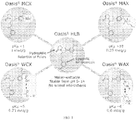
- the sorbent containing at least one hydrophobic component and at least one hydrophilic component may be water wettable. It is appreciated that OASIS® HLB sorbent may provide the suitable option for the water-wettable sorbent.
- the sorbent having the specific affinity to phospholipids may be a silica-based particle containing a modified or unmodified C 8 to C 30 alkyl or octadecyl (C 18 ) components.
- a chromatographic column may comprise: a column having a cylindrical interior for accepting a sorbent bed and at least two or more sorbents.
- the chromatographic column may include at least one sorbent containing at least one hydrophobic component and at least one hydrophilic component and at least one sorbent having a specific affinity to phospholipids.
- the sorbent containing at least one hydrophobic component and at least one hydrophilic component may be water wettable.
- the sorbents may also be selected from the group consisting of a silica, a modified silica, an alumina, an modified alumina, titanium and zirconium oxides, graphitized carbon or activated carbon, magnesium-silica (Florisil®), a modified polymer and combinations thereof.
- the sorbents may also be porous, nonporous or pellicular.
- the sorbents may be layered.
- a top layer may be the sorbent containing at least one hydrophobic component and at least one hydrophilic component.
- the sorbents may be mixed in a single layer.
- the sorbent containing at least one hydrophobic component and at least one hydrophilic component and the sorbent having a specific affinity to phospholipid may be mixed at a weight ratio of about 1:2, respectively.
- the chromatographic column may further include at least one frit or filter. The frit or filter may be disposed at the bottom of the sorbents.
- the chromatographic column may further include an inlet and an outlet.
- the chromatographic column may further include a vacuum chamber, reservoir or a structure to allow for use in a centrifuge or with a vacuum or pressure source.
- the chromatographic column may be included in a syringe, a cartridge, a column, a multiple chamber, a 4 to 8-well rack, a 4 to 8-well strip, a 48 to 96-well plate, a 96 to 384-well micro-elution plate, micro-elution tip, a 96 to 384-micro-elution tip array, a 4 to 8- tip micro-elution strip, a single micro-elution pipet tip, a spin tube or a spin container.
- the sorbent containing at least one hydrophobic component and at least one hydrophilic component may be OASIS® HLB sorbent and the sorbent having the specific affinity to phospholipids may be a silica-based particle containing a modified or unmodified C 8 to C 30 alkyl or octadecyl (C 18 ) component.
- a chromatographic device may comprise: a column having a cylindrical interior for accepting a sorbent bed; and at least two or more sorbents.
- at least one sorbent may contain at least one hydrophobic component and at least one hydrophilic component and at least one sorbent may have a specific affinity to phospholipids are included in the sorbent bed.
- the sorbent containing at least one hydrophobic component and at least one hydrophilic component may be water wettable.
- the sorbents may be layered.
- a top layer may be the sorbent containing at least one hydrophobic component and at least one hydrophilic component.
- the sorbents may be mixed in a single layer.
- the sorbent containing at least one hydrophobic component and at least one hydrophilic component and the sorbent having a specific affinity to phospholipid may be mixed at a weight ratio of about 1:2.
- the chromatographic device may further include at least one frit or filter.
- the frit or filter may be disposed at the bottom of the sorbents.
- the chromatographic device may further include an inlet and an outlet; or a housing.
- Exemplary housing may be a syringe, a cartridge, a column, a multiple chamber, a 4 to 8-well rack, a 4 to 8-well strip, a 48 to 96-well plate, a 96 to 384-well micro-elution plate, micro-elution tip, a 96 to 384-micro-elution tip array, a 4 to 8- tip micro-elution strip, a single micro-elution pipet tip, a spin tube or a spin container.
- the chromatographic device may further include a vacuum chamber, reservoir or a structure to allow for use in a centrifuge or with a vacuum or pressure source.
- the sorbent containing at least one hydrophobic component and at least one hydrophilic component may be OASIS® HLB sorbent and the sorbent having the specific affinity to phospholipids may be a silica containing a modified or unmodified C 8 to C 30 alkyl or octadecyl (C 18 ) component
- a solid phase extraction method may include: using the device or the chromatographic column as described above.
- the device or the chromatographic column may comprise a sorbent bed including a sorbent containing at least one hydrophobic component and at least one hydrophilic component and a sorbent having a specific affinity to phospholipids.
- the sorbent containing at least one hydrophobic component and at least one hydrophilic component may be water wettable.
- the sorbents may be layered.
- a top layer may be the sorbent containing at least one hydrophobic component and at least one hydrophilic component.
- the sorbents may be mixed in a single layer or a single sorbent bed.
- the sorbent containing at least one hydrophobic component and at least one hydrophilic component and the sorbent having a specific affinity to phospholipid may be mixed at a weight ratio of about 1:2.
- the weight ratios may be determined to provide retention for the analytes to be quantitated and to provide adequate retention for phospholipids in the elution solvent such that the analytes are eluted in the elution solvent substantially free of phospholipids, salts, proteins and other highly polar matrix components that cause ion suppression or enhancement of mass spectrometric analyses or compromise the lifetime of the analytical column used in front of the mass spectrometer for analyte resolution prior to quantitation.
- the sorbent weight ratios are determined by the required mass capacity to remove at least two major matrix inferences.
- the sorbent containing at least one hydrophobic component and at least one hydrophilic component may be OASIS® HLB sorbent and the sorbent having the specific affinity to phospholipids may be a silica containing a modified or unmodified C 8 to C 30 alkyl or octadecyl (C 18 ) component.
- the device may be a syringe, a cartridge, a column, a multiple chamber, a 8-well rack, a 8-well strip, a 96-well plate, 96-well micro-elution plate, micro-elution tip, a 96-micro-elution tip array, an 8- tip micro-elution strip, a single micro-elution pipet tip, a spin tube or a spin container.
- the method may further comprise conditioning the sorbent bed and methanol may be used for the conditioning.
- the method may further comprise equilibrating the sorbent bed and water may be used for the equilibrating.
- the method may further comprise loading a sample on the sorbent bed without the need for conditioning or equilibrating the sorbent bed.
- the sample may be a biofluid, tissue, food or environmental sample.
- the sample may be loaded on the sorbent bed without conditioning and equilibrating the sorbent bed.
- the method may further comprise eluting analytes from the sorbent bed.
- eluting analytes For example, a mixture of acetonitrile and methanol at a mixing ration of about 90:10 is used for eluting.
- an eluate obtained from the method may contain less than about 2 wt% of phospholipids in the loaded sample.
- the analytes from the sorbents may be further analyzed using liquid chromatography-UV, liquid chromatography-mass spectrometry/mass spectrometry (LC-MS/MS), mass spectrometry (MS), MALDI-MS, Electrospray Ionization (ESI), Sector, Time of Flight (ToF) or Ion Traps.
- a vacuum chamber, reservoir or a structure to allow for use in a centrifuge or with a vacuum or pressure source may be applied to the device for improving a flow rate.
- the invention provides a separation device, a chromatographic column, or a chromatographic device comprising two or more sorbents, wherein
- the invention provides method for removing the matrix interferences retained by a sorbent, comprising mixing the sorbent with at least one or more additional sorbents of a different type.
- the sorbent and the at least one or more additional sorbents are mixed in a single layer.
- the sorbent is a water-wettable sorbent and at least one additional sorbent is not a water-wettable sorbent.
- the sorbent is not a water-wettable sorbent and at least one additional sorbent is a water-wettable sorbent.
- the invention provides method for increasing the flowrate of a sorbent, comprising mixing the sorbent with at least one or more additional sorbents of a different type.
- the sorbent and the at least one or more additional sorbents are mixed in a single layer.
- the sorbent is a water-wettable sorbent and at least one additional sorbent is not a water-wettable sorbent.
- the sorbent is not a water-wettable sorbent and at least one additional sorbent is a water-wettable sorbent.
- the invention provides method for reducing the backpressure of a sorbent, comprising mixing the sorbent with at least one or more additional sorbents of a different type.
- the sorbent and the at least one or more additional sorbents are mixed in a single layer.
- the sorbent is a water-wettable sorbent and at least one additional sorbent is not a water-wettable sorbent.
- the sorbent is not a water-wettable sorbent and at least one additional sorbent is a water-wettable sorbent.
- the present invention provides a device and a method developed for cleaning samples prior to subsequent analysis. Such cleaning may further require the use of separation methods such as liquid chromatography (LC), or supercritical fluid chromatography (SFC) with mass spectrometry/mass spectrometry (MS/MS), mass spectrometry (MS), MALDI-MS or ESI, and the like.
- separation methods such as liquid chromatography (LC), or supercritical fluid chromatography (SFC) with mass spectrometry/mass spectrometry (MS/MS), mass spectrometry (MS), MALDI-MS or ESI, and the like.
- LC liquid chromatography
- SFC supercritical fluid chromatography
- MS/MS mass spectrometry/mass spectrometry
- MS mass spectrometry
- MALDI-MS MALDI-MS or ESI, and the like.
- devices and methods of the invention can provide high recoveries for analytes and minimize matrix effects by removing interfering matrix materials.
- the sorbents are selectively combined to provide suitable retention for analytes from aqueous samples without the need to condition or equilibrate the sorbents prior to sample loading thereby reducing the number of steps in the SPE method. Additionally, the sorbent combination is selected to elute polar matrix interferences in the wash step while maintaining analyte retention and to provide adequate retention for at least one matrix interference in the elution step thereby providing removal of multiple interferences from the eluate containing the extracted analytes.
- analyte is a component, substance or chemical constituent that is of interest in an analytical procedure. Particular examples may include, but not limited to, drugs, pesticides, herbicides, toxins and environmental pollutants, metal-organic compounds, biologically active compounds such as metabolites, proteins, peptides, hormones, polynucleotides, vitamins, cofactors, metabolites, lipids and carbohydrates.
- sample refers to a complex fluid mixture containing soluble and insoluble components.
- samples include, but are not limited to, food samples (e.g., milk, a fortified food matrix), biological samples including a sample from human or animals (e.g., blood, blood plasma, urine, mucosal tissue secretions, tears, semen, and breast milk) and environmental samples (e.g., ground water, waste waters, soil, and sea, river, pond, or bay water).
- the sample may further include macromolecules, e.g., substances, such as biopolymers, e.g., proteins, e.g., proteolytic proteins or lipophilic proteins, such as receptors and other membrane-bound proteins, and peptides.
- the sample may further include one or more lipid, or phospholipid molecules.
- matrix refers to the components of a sample other than the analyte of interest.
- the matrix may have a substantial interference with the analyte during analysis by ESI, or any other technique using nebulization and ionization of sample components prior to detection such as APCI and APPI.
- matrix interference refers to those components of the sample that produce a substantial signal enhancement or suppression with the analytes during analysis by mass spectrometry.
- a substantial signal enhancement or suppression that interferes with analyte quantitation is also termed a substantial interference.
- the "substantial interference” refers to a matrix effect that is greater than 20% for targeted analyses and 50% for screening analyses. Matrix interferences lower than these are considered acceptable if the majority of analytes in an analysis have matrix effect below this threshold.
- target analysis refers to the analysis of a predetermined set of analytes expected to be present in the samples being analyzed.
- Targeted analyses typically do not rely on full scan mode data from a MS but from selected ion monitoring of the target ions of interest.
- An example of a targeted analysis is quantitating Tacrolimus, an immunosuppressive drug used after organ transplants, given to reduce the risk of rejection. A discrete concentration value is reported for these analyses.
- screening analysis refers to the analysis of a large grouping of analytes that may or may not be present in the samples being analyzed.
- An example of a screening analysis is determining if pesticides are present in foods. These reports contain information on the presence of analytes at or above a certain threshold.
- log P refers to the octanol: water partition coefficient.
- the log P value is used as a measure of an analytes hydrophobicity or hydrophobicity where values of less than 1 indicate that the analyte concentration if higher in water than in octanol. As such the analyte would be considered a more hydrophilic or polar analyte.
- Log P values greater than 1 indicate that an analyte is more hydrophobic or non-polar.
- the lower the log P value relative to 1 indicates that the analyte is more hydrophilic or more polar than others of higher value.
- Matrix effect refers to a quantified enhancement or suppression of analyte signal.
- solid-phase extraction (SPE) method or protocol refers to a procedure comprising of the following steps:
- biological sample refers to any solution or extract containing a molecule or mixture of molecules that comprises at least one biomolecule that is subjected to extraction or analysis that originated from a biological source (such as, humans and animals).
- Biological samples are intended to include crude or purified, e.g., isolated or commercially obtained, samples.
- Biological sample may be, but are not limited to, inclusion bodies, biological fluids, biological tissues, biological matrices, embedded tissue samples, cells ( e.g., one or more types of cells), and cell culture supernatants.
- Particular examples may include blood plasma, urine, cerebrospinal fluid, synovial fluid and other biological fluids, including extracts of tissues, such as liver tissue, muscle tissue, brain tissue and heart tissue and the like.
- biological matrices is intended to include anything that a cell contains or makes, e.g., bone, inclusion bodies, blood components, cell debris, e.g., cell lysates, etc.
- biological fluid as used herein is intended to include fluids that are obtained from a biological source.
- exemplary biological fluids include, but are not limited to, blood, blood plasma, urine, spinal fluid, mucosal tissue secretions, tears, interstitial fluid, synovial fluid, semen, and breast milk.
- chromatographic process refers to a process including a physical method of separation that distributes components to separate between two phases, one stationary (stationary phase), the other (the mobile phase) moving in a definite direction.
- the term "eluate" as used herein refers to a mobile phase leaving the sample preparation device or column.
- the eluate may include an analyte of interest or the eluate may not include the analyte which may be retained by a resin or a matrix of the resin.
- the resin or matrix of the resin may be further eluted in a subsequent step to elute the retained analyte of interest.
- solid phase extraction refers to a frequently used chromatographic technique for isolating analytes from the sample for quantitative analysis, especially together with high performance liquid chromatography (HPLC) or gas chromatography (GC) ( McDonald and Bouvier, eds. Solid Phase Extraction Applications Guide and Bibliography, sixth edition, Milford, MA: Waters (1995 )).
- HPLC liquid chromatography
- GC gas chromatography
- Solid phase extraction can be advantageous to separate a component of interest in a complex solution from potentially interfering elements and to concentrate the target analytes to the level of sufficient detection and measurement.
- solid phase extraction has been widely utilized in preparing food or beverage samples, environmental samples and pharmaceutical agents or metabolites for analysis.
- water-wettable as used herein, describes a material which is solvated, partially or completely, by water.
- the water-wettable material engages in energetically favorable or attractive interactions with water molecules, and thus, maintains its capability for high retention and excellent recoveries even if the sorbent runs dry, which means there is no need to take extraordinary steps to keep the sorbent beds from drying out during the critical steps prior to sample loading.
- Water-wettable materials are exemplified, but not limited to, those described in US. Pat. 5,882,521 . As observed in the examples of US. Pat.
- 5,882,521 sorbents that do not engage in favorable energetics or interactions with water require an organic conditioning followed by an aqueous equilibration in order to maintain retention of analytes of interest during sample loading.
- water-wettable material when water-wettable material is solvated partially, less than about 1%, less than about 3%, less than about 5%, less than about 7%, less than about 10%, less than about 15%, less than about 20%, less than about 25%, less than about 30%, less than about 35%, less than about 40%, less than about 45 less than about 50%,%, less than about 55%, less than about 60%, less than about 65 %, less than about 70%, less than about 75%, less than about 80%, less than about 85%, less than about 90%, less than about 95%, or less than about 99% of the material may be solvated or wet by water.
- the term "monomer”, as used herein, refers to both a molecule comprising one or more polymerizable functional groups prior to polymerization, and a repeating unit of a polymer.
- a polymer can comprise two or more different monomers, in which case it can also be referred to as a copolymer.
- the "mole percent" of a given monomer which a copolymer comprises is the mole fraction, expressed as a percent, of the monomer of interest relative to the total moles of the various (two or more) monomers which compose the copolymer.
- sorption or "sorbing” describes the ability of a material to take up and hold another material by absorption or adsorption. Without adsorption of matrix components and analytes of interest on the surface of a sorbent material, retention would not be maintained when the system is subjected to the flow of certain fluids.
- sorbent refers to a material or molecule capable of sorption or sorbing. In certain embodiments, the sorbent may adsorb either analytes or other matrix molecules.
- hydrophobic refers to a physical or chemical property which repels water or polar molecules.
- the hydrophobic group in a resin makes a substantial interaction or affinity with hydrophobic analytes or matrix in a sample and adsorbs hydrophobic species.
- hydrophilic refers to a physical or chemical property which favors water or polar molecules.
- the hydrophilic group in a resin makes a substantial interaction with hydrophilic or polar analytes or matrix in a sample and adsorbs hydrophilic species.
- phospholipid refers to a lipid which contains a phosphate group and one or more of glyceride.
- the phospholipids are major components of cell membranes in a form of lipid bilayers. Therefore, the phospholipids are mostly included in biological samples and food and other by-products produced from animal products.
- the phospholipids may cause a matrix effect to substantially disturb analytical qualification and quantitation because they may interact or adhere to analytes. As such, it is preferred to remove phospholipid prior to a analysis.
- analysis or “analyzing” are used interchangeably and refer to any of the various methods of separating, detecting, isolating, purifying, solubilizing, detecting, quantifying and/or characterizing chemical or biological composition. In certain embodiments the analysis may also refer to the various methods of determining the degree of purification of a sample.
- Examples of the various methods include, but are not limited to, solid phase extraction, solid phase micro extraction, electrophoresis, mass spectrometry, e.g., MALDI-MS or ESI, liquid chromatography, e.g., high performance, e.g., reverse phase, normal phase, or size exclusion, ion-pair liquid chromatography, liquid-liquid extraction, e.g., accelerated fluid extraction, supercritical fluid extraction, microwave-assisted extraction, membrane extraction, soxhlet extraction, precipitation, clarification, electrochemical detection, staining, elemental analysis, Edmund degradation, nuclear magnetic resonance, infrared analysis, flow injection analysis, capillary electrochromatography, ultraviolet detection, and combinations thereof.
- liquid chromatography e.g., high performance, e.g., reverse phase, normal phase, or size exclusion
- ion-pair liquid chromatography liquid-liquid extraction, e.g., accelerated fluid extraction, supercritical fluid extraction, microwave-assisted extraction, membrane extraction, soxh
- mass spectrometric detection refers to any of the various methods of mass spectroscopy. Examples include, but are not limited to, electrospray ionization (ESI), surface desorption ionization, and atmospheric pressure chemical ionization (APCI). In certain embodiments, mass spectrometric detection also includes the use of a tandem mass spectrometer, a quadrupole time-of-flight mass spectrometer, or a magnetic sector mass spectrometer.
- ESI electrospray ionization
- APCI atmospheric pressure chemical ionization
- high-purity analyte/sample refers to a prepared or extracted analyte which may have reduced contamination and/or non-diminished chromatographic properties prior to quantitative or qualitative analysis, such as chromatography and mass spectroscopy.
- substantially refers to an increase of an effect of about 10%, about 15%, about 20%, about 25%, about 30%, about 35%, about 40%, about 45%, about 50%, about 55%, about 60%, about 65%, about 70%, about 75%, about 80%, about 85%, about 90% or about 95% above the original degree of the particular effect.
- a “substantial” amount may refer to an amount greater than about 10%, about 15%, about 20%, about 25%, about 30%, about 35%, about 40%, about 45%, about 50%, about 55%, about 60%, about 65%, about 70%, about 75%, about 80%, about 85%, about 90% or about 95% of the initial or total amount.
- “substantially reduced” as used herein refers to a reduction of an effect of about 10%, about 15%, about 20%, about 25%, about 30%, about 35%, about 40%, about 45%, about 50%, about 55%, about 60%, about 65%, about 70%, about 75%, about 80%, about 85%, about 90% or about 95% above the original degree of the particular effect.
- substantially free refers to the elution of analytes such that the analytes are eluted in the elution solvent such that the analytes recovered contain a quantity of the recited component of less than 20% by weight of the particular component as compared to the total elution mixture.
- substantially free refers to less than 10%, less than 5%, less than 2% less than 1%, less than 0.5% or less than 0.1% by weight of the particular component as compared to the total elution.
- substantially free refers to less t less than 1.0%, less than 0.7%, less than 0.5%, less than 0.4% less than 0.3%, less than 0.2% or less than 0.1% by weight of the particular component as compared to the total elution. In still other embodiments, “substantially free” refers to less than 1.0%, less than 0.7%, less than 0.5%, less than 0.4% less than 0.3%, less than 0.2% or less than 0.1% by weight of the particular component as compared to the total formulation.
- the present invention provides devices for preparing high-purity samples and the devices are used in solid phase extraction or pass through methods.
- the devices include sorbents which may selectively adsorb or retain matrix components.
- the devices of the present invention include at least two or more sorbents for solid phase extraction.
- the sorbents may be provided in a packed sorbent bed.
- At least one sorbent may contain at least one hydrophobic component and at least one hydrophilic component.
- this sorbent may include a water-wettable polymer with an optimal balance between hydrophobic and hydrophilic properties as described in US Pat. No. 5,882,521 ; US Pat. No. 5,976,367 ; US Pat. No. 6,106,721 ; US Pat. No. 6,254,780 ; US Pat. No. 6,332,695 ; 6,468,422 ; US Pat. 6,726,842 ; No.6,723,236 ; and US. Pat. No.
- the sorbent at least one hydrophobic component and at least one hydrophilic component may maintain high retention in water, an aqueous solution, or water miscible solution to hydrophobic species such as lipids or non-polar organic molecules as well as hydrophilic species such as polar organic molecules or salts.
- the retained species in this sorbent may be acidic, basic and neutral compounds. It is also appreciated that a range of option for the sorbent containing at least one hydrophobic component and at least one hydrophilic component is provided by OASIS® HLB (Waters Corporation, Milford MA).
- the sorbent containing at least one hydrophobic component and at least one hydrophilic component may be further modified to include at least one ion exchange functional group.
- the functional group may be capable of selectively retaining cationic, anionic or other polar species in the solution as described in, for example, US. Pat. No. 7,442,299 ; US. Pat. No. 7,232,520 ; US Pat. No. 7,731,844 ; US. Pat. No. 7,790,038 ; and US Pat. No. 8,574,433 , each of which is incorporated herein by reference in its entirety.
- a range of option for the sorbent containing at least one hydrophobic component, at least one hydrophilic component and at least ion exchange functional group is also provided by OASIS® MAX sorbent, OASIS® MCX sorbent, OASIS® WCX sorbent or OASIS® WAX sorbent (Waters Corporation, Milford MA).
- At least one of the sorbents may contain at least one component which has a specific affinity to lipid or to a lipid-like species.
- the sorbent may have high hydrophobicity to remove such lipophilic species from the sample solution.
- the sorbent may have an affinity to phospholipids as described in US Pat. Pub. No. 2013/0053588 , which is incorporated herein by reference in its entirety.
- the sorbent may contain highly hydrophobic group such as octadecyl (C 18 ) or C 8 to C 30 alkyl which is bonded to silica.
- this sorbents may be further modified with other chemical group to provide greater specificity towards phospholipids. It is also appreciated that a range of option for the sorbent containing at least one hydrophobic component and at least one hydrophilic component is provided by OSTRO® (Waters Corporation, Milford MA).
- any number of combinations of the sorbent containing at least one hydrophobic component and at least one hydrophilic component, the sorbent having the affinity to phospholipids and other sorbents based on a user's requirements may be also provided without limitation.
- the sorbents may also be selected from the group consisting of a silica, a modified silica, an alumina, an modified alumina, titanium and zirconium oxides, graphitized carbon or activated carbon, magnesium-silica (Florisil®), a modified polymer and combinations thereof.
- the sorbents may also be porous, nonporous or pellicular.
- the sorbent may be a porous resin as described in US Pat. No. 5,882,521 , which is incorporated herein by reference in its entirety.
- the porous resin may be formed by copolymerizing of the monomers included in the resin composition and a porous structure may be formed to penetrating the copolymers.
- the porous structure may provide a pathway or a channel through which the solution of sample can diffuse.
- the sorbent containing at least one hydrophobic component and at least one hydrophilic component may be formed by copolymerizing of at least one hydrophobic monomer and at least one hydrophilic monomer.
- pores in the resin may have a diameter ranging from about 0.5 nm to about 100 nm.
- the porous resin may be in a form of a porous particle or monolith.
- the sorbents may be layered and thus at least two or more layers may be formed in the devices.
- the sorbent containing at least one hydrophobic component and at least one hydrophilic component may be layered on the top of the sorbents layers.
- Other layers comprising the sorbent having affinity to phospholipids or the like may be layered at the bottom or underneath the top layer without limitation.
- the order or the number of the layer may not be limited within the scope of the invention.
- each sorbent may be independently used in an amount of about 0.1 mg, about 0.2 mg, about 0.3 mg, about 0.4 mg, about 0.5 mg, about 0.6 mg, about 0.7 mg, about 0.8 mg, about 0.9 mg, about 1 mg, about 2 mg, about 3 mg, about 4 mg, about 5 mg, about 6 mg, about 7 mg, about 8 mg, about 9 mg, about 10 mg, about 20 mg, about 30 mg, about 40 mg, about 50 mg, about 60 mg, about 70 mg, about 80 mg, about 90 mg, or about 100 mg, without limitation, based on a user's requirements, a capacity of device, a volume of a solution sample, amounts of phospholipids and salts and the like.
- the sorbents in each layer may be used in a particular weight ratio therebetween.
- the weight ratio between the sorbent containing at least one hydrophobic component and at least one hydrophilic component and the sorbent having affinity to phospholipids may be about 10:1, about 9:1, about 8:1, about 7:1, about 6:1, about 5:1, about 4:1, about 3:1, about 2:1, about 1:1, about 1:2, about 1:3, about 1:4, about 1:5, about 1:6, about 1:7, about 1:8, about 1:9 or about 1:10.
- the sorbent containing at least one hydrophobic component and at least one hydrophilic component and the sorbent having a specific affinity to phospholipid may be mixed at a weight ratio of about 1:2, respectively.
- the suitable weight ratios between sorbents of the layered bed may vary for sorbents of different densities.
- OASIS® HLB sorbent as the sorbent containing at least one hydrophobic component and at least one hydrophilic component has a density of about 1.2 g/cubic centimeter
- OSTRO® sorbent as the sorbent having a specific affinity to phospholipid has a density of about 2.2 g/cubic centimeter.
- the suitable weight ratio between two different sorbents may be determined by the volumetric requirement in the chromatographic column or device, or the like.
- the suitable weight ratios may be determined to provide retention for the analytes to be quantitated and to provide adequate retention for phospholipids in the elution solvent such that the analytes are eluted in the elution solvent substantially free of phospholipids, salts, proteins and other highly polar matrix components that cause ion suppression or enhancement of mass spectrometric analyses or compromise the lifetime of the analytical column used in front of the mass spectrometer for analyte resolution prior to quantitation.
- majority of phospholipids may remain in the sorbent having a specific affinity to phospholipid to provide adequate retention for phospholipids in the elution solvent such that the analytes may be eluted in the elution solvent substantially free of phospholipids.
- sorbent containing at least one hydrophobic component and at least one hydrophilic component or water-wettable sorbent may remain in the sorbent containing at least one hydrophobic component and at least one hydrophilic component or water-wettable sorbent to provide adequate retention thereof such that the analytes eluted in the elution solvent may be substantially free of the polar matrix components.
- the sorbents may be mixed and formed in a single layer or a single packed bed.
- the sorbents may be prepared by mixing a sorbent containing at least one hydrophobic component and at least one hydrophilic component and a sorbent having affinity to phospholipids.
- the mixture of the sorbents may be formed homogenously, partially homogenously, or heterogeneously (randomly mixed).
- the mixture of the sorbents may be formed with gradient of one sorbent or with independent gradient of each sorbent.
- the mixed sorbent bed may be used to reduce a backpressure of sorbent beds composed of sorbent particles.
- the mixed beds may be charge-stabilized or in-situ formed monoliths, such that aqueous flow rate may be improved, while the backpressure is reduced.
- backpressure of the mixed sorbents in a single layer led may be about 5" Hg of vacuum compared to the 8-15" Hg for the layered beds using same sorbents.
- each sorbent may be mixed in an amount of about 0.1 mg, about 0.2 mg, about 0.3 mg, about 0.4 mg, about 0.5 mg, about 0.6 mg, about 0.7 mg, about 0.8 mg, about 0.9 mg, about 1 mg, about 2 mg, about 3 mg, about 4 mg, about 5 mg, about 6 mg, about 7 mg, about 8 mg, about 9 mg, about 10 mg, about 20 mg, about 30 mg, about 40 mg, about 50 mg, about 60 mg, about 70 mg, about 80 mg, about 90 mg, or about 100 mg, without limitation, based on a user's requirements, a capacity of device, a volume of a solution sample, amounts of phospholipids and salts and the like.
- the sorbents may be mixed to form a single layer a single absorbent in a particular weight ratio therebetween.
- the weight ratio between the sorbent containing at least one hydrophobic component and at least one hydrophilic component and the sorbent having affinity to phospholipids may be about 10:1, about 9:1, about 8:1, about 7:1, about 6:1, about 5:1, about 4:1, about 3:1, about 2:1, about 1:1, about 1:2, about 1:3, about 1:4, about 1:5, about 1:6, about 1:7, about 1:8, about 1:9 or about 1:10.
- the sorbent containing at least one hydrophobic component and at least one hydrophilic component and the sorbent having a specific affinity to phospholipid may be mixed at a weight ratio of about 1:2, respectively.
- an order or a method of mixing may not be limited within the scope of the invention.
- the suitable weight ratios between sorbents of the mixed bed may vary for sorbents of different densities.
- OASIS® HLB sorbent as the sorbent containing at least one hydrophobic component and at least one hydrophilic component has a density of about 1.2 g/cubic centimeter
- OSTRO® sorbent as the sorbent having a specific affinity to phospholipid has a density of about 2.2 g/cubic centimeter.
- the suitable weight ratio between two different sorbents may be determined by packing volume, back pressure, other volumetric requirement in the chromatographic column or device, or the like.
- the suitable weight ratios may be determined to provide retention for the analytes to be quantitated and to provide adequate retention for phospholipids in the elution solvent such that the analytes are eluted in the elution solvent substantially free of phospholipids, salts, proteins and other highly polar matrix components that cause ion suppression or enhancement of mass spectrometric analyses or compromise the lifetime of the analytical column used in front of the mass spectrometer for analyte resolution prior to quantitation.
- majority of phospholipids may remain in the sorbent having a specific affinity to phospholipid to provide adequate retention for phospholipids in the elution solvent such that the analytes may be eluted in the elution solvent substantially free of phospholipids.
- sorbent containing at least one hydrophobic component and at least one hydrophilic component or water-wettable sorbent may remain in the sorbent containing at least one hydrophobic component and at least one hydrophilic component or water-wettable sorbent to provide adequate retention thereof such that the analytes eluted in the elution solvent may be substantially free of the polar matrix components.
- the sorbent containing at least one hydrophobic component and at least one hydrophilic component or the water-wettable adsorbent may not be required thereby eliminating the need for a hydrophilic component but a still at least one of the sorbents may contain at least one component which has a specific affinity to lipid or to a lipid-like species.
- the sorbent having a specific affinity to phospholipids or to a lipid-like species may be used in combination with a non-polar sorbent, such as high coverage C 18 -silica and divinylbenzene sorbents, and those sorbents may be mixed in a single layer or singly packed sorbent bed, or may be provided in each layer to provide layered sorbent beds. Amounts and weight ratio of the sorbents for the non-aqueous sample may be used as described above without limitation.
- the present invention provides devices for preparing high-purity samples and the devices are used in solid phase extraction.
- the devices disclosed in the present invention may include: an inlet, outlet and sorbents and a housing which is capable of confining the sorbents and withstands sufficient mechanical strength applied during the extraction.
- a separation device comprises at least two or more sorbents provided in a packed sorbent bed.
- the device may include: at least one water-wettable sorbent containing at least one hydrophobic component and at least one hydrophilic component; and at least one sorbent having affinity to lipid or to a lipid-like species such as phospholipids, as described above.
- the device may include: a non-polar sorbent and at least one sorbent having affinity to lipid or to a lipid-like species such as phospholipids.
- Most non-polar sorbents used for SPE are wettable by solutions containing great than about 50% organic solvent.
- the sorbent containing at least one hydrophobic component and at least one hydrophilic component may be further modified to include at least one ion exchange functional group.
- any number of combinations of the sorbent containing at least one hydrophobic component and at least one hydrophilic component, the sorbent having the affinity to phospholipids and other sorbents may be also provided based on a user's requirements without limitation.
- Exemplary sorbents may also be selected from the group consisting of a silica, a modified silica, an alumina, an modified alumina, titanium and zirconium oxides, graphitized carbon or activated carbon, magnesium-silica (Florisil®), a modified polymer and combinations thereof.
- the sorbents may also be porous, nonporous or pellicular.
- the sorbents provided as a packed sorbent bed may be layered and thus at least two or more layers may be formed.
- the sorbent containing at least one hydrophobic component and at least one hydrophilic component may be layered on the top of the sorbents layers.
- Other layers comprising the sorbent having affinity to phospholipids or the like may be layered at the bottom or underneath the top layer without limitation.
- the order or the number of the layer may not be limited within the scope of the invention.
- the sorbents may be mixed and provided in a single layer or a single packed bed.
- the sorbents may be prepared by mixing a sorbent containing at least one hydrophobic component and at least one hydrophilic component and a sorbent having affinity to phospholipids.
- the mixture of the sorbents may be formed homogenously, partially homogenously, or heterogeneously (randomly mixed).
- the mixture of the sorbents may be formed with gradient of one sorbent or with independent gradient of each sorbent.
- each sorbent in the device may be independently included in an amount of about 0.1 mg, about 0.2 mg, about 0.3 mg, about 0.4 mg, about 0.5 mg, about 0.6 mg, about 0.7 mg, about 0.8 mg, about 0.9 mg, about 1 mg, about 2 mg, about 3 mg, about 4 mg, about 5 mg, about 6 mg, about 7 mg, about 8 mg, about 9 mg, about 10 mg, about 20 mg, about 30 mg, about 40 mg, about 50 mg, about 60 mg, about 70 mg, about 80 mg, about 90 mg, about 100 mg, or about 1 g, without limitation, based on a user's requirements, a capacity of the device, a capacity of the sorbents used, a volume of a solution sample, amounts of phospholipids and salts and the like.
- Each sorbent in the device may be included in the layered and mixed sorbent bed in a particular weight ratio therebetween.
- the weight ratio between the sorbent containing at least one hydrophobic component and at least one hydrophilic component and the sorbent having affinity to phospholipids may be about 10:1, about 9:1, about 8:1, about 7:1, about 6:1, about 5:1, about 4:1, about 3:1, about 2:1, about 1:1, about 1:2, about 1:3, about 1:4, about 1:5, about 1:6, about 1:7, about 1:8, about 1:9 or about 1:10.
- the sorbent containing at least one hydrophobic component and at least one hydrophilic component and the sorbent having a specific affinity to phospholipid may be mixed at a weight ratio of about 1:2, respectively.
- This weight ratio is based on matching the capacity of the sorbent containing at least one hydrophobic component and at least one hydrophilic component for the phospholipids that are removed by the sorbent having a specific affinity to phospholipid.
- an order or a method of mixing may not be limited within the scope of the invention.
- the suitable weight ratios between the sorbents may vary for sorbents of different densities.
- OASIS® HLB sorbent as the sorbent containing at least one hydrophobic component and at least one hydrophilic component has a density of about 1.2 g/cubic centimeter
- OSTRO® sorbent as the sorbent having a specific affinity to phospholipid has a density of about 2.2 g/cubic centimeter.
- the suitable weight ratio between two different sorbents may be determined by packing volume, back pressure, other volumetric requirement in the chromatographic column or device, or the like.
- the suitable weight ratio between the sorbents may be determined by a balance of retention of the analytes during sample loading and washing and the persistence of retention of phospholipids during the elution of analytes in the eluate. For example, after a first washing, a second washing, or a third washing, the majority of phospholipids may remain in the mixed sorbent bed.
- a suitable weight ratio between the sorbents provides adequate retention for phospholipids in the elution solvent such that the analytes may be eluted in the elution solvent substantially free of phospholipids.
- the sorbent weight ratios are determined by the required mass capacity to remove at least two major matrix inferences.
- the device may further include a housing.
- the housing as used herein, may have a chamber for accepting sorbents or a sorbent bed comprising sorbents of the invention.
- the housing in the present invention may also be used for a chromatographic column or device without limitation.
- the housing of the devices may be a single chamber or the housing has a plurality of chambers.
- the housing may also be constructed and arranged to present the chambers in a plate-like format as described in US Pub. No.: US 2013/0053588 A1 and US. Pat. No. 6,723,236 , each of which is incorporated herein by reference in its entirety.
- the housing may be, but are not limited to, a syringe, a cartridge, a column, a multiple chamber, a 8-well rack, a 8-well strip, a 96-well plate, 96-well micro-elution plate, micro-elution tip, a 96-micro-elution tip array, an 8- tip micro-elution strip, a single micro-elution pipet tip, a spin tube or a spin container.
- any number of chambers or shape of the chambers may be obtained based upon a user's requirements.
- a solution received in the housing may flow into the sorbent bed spontaneously, for example, by capillary action.
- the flow may be generated through the device by external forces, such as gravity, a vacuum chamber, reservoir or a structure to allow for use in a centrifuge, or with a vacuum or pressure source, external pressure and the like, without limitation.
- the housing may be configured to have at least one cap or lid for closing the housing after the sample is received.
- the cap may provide a pressure source for efficient extraction process.
- the cap may be associated with a vacuum chamber, reservoir or a structure to allow for use in a centrifuge, or with a vacuum or pressure source to apply vacuum or suction to facilitate flow out of the solution or liquid throughout the device to the outlet.
- a vacuum chamber, reservoir or a structure to allow for use in a centrifuge or with a vacuum or pressure source may also be associated with other component of the housing without limitation, as known in the art.
- the housing may be formed of a substantially rigid material withstands sufficient mechanical strength applied during the extraction.
- Exemplary materials may be, but not limited to, a glass, a metal, a plastic and the like.
- the molded plastic such polyether ether ketone (PEEK), polycarbonate (PC), and the like may be used without limitation, as known in the art.
- a capacity of the house may be various according to the volume of the sorbents, samples and the like based on a user's requirements.
- Exemplary housings of the invention may have a capacity of about 1 mL, about 2 mL, about 3 mL, about 4 mL, about 5 mL, about 6 mL, about 7 mL, about 8 mL, about 9 mL, about 10 mL, about 15 mL, about 20 mL, about 30 mL, about 40 mL, about 50 mL, or about 100 mL, without limitation.
- the device may further include an inlet or an outlet.
- the device of the invention may include one or more of frits or filters.
- a frit or a filter may be disposed at the bottom of the sorbents or a frit or a filter may be disposed on the top of the sorbents.
- the frits or filters may maintain stabilization or equilibration the sorbents until sufficient flow is generated through the device.
- the frits or filters may prevent the sorbents from being penetrated by the sample solution until a sufficient external force is applied.
- a porous frit may be used.
- Exemplary frits may be, but not limited to, a hydrophobic frit material such as Teflon, which may be in a form of membrane, filter, screen or monolithic structure or combination thereof.
- frits may not be disposed in the sorbents.
- frits may be disposed between layers of sorbents, without limitations to number or orders.
- the device of the present invention may comprise: a sorbent bed comprising at least two sorbents, a housing, a frit at the bottom of the sorbent bed; an inlet and outlet.
- at least one sorbent may contain at least one hydrophobic component and at least one hydrophilic component and at least one sorbent may have an affinity to phospholipids, to thereby efficiently remove salts and phospholipids from the sample solution and eliminate matrix effects.
- the device can be used to separate and eliminate interfering species such as phospholipids and salts from analytes of the sample solution by using combinations of the sorbents.
- matrix effects can be minimized.
- the analytes in the sample may be recovered at high recovery rates and be provided in a concentrated solution.
- the analytes in the concentrated solution may not require additional clean-up process prior to further analytical methods, such as liquid chromatography, liquid chromatography-mass spectrometry/mass spectrometry (LCMS/MS), mass spectrometry (MS), MALDI-MS or ESI and the like.
- the analytes may be, but not limited to, small molecules, proteins, peptides, nucleic acids, oligonucleotides, and/or other compounds.
- the present invention may provide an improved solid-phase extraction method by using the devices of the invention which may have various advantages over conventional protein precipitation (PPT) and solid liquid extraction (SLE).
- PPT protein precipitation
- SLE solid liquid extraction
- the methods in the present invention may significantly reduce matrix effects which can be generally caused by salts, phospholipids, small molecules, proteins, peptides, particulates, cells, and salts and the like.
- the methods may include the use of separation devices of the present invention.
- the device includes at least one sorbent may contain at least one hydrophobic component and at least one hydrophilic component and at least one sorbent having affinity to lipid or to a lipid-like species such as phospholipids, as described above.
- the sorbent that contains at least one hydrophobic component and at least one hydrophilic component may be water-wettable.
- any number of combinations of the sorbent containing at least one hydrophobic component and at least one hydrophilic component, the sorbent having the affinity to phospholipids and other sorbents based on a user's requirements may be also provided without limitation.
- Various other exemplary sorbents used in the methods of the present invention are also described above.
- the device further includes: an inlet, an outlet and/or a housing which is capable of confining the sorbents and withstands sufficient mechanical strength applied during the extraction.
- the device may include: a housing; an inlet; an outlet; at least one or more of frits; and at least two or more sorbents and the housing may be, but are not limited to, a syringe, a cartridge, a column, a multiple chamber, a 4 to 8-well rack, a 4 to 8-well strip, a 48 to 96-well plate, a 96 to 384-well micro-elution plate, micro-elution tip, a 96 to 384-micro-elution tip array, a 4 to 8- tip micro-elution strip, a single micro-elution pipet tip, a spin tube or a spin container.
- a syringe a cartridge, a column, a multiple chamber, a 4 to 8-well rack, a 4 to 8-well strip
- the SPE method may include: providing a device; conditioning sorbents in the device; equilibrating the sorbents; loading a sample to the sorbents; washing the sorbents; eluting analytes from the sorbents.
- conditioning and equilibrating may not be performed before loading samples.
- the conditioning may be performed with methanol, ethanol, propanol, isopropyl alcohol, water and a mixture thereof.
- the equilibrating solution may have similar or same ionic strength with the sample solution to provide equilibrated partitioning environments in the sorbents when the sample solution is loaded.
- exemplary equilibrating solution/solvent may be, but not limited to, water, a buffer solution such as phosphate buffer solution (H 3 PO 4 solution), aqueous solution, water-miscible organic solution and the like.
- the conditioning of the sorbent bed may be performed with methanol and the sorbent bed may also be equilibrated subsequently with water.
- the sample may be loaded onto the sorbents as a solution.
- the sample solution may be an aqueous solution or a water-miscible organic solution.
- the sample may be in a solid form, such as pellets, lyophilized solid, powder, film and the like.
- the solid type sample may be prepared in an appropriate solution using water, buffer solution, or other organic water-miscible solvent prior solution prior to loading.
- the solid type sample may further be prepared in a homogeneous solution by using generally known techniques in the art, such as vortexing, ultrasonication, shaking, and the like.
- the prepare samples may contain analytes subjected to further analytical methods, such as mass spectrometry (MS), chromatography, MALDI-MS, ESI and the like.
- the sample may be a biological sample.
- exemplary biological samples may be, but not limited to, inclusion bodies, biological fluids, biological tissues, biological matrices, embedded tissue samples, cells ( e.g., one or more types of cells), and cell culture supernatants.
- Particular examples may include blood plasma, urine, cerebrospinal fluid, synovial fluid and other biological fluids, including extracts of tissues, such as liver tissue, muscle tissue, brain tissue and heart tissue and the like.
- the biological samples may be appropriately prepared prior to loading to the sorbents using generally known techniques in the art without limitation.
- the sorbents may be washed with an appropriate washing solvent.
- the solvent may be the same solvent used in the conditioning step.
- Exemplary solvents for washing may be, but not limited to, methanol, ethanol, propanol, isopropyl alcohol, water and a mixture thereof.
- the analytes may be eluted with an appropriate eluting solution.
- the eluting solution may be a neutral, acidic, or basic mixture of acetonitrile and methanol; a neutral, acidic, or basic solution of methanol; a neutral, acidic, or basic solution of acetonitrile; a neutral, acidic, or basic mixture of methanol and water, a neutral, acidic, or basic mixture of acetonitrile and water; any of the above as a mixture of acetone or neutral, acidic, or basic solution of acetone.
- the method may further comprise analyzing the analytes from the SPE using analytical instruments and/or techniques, for examples, liquid chromatography, LC-MS/MS, mass spectrometry, MALDI-MS, ESI-MS, UHPLC , HPLC, nuclear magnetic resonance, infrared analysis, flow injection analysis, capillary electrochromatography, ultraviolet detection or a combination thereof.
- analytical instruments and/or techniques for examples, liquid chromatography, LC-MS/MS, mass spectrometry, MALDI-MS, ESI-MS, UHPLC , HPLC, nuclear magnetic resonance, infrared analysis, flow injection analysis, capillary electrochromatography, ultraviolet detection or a combination thereof.
- analyzing and identification of the analytes may be performed by mass spectrometry.
- the mass spectrometry analysis may be obtained by comparing peaks with known compounds in a computer database.
- the methods using the device of the invention may provide efficiently cleaned biological sample analytes for analysis using liquid chromatography (e.g. UHPLC, HPLC), liquid chromatography-mass spectrometry/mass spectrometry (LC/MS-MS), mass spectrometry (MS), MALDI-MS or ESI, and the like.
- liquid chromatography e.g. UHPLC, HPLC
- liquid chromatography-mass spectrometry/mass spectrometry LC/MS-MS
- MS mass spectrometry
- MALDI-MS MALDI-MS or ESI, and the like.
- an eluate obtained after eluting the analytes contains less than about 10 wt%, about 9 wt%, about 8 wt%, about 7 wt%, about 6 wt%, about 5 wt%, about 4 wt%, about 3 wt%, about 2 wt%, or about 1 wt% of phospholipids included in the sample.
- a broad range of analytes may be recovered at greater than about 90 %, about 91 %, about 92 %, about 93 %, about 94 %, about 95 %, about 96 %, about 97 %, about 98 %, about 99 %, or about 100 %.
- the matrix effects may be reduced to less than about 20 %, about 19 %, about 18 %, about 17 %, about 16 %, about 15 %, about 14 %, about 13 %, about 12 %, about 11 %, about 10 %, about 9 %, about 8 %, about 7 %, about 6 %, about 5 %, about 4 %, about 3 %, about 2 %, about 1 % as compared to methods without using the devices of the invention.
- the solvent gradient table is shown below: Time Profile Curve (min) %A %B 0 80 20 0.3 80 20 6 3 70 30 6 6.5 30 70 6 6.6 80 20 6 7 80 20 6
- Exemplary MRM transition monitored by ESI is shown below: Analyte Precursor Ion m/z Product Ion m/z Cone Voltage (V) Collision Energy (eV) Azidothymidine 268.08 127.10 22 8 7-Hydroxycoumarin 163.06 107.06 58 20 Phenacetin 180.13 110.06 26 20 Betamethasone 393.17 373.15 32 8 Protriptyline 264.20 155.08 46 20 Alprazolam 309.11 281.17 38 26 Amitriptyline 278.22 91.04 44 22 Naproxen 231.12 185.06 20 16 Propranolol 260.19 116.15 48 16
- Precursor Ion (m/z) Product Ion (m/z) Cone Voltage (V) Collison Energy (eV) Phospholipid Class 496.40 184.40 35 30 Lyso-phosphatidylcholine 16:0 520.40 184.40 35 30 Lyso-phosphatidylcholine 18:2 522.40 184.40 35 30 Lyso-phosphatidylcholine 18:1 524.40 184.40 35 30 Lyso-phosphatidylcholine 18:0 704.40 184.40 35 30 Sphingomyeline 34:1 (C 13 isotope) 758.40 184.40 35 30 Phosphatidylcholine 34:2 760.40 184.40 35 30 Phosphatidylcholine 34:1 784.40 184.40 35 30 Phosphatidylcholine 36:3 786.40 184.40 35 30 Phosphatidylcholine 36:2 806.
- Analyte concentrations, characteristics, and therapeutic relevance Analyte pK a Log P Sample Concentration ng/mL Comments 1B Azidothymidine (AZT) 9.68 0.05 127 Antiretroviral drug for HIV/AIDS 2B 7-Hydroxycoumarin (7 HC) 7.8 1.6 13 Gradient in sunscreen, absorb UV 3A Phenacetin (Phen) 2.2 1.6 1.3 Pain, fever reducer 4N Betamethasone (BetaMeth) -- 1.1 13 Anti-inflammatory and immunosuppressive 5B Protriptyline (Protrip) 8.2 4.4 2.5 Antidepressant 6A Alprazolam (Alpraz) 2.4 4.9 5.1 Panic and anxiety disorders 7B Amitriptyline (Amitrip) 9.7 4.8 3.8 Antidepressant 8A N aproxen (Naprox) 4.2 3.2 25 Pain, fever reducer 9B Propranolol (Propra) 9.5 2.5 2.5 Hypertension Reagents Formic acid 88% from JT Baker.
- a ⁇ Elution plate was prepared in which each well contained 2 mg of OSTRO® sorbent in the bottom and 1 mg of 30 ⁇ m OASIS® HLB layered on top.
- This inventive sorbent plate was compared to a commercially available plate of the same format from Waters Corporation (pn 186001828BA containing 2 mg of HLB).
- the loaded samples were washed using 400 ⁇ L of 5% methanol in water, and eluted under the optimized conditions for analyte recovery and phospholipid removal for the aforementioned sorbent combination by using a mixture of acetonitrile: methanol (90:10) as the elution solution.
- Solid phase extraction was performed with each device of 1 cc cartridge.
- the sorbents in each cartridge as describe above were conditioned with methanol in an amount of about 400 ⁇ L and equilibrated with water in an amount of about 400 ⁇ l.
- a sample of 400 ⁇ L containing plasma and 4 % by volume of concentrated H 3 PO 4 solution in 1:1 ratio was loaded on each device.
- the device washed with 5% methanol in an amount of 400 ⁇ L at least once.
- the analyte in the sample was eluted with an acetonitrile/methanol mixture (80/20) of 400 ⁇ L.
- the amount of phospholipids in samples and elutes may be obtained with sum at m/z 496, 520, 522, 524, 704, 758, and 804.
- Device 1 removed about 80 % of phospholipids while Devices 2 and 3 removed over about 95 % phospholipids. In addition, the %RSDs of Device 1 were substantially higher compared to Devices 2 and 3.
- Device 2 may provide the optimum results for extraction and clean-up process prior to mass spectrometric analysis.
- RSS relative standard deviations
- One method for determining potential matrix effects utilizes post-column infusion of eluates derived from proposed SPE methods using blank (unspiked) plasma (see picture below).
- a clean standard (1) containing the analytes of interest, is injected on the column.
- a tee of the infused eluates combines with the fluid from the column outlet. The combined flow is then directed into the MS for analysis.
- the MS detector analyzes each analyte, as it elutes from the column, in the presence of the blank plasma eluates from the various sample preparation methods to be compared. This method shows matrix effects differences attributed to matrix substances remaining in the eluate.
- the MS response for each of the analytes while infusing matrix-free elution solutions is compared to the MS response for each of the analytes while infusing eluates from processing blank plasma by the cited method.
- This approach to accessing matrix effects in known to those familiar with the art. Examples of a reference for this approach is C. Polson et al. / J. Chromatogr. B 785 (2003) 263-275 .
- Each eluate obtained from the SPE or sample preparation method using each device is infused into the line (3) for MS analysis.
- rat plasma was used as the sample and was not spiked with analytes.
- Table 5 contains the description of the devices used to obtain the blank plasma eluates and the MS responses relative to the infusion of the elution solution.
- the device with 10 mg OASIS® HLB and 10 mg OSTRO® combination gave the lowest average matrix effects. Since the most likely contributors to matrix effects are salts, other polar components and PL, the larger ME seen in Table 5 for every sample prep technique other than the invention are possibly due to one or more of these matrix components.
- Each device was prepared with 1 cc cartridge that contained 1) a mixed sorbent containing about 20 mg of OASIS® HLB and about 40 of OSTRO®, 2) a mixed sorbent containing about 10 mg of OASIS® HLB and about 20 mg of OSTRO®, 3) a layered sorbents containing about 10 mg of OASIS® HLB as a top layer and about 20 mg of OSTRO® as a bottom layer.
- the device was condition with 80:20 acetonitrile/water.
- FIG. 4 shows results of mass spectrometric analysis of the milk sample at the regions for phospholipids.
- phospholipid removal rate may be similar.
- phospholipid removal rate may be increased.
- a device was prepared with 1 cc cartridge that contained a mixed sorbent of about 10 mg of OASIS® HLB and about 20 mg of OSTRO®. The device was condition with 80:20 acetonitrile/water.
- each 1 cc cartridge containing about 100 mg of C 18 sorbent, about 30 mg of OASIS® HLB, and a combined sorbent of about 20 mg of Z-Sep (Sigma-Aldrich, USA) and about 50 mg of C 18 was used. Extraction and SPE was performed according to manufacturer's manual of each sorbent product.
- results of phospholipid removal from milk sample by the device containing mixed sorbents of OASIS® HLB and OSTRO® according to an exemplary embodiment of the present invention of the present invention and other devices in comparative examples are shown. Further, in Table 7, the removal rates are shown from each device. Particularly, the device of the present invention removed phospholipids with substantially improved efficiency greater than about 90% compared to non-polar sorbent (e.g. C 18 ).
- non-polar sorbent e.g. C 18
- veterinary drugs contained in milk were analyzed by mass spectrometry after extraction using the device according to an exemplary embodiment of the present invention and other devices as of comparative examples.
- ciprofloxacin and enrofloxacin in the milk sample were recovered and clearly analyzed by mass spectrometry after extraction using the device containing mixed sorbents of OASIS® HLB and OSTRO® according to an exemplary embodiment of the present invention, while Z-sep did not recover enrofloxacin from the sample.
- FIG. 6 ciprofloxacin and enrofloxacin in the milk sample were recovered and clearly analyzed by mass spectrometry after extraction using the device containing mixed sorbents of OASIS® HLB and OSTRO® according to an exemplary embodiment of the present invention, while Z-sep did not recover enrofloxacin from the sample.
- Z-sep did not recover enrofloxacin from the sample.
- oxytetracycline was recovered and clearly analyzed by mass spectrometry after extraction using the device containing mixed sorbents of OASIS® HLB and OSTRO® according to an exemplary embodiment of the present invention, while Z-sep did not recover oxytetracycline from the milk sample. Comparing the average recoveries for each of the sorbent containing devices, the highest average recovery was achieved for device containing mixed sorbents of OASIS® HLB and OSTRO® according to an exemplary embodiment of the present invention. The average of the absolute values for ME shows that the Zsep device gave the lowest value of 28%. However, three of the veterinary drugs were not recovered at all. The MEs for the other three devices are essentially equivalent.
- Corticosteroid analyses have been a challenge that require time consuming derivatization prior to GC-MS methods. Efforts have been made to transition away from GC-MS or immunoassays in preference of LC-MS ( M. Ohno et al. / J. Chromatogr. B 746 (2000) 95 -101 and U. Ceglarek et al. / Clinica Chimica Acta 401 (2009) 114-118 ). Below, the use of the inventive device and the provided SPE method greatly reduce the time required for the analysis cortisol, androstenedione, and 17 ⁇ -hydroxyprogesterone. Corticosteroids were extracted from plasma using a ⁇ Elution plate format which contained a mixed sorbent consisting of 2 mg OSTRO® and 1 mg OASIS® HLB.
- Solid phase extraction was performed according to the following procedure. 1 mg/mL stocks of cortisol, androstenedione (A-dione), and 17 ⁇ -hydroxyprogesterone (17-OHP) were purchased from Cerilliant Corporation (Round Rock, TX, USA). A solution containing 10 ng/mL of each analyte was prepared in double charcoal stripped human plasma (MSG 4000 from Golden West Biological supply). 150 ⁇ L of blank or pre-spiked plasma was precipitated using 300 ⁇ L of a solution consisting of a 4:1 ratio of methanol (MeOH) and a solution of 89g/L of ZnSO 4 .
- MeOH methanol
- Solvent samples for matrix effects calculations were prepared by passing 2 x 25 ⁇ L aliquots of 90:10 ACN: MeOH through wells that had been previously washed with 2 x 200 ⁇ L aliquots of 25:75 MeOH: H 2 O.
- Samples that had been pre-spiked with 10 ng/mL of the steroid mix were post-spiked with 50 ⁇ L of a solution comprised of 25:75 MeOH: H 2 O. Blank plasma samples that had not been pre-spiked were post-spiked with 50 ⁇ L of a solution of 25:75 MeOH: H 2 O containing 30 ng/mL of each of the steroids listed above (equivalent to the mass loaded in each sample). Solvent samples for matrix effects were spiked with 50 ⁇ L aliquots of a solution of 25:75 MeOH: H 2 O containing 30 ng/mL of each of the steroids listed above.
- LC System Waters ACQUITY I-Class UPLC System
- Column ACQUITY UPLC HSS T3 column, 1.7 ⁇ m, 2.1 x 50 mm (p/n 1860035358)
- Column Temp 40 °C Sample Temp: 10 °C Mobile Phase A (MPA): Water with 0.1% formic acid Mobile Phase B (MPB): ACN with 0.1% formic acid Purge Solution: 25:25:50
- ACN MeOH: Water Wash Solution: 10%
- ACN Injection Volume 7.5 ⁇ L Mobile phase gradient for steroid application.
- Time min.
- Flow mL/min.) %A %B 0 0.6 70 30 1.0 0.6 50 50 2.0 0.6 45 55 2.5 0.6 5 95 3.5 0.6 5 95 3.6 0.6 70 30 4.5 0.6 70 30
- MS System Waters Xevo TQ-S Mass Spectrometer Ionization mode: ESI Positive Capillary Voltage: 1.0 kV Cone voltage: Optimized for each analyte Desolvation Gas: 1000 L/hr Cone Gas: 150 L/hr Desolvation Temp: 500 °C Source Temp: 150 °C
- the following table lists the retention time and individualized MS parameters of the steroids including MRM transitions, cone voltage, and collision energy. Two MRM transitions were used for each compound, a primary (listed first) and a confirmatory transition (listed second).
- Precursor Ion (m/z) Product Ion (m/z) Cone Voltage (V) Collison Energy (eV) Phospholipid Class 496.3 184.2 58 30 Lyso-phosphatidylcholine 16:0 524.4 184.2 58 30 Lyso-phosphatidylcholine 18:0 703.6 184.2 58 30 Sphingomyeline 34:1 758.40 184.40 58 30 Phosphatidylcholine 34:2 786.40 184.40 35 30 Phosphatidylcholine 36:2 806.40 184.40 58 30 Phosphatidylcholine
- Phospholipid (PL) removal was compared to samples that had been subject to the same protein precipitation procedure as the extracted samples but had not been subject to solid phase extraction.
- the summed peak areas of all monitored phospholipids are listed below and reveal a removal of 97% of the phospholipids present in plasma samples. Given the fact that the extracted samples are 6x more concentrated than the precipitated samples, the actual phospholipid removal is closer to 99.5%.
- TABLE 9 Comparison of summed peak areas for phospholipids. Summed PL Peak area Relative Abundance Protein precipitation only 22152370 100% ⁇ Elution extract 690579 3.12%
- Devices were prepared with 1 cc cartridges each that containing 30mg the following mixture of sorbents: about 10 mg of OASIS® HLB and about 20 mg of OSTRO®. The following 3 step protocol was followed:
- This example uses whole blood which is often used in forensic toxicology cases.
- Whole blood samples contain a higher concentration of phospholipids due the increased amounts released from lysed blood cells. Matrix effects are increased in whole blood samples for the same reason.
- LC Conditions LC System: ACQUITY UPLC I-Class Column: CORTECS UPLC C 18 , 1.6 ⁇ m; 2.1 x 100 mm P/N 186007095 Column Temp.: 30 °C Injection Volume: 5 ⁇ L Flow Rate: 0.6 mL/min.
- Mobile Phase A 0.1% formic acid in MilliQ water
- Mobile Phase B 0.1% formic acid in ACN
- AM2233, JWH-015, RCS-4, JWH-203, RCS-8, JWH-210, JWH-073, and JWH-018 were purchased from Cerilliant (Round Rock, TX). All other compounds and metabolites were purchased from Cayman Chemical (Ann Arbor, MI). Individual stocks (1 mg/mL) were prepared in methanol, DMSO, or 50:50 DMSO: methanol. A combined stock solution of all compounds (10 ⁇ g/mL) was prepared in methanol. Working solutions were prepared daily in 40% methanol. Calibrators and quality control (QC) samples were prepared by spiking working standards at various concentrations and into matrix (whole blood). Calibrator concentrations ranged from 0.2-100 ng/mL for all analytes. Quality control samples were prepared at 2.5, 7.5, and 75 ng/mL, in rat whole blood.
- the 22 compounds analyzed are listed in Table 10 and constitute a panel that includes various classes of forensically relevant synthetic cannabinoids. These include adamantoylindoles (AM 1248 and AKB48), napthoylindoles (JWH 022), phenylacetyl indoles (RCS-4 and RCS-8), and tetramethylcyclopropylindoles (UR-144 and XLR11).
- AM 1248 and AKB48 napthoylindoles
- JWH 022 napthoylindoles
- RCS-4 and RCS-8 phenylacetyl indoles
- UR-144 and XLR11 tetramethylcyclopropylindoles
- JWH-073 and JWH-018 Major metabolites of JWH-073 and JWH-018 were also included, as some of these compounds are structural isomers with identical mass spectral fragments that require adequate chromatographic separation for accurate quantitation.
- Samples were extracted using the sorbent combination of about 10mg OASIS® HLB and about 20 mg OSTRO® for a total of 30 mg/well in a 96-well plates.
- 0.1 mL of a solution of 0.1 M zinc sulfate/ammonium acetate was added to 0.1 mL rat whole blood and vortexed for 5 seconds to lyse the cells. All samples were then precipitated by adding 400 ⁇ L ACN. The entire sample was vortexed for 10 seconds and centrifuged for 5 min at 7000 rcf. The supernatant was then diluted with 1.2 mL water prior to loading. The sample was directly loaded on 30 mg of the sorbent mixture without conditioning or equilibration.
- % Recovery Area A Area B ⁇ 100 % Where A equals the peak area of an extracted sample and B equals the peak area of an extracted matrix sample in which the compounds were added post-extraction.
- Table 13 Comparison with PPT Sum of PL area Elute with 90/10 ACN/MEOH 1443 PPT - 600 ⁇ L supernatant 4617806
- 96-well plates are used to increase the throughput of SPE methods.
- LC analyses of samples prepared using 96-well plates suffer from the effects of PLs that continue to accumulate on the analytical column presenting a constantly changing background of various phospholipids carried over from previously analyzed samples.
- various solvent combinations at the end of the analytical gradient can be used as described by Little et al. ( J.L. Little et al. / J. Chromatogr. B 833 (2006) 219-230 ).
- Little et al. J.L. Little et al. / J. Chromatogr. B 833 (2006) 219-230 .
- taking the time to "wash" off the phospholipids from the column requires time which is antithetical to the goals of fast high throughput analyses.
- a 15mg 96-well plate of the invention is compared to various state-of-the art polymer sorbents that appear to be marketed directly or indirectly against OASIS® SPE products.
- the table below contains a description of the commercially available sorbents in this comparison. Included are part numbers (PN) for the product used in the evaluation, PN for brochures that are provided by the manufacture of the products, and a brief sorbent description. These are provided such that the relevancy of the comparisons can be appreciated.
- Table 14 Sorbents Utilized Sorbent Manufacturer 96-well plate Plate PN Brochure PN Sorbent Description BOND ELUTE PLEXA Agilent 10mg, 2 mL A3969010 5990-7567EN A unique polymeric architecture with a non-retentive, hydroxylated, amide-free surface and a non-polar PS/DVB core 10mg, 1 mL A4969010 SOLATM HRP Thermo Scientific 10mg/2mL 60309-001 TG20993-EN 0714S A frit-less Polystyrene DVB particles functionalised with vinyl prolidone.
- concentration of the total phospholipids is compared across the above state-of-the art polymer sorbents.
- Each well in the 96-well plate of the invention contained a combination of 5mg of OASIS® HLB and 10 mg of OSTRO® sorbents.
- Each well in the 96-well plate was conditioned with 500 ⁇ L of methanol followed by equilibration with 500 ⁇ L of water.
- 500 ⁇ L of blank rat plasma was diluted 1:1 with 4% H3PO4 was loaded and washed with 500 ⁇ L of 5%methanol in water.
- Each well was then eluted with 500 ⁇ L of 100% acetonitrile and the following MRM phospholipid transitions were quantitated: 496.4 ⁇ 184.3, 520.4 ⁇ 184.3, 522.4 ⁇ 184.3, 524.4 ⁇ 184.3, 704.4 ⁇ 184.3, 758.4 ⁇ 184.3 and 806.4 ⁇ 184.3.
- the eluates from the four tested commercially available polymer sorbents contain from 11 to 26 times higher phospholipids than the invention. Although the total mass of the plate of the invention was 15mg compared to the 10 mg for all other plates, this difference would be expected to produce high phospholipid amounts in the its eluates.
- devices according to various exemplary embodiments of the present invention may substantially improve phospholipid removal rate and further improve recovery rates of analytes of interest for mass spectrometric analysis. Accordingly, when analytes in samples such as food samples and biological samples are extracted by the devices or methods of the present invention as described herein, matrix effects are reduced or eliminated and no additional clean-up process is required before mass-spectrometric analysis.
- the following example demonstrates the performance benefits of the ⁇ Elution plate containing the inventive sorbent combination compared to 2 mg OASIS® HLB ⁇ Elution plate and ISOLUTE SLE+ 96-well plate (pn 820-0200-P01) from Biotage.
- the inventive sorbent combination was a mixture of 1mg of HLB and 2 mg of OSTRO® in each well.
- DCM dichloromethane
- IPA isopropanol
- Sample eluates were evaporated to dryness and reconstituted in 200 ⁇ L of 40% acetonitrile in water. The evaporated and reconstituted steps were required prior to analysis by reversed-phase LC-MS/MS due to the use of the water immiscible solvent.
- Four of the wells were loaded with spiked plasma and 4 with blank plasma. These were used to calculate recoveries and RSDs.
- Four of wells/plate were loaded with spiked plasma and 4 with blank plasma. These were used to calculate recoveries and RSDs.
- the values for the phospholipids are the signal area for the following MRM phospholipid transitions: 496.4 ⁇ 184.3, 520.4 ⁇ 184.3, 522.4 ⁇ 184.3, 524.4 ⁇ 184.3, 704.4 ⁇ 184.3, 758.4 ⁇ 184.3 and 806.4 ⁇ 184.3.
- the ⁇ Elution Plate was used as the SPE device in these experiments. Three plates were prepared with three sorbent combinations. Plate A was prepared with a 3mg mixture of OASIS® HLB and OSTRO®. Plate B was prepared with 2 mg of OSTRO® on the bottom, topped with 1 mg of OASIS® HLB. Plate C was prepared with 1 mg of OASIS® HLB on the bottom and 2 mg of OSTRO® on the top. The plates were tested by loading 500 ⁇ L of 1:1 diluted plasma: 4% H3PO4 in water, washing with 500 ⁇ L of 5% methanol in water and then eluting with 2x50 ⁇ L of 90/10 acetonitrile/methanol (v/v) solution. The eluates were analyzed using the methods included in the experimental section except where otherwise indicated.
- the Table below shows a summary for the summed phospholipids for plates A, B, and C.
- the summed values for the phospholipids are the summed signal area for the following MRM phospholipid transitions: 496.4 ⁇ 184.3, 520.4 ⁇ 184.3, 522.4 ⁇ 184.3, 524.4 ⁇ 184.3, 704.4 ⁇ 184.3, 758.4 ⁇ 184.3 and 806.4 ⁇ 184.3.
- the mixed sorbent eluates and those for Plate B, with HLB on top gave equivalently low values for the summed PL.
- Eluates from Plate C, with OSTRO® on top gave substantially higher values for the summed PL.
- Phree Phospholipid Removal Solutions offer a fast effective way to remove proteins AND phospholipids from plasma samples without negatively affecting the recovery of your target analytes.
- a similar combination was prepared using the Strata X and Phree sorbents in the same 1:2 weight ratios used for OASIS® HLB and OSTRO®.
- the ⁇ Elution plate was used as the device for these experiments. Plates were prepared using 2mg of OASIS® HLB, 2mg of Strata X, mixture of Strata X and Phree in a weight ratio of 1:2. The sources of the Phenomenex sorbents were commercially available products.
- the plates were tested by loading 500 ⁇ L of 1:1 diluted plasma: 4% H3PO4 in water, washing with 500 ⁇ L of 5% methanol in water and then eluting with 2x50 ⁇ L of 90/10 acetonitrile/methanol (v/v) solution.
- the eluates were analyzed using the methods included in the experimental section except where otherwise indicated.
- the Table below shows a summary for the summed phospholipids for plates A, B, and C.
- the summed values for the phospholipids are the summed signal area for the following MRM phospholipid transitions: 496.4 ⁇ 184.3, 520.4 ⁇ 184.3. 522.4 ⁇ 184.3, 524.4 ⁇ 184.3, 704.4 ⁇ 184.3 758.4 ⁇ 184.3 and 806.4 ⁇ 184.3.
- the single sorbents show about 15-20x higher summed PL than the mixed sorbent plate containing STRATA X and Phree.
- Reverse Phase sorbents are often used for solid-phase extraction (SPE).
- Reverse phase sorbents are generally either polymer based, such as OASIS® HLB, or are made by bonding silica particles with a hydrophobic ligand (such as OSTRO®).
- RP particles may vary considerably in their degree of hydrophobicity, ranging from relatively hydrophilic to the hydrophilic/lipophilic balanced sorbent such as OASIS® HLB, to the hydrophobic (OSTRO®). Waters manufactures a number of other sorbents covering a broad range of hydrophobicity.
- Reverse Phase sorbents are generally either polymer based, such as OASIS® HLB (HLB), or are made by bonding silica particles with a hydrophobic ligand (such as OSTRO®). RP particles may vary considerably in their degree of hydrophobicity, ranging from relatively hydrophilic, (OASIS® HLB), to the hydrophobic (OSTRO®). Waters manufactures a number of other sorbents covering a range of hydrophobicity.
- An aspect of this invention uses a mixture of sorbent-types, in a packed bed device where one of the sorbent-types is substantially more hydrophilic (OASIS® HLB) and the other substantially more hydrophobic (OSTRO®). It has been found that by mixing the two powders together in a chromatographic device such as an SPE device, that the flow properties are enhanced when compared to the flow properties using either sorbent alone, or when compared to a device where the two sorbents have been layered separately in the same device. This improvement results in a more permeable bed structure, which flows faster and more consistently and also minimizes unwanted flow blockages when low vacuum/pressure driving forces are used.
- OASIS® HLB substantially more hydrophilic
- OSTRO® substantially more hydrophobic
- the flow rates of water or aqueous samples through the inventive mixed sorbent type beds are substantially faster than those through the same amounts of a mixture of the same particle size combinations of the HLB sorbents.
- a table for the flow rates for water obtained on 30 mg packed bed devices after conditioning with water to displace the air in the bed is a table for the flow rates for water obtained on 30 mg packed bed devices after conditioning with water to displace the air in the bed.
- Various weight combinations of different particle sizes of OASIS® HLB were investigated and compared to those for the combination of OASIS® HLB 30 ⁇ m and 20 ⁇ m OSTRO®.
- 1cc devices were prepared using the same bottom frit and top frit used in all other 1 cc devices of the invention.
- the filling process involves inserting the bottom frit into a 1cc cartridge, adding 30 mgs of the various combined sorbent, and then stacking the device with the top frit which acts to confine the combined sorbents in a packed bed having an external porosity of about 0.4.
- This porosity is defined as the fluid volume in a fluid filled bed excluding the particle skeletal structure volume and its pore volume to the volume that the entire bed occupies. Sufficient quantities of the bulk sorbent combinations to make 4, 1cc packed bed devices for each of the mass ratios tested.
- the bulk combination for the 4 1cc devices containing10mg HLB 30 ⁇ m 20mg HLB 60 ⁇ m each was prepared by weighing on an analytical balance 100mg of HLB 30 ⁇ m and adding 200mg of HLB 60 ⁇ m. The powder was well mixed and the excess mixture allowed 4 1cc devices to be prepared.
- Each 1cc contains a total of 30mg of combined sorbents of various ratios.
- Each device was tested one at a time on a standard 20-position vacuum manifold. The vacuum was monitored using a calibrated vacuum gauge. The vacuum in the manifold was adjusted to 6" Hg. 1 mL of Milli-Q water was added to condition each device and displace the air. A second aliquot of water was added to each device and the time it took to flow the 1 mL of water under 6" Hg was monitored and recorded by a calibrated stop watch. The time was converted to a flow rate using the formula: 1mL/record time in minutes.
- the first flow rate entry in the table is that for 100% of the other sorbent used in the combination.
- the last flow rate entry in the table is for 100% HLB 30 ⁇ m. As shown in the table all of the three flow rates for the 100% HLB 30 ⁇ m are reasonably close. When the time to empty a device exceeded 10 or 20 min the flow was entered as a less than value. For the combination of 30 and 60 ⁇ m HLB, the flow rates on the devices become lower than those obtained on the 30 ⁇ m HLB and 20 ⁇ m OSTRO® sorbents once the amount of 30 ⁇ m HLB exceeded 5mg.
- flow rate through a packed bed is proportion to the particle diameter squared for a given delta pressure ( ⁇ P) which in this case is a vacuum of 6" Hg.
- ⁇ P delta pressure
- the radius (r) of the device the length (L) of the bed, the viscosity ( ⁇ ) of the solution (water), and the external porosity ( ⁇ e) of the packed particle bed remain essentially constant.
- F d p 2 ⁇ e 3 1 ⁇ ⁇ e 2 ⁇ P 180 ⁇ r 2 ⁇ L
- This invention not only makes state of the art SPE devices containing ⁇ 30 ⁇ m particles perform more robustly at vacuum settings typically used (5.5-6.5" Hg) but would also allow the use of smaller particle sizes that may be more compatible with micro-sampling ( ⁇ 10 ⁇ L) devices gaining in popularity today. It can be anticipated that smaller SPE particles would enable smaller elution volumes that would prevent excessive dilution of very low volume samples ( ⁇ 10 ⁇ L).
- the bed heights of the mixed sorbent type devices were measured and reported in the table below. Based on the height of 30mg of 20 ⁇ m HLB and 30mg of 20 ⁇ m OSTRO®, the bed heights of layered devices were calculated using a device diameter of 0.221". Using the volume of a cylinder ( ⁇ r 2 L), the volume of layered vs. mixed bed devices were calculated.
- EXAMPLE 16 Invention compared to state-of-the-art polymeric sorbents.
- Samples were prepared using the same protocol described in EXAMPLE 8 except that the commercially available plates other than the OASIS® HLB plate were conditioned with methanol and equilibrated with water prior to loading the PPT and diluted samples. MS/MS transitions, MS conditions and LC conditions were given in EXAMPLE 8 and followed for the acquisition of this data as well.
- Table 24 Standard deviations for synthetic cannabinoids Evolute Strata X Bond Elut Plexa OASIS PRiME® 10 mg Plates ABN RP RP OASIS® HLB HLB Protocol steps 5 steps 5 steps 5 steps 3 steps 3 steps Synthetic Cannabinoids STD STD STD STD AM2233 10 2 9 4 5 RCS4, M10 5 3 8 5 6 RCS 4, M11 1 4 6 4 5 AM 1248 1 7 8 6 7 JWH-073, 4-COOH 1 4 5 5 6 JWH-073, 4-OH 2 3 4 4 4 4 JWH-018,5COOH 2 6 8 3 6 JWH-073, 3-OH 2 2 3 3 4 JWH-018, 5-OH 2 5 3 3 3 JWH-018, 4-OH MET 3 2 6 3 4 JWH-015 5 14 3 5 3 RCS-4 5 12 4 3 3 JWH-022 5 15 4 5 4 JWH-073 5 14 4 4 4 XLR-11 6 12 3 5 4 JWH-203 14 22 15 12 3 JWH 018 7 15 9 7 3
Landscapes
- Chemical & Material Sciences (AREA)
- Analytical Chemistry (AREA)
- Chemical Kinetics & Catalysis (AREA)
- Organic Chemistry (AREA)
- Inorganic Chemistry (AREA)
- Sampling And Sample Adjustment (AREA)
- Treatment Of Liquids With Adsorbents In General (AREA)
- Other Investigation Or Analysis Of Materials By Electrical Means (AREA)
- Solid-Sorbent Or Filter-Aiding Compositions (AREA)
Abstract
Description
- This application claims the benefit of and priority to
U.S. Provisional Patent Application Nos. 62/093,286, filed December 17, 2014 62/168,559, filed May 29, 2015 - The present invention relates to a device for extraction. In particular, the device includes multiple sorbents, to thereby provide a simple solid phase extraction and preparation method before analysis, particularly by mass spectrometry.
- Accurate analysis of molecules such as pharmaceutical agents or metabolites associated with diseases or symptoms are very critical in medical diagnosis or in clinical chemistry. Since most of biological samples or clinical samples such as blood sample, urine sample, serum, plasma and the like are a cocktail of molecules, compounds and cellular debris, the molecule of interest may be interfered with other matrix materials in the samples. Therefore, cleaning up of the samples and removal of the interfering matrix materials prior to bioanalysis are essential for reproducible and reliable results.
- Solid phase extraction (SPE) methods have been widely used for cleaning-up procedures of biological samples, food samples, and environmental samples which include various interfering components. For example, for biological samples, the SPE application mainly separates the salts, phospholipids and/or proteins from the sample to thereby eliminate interference during mass spectrometry (MS) analysis. The shortcomings of SPE are that the typical protocols require at least 5 steps and depending on the analyte of interest may require method development in order to remove interferences. Although those skilled in the art of SPE method development are capable of this task, the skill is getting harder to find. This has left room for other sample preparation methods that do not require method development.
- Pass through methods are among the simplest to execute. However, pass through methods still may not provide extracted samples which are substantially free of mass spectrometer (MS) matrix interferences to satisfy sensitivity and reproducibility according to FDA guidance. In particular, polar matrix components and salts remaining in the sample can disrupt the MS ionization by forming multiple ionic complexes or suppressing or enhancing the ionization of the analyte of interest in deference to an interfering component. The factors contribute to diminished accuracy of analysis due to variations in concentration and type of interfering component from sample to sample
- As such, the present invention addresses the need to produce clean samples and sample extracts containing high recoveries of the molecules of interest using a simple generic method that have been developed for biological samples or environmental samples to be analyzed by mass spectrometry or any other technique using nebulization and ionization of sample components prior to detection.
- The present invention provides a separation device and a chromatographic column. In particular, the device or the chromatographic column may be used to remove interfering components such as phospholipids, proteins and salts in a sample prior to mass spectrometric analysis, thereby reducing or eliminating matrix effects. A single solid phase extraction method cannot be developed for all possible analytes unless a "universally" selective sorbent provides retention for the analytes but not matrix interferences. However, the problem with universally selective/retentive sorbents is that they may also retain matrix interferences that elute with the analytes and prevent high sensitivity, or produce irreproducible and/or inaccurate quantitation of the analytes.
- The present invention combines a highly retentive sorbent(s) with specifically selective sorbents that are designed to remove at least one major matrix interference from the sample prior to mass spectrometric (MS) analysis. By providing retention for an extremely diverse set of analytes while simultaneously targeting the removal of well understood specific matrix interferences, a single "generic" method can provide clean extracts for analysis by MS for samples containing common interferences. By targeting the removal of specific endogenous matrix interferences, this same method may provide clean extracts for a previously or a priori undefined set of analytes having properties similar to pharmaceutically or environmentally relevant analytes.
- This strategy can also be applied to the pass through clean up of samples. In this case at least two sorbents are combined to remove more than one major matrix interferences from the sample prior to mass spectrometric (MS) analysis. In the art, single sorbent devices have been provided for pass through clean up and the removal of at least one major matrix sample interference that adversely affects quantitation by MS. The combination of judiciously selected sorbents is able to remove more than one major matrix interference for a more comprehensive a priori undefined set of analytes.
- Multisorbent devices are known in the art but the purpose of these multisorbent devices is the retention of specific analytes or specific analyte sets such as Analytical Method 5972 or 5973N (similar to EPA SW846 Method 8260B, NIOSH Method 2549 and equivalent to EPA compendium Method TO-17) for volatile organic compounds (VOC). The existing multisorbent devices have been developed to retain application specific analyte sets such as dioxins and polychlorinated biphenyls from serum as described previously (J Chromatogr A. 2006 Oct 13;1130(1):97-107, 2006 Jun 30, "High-throughput biomonitoring of dioxins and polychlorinated biphenyls at the sub-picogram level in human serum", Focant JF1, Eppe G, Massart AC, Scholl G, Pirard C, De Pauw E.). Other applications of multisorbent devices include fractionation of foodstuffs to accommodate various analytical methods used for food analysis as described previously (Food Contaminants and Residue Analysis, By Yolanda Pico, Elsevier, 2008). The coupling of different sorbent devices has also been used for this purpose.
- With the advent of newer more sensitive MS instrumentation and the lack of those skilled in the art of SPE method development, room is left for other sample preparation devices and methods that do not require method development and are more generic in their application.
- In one aspect, provided is a separation device which may comprise: at least two or more sorbents. Particularly, for aqueous samples the separation device may include at least one sorbent containing at least one hydrophobic component and at least one hydrophilic component and at least one sorbent having a specific affinity to phospholipids. For samples containing >50% organic solvent, the sorbents may include at least one hydrophobic sorbent, such that the hydrophobic sorbent does not substantially interact with aqueous samples, and at least one sorbent having a specific affinity to phospholipids. The sorbents may also be selected from the group consisting of a silica, a modified silica, an alumina, an modified alumina, titanium and zirconium oxides, graphitized carbon or activated carbon, magnesium-silica (e.g. Florisil®), polymer, a modified polymer and combinations thereof. The sorbents may also be porous, nonporous or pellicular.
- In certain embodiments, for aqueous samples, the sorbents may be layered. In particular, a top layer may be the sorbent containing at least one hydrophobic component and at least one hydrophilic component. Alternatively, the sorbents may be mixed in a single layer in a separation device. In particular, the sorbent containing at least one hydrophobic component and at least one hydrophilic component and the sorbent having a specific affinity to phospholipid may be mixed at a weight ratio of about 1:2, respectively.
- In certain embodiments, the separation device may further include at least one frit or filter. The frit or filter may be disposed at the bottom of the device to retain the sorbents. In addition, the separation device may further include an inlet and an outlet; or a housing. Exemplary housing may be a syringe, a cartridge, a column, a multiple chamber, a 4 to 8-well rack, a 4 to 8-well strip, a 48 to 96-well plate, a 96 to 384-well micro-elution plate, micro-elution tip, a 96 to 384-micro-elution tip array, a 4 to 8- tip micro-elution strip, a single micro-elution pipet tip, or a spin tube or a spin container. Moreover, the separation device may further include a vacuum chamber, reservoir or a structure to allow for use in a centrifuge, or with a vacuum or pressure source.
- In an exemplary embodiment, the sorbent containing at least one hydrophobic component and at least one hydrophilic component may be water wettable. It is appreciated that OASIS® HLB sorbent may provide the suitable option for the water-wettable sorbent. The sorbent having the specific affinity to phospholipids may be a silica-based particle containing a modified or unmodified C8 to C30 alkyl or octadecyl (C18) components.
- In one aspect, a chromatographic column is also provided. The chromatographic column may comprise: a column having a cylindrical interior for accepting a sorbent bed and at least two or more sorbents. Particularly, the chromatographic column may include at least one sorbent containing at least one hydrophobic component and at least one hydrophilic component and at least one sorbent having a specific affinity to phospholipids. Further, the sorbent containing at least one hydrophobic component and at least one hydrophilic component may be water wettable. The sorbents may also be selected from the group consisting of a silica, a modified silica, an alumina, an modified alumina, titanium and zirconium oxides, graphitized carbon or activated carbon, magnesium-silica (Florisil®), a modified polymer and combinations thereof. The sorbents may also be porous, nonporous or pellicular.
- In certain embodiments, the sorbents may be layered. In particular, a top layer may be the sorbent containing at least one hydrophobic component and at least one hydrophilic component. Alternatively, the sorbents may be mixed in a single layer. In particular, the sorbent containing at least one hydrophobic component and at least one hydrophilic component and the sorbent having a specific affinity to phospholipid may be mixed at a weight ratio of about 1:2, respectively. In certain embodiments, the chromatographic column may further include at least one frit or filter. The frit or filter may be disposed at the bottom of the sorbents. In addition, the chromatographic column may further include an inlet and an outlet. Moreover, the chromatographic column may further include a vacuum chamber, reservoir or a structure to allow for use in a centrifuge or with a vacuum or pressure source.
- In certain exemplary embodiments, the chromatographic column may be included in a syringe, a cartridge, a column, a multiple chamber, a 4 to 8-well rack, a 4 to 8-well strip, a 48 to 96-well plate, a 96 to 384-well micro-elution plate, micro-elution tip, a 96 to 384-micro-elution tip array, a 4 to 8- tip micro-elution strip, a single micro-elution pipet tip, a spin tube or a spin container.
- In an exemplary embodiment, the sorbent containing at least one hydrophobic component and at least one hydrophilic component may be OASIS® HLB sorbent and the sorbent having the specific affinity to phospholipids may be a silica-based particle containing a modified or unmodified C8 to C30 alkyl or octadecyl (C18) component.
- Further, in one aspect, a chromatographic device is provided. The chromatographic device may comprise: a column having a cylindrical interior for accepting a sorbent bed; and at least two or more sorbents. In particular, at least one sorbent may contain at least one hydrophobic component and at least one hydrophilic component and at least one sorbent may have a specific affinity to phospholipids are included in the sorbent bed. Further, the sorbent containing at least one hydrophobic component and at least one hydrophilic component may be water wettable.
- In certain embodiments, the sorbents may be layered. In particular, a top layer may be the sorbent containing at least one hydrophobic component and at least one hydrophilic component. Alternatively, the sorbents may be mixed in a single layer. In particular, the sorbent containing at least one hydrophobic component and at least one hydrophilic component and the sorbent having a specific affinity to phospholipid may be mixed at a weight ratio of about 1:2.
- In certain exemplary embodiments, the chromatographic device may further include at least one frit or filter. The frit or filter may be disposed at the bottom of the sorbents. In addition, the chromatographic device may further include an inlet and an outlet; or a housing. Exemplary housing may be a syringe, a cartridge, a column, a multiple chamber, a 4 to 8-well rack, a 4 to 8-well strip, a 48 to 96-well plate, a 96 to 384-well micro-elution plate, micro-elution tip, a 96 to 384-micro-elution tip array, a 4 to 8- tip micro-elution strip, a single micro-elution pipet tip, a spin tube or a spin container. Moreover, the chromatographic device may further include a vacuum chamber, reservoir or a structure to allow for use in a centrifuge or with a vacuum or pressure source.
- In an exemplary embodiment, the sorbent containing at least one hydrophobic component and at least one hydrophilic component may be OASIS® HLB sorbent and the sorbent having the specific affinity to phospholipids may be a silica containing a modified or unmodified C8 to C30 alkyl or octadecyl (C18) component
- Still further, a solid phase extraction method is provided. The method may include: using the device or the chromatographic column as described above. In particular, the device or the chromatographic column may comprise a sorbent bed including a sorbent containing at least one hydrophobic component and at least one hydrophilic component and a sorbent having a specific affinity to phospholipids. Further, the sorbent containing at least one hydrophobic component and at least one hydrophilic component may be water wettable.
- In certain embodiments, the sorbents may be layered. In particular, a top layer may be the sorbent containing at least one hydrophobic component and at least one hydrophilic component. Alternatively, the sorbents may be mixed in a single layer or a single sorbent bed. In particular, the sorbent containing at least one hydrophobic component and at least one hydrophilic component and the sorbent having a specific affinity to phospholipid may be mixed at a weight ratio of about 1:2. The weight ratios may be determined to provide retention for the analytes to be quantitated and to provide adequate retention for phospholipids in the elution solvent such that the analytes are eluted in the elution solvent substantially free of phospholipids, salts, proteins and other highly polar matrix components that cause ion suppression or enhancement of mass spectrometric analyses or compromise the lifetime of the analytical column used in front of the mass spectrometer for analyte resolution prior to quantitation.
- For pass through applications the sorbent weight ratios are determined by the required mass capacity to remove at least two major matrix inferences.
- In an exemplary embodiment, the sorbent containing at least one hydrophobic component and at least one hydrophilic component may be OASIS® HLB sorbent and the sorbent having the specific affinity to phospholipids may be a silica containing a modified or unmodified C8 to C30 alkyl or octadecyl (C18) component.
- In an exemplary embodiment, the device may be a syringe, a cartridge, a column, a multiple chamber, a 8-well rack, a 8-well strip, a 96-well plate, 96-well micro-elution plate, micro-elution tip, a 96-micro-elution tip array, an 8- tip micro-elution strip, a single micro-elution pipet tip, a spin tube or a spin container.
- In certain exemplary embodiments, the method may further comprise conditioning the sorbent bed and methanol may be used for the conditioning.
- In certain exemplary embodiments, the method may further comprise equilibrating the sorbent bed and water may be used for the equilibrating.
- In certain exemplary embodiments, the method may further comprise loading a sample on the sorbent bed without the need for conditioning or equilibrating the sorbent bed. The sample may be a biofluid, tissue, food or environmental sample.
- Alternatively, when the sorbent containing at least one hydrophobic component and at least one hydrophilic component is water wettable, the sample may be loaded on the sorbent bed without conditioning and equilibrating the sorbent bed.
- In certain exemplary embodiments, the method may further comprise eluting analytes from the sorbent bed. For example, a mixture of acetonitrile and methanol at a mixing ration of about 90:10 is used for eluting. In particular, after eluting analytes, an eluate obtained from the method may contain less than about 2 wt% of phospholipids in the loaded sample. Further, the analytes from the sorbents may be further analyzed using liquid chromatography-UV, liquid chromatography-mass spectrometry/mass spectrometry (LC-MS/MS), mass spectrometry (MS), MALDI-MS, Electrospray Ionization (ESI), Sector, Time of Flight (ToF) or Ion Traps.
- In certain exemplary embodiments, a vacuum chamber, reservoir or a structure to allow for use in a centrifuge or with a vacuum or pressure source may be applied to the device for improving a flow rate.
- In still other aspects, the invention provides a separation device, a chromatographic column, or a chromatographic device comprising two or more sorbents, wherein
- the matrix interferences retained on one of the sorbents is substantially removed by the other sorbent as compared to a separation device comprising only one sorbent;
- the flowrate of the combined sorbents is substantially improved as compared to a separation device comprising only one sorbent; or
- the backpressure of the combined sorbents is substantially reduced as compared to a separation device comprising only one sorbent.
- In another aspect, the invention provides method for removing the matrix interferences retained by a sorbent, comprising mixing the sorbent with at least one or more additional sorbents of a different type. In certain embodiments, the sorbent and the at least one or more additional sorbents are mixed in a single layer. In other embodiments, the sorbent is a water-wettable sorbent and at least one additional sorbent is not a water-wettable sorbent. In other embodiments, the sorbent is not a water-wettable sorbent and at least one additional sorbent is a water-wettable sorbent.
- In another aspect, the invention provides method for increasing the flowrate of a sorbent, comprising mixing the sorbent with at least one or more additional sorbents of a different type. In certain embodiments, the sorbent and the at least one or more additional sorbents are mixed in a single layer. In other embodiments, the sorbent is a water-wettable sorbent and at least one additional sorbent is not a water-wettable sorbent. In other embodiments, the sorbent is not a water-wettable sorbent and at least one additional sorbent is a water-wettable sorbent.
- In another aspect, the invention provides method for reducing the backpressure of a sorbent, comprising mixing the sorbent with at least one or more additional sorbents of a different type. In certain embodiments, the sorbent and the at least one or more additional sorbents are mixed in a single layer. In other embodiments, the sorbent is a water-wettable sorbent and at least one additional sorbent is not a water-wettable sorbent. In other embodiments, the sorbent is not a water-wettable sorbent and at least one additional sorbent is a water-wettable sorbent.
- Other aspects of the devices and methods of the invention may be disclosed infra.
-
-
FIG. 1 shows exemplary sorbents. For example, OASIS® HLB sorbent containing a hydrophobic component and a hydrophilic component may be used according to an exemplary embodiment of the present invention. In addition, other OASIS® sorbents containing ion exchange groups may be used without limitation based on a user's requirements. -
FIG. 2A-2B show exemplary houses of the device according to exemplary embodiments of the present invention. -
FIG. 3 is an exemplary procedure of analyzing biological sample according to an exemplary embodiment of the present invention. -
FIG. 4 shows exemplary mass spectrometric analyses of a milk sample in the region of phospholipids. The mass spectrometric analyses were obtained after extraction of the milk sample using devices including exemplary mixed sorbents containing OASIS® HLB sorbent and OSTRO® sorbent or an exemplary layered sorbent of OASIS® HLB sorbent and OSTRO® sorbent according to exemplary embodiments of the present invention. -
FIG. 5 shows an exemplary mass spectrometric analysis of a milk sample. The mass spectrometric analyses were obtained after extraction of the milk sample using devices including C18, OASIS® HLB sorbent, Z-Sep/C18, and a mixed sorbent containing OASIS® HLB sorbent and OSTRO® sorbent according to an exemplary embodiment of the present invention. -
FIG. 6 shows an exemplary mass spectrometric analysis of a milk sample in the region of ciprofloxacin and enrofloxacin. The mass spectrometric analyses were obtained after extraction of the milk sample using devices including C18, OASIS® HLB sorbent, Z-Sep/C18, and a mixed sorbent containing OASIS® HLB sorbent and OSTRO® sorbent according to an exemplary embodiment of the present invention. -
FIG. 7 shows an exemplary mass spectrometric analysis of a milk sample in the region of oxytetracycline. The mass spectrometric analyses were obtained after extraction of the milk sample using devices including C18, OASIS® HLB sorbent, Z-Sep/C18, and a mixed sorbent containing OASIS® HLB sorbent and OSTRO® sorbent according to an exemplary embodiment of the present invention. -
FIG. 8 shows an exemplary MRM transition monitored by ESI. - The present invention provides a device and a method developed for cleaning samples prior to subsequent analysis. Such cleaning may further require the use of separation methods such as liquid chromatography (LC), or supercritical fluid chromatography (SFC) with mass spectrometry/mass spectrometry (MS/MS), mass spectrometry (MS), MALDI-MS or ESI, and the like. As such, devices and methods of the invention can provide high recoveries for analytes and minimize matrix effects by removing interfering matrix materials. In particular, such objects of the present invention may be achieved by combined use of sorbents which provide analyte retention with specificities towards removal of components of MS interferences such as phospholipids, salts and the like from the extracted analytes. The sorbents are selectively combined to provide suitable retention for analytes from aqueous samples without the need to condition or equilibrate the sorbents prior to sample loading thereby reducing the number of steps in the SPE method. Additionally, the sorbent combination is selected to elute polar matrix interferences in the wash step while maintaining analyte retention and to provide adequate retention for at least one matrix interference in the elution step thereby providing removal of multiple interferences from the eluate containing the extracted analytes.
- The term "analyte" is a component, substance or chemical constituent that is of interest in an analytical procedure. Particular examples may include, but not limited to, drugs, pesticides, herbicides, toxins and environmental pollutants, metal-organic compounds, biologically active compounds such as metabolites, proteins, peptides, hormones, polynucleotides, vitamins, cofactors, metabolites, lipids and carbohydrates.
- The term "sample", as used herein, refers to a complex fluid mixture containing soluble and insoluble components. Particular examples include, but are not limited to, food samples (e.g., milk, a fortified food matrix), biological samples including a sample from human or animals (e.g., blood, blood plasma, urine, mucosal tissue secretions, tears, semen, and breast milk) and environmental samples (e.g., ground water, waste waters, soil, and sea, river, pond, or bay water). The sample may further include macromolecules, e.g., substances, such as biopolymers, e.g., proteins, e.g., proteolytic proteins or lipophilic proteins, such as receptors and other membrane-bound proteins, and peptides. The sample may further include one or more lipid, or phospholipid molecules.
- The term "matrix" as used herein, refers to the components of a sample other than the analyte of interest. When the analytes are separated, extracted and analyzed, the matrix may have a substantial interference with the analyte during analysis by ESI, or any other technique using nebulization and ionization of sample components prior to detection such as APCI and APPI.
- The term "matrix interference" as used herein, refers to those components of the sample that produce a substantial signal enhancement or suppression with the analytes during analysis by mass spectrometry. A substantial signal enhancement or suppression that interferes with analyte quantitation is also termed a substantial interference. In certain embodiments, the "substantial interference" refers to a matrix effect that is greater than 20% for targeted analyses and 50% for screening analyses. Matrix interferences lower than these are considered acceptable if the majority of analytes in an analysis have matrix effect below this threshold.
- The term "targeted analysis" as used herein, refers to the analysis of a predetermined set of analytes expected to be present in the samples being analyzed. Targeted analyses typically do not rely on full scan mode data from a MS but from selected ion monitoring of the target ions of interest. An example of a targeted analysis is quantitating Tacrolimus, an immunosuppressive drug used after organ transplants, given to reduce the risk of rejection. A discrete concentration value is reported for these analyses.
- The term "screening analysis" as used herein, refers to the analysis of a large grouping of analytes that may or may not be present in the samples being analyzed. An example of a screening analysis is determining if pesticides are present in foods. These reports contain information on the presence of analytes at or above a certain threshold.
- The term "log P" as used herein, refers to the octanol: water partition coefficient. The formula for the partition coefficient is Log P = [analyte concentration in octanol]/[analyte concentration in water]. The log P value is used as a measure of an analytes hydrophobicity or hydrophobicity where values of less than 1 indicate that the analyte concentration if higher in water than in octanol. As such the analyte would be considered a more hydrophilic or polar analyte. Log P values greater than 1 indicate that an analyte is more hydrophobic or non-polar. The higher the log P value correlates with a higher hydrophobicity relative to lower values on the same scale. The lower the log P value relative to 1 indicates that the analyte is more hydrophilic or more polar than others of higher value.
- The term "matrix effect" or "ME" as used herein, refers to a quantified enhancement or suppression of analyte signal. The matrix effect is calculated for analyte of interest the following formula:


- The phrase "solid-phase extraction (SPE) method or protocol" as used herein, refers to a procedure comprising of the following steps:
- 1. Conditioning: the addition of an organic containing wetting solvent, typically methanol, which is required for the subsequent use of non-water wettable sorbents like Silica C18.
- 2. Equilibrating the sorbent: the addition of water or buffer to displace the organic solvent used to condition the sorbent for use. The removal of the conditioning solution is required for retention to occur in the following step.
- 3. Loading the sample: the addition of a sample as received or prepared by dilution and/or, centrifugation or filtration.
- 4. Washing the sorbent: the addition of a solution able to remove matrix salts, proteins, in particular albumin, and other polar matrix interferences. The polarity of the wash solution is such that retention of analytes of interest on the sorbent is maintained. The wash steps may be repeated multiple times to remove specific interferences.
- 5. Eluting the analytes: the addition of a solution that elutes the analytes of interest from the sorbent while minimizing the co-elution of matrix interferences.
- The term "recovery" as used herein, refers to the amount of analyte recovered from the extracted sample. The calculation used for recovery is shown below:

- The language "biological sample" refers to any solution or extract containing a molecule or mixture of molecules that comprises at least one biomolecule that is subjected to extraction or analysis that originated from a biological source (such as, humans and animals). Biological samples are intended to include crude or purified, e.g., isolated or commercially obtained, samples. Biological sample may be, but are not limited to, inclusion bodies, biological fluids, biological tissues, biological matrices, embedded tissue samples, cells (e.g., one or more types of cells), and cell culture supernatants. Particular examples may include blood plasma, urine, cerebrospinal fluid, synovial fluid and other biological fluids, including extracts of tissues, such as liver tissue, muscle tissue, brain tissue and heart tissue and the like.
- The language "biological matrices" is intended to include anything that a cell contains or makes, e.g., bone, inclusion bodies, blood components, cell debris, e.g., cell lysates, etc.
- The language "biological fluid" as used herein is intended to include fluids that are obtained from a biological source. Exemplary biological fluids include, but are not limited to, blood, blood plasma, urine, spinal fluid, mucosal tissue secretions, tears, interstitial fluid, synovial fluid, semen, and breast milk.
- The term "chromatographic" process as used herein refers to a process including a physical method of separation that distributes components to separate between two phases, one stationary (stationary phase), the other (the mobile phase) moving in a definite direction.
- The term "eluate" as used herein refers to a mobile phase leaving the sample preparation device or column. In certain embodiments, the eluate may include an analyte of interest or the eluate may not include the analyte which may be retained by a resin or a matrix of the resin. In such instances, the resin or matrix of the resin may be further eluted in a subsequent step to elute the retained analyte of interest.
- The term "solid phase extraction (SPE)" refers to a frequently used chromatographic technique for isolating analytes from the sample for quantitative analysis, especially together with high performance liquid chromatography (HPLC) or gas chromatography (GC) (McDonald and Bouvier, eds. Solid Phase Extraction Applications Guide and Bibliography, sixth edition, Milford, MA: Waters (1995)). Solid phase extraction can be advantageous to separate a component of interest in a complex solution from potentially interfering elements and to concentrate the target analytes to the level of sufficient detection and measurement. For example, solid phase extraction has been widely utilized in preparing food or beverage samples, environmental samples and pharmaceutical agents or metabolites for analysis.
- The term "water-wettable" as used herein, describes a material which is solvated, partially or completely, by water. The water-wettable material engages in energetically favorable or attractive interactions with water molecules, and thus, maintains its capability for high retention and excellent recoveries even if the sorbent runs dry, which means there is no need to take extraordinary steps to keep the sorbent beds from drying out during the critical steps prior to sample loading. Water-wettable materials are exemplified, but not limited to, those described in
US. Pat. 5,882,521 . As observed in the examples ofUS. Pat. 5,882,521 sorbents that do not engage in favorable energetics or interactions with water require an organic conditioning followed by an aqueous equilibration in order to maintain retention of analytes of interest during sample loading. In certain embodiments, when water-wettable material is solvated partially, less than about 1%, less than about 3%, less than about 5%, less than about 7%, less than about 10%, less than about 15%, less than about 20%, less than about 25%, less than about 30%, less than about 35%, less than about 40%, less than about 45 less than about 50%,%, less than about 55%, less than about 60%, less than about 65 %, less than about 70%, less than about 75%, less than about 80%, less than about 85%, less than about 90%, less than about 95%, or less than about 99% of the material may be solvated or wet by water. - The term "monomer", as used herein, refers to both a molecule comprising one or more polymerizable functional groups prior to polymerization, and a repeating unit of a polymer. A polymer can comprise two or more different monomers, in which case it can also be referred to as a copolymer. The "mole percent" of a given monomer which a copolymer comprises is the mole fraction, expressed as a percent, of the monomer of interest relative to the total moles of the various (two or more) monomers which compose the copolymer.
- The term "sorption" or "sorbing" describes the ability of a material to take up and hold another material by absorption or adsorption. Without adsorption of matrix components and analytes of interest on the surface of a sorbent material, retention would not be maintained when the system is subjected to the flow of certain fluids.
- The term "sorbent" refers to a material or molecule capable of sorption or sorbing. In certain embodiments, the sorbent may adsorb either analytes or other matrix molecules.
- As used herein, the term "hydrophobic" refers to a physical or chemical property which repels water or polar molecules. In certain embodiments, the hydrophobic group in a resin makes a substantial interaction or affinity with hydrophobic analytes or matrix in a sample and adsorbs hydrophobic species.
- As used herein, the term "hydrophilic" refers to a physical or chemical property which favors water or polar molecules. In certain embodiments, the hydrophilic group in a resin makes a substantial interaction with hydrophilic or polar analytes or matrix in a sample and adsorbs hydrophilic species.
- The term "phospholipid" refers to a lipid which contains a phosphate group and one or more of glyceride. The phospholipids are major components of cell membranes in a form of lipid bilayers. Therefore, the phospholipids are mostly included in biological samples and food and other by-products produced from animal products. In certain embodiments, the phospholipids may cause a matrix effect to substantially disturb analytical qualification and quantitation because they may interact or adhere to analytes. As such, it is preferred to remove phospholipid prior to a analysis.
- The terms "analysis" or "analyzing" are used interchangeably and refer to any of the various methods of separating, detecting, isolating, purifying, solubilizing, detecting, quantifying and/or characterizing chemical or biological composition. In certain embodiments the analysis may also refer to the various methods of determining the degree of purification of a sample. Examples of the various methods include, but are not limited to, solid phase extraction, solid phase micro extraction, electrophoresis, mass spectrometry, e.g., MALDI-MS or ESI, liquid chromatography, e.g., high performance, e.g., reverse phase, normal phase, or size exclusion, ion-pair liquid chromatography, liquid-liquid extraction, e.g., accelerated fluid extraction, supercritical fluid extraction, microwave-assisted extraction, membrane extraction, soxhlet extraction, precipitation, clarification, electrochemical detection, staining, elemental analysis, Edmund degradation, nuclear magnetic resonance, infrared analysis, flow injection analysis, capillary electrochromatography, ultraviolet detection, and combinations thereof.
- The term "mass spectrometric detection" refers to any of the various methods of mass spectroscopy. Examples include, but are not limited to, electrospray ionization (ESI), surface desorption ionization, and atmospheric pressure chemical ionization (APCI). In certain embodiments, mass spectrometric detection also includes the use of a tandem mass spectrometer, a quadrupole time-of-flight mass spectrometer, or a magnetic sector mass spectrometer.
- The language "high-purity analyte/sample" refers to a prepared or extracted analyte which may have reduced contamination and/or non-diminished chromatographic properties prior to quantitative or qualitative analysis, such as chromatography and mass spectroscopy.
- The term "substantially", as in "substantially higher," "substantially greater" or "substantially improved" as used herein refers to an increase of an effect of about 10%, about 15%, about 20%, about 25%, about 30%, about 35%, about 40%, about 45%, about 50%, about 55%, about 60%, about 65%, about 70%, about 75%, about 80%, about 85%, about 90% or about 95% above the original degree of the particular effect. Alternatively, a "substantial" amount may refer to an amount greater than about 10%, about 15%, about 20%, about 25%, about 30%, about 35%, about 40%, about 45%, about 50%, about 55%, about 60%, about 65%, about 70%, about 75%, about 80%, about 85%, about 90% or about 95% of the initial or total amount. Similarly, "substantially reduced" as used herein refers to a reduction of an effect of about 10%, about 15%, about 20%, about 25%, about 30%, about 35%, about 40%, about 45%, about 50%, about 55%, about 60%, about 65%, about 70%, about 75%, about 80%, about 85%, about 90% or about 95% above the original degree of the particular effect.
- As used herein the term "substantially free" as in "substantially free of phospholipids, salts, proteins and other highly polar matrix components" refers to the elution of analytes such that the analytes are eluted in the elution solvent such that the analytes recovered contain a quantity of the recited component of less than 20% by weight of the particular component as compared to the total elution mixture. In certain embodiments, "substantially free" refers to less than 10%, less than 5%, less than 2% less than 1%, less than 0.5% or less than 0.1% by weight of the particular component as compared to the total elution. In certain other embodiments, "substantially free" refers to less t less than 1.0%, less than 0.7%, less than 0.5%, less than 0.4% less than 0.3%, less than 0.2% or less than 0.1% by weight of the particular component as compared to the total elution. In still other embodiments, "substantially free" refers to less than 1.0%, less than 0.7%, less than 0.5%, less than 0.4% less than 0.3%, less than 0.2% or less than 0.1% by weight of the particular component as compared to the total formulation.
- The present invention provides devices for preparing high-purity samples and the devices are used in solid phase extraction or pass through methods. In particular, the devices include sorbents which may selectively adsorb or retain matrix components. Further, the devices of the present invention include at least two or more sorbents for solid phase extraction. The sorbents may be provided in a packed sorbent bed.
- In one aspect, when a sample is aqueous or contains organic solvent less than about 50 % in volume, at least one sorbent may contain at least one hydrophobic component and at least one hydrophilic component. In certain exemplary embodiments, this sorbent may include a water-wettable polymer with an optimal balance between hydrophobic and hydrophilic properties as described in
US Pat. No. 5,882,521 ;US Pat. No. 5,976,367 ;US Pat. No. 6,106,721 ;US Pat. No. 6,254,780 ;US Pat. No. 6,332,695 ;6,468,422 ;US Pat. 6,726,842 ;No.6,723,236 ; andUS. Pat. No. 6,773,583 , each of which is incorporated herein by reference in its entirety. Accordingly, the sorbent at least one hydrophobic component and at least one hydrophilic component may maintain high retention in water, an aqueous solution, or water miscible solution to hydrophobic species such as lipids or non-polar organic molecules as well as hydrophilic species such as polar organic molecules or salts. In addition, the retained species in this sorbent may be acidic, basic and neutral compounds. It is also appreciated that a range of option for the sorbent containing at least one hydrophobic component and at least one hydrophilic component is provided by OASIS® HLB (Waters Corporation, Milford MA). - In certain embodiments, the sorbent containing at least one hydrophobic component and at least one hydrophilic component may be further modified to include at least one ion exchange functional group. The functional group may be capable of selectively retaining cationic, anionic or other polar species in the solution as described in, for example,
US. Pat. No. 7,442,299 ;US. Pat. No. 7,232,520 ;US Pat. No. 7,731,844 ;US. Pat. No. 7,790,038 ; andUS Pat. No. 8,574,433 , each of which is incorporated herein by reference in its entirety. It is also appreciated that a range of option for the sorbent containing at least one hydrophobic component, at least one hydrophilic component and at least ion exchange functional group is also provided by OASIS® MAX sorbent, OASIS® MCX sorbent, OASIS® WCX sorbent or OASIS® WAX sorbent (Waters Corporation, Milford MA). - In one embodiment, at least one of the sorbents may contain at least one component which has a specific affinity to lipid or to a lipid-like species. The sorbent may have high hydrophobicity to remove such lipophilic species from the sample solution. In certain exemplary embodiments, the sorbent may have an affinity to phospholipids as described in
US Pat. Pub. No. 2013/0053588 , which is incorporated herein by reference in its entirety. In an exemplary embodiment, the sorbent may contain highly hydrophobic group such as octadecyl (C18) or C8 to C30 alkyl which is bonded to silica. Alternatively, this sorbents may be further modified with other chemical group to provide greater specificity towards phospholipids. It is also appreciated that a range of option for the sorbent containing at least one hydrophobic component and at least one hydrophilic component is provided by OSTRO® (Waters Corporation, Milford MA). - In certain exemplary embodiments, any number of combinations of the sorbent containing at least one hydrophobic component and at least one hydrophilic component, the sorbent having the affinity to phospholipids and other sorbents based on a user's requirements may be also provided without limitation. In yet certain exemplary embodiments, the sorbents may also be selected from the group consisting of a silica, a modified silica, an alumina, an modified alumina, titanium and zirconium oxides, graphitized carbon or activated carbon, magnesium-silica (Florisil®), a modified polymer and combinations thereof. The sorbents may also be porous, nonporous or pellicular.
- In an exemplary embodiment of the invention, at least one of the sorbent may be a porous resin as described in
US Pat. No. 5,882,521 , which is incorporated herein by reference in its entirety. The porous resin may be formed by copolymerizing of the monomers included in the resin composition and a porous structure may be formed to penetrating the copolymers. The porous structure may provide a pathway or a channel through which the solution of sample can diffuse. In certain exemplary embodiments, the sorbent containing at least one hydrophobic component and at least one hydrophilic component may be formed by copolymerizing of at least one hydrophobic monomer and at least one hydrophilic monomer. In yet certain exemplary embodiments, pores in the resin may have a diameter ranging from about 0.5 nm to about 100 nm. In still certain exemplary embodiments, the porous resin may be in a form of a porous particle or monolith. - In certain exemplary embodiments, the sorbents may be layered and thus at least two or more layers may be formed in the devices. In an exemplary embodiment, the sorbent containing at least one hydrophobic component and at least one hydrophilic component may be layered on the top of the sorbents layers. Other layers comprising the sorbent having affinity to phospholipids or the like may be layered at the bottom or underneath the top layer without limitation. However, the order or the number of the layer may not be limited within the scope of the invention.
- In an exemplary embodiment, each sorbent may be independently used in an amount of about 0.1 mg, about 0.2 mg, about 0.3 mg, about 0.4 mg, about 0.5 mg, about 0.6 mg, about 0.7 mg, about 0.8 mg, about 0.9 mg, about 1 mg, about 2 mg, about 3 mg, about 4 mg, about 5 mg, about 6 mg, about 7 mg, about 8 mg, about 9 mg, about 10 mg, about 20 mg, about 30 mg, about 40 mg, about 50 mg, about 60 mg, about 70 mg, about 80 mg, about 90 mg, or about 100 mg, without limitation, based on a user's requirements, a capacity of device, a volume of a solution sample, amounts of phospholipids and salts and the like.
- In an exemplary embodiment, the sorbents in each layer may be used in a particular weight ratio therebetween. For instance, the weight ratio between the sorbent containing at least one hydrophobic component and at least one hydrophilic component and the sorbent having affinity to phospholipids may be about 10:1, about 9:1, about 8:1, about 7:1, about 6:1, about 5:1, about 4:1, about 3:1, about 2:1, about 1:1, about 1:2, about 1:3, about 1:4, about 1:5, about 1:6, about 1:7, about 1:8, about 1:9 or about 1:10. In particular, the sorbent containing at least one hydrophobic component and at least one hydrophilic component and the sorbent having a specific affinity to phospholipid may be mixed at a weight ratio of about 1:2, respectively.
- The suitable weight ratios between sorbents of the layered bed may vary for sorbents of different densities. For example, OASIS® HLB sorbent as the sorbent containing at least one hydrophobic component and at least one hydrophilic component has a density of about 1.2 g/cubic centimeter; and OSTRO® sorbent as the sorbent having a specific affinity to phospholipid has a density of about 2.2 g/cubic centimeter. Accordingly, the suitable weight ratio between two different sorbents may be determined by the volumetric requirement in the chromatographic column or device, or the like.
- Further, the suitable weight ratios may be determined to provide retention for the analytes to be quantitated and to provide adequate retention for phospholipids in the elution solvent such that the analytes are eluted in the elution solvent substantially free of phospholipids, salts, proteins and other highly polar matrix components that cause ion suppression or enhancement of mass spectrometric analyses or compromise the lifetime of the analytical column used in front of the mass spectrometer for analyte resolution prior to quantitation. For example, after a first washing, a second washing, or eluting with mobile phases, majority of phospholipids may remain in the sorbent having a specific affinity to phospholipid to provide adequate retention for phospholipids in the elution solvent such that the analytes may be eluted in the elution solvent substantially free of phospholipids. In addition, after eluting, other highly polar matrix components such as salts, proteins and the like that cause ion suppression or enhancement of mass spectrometric analyses may remain in the sorbent containing at least one hydrophobic component and at least one hydrophilic component or water-wettable sorbent to provide adequate retention thereof such that the analytes eluted in the elution solvent may be substantially free of the polar matrix components.
- Alternatively, in certain exemplary embodiments, the sorbents may be mixed and formed in a single layer or a single packed bed. In an exemplary embodiment, the sorbents may be prepared by mixing a sorbent containing at least one hydrophobic component and at least one hydrophilic component and a sorbent having affinity to phospholipids. The mixture of the sorbents may be formed homogenously, partially homogenously, or heterogeneously (randomly mixed). In addition, the mixture of the sorbents may be formed with gradient of one sorbent or with independent gradient of each sorbent. The mixed sorbent bed may be used to reduce a backpressure of sorbent beds composed of sorbent particles. In other words, the mixed beds may be charge-stabilized or in-situ formed monoliths, such that aqueous flow rate may be improved, while the backpressure is reduced. For example, backpressure of the mixed sorbents in a single layer led may be about 5" Hg of vacuum compared to the 8-15" Hg for the layered beds using same sorbents.
- In an exemplary embodiment, each sorbent may be mixed in an amount of about 0.1 mg, about 0.2 mg, about 0.3 mg, about 0.4 mg, about 0.5 mg, about 0.6 mg, about 0.7 mg, about 0.8 mg, about 0.9 mg, about 1 mg, about 2 mg, about 3 mg, about 4 mg, about 5 mg, about 6 mg, about 7 mg, about 8 mg, about 9 mg, about 10 mg, about 20 mg, about 30 mg, about 40 mg, about 50 mg, about 60 mg, about 70 mg, about 80 mg, about 90 mg, or about 100 mg, without limitation, based on a user's requirements, a capacity of device, a volume of a solution sample, amounts of phospholipids and salts and the like.
- In an exemplary embodiment, the sorbents may be mixed to form a single layer a single absorbent in a particular weight ratio therebetween. For instance, the weight ratio between the sorbent containing at least one hydrophobic component and at least one hydrophilic component and the sorbent having affinity to phospholipids may be about 10:1, about 9:1, about 8:1, about 7:1, about 6:1, about 5:1, about 4:1, about 3:1, about 2:1, about 1:1, about 1:2, about 1:3, about 1:4, about 1:5, about 1:6, about 1:7, about 1:8, about 1:9 or about 1:10. In particular, the sorbent containing at least one hydrophobic component and at least one hydrophilic component and the sorbent having a specific affinity to phospholipid may be mixed at a weight ratio of about 1:2, respectively. However, an order or a method of mixing may not be limited within the scope of the invention.
- The suitable weight ratios between sorbents of the mixed bed may vary for sorbents of different densities. For example, OASIS® HLB sorbent as the sorbent containing at least one hydrophobic component and at least one hydrophilic component has a density of about 1.2 g/cubic centimeter; and OSTRO® sorbent as the sorbent having a specific affinity to phospholipid has a density of about 2.2 g/cubic centimeter. Accordingly, the suitable weight ratio between two different sorbents may be determined by packing volume, back pressure, other volumetric requirement in the chromatographic column or device, or the like.
- Further, the suitable weight ratios may be determined to provide retention for the analytes to be quantitated and to provide adequate retention for phospholipids in the elution solvent such that the analytes are eluted in the elution solvent substantially free of phospholipids, salts, proteins and other highly polar matrix components that cause ion suppression or enhancement of mass spectrometric analyses or compromise the lifetime of the analytical column used in front of the mass spectrometer for analyte resolution prior to quantitation. For example, after a first washing, a second washing, or eluting with mobile phases, majority of phospholipids may remain in the sorbent having a specific affinity to phospholipid to provide adequate retention for phospholipids in the elution solvent such that the analytes may be eluted in the elution solvent substantially free of phospholipids. In addition, after eluting, other highly polar matrix components such as salts, proteins and the like that cause ion suppression or enhancement of mass spectrometric analyses may remain in the sorbent containing at least one hydrophobic component and at least one hydrophilic component or water-wettable sorbent to provide adequate retention thereof such that the analytes eluted in the elution solvent may be substantially free of the polar matrix components.
- In another aspect, when a sample is non-aqueous or contains organic solvent greater than about 50 % in volume, the sorbent containing at least one hydrophobic component and at least one hydrophilic component or the water-wettable adsorbent may not be required thereby eliminating the need for a hydrophilic component but a still at least one of the sorbents may contain at least one component which has a specific affinity to lipid or to a lipid-like species. In an exemplary embodiment, when the sample is non-aqueous or contains organic solvent greater than about 50 % in volume, the sorbent having a specific affinity to phospholipids or to a lipid-like species may be used in combination with a non-polar sorbent, such as high coverage C18-silica and divinylbenzene sorbents, and those sorbents may be mixed in a single layer or singly packed sorbent bed, or may be provided in each layer to provide layered sorbent beds. Amounts and weight ratio of the sorbents for the non-aqueous sample may be used as described above without limitation.
- The present invention provides devices for preparing high-purity samples and the devices are used in solid phase extraction. The devices disclosed in the present invention may include: an inlet, outlet and sorbents and a housing which is capable of confining the sorbents and withstands sufficient mechanical strength applied during the extraction.
- In one aspect, a separation device comprises at least two or more sorbents provided in a packed sorbent bed.
- In one embodiment, the device may include: at least one water-wettable sorbent containing at least one hydrophobic component and at least one hydrophilic component; and at least one sorbent having affinity to lipid or to a lipid-like species such as phospholipids, as described above. Alternatively, when a sample is non-aqueous or contains organic solvent greater than about 50 % in volume, the device may include: a non-polar sorbent and at least one sorbent having affinity to lipid or to a lipid-like species such as phospholipids. Most non-polar sorbents used for SPE are wettable by solutions containing great than about 50% organic solvent.
- In certain embodiments, the sorbent containing at least one hydrophobic component and at least one hydrophilic component may be further modified to include at least one ion exchange functional group. In yet certain exemplary embodiments, any number of combinations of the sorbent containing at least one hydrophobic component and at least one hydrophilic component, the sorbent having the affinity to phospholipids and other sorbents may be also provided based on a user's requirements without limitation. Exemplary sorbents may also be selected from the group consisting of a silica, a modified silica, an alumina, an modified alumina, titanium and zirconium oxides, graphitized carbon or activated carbon, magnesium-silica (Florisil®), a modified polymer and combinations thereof. The sorbents may also be porous, nonporous or pellicular.
- In certain exemplary embodiments, the sorbents provided as a packed sorbent bed may be layered and thus at least two or more layers may be formed. For example, the sorbent containing at least one hydrophobic component and at least one hydrophilic component may be layered on the top of the sorbents layers. Other layers comprising the sorbent having affinity to phospholipids or the like may be layered at the bottom or underneath the top layer without limitation. However, the order or the number of the layer may not be limited within the scope of the invention.
- In still certain exemplary embodiments, the sorbents may be mixed and provided in a single layer or a single packed bed. For example, the sorbents may be prepared by mixing a sorbent containing at least one hydrophobic component and at least one hydrophilic component and a sorbent having affinity to phospholipids. The mixture of the sorbents may be formed homogenously, partially homogenously, or heterogeneously (randomly mixed). In addition, the mixture of the sorbents may be formed with gradient of one sorbent or with independent gradient of each sorbent.
- In certain exemplary embodiments, each sorbent in the device may be independently included in an amount of about 0.1 mg, about 0.2 mg, about 0.3 mg, about 0.4 mg, about 0.5 mg, about 0.6 mg, about 0.7 mg, about 0.8 mg, about 0.9 mg, about 1 mg, about 2 mg, about 3 mg, about 4 mg, about 5 mg, about 6 mg, about 7 mg, about 8 mg, about 9 mg, about 10 mg, about 20 mg, about 30 mg, about 40 mg, about 50 mg, about 60 mg, about 70 mg, about 80 mg, about 90 mg, about 100 mg, or about 1 g, without limitation, based on a user's requirements, a capacity of the device, a capacity of the sorbents used, a volume of a solution sample, amounts of phospholipids and salts and the like.
- Each sorbent in the device may be included in the layered and mixed sorbent bed in a particular weight ratio therebetween. For instance, the weight ratio between the sorbent containing at least one hydrophobic component and at least one hydrophilic component and the sorbent having affinity to phospholipids may be about 10:1, about 9:1, about 8:1, about 7:1, about 6:1, about 5:1, about 4:1, about 3:1, about 2:1, about 1:1, about 1:2, about 1:3, about 1:4, about 1:5, about 1:6, about 1:7, about 1:8, about 1:9 or about 1:10. In particular, the sorbent containing at least one hydrophobic component and at least one hydrophilic component and the sorbent having a specific affinity to phospholipid may be mixed at a weight ratio of about 1:2, respectively. This weight ratio is based on matching the capacity of the sorbent containing at least one hydrophobic component and at least one hydrophilic component for the phospholipids that are removed by the sorbent having a specific affinity to phospholipid. However, an order or a method of mixing may not be limited within the scope of the invention.
- The suitable weight ratios between the sorbents may vary for sorbents of different densities. For example, OASIS® HLB sorbent as the sorbent containing at least one hydrophobic component and at least one hydrophilic component has a density of about 1.2 g/cubic centimeter; and OSTRO® sorbent as the sorbent having a specific affinity to phospholipid has a density of about 2.2 g/cubic centimeter. Accordingly, the suitable weight ratio between two different sorbents may be determined by packing volume, back pressure, other volumetric requirement in the chromatographic column or device, or the like.
- Further, the suitable weight ratio between the sorbents may be determined by a balance of retention of the analytes during sample loading and washing and the persistence of retention of phospholipids during the elution of analytes in the eluate. For example, after a first washing, a second washing, or a third washing, the majority of phospholipids may remain in the mixed sorbent bed. A suitable weight ratio between the sorbents provides adequate retention for phospholipids in the elution solvent such that the analytes may be eluted in the elution solvent substantially free of phospholipids. In addition, other highly polar matrix components such as salts, proteins and the like that cause ion suppression or enhancement of mass spectrometric analyses may either remain in the mixed sorbent or be removed by washing while providing adequate mass capacity and retention thereof such that the analytes eluted in the elution solvent may be substantially free of the polar matrix components.
- For pass through applications the sorbent weight ratios are determined by the required mass capacity to remove at least two major matrix inferences.
- In one embodiment, the device may further include a housing. The housing, as used herein, may have a chamber for accepting sorbents or a sorbent bed comprising sorbents of the invention. The housing in the present invention may also be used for a chromatographic column or device without limitation.
- In certain exemplary embodiments, the housing of the devices may be a single chamber or the housing has a plurality of chambers. In addition, the housing may also be constructed and arranged to present the chambers in a plate-like format as described in US Pub. No.:
US 2013/0053588 A1 andUS. Pat. No. 6,723,236 , each of which is incorporated herein by reference in its entirety. In yet certain exemplary embodiments, the housing may be, but are not limited to, a syringe, a cartridge, a column, a multiple chamber, a 8-well rack, a 8-well strip, a 96-well plate, 96-well micro-elution plate, micro-elution tip, a 96-micro-elution tip array, an 8- tip micro-elution strip, a single micro-elution pipet tip, a spin tube or a spin container. However, any number of chambers or shape of the chambers may be obtained based upon a user's requirements. - In certain embodiments, a solution received in the housing may flow into the sorbent bed spontaneously, for example, by capillary action. Alternatively, the flow may be generated through the device by external forces, such as gravity, a vacuum chamber, reservoir or a structure to allow for use in a centrifuge, or with a vacuum or pressure source, external pressure and the like, without limitation..
- In certain exemplary embodiments, the housing may be configured to have at least one cap or lid for closing the housing after the sample is received. Also, the cap may provide a pressure source for efficient extraction process. In certain yet exemplary embodiments, the cap may be associated with a vacuum chamber, reservoir or a structure to allow for use in a centrifuge, or with a vacuum or pressure source to apply vacuum or suction to facilitate flow out of the solution or liquid throughout the device to the outlet. In particular, a vacuum chamber, reservoir or a structure to allow for use in a centrifuge or with a vacuum or pressure source may also be associated with other component of the housing without limitation, as known in the art.
- In certain exemplary embodiments, the housing may be formed of a substantially rigid material withstands sufficient mechanical strength applied during the extraction. Exemplary materials may be, but not limited to, a glass, a metal, a plastic and the like. In an exemplary embodiment, the molded plastic such polyether ether ketone (PEEK), polycarbonate (PC), and the like may be used without limitation, as known in the art.
- In certain exemplary embodiments, a capacity of the house may be various according to the volume of the sorbents, samples and the like based on a user's requirements. Exemplary housings of the invention may have a capacity of about 1 mL, about 2 mL, about 3 mL, about 4 mL, about 5 mL, about 6 mL, about 7 mL, about 8 mL, about 9 mL, about 10 mL, about 15 mL, about 20 mL, about 30 mL, about 40 mL, about 50 mL, or about 100 mL, without limitation.
- In one embodiment, the device may further include an inlet or an outlet.
- In one embodiment, the device of the invention may include one or more of frits or filters. For instance, a frit or a filter may be disposed at the bottom of the sorbents or a frit or a filter may be disposed on the top of the sorbents. The frits or filters, as used herein, may maintain stabilization or equilibration the sorbents until sufficient flow is generated through the device. In other words, the frits or filters may prevent the sorbents from being penetrated by the sample solution until a sufficient external force is applied. In certain exemplary embodiments, a porous frit may be used. Exemplary frits may be, but not limited to, a hydrophobic frit material such as Teflon, which may be in a form of membrane, filter, screen or monolithic structure or combination thereof. In yet certain exemplary embodiments, frits may not be disposed in the sorbents. In other certain exemplary embodiments, frits may be disposed between layers of sorbents, without limitations to number or orders.
- In an exemplary embodiment, the device of the present invention may comprise: a sorbent bed comprising at least two sorbents, a housing, a frit at the bottom of the sorbent bed; an inlet and outlet. In particular, at least one sorbent may contain at least one hydrophobic component and at least one hydrophilic component and at least one sorbent may have an affinity to phospholipids, to thereby efficiently remove salts and phospholipids from the sample solution and eliminate matrix effects.
- In various exemplary embodiments of the present invention, the device can be used to separate and eliminate interfering species such as phospholipids and salts from analytes of the sample solution by using combinations of the sorbents. In other words, matrix effects can be minimized. Further, the analytes in the sample may be recovered at high recovery rates and be provided in a concentrated solution. As such, the analytes in the concentrated solution may not require additional clean-up process prior to further analytical methods, such as liquid chromatography, liquid chromatography-mass spectrometry/mass spectrometry (LCMS/MS), mass spectrometry (MS), MALDI-MS or ESI and the like. In certain exemplary embodiments, the analytes may be, but not limited to, small molecules, proteins, peptides, nucleic acids, oligonucleotides, and/or other compounds.
- In another aspect, the present invention may provide an improved solid-phase extraction method by using the devices of the invention which may have various advantages over conventional protein precipitation (PPT) and solid liquid extraction (SLE). In particular, the methods in the present invention may significantly reduce matrix effects which can be generally caused by salts, phospholipids, small molecules, proteins, peptides, particulates, cells, and salts and the like.
- In one embodiment, the methods may include the use of separation devices of the present invention. In particular, the device includes at least one sorbent may contain at least one hydrophobic component and at least one hydrophilic component and at least one sorbent having affinity to lipid or to a lipid-like species such as phospholipids, as described above. Further, the sorbent that contains at least one hydrophobic component and at least one hydrophilic component may be water-wettable. In yet certain exemplary embodiments, any number of combinations of the sorbent containing at least one hydrophobic component and at least one hydrophilic component, the sorbent having the affinity to phospholipids and other sorbents based on a user's requirements may be also provided without limitation. Various other exemplary sorbents used in the methods of the present invention are also described above.
- In an exemplary embodiment, the device further includes: an inlet, an outlet and/or a housing which is capable of confining the sorbents and withstands sufficient mechanical strength applied during the extraction. For example, the device may include: a housing; an inlet; an outlet; at least one or more of frits; and at least two or more sorbents and the housing may be, but are not limited to, a syringe, a cartridge, a column, a multiple chamber, a 4 to 8-well rack, a 4 to 8-well strip, a 48 to 96-well plate, a 96 to 384-well micro-elution plate, micro-elution tip, a 96 to 384-micro-elution tip array, a 4 to 8- tip micro-elution strip, a single micro-elution pipet tip, a spin tube or a spin container. Various non-limiting exemplary devices used in the methods of the present invention are described above.
- In an exemplary embodiment, the SPE method may include: providing a device; conditioning sorbents in the device; equilibrating the sorbents; loading a sample to the sorbents; washing the sorbents; eluting analytes from the sorbents. Alternatively, when the sorbent that contains at least one hydrophobic component and at least one hydrophilic component is water-wettable, conditioning and equilibrating may not be performed before loading samples.
- In certain exemplary embodiments, the conditioning may be performed with methanol, ethanol, propanol, isopropyl alcohol, water and a mixture thereof.
- In certain exemplary embodiments, the equilibrating solution may have similar or same ionic strength with the sample solution to provide equilibrated partitioning environments in the sorbents when the sample solution is loaded. Exemplary equilibrating solution/solvent may be, but not limited to, water, a buffer solution such as phosphate buffer solution (H3PO4 solution), aqueous solution, water-miscible organic solution and the like.
- In an exemplary embodiment, the conditioning of the sorbent bed may be performed with methanol and the sorbent bed may also be equilibrated subsequently with water.
- The sample may be loaded onto the sorbents as a solution. In certain exemplary embodiments, the sample solution may be an aqueous solution or a water-miscible organic solution. In yet certain exemplary embodiments, the sample may be in a solid form, such as pellets, lyophilized solid, powder, film and the like. The solid type sample may be prepared in an appropriate solution using water, buffer solution, or other organic water-miscible solvent prior solution prior to loading. The solid type sample may further be prepared in a homogeneous solution by using generally known techniques in the art, such as vortexing, ultrasonication, shaking, and the like. The prepare samples may contain analytes subjected to further analytical methods, such as mass spectrometry (MS), chromatography, MALDI-MS, ESI and the like.
- In certain exemplary embodiments, the sample may be a biological sample. Exemplary biological samples may be, but not limited to, inclusion bodies, biological fluids, biological tissues, biological matrices, embedded tissue samples, cells (e.g., one or more types of cells), and cell culture supernatants. Particular examples may include blood plasma, urine, cerebrospinal fluid, synovial fluid and other biological fluids, including extracts of tissues, such as liver tissue, muscle tissue, brain tissue and heart tissue and the like. The biological samples may be appropriately prepared prior to loading to the sorbents using generally known techniques in the art without limitation.
- In one embodiment, the sorbents may be washed with an appropriate washing solvent. In certain exemplary embodiments, the solvent may be the same solvent used in the conditioning step. Exemplary solvents for washing may be, but not limited to, methanol, ethanol, propanol, isopropyl alcohol, water and a mixture thereof.
- In one embodiment, the analytes may be eluted with an appropriate eluting solution. In certain exemplary embodiments, the eluting solution may be a neutral, acidic, or basic mixture of acetonitrile and methanol; a neutral, acidic, or basic solution of methanol; a neutral, acidic, or basic solution of acetonitrile; a neutral, acidic, or basic mixture of methanol and water, a neutral, acidic, or basic mixture of acetonitrile and water; any of the above as a mixture of acetone or neutral, acidic, or basic solution of acetone.
- In one embodiment, the method may further comprise analyzing the analytes from the SPE using analytical instruments and/or techniques, for examples, liquid chromatography, LC-MS/MS, mass spectrometry, MALDI-MS, ESI-MS, UHPLC , HPLC, nuclear magnetic resonance, infrared analysis, flow injection analysis, capillary electrochromatography, ultraviolet detection or a combination thereof. In certain exemplary embodiments, analyzing and identification of the analytes may be performed by mass spectrometry. In yet certain exemplary embodiments, the mass spectrometry analysis may be obtained by comparing peaks with known compounds in a computer database.
- According to various exemplary embodiments, the methods using the device of the invention may provide efficiently cleaned biological sample analytes for analysis using liquid chromatography (e.g. UHPLC, HPLC), liquid chromatography-mass spectrometry/mass spectrometry (LC/MS-MS), mass spectrometry (MS), MALDI-MS or ESI, and the like. In certain exemplary embodiments, an eluate obtained after eluting the analytes contains less than about 10 wt%, about 9 wt%, about 8 wt%, about 7 wt%, about 6 wt%, about 5 wt%, about 4 wt%, about 3 wt%, about 2 wt%, or about 1 wt% of phospholipids included in the sample. Moreover, a broad range of analytes may be recovered at greater than about 90 %, about 91 %, about 92 %, about 93 %, about 94 %, about 95 %, about 96 %, about 97 %, about 98 %, about 99 %, or about 100 %. Alternatively, the matrix effects may be reduced to less than about 20 %, about 19 %, about 18 %, about 17 %, about 16 %, about 15 %, about 14 %, about 13 %, about 12 %, about 11 %, about 10 %, about 9 %, about 8 %, about 7 %, about 6 %, about 5 %, about 4 %, about 3 %, about 2 %, about 1 % as compared to methods without using the devices of the invention.
- The following examples illustrate the invention and are not intended to limit the scope of the invention.
- Unless otherwise specified, the LC-MS/MS or LC-MS data in the examples were generated using the conditions below. Analyte concentrations, characteristics and abbreviations are contained below unless otherwise specified.
-
- LC System: ACQUITY UPLC I-Class, Fixed Loop Injector, 2µL loop
- Detection: Xevo TQ-S
- Column: ACQUITY UPLC CSH C18, 2.1 × 100mm, 1.7 µm (PN
- Mobile Phase A: 0.1% formic acid in water (v/v)
- Mobile Phase B: 0.1% formic acid in acetonitrile (v/v)
- Flow Rate: 500 µL/min
- The solvent gradient table is shown below:
Time Profile Curve (min) % A %B 0 80 20 0.3 80 20 6 3 70 30 6 6.5 30 70 6 6.6 80 20 6 7 80 20 6 - Column Temp.: 40 °C
- Sample Temp.: 10 °C
- Injection Volume: 1 µL
- Strong Needle Wash: 70/30 ACN/water with 2% formic acid
- Weak Needle Wash: 70/30 ACN/water with 2% formic acid
- Injection Mode: Partial loop with needle overfill
- Vials/plates: 1 cc 96 well collection plate (PN 186002481)
-
- MS System Waters Xevo TQ-S Conditions, ESI+
- Capillary Voltage : 2.5 kV
- Desolvation Temp: 500 °C
- Cone Gas Flow: 150 L/Hr
- Desolvation Gas Flow: 1000 L/Hr
- MRM transition monitored: See table below
- Exemplary MRM transition monitored by ESI is shown below:
Analyte Precursor Ion m/z Product Ion m/z Cone Voltage (V) Collision Energy (eV) Azidothymidine 268.08 127.10 22 8 7-Hydroxycoumarin 163.06 107.06 58 20 Phenacetin 180.13 110.06 26 20 Betamethasone 393.17 373.15 32 8 Protriptyline 264.20 155.08 46 20 Alprazolam 309.11 281.17 38 26 Amitriptyline 278.22 91.04 44 22 Naproxen 231.12 185.06 20 16 Propranolol 260.19 116.15 48 16 - In addition, an exemplary chromatography for this method is shown in
FIG. 8 -
Precursor Ion (m/z) Product Ion (m/z) Cone Voltage (V) Collison Energy (eV) Phospholipid Class 496.40 184.40 35 30 Lyso-phosphatidylcholine 16:0 520.40 184.40 35 30 Lyso-phosphatidylcholine 18:2 522.40 184.40 35 30 Lyso-phosphatidylcholine 18:1 524.40 184.40 35 30 Lyso-phosphatidylcholine 18:0 704.40 184.40 35 30 Sphingomyeline 34:1 (C13 isotope) 758.40 184.40 35 30 Phosphatidylcholine 34:2 760.40 184.40 35 30 Phosphatidylcholine 34:1 784.40 184.40 35 30 Phosphatidylcholine 36:3 786.40 184.40 35 30 Phosphatidylcholine 36:2 806.40 184.40 35 30 Phosphatidylcholine 808.40 184.40 35 30 Phosphatidylcholine - Analyte concentrations, characteristics, and therapeutic relevance.
Analyte pKa Log P Sample Concentration ng/mL Comments 1B Azidothymidine (AZT) 9.68 0.05 127 Antiretroviral drug for HIV/AIDS 2B 7-Hydroxycoumarin (7 HC) 7.8 1.6 13 Gradient in sunscreen, absorb UV 3A Phenacetin (Phen) 2.2 1.6 1.3 Pain, fever reducer 4N Betamethasone (BetaMeth) -- 1.1 13 Anti-inflammatory and immunosuppressive 5B Protriptyline (Protrip) 8.2 4.4 2.5 Antidepressant 6A Alprazolam (Alpraz) 2.4 4.9 5.1 Panic and anxiety disorders 7B Amitriptyline (Amitrip) 9.7 4.8 3.8 Antidepressant 8A N aproxen (Naprox) 4.2 3.2 25 Pain, fever reducer 9B Propranolol (Propra) 9.5 2.5 2.5 Hypertension Reagents - A µElution plate was prepared in which each well contained 2 mg of OSTRO® sorbent in the bottom and 1 mg of 30 µm OASIS® HLB layered on top. This inventive sorbent plate was compared to a commercially available plate of the same format from Waters Corporation (pn 186001828BA containing 2 mg of HLB).
- A 400µL aliquot of diluted human plasma (1:1 with 4% H3PO4) was loaded on the µElution plate containing the inventive sorbent combination or HLB. The loaded samples were washed using 400µL of 5% methanol in water, and eluted under the optimized conditions for analyte recovery and phospholipid removal for the aforementioned sorbent combination by using a mixture of acetonitrile: methanol (90:10) as the elution solution.
- As shown in the Table1 below average recoveries and standard deviations are comparable to the commercially available plate containing only OASIS® HLB. The amount of phospholipids in the extracted analyte samples were compared to the HLB plate and 1:3 plasma: acetonitrile PPT supernatant in Table 2. The plate of the invention had from 74% to 93% lower phospholipids than the commercially available plate and from 95.7 to 99.8% lower phospholipids than a 1:3 PPT supernatant. This example demonstrates that for a wide range of analytes recoveries and standard deviations remain equivalent to a commercially available plate and a substantial reduction in phospholipids is achieved.
Table 1: Analyte recovery and standard deviation (STD) comparisons. n=4 µElution Plate - Invention µElution Plate - 2mg HLB Analytes %Recovery STD %Recovery STD AZT 79.2 5.2 91.3 6.5 Propra 100.6 7.0 94.6 6.5 7HC 104.4 7.4 92.1 7.2 Phen 106.3 8.1 95.9 7.2 Protrip 100.2 7.3 95.0 7.6 Amitrip 102.4 6.7 95.7 6.9 BetaMeth 101.6 7.5 93.0 6.1 Alpraz 89.4 4.8 90.0 5.5 Naprox 101.9 8.3 86.1 7.7 Average 98.5 6.9 92.6 6.8 Table 2: Phospholipid removal comparisons µElution Plate % Lower PL (1-Invention/reference)∗100 Phospholipid m/z Invention 2mg HLB 1:3 PPT Invention/HLB Invention/ (1:3 PPT) 496 2,722,750 14,038,360 34,304,058 80.6 97.4 520 1,363,477 9,247,625 10,609,688 85.3 95.7 522 624,840 7,496,313 9,892,575 91.7 97.9 524 1,155,293 17,163,636 45,388,338 93.3 99.2 704 7,029 45,448 721,854 84.5 99.7 758 70,070 328,100 14,072,629 78.6 99.8 760 7,231 31,113 1,167,733 76.8 99.8 784 12,250 50,637 2,414,771 75.8 99.8 786 14,286 55,037 2,025,208 74.0 99.8 806 3,773 21,881 597,817 82.8 99.8 808 2,477 9,792 490,275 74.7 99.8 - This example demonstrates that the layered version of the invention provides comparable recoveries to an HLB only 1cc cartridge whether the layered selected sorbents are separated by a frit or not. However, the
invention 1 cc cartridges that are separated by a frit, as commonly done with multisorbent devices shows substantially higher relative standard deviations (RSD) compared to the other configurations. -
- Three device formats are prepared using 1 cc cartridges. Each format is configured as follows.
- Device 1: (top) a frit- OASIS® HLB in an amount of about 10 mg - frit (bottom)
- Device 2: (top) a frit- OASIS® HLB in an amount of about 10 mg - OSTRO® in an amount of about 10 mg- frit (bottom)
- Device 3: (top) a frit- OASIS® HLB in an amount of about 10 mg -(frit)-OSTRO® in an amount of about 10 mg- frit (bottom)
- Solid phase extraction was performed with each device of 1 cc cartridge. The sorbents in each cartridge as describe above were conditioned with methanol in an amount of about 400 µL and equilibrated with water in an amount of about 400 µl. After equilibration, a sample of 400 µL containing plasma and 4 % by volume of concentrated H3PO4 solution in 1:1 ratio was loaded on each device. Subsequently, the device washed with 5% methanol in an amount of 400 µL at least once. The analyte in the sample was eluted with an acetonitrile/methanol mixture (80/20) of 400 µL.
-
UPLC Column 1.8µm, 2.1 x 100 mm HSS T3 Column Temperature 30 °C PDA Detection 250-260 nm Injection Volume 2 µL Run Time 8 minutes Sampling Rate 20 (pts/sec) Mobile Phase A1 and A2 10 mM pH 3 Ammonia FormateMobile Phase B1 and B2 100% ACN Strong Needle Wash ACN Strong Needle Wash Volume 500 µL Weak Needle Wash Volume 1000 µL 10% MeOHSeal Wash 20/80 ACN/H2O Loop Type 5µL Loop Option Partial Loop with Needle Overfill Gradient Table Gradient Time (min) Flow Rate (mL/min) %A %B Curve Initial 0.42 99 1 Initial 7 0.42 1 99 6 8 0.42 99 1 6 - (1) Eluate from each device format (n=6) was collected and analyzed as in Table 3. Each analyte was detected using 254nm UV spectrometer and quantitated for % recovery calculations.
[Table 3: Analyte recovery and relative standard deviation.] Analyte (% recovery, n=6) Device 1Device 2Device 3AVG %RSD AVG %RSD AVG %RSD Caffeine 116 1 108 1 99 11 Naphthalene sulfonic acid 101 2 93 4 82 7 Salicylic acid 114 1 104 2 99 7 Propranolol 118 1 106 1 98 9 Ketoprofen 117 1 106 2 98 9 N aproxen 113 2 105 3 97 10 Niflumic acid 116 0 102 2 95 8 Devices Device 2 including OASIS® HLB and OSTRO® sorbents without a separating frit was used for extraction, most of the analytes have recovery rates between about 93 and 108 %. InDevice 3, analyte recovery %RSDs were substantially greater than those ofDevices
(2) Eluate from each device was collected and analyzed as in Table 4. In particular, MS/MS was used for phospholipid removal percentiles by comparing to the untreated sample. The amount of phospholipids in samples and elutes may be obtained with sum at m/z 496, 520, 522, 524, 704, 758, and 804.[Table 4: Data for phospholipid removal from eluate.] Device (Sorbent) % removal of phospholipid % RSD 1 (OASIS® HLB only) 80.5 3 2 (OASIS® HLB - OSTRO®) 98.2 1 3 (OASIS® HLB - frit-OSTRO®) 96.0 2 -
Device 1 removed about 80 % of phospholipids whileDevices Device 1 were substantially higher compared toDevices - Overall,
Device 2 may provide the optimum results for extraction and clean-up process prior to mass spectrometric analysis.Device 3, containing the invention sorbent combination in 1 cc cartridges that are separated by a frit, as commonly done with multisorbent devices, shows substantially higher relative standard deviations (RSD) compared to the other configurations. - One method for determining potential matrix effects utilizes post-column infusion of eluates derived from proposed SPE methods using blank (unspiked) plasma (see picture below). A clean standard (1), containing the analytes of interest, is injected on the column. A tee of the infused eluates combines with the fluid from the column outlet. The combined flow is then directed into the MS for analysis.
- The MS detector analyzes each analyte, as it elutes from the column, in the presence of the blank plasma eluates from the various sample preparation methods to be compared. This method shows matrix effects differences attributed to matrix substances remaining in the eluate. The MS response for each of the analytes while infusing matrix-free elution solutions is compared to the MS response for each of the analytes while infusing eluates from processing blank plasma by the cited method. This approach to accessing matrix effects in known to those familiar with the art. Examples of a reference for this approach is C. Polson et al. / J. Chromatogr. B 785 (2003) 263-275.
- Each eluate obtained from the SPE or sample preparation method using each device is infused into the line (3) for MS analysis. In this case, rat plasma was used as the sample and was not spiked with analytes. Table 5 contains the description of the devices used to obtain the blank plasma eluates and the MS responses relative to the infusion of the elution solution.
- As shown in Table 5, the device with 10 mg OASIS® HLB and 10 mg OSTRO® combination gave the lowest average matrix effects. Since the most likely contributors to matrix effects are salts, other polar components and PL, the larger ME seen in Table 5 for every sample prep technique other than the invention are possibly due to one or more of these matrix components.
- Other matrix components not listed in Table 6 are reduced by SPE with the OASIS® HLB and the Inventive sorbent combination. The expected sources of matrix effects are summarized in Table 6 for each of the sample preparation methods. The average of the absolute value of the matrix effects are reported because both suppression and enhancement are viewed as equally detrimental to accurate quantitation.
[Table 5: Matrix effect data for blank plasma eluates prepared by various sample preparation protocols.] Infusion Solution of Blank Plasma Eluates Prepared as Stated Procainamide Desloratadine Clozapine Risperidone 9-OH Resperidone Average* Matrix Effects Eluate of HLB+ OSTRO®Sorbents -15 -5 -6 -19 9 11 Eluate of HLB Sorbents -15 17 -8 10 30 16 Eluate of OSTRO®PPT -34 -62 -51 -39 -37 45 Eluate of 3:1 PPT - no sorbent -65 -72 -71 -53 -61 64 *average of the absolute value of the MEs TABLE 6: Common causes of matrix effects in eluates Infusion Solution of Blank Plasma Eluates Prepared as Stated Salt and other Polar Components Effects Phospholipid Effect Average* Matrix Effects Eluate of HLB+ OSTRO®Sorbents - - 11 Eluate of HLB Sorbents - ++ 16 Eluate of OSTRO®PPT +++ - 45 Eluate of 3:1 PPT - no sorbent +++ +++ 64 - Condition with 400µL MeOH
- Equilibrium with 400µL water
- Load 400µL of a 1:1 plasma: 4% H3PO4 sample
- Wash with 400
µL 5% MeOH - Elute with 400 µL 80/20 MeCN/MeOH
- Solvent Gradient Table shown below:
Gradient Table Gradient Time (min) Flow Rate (mL/min) %A %B Curve Initial 0.42 99 1 Initial 7 0.42 1 99 6 8 0.42 99 1 6 MS conditions MS Waters Quatro Micro Capillary voltage 3 kV Cone Voltage 35 V Desolvation Temp 500 °C Desolvation Gas 100 L/hr Analyte Capillary (kV) Cone voltage (V) Collision (eV) Precursor Product Clozapine 3 30 25 327.02 270.1 Desloratadine 1.5 28 20 311.2 259.25 Procainamide 2 20 35 236.4 120.4 Risperidone 3 30 30 411.3 191.6 9-OH Risperidone 2.5 35 30 427.2 207.25 - Each device was prepared with 1 cc cartridge that contained 1) a mixed sorbent containing about 20 mg of OASIS® HLB and about 40 of OSTRO®, 2) a mixed sorbent containing about 10 mg of OASIS® HLB and about 20 mg of OSTRO®, 3) a layered sorbents containing about 10 mg of OASIS® HLB as a top layer and about 20 mg of OSTRO® as a bottom layer. The device was condition with 80:20 acetonitrile/water.
- Milk was extracted and precipitated with
pH 5 Succinic/EDTA buffer. After centrifugation, the supernatant was collected and loaded on the conditioned devices. The devices were washed with 5% methanol/water. The pellet after the centrifugation was resuspended, extracted with 80:20 acetonitrile/water (0.2% formic acid) and centrifuged. After centrifugation, the supernatant was collected and loaded on the device to elute the devices. -
FIG. 4 shows results of mass spectrometric analysis of the milk sample at the regions for phospholipids. When the mixed sorbent and layered sorbent are used in same amounts, phospholipid removal rate may be similar. When a greater amount of the sorbent is used, phospholipid removal rate may be increased. - A device was prepared with 1 cc cartridge that contained a mixed sorbent of about 10 mg of OASIS® HLB and about 20 mg of OSTRO®. The device was condition with 80:20 acetonitrile/water.
- Milk was extracted and precipitated with
pH 5 Succinic/EDTA buffer. After centrifugation, the supernatant was collected and loaded on the conditioned device. The device was washed with 5% methanol/water. The pellet after the centrifugation was resuspended, extracted with 80:20 acetonitrile/water (0.2% formic acid) and centrifuged. After centrifugation, the supernatant was collected and loaded on the device to elute. - For comparative examples, each 1 cc cartridge containing about 100 mg of C18 sorbent, about 30 mg of OASIS® HLB, and a combined sorbent of about 20 mg of Z-Sep (Sigma-Aldrich, USA) and about 50 mg of C18 was used. Extraction and SPE was performed according to manufacturer's manual of each sorbent product.
- In
FIG. 5 , results of phospholipid removal from milk sample by the device containing mixed sorbents of OASIS® HLB and OSTRO® according to an exemplary embodiment of the present invention of the present invention and other devices in comparative examples are shown. Further, in Table 7, the removal rates are shown from each device. Particularly, the device of the present invention removed phospholipids with substantially improved efficiency greater than about 90% compared to non-polar sorbent (e.g. C18).[TABLE 7] Device of Invention Zsep Sep-Pak C18 HLB Compound % REC % RSD % ME % REC % RSD % ME % REC % RSD % ME % REC % RSD % ME Carbadox 60 3 -13 90 13 -5 48 4 22 51 13 3 Ciprofloxacin 99 4 47 0 107 4 44 94 13 51 Chloramphenicol 124 8 -62 118 4 -13 129 6 -67 108 20 -65 Chlorotetracyline 49 59 -36 0 47 33 13 34 15 -12 Dexamethasone 120 2 11 115 1 14 111 2 9 107 2 5 Enrofloxacin 108 14 -10 0 26 -17 109 10 1 102 13 7 Erythromycin 68 10 -44 71 1 13 61 8 -45 63 7 -47 Lincomycin 111 3 -90 88 13 -87 101 5 -95 96 9 -95 Oxacillin 113 1 10 91 3 12 107 1 5 100 2 7 Oxytetracycline 67 8 66 0 59 3 95 63 14 104 Penicillin 111 2 -20 76 6 -12 103 6 -16 101 6 -10 Phenylbutazone 113 8 -42 79 19 -44 100 5 -18 103 7 -32 Ractopamine 109 3 -30 103 5 -32 101 6 -22 99 6 -19 Salbutamol 100 12 -97 95 4 -97 100 7 -97 90 6 -97 Sulfamerazine 79 5 -3 69 4 13 80 3 7 85 6 5 Sulfamethazine 84 6 -15 60 5 5 75 6 14 81 1 5 Sulfanilamide 72 12 25 62 6 25 77 5 17 77 14 21 Tetracycline 64 10 * 0 67 2 * 62 9 * Phospholipids > 90 % removed > 99 % removed < 10 % removed < 10 % removed Average |% ME| 37% 28% 35% 34% Average Recovery (REC) 91.7% 62.1% 87.9% 84.2% *Susceptible to non-specific binding effects which produce loss in solvent only standard. - In
FIGs. 6-7 , veterinary drugs contained in milk were analyzed by mass spectrometry after extraction using the device according to an exemplary embodiment of the present invention and other devices as of comparative examples. As shown inFIG. 6 , ciprofloxacin and enrofloxacin in the milk sample were recovered and clearly analyzed by mass spectrometry after extraction using the device containing mixed sorbents of OASIS® HLB and OSTRO® according to an exemplary embodiment of the present invention, while Z-sep did not recover enrofloxacin from the sample. Similarly, as shown inFIG. 7 , oxytetracycline was recovered and clearly analyzed by mass spectrometry after extraction using the device containing mixed sorbents of OASIS® HLB and OSTRO® according to an exemplary embodiment of the present invention, while Z-sep did not recover oxytetracycline from the milk sample. Comparing the average recoveries for each of the sorbent containing devices, the highest average recovery was achieved for device containing mixed sorbents of OASIS® HLB and OSTRO® according to an exemplary embodiment of the present invention. The average of the absolute values for ME shows that the Zsep device gave the lowest value of 28%. However, three of the veterinary drugs were not recovered at all. The MEs for the other three devices are essentially equivalent. - Corticosteroid analyses have been a challenge that require time consuming derivatization prior to GC-MS methods. Efforts have been made to transition away from GC-MS or immunoassays in preference of LC-MS (M. Ohno et al. / J. Chromatogr. B 746 (2000) 95 -101 and U. Ceglarek et al. / Clinica Chimica Acta 401 (2009) 114-118). Below, the use of the inventive device and the provided SPE method greatly reduce the time required for the analysis cortisol, androstenedione, and 17α-hydroxyprogesterone. Corticosteroids were extracted from plasma using a µElution plate format which contained a mixed sorbent consisting of 2 mg OSTRO® and 1 mg OASIS® HLB.
- Solid phase extraction was performed according to the following procedure. 1 mg/mL stocks of cortisol, androstenedione (A-dione), and 17α-hydroxyprogesterone (17-OHP) were purchased from Cerilliant Corporation (Round Rock, TX, USA). A solution containing 10 ng/mL of each analyte was prepared in double charcoal stripped human plasma (MSG 4000 from Golden West Biological supply). 150 µL of blank or pre-spiked plasma was precipitated using 300 µL of a solution consisting of a 4:1 ratio of methanol (MeOH) and a solution of 89g/L of ZnSO4. The samples were aspirated several times using a pipette and centrifuged at 3220 rcf for 10 minutes. The supernatant from each replicate (n=4) was then combined with 900 µL of an aqueous solution of 4% H3PO4. The entire sample was then loaded onto the µElution plate in 2 aliquots without any preconditioning or equilibration. Each well of the plate was then washed with 2 x 200 µL aliquots of 25:75 MeOH: H2O. All wells were eluted with 2 x 25 µL aliquots of a solution comprised of 90:10 ACN: MeOH. Solvent samples for matrix effects calculations were prepared by passing 2 x 25 µL aliquots of 90:10 ACN: MeOH through wells that had been previously washed with 2 x 200 µL aliquots of 25:75 MeOH: H2O.
- Samples that had been pre-spiked with 10 ng/mL of the steroid mix were post-spiked with 50 µL of a solution comprised of 25:75 MeOH: H2O. Blank plasma samples that had not been pre-spiked were post-spiked with 50 µL of a solution of 25:75 MeOH: H2O containing 30 ng/mL of each of the steroids listed above (equivalent to the mass loaded in each sample). Solvent samples for matrix effects were spiked with 50 µL aliquots of a solution of 25:75 MeOH: H2O containing 30 ng/mL of each of the steroids listed above. Recovery was calculated according to the following equation:


- Separation was achieved on a Waters' ACQUITY I-Class system with a fixed loop autosampler. The details are listed in the table below.
LC System: Waters ACQUITY I-Class UPLC System Column: ACQUITY UPLC HSS T3 column, 1.7 µm, 2.1 x 50 mm (p/n 1860035358) Column Temp: 40 °C Sample Temp: 10 °C Mobile Phase A (MPA): Water with 0.1% formic acid Mobile Phase B (MPB): ACN with 0.1% formic acid Purge Solution: 25:25:50 ACN: MeOH: Water Wash Solution: 10% ACN Injection Volume: 7.5 µL Time (min.) Flow (mL/min.) % A %B 0 0.6 70 30 1.0 0.6 50 50 2.0 0.6 45 55 2.5 0.6 5 95 3.5 0.6 5 95 3.6 0.6 70 30 4.5 0.6 70 30 - The samples were analyzed in a WATERS TQ-S mass spectrometer in MRM mode. The conditions are listed below.
MS System: Waters Xevo TQ-S Mass Spectrometer Ionization mode: ESI Positive Capillary Voltage: 1.0 kV Cone voltage: Optimized for each analyte Desolvation Gas: 1000 L/hr Cone Gas: 150 L/hr Desolvation Temp: 500 °C Source Temp: 150 °C - Data were acquired and analyzed using MassLynx® Software (V4.1; SCN 876). Quantification was performed using TargetLynx®.
- The following table lists the retention time and individualized MS parameters of the steroids including MRM transitions, cone voltage, and collision energy. Two MRM transitions were used for each compound, a primary (listed first) and a confirmatory transition (listed second).
Analyte RT (min) MRM transitions (m/z) Cone Voltage (V) Collision Energy (eV) Cortisol 0.72 336.17>121.06 42 22 336.17>91.03 42 52 Androstenedione 1.50 287.17>97.08 58 20 287.17>109.04 58 26 17-OHP 1.55 331.17>97.08 58 26 331.17>295.2 58 16 - Several phospholipid transitions were also monitored to determine the degree of phospholipid removal. Their MRM transitions and MS parameters are listed in the table below. The same LC parameters used for the analysis of corticosteroids were used for the phospholipid analysis with the addition of an additional 3 minute hold at 95% B to fully elute the phospholipids.
Precursor Ion (m/z) Product Ion (m/z) Cone Voltage (V) Collison Energy (eV) Phospholipid Class 496.3 184.2 58 30 Lyso-phosphatidylcholine 16:0 524.4 184.2 58 30 Lyso-phosphatidylcholine 18:0 703.6 184.2 58 30 Sphingomyeline 34:1 758.40 184.40 58 30 Phosphatidylcholine 34:2 786.40 184.40 35 30 Phosphatidylcholine 36:2 806.40 184.40 58 30 Phosphatidylcholine - Extraction recovery and matrix effects are listed in The following Table. Recovery averaged 72.2% across all three compounds and matrix effects averaged -10.1%.
TABLE 8: Summary of corticosteroid recoveries, standard deviations, and matrix effects. Recovery Matrix Effects Mean S.D %RSD Mean S.D. Cortisol 72.7% 3.1% 4.2% -19.0% 3.1% Adione 72.5% 1.9% 2.7% -6.9% 2.2% 17-OHP 71.5% 1.9% 2.6% -4.5% 1.3% Mean 72.2% Mean -10.1% - Phospholipid (PL) removal was compared to samples that had been subject to the same protein precipitation procedure as the extracted samples but had not been subject to solid phase extraction. The summed peak areas of all monitored phospholipids are listed below and reveal a removal of 97% of the phospholipids present in plasma samples. Given the fact that the extracted samples are 6x more concentrated than the precipitated samples, the actual phospholipid removal is closer to 99.5%.
TABLE 9: Comparison of summed peak areas for phospholipids. Summed PL Peak area Relative Abundance Protein precipitation only 22152370 100% µElution extract 690579 3.12% - Devices were prepared with 1 cc cartridges each that containing 30mg the following mixture of sorbents: about 10 mg of OASIS® HLB and about 20 mg of OSTRO®. The following 3 step protocol was followed:
- 1. Load 1mL plasma (1:1 dilute with 4% H3PO4)
- 2. Wash with
1mL 5% MeOH - 3. Elute with 1mL 90/10 MeCN/MeOH (v/v)
- LC-MS/MS analysis was performed using the chromatographic and MS conditions stated below. Analyte recoveries were ≥91% with relative standard deviations between 4 and 10%. These recoveries were achieved for a wide range of ionic analytes having log P values of 0.05-4.9 and pKa-values of 2.2-9.7, and the neutral analyte betamethasone. Matrix effects (ME) of less than ±20% are considered acceptable for targeted quantitative analysis of drugs. The ME values in the table below are well within this acceptance criteria and the average analyte recovery is 98.8% with %RSDs of ≤10% on the inventive device.
TABLE 10: SPE results for extracted plasma using a 3 step SPE protocol. n=4 %Recovery Standard Deviation Matrix Effect Standard Deviation AZT 97 4 0.96 0.9 Propra 103 6 1.46 7 7HC 90 4 1.56 7.9 Phen 100 10 2.19 6.9 Protrip 103 5 0.83 2.8 Amitrip 104 6 -4.03 3.4 BetaMeth 103 5 2.92 1.8 Alpraz 91 4 -0.5 1.1 Naprox 98 7 -1.64 2 - This example uses whole blood which is often used in forensic toxicology cases. Whole blood samples contain a higher concentration of phospholipids due the increased amounts released from lysed blood cells. Matrix effects are increased in whole blood samples for the same reason.
-
LC Conditions: LC System: ACQUITY UPLC I-Class Column: CORTECS UPLC C18, 1.6 µm; 2.1 x 100 mm P/N 186007095 Column Temp.: 30 °C Injection Volume: 5 µL Flow Rate: 0.6 mL/min. Mobile Phase A: 0.1% formic acid in MilliQ water Mobile Phase B: 0.1% formic acid in ACN - Gradient: Initial conditions started at 30% B. The %B was increased to 50% over 2 minutes, and held at 50% B for 1 minute, increased to 90% B over 4 minutes and then returned to 30% over 0.2 minutes. The system was allowed to re-equilibrate for 1.3 min. The entire cycle time was 8.5 min.
MS Conditions: MS System : XEVO® TQD Mass spectrometer Ionization Mode : ESI Positive Acquisition Mode : MRM (See Table 2 for transitions) Capillary Voltage : 1 kV - AM2233, JWH-015, RCS-4, JWH-203, RCS-8, JWH-210, JWH-073, and JWH-018 were purchased from Cerilliant (Round Rock, TX). All other compounds and metabolites were purchased from Cayman Chemical (Ann Arbor, MI).
Individual stocks (1 mg/mL) were prepared in methanol, DMSO, or 50:50 DMSO: methanol. A combined stock solution of all compounds (10 µg/mL) was prepared in methanol. Working solutions were prepared daily in 40% methanol. Calibrators and quality control (QC) samples were prepared by spiking working standards at various concentrations and into matrix (whole blood). Calibrator concentrations ranged from 0.2-100 ng/mL for all analytes. Quality control samples were prepared at 2.5, 7.5, and 75 ng/mL, in rat whole blood. - The 22 compounds analyzed are listed in Table 10 and constitute a panel that includes various classes of forensically relevant synthetic cannabinoids. These include adamantoylindoles (AM 1248 and AKB48), napthoylindoles (JWH 022), phenylacetyl indoles (RCS-4 and RCS-8), and tetramethylcyclopropylindoles (UR-144 and XLR11).
- Major metabolites of JWH-073 and JWH-018 were also included, as some of these compounds are structural isomers with identical mass spectral fragments that require adequate chromatographic separation for accurate quantitation.
- The following table lists the retention time and individualized MS parameters of the steroids including MRM transitions, cone voltage, and collision energy. Two MRM transitions were used for each compound, a primary (listed first) and a confirmatory transition (listed second).
TABLE 11: Retention Times and MS parameters for synthetic cannabinoids No. Cannabinoids Compound Retention Time (min) Mol. Formula Cone Voltage (V) 1st and 2nd MRM Transitions Collision Energy (eV) 1 AM2233 0.97 C22H23IN2O 48 459.2→98.05 50 48 459.2→112.1 40 2 RCS-4, M10 1.34 C20H21NO3 40 324.2→121.0 36 40 324.2→93.0 72 3 RCS-4, M11 1.57 C20H19NO3 42 322.2→121.0 32 42 322.2→93.0 60 4 AM 1248 1.78 C26H34N2O 62 391.4→135.1 42 62 391.4→112.1 50 5 JWH-073 4-butanoic acid met. 2.47 C23H19NO3 52 358.2→155.1 32 52 358.2→127.1 70 6 JWH-073 4-hydroxybutyl met. 2.51 C23H21NO2 52 344.2→155.1 32 52 344.2→127.1 70 7 JWH-018 5-pentanoic acid met. 2.71 C24H21NO3 54 372.2→155.1 32 54 372.2→127.1 72 8 JWH-073 (+/-) 3-hydroxybutyl met. 2.74 C23H21NO2 54 344.2→155.1 36 54 344.2→127.1 64 9 JWH-018 5-hydroxypentyl met. 2.84 C24H23NO2 50 358.2→155.1 24 50 358.2→127.1 48 10 JWH-018 (+/-) 4-hydroxypentyl met. 2.89 C24H23NO2 50 358.2→155.1 34 50 358.2→127.1 64 11 JWH-015 4.97 C23H21NO 48 328.2→155.1 32 48 328.2→127.1 62 12 RCS-4 4.98 C21H23NO2 48 322.2→135.1 40 48 322.2→92.0 68 14 JWH-022 5.34 C24H21NO 52 340.2→155.1 34 52 340.2→127.1 60 13 JWH-073 5.34 C23H21NO 48 328.2→155.1 36 48 328.2→127.1 56 15 XLR-11 5.44 C21H28FNO 52 330.3→125.1 34 52 330.3→83.0 42 16 JWH-203 5.59 C21H22ClNO 44 340.2→188.1 32 44 340.2→125.0 42 17 JWH-018 5.82 C24H23NO 50 342.2→155.1 34 50 342.2→127.1 60 18 RCS-8 6.23 C25H29NO2 44 376.3→121.1 36 44 376.3→91.0 66 19 UR-144 6.36 C21H29NO 48 312.3→214.2 35 48 312.3→125.1 34 20 JWH-210 6.54 C26H27NO 54 370.2→214.2 34 54 370.2→183.1 36 21 AB 0016.88 C24H31NO 62 350.3→135.1 44 62 350.3→93.0 62 22 AKB 48 7.05 C23H31N3O 36 366.3→135.1 28 36 366.3→93.1 68 - Samples were extracted using the sorbent combination of about 10mg OASIS® HLB and about 20 mg OSTRO® for a total of 30 mg/well in a 96-well plates. 0.1 mL of a solution of 0.1 M zinc sulfate/ammonium acetate was added to 0.1 mL rat whole blood and vortexed for 5 seconds to lyse the cells. All samples were then precipitated by adding 400 µL ACN. The entire sample was vortexed for 10 seconds and centrifuged for 5 min at 7000 rcf. The supernatant was then diluted with 1.2 mL water prior to loading. The sample was directly loaded on 30 mg of the sorbent mixture without conditioning or equilibration. All wells were then washed with 2 x 500µL 25:75 MeOH: water, and eluted with 2 x 500 µL 90/10 ACN/MeOH (v/v). The eluate was then evaporated under Nitrogen and reconstituted with 100 µL 30% ACN. 5 µL was injected onto the UPLC system.
- Analyte recovery was calculated according to the following equation:

- This extraction protocol results in nearly complete recovery for all compounds and minimizes matrix effects for the majority of analytes. All but one compound had recoveries of 80% or greater with an overall average recovery of 91%. Recoveries were consistent with an average %RSD at 5% across all compounds. Matrix effects across the panel were excellent. Only two compounds had matrix effects that exceeded 40%, and all remaining compounds had matrix effects less than 25%. The average magnitude of matrix effects was only 17%.
Table 12: Extraction protocol results Recovery Matrix Effects Analyte Mean S.D. Mean S.D. Abs ME AM2233 86 4 6.7 10 6.7 RCS4, M10 93 2 13.4 9 13.4 RCS 4, M1192 2 8.9 6 8.9 AM 1248 77 9 -40.6 4 40.6 JWH-073, 4-COOH 82 3 15.7 12 15.7 JWH-073, 4-OH 94 2 18.7 11 18.7 JWH-018, 5COOH 85 3 21.6 13 21.6 JWH-073, 3-OH 93 2 19.9 11 19.9 JWH-018, 5-OH 89 2 23.6 13 23.6 JWH-018, 4-OH MET 95 2 20.9 11 20.9 JWH-015 92 5 9 8 9 RCS-4 93 4 13.7 9 13.7 JWH-022 94 7 10.9 8 10.9 JWH-073 92 6 3.2 6 3.2 XLR-11 95 4 10.5 7 10.5 JWH-203 92 6 -1.1 6 1.1 JWH 018 92 8 -11.9 7 11.9 RSC-8 96 8 -17.7 7 17.7 UR-144 95 6 -18.3 6 18.3 JWH-210 92 11 -21.8 13 21.8 AB-001 91 9 -25.7 13 25.7 AKB-48 89 8 -42.9 7 42.9 Mean 91 5 17.1 - The protein precipitation (PPT) sample was analyzed for PLs before the 1.2mL dilution. However, even without the dilution the supernatant represents 6x lower phospholipids concentration relative to the eluates (PPT volume = 600µL, eluate volume = 100µL). Compared with the protein precipitation (PPT) supernatant, the plate of this invention removes over 95% phospholipids in the whole blood sample resulting in a much cleaner extraction.
Table 13: Comparison with PPT Sum of PL area Elute with 90/10 ACN/MEOH 1443 PPT - 600µL supernatant 4617806 - 96-well plates are used to increase the throughput of SPE methods. As such LC analyses of samples prepared using 96-well plates suffer from the effects of PLs that continue to accumulate on the analytical column presenting a constantly changing background of various phospholipids carried over from previously analyzed samples. To prevent this accumulate on phospholipids various solvent combinations at the end of the analytical gradient can be used as described by Little et al. (J.L. Little et al. / J. Chromatogr. B 833 (2006) 219-230 ). Unfortunately, taking the time to "wash" off the phospholipids from the column requires time which is antithetical to the goals of fast high throughput analyses. In practice stable isotope labeled analogs or the analyte of interest is able to correct for most matrix effects but issues with this approach have been reported (E. Stokvis, H. Rosing, J.H. Beijnen, Rapid Commun. Mass Spectrom. 19 (2005) 401-407 , and S. Wang et al. / Journal of Pharmaceutical and Biomedical Analysis 43 (2007) 701-707 ).
- A 15mg 96-well plate of the invention is compared to various state-of-the art polymer sorbents that appear to be marketed directly or indirectly against OASIS® SPE products. The table below contains a description of the commercially available sorbents in this comparison. Included are part numbers (PN) for the product used in the evaluation, PN for brochures that are provided by the manufacture of the products, and a brief sorbent description. These are provided such that the relevancy of the comparisons can be appreciated.
Table 14: Sorbents Utilized Sorbent Manufacturer 96-well plate Plate PN Brochure PN Sorbent Description BOND ELUTE PLEXA Agilent 10mg, 2 mL A3969010 5990-7567EN A unique polymeric architecture with a non-retentive, hydroxylated, amide-free surface and a non-polar PS/DVB core 10mg, 1 mL A4969010 SOLA™ HRP Thermo Scientific 10mg/2mL 60309-001 TG20993-EN 0714S A frit-less Polystyrene DVB particles functionalised with vinyl prolidone. A Hydrophobic Reversed Phase (HRP) sorbent BR20834_E 01/14S STRATA™-X 33µm Phenomenex 10mg 8E-S100-AGB BR75930712_W A polymer sorbent having 3 retention mechanisms: PI-PI bonding with phenyl ring; hydrogen bonding and dipole-dipole interactions with polar group; hydrophobic interactions with backbone of polymer OASTS® HLB 30µm Waters 10mg 186000128 715000109 A Hydrophilic-Lipophilic-Balanced, water-wettable, reversed-phase sorbent - The concentration of the total phospholipids is compared across the above state-of-the art polymer sorbents. Each well in the 96-well plate of the invention contained a combination of 5mg of OASIS® HLB and 10 mg of OSTRO® sorbents.
- Each well in the 96-well plate was conditioned with 500µL of methanol followed by equilibration with 500µL of water. 500µL of blank rat plasma was diluted 1:1 with 4% H3PO4 was loaded and washed with 500µL of 5%methanol in water. Each well was then eluted with 500µL of 100% acetonitrile and the following MRM phospholipid transitions were quantitated: 496.4 → 184.3, 520.4 → 184.3, 522.4 → 184.3, 524.4 → 184.3, 704.4 → 184.3, 758.4 → 184.3 and 806.4 → 184.3.
- As shown in Table 15 the eluates from the four tested commercially available polymer sorbents contain from 11 to 26 times higher phospholipids than the invention. Although the total mass of the plate of the invention was 15mg compared to the 10 mg for all other plates, this difference would be expected to produce high phospholipid amounts in the its eluates.
TABLE 15: Peak Area for each Phospholipid (m/z) → 184.3 PL Summed PL Ratio to Sorbent 496.4 520.4 522.4 524.4 704.4 758.4 806.4 Summed Invention Plexa 732,605 257,693 158,670 625,869 715 330,901 26,536 2,132,988 11 Strata X 962,802 393,961 238,518 1,121,175 1,043 160,272 23,109 2,900,881 15 SOLA 1,497,939 553,215 377,276 1,836,029 827 667,942 111,208 5,044,435 26 HLB 831,928 409,910 195,443 565,737 1,547 241,854 33,672 2,280,092 12 Invention 51,893 22,882 13,739 62,680 68 40,307 3,192 194,761 1 - As such, devices according to various exemplary embodiments of the present invention may substantially improve phospholipid removal rate and further improve recovery rates of analytes of interest for mass spectrometric analysis. Accordingly, when analytes in samples such as food samples and biological samples are extracted by the devices or methods of the present invention as described herein, matrix effects are reduced or eliminated and no additional clean-up process is required before mass-spectrometric analysis.
- The following example demonstrates the performance benefits of the µElution plate containing the inventive sorbent combination compared to 2 mg OASIS® HLB µElution plate and ISOLUTE SLE+ 96-well plate (pn 820-0200-P01) from Biotage. The inventive sorbent combination was a mixture of 1mg of HLB and 2 mg of OSTRO® in each well.
- The ISOLUTE SLE+ plate protocol used is as recommended by the manufacturer. Each well (n=8) was loaded with 200µL of 1:1 rat plasma: water. Flow of the load solution was initiated by applying -0.2 bar vacuum for 2-5sec until the load samples gravity fed into the diatomaceous earth. The samples were then allowed to sit for 5 min to completely absorb and form a layer for extraction. The samples were eluted using 1mL of 95:5 dichloromethane (DCM): isopropanol (IPA) v/v. This solution was allowed to gravity feed through the plate for 5 min then a vacuum of -0.2 bar was applied for 10-30 sec to complete the elution. Sample eluates were evaporated to dryness and reconstituted in 200µL of 40% acetonitrile in water. The evaporated and reconstituted steps were required prior to analysis by reversed-phase LC-MS/MS due to the use of the water immiscible solvent. Four of the wells were loaded with spiked plasma and 4 with blank plasma. These were used to calculate recoveries and RSDs. Four solvent blanks were prepared to calculate matrix effects. Phospholipids were calculated from the spiked and unspiked plasma wells (total n=8).
- For the µElution plates, each well (n=8) was loaded with 200µL of 1:1 rat plasma: 4% H3PO4 sample. Each well was washed with 200µL of 5% methanol in water and then eluted with 200µL of 90/10 acetonitrile/methanol (v/v). Four of wells/plate were loaded with spiked plasma and 4 with blank plasma. These were used to calculate recoveries and RSDs. Four solvent blanks were prepared to calculate matrix effects. Phospholipids were calculated from the spiked and unspiked plasma wells (total n=8).
- The values for the phospholipids are the signal area for the following MRM phospholipid transitions: 496.4 → 184.3, 520.4 → 184.3, 522.4 → 184.3, 524.4 → 184.3, 704.4 → 184.3, 758.4 → 184.3 and 806.4 → 184.3.
- A comparison of the recoveries, %RSDs, matrix effects and phospholipids found for the final extracts is shown in the table below. Similar recoveries were obtained for the 3 different plates except for naproxen (an acid) which cannot be effectively recovered with basic and neutral analytes by SLE. The lowest relative standard deviations were obtained on the plate of this invention. The average of the absolute value of ME for each analyte is about the same for the HLB and Invention plate, 2.3 and 1.9 respectively. The average ME for all analytes was about 8-9 times higher for the SLE+ plate at 18%. The µElution plate containing OASIS® HLB and ISOLUTE SLE+ plate shows 14 and 9 times higher summed PL than the plate of this invention.
TABLE16: Comparison of the recoveries, %RSDs, matrix effects, and phospholipids for SPE with OSTRO®HLB, and the Inventive Sorbent plates and the ISOLUTE SLE+ plate %Recovery n=4 AZT Propra 7HC Phen Protrip Amitrip Beta Meth Alpraz Naprox HLB 95 93 95 98 96 96 92 94 92 Invention 86 104 104 104 103 105 103 94 101 SLE+ 119 96 109 104 103 99 114 107 20 %RSD n=4 AZT Propra 7HC Phen Protrip Amitrip Beta Meth Alpraz Naprox HLB 4 6 4 4 5 5 7 4 4 Invention 4 3 3 2 2 3 4 3 1 SLE+ 12 8 3 13 10 9 2 7 13 Matrix Effects, n=4 AZT Propra 7HC Phen Protrip Amitrip Beta Meth Alpraz Naprox HLB -0.6 3.1 -1.2 4.2 2.8 1.8 -2.3 4.6 -0.1 Invention -0.2 2.5 3.5 3.7 1.2 2.4 -0.4 2.1 0.8 SLE+ -22.7 -21.5 -9.4 10.9 -29.7 -31.1 -13.5 15.1 -7.5 Phospho lip ids n=8 496 520 522 524 704 758 806 SUM Ratio HLB 14,424,9 24 10,514,7 02 8,069,2 77 41,391,8 53 35,791 1,560,5 40 25,64 5 76,022,7 31 14 Invention 1,470,21 1 519,663 393,25 2 2,593,11 8 6,436 553,23 8 16,27 7 5,552,19 5 reference SLE+ 7,196,01 9 4,628,71 7 4,411,1 60 24,969,5 65 86,342 4,576,4 33 63,88 4 47,652,2 11 9 - In EXAMPLE 4 it was shown that the mixed sorbent combination and the layered version of OASIS® HLB and OSTRO® gave essentially the same performance. However, what might not be obvious are the results of this example.
- The µElution Plate was used as the SPE device in these experiments. Three plates were prepared with three sorbent combinations. Plate A was prepared with a 3mg mixture of OASIS® HLB and OSTRO®. Plate B was prepared with 2 mg of OSTRO® on the bottom, topped with 1 mg of OASIS® HLB. Plate C was prepared with 1 mg of OASIS® HLB on the bottom and 2 mg of OSTRO® on the top. The plates were tested by loading 500µL of 1:1 diluted plasma: 4% H3PO4 in water, washing with 500µL of 5% methanol in water and then eluting with 2x50µL of 90/10 acetonitrile/methanol (v/v) solution. The eluates were analyzed using the methods included in the experimental section except where otherwise indicated.
- The Table below shows a summary for the summed phospholipids for plates A, B, and C. The summed values for the phospholipids are the summed signal area for the following MRM phospholipid transitions: 496.4→184.3, 520.4→184.3, 522.4→184.3, 524.4→184.3, 704.4→184.3, 758.4→184.3 and 806.4→184.3. As can be seen from the table the mixed sorbent eluates and those for Plate B, with HLB on top, gave equivalently low values for the summed PL. Eluates from Plate C, with OSTRO® on top, gave substantially higher values for the summed PL.
TABLE 17: Summary of the summed phospholipids for the three different sorbent combinations in 96-well µElution plates Plate Sorbent Summed PL n=4 A 3 mg Mixed HLB/ OSTRO® 2,571,966 B 1mg HLB on top/2mg OSTRO® on bottom 2,577,732 C 2mg OSTRO® on top/lmg HLB on bottom 11,690,090 - Unlike the phospholipids, the recoveries and standard deviation are not affected by the differences in the sorbent combination. However, the matrix effects do reflect the added eluate clean up provided by the OSTRO® sorbent.
TABLE 18: Summary of recoveries, standard deviations and matrix effects on the three different sorbent combinations in 96-well µElution plates Plate Sorbent AZT Prop 7HC Phen Protr Ami Beta Meth Alpraz Naprox n=4 %Recovery A 3 mg Mixed HLB/O OSTRO® stro 50 90 92 95 93 92 89 74 92 B 1mg HLB on top/ 2mg OSTRO® on bottom 44 90 90 94 92 91 90 73 93 C 2mg OSTRO® on top/ 1mg HLB on bottom 48 91 93 97 94 95 92 77 92 Standard Deviation A 3 mg Mixed HLB/ OSTRO® 2 2 4 2 2 2 2 1 2 B 1mg HLB on top/ 2mg OSTRO® on bottom 3 5 5 5 3 4 4 3 6 C 2mg OSTRO® on top/ 1mg HLB on bottom 5 6 7 5 6 5 6 8 7 Matrix Effects A 3 mg Mixed HLB/ OSTRO® 0.3 3.8 5.9 1.6 1.7 1.9 9.0 1.5 -5.5 B 1mg HLB on top/ 2mg OSTRO® on bottom 2.5 4.6 5.7 1.9 3.1 1.3 10 1.2 -5.5 C 2mg OSTRO® on top/ 1mg HLB on bottom 8.1 10 12 7.2 8.3 7.4 16 5.8 1.1 - The popularity of OASIS® HLB has spurred the development of similar products that have worked around it patent. The OSTRO® sorbent as well has been imitated in the market place. The most similar products to OASIS® HLB and OSTRO®, on the market today, are the Strata X polymeric hydrophobic sorbent and Phree, respectively. Both of these imitations (used here to describe a product introduced after the original products) are sold by Phenomenex. Strata X was already mentioned in an earlier EXAMPLE. The description provided by Phenomenex of Phree is "Phree Phospholipid Removal Solutions offer a fast effective way to remove proteins AND phospholipids from plasma samples without negatively affecting the recovery of your target analytes." To see if our inventive sorbent combination is unique to OASIS® HLB and OSTRO®, a similar combination was prepared using the Strata X and Phree sorbents in the same 1:2 weight ratios used for OASIS® HLB and OSTRO®.
- The µElution plate was used as the device for these experiments. Plates were prepared using 2mg of OASIS® HLB, 2mg of Strata X, mixture of Strata X and Phree in a weight ratio of 1:2. The sources of the Phenomenex sorbents were commercially available products.
- The plates were tested by loading 500µL of 1:1 diluted plasma: 4% H3PO4 in water, washing with 500µL of 5% methanol in water and then eluting with 2x50µL of 90/10 acetonitrile/methanol (v/v) solution. The eluates were analyzed using the methods included in the experimental section except where otherwise indicated.
- The Table below shows a summary for the summed phospholipids for plates A, B, and C. The summed values for the phospholipids are the summed signal area for the following MRM phospholipid transitions: 496.4→184.3, 520.4→184.3. 522.4→184.3, 524.4→184.3, 704.4→184.3 758.4→184.3 and 806.4→184.3. As can be seen in the table below, the single sorbents show about 15-20x higher summed PL than the mixed sorbent plate containing STRATA X and Phree.
TABLE 18: Summary of the summed signal areas for the phospholipids for the four different sorbents in 96-well µElution plates Sorbents (n=8 replicates) Summed PL Single Sorbent/mix 2mg HLB 213,947,898 20x higher than the mix 2mg Strata X 164,053,366 16x higher than the mix 1mg Strata X/2mg Phree Mixture 9,993,682 reference - The table below shows a comparison of the recoveries and standard deviations for the same plates. The best recoveries were obtained for HLB in this experiment. This example highlights the issue that not all lots of rat plasma (or human plasma) are the same and may produce differences in recovery as well for PL, which appears higher than usual for all the different sorbents. The recoveries for the mixed sorbent plate are similar to those for its single sorbent plate, except for the recovery of AZT, which is lower.
TABLE 19: Summary of recoveries and standard deviations for the three different sorbents in 96-well µElution plates. %Recovery AZT Prop 7HC Phen Protr Ami BetaMeth Alpraz Naprox Sorbent 2mg HLB 93 106 95 99 98 107 105 85 93 2mg Strata X 55 105 101 99 95 103 91 76 91 1mg Strata X 2mg Phree Mix 33 98 88 95 94 106 96 71 95 STD AZT Prop 7HC Phen Protr Ami BetaMeth Alpraz Naprox 2mg HLB 2 4 3 4 3 3 4 3 3 2mg Strata X 2 4 3 3 3 3 3 4 2 1mg Strata X 2mg Phree Mix 1 4 4 4 5 4 4 3 5 - Chromatographic sorbents, in particular Reverse Phase (RP) sorbents, are often used for solid-phase extraction (SPE). Reverse phase sorbents are generally either polymer based, such as OASIS® HLB, or are made by bonding silica particles with a hydrophobic ligand (such as OSTRO®). RP particles may vary considerably in their degree of hydrophobicity, ranging from relatively hydrophilic to the hydrophilic/lipophilic balanced sorbent such as OASIS® HLB, to the hydrophobic (OSTRO®). Waters manufactures a number of other sorbents covering a broad range of hydrophobicity.
- Those experienced in managing liquid flow rates through SPE devices have observed that a certain percentage of their aqueous samples or subsequent aqueous solutions can be more difficult than others to pass through the device. The mechanism causing this flow variability is not fully understood, but lies in an unfavorable interaction between the device, sorbent, and sample/solutions, particularly at low vacuum/pressure settings. The problem is most pronounced when multiple highly aqueous samples/solutions are passed through reverse phase type devices whether these devices contain purely hydrophobic or water wettable hydrophilic/lipophilic balanced type particles. This unpredictable flow characteristic usually requires some user intervention of various forms, to force the fluid to pass, and avoid loss of the sample. These activities add cost, time and complexity. Therefore, any improvement which leads to faster and more repeatable flow properties will result in an improved device.
- Because analysts are frequently working with biological samples - prone to containing endogenous particulates of various forms - this lack of predictable flow was blamed on the sample. Although endogenous particulates do not help the flow rate performance of SPE devices, the analyst's experience has been reproduced by sequentially flowing two separate aliquots of filtered pure Milli-Q water through an unused device using a vacuum setting of 6" Hg. The problem solved by this invention is that although the first aqueous solution/sample through the device may flow well, problems are encountered in maintaining a similar flow rate for subsequent aqueous solutions whether they are a sample or pure water.
- Chromatographic sorbents, in particular Reverse Phase (RP) sorbents, are often used for SPE. Reverse phase sorbents are generally either polymer based, such as OASIS® HLB (HLB), or are made by bonding silica particles with a hydrophobic ligand (such as OSTRO®). RP particles may vary considerably in their degree of hydrophobicity, ranging from relatively hydrophilic, (OASIS® HLB), to the hydrophobic (OSTRO®). Waters manufactures a number of other sorbents covering a range of hydrophobicity.
- An aspect of this invention uses a mixture of sorbent-types, in a packed bed device where one of the sorbent-types is substantially more hydrophilic (OASIS® HLB) and the other substantially more hydrophobic (OSTRO®). It has been found that by mixing the two powders together in a chromatographic device such as an SPE device, that the flow properties are enhanced when compared to the flow properties using either sorbent alone, or when compared to a device where the two sorbents have been layered separately in the same device. This improvement results in a more permeable bed structure, which flows faster and more consistently and also minimizes unwanted flow blockages when low vacuum/pressure driving forces are used.
- The flow rates of water or aqueous samples through the inventive mixed sorbent type beds are substantially faster than those through the same amounts of a mixture of the same particle size combinations of the HLB sorbents. Below is a table for the flow rates for water obtained on 30 mg packed bed devices after conditioning with water to displace the air in the bed. Various weight combinations of different particle sizes of OASIS® HLB were investigated and compared to those for the combination of OASIS® HLB 30µm and 20µm OSTRO®.
- 1cc devices were prepared using the same bottom frit and top frit used in all other 1 cc devices of the invention. The filling process involves inserting the bottom frit into a 1cc cartridge, adding 30 mgs of the various combined sorbent, and then stacking the device with the top frit which acts to confine the combined sorbents in a packed bed having an external porosity of about 0.4. This porosity is defined as the fluid volume in a fluid filled bed excluding the particle skeletal structure volume and its pore volume to the volume that the entire bed occupies. Sufficient quantities of the bulk sorbent combinations to make 4, 1cc packed bed devices for each of the mass ratios tested. For example the bulk combination for the 4 1cc devices containing10mg HLB 30µm: 20mg HLB 60µm each was prepared by weighing on an analytical balance 100mg of HLB 30µm and adding 200mg of HLB 60µm. The powder was well mixed and the excess mixture allowed 4 1cc devices to be prepared.
- Each 1cc contains a total of 30mg of combined sorbents of various ratios. Each device was tested one at a time on a standard 20-position vacuum manifold. The vacuum was monitored using a calibrated vacuum gauge. The vacuum in the manifold was adjusted to 6" Hg. 1 mL of Milli-Q water was added to condition each device and displace the air. A second aliquot of water was added to each device and the time it took to flow the 1 mL of water under 6" Hg was monitored and recorded by a calibrated stop watch. The time was converted to a flow rate using the formula: 1mL/record time in minutes.
- Listed in the table below are the water flow rates for the various sorbent combinations. The first flow rate entry in the table is that for 100% of the other sorbent used in the combination. The last flow rate entry in the table is for 100% HLB 30µm. As shown in the table all of the three flow rates for the 100% HLB 30µm are reasonably close. When the time to empty a device exceeded 10 or 20 min the flow was entered as a less than value. For the combination of 30 and 60µm HLB, the flow rates on the devices become lower than those obtained on the 30µm HLB and 20µm OSTRO® sorbents once the amount of 30µm HLB exceeded 5mg.
- Essentially the same particle size combinations to those used in the 30µm HLB: 20µm OSTRO® devices were prepared from 30 and 20µm HLB. These HLB: HLB devices gave extremely low flow rates at all combinations. Once the amount of 30µm HLB in 20µm OSTRO® was or exceeded 5mg the flow rates through the devices were dramatically increased until the bed was composed of only 30µm HLB. In fact the combination of the hydrophilic/lipophilic 30µm HLB and the hydrophobic 20µm OSTRO® flowed faster than the combination of 30 and 60µm HLB in a similar weight ratio range.
Table 20: Water flow rates for various sorbent combinations compared to the inventive devices Wt:Wt Sorbent Mixtures Other Sorbents OSTRO® 20µm HLB 20µm HLB 60µm Vacuum Setting 6" Hg 6" Hg 6" Hg HLB 30µm:Other Average Flow Rates, n=4 (mL/min) 30mg Other Sorbent <0.05 <0.1 4.63 1mg: 29mg 0.17 <0.10 3.15 5mg: 25mg 2.14 <0.10 3.37 10mg: 20mg 2.69 <0.10 2.12 15mg: 15mg 2.38 <0.10 1.79 20mg: 10mg 2.36 0.13 0.88 25mg: 5mg 1.73 0.31 0.49 30mg HLB 30µm 0.25 0.48 0.36 n=4 Flow Rate STD 30mg Other Sorbent -- -- 1.82 1mg: 29mg 0.03 -- 0.82 5mg: 25mg 0.25 -- 0.16 10mg: 20mg 0.27 -- 0.77 15mg: 15mg 0.29 -- 0.70 20mg: 10mg 0.47 0.02 0.30 25mg: 5mg 0.19 0.52 0.24 30mg HLB 30µm 1.14 0.01 0.77 - The results in the table above are completely unexpected based on the average particle size in the combined sorbents. A well known and understood relationship between particle size and the expected back pressure of a packed bed device or LC column is expressed theoretically in the Kozeny-Carmen equation.
- Based on the Kozeny-Carmen equation (1) flow rate through a packed bed is proportion to the particle diameter squared for a given delta pressure (ΔP) which in this case is a vacuum of 6" Hg. In the experimental data shown above the radius (r) of the device, the length (L) of the bed, the viscosity (η) of the solution (water), and the external porosity (εe) of the packed particle bed remain essentially constant.

- This invention not only makes state of the art SPE devices containing ∼30µm particles perform more robustly at vacuum settings typically used (5.5-6.5" Hg) but would also allow the use of smaller particle sizes that may be more compatible with micro-sampling (<10µL) devices gaining in popularity today. It can be anticipated that smaller SPE particles would enable smaller elution volumes that would prevent excessive dilution of very low volume samples (<10µL).
- Using 1cc 30mg packed bed devices, water flow rates were measured as described in Example 13. In this example every device contained 20mg of OSTRO® and 10mg of HLB. However, in this case the flow rates through the devices in which the sorbents are layered with the OSTRO® on the bottom and the HLB on the top were compared to those in which the sorbents were combined.
- Listed in the table below are the water flow rates obtained in the same manner as above but at various vacuum settings. The flow rates of water through the inventive mixed sorbent type beds are substantially faster than those through the same amounts and types of sorbent in the device but just layered. As can be seen in the table below at 5" Hg vacuum, no flow is obtained on the layered bed devices while >1mL/min is achieved for the same delta pressure across the mixed sorbent bed. The sorbents in the layered and mixed sorbent devices are the same two sorbents and each device contains the same weight of each.
- At higher delta pressures, flow is obtained on both layered and mixed bed devices. However, substantially (over 2x) faster flow rates are achieved for the mixed sorbent bed devices indicating higher permeability.
Table 21: Water flow rate comparison between layer and mixed sorbent beds in 1cc n=5 Water Flow Rates (mL/min) Vacuum Layered Mixed 5" Hg <0.06 1.2 8" Hg 0.6 2.7 10" Hg 1.5 3.5 Standard Deviation 5" Hg -- 0.2 8" Hg 0.03 0.4 10" Hg 0.2 0.7 - There are many ways to define the tendency of a solid to interact favorably with water. If a solid surface is perfectly flat and free of contamination, and a contact angle between a drop of water on the surface is less than 90° that surface is considered hydrophilic. If the contact angle is greater than 90° the surface is considered hydrophobic. Unfortunately, the measurement of contact angles between porous particles and water are not that straightforward. Contact angle is increased by the roughness/irregularity of a hydrophobic surface and/or the presence of trapped air in the surface imperfections. In addition to providing insight into wettability, contact angles are also used to understand adhesive forces and solid surface free energy.
- The physics or phenomenon behind the flow rate improvement in the mixed sorbent beds of this invention is not entirely known at this time. One factor is the higher porosity of the mixed sorbent type beds. For this experiment, both of the sorbents were selected to be 20µm to rule out the possibility that the difference in the particle sizes (30µm HLB and 20µm OSTRO®) contributed to the observed lower backpressure for the devices. The increase in bed porosity is shown to be unrelated to mixing different particle sizes.
- The bed heights of the mixed sorbent type devices were measured and reported in the table below. Based on the height of 30mg of 20µm HLB and 30mg of 20µm OSTRO®, the bed heights of layered devices were calculated using a device diameter of 0.221". Using the volume of a cylinder (πr2L), the volume of layered vs. mixed bed devices were calculated. Single sorbent devices, assembled as described, typically have an external porosity (spaces between particles where flow occurs) of 0.40 and this was assumed for the single sorbent HLB and OSTRO® devices.
- The calculated and measured data are shown in the table below. Based on our calculations, the external porosity of the mixed sorbent type beds increased to 0.47. This experiment was performed using particles of similar size (20µm) to avoid any influence of combining particles of multiple sizes. The data shows that the increased flow rates were obtained for the higher porosity mixed sorbent type beds. Reasonable water flow rates (<0.1mL/min) were not achieved for the single sorbent devices at 6" Hg vacuum.
Table 22: Mixed sorbent type bed heights, volumes, external porosities and water flow rates (mL/min) at 6" Hg. 20µm Bed Height in inches Total Bed Volume (cc) Mixed Sorbent Devices HLB mg OSTRO® mg Mixed Measured Layered Calculated* Mixed measured Layered calculated* External Porosity Flow Rate at 6" Hg 0 30 0.091 0.091 0.057 0.057 0.40 <0.10 1 29 0.106 0.093 0.067 0.058 0.47 0.30 5 25 0.113 0.101 0.071 0.063 0.46 1.57 10 20 0.125 0.111 0.079 0.070 0.47 2.23 15 15 0.131 0.121 0.082 0.076 0.45 1.58 20 10 0.134 0.131 0.084 0.082 0.41 0.60 25 5 0.140 0.141 0.088 0.089 0.40 0.49 30 0 0.151 0.151 0.095 0.095 0.40 <0.10 *Based on the assumption that 30mg of OASIS® HLB or OSTRO® packed into 1cc cartridges at a bed height of 0.151" or 0.091", respectively, have bed external porosities of 0.40. - Four state-of-the-art commercially available 10mg 96-well plates were purchased for this comparison. Information on all has been given in previous examples except for the 10mg EVOLTE® ABN 96-well plate (PN 600-0010-RP) from Biotage. Biotage describes the sorbent as an "Advanced Polymeric SPE for Acidic, Basic and Neutral Analytes." Biotage claims that their sorbent was "developed specifically for analyte quantification by LC-MS/MS, EVOLUTE products provide a highly effective solution to the problems of ion suppression and matrix effects."
- In this example 10mg plates are used to prepare whole blood samples for the LC-MS/MS analysis of synthetic cannabinoids. The same volumes were used in the 10 mg plates as were used in the 30mg plate in example 8. The importance of providing a device that substantially reduces phospholipids becomes apparent in this application.
- Samples were prepared using the same protocol described in EXAMPLE 8 except that the commercially available plates other than the OASIS® HLB plate were conditioned with methanol and equilibrated with water prior to loading the PPT and diluted samples. MS/MS transitions, MS conditions and LC conditions were given in EXAMPLE 8 and followed for the acquisition of this data as well.
- As shown in the table below the best average % recovery (%REC) was obtained in the plate containing the inventive sorbent mixture (about 1:2 by weight). The OASIS® HLB plate came in next with 93% recovery. Retention for the most polar cannabinoid (AM2233) was problematic for the Strata X and Plexa plates.
Table 23: Recoveries for synthetic cannabinoids Evolute Strata X Bond Elut Plexa OASIS ® HLB Invention 10 mg Plates ABN RP RP Protocol steps 5 steps 5 steps 5 steps 3 steps 3 steps Synthetic Cannabinoids %REC %REC %REC %REC %REC AM2233 71 59 46 89 71 RCS4, M10 91 83 55 98 92 RCS 4, M1195 85 63 99 98 AM 1248 80 71 63 93 99 JWH-073, 4-COOH 88 78 70 89 91 JWH-073, 4-OH 96 93 83 99 100 JWH-018, 5COOH 85 78 73 92 92 JWH-073, 3-OH 94 91 82 99 101 JWH-018, 5-OH 96 90 83 102 97 JWH-018, 4-OH MET 97 92 84 101 100 JWH-015 88 80 81 94 100 RCS-4 91 85 84 98 100 JWH-022 87 79 78 95 103 JWH-073 87 79 80 98 101 XLR-11 94 86 81 101 102 JWH-203 60 93 72 116 100 JWH 018 86 75 74 90 103 RSC-8 76 75 76 84 106 UR-144 79 78 78 86 105 JWH-210 74 67 67 76 112 AB-001 72 70 65 69 110 AKB-48 72 71 71 70 111 AVG 85 80 73 93 100 - The standard deviations (STD) for the recoveries are listed in the table below. Unexpectedly high STDs were obtained for cannabinoid JWH-203 for all of the plates except that of the invention. A careful review of the data showed that a complete co-elution of this cannabinoid occurs with one of the common PL.
Table 24: Standard deviations for synthetic cannabinoids Evolute Strata X Bond Elut Plexa OASIS PRiME® 10 mg Plates ABN RP RP OASIS® HLB HLB Protocol steps 5 steps 5 steps 5 steps 3 steps 3 steps Synthetic Cannabinoids STD STD STD STD STD AM2233 10 2 9 4 5 RCS4, M10 5 3 8 5 6 RCS 4,M11 1 4 6 4 5 AM 1248 1 7 8 6 7 JWH-073, 4- COOH 1 4 5 5 6 JWH-073, 4- OH 2 3 4 4 4 JWH-018, 5COOH 2 6 8 3 6 JWH-073, 3- OH 2 2 3 3 4 JWH-018, 5- OH 2 5 3 3 3 JWH-018, 4- OH MET 3 2 6 3 4 JWH-015 5 14 3 5 3 RCS-4 5 12 4 3 3 JWH-022 5 15 4 5 4 JWH-073 5 14 4 4 4 XLR-11 6 12 3 5 4 JWH-203 14 22 15 12 3 JWH 018 7 15 9 7 3 RSC-8 13 14 18 7 3 UR-144 8 16 13 6 3 JWH-210 16 23 30 9 3 AB-001 17 27 39 7 3 AKB-48 17 26 41 12 4 AVG 7 11 11 6 4 - Matrix effects for JWH-203 and summed phospholipids were calculated and quantified, respectively. These data are included in the table below along with the % recoveries for JWH-203. Keep in mind that the same sample was loaded on all devices. The expected result is 100% and the deviation from this appears t be related to the phospholipids in the sample that do not have a means to eliminate them from the final analyte extract as this invention does.
Table 25: Summary of data for on JWH-203. JWH-203 Invention Plexa Strata x EVO ABN HLB Recovery 99.5 60.0 92.9 72.3 115.8 Matrix Effect -11 -83 -88 -79 -94 Phospholipids 32,888 4,414,791 5,178,748 3,978,908 7,408,482 - The entire contents of all patents, published patent applications and other references cited herein are hereby expressly incorporated herein in their entireties by reference.
- Those skilled in the art will recognize, or be able to ascertain using no more than routine experimentation, numerous equivalents to the specific procedures described herein. Such equivalents are considered to be within the scope of this invention and are covered by the following claims.
- Aspects of the present invention will now be described with reference to the following numbered clauses:
- 1. A separation device comprising two or more sorbents wherein:
- the matrix interferences retained on one of the sorbents is substantially removed by the other sorbents as compared to a separation device comprising only one sorbent;
- the flowrate of the sorbents is substantially improved as compared to a separation device comprising only one sorbent; or
- the backpressure of the sorbents is substantially reduced as compared to a separation device comprising only one sorbent.
- 2. The separation device of
clause 1, wherein at least one sorbent contains at least one hydrophobic component and at least one hydrophilic component. - 3. The separation device of
clause 2, wherein the sorbent that contains at least one hydrophobic component and at least one hydrophilic component is water-wettable. - 4. The separation device of
clause 1, wherein at least one of the sorbents has retention for analytes having a log P of 0.05 or greater in aqueous solutions. - 5. The separation device of
clause 4, wherein the remainder of the sorbents, in total, have a specific affinity for matrix interferences in greater than 40% organic solvent solutions. - 6. The separation device of
clause 1, wherein at least one sorbent has a specific affinity to phospholipids. - 7. The separation device of
clause 1, wherein the sorbents are selected from the group consisting of a silica, a modified silica, an alumina, an modified alumina, titanium and zirconium oxides, graphitized carbon or activated carbon, magnesium-silica, a modified polymer and combinations thereof. - 8. The separation device of clauses 1-7, wherein the sorbents are layered.
- 9. The separation device of clause 8, wherein the top layer is water-wettable.
- 10. The separation device of clause 9, wherein the top layer is the sorbent containing at least one hydrophobic component and at least one hydrophilic component.
- 11. The separation device of clauses 1-7, wherein the sorbents are mixed in a single layer.
- 12. The separation device of clause 11, wherein the single layer is water-wettable.
- 13. The separation device of clauses 8-12, wherein the sorbent containing at least one hydrophobic component and at least one hydrophilic component and the sorbent having a specific affinity to phospholipid are mixed at a weight ratio of about 1:2.
- 14. The separation device of
clause 1, further comprising at least one frit or filter. - 15. The separation device of
clause 1, further comprising an inlet and an outlet. - 16. The separation device of
clause 1, further comprising a housing. - 17. The separation device of clause 14, wherein the frit or filter is disposed at the bottom of the sorbents.
- 18. The separation device of clause 16, wherein the housing is a syringe, a cartridge, a column, a multiple chamber, a 4 to 8-well rack, a 4 to 8-well strip, a 48 to 96-well plate, 96 to 384-well micro-elution plate, micro-elution tip, a 96 to 384-micro-elution tip array, a 4 to 8- tip micro-elution strip, a single micro-elution pipet tip, a spin tube or a spin container.
- 19. The separation device of
clause 1, further comprising a vacuum chamber, a reservoir or a structure to allow for use in a centrifuge or with a vacuum or pressure source. - 20. The separation device of
clause 3, wherein the sorbent is a reversed-phase water-wettable sorbent. - 21. The separation device of clause 20, wherein the sorbent is OASIS® HLB.
- 22. The separation device of
clause 5, wherein the sorbent is a silica containing a modified or unmodified octadecyl (C18) or C8 to a C30 alkyl component. - 23. The separation device of
clause 5, wherein the sorbent is capable of retaining one or more matrix interferences during the elution step. - 24. A chromatographic column, comprising:
- a column having a cylindrical interior for accepting a sorbent bed; and
- at least two or more sorbents.
- 25. The chromatographic column of clause 24, wherein at least one sorbent contains at least one hydrophobic component and at least one hydrophilic component.
- 26. The chromatographic column of clause 25, wherein the sorbent that contains at least one hydrophobic component and at least one hydrophilic component is water-wettable.
- 27. The chromatographic column of clause 24, wherein at least one of the sorbents has retention for analytes having a log P of 0.05 or greater in aqueous solutions.
- 28. The chromatographic column of
clause 27, wherein the remainder of the sorbents, in total, have a specific affinity for matrix interferences in greater than 40% organic solvent solutions. - 29. The chromatographic column of clause 24, wherein at least one sorbent has a specific affinity to phospholipids.
- 30. The chromatographic column of clause 24, wherein the sorbents are selected from the group consisting of a silica, a modified silica, an alumina, an modified alumina, titanium and zirconium oxides, graphitized carbon or activated carbon, magnesium-silica, a modified polymer and combinations thereof.
- 31. The chromatographic column of clauses 24-30, wherein the sorbents are layered.
- 32. The chromatographic column of clause 31, wherein a top layer is water wettable
- 33. The chromatographic column of clause 32, wherein the top layer is the sorbent containing at least one hydrophobic component and at least one hydrophilic component.
- 34. The chromatographic column of clauses 24-30, wherein the sorbents are mixed in a single layer.
- 35. The chromatographic column of clause 34, wherein the single layer is water wettable
- 36. The chromatographic column of clauses 31-35, wherein the sorbent containing at least one hydrophobic component and at least one hydrophilic component and the sorbent having a specific affinity to phospholipid are mixed at a weight ratio of about 1:2.
- 37. The chromatographic column of clause 24, wherein the column is a syringe, a cartridge, or a column.
- 38. The chromatographic column of clause 24, further comprising at least one frit or filter.
- 39. The chromatographic column of clause 24, further comprising an inlet and an outlet.
- 40. The chromatographic column of clause 24 is included in a multiple chamber, a 4 to 8-well rack, a 4 to 8-well strip, a 48 to 96-well plate, a 96 to 384-well micro-elution plate, a micro-elution tip, a 96 to 384-micro-elution tip array, a 4 to 8-tip micro-elution strip, a single micro-elution pipet tip, a spin tube or a spin container.
- 41. The chromatographic column of clause 38, wherein the frit or filter is disposed at the bottom of the sorbents.
- 42. The chromatographic column of clause 24, further comprising a vacuum chamber, reservoir or a structure to allow for use in a centrifuge, or with a vacuum or pressure source.
- 43. The chromatographic column of clause 25, wherein the sorbent is a reversed-phase water-wettable sorbent.
- 44. The chromatographic column of clause 43, wherein the sorbent is OASIS® HLB.
- 45. The chromatographic column of clause 29, wherein the sorbent is a silica containing modified or unmodified octadecyl (C18) or C8 to C30 alkyl component.
- 46. A chromatographic device, comprising:
- a column having a cylindrical interior for accepting a sorbent bed; and
- at least two or more sorbents.
- 47. The chromatographic device of clause 46, wherein that at least one sorbent contains at least one hydrophobic component and at least one hydrophilic component and at least one sorbent has a specific affinity to phospholipids are included in the sorbent bed, wherein the sorbent that contains at least one hydrophobic component and at least one hydrophilic component is water-wettable
- 48. The chromatographic device of clause 46, wherein the sorbents are layered.
- 49. The chromatographic device of clause 46, wherein a top layer is water wettable.
- 50. The chromatographic device of clause 49, wherein the top layer comprises a sorbent containing at least one hydrophobic component and at least one hydrophilic component.
- 51. The chromatographic device of clause 46, wherein the sorbents are mixed in a single layer.
- 52. The chromatographic device of clause 46, wherein the sorbent containing at least one hydrophobic component and at least one hydrophilic component and the sorbent having a specific affinity to phospholipid are mixed at a weight ratio of about 1:2.
- 53. The chromatographic device of clause46, further comprising a housing.
- 54. The chromatographic device of clause 46, further comprising at least one frit or filter.
- 55. The chromatographic device of clause 46, further comprising an inlet and an outlet.
- 56. The chromatographic device of clause 53, wherein the housing is a syringe, a cartridge, a column, a multiple chamber, a 4 to 8-well rack, a 4 to 8-well strip, a 48 to 96-well plate, a 96 to 384-well micro-elution plate, a micro-elution tip, a 96 to 384-micro-elution tip array, a 4 to 8-tip micro-elution strip, a single micro-elution pipet tip, a spin tube or a spin container.
- 57. The chromatographic device of clause 54, wherein the frit or filter is disposed at the bottom of the sorbents.
- 58. The chromatographic device of clause 46, wherein the chromatographic device further includes a vacuum chamber, reservoir or a structure to allow for use in a centrifuge, or with a vacuum or pressure source.
- 59. The chromatographic device of clause 46, wherein the sorbent containing at least one hydrophobic component and at least one hydrophilic component is a reversed-phase water-wettable sorbent.
- 60. The chromatographic device of clause 59, wherein the sorbent is OASIS® HLB.
- 61. The chromatographic device of clause 46, wherein the sorbent having a specific affinity to phospholipids is a silica containing a modified or unmodified octadecyl (C18) or C8 to C30 alkyl component.
- 62. A method for removing the matrix interferences of a sample, comprising mixing a sorbent with at least one or more additional sorbents of a different type, and contacting the sample with the mixed sorbent.
- 63. The method for removing the matrix interferences of a sample of clause 62, wherein the sorbent and the at least one or more additional sorbents are mixed in a single layer.
- 64. The method for removing the matrix interferences of a sample of clause 62, wherein the sorbent is a water-wettable sorbent and at least one additional sorbent is not a water-wettable sorbent.
- 65. The method for removing the matrix interferences of a sample of clause 62, wherein the sorbent is not a water-wettable sorbent and at least one additional sorbent is a water-wettable sorbent.
- 66. A method for increasing the flowrate of a sorbent, comprising mixing a first sorbent with at least one or more additional sorbents of a different type.
- 67. The method for increasing the flowrate of a sorbent of clause 66, wherein
a first sorbent and the at least one or more additional sorbents are mixed in a single layer. - 68. The method for increasing the flowrate of a sorbent of clause 66, wherein the first sorbent is a water-wettable sorbent and at least one additional sorbent is not a water-wettable sorbent.
- 69. The method for increasing the flowrate of a sorbent of clause 66, wherein the first sorbent is not a water-wettable sorbent and at least one additional sorbent is a water-wettable sorbent.
- 70. A method for reducing the backpressure of a sorbent, comprising mixing a first sorbent with at least one or more additional sorbents of a different type.
- 71. The method for reducing the backpressure of a sorbent of clause 70, wherein
the first sorbent and the at least one or more additional sorbents are mixed in a single layer. - 72. The method for reducing the backpressure of a sorbent of clause 70, wherein the first sorbent is a water-wettable sorbent and at least one additional sorbent is not a water-wettable sorbent.
- 73. The method for reducing the backpressure of a sorbent of clause 70, wherein the first sorbent is not a water-wettable sorbent and at least one additional sorbent is a water-wettable sorbent.
- 74. A solid phase extraction method, comprising:
using a device, wherein the device comprises a sorbent bed including a sorbent containing at least one hydrophobic component and at least one hydrophilic component and a sorbent having a specific affinity to phospholipids. - 75. The method of clause 75, wherein the sorbent that contains at least one hydrophobic component and at least one hydrophilic component is water-wettable.
- 76. The method of clause 75, wherein the sorbent bed is layered.
- 77. The method of clause76, wherein a top layer is the sorbent containing at least one hydrophobic component and at least one hydrophilic component.
- 78. The method of clause 75, wherein the sorbent containing at least one hydrophobic component and at least one hydrophilic component and the sorbent having a specific affinity to phospholipids are mixed in a single layer of the sorbent bed.
- 79. The method of clause 76 or 78, wherein the sorbent containing at least one hydrophobic component and at least one hydrophilic component and the sorbent having a specific affinity to phospholipid are mixed at a weight ratio of about 1:2.
- 80. The method of clause 77, wherein the sorbent of the top layer is OASIS® HLB.
- 81. The method of clause 76, wherein the sorbent having a specific affinity to phospholipids includes a silica containing a modified or unmodified octadecyl (C18) or octyl C8 to C30 alkyl component.
- 82. The method of clause 76, wherein the device is a syringe, a cartridge, a column, a multiple chamber, a 4 to 8-well rack, a 4 to 8-well strip, a 48 to 96-well plate, 96 to 384-well micro-elution plate, a micro-elution tip, a 96 to 384-micro-elution tip array, a 4 to 8- tip micro-elution strip, a single micro-elution pipet tip, a spin tube or a spin container.
- 83. The method of clause 76, further comprising conditioning the sorbent bed.
- 84. The method of clause 83, wherein methanol is used for the conditioning.
- 85. The method of clause 76, further comprising equilibrating the sorbent bed.
- 86. The method of clause 85, wherein water is used for the equilibrating.
- 87. The method of clause 76, further comprising loading a sample on the sorbent bed.
- 88. The method of clause 87, wherein the sample is a biological sample.
- 89. The method of clause 87 or 88, wherein the sample is loaded on the sorbent bed without conditioning or equilibrating.
- 90. The method of clause 89, further comprising a step of washing the sorbent bed.
- 91. The method of clause 76, further comprising eluting analytes from the sorbent bed.
- 92. The method of clause 91, wherein a mixture of acetonitrile and methanol at a mixing ration of about 90:10 is used for eluting.
- 93. The method of clause 91, wherein an eluate obtained from the method contains less than about 2 wt% of phospholipids in the sample.
- 94. The method of clause 91, wherein the analytes from the sorbents are further analyzed using liquid chromatography, liquid chromatography-mass spectrometry/mass spectrometry (LC/MS-MS), mass spectrometry (MS), MALDI-MS or ESI.
- 95. The method of clause76, wherein a vacuum chamber, reservoir or a structure to allow for use in a centrifuge, or with a vacuum or pressure source is applied to the device.
| Column: | ACQUITY UPLC 1.7µm BEH C18, 2.1x100mm (pn 186002352) |
| Mobile phase A: | 10 mM pH3 ammonium formate |
| Mobile phase B: | MeOH |
| Strong needle wash | MeOH |
| Weak needle wash | 10% MeOH |
| Seal Wash | 20:80 ACN: |
| Loop Volume | |
| 5 uL | |
| Injection Mode | Partial Loop with Needle Overfill |
| Injection Volume: | 2 µL |
Claims (14)
- A chromatographic column, comprising:a column having a cylindrical interior for accepting a sorbent bed; andat least two or more sorbents, wherein at least one sorbent contains at least one hydrophobic component and at least one hydrophilic component, wherein the sorbent that contains at least one hydrophobic component and at least one hydrophilic component is water-wettable; and wherein at least one sorbent has a specific affinity to phospholipids and is a silica containing modified or unmodified octadecyl (C18) or C8 to C30 alkyl component.
- The chromatographic column of claim 1, wherein at least one of the sorbents has retention for analytes having a log P of 0.05 or greater in aqueous solutions, and preferably wherein the remainder of the sorbents, in total, have a specific affinity for matrix interferences in greater than 40% organic solvent solutions.
- The chromatographic column of claim 1 or claim 2, wherein the sorbents are selected from the group consisting of a silica, a modified silica, an alumina, an modified alumina, titanium and zirconium oxides, graphitized carbon or activated carbon, magnesium-silica, a modified polymer and combinations thereof.
- The chromatographic column of any preceding claims, wherein the sorbents are layered.
- The chromatographic column of claim 4, wherein a top layer is water wettable.
- The chromatographic column of claim 5, wherein the top layer is the sorbent containing at least one hydrophobic component and at least one hydrophilic component.
- The chromatographic column of any of claims 1-3, wherein the sorbents are mixed in a single layer.
- The chromatographic column of claim 7, wherein the single layer is water wettable.
- The chromatographic column of any preceding claim, wherein the column is a syringe, a cartridge, or a column.
- The chromatographic column of any preceding claim, further comprising at least one frit or filter, and preferably wherein the frit or filter is disposed at the bottom of the sorbents.
- The chromatographic column of any preceding claim is included in a multiple chamber, a 4 to 8-well rack, a 4 to 8-well strip, a 48 to 96-well plate, a 96 to 384-well micro-elution plate, a micro-elution tip, a 96 to 384-micro-elution tip array, a 4 to 8-tip micro-elution strip, a single micro-elution pipet tip, a spin tube or a spin container.
- The chromatographic column of any preceding claim, further comprising a reservoir or a structure to allow for use in a centrifuge, or with a vacuum or pressure source.
- The chromatographic column of any preceding claim, wherein the sorbent is a reversed-phase water-wettable sorbent.
- A chromatographic column according to claim 1 for separating a sample which is non-aqueous or contains organic solvent greater than about 50% in volume, wherein the sorbent having specific affinity to phospholipids is used in combination with a non-polar sorbent such as high coverage C18-silica and divinylbenzene.
Applications Claiming Priority (4)
| Application Number | Priority Date | Filing Date | Title |
|---|---|---|---|
| US201462093286P | 2014-12-17 | 2014-12-17 | |
| US201562168559P | 2015-05-29 | 2015-05-29 | |
| PCT/US2015/065993 WO2016100447A1 (en) | 2014-12-17 | 2015-12-16 | Device for solid phase extraction and method for use thereof |
| EP15870948.5A EP3234585B1 (en) | 2014-12-17 | 2015-12-16 | Device for solid phase extraction |
Related Parent Applications (2)
| Application Number | Title | Priority Date | Filing Date |
|---|---|---|---|
| EP15870948.5A Division EP3234585B1 (en) | 2014-12-17 | 2015-12-16 | Device for solid phase extraction |
| EP15870948.5A Division-Into EP3234585B1 (en) | 2014-12-17 | 2015-12-16 | Device for solid phase extraction |
Publications (1)
| Publication Number | Publication Date |
|---|---|
| EP3660503A1 true EP3660503A1 (en) | 2020-06-03 |
Family
ID=56127513
Family Applications (2)
| Application Number | Title | Priority Date | Filing Date |
|---|---|---|---|
| EP19217707.9A Pending EP3660503A1 (en) | 2014-12-17 | 2015-12-16 | Device for solid phase extraction and method for use thereof |
| EP15870948.5A Active EP3234585B1 (en) | 2014-12-17 | 2015-12-16 | Device for solid phase extraction |
Family Applications After (1)
| Application Number | Title | Priority Date | Filing Date |
|---|---|---|---|
| EP15870948.5A Active EP3234585B1 (en) | 2014-12-17 | 2015-12-16 | Device for solid phase extraction |
Country Status (4)
| Country | Link |
|---|---|
| US (2) | US11161057B2 (en) |
| EP (2) | EP3660503A1 (en) |
| CN (2) | CN107427742A (en) |
| WO (1) | WO2016100447A1 (en) |
Families Citing this family (14)
| Publication number | Priority date | Publication date | Assignee | Title |
|---|---|---|---|---|
| WO2016100447A1 (en) * | 2014-12-17 | 2016-06-23 | Water Technologies Corporation | Device for solid phase extraction and method for use thereof |
| CN110662754B (en) * | 2017-03-23 | 2023-08-08 | 安捷伦科技有限公司 | Methods, devices and kits for improved reduction or labelling of carbohydrates |
| WO2019094393A1 (en) * | 2017-11-08 | 2019-05-16 | Waters Technologies Corporation | Sample preparation devices, kits and methods |
| CN113164910B (en) | 2018-10-02 | 2024-07-02 | 沃特世科技公司 | Adsorbents, devices, kits and methods useful for biological sample processing |
| NL2022019B1 (en) * | 2018-11-16 | 2020-05-26 | Univ Leiden | Method for Matrix Effect Correction in Quantitative Mass Spectrometric Analysis of Analytes in Complex Matrices. |
| JP7390229B2 (en) * | 2020-03-24 | 2023-12-01 | 学校法人東海大学 | Method for analyzing biological samples and evaluating mitochondrial function |
| WO2021195212A1 (en) * | 2020-03-25 | 2021-09-30 | Waters Technologies Corporation | Devices and methods for the sensitive detection and quantitation of biomolecules |
| EP4264281A2 (en) * | 2020-12-17 | 2023-10-25 | F. Hoffmann-La Roche AG | Lc-ms method for detecting and quantifying 11-oxygenated steroids |
| CN113311095B (en) * | 2021-05-08 | 2022-11-08 | 珠海市公安局刑事警察支队 | Water body pesticide pretreatment enrichment method and water body pesticide content detection method |
| CN113267579B (en) * | 2021-05-18 | 2022-08-30 | 中南民族大学 | Method for monitoring blood concentration of risperidone |
| CN114200053A (en) * | 2021-12-10 | 2022-03-18 | 碳元复兴(厦门)科技有限公司 | Method for simultaneously detecting residues of various veterinary drugs in biogas slurry |
| CN116328740B (en) * | 2023-02-27 | 2024-07-30 | 无锡萃纯生物材料科技有限公司 | Centrifugal extraction process and solid phase extractant for purifying biomacromolecule |
| US20260098251A1 (en) | 2024-10-04 | 2026-04-09 | Waters Technologies Corporation | Methods for nucleic acid extraction from tissues |
| EP4725578A1 (en) | 2024-10-08 | 2026-04-15 | TQ Therapeutics GmbH | Column designs for affinity chromatography |
Citations (8)
| Publication number | Priority date | Publication date | Assignee | Title |
|---|---|---|---|---|
| US5882521A (en) | 1996-04-18 | 1999-03-16 | Waters Investment Ltd. | Water-wettable chromatographic media for solid phase extraction |
| US6071410A (en) * | 1998-11-16 | 2000-06-06 | Varian, Inc. | Recovery of organic solutes from aqueous solutions |
| US6332695B1 (en) | 2000-02-11 | 2001-12-25 | Hubbell Incorporated | Adjustable reflector assembly for luminaire |
| US6723236B2 (en) | 2002-03-19 | 2004-04-20 | Waters Investments Limited | Device for solid phase extraction and method for purifying samples prior to analysis |
| US7232520B1 (en) | 1998-06-12 | 2007-06-19 | Waters Investments Limited | Ion exchange porous resins for solid phase extraction and chromatography |
| US7442299B2 (en) | 1998-06-12 | 2008-10-28 | Waters Investments Limited | Ion exchange porous resins for solid phase extraction and chromatography |
| US7999084B2 (en) * | 2007-05-16 | 2011-08-16 | Agilent Technologies, Inc. | Devices and methods for reducing matrix effects |
| US20130053588A1 (en) | 2010-05-20 | 2013-02-28 | Waters Technologies Corporation | Methods, compositions, devices, and kits for performing phospholipid separation |
Family Cites Families (14)
| Publication number | Priority date | Publication date | Assignee | Title |
|---|---|---|---|---|
| US5433847A (en) | 1989-11-01 | 1995-07-18 | Board Of Supervisors Of Louisiana State University And Agricultural And Mechanical College | Radial flow chromatography |
| US6432290B1 (en) * | 1999-11-26 | 2002-08-13 | The Governors Of The University Of Alberta | Apparatus and method for trapping bead based reagents within microfluidic analysis systems |
| DE102004063633B4 (en) * | 2004-12-28 | 2011-12-15 | Polymerics Gmbh | Use of a sorbent for solid phase extraction (SPE) |
| US8123949B2 (en) * | 2005-01-20 | 2012-02-28 | Waters Technologies Corporation | Methods for separating compounds |
| US20080050838A1 (en) * | 2006-08-26 | 2008-02-28 | Yuhui Yang | Methods for matrix cleanup and analysis of drugs and metabolites in biological matrices |
| US10434492B2 (en) * | 2007-01-26 | 2019-10-08 | Sigma-Aldrich Co. Llc | Compositions and methods for solid phase extraction of lipids |
| US20080272053A1 (en) * | 2007-05-01 | 2008-11-06 | Chandler Darrell P | Combinatorial separations and chromatography renewable microcolumn |
| US8409865B2 (en) * | 2008-02-25 | 2013-04-02 | Waters Technologies Corp. | Methods and kits for the determination of the presence and quantity of vitamin D analogs in samples |
| CN101246178B (en) | 2008-04-03 | 2010-05-12 | 马庆伟 | System for adsorbing, separating and detecting ultra-drop target protein |
| JP5458239B2 (en) * | 2009-09-25 | 2014-04-02 | HOYA Technosurgical株式会社 | Separation method |
| US8585905B2 (en) * | 2010-02-26 | 2013-11-19 | Waters Technologies Corporation | Devices, kits and methods for performing chemical processing |
| US9260362B2 (en) * | 2012-08-07 | 2016-02-16 | Environmental Express, Inc. | Hydrophilic activated sorbent extraction disk |
| JP2017519228A (en) * | 2014-05-30 | 2017-07-13 | エスピーイーウェア・コーポレイションSPEware Corporation | Extraction, derivatization and quantification of analytes |
| WO2016100447A1 (en) * | 2014-12-17 | 2016-06-23 | Water Technologies Corporation | Device for solid phase extraction and method for use thereof |
-
2015
- 2015-12-16 WO PCT/US2015/065993 patent/WO2016100447A1/en not_active Ceased
- 2015-12-16 CN CN201580075258.0A patent/CN107427742A/en active Pending
- 2015-12-16 CN CN202411346520.8A patent/CN119367815A/en active Pending
- 2015-12-16 US US15/536,506 patent/US11161057B2/en active Active
- 2015-12-16 EP EP19217707.9A patent/EP3660503A1/en active Pending
- 2015-12-16 EP EP15870948.5A patent/EP3234585B1/en active Active
-
2021
- 2021-10-13 US US17/500,460 patent/US11819781B2/en active Active
Patent Citations (17)
| Publication number | Priority date | Publication date | Assignee | Title |
|---|---|---|---|---|
| US6726842B2 (en) | 1996-04-18 | 2004-04-27 | Waters Investment Ltd. | Water-wettable chromatographic media for solid phase extraction |
| US5976367A (en) | 1996-04-18 | 1999-11-02 | Waters Corporation | Water-wettable chromatographic media for solid phase extraction |
| US5882521A (en) | 1996-04-18 | 1999-03-16 | Waters Investment Ltd. | Water-wettable chromatographic media for solid phase extraction |
| US6106721A (en) | 1996-04-18 | 2000-08-22 | Waters Corporation | Water-wettable chromatographic media for solid phase extraction |
| US6254780B1 (en) | 1996-04-18 | 2001-07-03 | Waters Corporation | Water-wettable chromatographic media for solid phase extraction |
| US6773583B2 (en) | 1996-04-18 | 2004-08-10 | Waters Investments Ltd. | Water-wettable chromatographic media for solid phase extraction |
| US6468422B2 (en) | 1996-04-18 | 2002-10-22 | Waters Investments Ltd. | Water-wettable chromatographic media for solid phase extraction |
| US7790038B2 (en) | 1998-06-12 | 2010-09-07 | Waters Technologies Corporation | Ion exchange porous resins for solid phase extraction and chromatography |
| US7442299B2 (en) | 1998-06-12 | 2008-10-28 | Waters Investments Limited | Ion exchange porous resins for solid phase extraction and chromatography |
| US7731844B2 (en) | 1998-06-12 | 2010-06-08 | Waters Technologies Corporation | Porous materials for solid phase extraction and chromatography and processes for preparation and use thereof |
| US7232520B1 (en) | 1998-06-12 | 2007-06-19 | Waters Investments Limited | Ion exchange porous resins for solid phase extraction and chromatography |
| US8574433B2 (en) | 1998-06-12 | 2013-11-05 | Waters Technologies Corporation | Ion exchange porous resins for solid phase extraction and chromatography |
| US6071410A (en) * | 1998-11-16 | 2000-06-06 | Varian, Inc. | Recovery of organic solutes from aqueous solutions |
| US6332695B1 (en) | 2000-02-11 | 2001-12-25 | Hubbell Incorporated | Adjustable reflector assembly for luminaire |
| US6723236B2 (en) | 2002-03-19 | 2004-04-20 | Waters Investments Limited | Device for solid phase extraction and method for purifying samples prior to analysis |
| US7999084B2 (en) * | 2007-05-16 | 2011-08-16 | Agilent Technologies, Inc. | Devices and methods for reducing matrix effects |
| US20130053588A1 (en) | 2010-05-20 | 2013-02-28 | Waters Technologies Corporation | Methods, compositions, devices, and kits for performing phospholipid separation |
Non-Patent Citations (15)
| Title |
|---|
| "Solid Phase Extraction Applications Guide and Bibliography", 1995, WATERS |
| ANONYMOUS: "A UNIVERSAL APPROACH TO A COMPLEX ANALYTICAL CHALLENGE", WATERS, 1 January 2013 (2013-01-01), pages 1 - 56, XP055457449, Retrieved from the Internet <URL:HTTP://WEB.ARCHIVE.ORG/WEB/20131227235351/HTTP://WWW.WATERS.COM/WEBASSETS/CMS/LIBRARY/DOCS/LCSP.PDF> [retrieved on 20180308] * |
| ANONYMOUS: "Waters Introduces Ostro Sample Preparation Products | Waters Corporation - IR Site", 14 September 2010 (2010-09-14), XP055689323, Retrieved from the Internet <URL:https://waterscorporation.gcs-web.com/news-releases/news-release-details/waters-introduces-ostro-sample-preparation-products> [retrieved on 20200424] * |
| C. POISON ET AL., J. CHROMATOGR. B, vol. 785, 2003, pages 263 - 275 |
| E. STOKVISH. ROSINGJ.H. BEIJNEN, RAPID COMMUN. MASS SPECTROM, vol. 19, 2005, pages 401 - 407 |
| FOCANT JF1EPPE GMASSART ACSCHOLL GPIRARD CDE PAUW E: "High-throughput biomonitoring of dioxins and polychlorinated biphenyls at the sub-picogram level in human serum", J CHROMATOGR A, vol. 1130, no. 1, 13 October 2006 (2006-10-13), pages 97 - 107, XP024967528, DOI: 10.1016/j.chroma.2006.05.098 |
| J.L. LITTLE ET AL., / J. CHROMATOGR. B, vol. 833, 2006, pages 219 - 230 |
| LAVEN M ET AL: "Serial mixed-mode cation- and anion-exchange solid-phase extraction for separation of basic, neutral and acidic pharmaceuticals in wastewater and analysis by high-performance liquid chromatography-quadrupole time-of-flight mass spectrometry", JOURNAL OF CHROMATOGRAPHY A, ELSEVIER, AMSTERDAM, NL, vol. 1216, no. 1, 2 January 2009 (2009-01-02), pages 49 - 62, XP025804392, ISSN: 0021-9673, [retrieved on 20081218], DOI: 10.1016/J.CHROMA.2008.11.014 * |
| LING YE ET AL: "Development and validation of a liquid chromatography-tandem mass spectrometry method for topotecan determination in beagle dog plasma and its application in a bioequivalence study", BIOMEDICAL CHROMATOGRAPHY, JOHN WILEY & SONS LTD, GB, vol. 27, no. 11, 21 June 2013 (2013-06-21), pages 1532 - 1539, XP071549484, ISSN: 0269-3879, DOI: 10.1002/BMC.2956 * |
| M. OHNO ET AL., J. CHROMATOGR. B, vol. 746, 2000, pages 95 - 101 |
| NÚRIA FONTANALS ET AL: "Overview of the novel sorbents available in solid-phase extraction to improve the capacity and selectivity of analytical determinations", CONTRIBUTIONS TO SCIENCE, vol. 6, 1 January 2010 (2010-01-01), ES, pages 199 - 213, XP055516579, ISSN: 1575-6343, DOI: 10.2436/20.7010.01.97 * |
| S. WANG ET AL., JOURNAL OF PHARMACEUTICAL AND BIOMEDICAL ANALYSIS, vol. 43, 2007, pages 701 - 707 |
| U. CEGLAREK ET AL., CLINICA CHIMICA ACTA, vol. 401, 2009, pages 114 - 118 |
| WENYING JIAN ET AL: "Recent advances in application of hydrophilic interaction chromatography for quantitative bioanalysis", JOURNAL OF SEPARATION SCIENCE., vol. 33, no. 6-7, 1 March 2010 (2010-03-01), DE, pages 681 - 697, XP055688951, ISSN: 1615-9306, DOI: 10.1002/jssc.200900692 * |
| YOLANDA PICO: "Food Contaminants and Residue Analysis", 2008, ELSEVIER |
Also Published As
| Publication number | Publication date |
|---|---|
| US11819781B2 (en) | 2023-11-21 |
| EP3234585A4 (en) | 2018-11-21 |
| EP3234585A1 (en) | 2017-10-25 |
| US11161057B2 (en) | 2021-11-02 |
| US20220032210A1 (en) | 2022-02-03 |
| CN107427742A (en) | 2017-12-01 |
| US20180001229A1 (en) | 2018-01-04 |
| WO2016100447A1 (en) | 2016-06-23 |
| EP3234585B1 (en) | 2022-11-02 |
| CN119367815A (en) | 2025-01-28 |
Similar Documents
| Publication | Publication Date | Title |
|---|---|---|
| US11819781B2 (en) | Device for solid phase extraction and method for use thereof | |
| Vlčková et al. | Current state of bioanalytical chromatography in clinical analysis | |
| US9772338B2 (en) | Materials and methods for the detection of trace amounts of substances in biological and environmental samples | |
| US10928366B2 (en) | Compositions and methods for combining protein precipitation and solid phase extraction | |
| Van Eeckhaut et al. | Validation of bioanalytical LC–MS/MS assays: evaluation of matrix effects | |
| Kataoka | Recent developments and applications of microextraction techniques in drug analysis | |
| EP2003455B1 (en) | Preperation of samples for LC-MS/MS using magnetic particles | |
| Medvedovici et al. | Sample preparation for large‐scale bioanalytical studies based on liquid chromatographic techniques | |
| JP5449202B2 (en) | Methods and kits for determining the presence and amount of vitamin D analogs in a sample | |
| EP3431481B1 (en) | Methods and devices for performing phospholipid separation | |
| Fedotov et al. | Solid-phase extraction of organic substances: Unconventional methods and approaches | |
| JP2010519532A (en) | Mass spectrometric quantitative detection of methylmalonic acid and succinic acid using HILIC on zwitterionic stationary phase | |
| Ruta et al. | Method development for pharmaceutics: Some solutions for tuning selectivity in reversed phase and hydrophilic interaction liquid chromatography | |
| Emara et al. | An eco-friendly direct injection HPLC method for methyldopa determination in serum by mixed-mode chromatography using a single protein-coated column | |
| Shen et al. | Evaluation of automated micro solid phase extraction tips (μ-SPE) for the validation of a LC–MS/MS bioanalytical method | |
| EP3308133B1 (en) | Sample prep method | |
| Devanshu et al. | Quantitative bioanalysis by LC-MS/MS: a review | |
| Stamou et al. | Hydrophilic interaction liquid chromatography–electrospray ionization mass spectrometry combined with fabric phase sorptive extraction for therapeutic drug monitoring of pioglitazone, repaglinide, and nateglinide in human plasma | |
| Cheng et al. | Supported liquid extraction (SLE) in LC‐MS bioanalysis | |
| EP2015074A1 (en) | Preparation of samples for LC-MS/MS using magnetic particles | |
| KR20210148315A (en) | Methods and devices for sample preparation | |
| Kabir et al. | Fabric phase sorptive extraction: a new generation green sample preparation technique | |
| de Carvalho Abrão et al. | Restricted access materials for sample preparation | |
| Gode et al. | Rapid narrow band elution for on-line SPE using a novel solvent plug injection technique | |
| Coskun et al. | Chromatographic Applications in Medicine |
Legal Events
| Date | Code | Title | Description |
|---|---|---|---|
| PUAI | Public reference made under article 153(3) epc to a published international application that has entered the european phase |
Free format text: ORIGINAL CODE: 0009012 |
|
| STAA | Information on the status of an ep patent application or granted ep patent |
Free format text: STATUS: THE APPLICATION HAS BEEN PUBLISHED |
|
| AC | Divisional application: reference to earlier application |
Ref document number: 3234585 Country of ref document: EP Kind code of ref document: P |
|
| AK | Designated contracting states |
Kind code of ref document: A1 Designated state(s): AL AT BE BG CH CY CZ DE DK EE ES FI FR GB GR HR HU IE IS IT LI LT LU LV MC MK MT NL NO PL PT RO RS SE SI SK SM TR |
|
| STAA | Information on the status of an ep patent application or granted ep patent |
Free format text: STATUS: REQUEST FOR EXAMINATION WAS MADE |
|
| 17P | Request for examination filed |
Effective date: 20201203 |
|
| RBV | Designated contracting states (corrected) |
Designated state(s): AL AT BE BG CH CY CZ DE DK EE ES FI FR GB GR HR HU IE IS IT LI LT LU LV MC MK MT NL NO PL PT RO RS SE SI SK SM TR |
|
| STAA | Information on the status of an ep patent application or granted ep patent |
Free format text: STATUS: EXAMINATION IS IN PROGRESS |
|
| 17Q | First examination report despatched |
Effective date: 20220621 |