EP3660043A1 - Compositions and methods for inhibiting cd279 interactions - Google Patents
Compositions and methods for inhibiting cd279 interactions Download PDFInfo
- Publication number
- EP3660043A1 EP3660043A1 EP19202085.7A EP19202085A EP3660043A1 EP 3660043 A1 EP3660043 A1 EP 3660043A1 EP 19202085 A EP19202085 A EP 19202085A EP 3660043 A1 EP3660043 A1 EP 3660043A1
- Authority
- EP
- European Patent Office
- Prior art keywords
- peptide
- seq
- peptides
- pharmaceutical
- amino acid
- Prior art date
- Legal status (The legal status is an assumption and is not a legal conclusion. Google has not performed a legal analysis and makes no representation as to the accuracy of the status listed.)
- Granted
Links
Images



Classifications
-
- C—CHEMISTRY; METALLURGY
- C07—ORGANIC CHEMISTRY
- C07K—PEPTIDES
- C07K7/00—Peptides having 5 to 20 amino acids in a fully defined sequence; Derivatives thereof
- C07K7/04—Linear peptides containing only normal peptide links
- C07K7/08—Linear peptides containing only normal peptide links having 12 to 20 amino acids
-
- A—HUMAN NECESSITIES
- A61—MEDICAL OR VETERINARY SCIENCE; HYGIENE
- A61P—SPECIFIC THERAPEUTIC ACTIVITY OF CHEMICAL COMPOUNDS OR MEDICINAL PREPARATIONS
- A61P35/00—Antineoplastic agents
-
- C—CHEMISTRY; METALLURGY
- C07—ORGANIC CHEMISTRY
- C07K—PEPTIDES
- C07K14/00—Peptides having more than 20 amino acids; Gastrins; Somatostatins; Melanotropins; Derivatives thereof
- C07K14/435—Peptides having more than 20 amino acids; Gastrins; Somatostatins; Melanotropins; Derivatives thereof from animals; from humans
- C07K14/705—Receptors; Cell surface antigens; Cell surface determinants
- C07K14/70503—Immunoglobulin superfamily
-
- A—HUMAN NECESSITIES
- A61—MEDICAL OR VETERINARY SCIENCE; HYGIENE
- A61K—PREPARATIONS FOR MEDICAL, DENTAL OR TOILETRY PURPOSES
- A61K38/00—Medicinal preparations containing peptides
-
- C—CHEMISTRY; METALLURGY
- C07—ORGANIC CHEMISTRY
- C07K—PEPTIDES
- C07K2319/00—Fusion polypeptide
- C07K2319/30—Non-immunoglobulin-derived peptide or protein having an immunoglobulin constant or Fc region, or a fragment thereof, attached thereto
-
- C—CHEMISTRY; METALLURGY
- C07—ORGANIC CHEMISTRY
- C07K—PEPTIDES
- C07K7/00—Peptides having 5 to 20 amino acids in a fully defined sequence; Derivatives thereof
- C07K7/04—Linear peptides containing only normal peptide links
- C07K7/06—Linear peptides containing only normal peptide links having 5 to 11 amino acids
Definitions
- the field of the present invention relates to certain compositions and methods that are useful in preventing, treating, and/or ameliorating the effects of various types of cancers. More particularly, the field of the present invention relates to certain compositions and methods that may be used to inhibit PD-1/PD-L1 and/or PD-1/PD-L2 interactions, which may further be useful in preventing, treating, and/or ameliorating the effects of various types of cancers.
- the Programmed Death-1 (PD-1) protein also known as CD279, is an inhibitory receptor that belongs to the CD28 family of receptors.
- PD-1 is expressed on activated T cells, B cells, and myeloid cells and contains a membrane proximal immune-receptor tyrosine inhibitory motif (ITIM) and a membrane distal tyrosine-based switch motif (ITSM).
- ITIM membrane proximal immune-receptor tyrosine inhibitory motif
- ITSM membrane distal tyrosine-based switch motif
- PD-1 has been reported as an immune checkpoint, and to serve an important role in down-regulating the immune system by preventing the activation of T cells.
- Ligation of PD-1 by its ligands has been found to generate an inhibitory signal that results in reduced cytokine production, and reduced T cell survival.
- PD-1 programmed death-ligand 1
- PD-L2 programmed death-ligand 2
- B7-DC programmed death-ligand 2
- PD-1 and PD-L1 have also been found to result in a decrease in tumor infiltrating lymphocytes, a decrease in T-cell receptor mediated proliferation, and immune evasion by the cancerous cells.
- peptides that are effective to compete with PD-L1 and/or PD-L2 for binding to PD-1, which may thereby inhibit PD-1/PD-L1 and/or PD-1/PD-L2 interactions.
- Such inhibitory effects will preferably be useful in preventing, treating, and/or ameliorating the effects of various types of cancers.
- the present invention provides such peptides, methods for using such peptides, and other advantages described herein.
- isolated and purified peptides are provided that are represented by the amino acid sequences of SEQ ID NO:1, SEQ ID NO:2, derivatives thereof (such as SEQ ID NO:3 - SEQ ID NO:36), and combinations thereof.
- the invention encompasses isolated and purified peptides that are substantially homologous to SEQ ID NO:1, SEQ ID NO:2, derivatives thereof, and combinations thereof, such as at least 80%, 90%, or 95% homologous to SEQ ID NO:1, SEQ ID NO:2, SEQ ID NO:3 - SEQ ID NO:36, and combinations thereof.
- the present invention encompasses fragments and elongated forms of SEQ ID NO:1, SEQ ID NO:2, and derivatives thereof, as well as nucleic acid sequences and vectors (e.g., viral vectors, such as HSV-1) that encode such peptides or derivatives thereof.
- the present invention encompasses pharmaceutical-grade compositions that comprise a peptide consisting of an amino acid sequence of SEQ ID NO:1, SEQ ID NO:2, derivatives thereof, and combinations thereof (along with fragments thereof, elongated forms thereof, and peptides that are substantially homologous to SEQ ID NO:1, SEQ ID NO:2, derivatives thereof, and combinations thereof).
- the invention encompasses methods for inhibiting interactions between PD-1 and PD-L1 in one or more cells by administering a composition described herein, such as an amino acid sequence of SEQ ID NO:1, SEQ ID NO:2, derivatives thereof (such as those of SEQ ID NO:3 - SEQ ID NO:36), peptides that are substantially homologous to the foregoing peptides, or pharmaceutical-grade compositions that comprise any of such peptides.
- a composition described herein such as an amino acid sequence of SEQ ID NO:1, SEQ ID NO:2, derivatives thereof (such as those of SEQ ID NO:3 - SEQ ID NO:36), peptides that are substantially homologous to the foregoing peptides, or pharmaceutical-grade compositions that comprise any of such peptides.
- the present invention encompasses methods for increasing IL-2 levels in one or more cells by administering a composition described herein, such as an amino acid sequence of SEQ ID NO:1, SEQ ID NO:2, derivatives thereof, combinations thereof, peptides that are substantially homologous to any of such peptides, or pharmaceutical-grade compositions that comprise any of such peptides.
- a composition described herein such as an amino acid sequence of SEQ ID NO:1, SEQ ID NO:2, derivatives thereof, combinations thereof, peptides that are substantially homologous to any of such peptides, or pharmaceutical-grade compositions that comprise any of such peptides.
- the present invention encompasses methods for preventing, treating, or ameliorating the effects of cancer in a subject by administering an effective amount of a composition described herein, such as an amino acid sequence of SEQ ID NO:1, SEQ ID NO:2, derivatives thereof, combinations thereof, peptides that are substantially homologous to any of such peptides, or pharmaceutical-grade compositions that comprise any of such peptides.
- a composition described herein such as an amino acid sequence of SEQ ID NO:1, SEQ ID NO:2, derivatives thereof, combinations thereof, peptides that are substantially homologous to any of such peptides, or pharmaceutical-grade compositions that comprise any of such peptides.
- certain derivatives of SEQ ID NO:1 are provided (such as those of SEQ ID NO:3 - SEQ ID NO:36), along with peptides that are substantially homologous to the foregoing peptides. More particularly, such embodiments of the invention include peptides consisting of an amino acid sequence selected from the group consisting of SEQ ID NO:3 - SEQ ID NO:36, along with sequences that are substantially homologous thereto and pharmaceutical-grade compositions that comprise such peptides.
- the invention encompasses (i) methods for inhibiting interaction between PD-1 and PD-L1 in one or more cells, (ii) methods for increasing IL-2 levels in one or more cells, and (iii) methods for preventing, treating, or ameliorating the effects of cancer in a subject, by administering an effective amount of one or more of such derivative peptides to the subject.
- isolated and purified peptides are provided that are represented by the amino acid sequences of SEQ ID NO:1, SEQ ID NO:2, combinations thereof, and derivatives thereof (such as those of SEQ ID NO:3 - SEQ ID NO:36).
- the invention encompasses isolated and purified peptides that are substantially homologous to SEQ ID NO:1, SEQ ID NO:2, combinations thereof, derivatives thereof, elongated forms thereof, and fragments thereof, including peptides that are at least 80%, 90%, or 95% homologous to SEQ ID NO:1, SEQ ID NO:2, derivatives thereof (such as those of SEQ ID NO:3 - SEQ ID NO:36), and combinations thereof.
- compositions that comprise a peptide consisting of an amino acid sequence of SEQ ID NO:1, SEQ ID NO:2, combinations thereof, elongated forms thereof, fragments thereof, and derivatives thereof (such as those of SEQ ID NO:3 - SEQ ID NO:36), as well as peptides that are substantially homologous to the foregoing peptides.
- the peptides of the present invention may be produced via chemical synthesis methods that are well-known in the art.
- the peptides may be chemically synthesized using automated Merrifield techniques of solid phase synthesis with the ⁇ -NH 2 protected by either t-Boc or F-moc chemistry, using side chain protected amino acids on, for example, an Applied Biosystems Peptide Synthesizer.
- the peptides of the present invention may also be produced using recombinant DNA technology, including nucleic acid molecules, vectors, and/or host cells.
- nucleic acid molecules encoding the peptides described herein are also encompassed by the present invention.
- vectors, including expression vectors, comprising nucleic acid molecules, as well as host cells containing the vectors are also encompassed by the present invention.
- the invention provides that certain fragments and derivatives of the peptides represented by SEQ ID NO:1 - SEQ ID NO:36 are encompassed by the present invention.
- the peptides represented by SEQ ID NO:1 - SEQ ID NO:36 may be modified by substituting one or more amino acid residues within such peptides, particularly so-called conservative amino acid substitutions, e.g., an amino acid may be substituted with an alternative amino acid having similar properties (i.e., substitutions within the same class of amino acid residues summarized below).
- substitutions may be grouped into six classes based on common side chain (or "R-group") properties and the highest frequency of substitution in homologous proteins in nature, as determined, for example, by a standard Dayhoff frequency exchange matrix.
- R-group common side chain
- the table below represents an example of such classes: Class Residues Description Class I Cysteine Class II Serine, Threonine, Proline, Hydroxyproline, Alanine, and Glycine Small aliphatic and OH-group side chains Class III Asparagine, Aspartic acid, Glutamic acid, and Glutamine Neutral and negatively charged side chains capable of forming hydrogen bonds Class IV Histidine, Arginine, and Lysine Basic polar side chains Class V Isoleucine, Valine, Leucine, and Methionine Branched aliphatic side chains (except Met) Class VI Phenylalanine, Tyrosine, and Tryptophan Aromatic side chains
- each of the above classes may further include related amino acid analogs, such as ornithine, homoarginine, N-methyl lysine, dimethyl lysine, or trimethyl-lysine in class IV, and a halogenated tyrosine in class VI.
- related amino acid analogs such as ornithine, homoarginine, N-methyl lysine, dimethyl lysine, or trimethyl-lysine in class IV, and a halogenated tyrosine in class VI.
- peptides described herein may be modified through systematic substitution of one or more amino acids with a D-amino acid of the same type (e.g., D-lysine in place of L-lysine), which may be implemented to generate more stable peptides.
- a peptide derivative or peptidomimetic of the present invention may be all L, all D or mixed D, L peptide, in either forward or reverse order.
- the presence of an N-terminal or C-terminal D-amino acid increases the in vivo stability of a peptide, since peptidases cannot utilize a D-amino acid as a substrate.
- Reverse-D peptides are peptides containing D-amino acids, arranged in a reverse sequence relative to a peptide containing L-amino acids.
- SEQ ID NO:33 represents the reverse, D-amino acid version of TF (SEQ ID NO:2)
- SEQ ID NO:34 represents the reverse, D-amino acid version of WT (SEQ ID NO:1).
- SEQ ID NO:33 represents the reverse, D-amino acid version of TF (SEQ ID NO:2)
- SEQ ID NO:34 represents the reverse, D-amino acid version of WT (SEQ ID NO:1).
- the C-terminal residue of an L-amino acid peptide becomes N-terminal for the D-amino acid peptide, and so forth.
- Reverse D-peptides retain the same secondary conformation and therefore similar activity, as the L-amino acid peptides, but are more resistant to enzymatic degradation in vitro and in vivo, and thus can have greater therapeutic efficacy than the original peptide.
- a reverse L peptide may be generated using standard methods where the C-terminus of the parent peptide takes the place of the N-terminus of the reverse L peptide.
- the invention provides that reverse L peptides of L-amino acid peptides that do not have significant secondary structure (e.g., short peptides) retain the same spacing and conformation of the side chains of the L-amino acid peptide and, therefore, often have similar activity as the original L-amino acid peptide.
- a reverse peptide may contain a combination of L- and D-amino acids. The spacing between amino acids and the conformation of the side chains may be retained resulting in similar activity as the original L-amino acid peptide.
- the peptides of the present invention may be modified to include labels and/or linkers appended thereto, which may be used for imaging purposes, for drug delivery purposes, or to provide additional therapeutic payload.
- the peptides of the present invention may be fused to a human IgG C-domain, with the IgG antibody being designed to target and combat tumor cells.
- the peptides of the present invention may be fused or linked to a fragment crystallisable (Fc) region of an antibody.
- the peptides of the present invention include fragments, and elongated forms, of the peptides represented by SEQ ID NO:1 - SEQ ID NO:36.
- the peptides of the present invention may be chemically and/or structurally modified, e.g., to increase the amount of time that the peptides will remain active in a biological system (or to otherwise improve the pharmacokinetics of the peptides).
- the peptides may be modified to include various chemical groups, molecules, or structural adjustments, such as glycosylation, acetylation, acylation, ADP-ribosylation, amidation, covalent attachment to polyethylene glycol (e.g., PEGylation), covalent attachment of flavin, covalent attachment of a heme moiety, covalent attachment of a nucleotide or nucleotide derivative, covalent attachment of a lipid or lipid derivative, covalent attachment of phosphatidylinositol, cross-linking, cyclization, demethylation, formation of covalent cross-links, formylation, gamma carboxylation, GPI anchor formation, hydroxylation, iodination, methylation, myristoylation, oxidation, proteolytic processing, phosphorylation, prenylation, racemization, selenoylation, sulfation, ubiquitination, modifications with fatty acids, and various other modifications that may be designed to improve the
- peptide may include not only molecules in which amino acid residues are joined by the conventional peptide (--CO--NH--) linkages, but also molecules in which the peptide bond is reversed.
- retro-inverso peptidomimetics may be produced using methods known in the art, such as those described in Meziere et al (1997) J. Immunol. 159, 3230-3237 (such approach involves producing pseudopeptides containing changes involving the backbone, and not the orientation of amino acid side chains).
- the invention provides that the individual peptides encompassed by the invention may be administered to a targeted cell (or a plurality of cells) directly or, alternatively, may be administered indirectly by expression from an encoding sequence.
- a polynucleotide nucleic acid sequence
- a peptide of the invention may thus be produced from or delivered in the form of a polynucleotide which encodes, and is capable of expressing, a peptide of the present invention.
- Any reference herein to the use, delivery or administration of a peptide of the invention is intended to include the indirect use, delivery or administration of such a peptide via expression from a polynucleotide that encodes the peptide.
- a nucleic acid molecule of the invention may be provided in isolated or purified form, which encodes a selected peptide of the present invention, which may be transcribed (in the case of DNA) and translated (in the case of mRNA) into a peptide in vivo when placed under the control of appropriate regulatory sequences.
- the boundaries of the peptide encoding sequence are determined by a start codon at the 5' (amino) terminus and a translation stop codon at the 3' (carboxy) terminus.
- nucleic acid sequences can include, but are not limited to, cDNA from viral, prokaryotic or eukaryotic mRNA, genomic sequences from viral or prokaryotic DNA or RNA, and even synthetic DNA sequences.
- the nucleic acid molecules of the present invention may be synthesized according to methods well-known in the art, as described by way of example in Sambrook et al (19104, Molecular Cloning--a laboratory manual; Cold Spring Harbor Press ). The nucleic acid molecules of the present invention may then be provided in the form of an expression cassette, which includes control sequences operably linked to the peptide-encoding sequence, thus allowing for expression of the applicable peptide of the invention in vivo in a targeted cell or subject.
- expression cassettes are typically provided within vectors, e.g., plasmids or recombinant viral vectors, such as herpes simplex virus 1 (HSV-1).
- an expression cassette may be administered directly to a host cell or subject - or, alternatively, a vector comprising a peptide-encoding nucleic acid of the invention may be administered to a host cell or subject.
- Methods for delivering exogenous nucleic acid sequences to a host cell or subject are well-known in the art, as described in, for example, U.S. Pat. Nos. 5,399,346 , 5,580,859 and 5,510,466 , which are hereby incorporated by reference.
- the invention provides that isolated and purified forms of the peptides described herein, including various combinations and mixtures of such peptides, may be directly administered to a host cell or subject.
- such peptides may be administered along with pharmaceutically acceptable (pharmaceutical-grade) carriers, diluents and adjuvants, such as Dulbecco's phosphate buffered saline, pH about 7.4; 0.9% saline (0.9% w/v NaCl); and 5% (w/v) dextrose.
- the pharmaceutically acceptable (pharmaceutical-grade) carriers, diluents and adjuvants used to deliver a peptide of the present invention to a target cell will, preferably, not induce an immune response in the individual (subject) receiving the peptide (and will preferably be administered without undue toxicity).
- Additional pharmaceutically acceptable excipients include, but are not limited to, water, saline, polyethyleneglycol, hyaluronic acid and ethanol.
- Pharmaceutically acceptable salts can also be included therein, e.g., mineral acid salts (such as hydrochlorides, hydrobromides, phosphates, sulfates, and the like) and the salts of organic acids (such as acetates, propionates, malonates, benzoates, and the like).
- mineral acid salts such as hydrochlorides, hydrobromides, phosphates, sulfates, and the like
- organic acids such as acetates, propionates, malonates, benzoates, and the like.
- the present invention encompasses certain methods of using the peptides described herein. More particularly, for example, the invention encompasses methods for inhibiting interactions between PD-1 and PD-L1 in one or more cells by administering one or more peptides described herein to one or more targeted cells, such as an amino acid sequence of SEQ ID NO:1 or SEQ ID NO:2, combinations thereof, fragments thereof, elongated forms thereof, derivatives thereof (such as those of SEQ ID NO:3 - SEQ ID NO:36), peptides that are substantially homologous to the foregoing peptides, or pharmaceutical-grade compositions (such as those described above) that comprise any of such peptides.
- targeted cells such as an amino acid sequence of SEQ ID NO:1 or SEQ ID NO:2, combinations thereof, fragments thereof, elongated forms thereof, derivatives thereof (such as those of SEQ ID NO:3 - SEQ ID NO:36), peptides that are substantially homologous to the foregoing peptides, or pharmaceutical-
- the present invention encompasses methods for increasing IL-2 levels in one or more cells by administering one or more peptides described herein, such as an amino acid sequence of SEQ ID NO:1 or SEQ ID NO:2, combinations thereof, fragments thereof, elongated forms thereof, derivatives thereof (such as those of SEQ ID NO:3 - SEQ ID NO:36), peptides that are substantially homologous to the foregoing peptides, or pharmaceutical-grade compositions that comprise any of such peptides.
- one or more peptides described herein such as an amino acid sequence of SEQ ID NO:1 or SEQ ID NO:2, combinations thereof, fragments thereof, elongated forms thereof, derivatives thereof (such as those of SEQ ID NO:3 - SEQ ID NO:36), peptides that are substantially homologous to the foregoing peptides, or pharmaceutical-grade compositions that comprise any of such peptides.
- the present invention encompasses methods for preventing, treating, or ameliorating the effects of cancer in a subject by administering an effective amount of one or more peptides described herein, such as an amino acid sequence of SEQ ID NO:1 or SEQ ID NO:2, combinations thereof, fragments thereof, elongated forms thereof, derivatives thereof (such as those of SEQ ID NO:3 - SEQ ID NO:36), peptides that are substantially homologous to the foregoing peptides, or pharmaceutical-grade compositions that comprise any of such peptides.
- one or more peptides described herein such as an amino acid sequence of SEQ ID NO:1 or SEQ ID NO:2, combinations thereof, fragments thereof, elongated forms thereof, derivatives thereof (such as those of SEQ ID NO:3 - SEQ ID NO:36), peptides that are substantially homologous to the foregoing peptides, or pharmaceutical-grade compositions that comprise any of such peptides.
- certain derivatives of SEQ ID NO:1 may be used in the methods referenced above. More particularly, peptides consisting of (or, in other embodiments, comprising) an amino acid sequence selected from the group consisting of SEQ ID NO:3 - SEQ ID NO:36, or combinations thereof, fragments thereof, elongated forms thereof, peptides that comprise amino acid sequences that are substantially homologous thereto, and pharmaceutical-grade compositions that comprise such peptides may be used in the methods referenced above.
- such derivative peptides may be used to carry out (i) methods for inhibiting interaction between PD-1 and PD-L1 in one or more cells, (ii) methods for increasing IL-2 levels in one or more cells, and (iii) methods for preventing, treating, or ameliorating the effects of cancer in a subject, by administering an effective amount of one or more of such derivative peptides.
- the invention provides that the peptides of the present invention, or the nucleic acid sequences encoding one or more peptides of the present invention, should be administered to a cell or subject in an amount that effective to achieve the desired endpoint.
- peptides of the present invention, or the nucleic acid sequences encoding one or more peptides of the present invention should be administered to a cell or subject in an amount that is effective to (i) inhibit interaction between PD-1 and PD-L1 in the targeted cells, (ii) increase IL-2 levels in the targeted cells, and/or (iii) prevent, treat, or ameliorate the effects of cancer in the targeted subject.
- the invention provides that the peptides described herein may be administered to a cell or subject in combination or sequence with other agents that exhibit similar properties (e.g., when the peptides described herein are being administered to prevent, treat, or ameliorate the effects of cancer, the peptides may be administered to a cell or subject in combination or in series with other agents that are effective to prevent, treat, or ameliorate the effects of cancer).
- the amount administered to a cell or subject will depend on a variety of factors.
- the amount may vary depending on the size / weight of the subject and the route of administration, such as orally (e.g. in the form of tablets, troches, lozenges, aqueous or oily suspensions, dispersible powders or granules), parenterally, epicutaneously, subcutaneously, by inhalation, intravenously, intramuscularly, intrasternally, transdermally, intradermally, sublingually, instranasally, buccally or by infusion techniques.
- orally e.g. in the form of tablets, troches, lozenges, aqueous or oily suspensions, dispersible powders or granules
- parenterally epicutaneously, subcutaneously, by inhalation, intravenously, intramuscularly, intrasternally, transdermally, intradermally, sublingually, instranasally, buccally or by infusion techniques.
- the amount of the peptide(s) administered may be in the range of about 5 ⁇ g to about 100 mg of peptide; or between about 300 ⁇ g and about 1 mg of peptide; or amounts in the realm of 300 ⁇ g, 350 ⁇ g, 400 ⁇ g, 450 ⁇ g, 500 ⁇ g, 550 ⁇ g, 600 ⁇ g, 650 ⁇ g, 700 ⁇ g, 750 ⁇ g, 800 ⁇ g, 850 ⁇ g, 900 ⁇ g, 950 ⁇ g or 1 mg of the applicable peptide (or mixture of peptides).
- SEQ ID NO:1 and SEQ ID NO:2 Two peptides (SEQ ID NO:1 and SEQ ID NO:2) were discovered and chemically synthesized, which are referred to herein as WT and TF, respectively.
- SEQ ID NO:1 / WT represents the sequence of WYRMSPSNQT.
- SEQ ID NO:2 / TF represents the sequence of TAHPSPSPRPAGQF.
- WT and TF (and various derivatives thereof) bind to PD-L1 and prevent PD-L1 from interacting with PD-1.
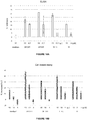
- Figure 1 shows ELISA competition results of the WT and TF peptides.
- the binding of the WT or TF peptide to human PD-L1 was tested via competition ELISA. Varying concentrations of each peptide (0.008 ⁇ g/ml to 10 ⁇ g/ml) were mixed with a fixed concentration of recombinant human PD-1 Fc (10 ng/ml) and bound to a human PD-L1 Fc coated 96-well Immuno Maxisorp flat bottom plate. Binding was detected via a biotinylated anti-PD-1 antibody, streptavidin-horseradish peroxidase (HRP), and 3,3',5,5'-Tetramethylbenzidine (TMB) substrate.
- HRP streptavidin-horseradish peroxidase
- TMB 3,3',5,5'-Tetramethylbenzidine
- FIG. 2 shows in vitro assay results of WT, TF, or combined WT and TF peptides on inhibiting PD-1/PD-L1 interaction (and the resulting effects on IL-2 concentration).
- 5x10 4 Jurkat T cells were activated with 1 ⁇ g/ml of phytohemagglutinin (PHA) and 50 ng/ml of phorbol 12-myristate 13-acetate (PMA) and co-cultured with recombinant human PD-L1 Fc (8 ⁇ g/ml) plus 1 - 10 ⁇ g/ml of WT ( Figure 2A ), 1 - 10 ⁇ g/ml of TF ( Figure 2B ), or 1 - 10 ⁇ g/ml of combined WT and TF ( Figure 2C ) peptide at 37°C for 48 hours.
- PHA phytohemagglutinin
- PMA phorbol 12-myristate 13-acetate
- IL-2 interleukin-2
- FIG 3 shows cell-based assay results of WT, TF, or combined WT and TF peptide treatments inhibiting PD-1/PD-L1 interaction.
- 5x10 4 Jurkat T cells were activated with 1 ⁇ /ml of PHA and 50 ng/ml of PMA and co-cultured with 3x10 5 PD-L1-expressed U87 tumor cells mixed with different concentrations of WT ( Figure 3A ), TF ( Figure 3B ), or combined WT and TF ( Figure 3C ) peptide at 37°C for 48 hours.
- Cell culture supernatants were harvested and IL-2 production from the Jurkat T cells was assessed by IL-2 ELISA.
- each dot shown therein represents a detected signal from interactions between a test derivative peptide and human PD-L1 Fc, with the depth of black color being indicative of the level of binding affinity.
- the following sequences of derivative peptides were developed as alternatives to the WT peptide: SEQ ID. NO.
- FIG. 5A shows blocking PD-L1 binding to PD-1 by certain PD-L1 blocking peptides (and certain combinations thereof). More particularly, in this Example and referring to Figures 5A and 5B , WT represents SEQ ID NO:1; TF represents SEQ ID NO:2; ET represents SEQ ID NO:25; YT represents SEQ ID NO:28; and TW represents the reverse sequence of WT with D-amino acids, SEQ ID NO:34 (also referred to herein as "D-TW").
- Figure 5B shows cell-based assay results of different PD-L1 blocking peptide treatment inhibiting PD-1/PD-L1 interaction.
- 5 x 10 4 Jurkat T cells were activated with 1 ⁇ /ml of PHA and 50 ng/ml of PMA and co-cultured with 1 x 10 5 PD-L1-expressed tumour cells mixed with the different combinations of PD-L1 blocking peptides at 37°C for 48 hours. Cell culture supernatants were then harvested and IL-2 production (from the Jurkat T cells) was assessed by IL-2 ELISA.
- the test PD-L1 blocking peptides did exhibit inhibition of PD-1/PD-L1 interaction.
- FIG. 6 shows blocking PD-L1 through the combined peptides referenced therein enhances cytotoxicity against tumour cells.
- peripheral blood mononuclear cells PBMCs
- PBMCs peripheral blood mononuclear cells
- OKT-3 anti-CD3 antibody
- IL-2 IL-2
- PD-L1 blockers / peptides the blockers / peptides referenced in Figure 6
- Calcein-AM labelled H460 cells large cell lung carcinoma
- the percentage of cytotoxicity (shown in Figure 6 ) was calculated based on the following formula: [(sample reading - minimum release) / (maximum release - minimum release)] x 100.
- the test PD-L1 blocking peptides exhibited enhanced cytotoxicity against the subject tumour cells (relative to the control, "no peptide"), and such activity was particularly prominent when such peptides were administered at 10 ⁇ g/ml (versus 3 ⁇ g/ml).
- Jurkat cells were starved in serum-free medium overnight. The cells were subsequently cultured with different combinations of the PD-L1 blockers / peptides (referenced in Figures 7 and 8 ) or medium alone in a 96-well plate pre-coated with an anti-CD3 monoclonal antibody and PD-L1 Fc at 37°C for 10 minutes. Cold PBS was added into each well to stop the reaction and cell lysates were prepared for blotting with anti-phosphorylated SHP-2 and anti-Beta-actin antibodies.
- the expression level of phosphorylated SHP-2 (a cytoplasmic SH2 domain containing protein tyrosine phosphatase) was standardized based on Beta-actin expression, and the relative expression level of phosphorylated SHP-2 for the different PD-L1 blockers was normalized using medium alone sample. As shown in Figures 7 and 8 , a majority of the tested PD-L1 blockers / peptides were effective to increase the relative expression level of phosphorylated SHP-2.
- Figure 9A shows the effects of blocking mouse PD-L1 binding to mouse PD1. More specifically, mouse and human WT and TF peptides (3 and 10 ⁇ M) were mixed with recombinant mouse PD-1 Fc and bound to a mouse PD-L1 Fc coated 96-well Immuno Maxisorp flat bottom plate. Binding was detected via a biotinylated antimouse PD-1 antibody, streptavidin-horseradish peroxidase (HRP), and 3,3',5,5' Tetramethylbenzidine (TMB) substrate. Absorbance measurements were collected at 450 nm via a plate reader.
- HRP streptavidin-horseradish peroxidase
- TMB 3,3',5,5' Tetramethylbenzidine
- FIG 10A shows blocking PD-L1 binding to PD-1 by different forms of PD-L1 blocking peptides. More particularly, in this Example and referring to Figures 10A and 10B , 3TF3ET represents three copies of TF (SEQ ID NO:2) linked to a linker followed by three copies of ET (SEQ ID NO:25); 3ET3TF represents three copies of ET peptide linked to a linker followed by three copies of TF peptide; and TF-Fc represents TF linked to a fragment crystallisable (Fc) region of human IgG4. 293FT cells were infected with PD-L1 blocking peptide-encoded viral vector for 48 hours.
- 3TF3ET represents three copies of TF (SEQ ID NO:2) linked to a linker followed by three copies of ET (SEQ ID NO:25); 3ET3TF represents three copies of ET peptide linked to a linker followed by three copies of TF peptide; and TF-Fc represents TF linked to a fragment
- Each peptide (or peptide combination) was expressed and secreted from the infected cells (the peptide or peptide combination was secreted via a fused 5' signal peptide).
- Harvested PD-L1 blocking peptide-contained supernatants from infected 293FT cells or synthetic TF peptide were mixed with recombinant human PD-1 Fc and bound to a human PD-L1 Fc coated 96-well Immuno Maxisorp flat bottom plate. Binding was detected via a biotinylated anti-PD-1 antibody, streptavidin, horseradish peroxidase (HRP), and 3,3',5,5'-Tetramethylbenzidine (TMB) substrate. Absorbance measurements were collected at 450 nm via a plate reader. The increased percent (%) of human PD-1/PD-L1 inhibition was compared to a control (no peptide) sample.
- Figure 10B shows cell-based assay results of different forms of PD-L1 blocking peptide treatment inhibiting PD-1/PD-L1 interaction.
- 5 x 10 4 Jurkat T cells were activated with 1 ⁇ /ml of PHA and 50 ng/ml of PMA and co-cultured with 1 x 10 5 PD-L1-expressing tumour cells mixed with PD-L1 blocking peptide-contained supernatants or synthetic TF peptide at 37°C for 48 hours. After 48 hours, cell culture supernatants were harvested and IL-2 production from the Jurkat T cells was assessed by IL-2 ELISA.
- Figure 11 shows the results of an in vivo experiment, showing the effects of D-TW on mice harbouring tumour cell line LL/2. More particularly, mice strain C57BI/6 (male, 4-weeks, initial body weight - 20 - 22 g) were inoculated with tumour cell line LL/2, at S.C. 10 5 per mouse. After 14 days post-implantation, the mice were treated with D-TW or D-TW-Scrambled for 7 days (at 200 mg / kg), via intraperitoneal (IP) injection.
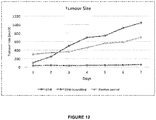
- Figure 12 shows the effects of D-TW on tumour size in the mice referenced in Figure 11 . As shown in Figure 12 , it was found that the D-TW peptide is generally nontoxic to the C57BI/6 mouse strain. In addition, the results show that the D-TW peptide (at 200 mg / kg) inoculation was effective to significantly inhibit tumour growth (relative to the control and relative to the D-TW-Scrambled peptide).
Landscapes
- Chemical & Material Sciences (AREA)
- Health & Medical Sciences (AREA)
- Organic Chemistry (AREA)
- Life Sciences & Earth Sciences (AREA)
- Medicinal Chemistry (AREA)
- General Health & Medical Sciences (AREA)
- Proteomics, Peptides & Aminoacids (AREA)
- Molecular Biology (AREA)
- Biochemistry (AREA)
- Biophysics (AREA)
- Genetics & Genomics (AREA)
- Immunology (AREA)
- Gastroenterology & Hepatology (AREA)
- Zoology (AREA)
- Toxicology (AREA)
- Cell Biology (AREA)
- Chemical Kinetics & Catalysis (AREA)
- General Chemical & Material Sciences (AREA)
- Nuclear Medicine, Radiotherapy & Molecular Imaging (AREA)
- Pharmacology & Pharmacy (AREA)
- Animal Behavior & Ethology (AREA)
- Public Health (AREA)
- Veterinary Medicine (AREA)
- Medicines That Contain Protein Lipid Enzymes And Other Medicines (AREA)
- Peptides Or Proteins (AREA)
Abstract
Description
- The field of the present invention relates to certain compositions and methods that are useful in preventing, treating, and/or ameliorating the effects of various types of cancers. More particularly, the field of the present invention relates to certain compositions and methods that may be used to inhibit PD-1/PD-L1 and/or PD-1/PD-L2 interactions, which may further be useful in preventing, treating, and/or ameliorating the effects of various types of cancers.
- The Programmed Death-1 (PD-1) protein, also known as CD279, is an inhibitory receptor that belongs to the CD28 family of receptors. PD-1 is expressed on activated T cells, B cells, and myeloid cells and contains a membrane proximal immune-receptor tyrosine inhibitory motif (ITIM) and a membrane distal tyrosine-based switch motif (ITSM). PD-1 has been reported as an immune checkpoint, and to serve an important role in down-regulating the immune system by preventing the activation of T cells. Ligation of PD-1 by its ligands has been found to generate an inhibitory signal that results in reduced cytokine production, and reduced T cell survival. Two ligands for PD-1 have previously been identified, which have been referred to, in the prior art, as programmed death-ligand 1 (PD-L1) (B7-H1) and programmed death-ligand 2 (PD-L2) (B7-DC), and have been shown to down-regulate T cell activation upon binding to PD-1. Moreover, the interaction between PD-1 and PD-L1 has also been found to result in a decrease in tumor infiltrating lymphocytes, a decrease in T-cell receptor mediated proliferation, and immune evasion by the cancerous cells.
- In view of the foregoing, it would be desirable to identify and develop one or more peptides that are effective to compete with PD-L1 and/or PD-L2 for binding to PD-1, which may thereby inhibit PD-1/PD-L1 and/or PD-1/PD-L2 interactions. Such inhibitory effects will preferably be useful in preventing, treating, and/or ameliorating the effects of various types of cancers. As the following will demonstrate, the present invention provides such peptides, methods for using such peptides, and other advantages described herein.
- According to certain aspects of the present invention, isolated and purified peptides are provided that are represented by the amino acid sequences of SEQ ID NO:1, SEQ ID NO:2, derivatives thereof (such as SEQ ID NO:3 - SEQ ID NO:36), and combinations thereof. In addition, the invention encompasses isolated and purified peptides that are substantially homologous to SEQ ID NO:1, SEQ ID NO:2, derivatives thereof, and combinations thereof, such as at least 80%, 90%, or 95% homologous to SEQ ID NO:1, SEQ ID NO:2, SEQ ID NO:3 - SEQ ID NO:36, and combinations thereof. Still further, the present invention encompasses fragments and elongated forms of SEQ ID NO:1, SEQ ID NO:2, and derivatives thereof, as well as nucleic acid sequences and vectors (e.g., viral vectors, such as HSV-1) that encode such peptides or derivatives thereof. Moreover, the present invention encompasses pharmaceutical-grade compositions that comprise a peptide consisting of an amino acid sequence of SEQ ID NO:1, SEQ ID NO:2, derivatives thereof, and combinations thereof (along with fragments thereof, elongated forms thereof, and peptides that are substantially homologous to SEQ ID NO:1, SEQ ID NO:2, derivatives thereof, and combinations thereof).
- According to additional aspects of the present invention, methods of using the compositions described herein are provided. More particularly, for example, the invention encompasses methods for inhibiting interactions between PD-1 and PD-L1 in one or more cells by administering a composition described herein, such as an amino acid sequence of SEQ ID NO:1, SEQ ID NO:2, derivatives thereof (such as those of SEQ ID NO:3 - SEQ ID NO:36), peptides that are substantially homologous to the foregoing peptides, or pharmaceutical-grade compositions that comprise any of such peptides. Likewise, the present invention encompasses methods for increasing IL-2 levels in one or more cells by administering a composition described herein, such as an amino acid sequence of SEQ ID NO:1, SEQ ID NO:2, derivatives thereof, combinations thereof, peptides that are substantially homologous to any of such peptides, or pharmaceutical-grade compositions that comprise any of such peptides. Still further, the present invention encompasses methods for preventing, treating, or ameliorating the effects of cancer in a subject by administering an effective amount of a composition described herein, such as an amino acid sequence of SEQ ID NO:1, SEQ ID NO:2, derivatives thereof, combinations thereof, peptides that are substantially homologous to any of such peptides, or pharmaceutical-grade compositions that comprise any of such peptides.
- According to yet further aspects of the invention, certain derivatives of SEQ ID NO:1 are provided (such as those of SEQ ID NO:3 - SEQ ID NO:36), along with peptides that are substantially homologous to the foregoing peptides. More particularly, such embodiments of the invention include peptides consisting of an amino acid sequence selected from the group consisting of SEQ ID NO:3 - SEQ ID NO:36, along with sequences that are substantially homologous thereto and pharmaceutical-grade compositions that comprise such peptides. Still further, according to related embodiments, the invention encompasses (i) methods for inhibiting interaction between PD-1 and PD-L1 in one or more cells, (ii) methods for increasing IL-2 levels in one or more cells, and (iii) methods for preventing, treating, or ameliorating the effects of cancer in a subject, by administering an effective amount of one or more of such derivative peptides to the subject.
- The above-mentioned and additional features of the present invention are further illustrated in the Detailed Description contained herein.
-
SEQ ID. NO. Sequence Description 1 WYRMSPSNQT Peptide referred to herein as "WT" 2 TAHPSPSPRSAGQF Peptide referred to herein as "TF" 3 WYRMSPSNQD A derivative of the WT peptide 4 WYRMSPSNQE A derivative of the WT peptide 5 WYRMSPSNDT A derivative of the WT peptide 6 WYRMSPSNET A derivative of the WT peptide 7 WYRMSPSEQT A derivative of the WT peptide 8 WYRMSPDNQT A derivative of the WT peptide 9 WYRMSPENQT A derivative of the WT peptide 10 WYRMSPPNQT A derivative of the WT peptide 11 WYRMSDSNQT A derivative of the WT peptide 12 WYRMSESNQT A derivative of the WT peptide 13 WYRMAPSNQT A derivative of the WT peptide 14 WYRMQPSNQT A derivative of the WT peptide 15 WYRMMPSNQT A derivative of the WT peptide 16 WYRMPPSNQT A derivative of the WT peptide 17 WYRDSPSNQT A derivative of the WT peptide 18 WYRESPSNQT A derivative of the WT peptide 19 WYIMSPSNQT A derivative of the WT peptide 20 WYLMSPSNQT A derivative of the WT peptide 21 WYYMSPSNQT A derivative of the WT peptide 22 WYVMSPSNQT A derivative of the WT peptide 23 DYRMSPSNQT A derivative of the WT peptide 24 QYRMSPSNQT A derivative of the WT peptide 25 EYRMSPSNQT A derivative of the WT peptide 26 MYRMSPSNQT A derivative of the WT peptide 27 TYRMSPSNQT A derivative of the WT peptide 28 YYRMSPSNQT A derivative of the WT peptide 29 WYRMSWSNQT A derivative of the WT peptide 30 WYRMYPSNQT A derivative of the WT peptide 31 WYRNSPSNQT A derivative of the WT peptide 32 WYTMSPSNQT A derivative of the WT peptide 33 FQGASRPSPSPHAT Peptide referred to herein as "D-FT" 34 TQNSPSMRYW Peptide referred to herein as "D-TW" 35 WNRLSPSNQT Mouse WT peptide 36 TRYPSPSPKPEGRF Mouse TF peptide -
-
FIGURE 1 is a graph showing ELISA competition results of WT (SEQ ID NO:1) and TF (SEQ ID NO:2) peptides, and the inhibitory efficacy on PD-1/PD-L1 interaction. -
FIGURE 2A is a graph showing in vitro assay results of WT peptide on inhibiting PD-1/PD-L1 interaction. -
FIGURE 2B is a graph showing in vitro assay results of TF peptide on inhibiting PD-1/PD-L1 interaction. -
FIGURE 2C is a graph showing in vitro assay results of a combination of WT and TF peptides on inhibiting PD-1/PD-L1 interaction. -
FIGURE 3A is a graph showing cell-based assay results of WT peptide treatment inhibiting PD-1/PD-L1 interaction. -
FIGURE 3B is a graph showing cell-based assay results of TF peptide treatment inhibiting PD-1/PD-L1 interaction. -
FIGURE 3C is a graph showing cell-based assay results of WT and TF peptide treatment inhibiting PD-1/PD-L1 interaction. -
FIGURE 4 shows the peptide array results described herein. -
FIGURE 5A summarizes the results of an ELISA assay, which shows blocking PD-L1 binding to PD-1 by combined PD-L1 blocking peptides. -
FIGURE 5B summarizes the results of a cell-based assay, which shows different combinations of PD-L1 blocking peptide treatment inhibiting PD-1/PD-L1 interactions. -
FIGURE 6 summarizes the results of a cytotoxicity assay, which shows blocking PD-L1 via combined peptides enhances cytotoxicity against tumour cells. -
FIGURE 7 summarizes the results of an assay that shows the effects of different PD-L1 blockers on levels of phosphorylated SHP-2. -
FIGURE 8 summarizes the results of an assay that shows the effects of additional PD-L1 blockers on levels of phosphorylated SHP-2. -
FIGURE 9A summarizes the results of an assay that shows blocking mouse PD-L1 binding to mouse PD-1 by mouse peptides. -
FIGURE 9B shows the difference in amino acid composition between the human and mouse WT and TF peptides referenced in the Examples. -
FIGURE 10A summarizes the results of an ELISA assay that shows blocking PD-L1 binding to PD-1 by different forms of PD-L1 blocking peptides. -
FIGURE 10B summarizes the results of a cell-based assay that shows different forms of PD-L1 blocking peptide treatment inhibiting PD-1/PD-L1 interaction. -
FIGURE 11 shows the results of an in vivo experiment, showing the effects of D-TW on mice harbouring tumour cell line LL/2. -
FIGURE 12 shows the results of an in vivo experiment, showing the effects of D-TW on tumour size in the mouse model referenced inFigure 11 . - The following will describe in detail several preferred embodiments of the present invention. These embodiments are provided by way of explanation only, and thus, should not unduly restrict the scope of the invention. In fact, those of ordinary skill in the art will appreciate upon reading the present specification and viewing the present drawings that the invention teaches many variations and modifications, and that numerous variations of the invention may be employed, used and made without departing from the scope and spirit of the invention.
- According to certain preferred embodiments of the present invention, isolated and purified peptides are provided that are represented by the amino acid sequences of SEQ ID NO:1, SEQ ID NO:2, combinations thereof, and derivatives thereof (such as those of SEQ ID NO:3 - SEQ ID NO:36). In addition, the invention encompasses isolated and purified peptides that are substantially homologous to SEQ ID NO:1, SEQ ID NO:2, combinations thereof, derivatives thereof, elongated forms thereof, and fragments thereof, including peptides that are at least 80%, 90%, or 95% homologous to SEQ ID NO:1, SEQ ID NO:2, derivatives thereof (such as those of SEQ ID NO:3 - SEQ ID NO:36), and combinations thereof. Still further, the present invention encompasses pharmaceutical-grade compositions that comprise a peptide consisting of an amino acid sequence of SEQ ID NO:1, SEQ ID NO:2, combinations thereof, elongated forms thereof, fragments thereof, and derivatives thereof (such as those of SEQ ID NO:3 - SEQ ID NO:36), as well as peptides that are substantially homologous to the foregoing peptides.
- The peptides of the present invention may be produced via chemical synthesis methods that are well-known in the art. For example, the peptides may be chemically synthesized using automated Merrifield techniques of solid phase synthesis with the α-NH2 protected by either t-Boc or F-moc chemistry, using side chain protected amino acids on, for example, an Applied Biosystems Peptide Synthesizer. The peptides of the present invention may also be produced using recombinant DNA technology, including nucleic acid molecules, vectors, and/or host cells. As such, nucleic acid molecules encoding the peptides described herein are also encompassed by the present invention. Similarly, vectors, including expression vectors, comprising nucleic acid molecules, as well as host cells containing the vectors, are also encompassed by the present invention.
- Still further, the invention provides that certain fragments and derivatives of the peptides represented by SEQ ID NO:1 - SEQ ID NO:36 are encompassed by the present invention. For example, the peptides represented by SEQ ID NO:1 - SEQ ID NO:36 may be modified by substituting one or more amino acid residues within such peptides, particularly so-called conservative amino acid substitutions, e.g., an amino acid may be substituted with an alternative amino acid having similar properties (i.e., substitutions within the same class of amino acid residues summarized below). For purposes of illustration, substitutions may be grouped into six classes based on common side chain (or "R-group") properties and the highest frequency of substitution in homologous proteins in nature, as determined, for example, by a standard Dayhoff frequency exchange matrix. The table below represents an example of such classes:
Class Residues Description Class I Cysteine Class II Serine, Threonine, Proline, Hydroxyproline, Alanine, and Glycine Small aliphatic and OH-group side chains Class III Asparagine, Aspartic acid, Glutamic acid, and Glutamine Neutral and negatively charged side chains capable of forming hydrogen bonds Class IV Histidine, Arginine, and Lysine Basic polar side chains Class V Isoleucine, Valine, Leucine, and Methionine Branched aliphatic side chains (except Met) Class VI Phenylalanine, Tyrosine, and Tryptophan Aromatic side chains - In addition, each of the above classes may further include related amino acid analogs, such as ornithine, homoarginine, N-methyl lysine, dimethyl lysine, or trimethyl-lysine in class IV, and a halogenated tyrosine in class VI.
- Furthermore, the peptides described herein may be modified through systematic substitution of one or more amino acids with a D-amino acid of the same type (e.g., D-lysine in place of L-lysine), which may be implemented to generate more stable peptides. Thus, a peptide derivative or peptidomimetic of the present invention may be all L, all D or mixed D, L peptide, in either forward or reverse order. The presence of an N-terminal or C-terminal D-amino acid increases the in vivo stability of a peptide, since peptidases cannot utilize a D-amino acid as a substrate. Reverse-D peptides are peptides containing D-amino acids, arranged in a reverse sequence relative to a peptide containing L-amino acids. For example, SEQ ID NO:33 represents the reverse, D-amino acid version of TF (SEQ ID NO:2); and SEQ ID NO:34 represents the reverse, D-amino acid version of WT (SEQ ID NO:1). Thus, the C-terminal residue of an L-amino acid peptide becomes N-terminal for the D-amino acid peptide, and so forth. Reverse D-peptides retain the same secondary conformation and therefore similar activity, as the L-amino acid peptides, but are more resistant to enzymatic degradation in vitro and in vivo, and thus can have greater therapeutic efficacy than the original peptide. Similarly, a reverse L peptide may be generated using standard methods where the C-terminus of the parent peptide takes the place of the N-terminus of the reverse L peptide. The invention provides that reverse L peptides of L-amino acid peptides that do not have significant secondary structure (e.g., short peptides) retain the same spacing and conformation of the side chains of the L-amino acid peptide and, therefore, often have similar activity as the original L-amino acid peptide. Moreover, a reverse peptide may contain a combination of L- and D-amino acids. The spacing between amino acids and the conformation of the side chains may be retained resulting in similar activity as the original L-amino acid peptide.
- Still further, the peptides of the present invention may be modified to include labels and/or linkers appended thereto, which may be used for imaging purposes, for drug delivery purposes, or to provide additional therapeutic payload. For example, the peptides of the present invention may be fused to a human IgG C-domain, with the IgG antibody being designed to target and combat tumor cells. Still further, the peptides of the present invention may be fused or linked to a fragment crystallisable (Fc) region of an antibody. In addition, the peptides of the present invention include fragments, and elongated forms, of the peptides represented by SEQ ID NO:1 - SEQ ID NO:36. According to yet further embodiments, the peptides of the present invention may be chemically and/or structurally modified, e.g., to increase the amount of time that the peptides will remain active in a biological system (or to otherwise improve the pharmacokinetics of the peptides). For example, the peptides may be modified to include various chemical groups, molecules, or structural adjustments, such as glycosylation, acetylation, acylation, ADP-ribosylation, amidation, covalent attachment to polyethylene glycol (e.g., PEGylation), covalent attachment of flavin, covalent attachment of a heme moiety, covalent attachment of a nucleotide or nucleotide derivative, covalent attachment of a lipid or lipid derivative, covalent attachment of phosphatidylinositol, cross-linking, cyclization, demethylation, formation of covalent cross-links, formylation, gamma carboxylation, GPI anchor formation, hydroxylation, iodination, methylation, myristoylation, oxidation, proteolytic processing, phosphorylation, prenylation, racemization, selenoylation, sulfation, ubiquitination, modifications with fatty acids, and various other modifications that may be designed to improve the pharmacokinetics of the peptides.
- The invention provides that the term "peptide," as used herein, may include not only molecules in which amino acid residues are joined by the conventional peptide (--CO--NH--) linkages, but also molecules in which the peptide bond is reversed. Such retro-inverso peptidomimetics may be produced using methods known in the art, such as those described in Meziere et al (1997) J. Immunol. 159, 3230-3237 (such approach involves producing pseudopeptides containing changes involving the backbone, and not the orientation of amino acid side chains).
- The invention provides that the individual peptides encompassed by the invention may be administered to a targeted cell (or a plurality of cells) directly or, alternatively, may be administered indirectly by expression from an encoding sequence. For example, a polynucleotide (nucleic acid sequence) may be provided to a cell or subject that encodes a peptide of the invention, such as any of the peptides represented by SEQ ID NO:1 - SEQ ID NO:36, as well as modified forms thereof. A peptide of the invention may thus be produced from or delivered in the form of a polynucleotide which encodes, and is capable of expressing, a peptide of the present invention. Any reference herein to the use, delivery or administration of a peptide of the invention is intended to include the indirect use, delivery or administration of such a peptide via expression from a polynucleotide that encodes the peptide.
- More particularly, a nucleic acid molecule of the invention may be provided in isolated or purified form, which encodes a selected peptide of the present invention, which may be transcribed (in the case of DNA) and translated (in the case of mRNA) into a peptide in vivo when placed under the control of appropriate regulatory sequences. The boundaries of the peptide encoding sequence are determined by a start codon at the 5' (amino) terminus and a translation stop codon at the 3' (carboxy) terminus. For the purposes of the present invention, such nucleic acid sequences can include, but are not limited to, cDNA from viral, prokaryotic or eukaryotic mRNA, genomic sequences from viral or prokaryotic DNA or RNA, and even synthetic DNA sequences. The nucleic acid molecules of the present invention may be synthesized according to methods well-known in the art, as described by way of example in Sambrook et al (19104, Molecular Cloning--a laboratory manual; Cold Spring Harbor Press). The nucleic acid molecules of the present invention may then be provided in the form of an expression cassette, which includes control sequences operably linked to the peptide-encoding sequence, thus allowing for expression of the applicable peptide of the invention in vivo in a targeted cell or subject. These expression cassettes, in turn, are typically provided within vectors, e.g., plasmids or recombinant viral vectors, such as herpes simplex virus 1 (HSV-1). For example, an expression cassette may be administered directly to a host cell or subject - or, alternatively, a vector comprising a peptide-encoding nucleic acid of the invention may be administered to a host cell or subject. Methods for delivering exogenous nucleic acid sequences to a host cell or subject are well-known in the art, as described in, for example,
U.S. Pat. Nos. 5,399,346 ,5,580,859 and5,510,466 , which are hereby incorporated by reference. - Still further, the invention provides that isolated and purified forms of the peptides described herein, including various combinations and mixtures of such peptides, may be directly administered to a host cell or subject. For example, such peptides may be administered along with pharmaceutically acceptable (pharmaceutical-grade) carriers, diluents and adjuvants, such as Dulbecco's phosphate buffered saline, pH about 7.4; 0.9% saline (0.9% w/v NaCl); and 5% (w/v) dextrose. The pharmaceutically acceptable (pharmaceutical-grade) carriers, diluents and adjuvants used to deliver a peptide of the present invention to a target cell will, preferably, not induce an immune response in the individual (subject) receiving the peptide (and will preferably be administered without undue toxicity). Additional pharmaceutically acceptable excipients include, but are not limited to, water, saline, polyethyleneglycol, hyaluronic acid and ethanol. Pharmaceutically acceptable salts can also be included therein, e.g., mineral acid salts (such as hydrochlorides, hydrobromides, phosphates, sulfates, and the like) and the salts of organic acids (such as acetates, propionates, malonates, benzoates, and the like). A thorough discussion of pharmaceutically acceptable carriers, diluents and adjuvants is available in Remington's Pharmaceutical Sciences (Mack Pub. Co., N.J. 1991).
- As described above, the present invention encompasses certain methods of using the peptides described herein. More particularly, for example, the invention encompasses methods for inhibiting interactions between PD-1 and PD-L1 in one or more cells by administering one or more peptides described herein to one or more targeted cells, such as an amino acid sequence of SEQ ID NO:1 or SEQ ID NO:2, combinations thereof, fragments thereof, elongated forms thereof, derivatives thereof (such as those of SEQ ID NO:3 - SEQ ID NO:36), peptides that are substantially homologous to the foregoing peptides, or pharmaceutical-grade compositions (such as those described above) that comprise any of such peptides. Likewise, the present invention encompasses methods for increasing IL-2 levels in one or more cells by administering one or more peptides described herein, such as an amino acid sequence of SEQ ID NO:1 or SEQ ID NO:2, combinations thereof, fragments thereof, elongated forms thereof, derivatives thereof (such as those of SEQ ID NO:3 - SEQ ID NO:36), peptides that are substantially homologous to the foregoing peptides, or pharmaceutical-grade compositions that comprise any of such peptides. Still further, the present invention encompasses methods for preventing, treating, or ameliorating the effects of cancer in a subject by administering an effective amount of one or more peptides described herein, such as an amino acid sequence of SEQ ID NO:1 or SEQ ID NO:2, combinations thereof, fragments thereof, elongated forms thereof, derivatives thereof (such as those of SEQ ID NO:3 - SEQ ID NO:36), peptides that are substantially homologous to the foregoing peptides, or pharmaceutical-grade compositions that comprise any of such peptides.
- As described above, according to yet further embodiments of the invention, certain derivatives of SEQ ID NO:1 may be used in the methods referenced above. More particularly, peptides consisting of (or, in other embodiments, comprising) an amino acid sequence selected from the group consisting of SEQ ID NO:3 - SEQ ID NO:36, or combinations thereof, fragments thereof, elongated forms thereof, peptides that comprise amino acid sequences that are substantially homologous thereto, and pharmaceutical-grade compositions that comprise such peptides may be used in the methods referenced above. More particularly, such derivative peptides may be used to carry out (i) methods for inhibiting interaction between PD-1 and PD-L1 in one or more cells, (ii) methods for increasing IL-2 levels in one or more cells, and (iii) methods for preventing, treating, or ameliorating the effects of cancer in a subject, by administering an effective amount of one or more of such derivative peptides.
- The invention provides that the peptides of the present invention, or the nucleic acid sequences encoding one or more peptides of the present invention, should be administered to a cell or subject in an amount that effective to achieve the desired endpoint. For particularly, peptides of the present invention, or the nucleic acid sequences encoding one or more peptides of the present invention, should be administered to a cell or subject in an amount that is effective to (i) inhibit interaction between PD-1 and PD-L1 in the targeted cells, (ii) increase IL-2 levels in the targeted cells, and/or (iii) prevent, treat, or ameliorate the effects of cancer in the targeted subject. The invention provides that the peptides described herein may be administered to a cell or subject in combination or sequence with other agents that exhibit similar properties (e.g., when the peptides described herein are being administered to prevent, treat, or ameliorate the effects of cancer, the peptides may be administered to a cell or subject in combination or in series with other agents that are effective to prevent, treat, or ameliorate the effects of cancer).
- The amount administered to a cell or subject will depend on a variety of factors. For example, in the case of a therapeutic use of the peptides, the amount may vary depending on the size / weight of the subject and the route of administration, such as orally (e.g. in the form of tablets, troches, lozenges, aqueous or oily suspensions, dispersible powders or granules), parenterally, epicutaneously, subcutaneously, by inhalation, intravenously, intramuscularly, intrasternally, transdermally, intradermally, sublingually, instranasally, buccally or by infusion techniques. By way of further illustration (and not limitation), the amount of the peptide(s) administered may be in the range of about 5 µg to about 100 mg of peptide; or between about 300 µg and about 1 mg of peptide; or amounts in the realm of 300 µg, 350 µg, 400 µg, 450 µg, 500 µg, 550 µg, 600 µg, 650 µg, 700 µg, 750 µg, 800 µg, 850 µg, 900 µg, 950 µg or 1 mg of the applicable peptide (or mixture of peptides).
- Using a peptide array method, two peptides (SEQ ID NO:1 and SEQ ID NO:2) were discovered and chemically synthesized, which are referred to herein as WT and TF, respectively. SEQ ID NO:1 / WT represents the sequence of WYRMSPSNQT. SEQ ID NO:2 / TF represents the sequence of TAHPSPSPRPAGQF. As the following will demonstrate, WT and TF (and various derivatives thereof) bind to PD-L1 and prevent PD-L1 from interacting with PD-1. More particularly, as described further below, a series of experiments were performed to assess the inhibitory efficacy of the WT and TF peptides (and certain derivatives thereof) on PD-1/PD-L1 interaction (as well as the impact of such inhibition on IL-2 levels).
-
Figure 1 shows ELISA competition results of the WT and TF peptides. The binding of the WT or TF peptide to human PD-L1 was tested via competition ELISA. Varying concentrations of each peptide (0.008 µg/ml to 10 µg/ml) were mixed with a fixed concentration of recombinant human PD-1 Fc (10 ng/ml) and bound to a human PD-L1 Fc coated 96-well Immuno Maxisorp flat bottom plate. Binding was detected via a biotinylated anti-PD-1 antibody, streptavidin-horseradish peroxidase (HRP), and 3,3',5,5'-Tetramethylbenzidine (TMB) substrate. Absorbance measurements were collected at 450 nm via a plate reader. The absorbance readings were plotted against the test peptide concentration. As shown inFigure 1 , as test peptide (WT, TF) concentrations increased, the percent (%) inhibition increased (i.e., the ability of the test peptide to interfere with PD-1/PD-L1 interaction increased). -
Figure 2 shows in vitro assay results of WT, TF, or combined WT and TF peptides on inhibiting PD-1/PD-L1 interaction (and the resulting effects on IL-2 concentration). 5x10⁴ Jurkat T cells were activated with 1 µg/ml of phytohemagglutinin (PHA) and 50 ng/ml of phorbol 12-myristate 13-acetate (PMA) and co-cultured with recombinant human PD-L1 Fc (8 µg/ml) plus 1 - 10 µg/ml of WT (Figure 2A ), 1 - 10 µg/ml of TF (Figure 2B ), or1 - 10 µg/ml of combined WT and TF (Figure 2C ) peptide at 37°C for 48 hours. Cell culture supernatant was harvested and interleukin-2 (IL-2) production from Jurkat T cells was assessed by IL-2 ELISA. The numbers shown above each bar inFigure 2 represent IL-2 concentrations. As shown inFigure 2 , the presence of TF peptide, and the combined WT and TF peptides, yielded an increase in IL-2 concentration, when administered along with PD-L1 Fc. -
Figure 3 shows cell-based assay results of WT, TF, or combined WT and TF peptide treatments inhibiting PD-1/PD-L1 interaction. In this Example, 5x10⁴ Jurkat T cells were activated with 1 µ/ml of PHA and 50 ng/ml of PMA and co-cultured with 3x10⁵ PD-L1-expressed U87 tumor cells mixed with different concentrations of WT (Figure 3A ), TF (Figure 3B ), or combined WT and TF (Figure 3C ) peptide at 37°C for 48 hours. Cell culture supernatants were harvested and IL-2 production from the Jurkat T cells was assessed by IL-2 ELISA. The numbers shown above each bar inFigures 3A - 3C represent IL-2 concentrations. As shown inFigures 3A - 3C , the presence of WT peptide, TF peptide, and the combined WT and TF peptides yielded an increase in IL-2 concentration, when administered along with PD-L1 Fc. Moreover, as shown inFigures 3A - 3C , as the concentrations of the test peptides were increased, an increase in IL-2 concentration was observed. - The foregoing assay results demonstrate that both WT and TF peptides are able to block PD-1/PD-L1 interaction. In addition, when the WT and TF peptides are combined, an enhanced inhibitory effect is observed (relative to a single test peptide treatment). To improve the binding affinity of the WT peptide, a single amino acid was substituted at each position of the WT peptide and the binding affinities of such derivative peptides for PD-L1 was examined via peptide arrays. More particularly, peptide array results were generated by incubating derivative test peptide-containing membrane with 15 µg/ml of negative control human IgG or recombinant human PD-L1 Fc at 4°C, overnight. The resulting signals were detected by HRP-conjugated antihuman IgG and HRP substrate. Referring now to
Figure 4 , each dot shown therein represents a detected signal from interactions between a test derivative peptide and human PD-L1 Fc, with the depth of black color being indicative of the level of binding affinity. Based on the peptide array results inFigure 4 , the following sequences of derivative peptides were developed as alternatives to the WT peptide:SEQ ID. NO. Sequence 3 WYRMSPSNQD 4 WYRMSPSNQE 5 WYRMSPSNDT 6 WYRMSPSNET 7 WYRMSPSEQT 8 WYRMSPDNQT 9 WYRMSPENQT 10 WYRMSPPNQT 11 WYRMSDSNQT 12 WYRMSESNQT 13 WYRMAPSNQT 14 WYRMQPSNQT 15 WYRMMPSNQT 16 WYRMPPSNQT 17 WYRDSPSNQT 18 WYRESPSNQT 19 WYIMSPSNQT 20 WYLMSPSNQT 21 WYYMSPSNQT 22 WYVMSPSNQT 23 DYRMSPSNQT 24 QYRMSPSNQT 25 EYRMSPSNQT 26 MYRMSPSNQT 27 TYRMSPSNQT 28 YYRMSPSNQT 29 WYRMSWSNQT 30 WYRMYPSNQT 31 WYRNSPSNQT 32 WYTMSPSNQT 34 TQNSPSMRYW 35 WNRLSPSNQT -
Figure 5A shows blocking PD-L1 binding to PD-1 by certain PD-L1 blocking peptides (and certain combinations thereof). More particularly, in this Example and referring toFigures 5A and 5B , WT represents SEQ ID NO:1; TF represents SEQ ID NO:2; ET represents SEQ ID NO:25; YT represents SEQ ID NO:28; and TW represents the reverse sequence of WT with D-amino acids, SEQ ID NO:34 (also referred to herein as "D-TW"). Different combination of such PD-L1 blocking peptides (3 and 10 µM) were mixed with recombinant human PD-1 Fc and bound to a human PD-L1 Fc coated 96-well Immuno Maxisorp flat bottom plate. Binding was detected via a biotinylated anti-PD-1 antibody, streptavidin-horseradish peroxidase (HRP), and 3,3',5,5'-Tetramethylbenzidine (TMB) substrate. Absorbance measurements were collected at 450 nm via a plate reader. The increased percent (%) of human PD-1/PD-L1 inhibition was compared to a sample that was not provided with a test peptide. The results are summarized inFigure 5A . -
Figure 5B shows cell-based assay results of different PD-L1 blocking peptide treatment inhibiting PD-1/PD-L1 interaction. In this Example, 5 x 10⁴ Jurkat T cells were activated with 1 µ/ml of PHA and 50 ng/ml of PMA and co-cultured with 1 x 10⁵ PD-L1-expressed tumour cells mixed with the different combinations of PD-L1 blocking peptides at 37°C for 48 hours. Cell culture supernatants were then harvested and IL-2 production (from the Jurkat T cells) was assessed by IL-2 ELISA. As shown inFigures 5A and 5B , the test PD-L1 blocking peptides (and the tested combinations thereof) did exhibit inhibition of PD-1/PD-L1 interaction. -
Figure 6 shows blocking PD-L1 through the combined peptides referenced therein enhances cytotoxicity against tumour cells. In this Example, peripheral blood mononuclear cells (PBMCs) were stimulated with anti-CD3 antibody (OKT-3) plus IL-2 for 24 hours and were subsequently incubated with PD-L1 blockers / peptides (the blockers / peptides referenced inFigure 6 ) and Calcein-AM labelled H460 cells (large cell lung carcinoma) for 24 hours. Supernatants were harvested after incubation and then released calcein-AM fluorescence was measured via a microplate reader (emission 485, excitation 525). The percentage of cytotoxicity (shown inFigure 6 ) was calculated based on the following formula: [(sample reading - minimum release) / (maximum release - minimum release)] x 100. As shown inFigure 6 , the test PD-L1 blocking peptides exhibited enhanced cytotoxicity against the subject tumour cells (relative to the control, "no peptide"), and such activity was particularly prominent when such peptides were administered at 10 µg/ml (versus 3 µg/ml). - Referring now to
Figures 7 and8 , in this Example, Jurkat cells were starved in serum-free medium overnight. The cells were subsequently cultured with different combinations of the PD-L1 blockers / peptides (referenced inFigures 7 and8 ) or medium alone in a 96-well plate pre-coated with an anti-CD3 monoclonal antibody and PD-L1 Fc at 37°C for 10 minutes. Cold PBS was added into each well to stop the reaction and cell lysates were prepared for blotting with anti-phosphorylated SHP-2 and anti-Beta-actin antibodies. The expression level of phosphorylated SHP-2 (a cytoplasmic SH2 domain containing protein tyrosine phosphatase) was standardized based on Beta-actin expression, and the relative expression level of phosphorylated SHP-2 for the different PD-L1 blockers was normalized using medium alone sample. As shown inFigures 7 and8 , a majority of the tested PD-L1 blockers / peptides were effective to increase the relative expression level of phosphorylated SHP-2. -
Figure 9A shows the effects of blocking mouse PD-L1 binding to mouse PD1. More specifically, mouse and human WT and TF peptides (3 and 10 µM) were mixed with recombinant mouse PD-1 Fc and bound to a mouse PD-L1 Fc coated 96-well Immuno Maxisorp flat bottom plate. Binding was detected via a biotinylated antimouse PD-1 antibody, streptavidin-horseradish peroxidase (HRP), and 3,3',5,5' Tetramethylbenzidine (TMB) substrate. Absorbance measurements were collected at 450 nm via a plate reader. The increased percent (%) of mouse (and human) PD-1/PD L1 inhibition was compared to a control (no peptide) sample. The results show specificity of the peptides - specifically, that human peptides do not have the same blocking effects as mouse peptides for mouse PD-L1. The differences between the human and mouse peptides are illustrated inFigure 9B . -
Figure 10A shows blocking PD-L1 binding to PD-1 by different forms of PD-L1 blocking peptides. More particularly, in this Example and referring toFigures 10A and 10B , 3TF3ET represents three copies of TF (SEQ ID NO:2) linked to a linker followed by three copies of ET (SEQ ID NO:25); 3ET3TF represents three copies of ET peptide linked to a linker followed by three copies of TF peptide; and TF-Fc represents TF linked to a fragment crystallisable (Fc) region of human IgG4. 293FT cells were infected with PD-L1 blocking peptide-encoded viral vector for 48 hours. Each peptide (or peptide combination) was expressed and secreted from the infected cells (the peptide or peptide combination was secreted via a fused 5' signal peptide). Harvested PD-L1 blocking peptide-contained supernatants from infected 293FT cells or synthetic TF peptide were mixed with recombinant human PD-1 Fc and bound to a human PD-L1 Fc coated 96-well Immuno Maxisorp flat bottom plate. Binding was detected via a biotinylated anti-PD-1 antibody, streptavidin, horseradish peroxidase (HRP), and 3,3',5,5'-Tetramethylbenzidine (TMB) substrate. Absorbance measurements were collected at 450 nm via a plate reader. The increased percent (%) of human PD-1/PD-L1 inhibition was compared to a control (no peptide) sample. -
Figure 10B shows cell-based assay results of different forms of PD-L1 blocking peptide treatment inhibiting PD-1/PD-L1 interaction. 5 x 10⁴ Jurkat T cells were activated with 1 µ/ml of PHA and 50 ng/ml of PMA and co-cultured with 1 x 10⁵ PD-L1-expressing tumour cells mixed with PD-L1 blocking peptide-contained supernatants or synthetic TF peptide at 37°C for 48 hours. After 48 hours, cell culture supernatants were harvested and IL-2 production from the Jurkat T cells was assessed by IL-2 ELISA. -
Figure 11 shows the results of an in vivo experiment, showing the effects of D-TW on mice harbouring tumour cell line LL/2. More particularly, mice strain C57BI/6 (male, 4-weeks, initial body weight - 20 - 22 g) were inoculated with tumour cell line LL/2, at S.C. 105 per mouse. After 14 days post-implantation, the mice were treated with D-TW or D-TW-Scrambled for 7 days (at 200 mg / kg), via intraperitoneal (IP) injection.Figure 12 shows the effects of D-TW on tumour size in the mice referenced inFigure 11 . As shown inFigure 12 , it was found that the D-TW peptide is generally nontoxic to the C57BI/6 mouse strain. In addition, the results show that the D-TW peptide (at 200 mg / kg) inoculation was effective to significantly inhibit tumour growth (relative to the control and relative to the D-TW-Scrambled peptide). - The many aspects and benefits of the invention are apparent from the detailed description, and thus, it is intended for the following claims to cover all such aspects and benefits of the invention, which fall within the scope and spirit of the invention. In addition, because numerous modifications and variations will be obvious and readily occur to those skilled in the art, the claims should not be construed to limit the invention to the exact construction and operation illustrated and described herein. Accordingly, all suitable modifications and equivalents should be understood to fall within the scope of the invention as claimed herein.
- The invention will now be described with reference to the following clauses:
-
Clause 1. A peptide consisting of an amino acid sequence that is selected from the group consisting of SEQ ID NO:1 - SEQ ID NO:36. -
Clause 2. The peptide ofclause 1, wherein the peptide consists of one or more amino acid sequences that are selected from the group consisting of SEQ ID NO:1, SEQ ID NO:2, SEQ ID NO:25, SEQ ID NO:28, and SEQ ID NO:34. -
Clause 3. The peptide ofclause 2, wherein the peptide is disposed within a pharmaceutical- grade composition. -
Clause 4. The peptide ofclause 2, wherein the peptide is linked to a fragment crystallisable (Fc) region of an antibody. -
Clause 5. The peptide ofclause 3, wherein the peptide is formulated to be administered to a mammal via local tissue injection, intravenous injection or intraperitoneal injection. -
Clause 6. The peptide ofclause 2, wherein the peptide is encoded by a viral or non-viral vector and secreted into an extracellular space. -
Clause 7. The peptide ofclause 2, wherein the peptide is formulated (a) to be administered to a mammal to generate an immune response within said mammal and (b) to raise antibodies against PD-L1. - Clause 8. A method for inhibiting interaction between PD-1 and PD-L1 in a cell by administering one or more peptides to the cell, wherein each of said peptides consists of an amino acid sequence that is selected from the group consisting of SEQ ID NO:1 - SEQ ID NO:36.
-
Clause 9. The method of clause 8, wherein each of said peptides consists of one or more amino acid sequences that are selected from the group consisting of SEQ ID NO:1, SEQ ID NO:2, SEQ ID NO:25, SEQ ID NO:28, and SEQ ID NO:34. -
Clause 10. The method ofclause 9, wherein the peptide is disposed within a pharmaceutical- grade composition. -
Clause 11. The method ofclause 10, wherein the peptide is formulated to be administered to a mammal via local tissue injection, intravenous injection or intraperitoneal injection. -
Clause 12. The method ofclause 9, wherein the peptide is encoded by a viral or non-viral vector and secreted into an extracellular space. -
Clause 13. A method for preventing, treating, or ameliorating the effects of cancer in a subject by administering one or more peptides to the subject, wherein each of said peptides consists of one or more amino acid sequences that are selected from the group consisting of SEQ ID NO:1 - SEQ ID NO:36. -
Clause 14. The method ofclause 13, wherein each of said peptides consists of one or more amino acid sequences that are selected from the group consisting of SEQ ID NO:1, SEQ ID NO:2, SEQ ID NO:25, SEQ ID NO:28, and SEQ ID NO:34. -
Clause 15. The method ofclause 14, wherein the peptide is disposed within a pharmaceutical-grade composition. -
Clause 16. The method ofclause 15, wherein the peptide is formulated to be administered to a mammal via local tissue injection, intravenous injection or intraperitoneal injection. -
Clause 17. The method ofclause 14, wherein the peptide is encoded by a viral or non-viral vector and secreted into an extracellular space. - The invention will now be described with reference to the following exemplary embodiments:
- 1. A peptide consisting of an amino acid sequence that is selected from the group consisting of SEQ ID NO:1 - SEQ ID NO:36.
- 2. The peptide of
exemplary embodiment 1, wherein the peptide consists of one or more amino acid sequences that are selected from the group consisting of SEQ ID NO:1, SEQ ID NO:2, SEQ ID NO:25, SEQ ID NO:28, and SEQ ID NO:34. - 3. The peptide of
exemplary embodiment 2, wherein the peptide is disposed within a pharmaceutical-grade composition. - 4. The peptide of
exemplary embodiment 2, wherein the peptide is linked to a fragment crystallisable (Fc) region of an antibody, optionally wherein the peptide is formulated to be administered to a mammal via local tissue injection, intravenous injection or intraperitoneal injection. - 5. The peptide of
exemplary embodiment 2, wherein the peptide is encoded by a viral or non-viral vector and secreted into an extracellular space. - 6. The peptide of
exemplary embodiment 2, wherein the peptide is formulated (a) to be administered to a mammal to generate an immune response within said mammal and (b) to raise antibodies against PD-L1. - 7. An in vitro method for inhibiting interaction between PD-1 and PD-L1 in a cell by administering one or more peptides to the cell, wherein each of said peptides consists of an amino acid sequence that is selected from the group consisting of SEQ ID NO:1 - SEQ ID NO:36.
- 8. The method of
exemplary embodiment 7, wherein each of said peptides consists of one or more amino acid sequences that are selected from the group consisting of SEQ ID NO:1, SEQ ID NO:2, SEQ ID NO:25, SEQ ID NO:28, and SEQ ID NO:34. - 9. The method of exemplary embodiment 8, wherein the peptide is disposed within a pharmaceutical-grade composition.
- 10. The method of
exemplary embodiment 9, wherein the peptide is formulated to be administered to a mammal via local tissue injection, intravenous injection or intraperitoneal injection. - 11. The method of exemplary embodiment 8, wherein the peptide is encoded by a viral or non-viral vector and secreted into an extracellular space.
- 12. A peptide consisting of one or more amino acid sequences that are selected from the group consisting of SEQ ID NO:1 - SEQ ID NO:36 for use in preventing, treating, or ameliorating the effects of cancer in a subject by administering one or more of said peptides to the subject.
- 13. The peptide for use of
exemplary embodiment 12, wherein each of said peptides consists of one or more amino acid sequences that are selected from the group consisting of SEQ ID NO:1, SEQ ID NO:2, SEQ ID NO:25, SEQ ID NO:28, and SEQ ID NO:34. - 14. The peptide for use of
exemplary embodiment 13, wherein the peptide is disposed within a pharmaceutical-grade composition, optionally wherein the peptide is formulated to be administered to a mammal via local tissue injection, intravenous injection or intraperitoneal injection. - 15. The peptide for use of
exemplary embodiment 13, wherein the peptide is encoded by a viral or non-viral vector and secreted into an extracellular space.


Claims (10)
- A pharmaceutical-grade composition comprising:
a peptide consisting of an amino acid sequence that is selected from the group consisting of SEQ ID NO: 1 - SEQ ID NO:36; fused or linked to a fragment crystallizable (Fc) region of an antibody. - The pharmaceutical-grade composition of claim 1, wherein the peptide consists of an amino acid sequence that is SEQ ID NO:2.
- The pharmaceutical-grade composition of claim 2, wherein the peptide is formulated to be administered to a mammal via local tissue injection, intravenous injection or intraperitoneal injection.
- The pharmaceutical-grade composition of claim 2, wherein the peptide is encoded by a viral or non-viral vector and secreted into an extracellular space.
- The pharmaceutical grade composition of claim 4, wherein the viral vector is HSV-1.
- The pharmaceutical-grade composition of claim 2, wherein the peptide is formulated (a) to be administered to a mammal to generate an immune response within said mammal and (b) to raise antibodies against PD-L1.
- An in vitro method for inhibiting interaction between PD-1 and PD-L1 in a cell by administering the pharmaceutical composition of any of claims 1 to 4 to the cell.
- A pharmaceutical-grade composition according to any one of claims 1 to 4 for use in preventing, treating, or ameliorating the effects of cancer in a subject by administering one or more of said peptides to the subject.
- An isolated polynucleotide that encodes a peptide consisting of an amino acid sequence that is selected from the group consisting of SEQ ID NO: 1 - SEQ ID NO:36.
- The polynucleotide of claim 9 for use in preventing, treating, or ameliorating the effects of cancer in a subject by administering one or more of said polynucleotides to the subject.
Applications Claiming Priority (2)
| Application Number | Priority Date | Filing Date | Title |
|---|---|---|---|
| US15/374,893 US10590169B2 (en) | 2015-12-09 | 2016-12-09 | Compositions and methods for inhibiting CD279 interactions |
| EP17198390.1A EP3333184B1 (en) | 2016-12-09 | 2017-10-25 | Compositions and methods for inhibiting cd279 interactions |
Related Parent Applications (1)
| Application Number | Title | Priority Date | Filing Date |
|---|---|---|---|
| EP17198390.1A Division EP3333184B1 (en) | 2016-12-09 | 2017-10-25 | Compositions and methods for inhibiting cd279 interactions |
Publications (2)
| Publication Number | Publication Date |
|---|---|
| EP3660043A1 true EP3660043A1 (en) | 2020-06-03 |
| EP3660043B1 EP3660043B1 (en) | 2022-07-06 |
Family
ID=60244861
Family Applications (2)
| Application Number | Title | Priority Date | Filing Date |
|---|---|---|---|
| EP17198390.1A Active EP3333184B1 (en) | 2016-12-09 | 2017-10-25 | Compositions and methods for inhibiting cd279 interactions |
| EP19202085.7A Active EP3660043B1 (en) | 2016-12-09 | 2017-10-25 | Compositions and methods for inhibiting cd279 interactions |
Family Applications Before (1)
| Application Number | Title | Priority Date | Filing Date |
|---|---|---|---|
| EP17198390.1A Active EP3333184B1 (en) | 2016-12-09 | 2017-10-25 | Compositions and methods for inhibiting cd279 interactions |
Country Status (4)
| Country | Link |
|---|---|
| US (2) | US10590169B2 (en) |
| EP (2) | EP3333184B1 (en) |
| CN (2) | CN113354710A (en) |
| ES (2) | ES2927910T3 (en) |
Families Citing this family (2)
| Publication number | Priority date | Publication date | Assignee | Title |
|---|---|---|---|---|
| FR3078536A1 (en) * | 2018-03-05 | 2019-09-06 | Peptinov Sas | ANTI-PD-1 VACCINE COMPOSITION |
| CN111647064B (en) * | 2018-10-30 | 2021-08-03 | 诺赛联合(北京)生物医学科技有限公司 | Improved tumor inhibiting peptide capable of being specifically combined with PD-1 and application thereof |
Citations (4)
| Publication number | Priority date | Publication date | Assignee | Title |
|---|---|---|---|---|
| US5399346A (en) | 1989-06-14 | 1995-03-21 | The United States Of America As Represented By The Department Of Health And Human Services | Gene therapy |
| US5510466A (en) | 1988-11-15 | 1996-04-23 | Massachusetts Institute Of Technology | Scavenger receptor protein and antibody thereto |
| US5580859A (en) | 1989-03-21 | 1996-12-03 | Vical Incorporated | Delivery of exogenous DNA sequences in a mammal |
| WO2011161699A2 (en) * | 2010-06-25 | 2011-12-29 | Aurigene Discovery Technologies Limited | Immunosuppression modulating compounds |
Family Cites Families (10)
| Publication number | Priority date | Publication date | Assignee | Title |
|---|---|---|---|---|
| JP3454275B2 (en) * | 1992-06-05 | 2003-10-06 | 佑 本庶 | Novel polypeptide associated with programmed cell death and DNA encoding the same |
| CN101072576A (en) * | 2004-10-04 | 2007-11-14 | 华盛顿大学 | Methods of inhibiting cell death or inflammation in a mammal |
| PL2161336T5 (en) * | 2005-05-09 | 2017-10-31 | Ono Pharmaceutical Co | Human monoclonal antibodies to programmed death 1(PD-1) and methods for treating cancer using anti-PD-1 antibodies alone or in combination with other immunotherapeutics |
| ES2545609T3 (en) * | 2008-08-25 | 2015-09-14 | Amplimmune, Inc. | PD-1 antagonist compositions and methods of use |
| CN103261217B (en) * | 2010-11-11 | 2017-04-26 | 港大科桥有限公司 | Soluble pd-1 variants, fusion constructs, and uses thereof |
| US10457733B2 (en) * | 2012-08-03 | 2019-10-29 | Dana-Farber Cancer Institute, Inc. | Agents that modulate immune cell activation and methods of use thereof |
| WO2014124217A1 (en) * | 2013-02-07 | 2014-08-14 | Albert Einstein College Of Medicine Of Yeshiva University | A selective high-affinity immune stimulatory reagent and uses thereof |
| US20180185434A1 (en) * | 2015-06-29 | 2018-07-05 | The Johns Hopkins University | Immune checkpoint chimeric antigen receptors therapy |
| ES2930046T3 (en) * | 2016-02-19 | 2022-12-05 | Virogin Biotech Canada Ltd | Compositions and methods of use of STAT1/3 inhibitors with oncolytic herpes viruses |
| CN115960967B (en) * | 2019-07-29 | 2025-12-16 | 上海复诺健生物科技有限公司 | Oncolytic herpes simplex virus vectors expressing immune system-stimulating molecules |
-
2016
- 2016-12-09 US US15/374,893 patent/US10590169B2/en active Active
-
2017
- 2017-10-25 ES ES19202085T patent/ES2927910T3/en active Active
- 2017-10-25 EP EP17198390.1A patent/EP3333184B1/en active Active
- 2017-10-25 ES ES17198390T patent/ES2764663T3/en active Active
- 2017-10-25 EP EP19202085.7A patent/EP3660043B1/en active Active
- 2017-11-01 CN CN202110491174.2A patent/CN113354710A/en active Pending
- 2017-11-01 CN CN201711060172.8A patent/CN107868119B/en active Active
-
2020
- 2020-03-02 US US16/806,647 patent/US11384119B2/en active Active
Patent Citations (4)
| Publication number | Priority date | Publication date | Assignee | Title |
|---|---|---|---|---|
| US5510466A (en) | 1988-11-15 | 1996-04-23 | Massachusetts Institute Of Technology | Scavenger receptor protein and antibody thereto |
| US5580859A (en) | 1989-03-21 | 1996-12-03 | Vical Incorporated | Delivery of exogenous DNA sequences in a mammal |
| US5399346A (en) | 1989-06-14 | 1995-03-21 | The United States Of America As Represented By The Department Of Health And Human Services | Gene therapy |
| WO2011161699A2 (en) * | 2010-06-25 | 2011-12-29 | Aurigene Discovery Technologies Limited | Immunosuppression modulating compounds |
Non-Patent Citations (3)
| Title |
|---|
| MEZIERE ET AL., J. IMMUNOL., vol. 159, 1997, pages 3230 - 3237 |
| SAMBROOK ET AL.: "Molecular Cloning--a laboratory manual", 1991, COLD SPRING HARBOR PRESS |
| SASIKUMAR POTTAYIL G ET AL: "Abstract 1231: Equipotent antagonism, transient immune activation and excellent antitumor efficacy with a peptide inhibitor of PD-1 immune check point pathway.", CANCER RESEARCH, vol. 73, no. 8, Suppl., 1231, 15 April 2013 (2013-04-15), & 104TH ANNUAL MEETING OF THE AMERICAN-ASSOCIATION-FOR-CANCER-RESEARCH (AACR); WASHINGTON, DC, USA; APRIL 06 -10, 2013, XP002779133, ISSN: 0008-5472, DOI: 10.1158/1538-7445.AM2013-1231 * |
Also Published As
| Publication number | Publication date |
|---|---|
| CN107868119B (en) | 2021-05-28 |
| EP3660043B1 (en) | 2022-07-06 |
| US10590169B2 (en) | 2020-03-17 |
| US11384119B2 (en) | 2022-07-12 |
| ES2927910T3 (en) | 2022-11-11 |
| CN107868119A (en) | 2018-04-03 |
| CN113354710A (en) | 2021-09-07 |
| HK1256884A1 (en) | 2019-10-04 |
| EP3333184A1 (en) | 2018-06-13 |
| ES2764663T3 (en) | 2020-06-04 |
| US20180141975A1 (en) | 2018-05-24 |
| US20200399313A1 (en) | 2020-12-24 |
| EP3333184B1 (en) | 2019-10-09 |
Similar Documents
| Publication | Publication Date | Title |
|---|---|---|
| CA2372821C (en) | Antimicrobial theta defensins and methods of using same | |
| AU2018385697A1 (en) | Stabilized peptide-mediated targeted protein degradation | |
| KR20140128971A (en) | Cell-penetrating peptides | |
| CN104736556A (en) | Cell penetrating peptides which bind irf5 | |
| US20220025002A1 (en) | Stapled peptide inhibitors of nemo as potential anti-inflammatory and anti-cancer drugs | |
| CN113121702A (en) | Multimerization delivery system for intracellular delivery molecules | |
| EP1578787B1 (en) | Novel chi-conotoxin peptides (-ii) | |
| US11384119B2 (en) | Compositions and methods for inhibiting CD279 interactions | |
| EP3016972A2 (en) | Pro-apoptotic ras and raf peptides | |
| JPWO2008081812A1 (en) | Anti-tumor peptide and use thereof | |
| CA2390652C (en) | Human circulating virus-inhibiting peptide (virip) and its use | |
| HK40030915A (en) | Compositions and methods for inhibiting cd279 interactions | |
| HK40030915B (en) | Compositions and methods for inhibiting cd279 interactions | |
| EP2970510A1 (en) | Methods and compositions for treating cancer and inflammatory diseases | |
| EP2223998B1 (en) | Peptides that can bind to scurfin and uses thereof | |
| HK1256884B (en) | Compositions and methods for inhibiting cd279 interactions | |
| CN108640973B (en) | Polypeptide with targeting effect Syntenin protein, dimer thereof and application thereof | |
| JP2022191303A (en) | FOXP3-binding peptides and uses thereof | |
| EP4724486A1 (en) | Recombinant cd2 binding proteins and their use | |
| KR102397510B1 (en) | A peptide for keeping function of ovaries and the composition comprising the same | |
| WO2010137012A1 (en) | Peptide therapy for amphiregulin mediated diseases | |
| TW201925219A (en) | Compositions and methods for inhibiting CD279 interactions providing isolated or purified peptides for preventing or ameliorating the effects of cancer | |
| KR102423955B1 (en) | A Peptide having impotence treatment activity and the Composition Comprising the Same | |
| EP3116538A1 (en) | Respiratory syncytial virus (rsv) replication inhibitors | |
| WO2018104556A1 (en) | Antimicrobial peptides |
Legal Events
| Date | Code | Title | Description |
|---|---|---|---|
| PUAI | Public reference made under article 153(3) epc to a published international application that has entered the european phase |
Free format text: ORIGINAL CODE: 0009012 |
|
| STAA | Information on the status of an ep patent application or granted ep patent |
Free format text: STATUS: THE APPLICATION HAS BEEN PUBLISHED |
|
| AC | Divisional application: reference to earlier application |
Ref document number: 3333184 Country of ref document: EP Kind code of ref document: P |
|
| AK | Designated contracting states |
Kind code of ref document: A1 Designated state(s): AL AT BE BG CH CY CZ DE DK EE ES FI FR GB GR HR HU IE IS IT LI LT LU LV MC MK MT NL NO PL PT RO RS SE SI SK SM TR |
|
| STAA | Information on the status of an ep patent application or granted ep patent |
Free format text: STATUS: REQUEST FOR EXAMINATION WAS MADE |
|
| 17P | Request for examination filed |
Effective date: 20201202 |
|
| RBV | Designated contracting states (corrected) |
Designated state(s): AL AT BE BG CH CY CZ DE DK EE ES FI FR GB GR HR HU IE IS IT LI LT LU LV MC MK MT NL NO PL PT RO RS SE SI SK SM TR |
|
| REG | Reference to a national code |
Ref country code: HK Ref legal event code: DE Ref document number: 40030915 Country of ref document: HK |
|
| GRAP | Despatch of communication of intention to grant a patent |
Free format text: ORIGINAL CODE: EPIDOSNIGR1 |
|
| STAA | Information on the status of an ep patent application or granted ep patent |
Free format text: STATUS: GRANT OF PATENT IS INTENDED |
|
| INTG | Intention to grant announced |
Effective date: 20220126 |
|
| GRAS | Grant fee paid |
Free format text: ORIGINAL CODE: EPIDOSNIGR3 |
|
| GRAA | (expected) grant |
Free format text: ORIGINAL CODE: 0009210 |
|
| STAA | Information on the status of an ep patent application or granted ep patent |
Free format text: STATUS: THE PATENT HAS BEEN GRANTED |
|
| RAP3 | Party data changed (applicant data changed or rights of an application transferred) |
Owner name: VIROGIN BIOTECH CANADA LTD |
|
| AC | Divisional application: reference to earlier application |
Ref document number: 3333184 Country of ref document: EP Kind code of ref document: P |
|
| AK | Designated contracting states |
Kind code of ref document: B1 Designated state(s): AL AT BE BG CH CY CZ DE DK EE ES FI FR GB GR HR HU IE IS IT LI LT LU LV MC MK MT NL NO PL PT RO RS SE SI SK SM TR |
|
| REG | Reference to a national code |
Ref country code: AT Ref legal event code: REF Ref document number: 1502833 Country of ref document: AT Kind code of ref document: T Effective date: 20220715 Ref country code: CH Ref legal event code: EP |
|
| REG | Reference to a national code |
Ref country code: DE Ref legal event code: R096 Ref document number: 602017059381 Country of ref document: DE |
|
| REG | Reference to a national code |
Ref country code: IE Ref legal event code: FG4D |
|
| REG | Reference to a national code |
Ref country code: NL Ref legal event code: FP |
|
| REG | Reference to a national code |
Ref country code: SE Ref legal event code: TRGR Ref country code: LT Ref legal event code: MG9D |
|
| REG | Reference to a national code |
Ref country code: ES Ref legal event code: FG2A Ref document number: 2927910 Country of ref document: ES Kind code of ref document: T3 Effective date: 20221111 |
|
| PG25 | Lapsed in a contracting state [announced via postgrant information from national office to epo] |
Ref country code: RS Free format text: LAPSE BECAUSE OF FAILURE TO SUBMIT A TRANSLATION OF THE DESCRIPTION OR TO PAY THE FEE WITHIN THE PRESCRIBED TIME-LIMIT Effective date: 20220706 Ref country code: PT Free format text: LAPSE BECAUSE OF FAILURE TO SUBMIT A TRANSLATION OF THE DESCRIPTION OR TO PAY THE FEE WITHIN THE PRESCRIBED TIME-LIMIT Effective date: 20221107 Ref country code: NO Free format text: LAPSE BECAUSE OF FAILURE TO SUBMIT A TRANSLATION OF THE DESCRIPTION OR TO PAY THE FEE WITHIN THE PRESCRIBED TIME-LIMIT Effective date: 20221006 Ref country code: LV Free format text: LAPSE BECAUSE OF FAILURE TO SUBMIT A TRANSLATION OF THE DESCRIPTION OR TO PAY THE FEE WITHIN THE PRESCRIBED TIME-LIMIT Effective date: 20220706 Ref country code: LT Free format text: LAPSE BECAUSE OF FAILURE TO SUBMIT A TRANSLATION OF THE DESCRIPTION OR TO PAY THE FEE WITHIN THE PRESCRIBED TIME-LIMIT Effective date: 20220706 Ref country code: FI Free format text: LAPSE BECAUSE OF FAILURE TO SUBMIT A TRANSLATION OF THE DESCRIPTION OR TO PAY THE FEE WITHIN THE PRESCRIBED TIME-LIMIT Effective date: 20220706 |
|
| REG | Reference to a national code |
Ref country code: AT Ref legal event code: MK05 Ref document number: 1502833 Country of ref document: AT Kind code of ref document: T Effective date: 20220706 |
|
| PG25 | Lapsed in a contracting state [announced via postgrant information from national office to epo] |
Ref country code: PL Free format text: LAPSE BECAUSE OF FAILURE TO SUBMIT A TRANSLATION OF THE DESCRIPTION OR TO PAY THE FEE WITHIN THE PRESCRIBED TIME-LIMIT Effective date: 20220706 Ref country code: IS Free format text: LAPSE BECAUSE OF FAILURE TO SUBMIT A TRANSLATION OF THE DESCRIPTION OR TO PAY THE FEE WITHIN THE PRESCRIBED TIME-LIMIT Effective date: 20221106 Ref country code: GR Free format text: LAPSE BECAUSE OF FAILURE TO SUBMIT A TRANSLATION OF THE DESCRIPTION OR TO PAY THE FEE WITHIN THE PRESCRIBED TIME-LIMIT Effective date: 20221007 |
|
| REG | Reference to a national code |
Ref country code: DE Ref legal event code: R097 Ref document number: 602017059381 Country of ref document: DE |
|
| PG25 | Lapsed in a contracting state [announced via postgrant information from national office to epo] |
Ref country code: SM Free format text: LAPSE BECAUSE OF FAILURE TO SUBMIT A TRANSLATION OF THE DESCRIPTION OR TO PAY THE FEE WITHIN THE PRESCRIBED TIME-LIMIT Effective date: 20220706 Ref country code: RO Free format text: LAPSE BECAUSE OF FAILURE TO SUBMIT A TRANSLATION OF THE DESCRIPTION OR TO PAY THE FEE WITHIN THE PRESCRIBED TIME-LIMIT Effective date: 20220706 Ref country code: DK Free format text: LAPSE BECAUSE OF FAILURE TO SUBMIT A TRANSLATION OF THE DESCRIPTION OR TO PAY THE FEE WITHIN THE PRESCRIBED TIME-LIMIT Effective date: 20220706 Ref country code: CZ Free format text: LAPSE BECAUSE OF FAILURE TO SUBMIT A TRANSLATION OF THE DESCRIPTION OR TO PAY THE FEE WITHIN THE PRESCRIBED TIME-LIMIT Effective date: 20220706 Ref country code: AT Free format text: LAPSE BECAUSE OF FAILURE TO SUBMIT A TRANSLATION OF THE DESCRIPTION OR TO PAY THE FEE WITHIN THE PRESCRIBED TIME-LIMIT Effective date: 20220706 |
|
| PLBE | No opposition filed within time limit |
Free format text: ORIGINAL CODE: 0009261 |
|
| STAA | Information on the status of an ep patent application or granted ep patent |
Free format text: STATUS: NO OPPOSITION FILED WITHIN TIME LIMIT |
|
| PG25 | Lapsed in a contracting state [announced via postgrant information from national office to epo] |
Ref country code: SK Free format text: LAPSE BECAUSE OF FAILURE TO SUBMIT A TRANSLATION OF THE DESCRIPTION OR TO PAY THE FEE WITHIN THE PRESCRIBED TIME-LIMIT Effective date: 20220706 Ref country code: MC Free format text: LAPSE BECAUSE OF FAILURE TO SUBMIT A TRANSLATION OF THE DESCRIPTION OR TO PAY THE FEE WITHIN THE PRESCRIBED TIME-LIMIT Effective date: 20220706 Ref country code: EE Free format text: LAPSE BECAUSE OF FAILURE TO SUBMIT A TRANSLATION OF THE DESCRIPTION OR TO PAY THE FEE WITHIN THE PRESCRIBED TIME-LIMIT Effective date: 20220706 |
|
| 26N | No opposition filed |
Effective date: 20230411 |
|
| REG | Reference to a national code |
Ref country code: BE Ref legal event code: MM Effective date: 20221031 |
|
| PG25 | Lapsed in a contracting state [announced via postgrant information from national office to epo] |
Ref country code: LU Free format text: LAPSE BECAUSE OF NON-PAYMENT OF DUE FEES Effective date: 20221025 Ref country code: AL Free format text: LAPSE BECAUSE OF FAILURE TO SUBMIT A TRANSLATION OF THE DESCRIPTION OR TO PAY THE FEE WITHIN THE PRESCRIBED TIME-LIMIT Effective date: 20220706 |
|
| P01 | Opt-out of the competence of the unified patent court (upc) registered |
Effective date: 20230602 |
|
| P02 | Opt-out of the competence of the unified patent court (upc) changed |
Effective date: 20230619 |
|
| PG25 | Lapsed in a contracting state [announced via postgrant information from national office to epo] |
Ref country code: SI Free format text: LAPSE BECAUSE OF FAILURE TO SUBMIT A TRANSLATION OF THE DESCRIPTION OR TO PAY THE FEE WITHIN THE PRESCRIBED TIME-LIMIT Effective date: 20220706 |
|
| PG25 | Lapsed in a contracting state [announced via postgrant information from national office to epo] |
Ref country code: BE Free format text: LAPSE BECAUSE OF NON-PAYMENT OF DUE FEES Effective date: 20221031 |
|
| PGFP | Annual fee paid to national office [announced via postgrant information from national office to epo] |
Ref country code: NL Payment date: 20231023 Year of fee payment: 7 |
|
| PGFP | Annual fee paid to national office [announced via postgrant information from national office to epo] |
Ref country code: ES Payment date: 20231107 Year of fee payment: 7 |
|
| PGFP | Annual fee paid to national office [announced via postgrant information from national office to epo] |
Ref country code: SE Payment date: 20231030 Year of fee payment: 7 Ref country code: IT Payment date: 20231023 Year of fee payment: 7 Ref country code: IE Payment date: 20231026 Year of fee payment: 7 |
|
| PG25 | Lapsed in a contracting state [announced via postgrant information from national office to epo] |
Ref country code: HU Free format text: LAPSE BECAUSE OF FAILURE TO SUBMIT A TRANSLATION OF THE DESCRIPTION OR TO PAY THE FEE WITHIN THE PRESCRIBED TIME-LIMIT; INVALID AB INITIO Effective date: 20171025 |
|
| PG25 | Lapsed in a contracting state [announced via postgrant information from national office to epo] |
Ref country code: HR Free format text: LAPSE BECAUSE OF FAILURE TO SUBMIT A TRANSLATION OF THE DESCRIPTION OR TO PAY THE FEE WITHIN THE PRESCRIBED TIME-LIMIT Effective date: 20220706 Ref country code: CY Free format text: LAPSE BECAUSE OF FAILURE TO SUBMIT A TRANSLATION OF THE DESCRIPTION OR TO PAY THE FEE WITHIN THE PRESCRIBED TIME-LIMIT Effective date: 20220706 |
|
| PG25 | Lapsed in a contracting state [announced via postgrant information from national office to epo] |
Ref country code: MK Free format text: LAPSE BECAUSE OF FAILURE TO SUBMIT A TRANSLATION OF THE DESCRIPTION OR TO PAY THE FEE WITHIN THE PRESCRIBED TIME-LIMIT Effective date: 20220706 |
|
| PG25 | Lapsed in a contracting state [announced via postgrant information from national office to epo] |
Ref country code: TR Free format text: LAPSE BECAUSE OF FAILURE TO SUBMIT A TRANSLATION OF THE DESCRIPTION OR TO PAY THE FEE WITHIN THE PRESCRIBED TIME-LIMIT Effective date: 20220706 |
|
| PG25 | Lapsed in a contracting state [announced via postgrant information from national office to epo] |
Ref country code: BG Free format text: LAPSE BECAUSE OF FAILURE TO SUBMIT A TRANSLATION OF THE DESCRIPTION OR TO PAY THE FEE WITHIN THE PRESCRIBED TIME-LIMIT Effective date: 20220706 |
|
| PG25 | Lapsed in a contracting state [announced via postgrant information from national office to epo] |
Ref country code: MT Free format text: LAPSE BECAUSE OF FAILURE TO SUBMIT A TRANSLATION OF THE DESCRIPTION OR TO PAY THE FEE WITHIN THE PRESCRIBED TIME-LIMIT Effective date: 20220706 |
|
| REG | Reference to a national code |
Ref country code: SE Ref legal event code: EUG |
|
| REG | Reference to a national code |
Ref country code: NL Ref legal event code: MM Effective date: 20241101 |
|
| PGFP | Annual fee paid to national office [announced via postgrant information from national office to epo] |
Ref country code: DE Payment date: 20250428 Year of fee payment: 8 |
|
| PGFP | Annual fee paid to national office [announced via postgrant information from national office to epo] |
Ref country code: GB Payment date: 20250428 Year of fee payment: 8 |
|
| PG25 | Lapsed in a contracting state [announced via postgrant information from national office to epo] |
Ref country code: NL Free format text: LAPSE BECAUSE OF NON-PAYMENT OF DUE FEES Effective date: 20241101 |
|
| PGFP | Annual fee paid to national office [announced via postgrant information from national office to epo] |
Ref country code: FR Payment date: 20250428 Year of fee payment: 8 |
|
| PGFP | Annual fee paid to national office [announced via postgrant information from national office to epo] |
Ref country code: CH Payment date: 20250429 Year of fee payment: 8 |
|
| PG25 | Lapsed in a contracting state [announced via postgrant information from national office to epo] |
Ref country code: SE Free format text: LAPSE BECAUSE OF NON-PAYMENT OF DUE FEES Effective date: 20241026 Ref country code: IT Free format text: LAPSE BECAUSE OF NON-PAYMENT OF DUE FEES Effective date: 20241025 |
|
| PG25 | Lapsed in a contracting state [announced via postgrant information from national office to epo] |
Ref country code: IE Free format text: LAPSE BECAUSE OF NON-PAYMENT OF DUE FEES Effective date: 20241025 |
|
| REG | Reference to a national code |
Ref country code: ES Ref legal event code: FD2A Effective date: 20251203 |
|
| PG25 | Lapsed in a contracting state [announced via postgrant information from national office to epo] |
Ref country code: ES Free format text: LAPSE BECAUSE OF NON-PAYMENT OF DUE FEES Effective date: 20241026 |
|
| REG | Reference to a national code |
Ref country code: CH Ref legal event code: U11 Free format text: ST27 STATUS EVENT CODE: U-0-0-U10-U11 (AS PROVIDED BY THE NATIONAL OFFICE) Effective date: 20260424 |