EP3659597A2 - Compositions and methods for drug sensitization of parasites - Google Patents
Compositions and methods for drug sensitization of parasites Download PDFInfo
- Publication number
- EP3659597A2 EP3659597A2 EP20150929.6A EP20150929A EP3659597A2 EP 3659597 A2 EP3659597 A2 EP 3659597A2 EP 20150929 A EP20150929 A EP 20150929A EP 3659597 A2 EP3659597 A2 EP 3659597A2
- Authority
- EP
- European Patent Office
- Prior art keywords
- species
- genus
- derivative
- parasite
- oxy
- Prior art date
- Legal status (The legal status is an assumption and is not a legal conclusion. Google has not performed a legal analysis and makes no representation as to the accuracy of the status listed.)
- Withdrawn
Links
- 0 C*(C)*=NOCCOC=O Chemical compound C*(C)*=NOCCOC=O 0.000 description 15
- MKBONOVRNGCPLT-UIORMTCPSA-N CCOC([C@@H](C)SC(C(C)C1)=CC=C1OC1=CNC(C=C(C=C2)Cl)C2=N1)=O Chemical compound CCOC([C@@H](C)SC(C(C)C1)=CC=C1OC1=CNC(C=C(C=C2)Cl)C2=N1)=O MKBONOVRNGCPLT-UIORMTCPSA-N 0.000 description 1
- BLQVNYZVDVISIF-DUXPYHPUSA-N CNCCC(CC=O)/C=C/CCO Chemical compound CNCCC(CC=O)/C=C/CCO BLQVNYZVDVISIF-DUXPYHPUSA-N 0.000 description 1
Images


Classifications
-
- A—HUMAN NECESSITIES
- A61—MEDICAL OR VETERINARY SCIENCE; HYGIENE
- A61K—PREPARATIONS FOR MEDICAL, DENTAL OR TOILETRY PURPOSES
- A61K31/00—Medicinal preparations containing organic active ingredients
- A61K31/33—Heterocyclic compounds
- A61K31/395—Heterocyclic compounds having nitrogen as a ring hetero atom, e.g. guanethidine or rifamycins
- A61K31/435—Heterocyclic compounds having nitrogen as a ring hetero atom, e.g. guanethidine or rifamycins having six-membered rings with one nitrogen as the only ring hetero atom
- A61K31/44—Non condensed pyridines; Hydrogenated derivatives thereof
-
- A—HUMAN NECESSITIES
- A61—MEDICAL OR VETERINARY SCIENCE; HYGIENE
- A61K—PREPARATIONS FOR MEDICAL, DENTAL OR TOILETRY PURPOSES
- A61K31/00—Medicinal preparations containing organic active ingredients
- A61K31/33—Heterocyclic compounds
- A61K31/335—Heterocyclic compounds having oxygen as the only ring hetero atom, e.g. fungichromin
- A61K31/35—Heterocyclic compounds having oxygen as the only ring hetero atom, e.g. fungichromin having six-membered rings with one oxygen as the only ring hetero atom
- A61K31/352—Heterocyclic compounds having oxygen as the only ring hetero atom, e.g. fungichromin having six-membered rings with one oxygen as the only ring hetero atom condensed with carbocyclic rings, e.g. methantheline
- A61K31/353—3,4-Dihydrobenzopyrans, e.g. chroman, catechin
-
- A—HUMAN NECESSITIES
- A61—MEDICAL OR VETERINARY SCIENCE; HYGIENE
- A61K—PREPARATIONS FOR MEDICAL, DENTAL OR TOILETRY PURPOSES
- A61K31/00—Medicinal preparations containing organic active ingredients
- A61K31/33—Heterocyclic compounds
- A61K31/395—Heterocyclic compounds having nitrogen as a ring hetero atom, e.g. guanethidine or rifamycins
- A61K31/41—Heterocyclic compounds having nitrogen as a ring hetero atom, e.g. guanethidine or rifamycins having five-membered rings with two or more ring hetero atoms, at least one of which being nitrogen, e.g. tetrazole
- A61K31/42—Oxazoles
- A61K31/423—Oxazoles condensed with carbocyclic rings
-
- A—HUMAN NECESSITIES
- A61—MEDICAL OR VETERINARY SCIENCE; HYGIENE
- A61K—PREPARATIONS FOR MEDICAL, DENTAL OR TOILETRY PURPOSES
- A61K31/00—Medicinal preparations containing organic active ingredients
- A61K31/33—Heterocyclic compounds
- A61K31/395—Heterocyclic compounds having nitrogen as a ring hetero atom, e.g. guanethidine or rifamycins
- A61K31/41—Heterocyclic compounds having nitrogen as a ring hetero atom, e.g. guanethidine or rifamycins having five-membered rings with two or more ring hetero atoms, at least one of which being nitrogen, e.g. tetrazole
- A61K31/425—Thiazoles
- A61K31/427—Thiazoles not condensed and containing further heterocyclic rings
-
- A—HUMAN NECESSITIES
- A61—MEDICAL OR VETERINARY SCIENCE; HYGIENE
- A61K—PREPARATIONS FOR MEDICAL, DENTAL OR TOILETRY PURPOSES
- A61K31/00—Medicinal preparations containing organic active ingredients
- A61K31/33—Heterocyclic compounds
- A61K31/395—Heterocyclic compounds having nitrogen as a ring hetero atom, e.g. guanethidine or rifamycins
- A61K31/41—Heterocyclic compounds having nitrogen as a ring hetero atom, e.g. guanethidine or rifamycins having five-membered rings with two or more ring hetero atoms, at least one of which being nitrogen, e.g. tetrazole
- A61K31/425—Thiazoles
- A61K31/428—Thiazoles condensed with carbocyclic rings
-
- A—HUMAN NECESSITIES
- A61—MEDICAL OR VETERINARY SCIENCE; HYGIENE
- A61K—PREPARATIONS FOR MEDICAL, DENTAL OR TOILETRY PURPOSES
- A61K31/00—Medicinal preparations containing organic active ingredients
- A61K31/33—Heterocyclic compounds
- A61K31/395—Heterocyclic compounds having nitrogen as a ring hetero atom, e.g. guanethidine or rifamycins
- A61K31/435—Heterocyclic compounds having nitrogen as a ring hetero atom, e.g. guanethidine or rifamycins having six-membered rings with one nitrogen as the only ring hetero atom
- A61K31/44—Non condensed pyridines; Hydrogenated derivatives thereof
- A61K31/4427—Non condensed pyridines; Hydrogenated derivatives thereof containing further heterocyclic ring systems
- A61K31/4439—Non condensed pyridines; Hydrogenated derivatives thereof containing further heterocyclic ring systems containing a five-membered ring with nitrogen as a ring hetero atom, e.g. omeprazole
-
- A—HUMAN NECESSITIES
- A61—MEDICAL OR VETERINARY SCIENCE; HYGIENE
- A61K—PREPARATIONS FOR MEDICAL, DENTAL OR TOILETRY PURPOSES
- A61K31/00—Medicinal preparations containing organic active ingredients
- A61K31/33—Heterocyclic compounds
- A61K31/395—Heterocyclic compounds having nitrogen as a ring hetero atom, e.g. guanethidine or rifamycins
- A61K31/435—Heterocyclic compounds having nitrogen as a ring hetero atom, e.g. guanethidine or rifamycins having six-membered rings with one nitrogen as the only ring hetero atom
- A61K31/44—Non condensed pyridines; Hydrogenated derivatives thereof
- A61K31/445—Non condensed piperidines, e.g. piperocaine
- A61K31/4523—Non condensed piperidines, e.g. piperocaine containing further heterocyclic ring systems
- A61K31/454—Non condensed piperidines, e.g. piperocaine containing further heterocyclic ring systems containing a five-membered ring with nitrogen as a ring hetero atom, e.g. pimozide, domperidone
-
- A—HUMAN NECESSITIES
- A61—MEDICAL OR VETERINARY SCIENCE; HYGIENE
- A61K—PREPARATIONS FOR MEDICAL, DENTAL OR TOILETRY PURPOSES
- A61K31/00—Medicinal preparations containing organic active ingredients
- A61K31/33—Heterocyclic compounds
- A61K31/395—Heterocyclic compounds having nitrogen as a ring hetero atom, e.g. guanethidine or rifamycins
- A61K31/495—Heterocyclic compounds having nitrogen as a ring hetero atom, e.g. guanethidine or rifamycins having six-membered rings with two or more nitrogen atoms as the only ring heteroatoms, e.g. piperazine or tetrazines
- A61K31/496—Non-condensed piperazines containing further heterocyclic rings, e.g. rifampin, thiothixene or sparfloxacin
-
- A—HUMAN NECESSITIES
- A61—MEDICAL OR VETERINARY SCIENCE; HYGIENE
- A61K—PREPARATIONS FOR MEDICAL, DENTAL OR TOILETRY PURPOSES
- A61K31/00—Medicinal preparations containing organic active ingredients
- A61K31/33—Heterocyclic compounds
- A61K31/395—Heterocyclic compounds having nitrogen as a ring hetero atom, e.g. guanethidine or rifamycins
- A61K31/495—Heterocyclic compounds having nitrogen as a ring hetero atom, e.g. guanethidine or rifamycins having six-membered rings with two or more nitrogen atoms as the only ring heteroatoms, e.g. piperazine or tetrazines
- A61K31/498—Pyrazines or piperazines ortho- and peri-condensed with carbocyclic ring systems, e.g. quinoxaline, phenazine
-
- A—HUMAN NECESSITIES
- A61—MEDICAL OR VETERINARY SCIENCE; HYGIENE
- A61K—PREPARATIONS FOR MEDICAL, DENTAL OR TOILETRY PURPOSES
- A61K31/00—Medicinal preparations containing organic active ingredients
- A61K31/33—Heterocyclic compounds
- A61K31/395—Heterocyclic compounds having nitrogen as a ring hetero atom, e.g. guanethidine or rifamycins
- A61K31/495—Heterocyclic compounds having nitrogen as a ring hetero atom, e.g. guanethidine or rifamycins having six-membered rings with two or more nitrogen atoms as the only ring heteroatoms, e.g. piperazine or tetrazines
- A61K31/50—Pyridazines; Hydrogenated pyridazines
- A61K31/501—Pyridazines; Hydrogenated pyridazines not condensed and containing further heterocyclic rings
-
- A—HUMAN NECESSITIES
- A61—MEDICAL OR VETERINARY SCIENCE; HYGIENE
- A61K—PREPARATIONS FOR MEDICAL, DENTAL OR TOILETRY PURPOSES
- A61K31/00—Medicinal preparations containing organic active ingredients
- A61K31/33—Heterocyclic compounds
- A61K31/395—Heterocyclic compounds having nitrogen as a ring hetero atom, e.g. guanethidine or rifamycins
- A61K31/495—Heterocyclic compounds having nitrogen as a ring hetero atom, e.g. guanethidine or rifamycins having six-membered rings with two or more nitrogen atoms as the only ring heteroatoms, e.g. piperazine or tetrazines
- A61K31/505—Pyrimidines; Hydrogenated pyrimidines, e.g. trimethoprim
- A61K31/517—Pyrimidines; Hydrogenated pyrimidines, e.g. trimethoprim ortho- or peri-condensed with carbocyclic ring systems, e.g. quinazoline, perimidine
-
- A—HUMAN NECESSITIES
- A61—MEDICAL OR VETERINARY SCIENCE; HYGIENE
- A61K—PREPARATIONS FOR MEDICAL, DENTAL OR TOILETRY PURPOSES
- A61K31/00—Medicinal preparations containing organic active ingredients
- A61K31/33—Heterocyclic compounds
- A61K31/395—Heterocyclic compounds having nitrogen as a ring hetero atom, e.g. guanethidine or rifamycins
- A61K31/535—Heterocyclic compounds having nitrogen as a ring hetero atom, e.g. guanethidine or rifamycins having six-membered rings with at least one nitrogen and one oxygen as the ring hetero atoms, e.g. 1,2-oxazines
- A61K31/5355—Non-condensed oxazines and containing further heterocyclic rings
-
- A—HUMAN NECESSITIES
- A61—MEDICAL OR VETERINARY SCIENCE; HYGIENE
- A61K—PREPARATIONS FOR MEDICAL, DENTAL OR TOILETRY PURPOSES
- A61K31/00—Medicinal preparations containing organic active ingredients
- A61K31/33—Heterocyclic compounds
- A61K31/395—Heterocyclic compounds having nitrogen as a ring hetero atom, e.g. guanethidine or rifamycins
- A61K31/535—Heterocyclic compounds having nitrogen as a ring hetero atom, e.g. guanethidine or rifamycins having six-membered rings with at least one nitrogen and one oxygen as the ring hetero atoms, e.g. 1,2-oxazines
- A61K31/5375—1,4-Oxazines, e.g. morpholine
- A61K31/5377—1,4-Oxazines, e.g. morpholine not condensed and containing further heterocyclic rings, e.g. timolol
-
- A—HUMAN NECESSITIES
- A61—MEDICAL OR VETERINARY SCIENCE; HYGIENE
- A61K—PREPARATIONS FOR MEDICAL, DENTAL OR TOILETRY PURPOSES
- A61K31/00—Medicinal preparations containing organic active ingredients
- A61K31/33—Heterocyclic compounds
- A61K31/395—Heterocyclic compounds having nitrogen as a ring hetero atom, e.g. guanethidine or rifamycins
- A61K31/54—Heterocyclic compounds having nitrogen as a ring hetero atom, e.g. guanethidine or rifamycins having six-membered rings with at least one nitrogen and one sulfur as the ring hetero atoms, e.g. sulthiame
- A61K31/541—Non-condensed thiazines containing further heterocyclic rings
-
- A—HUMAN NECESSITIES
- A61—MEDICAL OR VETERINARY SCIENCE; HYGIENE
- A61K—PREPARATIONS FOR MEDICAL, DENTAL OR TOILETRY PURPOSES
- A61K31/00—Medicinal preparations containing organic active ingredients
- A61K31/70—Carbohydrates; Sugars; Derivatives thereof
- A61K31/7028—Compounds having saccharide radicals attached to non-saccharide compounds by glycosidic linkages
- A61K31/7034—Compounds having saccharide radicals attached to non-saccharide compounds by glycosidic linkages attached to a carbocyclic compound, e.g. phloridzin
- A61K31/7036—Compounds having saccharide radicals attached to non-saccharide compounds by glycosidic linkages attached to a carbocyclic compound, e.g. phloridzin having at least one amino group directly attached to the carbocyclic ring, e.g. streptomycin, gentamycin, amikacin, validamycin, fortimicins
-
- A—HUMAN NECESSITIES
- A61—MEDICAL OR VETERINARY SCIENCE; HYGIENE
- A61P—SPECIFIC THERAPEUTIC ACTIVITY OF CHEMICAL COMPOUNDS OR MEDICINAL PREPARATIONS
- A61P33/00—Antiparasitic agents
- A61P33/02—Antiprotozoals, e.g. for leishmaniasis, trichomoniasis, toxoplasmosis
-
- Y—GENERAL TAGGING OF NEW TECHNOLOGICAL DEVELOPMENTS; GENERAL TAGGING OF CROSS-SECTIONAL TECHNOLOGIES SPANNING OVER SEVERAL SECTIONS OF THE IPC; TECHNICAL SUBJECTS COVERED BY FORMER USPC CROSS-REFERENCE ART COLLECTIONS [XRACs] AND DIGESTS
- Y02—TECHNOLOGIES OR APPLICATIONS FOR MITIGATION OR ADAPTATION AGAINST CLIMATE CHANGE
- Y02A—TECHNOLOGIES FOR ADAPTATION TO CLIMATE CHANGE
- Y02A50/00—TECHNOLOGIES FOR ADAPTATION TO CLIMATE CHANGE in human health protection, e.g. against extreme weather
- Y02A50/30—Against vector-borne diseases, e.g. mosquito-borne, fly-borne, tick-borne or waterborne diseases whose impact is exacerbated by climate change
Definitions
- the present disclosure relates to compositions for parasite inhibition and/or sensitization or re-sensitization of a parasite to another drug or combination of drugs.
- compositions including one or more arylphenoxypropionate derivatives, such as, but not limited to, quizalofop, fenoxaprop, proquizalofop, and haloxyfop, one or more aryloxyphenoxyacetate derivatives, one or more aryloxyphenylacetate derivatives, and one or more substituted quinols, and combinations thereof.
- the present disclosure also relates to methods of parasite inhibition and/or sensitizing or re-sensitizing a parasite to another drug or combination of drugs by applying more arylphenoxypropionate derivatives to the parasite.
- Parasitic infection is treated, or prevented, by the administration of a drug or drugs, such as xenobiotic chemotherapeutic drugs, to a susceptible or infected host organism.
- Effective treatment of parasitic infection by drug administration is frequently impaired, however, due to resistance of the parasite to the drug.
- Such resistance can be "inherent" to the parasite in the sense that the susceptibility of the parasite to the drug has not increased due to widespread use of the drug.
- drug resistance of infectious parasites is observed due to evolved resistance associated with widespread treatment with the drug and associated selection pressure for resistant phenotypes.
- many infectious parasites are completely or highly resistant to available drugs and drug combinations, and parasites still susceptible to available drugs require treatment with greater doses than previously required, such that complete or effectively complete resistance is foreseeable.
- chloroquine resistance in certain species of malaria-causing Plasmodium parasites is so widespread that alternative or combination anti-malarial therapies are now required, and many parasitic species, including malaria-causing Plasmodium species, are now multi-drug resistant.
- avermectins a widely used class of nematicides, acaridices and insecticides in veterinary and human medicine and plant protection, is increasing.
- the calcium channel blocker Verapramil for example, has been evaluated for its effect on sensitization of parasites to xenobiotics. However, safe, economical, and effective methods for sensitizing parasites in such a manner are lacking.
- compositions and methods for inhibiting and/or sensitizing or re-sensitizing a parasite to an antiparasitic drug are provided.
- the compositions can comprise a an arylphenoxypropionate derivative, an aryloxyphenoxyacetate derivative, an aryloxyphenylacetate derivative, one or more substituted quinols, or a pharmaceutically acceptable salt, hydrate, or prodrug thereof, or a combination thereof in an amount and formulation sufficient to sensitize the parasite to the drug, treating infection of a patient by a parasite with a drug, or to prevent symptomatic infection of a patient by a parasite with a drug.
- compositions and methods for inhibition and/or drug-sensitization of a parasite are described in further detail below.
- a parasite can include any type of parasite, or any part thereof. Furthermore, it can include a parasite in a host organism, or outside a host organism, such as in the environment occupied by an organism susceptible to infection by the parasite.
- the organism or host organism can be any animal.
- the organism or host organism can be a mammal, such as a human, a pet mammal such as a dog or cat, an agricultural mammal, such as a horse, cow, pig, sheep, or goat, or a zoo mammal.
- present disclosure encompasses, for example, infections of a single host animal with a plurality of parasites of the same species and with a plurality of parasites of different species, concurrently or otherwise.
- Drug-sensitization can include increased sensitivity to a drug, decreased resistance to a drug, or potentiation of a drug's activity or efficacy. Any effect can be measured using any methods accepted in the art.
- drug-sensitization can be determined by an increased ability of the drug to inhibit a parasite. Parasitic inhibition can include killing the parasite, rendering the parasite more susceptible to the immune system of a host organism, arresting the parasite in a phase of its life cycle that is relatively benign with respect to the host organism, reducing the rate of propagation of the parasite in the host organism, or otherwise negatively affecting a parasite.
- An increased ability of the drug to inhibit a parasite can be demonstrated by, for example, an ability to inhibit the cell with a reduced amount of drug or in a shorter period of time than in the absence of drug-sensitization.
- drug-resistant parasites which include parasites with inherent or acquired resistance
- drug-sensitization can result in a renewed, restored, restored or newly acquired ability of the drug to inhibit a parasite or type of parasite.
- Administration to a parasite can include administration directly to a parasite or indirect administration to a parasite, such as by direct or indirect administration to a host organism infected by the parasite or by prophylactic administration to an organism susceptible to infection by the parasite, or such as by administration to the environment of the parasite, such as by administration to an environment of the parasite.
- administration to a parasite can include, in addition to directly contacting the parasite with the composition administered, oral, enteral, and parenteral administration to an infected or susceptible host, as well as administration of the compound to a body of or source of water, for example, in which the parasite resides or will reside, as well as administration of the compound to a substrate or fomite upon which the parasite resides or will reside, or upon which another host or susceptible host organism resides or will reside, such as, for example, a mosquito netting, a portion of a plant such as a leaf, or a consumer product that can come into close contact with the skin of a human or animal, such as a bedsheet, a protective athletic garment, or a harness.
- a mosquito netting a portion of a plant such as a leaf
- a consumer product that can come into close contact with the skin of a human or animal, such as a bedsheet, a protective athletic garment, or a harness.
- compositions of the present disclosure can be administered to a susceptible animal or infected host in the form of aerosolized particles, e.g., by way of aerosolizer, nebulizer or other like device, or transdermally, or transbucally, or sublingually, or by subcutaneous administration, or any other method of drug delivery, and any combination thereof.
- the present disclosure includes parasite drug-sensitization compositions, including one or more arylphenoxypropionate derivatives, one or more aryloxyphenoxyacetate derivatives, one or more aryloxyphenylacetate derivatives, one or more substituted quinols, or pharmaceutically acceptable salts, hydrates, or prodrugs thereof, or combinations thereof.
- the present disclosure provides arylphenoxypropionate derivatives according to one of the following structures: haloxyfop (IUPAC name: (RS)-2- ⁇ 4-[3-chloro-5-(trifluoromethyl)-2-pyridyloxy]phenoxy ⁇ propionic acid); quizalofop-p (IUPAC name: (R)-2-[4-(6-chloroquinoxalin-2-yloxy)phenoxy]propionic acid); quizalofop-p-ethyl (IUPAC name: ethyl (2R)-2-[4-(6-chloroquinoxalin-2-yloxy)phenoxy]propionate); fenoxaprop-p (IUPAC name: (R)-2-[4-(6-chlorobenzoxazol-2-yloxy)phenoxy]propionic acid; fenoxaprop-p-ethyl (IUPAC name: ethyl (R)-2-[4-(6-chlorobenz
- the present disclosure provides aryloxyphenoxyacetate derivatives according to the following structure: wherein R 1 is selected from -OR 5 , -NR 6 R 7 and -NH-SO 2 -R 8 groups; R 2 and R 3 are independently selected from hydrogen, alkyl, alkenyl, alkynyl, cycloalkyl, aryl, and heteroaryl groups; or R 2 and R 3 together are a cycloalkyl group; R 4 is selected from the group consisting of aryl, heteroaryl, bicycloaryl, and bicycloheteroaryl groups optionally additionally substituted with from zero to four substitutions selected independently from halogen, hydroxyl, alkyl, alkoxy, nitril, nitro, amino, alkylamino, dialkylamino, dialkylaminoalkyl, carboxy, acyl, carboxamido, alkylsulfoxide, acylamino, phenyl, benzyl, phenoxy
- the present disclosure provides aryloxyphenylacetate derivatives according to the following structure: wherein R 1 is selected from -OR 5 , -NR 6 R 7 and -NH-SO 2 -R 8 groups; R 2 and R 3 are independently selected from hydrogen, alkyl, alkenyl, alkynyl, cycloalkyl, aryl, and heteroaryl groups; or R 2 and R 3 together are a cycloalkyl group; R 4 is selected from the group consisting of aryl, heteroaryl, bicycloaryl, and bicycloheteroaryl groups optionally additionally substituted with from zero to four substitutions selected independently from halogen, hydroxyl, alkyl, alkoxy, nitril, nitro, amino, alkylamino, dialkylamino, dialkylaminoalkyl, carboxy, acyl, carboxamido, alkylsulfoxide, acylamino, phenyl, benzyl, phenoxy
- the present disclosure provides substituted quinols according to the following structure: wherein R 9 is selected from nitril, hydroxyl, heterocycloaryl and alkyloxy groups; and R 4 is selected from the group consisting of aryl, heteroaryl, bicycloaryl, and bicycloheteroaryl groups optionally additionally substituted with from zero to four substitutions chosen independently from the group consisting of halogen, hydroxyl, alkyl, alkyloxy, nitril, nitro, amino, alkylamino, dialkylamino, dialkylaminoalkyl, carboxy, acyl, carboxamido, alkylsulfoxide, acylamino, phenyl, benzyl, phenoxy, and benzyloxy groups.
- the present disclosure also includes pharmaceutically acceptable salts, hydrates, prodrugs, and mixtures of any of the above compositions.
- pharmaceutically acceptable salt refers to salts whose counter ion derives from pharmaceutically acceptable non-toxic acids and bases.
- arylphenoxypropionate derivatives, aryloxyphenoxyacetate derivatives, aryloxyphenylacetate derivatives, and substituted quinols which contain a basic moiety, such as, but not limited to an amine or a pyridine or imidazole ring, may form salts with a variety of organic and inorganic acids.
- Suitable pharmaceutically acceptable (i.e., non-toxic, physiologically acceptable) base addition salts for the compounds of the present invention include inorganic acids and organic acids.
- Examples include acetate, adipate, alginates, ascorbates, aspartates, benzenesulfonate (besylate), benzoate, bicarbonate, bisulfate, borates, butyrates, carbonate, camphorsulfonate, citrate, digluconates, dodecylsulfates, ethanesulfonate, fumarate, gluconate, glutamate, glycerophosphates, hemisulfates, heptanoates, hexanoates, hydrobromides, hydrochloride, hydroiodides, 2-hydroxyethanesulfonates, isethionate, lactate, maleate, malate, mandelate, methanesulfonate, 2-naphthalenesulfonates, nicotinates, mucate, nitrate, oxalates, pectinates, persulfates, 3-phenylpropionates, picrate
- arylphenoxypropionate derivatives, aryloxyphenoxyacetate derivatives, aryloxyphenylacetate derivatives, and substituted quinols which contain an acidic moiety, such as, but not limited to a carboxylic acid may form salts with variety of organic and inorganic bases.
- Suitable pharmaceutically acceptable base addition salts for the compounds of the present invention include, but are not limited to, ammonium salts, metallic salts made from calcium, lithium, magnesium, potassium, sodium and zinc or organic salts made from lysine, N,N-dialkyl amino acid derivatives (e.g.
- arylphenoxypropionate derivatives may exist in their tautomeric form (for example, as an amide or imino ether). All such tautomeric forms are contemplated herein as part of the present invention.
- the compounds described herein may contain asymmetric centers and may thus give rise to enantiomers, diastereomers, and other stereoisomeric forms. Each chiral center may be defined, in terms of absolute stereochemistry, as (R)- or (S)-.
- the present invention is meant to include all such possible isomers, as well as, their racemic and optically pure forms.
- Optically active (R)- and (S)-, or (D)- and (L)- isomers may be prepared using chiral synthons or chiral reagents, or resolved using conventional techniques.
- compositions of the present disclosure may also include a pharmaceutically acceptable carrier, in particular a carrier suitable for the intended mode of administration, or salts, buffers, or preservatives. Certain of the compounds disclosed herein are poorly soluble in water. Accordingly, aqueous compositions of the present disclosure may include solubility enhancers. Compositions for oral use may include components to enhance intestinal absorption. The overall formulation of the compositions may be based on the intended mode of administration. For instance, the composition may be formulated as a pill or capsule for oral ingestion. In other examples, the composition may be encapsulated, such as in a liposome or nanoparticle.
- compositions of the present disclosure may contain a sufficient amount of one or more one or more arylphenoxypropionate derivatives, one or more aryloxyphenoxyacetate derivatives, one or more aryloxyphenylacetate derivatives, one or more substituted quinols, or pharmaceutically acceptable salts, hydrates, or prodrugs thereof, or combinations thereof, to cause inhibition of a mycobacterium to occur when the composition is administered to the mycobacterium.
- the amount can vary depending on other components of the composition and their effects on drug availability in a patient, the amount of otherwise required to inhibit the mycobacterium, the intended mode of administration, the intended schedule for administration, any drug toxicity concerns, drug-drug interactions, such as interactions with other medications used by the patient, or the individual response of a patient.
- Many compositions may contain an amount well below levels at which toxicity to the patient becomes a concern.
- the amount of arylphenoxypropionate derivative, aryloxyphenoxyacetate derivative, aryloxyphenylacetate derivative, substituted quinol, or pharmaceutically acceptable salt, hydrate, or prodrug thereof, or combination thereof, present in a composition may be measured in any of a number of ways.
- the amount may, for example, express concentration or total amount. Concentration may be for example, weight/weight, weight/volume, moles/weight, or moles/volume. Total amount may be total weight, total volume, or total moles. Typically, the amount may be expressed in a manner standard for the type of formulation or dosing regimen used.
- the present disclosure also includes drug-sensitization and/or inhibition methods in which a composition comprising one or more arylphenoxypropionate derivatives, one or more aryloxyphenoxyacetate derivatives, one or more aryloxyphenylacetate derivatives, one or more substituted quinols, or pharmaceutically acceptable salts, hydrates, or prodrugs thereof, or combinations thereof, is administered to a parasite in order to sensitize the parasite to another drug or combination of drugs and/or to inhibit the parasite.
- the composition can be any composition described above.
- the composition can be administered with any other drug or drugs which can alternatively be present in a pharmaceutical composition as described herein.
- the other drug can include ivermectin.
- the drug or drugs can be any drug or drugs for which rifamycin or a rifamycin derivative, such as rifabutin or a rifabutin derivative, or rifampicin or a rifampicin derivative, or a pharmaceutically acceptable salt, hydrate, or prodrug thereof, or a combination thereoone or more arylphenoxypropionate derivatives, one or more aryloxyphenoxyacetate derivatives, one or more aryloxyphenylacetate derivatives, one or more substituted quinols, or pharmaceutically acceptable salts, hydrates, or prodrugs thereof, or combinations thereof, increase sensitivity in a parasite.
- rifamycin or a rifamycin derivative such as rifabutin or a rifabutin derivative, or rifampicin or a rifampicin derivative, or a pharmaceutically acceptable salt, hydrate, or prodrug thereof, or a combination thereoone or more arylphenoxyprop
- the drug or drugs can include an antiparasitic drug.
- suitable antiparasitic drugs and drug combinations include antinematodic drugs, anticestodic drugs, antitrematodic drugs, antiamamoebic drugs, antiprotazoal drugs, antihelminthic drugs, tiniacides, antiprotozoic drugs, and other drugs.
- Example classes of suitable antiparasitic drugs include benzimidazoles, avermectins, milbemycins, piperazines, octadepsipeptides, thiophenes, pamoates, spiroindoles, imadazothiazoles, quinines, biguanides, sulfonamides, tetracyclines, lincomycins, alkaloids, carbamates, formamidines, organophosphates, Rifampin, Amphotericin B, Melarsoprol, Eflornithine, Miltefosine, Metronidazole, Tinadadazole, Quinine-pyrithamine-sulfadiazine, Trimethoprin-sulfa methoxazole, Piperazine, Praziquantel Triclabendazole, Octadepsipeptides, Amino Acetonitrile derivatives and derivatives thereof.
- Suitable antiparasitic drugs for use with the compositions and methods of the present disclosure include, without limitation, ivermectin, selamectin, doramectin, abamectin, albendazole, mebendazole, thiabendazole, fenbendazole, triclabendazole, flubendazole, diethylcarbazamine, niclosamide, suramin, pyrantel pamoate, levamisole, praziquantel, emodepside, monepantel, derquantel, rifoxanide, artemether, quinine, quinidine, chloroquine, amodiaquine, pyrimethamine, proguanil, sulfadozine, mefloquine, atovaquone, primaquine, artemisinin, doxycycline, clindamycin, sulfadoxine-pyrimethamine, moxidectin, permeth
- the antiparasitic drug or drugs to which sensitivity is increased in a parasite by the one or more arylphenoxypropionate derivatives, one or more aryloxyphenoxyacetate derivatives, one or more aryloxyphenylacetate derivatives, one or more substituted quinols, or pharmaceutically acceptable salts, hydrates, or prodrugs thereof, or combinations thereof can include, without limitation, one or more of the antiparasitic drugs listed in Table 2 below, or any class or type referred to therein, or any antiparasitic drug referred to herein.
- the parasite can be sensitized to a drug or drugs already known to inhibit the parasite, or it can be sensitized to a drug or drugs not previously used with that type of parasite. If the parasite is a drug-resistant parasite that has acquired or evolved a resistance to a drug, it can be sensitized to a drug that previously exhibited a decreased ability to inhibit the parasite. In certain embodiments, sensitization of the parasite to the drug occurs at least in part by P-gp inhibition.
- the composition can directly inhibit the parasite instead of or in addition to causing drug-sensitization.
- the parasite that undergoes drug-sensitization or inhibition can be any type of parasite. It may, for instance, be a helminth, such as a nematode, a trematode, or a cestode, a protozoa, or an arthropod (i.e., an ectoparasite).
- the parasite can be a parasite of any animal or plant.
- the parasite that undergoes drug-sensitization or inhibition can be a species of the genus Plasmodium, such as Plasmodium falciparum, Plasmodium malariae, Plasmodium ovale, and Plasmodium vivax, a species of the genus Ascaris, such as Ascaris lumbricoides, a species of the genus Enterobius, such as Enterobius vermicularis, a species of the genus Trichinella, such as Trichinella spiralis, a species of the genus Haemonchus, such as Haemonchus contortus, a species of the genera Aphelenchoides, Ditylenchus, Globodera, Heterodera, Longidorus, Meloidogyne, Nacobbus, Pratylenchus, Trichodorus, and Xiphinema, a species of the genus Bursaphelenchus, such as Bursap
- the parasite that undergoes drug-sensitization or inhibition can be any parasite.
- the parasite can be, for example, any parasite commonly referred to or known as a flea, a tick, a worm, a hookworm, a roundworm, a heartworm, a fluke, a mite, a spider, a beetle, a mosquito, a fly, or a bed bug.
- the parasite that undergoes drug-sensitization or inhibition can be a protozoan parasite, such as, for example, the protozoan parasites of Table 3 below.
- the parasite that undergoes drug sensitization or inhibition can be a helminthic parasite (parasitic worm) such as, for example, the helminthic parasites of Table 4 below.
- the parasite that undergoes drug sensitization or inhibition can be an ectoparasite, such as, for example, the helminthic parasites of Table 5 below.
- multiple parasites of different species, genera, class, or other category can simultaneously undergo drug sensitization or inhibition in a single host harboring the multiple parasites.
- Table 3 Representative Protozoan Parasites Parasite Disease Symptoms (humans) Current Drug Regimen Cryptosporidium hominis, parvum Cryptosporidiasis Diarrhea-causing parasites (typically asymptomatic) but deadly in susceptible pop. (AIDS, Children, etc.) Uncomplicated : Nitazoxanide (Alinia) AIDS : Paromomycin (Humatin) w/ Azithromycin (Zithromax) Questionable Efficacy for both regimes.
- Isosporiasis belli Isosporiasis Diarrhea-causing parasites typically asymptomatic but deadly in susceptible pop.
- AIDS, Children, etc. #1: Trimethoprim-Sulfamethoxazole w/ folinic acid (Leucovorin) #2: Pyrimethamine (Daraprim) w/ folinic acid (Leucovorin) Cyclospora cayetanesis Cycosporiasis Diarrhea-causing parasites (typically asymptomatic) but deadly in susceptible pop.
- AIDS Trimethoprim-Sulfamethoxazole w/ folinic acid (Leucovorin) considered effective at reducing severity.
- Toxoplasma gondii Toxoplasmosis Usually asymptomatic but causes fatal encephalitis in AIDS/Immunocompromised Patients.
- TORCH Pathogen associated with transplacental infection.
- Prophylaxis Paromomycin (Humatin) Symptomatic: Todouinol (Yodoxin), Paromomycin (Humatin), Tetracycline (Sumycin). Metronidazole (Flagyl) combination of any two. Blastocysts hominis Blastocystosis Typically nonsymptomatic and colonization transient. Nonspecific GI symptoms including diarrhea, flatulence, pain, etc. Metronidazole (Flagyl) now considered ineffective.
- Nitazoxanide (Alinia) possible replacement (trials ongoing) Plasmodium falciparum, vivax, ovale, malariea Malaria Classical paroxysm (cyclic fevers) w/ headache, joint pain, vomiting, hemolytic anemia, jaundice, and convulsions. Neurological signs in severe cases. Presents 1-3 weeks post infection w/o prophylaxis. Hemozoin Inhibitors: Chloroquine (I), Primaquine (II), Mefloquine (I), Quinine (I), Quinidine Gluconate (I).
- Antifolates sulfadoxine (I), sulfamethoxypyrazine (I) + proguanil (II) or pyrimethamine (I).
- Sesquiterpene Lactones Artemether, Artesunate, Dihyroartemisin, Artemotil, Artemisin (II) None FDA Approved.
- Naphthoquinonones Atovaquone (II)
- Adjuncts Tetracycline/Doxycycline, Clindamycin (Lincosamides). Proven Schizoticides. Use when indicated for Severe Disease.
- Babesia divergens, microfti, other Babesiosis Typically asymptomatic (>50%) with others developing malaria-like illness w/ hemolytic anemia, cyclic fevers, thrombocytopenia, and possible organ failure 1-4 weeks post infection.
- Mild/Moderate Atovaquone (Mepron) w/ Azithromycin (Zithromax)
- Severe Quinine Sulfate w/ Clindamycin (Cleocin) Trypanosoma brucei African Trypanosomiasis (Sleeping Sickness) Hemolymphatic phase with fever, headache, pains, and fever followed by CNS involvement Fatal if not treated promptly. No CNS T.b.
- rhodesiense Suramin No CNS T.b. cambiense: Pentamidine CNS rb. rhodesiense : Melarsoprol (Mel B, Arsobal) CNS T.b. gambiense : Eflomithine (DFMO. Ordinyl) Trypanosoma cruzi American Trypanosomiasis (Chaga's Disease) Acute disease usually asymptomatic but cagoma/Romana's Sign may be present. Chronic infection destroys myenteric complex causing megaesophaug, colon, other dilations and dilated cardiomyopathy.
- Cutaneous Local Topical paromomycin + gentamicin formulation.
- Oral Systemic Miltefosine (Impavido) w/ azoles ketoconazole, itraconazole, fluconazole IV
- Systemic Amphotericin B (Ambisome)
- Table 4 Representative Helminthic Parasites Parasite Disease Symptoms (humans) Current Drug Regimen Schistosoma mansoni, japonicum, haemotobium Schistosomiasis Direct skin penetration in aquatic soils, etc. with infected fresh-water snails resulting in prolonged colonization of the intestines/urinary tract dependent on species. causes malnutiriton, organ damage, and associated with bladder cancer.
- Praziquantel Trichobilharzia regenti Swimmer's Itch Direct skin penetration in aquatic soils, etc. with infected fresh-water snails. Mild w/ localized skin irritation. Antihistamines No specific treatment Clonorchis simensis Clonorchiasis Following ingestion of raw fish, colonize biliary tract. Associated with cholangiocarcinoma, liver damage, etc.
- Praziquantel (Biltride) #2 Albendazole Fasciola hepatica, gigantica Fascioliasis Liver dysfunction, pain following colonization of the liver and biliary tract Triclabendazole (Egaten) Opisthorchis viverrinil Opisthorchiasis Following ingestion of raw fish, colonize biliary tract. Associated with cholangiocarcinoma, liver damage, etc.
- Cystic Albendazole (Albenza) w/ Surgical resection of cysts. Add Praziquantel (Biltride) if cyst spillage occurs during surgery.
- Alveolar Albendazole (Albenza) or Mebendazole (Vermox) Taenia saginata, solium, asiatica Taeniasis Tapeworms acquired from eating undercooked beef and pork. Adult worms reside in intestines and reach large sizes causing malnutrition, obstruction, etc.
- Ivermectin (Stromectol) w/ Deithylcarbamazine (DEC) Typically responds poorly to drugs once lymphedema sets in. Gnathostoma spinigerum, hispidium Gnathostomiasis Painful, intermittent, itchy swellings caused by migrating worms. Possible VLM organism. #1: Ivermectin (Stromectol) #2: Albendazole (Albenza) Ancylostoma duodenale, brazilienes Ancylostomiasis and Cutaneous Larva Migrans Signs of iron-deficiency anemia, malnutrition, and skin manifestations following infection by penetration of intact skin from infected soil.
- Non-VLM show generalized signs of worm infestations.
- Permethrin (Elimite, Nix, Acticin, etc.) OTC any 1% formulation topical only. Sarcoptes scabiei Scabies Mite infests stratum corneum with resulting immune reaction forming itchy blisters/lesions.
- the organism may also be Eimeria vermiformis.
- the composition can be delivered to the parasite in a host organism by delivering the composition to the host organism, such as by administering, feeding, injecting, topical application, attachment, or providing for inhalation.
- the composition contacts the parasite by diffusion throughout the host organism after administration.
- the composition can be delivered to a recipient prophylactically, i.e., prior to recipient infection, or contact with, or exposure to, the parasite.
- the mode of delivery can be selected based on a number of factors, including metabolism of one or more arylphenoxypropionate derivatives, one or more aryloxyphenoxyacetate derivatives, one or more aryloxyphenylacetate derivatives, one or more substituted quinols, or pharmaceutically acceptable salts, hydrates, or prodrugs thereof, or combinations thereof, or another drug in the composition, the mode of administration of other drugs to the host organism, such as the drug to which the parasite is sensitized, the location and type of parasite to be drug-sensitized, the health of the host organism, the ability or inability to use particular dosing forms or schedules with the host organism, preferred dosing schedule, including any adjustment to dosing schedules due to side effects of other drugs, and ease of administration.
- the mode of administration can be enteral, such as orally or by introduction into a feeding tube.
- the mode of administration can be parenteral, such as intravenously.
- the mode of administration is transcutaneous.
- the mode of administration is topical.
- the mode of administration is by affixing a dosage form to the to body of an infected or susceptible animal, such as a collar or tag.
- the dosage amounts of the and administration schedule of the one or more arylphenoxypropionate derivatives, one or more aryloxyphenoxyacetate derivatives, one or more aryloxyphenylacetate derivatives, one or more substituted quinols, or pharmaceutically acceptable salts, hydrates, or prodrugs thereof, or combinations thereof, can vary depending on other components of the composition and their effects on drug availability in a recipient, the type of drug or drugs to which the parasite is sensitized, the intended mode of administration, the intended schedule for administration, when other drugs are administered, any drug toxicity concerns, and the recipient's response to the drug.
- the amount and frequency of delivery of one or more arylphenoxypropionate derivatives, one or more aryloxyphenoxyacetate derivatives, one or more aryloxyphenylacetate derivatives, one or more substituted quinols, or pharmaceutically acceptable salts, hydrates, or prodrugs thereof, or combinations thereof, can be such that levels in the recipient remain well below levels at which toxicity to the recipient becomes a concern.
- the amount and frequency can also be such that the levels of one or more arylphenoxypropionate derivatives, one or more aryloxyphenoxyacetate derivatives, one or more aryloxyphenylacetate derivatives, one or more substituted quinols, or pharmaceutically acceptable salts, hydrates, or prodrugs thereof, or combinations thereof, in the recipient remain continuously at a level sufficient to induce drug-sensitization or are at a level sufficient to induce drug sensitization when or shortly after the drug to which the parasite is sensitized is delivered to it.
- the composition can be taken on a regular basis during treatment with the drug to which the parasite is sensitized or it can be taken only a set time before, at the same time, or a set time after the drug to which the parasite is sensitized.
- the administration of the arylphenoxypropionate derivative, aryloxyphenoxyacetate derivative, aryloxyphenylacetate derivative, substituted quinol, or pharmaceutically acceptable salt, hydrate, or prodrug thereof, or combination thereof is calibrated to reach a threshold concentration in the plasma or tissue of a patient.
- a threshold concentration is a proportion of the minimum inhibitory concentration (MIC 50 ).
- the unit dosage of the arylphenoxypropionate derivative, aryloxyphenoxyacetate derivative, aryloxyphenylacetate derivative, substituted quinol, or pharmaceutically acceptable salt, hydrate, or prodrug thereof, or combination thereof is between about 1 mg/kg body weight to about 500 mg/kg body weight. In certain embodiments, the unit dosage is between about 5 mg/kg to about 350 mg/kg. In certain embodiments, the unit dosage is between about 10 mg/kg and about 200 mg/kg body weight.
- the present disclosure further includes methods of identifying whether an arylphenoxypropionate derivative, aryloxyphenoxyacetate derivative, aryloxyphenylacetate derivative, substituted quinol, or pharmaceutically acceptable salt, hydrate, or prodrug thereof, or combination thereof, is able to inhibit a parasite.
- Such methods include preparing or obtaining such a derivative, applying it to the parasite, and identifying that the derivative inhibits the parasite.
- the arylphenoxypropionate derivative, aryloxyphenoxyacetate derivative, aryloxyphenylacetate derivative, substituted quinol, or pharmaceutically acceptable salt, hydrate, or prodrug thereof, or combination thereof has an MIC 50 value against CP of about 0.01 ⁇ M to about 20 ⁇ M, or about 0.1 ⁇ M to about 15 ⁇ M, or about 0.5 ⁇ M to about 12.5 ⁇ M, or about 1 ⁇ M to about 10 ⁇ M.
- Aryloxyphenoxyacetate derivatives can be prepared according the following scheme:
- the compounds (3) are synthesized by condensation of hydroquinone (1) with chloro- or bromo- substituted acetate (2) at a temperature range from 5 °C to 120 °C in water, or organic solvent, such as DMF, DMSO, ethanol, in the presence of base, such as NaOH, K 2 CO 3 , or NaH. Substitution of compounds (3) with aromatic chloride or bromide (R4-X) in organic solvent, such as DMF, DMSO, dioxane, acetonitril, ethanol in the presence or absence of a catalyst, such as CuI, at a temperature range from 25 °C to 150 °C in the presence of base, such as K 2 CO 3 .
- aryloxyphenoxy or aryloxyphenyl -acetate, -acetyl amide, -acyl sulfonamide can be prepared by similar methods. It is apparent to one skilled in art that other sequence of the reactions, and alternative reagents can be used for the synthesis of compounds of the present disclosure. These alternatives for the synthesis of the derivatives are within the scope of this invention.
- Aryloxyphenyl urea or cabamate derivatives can be prepared according the following schemes:
- the compound (8) are synthesized by reaction of aminophenol (7) with isocyanate in organic solvent, such as DMF, dioxane, acetonitril, ethanol, THF, methanol, ethyl acetate, dichloromethane, or toluene, in the presence or absence of base, such as K2CO3, NaHCO3, triethylamine at a temperature range from 5 °C to 120 °C.
- organic solvent such as DMF, dioxane, acetonitril, ethanol, THF, methanol, ethyl acetate, dichloromethane, or toluene
- base such as K2CO3, NaHCO3, triethylamine at a temperature range from 5 °C to 120 °C.
- Fresh oocysts of CP (Iowa strain) were purchased from Bunch Grass Farm (Deary, ID). Oocysts were further purified by a Percoll-based gradient centrifugation method and surface sterilized with 10% bleach for 7 min on ice, followed by washes with phosphate-buffered saline (PBS). An ileocecal colorectal adenocarcinoma cell line (HCT-8, ATCC # CCL-244) was used to host the growth of CP in vitro.
- HCT-8 cells were seeded in 96-well plates (2.5 ⁇ 10 4 /well) containing RPMI 1640 medium supplied with 10% fetal bovine serum (200 ⁇ L medium/well in all experiments) and allowed to grow overnight at 37 °C under 5% CO 2 atmosphere until they reached ⁇ 90% confluence.
- host cells were infected with 1.5 ⁇ 10 4 oocysts per well (ratio ⁇ 1:3). After inoculation, parasite oocysts were allowed to undergo excystation and invasion into host cells for 3 h at 37 °C. Free parasites and oocyst walls in the medium were removed from the plates by an exchange of the culture medium.
- Drugs at specified concentrations were added into the culture at this time point (immediately after the medium exchange). Parasite-infected cells were then incubated at 37 °C for additional 41 h (total 44 h infection time). At least two independent experiments were conducted for every experimental condition, each including two replicates drugs and eight replicates for negative controls.
- Cp18S and Hs18S The levels of 18S rRNA transcripts from CP and host cells (referred to as Cp18S and Hs18S) were detected by real-time qRT-PCR method using qScriptTM one-step SYBR green qRT-PCR kit (Quanta Biosciences, Gaithersburg, MD). Cell lysates prepared as described above were diluted by 100 and 2000 folds for detecting Cp18S and Hs18S transcripts, respectively.
- Reactions were performed in hard-shell 384-well skirted PCR plates (Bio-Rad Laboratories, Hercules, CA) (10 ⁇ L/well) containing 3 ⁇ L diluted cell lysate, 5 ⁇ L one-step SYBR green master mix, 0.2 ⁇ l RT master mix and the following primers: Cp18S-1011F and Cp18S-1185R primer pair for Cpl8S rRNA, and Hs18S-1F and Hs18S-1R primer pair for Hsl8S rRNA Hsl8S levels were used as controls and for normalization.
- Real-time qRT-PCR reactions were performed by a Bio-Rad CFX384 Touch Real-Time PCR Detection System. The reactions started with synthesizing cDNA at 50 °C for 20 min, followed by 5 min at 95 °C to denature RNA-cDNA hybrids and deactivate reverse transcriptase, and 40 two-temperature thermal cycles of PCR amplification at 95 °C, 10 sec and 58 °C, 30 sec. At the end of PCR amplification, melting curve analysis was performed between 65 °C to 95 °C. At least 2 technical replicates were included in qRT-PCR reactions for each sample.
- S. cerevisiae cytotoxicity and human fibroblast cytotoxicity testing was performed.
- the following compounds were not toxic at concentrations at or above 100 ⁇ M in both S . cerevisiae cytotoxicity and human fibroblast cytotoxicity testing: NZ-251, NZ-274, NZ-287, NZ-289, NZ-290, NZ-293, NZ-294, NZ-295, NZ-296, NZ-298, NZ-299, NZ-300, NZ-301, NZ-302, NZ-304, NZ-305, NZ-306, NZ-307, NZ-308, NZ-309, NZ-310, NZ-311, NZ-312, NZ-313, NZ-314, NZ-315, NZ-316, NZ-317, NZ-318, NZ-319, NZ-320, NZ-321, NZ-322, NZ-323, NZ-325, NZ-326, NZ-327, NZ-328, NZ-329,
- NZ-348, NZ-352, NZ-366, NZ-368 The following compounds were not toxic at concentrations at or above 25 ⁇ M and at or below 50 ⁇ M in S. cerevisiae cytotoxicity testing: NZ-348, NZ-352, NZ-366, NZ-368.
- the following compound was not toxic at concentrations at or above 25 ⁇ M and at or below 50 ⁇ M in human fibroblast cytotoxicity testing: NZ-366.
- NZ-336, NZ-354, NZ-365, NZ-382 The following compounds were not toxic at concentrations at or above 50 ⁇ M and at or below 100 ⁇ M in S. cerevisiae cytotoxicity testing: NZ-336, NZ-354, NZ-365, NZ-382.
- the following compound was not toxic at concentrations at or above 50 ⁇ M and at or below 100 ⁇ M in human fibroblast cytotoxicity testing: NZ-336.
- a group of compounds found to be promising were subjected to further tests. These tests included an IL-12 mouse model test to determine compound efficacy, verification of MIC 50 for CP, cytotoxicity test for fibroblasts and yeast to determine potential toxic effects, a Human ether-a-go-go-related gene (hERG) test to determine potential cardiotoxicity, an AMES test tp determine mutagenic potential, a Safety Screen 44 test to determine common negative off-target drug interastion (Eurofins Cerep, SA, France), a cytochrome P450 (CYP) test to determine potential liver toxicity, a maximum tolerated dose, test, a Pharmacokinetics (PK) test to determine fate of the substance administered to a living organism tests for plasma stability in human and mouse, to measure the degradation of compound in plasma MClint and HClint test to determine in vitro intrinsic clearance for Mouse and Human, and kinetic solubility and plasma protein binding tests in mouse and human.
- PK Pharmacokinetics
- Results are presented in Table 7.
- Table 7 Basic Efficacy, Toxicity, and Dosing Test Results Compound Mouse Model (Mead) MIC50 (nM) (CP) Fibroblast Cytotox (IC50) (uM) Yeast Cytotox (IC50) (uM) hERG (Abbvie) (uM) MCLint, HCLint (mL/min/g liver) Kinetic Sol.
- Example 4 Efficacy of NZ-366 and NZ-369 in an acute Cryptosporodosis mouse model.
- NZ-369 had excellent systemic pharmacokinetics, with the greatest values of C max and t 1/2 , for an overall area under the curve (AUC).
- NZ-369 The pharmacokinetics of NZ-369 following single intravenous (IV) and oral administration (PO) at 3 and 10 mg free base/kg respectively to the female Balb/c mouse.
- PK paremeters are presented in Table 8.
- Table 8 PK Parameters for NZ-369 IV PO C max (ng/mL) 2159 T max (hr) 2 T 1/2 (hr) 3.4 AUC0-24 (mg-min/mL) 452102 1186472 Clb (mL/min/kg) 6.6 Vdss 1.7 F (%) 78.8
- the anticryptosporidial activity of the in vitro inhibitors was assessed in the IL-12 knockout mouse model that resembles the acute human disease ( Ehigiator HN, Romagnoli P, Borgelt K, Fernandez M, McNair N, Secor WE, Mead JR. 2005. Mucosal cytokine and antigen-specific responses to Cryptosporidium parvum in IL-12p40 KO mice. Parasite Immunol. 27: 17-28 ; Campbell LD, Stewart JN, Mead JR. 2002. Susceptibility to Cryptosporidium parvum infections in cytokine- and chemokine-receptor knockout mice. J. Parasitol. 88:1014-1016 ).
- mice (6 to 10 per group) were inoculated with 1,000 purified CP oocysts (Iowa isolate, from cattle). Treatment by gavage began 4 h postinfection with either vehicle (5% dimethyl sulfoxide (DMSO) in canola oil), 50-100 mg/kg compound, or 2,000 mg/kg paromomycin. Compounds were given for 7 days, and mice were sacrificed on day 8 (peak infection). Parasite load was quantified by fluorescence-activated cell sorting (FACS) assays for the presence of the oocysts in the feces at days 0, 4, and 7.
- DMSO dimethyl sulfoxide
- FACS fluorescence-activated cell sorting
- Fecal pellets from individual mice were routinely collected daily and homogenized in adjusted volumes of 2.5% potassium dichromate. Samples were processed individually. Aliquots (200ul) of vortexed samples were processed over microscale sucrose gradients as previously described ( Arrowood MJ, Hurd MR, Mead JR. 1995. A new method for evaluating experimental cryptosporidial parasite loads using immunofluorescent flowcytometry. J. Parasitol. 81:404-409 ). The oocyst-containing fraction was collected, washed, and treated with monoclonal antibody (OW5O-FITC) for 20 min.
- OPTAC monoclonal antibody
- NZ-366 50mg/kg and NZ-369 (100mg/kg) were administered via gavage in a single daily dose to IL-12 knockout mice that were infected with 1,000 CP oocysts.
- Additonal control groups included those treated with single daily doses of vehicle, and paromomycin (Prm) (2,000 mg/kg), by oral gavage.
- Prm paromomycin
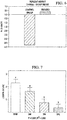
- Fecal oocysts were counted on day 7 post infection and these results demonstrated that the two compounds, NZ-366 and NZ-369, have anticryptosporidial activity in the acute IL-12 knockout mouse model of disease. Results are presented in FIG. 1 .
- NZ-366 and NZ-369 were more effective than paromomycin, a current leading drug used to combat the parasite, when administered after a single dose, and equally as effective as paromomycin over the course of the study. As expected there was no overt toxicity noted in the mice. NZ-516, NZ-364, NX-475, and NZ-372 have also been shown to be effctive in the same type of test.
- New born calves are susceptible to CP infection. They can develop severe diarrhea like humans. Calves were inoculated with 5X10 7 CP oocysts/calf on day 0. Calves had diarrhea in both the groups at onset of dosing. Treattment was started on day 3. Calves were given NZ-369 @ 8.5mg/kg every 12 hrs for 5 days. Fecal volume, urine volume, daily clinical evaluation, fecal consistency scores and weight gains were evaluated. Results for fecal volume are presented in FIG. 2 . The treatment and control calves had about the same fecal volume for the first two days of treatment, then the treatment calves treated with NZ-369 shoed a marked reduction in fecal volume through day 8 post infection as compared to the control.
- calves treated with NZ-369 maintained their weight over the trial period compared to the control calf. Treatment calves actually gained a slight amount of weight compared to the control calf.
- Eimeriosis often also referred to as coccidiosis, is the disease caused by Eimeria parasites resulting in severe mucosal damage, weight loss and sometimes even death. The disease is widespread and many species are found in poultry, livestock and small animals. Infections with Eimeria sp. confined to the distal ileum and/or the large bowel can often result in intermittent diarrhoea or even be asymptomatic. Infections may often involve the pyloric region of the gastric mucosa. Parasite forms displace the microvillus border and eventually lead to the loss of the mature surface epithelium.
- the rapid loss of surface epithelium causes marked shortening and fusion of the villi and lengthening of the crypts due to acceleration of cell division to compensate for the loss of cells.
- the combined loss of microvillus border and villus height diminishes the absorptive intestinal surface and reduces uptake of fluids, electrolytes and nutrients from the gut lumen.
- NZ-369 The pharmacokinetics of NZ-369 was first investigated in in broiler chickens. 9 male broiler chicks age 14-21 days were used in two studies, with triplicate time points. In the first study, chicks received 1- 20 mg per animal (57 mg/kg) in 500 ⁇ L of 10% DMSO, 90% Canola oil by gavage. In the second study, chick received 2- 40 mg per animal (117 mg/kg) in 500 ⁇ L of 10% DMSO, 90% Canola oil by gavage.
- NZ-366 and NZ-369 were divided into 4 treatment groups: Unmedicated (UNM), those receiving the experimental compounds (366 and 369); and those receiving Salinomycin (SAL).
- Compounds NZ-366 and NZ-369 were administered at a dose of 20 mg/bird by oral gavage daily beginning from 11 days post-hatching. Salinomycin was administered in-feed beginning from 10 days post-hatching. Broilers were administered a 1000x dose of coccidiosis vaccine by oral gavage at 13 days post-hatching.
- the present invention relates to the following items:
Landscapes
- Health & Medical Sciences (AREA)
- Life Sciences & Earth Sciences (AREA)
- Veterinary Medicine (AREA)
- Chemical & Material Sciences (AREA)
- Medicinal Chemistry (AREA)
- Pharmacology & Pharmacy (AREA)
- Animal Behavior & Ethology (AREA)
- General Health & Medical Sciences (AREA)
- Public Health (AREA)
- Epidemiology (AREA)
- Molecular Biology (AREA)
- Tropical Medicine & Parasitology (AREA)
- Chemical Kinetics & Catalysis (AREA)
- General Chemical & Material Sciences (AREA)
- Nuclear Medicine, Radiotherapy & Molecular Imaging (AREA)
- Organic Chemistry (AREA)
- Pharmaceuticals Containing Other Organic And Inorganic Compounds (AREA)
- Medicines That Contain Protein Lipid Enzymes And Other Medicines (AREA)
- Acyclic And Carbocyclic Compounds In Medicinal Compositions (AREA)
- Agricultural Chemicals And Associated Chemicals (AREA)
Abstract
Description
- The present disclosure relates to compositions for parasite inhibition and/or sensitization or re-sensitization of a parasite to another drug or combination of drugs. In particular, it relates to compositions including one or more arylphenoxypropionate derivatives, such as, but not limited to, quizalofop, fenoxaprop, proquizalofop, and haloxyfop, one or more aryloxyphenoxyacetate derivatives, one or more aryloxyphenylacetate derivatives, and one or more substituted quinols, and combinations thereof. The present disclosure also relates to methods of parasite inhibition and/or sensitizing or re-sensitizing a parasite to another drug or combination of drugs by applying more arylphenoxypropionate derivatives to the parasite.
- Parasitic infection is treated, or prevented, by the administration of a drug or drugs, such as xenobiotic chemotherapeutic drugs, to a susceptible or infected host organism. Effective treatment of parasitic infection by drug administration is frequently impaired, however, due to resistance of the parasite to the drug. Such resistance can be "inherent" to the parasite in the sense that the susceptibility of the parasite to the drug has not increased due to widespread use of the drug. Commonly, however, drug resistance of infectious parasites is observed due to evolved resistance associated with widespread treatment with the drug and associated selection pressure for resistant phenotypes. Currently, many infectious parasites are completely or highly resistant to available drugs and drug combinations, and parasites still susceptible to available drugs require treatment with greater doses than previously required, such that complete or effectively complete resistance is foreseeable.
- For example, chloroquine resistance in certain species of malaria-causing Plasmodium parasites is so widespread that alternative or combination anti-malarial therapies are now required, and many parasitic species, including malaria-causing Plasmodium species, are now multi-drug resistant. As a further example, the incidence of parasite resistance to avermectins, a widely used class of nematicides, acaridices and insecticides in veterinary and human medicine and plant protection, is increasing.
- Resistance of infectious parasites to anti-parasitic drugs can be avoided or lessened by rendering the parasites more sensitive to one or more drugs. The calcium channel blocker Verapramil, for example, has been evaluated for its effect on sensitization of parasites to xenobiotics. However, safe, economical, and effective methods for sensitizing parasites in such a manner are lacking.
- Compositions and methods for inhibiting and/or sensitizing or re-sensitizing a parasite to an antiparasitic drug are provided. The compositions can comprise a an arylphenoxypropionate derivative, an aryloxyphenoxyacetate derivative, an aryloxyphenylacetate derivative, one or more substituted quinols, or a pharmaceutically acceptable salt, hydrate, or prodrug thereof, or a combination thereof in an amount and formulation sufficient to sensitize the parasite to the drug, treating infection of a patient by a parasite with a drug, or to prevent symptomatic infection of a patient by a parasite with a drug.
- A more complete understanding of the present embodiments and advantages thereof may be acquired by referring to the following description taken in conjunction with the accompanying drawings, which depict embodiments of the present disclosure, and in which like numbers refer to similar components, and in which:
-
FIG. 1 is a graph of oocyst numbers vs. days post infection in mice with Cryptosporodosis treated with a control or test compounds; -
FIG. 2 is a graph of fecal volume vs. days post infection in calves with Cryptosporodosis treated with a control or test compound; -
FIG. 3 is a graph of urine volume vs. days post infection in calves with Cryptosporodosis treated with a control or test compound; -
FIG. 4 is a graph of overall clinical evaluation vs. days post infection in calves with Cryptosporodosis treated with a control or test compound; -
FIG. 5 is a graph of fecal consistency vs. days post infection in calves with Cryptosporodosis treated with a control or test compound; -
FIG. 6 is a graph of percent weight change over a trial period in calves with Cryptosporodosis treated with a control or test compound; and -
FIG. 7 is a graph of lesion scores for duodenal lesions in broiler chicks with coccidiosis that were untreated or treated with a control or test compound. - The present disclosure relates to compositions and methods for inhibition and/or drug-sensitization of a parasite. These compositions and methods are described in further detail below.
- Unless otherwise indicated by the specific context of this specification, a parasite can include any type of parasite, or any part thereof. Furthermore, it can include a parasite in a host organism, or outside a host organism, such as in the environment occupied by an organism susceptible to infection by the parasite. The organism or host organism can be any animal. By way of example, and not limitation, the organism or host organism can be a mammal, such as a human, a pet mammal such as a dog or cat, an agricultural mammal, such as a horse, cow, pig, sheep, or goat, or a zoo mammal.
- Although many embodiments herein are described with reference to a single parasite, the present disclosure is not so limited. The present disclosure encompasses, for example, infections of a single host animal with a plurality of parasites of the same species and with a plurality of parasites of different species, concurrently or otherwise. These embodiments and others will be readily apparent to one of ordinary skill in the art in view of the present disclosure.
- Drug-sensitization, unless otherwise indicated by the specific context of this specification, can include increased sensitivity to a drug, decreased resistance to a drug, or potentiation of a drug's activity or efficacy. Any effect can be measured using any methods accepted in the art. In certain embodiments, drug-sensitization can be determined by an increased ability of the drug to inhibit a parasite. Parasitic inhibition can include killing the parasite, rendering the parasite more susceptible to the immune system of a host organism, arresting the parasite in a phase of its life cycle that is relatively benign with respect to the host organism, reducing the rate of propagation of the parasite in the host organism, or otherwise negatively affecting a parasite. An increased ability of the drug to inhibit a parasite can be demonstrated by, for example, an ability to inhibit the cell with a reduced amount of drug or in a shorter period of time than in the absence of drug-sensitization. In the case of drug-resistant parasites, which include parasites with inherent or acquired resistance, drug-sensitization can result in a renewed, restored, restored or newly acquired ability of the drug to inhibit a parasite or type of parasite.
- Administration to a parasite, unless otherwise indicated by the specific context of this specification, can include administration directly to a parasite or indirect administration to a parasite, such as by direct or indirect administration to a host organism infected by the parasite or by prophylactic administration to an organism susceptible to infection by the parasite, or such as by administration to the environment of the parasite, such as by administration to an environment of the parasite. By way of example and not limitation, administration to a parasite can include, in addition to directly contacting the parasite with the composition administered, oral, enteral, and parenteral administration to an infected or susceptible host, as well as administration of the compound to a body of or source of water, for example, in which the parasite resides or will reside, as well as administration of the compound to a substrate or fomite upon which the parasite resides or will reside, or upon which another host or susceptible host organism resides or will reside, such as, for example, a mosquito netting, a portion of a plant such as a leaf, or a consumer product that can come into close contact with the skin of a human or animal, such as a bedsheet, a protective athletic garment, or a harness. By way of further example, the compositions of the present disclosure can be administered to a susceptible animal or infected host in the form of aerosolized particles, e.g., by way of aerosolizer, nebulizer or other like device, or transdermally, or transbucally, or sublingually, or by subcutaneous administration, or any other method of drug delivery, and any combination thereof.
- The present disclosure includes parasite drug-sensitization compositions, including one or more arylphenoxypropionate derivatives, one or more aryloxyphenoxyacetate derivatives, one or more aryloxyphenylacetate derivatives, one or more substituted quinols, or pharmaceutically acceptable salts, hydrates, or prodrugs thereof, or combinations thereof.
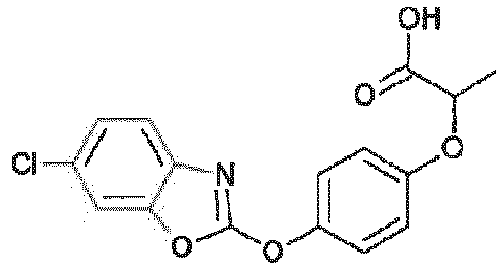
- In certain embodiments, the present disclosure provides arylphenoxypropionate derivatives according to one of the following structures:




- In certain embodiments, the present disclosure provides aryloxyphenoxyacetate derivatives according to the following structure:

- In certain embodiments, the present disclosure provides aryloxyphenylacetate derivatives according to the following structure:

- In certain embodiments, the present disclosure provides substituted quinols according to the following structure:

- Specific compounds of the invention include those named in Table 1 and characterized in the examples herein.
Table 1: Arylphenoxypropionate Derivatives WuXi-N8 
1-{5-[(6-chloro-1,3-benzothiazol-2-yl)oxy]pyridin-2-yl}-3-(propan-2-yl)urea WuXi-N7 
1-{6-[(6-chloro-1,3-benzothiazol-2-yl)oxy]pyridazin-3-yl}-3-(propan-2-yl)urea WuXi-N6 
1-{6-[(6-chloro-1,3-benzothiazol-2-yl)oxy]pyridin-3-yl}-3-(propan-2-yl)urea WUXI-N5 
3-{4-[(6-chloro-1,3-benzothiazol-2-yl)oxy]piperidin-1-yl}-N-methoxypropanamide WUXI-N4 
2-{4-[(6-chloro-1,3-benzothiazol-2-yl)oxy]piperidin-1-yl}-N-methoxyacetamide quizalofop-p-ethyl 
ethyl (2R)-2-{4-[(6-chloroquinoxalin-2-yl)oxy]phenoxy}propanoate quizalofop-p 
(2R)-2-{4-[(6-chloroquinoxalin-2-yl)oxy]phenoxy}propanoic acid propaquizafop 
2-{[(propan-2-ylidene)amino]oxy}ethyl 2-{4-[(6-chloroquinoxalin-2-yl)oxy]phenoxy}propanoate NZ-578 
2-{4-[(6-chloro-1,3-benzothiazol-2-yl)oxy]phenyl}-N-(2-methanesulfonylethyl)propanamide NZ-577 
2-{4-[(6-chloro-1,3-benzothiazol-2-yl)oxy]phenyl}-N-(oxetan-3-yl)acetamide NZ-576 
4-(2-{4-[(6-chloro-1,3-benzothiazol-2-yl)oxy]phenyl}acetyl)-1λ6,4-thiomorpholine-1,1-dione NZ-575 
2-{4-[(6-chloro-1,3-benzothiazol-2-yl)oxy]phenyl}-1-(morpholin-4-yl)ethan-1-one NZ-574 
1-(4-[(6-chloro-1,3-benzothiazol-2-yl)oxy]phenyl}-3-(oxetan-3-yl)urea NZ-573 
N-{4-[(6-chloro-1,3-benzothiazol-2-yl)oxy]phenyl)-1,1-dioxo-1λ6,4-thiomorpholine-4-carboxamide NZ-572 
N-{4-[(6-chloro-1,3-benzothiazol-2-yl)oxy]phenyl}morpholine-4-carboxamide NZ-564 
1-{4-[(6-chloro-1,3-benzothiazol-2-yl)oxy]phenyl}-N-(oxetan-3-yl)cyclopropane-1-carboxamide NZ-563 
4-(1-{4-[(6-chloro-1,3-benzothiazol-2-yl)oxy]phenyl)cyclopropanecarbonyl)-1λ6,4-thiomorpholine-1,1-dione NZ-562 
2-{4-[(6-chloro-1,3-benzothiazol-2-yl)oxy]phenyl}-N-(5-oxopyrrolidin-3-yl)propanamide NZ-561 
6-chloro-2-{4-[1-(morpholine-4-carbonyl)cyclopropyl]phenoxy}-1,3-benzothiazole NZ-560 
2-{4-[(6-chloro-1,3-benzothiazol-2-yl)oxy]phenyl}-N-(3-hydroxycyclobutyl)propanamide NZ-559 
2-{4-[(6-chloro-1,3-benzothiazol-2-yl)oxy]phenyl}-N,N-bis(2-hydroxyethyl)propanamide NZ-558 
2-{4-[(6-chloro-1,3-benzothiazol-2-yl)oxy]phenyl}-1-[2-(hydroxymethyl)morpholin-4-yl]propan-1-one NZ-557 
N-{2-[bis(2-hydroxyethyl)amino]ethyl}-2-{4-[(6-chloro-1,3-benzothiazol-2-yl)oxy]phenyl}propanamide NZ-556 
2-{4-[(6-chloro-1,3-benzothiazol-2-yl)oxy]phenyl}-N-{2-[(2-hydroxyethyl)(methyl)amino]ethyl}propanamide NZ-555 
2-{4-[(6-chloro-1,3-benzothiazol-2-yl)oxy]phenyl}-1-[3-(hydroxymethyl)morpholin-4-yl]propan-1-one NZ-554 
4-(2-{4-[(6-chloro-1,3-benzothiazol-2-yl)oxy]phenyl}propanoyl)morpholine-2-carboxamide NZ-553 
4-(2-{4-[(6-chloro-1,3-benzothiazol-2-yl)oxy]phenyl}propanoyl)-1λ6,4-thiomorpholine-1,1-dione NZ-550 
2-{4-[(6-chloroquinoxalin-2-yl)oxy]phenyl}-N-[2-(methylamino)ethyl]propanamide NZ-548 
2-{4-[(6-chloro-1,3-benzothiazol-2-yl)oxy]phenyl}-N-[2-(methylamino)ethyl]propanamide NZ-547 
2-{4-[(6-chloro-1,3-benzothiazol-2-yl)oxy]phenyl}-N-[2-(dimethylamino)ethyl]-N-methylpropanamide NZ-546 
N-[2-(dimethylamino)ethyl]-2,2-difluoro-2-{4-[(6-fluoro-1,3-benzothiazol-2-yl)oxy]phenyl}acetamide NZ-545 
2,2-difluoro-2-(4-[(6-fluoro-1,3-benzothiazol-2-yl)oxy]phenyl}-1-(4-methylpiperazin-1-yl)ethan-1-one NZ-544 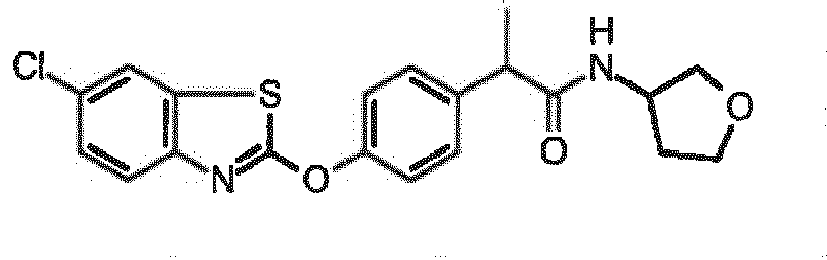
2-{4-[(6-chloro-1 ,3-benzoth iazol-2-yl)oxy]phenyl}-N-(oxolan-3-yl)propanamide NZ-543 
2-{4-[(6-chloro-1,3-benzothiazol-2-yl)oxy]phenyl}-N-(oxetan-3-yl)propanamide NZ-542 
2-{4-[(6-chloro-1,3-benzothiazol-2-yl)oxy]phenyl}-N-(1,3-dimethoxypropan-2-yl)propanamide NZ-541 
2-{4-[(6-chloro-1,3-benzothiazol-2-yl)oxy]phenyl}-N-(2-methoxyethyl)propanamide NZ-539 
2-{4-[(6-chloro-1,3-benzothiazol-2-yl)oxy]phenyl}-N-cyclobutylpropanamide NZ-538 
2-{4-[(6-chloro-1,3-benzothiazol-2-yl)oxy]phenyl}-N-cyclopropylpropanamide NZ-537 
2-{4-[(6-chloroquinoxalin-2-yl)oxy]phenyl)-1-(piperazin-1-yl)propan-1-one NZ-536 
2-{4-[(6-chloroquinoxalin-2-yl)oxy]phenyl}-N-(1,3-dihydroxypropan-2-yl)propanamide NZ-535 
2-{4-[(6-chloroquinoxalin-2-yl)oxy]phenyl}-N-[2-(dimethylamino)ethyl]propanamide NZ-534 
2-{4-[(6-chloroquinoxalin-2-yl)oxylphenyl}N-(2,3-dihydroxypropyl)propanamide NZ-533 
2-{4-[(6-chloroquinoxalin-2-yl)oxy]phenyl}-N-(2-hydroxyethyl)propanamide NZ-532 
2-{4-[(6-chloroquinoxalin-2-yl)oxy]phenyl}-N-(propan-2-yl)propanamide NZ-531 
2-{4-[(6-chloroquinoxalin-2-yl)oxy]phenyl}-N-methylpropanamide NZ-530 
2-{4-[(6-chloroquinoxalin-2-yl)oxy]phenyl}-N,N-dimethylpropanamide NZ-529 
2-{4-[(6-chloroquinoxalin-2-yl)oxy]phenyl}-1-(morpholin-4-yl)propan-1-one NZ-522 
6-chloro-2-{4-[1-(4-methylpiperazine-1-carbonyl)cyclopropyl]phenoxy}-1,3-benzothiazole NZ-521 
1 -{4-[(6-chloro-1,3-benzothiazol-2-yl)oxy]phenyl}-N-methylcyclopropane-1-carboxamide NZ-518 
N-(2-aminoethyl)-2-{4-[(6-chloro-1,3-benzothiazol-2-yl)oxy]phenyl}propanamide NZ-516 
2-{4-[(6-chloro-1,3-benzothiazol-2-yl)oxy]phenyl}-N-[2-(dimethylamino)ethyl]propanamide NZ-513 
2-{4-[(6-chloro-1,3-benzothiazol-2-yl)oxy]phenyl}-1-[4-(oxetan-3-yl)piperazin-1-yl]propan-1-one NZ-512 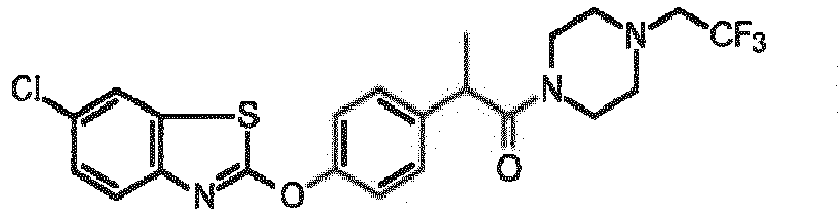
2-{4-[(6-chloro-1,3-benzothiazol-2-yl)oxy]phenyl}-1-[4-(2,2,2-trifluoroethyl)piperazin-1-yl]propan-1-one NZ-511 
2-{4-[(6-chloro-1,3-benzothiazol-2-yl)oxy]phenyl}-1-(4-cyclopropylpiperazin-1-yl)propan-1-one NZ-510 
2-{4-[(6-chloro-1,3-benzothiazol-2-yl)oxy]phenyl}-1-[4-(propan-2-yl)piperazin-1-yl]propan-1-one NZ-509 
N-{4-[(6-chloro-1,3-benzothiazol-2-yl)oxy]phenyl}piperazine-1-carboxamide NZ-506 
4-[(6-chloro-1,3-benzothiazol-2-yl)oxy]phenyl 4-methylpiperazine-1-carboxylate NZ-505 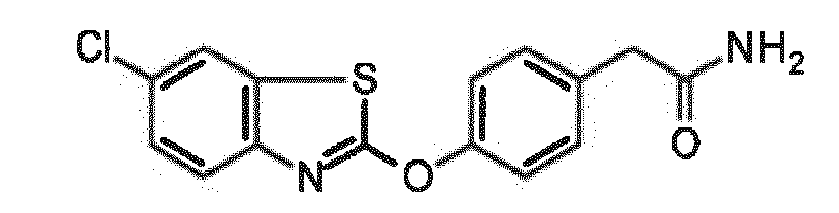
2-{4-[(6-chloro-1 ,3-benzothiazol-2-yl)oxy]phenyl}acetamide NZ-500 
2-{4-[(6-chloro-1,3-benzothiazol-2-yl)oxy]-2-fluorophenyl}acetamide NZ-496 
2-{4-[(5,6-difluoro-1,3-benzothiazol-2-yl)oxy]-2-fluorophenyl}acetamide NZ-490 
2-{4-[(6-fluoro-1,3-benzothiazol-2-yl)oxy]phenyl}-1-(pyrrolidin-1-yl)ethan-1-one NZ-489 
2-{4-[(5,6-difluoro-1,3-benzothiazol-2-yl)oxy]phenyl)-1-(piperazin-1-yl)propan-1-one NZ-485 
2-{4-[(5,6-difluoro-1,3-benzothiazol-2-yl)oxy]phenyl}acetamide NZ-484 
2-{2-fluoro-4-[(6-fluoro-1,3-benzothiazol-2-yl)oxy]phenyl}acetamide NZ-481 
2-{4-[(5,6-difluoro-1,3-benzothiazol-2-yl)oxy]phenyl}-1-(piperidin-1-yl)ethan-1-one NZ-479 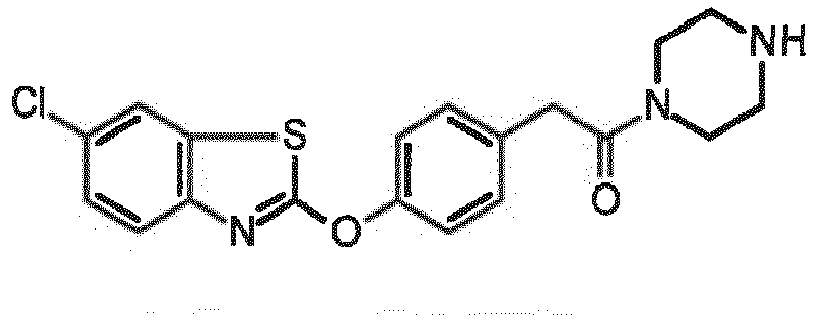
2-{4-[(6-chloro-1,3-benzothiazol-2-yl)oxy]phenyl}-1-(piperazin-1-yl)ethan-1-one NZ-477 
2-{4-[(6-fluoro-1,3-benzothiazol-2-yl)oxy]phenyl}-1-(piperazin-1-yl)propan-1-one NZ-476 
2-(4-[(6-fluoro-1,3-benzothiazol-2-yl)oxy]phenyl}-1-(4-methylpiperazin-1-yl)ethan-1-one NZ-475 
N-{4-[(6-chloro-1,3-benzothiazol-2-yl)oxy]phenyl}-4-methylpiperazine-1-carboxamide NZ-472 
2-{4-[(6-fluoro-1,3-benzothiazol-2-yl)oxy]phenyl}-1-(piperazin-1-yl)ethan-1-one NZ-471 
2-{4-[(6-fluoro-1,3-benzothiazol-2-yl)oxy]phenyl}-1-(piperidin-1-yl)ethan-1-one NZ-469 
tert-butyl 4-(2-{4-[(6-fluoro-1,3-benzothiazol-2-yl)oxy]phenyl}acetyl)piperazine-1-carboxylate NZ-467 
2-{2-fluoro-4-[(6-fluoro-1,3-benzothiazol-2-yl)oxy]phenyl}-1-(4-methylpiperazin-1-yl)ethan-1-one NZ-466 
2-{4-[(6-fluoro-1,3-benzothiazol-2-yl)oxy]phenyl)-1-(4-methylpiperazin-1-yl)propan-1-one NZ-465 
2-{4-[(5,6-difluoro-1,3-benzothiazol-2-yl)oxy]phenyl}-1-(4-methylpiperazin-1-yl)propan-1-one NZ-464 
2-{4-[(6-chloro-1,3-benzothiazol-2-yl)oxy]phenyl}-1-(4-methylpiperazin-1-yl)ethan-1-one NZ-460 
2-{4-[(6-chloroquinoxalin-2-yl)oxy]-2,6-difluorophenyl)-N-methylacetamide NZ-459 
2-{4-[(6-chloro-1,3-benzothiazol-2-yl)oxy]-2,6-difluorophenyl}-N-methylacetamide NZ-458 
2-{4-[(6-chloro-1,3-benzothiazol-2-yl)oxy]-2,6-difluorophenyl}acetic acid NZ-450 
2-{4-[(5,6-difluoro-1,3-benzothiazol-2-yl)oxy]-2,6-difluorophenyl}-N-methylacetamide NZ-446 
N-cyclopropyl-2-{2-fluoro-4-[(6-fluoro-1,3-benzothiazol-2-yl)oxy]phenyl}acetamide NZ-440 
2-{4-[(5,6-difluoro-1,3-benzothiazol-2-yl)oxy]-2-fluorophenyl}acetic acid NZ-438 
N-(carbamoylmethyl)-2-{4-[(6-fluoro-1,3-benzothiazol-2-yl)oxy]phenyl}acetamide NZ-433 
2-{2,6-difluoro-4-[(6-fluoro-1,3-benzothiazol-2-yl)oxy]phenyl}-N-methylacetamide NZ-427 
N-(2-aminoethyl)-2-{4-[(6-fluoro-1,3-benzothiazol-2-yl)oxy]phenyl}acetamide NZ-426 
2-{4-[(6-fluoro-1,3-benzothiazol-2-yl)oxy]phenyl}-N-(2-hydroxyethyl)acetamide NZ-425 
N-[2-(dimethylamino)ethyl]-2-{4-[(6-fluoro-1,3-benzothiazol-2-yl)oxy]phenyl}acetamide NZ-420 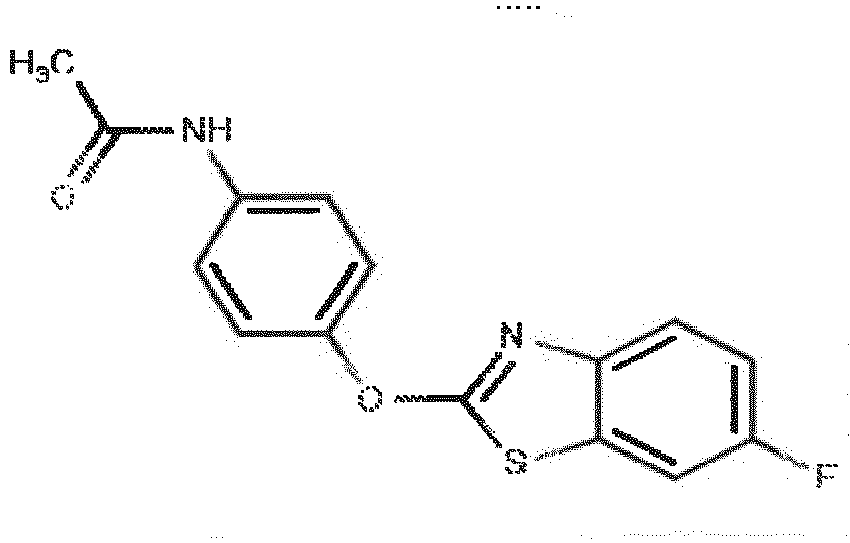
N-{4-[(6-fluoro-1,3-benzothiazol-2-yl)oxy]phenyl}acetamide NZ-419 
2-(4-[(6-fluoro-1,3-benzothiazol-2-yl)oxyl-2-oxo-1,2-dihydropyridin-1-yl}-N-methylacetamide NZ-418 
2-{4-[(6-fluoro-1,3-benzothiazol-2-yl)oxy]-2-oxo-1,2-dihydropyridin-1-yl}acetic acid NZ-417 
2-amino-N-{4-[(6-fluoro-1,3-benzothiazol-2-yl)oxy]phenyl}acetamide NZ-416 
3-amino-N-{4-[(6-fluoro-1,3-benzothiazol-2-yl)oxy]phenyl}propanamide NZ-415 
tert-butyl N-[({4-[(6-fluoro-1,3-benzothiazol-2-yl)oxy]phenyl}carbamoyl)methyl]carbamate NZ-414 
tert-butyl N-[2-({4-[(6-fluoro-1,3-benzothiazol-2-yl)oxy]phenyl}carbamoyl)ethyl]carbamate NZ-413 
4-[(6-fluoro-1,3-benzothiazol-2-yl)oxy]aniline NZ-412 
tert-butyl N-{4-[(6-fluoro-1,3-benzothiazol-2-yl)oxy]phenyl}carbamate NZ-411 
2-{4-[(5,6-difluoro-1,3-benzothiazol-2-yl)oxy]-2-fluorophenyl}-N-methylacetamide NZ-410 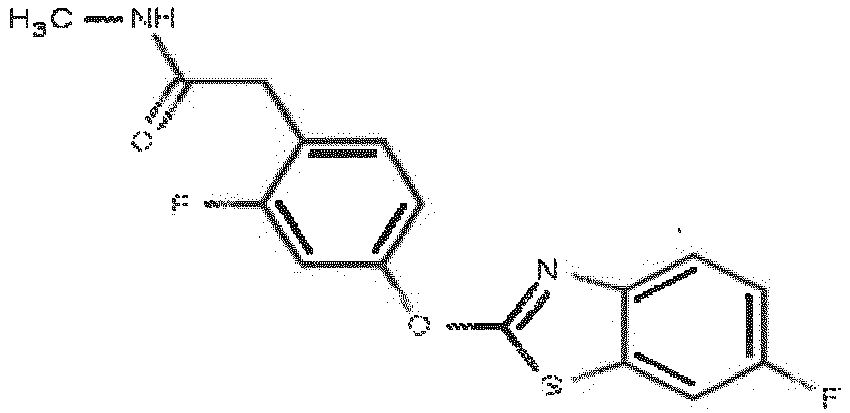
2-(2-fluoro-4-[(6-fluoro-1,3-benzothiazol-2-yl)oxy]phenyl}-N-methylacetamide NZ-409 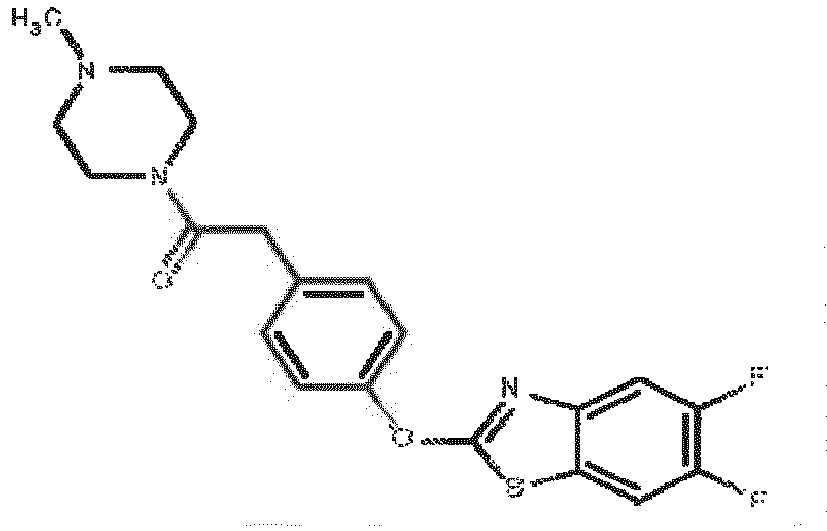
2-{4-[(5,6-difluoro-1,3-benzothiazol-2-yl)oxy]phenyl}-1-(4-methylpiperazin-1-yl)ethan-1-one NZ-408 
2-{4-[(6-fluoro-1,3-benzothiazol-2-yl)oxy]-2-hydroxyphenyl}-N-methylpropanamide NZ-407 
2-[4-[(5,6-difluoro-1,3-benzothiazol-2-yl)oxy]-2-hydroxyphenyl}-N-(propan-2-yl)acetamide NZ-406 
2-{2-[(6-fluoro-1,3-benzothiazol-2-yl)oxy]-4-hydroxyphenyl}-N-(propan-2-yl)acetamide NZ-405 
2-{4-[(6-fluoro-1,3-benzothiazol-2-yl)oxy]-2-hydroxyphenyl}-N-(propan-2-yl)acetamide NZ-404 
2-{4-[(6-chloro-1,3-benzothiazol-2-yl)oxy]-2-oxo-1,2-dihydropyridin-1-yl}-N-(propan-2-yl)acetamide NZ-403 
2-{4-[(5,6-difluoro-1,3-benzothiazol-2-yl)oxy]phenyl}-N-(propan-2-yl)acetamide NZ-402 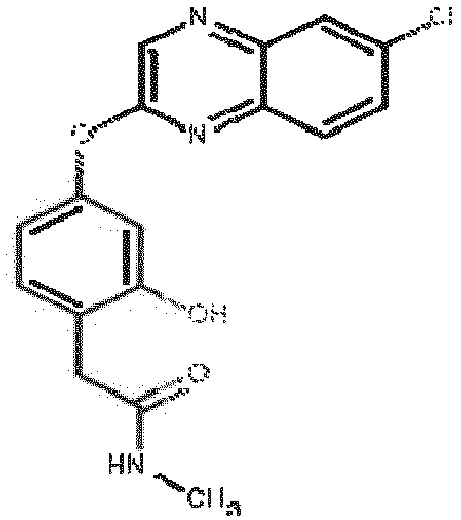
2-{4-[(6-chloroquinoxalin-2-yl)oxy]-2-hydroxyphenyl}-N-methylacetamide NZ-401 
2-(4-[(5,6-difluoro-1,3-benzothiazol-2-yl)oxy]-2-hydroxyphenyl}-N-methylacetamide NZ-400 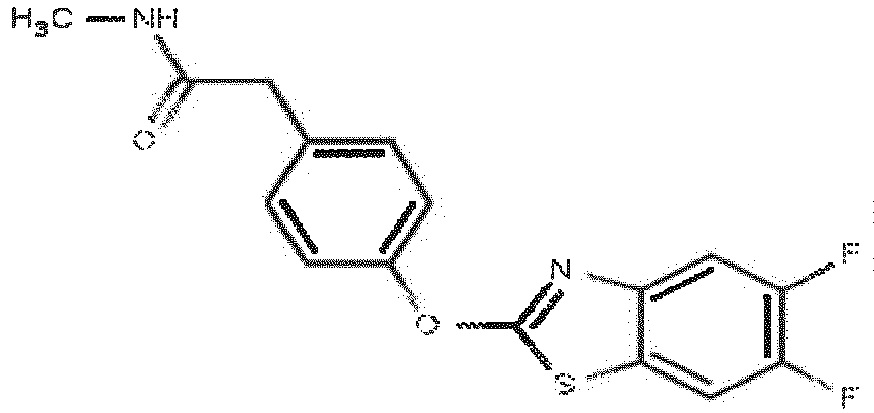
2-{4-[(5,6-difluoro-1,3-benzothiazol-2-yl)oxy]phenyl}-N-methylacetamide NZ-399 
2-{4-[(5,6-difluoro-1,3-benzothiazol-2-yl)oxy]phenyl}acetic acid NZ-398 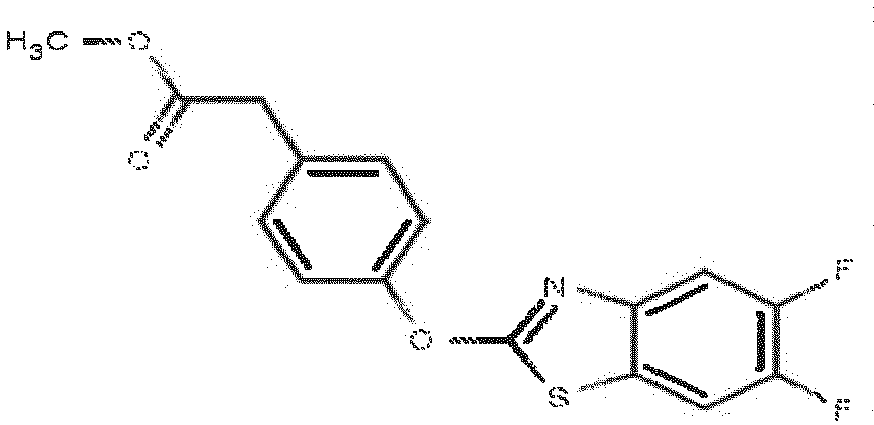
methyl 2-{4-[(5,6-difluoro-1,3-benzothiazol-2-yl)oxy]phenyl}acetate NZ-397 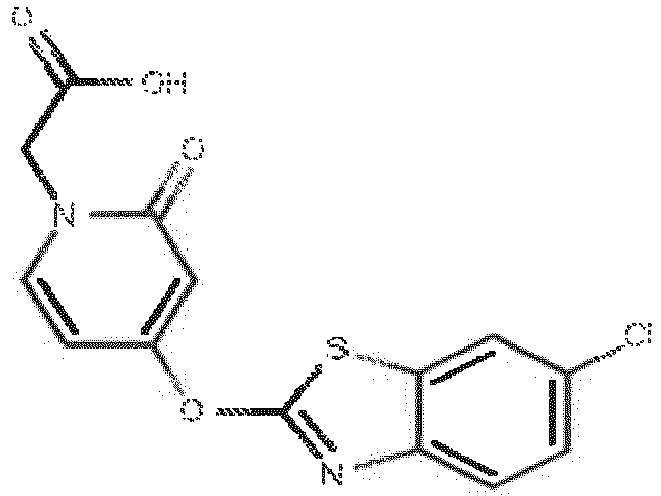
2-(4-[(6-chloro-1,3-benzothiazol-2-yl)oxy]-2-oxo-1,2-dihydropyridin-1-yl}acetic acid NZ-396 
methyl 2-{4-[(6-chloro-1,3-benzothiazol-2-yl)oxy]-2-oxo-1,2-dihydropyridin-1-yl}acetate NZ-395 
2-{4-[(6-fluoro-1,3-benzothiazol-2-yl)oxy]-2-hydroxyphenyl}-N-methylacetamide NZ-394 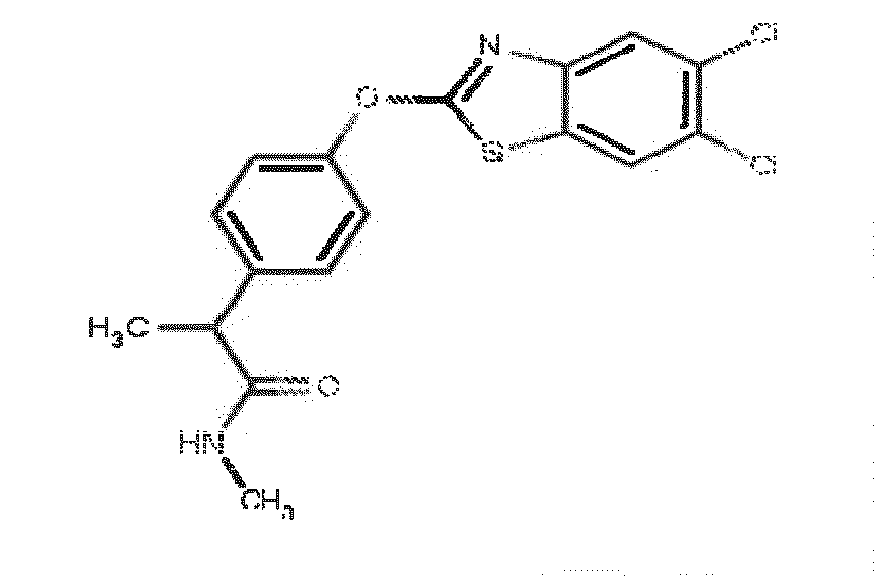
2-{4-[(5,6-dichloro-1,3-benzothiazol-2-yl)oxy]phenyl}-N-methylpropanamide NZ-393 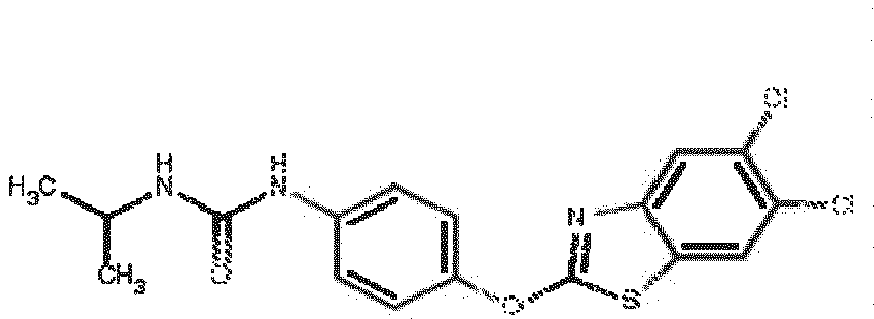
1-{4-[(5,6-dichloro-1,3-benzothiazol-2-yl)oxy]phenyl}-3-(propan-2-yl)urea NZ-392 
2-{4-[(6-chloro-1,3-benzothiazol-2-yl)oxy]-2-methoxyphenyl}-N-methylacetamide NZ-391 
1-{5-[(6-chloro-1,3-benzothiazol-2-yl)oxy]-1-oxo-1λ5-pyridin-2-yl}-3-(propa n-2-yl)urea NZ-390 
2-{2-[(6-chloro-1,3-benzothiazol-2-yl)oxy]-4-hydroxyphenyl}-N-methylacetamide NZ-389 
2-{4-[(6-chloro-1,3-benzothiazol-2-yl)oxy]-2-hydroxyphenyl}-N-methylacetamide NZ-388 
1-{4-[(6-chloro-1,3-benzothiazol-2-yl)oxy]phenyl}-1-methyl-3-(propan-2-yl)urea NZ-387 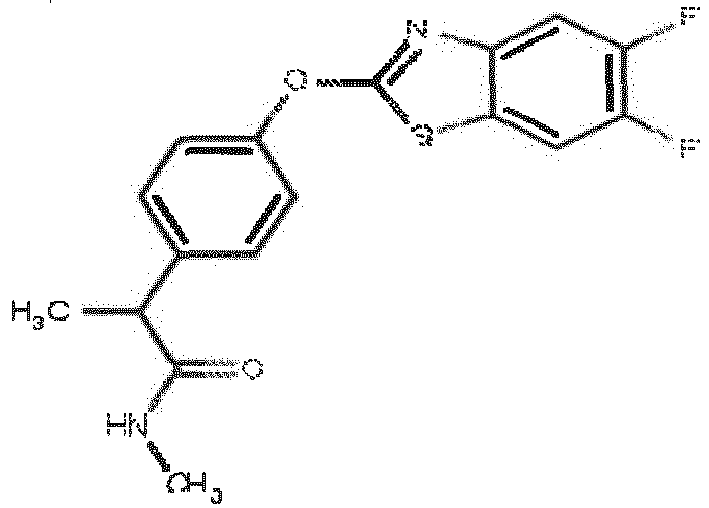
2-{4-[(5,6-difluoro-1,3-benzothiazol-2-yl)oxy]phenyl}-N-methylpropanamide NZ-386 
2-{4-[(6-fluoro-1,3-benzothiazol-2-yl)oxy]phenyl}-N-methylpropanamide NZ-385 
2-[4-[(6-fluoro-1,3-benzothiazol-2-yl)oxy]phenyl}-N-methylacetamide NZ-383 
2-{4-[(6-chloro-1,3-benzothiazol-2-yl)oxy]phenyl}-N-methylacetamide NZ-382 
1-{4-[(5,6-difluoro-1,3-benzoth iazol-2-yl)oxy]phenyl}-3-(propan-2-yl)urea NZ-381 
1-(4-{[6-(hydroxymethyl)-1,3-benzothiazol-2-yl]oxy}phenyl)-3-(propan-2-yl)urea NZ-380 
1-{4-[(6-methanesulfonyl-1,3-benzothiazol-2-yl)oxy]phenyl}-3-(propan-2-yl)urea NZ-379 
3-(propan-2-yl)-1-(4-{[6-(trifluoromethyl)-1,3-benzothiazol-2-yl]oxy}phenyl)urea NZ-378 
ethyl 2-(4-{[(propan-2-yl)carbamoyl]amino}phenoxy)-1,3-benzothiazole-6-carboxylate NZ-377 
1-{4-[(6-cyano-1,3-benzothiazol-2-yl)oxy]phenyl}-3-(propan-2-yl)urea NZ-376 
1-{4-[(5-chloro-1,3-benzothiazol-2-yl)oxy]phenyl}-3-(propan-2-yl)urea NZ-374 
1-{4-[(4-fluoro-1,3-benzothiazol-2-yl)oxy]phenyl}-3-(propan-2-yl)urea NZ-373 
1-{4-[(5-fluoro-1,3-benzothiazol-2-yl)oxy]phenyl}-3-(propan-2-yl)urea NZ-372 
2-{4-[(6-chloro-1,3-benzothiazol-2-yl)oxy]phenyl}-N-(2,3-dihydroxypropyl)propanamide NZ-371 
2-{4-[(6-chloro-1,3-benzothiazol-2-yl)oxy]phenyl}-N-(1,3-dihydroxypropan-2-yl)propanamide NZ-370 
2-{4-[(6-chloro-1,3-benzothiazol-2-yl)oxy]phenyl}-N-(2-hydroxyethyl)propanamide NZ-369 
2-{4-[(6-chloro-1,3-benzothiazol-2-yl)oxy]phenyl}-N-methylpropanamide NZ-368 
2-{4-[(6-chloro-1,3-benzothiazol-2-yl)oxy]phenyl}-N,N-dimethylpropanamide NZ-366 
2-{4-[(6-chloro-1,3-benzothiazol-2-yl)oxy]phenyl}-1-(4-methylpiperazin-1-yl)propan-1-one NZ-365 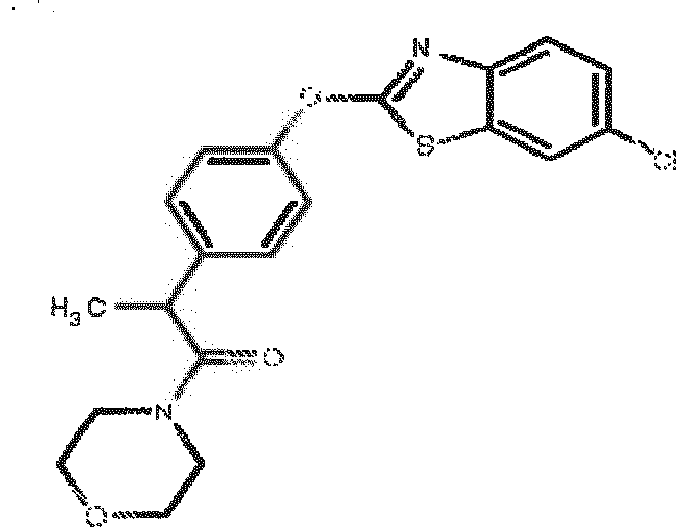
2-{4-[(6-chloro-1,3-benzothiazol-2-yl)oxy]phenyl}-1-(morpholin-4-yl)propan-1-one NZ-364 
2-{4-[(6-chloro-1,3-benzothiazol-2-yl)oxy]phenyl}-1-(piperazin-1-yl)propan-1-one NZ-363 
1-{4-[(6-nitro-1,3-benzothiazol-2-yl)oxy]phenyl}-3-(propan-2-yl)urea NZ-362 
1-{4-[(6-hydroxy-1,3-benzothiazol-2-yl)oxy]phenyl}-3-(propan-2-yl)urea NZ-361 
1-{4-[(6-methoxy-1,3-benzothiazol-2-yl)oxy]phenyl}-3-(propan-2-yl)urea NZ-360 
1-[4-(1,3-benzothiazol-2-yloxy)phenyl]-3-(propan-2-yl)urea NZ-359 
1-{4-[(6-bromo-1,3-benzothiazol-2-yl)oxy]phenyl}-3-(propan-2-yl)urea NZ-358 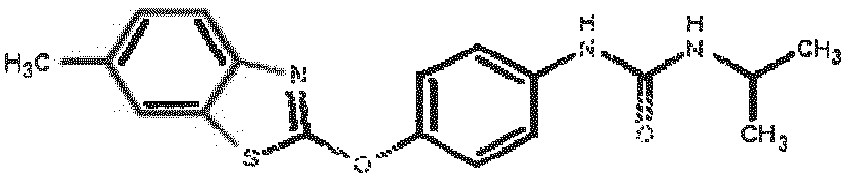
1-14-[(6-methyl-1,3-benzothiazol-2-yl)oxy]phenyl}-3-(propan-2-yl)urea NZ-357 
2-{4-[(6-chloro-1,3-benzothiazol-2-yl)oxy]phenyl}-N,2-dimethoxyacetamide NZ-356 
2-{4-[(6-chloro-1,3-benzothiazol-2-yl)oxy]phenyl}-2-methoxyacetic acid NZ-355 
methyl 2-{4-[(6-chloro-1,3-benzothiazol-2-yl)oxy]phenyl}-2-methoxyacetate NZ-354 
1-{4-[(6-chloro-1,3-benzothiazol-2-yl)oxy]phenyl}-3,3-dimethylurea NZ-353 
1-{4-[(6-chloro-1,3-benzothiazol-2-yl)oxy]phenyl}-3-methylurea NZ-352 
4-[(6-chloro-1,3-benzothiazol-2-yl)oxy]aniline NZ-351 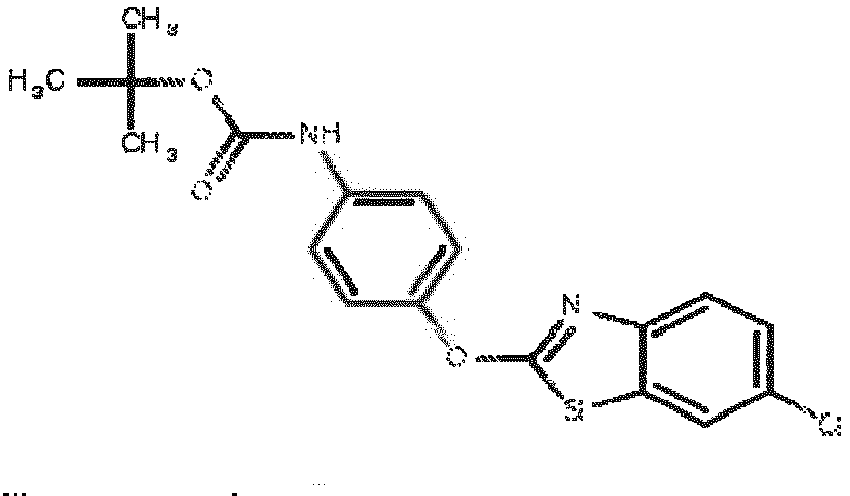
tert-butyl N-{4-[(6-chloro-1,3-benzothiazol-2-yl)oxy]phenyl}carbamate NZ-350 
1-({4-[(6-chloro-1,3-benzothiazol-2-yl)oxy]phenyl}methyl)-3-methylurea NZ-349 
1-({4-[(6-chloro-1,3-benzothiazol-2-yl)oxy]phenyl}methyl)-3,3-dimethylurea NZ-348 
{4-[(6-chloro-1,3-benzothiazol-2-yl)oxy]phenyl}methanamine NZ-347 
tert-butyl N-({4-[(6-chloro-1,3-benzothiazol-2-yl)oxy]phenyl}methyl)carbamate NZ-346 
1-(4-[(6-chloroquinolin-2-yl)oxy]phenyl}-3-(propan-2-yl)urea NZ-345 
1-{4-[(6-fluoroquinoxalin-2-yl)oxy]phenyl}-3-(propan-2-yl)urea NZ-344 
1-{4-[(6-chloroquinoxalin-2-yl)oxy]phenyl}-3-methoxyurea NZ-343 
1-{4-[(6-chloroquinoxalin-2-yl)oxy]phenyl}-3,3-dimethylurea NZ-342 
1-{4-[(6-chloroquinoxalin-2-yl)oxy]phenyl}-3-methylurea NZ-341 
1-{4-[(6-chloro-1,3-benzothiazol-2-yl)oxy]phenyl}imidazolidin-2-one NZ-338 
2-{4-[(6-chloro-1,3-benzothiazol-2-yl)oxy]phenyl}-2-hyd roxy-N-methoxyacetamide NZ-337 
2-{4-[(6-chloro-1,3-benzothiazol-2-yl)oxy]phenyl}-2-hydroxyacetic acid NZ-336 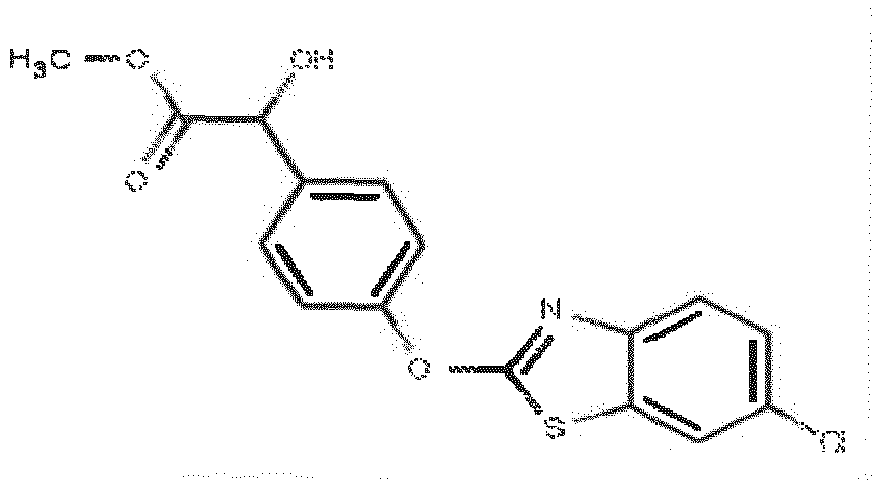
methyl 2-(4-[(6-chloro-1,3-benzothiazol-2-yl)oxy]phenyl}-2-hydroxyacetate NZ-335 
N-methoxy-2-{4-[(6-methoxy-1,3-benzothiazol-2-yl)oxy]phenyl}propanamide NZ-334 
2-{4-[(6-methoxy-1,3-benzothiazol-2-yl)oxy]phenyl}propanoic acid NZ-333 
methyl 2-{4-[(6-methoxy-1,3-benzothiazol-2-yl)oxy]phenyl}propanoate NZ-332 
1-{4-[(6-fluoro-1,3-benzothiazol-2-yl)oxy]phenyl}-3-(propan-2-yl)urea NZ-331 
1-{4-[(6-chloro-1,3-benzothiazol-2-yl)oxy]phenyl}-3-(propan-2-yl)urea NZ-330 
2-{4-[(6-fluoro-1,3-benzothiazol-2-yl)oxy]phenyl}-N-methoxypropanamide NZ-329 
2-{4-[(6-fluoro-1,3-benzothiazol-2-yl)oxy]phenyl}prapanoic acid NZ-328 
methyl 2-{4-[(6-fluoro-1,3-benzothiazol-2-yl)oxy]phenyl}propanoate NZ-327 
2-{4-[(6-chloro-1,3-benzothiazol-2-yl)oxy]phenyl}-N-(propan-2-yl)propanamide NZ-326 
2-{4-[(6-chloroquinoxalin-2-yl)oxy]phenoxyl-N-(propan-2-yloxy)acetamide NZ-325 
(Z)-2-{4-[(6-chloroquinoxalin-2-yl)oxy]phenoxy}-N-methoxyethenecarbonimidoyl chloride NZ-323 
2-(4-[(6-chloroquinoxalin-2-yl)oxy]phenoxyl-N-(cyclopropylmethoxy)acetamide NZ-322 
1-{4-[(6-chloroquinoxalin-2-yl)oxy]phenyl}-3-(propan-2-yl)urea NZ-321 
tert-butyl N-(4-[(6-chloroquinoxalin-2-yl)oxy]phenyl}carbamate NZ-320 
N-methoxy-2-oxo-7-phenoxy-2H-chromene-3-carboxamide NZ-319 
2-{4-[(6-chloro-1,3-benzothiazol-2-yl)oxy]phenoxy}-N-methoxy-2-methylpropanamide NZ-318 
2-{4-[(6-chloro-1,3-benzothiazol-2-yl)oxy]phenoxy}-2-methylpropanoic acid NZ-317 
methyl 2-{4-[(6-chloro-1,3-benzothiazol-2-yl)oxy]phenoxy}-2-methylpropanoate NZ-316 
2-{4-[(6-chloroquinoxalin-2-yl)oxy]phenoxy}-N-methoxy-2-methylpropanamide NZ-315 
2-{4-[(6-chloroquinoxalin-2-yl)oxy]phenoxy}-2-methylpropanoic acid NZ-314 
methyl 2-{4-[(6-chloroquinoxalin-2-yl)oxy]phenoxy}-2-methylpropanoate NZ-313 
2-{4-[(6-chloro-1,3-benzothiazol-2-yl)oxy]phenyl}-N-methoxypropanamide NZ-312 
2-{4-[(6-chloro-1,3-benzothiazol-2-yl)oxy]phenyl}propanoic acid NZ-311 
methyl 2-(4-[(6-chloro-1,3-benzothiazol-2-yl)oxy]phenyl}propanoate NZ-310 
2-{4-[(6-chloroquinoxalin-2-yl)oxy]phenyl}-N-methoxypropanamide NZ-309 
2-{4-[(6-chloroquinoxalin-2-yl)oxy]phenyl}propanoic acid NZ-308 
methyl 2-{4-[(6-chloroquinoxalin-2-yl)oxy]phenyl}propanoate NZ-307 
2-{4-[(6-chloroquinoxalin-2-yl)oxy]phenoxy}-N-(propan-2-yl)acetamide NZ-306 
2-{4-[(6-chloroquinoxalin-2-yl)oxy]phenoxy}-N-ethylacetamide NZ-305 
2-{4-[(6-fluoro-1,3-benzothiazol-2-yl)oxy]phenoxy}-N-methoxyacetamide NZ-304 
2-{4-[(6-fluoro-1,3-benzothiazol-2-yl)oxy]phenoxy}acetic acid NZ-303 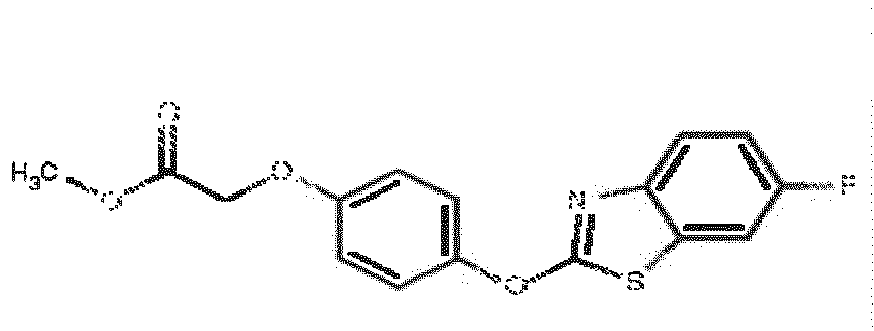
methyl 2-{4-[(6-fluoro-1,3-benzothiazol-2-yl)oxy]phenoxy}acetate NZ-302 
methyl 2-{4-[(6-chloro-1,3-benzoxazol-2-yl)oxy]phenyl}acetate NZ-301 
2-{4-[(6-chloroquinoxalin-2-yl)oxy]phenyl}-N-methoxyacetamide NZ-300 
2-{4-[(6-fluoro-1,3-benzothiazol-2-yl)oxy]phenyl}-N-methoxyacetamide NZ-299 
2-{4-[(6-fluoro-1,3-benzothiazol-2-yl)oxy]phenyl}acetic acid NZ-298 
2-{4-[(6-chloroquinoxalin-2-yl)oxy]phenyl}acetic acid NZ-297 
methyl 2-{4-[(6-chloroquinoxalin-2-yl)oxy]phenyl}acetate NZ-296 
(2R)-2-{4-[(6-chloro-1,3-benzoxazol-2-yl)oxy]phenoxy}-N-methoxypropanamide NZ-295 
(2R)-2-{4-[(6-chloroq u inoxalin-2-yl)oxy]phenoxy}-N-methoxypropanamide NZ-294 
methyl 2-{4-[(6-fluoro-1,3-benzothiazol-2-yl)oxy]phenyl}acetate NZ-293 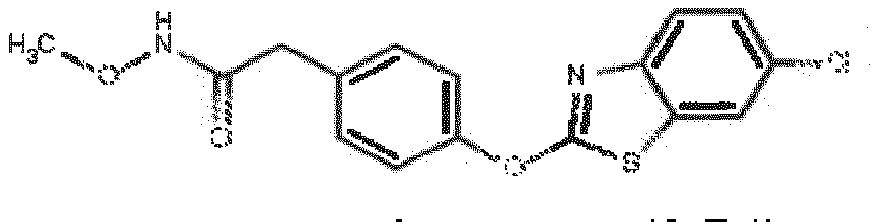
2-(4-[(6-chloro-1,3-benzothiazol-2-yl)oxy]phenyl}-N-methoxyacetamide NZ-292 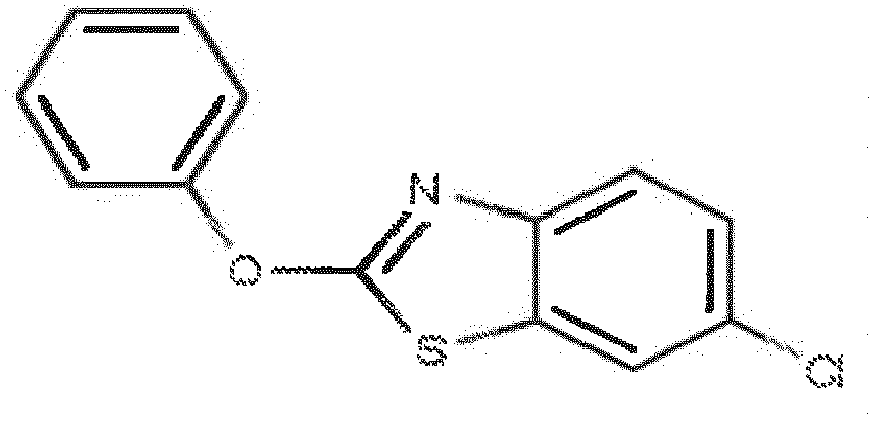
6-chloro-2-phenoxy-1,3-benzothiazole NZ-291 
6-chloro-2-(3-methylphenoxy)-1,3-benzothiazole NZ-290 
2-{4-[(6-chloroquinoxalin-2-yl)oxy]phenoxy}-N-methoxy-N-methylacetamide NZ-289 
(2R)-2-{4-[(6-fluoro-1,3-benzothiazol-2-yl)oxy]phenoxy}-N-methoxypropanamide NZ-288 
4-[(6-chloro-1,3-benzothiazol-2-yl)oxy]benzoic acid NZ-287 
2-{4-[(6-chloro-1,3-benzothiazol-2-yl)oxy]phenyl}acetic acid NZ-286 
2-(4-[(6-chloroquinoxalin-2-yl)oxy]phenoxyl-N-hydroxyacetamide NZ-285 
methyl 4-[(6-chloro-1,3-benzothiazol-2-yl)oxy]benzoate NZ-284 
methyl 2-(4-[(6-chloro-1,3-benzothiazol-2-yl)oxy]phenyl}acetate NZ-283 
(2E)-3-{4-[(6-chloro-1,3-benzothiazol-2-yl)oxy]phenyl}prop-2-enoic acid NZ-282 
3-{4-[(6-chloro-1,3-benzothiazol-2-yl)oxy]phenyl}propanoic acid NZ-281 
methyl (2E)-3-{4-[(6-chloro-1,3-benzothiazol-2-yl)oxy]phenyl}prop-2-enoate NZ-280 
methyl 3-{4-[(6-chloro-1,3-benzothiazol-2-yl)oxy]phenyl}propanoate NZ-279 
2-(4-[(6-chloroquinoxalin-2-yl)oxy]phenoxyl-N-hydroxy-N-methylacetamide NZ-278 
2-{4-[(6-chloroquinoxalin-2-yl)oxy]phenoxy}-1-(4-methylpiperazin-1-yl)ethan-1-one NZ-277 
2-{4-[(6-chloroquinoxalin-2-yl)oxy]phenoxy]-1-(piperazin-1-yl)ethan-1-one NZ-276 
N-(benzenesulfonyl)-2-{4-[(6-chloroquinoxalin-2-yl)oxy]phenoxy}acetamide NZ-275 
2-{4-[(6-chloroquinoxalin-2-yl)oxy]phenoxy}-N-trifluoromethanesulfonylacetamide NZ-274 
2-(4-[(6-chloroquinoxalin-2-yl)oxy]phenoxy}-N-methoxyacetamide NZ-273 
6-chloro-2-[4-(1H-imidazol-2-ylmethoxy)phenoxy]quinoxaline NZ-272 
6-chloro-2-[4-(2,2-diethoxyethoxy)phenoxy]quinoxaline NZ-271 
6-chloro-2-[4-(1,3-oxazol-2-ylmethoxy)phenoxy]quinoxaline NZ-270 
6-chloro-2-{4-[(1-methyl-1H-1,2,3,4-tetrazol-5-yl)methoxy]phenoxy}quinoxaline NZ-269 
6-chloro-2-{4-[(2-methyl-2H-1,2,3,4-tetrazol-5-yl)methoxy]phenoxy}quinoxaline NZ-268 
6-chloro-2-[4-(1H-1,2,3,4-tetrazol-5-ylmethoxy)phenoxy]quinoxaline NZ-267 
2-{4-[(6-chloroquinoxalin-2-yl)oxy]phenoxy}-N-methylacetamide NZ-266 
2-{4-[(6-chloroquinoxalin-2-yl)oxy]phenoxy}-1-(morpholin-4-yl)ethan-1-one NZ-265 
2-{4-[(6-chloroquinoxalin-2-yl)oxy]phenoxy}-1-(piperidin-1-yl)ethan-1-one NZ-264 
1-{4-[(6-chloroquinoxalin-2-yl)oxy]phenoxy}propan-2-ol NZ-263 
2-{4-[(6-chloroquinoxalin-2-yl)oxy]phenoxy}acetonitrile NZ-262 
2-{4-[(6-chloroquinoxalin-2-yl)oxy]phenoxy}-N,N-dimethylacetamide NZ-261 
(2R)-2-{4-[(6-nitro-1,3-benzothiazol-2-yl)oxy]phenoxy}propanoic acid NZ-260 
ethyl (2R)-2-{4-[(6-nitro-1,3-benzothiazol-2-yl)oxy]phenoxy}propanoate NZ-259 
2-{4-[(6-chloroquinoxalin-2-yl)oxy]phenoxy}-N-methanesulfonylacetamide NZ-258 
2-{4-[(6-chloroquinoxalin-2-yl)oxy]phenoxy}acetamide NZ-257 
2-{4-[(6-chloroquinoxalin-2-yl)oxy]phenoxy}acetic acid NZ-256 
methyl 2-{4-[(6-chloroquinoxalin-2-yl)oxy]phenoxy}acetate NZ-255 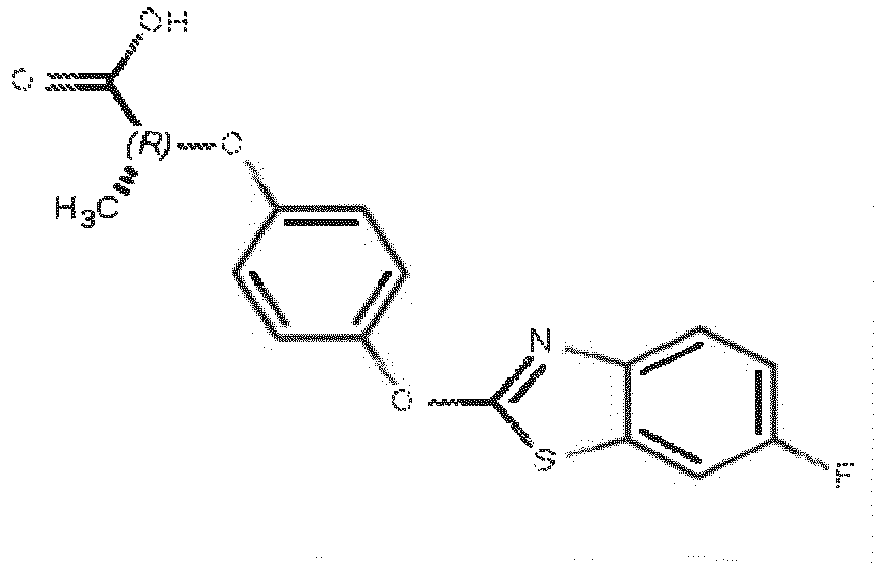
(2R)-2-{4-[(6-fluoro-1,3-benzothiazol-2-yl)oxy]phenoxy}propanoic acid NZ-254 
(2R)-2-[4-(1,3-benzothiazol-2-yloxy)phenoxy]propanoic acid NZ-253 
(2R)-2-{4-[(6-bromo-1,3-benzothiazol-2-yl)oxy]phenoxy}propanoic acid NZ-252 
ethyl (2R)-2-[4-(1,3-benzothiazol-2-yloxy)phenoxy]propanoate NZ-251 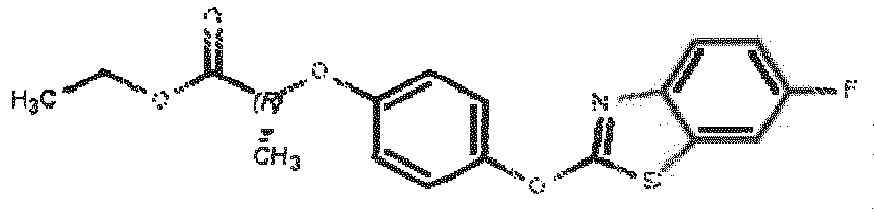
ethyl (2R)-2-{4-[(6-fluoro-1,3-benzothiazol-2-yl)oxy]phenoxy}propanoate NZ-250 
ethyl (2R)-2-{4-[(6-bromo-1,3-benzothiazol-2-yl)oxy]phenoxy}propanoate NZ-247 
(2R)-2-{4-[(6-chloro-1,3-benzothiazol-2-yl)oxy]phenoxy}propanoic acid NZ-246 
ethyl (2R)-2-{4-[(6-chloro-1,3-benzothiazol-2-yl)oxy]phenoxy}propanoate fenoxaprop-p-ethyl 
ethyl (2R)-2-{4-[(6-chloro-1,3-benzoxazol-2-yl)oxy]phenoxy}propanoate fenoxaprop-p 
2-{4-[(6-chloro-1,3-benzoxazol-2-yl)oxy]phenoxy}propanoic acid - The present disclosure also includes pharmaceutically acceptable salts, hydrates, prodrugs, and mixtures of any of the above compositions. The term "pharmaceutically acceptable salt" refers to salts whose counter ion derives from pharmaceutically acceptable non-toxic acids and bases.
- The arylphenoxypropionate derivatives, aryloxyphenoxyacetate derivatives, aryloxyphenylacetate derivatives, and substituted quinols which contain a basic moiety, such as, but not limited to an amine or a pyridine or imidazole ring, may form salts with a variety of organic and inorganic acids. Suitable pharmaceutically acceptable (i.e., non-toxic, physiologically acceptable) base addition salts for the compounds of the present invention include inorganic acids and organic acids. Examples include acetate, adipate, alginates, ascorbates, aspartates, benzenesulfonate (besylate), benzoate, bicarbonate, bisulfate, borates, butyrates, carbonate, camphorsulfonate, citrate, digluconates, dodecylsulfates, ethanesulfonate, fumarate, gluconate, glutamate, glycerophosphates, hemisulfates, heptanoates, hexanoates, hydrobromides, hydrochloride, hydroiodides, 2-hydroxyethanesulfonates, isethionate, lactate, maleate, malate, mandelate, methanesulfonate, 2-naphthalenesulfonates, nicotinates, mucate, nitrate, oxalates, pectinates, persulfates, 3-phenylpropionates, picrates, pivalates, propionates, pamoate, pantothenate, phosphate, salicylates, succinate, sulfate, sulfonates, tartrate, p-toluenesulfonate, and the like.
- The arylphenoxypropionate derivatives, aryloxyphenoxyacetate derivatives, aryloxyphenylacetate derivatives, and substituted quinols which contain an acidic moiety, such as, but not limited to a carboxylic acid, may form salts with variety of organic and inorganic bases. Suitable pharmaceutically acceptable base addition salts for the compounds of the present invention include, but are not limited to, ammonium salts, metallic salts made from calcium, lithium, magnesium, potassium, sodium and zinc or organic salts made from lysine, N,N-dialkyl amino acid derivatives (e.g. N,N-dimethylglycine, piperidine-1-acetic acid and morpholine-4-acetic acid), N,N'-dibenzylethylenediamine, chloroprocaine, choline, diethanolamine, ethylenediamine, meglumine (N-methylglucamine), t-butylamine, dicyclohexylamine, hydrabamine, and procaine.
- The arylphenoxypropionate derivatives, aryloxyphenoxyacetate derivatives, aryloxyphenylacetate derivatives, and substituted quinols, and salts thereof, may exist in their tautomeric form (for example, as an amide or imino ether). All such tautomeric forms are contemplated herein as part of the present invention.
- The compounds described herein may contain asymmetric centers and may thus give rise to enantiomers, diastereomers, and other stereoisomeric forms. Each chiral center may be defined, in terms of absolute stereochemistry, as (R)- or (S)-. The present invention is meant to include all such possible isomers, as well as, their racemic and optically pure forms. Optically active (R)- and (S)-, or (D)- and (L)- isomers may be prepared using chiral synthons or chiral reagents, or resolved using conventional techniques. When the compounds described herein contain olefinic double bonds or other centers of geometric asymmetry, and unless specified otherwise, it is intended that the compounds include both E and Z geometric isomers.
- Compositions of the present disclosure may also include a pharmaceutically acceptable carrier, in particular a carrier suitable for the intended mode of administration, or salts, buffers, or preservatives. Certain of the compounds disclosed herein are poorly soluble in water. Accordingly, aqueous compositions of the present disclosure may include solubility enhancers. Compositions for oral use may include components to enhance intestinal absorption. The overall formulation of the compositions may be based on the intended mode of administration. For instance, the composition may be formulated as a pill or capsule for oral ingestion. In other examples, the composition may be encapsulated, such as in a liposome or nanoparticle.
- Compositions of the present disclosure may contain a sufficient amount of one or more one or more arylphenoxypropionate derivatives, one or more aryloxyphenoxyacetate derivatives, one or more aryloxyphenylacetate derivatives, one or more substituted quinols, or pharmaceutically acceptable salts, hydrates, or prodrugs thereof, or combinations thereof, to cause inhibition of a mycobacterium to occur when the composition is administered to the mycobacterium. The amount can vary depending on other components of the composition and their effects on drug availability in a patient, the amount of otherwise required to inhibit the mycobacterium, the intended mode of administration, the intended schedule for administration, any drug toxicity concerns, drug-drug interactions, such as interactions with other medications used by the patient, or the individual response of a patient. Many compositions may contain an amount well below levels at which toxicity to the patient becomes a concern.
- The amount of arylphenoxypropionate derivative, aryloxyphenoxyacetate derivative, aryloxyphenylacetate derivative, substituted quinol, or pharmaceutically acceptable salt, hydrate, or prodrug thereof, or combination thereof, present in a composition may be measured in any of a number of ways. The amount may, for example, express concentration or total amount. Concentration may be for example, weight/weight, weight/volume, moles/weight, or moles/volume. Total amount may be total weight, total volume, or total moles. Typically, the amount may be expressed in a manner standard for the type of formulation or dosing regimen used.
- The present disclosure also includes drug-sensitization and/or inhibition methods in which a composition comprising one or more arylphenoxypropionate derivatives, one or more aryloxyphenoxyacetate derivatives, one or more aryloxyphenylacetate derivatives, one or more substituted quinols, or pharmaceutically acceptable salts, hydrates, or prodrugs thereof, or combinations thereof, is administered to a parasite in order to sensitize the parasite to another drug or combination of drugs and/or to inhibit the parasite. The composition can be any composition described above. In certain embodiments, the composition can be administered with any other drug or drugs which can alternatively be present in a pharmaceutical composition as described herein. For example, the other drug can include ivermectin.
- In methods in which a parasite is sensitized to a drug or drugs, the drug or drugs can be any drug or drugs for which rifamycin or a rifamycin derivative, such as rifabutin or a rifabutin derivative, or rifampicin or a rifampicin derivative, or a pharmaceutically acceptable salt, hydrate, or prodrug thereof, or a combination thereoone or more arylphenoxypropionate derivatives, one or more aryloxyphenoxyacetate derivatives, one or more aryloxyphenylacetate derivatives, one or more substituted quinols, or pharmaceutically acceptable salts, hydrates, or prodrugs thereof, or combinations thereof, increase sensitivity in a parasite. In certain embodiments, the drug or drugs can include an antiparasitic drug. Example types of suitable antiparasitic drugs and drug combinations include antinematodic drugs, anticestodic drugs, antitrematodic drugs, antiamamoebic drugs, antiprotazoal drugs, antihelminthic drugs, tiniacides, antiprotozoic drugs, and other drugs. Example classes of suitable antiparasitic drugs include benzimidazoles, avermectins, milbemycins, piperazines, octadepsipeptides, thiophenes, pamoates, spiroindoles, imadazothiazoles, quinines, biguanides, sulfonamides, tetracyclines, lincomycins, alkaloids, carbamates, formamidines, organophosphates, Rifampin, Amphotericin B, Melarsoprol, Eflornithine, Miltefosine, Metronidazole, Tinadadazole, Quinine-pyrithamine-sulfadiazine, Trimethoprin-sulfa methoxazole, Piperazine, Praziquantel Triclabendazole, Octadepsipeptides, Amino Acetonitrile derivatives and derivatives thereof.
- Exemplary suitable antiparasitic drugs for use with the compositions and methods of the present disclosure include, without limitation, ivermectin, selamectin, doramectin, abamectin, albendazole, mebendazole, thiabendazole, fenbendazole, triclabendazole, flubendazole, diethylcarbazamine, niclosamide, suramin, pyrantel pamoate, levamisole, praziquantel, emodepside, monepantel, derquantel, rifoxanide, artemether, quinine, quinidine, chloroquine, amodiaquine, pyrimethamine, proguanil, sulfadozine, mefloquine, atovaquone, primaquine, artemisinin, doxycycline, clindamycin, sulfadoxine-pyrimethamine, moxidectin, permethrin, hexylresorcinol, and combinations thereof.
- Accordingly, in certain embodiments, the antiparasitic drug or drugs to which sensitivity is increased in a parasite by the one or more arylphenoxypropionate derivatives, one or more aryloxyphenoxyacetate derivatives, one or more aryloxyphenylacetate derivatives, one or more substituted quinols, or pharmaceutically acceptable salts, hydrates, or prodrugs thereof, or combinations thereof, can include, without limitation, one or more of the antiparasitic drugs listed in Table 2 below, or any class or type referred to therein, or any antiparasitic drug referred to herein.
Table 2: Antiparasitic Drugs Antiparasitic Drug Class/Type Mechanism/Target Trimethoprim Anti-folate Dihydrofolate reductase ("DHFR") Pyrimethamine (Daraprim) Proguanil (Paludrine) Sulfamethoxazole deoxyhypusine synthase ("DHPS") Sulfadiazine Sulfadoxine Atovaquone (Mepron) Ubiquinone Analog Perturbs Mitochondrial Electron Transpot Spiramycin (Rovmycin) - Antibiotic Ketolide Protein Synthesis Inhibitor Azithromycin (Zithromax) - Macrolide Protein Synthesis Inhibitor Paromomycin (Humatin) - Aminoglycoside Protein Synthesis Inhibitor Clindamycin (Cleocin) - Lincosamide Protein Synthesis Inhibitor Tetracycline (Sumycin) - Polyketide Protein Synthesis Inhibitor Doxycycline (Vibramycin) - Polyketide Protein Synthesis Inhibitor Metronidazole (Flagyl) Nitroimidazole PFOR-Dependent RNS Generation Tinidazole (Tindamax) Nitazoxanide (Alinia) Nitrothiazole Iodoquinol (Yodoxin) Quinoline Iron chelation Chloroquine Hemozoin Inhibitor Primaquine Mefloquine Quinine Quinidine Praziquantel (Biltride)1,2 Paralytic Oxaminquine (Vansil) 1 Triclabendazole (Egaten)1 Benzimidazole Prevents tubulin polymerization Niridazole1 Thiazole Paralytic Phosphofructokinase Inhibitor Stibophen1 Arylsulfonate Trichlorfon1 Organophosphate Paralytic ACE Inhibitor Mebendazole (Vermox)2, 3 Benzimidazole Prevents tublin polymerization Albendazole (Albenza)2, 3 Niclosamide2 Salicylanilide Decouples Oxidative Phosphorylation Ivermectin (Stromectol, Mectizan)3,4 Macroyclic Lactone Paralytic GABA Agonist Doxycycline (Vibramycin)3 Antibiotic Targets Symbiotic Bacteria in Parasite Gut Diethylcarbamazine (DEC)3 Piperazine Perturbs Arachidonic Acid Metabilism Pyrantel Pamoate (Helmex)3 Tetrahydropyrimidine Paralytic Permethrin (Elimite, Nix)4 Pyrethroid Neurotoxin via Na-Channel Binding Tiabendazole3, 5 Nitrothiazole Fumarate reductase Levamisole3, 5 Imidazothiazole Paralytic Ach agonist Mibemycin3 Macrolide Glutamate sensitive chloride channels 1Anti-trematodal; 2Anti-cestodal; 3Anti-nematodal; 4Anti-ectoparasitic; 5Anti-helminthic - In methods of the current disclosure, the parasite can be sensitized to a drug or drugs already known to inhibit the parasite, or it can be sensitized to a drug or drugs not previously used with that type of parasite. If the parasite is a drug-resistant parasite that has acquired or evolved a resistance to a drug, it can be sensitized to a drug that previously exhibited a decreased ability to inhibit the parasite. In certain embodiments, sensitization of the parasite to the drug occurs at least in part by P-gp inhibition.
- In certain embodiments, the composition can directly inhibit the parasite instead of or in addition to causing drug-sensitization.
- The parasite that undergoes drug-sensitization or inhibition can be any type of parasite. It may, for instance, be a helminth, such as a nematode, a trematode, or a cestode, a protozoa, or an arthropod (i.e., an ectoparasite). The parasite can be a parasite of any animal or plant. By way of example and not limitation, the parasite that undergoes drug-sensitization or inhibition can be a species of the genus Plasmodium, such as Plasmodium falciparum, Plasmodium malariae, Plasmodium ovale, and Plasmodium vivax, a species of the genus Ascaris, such as Ascaris lumbricoides, a species of the genus Enterobius, such as Enterobius vermicularis, a species of the genus Trichinella, such as Trichinella spiralis, a species of the genus Haemonchus, such as Haemonchus contortus, a species of the genera Aphelenchoides, Ditylenchus, Globodera, Heterodera, Longidorus, Meloidogyne, Nacobbus, Pratylenchus, Trichodorus, and Xiphinema, a species of the genus Bursaphelenchus, such as Bursaphelenchus xylophilus, a species of the genus Fasciola, such as Fasciola hepatica, a species of the genus Coccidoides, or a species of the genus Onchocerca, such as Onchocerca volvulus.
- The parasite that undergoes drug-sensitization or inhibition can be any parasite. The parasite can be, for example, any parasite commonly referred to or known as a flea, a tick, a worm, a hookworm, a roundworm, a heartworm, a fluke, a mite, a spider, a beetle, a mosquito, a fly, or a bed bug.
- Accordingly, in certain embodiments, the parasite that undergoes drug-sensitization or inhibition can be a protozoan parasite, such as, for example, the protozoan parasites of Table 3 below. In certain embodiments, the parasite that undergoes drug sensitization or inhibition can be a helminthic parasite (parasitic worm) such as, for example, the helminthic parasites of Table 4 below. In certain embodiments, the parasite that undergoes drug sensitization or inhibition can be an ectoparasite, such as, for example, the helminthic parasites of Table 5 below. In certain embodiments, multiple parasites of different species, genera, class, or other category can simultaneously undergo drug sensitization or inhibition in a single host harboring the multiple parasites.
Table 3: Representative Protozoan Parasites Parasite Disease Symptoms (humans) Current Drug Regimen Cryptosporidium hominis, parvum Cryptosporidiasis Diarrhea-causing parasites (typically asymptomatic) but deadly in susceptible pop. (AIDS, Children, etc.) Uncomplicated: Nitazoxanide (Alinia) AIDS: Paromomycin (Humatin) w/ Azithromycin (Zithromax) Questionable Efficacy for both regimes. Isosporiasis belli Isosporiasis Diarrhea-causing parasites (typically asymptomatic) but deadly in susceptible pop. (AIDS, Children, etc.) #1: Trimethoprim-Sulfamethoxazole w/ folinic acid (Leucovorin) #2: Pyrimethamine (Daraprim) w/ folinic acid (Leucovorin) Cyclospora cayetanesis Cycosporiasis Diarrhea-causing parasites (typically asymptomatic) but deadly in susceptible pop. (AIDS, Children, etc.) Uncomplicated: No Recognized Effective Treatment AIDS: Trimethoprim-Sulfamethoxazole w/ folinic acid (Leucovorin) considered effective at reducing severity. Control HIV infection to resolve parasite infestation. Toxoplasma gondii Toxoplasmosis Usually asymptomatic but causes fatal encephalitis in AIDS/Immunocompromised Patients. TORCH Pathogen associated with transplacental infection. Uncomplicated: Pyrimethamine (Daraprim) + sulfadiazine/clindamycin (Cleocin) /azithromycin (Zithromax) Pregnancy: Uncomplicated + Spiramycin (Rovamycin) AIDS: Pyrimethamine (Daraprim) + sulfadiazine/clindamycin (Cleocin)/ azithromycin (Zithromax). Treat patient indefinitely once Dx. *** All regimes require folinic acid (Leucovorin) *** Balantidium coli Balantidiasis Diarrhea, Constiption. Can mimick inflammatory bowel conditions. #1: Tetracycline (Sumycin) #2: Metronidazole (Flagyl) #3: Iodoquinol (Yodoxin) Entamoeba histolytica, dispar Amebiasis Typically asymptomatic but can cause wide range of symptoms ranging from mild diarrhea to severe dysentery with mucoid, bloody diarrhea. May cause ameobic liver abscesses w/ or w/o intestinal disease. Asymptomatic: Luminal Agents Iodoquinol (Yodoxin) or paromomycin (Humatin) Symptomatic: Colitis & Hepatic Abscess Metronidazole (Flagyl) + Luminal Agents. Giardia lamblia Giardiasis 2/3 Asymptomatic. Others experience diarrhea varying in severity, sulfurous gas/belches, weight loss, cramping, pain, etc. Traveler's Diarrhea. Metronidazole (Flagyl) Trichmonas vaginalis Trichomoniasis Very common STI that is usually asymtomatic but can cause vaginits, urethritis. etc. #1 Metronidazole (Flagyl) #2 Tinidazole (Tindamax) Dientamoeba fragilis Dientamoebiasis Traveler's diarrhea, chronic diarrhea/abdominal pain, failure to thrive. Prophylaxis: Paromomycin (Humatin) Symptomatic: Todouinol (Yodoxin), Paromomycin (Humatin), Tetracycline (Sumycin). Metronidazole (Flagyl) combination of any two. Blastocysts hominis Blastocystosis Typically nonsymptomatic and colonization transient. Nonspecific GI symptoms including diarrhea, flatulence, pain, etc. Metronidazole (Flagyl) now considered ineffective. Nitazoxanide (Alinia) possible replacement (trials ongoing) Plasmodium falciparum, vivax, ovale, malariea Malaria Classical paroxysm (cyclic fevers) w/ headache, joint pain, vomiting, hemolytic anemia, jaundice, and convulsions. Neurological signs in severe cases. Presents 1-3 weeks post infection w/o prophylaxis. Hemozoin Inhibitors: Chloroquine (I), Primaquine (II), Mefloquine (I), Quinine (I), Quinidine Gluconate (I). Antifolates: sulfadoxine (I), sulfamethoxypyrazine (I) + proguanil (II) or pyrimethamine (I). Sesquiterpene Lactones: Artemether, Artesunate, Dihyroartemisin, Artemotil, Artemisin (II) None FDA Approved. Naphthoquinonones: Atovaquone (II) Adjuncts: Tetracycline/Doxycycline, Clindamycin (Lincosamides). Proven Schizoticides. Use when indicated for Severe Disease. Babesia divergens, microfti, other Babesiosis Typically asymptomatic (>50%) with others developing malaria-like illness w/ hemolytic anemia, cyclic fevers, thrombocytopenia, and possible organ failure 1-4 weeks post infection. Mild/Moderate: Atovaquone (Mepron) w/ Azithromycin (Zithromax) Severe: Quinine Sulfate w/ Clindamycin (Cleocin) Trypanosoma brucei African Trypanosomiasis (Sleeping Sickness) Hemolymphatic phase with fever, headache, pains, and fever followed by CNS involvement Fatal if not treated promptly. No CNS T.b. rhodesiense: Suramin No CNS T.b. cambiense: Pentamidine CNS rb. rhodesiense: Melarsoprol (Mel B, Arsobal) CNS T.b. gambiense : Eflomithine (DFMO. Ordinyl) Trypanosoma cruzi American Trypanosomiasis (Chaga's Disease) Acute disease usually asymptomatic but cagoma/Romana's Sign may be present. Chronic infection destroys myenteric complex causing megaesophaug, colon, other dilations and dilated cardiomyopathy. #1: Nifurtimox (Lampit) #2: Benzidazole (Rohagan) Both drugs can effect radical cure in acute phase but become less effecitve in chronic patients (especially those who have been infected for longer periods of time) Leishomania mexicana, aethiopica, tropic, braziliensis, donovani, infantum. Leishmaniasis Cutaneous, mucocutaneous, difffuse cutaneous, and viseral (Kala Azar) Presentations Classical Tx: Sodium Stibogluconate + pentavalent antimony (Pentostam) w/ meglumine antimonate (Glucontime). Retired due to tox & resistance. Cutaneous Local: Topical paromomycin + gentamicin formulation. Oral Systemic: Miltefosine (Impavido) w/ azoles ketoconazole, itraconazole, fluconazole IV Systemic: Amphotericin B (Ambisome) Table 4: Representative Helminthic Parasites Parasite Disease Symptoms (humans) Current Drug Regimen Schistosoma mansoni, japonicum, haemotobium Schistosomiasis Direct skin penetration in aquatic soils, etc. with infected fresh-water snails resulting in prolonged colonization of the intestines/urinary tract dependent on species. Causes malnutiriton, organ damage, and associated with bladder cancer. Praziquantel (Biltride) Trichobilharzia regenti Swimmer's Itch Direct skin penetration in aquatic soils, etc. with infected fresh-water snails. Mild w/ localized skin irritation. Antihistamines No specific treatment Clonorchis simensis Clonorchiasis Following ingestion of raw fish, colonize biliary tract. Associated with cholangiocarcinoma, liver damage, etc. #1: Praziquantel (Biltride) #2: Albendazole Fasciola hepatica, gigantica Fascioliasis Liver dysfunction, pain following colonization of the liver and biliary tract Triclabendazole (Egaten) Opisthorchis viverrinil Opisthorchiasis Following ingestion of raw fish, colonize biliary tract. Associated with cholangiocarcinoma, liver damage, etc. #1: Praziquantel (Biltride) #2: Albendazole Paragonimus westermani, kellicotti Paragonimiasis Liver, Lung dysfunction w/ pulmonary manifestations in chronic infections. #1: Praziquantel (Biltride) #2: Triclabendazole (Egaten) Fasciolopsis buski Fasciolopisiasis Typically asymptomatic but can include diarrhea, abdominal pain, obstruction. Praziquantel (Biltride) Metagonimus yokagawai Metagonimiasis Diarrhea, colic, obstruction. Praziquantel (Biltride) Heterophyes heterophyes Heterophyiasis Diarrhea, colic, obstruction. Praziquantel (Biltride) Echinococcus granulosus, multilocularis Echinocccosis Typically asymptomatic with formation of large cysts containing parasites. Rupture results in allergic reaction/anaphylaxis. Can behave like slow-growing destructive tumors. Cystic: Albendazole (Albenza) w/ Surgical resection of cysts. Add Praziquantel (Biltride) if cyst spillage occurs during surgery. Alveolar: Albendazole (Albenza) or Mebendazole (Vermox) Taenia saginata, solium, asiatica Taeniasis Tapeworms acquired from eating undercooked beef and pork. Adult worms reside in intestines and reach large sizes causing malnutrition, obstruction, etc. Praziquantel (Biltride) Taenia solium, asiatica Cysticerosis Occur following infection with pork tapeworms. All tissues susceptible to cyst infestation. CNS/CVS most dangerous. Praziquantel (Biltride) w/ prednisone Hymenolpeis nana, diminuta Hymenolepiasis Asymptomatic dwarf tapeworm. Extremely common. #1: Praziquantel #2: Niclosamide #3: Nitazoxanide Diphyllobotrium latum, mansonoides Diphyllobothriasis Freshwater fish tapeworm. Largest of all tapeworms and can cause obstruction, B12 def. w/ megaloblastic anemia. Praziquantel Spirometra erinaceieuropaei Sparganosis Asymptomatic unless worns migrate to CNS. Typically nonspecific skin irritation as worms migrate. No drug treatment. Surgical removal of worms required. Dracunculus medinensis Dracunculiasis Guinea Worms. Enough said. No drug treatment. "Stick Therapy" to remove erupting worms from lower extremities. Onchocerca volvulus Onchocerciasis River Blindess Ivermectin (Stromectol) & Doxycycline (Vibramycin) Loa loa Loiasis Asymptomatic Eye Worm Diethylcarbamazine Mansonella perstans, ozzardi, sireptocera Mansonellosis Swelling, nonspecific skin symptoms, rashes, typically asymptomatic. #1: Mebendazole (Vermox) or Albendazole (Albenza) #2: Ivermectin (Stromectol) *** Include doxycycline (Vibramycin) w/#1 or #2 *** Wucheria bancrofti, Brugia malayi, timori Lymphatic Filariasis Typically asymtomatic but some develop profound lymphatic obstruction and lymphadema (Elephantiasis) w/ episodes of febrile/afebrile lymphangitis and lymphadenitis. Nocturnal cough associated with migrating worms. Ivermectin (Stromectol) w/ Deithylcarbamazine (DEC) Typically responds poorly to drugs once lymphedema sets in. Gnathostoma spinigerum, hispidium Gnathostomiasis Painful, intermittent, itchy swellings caused by migrating worms. Possible VLM organism. #1: Ivermectin (Stromectol) #2: Albendazole (Albenza) Ancylostoma duodenale, brazilienes Ancylostomiasis and Cutaneous Larva Migrans Signs of iron-deficiency anemia, malnutrition, and skin manifestations following infection by penetration of intact skin from infected soil. (Hookworms) #1: Albendazole (Albenza) #2: Mebendazole (Vermox) #3: Pyrantel Pamoate (Helmex) Necator americanus Necatoriasis Signs of iron-deficiency anemia, malnutrition, and skin manifestations following infection by penetration of intact skin from infected soil. (Hookworms) #1: Albendazole (Albenza) #2: Mebendazole (Vermox) #3: Pyrantel Pamoate (Helmex) Angiostrongylus cantonensis Angiostrongyliasis Abdominal disease and eosinophilic meningitis presentations possible. #1: Albendazole (Albenza) #2: Mebendazole (Vermox) *** w/ prednisolone *** Ascaris lumbricoides Ascariasis Typically asymptomatic w/ nonspecific respiratory symptoms during pulmonary stage followed by adominal pain and possible obstrcution of biliary tract and/or intestines. #1: Abendazole (Albenza) #2: Mebendazole (Vermox) #3: Ivermectin (Stromectol) Toxocara canis, cati Toxocariasis and Visceral Larva Migrans Typically asymptomatic. VLM very serious depending on what organ is invaded. Non-VLM show generalized signs of worm infestations. #1: Ivermectin (Stromectol) #2: Albendazole (Albenza) Strongyloides stercoralis Strongyloidiasis Typically asymptomatic w/ mild GI symptoms including pain and diarrhea. May present with rashes. #1: Mebendazole (Vermox) #2: Albendazole (Albenza) Enterobius vermicularis Enterobiasis Typically asymptomatic w/ pruitic perianal region and possible superinfections. #1: Albendazole (Albenza) #2: Mebendazole (Vermox) #3: Pyrantel Pamoate (Helmex) Trichinella spiralis Trichinellosis Acquired from undercooked pork resulting in tissue infestation following actue GI symptoms. Larval encystments cause organ-specific symptoms. #1: Mebendazole (Vermox) #2: Albendazole (Albenza) Trichuris trichiura Trichuriasis Typically asymptomatic but heavy infections may cause GI symptoms. #1: Mebendazole (Vermox) or #2: Albendazole (Albenza) #3: Ivermectin (Stromectol) Table 5: Representative Ectoparasites Parasite Disease Symptoms (humans) Current Drug Regimen Pedicululs humanus capitus, humanus Pediculosis Head lice, body lice spread by direct contact with either infected persons or infested bedding, clothing, hats, etc. Permethrin (Elimite, Nix, Acticin, etc.) OTC any 1% formulation topical only. Phthiriasis pubis Phthiriasis Pubic lice or "Crabs" spread by direct contact (sexual). Permethrin (Elimite, Nix, Acticin, etc.) OTC any 1% formulation topical only. Sarcoptes scabiei Scabies Mite infests stratum corneum with resulting immune reaction forming itchy blisters/lesions. #1: Rx Permethrin (Elimite, Lyclear, Nix) Any 5% formulation #2: Crotamiton (Eurax, Crotan) #3: Lindane 1%#4 Ivermectin (Stromectol) for Norwegian variant. - The organism may also be Eimeria vermiformis.
- The composition can be delivered to the parasite in a host organism by delivering the composition to the host organism, such as by administering, feeding, injecting, topical application, attachment, or providing for inhalation. In certain embodiments, the composition contacts the parasite by diffusion throughout the host organism after administration. Additionally or alternatively, the composition can be delivered to a recipient prophylactically, i.e., prior to recipient infection, or contact with, or exposure to, the parasite. The mode of delivery can be selected based on a number of factors, including metabolism of one or more arylphenoxypropionate derivatives, one or more aryloxyphenoxyacetate derivatives, one or more aryloxyphenylacetate derivatives, one or more substituted quinols, or pharmaceutically acceptable salts, hydrates, or prodrugs thereof, or combinations thereof, or another drug in the composition, the mode of administration of other drugs to the host organism, such as the drug to which the parasite is sensitized, the location and type of parasite to be drug-sensitized, the health of the host organism, the ability or inability to use particular dosing forms or schedules with the host organism, preferred dosing schedule, including any adjustment to dosing schedules due to side effects of other drugs, and ease of administration. In certain embodiments, the mode of administration can be enteral, such as orally or by introduction into a feeding tube. In certain embodiments, the mode of administration can be parenteral, such as intravenously. In certain embodiments, the mode of administration is transcutaneous. In certain embodiments, the mode of administration is topical. In certain embodiments, the mode of administration is by affixing a dosage form to the to body of an infected or susceptible animal, such as a collar or tag.
- The dosage amounts of the and administration schedule of the one or more arylphenoxypropionate derivatives, one or more aryloxyphenoxyacetate derivatives, one or more aryloxyphenylacetate derivatives, one or more substituted quinols, or pharmaceutically acceptable salts, hydrates, or prodrugs thereof, or combinations thereof, can vary depending on other components of the composition and their effects on drug availability in a recipient, the type of drug or drugs to which the parasite is sensitized, the intended mode of administration, the intended schedule for administration, when other drugs are administered, any drug toxicity concerns, and the recipient's response to the drug. In certain embodiments, the amount and frequency of delivery of one or more arylphenoxypropionate derivatives, one or more aryloxyphenoxyacetate derivatives, one or more aryloxyphenylacetate derivatives, one or more substituted quinols, or pharmaceutically acceptable salts, hydrates, or prodrugs thereof, or combinations thereof, can be such that levels in the recipient remain well below levels at which toxicity to the recipient becomes a concern. However the amount and frequency can also be such that the levels of one or more arylphenoxypropionate derivatives, one or more aryloxyphenoxyacetate derivatives, one or more aryloxyphenylacetate derivatives, one or more substituted quinols, or pharmaceutically acceptable salts, hydrates, or prodrugs thereof, or combinations thereof, in the recipient remain continuously at a level sufficient to induce drug-sensitization or are at a level sufficient to induce drug sensitization when or shortly after the drug to which the parasite is sensitized is delivered to it. Accordingly, the composition can be taken on a regular basis during treatment with the drug to which the parasite is sensitized or it can be taken only a set time before, at the same time, or a set time after the drug to which the parasite is sensitized.
- In certain embodiments, the administration of the arylphenoxypropionate derivative, aryloxyphenoxyacetate derivative, aryloxyphenylacetate derivative, substituted quinol, or pharmaceutically acceptable salt, hydrate, or prodrug thereof, or combination thereof, is calibrated to reach a threshold concentration in the plasma or tissue of a patient. Such calibration can take into consideration experimentally derived bioavailability, such as the exemplary study data provided below, as well as the mass of the patient. In certain embodiments, the threshold concentration is a proportion of the minimum inhibitory concentration (MIC50).
- In certain embodiments, and based on one or more of the considerations discussed, the unit dosage of the arylphenoxypropionate derivative, aryloxyphenoxyacetate derivative, aryloxyphenylacetate derivative, substituted quinol, or pharmaceutically acceptable salt, hydrate, or prodrug thereof, or combination thereof, is between about 1 mg/kg body weight to about 500 mg/kg body weight. In certain embodiments, the unit dosage is between about 5 mg/kg to about 350 mg/kg. In certain embodiments, the unit dosage is between about 10 mg/kg and about 200 mg/kg body weight.
- The present disclosure further includes methods of identifying whether an arylphenoxypropionate derivative, aryloxyphenoxyacetate derivative, aryloxyphenylacetate derivative, substituted quinol, or pharmaceutically acceptable salt, hydrate, or prodrug thereof, or combination thereof, is able to inhibit a parasite. Such methods include preparing or obtaining such a derivative, applying it to the parasite, and identifying that the derivative inhibits the parasite.
- Representative MIC50 data for certain arylphenoxypropionate derivatives in Cryptosporidium parvum (CP) are provided below. In certain embodiments, the arylphenoxypropionate derivative, aryloxyphenoxyacetate derivative, aryloxyphenylacetate derivative, substituted quinol, or pharmaceutically acceptable salt, hydrate, or prodrug thereof, or combination thereof, has an MIC50 value against CP of about 0.01 µM to about 20 µM, or about 0.1 µM to about 15 µM, or about 0.5 µM to about 12.5 µM, or about 1 µM to about 10 µM.
- The following examples are provided to further illustrate certain embodiments of the disclosure. They are not intended to disclose or describe each and every aspect of the disclosure in complete detail and should be not be so interpreted. Unless otherwise specified, designations of cells lines and compositions are used consistently throughout these examples.
- Aryloxyphenoxyacetate derivatives can be prepared according the following scheme:

- The compounds (3) are synthesized by condensation of hydroquinone (1) with chloro- or bromo- substituted acetate (2) at a temperature range from 5 °C to 120 °C in water, or organic solvent, such as DMF, DMSO, ethanol, in the presence of base, such as NaOH, K2CO3, or NaH. Substitution of compounds (3) with aromatic chloride or bromide (R4-X) in organic solvent, such as DMF, DMSO, dioxane, acetonitril, ethanol in the presence or absence of a catalyst, such as CuI, at a temperature range from 25 °C to 150 °C in the presence of base, such as K2CO3. Li2CO3, LiOH, KOH, produces ester (4). Hydrolysis of ester (4) will give acid (5). Coupling of acid (5) with amine in the presence of coupling reagents, such as EDCI, CDI or via acyl chloride in organic solvent, such as DCM, THF, DMF, produces amide (6).
- Other aryloxyphenoxy or aryloxyphenyl -acetate, -acetyl amide, -acyl sulfonamide can be prepared by similar methods. It is apparent to one skilled in art that other sequence of the reactions, and alternative reagents can be used for the synthesis of compounds of the present disclosure. These alternatives for the synthesis of the derivatives are within the scope of this invention.
- Aryloxyphenyl urea or cabamate derivatives can be prepared according the following
schemes:
- The compound (8) are synthesized by reaction of aminophenol (7) with isocyanate in organic solvent, such as DMF, dioxane, acetonitril, ethanol, THF, methanol, ethyl acetate, dichloromethane, or toluene, in the presence or absence of base, such as K2CO3, NaHCO3, triethylamine at a temperature range from 5 °C to 120 °C. Substitution of compounds (8) with aromatic chloride or bromide (R4-X) in organic solvent, such as DMF, DMSO, dioxane, acetonitril, ethanol in the presence or absence of a catalyst, such as CuI, at a temperature range from 25 °C to 150 °C in the presence of base, such as K2CO3. Li2CO3, LiOH, KOH, produces Aryloxyphenyl urea derivatives (9).
- Fresh oocysts of CP (Iowa strain) were purchased from Bunch Grass Farm (Deary, ID). Oocysts were further purified by a Percoll-based gradient centrifugation method and surface sterilized with 10% bleach for 7 min on ice, followed by washes with phosphate-buffered saline (PBS). An ileocecal colorectal adenocarcinoma cell line (HCT-8, ATCC # CCL-244) was used to host the growth of CP in vitro. One day before the inoculation, HCT-8 cells were seeded in 96-well plates (2.5 ×10⁴/well) containing RPMI 1640 medium supplied with 10% fetal bovine serum (200 µL medium/well in all experiments) and allowed to grow overnight at 37 °C under 5% CO2 atmosphere until they reached ∼90% confluence. For drug testing, host cells were infected with 1.5×10⁴ oocysts per well (ratio ∼1:3). After inoculation, parasite oocysts were allowed to undergo excystation and invasion into host cells for 3 h at 37 °C. Free parasites and oocyst walls in the medium were removed from the plates by an exchange of the culture medium. Drugs at specified concentrations were added into the culture at this time point (immediately after the medium exchange). Parasite-infected cells were then incubated at 37 °C for additional 41 h (total 44 h infection time). At least two independent experiments were conducted for every experimental condition, each including two replicates drugs and eight replicates for negative controls.
- Plates containing HCT-8 cells infected with CP for 44 h were first centrifuged for 10 min at 1000 × g to ensure that free merozoites in the medium were firmly settled on the bottom of the wells. Medium was removed, followed by two gentle washes with PBS. For extracting total RNA, 200 µL of ice-cold Bio-Rad iScript qRT-PCR sample preparation reagent (lysis buffer) (Bio-Rad Laboratories, Hercules, CA) was added into each well. Plates were sealed with heat sealing films and subjected to vortex for 20 min. Plates were then incubated at 75 °C for 15 min, followed by centrifugation (5 min, 2000 x g) to settle down cell debris. Supernatants were used immediately in subsequent qRT-PCR reactions or the plates were stored at -80 °C until use.
- The levels of 18S rRNA transcripts from CP and host cells (referred to as Cp18S and Hs18S) were detected by real-time qRT-PCR method using qScript™ one-step SYBR green qRT-PCR kit (Quanta Biosciences, Gaithersburg, MD). Cell lysates prepared as described above were diluted by 100 and 2000 folds for detecting Cp18S and Hs18S transcripts, respectively. Reactions were performed in hard-shell 384-well skirted PCR plates (Bio-Rad Laboratories, Hercules, CA) (10 µL/well) containing 3 µL diluted cell lysate, 5 µL one-step SYBR green master mix, 0.2 µl RT master mix and the following primers: Cp18S-1011F and Cp18S-1185R primer pair for Cpl8S rRNA, and Hs18S-1F and Hs18S-1R primer pair for Hsl8S rRNA Hsl8S levels were used as controls and for normalization.
- Real-time qRT-PCR reactions were performed by a Bio-Rad CFX384 Touch Real-Time PCR Detection System. The reactions started with synthesizing cDNA at 50 °C for 20 min, followed by 5 min at 95 °C to denature RNA-cDNA hybrids and deactivate reverse transcriptase, and 40 two-temperature thermal cycles of PCR amplification at 95 °C, 10 sec and 58 °C, 30 sec. At the end of PCR amplification, melting curve analysis was performed between 65 °C to 95 °C. At least 2 technical replicates were included in qRT-PCR reactions for each sample.
- After qRT-PCR reactions were completed, amplification curves and melting peaks were examined to assess the quality and specificity of the reactions, followed by the computation of relative parasite loads based on the cycle threshold (CT) values of Cpl8S and Hs18S transcripts as previously described. qRT-PCR was used to quantify parasite 18S rRNA and MIC50 was determined by the amount of compound resulting in 50% reduction of parasite growth compated to the control. The % inhibition (%inh @ (µM)) was calculated using a standard curve. No toxicity to the HCT-8 monolayers was observed.
Table 6: Cyryptosporidium Inhibition Data Compound %inh @ (µM) MIC50 (µM) NZ-259 33% @10 uM >10 NZ-261 60% @10 uM ∼10 NZ-274 15% @10 uM NA NZ-278 ∼0.25 NZ-289 88% @10 uM NZ-295 61% @10 uM NZ-302 60% @10 uM ∼10 NZ-310 83% @10 uM NZ-322 44% @0.9 uM NZ-327 0.007 to 0.022 NZ-331 36% @0.05 uM NZ-332 ∼2.5 NZ-364 0.12 NZ-365 0.025 NZ-366 0.05 NZ-366 (peak 1) 85% @0.05uM <0.05 NZ-366 (peak 2) 81% @0.05uM <0.05 NZ-368 63% @0.125uM <0.125 NZ-369 0.05 to 0.08 NZ-369 (peak 1) 0.07 NZ-369 (peak 2) ∼0.2 NZ-370 0.05 to 0.06 NZ-371 0.15 to 0.23 NZ-372 0.085 NZ-386 0.05 to 0.3 NZ-387 ∼0.44 NZ-389 ∼1.1 NZ-395 ∼5 NZ-398 50% @10 uM ∼10 NZ-399 NA NZ-400 67% @10uM ∼10 NZ-401 3% @4uM NA NZ-403 63% @10 uM ∼10 NZ-409 ∼0.44 NZ-410 94% @10uM 2-10 NZ-411 75.7% @10uM NZ-425 0.25 to 0.5 NZ-426 0.25 to 1 NZ-427 71% @0.25uM <0.25 NZ-433 ∼2 NZ-438 43% @0.25uM 0.25 to 1 NZ-440 53% @10 uM ∼10 NZ-446 1-4 NZ-450 ∼2 NZ-458 NA NZ-459 1 NZ-460 19% @5uM NA NZ-464 0.05 to 0.27 NZ-465 68% % 0.25uM <0.25 NZ-466 0.05 to 0.1 NZ-467 0.25-1 NZ-469 82% @0.25uM <0.25 NZ-471 89% @4uM 1-4 NZ-472 ∼1 NZ-475 0.06 NZ-476 ∼0.5-1 NZ-477 0.05 to 0.17 NZ-479 ∼0.5-1 NZ-481 1-4 NZ-484 ∼1 NZ-485 1-4 NZ-489 68% @ 0.25uM <0.25 NZ-490 60% @0.25uM ∼0.25 NZ-496 0.25 to 1 NZ-500 ∼0.25 NZ-505 ∼0.25 NZ-516 0.016 NZ-518 32% @0.45uM >0.45 NZ-521 0.25 NZ-522 0.022 to 0.045 NZ-528 0.45 to 0.9 NZ-529 42% @0.45 uM >0.45 NZ-530 ∼0.225 NZ-531 NZ-532 NA NZ-533 NA NZ-534 NA NZ-535 0.225 to 0.45 NZ-536 NA NZ-538 0.054 NZ-539 0.057 NZ-541 0.081 NZ-542 0.112 NZ-543 0.045 NZ-544 0.072 NZ-545 0.45 NZ-546 76% @0.225uM <0.225 NZ-547 96% @0.056uM <0.056 NZ-548 45% @0.112uM 0.112 to 0.225 NZ-553 0.002 NZ-554 0.056 to 0.112 NZ-555 79% @0.056uM <0.056 NZ-556 64% @0.056uM ∼0.056 NZ-557 0.112 to 0.225 NZ-558 ∼0.056 NZ-561 0.04 NZ-562 ∼0.45 NZ-563 0.018 NZ-564 0.054 NZ-572 ∼0.5 NZ-573 ∼0.5 NZ-574 ∼1 NZ-575 ∼1 NZ-576 ∼0.03 NZ-577 ∼0.25 NZ-578 0.018 NA: not active - In general, compounds with a benzothiazole core inhibited CP better than those with a benzopyrazine core. In additions, benzothiazole cores substituted with 6-Cl inhibited CP better than benzothiazole cores with a 6-F or 5,6-di-f substitution. α-methyl substitution at phenyl acetic amides improved inhibition as compared to unsubstituted phenyl acetic amides, often decreasining MIC50 to less than 100 nM.
- S. cerevisiae cytotoxicity and human fibroblast cytotoxicity testing was performed. The following compounds were not toxic at concentrations at or above 100 µM in both S. cerevisiae cytotoxicity and human fibroblast cytotoxicity testing: NZ-251, NZ-274, NZ-287, NZ-289, NZ-290, NZ-293, NZ-294, NZ-295, NZ-296, NZ-298, NZ-299, NZ-300, NZ-301, NZ-302, NZ-304, NZ-305, NZ-306, NZ-307, NZ-308, NZ-309, NZ-310, NZ-311, NZ-312, NZ-313, NZ-314, NZ-315, NZ-316, NZ-317, NZ-318, NZ-319, NZ-320, NZ-321, NZ-322, NZ-323, NZ-325, NZ-326, NZ-327, NZ-328, NZ-329, NZ-330, NZ-331, NZ-332, NZ-334, NZ-335, NZ-337. NZ-361, NZ-362, NZ-363, NZ-364, NZ-369, NZ-370, NZ-371. NZ-373, NZ-374, NZ-376, NZ-377, NZ-378, NZ-379, NZ-380, NZ-381, NZ-383, NZ-385, NZ-386, NZ-387, NZ-388, NZ-389, NZ-390, NZ-391, NZ-392, NZ-393, NZ-394, NZ-395, NZ-396, NZ-397, NZ-398, NZ-399, NZ-400, NZ-401, NZ-402, NZ-403, NZ-404, NZ405, NZ-406, NZ-407, NZ-408, NZ-409, NZ-410, NZ-411, NZ-412, NZ-413, NZ-4 14, NZ-415, NZ-416, NZ-417, NZ-418, NZ-419, NZ-420, NZ-421, NZ-422, NZ-423, NZ-424, NZ-425, NZ-426, NZ-427, NZ-428, NZ-429, NZ-430, NZ-431, NZ-432, NZ-433, NZ-534, NZ-435, NZ-436, NZ-437, NZ-438, NZ-439, NZ-440, NZ-441, NZ-442, NZ-443, NZ-444, NZ-445, NZ-446, NZ-447, NZ-448, NZ449, NZ-450, NZ-451, NZ-452, NZ-453, NZ-454, NZ-455, NZ-456, NZ-457, NZ-458, NZ-459, NZ-460, NZ-461, NZ-462, NZ-463, NZ-464, NZ-465, NZ-466, NZ-467, NZ-468, NZ-469, NZ-470, NZ-471, NZ-472, NZ-473, NZ-474, NZ-475, NZ-476, NZ-477, NZ-478, NZ-479, NZ-480, NZ-481, NZ-481, NZ-482, NZ-483, NZ-484, NZ-485, NZ-486, NZ-487, NZ-488, NZ-489, NZ-490, NZ-491, NZ-492, NZ-493, NZ-494, NZ-495, NZ-496, NZ-497, NZ-498, NZ-499, NZ-500, NZ-501, NZ-502, NZ-503, NZ-504, NZ-505, NZ-506, NZ-507, NZ-508, NZ-509, NZ-510, NZ-511, NZ-512, NZ-513, NZ-514, NZ-515, NZ-516, NZ-517-NZ 578.
- The following compounds were not toxic at concentrations at or above 100 µM in S. cerevisiae cytotoxicity testing: NZ-347, NZ-349, NZ-350, NZ-351, NZ-353, NZ-355, NZ-356, NZ-357, NZ-358, NZ-359, NZ-360, NZ-372.
- The following compounds were not toxic at concentrations at or above 100 µM in human fibroblast cytotoxicity testing: NZ-303, NZ-338, NZ-341, NZ-342, NZ-343, NZ-345, NZ-346, NZ-368, NZ-365, NZ-382, fenoxaprop-p, fenoxaprop-p-ethyl.
- The following compounds were not toxic at concentrations at or above 25 µM and at or below 50 µM in S. cerevisiae cytotoxicity testing: NZ-348, NZ-352, NZ-366, NZ-368.
- The following compound was not toxic at concentrations at or above 25 µM and at or below 50 µM in human fibroblast cytotoxicity testing: NZ-366.
- The following compounds were not toxic at concentrations at or above 50 µM and at or below 100 µM in S. cerevisiae cytotoxicity testing: NZ-336, NZ-354, NZ-365, NZ-382.
- The following compound was not toxic at concentrations at or above 50 µM and at or below 100 µM in human fibroblast cytotoxicity testing: NZ-336.
- A group of compounds found to be promising were subjected to further tests. These tests included an IL-12 mouse model test to determine compound efficacy, verification of MIC50 for CP, cytotoxicity test for fibroblasts and yeast to determine potential toxic effects, a Human ether-a-go-go-related gene (hERG) test to determine potential cardiotoxicity, an AMES test tp determine mutagenic potential, a Safety Screen 44 test to determine common negative off-target drug interastion (Eurofins Cerep, SA, France), a cytochrome P450 (CYP) test to determine potential liver toxicity, a maximum tolerated dose, test, a Pharmacokinetics (PK) test to determine fate of the substance administered to a living organism tests for plasma stability in human and mouse, to measure the degradation of compound in plasma MClint and HClint test to determine in vitro intrinsic clearance for Mouse and Human, and kinetic solubility and plasma protein binding tests in mouse and human. Results are presented in Table 7.
Table 7: Basic Efficacy, Toxicity, and Dosing Test Results Compound Mouse Model (Mead) MIC50 (nM) (CP) Fibroblast Cytotox (IC50) (uM) Yeast Cytotox (IC50) (uM) hERG (Abbvie) (uM) MCLint, HCLint (mL/min/g liver) Kinetic Sol. (uM) PPB NZ-366 DPI7=59% @50mg/ kg 50 48 80 2.4 MLM = 41 62 98.1% (mice) HLM = 7.9 NZ-369 DPI7=70% @100mg/kg 80 > 100 > 100 >30 MLM = 3.3 86 98.5% (mice) HLM=0.69 NZ-516 DPI7=94% @50mg/kg 16 5.6 > 100 2.7 MLM = 4.1 100 HLM=0.54 NZ-370 50-60 > 100 > 100 30 MLM = 40 HLM= NZ-365 25 > 100 > 100 12 MLM= 10 28 HLM = 4.8 NZ-327 7-22 > 100 > 100 MLM = 3.7 33 98.4% (mice) HLM = 1.3 NZ-538 54 > 100 > 100 7.3 MLM = 3.9 HLM = 0.7 NZ-539 57 > 100 > 100 >30 MLM = 4.4 I HLM = 1.8 NZ-541 81 > 100 > 100 27 MLM = 6.3 HLM = 2.0 NZ-543 45 > 100 > 100 24.0 MLM = 2 HLM = 1.2 NZ-544 72 > 100 > 100 11.0 MLM = 3.3 HLM = 2.6 NZ-553 2 40 > 100 11.0 MLM=1.28 100 99% (mice) HLM=0.87 NZ-578 <30 83% @31uM > 100 - To investigate the relationship between anticryptosporidial activity and systemic exposure the plasma pharmacokinetics for NZ-369 were measured. Compound NZ-369 had excellent systemic pharmacokinetics, with the greatest values of C max and t 1/2, for an overall area under the curve (AUC).
- The pharmacokinetics of NZ-369 following single intravenous (IV) and oral administration (PO) at 3 and 10 mg free base/kg respectively to the female Balb/c mouse. PK paremeters are presented in Table 8.
Table 8: PK Parameters for NZ-369 IV PO Cmax (ng/mL) 2159 Tmax (hr) 2 T1/2 (hr) 3.4 AUC0-24 (mg-min/mL) 452102 1186472 Clb (mL/min/kg) 6.6 Vdss 1.7 F (%) 78.8 - The anticryptosporidial activity of the in vitro inhibitors was assessed in the IL-12 knockout mouse model that resembles the acute human disease (Ehigiator HN, Romagnoli P, Borgelt K, Fernandez M, McNair N, Secor WE, Mead JR. 2005. Mucosal cytokine and antigen-specific responses to Cryptosporidium parvum in IL-12p40 KO mice. Parasite Immunol. 27: 17-28; Campbell LD, Stewart JN, Mead JR. 2002. Susceptibility to Cryptosporidium parvum infections in cytokine- and chemokine-receptor knockout mice. J. Parasitol. 88:1014-1016). The protocol was approved by the Institutional Animal Care and Use Committees of Emory University, the AtlantaVAMedical Center, and Brandeis University. Mice (6 to 10 per group) were inoculated with 1,000 purified CP oocysts (Iowa isolate, from cattle). Treatment by gavage began 4 h postinfection with either vehicle (5% dimethyl sulfoxide (DMSO) in canola oil), 50-100 mg/kg compound, or 2,000 mg/kg paromomycin. Compounds were given for 7 days, and mice were sacrificed on day 8 (peak infection). Parasite load was quantified by fluorescence-activated cell sorting (FACS) assays for the presence of the oocysts in the feces at
days - NZ-366 (50mg/kg) and NZ-369 (100mg/kg) were administered via gavage in a single daily dose to IL-12 knockout mice that were infected with 1,000 CP oocysts. Additonal control groups included those treated with single daily doses of vehicle, and paromomycin (Prm) (2,000 mg/kg), by oral gavage. Fecal oocysts were counted on
day 7 post infection and these results demonstrated that the two compounds, NZ-366 and NZ-369, have anticryptosporidial activity in the acute IL-12 knockout mouse model of disease. Results are presented inFIG. 1 . NZ-366 and NZ-369 were more effective than paromomycin, a current leading drug used to combat the parasite, when administered after a single dose, and equally as effective as paromomycin over the course of the study. As expected there was no overt toxicity noted in the mice. NZ-516, NZ-364, NX-475, and NZ-372 have also been shown to be effctive in the same type of test. - Compound toxicity was evaluated at 200 mg/kg of body weight in uninfected mice treated for 7 days (5 mice/group). Toxicity was assessed by weight loss and signs of distress (e.g., ruffled fur, hunched shoulders, and decreased appetite). No overt signs of toxicity were observed for any of the compounds. No significant changes in weight were observed between treated and vehicle control mice
- New born calves are susceptible to CP infection. They can develop severe diarrhea like humans. Calves were inoculated with 5X10⁷ CP oocysts/calf on
day 0. Calves had diarrhea in both the groups at onset of dosing. Treattment was started onday 3. Calves were given NZ-369 @ 8.5mg/kg every 12 hrs for 5 days. Fecal volume, urine volume, daily clinical evaluation, fecal consistency scores and weight gains were evaluated. Results for fecal volume are presented inFIG. 2 . The treatment and control calves had about the same fecal volume for the first two days of treatment, then the treatment calves treated with NZ-369 shoed a marked reduction in fecal volume throughday 8 post infection as compared to the control. - Greater urine output was seen in calves treated with NZ-369 than in control calves except on
day 4 post-infection as shown inFIG. 3 . Calves receiving NZ-369 also had higher clinical evaluation scores and greater improvement post-infection as shown inFIG. 4 . - A lower fecal consistency score, as shown in
FIG 5 , was observed in the NZ-369 treated calved compared with control calves on days 4-7 post infection, which demonstrates decreased diarrhea with NZ-369 therapy. - As shown in
FIG. 6 , calves treated with NZ-369 maintained their weight over the trial period compared to the control calf. Treatment calves actually gained a slight amount of weight compared to the control calf. - Eimeriosis, often also referred to as coccidiosis, is the disease caused by Eimeria parasites resulting in severe mucosal damage, weight loss and sometimes even death. The disease is widespread and many species are found in poultry, livestock and small animals. Infections with Eimeria sp. confined to the distal ileum and/or the large bowel can often result in intermittent diarrhoea or even be asymptomatic. Infections may often involve the pyloric region of the gastric mucosa. Parasite forms displace the microvillus border and eventually lead to the loss of the mature surface epithelium. The rapid loss of surface epithelium causes marked shortening and fusion of the villi and lengthening of the crypts due to acceleration of cell division to compensate for the loss of cells. The combined loss of microvillus border and villus height diminishes the absorptive intestinal surface and reduces uptake of fluids, electrolytes and nutrients from the gut lumen.
- The pharmacokinetics of NZ-369 was first investigated in in broiler chickens. 9 male broiler chicks age 14-21 days were used in two studies, with triplicate time points. In the first study, chicks received 1- 20 mg per animal (57 mg/kg) in 500 µL of 10% DMSO, 90% Canola oil by gavage. In the second study, chick received 2- 40 mg per animal (117 mg/kg) in 500 µL of 10% DMSO, 90% Canola oil by gavage.
- 3 male broiler chicks age 14-21 days were used a a third study with triplicate time points. These chicks in the thrid study received 3- 40 mg per animal (125 mg/kg) in a 240 mg NZ-369 plus 400g blended bird feed for two days per cohort. These chicks consumed the feed without prejudice, with most of it being eaten on
day 1 such that dosing at 24 hours was 0.9823 µg/mL and at 48 hours it was 0.3646 µg/mL. - All chicks tolerated the dose well without any obvious signs of distress, morbidity, or mortality.
- To determine the effects of NZ-366 and NZ-369 on coccidiosis in broiler chicks, experimental animals were divided into 4 treatment groups: Unmedicated (UNM), those receiving the experimental compounds (366 and 369); and those receiving Salinomycin (SAL).
- Compounds NZ-366 and NZ-369 were administered at a dose of 20 mg/bird by oral gavage daily beginning from 11 days post-hatching. Salinomycin was administered in-feed beginning from 10 days post-hatching. Broilers were administered a 1000x dose of coccidiosis vaccine by oral gavage at 13 days post-hatching.
- Results for duodenal lesions, which result from coccidiosis, are presented in
FIG. 7 . Lesion scores in the duodenum were lower in broiler chicks administered NZ- 369 as compared to unmedicated broilers and those administered NZ- 366. Additionally, reduction of lesion scores by NZ-369 was comparable to broiler chicks administered Salinomycin. Treatment with NZ-369 appeared to reduce lesion scores in the duodenum of broiler chicks to a level comparable to treatment with Salinomycin. The reduction in lesion scores suggests the efficacy of NZ-369 and similar compounds as anticoccidials for use in broiler chickens. InFIG. 7 , lesion scores expressed as the mean ± SEM from 24 broilers per treatment. Different letters indicate significantly different means as determined using Duncan's multiple range test (P < 0.05) - Although only exemplary embodiments of the invention are specifically described above, it will be appreciated that modifications and variations of these examples are possible without departing from the spirit and intended scope of the invention. For example, various specific formulations including components not listed herein and specific methods of administering such formulations can be developed using the ordinary skill in the art. Numeric amounts expressed herein will be understood by one of ordinary skill in the art to include amounts that are approximately or about those expressed. Furthermore, the term "or" as used herein is not intended to express exclusive options (either/or) unless the context specifically indicates that exclusivity is required; rather "or" is intended to be inclusive (and/or).
- The present invention relates to the following items:
- 1. A method of sensitizing a parasite to a drug comprising administering an arylphenoxypropionate derivative, an aryloxyphenoxyacetate derivative, an aryloxyphenylacetate derivative, one or more substituted quinols, or a pharmaceutically acceptable salt, hydrate, or prodrug thereof, or a combination thereof to the parasite in an amount and for a time sufficient to sensitize the parasite to the drug.
- 2. The method of
item 1, wherein administering to the parasite comprises administering an arylphenoxypropionate derivative, an aryloxyphenoxyacetate derivative, an aryloxyphenylacetate derivative, one or more substituted quinols, or a pharmaceutically acceptable salt, hydrate, or prodrug thereof, or a combination thereof to a patient in whom the parasite is located. - 3. The method of
items - 4. The method of
items - 5. The method of
items - 6. The method of items 1-5, further comprising administering an arylphenoxypropionate derivative, an aryloxyphenoxyacetate derivative, an aryloxyphenylacetate derivative, one or more substituted quinols, or a pharmaceutically acceptable salt, hydrate, or prodrug thereof, or a combination thereof to the parasite a second or greater time.
- 7. The method of items 1-6, wherein administering an arylphenoxypropionate derivative, an aryloxyphenoxyacetate derivative, an aryloxyphenylacetate derivative, one or more substituted quinols, or a pharmaceutically acceptable salt, hydrate, or prodrug thereof, or a combination thereof to the parasite in an amount and for a time sufficient to sensitize the parasite to the drug comprises rendering the parasite susceptible to the drug at a lower dose than in the absence of an arylphenoxypropionate derivative, an aryloxyphenoxyacetate derivative, an aryloxyphenylacetate derivative, one or more substituted quinols, or a pharmaceutically acceptable salt, hydrate, or prodrug thereof, or a combination thereof.
- 8. The method of items 1-7, wherein administering an arylphenoxypropionate derivative, an aryloxyphenoxyacetate derivative, an aryloxyphenylacetate derivative, one or more substituted quinols, or a pharmaceutically acceptable salt, hydrate, or prodrug thereof, or a combination thereof to the parasite in an amount and for a time sufficient to sensitize the parasite to the drug comprises rendering the parasite susceptible to a drug that the parasite would not be susceptible to in the absence of an arylphenoxypropionate derivative, an aryloxyphenoxyacetate derivative, an aryloxyphenylacetate derivative, one or more substituted quinols, or a pharmaceutically acceptable salt, hydrate, or prodrug thereof, or a combination thereof.
- 9. The method of items 1-8, wherein the drug comprises an antiparasitic drug and wherein administering arylphenoxypropionate derivative, an aryloxyphenoxyacetate derivative, an aryloxyphenylacetate derivative, one or more substituted quinols, or a pharmaceutically acceptable salt, hydrate, or prodrug thereof, or a combination thereof to the parasite in an amount and for a time sufficient to sensitize the parasite to the drug comprises rendering the parasite susceptible to death or a decrease in growth due to the antiparasitic drug.
- 10. The method of items 1-9, wherein the parasite is a species of the genus Plasmodium, a species of the genus Ascaris, a species of the genus Enterobius, a species of the genus Trichinella, a species of the genus Haemonchus, a species of the genus Aphelenchoides, a species of the genus Ditylenchus, a species of the genus Globodera, a species of the genus Heterodera, a species of the genus Longidorus, a species of the genus Meloidogyne, a species of the genus Nacobbus, a species of the genus Pratylenchus, a species of the genus Trichodorus, a species of the genus Xiphinema, a species of the genus Bursaphelenchus, a species of the genus Fasciola, a species of the genus Coccidoides, or a species of the genus Onchocerca.
- 11. The method of items 1-9, wherein the parasite is selected from the group consisting of Pedicululs humanus, Phthiriasis pubis, Sarcoptes scabiei, Schistosoma mansoni, Schistosoma japonicum, Schistosoma haemotobium, Trichobilharzia regenti, Clonorchis simensis, Fasciola hepatica, Fasciola gigantica, Opisthorchis viverrinil, Paragonimus westermani, Paragonimus kellicotti, Fasciolopsis buski, Metagonimus yokagawai, Heterophyes heterophyes, Echinococcus granulosus, Echinococcus multilocularis, Taenia saginata, Taenia solium, Taenia asiatica, Hymenolpeis nana, Hymenolpeis diminuta, Diphyllobotrium latum, Diphyllobotrium mansonoides, Spirometra erinaceieuropaei, Dracunculus medinensis, Onchocerca volvulus, Lo vaginalis a loa, Mansonella perstans, Mansonella ozzardi, Mansonella streptocera, Wucheria bancrofti, Brugia malayi, Brugia timori, Gnathostoma spinigerum, Gnathostoma hispidium, Ancylostoma duodenale, Ancylostoma brazilienes, Necator americanus, Angiostrongylus cantonensis, Ascaris lumbricoides, Toxocara canis, Toxocara cati, Strongyloides stercoralis, Enterobius vermicularis, Trichinella spiralis, Trichuris trichiura, Cryptosporidium hominis, Cryptosporidium parvum, Isosporiasis belli, Cyclospora cayetanesis, Toxoplasma gondii, Balantidium coli, Entamoeba histolytica, dispar, Giardia lamblia, Trichmonas vaginalis, Dientamoeba fragilis, Blastocystis hominis, Plasmodium falciparum, Plasmodium vivax, Plasmodium ovale, Plasmodium malariea, Babesia divergens, Babesia microfti, Trypanosoma brucei, Trypanosoma cruzi, Leishomania mexicana, Leishomania aethiopica, Leishomania tropic, Leishomania braziliensis, Leishomania donovani, and Leishomania infantum, Eimeria vermiformis, Eimeria brunett, Eimeria praecox, Eimeria maxima, Eimeria mitis, Eimeria necatrix and Eimeria tenella.
- 12. A method of preventing symptomatic infection of a patient by a parasite with a drug comprising: administering arylphenoxypropionate derivative, an aryloxyphenoxyacetate derivative, an aryloxyphenylacetate derivative, one or more substituted quinols, or a pharmaceutically acceptable salt, hydrate, or prodrug thereof, or a combination thereof to the parasite in an amount and for a time sufficient to sensitize the parasite to the drug; and administering the drug to the parasite in an amount and for a time sufficient to inhibit the parasite.
- 13. The method of item 12, wherein administering to the parasite comprises administering an arylphenoxypropionate derivative, an aryloxyphenoxyacetate derivative, an aryloxyphenylacetate derivative, one or more substituted quinols, or a pharmaceutically acceptable salt, hydrate, or prodrug thereof, or a combination thereof to a patient in whom the parasite is located.
- 14. The method of items 12 or 13, further comprising administering an arylphenoxypropionate derivative, an aryloxyphenoxyacetate derivative, an aryloxyphenylacetate derivative, one or more substituted quinols, or a pharmaceutically acceptable salt, hydrate, or prodrug thereof, or a combination thereof to the parasite before administering the drug to which the parasite is sensitized.
- 15. The method of items 12 or 13, further comprising administering an arylphenoxypropionate derivative, an aryloxyphenoxyacetate derivative, an aryloxyphenylacetate derivative, one or more substituted quinols, or a pharmaceutically acceptable salt, hydrate, or prodrug thereof, or a combination thereof to the parasite concurrently with the drug to which the parasite is sensitized.
- 16. The method of items 12 or 13, further comprising administering an arylphenoxypropionate derivative, an aryloxyphenoxyacetate derivative, an aryloxyphenylacetate derivative, one or more substituted quinols, or a pharmaceutically acceptable salt, hydrate, or prodrug thereof, or a combination thereof to the parasite after administering the drug to which the parasite is sensitized.
- 17. The method of items 12-16, further comprising administering an arylphenoxypropionate derivative, an aryloxyphenoxyacetate derivative, an aryloxyphenylacetate derivative, one or more substituted quinols, or a pharmaceutically acceptable salt, hydrate, or prodrug thereof, or a combination thereof to the parasite a second or greater time.
- 18. The method of items 12-17, wherein administering an arylphenoxypropionate derivative, an aryloxyphenoxyacetate derivative, an aryloxyphenylacetate derivative, one or more substituted quinols, or a pharmaceutically acceptable salt, hydrate, or prodrug thereof, or a combination thereof to the parasite in an amount and for a time sufficient to sensitize the parasite to the drug comprises rendering the parasite susceptible to the drug at a lower dose than in the absence of an arylphenoxypropionate derivative, an aryloxyphenoxyacetate derivative, an aryloxyphenylacetate derivative, one or more substituted quinols, or a pharmaceutically acceptable salt, hydrate, or prodrug thereof, or a combination thereof.
- 19. The method of items 12-18, wherein administering an arylphenoxypropionate derivative, an aryloxyphenoxyacetate derivative, an aryloxyphenylacetate derivative, one or more substituted quinols, or a pharmaceutically acceptable salt, hydrate, or prodrug thereof, or a combination thereof to the parasite in an amount and for a time sufficient to sensitize the parasite to the drug comprises rendering the parasite susceptible to a drug that the parasite would not be susceptible to in the absence of an arylphenoxypropionate derivative, an aryloxyphenoxyacetate derivative, an aryloxyphenylacetate derivative, one or more substituted quinols, or a pharmaceutically acceptable salt, hydrate, or prodrug thereof, or a combination thereof.
- 20. The method of items 12-19, wherein the drug comprises an antiparasitic drug and wherein administering arylphenoxypropionate derivative, an aryloxyphenoxyacetate derivative, an aryloxyphenylacetate derivative, one or more substituted quinols, or a pharmaceutically acceptable salt, hydrate, or prodrug thereof, or a combination thereof to the parasite in an amount and for a time sufficient to sensitize the parasite to the drug comprises rendering the parasite susceptible to death or a decrease in growth due to the antiparasitic drug.
- 21. The method of items 12-20, wherein the parasite is a species of the genus Plasmodium, a species of the genus Ascaris, a species of the genus Enterobius, a species of the genus Trichinella, a species of the genus Haemonchus, a species of the genus Aphelenchoides, a species of the genus Ditylenchus, a species of the genus Globodera, a species of the genus Heterodera, a species of the genus Longidorus, a species of the genus Meloidogyne, a species of the genus Nacobbus, a species of the genus Pratylenchus, a species of the genus Trichodorus, a species of the genus Xiphinema, a species of the genus Bursaphelenchus, a species of the genus Fasciola, a species of the genus Coccidoides, or a species of the genus Onchocerca.
- 22. The method of items 12-20, wherein the parasite is selected from the group consisting of Pedicululs humanus, Phthiriasis pubis, Sarcoptes scabiei, Schistosoma mansoni, Schistosoma japonicum, Schistosoma haemotobium, Trichobilharzia regenti, Clonorchis simensis, Fasciola hepatica, Fasciola gigantica, Opisthorchis viverrinil, Paragonimus westermani, Paragonimus kellicotti, Fasciolopsis buski, Metagonimus yokagawai, Heterophyes heterophyes, Echinococcus granulosus, Echinococcus multilocularis, Taenia saginata, Taenia solium, Taenia asiatica, Hymenolpeis nana, Hymenolpeis diminuta, Diphyllobotrium latum, Diphyllobotrium mansonoides, Spirometra erinaceieuropaei, Dracunculus medinensis, Onchocerca volvulus, Lo vaginalis a loa, Mansonella perstans, Mansonella ozzardi, Mansonella streptocera, Wucheria bancrofti, Brugia malayi, Brugia timori, Gnathostoma spinigerum, Gnathostoma hispidium, Ancylostoma duodenale, Ancylostoma brazilienes, Necator americanus, Angiostrongylus cantonensis, Ascaris lumbricoides, Toxocara canis, Toxocara cati, Strongyloides stercoralis, Enterobius vermicularis, Trichinella spiralis, Trichuris trichiura, Cryptosporidium hominis, Cryptosporidium parvum, Isosporiasis belli, Cyclospora cayetanesis, Toxoplasma gondii, Balantidium coli, Entamoeba histolytica, dispar, Giardia lamblia, Trichmonas vaginalis, Dientamoeba fragilis, Blastocystis hominis, Plasmodium falciparum, Plasmodium vivax, Plasmodium ovale, Plasmodium malariea, Babesia divergens, Babesia microfti, Trypanosoma brucei, Trypanosoma cruzi, Leishomania mexicana, Leishomania aethiopica, Leishomania tropic, Leishomania braziliensis, Leishomania donovani, and Leishomania infantum, Eimeria vermiformis, Eimeria brunett, Eimeria praecox, Eimeria maxima, Eimeria mitis, Eimeria necatrix and Eimeria tenella.
- 23. A method of treating infection of a patient by a parasite with a drug comprising: administering an arylphenoxypropionate derivative, an aryloxyphenoxyacetate derivative, an aryloxyphenylacetate derivative, one or more substituted quinols, or a pharmaceutically acceptable salt, hydrate, or prodrug thereof, or a combination thereof to the organism in an amount and for a time sufficient to sensitize the parasite to the drug; and administering the drug to the parasite in an amount and for a time sufficient to inhibit the parasite.
- 24. The method of item 23, wherein administering to the parasite comprises administering an arylphenoxypropionate derivative, an aryloxyphenoxyacetate derivative, an aryloxyphenylacetate derivative, one or more substituted quinols, or a pharmaceutically acceptable salt, hydrate, or prodrug thereof, or a combination thereof to a patient in whom the parasite is located.
- 25. The method of items 23 or 24, further comprising administering an arylphenoxypropionate derivative, an aryloxyphenoxyacetate derivative, an aryloxyphenylacetate derivative, one or more substituted quinols, or a pharmaceutically acceptable salt, hydrate, or prodrug thereof, or a combination thereof to the parasite before administering the drug to which the parasite is sensitized.
- 26. The method of items 23 or 24, further comprising administering an arylphenoxypropionate derivative, an aryloxyphenoxyacetate derivative, an aryloxyphenylacetate derivative, one or more substituted quinols, or a pharmaceutically acceptable salt, hydrate, or prodrug thereof, or a combination thereof to the parasite concurrently with the drug to which the parasite is sensitized.
- 27. The method of items 23 or 24, further comprising administering an arylphenoxypropionate derivative, an aryloxyphenoxyacetate derivative, an aryloxyphenylacetate derivative, one or more substituted quinols, or a pharmaceutically acceptable salt, hydrate, or prodrug thereof, or a combination thereof to the parasite after administering the drug to which the parasite is sensitized.
- 28. The method of items 23-27, further comprising administering an arylphenoxypropionate derivative, an aryloxyphenoxyacetate derivative, an aryloxyphenylacetate derivative, one or more substituted quinols, or a pharmaceutically acceptable salt, hydrate, or prodrug thereof, or a combination thereof to the parasite a second or greater time.
- 29. The method of items 23-28, wherein administering an arylphenoxypropionate derivative, an aryloxyphenoxyacetate derivative, an aryloxyphenylacetate derivative, one or more substituted quinols, or a pharmaceutically acceptable salt, hydrate, or prodrug thereof, or a combination thereof to the parasite in an amount and for a time sufficient to sensitize the parasite to the drug comprises rendering the parasite susceptible to the drug at a lower dose than in the absence of an arylphenoxypropionate derivative, an aryloxyphenoxyacetate derivative, an aryloxyphenylacetate derivative, one or more substituted quinols, or a pharmaceutically acceptable salt, hydrate, or prodrug thereof, or a combination thereof.
- 30. The method of items 23-29, wherein administering an arylphenoxypropionate derivative, an aryloxyphenoxyacetate derivative, an aryloxyphenylacetate derivative, one or more substituted quinols, or a pharmaceutically acceptable salt, hydrate, or prodrug thereof, or a combination thereof to the parasite in an amount and for a time sufficient to sensitize the parasite to the drug comprises rendering the parasite susceptible to a drug that the parasite would not be susceptible to in the absence of an arylphenoxypropionate derivative, an aryloxyphenoxyacetate derivative, an aryloxyphenylacetate derivative, one or more substituted quinols, or a pharmaceutically acceptable salt, hydrate, or prodrug thereof, or a combination thereof.
- 31. The method of items 23-30, wherein the drug comprises an antiparasitic drug and wherein administering arylphenoxypropionate derivative, an aryloxyphenoxyacetate derivative, an aryloxyphenylacetate derivative, one or more substituted quinols, or a pharmaceutically acceptable salt, hydrate, or prodrug thereof, or a combination thereof to the parasite in an amount and for a time sufficient to sensitize the parasite to the drug comprises rendering the parasite susceptible to death or a decrease in growth due to the antiparasitic drug.
- 32. The method of items 23-31, wherein the parasite is a species of the genus Plasmodium, a species of the genus Ascaris, a species of the genus Enterobius, a species of the genus Trichinella, a species of the genus Haemonchus, a species of the genus Aphelenchoides, a species of the genus Ditylenchus, a species of the genus Globodera, a species of the genus Heterodera, a species of the genus Longidorus, a species of the genus Meloidogyne, a species of the genus Nacobbus, a species of the genus Pratylenchus, a species of the genus Trichodorus, a species of the genus Xiphinema, a species of the genus Bursaphelenchus, a species of the genus Fasciola, a species of the genus Coccidoides, or a species of the genus Onchocerca.
- 33. The method of items 23-31, wherein the parasite is selected from the group consisting of Pedicululs humanus, Phthiriasis pubis, Sarcoptes scabiei, Schistosoma mansoni, Schistosoma japonicum, Schistosoma haemotobium, Trichobilharzia regenti, Clonorchis simensis, Fasciola hepatica, Fasciola gigantica, Opisthorchis viverrinil, Paragonimus westermani, Paragonimus kellicotti, Fasciolopsis buski, Metagonimus yokagawai, Heterophyes heterophyes, Echinococcus granulosus, Echinococcus multilocularis, Taenia saginata, Taenia solium, Taenia asiatica, Hymenolpeis nana, Hymenolpeis diminuta, Diphyllobotrium latum, Diphyllobotrium mansonoides, Spirometra erinaceieuropaei, Dracunculus medinensis, Onchocerca volvulus, Lo vaginalis a loa, Mansonella perstans, Mansonella ozzardi, Mansonella streptocera, Wucheria bancrofti, Brugia malayi, Brugia timori, Gnathostoma spinigerum, Gnathostoma hispidium, Ancylostoma duodenale, Ancylostoma brazilienes, Necator americanus, Angiostrongylus cantonensis, Ascaris lumbricoides, Toxocara canis, Toxocara cati, Strongyloides stercoralis, Enterobius vermicularis; Trichinella spiralis, Trichuris trichiura, Cryptosporidium hominis, Cryptosporidium parvum, Isosporiasis belli, Cyclospora cayetanesis, Toxoplasma gondii, Balantidium coli, Entamoeba histolytica, dispar, Giardia lamblia, Trichmonas vaginalis, Dientamoeba fragilis, Blastocystis hominis, Plasmodium falciparum, Plasmodium vivax, Plasmodium ovale, Plasmodium malariea, Babesia divergens, Babesia microfti, Trypanosoma brucei, Trypanosoma cruzi, Leishomania mexicana, Leishomania aethiopica, Leishomania tropic, Leishomania braziliensis, Leishomania donovani, and Leishomania infantum, Eimeria vermiformis, Eimeria brunett, Eimeria praecox, Eimeria maxima, Eimeria mitis, Eimeria necatrix and Eimeria tenella.
Claims (8)
- A method of inhibiting a parasite, comprising administering an arylphenoxypropionate derivative, an aryloxyphenoxyacetate derivative, an aryloxyphenylacetate derivative, one or more substituted quinols, or a pharmaceutically acceptable salt, hydrate, or prodrug thereof, or a combination thereof directly to the parasite in an amount and for a time sufficient to inhibit the parasite.
- The method of claim 1, further comprising administering an arylphenoxypropionate derivative, an aryloxyphenoxyacetate derivative, an aryloxyphenylacetate derivative, one or more substituted quinols, or a pharmaceutically acceptable salt, hydrate, or prodrug thereof, or a combination thereof directly to the parasite a second or greater time.
- The method of claim 1 or claim 2, wherein the parasite is a species of the genus Plasmodium, a species of the genus Ascaris, a species of the genus Enterobius, a species of the genus Trichinella, a species of the genus Haemonchus, a species of the genus Aphelenchoides, a species of the genus Ditylenchus, a species of the genus Globodera, a species of the genus Heterodera, a species of the genus Longidorus, a species of the genus Meloidogyne, a species of the genus Nacobbus, a species of the genus Pratylenchus, a species of the genus Trichodorus, a species of the genus Xiphinema, a species of the genus Bursaphelenchus, a species of the genus Fasciola, a species of the genus Coccidoides, or a species of the genus Onchocerca.
- The method of any one of claims 1 to 3, wherein the parasite is selected from the group consisting of Pedicululs humanus, Phthiriasis pubis, Sarcoptes scabiei, Schistosoma mansoni, Schistosoma japonicum, Schistosoma haemotobium, Trichobilharzia regenti, Clonorchis simensis, Fasciola hepatica, Fasciola gigantica, Opisthorchis viverrinil, Paragonimus westermani, Paragonimus kellicotti, Fasciolopsis buski, Metagonimus yokagawai, Heterophyes heterophyes, Echinococcus granulosus, Echinococcus multilocularis, Taenia saginata, Taenia solium, Taenia asiatica, Hymenolpeis nana, Hymenolpeis diminuta, Diphyllobotrium latum, Diphyllobotrium mansonoides, Spirometra erinaceieuropaei, Dracunculus medinensis, Onchocerca volvulus, Lo vaginalis a loa, Mansonella perstans, Mansonella ozzardi, Mansonella streptocera, Wucheria bancrofti, Brugia malayi, Brugia timori, Gnathostoma spinigerum, Gnathostoma hispidium, Ancylostoma duodenale, Ancylostoma brazilienes, Necator americanus, Angiostrongylus cantonensis, Ascaris lumbricoides, Toxocara canis, Toxocara cati, Strongyloides stercoralis, Enterobius vermicularis, Trichinella spiralis, Trichuris trichiura, Cryptosporidium hominis, Cryptosporidium parvum, Isosporiasis belli, Cyclospora cayetanesis, Toxoplasma gondii, Balantidium coli, Entamoeba histolytica, dispar, Giardia lamblia, Trichmonas vaginalis, Dientamoeba fragilis, Blastocystis hominis, Plasmodium falciparum, Plasmodium vivax, Plasmodium ovale, Plasmodium malariea, Babesia divergens, Babesia microfti, Trypanosoma brucei, Trypanosoma cruzi, Leishomania mexicana, Leishomania aethiopica, Leishomania tropic, Leishomania braziliensis, Leishomania donovani, and Leishomania infantum, Eimeria vermiformis, Eimeria brunett, Eimeria praecox, Eimeria maxima, Eimeria mitis, Eimeria necatrix and Eimeria tenella.
- An arylphenoxypropionate derivative, an aryloxyphenoxyacetate derivative, an aryloxyphenylacetate derivative, one or more substituted quinols, or a pharmaceutically acceptable salt, hydrate, or prodrug thereof, or a combination thereof for use in a method of preventing symptomatic infection of a patient by a parasite or in a method of treating infection of a patient by a parasite, comprising: administering an arylphenoxypropionate derivative, an aryloxyphenoxyacetate derivative, an aryloxyphenylacetate derivative, one or more substituted quinols, or a pharmaceutically acceptable salt, hydrate, or prodrug thereof, or a combination thereof to the patient in an amount and for a time sufficient to inhibit the parasite.
- The arylphenoxypropionate derivative, aryloxyphenoxyacetate derivative, aryloxyphenylacetate derivative, one or more substituted quinols, or pharmaceutically acceptable salt, hydrate, or prodrug thereof, or combination thereof for use of claim 5, further comprising administering the arylphenoxypropionate derivative, aryloxyphenoxyacetate derivative, aryloxyphenylacetate derivative, one or more substituted quinols, or pharmaceutically acceptable salt, hydrate, or prodrug thereof, or combination thereof to the patient a second or greater time.
- The arylphenoxypropionate derivative, aryloxyphenoxyacetate derivative, aryloxyphenylacetate derivative, one or more substituted quinols, or pharmaceutically acceptable salt, hydrate, or prodrug thereof, or combination thereof for use of claim 5 or claim 6, wherein the parasite is a species of the genus Plasmodium, a species of the genus Ascaris, a species of the genus Enterobius, a species of the genus Trichinella, a species of the genus Haemonchus, a species of the genus Aphelenchoides, a species of the genus Ditylenchus, a species of the genus Globodera, a species of the genus Heterodera, a species of the genus Longidorus, a species of the genus Meloidogyne, a species of the genus Nacobbus, a species of the genus Pratylenchus, a species of the genus Trichodorus, a species of the genus Xiphinema, a species of the genus Bursaphelenchus, a species of the genus Fasciola, a species of the genus Coccidoides, or a species of the genus Onchocerca.
- The arylphenoxypropionate derivative, aryloxyphenoxyacetate derivative, aryloxyphenylacetate derivative, one or more substituted quinols, or pharmaceutically acceptable salt, hydrate, or prodrug thereof, or combination thereof for use of any one of claims 5 to 7, wherein the parasite is selected from the group consisting of Pedicululs humanus, Phthiriasis pubis, Sarcoptes scabiei, Schistosoma mansoni, Schistosoma japonicum, Schistosoma haemotobium, Trichobilharzia regenti, Clonorchis simensis, Fasciola hepatica, Fasciola gigantica, Opisthorchis viverrinil, Paragonimus westermani, Paragonimus kellicotti, Fasciolopsis buski, Metagonimus yokagawai, Heterophyes heterophyes, Echinococcus granulosus, Echinococcus multilocularis, Taenia saginata, Taenia solium, Taenia asiatica, Hymenolpeis nana, Hymenolpeis diminuta, Diphyllobotrium latum, Diphyllobotrium mansonoides, Spirometra erinaceieuropaei, Dracunculus medinensis, Onchocerca volvulus, Lo vaginalis a loa, Mansonella perstans, Mansonella ozzardi, Mansonella streptocera, Wucheria bancrofti, Brugia malayi, Brugia timori, Gnathostoma spinigerum, Gnathostoma hispidium, Ancylostoma duodenale, Ancylostoma brazilienes, Necator americanus, Angiostrongylus cantonensis, Ascaris lumbricoides, Toxocara canis, Toxocara cati, Strongyloides stercoralis, Enterobius vermicularis, Trichinella spiralis, Trichuris trichiura, Cryptosporidium hominis, Cryptosporidium parvum, Isosporiasis belli, Cyclospora cayetanesis, Toxoplasma gondii, Balantidium coli, Entamoeba histolytica, dispar, Giardia lamblia, Trichmonas vaginalis, Dientamoeba fragilis, Blastocystis hominis, Plasmodium falciparum, Plasmodium vivax, Plasmodium ovale, Plasmodium malariea, Babesia divergens, Babesia microfti, Trypanosoma brucei, Trypanosoma cruzi, Leishomania mexicana, Leishomania aethiopica, Leishomania tropic, Leishomania braziliensis, Leishomania donovani, and Leishomania infantum, Eimeria vermiformis, Eimeria brunett, Eimeria praecox, Eimeria maxima, Eimeria mitis, Eimeria necatrix and Eimeria tenella.
Applications Claiming Priority (3)
| Application Number | Priority Date | Filing Date | Title |
|---|---|---|---|
| US201562210224P | 2015-08-26 | 2015-08-26 | |
| EP16840186.7A EP3340979A4 (en) | 2015-08-26 | 2016-08-26 | COMPOSITIONS AND METHODS FOR THE SENSITIZATION OF PARASITES TO A MEDICINAL PRODUCT |
| PCT/US2016/048890 WO2017035438A1 (en) | 2015-08-26 | 2016-08-26 | Compositions and methods for drug sensitization of parasites |
Related Parent Applications (1)
| Application Number | Title | Priority Date | Filing Date |
|---|---|---|---|
| EP16840186.7A Division EP3340979A4 (en) | 2015-08-26 | 2016-08-26 | COMPOSITIONS AND METHODS FOR THE SENSITIZATION OF PARASITES TO A MEDICINAL PRODUCT |
Publications (2)
| Publication Number | Publication Date |
|---|---|
| EP3659597A2 true EP3659597A2 (en) | 2020-06-03 |
| EP3659597A3 EP3659597A3 (en) | 2020-09-09 |
Family
ID=58101196
Family Applications (2)
| Application Number | Title | Priority Date | Filing Date |
|---|---|---|---|
| EP16840186.7A Withdrawn EP3340979A4 (en) | 2015-08-26 | 2016-08-26 | COMPOSITIONS AND METHODS FOR THE SENSITIZATION OF PARASITES TO A MEDICINAL PRODUCT |
| EP20150929.6A Withdrawn EP3659597A3 (en) | 2015-08-26 | 2016-08-26 | Compositions and methods for drug sensitization of parasites |
Family Applications Before (1)
| Application Number | Title | Priority Date | Filing Date |
|---|---|---|---|
| EP16840186.7A Withdrawn EP3340979A4 (en) | 2015-08-26 | 2016-08-26 | COMPOSITIONS AND METHODS FOR THE SENSITIZATION OF PARASITES TO A MEDICINAL PRODUCT |
Country Status (7)
| Country | Link |
|---|---|
| US (2) | US10543200B2 (en) |
| EP (2) | EP3340979A4 (en) |
| CN (1) | CN108883090A (en) |
| BR (1) | BR112018003711A2 (en) |
| EA (1) | EA201890575A1 (en) |
| MX (1) | MX2018002292A (en) |
| WO (1) | WO2017035438A1 (en) |
Families Citing this family (4)
| Publication number | Priority date | Publication date | Assignee | Title |
|---|---|---|---|---|
| CA3126021A1 (en) | 2019-01-11 | 2020-07-16 | Naegis Pharmaceuticals Inc. | Leukotriene synthesis inhibitors |
| CN112426531B (en) * | 2020-12-04 | 2023-04-07 | 深圳市中医院 | Application of pharmaceutical composition in preparation of medicine for treating kidney diseases |
| EP4580618A2 (en) * | 2022-08-30 | 2025-07-09 | Pannex Therapeutics Inc. | Pannexin-1 modulators and methods of treating disorders in which pannexin-1 is implicated |
| CN117281822A (en) * | 2023-11-01 | 2023-12-26 | 中国人民解放军军事科学院军事医学研究院 | A composition containing atovaquone and ivermectin and its use |
Family Cites Families (7)
| Publication number | Priority date | Publication date | Assignee | Title |
|---|---|---|---|---|
| WO1988004294A2 (en) * | 1986-12-05 | 1988-06-16 | E.I. Du Pont De Nemours And Company | Herbicidal aryloxybenzeneacetic acid derivatives |
| US6737237B1 (en) | 1999-05-04 | 2004-05-18 | Apicomplexan Therapeutics, Llc | Antimicrobial agents, diagnostic reagents, and vaccines based on unique Apicomplexan parasite components |
| WO2007038201A1 (en) * | 2005-09-23 | 2007-04-05 | Bioenvision, Inc. | Methylene blue therapy of parasitic infections |
| EP2029568A4 (en) | 2006-05-19 | 2010-10-13 | Univ Hong Kong Polytechnic | FLAVONOID DIMERS AND METHODS OF MAKING AND USING SAME |
| WO2012135064A2 (en) * | 2011-03-25 | 2012-10-04 | The Regents Of The University Of California | Attenuated strains of plasmodium |
| CA2940140A1 (en) | 2014-02-19 | 2015-08-27 | The Texas A&M University System | Compositions for drug sensitization of parasites |
| WO2015131019A1 (en) * | 2014-02-28 | 2015-09-03 | The Texas A&M University System | Compositions and methods for inhibition of mycobacteria |
-
2016
- 2016-08-26 MX MX2018002292A patent/MX2018002292A/en unknown
- 2016-08-26 WO PCT/US2016/048890 patent/WO2017035438A1/en not_active Ceased
- 2016-08-26 CN CN201680062347.6A patent/CN108883090A/en active Pending
- 2016-08-26 EA EA201890575A patent/EA201890575A1/en unknown
- 2016-08-26 EP EP16840186.7A patent/EP3340979A4/en not_active Withdrawn
- 2016-08-26 US US15/754,244 patent/US10543200B2/en active Active
- 2016-08-26 BR BR112018003711A patent/BR112018003711A2/en not_active Application Discontinuation
- 2016-08-26 EP EP20150929.6A patent/EP3659597A3/en not_active Withdrawn
-
2019
- 2019-12-19 US US16/720,160 patent/US11083717B2/en not_active Expired - Fee Related
Non-Patent Citations (3)
| Title |
|---|
| ARROWOOD MJHURD MRMEAD JR: "A new method for evaluating experimental cryptosporidial parasite loads using immunofluorescent flowcytometry", J. PARASITOL., vol. 81, 1995, pages 404 - 409, XP009042634, DOI: 10.2307/3283822 |
| CAMPBELL LDSTEWART JNMEAD JR: "Susceptibility to Cryptosporidium parvum infections in cytokine- and chemokine-receptor knockout mice", J. PARASITOL., vol. 88, 2002, pages 1014 - 1016 |
| EHIGIATOR HNROMAGNOLI PBORGELT KFERNANDEZ MMCNAIR NSECOR WEMEAD JR: "Mucosal cytokine and antigen-specific responses to Cryptosporidium parvum in IL-12p40 KO mice", PARASITE IMMUNOL., vol. 27, 2005, pages 17 - 28 |
Also Published As
| Publication number | Publication date |
|---|---|
| US20200138796A1 (en) | 2020-05-07 |
| MX2018002292A (en) | 2018-08-15 |
| CN108883090A (en) | 2018-11-23 |
| EP3340979A4 (en) | 2019-07-17 |
| US20180243275A1 (en) | 2018-08-30 |
| EP3659597A3 (en) | 2020-09-09 |
| WO2017035438A1 (en) | 2017-03-02 |
| US11083717B2 (en) | 2021-08-10 |
| EA201890575A1 (en) | 2018-09-28 |
| US10543200B2 (en) | 2020-01-28 |
| BR112018003711A2 (en) | 2018-09-25 |
| EP3340979A1 (en) | 2018-07-04 |
Similar Documents
| Publication | Publication Date | Title |
|---|---|---|
| US11083717B2 (en) | Compositions and methods for drug sensitization of parasites | |
| Cook | Use of benzimidazole chemotherapy in human helminthiases: indications and efficacy | |
| Campbell | Benzimidazoles: veterinary uses | |
| CN102724874B (en) | Methods of treating malaria, tuberculosis and MAC disease | |
| US20150210717A1 (en) | Specific inhibitors of protein p21 as therapeutic agents | |
| JP2010528051A (en) | Antiviral drugs for the treatment or prevention of dengue infections | |
| Tahlan et al. | Benzimidazole‐based anthelmintic drugs: Synthetic strategy, pharmacological insights, and SAR analysis | |
| RS63534B1 (en) | PHARMACEUTICAL COMBINATIONS CONTAINING HISTONE DEACETYLASE INHIBITOR AND BCL-2 INHIBITOR AND METHODS FOR THEIR USE | |
| US20190142817A1 (en) | Compositions and methods for drug sensitization of parasites | |
| Sanchez Bruni et al. | Pharmacological approaches towards rationalizing the use of endoparasitic drugs in small animals | |
| US5663155A (en) | Compositions for the treatment of parasitic infections | |
| JP2009518400A (en) | Benzidiimidazole non-aqueous composition | |
| NZ239772A (en) | Use of benzimidazole derivatives for combatting helicobacter bacteria | |
| CN115487191B (en) | Quisinostat, a new and highly effective antimalarial drug | |
| CN115768415A (en) | Novel therapeutic and/or prophylactic agent for coronavirus infection (COVID-19) | |
| JPS59205321A (en) | Anthelmintic synergistical novel composition | |
| KR20070103456A (en) | Use of estrogen receptor-β selective agonists for radiation- or chemotherapy-induced mucositis and radiation cystitis | |
| US10196378B2 (en) | Inhibitors of BCR-ABL mutants and use thereof | |
| Lemke | Antiparasitic agents | |
| CN113194937A (en) | Enhancement of helminth treatment | |
| CA3205357A1 (en) | Compounds and methods for treating malaria | |
| WO2025221944A1 (en) | Compositions and methods for treating joint and bone diseases | |
| Sharma et al. | Chemotherapy of hookworm infections¹ | |
| Almas Haseeb et al. | About some antihelminthics used for nematodes of goats. | |
| Magdaș et al. | Anthelmintics used for the treatment of gastrointestinal nematode infections in sheep: A review |
Legal Events
| Date | Code | Title | Description |
|---|---|---|---|
| PUAI | Public reference made under article 153(3) epc to a published international application that has entered the european phase |
Free format text: ORIGINAL CODE: 0009012 |
|
| STAA | Information on the status of an ep patent application or granted ep patent |
Free format text: STATUS: THE APPLICATION HAS BEEN PUBLISHED |
|
| AC | Divisional application: reference to earlier application |
Ref document number: 3340979 Country of ref document: EP Kind code of ref document: P |
|
| AK | Designated contracting states |
Kind code of ref document: A2 Designated state(s): AL AT BE BG CH CY CZ DE DK EE ES FI FR GB GR HR HU IE IS IT LI LT LU LV MC MK MT NL NO PL PT RO RS SE SI SK SM TR |
|
| PUAL | Search report despatched |
Free format text: ORIGINAL CODE: 0009013 |
|
| AK | Designated contracting states |
Kind code of ref document: A3 Designated state(s): AL AT BE BG CH CY CZ DE DK EE ES FI FR GB GR HR HU IE IS IT LI LT LU LV MC MK MT NL NO PL PT RO RS SE SI SK SM TR |
|
| RIC1 | Information provided on ipc code assigned before grant |
Ipc: A61K 31/5377 20060101ALI20200804BHEP Ipc: A61K 31/423 20060101ALI20200804BHEP Ipc: A61K 31/44 20060101ALI20200804BHEP Ipc: A61K 31/496 20060101ALI20200804BHEP Ipc: A61K 31/427 20060101ALI20200804BHEP Ipc: A61K 31/395 20060101AFI20200804BHEP Ipc: A61P 33/02 20060101ALI20200804BHEP Ipc: A61K 31/517 20060101ALI20200804BHEP Ipc: A61K 31/541 20060101ALI20200804BHEP Ipc: A61K 31/428 20060101ALI20200804BHEP Ipc: A61K 31/5355 20060101ALI20200804BHEP Ipc: A61K 31/353 20060101ALI20200804BHEP Ipc: A61K 31/498 20060101ALI20200804BHEP Ipc: A61K 31/4439 20060101ALI20200804BHEP Ipc: A61K 31/454 20060101ALI20200804BHEP Ipc: A61K 31/7036 20060101ALI20200804BHEP Ipc: A61K 31/501 20060101ALI20200804BHEP |
|
| STAA | Information on the status of an ep patent application or granted ep patent |
Free format text: STATUS: REQUEST FOR EXAMINATION WAS MADE |
|
| 17P | Request for examination filed |
Effective date: 20210308 |
|
| RBV | Designated contracting states (corrected) |
Designated state(s): AL AT BE BG CH CY CZ DE DK EE ES FI FR GB GR HR HU IE IS IT LI LT LU LV MC MK MT NL NO PL PT RO RS SE SI SK SM TR |
|
| STAA | Information on the status of an ep patent application or granted ep patent |
Free format text: STATUS: EXAMINATION IS IN PROGRESS |
|
| 17Q | First examination report despatched |
Effective date: 20230313 |
|
| STAA | Information on the status of an ep patent application or granted ep patent |
Free format text: STATUS: THE APPLICATION IS DEEMED TO BE WITHDRAWN |
|
| 18D | Application deemed to be withdrawn |
Effective date: 20230926 |