EP3659304B1 - System and method for bot platform - Google Patents
System and method for bot platform Download PDFInfo
- Publication number
- EP3659304B1 EP3659304B1 EP18864202.9A EP18864202A EP3659304B1 EP 3659304 B1 EP3659304 B1 EP 3659304B1 EP 18864202 A EP18864202 A EP 18864202A EP 3659304 B1 EP3659304 B1 EP 3659304B1
- Authority
- EP
- European Patent Office
- Prior art keywords
- bot
- input
- intent
- platform
- client
- Prior art date
- Legal status (The legal status is an assumption and is not a legal conclusion. Google has not performed a legal analysis and makes no representation as to the accuracy of the status listed.)
- Not-in-force
Links
Images




Classifications
-
- H—ELECTRICITY
- H04—ELECTRIC COMMUNICATION TECHNIQUE
- H04L—TRANSMISSION OF DIGITAL INFORMATION, e.g. TELEGRAPHIC COMMUNICATION
- H04L51/00—User-to-user messaging in packet-switching networks, transmitted according to store-and-forward or real-time protocols, e.g. e-mail
- H04L51/02—User-to-user messaging in packet-switching networks, transmitted according to store-and-forward or real-time protocols, e.g. e-mail using automatic reactions or user delegation, e.g. automatic replies or chatbot-generated messages
-
- G—PHYSICS
- G06—COMPUTING OR CALCULATING; COUNTING
- G06F—ELECTRIC DIGITAL DATA PROCESSING
- G06F11/00—Error detection; Error correction; Monitoring
- G06F11/07—Responding to the occurrence of a fault, e.g. fault tolerance
- G06F11/0703—Error or fault processing not based on redundancy, i.e. by taking additional measures to deal with the error or fault not making use of redundancy in operation, in hardware, or in data representation
- G06F11/0766—Error or fault reporting or storing
-
- G—PHYSICS
- G06—COMPUTING OR CALCULATING; COUNTING
- G06F—ELECTRIC DIGITAL DATA PROCESSING
- G06F11/00—Error detection; Error correction; Monitoring
- G06F11/07—Responding to the occurrence of a fault, e.g. fault tolerance
- G06F11/0703—Error or fault processing not based on redundancy, i.e. by taking additional measures to deal with the error or fault not making use of redundancy in operation, in hardware, or in data representation
- G06F11/0751—Error or fault detection not based on redundancy
-
- G—PHYSICS
- G06—COMPUTING OR CALCULATING; COUNTING
- G06F—ELECTRIC DIGITAL DATA PROCESSING
- G06F11/00—Error detection; Error correction; Monitoring
- G06F11/07—Responding to the occurrence of a fault, e.g. fault tolerance
- G06F11/14—Error detection or correction of the data by redundancy in operations
- G06F11/1471—Error detection or correction of the data by redundancy in operations involving logging of persistent data for recovery
-
- G—PHYSICS
- G06—COMPUTING OR CALCULATING; COUNTING
- G06F—ELECTRIC DIGITAL DATA PROCESSING
- G06F11/00—Error detection; Error correction; Monitoring
- G06F11/30—Monitoring
- G06F11/34—Recording or statistical evaluation of computer activity, e.g. of down time, of input/output operation ; Recording or statistical evaluation of user activity, e.g. usability assessment
- G06F11/3466—Performance evaluation by tracing or monitoring
- G06F11/3476—Data logging
-
- H—ELECTRICITY
- H04—ELECTRIC COMMUNICATION TECHNIQUE
- H04L—TRANSMISSION OF DIGITAL INFORMATION, e.g. TELEGRAPHIC COMMUNICATION
- H04L51/00—User-to-user messaging in packet-switching networks, transmitted according to store-and-forward or real-time protocols, e.g. e-mail
- H04L51/04—Real-time or near real-time messaging, e.g. instant messaging [IM]
-
- H—ELECTRICITY
- H04—ELECTRIC COMMUNICATION TECHNIQUE
- H04L—TRANSMISSION OF DIGITAL INFORMATION, e.g. TELEGRAPHIC COMMUNICATION
- H04L51/00—User-to-user messaging in packet-switching networks, transmitted according to store-and-forward or real-time protocols, e.g. e-mail
- H04L51/52—User-to-user messaging in packet-switching networks, transmitted according to store-and-forward or real-time protocols, e.g. e-mail for supporting social networking services
-
- G—PHYSICS
- G06—COMPUTING OR CALCULATING; COUNTING
- G06Q—INFORMATION AND COMMUNICATION TECHNOLOGY [ICT] SPECIALLY ADAPTED FOR ADMINISTRATIVE, COMMERCIAL, FINANCIAL, MANAGERIAL OR SUPERVISORY PURPOSES; SYSTEMS OR METHODS SPECIALLY ADAPTED FOR ADMINISTRATIVE, COMMERCIAL, FINANCIAL, MANAGERIAL OR SUPERVISORY PURPOSES, NOT OTHERWISE PROVIDED FOR
- G06Q10/00—Administration; Management
- G06Q10/40—Business processes related to social networking or social networking services
-
- H—ELECTRICITY
- H04—ELECTRIC COMMUNICATION TECHNIQUE
- H04L—TRANSMISSION OF DIGITAL INFORMATION, e.g. TELEGRAPHIC COMMUNICATION
- H04L51/00—User-to-user messaging in packet-switching networks, transmitted according to store-and-forward or real-time protocols, e.g. e-mail
- H04L51/04—Real-time or near real-time messaging, e.g. instant messaging [IM]
- H04L51/046—Interoperability with other network applications or services
-
- H—ELECTRICITY
- H04—ELECTRIC COMMUNICATION TECHNIQUE
- H04L—TRANSMISSION OF DIGITAL INFORMATION, e.g. TELEGRAPHIC COMMUNICATION
- H04L51/00—User-to-user messaging in packet-switching networks, transmitted according to store-and-forward or real-time protocols, e.g. e-mail
- H04L51/07—User-to-user messaging in packet-switching networks, transmitted according to store-and-forward or real-time protocols, e.g. e-mail characterised by the inclusion of specific contents
- H04L51/18—Commands or executable codes
-
- H—ELECTRICITY
- H04—ELECTRIC COMMUNICATION TECHNIQUE
- H04L—TRANSMISSION OF DIGITAL INFORMATION, e.g. TELEGRAPHIC COMMUNICATION
- H04L51/00—User-to-user messaging in packet-switching networks, transmitted according to store-and-forward or real-time protocols, e.g. e-mail
- H04L51/21—Monitoring or handling of messages
- H04L51/216—Handling conversation history, e.g. grouping of messages in sessions or threads
Definitions
- This disclosure relates generally to system integration. More specifically, this disclosure relates to a system and method for a chat bot platform.
- Bots or electronic agents for digitally interpreting and providing responses to expressions of intent, such as online chat sessions, inputs to a speech recognition platform, or web content, present significant opportunities for new and improved modes of interaction between humans and computer systems.
- intents By resolving intents from natural language expressions of intent, certain bots enhance the functionality of the connection between a user and back-end systems, in that they accurately translate the user's intent-based requests into appropriate commands (for example, structured database queries) to be processed by back-end systems.
- bots can only translate expressions of user intent within a limited, predefined range of contexts.
- a bot built to handle spoken requests pertaining to airline reservations may balk at, and fail to process, spoken requests pertaining to different transactions, such as inquiries about lost luggage or hotel reservations.
- a user may be required to look, by herself, for a different bot with the functionality to handle the request.
- UX/UI user experience / user interface
- Document US 2017/180276 discloses a messaging application which may automatically analyze content of one or more messages and/or user information to automatically provide suggestions to a user.
- This disclosure provides a system and method for a chat bot platform.
- a method for operating a bot platform includes receiving, from a bot client, an input associated with an intent, and storing the input associated with the intent as part of a user profile maintained at the bot platform. The method further includes storing the input associated with the intent as part of a user profile maintained at the bot platform, and passing the input to the selected bot.
- an apparatus includes a network interface, a processor, and a memory.
- the memory contains instructions, which when executed by the processor, cause the apparatus to receive, from a bot client via the network interface, an input associated with an intent and store the input associated with the intent as part of a user profile maintained at the bot platform.
- the memory also includes instructions, which when executed by the processor, cause the apparatus to select, according to the intent of the input, a bot from a plurality of bots communicatively connected to the bot platform to respond to the bot client, and pass the input to the selected bot.
- a non-transitory computer-readable medium includes program code, which when executed by a processor, causes an apparatus to receive, from a bot client via a network interface, an input associated with an intent, and store the input associated with the intent as part of a user profile maintained at the bot platform.
- the program code when executed by the processor, also causes the apparatus to select, according to the intent of the input, a bot from a plurality of bots communicatively connected to the bot platform to respond to the bot client, and pass the input to the selected bot.
- Couple and its derivatives refer to any direct or indirect communication between two or more elements, whether or not those elements are in physical contact with one another.
- transmit and “communicate,” as well as derivatives thereof, encompass both direct and indirect communication.
- the term “or” is inclusive, meaning and/or.
- controller means any device, system or part thereof that controls at least one operation. Such a controller may be implemented in hardware or a combination of hardware and software and/or firmware. The functionality associated with any particular controller may be centralized or distributed, whether locally or remotely.
- phrases "at least one of,” when used with a list of items, means that different combinations of one or more of the listed items may be used, and only one item in the list may be needed.
- “at least one of: A, B, and C” includes any of the following combinations: A, B, C, A and B, A and C, B and C, and A and B and C.
- various functions described below can be implemented or supported by one or more computer programs, each of which is formed from computer readable program code and embodied in a computer readable medium.
- application and “program” refer to one or more computer programs, software components, sets of instructions, procedures, functions, objects, classes, instances, related data, or a portion thereof adapted for implementation in a suitable computer readable program code.
- computer readable program code includes any type of computer code, including source code, object code, and executable code.
- computer readable medium includes any type of medium capable of being accessed by a computer, such as read only memory (ROM), random access memory (RAM), a hard disk drive, a compact disc (CD), a digital video disc (DVD), or any other type of memory.
- ROM read only memory
- RAM random access memory
- CD compact disc
- DVD digital video disc
- a "non-transitory” computer readable medium excludes wired, wireless, optical, or other communication links that transport transitory electrical or other signals.
- a non-transitory computer readable medium includes media where data can be permanently stored and media where data can be stored and later overwritten, such as a rewritable optical disc or an erasable memory device.
- FIGURES 1 through 10 discussed below, and the various embodiments used to describe the principles of this disclosure in this patent document are by way of illustration only and should not be construed in any way to limit the scope of the disclosure. Those skilled in the art will understand that the principles of this disclosure may be implemented in any suitably arranged wireless communication system.
- FIGURE 1 illustrates a non-limiting example of a device for providing a bot client according to some embodiments of this disclosure.
- the embodiment of device 100 illustrated in FIGURE 1 is for illustration only, and other configurations are possible. However, suitable devices come in a wide variety of configurations, and FIGURE 1 does not limit the scope of this disclosure to any particular implementation of a device.
- the device 100 includes a communication unit 110 that may include, for example, a radio frequency (RF) transceiver, a Bluetooth ® transceiver, or a Wi-Fi ® transceiver, etc., transmit (TX) processing circuitry 115, a microphone 120, and receive (RX) processing circuitry 125.
- the device 100 also includes a speaker 130, a main processor 140, an input/output (I/O) interface (IF) 145, input/output device(s) 150, and a memory 160.
- the memory 160 includes an operating system (OS) program 161 and one or more applications 162.
- OS operating system
- Applications 162 can include games, social media applications, applications for geotagging photographs and other items of digital content, virtual reality (VR) applications, augmented reality (AR) applications, operating systems, device security (e . g . , anti-theft and device tracking) applications or any other applications which access resources of device 100, the resources of device 100 including, without limitation, speaker 130, microphone 120, input/output devices 150, and additional resources 180.
- applications 162 include applications (for example, banking or shopping applications) which provide a bot client (such as a chat interface) through which a user can provide inputs associated with an intent.
- applications 162 include applications which combine a bot client with a web scraping, or content ingestion functionality.
- applications 162 can include an application which crawls, or "spiders" through user review or frequently asked questions (FAQ) pages, collecting page content associated with user intents (for example, product reviews or complaints).
- FAQ frequently asked questions
- the communication unit 110 may receive an incoming RF signal, for example, a near field communication signal such as a Bluetooth ® or Wi-Fi TM signal.
- the communication unit 110 can down-convert the incoming RF signal to generate an intermediate frequency (IF) or baseband signal.
- the IF or baseband signal is sent to the RX processing circuitry 125, which generates a processed baseband signal by filtering, decoding, or digitizing the baseband or IF signal.
- the RX processing circuitry 125 transmits the processed baseband signal to the speaker 130 (such as for voice data) or to the main processor 140 for further processing (such as for web browsing data, online gameplay data, notification data, or other message data).
- communication unit 110 may contain a network interface, such as a network card, or a network interface implemented through software. The network interface may be a transceiver.
- the TX processing circuitry 115 receives analog or digital voice data from the microphone 120 or other outgoing baseband data (such as web data, e-mail, or interactive video game data) from the main processor 140.
- the TX processing circuitry 115 encodes, multiplexes, or digitizes the outgoing baseband data to generate a processed baseband or IF signal.
- the communication unit 110 receives the outgoing processed baseband or IF signal from the TX processing circuitry 115 and up-converts the baseband or IF signal to an RF signal for transmission.
- the main processor 140 can include one or more processors or other processing devices and execute the OS program 161 stored in the memory 160 in order to control the overall operation of the device 100.
- the main processor 140 could control the reception of forward channel signals and the transmission of reverse channel signals by the communication unit 110, the RX processing circuitry 125, and the TX processing circuitry 115 in accordance with well-known principles.
- the main processor 140 includes at least one microprocessor or microcontroller.
- the main processor 140 is also capable of executing other processes and programs resident in the memory 160.
- the main processor 140 can move data into or out of the memory 160 as required by an executing process.
- the main processor 140 is configured to execute the applications 162 based on the OS program 161 or in response to inputs from a user or applications 162.
- Applications 162 can include applications specifically developed for the platform of device 100, or legacy applications developed for earlier platforms.
- main processor 140 can be manufactured to include program logic for implementing methods for monitoring suspicious application access according to certain embodiments of the present disclosure.
- the main processor 140 is also coupled to the I/O interface 145, which provides the device 100 with the ability to connect to other devices such as laptop computers and handheld computers.
- the I/O interface 145 is the communication path between these accessories and the main processor 140.
- the main processor 140 is also coupled to the input/output device(s) 150.
- the operator of the device 100 can use the input/output device(s) 150 to enter data into the device 100.
- Input/output device(s) 150 can include keyboards, touch screens, mouse(s), track balls or other devices capable of acting as a user interface to allow a user to interact with electronic device 100.
- input/output device(s) 150 can include a touch panel, a virtual reality headset, a (digital) pen sensor, a key, or an ultrasonic input device.
- Input/output device(s) 150 can include one or more screens, which can be a liquid crystal display, light-emitting diode (LED) display, an optical LED (OLED), an active matrix OLED (AMOLED), or other screens capable of rendering graphics.
- screens can be a liquid crystal display, light-emitting diode (LED) display, an optical LED (OLED), an active matrix OLED (AMOLED), or other screens capable of rendering graphics.
- the memory 160 is coupled to the main processor 140. According to certain embodiments, part of the memory 160 includes a random access memory (RAM), and another part of the memory 160 includes a Flash memory or other read-only memory (ROM).
- RAM random access memory
- ROM read-only memory
- FIGURE 1 illustrates one example of a device 100. Various changes can be made to FIGURE 1 .
- device 100 can further include a separate graphics processing unit (GPU) 170.
- GPU graphics processing unit
- electronic device 100 includes a variety of additional resources 180 which can, if permitted, be accessed by applications 162.
- resources 180 include an accelerometer or inertial motion unit 182, which can detect movements of the electronic device along one or more degrees of freedom.
- Additional resources 180 include, in some embodiments, a user's phone book 184, one or more cameras 186 of electronic device 100, and a global positioning system 188.
- FIGURE 1 illustrates one example of a device 100 for providing a bot client
- the device 100 could include any number of components in any suitable arrangement.
- devices including computing and communication systems come in a wide variety of configurations, and FIGURE 1 does not limit the scope of this disclosure to any particular configuration.
- FIGURE 1 illustrates one operational environment in which various features disclosed in this patent document can be used, these features could be used in any other suitable system.
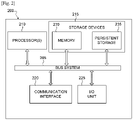
- FIGURE 2 illustrates an example of an electronic device 200 for providing a bot platform according to embodiments of this disclosure.
- Electronic device 200 can, in some embodiments, be embodied on a single standalone device, or on a device providing another server function (for example, a gateway server). Alternatively, in some cases, electronic device 200 may be embodied on multiple machines, for example, a server communicatively connected to one or more database servers. According to still further embodiments, electronic device 200 is embodied on a cloud computing platform.
- electronic device 200 includes a bus system 205 that supports communication between at least one processing device 210, at least one storage device(s) 215, at least one communications unit 220, and at least one input/output (I/O) unit 225.
- bus system 205 that supports communication between at least one processing device 210, at least one storage device(s) 215, at least one communications unit 220, and at least one input/output (I/O) unit 225.
- the processing device 210 may include at least one processor.
- the processing device 210 executes instructions that can be stored in a memory 230.
- the processing device 210 can include any suitable number(s) and type(s) of processors or other devices in any suitable arrangement.
- Example types of processing devices 210 include microprocessors, microcontrollers, digital signal processors, field programmable gate arrays, application specific integrated circuits, and discreet circuitry.
- the memory 230 and a persistent storage 235 are examples of storage devices 215 that represent any structure(s) capable of storing and facilitating retrieval of information (such as data, program code, or other suitable information on a temporary or permanent basis).
- the memory 230 can represent a random access memory or any other suitable volatile or non-volatile storage device(s).
- the persistent storage 235 can contain one or more components or devices supporting longer-term According to certain embodiments, persistent storage 235 comprises one or databases or interfaces to databases embodied on separate machines, storage of data, such as a ready only memory, hard drive, Flash memory, or optical disc.
- the communications unit 220 may be a transceiver.
- the communications unit 220 supports communications with other systems or devices.
- the communications unit 220 could include a network interface card or a wireless transceiver facilitating communications over the network 102.
- the communications unit 220 can support communications through any suitable physical or wireless communication link(s).
- the I/O unit 225 allows for input and output of data.
- the I/O unit 225 can provide a connection for user input through a keyboard, mouse, keypad, touchscreen, or other suitable input device.
- the I/O unit 225 can also send output to a display, printer, or other suitable output device.
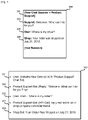
- FIGURE 3 illustrates an example of certain functionalities provided by a system and method of a bot platform according to embodiments of this disclosure
- box 300 depicts content displayed on a screen of an electronic device (for example, device 100 in FIGURE 1 ) providing one or more chat bot clients.
- box 350 illustrates operations performed at the electronic device, and a bot platform (for example, a bot platform implemented on electronic device 200 in FIGURE 2 ).
- a user initiates a session with a bot client (for example, an application running locally on the electronic device).
- a bot client for example, an application running locally on the electronic device.
- a user has initiated a chat session with a bot client associated with a product support application.
- the user is connected to, and able to interface with the product support bot, such as through a websocket or http connection.
- the bot client is not connected directly to the product support bot, but rather, via a bot platform, which mediates the passage of information from the bot client to the product support bot, and, when necessary, also orchestrates redirection of user inputs to other bots capable of providing responses associated with the user's intent.
- the product support bot provides a reply to the bot client's initiation of the session.
- the product support bot may send message 303, reading "Welcome. What can I do for you?"
- the user provides, to the product support bot, via the bot platform, an input 305 associated with an intent.
- the user inputs the natural language request "Where is my order?"
- the user's intent is to query a back-end system for information pertaining to an order from a shop.
- this input was presented as part of a session initiated with a product support bot, which, for the purposes of this purely explanatory example, is not connected to an order database and or other data store required to provide a response to the user input.
- Certain embodiments according to this disclosure facilitate efficient, contextually aware handling of the "wrong turn" situation presented by a user providing an input to a bot which is not equipped to process the input.
- the product support bot makes an API call redirecting the user to a bot associated with "shop.company.com.”
- the product support bot and the shop bot are provided and developed by the same or related entities.
- the product support bot and the shop bot are provided by unrelated entities, but are configured to communicate with an interface of the bot platform and each other using a standardized markup language.
- redirection of the user's input from the product support bot to the shop bot was handled by the product support, such as in response to a deep link between the determined intent of the user's input and the shop bot.
- the redirection of the user's input is handled by the bot platform, which can, identify the input of the user's intent (for example, with a pertained model for associating input terms and context with intent) and select a bot from a plurality of bots according to the intent of the input.
- the shop bot provides response 309 to the user input, which was provided to the product support bot, stating that " Your Order Was Shipped On July 21, 2018 .”
- the user's input was originally routed to one bot, a response from a different bot was provided without the user having to initiate a new communication session with the different bot.
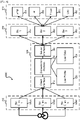
- FIGURES 4A & 4B illustrate aspects of the operation and network context 400 of a system and method of a bot platform according to embodiments of this disclosure.
- network context 400 comprises a bot platform 405, which can be embodied on any suitable, networked computing apparatus (for example, electronic device 200 in FIGURE 2 ) which is communicatively connected on the client side to a bot client 410, and on the server side to a plurality of bots 415A-415C.
- bot platform 405 facilitates redirection of user inputs associated with intents between bots 415A-C, allowing bot client 410 to act as a single unified interface for interacting with multiple bots.
- bot client 410 comprises an application running on a client device (for example, electronic device 100 in FIGURE 1 ), which receives user inputs associated with intents (for example, voice commands or messages typed into a chat session), and passes the user inputs to bot platform 405.
- client device for example, electronic device 100 in FIGURE 1
- bot client 410 passes the user inputs to bot platform 405 in a format (for example, a chat client markup language) specifically designed to facilitate redirection and handoffs between bots within a single session.
- bots 415A-415C comprise systems embodied on one or more computing platforms (for example, a server), which receive user inputs, and where applicable, user profile or session context information (for example, a chat history, or an identification of the previous bot(s) processing the user inputs, and respond (for example, by providing information, or initiating action, such as cancelling a reservation) according to the intent of the input.
- user profile or session context information for example, a chat history, or an identification of the previous bot(s) processing the user inputs, and respond (for example, by providing information, or initiating action, such as cancelling a reservation) according to the intent of the input.
- each of bots 415A-415C may include one or more data stores of content (for example, directions on how to configure a product referenced in a user input) to provide in response to the input.
- each of bots 415A-415C may include a natural language processing (NLP) engine for determining the intent of a user input.
- NLP natural language processing
- Bot 1 is a "weather bot” for handling weather-related queries
- Bot 2 is a “product support bot” for handling queries regarding a manufacturer's smartphones
- Bot 3 is a "warranty bot” for processing warranty questions regarding the manufacturer's smartphones.
- FIGURE 4A illustrates an example of redirection among bots according to certain embodiments of this disclosure.
- bot platform 405 initially receives, via a network interface, from bot client 410, an input associated with an intent.
- the input may be associated with a complex intent, or multiple intents.
- the input may be a statement of the form, "Is it going to rain today? And if so, will my smartphone be covered under warranty if it gets wet and breaks in today's rain," which includes at least the following intents: 1.) a request for warranty information; 2.) a request for product information; and 3.) a request regarding the weather.
- the received input may be expressed in a client markup language, and may include a deep link identifying the bot to which the query should be directed.
- the deep link may, in some embodiments, be generated by bot client 410. In other embodiments, the deep link may be generated by bot platform.
- bot platform 405 may also receive, from bot client 410, contextual information to be included in a user profile maintained at the bot platform. Contextual information includes, without limitation, a user id, the date and time of the input, whether the input is received from a registered user, the type of device on which the bot client is operating, and the location of the device on which the bot client is operating.
- bot platform 405 after receiving an input from bot client 410, stores the input associated with the intent as part of a user profile maintained at bot platform 405. Further, as shown by the arrow numbered "2," bot platform selects bot 415A (the weather bot) from the plurality of bots according to the intent of the input, and passes the input to bot 415A. In some embodiments, the bot platform selects bot 415A based on a deep link in the user input, for example, a link indicating that inputs with "weather" in the query first be directed to bot 415A. In some other embodiments, bot platform 405 selects bot 415A by applying a combination of natural language processing to a trained model to associate the intent of the user input with a bot from among the plurality of bots.
- bot 415A redirects the user's input to bot 415B, as shown by the arrow numbered "3.” That is, bot 415A selects bot 415B to provide a response according to the intent of the user input.
- bot platform 405 receives an indication that bot 415A has selected bot 415B to provide responses to the user's input.
- bot 415A transmits updated contextual data (for example, the contents of a chat between bot client 410 and bot 415A) to bot platform 405.
- bot platform 405 may, in some embodiments, pass some or all of the updated contextual data to bot 415B.
- bot 415B (which, in this case, is a bot configured to provide responses to inputs associated with product support related intents) may pass the user input to bot 415C (which, in this particular example, is a warranty bot) to provide responses according to the intent of the input.
- bot 415B (which, in this case, is a bot configured to provide responses to inputs associated with product support related intents) may pass the user input to bot 415C (which, in this particular example, is a warranty bot) to provide responses according to the intent of the input.
- each of bots 415A-415C is configured to communicate and pass information between one another in a common server markup language, which supports deep linking.
- the common server markup language is an open-source standard, which facilitates onboarding additional bots to which user inputs associated with an intent can be directed from bot platform 405, and affords bot developers autonomy with respect to the choice of bots to which they wish to redirect inputs.
- bot 415A is unable to provide a response to the user input and returns an error condition.
- bot 415A is a weather bot, and the user input only tangentially references the weather. As such, bot 415A may determine that it cannot respond to the user input.
- the user may, during the course of interacting with bot 415A, provide inputs associated with a different intent than the initial input, thereby triggering redirection to bot 415B.
- FIGURE 4B illustrates an example of redirection among bots according to some embodiments of this disclosure.
- the redirection of the user's input from a first bot (in this case, bot 415A) to a second bot (in this particular example, bot 415C) is orchestrated by bot platform 405.
- bot platform 405 receives, from bot client 410, an user input associated with an intent. As in the example of FIGURE 4A , according to certain embodiments, bot platform 405 also receives contextual data (such as the identity of the device on which bot client 410 is running) along with the user input.
- contextual data such as the identity of the device on which bot client 410 is running
- bot platform 405 selects, according to, inter alia, the intent of the input and contextual data received from the bot client, bot 415A as a bot for providing a response to bot client 410.
- bot platform 405 passes the user input received from bot client 410 to selected bot 415A.
- bot 415A is not able to provide a response to the user's input.
- the received user input may be expressed such that, bot 415A may not be able to accurately resolve the intent of the request.
- bot platform 405 receives and logs an error condition from bot 415A.
- bot platform 405 comprises a dynamically trained model for selecting bots according to the intent of user inputs.
- bot platform 405 updates the model to reflect the error condition generated by passing the input to a bot which was not able to provide a response.
- bot platform 405 after receiving the error condition from bot 415A, selects a second bot from the plurality of bots to respond, via the bot client, to the user input. As shown by the arrow numbered "3," bot platform 405 redirects the user input to selected bot 415C.
- FIGURE 5 illustrates operations of a method 500 of operating a bot platform according to certain embodiments of this disclosure.
- method 500 is performed on an apparatus (for example, electronic device 200 in FIGURE 2 ) having at least one processor, a memory and a network interface.
- the network interface may be a transceiver.
- a bot platform receives from a bot client (for example, a bot client running on a device such as electronic device 100 in FIGURE 1 ), an input associated with an intent.
- the input received at operation 505 is a real-time input provided by a user interacting with an input-output facility of the bot client (for example, a chat session provided by the bot client).
- the input received at operation 505 comes from a web scraping or content monitoring application, which has identified content associated with an intent (for example, a product review reporting a problem to which a product support bot can provide a response).
- the bot platform stores the input associated with the intent as part of a user profile.
- the user profile may, in some embodiments, also include contextual data regarding the input (for example, information identifying the device on which the bot client is running on).
- the bot platform analyzes and tags the received user input with one or more tags associated with a bot client markup language.
- the bot platform selects, from a plurality of bots according to the intent of the input, a bot for responding to the input associated with the intent.
- the selection of a bot may be based on a trained model (for example, an AI or machine learning model) implemented at the bot platform.
- the selection of a bot at operation 515 may be based on a deep link contained in the user input, or added to the user input as part of being tagged at operation 510.
- the bot platform passes the input associated with an intent to the bot selected at operation 515.
- the bot platform also tags the input with one or more tags associated with a bot server markup language, which provides a common language for communications between the bot platform and a plurality of bots communicatively connected to the bot platform.
- FIGURE 6 illustrates operations of a method 600 of operating a bot platform according to certain embodiments of this disclosure.
- certain embodiments according to this disclosure provide a mechanism for seamless handoffs between bots providing, through a single bot client (rather than a series of separate bot clients) responses to user inputs associated with intents.
- the handoffs, or redirections between bots are orchestrated by the bots generating responses.
- the redirection between bots is orchestrated by control logic at the bot platform, and in certain embodiments, the redirection is orchestrated by both the bots and the bot platform.
- method 600 comprises operations following operation 520 of FIGURE 5 , where a user input is passed to a selected bot.
- the bot platform passes contextual data from the user profile to the selected bot.
- the contextual data passed at operation 625 may include, without limitation, a user ID associated with the input, location information associated with the device running the bot client, a history of prior bot interactions by a user, and trending requests (for example, if a manufacturer has released a popular new phone, this information may be useful for responding to user inputs associated with "my new phone.”).
- the bot platform is notified of a botorchestrated redirection between bots. Specifically, the bot platform receives an indication that the bot selected at operation 515 of FIGURE 5 has selected a second bot to respond to the input. According to some embodiments, the indication received at operation 630 may be expressed in bot server markup language. Further, as part of operation 630, the bot platform may receive additional contextual information (for example, a chat history, or information regarding user inputs associated with intents). According to certain embodiments, this additional contextual information may be stored as part of the user profile maintained at the bot platform.
- additional contextual information for example, a chat history, or information regarding user inputs associated with intents. According to certain embodiments, this additional contextual information may be stored as part of the user profile maintained at the bot platform.
- FIGURE 7 illustrates operations of a method 700 of operating a bot platform according to certain embodiments of this disclosure. While the non-limiting example of FIGURE 7 depicts operations of the bot platform taken in response to an error condition occurring at the bot to which a user intent is passed at operation 520 of FIGURE 5 , the present disclosure is not so limited, and some or all of the operations shown in FIGURE 7 may be performed under other circumstances. For example, operations described with reference to FIGURE 7 may be performed following a botorchestrated redirection from a first bot to a second bot, such as shown in FIGURE 6 .
- the input associated with an intent is passed to a selected bot, just as at operation 520 in FIGURE 5 .
- the selected bot is unable to respond to the input, which can occur for a variety of reasons, including without limitation, selection of the incorrect bot (for example, an input associated with a weather-oriented intent is passed to a customer service bot) or the selected bot is unable to determine the intent of the input (for example, the input is expressed in slang terms, or in a regional dialect unfamiliar to an NLP engine at the bot).
- the bot platform receives an indicator of the error condition from the bot to which the input was previously passed at operation 520.
- the bot platform logs the error condition received at operation 725.
- the error condition is, in some embodiments, logged as part of a user profile associated with the bot client or a user thereof, from which an input associated with an intent was received.
- the error condition is stored in a data store used for training one or more models for selecting bots according to the intent of inputs received at the bot platform.
- Such models can be built through supervised, semi-supervised, or unsupervised machine learning, including deep learning involving neural networks.
- the bot platform selects a second bot from a plurality of bots according to the intent of the input.
- operation 735 utilizes the same processing logic as operation 515 in FIGURE 5 , except that the originally selected bot is excluded from the pool of candidate bots to which the input can be passed.
- the bot platform has one or more secondary bot selection models which can be used to select a second bot, in the event that a main selection model selects a bot which is unable to provide a response to the input.
- the bot platform updates a model for selecting bots based on the error condition logged at 730.
- the update of the bot selection model performed at operation 740 comprises recalculating a probability that for a received user input (for example, the user input received at operation 505 in FIGURE 5 ), the previously selected bot best accords with the intent of the input. In this way, certain embodiments can iteratively tune and improve the bot selection process performed by the bot platform.
- the bot platform redirects the input to the bot selected at operation 735.
- the bot platform also updates a user profile associated with the input to reflect the redirection of the input to the second bot.
- the bot platform passes data from a user profile associated with the input to the selected bot.
- the data passed at operation 750 includes records of events from previous postbacks by other bots, timestamps of the bot client's interactions with bots communicatively connected to the bot platform, and other session data.
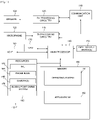
- FIGURE 8 illustrates a network context 800 of a bot client and a bot platform according to certain embodiments of this disclosure.
- the network context 800 includes a bot platform 805, a client platform 840, a set of bots 850 communicatively connected to the bot platform 805, and, for some or all of the bots within the set of bots 850, one or more backend bot content providers 870.
- the bot platform 805 is embodied on one or more servers or networked computing platforms (for example, electronic device 200 in FIGURE 2 ). As shown in the non-limiting example of FIGURE 8 , the bot platform 805 includes a client interface 810, which is communicatively connected to one or more bot clients on the client platform 840. In certain embodiments, the client interface 810 operates to receive inputs from bot clients at the client platform 840 and to prepare and pass the received inputs to an orchestration platform 815. Additionally, the client interface 810 is, in some embodiments, the interface through which responses to user inputs provided by bots within the set of bots 850 are passed to bot clients operating on the bot platform 840.
- the client interface 810 prepares received inputs for the orchestration platform 815 by reformatting or tagging the inputs according to a standardized bot client markup language. In some embodiments, the client interface 810 prepares received inputs for the orchestration platform 815 by examining the inputs to confirm that the inputs are correctly expressed in bot client markup language.
- the bot platform 805 includes an orchestration platform 815, which operates to select, according to the intent of the input a bot from the set of bots 850 to respond to inputs via the client interface 810.
- orchestration platform includes a memory of "deep links" or predetermined associations between inputs or intents, and bots for responding to the associated inputs or intents.
- the orchestration platform 815 includes a natural language processing engine and one or more machine learning models for determining the intent of an input and selecting a bot for responding to the input according to the intent of the input. Additionally, according to some embodiments, the orchestration platform 815 manages and updates user profile data 825 and user data 830 maintained at the bot platform 805.
- the bot platform 805 includes a server interface 820, through which inputs to be passed from the bot platform 805 to bots within the set of bots 850, as well as responses from bots within the set of bots 850 are received by the bot platform 805.
- the server interface 820 prepares content passing into or out of the bot platform 805 by reformatting or tagging the content in a bot server markup language, which provides a standard language for communications between the bot platform 805 and each of the bots within the set of bots 850.
- the server interface 820 prepares content passing into and out of the server side of the bot platform 805 by confirming that the content is properly expressed in bot server markup language.
- the bot platform 805 includes stores of the user profile data 825 and stores of the user data 830.
- the user profile data 825 encompasses data relating to a user providing, through a bot client on the client platform 840, which can provide context for responding to an input. Examples of profile data include, without limitation, information as to the device serving as the client platform 840, a user's name, whether a user is a registered user, and prior purchase information.
- the user data 830 encompasses data collected during a user's interaction with a bot client, and bots within the set of bots 850.
- the user data 830 comprises, without limitation, user input histories, responses provide by bots, and session history data, such as data identifying which bots within the set of bots 850 has provided responses to a user's inputs.
- the bot platform 805 is communicatively connected (for example, via an LTE or Wi-Fi network) to a client platform 840.
- the client platform 840 comprises one of a smartphone, a tablet, or other suitable networked computing platform (for example, electronic device 100 in FIGURE 1 ).
- Client platform provides an operating environment for a plurality of bot clients, shown in FIGURE 8 as bot clients 845A-845C.
- bot clients 845A-845C include, without limitation, applications through which a user can submit inputs associated with an intent, websites which include chat interfaces (for example, customer support chat), and applications which generate inputs based on observed content, such as by web scraping or monitoring websites (for example, customer review or customer support forums) to generate content associated with intents.
- user can receive responses from more than bot within the set of bots 850 through a session with a single bot client on the client platform 840.
- the set of bots 850 comprises an extensible and easily reconfigurable set of bots (which, in this illustrative example are numbered bot 855, bot 860 and bot 865) which have been registered with bot platform as being capable of providing responses to inputs associated with intents provided from bot clients on the client platform 840 via the bot platform 805.
- each of the bots 855-865 utilize the bot server markup language of the server interface 820.
- bot server markup language is an open source each of the bots within the set of bots 850 is developed, and managed by an entity other than the owner of the bot platform 805.
- each bot within the set of bots 850 may obtain content for responding to inputs from one or more backend bot content providers 870.
- the one or more backend bot content providers 870 include, without limitation, a content management system 875 (such as ADOBE EXPERIENCE MANAGER TM ), one or more artificial intelligence (AI) or natural language processing (NLP) engines 880 or resolving the intents of the received inputs, a support ticket tracking system 885 (for example, JIRA TM ), and in some embodiments, live operators 890 to handle inputs which are not amenable to machine generated responses.
- a content management system 875 such as ADOBE EXPERIENCE MANAGER TM
- AI artificial intelligence
- NLP natural language processing
- JIRA TM live operators 890 to handle inputs which are not amenable to machine generated responses.
- FIGURE 9 illustrates an example 900 of an application of a bot server markup language according to embodiments of this disclosure.
- the code shown in FIGURE 9 comprises is passed from a bot platform to one or more bots configured to respond to inputs associated with an intent which are received from a bot client.
- the example code comprises application programming interface (API) call with two payloads: a first payload 905 titled “server,” and a second payload 910 titled “client.”
- API application programming interface
- first payload 905 includes an instance of the method "action,” which specifies actions to be undertaken by the bot platform.
- the actions to be taken by the bot platform include passing an intent associated with an input to a specified bot, as indicated by the code “newIntent”: “s8” or “@api.ail:parameters.newIntent” which indicates that the intent associated with the input is "S8” (which, in some embodiments, may correspond to the name of a product about which a user of a bot client has provided an input), or a command to fetch an intent from a server.
- second payload 910 comprises the parameters of a response to be passed from the bot platform to the bot client in response to an input associated with an intent.
- second payload 910 comprises a deep link between the response to the intent and a specific bot (e.g., bot://support.company.com) connected to the bot platform.
- second payload 910 comprises a pointer to content, in this non-limiting example, an image provided by an edge cache, to be included in a response to an input associated with an intent.
- FIGURE 10 illustrates an example 1000 of an application of a bot client markup language according to embodiments of this disclosure.
- FIGURE 10 an example of "data" object expressed in a bot client markup language is shown.
- responses to inputs are passed to a bot client via a bot platform (for example, the bot platform 805 in FIGURE 8 ) as "data" objects expressed in bot client markup language.
- the "data” object is demarcated by the container "data” tag 1005.
- a "card” tag 1010 is included within the container instantiated by "data” tag 1005.
- "Card” tag 1010 specifies an array of card objects 1015a & 1015b which are presented under a menu tag.
- card objects 1015a & 1015b each have the following properties: a "label” whose value comprises a string generally identifying the card object, a "text” whose value comprises a string of text to be displayed as part of the card object, a "imageURL” whose value comprises a pointer (for example, a URL) to an image to be displayed as part of the card object, and a "postback” comprising a deep link to a bot (for example, a bot associated with the domain "bot//support.company.com”).
- the container instantiated by "data" tag 1005 further comprises a pair of "option” objects 1025a & 1025b.
- the properties of each of "option” objects 1025a & 1025b include: a "label” whose value is a string of text to be displayed as part of the object, and a "postback” comprising a deep link to a bot (for example, a bot within the domain "bot://support.company.com") associated with a user input to the "option" object.
Landscapes
- Engineering & Computer Science (AREA)
- Theoretical Computer Science (AREA)
- General Engineering & Computer Science (AREA)
- Quality & Reliability (AREA)
- Physics & Mathematics (AREA)
- General Physics & Mathematics (AREA)
- Computer Networks & Wireless Communication (AREA)
- Signal Processing (AREA)
- Computer Hardware Design (AREA)
- Computing Systems (AREA)
- Information Transfer Between Computers (AREA)
Description
- This disclosure relates generally to system integration. More specifically, this disclosure relates to a system and method for a chat bot platform.
- "Bots," or electronic agents for digitally interpreting and providing responses to expressions of intent, such as online chat sessions, inputs to a speech recognition platform, or web content, present significant opportunities for new and improved modes of interaction between humans and computer systems. By resolving intents from natural language expressions of intent, certain bots enhance the functionality of the connection between a user and back-end systems, in that they accurately translate the user's intent-based requests into appropriate commands (for example, structured database queries) to be processed by back-end systems.
- The technical challenges associated with fully realizing the potential of bots as user interfaces for computer systems include extensibility and integration of different bots. Many bots can only translate expressions of user intent within a limited, predefined range of contexts. For example, a bot built to handle spoken requests pertaining to airline reservations may balk at, and fail to process, spoken requests pertaining to different transactions, such as inquiries about lost luggage or hotel reservations. In such cases, a user may be required to look, by herself, for a different bot with the functionality to handle the request. From a user experience / user interface (UX/UI) perspective, initiating sessions with multiple, siloed bots in order to find a bot capable of resolving and responding to the user's intent can be inefficient and frustrating. From an architectural, or systems design perspective, attempting to design a single, integrated bot to handle every foreseeable combination of input and intent, presents significant challenges, including, without limitation, inflexible design and the costs of "reinventing the wheel" associated with generating a single bot to provide functionality already provided by existing bots.
- Document
US 2017/180276 discloses a messaging application which may automatically analyze content of one or more messages and/or user information to automatically provide suggestions to a user. - Document
US 2017/279906 discloses an agent that provides dialog-based services to converse with a user. - Document
US 2017/187654 discloses a computer program for a message exchanging method. FARINA PAOLO ET AL: "Are mobile botnets a possible threat? The case of SlowBot Net",COMPUTERS & SECURITY, ELSEVIER SCIENCE PUBLISHERS. AMSTERDAM, NL, vol. 58, 15 February 2016 (2016-02-15), pages 268-283, analyzes the use of malicious botnets for the purpose of carrying out Distributed Denial of Service (DDoS) attacks. JOHNSON LUKE B ET AL: "The Role of Information Assumptions in Decentralized Task Allocation: A Tutorial",IEEE CONTROL SYSTEMS, IEEE, USA, vol. 36, no. 4, 1 August 2016 (2016-08-01), pages 45-58, discloses forming multiagent teams of autonomous robots for improving the capabilities of single robotic agents. - Embodiments of the invention are set out in the appended claims.
- This disclosure provides a system and method for a chat bot platform.
- According to various example, a method for operating a bot platform includes receiving, from a bot client, an input associated with an intent, and storing the input associated with the intent as part of a user profile maintained at the bot platform. The method further includes storing the input associated with the intent as part of a user profile maintained at the bot platform, and passing the input to the selected bot.
- According to various example, an apparatus includes a network interface, a processor, and a memory. The memory contains instructions, which when executed by the processor, cause the apparatus to receive, from a bot client via the network interface, an input associated with an intent and store the input associated with the intent as part of a user profile maintained at the bot platform. The memory also includes instructions, which when executed by the processor, cause the apparatus to select, according to the intent of the input, a bot from a plurality of bots communicatively connected to the bot platform to respond to the bot client, and pass the input to the selected bot.
- According to various example, a non-transitory computer-readable medium includes program code, which when executed by a processor, causes an apparatus to receive, from a bot client via a network interface, an input associated with an intent, and store the input associated with the intent as part of a user profile maintained at the bot platform. The program code, when executed by the processor, also causes the apparatus to select, according to the intent of the input, a bot from a plurality of bots communicatively connected to the bot platform to respond to the bot client, and pass the input to the selected bot.
- Other technical features may be readily apparent to one skilled in the art from the following figures, descriptions, and claims.
- Before undertaking the DETAILED DESCRIPTION below, it may be advantageous to set forth definitions of certain words and phrases used throughout this patent document. The term "couple" and its derivatives refer to any direct or indirect communication between two or more elements, whether or not those elements are in physical contact with one another. The terms "transmit," "receive," and "communicate," as well as derivatives thereof, encompass both direct and indirect communication. The terms "include" and "comprise," as well as derivatives thereof, mean inclusion without limitation. The term "or" is inclusive, meaning and/or. The phrase "associated with," as well as derivatives thereof, means to include, be included within, interconnect with, contain, be contained within, connect to or with, couple to or with, be communicable with, cooperate with, interleave, juxtapose, be proximate to, be bound to or with, have, have a property of, have a relationship to or with, or the like. The term "controller" means any device, system or part thereof that controls at least one operation. Such a controller may be implemented in hardware or a combination of hardware and software and/or firmware. The functionality associated with any particular controller may be centralized or distributed, whether locally or remotely. The phrase "at least one of," when used with a list of items, means that different combinations of one or more of the listed items may be used, and only one item in the list may be needed. For example, "at least one of: A, B, and C" includes any of the following combinations: A, B, C, A and B, A and C, B and C, and A and B and C.
- Moreover, various functions described below can be implemented or supported by one or more computer programs, each of which is formed from computer readable program code and embodied in a computer readable medium. The terms "application" and "program" refer to one or more computer programs, software components, sets of instructions, procedures, functions, objects, classes, instances, related data, or a portion thereof adapted for implementation in a suitable computer readable program code. The phrase "computer readable program code" includes any type of computer code, including source code, object code, and executable code. The phrase "computer readable medium" includes any type of medium capable of being accessed by a computer, such as read only memory (ROM), random access memory (RAM), a hard disk drive, a compact disc (CD), a digital video disc (DVD), or any other type of memory. A "non-transitory" computer readable medium excludes wired, wireless, optical, or other communication links that transport transitory electrical or other signals. A non-transitory computer readable medium includes media where data can be permanently stored and media where data can be stored and later overwritten, such as a rewritable optical disc or an erasable memory device.
- Definitions for other certain words and phrases are provided throughout this patent document. Those of ordinary skill in the art should understand that in many if not most instances, such definitions apply to prior as well as future uses of such defined words and phrases.
- For a more complete understanding of this disclosure and its advantages, reference is now made to the following description, taken in conjunction with the accompanying drawings, in which:
-
FIGURE 1 illustrates an example of an electronic device for providing a bot client according to embodiments of this disclosure; -
FIGURE 2 illustrates an example of an electronic device for providing a system for a bot platform according to embodiments of this disclosure; -
FIGURE 3 illustrates an example of certain functionalities provided by a system and method of a bot platform according to embodiments of this disclosure; -
FIGURES 4A and 4B illustrate aspects of the operation and network context of a system and method of a bot platform according to embodiment of this disclosure; -
FIGURE 5 illustrates operations of a method of operating a bot platform according to embodiments of this disclosure; -
FIGURE 6 illustrates operations of a method of operating a bot platform according to embodiments of this disclosure; -
FIGURE 7 illustrates operations of a method of operating a bot platform according to embodiments of this disclosure; -
FIGURE 8 illustrates a network context of a bot client and a bot platform according to embodiments of this disclosure; -
FIGURE 9 illustrates an example of an application of a bot server markup language according to embodiments of the present disclosure; and -
FIGURE 10 illustrates an example of an application of a bot client markup language according to embodiments of this disclosure. -
FIGURES 1 through 10 discussed below, and the various embodiments used to describe the principles of this disclosure in this patent document are by way of illustration only and should not be construed in any way to limit the scope of the disclosure. Those skilled in the art will understand that the principles of this disclosure may be implemented in any suitably arranged wireless communication system. -
FIGURE 1 illustrates a non-limiting example of a device for providing a bot client according to some embodiments of this disclosure. The embodiment ofdevice 100 illustrated inFIGURE 1 is for illustration only, and other configurations are possible. However, suitable devices come in a wide variety of configurations, andFIGURE 1 does not limit the scope of this disclosure to any particular implementation of a device. - As shown in the non-limiting example of
FIGURE 1 , thedevice 100 includes acommunication unit 110 that may include, for example, a radio frequency (RF) transceiver, a Bluetooth® transceiver, or a Wi-Fi® transceiver, etc., transmit (TX)processing circuitry 115, amicrophone 120, and receive (RX)processing circuitry 125. Thedevice 100 also includes aspeaker 130, amain processor 140, an input/output (I/O) interface (IF) 145, input/output device(s) 150, and amemory 160. Thememory 160 includes an operating system (OS)program 161 and one ormore applications 162. -
Applications 162 can include games, social media applications, applications for geotagging photographs and other items of digital content, virtual reality (VR) applications, augmented reality (AR) applications, operating systems, device security ( e.g., anti-theft and device tracking) applications or any other applications which access resources ofdevice 100, the resources ofdevice 100 including, without limitation,speaker 130,microphone 120, input/output devices 150, andadditional resources 180. According to some embodiments,applications 162 include applications (for example, banking or shopping applications) which provide a bot client (such as a chat interface) through which a user can provide inputs associated with an intent. In some embodiments,applications 162 include applications which combine a bot client with a web scraping, or content ingestion functionality. For example,applications 162 can include an application which crawls, or "spiders" through user review or frequently asked questions (FAQ) pages, collecting page content associated with user intents (for example, product reviews or complaints). - The
communication unit 110 may receive an incoming RF signal, for example, a near field communication signal such as a Bluetooth® or Wi-Fi™ signal. Thecommunication unit 110 can down-convert the incoming RF signal to generate an intermediate frequency (IF) or baseband signal. The IF or baseband signal is sent to theRX processing circuitry 125, which generates a processed baseband signal by filtering, decoding, or digitizing the baseband or IF signal. TheRX processing circuitry 125 transmits the processed baseband signal to the speaker 130 (such as for voice data) or to themain processor 140 for further processing (such as for web browsing data, online gameplay data, notification data, or other message data). Additionally,communication unit 110 may contain a network interface, such as a network card, or a network interface implemented through software. The network interface may be a transceiver. - The
TX processing circuitry 115 receives analog or digital voice data from themicrophone 120 or other outgoing baseband data (such as web data, e-mail, or interactive video game data) from themain processor 140. TheTX processing circuitry 115 encodes, multiplexes, or digitizes the outgoing baseband data to generate a processed baseband or IF signal. Thecommunication unit 110 receives the outgoing processed baseband or IF signal from theTX processing circuitry 115 and up-converts the baseband or IF signal to an RF signal for transmission. - The
main processor 140 can include one or more processors or other processing devices and execute theOS program 161 stored in thememory 160 in order to control the overall operation of thedevice 100. For example, themain processor 140 could control the reception of forward channel signals and the transmission of reverse channel signals by thecommunication unit 110, theRX processing circuitry 125, and theTX processing circuitry 115 in accordance with well-known principles. In some embodiments, themain processor 140 includes at least one microprocessor or microcontroller. - The
main processor 140 is also capable of executing other processes and programs resident in thememory 160. Themain processor 140 can move data into or out of thememory 160 as required by an executing process. In some embodiments, themain processor 140 is configured to execute theapplications 162 based on theOS program 161 or in response to inputs from a user orapplications 162.Applications 162 can include applications specifically developed for the platform ofdevice 100, or legacy applications developed for earlier platforms. Additionally,main processor 140 can be manufactured to include program logic for implementing methods for monitoring suspicious application access according to certain embodiments of the present disclosure. Themain processor 140 is also coupled to the I/O interface 145, which provides thedevice 100 with the ability to connect to other devices such as laptop computers and handheld computers. The I/O interface 145 is the communication path between these accessories and themain processor 140. - The
main processor 140 is also coupled to the input/output device(s) 150. The operator of thedevice 100 can use the input/output device(s) 150 to enter data into thedevice 100. Input/output device(s) 150 can include keyboards, touch screens, mouse(s), track balls or other devices capable of acting as a user interface to allow a user to interact withelectronic device 100. In some embodiments, input/output device(s) 150 can include a touch panel, a virtual reality headset, a (digital) pen sensor, a key, or an ultrasonic input device. - Input/output device(s) 150 can include one or more screens, which can be a liquid crystal display, light-emitting diode (LED) display, an optical LED (OLED), an active matrix OLED (AMOLED), or other screens capable of rendering graphics.
- The
memory 160 is coupled to themain processor 140. According to certain embodiments, part of thememory 160 includes a random access memory (RAM), and another part of thememory 160 includes a Flash memory or other read-only memory (ROM). AlthoughFIGURE 1 illustrates one example of adevice 100. Various changes can be made toFIGURE 1 . - For example, according to certain embodiments,
device 100 can further include a separate graphics processing unit (GPU) 170. - According to certain embodiments,
electronic device 100 includes a variety ofadditional resources 180 which can, if permitted, be accessed byapplications 162. According to certain embodiments,resources 180 include an accelerometer orinertial motion unit 182, which can detect movements of the electronic device along one or more degrees of freedom.Additional resources 180 include, in some embodiments, a user'sphone book 184, one ormore cameras 186 ofelectronic device 100, and aglobal positioning system 188. - Although
FIGURE 1 illustrates one example of adevice 100 for providing a bot client various changes may be made toFIGURE 1 . For example, thedevice 100 could include any number of components in any suitable arrangement. In general, devices including computing and communication systems come in a wide variety of configurations, andFIGURE 1 does not limit the scope of this disclosure to any particular configuration. WhileFIGURE 1 illustrates one operational environment in which various features disclosed in this patent document can be used, these features could be used in any other suitable system. -
FIGURE 2 illustrates an example of an electronic device 200 for providing a bot platform according to embodiments of this disclosure. - Electronic device 200 can, in some embodiments, be embodied on a single standalone device, or on a device providing another server function (for example, a gateway server). Alternatively, in some cases, electronic device 200 may be embodied on multiple machines, for example, a server communicatively connected to one or more database servers. According to still further embodiments, electronic device 200 is embodied on a cloud computing platform.
- As shown in
FIG. 2 , electronic device 200 includes abus system 205 that supports communication between at least oneprocessing device 210, at least one storage device(s) 215, at least onecommunications unit 220, and at least one input/output (I/O)unit 225. - The
processing device 210 may include at least one processor. Theprocessing device 210 executes instructions that can be stored in amemory 230. Theprocessing device 210 can include any suitable number(s) and type(s) of processors or other devices in any suitable arrangement. Example types ofprocessing devices 210 include microprocessors, microcontrollers, digital signal processors, field programmable gate arrays, application specific integrated circuits, and discreet circuitry. - The
memory 230 and apersistent storage 235 are examples ofstorage devices 215 that represent any structure(s) capable of storing and facilitating retrieval of information (such as data, program code, or other suitable information on a temporary or permanent basis). Thememory 230 can represent a random access memory or any other suitable volatile or non-volatile storage device(s). Thepersistent storage 235 can contain one or more components or devices supporting longer-term According to certain embodiments,persistent storage 235 comprises one or databases or interfaces to databases embodied on separate machines, storage of data, such as a ready only memory, hard drive, Flash memory, or optical disc. - The
communications unit 220 may be a transceiver. Thecommunications unit 220 supports communications with other systems or devices. For example, thecommunications unit 220 could include a network interface card or a wireless transceiver facilitating communications over the network 102. Thecommunications unit 220 can support communications through any suitable physical or wireless communication link(s). - The I/
O unit 225 allows for input and output of data. For example, the I/O unit 225 can provide a connection for user input through a keyboard, mouse, keypad, touchscreen, or other suitable input device. The I/O unit 225 can also send output to a display, printer, or other suitable output device. -
FIGURE 3 illustrates an example of certain functionalities provided by a system and method of a bot platform according to embodiments of this disclosure - Referring to the non-limiting example of
FIGURE 3 ,box 300 depicts content displayed on a screen of an electronic device (for example,device 100 inFIGURE 1 ) providing one or more chat bot clients. Similarly,box 350 illustrates operations performed at the electronic device, and a bot platform (for example, a bot platform implemented on electronic device 200 inFIGURE 2 ). - In some embodiments, a user initiates a session with a bot client (for example, an application running locally on the electronic device). In this non-limiting example, by
operation 351, a user has initiated a chat session with a bot client associated with a product support application. By initiating the chat session, the user is connected to, and able to interface with the product support bot, such as through a websocket or http connection. According to some embodiments, the bot client is not connected directly to the product support bot, but rather, via a bot platform, which mediates the passage of information from the bot client to the product support bot, and, when necessary, also orchestrates redirection of user inputs to other bots capable of providing responses associated with the user's intent. - According to certain embodiments, at
operation 353, the product support bot provides a reply to the bot client's initiation of the session. For example, the product support bot may sendmessage 303, reading "Welcome. What can I do for you?" - Subsequent to the product support bot's transmission of reply, at
operation 355, the user provides, to the product support bot, via the bot platform, aninput 305 associated with an intent. In this example, the user inputs the natural language request "Where is my order?" In this case, the user's intent is to query a back-end system for information pertaining to an order from a shop. However, this input was presented as part of a session initiated with a product support bot, which, for the purposes of this purely explanatory example, is not connected to an order database and or other data store required to provide a response to the user input. - Certain embodiments according to this disclosure facilitate efficient, contextually aware handling of the "wrong turn" situation presented by a user providing an input to a bot which is not equipped to process the input. In some embodiments, of forcing the user to close the session and try present her input to a different bot, at
operation 357, the product support bot makes an API call redirecting the user to a bot associated with "shop.company.com." In some embodiments, the product support bot and the shop bot are provided and developed by the same or related entities. In other embodiments, the product support bot and the shop bot are provided by unrelated entities, but are configured to communicate with an interface of the bot platform and each other using a standardized markup language. - In the non-limiting example of
FIGURE 3 , redirection of the user's input from the product support bot to the shop bot was handled by the product support, such as in response to a deep link between the determined intent of the user's input and the shop bot. According to other embodiments, the redirection of the user's input is handled by the bot platform, which can, identify the input of the user's intent (for example, with a pertained model for associating input terms and context with intent) and select a bot from a plurality of bots according to the intent of the input. - Referring to the non-limiting example of
FIGURE 3 , atoperation 359, the shop bot providesresponse 309 to the user input, which was provided to the product support bot, stating that "Your Order Was Shipped On July 21, 2018." In this non-limiting example, although the user's input was originally routed to one bot, a response from a different bot was provided without the user having to initiate a new communication session with the different bot. -
FIGURES 4A & 4B (collectively, "FIGURE 4 ") illustrate aspects of the operation andnetwork context 400 of a system and method of a bot platform according to embodiments of this disclosure. - Referring to the non-limiting example of
FIGURE 4 ,network context 400 comprises abot platform 405, which can be embodied on any suitable, networked computing apparatus (for example, electronic device 200 inFIGURE 2 ) which is communicatively connected on the client side to abot client 410, and on the server side to a plurality ofbots 415A-415C. As shown inFIGURE 4 and described in this disclosure, according to certain embodiments,bot platform 405 facilitates redirection of user inputs associated with intents betweenbots 415A-C, allowingbot client 410 to act as a single unified interface for interacting with multiple bots. - According to certain embodiments,
bot client 410 comprises an application running on a client device (for example,electronic device 100 inFIGURE 1 ), which receives user inputs associated with intents (for example, voice commands or messages typed into a chat session), and passes the user inputs tobot platform 405. In some embodiments,bot client 410 passes the user inputs tobot platform 405 in a format (for example, a chat client markup language) specifically designed to facilitate redirection and handoffs between bots within a single session. - In the non-limiting example of
FIGURE 4 ,bots 415A-415C comprise systems embodied on one or more computing platforms (for example, a server), which receive user inputs, and where applicable, user profile or session context information (for example, a chat history, or an identification of the previous bot(s) processing the user inputs, and respond (for example, by providing information, or initiating action, such as cancelling a reservation) according to the intent of the input. In some embodiments, each ofbots 415A-415C may include one or more data stores of content (for example, directions on how to configure a product referenced in a user input) to provide in response to the input. Additionally, each ofbots 415A-415C may include a natural language processing (NLP) engine for determining the intent of a user input. For the purposes of this purely illustrative example,Bot 1 is a "weather bot" for handling weather-related queries,Bot 2 is a "product support bot" for handling queries regarding a manufacturer's smartphones, andBot 3 is a "warranty bot" for processing warranty questions regarding the manufacturer's smartphones. -
FIGURE 4A illustrates an example of redirection among bots according to certain embodiments of this disclosure. As shown by the arrow numbered "1",bot platform 405 initially receives, via a network interface, frombot client 410, an input associated with an intent. In this particular example, the input may be associated with a complex intent, or multiple intents. For example, the input may be a statement of the form, "Is it going to rain today? And if so, will my smartphone be covered under warranty if it gets wet and breaks in today's rain," which includes at least the following intents: 1.) a request for warranty information; 2.) a request for product information; and 3.) a request regarding the weather. Additionally, the received input may be expressed in a client markup language, and may include a deep link identifying the bot to which the query should be directed. The deep link may, in some embodiments, be generated bybot client 410. In other embodiments, the deep link may be generated by bot platform. In addition to the user input associated with the intent,bot platform 405 may also receive, frombot client 410, contextual information to be included in a user profile maintained at the bot platform. Contextual information includes, without limitation, a user id, the date and time of the input, whether the input is received from a registered user, the type of device on which the bot client is operating, and the location of the device on which the bot client is operating. - According to certain embodiments, after receiving an input from
bot client 410,bot platform 405 stores the input associated with the intent as part of a user profile maintained atbot platform 405. Further, as shown by the arrow numbered "2," bot platform selectsbot 415A (the weather bot) from the plurality of bots according to the intent of the input, and passes the input tobot 415A. In some embodiments, the bot platform selectsbot 415A based on a deep link in the user input, for example, a link indicating that inputs with "weather" in the query first be directed tobot 415A. In some other embodiments,bot platform 405 selectsbot 415A by applying a combination of natural language processing to a trained model to associate the intent of the user input with a bot from among the plurality of bots. - In some embodiments according to this disclosure,
bot 415A redirects the user's input tobot 415B, as shown by the arrow numbered "3." That is,bot 415A selectsbot 415B to provide a response according to the intent of the user input. As part of the redirection frombot 415A tobot 415B,bot platform 405 receives an indication thatbot 415A has selectedbot 415B to provide responses to the user's input. According to some embodiments,bot 415A transmits updated contextual data (for example, the contents of a chat betweenbot client 410 andbot 415A) tobot platform 405. Additionally,bot platform 405 may, in some embodiments, pass some or all of the updated contextual data tobot 415B. - According to certain embodiments, further redirections from
bot 415B to other bots are possible. For example,bot 415B (which, in this case, is a bot configured to provide responses to inputs associated with product support related intents) may pass the user input tobot 415C (which, in this particular example, is a warranty bot) to provide responses according to the intent of the input. - In this non-limiting example, each of
bots 415A-415C is configured to communicate and pass information between one another in a common server markup language, which supports deep linking. According to certain embodiments, the common server markup language is an open-source standard, which facilitates onboarding additional bots to which user inputs associated with an intent can be directed frombot platform 405, and affords bot developers autonomy with respect to the choice of bots to which they wish to redirect inputs. - The redirection from
bot 415A tobot 415B may be triggered by a number of circumstances. In some embodiments,bot 415A is unable to provide a response to the user input and returns an error condition. In the non-limiting example ofFIGURE 4 ,bot 415A is a weather bot, and the user input only tangentially references the weather. As such,bot 415A may determine that it cannot respond to the user input. In other embodiments, the user may, during the course of interacting withbot 415A, provide inputs associated with a different intent than the initial input, thereby triggering redirection tobot 415B. -
FIGURE 4B illustrates an example of redirection among bots according to some embodiments of this disclosure. In the non-limiting example ofFIGURE 4B , the redirection of the user's input from a first bot (in this case,bot 415A) to a second bot (in this particular example,bot 415C) is orchestrated bybot platform 405. - As shown by the arrow numbered "1," in the non-limiting example of
FIGURE 4B ,bot platform 405 receives, frombot client 410, an user input associated with an intent. As in the example ofFIGURE 4A , according to certain embodiments,bot platform 405 also receives contextual data (such as the identity of the device on whichbot client 410 is running) along with the user input. - Next,
bot platform 405 selects, according to, inter alia, the intent of the input and contextual data received from the bot client,bot 415A as a bot for providing a response tobot client 410. In some embodiments,bot platform 405 passes the user input received frombot client 410 to selectedbot 415A. - Referring to the non-limiting example of
FIGURE 4B ,bot 415A is not able to provide a response to the user's input. For example, the received user input may be expressed such that,bot 415A may not be able to accurately resolve the intent of the request. In certain embodiments, as a result ofbot 415A's failure to provide a response to the user's input,bot platform 405 receives and logs an error condition frombot 415A. - In some embodiments,
bot platform 405 comprises a dynamically trained model for selecting bots according to the intent of user inputs. In response to logging the error condition,bot platform 405 updates the model to reflect the error condition generated by passing the input to a bot which was not able to provide a response. - According to certain embodiments, after receiving the error condition from
bot 415A,bot platform 405 selects a second bot from the plurality of bots to respond, via the bot client, to the user input. As shown by the arrow numbered "3,"bot platform 405 redirects the user input to selectedbot 415C. -
FIGURE 5 illustrates operations of amethod 500 of operating a bot platform according to certain embodiments of this disclosure. According to certain embodiments,method 500 is performed on an apparatus (for example, electronic device 200 inFIGURE 2 ) having at least one processor, a memory and a network interface. The network interface may be a transceiver. - Referring to the non-limiting example of
FIGURE 5 , atoperation 505, a bot platform (for example,bot platform 405 inFIGURE 4 ), receives from a bot client (for example, a bot client running on a device such aselectronic device 100 inFIGURE 1 ), an input associated with an intent. According to certain embodiments, the input received atoperation 505 is a real-time input provided by a user interacting with an input-output facility of the bot client (for example, a chat session provided by the bot client). In certain embodiments, the input received atoperation 505 comes from a web scraping or content monitoring application, which has identified content associated with an intent (for example, a product review reporting a problem to which a product support bot can provide a response). - According to certain embodiments, at
operation 510, the bot platform stores the input associated with the intent as part of a user profile. The user profile may, in some embodiments, also include contextual data regarding the input (for example, information identifying the device on which the bot client is running on). Additionally, in certain embodiments, as part ofoperation 510, the bot platform analyzes and tags the received user input with one or more tags associated with a bot client markup language. - In various embodiments according to this disclosure, at
operation 515, the bot platform selects, from a plurality of bots according to the intent of the input, a bot for responding to the input associated with the intent. In some embodiments, the selection of a bot may be based on a trained model (for example, an AI or machine learning model) implemented at the bot platform. In certain embodiments, the selection of a bot atoperation 515 may be based on a deep link contained in the user input, or added to the user input as part of being tagged atoperation 510. - In some embodiments, at
operation 520, the bot platform passes the input associated with an intent to the bot selected atoperation 515. In the non-limiting example ofFIGURE 5 , atoperation 520, the bot platform also tags the input with one or more tags associated with a bot server markup language, which provides a common language for communications between the bot platform and a plurality of bots communicatively connected to the bot platform. -
FIGURE 6 illustrates operations of amethod 600 of operating a bot platform according to certain embodiments of this disclosure. - As discussed elsewhere herein, certain embodiments according to this disclosure provide a mechanism for seamless handoffs between bots providing, through a single bot client (rather than a series of separate bot clients) responses to user inputs associated with intents. In some embodiments, including embodiments of the non-limiting example shown in
FIGURE 6 the handoffs, or redirections between bots are orchestrated by the bots generating responses. In some embodiments, the redirection between bots is orchestrated by control logic at the bot platform, and in certain embodiments, the redirection is orchestrated by both the bots and the bot platform. - Referring to the non-limiting example shown in
FIGURE 6 ,method 600 comprisesoperations following operation 520 ofFIGURE 5 , where a user input is passed to a selected bot. - As shown in the non-limiting example of
FIGURE 6 , atoperation 625, the bot platform passes contextual data from the user profile to the selected bot. The contextual data passed atoperation 625, may include, without limitation, a user ID associated with the input, location information associated with the device running the bot client, a history of prior bot interactions by a user, and trending requests (for example, if a manufacturer has released a popular new phone, this information may be useful for responding to user inputs associated with "my new phone."). - In certain embodiments, at
operation 630, the bot platform is notified of a botorchestrated redirection between bots. Specifically, the bot platform receives an indication that the bot selected atoperation 515 ofFIGURE 5 has selected a second bot to respond to the input. According to some embodiments, the indication received atoperation 630 may be expressed in bot server markup language. Further, as part ofoperation 630, the bot platform may receive additional contextual information (for example, a chat history, or information regarding user inputs associated with intents). According to certain embodiments, this additional contextual information may be stored as part of the user profile maintained at the bot platform. -
FIGURE 7 illustrates operations of amethod 700 of operating a bot platform according to certain embodiments of this disclosure. While the non-limiting example ofFIGURE 7 depicts operations of the bot platform taken in response to an error condition occurring at the bot to which a user intent is passed atoperation 520 ofFIGURE 5 , the present disclosure is not so limited, and some or all of the operations shown inFIGURE 7 may be performed under other circumstances. For example, operations described with reference toFIGURE 7 may be performed following a botorchestrated redirection from a first bot to a second bot, such as shown inFIGURE 6 . - Referring to the non-limiting example of
FIGURE 7 , atoperation 520, the input associated with an intent is passed to a selected bot, just as atoperation 520 inFIGURE 5 . In this particular example, the selected bot is unable to respond to the input, which can occur for a variety of reasons, including without limitation, selection of the incorrect bot (for example, an input associated with a weather-oriented intent is passed to a customer service bot) or the selected bot is unable to determine the intent of the input (for example, the input is expressed in slang terms, or in a regional dialect unfamiliar to an NLP engine at the bot). Atoperation 725, the bot platform receives an indicator of the error condition from the bot to which the input was previously passed atoperation 520. - According to certain embodiments, at
operation 730, the bot platform logs the error condition received atoperation 725. The error condition is, in some embodiments, logged as part of a user profile associated with the bot client or a user thereof, from which an input associated with an intent was received. In some embodiments, the error condition is stored in a data store used for training one or more models for selecting bots according to the intent of inputs received at the bot platform. Such models can be built through supervised, semi-supervised, or unsupervised machine learning, including deep learning involving neural networks. - In some embodiments, at
operation 735, the bot platform selects a second bot from a plurality of bots according to the intent of the input. According to some embodiments,operation 735 utilizes the same processing logic asoperation 515 inFIGURE 5 , except that the originally selected bot is excluded from the pool of candidate bots to which the input can be passed. According to embodiments, the bot platform has one or more secondary bot selection models which can be used to select a second bot, in the event that a main selection model selects a bot which is unable to provide a response to the input. - According to certain embodiments, at
operation 740, the bot platform updates a model for selecting bots based on the error condition logged at 730. In some embodiments, the update of the bot selection model performed atoperation 740 comprises recalculating a probability that for a received user input (for example, the user input received atoperation 505 inFIGURE 5 ), the previously selected bot best accords with the intent of the input. In this way, certain embodiments can iteratively tune and improve the bot selection process performed by the bot platform. - In some embodiments according to this disclosure, at
operation 745, the bot platform redirects the input to the bot selected atoperation 735. According to certain embodiments, as part ofoperation 745, the bot platform also updates a user profile associated with the input to reflect the redirection of the input to the second bot. - As shown in the non-limiting example of
FIGURE 7 , atoperation 750, the bot platform passes data from a user profile associated with the input to the selected bot. According to some embodiments, the data passed atoperation 750 includes records of events from previous postbacks by other bots, timestamps of the bot client's interactions with bots communicatively connected to the bot platform, and other session data. -
FIGURE 8 illustrates anetwork context 800 of a bot client and a bot platform according to certain embodiments of this disclosure. - Referring to the non-limiting example of
FIGURE 8 , thenetwork context 800 includes abot platform 805, aclient platform 840, a set ofbots 850 communicatively connected to thebot platform 805, and, for some or all of the bots within the set ofbots 850, one or more backendbot content providers 870. - According to certain embodiments, the
bot platform 805 is embodied on one or more servers or networked computing platforms (for example, electronic device 200 inFIGURE 2 ). As shown in the non-limiting example ofFIGURE 8 , thebot platform 805 includes aclient interface 810, which is communicatively connected to one or more bot clients on theclient platform 840. In certain embodiments, theclient interface 810 operates to receive inputs from bot clients at theclient platform 840 and to prepare and pass the received inputs to anorchestration platform 815. Additionally, theclient interface 810 is, in some embodiments, the interface through which responses to user inputs provided by bots within the set ofbots 850 are passed to bot clients operating on thebot platform 840. According to certain embodiments, theclient interface 810 prepares received inputs for theorchestration platform 815 by reformatting or tagging the inputs according to a standardized bot client markup language. In some embodiments, theclient interface 810 prepares received inputs for theorchestration platform 815 by examining the inputs to confirm that the inputs are correctly expressed in bot client markup language. - According to certain embodiments, the
bot platform 805 includes anorchestration platform 815, which operates to select, according to the intent of the input a bot from the set ofbots 850 to respond to inputs via theclient interface 810. In some embodiments, orchestration platform includes a memory of "deep links" or predetermined associations between inputs or intents, and bots for responding to the associated inputs or intents. Additionally, according to certain embodiments, theorchestration platform 815 includes a natural language processing engine and one or more machine learning models for determining the intent of an input and selecting a bot for responding to the input according to the intent of the input. Additionally, according to some embodiments, theorchestration platform 815 manages and updatesuser profile data 825 anduser data 830 maintained at thebot platform 805. - In some embodiments, the
bot platform 805 includes aserver interface 820, through which inputs to be passed from thebot platform 805 to bots within the set ofbots 850, as well as responses from bots within the set ofbots 850 are received by thebot platform 805. According to certain embodiments, theserver interface 820 prepares content passing into or out of thebot platform 805 by reformatting or tagging the content in a bot server markup language, which provides a standard language for communications between thebot platform 805 and each of the bots within the set ofbots 850. Additionally, in some embodiments, theserver interface 820 prepares content passing into and out of the server side of thebot platform 805 by confirming that the content is properly expressed in bot server markup language. - According to certain embodiments, the
bot platform 805 includes stores of theuser profile data 825 and stores of theuser data 830. According to certain embodiments, theuser profile data 825 encompasses data relating to a user providing, through a bot client on theclient platform 840, which can provide context for responding to an input. Examples of profile data include, without limitation, information as to the device serving as theclient platform 840, a user's name, whether a user is a registered user, and prior purchase information. In some embodiments, theuser data 830 encompasses data collected during a user's interaction with a bot client, and bots within the set ofbots 850. Theuser data 830 comprises, without limitation, user input histories, responses provide by bots, and session history data, such as data identifying which bots within the set ofbots 850 has provided responses to a user's inputs. - As shown in the non-limiting example of
FIGURE 8 , thebot platform 805 is communicatively connected (for example, via an LTE or Wi-Fi network) to aclient platform 840. In some embodiments, theclient platform 840 comprises one of a smartphone, a tablet, or other suitable networked computing platform (for example,electronic device 100 inFIGURE 1 ). Client platform provides an operating environment for a plurality of bot clients, shown inFIGURE 8 asbot clients 845A-845C. According to embodiments of thisdisclosure bot clients 845A-845C include, without limitation, applications through which a user can submit inputs associated with an intent, websites which include chat interfaces (for example, customer support chat), and applications which generate inputs based on observed content, such as by web scraping or monitoring websites (for example, customer review or customer support forums) to generate content associated with intents. According to embodiments of this disclosure, user can receive responses from more than bot within the set ofbots 850 through a session with a single bot client on theclient platform 840. - According to certain embodiments, the set of
bots 850 comprises an extensible and easily reconfigurable set of bots (which, in this illustrative example are numberedbot 855,bot 860 and bot 865) which have been registered with bot platform as being capable of providing responses to inputs associated with intents provided from bot clients on theclient platform 840 via thebot platform 805. To enhance configurability and facilitate smooth redirection of inputs between bots, each of the bots 855-865 utilize the bot server markup language of theserver interface 820. According to some embodiments, bot server markup language is an open source each of the bots within the set ofbots 850 is developed, and managed by an entity other than the owner of thebot platform 805. - As shown in the non-limiting example of
FIGURE 8 , each bot within the set ofbots 850 may obtain content for responding to inputs from one or more backendbot content providers 870. In some embodiments, the one or more backendbot content providers 870 include, without limitation, a content management system 875 (such as ADOBE EXPERIENCE MANAGER™), one or more artificial intelligence (AI) or natural language processing (NLP)engines 880 or resolving the intents of the received inputs, a support ticket tracking system 885 (for example, JIRA™), and in some embodiments,live operators 890 to handle inputs which are not amenable to machine generated responses. -
FIGURE 9 illustrates an example 900 of an application of a bot server markup language according to embodiments of this disclosure. According to certain embodiments, the code shown inFIGURE 9 comprises is passed from a bot platform to one or more bots configured to respond to inputs associated with an intent which are received from a bot client. - In the non-limiting example of
FIGURE 9 , the example code comprises application programming interface (API) call with two payloads: afirst payload 905 titled "server," and asecond payload 910 titled "client." - According to certain embodiments,
first payload 905 includes an instance of the method "action," which specifies actions to be undertaken by the bot platform. In this non-limiting example, the actions to be taken by the bot platform include passing an intent associated with an input to a specified bot, as indicated by the code "newIntent": "s8" or "@api.ail:parameters.newIntent" which indicates that the intent associated with the input is "S8" (which, in some embodiments, may correspond to the name of a product about which a user of a bot client has provided an input), or a command to fetch an intent from a server. - In some embodiments,
second payload 910 comprises the parameters of a response to be passed from the bot platform to the bot client in response to an input associated with an intent. As shown by the line beginning with "postback,"second payload 910 comprises a deep link between the response to the intent and a specific bot (e.g., bot://support.company.com) connected to the bot platform. Further, as shown by the line beginning with "imageURL,"second payload 910 comprises a pointer to content, in this non-limiting example, an image provided by an edge cache, to be included in a response to an input associated with an intent. -
FIGURE 10 illustrates an example 1000 of an application of a bot client markup language according to embodiments of this disclosure. - In the non-limiting example of
FIGURE 10 , an example of "data" object expressed in a bot client markup language is shown. According to certain embodiments, responses to inputs are passed to a bot client via a bot platform (for example, thebot platform 805 inFIGURE 8 ) as "data" objects expressed in bot client markup language. In this non-limiting example, the "data" object is demarcated by the container "data"tag 1005. In this non-limiting example, a "card"tag 1010 is included within the container instantiated by "data"tag 1005. "Card"tag 1010 specifies an array ofcard objects 1015a & 1015b which are presented under a menu tag. According to certain embodiments,card objects 1015a & 1015b each have the following properties: a "label" whose value comprises a string generally identifying the card object, a "text" whose value comprises a string of text to be displayed as part of the card object, a "imageURL" whose value comprises a pointer (for example, a URL) to an image to be displayed as part of the card object, and a "postback" comprising a deep link to a bot (for example, a bot associated with the domain "bot//support.company.com"). - Additionally, in the non-limiting example of
FIGURE 10 , the container instantiated by "data"tag 1005 further comprises a pair of "option"objects 1025a & 1025b. In certain embodiments, the properties of each of "option"objects 1025a & 1025b include: a "label" whose value is a string of text to be displayed as part of the object, and a "postback" comprising a deep link to a bot (for example, a bot within the domain "bot://support.company.com") associated with a user input to the "option" object. - None of the description in this application should be read as implying that any particular element, step, or function is an essential element that must be included in the claim scope. The scope of patented subject matter is defined only by the claims. Moreover, none of the claims is intended to invoke the code related to functional claims unless the exact words "means for" are followed by a participle.
Claims (13)
- A method for operating a chat bot platform (405), the method comprising:receiving, from a bot client (410), an input associated with an intent;storing the input associated with the intent as part of a user profile maintained at the chat bot platform (405);selecting, according to the intent of the input, a bot from a plurality of bots (415A, 415B, 415C) communicatively connected to the chat bot platform (405) to respond to the bot client (410);passing the input to the selected bot;receiving an error condition from the selected bot, the error condition indicating a failure to accurately resolve the intent;updating a log based on the error condition;selecting, according to the intent of the input, a second bot from the plurality of bots (415A, 415B, 415C) communicatively connected to the chat bot platform (405) based on the updated log to respond to the bot client (410); andpassing the input to the second bot.
- The method of claim 1, further comprising:
passing data from the user profile maintained at the chat bot platform (405) to the selected bot. - The method of claim 1, further comprising:
receiving, from the selected bot, an indication that the selected bot has selected a second bot communicatively connected to the chat bot platform (405) to respond to the bot client (410) according to the intent of the input. - The method of claim 1, further comprising:
logging the error condition received from the selected bot; and responsive to logging the error condition, updating a model for selecting bots. - The method of claim 1, wherein the bot client (410) is provided as part of a social media application.
- The method of claim 1, wherein the input associated with the intent comprises web content triggering the bot client (410).
- An apparatus, comprising:a transceiver;a memory; andat least one processor coupled to the transceiver and the memory,wherein the at least one processor is configured to:receive, from a bot client (410), via the transceiver, an input associated with an intent;store the input associated with the intent as part of a user profile maintained at the apparatus;select, according to the intent of the input, a bot from a plurality of bots (415A, 415B, 415C) communicatively connected to the apparatus to respond to the bot client (410);pass the input to the selected bot;receive an error condition from the selected bot, the error condition indicating a failure to accurately resolve the intent;update a log based on the error condition;select, according to the intent of the input, a second bot from the plurality of bots (415A, 415B, 415C) communicatively connected to the apparatus based on the updated log to respond to the bot client (410); andpass the input to the second bot.
- The apparatus of claim 7, wherein the at least one processor is further configured to pass data from the user profile maintained at the apparatus to the selected bot.
- The apparatus of claim 7, wherein the at least one processor is further configured to receive, from the selected bot, an indication that the selected bot has selected a second bot communicatively connected to the apparatus to respond to the bot client (410) according to the intent of the input.
- The apparatus of claim 7, wherein the at least one processor is further configured to:log the error condition received from the selected bot; andresponsive to logging the error condition, update a model for selecting bots.
- The apparatus of claim 7, wherein the bot client (410) is provided as part of a social media application.
- The apparatus of claim 7, wherein the input associated with the intent comprises web content triggering the bot client (410).
- A non-transitory computer-readable medium comprising program code, which when executed by at least one processor, causes an apparatus to perform one method of claims 1 to 6.
Applications Claiming Priority (3)
| Application Number | Priority Date | Filing Date | Title |
|---|---|---|---|
| US201762566745P | 2017-10-02 | 2017-10-02 | |
| US16/128,974 US10841249B2 (en) | 2017-10-02 | 2018-09-12 | System and method for bot platform |
| PCT/KR2018/011683 WO2019070096A1 (en) | 2017-10-02 | 2018-10-02 | System and method for bot platform |
Publications (3)
| Publication Number | Publication Date |
|---|---|
| EP3659304A4 EP3659304A4 (en) | 2020-06-03 |
| EP3659304A1 EP3659304A1 (en) | 2020-06-03 |
| EP3659304B1 true EP3659304B1 (en) | 2022-09-07 |
Family
ID=65896889
Family Applications (1)
| Application Number | Title | Priority Date | Filing Date |
|---|---|---|---|
| EP18864202.9A Not-in-force EP3659304B1 (en) | 2017-10-02 | 2018-10-02 | System and method for bot platform |
Country Status (3)
| Country | Link |
|---|---|
| US (1) | US10841249B2 (en) |
| EP (1) | EP3659304B1 (en) |
| WO (1) | WO2019070096A1 (en) |
Families Citing this family (37)
| Publication number | Priority date | Publication date | Assignee | Title |
|---|---|---|---|---|
| US10771407B2 (en) * | 2017-12-29 | 2020-09-08 | Paypal, Inc. | Multi-level bot architecture for data access |
| US11886473B2 (en) | 2018-04-20 | 2024-01-30 | Meta Platforms, Inc. | Intent identification for agent matching by assistant systems |
| US11715042B1 (en) | 2018-04-20 | 2023-08-01 | Meta Platforms Technologies, Llc | Interpretability of deep reinforcement learning models in assistant systems |
| US11676220B2 (en) | 2018-04-20 | 2023-06-13 | Meta Platforms, Inc. | Processing multimodal user input for assistant systems |
| US10963273B2 (en) | 2018-04-20 | 2021-03-30 | Facebook, Inc. | Generating personalized content summaries for users |
| US11307880B2 (en) | 2018-04-20 | 2022-04-19 | Meta Platforms, Inc. | Assisting users with personalized and contextual communication content |
| US10726204B2 (en) * | 2018-05-24 | 2020-07-28 | International Business Machines Corporation | Training data expansion for natural language classification |
| US10381006B1 (en) * | 2018-11-26 | 2019-08-13 | Accenture Global Solutions Limited | Dialog management system for using multiple artificial intelligence service providers |
| US11032217B2 (en) * | 2018-11-30 | 2021-06-08 | International Business Machines Corporation | Reusing entities in automated task-based multi-round conversation |
| US12041015B1 (en) * | 2019-03-21 | 2024-07-16 | Intrado Corporation | Automated relevant subject matter detection |
| AU2020324446B2 (en) | 2019-08-07 | 2023-11-23 | Liveperson, Inc. | Systems and methods for transferring messaging to automation |
| US12574627B2 (en) | 2019-10-18 | 2026-03-10 | Meta Platforms Technologies, Llc | Smart cameras enabled by assistant systems |
| US11861674B1 (en) | 2019-10-18 | 2024-01-02 | Meta Platforms Technologies, Llc | Method, one or more computer-readable non-transitory storage media, and a system for generating comprehensive information for products of interest by assistant systems |
| US11567788B1 (en) | 2019-10-18 | 2023-01-31 | Meta Platforms, Inc. | Generating proactive reminders for assistant systems |
| US11159457B2 (en) * | 2019-11-12 | 2021-10-26 | International Business Machines Corporation | Chatbot orchestration |
| US11743340B2 (en) | 2020-06-10 | 2023-08-29 | Snap Inc. | Deep linking to augmented reality components |
| US11238660B2 (en) * | 2020-06-10 | 2022-02-01 | Snap Inc. | Dynamic augmented reality components |
| US12412221B2 (en) * | 2020-07-24 | 2025-09-09 | The Toronto-Dominion Bank | Management of reconciliation and reporting workflow using robotic process automation |
| US12125297B2 (en) | 2021-04-21 | 2024-10-22 | Meta Platforms, Inc. | Task execution based on real-world text detection for assistant systems |
| US12131733B2 (en) | 2021-04-21 | 2024-10-29 | Meta Platforms, Inc. | Active listening for assistant systems |
| US12118790B2 (en) | 2021-04-21 | 2024-10-15 | Meta Platforms, Inc. | Auto-capture of interesting moments by assistant systems |
| US11861315B2 (en) | 2021-04-21 | 2024-01-02 | Meta Platforms, Inc. | Continuous learning for natural-language understanding models for assistant systems |
| US11233904B1 (en) * | 2021-05-20 | 2022-01-25 | Bank Of America Corporation | Interbot communication |
| US12100092B2 (en) | 2021-06-28 | 2024-09-24 | Snap Inc. | Integrating augmented reality into the web view platform |
| US20230023869A1 (en) * | 2021-07-23 | 2023-01-26 | Dell Products, L.P. | System and method for providing intelligent assistance using a warranty bot |
| US12567404B1 (en) | 2021-10-27 | 2026-03-03 | Meta Platforms, Inc. | Tunable confidence intervals for on-device natural language understanding models |
| US12045568B1 (en) | 2021-11-12 | 2024-07-23 | Meta Platforms, Inc. | Span pointer networks for non-autoregressive task-oriented semantic parsing for assistant systems |
| US12443797B1 (en) | 2021-12-06 | 2025-10-14 | Meta Platforms, Inc. | Low-resource task-oriented semantic parsing via intrinsic modeling for assistant systems |
| US12142298B1 (en) | 2022-02-14 | 2024-11-12 | Meta Platforms, Inc. | Creating digital stories based on memory graphs and multi-turn dialogs for assistant systems |
| US12495098B2 (en) | 2022-04-28 | 2025-12-09 | Meta Platforms, Inc. | Presenting personalized content during idle time for assistant systems |
| US12249014B1 (en) | 2022-07-29 | 2025-03-11 | Meta Platforms, Inc. | Integrating applications with dynamic virtual assistant avatars |
| US12353897B2 (en) | 2022-07-29 | 2025-07-08 | Meta Platforms, Inc. | Dynamically morphing virtual assistant avatars for assistant systems |
| US11983329B1 (en) | 2022-12-05 | 2024-05-14 | Meta Platforms, Inc. | Detecting head gestures using inertial measurement unit signals |
| US12112001B1 (en) | 2023-03-14 | 2024-10-08 | Meta Platforms, Inc. | Preventing false activations based on don/doff detection for assistant systems |
| US12573391B2 (en) | 2023-03-22 | 2026-03-10 | Meta Platforms, Inc. | Generating contextual responses for out-of-coverage requests for assistant systems |
| US12592017B2 (en) | 2023-07-17 | 2026-03-31 | Meta Platforms, Inc. | Rendering XR avatars based on acoustical features |
| US12556633B2 (en) * | 2023-12-19 | 2026-02-17 | Genesys Cloud Services, Inc. | Dynamic content generation for contact center interactions using artificial intelligence |
Family Cites Families (16)
| Publication number | Priority date | Publication date | Assignee | Title |
|---|---|---|---|---|
| US7558526B2 (en) | 2005-08-05 | 2009-07-07 | Sony Ericsson Mobile Communications Ab | Methods, devices, systems and computer program products for providing interactive activity programs for use with portable electric devices |
| KR101334066B1 (en) | 2008-02-11 | 2013-11-29 | 이점식 | Self-evolving Artificial Intelligent cyber robot system and offer method |
| US8285652B2 (en) | 2008-05-08 | 2012-10-09 | Microsoft Corporation | Virtual robot integration with search |
| US8818926B2 (en) | 2009-09-29 | 2014-08-26 | Richard Scot Wallace | Method for personalizing chat bots |
| US8346563B1 (en) | 2012-04-10 | 2013-01-01 | Artificial Solutions Ltd. | System and methods for delivering advanced natural language interaction applications |
| US9563336B2 (en) | 2012-04-26 | 2017-02-07 | Liveperson, Inc. | Dynamic user interface customization |
| US9286397B1 (en) * | 2012-09-28 | 2016-03-15 | Google Inc. | Generating customized content |
| US10181322B2 (en) | 2013-12-20 | 2019-01-15 | Microsoft Technology Licensing, Llc | Multi-user, multi-domain dialog system |
| US10521496B1 (en) * | 2014-01-03 | 2019-12-31 | Amazon Technologies, Inc. | Randomize markup to disturb scrapers |
| EP2933070A1 (en) | 2014-04-17 | 2015-10-21 | Aldebaran Robotics | Methods and systems of handling a dialog with a robot |
| CN105094315B (en) | 2015-06-25 | 2018-03-06 | 百度在线网络技术(北京)有限公司 | The method and apparatus of human-machine intelligence's chat based on artificial intelligence |
| AU2016200092A1 (en) | 2015-08-04 | 2017-02-23 | Rauland-Borg Corporation | Hospital equipment event interface |
| EP3395019B1 (en) | 2015-12-21 | 2022-03-30 | Google LLC | Automatic suggestions and other content for messaging applications |
| KR101712180B1 (en) | 2015-12-29 | 2017-03-06 | 라인 가부시키가이샤 | Computer Readable Recording Medium with Program, method and apparatus for Transmitting/Receiving Message |
| US10587708B2 (en) | 2016-03-28 | 2020-03-10 | Microsoft Technology Licensing, Llc | Multi-modal conversational intercom |
| US11138388B2 (en) * | 2016-12-22 | 2021-10-05 | Verizon Media Inc. | Method and system for facilitating a user-machine conversation |
-
2018
- 2018-09-12 US US16/128,974 patent/US10841249B2/en not_active Expired - Fee Related
- 2018-10-02 WO PCT/KR2018/011683 patent/WO2019070096A1/en not_active Ceased
- 2018-10-02 EP EP18864202.9A patent/EP3659304B1/en not_active Not-in-force
Non-Patent Citations (2)
| Title |
|---|
| FARINA PAOLO ET AL: "Are mobile botnets a possible threat? The case of SlowBot Net", COMPUTERS & SECURITY, ELSEVIER SCIENCE PUBLISHERS. AMSTERDAM, NL, vol. 58, 15 February 2016 (2016-02-15), pages 268 - 283, XP029455656, ISSN: 0167-4048, DOI: 10.1016/J.COSE.2016.02.005 * |
| JOHNSON LUKE B ET AL: "The Role of Information Assumptions in Decentralized Task Allocation: A Tutorial", IEEE CONTROL SYSTEMS, IEEE, USA, vol. 36, no. 4, 1 August 2016 (2016-08-01), pages 45 - 58, XP011617365, ISSN: 1066-033X, [retrieved on 20160718], DOI: 10.1109/MCS.2016.2558419 * |
Also Published As
| Publication number | Publication date |
|---|---|
| US10841249B2 (en) | 2020-11-17 |
| EP3659304A4 (en) | 2020-06-03 |
| US20190104093A1 (en) | 2019-04-04 |
| EP3659304A1 (en) | 2020-06-03 |
| WO2019070096A1 (en) | 2019-04-11 |
Similar Documents
| Publication | Publication Date | Title |
|---|---|---|
| US10841249B2 (en) | System and method for bot platform | |
| JP7851913B2 (en) | Techniques for providing explanations about text classification | |
| US10019716B1 (en) | Method for feedback submission resolution | |
| US12406203B2 (en) | Fast and scalable multi-tenant serve pool for chatbots | |
| US12086274B2 (en) | Variant inconsistency attack (VIA) as a simple and effective adversarial attack method | |
| EP3467755A1 (en) | Virtual agent conversation service | |
| US12367352B2 (en) | Deep learning techniques for extraction of embedded data from documents | |
| US11055054B2 (en) | Application replication platform | |
| US11597080B2 (en) | Knowledge partitioning for task execution by conversational tele-presence robots in a geographically separated environment | |
| JP2020520594A (en) | Self-learning adaptive routing system | |
| CN110088751A (en) | With the search result of dialog interaction service interface integration | |
| US12602545B2 (en) | Wide and deep network for language detection using hash embeddings | |
| US20210141861A1 (en) | Systems and methods for training and evaluating machine learning models using generalized vocabulary tokens for document processing | |
| US12079268B2 (en) | Object recommendation | |
| US20250094734A1 (en) | Large language model handling out-of-scope and out-of-domain detection for digital assistant | |
| US10826857B2 (en) | Message processing for cloud computing applications | |
| US12210519B2 (en) | Method and system for providing a virtual assistant for technical support | |
| CN114868109A (en) | Automatic anchor point determination and target graphical element identification in user interface automation | |
| CN108694227A (en) | Label for the supply of automatic cloud resource | |
| RU2580431C2 (en) | Method and server for processing search queries and computer readable medium | |
| KR20240091214A (en) | Rule-based techniques for extracting question and answer pairs from data | |
| US20240169161A1 (en) | Automating large-scale data collection | |
| US20250217262A1 (en) | Software platform health analysis | |
| US11468133B1 (en) | Recommending online communication groups by matching unstructured text input to conversations | |
| US20260030111A1 (en) | Real-time assistant for software installation and deployment |
Legal Events
| Date | Code | Title | Description |
|---|---|---|---|
| STAA | Information on the status of an ep patent application or granted ep patent |
Free format text: STATUS: THE INTERNATIONAL PUBLICATION HAS BEEN MADE |
|
| PUAI | Public reference made under article 153(3) epc to a published international application that has entered the european phase |
Free format text: ORIGINAL CODE: 0009012 |
|
| STAA | Information on the status of an ep patent application or granted ep patent |
Free format text: STATUS: REQUEST FOR EXAMINATION WAS MADE |
|
| 17P | Request for examination filed |
Effective date: 20200225 |
|
| A4 | Supplementary search report drawn up and despatched |
Effective date: 20200506 |
|
| AK | Designated contracting states |
Kind code of ref document: A1 Designated state(s): AL AT BE BG CH CY CZ DE DK EE ES FI FR GB GR HR HU IE IS IT LI LT LU LV MC MK MT NL NO PL PT RO RS SE SI SK SM TR |
|
| AX | Request for extension of the european patent |
Extension state: BA ME |
|
| DAV | Request for validation of the european patent (deleted) | ||
| DAX | Request for extension of the european patent (deleted) | ||
| STAA | Information on the status of an ep patent application or granted ep patent |
Free format text: STATUS: EXAMINATION IS IN PROGRESS |
|
| 17Q | First examination report despatched |
Effective date: 20210205 |
|
| REG | Reference to a national code |
Ref country code: DE Ref legal event code: R079 Ref document number: 602018040488 Country of ref document: DE Free format text: PREVIOUS MAIN CLASS: H04L0012580000 Ipc: G06Q0050300000 |
|
| GRAP | Despatch of communication of intention to grant a patent |
Free format text: ORIGINAL CODE: EPIDOSNIGR1 |
|
| STAA | Information on the status of an ep patent application or granted ep patent |
Free format text: STATUS: GRANT OF PATENT IS INTENDED |
|
| RIC1 | Information provided on ipc code assigned before grant |
Ipc: H04L 51/52 20220101ALI20220315BHEP Ipc: H04L 51/18 20220101ALI20220315BHEP Ipc: H04L 51/00 20220101ALI20220315BHEP Ipc: H04L 51/046 20220101ALI20220315BHEP Ipc: H04L 51/02 20220101ALI20220315BHEP Ipc: G06F 11/07 20060101ALI20220315BHEP Ipc: G06F 11/34 20060101ALI20220315BHEP Ipc: G06Q 50/00 20120101ALI20220315BHEP Ipc: G06Q 50/30 20120101AFI20220315BHEP |
|
| INTG | Intention to grant announced |
Effective date: 20220401 |
|
| GRAS | Grant fee paid |
Free format text: ORIGINAL CODE: EPIDOSNIGR3 |
|
| GRAA | (expected) grant |
Free format text: ORIGINAL CODE: 0009210 |
|
| STAA | Information on the status of an ep patent application or granted ep patent |
Free format text: STATUS: THE PATENT HAS BEEN GRANTED |
|
| AK | Designated contracting states |
Kind code of ref document: B1 Designated state(s): AL AT BE BG CH CY CZ DE DK EE ES FI FR GB GR HR HU IE IS IT LI LT LU LV MC MK MT NL NO PL PT RO RS SE SI SK SM TR |
|
| REG | Reference to a national code |
Ref country code: GB Ref legal event code: FG4D |
|
| REG | Reference to a national code |
Ref country code: CH Ref legal event code: EP Ref country code: AT Ref legal event code: REF Ref document number: 1517677 Country of ref document: AT Kind code of ref document: T Effective date: 20220915 |
|
| REG | Reference to a national code |
Ref country code: IE Ref legal event code: FG4D |
|
| REG | Reference to a national code |
Ref country code: DE Ref legal event code: R096 Ref document number: 602018040488 Country of ref document: DE |
|
| REG | Reference to a national code |
Ref country code: LT Ref legal event code: MG9D |
|
| REG | Reference to a national code |
Ref country code: NL Ref legal event code: MP Effective date: 20220907 |
|
| PG25 | Lapsed in a contracting state [announced via postgrant information from national office to epo] |
Ref country code: SE Free format text: LAPSE BECAUSE OF FAILURE TO SUBMIT A TRANSLATION OF THE DESCRIPTION OR TO PAY THE FEE WITHIN THE PRESCRIBED TIME-LIMIT Effective date: 20220907 Ref country code: RS Free format text: LAPSE BECAUSE OF FAILURE TO SUBMIT A TRANSLATION OF THE DESCRIPTION OR TO PAY THE FEE WITHIN THE PRESCRIBED TIME-LIMIT Effective date: 20220907 Ref country code: NO Free format text: LAPSE BECAUSE OF FAILURE TO SUBMIT A TRANSLATION OF THE DESCRIPTION OR TO PAY THE FEE WITHIN THE PRESCRIBED TIME-LIMIT Effective date: 20221207 Ref country code: LV Free format text: LAPSE BECAUSE OF FAILURE TO SUBMIT A TRANSLATION OF THE DESCRIPTION OR TO PAY THE FEE WITHIN THE PRESCRIBED TIME-LIMIT Effective date: 20220907 Ref country code: LT Free format text: LAPSE BECAUSE OF FAILURE TO SUBMIT A TRANSLATION OF THE DESCRIPTION OR TO PAY THE FEE WITHIN THE PRESCRIBED TIME-LIMIT Effective date: 20220907 Ref country code: FI Free format text: LAPSE BECAUSE OF FAILURE TO SUBMIT A TRANSLATION OF THE DESCRIPTION OR TO PAY THE FEE WITHIN THE PRESCRIBED TIME-LIMIT Effective date: 20220907 |
|
| REG | Reference to a national code |
Ref country code: AT Ref legal event code: MK05 Ref document number: 1517677 Country of ref document: AT Kind code of ref document: T Effective date: 20220907 |
|
| PG25 | Lapsed in a contracting state [announced via postgrant information from national office to epo] |
Ref country code: HR Free format text: LAPSE BECAUSE OF FAILURE TO SUBMIT A TRANSLATION OF THE DESCRIPTION OR TO PAY THE FEE WITHIN THE PRESCRIBED TIME-LIMIT Effective date: 20220907 Ref country code: GR Free format text: LAPSE BECAUSE OF FAILURE TO SUBMIT A TRANSLATION OF THE DESCRIPTION OR TO PAY THE FEE WITHIN THE PRESCRIBED TIME-LIMIT Effective date: 20221208 |
|
| PG25 | Lapsed in a contracting state [announced via postgrant information from national office to epo] |
Ref country code: SM Free format text: LAPSE BECAUSE OF FAILURE TO SUBMIT A TRANSLATION OF THE DESCRIPTION OR TO PAY THE FEE WITHIN THE PRESCRIBED TIME-LIMIT Effective date: 20220907 Ref country code: RO Free format text: LAPSE BECAUSE OF FAILURE TO SUBMIT A TRANSLATION OF THE DESCRIPTION OR TO PAY THE FEE WITHIN THE PRESCRIBED TIME-LIMIT Effective date: 20220907 Ref country code: PT Free format text: LAPSE BECAUSE OF FAILURE TO SUBMIT A TRANSLATION OF THE DESCRIPTION OR TO PAY THE FEE WITHIN THE PRESCRIBED TIME-LIMIT Effective date: 20230109 Ref country code: ES Free format text: LAPSE BECAUSE OF FAILURE TO SUBMIT A TRANSLATION OF THE DESCRIPTION OR TO PAY THE FEE WITHIN THE PRESCRIBED TIME-LIMIT Effective date: 20220907 Ref country code: CZ Free format text: LAPSE BECAUSE OF FAILURE TO SUBMIT A TRANSLATION OF THE DESCRIPTION OR TO PAY THE FEE WITHIN THE PRESCRIBED TIME-LIMIT Effective date: 20220907 Ref country code: AT Free format text: LAPSE BECAUSE OF FAILURE TO SUBMIT A TRANSLATION OF THE DESCRIPTION OR TO PAY THE FEE WITHIN THE PRESCRIBED TIME-LIMIT Effective date: 20220907 |
|
| PG25 | Lapsed in a contracting state [announced via postgrant information from national office to epo] |
Ref country code: SK Free format text: LAPSE BECAUSE OF FAILURE TO SUBMIT A TRANSLATION OF THE DESCRIPTION OR TO PAY THE FEE WITHIN THE PRESCRIBED TIME-LIMIT Effective date: 20220907 Ref country code: PL Free format text: LAPSE BECAUSE OF FAILURE TO SUBMIT A TRANSLATION OF THE DESCRIPTION OR TO PAY THE FEE WITHIN THE PRESCRIBED TIME-LIMIT Effective date: 20220907 Ref country code: IS Free format text: LAPSE BECAUSE OF FAILURE TO SUBMIT A TRANSLATION OF THE DESCRIPTION OR TO PAY THE FEE WITHIN THE PRESCRIBED TIME-LIMIT Effective date: 20230107 Ref country code: EE Free format text: LAPSE BECAUSE OF FAILURE TO SUBMIT A TRANSLATION OF THE DESCRIPTION OR TO PAY THE FEE WITHIN THE PRESCRIBED TIME-LIMIT Effective date: 20220907 |
|
| REG | Reference to a national code |
Ref country code: CH Ref legal event code: PL |
|
| REG | Reference to a national code |
Ref country code: DE Ref legal event code: R097 Ref document number: 602018040488 Country of ref document: DE |
|
| REG | Reference to a national code |
Ref country code: BE Ref legal event code: MM Effective date: 20221031 |
|
| PG25 | Lapsed in a contracting state [announced via postgrant information from national office to epo] |
Ref country code: NL Free format text: LAPSE BECAUSE OF FAILURE TO SUBMIT A TRANSLATION OF THE DESCRIPTION OR TO PAY THE FEE WITHIN THE PRESCRIBED TIME-LIMIT Effective date: 20220907 Ref country code: MC Free format text: LAPSE BECAUSE OF FAILURE TO SUBMIT A TRANSLATION OF THE DESCRIPTION OR TO PAY THE FEE WITHIN THE PRESCRIBED TIME-LIMIT Effective date: 20220907 Ref country code: LU Free format text: LAPSE BECAUSE OF NON-PAYMENT OF DUE FEES Effective date: 20221002 Ref country code: AL Free format text: LAPSE BECAUSE OF FAILURE TO SUBMIT A TRANSLATION OF THE DESCRIPTION OR TO PAY THE FEE WITHIN THE PRESCRIBED TIME-LIMIT Effective date: 20220907 |
|
| PLBE | No opposition filed within time limit |
Free format text: ORIGINAL CODE: 0009261 |
|
| STAA | Information on the status of an ep patent application or granted ep patent |
Free format text: STATUS: NO OPPOSITION FILED WITHIN TIME LIMIT |
|
| PG25 | Lapsed in a contracting state [announced via postgrant information from national office to epo] |
Ref country code: LI Free format text: LAPSE BECAUSE OF NON-PAYMENT OF DUE FEES Effective date: 20221031 Ref country code: DK Free format text: LAPSE BECAUSE OF FAILURE TO SUBMIT A TRANSLATION OF THE DESCRIPTION OR TO PAY THE FEE WITHIN THE PRESCRIBED TIME-LIMIT Effective date: 20220907 Ref country code: CH Free format text: LAPSE BECAUSE OF NON-PAYMENT OF DUE FEES Effective date: 20221031 |
|
| 26N | No opposition filed |
Effective date: 20230608 |
|
| PG25 | Lapsed in a contracting state [announced via postgrant information from national office to epo] |
Ref country code: SI Free format text: LAPSE BECAUSE OF FAILURE TO SUBMIT A TRANSLATION OF THE DESCRIPTION OR TO PAY THE FEE WITHIN THE PRESCRIBED TIME-LIMIT Effective date: 20220907 |
|
| PG25 | Lapsed in a contracting state [announced via postgrant information from national office to epo] |
Ref country code: BE Free format text: LAPSE BECAUSE OF NON-PAYMENT OF DUE FEES Effective date: 20221031 |
|
| PG25 | Lapsed in a contracting state [announced via postgrant information from national office to epo] |
Ref country code: IE Free format text: LAPSE BECAUSE OF NON-PAYMENT OF DUE FEES Effective date: 20221002 |
|
| PGFP | Annual fee paid to national office [announced via postgrant information from national office to epo] |
Ref country code: GB Payment date: 20230920 Year of fee payment: 6 |
|
| REG | Reference to a national code |
Ref country code: DE Ref legal event code: R079 Ref document number: 602018040488 Country of ref document: DE Free format text: PREVIOUS MAIN CLASS: G06Q0050300000 Ipc: G06Q0050400000 |
|
| PG25 | Lapsed in a contracting state [announced via postgrant information from national office to epo] |
Ref country code: FR Free format text: LAPSE BECAUSE OF NON-PAYMENT OF DUE FEES Effective date: 20221107 |
|
| PGFP | Annual fee paid to national office [announced via postgrant information from national office to epo] |
Ref country code: DE Payment date: 20230920 Year of fee payment: 6 |
|
| PG25 | Lapsed in a contracting state [announced via postgrant information from national office to epo] |
Ref country code: HU Free format text: LAPSE BECAUSE OF FAILURE TO SUBMIT A TRANSLATION OF THE DESCRIPTION OR TO PAY THE FEE WITHIN THE PRESCRIBED TIME-LIMIT; INVALID AB INITIO Effective date: 20181002 |
|
| PG25 | Lapsed in a contracting state [announced via postgrant information from national office to epo] |
Ref country code: CY Free format text: LAPSE BECAUSE OF FAILURE TO SUBMIT A TRANSLATION OF THE DESCRIPTION OR TO PAY THE FEE WITHIN THE PRESCRIBED TIME-LIMIT Effective date: 20220907 |
|
| PG25 | Lapsed in a contracting state [announced via postgrant information from national office to epo] |
Ref country code: MK Free format text: LAPSE BECAUSE OF FAILURE TO SUBMIT A TRANSLATION OF THE DESCRIPTION OR TO PAY THE FEE WITHIN THE PRESCRIBED TIME-LIMIT Effective date: 20220907 Ref country code: IT Free format text: LAPSE BECAUSE OF FAILURE TO SUBMIT A TRANSLATION OF THE DESCRIPTION OR TO PAY THE FEE WITHIN THE PRESCRIBED TIME-LIMIT Effective date: 20220907 |
|
| PG25 | Lapsed in a contracting state [announced via postgrant information from national office to epo] |
Ref country code: TR Free format text: LAPSE BECAUSE OF FAILURE TO SUBMIT A TRANSLATION OF THE DESCRIPTION OR TO PAY THE FEE WITHIN THE PRESCRIBED TIME-LIMIT Effective date: 20220907 |
|
| PG25 | Lapsed in a contracting state [announced via postgrant information from national office to epo] |
Ref country code: BG Free format text: LAPSE BECAUSE OF FAILURE TO SUBMIT A TRANSLATION OF THE DESCRIPTION OR TO PAY THE FEE WITHIN THE PRESCRIBED TIME-LIMIT Effective date: 20220907 |
|
| PG25 | Lapsed in a contracting state [announced via postgrant information from national office to epo] |
Ref country code: MT Free format text: LAPSE BECAUSE OF FAILURE TO SUBMIT A TRANSLATION OF THE DESCRIPTION OR TO PAY THE FEE WITHIN THE PRESCRIBED TIME-LIMIT Effective date: 20220907 |
|
| REG | Reference to a national code |
Ref country code: DE Ref legal event code: R119 Ref document number: 602018040488 Country of ref document: DE |
|
| GBPC | Gb: european patent ceased through non-payment of renewal fee |
Effective date: 20241002 |
|
| PG25 | Lapsed in a contracting state [announced via postgrant information from national office to epo] |
Ref country code: DE Free format text: LAPSE BECAUSE OF NON-PAYMENT OF DUE FEES Effective date: 20250501 |
|
| PG25 | Lapsed in a contracting state [announced via postgrant information from national office to epo] |
Ref country code: GB Free format text: LAPSE BECAUSE OF NON-PAYMENT OF DUE FEES Effective date: 20241002 |