EP3657836A1 - Method and device for generating and injecting simlock password - Google Patents
Method and device for generating and injecting simlock password Download PDFInfo
- Publication number
- EP3657836A1 EP3657836A1 EP18835693.5A EP18835693A EP3657836A1 EP 3657836 A1 EP3657836 A1 EP 3657836A1 EP 18835693 A EP18835693 A EP 18835693A EP 3657836 A1 EP3657836 A1 EP 3657836A1
- Authority
- EP
- European Patent Office
- Prior art keywords
- simlock
- password
- mobile terminal
- simlock password
- passwords
- Prior art date
- Legal status (The legal status is an assumption and is not a legal conclusion. Google has not performed a legal analysis and makes no representation as to the accuracy of the status listed.)
- Granted
Links
Images


Classifications
-
- H—ELECTRICITY
- H04—ELECTRIC COMMUNICATION TECHNIQUE
- H04W—WIRELESS COMMUNICATION NETWORKS
- H04W8/00—Network data management
- H04W8/18—Processing of user or subscriber data, e.g. subscribed services, user preferences or user profiles; Transfer of user or subscriber data
- H04W8/183—Processing at user equipment or user record carrier
-
- H—ELECTRICITY
- H04—ELECTRIC COMMUNICATION TECHNIQUE
- H04W—WIRELESS COMMUNICATION NETWORKS
- H04W12/00—Security arrangements; Authentication; Protecting privacy or anonymity
- H04W12/06—Authentication
-
- G—PHYSICS
- G06—COMPUTING OR CALCULATING; COUNTING
- G06F—ELECTRIC DIGITAL DATA PROCESSING
- G06F16/00—Information retrieval; Database structures therefor; File system structures therefor
- G06F16/20—Information retrieval; Database structures therefor; File system structures therefor of structured data, e.g. relational data
- G06F16/24—Querying
- G06F16/245—Query processing
-
- H—ELECTRICITY
- H04—ELECTRIC COMMUNICATION TECHNIQUE
- H04L—TRANSMISSION OF DIGITAL INFORMATION, e.g. TELEGRAPHIC COMMUNICATION
- H04L63/00—Network architectures or network communication protocols for network security
- H04L63/08—Network architectures or network communication protocols for network security for authentication of entities
- H04L63/083—Network architectures or network communication protocols for network security for authentication of entities using passwords
-
- H—ELECTRICITY
- H04—ELECTRIC COMMUNICATION TECHNIQUE
- H04L—TRANSMISSION OF DIGITAL INFORMATION, e.g. TELEGRAPHIC COMMUNICATION
- H04L9/00—Cryptographic mechanisms or cryptographic arrangements for secret or secure communications; Network security protocols
- H04L9/08—Key distribution or management, e.g. generation, sharing or updating, of cryptographic keys or passwords
- H04L9/0861—Generation of secret information including derivation or calculation of cryptographic keys or passwords
- H04L9/0863—Generation of secret information including derivation or calculation of cryptographic keys or passwords involving passwords or one-time passwords
-
- H—ELECTRICITY
- H04—ELECTRIC COMMUNICATION TECHNIQUE
- H04L—TRANSMISSION OF DIGITAL INFORMATION, e.g. TELEGRAPHIC COMMUNICATION
- H04L9/00—Cryptographic mechanisms or cryptographic arrangements for secret or secure communications; Network security protocols
- H04L9/32—Cryptographic mechanisms or cryptographic arrangements for secret or secure communications; Network security protocols including means for verifying the identity or authority of a user of the system or for message authentication, e.g. authorization, entity authentication, data integrity or data verification, non-repudiation, key authentication or verification of credentials
- H04L9/3226—Cryptographic mechanisms or cryptographic arrangements for secret or secure communications; Network security protocols including means for verifying the identity or authority of a user of the system or for message authentication, e.g. authorization, entity authentication, data integrity or data verification, non-repudiation, key authentication or verification of credentials using a predetermined code, e.g. password, passphrase or PIN
-
- H—ELECTRICITY
- H04—ELECTRIC COMMUNICATION TECHNIQUE
- H04W—WIRELESS COMMUNICATION NETWORKS
- H04W12/00—Security arrangements; Authentication; Protecting privacy or anonymity
- H04W12/08—Access security
-
- H—ELECTRICITY
- H04—ELECTRIC COMMUNICATION TECHNIQUE
- H04W—WIRELESS COMMUNICATION NETWORKS
- H04W12/00—Security arrangements; Authentication; Protecting privacy or anonymity
- H04W12/12—Detection or prevention of fraud
-
- H—ELECTRICITY
- H04—ELECTRIC COMMUNICATION TECHNIQUE
- H04L—TRANSMISSION OF DIGITAL INFORMATION, e.g. TELEGRAPHIC COMMUNICATION
- H04L63/00—Network architectures or network communication protocols for network security
- H04L63/08—Network architectures or network communication protocols for network security for authentication of entities
- H04L63/0853—Network architectures or network communication protocols for network security for authentication of entities using an additional device, e.g. smartcard, SIM or a different communication terminal
-
- H—ELECTRICITY
- H04—ELECTRIC COMMUNICATION TECHNIQUE
- H04L—TRANSMISSION OF DIGITAL INFORMATION, e.g. TELEGRAPHIC COMMUNICATION
- H04L63/00—Network architectures or network communication protocols for network security
- H04L63/10—Network architectures or network communication protocols for network security for controlling access to devices or network resources
-
- H—ELECTRICITY
- H04—ELECTRIC COMMUNICATION TECHNIQUE
- H04M—TELEPHONIC COMMUNICATION
- H04M1/00—Substation equipment, e.g. for use by subscribers
- H04M1/66—Substation equipment, e.g. for use by subscribers with means for preventing unauthorised or fraudulent calling
- H04M1/667—Preventing unauthorised calls from a telephone set
- H04M1/67—Preventing unauthorised calls from a telephone set by electronic means
-
- H—ELECTRICITY
- H04—ELECTRIC COMMUNICATION TECHNIQUE
- H04W—WIRELESS COMMUNICATION NETWORKS
- H04W12/00—Security arrangements; Authentication; Protecting privacy or anonymity
- H04W12/60—Context-dependent security
- H04W12/69—Identity-dependent
- H04W12/71—Hardware identity
Definitions
- the present disclosure relates to the field of communication technologies, particularly to a SIMLOCK password generating and injecting method and device.
- SIM Subscriber Identification Module
- the SIM card is a personal data card of a digital mobile phone and uniquely identifies a user; it is manufactured by an encryption method and stores information of the digital mobile phone user, the encrypted key and the user's phonebook, etc.; it is provided for the GSM system to authenticate the user identity and encrypt voice information of the user call; and at the same time, the user completes connection with the system and information exchange through the SIM card.
- SIMLOCK passwords of many existing mobile phones generate corresponding passwords through algorithms, with IMEI numbers of the mobile phones as inputs.
- the algorithms are built into software, and have been integrated therein when the software is compiled, and the passwords are determined accordingly.
- the inventor of the present disclosure has found out through long-term research and development that there are still some shortcomings in the existing methods. For example, a hacker can change the password of the mobile phone by tampering the IMEI number, thereby cracking into the mobile phone; or if the algorithm is deciphered, passwords of all the mobile phones can be known, which means the security factor is not high enough. Therefore, there is an urgent need to develop a more secure password generating method.
- the technical problem mainly solved by the present disclosure is to provide a SIMLOCK password generating and injecting method and device, which can improve security of the mobile terminal.
- a technical solution adopted by the present disclosure is to provide a method for injecting a SIMLOCK password, wherein the method may include: a mobile terminal receiving a SIMLOCK password sent by a SIMLOCK password generating device; the mobile terminal determining whether the mobile terminal itself has an injection flag configured to mark that the SIMLOCK password has already been injected into the mobile terminal; when the injection flag does not exist, the mobile terminal injecting the SIMLOCK password into a non-transitory memory thereof; after successful injection, the mobile terminal returning information of successful SIMLOCK password injection to the SIMLOCK password generating device; the mobile terminal again receiving a SIMLOCK password sent by the SIMLOCK password generating device; the mobile terminal comparing the SIMLOCK password received again with the previously injected SIMLOCK password; and when the two passwords are identical, the mobile terminal injecting the injection flag into its memory and returning information of successful SIMLOCK password verification.
- another technical solution adopted by the present disclosure is to provide a method for generating a SIMLOCK password, wherein the method may include: obtaining an IMEI number of a mobile terminal; searching for the IMEI number in a database; when the IMEI number is not found, randomly generating a SIMLOCK password to make the SIMLOCK password correspond to the IMEI number; and sending the SIMLOCK password to the mobile terminal, wherein the database is configured to store the IMEI number and the SIMLOCK password corresponding to the IMEI number.
- another technical solution adopted by the present disclosure is to provide a method for injecting a SIMLOCK password, wherein the method may include: a mobile terminal receiving a SIMLOCK password; the mobile terminal determining whether the mobile terminal itself has an injection flag configured to mark that the SIMLOCK password has already been injected into the mobile terminal; when the injection flag does not exist, injecting a SIMLOCK password into the mobile terminal.
- the device may include a processor, a non-transitory memory and a communication circuit.
- the processor is coupled to the non-transitory memory and the communication circuit, and executes instructions during operation to implement the above method for generating a SIMLOCK password.
- a mobile terminal including a processor, a non-transitory memory and a communication circuit, wherein the processor is coupled to the non-transitory memory and the communication circuit, and executes instructions during operation to implement the above method for generating a SIMLOCK password.
- the device may include a stored program which, when executed, implements the above method.
- the present disclosure is to provide a method for generating a SIMLOCK password, which may include: obtaining an IMEI number of a mobile terminal; searching for the IMEI number in a database; when the IMEI number is not found, randomly generating a SIMLOCK password to make the SIMLOCK password correspond to the IMEI number; and sending the SIMLOCK password to the mobile terminal, wherein the database is configured to store the IMEI number and the SIMLOCK password corresponding to the IMEI number.
- the SIMLOCK password of the present disclosure which is randomly generated by a device other than the mobile terminal, has certain randomness and flexibility. SIMLOCK passwords of individual mobile terminals have certain independence and do not affect each other. Through the above method, it is possible to improve security of the mobile terminal.
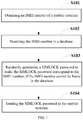
- FIG. 1 is a flow chart of an embodiment of a method for generating a SIMLOCK password according to the present disclosure.
- the present disclosure provides a method for generating a SIMLOCK password, wherein the method may include the steps as the following.
- S101 an IMEI number of a mobile terminal may be obtained.
- the IMEI number is an abbreviation of International Mobile Equipment Identity number.
- the international mobile equipment identification code is an "electronic serial number" composed of 15 digits, which corresponds to each mobile device one by one, and the code is unique in the world. Each mobile device will be assigned a globally unique set of numbers after completion of installation, and the set of numbers from production to initiation into service will be recorded by the manufacturer.
- a SIMLOCK password generating device may establish a connection with the mobile terminal. After successful connection, an IMEI number of the mobile terminal may be obtained. If the IMEI number does not exist, the mobile terminal may be shown to be an illegal mobile terminal, and error information "the IMEI number does not exist" may be returned, with no subsequent steps taken. If the connection fails, proceed with an attempt to connect again. If the connection fails more than a predetermined number of times, for example, 3 times, 5 times, 10 times, or the like, error information "the connection fails" will be returned.
- connection can be made through an Android Debug Bridge (ADB) command, wherein the ADB command is a universal debugging tool provided by Android.
- ADB Android Debug Bridge
- the mobile terminal uses other systems, such as an IOS system, a Symbian system, a Microsoft system, or the like, connection may be made by using a debugging tool corresponding to the system.
- S102 S the IMEI number may be searched in a database.
- the database is configured to store an IMEI number and a SIMLOCK password corresponding to the IMEI number. Upon completion of injection of a password into the mobile terminal, the IMEI number of the mobile terminal and the SIMLOCK password corresponding thereto may be stored in the database to facilitate subsequent searching.
- the IMEI number may be searched for in the database. If the IMEI number already exists in the database, it may indicate that the password has been injected into the mobile terminal without involving a need for further injection, and error information "the password has been injected" may be returned.
- SIMLOCK password may be generated randomly, so that the SIMLOCK password may correspond to the IMEI number.
- SIMLOCK password generating device may randomly generate a SIMLOCK password and send the password to the mobile terminal.
- the SIMLOCK password generating device may be a password generating tool in a computer, or may be an independent password generating device.
- the SIMLOCK password may be a password with a preset number of digits, for example, 20 digits, 15 digits, or the like; may be a digital password; or a random combination of different types of symbols such as numbers, letters and special symbols.
- S104 the SIMLOCK password may be sent to the mobile terminal.
- the SIMLOCK password can be sent to the mobile terminal via an attention (AT) command.
- An AT command set is sent from Terminal Equipment (TE) or Data Terminal Equipment (DTE) to a Terminal Adapter (TA) or Data Circuit Terminal Equipment (DCE).
- TA Terminal Adapter
- DCE Data Circuit Terminal Equipment
- the TE sends the AT command to control functions of a mobile station (MS) to interact with GSM network services.
- the SIMLOCK password may be sent to the mobile terminal through any communication modes, such as Bluetooth, Wi-Fi, and the like.
- the SIMLOCK password which may be randomly generated by a device other than the mobile terminal, may have certain randomness and flexibility; and SIMLOCK passwords of individual mobile terminals may have certain independence and do not affect each other, which can improve security of the mobile terminals.
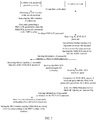
- a SIMLOCK password generating device prior to sending a SIMLOCK password to a mobile terminal, may encrypt the password and send the encrypted data, wherein the password can be encrypted via an MD5 algorithm, a PBKDF2 algorithm or the like.
- security of the password during the transmitting and sending procedures may be improved, thereby preventing the password from being intercepted during the delivery.
- the mobile terminal may receive the SIMLOCK password. Specifically, upon receipt of the encrypted data, the mobile terminal may check integrity of the data by using a corresponding algorithm. If the check is passed, the SIMLOCK password may be obtained via decryption. It may be determined whether the SIMLOCK password has been injected to the mobile terminal, specifically, the determination may be performed by judging whether an injection flag exists in the mobile terminal. Therein, the injection flag may be configured to mark that the SIMLOCK password has been injected into the mobile terminal. If the injection flag already exists, it may indicate that the password has been injected into the mobile terminal without involving a need for further injection, and error information "the password has been injected" is returned.
- the injection flag may indicate that no password has been injected into the mobile terminal, and then the SIMLOCK password may be injected into the mobile terminal.
- the SIMLOCK password may be encrypted via a preset algorithm which can be an MD5 algorithm, a PBKDF2 algorithm, or the like, before being injected and stored into the mobile terminal. In such a way, the security of the password can be further improved.
- SIMLOCK password injection success may be returned and sent to the SIMLOCK password generating device.
- the SIMLOCK password generating device may receive the SIMLOCK password injection success information and send a SIMLOCK password again to the mobile terminal to verify the SIMLOCK password.
- the mobile terminal may receive the SIMLOCK password again and compare the newly received SIMLOCK password with the previously injected SIMLOCK password. If the two passwords are identical, it may indicate that the password has been successfully injected and the verification is passed, and the step of injecting the injection flag may be performed.
- the injection flag may be stored in the mobile terminal to mark that the SIMLOCK password has been injected into the mobile terminal, and at the same time, information "SIMLOCK password verification success" may be returned and sent to the SIMLOCK password generating device. In this way, it may be verified whether there is an error during execution of the method, so as to further improve security of the password.
- the SIMLOCK password generating device may receive the information "SIMLOCK password verification success", and save the IMEI number and the SIMLOCK password corresponding to the IMEI number to the database, so as to facilitate subsequent searching and complete the injection of the SIMLOCK password.
- the SIMLOCK password may be encrypted and verified multiple times, which may further improve security of the SIMLOCK password.
- the SIMLOCK password generating device may randomly generate two different SIMLOCK passwords which may not be interrelated. Then, the two different SIMLOCK passwords may be sent to the mobile terminal for injection. In such a way, the two passwords need to be verified concurrently during decoding. Even if one of the passwords may be deciphered, and the other password may be incorrect, the mobile phone still cannot be unlocked, which may reduce the risk of the password being deciphered and further improve security of the mobile phone.
- FIG. 3 is a flow chart of an embodiment of a method for injecting a SIMLOCK password according to the present disclosure.
- the present disclosure provides a method for injecting a SIMLOCK password, including following steps.
- a mobile terminal may receive a SIMLOCK password.
- S302 it may be determined whether the mobile terminal has an injection flag configured to mark that the SIMLOCK password has been injected into the mobile terminal.
- the SIMLOCK password may be injected into the mobile terminal.
- the mobile terminal may be a mobile phone, a tablet computer, a laptop computer, or the like.
- the detailed steps of implementing the method are the same as those described in the foregoing embodiments, and thus are omitted herein. For details, refer to the description of the corresponding embodiments as given above.
- FIG. 4 is a structural diagram of an embodiment of a SIMLOCK password generating device according to the present disclosure.
- the present disclosure provides a SIMLOCK password generating device, which may include a processor 401, a memory 402 and a communication circuit 403. Therein, the processor 401 may be coupled to the memory 402 and the communication circuit 403.
- the processor 401 may be configured to receive a SIMLOCK password through the communication circuit 403.
- the processor 401 may be further configured to determine whether the processor itself has an injection flag, wherein the injection flag is configured to mark that the SIMLOCK password has been injected into the mobile terminal.
- the processor 401 may be further configured to inject the SIMLOCK password into the memory 402 when there is no injection flag.
- the processor 401 may be further configured to send SIMLOCK password injection success information through the communication circuit 403, after injecting the SIMLOCK password into the memory 402.
- the processor 401 may be further configured to receive a SIMLOCK password again through the communication circuit 403 and to compare the SIMLOCK password received again with the previously injected SIMLOCK password.
- the processor 401 may be further configured to inject an injection flag into the memory 402 and to send SIMLOCK password verification success information through the communication circuit 403.
- the processor 401 may be specifically configured to receive two different SIMLOCK passwords through the communication circuit 403.
- the processor 401 may be specifically configured to inject the received two different SIMLOCK passwords into the memory 402.
- the processor 401 may be specifically configured to receive two different SIMLOCK passwords again through the communication circuit 403 and compare the two different SIMLOCK passwords received again with the previously injected two SIMLOCK passwords.
- the SIMLOCK password generating device may be a password generating tool in the computer, and can also be an independent password generating device.
- FIG. 5 is a structural diagram of an embodiment of a mobile terminal according to the present disclosure.
- the present disclosure provides a mobile terminal, which may include a processor 501, a non-transitory memory 502 and a communication circuit 503. Therein, the processor 501 may be coupled to the memory 502 and the communication circuit 503.
- the non-transitory memory 502 may be configured to store an IMEI number and a SIMLOCK password corresponding to the IMEI number.
- the processor 501 may be configured to obtain the IMEI number of the mobile terminal through the communication circuit 503 and to search for the IMEI number in a database of the non-transitory memory 502, wherein the database may be configured to store the IMEI number.
- the processor 501 may be further configured to randomly generate a SIMLOCK password when the IMEI number is not found, so that the SIMLOCK password corresponds to the IMEI number.
- the processor 501 may be further configured to send the SIMLOCK password to the mobile terminal via the communication circuit 503.
- the processor 501 may be specifically configured to randomly generate two different SIMLOCK passwords when the IMEI number is not found.
- the processor 501 may be further configured to receive information of SIMLOCK password injection success via the communication circuit 503 and to send a SIMLOCK password again to the mobile terminal via the communication circuit 503 to verify the SIMLOCK password.
- the processor 501 is further configured to receive SIMLOCK password verification success information via the communication circuit 503 and save the IMEI number and the SIMLOCK password corresponding to the IMEI number to the database of the memory 50.
- the database is configured to store the IMEI number and the SIMLOCK password corresponding to the IMEI number.
- the mobile terminal can be a mobile phone, a tablet computer, a laptop computer, or the like.
- FIG. 6 is a structural diagram of an embodiment of a device having a storage function according to the present disclosure.
- the present disclosure provides a device 60 having a storage function.
- the storage device 60 may store a program 601 which, when executed, implements the above method.
- the specific working process is identical to that described in the above method embodiments, and therefore is omitted herein.
- the device having a storage function can be a portable storage medium such as a USB flash drive, an optical disk, and can also be a terminal, a server, or the like.
- the technical solutions of the present disclosure, or part contributive to the prior art, or all or part of the technical solutions may be embodied in the form of a software product.
- the computer software product which is stored in a storage device, comprises a plurality of instructions to cause a computer device (which can be a personal computer, a server, a network device or the like) or a processor to execute all or part of the steps of the method according to each embodiment of the present disclosure.
- the foregoing storage device includes various devices which can store program codes, such as a USB flash drive, a mobile hard disk, a read-only memory (ROM), a random access memory (RAM), a magnetic disk or an optical disk, and the like.
Landscapes
- Engineering & Computer Science (AREA)
- Computer Security & Cryptography (AREA)
- Computer Networks & Wireless Communication (AREA)
- Signal Processing (AREA)
- General Engineering & Computer Science (AREA)
- Theoretical Computer Science (AREA)
- Computing Systems (AREA)
- Computer Hardware Design (AREA)
- Databases & Information Systems (AREA)
- Computational Linguistics (AREA)
- Data Mining & Analysis (AREA)
- Physics & Mathematics (AREA)
- General Physics & Mathematics (AREA)
- Telephone Function (AREA)
- Mobile Radio Communication Systems (AREA)
Abstract
Description
- The present disclosure relates to the field of communication technologies, particularly to a SIMLOCK password generating and injecting method and device.
- With the development of society, mobile phones become increasingly popular, and are used by almost everyone. If a mobile phone intends to achieve a communication function, a SIM card (Subscriber Identification Module, SIM; also known as a user identification card) needs to be installed. The SIM card is a personal data card of a digital mobile phone and uniquely identifies a user; it is manufactured by an encryption method and stores information of the digital mobile phone user, the encrypted key and the user's phonebook, etc.; it is provided for the GSM system to authenticate the user identity and encrypt voice information of the user call; and at the same time, the user completes connection with the system and information exchange through the SIM card.
- At present, operators and users have increasingly higher requirements for security of mobile phones, especially security of SIM cards. SIMLOCK passwords of many existing mobile phones generate corresponding passwords through algorithms, with IMEI numbers of the mobile phones as inputs. The algorithms are built into software, and have been integrated therein when the software is compiled, and the passwords are determined accordingly. The inventor of the present disclosure has found out through long-term research and development that there are still some shortcomings in the existing methods. For example, a hacker can change the password of the mobile phone by tampering the IMEI number, thereby cracking into the mobile phone; or if the algorithm is deciphered, passwords of all the mobile phones can be known, which means the security factor is not high enough. Therefore, there is an urgent need to develop a more secure password generating method.
- The technical problem mainly solved by the present disclosure is to provide a SIMLOCK password generating and injecting method and device, which can improve security of the mobile terminal.
- In order to solve the above technical problem, a technical solution adopted by the present disclosure is to provide a method for injecting a SIMLOCK password, wherein the method may include: a mobile terminal receiving a SIMLOCK password sent by a SIMLOCK password generating device; the mobile terminal determining whether the mobile terminal itself has an injection flag configured to mark that the SIMLOCK password has already been injected into the mobile terminal; when the injection flag does not exist, the mobile terminal injecting the SIMLOCK password into a non-transitory memory thereof; after successful injection, the mobile terminal returning information of successful SIMLOCK password injection to the SIMLOCK password generating device; the mobile terminal again receiving a SIMLOCK password sent by the SIMLOCK password generating device; the mobile terminal comparing the SIMLOCK password received again with the previously injected SIMLOCK password; and when the two passwords are identical, the mobile terminal injecting the injection flag into its memory and returning information of successful SIMLOCK password verification.
- In order to solve the above technical problem, another technical solution adopted by the present disclosure is to provide a method for generating a SIMLOCK password, wherein the method may include: obtaining an IMEI number of a mobile terminal; searching for the IMEI number in a database; when the IMEI number is not found, randomly generating a SIMLOCK password to make the SIMLOCK password correspond to the IMEI number; and sending the SIMLOCK password to the mobile terminal, wherein the database is configured to store the IMEI number and the SIMLOCK password corresponding to the IMEI number.
- In order to solve the above technical problem, another technical solution adopted by the present disclosure is to provide a method for injecting a SIMLOCK password, wherein the method may include: a mobile terminal receiving a SIMLOCK password; the mobile terminal determining whether the mobile terminal itself has an injection flag configured to mark that the SIMLOCK password has already been injected into the mobile terminal; when the injection flag does not exist, injecting a SIMLOCK password into the mobile terminal.
- In order to solve the above technical problem, another technical solution adopted by the present disclosure is to provide a SIMLOCK password generating device. The device may include a processor, a non-transitory memory and a communication circuit. Therein, the processor is coupled to the non-transitory memory and the communication circuit, and executes instructions during operation to implement the above method for generating a SIMLOCK password.
- In order to solve the above technical problem, another technical solution adopted by the present disclosure is to provide a mobile terminal, including a processor, a non-transitory memory and a communication circuit, wherein the processor is coupled to the non-transitory memory and the communication circuit, and executes instructions during operation to implement the above method for generating a SIMLOCK password.
- In order to solve the above technical problem, another technical solution adopted by the present disclosure is to provide a device having a storage function. The device may include a stored program which, when executed, implements the above method.
- Differentiating from existing technologies in the art, the present disclosure is to provide a method for generating a SIMLOCK password, which may include: obtaining an IMEI number of a mobile terminal; searching for the IMEI number in a database; when the IMEI number is not found, randomly generating a SIMLOCK password to make the SIMLOCK password correspond to the IMEI number; and sending the SIMLOCK password to the mobile terminal, wherein the database is configured to store the IMEI number and the SIMLOCK password corresponding to the IMEI number. The SIMLOCK password of the present disclosure, which is randomly generated by a device other than the mobile terminal, has certain randomness and flexibility. SIMLOCK passwords of individual mobile terminals have certain independence and do not affect each other. Through the above method, it is possible to improve security of the mobile terminal.
-
-
FIG. 1 is a flow chart of an embodiment of a method for generating a SIMLOCK password according to the present disclosure. -
FIG. 2 is a flow chart of an embodiment of a method for generating a SIMLOCK password according to the present disclosure. -
FIG. 3 is a flow chart of an embodiment of a method for injecting a SIMLOCK password according to the present disclosure. -
FIG. 4 is a structural diagram of an embodiment of a SIMLOCK password generating device according to the present disclosure. -
FIG. 5 is a structural diagram of an embodiment of a mobile terminal according to the present disclosure. -
FIG. 6 is a structural diagram of an embodiment of a device having a storage function according to the present disclosure. - In order to make the objects, technical solutions and effects of the present disclosure clearer, the present disclosure will be further detailed below with reference to the accompanying drawings and embodiments.
- Referring to
FIG. 1 , which is a flow chart of an embodiment of a method for generating a SIMLOCK password according to the present disclosure. The present disclosure provides a method for generating a SIMLOCK password, wherein the method may include the steps as the following. - S101: an IMEI number of a mobile terminal may be obtained.
- The IMEI number is an abbreviation of International Mobile Equipment Identity number. The international mobile equipment identification code is an "electronic serial number" composed of 15 digits, which corresponds to each mobile device one by one, and the code is unique in the world. Each mobile device will be assigned a globally unique set of numbers after completion of installation, and the set of numbers from production to initiation into service will be recorded by the manufacturer.
- Specifically, a SIMLOCK password generating device may establish a connection with the mobile terminal. After successful connection, an IMEI number of the mobile terminal may be obtained. If the IMEI number does not exist, the mobile terminal may be shown to be an illegal mobile terminal, and error information "the IMEI number does not exist" may be returned, with no subsequent steps taken. If the connection fails, proceed with an attempt to connect again. If the connection fails more than a predetermined number of times, for example, 3 times, 5 times, 10 times, or the like, error information "the connection fails" will be returned.
- In an embodiment, if the mobile terminal uses an Android system, connection can be made through an Android Debug Bridge (ADB) command, wherein the ADB command is a universal debugging tool provided by Android. In other embodiments, if the mobile terminal uses other systems, such as an IOS system, a Symbian system, a Microsoft system, or the like, connection may be made by using a debugging tool corresponding to the system.
- S102: S the IMEI number may be searched in a database.
- The database is configured to store an IMEI number and a SIMLOCK password corresponding to the IMEI number. Upon completion of injection of a password into the mobile terminal, the IMEI number of the mobile terminal and the SIMLOCK password corresponding thereto may be stored in the database to facilitate subsequent searching.
- Specifically, the IMEI number may be searched for in the database. If the IMEI number already exists in the database, it may indicate that the password has been injected into the mobile terminal without involving a need for further injection, and error information "the password has been injected" may be returned.
- S103: If the IMEI number is not found, a SIMLOCK password may be generated randomly, so that the SIMLOCK password may correspond to the IMEI number.
- Specifically, if there is no IMEI number in the database, it may indicate that no password has been injected into the mobile terminal; and a SIMLOCK password generating device may randomly generate a SIMLOCK password and send the password to the mobile terminal. The SIMLOCK password generating device may be a password generating tool in a computer, or may be an independent password generating device. The SIMLOCK password may be a password with a preset number of digits, for example, 20 digits, 15 digits, or the like; may be a digital password; or a random combination of different types of symbols such as numbers, letters and special symbols.
- S104: the SIMLOCK password may be sent to the mobile terminal.
- Specifically, the SIMLOCK password can be sent to the mobile terminal via an attention (AT) command. An AT command set is sent from Terminal Equipment (TE) or Data Terminal Equipment (DTE) to a Terminal Adapter (TA) or Data Circuit Terminal Equipment (DCE). Via the TA, the TE sends the AT command to control functions of a mobile station (MS) to interact with GSM network services. The SIMLOCK password may be sent to the mobile terminal through any communication modes, such as Bluetooth, Wi-Fi, and the like.
- By the method of the above embodiment, the SIMLOCK password, which may be randomly generated by a device other than the mobile terminal, may have certain randomness and flexibility; and SIMLOCK passwords of individual mobile terminals may have certain independence and do not affect each other, which can improve security of the mobile terminals.
- Referring to
FIG. 2 , which is a flow chart of another embodiment of a method for generating a SIMLOCK password according to the present disclosure. In this embodiment, a SIMLOCK password generating device, prior to sending a SIMLOCK password to a mobile terminal, may encrypt the password and send the encrypted data, wherein the password can be encrypted via an MD5 algorithm, a PBKDF2 algorithm or the like. In such manner, security of the password during the transmitting and sending procedures may be improved, thereby preventing the password from being intercepted during the delivery. - Subsequently, the mobile terminal may receive the SIMLOCK password. Specifically, upon receipt of the encrypted data, the mobile terminal may check integrity of the data by using a corresponding algorithm. If the check is passed, the SIMLOCK password may be obtained via decryption. It may be determined whether the SIMLOCK password has been injected to the mobile terminal, specifically, the determination may be performed by judging whether an injection flag exists in the mobile terminal. Therein, the injection flag may be configured to mark that the SIMLOCK password has been injected into the mobile terminal. If the injection flag already exists, it may indicate that the password has been injected into the mobile terminal without involving a need for further injection, and error information "the password has been injected" is returned. If the injection flag does not exist, it may indicate that no password has been injected into the mobile terminal, and then the SIMLOCK password may be injected into the mobile terminal. Specifically, the SIMLOCK password may be encrypted via a preset algorithm which can be an MD5 algorithm, a PBKDF2 algorithm, or the like, before being injected and stored into the mobile terminal. In such a way, the security of the password can be further improved.
- Upon completion of the SIMLOCK password injection and storage, information "SIMLOCK password injection success" may be returned and sent to the SIMLOCK password generating device. The SIMLOCK password generating device may receive the SIMLOCK password injection success information and send a SIMLOCK password again to the mobile terminal to verify the SIMLOCK password. The mobile terminal may receive the SIMLOCK password again and compare the newly received SIMLOCK password with the previously injected SIMLOCK password. If the two passwords are identical, it may indicate that the password has been successfully injected and the verification is passed, and the step of injecting the injection flag may be performed. Specifically, the injection flag may be stored in the mobile terminal to mark that the SIMLOCK password has been injected into the mobile terminal, and at the same time, information "SIMLOCK password verification success" may be returned and sent to the SIMLOCK password generating device. In this way, it may be verified whether there is an error during execution of the method, so as to further improve security of the password.
- The SIMLOCK password generating device may receive the information "SIMLOCK password verification success", and save the IMEI number and the SIMLOCK password corresponding to the IMEI number to the database, so as to facilitate subsequent searching and complete the injection of the SIMLOCK password.
- Through the method of the above embodiment, the SIMLOCK password may be encrypted and verified multiple times, which may further improve security of the SIMLOCK password.
- Optionally, in another embodiment, the SIMLOCK password generating device may randomly generate two different SIMLOCK passwords which may not be interrelated. Then, the two different SIMLOCK passwords may be sent to the mobile terminal for injection. In such a way, the two passwords need to be verified concurrently during decoding. Even if one of the passwords may be deciphered, and the other password may be incorrect, the mobile phone still cannot be unlocked, which may reduce the risk of the password being deciphered and further improve security of the mobile phone.
- Referring to
FIG. 3 , which is a flow chart of an embodiment of a method for injecting a SIMLOCK password according to the present disclosure. The present disclosure provides a method for injecting a SIMLOCK password, including following steps. - S301: a mobile terminal may receive a SIMLOCK password.
- S302: it may be determined whether the mobile terminal has an injection flag configured to mark that the SIMLOCK password has been injected into the mobile terminal.
- S303: If the injection flag does not exist, the SIMLOCK password may be injected into the mobile terminal.
- Specifically, the mobile terminal may be a mobile phone, a tablet computer, a laptop computer, or the like. The detailed steps of implementing the method are the same as those described in the foregoing embodiments, and thus are omitted herein. For details, refer to the description of the corresponding embodiments as given above.
- Referring to
FIG. 4 , which is a structural diagram of an embodiment of a SIMLOCK password generating device according to the present disclosure. The present disclosure provides a SIMLOCK password generating device, which may include aprocessor 401, amemory 402 and acommunication circuit 403. Therein, theprocessor 401 may be coupled to thememory 402 and thecommunication circuit 403. - The
processor 401 may be configured to receive a SIMLOCK password through thecommunication circuit 403. - The
processor 401 may be further configured to determine whether the processor itself has an injection flag, wherein the injection flag is configured to mark that the SIMLOCK password has been injected into the mobile terminal. - The
processor 401 may be further configured to inject the SIMLOCK password into thememory 402 when there is no injection flag. - In other embodiments, the
processor 401 may be further configured to send SIMLOCK password injection success information through thecommunication circuit 403, after injecting the SIMLOCK password into thememory 402. - The
processor 401 may be further configured to receive a SIMLOCK password again through thecommunication circuit 403 and to compare the SIMLOCK password received again with the previously injected SIMLOCK password. - When the two passwords are identical, the
processor 401 may be further configured to inject an injection flag into thememory 402 and to send SIMLOCK password verification success information through thecommunication circuit 403. - The
processor 401 may be specifically configured to receive two different SIMLOCK passwords through thecommunication circuit 403. - The
processor 401 may be specifically configured to inject the received two different SIMLOCK passwords into thememory 402. - The
processor 401 may be specifically configured to receive two different SIMLOCK passwords again through thecommunication circuit 403 and compare the two different SIMLOCK passwords received again with the previously injected two SIMLOCK passwords. - The specific working process is identical to that described in the above method embodiments, and therefore is omitted herein. For details, refer to the description of the corresponding method steps as given above. Therein, the SIMLOCK password generating device may be a password generating tool in the computer, and can also be an independent password generating device.
- Referring to
FIG. 5 , which is a structural diagram of an embodiment of a mobile terminal according to the present disclosure. The present disclosure provides a mobile terminal, which may include aprocessor 501, anon-transitory memory 502 and acommunication circuit 503. Therein, theprocessor 501 may be coupled to thememory 502 and thecommunication circuit 503. - The
non-transitory memory 502 may be configured to store an IMEI number and a SIMLOCK password corresponding to the IMEI number. Theprocessor 501 may be configured to obtain the IMEI number of the mobile terminal through thecommunication circuit 503 and to search for the IMEI number in a database of thenon-transitory memory 502, wherein the database may be configured to store the IMEI number. Theprocessor 501 may be further configured to randomly generate a SIMLOCK password when the IMEI number is not found, so that the SIMLOCK password corresponds to the IMEI number. Theprocessor 501 may be further configured to send the SIMLOCK password to the mobile terminal via thecommunication circuit 503. - In other embodiments, the
processor 501 may be specifically configured to randomly generate two different SIMLOCK passwords when the IMEI number is not found. - The
processor 501 may be further configured to receive information of SIMLOCK password injection success via thecommunication circuit 503 and to send a SIMLOCK password again to the mobile terminal via thecommunication circuit 503 to verify the SIMLOCK password. - The
processor 501 is further configured to receive SIMLOCK password verification success information via thecommunication circuit 503 and save the IMEI number and the SIMLOCK password corresponding to the IMEI number to the database of the memory 50. Therein, the database is configured to store the IMEI number and the SIMLOCK password corresponding to the IMEI number. - The specific working process is identical to that described in the above method embodiments, and therefore is not omitted herein. For details, refer to the description of the corresponding method steps as given above. The mobile terminal can be a mobile phone, a tablet computer, a laptop computer, or the like.
- Referring to
FIG. 6 , which is a structural diagram of an embodiment of a device having a storage function according to the present disclosure. The present disclosure provides adevice 60 having a storage function. Thestorage device 60 may store aprogram 601 which, when executed, implements the above method. The specific working process is identical to that described in the above method embodiments, and therefore is omitted herein. For details, refer to the description of the corresponding method steps as given above. The device having a storage function can be a portable storage medium such as a USB flash drive, an optical disk, and can also be a terminal, a server, or the like. - The technical solutions of the present disclosure, or part contributive to the prior art, or all or part of the technical solutions may be embodied in the form of a software product. The computer software product, which is stored in a storage device, comprises a plurality of instructions to cause a computer device (which can be a personal computer, a server, a network device or the like) or a processor to execute all or part of the steps of the method according to each embodiment of the present disclosure. The foregoing storage device includes various devices which can store program codes, such as a USB flash drive, a mobile hard disk, a read-only memory (ROM), a random access memory (RAM), a magnetic disk or an optical disk, and the like.
- The above description is about embodiments of the present disclosure only, but does not limit the scope of the present disclosure. Equivalent structures or transformation of processes based on the specification and appended figures of the present disclosure, which are used directly or indirectly in other related arts, should be within the scope of the present disclosure.
Claims (14)
- A method for injecting a SIMLOCK password, wherein the method comprises:a mobile terminal receiving a SIMLOCK password, which is sent by a SIMLOCK password generating device;the mobile terminal determining whether the mobile terminal itself has an injection flag configured to mark that the SIMLOCK password has already been injected into the mobile terminal;the mobile terminal injecting the SIMLOCK password into a non-transitory memory thereof when the injection flag does not exist;after successful injection, the mobile terminal returning information of successful injection of SIMLOCK password to the SIMLOCK password generating device;the mobile terminal again receiving a SIMLOCK password repeatedly sent by the SIMLOCK password generating device;the mobile terminal comparing the SIMLOCK password received again with the previously injected SIMLOCK password; andthe mobile terminal injecting the injection flag into the non-transitory memory thereof and returning information of successful verification of SIMLOCK password when the two passwords are identical.
- The method for injecting a SIMLOCK password according to claim 1, wherein the mobile terminal receiving the SIMLOCK password sent by the SIMLOCK password generating device comprises:
the mobile terminal receiving two different SIMLOCK passwords sent by the SIMLOCK password generating device. - The method for injecting a SIMLOCK password according to claim 2, wherein the mobile terminal injecting the SIMLOCK password into the non-transitory memory thereof comprises:
the mobile terminal injecting the received two different SIMLOCK passwords into the non-transitory memory thereof. - The method for injecting a SIMLOCK password according to claim 2, wherein the mobile terminal again receiving the SIMLOCK password repeatedly sent by the SIMLOCK password generating device and said comparing the SIMLOCK password received again with the previously injected SIMLOCK password comprise:the mobile terminal again receiving two different SIMLOCK passwords repeatedly sent by the SIMLOCK password generating device;the mobile terminal comparing the two different SIMLOCK passwords received again with the previously injected two SIMLOCK passwords; andthe mobile terminal injecting an injection flag into the non-transitory memory thereof and returning information of successful verification of SIMLOCK password when the two password comparison results are identical.
- A method for generating a SIMLOCK password, wherein the method comprises:a SIMLOCK password generating device obtaining an IMEI number of a mobile terminal;the SIMLOCK password generating device searching the IMEI number in a database;the SIMLOCK password generating device randomly generates a SIMLOCK password such that the SIMLOCK password corresponds to the IMEI number when the IMEI number is not found; andthe SIMLOCK password generating device sending the SIMLOCK password to the mobile terminal,wherein the database is configured to store the IMEI number and the SIMLOCK password corresponding to the IMEI number.
- The method for generating a SIMLOCK password according to claim 5, wherein the SIMLOCK password generating device randomly generating the SIMLOCK password when the IMEI number is not found, comprises:
the SIMLOCK password generating device randomly generating two different SIMLOCK passwords and sending the two SIMLOCK passwords to the mobile terminal. - The method for generating a SIMLOCK password according to claim 5, wherein the method further comprises:the SIMLOCK password generating device receiving information of successful injection of SIMLOCK password; andthe SIMLOCK password generating device sending again the SIMLOCK password to the mobile terminal to perform consistency verification on the SIMLOCK password.
- The method for generating a SIMLOCK password according to claim 5, wherein the method further comprises:the SIMLOCK password generating device receiving information of successful verification of SIMLOCK password; andsaving the IMEI number and the SIMLOCK password corresponding to the IMEI number in the database.
- A mobile terminal, wherein the mobile terminal comprises a processor, a non-transitory memory, and a communication circuit, wherein the processor is coupled to the non-transitory memory and the communication circuit, the processor is configured to:receive a SIMLOCK password through the communication circuit,determine whether the processor itself has an injection flag configured to mark that the SIMLOCK password has been injected into the mobile terminal; andinject the SIMLOCK password into the non-transitory memory when the injection flag does not exist.
- The mobile terminal according to claim 9, wherein the processor is further configured to send information of successful injection of SIMLOCK password via the communication circuit after injecting the SIMLOCK password into the non-transitory memory.
- The mobile terminal according to claim 9, wherein the processor is further configured to receive a SIMLOCK password again via the communication circuit and compare the SIMLOCK password received again with the previously injected SIMLOCK password; and when the two passwords are identical, the processor is further configured to inject an injection flag into the non-transitory memory and to send information of successful verification of the SIMLOCK password via the communication circuit.
- The mobile terminal according to claim 9, wherein the processor is specifically configured to receive two different SIMLOCK passwords via the communication circuit.
- The mobile terminal according to claim 12, wherein the processor is specifically configured to inject the received two different SIMLOCK passwords into the non-transitory memory.
- The mobile terminal according to claim 12, wherein the processor is specifically configured to receive two different SIMLOCK passwords again via the communication circuit and to compare the two different SIMLOCK passwords received again with the previously injected two SIMLOCK passwords; and when the two password comparison results are identical, the mobile terminal injects an injection flag into the non-transitory memory thereof and returns information of successful verification of SIMLOCK password.
Applications Claiming Priority (2)
| Application Number | Priority Date | Filing Date | Title |
|---|---|---|---|
| CN201710595676.3A CN107635218B (en) | 2017-07-20 | 2017-07-20 | Method and device for generating and injecting SIMLOCK password |
| PCT/CN2018/096365 WO2019015660A1 (en) | 2017-07-20 | 2018-07-20 | Method and device for generating and injecting simlock password |
Publications (3)
| Publication Number | Publication Date |
|---|---|
| EP3657836A4 EP3657836A4 (en) | 2020-05-27 |
| EP3657836A1 true EP3657836A1 (en) | 2020-05-27 |
| EP3657836B1 EP3657836B1 (en) | 2023-08-30 |
Family
ID=61099461
Family Applications (1)
| Application Number | Title | Priority Date | Filing Date |
|---|---|---|---|
| EP18835693.5A Active EP3657836B1 (en) | 2017-07-20 | 2018-07-20 | Method and device for generating and injecting simlock password |
Country Status (4)
| Country | Link |
|---|---|
| US (1) | US10841797B2 (en) |
| EP (1) | EP3657836B1 (en) |
| CN (1) | CN107635218B (en) |
| WO (1) | WO2019015660A1 (en) |
Cited By (1)
| Publication number | Priority date | Publication date | Assignee | Title |
|---|---|---|---|---|
| EP3554012B1 (en) * | 2018-04-13 | 2021-07-14 | Rohde & Schwarz GmbH & Co. KG | Test arrangement and test method |
Families Citing this family (1)
| Publication number | Priority date | Publication date | Assignee | Title |
|---|---|---|---|---|
| CN107635218B (en) * | 2017-07-20 | 2020-08-21 | 捷开通讯(深圳)有限公司 | Method and device for generating and injecting SIMLOCK password |
Family Cites Families (15)
| Publication number | Priority date | Publication date | Assignee | Title |
|---|---|---|---|---|
| TWI240529B (en) * | 2003-10-06 | 2005-09-21 | Chunghwa Telecom Co Ltd | Intelligence configuration identity authentication system for wireless communication |
| CN100385983C (en) * | 2005-01-30 | 2008-04-30 | 华为技术有限公司 | A key setting method |
| US8171527B2 (en) * | 2007-06-26 | 2012-05-01 | General Instrument Corporation | Method and apparatus for securing unlock password generation and distribution |
| US8880894B2 (en) * | 2008-12-30 | 2014-11-04 | Motorola Mobility Llc | Public key infrastructure-based first inserted subscriber identity module subsidy lock |
| US20120149329A1 (en) | 2010-12-10 | 2012-06-14 | Motorola Mobility, Inc. | Method and apparatus for providing a subsidy-lock unlock procedure |
| CN102752754B (en) | 2012-06-21 | 2016-05-25 | 华为终端有限公司 | Subscriber Identity Module lock data are carried out method and the mobile terminal of safety certification |
| CN104185167B (en) | 2013-05-20 | 2019-03-01 | 华为技术有限公司 | A method and terminal for updating terminal lock card information |
| US9906372B2 (en) | 2013-06-03 | 2018-02-27 | Intel Deutschland Gmbh | Authentication devices, key generator devices, methods for controlling an authentication device, and methods for controlling a key generator |
| CN104519479B (en) * | 2013-09-27 | 2019-06-11 | 中兴通讯股份有限公司 | A terminal and method for locking and unlocking the network |
| CN104811926A (en) * | 2014-01-26 | 2015-07-29 | 中兴通讯股份有限公司 | Mobile terminal network-locking and card-locking methods, devices, mobile terminal and SIM card |
| CN105407070A (en) * | 2014-07-28 | 2016-03-16 | 小米科技有限责任公司 | Logging-in authorization method and device |
| CN105704704A (en) | 2014-11-24 | 2016-06-22 | 中兴通讯股份有限公司 | Method and mobile terminal for realizing locking of user identification card |
| CN104735251A (en) * | 2015-03-17 | 2015-06-24 | 上海天奕达电子科技有限公司 | Method and device for unlocking mobile terminals |
| US9813912B2 (en) * | 2016-03-30 | 2017-11-07 | T-Mobile Usa, Inc. | Secure adaptive device locking |
| CN107635218B (en) | 2017-07-20 | 2020-08-21 | 捷开通讯(深圳)有限公司 | Method and device for generating and injecting SIMLOCK password |
-
2017
- 2017-07-20 CN CN201710595676.3A patent/CN107635218B/en active Active
-
2018
- 2018-07-20 WO PCT/CN2018/096365 patent/WO2019015660A1/en not_active Ceased
- 2018-07-20 EP EP18835693.5A patent/EP3657836B1/en active Active
- 2018-07-20 US US16/479,912 patent/US10841797B2/en active Active
Cited By (1)
| Publication number | Priority date | Publication date | Assignee | Title |
|---|---|---|---|---|
| EP3554012B1 (en) * | 2018-04-13 | 2021-07-14 | Rohde & Schwarz GmbH & Co. KG | Test arrangement and test method |
Also Published As
| Publication number | Publication date |
|---|---|
| EP3657836A4 (en) | 2020-05-27 |
| US10841797B2 (en) | 2020-11-17 |
| US20190387400A1 (en) | 2019-12-19 |
| EP3657836B1 (en) | 2023-08-30 |
| CN107635218B (en) | 2020-08-21 |
| CN107635218A (en) | 2018-01-26 |
| WO2019015660A1 (en) | 2019-01-24 |
Similar Documents
| Publication | Publication Date | Title |
|---|---|---|
| EP3723400B1 (en) | Method for unlocking sim card and mobile terminal | |
| US9686399B2 (en) | Protection of a wireless communications device against unauthorized use | |
| CN112771826A (en) | Application program login method, application program login device and mobile terminal | |
| CN113038451B (en) | Machine-card binding method and device, communication module and storage medium | |
| EP3528160A1 (en) | Method, system and terminal for encrypting/decrypting application program on communication terminal | |
| EP3099090B1 (en) | Network locking or card locking method and device for a mobile terminal, terminal, sim card, storage media | |
| CN104519479A (en) | Methods for terminal to lock net and unlock net | |
| CN106792637B (en) | International mobile equipment identification number wiring method, device and mobile terminal | |
| CN102149074B (en) | A kind of method that terminal and smart card are locked or unlock and device | |
| CN107105082B (en) | A method for unlocking a network of a terminal, a method and device for starting up | |
| CN104268756A (en) | Mobile payment method and system | |
| WO2018010480A1 (en) | Network locking method for esim card, terminal, and network locking authentication server | |
| CN102667806B (en) | Chip card, electronic system and method performed by chip card and computer program product | |
| US10841797B2 (en) | Method for generating and injecting SIMLOCK password and device for the same | |
| CN107508784A (en) | Application login method and terminal device | |
| EP2985712B1 (en) | Application encryption processing method, apparatus, and terminal | |
| CN109033795B (en) | Method for unlocking terminal with camera and terminal | |
| CN107277263A (en) | Terminal control method and device | |
| CN103108316B (en) | Air card-writing authentication method, device and system | |
| CN107438078B (en) | Application safety protection system and method | |
| CN110909366A (en) | Anti-flashing method and system based on software end encryption | |
| CN112822041B (en) | Information configuration method and device, mobile terminal and computer readable storage medium | |
| CN110191464B (en) | Method and system for preventing SIM card from being stolen | |
| CN112566124B (en) | Key generation and encryption and decryption method and device and SIM card chip | |
| WO2017185461A1 (en) | Method and system for recovering tampered key information of virtual subscriber identity module |
Legal Events
| Date | Code | Title | Description |
|---|---|---|---|
| STAA | Information on the status of an ep patent application or granted ep patent |
Free format text: STATUS: THE INTERNATIONAL PUBLICATION HAS BEEN MADE |
|
| PUAI | Public reference made under article 153(3) epc to a published international application that has entered the european phase |
Free format text: ORIGINAL CODE: 0009012 |
|
| STAA | Information on the status of an ep patent application or granted ep patent |
Free format text: STATUS: REQUEST FOR EXAMINATION WAS MADE |
|
| 17P | Request for examination filed |
Effective date: 20200109 |
|
| A4 | Supplementary search report drawn up and despatched |
Effective date: 20200409 |
|
| AK | Designated contracting states |
Kind code of ref document: A1 Designated state(s): AL AT BE BG CH CY CZ DE DK EE ES FI FR GB GR HR HU IE IS IT LI LT LU LV MC MK MT NL NO PL PT RO RS SE SI SK SM TR |
|
| AX | Request for extension of the european patent |
Extension state: BA ME |
|
| DAV | Request for validation of the european patent (deleted) | ||
| DAX | Request for extension of the european patent (deleted) | ||
| STAA | Information on the status of an ep patent application or granted ep patent |
Free format text: STATUS: EXAMINATION IS IN PROGRESS |
|
| 17Q | First examination report despatched |
Effective date: 20211119 |
|
| REG | Reference to a national code |
Ref legal event code: R079 Free format text: PREVIOUS MAIN CLASS: H04W0012080000 Ipc: H04L0009320000 Ref country code: DE Ref document number: 602018056619 Country of ref document: DE |
|
| GRAP | Despatch of communication of intention to grant a patent |
Free format text: ORIGINAL CODE: EPIDOSNIGR1 |
|
| STAA | Information on the status of an ep patent application or granted ep patent |
Free format text: STATUS: GRANT OF PATENT IS INTENDED |
|
| RIC1 | Information provided on ipc code assigned before grant |
Ipc: H04W 12/06 20090101ALI20230208BHEP Ipc: H04W 88/02 20090101ALI20230208BHEP Ipc: H04W 12/12 20090101ALI20230208BHEP Ipc: H04M 1/725 20060101ALI20230208BHEP Ipc: H04M 1/67 20060101ALI20230208BHEP Ipc: H04W 8/24 20090101ALI20230208BHEP Ipc: H04W 8/18 20090101ALI20230208BHEP Ipc: H04W 12/08 20090101ALI20230208BHEP Ipc: H04L 9/32 20060101AFI20230208BHEP |
|
| INTG | Intention to grant announced |
Effective date: 20230228 |
|
| GRAS | Grant fee paid |
Free format text: ORIGINAL CODE: EPIDOSNIGR3 |
|
| P01 | Opt-out of the competence of the unified patent court (upc) registered |
Effective date: 20230613 |
|
| GRAA | (expected) grant |
Free format text: ORIGINAL CODE: 0009210 |
|
| STAA | Information on the status of an ep patent application or granted ep patent |
Free format text: STATUS: THE PATENT HAS BEEN GRANTED |
|
| AK | Designated contracting states |
Kind code of ref document: B1 Designated state(s): AL AT BE BG CH CY CZ DE DK EE ES FI FR GB GR HR HU IE IS IT LI LT LU LV MC MK MT NL NO PL PT RO RS SE SI SK SM TR |
|
| REG | Reference to a national code |
Ref country code: GB Ref legal event code: FG4D |
|
| REG | Reference to a national code |
Ref country code: CH Ref legal event code: EP |
|
| REG | Reference to a national code |
Ref country code: DE Ref legal event code: R096 Ref document number: 602018056619 Country of ref document: DE |
|
| REG | Reference to a national code |
Ref country code: IE Ref legal event code: FG4D |
|
| REG | Reference to a national code |
Ref country code: LT Ref legal event code: MG9D |
|
| REG | Reference to a national code |
Ref country code: NL Ref legal event code: MP Effective date: 20230830 |
|
| REG | Reference to a national code |
Ref country code: AT Ref legal event code: MK05 Ref document number: 1606835 Country of ref document: AT Kind code of ref document: T Effective date: 20230830 |
|
| PG25 | Lapsed in a contracting state [announced via postgrant information from national office to epo] |
Ref country code: GR Free format text: LAPSE BECAUSE OF FAILURE TO SUBMIT A TRANSLATION OF THE DESCRIPTION OR TO PAY THE FEE WITHIN THE PRESCRIBED TIME-LIMIT Effective date: 20231201 |
|
| PG25 | Lapsed in a contracting state [announced via postgrant information from national office to epo] |
Ref country code: IS Free format text: LAPSE BECAUSE OF FAILURE TO SUBMIT A TRANSLATION OF THE DESCRIPTION OR TO PAY THE FEE WITHIN THE PRESCRIBED TIME-LIMIT Effective date: 20231230 |
|
| PG25 | Lapsed in a contracting state [announced via postgrant information from national office to epo] |
Ref country code: SE Free format text: LAPSE BECAUSE OF FAILURE TO SUBMIT A TRANSLATION OF THE DESCRIPTION OR TO PAY THE FEE WITHIN THE PRESCRIBED TIME-LIMIT Effective date: 20230830 Ref country code: RS Free format text: LAPSE BECAUSE OF FAILURE TO SUBMIT A TRANSLATION OF THE DESCRIPTION OR TO PAY THE FEE WITHIN THE PRESCRIBED TIME-LIMIT Effective date: 20230830 Ref country code: NO Free format text: LAPSE BECAUSE OF FAILURE TO SUBMIT A TRANSLATION OF THE DESCRIPTION OR TO PAY THE FEE WITHIN THE PRESCRIBED TIME-LIMIT Effective date: 20231130 Ref country code: LV Free format text: LAPSE BECAUSE OF FAILURE TO SUBMIT A TRANSLATION OF THE DESCRIPTION OR TO PAY THE FEE WITHIN THE PRESCRIBED TIME-LIMIT Effective date: 20230830 Ref country code: LT Free format text: LAPSE BECAUSE OF FAILURE TO SUBMIT A TRANSLATION OF THE DESCRIPTION OR TO PAY THE FEE WITHIN THE PRESCRIBED TIME-LIMIT Effective date: 20230830 Ref country code: IS Free format text: LAPSE BECAUSE OF FAILURE TO SUBMIT A TRANSLATION OF THE DESCRIPTION OR TO PAY THE FEE WITHIN THE PRESCRIBED TIME-LIMIT Effective date: 20231230 Ref country code: HR Free format text: LAPSE BECAUSE OF FAILURE TO SUBMIT A TRANSLATION OF THE DESCRIPTION OR TO PAY THE FEE WITHIN THE PRESCRIBED TIME-LIMIT Effective date: 20230830 Ref country code: GR Free format text: LAPSE BECAUSE OF FAILURE TO SUBMIT A TRANSLATION OF THE DESCRIPTION OR TO PAY THE FEE WITHIN THE PRESCRIBED TIME-LIMIT Effective date: 20231201 Ref country code: FI Free format text: LAPSE BECAUSE OF FAILURE TO SUBMIT A TRANSLATION OF THE DESCRIPTION OR TO PAY THE FEE WITHIN THE PRESCRIBED TIME-LIMIT Effective date: 20230830 Ref country code: AT Free format text: LAPSE BECAUSE OF FAILURE TO SUBMIT A TRANSLATION OF THE DESCRIPTION OR TO PAY THE FEE WITHIN THE PRESCRIBED TIME-LIMIT Effective date: 20230830 |
|
| PG25 | Lapsed in a contracting state [announced via postgrant information from national office to epo] |
Ref country code: PL Free format text: LAPSE BECAUSE OF FAILURE TO SUBMIT A TRANSLATION OF THE DESCRIPTION OR TO PAY THE FEE WITHIN THE PRESCRIBED TIME-LIMIT Effective date: 20230830 Ref country code: NL Free format text: LAPSE BECAUSE OF FAILURE TO SUBMIT A TRANSLATION OF THE DESCRIPTION OR TO PAY THE FEE WITHIN THE PRESCRIBED TIME-LIMIT Effective date: 20230830 |
|
| PG25 | Lapsed in a contracting state [announced via postgrant information from national office to epo] |
Ref country code: ES Free format text: LAPSE BECAUSE OF FAILURE TO SUBMIT A TRANSLATION OF THE DESCRIPTION OR TO PAY THE FEE WITHIN THE PRESCRIBED TIME-LIMIT Effective date: 20230830 |
|
| PG25 | Lapsed in a contracting state [announced via postgrant information from national office to epo] |
Ref country code: SM Free format text: LAPSE BECAUSE OF FAILURE TO SUBMIT A TRANSLATION OF THE DESCRIPTION OR TO PAY THE FEE WITHIN THE PRESCRIBED TIME-LIMIT Effective date: 20230830 Ref country code: RO Free format text: LAPSE BECAUSE OF FAILURE TO SUBMIT A TRANSLATION OF THE DESCRIPTION OR TO PAY THE FEE WITHIN THE PRESCRIBED TIME-LIMIT Effective date: 20230830 Ref country code: ES Free format text: LAPSE BECAUSE OF FAILURE TO SUBMIT A TRANSLATION OF THE DESCRIPTION OR TO PAY THE FEE WITHIN THE PRESCRIBED TIME-LIMIT Effective date: 20230830 Ref country code: EE Free format text: LAPSE BECAUSE OF FAILURE TO SUBMIT A TRANSLATION OF THE DESCRIPTION OR TO PAY THE FEE WITHIN THE PRESCRIBED TIME-LIMIT Effective date: 20230830 Ref country code: DK Free format text: LAPSE BECAUSE OF FAILURE TO SUBMIT A TRANSLATION OF THE DESCRIPTION OR TO PAY THE FEE WITHIN THE PRESCRIBED TIME-LIMIT Effective date: 20230830 Ref country code: CZ Free format text: LAPSE BECAUSE OF FAILURE TO SUBMIT A TRANSLATION OF THE DESCRIPTION OR TO PAY THE FEE WITHIN THE PRESCRIBED TIME-LIMIT Effective date: 20230830 Ref country code: PT Free format text: LAPSE BECAUSE OF FAILURE TO SUBMIT A TRANSLATION OF THE DESCRIPTION OR TO PAY THE FEE WITHIN THE PRESCRIBED TIME-LIMIT Effective date: 20240102 Ref country code: SK Free format text: LAPSE BECAUSE OF FAILURE TO SUBMIT A TRANSLATION OF THE DESCRIPTION OR TO PAY THE FEE WITHIN THE PRESCRIBED TIME-LIMIT Effective date: 20230830 |
|
| PG25 | Lapsed in a contracting state [announced via postgrant information from national office to epo] |
Ref country code: IT Free format text: LAPSE BECAUSE OF FAILURE TO SUBMIT A TRANSLATION OF THE DESCRIPTION OR TO PAY THE FEE WITHIN THE PRESCRIBED TIME-LIMIT Effective date: 20230830 |
|
| REG | Reference to a national code |
Ref country code: DE Ref legal event code: R097 Ref document number: 602018056619 Country of ref document: DE |
|
| PLBE | No opposition filed within time limit |
Free format text: ORIGINAL CODE: 0009261 |
|
| STAA | Information on the status of an ep patent application or granted ep patent |
Free format text: STATUS: NO OPPOSITION FILED WITHIN TIME LIMIT |
|
| PG25 | Lapsed in a contracting state [announced via postgrant information from national office to epo] |
Ref country code: SI Free format text: LAPSE BECAUSE OF FAILURE TO SUBMIT A TRANSLATION OF THE DESCRIPTION OR TO PAY THE FEE WITHIN THE PRESCRIBED TIME-LIMIT Effective date: 20230830 |
|
| 26N | No opposition filed |
Effective date: 20240603 |
|
| PG25 | Lapsed in a contracting state [announced via postgrant information from national office to epo] |
Ref country code: BG Free format text: LAPSE BECAUSE OF FAILURE TO SUBMIT A TRANSLATION OF THE DESCRIPTION OR TO PAY THE FEE WITHIN THE PRESCRIBED TIME-LIMIT Effective date: 20230830 |
|
| PG25 | Lapsed in a contracting state [announced via postgrant information from national office to epo] |
Ref country code: BG Free format text: LAPSE BECAUSE OF FAILURE TO SUBMIT A TRANSLATION OF THE DESCRIPTION OR TO PAY THE FEE WITHIN THE PRESCRIBED TIME-LIMIT Effective date: 20230830 |
|
| PG25 | Lapsed in a contracting state [announced via postgrant information from national office to epo] |
Ref country code: MC Free format text: LAPSE BECAUSE OF FAILURE TO SUBMIT A TRANSLATION OF THE DESCRIPTION OR TO PAY THE FEE WITHIN THE PRESCRIBED TIME-LIMIT Effective date: 20230830 |
|
| REG | Reference to a national code |
Ref country code: CH Ref legal event code: PL |
|
| PG25 | Lapsed in a contracting state [announced via postgrant information from national office to epo] |
Ref country code: LU Free format text: LAPSE BECAUSE OF NON-PAYMENT OF DUE FEES Effective date: 20240720 |
|
| PG25 | Lapsed in a contracting state [announced via postgrant information from national office to epo] |
Ref country code: LU Free format text: LAPSE BECAUSE OF NON-PAYMENT OF DUE FEES Effective date: 20240720 |
|
| PG25 | Lapsed in a contracting state [announced via postgrant information from national office to epo] |
Ref country code: BE Free format text: LAPSE BECAUSE OF NON-PAYMENT OF DUE FEES Effective date: 20240731 Ref country code: CH Free format text: LAPSE BECAUSE OF NON-PAYMENT OF DUE FEES Effective date: 20240731 |
|
| REG | Reference to a national code |
Ref country code: BE Ref legal event code: MM Effective date: 20240731 |
|
| PG25 | Lapsed in a contracting state [announced via postgrant information from national office to epo] |
Ref country code: IE Free format text: LAPSE BECAUSE OF NON-PAYMENT OF DUE FEES Effective date: 20240720 |
|
| PGFP | Annual fee paid to national office [announced via postgrant information from national office to epo] |
Ref country code: DE Payment date: 20250722 Year of fee payment: 8 |
|
| PGFP | Annual fee paid to national office [announced via postgrant information from national office to epo] |
Ref country code: GB Payment date: 20250722 Year of fee payment: 8 |
|
| PGFP | Annual fee paid to national office [announced via postgrant information from national office to epo] |
Ref country code: FR Payment date: 20250725 Year of fee payment: 8 |
|
| PG25 | Lapsed in a contracting state [announced via postgrant information from national office to epo] |
Ref country code: CY Free format text: LAPSE BECAUSE OF FAILURE TO SUBMIT A TRANSLATION OF THE DESCRIPTION OR TO PAY THE FEE WITHIN THE PRESCRIBED TIME-LIMIT; INVALID AB INITIO Effective date: 20180720 |
|
| PG25 | Lapsed in a contracting state [announced via postgrant information from national office to epo] |
Ref country code: HU Free format text: LAPSE BECAUSE OF FAILURE TO SUBMIT A TRANSLATION OF THE DESCRIPTION OR TO PAY THE FEE WITHIN THE PRESCRIBED TIME-LIMIT; INVALID AB INITIO Effective date: 20180720 |