EP3657103A1 - Defrosting control method for multi-split system - Google Patents
Defrosting control method for multi-split system Download PDFInfo
- Publication number
- EP3657103A1 EP3657103A1 EP18834714.0A EP18834714A EP3657103A1 EP 3657103 A1 EP3657103 A1 EP 3657103A1 EP 18834714 A EP18834714 A EP 18834714A EP 3657103 A1 EP3657103 A1 EP 3657103A1
- Authority
- EP
- European Patent Office
- Prior art keywords
- indoor units
- opening degree
- expansion valves
- pls
- working
- Prior art date
- Legal status (The legal status is an assumption and is not a legal conclusion. Google has not performed a legal analysis and makes no representation as to the accuracy of the status listed.)
- Granted
Links
Images


Classifications
-
- F—MECHANICAL ENGINEERING; LIGHTING; HEATING; WEAPONS; BLASTING
- F25—REFRIGERATION OR COOLING; COMBINED HEATING AND REFRIGERATION SYSTEMS; HEAT PUMP SYSTEMS; MANUFACTURE OR STORAGE OF ICE; LIQUEFACTION SOLIDIFICATION OF GASES
- F25B—REFRIGERATION MACHINES, PLANTS OR SYSTEMS; COMBINED HEATING AND REFRIGERATION SYSTEMS; HEAT PUMP SYSTEMS
- F25B13/00—Compression machines, plants or systems, with reversible cycle
-
- F—MECHANICAL ENGINEERING; LIGHTING; HEATING; WEAPONS; BLASTING
- F25—REFRIGERATION OR COOLING; COMBINED HEATING AND REFRIGERATION SYSTEMS; HEAT PUMP SYSTEMS; MANUFACTURE OR STORAGE OF ICE; LIQUEFACTION SOLIDIFICATION OF GASES
- F25B—REFRIGERATION MACHINES, PLANTS OR SYSTEMS; COMBINED HEATING AND REFRIGERATION SYSTEMS; HEAT PUMP SYSTEMS
- F25B47/00—Arrangements for preventing or removing deposits or corrosion, not provided for in another subclass
- F25B47/02—Defrosting cycles
-
- F—MECHANICAL ENGINEERING; LIGHTING; HEATING; WEAPONS; BLASTING
- F24—HEATING; RANGES; VENTILATING
- F24F—AIR-CONDITIONING; AIR-HUMIDIFICATION; VENTILATION; USE OF AIR CURRENTS FOR SCREENING
- F24F1/00—Room units for air-conditioning, e.g. separate or self-contained units or units receiving primary air from a central station
- F24F1/0007—Indoor units, e.g. fan coil units
-
- F—MECHANICAL ENGINEERING; LIGHTING; HEATING; WEAPONS; BLASTING
- F24—HEATING; RANGES; VENTILATING
- F24F—AIR-CONDITIONING; AIR-HUMIDIFICATION; VENTILATION; USE OF AIR CURRENTS FOR SCREENING
- F24F1/00—Room units for air-conditioning, e.g. separate or self-contained units or units receiving primary air from a central station
- F24F1/06—Separate outdoor units, e.g. outdoor unit to be linked to a separate room comprising a compressor and a heat exchanger
- F24F1/14—Heat exchangers specially adapted for separate outdoor units
-
- F—MECHANICAL ENGINEERING; LIGHTING; HEATING; WEAPONS; BLASTING
- F24—HEATING; RANGES; VENTILATING
- F24F—AIR-CONDITIONING; AIR-HUMIDIFICATION; VENTILATION; USE OF AIR CURRENTS FOR SCREENING
- F24F11/00—Control or safety arrangements
-
- F—MECHANICAL ENGINEERING; LIGHTING; HEATING; WEAPONS; BLASTING
- F24—HEATING; RANGES; VENTILATING
- F24F—AIR-CONDITIONING; AIR-HUMIDIFICATION; VENTILATION; USE OF AIR CURRENTS FOR SCREENING
- F24F11/00—Control or safety arrangements
- F24F11/30—Control or safety arrangements for purposes related to the operation of the system, e.g. for safety or monitoring
- F24F11/41—Defrosting; Preventing freezing
- F24F11/42—Defrosting; Preventing freezing of outdoor units
-
- F—MECHANICAL ENGINEERING; LIGHTING; HEATING; WEAPONS; BLASTING
- F24—HEATING; RANGES; VENTILATING
- F24F—AIR-CONDITIONING; AIR-HUMIDIFICATION; VENTILATION; USE OF AIR CURRENTS FOR SCREENING
- F24F11/00—Control or safety arrangements
- F24F11/30—Control or safety arrangements for purposes related to the operation of the system, e.g. for safety or monitoring
- F24F11/41—Defrosting; Preventing freezing
- F24F11/43—Defrosting; Preventing freezing of indoor units
-
- F—MECHANICAL ENGINEERING; LIGHTING; HEATING; WEAPONS; BLASTING
- F25—REFRIGERATION OR COOLING; COMBINED HEATING AND REFRIGERATION SYSTEMS; HEAT PUMP SYSTEMS; MANUFACTURE OR STORAGE OF ICE; LIQUEFACTION SOLIDIFICATION OF GASES
- F25B—REFRIGERATION MACHINES, PLANTS OR SYSTEMS; COMBINED HEATING AND REFRIGERATION SYSTEMS; HEAT PUMP SYSTEMS
- F25B47/00—Arrangements for preventing or removing deposits or corrosion, not provided for in another subclass
- F25B47/02—Defrosting cycles
- F25B47/022—Defrosting cycles hot gas defrosting
- F25B47/025—Defrosting cycles hot gas defrosting by reversing the cycle
-
- F—MECHANICAL ENGINEERING; LIGHTING; HEATING; WEAPONS; BLASTING
- F25—REFRIGERATION OR COOLING; COMBINED HEATING AND REFRIGERATION SYSTEMS; HEAT PUMP SYSTEMS; MANUFACTURE OR STORAGE OF ICE; LIQUEFACTION SOLIDIFICATION OF GASES
- F25B—REFRIGERATION MACHINES, PLANTS OR SYSTEMS; COMBINED HEATING AND REFRIGERATION SYSTEMS; HEAT PUMP SYSTEMS
- F25B49/00—Arrangement or mounting of control or safety devices
- F25B49/02—Arrangement or mounting of control or safety devices for compression type machines, plants or systems
-
- F—MECHANICAL ENGINEERING; LIGHTING; HEATING; WEAPONS; BLASTING
- F25—REFRIGERATION OR COOLING; COMBINED HEATING AND REFRIGERATION SYSTEMS; HEAT PUMP SYSTEMS; MANUFACTURE OR STORAGE OF ICE; LIQUEFACTION SOLIDIFICATION OF GASES
- F25B—REFRIGERATION MACHINES, PLANTS OR SYSTEMS; COMBINED HEATING AND REFRIGERATION SYSTEMS; HEAT PUMP SYSTEMS
- F25B2313/00—Compression machines, plants or systems with reversible cycle not otherwise provided for
- F25B2313/006—Compression machines, plants or systems with reversible cycle not otherwise provided for two pipes connecting the outdoor side to the indoor side with multiple indoor units
-
- F—MECHANICAL ENGINEERING; LIGHTING; HEATING; WEAPONS; BLASTING
- F25—REFRIGERATION OR COOLING; COMBINED HEATING AND REFRIGERATION SYSTEMS; HEAT PUMP SYSTEMS; MANUFACTURE OR STORAGE OF ICE; LIQUEFACTION SOLIDIFICATION OF GASES
- F25B—REFRIGERATION MACHINES, PLANTS OR SYSTEMS; COMBINED HEATING AND REFRIGERATION SYSTEMS; HEAT PUMP SYSTEMS
- F25B2313/00—Compression machines, plants or systems with reversible cycle not otherwise provided for
- F25B2313/023—Compression machines, plants or systems with reversible cycle not otherwise provided for using multiple indoor units
- F25B2313/0233—Compression machines, plants or systems with reversible cycle not otherwise provided for using multiple indoor units in parallel arrangements
- F25B2313/02331—Compression machines, plants or systems with reversible cycle not otherwise provided for using multiple indoor units in parallel arrangements during cooling
-
- F—MECHANICAL ENGINEERING; LIGHTING; HEATING; WEAPONS; BLASTING
- F25—REFRIGERATION OR COOLING; COMBINED HEATING AND REFRIGERATION SYSTEMS; HEAT PUMP SYSTEMS; MANUFACTURE OR STORAGE OF ICE; LIQUEFACTION SOLIDIFICATION OF GASES
- F25B—REFRIGERATION MACHINES, PLANTS OR SYSTEMS; COMBINED HEATING AND REFRIGERATION SYSTEMS; HEAT PUMP SYSTEMS
- F25B2313/00—Compression machines, plants or systems with reversible cycle not otherwise provided for
- F25B2313/023—Compression machines, plants or systems with reversible cycle not otherwise provided for using multiple indoor units
- F25B2313/0233—Compression machines, plants or systems with reversible cycle not otherwise provided for using multiple indoor units in parallel arrangements
- F25B2313/02332—Compression machines, plants or systems with reversible cycle not otherwise provided for using multiple indoor units in parallel arrangements during defrosting
-
- F—MECHANICAL ENGINEERING; LIGHTING; HEATING; WEAPONS; BLASTING
- F25—REFRIGERATION OR COOLING; COMBINED HEATING AND REFRIGERATION SYSTEMS; HEAT PUMP SYSTEMS; MANUFACTURE OR STORAGE OF ICE; LIQUEFACTION SOLIDIFICATION OF GASES
- F25B—REFRIGERATION MACHINES, PLANTS OR SYSTEMS; COMBINED HEATING AND REFRIGERATION SYSTEMS; HEAT PUMP SYSTEMS
- F25B2313/00—Compression machines, plants or systems with reversible cycle not otherwise provided for
- F25B2313/023—Compression machines, plants or systems with reversible cycle not otherwise provided for using multiple indoor units
- F25B2313/0233—Compression machines, plants or systems with reversible cycle not otherwise provided for using multiple indoor units in parallel arrangements
- F25B2313/02334—Compression machines, plants or systems with reversible cycle not otherwise provided for using multiple indoor units in parallel arrangements during heating
-
- F—MECHANICAL ENGINEERING; LIGHTING; HEATING; WEAPONS; BLASTING
- F25—REFRIGERATION OR COOLING; COMBINED HEATING AND REFRIGERATION SYSTEMS; HEAT PUMP SYSTEMS; MANUFACTURE OR STORAGE OF ICE; LIQUEFACTION SOLIDIFICATION OF GASES
- F25B—REFRIGERATION MACHINES, PLANTS OR SYSTEMS; COMBINED HEATING AND REFRIGERATION SYSTEMS; HEAT PUMP SYSTEMS
- F25B2313/00—Compression machines, plants or systems with reversible cycle not otherwise provided for
- F25B2313/027—Compression machines, plants or systems with reversible cycle not otherwise provided for characterised by the reversing means
- F25B2313/02741—Compression machines, plants or systems with reversible cycle not otherwise provided for characterised by the reversing means using one four-way valve
-
- F—MECHANICAL ENGINEERING; LIGHTING; HEATING; WEAPONS; BLASTING
- F25—REFRIGERATION OR COOLING; COMBINED HEATING AND REFRIGERATION SYSTEMS; HEAT PUMP SYSTEMS; MANUFACTURE OR STORAGE OF ICE; LIQUEFACTION SOLIDIFICATION OF GASES
- F25B—REFRIGERATION MACHINES, PLANTS OR SYSTEMS; COMBINED HEATING AND REFRIGERATION SYSTEMS; HEAT PUMP SYSTEMS
- F25B2600/00—Control issues
- F25B2600/25—Control of valves
- F25B2600/2513—Expansion valves
-
- F—MECHANICAL ENGINEERING; LIGHTING; HEATING; WEAPONS; BLASTING
- F25—REFRIGERATION OR COOLING; COMBINED HEATING AND REFRIGERATION SYSTEMS; HEAT PUMP SYSTEMS; MANUFACTURE OR STORAGE OF ICE; LIQUEFACTION SOLIDIFICATION OF GASES
- F25B—REFRIGERATION MACHINES, PLANTS OR SYSTEMS; COMBINED HEATING AND REFRIGERATION SYSTEMS; HEAT PUMP SYSTEMS
- F25B2700/00—Sensing or detecting of parameters; Sensors therefor
- F25B2700/11—Sensor to detect if defrost is necessary
Definitions
- the invention belongs to the technical field of air conditioning, and in particular relates to a defrosting control method for multi-split system.
- a typical multi-split system includes an outdoor unit connected to a plurality of indoor units working independently.
- Each of the indoor units is provided with an expansive valve configured to adjust the amount of refrigerant flowing into indoor exchanger, and the indoor exchanger transfer heat with the outside.
- frost may form on the surface of the outdoor unit if the outdoor temperature is low, and further exacerbate heat loss. It is necessary to enter a defrost mode to defrost the outdoor unit and then back to normal heating operation.
- the multi-split system is running at a cold mode in which all of the indoor units, regardless of working or not, are operating to cool the environment such as to maintain the opening degree of the expansion valves are same. In this way, the indoor temperature of rooms where the indoor units working are decreased rapidly, which will affect user experience.
- the present invention provides a defrosting control method for multi-split system to solve the problem that during the defrost mode the indoor temperature of rooms where the indoor units working may be decreased rapidly, and also to improve user experience.
- a defrosting control method for multi-split system wherein the multi-split system includes an outdoor unit and a plurality of indoor units, an expansion valve is disposed on each of connecting pipes between one of the indoor units and the outdoor unit;
- the control method includes:
- determining whether or not satisfying the defrosting requirement by determining if (Off_HP ⁇ offLimitMaxPLS) ⁇ ALL_HP ⁇ Avg_PLS under a condition that the expansion valves of the working indoor units are closed and the opening degree of each of the expansion valves of the off-state indoor units ⁇ the maximum set opening degree offLimitMaxPLS.
- control method further includes:
- the step for determining whether or not the defrosting requirement is satisfied under the condition that the opening degree of each of the expansion valves of the off-state indoor units is the maximum set opening degree offLimitMaxPLS, the opening degree of each of expansion valves of the working normal indoor units ⁇ a maximum set opening degree onLimitMaxPLS, and each of expansion valves of working VIP indoor units are closed includes: Determining if Off _ HP * offLimitMaxPLS + NormalOn _ HP * on ⁇ LimitMaxPLS ⁇ ALL _ HP * Avg _ PLS .
- the opening degree of each of the expansion valves of the off-state indoor units is the maximum set opening degree offLimitMaxPLS
- the maximum set opening degree of each of the expansion valves of the off-state indoor units offLimitMaxPLS K1 ⁇ Avg_PLS, 2 ⁇ K1 ⁇ 3.
- the advantages and positive effects of the present invention are: with the defrosting control method for multi-split system disclosed by the present embodiment, the problem that the indoor temperature where the working indoor units are drops significantly could be solved by closing those expansion valves of the working indoor units as the defrosting requirement of the system is satisfied under the condition that the opening degrees of each of those expansion valves of the off-state indoor units are less than or equal to the maximum set opening degree, so as to improve user experience.
- Fig. 1 shows the structure of a multi-split system, and the multi-split system includes an outdoor unit and a plurality of indoor units; wherein an expansion valve is mounted on each of the connecting pipe between one of the indoor units and the outdoor unit.
- the expansion valve is disposed on an indoor unit liquid pipe in which liquid refrigerate flowing so as to adjust the amount of refrigerant entering the indoor unit.
- the indoor unit liquid pipe is communicated with an outdoor unit liquid pipe.
- an expansion valve 1 is disposed on a liquid pipe of the indoor unit 1
- an expansion valve 2 is disposed on a liquid pipe of the indoor unit 2
- an expansion valve 3 is disposed on a liquid pipe of the indoor unit 3
- an expansion valve N is disposed on a liquid pipe of the indoor unit N.
- the steps of the opening degrees of all of the expansion valves on indoor units are same. If the expansion valve is in a closed state, the opening degree is 0 step; if the expansion valve are in a full opening state, the opening degree is 500 step. However, the diameters of the expansion valves are different, the larger the capacity of the indoor units, the larger of the diameter of the expansion valve on the indoor unit.
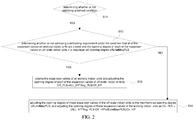
- a defrosting control method for multi-split system is shown in Fig2 .
- the defrosting control method mainly comprises following steps: Step S11: determining whether or not satisfying a defrost condition.
- a temperature sensor is arranged on a heat exchanger of the outdoor unit, which is configured to obtain the temperature of the outdoor unit heat exchanger. If a detected temperature ⁇ a set temperature, it is determined that a defrost condition is satisfied and then starting a defrost mode; otherwise it is determined that the defrost condition is not satisfied and maintaining a normal operation.
- a four-way valve switches to a different position so as to enable the heating mode to be changed to the cooling mode and all of indoor fans are turned off, and performing Step 12.
- Step S12 determining whether or not satisfying a defrosting requirement under the condition that all of the expansion valves on working indoor units are closed and the opening degree of each of the expansion valves on off-state indoor units ⁇ a maximum set opening degree offLimitMaxPLS.
- Step S13 If the defrosting requirement is satisfied, that is to say achieving a required defrosting effect, performing Step S13
- whether or not satisfying the defrosting requirement is determined by if ( Off_HP ⁇ offLimitMaxPLS) ⁇ ALL_HP ⁇ Avg_PLS.
- the indoor unit capacities are different, with the same opening degree of the expansion valves, the flow rates of refrigerant are varied, so the defrosting effects are different.
- the capacities of the indoor units are preferably considered so as to evaluate the defrost effect in a more reasonable way.
- Off_HP denotes a total capacity of all off-state indoor units, that is to say a sum of the capacities of all of the off-state indoor units
- offLimitMaxPLS denotes the maximum set opening degree of each of those expansion valves of the off-state indoor units.
- ALL_HP denotes a total capacity of all indoor units, that is to say a sum of the capacities of all of the indoor units.
- Avg_PLS denotes a set average opening degree. If the opening degree of each of the expansion valves of all indoor units is the set average opening degree, the multi-split system satisfies the defrosting requirement.
- the Avg_PLS is obtained from preset experiments during which all of the opening degrees of the expansion valves of all indoor units (including those working or at off states) are set to an uniform opening degree so as to detect whether or not the defrost of the outdoor unit heat exchanger could be completed during a preset period; if the defrost of the outdoor unit heat exchanger could be completed, it suggests that, with the current uniform opening degree, the defrosting requirement of the multi-split system could be satisfied to fulfill a required defrosting effect, and then the current uniform opening degree is set as the set average opening degree.
- all of the opening degrees of the expansion valves of all indoor units are set as 150 steps, if the defrost of the outdoor unit heat exchanger could completed during the preset period, such as 5 minutes, the set average opening degree is set as 150 steps.
- the amount of refrigerant flowing into indoor unit heat exchanger is being adjusted by the expansion valve.
- the heat exchange between the refrigerant and the indoor environment may be insufficient such that the heat of the room where the indoor unit disposed in could not be properly transfer to the refrigerant and then used to defrost the ice of the outdoor unit for achieving a required defrosting effect. If the ice could not completely melt, the outdoor unit may frost again soon after back to normal heating operation and leading to a gradual worsening heating performance.
- the opening degree of expansion valves of indoor units are preferably set as small as possible meanwhile because the smaller the opening degree of the expansion valve, the smaller heat could be transferred to the refrigerant such that the indoor temperature could be maintained without severe variation.
- the refrigerant may be unable to fully absorb the heat from the environment where the indoor unit are such that a large part of liquid refrigerant not evaporating may directly flow into compressor causing damage.
- Off_PLS denotes the opening degree of the expansion valve of the off-state indoor unit.
- Off_HP ⁇ offLimitMaxPLS ALL_HP ⁇ Avg_PLS / Off_HP
- Off_PLS offLimitMaxPLS
- the problem that the indoor temperature where the working indoor units are drops significantly could be solved by closing those expansion valves of the working indoor units as the defrosting requirement of the system is satisfied under the condition that the opening degrees of each of those expansion valves of the off-state indoor units are less than or equal to the maximum set opening degree, so as to improve user experience.
- the defrosting control method for multi-split system disclosed by the present embodiment could dynamically calculate the opening degree of the expansion valve of each of the indoor unit according to its real-time on-off states, and hence on one hand the impact on the indoor temperature caused by defrosting could be minimized, on the other hand the defrost requirement of the outdoor unit could be satisfied.
- those expansion valves of the working indoor units should be opened as well. Taking the worsening effect of the indoor temperature into consideration, it is preferable to fully make use of the adjustment effect of those off-state indoor units.
- the indoor units could be separated into normal indoor units and VIP indoor units.
- the priority is to maintain the temperature of the rooms where the VIP indoor units are not being influenced.
- Step S15 determining whether or not the defrosting requirement is satisfied as the opening degree of each of those expansion valves of the off-state indoor units is the maximum set opening degree offLimitMaxPLS, the opening degree of each of those expansion valves of the working normal indoor units ⁇ a maximum set opening degree onLimitMaxPLS, and each of those expansion valves of the working VIP indoor units are closed.
- NormalOn_HP denotes a total capacity of all of the working normal indoor units
- NormalOn_PLS denotes the opening degree of each of those expansion valves of working normal indoor units
- onLimitMaxPLS denotes a maximum set opening degree of each of those expansion valves of normal working indoor units.
- NormalOn_PLS ( ALL_HP ⁇ Avg_PLS - Off_HP ⁇ offLimitMaxPLS ) / NormalOn_HP.
- VIP_HP denotes a total capacity of all working VIP indoor units
- VIP_PLS denotes an opening degree of each of those expansion valves of working VIP indoor units.
- VIP_PLS ( ALL_HP ⁇ Avg_PLS - Off_HP ⁇ offLimitMaxPLS-NormalOn_HP ⁇ onLimitMaxPLS) / VIP_HP; and in this way, the defrosting requirement could be satisfied and the influence on the temperature of the room where the working VIP indoor units are could be minimized.
- the maximum set opening degree of each of those expansion valves of the off-state indoor units within the range could fully utilize the heat exchange capacities of off-state indoor units to defrost, and meanwhile avoid the risk of compressor damage caused by adjusting the opening degree to excess.
- K1 2
- offLimitMaxPLS 2 ⁇ Avg_PLS, which not only could fully utilize the off-state indoor unit for defrosting, but also ensures the defrosting effect, and avoids the risk of compressor damage due to liquid refrigerant flowing into.
- the maximum set opening degree of each of those expansion valves of the working normal indoor units within the range could not only utilize the heat exchange capacities of working normal indoor units to defrost, but also could avoid the drop of temperature of the rooms where working normal indoor units are.
- K2 1.5
- onLimitMaxPLS 1.5 ⁇ Avg_PLS, which not only could utilize the working normal indoor units for defrosting, but also ensures the defrosting effect, and avoids the drop of temperature of the rooms where working normal indoor units are.
- the opening degree is 500 steps
- the Avg_PLS is 150 steps
- the offLimitMaxPLS is 300 steps
- the onLimitMaxPLS is 225 steps.
- the aim of the defrosting control method of the embodiment gives priority to the comfort of the user in rooms where VIP indoor units are, and secondly to the comfort of the user in rooms where normal indoor units are, thereby ensuring the defrost effect and minimizing the impact on temperature of rooms where working indoor units are during the defrosting process, so as to improve user satisfaction.
- a formula for calculating an opening degree of each of expansion valves of indoor units during defrosting process is provided:
- VIP _ HP * VIP _ PLS + NormalOn _ HP * NormalOn _ PLS + Off _ HP * Off _ PLS ALL _ HP * Avg _ PLS .
- VIP_PLS could be set to 0. That is to say, only under the condition that the defrosting requirement still could not be satisfied with both of the opening degree of each of those expansion valves of working normal indoor units and the opening degree of each of those expansion valves of off-state indoor units are the maximum set opening degree, the expansion valves of the working VIP indoor units are opened to ensure defrosting effect.
- the defrosting control method includes the following steps: Table 1: Indoor Unit Number 1# 2# 3# 4# 5# 6# 7# 8# Capacity HP 2 1 3 2.5 2 1.5 3 5 VIP Mark NO YES NO NO NO NO YES NO
- VIP_HP 3 which is the capacity of 7# indoor unit because 3# indoor unit is not working.
- VIP_HP 3 which is the capacity of 7# indoor unit.
- Off_HP 0.
Landscapes
- Engineering & Computer Science (AREA)
- Mechanical Engineering (AREA)
- General Engineering & Computer Science (AREA)
- Chemical & Material Sciences (AREA)
- Combustion & Propulsion (AREA)
- Physics & Mathematics (AREA)
- Thermal Sciences (AREA)
- Air Conditioning Control Device (AREA)
Abstract
Description
- The invention belongs to the technical field of air conditioning, and in particular relates to a defrosting control method for multi-split system.
- A typical multi-split system includes an outdoor unit connected to a plurality of indoor units working independently. Each of the indoor units is provided with an expansive valve configured to adjust the amount of refrigerant flowing into indoor exchanger, and the indoor exchanger transfer heat with the outside.
- As the multi-split system working in a heating mode, frost may form on the surface of the outdoor unit if the outdoor temperature is low, and further exacerbate heat loss. It is necessary to enter a defrost mode to defrost the outdoor unit and then back to normal heating operation. During the defrost mode, the multi-split system is running at a cold mode in which all of the indoor units, regardless of working or not, are operating to cool the environment such as to maintain the opening degree of the expansion valves are same. In this way, the indoor temperature of rooms where the indoor units working are decreased rapidly, which will affect user experience.
- The present invention provides a defrosting control method for multi-split system to solve the problem that during the defrost mode the indoor temperature of rooms where the indoor units working may be decreased rapidly, and also to improve user experience.
- In order to solve the above technical problems, the present invention is implemented by the following technical solutions:
A defrosting control method for multi-split system, wherein the multi-split system includes an outdoor unit and a plurality of indoor units, an expansion valve is disposed on each of connecting pipes between one of the indoor units and the outdoor unit; - The control method includes:
- Determining whether or not satisfying a defrost condition;
- If satisfying the defrost condition, determining whether or not satisfying a defrosting requirement under a condition that expansion valves on working indoor units are closed and the opening degree of each of expansion valves of off-state indoor units ≤ a maximum set opening degree offLimitMaxPLS;
- If satisfying the defrost requirement, closing the expansion valves of the working indoor units and adjusting the opening degree of each of the expansion valves of the off-state indoor units to Off_PLS, wherein

- in which:
- Off_HP denoting a total capacity of the off-state indoor units;
- Off_PLS denoting an opening degree of each of the expansion valves of the off-state indoor units;
- offLimitMaxPLS denoting a maximum set opening degree of each of the expansion valves on the off-state indoor units;
- ALL_HP denoting a total capacity of the indoor units, and;
- Avg_PLS denoting a set average opening degree, which indicates that if the opening degree of each of the expansion valves of the indoor units is the set average opening degree the multi-split system satisfying the defrosting requirement.
- Further, determining whether or not satisfying the defrosting requirement by determining if (Off_HP∗offLimitMaxPLS) ≥ ALL_HP∗Avg_PLS under a condition that the expansion valves of the working indoor units are closed and the opening degree of each of the expansion valves of the off-state indoor units ≤ the maximum set opening degree offLimitMaxPLS.
- Further, the control method further includes:
- If the defrosting requirement is not satisfied under a condition that each of the expansion valves of the working indoor units are closed and the opening degree of each of the expansion valves of the off-state indoor units ≤ the maximum set opening degree offLimitMaxPLS;
- Adjusting the opening degree of each of the expansion valves of the off-state indoor units to the maximum set opening degree offLimitMaxPLS; and
- Adjusting the opening degree of each of the expansion valves of the working indoor units to On_PLS; wherein On_PLS = (ALL_HP ∗ Avg_PLS-Off_HP ∗ offLimitMaxPLS)/On_HP;
- in which,
- On_HP denoting the total capacity of the working indoor units;
- On_PLS denoting the opening degree of each of the expansion valves of the working indoor units.
- Further, the control method further includes: separating the indoor units into normal indoor units and VIP indoor units;
If the defrosting requirement is not satisfied under a condition that each of the expansion valves of the working indoor units are closed and the opening degree of each of the expansion valves of the off-state indoor units ≤ the maximum set opening degree offLimitMaxPLS;
determining whether or not the defrosting requirement is satisfied under a condition that the opening degree of each of the expansion valves of the off-state indoor units is the maximum set opening degree offLimitMaxPLS, the opening degree of each of expansion valves of working normal indoor units ≤ a maximum set opening degree onLimitMaxPLS, and each of expansion valves of working VIP indoor units are closed;
if the defrosting requirement is satisfied, adjusting the opening degree of each of the expansion valves of the off-state indoor units to the maximum set opening degree offLimitMaxPLS;
adjusting the opening degree of each of the expansion valves of the working normal indoor units to a NormalOn_PLS; wherein
closing each of the expansion valves of the working VIP indoor units;
in which,
NormalOn_HP denoting a total capacity of the working normal indoor units;
NormalOn_PLS denoting the opening degree of each of the expansion valves of the working normal indoor units, and
onLimitMaxPLS denoting a maximum set opening degree of each of the expansion valves of the normal working indoor units. - Further, the step for determining whether or not the defrosting requirement is satisfied under the condition that the opening degree of each of the expansion valves of the off-state indoor units is the maximum set opening degree offLimitMaxPLS, the opening degree of each of expansion valves of the working normal indoor units ≤ a maximum set opening degree onLimitMaxPLS, and each of expansion valves of working VIP indoor units are closed includes:

- Preferably, if the defrosting requirement is not satisfied under the condition that the opening degree of each of the expansion valves of the off-state indoor units is the maximum set opening degree offLimitMaxPLS, the opening degree of each of expansion valves of the working normal indoor units ≤ the maximum set opening degree onLimitMaxPLS, and each of expansion valves of working VIP indoor units are closed;
Adjusting the opening degree of each of the expansion valves of the off-state indoor units to the maximum set opening degree offLimitMaxPLS;
Adjusting the opening degree of each of the expansion valves of the working normal indoor units to the maximum set opening degree onLimitMaxPLS;
adjusting the opening degree of each of the expansion valves of the working VIP indoor units to VIP_PLS, wherein
VIP_HP denoting a total capacity of the working VIP indoor units;
VIP_PLS denoting an opening degree of each of the expansion valves of the working VIP indoor units. - Further, the maximum set opening degree of each of the expansion valves of the off-state indoor units offLimitMaxPLS=K1∗ Avg_PLS, 2≤K1≤3.
- Further, K1=2.
- Further, the maximum set opening degree of each of the expansion valves of the working normal indoor units onLimitMaxPLS= K2 ∗ Avg_PLS, 1≤K2<2.
- Further, K2 = 1.5.
- Compared with the prior art, the advantages and positive effects of the present invention are: with the defrosting control method for multi-split system disclosed by the present embodiment, the problem that the indoor temperature where the working indoor units are drops significantly could be solved by closing those expansion valves of the working indoor units as the defrosting requirement of the system is satisfied under the condition that the opening degrees of each of those expansion valves of the off-state indoor units are less than or equal to the maximum set opening degree, so as to improve user experience. The method also solve problems of compressor damage and being worsening in defrosting effect by adjusting the opening degree of those expansion valves of those expansion valves of the off-state indoor units as Off_PLS = ALL_HP ∗ Avg_PLS/Off_HP and in the meanwhile the defrosting requirement of the system is satisfied.
- Other features and advantages of the present invention will become apparent from the Detailed Description of the Drawing.
-
-
Fig. 1 is a block diagram showing the structure of a multi-split system; -
Fig.2 is a flow chart of a defrosting control method for multi-split system according to one embodiment of the present invention; -
Fig. 3 is a flow chart of a defrosting control method for multi-split system according to another embodiment of the present invention. - The present invention will be further described in detail below with reference to the accompanying drawings and embodiments.
-
Fig. 1 shows the structure of a multi-split system, and the multi-split system includes an outdoor unit and a plurality of indoor units; wherein an expansion valve is mounted on each of the connecting pipe between one of the indoor units and the outdoor unit. The expansion valve is disposed on an indoor unit liquid pipe in which liquid refrigerate flowing so as to adjust the amount of refrigerant entering the indoor unit. The indoor unit liquid pipe is communicated with an outdoor unit liquid pipe. As shown inFig.1 , anexpansion valve 1 is disposed on a liquid pipe of theindoor unit 1, anexpansion valve 2 is disposed on a liquid pipe of theindoor unit 2, and anexpansion valve 3 is disposed on a liquid pipe of theindoor unit 3, ..., an expansion valve N is disposed on a liquid pipe of the indoor unit N. - The steps of the opening degrees of all of the expansion valves on indoor units are same. If the expansion valve is in a closed state, the opening degree is 0 step; if the expansion valve are in a full opening state, the opening degree is 500 step. However, the diameters of the expansion valves are different, the larger the capacity of the indoor units, the larger of the diameter of the expansion valve on the indoor unit.
- A defrosting control method for multi-split system according to one embodiment of the preset invention is shown in
Fig2 . The defrosting control method mainly comprises following steps:
Step S11: determining whether or not satisfying a defrost condition. - A temperature sensor is arranged on a heat exchanger of the outdoor unit, which is configured to obtain the temperature of the outdoor unit heat exchanger. If a detected temperature ≤ a set temperature, it is determined that a defrost condition is satisfied and then starting a defrost mode; otherwise it is determined that the defrost condition is not satisfied and maintaining a normal operation.
- If the defrosting condition is satisfied, a four-way valve switches to a different position so as to enable the heating mode to be changed to the cooling mode and all of indoor fans are turned off, and performing
Step 12. - Step S12: determining whether or not satisfying a defrosting requirement under the condition that all of the expansion valves on working indoor units are closed and the opening degree of each of the expansion valves on off-state indoor units ≤ a maximum set opening degree offLimitMaxPLS.
- If the defrosting requirement is satisfied, that is to say achieving a required defrosting effect, performing Step S13
- In the present embodiment, whether or not satisfying the defrosting requirement is determined by if (Off_HP ∗ offLimitMaxPLS) ≥ ALL_HP ∗ Avg_PLS. In fact, the indoor unit capacities are different, with the same opening degree of the expansion valves, the flow rates of refrigerant are varied, so the defrosting effects are different. Hence, as determining whether or not satisfying the defrosting requirement, the capacities of the indoor units are preferably considered so as to evaluate the defrost effect in a more reasonable way.
- In which , Off_HP denotes a total capacity of all off-state indoor units, that is to say a sum of the capacities of all of the off-state indoor units, and offLimitMaxPLS denotes the maximum set opening degree of each of those expansion valves of the off-state indoor units.
- ALL_HP denotes a total capacity of all indoor units, that is to say a sum of the capacities of all of the indoor units. Avg_PLS denotes a set average opening degree. If the opening degree of each of the expansion valves of all indoor units is the set average opening degree, the multi-split system satisfies the defrosting requirement. The Avg_PLS is obtained from preset experiments during which all of the opening degrees of the expansion valves of all indoor units (including those working or at off states) are set to an uniform opening degree so as to detect whether or not the defrost of the outdoor unit heat exchanger could be completed during a preset period; if the defrost of the outdoor unit heat exchanger could be completed, it suggests that, with the current uniform opening degree, the defrosting requirement of the multi-split system could be satisfied to fulfill a required defrosting effect, and then the current uniform opening degree is set as the set average opening degree. For example, during a preset experiment, all of the opening degrees of the expansion valves of all indoor units are set as 150 steps, if the defrost of the outdoor unit heat exchanger could completed during the preset period, such as 5 minutes, the set average opening degree is set as 150 steps.
- Step S13: closing the expansion valves of all working indoor units and adjusting the opening degree of each of the expansion valves of off-state indoor units to

- The amount of refrigerant flowing into indoor unit heat exchanger is being adjusted by the expansion valve. On one hand, if too much refrigerant flowing into the indoor unit heat exchanger, the heat exchange between the refrigerant and the indoor environment may be insufficient such that the heat of the room where the indoor unit disposed in could not be properly transfer to the refrigerant and then used to defrost the ice of the outdoor unit for achieving a required defrosting effect. If the ice could not completely melt, the outdoor unit may frost again soon after back to normal heating operation and leading to a gradual worsening heating performance. In order to avoid that situation, as satisfying the defrosting requirement, the opening degree of expansion valves of indoor units are preferably set as small as possible meanwhile because the smaller the opening degree of the expansion valve, the smaller heat could be transferred to the refrigerant such that the indoor temperature could be maintained without severe variation. On the other hand, if each of those expansion valves of off-state indoor units are fully opened, that is to say adjusting the opening degree to a fully open degree, without consideration of different capacities of the indoor unit heat exchangers and the defrosting requirement of the outdoor unit, the refrigerant may be unable to fully absorb the heat from the environment where the indoor unit are such that a large part of liquid refrigerant not evaporating may directly flow into compressor causing damage. In order to avoid those problems, it is better to calculate an opening degree Off_PLS for those expansion valves of off-state indoor units instead of adjusting the opening degree in direct to the maximum set opening degree offLimitMaxPLS even the defrosting requirement could be satisfied under the condition that all of the expansion valves of the working indoor units are closed and all of the expansion valves of the off-state indoor units are set as the maximum set opening degree offLimitMaxPLS. In this way, while satisfying the defrosting requirement, the opening degree of the expansion valves of those off-state indoor units could be maintained comparatively smaller so as to avoid the worsening defrost effect caused by insufficient heat exchange. Off_PLS denotes the opening degree of the expansion valve of the off-state indoor unit.
- Generally, if (Off_HP ∗ offLimitMaxPLS) ≥ ALL_HP ∗ Avg_PLS, those expansion valves of the working indoor units are closed and the opening degree of each of those expansion valves of the off-state indoor units are set as Off_PLS; wherein Off_PLS =ALL_HP ∗ Avg_PLS/Off_HP, wherein Off_PLS ≤ offLimitMaxPLS.
- With the defrosting control method for multi-split system disclosed by the present embodiment, the problem that the indoor temperature where the working indoor units are drops significantly could be solved by closing those expansion valves of the working indoor units as the defrosting requirement of the system is satisfied under the condition that the opening degrees of each of those expansion valves of the off-state indoor units are less than or equal to the maximum set opening degree, so as to improve user experience. The method also solve problems of compressor damage and being worsening in defrosting effect by adjusting the opening degree of those expansion valves of those expansion valves of the off-state indoor units as Off_PLS = ALL_HP ∗ Avg_PLS/Off_HP and in the meanwhile the defrosting requirement of the system is satisfied.
- The defrosting control method for multi-split system disclosed by the present embodiment could dynamically calculate the opening degree of the expansion valve of each of the indoor unit according to its real-time on-off states, and hence on one hand the impact on the indoor temperature caused by defrosting could be minimized, on the other hand the defrost requirement of the outdoor unit could be satisfied.
- In this embodiment, if the defrosting requirement is not satisfied, that is to say (Off_HP ∗ offLimitMaxPLS) < ALL_HP ∗ Avg_PLS under the condition that each of those expansion valves of the working indoor units are closed and the opening degree of each of those expansion valves of the off-state indoor units are less than or equal to the maximum opening degree offLimitMaxPLS, performing
Step 14. - Step S14: adjusting the opening degree of those expansion valves of the off-state indoor units to the maximum set opening degree offLimitMaxPLS; and adjusting the opening degree of those expansion valves of the working indoor units as On_PLS = (ALL-HP ∗ Avg-PLS-Off_HP ∗ offLimitMaxPLS)/On_HP, wherein On_HP denotes the total capacity of all of the working indoor units and On_PLS denotes the opening degree of those expansion valves of the working indoor units.
- If the defrost requirement could not be satisfied by merely adjusting the opening degree of those expansion valves of the off-state indoor units to the maximum set opening degree offLimitMaxPLS, those expansion valves of the working indoor units should be opened as well. Taking the worsening effect of the indoor temperature into consideration, it is preferable to fully make use of the adjustment effect of those off-state indoor units. Hence, adjusting the opening degree of each of those expansion valves of the off-state indoor units to the maximum set opening degree offLimitMaxPLS and adjusting the opening degree of each of those expansion valves of working indoor units to an average opening degree, that is to say adjusting the opening degree of each of those expansion valves of the working indoor units as On_PLS, On_PLS = (ALL_HP ∗ Avg_PLS - Off_HP ∗ offLimitMaxPLS) / On_HP; and hence the defrosting requirement is satisfied and the influence on the room temperature where working indoor units in could be minimized.
- As a preferred embodiment, the indoor units could be separated into normal indoor units and VIP indoor units. During the defrosting mode, the priority is to maintain the temperature of the rooms where the VIP indoor units are not being influenced.
- If the defrosting requirement is not satisfied, that is to say (Off_HP ∗ offLimitMaxPLS) < ALL_HP ∗ Avg_PLS under the condition that each of those expansion valves of working indoor units are closed and the opening degree of each of those expansion valves of the off-state indoor units ≤ the maximum setting opening offLimitMaxPLS, performing Step S15, as shown in
Fig. 3 . - Step S15: determining whether or not the defrosting requirement is satisfied as the opening degree of each of those expansion valves of the off-state indoor units is the maximum set opening degree offLimitMaxPLS, the opening degree of each of those expansion valves of the working normal indoor units ≤ a maximum set opening degree onLimitMaxPLS, and each of those expansion valves of the working VIP indoor units are closed.
- In this embodiment, if (Off_HP ∗ offLimitMaxPLS) + (NormalOn_HP ∗ onLimitMaxPLS) ≥ ALL_HP ∗ Avg_PLS , the defrosting requirement is satisfied. The capacities of indoor units are different, and the amount of refrigerant are varied under a uniform expansion valve opening degree. Hence, this method provides a reasonable way by considering into the capacities of the indoor units.
- If (Off_HP ∗ offLimitMaxPLS) + (NormalOn_HP ∗ onLimitMaxPLS) ≥ ALL_HP ∗ Avg_PLS, the defrosting requirement could be satisfied without opening the expansion valves of the working VIP indoor units, then performing S16.
- If (Off_HP ∗ offLimitMaxPLS) + (NormalOn_HP ∗ onLimitMaxPLS) < ALL_HP ∗ Avg_PLS, the defrosting requirement merely could be satisfied by opening the expansion valves of the working VIP indoor units, then performing S17.
- Step S16: adjusting the opening degree of each of those expansion valves of the off-state indoor units to the maximum set opening degree offLimitMaxPLS; adjusting the opening degree of each of those expansion valves of the working normal indoor units to a NormalOn_PLS; wherein NormalOn_PLS = (ALL_HP ∗ Avg_PLS_Off_HP ∗ offLimitMaxPLS)/NormalOn_HP; and closing each of those expansion valves of the working VIP indoor units.
- Wherein NormalOn_HP denotes a total capacity of all of the working normal indoor units; NormalOn_PLS denotes the opening degree of each of those expansion valves of working normal indoor units, and onLimitMaxPLS denotes a maximum set opening degree of each of those expansion valves of normal working indoor units.
- If the defrosting requirement could be satisfied by adjusting the opening degree of each of those expansion valves of all off-state indoor units to the maximum set opening degree offLimitMaxPLS and adjusting the opening degree of each of those expansion valves of working normal indoor unit ≤ the maximum set opening onLimitMaxPLS, the influence on the temperature of the rooms where the working normal indoor units in could be reduced by decreasing the opening degree of those expansion valves of working normal indoor units, that is to say, to adjust the opening degree of each of those expansion valves of the working normal indoor units to NormalOn_PLS, wherein NormalOn_PLS = (ALL_HP ∗ Avg_PLS - Off_HP ∗ offLimitMaxPLS) / NormalOn_HP. In this way, the defrosting requirement could be satisfied, and in the meanwhile, the influence on the temperature of the rooms where working normal indoor units in could be minimized and no impact on the temperature of those rooms where VIP indoor units are.
- Step S17: adjusting the opening degree of each of those expansion valves of the off-state indoor units to the maximum set opening degree offLimitMaxPLS; adjusting the opening degree of each of those expansion valves of the working normal indoor units to the maximum set opening degree on-LimitMaxPLS;
adjusting the opening degree of each of those expansion valves of the working VIP indoor units to VIP_PLS, VIP_PLS = (ALL_HP ∗ Avg_PLS-Off_HP ∗ offLimitMaxPLS-NormalOn_HP ∗ onLimitMaxPLS)/VIP_HP. - Wherein, VIP_HP denotes a total capacity of all working VIP indoor units; VIP_PLS denotes an opening degree of each of those expansion valves of working VIP indoor units.
- After adjusting each of those expansion valves of all of off-state indoor units to the maximum set opening offLimitMaxPLS and adjusting each of those expansion valves of all of working normal indoor units to the maximum set opening onLimitMaxPLS, the defrosting requirement still may not be satisfied. Under this condition, although the expansion valves of those working VIP indoor units should be opened, the opening degree have to be minimized so as to restrict the impact on the temperature of the rooms where the working VIP indoor units are. It is preferable to adjust the opening degree of each of those expansion valves of working VIP indoor units to VIP_PLS, wherein VIP_PLS = (ALL_HP ∗ Avg_PLS - Off_HP ∗ offLimitMaxPLS-NormalOn_HP ∗ onLimitMaxPLS)/VIP_HP; and in this way, the defrosting requirement could be satisfied and the influence on the temperature of the room where the working VIP indoor units are could be minimized.
- In the present embodiment, the maximum set opening degree of each of those expansion valves of the off-state indoor units offLimitMaxPLS is less than the opening degree when the expansion valve is fully opened, offLimitMaxPLS = K1∗ Avg_PLS, 2≤K1≤3. The maximum set opening degree of each of those expansion valves of the off-state indoor units within the range could fully utilize the heat exchange capacities of off-state indoor units to defrost, and meanwhile avoid the risk of compressor damage caused by adjusting the opening degree to excess. As a preferred embodiment, K1=2, and offLimitMaxPLS = 2∗ Avg_PLS, which not only could fully utilize the off-state indoor unit for defrosting, but also ensures the defrosting effect, and avoids the risk of compressor damage due to liquid refrigerant flowing into.
- In the present embodiment, the maximum set opening degree of each of those expansion valves of the working normal indoor units onLimitMaxPLS is less than the opening degree when the expansion valve is fully opened, onLimitMaxPLS = K2 ∗ Avg_PLS, 1≤K2<2. The maximum set opening degree of each of those expansion valves of the working normal indoor units within the range could not only utilize the heat exchange capacities of working normal indoor units to defrost, but also could avoid the drop of temperature of the rooms where working normal indoor units are. As a preferred embodiment, K2=1.5, and onLimitMaxPLS=1.5∗ Avg_PLS, which not only could utilize the working normal indoor units for defrosting, but also ensures the defrosting effect, and avoids the drop of temperature of the rooms where working normal indoor units are.
- For example, when the expansion valve is fully opened, the opening degree is 500 steps, the Avg_PLS is 150 steps, the offLimitMaxPLS is 300 steps, and the onLimitMaxPLS is 225 steps.
- The aim of the defrosting control method of the embodiment gives priority to the comfort of the user in rooms where VIP indoor units are, and secondly to the comfort of the user in rooms where normal indoor units are, thereby ensuring the defrost effect and minimizing the impact on temperature of rooms where working indoor units are during the defrosting process, so as to improve user satisfaction.
- A formula for calculating an opening degree of each of expansion valves of indoor units during defrosting process is provided:

- Under normal circumstances, VIP_PLS could be set to 0. That is to say, only under the condition that the defrosting requirement still could not be satisfied with both of the opening degree of each of those expansion valves of working normal indoor units and the opening degree of each of those expansion valves of off-state indoor units are the maximum set opening degree, the expansion valves of the working VIP indoor units are opened to ensure defrosting effect.
- Taking eight indoor units as an example, the defrosting control method includes the following steps:
Table 1: Indoor Unit Number 1# 2# 3# 4# 5# 6# 7# 8 # Capacity HP 2 1 3 2.5 2 1.5 3 5 VIP Mark NO YES NO NO NO NO YES NO - The total capacity of all indoor units is

- Setting Avg_PLS=150, onLimitMaxPLS=225 and offLimitMaxPLS=300.

Condition 1: Indoor Unit Number 1# 2# 3# 4# 5# 6# 7# 8# On-Off Mark ON OFF OFF OFF ON ON ON OFF Opening Degree of Expansion Valve 0 261 261 261 0 0 0 261 - The total capacity of all off-state indoor units is Off_HP=1+3+2.5+5=11.5, which is the sum of the capacities of 2#, 3#, 4#, 8# indoor units.
The total capacity of all working normal indoor units is NormalOn_HP=2+2+1.5=5.5, which is the sum of capacities of 1#, 5#, 6# indoor units. - The total capacity of all working VIP indoor units is VIP_HP=3, which is the capacity of 7# indoor unit because 3# indoor unit is not working.
- Since 11.5∗300>20∗150, the defrost requirement can be satisfied by merely opening the expansion valves of those off-state indoor units, VIP_PLS=0, NormalOn_PLS=0, Off_PLS= (20∗150)/11.5=261<300.
- That is to say, when VIP_PLS = 0 and NormalOn_PLS = 0, Off_PLS = (20∗150) / 11.5 = 261 < 300, the defrosting requirement is satisfied and also the heating performance of the working VIP indoor units and the working normal indoor units could be ensured to avoid the drop of room temperature.
Condition 2Indoor Unit Number 1# 2# 3# 4# 5# 6# 7# 8# On-Off Mark ON OFF ON OFF ON ON ON OFF Opening Degree of Expansion Valve 53 300 53 300 53 300 0 300 - The total capacity of all of the off-state indoor units is Off_HP=1+2.5+5=8.5, which is the sum of the capacities of 2#, 4#, and 8# indoor units.
- The total capacity of all working normal indoor units is NormalOn_HP = 2+3+2+1.5 = 8.5, which is the sum of the capacities of 1#, 3#, 5#, and 6# indoor units.
- The total capacity of all working VIP indoor units is VIP_HP=3, which is the capacity of 7# indoor unit.
- Since 8.5∗300<20∗150, 8.5∗300+8.5∗225>20∗150, the defrosting requirement can be satisfied by opening the expansion valves of those off-state indoor units and the expansion valves of those working normal indoor units, VIP_PLS=0, Off_PLS=300, NormalOn_PLS=((20∗150)-(8.5∗300))/8.5=53<225.
- That is to say, when VIP_PLS=0 and NormalOn_PLS=0, Off_PLS = (20∗150) / 8.5 = 353 > 300, which is beyond the maximum set opening degree and unable to satisfy the defrosting requirement of the multi-split system. The expansion valves of those working normal indoor units need to be opened and the method gives priority to maintain the temperature of rooms where the working VIP indoor units are. Then it could be obtained that NormalOn_PLS = ((20∗150)-(8.5∗300))/8.5 = 53 < 225 as VTP_PL5=0 and Off_PLS=300.
Condition 3: 1# and 5# are added as VIP indoor units. Indoor Unit Number 1# 2# 3# 4# 5# 6# 7# 8 # Capacity HP 2 1 3 2.5 2 1.5 3 5 VIP Mark YES YES NO NO YES NO YES NO On-Off Mark ON ON ON ON ON ON ON ON Opening Degree of Expansion Valve 38 38 225 225 38 225 38 225 - The total capacity of all off-state indoor units is Off_HP=0.
- The total capacity of all working general indoor units is NormalOn_HP = 3+2.5+1.5+5 = 12, which is the sum of the capacities of 3#, 4#, 6#, 8# indoor units.
- The total capacity of all working VIP indoor units is VIP_HP=2+1+2+3=8, which is the sum of the number of the capacities of 1#, 2#, 5#, and 7# indoor units.
- Since 12∗225<20∗150, the defrost requirement only could be satisfied by opening both of the working normal indoor units and the working VIP indoor units, NormalOn_PLS=225, VIP_PLS=((20∗150)-(12 ∗225)) / 8 = 38.
- That is to say, when VIP_PLS=0, Off_PLS=300, NormalOn_PLS = (20∗150)/12 = 250 >225, which is beyond the maximum set opening degree and unable to satisfy the defrosting requirement of the multi-split system or the drop of temperature of rooms where working normal indoor units are is significant. The expansion valves of those working VIP indoor units need to be opened to balance the system. Then it could be obtained VIP_PLS=((20∗150)-(12∗225))/8=38, as Off_PLS=300 and NormalOn_PLS =225
- This written description uses examples to disclose the invention, including the best mode, and also to enable any person skilled in the art to practice the invention, including making and using any devices or systems and performing any incorporated methods. The patentable scope of the invention is defined by the claims, and may include other examples that occur to those skilled in the art. Such other examples are intended to be within the scope of the claims if they have structural elements that do not differ from the literal language of the claims, or if they include equivalent structural elements with insubstantial differences from the literal language of the claims.
Claims (10)
- A defrosting control method for multi-split system, wherein the multi-split system includes an outdoor unit and a plurality of indoor units, an expansion valve is disposed on each of connecting pipes between one of the indoor units and the outdoor unit, characterized in that includes:determining whether or not satisfying a defrost condition;if satisfying the defrost condition, determining whether or not satisfying a defrosting requirement under a condition that expansion valves on working indoor units are closed and the opening degree of each of expansion valves of off-state indoor units ≤ a maximum set opening degree offLimitMaxPLS;if satisfying the defrost requirement, closing the expansion valves of the working indoor units and adjusting the opening degree of each of the expansion valves of the off-state indoor units to Off_PLS, wherein Off_PLS = ALL_HP ∗ Avg_PLS/Off_HP;in which:Off_HP denoting a total capacity of the off-state indoor units;Off_PLS denoting an opening degree of each of the expansion valves of the off-state indoor units;offLimitMaxPLS denoting a maximum set opening degree of each of the expansion valves on the off-state indoor units;ALL_HP denoting a total capacity of the indoor units, andAvg_PLS denoting a set average opening degree, which indicates that if the opening degree of each of the expansion valves of the indoor units is the set average opening degree the multi-split system satisfying the defrosting requirement.
- A defrosting control method for multi-split system according to claim 1, characterized in that:
determining whether or not satisfying the defrosting requirement by determining if (Off_HP ∗ offLimitMaxPLS) ≥ ALL_HP ∗ Avg_PLS under a condition that the expansion valves of the working indoor units are closed and the opening degree of each of the expansion valves of the off-state indoor units ≤ the maximum set opening degree offLimitMaxPLS. - A defrosting control method for multi-split system according to claim 1, characterized in that includes:if the defrosting requirement is not satisfied under a condition that each of the expansion valves of the working indoor units are closed and the opening degree of each of the expansion valves of the off-state indoor units ≤ the maximum set opening degree offLimitMaxPLS;adjusting the opening degree of each of the expansion valves of the off-state indoor units to the maximum set opening degree offLimitMaxPLS; andadjusting the opening degree of each of the expansion valves of the working indoor units to On_PLS; wherein On_PLS = (ALL_HP ∗ Avg_PLS-Off_HP ∗ offLimitMaxPLS)/On_HP;in whichOn_HP denoting the total capacity of the working indoor units andOn_PLS denoting the opening degree of each of the expansion valves of the working indoor units.
- A defrosting control method for multi-split system according to claim 1, characterized in that includes:separating the indoor units into normal indoor units and VIP indoor units;if the defrosting requirement is not satisfied under a condition that each of the expansion valves of the working indoor units are closed and the opening degree of each of the expansion valves of the off-state indoor units ≤ the maximum set opening degree offLimitMaxPLS;determining whether or not the defrosting requirement is satisfied under a condition that the opening degree of each of the expansion valves of the off-state indoor units is the maximum set opening degree offLimitMaxPLS, the opening degree of each of expansion valves of working normal indoor units ≤ a maximum set opening degree onLimitMaxPLS, and each of expansion valves of working VIP indoor units are closed;if the defrosting requirement is satisfied, adjusting the opening degree of each of the expansion valves of the off-state indoor units to the maximum set opening degree offLimitMaxPLS;adjusting the opening degree of each of the expansion valves of the working normal indoor units to a NormalOn_PLS; wherein NormalOn_PLS = (ALL_HP ∗ Avg_PLS-Off_HP ∗ offLimitMaxPLS)/NormalOn_HP; andclosing each of the expansion valves of the working VIP indoor units;in which,NormalOn_HP denoting a total capacity of the working normal indoor units;NormalOn_PLS denoting the opening degree of each of the expansion valves of the working normal indoor units, andonLimitMaxPLS denoting a maximum set opening degree of each of the expansion valves of the normal working indoor units.
- A defrosting control method for multi-split system according to claim 4, characterized in that the step for determining whether or not the defrosting requirement is satisfied under the condition that the opening degree of each of the expansion valves of the off-state indoor units is the maximum set opening degree offLimitMaxPLS, the opening degree of each of expansion valves of the working normal indoor units ≤ a maximum set opening degree onLimitMaxPLS, and each of expansion valves of working VIP indoor units are closed includes:

- A defrosting control method for multi-split system according to claim 4, characterized in that if the defrosting requirement is not satisfied under the condition that the opening degree of each of the expansion valves of the off-state indoor units is the maximum set opening degree offLimitMaxPLS, the opening degree of each of expansion valves of the working normal indoor units ≤ the maximum set opening degree onLimitMaxPLS, and each of expansion valves of working VIP indoor units are closed:adjusting the opening degree of each of the expansion valves of the off-state indoor units to the maximum set opening degree offLimitMaxPLS;adjusting the opening degree of each of the expansion valves of the working normal indoor units to the maximum set opening degree onLimitMaxPLS; andadjusting the opening degree of each of the expansion valves of the working VIP indoor units to VIP_PLS, wherein
 in which,VIP_HP denoting a total capacity of the working VIP indoor units;VIP_PLS denoting an opening degree of each of the expansion valves of the working VIP indoor units.
 - A defrosting control method for multi-split system according to claim 1, characterized in that the maximum set opening degree of each of the expansion valves of the off-state indoor units offLimitMaxPLS=K1∗ Avg_PLS, 2≤K1≤3.
- A defrosting control method for multi-split system according to claim 7, characterized in that K1=2.
- A defrosting control method for multi-split system according to claim 4, characterized in that the maximum set opening degree of each of the expansion valves of the working normal indoor units onLimitMaxPLS= K2 ∗ Avg_PLS, 1≤K2<2.
- A defrosting control method for multi-split system according to claim 9, characterized in that K2=1.5.
Applications Claiming Priority (2)
| Application Number | Priority Date | Filing Date | Title |
|---|---|---|---|
| CN201710588909.7A CN107461877B (en) | 2017-07-19 | 2017-07-19 | A kind of multi-line system defrosting control method |
| PCT/CN2018/092161 WO2019015444A1 (en) | 2017-07-19 | 2018-06-21 | Defrosting control method for multi-split system |
Publications (3)
| Publication Number | Publication Date |
|---|---|
| EP3657103A1 true EP3657103A1 (en) | 2020-05-27 |
| EP3657103A4 EP3657103A4 (en) | 2020-08-26 |
| EP3657103B1 EP3657103B1 (en) | 2023-05-10 |
Family
ID=60546914
Family Applications (1)
| Application Number | Title | Priority Date | Filing Date |
|---|---|---|---|
| EP18834714.0A Active EP3657103B1 (en) | 2017-07-19 | 2018-06-21 | Defrosting control method for multi-split system |
Country Status (4)
| Country | Link |
|---|---|
| US (1) | US11320185B2 (en) |
| EP (1) | EP3657103B1 (en) |
| CN (1) | CN107461877B (en) |
| WO (1) | WO2019015444A1 (en) |
Families Citing this family (11)
| Publication number | Priority date | Publication date | Assignee | Title |
|---|---|---|---|---|
| CN107461877B (en) * | 2017-07-19 | 2020-12-08 | 青岛海尔空调电子有限公司 | A kind of multi-line system defrosting control method |
| CN109506401A (en) * | 2018-11-09 | 2019-03-22 | 珠海格力电器股份有限公司 | Defrosting control method and system of multi-split heat pump and storage medium |
| CN113661364B (en) * | 2019-04-18 | 2023-03-10 | 三菱电机株式会社 | Control device for air conditioner, outdoor unit, relay unit, heat source unit, and air conditioner |
| CN110319536A (en) * | 2019-07-02 | 2019-10-11 | 宁波奥克斯电气股份有限公司 | A kind of defrosting control method of multi-online air-conditioning system, device and multi-online air-conditioning system |
| CN112665117B (en) * | 2019-10-16 | 2022-06-14 | 广东美的制冷设备有限公司 | Multi-online defrosting method and device, multi-online air conditioning system and readable storage medium |
| CN112539520B (en) | 2020-12-17 | 2021-10-22 | 珠海格力电器股份有限公司 | Defrosting control method and device and multi-split air conditioner |
| CN113294890B (en) * | 2021-05-07 | 2022-07-08 | 宁波奥克斯电气股份有限公司 | Defrost control method and device for air conditioning unit and air conditioning unit |
| CN113203184B (en) * | 2021-05-21 | 2022-03-18 | 宁波奥克斯电气股份有限公司 | Defrost control method, air conditioner, and computer-readable storage medium |
| CN114216212A (en) * | 2021-12-10 | 2022-03-22 | 珠海格力电器股份有限公司 | Heating and defrosting control method of multi-split air conditioner and multi-split air conditioner |
| CN114963406B (en) * | 2022-05-23 | 2024-06-04 | 南京天加环境科技有限公司 | Control method for improving operation reliability of long connecting pipe unit |
| CN119755760B (en) * | 2025-01-21 | 2025-10-21 | 珠海格力电器股份有限公司 | Air conditioner control method and device and air conditioner |
Family Cites Families (29)
| Publication number | Priority date | Publication date | Assignee | Title |
|---|---|---|---|---|
| JPH08285393A (en) * | 1995-04-17 | 1996-11-01 | Matsushita Refrig Co Ltd | Air conditioner for multi-room |
| JP2000179969A (en) * | 1998-12-15 | 2000-06-30 | Matsushita Refrig Co Ltd | Multi-chamber type air conditioner |
| CN1104605C (en) * | 2000-06-02 | 2003-04-02 | 海尔集团公司 | Improved refrigerating system for one driving multiple-unit air conditioner |
| JP2002147879A (en) * | 2000-11-14 | 2002-05-22 | Hitachi Ltd | Multi-chamber air conditioner and its defrost control method |
| JP5258197B2 (en) * | 2007-01-16 | 2013-08-07 | 三菱電機株式会社 | Air conditioning system |
| JP5341622B2 (en) * | 2009-06-04 | 2013-11-13 | 日立アプライアンス株式会社 | Air conditioner |
| CN102003853B (en) * | 2010-12-20 | 2012-06-06 | 哈尔滨工业大学 | Multi-connected unit phase change energy storage hot liquid defrosting system |
| CN102997368B (en) * | 2012-12-10 | 2015-04-08 | 宁波奥克斯电气有限公司 | Intelligent defrosting control method for multiple compressors in parallel connection and multiple online machines |
| CN104061651B (en) * | 2013-03-20 | 2016-08-03 | 珠海格力电器股份有限公司 | Multi-split air conditioner, multi-split defrosting control system and multi-split defrosting control method |
| JP5977885B2 (en) * | 2013-04-26 | 2016-08-24 | 東芝キヤリア株式会社 | Water heater |
| JP5549771B1 (en) * | 2013-09-12 | 2014-07-16 | 株式会社富士通ゼネラル | Air conditioner |
| JP2015117847A (en) * | 2013-12-17 | 2015-06-25 | 日立アプライアンス株式会社 | Air conditioner |
| CN104748464A (en) * | 2013-12-25 | 2015-07-01 | 珠海格力电器股份有限公司 | Multi-online defrosting method and device for air conditioning system and air conditioner |
| CN103912958B (en) * | 2014-04-10 | 2017-12-01 | 安徽美芝精密制造有限公司 | Control method, control device and the air-conditioning system of air-conditioning system |
| CN104266423B (en) * | 2014-09-11 | 2017-05-24 | 珠海格力电器股份有限公司 | Defrosting method for air conditioner multi-split air conditioner system |
| CN104236186A (en) * | 2014-09-30 | 2014-12-24 | 宁波奥克斯电气有限公司 | Defrosting control method for multiple heat pumps |
| JP6249932B2 (en) * | 2014-12-04 | 2017-12-20 | 三菱電機株式会社 | Air conditioning system |
| CN104596032B (en) * | 2014-12-31 | 2017-08-29 | 广东美的制冷设备有限公司 | Air conditioner and its defrosting control method |
| CN105987483A (en) * | 2015-02-05 | 2016-10-05 | 佛山市禾才科技服务有限公司 | Novel air conditioner defrosting control system |
| CN104792075A (en) * | 2015-04-28 | 2015-07-22 | 广东美的暖通设备有限公司 | Three-tube multi-split air-conditioning system oil return or defrosting control method and system thereof |
| CN105674648B (en) * | 2016-04-01 | 2019-01-18 | 珠海格力电器股份有限公司 | Heating and defrosting control method for multi-split air conditioning system |
| US10808976B2 (en) * | 2016-05-16 | 2020-10-20 | Mitsubishi Electric Corporation | Air-conditioning apparatus |
| CN106091505A (en) | 2016-08-16 | 2016-11-09 | 广东美的暖通设备有限公司 | The defrosting control method of air-conditioner, defrosting control device and air-conditioner |
| CN106322580A (en) | 2016-08-16 | 2017-01-11 | 广东美的暖通设备有限公司 | Multi-split air conditioning system and defrosting control method and defrosting control device therefor |
| CN106403081B (en) * | 2016-09-07 | 2019-08-27 | 广东美的暖通设备有限公司 | Multi-connection and its control method |
| CN106524557B (en) * | 2016-11-07 | 2018-09-07 | 广东美的暖通设备有限公司 | Anti- return hydraulic control method when multi-line system and its defrosting |
| CN107461877B (en) * | 2017-07-19 | 2020-12-08 | 青岛海尔空调电子有限公司 | A kind of multi-line system defrosting control method |
| JP6451798B1 (en) * | 2017-07-31 | 2019-01-16 | ダイキン工業株式会社 | Air conditioner |
| JP6575625B1 (en) * | 2018-03-22 | 2019-09-18 | 株式会社富士通ゼネラル | Air conditioner |
-
2017
- 2017-07-19 CN CN201710588909.7A patent/CN107461877B/en active Active
-
2018
- 2018-06-21 EP EP18834714.0A patent/EP3657103B1/en active Active
- 2018-06-21 WO PCT/CN2018/092161 patent/WO2019015444A1/en not_active Ceased
- 2018-06-21 US US16/631,332 patent/US11320185B2/en active Active
Also Published As
| Publication number | Publication date |
|---|---|
| EP3657103B1 (en) | 2023-05-10 |
| US11320185B2 (en) | 2022-05-03 |
| WO2019015444A1 (en) | 2019-01-24 |
| US20200208890A1 (en) | 2020-07-02 |
| CN107461877A (en) | 2017-12-12 |
| EP3657103A4 (en) | 2020-08-26 |
| CN107461877B (en) | 2020-12-08 |
Similar Documents
| Publication | Publication Date | Title |
|---|---|---|
| EP3657103B1 (en) | Defrosting control method for multi-split system | |
| CN102705908B (en) | Air-conditioning apparatus | |
| EP2378215B1 (en) | Air conditioner | |
| US10006647B2 (en) | Air conditioning system with distributor for a plurality of indoor units | |
| CN109945330A (en) | Refrigerating system capable of continuously heating and defrosting control method | |
| CN106440560B (en) | Air conditioning system with adjustable condensation area and control method thereof | |
| CN106152263A (en) | Air conditioning system and control method thereof | |
| EP2525160A1 (en) | Air conditioner | |
| US20240167735A1 (en) | Heat source unit and air conditioner | |
| JP2015117894A (en) | Air conditioner outdoor unit | |
| EP4033170B1 (en) | Method for controlling balanced frosting of outdoor units in multi-split air-conditioning system | |
| CN110345566A (en) | Air conditioning system with temperature adjusting and dehumidifying functions and control method thereof | |
| EP1655555A2 (en) | Air conditioner | |
| TW200801416A (en) | Refrigeration unit | |
| CN113606773A (en) | Heat exchanger module, heat exchanger group, air conditioning system and use control method | |
| EP3059522A2 (en) | Transport refrigeration unit | |
| CN115265014A (en) | Refrigeration system of air conditioner and control method of refrigeration system of air conditioner | |
| CN106247651A (en) | Refrigeration system and control method thereof and control device, air-conditioner | |
| CN119063196A (en) | A control method for simultaneously operating refrigeration and constant temperature dehumidification and a multi-split air conditioner | |
| JPH08303877A (en) | Air conditioner | |
| CN111637588B (en) | Control method of multi-split system | |
| CN112833480B (en) | Air conditioning system | |
| KR20060089435A (en) | Air-conditioning type air conditioner that can improve heating capacity during defrosting operation, outdoor unit and defrosting operation method used | |
| JP7132782B2 (en) | air conditioning system | |
| KR20080084482A (en) | Control method of air conditioner |
Legal Events
| Date | Code | Title | Description |
|---|---|---|---|
| STAA | Information on the status of an ep patent application or granted ep patent |
Free format text: STATUS: THE INTERNATIONAL PUBLICATION HAS BEEN MADE |
|
| PUAI | Public reference made under article 153(3) epc to a published international application that has entered the european phase |
Free format text: ORIGINAL CODE: 0009012 |
|
| STAA | Information on the status of an ep patent application or granted ep patent |
Free format text: STATUS: REQUEST FOR EXAMINATION WAS MADE |
|
| 17P | Request for examination filed |
Effective date: 20200117 |
|
| AK | Designated contracting states |
Kind code of ref document: A1 Designated state(s): AL AT BE BG CH CY CZ DE DK EE ES FI FR GB GR HR HU IE IS IT LI LT LU LV MC MK MT NL NO PL PT RO RS SE SI SK SM TR |
|
| RIC1 | Information provided on ipc code assigned before grant |
Ipc: F24F 11/00 20180101ALI20200706BHEP Ipc: F25B 47/02 20060101AFI20200706BHEP Ipc: F25B 49/02 20060101ALI20200706BHEP Ipc: F25B 13/00 20060101ALI20200706BHEP |
|
| A4 | Supplementary search report drawn up and despatched |
Effective date: 20200729 |
|
| RIC1 | Information provided on ipc code assigned before grant |
Ipc: F24F 11/00 20180101ALI20200722BHEP Ipc: F25B 49/02 20060101ALI20200722BHEP Ipc: F25B 13/00 20060101ALI20200722BHEP Ipc: F25B 47/02 20060101AFI20200722BHEP |
|
| GRAP | Despatch of communication of intention to grant a patent |
Free format text: ORIGINAL CODE: EPIDOSNIGR1 |
|
| STAA | Information on the status of an ep patent application or granted ep patent |
Free format text: STATUS: GRANT OF PATENT IS INTENDED |
|
| INTG | Intention to grant announced |
Effective date: 20221128 |
|
| GRAS | Grant fee paid |
Free format text: ORIGINAL CODE: EPIDOSNIGR3 |
|
| GRAA | (expected) grant |
Free format text: ORIGINAL CODE: 0009210 |
|
| STAA | Information on the status of an ep patent application or granted ep patent |
Free format text: STATUS: THE PATENT HAS BEEN GRANTED |
|
| AK | Designated contracting states |
Kind code of ref document: B1 Designated state(s): AL AT BE BG CH CY CZ DE DK EE ES FI FR GB GR HR HU IE IS IT LI LT LU LV MC MK MT NL NO PL PT RO RS SE SI SK SM TR |
|
| REG | Reference to a national code |
Ref country code: GB Ref legal event code: FG4D |
|
| REG | Reference to a national code |
Ref country code: AT Ref legal event code: REF Ref document number: 1567022 Country of ref document: AT Kind code of ref document: T Effective date: 20230515 Ref country code: CH Ref legal event code: EP |
|
| REG | Reference to a national code |
Ref country code: DE Ref legal event code: R096 Ref document number: 602018049755 Country of ref document: DE |
|
| REG | Reference to a national code |
Ref country code: IE Ref legal event code: FG4D |
|
| REG | Reference to a national code |
Ref country code: LT Ref legal event code: MG9D |
|
| REG | Reference to a national code |
Ref country code: NL Ref legal event code: MP Effective date: 20230510 |
|
| REG | Reference to a national code |
Ref country code: AT Ref legal event code: MK05 Ref document number: 1567022 Country of ref document: AT Kind code of ref document: T Effective date: 20230510 |
|
| PG25 | Lapsed in a contracting state [announced via postgrant information from national office to epo] |
Ref country code: SE Free format text: LAPSE BECAUSE OF FAILURE TO SUBMIT A TRANSLATION OF THE DESCRIPTION OR TO PAY THE FEE WITHIN THE PRESCRIBED TIME-LIMIT Effective date: 20230510 Ref country code: PT Free format text: LAPSE BECAUSE OF FAILURE TO SUBMIT A TRANSLATION OF THE DESCRIPTION OR TO PAY THE FEE WITHIN THE PRESCRIBED TIME-LIMIT Effective date: 20230911 Ref country code: NO Free format text: LAPSE BECAUSE OF FAILURE TO SUBMIT A TRANSLATION OF THE DESCRIPTION OR TO PAY THE FEE WITHIN THE PRESCRIBED TIME-LIMIT Effective date: 20230810 Ref country code: NL Free format text: LAPSE BECAUSE OF FAILURE TO SUBMIT A TRANSLATION OF THE DESCRIPTION OR TO PAY THE FEE WITHIN THE PRESCRIBED TIME-LIMIT Effective date: 20230510 Ref country code: ES Free format text: LAPSE BECAUSE OF FAILURE TO SUBMIT A TRANSLATION OF THE DESCRIPTION OR TO PAY THE FEE WITHIN THE PRESCRIBED TIME-LIMIT Effective date: 20230510 Ref country code: AT Free format text: LAPSE BECAUSE OF FAILURE TO SUBMIT A TRANSLATION OF THE DESCRIPTION OR TO PAY THE FEE WITHIN THE PRESCRIBED TIME-LIMIT Effective date: 20230510 |
|
| PG25 | Lapsed in a contracting state [announced via postgrant information from national office to epo] |
Ref country code: RS Free format text: LAPSE BECAUSE OF FAILURE TO SUBMIT A TRANSLATION OF THE DESCRIPTION OR TO PAY THE FEE WITHIN THE PRESCRIBED TIME-LIMIT Effective date: 20230510 Ref country code: PL Free format text: LAPSE BECAUSE OF FAILURE TO SUBMIT A TRANSLATION OF THE DESCRIPTION OR TO PAY THE FEE WITHIN THE PRESCRIBED TIME-LIMIT Effective date: 20230510 Ref country code: LV Free format text: LAPSE BECAUSE OF FAILURE TO SUBMIT A TRANSLATION OF THE DESCRIPTION OR TO PAY THE FEE WITHIN THE PRESCRIBED TIME-LIMIT Effective date: 20230510 Ref country code: LT Free format text: LAPSE BECAUSE OF FAILURE TO SUBMIT A TRANSLATION OF THE DESCRIPTION OR TO PAY THE FEE WITHIN THE PRESCRIBED TIME-LIMIT Effective date: 20230510 Ref country code: IS Free format text: LAPSE BECAUSE OF FAILURE TO SUBMIT A TRANSLATION OF THE DESCRIPTION OR TO PAY THE FEE WITHIN THE PRESCRIBED TIME-LIMIT Effective date: 20230910 Ref country code: HR Free format text: LAPSE BECAUSE OF FAILURE TO SUBMIT A TRANSLATION OF THE DESCRIPTION OR TO PAY THE FEE WITHIN THE PRESCRIBED TIME-LIMIT Effective date: 20230510 Ref country code: GR Free format text: LAPSE BECAUSE OF FAILURE TO SUBMIT A TRANSLATION OF THE DESCRIPTION OR TO PAY THE FEE WITHIN THE PRESCRIBED TIME-LIMIT Effective date: 20230811 |
|
| PG25 | Lapsed in a contracting state [announced via postgrant information from national office to epo] |
Ref country code: FI Free format text: LAPSE BECAUSE OF FAILURE TO SUBMIT A TRANSLATION OF THE DESCRIPTION OR TO PAY THE FEE WITHIN THE PRESCRIBED TIME-LIMIT Effective date: 20230510 |
|
| REG | Reference to a national code |
Ref country code: DE Ref legal event code: R119 Ref document number: 602018049755 Country of ref document: DE |
|
| PG25 | Lapsed in a contracting state [announced via postgrant information from national office to epo] |
Ref country code: SK Free format text: LAPSE BECAUSE OF FAILURE TO SUBMIT A TRANSLATION OF THE DESCRIPTION OR TO PAY THE FEE WITHIN THE PRESCRIBED TIME-LIMIT Effective date: 20230510 |
|
| PG25 | Lapsed in a contracting state [announced via postgrant information from national office to epo] |
Ref country code: SM Free format text: LAPSE BECAUSE OF FAILURE TO SUBMIT A TRANSLATION OF THE DESCRIPTION OR TO PAY THE FEE WITHIN THE PRESCRIBED TIME-LIMIT Effective date: 20230510 Ref country code: SK Free format text: LAPSE BECAUSE OF FAILURE TO SUBMIT A TRANSLATION OF THE DESCRIPTION OR TO PAY THE FEE WITHIN THE PRESCRIBED TIME-LIMIT Effective date: 20230510 Ref country code: RO Free format text: LAPSE BECAUSE OF FAILURE TO SUBMIT A TRANSLATION OF THE DESCRIPTION OR TO PAY THE FEE WITHIN THE PRESCRIBED TIME-LIMIT Effective date: 20230510 Ref country code: EE Free format text: LAPSE BECAUSE OF FAILURE TO SUBMIT A TRANSLATION OF THE DESCRIPTION OR TO PAY THE FEE WITHIN THE PRESCRIBED TIME-LIMIT Effective date: 20230510 Ref country code: DK Free format text: LAPSE BECAUSE OF FAILURE TO SUBMIT A TRANSLATION OF THE DESCRIPTION OR TO PAY THE FEE WITHIN THE PRESCRIBED TIME-LIMIT Effective date: 20230510 Ref country code: CZ Free format text: LAPSE BECAUSE OF FAILURE TO SUBMIT A TRANSLATION OF THE DESCRIPTION OR TO PAY THE FEE WITHIN THE PRESCRIBED TIME-LIMIT Effective date: 20230510 |
|
| REG | Reference to a national code |
Ref country code: CH Ref legal event code: PL |
|
| REG | Reference to a national code |
Ref country code: BE Ref legal event code: MM Effective date: 20230630 |
|
| PG25 | Lapsed in a contracting state [announced via postgrant information from national office to epo] |
Ref country code: MC Free format text: LAPSE BECAUSE OF FAILURE TO SUBMIT A TRANSLATION OF THE DESCRIPTION OR TO PAY THE FEE WITHIN THE PRESCRIBED TIME-LIMIT Effective date: 20230510 |
|
| PG25 | Lapsed in a contracting state [announced via postgrant information from national office to epo] |
Ref country code: MC Free format text: LAPSE BECAUSE OF FAILURE TO SUBMIT A TRANSLATION OF THE DESCRIPTION OR TO PAY THE FEE WITHIN THE PRESCRIBED TIME-LIMIT Effective date: 20230510 |
|
| PG25 | Lapsed in a contracting state [announced via postgrant information from national office to epo] |
Ref country code: LU Free format text: LAPSE BECAUSE OF NON-PAYMENT OF DUE FEES Effective date: 20230621 |
|
| PLBE | No opposition filed within time limit |
Free format text: ORIGINAL CODE: 0009261 |
|
| STAA | Information on the status of an ep patent application or granted ep patent |
Free format text: STATUS: NO OPPOSITION FILED WITHIN TIME LIMIT |
|
| REG | Reference to a national code |
Ref country code: IE Ref legal event code: MM4A |
|
| PG25 | Lapsed in a contracting state [announced via postgrant information from national office to epo] |
Ref country code: LU Free format text: LAPSE BECAUSE OF NON-PAYMENT OF DUE FEES Effective date: 20230621 |
|
| PG25 | Lapsed in a contracting state [announced via postgrant information from national office to epo] |
Ref country code: IE Free format text: LAPSE BECAUSE OF NON-PAYMENT OF DUE FEES Effective date: 20230621 |
|
| 26N | No opposition filed |
Effective date: 20240213 |
|
| PG25 | Lapsed in a contracting state [announced via postgrant information from national office to epo] |
Ref country code: IE Free format text: LAPSE BECAUSE OF NON-PAYMENT OF DUE FEES Effective date: 20230621 Ref country code: DE Free format text: LAPSE BECAUSE OF NON-PAYMENT OF DUE FEES Effective date: 20240103 Ref country code: CH Free format text: LAPSE BECAUSE OF NON-PAYMENT OF DUE FEES Effective date: 20230630 |
|
| PG25 | Lapsed in a contracting state [announced via postgrant information from national office to epo] |
Ref country code: SI Free format text: LAPSE BECAUSE OF FAILURE TO SUBMIT A TRANSLATION OF THE DESCRIPTION OR TO PAY THE FEE WITHIN THE PRESCRIBED TIME-LIMIT Effective date: 20230510 |
|
| PG25 | Lapsed in a contracting state [announced via postgrant information from national office to epo] |
Ref country code: SI Free format text: LAPSE BECAUSE OF FAILURE TO SUBMIT A TRANSLATION OF THE DESCRIPTION OR TO PAY THE FEE WITHIN THE PRESCRIBED TIME-LIMIT Effective date: 20230510 Ref country code: FR Free format text: LAPSE BECAUSE OF NON-PAYMENT OF DUE FEES Effective date: 20230710 Ref country code: BE Free format text: LAPSE BECAUSE OF NON-PAYMENT OF DUE FEES Effective date: 20230630 |
|
| PG25 | Lapsed in a contracting state [announced via postgrant information from national office to epo] |
Ref country code: BG Free format text: LAPSE BECAUSE OF FAILURE TO SUBMIT A TRANSLATION OF THE DESCRIPTION OR TO PAY THE FEE WITHIN THE PRESCRIBED TIME-LIMIT Effective date: 20230510 |
|
| PG25 | Lapsed in a contracting state [announced via postgrant information from national office to epo] |
Ref country code: BG Free format text: LAPSE BECAUSE OF FAILURE TO SUBMIT A TRANSLATION OF THE DESCRIPTION OR TO PAY THE FEE WITHIN THE PRESCRIBED TIME-LIMIT Effective date: 20230510 |
|
| PGFP | Annual fee paid to national office [announced via postgrant information from national office to epo] |
Ref country code: GB Payment date: 20250627 Year of fee payment: 8 |
|
| PG25 | Lapsed in a contracting state [announced via postgrant information from national office to epo] |
Ref country code: CY Free format text: LAPSE BECAUSE OF FAILURE TO SUBMIT A TRANSLATION OF THE DESCRIPTION OR TO PAY THE FEE WITHIN THE PRESCRIBED TIME-LIMIT; INVALID AB INITIO Effective date: 20180621 |
|
| PG25 | Lapsed in a contracting state [announced via postgrant information from national office to epo] |
Ref country code: HU Free format text: LAPSE BECAUSE OF FAILURE TO SUBMIT A TRANSLATION OF THE DESCRIPTION OR TO PAY THE FEE WITHIN THE PRESCRIBED TIME-LIMIT; INVALID AB INITIO Effective date: 20180621 |
|
| PGFP | Annual fee paid to national office [announced via postgrant information from national office to epo] |
Ref country code: IT Payment date: 20250619 Year of fee payment: 8 |
|
| PG25 | Lapsed in a contracting state [announced via postgrant information from national office to epo] |
Ref country code: TR Free format text: LAPSE BECAUSE OF FAILURE TO SUBMIT A TRANSLATION OF THE DESCRIPTION OR TO PAY THE FEE WITHIN THE PRESCRIBED TIME-LIMIT Effective date: 20230510 |