EP3656756A1 - Process for the direct alpha-methylenation of ketones - Google Patents
Process for the direct alpha-methylenation of ketones Download PDFInfo
- Publication number
- EP3656756A1 EP3656756A1 EP18306532.5A EP18306532A EP3656756A1 EP 3656756 A1 EP3656756 A1 EP 3656756A1 EP 18306532 A EP18306532 A EP 18306532A EP 3656756 A1 EP3656756 A1 EP 3656756A1
- Authority
- EP
- European Patent Office
- Prior art keywords
- mol
- process according
- ketone
- catalyst
- acid
- Prior art date
- Legal status (The legal status is an assumption and is not a legal conclusion. Google has not performed a legal analysis and makes no representation as to the accuracy of the status listed.)
- Granted
Links
Classifications
-
- C—CHEMISTRY; METALLURGY
- C07—ORGANIC CHEMISTRY
- C07C—ACYCLIC OR CARBOCYCLIC COMPOUNDS
- C07C45/00—Preparation of compounds having >C = O groups bound only to carbon or hydrogen atoms; Preparation of chelates of such compounds
- C07C45/61—Preparation of compounds having >C = O groups bound only to carbon or hydrogen atoms; Preparation of chelates of such compounds by reactions not involving the formation of >C = O groups
- C07C45/67—Preparation of compounds having >C = O groups bound only to carbon or hydrogen atoms; Preparation of chelates of such compounds by reactions not involving the formation of >C = O groups by isomerisation; by change of size of the carbon skeleton
- C07C45/68—Preparation of compounds having >C = O groups bound only to carbon or hydrogen atoms; Preparation of chelates of such compounds by reactions not involving the formation of >C = O groups by isomerisation; by change of size of the carbon skeleton by increase in the number of carbon atoms
- C07C45/72—Preparation of compounds having >C = O groups bound only to carbon or hydrogen atoms; Preparation of chelates of such compounds by reactions not involving the formation of >C = O groups by isomerisation; by change of size of the carbon skeleton by increase in the number of carbon atoms by reaction of compounds containing >C = O groups with the same or other compounds containing >C = O groups
- C07C45/75—Reactions with formaldehyde
-
- C—CHEMISTRY; METALLURGY
- C07—ORGANIC CHEMISTRY
- C07C—ACYCLIC OR CARBOCYCLIC COMPOUNDS
- C07C49/00—Ketones; Ketenes; Dimeric ketenes; Ketonic chelates
- C07C49/587—Unsaturated compounds containing a keto groups being part of a ring
- C07C49/647—Unsaturated compounds containing a keto groups being part of a ring having unsaturation outside the ring
-
- C—CHEMISTRY; METALLURGY
- C07—ORGANIC CHEMISTRY
- C07C—ACYCLIC OR CARBOCYCLIC COMPOUNDS
- C07C49/00—Ketones; Ketenes; Dimeric ketenes; Ketonic chelates
- C07C49/76—Ketones containing a keto group bound to a six-membered aromatic ring
- C07C49/794—Ketones containing a keto group bound to a six-membered aromatic ring having unsaturation outside an aromatic ring
-
- C—CHEMISTRY; METALLURGY
- C07—ORGANIC CHEMISTRY
- C07C—ACYCLIC OR CARBOCYCLIC COMPOUNDS
- C07C49/00—Ketones; Ketenes; Dimeric ketenes; Ketonic chelates
- C07C49/76—Ketones containing a keto group bound to a six-membered aromatic ring
- C07C49/80—Ketones containing a keto group bound to a six-membered aromatic ring containing halogen
- C07C49/807—Ketones containing a keto group bound to a six-membered aromatic ring containing halogen all halogen atoms bound to the ring
-
- C—CHEMISTRY; METALLURGY
- C07—ORGANIC CHEMISTRY
- C07C—ACYCLIC OR CARBOCYCLIC COMPOUNDS
- C07C67/00—Preparation of carboxylic acid esters
- C07C67/30—Preparation of carboxylic acid esters by modifying the acid moiety of the ester, such modification not being an introduction of an ester group
- C07C67/333—Preparation of carboxylic acid esters by modifying the acid moiety of the ester, such modification not being an introduction of an ester group by isomerisation; by change of size of the carbon skeleton
- C07C67/343—Preparation of carboxylic acid esters by modifying the acid moiety of the ester, such modification not being an introduction of an ester group by isomerisation; by change of size of the carbon skeleton by increase in the number of carbon atoms
-
- C—CHEMISTRY; METALLURGY
- C07—ORGANIC CHEMISTRY
- C07C—ACYCLIC OR CARBOCYCLIC COMPOUNDS
- C07C69/00—Esters of carboxylic acids; Esters of carbonic or haloformic acids
- C07C69/66—Esters of carboxylic acids having esterified carboxylic groups bound to acyclic carbon atoms and having any of the groups OH, O—metal, —CHO, keto, ether, acyloxy, groups, groups, or in the acid moiety
- C07C69/73—Esters of carboxylic acids having esterified carboxylic groups bound to acyclic carbon atoms and having any of the groups OH, O—metal, —CHO, keto, ether, acyloxy, groups, groups, or in the acid moiety of unsaturated acids
- C07C69/738—Esters of keto-carboxylic acids or aldehydo-carboxylic acids
Definitions
- the invention relates to a process for preparing an ⁇ -methylene ketone comprising the step of reacting a ketone with formaldehyde.
- Molecules containing an ⁇ , ⁇ -unsaturated carbonyl functionality are commonly utilized as substrates for a range of chemical transformations, including nucleophilic conjugate addition, Michael addition, the Morita-Baylis-Hillmann reaction, Diels-Alder reaction, and several other organo-catalytic reactions.
- the importance of the ⁇ -methylene moiety is also amplified by its presence in numerous biologically active natural products.
- ⁇ -Methylenation reaction using formaldehyde as the electrophilic partner has attracted attention because it is generally an atom economical method for conversion of simple carbonyl compounds to their corresponding ⁇ , ⁇ -unsaturated derivatives.
- the present inventors have now found that the methylenation reaction between ketones and formaldehyde can be catalyzed by cheap, bio-based and readily available organic compounds comprising at least one acid function and at least one amine function.
- the present invention therefore relates to a process for preparing an ⁇ -methylene ketone comprising the step of reacting a ketone with formaldehyde in the presence of a catalyst which is an organic compound comprising at least one acid function (or the corresponding salt, ester or amide thereof) and at least one amine function (or the corresponding ammonium salt) or a zwitterion thereof.
- An advantage of the process of the invention is that the catalyst is able to catalyze the reaction at a rather low catalytic loading of, for example, only 10 mol%, based on the amount of the ketone. Thus, stoichiometric amounts of the catalyst as in the prior art methods are no longer required.
- the present invention relates to a process for preparing an ⁇ -methylene ketone comprising the step of reacting a ketone with formaldehyde in the presence of a catalyst which is an organic compound comprising at least one acid function (or the corresponding salt, ester or amide thereof) and at least one amine function (or the corresponding ammonium salt) or a zwitterion thereof.
- a catalyst which is an organic compound comprising at least one acid function (or the corresponding salt, ester or amide thereof) and at least one amine function (or the corresponding ammonium salt) or a zwitterion thereof.
- the catalyst catalyzes the reaction between the ketone and the formaldehyde.
- the ketone can be any ketone which can react with formaldehyde to obtain a ⁇ -methylene ketone.
- the ketone must bear at least one methyl or methylene moiety next to the carbonyl moiety.
- the ketone used in the process of the invention has the general chemical formula (I)
- R and R' are not particularly limited because the reaction between the ketone and the formaldehyde takes place at the -CH 2 - moiety. Therefore, R and R' can be selected by the skilled person according to the desired end product.
- R and R' independently can comprise 1 to 30 carbon atoms, preferably 1 to 20 carbon atoms, such as 1 to 12 carbon atoms.
- R and R' independently can comprise 1 to 30 carbon atoms, preferably 1 to 20 carbon atoms, such as 1 to 12 carbon atoms.
- Each hydrocarbon radical may be substituted with one or more functional groups which may, for example, be selected from halogen, hydroxyl, carbonyl, carboxyl, ester, amine, amide, imide, cyanate, isocyanate, nitro, sulfonyl, thiocyanate, isothiocyanate, and phosphate.
- Any functional group may be situated at any position of the hydrocarbon residue, and, in case of, for example, carbonyl or ester, may interrupt the hydrocarbon residue.
- Suitable hydrocarbon radicals are, for example, alkyl, which may be linear or branched, alkenyl, which may be linear or branched, alkynyl, which may be linear or branched, cycloalkyl and aryl, in particular phenyl. Combinations of these groups are possible as well, such as, for example, combinations of linear and cyclic groups, such as alkylaryl, alkyl-cycloalkyl, arylalkyl and cycloalkyl-aryl groups.
- R and R' independently can be chosen from such suitable hydrocarbon radicals as such and from such suitable hydrocarbon radicals which are interrupted by one or more heteroatoms and/or heteroatom(s) containing groups and/or which are substituted with one or more functional groups.
- Suitable residues for R are, for example, phenyl, halogen substituted phenyl, such as fluorophenyl, chlorophenyl, bromophenyl and iodophenyl, alkoxy phenyl, such as C 1-20 alkoxyphenyl, alkylphenyl, such as C 1-20 alkylphenyl, alkyl, such as C 1-20 alkyl, alkyl carboxylate of general formula R"-O-C(O)- wherein R" is a C 1-20 alkyl radical and an alkyl alkylenecarboxylate of general formula R"-O-C(O)-(CH 2 ) n - wherein R" is a C 1-20 alkyl radical and n is an integer from 1 to 20.
- phenyl halogen substituted phenyl, such as fluorophenyl, chlorophenyl, bromophenyl and iodophenyl
- R' can, for example, be H or any of the preferred embodiments described above for R wherein R and R' can be selected independently of each other. In certain embodiments, R' is H or C 1-20 alkyl.
- R and R' in above formula (I) together with the -C(O)-CH 2 - moiety form a ring.
- Such ring can, for example, be a five-, six- or seven-membered ring.
- the ring may contain one or more heteroatoms, such as N, O, S, and P and/or heteroatom(s) containing groups as defined above.
- Ketones comprising such ring are, for example, cyclopentanone, cyclohexanone, cycloheptanone, 3,3,5,5-tetramethyl cyclohexanone, 3,4-dihydro-2H-naphthalen-1-one and 2,3-dihydro-4-benzopyranone.
- R is selected such that the carbonyl moiety in the ketone is attached to a second -CH 2 - moiety methylenation can occur at both -CH 2 - moieties.
- good selectivity can be achieved with methylenation occurring at the less sterically crowed position.
- one single ketone or a mixture of two or more different ketones may be employed.
- the reaction is conducted in the presence of an additional acid.
- This additional acid is present in addition to the catalyst and is different to this organic compound. It was found that such additional acid increases the catalytic activity of the catalyst.
- Suitable further acids may have a pK a value equal to or less than the pK a value of the acid function of the catalyst used in the reaction. In preferred embodiments, the further acid has a pK a value of less than 3, more preferably of less than 0.
- the further acid may be an organic or an inorganic acid, inorganic acids being preferred.
- suitable inorganic acids are HCl, HBr, HI, H 2 SO 4 , HClO 4 , HNO 3 , and H 3 PO 4 .
- suitable organic acids are sulfonic acids, such as methanesulfonic acid and paratoluene sulfonic acid.
- the further acid may be a mono acid, such as HCl, or a multiple acid, such as H 2 SO 4 or H 3 PO 4 .
- the further acid may contain one or more acid functions.
- the further acid can be a single acid or a mixture of two or more different acids.
- the further acid is HCl, which may be used as aqueous hydrochloric acid solution at a concentration of, for example, 37 wt%.
- any organic compound which has at least one acid function (or the corresponding salt, ester or amide thereof) and at least one amine function (or the corresponding ammonium salt) may be employed.
- the organic compound has at least one acid function and at least one amine function within the same molecule, it may be present as a zwitterion.
- Such zwitterion is exemplified in the following reaction scheme showing an amino acid as one possible example for an organic compound used in the present invention:
- any organic compound having an acid function and an amine function includes the zwitterion thereof.
- the amino function can be any known amine group, in particular a primary or secondary amine.
- the acid function can be any known acid group, such as carboxylic acid, sulfonic acid or phosphonic acid. Carboxylic acid residues being preferred.
- the catalyst can be a compound of the general formula (II)
- the amine function in the catalyst can also be in the form of the conjugate ammonium salt, in this case the compound has the general formula (II'): wherein R 1 , L and X have the same definitions as above.
- R 1 and preferred embodiments thereof are defined as R above.
- R 1 is H or a C 1-6 , preferably a C 1-3 alkyl radical, more preferably H, methyl, ethyl or propyl, more preferably H or ethyl, most preferably H.
- the linker L may be a divalent hydrocarbon radical which may be interrupted by one or more heteroatoms and/or heteroatom(s) containing groups and/or which may be substituted with one or more functional groups as defined above for R including the preferred embodiments thereof, provided that L has 1 to 6 atoms between N and X, preferably 1 to 4 atoms, more preferably 1 to 3 atoms and most preferably 1 or 2, in particular 1 atom between N and X.
- the atoms between N and X preferably are carbon atoms but may also include heteroatoms, such as O, N, P and S.
- the linker L may have further atoms, in particular carbon atoms and heteroatoms, such as O, N, P and S.
- L forms or contains a ring which bridges N and X.
- the number of atoms between N and X is defined as the lowest number of atoms in any of the possible links between N and X. For example, if L is a 1,3-cyclohexan residue, one link between N and X has 3 atoms, while the other link has 5 atoms and, consequently, in the definition of compound (ii), L has 3 atoms between N and X.
- any atom of R 1 may be attached to any atom of L to form a ring including the nitrogen atom.
- R 1 may be attached to L to form a pyrrolidine ring, in which case the catalyst may be proline.
- X is any acid function, such as carboxylic acid, sulfonic acid and phosphonic acid. Carboxylic acid residues being preferred.
- the catalyst has the general chemical formula (III)
- the amine function in the catalyst of formula (III) can also be in the form of the ammonium salt.
- the compound has the general formula (III'): wherein R 1 , R 2 , R 3 , n and X have the same definitions as above.
- R 2 is H or a linear or branched C 1-12 , preferably a C 1-6 alkyl radical which may be interrupted by one or more, preferably one heteroatom, such as O, S, N and P, and which may be substituted by one or more aryl groups (in particular phenyl) and/or one or more heterocyclic groups, such as pyrazole or indol.
- the alkyl group, aryl group and heterocyclic group may be substituted with one or more functional groups, as defined above, in particular hydroxy.
- R 3 preferably is H.
- n is above 1, it is preferred that only one of the carbon atoms bears a substituent R 2 other than H.
- the catalyst may comprise one or more amino functions and one or more acid functions.
- the organic compound catalyst may be employed as a single enantiomer or as a racemic mixture.
- Suitable salts of the catalyst are, for example, alkali metal or alkaline earth metal salts, in particular alkali metal salts, such as sodium and potassium salt.
- suitable salts of the catalyst are for example chloride, bromide, iodide, sulfate, hydrogen sulfate, phosphate etc..
- the catalyst may be an amino acid, such as a natural amino acid.
- Suitable catalysts are glycine, valine, serine, methionine, cysteine, proline, sarcosine, ⁇ -alanine, phenylalanine, aminomethylphosphonic acid, taurine, methylalanine, isoleucine, and tert-leucine.
- Preferred amino acids are valine, proline, ⁇ -alanine, glycine and methylalanine, more preferably valine, ⁇ -alanine, glycine and methylalanine.
- the reaction in the process of the invention may be conducted in the presence of a solvent.
- a solvent is not particularly limited but should not interfere with the methylenation reaction.
- Suitable solvents are in particular organic solvents, such as DMSO, THF, methyl-THF, ethylacetate, toluene, benzene, acetone, dimethyl formamide, acetonitrile, alcohols, such as methanol, ethanol and isopropanol, halogenated, in particular chlorinated solvents, such as dichloromethane and chloroform, and ketones with the exception of ketones bearing a -CH 2 - moiety next to the carbonyl group.
- the reaction is conducted in DMSO as solvent.
- the concentrations of the reactants, i.e. the ketone and the formaldehyde, the catalyst, and, if present, the further acid in the reaction mixture are not particularly limited and can be selected by a person skilled in the art according to the requirements.
- the catalyst can be present at an amount of at least 1 mol%, preferably of at least 3 mol% and most preferably of at least 5 mol%, each based on the amount of the ketone.
- the reaction can be conducted batchwise or continuously. If the reaction is conducted batchwise, the present amounts and also the amounts and concentrations given below relate to the beginning of the reaction.
- the upper limit of the amount of catalyst is not limited but a particular advantage of the process of the invention is that it is not required to use the catalyst in stoichiometric amounts as required for the prior art catalysts.
- Suitable amounts of catalyst are, for example, in the range of 1 mol% to less than 90 mol%, preferably 1 mol% to less than 60 mol%, more preferably 1 mol% to less than 45 mol%, and most preferably in the range of 1 mol% to less than 25 mol%, based on the amount of the ketone.
- Other suitable ranges can be selected by combining the above lower and upper limits of the amounts of the catalyst.
- concentration of the ketone in the reaction mixture can be selected by a person skilled in the art according to the requirements. Suitable concentrations are, for example, less than 5 mol/l, preferably less than 2 mol/l, and more preferably less than 1 mol/l, such as, for example, about 0.4 mol/l.
- the molar ratio of the catalyst to further acid is also not particularly limited and can be selected by a person skilled in the art according to the requirements.
- the molar ratio of catalyst to further acid can be in the range of 0.1 to 3.0, preferably in the range of 0.1 to 2.5, more preferably in the range of 0.5 to 2.0 and even more preferably in the range of 0.5 to 1.5, such as about 1.
- the formaldehyde can be employed in the process of the present invention in the form of gaseous formaldehyde, an aqueous formaldehyde solution, trioxane or, for example, as paraformaldehyde.
- the amount of the formaldehyde present is not particularly limited and can be, for example, at least 150 mol%, preferably at least 200 mol%, based on the amount of the ketone.
- the reaction in the process of the present invention can be conducted at any suitable temperature.
- the temperature can be, for example, in the range of 25°C to 200°C, preferably in the range of 70°C to 130°C, and more preferably in the range of 80°C to 120°C.
- the time during which the reaction in the process of the invention is conducted is not particularly limited and can be selected according to the requirements.
- a higher reaction temperature usually allows for a shorter reaction time.
- Suitable reaction times are, for example, at least 15 minutes, preferably at least 30 minutes and more preferably at least 60 minutes. However, longer reaction time of 3 hours or 5 hours and above, such as 6 hours, are suitable as well.
- This example shows a comparison of the catalytic performances for different amino acid catalysts for the methylenation of acetophenone (30 mol% amino acid, 30 mol% HCl aq. , CH 2 O 4.2 eq., DMSO, 80°C, 5 hours)
- Table 1 shows the substrate conversion (TR), the yield ( ⁇ ), the selectivity toward the desired product (S) and the maximal selectivity measured during the course of the reaction (S max ): Table 1 Amino acid TR (%, 5h) ⁇ (%, 5h) S (%, 5h) S max (%) Glycine 100 66 66 77 Valine 98 76 78 81 Serine 97 65 67 75 Methionine 90 63 71 73 Cysteine 99 63 64 69 Proline 72 59 82 82 Sarcosine 84 66 78 79 ⁇ -Alanine 89 74 83 83 Phenylalanine 94 68 72 76 Aminomethyl phosphonic acid 100 61 61 73 Taurine 74 56 77 92 Methylalanine 92 73 80 80 Isoleucine 96 64 66 67 tert-Leucine 88 62 71 74 No amino acid 12 1 - - -
- This example shows a comparison of the catalytic performances for the best candidates selected in Example 1 at higher temperature (30 mol% amino acid, 30 mol% HCl aq. , CH 2 O 4.2 eq., DMSO, 100°C, 5 hours)
- Table 2 gives the best yield ( ⁇ max ) obtained for the selected amino acids, the selectivity of the reaction (S) and the time needed to reach optimal yield (t optimum ).
- Table 2 Amino acid ⁇ max (%) S (%) t optimum Methylalanine 74 80 1h30 ⁇ -Alanine 80 82 1h30 Proline 68 79 2h30 Valine 75 81 1h Tert-Leucine 65 66 2h30
- the reactions were conducted in a 50 mL round bottom flask equipped with a condenser and a magnetic stirrer.
- ⁇ -Alanine (at a given concentration) and paraformaldehyde (at a given stoichiometry with respect to the substrate) were dissolved in DMSO (20 mL) and the mixture was then stirred at room temperature.
- Aqueous hydrochloric acid 37 wt% (at a given stoichiometry with respect to the amino acid) was added to the mixture followed by acetophenone (at a given concentration).
- the reactions were conducted in a 250 mL round bottom flask equipped with a condenser and a magnetic stirrer. ⁇ -alanine (0.446 g, 5 mmol) and paraformaldehyde (3.153 g, 105 mmol) were dissolved in DMSO (125 mL) and the mixture was stirred at room temperature. Aqueous hydrochloric acid 37 wt% (411 ⁇ L, 5 mmol) was added followed by the reactant that is evaluated (50 mmol). The reaction is then allowed to stir at 100°C until optimum yield was observed.
- Reaction monitoring a sample (500 ⁇ L) was withdrawn from the reaction mixture and analyzed by GC using 1,2-dichlorobenzene as the internal standard (qualitative assessment only as internal calibration has not been performed for all the studied substrates).
Landscapes
- Chemical & Material Sciences (AREA)
- Organic Chemistry (AREA)
- Chemical Kinetics & Catalysis (AREA)
- Organic Low-Molecular-Weight Compounds And Preparation Thereof (AREA)
- Low-Molecular Organic Synthesis Reactions Using Catalysts (AREA)
Abstract
Description
- The invention relates to a process for preparing an α-methylene ketone comprising the step of reacting a ketone with formaldehyde.
- Molecules containing an α,β-unsaturated carbonyl functionality are commonly utilized as substrates for a range of chemical transformations, including nucleophilic conjugate addition, Michael addition, the Morita-Baylis-Hillmann reaction, Diels-Alder reaction, and several other organo-catalytic reactions. The importance of the α-methylene moiety is also amplified by its presence in numerous biologically active natural products. α-Methylenation reaction using formaldehyde as the electrophilic partner has attracted attention because it is generally an atom economical method for conversion of simple carbonyl compounds to their corresponding α,β-unsaturated derivatives.
- Several methods have been developed for the α-methylenation of carbonyl compounds. In an early method described by J. L. Roberts, et al. in Tetrahedron Letters No. 19, pp. 1621-1624, 1977, the methylenation of ketone compounds using formaldehyde relied on a two-step chemical transformation: first a Mannich condensation provides an amine intermediate which is isolated and then quaternized in a second step to afford a quaternary ammonium derivative which can readily undergo an elimination reaction under basic conditions to afford the desired α,β-unsaturated ketone product along with an amine as by-product.
- The first "one-pot"-process to realize the methylenation of ketone was report by J. L. Gras in Tetrahedron Letters No. 24, pp. 2111-2114, 1978. The reaction of the ketone with s-trioxane was mediated by N-methylaniline and trifluoroacetic acid.
- A. Bugarin et al. describe in Chem. Commun., 46, 1715-1717, 2010, the α-methylenation of acetophenone with paraformaldehyde in the presence of diisopropyl ammonium trifluoroacetate. While with this catalyst good yields can be obtained, the catalyst is required in equimolar amounts relative to the ketone.
- Therefore, there is still a need for further improving the direct methylenation of ketones with formaldehyde. It is, for example, desirable to have such methylenation process available which requires less catalyst and which therefore is environmentally more friendly and less costly.
- The present inventors have now found that the methylenation reaction between ketones and formaldehyde can be catalyzed by cheap, bio-based and readily available organic compounds comprising at least one acid function and at least one amine function. The present invention therefore relates to a process for preparing an α-methylene ketone comprising the step of reacting a ketone with formaldehyde in the presence of a catalyst which is an organic compound comprising at least one acid function (or the corresponding salt, ester or amide thereof) and at least one amine function (or the corresponding ammonium salt) or a zwitterion thereof.
- An advantage of the process of the invention is that the catalyst is able to catalyze the reaction at a rather low catalytic loading of, for example,
only 10 mol%, based on the amount of the ketone. Thus, stoichiometric amounts of the catalyst as in the prior art methods are no longer required. - The present invention relates to a process for preparing an α-methylene ketone comprising the step of reacting a ketone with formaldehyde in the presence of a catalyst which is an organic compound comprising at least one acid function (or the corresponding salt, ester or amide thereof) and at least one amine function (or the corresponding ammonium salt) or a zwitterion thereof. In this process, the catalyst catalyzes the reaction between the ketone and the formaldehyde.
- The methylenation reaction is exemplified by the following general reaction scheme:

- The ketone can be any ketone which can react with formaldehyde to obtain a α-methylene ketone. Thus, the ketone must bear at least one methyl or methylene moiety next to the carbonyl moiety.
- In one embodiment, the ketone used in the process of the invention has the general chemical formula (I)

- wherein R is a hydrocarbon radical which may be interrupted by one or more heteroatoms and/or heteroatom(s) containing groups and/or which may be substituted with one or more functional groups, and
- R' is H or a hydrocarbon radical which may be interrupted by one or more heteroatoms and/or heteroatom(s) containing groups and/or which may be substituted with one or more functional groups,
- wherein R and R' together with the -C(O)-CH2- moiety may form a ring.
- In above formula (I), the residues R and R' are not particularly limited because the reaction between the ketone and the formaldehyde takes place at the -CH2- moiety. Therefore, R and R' can be selected by the skilled person according to the desired end product.
- For example, R and R' independently can comprise 1 to 30 carbon atoms, preferably 1 to 20 carbon atoms, such as 1 to 12 carbon atoms. In particular:
- R and R' independently can be a hydrocarbon radical as such (meaning that it is uninterrupted and unsubstituted) comprising 1 to 30 carbon atoms, preferably 1 to 20 carbon atoms, such as 1 to 12 carbon atoms ;
- R and R' independently can also be a residue comprising 1 to 30 carbon atoms, preferably 1 to 20 carbon atoms, such as 1 to 12 carbon atoms, which residue consists in a hydrocarbon radical which is interrupted by one or more heteroatoms and/or heteroatom(s) containing groups and/or which is substituted with one or more functional groups ;
- Each hydrocarbon radical may be substituted with one or more functional groups which may, for example, be selected from halogen, hydroxyl, carbonyl, carboxyl, ester, amine, amide, imide, cyanate, isocyanate, nitro, sulfonyl, thiocyanate, isothiocyanate, and phosphate. Any functional group may be situated at any position of the hydrocarbon residue, and, in case of, for example, carbonyl or ester, may interrupt the hydrocarbon residue.
- Suitable hydrocarbon radicals are, for example, alkyl, which may be linear or branched, alkenyl, which may be linear or branched, alkynyl, which may be linear or branched, cycloalkyl and aryl, in particular phenyl. Combinations of these groups are possible as well, such as, for example, combinations of linear and cyclic groups, such as alkylaryl, alkyl-cycloalkyl, arylalkyl and cycloalkyl-aryl groups. R and R' independently can be chosen from such suitable hydrocarbon radicals as such and from such suitable hydrocarbon radicals which are interrupted by one or more heteroatoms and/or heteroatom(s) containing groups and/or which are substituted with one or more functional groups.
- Suitable residues for R are, for example, phenyl, halogen substituted phenyl, such as fluorophenyl, chlorophenyl, bromophenyl and iodophenyl, alkoxy phenyl, such as C1-20 alkoxyphenyl, alkylphenyl, such as C1-20 alkylphenyl, alkyl, such as C1-20 alkyl, alkyl carboxylate of general formula R"-O-C(O)- wherein R" is a C1-20 alkyl radical and an alkyl alkylenecarboxylate of general formula R"-O-C(O)-(CH2)n- wherein R" is a C1-20 alkyl radical and n is an integer from 1 to 20.
- R' can, for example, be H or any of the preferred embodiments described above for R wherein R and R' can be selected independently of each other. In certain embodiments, R' is H or C1-20 alkyl.
- In one embodiment, R and R' in above formula (I) together with the -C(O)-CH2- moiety form a ring. Such ring can, for example, be a five-, six- or seven-membered ring. The ring may contain one or more heteroatoms, such as N, O, S, and P and/or heteroatom(s) containing groups as defined above.
- Ketones comprising such ring are, for example, cyclopentanone, cyclohexanone, cycloheptanone, 3,3,5,5-tetramethyl cyclohexanone, 3,4-dihydro-2H-naphthalen-1-one and 2,3-dihydro-4-benzopyranone.
- If R is selected such that the carbonyl moiety in the ketone is attached to a second -CH2- moiety methylenation can occur at both -CH2- moieties. In case of unsymmetrical ketones possessing two inequivalent methylene groups attached to the carbonyl moiety, good selectivity can be achieved with methylenation occurring at the less sterically crowed position.
- In the process of the present invention, one single ketone or a mixture of two or more different ketones may be employed.
- In one embodiment of the process of the invention, the reaction is conducted in the presence of an additional acid. This additional acid is present in addition to the catalyst and is different to this organic compound. It was found that such additional acid increases the catalytic activity of the catalyst. Suitable further acids may have a pKa value equal to or less than the pKa value of the acid function of the catalyst used in the reaction. In preferred embodiments, the further acid has a pKa value of less than 3, more preferably of less than 0.
- The further acid may be an organic or an inorganic acid, inorganic acids being preferred. Examples for suitable inorganic acids are HCl, HBr, HI, H2SO4, HClO4, HNO3, and H3PO4. Examples of suitable organic acids are sulfonic acids, such as methanesulfonic acid and paratoluene sulfonic acid. The further acid may be a mono acid, such as HCl, or a multiple acid, such as H2SO4 or H3PO4. Additionally, the further acid may contain one or more acid functions. The further acid can be a single acid or a mixture of two or more different acids. Preferably, the further acid is HCl, which may be used as aqueous hydrochloric acid solution at a concentration of, for example, 37 wt%.
- As catalyst in the process of the invention, any organic compound which has at least one acid function (or the corresponding salt, ester or amide thereof) and at least one amine function (or the corresponding ammonium salt) may be employed. As the organic compound has at least one acid function and at least one amine function within the same molecule, it may be present as a zwitterion. Such zwitterion is exemplified in the following reaction scheme showing an amino acid as one possible example for an organic compound used in the present invention:

- On the left side of this reaction scheme, the organic compound comprising a carboxyl radical (acid function) and an amine function is shown. The tautomer on the right is the corresponding zwitterion thereof.
- It is intended that within the context of the present invention any organic compound having an acid function and an amine function includes the zwitterion thereof.
- In such compound, the amino function can be any known amine group, in particular a primary or secondary amine. The acid function can be any known acid group, such as carboxylic acid, sulfonic acid or phosphonic acid. Carboxylic acid residues being preferred. For example, the catalyst can be a compound of the general formula (II)

- wherein R1 is H or a hydrocarbon residue which may be interrupted by one or more heteroatoms and/or heteroatom(s) containing groups and/or which may be substituted with one or more functional groups,
- X is an acid function or the corresponding salt, ester or amide, and
- L is a linker, which has 1 to 6 atoms between N and X,
- wherein any atom of R1 may be attached to any atom of L to form a ring,
- or a zwitterion thereof.
- The amine function in the catalyst can also be in the form of the conjugate ammonium salt, in this case the compound has the general formula (II'):

- R1 and preferred embodiments thereof are defined as R above. In a certain embodiment, R1 is H or a C1-6, preferably a C1-3 alkyl radical, more preferably H, methyl, ethyl or propyl, more preferably H or ethyl, most preferably H.
- The linker L may be a divalent hydrocarbon radical which may be interrupted by one or more heteroatoms and/or heteroatom(s) containing groups and/or which may be substituted with one or more functional groups as defined above for R including the preferred embodiments thereof, provided that L has 1 to 6 atoms between N and X, preferably 1 to 4 atoms, more preferably 1 to 3 atoms and most preferably 1 or 2, in particular 1 atom between N and X. The atoms between N and X preferably are carbon atoms but may also include heteroatoms, such as O, N, P and S. In addition to the atoms between N and X, the linker L may have further atoms, in particular carbon atoms and heteroatoms, such as O, N, P and S.
- It is also possible that L forms or contains a ring which bridges N and X. In this case, the number of atoms between N and X is defined as the lowest number of atoms in any of the possible links between N and X. For example, if L is a 1,3-cyclohexan residue, one link between N and X has 3 atoms, while the other link has 5 atoms and, consequently, in the definition of compound (ii), L has 3 atoms between N and X.
- If R1 is not H, any atom of R1 may be attached to any atom of L to form a ring including the nitrogen atom. For example, if L is a methine group and R1 is a propylene group, R1 may be attached to L to form a pyrrolidine ring, in which case the catalyst may be proline.
- In the compound of formula (II) or (II') X is any acid function, such as carboxylic acid, sulfonic acid and phosphonic acid. Carboxylic acid residues being preferred.
- In one embodiment, the catalyst has the general chemical formula (III)

- wherein R1 and X are defined as above,
- R2 and R3 in each occurrence and independently or each other, are H or a hydrocarbon radical which may be interrupted by one or more heteroatoms and/or heteroatom(s) containing groups and/or which may be substituted with one or more functional groups, and
- n is an integer of 1 to 6, preferably 1 to 4, more preferably 1 or 2, most preferably 1,
- wherein R1 together with any of R2 or R3 may form a ring,
- or a zwitterion thereof.
- As for the compound of formula (II) above, the amine function in the catalyst of formula (III) can also be in the form of the ammonium salt. In this case, the compound has the general formula (III'):

- In one embodiment, R2 is H or a linear or branched C1-12, preferably a C1-6 alkyl radical which may be interrupted by one or more, preferably one heteroatom, such as O, S, N and P, and which may be substituted by one or more aryl groups (in particular phenyl) and/or one or more heterocyclic groups, such as pyrazole or indol. The alkyl group, aryl group and heterocyclic group may be substituted with one or more functional groups, as defined above, in particular hydroxy.
- R3 preferably is H.
- If n is above 1, it is preferred that only one of the carbon atoms bears a substituent R2 other than H.
- The catalyst may comprise one or more amino functions and one or more acid functions.
- If applicable, the organic compound catalyst may be employed as a single enantiomer or as a racemic mixture.
- Suitable salts of the catalyst are, for example, alkali metal or alkaline earth metal salts, in particular alkali metal salts, such as sodium and potassium salt. In the case the catalyst has its amine function protonated and is cationic, suitable salts of the catalyst are for example chloride, bromide, iodide, sulfate, hydrogen sulfate, phosphate etc..
- The catalyst may be an amino acid, such as a natural amino acid.
- Examples of suitable catalysts are glycine, valine, serine, methionine, cysteine, proline, sarcosine, β-alanine, phenylalanine, aminomethylphosphonic acid, taurine, methylalanine, isoleucine, and tert-leucine. Preferred amino acids are valine, proline, β-alanine, glycine and methylalanine, more preferably valine, β-alanine, glycine and methylalanine.
- The reaction in the process of the invention may be conducted in the presence of a solvent. Such solvent is not particularly limited but should not interfere with the methylenation reaction. Suitable solvents are in particular organic solvents, such as DMSO, THF, methyl-THF, ethylacetate, toluene, benzene, acetone, dimethyl formamide, acetonitrile, alcohols, such as methanol, ethanol and isopropanol, halogenated, in particular chlorinated solvents, such as dichloromethane and chloroform, and ketones with the exception of ketones bearing a -CH2- moiety next to the carbonyl group. Preferably, the reaction is conducted in DMSO as solvent.
- The concentrations of the reactants, i.e. the ketone and the formaldehyde, the catalyst, and, if present, the further acid in the reaction mixture are not particularly limited and can be selected by a person skilled in the art according to the requirements. For example, the catalyst can be present at an amount of at least 1 mol%, preferably of at least 3 mol% and most preferably of at least 5 mol%, each based on the amount of the ketone. In this regard, it is noted that the reaction can be conducted batchwise or continuously. If the reaction is conducted batchwise, the present amounts and also the amounts and concentrations given below relate to the beginning of the reaction.
- The upper limit of the amount of catalyst is not limited but a particular advantage of the process of the invention is that it is not required to use the catalyst in stoichiometric amounts as required for the prior art catalysts. A low catalyst load of, for example, less than 90 mol%, preferably of less than 60 mol%, more preferably of less than 45 mol% and most preferably of less than 25 mol%, based on the amount of the ketone, is therefore preferred.
- Suitable amounts of catalyst are, for example, in the range of 1 mol% to less than 90 mol%, preferably 1 mol% to less than 60 mol%, more preferably 1 mol% to less than 45 mol%, and most preferably in the range of 1 mol% to less than 25 mol%, based on the amount of the ketone. Other suitable ranges can be selected by combining the above lower and upper limits of the amounts of the catalyst.
- Also the concentration of the ketone in the reaction mixture can be selected by a person skilled in the art according to the requirements. Suitable concentrations are, for example, less than 5 mol/l, preferably less than 2 mol/l, and more preferably less than 1 mol/l, such as, for example, about 0.4 mol/l.
- The molar ratio of the catalyst to further acid is also not particularly limited and can be selected by a person skilled in the art according to the requirements. For example the molar ratio of catalyst to further acid can be in the range of 0.1 to 3.0, preferably in the range of 0.1 to 2.5, more preferably in the range of 0.5 to 2.0 and even more preferably in the range of 0.5 to 1.5, such as about 1.
- The formaldehyde can be employed in the process of the present invention in the form of gaseous formaldehyde, an aqueous formaldehyde solution, trioxane or, for example, as paraformaldehyde. The amount of the formaldehyde present is not particularly limited and can be, for example, at least 150 mol%, preferably at least 200 mol%, based on the amount of the ketone.
- Depending on the solvent, if present, and the pressure, the reaction in the process of the present invention can be conducted at any suitable temperature. The temperature can be, for example, in the range of 25°C to 200°C, preferably in the range of 70°C to 130°C, and more preferably in the range of 80°C to 120°C.
- The time during which the reaction in the process of the invention is conducted is not particularly limited and can be selected according to the requirements. A higher reaction temperature usually allows for a shorter reaction time. Suitable reaction times are, for example, at least 15 minutes, preferably at least 30 minutes and more preferably at least 60 minutes. However, longer reaction time of 3 hours or 5 hours and above, such as 6 hours, are suitable as well.
- The following examples are given by way of non-limiting illustration of the present invention.
- This example shows a comparison of the catalytic performances for different amino acid catalysts for the methylenation of acetophenone (30 mol% amino acid, 30 mol% HClaq., CH2O 4.2 eq., DMSO, 80°C, 5 hours)
- The reactions were conducted in a 25 mL round bottom flask equipped with a condenser and a magnetic stirrer. Amino acid (1.2 mmol) to test as a catalyst and paraformaldehyde (0.505 g, 16.8 mmol) were dissolved in DMSO (10 mL) and the mixture was stirred at room temperature. Aqueous hydrochloric acid solution (37 wt%) (99 µL, 1.2 mmol) was then added to the mixture followed by acetophenone (0.481 g, 4 mmol). The reaction was then heated at 80°C under stirring for 5h. Progress of the reaction was monitored thanks to gas chromatography by withdrawing 500 µL samples from the reaction mixture and using 1,2-dichlorobenzene as internal standard (internal calibration done for reactant and the product).
- Table 1 shows the substrate conversion (TR), the yield (η), the selectivity toward the desired product (S) and the maximal selectivity measured during the course of the reaction (Smax):
Table 1 Amino acid TR (%, 5h) η (%, 5h) S (%, 5h) Smax (%) Glycine 100 66 66 77 Valine 98 76 78 81 Serine 97 65 67 75 Methionine 90 63 71 73 Cysteine 99 63 64 69 Proline 72 59 82 82 Sarcosine 84 66 78 79 β-Alanine 89 74 83 83 Phenylalanine 94 68 72 76 Aminomethyl phosphonic acid 100 61 61 73 Taurine 74 56 77 92 Methylalanine 92 73 80 80 Isoleucine 96 64 66 67 tert-Leucine 88 62 71 74 No amino acid 12 1 - - - The comparative experiment (last entry) in Table 1 shows that in the absence of the amino acid, no product is formed.
- This example shows a comparison of the catalytic performances for the best candidates selected in Example 1 at higher temperature (30 mol% amino acid, 30 mol% HClaq., CH2O 4.2 eq., DMSO, 100°C, 5 hours)
- The reactions were conducted in a 50 mL round bottom flask equipped with a condenser and a magnetic stirrer. Amino acid (2.4 mmol) to test as a catalyst and paraformaldehyde (1.01 g, 33.6 mmol) were dissolved in DMSO (20 mL) and the mixture was stirred at room temperature. Aqueous hydrochloric acid solution (37 wt%) (198 µL, 2.4 mmol) was then added followed by acetophenone (0.962 g, 8 mmol). The reaction mixture was then heated at 100°C under stirring until optimum yield was reached (it was observed that product yield reached a maximum value during the reaction).
- Progress of the reaction is monitored by gas chromatography by withdrawing 500 µL samples from the reaction mixture and using 1,2-dichlorobenzene as internal standard (internal calibration done for reactant and the product).
- Table 2 gives the best yield (ηmax) obtained for the selected amino acids, the selectivity of the reaction (S) and the time needed to reach optimal yield (toptimum).
Table 2 Amino acid ηmax (%) S (%) toptimum Methylalanine 74 80 1h30 β-Alanine 80 82 1h30 Proline 68 79 2h30 Valine 75 81 1h Tert-Leucine 65 66 2h30 - The reactions were conducted in a 50 mL round bottom flask equipped with a condenser and a magnetic stirrer.
- β-Alanine (at a given concentration) and paraformaldehyde (at a given stoichiometry with respect to the substrate) were dissolved in DMSO (20 mL) and the mixture was then stirred at room temperature. Aqueous hydrochloric acid 37 wt% (at a given stoichiometry with respect to the amino acid) was added to the mixture followed by acetophenone (at a given concentration).
- The reaction was then stirred at 100°C until optimum yield was reached. The quantities of β-alanine, paraformaldehyde, hydrochloric acid and acetophenone were modified during the study in order to optimize the reaction conditions while minimizing the catalyst loading.
- Progress of the reaction was monitored by gas chromatography by withdrawing 500 µL samples from the reaction mixture and using 1,2-dichlorobenzene as internal standard (internal calibration done for reactant and the product).
- In Table 3 the "mol%" of β-alanine and HCl are given relative to the amount of acetophenone. The amount of formaldehyde "eq." is given as molar equivalent relative to the amount of acetophenone. It can be seen from the data in Table 3 that the optimal ratio between the amino acid (β-alanine) and HCl is 1:1 (compare entries 4-7). The catalyst loading can be decreased down to 10 mol% (with respect to the substrate) while keeping similar yield toward the desired product (compare entries 8-11). Increasing the temperature to 110°C degrades slightly the yield. Optimal temperature is at 100°C (see entry 12). Increasing acetophenone concentration from 0.4 mol/L to 1 mol/L has also a negative impact on the yield of methylenated ketone product (entry 13). Performing the addition of formaldehyde in a sequential manner (2 *2.1 equivalents) does not improve significantly the yield (entry 14). However, it is possible to use only 2.1 equivalents of CH2O instead of 4.2 while keeping the same performances (entry 15). Decreasing the catalyst loading to 5 mol% (and heating the reaction media at 110°C in order to maintain acceptable kinetics) degrades the yield (entry 16).
- The system was also compared under the optimal conditions (entry 15) with the best catalytic system described so far in the literature (A. Bugarin et al., Chem. Commun., 2010, 46, 1715-1717) using diisopropylamine : trifluoroacetic acid as the catalytic system (entry 18). The prior art catalyst provided only trace amounts of product when used at 10 mol% after 6h00 stirring at 100°C.
Table 3 Entry T (°C) [β-alanine] (mol%) [HCl] (mol%) [acetophenone] (mol.L-1) CH2O (eq.) ηmax (%) S (%) toptimum 1 80 30 30 0.4 4.2 74 83 ≥ 5 h 2 100 30 30 0.4 4.2 80 82 1h30 3 100 0 30 0.4 4.2 1 -- -- 4 100 30 30 0.4 4.2 80 82 1h30 5 100 30 15 0.4 4.2 20 48 1h 6 100 30 36 0.4 4.2 71 73 1h 7 100 30 45 0.4 4.2 71 74 0h30 8 100 30 30 0.4 4.2 80 82 1h30 9 100 40 40 0.4 4.2 72 72 1h 10 100 20 20 0.4 4.2 77 79 2h30 11 100 10 10 0.4 4.2 77 83 5h 12 110 10 10 0.4 4.2 75 78 3h 13 100 10 10 1 4.2 67 72 3h30 14 100 10 10 0.4 2 x 2.1a 75 78 5h 15 100 10 10 0.4 2.1 77 82 6h 16 110 5 5 0.4 2.1 64 74 6h 17 100b 10 10 0.4 2.1 35 65 6h 18 100 10c 11c 0.4 2.1 4 23 6h a. After 3h, the reaction was cooled down at room temperature for 30 minutes. A second addition of paraformaldehyde (2.1 equivalents) was done and the reaction mixture was stirred again at 100°C.
b. Results obtained from a recycled catalyst. After a reaction conducted under the optimal conditions (entry 15), the product was extracted using diisopropyl ether. A new loading of substrate and paraformaldehyde was done and the reaction was started again under the same conditions.
c. Comparative test with the best catalytic system found in the literature: diisopropylamine - trifluoroacetic acid 1:1.1 used at 10 mol%. - The reactions were conducted in a 250 mL round bottom flask equipped with a condenser and a magnetic stirrer. β-alanine (0.446 g, 5 mmol) and paraformaldehyde (3.153 g, 105 mmol) were dissolved in DMSO (125 mL) and the mixture was stirred at room temperature. Aqueous hydrochloric acid 37 wt% (411 µL, 5 mmol) was added followed by the reactant that is evaluated (50 mmol). The reaction is then allowed to stir at 100°C until optimum yield was observed.
- Reaction monitoring: a sample (500 µL) was withdrawn from the reaction mixture and analyzed by GC using 1,2-dichlorobenzene as the internal standard (qualitative assessment only as internal calibration has not been performed for all the studied substrates).
- OR a sample (500 µL) was withdrawn from the reaction mixture and was mixed with 1,2,4,5-tetramethylbenzene (15 mg) used as internal standard for NMR analysis. The 1H NMR was performed in CDCl3 (750 µL) in order to follow up the reaction in terms of transformation rate and yield.
- Once the optimal yield was reached, the reaction mixture was allowed to cool down at room temperature and the product was then extracted using diisopropyl ether (6 x 125 mL) or dichloromethane in the case of tricosanone. An additional extraction with diisopropyl ether (190 mL), after addition of a saturated NaClaq. solution (60mL), was sometimes required if the compound was hardly extracted by the direct extraction. All the organic phases were collected and the solvent removed under vacuum to recover the crude oil, which was then quantitatively analyzed by 1H NMR (with 1,2,4,5-tetramethylbenzene as internal standard) in order to assess the isolated yield.
- The results are reported in the table 4:
Table 4 Entry: Substrate: Product: Treaction Yield (%) 1 

6h 74% 2 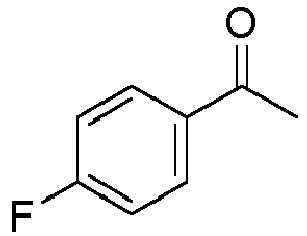

5h 79% 3 

5h20 71% 4 

4h45 65% 5 

5h50 78% 6 

6h15 75% 7 

6h 80% 8* 

24h* 48%* 9* 

6h30* 78%* 10* 

3h00* 52%* 42 : 1 : 4 11* 

5h30* 54%* 1 : 2 : 4 12* 
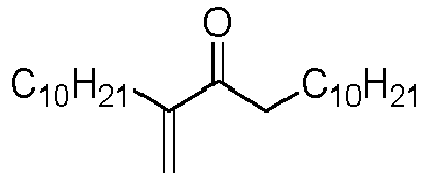
24h* 48%* 13 

2h00 -- 14 

2h00 7% 15 

2h00 14% 16* 
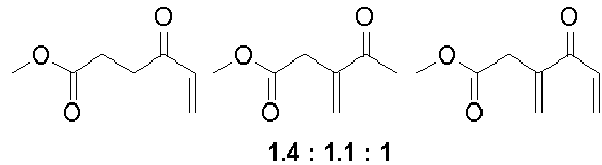
5h00* 42%* * Reactions have been conducted using 20 mol% β-alanine - HClaq -
- 1-phenylprop-2-en-1-one
RMN 1H (CDCl3, 400MHz): δ 7.80 (m, 2H), 7.45 (m, 1H), 7.35 (m, 2H), 7.03 (dd, 1H, J = 10.5 17.1Hz), 6.29 (dd, 1H, J = 1.7 17.1Hz),
5.81 (dd, 1H, J = 1.7 10.5Hz). - 1-(4-fluorophenyl)prop-2-en-1-one
RMN 1H (CDCl3, 400MHz): δ 7.89-7.85 (m, 2H), 7.07-7.0 (m, 3H), 6.32 (dd, 1H, J = 1.7 17.1Hz), 5.83 (dd, 1H, J = 1.6 10.6Hz). - 1-(4-chlorophenyl)prop-2-en-1-one
RMN 1H (CDCl3, 400MHz): δ 7.76 (d, 2H), 7.33 (d, 2H),
7.00 (dd, 1H, J = 10.6 17.1Hz), 6.3 (dd, 1H, J = 1.6 17.1Hz),
5.83 (dd, 1H, J = 1.6 10.6Hz). - 1-(4-bromophenyl)prop-2-en-1-one
RMN 1H (CDCl3, 400MHz): δ 7.71 (d, 2H), 7.52 (d, 2H),
7.01 (dd, 1H, J = 10.6 17.1Hz), 6.33 (dd, 1H, J = 1.6 17.1Hz),
5.86 (dd, 1H, J = 1.6 10.6Hz). - 1-(4-methoxyphenyl)prop-2-en-1-one
RMN 1H (CDCl3, 400MHz): δ 7.81 (m, 2H), 7.04 (dd, 1H, J = 10.5 17Hz), 6.82 (m, 2H), 6.26 (dd, 1h, J = 1.8 17.1Hz), 5.74 (dd, 1H, J = 1.8 10.5Hz), 3.74 (s, 3H). - 1-(p-tolyl)prop-2-en-1-one
RMN 1H (CDCl3, 400MHz): δ 7.74 (d, 2H), 7.17 (d, 2H),
7.05 (dd, 1H, J = 10.6 17.3Hz), 6.3 (dd, 1H, J = 1.7, 17.1Hz),
5.79 (dd, 1H, J = 1.7 10.6Hz), 2.31 (s, 3H). - 1-(o-tolyl)prop-2-en-1-one
RMN 1H (CDCl3, 400MHz): δ 7.31 (m, 1H), 7.24 (m, 1H), 7.12 (m, 2H), 6.65 (dd, 1H, J = 10.5 17.4Hz), 6.01 (dd, 1H, J = 1.4 17.4Hz),
5.89 (dd, 1H, J = 1.3 10.5Hz), 2.29 (s, 3H). - 2-methylene-1-phenyldodecan-1-one
RMN 1H (CDCl3, 400MHz): δ 7.65-7.62 (m, 2H), 7.45-7.41 (m, 1H),
7.37-7.30 (m, 2H), 5.71 (d, 1H), 5.45 (s, 1H), 2.35 (t, 2H), 1.42-1.34 (qt, 2H), 1.26-1.15 (m, 14H), 0.77 (t, 3H). - 11-methylenetricosan-12-one
RMN 1H (CDCl3, 400MHz): δ 5.93 (s, 1H), 5.66 (s, 1H), 2.63 (t, 2H),
2.23 (t, 2H), 1.24 (qt, 34H), 0.86 (t, 6H). - 4,4-dimethylpent-1-en-3-one
RMN 1H (CDCl3, 400MHz): Methylene protons. δ 6.5 (dd, 1H, J = 10.3 16.9Hz), 6.03 (dd, 1H, J = 2.3 17.0Hz), 5.33 (dd, 1H, J = 2.2 10.4Hz). - 5-methylhex-1-en-3-one
RMN 1H (CDCl3, 400MHz): Methylene protons.
δ 6.03 (dd, 1H, J = 10.5 17.6Hz), 5.87 (dd, 1H, J = 1.2 17.6Hz),
5.46 (dd, 1H, J = 1.2 10.5Hz). - Non-1-en-3-one
RMN 1H (CDCl3, 400MHz): Methylene protons.
δ 6.25 (dd, 1H, J = 10.5 17.7Hz), 6.11 (dd, 1H, J = 1.3 17.7Hz),
5.72 (dd, 1H, J = 1.3 10.5Hz). - 3-methyleneoctan-2-one
RMN 1H (CDCl3, 400MHz): Methylene protons. δ 5.9 (s, 1H), 5.66 (s, 1H). - 4-methylenenon-1-en-3-one
RMN 1H (CDCl3, 400MHz): Methylene protons. δ 6.79 (dd, 1H, J = 10.5 17.2Hz), 6.16 (dd, 1H, J = 1.8 17.1Hz), 5.85 (s, 1H), 5.69-5.65 (s+dd, 2H). - Methyl 2-methylene-3-oxobutanoate
RMN 1H (CDCl3, 400MHz): Methylene protons. δ 5.8 (s, 1H), 5.77 (s, 1H). - Methyl 4-oxohex-5-enoate
RMN 1H (CDCl3, 400MHz): Methylene protons.
δ 6.18 (dd, 1H, J = 10.3 17.7Hz), 6.09-6.04 (overlaping dd, 1H, J = 1.2Hz), 5.69 (dd, 1H, J = 1.3 10.3Hz). - Methyl 3-methylene-4-oxopentanoate
RMN 1H (CDCl3, 400MHz): Methylene protons. δ 5.99 (s, 1H),
5.78 (t, 1H, J = 1.1Hz). - Methyl 3-methylene-4-oxohex-5-enoate
RMN 1H (CDCl3, 400MHz): Methylene protons.
δ 6.74 (dd, 1H, J = 10.6 17.1Hz), 6.13-6.09 (overlaping dd, 1H, J = 1.6Hz), 5.98 (s, 1H), 5.80 (t, 1H, J = 1.1Hz), 5.63 (dd, 1H, J = 1.7 10.5Hz).
Claims (15)
- Process for preparing an α-methylene ketone comprising the step of reacting a ketone with formaldehyde in the presence of a catalyst which is an organic compound comprising at least one acid function or the corresponding salt, ester or amide thereof and at least one amine function or the corresponding ammonium salt, or a zwitterion thereof.
- Process according to claim 1, wherein the ketone has the general chemical formula (I)
 wherein R is a hydrocarbon radical which may be interrupted by one or more heteroatoms and/or heteroatom(s) containing groups and/or which may be substituted with one or more functional groups, andR' is H or a hydrocarbon radical which may be interrupted by one or more heteroatoms and/or heteroatom(s) containing groups and/or which may be substituted with one or more functional groups,wherein R and R' together with the -C(O)-CH2- moiety may form a ring.
 - Process according to claim 2, wherein in the ketone of formula (I) the R and R' independently of each other comprise 1 to 30 carbon atoms, and preferably 1 to 20 carbon atoms.
- Process according to claim 2 or 3, wherein in the ketone of formula (I) the hydrocarbon radicals independently are alkyl which may be linear or branched, alkenyl which may be linear or branched, alkynyl which may be linear or branched, cycloalkyl, or aryl, or combinations of any of these groups.
- Process according to any one of the preceding claims, wherein the reaction is conducted in the presence of an additional acid.
- Process according to claim 5, wherein the additional acid is selected from the group consisting of HCl, HBr, HI, H2SO4, HClO4, HNO3, and H3PO4, and is preferably HCl.
- Process according to any one of the preceding claims, wherein the catalyst is a compound of the general formula (II)
 wherein R1 is H or a hydrocarbon residue which may be interrupted by one or more heteroatoms and/or heteroatom(s) containing groups and/or which may be substituted with one or more functional groups,X is an acid function or the corresponding salt, ester or amide, andL is a linker, which has 1 to 6 atoms between N and X,wherein any atom of R1 may be attached to any atom of L to form a ring, or the corresponding ammonium salt of the amine function;or a zwitterion thereof.
 - Process according to any one of the preceding claims, wherein the catalyst is selected from the group consisting of glycine, valine, serine, methionine, cysteine, proline, sarcosine, β-alanine, phenylalanine, aminomethylphosphonic acid, taurine, methylalanine, isoleucine, and tert-leucine, preferably valine, proline, β-alanine, glycine and methylalanine, more preferably valine, β-alanine, glycine and methylalanine.
- Process according to any one of the preceding claims, wherein the reaction is conducted in the presence of a solvent, preferably an organic solvent, more preferably an organic solvent selected from the group consisting of DMSO, THF, methyl-THF, ethylacetate, toluene, benzene, acetone, dimethyl formamide, acetonitrile, alcohols, such as methanol, ethanol and isopropanol, halogenated, in particular chlorinated solvents, such as dichloromethane and chloroform, and ketones with the exception of ketones bearing a -CH2- moiety next to the carbonyl group, preferably DMSO.
- Process according to any one of the preceding claims, wherein the catalyst is present at an amount of at least 1 mol%, preferably of at least 3 mol%, and most preferably of at least 5 mol%, based on the amount of the ketone.
- Process according to any one of the preceding claims, wherein the catalyst is present at an amount of less than 90 mol%, preferably of less than 60 mol%, more preferably of less than 45 mol%, and most preferably of less than 25 mol%, based on the amount of the ketone.
- Process according to any one of the preceding claims, wherein the ketone is present at a concentration of less than 5 mol/l, preferably of less than 2 mol/l, and more preferably of less than 1 mol/l.
- Process according to any one of claims 2 to 9, wherein the molar ratio of catalyst to further acid is in the range of 0.1 to 3.0, preferably in the range of 0.1 to 2.5, more preferably in the range of 0.5 to 2.0, and even more preferably in the range of 0.5 to 1.5.
- Process according to any one of the preceding claims, wherein the formaldehyde is present at an amount of at least 150 mol%, preferably of at least 200 mol%, based on the amount of the ketone.
- Process according to any one of the preceding claims, wherein the reaction is conducted at a temperature in the range of 25°C to 200°C, preferably in the range of 70°C to 130°C, and more preferably in the range of 80°C to 120°C.
Priority Applications (7)
| Application Number | Priority Date | Filing Date | Title |
|---|---|---|---|
| EP18306532.5A EP3656756B1 (en) | 2018-11-20 | 2018-11-20 | Process for the direct alpha-methylenation of ketones |
| US17/293,981 US11401228B2 (en) | 2018-11-20 | 2019-11-18 | Process for the direct alpha-methylenation of ketones |
| PCT/EP2019/081693 WO2020104398A1 (en) | 2018-11-20 | 2019-11-18 | Process for the direct alpha-methylenation of ketones |
| BR112021008054-6A BR112021008054B1 (en) | 2018-11-20 | 2019-11-18 | PROCESS FOR DIRECT ALPHA-METHYLENEATION OF KETONES |
| JP2021526759A JP2022513063A (en) | 2018-11-20 | 2019-11-18 | Method of direct α-methyleneation of ketone |
| CN201980076557.4A CN113166027B (en) | 2018-11-20 | 2019-11-18 | Direct α-Methylenation of Ketones |
| KR1020217016298A KR20210093922A (en) | 2018-11-20 | 2019-11-18 | Direct alpha-methyleneation process of ketones |
Applications Claiming Priority (1)
| Application Number | Priority Date | Filing Date | Title |
|---|---|---|---|
| EP18306532.5A EP3656756B1 (en) | 2018-11-20 | 2018-11-20 | Process for the direct alpha-methylenation of ketones |
Publications (2)
| Publication Number | Publication Date |
|---|---|
| EP3656756A1 true EP3656756A1 (en) | 2020-05-27 |
| EP3656756B1 EP3656756B1 (en) | 2025-12-03 |
Family
ID=64661260
Family Applications (1)
| Application Number | Title | Priority Date | Filing Date |
|---|---|---|---|
| EP18306532.5A Active EP3656756B1 (en) | 2018-11-20 | 2018-11-20 | Process for the direct alpha-methylenation of ketones |
Country Status (6)
| Country | Link |
|---|---|
| US (1) | US11401228B2 (en) |
| EP (1) | EP3656756B1 (en) |
| JP (1) | JP2022513063A (en) |
| KR (1) | KR20210093922A (en) |
| CN (1) | CN113166027B (en) |
| WO (1) | WO2020104398A1 (en) |
Families Citing this family (1)
| Publication number | Priority date | Publication date | Assignee | Title |
|---|---|---|---|---|
| CN115974664A (en) * | 2023-01-18 | 2023-04-18 | 合肥工业大学 | Synthesis method of 5-chloro-1-indanone |
-
2018
- 2018-11-20 EP EP18306532.5A patent/EP3656756B1/en active Active
-
2019
- 2019-11-18 WO PCT/EP2019/081693 patent/WO2020104398A1/en not_active Ceased
- 2019-11-18 CN CN201980076557.4A patent/CN113166027B/en active Active
- 2019-11-18 US US17/293,981 patent/US11401228B2/en active Active
- 2019-11-18 JP JP2021526759A patent/JP2022513063A/en active Pending
- 2019-11-18 KR KR1020217016298A patent/KR20210093922A/en not_active Withdrawn
Non-Patent Citations (5)
| Title |
|---|
| A. BUGARIN ET AL., CHEM. COMMUN., vol. 46, 2010, pages 1715 - 1717 |
| ALEJANDRO BUGARIN ET AL: "Efficient, direct .alpha.-methylenation of carbonyls mediated by diisopropylammonium trifluoroacetate", CHEMICAL COMMUNICATIONS, ROYAL SOCIETY OF CHEMISTRY, vol. 46, 25 January 2010 (2010-01-25), pages 1715 - 1717, XP002729380, ISSN: 1359-7345, [retrieved on 20100125], DOI: 10.1039/B924577D * |
| ANNIINA ERKKIL� ET AL: "Mild Organocatalytic [alpha]-Methylenation of Aldehydes", JOURNAL OF ORGANIC CHEMISTRY,, vol. 71, no. 6, 17 March 2006 (2006-03-17), pages 2538 - 2541, XP009110116, ISSN: 0022-3263, [retrieved on 20060223], DOI: 10.1021/JO052529Q * |
| J. L. GRAS, TETRAHEDRON LETTERS, 1978, pages 2111 - 2114 |
| J. L. ROBERTS ET AL., TETRAHEDRON LETTERS, 1977, pages 1621 - 1624 |
Also Published As
| Publication number | Publication date |
|---|---|
| CN113166027B (en) | 2024-10-25 |
| KR20210093922A (en) | 2021-07-28 |
| WO2020104398A1 (en) | 2020-05-28 |
| BR112021008054A2 (en) | 2021-08-03 |
| US11401228B2 (en) | 2022-08-02 |
| CN113166027A (en) | 2021-07-23 |
| US20220002221A1 (en) | 2022-01-06 |
| EP3656756B1 (en) | 2025-12-03 |
| JP2022513063A (en) | 2022-02-07 |
Similar Documents
| Publication | Publication Date | Title |
|---|---|---|
| JP5306204B2 (en) | Preparation of α-hydroxy ketones via carbene-catalyzed polar conversion of aldehydes | |
| JP5283897B2 (en) | Continuous process for decarboxylation of carboxylic acids | |
| EP4667455A1 (en) | Asymmetric catalytic hydrogenation synthesis method for brivaracetam intermediate | |
| EP3656756B1 (en) | Process for the direct alpha-methylenation of ketones | |
| Xie et al. | Lanthanide triflates catalyzed reactions of imines with indole in protic media | |
| US20110105804A1 (en) | Process for producing nitroalcohols | |
| JPS6218540B2 (en) | ||
| US20150344451A1 (en) | Preparation method for an imine compound and reduction method for solid powder of a carbamic acid derivative | |
| US20180258036A1 (en) | Method for producing bis(3-aminophenyl)disulfides and 3-aminothiols | |
| JPH0458468B2 (en) | ||
| CA1041545A (en) | Process for the preparation of 4-amino-3,5-dihalogen-phenyl-ethanolamines | |
| US6867331B2 (en) | Method for producing deoxybenzoins | |
| KR100674098B1 (en) | Process for preparing N-alk (en) oxy (or aryloxy) carbonylisothiocyanate and derivatives thereof in the presence of N, N-dialkylarylamine catalyst | |
| CN101189217A (en) | Process for producing aminomethylthiazole compounds | |
| JP3783236B2 (en) | Method for producing 4,6-diaminoresorcinol via bisazoarylresorcinol intermediate | |
| US6630593B1 (en) | Process for preparing a 1-substituted 5-hydroxymethyl imidazole | |
| Taylor et al. | Reinvestigation of some purported 1, 2, 4-oxadiazetidines | |
| US11033889B2 (en) | Palladium acyclic diaminocarbene complexes as precatalysts for Hiyama coupling and the tandem one-pot fluoride free Hiyama coupling/cyclization for the synthesis of biologically relevant | |
| BR112012008332B1 (en) | CINACALCET INTERMEDIATE, ITS PREPARATION PROCESS AND CINACALCET PREPARATION PROCESS | |
| US20080033154A1 (en) | Process for Producing 3-Aminomethyltetrahydrofuran Derivative | |
| BR112021008054B1 (en) | PROCESS FOR DIRECT ALPHA-METHYLENEATION OF KETONES | |
| US20040171863A1 (en) | Process for poducing beta-oxonitrile compound or alkali metal salt thereof | |
| US3957823A (en) | Electrophilic substitution of nitrosamines | |
| KR20010052528A (en) | Method for Producing Alkyl Chloride, Alkenyl Chloride and Alkynyl Chloride | |
| US6184412B1 (en) | Process for manufacture of N-alkoxy(or aryloxy)carbonyl isothiocyanate derivatives in the presence of N,N-dialkylarylamine catalyst and aqueous solvent |
Legal Events
| Date | Code | Title | Description |
|---|---|---|---|
| PUAI | Public reference made under article 153(3) epc to a published international application that has entered the european phase |
Free format text: ORIGINAL CODE: 0009012 |
|
| STAA | Information on the status of an ep patent application or granted ep patent |
Free format text: STATUS: THE APPLICATION HAS BEEN PUBLISHED |
|
| AK | Designated contracting states |
Kind code of ref document: A1 Designated state(s): AL AT BE BG CH CY CZ DE DK EE ES FI FR GB GR HR HU IE IS IT LI LT LU LV MC MK MT NL NO PL PT RO RS SE SI SK SM TR |
|
| AX | Request for extension of the european patent |
Extension state: BA ME |
|
| RAP1 | Party data changed (applicant data changed or rights of an application transferred) |
Owner name: RHODIA OPERATIONS |
|
| STAA | Information on the status of an ep patent application or granted ep patent |
Free format text: STATUS: REQUEST FOR EXAMINATION WAS MADE |
|
| 17P | Request for examination filed |
Effective date: 20201127 |
|
| RBV | Designated contracting states (corrected) |
Designated state(s): AL AT BE BG CH CY CZ DE DK EE ES FI FR GB GR HR HU IE IS IT LI LT LU LV MC MK MT NL NO PL PT RO RS SE SI SK SM TR |
|
| STAA | Information on the status of an ep patent application or granted ep patent |
Free format text: STATUS: EXAMINATION IS IN PROGRESS |
|
| 17Q | First examination report despatched |
Effective date: 20210429 |
|
| RAP3 | Party data changed (applicant data changed or rights of an application transferred) |
Owner name: RHODIA OPERATIONS |
|
| RAP1 | Party data changed (applicant data changed or rights of an application transferred) |
Owner name: SPECIALTY OPERATIONS FRANCE |
|
| GRAP | Despatch of communication of intention to grant a patent |
Free format text: ORIGINAL CODE: EPIDOSNIGR1 |
|
| STAA | Information on the status of an ep patent application or granted ep patent |
Free format text: STATUS: GRANT OF PATENT IS INTENDED |
|
| INTG | Intention to grant announced |
Effective date: 20250915 |
|
| GRAS | Grant fee paid |
Free format text: ORIGINAL CODE: EPIDOSNIGR3 |
|
| GRAA | (expected) grant |
Free format text: ORIGINAL CODE: 0009210 |
|
| STAA | Information on the status of an ep patent application or granted ep patent |
Free format text: STATUS: THE PATENT HAS BEEN GRANTED |
|
| P01 | Opt-out of the competence of the unified patent court (upc) registered |
Free format text: CASE NUMBER: UPC_APP_7963_3656756/2025 Effective date: 20250925 |
|
| AK | Designated contracting states |
Kind code of ref document: B1 Designated state(s): AL AT BE BG CH CY CZ DE DK EE ES FI FR GB GR HR HU IE IS IT LI LT LU LV MC MK MT NL NO PL PT RO RS SE SI SK SM TR |
|
| REG | Reference to a national code |
Ref country code: CH Ref legal event code: F10 Free format text: ST27 STATUS EVENT CODE: U-0-0-F10-F00 (AS PROVIDED BY THE NATIONAL OFFICE) Effective date: 20251203 Ref country code: GB Ref legal event code: FG4D |
|
| REG | Reference to a national code |
Ref country code: DE Ref legal event code: R096 Ref document number: 602018087581 Country of ref document: DE |
|
| REG | Reference to a national code |
Ref country code: IE Ref legal event code: FG4D |
|
| REG | Reference to a national code |
Ref country code: NL Ref legal event code: MP Effective date: 20251203 |
|
| PG25 | Lapsed in a contracting state [announced via postgrant information from national office to epo] |
Ref country code: ES Free format text: LAPSE BECAUSE OF FAILURE TO SUBMIT A TRANSLATION OF THE DESCRIPTION OR TO PAY THE FEE WITHIN THE PRESCRIBED TIME-LIMIT Effective date: 20251203 |
|
| REG | Reference to a national code |
Ref country code: LT Ref legal event code: MG9D |
|
| PG25 | Lapsed in a contracting state [announced via postgrant information from national office to epo] |
Ref country code: NO Free format text: LAPSE BECAUSE OF FAILURE TO SUBMIT A TRANSLATION OF THE DESCRIPTION OR TO PAY THE FEE WITHIN THE PRESCRIBED TIME-LIMIT Effective date: 20260303 |
|
| PG25 | Lapsed in a contracting state [announced via postgrant information from national office to epo] |
Ref country code: HR Free format text: LAPSE BECAUSE OF FAILURE TO SUBMIT A TRANSLATION OF THE DESCRIPTION OR TO PAY THE FEE WITHIN THE PRESCRIBED TIME-LIMIT Effective date: 20251203 Ref country code: FI Free format text: LAPSE BECAUSE OF FAILURE TO SUBMIT A TRANSLATION OF THE DESCRIPTION OR TO PAY THE FEE WITHIN THE PRESCRIBED TIME-LIMIT Effective date: 20251203 |
|
| PG25 | Lapsed in a contracting state [announced via postgrant information from national office to epo] |
Ref country code: RS Free format text: LAPSE BECAUSE OF FAILURE TO SUBMIT A TRANSLATION OF THE DESCRIPTION OR TO PAY THE FEE WITHIN THE PRESCRIBED TIME-LIMIT Effective date: 20260303 |
|
| PG25 | Lapsed in a contracting state [announced via postgrant information from national office to epo] |
Ref country code: PL Free format text: LAPSE BECAUSE OF FAILURE TO SUBMIT A TRANSLATION OF THE DESCRIPTION OR TO PAY THE FEE WITHIN THE PRESCRIBED TIME-LIMIT Effective date: 20251203 |
|
| PG25 | Lapsed in a contracting state [announced via postgrant information from national office to epo] |
Ref country code: LV Free format text: LAPSE BECAUSE OF FAILURE TO SUBMIT A TRANSLATION OF THE DESCRIPTION OR TO PAY THE FEE WITHIN THE PRESCRIBED TIME-LIMIT Effective date: 20251203 |
|
| PG25 | Lapsed in a contracting state [announced via postgrant information from national office to epo] |
Ref country code: BG Free format text: LAPSE BECAUSE OF FAILURE TO SUBMIT A TRANSLATION OF THE DESCRIPTION OR TO PAY THE FEE WITHIN THE PRESCRIBED TIME-LIMIT Effective date: 20251203 |
|
| REG | Reference to a national code |
Ref country code: AT Ref legal event code: MK05 Ref document number: 1863515 Country of ref document: AT Kind code of ref document: T Effective date: 20251203 |
|
| PG25 | Lapsed in a contracting state [announced via postgrant information from national office to epo] |
Ref country code: NL Free format text: LAPSE BECAUSE OF FAILURE TO SUBMIT A TRANSLATION OF THE DESCRIPTION OR TO PAY THE FEE WITHIN THE PRESCRIBED TIME-LIMIT Effective date: 20251203 |
|
| PG25 | Lapsed in a contracting state [announced via postgrant information from national office to epo] |
Ref country code: LT Free format text: LAPSE BECAUSE OF FAILURE TO SUBMIT A TRANSLATION OF THE DESCRIPTION OR TO PAY THE FEE WITHIN THE PRESCRIBED TIME-LIMIT Effective date: 20251203 |
|
| PG25 | Lapsed in a contracting state [announced via postgrant information from national office to epo] |
Ref country code: SM Free format text: LAPSE BECAUSE OF FAILURE TO SUBMIT A TRANSLATION OF THE DESCRIPTION OR TO PAY THE FEE WITHIN THE PRESCRIBED TIME-LIMIT Effective date: 20251203 |
|
| PG25 | Lapsed in a contracting state [announced via postgrant information from national office to epo] |
Ref country code: IT Free format text: LAPSE BECAUSE OF FAILURE TO SUBMIT A TRANSLATION OF THE DESCRIPTION OR TO PAY THE FEE WITHIN THE PRESCRIBED TIME-LIMIT Effective date: 20251203 |
|
| PG25 | Lapsed in a contracting state [announced via postgrant information from national office to epo] |
Ref country code: AT Free format text: LAPSE BECAUSE OF FAILURE TO SUBMIT A TRANSLATION OF THE DESCRIPTION OR TO PAY THE FEE WITHIN THE PRESCRIBED TIME-LIMIT Effective date: 20251203 |
|
| PG25 | Lapsed in a contracting state [announced via postgrant information from national office to epo] |
Ref country code: EE Free format text: LAPSE BECAUSE OF FAILURE TO SUBMIT A TRANSLATION OF THE DESCRIPTION OR TO PAY THE FEE WITHIN THE PRESCRIBED TIME-LIMIT Effective date: 20251203 |
|
| PG25 | Lapsed in a contracting state [announced via postgrant information from national office to epo] |
Ref country code: PT Free format text: LAPSE BECAUSE OF FAILURE TO SUBMIT A TRANSLATION OF THE DESCRIPTION OR TO PAY THE FEE WITHIN THE PRESCRIBED TIME-LIMIT Effective date: 20260406 Ref country code: IS Free format text: LAPSE BECAUSE OF FAILURE TO SUBMIT A TRANSLATION OF THE DESCRIPTION OR TO PAY THE FEE WITHIN THE PRESCRIBED TIME-LIMIT Effective date: 20260403 |
|
| PG25 | Lapsed in a contracting state [announced via postgrant information from national office to epo] |
Ref country code: CZ Free format text: LAPSE BECAUSE OF FAILURE TO SUBMIT A TRANSLATION OF THE DESCRIPTION OR TO PAY THE FEE WITHIN THE PRESCRIBED TIME-LIMIT Effective date: 20251203 |
|
| PG25 | Lapsed in a contracting state [announced via postgrant information from national office to epo] |
Ref country code: SK Free format text: LAPSE BECAUSE OF FAILURE TO SUBMIT A TRANSLATION OF THE DESCRIPTION OR TO PAY THE FEE WITHIN THE PRESCRIBED TIME-LIMIT Effective date: 20251203 |
|
| PG25 | Lapsed in a contracting state [announced via postgrant information from national office to epo] |
Ref country code: SE Free format text: LAPSE BECAUSE OF FAILURE TO SUBMIT A TRANSLATION OF THE DESCRIPTION OR TO PAY THE FEE WITHIN THE PRESCRIBED TIME-LIMIT Effective date: 20251203 |