EP3654255A1 - Additive manufactured multi-portion article - Google Patents
Additive manufactured multi-portion article Download PDFInfo
- Publication number
- EP3654255A1 EP3654255A1 EP19208058.8A EP19208058A EP3654255A1 EP 3654255 A1 EP3654255 A1 EP 3654255A1 EP 19208058 A EP19208058 A EP 19208058A EP 3654255 A1 EP3654255 A1 EP 3654255A1
- Authority
- EP
- European Patent Office
- Prior art keywords
- additive manufacturing
- article
- manufacturing process
- additive
- manufactured
- Prior art date
- Legal status (The legal status is an assumption and is not a legal conclusion. Google has not performed a legal analysis and makes no representation as to the accuracy of the status listed.)
- Pending
Links
Images


Classifications
-
- B—PERFORMING OPERATIONS; TRANSPORTING
- B29—WORKING OF PLASTICS; WORKING OF SUBSTANCES IN A PLASTIC STATE IN GENERAL
- B29C—SHAPING OR JOINING OF PLASTICS; SHAPING OF MATERIAL IN A PLASTIC STATE, NOT OTHERWISE PROVIDED FOR; AFTER-TREATMENT OF THE SHAPED PRODUCTS, e.g. REPAIRING
- B29C64/00—Additive manufacturing, i.e. manufacturing of three-dimensional [3D] objects by additive deposition, additive agglomeration or additive layering, e.g. by 3D printing, stereolithography or selective laser sintering
- B29C64/10—Processes of additive manufacturing
-
- B—PERFORMING OPERATIONS; TRANSPORTING
- B22—CASTING; POWDER METALLURGY
- B22F—WORKING METALLIC POWDER; MANUFACTURE OF ARTICLES FROM METALLIC POWDER; MAKING METALLIC POWDER; APPARATUS OR DEVICES SPECIALLY ADAPTED FOR METALLIC POWDER
- B22F10/00—Additive manufacturing of workpieces or articles from metallic powder
-
- B—PERFORMING OPERATIONS; TRANSPORTING
- B29—WORKING OF PLASTICS; WORKING OF SUBSTANCES IN A PLASTIC STATE IN GENERAL
- B29C—SHAPING OR JOINING OF PLASTICS; SHAPING OF MATERIAL IN A PLASTIC STATE, NOT OTHERWISE PROVIDED FOR; AFTER-TREATMENT OF THE SHAPED PRODUCTS, e.g. REPAIRING
- B29C64/00—Additive manufacturing, i.e. manufacturing of three-dimensional [3D] objects by additive deposition, additive agglomeration or additive layering, e.g. by 3D printing, stereolithography or selective laser sintering
- B29C64/30—Auxiliary operations or equipment
- B29C64/386—Data acquisition or data processing for additive manufacturing
-
- B—PERFORMING OPERATIONS; TRANSPORTING
- B29—WORKING OF PLASTICS; WORKING OF SUBSTANCES IN A PLASTIC STATE IN GENERAL
- B29C—SHAPING OR JOINING OF PLASTICS; SHAPING OF MATERIAL IN A PLASTIC STATE, NOT OTHERWISE PROVIDED FOR; AFTER-TREATMENT OF THE SHAPED PRODUCTS, e.g. REPAIRING
- B29C65/00—Joining or sealing of preformed parts, e.g. welding of plastics materials; Apparatus therefor
- B29C65/56—Joining or sealing of preformed parts, e.g. welding of plastics materials; Apparatus therefor using mechanical means or mechanical connections, e.g. form-fits
- B29C65/565—Joining or sealing of preformed parts, e.g. welding of plastics materials; Apparatus therefor using mechanical means or mechanical connections, e.g. form-fits involving interference fits, e.g. force-fits or press-fits
-
- B—PERFORMING OPERATIONS; TRANSPORTING
- B33—ADDITIVE MANUFACTURING TECHNOLOGY
- B33Y—ADDITIVE MANUFACTURING, i.e. MANUFACTURING OF THREE-DIMENSIONAL [3D] OBJECTS BY ADDITIVE DEPOSITION, ADDITIVE AGGLOMERATION OR ADDITIVE LAYERING, e.g. BY 3D PRINTING, STEREOLITHOGRAPHY OR SELECTIVE LASER SINTERING
- B33Y10/00—Processes of additive manufacturing
-
- B—PERFORMING OPERATIONS; TRANSPORTING
- B33—ADDITIVE MANUFACTURING TECHNOLOGY
- B33Y—ADDITIVE MANUFACTURING, i.e. MANUFACTURING OF THREE-DIMENSIONAL [3D] OBJECTS BY ADDITIVE DEPOSITION, ADDITIVE AGGLOMERATION OR ADDITIVE LAYERING, e.g. BY 3D PRINTING, STEREOLITHOGRAPHY OR SELECTIVE LASER SINTERING
- B33Y50/00—Data acquisition or data processing for additive manufacturing
-
- G—PHYSICS
- G06—COMPUTING OR CALCULATING; COUNTING
- G06Q—INFORMATION AND COMMUNICATION TECHNOLOGY [ICT] SPECIALLY ADAPTED FOR ADMINISTRATIVE, COMMERCIAL, FINANCIAL, MANAGERIAL OR SUPERVISORY PURPOSES; SYSTEMS OR METHODS SPECIALLY ADAPTED FOR ADMINISTRATIVE, COMMERCIAL, FINANCIAL, MANAGERIAL OR SUPERVISORY PURPOSES, NOT OTHERWISE PROVIDED FOR
- G06Q10/00—Administration; Management
- G06Q10/06—Resources, workflows, human or project management; Enterprise or organisation planning; Enterprise or organisation modelling
-
- G—PHYSICS
- G06—COMPUTING OR CALCULATING; COUNTING
- G06Q—INFORMATION AND COMMUNICATION TECHNOLOGY [ICT] SPECIALLY ADAPTED FOR ADMINISTRATIVE, COMMERCIAL, FINANCIAL, MANAGERIAL OR SUPERVISORY PURPOSES; SYSTEMS OR METHODS SPECIALLY ADAPTED FOR ADMINISTRATIVE, COMMERCIAL, FINANCIAL, MANAGERIAL OR SUPERVISORY PURPOSES, NOT OTHERWISE PROVIDED FOR
- G06Q50/00—Information and communication technology [ICT] specially adapted for implementation of business processes of specific business sectors, e.g. utilities or tourism
- G06Q50/04—Manufacturing
-
- B—PERFORMING OPERATIONS; TRANSPORTING
- B22—CASTING; POWDER METALLURGY
- B22F—WORKING METALLIC POWDER; MANUFACTURE OF ARTICLES FROM METALLIC POWDER; MAKING METALLIC POWDER; APPARATUS OR DEVICES SPECIALLY ADAPTED FOR METALLIC POWDER
- B22F10/00—Additive manufacturing of workpieces or articles from metallic powder
- B22F10/10—Formation of a green body
- B22F10/12—Formation of a green body by photopolymerisation, e.g. stereolithography [SLA] or digital light processing [DLP]
-
- B—PERFORMING OPERATIONS; TRANSPORTING
- B22—CASTING; POWDER METALLURGY
- B22F—WORKING METALLIC POWDER; MANUFACTURE OF ARTICLES FROM METALLIC POWDER; MAKING METALLIC POWDER; APPARATUS OR DEVICES SPECIALLY ADAPTED FOR METALLIC POWDER
- B22F10/00—Additive manufacturing of workpieces or articles from metallic powder
- B22F10/10—Formation of a green body
- B22F10/14—Formation of a green body by jetting of binder onto a bed of metal powder
-
- B—PERFORMING OPERATIONS; TRANSPORTING
- B22—CASTING; POWDER METALLURGY
- B22F—WORKING METALLIC POWDER; MANUFACTURE OF ARTICLES FROM METALLIC POWDER; MAKING METALLIC POWDER; APPARATUS OR DEVICES SPECIALLY ADAPTED FOR METALLIC POWDER
- B22F10/00—Additive manufacturing of workpieces or articles from metallic powder
- B22F10/10—Formation of a green body
- B22F10/18—Formation of a green body by mixing binder with metal in filament form, e.g. fused filament fabrication [FFF]
-
- B—PERFORMING OPERATIONS; TRANSPORTING
- B22—CASTING; POWDER METALLURGY
- B22F—WORKING METALLIC POWDER; MANUFACTURE OF ARTICLES FROM METALLIC POWDER; MAKING METALLIC POWDER; APPARATUS OR DEVICES SPECIALLY ADAPTED FOR METALLIC POWDER
- B22F10/00—Additive manufacturing of workpieces or articles from metallic powder
- B22F10/20—Direct sintering or melting
- B22F10/25—Direct deposition of metal particles, e.g. direct metal deposition [DMD] or laser engineered net shaping [LENS]
-
- B—PERFORMING OPERATIONS; TRANSPORTING
- B22—CASTING; POWDER METALLURGY
- B22F—WORKING METALLIC POWDER; MANUFACTURE OF ARTICLES FROM METALLIC POWDER; MAKING METALLIC POWDER; APPARATUS OR DEVICES SPECIALLY ADAPTED FOR METALLIC POWDER
- B22F10/00—Additive manufacturing of workpieces or articles from metallic powder
- B22F10/20—Direct sintering or melting
- B22F10/28—Powder bed fusion, e.g. selective laser melting [SLM] or electron beam melting [EBM]
-
- B—PERFORMING OPERATIONS; TRANSPORTING
- B33—ADDITIVE MANUFACTURING TECHNOLOGY
- B33Y—ADDITIVE MANUFACTURING, i.e. MANUFACTURING OF THREE-DIMENSIONAL [3D] OBJECTS BY ADDITIVE DEPOSITION, ADDITIVE AGGLOMERATION OR ADDITIVE LAYERING, e.g. BY 3D PRINTING, STEREOLITHOGRAPHY OR SELECTIVE LASER SINTERING
- B33Y80/00—Products made by additive manufacturing
-
- Y—GENERAL TAGGING OF NEW TECHNOLOGICAL DEVELOPMENTS; GENERAL TAGGING OF CROSS-SECTIONAL TECHNOLOGIES SPANNING OVER SEVERAL SECTIONS OF THE IPC; TECHNICAL SUBJECTS COVERED BY FORMER USPC CROSS-REFERENCE ART COLLECTIONS [XRACs] AND DIGESTS
- Y02—TECHNOLOGIES OR APPLICATIONS FOR MITIGATION OR ADAPTATION AGAINST CLIMATE CHANGE
- Y02P—CLIMATE CHANGE MITIGATION TECHNOLOGIES IN THE PRODUCTION OR PROCESSING OF GOODS
- Y02P10/00—Technologies related to metal processing
- Y02P10/25—Process efficiency
-
- Y—GENERAL TAGGING OF NEW TECHNOLOGICAL DEVELOPMENTS; GENERAL TAGGING OF CROSS-SECTIONAL TECHNOLOGIES SPANNING OVER SEVERAL SECTIONS OF THE IPC; TECHNICAL SUBJECTS COVERED BY FORMER USPC CROSS-REFERENCE ART COLLECTIONS [XRACs] AND DIGESTS
- Y02—TECHNOLOGIES OR APPLICATIONS FOR MITIGATION OR ADAPTATION AGAINST CLIMATE CHANGE
- Y02P—CLIMATE CHANGE MITIGATION TECHNOLOGIES IN THE PRODUCTION OR PROCESSING OF GOODS
- Y02P90/00—Enabling technologies with a potential contribution to greenhouse gas [GHG] emissions mitigation
- Y02P90/30—Computing systems specially adapted for manufacturing
Definitions
- the present disclosure relates to additive manufacturing and, more particularly, to an additively manufactured multi-portion article.
- An additive manufactured multi-portion article includes a first portion of an article manufactured by a first additive manufacturing process; and a second portion of the article manufactured by a second additive manufacturing process different than the first additive manufacturing process, the second portion attached to the first portion.
- a further aspect of the embodiment includes that the second portion is attachable to the first portion.
- a further aspect of the embodiment includes that the second portion is attachable to the first portion via a male-female interface.
- a further aspect of the embodiment includes that the second portion is attachable to the first portion via a joint.
- a further aspect of the embodiment includes that the second portion is attachable to the first portion via a dovetail joint.
- a further aspect of the embodiment includes that the first additive manufacturing process is of a higher resolution than the second additive manufacturing process.
- a further aspect of the embodiment includes that the first additive manufacturing process operates at a different volumetric build rate than the second additive manufacturing process.
- a further aspect of the embodiment includes that the first additive manufacturing process is of a higher resolution than the second additive manufacturing process and the first additive manufacturing process operates at a different volumetric build rate than the second additive manufacturing process.
- a further aspect of the embodiment includes that the second portion is attached to the first portion via the second portion being additively manufactured onto the first portion.
- An additive manufactured multi-portion article includes a first portion of an article manufactured by a first additive manufacturing process; and a second portion of the article manufactured by a second additive manufacturing process less accurate than the first additive manufacturing process, the second portion attached to the first portion.
- a further aspect of the embodiment includes that the first additive manufacturing process is of a higher resolution than the second additive manufacturing process.
- a further aspect of the embodiment includes that the first additive manufacturing process operates at a different volumetric build rate than the second additive manufacturing process.
- a further aspect of the embodiment includes that the first additive manufacturing process is of a higher resolution than the second additive manufacturing process and the first additive manufacturing process operates at a different volumetric build rate than the second additive manufacturing process.
- a method of constructing an additive manufactured multi-portion article includes additive manufacturing a first portion of an article with a first additive manufacturing process; additive manufacturing a second portion of the article with a second additive manufacturing process different than the first additive manufacturing process; and attaching the second portion to the first portion.
- a further aspect of the embodiment includes that the additive manufacturing of the first portion is faster than the additive manufacturing of the second portion.
- a further aspect of the embodiment includes that the additive manufacturing of the first portion is less accurate than the additive manufacturing of the second portion.
- a further aspect of the embodiment includes that attaching the second portion to the first portion comprises mechanical attaching.
- a further aspect of the embodiment includes that attaching the second portion to the first portion comprises mechanical attaching via a joint.
- a further aspect of the embodiment includes that attaching the second portion to the first portion occurs during the additive manufacturing of the second portion.
- a further aspect of the embodiment includes computer modeling the article and determining the second portion and the first portion with respect to the first additive manufacturing process and the second additive manufacturing process.
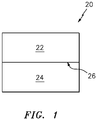
- FIG. 1 schematically illustrates an additive manufactured multi-portion article 20.
- the additive manufactured multi-portion article 20 includes a first portion 22 manufactured by a first additive manufacturing process and a second portion 24 manufactured by a second additive manufacturing process different than the first additive manufacturing process, the second portion 24 is attachable to the first portion 22 at an interface 26.
- the multi-portion article 20 is but one example of an article that may benefit from that disclosed herein, such as an investment casting, a lost wax tool, and or other article applications which may be particularly useful in aerospace and gas turbine engine applications.
- the multi-portion article 20 may also be used for cast metal objects with interior surface texturing, for example, combustor applications, heat exchangers, fuel filters, desulfurization reactors, reformers, shift convertors, carbon monoxide selective oxidizers, igniters, and others.
- the additive manufacturing processes fabricate, build or "grow" articles using three-dimensional information such as a three-dimensional computer model.
- the three-dimensional information is converted into a plurality of slices, each slice defining a cross section of the article for a predetermined height of the slice.
- the additive manufactured multi-portion article 20 is then "grown" slice-by-slice, or layer-by-layer, until finished.
- the additive manufacture process is performed continuously, without discrete layers, as in Digital Light SynthesisTM or Continuous Liquid Interface Production (CLIPTM).
- the additive manufacturing process sequentially builds-up layers of atomized powder material that include but are not limited to, Inconel 625 Alloy, 718 Alloy, 230 Alloy, other metal alloys, stainless steel, tool steel, cobalt chrome, titanium, nickel, aluminum, ceramics, plastics and others in atomized powder material form.
- the starting materials can be non-atomized powders, filled or unfilled resins in liquid, solid or semisolid forms, and wire-based materials as would be used in approaches such as Wire Arc Additive Manufacturing (WAAM) for metals and Fused Deposition Modeling (FDM) for polymers.
- WAAM Wire Arc Additive Manufacturing
- FDM Fused Deposition Modeling
- Alloys such as Inconel 625, 718 and 230 may have specific benefit for high temperature environments, such as, for example, environments typically encountered by aerospace and gas turbine engine articles.
- the additive manufacturing processes include, but are not limited to, Solid Freeform Fabrication (SFF) processes, 3-D printing methods, Sanders Modelmaker, Selective Laser Sintering (SLS), 3D systems thermojet, ZCorp 3D printing Binder jetting, ExOne ProMetal 3D printing, stereolithography (SLA), Laminated Object Manufacturing (LOM), Fused Deposition Modeling (FDM), Electron Beam Sintering (EBS), Electron Beam Melting (EBM), Electron Beam Powder Bed Fusion (EB-PBF), Electron Beam Wire (EBW), Laser Engineered Net Shaping (LENS), Laser Net Shape Manufacturing (LNSM), Direct Metal Deposition (DMD), Laser Powder Bed Fusion (L-PBF), Digital Light SynthesisTM, Continuous Liquid Interface Production (CLIPTM), and Layerwise Ceramic Manufacturing (LCM).
- SFF Solid Free
- additive manufacturing processes can be generally categorized as vat photo polymerization, material jetting, binder jetting, material extrusion, powder bed fusion, sheet lamination, or directed energy deposition.
- the method 200 is a hybrid process which combines multiple additive manufacturing (AM) or SFF processes to generate articles that can be assembled into a single multi-portion article 20.
- the method combines the use of a relatively slow, high resolution additive manufacturing method, to produce one article, with a relatively fast, less accurate additive manufacturing method to produce a separate article. It is contemplated that the articles can be assembled in a permanent or temporary fashion.
- high resolution may be defined as 1 micron to 1 cm (10000 microns) and low resolution may be defined as greater than 1 cm.
- High linear build rate may be defined as at least 10 cm per second while low linear build rate can be described as less than 1 cm/sec.
- the method 200 initially includes generating a computer model of the first portion 22 with the integrated joint portion of the interface 26 (step 202).
- the first portion 22 may essentially be a bulk portion of the multi-portion article 20.
- the interface 26 may be of various constructions such as a male-female mechanical joint, a friction joint, a molecular joint, or other interface.
- the mechanical joint includes a groove and rebate joint 26A ( FIG. 4 ), a lapped dovetail joint 26B ( FIG. 5 ), a through dovetail and rebate joint 26C ( FIG. 6 ), a secret lapped dovetail joint 26D ( FIG. 7 ), a secret mitre dovetail joint 26E ( FIG. 8 ), or other mechanical interface.
- the molecular interface includes additive manufactured joints in which the second portion 24 is attached to the first portion 22 via the second portion 24 being additively manufactured onto the first portion 22.
- the second portion 24 may be of a higher resolution and include the more refined and high fidelity feature portion of the multi-portion article 20.
- an appropriate additive manufacturing process is selected (step 206) for each portion 22, 24.
- a relatively fast but less accurate additive manufacturing process would be utilized for the first portion 22 while a relatively slow but of a higher resolution additive manufacturing process would be utilized for the second portion 24.
- the interface 26 of the individual portions 22, 24 are designed with the integral joining geometries so that the hybrid multi-portion article 20 may be assembled together with the high resolution article portion, e.g., the first portion 22, operating as the working surface.
- the portions 22, 24 are additive manufactured (step 208, 210).
- the portions 22, 24 are assembled (step 212) at the interface 26 to form the final multi-portion article 20.
- the interface may be a molecular level interface ( FIG. 1 ) in which the second portion is additively manufactured onto the first portion in step 212.
- one disclosed non-limiting embodiment of a method 300 of using the additive manufactured multi-portion article 20 includes forming a casting core (step 302) in accordance with the method of FIG. 3 . That is, the final multi-portion additive manufactured multi-portion article 20 may be used as a fugitive or removable, such as in investment casting, lost wax, lost tooling, molding application or tree structure (step 302) then removing (step 304) to provide a mold for the final article.
- FIG. 10 another disclosed non-limiting embodiment of an additive manufactured multi-portion article 320 ( FIG. 11 ) is represented as a liner panel for a gas turbine engine combustor.
- the additive manufactured multi-portion article 320 includes a first portion 302 manufactured by a relatively less accurate and rapid additive manufacturing process to essentially provide 90%, e.g., a bulk portion, of the multi-portion article 320.
- the first portion 302 includes a joint portion 304 of an interface 306, e.g., a multiple of dovetail joints along a surface 308 thereof.
- a second portion 310 is manufactured by a relatively of a higher resolution and slow additive manufacturing process to essentially provide 10%, e.g., the detailed portion of the multi-portion article 320 that includes fine details 312 such as heat transfer elements.
- the second portion 310 includes a joint portion 314 of the interface 306, e.g., the other half of the multiple of dovetail joints along a surface 316 that mates with the surface 308.
- the method 200 provides significant time and cost savings by matching performance of each additive manufacturing process to the required quality of individual portions of the multi-portion article.
Landscapes
- Engineering & Computer Science (AREA)
- Materials Engineering (AREA)
- Chemical & Material Sciences (AREA)
- Manufacturing & Machinery (AREA)
- Physics & Mathematics (AREA)
- Mechanical Engineering (AREA)
- Business, Economics & Management (AREA)
- Optics & Photonics (AREA)
- Human Resources & Organizations (AREA)
- Economics (AREA)
- Strategic Management (AREA)
- Tourism & Hospitality (AREA)
- Theoretical Computer Science (AREA)
- Entrepreneurship & Innovation (AREA)
- General Physics & Mathematics (AREA)
- Marketing (AREA)
- General Business, Economics & Management (AREA)
- Quality & Reliability (AREA)
- Development Economics (AREA)
- Operations Research (AREA)
- Educational Administration (AREA)
- Game Theory and Decision Science (AREA)
- Health & Medical Sciences (AREA)
- General Health & Medical Sciences (AREA)
- Primary Health Care (AREA)
- Powder Metallurgy (AREA)
Abstract
Description
- The present disclosure relates to additive manufacturing and, more particularly, to an additively manufactured multi-portion article.
- Many additive manufacturing methods currently exist, both commercially and in development, yet none offer optimized quality in all of the following categories: overall part size, material, surface finish, dimensional accuracy, volumetric build rate, internal geometries, and cost. Oftentimes, tradeoffs must be reconciled to provide high accuracy features with efficient build time at economical costs.
- An additive manufactured multi-portion article according to one disclosed non-limiting embodiment includes a first portion of an article manufactured by a first additive manufacturing process; and a second portion of the article manufactured by a second additive manufacturing process different than the first additive manufacturing process, the second portion attached to the first portion.
- A further aspect of the embodiment includes that the second portion is attachable to the first portion.
- A further aspect of the embodiment includes that the second portion is attachable to the first portion via a male-female interface.
- A further aspect of the embodiment includes that the second portion is attachable to the first portion via a joint.
- A further aspect of the embodiment includes that the second portion is attachable to the first portion via a dovetail joint.
- A further aspect of the embodiment includes that the first additive manufacturing process is of a higher resolution than the second additive manufacturing process.
- A further aspect of the embodiment includes that the first additive manufacturing process operates at a different volumetric build rate than the second additive manufacturing process.
- A further aspect of the embodiment includes that the first additive manufacturing process is of a higher resolution than the second additive manufacturing process and the first additive manufacturing process operates at a different volumetric build rate than the second additive manufacturing process.
- A further aspect of the embodiment includes that the second portion is attached to the first portion via the second portion being additively manufactured onto the first portion.
- An additive manufactured multi-portion article according to one disclosed non-limiting embodiment includes a first portion of an article manufactured by a first additive manufacturing process; and a second portion of the article manufactured by a second additive manufacturing process less accurate than the first additive manufacturing process, the second portion attached to the first portion.
- A further aspect of the embodiment includes that the first additive manufacturing process is of a higher resolution than the second additive manufacturing process.
- A further aspect of the embodiment includes that the first additive manufacturing process operates at a different volumetric build rate than the second additive manufacturing process.
- A further aspect of the embodiment includes that the first additive manufacturing process is of a higher resolution than the second additive manufacturing process and the first additive manufacturing process operates at a different volumetric build rate than the second additive manufacturing process.
- A method of constructing an additive manufactured multi-portion article according to one disclosed non-limiting embodiment includes additive manufacturing a first portion of an article with a first additive manufacturing process; additive manufacturing a second portion of the article with a second additive manufacturing process different than the first additive manufacturing process; and attaching the second portion to the first portion.
- A further aspect of the embodiment includes that the additive manufacturing of the first portion is faster than the additive manufacturing of the second portion.
- A further aspect of the embodiment includes that the additive manufacturing of the first portion is less accurate than the additive manufacturing of the second portion.
- A further aspect of the embodiment includes that attaching the second portion to the first portion comprises mechanical attaching.
- A further aspect of the embodiment includes that attaching the second portion to the first portion comprises mechanical attaching via a joint.
- A further aspect of the embodiment includes that attaching the second portion to the first portion occurs during the additive manufacturing of the second portion.
- A further aspect of the embodiment includes computer modeling the article and determining the second portion and the first portion with respect to the first additive manufacturing process and the second additive manufacturing process.
- The foregoing features and elements may be combined in various combinations without exclusivity, unless expressly indicated otherwise. These features and elements as well as the operation thereof will become more apparent in light of the following description and the accompanying drawings. It should be appreciated; however, the following description and drawings are intended to be exemplary in nature and non-limiting.
- Various features will become apparent to those skilled in the art from the following detailed description of the disclosed non-limiting embodiment. The drawings that accompany the detailed description can be briefly described as follows:
-
FIG. 1 is a schematic cross-sectional view of a multi-portion additive manufactured article. -
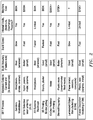
FIG. 2 is a table of example additive manufacturing processes and associated characteristics to facilitate selection. -
FIG. 3 is a block diagram of a process for additive manufacturing of the example additive manufactured article. -
FIG. 4 is an example interface for a multi-portion additive manufactured article. -
FIG. 5 is another example interface for a multi-portion additive manufactured article. -
FIG. 6 is another example interface for a multi-portion additive manufactured article. -
FIG. 7 is another example interface for a multi-portion additive manufactured article. -
FIG. 8 is another example interface for a multi-portion additive manufactured article. -
FIG. 9 is a block diagram of a method of using the additive manufactured multi-portion article as a casting core. -
FIG. 10 is a schematic cross-sectional view of another embodiment of a multi-portion additive manufactured article. -
FIG. 11 is a table of the characteristics for the multi-portion additive manufactured article ofFIG 10 . -
FIG. 1 schematically illustrates an additive manufacturedmulti-portion article 20. The additive manufacturedmulti-portion article 20 includes afirst portion 22 manufactured by a first additive manufacturing process and asecond portion 24 manufactured by a second additive manufacturing process different than the first additive manufacturing process, thesecond portion 24 is attachable to thefirst portion 22 at aninterface 26. Themulti-portion article 20 is but one example of an article that may benefit from that disclosed herein, such as an investment casting, a lost wax tool, and or other article applications which may be particularly useful in aerospace and gas turbine engine applications. Themulti-portion article 20 may also be used for cast metal objects with interior surface texturing, for example, combustor applications, heat exchangers, fuel filters, desulfurization reactors, reformers, shift convertors, carbon monoxide selective oxidizers, igniters, and others. - The additive manufacturing processes fabricate, build or "grow" articles using three-dimensional information such as a three-dimensional computer model. The three-dimensional information is converted into a plurality of slices, each slice defining a cross section of the article for a predetermined height of the slice. The additive manufactured
multi-portion article 20 is then "grown" slice-by-slice, or layer-by-layer, until finished. In other examples, the additive manufacture process is performed continuously, without discrete layers, as in Digital Light Synthesis™ or Continuous Liquid Interface Production (CLIP™). In a non-continuous build example, the additive manufacturing process sequentially builds-up layers of atomized powder material that include but are not limited to, Inconel 625 Alloy, 718 Alloy, 230 Alloy, other metal alloys, stainless steel, tool steel, cobalt chrome, titanium, nickel, aluminum, ceramics, plastics and others in atomized powder material form. In other examples, the starting materials can be non-atomized powders, filled or unfilled resins in liquid, solid or semisolid forms, and wire-based materials as would be used in approaches such as Wire Arc Additive Manufacturing (WAAM) for metals and Fused Deposition Modeling (FDM) for polymers. Alloys such as Inconel 625, 718 and 230 may have specific benefit for high temperature environments, such as, for example, environments typically encountered by aerospace and gas turbine engine articles. With reference toFIG. 2 , the additive manufacturing processes include, but are not limited to, Solid Freeform Fabrication (SFF) processes, 3-D printing methods, Sanders Modelmaker, Selective Laser Sintering (SLS), 3D systems thermojet, ZCorp 3D printing Binder jetting, ExOne ProMetal 3D printing, stereolithography (SLA), Laminated Object Manufacturing (LOM), Fused Deposition Modeling (FDM), Electron Beam Sintering (EBS), Electron Beam Melting (EBM), Electron Beam Powder Bed Fusion (EB-PBF), Electron Beam Wire (EBW), Laser Engineered Net Shaping (LENS), Laser Net Shape Manufacturing (LNSM), Direct Metal Deposition (DMD), Laser Powder Bed Fusion (L-PBF), Digital Light Synthesis™, Continuous Liquid Interface Production (CLIP™), and Layerwise Ceramic Manufacturing (LCM). Although particular additive manufacturing processes are recited, any rapid manufacturing methods can alternatively be used. Such additive manufacturing processes can be generally categorized as vat photo polymerization, material jetting, binder jetting, material extrusion, powder bed fusion, sheet lamination, or directed energy deposition. - With reference to
FIG. 3 , one disclosed non-limiting embodiment of amethod 200 of constructing the additive manufactured multi-portion article 20 (FIG. 1 ) is provided. Themethod 200 is a hybrid process which combines multiple additive manufacturing (AM) or SFF processes to generate articles that can be assembled into a singlemulti-portion article 20. The method combines the use of a relatively slow, high resolution additive manufacturing method, to produce one article, with a relatively fast, less accurate additive manufacturing method to produce a separate article. It is contemplated that the articles can be assembled in a permanent or temporary fashion. In examples, high resolution may be defined as 1 micron to 1 cm (10000 microns) and low resolution may be defined as greater than 1 cm. High linear build rate may be defined as at least 10 cm per second while low linear build rate can be described as less than 1 cm/sec. - The
method 200 initially includes generating a computer model of thefirst portion 22 with the integrated joint portion of the interface 26 (step 202). Thefirst portion 22 may essentially be a bulk portion of themulti-portion article 20. - The
interface 26 may be of various constructions such as a male-female mechanical joint, a friction joint, a molecular joint, or other interface. Examples of the mechanical joint includes a groove and rebate joint 26A (FIG. 4 ), a lapped dovetail joint 26B (FIG. 5 ), a through dovetail and rebate joint 26C (FIG. 6 ), a secret lapped dovetail joint 26D (FIG. 7 ), a secret mitre dovetail joint 26E (FIG. 8 ), or other mechanical interface. Examples of the molecular interface includes additive manufactured joints in which thesecond portion 24 is attached to thefirst portion 22 via thesecond portion 24 being additively manufactured onto thefirst portion 22. - Next, a computer model of the
second portion 24 with the integrated joint portion that completes theinterface 26 with the first article is created (step 204). Thesecond portion 24 may be of a higher resolution and include the more refined and high fidelity feature portion of themulti-portion article 20. - Next, an appropriate additive manufacturing process is selected (step 206) for each
portion first portion 22 while a relatively slow but of a higher resolution additive manufacturing process would be utilized for thesecond portion 24. Theinterface 26 of theindividual portions multi-portion article 20 may be assembled together with the high resolution article portion, e.g., thefirst portion 22, operating as the working surface. - Next, the
portions step 208, 210). - Next, the
portions interface 26 to form thefinal multi-portion article 20. Alternatively, the interface may be a molecular level interface (FIG. 1 ) in which the second portion is additively manufactured onto the first portion instep 212. - With reference to
FIG. 9 , one disclosed non-limiting embodiment of amethod 300 of using the additive manufacturedmulti-portion article 20 includes forming a casting core (step 302) in accordance with the method ofFIG. 3 . That is, the final multi-portion additive manufacturedmulti-portion article 20 may be used as a fugitive or removable, such as in investment casting, lost wax, lost tooling, molding application or tree structure (step 302) then removing (step 304) to provide a mold for the final article. - With reference to
FIG. 10 , another disclosed non-limiting embodiment of an additive manufactured multi-portion article 320 (FIG. 11 ) is represented as a liner panel for a gas turbine engine combustor. The additive manufacturedmulti-portion article 320 includes afirst portion 302 manufactured by a relatively less accurate and rapid additive manufacturing process to essentially provide 90%, e.g., a bulk portion, of themulti-portion article 320. Thefirst portion 302 includes ajoint portion 304 of aninterface 306, e.g., a multiple of dovetail joints along asurface 308 thereof. - A
second portion 310 is manufactured by a relatively of a higher resolution and slow additive manufacturing process to essentially provide 10%, e.g., the detailed portion of themulti-portion article 320 that includesfine details 312 such as heat transfer elements. Thesecond portion 310 includes ajoint portion 314 of theinterface 306, e.g., the other half of the multiple of dovetail joints along asurface 316 that mates with thesurface 308. - The
method 200 provides significant time and cost savings by matching performance of each additive manufacturing process to the required quality of individual portions of the multi-portion article. - The use of the terms "a", "an", "the", and similar references in the context of description (especially in the context of the following claims) are to be construed to cover both the singular and the plural, unless otherwise indicated herein or specifically contradicted by context. The modifier "about" used in connection with a quantity is inclusive of the stated value and has the meaning dictated by the context (e.g., it includes the degree of error associated with measurement of the particular quantity). All ranges disclosed herein are inclusive of the endpoints, and the endpoints are independently combinable with each other. It should be appreciated that relative positional terms such as "forward," "aft", "upper", "lower", "above", "below", and the like are with reference to the normal operational attitude of the vehicle and should not be considered otherwise limiting.
- Although the different non-limiting embodiments have specific illustrated articles, the embodiments of this invention are not limited to those particular combinations. It is possible to use some of the articles or features from any of the non-limiting embodiments in combination with features or articles from any of the other non-limiting embodiments.
- It should be appreciated that like reference numerals identify corresponding or similar elements throughout the several drawings. It should also be appreciated that although a particular article arrangement is disclosed in the illustrated embodiment, other arrangements will benefit herefrom.
- Although particular step sequences are shown, described, and claimed, it should be appreciated that steps may be performed in any order, separated or combined unless otherwise indicated and will still benefit from the present disclosure.
- The foregoing description is exemplary rather than defined by the limitations within. Various non-limiting embodiments are disclosed herein, however, one of ordinary skill in the art would recognize that various modifications and variations in light of the above teachings will fall within the scope of the appended claims. It is therefore to be appreciated that within the scope of the appended claims, the disclosure may be practiced other than as specifically described. For that reason the appended claims should be studied to determine true scope and content.
Claims (15)
- An additive manufactured multi-portion article, comprising:a first portion (22) of an article manufactured by a first additive manufacturing process; anda second portion (24) of the article manufactured by a second additive manufacturing process different than the first additive manufacturing process, the second portion (24) attached to the first portion (22).
- The additive manufactured multi-portion article as recited in claim 1, wherein the second portion (24) is attachable to the first portion (22).
- The additive manufactured multi-portion article as recited in claim 2, wherein the second portion (24) is attachable to the first portion (22) via a male-female interface (26).
- The additive manufactured multi-portion article as recited in claim 2, wherein the second portion (24)is attachable to the first portion (22) via a joint (26A).
- The additive manufactured multi-portion article as recited in claim 2, wherein the second portion (24) is attachable to the first portion (22) via a dovetail joint (26B-E).
- The additive manufactured multi-portion article as recited in claim 1, wherein the second portion (24) is attached to the first portion (22) via the second portion (24) being additively manufactured onto the first portion (22).
- An additive manufactured multi-portion article, comprising:a first portion (22) of an article manufactured by a first additive manufacturing process; anda second portion (24) of the article manufactured by a second additive manufacturing process less accurate than the first additive manufacturing process, the second portion (24) attached to the first portion (22).
- The additive manufactured multi-portion article as recited in any preceding claim, wherein:the first additive manufacturing process is of a higher resolution than the second additive manufacturing process; and/orthe first additive manufacturing process operates at a different volumetric build rate than the second additive manufacturing process.
- A method of constructing an additive manufactured multi-portion article, comprising:additive manufacturing a first portion (22) of an article with a first additive manufacturing process;additive manufacturing a second portion (24) of the article a second additive manufacturing process different than the first additive manufacturing process; andattaching the second portion (24) to the first portion (22).
- The method as recited in claim 9, wherein the additive manufacturing of the first portion (22) is faster than the additive manufacturing of the second portion (24).
- The method as recited in claim 9 or 10, wherein the additive manufacturing of the first portion (22) is less accurate than the additive manufacturing of the second portion (24).
- The method as recited in claim 9, 10 or 11, wherein attaching the second portion (24) to the first portion (22) comprises mechanical attaching.
- The method as recited in claim 9, 10 or 11, wherein attaching the second portion (24) to the first portion (22) comprises mechanical attaching via a joint (26A).
- The method as recited in claim 9, 10 or 11, wherein attaching the second portion (24) to the first portion (22) occurs during the additive manufacturing of the second portion (24).
- The method as recited in any of claims 9 to 14, further comprising computer modeling the article and determining the second portion (24) and the first portion (22) with respect to the first additive manufacturing process and the second additive manufacturing process.
Applications Claiming Priority (1)
| Application Number | Priority Date | Filing Date | Title |
|---|---|---|---|
| US16/185,201 US10821678B2 (en) | 2018-11-09 | 2018-11-09 | Additive manufactured multi-portion article |
Publications (1)
| Publication Number | Publication Date |
|---|---|
| EP3654255A1 true EP3654255A1 (en) | 2020-05-20 |
Family
ID=68501471
Family Applications (1)
| Application Number | Title | Priority Date | Filing Date |
|---|---|---|---|
| EP19208058.8A Pending EP3654255A1 (en) | 2018-11-09 | 2019-11-08 | Additive manufactured multi-portion article |
Country Status (2)
| Country | Link |
|---|---|
| US (2) | US10821678B2 (en) |
| EP (1) | EP3654255A1 (en) |
Cited By (1)
| Publication number | Priority date | Publication date | Assignee | Title |
|---|---|---|---|---|
| WO2021083640A1 (en) * | 2019-10-28 | 2021-05-06 | Siemens Energy Global GmbH & Co. KG | Component and method for producing a component of this type by means of additive manufacturing |
Families Citing this family (4)
| Publication number | Priority date | Publication date | Assignee | Title |
|---|---|---|---|---|
| US20220202534A1 (en) * | 2020-12-29 | 2022-06-30 | Mark A. Payne | Distalizer and method of assembly |
| US11651873B2 (en) * | 2021-06-25 | 2023-05-16 | Greatbatch Ltd. | Three-dimensional printed feedthroughs for implantable medical devices |
| US12583033B2 (en) * | 2021-08-13 | 2026-03-24 | Divergent Technologies, Inc. | Integrating additively-manufactured components |
| US12594594B2 (en) | 2022-09-22 | 2026-04-07 | Blasch Precision Ceramics, Inc. | Hybrid setter for investment casting cores and method of using |
Citations (1)
| Publication number | Priority date | Publication date | Assignee | Title |
|---|---|---|---|---|
| WO2015112891A1 (en) * | 2014-01-24 | 2015-07-30 | United Technologies Corporation | Additive manufacturing process grown integrated torsional damper mechanism in gas turbine engine blade |
Family Cites Families (11)
| Publication number | Priority date | Publication date | Assignee | Title |
|---|---|---|---|---|
| US7777155B2 (en) | 2007-02-21 | 2010-08-17 | United Technologies Corporation | System and method for an integrated additive manufacturing cell for complex components |
| US9419502B2 (en) | 2012-08-03 | 2016-08-16 | Hamilton Sundstrand Corporation | Additive manufacturing of a component having a laminated stack of layers |
| WO2014200588A2 (en) | 2013-03-14 | 2014-12-18 | United Technologies Corporation | Additive manufactured gas turbine engine combustor liner panel |
| WO2015058043A1 (en) | 2013-10-18 | 2015-04-23 | United Technologies Corporation | Multiple piece engine component |
| US9857002B2 (en) | 2014-05-09 | 2018-01-02 | United Technologies Corporation | Fluid couplings and methods for additive manufacturing thereof |
| US9579204B2 (en) * | 2015-07-10 | 2017-02-28 | Oxford Mestar Limited | Surgical implants |
| US20180185963A1 (en) | 2017-01-03 | 2018-07-05 | General Electric Company | Systems and methods for interchangable additive manufacturing systems |
| US10830071B2 (en) | 2017-01-23 | 2020-11-10 | General Electric Company | System and method for the hybrid construction of multi-piece parts |
| US10184728B2 (en) | 2017-02-28 | 2019-01-22 | General Electric Company | Additively manufactured heat exchanger including flow turbulators defining internal fluid passageways |
| US10175003B2 (en) | 2017-02-28 | 2019-01-08 | General Electric Company | Additively manufactured heat exchanger |
| US20180258791A1 (en) | 2017-03-10 | 2018-09-13 | General Electric Company | Component having a hybrid coating system and method for forming a component |
-
2018
- 2018-11-09 US US16/185,201 patent/US10821678B2/en active Active
-
2019
- 2019-11-08 EP EP19208058.8A patent/EP3654255A1/en active Pending
-
2020
- 2020-11-02 US US17/086,870 patent/US11685107B2/en active Active
Patent Citations (1)
| Publication number | Priority date | Publication date | Assignee | Title |
|---|---|---|---|---|
| WO2015112891A1 (en) * | 2014-01-24 | 2015-07-30 | United Technologies Corporation | Additive manufacturing process grown integrated torsional damper mechanism in gas turbine engine blade |
Cited By (1)
| Publication number | Priority date | Publication date | Assignee | Title |
|---|---|---|---|---|
| WO2021083640A1 (en) * | 2019-10-28 | 2021-05-06 | Siemens Energy Global GmbH & Co. KG | Component and method for producing a component of this type by means of additive manufacturing |
Also Published As
| Publication number | Publication date |
|---|---|
| US20200147897A1 (en) | 2020-05-14 |
| US20210046713A1 (en) | 2021-02-18 |
| US10821678B2 (en) | 2020-11-03 |
| US11685107B2 (en) | 2023-06-27 |
Similar Documents
| Publication | Publication Date | Title |
|---|---|---|
| US11685107B2 (en) | Additive manufactured multi-portion article | |
| Kruth et al. | Progress in additive manufacturing and rapid prototyping | |
| Duda et al. | 3D metal printing technology | |
| JP6871425B2 (en) | Parts and parts manufacturing methods using composite additive manufacturing technology | |
| US10099290B2 (en) | Hybrid additive manufacturing methods using hybrid additively manufactured features for hybrid components | |
| US7704565B2 (en) | Method of making a layered component with vector discrimination in a variable deposition rate process | |
| US20190063842A1 (en) | Fluid routing methods for a spiral heat exchanger with lattice cross section made via additive manufacturing | |
| US11597014B2 (en) | Additive manufactured conglomerated powder removal from internal passages | |
| WO2015094720A1 (en) | Gradient sintered metal preform | |
| Sokolovskyi et al. | Developmental review of metal additive manufacturing processes | |
| Parenti et al. | Implementation of hybrid additive manufacturing based on extrusion of feedstock and milling | |
| Williams | Design and development of a layer-based additive manufacturing process for the realization of metal parts of designed mesostructure | |
| EP4008458A1 (en) | Erodible support structure for additively manufactured article and process therefor | |
| EP3615807B1 (en) | Technique to improve the performance of a pump with a trimmed impeller using additive manufacturing | |
| Cooper | Layered manufacturing: challenges and opportunities | |
| Tofan-Negru et al. | Analysis and characterization of additive manufacturing processes | |
| Beiker Kair et al. | Additive manufacturing and production of metallic parts in automotive industry: A case study on technical, economic and environmental sustainability aspects | |
| Węgrzyn | The use of additive manufacturing for production of commercial airplane power plants components: a review | |
| Balasubramanian et al. | Introduction to additive manufacturing | |
| Williams et al. | Opportunities for Lighter Weight and Lower Total Cost Component Manufacturing | |
| Udroiu | Additive Manufacturing Technologies Used for Superalloys Processing | |
| Cohen | MICA freeform vs selective laser melting | |
| Aikin | Introduction to metals additive manufacturing advanced digital design and fabrication: Additive manufacturing has great potential to make metal parts that are lighter, smaller, more refined and less expensive than traditional manufacturing processes. | |
| Luo et al. | Path planning and control of functionally graded materials for rapid tooling | |
| ARTKIN | EKLEMELİ İMALAT TEKNOLOJİLERİNDE 3D PRINTER TEKNOLOJİLERİNİN SÜRDÜRÜLEBİLİRLİK UYGULAMALARI SUSTAINABILITY APPLICATIONS OF 3D PRINTER TECHNOLOGIES IN ADDITIVE MANUFACTURING TECHNOLOGIES |
Legal Events
| Date | Code | Title | Description |
|---|---|---|---|
| PUAI | Public reference made under article 153(3) epc to a published international application that has entered the european phase |
Free format text: ORIGINAL CODE: 0009012 |
|
| STAA | Information on the status of an ep patent application or granted ep patent |
Free format text: STATUS: THE APPLICATION HAS BEEN PUBLISHED |
|
| AK | Designated contracting states |
Kind code of ref document: A1 Designated state(s): AL AT BE BG CH CY CZ DE DK EE ES FI FR GB GR HR HU IE IS IT LI LT LU LV MC MK MT NL NO PL PT RO RS SE SI SK SM TR |
|
| AX | Request for extension of the european patent |
Extension state: BA ME |
|
| STAA | Information on the status of an ep patent application or granted ep patent |
Free format text: STATUS: REQUEST FOR EXAMINATION WAS MADE |
|
| 17P | Request for examination filed |
Effective date: 20201120 |
|
| RBV | Designated contracting states (corrected) |
Designated state(s): AL AT BE BG CH CY CZ DE DK EE ES FI FR GB GR HR HU IE IS IT LI LT LU LV MC MK MT NL NO PL PT RO RS SE SI SK SM TR |
|
| RAP1 | Party data changed (applicant data changed or rights of an application transferred) |
Owner name: RAYTHEON TECHNOLOGIES CORPORATION |
|
| STAA | Information on the status of an ep patent application or granted ep patent |
Free format text: STATUS: EXAMINATION IS IN PROGRESS |
|
| 17Q | First examination report despatched |
Effective date: 20211221 |
|
| RAP3 | Party data changed (applicant data changed or rights of an application transferred) |
Owner name: RTX CORPORATION |