EP3651760B1 - Combination of tetrahydrocannabinol with olesoxime for treating amyotrophic lateral sclerosis - Google Patents
Combination of tetrahydrocannabinol with olesoxime for treating amyotrophic lateral sclerosis Download PDFInfo
- Publication number
- EP3651760B1 EP3651760B1 EP18742590.5A EP18742590A EP3651760B1 EP 3651760 B1 EP3651760 B1 EP 3651760B1 EP 18742590 A EP18742590 A EP 18742590A EP 3651760 B1 EP3651760 B1 EP 3651760B1
- Authority
- EP
- European Patent Office
- Prior art keywords
- thc
- als
- olesoxime
- combination
- treatment
- Prior art date
- Legal status (The legal status is an assumption and is not a legal conclusion. Google has not performed a legal analysis and makes no representation as to the accuracy of the status listed.)
- Active
Links
Images


Classifications
-
- A—HUMAN NECESSITIES
- A61—MEDICAL OR VETERINARY SCIENCE; HYGIENE
- A61K—PREPARATIONS FOR MEDICAL, DENTAL OR TOILETRY PURPOSES
- A61K31/00—Medicinal preparations containing organic active ingredients
- A61K31/33—Heterocyclic compounds
- A61K31/335—Heterocyclic compounds having oxygen as the only ring hetero atom, e.g. fungichromin
- A61K31/35—Heterocyclic compounds having oxygen as the only ring hetero atom, e.g. fungichromin having six-membered rings with one oxygen as the only ring hetero atom
- A61K31/352—Heterocyclic compounds having oxygen as the only ring hetero atom, e.g. fungichromin having six-membered rings with one oxygen as the only ring hetero atom condensed with carbocyclic rings, e.g. methantheline
-
- A—HUMAN NECESSITIES
- A61—MEDICAL OR VETERINARY SCIENCE; HYGIENE
- A61K—PREPARATIONS FOR MEDICAL, DENTAL OR TOILETRY PURPOSES
- A61K31/00—Medicinal preparations containing organic active ingredients
- A61K31/045—Hydroxy compounds, e.g. alcohols; Salts thereof, e.g. alcoholates
- A61K31/047—Hydroxy compounds, e.g. alcohols; Salts thereof, e.g. alcoholates having two or more hydroxy groups, e.g. sorbitol
-
- A—HUMAN NECESSITIES
- A61—MEDICAL OR VETERINARY SCIENCE; HYGIENE
- A61K—PREPARATIONS FOR MEDICAL, DENTAL OR TOILETRY PURPOSES
- A61K31/00—Medicinal preparations containing organic active ingredients
- A61K31/045—Hydroxy compounds, e.g. alcohols; Salts thereof, e.g. alcoholates
- A61K31/05—Phenols
-
- A—HUMAN NECESSITIES
- A61—MEDICAL OR VETERINARY SCIENCE; HYGIENE
- A61K—PREPARATIONS FOR MEDICAL, DENTAL OR TOILETRY PURPOSES
- A61K31/00—Medicinal preparations containing organic active ingredients
- A61K31/185—Acids; Anhydrides, halides or salts thereof, e.g. sulfur acids, imidic, hydrazonic or hydroximic acids
- A61K31/19—Carboxylic acids, e.g. valproic acid
- A61K31/191—Carboxylic acids, e.g. valproic acid having two or more hydroxy groups, e.g. gluconic acid
-
- A—HUMAN NECESSITIES
- A61—MEDICAL OR VETERINARY SCIENCE; HYGIENE
- A61K—PREPARATIONS FOR MEDICAL, DENTAL OR TOILETRY PURPOSES
- A61K31/00—Medicinal preparations containing organic active ingredients
- A61K31/33—Heterocyclic compounds
- A61K31/335—Heterocyclic compounds having oxygen as the only ring hetero atom, e.g. fungichromin
- A61K31/35—Heterocyclic compounds having oxygen as the only ring hetero atom, e.g. fungichromin having six-membered rings with one oxygen as the only ring hetero atom
- A61K31/352—Heterocyclic compounds having oxygen as the only ring hetero atom, e.g. fungichromin having six-membered rings with one oxygen as the only ring hetero atom condensed with carbocyclic rings, e.g. methantheline
- A61K31/353—3,4-Dihydrobenzopyrans, e.g. chroman, catechin
-
- A—HUMAN NECESSITIES
- A61—MEDICAL OR VETERINARY SCIENCE; HYGIENE
- A61K—PREPARATIONS FOR MEDICAL, DENTAL OR TOILETRY PURPOSES
- A61K31/00—Medicinal preparations containing organic active ingredients
- A61K31/56—Compounds containing cyclopenta[a]hydrophenanthrene ring systems; Derivatives thereof, e.g. steroids
- A61K31/575—Compounds containing cyclopenta[a]hydrophenanthrene ring systems; Derivatives thereof, e.g. steroids substituted in position 17 beta by a chain of three or more carbon atoms, e.g. cholane, cholestane, ergosterol, sitosterol
-
- A—HUMAN NECESSITIES
- A61—MEDICAL OR VETERINARY SCIENCE; HYGIENE
- A61K—PREPARATIONS FOR MEDICAL, DENTAL OR TOILETRY PURPOSES
- A61K31/00—Medicinal preparations containing organic active ingredients
- A61K31/658—Medicinal preparations containing organic active ingredients o-phenolic cannabinoids, e.g. cannabidiol, cannabigerolic acid, cannabichromene or tetrahydrocannabinol
-
- A—HUMAN NECESSITIES
- A61—MEDICAL OR VETERINARY SCIENCE; HYGIENE
- A61K—PREPARATIONS FOR MEDICAL, DENTAL OR TOILETRY PURPOSES
- A61K36/00—Medicinal preparations of undetermined constitution containing material from algae, lichens, fungi or plants, or derivatives thereof, e.g. traditional herbal medicines
- A61K36/18—Magnoliophyta (angiosperms)
- A61K36/185—Magnoliopsida (dicotyledons)
- A61K36/348—Cannabaceae
- A61K36/3482—Cannabis
-
- A—HUMAN NECESSITIES
- A61—MEDICAL OR VETERINARY SCIENCE; HYGIENE
- A61P—SPECIFIC THERAPEUTIC ACTIVITY OF CHEMICAL COMPOUNDS OR MEDICINAL PREPARATIONS
- A61P25/00—Drugs for disorders of the nervous system
- A61P25/14—Drugs for disorders of the nervous system for treating abnormal movements, e.g. chorea, dyskinesia
- A61P25/16—Anti-Parkinson drugs
-
- A—HUMAN NECESSITIES
- A61—MEDICAL OR VETERINARY SCIENCE; HYGIENE
- A61P—SPECIFIC THERAPEUTIC ACTIVITY OF CHEMICAL COMPOUNDS OR MEDICINAL PREPARATIONS
- A61P25/00—Drugs for disorders of the nervous system
- A61P25/28—Drugs for disorders of the nervous system for treating neurodegenerative disorders of the central nervous system, e.g. nootropic agents, cognition enhancers, drugs for treating Alzheimer's disease or other forms of dementia
Definitions
- the present invention discloses cannabinoids in the treatment of a neurodegenerative disease or disorder.
- the cannabinoids cannabidiolic acid (CBDA) and cannabidivarin (CBDV) were able to produce neuroprotective effects in a mouse model of neurodegenerative disease. In particular these effects were associated with the symptoms associated with amyotrophic lateral sclerosis (ALS).
- the combination of the cannabinoid tetrahydrocannabinol (THC) with the drug olesoxime provided a synergistic disease modifying effect in a mouse model of neurodegenerative disease. In particular these effects were associated with the symptoms associated with ALS.
- THC cannabinoid tetrahydrocannabinol
- the combination of THC with olesoxime for use in the treatment of ALS represents the invention covered by the attached claims.
- Neurodegenerative diseases or disorders include Alzheimer's disease; amyotrophic lateral sclerosis (ALS); Friedreich's ataxia; Huntington's disease; lewy body disease; motor neurone diseases (MND); Parkinson's disease and spinal muscular atrophy.
- ALS amyotrophic lateral sclerosis
- MND motor neurone diseases
- Degenerative nerve diseases can be serious or life-threatening, depending on the type. Most of these diseases have no cure and treatments are provided in an attempt to improve symptoms, relieve pain, and increase mobility.
- Neurons are the building blocks of the nervous system which includes the brain and spinal cord. Neurons normally don't reproduce or replace themselves, so when they become damaged or die they cannot be replaced by the body.
- ALS Amyotrophic lateral sclerosis
- nerve cells nerve cells responsible for controlling voluntary muscle movement. Voluntary muscles produce movements like chewing, walking, breathing and talking. The disease is progressive and currently, there is no cure for ALS and no effective treatment to halt, or reverse, the progression of the disease.
- ALS belongs to a wider group of disorders known as motor neuron diseases, which are caused by gradual deterioration (degeneration) and death of motor neurons.
- Motor neurons are nerve cells that extend from the brain to the spinal cord and to muscles throughout the body. These motor neurons initiate and provide vital communication links between the brain and the voluntary muscles.
- motor neurons in the brain Messages from motor neurons in the brain (called upper motor neurons) are transmitted to motor neurons in the spinal cord and to motor nuclei of brain (called lower motor neurons) and from the spinal cord and motor nuclei of brain to a particular muscle or muscles.
- both the upper motor neurons and the lower motor neurons degenerate or die, and stop sending messages to the muscles. Unable to function, the muscles gradually weaken, start to twitch and waste away. Eventually, the brain loses its ability to initiate and control voluntary movements.
- D9-THC Delta-9-tetrahydrocannabinol
- CBN cannabinol
- FAH fatty acid amide hydrolase
- WO 2009/059277 discloses the use of THC in combination with nicotine for the treatment of neurodegenerative diseases including ALS, Alzheimer, Parkinson and multiple sclerosis.
- Lu et al. (2016) 3 discuss current therapy of drugs and related candidates that have been studied in ALS models, including riluzole, olesoxime, talampanel and ceftriaxone.
- the present invention provides data to demonstrate the effect of novel cannabinoids in animal models of ALS. It further demonstrates the effectiveness of a combination of cannabinoids and medications commonly used in the treatment of ALS.
- ALS amyotrophic lateral sclerosis
- the phytocannabinoid is present as an extract of the cannabis plant. More preferably the extract of the cannabis plant is a botanical drug substance (BDS).
- BDS botanical drug substance
- the phytocannabinoid is present as a highly purified, isolated or synthetic cannabinoid.
- CBD Cannabidiol
- CBDA Cannabidiolic acid
- CBDV Cannabidivarin THC Tetrahydrocannabinol
- cannabinoids which are identified in the present application for reference. So far over 60 different cannabinoids have been identified and these cannabinoids can be split into different groups as follows: Phytocannabinoids; Endocannabinoids and Synthetic cannabinoids (which may be novel cannabinoids or synthetically produced phytocannabinoids or endocannabinoids).
- phytocannabinoids are cannabinoids that originate from nature and can be found in the cannabis plant.
- the phytocannabinoids can be isolated from plants to produce a highly purified extract or can be reproduced synthetically.
- Botanical drug substance or “BDS” is defined in the Guidance for Industry Botanical Drug Products Draft Guidance, August 2000, US Department of Health and Human Services, Food and Drug Administration Centre for Drug Evaluation and Research as: "A drug substance derived from one or more plants, algae, or macroscopic fungi. It is prepared from botanical raw materials by one or more of the following processes: pulverisation, decoction, expression, aqueous extraction, ethanolic extraction, or other similar processes. A botanical drug substance does not include a highly purified or chemically modified substance derived from natural sources. Thus, in the case of cannabis, “botanical drug substances” derived from cannabis plants do not include highly purified, Pharmacopoeial grade cannabinoids.
- “Highly purified cannabinoids” are defined as cannabinoids that have been extracted from the cannabis plant and purified to the extent that other cannabinoids and non-cannabinoid components that are co-extracted with the cannabinoids have been removed, such that the highly purified cannabinoid is greater than or equal to 95% (w/w) pure.
- Synthetic cannabinoids are compounds that have a cannabinoid or cannabinoid-like structure and are manufactured using chemical means rather than by the plant.
- Phytocannabinoids can be obtained as either the neutral (decarboxylated form) or the carboxylic acid form depending on the method used to extract the cannabinoids. For example it is known that heating the carboxylic acid form will cause most of the carboxylic acid form to decarboxylate into the neutral form.
- the present invention as defined in the claims, relates to THC in combination with olesoxime for use in the treatment of ALS. Any subject-matter falling outside the scope of the claims is provided for information only.
- ALS amyotrophic lateral sclerosis
- EXAMPLE 1 EFFICACY OF CANNABINOIDS IN RECOVERY OF SYMPTOMS IN A TRANSGENIC MOUSE MODEL OF AMYOTROPHIC LATERAL SCLEROSIS (ALS) - (reference example)
- mice The TDP-43 transgenic and wild-type mice were subjected to genotyping to identify the presence of mutant TDP-43 gene. These mice were used for a chronic i.p. treatment (from 60 days of age up to the age of 90 days) with cannabinoid or vehicle.
- CBDA phytocannabinoids
- Animals were recorded for neurological decline by testing rotarod performance and observing limb clasping during the whole treatment period. The weight of the animals was also recorded during the treatment period.
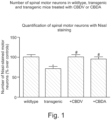
- TDP-43 transgenic mice experience a loss of Nissl-stained motor neurons in the spinal cord. This was almost completely recovered by treatment with CBDA and CBDV (p ⁇ 0.05 between vehicle-treated and CBDA- or CBDV-treated transgenic mice) as shown in Figure 1 .
- GFAP Glial fibrillary acidic protein
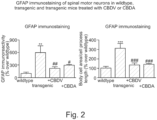
- CBDA or CBDV Treatment with either CBDA or CBDV reduced total immunoreactivity for GFAP and the ratio between cell body area and process length reflecting that these cannabinoids were able to facilitate the shift from the activated to the resting state in these cells as is shown in Figure 2 .
- the number of microglial cells in the spinal cord was quantified using Iba-1 immunostaining, and again differentiating resting and activated cells through the analysis of their morphological characteristics (e.g. cell shape and size, type of processes).
- morphological characteristics e.g. cell shape and size, type of processes.
- Figure 3 demonstrates that treatment with CBDA or CBDV reversed the changes found in TDP-43 transgenic mice in all parameters determined.
- the rotarod test was utilised to quantify the muscle weakness characteristic of TDP-43 transgenic mice.
- a reduction in the rotarod performance was seen in vehicle-treated TDP-43 transgenic mice as soon as the disease progressed.
- CBDA and CBDV treated TDP-43 mice were significantly impaired compared to wild type, however CBDA treated TDP-43 mice displayed significantly superior performance on the rotarod compared to vehicle.
- CBDA and CBDV were able to prevent deterioration of spinal motor neurons in TDP-43 transgenic mice.
- EXAMPLE 2 EFFICACY OF A CANNABINOID EXTRACT IN COMBINATION WITH OLESOXIME ON RECOVERY OF SYMPTOMS IN A TRANSGENIC MOUSE MODEL OF AMYOTROPHIC LATERAL SCLEROSIS (ALS) - (example according to the invention)
- a transgenic mouse model of ALS, SOD1 was used to determine the effects of the combined treatment of a drug used in the treatment of ALS, olesoxime, with THC.
- mice mSOD1-transgenic (G93A) and wild-type mice were subjected to genotyping to identify the presence of mutant SOD-1. These mice were used for chronic treatment (from 10 weeks of age up to the age of 21 weeks) with test article or vehicle.
- THC-BDS (10 mg/kg; i.p.); CBD-BDS (10 mg/kg; i.p); olesoxime (3 mg/kg; s.c.); a combination of THC-BDS and olesoxime; and vehicle.
- a group of wild-type animals were also treated with vehicle.
- SOD-1 transgenic mice experienced a reduction in the rotarod performance, which was strongly marked towards the end of the treatment period.
- the number of motor neurons in the ventral horn of the spinal cord was quantified using Nissl staining. Mutant SOD-1 mice showed a significant reduction in the number of Nissl-stained motor neurons. The treatment of these mice with CBD-BDS showed a slight increase in neurons, whereas treatment with THC-BDS or olesoximeproved statistically significant compared to mutant SOD-1 mice treated with vehicle.
- THC-BDS is effective in improving the deteriorated rotarod performance shown by SOD-1 mutant mice, and, combined with olesoxime, it is also able to improve the neurological decline of these mutant mice.
Landscapes
- Health & Medical Sciences (AREA)
- Life Sciences & Earth Sciences (AREA)
- Pharmacology & Pharmacy (AREA)
- Chemical & Material Sciences (AREA)
- Veterinary Medicine (AREA)
- Public Health (AREA)
- General Health & Medical Sciences (AREA)
- Medicinal Chemistry (AREA)
- Animal Behavior & Ethology (AREA)
- Epidemiology (AREA)
- Engineering & Computer Science (AREA)
- Natural Medicines & Medicinal Plants (AREA)
- Neurology (AREA)
- Neurosurgery (AREA)
- Bioinformatics & Cheminformatics (AREA)
- Biomedical Technology (AREA)
- Organic Chemistry (AREA)
- Nuclear Medicine, Radiotherapy & Molecular Imaging (AREA)
- General Chemical & Material Sciences (AREA)
- Chemical Kinetics & Catalysis (AREA)
- Biotechnology (AREA)
- Alternative & Traditional Medicine (AREA)
- Hospice & Palliative Care (AREA)
- Psychiatry (AREA)
- Mycology (AREA)
- Botany (AREA)
- Medical Informatics (AREA)
- Microbiology (AREA)
- Psychology (AREA)
- Pharmaceuticals Containing Other Organic And Inorganic Compounds (AREA)
- Medicines That Contain Protein Lipid Enzymes And Other Medicines (AREA)
Description
- The present invention discloses cannabinoids in the treatment of a neurodegenerative disease or disorder. As shown here, the cannabinoids cannabidiolic acid (CBDA) and cannabidivarin (CBDV) were able to produce neuroprotective effects in a mouse model of neurodegenerative disease. In particular these effects were associated with the symptoms associated with amyotrophic lateral sclerosis (ALS). Furthermore the combination of the cannabinoid tetrahydrocannabinol (THC) with the drug olesoxime provided a synergistic disease modifying effect in a mouse model of neurodegenerative disease. In particular these effects were associated with the symptoms associated with ALS. The combination of THC with olesoxime for use in the treatment of ALS represents the invention covered by the attached claims.
- Neurodegenerative diseases or disorders include Alzheimer's disease; amyotrophic lateral sclerosis (ALS); Friedreich's ataxia; Huntington's disease; lewy body disease; motor neurone diseases (MND); Parkinson's disease and spinal muscular atrophy.
- Degenerative nerve diseases can be serious or life-threatening, depending on the type. Most of these diseases have no cure and treatments are provided in an attempt to improve symptoms, relieve pain, and increase mobility.
- Neurons are the building blocks of the nervous system which includes the brain and spinal cord. Neurons normally don't reproduce or replace themselves, so when they become damaged or die they cannot be replaced by the body.
- Amyotrophic lateral sclerosis (ALS) is a rare group of neurological diseases that mainly involve the nerve cells (neurons) responsible for controlling voluntary muscle movement. Voluntary muscles produce movements like chewing, walking, breathing and talking. The disease is progressive and currently, there is no cure for ALS and no effective treatment to halt, or reverse, the progression of the disease.
- ALS belongs to a wider group of disorders known as motor neuron diseases, which are caused by gradual deterioration (degeneration) and death of motor neurons. Motor neurons are nerve cells that extend from the brain to the spinal cord and to muscles throughout the body. These motor neurons initiate and provide vital communication links between the brain and the voluntary muscles.
- Messages from motor neurons in the brain (called upper motor neurons) are transmitted to motor neurons in the spinal cord and to motor nuclei of brain (called lower motor neurons) and from the spinal cord and motor nuclei of brain to a particular muscle or muscles.
- In ALS, both the upper motor neurons and the lower motor neurons degenerate or die, and stop sending messages to the muscles. Unable to function, the muscles gradually weaken, start to twitch and waste away. Eventually, the brain loses its ability to initiate and control voluntary movements.
- Early symptoms of ALS usually include muscle weakness or stiffness. Gradually all muscles under voluntary control are affected, and individuals lose their strength and the ability to speak, eat, move, and breathe.
- Most people with ALS die from respiratory failure, usually within 3 to 5 years from when the symptoms first appear. Only 10 percent of people with ALS survive for 10 or more years.
- There is currently only one drug that has been approved by the FDA for the treatment of ALS. This medication, riluzole, delays the onset of ventilator-dependence or tracheostomy in some patients and may increase survival by approximately two to three months.
- Other medications that are already approved for other indications such as: edaravone, olesoxime, talampanel, or ceftriaxone have been indicated in pre-clinical studies to be of potential benefit to treat symptoms of ALS.
- Different cannabinoid compounds: Delta-9-tetrahydrocannabinol (D9-THC); cannabinol (CBN); selective CB2 receptor agonists; and fatty acid amide hydrolase (FAAH) inhibitors have been shown to be neuroprotective in an experimental model of ALS.
- The patent application
WO 2007/083098 describes the use of CBD and THC botanical drug substance (BDS) on hippocampal neurones. Such cell binding studies suggested that these BDS may have a neuroprotective effect. - A small trial of 27 patients with ALS was conducted with a synthetic THC dronabinol. Results indicated that 5mg of THC twice daily failed to have a significant effect on the cramps associated with ALS.
-
WO 2009/059277 discloses the use of THC in combination with nicotine for the treatment of neurodegenerative diseases including ALS, Alzheimer, Parkinson and multiple sclerosis. - Raman et al. (2004)1 investigated the potential for the cannabinoid receptor system to be involved in the treatment for ALS. They reported that treatment with THC was effective if administered either before or after onset of signs in an ALS mouse model. Administration at the onset of tremors delayed motor impairment and prolonged survival in THC treated mice.
- Joerger et al. (2012)2 assessed the pharmacokinetics (PK) and tolerability of THC in ALS patients and found high interindividual PK variability, with the higher 10 mg dose of THC being dose-limiting in patients with ALS.
- Lu et al. (2016)3 discuss current therapy of drugs and related candidates that have been studied in ALS models, including riluzole, olesoxime, talampanel and ceftriaxone.
- The present invention provides data to demonstrate the effect of novel cannabinoids in animal models of ALS. It further demonstrates the effectiveness of a combination of cannabinoids and medications commonly used in the treatment of ALS.
- In accordance with a first aspect of the present invention there is provided the specific combination of the phytocannabinoid THC with olesoxime for use in the treatment of amyotrophic lateral sclerosis (ALS).
- Preferably the phytocannabinoid is present as an extract of the cannabis plant. More preferably the extract of the cannabis plant is a botanical drug substance (BDS).
- Alternatively the phytocannabinoid is present as a highly purified, isolated or synthetic cannabinoid.
- Embodiments of the invention are further described hereinafter with reference to the accompanying drawings, in which:
-
Figure 1 shows the number of spinal motor neurons in wildtype, transgenic and transgenic mice treated with CBDV or CBDA; -
Figure 2 shows GFAP immunostaining of spinal motor neurons in wildtype, transgenic and transgenic mice treated with CBDV or CBDA; -
Figure 3 shows Iba-1 immunostaining of spinal motor neurons in wildtype, transgenic and transgenic mice treated with CBDV or CBDA; -
Figure 4 shows the latency to fall measured in the rotarod test in adult male wildtype and transgenic mice and transgenic mice treated with CBDV or CBDA; -
Figure 5 shows the frequency of limb clasping measured in adult male wildtype and transgenic mice and transgenic mice treated with CBDV or CBDA; -
Figure 6 shows the weight gain in adult male wildtype and transgenic mice and transgenic mice treated with CBDV or CBDA; -
Figure 7 shows rotarod performance in male SOD-1 transgenic mice treated with CBD, THC, olesoxime or a combination of THC and olesoxime; -
Figure 8 shows Neurological score in male SOD-1 transgenic mice treated with CBD, THC, olesoxime or a combination of THC and olesoxime; and -
Figure 9 shows Number of motor neurons stained with Nissl in the ventral horn of the spinal cord in male SOD-1 transgenic mice treated with CBD, THC, olesoxime or a combination of THC and olesoxime. - Definitions of some of the terms used to describe the invention are detailed in Table 1 below:
- The cannabinoids described in the present application are listed below along with their standard abbreviations.
Table 1. Cannabinoids and their abbreviations CBD Cannabidiol 
CBDA Cannabidiolic acid 
CBDV Cannabidivarin 
THC Tetrahydrocannabinol 
- The table above is not exhaustive and merely details the cannabinoids which are identified in the present application for reference. So far over 60 different cannabinoids have been identified and these cannabinoids can be split into different groups as follows: Phytocannabinoids; Endocannabinoids and Synthetic cannabinoids (which may be novel cannabinoids or synthetically produced phytocannabinoids or endocannabinoids).
- "Phytocannabinoids" are cannabinoids that originate from nature and can be found in the cannabis plant. The phytocannabinoids can be isolated from plants to produce a highly purified extract or can be reproduced synthetically.
- "Botanical drug substance" or "BDS" is defined in the Guidance for Industry Botanical Drug Products Draft Guidance, August 2000, US Department of Health and Human Services, Food and Drug Administration Centre for Drug Evaluation and Research as: "A drug substance derived from one or more plants, algae, or macroscopic fungi. It is prepared from botanical raw materials by one or more of the following processes: pulverisation, decoction, expression, aqueous extraction, ethanolic extraction, or other similar processes. A botanical drug substance does not include a highly purified or chemically modified substance derived from natural sources. Thus, in the case of cannabis, "botanical drug substances" derived from cannabis plants do not include highly purified, Pharmacopoeial grade cannabinoids.
- "Highly purified cannabinoids" are defined as cannabinoids that have been extracted from the cannabis plant and purified to the extent that other cannabinoids and non-cannabinoid components that are co-extracted with the cannabinoids have been removed, such that the highly purified cannabinoid is greater than or equal to 95% (w/w) pure.
- "Synthetic cannabinoids" are compounds that have a cannabinoid or cannabinoid-like structure and are manufactured using chemical means rather than by the plant.
- Phytocannabinoids can be obtained as either the neutral (decarboxylated form) or the carboxylic acid form depending on the method used to extract the cannabinoids. For example it is known that heating the carboxylic acid form will cause most of the carboxylic acid form to decarboxylate into the neutral form.
- The present invention, as defined in the claims, relates to THC in combination with olesoxime for use in the treatment of ALS. Any subject-matter falling outside the scope of the claims is provided for information only.
- The following examples provide evidence for the efficacy of certain phytocannabinoids in the treatment of neurodegenerative diseases or disorders. Two different mouse models of amyotrophic lateral sclerosis (ALS) have been used to demonstrate the effectiveness of the cannabinoids as neuroprotectants. Furthermore there is evidence presented to demonstrate that a combination of a phytocannabinoid with a compound used in the treatment of ALS is able to modify the neurodegenerative disease.
- A transgenic mouse model of ALS, TDP-43, was used to determine the effects of the cannabinoids in treatment of symptoms of ALS.
- The TDP-43 transgenic and wild-type mice were subjected to genotyping to identify the presence of mutant TDP-43 gene. These mice were used for a chronic i.p. treatment (from 60 days of age up to the age of 90 days) with cannabinoid or vehicle.
- All studies were conducted in male mice (n=6-8 subjects in each experimental group).
- The neuroprotective effects of 2 different phytocannabinoids (CBDV and CBDA) were investigated. The cannabinoids were administered at a dose of 10mg/kg/day.
- Animals were recorded for neurological decline by testing rotarod performance and observing limb clasping during the whole treatment period. The weight of the animals was also recorded during the treatment period.
- Animals were euthanized at the end of the treatment period and their spinal cords collected for biochemical and histopathological analyses.
- Data were assessed using one-way (immunostaining data) or two-way (rotarod data) ANOVA followed by an appropriate post-hoc test (Student Newman-Keuls for immunostaining data, and Bonferroni for behavioural data) significance was reported at p ≤ 0.05. Data shown in the figures represent **p<0.01, ***p<0.001.
- TDP-43 transgenic mice experience a loss of Nissl-stained motor neurons in the spinal cord. This was almost completely recovered by treatment with CBDA and CBDV (p<0.05 between vehicle-treated and CBDA- or CBDV-treated transgenic mice) as shown in
Figure 1 . - The reduction of spinal motor neurons in TDP-43 transgenic mice was associated with an elevation in the number of astrocytes labelled with Glial fibrillary acidic protein (GFAP) immunostaining, in particular activated astrocytes identified by analysis of their morphological characteristics (e.g. increased cell shape and size, reduction in the length of processes).
- Treatment with either CBDA or CBDV reduced total immunoreactivity for GFAP and the ratio between cell body area and process length reflecting that these cannabinoids were able to facilitate the shift from the activated to the resting state in these cells as is shown in
Figure 2 . - The number of microglial cells in the spinal cord was quantified using Iba-1 immunostaining, and again differentiating resting and activated cells through the analysis of their morphological characteristics (e.g. cell shape and size, type of processes). There was a significant increase in lba-1 immunostaining in cell bodies, accompanied by a reduction in the cell processes, in TDP-43 transgenic mice versus wild-type animals, reflecting the activation of microglial cells. This was also seen when the ratio between cell body area and cell process length was calculated.
-
Figure 3 demonstrates that treatment with CBDA or CBDV reversed the changes found in TDP-43 transgenic mice in all parameters determined. - The rotarod test was utilised to quantify the muscle weakness characteristic of TDP-43 transgenic mice. A reduction in the rotarod performance (reduced latency to fall from the rod) was seen in vehicle-treated TDP-43 transgenic mice as soon as the disease progressed.
- Treatment with CBDA attenuated the rotarod worsening even at the advanced stages of the disease as is demonstrated in
Figure 4 . - At 12 weeks of age, motor performance in vehicle, CBDA and CBDV treated TDP-43 mice was significantly impaired compared to wild type, however CBDA treated TDP-43 mice displayed significantly superior performance on the rotarod compared to vehicle.
- Similar positive effects with CBDA were found in the analysis of limb clasping, which increased significantly in TDP-43 transgenic mice once the disease progressed. This increase was strongly and significantly attenuated after CBDA treatment as is shown in
Figure 5 . - The weight gain of animals was also monitored, this is a variable which is frequently used to monitor disease progression in animal models of ALS. Both phytocannabinoids were able to prevent (CBDA) or reduce (CBDV) the marked weight loss exhibited by TDP-43 transgenic mice as shown in Figure 6A (CBDA) and Figure 6B (CBDV).
- CBDA and CBDV were able to prevent deterioration of spinal motor neurons in TDP-43 transgenic mice.
- A clear functional recovery at the neurological level (rotarod performance and limb clasping) was seen in addition to prevent or reduce the marked weight loss that occurs in the animals which are genetically bred to develop ALS symptoms.
- Such data suggests that these cannabinoids provide a novel and effective treatment option for ALS.
- A transgenic mouse model of ALS, SOD1, was used to determine the effects of the combined treatment of a drug used in the treatment of ALS, olesoxime, with THC.
- mSOD1-transgenic (G93A) and wild-type mice were subjected to genotyping to identify the presence of mutant SOD-1. These mice were used for chronic treatment (from 10 weeks of age up to the age of 21 weeks) with test article or vehicle.
- , All studies were conducted in male mice (n=6-8 subjects in each experimental group).
- The treatment groups were as follows: THC-BDS (10 mg/kg; i.p.); CBD-BDS (10 mg/kg; i.p); olesoxime (3 mg/kg; s.c.); a combination of THC-BDS and olesoxime; and vehicle. A group of wild-type animals were also treated with vehicle.
- Animals were recorded for neurological decline by testing rotarod performance during the whole treatment period. Animals were recorded for neurological decline (using a previously published ALS-related neurological scale; de Munck et al., 2013).
- Animals were euthanized at the end of the treatment period and their spinal cords collected for biochemical and histopathological analyses.
- Data were assessed using one-way (immunostaining data) or two-way (rotarod data) ANOVA followed by an appropriate post-hoc test (Student Newman-Keuls for immunostaining data, and Bonferroni for behavioural data) significance was reported at p ≤ 0.05. Data shown in the figures represent **p<0.01, ***p<0.001
- As expected, SOD-1 transgenic mice experienced a reduction in the rotarod performance, which was strongly marked towards the end of the treatment period.
- Treatment with CBD-BDS was unable to increase the time spent by animals in the rod, suggesting a lack of effect on the symptoms of ALS.
- Treatment with THC-BDS, olesoximeor the combination of the two were able to attenuate the effect, enabling the animals treated with these compounds wo spend greater time on the rotarod. A similar effect was seen in all three groups as is shown in
Figure 7 . - There was an elevated Neurological Score in SOD-1 mutant mice, which reflects neurological decline. This was not significantly improved by CBD-BDS. It was observed that THC-BDS and olesoximegiven alone also displayed non-significant trends towards a reduced score, but their combination significantly reduced the elevated score recorded in SOD-1 mutant mice by 50%, indicating that this combination had synergistic effects (
Figure 8 ). - The number of motor neurons in the ventral horn of the spinal cord was quantified using Nissl staining. Mutant SOD-1 mice showed a significant reduction in the number of Nissl-stained motor neurons. The treatment of these mice with CBD-BDS showed a slight increase in neurons, whereas treatment with THC-BDS or olesoximeproved statistically significant compared to mutant SOD-1 mice treated with vehicle.
- Surprisingly, mice treated with the combination of THC-BDS and olesoximereached a complete recovery with a number of motor neurons to a number similar to the wild-type mice as demonstrated in
Figure 9 . - These data suggest that THC-BDS is effective in improving the deteriorated rotarod performance shown by SOD-1 mutant mice, and, combined with olesoxime, it is also able to improve the neurological decline of these mutant mice.
- The ability of the combination to provide a complete recovery in the number of motor neurons in the transgenic mice is suggestive of an unexpected disease modifying effect.
-
- 1. Raman C, McAllister SD, Rizvi G, Patel SG, Moore DH, Abood ME. (March 2004). Amyotrophic lateral sclerosis: delayed disease progression in mice by treatment with a cannabinoid. Amyotroph Lateral Scler Other Motor Neuron Disord. 2004 Mar;5(1):33-9.
- 2. Joerger M, Wilkins J, Fagagnini S, Baldinger R, Brenneisen R, Schneider U, Goldman B, Weber M. (June 2012). Single-dose pharmacokinetics and tolerability of oral delta-9-tetrahydrocannabinol in patients with amyotrophic lateral sclerosis. Drug Metab Lett. 2012 .
- 3. Lu H, Le WD, Xie YY, Wang XP. (May 2016). Current Therapy of Drugs in Amyotrophic Lateral Sclerosis. Curr Neuropharmacol. 2016;14(4):314-21.
Claims (4)
- Tetrahydrocannabinol (THC) in combination with olesoxime for use in the treatment of amyotrophic lateral sclerosis (ALS).
- THC in combination with olesoxime for use according to claim 1, wherein the THC is present as an extract of the cannabis plant.
- THC in combination with olesoxime for use according to claim 2, wherein the extract of the cannabis plant is a botanical drug substance (BDS).
- THC in combination with olesoxime for use according to claims 1 to 3, wherein the THC is present as a highly purified, isolated or synthetic cannabinoid.
Applications Claiming Priority (2)
| Application Number | Priority Date | Filing Date | Title |
|---|---|---|---|
| GB1711190.7A GB2564459B (en) | 2017-07-12 | 2017-07-12 | Use of cannabinoids in the treatment of a neurodegenerative disease or disorder |
| PCT/GB2018/051954 WO2019012267A1 (en) | 2017-07-12 | 2018-07-10 | Use of cannabinoids in the treatment of a neurodegenerative disease or disorder |
Publications (2)
| Publication Number | Publication Date |
|---|---|
| EP3651760A1 EP3651760A1 (en) | 2020-05-20 |
| EP3651760B1 true EP3651760B1 (en) | 2023-12-20 |
Family
ID=59676798
Family Applications (1)
| Application Number | Title | Priority Date | Filing Date |
|---|---|---|---|
| EP18742590.5A Active EP3651760B1 (en) | 2017-07-12 | 2018-07-10 | Combination of tetrahydrocannabinol with olesoxime for treating amyotrophic lateral sclerosis |
Country Status (4)
| Country | Link |
|---|---|
| US (1) | US11944600B2 (en) |
| EP (1) | EP3651760B1 (en) |
| GB (1) | GB2564459B (en) |
| WO (1) | WO2019012267A1 (en) |
Families Citing this family (7)
| Publication number | Priority date | Publication date | Assignee | Title |
|---|---|---|---|---|
| US10239808B1 (en) | 2016-12-07 | 2019-03-26 | Canopy Holdings, LLC | Cannabis extracts |
| CA3089994A1 (en) | 2018-01-31 | 2019-08-08 | Canopy Holdings, LLC | Hemp powder |
| MX2020010284A (en) | 2018-03-30 | 2021-02-18 | India Globalization Capital Inc | Method and composition for treating cns disorders. |
| CA3119729A1 (en) | 2018-10-10 | 2020-04-16 | Treehouse Biotech, Inc. | Synthesis of cannabigerol |
| US12257307B2 (en) | 2019-06-24 | 2025-03-25 | Diverse Biotech, Inc. | β-lactam-cannabinoid conjugate molecules |
| PE20221403A1 (en) | 2019-08-27 | 2022-09-15 | Herbolea Biotech S P A | CANNABINOID CONCENTRATE AND ISOLATE, METHOD FOR OBTAINING AND USE |
| US20230270806A1 (en) | 2020-09-04 | 2023-08-31 | Herbolea Biotech S.P.A. | Thc-free cannabinoid concentrate, method of obtaining the same and use thereof |
Family Cites Families (5)
| Publication number | Priority date | Publication date | Assignee | Title |
|---|---|---|---|---|
| US5804592A (en) | 1997-05-30 | 1998-09-08 | Unimed Pharmaceuticals, Inc. | Method for improving disturbed behavior and elevating mood in humans |
| GB2434312B (en) * | 2006-01-18 | 2011-06-29 | Gw Pharma Ltd | Cannabinoid-containing plant extracts as neuroprotective agents |
| US20080181942A1 (en) * | 2006-11-30 | 2008-07-31 | University Of Plymouth | Delta-9-THC compositions and methods for treating symptoms associated with multiple sclerosis |
| WO2009059277A1 (en) | 2007-11-02 | 2009-05-07 | University Of South Florida | Synergistic modulation of microglial activation by nicotine and thc |
| GB201111261D0 (en) | 2011-07-01 | 2011-08-17 | Gw Pharma Ltd | Cannabinoids for use in the treatment of neuro-degenerative diseases or disorders |
-
2017
- 2017-07-12 GB GB1711190.7A patent/GB2564459B/en active Active
-
2018
- 2018-07-10 WO PCT/GB2018/051954 patent/WO2019012267A1/en not_active Ceased
- 2018-07-10 US US16/629,722 patent/US11944600B2/en active Active
- 2018-07-10 EP EP18742590.5A patent/EP3651760B1/en active Active
Also Published As
| Publication number | Publication date |
|---|---|
| GB2564459B (en) | 2022-03-09 |
| WO2019012267A1 (en) | 2019-01-17 |
| US11944600B2 (en) | 2024-04-02 |
| GB2564459A (en) | 2019-01-16 |
| GB2564459A8 (en) | 2019-01-23 |
| GB201711190D0 (en) | 2017-08-23 |
| US20210077455A1 (en) | 2021-03-18 |
| EP3651760A1 (en) | 2020-05-20 |
Similar Documents
| Publication | Publication Date | Title |
|---|---|---|
| US11944600B2 (en) | Use of cannabinoids in the treatment of a neurodegenerative disease or disorder | |
| AU2023251394B2 (en) | Use of cannabidiol in the treatment of angelman syndrome | |
| US20220184000A1 (en) | Use of cannabidiol in the treatment of dravet syndrome | |
| EP2037902B1 (en) | Cannabinoids for use in the treatment of neuropathic pain | |
| TW202132248A (en) | Cannabidiol-type cannabinoid compound | |
| Liu et al. | Antidepressant-like effects of tea polyphenols on mouse model of chronic unpredictable mild stress | |
| TW202132247A (en) | Cannabidiol-type cannabinoid compound | |
| JP6676062B2 (en) | Methods for treating cognitive decline | |
| EP3442581B1 (en) | Use of cannabidivarin in the treatment of autism spectrum disorder, associated disorders and schizophrenia | |
| CA3000985A1 (en) | Method for treating neurodegenerative diseases | |
| NL2031388B1 (en) | Application of formononetin in preparation of medicament for treating or/and preventing depression | |
| CN114948980A (en) | A kind of pharmaceutical composition for preventing and/or treating anxiety insomnia and its application | |
| WO2004062626A3 (en) | Composition and method for treating age-related disorders | |
| TWI783161B (en) | Use of a sunflower extract for preparing compositions for preventing or treating nervous system diseases | |
| EP3362059B1 (en) | New combination therapies for treating neurological damage | |
| CN107510689B (en) | Pharmaceutical composition for treating depression and application thereof | |
| CN103989669A (en) | Application of quercetin in preparation of peripheral nerve injury treatment drugs | |
| Goud et al. | Neuropharmacological Evaluation of Areca catechu on Chronic Unpredictable Mild Stress Model of Depression in Mice: Behavioral and Biochemical Evidences | |
| DE102015012195A1 (en) | Codeine for use in the treatment of allergies | |
| Soltanifar et al. | The comparison between fluoxetin and clomipramin in children and adolescents with obsessive-compulsive disorder | |
| Sridhar et al. | Anticonvulsant Activity of Oleogum Resin Extract of Commiphora Wightii against Pentylenetetrazole Induced Convulsion in Mice | |
| MR | Evaluation of adaptogenic activity of various extracts of Breynia Vitis-idaea (burm. f) C. Fisher leaves by using swim endurance test | |
| KR20160095695A (en) | Composition comprising Polygala tenuifolia Willd extract for preventing or treating post-traumatic stress disorder | |
| Pratihar et al. | A review on treatment of Alzheimer’s disease | |
| Hassan et al. | Parkinson's Disease and Addiction |
Legal Events
| Date | Code | Title | Description |
|---|---|---|---|
| STAA | Information on the status of an ep patent application or granted ep patent |
Free format text: STATUS: UNKNOWN |
|
| STAA | Information on the status of an ep patent application or granted ep patent |
Free format text: STATUS: THE INTERNATIONAL PUBLICATION HAS BEEN MADE |
|
| PUAI | Public reference made under article 153(3) epc to a published international application that has entered the european phase |
Free format text: ORIGINAL CODE: 0009012 |
|
| STAA | Information on the status of an ep patent application or granted ep patent |
Free format text: STATUS: REQUEST FOR EXAMINATION WAS MADE |
|
| 17P | Request for examination filed |
Effective date: 20191217 |
|
| AK | Designated contracting states |
Kind code of ref document: A1 Designated state(s): AL AT BE BG CH CY CZ DE DK EE ES FI FR GB GR HR HU IE IS IT LI LT LU LV MC MK MT NL NO PL PT RO RS SE SI SK SM TR |
|
| AX | Request for extension of the european patent |
Extension state: BA ME |
|
| DAV | Request for validation of the european patent (deleted) | ||
| DAX | Request for extension of the european patent (deleted) | ||
| STAA | Information on the status of an ep patent application or granted ep patent |
Free format text: STATUS: EXAMINATION IS IN PROGRESS |
|
| 17Q | First examination report despatched |
Effective date: 20220504 |
|
| RAP3 | Party data changed (applicant data changed or rights of an application transferred) |
Owner name: GW RESEARCH LIMITED |
|
| GRAP | Despatch of communication of intention to grant a patent |
Free format text: ORIGINAL CODE: EPIDOSNIGR1 |
|
| STAA | Information on the status of an ep patent application or granted ep patent |
Free format text: STATUS: GRANT OF PATENT IS INTENDED |
|
| INTG | Intention to grant announced |
Effective date: 20230929 |
|
| GRAS | Grant fee paid |
Free format text: ORIGINAL CODE: EPIDOSNIGR3 |
|
| GRAA | (expected) grant |
Free format text: ORIGINAL CODE: 0009210 |
|
| STAA | Information on the status of an ep patent application or granted ep patent |
Free format text: STATUS: THE PATENT HAS BEEN GRANTED |
|
| P01 | Opt-out of the competence of the unified patent court (upc) registered |
Effective date: 20231020 |
|
| AK | Designated contracting states |
Kind code of ref document: B1 Designated state(s): AL AT BE BG CH CY CZ DE DK EE ES FI FR GB GR HR HU IE IS IT LI LT LU LV MC MK MT NL NO PL PT RO RS SE SI SK SM TR |
|
| REG | Reference to a national code |
Ref country code: GB Ref legal event code: FG4D |
|
| REG | Reference to a national code |
Ref country code: CH Ref legal event code: EP |
|
| REG | Reference to a national code |
Ref country code: DE Ref legal event code: R096 Ref document number: 602018062903 Country of ref document: DE |
|
| REG | Reference to a national code |
Ref country code: IE Ref legal event code: FG4D |
|
| REG | Reference to a national code |
Ref country code: NL Ref legal event code: FP |
|
| PG25 | Lapsed in a contracting state [announced via postgrant information from national office to epo] |
Ref country code: GR Free format text: LAPSE BECAUSE OF FAILURE TO SUBMIT A TRANSLATION OF THE DESCRIPTION OR TO PAY THE FEE WITHIN THE PRESCRIBED TIME-LIMIT Effective date: 20240321 |
|
| REG | Reference to a national code |
Ref country code: LT Ref legal event code: MG9D |
|
| PG25 | Lapsed in a contracting state [announced via postgrant information from national office to epo] |
Ref country code: LT Free format text: LAPSE BECAUSE OF FAILURE TO SUBMIT A TRANSLATION OF THE DESCRIPTION OR TO PAY THE FEE WITHIN THE PRESCRIBED TIME-LIMIT Effective date: 20231220 |
|
| PG25 | Lapsed in a contracting state [announced via postgrant information from national office to epo] |
Ref country code: ES Free format text: LAPSE BECAUSE OF FAILURE TO SUBMIT A TRANSLATION OF THE DESCRIPTION OR TO PAY THE FEE WITHIN THE PRESCRIBED TIME-LIMIT Effective date: 20231220 |
|
| PG25 | Lapsed in a contracting state [announced via postgrant information from national office to epo] |
Ref country code: LT Free format text: LAPSE BECAUSE OF FAILURE TO SUBMIT A TRANSLATION OF THE DESCRIPTION OR TO PAY THE FEE WITHIN THE PRESCRIBED TIME-LIMIT Effective date: 20231220 Ref country code: GR Free format text: LAPSE BECAUSE OF FAILURE TO SUBMIT A TRANSLATION OF THE DESCRIPTION OR TO PAY THE FEE WITHIN THE PRESCRIBED TIME-LIMIT Effective date: 20240321 Ref country code: FI Free format text: LAPSE BECAUSE OF FAILURE TO SUBMIT A TRANSLATION OF THE DESCRIPTION OR TO PAY THE FEE WITHIN THE PRESCRIBED TIME-LIMIT Effective date: 20231220 Ref country code: ES Free format text: LAPSE BECAUSE OF FAILURE TO SUBMIT A TRANSLATION OF THE DESCRIPTION OR TO PAY THE FEE WITHIN THE PRESCRIBED TIME-LIMIT Effective date: 20231220 Ref country code: BG Free format text: LAPSE BECAUSE OF FAILURE TO SUBMIT A TRANSLATION OF THE DESCRIPTION OR TO PAY THE FEE WITHIN THE PRESCRIBED TIME-LIMIT Effective date: 20240320 |
|
| REG | Reference to a national code |
Ref country code: AT Ref legal event code: MK05 Ref document number: 1641907 Country of ref document: AT Kind code of ref document: T Effective date: 20231220 |
|
| PG25 | Lapsed in a contracting state [announced via postgrant information from national office to epo] |
Ref country code: SE Free format text: LAPSE BECAUSE OF FAILURE TO SUBMIT A TRANSLATION OF THE DESCRIPTION OR TO PAY THE FEE WITHIN THE PRESCRIBED TIME-LIMIT Effective date: 20231220 Ref country code: RS Free format text: LAPSE BECAUSE OF FAILURE TO SUBMIT A TRANSLATION OF THE DESCRIPTION OR TO PAY THE FEE WITHIN THE PRESCRIBED TIME-LIMIT Effective date: 20231220 Ref country code: NO Free format text: LAPSE BECAUSE OF FAILURE TO SUBMIT A TRANSLATION OF THE DESCRIPTION OR TO PAY THE FEE WITHIN THE PRESCRIBED TIME-LIMIT Effective date: 20240320 Ref country code: LV Free format text: LAPSE BECAUSE OF FAILURE TO SUBMIT A TRANSLATION OF THE DESCRIPTION OR TO PAY THE FEE WITHIN THE PRESCRIBED TIME-LIMIT Effective date: 20231220 Ref country code: HR Free format text: LAPSE BECAUSE OF FAILURE TO SUBMIT A TRANSLATION OF THE DESCRIPTION OR TO PAY THE FEE WITHIN THE PRESCRIBED TIME-LIMIT Effective date: 20231220 |
|
| PG25 | Lapsed in a contracting state [announced via postgrant information from national office to epo] |
Ref country code: IS Free format text: LAPSE BECAUSE OF FAILURE TO SUBMIT A TRANSLATION OF THE DESCRIPTION OR TO PAY THE FEE WITHIN THE PRESCRIBED TIME-LIMIT Effective date: 20240420 |
|
| PG25 | Lapsed in a contracting state [announced via postgrant information from national office to epo] |
Ref country code: AT Free format text: LAPSE BECAUSE OF FAILURE TO SUBMIT A TRANSLATION OF THE DESCRIPTION OR TO PAY THE FEE WITHIN THE PRESCRIBED TIME-LIMIT Effective date: 20231220 Ref country code: CZ Free format text: LAPSE BECAUSE OF FAILURE TO SUBMIT A TRANSLATION OF THE DESCRIPTION OR TO PAY THE FEE WITHIN THE PRESCRIBED TIME-LIMIT Effective date: 20231220 |
|
| PG25 | Lapsed in a contracting state [announced via postgrant information from national office to epo] |
Ref country code: SK Free format text: LAPSE BECAUSE OF FAILURE TO SUBMIT A TRANSLATION OF THE DESCRIPTION OR TO PAY THE FEE WITHIN THE PRESCRIBED TIME-LIMIT Effective date: 20231220 |
|
| PG25 | Lapsed in a contracting state [announced via postgrant information from national office to epo] |
Ref country code: SM Free format text: LAPSE BECAUSE OF FAILURE TO SUBMIT A TRANSLATION OF THE DESCRIPTION OR TO PAY THE FEE WITHIN THE PRESCRIBED TIME-LIMIT Effective date: 20231220 Ref country code: SK Free format text: LAPSE BECAUSE OF FAILURE TO SUBMIT A TRANSLATION OF THE DESCRIPTION OR TO PAY THE FEE WITHIN THE PRESCRIBED TIME-LIMIT Effective date: 20231220 Ref country code: RO Free format text: LAPSE BECAUSE OF FAILURE TO SUBMIT A TRANSLATION OF THE DESCRIPTION OR TO PAY THE FEE WITHIN THE PRESCRIBED TIME-LIMIT Effective date: 20231220 Ref country code: IT Free format text: LAPSE BECAUSE OF FAILURE TO SUBMIT A TRANSLATION OF THE DESCRIPTION OR TO PAY THE FEE WITHIN THE PRESCRIBED TIME-LIMIT Effective date: 20231220 Ref country code: IS Free format text: LAPSE BECAUSE OF FAILURE TO SUBMIT A TRANSLATION OF THE DESCRIPTION OR TO PAY THE FEE WITHIN THE PRESCRIBED TIME-LIMIT Effective date: 20240420 Ref country code: EE Free format text: LAPSE BECAUSE OF FAILURE TO SUBMIT A TRANSLATION OF THE DESCRIPTION OR TO PAY THE FEE WITHIN THE PRESCRIBED TIME-LIMIT Effective date: 20231220 Ref country code: CZ Free format text: LAPSE BECAUSE OF FAILURE TO SUBMIT A TRANSLATION OF THE DESCRIPTION OR TO PAY THE FEE WITHIN THE PRESCRIBED TIME-LIMIT Effective date: 20231220 Ref country code: AT Free format text: LAPSE BECAUSE OF FAILURE TO SUBMIT A TRANSLATION OF THE DESCRIPTION OR TO PAY THE FEE WITHIN THE PRESCRIBED TIME-LIMIT Effective date: 20231220 |
|
| PG25 | Lapsed in a contracting state [announced via postgrant information from national office to epo] |
Ref country code: PL Free format text: LAPSE BECAUSE OF FAILURE TO SUBMIT A TRANSLATION OF THE DESCRIPTION OR TO PAY THE FEE WITHIN THE PRESCRIBED TIME-LIMIT Effective date: 20231220 Ref country code: PT Free format text: LAPSE BECAUSE OF FAILURE TO SUBMIT A TRANSLATION OF THE DESCRIPTION OR TO PAY THE FEE WITHIN THE PRESCRIBED TIME-LIMIT Effective date: 20240422 |
|
| PG25 | Lapsed in a contracting state [announced via postgrant information from national office to epo] |
Ref country code: PT Free format text: LAPSE BECAUSE OF FAILURE TO SUBMIT A TRANSLATION OF THE DESCRIPTION OR TO PAY THE FEE WITHIN THE PRESCRIBED TIME-LIMIT Effective date: 20240422 Ref country code: PL Free format text: LAPSE BECAUSE OF FAILURE TO SUBMIT A TRANSLATION OF THE DESCRIPTION OR TO PAY THE FEE WITHIN THE PRESCRIBED TIME-LIMIT Effective date: 20231220 |
|
| REG | Reference to a national code |
Ref country code: DE Ref legal event code: R097 Ref document number: 602018062903 Country of ref document: DE |
|
| PG25 | Lapsed in a contracting state [announced via postgrant information from national office to epo] |
Ref country code: DK Free format text: LAPSE BECAUSE OF FAILURE TO SUBMIT A TRANSLATION OF THE DESCRIPTION OR TO PAY THE FEE WITHIN THE PRESCRIBED TIME-LIMIT Effective date: 20231220 |
|
| PLBE | No opposition filed within time limit |
Free format text: ORIGINAL CODE: 0009261 |
|
| STAA | Information on the status of an ep patent application or granted ep patent |
Free format text: STATUS: NO OPPOSITION FILED WITHIN TIME LIMIT |
|
| PG25 | Lapsed in a contracting state [announced via postgrant information from national office to epo] |
Ref country code: SI Free format text: LAPSE BECAUSE OF FAILURE TO SUBMIT A TRANSLATION OF THE DESCRIPTION OR TO PAY THE FEE WITHIN THE PRESCRIBED TIME-LIMIT Effective date: 20231220 |
|
| PG25 | Lapsed in a contracting state [announced via postgrant information from national office to epo] |
Ref country code: SI Free format text: LAPSE BECAUSE OF FAILURE TO SUBMIT A TRANSLATION OF THE DESCRIPTION OR TO PAY THE FEE WITHIN THE PRESCRIBED TIME-LIMIT Effective date: 20231220 Ref country code: DK Free format text: LAPSE BECAUSE OF FAILURE TO SUBMIT A TRANSLATION OF THE DESCRIPTION OR TO PAY THE FEE WITHIN THE PRESCRIBED TIME-LIMIT Effective date: 20231220 |
|
| 26N | No opposition filed |
Effective date: 20240923 |
|
| PG25 | Lapsed in a contracting state [announced via postgrant information from national office to epo] |
Ref country code: MC Free format text: LAPSE BECAUSE OF FAILURE TO SUBMIT A TRANSLATION OF THE DESCRIPTION OR TO PAY THE FEE WITHIN THE PRESCRIBED TIME-LIMIT Effective date: 20231220 |
|
| PG25 | Lapsed in a contracting state [announced via postgrant information from national office to epo] |
Ref country code: LU Free format text: LAPSE BECAUSE OF NON-PAYMENT OF DUE FEES Effective date: 20240710 |
|
| PG25 | Lapsed in a contracting state [announced via postgrant information from national office to epo] |
Ref country code: LU Free format text: LAPSE BECAUSE OF NON-PAYMENT OF DUE FEES Effective date: 20240710 |
|
| PG25 | Lapsed in a contracting state [announced via postgrant information from national office to epo] |
Ref country code: BE Free format text: LAPSE BECAUSE OF NON-PAYMENT OF DUE FEES Effective date: 20240731 |
|
| REG | Reference to a national code |
Ref country code: BE Ref legal event code: MM Effective date: 20240731 |
|
| PGFP | Annual fee paid to national office [announced via postgrant information from national office to epo] |
Ref country code: NL Payment date: 20250526 Year of fee payment: 8 |
|
| PGFP | Annual fee paid to national office [announced via postgrant information from national office to epo] |
Ref country code: GB Payment date: 20250522 Year of fee payment: 8 |
|
| PGFP | Annual fee paid to national office [announced via postgrant information from national office to epo] |
Ref country code: FR Payment date: 20250523 Year of fee payment: 8 |
|
| PG25 | Lapsed in a contracting state [announced via postgrant information from national office to epo] |
Ref country code: IE Free format text: LAPSE BECAUSE OF NON-PAYMENT OF DUE FEES Effective date: 20240710 |
|
| REG | Reference to a national code |
Ref country code: NL Ref legal event code: HC Owner name: JAZZ PHARMACEUTICALS RESEARCH UK LIMITED; GB Free format text: DETAILS ASSIGNMENT: CHANGE OF OWNER(S), CHANGE OF OWNER(S) NAME; FORMER OWNER NAME: GW RESEARCH LIMITED Effective date: 20250813 |
|
| PGFP | Annual fee paid to national office [announced via postgrant information from national office to epo] |
Ref country code: DE Payment date: 20250521 Year of fee payment: 8 |
|
| PGFP | Annual fee paid to national office [announced via postgrant information from national office to epo] |
Ref country code: CH Payment date: 20250801 Year of fee payment: 8 |
|
| PG25 | Lapsed in a contracting state [announced via postgrant information from national office to epo] |
Ref country code: CY Free format text: LAPSE BECAUSE OF FAILURE TO SUBMIT A TRANSLATION OF THE DESCRIPTION OR TO PAY THE FEE WITHIN THE PRESCRIBED TIME-LIMIT; INVALID AB INITIO Effective date: 20180710 |
|
| PG25 | Lapsed in a contracting state [announced via postgrant information from national office to epo] |
Ref country code: HU Free format text: LAPSE BECAUSE OF FAILURE TO SUBMIT A TRANSLATION OF THE DESCRIPTION OR TO PAY THE FEE WITHIN THE PRESCRIBED TIME-LIMIT; INVALID AB INITIO Effective date: 20180710 |