EP3649569B1 - Server and method for defending malicious code using same - Google Patents
Server and method for defending malicious code using same Download PDFInfo
- Publication number
- EP3649569B1 EP3649569B1 EP18885608.2A EP18885608A EP3649569B1 EP 3649569 B1 EP3649569 B1 EP 3649569B1 EP 18885608 A EP18885608 A EP 18885608A EP 3649569 B1 EP3649569 B1 EP 3649569B1
- Authority
- EP
- European Patent Office
- Prior art keywords
- malicious code
- scenario
- attacks
- attack
- iot device
- Prior art date
- Legal status (The legal status is an assumption and is not a legal conclusion. Google has not performed a legal analysis and makes no representation as to the accuracy of the status listed.)
- Active
Links
Images




Classifications
-
- G—PHYSICS
- G06—COMPUTING OR CALCULATING; COUNTING
- G06F—ELECTRIC DIGITAL DATA PROCESSING
- G06F21/00—Security arrangements for protecting computers, components thereof, programs or data against unauthorised activity
- G06F21/50—Monitoring users, programs or devices to maintain the integrity of platforms, e.g. of processors, firmware or operating systems
- G06F21/55—Detecting local intrusion or implementing counter-measures
- G06F21/56—Computer malware detection or handling, e.g. anti-virus arrangements
-
- H—ELECTRICITY
- H04—ELECTRIC COMMUNICATION TECHNIQUE
- H04L—TRANSMISSION OF DIGITAL INFORMATION, e.g. TELEGRAPHIC COMMUNICATION
- H04L63/00—Network architectures or network communication protocols for network security
- H04L63/14—Network architectures or network communication protocols for network security for detecting or protecting against malicious traffic
- H04L63/1408—Network architectures or network communication protocols for network security for detecting or protecting against malicious traffic by monitoring network traffic
- H04L63/1416—Event detection, e.g. attack signature detection
-
- G—PHYSICS
- G06—COMPUTING OR CALCULATING; COUNTING
- G06F—ELECTRIC DIGITAL DATA PROCESSING
- G06F21/00—Security arrangements for protecting computers, components thereof, programs or data against unauthorised activity
- G06F21/50—Monitoring users, programs or devices to maintain the integrity of platforms, e.g. of processors, firmware or operating systems
- G06F21/55—Detecting local intrusion or implementing counter-measures
- G06F21/554—Detecting local intrusion or implementing counter-measures involving event detection and direct action
-
- G—PHYSICS
- G06—COMPUTING OR CALCULATING; COUNTING
- G06F—ELECTRIC DIGITAL DATA PROCESSING
- G06F21/00—Security arrangements for protecting computers, components thereof, programs or data against unauthorised activity
- G06F21/50—Monitoring users, programs or devices to maintain the integrity of platforms, e.g. of processors, firmware or operating systems
- G06F21/52—Monitoring users, programs or devices to maintain the integrity of platforms, e.g. of processors, firmware or operating systems during program execution, e.g. stack integrity ; Preventing unwanted data erasure; Buffer overflow
- G06F21/54—Monitoring users, programs or devices to maintain the integrity of platforms, e.g. of processors, firmware or operating systems during program execution, e.g. stack integrity ; Preventing unwanted data erasure; Buffer overflow by adding security routines or objects to programs
-
- G—PHYSICS
- G06—COMPUTING OR CALCULATING; COUNTING
- G06F—ELECTRIC DIGITAL DATA PROCESSING
- G06F21/00—Security arrangements for protecting computers, components thereof, programs or data against unauthorised activity
- G06F21/50—Monitoring users, programs or devices to maintain the integrity of platforms, e.g. of processors, firmware or operating systems
- G06F21/55—Detecting local intrusion or implementing counter-measures
- G06F21/552—Detecting local intrusion or implementing counter-measures involving long-term monitoring or reporting
-
- G—PHYSICS
- G06—COMPUTING OR CALCULATING; COUNTING
- G06F—ELECTRIC DIGITAL DATA PROCESSING
- G06F21/00—Security arrangements for protecting computers, components thereof, programs or data against unauthorised activity
- G06F21/50—Monitoring users, programs or devices to maintain the integrity of platforms, e.g. of processors, firmware or operating systems
- G06F21/55—Detecting local intrusion or implementing counter-measures
- G06F21/56—Computer malware detection or handling, e.g. anti-virus arrangements
- G06F21/566—Dynamic detection, i.e. detection performed at run-time, e.g. emulation, suspicious activities
-
- G—PHYSICS
- G06—COMPUTING OR CALCULATING; COUNTING
- G06F—ELECTRIC DIGITAL DATA PROCESSING
- G06F21/00—Security arrangements for protecting computers, components thereof, programs or data against unauthorised activity
- G06F21/50—Monitoring users, programs or devices to maintain the integrity of platforms, e.g. of processors, firmware or operating systems
- G06F21/57—Certifying or maintaining trusted computer platforms, e.g. secure boots or power-downs, version controls, system software checks, secure updates or assessing vulnerabilities
- G06F21/577—Assessing vulnerabilities and evaluating computer system security
-
- H—ELECTRICITY
- H04—ELECTRIC COMMUNICATION TECHNIQUE
- H04L—TRANSMISSION OF DIGITAL INFORMATION, e.g. TELEGRAPHIC COMMUNICATION
- H04L63/00—Network architectures or network communication protocols for network security
- H04L63/14—Network architectures or network communication protocols for network security for detecting or protecting against malicious traffic
- H04L63/1408—Network architectures or network communication protocols for network security for detecting or protecting against malicious traffic by monitoring network traffic
- H04L63/1425—Traffic logging, e.g. anomaly detection
-
- H—ELECTRICITY
- H04—ELECTRIC COMMUNICATION TECHNIQUE
- H04L—TRANSMISSION OF DIGITAL INFORMATION, e.g. TELEGRAPHIC COMMUNICATION
- H04L63/00—Network architectures or network communication protocols for network security
- H04L63/14—Network architectures or network communication protocols for network security for detecting or protecting against malicious traffic
- H04L63/1441—Countermeasures against malicious traffic
-
- H—ELECTRICITY
- H04—ELECTRIC COMMUNICATION TECHNIQUE
- H04L—TRANSMISSION OF DIGITAL INFORMATION, e.g. TELEGRAPHIC COMMUNICATION
- H04L63/00—Network architectures or network communication protocols for network security
- H04L63/30—Network architectures or network communication protocols for network security for supporting lawful interception, monitoring or retaining of communications or communication related information
- H04L63/306—Network architectures or network communication protocols for network security for supporting lawful interception, monitoring or retaining of communications or communication related information intercepting packet switched data communications, e.g. Web, Internet or IMS communications
-
- H—ELECTRICITY
- H04—ELECTRIC COMMUNICATION TECHNIQUE
- H04L—TRANSMISSION OF DIGITAL INFORMATION, e.g. TELEGRAPHIC COMMUNICATION
- H04L67/00—Network arrangements or protocols for supporting network services or applications
- H04L67/01—Protocols
- H04L67/12—Protocols specially adapted for proprietary or special-purpose networking environments, e.g. medical networks, sensor networks, networks in vehicles or remote metering networks
-
- H—ELECTRICITY
- H04—ELECTRIC COMMUNICATION TECHNIQUE
- H04W—WIRELESS COMMUNICATION NETWORKS
- H04W12/00—Security arrangements; Authentication; Protecting privacy or anonymity
- H04W12/12—Detection or prevention of fraud
- H04W12/121—Wireless intrusion detection systems [WIDS]; Wireless intrusion prevention systems [WIPS]
- H04W12/122—Counter-measures against attacks; Protection against rogue devices
-
- H—ELECTRICITY
- H04—ELECTRIC COMMUNICATION TECHNIQUE
- H04W—WIRELESS COMMUNICATION NETWORKS
- H04W12/00—Security arrangements; Authentication; Protecting privacy or anonymity
- H04W12/12—Detection or prevention of fraud
- H04W12/128—Anti-malware arrangements, e.g. protection against SMS fraud or mobile malware
-
- H—ELECTRICITY
- H04—ELECTRIC COMMUNICATION TECHNIQUE
- H04W—WIRELESS COMMUNICATION NETWORKS
- H04W4/00—Services specially adapted for wireless communication networks; Facilities therefor
- H04W4/70—Services for machine-to-machine communication [M2M] or machine type communication [MTC]
Definitions
- the disclosure relates to a server and a method for defending a malicious code using the same. More particularly, the disclosure relates to a server for defending an Internet of things (IoT) device from an attacker, and a method for defending a malicious code using the same.
- IoT Internet of things
- the advancement of semiconductor technology and wireless communication technology has developed a variety of electronic devices. More particularly, the Internet of things (IoT) technology enabling data to be exchanged between things in real time has been recently developed.
- the IoT is an evolved form of the existing ubiquitous sensor network or a machine to machine (M2M), which is characterized by connecting objects on which a communication function is mounted to a network and enabling communication with one another.
- M2M machine to machine
- IoT device may be connected to a server for providing an IoT service, thereby establishing an IoT network. Accordingly, the user can easily control the IoT device without time and place restrictions through an electronic apparatus, such as a smartphone connected to the server, etc.
- IoT devices Although the user convenience is enhanced by the IoT technology, recent IoT devices have become a target of attack. The reason is that an IoT device is implemented mainly as a home appliance in the home, and that in general, a normal user living in the home lacks knowledge about security.
- an aspect of the disclosure is to provide a server capable of defending an Internet of things (IoT) device from an attacker, and a method for defending against a malicious code using the server.
- IoT Internet of things
- a server in accordance with an aspect of the disclosure, includes a communication interface configured to communicate with an electronic apparatus connected to an IoT device, a storage configured to store a scenario about an attack received by the IoT device from an external apparatus by stages and information relating to a malicious code corresponding to the scenario, and a processor configured to, based on the IoT device being attacked by the external apparatus over at least one step through the electronic apparatus, receive, from the electronic apparatus, an alert for an attack received by stages, and to identify information relating to a malicious code corresponding to at least one alert received from the electronic apparatus based on the pre-stored scenario.
- the processor may be further configured to transmit the identified information relating to the malicious code to at least one of a user terminal and the IoT device.
- the scenario may include information relating to an attack sequentially executed by the external apparatus to allow the external apparatus to inject the malicious code into the IoT device.
- the processor may be further configured to, based on at least one alert being received from the electronic apparatus, identify an order of attacks received by the IoT device on a basis of information relating to a time at which an attack included in the at least one alert, to identify a scenario having a same order of attack as an order of attack received by the IoT device from among the pre-stored scenario, and to transmit information relating to a malicious code corresponding to the identified scenario to at least one of the user terminal and the IoT device.
- the processor may be further configured to, based on the scenario having the same order of attack as the order of attack received by the IoT device not being present from among the pre-stored scenario, to identify a scenario having a consistency of greater than or equal to a predetermined threshold with the attacks received by the IoT device from among the pre-stored scenario, and to transmit information relating to a malicious code corresponding to the identified scenario to at least one of the user terminal and the IoT device.
- the processor may be further configured to, based on the scenario having the same order of attack as the order of attacks received by the IoT device not being present from among the pre-stored scenario, match information relating to a malicious code input according to a user command with a scenario corresponding to the order of attacks received by the IoT device and store the information and the scenario matched with each other.
- the processor may be further configured to, based on the scenario having the same order of attack as the order of attacks received by the IoT device not being present from among the pre-stored scenario, transmit guide information requesting to block network connection with the external apparatus to at least one of the user terminal and the IoT device.
- the processor may be further configured to, based on a security weakness being detected in the electronic apparatus, receive an alert indicating the security weakness from the electronic apparatus, and based on at least one attack from among attacks received by the IoT device over at least one step corresponding to an attack using the security weakness, to transmit the information relating to the malicious code to at least one of the user terminal and the IoT device.
- the processor may be further configured to identify whether the IoT device includes a display for displaying the information relating to the malicious code, based on the IoT device including the display, transmit the information relating to the malicious code to the IoT device, and based on the IoT device not including the display, to transmit the information relating to the malicious code to a user terminal.
- a method for defending against a malicious code includes based on an IoT device being attacked by an external apparatus through an electronic apparatus over at least one step, receiving, from the electronic apparatus, an alert for an attack by stages, and identifying information relating to a malicious code corresponding to at least one alert received from the electronic apparatus based on a pre-stored scenario.
- the method may further include transmitting the identified information relating to the malicious code to at least one of a user terminal and the IoT device.
- the scenario may include information relating to an attack sequentially executed by the external apparatus to allow the external apparatus to inject the malicious code into the IoT device.
- the transmitting may include, based on at least one alert being received from the electronic apparatus, identifying an order of attacks received by the IoT device on a basis of information relating to a time at which an attack included in the at least one alert, identifying a scenario having a same order of attack as an order of attack received by the IoT device from among the pre-stored scenario, and transmitting information relating to a malicious code corresponding to the identified scenario to at least one of the user terminal and the IoT device.
- the transmitting may include, based on the scenario having the same order of attack as the order of attack received by the IoT device not being present from among the pre-stored scenario, identifying a scenario having a consistency of greater than or equal to a predetermined threshold with the attacks received by the IoT device from among the pre-stored scenario, and transmitting information relating to a malicious code corresponding to the identified scenario to at least one of the user terminal and the IoT device.
- the method may further include, based on a scenario having the same order of attack as an order of attacks received by the IoT device not being present from among the pre-stored scenario, match information relating to a malicious code input according to a user command with a scenario corresponding to the order of attacks received by the IoT device, and store the information and the scenario matched with each other.
- the transmitting may include, based on the scenario having the same order of attack as the order of attacks received by the IoT device not being present from among the pre-stored scenario, transmitting guide information requesting to block network connection with the external apparatus to at least one of the user terminal and the IoT device.
- the transmitting may include, based on a security weakness being detected in the electronic apparatus, receiving an alert indicating the security weakness from the electronic apparatus, and based on at least one attack from among attacks received by the IoT device over at least one step corresponding to an attack using the security weakness, transmitting the information relating to the malicious code to at least one of the user terminal and the IoT device.
- the method may further include identifying whether the IoT device includes a display for displaying the information relating to the malicious code, based on the IoT device including the display, transmitting the information relating to the malicious code to the IoT device, and based on the IoT device not including the display, transmitting the information relating to the malicious code to a user terminal.
- an IoT device in accordance with another aspect of the disclosure, includes a display, a communication interface configured to communicate with an electronic apparatus, and a processor configured to, based on being attacked by an external apparatus through the electronic apparatus over at least one step, receive, from the electronic apparatus, information relating to a malicious code corresponding to an attack over the at least one step, and to display, on the display, the received information relating to the malicious code.
- the information relating to the malicious code may be information generated based on the at least one attack and an order of attacks over the at least one step.
- the information relating to the malicious code may include at least one of a name of a malicious code corresponding to an attack performed over at least one step, information relating to attacks sequentially executed by the external apparatus (not illustrated) and an order of the attacks, and guide information for defending against the malicious code.
- the processor may perform a defense operation corresponding to the guide information.
- a method for defending against a malicious code includes, based on being attacked by an external apparatus through the electronic apparatus over at least one step, receiving, from the electronic apparatus, information relating to a malicious code corresponding to an attack over the at least one step, and displaying, on the display, the received information relating to the malicious code.
- the information relating to the malicious code may be information generated based on the at least one attack and an order of attacks over the at least one step.
- the information relating to the malicious code may include at least one of a name of a malicious code corresponding to an attack performed over at least one step, information relating to attacks sequentially executed by the external apparatus (not illustrated) and an order of the attacks, and guide information for defending against the malicious code.
- the method may further include, when a user command to defend against the malicious code is input according to the guide information, the processor may perform a defense operation corresponding to the guide information.
- a user terminal in accordance with another aspect of the disclosure, includes a display, a communication interface configured to communicate with a server connected to an electronic apparatus, and a processor configured to, based on an IoT device connected to the electronic apparatus being attacked by an external apparatus through the electronic apparatus over at least one step, receive, from the server, information relating to a malicious code corresponding to an attack over the at least one step, and to display, on the display, the received information relating to the malicious code.
- the information relating to the malicious code may be information generated based on the at least one attack and an order of attacks over the at least one step.
- the information relating to the malicious code may include at least one of a name of a malicious code corresponding to an attack performed over at least one step, information relating to attacks sequentially executed by the external apparatus (not illustrated) and an order of the attacks, and guide information for defending against the malicious code.
- the processor may perform a defense operation corresponding to the guide information.
- a method for defending against a malicious code includes, based on an IoT device connected to an electronic apparatus being attacked by an external apparatus through the electronic apparatus over at least one step, receiving, from the server, information relating to a malicious code corresponding to an attack over the at least one step, and displaying, on the display, the received information relating to the malicious code.
- the information relating to the malicious code may be information generated based on the at least one attack and an order of attacks over the at least one step.
- the information relating to the malicious code may include at least one of a name of a malicious code corresponding to an attack performed over at least one step, information relating to attacks sequentially executed by the external apparatus (not illustrated) and an order of the attacks, and guide information for defending against the malicious code.
- the method may further include, when a user command to defend against the malicious code is input according to the guide information, the processor may perform a defense operation corresponding to the guide information.
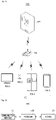
- FIG. 1 is a diagram illustrating a malicious code defending system according to an embodiment of the disclosure.
- a malicious code defense system 1000 may include a server 100, an electronic apparatus 200, and at least one Internet of things (IoT) device 300.
- IoT Internet of things
- the malicious code defense system 1000 may be an IoT system.
- the IoT refers to a technology in which the IoT device 300 on which a communication function is mounted is connected to a network so that information is exchanged between a human being and an object or between objects.
- the IoT device 300 may be a computer 300-1, a web cam 300-2, a refrigerator 300-3, and a smartphone 300-4.
- the IoT device 300 may be a variety of objects, such as an air conditioner, a washing machine, a light bulb, and the like.
- an example embodiment is implemented as an IoT.
- the technical concept of the example embodiment may be applicable to devices capable of accessing the Internet regardless of types thereof.
- the technical concept of the example embodiment is not limited to an IoT.
- the electronic apparatus 200 may be connected to the IoT device 300.
- the electronic apparatus 200 may be connected to the IoT device 300 using a wireless communication network.
- a wireless communication network such as a Bluetooth network, a Wi-Fi network, a ZigBee network, a near field communication (NFC) network, and the like.
- the electronic apparatus 200 performing this function may be implemented as a router and the like.
- the electronic apparatus 200 may detect an attack of an external apparatus (not illustrated) to the IoT device 300.
- the attack of the external apparatus may be a case where the external apparatus (not illustrated) attacks the IoT device 300 via a network of the electronic apparatus 200.
- the electronic apparatus 200 may detect, as an attack of an external apparatus (not illustrated), a case where the unauthenticated external apparatus (not illustrated) scans a weakness of the IoT device 300 via the network of the electronic apparatus 200, a case where the unauthenticated external apparatus (not illustrated) generates a buffer overflow (BOF) via the network of the electronic apparatus 200, or the like.
- an attack of an external apparatus not illustrated
- the unauthenticated external apparatus not illustrated
- a case where the unauthenticated external apparatus (not illustrated) scans a weakness of the IoT device 300 via the network of the electronic apparatus 200
- BOF buffer overflow
- the electronic apparatus 200 may include a sensing module to detect an attack of the external apparatus (not illustrated).
- the sensing module may be a network scan module, a network weakness scan module, etc.
- the electronic apparatus 200 may generate an alert about the attack.
- the electronic apparatus 200 may identify a type, time, etc. of the attack, and generate an alert including the information.
- the electronic apparatus 100 may generate a first alert of " ⁇ network scan attack sensed, xx:xx:xx ⁇ ", and when the unauthenticated external apparatus (not illustrated) generates a BOF via the network of the electronic apparatus 200 at 00(hr):00(min):30(sec), generate a second alert of " ⁇ buffer over flow attack sensed, 00:00:30 ⁇ .
- the electronic apparatus 200 may transmit an alert about the attack to the server 100.
- the electronic apparatus 200 may be connected to the server 100.
- the electronic apparatus 200 may be connected to the server 100 using a wireless communication network.
- a wireless communication network such as a Wi-Fi network, a Wi-Fi network, and the like.
- LAN local area network
- WAN wide area network
- the server 100 may receive an alert about the attack from the electronic apparatus 200.
- a related-art server fragmentarily provides information corresponding to the received alert to the user.
- the related-art server provides the information "network scan attack sensed" to the user when the first alert is received, and provides the information BOF attack sensed when the second alert is received.
- the attack of an external apparatus is generally carried out step by step, not just as a one-time attack.
- DDoS distributed Denial of Service
- a weakness of the IoT device 300 is determined through “network scan attack”, thereafter, BOF attack is performed using the weakness, and through this, the "host right" of the IoT device 300 is "acquired” and then, a DDoS malware is injected into the IoT device 300.
- the server 100 may identify an attack to be performed by an attacker based on an alert for the attack received step by step in a comprehensive manner, and provide a defense guide thereto. This example will be described with reference to FIG. 2 .
- FIG. 2 is a block diagram illustrating a server according to an embodiment of the disclosure.
- the server 100 may include a communication interface 110, a storage 120, and a processor 130.
- the communication interface 110 may communicate with the electronic apparatus 200 according to various types of communication methods and perform transmission and reception.
- the communication interface 110 may communicate with the electronic apparatus 200 and receive an attack alert from the electronic apparatus 200.
- the communication interface 110 may receive an alert for the attack from the electronic apparatus 200.
- the communication interface 110 may receive an alert of " ⁇ network scan attack sensed, xx:xx:xx ⁇ " from the electronic apparatus 200.
- the unauthenticated external apparatus (not illustrated) generates a BOF via the network of the electronic apparatus 200 at 00(hr):00(min):30(sec)
- the communication interface 110 may receive an alert of " ⁇ buffer overflow, 00:00:30 ⁇ ” from the electronic apparatus 200.
- the communication interface 110 may sequentially receive an alert for the attack from the electronic apparatus 200.
- the communication interface 110 may continuously receive an attack alert through communication with the electronic apparatus 200.
- the communication interface 110 may transmit information relating to a malicious code to the electronic apparatus 200.
- the information relating to the malicious code may include a name of malicious code to be executed in the IoT device 300 by the external apparatus (not illustrated) or injected into the IoT device 300, and guide information for defending the malicious code.
- the malicious code may be referred to as a malicious software (malware), a malicious program, or the like.
- the communication interface 110 may be connected to the electronic apparatus 200 using a wireless communication network.
- the communication interface 100 may be connected to the electronic apparatus 200 via various communication links, such as a LAN, a WAN, and the like.
- the communication interface 110 may communicate with the IoT device 300 according to various types of communication methods and perform transmission and reception.
- the communication interface 110 may communicate with the IoT device 300 and transmit information about the malicious code to the IoT device 300.
- the information relating to the malicious code may include a name of malicious code to be executed in the IoT device 300 by the external apparatus (not illustrated) or injected into the IoT device 300, and guide information for defending the malicious code.
- the communication interface 110 may be connected to the IoT device 300 using a wireless communication network.
- the communication interface 110 may be connected to a user terminal (not illustrated) via a wireless communication network.
- the communication interface 110 may transmit information relating to a malicious code to the user terminal (not illustrated).
- the storage 120 may store an operating system (OS) for controlling overall operations of the elements of the server 100, and a command or data related to the elements of the server 100.
- OS operating system
- the processor 130 may control a plurality of hardware or software elements of the server 100 by using diverse commands or data in the storage 120, load and process a command or data received from at least one of the other components in a volatile the memory, and store diverse data in a non-volatile memory.
- the storage 120 may store a scenario of an attack that the IoT device 300 receives from the external apparatus (not illustrated) by stages, and information relating to a malicious code corresponding to the scenario.
- the storage 120 may match a scenario including the first to third steps with the information relating to the malicious code A and store it.
- the information relating to the malicious code may not only include information relating to a name of the malicious code A but also further include guide information for defending against execution of the malicious code A in the IoT device 300 or injection of the malicious code A into the IoT device 300.
- the processor 130 may control the overall operations of the server 100.
- the processor 130 may include a central processing unit (CPU), a random access memory (RAM), and a read only memory (ROM), and may execute an arithmetic operation or data processing associated with controlling the other elements included in the server 100.
- the processor 130 may be realized as a system on chip (SoC).
- the processor 130 may receive, from the electronic apparatus 200, an alert of at least one attack.
- the processor 130 may receive, from the electronic apparatus 200 an alert for the attack. More particularly, in a case that the IoT device 300 is under attack over at least one step, the processor 130 may receive, from the electronic apparatus 200, an alert for the attack received by stages.
- the processor 130 may receive an alert of " ⁇ network scan attack sensed, xx:xx:xx ⁇ " from the electronic apparatus 200.
- the processor 130 may receive an alert of " ⁇ buffer overflow, 00:00:30 ⁇ ” from the electronic apparatus 200 by stages.
- the processor 130 may identify information about a malicious code corresponding to at least one alert received from the electronic apparatus 200 based on a pre-stored scenario.
- the processor 130 may identify a scenario corresponding to the at least one alert received from the electronic apparatus 200 from among at least one scenario stored in the storage 120.
- the processor 130 may identify an order of attack received by the IoT device 300 based on information about a time when an attack included in the at least one alert is performed, and identify a scenario having the same order of attack as the order of attack received by the IoT device 300 from among the pre-stored scenario.
- the processor 130 may receive an alert of the first attack from the electronic apparatus 200.
- the processor 130 may receive an alert of the second attack from the electronic apparatus 200.
- the processor 130 may receive an alert of the third attack from the electronic apparatus 200.
- the processor 130 may identify a chronological order in which the external apparatus (not illustrated) attacked the IoT device 300 based on time information included in the first to third alerts.
- the processor 130 may identify a scenario in which the first to third attacks are performed in the order of the first to third alerts from among the at least one scenario stored in the storage 120.
- the processor 130 may identify information about a malicious code corresponding to the identified scenario.
- the processor 130 may use information relating to a malicious code stored in the storage 120. For example, the processor 130 may identify information about a malicious code matched with the identified scenario based on the scenario matched for each malicious code and stored.
- the processor 130 may identify the information about the malicious code A matched with the scenario including the first to third alerts.
- the information relating to the malicious code may include a name of malicious code to be executed in the IoT device 300 by the external apparatus (not illustrated) or injected into the IoT device 300, and guide information for defending the malicious code.
- the processor 130 may transmit information relating to a malicious code to the IoT device 300.
- the processor 130 may directly transmit the information relating to the malicious code to the IoT device 300.
- the processor 130 may use various networks including a wireless communication network, a Bluetooth network, a Wi-Fi network, etc.
- the processor 130 may transmit information relating to a malicious code to the IoT device 300 through the electronic apparatus 200.
- the processor 130 may transmit, to the electronic apparatus 200, a signal including a command requesting transmission of the information relating to the malicious code to the IoT device 300 along with the information relating to the malicious code. Accordingly, the information relating to the malicious code may be transmitted from the electronic apparatus 200 to the IoT device 300.
- the processor 130 may transmit information relating to a malicious code to the user terminal (not illustrated).
- the server 100 can provide information relating to an attack to be performed by an attacker by comprehensively considering an alert for an attack received by stages, unlike a related-art server fragmentarily providing the alert for the attack.
- FIGS. 3A and 3B are diagrams illustrating a scenario and information about a malicious code corresponding to a scenario according to various embodiments of the disclosure.
- the storage 120 may store a scenario of a tree structure. However, this is only for the convenience of explanation, and the storage 120 may match a scenario with information relating to a malicious code in various forms, and store it.
- FIG. 3A is a diagram illustrating a DDoS according to an embodiment of the disclosure.
- the scenario according to an example embodiment may include information relating to attacks that are sequentially executed for the external apparatus (not illustrated) to inject a malicious into an IoT device 300.
- the malicious code may be a DDoS malicious software (malware).
- the external apparatus may scan a wireless access point (AP) surrounding the IoT device 300, scan an Internet protocol (IP) of the scanned AP, performs an buffer overflow attack to a network of the scanned IP, that is, a network to which the IoT device 300 is connected, and then inject the DDoS malware into the IoT device 300.
- AP wireless access point
- IP Internet protocol
- the processor 130 may receive, from the external apparatus 200, an alert according to the attack of the external apparatus (not illustrated) by stages. For example, in a case that the external apparatus (not illustrated) scans a wireless AP of the electronic apparatus 200, the processor 130 may receive a first alert of " ⁇ wireless AP scan attack sensed ⁇ " from the electronic apparatus 200. In a case that the external apparatus (not illustrated) scans the IP of the electronic apparatus 200, the processor 130 may receive a second alert of " ⁇ IP scan attack sensed ⁇ " from the electronic apparatus 200. In a case that the external apparatus (not illustrated) generates a BOF via the network of the electronic apparatus 200, the processor 130 may receive, from the electronic apparatus 200, a third alert of " ⁇ BOF attack sensed ⁇ ". In addition, in a case that the external apparatus (not illustrated) injects a malware into the IoT device 300 via the network of the electronic apparatus 200, a fourth alert of " ⁇ malware injection sensed ⁇ " may be received from the electronic apparatus 200.
- the processor 130 may identify an order in which attacks respectively corresponding to the first to fourth alerts are performed, based on time information included in the first to fourth alerts.
- the processor 130 may identify a scenario consisting of an order of a wireless AP scan attack 311, an IP scan attack 312, a BOF attack 313, and a malware injection 314 from among the at least one scenario stored in the storage 120.
- the processor 130 may identify information about a malicious code matched with the identified scenario.
- information 315 relating to a DDoS attack may be matched with a scenario corresponding to the first to fourth alerts described above.
- the information relating to the DDoS attack may include information indicating that an attack currently performed to the external apparatus (not illustrated) is a DDoS attack, and guide information for defending the DDoS attack.
- the guide information for defending the DDoS attack may be information guiding to blocking an IP of the attacker, information guiding installation of a firewall of the electronic apparatus 200.
- FIG. 3B is a diagram illustrating a web cam attack scenario according to an embodiment of the disclosure.
- the IoT device 300 may be implemented as a web cam.
- the web cam is installed based on an IP, which is easily accessible from the outside and has a number of security weaknesses, and thus has recently become a target of attack of attackers.
- the external apparatus may acquire a password of the web cam by scanning a wireless AP surrounding the web cam, scanning an IP of the scanned AP, and performing the password transcription attack to the scanned IP.
- the processor 130 may receive, from the external apparatus 200, an alert according to the attack of the external apparatus (not illustrated) by stages. For example, in a case that the external apparatus (not illustrated) scans a wireless AP of the electronic apparatus 200, the processor 130 may receive a first alert of " ⁇ wireless AP scan attack sensed ⁇ " from the electronic apparatus 200. In a case that the external apparatus (not illustrated) scans the IP of the electronic apparatus 200, the processor 130 may receive a second alert of " ⁇ IP scan attack sensed ⁇ " from the electronic apparatus 200. In a case that the external apparatus (not illustrated) receives the password transcription attack via the network of the electronic apparatus 200, the processor 130 may receive a third alert of " ⁇ password transcription attack sensed ⁇ " from the electronic apparatus 200.
- the processor 130 may identify an order in which attacks respectively corresponding to the first to third alerts are performed, based on time information included in the first to third alerts.
- the processor 130 may identify a scenario consisting of an order of a wireless AP scan attack 321, an IP scan attack 322, and a password transcription attack 323 from among the at least one scenario stored in the storage 120.
- the processor 130 may identify information about a malicious code matched with the identified scenario.
- information relating to a web cam attack 324 may be matched with a scenario corresponding to the first to third alerts described above.
- the information relating to the web cam attack may include information indicating that an attack currently performed to the external apparatus (not illustrated) is a web cam attack, and guide information for defending the web cam attack.
- the guide information for defending the web cam attack may be information guiding to blocking an IP of the attacker, information guiding installation of a firewall of the electronic apparatus 200.
- the processor 130 may transmit the identified malicious code information to at least one of the IoT device 300 and the user terminal. This will be described below with reference to FIGS. 4A , 4B , 5A , and 5B hereinafter.
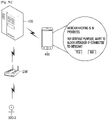
- FIGS. 4A , 4B , 5A and 5B are diagrams illustrating an object to which information about a malicious code is transmitted and a user interface (UI) corresponding to the malicious code information according to various embodiments of the disclosure.
- UI user interface
- the processor 130 may, as described above, identify information relating to a malicious code corresponding to a plurality of alerts received from the electronic apparatus 200 based on a pre-stored scenario.
- the processor 130 may identify an object of transmission of the identified malicious code information.
- the processor 130 may identify an object of transmission of the malicious code information on the basis of whether the IoT device 300 includes a display for displaying the malicious code information.
- the processor 130 may identify whether the IoT device 300 includes the display for displaying the malicious code information.
- the processor 130 may identify whether the IoT device 300 includes the display on the basis of pre-stored device information of the IoT device 300.
- the device information may include identification information of the IoT device 300, and information about whether the display is provided in the IoT device 300 may be mapped with the identification information.
- the processor 130 may transmit the malicious code information to the IoT device 300.
- the processor 130 may transmit the identified malicious code information to the IoT device 300.
- the IoT device 300-1 may display a UI corresponding to the received malicious code information on the display.
- the malicious code information may include a name of the malicious code, and guide information for defending the malicious code.
- the UI corresponding to the malicious code may differ depending on the defense mode of the IoT device 300-1.
- the IoT device 300-1 may display a UI indicating that a defense is performed automatically according to the guide information received from the server 100.
- the IoT device 300-1 may display, on the display, a UI, such as "DDoS malware injection attack is in progress" and "IP of attacker is automatically blocked for defense purposes" on the basis of the received malicious code information.
- the IoT device 300-1 may automatically perform a defense operation according to the guide information received from the server 100.
- the IoT device 300-1 may display a UI requesting a user selection as to whether to perform a defense according to the guide information.
- the IoT device 300-1 may display, on the display, a UI, such as "DDoS malware injection attack is in progress”, “Want to block IP of attacker for defense purposes", “YES?” and “NO” on the basis of the received malicious code information.
- the IoT device 300-1 may perform an operation for the purpose of defense according to the guide information.
- the IoT device 300-1 receives the malicious code information through the electronic apparatus 200.
- the processor 130 may directly transmit the malicious code information to the IoT device 300-1.
- the processor 130 transmits the malicious code information to the IoT device 300.
- the processor 130 may transmit the malicious code information to a user terminal, or may transmit the malicious code information to both the IoT device 300 and the user terminal.
- the processor 130 may transmit the malicious code information to the user terminal.
- the processor 130 may transmit the identified malicious code information to the user terminal 400.
- the user terminal 400 may display a UI corresponding to the received malicious code information on the display.
- the malicious code information may include a name of the malicious code, and guide information for defending the malicious code.
- the UI corresponding to the malicious code may differ depending on the defense mode of the IoT device 300-2.
- the user terminal 400 may display a UI indicating that a defense of the IoT device 300-1 is performed automatically according to the guide information received from the server 100.
- the user terminal 400 may display, on the display, a UI, such as "Webcam hacking is in progress" and "IP of attacker connected to webcam is automatically blocked for defense purposes" on the basis of the received malicious code information.
- the user terminal 400 may automatically perform a defense operation according to the guide information received from the server 100.
- the user terminal 400 may display a UI requesting a user selection as to whether to perform a defense according to the guide information.
- the user terminal 400 may display, on the display, a UI, such as "Webcam hacking is in progress” and “Want to block IP of attacker connected to webcam for defense purposes?", "YES” and “NO” on the basis of the received malicious code information.
- a UI such as "Webcam hacking is in progress” and “Want to block IP of attacker connected to webcam for defense purposes?", "YES” and “NO” on the basis of the received malicious code information.
- the user terminal 400 may perform an operation for the purpose of defense according to the guide information.
- the user may recognize the presence of attack of the external apparatus (not illustrated) through the user terminal 400, and easily defend against the attack of the external apparatus (not illustrated).
- the information about the malicious code is transmitted to the user terminal 400.
- the processor 130 may transmit the malicious code information to the IoT device 300.
- the processor 130 may transmit, to the IoT device 300, information relating to the malicious code including a command to output the ongoing attack of the attacker through a speaker of the IoT device 300, or may transmit, to the IoT device 300, information relating to the malicious code including a command to display the ongoing attack of the attacker through blinking LED of the IoT device 300, etc.
- the processor 130 may transmit, to the IoT device 300, information relating to the malicious code including a command to automatically block an IP of the attacker.
- FIG. 6 is a flowchart illustrating an operation method of a malicious code defense system according to an embodiment of the disclosure.
- the electronic apparatus 200 may detect a security weakness of the IoT device 300, at operation S610. To this end, the electronic apparatus 200 may include a weakness scan module.
- the electronic apparatus 200 may, through the weakness scan module, detect whether an external apparatus 500 is capable of accessing data of the IoT device 300, and detect whether the external apparatus 500 is capable of injecting a malicious code into the IoT device 300.
- the electronic apparatus 200 may transmit the detected security weakness to the server 100, at operation S620.
- the server 100 may store the security weakness of the IoT device 300 received from the electronic apparatus 200.
- the electronic apparatus 200 may detect the attack of the external apparatus 500 at operation S630.
- the electronic apparatus 200 may detect, as an attack of the external apparatus 500, a case where the external apparatus 500 scans a weakness of the IoT device 300 via the network of the electronic apparatus 200, a case where the external apparatus 500 generates a BOF via the network of the electronic apparatus 200, or the like.
- the electronic apparatus 200 may transmit an attack alert to the server 100, at operation S640.
- the electronic apparatus 200 may transmit an alert for the attack received for each step to the server 100.
- the electronic apparatus 200 may transmit a plurality of alerts for the attack received for each step to the server 100.
- the server 100 may identify a scenario corresponding to at least one alert received from the electronic apparatus 200 from among pre-stored scenarios, at operation S650.
- the server 100 may identify an order of attack received by the IoT device 300 based on information about a time when an attack included in the at least one alert is performed, and identify a scenario having the same order of attack as the IoT device 300 from among the pre-stored scenarios.
- the server 100 may identify information relating to a malicious code matched with the identified scenario, and transmit the malicious code information to the IoT device or a user terminal 400, at operation S660.
- the information relating to the malicious code may include a name of malicious code to be executed in the IoT device 300 by the external apparatus 500 or injected into the IoT device 300, and guide information for defending the malicious code.
- the server 100 may transmit the malicious code information to the IoT device or the user terminal 400 at operation S670.
- the server 100 may identify whether an attack using a security weakness of the IoT device 300 is present from among the attacks of the electronic apparatus 500. For example, the server 100 may, using a security weakness of the IoT device 300 received from the electronic apparatus 200, identify whether an attack using the security weakness of the IoT device 300 is present from among the attacks of the electronic apparatus 500.
- the IoT device or the user terminal 400 may transmit a signal requesting defense against the malicious code to the electronic apparatus 200.
- the signal requesting defense against the malicious code may include a command requesting to block an IP of the external apparatus 500, a command requesting to block a particular port, and the like.
- the electronic apparatus may perform a defense operation on the basis of the received signal at operation S680, and accordingly defend the IoT device 300 from the electronic apparatus 500 attacking via the electronic apparatus 200.
- the malicious code defense system can provide information relating to an attack to be performed by an attacker by comprehensively considering an alert for an attack received by stages, unlike a related-art server fragmentarily providing the alert for the attack.
- the malicious code defense system may transmit the information relating to the malicious code to the user terminal 400, and thereby the user may easily defend the IoT device 300 from the attack through the user terminal 400.
- FIG. 7 is a flowchart illustrating an operation of a server in a case that a scenario having a same order of attack as an order of attack received by an IoT is not present in a server according to an embodiment of the disclosure.
- the server 100 may receive an alert for an attack from the electronic apparatus 200, at operation S710. More particularly, in a case that the external apparatus (not illustrated) attacks the IoT device 300 over at least one step, the server 100 may sequentially receive at least one alert.
- the server 100 may identify a scenario having the same order of attack received by the IoT device 300 from among the pre-stored scenarios.
- the server 100 may not store a scenario having the same order of attack as the IoT device 300. This is the case when a new malicious code appears, etc.
- the server 100 may identify a scenario having a consistency of greater than or equal to a predetermined threshold as an attack received by the IoT device 300 from among the pre-stored scenarios.
- the predetermined threshold may be variously set according to a user command.
- the predetermined threshold may be set as 80%.
- the server 100 may identify a scenario which matches with the first to fifth attacks by 80% or more from among the pre-stored scenarios.
- the identified scenario may be a scenario including first to third attacks, a fourth' attack, and a fifth attack.
- the identified scenario may be a scenario including first to fourth attacks.
- the server 100 may identify information relating to a malicious code matched with the identified scenario, and transmit the malicious code information to the IoT device 300, at operation S730.
- the server 100 may transmit the default guide information to the IoT device 300, at operation S740.
- the default guide information may be guide information requesting to block network connection with the external apparatus (not illustrated).
- the default guide information reflects the fact that an appropriate defense means for defending against the attack of the external apparatus (not illustrated) is not stored in the storage 120.
- the server 100 may, when a scenario consistent with the attack received by the IoT device 300 is not present from among the pre-stored scenarios, the default guide information to the IoT device 300 regardless of a predetermined threshold.
- the guide information may be information for defending against a malicious code matched with the scenario.
- the guide information may be different according to which scenario the attack of the external apparatus (not illustrated) corresponds.
- the guide information may be guide information requesting to block network connection with the external apparatus (not illustrated).
- the guide information may be default information.
- the server 100 may fundamentally block connection between the external apparatus (not illustrated) and the IoT device 300.
- the server 100 may update a scenario stored in the storage 120.
- the server 100 may match information relating to a malicious code input according to a user command with a scenario corresponding to the order of attack received by the IoT device 300, and store the matched information and the matched scenario in the storage 120.
- the server 100 may defend against various attacks from the external apparatus (not illustrated) to the IoT device 300 on the basis of the updated scenario.
- FIG. 8 is a block diagram illustrating an IoT device according to an embodiment of the disclosure.
- an IoT device 300 may include a display 310, a communication interface 320, and a processor 330.
- the display 310 may display various screens. For example, in a case that the IoT device 300 is implemented as a computer 300-1, the display 310 may display a content for apparatus control. In a case that the IoT device 300 is implemented as a refrigerator 300-3, the display 310 may display information relating to food stored in the refrigerator, etc.
- the display 310 may display information about a malicious code received from the server 100.
- the information relating to the malicious code may include a name of malicious code to be executed in the IoT device 300 by the external apparatus (not illustrated) or injected into the IoT device 300, and guide information for defending the malicious code.
- the display 310 may be realized as various kinds of displays, such as liquid crystal display (LCD), organic light-emitting diode (OLED), liquid crystal on silicon (LCoS), digital light processing (DLP), or the like.
- the display 310 may include a driving circuit, a backlight unit, and the like which may be implemented in forms, such as an a-si thin film transistor (TFT), a low temperature poly silicon (LTPS) TFT, an organic TFT (OTFT), and the like.
- TFT a-si thin film transistor
- LTPS low temperature poly silicon
- OFT organic TFT
- the communication interface 320 may communicate with the server 100 and perform transmission and reception of various data.
- the communication interface 320 may be connected to the server 100 using a wireless communication network.
- the wireless communication may be, for example, at least one among long-term evolution (LTE), LTE Advance (LTE-A), code division multiple access (CDMA), wideband CDMA (WCDMA), universal mobile telecommunications system (UMTS), wireless broadband (WiBro), and global system for mobile communications (GSM).
- LTE long-term evolution
- LTE-A LTE Advance
- CDMA code division multiple access
- WCDMA wideband CDMA
- UMTS universal mobile telecommunications system
- WiBro wireless broadband
- GSM global system for mobile communications
- the communication interface 320 may communicate with the server 100 and receive information relating to a malicious code.
- the information relating to the malicious code may include a name of malicious code to be executed in the IoT device 300 by the external apparatus (not illustrated) or injected into the IoT device 300, and guide information for defending the malicious code.
- the communication interface 320 may communicate with the electronic apparatus 200 and perform transmission and reception of various data.
- the communication interface 320 may be connected to the electronic apparatus 200 using a wireless communication network.
- a wireless communication network such as a Bluetooth network, a Wi-Fi network, a ZigBee network, a NFC network, and the like.
- the communication interface 320 may communicate with the electronic apparatus 200 and receive information relating to a malicious code.
- the information relating to the malicious code may be what the server 100 has transmitted to the electronic apparatus 200 as described above.
- the processor 330 may control the overall operations of the IoT device 300.
- the processor 330 may include a CPU, a RAM, and a ROM, and may execute an arithmetic operation or data processing associated with controlling the other elements included in the IoT device 300.
- the processor 330 may be realized as a SoC.
- the processor 330 may receive, from the electronic apparatus 200, information relating to a malicious code corresponding an attack over at least one step.
- the processor 330 may receive information relating to a malicious code corresponding to an attack performed over at least one step rather than receiving fragmentary malicious code information for the respective attacks from the electronic apparatus 200.
- the information relating to the malicious code may be information generated on the basis of at least one attack and an order of attacks performed over at least one step.
- the information relating to the malicious code may be generated on the basis of the first to third attacks and an order of the first to third attacks.
- the processor 330 may display the received malicious code information on the display 310.
- the malicious code information may include at least one of a name of a malicious code corresponding to an attack performed over at least one step, information relating to attacks sequentially executed by the external apparatus (not illustrated) and an order of the attacks, and guide information for defending against the malicious code.
- the processor 330 may perform a defense operation corresponding to the guide information.
- the guide information may be blocking an IP of the external apparatus (not illustrated), etc.
- FIG. 9 is a block diagram illustrating a user terminal according to an embodiment of the disclosure.
- a user terminal 400 may include a display 410, a communication interface 420, and a processor 430.
- the display 410 may display various screens. For example, in a case that the IoT device 300 is implemented as a webcam 300-2, the display 410 may display a content for webcam control. In a case that the IoT device 300 is implemented as a refrigerator 300-3, the display 410 may display information relating to food stored in the refrigerator, etc.
- the display 410 may display information about a malicious code received from the server 100.
- the information relating to the malicious code may include a name of malicious code to be executed in the IoT device 300 by the external apparatus (not illustrated) or injected into the IoT device 300, and guide information for defending the malicious code.
- the display 410 may be realized as various kinds of displays, such as LCD, OLED, LCoS, DLP, or the like.
- the communication interface 420 may communicate with the server 100 and perform transmission and reception of various data.
- the communication interface 420 may be connected to the server 100 using a wireless communication network.
- the wireless communication may be, for example, at least one among LTE, LTE-A, CDMA, WCDMA, UMTS, WiBro, and GSM.
- the communication interface 420 may communicate with the server 100 and receive information relating to a malicious code.
- the information relating to the malicious code may include a name of malicious code to be executed in the IoT device 300 by the external apparatus (not illustrated) or injected into the IoT device 300, and guide information for defending the malicious code.
- the communication interface 420 may communicate with the electronic apparatus 200 and perform transmission and reception of various data.
- the communication interface 420 may be connected to the electronic apparatus 200 using a wireless communication network.
- the communication interface 320 may be connected to the electronic apparatus 200 using various networks, such as a Bluetooth network, a Wi-Fi network, a ZigBee network, a NFC network, and the like.
- the communication interface 420 may communicate with the electronic apparatus 200 and receive information relating to a malicious code.
- the information relating to the malicious code may be what the server 100 has transmitted to the electronic apparatus 200.
- the processor 430 may control a general operation of the user terminal 400.
- the processor 430 may include a CPU, a RAM, and a ROM, and may execute an arithmetic operation or data processing associated with controlling the other elements included in the IoT device 300.
- the processor 430 may receive, from the server 100, information relating to a malicious code corresponding an attack over at least one step.
- the processor 430 may receive information relating to a malicious code corresponding to an attack performed over at least one step rather than receiving fragmentary malicious code information for the respective attacks from the server 100.
- the information relating to the malicious code may be information generated on the basis of at least one attack and an order of attacks performed over at least one step.
- the information relating to the malicious code may be generated on the basis of the first to third attacks and an order of the first to third attacks.
- the processor 430 may display the received malicious code information on the display 410.
- the malicious code information may include at least one of a name of a malicious code corresponding to an attack performed over at least one step, information relating to attacks sequentially executed by the external apparatus (not illustrated) and an order of the attacks, and guide information for defending against the malicious code.
- the processor 430 may perform a defense operation corresponding to the guide information.
- the guide information may be blocking an IP of the external apparatus (not illustrated), etc.
- FIG. 10 is a flowchart illustrating an operation of a server according to an embodiment of the disclosure.
- a server may receive an alert for the attack received by stages from the electronic apparatus, at operation S1010.
- the server may identify information relating to a malicious code corresponding to at least one alert received from the electronic apparatus on the basis of a pre-stored scenario, at operation S1020. For example, when at least one alert is received from the electronic apparatus, the server may identify an order of attacks received by the IoT device on the basis of information relating to a time at which the attack included in the received at least one alert is performed. In addition, the server may identify a scenario having the same order of attack as an order of attack received by the IoT device from among the pre-stored scenario, and identify information relating to the malicious code matched with the determined scenario.
- the server may transmit the identified malicious code information to the IoT device, at operation S1030.
- the server may transmit the malicious code information to the IoT device.
- the server may transmit the malicious code information to the user terminal.
- the user can easily defend the IoT device from attacks of the external
- a method for defending against a malicious code may be embodied as a program and then stored on various types of recording media.
- a computer program that has been processed by various processors and therefore has become capable of executing the aforementioned defense methods may be stored in a non-transitory recording medium and be used.
- a non-transitory computer readable medium which stores a program for performing the operations of, when an IoT device is attacked from an external apparatus through an electronic apparatus over at least one step, receiving an alert for the attack received by steps, identifying information relating to a malicious code corresponding to the at least one alert received from the electronic apparatus on the basis of a pre-stored scenario, and transmitting the identified malicious code information to the IoT device may be provided.
- the non-transitory computer readable medium refers to a medium that stores data semi-permanently rather than storing data for a very short time, such as a register, a cache, a memory or etc., and is readable by an apparatus.
- the above-described various applications or programs may be stored in the non-transitory computer readable medium, for example, a compact disc (CD), a digital versatile disc (DVD), a hard disc, a Blu-ray disc, a universal serial bus (USB), a memory card, a ROM, and the like, and may be provided.
Landscapes
- Engineering & Computer Science (AREA)
- Computer Security & Cryptography (AREA)
- Computer Hardware Design (AREA)
- General Engineering & Computer Science (AREA)
- Software Systems (AREA)
- Theoretical Computer Science (AREA)
- Signal Processing (AREA)
- Computer Networks & Wireless Communication (AREA)
- Computing Systems (AREA)
- Physics & Mathematics (AREA)
- General Physics & Mathematics (AREA)
- General Health & Medical Sciences (AREA)
- Health & Medical Sciences (AREA)
- Virology (AREA)
- Medical Informatics (AREA)
- Technology Law (AREA)
- Computer And Data Communications (AREA)
- Data Exchanges In Wide-Area Networks (AREA)
Description
- The disclosure relates to a server and a method for defending a malicious code using the same. More particularly, the disclosure relates to a server for defending an Internet of things (IoT) device from an attacker, and a method for defending a malicious code using the same.
- The advancement of semiconductor technology and wireless communication technology has developed a variety of electronic devices. More particularly, the Internet of things (IoT) technology enabling data to be exchanged between things in real time has been recently developed. The IoT is an evolved form of the existing ubiquitous sensor network or a machine to machine (M2M), which is characterized by connecting objects on which a communication function is mounted to a network and enabling communication with one another.
- Herein the various objects (hereinafter referred to as "IoT device") may be connected to a server for providing an IoT service, thereby establishing an IoT network. Accordingly, the user can easily control the IoT device without time and place restrictions through an electronic apparatus, such as a smartphone connected to the server, etc.
- Although the user convenience is enhanced by the IoT technology, recent IoT devices have become a target of attack. The reason is that an IoT device is implemented mainly as a home appliance in the home, and that in general, a normal user living in the home lacks knowledge about security.
- Accordingly, even for normal users with little knowledge about security, there is a demand for a technology to defend the IoT device from an attacker.
- Therefore, a need exists for a server for defending an Internet of things (IoT) device from an attacker, and a method for defending a malicious code using the same.
- The above information is presented as background information only to assist with an understanding of the disclosure. No determination has been made, and no assertion is made, as to whether any of the above might be applicable as prior art with regard to the disclosure.
- Aspects of the disclosure are to address at least the above-mentioned issues and/or disadvantages and to provide at least the advantages described below. Accordingly, an aspect of the disclosure is to provide a server capable of defending an Internet of things (IoT) device from an attacker, and a method for defending against a malicious code using the server.
- The present invention is defined in the independent claims. Preferred embodiments are defined in the dependent claims.
- In accordance with an aspect of the disclosure, a server is provided. The server includes a communication interface configured to communicate with an electronic apparatus connected to an IoT device, a storage configured to store a scenario about an attack received by the IoT device from an external apparatus by stages and information relating to a malicious code corresponding to the scenario, and a processor configured to, based on the IoT device being attacked by the external apparatus over at least one step through the electronic apparatus, receive, from the electronic apparatus, an alert for an attack received by stages, and to identify information relating to a malicious code corresponding to at least one alert received from the electronic apparatus based on the pre-stored scenario.
- The processor may be further configured to transmit the identified information relating to the malicious code to at least one of a user terminal and the IoT device.
- The scenario may include information relating to an attack sequentially executed by the external apparatus to allow the external apparatus to inject the malicious code into the IoT device.
- The processor may be further configured to, based on at least one alert being received from the electronic apparatus, identify an order of attacks received by the IoT device on a basis of information relating to a time at which an attack included in the at least one alert, to identify a scenario having a same order of attack as an order of attack received by the IoT device from among the pre-stored scenario, and to transmit information relating to a malicious code corresponding to the identified scenario to at least one of the user terminal and the IoT device.
- The processor may be further configured to, based on the scenario having the same order of attack as the order of attack received by the IoT device not being present from among the pre-stored scenario, to identify a scenario having a consistency of greater than or equal to a predetermined threshold with the attacks received by the IoT device from among the pre-stored scenario, and to transmit information relating to a malicious code corresponding to the identified scenario to at least one of the user terminal and the IoT device.
- The processor may be further configured to, based on the scenario having the same order of attack as the order of attacks received by the IoT device not being present from among the pre-stored scenario, match information relating to a malicious code input according to a user command with a scenario corresponding to the order of attacks received by the IoT device and store the information and the scenario matched with each other.
- The processor may be further configured to, based on the scenario having the same order of attack as the order of attacks received by the IoT device not being present from among the pre-stored scenario, transmit guide information requesting to block network connection with the external apparatus to at least one of the user terminal and the IoT device.
- The processor may be further configured to, based on a security weakness being detected in the electronic apparatus, receive an alert indicating the security weakness from the electronic apparatus, and based on at least one attack from among attacks received by the IoT device over at least one step corresponding to an attack using the security weakness, to transmit the information relating to the malicious code to at least one of the user terminal and the IoT device.
- The processor may be further configured to identify whether the IoT device includes a display for displaying the information relating to the malicious code, based on the IoT device including the display, transmit the information relating to the malicious code to the IoT device, and based on the IoT device not including the display, to transmit the information relating to the malicious code to a user terminal.
- In accordance with another aspect of the disclosure, a method for defending against a malicious code is provided. The method includes based on an IoT device being attacked by an external apparatus through an electronic apparatus over at least one step, receiving, from the electronic apparatus, an alert for an attack by stages, and identifying information relating to a malicious code corresponding to at least one alert received from the electronic apparatus based on a pre-stored scenario.
- The method may further include transmitting the identified information relating to the malicious code to at least one of a user terminal and the IoT device.
- The scenario may include information relating to an attack sequentially executed by the external apparatus to allow the external apparatus to inject the malicious code into the IoT device.
- The transmitting may include, based on at least one alert being received from the electronic apparatus, identifying an order of attacks received by the IoT device on a basis of information relating to a time at which an attack included in the at least one alert, identifying a scenario having a same order of attack as an order of attack received by the IoT device from among the pre-stored scenario, and transmitting information relating to a malicious code corresponding to the identified scenario to at least one of the user terminal and the IoT device.
- The transmitting may include, based on the scenario having the same order of attack as the order of attack received by the IoT device not being present from among the pre-stored scenario, identifying a scenario having a consistency of greater than or equal to a predetermined threshold with the attacks received by the IoT device from among the pre-stored scenario, and transmitting information relating to a malicious code corresponding to the identified scenario to at least one of the user terminal and the IoT device.
- The method may further include, based on a scenario having the same order of attack as an order of attacks received by the IoT device not being present from among the pre-stored scenario, match information relating to a malicious code input according to a user command with a scenario corresponding to the order of attacks received by the IoT device, and store the information and the scenario matched with each other.
- The transmitting may include, based on the scenario having the same order of attack as the order of attacks received by the IoT device not being present from among the pre-stored scenario, transmitting guide information requesting to block network connection with the external apparatus to at least one of the user terminal and the IoT device.
- The transmitting may include, based on a security weakness being detected in the electronic apparatus, receiving an alert indicating the security weakness from the electronic apparatus, and based on at least one attack from among attacks received by the IoT device over at least one step corresponding to an attack using the security weakness, transmitting the information relating to the malicious code to at least one of the user terminal and the IoT device.
- The method may further include identifying whether the IoT device includes a display for displaying the information relating to the malicious code, based on the IoT device including the display, transmitting the information relating to the malicious code to the IoT device, and based on the IoT device not including the display, transmitting the information relating to the malicious code to a user terminal.
- In accordance with another aspect of the disclosure, an IoT device is provided. The IoT device includes a display, a communication interface configured to communicate with an electronic apparatus, and a processor configured to, based on being attacked by an external apparatus through the electronic apparatus over at least one step, receive, from the electronic apparatus, information relating to a malicious code corresponding to an attack over the at least one step, and to display, on the display, the received information relating to the malicious code. The information relating to the malicious code may be information generated based on the at least one attack and an order of attacks over the at least one step.
- The information relating to the malicious code may include at least one of a name of a malicious code corresponding to an attack performed over at least one step, information relating to attacks sequentially executed by the external apparatus (not illustrated) and an order of the attacks, and guide information for defending against the malicious code.
- When a user command to defend against the malicious code is input according to the guide information, the processor may perform a defense operation corresponding to the guide information.
- In accordance with another aspect of the disclosure, a method for defending against a malicious code is provided. The method includes, based on being attacked by an external apparatus through the electronic apparatus over at least one step, receiving, from the electronic apparatus, information relating to a malicious code corresponding to an attack over the at least one step, and displaying, on the display, the received information relating to the malicious code. The information relating to the malicious code may be information generated based on the at least one attack and an order of attacks over the at least one step.
- The information relating to the malicious code may include at least one of a name of a malicious code corresponding to an attack performed over at least one step, information relating to attacks sequentially executed by the external apparatus (not illustrated) and an order of the attacks, and guide information for defending against the malicious code.
- The method may further include, when a user command to defend against the malicious code is input according to the guide information, the processor may perform a defense operation corresponding to the guide information.
- In accordance with another aspect of the disclosure, a user terminal is provided. The user terminal includes a display, a communication interface configured to communicate with a server connected to an electronic apparatus, and a processor configured to, based on an IoT device connected to the electronic apparatus being attacked by an external apparatus through the electronic apparatus over at least one step, receive, from the server, information relating to a malicious code corresponding to an attack over the at least one step, and to display, on the display, the received information relating to the malicious code. The information relating to the malicious code may be information generated based on the at least one attack and an order of attacks over the at least one step.
- The information relating to the malicious code may include at least one of a name of a malicious code corresponding to an attack performed over at least one step, information relating to attacks sequentially executed by the external apparatus (not illustrated) and an order of the attacks, and guide information for defending against the malicious code.
- When a user command to defend against the malicious code is input according to the guide information, the processor may perform a defense operation corresponding to the guide information.
- In accordance with another aspect of the disclosure, a method for defending against a malicious code is provided. The method includes, based on an IoT device connected to an electronic apparatus being attacked by an external apparatus through the electronic apparatus over at least one step, receiving, from the server, information relating to a malicious code corresponding to an attack over the at least one step, and displaying, on the display, the received information relating to the malicious code. The information relating to the malicious code may be information generated based on the at least one attack and an order of attacks over the at least one step.
- The information relating to the malicious code may include at least one of a name of a malicious code corresponding to an attack performed over at least one step, information relating to attacks sequentially executed by the external apparatus (not illustrated) and an order of the attacks, and guide information for defending against the malicious code.
- The method may further include, when a user command to defend against the malicious code is input according to the guide information, the processor may perform a defense operation corresponding to the guide information.
- According to the various example embodiments, even normal users with little knowledge about security can easily identify a type of attack of an attacker, and easily defend the IoT device from the attacker.
-
-
FIG. 1 is a diagram illustrating a malicious code defense system according to an embodiment of the disclosure; -
FIG. 2 is a block diagram illustrating a server according to an embodiment of the disclosure; -
FIGS. 3A and 3B are diagrams illustrating a scenario and information about a malicious code corresponding to a scenario according to various embodiments of the disclosure; -
FIGS. 4A ,4B ,5A and5B are diagrams illustrating an object to which information about a malicious code is transmitted and a user interface (UI) corresponding to the malicious code information according to various embodiments of the disclosure; -
FIG. 6 is a flowchart illustrating an operation method of a malicious code defense system according to an embodiment of the disclosure; -
FIG. 7 is a flowchart illustrating an operation of a server in a case that a scenario having a same order of attack as an order of attack received by an Internet-of-things (IoT) is not present in a server according to an embodiment of the disclosure; -
FIG. 8 is a block diagram illustrating an IoT device according to an embodiment of the disclosure; -
FIG. 9 is a block diagram illustrating a user terminal according to an embodiment of the disclosure; and -
FIG. 10 is a flowchart illustrating an operation of a server according to an embodiment of the disclosure. - -
- The following description with reference to the accompanying drawings is provided to assist in a comprehensive understanding of various embodiments of the disclosure as defined by the claims. It includes various specific details to assist in that understanding but these are to be regarded as merely exemplary. In addition, descriptions of well-known functions and constructions may be omitted for clarity and conciseness.
- The terms and words used in the following description and the claims are not limited to the bibliographical meanings, but, are merely used by the inventor to enable a clear and consistent understanding of the disclosure. Accordingly, it should be apparent to those skilled in the art that the following description of various embodiments of the disclosure is provided for illustration purpose only and not for the purpose of limiting the disclosure as defined by the appended claims.
- It is to be understood that the singular forms "a," "an," and "the" include plural referents unless the context clearly dictates otherwise. Thus, for example, reference to "a component surface" includes reference to one or more of such surfaces
- In describing example embodiments, detailed description of relevant known functions or components may be omitted if it would obscure the description of the subject matter.
- Hereinafter, certain example embodiments will be described below with reference to the accompanying drawings.
-
FIG. 1 is a diagram illustrating a malicious code defending system according to an embodiment of the disclosure. - Referring to
FIG. 1 , a maliciouscode defense system 1000 according to an example embodiment may include aserver 100, anelectronic apparatus 200, and at least one Internet of things (IoT)device 300. - For example, the malicious
code defense system 1000 may be an IoT system. Herein, the IoT refers to a technology in which theIoT device 300 on which a communication function is mounted is connected to a network so that information is exchanged between a human being and an object or between objects. - As illustrated in
FIG. 1 , theIoT device 300 may be a computer 300-1, a web cam 300-2, a refrigerator 300-3, and a smartphone 300-4. However, this is only an example, and theIoT device 300 may be a variety of objects, such as an air conditioner, a washing machine, a light bulb, and the like. - Hereinafter, an example embodiment is implemented as an IoT. However, the technical concept of the example embodiment may be applicable to devices capable of accessing the Internet regardless of types thereof. For example, it can be said that the technical concept of the example embodiment is not limited to an IoT.
- The
electronic apparatus 200 may be connected to theIoT device 300. - For example, the
electronic apparatus 200 may be connected to theIoT device 300 using a wireless communication network. However, this is only an example, and theelectronic apparatus 200 may be connected to theIoT device 300 using various networks, such as a Bluetooth network, a Wi-Fi network, a ZigBee network, a near field communication (NFC) network, and the like. - The
electronic apparatus 200 performing this function may be implemented as a router and the like. - Meanwhile, the
electronic apparatus 200 may detect an attack of an external apparatus (not illustrated) to theIoT device 300. - Herein, the attack of the external apparatus (not illustrated) may be a case where the external apparatus (not illustrated) attacks the
IoT device 300 via a network of theelectronic apparatus 200. - For example, the
electronic apparatus 200 may detect, as an attack of an external apparatus (not illustrated), a case where the unauthenticated external apparatus (not illustrated) scans a weakness of theIoT device 300 via the network of theelectronic apparatus 200, a case where the unauthenticated external apparatus (not illustrated) generates a buffer overflow (BOF) via the network of theelectronic apparatus 200, or the like. - To this end, the
electronic apparatus 200 may include a sensing module to detect an attack of the external apparatus (not illustrated). For example, the sensing module may be a network scan module, a network weakness scan module, etc. - In addition, when an attack of the external apparatus (not illustrated) is detected, the
electronic apparatus 200 may generate an alert about the attack. - For example, when the attack of the external apparatus (not illustrated) is detected, the
electronic apparatus 200 may identify a type, time, etc. of the attack, and generate an alert including the information. - For example, when an unauthenticated external apparatus (not illustrated) scans a weakness of the
IoT device 300 via a network of theelectronic apparatus 200 at 00(hr):00(min):00(sec), theelectronic apparatus 100 may generate a first alert of "{network scan attack sensed, xx:xx:xx}", and when the unauthenticated external apparatus (not illustrated) generates a BOF via the network of theelectronic apparatus 200 at 00(hr):00(min):30(sec), generate a second alert of "{buffer over flow attack sensed, 00:00:30}. - Thereafter, the
electronic apparatus 200 may transmit an alert about the attack to theserver 100. - To this end, the
electronic apparatus 200 may be connected to theserver 100. - For example, the
electronic apparatus 200 may be connected to theserver 100 using a wireless communication network. However, this is only an example, and theelectronic apparatus 200 may be connected to theserver 100 via various communication links, such as a local area network (LAN), a wide area network (WAN), and the like. - The
server 100 may receive an alert about the attack from theelectronic apparatus 200. - Meanwhile, when an alert about the attack is received from the
electronic apparatus 200, a related-art server fragmentarily provides information corresponding to the received alert to the user. For example, in a case of the example embodiment described above, the related-art server provides the information "network scan attack sensed" to the user when the first alert is received, and provides the information BOF attack sensed when the second alert is received. - However, in recent years, the attack of an external apparatus (not illustrated) is generally carried out step by step, not just as a one-time attack. For example, in a case of "Distributed Denial of Service (DDoS)", in general, first, a weakness of the
IoT device 300 is determined through "network scan attack", thereafter, BOF attack is performed using the weakness, and through this, the "host right" of theIoT device 300 is "acquired" and then, a DDoS malware is injected into theIoT device 300. - Accordingly, as in the related-art server, when information about an attack performed by an external apparatus (not illustrated) is fragmentarily provided, there is an issues that it is impossible to defend against an attack performed step by step, such as DDoS. The reason is that it is difficult to identify an attack to be ultimately performed by the external apparatus (not illustrated) solely by receiving fragmentary information. More particularly, this is even more difficult for normal users with little knowledge about security.
- To address this issue, the
server 100 according to an example embodiment may identify an attack to be performed by an attacker based on an alert for the attack received step by step in a comprehensive manner, and provide a defense guide thereto. This example will be described with reference toFIG. 2 . -
FIG. 2 is a block diagram illustrating a server according to an embodiment of the disclosure. - Referring to
FIG. 2 , theserver 100 according to an example embodiment may include acommunication interface 110, astorage 120, and aprocessor 130. - The
communication interface 110 may communicate with theelectronic apparatus 200 according to various types of communication methods and perform transmission and reception. - For example, the
communication interface 110 may communicate with theelectronic apparatus 200 and receive an attack alert from theelectronic apparatus 200. For example, in a case that an external apparatus (not illustrated) performs an attack to theIoT device 300 through theelectronic apparatus 200, thecommunication interface 110 may receive an alert for the attack from theelectronic apparatus 200. - For example, when an unauthenticated external apparatus (not illustrated) scans a weakness of the
IoT device 300 via a network of theelectronic apparatus 200 at 00(hr):00(min):00(sec), thecommunication interface 110 may receive an alert of "{network scan attack sensed, xx:xx:xx}" from theelectronic apparatus 200. When the unauthenticated external apparatus (not illustrated) generates a BOF via the network of theelectronic apparatus 200 at 00(hr):00(min):30(sec), thecommunication interface 110 may receive an alert of "{buffer overflow, 00:00:30}" from theelectronic apparatus 200. - Meanwhile, in a case that the external apparatus (not illustrated) attacks the
IoT device 300 through theelectronic apparatus 200 over one or more steps, thecommunication interface 110 may sequentially receive an alert for the attack from theelectronic apparatus 200. For example, thecommunication interface 110 may continuously receive an attack alert through communication with theelectronic apparatus 200. - In addition, the
communication interface 110 may transmit information relating to a malicious code to theelectronic apparatus 200. Herein, the information relating to the malicious code may include a name of malicious code to be executed in theIoT device 300 by the external apparatus (not illustrated) or injected into theIoT device 300, and guide information for defending the malicious code. Meanwhile, the malicious code may be referred to as a malicious software (malware), a malicious program, or the like. - To this end, the
communication interface 110 may be connected to theelectronic apparatus 200 using a wireless communication network. However, this is only an example, and thecommunication interface 100 may be connected to theelectronic apparatus 200 via various communication links, such as a LAN, a WAN, and the like. - In addition, the
communication interface 110 may communicate with theIoT device 300 according to various types of communication methods and perform transmission and reception. - For example, the
communication interface 110 may communicate with theIoT device 300 and transmit information about the malicious code to theIoT device 300. As described above, the information relating to the malicious code may include a name of malicious code to be executed in theIoT device 300 by the external apparatus (not illustrated) or injected into theIoT device 300, and guide information for defending the malicious code. - To this end, the
communication interface 110 may be connected to theIoT device 300 using a wireless communication network. However, this is only an example, and thecommunication interface 110 may be connected to theIoT device 300 via a network of theelectronic apparatus 100. - In addition, as described above, the
communication interface 110 may be connected to a user terminal (not illustrated) via a wireless communication network. In this case, thecommunication interface 110 may transmit information relating to a malicious code to the user terminal (not illustrated). - The
storage 120 may store an operating system (OS) for controlling overall operations of the elements of theserver 100, and a command or data related to the elements of theserver 100. - Accordingly, the
processor 130 may control a plurality of hardware or software elements of theserver 100 by using diverse commands or data in thestorage 120, load and process a command or data received from at least one of the other components in a volatile the memory, and store diverse data in a non-volatile memory. - More particularly, the
storage 120 may store a scenario of an attack that theIoT device 300 receives from the external apparatus (not illustrated) by stages, and information relating to a malicious code corresponding to the scenario. - For example, in a case that the external apparatus (not illustrated), to inject a malicious code A into the
IoT device 300, performs a first attack to theIoT device 300 at a first step, performs a second attack to theIoT device 300 at a second step, and performs a third attack to theIoT device 300 at a third step, thestorage 120 may match a scenario including the first to third steps with the information relating to the malicious code A and store it. - Herein, the information relating to the malicious code may not only include information relating to a name of the malicious code A but also further include guide information for defending against execution of the malicious code A in the
IoT device 300 or injection of the malicious code A into theIoT device 300. - The
processor 130 may control the overall operations of theserver 100. - To this end, the
processor 130 may include a central processing unit (CPU), a random access memory (RAM), and a read only memory (ROM), and may execute an arithmetic operation or data processing associated with controlling the other elements included in theserver 100. For example, theprocessor 130 may be realized as a system on chip (SoC). - The
processor 130 may receive, from theelectronic apparatus 200, an alert of at least one attack. - For example, in a case that the
IoT device 300 is under attack from an external apparatus (not illustrated) through theelectronic apparatus 200, theprocessor 130 may receive, from theelectronic apparatus 200 an alert for the attack. More particularly, in a case that theIoT device 300 is under attack over at least one step, theprocessor 130 may receive, from theelectronic apparatus 200, an alert for the attack received by stages. - For example, when an unauthenticated external apparatus (not illustrated) scans a weakness of the
IoT device 300 via a network of theelectronic apparatus 200 at 00(hr):00(min):00(sec), theprocessor 130 may receive an alert of "{network scan attack sensed, xx:xx:xx}" from theelectronic apparatus 200. When the unauthenticated external apparatus (not illustrated) generates a BOF via the network of theelectronic apparatus 200 at 00(hr):00(min):30(sec), theprocessor 130 may receive an alert of "{buffer overflow, 00:00:30}" from theelectronic apparatus 200 by stages. - In addition, the
processor 130 may identify information about a malicious code corresponding to at least one alert received from theelectronic apparatus 200 based on a pre-stored scenario. - To this end, the
processor 130 may identify a scenario corresponding to the at least one alert received from theelectronic apparatus 200 from among at least one scenario stored in thestorage 120. - For example, when at least one alert is received from the
electronic apparatus 200, theprocessor 130 may identify an order of attack received by theIoT device 300 based on information about a time when an attack included in the at least one alert is performed, and identify a scenario having the same order of attack as the order of attack received by theIoT device 300 from among the pre-stored scenario. - For example, in a case that an external apparatus (not illustrated) performs a first attack with respect to the
IoT device 300 at a first time, theprocessor 130 may receive an alert of the first attack from theelectronic apparatus 200. In a case that the external apparatus (not illustrated) performs a second attack with respect to theIoT device 300 at a second time, theprocessor 130 may receive an alert of the second attack from theelectronic apparatus 200. In addition, in a case that the external apparatus (not illustrated) performs a third attack with respect to theIoT device 300 at a third time, theprocessor 130 may receive an alert of the third attack from theelectronic apparatus 200. - In this case, the
processor 130 may identify a chronological order in which the external apparatus (not illustrated) attacked theIoT device 300 based on time information included in the first to third alerts. - In addition, when it is determined that the first to third attacks have been performed the
IoT device 300 in an order from the first to third alerts, theprocessor 130 may identify a scenario in which the first to third attacks are performed in the order of the first to third alerts from among the at least one scenario stored in thestorage 120. - Thereafter, the
processor 130 may identify information about a malicious code corresponding to the identified scenario. - To this end, the
processor 130 may use information relating to a malicious code stored in thestorage 120. For example, theprocessor 130 may identify information about a malicious code matched with the identified scenario based on the scenario matched for each malicious code and stored. - For example, in the example embodiment described above, in a case that the information about the malicious code A is matched with the scenario including the first to third alerts and stored in the
storage 120, when the first to third alerts are received from theelectronic apparatus 200 by stages, theprocessor 130 may identify the information about the malicious code A matched with the scenario including the first to third alerts. - Herein, the information relating to the malicious code may include a name of malicious code to be executed in the
IoT device 300 by the external apparatus (not illustrated) or injected into theIoT device 300, and guide information for defending the malicious code. - In addition, the
processor 130 may transmit information relating to a malicious code to theIoT device 300. - For example, the
processor 130 may directly transmit the information relating to the malicious code to theIoT device 300. To this end, theprocessor 130 may use various networks including a wireless communication network, a Bluetooth network, a Wi-Fi network, etc. - In addition, the
processor 130 may transmit information relating to a malicious code to theIoT device 300 through theelectronic apparatus 200. In this case, theprocessor 130 may transmit, to theelectronic apparatus 200, a signal including a command requesting transmission of the information relating to the malicious code to theIoT device 300 along with the information relating to the malicious code. Accordingly, the information relating to the malicious code may be transmitted from theelectronic apparatus 200 to theIoT device 300. - In addition, the
processor 130 may transmit information relating to a malicious code to the user terminal (not illustrated). - As described above, the
server 100 according to an example embodiment can provide information relating to an attack to be performed by an attacker by comprehensively considering an alert for an attack received by stages, unlike a related-art server fragmentarily providing the alert for the attack. - Accordingly, there is an advantageous effect that even normal users with little knowledge can identify an attack to be ultimately performed by the external apparatus (not illustrated), and that the
IoT device 300 can be defended from an attack of an attacker according to a defense guide. -
FIGS. 3A and 3B are diagrams illustrating a scenario and information about a malicious code corresponding to a scenario according to various embodiments of the disclosure. - Referring to
FIGS. 3A and 3B , thestorage 120 according to an example embodiment may store a scenario of a tree structure. However, this is only for the convenience of explanation, and thestorage 120 may match a scenario with information relating to a malicious code in various forms, and store it. -
FIG. 3A is a diagram illustrating a DDoS according to an embodiment of the disclosure. - Referring to
FIG. 3A , the scenario according to an example embodiment may include information relating to attacks that are sequentially executed for the external apparatus (not illustrated) to inject a malicious into anIoT device 300. Herein, the malicious code may be a DDoS malicious software (malware). - In general, to inject the DDoS malicious malware into the
IoT device 300, the external apparatus (not illustrated) may scan a wireless access point (AP) surrounding theIoT device 300, scan an Internet protocol (IP) of the scanned AP, performs an buffer overflow attack to a network of the scanned IP, that is, a network to which theIoT device 300 is connected, and then inject the DDoS malware into theIoT device 300. - In this case, the
processor 130 may receive, from theexternal apparatus 200, an alert according to the attack of the external apparatus (not illustrated) by stages. For example, in a case that the external apparatus (not illustrated) scans a wireless AP of theelectronic apparatus 200, theprocessor 130 may receive a first alert of "{wireless AP scan attack sensed}" from theelectronic apparatus 200. In a case that the external apparatus (not illustrated) scans the IP of theelectronic apparatus 200, theprocessor 130 may receive a second alert of "{IP scan attack sensed}" from theelectronic apparatus 200. In a case that the external apparatus (not illustrated) generates a BOF via the network of theelectronic apparatus 200, theprocessor 130 may receive, from theelectronic apparatus 200, a third alert of "{BOF attack sensed}". In addition, in a case that the external apparatus (not illustrated) injects a malware into theIoT device 300 via the network of theelectronic apparatus 200, a fourth alert of "{malware injection sensed}" may be received from theelectronic apparatus 200. - In this case, the
processor 130 may identify an order in which attacks respectively corresponding to the first to fourth alerts are performed, based on time information included in the first to fourth alerts. - In addition, when it is identified that the attack of the external apparatus (not illustrated) is performed in an order of a wireless AP scan attack, an IP scan attack, a BOF attack, and a malware injection attack, the
processor 130 may identify a scenario consisting of an order of a wirelessAP scan attack 311, anIP scan attack 312, aBOF attack 313, and amalware injection 314 from among the at least one scenario stored in thestorage 120. - Thereafter, the
processor 130 may identify information about a malicious code matched with the identified scenario. - Referring to
FIG. 3A ,information 315 relating to a DDoS attack may be matched with a scenario corresponding to the first to fourth alerts described above. - Herein, the information relating to the DDoS attack may include information indicating that an attack currently performed to the external apparatus (not illustrated) is a DDoS attack, and guide information for defending the DDoS attack. For example, the guide information for defending the DDoS attack may be information guiding to blocking an IP of the attacker, information guiding installation of a firewall of the
electronic apparatus 200. -
FIG. 3B is a diagram illustrating a web cam attack scenario according to an embodiment of the disclosure. - Referring to
FIG. 3B , theIoT device 300 according to an example embodiment may be implemented as a web cam. However, the web cam is installed based on an IP, which is easily accessible from the outside and has a number of security weaknesses, and thus has recently become a target of attack of attackers. - More particularly, users who are indifferent to security directly uses a web cam by using a default password for the web cam or using a simple password. Accordingly, the web cam has become a target of password transcription attack.
- In general, to attack a web cam, the external apparatus (not illustrated) may acquire a password of the web cam by scanning a wireless AP surrounding the web cam, scanning an IP of the scanned AP, and performing the password transcription attack to the scanned IP.
- In this case, the
processor 130 may receive, from theexternal apparatus 200, an alert according to the attack of the external apparatus (not illustrated) by stages. For example, in a case that the external apparatus (not illustrated) scans a wireless AP of theelectronic apparatus 200, theprocessor 130 may receive a first alert of "{wireless AP scan attack sensed}" from theelectronic apparatus 200. In a case that the external apparatus (not illustrated) scans the IP of theelectronic apparatus 200, theprocessor 130 may receive a second alert of "{IP scan attack sensed}" from theelectronic apparatus 200. In a case that the external apparatus (not illustrated) receives the password transcription attack via the network of theelectronic apparatus 200, theprocessor 130 may receive a third alert of "{password transcription attack sensed}" from theelectronic apparatus 200. - In this case, the
processor 130 may identify an order in which attacks respectively corresponding to the first to third alerts are performed, based on time information included in the first to third alerts. - In addition, when it is identified that the attack of the external apparatus (not illustrated) is performed in an order of a wireless AP scan attack, an IP scan attack, and a password transcription attack, the
processor 130 may identify a scenario consisting of an order of a wirelessAP scan attack 321, anIP scan attack 322, and apassword transcription attack 323 from among the at least one scenario stored in thestorage 120. - Thereafter, the
processor 130 may identify information about a malicious code matched with the identified scenario. - Referring to
FIG. 3B , information relating to aweb cam attack 324 may be matched with a scenario corresponding to the first to third alerts described above. - Herein, the information relating to the web cam attack may include information indicating that an attack currently performed to the external apparatus (not illustrated) is a web cam attack, and guide information for defending the web cam attack. For example, the guide information for defending the web cam attack may be information guiding to blocking an IP of the attacker, information guiding installation of a firewall of the
electronic apparatus 200. - Meanwhile, the
processor 130 may transmit the identified malicious code information to at least one of theIoT device 300 and the user terminal. This will be described below with reference toFIGS. 4A ,4B ,5A , and5B hereinafter. -
FIGS. 4A ,4B ,5A and5B are diagrams illustrating an object to which information about a malicious code is transmitted and a user interface (UI) corresponding to the malicious code information according to various embodiments of the disclosure. - The
processor 130 may, as described above, identify information relating to a malicious code corresponding to a plurality of alerts received from theelectronic apparatus 200 based on a pre-stored scenario. - In addition, the
processor 130 may identify an object of transmission of the identified malicious code information. - For example, the
processor 130 may identify an object of transmission of the malicious code information on the basis of whether theIoT device 300 includes a display for displaying the malicious code information. - To this end, the
processor 130 may identify whether theIoT device 300 includes the display for displaying the malicious code information. - For example, the
processor 130 may identify whether theIoT device 300 includes the display on the basis of pre-stored device information of theIoT device 300. Herein, the device information may include identification information of theIoT device 300, and information about whether the display is provided in theIoT device 300 may be mapped with the identification information. - In addition, when it is identified that the
IoT device 300 includes the display for displaying the malicious code information, theprocessor 130 may transmit the malicious code information to theIoT device 300. - Referring to
FIGS. 4A and4B , in a case that theIoT device 300 is implemented as a computer 300-1 including a monitor, theprocessor 130 may transmit the identified malicious code information to theIoT device 300. - In addition, when the malicious code information is received, the IoT device 300-1 may display a UI corresponding to the received malicious code information on the display. Herein, the malicious code information may include a name of the malicious code, and guide information for defending the malicious code.
- Meanwhile, the UI corresponding to the malicious code may differ depending on the defense mode of the IoT device 300-1.
- For example, in a case that the IoT device 300-1 is set to an automatic defense mode, the IoT device 300-1 may display a UI indicating that a defense is performed automatically according to the guide information received from the
server 100. - Referring to
FIG. 4A , in a case that the external apparatus (not illustrated) is performing a DDoS attack, the IoT device 300-1 may display, on the display, a UI, such as "DDoS malware injection attack is in progress" and "IP of attacker is automatically blocked for defense purposes" on the basis of the received malicious code information. - Thereafter, the IoT device 300-1 may automatically perform a defense operation according to the guide information received from the
server 100. - Meanwhile, in a case that the IoT device 300-1 is not set to the automatic defense mode, the IoT device 300-1 may display a UI requesting a user selection as to whether to perform a defense according to the guide information.
- Referring to
FIG. 4B , in a case that the external apparatus (not illustrated) is performing a DDoS attack, the IoT device 300-1 may display, on the display, a UI, such as "DDoS malware injection attack is in progress", "Want to block IP of attacker for defense purposes", "YES?" and "NO" on the basis of the received malicious code information. - Thereafter, when "YES" is selected according to a user command, the IoT device 300-1 may perform an operation for the purpose of defense according to the guide information.
- Meanwhile, in
FIGS. 4A and4B , the IoT device 300-1 receives the malicious code information through theelectronic apparatus 200. However, as described above, theprocessor 130 may directly transmit the malicious code information to the IoT device 300-1. - In addition, herein, in a case that the
processor 130 transmits the malicious code information to theIoT device 300. However, theprocessor 130 may transmit the malicious code information to a user terminal, or may transmit the malicious code information to both theIoT device 300 and the user terminal. - In addition, when it is identified that the
IoT device 300 does not include the display for displaying the malicious code information, theprocessor 130 may transmit the malicious code information to the user terminal. - Referring to
FIGS. 5A and5B , in a case that theIoT device 300 is implemented as a web cam 300-2 without a display, theprocessor 130 may transmit the identified malicious code information to theuser terminal 400. - In addition, when the malicious code information is received, the
user terminal 400 may display a UI corresponding to the received malicious code information on the display. Herein, the malicious code information may include a name of the malicious code, and guide information for defending the malicious code. - Meanwhile, as described above, the UI corresponding to the malicious code may differ depending on the defense mode of the IoT device 300-2.
- For example, in a case that the IoT device 300-1 is set to an automatic defense mode, the
user terminal 400 may display a UI indicating that a defense of the IoT device 300-1 is performed automatically according to the guide information received from theserver 100. - Referring to
FIG. 5A , in a case that the external apparatus (not illustrated) is performing a password transcription attack for the purpose of webcam hacking, theuser terminal 400 may display, on the display, a UI, such as "Webcam hacking is in progress" and "IP of attacker connected to webcam is automatically blocked for defense purposes" on the basis of the received malicious code information. - Thereafter, the
user terminal 400 may automatically perform a defense operation according to the guide information received from theserver 100. - In contrast, in a case that the IoT device 300-1 is not set to the automatic defense mode, the
user terminal 400 may display a UI requesting a user selection as to whether to perform a defense according to the guide information. - Referring to
FIG. 5B , in a case that the external apparatus (not illustrated) is performing a password transcription attack for the purpose of webcam hacking, theuser terminal 400 may display, on the display, a UI, such as "Webcam hacking is in progress" and "Want to block IP of attacker connected to webcam for defense purposes?", "YES" and "NO" on the basis of the received malicious code information. - Thereafter, when "YES" is selected according to a user command, the
user terminal 400 may perform an operation for the purpose of defense according to the guide information. - Accordingly, even in a case that the
IoT device 300 does not include a display, the user may recognize the presence of attack of the external apparatus (not illustrated) through theuser terminal 400, and easily defend against the attack of the external apparatus (not illustrated). - Meanwhile, herein, in a case that the
IoT device 300 does not include a display, the information about the malicious code is transmitted to theuser terminal 400. However, theprocessor 130 may transmit the malicious code information to theIoT device 300. - In this case, the
processor 130 may transmit, to theIoT device 300, information relating to the malicious code including a command to output the ongoing attack of the attacker through a speaker of theIoT device 300, or may transmit, to theIoT device 300, information relating to the malicious code including a command to display the ongoing attack of the attacker through blinking LED of theIoT device 300, etc. In addition, theprocessor 130 may transmit, to theIoT device 300, information relating to the malicious code including a command to automatically block an IP of the attacker. -
FIG. 6 is a flowchart illustrating an operation method of a malicious code defense system according to an embodiment of the disclosure. - Referring to
FIG. 6 , first, theelectronic apparatus 200 may detect a security weakness of theIoT device 300, at operation S610. To this end, theelectronic apparatus 200 may include a weakness scan module. - For example, the
electronic apparatus 200 may, through the weakness scan module, detect whether anexternal apparatus 500 is capable of accessing data of theIoT device 300, and detect whether theexternal apparatus 500 is capable of injecting a malicious code into theIoT device 300. - In addition, the
electronic apparatus 200 may transmit the detected security weakness to theserver 100, at operation S620. In this case, theserver 100 may store the security weakness of theIoT device 300 received from theelectronic apparatus 200. - Thereafter, in a case that the
IoT device 300 is under attack from theelectronic apparatus 500, theelectronic apparatus 200 may detect the attack of theexternal apparatus 500 at operation S630. - For example, the
electronic apparatus 200 may detect, as an attack of theexternal apparatus 500, a case where theexternal apparatus 500 scans a weakness of theIoT device 300 via the network of theelectronic apparatus 200, a case where theexternal apparatus 500 generates a BOF via the network of theelectronic apparatus 200, or the like. - In addition, the
electronic apparatus 200 may transmit an attack alert to theserver 100, at operation S640. - For example, in a case that the
IoT device 300 is attacked by theexternal apparatus 500 over at least one stage, theelectronic apparatus 200 may transmit an alert for the attack received for each step to theserver 100. - For example, in
FIG. 6 , only one attack is described for convenience of explanation. However, in a case that theexternal apparatus 500 attacks theIoT device 300 over a plurality of steps, theelectronic apparatus 200 may transmit a plurality of alerts for the attack received for each step to theserver 100. - The
server 100 may identify a scenario corresponding to at least one alert received from theelectronic apparatus 200 from among pre-stored scenarios, at operation S650. - For example, when at least one alert is received from the
electronic apparatus 200, theserver 100 may identify an order of attack received by theIoT device 300 based on information about a time when an attack included in the at least one alert is performed, and identify a scenario having the same order of attack as theIoT device 300 from among the pre-stored scenarios. - In addition, the
server 100 may identify information relating to a malicious code matched with the identified scenario, and transmit the malicious code information to the IoT device or auser terminal 400, at operation S660. Herein, the information relating to the malicious code may include a name of malicious code to be executed in theIoT device 300 by theexternal apparatus 500 or injected into theIoT device 300, and guide information for defending the malicious code. - In a case that at least one of attacks received by the
IoT device 300 over at least one step corresponds to an attack using a security weakness, theserver 100 according to an example embodiment may transmit the malicious code information to the IoT device or theuser terminal 400 at operation S670. - This is to prevent false detection, such as determination of an attack even when an external apparatus (not illustrated) attacks the
IoT device 300. For example, it is reflected that an attack is generally performed through a security weakness of theIoT device 300. - To this end, the
server 100 may identify whether an attack using a security weakness of theIoT device 300 is present from among the attacks of theelectronic apparatus 500. For example, theserver 100 may, using a security weakness of theIoT device 300 received from theelectronic apparatus 200, identify whether an attack using the security weakness of theIoT device 300 is present from among the attacks of theelectronic apparatus 500. - Thereafter, when a user command to defend against a malicious code is input through the IoT device or the
user terminal 400, the IoT device or theuser terminal 400 may transmit a signal requesting defense against the malicious code to theelectronic apparatus 200. Herein, the signal requesting defense against the malicious code may include a command requesting to block an IP of theexternal apparatus 500, a command requesting to block a particular port, and the like. - In addition, the electronic apparatus may perform a defense operation on the basis of the received signal at operation S680, and accordingly defend the
IoT device 300 from theelectronic apparatus 500 attacking via theelectronic apparatus 200. - As described above, the malicious code defense system according to an example embodiment can provide information relating to an attack to be performed by an attacker by comprehensively considering an alert for an attack received by stages, unlike a related-art server fragmentarily providing the alert for the attack.
- Accordingly, there is an advantageous effect that even normal users with little knowledge can identify an attack to be ultimately performed by the
external apparatus 500, and that theIoT device 300 can be defended from an attack of an attacker according to a defense guide. - The malicious code defense system according to an example embodiment may transmit the information relating to the malicious code to the
user terminal 400, and thereby the user may easily defend theIoT device 300 from the attack through theuser terminal 400. -
FIG. 7 is a flowchart illustrating an operation of a server in a case that a scenario having a same order of attack as an order of attack received by an IoT is not present in a server according to an embodiment of the disclosure. - Referring to
FIG. 7 , theserver 100 may receive an alert for an attack from theelectronic apparatus 200, at operation S710. More particularly, in a case that the external apparatus (not illustrated) attacks theIoT device 300 over at least one step, theserver 100 may sequentially receive at least one alert. - In addition, the
server 100 may identify a scenario having the same order of attack received by theIoT device 300 from among the pre-stored scenarios. - However, according to circumstances, the
server 100 may not store a scenario having the same order of attack as theIoT device 300. This is the case when a new malicious code appears, etc. - In this case, at operation S720, the
server 100 may identify a scenario having a consistency of greater than or equal to a predetermined threshold as an attack received by theIoT device 300 from among the pre-stored scenarios. Herein, the predetermined threshold may be variously set according to a user command. For example, the predetermined threshold may be set as 80%. - For example, in a case that the external apparatus (not illustrated) sequentially performs first to fifth attacks and a scenario having the same order of attack is not present from among the pre-stored scenarios, the
server 100 may identify a scenario which matches with the first to fifth attacks by 80% or more from among the pre-stored scenarios. For example, the identified scenario may be a scenario including first to third attacks, a fourth' attack, and a fifth attack. Alternatively, the identified scenario may be a scenario including first to fourth attacks. - In addition, the
server 100 may identify information relating to a malicious code matched with the identified scenario, and transmit the malicious code information to theIoT device 300, at operation S730. - Meanwhile, when it is identified that a scenario having a consistency of greater than or equal to a predetermined threshold as the attack received by the
IoT device 300 is not present from among the pre-stored scenarios, theserver 100 may transmit the default guide information to theIoT device 300, at operation S740. - Herein, the default guide information may be guide information requesting to block network connection with the external apparatus (not illustrated).
- Since the scenario having the consistency of greater than or equal to the predetermined threshold as the attack received by the
IoT device 300 is not stored in thestorage 120 of theserver 100, the default guide information reflects the fact that an appropriate defense means for defending against the attack of the external apparatus (not illustrated) is not stored in thestorage 120. - In the example embodiment described above, on the basis of whether a scenario of a consistency of greater than or equal to a predetermined threshold as an attack received by the
IoT device 300 is present from among pre-stored scenarios, information relating to a malicious code matched with the scenario is transmitted to theIoT device 300 or default guide information is transmitted to theIoT device 300. - However, this is only an example, and the
server 100 may, when a scenario consistent with the attack received by theIoT device 300 is not present from among the pre-stored scenarios, the default guide information to theIoT device 300 regardless of a predetermined threshold. - For example, in a case that the external apparatus (not illustrated) attacks the
IoT device 300 according to a scenario consistent with a pre-stored scenario, the guide information may be information for defending against a malicious code matched with the scenario. For example, the guide information may be different according to which scenario the attack of the external apparatus (not illustrated) corresponds. - In contrast, in a case that the external apparatus (not illustrated) attacks the
IoT device 300 according to a scenario inconsistent with the pre-stored scenario, which includes a case that the external apparatus (not illustrated) attacks theIoT device 300 according to a scenario consistent with the pre-stored scenario by a predetermined threshold or more), the guide information may be guide information requesting to block network connection with the external apparatus (not illustrated). For example, the guide information may be default information. - For example, in a case that the external apparatus (not illustrated) attacks the
IoT device 300 according to a scenario inconsistent with the pre-stored scenario, theserver 100 according to an example embodiment may fundamentally block connection between the external apparatus (not illustrated) and theIoT device 300. - Meanwhile, in a case that a scenario having the same order of attack as an order of attack received by the
IoT device 300 is not stored, theserver 100 according to an example embodiment may update a scenario stored in thestorage 120. - For example, the
server 100 may match information relating to a malicious code input according to a user command with a scenario corresponding to the order of attack received by theIoT device 300, and store the matched information and the matched scenario in thestorage 120. - Accordingly, the
server 100 may defend against various attacks from the external apparatus (not illustrated) to theIoT device 300 on the basis of the updated scenario. -
FIG. 8 is a block diagram illustrating an IoT device according to an embodiment of the disclosure. - Hereinafter, description of an example embodiment overlapping with the description shown above will be omitted or abbreviated.
- Referring to
FIG. 8 , anIoT device 300 according to an example embodiment may include adisplay 310, acommunication interface 320, and aprocessor 330. - The
display 310 may display various screens. For example, in a case that theIoT device 300 is implemented as a computer 300-1, thedisplay 310 may display a content for apparatus control. In a case that theIoT device 300 is implemented as a refrigerator 300-3, thedisplay 310 may display information relating to food stored in the refrigerator, etc. - More particularly, the
display 310 may display information about a malicious code received from theserver 100. Herein, the information relating to the malicious code may include a name of malicious code to be executed in theIoT device 300 by the external apparatus (not illustrated) or injected into theIoT device 300, and guide information for defending the malicious code. - The
display 310 may be realized as various kinds of displays, such as liquid crystal display (LCD), organic light-emitting diode (OLED), liquid crystal on silicon (LCoS), digital light processing (DLP), or the like. In addition, thedisplay 310 may include a driving circuit, a backlight unit, and the like which may be implemented in forms, such as an a-si thin film transistor (TFT), a low temperature poly silicon (LTPS) TFT, an organic TFT (OTFT), and the like. - The
communication interface 320 may communicate with theserver 100 and perform transmission and reception of various data. - For example, the
communication interface 320 may be connected to theserver 100 using a wireless communication network. The wireless communication may be, for example, at least one among long-term evolution (LTE), LTE Advance (LTE-A), code division multiple access (CDMA), wideband CDMA (WCDMA), universal mobile telecommunications system (UMTS), wireless broadband (WiBro), and global system for mobile communications (GSM). However, this is only an example, and thecommunication interface 320 may be connected to theserver 100 via various communication links, such as a LAN, a WAN, and the like. - Accordingly, the
communication interface 320 may communicate with theserver 100 and receive information relating to a malicious code. Herein, the information relating to the malicious code may include a name of malicious code to be executed in theIoT device 300 by the external apparatus (not illustrated) or injected into theIoT device 300, and guide information for defending the malicious code. - In addition, the
communication interface 320 may communicate with theelectronic apparatus 200 and perform transmission and reception of various data. - For example, the
communication interface 320 may be connected to theelectronic apparatus 200 using a wireless communication network. However, this is only an example, and thecommunication interface 320 may be connected to theelectronic apparatus 200 using various networks, such as a Bluetooth network, a Wi-Fi network, a ZigBee network, a NFC network, and the like. - Accordingly, the
communication interface 320 may communicate with theelectronic apparatus 200 and receive information relating to a malicious code. Herein, the information relating to the malicious code may be what theserver 100 has transmitted to theelectronic apparatus 200 as described above. - The
processor 330 may control the overall operations of theIoT device 300. - To this end, the
processor 330 may include a CPU, a RAM, and a ROM, and may execute an arithmetic operation or data processing associated with controlling the other elements included in theIoT device 300. For example, theprocessor 330 may be realized as a SoC. - In a case that the
IoT device 300 is attacked by the external apparatus (not illustrated) through theelectronic apparatus 200 over at least one step, theprocessor 330 may receive, from theelectronic apparatus 200, information relating to a malicious code corresponding an attack over at least one step. - For example, in a case that the external apparatus (not illustrated) attacks the
IoT device 300 through a network of theelectronic apparatus 200 over at least one step, theprocessor 330 may receive information relating to a malicious code corresponding to an attack performed over at least one step rather than receiving fragmentary malicious code information for the respective attacks from theelectronic apparatus 200. - Herein, the information relating to the malicious code may be information generated on the basis of at least one attack and an order of attacks performed over at least one step.
- For example, in a case that the external apparatus (not illustrated) performs the first to third attacks to the
IoT device 300 and the first to third attacks are performed sequentially, the information relating to the malicious code may be generated on the basis of the first to third attacks and an order of the first to third attacks. - In addition, the
processor 330 may display the received malicious code information on thedisplay 310. - Meanwhile, the malicious code information may include at least one of a name of a malicious code corresponding to an attack performed over at least one step, information relating to attacks sequentially executed by the external apparatus (not illustrated) and an order of the attacks, and guide information for defending against the malicious code.
- In addition, when a user command to defend a malicious code is input according to the guide information, the
processor 330 may perform a defense operation corresponding to the guide information. Herein, the guide information may be blocking an IP of the external apparatus (not illustrated), etc. -
FIG. 9 is a block diagram illustrating a user terminal according to an embodiment of the disclosure. - Referring to
FIG. 9 , auser terminal 400 according to an example embodiment may include adisplay 410, acommunication interface 420, and aprocessor 430. - The
display 410 may display various screens. For example, in a case that theIoT device 300 is implemented as a webcam 300-2, thedisplay 410 may display a content for webcam control. In a case that theIoT device 300 is implemented as a refrigerator 300-3, thedisplay 410 may display information relating to food stored in the refrigerator, etc. - More particularly, the
display 410 may display information about a malicious code received from theserver 100. Herein, the information relating to the malicious code may include a name of malicious code to be executed in theIoT device 300 by the external apparatus (not illustrated) or injected into theIoT device 300, and guide information for defending the malicious code. - The
display 410 may be realized as various kinds of displays, such as LCD, OLED, LCoS, DLP, or the like. - The
communication interface 420 may communicate with theserver 100 and perform transmission and reception of various data. - For example, the
communication interface 420 may be connected to theserver 100 using a wireless communication network. The wireless communication may be, for example, at least one among LTE, LTE-A, CDMA, WCDMA, UMTS, WiBro, and GSM. - Accordingly, the
communication interface 420 may communicate with theserver 100 and receive information relating to a malicious code. Herein, the information relating to the malicious code may include a name of malicious code to be executed in theIoT device 300 by the external apparatus (not illustrated) or injected into theIoT device 300, and guide information for defending the malicious code. - In addition, the
communication interface 420 may communicate with theelectronic apparatus 200 and perform transmission and reception of various data. - For example, the
communication interface 420 may be connected to theelectronic apparatus 200 using a wireless communication network. However, this is only an example, and thecommunication interface 320 may be connected to theelectronic apparatus 200 using various networks, such as a Bluetooth network, a Wi-Fi network, a ZigBee network, a NFC network, and the like. - Accordingly, the
communication interface 420 may communicate with theelectronic apparatus 200 and receive information relating to a malicious code. Herein, the information relating to the malicious code may be what theserver 100 has transmitted to theelectronic apparatus 200. - The
processor 430 may control a general operation of theuser terminal 400. - To this end, the
processor 430 may include a CPU, a RAM, and a ROM, and may execute an arithmetic operation or data processing associated with controlling the other elements included in theIoT device 300. - In a case that the
IoT device 300 is attacked by the external apparatus (not illustrated) through theelectronic apparatus 200 over at least one step, theprocessor 430 may receive, from theserver 100, information relating to a malicious code corresponding an attack over at least one step. - For example, in a case that the external apparatus (not illustrated) attacks the
IoT device 300 through a network of theelectronic apparatus 200 over at least one step, theprocessor 430 may receive information relating to a malicious code corresponding to an attack performed over at least one step rather than receiving fragmentary malicious code information for the respective attacks from theserver 100. - Herein, the information relating to the malicious code may be information generated on the basis of at least one attack and an order of attacks performed over at least one step.
- For example, in a case that the external apparatus (not illustrated) performs the first to third attacks to the
IoT device 300 and the first to third attacks are performed sequentially, the information relating to the malicious code may be generated on the basis of the first to third attacks and an order of the first to third attacks. - In addition, the
processor 430 may display the received malicious code information on thedisplay 410. - Meanwhile, the malicious code information may include at least one of a name of a malicious code corresponding to an attack performed over at least one step, information relating to attacks sequentially executed by the external apparatus (not illustrated) and an order of the attacks, and guide information for defending against the malicious code.
- In addition, when a user command to defend against a malicious code is input according to the guide information, the
processor 430 may perform a defense operation corresponding to the guide information. Herein, the guide information may be blocking an IP of the external apparatus (not illustrated), etc. -
FIG. 10 is a flowchart illustrating an operation of a server according to an embodiment of the disclosure. - Referring to
FIG. 10 , in a case that an IoT device is attacked by an external apparatus through an electronic apparatus over at least one step, a server according to an example embodiment may receive an alert for the attack received by stages from the electronic apparatus, at operation S1010. - In addition, the server may identify information relating to a malicious code corresponding to at least one alert received from the electronic apparatus on the basis of a pre-stored scenario, at operation S1020. For example, when at least one alert is received from the electronic apparatus, the server may identify an order of attacks received by the IoT device on the basis of information relating to a time at which the attack included in the received at least one alert is performed. In addition, the server may identify a scenario having the same order of attack as an order of attack received by the IoT device from among the pre-stored scenario, and identify information relating to the malicious code matched with the determined scenario.
- Thereafter, the server may transmit the identified malicious code information to the IoT device, at operation S1030. In a case that the IoT device includes a display, the server may transmit the malicious code information to the IoT device. In a case that the IoT device does not include the display, the server may transmit the malicious code information to the user terminal.
- Accordingly, the user can easily defend the IoT device from attacks of the external
- A method for defending against a malicious code according to the above-described various example embodiments may be embodied as a program and then stored on various types of recording media. For example, a computer program that has been processed by various processors and therefore has become capable of executing the aforementioned defense methods may be stored in a non-transitory recording medium and be used.
- For example, a non-transitory computer readable medium which stores a program for performing the operations of, when an IoT device is attacked from an external apparatus through an electronic apparatus over at least one step, receiving an alert for the attack received by steps, identifying information relating to a malicious code corresponding to the at least one alert received from the electronic apparatus on the basis of a pre-stored scenario, and transmitting the identified malicious code information to the IoT device may be provided.
- The non-transitory computer readable medium refers to a medium that stores data semi-permanently rather than storing data for a very short time, such as a register, a cache, a memory or etc., and is readable by an apparatus. Specifically, the above-described various applications or programs may be stored in the non-transitory computer readable medium, for example, a compact disc (CD), a digital versatile disc (DVD), a hard disc, a Blu-ray disc, a universal serial bus (USB), a memory card, a ROM, and the like, and may be provided.
Claims (10)
- A server (100) comprising:a communication interface (110) configured to communicate with an electronic apparatus connected to an Internet of things, loT, device;a storage (120); anda processor (130),wherein the storage (120) is configured to store a scenario about a plurality of attacks sequentially executed by an external apparatus and information relating to a malicious code corresponding to the scenario; andthe processor (130) is configured to:in response to the loT device being attacked sequentially by the external apparatus over a plurality of attacks through the electronic apparatus, receive sequentially, from the electronic apparatus, a plurality of alerts corresponding to the plurality of attacks ,identify a chronological order of the plurality of attacks based on time information of the plurality of attacks included in the plurality of alerts,identify a scenario having a same chronological order of the plurality of attacks received by the loT device from among a plurality of pre-stored scenarios,identify information relating to a malicious code corresponding to the identified scenario, andtransmit the identified information relating to the malicious code to at least one of a user terminal or the loT device,wherein the information relating to the malicious code includes a name of the malicious code to be executed in the loT device by the external apparatus or injected into the loT device, and guide information for defending the malicious code,wherein the processor (130) is further configured to, based on the scenario having the same chronological order of the plurality of attacks received by the loT device not being present from among the plurality of pre-stored scenarios, transmit guide information requesting to block a network connection with the external apparatus to at least one of the user terminal or the loT device.
- The server (100) of claim 1, wherein the scenario includes information relating to the plurality of attacks sequentially executed by the external apparatus to allow the external apparatus to inject the malicious code into the loT device.
- The server (100) of claim 1, wherein the processor (130) is further configured to:based on the scenario having the same chronological order of the plurality of attacks received by the loT device not being present from among the plurality of pre-stored scenarios, identify a scenario having a consistency of greater than or equal to a predetermined threshold with the plurality of attacks received by the loT device from among the plurality of pre-stored scenarios, andtransmit information relating to the malicious code corresponding to the identified scenario to at least one of the user terminal or the loT device.
- The server (100) of claim 1, wherein the processor (130) is further configured to:
based on the scenario having the same chronological order of the plurality of attacks received by the loT device not being present from among the plurality of pre-stored scenarios, match information relating to a malicious code input according to a user command with a scenario corresponding to the order of attacks received by the loT device and store the information and the scenario matched with each other. - The server (100) of claim 1, wherein the processor (130) is further configured to:based on a security weakness being detected in the electronic apparatus, receive an alert indicating the security weakness from the electronic apparatus, andbased on at least one attack from among the plurality of attacks received by the loT device corresponding to an attack using the security weakness, transmit the information relating to the malicious code to at least one of the user terminal or the loT device.
- The server (100) of claim 1, wherein the processor (130) is further configured to:identify whether the loT device includes a display for displaying the information relating to the malicious code,based on the loT device including the display, transmit the information relating to the malicious code to the loT device, andbased on the loT device not including the display, transmit the information relating to the malicious code to a user terminal.
- A method for preventing a malicious code, the method performed by a server (100) comprising a processor (130) and storage (120) storing a scenario about a plurality of attacks sequentially executed by an external apparatus and information relating to a malicious code corresponding to the scenario, the method comprising:in response to an Internet of things, loT, device being attacked sequentially by the external apparatus through an electronic apparatus over a plurality of attacks, receiving sequentially, from the electronic apparatus, a plurality of alerts corresponding to the plurality of attacks; andidentifying a chronological order of the plurality of attacks based on time information of the plurality of attacks included in the plurality of alerts,identifying a scenario having a same chronological order of the plurality of attacks received by the loT device from among a plurality of pre-stored scenarios, andidentifying, by the processor (130), information relating to a malicious code corresponding to the identified scenario, andtransmitting the identified information relating to the malicious code to at least one of a user terminal or the loT device,wherein the information relating to the malicious code includes a name of the malicious code to be executed in the loT device by the external apparatus or injected into the loT device, and guide information for defending the malicious code,the method further comprising, based on the scenario having the same chronological order of the plurality of attacks received by the loT device not being present from among the plurality of pre-stored scenarios, transmitting guide information requesting to block a network connection with the external apparatus to at least one of the user terminal or the loT device.
- The method of claim 7, wherein the scenario includes information relating to the plurality of attacks sequentially executed by the external apparatus to allow the external apparatus to inject the malicious code into the loT device.
- The method of claim 7, wherein the transmitting comprises:based on the scenario having the same chronological order of the plurality of attacks received by the loT device not being present from among the plurality of pre-stored scenarios, identifying a scenario having a consistency of greater than or equal to a predetermined threshold with the plurality of attacks received by the loT device from among the plurality of pre-stored scenarios; andtransmitting information relating to the malicious code corresponding to the identified scenario to at least one of the user terminal or the loT device.
- The method of claim 7, further comprising:
based on the scenario having the same chronological order of the plurality of attacks received by the loT device not being present from among the plurality of pre-stored scenarios, matching information relating to a malicious code input according to a user command with a scenario corresponding to the order of the plurality of attacks received by the loT device and storing the information and the scenario matched with each other.
Applications Claiming Priority (2)
| Application Number | Priority Date | Filing Date | Title |
|---|---|---|---|
| KR1020170167220A KR102461707B1 (en) | 2017-12-07 | 2017-12-07 | Server and method for depending malicious code using thereof |
| PCT/KR2018/014922 WO2019112241A1 (en) | 2017-12-07 | 2018-11-29 | Server and method for defending malicious code using same |
Publications (3)
| Publication Number | Publication Date |
|---|---|
| EP3649569A4 EP3649569A4 (en) | 2020-05-13 |
| EP3649569A1 EP3649569A1 (en) | 2020-05-13 |
| EP3649569B1 true EP3649569B1 (en) | 2023-01-11 |
Family
ID=66697482
Family Applications (1)
| Application Number | Title | Priority Date | Filing Date |
|---|---|---|---|
| EP18885608.2A Active EP3649569B1 (en) | 2017-12-07 | 2018-11-29 | Server and method for defending malicious code using same |
Country Status (5)
| Country | Link |
|---|---|
| US (1) | US11038901B2 (en) |
| EP (1) | EP3649569B1 (en) |
| KR (1) | KR102461707B1 (en) |
| CN (1) | CN111433772B (en) |
| WO (1) | WO2019112241A1 (en) |
Families Citing this family (4)
| Publication number | Priority date | Publication date | Assignee | Title |
|---|---|---|---|---|
| US12368725B2 (en) * | 2018-07-31 | 2025-07-22 | Mcafee, Llc | Methods, systems, and media for presenting alerts indicating malicious activity |
| KR102454948B1 (en) * | 2021-11-01 | 2022-10-17 | 주식회사 지엔 | IoT device test method and apparatus |
| CN115802355B (en) * | 2023-01-20 | 2023-05-09 | 苏州派尔网络科技有限公司 | Mobile Internet of things card management method and device and cloud platform |
| CN117014224B (en) * | 2023-09-12 | 2024-01-30 | 联通(广东)产业互联网有限公司 | Network attack defense method and system based on Gaussian process regression |
Citations (1)
| Publication number | Priority date | Publication date | Assignee | Title |
|---|---|---|---|---|
| JP6104149B2 (en) * | 2013-12-24 | 2017-03-29 | 三菱電機株式会社 | Log analysis apparatus, log analysis method, and log analysis program |
Family Cites Families (24)
| Publication number | Priority date | Publication date | Assignee | Title |
|---|---|---|---|---|
| US20040187032A1 (en) * | 2001-08-07 | 2004-09-23 | Christoph Gels | Method, data carrier, computer system and computer progamme for the identification and defence of attacks in server of network service providers and operators |
| US7007302B1 (en) * | 2001-08-31 | 2006-02-28 | Mcafee, Inc. | Efficient management and blocking of malicious code and hacking attempts in a network environment |
| AU2003273085A1 (en) | 2002-10-22 | 2004-05-13 | Unho Choi | Integrated emergency response system in information infrastructure and operating method therefor |
| JP4371905B2 (en) * | 2004-05-27 | 2009-11-25 | 富士通株式会社 | Unauthorized access detection device, unauthorized access detection method, unauthorized access detection program, and distributed service disablement attack detection device |
| KR20060026293A (en) | 2004-09-20 | 2006-03-23 | 주식회사 케이티 | Intrusion detection device, system and method for preventing false positives using network vulnerability information |
| CN101771702B (en) * | 2010-01-05 | 2015-06-10 | 中兴通讯股份有限公司 | Method and system for defending distributed denial of service attack in point-to-point network |
| US8707428B2 (en) * | 2010-08-05 | 2014-04-22 | At&T Intellectual Property I, L.P. | Apparatus and method for defending against internet-based attacks |
| US9203859B2 (en) * | 2012-02-01 | 2015-12-01 | The Boeing Company | Methods and systems for cyber-physical security modeling, simulation and architecture for the smart grid |
| CN104519008B (en) * | 2013-09-26 | 2018-05-15 | 北大方正集团有限公司 | Cross-site scripting attack defence method and device, application server |
| US9350758B1 (en) * | 2013-09-27 | 2016-05-24 | Emc Corporation | Distributed denial of service (DDoS) honeypots |
| US9407646B2 (en) * | 2014-07-23 | 2016-08-02 | Cisco Technology, Inc. | Applying a mitigation specific attack detector using machine learning |
| KR20160043426A (en) * | 2014-10-13 | 2016-04-21 | 엘지전자 주식회사 | Mobile terminal and method for controlling the same |
| US10542020B2 (en) * | 2015-03-26 | 2020-01-21 | Tyco Fire & Security Gmbh | Home network intrusion detection and prevention system and method |
| US9742788B2 (en) * | 2015-04-09 | 2017-08-22 | Accenture Global Services Limited | Event correlation across heterogeneous operations |
| US9853996B2 (en) * | 2015-04-13 | 2017-12-26 | Secful, Inc. | System and method for identifying and preventing malicious API attacks |
| KR101692155B1 (en) | 2015-06-10 | 2017-01-02 | 한국과학기술원 | Method, apparatus and computer program for analzing vulnerability of software defined network |
| US9825989B1 (en) * | 2015-09-30 | 2017-11-21 | Fireeye, Inc. | Cyber attack early warning system |
| US10257223B2 (en) * | 2015-12-21 | 2019-04-09 | Nagravision S.A. | Secured home network |
| KR20170074386A (en) | 2015-12-22 | 2017-06-30 | 박대우 | Cyber security commerce platform for providing one-stop service of security knowledge and security products |
| US9942253B2 (en) | 2016-01-15 | 2018-04-10 | Kentlik Technologies, Inc. | Network monitoring, detection, and analysis system |
| WO2017131963A1 (en) * | 2016-01-29 | 2017-08-03 | Acalvio Technologies, Inc. | Using high-interaction networks for targeted threat intelligence |
| WO2017195201A1 (en) * | 2016-05-10 | 2017-11-16 | FirstPoint Mobile Guard Ltd. | System and method for securing communication and information of mobile devices through a controlled cellular communication network |
| CN106506548A (en) * | 2016-12-23 | 2017-03-15 | 努比亚技术有限公司 | The defence installation of cross-site scripting attack and method |
| CN106909847B (en) * | 2017-02-17 | 2020-10-16 | 国家计算机网络与信息安全管理中心 | Malicious code detection method, device and system |
-
2017
- 2017-12-07 KR KR1020170167220A patent/KR102461707B1/en active Active
-
2018
- 2018-11-29 CN CN201880078446.2A patent/CN111433772B/en active Active
- 2018-11-29 WO PCT/KR2018/014922 patent/WO2019112241A1/en not_active Ceased
- 2018-11-29 EP EP18885608.2A patent/EP3649569B1/en active Active
- 2018-12-06 US US16/212,083 patent/US11038901B2/en active Active
Patent Citations (1)
| Publication number | Priority date | Publication date | Assignee | Title |
|---|---|---|---|---|
| JP6104149B2 (en) * | 2013-12-24 | 2017-03-29 | 三菱電機株式会社 | Log analysis apparatus, log analysis method, and log analysis program |
Also Published As
| Publication number | Publication date |
|---|---|
| KR20190067355A (en) | 2019-06-17 |
| EP3649569A4 (en) | 2020-05-13 |
| US11038901B2 (en) | 2021-06-15 |
| EP3649569A1 (en) | 2020-05-13 |
| WO2019112241A1 (en) | 2019-06-13 |
| KR102461707B1 (en) | 2022-11-02 |
| CN111433772A (en) | 2020-07-17 |
| US20190182271A1 (en) | 2019-06-13 |
| CN111433772B (en) | 2023-12-26 |
Similar Documents
| Publication | Publication Date | Title |
|---|---|---|
| US8370918B1 (en) | Portable security device and methods for providing network security | |
| US10715542B1 (en) | Mobile application risk analysis | |
| US11038901B2 (en) | Server and method for defending malicious code using same | |
| US20170134405A1 (en) | Dynamic Honeypot System | |
| US20140373158A1 (en) | Detecting security vulnerabilities on computing devices | |
| US10893058B1 (en) | Malware detection and alerting for network connected devices based on traffic flow analysis on local network | |
| US11570208B2 (en) | Electronic device and control method thereof | |
| US9503965B2 (en) | Set-top box setup via near field communication | |
| EP4271017A2 (en) | Secured home network | |
| US20160269380A1 (en) | Vpn communication terminal compatible with captive portals, and communication control method and program therefor | |
| US20200213856A1 (en) | Method and a device for security monitoring of a wifi network | |
| KR101494329B1 (en) | System and Method for detecting malignant process | |
| US10193899B1 (en) | Electronic communication impersonation detection | |
| JP2017174378A (en) | Method and system for removing vulnerabilities in smart devices | |
| US20240137337A1 (en) | Device for blocking hacking and method therefor | |
| US11425568B2 (en) | Electronic device and controlling method of electronic device | |
| KR102389936B1 (en) | ANALYZING VULNERABILITY SYSTEM AND IoT CARE SYSTEM ASSOCIATED THEREWITH | |
| KR102366304B1 (en) | Method for Detecting of fake device and wireless device Care Apparatus | |
| KR102321683B1 (en) | Method and apparatus capable of selectively blocking unauthorized bluetooth device | |
| KR20150098124A (en) | Package application including self defense security module and method thereof | |
| KR102655602B1 (en) | HOME NETWORK SYSTEM USING IoT CARE SENSOR | |
| US11552960B2 (en) | Technique for processing messages sent by a communicating device | |
| KR20230061725A (en) | Method and apparatus capable of selectively blocking unauthorized bluetooth device | |
| KR20210158264A (en) | ANALYZING SYSTEM OF IoT Type AND DETECTING SYSTEM FOR ILLEGAL IoT DEVICE | |
| KR20210137743A (en) | Method for Detecting of fake device and wireless device Care Apparatus |
Legal Events
| Date | Code | Title | Description |
|---|---|---|---|
| STAA | Information on the status of an ep patent application or granted ep patent |
Free format text: STATUS: THE INTERNATIONAL PUBLICATION HAS BEEN MADE |
|
| PUAI | Public reference made under article 153(3) epc to a published international application that has entered the european phase |
Free format text: ORIGINAL CODE: 0009012 |
|
| STAA | Information on the status of an ep patent application or granted ep patent |
Free format text: STATUS: REQUEST FOR EXAMINATION WAS MADE |
|
| 17P | Request for examination filed |
Effective date: 20200204 |
|
| A4 | Supplementary search report drawn up and despatched |
Effective date: 20200403 |
|
| AK | Designated contracting states |
Kind code of ref document: A1 Designated state(s): AL AT BE BG CH CY CZ DE DK EE ES FI FR GB GR HR HU IE IS IT LI LT LU LV MC MK MT NL NO PL PT RO RS SE SI SK SM TR |
|
| AX | Request for extension of the european patent |
Extension state: BA ME |
|
| STAA | Information on the status of an ep patent application or granted ep patent |
Free format text: STATUS: EXAMINATION IS IN PROGRESS |
|
| 17Q | First examination report despatched |
Effective date: 20210115 |
|
| DAV | Request for validation of the european patent (deleted) | ||
| DAX | Request for extension of the european patent (deleted) | ||
| REG | Reference to a national code |
Ref country code: DE Ref legal event code: R079 Ref document number: 602018045416 Country of ref document: DE Free format text: PREVIOUS MAIN CLASS: G06F0021560000 Ipc: H04L0009400000 |
|
| RIC1 | Information provided on ipc code assigned before grant |
Ipc: H04L 67/12 20220101ALI20220728BHEP Ipc: H04W 12/128 20210101ALI20220728BHEP Ipc: H04W 12/122 20210101ALI20220728BHEP Ipc: G06F 21/55 20130101ALI20220728BHEP Ipc: G06F 21/57 20130101ALI20220728BHEP Ipc: G06F 21/56 20130101ALI20220728BHEP Ipc: H04L 9/40 20220101AFI20220728BHEP |
|
| GRAP | Despatch of communication of intention to grant a patent |
Free format text: ORIGINAL CODE: EPIDOSNIGR1 |
|
| STAA | Information on the status of an ep patent application or granted ep patent |
Free format text: STATUS: GRANT OF PATENT IS INTENDED |
|
| INTG | Intention to grant announced |
Effective date: 20220916 |
|
| GRAS | Grant fee paid |
Free format text: ORIGINAL CODE: EPIDOSNIGR3 |
|
| GRAA | (expected) grant |
Free format text: ORIGINAL CODE: 0009210 |
|
| STAA | Information on the status of an ep patent application or granted ep patent |
Free format text: STATUS: THE PATENT HAS BEEN GRANTED |
|
| AK | Designated contracting states |
Kind code of ref document: B1 Designated state(s): AL AT BE BG CH CY CZ DE DK EE ES FI FR GB GR HR HU IE IS IT LI LT LU LV MC MK MT NL NO PL PT RO RS SE SI SK SM TR |
|
| REG | Reference to a national code |
Ref country code: GB Ref legal event code: FG4D |
|
| REG | Reference to a national code |
Ref country code: CH Ref legal event code: EP |
|
| REG | Reference to a national code |
Ref country code: DE Ref legal event code: R096 Ref document number: 602018045416 Country of ref document: DE |
|
| REG | Reference to a national code |
Ref country code: IE Ref legal event code: FG4D |
|
| REG | Reference to a national code |
Ref country code: AT Ref legal event code: REF Ref document number: 1544072 Country of ref document: AT Kind code of ref document: T Effective date: 20230215 |
|
| REG | Reference to a national code |
Ref country code: LT Ref legal event code: MG9D |
|
| REG | Reference to a national code |
Ref country code: NL Ref legal event code: MP Effective date: 20230111 |
|
| REG | Reference to a national code |
Ref country code: AT Ref legal event code: MK05 Ref document number: 1544072 Country of ref document: AT Kind code of ref document: T Effective date: 20230111 |
|
| PG25 | Lapsed in a contracting state [announced via postgrant information from national office to epo] |
Ref country code: NL Free format text: LAPSE BECAUSE OF FAILURE TO SUBMIT A TRANSLATION OF THE DESCRIPTION OR TO PAY THE FEE WITHIN THE PRESCRIBED TIME-LIMIT Effective date: 20230111 |
|
| PG25 | Lapsed in a contracting state [announced via postgrant information from national office to epo] |
Ref country code: RS Free format text: LAPSE BECAUSE OF FAILURE TO SUBMIT A TRANSLATION OF THE DESCRIPTION OR TO PAY THE FEE WITHIN THE PRESCRIBED TIME-LIMIT Effective date: 20230111 Ref country code: PT Free format text: LAPSE BECAUSE OF FAILURE TO SUBMIT A TRANSLATION OF THE DESCRIPTION OR TO PAY THE FEE WITHIN THE PRESCRIBED TIME-LIMIT Effective date: 20230511 Ref country code: NO Free format text: LAPSE BECAUSE OF FAILURE TO SUBMIT A TRANSLATION OF THE DESCRIPTION OR TO PAY THE FEE WITHIN THE PRESCRIBED TIME-LIMIT Effective date: 20230411 Ref country code: LV Free format text: LAPSE BECAUSE OF FAILURE TO SUBMIT A TRANSLATION OF THE DESCRIPTION OR TO PAY THE FEE WITHIN THE PRESCRIBED TIME-LIMIT Effective date: 20230111 Ref country code: LT Free format text: LAPSE BECAUSE OF FAILURE TO SUBMIT A TRANSLATION OF THE DESCRIPTION OR TO PAY THE FEE WITHIN THE PRESCRIBED TIME-LIMIT Effective date: 20230111 Ref country code: HR Free format text: LAPSE BECAUSE OF FAILURE TO SUBMIT A TRANSLATION OF THE DESCRIPTION OR TO PAY THE FEE WITHIN THE PRESCRIBED TIME-LIMIT Effective date: 20230111 Ref country code: ES Free format text: LAPSE BECAUSE OF FAILURE TO SUBMIT A TRANSLATION OF THE DESCRIPTION OR TO PAY THE FEE WITHIN THE PRESCRIBED TIME-LIMIT Effective date: 20230111 Ref country code: AT Free format text: LAPSE BECAUSE OF FAILURE TO SUBMIT A TRANSLATION OF THE DESCRIPTION OR TO PAY THE FEE WITHIN THE PRESCRIBED TIME-LIMIT Effective date: 20230111 |
|
| PG25 | Lapsed in a contracting state [announced via postgrant information from national office to epo] |
Ref country code: SE Free format text: LAPSE BECAUSE OF FAILURE TO SUBMIT A TRANSLATION OF THE DESCRIPTION OR TO PAY THE FEE WITHIN THE PRESCRIBED TIME-LIMIT Effective date: 20230111 Ref country code: PL Free format text: LAPSE BECAUSE OF FAILURE TO SUBMIT A TRANSLATION OF THE DESCRIPTION OR TO PAY THE FEE WITHIN THE PRESCRIBED TIME-LIMIT Effective date: 20230111 Ref country code: IS Free format text: LAPSE BECAUSE OF FAILURE TO SUBMIT A TRANSLATION OF THE DESCRIPTION OR TO PAY THE FEE WITHIN THE PRESCRIBED TIME-LIMIT Effective date: 20230511 Ref country code: GR Free format text: LAPSE BECAUSE OF FAILURE TO SUBMIT A TRANSLATION OF THE DESCRIPTION OR TO PAY THE FEE WITHIN THE PRESCRIBED TIME-LIMIT Effective date: 20230412 Ref country code: FI Free format text: LAPSE BECAUSE OF FAILURE TO SUBMIT A TRANSLATION OF THE DESCRIPTION OR TO PAY THE FEE WITHIN THE PRESCRIBED TIME-LIMIT Effective date: 20230111 |
|
| REG | Reference to a national code |
Ref country code: DE Ref legal event code: R097 Ref document number: 602018045416 Country of ref document: DE |
|
| PG25 | Lapsed in a contracting state [announced via postgrant information from national office to epo] |
Ref country code: SM Free format text: LAPSE BECAUSE OF FAILURE TO SUBMIT A TRANSLATION OF THE DESCRIPTION OR TO PAY THE FEE WITHIN THE PRESCRIBED TIME-LIMIT Effective date: 20230111 Ref country code: RO Free format text: LAPSE BECAUSE OF FAILURE TO SUBMIT A TRANSLATION OF THE DESCRIPTION OR TO PAY THE FEE WITHIN THE PRESCRIBED TIME-LIMIT Effective date: 20230111 Ref country code: EE Free format text: LAPSE BECAUSE OF FAILURE TO SUBMIT A TRANSLATION OF THE DESCRIPTION OR TO PAY THE FEE WITHIN THE PRESCRIBED TIME-LIMIT Effective date: 20230111 Ref country code: DK Free format text: LAPSE BECAUSE OF FAILURE TO SUBMIT A TRANSLATION OF THE DESCRIPTION OR TO PAY THE FEE WITHIN THE PRESCRIBED TIME-LIMIT Effective date: 20230111 Ref country code: CZ Free format text: LAPSE BECAUSE OF FAILURE TO SUBMIT A TRANSLATION OF THE DESCRIPTION OR TO PAY THE FEE WITHIN THE PRESCRIBED TIME-LIMIT Effective date: 20230111 |
|
| PLBE | No opposition filed within time limit |
Free format text: ORIGINAL CODE: 0009261 |
|
| STAA | Information on the status of an ep patent application or granted ep patent |
Free format text: STATUS: NO OPPOSITION FILED WITHIN TIME LIMIT |
|
| PG25 | Lapsed in a contracting state [announced via postgrant information from national office to epo] |
Ref country code: SK Free format text: LAPSE BECAUSE OF FAILURE TO SUBMIT A TRANSLATION OF THE DESCRIPTION OR TO PAY THE FEE WITHIN THE PRESCRIBED TIME-LIMIT Effective date: 20230111 |
|
| 26N | No opposition filed |
Effective date: 20231012 |
|
| PG25 | Lapsed in a contracting state [announced via postgrant information from national office to epo] |
Ref country code: SI Free format text: LAPSE BECAUSE OF FAILURE TO SUBMIT A TRANSLATION OF THE DESCRIPTION OR TO PAY THE FEE WITHIN THE PRESCRIBED TIME-LIMIT Effective date: 20230111 |
|
| PG25 | Lapsed in a contracting state [announced via postgrant information from national office to epo] |
Ref country code: IT Free format text: LAPSE BECAUSE OF FAILURE TO SUBMIT A TRANSLATION OF THE DESCRIPTION OR TO PAY THE FEE WITHIN THE PRESCRIBED TIME-LIMIT Effective date: 20230111 |
|
| REG | Reference to a national code |
Ref country code: CH Ref legal event code: PL |
|
| PG25 | Lapsed in a contracting state [announced via postgrant information from national office to epo] |
Ref country code: MC Free format text: LAPSE BECAUSE OF FAILURE TO SUBMIT A TRANSLATION OF THE DESCRIPTION OR TO PAY THE FEE WITHIN THE PRESCRIBED TIME-LIMIT Effective date: 20230111 |
|
| PG25 | Lapsed in a contracting state [announced via postgrant information from national office to epo] |
Ref country code: LU Free format text: LAPSE BECAUSE OF NON-PAYMENT OF DUE FEES Effective date: 20231129 |
|
| PG25 | Lapsed in a contracting state [announced via postgrant information from national office to epo] |
Ref country code: CH Free format text: LAPSE BECAUSE OF NON-PAYMENT OF DUE FEES Effective date: 20231130 |
|
| PG25 | Lapsed in a contracting state [announced via postgrant information from national office to epo] |
Ref country code: MC Free format text: LAPSE BECAUSE OF FAILURE TO SUBMIT A TRANSLATION OF THE DESCRIPTION OR TO PAY THE FEE WITHIN THE PRESCRIBED TIME-LIMIT Effective date: 20230111 Ref country code: LU Free format text: LAPSE BECAUSE OF NON-PAYMENT OF DUE FEES Effective date: 20231129 Ref country code: CH Free format text: LAPSE BECAUSE OF NON-PAYMENT OF DUE FEES Effective date: 20231130 |
|
| REG | Reference to a national code |
Ref country code: BE Ref legal event code: MM Effective date: 20231130 |
|
| REG | Reference to a national code |
Ref country code: IE Ref legal event code: MM4A |
|
| PG25 | Lapsed in a contracting state [announced via postgrant information from national office to epo] |
Ref country code: IE Free format text: LAPSE BECAUSE OF NON-PAYMENT OF DUE FEES Effective date: 20231129 |
|
| PG25 | Lapsed in a contracting state [announced via postgrant information from national office to epo] |
Ref country code: BE Free format text: LAPSE BECAUSE OF NON-PAYMENT OF DUE FEES Effective date: 20231130 |
|
| PG25 | Lapsed in a contracting state [announced via postgrant information from national office to epo] |
Ref country code: FR Free format text: LAPSE BECAUSE OF NON-PAYMENT OF DUE FEES Effective date: 20231130 |
|
| PG25 | Lapsed in a contracting state [announced via postgrant information from national office to epo] |
Ref country code: IE Free format text: LAPSE BECAUSE OF NON-PAYMENT OF DUE FEES Effective date: 20231129 Ref country code: FR Free format text: LAPSE BECAUSE OF NON-PAYMENT OF DUE FEES Effective date: 20231130 Ref country code: BE Free format text: LAPSE BECAUSE OF NON-PAYMENT OF DUE FEES Effective date: 20231130 |
|
| PG25 | Lapsed in a contracting state [announced via postgrant information from national office to epo] |
Ref country code: BG Free format text: LAPSE BECAUSE OF FAILURE TO SUBMIT A TRANSLATION OF THE DESCRIPTION OR TO PAY THE FEE WITHIN THE PRESCRIBED TIME-LIMIT Effective date: 20230111 |
|
| PG25 | Lapsed in a contracting state [announced via postgrant information from national office to epo] |
Ref country code: BG Free format text: LAPSE BECAUSE OF FAILURE TO SUBMIT A TRANSLATION OF THE DESCRIPTION OR TO PAY THE FEE WITHIN THE PRESCRIBED TIME-LIMIT Effective date: 20230111 |
|
| PG25 | Lapsed in a contracting state [announced via postgrant information from national office to epo] |
Ref country code: CY Free format text: LAPSE BECAUSE OF FAILURE TO SUBMIT A TRANSLATION OF THE DESCRIPTION OR TO PAY THE FEE WITHIN THE PRESCRIBED TIME-LIMIT; INVALID AB INITIO Effective date: 20181129 |
|
| PG25 | Lapsed in a contracting state [announced via postgrant information from national office to epo] |
Ref country code: HU Free format text: LAPSE BECAUSE OF FAILURE TO SUBMIT A TRANSLATION OF THE DESCRIPTION OR TO PAY THE FEE WITHIN THE PRESCRIBED TIME-LIMIT; INVALID AB INITIO Effective date: 20181129 |
|
| PG25 | Lapsed in a contracting state [announced via postgrant information from national office to epo] |
Ref country code: TR Free format text: LAPSE BECAUSE OF FAILURE TO SUBMIT A TRANSLATION OF THE DESCRIPTION OR TO PAY THE FEE WITHIN THE PRESCRIBED TIME-LIMIT Effective date: 20230111 |
|
| PGFP | Annual fee paid to national office [announced via postgrant information from national office to epo] |
Ref country code: DE Payment date: 20251002 Year of fee payment: 8 |
|
| PGFP | Annual fee paid to national office [announced via postgrant information from national office to epo] |
Ref country code: GB Payment date: 20251001 Year of fee payment: 8 |