EP3649082B1 - New lithium mixed metal sulfide with high ionic conductivity - Google Patents
New lithium mixed metal sulfide with high ionic conductivity Download PDFInfo
- Publication number
- EP3649082B1 EP3649082B1 EP17739926.8A EP17739926A EP3649082B1 EP 3649082 B1 EP3649082 B1 EP 3649082B1 EP 17739926 A EP17739926 A EP 17739926A EP 3649082 B1 EP3649082 B1 EP 3649082B1
- Authority
- EP
- European Patent Office
- Prior art keywords
- active material
- compound according
- solid electrolyte
- solid
- group
- Prior art date
- Legal status (The legal status is an assumption and is not a legal conclusion. Google has not performed a legal analysis and makes no representation as to the accuracy of the status listed.)
- Active
Links
Images


Classifications
-
- C—CHEMISTRY; METALLURGY
- C01—INORGANIC CHEMISTRY
- C01G—COMPOUNDS CONTAINING METALS NOT COVERED BY SUBCLASSES C01D OR C01F
- C01G17/00—Compounds of germanium
- C01G17/006—Compounds containing germanium, with or without oxygen or hydrogen, and containing two or more other elements
-
- C—CHEMISTRY; METALLURGY
- C01—INORGANIC CHEMISTRY
- C01G—COMPOUNDS CONTAINING METALS NOT COVERED BY SUBCLASSES C01D OR C01F
- C01G1/00—Methods of preparing compounds of metals not covered by subclasses C01B, C01C, C01D, or C01F, in general
- C01G1/12—Sulfides
-
- C—CHEMISTRY; METALLURGY
- C01—INORGANIC CHEMISTRY
- C01G—COMPOUNDS CONTAINING METALS NOT COVERED BY SUBCLASSES C01D OR C01F
- C01G21/00—Compounds of lead
- C01G21/006—Compounds containing lead, with or without oxygen or hydrogen, and containing two or more other elements
-
- H—ELECTRICITY
- H01—ELECTRIC ELEMENTS
- H01M—PROCESSES OR MEANS, e.g. BATTERIES, FOR THE DIRECT CONVERSION OF CHEMICAL ENERGY INTO ELECTRICAL ENERGY
- H01M10/00—Secondary cells; Manufacture thereof
- H01M10/05—Accumulators with non-aqueous electrolyte
- H01M10/052—Li-accumulators
-
- H—ELECTRICITY
- H01—ELECTRIC ELEMENTS
- H01M—PROCESSES OR MEANS, e.g. BATTERIES, FOR THE DIRECT CONVERSION OF CHEMICAL ENERGY INTO ELECTRICAL ENERGY
- H01M10/00—Secondary cells; Manufacture thereof
- H01M10/05—Accumulators with non-aqueous electrolyte
- H01M10/052—Li-accumulators
- H01M10/0525—Rocking-chair batteries, i.e. batteries with lithium insertion or intercalation in both electrodes; Lithium-ion batteries
-
- H—ELECTRICITY
- H01—ELECTRIC ELEMENTS
- H01M—PROCESSES OR MEANS, e.g. BATTERIES, FOR THE DIRECT CONVERSION OF CHEMICAL ENERGY INTO ELECTRICAL ENERGY
- H01M10/00—Secondary cells; Manufacture thereof
- H01M10/05—Accumulators with non-aqueous electrolyte
- H01M10/056—Accumulators with non-aqueous electrolyte characterised by the materials used as electrolytes, e.g. mixed inorganic/organic electrolytes
- H01M10/0561—Accumulators with non-aqueous electrolyte characterised by the materials used as electrolytes, e.g. mixed inorganic/organic electrolytes the electrolyte being constituted of inorganic materials only
- H01M10/0562—Solid materials
-
- C—CHEMISTRY; METALLURGY
- C01—INORGANIC CHEMISTRY
- C01P—INDEXING SCHEME RELATING TO STRUCTURAL AND PHYSICAL ASPECTS OF SOLID INORGANIC COMPOUNDS
- C01P2002/00—Crystal-structural characteristics
- C01P2002/70—Crystal-structural characteristics defined by measured X-ray, neutron or electron diffraction data
- C01P2002/72—Crystal-structural characteristics defined by measured X-ray, neutron or electron diffraction data by d-values or two theta-values, e.g. as X-ray diagram
-
- C—CHEMISTRY; METALLURGY
- C01—INORGANIC CHEMISTRY
- C01P—INDEXING SCHEME RELATING TO STRUCTURAL AND PHYSICAL ASPECTS OF SOLID INORGANIC COMPOUNDS
- C01P2002/00—Crystal-structural characteristics
- C01P2002/70—Crystal-structural characteristics defined by measured X-ray, neutron or electron diffraction data
- C01P2002/74—Crystal-structural characteristics defined by measured X-ray, neutron or electron diffraction data by peak-intensities or a ratio thereof only
-
- C—CHEMISTRY; METALLURGY
- C01—INORGANIC CHEMISTRY
- C01P—INDEXING SCHEME RELATING TO STRUCTURAL AND PHYSICAL ASPECTS OF SOLID INORGANIC COMPOUNDS
- C01P2006/00—Physical properties of inorganic compounds
- C01P2006/40—Electric properties
-
- H—ELECTRICITY
- H01—ELECTRIC ELEMENTS
- H01M—PROCESSES OR MEANS, e.g. BATTERIES, FOR THE DIRECT CONVERSION OF CHEMICAL ENERGY INTO ELECTRICAL ENERGY
- H01M2300/00—Electrolytes
- H01M2300/0017—Non-aqueous electrolytes
- H01M2300/0065—Solid electrolytes
- H01M2300/0068—Solid electrolytes inorganic
-
- Y—GENERAL TAGGING OF NEW TECHNOLOGICAL DEVELOPMENTS; GENERAL TAGGING OF CROSS-SECTIONAL TECHNOLOGIES SPANNING OVER SEVERAL SECTIONS OF THE IPC; TECHNICAL SUBJECTS COVERED BY FORMER USPC CROSS-REFERENCE ART COLLECTIONS [XRACs] AND DIGESTS
- Y02—TECHNOLOGIES OR APPLICATIONS FOR MITIGATION OR ADAPTATION AGAINST CLIMATE CHANGE
- Y02E—REDUCTION OF GREENHOUSE GAS [GHG] EMISSIONS, RELATED TO ENERGY GENERATION, TRANSMISSION OR DISTRIBUTION
- Y02E60/00—Enabling technologies; Technologies with a potential or indirect contribution to GHG emissions mitigation
- Y02E60/10—Energy storage using batteries
Definitions
- the present invention relates to a new lithium mixed metal sulfide with high ionic conductivity.
- the all-solid-state battery system offers the possibility of high energy density of the battery pack.
- a solid electrolyte which exhibits high ionic conductivity is demanded.
- Kanno et al. Chem. Mater. 2001, 13, 4714-4721 discloses Li 2 S-GeS 2 -P 2 S 5 , having an improved ionic conductivity.
- Aitken et al. Journal of The Electrochemical Society, 148 (7) A742-A746 (2001 ) discloses Li 2 PbGeS 4 , and indicates that it can possibly be used as semiconductor material. However, Aitken does not disclose its ionic conductivity.
- the present invention relates to a compound represented by the general formula Li 2+2x M 1-x ZS 4 , wherein 0.3 ⁇ x ⁇ 0.9; wherein M is one or more elements selected from the group consisting of Pb, Mg, Ca, Ge and Sn; and wherein Z is one or more elements selected from the group consisting of Ge, Si, Sn and Al.
- the present invention relates to a method for preparing the material of the present invention, comprising the steps of:
- the present invention also relates to the compound obtainable by the above method.
- the present invention relates to a use of the compound of the present invention as a solid electrolyte, in particular in an all solid-state lithium battery.
- the present invention relates to an all solid-state lithium battery comprising:
- M is only one element.
- Z is only one element.
- M and Z are only one element respectively.
- the subject-matter of the present invention relates to all the possible combinations of M which is one or more elements selected from the group consisting of Pb, Mg, Ca and Sn and Z which is one or more elements selected from the group consisting of Ge, Si, Sn and Al, with all possible combinations of lower limit value and upper limit value of x.
- the material may show high ionic conductivity.
- 0.45 ⁇ x ⁇ 0.75 shows an ionic conductivity 1000 times higher than Li 2 PbGeS 4 .
- Li 2 PbGeS 4 a mixed sulphide of Li, Pb and Ge, has low ionic conductivity. Without wishing to be bound by any particular theory, this might be due to its atomic arrangement as shown in Figures 1(a) , wherein Tf site means "face-sharing with PbS 8 site” and Te site means "edge-sharing with PbS 8 site”.
- Tf site in Li-moving site i.e. Li migration path
- Pb atom i.e. Li migration path
- the vibration of Pb atom located at a PbS 8 polyhedral site is small. Therefore, Li can not move on the pathway, resulting in a low ionic conductivity.
- Li 2+2x Pb 1-x GeS 4 As shown in Figure 1(b) , the Li atom is located at a PbS 8 polyhedral site instead of Pb and the vibration of Li atom is greater than that of a Pb atom. Therefore, the distance between the Tf site and the Li atom oscillates due to the vibration of Li, at a distance favourable for Li atom migration, resulting in a high ionic conductivity.
- Compounds according to the invention may be observed to have phase A, and/or a ⁇ value of 0.6 or more.
- Phase A and phase B represent the crystal structure of Li 2 PbGeS 4 and Li 4 GeS 4 , respectively.
- the compound represented by the general formula Li 2+2x M 1-x ZS 4 according to the present invention can be obtained, for example, by a method of synthesis comprising the steps of:
- maximum plateau temperature refers to the maximum temperature maintained in a heating vessel as commonly used in solid state chemistry, the temperature vs. time profile typically including a gradual ascent phase with a controlled rate of increase of temperature starting from room temperature, a chosen reaction temperature maintained effectively constant over a period of time (the "maximum plateau temperature"), and then a descent phase wherein the temperature is brought back down to room temperature.
- the above preferred method of synthesis is appropriately carried out with as close as possible to a stoichiometric ratio thereof in view of the final product Li 2+2x M 1-x ZS 4 to be produced.
- the lithium sulphide Li 2 S, sulphide MS and sulphide ZS 2 starting materials are generally used in a Li 2 S : MS : ZS 2 mole ratio of (2+2x) : (1-x) : 1.
- step b) is carried out under 10 Pa or more and 50 Pa or less, preferable under 20 Pa or more and 40 Pa or less and, most preferably under 30 Pa.
- step c) is carried out at 400°C or more and 800 °C or less, and preferably at 500 °C or more and 700°C or less, and most preferably at 600 °C.
- each of the method steps (a), (b) and (c) is advantageously carried out under an inert gas, for example, nitrogen, helium or argon, preferably argon.
- an inert gas for example, nitrogen, helium or argon, preferably argon.
- an all-solid-state lithium battery comprising the following elements:
- the Li 2+2x M 1-x ZS 4 materials according to the present invention concerning the form of the solid electrolyte materials, examples include a particle shape, such as the shape of a true ball and the shape of an elliptical ball, or a thin film form, for example.
- a particle shape such as the shape of a true ball and the shape of an elliptical ball, or a thin film form, for example.
- solid electrolyte materials have a particle shape, as for the mean particle diameter, it is preferable that their size is within the range of 50 nm to 10 micrometers, more preferably within the range of 100 nm to 5 micrometers.
- this layer may also contain a binding agent if needed.
- a binding agent used for a solid electrolyte layer this may be of the same type as mentioned hereunder for the positive active material layer.
- this thickness is within the range of 0.1 micrometer to 1000 micrometers, more preferably within the range of 0.1 micrometer to 300 micrometers.
- the positive active material (cathode active material) to be used in the positive electrode (cathode) active material layer this is not especially limited if the average operating potential becomes more than 4 V (vs. Li/Li + ).
- the average operating potential of positive active material this is appropriately more than 4 V (vs. Li/Li + ), and it is preferable that it is within the limits of 4.0 V to 6.0 V, still more preferably within the limits of 4.5 V to 5.5 V.
- the average operating potential can be evaluated using cyclic voltammetry, for example.
- the material is an oxide positive active material, which can have a high energy density.
- a compound which has the spinel type structure denoted by general formula LiM 2 O 4 (M is at least one kind of transition metal element), as an example of positive active material, can be mentioned as an example.
- M of the above-mentioned general formula LiM 2 O 4 especially if it is a transition metal element, it will not be limited, but it is preferable that it is at least one kind chosen from the group which consists of Ni, Mn, Cr, Co, V, and Ti, for example, and it is more preferable that it is at least one kind chosen from the group which consists of Ni, Mn, and Cr especially.
- LiCr 0 . 05 Ni 0 . 50 Mn 1 LiCr 0 . 05 Ni 0 . 50 Mn 1 .
- LiMPO 4 is at least one kind of transition metal element
- M in the above-mentioned general formula will not be limited especially if it is a transition metal element, but it is preferable that it is at least one kind chosen from Mn, Co, Ni, and the group that consists of V, for example, and it is more preferable that it is at least one kind chosen from the group which consists of Mn, Co, and Ni especially.
- the compound which has the layer structure denoted by general formula LiMO 2 (M is at least 1 type of a transition metal element) as other examples of positive active material can be mentioned.
- LiCoO 2 LiNi 0.5 Mn 0.5 O 2 and LiNi 0.33 Co 0.33 Mn 0.33 O 2 etc.
- a Li 2 MnO 3 -LiNi 1/3 Co 1/3 Mn 1/3 O 2 solid solution, a Li 2 MnO 3 -LiNi 0 . 5 Mn 1 . 5 O 2 solid solution, a Li 2 MnO 3 -LiFeO 2 solid solution, etc. can be mentioned.
- a particle shape such as the shape of a true ball and the shape of an elliptical ball, thin film form, etc. can be mentioned, as an example.
- the mean particle diameter when the positive active material has a particle shape, it is preferable that it is within the size range of 0.1 micrometer to 50 micrometers, for example.
- the content of the positive active material in a positive active material layer it is preferable that it is in the range of 10 % by weight to 99% by weight, for example, more preferably from 20 % by weight to 90% by weight.
- the positive active material layer in addition to the positive active material mentioned above, if needed, the positive active material layer in may contain other materials, for example, solid electrolyte materials etc.
- the content of the solid electrolyte materials in a positive active material layer it is preferable that this content is 1 % by weight to 90% by weight, more preferably 10 % by weight to 80% by weight.
- a positive active material layer may contain an electrically conductive agent from a viewpoint of improving the conductivity of a positive active material layer, other than the solid electrolyte materials mentioned above.
- electrically conductive material acetylene black, Ketjenblack, a carbon fiber, etc. can be mentioned, for example.
- a positive active material may also contain a binding agent.
- fluorine-based binding materials such as polyvinylidene fluoride (PVDF) and polytetrafluoroethylene (PTFE), etc. can be mentioned, for example.
- the thickness of a positive active material layer may change according to the kind of all-solid-state battery made, it is generally preferable that it is within the range of 0.1 micrometer to 1000 micrometers.
- this layer at least contains one or more negative electrode active material(s), and may additionally contain at least one or more of solid electrolyte materials and electrically conductive agents if needed.
- the negative electrode active material is not limited provided that occlusion and discharge of the Li ion, which is a conduction ion, are possible.
- a negative electrode active material a carbon active material, a metal active material, etc. can be mentioned, for example.
- a carbon active material black lead, meso carbon micro beads (MCMB), highly ordered / oriented pyrolytic graphite (HOPG), hard carbon, soft carbon, etc. can be mentioned as examples.
- a metal active material charges of an alloy, such as Li alloy and Sn-Co-C, In, Al, Si, Sn, etc. can be mentioned as examples.
- Oxide stock materials, such as Li 4 Ti 5 O 12 can be mentioned as examples of other negative electrode active materials.
- solid electrolyte materials used for the negative electrode active material layer may be the same as that for the solid electrolyte layer and positive active material layer mentioned above.
- the thickness of the negative electrode active material layer will generally be appropriately within the range of 0.1 micrometer to 1000 micrometers.
- An all-solid-state battery of the present disclosure has at least the positive active material layer, solid electrolyte layer, and negative electrode active material layer which were mentioned above. It further usually has a positive pole collector which collects a positive active material layer, and a negative pole collector which performs current collection of a negative electrode active material layer.
- a positive pole collector for example, SUS (stainless steel), aluminum, nickel, iron, titanium, carbon, etc. can be mentioned, and SUS is especially preferable.
- SUS silver, aluminum, nickel, iron, titanium, carbon, etc.
- SUS is especially preferable.
- SUS silver, aluminum, nickel, iron, titanium, carbon, etc.
- SUS is especially preferable.
- SUS silver
- copper, nickel, carbon, etc. can be mentioned, for example, and SUS is especially preferable. Concerning the thickness, form, etc.
- the cell case used for a common all-solid-state battery can be used, for example, the cell case made from SUS, etc. can be mentioned.
- the all-solid-state battery may form a power generation element in the inside of an insulating ring.
- the all-solid-state battery of the present disclosure can be considered as a chargeable and dischargeable all-solid-state battery in a room temperature environment. Although it may be a primary battery and may be a rechargeable battery, it is especially preferable that it is a rechargeable battery. Concerning the form of the all-solid-state battery, a coin type, a laminated type, cylindrical, a square shape, etc. can be mentioned, as examples.
- the manufacturing method of the all-solid-state battery this is not particularly limited, and common manufacturing methods of all-solid-state batteries can be used.
- a positive active material layer can be formed on a substrate, and the method of forming a solid electrolyte layer and a negative electrode active material layer in order, and laminating them thereafter etc., may be used.
- the solid electrolyte Li 2+2x M 1-x GeS 4 was synthesized using starting materials Li 2 S (Sigma), PbS (Sigma), GeS 2 (Kojundo Chemical Lab). They were mixed at the weight ratio listed in Table 1 below.
- the precursor was pelletized and sealed into the glass tube at the pressure of 30 Pa and then heated at 600 °C for 8 h.
- Li ion conductance at a temperature of 25 °C was measured using the sulfide solid electrolyte material obtained.
- Example 1 The ionic conductivity of Example 1 was 1.5 x 10 -5 S/cm.
- Example 2 Only the x value was different from Example 1 - here, the x value was 0.75.
- the ionic conductivity of the material produced by Example 2 was 0.9 x 10 -5 S/cm.
- the peaks of the type observed for Phase A were detected, and the value of ⁇ was calculated to be 0.6.
- Example 1 Only the x value was different from Example 1 - here, the x value was 0.
- the ionic conductivity of the material produced by Comparative Example 1 was 0.001 x 10 -5 S/cm.
- the peaks of the type observed for Phase A were detected, and the value of ⁇ was calculated to be 1.0.
- Example 1 Only the x value was different from Example 1 - here, the x value was 1.
- the ionic conductivity of the material produced by Comparative Example was 0.002 x 10 -5 S/cm.
- the peaks of the type observed for Phase A were not detected, and the value of ⁇ was calculated to be 0.
- Table 1 weight of starting materials (g) Example 1 Example 2 Comparative Example 1 Comparative Example 2 x 0.5 0.75 0 1 Li 2 S 0.21186903 0.29030483 0.10889399 0.40189312 PbS 0.3677196 0.21593685 0.56698877 0 GeS 2 0.4204114 0.4937583 0.3241172 0.5981069
Landscapes
- Chemical & Material Sciences (AREA)
- Organic Chemistry (AREA)
- Inorganic Chemistry (AREA)
- Engineering & Computer Science (AREA)
- Electrochemistry (AREA)
- Manufacturing & Machinery (AREA)
- Chemical Kinetics & Catalysis (AREA)
- General Chemical & Material Sciences (AREA)
- General Physics & Mathematics (AREA)
- Condensed Matter Physics & Semiconductors (AREA)
- Physics & Mathematics (AREA)
- Materials Engineering (AREA)
- Secondary Cells (AREA)
- Battery Electrode And Active Subsutance (AREA)
- Conductive Materials (AREA)
Description
- The present invention relates to a new lithium mixed metal sulfide with high ionic conductivity.
- The all-solid-state battery system offers the possibility of high energy density of the battery pack. In order to realize such systems, a solid electrolyte which exhibits high ionic conductivity is demanded. Kanno et al., Chem. Mater. 2001, 13, 4714-4721 discloses Li2S-GeS2-P2S5, having an improved ionic conductivity. Aitken et al., Journal of The Electrochemical Society, 148 (7) A742-A746 (2001) discloses Li2PbGeS4, and indicates that it can possibly be used as semiconductor material. However, Aitken does not disclose its ionic conductivity.
- Therefore there is a need for a solid electrolyte which exhibits high ionic conductivity.
- Non-patent literature 1: Chem. Mater. 2001, 13, 4714-4721
- Non-patent literature 2: Journal of The Electrochemical Society, 148 (7) A742-A746 (2001)
- In one aspect, the present invention relates to a compound represented by the general formula Li2+2xM1-xZS4, wherein 0.3 ≤ x ≤ 0.9;
wherein M is one or more elements selected from the group consisting of Pb, Mg, Ca, Ge and Sn; and
wherein Z is one or more elements selected from the group consisting of Ge, Si, Sn and Al. - In another aspect, the present invention relates to a method for preparing the material of the present invention, comprising the steps of:
- (a) providing a mixture of lithium sulfide Li2S, sulfides MS and ZS2, in a stoichiometric ratio ensuring Li2+2xM1-xZS4 is obtained, wherein M, Z and x are as defined above;
- (b) pelletizing the mixture prepared in step (a);
- (c) heating at a maximum plateau temperature.
- In this aspect, the present invention also relates to the compound obtainable by the above method.
- In still another aspect, the present invention relates to a use of the compound of the present invention as a solid electrolyte, in particular in an all solid-state lithium battery.
- In still another aspect, the present invention relates to an all solid-state lithium battery comprising:
- a positive electrode active material layer;
- a solid electrolyte layer; and
- a negative electrode active material layer;
-
-
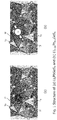
Figure 1 (a) and (b) schematically present the structure of Li2PbGeS4 and Li2+2xPb1-xGeS4, respectively. -
Figure 2 presents X-ray diffraction patterns of materials obtained in Examples 1 and 2, and Comparative Examples 1 and 2. -
Figure 3 presents the relationship between the ionic conductivity and the composition. - The present inventors' intensive research for solving the above mentioned technical problem has revealed surprisingly that a compound represented by the general formula Li2+2M1-xZS4:
- wherein 0.3 ≤ x ≤ 0.9, preferably 0.4 ≤ x ≤ 0.8, more preferably 0.45 ≤ x ≤ 0.75, and most preferably x = 0.5;
- wherein M is one or more elements selected from the group consisting of Pb, Mg, Ca and Sn, preferably from the group consisting of Pb, Mg and Ca, more preferably from the group consisting of Pb and Mg and most preferably Pb; and wherein Z is one or more elements selected from the group consisting of Ge, Si, Sn and Al, preferably from the group consisting of Ge, Si and Sn, more preferably from the group consisting of Ge and Si, and most preferably Ge; has a high ionic conductivity.
- In one embodiment, M is only one element.
- In one embodiment, Z is only one element.
- In one embodiment M and Z are only one element respectively.
- The subject-matter of the present invention relates to all the possible combinations of M which is one or more elements selected from the group consisting of Pb, Mg, Ca and Sn and Z which is one or more elements selected from the group consisting of Ge, Si, Sn and Al, with all possible combinations of lower limit value and upper limit value of x.
- When the x value is in the above-mentioned ranges and particularly within the preferred ranges, the material may show high ionic conductivity. For example, Li2+2xPb1-xGeS4 (i.e. M = Pb and Z = Ge) wherein 0.45 ≤ x ≤ 0.75 shows an ionic conductivity 1000 times higher than Li2PbGeS4.
- One possible explanation for the high ionic conductivity of the compound of formula Li2+2xM1-xZS4 compared with that of Li2M1ZS4 might be as follows, for example for the case wherein M = Pb and Z = Ge.
- Li2PbGeS4, a mixed sulphide of Li, Pb and Ge, has low ionic conductivity. Without wishing to be bound by any particular theory, this might be due to its atomic arrangement as shown in
Figures 1(a) , wherein Tf site means "face-sharing with PbS8 site" and Te site means "edge-sharing with PbS8 site". - Here, on one hand, Tf site in Li-moving site (i.e. Li migration path) is too close to the Pb atom, which leads to a strong Li-Pb repulsion force and prevents Li from moving in this crystal structure. On the other hand, the vibration of Pb atom located at a PbS8 polyhedral site is small. Therefore, Li can not move on the pathway, resulting in a low ionic conductivity.
- In Li2+2xPb1-xGeS4, as shown in
Figure 1(b) , the Li atom is located at a PbS8 polyhedral site instead of Pb and the vibration of Li atom is greater than that of a Pb atom. Therefore, the distance between the Tf site and the Li atom oscillates due to the vibration of Li, at a distance favourable for Li atom migration, resulting in a high ionic conductivity. - Without wishing to be bound by any specific theory, the above explanation is considered to be applicable to all the possible combinations of M and Z according to the present invention. This is because the mass of Li is much smaller than M and Z.
- Without wishing to be bound by any particular theory, the ionic conductivity was enhanced by increasing the value of x up to x = 0.45. This is thought to be because the distance between Li migration path and M atom becomes large enough to let Li atoms migrate.
- Without wishing to be bound by theory, the conductivity decreased above x = 0.75. This is thought to be because the distance between Li migration path and M atom is too large and secondary phase Li4GeS4, having low ionic conductive material, appears.
- Compounds according to the invention may be observed to have phase A, and/or a β value of 0.6 or more.
- Phase A and phase B represent the crystal structure of Li2PbGeS4 and Li4GeS4, respectively.
- Phase A for the compound Li2x+xMi-xZS4 of the present invention, for any possible combination of M, Z and x according to the present invention, may have peaks in positions of 2θ =17.75 ° (±1.0 °), 19.26 ° (±1.0 °), 22.84 ° (±1.0 °), 27.38 ° (±1.0 °), 30.06 ° (±1.0 °), 32.82 ° (±1.0 °), 35.94 ° (±1.0 °), 37.34 ° (±1.0 °), 39.06 ° (±1.0 °) in an X-ray diffraction measurement using a CuKα line.
- Phase B for the compound Li2x+xM1-xZS4 of the present invention, for any possible combination of M, Z and x according to the present invention, may have peaks in positions of 2θ =15.40 ° (±1.0 °), 16.64 ° (±1.0 °), 25.62 ° (±1.0 °), 25.92 ° (±1.0 °), 27.62 ° (±1.0 °), 28.64 ° (±1.0 °) in an X-ray diffraction measurement using a CuKα line.
- The value of β is calculated for any combination of M, Z and x according to the present invention, by the following formula, wherein I is the intensity of XRD patterns at the position indicated in the parenthesis:

- In one preferred embodiment, M = Pb and Z = Ge.
- In another preferred embodiment, 0.25 ≤ x ≤ 0.75, M = Mg and Z = Si.
- The compound represented by the general formula Li2+2xM1-xZS4 according to the present invention can be obtained, for example, by a method of synthesis comprising the steps of:
- (a) providing a mixture of lithium sulfide Li2S, sulfides MS and ZS2, in a stoichiometric ratio ensuring Li2+2xM1-xZS4 is obtained;
- (b) pelletizing the mixture prepared in step (a);
- (c) heating treatment step at a maximum plateau temperature.
- Here, "in a stoichiometric ratio ensuring Li2+2xM1-xZS4 to be obtained" refers to a molar ratio of Li2S : MS : ZS2 = (2+2x) : (1+x) : 2.
- Here, "maximum plateau temperature" refers to the maximum temperature maintained in a heating vessel as commonly used in solid state chemistry, the temperature vs. time profile typically including a gradual ascent phase with a controlled rate of increase of temperature starting from room temperature, a chosen reaction temperature maintained effectively constant over a period of time (the "maximum plateau temperature"), and then a descent phase wherein the temperature is brought back down to room temperature.
- The use of the above method allows one to manufacture the product of the present invention.
- In terms of starting material mole ratios, the above preferred method of synthesis is appropriately carried out with as close as possible to a stoichiometric ratio thereof in view of the final product Li2+2xM1-xZS4 to be produced. Thus, the lithium sulphide Li2S, sulphide MS and sulphide ZS2 starting materials are generally used in a Li2S : MS : ZS2 mole ratio of (2+2x) : (1-x) : 1.
- In terms of pelletizing step b), step b) is carried out under 10 Pa or more and 50 Pa or less, preferable under 20 Pa or more and 40 Pa or less and, most preferably under 30 Pa.
- In terms of the temperature of heating step c), step c) is carried out at 400°C or more and 800 °C or less, and preferably at 500 °C or more and 700°C or less, and most preferably at 600 °C.
- In the above preferred method of synthesis, each of the method steps (a), (b) and (c) is advantageously carried out under an inert gas, for example, nitrogen, helium or argon, preferably argon.
- In a further aspect, the present disclosure relates to an all-solid-state lithium battery comprising the following elements:
- a positive electrode active material layer;
- a solid electrolyte layer;
- a negative electrode active material layer,
- In such an all-solid-state lithium battery, using as solid electrolyte, the Li2+2xM1-xZS4 materials according to the present invention, concerning the form of the solid electrolyte materials, examples include a particle shape, such as the shape of a true ball and the shape of an elliptical ball, or a thin film form, for example. When solid electrolyte materials have a particle shape, as for the mean particle diameter, it is preferable that their size is within the range of 50 nm to 10 micrometers, more preferably within the range of 100 nm to 5 micrometers.
- Although it is preferable to have only one or more solid electrolyte materials as mentioned above in a solid electrolyte layer, this layer may also contain a binding agent if needed. As a binding agent used for a solid electrolyte layer, this may be of the same type as mentioned hereunder for the positive active material layer.
- As regards the thickness of a solid electrolyte layer, although this may change with the kind of solid electrolyte materials, and the overall composition of an all-solid battery, generally it is preferable that this thickness is within the range of 0.1 micrometer to 1000 micrometers, more preferably within the range of 0.1 micrometer to 300 micrometers.
- Concerning the positive active material (cathode active material) to be used in the positive electrode (cathode) active material layer, this is not especially limited if the average operating potential becomes more than 4 V (vs. Li/Li+). As an average operating potential of positive active material, this is appropriately more than 4 V (vs. Li/Li+), and it is preferable that it is within the limits of 4.0 V to 6.0 V, still more preferably within the limits of 4.5 V to 5.5 V. The average operating potential can be evaluated using cyclic voltammetry, for example. In particular, when cyclic voltammetry is measured at a small electric potential speed like 0.1 mV/sec, it can be considered that the average value of the voltage which gives the peak current on the side of oxidation, and the voltage which gives the peak current on the side of reduction is the average operating potential.
- As a positive active material, especially if the average operating potential is made with more than 4 V (vs. Li/Li+), there is no specific limitation, but it is preferable that the material is an oxide positive active material, which can have a high energy density.
- A compound which has the spinel type structure denoted by general formula LiM2O4 (M is at least one kind of transition metal element), as an example of positive active material, can be mentioned as an example. As regards M of the above-mentioned general formula LiM2O4, especially if it is a transition metal element, it will not be limited, but it is preferable that it is at least one kind chosen from the group which consists of Ni, Mn, Cr, Co, V, and Ti, for example, and it is more preferable that it is at least one kind chosen from the group which consists of Ni, Mn, and Cr especially. Specifically, LiCr0.05Ni0.50Mn1.45O4, LiCrMnO4, LiNi0.5Mn1.5O4, etc. can be mentioned. The compound which has the olivine type structure denoted by general formula LiMPO4 (M is at least one kind of transition metal element) as other examples of positive active material can be mentioned. M in the above-mentioned general formula will not be limited especially if it is a transition metal element, but it is preferable that it is at least one kind chosen from Mn, Co, Ni, and the group that consists of V, for example, and it is more preferable that it is at least one kind chosen from the group which consists of Mn, Co, and Ni especially. Specifically, LiMnPO4, LiCoPO4, LiNiPO4, etc. can be mentioned. The compound which has the layer structure denoted by general formula LiMO2 (M is at least 1 type of a transition metal element) as other examples of positive active material can be mentioned. Specifically, LiCoO2, LiNi0.5Mn0.5O2 and LiNi0.33Co0.33Mn0.33O2 etc. can be mentioned. As examples other than the positive active material mentioned above, a Li2MnO3-LiNi1/3Co1/3Mn1/3O2 solid solution, a Li2MnO3-LiNi0.5Mn1.5O2 solid solution, a Li2MnO3-LiFeO2 solid solution, etc. can be mentioned.
- As regards the form of the positive active material, a particle shape, such as the shape of a true ball and the shape of an elliptical ball, thin film form, etc. can be mentioned, as an example. As for the mean particle diameter, when the positive active material has a particle shape, it is preferable that it is within the size range of 0.1 micrometer to 50 micrometers, for example. As for the content of the positive active material in a positive active material layer, it is preferable that it is in the range of 10 % by weight to 99% by weight, for example, more preferably from 20 % by weight to 90% by weight.
- Concerning the positive active material layer, in addition to the positive active material mentioned above, if needed, the positive active material layer in may contain other materials, for example, solid electrolyte materials etc. As for the content of the solid electrolyte materials in a positive active material layer, it is preferable that this content is 1 % by weight to 90% by weight, more preferably 10 % by weight to 80% by weight.
- Furthermore, a positive active material layer may contain an electrically conductive agent from a viewpoint of improving the conductivity of a positive active material layer, other than the solid electrolyte materials mentioned above. As electrically conductive material, acetylene black, Ketjenblack, a carbon fiber, etc. can be mentioned, for example. A positive active material may also contain a binding agent. As such a binding material (binding agent), fluorine-based binding materials, such as polyvinylidene fluoride (PVDF) and polytetrafluoroethylene (PTFE), etc. can be mentioned, for example.
- Although the thickness of a positive active material layer may change according to the kind of all-solid-state battery made, it is generally preferable that it is within the range of 0.1 micrometer to 1000 micrometers.
- As regards the negative electrode active material layer, this layer at least contains one or more negative electrode active material(s), and may additionally contain at least one or more of solid electrolyte materials and electrically conductive agents if needed. For all-solid-state lithium batteries, the negative electrode active material is not limited provided that occlusion and discharge of the Li ion, which is a conduction ion, are possible. As a negative electrode active material, a carbon active material, a metal active material, etc. can be mentioned, for example. As a carbon active material, black lead, meso carbon micro beads (MCMB), highly ordered / oriented pyrolytic graphite (HOPG), hard carbon, soft carbon, etc. can be mentioned as examples. On the other hand, as a metal active material, charges of an alloy, such as Li alloy and Sn-Co-C, In, Al, Si, Sn, etc. can be mentioned as examples. Oxide stock materials, such as Li4Ti5O12, can be mentioned as examples of other negative electrode active materials.
- Concerning solid electrolyte materials used for the negative electrode active material layer, and an electrically conductive agent, these may be the same as that for the solid electrolyte layer and positive active material layer mentioned above.
- The thickness of the negative electrode active material layer will generally be appropriately within the range of 0.1 micrometer to 1000 micrometers.
- An all-solid-state battery of the present disclosure has at least the positive active material layer, solid electrolyte layer, and negative electrode active material layer which were mentioned above. It further usually has a positive pole collector which collects a positive active material layer, and a negative pole collector which performs current collection of a negative electrode active material layer. As a material of a positive pole collector, for example, SUS (stainless steel), aluminum, nickel, iron, titanium, carbon, etc. can be mentioned, and SUS is especially preferable. On the other hand as a material of a negative pole collector, SUS, copper, nickel, carbon, etc. can be mentioned, for example, and SUS is especially preferable. Concerning the thickness, form, etc. of a positive pole collector and a negative pole collector, the person skilled in the art may choose suitably according to the use of the all-solid-state battery, etc. The cell case used for a common all-solid-state battery can be used, for example, the cell case made from SUS, etc. can be mentioned. The all-solid-state battery may form a power generation element in the inside of an insulating ring.
- The all-solid-state battery of the present disclosure can be considered as a chargeable and dischargeable all-solid-state battery in a room temperature environment. Although it may be a primary battery and may be a rechargeable battery, it is especially preferable that it is a rechargeable battery. Concerning the form of the all-solid-state battery, a coin type, a laminated type, cylindrical, a square shape, etc. can be mentioned, as examples.
- As regards the manufacturing method of the all-solid-state battery, this is not particularly limited, and common manufacturing methods of all-solid-state batteries can be used. For example, when an all-solid-state battery is in the thin film form, a positive active material layer can be formed on a substrate, and the method of forming a solid electrolyte layer and a negative electrode active material layer in order, and laminating them thereafter etc., may be used.
- Within the practice of the present invention, it may be envisaged to combine any features or embodiments which have hereinabove been separately set out and indicated to be advantageous, preferable, appropriate or otherwise generally applicable in the practice of the invention. The present description should be considered to include all such combinations of features or embodiments described herein unless such combinations are said herein to be mutually exclusive or are clearly understood in context to be mutually exclusive.
- The following section illustrates experimentally the practice of the present invention, but the scope of the invention is not to be considered to be limited to the specific examples that follow.
- The solid electrolyte Li2+2xM1-xGeS4 was synthesized using starting materials Li2S (Sigma), PbS (Sigma), GeS2 (Kojundo Chemical Lab). They were mixed at the weight ratio listed in Table 1 below.
- The precursor was pelletized and sealed into the glass tube at the pressure of 30 Pa and then heated at 600 °C for 8 h.
- Li ion conductance at a temperature of 25 °C was measured using the sulfide solid electrolyte material obtained.
- 1) First, 100 mg of the sulfide solid electrolyte material was added to a cylinder made of alumina and pressed at 4 ton/cm2 to form a solid electrolyte layer.
- 2) The pellet was sandwiched by SUS current collector for measuring impedance spectroscopy.
- 3) An impedance gain-phase analyzer manufactured by Biologic (VMP3) was used for the measurement as FRA (Frequency Response Analyzer). The measurement was started from a high-frequency range on the conditions of an alternating voltage of 5 mV, a frequency range of 1 Hz to 1 MHz.
- The ionic conductivity of Example 1 was 1.5 x 10⁻⁵ S/cm.
- X-ray diffraction measurement (using a CuKα line) was performed by using the sulfide solid electrolyte materials obtained in the Examples and in the Comparative Example. The results are shown in
Figure 1 . - For samples prepared according to the Example 1, the peaks of the type observed for Phase A were detected, and the value of β was calculated to be 0.8.
- Only the x value was different from Example 1 - here, the x value was 0.75. The ionic conductivity of the material produced by Example 2 was 0.9 x 10⁻⁵ S/cm. For samples prepared according to the Example 2, the peaks of the type observed for Phase A were detected, and the value of β was calculated to be 0.6.
- Only the x value was different from Example 1 - here, the x value was 0. The ionic conductivity of the material produced by Comparative Example 1 was 0.001 x 10⁻⁵ S/cm. For samples prepared according to the Comparative Example 1, the peaks of the type observed for Phase A were detected, and the value of β was calculated to be 1.0.
- Only the x value was different from Example 1 - here, the x value was 1. The ionic conductivity of the material produced by Comparative Example was 0.002 x 10⁻⁵ S/cm. For samples prepared according to the Comparative Example 1, the peaks of the type observed for Phase A were not detected, and the value of β was calculated to be 0.
- From the results of Examples and Comparative Examples presented in
Figure 2 , it can be noted that it is possible to obtain a high ionic conductivity of Li2+2xM1-xZS4 in the range of 0.3 ≤ x ≤ 0.9, preferably 0.4 ≤ x ≤ 0.8, more preferably 0.45 ≤ x ≤ 0.75 and most preferably x = 0.5. - As shown by Example 1 and Comparative Example 1, the ionic conductivity was increased by increasing the value of x up to x = 0.45. This is thought to be probably because the distance between Li migration path and M atom becomes larger.
- As shown by Example 2 and Comparative Example 2, the conductivity was decreased above x = 0.75. This is thought to be probably because the distance between Li migration path and M atom is too large and secondary phase Li4GeS4, having low ionic conductive material, appears.
Table 1: weight of starting materials (g) Example 1 Example 2 Comparative Example 1 Comparative Example 2 x 0.5 0.75 0 1 Li2S 0.21186903 0.29030483 0.10889399 0.40189312 PbS 0.3677196 0.21593685 0.56698877 0 GeS2 0.4204114 0.4937583 0.3241172 0.5981069
Claims (15)
- A compound represented by the general formula Li2+2xM1-xZS4, wherein 0.3 ≤ x ≤ 0.9;
wherein M is one or more elements selected from the group consisting of Pb, Mg, Ca, Ge and Sn; and
wherein Z is one or more elements selected from the group consisting of Ge, Si, Sn and Al. - The compound according to claim 1, wherein 0.4 ≤ x ≤ 0.8, preferably 0.45 ≤ x ≤ 0.75.
- The compound according to claim 1 or 2, wherein x = 0.5.
- The compound according to any one of claims 1 to 3, wherein M is one or more elements selected from the group consisting of Pb, Mg and Ca.
- The compound according to claim 4, wherein M is Pb.
- The compound according to any one of claims 1 to 5, wherein Z is one or more elements selected from the group consisting of Ge, Si and Sn.
- The compound according to claim 6, wherein Z is Ge.
- The compound according to any one of claims 1 to 4 or 6, wherein 0.25 ≤ x ≤ 0.75, M = Mg and Z = Si.
- The compound according to any one of claims 1 to 8, having peaks in positions of 2θ =17.75 ° (±1.0 °), 19.26 ° (±1.0 °), 22.84 ° (±1.0 °), 27.38 ° (±1.0 °), 30.06 ° (±1.0 °), 32.82 ° (±1.0 °), 35.94 ° (±1.0 °), 37.34 ° (±1.0 °), 39.06 ° (±1.0 °) in an X-ray diffraction measurement using a CuKα line.
- The compound according to any one of claims 1 to 9, having a value of β of 0.6 or more, wherein β is calculated by the following formula, I being the intensity of XRD patterns at the position indicated in the parenthesis:

- Method for preparing the material according to any one of claims 1 to 10, comprising the steps of:(a) providing a mixture of lithium sulfide Li2S, sulfides MS and ZS2, in a stoichiometric ratio ensuring Li2+2xM1-xZS4 is obtained, wherein M, Z and x are as defined in claim 1;(b) pelletizing the mixture prepared in step (a);(c) heating at a maximum plateau temperature.
- Method according to claim 11, wherein step b) is carried out under 10 Pa or more and 50 Pa or less, preferably under 20 Pa or more and 40 Pa or less, and most preferably at 30 Pa.
- Method according to claim 11 or 12, wherein step c) is carried out at 400°C or more and 800 °C or less, preferably at 500 °C or more and 700°C or less, and most preferably at 600 °C.
- Use of the compound according to any one of claims 1 to 10 as a solid electrolyte.
- All solid-state lithium battery comprising:- a positive electrode active material layer;- a solid electrolyte layer; and- a negative electrode active material layer;wherein the solid electrolyte comprises the compound represented by the general formula Li2+2xM1-xZS4 according to any one of claims 1 to 10.
Applications Claiming Priority (1)
| Application Number | Priority Date | Filing Date | Title |
|---|---|---|---|
| PCT/EP2017/066804 WO2019007501A1 (en) | 2017-07-05 | 2017-07-05 | New lithium mixed metal sulfide with high ionic conductivity |
Publications (2)
| Publication Number | Publication Date |
|---|---|
| EP3649082A1 EP3649082A1 (en) | 2020-05-13 |
| EP3649082B1 true EP3649082B1 (en) | 2021-06-02 |
Family
ID=59350895
Family Applications (1)
| Application Number | Title | Priority Date | Filing Date |
|---|---|---|---|
| EP17739926.8A Active EP3649082B1 (en) | 2017-07-05 | 2017-07-05 | New lithium mixed metal sulfide with high ionic conductivity |
Country Status (4)
| Country | Link |
|---|---|
| US (1) | US11370670B2 (en) |
| EP (1) | EP3649082B1 (en) |
| JP (1) | JP7028967B2 (en) |
| WO (1) | WO2019007501A1 (en) |
Families Citing this family (1)
| Publication number | Priority date | Publication date | Assignee | Title |
|---|---|---|---|---|
| WO2025204764A1 (en) * | 2024-03-27 | 2025-10-02 | 株式会社村田製作所 | Solid electrolyte and secondary battery |
Family Cites Families (7)
| Publication number | Priority date | Publication date | Assignee | Title |
|---|---|---|---|---|
| JP3125507B2 (en) * | 1993-03-26 | 2001-01-22 | 松下電器産業株式会社 | Sulfide-based lithium ion conductive solid electrolyte and its synthesis method |
| JP5448038B2 (en) | 2009-02-27 | 2014-03-19 | 公立大学法人大阪府立大学 | Sulfide solid electrolyte material |
| WO2011118801A1 (en) | 2010-03-26 | 2011-09-29 | 国立大学法人東京工業大学 | Sulfide solid electrolyte material, battery, and method for producing sulfide solid electrolyte material |
| JP5742562B2 (en) | 2011-08-02 | 2015-07-01 | トヨタ自動車株式会社 | Solid electrolyte material-containing body and battery |
| JP5888609B2 (en) | 2012-02-06 | 2016-03-22 | 国立大学法人東京工業大学 | Sulfide solid electrolyte material, battery, and method for producing sulfide solid electrolyte material |
| KR101660609B1 (en) * | 2012-02-06 | 2016-09-27 | 도요타지도샤가부시키가이샤 | Sulfide solid electrolyte material, battery, and method for producing sulfide solid electrolyte material |
| KR101704172B1 (en) * | 2015-03-09 | 2017-02-07 | 현대자동차주식회사 | All-solid-state batteries containing nano solid electrolyte and method of manufacturing the same |
-
2017
- 2017-07-05 EP EP17739926.8A patent/EP3649082B1/en active Active
- 2017-07-05 WO PCT/EP2017/066804 patent/WO2019007501A1/en not_active Ceased
- 2017-07-05 US US16/628,631 patent/US11370670B2/en active Active
- 2017-07-05 JP JP2020520711A patent/JP7028967B2/en active Active
Non-Patent Citations (1)
| Title |
|---|
| None * |
Also Published As
| Publication number | Publication date |
|---|---|
| US11370670B2 (en) | 2022-06-28 |
| JP7028967B2 (en) | 2022-03-02 |
| EP3649082A1 (en) | 2020-05-13 |
| JP2020525398A (en) | 2020-08-27 |
| WO2019007501A1 (en) | 2019-01-10 |
| US20210155494A1 (en) | 2021-05-27 |
Similar Documents
| Publication | Publication Date | Title |
|---|---|---|
| US10879558B2 (en) | Materials for solid electrolyte | |
| JP7182633B2 (en) | Solid electrolyte for lithium-ion electrochemical cells | |
| CN111279430B (en) | Solid electrolyte material and battery | |
| WO2020045633A1 (en) | Sulfide solid electrolyte and all-solid-state battery | |
| WO2019146218A1 (en) | Solid electrolyte material and battery | |
| JPWO2015182665A1 (en) | Positive electrode active material for lithium secondary battery, positive electrode for lithium secondary battery, and lithium secondary battery | |
| JP7010011B2 (en) | Sulfide solid electrolyte | |
| JP2019102263A (en) | Sulfide solid electrolyte | |
| US20190372107A1 (en) | Cathode mixture, all solid state battery, method for producing cathode mixture, and method for producing all solid state battery | |
| US11063289B2 (en) | Increasing ionic conductivity of lithium titanium thiophosphate by sintering | |
| CN118355541A (en) | Battery | |
| US11063293B2 (en) | Increasing ionic conductivity of LiTi2(PS4)3 by Zr doping | |
| US20240128502A1 (en) | Solid Electrolyte Having Excellent Moisture Stability and Method for Preparing Same | |
| US11161740B2 (en) | Method of synthesis of LiTi2(PS4)3 | |
| US20200403224A1 (en) | Lithium molybdate anode material | |
| US10807877B2 (en) | Increasing ionic conductivity of LiTi2(PS4)3 by Al doping | |
| US20190372106A1 (en) | All solid state battery | |
| US20240234801A9 (en) | Positive electrode material and battery | |
| US11370670B2 (en) | Lithium mixed metal sulfide with high ionic conductivity | |
| CN117525281A (en) | Method for manufacturing positive electrode active material for lithium secondary battery, positive electrode for lithium secondary battery, and lithium secondary battery | |
| EP4205884A1 (en) | Negative-electrode active material for secondary batteries, and secondary battery | |
| JP6299154B2 (en) | Negative electrode active material and power storage device | |
| EP4205885A1 (en) | Negative electrode active material for secondary batteries, and secondary battery | |
| Sanusi et al. | Sulphide based anode material for lithium rechargeable battery | |
| CN121358686A (en) | Inorganic oxide powder, and lithium-ion secondary battery having an electrode or electrolyte layer containing the powder. |
Legal Events
| Date | Code | Title | Description |
|---|---|---|---|
| STAA | Information on the status of an ep patent application or granted ep patent |
Free format text: STATUS: UNKNOWN |
|
| STAA | Information on the status of an ep patent application or granted ep patent |
Free format text: STATUS: THE INTERNATIONAL PUBLICATION HAS BEEN MADE |
|
| PUAI | Public reference made under article 153(3) epc to a published international application that has entered the european phase |
Free format text: ORIGINAL CODE: 0009012 |
|
| STAA | Information on the status of an ep patent application or granted ep patent |
Free format text: STATUS: REQUEST FOR EXAMINATION WAS MADE |
|
| 17P | Request for examination filed |
Effective date: 20191112 |
|
| AK | Designated contracting states |
Kind code of ref document: A1 Designated state(s): AL AT BE BG CH CY CZ DE DK EE ES FI FR GB GR HR HU IE IS IT LI LT LU LV MC MK MT NL NO PL PT RO RS SE SI SK SM TR |
|
| AX | Request for extension of the european patent |
Extension state: BA ME |
|
| DAV | Request for validation of the european patent (deleted) | ||
| DAX | Request for extension of the european patent (deleted) | ||
| GRAP | Despatch of communication of intention to grant a patent |
Free format text: ORIGINAL CODE: EPIDOSNIGR1 |
|
| STAA | Information on the status of an ep patent application or granted ep patent |
Free format text: STATUS: GRANT OF PATENT IS INTENDED |
|
| INTG | Intention to grant announced |
Effective date: 20201216 |
|
| GRAS | Grant fee paid |
Free format text: ORIGINAL CODE: EPIDOSNIGR3 |
|
| GRAA | (expected) grant |
Free format text: ORIGINAL CODE: 0009210 |
|
| STAA | Information on the status of an ep patent application or granted ep patent |
Free format text: STATUS: THE PATENT HAS BEEN GRANTED |
|
| REG | Reference to a national code |
Ref country code: CH Ref legal event code: EP |
|
| AK | Designated contracting states |
Kind code of ref document: B1 Designated state(s): AL AT BE BG CH CY CZ DE DK EE ES FI FR GB GR HR HU IE IS IT LI LT LU LV MC MK MT NL NO PL PT RO RS SE SI SK SM TR |
|
| REG | Reference to a national code |
Ref country code: GB Ref legal event code: FG4D |
|
| REG | Reference to a national code |
Ref country code: AT Ref legal event code: REF Ref document number: 1398299 Country of ref document: AT Kind code of ref document: T Effective date: 20210615 |
|
| REG | Reference to a national code |
Ref country code: IE Ref legal event code: FG4D |
|
| REG | Reference to a national code |
Ref country code: DE Ref legal event code: R096 Ref document number: 602017039672 Country of ref document: DE |
|
| REG | Reference to a national code |
Ref country code: LT Ref legal event code: MG9D |
|
| PG25 | Lapsed in a contracting state [announced via postgrant information from national office to epo] |
Ref country code: HR Free format text: LAPSE BECAUSE OF FAILURE TO SUBMIT A TRANSLATION OF THE DESCRIPTION OR TO PAY THE FEE WITHIN THE PRESCRIBED TIME-LIMIT Effective date: 20210602 Ref country code: BG Free format text: LAPSE BECAUSE OF FAILURE TO SUBMIT A TRANSLATION OF THE DESCRIPTION OR TO PAY THE FEE WITHIN THE PRESCRIBED TIME-LIMIT Effective date: 20210902 Ref country code: FI Free format text: LAPSE BECAUSE OF FAILURE TO SUBMIT A TRANSLATION OF THE DESCRIPTION OR TO PAY THE FEE WITHIN THE PRESCRIBED TIME-LIMIT Effective date: 20210602 Ref country code: LT Free format text: LAPSE BECAUSE OF FAILURE TO SUBMIT A TRANSLATION OF THE DESCRIPTION OR TO PAY THE FEE WITHIN THE PRESCRIBED TIME-LIMIT Effective date: 20210602 |
|
| REG | Reference to a national code |
Ref country code: NL Ref legal event code: MP Effective date: 20210602 |
|
| REG | Reference to a national code |
Ref country code: AT Ref legal event code: MK05 Ref document number: 1398299 Country of ref document: AT Kind code of ref document: T Effective date: 20210602 |
|
| PG25 | Lapsed in a contracting state [announced via postgrant information from national office to epo] |
Ref country code: GR Free format text: LAPSE BECAUSE OF FAILURE TO SUBMIT A TRANSLATION OF THE DESCRIPTION OR TO PAY THE FEE WITHIN THE PRESCRIBED TIME-LIMIT Effective date: 20210903 Ref country code: LV Free format text: LAPSE BECAUSE OF FAILURE TO SUBMIT A TRANSLATION OF THE DESCRIPTION OR TO PAY THE FEE WITHIN THE PRESCRIBED TIME-LIMIT Effective date: 20210602 Ref country code: RS Free format text: LAPSE BECAUSE OF FAILURE TO SUBMIT A TRANSLATION OF THE DESCRIPTION OR TO PAY THE FEE WITHIN THE PRESCRIBED TIME-LIMIT Effective date: 20210602 Ref country code: SE Free format text: LAPSE BECAUSE OF FAILURE TO SUBMIT A TRANSLATION OF THE DESCRIPTION OR TO PAY THE FEE WITHIN THE PRESCRIBED TIME-LIMIT Effective date: 20210602 Ref country code: PL Free format text: LAPSE BECAUSE OF FAILURE TO SUBMIT A TRANSLATION OF THE DESCRIPTION OR TO PAY THE FEE WITHIN THE PRESCRIBED TIME-LIMIT Effective date: 20210602 Ref country code: NO Free format text: LAPSE BECAUSE OF FAILURE TO SUBMIT A TRANSLATION OF THE DESCRIPTION OR TO PAY THE FEE WITHIN THE PRESCRIBED TIME-LIMIT Effective date: 20210902 |
|
| PG25 | Lapsed in a contracting state [announced via postgrant information from national office to epo] |
Ref country code: SM Free format text: LAPSE BECAUSE OF FAILURE TO SUBMIT A TRANSLATION OF THE DESCRIPTION OR TO PAY THE FEE WITHIN THE PRESCRIBED TIME-LIMIT Effective date: 20210602 Ref country code: SK Free format text: LAPSE BECAUSE OF FAILURE TO SUBMIT A TRANSLATION OF THE DESCRIPTION OR TO PAY THE FEE WITHIN THE PRESCRIBED TIME-LIMIT Effective date: 20210602 Ref country code: ES Free format text: LAPSE BECAUSE OF FAILURE TO SUBMIT A TRANSLATION OF THE DESCRIPTION OR TO PAY THE FEE WITHIN THE PRESCRIBED TIME-LIMIT Effective date: 20210602 Ref country code: NL Free format text: LAPSE BECAUSE OF FAILURE TO SUBMIT A TRANSLATION OF THE DESCRIPTION OR TO PAY THE FEE WITHIN THE PRESCRIBED TIME-LIMIT Effective date: 20210602 Ref country code: PT Free format text: LAPSE BECAUSE OF FAILURE TO SUBMIT A TRANSLATION OF THE DESCRIPTION OR TO PAY THE FEE WITHIN THE PRESCRIBED TIME-LIMIT Effective date: 20211004 Ref country code: RO Free format text: LAPSE BECAUSE OF FAILURE TO SUBMIT A TRANSLATION OF THE DESCRIPTION OR TO PAY THE FEE WITHIN THE PRESCRIBED TIME-LIMIT Effective date: 20210602 Ref country code: EE Free format text: LAPSE BECAUSE OF FAILURE TO SUBMIT A TRANSLATION OF THE DESCRIPTION OR TO PAY THE FEE WITHIN THE PRESCRIBED TIME-LIMIT Effective date: 20210602 Ref country code: CZ Free format text: LAPSE BECAUSE OF FAILURE TO SUBMIT A TRANSLATION OF THE DESCRIPTION OR TO PAY THE FEE WITHIN THE PRESCRIBED TIME-LIMIT Effective date: 20210602 Ref country code: AT Free format text: LAPSE BECAUSE OF FAILURE TO SUBMIT A TRANSLATION OF THE DESCRIPTION OR TO PAY THE FEE WITHIN THE PRESCRIBED TIME-LIMIT Effective date: 20210602 |
|
| REG | Reference to a national code |
Ref country code: DE Ref legal event code: R081 Ref document number: 602017039672 Country of ref document: DE Owner name: TOYOTA JIDOSHA KABUSHIKI KAISHA, TOYOTA-SHI, JP Free format text: FORMER OWNER: TOYOTA MOTOR EUROPE, BRUSSELS, BE |
|
| REG | Reference to a national code |
Ref country code: CH Ref legal event code: PL |
|
| REG | Reference to a national code |
Ref country code: DE Ref legal event code: R097 Ref document number: 602017039672 Country of ref document: DE |
|
| RAP2 | Party data changed (patent owner data changed or rights of a patent transferred) |
Owner name: TOYOTA JIDOSHA KABUSHIKI KAISHA |
|
| REG | Reference to a national code |
Ref country code: GB Ref legal event code: 732E Free format text: REGISTERED BETWEEN 20220224 AND 20220302 |
|
| PG25 | Lapsed in a contracting state [announced via postgrant information from national office to epo] |
Ref country code: MC Free format text: LAPSE BECAUSE OF FAILURE TO SUBMIT A TRANSLATION OF THE DESCRIPTION OR TO PAY THE FEE WITHIN THE PRESCRIBED TIME-LIMIT Effective date: 20210602 |
|
| REG | Reference to a national code |
Ref country code: BE Ref legal event code: MM Effective date: 20210731 |
|
| PLBE | No opposition filed within time limit |
Free format text: ORIGINAL CODE: 0009261 |
|
| STAA | Information on the status of an ep patent application or granted ep patent |
Free format text: STATUS: NO OPPOSITION FILED WITHIN TIME LIMIT |
|
| PG25 | Lapsed in a contracting state [announced via postgrant information from national office to epo] |
Ref country code: LI Free format text: LAPSE BECAUSE OF NON-PAYMENT OF DUE FEES Effective date: 20210731 Ref country code: DK Free format text: LAPSE BECAUSE OF FAILURE TO SUBMIT A TRANSLATION OF THE DESCRIPTION OR TO PAY THE FEE WITHIN THE PRESCRIBED TIME-LIMIT Effective date: 20210602 Ref country code: CH Free format text: LAPSE BECAUSE OF NON-PAYMENT OF DUE FEES Effective date: 20210731 |
|
| 26N | No opposition filed |
Effective date: 20220303 |
|
| PG25 | Lapsed in a contracting state [announced via postgrant information from national office to epo] |
Ref country code: LU Free format text: LAPSE BECAUSE OF NON-PAYMENT OF DUE FEES Effective date: 20210705 Ref country code: AL Free format text: LAPSE BECAUSE OF FAILURE TO SUBMIT A TRANSLATION OF THE DESCRIPTION OR TO PAY THE FEE WITHIN THE PRESCRIBED TIME-LIMIT Effective date: 20210602 |
|
| PG25 | Lapsed in a contracting state [announced via postgrant information from national office to epo] |
Ref country code: IT Free format text: LAPSE BECAUSE OF FAILURE TO SUBMIT A TRANSLATION OF THE DESCRIPTION OR TO PAY THE FEE WITHIN THE PRESCRIBED TIME-LIMIT Effective date: 20210602 Ref country code: IE Free format text: LAPSE BECAUSE OF NON-PAYMENT OF DUE FEES Effective date: 20210705 Ref country code: BE Free format text: LAPSE BECAUSE OF NON-PAYMENT OF DUE FEES Effective date: 20210731 |
|
| REG | Reference to a national code |
Ref country code: DE Ref legal event code: R082 Ref document number: 602017039672 Country of ref document: DE Representative=s name: CBDL PATENTANWAELTE GBR, DE Ref country code: DE Ref legal event code: R082 Ref document number: 602017039672 Country of ref document: DE Representative=s name: CBDL PATENTANWAELTE EGBR, DE |
|
| PG25 | Lapsed in a contracting state [announced via postgrant information from national office to epo] |
Ref country code: CY Free format text: LAPSE BECAUSE OF FAILURE TO SUBMIT A TRANSLATION OF THE DESCRIPTION OR TO PAY THE FEE WITHIN THE PRESCRIBED TIME-LIMIT Effective date: 20210602 |
|
| PG25 | Lapsed in a contracting state [announced via postgrant information from national office to epo] |
Ref country code: HU Free format text: LAPSE BECAUSE OF FAILURE TO SUBMIT A TRANSLATION OF THE DESCRIPTION OR TO PAY THE FEE WITHIN THE PRESCRIBED TIME-LIMIT; INVALID AB INITIO Effective date: 20170705 |
|
| PG25 | Lapsed in a contracting state [announced via postgrant information from national office to epo] |
Ref country code: MK Free format text: LAPSE BECAUSE OF FAILURE TO SUBMIT A TRANSLATION OF THE DESCRIPTION OR TO PAY THE FEE WITHIN THE PRESCRIBED TIME-LIMIT Effective date: 20210602 |
|
| REG | Reference to a national code |
Ref country code: DE Ref legal event code: R084 Ref document number: 602017039672 Country of ref document: DE |
|
| P01 | Opt-out of the competence of the unified patent court (upc) registered |
Effective date: 20240419 |
|
| REG | Reference to a national code |
Ref country code: GB Ref legal event code: 746 Effective date: 20240627 |
|
| PG25 | Lapsed in a contracting state [announced via postgrant information from national office to epo] |
Ref country code: MT Free format text: LAPSE BECAUSE OF FAILURE TO SUBMIT A TRANSLATION OF THE DESCRIPTION OR TO PAY THE FEE WITHIN THE PRESCRIBED TIME-LIMIT Effective date: 20210602 |
|
| PGFP | Annual fee paid to national office [announced via postgrant information from national office to epo] |
Ref country code: GB Payment date: 20250515 Year of fee payment: 9 |
|
| PGFP | Annual fee paid to national office [announced via postgrant information from national office to epo] |
Ref country code: FR Payment date: 20250508 Year of fee payment: 9 |
|
| PGFP | Annual fee paid to national office [announced via postgrant information from national office to epo] |
Ref country code: DE Payment date: 20250514 Year of fee payment: 9 |
|
| PG25 | Lapsed in a contracting state [announced via postgrant information from national office to epo] |
Ref country code: TR Free format text: LAPSE BECAUSE OF FAILURE TO SUBMIT A TRANSLATION OF THE DESCRIPTION OR TO PAY THE FEE WITHIN THE PRESCRIBED TIME-LIMIT Effective date: 20210602 |