EP3647429A1 - Method for the enzymatic production of phenolic compounds - Google Patents
Method for the enzymatic production of phenolic compounds Download PDFInfo
- Publication number
- EP3647429A1 EP3647429A1 EP18203845.5A EP18203845A EP3647429A1 EP 3647429 A1 EP3647429 A1 EP 3647429A1 EP 18203845 A EP18203845 A EP 18203845A EP 3647429 A1 EP3647429 A1 EP 3647429A1
- Authority
- EP
- European Patent Office
- Prior art keywords
- reductase
- vinyl phenol
- days
- cinnamate decarboxylase
- acid
- Prior art date
- Legal status (The legal status is an assumption and is not a legal conclusion. Google has not performed a legal analysis and makes no representation as to the accuracy of the status listed.)
- Withdrawn
Links
- 238000000034 method Methods 0.000 title claims abstract description 30
- 150000002989 phenols Chemical class 0.000 title claims abstract description 14
- 238000004519 manufacturing process Methods 0.000 title claims abstract description 12
- 230000002255 enzymatic effect Effects 0.000 title description 3
- JESXATFQYMPTNL-UHFFFAOYSA-N 2-ethenylphenol Chemical compound OC1=CC=CC=C1C=C JESXATFQYMPTNL-UHFFFAOYSA-N 0.000 claims abstract description 96
- 229940114081 cinnamate Drugs 0.000 claims abstract description 49
- WBYWAXJHAXSJNI-VOTSOKGWSA-M trans-cinnamate Chemical compound [O-]C(=O)\C=C\C1=CC=CC=C1 WBYWAXJHAXSJNI-VOTSOKGWSA-M 0.000 claims abstract description 49
- 239000007858 starting material Substances 0.000 claims abstract description 20
- HGEFWFBFQKWVMY-DUXPYHPUSA-N 2,4-dihydroxy-trans cinnamic acid Chemical compound OC(=O)\C=C\C1=CC=C(O)C=C1O HGEFWFBFQKWVMY-DUXPYHPUSA-N 0.000 claims abstract description 10
- 230000002210 biocatalytic effect Effects 0.000 claims abstract description 7
- 241000722885 Brettanomyces Species 0.000 claims description 26
- VGMJYYDKPUPTID-UHFFFAOYSA-N 4-ethylbenzene-1,3-diol Chemical compound CCC1=CC=C(O)C=C1O VGMJYYDKPUPTID-UHFFFAOYSA-N 0.000 claims description 15
- 244000005700 microbiome Species 0.000 claims description 12
- 240000004808 Saccharomyces cerevisiae Species 0.000 claims description 7
- VJIDDJAKLVOBSE-UHFFFAOYSA-N 2-ethylbenzene-1,4-diol Chemical compound CCC1=CC(O)=CC=C1O VJIDDJAKLVOBSE-UHFFFAOYSA-N 0.000 claims description 6
- HFLGBNBLMBSXEM-UHFFFAOYSA-N 4-Ethyl-1,2-benzenediol Chemical compound CCC1=CC=C(O)C(O)=C1 HFLGBNBLMBSXEM-UHFFFAOYSA-N 0.000 claims description 6
- PJWDIHUFLXQRFF-UHFFFAOYSA-N 4-Ethyl-2,6-dimethoxyphenol Chemical compound CCC1=CC(OC)=C(O)C(OC)=C1 PJWDIHUFLXQRFF-UHFFFAOYSA-N 0.000 claims description 6
- CHWNEIVBYREQRF-UHFFFAOYSA-N 4-Ethyl-2-methoxyphenol Chemical compound CCC1=CC=C(O)C(OC)=C1 CHWNEIVBYREQRF-UHFFFAOYSA-N 0.000 claims description 6
- NGSWKAQJJWESNS-UHFFFAOYSA-N 4-coumaric acid Chemical compound OC(=O)C=CC1=CC=C(O)C=C1 NGSWKAQJJWESNS-UHFFFAOYSA-N 0.000 claims description 6
- HXDOZKJGKXYMEW-UHFFFAOYSA-N 4-ethylphenol Chemical compound CCC1=CC=C(O)C=C1 HXDOZKJGKXYMEW-UHFFFAOYSA-N 0.000 claims description 6
- 241000222120 Candida <Saccharomycetales> Species 0.000 claims description 6
- PCMORTLOPMLEFB-ONEGZZNKSA-N sinapic acid Chemical compound COC1=CC(\C=C\C(O)=O)=CC(OC)=C1O PCMORTLOPMLEFB-ONEGZZNKSA-N 0.000 claims description 6
- QAIPRVGONGVQAS-DUXPYHPUSA-N trans-caffeic acid Chemical compound OC(=O)\C=C\C1=CC=C(O)C(O)=C1 QAIPRVGONGVQAS-DUXPYHPUSA-N 0.000 claims description 6
- JXIPYOZBOMUUCA-UHFFFAOYSA-N (E)-2,5-dihydroxycinnamic acid Natural products OC(=O)C=CC1=CC(O)=CC=C1O JXIPYOZBOMUUCA-UHFFFAOYSA-N 0.000 claims description 3
- ACEAELOMUCBPJP-UHFFFAOYSA-N (E)-3,4,5-trihydroxycinnamic acid Natural products OC(=O)C=CC1=CC(O)=C(O)C(O)=C1 ACEAELOMUCBPJP-UHFFFAOYSA-N 0.000 claims description 3
- KSEBMYQBYZTDHS-HWKANZROSA-M (E)-Ferulic acid Natural products COC1=CC(\C=C\C([O-])=O)=CC=C1O KSEBMYQBYZTDHS-HWKANZROSA-M 0.000 claims description 3
- JXIPYOZBOMUUCA-DAFODLJHSA-N (e)-3-(2,5-dihydroxyphenyl)prop-2-enoic acid Chemical compound OC(=O)\C=C\C1=CC(O)=CC=C1O JXIPYOZBOMUUCA-DAFODLJHSA-N 0.000 claims description 3
- NGSWKAQJJWESNS-ZZXKWVIFSA-M 4-Hydroxycinnamate Natural products OC1=CC=C(\C=C\C([O-])=O)C=C1 NGSWKAQJJWESNS-ZZXKWVIFSA-M 0.000 claims description 3
- DFYRUELUNQRZTB-UHFFFAOYSA-N Acetovanillone Natural products COC1=CC(C(C)=O)=CC=C1O DFYRUELUNQRZTB-UHFFFAOYSA-N 0.000 claims description 3
- 241000192329 Candida mannitofaciens Species 0.000 claims description 3
- 241001123652 Candida versatilis Species 0.000 claims description 3
- 241000235048 Meyerozyma guilliermondii Species 0.000 claims description 3
- 241000235648 Pichia Species 0.000 claims description 3
- 235000004883 caffeic acid Nutrition 0.000 claims description 3
- 229940074360 caffeic acid Drugs 0.000 claims description 3
- QAIPRVGONGVQAS-UHFFFAOYSA-N cis-caffeic acid Natural products OC(=O)C=CC1=CC=C(O)C(O)=C1 QAIPRVGONGVQAS-UHFFFAOYSA-N 0.000 claims description 3
- KSEBMYQBYZTDHS-HWKANZROSA-N ferulic acid Chemical compound COC1=CC(\C=C\C(O)=O)=CC=C1O KSEBMYQBYZTDHS-HWKANZROSA-N 0.000 claims description 3
- 235000001785 ferulic acid Nutrition 0.000 claims description 3
- 229940114124 ferulic acid Drugs 0.000 claims description 3
- KSEBMYQBYZTDHS-UHFFFAOYSA-N ferulic acid Natural products COC1=CC(C=CC(O)=O)=CC=C1O KSEBMYQBYZTDHS-UHFFFAOYSA-N 0.000 claims description 3
- KKSDGJDHHZEWEP-UHFFFAOYSA-N m-hydroxycinnamic acid Natural products OC(=O)C=CC1=CC=CC(O)=C1 KKSDGJDHHZEWEP-UHFFFAOYSA-N 0.000 claims description 3
- PMOWTIHVNWZYFI-UHFFFAOYSA-N o-Coumaric acid Natural products OC(=O)C=CC1=CC=CC=C1O PMOWTIHVNWZYFI-UHFFFAOYSA-N 0.000 claims description 3
- PCMORTLOPMLEFB-UHFFFAOYSA-N sinapinic acid Natural products COC1=CC(C=CC(O)=O)=CC(OC)=C1O PCMORTLOPMLEFB-UHFFFAOYSA-N 0.000 claims description 3
- PMOWTIHVNWZYFI-AATRIKPKSA-N trans-2-coumaric acid Chemical compound OC(=O)\C=C\C1=CC=CC=C1O PMOWTIHVNWZYFI-AATRIKPKSA-N 0.000 claims description 3
- KKSDGJDHHZEWEP-SNAWJCMRSA-N trans-3-coumaric acid Chemical compound OC(=O)\C=C\C1=CC=CC(O)=C1 KKSDGJDHHZEWEP-SNAWJCMRSA-N 0.000 claims description 3
- QURCVMIEKCOAJU-UHFFFAOYSA-N trans-isoferulic acid Natural products COC1=CC=C(C=CC(O)=O)C=C1O QURCVMIEKCOAJU-UHFFFAOYSA-N 0.000 claims description 3
- 125000000956 methoxy group Chemical group [H]C([H])([H])O* 0.000 claims description 2
- GHMLBKRAJCXXBS-UHFFFAOYSA-N resorcinol Chemical compound OC1=CC=CC(O)=C1 GHMLBKRAJCXXBS-UHFFFAOYSA-N 0.000 abstract description 25
- ORHBXUUXSCNDEV-UHFFFAOYSA-N umbelliferone Chemical compound C1=CC(=O)OC2=CC(O)=CC=C21 ORHBXUUXSCNDEV-UHFFFAOYSA-N 0.000 abstract description 7
- CJIJXIFQYOPWTF-UHFFFAOYSA-N 7-hydroxycoumarin Natural products O1C(=O)C=CC2=CC(O)=CC=C21 CJIJXIFQYOPWTF-UHFFFAOYSA-N 0.000 abstract description 6
- HFTAFOQKODTIJY-UHFFFAOYSA-N umbelliferone Natural products Cc1cc2C=CC(=O)Oc2cc1OCC=CC(C)(C)O HFTAFOQKODTIJY-UHFFFAOYSA-N 0.000 abstract description 6
- ISWSIDIOOBJBQZ-UHFFFAOYSA-N phenol group Chemical group C1(=CC=CC=C1)O ISWSIDIOOBJBQZ-UHFFFAOYSA-N 0.000 abstract description 2
- 229960001755 resorcinol Drugs 0.000 description 11
- 108090000790 Enzymes Proteins 0.000 description 8
- 102000004190 Enzymes Human genes 0.000 description 8
- 238000006243 chemical reaction Methods 0.000 description 8
- KWYUFKZDYYNOTN-UHFFFAOYSA-M Potassium hydroxide Chemical compound [OH-].[K+] KWYUFKZDYYNOTN-UHFFFAOYSA-M 0.000 description 6
- 239000007221 ypg medium Substances 0.000 description 6
- 239000000047 product Substances 0.000 description 5
- 239000002537 cosmetic Substances 0.000 description 4
- IAZDPXIOMUYVGZ-UHFFFAOYSA-N Dimethylsulphoxide Chemical compound CS(C)=O IAZDPXIOMUYVGZ-UHFFFAOYSA-N 0.000 description 3
- LFQSCWFLJHTTHZ-UHFFFAOYSA-N Ethanol Chemical compound CCO LFQSCWFLJHTTHZ-UHFFFAOYSA-N 0.000 description 3
- XEKOWRVHYACXOJ-UHFFFAOYSA-N Ethyl acetate Chemical compound CCOC(C)=O XEKOWRVHYACXOJ-UHFFFAOYSA-N 0.000 description 3
- WSFSSNUMVMOOMR-UHFFFAOYSA-N Formaldehyde Chemical compound O=C WSFSSNUMVMOOMR-UHFFFAOYSA-N 0.000 description 3
- PEDCQBHIVMGVHV-UHFFFAOYSA-N Glycerine Chemical compound OCC(O)CO PEDCQBHIVMGVHV-UHFFFAOYSA-N 0.000 description 3
- 230000015572 biosynthetic process Effects 0.000 description 3
- 239000003814 drug Substances 0.000 description 3
- 230000000694 effects Effects 0.000 description 3
- 238000002474 experimental method Methods 0.000 description 3
- 238000002290 gas chromatography-mass spectrometry Methods 0.000 description 3
- 238000011534 incubation Methods 0.000 description 3
- 239000000126 substance Substances 0.000 description 3
- 239000000758 substrate Substances 0.000 description 3
- 238000003786 synthesis reaction Methods 0.000 description 3
- 238000011282 treatment Methods 0.000 description 3
- ZCLXQTGLKVQKFD-UHFFFAOYSA-N 3-hydroxybenzenesulfonic acid Chemical compound OC1=CC=CC(S(O)(=O)=O)=C1 ZCLXQTGLKVQKFD-UHFFFAOYSA-N 0.000 description 2
- IJGRMHOSHXDMSA-UHFFFAOYSA-N Atomic nitrogen Chemical compound N#N IJGRMHOSHXDMSA-UHFFFAOYSA-N 0.000 description 2
- 244000063299 Bacillus subtilis Species 0.000 description 2
- 235000014469 Bacillus subtilis Nutrition 0.000 description 2
- 241000894006 Bacteria Species 0.000 description 2
- 201000004624 Dermatitis Diseases 0.000 description 2
- 206010014970 Ephelides Diseases 0.000 description 2
- 241000588724 Escherichia coli Species 0.000 description 2
- 241000233866 Fungi Species 0.000 description 2
- WQZGKKKJIJFFOK-GASJEMHNSA-N Glucose Natural products OC[C@H]1OC(O)[C@H](O)[C@@H](O)[C@@H]1O WQZGKKKJIJFFOK-GASJEMHNSA-N 0.000 description 2
- 208000003351 Melanosis Diseases 0.000 description 2
- 239000002253 acid Substances 0.000 description 2
- 208000010668 atopic eczema Diseases 0.000 description 2
- 238000010923 batch production Methods 0.000 description 2
- 239000008103 glucose Substances 0.000 description 2
- 238000009776 industrial production Methods 0.000 description 2
- BWHMMNNQKKPAPP-UHFFFAOYSA-L potassium carbonate Chemical compound [K+].[K+].[O-]C([O-])=O BWHMMNNQKKPAPP-UHFFFAOYSA-L 0.000 description 2
- 238000003259 recombinant expression Methods 0.000 description 2
- 239000011347 resin Substances 0.000 description 2
- 229920005989 resin Polymers 0.000 description 2
- 230000000284 resting effect Effects 0.000 description 2
- 239000012064 sodium phosphate buffer Substances 0.000 description 2
- WEFHSZAZNMEWKJ-KEDVMYETSA-N (6Z,8E)-undeca-6,8,10-trien-2-one (6E,8E)-undeca-6,8,10-trien-2-one (6Z,8E)-undeca-6,8,10-trien-3-one (6E,8E)-undeca-6,8,10-trien-3-one (6Z,8E)-undeca-6,8,10-trien-4-one (6E,8E)-undeca-6,8,10-trien-4-one Chemical compound CCCC(=O)C\C=C\C=C\C=C.CCCC(=O)C\C=C/C=C/C=C.CCC(=O)CC\C=C\C=C\C=C.CCC(=O)CC\C=C/C=C/C=C.CC(=O)CCC\C=C\C=C\C=C.CC(=O)CCC\C=C/C=C/C=C WEFHSZAZNMEWKJ-KEDVMYETSA-N 0.000 description 1
- 150000005207 1,3-dihydroxybenzenes Chemical class 0.000 description 1
- WZCQRUWWHSTZEM-UHFFFAOYSA-N 1,3-phenylenediamine Chemical compound NC1=CC=CC(N)=C1 WZCQRUWWHSTZEM-UHFFFAOYSA-N 0.000 description 1
- VZSRBBMJRBPUNF-UHFFFAOYSA-N 2-(2,3-dihydro-1H-inden-2-ylamino)-N-[3-oxo-3-(2,4,6,7-tetrahydrotriazolo[4,5-c]pyridin-5-yl)propyl]pyrimidine-5-carboxamide Chemical compound C1C(CC2=CC=CC=C12)NC1=NC=C(C=N1)C(=O)NCCC(N1CC2=C(CC1)NN=N2)=O VZSRBBMJRBPUNF-UHFFFAOYSA-N 0.000 description 1
- VADKRMSMGWJZCF-UHFFFAOYSA-N 2-bromophenol Chemical class OC1=CC=CC=C1Br VADKRMSMGWJZCF-UHFFFAOYSA-N 0.000 description 1
- CWLKGDAVCFYWJK-UHFFFAOYSA-N 3-aminophenol Chemical compound NC1=CC=CC(O)=C1 CWLKGDAVCFYWJK-UHFFFAOYSA-N 0.000 description 1
- 229940018563 3-aminophenol Drugs 0.000 description 1
- FXTKWBZFNQHAAO-UHFFFAOYSA-N 3-iodophenol Chemical compound OC1=CC=CC(I)=C1 FXTKWBZFNQHAAO-UHFFFAOYSA-N 0.000 description 1
- 208000002874 Acne Vulgaris Diseases 0.000 description 1
- 229920001817 Agar Polymers 0.000 description 1
- 239000002028 Biomass Substances 0.000 description 1
- 235000002687 Caesalpinia echinata Nutrition 0.000 description 1
- 206010008570 Chloasma Diseases 0.000 description 1
- 208000001840 Dandruff Diseases 0.000 description 1
- 241000196324 Embryophyta Species 0.000 description 1
- 235000007162 Ferula assa foetida Nutrition 0.000 description 1
- 244000228957 Ferula foetida Species 0.000 description 1
- 235000012850 Ferula foetida Nutrition 0.000 description 1
- 241000116713 Ferula gummosa Species 0.000 description 1
- 241001424361 Haematoxylum brasiletto Species 0.000 description 1
- 208000021710 Hyperpigmentation disease Diseases 0.000 description 1
- 208000007976 Ketosis Diseases 0.000 description 1
- OUYCCCASQSFEME-QMMMGPOBSA-N L-tyrosine Chemical compound OC(=O)[C@@H](N)CC1=CC=C(O)C=C1 OUYCCCASQSFEME-QMMMGPOBSA-N 0.000 description 1
- YJPIGAIKUZMOQA-UHFFFAOYSA-N Melatonin Natural products COC1=CC=C2N(C(C)=O)C=C(CCN)C2=C1 YJPIGAIKUZMOQA-UHFFFAOYSA-N 0.000 description 1
- IOVCWXUNBOPUCH-UHFFFAOYSA-N Nitrous acid Chemical compound ON=O IOVCWXUNBOPUCH-UHFFFAOYSA-N 0.000 description 1
- 229910019142 PO4 Inorganic materials 0.000 description 1
- 239000001888 Peptone Substances 0.000 description 1
- 108010080698 Peptones Proteins 0.000 description 1
- 208000003251 Pruritus Diseases 0.000 description 1
- 201000004681 Psoriasis Diseases 0.000 description 1
- 239000006096 absorbing agent Substances 0.000 description 1
- 206010000496 acne Diseases 0.000 description 1
- 239000004964 aerogel Substances 0.000 description 1
- 239000008272 agar Substances 0.000 description 1
- 230000002421 anti-septic effect Effects 0.000 description 1
- 125000003118 aryl group Chemical group 0.000 description 1
- 235000019507 asafoetida Nutrition 0.000 description 1
- HUFIRBOBXZUFPV-UHFFFAOYSA-N benzene-1,3-diol Chemical compound OC1=CC=CC(O)=C1.OC1=CC=CC(O)=C1 HUFIRBOBXZUFPV-UHFFFAOYSA-N 0.000 description 1
- WRUAHXANJKHFIL-UHFFFAOYSA-N benzene-1,3-disulfonic acid Chemical compound OS(=O)(=O)C1=CC=CC(S(O)(=O)=O)=C1 WRUAHXANJKHFIL-UHFFFAOYSA-N 0.000 description 1
- OATNQHYJXLHTEW-UHFFFAOYSA-N benzene-1,4-disulfonic acid Chemical compound OS(=O)(=O)C1=CC=C(S(O)(=O)=O)C=C1 OATNQHYJXLHTEW-UHFFFAOYSA-N 0.000 description 1
- 230000036983 biotransformation Effects 0.000 description 1
- 235000008429 bread Nutrition 0.000 description 1
- 230000003197 catalytic effect Effects 0.000 description 1
- 238000005119 centrifugation Methods 0.000 description 1
- 239000003153 chemical reaction reagent Substances 0.000 description 1
- 239000003795 chemical substances by application Substances 0.000 description 1
- 230000001684 chronic effect Effects 0.000 description 1
- 238000010924 continuous production Methods 0.000 description 1
- 239000000645 desinfectant Substances 0.000 description 1
- 238000011161 development Methods 0.000 description 1
- 125000000664 diazo group Chemical group [N-]=[N+]=[*] 0.000 description 1
- 238000004821 distillation Methods 0.000 description 1
- 239000000975 dye Substances 0.000 description 1
- 238000006911 enzymatic reaction Methods 0.000 description 1
- 230000007717 exclusion Effects 0.000 description 1
- 239000002360 explosive Substances 0.000 description 1
- 239000012467 final product Substances 0.000 description 1
- 235000013305 food Nutrition 0.000 description 1
- 239000004864 galbanum Substances 0.000 description 1
- 239000011521 glass Substances 0.000 description 1
- 208000002557 hidradenitis Diseases 0.000 description 1
- 201000007162 hidradenitis suppurativa Diseases 0.000 description 1
- 239000001257 hydrogen Substances 0.000 description 1
- 229910052739 hydrogen Inorganic materials 0.000 description 1
- 239000004615 ingredient Substances 0.000 description 1
- 230000002401 inhibitory effect Effects 0.000 description 1
- 230000000977 initiatory effect Effects 0.000 description 1
- 230000007803 itching Effects 0.000 description 1
- 150000002584 ketoses Chemical class 0.000 description 1
- WETZJIOEDGMBMA-UHFFFAOYSA-L lead styphnate Chemical compound [Pb+2].[O-]C1=C([N+]([O-])=O)C=C([N+]([O-])=O)C([O-])=C1[N+]([O-])=O WETZJIOEDGMBMA-UHFFFAOYSA-L 0.000 description 1
- 206010024217 lentigo Diseases 0.000 description 1
- 239000002609 medium Substances 0.000 description 1
- DRLFMBDRBRZALE-UHFFFAOYSA-N melatonin Chemical compound COC1=CC=C2NC=C(CCNC(C)=O)C2=C1 DRLFMBDRBRZALE-UHFFFAOYSA-N 0.000 description 1
- 229960003987 melatonin Drugs 0.000 description 1
- 238000002844 melting Methods 0.000 description 1
- 230000008018 melting Effects 0.000 description 1
- 230000000813 microbial effect Effects 0.000 description 1
- 238000002156 mixing Methods 0.000 description 1
- 239000000203 mixture Substances 0.000 description 1
- 238000002703 mutagenesis Methods 0.000 description 1
- 231100000350 mutagenesis Toxicity 0.000 description 1
- 229910052757 nitrogen Inorganic materials 0.000 description 1
- 231100000252 nontoxic Toxicity 0.000 description 1
- 230000003000 nontoxic effect Effects 0.000 description 1
- 235000016709 nutrition Nutrition 0.000 description 1
- 230000035764 nutrition Effects 0.000 description 1
- 239000002674 ointment Substances 0.000 description 1
- 238000005457 optimization Methods 0.000 description 1
- 150000002894 organic compounds Chemical class 0.000 description 1
- 239000012044 organic layer Substances 0.000 description 1
- 238000006053 organic reaction Methods 0.000 description 1
- 235000019319 peptone Nutrition 0.000 description 1
- NBIIXXVUZAFLBC-UHFFFAOYSA-K phosphate Chemical compound [O-]P([O-])([O-])=O NBIIXXVUZAFLBC-UHFFFAOYSA-K 0.000 description 1
- 239000010452 phosphate Substances 0.000 description 1
- 239000004014 plasticizer Substances 0.000 description 1
- 229910000027 potassium carbonate Inorganic materials 0.000 description 1
- 238000012545 processing Methods 0.000 description 1
- 239000002453 shampoo Substances 0.000 description 1
- 208000017520 skin disease Diseases 0.000 description 1
- 239000007787 solid Substances 0.000 description 1
- 239000002904 solvent Substances 0.000 description 1
- 230000000475 sunscreen effect Effects 0.000 description 1
- 239000000516 sunscreening agent Substances 0.000 description 1
- 238000012360 testing method Methods 0.000 description 1
- 239000004634 thermosetting polymer Substances 0.000 description 1
- 230000000699 topical effect Effects 0.000 description 1
- 238000000844 transformation Methods 0.000 description 1
- 230000009466 transformation Effects 0.000 description 1
- OUYCCCASQSFEME-UHFFFAOYSA-N tyrosine Natural products OC(=O)C(N)CC1=CC=C(O)C=C1 OUYCCCASQSFEME-UHFFFAOYSA-N 0.000 description 1
- 235000021419 vinegar Nutrition 0.000 description 1
- 239000000052 vinegar Substances 0.000 description 1
- XLYOFNOQVPJJNP-UHFFFAOYSA-N water Substances O XLYOFNOQVPJJNP-UHFFFAOYSA-N 0.000 description 1
- 235000014101 wine Nutrition 0.000 description 1
Images


Classifications
-
- C—CHEMISTRY; METALLURGY
- C12—BIOCHEMISTRY; BEER; SPIRITS; WINE; VINEGAR; MICROBIOLOGY; ENZYMOLOGY; MUTATION OR GENETIC ENGINEERING
- C12P—FERMENTATION OR ENZYME-USING PROCESSES TO SYNTHESISE A DESIRED CHEMICAL COMPOUND OR COMPOSITION OR TO SEPARATE OPTICAL ISOMERS FROM A RACEMIC MIXTURE
- C12P7/00—Preparation of oxygen-containing organic compounds
- C12P7/02—Preparation of oxygen-containing organic compounds containing a hydroxy group
- C12P7/22—Preparation of oxygen-containing organic compounds containing a hydroxy group aromatic
Definitions
- the present invention refers to a method for the biocatalytic production of a phenolic compound such as resorcinol or a derivative thereof incubating a phenolic starting compound such as umbellic acid or umbelliferone with a cinnamate decarboxylase and a vinyl phenol reductase.
- a phenolic compound such as resorcinol or a derivative thereof incubating a phenolic starting compound such as umbellic acid or umbelliferone with a cinnamate decarboxylase and a vinyl phenol reductase.
- Biocatalytic potential of microorganisms have been employed for centuries to produce bread, wine, vinegar and other common products without understanding the biochemical basis of their ingredients.
- Microbial enzymes have gained interest for their widespread uses in industries and medicine owing to their stability, catalytic activity, and ease of production and optimization compared to enzymes from plant or animal.
- the use of enzymes in various industries e.g., food, agriculture, chemicals, and pharmaceuticals
- the most significant development in the field of synthetic organic chemistry has been the application of biological systems to chemical reactions. Reactions catalyzed by enzymes and enzyme systems display far greater specificities than more conventional organic reactions.
- Biological and/or enzymatic syntheses and transformations that is, "biotransformations,” have great potential. Some of these reactions have already been shown to have useful applications in the fields of synthetic organic chemistry and biotechnology.
- resorcinol (benzene-1,3-diol) which is produced when any of a large number of resins (e.g., galbanum, asafoetida, etc.) are melted with potassium hydroxide, or by the distillation of Brazilwood extract.
- resins e.g., galbanum, asafoetida, etc.
- it is prepared synthetically by melting 3-iodophenol, phenol-3-sulfonic acid, or benzene-1,3-disulfonic acid with potassium carbonate; by the action of nitrous acid on 3-aminophenol or on 1,3-diaminobenzene.
- Many ortho- and para -compounds of the aromatic series for example, the bromophenols, benzene-para-disulfonic acid
- Resorcinol is for example used as a chemical intermediate for the synthesis of pharmaceuticals and other organic compounds. It is used in the production of diazo dyes and plasticizers and as a UV absorber in resins.
- An emerging use of resorcinol is as a template molecule in supramolecular chemistry. The -OH groups on resorcinol form hydrogen bonds to target molecules, holding them in the proper orientation for a reaction. Many such reactions are able to be carried out in the solid state, thereby reducing or eliminating the use of solvents that may be harmful to the environment.
- Resorcinol is an analytical reagent for the qualitative determination of ketoses (e.g., Seliwanoff's test). It is the starting material for resorcinarene molecules and the initiating explosive lead styphnate. Further, it reacts with formaldehyde to form a thermoset resin which can form the basis of an aerogel.
- resorcinol is used in the cosmetic and medical field. Used externally, it is an antiseptic and disinfectant, and is used 5 to 10% in ointments in the treatment of chronic skin diseases such as psoriasis, hidradenitis suppurativa, and eczema of a sub-acute character. It is present in over-the-counter topical acne treatments at 2% or less concentration, and in prescription treatments at higher concentrations. Weak, watery solutions of resorcinol (25 to 35 g/kg) are useful in allaying the itching in erythematous eczema. It can be included as an anti-dandruff agent in shampoo or in sunscreen cosmetics.
- Resorcinol and some resorcinol derivatives have tyrosine activity-inhibiting effect, which is used for example in a skin depigmental composition ( US 4,959,393 ).
- they are used to treat hyperpigmentation disorders such as melasma, ephelide, freckles or solar lentigines ( Garcia-Jimenez A. et al., Bioorganic & Medicinal Chemistry, 24, 2016, p. 4434-4443 ).
- hyperpigmentation disorders such as melasma, ephelide, freckles or solar lentigines ( Garcia-Jimenez A. et al., Bioorganic & Medicinal Chemistry, 24, 2016, p. 4434-4443 ).
- resorcinol and its derivatives are used as whitener in cosmetic products.
- the present invention refers to a method for biocatalytic production of a phenolic compound comprising the steps:
- the starting compound is for example umbellic acid, umbelliferone, o-coumaric acid, m-coumaric acid, p-coumaric acid, ferulic acid, sinapic acid, caffeic acid, 2,5-dihydroxycinnamic acid, or a combination thereof.
- the phenolic compound is for example 4-ethyl resorcinol, 4-ethylphenol, 4-ethylguaiacol, 4-ethylsyringol, 4-ethylcatechol, 2-ethylbenzene-1,4-diol, a derivative thereof, or a combination thereof.
- the starting compound is for example incubated with a microorganism expressing cinnamate decarboxylase and/or vinyl phenol reductase, is incubated with an isolated cinnamate decarboxylase and/or vinyl phenol reductase, is incubated with a cell-free expressed cinnamate decarboxylase and/or vinyl phenol reductase, is incubated with a synthetically produced cinnamate decarboxylase and/or vinyl phenol reductase, or a combination thereof.
- the cinnamate decarboxylase, the vinyl phenol reductase or both are for example natively or recombinant expressed in the microorganism, which is for example a fungi such as yeast, or bacteria such as Escherichia coli or Bacillus subtilis, in particular in case of recombinant expression.
- the cinnamate decarboxylase, the vinyl phenol reductase or both are for example a native form or a genetically modified form.
- the yeast expressing cinnamate decarboxylase, vinyl phenol reductase or both is for example Brettanomyces, also called Dekkera, such as Brettanomyces (Dekkera) bruxellenis or Brettanomyces (Dekkera) anomalus, Pichia such as Pichia guilliermondii, or Candida such as Candida versatilis, Candida halophile or Candida mannitofaciens, or a combination thereof.
- Dekkera such as Brettanomyces (Dekkera) bruxellenis or Brettanomyces (Dekkera) anomalus
- Pichia such as Pichia guilliermondii
- Candida such as Candida versatilis, Candida halophile or Candida mannitofaciens, or a combination thereof.
- the cinnamate decarboxylase and the vinyl phenol reductase are for example either added to the starting compound together or separately for example at the same time or at different time points for example wherein vinyl phenol reductase is added, e.g., 1, 2, 5, 10, 12, 15 or 24 h after the cinnamate decarboxylase.
- the temperature is for example maintained during step a), b) or both steps in a range from 0 to 100 °C, 5 to 99 °C, 10 to 95 °C, 15 to 90 °C, 20 to 85 °C, 20 to 60 °C, 25 to 50 °C, 30 to 40 °C, 30 to 80 °C, 35 to 75 °C, 40 to 65 °C or 45 to 60 °C or 0 °C, 5 °C, 10 °C, 15 °C, 20 °C, 25 °C, 30 °C, 35 °C, 40 °C, 45 °C, 50 °C, 55 °C, 60 °C, 65 °C, 70 °C, 75 °C, 80 °C, 85 °C, 90 °C, 93 °C, 95 °C, 98 °C, 99 °C or 100°C, and the given temperature is for example maintained for 1 h, 3 h, 5 h, 10 h,
- the method of the present invention is for example performed in an industrial scale.
- the present invention refers to a method for biocatalytic, e.g., enzymatic production of a phenolic compound such as 4-ethyl resorcinol, 4-ethylphenol, 4-ethylguaiacol, 4-ethylsyringol, 4-ethylcatechol, 2-ethylbenzene-1,4-diol, a derivative thereof, or a combination thereof.
- Enzymes used in this method are for example cinnamate decarboxylase and vinyl phenol reductase.
- Starting compounds being incubated with these enzymes are for example umbellic acid, umbelliferone, o-coumaric acid, m-coumaric acid, p-coumaric acid, ferulic acid, sinapic acid, caffeic acid, 2,5-dihydroxycinnamic acid or a combination thereof.
- umbellic acid, umbelliferone or both with cinnamate decarboxylase and vinyl phenol reductase results in the biocatalytic production of 4-ethyl resorcinol.
- the method of the present invention is applicable for industrial production of a phenolic compound.
- the starting compound is for example incubated with a microorganism expressing cinnamate decarboxylase and/or vinyl phenol reductase or is incubated with an isolated cinnamate decarboxylase and/or vinyl phenol reductase, is incubated with a cell-free expressed cinnamate decarboxylase and/or vinyl phenol reductase, or is incubated with a synthetically produced cinnamate decarboxylase and/or vinyl phenol reductase, or a combination thereof.
- a microorganism expressing cinnamate decarboxylase and/or vinyl phenol reductase is combined with an isolated cinnamate decarboxylase and/or vinyl phenol reductase, a cell-free expressed cinnamate decarboxylase and/or vinyl phenol reductase, or a synthetically produced cinnamate decarboxylase and/or vinyl phenol reductase or a combination thereof in a method of the present invention.
- an isolated cinnamate decarboxylase and/or vinyl phenol reductase is combined with a cell-free expressed cinnamate decarboxylase and/or vinyl phenol reductase or a synthetically produced cinnamate decarboxylase and/or vinyl phenol reductase or a combination thereof in a method of the present invention.
- a cell-free expressed cinnamate decarboxylase and/or vinyl phenol reductase is combined with a synthetically produced cinnamate decarboxylase and/or vinyl phenol reductase.
- the cinnamate decarboxylase, the vinyl phenol reductase or both are for example natively or recombinant expressed in a microorganism, which is for example a fungi such as yeast, or bacteria, e.g., Escherichia coli or Bacillus subtilis, in particular in case of recombinant expression, or a combination thereof.
- the isolated cinnamate decarboxylase and/or vinyl phenol reductase is for example isolated from a natively or recombinant expressing microorganism, or both.
- Successful enzymatic reaction of a starting compound such as umbellic acid and/or umbelliferone into a phenolic compound such as 4-ethyl resorcinol takes for example place in a growing and/or a resting microorganism.
- the resting stadium of a microorganism is for example reached in a minimal medium, where a nutrition source such as nitrogen and/or phosphate is missing.
- the cinnamate decarboxylase, the vinyl phenol reductase or both are for example a native form or a genetically modified form, e.g., resulting in an increased expression of the cinnamate decarboxylase, the vinyl phenol reductase or both.
- the efficacy and/or the specificity of the native and/or the recombinant enzyme is for example altered (e.g., increased) by directed evolution or any other type of mutagenesis know to a person skilled in the art or a combination thereof.
- the yeast expressing cinnamate decarboxylase, vinyl phenol reductase or both is for example Brettanomyces, also called Dekkera, such as Brettanomyces (Dekkera) bruxellenis or Brettanomyces (Dekkera) anomalus, Pichia such as Pichia guilliermondii, or Candida such as Candida versatilis, Candida halophile or Candida mannitofaciens, or a combination thereof.
- Dekkera such as Brettanomyces (Dekkera) bruxellenis or Brettanomyces (Dekkera) anomalus
- Pichia such as Pichia guilliermondii
- Candida such as Candida versatilis, Candida halophile or Candida mannitofaciens, or a combination thereof.
- the cinnamate decarboxylase and the vinyl phenol reductase are for example either added to the starting compound together or separately for example in the same or different microorganisms natively or recombinant expressed or in combination with an isolated and/or synthetic cinnamate decarboxylase and/or vinyl phenol reductase.
- the cinnamate decarboxylase and the vinyl phenol reductase are added to the starting compound for example at the same time or at different time points, for example wherein vinyl phenol reductase is added e.g., 1, 2, 5, 10, 12, 15 or 24 h after the cinnamate decarboxylase.
- the vinyl phenol reductase for example is added to the starting compound and/or an intermediate resulting from the incubation of the starting compound with cinnamate decarboxylase, after minutes, hours, days or weeks from addition of the cinnamate decarboxylase.
- the temperature is for example maintained during step a), b) or both steps in a range from 0 to 100 °C, 5 to 99 °C, 10 to 95 °C, 15 to 90 °C, 20 to 85 °C, 20 to 60 °C, 25 to 50 °C, 30 to 40 °C, 30 to 80 °C, 35 to 75 °C, 40 to 65 °C or 45 to 60 °C, or 0 °C, 5 °C, 10 °C, 15 °C, 20 °C, 25 °C, 30 °C, 35 °C, 40 °C, 45 °C, 50 °C, 55 °C, 60 °C, 65 °C, 70 °C, 75 °C, 80 °C, 85 °C, 90 °C, 93 °C, 95 °C, 98 °C, 99 °C or 100°C, and the given temperature is for example maintained for 1 h, 3 h, 5 h, 10 h
- the method of the present invention is for example performed in an industrial scale.
- Industrial production of a phenolic compound according to the method of the present invention for example takes place in a fermenter for example in a batch process, fed-batch process, continuous process or combinations thereof.
- the fermenter size is for example 0.1; 0.2; 0.3; 0.4; 0.5; 0.6; 0.7; 0.8; 0.9; 1, 3, 5, 10 20, 30, 40, 50, 60, 70, 80, 90, 100, 200, 300, 400, 500, 600, 700, 800, 900 or 1000 m 3 .
- the strain CBS4481 of Brettanomyces was recovered in YPG-medium (yeast, peptone, glucose) and plated on YPG-agar. One colony was picked after one week and cultivated in 20 ml YPG-medium for growing the colony. Samples of this colony were used in experiments for the following examples and were stored in glycerol stocks, respectively.
- YPG medium in an Erlenmeyer flask 50 ml YPG medium in an Erlenmeyer flask was inoculated with 500 ⁇ l from the initial culture of Brettanomyces described in Example 1. 10 ml of this pre-culture was used to inoculate an Erlenmeyer flasks containing 500 ml of YPG medium. The cells were harvested via centrifugation and washed three times with sodium phosphate buffer (50 mM, pH 7.5).
- the obtained cells were then suspended at 1 g/l in sodium phosphate buffer (50 mM, pH 7.5) containing 20 g/l of glucose, 5 vol% of DMSO and 10 mM of substrate, i.e., coumaric acid or umbellic acid.
- the reaction was incubated in a closed falcon tube at 30 °C and mild shaking for two days. At regularly intervals the samples were analyzed by GC-MS as described in Example 2 (see Fig. 2 ).
Landscapes
- Organic Chemistry (AREA)
- Chemical & Material Sciences (AREA)
- Engineering & Computer Science (AREA)
- Zoology (AREA)
- Life Sciences & Earth Sciences (AREA)
- Wood Science & Technology (AREA)
- Chemical Kinetics & Catalysis (AREA)
- Microbiology (AREA)
- General Chemical & Material Sciences (AREA)
- Biotechnology (AREA)
- Health & Medical Sciences (AREA)
- Biochemistry (AREA)
- Bioinformatics & Cheminformatics (AREA)
- General Engineering & Computer Science (AREA)
- General Health & Medical Sciences (AREA)
- Genetics & Genomics (AREA)
- Preparation Of Compounds By Using Micro-Organisms (AREA)
Abstract
The present invention refers to a method for the biocatalytic production of a phenolic compound such as resorcinol or a derivative thereof incubating a phenolic starting compound such as umbellic acid or umbelliferone with a cinnamate decarboxylase and a vinyl phenol reductase.
Description
- The present invention refers to a method for the biocatalytic production of a phenolic compound such as resorcinol or a derivative thereof incubating a phenolic starting compound such as umbellic acid or umbelliferone with a cinnamate decarboxylase and a vinyl phenol reductase.
- Biocatalytic potential of microorganisms have been employed for centuries to produce bread, wine, vinegar and other common products without understanding the biochemical basis of their ingredients. Microbial enzymes have gained interest for their widespread uses in industries and medicine owing to their stability, catalytic activity, and ease of production and optimization compared to enzymes from plant or animal. The use of enzymes in various industries (e.g., food, agriculture, chemicals, and pharmaceuticals) is increasing rapidly due to reduced processing time, low energy input, cost effectiveness, nontoxic and eco-friendly characteristics. In recent years, the most significant development in the field of synthetic organic chemistry has been the application of biological systems to chemical reactions. Reactions catalyzed by enzymes and enzyme systems display far greater specificities than more conventional organic reactions. Biological and/or enzymatic syntheses and transformations, that is, "biotransformations," have great potential. Some of these reactions have already been shown to have useful applications in the fields of synthetic organic chemistry and biotechnology.
- An example of chemical transformation is the production of resorcinol (benzene-1,3-diol) which is produced when any of a large number of resins (e.g., galbanum, asafoetida, etc.) are melted with potassium hydroxide, or by the distillation of Brazilwood extract. Alternatively, it is prepared synthetically by melting 3-iodophenol, phenol-3-sulfonic acid, or benzene-1,3-disulfonic acid with potassium carbonate; by the action of nitrous acid on 3-aminophenol or on 1,3-diaminobenzene. Many ortho- and para-compounds of the aromatic series (for example, the bromophenols, benzene-para-disulfonic acid) also yield resorcinol by reaction with potassium hydroxide.
- Resorcinol is for example used as a chemical intermediate for the synthesis of pharmaceuticals and other organic compounds. It is used in the production of diazo dyes and plasticizers and as a UV absorber in resins. An emerging use of resorcinol is as a template molecule in supramolecular chemistry. The -OH groups on resorcinol form hydrogen bonds to target molecules, holding them in the proper orientation for a reaction. Many such reactions are able to be carried out in the solid state, thereby reducing or eliminating the use of solvents that may be harmful to the environment. Resorcinol is an analytical reagent for the qualitative determination of ketoses (e.g., Seliwanoff's test). It is the starting material for resorcinarene molecules and the initiating explosive lead styphnate. Further, it reacts with formaldehyde to form a thermoset resin which can form the basis of an aerogel.
- Moreover, resorcinol is used in the cosmetic and medical field. Used externally, it is an antiseptic and disinfectant, and is used 5 to 10% in ointments in the treatment of chronic skin diseases such as psoriasis, hidradenitis suppurativa, and eczema of a sub-acute character. It is present in over-the-counter topical acne treatments at 2% or less concentration, and in prescription treatments at higher concentrations. Weak, watery solutions of resorcinol (25 to 35 g/kg) are useful in allaying the itching in erythematous eczema. It can be included as an anti-dandruff agent in shampoo or in sunscreen cosmetics. Resorcinol and some resorcinol derivatives, respectively, have tyrosine activity-inhibiting effect, which is used for example in a skin depigmental composition (
US 4,959,393 ). In addition, they are used to treat hyperpigmentation disorders such as melasma, ephelide, freckles or solar lentigines (Garcia-Jimenez A. et al., Bioorganic & Medicinal Chemistry, 24, 2016, p. 4434-4443). In their effect on melatonin, resorcinol and its derivatives are used as whitener in cosmetic products. - So far, numerous phenolic compounds such as resorcinol and its derivatives are only synthetically produced for example for use in medical or cosmetic applications. Thus, there is a need for natural production of phenolic compounds such as resorcinol and its derivatives to avoid chemical side effects in the synthesis and to reach a very pure final product in a cost and time efficient method, which is even applicable in an industrial scale.
- The present invention refers to a method for biocatalytic production of a phenolic compound comprising the steps:
- a) incubating a starting compound according to formula (Ia)

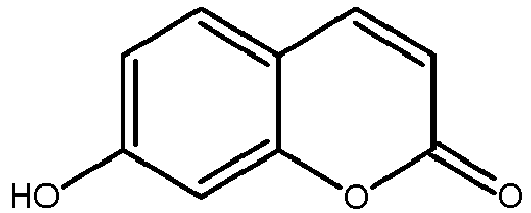
- b) further incubating the starting compound and/or an intermediate thereof with vinyl phenol reductase.
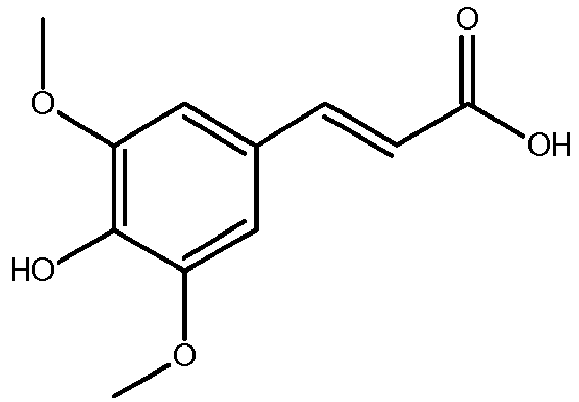
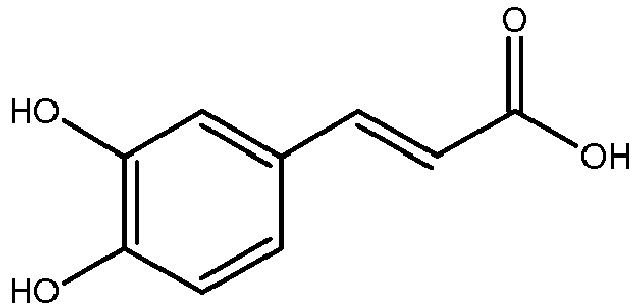
- The starting compound is for example umbellic acid, umbelliferone, o-coumaric acid, m-coumaric acid, p-coumaric acid, ferulic acid, sinapic acid, caffeic acid, 2,5-dihydroxycinnamic acid, or a combination thereof. The phenolic compound is for example 4-ethyl resorcinol, 4-ethylphenol, 4-ethylguaiacol, 4-ethylsyringol, 4-ethylcatechol, 2-ethylbenzene-1,4-diol, a derivative thereof, or a combination thereof.
- The starting compound is for example incubated with a microorganism expressing cinnamate decarboxylase and/or vinyl phenol reductase, is incubated with an isolated cinnamate decarboxylase and/or vinyl phenol reductase, is incubated with a cell-free expressed cinnamate decarboxylase and/or vinyl phenol reductase, is incubated with a synthetically produced cinnamate decarboxylase and/or vinyl phenol reductase, or a combination thereof. The cinnamate decarboxylase, the vinyl phenol reductase or both are for example natively or recombinant expressed in the microorganism, which is for example a fungi such as yeast, or bacteria such as Escherichia coli or Bacillus subtilis, in particular in case of recombinant expression.
- The cinnamate decarboxylase, the vinyl phenol reductase or both are for example a native form or a genetically modified form.
- The yeast expressing cinnamate decarboxylase, vinyl phenol reductase or both is for example Brettanomyces, also called Dekkera, such as Brettanomyces (Dekkera) bruxellenis or Brettanomyces (Dekkera) anomalus, Pichia such as Pichia guilliermondii, or Candida such as Candida versatilis, Candida halophile or Candida mannitofaciens, or a combination thereof.
- The cinnamate decarboxylase and the vinyl phenol reductase are for example either added to the starting compound together or separately for example at the same time or at different time points for example wherein vinyl phenol reductase is added, e.g., 1, 2, 5, 10, 12, 15 or 24 h after the cinnamate decarboxylase.
- The temperature is for example maintained during step a), b) or both steps in a range from 0 to 100 °C, 5 to 99 °C, 10 to 95 °C, 15 to 90 °C, 20 to 85 °C, 20 to 60 °C, 25 to 50 °C, 30 to 40 °C, 30 to 80 °C, 35 to 75 °C, 40 to 65 °C or 45 to 60 °C or 0 °C, 5 °C, 10 °C, 15 °C, 20 °C, 25 °C, 30 °C, 35 °C, 40 °C, 45 °C, 50 °C, 55 °C, 60 °C, 65 °C, 70 °C, 75 °C, 80 °C, 85 °C, 90 °C, 93 °C, 95 °C, 98 °C, 99 °C or 100°C, and the given temperature is for example maintained for 1 h, 3 h, 5 h, 10 h, 15 h, 20 h, 24 h, 30 g, 36 h, 42 h, 48 h, 54 h or 60 h, 3 days, 4 days, 5 days, 6 days, 7 days, 8, days, 9 days or 10 days.
- The method of the present invention is for example performed in an industrial scale.
- All documents cited or referenced herein ("herein cited documents"), and all documents cited or referenced in herein cited documents, together with any manufacturer's instructions, descriptions, product specifications, and product sheets for any products mentioned herein or in any document incorporated by reference herein, are hereby incorporated herein by reference, and may be employed in the practice of the invention. More specifically, all referenced documents are incorporated by reference to the same extent as if each individual document was specifically and individually indicated to be incorporated by reference.
-
-
Fig. 1 shows a GC-MS analysis of the phenolic compound 4-ethyl resorcinol (4-ER) after different times of incubation of umbellic acid with Brettanomyces (Dekkera) bruxellenis natively expressing cinnamate decarboxylase and vinyl phenol reductase. -
Fig. 2 depicts a kinetic profile of the formation of 4-ethyl resorcinol over time. - The present invention refers to a method for biocatalytic, e.g., enzymatic production of a phenolic compound such as 4-ethyl resorcinol, 4-ethylphenol, 4-ethylguaiacol, 4-ethylsyringol, 4-ethylcatechol, 2-ethylbenzene-1,4-diol, a derivative thereof, or a combination thereof. Enzymes used in this method are for example cinnamate decarboxylase and vinyl phenol reductase. Starting compounds being incubated with these enzymes are for example umbellic acid, umbelliferone, o-coumaric acid, m-coumaric acid, p-coumaric acid, ferulic acid, sinapic acid, caffeic acid, 2,5-dihydroxycinnamic acid or a combination thereof. For example incubation of umbellic acid, umbelliferone or both with cinnamate decarboxylase and vinyl phenol reductase results in the biocatalytic production of 4-ethyl resorcinol. The method of the present invention is applicable for industrial production of a phenolic compound.
- In the following, the elements of the present invention will be described in more detail. These elements are listed with specific embodiments, however, it should be understood that they may be combined in any manner and in any number to create additional embodiments. The variously described examples and embodiments should not be construed to limit the present invention to only the explicitly described embodiments. This description should be understood to support and encompass embodiments which combine the explicitly described embodiments with any number of the disclosed elements. Furthermore, any permutations and combinations of all described elements in this application should be considered disclosed by the description of the present application unless the context indicates otherwise.
- Throughout this specification and the claims, unless the context requires otherwise, the word "comprise", and variations such as "comprises" and "comprising", will be understood to imply the inclusion of a stated member, integer or step or group of members, integers or steps but not the exclusion of any other member, integer or step or group of members, integers or steps. The terms "a" and "an" and "the" and similar reference used in the context of describing the invention (especially in the context of the claims) are to be construed to cover both the singular and the plural, unless otherwise indicated herein or clearly contradicted by the context. Recitation of ranges of values herein is merely intended to serve as a shorthand method of referring individually to each separate value falling within the range. Unless otherwise indicated herein, each individual value is incorporated into the specification as if it were individually recited herein. All methods described herein can be performed in any suitable order unless otherwise indicated herein or otherwise clearly contradicted by context. The use of any and all examples, or exemplary language (e.g., "such as", "for example"), provided herein is intended merely to better illustrate the invention and does not pose a limitation on the scope of the invention otherwise claimed. No language in the specification should be construed as indicating any non-claimed element essential to the practice of the invention.
- According to the method of the present invention, the starting compound is for example incubated with a microorganism expressing cinnamate decarboxylase and/or vinyl phenol reductase or is incubated with an isolated cinnamate decarboxylase and/or vinyl phenol reductase, is incubated with a cell-free expressed cinnamate decarboxylase and/or vinyl phenol reductase, or is incubated with a synthetically produced cinnamate decarboxylase and/or vinyl phenol reductase, or a combination thereof. For example a microorganism expressing cinnamate decarboxylase and/or vinyl phenol reductase is combined with an isolated cinnamate decarboxylase and/or vinyl phenol reductase, a cell-free expressed cinnamate decarboxylase and/or vinyl phenol reductase, or a synthetically produced cinnamate decarboxylase and/or vinyl phenol reductase or a combination thereof in a method of the present invention. Alternatively, an isolated cinnamate decarboxylase and/or vinyl phenol reductase is combined with a cell-free expressed cinnamate decarboxylase and/or vinyl phenol reductase or a synthetically produced cinnamate decarboxylase and/or vinyl phenol reductase or a combination thereof in a method of the present invention. Alternatively, a cell-free expressed cinnamate decarboxylase and/or vinyl phenol reductase is combined with a synthetically produced cinnamate decarboxylase and/or vinyl phenol reductase.
- The cinnamate decarboxylase, the vinyl phenol reductase or both are for example natively or recombinant expressed in a microorganism, which is for example a fungi such as yeast, or bacteria, e.g., Escherichia coli or Bacillus subtilis, in particular in case of recombinant expression, or a combination thereof. The isolated cinnamate decarboxylase and/or vinyl phenol reductase is for example isolated from a natively or recombinant expressing microorganism, or both. Successful enzymatic reaction of a starting compound such as umbellic acid and/or umbelliferone into a phenolic compound such as 4-ethyl resorcinol takes for example place in a growing and/or a resting microorganism. The resting stadium of a microorganism is for example reached in a minimal medium, where a nutrition source such as nitrogen and/or phosphate is missing.
- The cinnamate decarboxylase, the vinyl phenol reductase or both are for example a native form or a genetically modified form, e.g., resulting in an increased expression of the cinnamate decarboxylase, the vinyl phenol reductase or both. The efficacy and/or the specificity of the native and/or the recombinant enzyme is for example altered (e.g., increased) by directed evolution or any other type of mutagenesis know to a person skilled in the art or a combination thereof.
- The yeast expressing cinnamate decarboxylase, vinyl phenol reductase or both is for example Brettanomyces, also called Dekkera, such as Brettanomyces (Dekkera) bruxellenis or Brettanomyces (Dekkera) anomalus, Pichia such as Pichia guilliermondii, or Candida such as Candida versatilis, Candida halophile or Candida mannitofaciens, or a combination thereof.
- The cinnamate decarboxylase and the vinyl phenol reductase are for example either added to the starting compound together or separately for example in the same or different microorganisms natively or recombinant expressed or in combination with an isolated and/or synthetic cinnamate decarboxylase and/or vinyl phenol reductase.
- The cinnamate decarboxylase and the vinyl phenol reductase are added to the starting compound for example at the same time or at different time points, for example wherein vinyl phenol reductase is added e.g., 1, 2, 5, 10, 12, 15 or 24 h after the cinnamate decarboxylase. The vinyl phenol reductase for example is added to the starting compound and/or an intermediate resulting from the incubation of the starting compound with cinnamate decarboxylase, after minutes, hours, days or weeks from addition of the cinnamate decarboxylase.
- The temperature is for example maintained during step a), b) or both steps in a range from 0 to 100 °C, 5 to 99 °C, 10 to 95 °C, 15 to 90 °C, 20 to 85 °C, 20 to 60 °C, 25 to 50 °C, 30 to 40 °C, 30 to 80 °C, 35 to 75 °C, 40 to 65 °C or 45 to 60 °C, or 0 °C, 5 °C, 10 °C, 15 °C, 20 °C, 25 °C, 30 °C, 35 °C, 40 °C, 45 °C, 50 °C, 55 °C, 60 °C, 65 °C, 70 °C, 75 °C, 80 °C, 85 °C, 90 °C, 93 °C, 95 °C, 98 °C, 99 °C or 100°C, and the given temperature is for example maintained for 1 h, 3 h, 5 h, 10 h, 15 h, 20 h, 24 h, 30 g, 36 h, 42 h, 48 h, 54 h or 60 h, 3 days, 4 days, 5 days, 6 days, 7 days, 8, days, 9 days or 10 days. Alternatively, the temperature may vary over the process time for example between step a) and step b) of the method of the present invention.
- The method of the present invention is for example performed in an industrial scale. Industrial production of a phenolic compound according to the method of the present invention for example takes place in a fermenter for example in a batch process, fed-batch process, continuous process or combinations thereof. The fermenter size is for example 0.1; 0.2; 0.3; 0.4; 0.5; 0.6; 0.7; 0.8; 0.9; 1, 3, 5, 10 20, 30, 40, 50, 60, 70, 80, 90, 100, 200, 300, 400, 500, 600, 700, 800, 900 or 1000 m3.
- The following examples illustrate different embodiments of the present invention, but the invention is not limited to these examples.
- The strain CBS4481 of Brettanomyces was recovered in YPG-medium (yeast, peptone, glucose) and plated on YPG-agar. One colony was picked after one week and cultivated in 20 ml YPG-medium for growing the colony. Samples of this colony were used in experiments for the following examples and were stored in glycerol stocks, respectively.
- 50 ml YPG medium in an Erlenmeyer flask was inoculated with 500 µl from the initial culture of Brettanomyces described in Example 1 1 ml of this pre-culture was used to inoculate an Erlenmeyer flask containing 50 ml of YPG medium. To the
flask 100 µl ethanol/water (70:30 v/v) containing substrate e.g. coumaric acid or umbellic acid was added for a final substrate concentration of 1 mM. The cultures were incubated at 30 °C for 5 days. 500 µl of the samples were taken regularly and added to 500 µl of ethyl acetate. After mixing vigorously, 100 µl of the organic layer was transferred to a glass vial and analyzed by GC-MS (seeFig. 1 ). - 50 ml YPG medium in an Erlenmeyer flask was inoculated with 500 µl from the initial culture of Brettanomyces described in Example 1. 10 ml of this pre-culture was used to inoculate an Erlenmeyer flasks containing 500 ml of YPG medium. The cells were harvested via centrifugation and washed three times with sodium phosphate buffer (50 mM, pH 7.5).
- The obtained cells were then suspended at 1 g/l in sodium phosphate buffer (50 mM, pH 7.5) containing 20 g/l of glucose, 5 vol% of DMSO and 10 mM of substrate, i.e., coumaric acid or umbellic acid. The reaction was incubated in a closed falcon tube at 30 °C and mild shaking for two days. At regularly intervals the samples were analyzed by GC-MS as described in Example 2 (see
Fig. 2 ).
Claims (12)
- Method for biocatalytic production of a phenolic compound comprising the steps:a) incubating a starting compound according to formula (Ia)
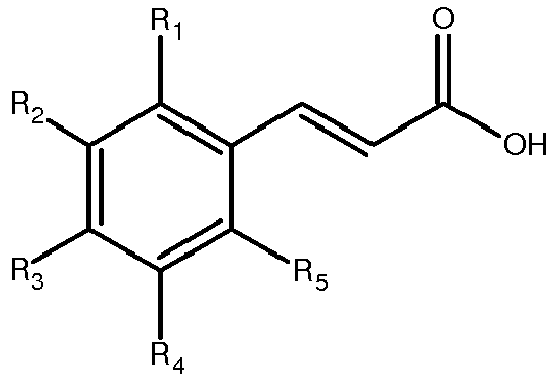
 b) further incubating the starting compound and/or an intermediate thereof with vinyl phenol reductase.
 - Method according to claim 1, wherein the starting compound is



- Method according to claim 1 or 2, wherein the phenolic compound is 4-ethyl resorcinol, 4-ethylphenol, 4-ethylguaiacol, 4-ethylsyringol, 4-ethylcatechol, 2-ethylbenzene-1,4-diol, a derivative thereof, or a combination thereof.
- Method according to any one of claims 1 to 3, wherein the starting compound is incubated with a microorganism expressing cinnamate decarboxylase and/or vinyl phenol reductase, is incubated with an isolated cinnamate decarboxylase and/or vinyl phenol reductase, is incubated with a cell-free cinnamate decarboxylase and/or vinyl phenol reductase, is incubated with a synthetically produced cinnamate decarboxylase and/or vinyl phenol reductase, or a combination thereof.
- Method according to any one of claims 1 to 4, wherein the cinnamate decarboxylase, the vinyl phenol reductase or both are natively or recombinant expressed.
- Method according to any one of claims 1 to 5, wherein the cinnamate decarboxylase, the vinyl phenol reductase or both are a native form or a genetically modified form.
- Method according to any one of claims 1 to 6, wherein the microorganism expressing the cinnamate decarboxylase, the vinyl phenol reductase or both is a yeast.
- Method according to claim 7, wherein the yeast is Brettanomyces (Dekkera) such as Brettanomyces (Dekkera) bruxellenis or Brettanomyces (Dekkera) anomalus, Pichia such as Pichia guilliermondii, or Candida such as Candida versatilis, Candida halophile or Candida mannitofaciens, or a combination thereof.
- Method according to any one of claims 1 to 8, wherein the cinnamate decarboxylase and the vinyl phenol reductase are added to the starting compound together or separately.
- Method according to claim 9, wherein the cinnamate decarboxylase and the vinyl phenol reductase are added at the same time or at different time points.
- Method according to any one of claims 1 to 10, wherein the temperature is maintained during step a), b) or both steps in a range from 0 to 100 °C, 5 to 99 °C, 10 to 95 °C, 15 to 90 °C, 20 to 85 °C, 20 to 60 °C, 25 to 50 °C, 30 to 40 °C, 30 to 80 °C, 35 to 75 °C, 40 to 65 °C or 45 to 60 °C.
- Method according to claim 11, wherein the given temperature is maintained for 1 h, 3 h, 5 h, 10 h, 15 h, 20 h, 24 h, 30 h, 36 h, 42 h, 48 h, 54 h, 60 h, 3 days, 4 days, 5 days, 6 days, 7 days, 8, days, 9 days or 10 days.
Priority Applications (1)
| Application Number | Priority Date | Filing Date | Title |
|---|---|---|---|
| EP18203845.5A EP3647429A1 (en) | 2018-10-31 | 2018-10-31 | Method for the enzymatic production of phenolic compounds |
Applications Claiming Priority (1)
| Application Number | Priority Date | Filing Date | Title |
|---|---|---|---|
| EP18203845.5A EP3647429A1 (en) | 2018-10-31 | 2018-10-31 | Method for the enzymatic production of phenolic compounds |
Publications (1)
| Publication Number | Publication Date |
|---|---|
| EP3647429A1 true EP3647429A1 (en) | 2020-05-06 |
Family
ID=64048996
Family Applications (1)
| Application Number | Title | Priority Date | Filing Date |
|---|---|---|---|
| EP18203845.5A Withdrawn EP3647429A1 (en) | 2018-10-31 | 2018-10-31 | Method for the enzymatic production of phenolic compounds |
Country Status (1)
| Country | Link |
|---|---|
| EP (1) | EP3647429A1 (en) |
Cited By (1)
| Publication number | Priority date | Publication date | Assignee | Title |
|---|---|---|---|---|
| CN113265431A (en) * | 2021-05-07 | 2021-08-17 | 三峡大学 | Method for preparing p-coumaric acid by multi-enzyme cascade |
Citations (1)
| Publication number | Priority date | Publication date | Assignee | Title |
|---|---|---|---|---|
| US4959393A (en) | 1988-05-09 | 1990-09-25 | Kuraray Company, Ltd. | Skin depigmental agent |
-
2018
- 2018-10-31 EP EP18203845.5A patent/EP3647429A1/en not_active Withdrawn
Patent Citations (1)
| Publication number | Priority date | Publication date | Assignee | Title |
|---|---|---|---|---|
| US4959393A (en) | 1988-05-09 | 1990-09-25 | Kuraray Company, Ltd. | Skin depigmental agent |
Non-Patent Citations (7)
| Title |
|---|
| CHATONNET P ET AL: "The origin of ethylphenols in wines", JOURNAL OF THE SCIENCE OF FOOD AND AGRICULTURE, WILEY & SONS, CHICHESTER, GB, vol. 60, no. 2, 1992, pages 165 - 178, XP002148620, ISSN: 0022-5142 * |
| EDLIN D A N ET AL: "THE BIOTRANSFORMATION OF SIMPLE PHENOLIC COMPOUNDS BY BRETTANOMYCESANOMALUS", FEMS MICROBIOLOGY LETTERS, WILEY-BLACKWELL PUBLISHING LTD, GB, vol. 125, no. 2/03, 1995, pages 311 - 315, XP000984522, ISSN: 0378-1097, DOI: 10.1016/0378-1097(94)00516-T * |
| GARCIA-JIMENEZ A. ET AL., BIOORGANIC & MEDICINAL CHEMISTRY, vol. 24, 2016, pages 4434 - 4443 |
| GRANATO TIZIANA MARIARITA ET AL: "New insights on the features of the vinyl phenol reductase from the wine-spoilage yeastDekkera/Brettanomyces bruxellensis", ANNALS OF MICROBIOLOGY, DISTAM, MILAN, IT, vol. 65, no. 1, 18 April 2014 (2014-04-18), pages 321 - 329, XP035452351, ISSN: 1590-4261, [retrieved on 20140418], DOI: 10.1007/S13213-014-0864-5 * |
| NICOLAS BURON ET AL: "Screening of representative cider yeasts and bacteria for volatile phenol-production ability", FOOD MICROBIOLOGY, ACADEMIC PRESS LTD, LONDON, GB, vol. 28, no. 7, 5 May 2011 (2011-05-05), pages 1243 - 1251, XP028259579, ISSN: 0740-0020, [retrieved on 20110519], DOI: 10.1016/J.FM.2011.05.001 * |
| R. LAFORGUE ET AL: "Hydroxycinnamic acid decarboxylase activity of Brettanomyces bruxellensis involved in volatile phenol production: Relationship with cell viability", FOOD MICROBIOLOGY., vol. 32, no. 2, December 2012 (2012-12-01), GB, pages 230 - 234, XP055578725, ISSN: 0740-0020, DOI: 10.1016/j.fm.2012.06.004 * |
| VICTORIA HARRIS ET AL: "Survey of enzyme activity responsible for phenolic off-flavour production by Dekkera and Brettanomyces yeast", APPLIED MICROBIOLOGY AND BIOTECHNOLOGY, SPRINGER, BERLIN, DE, vol. 81, no. 6, 7 October 2008 (2008-10-07), pages 1117 - 1127, XP019654195, ISSN: 1432-0614 * |
Cited By (1)
| Publication number | Priority date | Publication date | Assignee | Title |
|---|---|---|---|---|
| CN113265431A (en) * | 2021-05-07 | 2021-08-17 | 三峡大学 | Method for preparing p-coumaric acid by multi-enzyme cascade |
Similar Documents
| Publication | Publication Date | Title |
|---|---|---|
| Wang et al. | Biotransformation of piceid in Polygonum cuspidatum to resveratrol by Aspergillus oryzae | |
| Jana et al. | Biosynthesis, structural architecture and biotechnological potential of bacterial tannase: a molecular advancement | |
| Tasić et al. | The acid hydrolysis of potato tuber mash in bioethanol production | |
| Rogers et al. | Biotransformation for L-ephedrine production | |
| Cadete et al. | Production of bioethanol in sugarcane bagasse hemicellulosic hydrolysate by Scheffersomyces parashehatae, Scheffersomyces illinoinensis and Spathaspora arborariae isolated from Brazilian ecosystems | |
| Liu et al. | Use of n‐hexadecane as an oxygen vector to improve Phaffia rhodozyma growth and carotenoid production in shake‐flask cultures | |
| Son et al. | Production of cinnamaldehyde through whole-cell bioconversion from trans-cinnamic acid using engineered Corynebacterium glutamicum | |
| Han et al. | Biocatalytic production of compound K in a deep eutectic solvent based on choline chloride using a substrate fed-batch strategy | |
| Vieira et al. | Submerged culture conditions for the production of mycelial biomass and antimicrobial metabolites by Polyporus tricholoma Mont. | |
| Sachan et al. | Biotransformation of p‐coumaric acid by Paecilomyces variotii | |
| Nadhilah et al. | Co-catalysis of melanin degradation by laccase-manganese peroxidase complex from Trametes hirsuta OK271075 for application in whitening cosmetics | |
| Morishita et al. | Synthetic biology-based discovery of diterpenoid pyrones from the genome of Eupenicillium shearii | |
| Soucaille et al. | Butanol tolerance and autobacteriocin production by Clostridium acetobutylicum | |
| EP4368720A1 (en) | Process for producing aqueous solution containing glycerin | |
| Valduga et al. | Study of the bio‐production of carotenoids by Sporidiobolus salmonicolor (CBS 2636) using pre‐treated agro‐industrial substrates | |
| Nanou et al. | Oxidative stress response of Blakeslea trispora induced by iron ions during carotene production in shake flask culture | |
| Nanou et al. | Oxidative stress and morphological changes in Blakeslea trispora induced by enhanced aeration during carotene production in a bubble column reactor | |
| Raby et al. | Bioethanol production from sugarcane molasses with supplemented nutrients by industrial yeast | |
| Kang et al. | Enhancement of erythritol production in Trichosporonoides oedocephalis by regulating cellular morphology with betaine | |
| Gharibzahedi et al. | Carotenoid production from hydrolyzed molasses by Dietzia natronolimnaea HS-1 using batch, fed-batch and continuous culture | |
| Muschallik et al. | Synthesis of α-hydroxy ketones and vicinal diols with the Bacillus licheniformis DSM 13T butane-2, 3-diol dehydrogenase | |
| Veiga et al. | Magnetic field and ultrasound to intensify the production of biomass, polysaccharides and enzymes by Lentinula edodes cultivated in submerged fermentation | |
| Wang et al. | Untreated molasses efficiently Enhances 2, 3-Butanediol synthesis using engineered Aureobasidium melanogenum P8AC-4 | |
| Ghozlen et al. | Mycorrhizal and pathogenic fungi as bio-elicitors for in vitro production of natural stilbenes in callus and cell suspension cultures of peanut (Arachis hypogaea L.) | |
| Lisboa et al. | Evaluation of the effect of different organic solvents in the efficiency of the recovery of pullulan synthesized by Aureobasidium pullulans |
Legal Events
| Date | Code | Title | Description |
|---|---|---|---|
| PUAI | Public reference made under article 153(3) epc to a published international application that has entered the european phase |
Free format text: ORIGINAL CODE: 0009012 |
|
| AK | Designated contracting states |
Kind code of ref document: A1 Designated state(s): AL AT BE BG CH CY CZ DE DK EE ES FI FR GB GR HR HU IE IS IT LI LT LU LV MC MK MT NL NO PL PT RO RS SE SI SK SM TR |
|
| AX | Request for extension of the european patent |
Extension state: BA ME |
|
| STAA | Information on the status of an ep patent application or granted ep patent |
Free format text: STATUS: THE APPLICATION HAS BEEN WITHDRAWN |
|
| 18W | Application withdrawn |
Effective date: 20200817 |