EP3645362B1 - Accessibility method and apparatus for autonomous/semi-autonomous driving - Google Patents
Accessibility method and apparatus for autonomous/semi-autonomous driving Download PDFInfo
- Publication number
- EP3645362B1 EP3645362B1 EP17915824.1A EP17915824A EP3645362B1 EP 3645362 B1 EP3645362 B1 EP 3645362B1 EP 17915824 A EP17915824 A EP 17915824A EP 3645362 B1 EP3645362 B1 EP 3645362B1
- Authority
- EP
- European Patent Office
- Prior art keywords
- vehicle
- accessibility
- passenger
- driver
- semi
- Prior art date
- Legal status (The legal status is an assumption and is not a legal conclusion. Google has not performed a legal analysis and makes no representation as to the accuracy of the status listed.)
- Active
Links
Images




Classifications
-
- B—PERFORMING OPERATIONS; TRANSPORTING
- B60—VEHICLES IN GENERAL
- B60W—CONJOINT CONTROL OF VEHICLE SUB-UNITS OF DIFFERENT TYPE OR DIFFERENT FUNCTION; CONTROL SYSTEMS SPECIALLY ADAPTED FOR HYBRID VEHICLES; ROAD VEHICLE DRIVE CONTROL SYSTEMS FOR PURPOSES NOT RELATED TO THE CONTROL OF A PARTICULAR SUB-UNIT
- B60W30/00—Purposes of road vehicle drive control systems not related to the control of a particular sub-unit, e.g. of systems using conjoint control of vehicle sub-units
- B60W30/10—Path keeping
-
- B—PERFORMING OPERATIONS; TRANSPORTING
- B60—VEHICLES IN GENERAL
- B60W—CONJOINT CONTROL OF VEHICLE SUB-UNITS OF DIFFERENT TYPE OR DIFFERENT FUNCTION; CONTROL SYSTEMS SPECIALLY ADAPTED FOR HYBRID VEHICLES; ROAD VEHICLE DRIVE CONTROL SYSTEMS FOR PURPOSES NOT RELATED TO THE CONTROL OF A PARTICULAR SUB-UNIT
- B60W60/00—Drive control systems specially adapted for autonomous road vehicles
- B60W60/001—Planning or execution of driving tasks
- B60W60/0015—Planning or execution of driving tasks specially adapted for safety
- B60W60/0016—Planning or execution of driving tasks specially adapted for safety of the vehicle or its occupants
-
- B—PERFORMING OPERATIONS; TRANSPORTING
- B60—VEHICLES IN GENERAL
- B60W—CONJOINT CONTROL OF VEHICLE SUB-UNITS OF DIFFERENT TYPE OR DIFFERENT FUNCTION; CONTROL SYSTEMS SPECIALLY ADAPTED FOR HYBRID VEHICLES; ROAD VEHICLE DRIVE CONTROL SYSTEMS FOR PURPOSES NOT RELATED TO THE CONTROL OF A PARTICULAR SUB-UNIT
- B60W30/00—Purposes of road vehicle drive control systems not related to the control of a particular sub-unit, e.g. of systems using conjoint control of vehicle sub-units
- B60W30/14—Adaptive cruise control
- B60W30/16—Control of distance between vehicles, e.g. keeping a distance to preceding vehicle
-
- B—PERFORMING OPERATIONS; TRANSPORTING
- B60—VEHICLES IN GENERAL
- B60W—CONJOINT CONTROL OF VEHICLE SUB-UNITS OF DIFFERENT TYPE OR DIFFERENT FUNCTION; CONTROL SYSTEMS SPECIALLY ADAPTED FOR HYBRID VEHICLES; ROAD VEHICLE DRIVE CONTROL SYSTEMS FOR PURPOSES NOT RELATED TO THE CONTROL OF A PARTICULAR SUB-UNIT
- B60W60/00—Drive control systems specially adapted for autonomous road vehicles
- B60W60/001—Planning or execution of driving tasks
- B60W60/0025—Planning or execution of driving tasks specially adapted for specific operations
-
- B—PERFORMING OPERATIONS; TRANSPORTING
- B60—VEHICLES IN GENERAL
- B60W—CONJOINT CONTROL OF VEHICLE SUB-UNITS OF DIFFERENT TYPE OR DIFFERENT FUNCTION; CONTROL SYSTEMS SPECIALLY ADAPTED FOR HYBRID VEHICLES; ROAD VEHICLE DRIVE CONTROL SYSTEMS FOR PURPOSES NOT RELATED TO THE CONTROL OF A PARTICULAR SUB-UNIT
- B60W60/00—Drive control systems specially adapted for autonomous road vehicles
- B60W60/001—Planning or execution of driving tasks
- B60W60/0025—Planning or execution of driving tasks specially adapted for specific operations
- B60W60/00253—Taxi operations
-
- G—PHYSICS
- G01—MEASURING; TESTING
- G01C—MEASURING DISTANCES, LEVELS OR BEARINGS; SURVEYING; NAVIGATION; GYROSCOPIC INSTRUMENTS; PHOTOGRAMMETRY OR VIDEOGRAMMETRY
- G01C21/00—Navigation; Navigational instruments not provided for in groups G01C1/00 - G01C19/00
- G01C21/26—Navigation; Navigational instruments not provided for in groups G01C1/00 - G01C19/00 specially adapted for navigation in a road network
- G01C21/34—Route searching; Route guidance
- G01C21/3407—Route searching; Route guidance specially adapted for specific applications
- G01C21/3438—Rendezvous; Ride sharing
-
- G—PHYSICS
- G01—MEASURING; TESTING
- G01C—MEASURING DISTANCES, LEVELS OR BEARINGS; SURVEYING; NAVIGATION; GYROSCOPIC INSTRUMENTS; PHOTOGRAMMETRY OR VIDEOGRAMMETRY
- G01C21/00—Navigation; Navigational instruments not provided for in groups G01C1/00 - G01C19/00
- G01C21/26—Navigation; Navigational instruments not provided for in groups G01C1/00 - G01C19/00 specially adapted for navigation in a road network
- G01C21/34—Route searching; Route guidance
- G01C21/36—Input/output arrangements for on-board computers
- G01C21/3605—Destination input or retrieval
- G01C21/3617—Destination input or retrieval using user history, behaviour, conditions or preferences, e.g. predicted or inferred from previous use or current movement
-
- G—PHYSICS
- G06—COMPUTING OR CALCULATING; COUNTING
- G06Q—INFORMATION AND COMMUNICATION TECHNOLOGY [ICT] SPECIALLY ADAPTED FOR ADMINISTRATIVE, COMMERCIAL, FINANCIAL, MANAGERIAL OR SUPERVISORY PURPOSES; SYSTEMS OR METHODS SPECIALLY ADAPTED FOR ADMINISTRATIVE, COMMERCIAL, FINANCIAL, MANAGERIAL OR SUPERVISORY PURPOSES, NOT OTHERWISE PROVIDED FOR
- G06Q50/00—Information and communication technology [ICT] specially adapted for implementation of business processes of specific business sectors, e.g. utilities or tourism
- G06Q50/40—Business processes related to the transportation industry
-
- B—PERFORMING OPERATIONS; TRANSPORTING
- B60—VEHICLES IN GENERAL
- B60W—CONJOINT CONTROL OF VEHICLE SUB-UNITS OF DIFFERENT TYPE OR DIFFERENT FUNCTION; CONTROL SYSTEMS SPECIALLY ADAPTED FOR HYBRID VEHICLES; ROAD VEHICLE DRIVE CONTROL SYSTEMS FOR PURPOSES NOT RELATED TO THE CONTROL OF A PARTICULAR SUB-UNIT
- B60W2540/00—Input parameters relating to occupants
- B60W2540/221—Physiology, e.g. weight, heartbeat, health or special needs
-
- B—PERFORMING OPERATIONS; TRANSPORTING
- B60—VEHICLES IN GENERAL
- B60W—CONJOINT CONTROL OF VEHICLE SUB-UNITS OF DIFFERENT TYPE OR DIFFERENT FUNCTION; CONTROL SYSTEMS SPECIALLY ADAPTED FOR HYBRID VEHICLES; ROAD VEHICLE DRIVE CONTROL SYSTEMS FOR PURPOSES NOT RELATED TO THE CONTROL OF A PARTICULAR SUB-UNIT
- B60W2554/00—Input parameters relating to objects
-
- B—PERFORMING OPERATIONS; TRANSPORTING
- B60—VEHICLES IN GENERAL
- B60W—CONJOINT CONTROL OF VEHICLE SUB-UNITS OF DIFFERENT TYPE OR DIFFERENT FUNCTION; CONTROL SYSTEMS SPECIALLY ADAPTED FOR HYBRID VEHICLES; ROAD VEHICLE DRIVE CONTROL SYSTEMS FOR PURPOSES NOT RELATED TO THE CONTROL OF A PARTICULAR SUB-UNIT
- B60W2554/00—Input parameters relating to objects
- B60W2554/20—Static objects
-
- B—PERFORMING OPERATIONS; TRANSPORTING
- B60—VEHICLES IN GENERAL
- B60W—CONJOINT CONTROL OF VEHICLE SUB-UNITS OF DIFFERENT TYPE OR DIFFERENT FUNCTION; CONTROL SYSTEMS SPECIALLY ADAPTED FOR HYBRID VEHICLES; ROAD VEHICLE DRIVE CONTROL SYSTEMS FOR PURPOSES NOT RELATED TO THE CONTROL OF A PARTICULAR SUB-UNIT
- B60W2554/00—Input parameters relating to objects
- B60W2554/40—Dynamic objects, e.g. animals, windblown objects
Definitions
- Bus 116 may be any communication bus known in the art, such universal serial bus (USB), peripheral component interconnect (PCI), and so forth. In the case of multiple buses, they may be bridged by one or more bus bridges (not shown).
- USB universal serial bus
- PCI peripheral component interconnect
- example process 200 for determining a specific stopping spot at a destination for a passenger or driver to ingress or egress an AD/semi-AD vehicle may include operations performed at blocks 202-220. The operations may be performed by e.g., earlier described accessibility engine 104.
- safety levels of the surrounding area of the AD/semi-AD vehicle may be determined.
- the surrounding area of the AD/semi-AD vehicle may be segmented and the safety levels of the various segments may be determined, along with confidence level, based at least in part on the sensor data and/or auxiliary data received.
- computing apparatus 600 may include system-on-chip (SOC) 601, and system memory 604.
- SOC 601 may include processor 602, hardware accelerator 603 and shared memory 605.
- Processor 602 may include one or more processor cores.
- Processor 602 may be any one of a number of single or multi-core processors known in the art.
- Hardware accelerator 603 may be implemented with ASIC or programmable circuits such as FPGA.
- On package shared memory 605 and off package system memory 604 may include any known volatile or non-volatile memory.
Landscapes
- Engineering & Computer Science (AREA)
- Automation & Control Theory (AREA)
- Radar, Positioning & Navigation (AREA)
- Remote Sensing (AREA)
- Transportation (AREA)
- Mechanical Engineering (AREA)
- Human Computer Interaction (AREA)
- Physics & Mathematics (AREA)
- General Physics & Mathematics (AREA)
- Business, Economics & Management (AREA)
- Health & Medical Sciences (AREA)
- General Health & Medical Sciences (AREA)
- Tourism & Hospitality (AREA)
- Social Psychology (AREA)
- Economics (AREA)
- Human Resources & Organizations (AREA)
- Marketing (AREA)
- Theoretical Computer Science (AREA)
- Strategic Management (AREA)
- General Business, Economics & Management (AREA)
- Primary Health Care (AREA)
- Traffic Control Systems (AREA)
- Navigation (AREA)
- Operations Research (AREA)
- Environmental & Geological Engineering (AREA)
- Biodiversity & Conservation Biology (AREA)
- Ecology (AREA)
- Atmospheric Sciences (AREA)
- Environmental Sciences (AREA)
- Development Economics (AREA)
- Entrepreneurship & Innovation (AREA)
- Life Sciences & Earth Sciences (AREA)
- Quality & Reliability (AREA)
- Control Of Driving Devices And Active Controlling Of Vehicle (AREA)
Description
- The present disclosure relates to the field of autonomous/semi-autonomous driving. In particular, the present disclosure is related to accessibility method and apparatus for autonomous/semi-autonomous driving.
- The background description provided herein is for the purpose of generally presenting the context of the disclosure. Unless otherwise indicated herein, the materials described in this section are not prior art to the claims in this application and are not admitted to be prior art by inclusion in this section.
- One of the key value propositions of autonomous/semi-autonomous driving (AD/semi-AD) vehicle is that they will provide mobile parity allowing people that were previously disenfranchised with the ability to go wherever they want. However, often times this includes, but is not limited to, those with permanent or temporary physical disabilities (i.e. , those who may be missing limbs, blind, require wheel-chairs or crutches, etc.). Under the current state of the art, this value proposition may not be fully realized if the AD/semi-AD vehicle parks or stops in a manner that renders entering and exiting the vehicle inaccessible to these target populations.
- Existing fully automated vehicle development projects and implementations are highly focused on path planning and navigation solutions, the things that happen while people are in the car. However, little work has been done to address system capabilities needed to assist people getting in and out of the vehicle and taking into consideration environmental conditions and the accessibility needs of the passenger or driver.
-
US2015/0219464A1 describes an approach for determining a recommended passenger embarkation point to associate with a point of interest. An embarkation platform determines one or more candidate passenger embarkation points. The embarkation platform also processes contextual information associated with the one or more passenger embarkation points, the at least one passenger, the at least one vehicle, or a combination thereof to determined at least one recommended passenger embarkation point from among the onr or more candidate passenger embarkation points. Information regarding the at least one recommended embarkation point is then caused to be presented. -
US2016/0370194A1 describes systems and methods for providing suggested locations for pick up and destination locations. Pick up locations may include locations where an autonomous vehicle can pick up a passenger, while destination locations may include locations where the vehicle can wait for an additional passenger, stop and wait for a passenger to perform some task and return to the vehicle, or for the vehicle to drop off a passenger. As such, a request for a vehicle may be received from a client computing device. The request may identify a first locations. A set of one or more suggested locations may be selected by comparing the predetermined locations to th first location. The set may be provided to the client computing device. - The present invention is defined in the independent claims. Preferred features are recited in the dependent claims. In the following description, any embodiment referred to and not falling within the literal meaning of the claims is merely an example useful to the understanding of the invention. This is without prejudice to the question of realizations of the claimed invention by equivalent means, which is subject to national laws.
- Embodiments will be readily understood by the following detailed description in conjunction with the accompanying drawings. To facilitate this description, like reference numerals designate like structural elements. Embodiments are illustrated by way of example, and not by way of limitation, in the figures of the accompanying drawings.
-
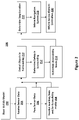
Figure 1 illustrates an overview of an autonomous/semi-autonomous driving (AD/semi-AD) system with an accessibility engine, in accordance with various embodiments. -
Figure 2 illustrates an example operation flow for determining a specific stopping spot at a destination, according to some embodiments. -
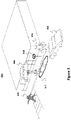
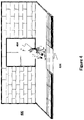
Figures 3 and4 illustrate two example scenarios that can benefit from the accessibility method and apparatus of the present disclosure. -
Figure 5A illustrates example dynamic occupancy grid maps for object classification, according to some embodiments. -
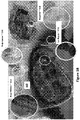
Figure 5B illustrates an example presentation of safety, according to some embodiments. -
Figure 6 illustrates an example apparatus suitable for use as an accessibility engine, or an on-board system to host an accessibility engine, in accordance with various embodiments. -
Figure 7 illustrates an example computer readable medium with instructions configured to enable an on-board system to practice aspects of the present disclosure, in accordance with various embodiments. - Apparatus, method and computer readable medium associated with AD/semi-AD are disclosed herein. In embodiments, an apparatus for AD/semi-AD may comprise an accessibility engine disposed in an AD/semi-AD vehicle to control accessibility elements of the AD/semi-AD vehicle. The accessibility engine may be configured to receive sensor data from a plurality of sensors disposed in the AD/semi-AD vehicle, and determine a specific spot for the vehicle to stop at a destination for a passenger or driver to ingress or egress the vehicle, based at least in part on the sensor data and a model of the vehicle that includes information about accessibility elements of the vehicle, including determination of accessibility needs of the passenger or driver based at least in part on at least some of the sensor data. The accessibility needs of the passenger or driver are factored into the determination of the specific stopping spot at the destination.
- In embodiments, the accessibility engine may include an accessibility classifier to recognize accessibility needs of a passenger or driver, at least when the vehicle is at a final approach distance to the destination, based at least in part on the sensor data of the plurality of sensors. In other embodiments, the accessibility engine may include an environmental safety classifier to provide dynamic segmentation of a surrounding area of the vehicle at least when the vehicle is at a final approach distance to the destination, based at least in part on the sensor data of the plurality of sensors, wherein the dynamic segmentation includes information that depicts safety levels of various segments of the surrounding area.
- The accessibility engine includes an object detection classifier to generate a dynamic occupancy grid map of a surrounding area of the vehicle at least when the vehicle is at a final approach distance to the destination, based at least in part on the sensor data of the plurality of sensors, wherein the dynamic occupancy grid map may include information that depicts or allows discernment of a presence of objects within the surrounding area.
- These and other aspects will be further described below. In the description to follow, reference is made to the accompanying drawings which form a part hereof wherein like numerals designate like parts throughout, and in which is shown by way of illustration embodiments that may be practiced. It is to be understood that other embodiments may be utilized and structural or logical changes may be made without departing from the scope of the present disclosure. Therefore, the following detailed description is not to be taken in a limiting sense, and the scope of embodiments is defined by the appended claims and their equivalents.
- Operations of various methods may be described as multiple discrete actions or operations in turn, in a manner that is most helpful in understanding the claimed subject matter. However, the order of description should not be construed as to imply that these operations are necessarily order dependent. In particular, these operations may not be performed in the order of presentation. Operations described may be performed in a different order than the described embodiments. Various additional operations may be performed and/or described operations may be omitted, split or combined in additional embodiments.
- For the purposes of the present disclosure, the phrase "A and/or B" means (A), (B), or (A and B). For the purposes of the present disclosure, the phrase "A, B, and/or C" means (A), (B), (C), (A and B), (A and C), (B and C), or (A, B and C). The description may use the phrases "in an embodiment," or "in embodiments," which may each refer to one or more of the same or different embodiments. Furthermore, the terms "comprising," "including," "having," and the like, as used with respect to embodiments of the present disclosure, are synonymous. The terms "motor" and "engine" are synonymous unless the context clearly indicates otherwise.
- As used hereinafter, including the claims, the term "autonomous/semi-autonomous vehicle" may refer to any one of assisted park vehicles, automated drive and park vehicles or fully automated navigate/park vehicles. Assisted park vehicles may be vehicles of current generation with advance driver assistance system (ADAS) having driver assistance functions (also referred to as computer-assisted driving). Automated drive and park vehicles may be vehicles of current or future generation with ADAS having self-driving or auto-pilot capabilities (i.e. without human driver), and fully automated navigate/park vehicles may be vehicles of a future generation with ADAS having autonomous driving capabilities where the passenger can be dropped off at a destination, and the vehicle can go park itself.
- The term "module" may refer to, be part of, or include an Application Specific Integrated Circuit (ASIC), an electronic circuit, a programmable combinational logic circuit (such as a Field Programmable Gate Array (FPGA)), a processor (shared, dedicated, or group) and/or memory (shared, dedicated, or group) that execute one or more software or firmware programs having one or more machine instructions (generated from an assembler or from a high level language compiler), and/or other suitable components that provide the described functionality.
- Referring now to
Figure 1 , wherein an overview of an AD/semi-AD system with an accessibility engine, designed to be disposed and operated in an AD/semi-AD vehicle, in accordance with various embodiments, is shown. As illustrated, AD/semi-AD system 100 may include on-board sensors 102,accessibility engine 104, andvehicle model 106 coupled with each other, in the embodiments, viasystem bus 116. For the illustrated embodiments, AD/semi-AD system 100 may further includesensor fusion unit 108,navigation system 110, one or moreaccessibility element controllers 112 andcommunication interface 114, also coupled to each other, and the earlier enumerated elements, viasystem bus 116. - In embodiments, on-
board sensors 102 may include a plurality of sensors 122-128 of different sensor types to sense and output sensor data of a plurality of sensor data types about a surrounding area of the AD/semi-AD vehicle, on which AD/semi-AD system 100 is disposed and operates. For example, on-board sensors 102 may include a camera 122,radar 125 andultrasonic sensor 126 to generate a plurality of visual, radar and ultrasonic images of the surrounding area, light detection and ranging (LIDAR) device 124 to generate detection and ranging signals about objects in the surrounding area, and/or location sensor 128 (such as Global Positioning System (GPS)) to output location data about the current location of the AD/semi-AD vehicle. -
Vehicle model 106 may be a data structure that includes information about the accessibility elements of the AD/semi-AD vehicle. Examples of accessibility elements may include, but are not limited to, doors, door handles, trunk, hood, or windows of the AD/semi-AD vehicle. Information about the accessibility elements may include locations or swings of the doors, the door handles, the trunk, the hood, or the windows. In embodiments,vehicle model 106 may be stored in a dedicated or shared memory area/unit, which may be volatile or non-volatile. -
Accessibility engine 104 is configured to determine a specific spot for the vehicle to stop at a destination for a passenger or driver to ingress or egress the AD/semi-AD vehicle, based at least in part on the sensor data outputted by on-board sensors 102, andvehicle model 106. In particular,accessibility engine 104 is further configured to determine, as part of determining the specific spot for the vehicle to stop at a destination for a passenger or driver to ingress or egress the AD/semi-AD vehicle, accessibility needs of the passenger or driver. The determination of the accessibility needs of the passenger or driver are also based at least in part on at least some of the sensor data outputted by on-board sensors 102. The accessibility needs of the passenger or driver is factored into the determination of the specific stopping spot at the destination. - In embodiments,
accessibility engine 104 is configured to determine a specific spot for the vehicle to stop at a destination for a passenger or driver to ingress or egress the AD/semi-AD vehicle, when the AD/semi-AD vehicle is at a final approach distance to the destination. The length of the final approach distance may be application dependent, e.g., depending on the amount of factors to be considered, the amount of sensor data to be employed to analyze the factors, the computing power provided toaccessibility engine 104. In general, for a given level of computing power, more sensor data may be processed, and more factors may be considered, if the final approach distance to commence determination is set earlier, however, the surrounding area analyzed may be too soon unless more powerful sensors are employed. On the other hand, if the final approach distance to commence determination is set later, the surrounding area analyzed may be more relevant, and more powerful sensors are not need, but lesser sensor data may be processed, and lesser factors may be considered. Different embodiments may elect different balance and tradeoffs. - On determination of the specific spot for the vehicle to stop at a destination for a passenger or driver to ingress or egress the AD/semi-AD vehicle,
accessibility engine 104 may provide the specific spot information to navigation system 110 (e.g., a path planner function of navigation system 110) andaccessibility element controllers 112 fornavigation system 110 to navigate or assist in navigating the AD/semi-AD vehicle to the specific spot, and foraccessibility element controllers 112 to issue controls to the appropriate accessibility elements after stopping at the specific spot. - In embodiments,
accessibility engine 104 includes main logic 132, objectdetection classifier 134,environment safety classifier 136 andaccessibility classifier 138, operatively coupled with each other.Object detection classifier 134 is configured to provide information that depicts or allows discernment of a presence of objects within the surrounding area of the AD/semi-AD vehicle. In embodiments, objectdetection classifier 134 is configured to generate a dynamic occupancy grid map of the surrounding area, based at least in part on the sensor data, to provide the information that depicts or allow discernment of a presence of objects within the surrounding area.Figure 5A illustrates three example dynamic occupancy grid maps of the surrounding area that may be generated to facilitate discernment of a presence of objects within the surrounding area.
Example 502 illustrates a dynamic occupancy grid map that employs red-green-blue (RGB) based object classification. In example 502, different gray scale may be employed to denote different classes of objects. Example 504 illustrates a dynamic occupancy grid map that employs depth based object classification. In example 504, different gray scale may be employed to denote different classes of objects as well as proximity of the objects. Example 506 illustrates a dynamic occupancy grid map that employs voxel based object classification. In example 506, different gray scale may be employed to denote different proximity as well as heights of the objects. In practice, a dynamic occupancy grid map may be in color, with different colors depicting different classes of objects, different proximity distances, and/or different heights. -
Environment safety classifier 136 may be configured to provide safety related information about the surrounding area of the AD/semi-AD vehicle. In embodiments,environment safety classifier 136 may be configured to provide dynamic segmentation of the surrounding area, and provide safety level information along with confidence level metrics, based at least in part on the sensor data.Figure 5B illustrates an example segmentation presentation with safety level information of the surrounding area. As shown, the different gray scales may denote the difference in safety levels, with lighter gray denotes relatively safer area, and darker gray denotes relatively less safe area. In the example segmentation presentation, objects in the surrounding area, such asrear mirror 512,pedestrian 514,bicyclist 516, andice patch 518 may also be highlighted. In practice, the segmentation presentation may be in color, with different colors depicting different safety level, e.g., green equals relatively safe, yellow equals caution, and red equals warning for potentially unsafe. In embodiments, the metadata associated with each voxel may contain the confidence level information. -
Accessibility classifier 138 is configured to recognize accessibility needs of a passenger or driver, based at least in part on the sensor data. Accessibility needs may include, but are not limited to, a need to access a trunk of the vehicle, a need for extra space to ingress or egress the vehicle, or a need for an American Disability Act (ADA) accessible spot to ingress or egress the vehicle. - Main logic 132 may be configured to determine the specific spot for the vehicle to stop at a destination for a passenger or driver to ingress or egress the AD/semi-AD vehicle, based at least in part on the information provided by
object detection classifier 134,environment safety classifier 136 andaccessibility classifier 138. In embodiments, main logic 132 may be configured to perform the determination, based further in part on at least some of the sensor data outputted by on-board sensors 102. - As described earlier, each of main logic 132, object
detection classifier 134,environment safety classifier 136 andaccessibility classifier 138 may perform their respective functions as the AD/semi-AD vehicle is at a final approach distance to the destination. These and other aspects related to the accessibility method and apparatus of the present disclosure for AD/semi-AD will be described in more detail below, after description of the other elements shown inFigure 1 . - Continued to refer to
Figure 1 , in embodiments, AD/semi-AD system 100 may further includesensor fusion unit 108 andcommunication interface 114.Sensor fusion unit 108 may be configured to merge or combine the sensor data outputted by on-board sensors 102, and generate a three dimensional (3D) representation of the surrounding area of the vehicle. For these embodiments,accessibility engine 104 may determine the specific spot for the vehicle to stop at the destination for the passenger or driver to ingress or egress the vehicle, using the 3D representation, in addition to or in lieu of the sensor data outputted by on-board sensors 102. -
Communication interface 114 may be configured to facilitateaccessibility engine 104 in accessing and retrieve various information, such as map, parking, roadwork, or weather information from a number ofexternal sources 120 and/or accessibility needs information of a user (e.g., a user accessibility profile 152) from ride sharing service 150 (such as a ride sharing service who ordered the service of the AD/semi-AD vehicle), vianetwork 118. For these embodiments,accessibility engine 104 may determine the specific spot for the vehicle to stop at the destination for the passenger or driver to ingress or egress the vehicle, further based on the map, parking, roadwork, or weather information provided by the various external sources, and/or the accessibility needs information of a user provided byride sharing service 150. - In embodiments,
communication interface 114 may be one or more of a wide range of communication interfaces or subsystems known in the art including, but are not limited to, WiFi communication interfaces/subsystems, 4G/5G/LTE cellular communication interfaces/subsystems, satellite communication interfaces/subsystems, Bluetooth® communication interfaces/subsystems, Near Field Communication (NFC) interfaces/subsystems, and so forth. - Similarly, except for being benefited from the contribution of
accessibility engine 104,navigation system 110 and accessibility element controller(s) 112 may be any one of a number of navigation systems and accessibility element controllers known in the art. Likewise, except for being used to assistaccessibility engine 104 in obtaining map, weather, parking, roadwork, or traffic information,external sources 120 andnetwork 118 may be any one of a number of information sources and wired/wireless, local/wide-area networks known in the art. -
Bus 116 may be any communication bus known in the art, such universal serial bus (USB), peripheral component interconnect (PCI), and so forth. In the case of multiple buses, they may be bridged by one or more bus bridges (not shown). - In embodiments,
sensor fusion 108, main logic 132, objectdetection classifier 134,environment safety classifier 136 andaccessibility classifier 138 ofaccessibility engine 104 may be implemented in hardware, software or combination thereof. Hardware implementations may include Application Specific Integrated Circuits (ASIC), programmable circuits, such as Field Programmable Gate Arrays (FPGA), and so forth. For software implementations, AD/semi-AD system and/oraccessibility engine 104 may further include a processor with one or more cores, memory and other associated circuitry (not shown), andsensor fusion 108, main logic 132, objectdetection classifier 134,environment safety classifier 136 andaccessibility classifier 138 may be implemented in assembler language supported by the processor, or any programmable language that can be compiled into machine codes executable by the processor. - In embodiments, in addition to providing the determined stopping spot to
navigation system 110 and/or accessibility element controller(s) 112,accessibility engine 104 may also provide the determined stopping spot to the passenger or driver, e.g., to a smartphone or a wearable device adorned by the passenger or driver. - Referring now
Figure 2 , wherein an example operation flow for determining a specific stopping spot at a destination, according to some embodiments, is illustrated. As shown,example process 200 for determining a specific stopping spot at a destination for a passenger or driver to ingress or egress an AD/semi-AD vehicle may include operations performed at blocks 202-220. The operations may be performed by e.g., earlier describedaccessibility engine 104. -
Process 200 may start atblock 202. Atblock 202, a vehicle model with data describing the accessibility elements of an AD/semi-AD vehicle, their locations, swings and so forth, may be stored in the AD/semi-AD vehicle. Next, atblock 204, sensor data outputted by various sensors of the AD/semi-AD vehicle about the surrounding area of the AD/semi-AD vehicle may be received. Fromblock 204,process 200 may proceed to block 206 or block 210. - At block 206, the received sensor data may be optionally fused/merged together, e.g., fused/merged to form a 3D representation of the surrounding area of the AD/semi-AD vehicle. From block 206,
process 200 may proceed to block 208 or block 210. - At
block 208, auxiliary data, such as map, parking, weather, road work, or traffic may be optionally received into AD/semi-AD vehicle from one or more externals sources through one or more networks. Atblock 208, accessibility data of a passenger or driver, e.g., in a form of an accessibility profile may be received, e.g., from a ride sharing service. Fromblock 208,process 200 may proceed to block 210. - At
block 210, whether proceeded fromblock - At
block 212, safety levels of the surrounding area of the AD/semi-AD vehicle may be determined. In embodiments, the surrounding area of the AD/semi-AD vehicle may be segmented and the safety levels of the various segments may be determined, along with confidence level, based at least in part on the sensor data and/or auxiliary data received. - At
block 214, accessibility needs of a passenger or driver may be determined, based at least in part on the sensor data and/or auxiliary data received, and/or accessibility information of the passenger or driver received, e.g., from a ride sharing service. - Next, at
block 216, the stopping spot at the destination may be determined, based at least in part on the objects and/or safety level of the surrounding area, and accessibility needs determined, which as earlier described may be determined based at least in part on the sensor data and/or auxiliary data received. In embodiments, the stopping spot at the destination may be determined further based in part on some of the sensor data and/or auxiliary data received. - At
block 218, the determined stopping spot at the destination may be provided to the navigation system of the AD/semi-AD vehicle. Atblock 220, the determined stopping spot at the destination may further be provided to the accessibility element controllers of the AD/semi-AD vehicle. In alternate embodiments, in addition, the determined stopping spot at the destination may be wireless communicated to the passenger or driver being picked up. - Further, in alternate embodiments, some of the described operations at blocks 202-220 may be combined or split, or performed in different order.
- Referring now to
Figures 3 and4 , wherein two example scenarios that can benefit from the accessibility method and apparatus of the present disclosure are illustrated. More specifically,Figure 3 illustrate anexample scenario 300 of a passenger who just finished shopping, being picked up by an AD/semi-AD vehicle. The passenger is in possession of a number of shopping bags.Figure 4 illustrates anexample scenario 400 of a passenger with physical challenges on a wheelchair, being picked up by an AD/semi-AD vehicle. - As illustrated in
Figure 3 , while AD/semi-AD vehicle making its final approach to the destination, as described earlier,accessibility engine 104 may determine from a dynamic occupancy grid generated from the various sensor and /or auxiliary data presence of objects, presence of objects at the destination (the sidewalk at a shopping mall), such aspedestrian 306 crossing or about to cross on a crosswalk, vegetation such astree 308, no stoppingsign 310,water puddle 312, and so forth. Additionally,accessibility engine 104 may determine the safety level of various segments in the surrounding area, e.g., not safe to stop on or too close to the crosswalk, safe to stop over x feet from the crosswalk, and so forth. Further, accessibility engine may determinepassenger 304 needs access to the trunk and/or more space to ingress becausepassenger 304 is in possession of a number of shopping bags. Based on these objects, safety and accessibility needs, as well as other information, such as whether it is a rainy day, whether there are construction at the sidewalk, and so forth,accessibility engine 104 may then make the determination on the stopping spot at the destination forpassenger 304 to ingress AD/semi-AD vehicle 302. - In embodiments,
accessibility engine 104 may wireless communicate to e.g., a smartphone or a wearable device ofpassenger 304, informingpassenger 304 that AD/semi-AD vehicle 302 will stop aftertree 308, nostop sign 310 andpuddle 312. - As illustrated in
Figure 4 , while AD/semi-AD vehicle making its final approach to the destination, as described earlier,accessibility engine 104 may determinepassenger 304 is a physically challenged person on a wheelchair, therefore will need access to the trunk to store the wheelchair, and need to ingress at an American Disability Act (ADA)compliant ramp 406.Accessibility engine 104 may determine the location of the ADAcompliant ramp 406 from a dynamic occupancy grid and photos generated from the various sensor and /or auxiliary data. Additionally,accessibility engine 104 may determine the safety level of various segments of the surrounding area, before and after the ADA compliant ramp. Based on these objects, safety and accessibility needs, as well as other information, such as whether it is a rainy day, whether there are constructions at the sidewalk, and so forth,accessibility engine 104 may then make the determination on the stopping spot at the destination (i.e. ADA compliant ramp) forpassenger 404 to ingress the AD/semi-AD vehicle. - In embodiments, likewise
accessibility engine 104 may wirelessly communicate to e.g., a smartphone or a wearable device ofpassenger 404, to directpassenger 404 to ADAcompliant ramp 406. - Referring now to
Figure 6 , wherein a block diagram of a computing apparatus suitable for use as to host the AD/semi-AD system or specifically, the accessibility engine, in accordance with various embodiments, is illustrated. As shown,computing apparatus 600 may include system-on-chip (SOC) 601, andsystem memory 604.SOC 601 may includeprocessor 602,hardware accelerator 603 and sharedmemory 605.Processor 602 may include one or more processor cores.Processor 602 may be any one of a number of single or multi-core processors known in the art.Hardware accelerator 603 may be implemented with ASIC or programmable circuits such as FPGA. On package sharedmemory 605 and offpackage system memory 604 may include any known volatile or non-volatile memory. - Additionally,
computing apparatus 600 may includecommunication interfaces 610 such as, network interface cards, modems and so forth, and input/output (I/O) device interfaces 608, such as serial bus interfaces for touch screen, keyboard, mouse, and so forth. In embodiments, communication interfaces 610 may support wired or wireless communication, including near field communication. The elements may be coupled to each other viasystem bus 612, which may represent one or more buses. In the case of multiple buses, they may be bridged by one or more bus bridges (not shown). - Each of these elements may perform its conventional functions known in the art. In particular,
system memory 604 may be employed to store a working copy and a permanent copy of the executable code of the programming instructions of the components ofaccessibility engine 104 implemented in software (i.e., one or more of main logic 132, objectdetection classifier 134,environment safety classifier 136, and accessibility needs classifier 138). The programming instructions may comprise assembler instructions supported by processor(s) 602 or high-level languages, such as, for example, C, that can be compiled into such instructions. - In embodiments,
hardware accelerator 603 may be configured to implement components ofaccessibility engine 104 in hardware (i.e., one or more of main logic 132, objectdetection classifier 134,environment safety classifier 136, and accessibility needs classifier 138). Forhardware accelerator 603 implemented using programmable circuit such as FPGA, the programmable circuit may be programmed with a bit stream generated from hardware design language codes that implement the functions of the corresponding component(s). - The number, capability and/or capacity of these elements 610-612 may vary between embodiments. The constitutions of these elements 610-612 are otherwise known, and accordingly will not be further described.
-
Figure 7 illustrates an example non-transitory computer-readable medium having instructions configured to practice all or selected ones of the operations associated withaccessibility engine 104 of AD/semi-AD system 100, in accordance with various embodiments. As illustrated, non-transitory computer-readable medium 702 may include a number of programming instructions or bit streams 704. Programming instructions or bit streams 704 may be configured to enable an apparatus, e.g., an on-board system in a vehicle, in response to execution of the programming instructions or operation of the programmed hardware apparatus, to perform various operations earlier described. In alternate embodiments, programminginstructions 704 may be disposed on multiple non-transitory computer-readable storage media 702 instead. In still other embodiments, programminginstructions 704 may be encoded in transitory computer readable signals. - Thus, apparatuses, methods and computer-readable medium associated with AD/semi-AD driving with an accessibility engine have been described. While for ease of understanding, the trust data collection, retention and/or sharing technology have been described for autonomous/semi-autonomous driving, the technology may also be practiced with traditional non-autonomous manual vehicles equipped with on-board system as described.
- Although certain embodiments have been illustrated and described herein for purposes of description, a wide variety of alternate and/or equivalent embodiments or implementations calculated to achieve the same purposes may be substituted for the embodiments shown and described without departing from the scope of the present disclosure. Therefore, it is manifestly intended that embodiments described herein be limited only by the claims.
- Where the disclosure recites "a" or "a first" element or the equivalent thereof, such disclosure includes one or more such elements, neither requiring nor excluding two or more such elements. Further, ordinal indicators (e.g., first, second or third) for identified elements are used to distinguish between the elements, and do not indicate or imply a required or limited number of such elements, nor do they indicate a particular position or order of such elements unless otherwise specifically stated.
Claims (14)
- An apparatus (100) for autonomous or semi-autonomous driving, comprising:
an accessibility engine (104) disposed in an autonomous or semi-autonomous driving vehicle to control accessibility elements of the autonomous or semi-autonomous driving vehicle, wherein the accessibility engine (104) is configured to:receive sensor data from a plurality of sensors (102) disposed in the autonomous or semi-autonomous driving vehicle, and determine a specific spot for the vehicle to stop at a destination for a passenger or driver to ingress or egress the vehicle, based at least in part on the sensor data and a model (106) of the vehicle that includes information about accessibility elements of the vehicle, including determination of accessibility needs of the passenger or driver based at least in part on at least some of the sensor data, wherein the accessibility needs of the passenger or driver are factored into the determination of the specific stop location at the destination; andcharacterised in that the accessibility engine (104) includes an object detection classifier (134) configured to generate a dynamic occupancy grid map of a surrounding area of the vehicle at least when the vehicle is at a final approach distance to the destination, based at least in part on the sensor data of the plurality of sensors (102), wherein the dynamic occupancy grid map includes information that depicts or allows discernment of a presence of objects within the surrounding area, and wherein the determination of the specific stop location is further based on the information provided by the object detection classifier (134). - The apparatus (100) of claim 1, wherein accessibility elements of the vehicle include doors, door handles, rear mirrors, trunk, hood, or windows of the vehicle.
- The apparatus (100) of claim 1, wherein the model (106) includes descriptions of locations or swings of doors, door handles, rear mirrors, trunk, hood, or windows of the vehicle.
- The apparatus (100) of claim 1, wherein the accessibility engine (104) is configured to provide the determined specific spot for the vehicle to stop at a destination for a passenger or driver to ingress or egress the vehicle to a navigation subsystem (110) disposed in the vehicle or to a portable device of the passenger or driver.
- The apparatus (100) of claim 1, wherein the accessibility engine (104) is configured to further cause controls (112) to the accessibility elements to be issued, wherein the controls (112) take into consideration the accessibility needs of the passenger or driver.
- The apparatus (100) of claim 1, wherein the accessibility engine (104) includes an accessibility classifier (138) configured to recognize accessibility needs of a passenger or driver, at least when the vehicle is at a final approach distance to the destination, based at least in part on the sensor data of the plurality of sensors (102).
- The apparatus (100) of claim 6, wherein the accessibility needs of the passenger or driver include a selected one of a need to access a trunk of the vehicle, a need for extra space to ingress or egress the vehicle, or a need for an American Disability Act (ADA) accessible spot to ingress or egress the vehicle.
- The apparatus (100) of claim 1, wherein the accessibility engine (104) includes an environmental safety classifier (136) configured to provide dynamic segmentation of a surrounding area of the vehicle at least when the vehicle is at a final approach distance to the destination, based at least in part on the sensor data of the plurality of sensors (102), wherein the dynamic segmentation includes information that depicts safety levels of various segments of the surrounding area.
- The apparatus (100) of claim 8, wherein the dynamic segmentation includes information that depicts confidence levels of the safety levels of various segments of the surrounding area.
- The apparatus (100) of any one of claims 1-9 further comprising a communication interface (114) configured to receive accessibility information of the passenger or driver from a ride sharing service (150), wherein the accessibility engine (104) is configured to determine the specific spot for the vehicle to stop at the destination for the passenger or driver to ingress or egress the vehicle, further based on the accessibility information of the passenger or driver received from the ride sharing service (150).
- The apparatus (100) of any one of claims 1-9 further comprising a communication interface (114) configured to receive map, parking, roadwork, or weather information from one or more external sources (120), wherein the accessibility engine (104) determines the specific spot further based on the map, parking, roadwork, or weather information.
- The apparatus (100) of any one of claims 1-5, wherein the accessibility engine (104) includes an accessibility classifier (138) configured to recognize accessibility needs of a passenger or driver, an environmental safety classifier (136) configured to provide dynamic segmentation of a surrounding area of the vehicle, an object detection classifier (134) configured to generate a dynamic occupancy grid map of a surrounding area of the vehicle, all based at least in part on the sensor data of the plurality of sensors (102); and wherein at least one of the accessibility classifier (138), environmental safety classifier (136), or the object detection classifier (134) is implemented in a hardware accelerator.
- A method for autonomous or semi-autonomous driving, comprising:receiving, by an accessibility engine (104) disposed in an autonomous or semi-autonomous vehicle, sensor data from a plurality of sensors (102) disposed in the autonomous or semi-autonomous driving vehicle;determining, by the accessibility engine (104), a specific spot for the vehicle to stop at a destination for a passenger or driver to ingress or egress the vehicle, based at least in part on the sensor data and a model (106) of the vehicle that includes information about accessibility elements of the vehicle, including determination of accessibility needs of the passenger or driver based at least in part on at least some of the sensor data, wherein the accessibility needs of the passenger or driver are factored into the determination of the specific stop location at the destination; andgenerating, by an object detection classifier (134), a dynamic occupancy grid map of a surrounding area of the vehicle at least when the vehicle is at a final approach distance to the destination, based at least in part on the sensor data of the plurality of sensors (102), wherein the dynamic occupancy grid map includes information that depicts or allows discernment of a presence of objects within the surrounding area, and wherein the determination of the specific stop location is further based on the information provided by the object detection classifier (134).
- The method of claim 13, further comprising providing the determined specific spot for the vehicle to stop at a destination for a passenger or driver to ingress or egress the vehicle to a navigation subsystem (110) disposed in the vehicle or to a portable device of the passenger or driver;
causing controls to the accessibility elements to be issued, wherein the controls take into consideration the accessibility needs of the passenger or driver.
Applications Claiming Priority (1)
| Application Number | Priority Date | Filing Date | Title |
|---|---|---|---|
| PCT/US2017/040355 WO2019005120A1 (en) | 2017-06-30 | 2017-06-30 | Accessibility method and apparatus for autonomous/semi-autonomous driving |
Publications (3)
| Publication Number | Publication Date |
|---|---|
| EP3645362A1 EP3645362A1 (en) | 2020-05-06 |
| EP3645362A4 EP3645362A4 (en) | 2021-03-24 |
| EP3645362B1 true EP3645362B1 (en) | 2023-01-11 |
Family
ID=64743015
Family Applications (1)
| Application Number | Title | Priority Date | Filing Date |
|---|---|---|---|
| EP17915824.1A Active EP3645362B1 (en) | 2017-06-30 | 2017-06-30 | Accessibility method and apparatus for autonomous/semi-autonomous driving |
Country Status (4)
| Country | Link |
|---|---|
| US (1) | US20200156663A1 (en) |
| EP (1) | EP3645362B1 (en) |
| CN (1) | CN110709300A (en) |
| WO (1) | WO2019005120A1 (en) |
Families Citing this family (5)
| Publication number | Priority date | Publication date | Assignee | Title |
|---|---|---|---|---|
| US10066946B2 (en) | 2016-08-26 | 2018-09-04 | Here Global B.V. | Automatic localization geometry detection |
| US11093759B2 (en) * | 2018-03-06 | 2021-08-17 | Here Global B.V. | Automatic identification of roadside objects for localization |
| JP7176218B2 (en) * | 2018-04-02 | 2022-11-22 | トヨタ自動車株式会社 | Information retrieval server, information retrieval system and information retrieval method |
| US20230095845A1 (en) * | 2021-09-27 | 2023-03-30 | Toyota Motor North America, Inc. | Transport modifications for impaired occupants |
| KR20230117936A (en) | 2022-02-03 | 2023-08-10 | 현대자동차주식회사 | Autonomous driving apparatus and method of collision avoidance controlling the same |
Citations (1)
| Publication number | Priority date | Publication date | Assignee | Title |
|---|---|---|---|---|
| EP3053809A1 (en) * | 2015-02-09 | 2016-08-10 | Application Solutions (Electronics and Vision) Limited | Parking assistance system |
Family Cites Families (9)
| Publication number | Priority date | Publication date | Assignee | Title |
|---|---|---|---|---|
| MX356836B (en) * | 2013-12-11 | 2018-06-15 | Intel Corp | Individual driving preference adapted computerized assist or autonomous driving of vehicles. |
| US9304009B2 (en) * | 2014-02-04 | 2016-04-05 | Here Global B.V. | Method and apparatus for providing passenger embarkation points for points of interests |
| US9547985B2 (en) * | 2014-11-05 | 2017-01-17 | Here Global B.V. | Method and apparatus for providing access to autonomous vehicles based on user context |
| US9493157B2 (en) * | 2015-01-29 | 2016-11-15 | Toyota Motor Engineering & Manufacturing North America, Inc. | Autonomous vehicle operation in obstructed occupant view and sensor detection environments |
| US9568335B2 (en) * | 2015-01-30 | 2017-02-14 | Nissan North America, Inc. | Associating parking areas with destinations based on automatically identified associations between vehicle operating information and non-vehicle operating information |
| US9616773B2 (en) * | 2015-05-11 | 2017-04-11 | Uber Technologies, Inc. | Detecting objects within a vehicle in connection with a service |
| US9733096B2 (en) | 2015-06-22 | 2017-08-15 | Waymo Llc | Determining pickup and destination locations for autonomous vehicles |
| US9805519B2 (en) * | 2015-08-12 | 2017-10-31 | Madhusoodhan Ramanujam | Performing services on autonomous vehicles |
| US10328853B2 (en) * | 2017-01-16 | 2019-06-25 | Nio Usa, Inc. | Method and system for providing an escape route from a vehicle |
-
2017
- 2017-06-30 US US16/611,367 patent/US20200156663A1/en not_active Abandoned
- 2017-06-30 EP EP17915824.1A patent/EP3645362B1/en active Active
- 2017-06-30 CN CN201780091476.2A patent/CN110709300A/en active Pending
- 2017-06-30 WO PCT/US2017/040355 patent/WO2019005120A1/en not_active Ceased
Patent Citations (1)
| Publication number | Priority date | Publication date | Assignee | Title |
|---|---|---|---|---|
| EP3053809A1 (en) * | 2015-02-09 | 2016-08-10 | Application Solutions (Electronics and Vision) Limited | Parking assistance system |
Also Published As
| Publication number | Publication date |
|---|---|
| CN110709300A (en) | 2020-01-17 |
| WO2019005120A1 (en) | 2019-01-03 |
| US20200156663A1 (en) | 2020-05-21 |
| EP3645362A4 (en) | 2021-03-24 |
| EP3645362A1 (en) | 2020-05-06 |
Similar Documents
| Publication | Publication Date | Title |
|---|---|---|
| KR102222323B1 (en) | Dynamic routing for autonomous vehicles | |
| CN110531755B (en) | Vehicle control device, vehicle control method, and storage medium | |
| KR102093047B1 (en) | Traffic prediction based on map image for autonomous driving | |
| KR102279078B1 (en) | A v2x communication-based vehicle lane system for autonomous vehicles | |
| US20220169245A1 (en) | Information processing apparatus, information processing method, computer program, and mobile body device | |
| JP7137527B2 (en) | Vehicle control system, vehicle control method, and program | |
| EP3645362B1 (en) | Accessibility method and apparatus for autonomous/semi-autonomous driving | |
| KR102071154B1 (en) | Method and system for configuring surrounding environment for driving decision of autonomous vehicle | |
| US10953873B2 (en) | Extension to safety protocols for autonomous vehicle operation | |
| JP2023510136A (en) | Geolocation models for perception, prediction or planning | |
| CN111762113A (en) | Vehicle control device, vehicle control method, and storage medium | |
| CN113874803A (en) | System and method for updating vehicle operation based on remote intervention | |
| CN111619551B (en) | Vehicle control system, vehicle control method, and storage medium | |
| CN111665835B (en) | Vehicle control system and vehicle control method | |
| JP7210336B2 (en) | Vehicle control system, vehicle control method, and program | |
| CN110087939A (en) | Vehicle control system, control method for vehicle and vehicle control program | |
| CN111951545B (en) | Information processing device, vehicle control device, information processing method, and storage medium | |
| CN113167592A (en) | Information processing apparatus, information processing method, and information processing program | |
| CN112061113B (en) | Vehicle control device, vehicle control method, and storage medium | |
| CN111376853A (en) | Vehicle control system, vehicle control method, and storage medium | |
| US12450275B2 (en) | Context-based searching systems and methods for vehicles | |
| CN110418744A (en) | Vehicle control system, vehicle control method, and vehicle control program | |
| CN111824124A (en) | Vehicle control device, vehicle management device, vehicle control method, vehicle management method, and storage medium | |
| WO2019127261A1 (en) | Method for automatic driving of smart wheelchair, system and computer readable medium | |
| CN111766865A (en) | Vehicle control device, vehicle control method, and storage medium |
Legal Events
| Date | Code | Title | Description |
|---|---|---|---|
| STAA | Information on the status of an ep patent application or granted ep patent |
Free format text: STATUS: THE INTERNATIONAL PUBLICATION HAS BEEN MADE |
|
| PUAI | Public reference made under article 153(3) epc to a published international application that has entered the european phase |
Free format text: ORIGINAL CODE: 0009012 |
|
| STAA | Information on the status of an ep patent application or granted ep patent |
Free format text: STATUS: REQUEST FOR EXAMINATION WAS MADE |
|
| 17P | Request for examination filed |
Effective date: 20191129 |
|
| AK | Designated contracting states |
Kind code of ref document: A1 Designated state(s): AL AT BE BG CH CY CZ DE DK EE ES FI FR GB GR HR HU IE IS IT LI LT LU LV MC MK MT NL NO PL PT RO RS SE SI SK SM TR |
|
| AX | Request for extension of the european patent |
Extension state: BA ME |
|
| DAV | Request for validation of the european patent (deleted) | ||
| DAX | Request for extension of the european patent (deleted) | ||
| A4 | Supplementary search report drawn up and despatched |
Effective date: 20210223 |
|
| RIC1 | Information provided on ipc code assigned before grant |
Ipc: B60W 30/10 20060101ALI20210217BHEP Ipc: G01C 21/34 20060101AFI20210217BHEP Ipc: G01C 21/36 20060101ALI20210217BHEP Ipc: B60W 60/00 20200101ALI20210217BHEP Ipc: B60W 30/16 20200101ALI20210217BHEP |
|
| REG | Reference to a national code |
Ref country code: DE Ref legal event code: R079 Ref document number: 602017065507 Country of ref document: DE Free format text: PREVIOUS MAIN CLASS: B60W0030140000 Ipc: G01C0021340000 |
|
| RIC1 | Information provided on ipc code assigned before grant |
Ipc: B60W 60/00 20200101ALI20211215BHEP Ipc: B60W 30/16 20200101ALI20211215BHEP Ipc: B60W 30/10 20060101ALI20211215BHEP Ipc: G01C 21/36 20060101ALI20211215BHEP Ipc: G01C 21/34 20060101AFI20211215BHEP |
|
| GRAP | Despatch of communication of intention to grant a patent |
Free format text: ORIGINAL CODE: EPIDOSNIGR1 |
|
| STAA | Information on the status of an ep patent application or granted ep patent |
Free format text: STATUS: GRANT OF PATENT IS INTENDED |
|
| INTG | Intention to grant announced |
Effective date: 20220218 |
|
| GRAJ | Information related to disapproval of communication of intention to grant by the applicant or resumption of examination proceedings by the epo deleted |
Free format text: ORIGINAL CODE: EPIDOSDIGR1 |
|
| STAA | Information on the status of an ep patent application or granted ep patent |
Free format text: STATUS: REQUEST FOR EXAMINATION WAS MADE |
|
| GRAP | Despatch of communication of intention to grant a patent |
Free format text: ORIGINAL CODE: EPIDOSNIGR1 |
|
| STAA | Information on the status of an ep patent application or granted ep patent |
Free format text: STATUS: GRANT OF PATENT IS INTENDED |
|
| INTC | Intention to grant announced (deleted) | ||
| INTG | Intention to grant announced |
Effective date: 20220727 |
|
| GRAS | Grant fee paid |
Free format text: ORIGINAL CODE: EPIDOSNIGR3 |
|
| GRAA | (expected) grant |
Free format text: ORIGINAL CODE: 0009210 |
|
| STAA | Information on the status of an ep patent application or granted ep patent |
Free format text: STATUS: THE PATENT HAS BEEN GRANTED |
|
| AK | Designated contracting states |
Kind code of ref document: B1 Designated state(s): AL AT BE BG CH CY CZ DE DK EE ES FI FR GB GR HR HU IE IS IT LI LT LU LV MC MK MT NL NO PL PT RO RS SE SI SK SM TR |
|
| REG | Reference to a national code |
Ref country code: GB Ref legal event code: FG4D |
|
| REG | Reference to a national code |
Ref country code: CH Ref legal event code: EP |
|
| REG | Reference to a national code |
Ref country code: DE Ref legal event code: R096 Ref document number: 602017065507 Country of ref document: DE |
|
| REG | Reference to a national code |
Ref country code: IE Ref legal event code: FG4D |
|
| REG | Reference to a national code |
Ref country code: AT Ref legal event code: REF Ref document number: 1543682 Country of ref document: AT Kind code of ref document: T Effective date: 20230215 |
|
| REG | Reference to a national code |
Ref country code: NL Ref legal event code: FP |
|
| REG | Reference to a national code |
Ref country code: LT Ref legal event code: MG9D |
|
| REG | Reference to a national code |
Ref country code: AT Ref legal event code: MK05 Ref document number: 1543682 Country of ref document: AT Kind code of ref document: T Effective date: 20230111 |
|
| P01 | Opt-out of the competence of the unified patent court (upc) registered |
Effective date: 20230518 |
|
| PG25 | Lapsed in a contracting state [announced via postgrant information from national office to epo] |
Ref country code: RS Free format text: LAPSE BECAUSE OF FAILURE TO SUBMIT A TRANSLATION OF THE DESCRIPTION OR TO PAY THE FEE WITHIN THE PRESCRIBED TIME-LIMIT Effective date: 20230111 Ref country code: PT Free format text: LAPSE BECAUSE OF FAILURE TO SUBMIT A TRANSLATION OF THE DESCRIPTION OR TO PAY THE FEE WITHIN THE PRESCRIBED TIME-LIMIT Effective date: 20230511 Ref country code: NO Free format text: LAPSE BECAUSE OF FAILURE TO SUBMIT A TRANSLATION OF THE DESCRIPTION OR TO PAY THE FEE WITHIN THE PRESCRIBED TIME-LIMIT Effective date: 20230411 Ref country code: LV Free format text: LAPSE BECAUSE OF FAILURE TO SUBMIT A TRANSLATION OF THE DESCRIPTION OR TO PAY THE FEE WITHIN THE PRESCRIBED TIME-LIMIT Effective date: 20230111 Ref country code: LT Free format text: LAPSE BECAUSE OF FAILURE TO SUBMIT A TRANSLATION OF THE DESCRIPTION OR TO PAY THE FEE WITHIN THE PRESCRIBED TIME-LIMIT Effective date: 20230111 Ref country code: HR Free format text: LAPSE BECAUSE OF FAILURE TO SUBMIT A TRANSLATION OF THE DESCRIPTION OR TO PAY THE FEE WITHIN THE PRESCRIBED TIME-LIMIT Effective date: 20230111 Ref country code: ES Free format text: LAPSE BECAUSE OF FAILURE TO SUBMIT A TRANSLATION OF THE DESCRIPTION OR TO PAY THE FEE WITHIN THE PRESCRIBED TIME-LIMIT Effective date: 20230111 Ref country code: AT Free format text: LAPSE BECAUSE OF FAILURE TO SUBMIT A TRANSLATION OF THE DESCRIPTION OR TO PAY THE FEE WITHIN THE PRESCRIBED TIME-LIMIT Effective date: 20230111 |
|
| PG25 | Lapsed in a contracting state [announced via postgrant information from national office to epo] |
Ref country code: SE Free format text: LAPSE BECAUSE OF FAILURE TO SUBMIT A TRANSLATION OF THE DESCRIPTION OR TO PAY THE FEE WITHIN THE PRESCRIBED TIME-LIMIT Effective date: 20230111 Ref country code: PL Free format text: LAPSE BECAUSE OF FAILURE TO SUBMIT A TRANSLATION OF THE DESCRIPTION OR TO PAY THE FEE WITHIN THE PRESCRIBED TIME-LIMIT Effective date: 20230111 Ref country code: IS Free format text: LAPSE BECAUSE OF FAILURE TO SUBMIT A TRANSLATION OF THE DESCRIPTION OR TO PAY THE FEE WITHIN THE PRESCRIBED TIME-LIMIT Effective date: 20230511 Ref country code: GR Free format text: LAPSE BECAUSE OF FAILURE TO SUBMIT A TRANSLATION OF THE DESCRIPTION OR TO PAY THE FEE WITHIN THE PRESCRIBED TIME-LIMIT Effective date: 20230412 Ref country code: FI Free format text: LAPSE BECAUSE OF FAILURE TO SUBMIT A TRANSLATION OF THE DESCRIPTION OR TO PAY THE FEE WITHIN THE PRESCRIBED TIME-LIMIT Effective date: 20230111 |
|
| REG | Reference to a national code |
Ref country code: DE Ref legal event code: R097 Ref document number: 602017065507 Country of ref document: DE |
|
| PG25 | Lapsed in a contracting state [announced via postgrant information from national office to epo] |
Ref country code: SM Free format text: LAPSE BECAUSE OF FAILURE TO SUBMIT A TRANSLATION OF THE DESCRIPTION OR TO PAY THE FEE WITHIN THE PRESCRIBED TIME-LIMIT Effective date: 20230111 Ref country code: RO Free format text: LAPSE BECAUSE OF FAILURE TO SUBMIT A TRANSLATION OF THE DESCRIPTION OR TO PAY THE FEE WITHIN THE PRESCRIBED TIME-LIMIT Effective date: 20230111 Ref country code: EE Free format text: LAPSE BECAUSE OF FAILURE TO SUBMIT A TRANSLATION OF THE DESCRIPTION OR TO PAY THE FEE WITHIN THE PRESCRIBED TIME-LIMIT Effective date: 20230111 Ref country code: DK Free format text: LAPSE BECAUSE OF FAILURE TO SUBMIT A TRANSLATION OF THE DESCRIPTION OR TO PAY THE FEE WITHIN THE PRESCRIBED TIME-LIMIT Effective date: 20230111 Ref country code: CZ Free format text: LAPSE BECAUSE OF FAILURE TO SUBMIT A TRANSLATION OF THE DESCRIPTION OR TO PAY THE FEE WITHIN THE PRESCRIBED TIME-LIMIT Effective date: 20230111 |
|
| PLBE | No opposition filed within time limit |
Free format text: ORIGINAL CODE: 0009261 |
|
| STAA | Information on the status of an ep patent application or granted ep patent |
Free format text: STATUS: NO OPPOSITION FILED WITHIN TIME LIMIT |
|
| PG25 | Lapsed in a contracting state [announced via postgrant information from national office to epo] |
Ref country code: SK Free format text: LAPSE BECAUSE OF FAILURE TO SUBMIT A TRANSLATION OF THE DESCRIPTION OR TO PAY THE FEE WITHIN THE PRESCRIBED TIME-LIMIT Effective date: 20230111 |
|
| 26N | No opposition filed |
Effective date: 20231012 |
|
| PG25 | Lapsed in a contracting state [announced via postgrant information from national office to epo] |
Ref country code: MC Free format text: LAPSE BECAUSE OF FAILURE TO SUBMIT A TRANSLATION OF THE DESCRIPTION OR TO PAY THE FEE WITHIN THE PRESCRIBED TIME-LIMIT Effective date: 20230111 |
|
| PG25 | Lapsed in a contracting state [announced via postgrant information from national office to epo] |
Ref country code: SI Free format text: LAPSE BECAUSE OF FAILURE TO SUBMIT A TRANSLATION OF THE DESCRIPTION OR TO PAY THE FEE WITHIN THE PRESCRIBED TIME-LIMIT Effective date: 20230111 Ref country code: MC Free format text: LAPSE BECAUSE OF FAILURE TO SUBMIT A TRANSLATION OF THE DESCRIPTION OR TO PAY THE FEE WITHIN THE PRESCRIBED TIME-LIMIT Effective date: 20230111 |
|
| REG | Reference to a national code |
Ref country code: CH Ref legal event code: PL |
|
| REG | Reference to a national code |
Ref country code: BE Ref legal event code: MM Effective date: 20230630 |
|
| GBPC | Gb: european patent ceased through non-payment of renewal fee |
Effective date: 20230630 |
|
| PGFP | Annual fee paid to national office [announced via postgrant information from national office to epo] |
Ref country code: NL Payment date: 20240116 Year of fee payment: 8 |
|
| PG25 | Lapsed in a contracting state [announced via postgrant information from national office to epo] |
Ref country code: LU Free format text: LAPSE BECAUSE OF NON-PAYMENT OF DUE FEES Effective date: 20230630 |
|
| REG | Reference to a national code |
Ref country code: IE Ref legal event code: MM4A |
|
| PG25 | Lapsed in a contracting state [announced via postgrant information from national office to epo] |
Ref country code: LU Free format text: LAPSE BECAUSE OF NON-PAYMENT OF DUE FEES Effective date: 20230630 |
|
| PG25 | Lapsed in a contracting state [announced via postgrant information from national office to epo] |
Ref country code: IE Free format text: LAPSE BECAUSE OF NON-PAYMENT OF DUE FEES Effective date: 20230630 |
|
| PG25 | Lapsed in a contracting state [announced via postgrant information from national office to epo] |
Ref country code: IE Free format text: LAPSE BECAUSE OF NON-PAYMENT OF DUE FEES Effective date: 20230630 Ref country code: GB Free format text: LAPSE BECAUSE OF NON-PAYMENT OF DUE FEES Effective date: 20230630 Ref country code: CH Free format text: LAPSE BECAUSE OF NON-PAYMENT OF DUE FEES Effective date: 20230630 |
|
| PG25 | Lapsed in a contracting state [announced via postgrant information from national office to epo] |
Ref country code: IT Free format text: LAPSE BECAUSE OF FAILURE TO SUBMIT A TRANSLATION OF THE DESCRIPTION OR TO PAY THE FEE WITHIN THE PRESCRIBED TIME-LIMIT Effective date: 20230111 Ref country code: FR Free format text: LAPSE BECAUSE OF NON-PAYMENT OF DUE FEES Effective date: 20230630 Ref country code: BE Free format text: LAPSE BECAUSE OF NON-PAYMENT OF DUE FEES Effective date: 20230630 |
|
| PGFP | Annual fee paid to national office [announced via postgrant information from national office to epo] |
Ref country code: DE Payment date: 20240522 Year of fee payment: 8 |
|
| PG25 | Lapsed in a contracting state [announced via postgrant information from national office to epo] |
Ref country code: BG Free format text: LAPSE BECAUSE OF FAILURE TO SUBMIT A TRANSLATION OF THE DESCRIPTION OR TO PAY THE FEE WITHIN THE PRESCRIBED TIME-LIMIT Effective date: 20230111 |
|
| PG25 | Lapsed in a contracting state [announced via postgrant information from national office to epo] |
Ref country code: BG Free format text: LAPSE BECAUSE OF FAILURE TO SUBMIT A TRANSLATION OF THE DESCRIPTION OR TO PAY THE FEE WITHIN THE PRESCRIBED TIME-LIMIT Effective date: 20230111 |
|
| PG25 | Lapsed in a contracting state [announced via postgrant information from national office to epo] |
Ref country code: CY Free format text: LAPSE BECAUSE OF FAILURE TO SUBMIT A TRANSLATION OF THE DESCRIPTION OR TO PAY THE FEE WITHIN THE PRESCRIBED TIME-LIMIT; INVALID AB INITIO Effective date: 20170630 |
|
| PG25 | Lapsed in a contracting state [announced via postgrant information from national office to epo] |
Ref country code: HU Free format text: LAPSE BECAUSE OF FAILURE TO SUBMIT A TRANSLATION OF THE DESCRIPTION OR TO PAY THE FEE WITHIN THE PRESCRIBED TIME-LIMIT; INVALID AB INITIO Effective date: 20170630 |
|
| PG25 | Lapsed in a contracting state [announced via postgrant information from national office to epo] |
Ref country code: TR Free format text: LAPSE BECAUSE OF FAILURE TO SUBMIT A TRANSLATION OF THE DESCRIPTION OR TO PAY THE FEE WITHIN THE PRESCRIBED TIME-LIMIT Effective date: 20230111 |
|
| REG | Reference to a national code |
Ref country code: DE Ref legal event code: R119 Ref document number: 602017065507 Country of ref document: DE |
|
| REG | Reference to a national code |
Ref country code: NL Ref legal event code: MM Effective date: 20250701 |
|
| PG25 | Lapsed in a contracting state [announced via postgrant information from national office to epo] |
Ref country code: NL Free format text: LAPSE BECAUSE OF NON-PAYMENT OF DUE FEES Effective date: 20250701 |
|
| PG25 | Lapsed in a contracting state [announced via postgrant information from national office to epo] |
Ref country code: DE Free format text: LAPSE BECAUSE OF NON-PAYMENT OF DUE FEES Effective date: 20260101 |