EP3644673A1 - Data transmission method, base station, and user terminal - Google Patents
Data transmission method, base station, and user terminal Download PDFInfo
- Publication number
- EP3644673A1 EP3644673A1 EP18820319.4A EP18820319A EP3644673A1 EP 3644673 A1 EP3644673 A1 EP 3644673A1 EP 18820319 A EP18820319 A EP 18820319A EP 3644673 A1 EP3644673 A1 EP 3644673A1
- Authority
- EP
- European Patent Office
- Prior art keywords
- grant
- transmission resource
- free transmission
- resource configurations
- different
- Prior art date
- Legal status (The legal status is an assumption and is not a legal conclusion. Google has not performed a legal analysis and makes no representation as to the accuracy of the status listed.)
- Granted
Links
Images


Classifications
-
- H—ELECTRICITY
- H04—ELECTRIC COMMUNICATION TECHNIQUE
- H04W—WIRELESS COMMUNICATION NETWORKS
- H04W72/00—Local resource management
- H04W72/20—Control channels or signalling for resource management
- H04W72/21—Control channels or signalling for resource management in the uplink direction of a wireless link, i.e. towards the network
-
- H—ELECTRICITY
- H04—ELECTRIC COMMUNICATION TECHNIQUE
- H04W—WIRELESS COMMUNICATION NETWORKS
- H04W28/00—Network traffic management; Network resource management
- H04W28/16—Central resource management; Negotiation of resources or communication parameters, e.g. negotiating bandwidth or QoS [Quality of Service]
-
- H—ELECTRICITY
- H04—ELECTRIC COMMUNICATION TECHNIQUE
- H04L—TRANSMISSION OF DIGITAL INFORMATION, e.g. TELEGRAPHIC COMMUNICATION
- H04L1/00—Arrangements for detecting or preventing errors in the information received
- H04L1/0001—Systems modifying transmission characteristics according to link quality, e.g. power backoff
- H04L1/0002—Systems modifying transmission characteristics according to link quality, e.g. power backoff by adapting the transmission rate
- H04L1/0003—Systems modifying transmission characteristics according to link quality, e.g. power backoff by adapting the transmission rate by switching between different modulation schemes
-
- H—ELECTRICITY
- H04—ELECTRIC COMMUNICATION TECHNIQUE
- H04L—TRANSMISSION OF DIGITAL INFORMATION, e.g. TELEGRAPHIC COMMUNICATION
- H04L1/00—Arrangements for detecting or preventing errors in the information received
- H04L1/0001—Systems modifying transmission characteristics according to link quality, e.g. power backoff
- H04L1/0036—Systems modifying transmission characteristics according to link quality, e.g. power backoff arrangements specific to the receiver
- H04L1/0038—Blind format detection
-
- H—ELECTRICITY
- H04—ELECTRIC COMMUNICATION TECHNIQUE
- H04W—WIRELESS COMMUNICATION NETWORKS
- H04W28/00—Network traffic management; Network resource management
- H04W28/02—Traffic management, e.g. flow control or congestion control
-
- H—ELECTRICITY
- H04—ELECTRIC COMMUNICATION TECHNIQUE
- H04W—WIRELESS COMMUNICATION NETWORKS
- H04W72/00—Local resource management
- H04W72/02—Selection of wireless resources by user or terminal
-
- H—ELECTRICITY
- H04—ELECTRIC COMMUNICATION TECHNIQUE
- H04W—WIRELESS COMMUNICATION NETWORKS
- H04W72/00—Local resource management
- H04W72/04—Wireless resource allocation
-
- H—ELECTRICITY
- H04—ELECTRIC COMMUNICATION TECHNIQUE
- H04W—WIRELESS COMMUNICATION NETWORKS
- H04W72/00—Local resource management
- H04W72/04—Wireless resource allocation
- H04W72/044—Wireless resource allocation based on the type of the allocated resource
- H04W72/0446—Resources in time domain, e.g. slots or frames
-
- H—ELECTRICITY
- H04—ELECTRIC COMMUNICATION TECHNIQUE
- H04W—WIRELESS COMMUNICATION NETWORKS
- H04W72/00—Local resource management
- H04W72/04—Wireless resource allocation
- H04W72/044—Wireless resource allocation based on the type of the allocated resource
- H04W72/0453—Resources in frequency domain, e.g. a carrier in FDMA
-
- H—ELECTRICITY
- H04—ELECTRIC COMMUNICATION TECHNIQUE
- H04W—WIRELESS COMMUNICATION NETWORKS
- H04W28/00—Network traffic management; Network resource management
- H04W28/02—Traffic management, e.g. flow control or congestion control
- H04W28/04—Error control
Definitions
- the present disclosure relates to the field of communication technologies, in particular to a data transmission method, a base station and a User Equipment (UE).
- UE User Equipment
- a further 5 th Generation (5G) mobile communication system is required to adapt to more diverse scenarios and service requirements.
- the main scenarios of the New Radio (NR) includes enhance Mobile Broadband (eMBB), massive Machine Type of Communication (mMTC), and Ultra Reliable Low Latency Communication (URLLC), these scenarios require high reliability, low latency, large bandwidth and wide coverage and the like of the system.
- eMBB enhance Mobile Broadband
- mMTC massive Machine Type of Communication
- URLLC Ultra Reliable Low Latency Communication
- the NR supports grant-free transmission mode to reduce signaling interaction procedures, and guarantee low latency requirement.
- an UpLink (UL) grant-free transmission supports semi-static resource configuration, and reserves resources for possible UEs performing the UL grant-free transmission.
- the grant-free transmission mode can be used for low-latency services.
- semi-statically configured grant-free resources are required to ensure a certain density in time to satisfy delay-sensitive service requirements. If more resources are reserved, the time-frequency resources that can be used by normal services will be occupied, resulting in a decrease in resource utilization.
- grant-free transmission can be performed under shared resources. Therefore, it is considered to allocate the same resources to different UEs (UEs), so as to provide resource utilization. However, such implementation may bring a problem of transmission collision.
- the present disclosure provides a data transmission method applied to a base station, and the data transmission method includes: configuring a plurality of grant-free transmission resource configurations for a UE; and transmitting the plurality of grant-free transmission resource configurations to the UE, to enable the UE to select one grant-free transmission resource configuration from the plurality of grant-free transmission resource configurations to perform uplink data transmission.
- the present disclosure further provides a data transmission method applied to a UE, and the data transmission method includes: obtaining a plurality of grant-free transmission resource configurations configured by a base station for the UE; and performing uplink data transmission according to one grant-free transmission resource configuration in the plurality of grant-free transmission resource configurations.
- the present disclosure further provides a base station, and the base station includes: a configuration module, configured to configure a plurality of grant-free transmission resource configurations for a UE; and a transmission module, configured to transmit the plurality of grant-free transmission resource configurations to the UE, to enable the UE to select one grant-free transmission resource configuration from the plurality of grant-free transmission resource configurations to perform uplink data transmission.
- a configuration module configured to configure a plurality of grant-free transmission resource configurations for a UE
- a transmission module configured to transmit the plurality of grant-free transmission resource configurations to the UE, to enable the UE to select one grant-free transmission resource configuration from the plurality of grant-free transmission resource configurations to perform uplink data transmission.
- the present disclosure further provides a UE, and the UE includes: an obtaining module, configured to obtain a plurality of grant-free transmission resource configurations configured by a base station for the UE; and a transmission module, configured to perform uplink data transmission according to one grant-free transmission resource configuration in the plurality of grant-free transmission resource configurations.
- the present disclosure further provides a base station, and the base station includes: a memory, a processor, and a computer program stored in the memory and executable by the processor, wherein the processor is configured to execute the computer program to implement steps of the data transmission method of the first aspect as described above.
- the present disclosure further provides a UE, and the UE includes: a memory, a processor, and a computer program stored in the memory and executable by the processor, wherein the processor is configured to execute the computer program to implement steps of the data transmission method of the second aspect as described above.
- the present disclosure further provides a computer readable storage medium storing therein data and a program, wherein the data and the program are configured to be executed by a processor, to implement steps of the data transmission method of the first aspect or the second aspect as described above.
- a data transmission method, a base station and a UE provided by the present disclosure can solve the problem of the resource collision.
- the base station may be a Base Transceiver Station (BTS) in the Global System of Mobile communication (GSM) or the Code Division Multiple Access (CDMA) system, or may be a Node B (NB) in the Wideband Code Division Multiple Access (WCDMA) system, or may also be an Evolutional Node B (eNB or eNodeB) in the LTE system, or a base station in a New Radio Access Technology (New RAT or NR), or a relay station or an access point, or a base station in a future 5G network, etc., which is not limited herein.
- BTS Base Transceiver Station
- GSM Global System of Mobile communication
- CDMA Code Division Multiple Access
- NB Node B
- WCDMA Wideband Code Division Multiple Access
- eNB or eNodeB Evolutional Node B
- LTE Long RAT
- New RAT New Radio Access Technology
- NR New Radio Access Technology
- the UE may be a wireless terminal or a wired terminal, and the wireless terminal may be a device that provides voice and/or other service data connectivity to the user, a handheld device having a wireless connecting function, or another processing device connected to a wireless modem.
- the wireless terminal can communicate with one or more core networks via a Radio Access Network (RAN), and the wireless terminal can be a mobile terminal, such as a mobile phone (or referred to as a "cellular" phone) and a computer having a mobile terminal, e.g., a portable, pocket, handheld, computer built-in or in-vehicle mobile device, which exchanges language and/or data with the RAN.
- RAN Radio Access Network
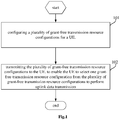
- Fig.1 is a flowchart of a data transmission method according to the present disclosure.
- the execution subject of the method is a base station, and the specific steps include steps 101-102.
- Step 101 configuring a plurality of grant-free transmission resource configurations for a UE.
- the above UE may also be referred to as a user equipment.
- the grant-free transmission resource configuration may also be referred to as a UL grant-free transmission resource configuration.
- the function of the grant-free transmission resource configuration is that the UE can perform the grant-free uplink data transmission according to the grant-free transmission resource configuration.
- Step 102 transmitting the plurality of grant-free transmission resource configurations to the UE, to enable the UE to select one grant-free transmission resource configuration from the plurality of grant-free transmission resource configurations to perform uplink data transmission.
- each grant-free transmission resource configuration includes one or more of the following configuration parameters: a time-frequency resource, a Reference Signal (RS) parameter, a Modulation and Coding Scheme (MCS), repetition mode, a Redundancy Version (RV), a transmission power, and a transmission interval.
- RS Reference Signal
- MCS Modulation and Coding Scheme
- RV Redundancy Version
- the configuration parameter set is a subset of the grant-free transmission resource configurations.
- the sizes and positions of the time-frequency resources, the RS parameters, the MCSs, the repetition modes, and the RVs are the same, and the transmission intervals and the transmission powers are different; or all configuration parameters included in the different grant-free transmission resource configurations are different.
- one of the one or more different configuration parameters is a time-frequency resource.
- the configuration or multiplexing of the time-frequency resource is as follows: the time-frequency resources in the different grant-free transmission resource configurations are mutually orthogonal, such as Frequency Division Multiplexing (FDM), Time Division Multiplexing (TDM), or Code Division Multiplexing (CDM).
- FDM Frequency Division Multiplexing
- TDM Time Division Multiplexing
- CDM Code Division Multiplexing
- the time-frequency resources in the different grant-free transmission resource configurations at least partially overlap each other.
- the time-frequency resources in the different grant-free transmission resource configurations have a nested relationship, that is, a small-sized time-frequency resource is a part of a large-sized time-frequency resource.
- the base station can configure a plurality of grant-free transmission resource configurations for the UE, the UE can select one of the configured plurality of grant-free transmission resource configurations according to a service performance index requirement and/or an amount of data to be transmitted, so as to perform uplink data transmission, which can improve resource utilization, be adaptable to more flexible service requirements, and reduce the probability of collisions between different UEs.
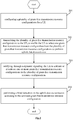
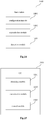
- Fig.2 is another flowchart of a data transmission method of the present disclosure, the execution subject of the method is a base station, and specific steps include steps 201-203.
- Step 201 configuring a plurality of grant-free transmission resource configurations for a UE.
- Resource utilization is improved by configuring a plurality of grant-free transmission resource configurations.
- Step 202 transmitting the plurality of grant-free transmission resource configurations to the UE, to enable the UE to select one grant-free transmission resource configuration from the plurality of grant-free transmission resource configurations to perform uplink data transmission.
- step 201 is the same as step 101 in Fig.1
- step 202 is the same as step 102 in Fig.1 , and details thereof are not given herein again.
- Step 203 notifying, through a dynamic signaling, the UE to activate or deactivate one or more grant-free transmission resource configurations in the plurality of grant-free transmission resource configurations.
- the above dynamic signaling may be L1 or L2 control signaling, but the present disclosure is not limited thereto.
- the method further includes step 204.
- step 204 performing a blind detection on the uplink data transmission according to the activated grant-free transmission resource configuration.
- the base station can perform the blind detection on the uplink data transmission according to the activated grant-free transmission resource configuration, the complexity of the blind detection performed by the base station is reduced.
- the base station can configure a plurality of grant-free transmission resource configurations for the UE, the UE can select one of the plurality of configured grant-free transmission resource configurations according to a service performance index requirement and/or an amount of data to be transmitted, and perform the uplink data transmission according to the configuration parameters in the corresponding grant-free transmission resource configurations, which can improve resource utilization, be adaptable to more flexible service requirements, and reduce the probability of collisions between different UEs.
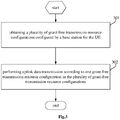
- Fig.3 is a flowchart of a data transmission method, the execution subject of the method is a UE, and the specific steps include steps 301-302.
- Step 301 obtaining a plurality of grant-free transmission resource configurations configured by a base station for the UE.
- Step 302 performing uplink data transmission according to one grant-free transmission resource configuration in the plurality of grant-free transmission resource configurations.
- each grant-free transmission resource configuration includes one or more of the following configuration parameters: a time-frequency resource, a Reference Signal (RS) parameter, a Modulation and Coding Scheme (MCS), repetition mode, a Redundancy Version (RV), a transmission power, and a transmission interval.
- RS Reference Signal
- MCS Modulation and Coding Scheme
- RV Redundancy Version
- the configuration parameter set is a subset of the grant-free transmission resource configurations.
- the sizes and positions of the time-frequency resources, the RS parameters, the MCSs, the repetition modes, and the RVs are the same, and the transmission intervals and the transmission powers are different; or all configuration parameters included in the different grant-free transmission resource configurations are different.
- one of the one or more different configuration parameters is a time-frequency resource.
- the configuration or multiplexing of the time-frequency resource is as follows: the time-frequency resources in the different grant-free transmission resource configurations are mutually orthogonal, such as Frequency Division Multiplexing (FDM), Time Division Multiplexing (TDM), or Code Division Multiplexing (CDM).
- FDM Frequency Division Multiplexing
- TDM Time Division Multiplexing
- CDM Code Division Multiplexing
- the time-frequency resources in the different grant-free transmission resource configurations at least partially overlap each other.
- the time-frequency resources in the different grant-free transmission resource configurations have a nested relationship, that is, a small-sized time-frequency resource is a part of a large-sized time-frequency resource.
- the base station can configure a plurality of grant-free transmission resource configurations for the UE, the UE can select one of the plurality of configured grant-free transmission resource configurations according to a service performance index requirement and/or an amount of data to be transmitted, so as to perform uplink data transmission according to configuration parameters in the corresponding grant-free transmission resource configuration, which can improve resource utilization, be adaptable to more flexible service requirements, and reduce the probability of collisions between different UEs.
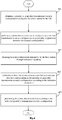
- Fig.4 is another flowchart of a data transmission method.
- the execution subject of the method is a UE, and the specific steps include steps 401-405.
- Step 401 obtaining a plurality of grant-free transmission resource configurations configured by a base station for the UE.
- Step 402 performing uplink data transmission according to one grant-free transmission resource configuration in the plurality of grant-free transmission resource configurations.
- step 401 is the same as the step 301 in Fig.3
- step 402 is the same as the step 302 in Fig.3 , details thereof are not given herein again.
- Step 403 obtaining indication information transmitted by the base station through a dynamic signaling.
- the above dynamic signaling may be L1 or L2 control signaling, but the present disclosure is not limited thereto.
- Step 404 activating or deactivating one or more grant-free transmission resource configurations in the plurality of grant-free transmission resource configurations according to the indication information.
- Step 405 performing the uplink data transmission according to the activated grant-free transmission resource configuration.
- the base station can perform the blind detection on the uplink data transmission according to the activated grant-free transmission resource configuration, the complexity of the blind detection performed by the base station is reduced.
- the base station can configure a plurality of grant-free transmission resource configurations for the UE, the UE can select one of the plurality of configured grant-free transmission resource configurations according to a service performance index requirement and/or an amount of data to be transmitted, and perform the uplink data transmission according to the configuration parameters in the corresponding grant-free transmission resource configurations, which can improve resource utilization, be adaptable to more flexible service requirements, and reduce the probability of collisions between different UEs.
- a base station configures a plurality of grant-free transmission resource configurations for a UE, including a grant-free resource configuration 1 and a grant-free resource configuration 2, and the grant-free resource configuration 1 and the grant-free resource configuration 2 have the following relationship: the sizes and positions of the time-frequency resources are the same, the other configuration parameters (such as the RS parameters, the MCSs, the repetition modes, the RVs or the transmission powers, etc.) are all the same, and the transmission intervals are different.
- the transmission interval of the grant-free resource configuration 1 is T1
- the transmission interval of the grant-free resource configuration 2 is T2.
- the sizes of the resource block of the grant-free resource configuration 1 and the grant-free resource configuration 2 are both F1.
- the service 1 is a delay-sensitive service
- the service 2 is a service that does not require a low-delay.
- the UE may select the grant-free resource configuration 2 for the data transmission of the service 1, and select the grant-free resource configuration 1 for the data transmission of the service 2.
- a base station configures a plurality of grant-free transmission resource configurations for a UE, including a grant-free resource configuration 1 and a grant-free resource configuration 2, and the grant-free resource configuration 1 and the grant-free resource configuration 2 have the following relationship: the sizes and positions of the time-frequency resources are the same, the other configuration parameters (such as the RS parameters, the MCSs, the repetition modes, the RVs, etc.) are all the same, and the transmission intervals and the transmission powers are different.
- the transmission interval of the grant-free resource configuration 1 is T1
- the transmission power of the grant-free resource configuration 1 is PI
- the transmission interval of the grant-free resource configuration 2 is T2
- the transmission power of the grant-free resource configuration 2 is P2.
- the size of the resource block of the grant-free resource configuration 1 and the size of the resource block of the grant-free resource configuration 2 are both F1.
- a base station configures a plurality of grant-free resource configurations for a UE, including a grant-free resource configuration 1 and a grant-free resource configuration 2, and the grant-free resource configuration 1 and the grant-free resource configuration 2 have the following relationship: parts of configuration parameters (such as the RS parameters, the MCSs, the repetition modes, the RVs, the transmission power, or the transmission interval, etc.) are all the same, the sizes of the time-frequency resources are different, and the frequency domains of the time-frequency resources are mutually orthogonal.
- the transmission intervals of the grant-free resource configuration 1 and the grant-free resource configuration 2 are both T1.
- the size of the resource block of the grant-free resource configuration 1 is F1
- the size of the resource block of the grant-free resource configuration 2 is F2
- the F1 is greater than the F2
- the resource blocks of the grant-free resource configuration 1 and the grant-free resource configuration 2 are mutually orthogonal in the frequency domain.
- the UE selects the corresponding grant-free transmission resource configuration according to the amount of the data of the service and the size of the load. For example, when the data block of the service 1 is large, and the data block of the service 2 is small, the UE can select the grant-free resource configuration 1 for the data transmission of the service 1, and select the grant-free resource configuration 2 for the data transmission of the service 2.
- a base station configures a plurality of grant-free transmission resource configurations for a UE, including a grant-free resource configuration 1 and a grant-free resource configuration 2.
- the grant-free resource configuration 1 and the grant-free resource configuration 2 have the following relationship: parts of the configuration parameters (such as the RS parameters, the MCSs, the repetition modes, the RVs, the transmission intervals or the transmission powers, etc.) are all the same, the sizes of the time-frequency resources are different, and the time domains of the time-frequency resources are mutually orthogonal.
- the transmission intervals of the grant-free resource configuration 1 and the grant-free resource configuration 2 are both T1.
- a base station configures a plurality of grant-free transmission resource configurations for a UE, including a grant-free resource configuration 1 and a grant-free resource configuration 2, and the grant-free resource configuration 1 and the grant-free resource configuration 2 have the following relationship: parts of the configuration parameters (such as the RS parameters, the MCSs, the repetition modes, the RVs, the transmission intervals or the transmission powers, etc.) are all the same, the sizes of the time-frequency resource are the same, the time-frequency resources are code division multiplexed by orthogonal codes (such as a Orthogonal Cover Code (OCC) 1 for the grant-free resource configuration 1 and a OCC 2 for the grant-free resource configuration 2), and are mutually orthogonal in the code domain.
- the transmission intervals of the grant-free resource configuration 1 and the grant-free resource configuration 2 are both T.
- a base station configures a plurality of grant-free transmission resource configurations for a UE, including a grant-free resource configuration 1 and a grant-free resource configuration 2, and the grant-free resource configuration 1 and the grant-free resource configuration 2 have the following relationship: parts of the configuration parameters (such as the RS parameters, the MCSs, the repetition modes, the RVs, the transmission intervals or the transmission powers, etc.) are all the same, the sizes of the time-frequency resources are different, the positions of the time-frequency resources are as shown in Fig.
- parts of the configuration parameters such as the RS parameters, the MCSs, the repetition modes, the RVs, the transmission intervals or the transmission powers, etc.
- the size of the resource block of the grant-free resource configuration 1 is F1
- the size of the resource block of the grant-free resource configuration 2 is F2
- the F1 is greater than the F2
- the resource blocks of the grant-free resource configuration 1 and the grant-free resource configuration 2 partially overlap each other at the time-frequency positions.
- the transmission intervals of the Grant-free resource configuration 1 and the grant-free resource configuration 2 are both T1.
- the UE selects the corresponding grant-free transmission resource configuration for uplink data transmission according to the amount of the data of the service and the size of the load. For example, when the data block of the service 1 is large, and the data block of the service 2 is small, the UE can select the grant-free resource configuration 1 for the data transmission of the service 1, and select the grant-free resource configuration 2 for the data transmission of the service 2.
- the base station can configure the grant-free transmission resource configuration with the frequency domain bandwidth F2 for different UEs at different frequency domain positions, which can reduce the collision probability of different UEs when the transmission block is small.
- a base station configures for the UE a plurality of grant-free transmission resource configurations, including a grant-free resource configuration 1 and a grant-free resource configuration 2, and the grant-free resource configuration 1 and the grant-free resource configuration 2 have the following relationship: parts of the configuration parameters (such as the RS parameters, the MCSs, the repetition modes, the RVs, or the transmission powers, etc.) are all the same, the sizes of the time-frequency resources are different, and the positions of the time-frequency resources are as shown in Fig.11 , wherein the size of the resource block of the grant-free resource configuration 1 is F1, the size of the resource block of the grant-free resource configuration 2 is F2, the F1 is greater than the F2, the resource blocks of the grant-free resource configuration 1 and the grant-free resource configuration 2 partially overlap each other at time-frequency positions; the transmission intervals of the grant-free resource configuration 1 and the grant-free resource configuration 2 are different, the transmission interval of the grant-free resource configuration 1 is T1, and the transmission interval
- a base station configures a plurality of grant-free transmission resource configurations for a UE
- different sizes of the time-frequency resources can be allocated.
- the starting position of the time-frequency resource thereof is limited, for example, it may limit that the starting position is related to the time-frequency resource number.
- the base station may configure different grant-free transmission resource configurations with different small time-frequency resources for different UEs.
- the grant-free resource configuration 2-1 and the grant-free resource configuration 2-2 of the UE2 are mutually orthogonal to the grant-free resource configuration 1-1 and the grant-free resource configuration 1-2 of UE1, respectively.
- the base station may activate/deactivate each grant-free transmission resource configuration (including a grant-free resource configuration 1 and a grant-free resource configuration 2) by a dynamic signaling (a L1 or L2 control signaling), the UE selects corresponding configuration parameters for uplink data transmission from one or more activated grant-free transmission resource configurations by obtaining the indication of the base station, the base station is only required to perform the blind detection on the uplink transmission according to the corresponding configuration parameters in the activated grant-free transmission resource configurations.
- a dynamic signaling a L1 or L2 control signaling
- the base station deactivates the grant-free resource configuration 1 through the L1 or L2 control signaling, and maintains the grant-free resource configuration 2 in the activated state, to be adapted to the next low-latency service and reduce the complexity of the blind detection performed by the base station.
- the size of resource block of the grant-free resource configuration 1 is F1
- the size of resource block of the grant-free resource configuration 2 is F2, the F1 is greater than the F2.
- the resource blocks of the grant-free resource configuration 1 and the grant-free resource configuration 2 partially overlap each other at the time-frequency positions.
- the transmission interval of the grant-free resource configuration 1 is T1
- the transmission interval of the grant-free resource configuration 2 is T2.
- some embodiments of the present disclosure further provide a base station. Since the principle of solving the problem by the base station is similar to the principle of solving the problem by the data transmission method at a base station side in some embodiments of the present disclosure, the implementation of the base station can refer to the implementation of the method, and details thereof are not given herein again.
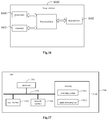
- Fig.14 illustrates a structural schematic diagram of a base station of the present disclosure, and the base station includes a configuration module 1401 and a transmission module 1402.
- the configuration module 1401 is configured to configure a plurality of grant-free transmission resource configurations for a UE.
- the transmission module 1402 is configured to transmit the plurality of grant-free transmission resource configurations to the UE, to enable the UE to select one grant-free transmission resource configuration from the plurality of grant-free transmission resource configurations to perform uplink data transmission.
- each of the grant-free transmission resource configurations comprises one or more following configuration parameters: a time-frequency resource, a reference signal parameter, a modulation and coding scheme, a repetition mode, a redundancy version, a transmission power, and a transmission interval.
- there being one or more different configuration parameters for the different grant-free transmission resource configurations in the plurality of grant-free transmission resource configurations comprises: when there is the one or more different configuration parameters for the different grant-free transmission resource configurations, one of the one or more different configuration parameters is a time-frequency resource.
- the time-frequency resources in the different grant-free transmission resource configurations at least partially overlap each other; or the time-frequency resources in the different grant-free transmission resource configurations are mutually orthogonal.
- the time-frequency resources in the different grant-free transmission resource configurations at least partially overlapping each other comprises: when sizes of the time-frequency resources in the different grant-free transmission resource configurations are different, the time-frequency resources in the different grant-free transmission resource configurations have a nested relationship.
- the transmission module is further configured to: notify, through a dynamic signaling, the UE to activate or deactivate one or more grant-free transmission resource configurations in the plurality of grant-free transmission resource configurations.
- the base station 1400 further includes a detection module 1403.
- the detection module 1403 is configured to perform a blind detection on the uplink data transmission according to the activated grant-free transmission resource configuration.
- the base station provided by the present disclosure can perform the method embodiment at the above base station side, the implementation principle and the technical effect thereof are similar, and details thereof are not given herein again.
- some embodiments of the preset disclosure further provide a UE. Since the principle of solving the problem by the UE is similar to the principle of solving the problem by the data transmission method at a UE side in some embodiments of the present disclosure, the implementation of the UE can refer to the implementation of the implementation of the method, and details thereof are not given herein again.
- Fig.15 illustrates a structural schematic diagram of a UE.
- the UE 1500 includes an obtaining module 1501 and a transmission module 1502.
- the obtaining module 1501 is configured to obtain a plurality of grant-free transmission resource configurations configured by a base station for the UE.
- the transmission module 1502 is further configured to perform uplink data transmission according to one grant-free transmission resource configuration in the plurality of grant-free transmission resource configurations.
- the transmission module is further configured to select, according to a service performance index requirement and/or an amount of data to be transmitted, one grant-free transmission resource configuration from the plurality of grant-free transmission resource configurations, to perform the uplink data transmission.
- each of the grant-free transmission resource configurations comprises one or more following configuration parameters: a time-frequency resource, a reference signal parameter, a modulation and coding scheme, a repetition mode, a redundancy version, a transmission power, and a transmission interval.
- there being one or more different configuration parameters for the different grant-free transmission resource configurations in the plurality of grant-free transmission resource configurations comprises: when there is the one or more different configuration parameters for the different grant-free transmission resource configurations, one of the one or more different configuration parameters is a time-frequency resource.
- the time-frequency resources in the different grant-free transmission resource configurations at least partially overlap each other; or the time-frequency resources in the different grant-free transmission resource configurations are mutually orthogonal.
- the time-frequency resources in the different grant-free transmission resource configurations at least partially overlapping each other comprises: when sizes of the time-frequency resources in the different grant-free transmission resource configurations are different, the time-frequency resources in the different grant-free transmission resource configurations have a nested relationship.
- the UE 1500 further includes a control module 1503.
- the obtaining module 1501 is further configured to obtain indication information transmitted by the base station using a dynamic signaling;
- the control module 1503 is configured to activate or deactivate one or more grant-free transmission resource configurations in the plurality of grant-free transmission resource configurations according to the indication information;
- the transmission module 1502 is further configured to perform the uplink data transmission according to the activated grant-free transmission resource configuration.
- the UE provided by the present disclosure can perform the method embodiment at the above UE side, the implementation principle and the technical effect thereof are similar, and details thereof are not given herein again.
- the present disclosure further provides schematic diagrams of hardware structures of a base station and a UE.
- Fig.16 is a structural diagram of a base station of the present disclosure, and the base station can implement the details of the data transmission method corresponding to Fig.1 and Fig.2 and achieve the same effect.
- the base station 1600 includes a processor 1601, a transceiver 1602, a memory 1603, a user interface 1604, and a bus interface.
- the base station 1600 further includes a computer program stored in the memory 1603 and executable by the processor 1601, when the computer program is executed by the processor 1601, the processor 1601 implements the following steps: configuring a plurality of grant-free transmission resource configurations for a UE; and transmitting the plurality of grant-free transmission resource configurations to the UE, to enable the UE to select one grant-free transmission resource configuration from the plurality of grant-free transmission resource configurations to perform uplink data transmission.
- the bus architecture may include any quantity of buses and bridges connected to each other, so as to connect various circuits for one or more processors such as the first processor 1601 and one or more memories such as the first memory 1603.
- the bus architecture may be used to connect various other circuits, such as a circuit for a peripheral device, a circuit for a voltage stabilizer and a power management circuit, which are known in the art and will not be further described herein.
- the transceiver 1602 may include a plurality of elements, i.e., a transmitter and a receiver for communication with various other devices over a transmission medium.
- the processor 1601 may take charge of managing the bus architecture as well general processings.
- the first memory 1603 may store data therein for the operation of the processor 1601.
- the processor 1601 may further implement the following steps: notifying, through a dynamic signaling, the UE to activate or deactivate one or more grant-free transmission resource configurations in the plurality of grant-free transmission resource configurations
- the processor 1601 when the computer program is executed by the processor 1601, the processor 1601 further implements the following steps: performing a blind detection on the uplink data transmission according to the activated grant-free transmission resource configuration.
- the base station in some embodiments of the present disclosure can configure a plurality of grant-free transmission resource configurations for the UE, the UE can select one of the plurality of configured grant-free transmission resource configurations according to a service performance index requirement and/or an amount of data to be transmitted, so as to perform uplink data transmission, which can improve resource utilization, be adaptable to more flexible service requirements, and reduce the probability of transmission collisions between different UEs.
- Fig.17 is another structural schematic diagram of a UE according to the present disclosure.
- the terminal shown in Fig.17 includes at least one processor 1701, a memory 1702, at least one network interface 1704 and a user interface 1703.
- the various components in terminal 1700 are coupled together by a bus system 1705.
- the bus system 1705 is used to implement link communication between these components.
- the bus system 1705 includes a power bus, a control bus, and a status signal bus in addition to the data bus.
- various buses are labeled as the bus system 1705 in Fig.17 .
- the user interface 1703 may include a display, a keyboard or a pointing device (e.g., a mouse, a trackball, a touch pad or a touch screen, etc.).
- a pointing device e.g., a mouse, a trackball, a touch pad or a touch screen, etc.
- the memory 1702 in the embodiment of the present disclosure can be either a volatile memory or a non-volatile memory, or can include both the volatile memory and the non-volatile memory.
- the non-volatile memory may be a Read-Only Memory (ROM), a Programmable ROM (PROM), an Erasable PROM (EPROM), or an Electrically EPROM (EEPROM) or a flash memory.
- the volatile memory can be a Random Access Memory (RAM) that serves as an external cache.
- a RAM such as a Static RAM (SRAM), a Dynamic RAM (DRAM), a Synchronous DRAM (SDRAM), a Double Data Rate SDRAM (DDRSDRAM), an Enhanced SDRAM (ESDRAM), a Synchlink DRAM (SLDRAM) and a Direct Rambus RAM (DRRAM).
- SRAM Static RAM
- DRAM Dynamic RAM
- SDRAM Synchronous DRAM
- DDRSDRAM Double Data Rate SDRAM
- ESDRAM Enhanced SDRAM
- SLDRAM Synchlink DRAM
- DRRAM Direct Rambus RAM
- the memory 1702 stores the following elements: an executable module or a data structure, or a subset thereof, or an extension set thereof; an operating system 17021; and an application program 17022.
- the operating system 17021 includes various system programs, such as a framework layer, a core library layer, and a driver layer, so as to implement various basic services and process a hardware-based tasks.
- the application program 17022 includes various application programs, such as a media player, and a browser, so as to implement various application services.
- a program implementing the methods of the embodiments of the present disclosure can be included in the application program 17022.
- the processor 1701 is configured to call a program or an instruction stored in the memory 1702, e.g., the program or instruction stored in the application program 17022 to implement the method implemented by the above UE.
- the above methods disclosed in the embodiments of the present disclosure may be applied to the processor 1701 or implemented by the processor 1701.
- the processor 1701 may be an integrated circuit chip having a signal processing capability. In the implementation process, each step of the foregoing method may be implemented by an integrated logic circuit being a hardware in the processor 1701 or an instruction in a form of software.
- the processor 1701 can be a general-purpose processor, a Digital Signal Processor (DSP), an Application Specific Integrated Circuit (ASIC), a Field Programmable Gate Array (FPGA), another programmable logic device, a discrete gate, a transistor logic device, or an independent hardware component, so as to implement or executes methods, steps, and logical block diagrams disclosed in some embodiments of the present disclosure.
- DSP Digital Signal Processor
- ASIC Application Specific Integrated Circuit
- FPGA Field Programmable Gate Array
- the general purpose processor may be a microprocessor, any conventional processor or the like.
- the steps of the method disclosed in the embodiments of the present disclosure may be implemented directly by the hardware decoding processor, or by a combination of a hardware and a software module in the hardware decoding processor.
- the software module can be located in a storage medium known in the art, such as a RAM, a flash memory, a ROM, a PROM, an electrically erasable programmable memory, and a register.
- the storage medium is located in the memory 1702, and the processor 1701 reads the information in the memory 1702 and implements the steps of the above methods in combination with its hardware.
- the embodiments of the present disclosure may be implemented by hardware, software, firmware, middleware, microcode or a combination thereof.
- the processing unit may be implemented in one or more of an ASIC, a DSP, a DSP device (DSPD), a Programmable Logic Device (PLD), an FPGA, a general-purpose processor, a controller, a microcontroller, a microprocessor, another electronic unit capable of achieving the functions in the present disclosure, or a combination thereof.
- the techniques described by some embodiments of the present disclosure can be implemented by modules (e.g., procedures, functions, etc.) that perform the functions described by some embodiments of the present disclosure.
- the software code can be stored in the memory and executed by the processor.
- the memory can be implemented within the processor or external to the processor.
- the processor 1701 may call a program or an instruction stored by the memory 1702 to perform the following process: obtaining a plurality of grant-free transmission resource configurations configured by a base station for the UE; and performing uplink data transmission according to one grant-free transmission resource configuration in the plurality of grant-free transmission resource configurations.
- the processor 1701 further is configured to call a program or an instruction stored by the memory 1702 to perform the following process: selecting, according to a service performance index requirement and/or an amount of data to be transmitted, one grant-free transmission resource configuration from the plurality of grant-free transmission resource configurations, to perform the uplink data transmission.
- the processor 1701 further is configured to call a program or an instruction stored by the memory 1702 to perform the following process: obtaining indication information transmitted by the base station through a dynamic signaling; activating or deactivating one or more grant-free transmission resource configurations in the plurality of grant-free transmission resource configurations according to the indication information; and performing the uplink data transmission according to the activated grant-free transmission resource configuration.
- the base station in some embodiments of the present disclosure can configure a plurality of grant-free transmission resource configurations for the UE, the UE can select one of the plurality of configured grant-free transmission resource configurations according to a service performance index requirement and/or an amount of data to be transmitted, so as to perform uplink data transmission, which can improve resource utilization, be adaptable to more flexible service requirements, and reduce the probability of transmission collisions between different UEs.
- Some embodiments of the present disclosure further provides a computer readable storage medium, a data transmission program is stored on the computer readable storage medium, when the data transmission program is executed by a processor, the processor implements steps of the above data transmission method at the base station side or at the UE side.
- the computer readable storage medium provided by the present disclosure may be volatile or non-volatile.
- the device and method may be implemented in any other ways.
- the embodiments for the apparatus are merely for illustrative purposes, and the units are provided merely on the basis of their logic functions, and the present disclosure is not limited thereto.
- some modules or units may be combined together or integrated into another system.
- some features may be omitted or not executed.
- the coupling connection, direct coupling connection or communication connection between the devices or units may be implemented via interfaces, and the indirect coupling connection or communication connection between the devices or units may be implemented in an electrical or mechanical form or in another form.
- the units described separately may be, or may not be, physically separated from each other.
- the units for displaying may be, or may not be, physical units, i.e., they may be arranged at an identical position, or distributed on a plurality of network elements. Parts or all of the units may be selected in accordance with the practical need, so as to achieve the purpose of the present disclosure.
- the functional units in the embodiments of the present disclosure may be integrated into a processing unit, or the functional units may exist independently, or two or more functional units may be integrated into a unit.
- the functional units are implemented in a software form and sold or used as a separate product, they may be stored in a computer-readable medium.
- the technical solutions of the present disclosure partial or substantially, or parts of the technical solutions of the present disclosure contributing to the prior art, may appear in the form of software products, which may be stored in a storage medium and include several instructions so as to enable a computer equipment (e.g., a personal computer, a server or network equipment) to execute all or parts of the steps of the method according to the embodiments of the present disclosure.
- the storage medium includes any medium capable of storing therein program codes, e.g., a Universal Serial Bus (USB) flash disk, a mobile Hard Disk (HD), a ROM, a RAM, a magnetic disk or an optical disk.
Landscapes
- Engineering & Computer Science (AREA)
- Computer Networks & Wireless Communication (AREA)
- Signal Processing (AREA)
- Quality & Reliability (AREA)
- Mobile Radio Communication Systems (AREA)
Abstract
Description
- This application claims priority to Chinese Patent Application No.
201710482714.4 - The present disclosure relates to the field of communication technologies, in particular to a data transmission method, a base station and a User Equipment (UE).
- A further 5th Generation (5G) mobile communication system is required to adapt to more diverse scenarios and service requirements. The main scenarios of the New Radio (NR) includes enhance Mobile Broadband (eMBB), massive Machine Type of Communication (mMTC), and Ultra Reliable Low Latency Communication (URLLC), these scenarios require high reliability, low latency, large bandwidth and wide coverage and the like of the system. For services of certain scenarios, low latency and highly reliable transmission are required. For such service requirements, the NR supports grant-free transmission mode to reduce signaling interaction procedures, and guarantee low latency requirement.
- In the NR system, an UpLink (UL) grant-free transmission supports semi-static resource configuration, and reserves resources for possible UEs performing the UL grant-free transmission. The grant-free transmission mode can be used for low-latency services. To ensure low-latency service requirements, semi-statically configured grant-free resources are required to ensure a certain density in time to satisfy delay-sensitive service requirements. If more resources are reserved, the time-frequency resources that can be used by normal services will be occupied, resulting in a decrease in resource utilization.
- It is discussed in the NR that grant-free transmission can be performed under shared resources. Therefore, it is considered to allocate the same resources to different UEs (UEs), so as to provide resource utilization. However, such implementation may bring a problem of transmission collision.
- However, there is no effective mechanism for dealing with resource collisions.
- In a first aspect, the present disclosure provides a data transmission method applied to a base station, and the data transmission method includes: configuring a plurality of grant-free transmission resource configurations for a UE; and transmitting the plurality of grant-free transmission resource configurations to the UE, to enable the UE to select one grant-free transmission resource configuration from the plurality of grant-free transmission resource configurations to perform uplink data transmission.
- In a second aspect, the present disclosure further provides a data transmission method applied to a UE, and the data transmission method includes: obtaining a plurality of grant-free transmission resource configurations configured by a base station for the UE; and performing uplink data transmission according to one grant-free transmission resource configuration in the plurality of grant-free transmission resource configurations.
- In a third aspect, the present disclosure further provides a base station, and the base station includes: a configuration module, configured to configure a plurality of grant-free transmission resource configurations for a UE; and a transmission module, configured to transmit the plurality of grant-free transmission resource configurations to the UE, to enable the UE to select one grant-free transmission resource configuration from the plurality of grant-free transmission resource configurations to perform uplink data transmission.
- In a fourth aspect, the present disclosure further provides a UE, and the UE includes: an obtaining module, configured to obtain a plurality of grant-free transmission resource configurations configured by a base station for the UE; and a transmission module, configured to perform uplink data transmission according to one grant-free transmission resource configuration in the plurality of grant-free transmission resource configurations.
- In a fifth aspect, the present disclosure further provides a base station, and the base station includes: a memory, a processor, and a computer program stored in the memory and executable by the processor, wherein the processor is configured to execute the computer program to implement steps of the data transmission method of the first aspect as described above.
- In a sixth aspect, the present disclosure further provides a UE, and the UE includes: a memory, a processor, and a computer program stored in the memory and executable by the processor, wherein the processor is configured to execute the computer program to implement steps of the data transmission method of the second aspect as described above.
- In a seventh aspect, the present disclosure further provides a computer readable storage medium storing therein data and a program, wherein the data and the program are configured to be executed by a processor, to implement steps of the data transmission method of the first aspect or the second aspect as described above.
- Various other advantages and benefits will become apparent to a person skilled in the art by reading the detailed description of the optional embodiments below. The drawings are only for the purpose of illustrating optional embodiments and are not to be considered to limit the present disclosure. Throughout the drawings, the same reference numerals are used to refer to the same parts. In the figures:
-
Fig.1 is a flowchart of a data transmission method at a base station side according to the present disclosure; -
Fig.2 is another flowchart of a data transmission method at a base station side according to the present disclosure; -
Fig.3 is a flowchart of a data transmission method at a UE side according to the present disclosure; -
Fig.4 is another flowchart of a data transmission method at a UE side according to the present disclosure; -
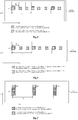
Fig.5 to Fig.13 are schematic diagrams of grant-free transmission resource configurations according to the present disclosure; -
Fig.14 is a structural schematic diagram of a base station according to the present disclosure; -
Fig.15 is a structural schematic diagram of a UE according to the present disclosure; -
Fig.16 is another structural schematic diagram of a base station according to the present disclosure; and -
Fig.17 is another structural schematic diagram of a UE according to the present disclosure. - In order to make the objects, technical solutions and advantages of the present disclosure more clear, the technical solutions of the present disclosure will be clearly and completely described below in combination with the drawings of the present disclosure. It is apparent that embodiments described are only a part of embodiments of the present disclosure, and are not all of embodiments thereof. Based on the embodiments of the present disclosure, all the other embodiments obtained by a person skilled in the art without any creative works are within the protection scope of the present disclosure.
- The terms "comprise" and "have" and any variants thereof in the claims of description of the present disclosure are intended to cover non-exclusive inclusions, for example, a process, method, system, product, or device that includes a series of steps or units is not necessarily limited to those steps or units clearly listed, but may include other steps or units not explicitly listed or inherent to such processes, methods, products or devices.
- A data transmission method, a base station and a UE provided by the present disclosure can solve the problem of the resource collision.
- In the present disclosure, the base station may be a Base Transceiver Station (BTS) in the Global System of Mobile communication (GSM) or the Code Division Multiple Access (CDMA) system, or may be a Node B (NB) in the Wideband Code Division Multiple Access (WCDMA) system, or may also be an Evolutional Node B (eNB or eNodeB) in the LTE system, or a base station in a New Radio Access Technology (New RAT or NR), or a relay station or an access point, or a base station in a future 5G network, etc., which is not limited herein.
- In the present disclosure, the UE may be a wireless terminal or a wired terminal, and the wireless terminal may be a device that provides voice and/or other service data connectivity to the user, a handheld device having a wireless connecting function, or another processing device connected to a wireless modem. The wireless terminal can communicate with one or more core networks via a Radio Access Network (RAN), and the wireless terminal can be a mobile terminal, such as a mobile phone (or referred to as a "cellular" phone) and a computer having a mobile terminal, e.g., a portable, pocket, handheld, computer built-in or in-vehicle mobile device, which exchanges language and/or data with the RAN. For example, it may be a device such as a Personal Communication Service (PCS) telephone, a cordless telephone, a Session Initiation Protocol (SIP) telephone, a Wireless Local Loop (WLL) station, or a Personal Digital Assistant (PDA). The wireless terminal may also be referred to as a system, a subscriber unit, a subscriber station, a mobile station, a mobile, a remote station, a remote terminal, an access terminal, a user terminal, a user agent, a user device or a user equipment, which is not limited herein.
- Referring to
Fig.1, Fig.1 is a flowchart of a data transmission method according to the present disclosure. The execution subject of the method is a base station, and the specific steps include steps 101-102. - Step 101: configuring a plurality of grant-free transmission resource configurations for a UE.
- The above UE may also be referred to as a user equipment.
- The grant-free transmission resource configuration may also be referred to as a UL grant-free transmission resource configuration. The function of the grant-free transmission resource configuration is that the UE can perform the grant-free uplink data transmission according to the grant-free transmission resource configuration.
- Step 102: transmitting the plurality of grant-free transmission resource configurations to the UE, to enable the UE to select one grant-free transmission resource configuration from the plurality of grant-free transmission resource configurations to perform uplink data transmission.
- Optionally, each grant-free transmission resource configuration includes one or more of the following configuration parameters: a time-frequency resource, a Reference Signal (RS) parameter, a Modulation and Coding Scheme (MCS), repetition mode, a Redundancy Version (RV), a transmission power, and a transmission interval. It should be understood that, the specific configuration parameters included in the grant-free transmission resource configuration are not limited in the embodiment of the present disclosure.
- Optionally, in order to further avoid resource collision, there is one or more different configuration parameters for different grant-free transmission resource configurations in the plurality of grant-free transmission resource configurations.
- For example, with respect to the different grant-free transmission resource configurations, there is only one different configuration parameter, and the other configuration parameters are the same. For example, with respect to the different grant-free transmission resource configurations, the sizes and positions of the time-frequency resources, the RS parameters, the MCSs, the repetition modes, and the RVs are the same, and only the transmission intervals are different; or configuration parameters in configuration parameter sets of different grant-free transmission resource configurations are all different, the other configuration parameters are all the same. The configuration parameter set is a subset of the grant-free transmission resource configurations. For example, with respect to the different grant-free transmission resource configurations, the sizes and positions of the time-frequency resources, the RS parameters, the MCSs, the repetition modes, and the RVs are the same, and the transmission intervals and the transmission powers are different; or all configuration parameters included in the different grant-free transmission resource configurations are different.
- Optionally, in the present disclosure, when there is one or more different configuration parameters for the different grant-free transmission resource configurations, one of the one or more different configuration parameters is a time-frequency resource. The configuration or multiplexing of the time-frequency resource is as follows: the time-frequency resources in the different grant-free transmission resource configurations are mutually orthogonal, such as Frequency Division Multiplexing (FDM), Time Division Multiplexing (TDM), or Code Division Multiplexing (CDM). The time-frequency resources in the different grant-free transmission resource configurations at least partially overlap each other. For example, when sizes of the time-frequency resources in the different grant-free transmission resource configurations are different, the time-frequency resources in the different grant-free transmission resource configurations have a nested relationship, that is, a small-sized time-frequency resource is a part of a large-sized time-frequency resource.
- In the present disclosure, the base station can configure a plurality of grant-free transmission resource configurations for the UE, the UE can select one of the configured plurality of grant-free transmission resource configurations according to a service performance index requirement and/or an amount of data to be transmitted, so as to perform uplink data transmission, which can improve resource utilization, be adaptable to more flexible service requirements, and reduce the probability of collisions between different UEs.
- Referring to
Fig.2, Fig.2 is another flowchart of a data transmission method of the present disclosure, the execution subject of the method is a base station, and specific steps include steps 201-203. - Step 201: configuring a plurality of grant-free transmission resource configurations for a UE.
- Resource utilization is improved by configuring a plurality of grant-free transmission resource configurations.
- Step 202: transmitting the plurality of grant-free transmission resource configurations to the UE, to enable the UE to select one grant-free transmission resource configuration from the plurality of grant-free transmission resource configurations to perform uplink data transmission.
- It should be noted that, the
above step 201 is the same asstep 101 inFig.1 , and theabove step 202 is the same asstep 102 inFig.1 , and details thereof are not given herein again. - Step 203: notifying, through a dynamic signaling, the UE to activate or deactivate one or more grant-free transmission resource configurations in the plurality of grant-free transmission resource configurations.
- The above dynamic signaling may be L1 or L2 control signaling, but the present disclosure is not limited thereto.
- Referring again to
Fig.2 , the method further includesstep 204. - In step 204: performing a blind detection on the uplink data transmission according to the activated grant-free transmission resource configuration.
- Since the base station can perform the blind detection on the uplink data transmission according to the activated grant-free transmission resource configuration, the complexity of the blind detection performed by the base station is reduced.
- In the present disclosure, the base station can configure a plurality of grant-free transmission resource configurations for the UE, the UE can select one of the plurality of configured grant-free transmission resource configurations according to a service performance index requirement and/or an amount of data to be transmitted, and perform the uplink data transmission according to the configuration parameters in the corresponding grant-free transmission resource configurations, which can improve resource utilization, be adaptable to more flexible service requirements, and reduce the probability of collisions between different UEs.
- Referring to
Fig.3, Fig.3 is a flowchart of a data transmission method, the execution subject of the method is a UE, and the specific steps include steps 301-302. - Step 301: obtaining a plurality of grant-free transmission resource configurations configured by a base station for the UE.
- Step 302: performing uplink data transmission according to one grant-free transmission resource configuration in the plurality of grant-free transmission resource configurations.
- Optionally, each grant-free transmission resource configuration includes one or more of the following configuration parameters: a time-frequency resource, a Reference Signal (RS) parameter, a Modulation and Coding Scheme (MCS), repetition mode, a Redundancy Version (RV), a transmission power, and a transmission interval. It should be understood that, the specific configuration parameters included in the grant-free transmission resource configuration are not limited in the embodiment of the present disclosure.
- Optionally, there is one or more different configuration parameters for different grant-free transmission resource configurations in the plurality of grant-free transmission resource configurations.
- Optionally, with respect to the different grant-free transmission resource configurations, there is only one different configuration parameter, and the other configuration parameters are the same. For example, with respect to the different grant-free transmission resource configurations, the sizes and positions of the time-frequency resources, the RS parameters, the MCSs, the repetition modes, and the RVs are the same, and only the transmission intervals are different; or configuration parameters in configuration parameter sets of different grant-free transmission resource configurations are all different, the other configuration parameters are all the same. The configuration parameter set is a subset of the grant-free transmission resource configurations. For example, with respect to the different grant-free transmission resource configurations, the sizes and positions of the time-frequency resources, the RS parameters, the MCSs, the repetition modes, and the RVs are the same, and the transmission intervals and the transmission powers are different; or all configuration parameters included in the different grant-free transmission resource configurations are different.
- Optionally, in the present disclosure, when there is one or more different configuration parameters for the different grant-free transmission resource configurations, one of the one or more different configuration parameters is a time-frequency resource. The configuration or multiplexing of the time-frequency resource is as follows: the time-frequency resources in the different grant-free transmission resource configurations are mutually orthogonal, such as Frequency Division Multiplexing (FDM), Time Division Multiplexing (TDM), or Code Division Multiplexing (CDM).
- The time-frequency resources in the different grant-free transmission resource configurations at least partially overlap each other. For example, when sizes of the time-frequency resources in the different grant-free transmission resource configurations are different, the time-frequency resources in the different grant-free transmission resource configurations have a nested relationship, that is, a small-sized time-frequency resource is a part of a large-sized time-frequency resource.
- In the present disclosure, the base station can configure a plurality of grant-free transmission resource configurations for the UE, the UE can select one of the plurality of configured grant-free transmission resource configurations according to a service performance index requirement and/or an amount of data to be transmitted, so as to perform uplink data transmission according to configuration parameters in the corresponding grant-free transmission resource configuration, which can improve resource utilization, be adaptable to more flexible service requirements, and reduce the probability of collisions between different UEs.
- Referring to
Fig.4, Fig.4 is another flowchart of a data transmission method. The execution subject of the method is a UE, and the specific steps include steps 401-405. - Step 401: obtaining a plurality of grant-free transmission resource configurations configured by a base station for the UE.
- Step 402: performing uplink data transmission according to one grant-free transmission resource configuration in the plurality of grant-free transmission resource configurations.
- It should be noted that, the
above step 401 is the same as thestep 301 inFig.3 , and theabove step 402 is the same as thestep 302 inFig.3 , details thereof are not given herein again. - Step 403: obtaining indication information transmitted by the base station through a dynamic signaling.
- The above dynamic signaling may be L1 or L2 control signaling, but the present disclosure is not limited thereto.
- Step 404: activating or deactivating one or more grant-free transmission resource configurations in the plurality of grant-free transmission resource configurations according to the indication information.
- Step 405: performing the uplink data transmission according to the activated grant-free transmission resource configuration.
- Since the base station can perform the blind detection on the uplink data transmission according to the activated grant-free transmission resource configuration, the complexity of the blind detection performed by the base station is reduced.
- In the present disclosure, the base station can configure a plurality of grant-free transmission resource configurations for the UE, the UE can select one of the plurality of configured grant-free transmission resource configurations according to a service performance index requirement and/or an amount of data to be transmitted, and perform the uplink data transmission according to the configuration parameters in the corresponding grant-free transmission resource configurations, which can improve resource utilization, be adaptable to more flexible service requirements, and reduce the probability of collisions between different UEs.
- As sown in
Fig.5 , a base station configures a plurality of grant-free transmission resource configurations for a UE, including a grant-free resource configuration 1 and a grant-free resource configuration 2, and the grant-free resource configuration 1 and the grant-free resource configuration 2 have the following relationship: the sizes and positions of the time-frequency resources are the same, the other configuration parameters (such as the RS parameters, the MCSs, the repetition modes, the RVs or the transmission powers, etc.) are all the same, and the transmission intervals are different. The transmission interval of the grant-free resource configuration 1 is T1, and the transmission interval of the grant-free resource configuration 2 is T2. The sizes of the resource block of the grant-free resource configuration 1 and the grant-free resource configuration 2 are both F1. - If the
service 1 is a delay-sensitive service, theservice 2 is a service that does not require a low-delay. According to the performance index of the service, the UE may select the grant-free resource configuration 2 for the data transmission of theservice 1, and select the grant-free resource configuration 1 for the data transmission of theservice 2. - As shown in
Fig.6 , a base station configures a plurality of grant-free transmission resource configurations for a UE, including a grant-free resource configuration 1 and a grant-free resource configuration 2, and the grant-free resource configuration 1 and the grant-free resource configuration 2 have the following relationship: the sizes and positions of the time-frequency resources are the same, the other configuration parameters (such as the RS parameters, the MCSs, the repetition modes, the RVs, etc.) are all the same, and the transmission intervals and the transmission powers are different. The transmission interval of the grant-free resource configuration 1 is T1, the transmission power of the grant-free resource configuration 1 is PI, the transmission interval of the grant-free resource configuration 2 is T2, and the transmission power of the grant-free resource configuration 2 is P2. The size of the resource block of the grant-free resource configuration 1 and the size of the resource block of the grant-free resource configuration 2 are both F1. - Referring to
Fig.7 , a base station configures a plurality of grant-free resource configurations for a UE, including a grant-free resource configuration 1 and a grant-free resource configuration 2, and the grant-free resource configuration 1 and the grant-free resource configuration 2 have the following relationship: parts of configuration parameters (such as the RS parameters, the MCSs, the repetition modes, the RVs, the transmission power, or the transmission interval, etc.) are all the same, the sizes of the time-frequency resources are different, and the frequency domains of the time-frequency resources are mutually orthogonal. The transmission intervals of the grant-free resource configuration 1 and the grant-free resource configuration 2 are both T1. The size of the resource block of the grant-free resource configuration 1 is F1, the size of the resource block of the grant-free resource configuration 2 is F2, the F1 is greater than the F2, and the resource blocks of the grant-free resource configuration 1 and the grant-free resource configuration 2 are mutually orthogonal in the frequency domain. - The UE selects the corresponding grant-free transmission resource configuration according to the amount of the data of the service and the size of the load. For example, when the data block of the
service 1 is large, and the data block of theservice 2 is small, the UE can select the grant-free resource configuration 1 for the data transmission of theservice 1, and select the grant-free resource configuration 2 for the data transmission of theservice 2. - Referring to
Fig.8 , a base station configures a plurality of grant-free transmission resource configurations for a UE, including a grant-free resource configuration 1 and a grant-free resource configuration 2. The grant-free resource configuration 1 and the grant-free resource configuration 2 have the following relationship: parts of the configuration parameters (such as the RS parameters, the MCSs, the repetition modes, the RVs, the transmission intervals or the transmission powers, etc.) are all the same, the sizes of the time-frequency resources are different, and the time domains of the time-frequency resources are mutually orthogonal. The transmission intervals of the grant-free resource configuration 1 and the grant-free resource configuration 2 are both T1. - Referring to
Fig.9 , a base station configures a plurality of grant-free transmission resource configurations for a UE, including a grant-free resource configuration 1 and a grant-free resource configuration 2, and the grant-free resource configuration 1 and the grant-free resource configuration 2 have the following relationship: parts of the configuration parameters (such as the RS parameters, the MCSs, the repetition modes, the RVs, the transmission intervals or the transmission powers, etc.) are all the same, the sizes of the time-frequency resource are the same, the time-frequency resources are code division multiplexed by orthogonal codes (such as a Orthogonal Cover Code (OCC) 1 for the grant-free resource configuration 1 and aOCC 2 for the grant-free resource configuration 2), and are mutually orthogonal in the code domain. The transmission intervals of the grant-free resource configuration 1 and the grant-free resource configuration 2 are both T. - Referring to
Fig.10 , a base station configures a plurality of grant-free transmission resource configurations for a UE, including a grant-free resource configuration 1 and a grant-free resource configuration 2, and the grant-free resource configuration 1 and the grant-free resource configuration 2 have the following relationship: parts of the configuration parameters (such as the RS parameters, the MCSs, the repetition modes, the RVs, the transmission intervals or the transmission powers, etc.) are all the same, the sizes of the time-frequency resources are different, the positions of the time-frequency resources are as shown inFig. 10 , wherein the size of the resource block of the grant-free resource configuration 1 is F1, and the size of the resource block of the grant-free resource configuration 2 is F2, the F1 is greater than the F2, the resource blocks of the grant-free resource configuration 1 and the grant-free resource configuration 2 partially overlap each other at the time-frequency positions. The transmission intervals of the Grant-free resource configuration 1 and the grant-free resource configuration 2 are both T1. - The UE selects the corresponding grant-free transmission resource configuration for uplink data transmission according to the amount of the data of the service and the size of the load. For example, when the data block of the
service 1 is large, and the data block of theservice 2 is small, the UE can select the grant-free resource configuration 1 for the data transmission of theservice 1, and select the grant-free resource configuration 2 for the data transmission of theservice 2. The base station can configure the grant-free transmission resource configuration with the frequency domain bandwidth F2 for different UEs at different frequency domain positions, which can reduce the collision probability of different UEs when the transmission block is small. - Referring to
Fig.11 , a base station configures for the UE a plurality of grant-free transmission resource configurations, including a grant-free resource configuration 1 and a grant-free resource configuration 2, and the grant-free resource configuration 1 and the grant-free resource configuration 2 have the following relationship: parts of the configuration parameters (such as the RS parameters, the MCSs, the repetition modes, the RVs, or the transmission powers, etc.) are all the same, the sizes of the time-frequency resources are different, and the positions of the time-frequency resources are as shown inFig.11 , wherein the size of the resource block of the grant-free resource configuration 1 is F1, the size of the resource block of the grant-free resource configuration 2 is F2, the F1 is greater than the F2, the resource blocks of the grant-free resource configuration 1 and the grant-free resource configuration 2 partially overlap each other at time-frequency positions; the transmission intervals of the grant-free resource configuration 1 and the grant-free resource configuration 2 are different, the transmission interval of the grant-free resource configuration 1 is T1, and the transmission interval of the grant-free resource configuration 2 is T2. A large quantity of resources are allocated for the resource configuration of grant transmission with large transmission interval, which can improve resource utilization to some extent. - Referring to
Fig.12 , when a base station configures a plurality of grant-free transmission resource configurations for a UE, different sizes of the time-frequency resources can be allocated. In order to reduce the detection complexity of the base station, for the grant-free transmission resource configuration with a size of the certain time-frequency resource, the starting position of the time-frequency resource thereof is limited, for example, it may limit that the starting position is related to the time-frequency resource number. For example, as shown inFig.12 , three grant-free transmission resource configurations including a grant-free resource configuration 1-1, a grant-free resource configuration 1-2 and a grant-free resource configuration 1-3 are configured for a UE1, the sizes of the their resource blocks are L=1, L=2 and L=4, respectively; wherein the small resource block is a subset of the large resource blocks, for example, the resource block of the grant-free resource configuration 1-1 is a subset of the resource blocks of the grant-free resource configuration 1-2, and the resource blocks of the grant-free resource configuration 1-2 is a subset of the resource blocks of the grant-free resource configuration 1-3. - Similarity, three grant-free transmission resource configurations including a grant-free resource configuration 2-1, a grant-free resource configuration 2-2 and a grant-free resource configuration 2-3 are configured for a UE2, the sizes of the resource blocks are L=1, L=2 and L=4, respectively; wherein the small resource block is a subset of the large resource blocks, for example, the resource block of the grant-free resource configuration 2-1 is a subset of the resource blocks of the grant-free resource configuration 2-2, and the resource blocks of the grant-free resource configuration 2-2 is a subset of the resource blocks of the grant-free resource configuration 2-3.
- The base station may configure different grant-free transmission resource configurations with different small time-frequency resources for different UEs. As shown in
Fig.12 , the grant-free resource configuration 2-1 and the grant-free resource configuration 2-2 of the UE2 are mutually orthogonal to the grant-free resource configuration 1-1 and the grant-free resource configuration 1-2 of UE1, respectively. - Referring to
Fig.13 , the base station may activate/deactivate each grant-free transmission resource configuration (including a grant-free resource configuration 1 and a grant-free resource configuration 2) by a dynamic signaling (a L1 or L2 control signaling), the UE selects corresponding configuration parameters for uplink data transmission from one or more activated grant-free transmission resource configurations by obtaining the indication of the base station, the base station is only required to perform the blind detection on the uplink transmission according to the corresponding configuration parameters in the activated grant-free transmission resource configurations. - For example, as shown in
Fig.13 , the base station deactivates the grant-free resource configuration 1 through the L1 or L2 control signaling, and maintains the grant-free resource configuration 2 in the activated state, to be adapted to the next low-latency service and reduce the complexity of the blind detection performed by the base station. The size of resource block of the grant-free resource configuration 1 is F1, the size of resource block of the grant-free resource configuration 2 is F2, the F1 is greater than the F2. The resource blocks of the grant-free resource configuration 1 and the grant-free resource configuration 2 partially overlap each other at the time-frequency positions. The transmission interval of the grant-free resource configuration 1 is T1, and the transmission interval of the grant-free resource configuration 2 is T2. - Based on the same invention conception, some embodiments of the present disclosure further provide a base station. Since the principle of solving the problem by the base station is similar to the principle of solving the problem by the data transmission method at a base station side in some embodiments of the present disclosure, the implementation of the base station can refer to the implementation of the method, and details thereof are not given herein again.
- Referring to
Fig.14, Fig.14 illustrates a structural schematic diagram of a base station of the present disclosure, and the base station includes aconfiguration module 1401 and atransmission module 1402. - The
configuration module 1401 is configured to configure a plurality of grant-free transmission resource configurations for a UE. - The
transmission module 1402 is configured to transmit the plurality of grant-free transmission resource configurations to the UE, to enable the UE to select one grant-free transmission resource configuration from the plurality of grant-free transmission resource configurations to perform uplink data transmission. - Optionally, there is one or more different configuration parameters for different grant-free transmission resource configurations in the plurality of grant-free transmission resource configurations.
- Optionally, each of the grant-free transmission resource configurations comprises one or more following configuration parameters: a time-frequency resource, a reference signal parameter, a modulation and coding scheme, a repetition mode, a redundancy version, a transmission power, and a transmission interval.
- Optionally, there being one or more different configuration parameters for the different grant-free transmission resource configurations in the plurality of grant-free transmission resource configurations comprises: when there is the one or more different configuration parameters for the different grant-free transmission resource configurations, one of the one or more different configuration parameters is a time-frequency resource.
- The time-frequency resources in the different grant-free transmission resource configurations at least partially overlap each other; or the time-frequency resources in the different grant-free transmission resource configurations are mutually orthogonal.
- Optionally, the time-frequency resources in the different grant-free transmission resource configurations at least partially overlapping each other comprises: when sizes of the time-frequency resources in the different grant-free transmission resource configurations are different, the time-frequency resources in the different grant-free transmission resource configurations have a nested relationship.
- Optionally, the transmission module is further configured to: notify, through a dynamic signaling, the UE to activate or deactivate one or more grant-free transmission resource configurations in the plurality of grant-free transmission resource configurations.
- Referring again to
Fig.14 , thebase station 1400 further includes adetection module 1403. Thedetection module 1403 is configured to perform a blind detection on the uplink data transmission according to the activated grant-free transmission resource configuration. - The base station provided by the present disclosure can perform the method embodiment at the above base station side, the implementation principle and the technical effect thereof are similar, and details thereof are not given herein again.
- Based on the same invention conception, some embodiments of the preset disclosure further provide a UE. Since the principle of solving the problem by the UE is similar to the principle of solving the problem by the data transmission method at a UE side in some embodiments of the present disclosure, the implementation of the UE can refer to the implementation of the implementation of the method, and details thereof are not given herein again.
- Referring to
Fig.15, Fig.15 illustrates a structural schematic diagram of a UE. TheUE 1500 includes an obtainingmodule 1501 and atransmission module 1502. - The obtaining
module 1501 is configured to obtain a plurality of grant-free transmission resource configurations configured by a base station for the UE. - Optionally, the
transmission module 1502 is further configured to perform uplink data transmission according to one grant-free transmission resource configuration in the plurality of grant-free transmission resource configurations. - Optionally, the transmission module is further configured to select, according to a service performance index requirement and/or an amount of data to be transmitted, one grant-free transmission resource configuration from the plurality of grant-free transmission resource configurations, to perform the uplink data transmission.
- Optionally, there is one or more different configuration parameters for different grant-free transmission resource configurations in the plurality of grant-free transmission resource configurations.
- Optionally, each of the grant-free transmission resource configurations comprises one or more following configuration parameters: a time-frequency resource, a reference signal parameter, a modulation and coding scheme, a repetition mode, a redundancy version, a transmission power, and a transmission interval.
- Optionally, there being one or more different configuration parameters for the different grant-free transmission resource configurations in the plurality of grant-free transmission resource configurations comprises: when there is the one or more different configuration parameters for the different grant-free transmission resource configurations, one of the one or more different configuration parameters is a time-frequency resource.
- Optionally, the time-frequency resources in the different grant-free transmission resource configurations at least partially overlap each other; or the time-frequency resources in the different grant-free transmission resource configurations are mutually orthogonal.
- Optionally, the time-frequency resources in the different grant-free transmission resource configurations at least partially overlapping each other comprises: when sizes of the time-frequency resources in the different grant-free transmission resource configurations are different, the time-frequency resources in the different grant-free transmission resource configurations have a nested relationship.
- Optionally, the
UE 1500 further includes acontrol module 1503. The obtainingmodule 1501 is further configured to obtain indication information transmitted by the base station using a dynamic signaling; thecontrol module 1503 is configured to activate or deactivate one or more grant-free transmission resource configurations in the plurality of grant-free transmission resource configurations according to the indication information; and thetransmission module 1502 is further configured to perform the uplink data transmission according to the activated grant-free transmission resource configuration. - The UE provided by the present disclosure can perform the method embodiment at the above UE side, the implementation principle and the technical effect thereof are similar, and details thereof are not given herein again.
- In the following, the present disclosure further provides schematic diagrams of hardware structures of a base station and a UE.
- Referring to
Fig.16, Fig.16 is a structural diagram of a base station of the present disclosure, and the base station can implement the details of the data transmission method corresponding toFig.1 andFig.2 and achieve the same effect. As shown inFig.16 , thebase station 1600 includes aprocessor 1601, atransceiver 1602, amemory 1603, a user interface 1604, and a bus interface. - Optionally, the
base station 1600 further includes a computer program stored in thememory 1603 and executable by theprocessor 1601, when the computer program is executed by theprocessor 1601, theprocessor 1601 implements the following steps: configuring a plurality of grant-free transmission resource configurations for a UE; and transmitting the plurality of grant-free transmission resource configurations to the UE, to enable the UE to select one grant-free transmission resource configuration from the plurality of grant-free transmission resource configurations to perform uplink data transmission. - In
Fig.16 , the bus architecture may include any quantity of buses and bridges connected to each other, so as to connect various circuits for one or more processors such as thefirst processor 1601 and one or more memories such as thefirst memory 1603. In addition, the bus architecture may be used to connect various other circuits, such as a circuit for a peripheral device, a circuit for a voltage stabilizer and a power management circuit, which are known in the art and will not be further described herein. Thetransceiver 1602 may include a plurality of elements, i.e., a transmitter and a receiver for communication with various other devices over a transmission medium. - The
processor 1601 may take charge of managing the bus architecture as well general processings. Thefirst memory 1603 may store data therein for the operation of theprocessor 1601. - Optionally, when the computer program is executed by the
processor 1601, theprocessor 1601 may further implement the following steps: notifying, through a dynamic signaling, the UE to activate or deactivate one or more grant-free transmission resource configurations in the plurality of grant-free transmission resource configurations - Optionally, when the computer program is executed by the
processor 1601, theprocessor 1601 further implements the following steps: performing a blind detection on the uplink data transmission according to the activated grant-free transmission resource configuration. - The base station in some embodiments of the present disclosure can configure a plurality of grant-free transmission resource configurations for the UE, the UE can select one of the plurality of configured grant-free transmission resource configurations according to a service performance index requirement and/or an amount of data to be transmitted, so as to perform uplink data transmission, which can improve resource utilization, be adaptable to more flexible service requirements, and reduce the probability of transmission collisions between different UEs.
-
Fig.17 is another structural schematic diagram of a UE according to the present disclosure. As shown inFig.17 , the terminal shown inFig.17 includes at least oneprocessor 1701, amemory 1702, at least onenetwork interface 1704 and auser interface 1703. The various components in terminal 1700 are coupled together by abus system 1705. It should be appreciated that thebus system 1705 is used to implement link communication between these components. Thebus system 1705 includes a power bus, a control bus, and a status signal bus in addition to the data bus. However, for clarity of description, various buses are labeled as thebus system 1705 inFig.17 . - The
user interface 1703 may include a display, a keyboard or a pointing device (e.g., a mouse, a trackball, a touch pad or a touch screen, etc.). - It is to be understood that the
memory 1702 in the embodiment of the present disclosure can be either a volatile memory or a non-volatile memory, or can include both the volatile memory and the non-volatile memory. The non-volatile memory may be a Read-Only Memory (ROM), a Programmable ROM (PROM), an Erasable PROM (EPROM), or an Electrically EPROM (EEPROM) or a flash memory. The volatile memory can be a Random Access Memory (RAM) that serves as an external cache. Exemplarily but not restrictively, many forms of a RAM are available, such as a Static RAM (SRAM), a Dynamic RAM (DRAM), a Synchronous DRAM (SDRAM), a Double Data Rate SDRAM (DDRSDRAM), an Enhanced SDRAM (ESDRAM), a Synchlink DRAM (SLDRAM) and a Direct Rambus RAM (DRRAM). Thememory 1702 of the systems and methods described in the embodiments of the present disclosure is intended to include, but is not limited to, these and any other suitable type of memory. - In some embodiments, the
memory 1702 stores the following elements: an executable module or a data structure, or a subset thereof, or an extension set thereof; anoperating system 17021; and anapplication program 17022. - The
operating system 17021 includes various system programs, such as a framework layer, a core library layer, and a driver layer, so as to implement various basic services and process a hardware-based tasks. Theapplication program 17022 includes various application programs, such as a media player, and a browser, so as to implement various application services. A program implementing the methods of the embodiments of the present disclosure can be included in theapplication program 17022. - In some embodiments of the present disclosure, the
processor 1701 is configured to call a program or an instruction stored in thememory 1702, e.g., the program or instruction stored in theapplication program 17022 to implement the method implemented by the above UE. - The above methods disclosed in the embodiments of the present disclosure may be applied to the
processor 1701 or implemented by theprocessor 1701. Theprocessor 1701 may be an integrated circuit chip having a signal processing capability. In the implementation process, each step of the foregoing method may be implemented by an integrated logic circuit being a hardware in theprocessor 1701 or an instruction in a form of software. Theprocessor 1701 can be a general-purpose processor, a Digital Signal Processor (DSP), an Application Specific Integrated Circuit (ASIC), a Field Programmable Gate Array (FPGA), another programmable logic device, a discrete gate, a transistor logic device, or an independent hardware component, so as to implement or executes methods, steps, and logical block diagrams disclosed in some embodiments of the present disclosure. The general purpose processor may be a microprocessor, any conventional processor or the like. The steps of the method disclosed in the embodiments of the present disclosure may be implemented directly by the hardware decoding processor, or by a combination of a hardware and a software module in the hardware decoding processor. The software module can be located in a storage medium known in the art, such as a RAM, a flash memory, a ROM, a PROM, an electrically erasable programmable memory, and a register. The storage medium is located in thememory 1702, and theprocessor 1701 reads the information in thememory 1702 and implements the steps of the above methods in combination with its hardware. - It is to be understood that, the embodiments of the present disclosure may be implemented by hardware, software, firmware, middleware, microcode or a combination thereof. For the hardware implementation, the processing unit may be implemented in one or more of an ASIC, a DSP, a DSP device (DSPD), a Programmable Logic Device (PLD), an FPGA, a general-purpose processor, a controller, a microcontroller, a microprocessor, another electronic unit capable of achieving the functions in the present disclosure, or a combination thereof.
- For software implementation, the techniques described by some embodiments of the present disclosure can be implemented by modules (e.g., procedures, functions, etc.) that perform the functions described by some embodiments of the present disclosure. The software code can be stored in the memory and executed by the processor. The memory can be implemented within the processor or external to the processor.
- Specifically, the
processor 1701 may call a program or an instruction stored by thememory 1702 to perform the following process: obtaining a plurality of grant-free transmission resource configurations configured by a base station for the UE; and performing uplink data transmission according to one grant-free transmission resource configuration in the plurality of grant-free transmission resource configurations. - Specifically, the
processor 1701 further is configured to call a program or an instruction stored by thememory 1702 to perform the following process: selecting, according to a service performance index requirement and/or an amount of data to be transmitted, one grant-free transmission resource configuration from the plurality of grant-free transmission resource configurations, to perform the uplink data transmission. - Specifically, the
processor 1701 further is configured to call a program or an instruction stored by thememory 1702 to perform the following process: obtaining indication information transmitted by the base station through a dynamic signaling; activating or deactivating one or more grant-free transmission resource configurations in the plurality of grant-free transmission resource configurations according to the indication information; and performing the uplink data transmission according to the activated grant-free transmission resource configuration. - The base station in some embodiments of the present disclosure can configure a plurality of grant-free transmission resource configurations for the UE, the UE can select one of the plurality of configured grant-free transmission resource configurations according to a service performance index requirement and/or an amount of data to be transmitted, so as to perform uplink data transmission, which can improve resource utilization, be adaptable to more flexible service requirements, and reduce the probability of transmission collisions between different UEs.
- Some embodiments of the present disclosure further provides a computer readable storage medium, a data transmission program is stored on the computer readable storage medium, when the data transmission program is executed by a processor, the processor implements steps of the above data transmission method at the base station side or at the UE side. The computer readable storage medium provided by the present disclosure may be volatile or non-volatile.
- A person skilled in the art may understand that, units and steps described in the embodiments of the present disclosure may be implemented in the form of electronic hardware, or a combination of a computer program and the electronic hardware. Whether or not these functions are executed by hardware or software depends on specific applications or design constraints of the technical solution. Different methods may be adopted by a person skilled in the art with respect to the specific applications so as to achieve the described functions, without departing from the scope of the present disclosure.
- A person skilled in the art may further understand that, for convenience and clarification, operation procedures of the system, device and units described hereinabove may refer to the corresponding procedures in the method embodiments, and details thereof are not given herein again.
- It should be further appreciated that, in the embodiments provided by the present application, the device and method may be implemented in any other ways. For example, the embodiments for the apparatus are merely for illustrative purposes, and the units are provided merely on the basis of their logic functions, and the present disclosure is not limited thereto. During the actual application, for example, some modules or units may be combined together or integrated into another system. Alternatively, some features may be omitted or not executed. In addition, the coupling connection, direct coupling connection or communication connection between the devices or units may be implemented via interfaces, and the indirect coupling connection or communication connection between the devices or units may be implemented in an electrical or mechanical form or in another form.
- The units described separately may be, or may not be, physically separated from each other. The units for displaying may be, or may not be, physical units, i.e., they may be arranged at an identical position, or distributed on a plurality of network elements. Parts or all of the units may be selected in accordance with the practical need, so as to achieve the purpose of the present disclosure.
- In addition, the functional units in the embodiments of the present disclosure may be integrated into a processing unit, or the functional units may exist independently, or two or more functional units may be integrated into a unit.
- In the case that the functional units are implemented in a software form and sold or used as a separate product, they may be stored in a computer-readable medium. Based on this, the technical solutions of the present disclosure, partial or substantially, or parts of the technical solutions of the present disclosure contributing to the prior art, may appear in the form of software products, which may be stored in a storage medium and include several instructions so as to enable a computer equipment (e.g., a personal computer, a server or network equipment) to execute all or parts of the steps of the method according to the embodiments of the present disclosure. The storage medium includes any medium capable of storing therein program codes, e.g., a Universal Serial Bus (USB) flash disk, a mobile Hard Disk (HD), a ROM, a RAM, a magnetic disk or an optical disk.
- The above description is only the specific embodiments of the present disclosure, but the scope of the present disclosure is not limited thereto, and changes or replacements that any person skilled in the art can easily think of within the technical scope disclosed by the present disclosure are intended to be covered by the present disclosure. Therefore, the scope of protection of the present disclosure shall be subjected to the scope of protection of the claims.
Claims (35)
- A data transmission method, which is applied to a base station and comprises:configuring a plurality of grant-free transmission resource configurations for a User Equipment (UE); andtransmitting the plurality of grant-free transmission resource configurations to the UE, to enable the UE to select one grant-free transmission resource configuration from the plurality of grant-free transmission resource configurations to perform uplink data transmission.
- The method according to claim 1, wherein there is one or more different configuration parameters for different grant-free transmission resource configurations in the plurality of grant-free transmission resource configurations.
- The method according to claim 1 or 2, wherein each of the grant-free transmission resource configurations comprises one or more following configuration parameters: a time-frequency resource, a reference signal parameter, a modulation and coding scheme, a repetition mode, a redundancy version, a transmission power, and a transmission interval.
- The method according to claim 2, wherein there being one or more different configuration parameters for the different grant-free transmission resource configurations in the plurality of grant-free transmission resource configurations comprises:
when there is the one or more different configuration parameters for the different grant-free transmission resource configurations, one of the one or more different configuration parameters is a time-frequency resource. - The method according to claim 4, wherein
the time-frequency resources in the different grant-free transmission resource configurations at least partially overlap each other; or
the time-frequency resources in the different grant-free transmission resource configurations are mutually orthogonal. - The method according to claim 5, wherein the time-frequency resources in the different grant-free transmission resource configurations at least partially overlapping each other comprises:
when sizes of the time-frequency resources in the different grant-free transmission resource configurations are different, the time-frequency resources in the different grant-free transmission resource configurations have a nested relationship. - The method according to claim 1, further comprising:
notifying, through a dynamic signaling, the UE to activate or deactivate one or more grant-free transmission resource configurations in the plurality of grant-free transmission resource configurations. - The method according to claim 7, further comprising:
performing a blind detection on the uplink data transmission according to the activated grant-free transmission resource configuration. - A data transmission method, which is applied to a UE and comprises:obtaining a plurality of grant-free transmission resource configurations configured by a base station for the UE; andperforming uplink data transmission according to one grant-free transmission resource configuration in the plurality of grant-free transmission resource configurations.
- The method according to claim 9, wherein performing the uplink data transmission according to one grant-free transmission resource configuration in the plurality of grant-free transmission resource configurations comprises:
selecting, according to a service performance index requirement and/or an amount of data to be transmitted, one grant-free transmission resource configuration from the plurality of grant-free transmission resource configurations, to perform the uplink data transmission. - The method according to claim 9 or 10, wherein there is one or more different configuration parameters for different grant-free transmission resource configurations in the plurality of grant-free transmission resource configurations.
- The method according to claim 11, wherein each of the grant-free transmission resource configurations comprises one or more following configuration parameters: a time-frequency resource, a reference signal parameter, a modulation and coding scheme, a repetition mode, a redundancy version, a transmission power, and a transmission interval.
- The method according to claim 12, wherein there being one or more different configuration parameters for the different grant-free transmission resource configurations in the plurality of grant-free transmission resource configurations comprises:
when there is the one or more different configuration parameters for the different grant-free transmission resource configurations, one of the one or more different configuration parameters is a time-frequency resource. - The method according to claim 13, wherein
the time-frequency resources in the different grant-free transmission resource configurations at least partially overlap each other; or
the time-frequency resources in the different grant-free transmission resource configurations are mutually orthogonal. - The method according to claim 14, wherein the time-frequency resources in the different grant-free transmission resource configurations at least partially overlapping each other comprises:
when sizes of the time-frequency resources in the different grant-free transmission resource configurations are different, the time-frequency resources in the different grant-free transmission resource configurations have a nested relationship. - The method according to claim 9, further comprising:obtaining indication information transmitted by the base station through a dynamic signaling;activating or deactivating one or more grant-free transmission resource configurations in the plurality of grant-free transmission resource configurations according to the indication information; andperforming the uplink data transmission according to the activated grant-free transmission resource configuration.
- Abase station, comprising:a configuration module, configured to configure a plurality of grant-free transmission resource configurations for a UE; anda transmission module, configured to transmit the plurality of grant-free transmission resource configurations to the UE, to enable the UE to select one grant-free transmission resource configuration from the plurality of grant-free transmission resource configurations to perform uplink data transmission.
- The base station according to claim 17, wherein there is one or more different configuration parameters for different grant-free transmission resource configurations in the plurality of grant-free transmission resource configurations.
- The base station according to claim 17 or 18, wherein each of the grant-free transmission resource configurations comprises one or more following configuration parameters: a time-frequency resource, a reference signal parameter, a modulation and coding scheme, a repetition mode, a redundancy version, a transmission power, and a transmission interval.
- The base station according to claim 19, wherein there being one or more different configuration parameters for the different grant-free transmission resource configurations in the plurality of grant-free transmission resource configurations comprises:
when there is the one or more different configuration parameters for the different grant-free transmission resource configurations, one of the one or more different configuration parameters is a time-frequency resource. - The base station according to claim 20, wherein
the time-frequency resources in the different grant-free transmission resource configurations at least partially overlap each other; or
the time-frequency resources in the different grant-free transmission resource configurations are mutually orthogonal. - The base station according to claim 21, wherein the time-frequency resources in the different grant-free transmission resource configurations at least partially overlapping each other comprises:
when sizes of the time-frequency resources in the different grant-free transmission resource configurations are different, the time-frequency resources in the different grant-free transmission resource configurations have a nested relationship. - The base station according to claim 17, wherein the transmission module is further configured to:
notify, through a dynamic signaling, the UE to activate or deactivate one or more grant-free transmission resource configurations in the plurality of grant-free transmission resource configurations. - The base station according to claim 23, further comprising:
a detection module, configured to perform a blind detection on the uplink data transmission according to the activated grant-free transmission resource configuration. - A UE, comprising:an obtaining module, configured to obtain a plurality of grant-free transmission resource configurations configured by a base station for the UE; anda transmission module, configured to perform uplink data transmission according to one grant-free transmission resource configuration in the plurality of grant-free transmission resource configurations.
- The UE according to claim 25, wherein,
the transmission module is further configured to select, according to a service performance index requirement and/or an amount of data to be transmitted, one grant-free transmission resource configuration from the plurality of grant-free transmission resource configurations, to perform the uplink data transmission. - The UE according to claim 25 or 26, wherein there is one or more different configuration parameters for different grant-free transmission resource configurations in the plurality of grant-free transmission resource configurations.
- The UE according to claim 27, wherein each of the grant-free transmission resource configurations comprises one or more following configuration parameters: a time-frequency resource, a reference signal parameter, a modulation and coding scheme, a repetition mode, a redundancy version, a transmission power, and a transmission interval.
- The UE according to claim 28, wherein there being one or more different configuration parameters for the different grant-free transmission resource configurations in the plurality of grant-free transmission resource configurations comprises:
when there is the one or more different configuration parameters for the different grant-free transmission resource configurations, one of the one or more different configuration parameters is a time-frequency resource. - The UE according to claim 29, wherein
the time-frequency resources in the different grant-free transmission resource configurations at least partially overlap each other; or
the time-frequency resources in the different grant-free transmission resource configurations are mutually orthogonal. - The UE according to claim 30, wherein the time-frequency resources in the different grant-free transmission resource configurations at least partially overlapping each other comprises:
when sizes of the time-frequency resources in the different grant-free transmission resource configurations are different, the time-frequency resources in the different grant-free transmission resource configurations have a nested relationship. - The UE according to claim 25, further comprising:a control module;wherein the obtaining module is further configured to obtain indication information transmitted by the base station through a dynamic signaling ;the control module is configured to activate or deactivate one or more grant-free transmission resource configurations in the plurality of grant-free transmission resource configurations according to the indication information; andthe transmission module is further configured to perform the uplink data transmission according to the activated grant-free transmission resource configuration.
- Abase station, comprising:
a memory, a processor, and a computer program being stored in the memory and executable by the processor, wherein the processor is configured to execute the computer program to implement steps of the data transmission method according to any one of claims 1 to 8. - A UE, comprising:
a memory, a processor, and a computer program being stored in the memory and executable by the processor, wherein the processor is configured to execute the computer program to implement steps of the data transmission method according to any one of claims 9 to 16. - A computer readable storage medium storing therein data and a program, wherein the data and the program are configured to be executed by a processor, to implement steps of the data transmission method according to any one of claims 1 to 8, or steps of the data transmission method according to any one of claims 9 to 16.
Applications Claiming Priority (2)
| Application Number | Priority Date | Filing Date | Title |
|---|---|---|---|
| CN201710482714.4A CN109121166A (en) | 2017-06-22 | 2017-06-22 | A kind of data transmission method, base station and user terminal |
| PCT/CN2018/091032 WO2018233521A1 (en) | 2017-06-22 | 2018-06-13 | Data transmission method, base station, and user terminal |
Publications (3)
| Publication Number | Publication Date |
|---|---|
| EP3644673A1 true EP3644673A1 (en) | 2020-04-29 |
| EP3644673A4 EP3644673A4 (en) | 2020-06-03 |
| EP3644673B1 EP3644673B1 (en) | 2021-10-13 |
Family
ID=64732905
Family Applications (1)
| Application Number | Title | Priority Date | Filing Date |
|---|---|---|---|
| EP18820319.4A Active EP3644673B1 (en) | 2017-06-22 | 2018-06-13 | Data transmission method, base station, and user terminal |
Country Status (7)
| Country | Link |
|---|---|
| US (1) | US11388701B2 (en) |
| EP (1) | EP3644673B1 (en) |
| CN (1) | CN109121166A (en) |
| ES (1) | ES2899423T3 (en) |
| HU (1) | HUE056960T2 (en) |
| PT (1) | PT3644673T (en) |
| WO (1) | WO2018233521A1 (en) |
Cited By (1)
| Publication number | Priority date | Publication date | Assignee | Title |
|---|---|---|---|---|
| WO2022130254A1 (en) | 2020-12-16 | 2022-06-23 | Telefonaktiebolaget Lm Ericsson (Publ) | Method, device and apparatus for optimizing grant free uplink transmission of machine to machine (m2m) type devices |
Families Citing this family (11)
| Publication number | Priority date | Publication date | Assignee | Title |
|---|---|---|---|---|
| EP3744114B1 (en) * | 2018-01-25 | 2024-01-03 | Nokia Technologies Oy | Method and apparatus for performing wireless communications |
| CN110769510B (en) * | 2018-07-28 | 2022-07-22 | 华为技术有限公司 | Scheduling-free GF (glass fiber) resource allocation method and related equipment |
| US12022466B2 (en) * | 2018-09-27 | 2024-06-25 | Panasonic Intellectual Property Corporation Of America | Terminal and communication method for allocating uplink resources |
| CN111436135A (en) * | 2019-01-11 | 2020-07-21 | 华为技术有限公司 | Data transmission method and device |
| CN111278172B (en) * | 2019-03-27 | 2022-08-02 | 维沃移动通信有限公司 | Indication method, terminal equipment and network side equipment |
| WO2021012167A1 (en) | 2019-07-22 | 2021-01-28 | Oppo广东移动通信有限公司 | Resource processing method, apparatus, and storage medium |
| CN111093271B (en) * | 2019-07-29 | 2025-03-28 | 中兴通讯股份有限公司 | Method, device, sending device and receiving device for configuring scheduling-free transmission resources |
| CN112312573B (en) * | 2019-07-30 | 2023-01-06 | 中国信息通信研究院 | Multi-configuration resource scheduling method |
| CN113194499B (en) * | 2021-04-02 | 2022-12-09 | 西安交通大学 | A license-free adaptive transmission method based on user estimation |
| EP4333342A4 (en) * | 2021-04-28 | 2024-06-19 | Beijing Xiaomi Mobile Software Co., Ltd. | Resource multiplexing method and device thereof for direct distance measurement |
| CN115884219B (en) * | 2021-09-30 | 2026-01-30 | 大唐移动通信设备有限公司 | Activation methods, devices, terminals, and storage media |
Family Cites Families (15)
| Publication number | Priority date | Publication date | Assignee | Title |
|---|---|---|---|---|
| EP4017033A1 (en) * | 2008-03-19 | 2022-06-22 | NEC Corporation | Communication system, mobile station, base station, response decision method, resource configuration decision method, and program |
| US20140192767A1 (en) * | 2012-12-14 | 2014-07-10 | Futurewei Technologies, Inc. | System and Method for Small Traffic Transmissions |
| EP3200367B1 (en) * | 2014-09-24 | 2021-03-10 | LG Electronics Inc. | Method for transmitting d2d signal and terminal therefor |
| US11232494B2 (en) * | 2014-10-28 | 2022-01-25 | Deskpass Corporation | Resource utilization management |
| US10631330B2 (en) | 2015-04-03 | 2020-04-21 | Qualcomm Incorporated | Random access procedures under coverage limitations |
| US10021573B2 (en) | 2015-04-13 | 2018-07-10 | Industrial Technology Research Institute | Method and device for uplink transmission by using unlicensed spectrum |
| US9743423B2 (en) * | 2015-07-27 | 2017-08-22 | Futurewei Technologies, Inc. | Link adaptation in grant-free multiple access systems |
| CN106507486B (en) * | 2015-09-08 | 2020-04-28 | 华为技术有限公司 | Method, network equipment and terminal equipment for uplink data transmission |
| CN106507497B (en) | 2015-09-08 | 2020-09-11 | 华为技术有限公司 | Method, terminal device and network device for uplink data transmission |
| CN106535351B (en) * | 2015-09-09 | 2021-01-15 | 华为技术有限公司 | Method and apparatus for transmitting data |
| US10911281B2 (en) * | 2015-10-20 | 2021-02-02 | Huawei Technologies Co., Ltd. | System and method for pilot signal transmission |
| CN106658742B (en) | 2015-11-03 | 2020-07-03 | 中兴通讯股份有限公司 | Method, device and system for data scheduling and transmission |
| CN108282314B (en) * | 2017-01-06 | 2022-04-29 | 中兴通讯股份有限公司 | Resource indication method, device, base station and terminal |
| CN108668367B (en) * | 2017-04-01 | 2020-06-02 | 华为技术有限公司 | Data transmission method, network equipment and terminal |
| CN110771106B (en) * | 2017-06-15 | 2023-05-30 | 株式会社Ntt都科摩 | Terminals, base stations and systems |
-
2017
- 2017-06-22 CN CN201710482714.4A patent/CN109121166A/en active Pending
-
2018
- 2018-06-13 PT PT188203194T patent/PT3644673T/en unknown
- 2018-06-13 ES ES18820319T patent/ES2899423T3/en active Active
- 2018-06-13 HU HUE18820319A patent/HUE056960T2/en unknown
- 2018-06-13 EP EP18820319.4A patent/EP3644673B1/en active Active
- 2018-06-13 WO PCT/CN2018/091032 patent/WO2018233521A1/en not_active Ceased
- 2018-06-13 US US16/625,304 patent/US11388701B2/en active Active
Cited By (2)
| Publication number | Priority date | Publication date | Assignee | Title |
|---|---|---|---|---|
| WO2022130254A1 (en) | 2020-12-16 | 2022-06-23 | Telefonaktiebolaget Lm Ericsson (Publ) | Method, device and apparatus for optimizing grant free uplink transmission of machine to machine (m2m) type devices |
| US12513719B2 (en) | 2020-12-16 | 2025-12-30 | Valea Ab | Method, device and apparatus for optimizing grant free uplink transmission of machine to machine (M2M) type devices |
Also Published As
| Publication number | Publication date |
|---|---|
| US11388701B2 (en) | 2022-07-12 |
| ES2899423T3 (en) | 2022-03-11 |
| EP3644673A4 (en) | 2020-06-03 |
| CN109121166A (en) | 2019-01-01 |
| EP3644673B1 (en) | 2021-10-13 |
| WO2018233521A1 (en) | 2018-12-27 |
| US20210368494A1 (en) | 2021-11-25 |
| HUE056960T2 (en) | 2022-04-28 |
| PT3644673T (en) | 2021-11-19 |
Similar Documents
| Publication | Publication Date | Title |
|---|---|---|
| US11388701B2 (en) | Data transmission method, base station, and user equipment | |
| EP3644640B1 (en) | Methods for a terminal and for the peer network device for the configuration and for the release of random access resource, the related terminal, and the related network device | |
| US11310829B2 (en) | Method of transmitting information in unlicensed band and network device | |
| CN109391971B (en) | A kind of PDCCH search space configuration, monitoring method and device | |
| WO2018224013A1 (en) | Beam failure processing method, terminal and network device | |
| US11678310B2 (en) | Method for determining transmission resources, terminal device and network device | |
| KR102773840B1 (en) | Communication methods, terminals and network devices | |
| CN110831020A (en) | Method for detecting DCI (Downlink control information), method for configuring PDCCH (physical Downlink control channel) and communication device | |
| JP2019507964A (en) | Data transmission method and terminal | |
| EP3644678B1 (en) | Indication method, base station, and enhanced mobile broadband user equipment | |
| US10764004B2 (en) | Data transmission method and apparatus | |
| CA3084615C (en) | Data transmission method and terminal device | |
| US11540269B2 (en) | Wireless communication method and device | |
| KR20200052314A (en) | Wireless communication method, network device and terminal device | |
| JP2022504496A (en) | Resource setting method and equipment, communication equipment | |
| KR20200032694A (en) | Device to device communication method, terminal device and network device | |
| CN108882373B (en) | Resource allocation method, related equipment and system | |
| US11996959B2 (en) | SRS transmission method, access network device, and terminal device | |
| EP3627944B1 (en) | Method and device for transmitting data | |
| EP3986058B1 (en) | Pucch sending and information configuration method and device | |
| CN111417194A (en) | Resource mapping configuration method, network side device, user equipment and communication device | |
| CN113301659B (en) | Method and device for indicating cancellation of uplink transmission | |
| US20210212049A1 (en) | Resource allocation method and device | |
| JP7217759B2 (en) | Information transmission method and device, terminal equipment, network equipment | |
| CN116326056B (en) | Communication method and device |
Legal Events
| Date | Code | Title | Description |
|---|---|---|---|
| STAA | Information on the status of an ep patent application or granted ep patent |
Free format text: STATUS: THE INTERNATIONAL PUBLICATION HAS BEEN MADE |
|
| PUAI | Public reference made under article 153(3) epc to a published international application that has entered the european phase |
Free format text: ORIGINAL CODE: 0009012 |
|
| STAA | Information on the status of an ep patent application or granted ep patent |
Free format text: STATUS: REQUEST FOR EXAMINATION WAS MADE |
|
| 17P | Request for examination filed |
Effective date: 20200110 |
|
| AK | Designated contracting states |
Kind code of ref document: A1 Designated state(s): AL AT BE BG CH CY CZ DE DK EE ES FI FR GB GR HR HU IE IS IT LI LT LU LV MC MK MT NL NO PL PT RO RS SE SI SK SM TR |
|
| AX | Request for extension of the european patent |
Extension state: BA ME |
|
| A4 | Supplementary search report drawn up and despatched |
Effective date: 20200508 |
|
| RIC1 | Information provided on ipc code assigned before grant |
Ipc: H04W 72/04 20090101AFI20200501BHEP Ipc: H04W 72/02 20090101ALI20200501BHEP Ipc: H04W 28/02 20090101ALI20200501BHEP |
|
| DAV | Request for validation of the european patent (deleted) | ||
| DAX | Request for extension of the european patent (deleted) | ||
| GRAP | Despatch of communication of intention to grant a patent |
Free format text: ORIGINAL CODE: EPIDOSNIGR1 |
|
| STAA | Information on the status of an ep patent application or granted ep patent |
Free format text: STATUS: GRANT OF PATENT IS INTENDED |
|
| INTG | Intention to grant announced |
Effective date: 20210609 |
|
| GRAS | Grant fee paid |
Free format text: ORIGINAL CODE: EPIDOSNIGR3 |
|
| GRAA | (expected) grant |
Free format text: ORIGINAL CODE: 0009210 |
|
| STAA | Information on the status of an ep patent application or granted ep patent |
Free format text: STATUS: THE PATENT HAS BEEN GRANTED |
|
| AK | Designated contracting states |
Kind code of ref document: B1 Designated state(s): AL AT BE BG CH CY CZ DE DK EE ES FI FR GB GR HR HU IE IS IT LI LT LU LV MC MK MT NL NO PL PT RO RS SE SI SK SM TR |
|
| REG | Reference to a national code |
Ref country code: GB Ref legal event code: FG4D |
|
| REG | Reference to a national code |
Ref country code: CH Ref legal event code: EP |
|
| REG | Reference to a national code |
Ref country code: DE Ref legal event code: R096 Ref document number: 602018025123 Country of ref document: DE |
|
| REG | Reference to a national code |
Ref country code: IE Ref legal event code: FG4D |
|
| REG | Reference to a national code |
Ref country code: AT Ref legal event code: REF Ref document number: 1439092 Country of ref document: AT Kind code of ref document: T Effective date: 20211115 |
|
| REG | Reference to a national code |
Ref country code: PT Ref legal event code: SC4A Ref document number: 3644673 Country of ref document: PT Date of ref document: 20211119 Kind code of ref document: T Free format text: AVAILABILITY OF NATIONAL TRANSLATION Effective date: 20211115 |
|
| REG | Reference to a national code |
Ref country code: NL Ref legal event code: FP |
|
| REG | Reference to a national code |
Ref country code: SK Ref legal event code: T3 Ref document number: E 38578 Country of ref document: SK |
|
| REG | Reference to a national code |
Ref country code: LT Ref legal event code: MG9D |
|
| REG | Reference to a national code |
Ref country code: ES Ref legal event code: FG2A Ref document number: 2899423 Country of ref document: ES Kind code of ref document: T3 Effective date: 20220311 |
|
| REG | Reference to a national code |
Ref country code: AT Ref legal event code: MK05 Ref document number: 1439092 Country of ref document: AT Kind code of ref document: T Effective date: 20211013 |
|
| REG | Reference to a national code |
Ref country code: HU Ref legal event code: AG4A Ref document number: E056960 Country of ref document: HU |
|
| PG25 | Lapsed in a contracting state [announced via postgrant information from national office to epo] |
Ref country code: RS Free format text: LAPSE BECAUSE OF FAILURE TO SUBMIT A TRANSLATION OF THE DESCRIPTION OR TO PAY THE FEE WITHIN THE PRESCRIBED TIME-LIMIT Effective date: 20211013 Ref country code: LT Free format text: LAPSE BECAUSE OF FAILURE TO SUBMIT A TRANSLATION OF THE DESCRIPTION OR TO PAY THE FEE WITHIN THE PRESCRIBED TIME-LIMIT Effective date: 20211013 Ref country code: FI Free format text: LAPSE BECAUSE OF FAILURE TO SUBMIT A TRANSLATION OF THE DESCRIPTION OR TO PAY THE FEE WITHIN THE PRESCRIBED TIME-LIMIT Effective date: 20211013 Ref country code: BG Free format text: LAPSE BECAUSE OF FAILURE TO SUBMIT A TRANSLATION OF THE DESCRIPTION OR TO PAY THE FEE WITHIN THE PRESCRIBED TIME-LIMIT Effective date: 20220113 Ref country code: AT Free format text: LAPSE BECAUSE OF FAILURE TO SUBMIT A TRANSLATION OF THE DESCRIPTION OR TO PAY THE FEE WITHIN THE PRESCRIBED TIME-LIMIT Effective date: 20211013 |
|
| PG25 | Lapsed in a contracting state [announced via postgrant information from national office to epo] |
Ref country code: IS Free format text: LAPSE BECAUSE OF FAILURE TO SUBMIT A TRANSLATION OF THE DESCRIPTION OR TO PAY THE FEE WITHIN THE PRESCRIBED TIME-LIMIT Effective date: 20220213 Ref country code: SE Free format text: LAPSE BECAUSE OF FAILURE TO SUBMIT A TRANSLATION OF THE DESCRIPTION OR TO PAY THE FEE WITHIN THE PRESCRIBED TIME-LIMIT Effective date: 20211013 Ref country code: PL Free format text: LAPSE BECAUSE OF FAILURE TO SUBMIT A TRANSLATION OF THE DESCRIPTION OR TO PAY THE FEE WITHIN THE PRESCRIBED TIME-LIMIT Effective date: 20211013 Ref country code: NO Free format text: LAPSE BECAUSE OF FAILURE TO SUBMIT A TRANSLATION OF THE DESCRIPTION OR TO PAY THE FEE WITHIN THE PRESCRIBED TIME-LIMIT Effective date: 20220113 Ref country code: LV Free format text: LAPSE BECAUSE OF FAILURE TO SUBMIT A TRANSLATION OF THE DESCRIPTION OR TO PAY THE FEE WITHIN THE PRESCRIBED TIME-LIMIT Effective date: 20211013 Ref country code: HR Free format text: LAPSE BECAUSE OF FAILURE TO SUBMIT A TRANSLATION OF THE DESCRIPTION OR TO PAY THE FEE WITHIN THE PRESCRIBED TIME-LIMIT Effective date: 20211013 Ref country code: GR Free format text: LAPSE BECAUSE OF FAILURE TO SUBMIT A TRANSLATION OF THE DESCRIPTION OR TO PAY THE FEE WITHIN THE PRESCRIBED TIME-LIMIT Effective date: 20220114 |
|
| REG | Reference to a national code |
Ref country code: DE Ref legal event code: R097 Ref document number: 602018025123 Country of ref document: DE |
|
| PG25 | Lapsed in a contracting state [announced via postgrant information from national office to epo] |
Ref country code: SM Free format text: LAPSE BECAUSE OF FAILURE TO SUBMIT A TRANSLATION OF THE DESCRIPTION OR TO PAY THE FEE WITHIN THE PRESCRIBED TIME-LIMIT Effective date: 20211013 Ref country code: RO Free format text: LAPSE BECAUSE OF FAILURE TO SUBMIT A TRANSLATION OF THE DESCRIPTION OR TO PAY THE FEE WITHIN THE PRESCRIBED TIME-LIMIT Effective date: 20211013 Ref country code: EE Free format text: LAPSE BECAUSE OF FAILURE TO SUBMIT A TRANSLATION OF THE DESCRIPTION OR TO PAY THE FEE WITHIN THE PRESCRIBED TIME-LIMIT Effective date: 20211013 Ref country code: DK Free format text: LAPSE BECAUSE OF FAILURE TO SUBMIT A TRANSLATION OF THE DESCRIPTION OR TO PAY THE FEE WITHIN THE PRESCRIBED TIME-LIMIT Effective date: 20211013 Ref country code: CZ Free format text: LAPSE BECAUSE OF FAILURE TO SUBMIT A TRANSLATION OF THE DESCRIPTION OR TO PAY THE FEE WITHIN THE PRESCRIBED TIME-LIMIT Effective date: 20211013 |
|
| PLBE | No opposition filed within time limit |
Free format text: ORIGINAL CODE: 0009261 |
|
| STAA | Information on the status of an ep patent application or granted ep patent |
Free format text: STATUS: NO OPPOSITION FILED WITHIN TIME LIMIT |
|
| 26N | No opposition filed |
Effective date: 20220714 |
|
| PG25 | Lapsed in a contracting state [announced via postgrant information from national office to epo] |
Ref country code: AL Free format text: LAPSE BECAUSE OF FAILURE TO SUBMIT A TRANSLATION OF THE DESCRIPTION OR TO PAY THE FEE WITHIN THE PRESCRIBED TIME-LIMIT Effective date: 20211013 |
|
| PG25 | Lapsed in a contracting state [announced via postgrant information from national office to epo] |
Ref country code: SI Free format text: LAPSE BECAUSE OF FAILURE TO SUBMIT A TRANSLATION OF THE DESCRIPTION OR TO PAY THE FEE WITHIN THE PRESCRIBED TIME-LIMIT Effective date: 20211013 |
|
| PG25 | Lapsed in a contracting state [announced via postgrant information from national office to epo] |
Ref country code: MC Free format text: LAPSE BECAUSE OF FAILURE TO SUBMIT A TRANSLATION OF THE DESCRIPTION OR TO PAY THE FEE WITHIN THE PRESCRIBED TIME-LIMIT Effective date: 20211013 |
|
| REG | Reference to a national code |
Ref country code: BE Ref legal event code: MM Effective date: 20220630 |
|
| PG25 | Lapsed in a contracting state [announced via postgrant information from national office to epo] |
Ref country code: LU Free format text: LAPSE BECAUSE OF NON-PAYMENT OF DUE FEES Effective date: 20220613 |
|
| PG25 | Lapsed in a contracting state [announced via postgrant information from national office to epo] |
Ref country code: BE Free format text: LAPSE BECAUSE OF NON-PAYMENT OF DUE FEES Effective date: 20220630 |
|
| P01 | Opt-out of the competence of the unified patent court (upc) registered |
Effective date: 20230712 |
|
| PG25 | Lapsed in a contracting state [announced via postgrant information from national office to epo] |
Ref country code: MK Free format text: LAPSE BECAUSE OF FAILURE TO SUBMIT A TRANSLATION OF THE DESCRIPTION OR TO PAY THE FEE WITHIN THE PRESCRIBED TIME-LIMIT Effective date: 20211013 Ref country code: CY Free format text: LAPSE BECAUSE OF FAILURE TO SUBMIT A TRANSLATION OF THE DESCRIPTION OR TO PAY THE FEE WITHIN THE PRESCRIBED TIME-LIMIT Effective date: 20211013 |
|
| PG25 | Lapsed in a contracting state [announced via postgrant information from national office to epo] |
Ref country code: MT Free format text: LAPSE BECAUSE OF FAILURE TO SUBMIT A TRANSLATION OF THE DESCRIPTION OR TO PAY THE FEE WITHIN THE PRESCRIBED TIME-LIMIT Effective date: 20211013 |
|
| PGFP | Annual fee paid to national office [announced via postgrant information from national office to epo] |
Ref country code: NL Payment date: 20250516 Year of fee payment: 8 |
|
| PGFP | Annual fee paid to national office [announced via postgrant information from national office to epo] |
Ref country code: DE Payment date: 20250429 Year of fee payment: 8 |
|
| PGFP | Annual fee paid to national office [announced via postgrant information from national office to epo] |
Ref country code: GB Payment date: 20250501 Year of fee payment: 8 |
|
| PGFP | Annual fee paid to national office [announced via postgrant information from national office to epo] |
Ref country code: IT Payment date: 20250522 Year of fee payment: 8 |
|
| PGFP | Annual fee paid to national office [announced via postgrant information from national office to epo] |
Ref country code: PT Payment date: 20250606 Year of fee payment: 8 |
|
| PGFP | Annual fee paid to national office [announced via postgrant information from national office to epo] |
Ref country code: HU Payment date: 20250529 Year of fee payment: 8 Ref country code: FR Payment date: 20250508 Year of fee payment: 8 |
|
| PGFP | Annual fee paid to national office [announced via postgrant information from national office to epo] |
Ref country code: SK Payment date: 20250513 Year of fee payment: 8 |
|
| PGFP | Annual fee paid to national office [announced via postgrant information from national office to epo] |
Ref country code: IE Payment date: 20250509 Year of fee payment: 8 |
|
| PGFP | Annual fee paid to national office [announced via postgrant information from national office to epo] |
Ref country code: ES Payment date: 20250707 Year of fee payment: 8 |
|
| PGFP | Annual fee paid to national office [announced via postgrant information from national office to epo] |
Ref country code: CH Payment date: 20250701 Year of fee payment: 8 |
|
| PG25 | Lapsed in a contracting state [announced via postgrant information from national office to epo] |
Ref country code: TR Free format text: LAPSE BECAUSE OF FAILURE TO SUBMIT A TRANSLATION OF THE DESCRIPTION OR TO PAY THE FEE WITHIN THE PRESCRIBED TIME-LIMIT Effective date: 20211013 |