EP3644545A1 - Apparatus and method for encryption and decryption - Google Patents
Apparatus and method for encryption and decryption Download PDFInfo
- Publication number
- EP3644545A1 EP3644545A1 EP19204853.6A EP19204853A EP3644545A1 EP 3644545 A1 EP3644545 A1 EP 3644545A1 EP 19204853 A EP19204853 A EP 19204853A EP 3644545 A1 EP3644545 A1 EP 3644545A1
- Authority
- EP
- European Patent Office
- Prior art keywords
- public key
- users
- user
- ciphertext
- generated
- Prior art date
- Legal status (The legal status is an assumption and is not a legal conclusion. Google has not performed a legal analysis and makes no representation as to the accuracy of the status listed.)
- Granted
Links
Images


Classifications
-
- H—ELECTRICITY
- H04—ELECTRIC COMMUNICATION TECHNIQUE
- H04L—TRANSMISSION OF DIGITAL INFORMATION, e.g. TELEGRAPHIC COMMUNICATION
- H04L9/00—Cryptographic mechanisms or cryptographic arrangements for secret or secure communications; Network security protocols
- H04L9/06—Cryptographic mechanisms or cryptographic arrangements for secret or secure communications; Network security protocols the encryption apparatus using shift registers or memories for block-wise or stream coding, e.g. DES systems or RC4; Hash functions; Pseudorandom sequence generators
- H04L9/0618—Block ciphers, i.e. encrypting groups of characters of a plain text message using fixed encryption transformation
-
- H—ELECTRICITY
- H04—ELECTRIC COMMUNICATION TECHNIQUE
- H04L—TRANSMISSION OF DIGITAL INFORMATION, e.g. TELEGRAPHIC COMMUNICATION
- H04L9/00—Cryptographic mechanisms or cryptographic arrangements for secret or secure communications; Network security protocols
- H04L9/30—Public key, i.e. encryption algorithm being computationally infeasible to invert or user's encryption keys not requiring secrecy
- H04L9/3066—Public key, i.e. encryption algorithm being computationally infeasible to invert or user's encryption keys not requiring secrecy involving algebraic varieties, e.g. elliptic or hyper-elliptic curves
- H04L9/3073—Public key, i.e. encryption algorithm being computationally infeasible to invert or user's encryption keys not requiring secrecy involving algebraic varieties, e.g. elliptic or hyper-elliptic curves involving pairings, e.g. identity based encryption [IBE], bilinear mappings or bilinear pairings, e.g. Weil or Tate pairing
-
- H—ELECTRICITY
- H04—ELECTRIC COMMUNICATION TECHNIQUE
- H04L—TRANSMISSION OF DIGITAL INFORMATION, e.g. TELEGRAPHIC COMMUNICATION
- H04L9/00—Cryptographic mechanisms or cryptographic arrangements for secret or secure communications; Network security protocols
- H04L9/002—Countermeasures against attacks on cryptographic mechanisms
-
- H—ELECTRICITY
- H04—ELECTRIC COMMUNICATION TECHNIQUE
- H04L—TRANSMISSION OF DIGITAL INFORMATION, e.g. TELEGRAPHIC COMMUNICATION
- H04L9/00—Cryptographic mechanisms or cryptographic arrangements for secret or secure communications; Network security protocols
- H04L9/008—Cryptographic mechanisms or cryptographic arrangements for secret or secure communications; Network security protocols involving homomorphic encryption
-
- H—ELECTRICITY
- H04—ELECTRIC COMMUNICATION TECHNIQUE
- H04L—TRANSMISSION OF DIGITAL INFORMATION, e.g. TELEGRAPHIC COMMUNICATION
- H04L9/00—Cryptographic mechanisms or cryptographic arrangements for secret or secure communications; Network security protocols
- H04L9/08—Key distribution or management, e.g. generation, sharing or updating, of cryptographic keys or passwords
- H04L9/0816—Key establishment, i.e. cryptographic processes or cryptographic protocols whereby a shared secret becomes available to two or more parties, for subsequent use
- H04L9/085—Secret sharing or secret splitting, e.g. threshold schemes
-
- H—ELECTRICITY
- H04—ELECTRIC COMMUNICATION TECHNIQUE
- H04L—TRANSMISSION OF DIGITAL INFORMATION, e.g. TELEGRAPHIC COMMUNICATION
- H04L9/00—Cryptographic mechanisms or cryptographic arrangements for secret or secure communications; Network security protocols
- H04L9/30—Public key, i.e. encryption algorithm being computationally infeasible to invert or user's encryption keys not requiring secrecy
- H04L9/3093—Public key, i.e. encryption algorithm being computationally infeasible to invert or user's encryption keys not requiring secrecy involving Lattices or polynomial equations, e.g. NTRU scheme
Definitions
- a secret key manger manages a secret key, and thus the safety of the entire system depends entirely on the safety of the secret key manager. That is, when the secret key is leaked through the secret key manager, data of all the users can be recovered, and the safety of the whole system is damaged. Furthermore, for users who cannot trust each other, it is not possible to set only one secret key manger that all the users can trust.
- Embodiments of the present disclosure are directed to providing an apparatus and method for encryption and decryption.
- an encryption method performed by a computing apparatus including one or more processors and a memory for storing one or more programs executed by the one or more processors includes generating a public key share of a user, receiving public key shares of one or more other users from terminals of the one or more other users, generating a public key using the public key share of the user and the public key shares of the one or more other users, and encrypting plaintext using the public key.
- the generating of the public key share may include generating a private key share of the user and generating a public key share of the user using the private key share of the user.
- the public key shares of the one or more other users may be generated using private key shares of the one or more other users.
- the program may further include instructions for providing the generated public key share to the terminals of the one or more other users.
- the ciphertext may be a ciphertext generated by evaluating a plurality of ciphertexts encrypted with the public key in an encrypted state.
- the ciphertext may be a ciphertext generated by adding the plurality of ciphertexts encrypted with the public key in an encrypted state.
- the plaintext may be a result of adding plaintexts for the plurality of ciphertexts.
- the generating of the plaintext may include generating plaintext for the ciphertext by adding the generated partial decryption result and the partial decryption results received from the one or more other users.
- the public key may be generated using a public key share of the user and public key shares of the one or more other users.
- the public key share of the user may be generated using the private key share of the user, and the public key shares of the one or more other users may be generated using the private key shares of the one or more other users.
- the ciphertext may be a ciphertext generated by evaluating a plurality of ciphertexts encrypted with the public key in an encrypted state.
- the plaintext may be an evaluation result between plaintexts for the plurality of ciphertexts.
- the ciphertext may be a ciphertext generated by adding the plurality of ciphertexts encrypted with the public key in an encrypted state.
- the plaintext may be a result of adding plaintexts for the plurality of ciphertexts.
- the generating of the plaintext may include generating plaintext for the ciphertext by adding the generated partial decryption result and the partial decryption results received from the one or more other users.
- FIG. 1 is a block diagram of an encryption system according to an embodiment of the present disclosure.
- an encryption system 100 includes a plurality of user terminals 110, 120, and 130.
- the encryption system 100 is configured to generate a ciphertext using a public key generated by a plurality of users in cooperation. Only when all of the users agree does the encryption system 100 enable the ciphertext generated using the public key to be decrypted or enable a result of performing evaluation on ciphertexts generated using the public key to be decrypted.
- the plurality of user terminals 110, 120, and 130 are terminals that are used by different users, for example, desktop personal computers (PCs), laptop PCs, tablet PCs, smartphones, phablets, and the like.
- PCs desktop personal computers
- laptop PCs laptop PCs
- tablet PCs smartphones
- phablets and the like.
- any device may be used as long as the device has a communication function and a data evaluation function using a wired/wireless network, and the present disclosure is not necessarily limited to a particular type of device.
- the first user terminal 110 is used by a first user
- the second user terminal 120 is used by a second user
- the third user terminal 130 is used by a third user.
- an encryption and decryption process performed by the user terminals 110, 120, and 130 may be performed as follows.
- Each of the user terminals 110, 120, and 130 generates a private key share and a public key share for the user of the corresponding one of the user terminals 110, 120, and 130 and transmits the public key share to the others user terminals 110, 120, and 130.
- each of the user terminals 110, 120, and 130 When a public key is generated, each of the user terminals 110, 120, and 130 generates a ciphertext for plaintext using the generated public key.
- each of the user terminals 110, 120, and 130 may perform evaluation on the ciphertexts to generate the ciphertext for the result of evaluating the plaintext values for each ciphertext.
- each of the ciphertexts used for the evaluation may be generated by the same user terminal 110, 120, or 130 or by different user terminals 110, 120, and 130.
- the evaluation on the ciphertexts may be performed by each of the user terminals 110, 120, and 130, as described above. In some embodiments, however, when the ciphertext generated by the user terminals 110, 120, and 130 is stored in a separate server (not shown), the corresponding server may perform evaluation on the stored ciphertexts and then provide the result to the user terminals 110, 120, and 130.
- each of the user terminals 110, 120, and 130 may generate a private key share and a public key share of a user of the corresponding user terminal 110, 120, or 130.
- each of the user terminals 110, 120, and 130 may transmit the generated public key share to the others of the user terminals 110, 120, and 130.
- each of the user terminals 110, 120, and 130 having received the public key shares from the others of the user terminals 110, 120, and 130 may generate a public key pk using the received public key shares and the public key share generated by the corresponding user terminal 110, 120, or 130 itself.
- the generated ciphertext may be stored in the corresponding one of the user terminals 110, 120, and 130.
- the ciphertext may be stored in a separate database (not shown) or a separate server (not shown) accessible by the user terminals 110, 120, and 130.
- a ciphertext C' may be a ciphertext (e.g., C 1 or C 2 ) generated through the above encryption process or a ciphertext (e.g., C 3 ) generated through the above homomorphic evaluation process.
- FIG. 2 is a sequence diagram showing a public key generation process according to an embodiment of the present disclosure.
- a first user terminal 110 generates a public key share pk 1 for a first user (201).
- the second user terminal 120 generates a public key share pk 2 for a second user (204).
- the second user terminal 120 transmits the public key share pk 2 to the first user terminal 110 and the third user terminal 130 (205, 206).
- the third user terminal 130 transmits the public key share pk 3 to the first user terminal 110 and the second user terminal 120 (208, 209).
- the first user terminal 110, the second user terminal 120, and the third user terminal 130 generate a public key pk using pki, pk 2 , and pk 3 (210, 211, 212).
- the public key generation process has been described as having a plurality of steps. However, at least some of the steps may be performed in a changed order, performed in combination with another step, omitted, divided into sub-steps and then performed, or performed in addition to one or more steps that are not shown.
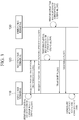
- FIG. 3 is a sequence diagram showing a decryption process according to an embodiment of the present disclosure.
- the first user terminal 110 generates a partial decryption result p 1 for the ciphertext C using the private key share sk 1 of the first user (301).
- the first user terminal 110 requests the second user terminal 120 and the third user terminal 130 to perform partial decryption of the ciphertext C (302, 303).
- the first user terminal 110 may transmit the ciphertext C to the second user terminal 120 and the third user terminal 130 to request partial decryption of the ciphertext C.
- the first user terminal 110 may request the second user terminal 120 and the third user terminal 130 to perform partial decryption of the ciphertext C stored in the database (not shown) or the server (not shown).
- the second user terminal 120 When the second user terminal 120 is requested to perform the partial decryption of the ciphertext C by the first user terminal 110, the second user terminal 120 generates a partial decryption result p 2 for the ciphertext C using the private key share sk 2 of the second user (304).
- the third user terminal 130 when the third user terminal 130 is requested to perform the partial decryption of the ciphertext C by the first user terminal 110, the third user terminal 130 generates a partial decryption result p 3 for the ciphertext C using the private key share sk 3 of the third user (305).
- the second user terminal 120 and the third user terminal 130 transmit the generated partial decryption results p 2 and p 3 to the first user terminal 110 (306, 307).
- the decryption process has been described as having a plurality of steps. However, at least some of the steps may be performed in a changed order, performed in combination with another step, omitted, divided into sub-steps and then performed, or performed in addition to one or more steps that are not shown.
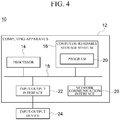
- FIG. 4 is a block diagram illustrating a computing environment including a computing apparatus suitable for use in example embodiments.
- each component may have a function and capability that differs from those described below, and an additional component may be included in addition to those in the following description.
- a computing environment 10 includes a computing apparatus 12.
- the computing apparatus 12 may be one or more components included in each of the user terminals 110, 120, and 130.
- the computing apparatus 12 includes at least one processor 14, a computer-readable storage medium 16, and a communication bus 18.
- the processor 14 may enable the computing apparatus 12 to operate according to the aforementioned example embodiment.
- the processor 14 may execute one or more programs stored in the computer-readable storage medium 16.
- the one or more programs may include one or more computer executable instructions which may be configured to enable the computing apparatus 12 to perform operations according to an example embodiment when they are executed by the processor 14.
- the computer-readable storage medium 16 is configured to store computer-executable instructions, program codes, program data, and/or other suitable forms of information.
- the program 20 stored in the computer-readable storage medium 16 includes a set of instructions executable by the processor 14.
- the computer-readable storage medium 16 may be a memory (a volatile memory such as a random access memory, a non-volatile memory, or an appropriate combination thereof), one or more magnetic disk storage devices, optical disk storage devices, flash memory devices, other forms of storage media that may be accessed by the computing apparatus 12 and are configured to store desired information, or a suitable combination thereof.
- the communication bus 18 connects the processor 14, the computer-readable storage medium 16, and various other components of the computing apparatus 12 to one another.
- the computing apparatus 12 may include one or more input/output interfaces 22 for providing an interface for one or more input/output devices 24, and one or more network communication interfaces 26.
- the input/output interfaces 22 and the network communication interfaces 26 are connected to the communication bus 18.
- the input/output devices 24 may be connected to other components of the computing apparatus 12 through the input/output interfaces 22.
Landscapes
- Engineering & Computer Science (AREA)
- Computer Security & Cryptography (AREA)
- Signal Processing (AREA)
- Computer Networks & Wireless Communication (AREA)
- Theoretical Computer Science (AREA)
- Mathematical Physics (AREA)
- Physics & Mathematics (AREA)
- Pure & Applied Mathematics (AREA)
- Mathematical Optimization (AREA)
- Computing Systems (AREA)
- Mathematical Analysis (AREA)
- General Physics & Mathematics (AREA)
- Algebra (AREA)
- Storage Device Security (AREA)
Abstract
Description
- This application claims priority to and the benefit of Korean Patent Application No.
10-2018-0126802, filed on October 23, 2018 - Embodiments of the present disclosure relate to a technique for encryption and decryption.
- In a related art including
U.S. Patent No. 9,252,942 - In such a related art, a secret key manger manages a secret key, and thus the safety of the entire system depends entirely on the safety of the secret key manager. That is, when the secret key is leaked through the secret key manager, data of all the users can be recovered, and the safety of the whole system is damaged. Furthermore, for users who cannot trust each other, it is not possible to set only one secret key manger that all the users can trust.
- Embodiments of the present disclosure are directed to providing an apparatus and method for encryption and decryption.
- According to an aspect of the present disclosure, an encryption method performed by a computing apparatus including one or more processors and a memory for storing one or more programs executed by the one or more processors includes generating a public key share of a user, receiving public key shares of one or more other users from terminals of the one or more other users, generating a public key using the public key share of the user and the public key shares of the one or more other users, and encrypting plaintext using the public key.
- The generating of the public key share may include generating a private key share of the user and generating a public key share of the user using the private key share of the user.
- The public key shares of the one or more other users may be generated using private key shares of the one or more other users.
- The encryption method may further include providing the generated public key share to the terminals of the one or more other users.
- According to another aspect of the present disclosure, an encryption apparatus includes one or more processors, a memory, and one or more programs, wherein the one or more programs are stored in the memory and executed by the one or more processors, and the programs include instructions for generating a public key share of a user, receiving public key shares of one or more other users from terminals of the one or more other users, generating a public key using the public key share of the user and the public key shares of the one or more other users, and encrypting plaintext using the public key.
- The generating of the public key share may include generating a private key share of the user and generating a public key share of the user using the private key share of the user.
- The public key shares of the one or more other users may be generated using private key shares of the one or more other users.
- The program may further include instructions for providing the generated public key share to the terminals of the one or more other users.
- According to another aspect of the present disclosure, a decryption method performed by a computing apparatus including one or more processors and a memory for storing one or more programs executed by the one or more processors includes generating a partial decryption result for a ciphertext encrypted with a public key by using a private key share of a user, requesting terminals of one or more other users to perform partial decryption for the ciphertext, receiving partial decryption results for the ciphertext using private key shares of the one or more other users from the one or more other user terminals, and generating plaintext for the ciphertext using the generated partial decryption result and the partial decryption results received from the one or more other users.
- The public key may be generated using a public key share of the user and public key shares of the one or more other users.
- The public key share of the user may be generated using the private key share of the user, and the public key shares of the one or more other users may be generated using the private key shares of the one or more other users.
- The ciphertext may be a ciphertext generated by evaluating a plurality of ciphertexts encrypted with the public key in an encrypted state.
- The plaintext may be a result of performing evaluation on plaintexts for the plurality of ciphertexts.
- The ciphertext may be a ciphertext generated by adding the plurality of ciphertexts encrypted with the public key in an encrypted state.
- The plaintext may be a result of adding plaintexts for the plurality of ciphertexts.
- The generating of the plaintext may include generating plaintext for the ciphertext by adding the generated partial decryption result and the partial decryption results received from the one or more other users.
- According to another aspect of the present disclosure, a decryption apparatus includes one or more processors, a memory, and one or more programs, wherein the one or more programs are stored in the memory and executed by the one or more processors, and the program includes instructions for generating a partial decryption result for a ciphertext encrypted with a public key by using a private key share of a user, requesting terminals of one or more other users to perform partial decryption of the ciphertext, receiving partial decryption results for the ciphertext using private key shares of the one or more other users from the one or more other user terminals, and generating plaintext for the ciphertext using the generated partial decryption result and the partial decryption results received from the one or more other users.
- The public key may be generated using a public key share of the user and public key shares of the one or more other users.
- The public key share of the user may be generated using the private key share of the user, and the public key shares of the one or more other users may be generated using the private key shares of the one or more other users.
- The ciphertext may be a ciphertext generated by evaluating a plurality of ciphertexts encrypted with the public key in an encrypted state.
- The plaintext may be an evaluation result between plaintexts for the plurality of ciphertexts.
- The ciphertext may be a ciphertext generated by adding the plurality of ciphertexts encrypted with the public key in an encrypted state.
- The plaintext may be a result of adding plaintexts for the plurality of ciphertexts.
- The generating of the plaintext may include generating plaintext for the ciphertext by adding the generated partial decryption result and the partial decryption results received from the one or more other users.
- The above and other objects, features and advantages of the present disclosure will become more apparent to those of ordinary skill in the art by describing exemplary embodiments thereof in detail with reference to the accompanying drawings, in which:
-
FIG. 1 is a block diagram of an encryption system according to an embodiment of the present disclosure; -
FIG. 2 is a sequence diagram showing a public key generation process according to an embodiment of the present disclosure; -
FIG. 3 is a sequence diagram showing a decryption process according to an embodiment of the present disclosure; and -
FIG. 4 is a block diagram illustrating a computing environment including a computing apparatus suitable for use in example embodiments. - Hereinafter, exemplary embodiments of the present disclosure will be described with reference to the accompanying drawings. The following detailed description is provided to assist the reader in gaining a comprehensive understanding of methods, apparatuses, and/or systems described herein. However, this is merely an example, and the present disclosure is not limited thereto.
- In describing embodiments of the present disclosure, when it is determined that a detailed description of a known technique associated with the present disclosure would unnecessarily obscure the subject matter of the present disclosure, the detailed description will be omitted. Also, terms used herein are defined in consideration of functions used in the present disclosure and may be changed depending on a user, the intent of an operator, or a custom. Therefore, the definitions should be made based on the contents throughout the specification. The terminology used herein is only for the purpose of describing embodiments of the present disclosure and should not be limiting. The singular forms "a," "an," and "the" are intended to include the plural forms as well, unless the context clearly indicates otherwise. It should be understood that the terms "comprises," "comprising," "includes," "includes,": and/or "including" specify the presence of stated features, integers, steps, operations, elements, components, and/or groups thereof when used herein, but do not preclude the presence or addition of one or more other features, integers, steps, operations, elements, components, and/or groups thereof.
-
FIG. 1 is a block diagram of an encryption system according to an embodiment of the present disclosure. - Referring to
FIG. 1 , anencryption system 100 according to an embodiment of the present disclosure includes a plurality ofuser terminals - The
encryption system 100 is configured to generate a ciphertext using a public key generated by a plurality of users in cooperation. Only when all of the users agree does theencryption system 100 enable the ciphertext generated using the public key to be decrypted or enable a result of performing evaluation on ciphertexts generated using the public key to be decrypted. - The plurality of
user terminals - In the following description, for convenience of description, it is assumed that there are three
user terminals FIG. 1 . However, the number of terminals may be two or four or more depending on the embodiment. - In the following description, it is also assumed that the
first user terminal 110 is used by a first user, thesecond user terminal 120 is used by a second user, and thethird user terminal 130 is used by a third user. - According to an embodiment of the present disclosure, an encryption and decryption process performed by the
user terminals - Each of the
user terminals user terminals others user terminals - Also, each of the
user terminals - When a public key is generated, each of the
user terminals - In this case, the generated ciphertext may be stored in the corresponding one of the
user terminals user terminals - The ciphertext may be generated by the
user terminals - In this case, each of the
user terminals same user terminal different user terminals - The evaluation on the ciphertexts may be performed by each of the
user terminals user terminals user terminals - Each of the
user terminals user terminals user terminals - A specific application example of applying the above-described encryption and decryption process to a homomorphic encryption technique capable of approximation is as follows.
- First, each of the
user terminals corresponding user terminal 

- Subsequently, each of the
user terminals user terminals user terminals user terminals user terminal 
- When the public key is generated, each of the
user terminals 
- Meanwhile, the generated ciphertext may be stored in the corresponding one of the
user terminals user terminals - Each of the
user terminals 


- In some embodiments, unlike the above example, the generation of the ciphertext C3 may be performed by a server (not shown) for storing the ciphertext C1 and the ciphertext C2. In this case, the server (not shown) may provide the generated ciphertext C3 to the
user terminals - Each of the
user terminals 
user terminals - The partial decryption of the ciphertext C' may be performed using, for example, Equation 8 below:


- Meanwhile, plaintext m' for the ciphertext C' may be generated using, for example, Equation 9 below:

- In Equation 3,

-
FIG. 2 is a sequence diagram showing a public key generation process according to an embodiment of the present disclosure. - Referring to
FIG. 2 , afirst user terminal 110 generates a public key share pk1 for a first user (201). - Subsequently, the
first user terminal 110 transmits the public key share pk1 to asecond user terminal 120 and a third user terminal 130 (202, 203). - Subsequently, the
second user terminal 120 generates a public key share pk2 for a second user (204). - Subsequently, the
second user terminal 120 transmits the public key share pk2 to thefirst user terminal 110 and the third user terminal 130 (205, 206). - Subsequently, the
third user terminal 130 generates a public key share pk3 for a third user (207). - Subsequently, the
third user terminal 130 transmits the public key share pk3 to thefirst user terminal 110 and the second user terminal 120 (208, 209). - Subsequently, the
first user terminal 110, thesecond user terminal 120, and thethird user terminal 130 generate a public key pk using pki, pk2, and pk3 (210, 211, 212). - In
FIG. 2 , the public key generation process has been described as having a plurality of steps. However, at least some of the steps may be performed in a changed order, performed in combination with another step, omitted, divided into sub-steps and then performed, or performed in addition to one or more steps that are not shown. -
FIG. 3 is a sequence diagram showing a decryption process according to an embodiment of the present disclosure. - Referring to
FIG. 3 , first, thefirst user terminal 110 generates a partial decryption result p1 for the ciphertext C using the private key share sk1 of the first user (301). - In this case, the ciphertext C may be an evaluation result of a ciphertext encrypted with the public key pk generated using the public key generation process shown in
FIG. 2 or a result of performing evaluation on a plurality of ciphertexts encrypted with the public keys pk. - Subsequently, the
first user terminal 110 requests thesecond user terminal 120 and thethird user terminal 130 to perform partial decryption of the ciphertext C (302, 303). - In this case, for example, when the ciphertext C is stored in the
first user terminal 110, thefirst user terminal 110 may transmit the ciphertext C to thesecond user terminal 120 and thethird user terminal 130 to request partial decryption of the ciphertext C. - As another example, when the ciphertext C is stored in a separate database (not shown) or a separate server (not shown) accessible by the
first user terminal 110, thesecond user terminal 120, and thethird user terminal 130, thefirst user terminal 110 may request thesecond user terminal 120 and thethird user terminal 130 to perform partial decryption of the ciphertext C stored in the database (not shown) or the server (not shown). - When the
second user terminal 120 is requested to perform the partial decryption of the ciphertext C by thefirst user terminal 110, thesecond user terminal 120 generates a partial decryption result p2 for the ciphertext C using the private key share sk2 of the second user (304). - Also, when the
third user terminal 130 is requested to perform the partial decryption of the ciphertext C by thefirst user terminal 110, thethird user terminal 130 generates a partial decryption result p3 for the ciphertext C using the private key share sk3 of the third user (305). - Subsequently, the
second user terminal 120 and thethird user terminal 130 transmit the generated partial decryption results p2 and p3 to the first user terminal 110 (306, 307). - Subsequently, the
first user terminal 110 generates plaintext for the ciphertext C using the partial decryption results p1, p2, and p3 (308). - In the sequence diagram illustrated in
FIG. 3 , the decryption process has been described as having a plurality of steps. However, at least some of the steps may be performed in a changed order, performed in combination with another step, omitted, divided into sub-steps and then performed, or performed in addition to one or more steps that are not shown. -
FIG. 4 is a block diagram illustrating a computing environment including a computing apparatus suitable for use in example embodiments. In the illustrated embodiment, each component may have a function and capability that differs from those described below, and an additional component may be included in addition to those in the following description. - As shown, a
computing environment 10 includes acomputing apparatus 12. According to an embodiment, thecomputing apparatus 12 may be one or more components included in each of theuser terminals - The
computing apparatus 12 includes at least oneprocessor 14, a computer-readable storage medium 16, and acommunication bus 18. Theprocessor 14 may enable thecomputing apparatus 12 to operate according to the aforementioned example embodiment. For example, theprocessor 14 may execute one or more programs stored in the computer-readable storage medium 16. The one or more programs may include one or more computer executable instructions which may be configured to enable thecomputing apparatus 12 to perform operations according to an example embodiment when they are executed by theprocessor 14. - The computer-
readable storage medium 16 is configured to store computer-executable instructions, program codes, program data, and/or other suitable forms of information. Theprogram 20 stored in the computer-readable storage medium 16 includes a set of instructions executable by theprocessor 14. In an embodiment, the computer-readable storage medium 16 may be a memory (a volatile memory such as a random access memory, a non-volatile memory, or an appropriate combination thereof), one or more magnetic disk storage devices, optical disk storage devices, flash memory devices, other forms of storage media that may be accessed by thecomputing apparatus 12 and are configured to store desired information, or a suitable combination thereof. - The
communication bus 18 connects theprocessor 14, the computer-readable storage medium 16, and various other components of thecomputing apparatus 12 to one another. - Also, the
computing apparatus 12 may include one or more input/output interfaces 22 for providing an interface for one or more input/output devices 24, and one or more network communication interfaces 26. The input/output interfaces 22 and the network communication interfaces 26 are connected to thecommunication bus 18. The input/output devices 24 may be connected to other components of thecomputing apparatus 12 through the input/output interfaces 22. The input/output devices 24 may include input devices such as a pointing device (a mouse, a track pad, etc), a keyboard, a touch input device (a touchpad, a touch screen, etc.), a voice or sound input device, various kinds of sensor devices, and/or a capture device and/or may include output devices such as a display device, a printer, a speaker, and/or a network card. The input/output devices 24 may be included in thecomputing apparatus 12 as components of thecomputing apparatus 12 and may be connected to thecomputing apparatus 12 as separate devices distinct from thecomputing apparatus 12. - According to the embodiments of the present disclosure, by distributing secret key management authority equally to all users who have cooperated to generate a public key and allowing decryption only when all of the users agree, it is possible to prevent unauthorized data leakage due to private key leakage and also to enable secure private key management even between users who lack mutual trust.
- Although the disclosure has been described in detail with reference to exemplary embodiments, it will be understood by those skilled in the art that various changes may be made without departing from the spirit or scope of the disclosure. Therefore, the scope of the present disclosure is not to be construed as being limited to the described embodiments, but is defined by the appended claims as well as equivalents thereto.
-
- Embodiment 1. An encryption method performed by a computing apparatus including one or more processors and a memory for storing one or more programs executed by the one or more processors, the encryption method comprising:
- generating a public key share of a user;
- receiving public key shares of one or more other users from terminals of the one or more other users;
- generating a public key using the public key share of the user and the public key shares of the one or more other users; and
- encrypting plaintext using the public key.
- Embodiment 2. The encryption method of embodiment 1, wherein the generating of the public key share comprises:
- generating a private key share of the user; and
- generating a public key share of the user using the private key share of the user.
- Embodiment 3. The encryption method of embodiment 2, wherein the public key shares of the one or more other users are generated using private key shares of the one or more other users.
- Embodiment 4. The encryption method of embodiment 1, further comprising providing the generated public key share to the terminals of the one or more other users.
- Embodiment 5. An encryption apparatus comprising:
- one or more processors;
- a memory; and
- one or more programs,
- wherein,
- the one or more programs are stored in the memory and executed by the one or more processors, and
- the programs comprise instructions for:
- generating a public key share of a user;
- receiving public key shares of one or more other users from terminals of the one or more other users;
- generating a public key using the public key share of the user and the public key shares of the one or more other users; and
- encrypting plaintext using the public key.
- Embodiment 6. The encryption apparatus of embodiment 5, wherein the generating of the public key share comprises:
- generating a private key share of the user; and
- generating a public key share of the user using the private key share of the user.
- Embodiment 7. The encryption apparatus of embodiment 6, wherein the public key shares of the one or more other users are generated using private key shares of the one or more other users.
- Embodiment 8. The encryption apparatus of embodiment 5, wherein the programs further include instructions for providing the generated public key share to the terminals of the one or more other users.
- Embodiment 9. A decryption method performed by a computing apparatus including one or more processors and a memory for storing one or more programs executed by the one or more processors, the decryption method comprising:
- generating a partial decryption result for a ciphertext encrypted with a public key by using a private key share of a user;
- requesting terminals of one or more other users to perform partial decryption of the ciphertext;
- receiving partial decryption results for the ciphertext using private key shares of the one or more other users from the one or more other user terminals; and
- generating plaintext for the ciphertext using the generated partial decryption result and the partial decryption results received from the one or more other users.
-
Embodiment 10. The decryption method of embodiment 9, wherein the public key is generated using a public key share of the user and public key shares of the one or more other users. - Embodiment 11. The decryption method of
embodiment 10, wherein,
the public key share of the user is generated using the private key share of the user, and
the public key shares of the one or more other users are generated using the private key shares of the one or more other users. -
Embodiment 12. The decryption method of embodiment 9, wherein the ciphertext is a ciphertext generated by evaluating a plurality of ciphertexts encrypted with the public key in an encrypted state. - Embodiment 13. The decryption method of
embodiment 12, wherein the plaintext is a result of performing evaluation on plaintexts for the plurality of ciphertexts. -
Embodiment 14. The decryption method ofembodiment 12, wherein the ciphertext is a ciphertext generated by adding a plurality of ciphertexts encrypted with the public key in an encrypted state. - Embodiment 15. The decryption method of
embodiment 14, wherein the plaintext is a result of adding plaintexts for the plurality of ciphertexts. -
Embodiment 16. The decryption method of embodiment 15, wherein the generating of the plaintext comprises generating plaintext for the ciphertext by adding the generated partial decryption result and the partial decryption results received from the one or more other users. - Embodiment 17. A decryption apparatus comprising:
- one or more processors;
- a memory; and
- one or more programs,
- wherein,
- the one or more programs are stored in the memory and executed by the one or more processors, and
- the program comprises instructions for:
- generating a partial decryption result for a ciphertext encrypted with a public key by using a private key share of a user;
- requesting terminals of one or more other users to perform partial decryption of the ciphertext;
- receiving partial decryption results for the ciphertext using private key shares of the one or more other users from the one or more other user terminals; and
- generating plaintext for the ciphertext using the generated partial decryption result and the partial decryption results received from the one or more other users.
-
Embodiment 18. The decryption apparatus of embodiment 17, wherein the public key is generated using a public key share of the user and public key shares of the one or more other users. - Embodiment 19. The decryption apparatus of
embodiment 18, wherein,
the public key share of the user is generated using the private key share of the user, and
the public key shares of the one or more other users are generated using the private key shares of the one or more other users. -
Embodiment 20. The decryption apparatus of embodiment 17, wherein the ciphertext is a ciphertext generated by evaluating a plurality of ciphertexts encrypted with the public key in an encrypted state. - Embodiment 21. The decryption apparatus of
embodiment 20, wherein the plaintext is a result of performing evaluation on plaintexts for the plurality of ciphertexts. -
Embodiment 22. The decryption apparatus ofembodiment 20, wherein the ciphertext is a ciphertext generated by adding a plurality of ciphertexts encrypted with the public key in an encrypted state. - Embodiment 23. The decryption apparatus of
embodiment 22, wherein the plaintext is a result of adding plaintexts for the plurality of ciphertexts. -
Embodiment 24. The decryption apparatus of embodiment 23, wherein the generating of the plaintext comprises generating plaintext for the ciphertext by adding the generated partial decryption result and the partial decryption results received from the one or more other users.
Claims (15)
- An encryption method performed by a computing apparatus including one or more processors and a memory for storing one or more programs executed by the one or more processors, the encryption method comprising:generating a public key share of a user;receiving public key shares of one or more other users from terminals of the one or more other users;generating a public key using the public key share of the user and the public key shares of the one or more other users; andencrypting plaintext using the public key.
- The encryption method of claim 1, wherein the generating of the public key share comprises:generating a private key share of the user; andgenerating a public key share of the user using the private key share of the user; and/orwherein the public key shares of the one or more other users are generated using private key shares of the one or more other users.
- The encryption method of claim 1 or 2, further comprising providing the generated public key share to the terminals of the one or more other users.
- An encryption apparatus comprising:one or more processors;a memory; andone or more programs,wherein,the one or more programs are stored in the memory and executed by the one or more processors, andthe programs comprise instructions for:generating a public key share of a user;receiving public key shares of one or more other users from terminals of the one or more other users;generating a public key using the public key share of the user and the public key shares of the one or more other users; andencrypting plaintext using the public key.
- The encryption apparatus of claim 4, wherein the generating of the public key share comprises:generating a private key share of the user; andgenerating a public key share of the user using the private key share of the user; and/orwherein the public key shares of the one or more other users are generated using private key shares of the one or more other users.
- The encryption apparatus of claim 4, wherein the programs further include instructions for providing the generated public key share to the terminals of the one or more other users.
- A decryption method performed by a computing apparatus including one or more processors and a memory for storing one or more programs executed by the one or more processors, the decryption method comprising:generating a partial decryption result for a ciphertext encrypted with a public key by using a private key share of a user;requesting terminals of one or more other users to perform partial decryption of the ciphertext;receiving partial decryption results for the ciphertext using private key shares of the one or more other users from the one or more other user terminals; andgenerating plaintext for the ciphertext using the generated partial decryption result and the partial decryption results received from the one or more other users.
- The decryption method of claim 7, wherein the public key is generated using a public key share of the user and public key shares of the one or more other users; and/or
wherein,
the public key share of the user is generated using the private key share of the user, and
the public key shares of the one or more other users are generated using the private key shares of the one or more other users. - The decryption method of claim 7, wherein the ciphertext is a ciphertext generated by evaluating a plurality of ciphertexts encrypted with the public key in an encrypted state; and/or
wherein the plaintext is a result of performing evaluation on plaintexts for the plurality of ciphertexts. - The decryption method of claim 9, wherein the ciphertext is a ciphertext generated by adding a plurality of ciphertexts encrypted with the public key in an encrypted state; and/or
wherein the plaintext is a result of adding plaintexts for the plurality of ciphertexts; and/or
wherein the generating of the plaintext comprises generating plaintext for the ciphertext by adding the generated partial decryption result and the partial decryption results received from the one or more other users. - A decryption apparatus comprising:one or more processors;a memory; andone or more programs,wherein,the one or more programs are stored in the memory and executed by the one or more processors, andthe program comprises instructions for:generating a partial decryption result for a ciphertext encrypted with a public key by using a private key share of a user;requesting terminals of one or more other users to perform partial decryption of the ciphertext;receiving partial decryption results for the ciphertext using private key shares of the one or more other users from the one or more other user terminals; andgenerating plaintext for the ciphertext using the generated partial decryption result and the partial decryption results received from the one or more other users.
- The decryption apparatus of claim 11, wherein the public key is generated using a public key share of the user and public key shares of the one or more other users.
- The decryption apparatus of claim 12, wherein,
the public key share of the user is generated using the private key share of the user, and
the public key shares of the one or more other users are generated using the private key shares of the one or more other users. - The decryption apparatus of one of claims 11 to 13, wherein the ciphertext is a ciphertext generated by evaluating a plurality of ciphertexts encrypted with the public key in an encrypted state; and/or
wherein the plaintext is a result of performing evaluation on plaintexts for the plurality of ciphertexts. - The decryption apparatus of claim 14, wherein the ciphertext is a ciphertext generated by adding a plurality of ciphertexts encrypted with the public key in an encrypted state; and/or
wherein the plaintext is a result of adding plaintexts for the plurality of ciphertexts; and/or
wherein the generating of the plaintext comprises generating plaintext for the ciphertext by adding the generated partial decryption result and the partial decryption results received from the one or more other users.
Applications Claiming Priority (1)
| Application Number | Priority Date | Filing Date | Title |
|---|---|---|---|
| KR1020180126802A KR102526114B1 (en) | 2018-10-23 | 2018-10-23 | Apparatus and method for encryption and decryption |
Publications (2)
| Publication Number | Publication Date |
|---|---|
| EP3644545A1 true EP3644545A1 (en) | 2020-04-29 |
| EP3644545B1 EP3644545B1 (en) | 2022-04-06 |
Family
ID=68342648
Family Applications (1)
| Application Number | Title | Priority Date | Filing Date |
|---|---|---|---|
| EP19204853.6A Active EP3644545B1 (en) | 2018-10-23 | 2019-10-23 | Apparatus and method for encryption and decryption |
Country Status (4)
| Country | Link |
|---|---|
| US (1) | US20200127830A1 (en) |
| EP (1) | EP3644545B1 (en) |
| KR (1) | KR102526114B1 (en) |
| SG (1) | SG10201909920YA (en) |
Families Citing this family (2)
| Publication number | Priority date | Publication date | Assignee | Title |
|---|---|---|---|---|
| CN113810170B (en) * | 2021-04-06 | 2025-01-10 | 京东科技控股股份有限公司 | Data transmission method, device, electronic device, and storage medium |
| CN113630250B (en) * | 2021-08-23 | 2023-04-25 | 济南大学 | Model training method and system based on data encryption |
Citations (1)
| Publication number | Priority date | Publication date | Assignee | Title |
|---|---|---|---|---|
| US9252942B2 (en) | 2012-04-17 | 2016-02-02 | Futurewei Technologies, Inc. | Method and system for secure multiparty cloud computation |
Family Cites Families (2)
| Publication number | Priority date | Publication date | Assignee | Title |
|---|---|---|---|---|
| US9049011B1 (en) * | 2012-08-15 | 2015-06-02 | Washington State University | Secure key storage and distribution |
| US20170366342A1 (en) * | 2014-12-05 | 2017-12-21 | Pcms Holdings, Inc. | Protecting the Integrity of Log Entries in a Distributed System |
-
2018
- 2018-10-23 KR KR1020180126802A patent/KR102526114B1/en active Active
-
2019
- 2019-10-23 US US16/660,916 patent/US20200127830A1/en not_active Abandoned
- 2019-10-23 EP EP19204853.6A patent/EP3644545B1/en active Active
- 2019-10-23 SG SG10201909920YA patent/SG10201909920YA/en unknown
Patent Citations (1)
| Publication number | Priority date | Publication date | Assignee | Title |
|---|---|---|---|---|
| US9252942B2 (en) | 2012-04-17 | 2016-02-02 | Futurewei Technologies, Inc. | Method and system for secure multiparty cloud computation |
Non-Patent Citations (2)
| Title |
|---|
| BERNARDO DAVID ET AL: "Kaleidoscope: An Efficient Poker Protocol with Payment Distribution and Penalty Enforcement", vol. 20180418:083858, 18 April 2018 (2018-04-18), pages 1 - 29, XP061026762, Retrieved from the Internet <URL:http://eprint.iacr.org/2017/899.pdf> [retrieved on 20180418] * |
| RALF KUESTERS ET AL: "Security Analysis of Re-Encryption RPC Mix Nets", IACR, INTERNATIONAL ASSOCIATION FOR CRYPTOLOGIC RESEARCH, vol. 20150401:134600, 29 March 2015 (2015-03-29), pages 1 - 50, XP061018223 * |
Also Published As
| Publication number | Publication date |
|---|---|
| EP3644545B1 (en) | 2022-04-06 |
| KR102526114B1 (en) | 2023-04-27 |
| US20200127830A1 (en) | 2020-04-23 |
| SG10201909920YA (en) | 2020-05-28 |
| KR20200045820A (en) | 2020-05-06 |
Similar Documents
| Publication | Publication Date | Title |
|---|---|---|
| EP3644544A1 (en) | Method for comparing ciphertext using homomorphic encryption and apparatus for executing thereof | |
| US11930104B2 (en) | Apparatus and method for generating secret key, apparatus and method for generating evaluation key | |
| EP3985540A1 (en) | Method and apparatus for generating synthetic data | |
| KR102143525B1 (en) | Method for function encryption supporting set intersection operation and apparatus using the same | |
| KR101615137B1 (en) | Data access method based on attributed | |
| US11329798B2 (en) | Apparatus and method for set intersection operation | |
| KR102281265B1 (en) | Functional encryption for set intersection with time-constrained function keys | |
| CN111953480B (en) | Key generation device and method, operation key generation device and method | |
| US11438136B2 (en) | Encryption apparatus and method for encrypting encryption target data in data based on homomorphic encryption algorithm | |
| US20200127830A1 (en) | Apparatus and method for encryption and decryption | |
| KR102132685B1 (en) | Apparatus and method for order-revealing encryption | |
| US12388624B2 (en) | Apparatus and method for sharing data | |
| KR102126295B1 (en) | Method for comparing chiphertext based and apparatus for executing the method | |
| KR102284877B1 (en) | Efficient functional encryption for set intersection | |
| US20240163078A1 (en) | Attribute based encryption with bounded collusion resistance | |
| KR102625088B1 (en) | Apparatus and method for sharing data | |
| WO2021144842A1 (en) | Confidential information processing system, homomorphic arithmetic device, decoding device, confidential information processing method, and confidential information processing program | |
| JP7622969B1 (en) | Information processing method, information processing program, and information processing system | |
| CN116599647B (en) | Information processing method, service node, blockchain network, and storage medium | |
| CN118246050B (en) | Encryption and decryption method, device, equipment and medium for database key manager | |
| KR20200089832A (en) | Apparatus and method for order-revealing encryption in multi-client environment without trusted authority | |
| EP3817276B1 (en) | Apparatus and method for data security | |
| CN110365654B (en) | Data transmission control method and device, electronic equipment and storage medium | |
| KR20230068144A (en) | Method for Key Management Service And System Therefor | |
| WO2025028466A1 (en) | Information processing method, information processing program, and information processing system |
Legal Events
| Date | Code | Title | Description |
|---|---|---|---|
| PUAI | Public reference made under article 153(3) epc to a published international application that has entered the european phase |
Free format text: ORIGINAL CODE: 0009012 |
|
| STAA | Information on the status of an ep patent application or granted ep patent |
Free format text: STATUS: THE APPLICATION HAS BEEN PUBLISHED |
|
| AK | Designated contracting states |
Kind code of ref document: A1 Designated state(s): AL AT BE BG CH CY CZ DE DK EE ES FI FR GB GR HR HU IE IS IT LI LT LU LV MC MK MT NL NO PL PT RO RS SE SI SK SM TR |
|
| AX | Request for extension of the european patent |
Extension state: BA ME |
|
| STAA | Information on the status of an ep patent application or granted ep patent |
Free format text: STATUS: REQUEST FOR EXAMINATION WAS MADE |
|
| 17P | Request for examination filed |
Effective date: 20201029 |
|
| RBV | Designated contracting states (corrected) |
Designated state(s): AL AT BE BG CH CY CZ DE DK EE ES FI FR GB GR HR HU IE IS IT LI LT LU LV MC MK MT NL NO PL PT RO RS SE SI SK SM TR |
|
| GRAP | Despatch of communication of intention to grant a patent |
Free format text: ORIGINAL CODE: EPIDOSNIGR1 |
|
| STAA | Information on the status of an ep patent application or granted ep patent |
Free format text: STATUS: GRANT OF PATENT IS INTENDED |
|
| INTG | Intention to grant announced |
Effective date: 20210701 |
|
| GRAJ | Information related to disapproval of communication of intention to grant by the applicant or resumption of examination proceedings by the epo deleted |
Free format text: ORIGINAL CODE: EPIDOSDIGR1 |
|
| STAA | Information on the status of an ep patent application or granted ep patent |
Free format text: STATUS: REQUEST FOR EXAMINATION WAS MADE |
|
| GRAP | Despatch of communication of intention to grant a patent |
Free format text: ORIGINAL CODE: EPIDOSNIGR1 |
|
| STAA | Information on the status of an ep patent application or granted ep patent |
Free format text: STATUS: GRANT OF PATENT IS INTENDED |
|
| INTC | Intention to grant announced (deleted) | ||
| INTG | Intention to grant announced |
Effective date: 20211117 |
|
| GRAS | Grant fee paid |
Free format text: ORIGINAL CODE: EPIDOSNIGR3 |
|
| GRAA | (expected) grant |
Free format text: ORIGINAL CODE: 0009210 |
|
| STAA | Information on the status of an ep patent application or granted ep patent |
Free format text: STATUS: THE PATENT HAS BEEN GRANTED |
|
| AK | Designated contracting states |
Kind code of ref document: B1 Designated state(s): AL AT BE BG CH CY CZ DE DK EE ES FI FR GB GR HR HU IE IS IT LI LT LU LV MC MK MT NL NO PL PT RO RS SE SI SK SM TR |
|
| REG | Reference to a national code |
Ref country code: GB Ref legal event code: FG4D |
|
| REG | Reference to a national code |
Ref country code: CH Ref legal event code: EP |
|
| REG | Reference to a national code |
Ref country code: AT Ref legal event code: REF Ref document number: 1482397 Country of ref document: AT Kind code of ref document: T Effective date: 20220415 |
|
| REG | Reference to a national code |
Ref country code: DE Ref legal event code: R096 Ref document number: 602019013354 Country of ref document: DE |
|
| REG | Reference to a national code |
Ref country code: IE Ref legal event code: FG4D |
|
| REG | Reference to a national code |
Ref country code: LT Ref legal event code: MG9D |
|
| REG | Reference to a national code |
Ref country code: NL Ref legal event code: MP Effective date: 20220406 |
|
| REG | Reference to a national code |
Ref country code: AT Ref legal event code: MK05 Ref document number: 1482397 Country of ref document: AT Kind code of ref document: T Effective date: 20220406 |
|
| PG25 | Lapsed in a contracting state [announced via postgrant information from national office to epo] |
Ref country code: NL Free format text: LAPSE BECAUSE OF FAILURE TO SUBMIT A TRANSLATION OF THE DESCRIPTION OR TO PAY THE FEE WITHIN THE PRESCRIBED TIME-LIMIT Effective date: 20220406 |
|
| PG25 | Lapsed in a contracting state [announced via postgrant information from national office to epo] |
Ref country code: SE Free format text: LAPSE BECAUSE OF FAILURE TO SUBMIT A TRANSLATION OF THE DESCRIPTION OR TO PAY THE FEE WITHIN THE PRESCRIBED TIME-LIMIT Effective date: 20220406 Ref country code: PT Free format text: LAPSE BECAUSE OF FAILURE TO SUBMIT A TRANSLATION OF THE DESCRIPTION OR TO PAY THE FEE WITHIN THE PRESCRIBED TIME-LIMIT Effective date: 20220808 Ref country code: NO Free format text: LAPSE BECAUSE OF FAILURE TO SUBMIT A TRANSLATION OF THE DESCRIPTION OR TO PAY THE FEE WITHIN THE PRESCRIBED TIME-LIMIT Effective date: 20220706 Ref country code: LT Free format text: LAPSE BECAUSE OF FAILURE TO SUBMIT A TRANSLATION OF THE DESCRIPTION OR TO PAY THE FEE WITHIN THE PRESCRIBED TIME-LIMIT Effective date: 20220406 Ref country code: HR Free format text: LAPSE BECAUSE OF FAILURE TO SUBMIT A TRANSLATION OF THE DESCRIPTION OR TO PAY THE FEE WITHIN THE PRESCRIBED TIME-LIMIT Effective date: 20220406 Ref country code: GR Free format text: LAPSE BECAUSE OF FAILURE TO SUBMIT A TRANSLATION OF THE DESCRIPTION OR TO PAY THE FEE WITHIN THE PRESCRIBED TIME-LIMIT Effective date: 20220707 Ref country code: FI Free format text: LAPSE BECAUSE OF FAILURE TO SUBMIT A TRANSLATION OF THE DESCRIPTION OR TO PAY THE FEE WITHIN THE PRESCRIBED TIME-LIMIT Effective date: 20220406 Ref country code: ES Free format text: LAPSE BECAUSE OF FAILURE TO SUBMIT A TRANSLATION OF THE DESCRIPTION OR TO PAY THE FEE WITHIN THE PRESCRIBED TIME-LIMIT Effective date: 20220406 Ref country code: BG Free format text: LAPSE BECAUSE OF FAILURE TO SUBMIT A TRANSLATION OF THE DESCRIPTION OR TO PAY THE FEE WITHIN THE PRESCRIBED TIME-LIMIT Effective date: 20220706 Ref country code: AT Free format text: LAPSE BECAUSE OF FAILURE TO SUBMIT A TRANSLATION OF THE DESCRIPTION OR TO PAY THE FEE WITHIN THE PRESCRIBED TIME-LIMIT Effective date: 20220406 |
|
| PG25 | Lapsed in a contracting state [announced via postgrant information from national office to epo] |
Ref country code: RS Free format text: LAPSE BECAUSE OF FAILURE TO SUBMIT A TRANSLATION OF THE DESCRIPTION OR TO PAY THE FEE WITHIN THE PRESCRIBED TIME-LIMIT Effective date: 20220406 Ref country code: PL Free format text: LAPSE BECAUSE OF FAILURE TO SUBMIT A TRANSLATION OF THE DESCRIPTION OR TO PAY THE FEE WITHIN THE PRESCRIBED TIME-LIMIT Effective date: 20220406 Ref country code: LV Free format text: LAPSE BECAUSE OF FAILURE TO SUBMIT A TRANSLATION OF THE DESCRIPTION OR TO PAY THE FEE WITHIN THE PRESCRIBED TIME-LIMIT Effective date: 20220406 Ref country code: IS Free format text: LAPSE BECAUSE OF FAILURE TO SUBMIT A TRANSLATION OF THE DESCRIPTION OR TO PAY THE FEE WITHIN THE PRESCRIBED TIME-LIMIT Effective date: 20220806 |
|
| REG | Reference to a national code |
Ref country code: DE Ref legal event code: R097 Ref document number: 602019013354 Country of ref document: DE |
|
| PG25 | Lapsed in a contracting state [announced via postgrant information from national office to epo] |
Ref country code: SM Free format text: LAPSE BECAUSE OF FAILURE TO SUBMIT A TRANSLATION OF THE DESCRIPTION OR TO PAY THE FEE WITHIN THE PRESCRIBED TIME-LIMIT Effective date: 20220406 Ref country code: SK Free format text: LAPSE BECAUSE OF FAILURE TO SUBMIT A TRANSLATION OF THE DESCRIPTION OR TO PAY THE FEE WITHIN THE PRESCRIBED TIME-LIMIT Effective date: 20220406 Ref country code: RO Free format text: LAPSE BECAUSE OF FAILURE TO SUBMIT A TRANSLATION OF THE DESCRIPTION OR TO PAY THE FEE WITHIN THE PRESCRIBED TIME-LIMIT Effective date: 20220406 Ref country code: EE Free format text: LAPSE BECAUSE OF FAILURE TO SUBMIT A TRANSLATION OF THE DESCRIPTION OR TO PAY THE FEE WITHIN THE PRESCRIBED TIME-LIMIT Effective date: 20220406 Ref country code: DK Free format text: LAPSE BECAUSE OF FAILURE TO SUBMIT A TRANSLATION OF THE DESCRIPTION OR TO PAY THE FEE WITHIN THE PRESCRIBED TIME-LIMIT Effective date: 20220406 Ref country code: CZ Free format text: LAPSE BECAUSE OF FAILURE TO SUBMIT A TRANSLATION OF THE DESCRIPTION OR TO PAY THE FEE WITHIN THE PRESCRIBED TIME-LIMIT Effective date: 20220406 |
|
| PLBE | No opposition filed within time limit |
Free format text: ORIGINAL CODE: 0009261 |
|
| STAA | Information on the status of an ep patent application or granted ep patent |
Free format text: STATUS: NO OPPOSITION FILED WITHIN TIME LIMIT |
|
| 26N | No opposition filed |
Effective date: 20230110 |
|
| PG25 | Lapsed in a contracting state [announced via postgrant information from national office to epo] |
Ref country code: AL Free format text: LAPSE BECAUSE OF FAILURE TO SUBMIT A TRANSLATION OF THE DESCRIPTION OR TO PAY THE FEE WITHIN THE PRESCRIBED TIME-LIMIT Effective date: 20220406 |
|
| PG25 | Lapsed in a contracting state [announced via postgrant information from national office to epo] |
Ref country code: SI Free format text: LAPSE BECAUSE OF FAILURE TO SUBMIT A TRANSLATION OF THE DESCRIPTION OR TO PAY THE FEE WITHIN THE PRESCRIBED TIME-LIMIT Effective date: 20220406 Ref country code: MC Free format text: LAPSE BECAUSE OF FAILURE TO SUBMIT A TRANSLATION OF THE DESCRIPTION OR TO PAY THE FEE WITHIN THE PRESCRIBED TIME-LIMIT Effective date: 20220406 |
|
| REG | Reference to a national code |
Ref country code: CH Ref legal event code: PL |
|
| REG | Reference to a national code |
Ref country code: BE Ref legal event code: MM Effective date: 20221031 |
|
| PG25 | Lapsed in a contracting state [announced via postgrant information from national office to epo] |
Ref country code: LU Free format text: LAPSE BECAUSE OF NON-PAYMENT OF DUE FEES Effective date: 20221023 |
|
| PG25 | Lapsed in a contracting state [announced via postgrant information from national office to epo] |
Ref country code: LI Free format text: LAPSE BECAUSE OF NON-PAYMENT OF DUE FEES Effective date: 20221031 Ref country code: CH Free format text: LAPSE BECAUSE OF NON-PAYMENT OF DUE FEES Effective date: 20221031 |
|
| PG25 | Lapsed in a contracting state [announced via postgrant information from national office to epo] |
Ref country code: BE Free format text: LAPSE BECAUSE OF NON-PAYMENT OF DUE FEES Effective date: 20221031 |
|
| PG25 | Lapsed in a contracting state [announced via postgrant information from national office to epo] |
Ref country code: IE Free format text: LAPSE BECAUSE OF NON-PAYMENT OF DUE FEES Effective date: 20221023 |
|
| PG25 | Lapsed in a contracting state [announced via postgrant information from national office to epo] |
Ref country code: IT Free format text: LAPSE BECAUSE OF FAILURE TO SUBMIT A TRANSLATION OF THE DESCRIPTION OR TO PAY THE FEE WITHIN THE PRESCRIBED TIME-LIMIT Effective date: 20220406 |
|
| PG25 | Lapsed in a contracting state [announced via postgrant information from national office to epo] |
Ref country code: HU Free format text: LAPSE BECAUSE OF FAILURE TO SUBMIT A TRANSLATION OF THE DESCRIPTION OR TO PAY THE FEE WITHIN THE PRESCRIBED TIME-LIMIT; INVALID AB INITIO Effective date: 20191023 |
|
| PG25 | Lapsed in a contracting state [announced via postgrant information from national office to epo] |
Ref country code: CY Free format text: LAPSE BECAUSE OF FAILURE TO SUBMIT A TRANSLATION OF THE DESCRIPTION OR TO PAY THE FEE WITHIN THE PRESCRIBED TIME-LIMIT Effective date: 20220406 |
|
| PG25 | Lapsed in a contracting state [announced via postgrant information from national office to epo] |
Ref country code: MK Free format text: LAPSE BECAUSE OF FAILURE TO SUBMIT A TRANSLATION OF THE DESCRIPTION OR TO PAY THE FEE WITHIN THE PRESCRIBED TIME-LIMIT Effective date: 20220406 |
|
| PG25 | Lapsed in a contracting state [announced via postgrant information from national office to epo] |
Ref country code: TR Free format text: LAPSE BECAUSE OF FAILURE TO SUBMIT A TRANSLATION OF THE DESCRIPTION OR TO PAY THE FEE WITHIN THE PRESCRIBED TIME-LIMIT Effective date: 20220406 |
|
| PG25 | Lapsed in a contracting state [announced via postgrant information from national office to epo] |
Ref country code: MT Free format text: LAPSE BECAUSE OF FAILURE TO SUBMIT A TRANSLATION OF THE DESCRIPTION OR TO PAY THE FEE WITHIN THE PRESCRIBED TIME-LIMIT Effective date: 20220406 |
|
| PG25 | Lapsed in a contracting state [announced via postgrant information from national office to epo] |
Ref country code: BG Free format text: LAPSE BECAUSE OF FAILURE TO SUBMIT A TRANSLATION OF THE DESCRIPTION OR TO PAY THE FEE WITHIN THE PRESCRIBED TIME-LIMIT Effective date: 20220406 |
|
| PG25 | Lapsed in a contracting state [announced via postgrant information from national office to epo] |
Ref country code: BG Free format text: LAPSE BECAUSE OF FAILURE TO SUBMIT A TRANSLATION OF THE DESCRIPTION OR TO PAY THE FEE WITHIN THE PRESCRIBED TIME-LIMIT Effective date: 20220406 |
|
| PGFP | Annual fee paid to national office [announced via postgrant information from national office to epo] |
Ref country code: GB Payment date: 20250909 Year of fee payment: 7 |
|
| PGFP | Annual fee paid to national office [announced via postgrant information from national office to epo] |
Ref country code: FR Payment date: 20250909 Year of fee payment: 7 |
|
| PGFP | Annual fee paid to national office [announced via postgrant information from national office to epo] |
Ref country code: DE Payment date: 20250908 Year of fee payment: 7 |