EP3644232A1 - Method and device for classifying samples to be assessed - Google Patents
Method and device for classifying samples to be assessed Download PDFInfo
- Publication number
- EP3644232A1 EP3644232A1 EP18889062.8A EP18889062A EP3644232A1 EP 3644232 A1 EP3644232 A1 EP 3644232A1 EP 18889062 A EP18889062 A EP 18889062A EP 3644232 A1 EP3644232 A1 EP 3644232A1
- Authority
- EP
- European Patent Office
- Prior art keywords
- sample
- assessed
- feature
- samples
- classification
- Prior art date
- Legal status (The legal status is an assumption and is not a legal conclusion. Google has not performed a legal analysis and makes no representation as to the accuracy of the status listed.)
- Granted
Links
Images


Classifications
-
- G—PHYSICS
- G06—COMPUTING OR CALCULATING; COUNTING
- G06F—ELECTRIC DIGITAL DATA PROCESSING
- G06F18/00—Pattern recognition
- G06F18/20—Analysing
- G06F18/22—Matching criteria, e.g. proximity measures
-
- G—PHYSICS
- G06—COMPUTING OR CALCULATING; COUNTING
- G06V—IMAGE OR VIDEO RECOGNITION OR UNDERSTANDING
- G06V10/00—Arrangements for image or video recognition or understanding
- G06V10/70—Arrangements for image or video recognition or understanding using pattern recognition or machine learning
- G06V10/74—Image or video pattern matching; Proximity measures in feature spaces
- G06V10/761—Proximity, similarity or dissimilarity measures
-
- G—PHYSICS
- G06—COMPUTING OR CALCULATING; COUNTING
- G06F—ELECTRIC DIGITAL DATA PROCESSING
- G06F16/00—Information retrieval; Database structures therefor; File system structures therefor
- G06F16/20—Information retrieval; Database structures therefor; File system structures therefor of structured data, e.g. relational data
- G06F16/28—Databases characterised by their database models, e.g. relational or object models
- G06F16/284—Relational databases
- G06F16/285—Clustering or classification
-
- G—PHYSICS
- G06—COMPUTING OR CALCULATING; COUNTING
- G06F—ELECTRIC DIGITAL DATA PROCESSING
- G06F16/00—Information retrieval; Database structures therefor; File system structures therefor
- G06F16/90—Details of database functions independent of the retrieved data types
- G06F16/95—Retrieval from the web
- G06F16/957—Browsing optimisation, e.g. caching or content distillation
-
- G—PHYSICS
- G06—COMPUTING OR CALCULATING; COUNTING
- G06F—ELECTRIC DIGITAL DATA PROCESSING
- G06F18/00—Pattern recognition
- G06F18/20—Analysing
- G06F18/24—Classification techniques
- G06F18/241—Classification techniques relating to the classification model, e.g. parametric or non-parametric approaches
- G06F18/2413—Classification techniques relating to the classification model, e.g. parametric or non-parametric approaches based on distances to training or reference patterns
-
- G—PHYSICS
- G06—COMPUTING OR CALCULATING; COUNTING
- G06F—ELECTRIC DIGITAL DATA PROCESSING
- G06F18/00—Pattern recognition
- G06F18/20—Analysing
- G06F18/24—Classification techniques
- G06F18/241—Classification techniques relating to the classification model, e.g. parametric or non-parametric approaches
- G06F18/2413—Classification techniques relating to the classification model, e.g. parametric or non-parametric approaches based on distances to training or reference patterns
- G06F18/24133—Distances to prototypes
Definitions
- One or more implementations of the present specification relate to the field of computer technologies, and in particular, to sample classification and identification.
- an advertisement "black sample” database can be created for advertising information and store collected example samples, which are also referred to as black samples.
- the network content to be assessed is compared with the black samples in the black sample database to determine whether the network content to be assessed fall in the same category in the classification sample database according to the similarity of the comparison, that is, whether the network content is also advertisement content.
- the sample database contains a large quantity of example samples. These samples are usually collected manually and therefore vary in quality. Some example samples are of low quality, and have poor generalization ability. Therefore, the content to be assessed does not fall in the same category as the example sample even though the content has a high similarity with the example sample. This brings much difficulty in classifying and assessing samples.
- One or more implementations of this specification describe a method and a device. Similarity between a sample to be assessed and an example sample is assessed more effectively and more accurately by introducing consideration of sample quality of the example sample during assessment.
- a method for classifying samples to be assessed including: obtaining samples T to be assessed and sample feature Ft of sample T to be assessed; selecting a first quantity N of example samples from a classification sample database; obtaining feature similarity SIMi of the samples T to be assessed and each example sample i among the N example samples, where feature similarity SIMi is determined based on sample feature Ft of samples T to be assessed and sample feature Fi of each example sample i; obtaining sample quality Qi of each example sample i; determining comprehensive similarity Si between sample T to be assessed and each example sample i based on at least a difference value ri between feature similarity SIMi and sample quality Qi; and determining, based on comprehensive similarity Si, whether sample T to be assessed falls in the category of the classification sample database.
- the selecting the first quantity N example samples from a classification sample database includes: calculating feature similarity between samples T to be assessed and each second quantity M example samples based on sample feature Ft of sample T to be assessed and sample features of the second quantity M example samples in the classification sample database, where the second quantity M is greater than the first quantity N; and selecting the first quantity N example samples from the second quantity M example samples based on feature similarity between the sample to be assessed and each second quantity M example samples.
- the selecting the first quantity N of example samples from a classification sample database includes selecting the first quantity N of example samples from the classification sample database based on the sorting result of sample quality of each sample in the classification sample database.
- feature similarity SIMi is determined by normalizing the distance between sample feature Ft of sample T to be assessed and sample feature Fi of each example sample i.
- the method above further includes :determining a total similarity score of the sample to be assessed based on comprehensive similarity Si between the sample to be assessed and each example sample i.
- the determining a total similarity score of sample to be assessed includes determining the total similarity score as the average value of comprehensive similarities Si between sample T to be assessed and each example sample i.
- a device for classifying samples to be assessed including: a sample acquisition unit, configured to obtain sample T to be assessed and sample feature Ft of sample T to be assessed; a selection unit, configured to select the first quantity N of example samples from a classification sample database; a first acquisition unit, configured to obtain feature similarity SIMi between sample T to be assessed and each example sample i of the N example samples, where feature similarity SIMi is determined based on sample feature Ft of sample T to be assessed and sample feature Fi of each example sample i; a second acquisition unit, configured to obtain sample quality Qi of each example sample i; a processing unit, configured to determine a comprehensive similarity Si between sample T to be assessed and each example sample i based on at least a difference value ri between feature similarity SIMi and sample quality Qi; and a classification unit, configured to determine, based on comprehensive similarity Si, whether sample T to be assessed falls in the category of the classification sample database.
- a computer readable storage medium where the medium stores a computer program, and when the computer program is executed in a computer, the computer is enabled to perform the method of the first aspect.
- a computing device including a memory and a processor, where the memory stores executable code, and when the processor executes the executable code, the method of the first aspect is implemented.
- the feature similarity between the sample to be assessed and the example sample and the sample quality of the example sample are comprehensively considered to determine the comprehensive similarity between the sample to be assessed and the example sample. Based on the comprehensive similarity, the sample to be assessed is classified, thereby reducing or avoiding the adverse impact of the varied sample quality on the assessment results and making it more effective and more accurate to determine the category of the sample to be assessed.
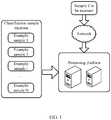
- FIG. 1 is a schematic diagram illustrating an application scenario of an implementation disclosed in this specification.
- a processing platform obtains a sample to be assessed and sample information of example samples from a sample database.
- the sample information includes sample features of example samples and sample quality of example samples.
- the processing platform determines comprehensive similarity between the sample to be assessed and the example samples based on feature similarity between the sample to be assessed and each example samples and sample quality of the example samples.
- the described processing platform can be any platforms with computing and processing capabilities, such as a server.
- the described sample database can be sample database created by collecting samples and is used to classify or identify samples, including a plurality of example samples. Although the sample database shown in FIG.
- the sample database can also be stored in the processing platform.
- the processing platform uses the sample quality of the example samples as a factor in determining the comprehensive similarity between the sample to be assessed and the example samples. Therefore, reverse impact of the varied sample quality of the example samples on the assessment results is reduced or avoided.
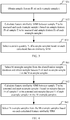
- FIG. 2 is a flowchart illustrating a method, according to one implementation. The process can be performed by a processing platform with computing capability, such as a server as shown in FIG. 1 . As shown in FIG. 2 , the method includes the following steps:
- sample T to be assessed and sample feature Ft of the sample to be assessed are obtained.
- sample T to be assessed can be various objects to be assessed and classified, such as a text, a picture, and code.
- the processing platform needs to automatically detect, assess, or classify various content uploaded onto a network.
- obtaining sample T to be assessed includes capturing the sample to be assessed from the network. For example, when the processing platform needs to filter advertisement images on the network. samples of images to be assessed can be captured from the network.
- obtaining sample T to be assessed includes receiving sample T to be assessed, that is, the processing platform analyzes and assesses the received samples to be assessed.
- the mobile phone communications system needs to determine whether the message is a junk message.
- the message can be sent to the processing platform for message classification.
- the processing platform assesses and classifies the received message.
- sample feature Ft can be extracted.
- Sample feature Ft is extracted for machine learning and analysis and is used to identify different samples.
- many models can be used to extract features of various samples to implement comparison and analysis.
- sample features can include the following: quantity of pixels, mean gray value, median gray value, quantity of sub-regions, sub-region size, sub-region mean gray value, etc.
- sample features can include words in text, quantity of words, word frequency, etc.
- sample features include a plurality of feature elements, and therefore, sample features can be represented as a feature vector composing a plurality of feature elements.
- Ft t 1 , t 2 , ... t n , where Ti is the feature elements of the sample to be assessed.
- step S22 select the first quantity N of example samples from the classification sample database.
- the classification sample database is established by collecting samples in advance and is used to classify, compare and identify samples.
- the database contains a plurality of example samples.
- a sample database of advertisement pictures contains a large quantity of example advertisement pictures
- a sample database of junk messages contains a plurality of example junk messages.
- a quantity of example samples contained in the sample database is relatively small for example, the quantity of example samples is less than a certain threshold (for example, 100).
- a certain threshold for example, 100.
- all example samples in the sample database may be used for performing subsequent steps S23-S25. That is, the first quantity N in step S22 is the quantity of all example samples in the classification sample database.
- the quantity of example samples contained in the classification sample database is large.
- the quantity of example samples is greater than a certain threshold (for example, 200).
- content of the example samples in the sample database is not concentrated.
- all samples stored in the sample database of advertisement pictures are advertisement pictures, content of these pictures differs because these pictures may contain either people or items or scenery.
- the example samples in the sample database can be filtered to determine a quantity N of more targeted example samples for further processing.
- FIG. 3 is a flowchart illustrating selection of a quantity of example samples based on one implementation.
- sample feature Fi of each example sample i in a classification sample database are obtained. It can be understood that, in correspondence with the sample to be assessed, sample feature Fi of each example sample i may similarly be represented by a feature vector.
- F i f i 1 , f i 2 , ... f in
- step S32 feature similarity SIMi between sample T to be assessed and each example sample i is calculated based on sample feature Ft of sample T to be assessed and sample feature Fi of each example sample i.
- the distance di between sample T to be assessed and the example sample i is first calculated, and the distance di is normalized to obtain feature similarity SIMi.
- various algorithms can be used to calculate the distance between the two vectors as the distance di.
- the Euclidean distance between feature vector Ft of sample T to be assessed and feature vector Fi of the example sample i may be calculated as the distance di by using conventional mathematical methods.
- the Mahalanobis distance or the Hamming distance, etc. between Ft and Fi may be calculated as the distance di between sample T to be assessed and the example sample i.
- the distance can be normalized to obtain feature similarity SIMi.
- SIMi is between 0 and 1. It can be understood that other normalization methods can also be used.
- feature similarity SIMi between sample T to be assessed and the example sample i is determined based on cosine similarity between feature vector Ft and feature vector Fi.
- the cosine value of the angle between feature vector Ft and feature vector Fi is used to directly determine feature similarity SIMi between 0 and 1.
- a person skilled in the field may also use other algorithms to determine the feature similarity based on the respective feature vectors of sample T to be assessed and the sample feature i.
- step S32 feature similarity SIMi between sample T to be assessed and each example sample i in the sample database is calculated.
- step S33 a certain quantity N of example samples are selected from the classification sample database based on each of calculated feature similarity SIMi.
- feature similarities SIMi between sample T to be assessed and each example sample i are first sorted, and the N example samples are selected based on the sorting result.
- the N example samples with the highest feature similarity to sample T to be assessed are selected.
- N can be 10 or 20.
- example samples whose feature similarities are sorted in a predetermined range, such as between the 5th and the 15th, are selected.
- the method for selecting example samples can be set as needed.
- exceptional values of the feature similarities that deviate from the predetermined range are first removed, and the N example samples with the highest feature similarities to samples T to be assessed are selected from the sorting result after the exceptional values are removed.
- the certain quantity N is not predetermined.
- an example sample with feature similarity in a predetermined range can be selected as a selected example sample.
- a threshold can be predetermined to select example samples with feature similarity SIMi that are greater than the threshold.
- a certain quantity (N) of example samples are selected from the classification sample database, and the selected example samples have a higher feature similarity to the sample to be assessed, that is, features of the selected example samples are more similar to features of the sample to be assessed. Therefore, the selected example samples are more targeted and more advantageous for the accuracy of subsequent processing results.
- FIG. 4 is a flowchart diagram illustrating selection of a certain quantity (the first quantity N) of example samples, according to another implementation.
- M the second quantity
- M the second quantity
- the next step is performed by randomly selecting M example samples from the classification sample database.
- the most recently used M example samples are selected from the classification sample database to perform the next step.
- the second quantity M can also be determined based on a predetermined ratio, for example, 50% of the total quantity of all example samples in the classification sample database.
- step S42 feature similarity SIMi between sample T to be assessed and each example sample i is calculated based on sample feature Ft of sample T to be assessed and sample feature Fi of each example sample i of the selected M example samples.
- the method for calculating feature similarity SIMi in the present step references can be made to the description of step S32 in FIG. 3 . Details are omitted here for simplicity.
- step S43 the first quantity N of example samples is further selected from the M example samples based on calculated feature similarities SIMi.
- the method for selecting the N example samples from more example samples based on feature similarity SIMi in the present step references can be made to descriptions of step S33 in FIG. 3 . Details are omitted here for simplicity.
- the implementation in FIG. 4 differs from the implementation in FIG. 3 in that the M example samples are initially selected from the classification sample database to calculate the feature similarity between the sample to be assessed and the M example samples, and then the N example samples are further selected from the M example samples based on the feature similarity.
- the M example samples are initially selected from the classification sample database to calculate the feature similarity between the sample to be assessed and the M example samples, and then the N example samples are further selected from the M example samples based on the feature similarity.
- the calculation cost of calculating the feature similarity between each example sample in the classification sample database and the sample to be assessed is still high and the implementation in FIG. 4 can be adopted.
- the N example samples that are finally selected are typically in multiples of ten, such as 10, 20, and 50. Therefore, the implementation in FIG. 3 can be adopted if the quantity of the example samples in the classification sample database is in the level of thousand. If the quantity of example samples in the classification sample database is very large, for example, there are tens of thousands or even hundreds of thousands of example samples, to speed up processing, the method in the implementation in FIG. 4 can be adopted. First, a portion of M example samples are selected from the classification sample database. For example, the quantity of the M example samples may be thousands or hundreds. Then tens of example samples are further selected based on the feature similarity for subsequent processing.
- FIG. 5 is a flowchart illustrating selection of a quantity of example samples, according to another implementation. As shown in FIG. 5 , in step S51, sample quality Qi of each example sample i in a classification sample database is obtained.
- Sample quality Qi is used to measure the generalization ability of an example sample.
- the example sample corresponds to a similarity threshold that a historical assessment sample whose feature similarity to the example sample i exceeds the similarity threshold is determined in a ratio to fall in the same category as the classification sample database.
- a historical assessment sample whose feature similarity to the example sample i exceeds the similarity threshold is considered as falling in the same category as the classification sample database. Therefore, when the feature similarity between the sample to be assessed and the example sample exceeds Qi, there is greater reason to believe that the sample to be assessed and the example sample fall in the same category.
- sample quality is 0.6
- sample quality is 0.8
- the lower the value of sample quality Q the stronger the generalization ability of the sample .
- Sample quality Qi can be determined in several ways.
- the sample quality of each example sample is determined manually and example samples are stored in the classification sample database.
- sample quality Qi is determined based on historical data of sample assessment classification. Specifically, the sample quality of a certain example sample is determined by obtaining feature similarities between a plurality of existing samples and the example sample , and the final assessment results of the plurality of existing samples. More specifically, the lowest feature similarity score among respective feature similarity scores between the example sample and the existing samples that are finally identified as falling in the same category can be determined as the sample quality score of the example sample. For example, for example sample k, five historical assessment samples were compared with k in historical records.
- sample quality Q of sample k can be considered to be 0.65, that is, the lowest value among the feature similarities between sample k and the three historical assessment samples that fall in the same category.
- step S51 sample quality Qi of each example sample i in a classification sample database is calculated by the historical records. In another implementation, the sample quality has been pre-calculated and is stored in the sample database. In step S51, sample quality Qi of each example sample i is read.
- a certain quantity N of example samples are selected from the classification sample database based on the sorting result of the sample quality Qi of each example sample i described above.
- N example samples with the lowest values of Qi are selected from the classification sample database.
- a value of N is not specified in advance. In this case, example samples whose values of sample quality Qi are below a certain threshold can be selected. In this way, N example samples with a strong generalization ability are selected from the classification sample database for further processing.
- step S22 in FIG. 2 is performed.
- step S23 feature similarity SIMi between sample T to be assessed and each example sample i among the N example samples are obtained, where feature similarity SIMi is determined based on sample feature Ft of sample T to be assessed and sample feature Fi of each example sample i.
- step S23 feature similarity SIMi between sample T to be assessed and each example sample i is calculated based on sample feature Ft of sample T to be assessed and sample feature Fi of each example sample i in the N selected example samples.
- step S24 sample quality Qi of each of the N example samples selected is obtained.
- step S24 only the sample quality of the N selected example samples needs to be read from all results.
- step S24 obtain sample quality of the N example samples.
- the method for obtaining the sample quality references can be made to the description of step S51 in FIG. 5 . Details are omitted here for simplicity.
- step S25 On the basis of obtaining feature similarity SIMi between each example sample i and the sample to be assessed, and sample quality Qi of each example sample, in step S25, comprehensive similarities Si between sample to be assessed and each example sample i are obtained based on at least a difference value ri between feature similarity SIMi and sample quality Qi.
- Si ⁇ 0.9 + 0.1 ⁇ r i / 1 ⁇ Q i r i ⁇ 0 0.9 + 0.1 ⁇ r i / Q i r i ⁇ 0
- the sample to be assessed is either similar or dissimilar to both the example samples because the feature similarity between sample T to be assessed and sample A and the feature similarity between sample T to be assessed and sample B are the same.
- comprehensive similarity SB 0.8875 between the sample to be assessed and sample B are obtained.
- the comprehensive similarity shows that the similarity between the sample to be assessed and sample A is different from the similarity between the sample to be assessed and sample B.
- sample quality score of example sample A is only 0.4, and feature similarity between the sample to be assessed and sample A is much greater than the threshold requirement for falling in the same category, so comprehensive similarity with sample A is significantly higher. Therefore, the comprehensive similarity obtained this way can more objectively reflect the probability that the sample to be assessed and the example sample fall in the same category.
- step S25 comprehensive similarities between sample T to be assessed and the N example samples are respectively calculated. Further, in step S26, it can be determined whether sample T to be assessed falls in the category of the classification sample database based on the comprehensive similarity Si.
- obtained N comprehensive similarities Si are sorted to determine the highest comprehensive similarity score.
- the highest comprehensive similarity score is compared with a predetermined threshold, and if the value is greater than the threshold, sample T to be assessed is considered to fall in the same category as the classification sample database.
- total similarity score of the sample to be assessed is determined based on the N comprehensive similarities between sample T to be assessed and the N example samples, and whether sample T to be assessed falls in the category of the classification sample database is determined based on the total similarity score.
- the total similarity score is used to measure the degree of similarity between the sample to be assessed and the entire example sample set, or the degree of similarity between the sample to be assessed and the entire classification sample database, and the probability of falling in the same category.
- an average value of comprehensive similarity SIMi between sample T to be assessed and each example sample i is calculated, and the average value is determined as the previous total similarity score.
- the total similarity score is determined as the maximum value among the comprehensive similarities between sample T to be assessed and the N example samples. Otherwise, the total similarity score is determined as the minimum value among the comprehensive similarities between sample T to be assessed and the N example samples.
- the sample to be assessed can be determined by setting an appropriate total score threshold in advance.
- the total similarity score is compared with the predetermined total score threshold, and if the total similarity score of the sample to be assessed is greater than the predetermined total score threshold, the sample to be assessed can be determined as falling in the category of the classification sample database. For example, if the sample to be assessed is a received message, as long as the total similarity score of a junk message sample database is greater than the predetermined threshold, the message is also a junk message.
- the feature similarity between the sample to be assessed and the example sample, and the sample quality of the sample to be assessed are comprehensively considered to determine the comprehensive similarity score of the sample to be assessed and the example sample. Therefore, the adverse impact of varied sample quality on the assessment results is reduced or avoided.
- FIG. 6 is a schematic block diagram illustrating a classification device, according to one implementation.
- a classification device 60 includes: a sample acquisition unit 61, configured to obtain a sample T to be assessed and sample feature Ft of sample T to be assessed; a selection unit 62, configured to select the first quantity N of example samples from a classification sample database; a first acquisition unit 63, configured to obtain feature similarity SIMi between sample T to be assessed and each example sample i of the N example samples, where the feature similarity SIMi is determined based on sample feature Ft of sample T to be assessed and sample feature Fi of each example sample i; a second acquisition unit 64, configured to obtain sample quality Qi of each example sample i, where sample quality Qi corresponds to such a similarity threshold that historical assessment samples whose feature similarities to the example sample i exceed the similarity threshold are determined in a certain proportion as falling in the category of the classification sample database; a processing
- the selection unit 62 includes a calculation subunit (not shown), configured to calculate, based on sample feature Ft of sample T to be assessed and the sample features of the second quantity M of example samples in the classification sample database, feature similarities between each example sample of the second quantity M of example samples and sample T to be assessed, where the second quantity M is greater than the first quantity N; and a selection subunit, configured to select the first quantity N of example samples from the second quantity M of example samples based on feature similarities between each second quantity M of example samples and the sample to be assessed.
- the selection subunit is configured to select, from the second quantity M of example samples, the first quantity N of example samples with the highest feature similarities to sample T to be assessed.
- the selection unit 62 is configured to select the first quantity N of example samples from the classification sample database based on the sorting result of the sample quality of each example sample in the classification sample database.
- feature similarity SIMi is determined by normalizing the distance between sample feature Ft of sample T to be assessed and sample feature Fi of each example sample i.
- the classification unit 66 is configured to determine, based on comprehensive similarities Si between sample T to be assessed and each example sample i, total similarity scores of the sample to be assessed and to determine, based on the total similarity score, whether sample T to be assessed falls in the category of the classification sample database.
- the classification unit 66 is configured to determine the total similarity score as the average score of the comprehensive similarities Si between sample T to be assessed and each example sample i.
- the feature similarity score of the sample to be assessed and the sample quality of the example sample can be comprehensively considered in determining the comprehensive similarity between the sample to be assessed and the example sample. Therefore, the adverse impact of varied sample quality on the assessment results is reduced or avoided.
- a computer readable storage medium stores a computer program, and when the computer program is executed in a computer, the computer is enabled to perform the methods described with reference to FIG. 2 to FIG. 5 .
- a computing device including a memory and a processor, where the memory stores executable code, and when the processor executes the executable code, the methods described with reference to FIG. 2 to FIG. 5 are implemented.
Landscapes
- Engineering & Computer Science (AREA)
- Theoretical Computer Science (AREA)
- Data Mining & Analysis (AREA)
- General Physics & Mathematics (AREA)
- Physics & Mathematics (AREA)
- Computer Vision & Pattern Recognition (AREA)
- Databases & Information Systems (AREA)
- General Engineering & Computer Science (AREA)
- Evolutionary Computation (AREA)
- Artificial Intelligence (AREA)
- Life Sciences & Earth Sciences (AREA)
- Bioinformatics & Cheminformatics (AREA)
- Bioinformatics & Computational Biology (AREA)
- Evolutionary Biology (AREA)
- Computing Systems (AREA)
- Software Systems (AREA)
- Multimedia (AREA)
- Health & Medical Sciences (AREA)
- Medical Informatics (AREA)
- General Health & Medical Sciences (AREA)
- Information Retrieval, Db Structures And Fs Structures Therefor (AREA)
Abstract
Description
- One or more implementations of the present specification relate to the field of computer technologies, and in particular, to sample classification and identification.
- As the Internet upgrades, a wide variety of information and content are generated on the network every day. In many cases, these information and content need to be identified and classified. For example, many network platforms generate a large amount of junk information, advertising information, etc. To ensure user experience, junk information and advertising information need to be identified and filtered. For another example, to improve the network environment, it is also necessary to identify and classify content of the network that contains pornography, violence or that violates laws and regulations.
- To identify and classify the network content, the method of establishing a classification sample database is usually used. For example, an advertisement "black sample" database can be created for advertising information and store collected example samples, which are also referred to as black samples. The network content to be assessed is compared with the black samples in the black sample database to determine whether the network content to be assessed fall in the same category in the classification sample database according to the similarity of the comparison, that is, whether the network content is also advertisement content.
- Typically, the sample database contains a large quantity of example samples. These samples are usually collected manually and therefore vary in quality. Some example samples are of low quality, and have poor generalization ability. Therefore, the content to be assessed does not fall in the same category as the example sample even though the content has a high similarity with the example sample. This brings much difficulty in classifying and assessing samples.
- Therefore, improved solution is needed to assess and classify the content to be assessed and samples more effectively.
- One or more implementations of this specification describe a method and a device. Similarity between a sample to be assessed and an example sample is assessed more effectively and more accurately by introducing consideration of sample quality of the example sample during assessment.
- According to a first aspect, a method for classifying samples to be assessed is provided, including: obtaining samples T to be assessed and sample feature Ft of sample T to be assessed; selecting a first quantity N of example samples from a classification sample database; obtaining feature similarity SIMi of the samples T to be assessed and each example sample i among the N example samples, where feature similarity SIMi is determined based on sample feature Ft of samples T to be assessed and sample feature Fi of each example sample i; obtaining sample quality Qi of each example sample i; determining comprehensive similarity Si between sample T to be assessed and each example sample i based on at least a difference value ri between feature similarity SIMi and sample quality Qi; and determining, based on comprehensive similarity Si, whether sample T to be assessed falls in the category of the classification sample database.
- In an implementation, the selecting the first quantity N example samples from a classification sample database includes: calculating feature similarity between samples T to be assessed and each second quantity M example samples based on sample feature Ft of sample T to be assessed and sample features of the second quantity M example samples in the classification sample database, where the second quantity M is greater than the first quantity N; and selecting the first quantity N example samples from the second quantity M example samples based on feature similarity between the sample to be assessed and each second quantity M example samples.
- In an implementation, the selecting the first quantity N of example samples from a classification sample database includes selecting the first quantity N of example samples from the classification sample database based on the sorting result of sample quality of each sample in the classification sample database.
- According to one implementation, feature similarity SIMi is determined by normalizing the distance between sample feature Ft of sample T to be assessed and sample feature Fi of each example sample i.
- In an implementation, determining comprehensive similarity Si between sample T to be assessed and each example sample i includes determining comprehensive similarity Si as Si = a + b ∗ ri ∗ c, where a + b = 1, and c is a coefficient associated with sample quality Qi.
- In an implementation, in the case of ri > = 0, c = 1/(1-Qi) and in the case of ri < 0, c = 1/Qi.
- According to one implementation, the method above further includes :determining a total similarity score of the sample to be assessed based on comprehensive similarity Si between the sample to be assessed and each example sample i.
- In an implementation, the determining a total similarity score of the sample to be assessed includes: if at least one ri > = 0, determining the total similarity score as the maximum value among comprehensive similarities Si between sample T to be assessed and each example sample i; or otherwise, determining the total similarity score as the minimum value among comprehensive similarities Si between sample T to be assessed and each example sample i.
- In an implementation, the determining a total similarity score of sample to be assessed includes determining the total similarity score as the average value of comprehensive similarities Si between sample T to be assessed and each example sample i.
- According to a second aspect, a device for classifying samples to be assessed is provided, including: a sample acquisition unit, configured to obtain sample T to be assessed and sample feature Ft of sample T to be assessed; a selection unit, configured to select the first quantity N of example samples from a classification sample database; a first acquisition unit, configured to obtain feature similarity SIMi between sample T to be assessed and each example sample i of the N example samples, where feature similarity SIMi is determined based on sample feature Ft of sample T to be assessed and sample feature Fi of each example sample i; a second acquisition unit, configured to obtain sample quality Qi of each example sample i; a processing unit, configured to determine a comprehensive similarity Si between sample T to be assessed and each example sample i based on at least a difference value ri between feature similarity SIMi and sample quality Qi; and a classification unit, configured to determine, based on comprehensive similarity Si, whether sample T to be assessed falls in the category of the classification sample database.
- According to a third aspect, a computer readable storage medium is provided, where the medium stores a computer program, and when the computer program is executed in a computer, the computer is enabled to perform the method of the first aspect.
- According to a fourth aspect, a computing device is provided, including a memory and a processor, where the memory stores executable code, and when the processor executes the executable code, the method of the first aspect is implemented.
- When the method and the device provided in the implementations of this specification are used, the feature similarity between the sample to be assessed and the example sample and the sample quality of the example sample are comprehensively considered to determine the comprehensive similarity between the sample to be assessed and the example sample. Based on the comprehensive similarity, the sample to be assessed is classified, thereby reducing or avoiding the adverse impact of the varied sample quality on the assessment results and making it more effective and more accurate to determine the category of the sample to be assessed.
- To describe the technical solutions in the implementations of the present disclosure more clearly, the following briefly introduces the accompanying drawings required for describing the implementations. Apparently, the accompanying drawings in the following description are merely some implementations of the present disclosure, and a person of ordinary skill in the field may still derive other drawings from these accompanying drawings without creative efforts.
-
FIG. 1 is a schematic diagram illustrating an application scenario of an implementation disclosed in this specification; -
FIG. 2 is a flowchart illustrating a method, according to one implementation; -
FIG. 3 is a flowchart illustrating selection of a certain quantity of example samples, according to one implementation; -
FIG. 4 is a flowchart illustrating selection of a certain quantity of example samples, according to another implementation; -
FIG. 5 is a flowchart illustrating selection of a quantity of example samples, according to another implementation; and -
FIG. 6 is a schematic block diagram illustrating a classification device, according to one implementation. - The solution provided in this specification is described below with reference to the accompanying drawings.
-
FIG. 1 is a schematic diagram illustrating an application scenario of an implementation disclosed in this specification. InFIG. 1 , a processing platform obtains a sample to be assessed and sample information of example samples from a sample database. The sample information includes sample features of example samples and sample quality of example samples. The processing platform then determines comprehensive similarity between the sample to be assessed and the example samples based on feature similarity between the sample to be assessed and each example samples and sample quality of the example samples. The described processing platform can be any platforms with computing and processing capabilities, such as a server. The described sample database can be sample database created by collecting samples and is used to classify or identify samples, including a plurality of example samples. Although the sample database shown inFIG. 1 is stored in an independent database, it can be understood that the sample database can also be stored in the processing platform. By using assessment methods in the implementations, the processing platform uses the sample quality of the example samples as a factor in determining the comprehensive similarity between the sample to be assessed and the example samples. Therefore, reverse impact of the varied sample quality of the example samples on the assessment results is reduced or avoided. - The following describes in detail the method the processing platform used to classify samples to be assessed.
FIG. 2 is a flowchart illustrating a method, according to one implementation. The process can be performed by a processing platform with computing capability, such as a server as shown inFIG. 1 . As shown inFIG. 2 , the method includes the following steps: - Step S21: Obtain sample T to be assessed and sample feature Ft of sample T to be assessed.
- Step S22: Select the first quantity N of example samples from classification sample database.
- Step S23: Obtain feature similarity SIMi between sample T to be assessed and each example sample i of the first quantity N of example samples, where feature similarity SIMi is determined based on sample feature Ft of sample T to be assessed and sample feature Fi of each example sample i.
- Step S24: Obtain sample quality Qi of each example sample i. Sample quality Qi corresponds to a similarity threshold, that is, a historical assessment sample whose feature similarity with the example sample i exceeds the similarity threshold is determined as a specific category in a certain ratio.
- Step S25: Determine comprehensive similarity Si between sample T to be assessed and each example sample i based on at least a difference value ri between feature similarity SIMi and sample quality Qi.
- Step S26: Determine, based on comprehensive similarity Si, whether sample T to be assessed falls in the category of the classification sample database.
- First, in step S21, sample T to be assessed and sample feature Ft of the sample to be assessed are obtained. It can be understood that sample T to be assessed can be various objects to be assessed and classified, such as a text, a picture, and code. In an implementation, the processing platform needs to automatically detect, assess, or classify various content uploaded onto a network. In this case, obtaining sample T to be assessed includes capturing the sample to be assessed from the network. For example, when the processing platform needs to filter advertisement images on the network. samples of images to be assessed can be captured from the network. In another implementation, obtaining sample T to be assessed includes receiving sample T to be assessed, that is, the processing platform analyzes and assesses the received samples to be assessed. For example, after a mobile phone communication system receives a message, the mobile phone communications system needs to determine whether the message is a junk message. In this case, the message can be sent to the processing platform for message classification. The processing platform then assesses and classifies the received message.
- For sample T to be assessed, sample feature Ft can be extracted. Sample feature Ft is extracted for machine learning and analysis and is used to identify different samples. In the existing technology, many models can be used to extract features of various samples to implement comparison and analysis. For example, for a picture sample, sample features can include the following: quantity of pixels, mean gray value, median gray value, quantity of sub-regions, sub-region size, sub-region mean gray value, etc. For text samples, sample features can include words in text, quantity of words, word frequency, etc. For other types of samples, there are corresponding feature extraction methods. Generally, sample features include a plurality of feature elements, and therefore, sample features can be represented as a feature vector composing a plurality of feature elements.

- In addition, in step S22, select the first quantity N of example samples from the classification sample database.
- It can be understood that the classification sample database is established by collecting samples in advance and is used to classify, compare and identify samples. The database contains a plurality of example samples. For example, a sample database of advertisement pictures contains a large quantity of example advertisement pictures, and a sample database of junk messages contains a plurality of example junk messages.
- In an implementation, a quantity of example samples contained in the sample database is relatively small for example, the quantity of example samples is less than a certain threshold (for example, 100). In this case, all example samples in the sample database may be used for performing subsequent steps S23-S25. That is, the first quantity N in step S22 is the quantity of all example samples in the classification sample database.
- In another implementation, the quantity of example samples contained in the classification sample database is large. For example, the quantity of example samples is greater than a certain threshold (for example, 200). Alternatively, content of the example samples in the sample database is not concentrated. For example, although all samples stored in the sample database of advertisement pictures are advertisement pictures, content of these pictures differs because these pictures may contain either people or items or scenery. In this case, the example samples in the sample database can be filtered to determine a quantity N of more targeted example samples for further processing.
- Many ways can be used to determine a certain quantity N example samples from the classification sample database.
FIG. 3 is a flowchart illustrating selection of a quantity of example samples based on one implementation. As shown inFIG. 3 , first in step S31, sample feature Fi of each example sample i in a classification sample database are obtained. It can be understood that, in correspondence with the sample to be assessed, sample feature Fi of each example sample i may similarly be represented by a feature vector.
- In step S32, feature similarity SIMi between sample T to be assessed and each example sample i is calculated based on sample feature Ft of sample T to be assessed and sample feature Fi of each example sample i.
- In an implementation, the distance di between sample T to be assessed and the example sample i is first calculated, and the distance di is normalized to obtain feature similarity SIMi. It can be understood that because both sample T to be assessed and the example sample i can be represented in the form of a feature vector, various algorithms can be used to calculate the distance between the two vectors as the distance di. For example, the Euclidean distance between feature vector Ft of sample T to be assessed and feature vector Fi of the example sample i may be calculated as the distance di by using conventional mathematical methods. Alternatively, the Mahalanobis distance or the Hamming distance, etc. between Ft and Fi may be calculated as the distance di between sample T to be assessed and the example sample i. Then, the distance can be normalized to obtain feature similarity SIMi. In one example, the distance is normalized by using the following equation:

- To make the value of SIMi is between 0 and 1. It can be understood that other normalization methods can also be used.
- In an implementation, feature similarity SIMi between sample T to be assessed and the example sample i is determined based on cosine similarity between feature vector Ft and feature vector Fi. In this method, the cosine value of the angle between feature vector Ft and feature vector Fi is used to directly determine feature similarity SIMi between 0 and 1. A person skilled in the field may also use other algorithms to determine the feature similarity based on the respective feature vectors of sample T to be assessed and the sample feature i.
- Therefore, in step S32, feature similarity SIMi between sample T to be assessed and each example sample i in the sample database is calculated. Next, in step S33, a certain quantity N of example samples are selected from the classification sample database based on each of calculated feature similarity SIMi.
- In an implementation, feature similarities SIMi between sample T to be assessed and each example sample i are first sorted, and the N example samples are selected based on the sorting result.
- In one example, the N example samples with the highest feature similarity to sample T to be assessed are selected. For example, N can be 10 or 20. Of course, example samples whose feature similarities are sorted in a predetermined range, such as between the 5th and the 15th, are selected. The method for selecting example samples can be set as needed.
- In another example, exceptional values of the feature similarities that deviate from the predetermined range are first removed, and the N example samples with the highest feature similarities to samples T to be assessed are selected from the sorting result after the exceptional values are removed.
- In another implementation, the certain quantity N is not predetermined. Correspondingly, an example sample with feature similarity in a predetermined range can be selected as a selected example sample. For example, a threshold can be predetermined to select example samples with feature similarity SIMi that are greater than the threshold.
- As such, a certain quantity (N) of example samples are selected from the classification sample database, and the selected example samples have a higher feature similarity to the sample to be assessed, that is, features of the selected example samples are more similar to features of the sample to be assessed. Therefore, the selected example samples are more targeted and more advantageous for the accuracy of subsequent processing results.
- The process of selecting example samples can also be implemented in other ways.
FIG. 4 is a flowchart diagram illustrating selection of a certain quantity (the first quantity N) of example samples, according to another implementation. As shown inFigure 4 , first in step S41, M (the second quantity) example samples are selected from a classification sample database to obtain sample feature Fi of each example sample i of the M example samples. It can be understood that the second quantity M of example samples are initially selected example samples, and the quantity M is greater than the previous first quantity N. In an implementation, the next step is performed by randomly selecting M example samples from the classification sample database. Alternatively, the most recently used M example samples are selected from the classification sample database to perform the next step. The second quantity M can also be determined based on a predetermined ratio, for example, 50% of the total quantity of all example samples in the classification sample database. - Next, in step S42, feature similarity SIMi between sample T to be assessed and each example sample i is calculated based on sample feature Ft of sample T to be assessed and sample feature Fi of each example sample i of the selected M example samples. For the method for calculating feature similarity SIMi in the present step, references can be made to the description of step S32 in
FIG. 3 . Details are omitted here for simplicity. - Then in step S43, the first quantity N of example samples is further selected from the M example samples based on calculated feature similarities SIMi. For the method for selecting the N example samples from more example samples based on feature similarity SIMi in the present step, references can be made to descriptions of step S33 in
FIG. 3 . Details are omitted here for simplicity. - As can be seen from the comparison between the implementation in
FIG. 4 and the implementation inFIG. 3 , the implementation inFIG. 4 differs from the implementation inFIG. 3 in that the M example samples are initially selected from the classification sample database to calculate the feature similarity between the sample to be assessed and the M example samples, and then the N example samples are further selected from the M example samples based on the feature similarity. This is particularly applicable when the quantity of example samples in the classification sample database is very large. In this case, the calculation cost of calculating the feature similarity between each example sample in the classification sample database and the sample to be assessed (step S32) is still high and the implementation inFIG. 4 can be adopted. - In practice, the N example samples that are finally selected are typically in multiples of ten, such as 10, 20, and 50. Therefore, the implementation in
FIG. 3 can be adopted if the quantity of the example samples in the classification sample database is in the level of thousand. If the quantity of example samples in the classification sample database is very large, for example, there are tens of thousands or even hundreds of thousands of example samples, to speed up processing, the method in the implementation inFIG. 4 can be adopted. First, a portion of M example samples are selected from the classification sample database. For example, the quantity of the M example samples may be thousands or hundreds. Then tens of example samples are further selected based on the feature similarity for subsequent processing. -
FIG. 5 is a flowchart illustrating selection of a quantity of example samples, according to another implementation. As shown inFIG. 5 , in step S51, sample quality Qi of each example sample i in a classification sample database is obtained. - Sample quality Qi is used to measure the generalization ability of an example sample. The example sample corresponds to a similarity threshold that a historical assessment sample whose feature similarity to the example sample i exceeds the similarity threshold is determined in a ratio to fall in the same category as the classification sample database. In one example, a historical assessment sample whose feature similarity to the example sample i exceeds the similarity threshold is considered as falling in the same category as the classification sample database. Therefore, when the feature similarity between the sample to be assessed and the example sample exceeds Qi, there is greater reason to believe that the sample to be assessed and the example sample fall in the same category. For example, for an example sample in a junk message sample database, if the sample quality is 0.6, this means if the feature similarity score of a sample to be assessed exceeds 0.6, there is a great probability that the sample to be assessed is also a junk message. For another example, for an example sample in an advertisement picture sample database, if the sample quality is 0.8, this means if the feature similarity score of a sample to be assessed exceeds 0.8, there is a great probability that the sample to be assessed is also an advertisement picture. Generally, the lower the value of sample quality Q, the stronger the generalization ability of the sample .
- Sample quality Qi can be determined in several ways. In an implementation, the sample quality of each example sample is determined manually and example samples are stored in the classification sample database. In another implementation, sample quality Qi is determined based on historical data of sample assessment classification. Specifically, the sample quality of a certain example sample is determined by obtaining feature similarities between a plurality of existing samples and the example sample , and the final assessment results of the plurality of existing samples. More specifically, the lowest feature similarity score among respective feature similarity scores between the example sample and the existing samples that are finally identified as falling in the same category can be determined as the sample quality score of the example sample. For example, for example sample k, five historical assessment samples were compared with k in historical records. Assume that the result of the comparison shows that the feature similarity scores of these five historical assessment samples to sample k are SIM1 = 0.8, SIM2 = 0.6, SIM3 = 0.4, SIM4 = 0.65, SIM5 = 0.7 respectively. Finally, the historical assessment samples whose feature similarity values are 0.6 and 0.4 are not considered to be fall in the same category as sample k, and other historical assessment samples are considered to be in the same category. In this case, sample quality Q of sample k can be considered to be 0.65, that is, the lowest value among the feature similarities between sample k and the three historical assessment samples that fall in the same category.
- In an implementation, in step S51, sample quality Qi of each example sample i in a classification sample database is calculated by the historical records. In another implementation, the sample quality has been pre-calculated and is stored in the sample database. In step S51, sample quality Qi of each example sample i is read.
- Next, in step S52, a certain quantity N of example samples are selected from the classification sample database based on the sorting result of the sample quality Qi of each example sample i described above. In an implementation, N example samples with the lowest values of Qi are selected from the classification sample database. In another implementation, a value of N is not specified in advance. In this case, example samples whose values of sample quality Qi are below a certain threshold can be selected. In this way, N example samples with a strong generalization ability are selected from the classification sample database for further processing.
- In addition to the methods shown in
FIG. 3, FIG. 4 , andFIG. 5 , a person skilled in the field can use a similar method to select the first quantity N of example samples from the classification sample database after reading this specification. therefore, step S22 inFIG. 2 is performed. - Referring back to
FIG. 2 , on the basis of selecting the N example samples, in step S23, feature similarity SIMi between sample T to be assessed and each example sample i among the N example samples are obtained, where feature similarity SIMi is determined based on sample feature Ft of sample T to be assessed and sample feature Fi of each example sample i. - It can be understood that if the N example samples are selected in the methods shown in
FIG. 3 or FIG. 4 , feature similarities SIMi between sample T to be assessed and all example samples/the M example samples have been calculated during the selection process. Correspondingly, in step S23, only the feature similarities between sample T to be assessed and the N selected example samples needs to be read from the calculation result. - If other methods are used to select the N example samples, then in step S23, feature similarity SIMi between sample T to be assessed and each example sample i is calculated based on sample feature Ft of sample T to be assessed and sample feature Fi of each example sample i in the N selected example samples. For the calculation method, references can be made to the description of step S32 in
FIG. 3 . Details are omitted here for simplicity. - In addition, in step S24, sample quality Qi of each of the N example samples selected is obtained.
- It can be understood that if the N example samples are selected in the method shown in
FIG. 5 , the sample quality of all example samples has been obtained during the selection process. Correspondingly, in step S24, only the sample quality of the N selected example samples needs to be read from all results. - If the N example samples are selected in other methods, in step S24, obtain sample quality of the N example samples. For the method for obtaining the sample quality, references can be made to the description of step S51 in
FIG. 5 . Details are omitted here for simplicity. - On the basis of obtaining feature similarity SIMi between each example sample i and the sample to be assessed, and sample quality Qi of each example sample, in step S25, comprehensive similarities Si between sample to be assessed and each example sample i are obtained based on at least a difference value ri between feature similarity SIMi and sample quality Qi.
- In an implementation, comprehensive similarity Si is determined to be Si = a + b ∗ ri ∗ c, where a and b are constants, a + b = 1, and c is a coefficient associated with sample quality Qi.
- For example, in one example, Si = 0.8 + 0.2 ∗ ri/2Qi;
In another example, Si = 0.7 + 0.3 ∗ ri/Qi. - In an implementation, parameter c is set to be different values for different values of ri. For example, in the case of ri > = 0, c = 1/(1-Qi) and in the case of ri < 0, c = 1/Qi.
- In an example, the calculation form of Si is as follows:

- In the previous equation, in the case of ri > = 0, make c = 1/(1-Qi). Therefore, ri /(1-Qi ) is not greater than 1, so Si is not greater than 1. In addition, the effect of the difference value ri between the feature similarity SIMi and the sample quality Qi can be better measured. If a value of Qi is relatively large or even closer to 1, a margin (1-Qi) of the difference value ri will be very small. In this case, Si should be calculated by considering the ratio of difference value ri to its possible margin. In the case of ri < 0, c can be directly set to be 1/Qi , and Si can be calculated by considering the ratio of difference value ri to Qi.
- In the process of calculating the comprehensive similarity, because the sample quality, the difference value between the feature similarity and the sample quality are comprehensively considered, the calculated comprehensive similarity can more objectively reflect the probability that the sample to be assessed and the example sample fall in the same category, and is less affected by the sample quality of the example sample. For example, assume there are two example samples A and B, and sample quality is QA = 0.4 and QB = 0.8 respectively. Assume that feature similarity between sample T to be assessed and sample A and feature similarity between sample T to be assessed and sample B are both 0.7. In such a situation, if only consider the feature similarity, it is generally considered that the sample to be assessed is either similar or dissimilar to both the example samples because the feature similarity between sample T to be assessed and sample A and the feature similarity between sample T to be assessed and sample B are the same. If the method in the previous implementation is used, for example, algorithm of
equation 1 is used, comprehensive similarity SA = 0.95 between the sample to be assessed and sample A, and comprehensive similarity SB = 0.8875 between the sample to be assessed and sample B are obtained. The comprehensive similarity shows that the similarity between the sample to be assessed and sample A is different from the similarity between the sample to be assessed and sample B. the sample quality score of example sample A is only 0.4, and feature similarity between the sample to be assessed and sample A is much greater than the threshold requirement for falling in the same category, so comprehensive similarity with sample A is significantly higher. Therefore, the comprehensive similarity obtained this way can more objectively reflect the probability that the sample to be assessed and the example sample fall in the same category. - As such, in step S25, comprehensive similarities between sample T to be assessed and the N example samples are respectively calculated. Further, in step S26, it can be determined whether sample T to be assessed falls in the category of the classification sample database based on the comprehensive similarity Si.
- In an implementation, obtained N comprehensive similarities Si are sorted to determine the highest comprehensive similarity score. The highest comprehensive similarity score is compared with a predetermined threshold, and if the value is greater than the threshold, sample T to be assessed is considered to fall in the same category as the classification sample database.
- In an implementation, total similarity score of the sample to be assessed is determined based on the N comprehensive similarities between sample T to be assessed and the N example samples, and whether sample T to be assessed falls in the category of the classification sample database is determined based on the total similarity score. The total similarity score is used to measure the degree of similarity between the sample to be assessed and the entire example sample set, or the degree of similarity between the sample to be assessed and the entire classification sample database, and the probability of falling in the same category.
- In an implementation, an average value of comprehensive similarity SIMi between sample T to be assessed and each example sample i is calculated, and the average value is determined as the previous total similarity score.
- In another implementation, if at least one of ri among N difference values ri that correspond to the N example samples is greater than or equal to 0, the total similarity score is determined as the maximum value among the comprehensive similarities between sample T to be assessed and the N example samples. Otherwise, the total similarity score is determined as the minimum value among the comprehensive similarities between sample T to be assessed and the N example samples.
- Because sample quality difference of each example sample is considered in determining the total comprehensive score, the sample to be assessed can be determined by setting an appropriate total score threshold in advance. Correspondingly, in step S26, the total similarity score is compared with the predetermined total score threshold, and if the total similarity score of the sample to be assessed is greater than the predetermined total score threshold, the sample to be assessed can be determined as falling in the category of the classification sample database. For example, if the sample to be assessed is a received message, as long as the total similarity score of a junk message sample database is greater than the predetermined threshold, the message is also a junk message.
- According to the method in the previous implementation, the feature similarity between the sample to be assessed and the example sample, and the sample quality of the sample to be assessed are comprehensively considered to determine the comprehensive similarity score of the sample to be assessed and the example sample. Therefore, the adverse impact of varied sample quality on the assessment results is reduced or avoided.
- According to an implementation of another aspect, this specification also provides a device for classifying samples to be assessed.
FIG. 6 is a schematic block diagram illustrating a classification device, according to one implementation. As shown inFIG. 6 , aclassification device 60 includes: asample acquisition unit 61, configured to obtain a sample T to be assessed and sample feature Ft of sample T to be assessed; aselection unit 62, configured to select the first quantity N of example samples from a classification sample database; afirst acquisition unit 63, configured to obtain feature similarity SIMi between sample T to be assessed and each example sample i of the N example samples, where the feature similarity SIMi is determined based on sample feature Ft of sample T to be assessed and sample feature Fi of each example sample i; asecond acquisition unit 64, configured to obtain sample quality Qi of each example sample i, where sample quality Qi corresponds to such a similarity threshold that historical assessment samples whose feature similarities to the example sample i exceed the similarity threshold are determined in a certain proportion as falling in the category of the classification sample database; aprocessing unit 65, configured to determine comprehensive similarities Si between sample T to be assessed and each example sample i based on at least difference value ri between feature similarity SIMi and sample quality Qi; and aclassification unit 66, configured to determine, based on comprehensive similarity Si, whether sample T to be assessed falls in the category of the classification sample database. - In an implementation, the
selection unit 62 includes a calculation subunit (not shown), configured to calculate, based on sample feature Ft of sample T to be assessed and the sample features of the second quantity M of example samples in the classification sample database, feature similarities between each example sample of the second quantity M of example samples and sample T to be assessed, where the second quantity M is greater than the first quantity N; and a selection subunit, configured to select the first quantity N of example samples from the second quantity M of example samples based on feature similarities between each second quantity M of example samples and the sample to be assessed. - In an implementation, the selection subunit is configured to select, from the second quantity M of example samples, the first quantity N of example samples with the highest feature similarities to sample T to be assessed.
- According to one implementation, the
selection unit 62 is configured to select the first quantity N of example samples from the classification sample database based on the sorting result of the sample quality of each example sample in the classification sample database. - In an implementation, feature similarity SIMi is determined by normalizing the distance between sample feature Ft of sample T to be assessed and sample feature Fi of each example sample i.
- According to one implementation, the
processing unit 65 is configured to determine comprehensive similarity Si as Si = a + b ∗ ri ∗ c, where a + b = 1, and c is a coefficient associated with sample quality Qi. - In an implementation, in the case of ri > = 0, c = 1/(1-Qi) and in the case of ri < 0, c = 1/Qi.
- According to one implementation, the
classification unit 66 is configured to determine, based on comprehensive similarities Si between sample T to be assessed and each example sample i, total similarity scores of the sample to be assessed and to determine, based on the total similarity score, whether sample T to be assessed falls in the category of the classification sample database. - In an implementation, the
classification unit 66 is further configured to: if at least one ri > = 0, determine the total similarity score as the maximum value among comprehensive similarities Si between sample T to be assessed and each example sample i; or otherwise, determine the total similarity score as the minimum value among comprehensive similarities Si between sample T to be assessed and each example sample i. - In an implementation, the
classification unit 66 is configured to determine the total similarity score as the average score of the comprehensive similarities Si between sample T to be assessed and each example sample i. - According to the device in the previous implementation, the feature similarity score of the sample to be assessed and the sample quality of the example sample can be comprehensively considered in determining the comprehensive similarity between the sample to be assessed and the example sample. Therefore, the adverse impact of varied sample quality on the assessment results is reduced or avoided.
- According to another implementation, a computer readable storage medium is also provided, where the computer readable storage medium stores a computer program, and when the computer program is executed in a computer, the computer is enabled to perform the methods described with reference to
FIG. 2 to FIG. 5 . - According to another implementation, a computing device is further provided, including a memory and a processor, where the memory stores executable code, and when the processor executes the executable code, the methods described with reference to
FIG. 2 to FIG. 5 are implemented. - A person skilled in the field should be aware that, in one or more of the previous examples, the functions described in the present disclosure can be implemented in hardware, software, firmware, or any combination of them. When these functions are implemented by software, the functions can be stored in a computer readable medium or transmitted as one or more instructions or code on the computer readable medium.
- The specific implementations further describe the object, technical solutions and beneficial effects of the present disclosure. It should be understood that the previous descriptions are merely specific implementations of the present disclosure and are not intended to limit the protection scope of the present disclosure. Any modification, equivalent replacement and improvement made on the basis of the technical solution of the present disclosure shall fall within the protection scope of the present disclosure.
Claims (22)
- A method for classifying samples to be assessed, comprising:obtaining sample T to be assessed and sample feature Ft of sample T to be assessed;selecting the first quantity N of example samples from a classification sample database;obtaining feature similarity SIMi between sample T to be assessed and each of the N example samples i, wherein feature similarity SIMi is determined based on sample feature Ft of sample T to be assessed and sample feature Fi of each example sample i;obtaining sample quality Qi of each example sample i;determining comprehensive similarities Si between sample T to be assessed and each example sample i based on at least a difference values ri between feature similarity SIMi and sample quality Qi;determining, based on comprehensive similarity Si, whether sample T to be assessed falls in the category of the classification sample database.
- The method according to claim 1, wherein the selecting the first quantity N of example samples from a classification samples comprises:calculating feature similarities between sample T to be assessed and each of the second quantity M of example samples based on sample feature Ft of sample T to be assessed and sample features of the second quantity M of example samples in the classification sample database, wherein the second quantity M is greater than the first quantity N; andselecting the first quantity N of example samples from the second quantity M of example samples based on feature similarity between the sample to be assessed and each of the second quantity M of example samples.
- The method according to claim 2, wherein the selecting the first quantity N of example samples from the second quantity M of example samples comprises: selecting, from the second quantity M of example samples, the first quantity N of example samples with the highest feature similarities to sample T to be assessed.
- The method according to claim 1, wherein the selecting the first quantity N of example samples from a classification sample database comprises: selecting the first quantity N of example samples from the classification sample database based on the sorting result of sample quality of each sample in the classification sample database.
- The method according to claim 1, wherein feature similarity SIMi is determined by normalizing the distance between sample feature Ft of sample T to be assessed and sample feature Fi of each example sample i.
- The method according to claim 1, wherein the determining comprehensive similarities Si between sample T to be assessed and each example sample i comprises: determining comprehensive similarity Si as Si = a + b ∗ ri ∗ c, wherein a + b = 1 and c is a coefficient associated with sample quality Qi.
- The method according to claim 6, wherein in the case of ri > = 0, c = 1/(1-Qi) and in the case of ri < 0, c = 1/Qi.
- The method according to claim 1, wherein the determining whether sample T to be assessed falls in the category of the classification sample database based on comprehensive similarity Si comprises:determining, based on comprehensive similarities Si between sample T to be assessed and each example sample i, a total similarity score of the sample to be assessed; anddetermining, based on the total similarity score, whether sample T to be assessed falls in the category of the classification sample database.
- The method according to claim 8, wherein the determining the total similarity score of the sample to be assessed comprises:if at least one ri > = 0, determining the total similarity score as the maximum value among comprehensive similarities Si between sample T to be assessed and each example sample i; orotherwise, determining the total similarity score as the minimum value among comprehensive similarities Si between sample T to be assessed and each example sample i.
- The method according to claim 8, wherein the determining a total similarity score of the sample to be assessed comprises: determining the total similarity score as an average value of comprehensive similarities Si between the sample to be assessed and each example sample i.
- A device for classifying samples to be assessed, comprising:a sample acquisition unit, configured to obtain sample T to be assessed and sample feature Ft of sample T to be assessed;a selection unit, configured to select the first quantity N of example samples from a classification sample database;a first acquisition unit, configured to obtain feature similarity SIMi between sample T to be assessed and each of the N example samples i, wherein feature similarity SIMi is determined based on sample feature Ft of sample T to be assessed and sample feature Fi of each example sample i;a second acquisition unit, configured to obtain sample quality Qi of each example sample i, wherein sample quality Qi corresponds to such a similarity threshold that a sample to be assessed whose feature similarity to the example sample i exceeds the similarity threshold is determined as falling in the category of classification sample database;a processing unit, configured to determine comprehensive similarities Si between sample T to be assessed and each example sample i based on at least a difference value ri between feature similarity SIMi and sample quality Qi; anda classification unit, configured to determine, based on comprehensive similarity Si, whether sample T to be assessed falls in the category of the classification sample database.
- The device according to claim 11, wherein the selection unit comprises:a calculation subunit, configured to calculate, based on sample feature Ft of sample T to be assessed and sample features of the second quantity M of example samples, feature similarities between each of the second quantity M of example samples and sample T to be assessed, wherein the second quantity M is greater than the second quantity N.a selection subunit, configured to select the first quantity N of example samples from the second quantity M of example samples based on the feature similarities between the sample to be assessed and each of the second quantity M of example samples.
- The device according to claim 12, wherein the selection subunit is configured to select, from the second quantity M of example samples, the first quantity N of example samples with the highest feature similarities to sample T to be assessed.
- The device according to claim 11, wherein the selection unit is configured to select the first quantity N of example samples from the classification sample database based on the sorting result of the sample quality of each sample in the classification sample database.
- The device according to claim 11, wherein feature similarity SIMi is determined by normalizing the distance between sample feature Ft of sample T to be assessed and sample feature Fi of each example sample i.
- The device according to claim 11, wherein the processing unit is configured to determine comprehensive similarity Si as Si = a + b ∗ ri ∗ c, wherein a + b = 1, and c is a coefficient associated with sample quality Qi.
- The device according to claim 16, wherein in the case of ri > = 0, c = 1/(1-Qi) and in the case of ri < 0, c = 1/Qi.
- The device according to claim 11, wherein the classification unit is configured to:determine, based on comprehensive similarities Si between sample T to be assessed and each example sample i, a total similarity score of the sample to be assessed; anddetermine, based on the total similarity score, whether sample T to be assessed falls in the category of the classification sample database.
- The device according to claim 18, wherein the classification unit is configured to:if at least one ri > = 0, determine the total similarity score as the maximum value among comprehensive similarities Si between sample T to be assessed and each example sample i; orotherwise, determine the total similarity score as the minimum value among comprehensive similarities Si between sample T to be assessed and each example sample i.
- The device according to claim 18, wherein the classification unit is configured to determine the total similarity score as the average value of comprehensive similarities Si of sample T to be assessed and each example sample i.
- A computer readable storage medium, wherein the computer readable storage medium stores a computer program, and when the computer program is executed in a computer, the computer is enabled to perform the method according to any one of claims 1 to 10.
- A computing device, comprising a memory and a processor, wherein the memory stores executable code, and when executing the executable code, the processor implements the method according to any one of claims 1 to 10.
Applications Claiming Priority (2)
| Application Number | Priority Date | Filing Date | Title |
|---|---|---|---|
| CN201711322274.2A CN108197638B (en) | 2017-12-12 | 2017-12-12 | Method and device for classifying sample to be evaluated |
| PCT/CN2018/100758 WO2019114305A1 (en) | 2017-12-12 | 2018-08-16 | Method and device for classifying samples to be assessed |
Publications (3)
| Publication Number | Publication Date |
|---|---|
| EP3644232A1 true EP3644232A1 (en) | 2020-04-29 |
| EP3644232A4 EP3644232A4 (en) | 2020-12-02 |
| EP3644232B1 EP3644232B1 (en) | 2023-06-14 |
Family
ID=62574339
Family Applications (1)
| Application Number | Title | Priority Date | Filing Date |
|---|---|---|---|
| EP18889062.8A Active EP3644232B1 (en) | 2017-12-12 | 2018-08-16 | Method and device for classifying samples to be assessed |
Country Status (6)
| Country | Link |
|---|---|
| US (1) | US20200210459A1 (en) |
| EP (1) | EP3644232B1 (en) |
| CN (1) | CN108197638B (en) |
| SG (1) | SG11202000863RA (en) |
| TW (1) | TWI722325B (en) |
| WO (1) | WO2019114305A1 (en) |
Families Citing this family (7)
| Publication number | Priority date | Publication date | Assignee | Title |
|---|---|---|---|---|
| CN108197638B (en) * | 2017-12-12 | 2020-03-20 | 阿里巴巴集团控股有限公司 | Method and device for classifying sample to be evaluated |
| CN110147845B (en) * | 2019-05-23 | 2021-08-06 | 北京百度网讯科技有限公司 | Feature space-based sample collection method and sample collection system |
| CN112559602B (en) * | 2021-02-21 | 2021-07-13 | 北京工业大数据创新中心有限公司 | Method and system for determining target sample of industrial equipment symptom |
| CN113592818B (en) * | 2021-07-30 | 2024-08-16 | 北京小米移动软件有限公司 | Image processing method, device, electronic equipment and storage medium |
| CN114021614A (en) * | 2021-09-22 | 2022-02-08 | 成都鲁易科技有限公司 | Method and device for processing garbage data, storage medium, and computer equipment |
| CN114880489B (en) * | 2022-05-26 | 2024-08-06 | 支付宝(杭州)信息技术有限公司 | Data processing method, device and equipment |
| CN117993018A (en) * | 2024-03-29 | 2024-05-07 | 蚂蚁科技集团股份有限公司 | Access method and gateway server for third-party large language model |
Family Cites Families (11)
| Publication number | Priority date | Publication date | Assignee | Title |
|---|---|---|---|---|
| CN101075320A (en) * | 2006-05-16 | 2007-11-21 | 申凌 | System and method for issuing and inquiring information |
| CN102023986B (en) * | 2009-09-22 | 2015-09-30 | 日电(中国)有限公司 | The method and apparatus of text classifier is built with reference to external knowledge |
| US9652616B1 (en) * | 2011-03-14 | 2017-05-16 | Symantec Corporation | Techniques for classifying non-process threats |
| JP5214762B2 (en) * | 2011-03-25 | 2013-06-19 | 株式会社東芝 | Recognition device, method and program |
| CN102377690B (en) * | 2011-10-10 | 2014-09-17 | 网易(杭州)网络有限公司 | Anti-spam gateway system and method |
| CN103544255B (en) * | 2013-10-15 | 2017-01-11 | 常州大学 | Text semantic relativity based network public opinion information analysis method |
| CN103914534B (en) * | 2014-03-31 | 2017-03-15 | 郭磊 | Content of text sorting technique based on specialist system URL classification knowledge base |
| CN103927551B (en) * | 2014-04-21 | 2017-04-12 | 西安电子科技大学 | Polarimetric SAR semi-supervised classification method based on superpixel correlation matrix |
| CN106682687A (en) * | 2016-12-13 | 2017-05-17 | 广东工业大学 | Multi-example learning method using deep learning technology |
| CN107194430B (en) * | 2017-05-27 | 2021-07-23 | 北京三快在线科技有限公司 | Sample screening method and device and electronic equipment |
| CN108197638B (en) * | 2017-12-12 | 2020-03-20 | 阿里巴巴集团控股有限公司 | Method and device for classifying sample to be evaluated |
-
2017
- 2017-12-12 CN CN201711322274.2A patent/CN108197638B/en active Active
-
2018
- 2018-08-16 EP EP18889062.8A patent/EP3644232B1/en active Active
- 2018-08-16 SG SG11202000863RA patent/SG11202000863RA/en unknown
- 2018-08-16 WO PCT/CN2018/100758 patent/WO2019114305A1/en not_active Ceased
- 2018-10-08 TW TW107135354A patent/TWI722325B/en not_active IP Right Cessation
-
2020
- 2020-03-06 US US16/812,121 patent/US20200210459A1/en not_active Abandoned
Also Published As
| Publication number | Publication date |
|---|---|
| CN108197638B (en) | 2020-03-20 |
| SG11202000863RA (en) | 2020-02-27 |
| US20200210459A1 (en) | 2020-07-02 |
| EP3644232B1 (en) | 2023-06-14 |
| CN108197638A (en) | 2018-06-22 |
| TW201928771A (en) | 2019-07-16 |
| WO2019114305A1 (en) | 2019-06-20 |
| EP3644232A4 (en) | 2020-12-02 |
| TWI722325B (en) | 2021-03-21 |
Similar Documents
| Publication | Publication Date | Title |
|---|---|---|
| EP3644232A1 (en) | Method and device for classifying samples to be assessed | |
| US10402627B2 (en) | Method and apparatus for determining identity identifier of face in face image, and terminal | |
| JP5946073B2 (en) | Estimation method, estimation system, computer system, and program | |
| CN110738236B (en) | Image matching method and device, computer equipment and storage medium | |
| US7171042B2 (en) | System and method for classification of images and videos | |
| CN110827432B (en) | Class attendance checking method and system based on face recognition | |
| CN111178147B (en) | Screen crushing and grading method, device, equipment and computer readable storage medium | |
| CN115019052B (en) | Image recognition method, device, electronic equipment and storage medium | |
| US20130294696A1 (en) | Image processing method and apparatus | |
| CN109670931B (en) | Loan user behavior detection method, loan user behavior detection device, loan user behavior detection equipment and loan user behavior detection storage medium | |
| US12260615B2 (en) | Image attack detection method and apparatus, and image attack detection model training method and apparatus | |
| CN112418180A (en) | Table data extraction method, device, equipment and computer storage medium | |
| US12394180B2 (en) | Image recognition method, image recognition apparatus and computer-readable non-transitory recording medium storing image recognition program | |
| CN115223022A (en) | Image processing method, device, storage medium and equipment | |
| US8787702B1 (en) | Methods and apparatus for determining and/or modifying image orientation | |
| JPWO2015146113A1 (en) | Identification dictionary learning system, identification dictionary learning method, and identification dictionary learning program | |
| CN110909992A (en) | Risk prediction method, device and equipment | |
| CN111753642B (en) | Method and device for determining key frame | |
| CN114282531B (en) | Question detection method and device, electronic equipment and storage medium | |
| CN115171125A (en) | Data anomaly detection method | |
| CN113568934A (en) | Data query method and device, electronic equipment and storage medium | |
| CN108171589A (en) | Verification method and device | |
| CN113837129B (en) | Method, device, equipment and storage medium for identifying wrongly written characters of handwritten signature | |
| CN116206179A (en) | Method and device for evaluating performance of face recognition model | |
| CN112052867B (en) | Object classification method and device and electronic equipment |
Legal Events
| Date | Code | Title | Description |
|---|---|---|---|
| STAA | Information on the status of an ep patent application or granted ep patent |
Free format text: STATUS: THE INTERNATIONAL PUBLICATION HAS BEEN MADE |
|
| PUAI | Public reference made under article 153(3) epc to a published international application that has entered the european phase |
Free format text: ORIGINAL CODE: 0009012 |
|
| STAA | Information on the status of an ep patent application or granted ep patent |
Free format text: STATUS: REQUEST FOR EXAMINATION WAS MADE |
|
| 17P | Request for examination filed |
Effective date: 20200121 |
|
| AK | Designated contracting states |
Kind code of ref document: A1 Designated state(s): AL AT BE BG CH CY CZ DE DK EE ES FI FR GB GR HR HU IE IS IT LI LT LU LV MC MK MT NL NO PL PT RO RS SE SI SK SM TR |
|
| AX | Request for extension of the european patent |
Extension state: BA ME |
|
| A4 | Supplementary search report drawn up and despatched |
Effective date: 20201103 |
|
| RIC1 | Information provided on ipc code assigned before grant |
Ipc: G06F 16/957 20190101ALI20201028BHEP Ipc: G06K 9/62 20060101AFI20201028BHEP |
|
| RAP1 | Party data changed (applicant data changed or rights of an application transferred) |
Owner name: ADVANCED NEW TECHNOLOGIES CO., LTD. |
|
| DAV | Request for validation of the european patent (deleted) | ||
| DAX | Request for extension of the european patent (deleted) | ||
| STAA | Information on the status of an ep patent application or granted ep patent |
Free format text: STATUS: EXAMINATION IS IN PROGRESS |
|
| 17Q | First examination report despatched |
Effective date: 20210611 |
|
| GRAP | Despatch of communication of intention to grant a patent |
Free format text: ORIGINAL CODE: EPIDOSNIGR1 |
|
| STAA | Information on the status of an ep patent application or granted ep patent |
Free format text: STATUS: GRANT OF PATENT IS INTENDED |
|
| INTG | Intention to grant announced |
Effective date: 20220801 |
|
| GRAJ | Information related to disapproval of communication of intention to grant by the applicant or resumption of examination proceedings by the epo deleted |
Free format text: ORIGINAL CODE: EPIDOSDIGR1 |
|
| STAA | Information on the status of an ep patent application or granted ep patent |
Free format text: STATUS: EXAMINATION IS IN PROGRESS |
|
| REG | Reference to a national code |
Ref country code: DE Ref legal event code: R079 Ref document number: 602018051971 Country of ref document: DE Free format text: PREVIOUS MAIN CLASS: G06K0009620000 Ipc: G06V0010740000 |
|
| INTC | Intention to grant announced (deleted) | ||
| GRAP | Despatch of communication of intention to grant a patent |
Free format text: ORIGINAL CODE: EPIDOSNIGR1 |
|
| STAA | Information on the status of an ep patent application or granted ep patent |
Free format text: STATUS: GRANT OF PATENT IS INTENDED |
|
| INTG | Intention to grant announced |
Effective date: 20230109 |
|
| RIC1 | Information provided on ipc code assigned before grant |
Ipc: G06F 16/957 20190101ALI20221217BHEP Ipc: G06K 9/62 20060101ALI20221217BHEP Ipc: G06V 10/74 20220101AFI20221217BHEP |
|
| GRAS | Grant fee paid |
Free format text: ORIGINAL CODE: EPIDOSNIGR3 |
|
| GRAA | (expected) grant |
Free format text: ORIGINAL CODE: 0009210 |
|
| STAA | Information on the status of an ep patent application or granted ep patent |
Free format text: STATUS: THE PATENT HAS BEEN GRANTED |
|
| AK | Designated contracting states |
Kind code of ref document: B1 Designated state(s): AL AT BE BG CH CY CZ DE DK EE ES FI FR GB GR HR HU IE IS IT LI LT LU LV MC MK MT NL NO PL PT RO RS SE SI SK SM TR |
|
| REG | Reference to a national code |
Ref country code: CH Ref legal event code: EP |
|
| P01 | Opt-out of the competence of the unified patent court (upc) registered |
Effective date: 20230524 |
|
| REG | Reference to a national code |
Ref country code: DE Ref legal event code: R096 Ref document number: 602018051971 Country of ref document: DE |
|
| REG | Reference to a national code |
Ref country code: AT Ref legal event code: REF Ref document number: 1579776 Country of ref document: AT Kind code of ref document: T Effective date: 20230715 |
|
| REG | Reference to a national code |
Ref country code: LT Ref legal event code: MG9D |
|
| REG | Reference to a national code |
Ref country code: NL Ref legal event code: MP Effective date: 20230614 |
|
| PG25 | Lapsed in a contracting state [announced via postgrant information from national office to epo] |
Ref country code: SE Free format text: LAPSE BECAUSE OF FAILURE TO SUBMIT A TRANSLATION OF THE DESCRIPTION OR TO PAY THE FEE WITHIN THE PRESCRIBED TIME-LIMIT Effective date: 20230614 Ref country code: NO Free format text: LAPSE BECAUSE OF FAILURE TO SUBMIT A TRANSLATION OF THE DESCRIPTION OR TO PAY THE FEE WITHIN THE PRESCRIBED TIME-LIMIT Effective date: 20230914 Ref country code: ES Free format text: LAPSE BECAUSE OF FAILURE TO SUBMIT A TRANSLATION OF THE DESCRIPTION OR TO PAY THE FEE WITHIN THE PRESCRIBED TIME-LIMIT Effective date: 20230614 |
|
| REG | Reference to a national code |
Ref country code: AT Ref legal event code: MK05 Ref document number: 1579776 Country of ref document: AT Kind code of ref document: T Effective date: 20230614 |
|
| PG25 | Lapsed in a contracting state [announced via postgrant information from national office to epo] |
Ref country code: RS Free format text: LAPSE BECAUSE OF FAILURE TO SUBMIT A TRANSLATION OF THE DESCRIPTION OR TO PAY THE FEE WITHIN THE PRESCRIBED TIME-LIMIT Effective date: 20230614 Ref country code: NL Free format text: LAPSE BECAUSE OF FAILURE TO SUBMIT A TRANSLATION OF THE DESCRIPTION OR TO PAY THE FEE WITHIN THE PRESCRIBED TIME-LIMIT Effective date: 20230614 Ref country code: LV Free format text: LAPSE BECAUSE OF FAILURE TO SUBMIT A TRANSLATION OF THE DESCRIPTION OR TO PAY THE FEE WITHIN THE PRESCRIBED TIME-LIMIT Effective date: 20230614 Ref country code: LT Free format text: LAPSE BECAUSE OF FAILURE TO SUBMIT A TRANSLATION OF THE DESCRIPTION OR TO PAY THE FEE WITHIN THE PRESCRIBED TIME-LIMIT Effective date: 20230614 Ref country code: HR Free format text: LAPSE BECAUSE OF FAILURE TO SUBMIT A TRANSLATION OF THE DESCRIPTION OR TO PAY THE FEE WITHIN THE PRESCRIBED TIME-LIMIT Effective date: 20230614 Ref country code: GR Free format text: LAPSE BECAUSE OF FAILURE TO SUBMIT A TRANSLATION OF THE DESCRIPTION OR TO PAY THE FEE WITHIN THE PRESCRIBED TIME-LIMIT Effective date: 20230915 |
|
| PG25 | Lapsed in a contracting state [announced via postgrant information from national office to epo] |
Ref country code: FI Free format text: LAPSE BECAUSE OF FAILURE TO SUBMIT A TRANSLATION OF THE DESCRIPTION OR TO PAY THE FEE WITHIN THE PRESCRIBED TIME-LIMIT Effective date: 20230614 |
|
| PG25 | Lapsed in a contracting state [announced via postgrant information from national office to epo] |
Ref country code: SK Free format text: LAPSE BECAUSE OF FAILURE TO SUBMIT A TRANSLATION OF THE DESCRIPTION OR TO PAY THE FEE WITHIN THE PRESCRIBED TIME-LIMIT Effective date: 20230614 |
|
| PG25 | Lapsed in a contracting state [announced via postgrant information from national office to epo] |
Ref country code: IS Free format text: LAPSE BECAUSE OF FAILURE TO SUBMIT A TRANSLATION OF THE DESCRIPTION OR TO PAY THE FEE WITHIN THE PRESCRIBED TIME-LIMIT Effective date: 20231014 |
|
| PG25 | Lapsed in a contracting state [announced via postgrant information from national office to epo] |
Ref country code: SM Free format text: LAPSE BECAUSE OF FAILURE TO SUBMIT A TRANSLATION OF THE DESCRIPTION OR TO PAY THE FEE WITHIN THE PRESCRIBED TIME-LIMIT Effective date: 20230614 Ref country code: SK Free format text: LAPSE BECAUSE OF FAILURE TO SUBMIT A TRANSLATION OF THE DESCRIPTION OR TO PAY THE FEE WITHIN THE PRESCRIBED TIME-LIMIT Effective date: 20230614 Ref country code: RO Free format text: LAPSE BECAUSE OF FAILURE TO SUBMIT A TRANSLATION OF THE DESCRIPTION OR TO PAY THE FEE WITHIN THE PRESCRIBED TIME-LIMIT Effective date: 20230614 Ref country code: PT Free format text: LAPSE BECAUSE OF FAILURE TO SUBMIT A TRANSLATION OF THE DESCRIPTION OR TO PAY THE FEE WITHIN THE PRESCRIBED TIME-LIMIT Effective date: 20231016 Ref country code: IS Free format text: LAPSE BECAUSE OF FAILURE TO SUBMIT A TRANSLATION OF THE DESCRIPTION OR TO PAY THE FEE WITHIN THE PRESCRIBED TIME-LIMIT Effective date: 20231014 Ref country code: EE Free format text: LAPSE BECAUSE OF FAILURE TO SUBMIT A TRANSLATION OF THE DESCRIPTION OR TO PAY THE FEE WITHIN THE PRESCRIBED TIME-LIMIT Effective date: 20230614 Ref country code: CZ Free format text: LAPSE BECAUSE OF FAILURE TO SUBMIT A TRANSLATION OF THE DESCRIPTION OR TO PAY THE FEE WITHIN THE PRESCRIBED TIME-LIMIT Effective date: 20230614 Ref country code: AT Free format text: LAPSE BECAUSE OF FAILURE TO SUBMIT A TRANSLATION OF THE DESCRIPTION OR TO PAY THE FEE WITHIN THE PRESCRIBED TIME-LIMIT Effective date: 20230614 |
|
| PG25 | Lapsed in a contracting state [announced via postgrant information from national office to epo] |
Ref country code: PL Free format text: LAPSE BECAUSE OF FAILURE TO SUBMIT A TRANSLATION OF THE DESCRIPTION OR TO PAY THE FEE WITHIN THE PRESCRIBED TIME-LIMIT Effective date: 20230614 |
|
| PG25 | Lapsed in a contracting state [announced via postgrant information from national office to epo] |
Ref country code: MC Free format text: LAPSE BECAUSE OF FAILURE TO SUBMIT A TRANSLATION OF THE DESCRIPTION OR TO PAY THE FEE WITHIN THE PRESCRIBED TIME-LIMIT Effective date: 20230614 |
|
| REG | Reference to a national code |
Ref country code: DE Ref legal event code: R097 Ref document number: 602018051971 Country of ref document: DE |
|
| REG | Reference to a national code |
Ref country code: CH Ref legal event code: PL |
|
| PG25 | Lapsed in a contracting state [announced via postgrant information from national office to epo] |
Ref country code: MC Free format text: LAPSE BECAUSE OF FAILURE TO SUBMIT A TRANSLATION OF THE DESCRIPTION OR TO PAY THE FEE WITHIN THE PRESCRIBED TIME-LIMIT Effective date: 20230614 |
|
| PG25 | Lapsed in a contracting state [announced via postgrant information from national office to epo] |
Ref country code: LU Free format text: LAPSE BECAUSE OF NON-PAYMENT OF DUE FEES Effective date: 20230816 |
|
| PLBE | No opposition filed within time limit |
Free format text: ORIGINAL CODE: 0009261 |
|
| STAA | Information on the status of an ep patent application or granted ep patent |
Free format text: STATUS: NO OPPOSITION FILED WITHIN TIME LIMIT |
|
| PG25 | Lapsed in a contracting state [announced via postgrant information from national office to epo] |
Ref country code: LU Free format text: LAPSE BECAUSE OF NON-PAYMENT OF DUE FEES Effective date: 20230816 Ref country code: DK Free format text: LAPSE BECAUSE OF FAILURE TO SUBMIT A TRANSLATION OF THE DESCRIPTION OR TO PAY THE FEE WITHIN THE PRESCRIBED TIME-LIMIT Effective date: 20230614 Ref country code: CH Free format text: LAPSE BECAUSE OF NON-PAYMENT OF DUE FEES Effective date: 20230831 |
|
| PG25 | Lapsed in a contracting state [announced via postgrant information from national office to epo] |
Ref country code: SI Free format text: LAPSE BECAUSE OF FAILURE TO SUBMIT A TRANSLATION OF THE DESCRIPTION OR TO PAY THE FEE WITHIN THE PRESCRIBED TIME-LIMIT Effective date: 20230614 |
|
| REG | Reference to a national code |
Ref country code: BE Ref legal event code: MM Effective date: 20230831 |
|
| 26N | No opposition filed |
Effective date: 20240315 |
|
| REG | Reference to a national code |
Ref country code: IE Ref legal event code: MM4A |
|
| GBPC | Gb: european patent ceased through non-payment of renewal fee |
Effective date: 20230914 |
|
| PG25 | Lapsed in a contracting state [announced via postgrant information from national office to epo] |
Ref country code: SI Free format text: LAPSE BECAUSE OF FAILURE TO SUBMIT A TRANSLATION OF THE DESCRIPTION OR TO PAY THE FEE WITHIN THE PRESCRIBED TIME-LIMIT Effective date: 20230614 Ref country code: IT Free format text: LAPSE BECAUSE OF FAILURE TO SUBMIT A TRANSLATION OF THE DESCRIPTION OR TO PAY THE FEE WITHIN THE PRESCRIBED TIME-LIMIT Effective date: 20230614 |
|
| PG25 | Lapsed in a contracting state [announced via postgrant information from national office to epo] |
Ref country code: IE Free format text: LAPSE BECAUSE OF NON-PAYMENT OF DUE FEES Effective date: 20230816 |
|
| PG25 | Lapsed in a contracting state [announced via postgrant information from national office to epo] |
Ref country code: GB Free format text: LAPSE BECAUSE OF NON-PAYMENT OF DUE FEES Effective date: 20230914 |
|
| PG25 | Lapsed in a contracting state [announced via postgrant information from national office to epo] |
Ref country code: IE Free format text: LAPSE BECAUSE OF NON-PAYMENT OF DUE FEES Effective date: 20230816 Ref country code: GB Free format text: LAPSE BECAUSE OF NON-PAYMENT OF DUE FEES Effective date: 20230914 Ref country code: FR Free format text: LAPSE BECAUSE OF NON-PAYMENT OF DUE FEES Effective date: 20230831 |
|
| PG25 | Lapsed in a contracting state [announced via postgrant information from national office to epo] |
Ref country code: BE Free format text: LAPSE BECAUSE OF NON-PAYMENT OF DUE FEES Effective date: 20230831 |
|
| PG25 | Lapsed in a contracting state [announced via postgrant information from national office to epo] |
Ref country code: BG Free format text: LAPSE BECAUSE OF FAILURE TO SUBMIT A TRANSLATION OF THE DESCRIPTION OR TO PAY THE FEE WITHIN THE PRESCRIBED TIME-LIMIT Effective date: 20230614 |
|
| PG25 | Lapsed in a contracting state [announced via postgrant information from national office to epo] |
Ref country code: BG Free format text: LAPSE BECAUSE OF FAILURE TO SUBMIT A TRANSLATION OF THE DESCRIPTION OR TO PAY THE FEE WITHIN THE PRESCRIBED TIME-LIMIT Effective date: 20230614 |
|
| PG25 | Lapsed in a contracting state [announced via postgrant information from national office to epo] |
Ref country code: CY Free format text: LAPSE BECAUSE OF FAILURE TO SUBMIT A TRANSLATION OF THE DESCRIPTION OR TO PAY THE FEE WITHIN THE PRESCRIBED TIME-LIMIT; INVALID AB INITIO Effective date: 20180816 |
|
| PG25 | Lapsed in a contracting state [announced via postgrant information from national office to epo] |
Ref country code: HU Free format text: LAPSE BECAUSE OF FAILURE TO SUBMIT A TRANSLATION OF THE DESCRIPTION OR TO PAY THE FEE WITHIN THE PRESCRIBED TIME-LIMIT; INVALID AB INITIO Effective date: 20180816 |
|
| PGFP | Annual fee paid to national office [announced via postgrant information from national office to epo] |
Ref country code: DE Payment date: 20250624 Year of fee payment: 8 |
|
| PG25 | Lapsed in a contracting state [announced via postgrant information from national office to epo] |
Ref country code: TR Free format text: LAPSE BECAUSE OF FAILURE TO SUBMIT A TRANSLATION OF THE DESCRIPTION OR TO PAY THE FEE WITHIN THE PRESCRIBED TIME-LIMIT Effective date: 20230614 |