EP3644197A1 - Methods and systems for providing a response to an audio query where the response is determined to have a public safety impact - Google Patents
Methods and systems for providing a response to an audio query where the response is determined to have a public safety impact Download PDFInfo
- Publication number
- EP3644197A1 EP3644197A1 EP19204575.5A EP19204575A EP3644197A1 EP 3644197 A1 EP3644197 A1 EP 3644197A1 EP 19204575 A EP19204575 A EP 19204575A EP 3644197 A1 EP3644197 A1 EP 3644197A1
- Authority
- EP
- European Patent Office
- Prior art keywords
- meaning
- response
- public safety
- possible meaning
- context information
- Prior art date
- Legal status (The legal status is an assumption and is not a legal conclusion. Google has not performed a legal analysis and makes no representation as to the accuracy of the status listed.)
- Withdrawn
Links
Images
Classifications
-
- G—PHYSICS
- G06—COMPUTING OR CALCULATING; COUNTING
- G06F—ELECTRIC DIGITAL DATA PROCESSING
- G06F16/00—Information retrieval; Database structures therefor; File system structures therefor
- G06F16/90—Details of database functions independent of the retrieved data types
- G06F16/903—Querying
- G06F16/9032—Query formulation
- G06F16/90332—Natural language query formulation or dialogue systems
-
- G—PHYSICS
- G10—MUSICAL INSTRUMENTS; ACOUSTICS
- G10L—SPEECH ANALYSIS TECHNIQUES OR SPEECH SYNTHESIS; SPEECH RECOGNITION; SPEECH OR VOICE PROCESSING TECHNIQUES; SPEECH OR AUDIO CODING OR DECODING
- G10L15/00—Speech recognition
- G10L15/08—Speech classification or search
- G10L15/18—Speech classification or search using natural language modelling
- G10L15/1822—Parsing for meaning understanding
-
- G—PHYSICS
- G06—COMPUTING OR CALCULATING; COUNTING
- G06F—ELECTRIC DIGITAL DATA PROCESSING
- G06F16/00—Information retrieval; Database structures therefor; File system structures therefor
- G06F16/30—Information retrieval; Database structures therefor; File system structures therefor of unstructured textual data
- G06F16/33—Querying
- G06F16/332—Query formulation
- G06F16/3329—Natural language query formulation
-
- G—PHYSICS
- G10—MUSICAL INSTRUMENTS; ACOUSTICS
- G10L—SPEECH ANALYSIS TECHNIQUES OR SPEECH SYNTHESIS; SPEECH RECOGNITION; SPEECH OR VOICE PROCESSING TECHNIQUES; SPEECH OR AUDIO CODING OR DECODING
- G10L15/00—Speech recognition
- G10L15/22—Procedures used during a speech recognition process, e.g. man-machine dialogue
-
- H—ELECTRICITY
- H04—ELECTRIC COMMUNICATION TECHNIQUE
- H04W—WIRELESS COMMUNICATION NETWORKS
- H04W4/00—Services specially adapted for wireless communication networks; Facilities therefor
- H04W4/90—Services for handling of emergency or hazardous situations, e.g. earthquake and tsunami warning systems [ETWS]
-
- G—PHYSICS
- G10—MUSICAL INSTRUMENTS; ACOUSTICS
- G10L—SPEECH ANALYSIS TECHNIQUES OR SPEECH SYNTHESIS; SPEECH RECOGNITION; SPEECH OR VOICE PROCESSING TECHNIQUES; SPEECH OR AUDIO CODING OR DECODING
- G10L15/00—Speech recognition
- G10L15/22—Procedures used during a speech recognition process, e.g. man-machine dialogue
- G10L2015/225—Feedback of the input speech
Definitions
- Tablets, laptops, phones for example, cellular or satellite
- mobile (vehicular) or portable (personal) two-way radios, and other communication devices are now in common use by users, such as first responders (including firefighters, police officers, and paramedics, among others), and provide such users and others with access to increasingly valuable additional information and resources such as vehicle histories, arrest records, outstanding warrants, health information, real-time traffic or other situational status information, and any other information that may aid the user in making a more informed determination of an action to take or how to resolve a situation, among other possibilities.
- first responders including firefighters, police officers, and paramedics, among others
- additional information and resources such as vehicle histories, arrest records, outstanding warrants, health information, real-time traffic or other situational status information, and any other information that may aid the user in making a more informed determination of an action to take or how to resolve a situation, among other possibilities.
- Many such communication devices further comprise, or provide access to, electronic digital assistants (or sometimes referenced as "virtual partners") that may provide the user thereof with valuable information in an automated (for example, without further user input) or semi-automated (for example, with some further user input) fashion.
- electronic digital assistants or sometimes referenced as "virtual partners”
- the valuable information provided to the user may be based on explicit requests for such information posed by the user via an input (for example, such as a parsed natural language input or an electronic touch interface manipulation associated with an explicit request) in which the electronic digital assistant may reactively provide such requested valuable information.
- electronic digital assistants such as Siri provided by Apple, Inc.® and Google Now provided by Google, Inc.®, are software applications running on underlying electronic hardware that are capable of understanding natural language, and may complete electronic tasks in response to user voice inputs, among other additional or alternative types of inputs. These electronic digital assistants may perform such tasks as taking and storing voice dictation for future reference and retrieval, reading a received text message or an e-mail message aloud, generating a text message or e-mail message reply, looking up requested phone numbers and initiating a phone call to a requested contact, generating calendar appointments and providing appointment reminders, warning users of nearby dangers such as traffic accidents or environmental hazards, and providing many other types of information in a reactive or proactive manner.
- the electronic digital assistant may generate a plurality of possible meanings for the speech segment and assign a probability to each possible meaning of the plurality of possible meanings. For example, the electronic digital assistant determines the probability for each possible meaning based on speech recognition algorithms (in other words, voice analytics). As another example, the electronic digital assistant determines the probability for each possible meaning based on speech recognition algorithms and as a function of context information such as recognition of similar speech segments included in recent previous audio queries.
- a meaning or intent of a speech segment for example, a name, a number, or an address
- the electronic digital assistant may generate a plurality of possible meanings for the speech segment and assign a probability to each possible meaning of the plurality of possible meanings. For example, the electronic digital assistant determines the probability for each possible meaning based on speech recognition algorithms (in other words, voice analytics). As another example, the electronic digital assistant determines the probability for each possible meaning based on speech recognition algorithms and as a function of context information such as recognition of similar speech segments included in recent previous audio queries.
- the electronic digital assistant may determine that a possible meaning of "darts" for a speech segment has a higher probability than a possible meaning of "tarts” when recent previous queries related to sports or games.
- the electronic digital assistant may determine that a possible meaning of "tarts” for a speech segment has a higher probability than a possible meaning of "darts” when recent previous queries related to baked goods.
- the probability represents the likelihood that the possible meaning is the correct meaning (or the speaker's intended meaning) of the speech segment.
- the electronic digital assistant may generate a response such as a clarifying question to determine whether the possible meaning associated with the highest probability (for example, as determined by speech recognition algorithms) is the correct meaning for the speech segment.
- the possible meaning of the speech segment with the highest probability is often incorrect (in other words, not the meaning intended by the speaker/user) due to, for example, background noise, poor annunciation, and the like.
- the electronic digital assistant often generates and outputs additional clarifying questions to attempt to determine the correct meaning of the speech segment.
- This back-and-forth communication between the electronic digital assistant and the user may occur one or several times before the electronic digital assistant determines the correct meaning of the speech segment. Such iterations of this back-and-forth communication consume valuable time while the user is waiting to receive information in response to their query.
- This delay may be especially disadvantageous when the ultimate response to the query includes information that may have a negative safety impact on the health, wellness, safety, or ownership or guardianship rights of the user, other users, citizens, or public or private property (e.g., public safety information relating to an escaped fugitive, a bomb threat, an active shooter, and the like).
- the electronic digital assistant wastes resources such as battery life and processing capabilities by outputting numerous clarifying questions to attempt to determine the correct meaning of the speech segment. Accordingly, there is a technological problem with respect to the interaction between a user (for example, an officer) that provides a query to an electronic digital assistant and a user interface of the electronic digital assistant that provides a response to the query.
- the electrical digital assistant generates and outputs a response to the query (for example, at least one of a clarification question and information that responds to the query) based on public safety impact context information that identifies a public safety impact of a first possible meaning of a first speech segment even though a second possible meaning of a second speech segment has a higher probability of being the correct speech segment based on speech recognition algorithms, context information not indicative of a public safety impact, or both.
- public safety impact context information includes information that affects the health, wellness, safety, or ownership or guardianship rights of the user, other users, citizens, or public or private property (e.g., public safety information relating to an escaped fugitive, a bomb threat, an active shooter, and the like).
- the public safety impact context information includes information stored in public safety databases including, but not limited to, a registered vehicle database, a criminal database, a missing persons database, and a computer aided dispatch (CAD) incident database.
- CAD computer aided dispatch
- the public safety impact context information is at least one selected from the group consisting of criminal record information, missing persons information, registered vehicle information, stolen vehicle information, and public safety incident information.
- one or more possible meanings of the plurality of possible meanings may be associated with context information that is of relevance to the safety of the public safety officer who submitted the query, other public safety officers, members of the public, or a combination of the foregoing.
- the electronic digital assistant provides responses (such as asking clarifying questions) regarding the possible meanings associated with the public safety impact context information relevant to the public safety impact even though the respective probability that each of these possible meanings is the correct meaning as determined based on speech recognition algorithms, is lower than that of other possible meanings.
- such a method, device, and system prioritizes possible meanings of speech segments based on public safety impact context information of the possible meanings in addition to or as an alternative to prioritizing possible meanings based on speech recognition algorithms.
- the method, device, and system address the above-noted technological problems by improving the interaction between a user (for example, an officer) that provides a query to an electronic digital assistant and a user interface of the electronic digital assistant that provides a response to the query.
- the method, device, and system provide more relevant clarifying questions to the user based on public safety impact context information to reduce the amount of back-and-forth communication between the user and the electrical digital assistant. This reduction of back-and-forth communication improves user interaction with the electronic digital assistant. Additionally, the reduction of back-and-forth communication also improves the functionality of the electronic digital assistant itself by allowing a device implementing the electronic digital assistant to use less battery and processing capabilities due to the reduction of communication. In some situations, the method, device, and system provide a more relevant response to the query based on public safety impact context information, which improves user interaction with the electronic digital assistant.
- One embodiment provides a method of providing a response to an audio query where the response is determined to have a public safety impact.
- the method includes receiving, via a microphone of an electronic computing device, audio data including a speech segment as a portion of the audio query.
- the method also includes determining, with an electronic processor of the electronic computing device, a plurality of possible meanings of the speech segment. Each possible meaning is associated with a probability that the possible meaning is a correct meaning for the speech segment.
- a first possible meaning of the plurality of possible meanings is associated with a first probability that is higher than a second probability associated with a second possible meaning of the plurality of possible meanings.
- the method also includes determining, with the electronic processor, context information of the second possible meaning.
- the context information includes public safety impact context information.
- the method further includes outputting a second response to the query associated with the second possible meaning based on determining that the context information of the second possible meaning includes the public safety impact context information, without first outputting a first response to the query associated with the first possible
- the electronic computing device includes a microphone and an electronic processor.
- the electronic processor is configured to receive, via the microphone, audio data including a speech segment as a portion of the audio query.
- the electronic processor is also configured to determine a plurality of possible meanings of the speech segment. Each possible meaning is associated with a probability that the possible meaning is a correct meaning for the speech segment and a first possible meaning of the plurality of possible meanings is associated with a first probability that is higher than a second probability associated with a second possible meaning of the plurality of possible meanings.
- the electronic processor is also configured to determine context information of the second possible meaning.
- the context information includes public safety impact context information.
- the electronic processor is further configured to output a second response to the query associated with the second possible meaning based on determining that the context information of the second possible meaning includes the public safety impact context information without first outputting a first response to the query associated with the first possible meaning.
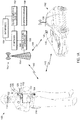
- FIG. 1A a communication system diagram illustrates a system 100 of devices including a first set of devices that a user 102 (illustrated in FIG. 1A as a first responder police officer) may wear, such as a primary battery-powered portable radio 104 used for narrowband and/or broadband direct-mode or infrastructure communications, a battery-powered radio speaker microphone (RSM) video capture device 106, a laptop 114 having an integrated video camera and used for data applications such as incident support applications, smart glasses 116 (for example, which may be virtual reality, augmented reality, or mixed reality glasses), sensor-enabled holster 118, and/or biometric sensor wristband 120.
- a primary battery-powered portable radio 104 used for narrowband and/or broadband direct-mode or infrastructure communications
- RSM radio speaker microphone
- FIG. 1A a communication system diagram illustrates a system 100 of devices including a first set of devices that a user 102 (illustrated in FIG. 1A as a first responder police officer) may wear, such as a primary battery-
- FIG. 1A illustrates only a single user 102 with a respective first set of devices, in other embodiments, the single user 102 may include additional sets of same or similar devices, and additional users may be present with respective additional sets of same or similar devices as indicated by FIG. 1B .
- System 100 may also include a vehicle 132 associated with the user 102 having an integrated mobile communication device 133, an associated vehicular video camera 134, and a coupled vehicular transceiver 136.
- FIG. 1A illustrates only a single vehicle 132 with a single mobile communication device 133, respective single vehicular video camera 134 and/or microphone, and a single coupled vehicular transceiver 136
- the vehicle 132 may include additional same or similar mobile communication devices, video cameras, microphones, and/or transceivers, and additional vehicles may be present with respective additional sets of mobile communication devices, video cameras, microphones, and/or transceivers.
- Each of the portable radio 104, RSM video capture device 106, laptop 114, and vehicular mobile communication device 133 may be capable of directly wirelessly communicating via direct-mode wireless link(s) 142, and/or may be capable of wirelessly communicating via a wireless infrastructure radio access network (RAN) 152 over respective wireless link(s) 140, 144 and via corresponding transceiver circuits.
- RAN wireless infrastructure radio access network
- These devices may be referred to as communication devices and are configured to receive inputs associated with the user 102 and/or provide outputs to the user 102 in addition to communicating information to and from other communication devices and the infrastructure RAN 152.
- the portable radio 104 may be any communication device used for infrastructure RAN or direct-mode media (for example, voice, audio, video, etc.) communication via a long-range wireless transmitter and/or transceiver that has a transmitter transmit range on the order of miles, for example, 0.5-50 miles, or 3-20 miles (for example, in comparison to a short-range transmitter such as a Bluetooth, Zigbee, or NFC transmitter) with other communication devices and/or the infrastructure RAN 152.
- a long-range wireless transmitter and/or transceiver that has a transmitter transmit range on the order of miles, for example, 0.5-50 miles, or 3-20 miles (for example, in comparison to a short-range transmitter such as a Bluetooth, Zigbee, or NFC transmitter) with other communication devices and/or the infrastructure RAN 152.
- the portable radio 104 may form the hub of communication connectivity for the user 102, through which other accessory devices, such as a biometric sensor (for example, the biometric sensor wristband 120), an activity tracker, a weapon status sensor (for example, the sensor-enabled holster 118), a heads-up-display (for example, the smart glasses 116), the RSM video capture device 106, and/or the laptop 114 may communicatively couple.
- these accessory devices additionally or alternatively include their own transceivers for infrastructure RAN or direct-mode media communication.
- the portable radio 104 may contain one or more physical electronic ports (such as a USB port, an Ethernet port, an audio jack, etc.) for direct electronic coupling with the RSM video capture device 106, laptop 114, and/or smart glasses 116.
- the portable radio 104 may contain a short-range transmitter (for example, in comparison to the long-range transmitter such as a LMR or Broadband transmitter) and/or transceiver for wirelessly coupling with the RSM video capture device 106, laptop 114, and/or smart glasses 116.
- the short-range transceiver may be a Bluetooth, Zigbee, or NFC transmitter having a transmit range on the order of 0.01-100 meters, or 0.1 - 10 meters.
- the RSM video capture device 106, the laptop 114, and/or the smart glasses 116 may contain their own long-range transceivers and may communicate with one another and/or with the infrastructure RAN 152 or vehicular transceiver 136 directly without passing through portable radio 104.
- the RSM video capture device 106 provides voice functionality features similar to a traditional RSM, including one or more of acting as a remote microphone that is closer to the user's 102 mouth, providing a remote speaker allowing playback of audio closer to the user's 102 ear, and including a PTT switch or other type of PTT input.
- the voice and/or audio recorded at the remote microphone may be provided to the portable radio 104 for storage and/or analysis or for further transmission to other mobile communication devices or the infrastructure RAN 152, or may be directly transmitted by the RSM video capture device 106 to other communication devices or to the infrastructure RAN 152.
- the voice and/or audio played back at the remote speaker may be received from the portable radio 104 or received directly from one or more other communication devices or the infrastructure RAN 152.
- the portable radio 104 and/or RSM video capture device 106 may form part of a group communications architecture that allows a single communication device to communicate with one or more group members (not shown) associated with a particular group of devices at a same time.
- a display screen 110 may be provided for displaying images, video, and/or text to the user 102 or to someone else.
- the display screen 110 may be, for example, a liquid crystal display (LCD) screen or an organic light emitting display (OLED) display screen.
- a touch sensitive input interface may be incorporated into the display screen 110 as well, allowing the user 102 to interact with content provided on the display screen 110.
- a soft PTT input may also be provided, for example, via such a touch interface.
- a video camera 112 may also be provided at the RSM video capture device 106, integrating an ability to capture images and/or video and store the captured image data (for further analysis) or transmit the captured image data as an image or video stream to the portable radio 104 and/or to other communication devices or to the infrastructure RAN 152 directly.
- the video camera 112 and RSM remote microphone may be used, for example, for capturing audio and/or video of a field-of-view associated with the user 102, perhaps including a suspect and the suspect's surroundings, storing the captured image and/or audio data for further analysis or transmitting the captured audio and/or video data as an audio and/or video stream to the portable radio 104 and/or to other communication devices or to the infrastructure RAN 152 directly for further analysis.
- An RSM remote microphone of the RSM video capture device 106 may be an omni-directional or unidirectional microphone or array of omni-directional or unidirectional microphones that may be capable of identifying a direction from which a captured sound emanated.
- the RSM video capture device 106 may be replaced with a more limited body worn camera that may include the video camera 112 and/or microphone noted above for capturing audio and/or video, but may forego one or more of the features noted above that transform the body worn camera into a more full featured RSM, such as the separate physical PTT switch 108 and the display screen 110, and remote microphone functionality for voice communications in cooperation with portable radio 104.
- a more limited body worn camera may include the video camera 112 and/or microphone noted above for capturing audio and/or video, but may forego one or more of the features noted above that transform the body worn camera into a more full featured RSM, such as the separate physical PTT switch 108 and the display screen 110, and remote microphone functionality for voice communications in cooperation with portable radio 104.
- the functionality and elements described above with respect to the portable radio 104 and/or the RSM video capture device apply to one or more of the laptop 114, the smart glasses 116, the sensor-enabled holster 118, the biometric sensor wristband 120, and the mobile communication device 133.
- the mobile communication device 133, the vehicular video camera 134 and/or microphone, and the vehicular transceiver 136 all may be coupled to one another via a wired and/or wireless vehicle area network (VAN), perhaps along with other sensors physically or communicatively coupled to the vehicle 132.
- VAN vehicle area network
- the sensor-enabled holster 118 is an active (powered) or passive (non-powered) sensor that maintains and/or provides state information regarding a weapon or other item normally disposed within the user's 102 sensor-enabled holster 118.
- the sensor-enabled holster 118 may detect a change in state (presence to absence) and/or an action (removal) relative to the weapon normally disposed within the sensor-enabled holster 118. The detected change in state and/or action may be reported to the portable radio 104 via its short-range transceiver.
- the sensor-enabled holster 118 may also detect whether the first responder's hand is resting on the weapon even if it has not yet been removed from the holster and provide such information to portable radio 104.
- a weapon of the user 102 may include a sensor that detects when the weapon is discharged. The detected discharge may be reported to the portable radio 104, for example. Other possibilities exist as well.
- the biometric sensor wristband 120 may be an electronic device for tracking an activity of the user 102 or a health status of the user 102, and may include one or more movement sensors (such as an accelerometer, magnetometer, and/or gyroscope) that may periodically or intermittently provide to the portable radio 104 indications of orientation, direction, steps, acceleration, and/or speed, and indications of health such as one or more of a captured heart rate, a captured breathing rate, and a captured body temperature of the user 102, perhaps accompanying other information.
- the biometric sensor wristband 120 may include its own long-range transceiver and may communicate with other communication devices and/or with the infrastructure RAN 152 or vehicular transceiver 136 directly without passing through portable radio 104.
- the biometric sensor wristband 120 is shown in FIG. 1A as a bracelet worn around the wrist, in other examples, the biometric sensor wristband 120 may additionally and/or alternatively be worn around another part of the body, or may take a different physical form including an earring, a finger ring, a necklace, a glove, a belt, or some other type of wearable, ingestible, or insertable form factor.
- the biometric sensor wristband 120 or another device of the user 102 detects characteristics of the environment of the user 102 (for example, temperature, humidity, air quality, and the like).
- the portable radio 104, RSM video capture device 106, laptop 114, smart glasses 116, sensor-enabled holster 118, and/or biometric sensor wristband 120 may form a personal area network (PAN) via corresponding short-range PAN transceivers, which may be based on a Bluetooth, Zigbee, Bluetooth Low Energy, WiFi, Near Field Communication (NFC), Radio Frequency ID (RFID), or other short-range wireless protocol having a transmission range on the order of meters, tens of meters, or hundreds of meters.
- PAN personal area network
- RFID Radio Frequency ID
- the communication devices such as the portable radio 104, the RSM video capture device 106, and/or the mobile communication device 133 (or any other device in FIG. 1A for that matter) may each include a location determination device integrated with or separately disposed in the portable radio 104 and/or RSM 106 and/or in respective receivers, transmitters, or transceivers of the portable radio 104 and RSM 106 for determining a location of the portable radio 104 and RSM 106.
- the location determination device may be, for example, a global positioning system (GPS) receiver or wireless triangulation logic using a wireless receiver or transceiver and a plurality of wireless signals received at the wireless receiver or transceiver from different locations, among other possibilities.
- GPS global positioning system
- the location determination device may also include an orientation sensor for determining an orientation that the device is facing.
- Each orientation sensor may include a gyroscope and/or a magnetometer. Other types of orientation sensors could be used as well.
- the location may then be stored locally or transmitted via the transmitter or transceiver to other communication devices and/or to the infrastructure RAN 152.
- the vehicle 132 may be a human-operable vehicle, or may be a self-driving vehicle operable under control of the mobile communication device 133 perhaps in cooperation with video camera 134 (which may include a visible-light camera, an infrared camera, a time-of-flight depth camera, and/or a light detection and ranging (LiDAR) device).
- video camera 134 which may include a visible-light camera, an infrared camera, a time-of-flight depth camera, and/or a light detection and ranging (LiDAR) device.
- devices within the vehicle 132 may communicate with devices in other vehicles via a Vehicular to Vehicular (V2V) network.
- V2V Vehicular to Vehicular
- RSM 106 the laptop 114, and the vehicle 132 are illustrated in FIG. 1A as providing example video cameras and/or microphones for use in capturing audio and/or video streams
- other types of cameras and/or microphones could be used as well, including but not limited to, fixed or pivotable video cameras secured to lamp posts, automated teller machine (ATM) video cameras, other types of body worn cameras such as head-mounted cameras, other types of vehicular cameras such as roof-mounted cameras, or other types of audio and/or video recording devices accessible via a wired or wireless network interface same or similar to that disclosed herein.
- ATM automated teller machine
- one or more of the user 102, the vehicle 132, the portable radio 104, the RSM video capture device 106, and any other device in FIG. 1A may be equipped with an environmental sensor such as a chemical, biological, radiological, nuclear, or explosive (CBRNE) sensor. Measurements made by the CBRNE sensor may be stored locally or transmitted via a transmitter or transceiver to other communication devices and/or to the infrastructure RAN 152.
- an environmental sensor such as a chemical, biological, radiological, nuclear, or explosive (CBRNE) sensor.
- CBRNE chemical, biological, radiological, nuclear, or explosive
- Infrastructure RAN 152 is a radio access network that provides for radio communication links to be arranged within the network between a plurality of user terminals.
- Such user terminals may be portable, mobile, or stationary and may include any one or more of the communication devices illustrated in FIG. 1A , among other possibilities.
- At least one other terminal, for example used in conjunction with the communication devices may be a fixed terminal, for example a base station, eNodeB, repeater, and/or access point.
- a RAN typically includes a system infrastructure that generally includes a network of various fixed terminals, which are in direct radio communication with the communication devices.
- Each of the fixed terminals operating in the RAN 152 may have one or more transceivers which may, for example, serve communication devices in a given region or area, known as a 'cell' or 'site', by radio frequency (RF) communication.
- the communication devices that are in direct communication with a particular fixed terminal are said to be served by the fixed terminal.
- all radio communications to and from each communication device within the RAN 152 are made via respective serving fixed terminals.
- Sites of neighboring fixed terminals may be offset from one another and may provide corresponding non-overlapping or partially or fully overlapping RF coverage areas.
- Infrastructure RAN 152 may operate according to an industry standard wireless access technology such as, for example, an LTE, LTE-Advance, or 5G technology over which an OMA-PoC, a VoIP, an LTE Direct or LTE Device to Device, or a PoIP application may be implemented. Additionally or alternatively, infrastructure RAN 152 may implement a WLAN technology such as Wi-Fi perhaps operating in accordance with an IEEE 802.11 standard (for example, 802.11a, 802.11b, 802.11g) or such as a WiMAX perhaps operating in accordance with an IEEE 802.16 standard.
- IEEE 802.11 standard for example, 802.11a, 802.11b, 802.11g
- WiMAX perhaps operating in accordance with an IEEE 802.16 standard.
- Infrastructure RAN 152 may additionally or alternatively operate according to an industry standard LMR wireless access technology such as, for example, the P25 standard defined by the APCO, the TETRA standard defined by the ETSI, the dPMR standard also defined by the ETSI, or the DMR standard also defined by the ETSI. Because these systems generally provide lower throughput than the broadband systems, they are sometimes designated narrowband RANs.
- LMR wireless access technology such as, for example, the P25 standard defined by the APCO, the TETRA standard defined by the ETSI, the dPMR standard also defined by the ETSI, or the DMR standard also defined by the ETSI. Because these systems generally provide lower throughput than the broadband systems, they are sometimes designated narrowband RANs.
- the infrastructure RAN 152 is illustrated in FIG. 1A as providing coverage for the portable radio 104, RSM video capture device 106, laptop 114, smart glasses 116, and/or vehicle transceiver 136 via a single fixed terminal 154 coupled to a single infrastructure controller 156 (for example, a radio controller, call controller, PTT server, zone controller, MME, BSC, MSC, site controller, Push-to-Talk controller, or other network device) and including a dispatch console 158 operated by a dispatcher.
- a radio controller for example, a radio controller, call controller, PTT server, zone controller, MME, BSC, MSC, site controller, Push-to-Talk controller, or other network device
- a dispatch console 158 operated by a dispatcher.
- additional fixed terminals and additional controllers may be disposed to support a larger geographic footprint and/or a larger number of mobile devices.
- the infrastructure controller 156 illustrated in FIG. 1A may additionally or alternatively operate as a back-end electronic digital assistant, a back-end audio and/or video processing device, and/or a remote cloud-based storage device consistent with the remainder of this disclosure.
- the IP network 160 may comprise one or more routers, switches, LANs, WLANs, WANs, access points, or other network infrastructure, including but not limited to, the public Internet.
- the cloud computing cluster 162 may be comprised of a plurality of computing devices, such as the one set forth in FIG. 2 , one or more of which may be executing none, all, or a portion of an electronic digital assistant service, sequentially or in parallel, across the one or more computing devices.
- the one or more computing devices comprising the cloud computing cluster 162 may be geographically co-located or may be separated by inches, meters, or miles, and interconnected via electronic and/or optical interconnects.
- one or more proxy servers or load balancing servers may control which one or more computing devices perform any part or all of the electronic digital assistant service.
- database(s) 164 may be accessible via the IP network 160 and/or the cloud computing cluster 162, and may include databases such as a long-term video storage database, a historical or forecasted weather database, an offender or criminal record database perhaps including facial recognition images to match against, a cartographic database of streets and elevations, a traffic database of historical or current traffic conditions, a vehicle database, a missing persons database, and a computer aided dispatch (CAD) incident database, or other types of databases.
- Databases 164 may further include all or a portion of the databases described herein as being provided at the infrastructure controller 156. In some embodiments, the databases 164 may be maintained by third parties (for example, the National Weather Service or a Department of Transportation, respectively). As shown in FIG.
- the databases 164 are communicatively coupled with the infrastructure RAN 152 to allow the communication devices (for example, the portable radio 104, the RSM video capture device 106, the laptop 114, and the mobile communication device 133) to communicate with and retrieve data from the databases 164 via infrastructure controller 156 and IP network 160.
- the databases 164 are commercial cloud-based storage devices.
- the databases 164 are housed on suitable on-premises database servers.
- the databases 164 of FIG. 1A are merely examples.
- the system 100 additionally or alternatively includes other databases that store different information.
- the databases 164 and/or additional or other databases are integrated with, or internal to, the infrastructure controller 156.
- FIG. 1A describes a communication system 100 generally as a public safety communication system that includes a user 102 generally described as a police officer and a vehicle 132 generally described as a police cruiser
- the communication system 100 may additionally or alternatively be a retail communication system including a user 102 that may be an employee of a retailer and a vehicle 132 that may be a vehicle for use by the user 102 in furtherance of the employee's retail duties (for example, a shuttle or self-balancing scooter).
- the communication system 100 may additionally or alternatively be a warehouse communication system, a private security communication system, a medical communication system, a heavy machinery communication system (for example, used when excavating, bulldozing, mining, and the like), and the like.
- FIG. 1A shows multiple communication devices 200 associated with the user 102
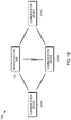
- the communication system 100 includes communication devices 200 of multiple users.
- the communication device 200A is associated with a first user
- the communication device 200B is associated with a second user
- the communication device 200C is associated with a third user.
- FIG. 1B the communication device 200A is associated with a first user
- the communication device 200B is associated with a second user
- the communication device 200C is associated with a third user.
- the communication devices 200A, 200B, and 200C communicate with each other over the infrastructure RAN 152 and/or communicate with each other directly as described previously herein.
- other devices such as the dispatch console 158, may communicate with communication devices 200 of multiple users through the infrastructure RAN 152.
- one or more users may have multiple associated communication devices 200, for example, as shown in FIG. 1A .
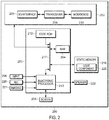
- FIG. 2 sets forth a schematic diagram that illustrates a communication device 200 according to some embodiments of the present disclosure.
- the communication device 200 may be, for example, embodied in the portable radio 104, the RSM video capture device 106, the laptop 114, the mobile communication device 133, the infrastructure controller 156, the dispatch console 158, one or more computing devices in the cloud computing cluster 162, or some other communication device not illustrated in FIG. 1A , and/or may be a distributed communication device across two or more of the foregoing (or multiple of a same type of one of the foregoing) and linked via a wired and/or wireless communication link(s).
- the communication device 200 may be communicatively coupled to other devices such as the sensor-enabled holster 118 as described above.
- the combination of the portable radio 104 and the sensor-enabled holster 118 may be considered a single communication device 200.
- the mobile communication device 133 may be communicatively coupled to an occupant sensor of the vehicle 132, and the combination may be considered a single communication device 200.
- FIG. 2 represents the communication devices described above with respect to FIGS. 1A and 1B , depending on the type of the communication device, the communication device 200 may include fewer or additional components in configurations different from that illustrated in FIG. 2 .
- the communication device 200 acting as the infrastructure controller 156 may not include one or more of the screen 205, microphone 220, imaging device 221, and speaker 222.
- the communication device 200 acting as the portable radio 104 or the RSM video capture device 106 may further include a location determination device (for example, a global positioning system (GPS) receiver) as explained above. Other combinations are possible as well.
- GPS global positioning system
- the communication device 200 includes a communications unit 202 coupled to a common data and address bus 217 of a processing unit 203.
- the communication device 200 may also include one or more input devices (for example, keypad, pointing device, touch-sensitive surface, button, a microphone 220, an imaging device 221, and/or another input device 206) and an electronic display screen 205 (which, in some embodiments, may be a touch screen and thus also acts as an input device), each coupled to be in communication with the processing unit 203.
- input devices for example, keypad, pointing device, touch-sensitive surface, button, a microphone 220, an imaging device 221, and/or another input device 206
- an electronic display screen 205 which, in some embodiments, may be a touch screen and thus also acts as an input device
- the microphone 220 may be present for capturing audio from a user and/or other environmental or background audio that is further processed by processing unit 203 in accordance with the remainder of this disclosure and/or is transmitted as voice or audio stream data, or as acoustical environment indications, by communications unit 202 to other portable radios and/or other communication devices.
- the imaging device 221 may provide video (still or moving images) of an area in a field of view of the communication device 200 for further processing by the processing unit 203 and/or for further transmission by the communications unit 202.
- a speaker 222 may be present for reproducing audio that is decoded from voice or audio streams of calls received via the communications unit 202 from other portable radios, from digital audio stored at the communication device 200, from other ad-hoc or direct mode devices, and/or from an infrastructure RAN device, or may playback alert tones or other types of pre-recorded audio.
- the processing unit 203 may include a code Read Only Memory (ROM) 212 coupled to the common data and address bus 217 for storing data for initializing system components.
- the processing unit 203 may further include an electronic processor 213 (for example, a microprocessor or another electronic device) coupled, by the common data and address bus 217, to a Random Access Memory (RAM) 204 and a static memory 216.
- ROM Read Only Memory
- RAM Random Access Memory
- the communications unit 202 may include one or more wired and/or wireless input/output (I/O) interfaces 209 that are configurable to communicate with other communication devices, such as the portable radio 104, the laptop 114, the wireless RAN 152, and/or the mobile communication device 133.
- I/O input/output
- the communications unit 202 may include one or more wireless transceivers 208, such as a DMR transceiver, a P25 transceiver, a Bluetooth transceiver, a Wi-Fi transceiver perhaps operating in accordance with an IEEE 802.11 standard (for example, 802.11a, 802.11b, 802.11g), an LTE transceiver, a WiMAX transceiver perhaps operating in accordance with an IEEE 802.16 standard, and/or another similar type of wireless transceiver configurable to communicate via a wireless radio network.
- a wireless transceivers 208 such as a DMR transceiver, a P25 transceiver, a Bluetooth transceiver, a Wi-Fi transceiver perhaps operating in accordance with an IEEE 802.11 standard (for example, 802.11a, 802.11b, 802.11g), an LTE transceiver, a WiMAX transceiver perhaps operating in accordance with an IEEE 802.16 standard, and/or another similar type
- the communications unit 202 may additionally or alternatively include one or more wireline transceivers 208, such as an Ethernet transceiver, a USB transceiver, or similar transceiver configurable to communicate via a twisted pair wire, a coaxial cable, a fiber-optic link, or a similar physical connection to a wireline network.
- the transceiver 208 is also coupled to a combined modulator/demodulator 210.
- the electronic processor 213 has ports for coupling to the display screen 205, the microphone 220, the imaging device 221, the other input device 206, and/or the speaker 222.
- Static memory 216 may store operating code 225 for the electronic processor 213 that, when executed, performs one or more of the steps set forth in FIG. 3 and the accompanying text.
- the static memory 216 may comprise, for example, a hard-disk drive (HDD), an optical disk drive such as a compact disk (CD) drive or digital versatile disk (DVD) drive, a solid state drive (SSD), a tape drive, a flash memory drive, or a tape drive, and the like.
- an individual component and/or a combination of individual components of the system 100 may be referred to as an electronic computing device that implements an electronic digital assistant as mentioned above.
- the electronic computing device may be a single electronic processor (for example, the electronic processor 213 of the portable radio 104).
- the electronic computing device includes multiple electronic processors distributed remotely from each other.
- the electronic computing device may be implemented on a combination of at least two of the electronic processor 213 of the portable radio 104, the electronic processor 213 of the infrastructure controller 156, and the electronic processor 213 of a back-end device in the cloud computing cluster 162 accessible via an IP network 160.
- the user 102 may, for example, provide an oral query (in other words, an audio query) that is received by the microphone 220 of the communication device 200.
- the electronic computing device receives signals representative of the oral query from the microphone 220 and analyzes the signals to determine the content of the oral query.
- the electronic computing device may include a natural language processing (NLP) engine configured to determine the intent and/or content of the oral query.
- NLP natural language processing
- the electronic computing device may also be configured to determine a response to the oral query (for example, by retrieving stored data or by requesting data from a database such as a database of the databases 164) and provide the response to an output device of the communication device 200 (for example, one or more of the speaker 222 via a generated audio response and the screen 205 via a generated text-based response).
- a response to the oral query for example, by retrieving stored data or by requesting data from a database such as a database of the databases 164
- an output device of the communication device 200 for example, one or more of the speaker 222 via a generated audio response and the screen 205 via a generated text-based response.
- one or more of the communication device 200 embodied in one or more of the communication devices of FIG. 1A , such as the portable radio 104, the infrastructure controller 156, and the cloud computing cluster 162, may include a natural language processing engine to analyze oral queries received by the microphone 220 of the communication device 200 and provide responses to the oral queries.
- the electronic computing device receives and responds to other types of queries and inputs.
- the user 102 may submit a text query to the electronic computing device by typing the text query into a hard keyboard input device or a soft keyboard input provided on the screen 205 of the communication device 200.
- the user 102 may use the imaging device 221 to capture an image or video of an area and press a hard or soft key to send the image or video to the electronic computing device to, for example, allow the electronic computing device to identify an object in the image or video.
- the electronic computing device may receive information from a communication device 200 of another user or from another electronic computing device (for example, a call or a message from another user).
- the user query and/or the received information may relate to public safety information.
- the user query and/or the received information may relate to a past or current public safety incident in which public safety officers (for example, firefighters, police officers, paramedics, and the like) engage in to protect the public and keep the public safe (for example, a building fire, a criminal pursuit or other law enforcement event, a natural disaster, a medical incident, a traffic accident, and the like).
- the received information may include a request for a back-up or a location to which a public safety officer should report.
- the user query and/or the received information may include other public safety-related information such as information relating to a criminal or suspect vehicle or information relating to a recommended public safety procedure.
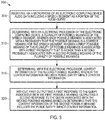
- the electronic computing device that implements the electronic digital assistant performs, in one instance, a method 300 illustrated in FIG. 3 .
- the electronic computing device In executing the method 300, the electronic computing device generates a response (for example, at least one of a clarification question and information that responds to the query) based on a public safety impact of a possible meaning of a speech segment included in a query.
- the electrical digital assistant generates and outputs a response associated with a first possible meaning of the speech segment based on a public safety impact of the first possible meaning even though a second possible meaning of the speech segment has a higher probability of being the correct possible meaning based on speech recognition algorithms, other context information not indicative of a public safety impact, or both.
- the method 300 addresses the above-noted technological problems by improving the interaction between a user (for example the user 102) that provides a query to an electronic digital assistant and a user interface of the electronic digital assistant that provides a response to the query.
- the method 300 provides one or more responses associated with less probable meanings based on determined existing or potential public safety impacts of the less probable meaning(s) to reduce the amount of back-and-forth communication between the user 102 and the electrical digital assistant.
- This reduction of back-and-forth communication improves user interaction with the electronic digital assistant.
- the reduction of back-and-forth communication also improves the functionality of the electronic digital assistant itself by allowing the electronic computing device that implements the electronic digital assistant to use less battery and processing capabilities due to the reduction of communication.
- FIG. 3 illustrates a flow chart diagram of the method 300 performed by the electronic computing device for providing a response to an audio query where the response is determined to have a public safety impact. While a particular order of processing steps, message receptions, and/or message transmissions is indicated in FIG. 3 as an example, timing and ordering of such steps, receptions, and transmissions may vary where appropriate without negating the purpose and advantages of the examples set forth in detail throughout the remainder of this disclosure.
- the electronic computing device receives audio data including a speech segment associated with an audio query.
- the electronic computing device may receive the audio data from the user 102, via the microphone 220 of the communication device 200.
- Each audio query may be separated into a plurality of audio segments, some or all of which may have multiple possible meanings.
- the audio query is "Who is the vehicle with the license plate number 123-XYZ registered to?” and a particular speech segment of interest having multiple possible meanings may be "123-XYZ.”
- the electronic computing device may receive the audio query "Look up a license plate number” followed by a particular speech segment of interest having multiple possible meanings of "123-XYZ.” While forthcoming examples will focus on the example of the particular speech segment of interest identified herein as "123-XYZ," in other embodiments, other speech segments of the audio query may be processed in a same or similar manner.
- the electronic computing device determines a plurality of possible meanings of the speech segment (e.g., the particular speech segment of interest identified above), wherein each possible meaning is associated with a probability that the possible meaning is a correct meaning for the speech segment and a first possible meaning of the plurality of possible meanings is associated with a first probability that is higher than a second probability associated with a second possible meaning of the plurality of possible meanings.
- the plurality of possible meanings of the speech segment are determined based on speech recognition algorithms (in other words, voice analytics) and without using public safety impact context information associated with any of the plurality of possible meanings.
- the electronic computing device uses context information that is not associated with a public safety impact to aid in determining the plurality of possible meanings of the speech segment (for example, recognition of similar speech segments included in recent previous audio queries as explained above).
- the correct meaning is the meaning of the speech segment that the user 102 intended to send to the electronic computing device.
- the electronic computing device may be configured to generate any number of possible meanings, less than a predetermined number of possible meanings, a specific number of possible meanings for the speech segment, or the like.
- a probability assigned to a possible meaning is based on how similar the audio data is to the possible meaning as determined based on speech recognition algorithms (in other words, voice analytics).
- the electronic computing device also uses context information that is not associated with a public safety impact (in other words, context information that is not public safety impact context information) to aid in assigning a probability to each of the plurality of possible meanings of the speech segment.
- context information that is not public safety impact context information
- “123-XYZ” may be assigned a probability of 60%
- “123-XYC” may be assigned a probability of 50 %
- "123-AYZ” may be assigned a probability of 30%.
- the electronic computing device determines context information of the second possible meaning, wherein the context information includes public safety impact context information.
- public safety impact context information is information that indicates that the possible meaning is particularly relevant to, or has a negative impact on, the user 102, other individuals located near the user 102 or elsewhere, citizens, public or private property, and/or the health, wellness, safety, or ownership interests or guardianship rights of one or more of the foregoing. (for example, public safety information relating to an escaped fugitive, a bomb threat, an active shooter, and the like).
- the public safety impact context information includes information stored in public safety databases including, but not limited to, a registered vehicle database, a criminal database, a missing persons database, and a computer aided dispatch (CAD) incident database.
- the public safety impact context information is at least one consisting from the group consisting of criminal record information, missing persons information, registered vehicle information, stolen vehicle information, and public safety incident information.
- the electronic computing device receives a query including a speech segment that is a license plate number
- the public safety impact may be that one of the possible meanings of the plurality of possible meanings is a license plate number of a vehicle that has recently been reported stolen.
- the public safety impact when the electronic computing device receives a query including a speech segment that is a name, the public safety impact may be that one of the possible meanings of the plurality of possible meanings is a name of a person who has a criminal record that includes violent crimes.
- the public safety impact context information may be obtained from a local or remote public safety database (for example, a database of the databases 164).
- the public safety impact context information may be retrieved from one or more public safety database(s).
- the electronic computing device is configured to determine which public safety databases to request public safety impact context information from based on at least one selected from the group comprising the query with which the speech segment is associated, environmental information received from a plurality of sensors (for example, the microphone 220 and the imaging device 221) included in the electronic computing device, a role (for example, a crime scene analyst, a pathologist, or a field officer) associated with the user 102, and a task/mission (for example, responding to a robbery or responding to a domestic disturbance) assigned to the user 102.
- a plurality of sensors for example, the microphone 220 and the imaging device 221
- a role for example, a crime scene analyst, a pathologist, or a field officer
- a task/mission for example, responding to a robbery or responding to a domestic disturbance assigned to the user 102.
- the electronic computing device may request public safety impact context information from a vehicle database.
- the electronic computing device may request public safety impact context information from a criminal record/history database.
- the electronic computing device may request public safety impact context information from a database that indicates past missing person alerts and known relationships with dangerous people.
- the electronic computing device may request public safety impact context information from a database that includes the names of criminals previously involved in domestic disputes.
- the electronic computing device may request public safety impact context information from a forensics database when the user 102 is a crime scene analyst.
- the electronic computing device may request public safety impact context information from a criminal record database.
- the electronic computing device executes block 320.
- the electronic computing device without first outputting a first response to the query associated with the first possible meaning, outputs a second response associated with the second possible meaning.
- the electronic computing device may output the second response without outputting the first response at all (for example, when the second response corresponds to the correct meaning of the speech segment).
- the electronic computing device may output the second response before outputting the first response (for example, when the second response corresponds to an incorrect meaning of the speech segment). In both of the above examples, the electronic computing device outputs the second response without first outputting the first response.
- the first response includes at least one of the group consisting of a first clarification question associated with the first possible meaning and first information associated with the first possible meaning that responds to the query.
- the second response includes at least one of the group consisting of a second clarification question associated with the second possible meaning and second information associated with the second possible meaning that responds to the query.
- the electronic computing device outputs the second response associated with the second possible meaning despite the first possible meaning having a higher probability of corresponding to the correct meaning as determined based on speech recognition algorithms, other context information not indicative of a public safety impact, or both.
- the possible meaning"123-XYC is associated with public safety impact context information identifying a public safety impact (for example, the vehicle with the license plate 123-XYC has been reported stolen)
- the possible meaning"123-XYC” is included in the second response, even though the possible meaning"123-XYC” has a probability of 50% and the possible meaning "123-XYZ" has a higher probability of 60%.
- the second response may be a clarification question that states, "Did you mean license plate number 123-XYC?"
- the second response may include information that is associated with the second possible meaning and responds to the query.
- a response that includes information that is associated with the second possible meaning may be, "If you meant license plate number 123-XYC, please be aware that the owner has an outstanding warrant for unlawful use of a concealed weapon.”
- the second response is output without the electronic computing device first outputting the first response associated with the first possible meaning.
- the electronic computing device may select the possible meaning to include in the second response by setting, for each possible meaning of the plurality of possible meanings, a variable associated with the possible meaning of the plurality of possible meanings. In some embodiments, the electronic computing device sets the variable based on whether there is public safety impact context information associated with the possible meaning that identifies a public safety impact. For example, when a possible meaning is associated with public safety impact context information identifying a public safety impact, a Boolean variable associated with the possible meaning may be set to true. When the electronic computing device determines which possible meaning to include in the second response, the electronic computing device chooses a possible meaning with the Boolean variable set to true prior to choosing a possible meaning with the Boolean variable set to false.
- the electronic computing device may select the possible meaning to include in the second response by, for example, modifying the probability associated with each possible meaning associated with public safety impact context information. For example, in response to determining that the second possible meaning is associated with public safety impact context information, the electronic computing device may increase the second probability associated with the second possible meaning by 100% such that the second probability associated with the second possible meaning is greater than the first probability associated with the first possible meaning. Continuing this example, when the electronic computing device determines which possible meaning to include in the second response, the electronic computing device chooses a possible meaning associated with the highest modified probability.
- the electronic computing device determines that the first possible meaning is not associated with public safety impact context information. Accordingly, the second response associated with the second possible meaning is output prior to the first response associated with the first possible meaning as explained above.
- the plurality of possible meanings includes one or more possible meanings associated with multiple pieces of public safety context information (for example, the possible meaning is "John Smith" and he has previously been convicted of unlawful possession of a weapon and has been named as a suspect in a missing persons case)
- the possible meaning associated with the most pieces of public safety impact context information is output in the second response as explained below with respect to severity level determinations of public safety impact context information for each possible meaning.
- the electronic computing device ranks each of the possible meanings based on a severity level of the public safety impact context information associated with each of the possible meanings. For example, when multiple possible meanings are associated with one or more pieces of public safety impact context information, the electronic computing device determines a severity level associated with the public safety impact context information for each possible meaning. For example, the electronic computing device determines that the public safety impact context information associated with the first possible meaning is less severe than the public safety impact context information associated with the second possible meaning.
- the public safety impact context information may indicate that a first vehicle having a license plate corresponding to the first possible meaning is stolen (a first severity level) while a second vehicle having a license plate corresponding to the second possible meaning was stolen during an armed robbery (a second severity level).
- the electronic computing device outputs a second response associated with the second possible meaning as a first course of action.
- the electronic computing device outputs a first response regarding the first possible meaning.
- the electronic computing device may continue to output responses regarding additional possible meanings included in the plurality of possible meanings (for example, based on probability as determined by speech recognition algorithms).
- the electronic computing device ranks each of the possible meanings based on a severity level of the public safety impact context information associated with each possible meaning. The electronic computing device then outputs responses in an order according to the severity level rankings until the correct meaning is determined as described below.
- the electronic computing device determines the severity level rankings for each of the plurality of possible meanings based on an amount of pieces of public safety impact context information associated with each possible meaning. In other words, the electronic computing device may determine that the second possible meaning has a higher severity level than the first possible meaning based on more public safety impact context information being associated with the second possible meaning than the first possible meaning.
- the possible meaning "John Smith” who has previously been convicted of unlawful possession of a weapon and has been named as a suspect in a missing persons case (a second security level) may be determined to have a higher severity level than "Tom Smith" who has been convicted of unlawful possession of a weapon without any other associated public safety impact confirmation information (a first security level).
- all possible meanings may start at a default/baseline severity level (for example, fifty points).
- a possible meaning is not associated with public safety impact context information, the possible meaning remains at the default/baseline level.
- the electronic computing device may increase the severity level of the possible meaning by ten points.
- the electronic computing device increases the severity level by different amounts depending on a type of public safety impact context information. For example, when a possible meaning is a person who has a criminal record that includes a felony, the electronic computing device may increase the severity level of the possible meaning by twenty points.
- the electronic computing device may increase the severity level of the possible meaning by ten points.
- the above scoring system and amounts are examples. In some embodiments, the scoring system and amounts are user-configurable via an input device such as the screen 205.
- the electronic computing device may include in the second response the possible meaning having the highest probability (as determined by speech recognition algorithms) among the multiple possible meanings associated with public safety impact context information of the same severity level.
- the second response such as a second clarification question
- the electronic computing device receives a response from the user 102 via, for example, the microphone 220 or a touch screen display screen 205.
- the response indicates whether the possible meaning included in the second clarification question is the correct meaning. For example, when the electronic computing device receives the response "no" (in other words, a negative response indicating that the second possible meaning is not the correct meaning) to the second clarification question "Did you mean license plate number 123-XYC?", the electronic computing device determines that "123-XYC" is not the correct meaning for the speech segment.
- the electronic computing device determines that "123-XYC" is the correct meaning for the speech segment.
- the electronic computing device when the possible meaning included in the second clarification question is not the correct meaning, the electronic computing device outputs an additional clarification question.
- the additional clarification question may request the user 102 confirm that the user 102 did not intend a particular possible meaning that has not yet been output in a clarification question.
- the possible meaning output in the additional question may be determined using the method 300 used to determine the second clarification question, as described above.
- the electronic computing device is configured to output additional clarification questions until the correct meaning for the speech segment is determined or until each possible meaning of the plurality of possible meanings has been output in a clarification question.
- the electronic computing device is configured to prompt the user 102 to repeat the query, speech segment, or both after the electronic computing device outputs a predetermined number of clarifying questions and the electronic computing device has not determined the correct meaning of the speech segment.
- the electronic computing device may output a response (a third response) to the query that includes information associated with the correct meaning that responds to the query.
- the response may include information describing the public safety impact of the correct meaning as described above (for example, information that indicates that a vehicle is stolen or that a person has a criminal record including armed robberies).
- the electronic computing device may also output a notification to a communication device associated with a dispatcher, a communication device associated with another user (for example, a nearby user), or both when the correct meaning of the speech segment is determined.
- the notification may include the information describing a public safety impact of the correct meaning of the speech segment.
- the electronic computing device may send a notification to a communication device associated with a first public safety officer who, for example, is or was previously investigating the theft of the vehicle.
- the notification may state that a second public safety officer (in other words, the user 102) has information about the stolen vehicle and may require assistance.
- the electronic computing device may receive a query for information about a person named John Smith.
- one possible meaning of the possible meanings generated for the speech segment John Smith is determined to be a name of a person with a criminal record and is therefore determined to have a public safety impact.
- the electronic computing device may receive a query for information about property at a given address.
- one possible meaning of the possible meanings generated for the speech segment containing the address is determined to be an address that has been known for previous drug activity and is therefore determined to have a public safety impact.
- processors such as microprocessors, digital signal processors, customized processors and field programmable gate arrays (FPGAs) and unique stored program instructions (including both software and firmware) that control the one or more processors to implement, in conjunction with certain non-processor circuits, some, most, or all of the functions of the method and/or apparatus described herein.
- processors or “processing devices”
- FPGAs field programmable gate arrays
- unique stored program instructions including both software and firmware
- an embodiment may be implemented as a computer-readable storage medium having computer readable code stored thereon for programming a computer (for example, comprising a processor) to perform a method as described and claimed herein.
- Examples of such computer-readable storage mediums include, but are not limited to, a hard disk, a CD-ROM, an optical storage device, a magnetic storage device, a ROM (Read Only Memory), a PROM (Programmable Read Only Memory), an EPROM (Erasable Programmable Read Only Memory), an EEPROM (Electrically Erasable Programmable Read Only Memory) and a Flash memory.
Landscapes
- Engineering & Computer Science (AREA)
- Physics & Mathematics (AREA)
- Computational Linguistics (AREA)
- Health & Medical Sciences (AREA)
- Human Computer Interaction (AREA)
- Mathematical Physics (AREA)
- Theoretical Computer Science (AREA)
- Artificial Intelligence (AREA)
- Multimedia (AREA)
- Acoustics & Sound (AREA)
- Audiology, Speech & Language Pathology (AREA)
- Databases & Information Systems (AREA)
- General Engineering & Computer Science (AREA)
- Data Mining & Analysis (AREA)
- General Physics & Mathematics (AREA)
- Signal Processing (AREA)
- Computer Networks & Wireless Communication (AREA)
- Public Health (AREA)
- Environmental & Geological Engineering (AREA)
- Emergency Management (AREA)
- Business, Economics & Management (AREA)
- Alarm Systems (AREA)
- User Interface Of Digital Computer (AREA)
Abstract
Description
- Tablets, laptops, phones (for example, cellular or satellite), mobile (vehicular) or portable (personal) two-way radios, and other communication devices are now in common use by users, such as first responders (including firefighters, police officers, and paramedics, among others), and provide such users and others with access to increasingly valuable additional information and resources such as vehicle histories, arrest records, outstanding warrants, health information, real-time traffic or other situational status information, and any other information that may aid the user in making a more informed determination of an action to take or how to resolve a situation, among other possibilities.
- Many such communication devices further comprise, or provide access to, electronic digital assistants (or sometimes referenced as "virtual partners") that may provide the user thereof with valuable information in an automated (for example, without further user input) or semi-automated (for example, with some further user input) fashion. The valuable information provided to the user may be based on explicit requests for such information posed by the user via an input (for example, such as a parsed natural language input or an electronic touch interface manipulation associated with an explicit request) in which the electronic digital assistant may reactively provide such requested valuable information.
- As some existing examples, electronic digital assistants such as Siri provided by Apple, Inc.® and Google Now provided by Google, Inc.®, are software applications running on underlying electronic hardware that are capable of understanding natural language, and may complete electronic tasks in response to user voice inputs, among other additional or alternative types of inputs. These electronic digital assistants may perform such tasks as taking and storing voice dictation for future reference and retrieval, reading a received text message or an e-mail message aloud, generating a text message or e-mail message reply, looking up requested phone numbers and initiating a phone call to a requested contact, generating calendar appointments and providing appointment reminders, warning users of nearby dangers such as traffic accidents or environmental hazards, and providing many other types of information in a reactive or proactive manner.
- The accompanying figures, where like reference numerals refer to identical or functionally similar elements throughout the separate views, which together with the detailed description below are incorporated in and form part of the specification and serve to further illustrate various embodiments of concepts that include the claimed invention, and to explain various principles and advantages of those embodiments.
-
FIGS. 1A and1B are system diagrams illustrating a system for providing a response to an audio query where the response is determined to have a public safety impact in accordance with some embodiments. -
FIG. 2 is a device diagram showing a device structure of a communication device of the system ofFIGS. 1A and1B in accordance with some embodiments. -
FIG. 3 illustrates a flow chart of a method of providing a response to an audio query where the response is determined to have a public safety impact in accordance with some embodiments. - Skilled artisans will appreciate that elements in the figures are illustrated for simplicity and clarity and have not necessarily been drawn to scale. For example, the dimensions of some of the elements in the figures may be exaggerated relative to other elements to help to improve understanding of embodiments of the present invention.
- The apparatus and method components have been represented where appropriate by conventional symbols in the drawings, showing only those specific details that are pertinent to understanding the embodiments of the present invention so as not to obscure the disclosure with details that will be readily apparent to those of ordinary skill in the art having the benefit of the description herein.
- Background noise, poor annunciation, and the like may make it difficult for an electronic digital assistant to determine a meaning or intent of a speech segment (for example, a name, a number, or an address) associated with an audio query submitted by a user with absolute certainty. As a result, the electronic digital assistant may generate a plurality of possible meanings for the speech segment and assign a probability to each possible meaning of the plurality of possible meanings. For example, the electronic digital assistant determines the probability for each possible meaning based on speech recognition algorithms (in other words, voice analytics). As another example, the electronic digital assistant determines the probability for each possible meaning based on speech recognition algorithms and as a function of context information such as recognition of similar speech segments included in recent previous audio queries. For example, the electronic digital assistant may determine that a possible meaning of "darts" for a speech segment has a higher probability than a possible meaning of "tarts" when recent previous queries related to sports or games. On the other hand, the electronic digital assistant may determine that a possible meaning of "tarts" for a speech segment has a higher probability than a possible meaning of "darts" when recent previous queries related to baked goods. The probability represents the likelihood that the possible meaning is the correct meaning (or the speaker's intended meaning) of the speech segment. The electronic digital assistant may generate a response such as a clarifying question to determine whether the possible meaning associated with the highest probability (for example, as determined by speech recognition algorithms) is the correct meaning for the speech segment.
- However, the possible meaning of the speech segment with the highest probability is often incorrect (in other words, not the meaning intended by the speaker/user) due to, for example, background noise, poor annunciation, and the like. Thus, the electronic digital assistant often generates and outputs additional clarifying questions to attempt to determine the correct meaning of the speech segment. This back-and-forth communication between the electronic digital assistant and the user may occur one or several times before the electronic digital assistant determines the correct meaning of the speech segment. Such iterations of this back-and-forth communication consume valuable time while the user is waiting to receive information in response to their query. This delay may be especially disadvantageous when the ultimate response to the query includes information that may have a negative safety impact on the health, wellness, safety, or ownership or guardianship rights of the user, other users, citizens, or public or private property (e.g., public safety information relating to an escaped fugitive, a bomb threat, an active shooter, and the like). Additionally, the electronic digital assistant wastes resources such as battery life and processing capabilities by outputting numerous clarifying questions to attempt to determine the correct meaning of the speech segment. Accordingly, there is a technological problem with respect to the interaction between a user (for example, an officer) that provides a query to an electronic digital assistant and a user interface of the electronic digital assistant that provides a response to the query.
- Disclosed are a method, device, and system for an electronic digital assistant to provide a response to an audio query where the response is determined to have a public safety impact. In some embodiments, the electrical digital assistant generates and outputs a response to the query (for example, at least one of a clarification question and information that responds to the query) based on public safety impact context information that identifies a public safety impact of a first possible meaning of a first speech segment even though a second possible meaning of a second speech segment has a higher probability of being the correct speech segment based on speech recognition algorithms, context information not indicative of a public safety impact, or both. In some embodiments, public safety impact context information includes information that affects the health, wellness, safety, or ownership or guardianship rights of the user, other users, citizens, or public or private property (e.g., public safety information relating to an escaped fugitive, a bomb threat, an active shooter, and the like). In some embodiments, the public safety impact context information includes information stored in public safety databases including, but not limited to, a registered vehicle database, a criminal database, a missing persons database, and a computer aided dispatch (CAD) incident database. In some embodiments, the public safety impact context information is at least one selected from the group consisting of criminal record information, missing persons information, registered vehicle information, stolen vehicle information, and public safety incident information. For example, when a public safety officer provides a query to the electronic digital assistant, one or more possible meanings of the plurality of possible meanings may be associated with context information that is of relevance to the safety of the public safety officer who submitted the query, other public safety officers, members of the public, or a combination of the foregoing. Continuing this example, the electronic digital assistant provides responses (such as asking clarifying questions) regarding the possible meanings associated with the public safety impact context information relevant to the public safety impact even though the respective probability that each of these possible meanings is the correct meaning as determined based on speech recognition algorithms, is lower than that of other possible meanings. In other words, such a method, device, and system prioritizes possible meanings of speech segments based on public safety impact context information of the possible meanings in addition to or as an alternative to prioritizing possible meanings based on speech recognition algorithms.
- The method, device, and system address the above-noted technological problems by improving the interaction between a user (for example, an officer) that provides a query to an electronic digital assistant and a user interface of the electronic digital assistant that provides a response to the query. In some situations, the method, device, and system provide more relevant clarifying questions to the user based on public safety impact context information to reduce the amount of back-and-forth communication between the user and the electrical digital assistant. This reduction of back-and-forth communication improves user interaction with the electronic digital assistant. Additionally, the reduction of back-and-forth communication also improves the functionality of the electronic digital assistant itself by allowing a device implementing the electronic digital assistant to use less battery and processing capabilities due to the reduction of communication. In some situations, the method, device, and system provide a more relevant response to the query based on public safety impact context information, which improves user interaction with the electronic digital assistant.
- One embodiment provides a method of providing a response to an audio query where the response is determined to have a public safety impact. The method includes receiving, via a microphone of an electronic computing device, audio data including a speech segment as a portion of the audio query. The method also includes determining, with an electronic processor of the electronic computing device, a plurality of possible meanings of the speech segment. Each possible meaning is associated with a probability that the possible meaning is a correct meaning for the speech segment. A first possible meaning of the plurality of possible meanings is associated with a first probability that is higher than a second probability associated with a second possible meaning of the plurality of possible meanings. The method also includes determining, with the electronic processor, context information of the second possible meaning. The context information includes public safety impact context information. The method further includes outputting a second response to the query associated with the second possible meaning based on determining that the context information of the second possible meaning includes the public safety impact context information, without first outputting a first response to the query associated with the first possible meaning.
- Another embodiment provides an electronic computing device for providing a response to an audio query where the response is determined to have a public safety impact. The electronic computing device includes a microphone and an electronic processor. The electronic processor is configured to receive, via the microphone, audio data including a speech segment as a portion of the audio query. The electronic processor is also configured to determine a plurality of possible meanings of the speech segment. Each possible meaning is associated with a probability that the possible meaning is a correct meaning for the speech segment and a first possible meaning of the plurality of possible meanings is associated with a first probability that is higher than a second probability associated with a second possible meaning of the plurality of possible meanings. The electronic processor is also configured to determine context information of the second possible meaning. The context information includes public safety impact context information. The electronic processor is further configured to output a second response to the query associated with the second possible meaning based on determining that the context information of the second possible meaning includes the public safety impact context information without first outputting a first response to the query associated with the first possible meaning.
- Each of the above-mentioned embodiments will be discussed in more detail below, starting with example communication system and device architectures of the system in which the embodiments may be practiced, followed by an illustration of processing steps for achieving the method, device, and system for an electronic digital assistant. Further advantages and features consistent with this disclosure will be set forth in the following detailed description, with reference to the figures.
- Referring now to the drawings, and in particular
FIG. 1A , a communication system diagram illustrates asystem 100 of devices including a first set of devices that a user 102 (illustrated inFIG. 1A as a first responder police officer) may wear, such as a primary battery-poweredportable radio 104 used for narrowband and/or broadband direct-mode or infrastructure communications, a battery-powered radio speaker microphone (RSM)video capture device 106, alaptop 114 having an integrated video camera and used for data applications such as incident support applications, smart glasses 116 (for example, which may be virtual reality, augmented reality, or mixed reality glasses), sensor-enabledholster 118, and/orbiometric sensor wristband 120. AlthoughFIG. 1A illustrates only asingle user 102 with a respective first set of devices, in other embodiments, thesingle user 102 may include additional sets of same or similar devices, and additional users may be present with respective additional sets of same or similar devices as indicated byFIG. 1B . -
System 100 may also include avehicle 132 associated with theuser 102 having an integratedmobile communication device 133, an associatedvehicular video camera 134, and a coupledvehicular transceiver 136. AlthoughFIG. 1A illustrates only asingle vehicle 132 with a singlemobile communication device 133, respective singlevehicular video camera 134 and/or microphone, and a single coupledvehicular transceiver 136, in other embodiments, thevehicle 132 may include additional same or similar mobile communication devices, video cameras, microphones, and/or transceivers, and additional vehicles may be present with respective additional sets of mobile communication devices, video cameras, microphones, and/or transceivers. - Each of the
portable radio 104, RSMvideo capture device 106,laptop 114, and vehicularmobile communication device 133 may be capable of directly wirelessly communicating via direct-mode wireless link(s) 142, and/or may be capable of wirelessly communicating via a wireless infrastructure radio access network (RAN) 152 over respective wireless link(s) 140, 144 and via corresponding transceiver circuits. These devices may be referred to as communication devices and are configured to receive inputs associated with theuser 102 and/or provide outputs to theuser 102 in addition to communicating information to and from other communication devices and theinfrastructure RAN 152. - The
portable radio 104, in particular, may be any communication device used for infrastructure RAN or direct-mode media (for example, voice, audio, video, etc.) communication via a long-range wireless transmitter and/or transceiver that has a transmitter transmit range on the order of miles, for example, 0.5-50 miles, or 3-20 miles (for example, in comparison to a short-range transmitter such as a Bluetooth, Zigbee, or NFC transmitter) with other communication devices and/or theinfrastructure RAN 152. - In the example of
FIG. 1A , theportable radio 104 may form the hub of communication connectivity for theuser 102, through which other accessory devices, such as a biometric sensor (for example, the biometric sensor wristband 120), an activity tracker, a weapon status sensor (for example, the sensor-enabled holster 118), a heads-up-display (for example, the smart glasses 116), the RSMvideo capture device 106, and/or thelaptop 114 may communicatively couple. However, in some embodiments, these accessory devices additionally or alternatively include their own transceivers for infrastructure RAN or direct-mode media communication. - In order to communicate with and exchange video, audio, and other media and communications with the RSM
video capture device 106,laptop 114, and/orsmart glasses 116, theportable radio 104 may contain one or more physical electronic ports (such as a USB port, an Ethernet port, an audio jack, etc.) for direct electronic coupling with the RSMvideo capture device 106,laptop 114, and/orsmart glasses 116. In some embodiments, theportable radio 104 may contain a short-range transmitter (for example, in comparison to the long-range transmitter such as a LMR or Broadband transmitter) and/or transceiver for wirelessly coupling with the RSMvideo capture device 106,laptop 114, and/orsmart glasses 116. The short-range transceiver may be a Bluetooth, Zigbee, or NFC transmitter having a transmit range on the order of 0.01-100 meters, or 0.1 - 10 meters. In other embodiments, the RSMvideo capture device 106, thelaptop 114, and/or thesmart glasses 116 may contain their own long-range transceivers and may communicate with one another and/or with theinfrastructure RAN 152 orvehicular transceiver 136 directly without passing throughportable radio 104. - The RSM
video capture device 106 provides voice functionality features similar to a traditional RSM, including one or more of acting as a remote microphone that is closer to the user's 102 mouth, providing a remote speaker allowing playback of audio closer to the user's 102 ear, and including a PTT switch or other type of PTT input. The voice and/or audio recorded at the remote microphone may be provided to theportable radio 104 for storage and/or analysis or for further transmission to other mobile communication devices or theinfrastructure RAN 152, or may be directly transmitted by the RSMvideo capture device 106 to other communication devices or to theinfrastructure RAN 152. The voice and/or audio played back at the remote speaker may be received from theportable radio 104 or received directly from one or more other communication devices or theinfrastructure RAN 152. Theportable radio 104 and/or RSMvideo capture device 106 may form part of a group communications architecture that allows a single communication device to communicate with one or more group members (not shown) associated with a particular group of devices at a same time. - Additional features may be provided at the RSM
video capture device 106 as well. For example, adisplay screen 110 may be provided for displaying images, video, and/or text to theuser 102 or to someone else. Thedisplay screen 110 may be, for example, a liquid crystal display (LCD) screen or an organic light emitting display (OLED) display screen. In some embodiments, a touch sensitive input interface may be incorporated into thedisplay screen 110 as well, allowing theuser 102 to interact with content provided on thedisplay screen 110. A soft PTT input may also be provided, for example, via such a touch interface. - A
video camera 112 may also be provided at the RSMvideo capture device 106, integrating an ability to capture images and/or video and store the captured image data (for further analysis) or transmit the captured image data as an image or video stream to theportable radio 104 and/or to other communication devices or to theinfrastructure RAN 152 directly. Thevideo camera 112 and RSM remote microphone may be used, for example, for capturing audio and/or video of a field-of-view associated with theuser 102, perhaps including a suspect and the suspect's surroundings, storing the captured image and/or audio data for further analysis or transmitting the captured audio and/or video data as an audio and/or video stream to theportable radio 104 and/or to other communication devices or to theinfrastructure RAN 152 directly for further analysis. An RSM remote microphone of the RSMvideo capture device 106 may be an omni-directional or unidirectional microphone or array of omni-directional or unidirectional microphones that may be capable of identifying a direction from which a captured sound emanated. - In some embodiments, the RSM
video capture device 106 may be replaced with a more limited body worn camera that may include thevideo camera 112 and/or microphone noted above for capturing audio and/or video, but may forego one or more of the features noted above that transform the body worn camera into a more full featured RSM, such as the separatephysical PTT switch 108 and thedisplay screen 110, and remote microphone functionality for voice communications in cooperation withportable radio 104. - While communication devices such as the
portable radio 104 and the RSMvideo capture device 106 are explained in detail above, the other communication devices shown inFIG. 1A may be used for the same or similar purposes and may have the same or similar elements. For example, the functionality and elements described above with respect to theportable radio 104 and/or the RSM video capture device apply to one or more of thelaptop 114, thesmart glasses 116, the sensor-enabledholster 118, thebiometric sensor wristband 120, and themobile communication device 133. In some embodiments, themobile communication device 133, thevehicular video camera 134 and/or microphone, and thevehicular transceiver 136 all may be coupled to one another via a wired and/or wireless vehicle area network (VAN), perhaps along with other sensors physically or communicatively coupled to thevehicle 132. - In some embodiments, the sensor-enabled
holster 118 is an active (powered) or passive (non-powered) sensor that maintains and/or provides state information regarding a weapon or other item normally disposed within the user's 102 sensor-enabledholster 118. The sensor-enabledholster 118 may detect a change in state (presence to absence) and/or an action (removal) relative to the weapon normally disposed within the sensor-enabledholster 118. The detected change in state and/or action may be reported to theportable radio 104 via its short-range transceiver. In some embodiments, the sensor-enabledholster 118 may also detect whether the first responder's hand is resting on the weapon even if it has not yet been removed from the holster and provide such information toportable radio 104. In some embodiments, a weapon of theuser 102 may include a sensor that detects when the weapon is discharged. The detected discharge may be reported to theportable radio 104, for example. Other possibilities exist as well. - The
biometric sensor wristband 120 may be an electronic device for tracking an activity of theuser 102 or a health status of theuser 102, and may include one or more movement sensors (such as an accelerometer, magnetometer, and/or gyroscope) that may periodically or intermittently provide to theportable radio 104 indications of orientation, direction, steps, acceleration, and/or speed, and indications of health such as one or more of a captured heart rate, a captured breathing rate, and a captured body temperature of theuser 102, perhaps accompanying other information. In some embodiments, thebiometric sensor wristband 120 may include its own long-range transceiver and may communicate with other communication devices and/or with theinfrastructure RAN 152 orvehicular transceiver 136 directly without passing throughportable radio 104. Although thebiometric sensor wristband 120 is shown inFIG. 1A as a bracelet worn around the wrist, in other examples, thebiometric sensor wristband 120 may additionally and/or alternatively be worn around another part of the body, or may take a different physical form including an earring, a finger ring, a necklace, a glove, a belt, or some other type of wearable, ingestible, or insertable form factor. In some embodiments, thebiometric sensor wristband 120 or another device of theuser 102 detects characteristics of the environment of the user 102 (for example, temperature, humidity, air quality, and the like). - The
portable radio 104, RSMvideo capture device 106,laptop 114,smart glasses 116, sensor-enabledholster 118, and/orbiometric sensor wristband 120 may form a personal area network (PAN) via corresponding short-range PAN transceivers, which may be based on a Bluetooth, Zigbee, Bluetooth Low Energy, WiFi, Near Field Communication (NFC), Radio Frequency ID (RFID), or other short-range wireless protocol having a transmission range on the order of meters, tens of meters, or hundreds of meters. - The communication devices such as the
portable radio 104, the RSMvideo capture device 106, and/or the mobile communication device 133 (or any other device inFIG. 1A for that matter) may each include a location determination device integrated with or separately disposed in theportable radio 104 and/orRSM 106 and/or in respective receivers, transmitters, or transceivers of theportable radio 104 andRSM 106 for determining a location of theportable radio 104 andRSM 106. The location determination device may be, for example, a global positioning system (GPS) receiver or wireless triangulation logic using a wireless receiver or transceiver and a plurality of wireless signals received at the wireless receiver or transceiver from different locations, among other possibilities. The location determination device may also include an orientation sensor for determining an orientation that the device is facing. Each orientation sensor may include a gyroscope and/or a magnetometer. Other types of orientation sensors could be used as well. The location may then be stored locally or transmitted via the transmitter or transceiver to other communication devices and/or to theinfrastructure RAN 152. - The
vehicle 132 may be a human-operable vehicle, or may be a self-driving vehicle operable under control of themobile communication device 133 perhaps in cooperation with video camera 134 (which may include a visible-light camera, an infrared camera, a time-of-flight depth camera, and/or a light detection and ranging (LiDAR) device). In some embodiments, devices within thevehicle 132 may communicate with devices in other vehicles via a Vehicular to Vehicular (V2V) network. - Although the
RSM 106, thelaptop 114, and thevehicle 132 are illustrated inFIG. 1A as providing example video cameras and/or microphones for use in capturing audio and/or video streams, other types of cameras and/or microphones could be used as well, including but not limited to, fixed or pivotable video cameras secured to lamp posts, automated teller machine (ATM) video cameras, other types of body worn cameras such as head-mounted cameras, other types of vehicular cameras such as roof-mounted cameras, or other types of audio and/or video recording devices accessible via a wired or wireless network interface same or similar to that disclosed herein. - In some embodiments, one or more of the
user 102, thevehicle 132, theportable radio 104, the RSMvideo capture device 106, and any other device inFIG. 1A may be equipped with an environmental sensor such as a chemical, biological, radiological, nuclear, or explosive (CBRNE) sensor. Measurements made by the CBRNE sensor may be stored locally or transmitted via a transmitter or transceiver to other communication devices and/or to theinfrastructure RAN 152. -
Infrastructure RAN 152 is a radio access network that provides for radio communication links to be arranged within the network between a plurality of user terminals. Such user terminals may be portable, mobile, or stationary and may include any one or more of the communication devices illustrated inFIG. 1A , among other possibilities. At least one other terminal, for example used in conjunction with the communication devices, may be a fixed terminal, for example a base station, eNodeB, repeater, and/or access point. Such a RAN typically includes a system infrastructure that generally includes a network of various fixed terminals, which are in direct radio communication with the communication devices. Each of the fixed terminals operating in theRAN 152 may have one or more transceivers which may, for example, serve communication devices in a given region or area, known as a 'cell' or 'site', by radio frequency (RF) communication. The communication devices that are in direct communication with a particular fixed terminal are said to be served by the fixed terminal. In one example, all radio communications to and from each communication device within theRAN 152 are made via respective serving fixed terminals. Sites of neighboring fixed terminals may be offset from one another and may provide corresponding non-overlapping or partially or fully overlapping RF coverage areas. -
Infrastructure RAN 152 may operate according to an industry standard wireless access technology such as, for example, an LTE, LTE-Advance, or 5G technology over which an OMA-PoC, a VoIP, an LTE Direct or LTE Device to Device, or a PoIP application may be implemented. Additionally or alternatively,infrastructure RAN 152 may implement a WLAN technology such as Wi-Fi perhaps operating in accordance with an IEEE 802.11 standard (for example, 802.11a, 802.11b, 802.11g) or such as a WiMAX perhaps operating in accordance with an IEEE 802.16 standard. -
Infrastructure RAN 152 may additionally or alternatively operate according to an industry standard LMR wireless access technology such as, for example, the P25 standard defined by the APCO, the TETRA standard defined by the ETSI, the dPMR standard also defined by the ETSI, or the DMR standard also defined by the ETSI. Because these systems generally provide lower throughput than the broadband systems, they are sometimes designated narrowband RANs. - The
infrastructure RAN 152 is illustrated inFIG. 1A as providing coverage for theportable radio 104, RSMvideo capture device 106,laptop 114,smart glasses 116, and/orvehicle transceiver 136 via a single fixedterminal 154 coupled to a single infrastructure controller 156 (for example, a radio controller, call controller, PTT server, zone controller, MME, BSC, MSC, site controller, Push-to-Talk controller, or other network device) and including adispatch console 158 operated by a dispatcher. In other embodiments, additional fixed terminals and additional controllers may be disposed to support a larger geographic footprint and/or a larger number of mobile devices. - The
infrastructure controller 156 illustrated inFIG. 1A , or some other back-end infrastructure device or combination of back-end infrastructure devices existing on-premises or in the remotecloud computing cluster 162 accessible via the IP network 160 (such as the Internet), may additionally or alternatively operate as a back-end electronic digital assistant, a back-end audio and/or video processing device, and/or a remote cloud-based storage device consistent with the remainder of this disclosure. - The
IP network 160 may comprise one or more routers, switches, LANs, WLANs, WANs, access points, or other network infrastructure, including but not limited to, the public Internet. Thecloud computing cluster 162 may be comprised of a plurality of computing devices, such as the one set forth inFIG. 2 , one or more of which may be executing none, all, or a portion of an electronic digital assistant service, sequentially or in parallel, across the one or more computing devices. The one or more computing devices comprising thecloud computing cluster 162 may be geographically co-located or may be separated by inches, meters, or miles, and interconnected via electronic and/or optical interconnects. Although not shown inFIG. 1A , one or more proxy servers or load balancing servers may control which one or more computing devices perform any part or all of the electronic digital assistant service. - As shown in
FIG. 1A , database(s) 164 may be accessible via theIP network 160 and/or thecloud computing cluster 162, and may include databases such as a long-term video storage database, a historical or forecasted weather database, an offender or criminal record database perhaps including facial recognition images to match against, a cartographic database of streets and elevations, a traffic database of historical or current traffic conditions, a vehicle database, a missing persons database, and a computer aided dispatch (CAD) incident database, or other types of databases.Databases 164 may further include all or a portion of the databases described herein as being provided at theinfrastructure controller 156. In some embodiments, thedatabases 164 may be maintained by third parties (for example, the National Weather Service or a Department of Transportation, respectively). As shown inFIG. 1A , thedatabases 164 are communicatively coupled with theinfrastructure RAN 152 to allow the communication devices (for example, theportable radio 104, the RSMvideo capture device 106, thelaptop 114, and the mobile communication device 133) to communicate with and retrieve data from thedatabases 164 viainfrastructure controller 156 andIP network 160. In some embodiments, thedatabases 164 are commercial cloud-based storage devices. In some embodiments, thedatabases 164 are housed on suitable on-premises database servers. Thedatabases 164 ofFIG. 1A are merely examples. In some embodiments, thesystem 100 additionally or alternatively includes other databases that store different information. In some embodiments, thedatabases 164 and/or additional or other databases are integrated with, or internal to, theinfrastructure controller 156. - Finally, although
FIG. 1A describes acommunication system 100 generally as a public safety communication system that includes auser 102 generally described as a police officer and avehicle 132 generally described as a police cruiser, in other embodiments, thecommunication system 100 may additionally or alternatively be a retail communication system including auser 102 that may be an employee of a retailer and avehicle 132 that may be a vehicle for use by theuser 102 in furtherance of the employee's retail duties (for example, a shuttle or self-balancing scooter). In other embodiments, thecommunication system 100 may additionally or alternatively be a warehouse communication system, a private security communication system, a medical communication system, a heavy machinery communication system (for example, used when excavating, bulldozing, mining, and the like), and the like. - As mentioned previously, many of the devices shown in
FIG. 1A (such as theportable radio 104, the RSMvideo capture device 106, thelaptop 114, themobile communication device 133, theinfrastructure controller 156, thedispatch console 158, and one or more computing devices in the cloud computing cluster 162) may be referred to as communication devices (for example, acommunication device 200 as explained below with respect toFIG. 2 ). AlthoughFIG. 1A showsmultiple communication devices 200 associated with theuser 102, in some embodiments, thecommunication system 100 includescommunication devices 200 of multiple users. For example, as shown inFIG. 1B , thecommunication device 200A is associated with a first user, thecommunication device 200B is associated with a second user, and thecommunication device 200C is associated with a third user. As indicated byFIG. 1B , in some embodiments, thecommunication devices infrastructure RAN 152 and/or communicate with each other directly as described previously herein. Similarly, other devices, such as thedispatch console 158, may communicate withcommunication devices 200 of multiple users through theinfrastructure RAN 152. In some embodiments, one or more users may have multiple associatedcommunication devices 200, for example, as shown inFIG. 1A . -
FIG. 2 sets forth a schematic diagram that illustrates acommunication device 200 according to some embodiments of the present disclosure. Thecommunication device 200 may be, for example, embodied in theportable radio 104, the RSMvideo capture device 106, thelaptop 114, themobile communication device 133, theinfrastructure controller 156, thedispatch console 158, one or more computing devices in thecloud computing cluster 162, or some other communication device not illustrated inFIG. 1A , and/or may be a distributed communication device across two or more of the foregoing (or multiple of a same type of one of the foregoing) and linked via a wired and/or wireless communication link(s). In some embodiments, the communication device 200 (for example, the portable radio 104) may be communicatively coupled to other devices such as the sensor-enabledholster 118 as described above. In such embodiments, the combination of theportable radio 104 and the sensor-enabledholster 118 may be considered asingle communication device 200. As another example, themobile communication device 133 may be communicatively coupled to an occupant sensor of thevehicle 132, and the combination may be considered asingle communication device 200. - While
FIG. 2 represents the communication devices described above with respect toFIGS. 1A and1B , depending on the type of the communication device, thecommunication device 200 may include fewer or additional components in configurations different from that illustrated inFIG. 2 . For example, in some embodiments, thecommunication device 200 acting as theinfrastructure controller 156 may not include one or more of thescreen 205,microphone 220,imaging device 221, andspeaker 222. As another example, in some embodiments, thecommunication device 200 acting as theportable radio 104 or the RSMvideo capture device 106 may further include a location determination device (for example, a global positioning system (GPS) receiver) as explained above. Other combinations are possible as well. - As shown in
FIG. 2 , thecommunication device 200 includes acommunications unit 202 coupled to a common data andaddress bus 217 of aprocessing unit 203. Thecommunication device 200 may also include one or more input devices (for example, keypad, pointing device, touch-sensitive surface, button, amicrophone 220, animaging device 221, and/or another input device 206) and an electronic display screen 205 (which, in some embodiments, may be a touch screen and thus also acts as an input device), each coupled to be in communication with theprocessing unit 203. - The
microphone 220 may be present for capturing audio from a user and/or other environmental or background audio that is further processed by processingunit 203 in accordance with the remainder of this disclosure and/or is transmitted as voice or audio stream data, or as acoustical environment indications, bycommunications unit 202 to other portable radios and/or other communication devices. Theimaging device 221 may provide video (still or moving images) of an area in a field of view of thecommunication device 200 for further processing by theprocessing unit 203 and/or for further transmission by thecommunications unit 202. Aspeaker 222 may be present for reproducing audio that is decoded from voice or audio streams of calls received via thecommunications unit 202 from other portable radios, from digital audio stored at thecommunication device 200, from other ad-hoc or direct mode devices, and/or from an infrastructure RAN device, or may playback alert tones or other types of pre-recorded audio. - The
processing unit 203 may include a code Read Only Memory (ROM) 212 coupled to the common data andaddress bus 217 for storing data for initializing system components. Theprocessing unit 203 may further include an electronic processor 213 (for example, a microprocessor or another electronic device) coupled, by the common data andaddress bus 217, to a Random Access Memory (RAM) 204 and astatic memory 216. - The
communications unit 202 may include one or more wired and/or wireless input/output (I/O) interfaces 209 that are configurable to communicate with other communication devices, such as theportable radio 104, thelaptop 114, thewireless RAN 152, and/or themobile communication device 133. - For example, the
communications unit 202 may include one or morewireless transceivers 208, such as a DMR transceiver, a P25 transceiver, a Bluetooth transceiver, a Wi-Fi transceiver perhaps operating in accordance with an IEEE 802.11 standard (for example, 802.11a, 802.11b, 802.11g), an LTE transceiver, a WiMAX transceiver perhaps operating in accordance with an IEEE 802.16 standard, and/or another similar type of wireless transceiver configurable to communicate via a wireless radio network. - The
communications unit 202 may additionally or alternatively include one ormore wireline transceivers 208, such as an Ethernet transceiver, a USB transceiver, or similar transceiver configurable to communicate via a twisted pair wire, a coaxial cable, a fiber-optic link, or a similar physical connection to a wireline network. Thetransceiver 208 is also coupled to a combined modulator/demodulator 210. - The
electronic processor 213 has ports for coupling to thedisplay screen 205, themicrophone 220, theimaging device 221, theother input device 206, and/or thespeaker 222.Static memory 216 may storeoperating code 225 for theelectronic processor 213 that, when executed, performs one or more of the steps set forth inFIG. 3 and the accompanying text. Thestatic memory 216 may comprise, for example, a hard-disk drive (HDD), an optical disk drive such as a compact disk (CD) drive or digital versatile disk (DVD) drive, a solid state drive (SSD), a tape drive, a flash memory drive, or a tape drive, and the like. - 2. Processes for Providing a Response to an Audio Query Where the Response is Determined to Have a Public Safety Impact In some embodiments, an individual component and/or a combination of individual components of the
system 100 may be referred to as an electronic computing device that implements an electronic digital assistant as mentioned above. For example, the electronic computing device may be a single electronic processor (for example, theelectronic processor 213 of the portable radio 104). In other embodiments, the electronic computing device includes multiple electronic processors distributed remotely from each other. For example, the electronic computing device may be implemented on a combination of at least two of theelectronic processor 213 of theportable radio 104, theelectronic processor 213 of theinfrastructure controller 156, and theelectronic processor 213 of a back-end device in thecloud computing cluster 162 accessible via anIP network 160. - To use the electronic digital assistant implemented by the electronic computing device, the
user 102 may, for example, provide an oral query (in other words, an audio query) that is received by themicrophone 220 of thecommunication device 200. The electronic computing device receives signals representative of the oral query from themicrophone 220 and analyzes the signals to determine the content of the oral query. For example, the electronic computing device may include a natural language processing (NLP) engine configured to determine the intent and/or content of the oral query. The electronic computing device may also be configured to determine a response to the oral query (for example, by retrieving stored data or by requesting data from a database such as a database of the databases 164) and provide the response to an output device of the communication device 200 (for example, one or more of thespeaker 222 via a generated audio response and thescreen 205 via a generated text-based response). In other words, one or more of thecommunication device 200, embodied in one or more of the communication devices ofFIG. 1A , such as theportable radio 104, theinfrastructure controller 156, and thecloud computing cluster 162, may include a natural language processing engine to analyze oral queries received by themicrophone 220 of thecommunication device 200 and provide responses to the oral queries. - Although an oral query is described above, in some embodiments, the electronic computing device receives and responds to other types of queries and inputs. For example, the
user 102 may submit a text query to the electronic computing device by typing the text query into a hard keyboard input device or a soft keyboard input provided on thescreen 205 of thecommunication device 200. As another example, theuser 102 may use theimaging device 221 to capture an image or video of an area and press a hard or soft key to send the image or video to the electronic computing device to, for example, allow the electronic computing device to identify an object in the image or video. In some embodiments, the electronic computing device may receive information from acommunication device 200 of another user or from another electronic computing device (for example, a call or a message from another user). - In some embodiments, the user query and/or the received information may relate to public safety information. For example, the user query and/or the received information may relate to a past or current public safety incident in which public safety officers (for example, firefighters, police officers, paramedics, and the like) engage in to protect the public and keep the public safe (for example, a building fire, a criminal pursuit or other law enforcement event, a natural disaster, a medical incident, a traffic accident, and the like). For example, the received information may include a request for a back-up or a location to which a public safety officer should report. As another example, the user query and/or the received information may include other public safety-related information such as information relating to a criminal or suspect vehicle or information relating to a recommended public safety procedure.
- To address the above-noted technological problems, the electronic computing device that implements the electronic digital assistant performs, in one instance, a
method 300 illustrated inFIG. 3 . In executing themethod 300, the electronic computing device generates a response (for example, at least one of a clarification question and information that responds to the query) based on a public safety impact of a possible meaning of a speech segment included in a query. In some embodiments, the electrical digital assistant generates and outputs a response associated with a first possible meaning of the speech segment based on a public safety impact of the first possible meaning even though a second possible meaning of the speech segment has a higher probability of being the correct possible meaning based on speech recognition algorithms, other context information not indicative of a public safety impact, or both. - The
method 300 addresses the above-noted technological problems by improving the interaction between a user (for example the user 102) that provides a query to an electronic digital assistant and a user interface of the electronic digital assistant that provides a response to the query. In some situations, themethod 300 provides one or more responses associated with less probable meanings based on determined existing or potential public safety impacts of the less probable meaning(s) to reduce the amount of back-and-forth communication between theuser 102 and the electrical digital assistant. This reduction of back-and-forth communication improves user interaction with the electronic digital assistant. Additionally, the reduction of back-and-forth communication also improves the functionality of the electronic digital assistant itself by allowing the electronic computing device that implements the electronic digital assistant to use less battery and processing capabilities due to the reduction of communication. -
FIG. 3 illustrates a flow chart diagram of themethod 300 performed by the electronic computing device for providing a response to an audio query where the response is determined to have a public safety impact. While a particular order of processing steps, message receptions, and/or message transmissions is indicated inFIG. 3 as an example, timing and ordering of such steps, receptions, and transmissions may vary where appropriate without negating the purpose and advantages of the examples set forth in detail throughout the remainder of this disclosure. - At
block 305, the electronic computing device receives audio data including a speech segment associated with an audio query. For example, the electronic computing device may receive the audio data from theuser 102, via themicrophone 220 of thecommunication device 200. Each audio query may be separated into a plurality of audio segments, some or all of which may have multiple possible meanings. In one example, the audio query is "Who is the vehicle with the license plate number 123-XYZ registered to?" and a particular speech segment of interest having multiple possible meanings may be "123-XYZ." In another example, the electronic computing device may receive the audio query "Look up a license plate number" followed by a particular speech segment of interest having multiple possible meanings of "123-XYZ." While forthcoming examples will focus on the example of the particular speech segment of interest identified herein as "123-XYZ," in other embodiments, other speech segments of the audio query may be processed in a same or similar manner. - At
block 310, the electronic computing device determines a plurality of possible meanings of the speech segment (e.g., the particular speech segment of interest identified above), wherein each possible meaning is associated with a probability that the possible meaning is a correct meaning for the speech segment and a first possible meaning of the plurality of possible meanings is associated with a first probability that is higher than a second probability associated with a second possible meaning of the plurality of possible meanings. In some embodiments, the plurality of possible meanings of the speech segment are determined based on speech recognition algorithms (in other words, voice analytics) and without using public safety impact context information associated with any of the plurality of possible meanings. In some embodiments, the electronic computing device uses context information that is not associated with a public safety impact to aid in determining the plurality of possible meanings of the speech segment (for example, recognition of similar speech segments included in recent previous audio queries as explained above). In some embodiments, the correct meaning is the meaning of the speech segment that theuser 102 intended to send to the electronic computing device. - Continuing the above example, when the speech segment is "123-XYZ," the plurality of possible meanings determined via natural language processing of the speech segment or via keyword matching, or other voice processing systems or methods, and perhaps due to annunciation, noise, or other issues noted above, may be "123-XYC," "123-XYZ," and "123-AYZ." It should be noted that the electronic computing device may be configured to generate any number of possible meanings, less than a predetermined number of possible meanings, a specific number of possible meanings for the speech segment, or the like. A probability assigned to a possible meaning is based on how similar the audio data is to the possible meaning as determined based on speech recognition algorithms (in other words, voice analytics). In some embodiments, the electronic computing device also uses context information that is not associated with a public safety impact (in other words, context information that is not public safety impact context information) to aid in assigning a probability to each of the plurality of possible meanings of the speech segment. Continuing with the above example, "123-XYZ" may be assigned a probability of 60%, "123-XYC" may be assigned a probability of 50 %, and "123-AYZ" may be assigned a probability of 30%.
- At
block 315, the electronic computing device determines context information of the second possible meaning, wherein the context information includes public safety impact context information. In some embodiments, public safety impact context information is information that indicates that the possible meaning is particularly relevant to, or has a negative impact on, theuser 102, other individuals located near theuser 102 or elsewhere, citizens, public or private property, and/or the health, wellness, safety, or ownership interests or guardianship rights of one or more of the foregoing. (for example, public safety information relating to an escaped fugitive, a bomb threat, an active shooter, and the like). In some embodiments, the public safety impact context information includes information stored in public safety databases including, but not limited to, a registered vehicle database, a criminal database, a missing persons database, and a computer aided dispatch (CAD) incident database. In some embodiments, the public safety impact context information is at least one consisting from the group consisting of criminal record information, missing persons information, registered vehicle information, stolen vehicle information, and public safety incident information. For example, when the electronic computing device receives a query including a speech segment that is a license plate number, the public safety impact may be that one of the possible meanings of the plurality of possible meanings is a license plate number of a vehicle that has recently been reported stolen. As another example, when the electronic computing device receives a query including a speech segment that is a name, the public safety impact may be that one of the possible meanings of the plurality of possible meanings is a name of a person who has a criminal record that includes violent crimes. The public safety impact context information may be obtained from a local or remote public safety database (for example, a database of the databases 164). - In some embodiments, the public safety impact context information may be retrieved from one or more public safety database(s). In some embodiments, the electronic computing device is configured to determine which public safety databases to request public safety impact context information from based on at least one selected from the group comprising the query with which the speech segment is associated, environmental information received from a plurality of sensors (for example, the
microphone 220 and the imaging device 221) included in the electronic computing device, a role (for example, a crime scene analyst, a pathologist, or a field officer) associated with theuser 102, and a task/mission (for example, responding to a robbery or responding to a domestic disturbance) assigned to theuser 102. In one example, when theimaging device 221 receives an image including a vehicle and the query received by the electronic computing device includes the term "license plate," the electronic computing device may request public safety impact context information from a vehicle database. In another example, when the query received by the electronic computing device includes the term "background check," the electronic computing device may request public safety impact context information from a criminal record/history database. In yet another example, when the query received by the electronic computing device includes the term "missing person," the electronic computing device may request public safety impact context information from a database that indicates past missing person alerts and known relationships with dangerous people. As an example of requesting public safety impact context information based on a task/mission of theuser 102, when the electronic computing device determines that theuser 102 is a public safety officer handling a domestic dispute, the electronic computing device may request public safety impact context information from a database that includes the names of criminals previously involved in domestic disputes. As an example of requesting public safety impact context information based on a role of theuser 102, the electronic computing device may request public safety impact context information from a forensics database when theuser 102 is a crime scene analyst. However, when theuser 102 is a patrolling officer in the field, the electronic computing device may request public safety impact context information from a criminal record database. - When the electronic computing device determines that there is public safety impact context information associated with the second possible meaning that identifies a public safety impact, the electronic computing device executes
block 320. Atblock 320, the electronic computing device, without first outputting a first response to the query associated with the first possible meaning, outputs a second response associated with the second possible meaning. In one example situation, the electronic computing device may output the second response without outputting the first response at all (for example, when the second response corresponds to the correct meaning of the speech segment). In another example, the electronic computing device may output the second response before outputting the first response (for example, when the second response corresponds to an incorrect meaning of the speech segment). In both of the above examples, the electronic computing device outputs the second response without first outputting the first response. In some embodiments, the first response includes at least one of the group consisting of a first clarification question associated with the first possible meaning and first information associated with the first possible meaning that responds to the query. Similarly, in some embodiments, the second response includes at least one of the group consisting of a second clarification question associated with the second possible meaning and second information associated with the second possible meaning that responds to the query. - In some embodiments, the electronic computing device outputs the second response associated with the second possible meaning despite the first possible meaning having a higher probability of corresponding to the correct meaning as determined based on speech recognition algorithms, other context information not indicative of a public safety impact, or both. For example, when the possible meaning"123-XYC" is associated with public safety impact context information identifying a public safety impact (for example, the vehicle with the license plate 123-XYC has been reported stolen), the possible meaning"123-XYC" is included in the second response, even though the possible meaning"123-XYC" has a probability of 50% and the possible meaning "123-XYZ" has a higher probability of 60%. For example, the second response may be a clarification question that states, "Did you mean license plate number 123-XYC?" As another example, the second response may include information that is associated with the second possible meaning and responds to the query. For example, a response that includes information that is associated with the second possible meaning may be, "If you meant license plate number 123-XYC, please be aware that the owner has an outstanding warrant for unlawful use of a concealed weapon." As explained above, in some situations, the second response is output without the electronic computing device first outputting the first response associated with the first possible meaning.
- In some embodiments, the electronic computing device may select the possible meaning to include in the second response by setting, for each possible meaning of the plurality of possible meanings, a variable associated with the possible meaning of the plurality of possible meanings. In some embodiments, the electronic computing device sets the variable based on whether there is public safety impact context information associated with the possible meaning that identifies a public safety impact. For example, when a possible meaning is associated with public safety impact context information identifying a public safety impact, a Boolean variable associated with the possible meaning may be set to true. When the electronic computing device determines which possible meaning to include in the second response, the electronic computing device chooses a possible meaning with the Boolean variable set to true prior to choosing a possible meaning with the Boolean variable set to false. In other embodiments, the electronic computing device may select the possible meaning to include in the second response by, for example, modifying the probability associated with each possible meaning associated with public safety impact context information. For example, in response to determining that the second possible meaning is associated with public safety impact context information, the electronic computing device may increase the second probability associated with the second possible meaning by 100% such that the second probability associated with the second possible meaning is greater than the first probability associated with the first possible meaning. Continuing this example, when the electronic computing device determines which possible meaning to include in the second response, the electronic computing device chooses a possible meaning associated with the highest modified probability.
- In some situations, the electronic computing device determines that the first possible meaning is not associated with public safety impact context information. Accordingly, the second response associated with the second possible meaning is output prior to the first response associated with the first possible meaning as explained above. In some embodiments, when the plurality of possible meanings includes one or more possible meanings associated with multiple pieces of public safety context information (for example, the possible meaning is "John Smith" and he has previously been convicted of unlawful possession of a weapon and has been named as a suspect in a missing persons case), the possible meaning associated with the most pieces of public safety impact context information is output in the second response as explained below with respect to severity level determinations of public safety impact context information for each possible meaning.
- In some embodiments, the electronic computing device ranks each of the possible meanings based on a severity level of the public safety impact context information associated with each of the possible meanings. For example, when multiple possible meanings are associated with one or more pieces of public safety impact context information, the electronic computing device determines a severity level associated with the public safety impact context information for each possible meaning. For example, the electronic computing device determines that the public safety impact context information associated with the first possible meaning is less severe than the public safety impact context information associated with the second possible meaning. For example, the public safety impact context information may indicate that a first vehicle having a license plate corresponding to the first possible meaning is stolen (a first severity level) while a second vehicle having a license plate corresponding to the second possible meaning was stolen during an armed robbery (a second severity level). In such a situation, the electronic computing device outputs a second response associated with the second possible meaning as a first course of action. When the
user 102 indicates that the second possible meaning is incorrect, the electronic computing device outputs a first response regarding the first possible meaning. When theuser 102 indicates that the first possible meaning is also incorrect, the electronic computing device may continue to output responses regarding additional possible meanings included in the plurality of possible meanings (for example, based on probability as determined by speech recognition algorithms). As emphasized by this example, in some embodiments, the electronic computing device ranks each of the possible meanings based on a severity level of the public safety impact context information associated with each possible meaning. The electronic computing device then outputs responses in an order according to the severity level rankings until the correct meaning is determined as described below. - In some embodiments, the electronic computing device determines the severity level rankings for each of the plurality of possible meanings based on an amount of pieces of public safety impact context information associated with each possible meaning. In other words, the electronic computing device may determine that the second possible meaning has a higher severity level than the first possible meaning based on more public safety impact context information being associated with the second possible meaning than the first possible meaning. Continuing one of the above examples, the possible meaning "John Smith" who has previously been convicted of unlawful possession of a weapon and has been named as a suspect in a missing persons case (a second security level) may be determined to have a higher severity level than "Tom Smith" who has been convicted of unlawful possession of a weapon without any other associated public safety impact confirmation information (a first security level).
- As an example of one method of implementing a severity level scoring system for possible meanings of the speech segment, all possible meanings may start at a default/baseline severity level (for example, fifty points). When a possible meaning is not associated with public safety impact context information, the possible meaning remains at the default/baseline level. For each piece of public safety impact context information associated with a possible meaning, the electronic computing device may increase the severity level of the possible meaning by ten points. In some embodiments, the electronic computing device increases the severity level by different amounts depending on a type of public safety impact context information. For example, when a possible meaning is a person who has a criminal record that includes a felony, the electronic computing device may increase the severity level of the possible meaning by twenty points. However, when a possible meaning is a person who has a criminal record that includes a misdemeanor, the electronic computing device may increase the severity level of the possible meaning by ten points. The above scoring system and amounts are examples. In some embodiments, the scoring system and amounts are user-configurable via an input device such as the
screen 205. - In some embodiments, when multiple possible meanings are associated with public safety impact context information of the same severity level, the electronic computing device may include in the second response the possible meaning having the highest probability (as determined by speech recognition algorithms) among the multiple possible meanings associated with public safety impact context information of the same severity level.
- The second response, such as a second clarification question, may be output to the
user 102 via, for example thespeaker 222 or thedisplay screen 205. In response to the second clarification question, the electronic computing device receives a response from theuser 102 via, for example, themicrophone 220 or a touchscreen display screen 205. In some embodiments, the response indicates whether the possible meaning included in the second clarification question is the correct meaning. For example, when the electronic computing device receives the response "no" (in other words, a negative response indicating that the second possible meaning is not the correct meaning) to the second clarification question "Did you mean license plate number 123-XYC?", the electronic computing device determines that "123-XYC" is not the correct meaning for the speech segment. When the electronic computing device receives the response "yes" (in other words, an affirmative response indicating that the second possible meaning is the correct meaning) to the second clarification question "Did you mean license plate number 123-XYC?," the electronic computing device determines that "123-XYC" is the correct meaning for the speech segment. - In some embodiments, when the possible meaning included in the second clarification question is not the correct meaning, the electronic computing device outputs an additional clarification question. The additional clarification question may request the
user 102 confirm that theuser 102 did not intend a particular possible meaning that has not yet been output in a clarification question. The possible meaning output in the additional question may be determined using themethod 300 used to determine the second clarification question, as described above. In some embodiments, the electronic computing device is configured to output additional clarification questions until the correct meaning for the speech segment is determined or until each possible meaning of the plurality of possible meanings has been output in a clarification question. In some embodiments, the electronic computing device is configured to prompt theuser 102 to repeat the query, speech segment, or both after the electronic computing device outputs a predetermined number of clarifying questions and the electronic computing device has not determined the correct meaning of the speech segment. - In some embodiments, once the electronic computing device determines the correct meaning for the speech segment, the electronic computing device may output a response (a third response) to the query that includes information associated with the correct meaning that responds to the query. In some embodiments, when the correct meaning is associated with a public safety impact, the response may include information describing the public safety impact of the correct meaning as described above (for example, information that indicates that a vehicle is stolen or that a person has a criminal record including armed robberies). In some embodiments, the electronic computing device may also output a notification to a communication device associated with a dispatcher, a communication device associated with another user (for example, a nearby user), or both when the correct meaning of the speech segment is determined. The notification may include the information describing a public safety impact of the correct meaning of the speech segment. For example, when the correct meaning for the speech segment is a license plate number of a vehicle reported stolen, the electronic computing device may send a notification to a communication device associated with a first public safety officer who, for example, is or was previously investigating the theft of the vehicle. The notification may state that a second public safety officer (in other words, the user 102) has information about the stolen vehicle and may require assistance.
- Although the examples given above are related to a query for vehicle registration information given a license plate number, other examples may be contemplated based on different queries. In one example, the electronic computing device may receive a query for information about a person named John Smith. In this example, one possible meaning of the possible meanings generated for the speech segment John Smith is determined to be a name of a person with a criminal record and is therefore determined to have a public safety impact. In another example, the electronic computing device may receive a query for information about property at a given address. In this example, one possible meaning of the possible meanings generated for the speech segment containing the address is determined to be an address that has been known for previous drug activity and is therefore determined to have a public safety impact.
- In the foregoing specification, specific embodiments have been described. However, one of ordinary skill in the art appreciates that various modifications and changes may be made without departing from the scope of the invention as set forth in the claims below. Accordingly, the specification and figures are to be regarded in an illustrative rather than a restrictive sense, and all such modifications are intended to be included within the scope of present teachings.
- The benefits, advantages, solutions to problems, and any element(s) that may cause any benefit, advantage, or solution to occur or become more pronounced are not to be construed as a critical, required, or essential features or elements of any or all the claims. The invention is defined solely by the appended claims including any amendments made during the pendency of this application and all equivalents of those claims as issued.
- Moreover in this document, relational terms such as first and second, top and bottom, and the like may be used solely to distinguish one entity or action from another entity or action without necessarily requiring or implying any actual such relationship or order between such entities or actions. The terms "comprises," "comprising," "has," "having," "includes," "including," "contains," "containing" or any other variation thereof, are intended to cover a non-exclusive inclusion, such that a process, method, article, or apparatus that comprises, has, includes, contains a list of elements does not include only those elements but may include other elements not expressly listed or inherent to such process, method, article, or apparatus. An element proceeded by "comprises ...a," "has ...a," "includes ...a," or "contains ...a" does not, without more constraints, preclude the existence of additional identical elements in the process, method, article, or apparatus that comprises, has, includes, contains the element. The terms "a" and "an" are defined as one or more unless explicitly stated otherwise herein. The terms "substantially," "essentially," "approximately," "about" or any other version thereof, are defined as being close to as understood by one of ordinary skill in the art, and in one non-limiting embodiment the term is defined to be within 10%, in another embodiment within 5%, in another embodiment within 1% and in another embodiment within 0.5%. The term "coupled" as used herein is defined as connected, although not necessarily directly and not necessarily mechanically. A device or structure that is "configured" in a certain way is configured in at least that way, but may also be configured in ways that are not listed.
- It will be appreciated that some embodiments may be comprised of one or more generic or specialized processors (or "processing devices") such as microprocessors, digital signal processors, customized processors and field programmable gate arrays (FPGAs) and unique stored program instructions (including both software and firmware) that control the one or more processors to implement, in conjunction with certain non-processor circuits, some, most, or all of the functions of the method and/or apparatus described herein. Alternatively, some or all functions could be implemented by a state machine that has no stored program instructions, or in one or more application specific integrated circuits (ASICs), in which each function or some combinations of certain of the functions are implemented as custom logic. Of course, a combination of the two approaches could be used.
- Moreover, an embodiment may be implemented as a computer-readable storage medium having computer readable code stored thereon for programming a computer (for example, comprising a processor) to perform a method as described and claimed herein. Examples of such computer-readable storage mediums include, but are not limited to, a hard disk, a CD-ROM, an optical storage device, a magnetic storage device, a ROM (Read Only Memory), a PROM (Programmable Read Only Memory), an EPROM (Erasable Programmable Read Only Memory), an EEPROM (Electrically Erasable Programmable Read Only Memory) and a Flash memory. Further, it is expected that one of ordinary skill, notwithstanding possibly significant effort and many design choices motivated by, for example, available time, current technology, and economic considerations, when guided by the concepts and principles disclosed herein will be readily capable of generating such software instructions and programs and ICs with minimal experimentation.
- The Abstract of the Disclosure is provided to allow the reader to quickly ascertain the nature of the technical disclosure. It is submitted with the understanding that it will not be used to interpret or limit the scope or meaning of the claims. In addition, in the foregoing Detailed Description, it may be seen that various features are grouped together in various embodiments for the purpose of streamlining the disclosure. This method of disclosure is not to be interpreted as reflecting an intention that the claimed embodiments require more features than are expressly recited in each claim. Rather, as the following claims reflect, inventive subject matter lies in less than all features of a single disclosed embodiment. Thus the following claims are hereby incorporated into the Detailed Description, with each claim standing on its own as a separately claimed subject matter.
Claims (15)
- An electronic computing device for providing a response to an audio query where the response is determined to have a public safety impact, the electronic computing device comprising:a microphone; andan electronic processor configured toreceive, via the microphone, audio data including a speech segment as a portion of the audio query;determine a plurality of possible meanings of the speech segment, wherein each possible meaning is associated with a probability that the possible meaning is a correct meaning for the speech segment, wherein a first possible meaning of the plurality of possible meanings is associated with a first probability that is higher than a second probability associated with a second possible meaning of the plurality of possible meanings;determine context information of the second possible meaning, wherein the context information includes public safety impact context information; andwithout first outputting a first response to the query associated with the first possible meaning, output a second response to the query associated with the second possible meaning based on determining that the context information of the second possible meaning includes the public safety impact context information.
- The electronic computing device of claim 1, wherein the electronic processor is further configured to modify the second probability associated with the second possible meaning based on the public safety impact context information.
- The electronic computing device of claim 2, wherein the electronic processor is configured to modify the second probability associated with the second possible meaning based on the public safety impact context information by increasing the second probability associated with the second possible meaning such that the second probability of the second possible meaning is greater than the first probability of the first possible meaning.
- The electronic computing device of claim 1, wherein the electronic processor is configured to determine the public safety impact context information by retrieving the public safety impact context information from a local or remote public safety database.
- The electronic computing device of claim 1, wherein the second response includes at least one of the group consisting of a clarification question associated with the second possible meaning and information associated with the second possible meaning that responds to the query.
- The electronic computing device of claim 5, wherein, in response to the clarification question being output, the electronic processor is further configured to
receive a response to the clarification question indicating that the second possible meaning is not the correct meaning;
output additional clarification questions until the correct meaning for the speech segment is determined; and
in response to the correct meaning for the speech segment being determined, output a third response to the query related to the correct meaning. - The electronic computing device of claim 5, wherein the electronic processor is further configured to
in response to the clarification question being output, receive a response to the clarification question indicating that the second possible meaning is the correct meaning; and
in response to the response to the clarification question indicating that the second possible meaning is the correct meaning, output information describing the public safety impact context information. - The electronic computing device of claim 7, wherein the electronic processor is further configured to
in response to the response to the clarification question indicating that the second possible meaning is the correct meaning, transmit a notification including information associated with the public safety impact context information to at least one of the group consisting of a communication device associated with a dispatcher and a communication device associated with another user. - The electronic computing device of claim 1, wherein the electronic processor is configured to determine the plurality of possible meanings of the speech segment based on speech recognition algorithms and without using the public safety impact context information of the second possible meaning.
- The electronic computing device of claim 1, wherein the electronic processor is configured to:determine a second severity level of the public safety impact context information associated with the second possible meaning;determine a first severity level of public safety impact context information associated with the first possible meaning; anddetermine that the second severity level is greater than the first severity level;wherein the electronic processor outputs the second response associated with the second possible meaning without first outputting the first response associated with the first possible meaning in response to determining that the second severity level is greater than the first severity level.
- The electronic computing device of claim 1, wherein the electronic processor is configured to output, after outputting the second response associated with the second possible meaning, the first response associated with the first possible meaning;
wherein the first response includes at least one of a clarification question associated with the first possible meaning and information associated with the first possible meaning that responds to the query. - A method of providing a response to an audio query where the response is determined to have a public safety impact, the method comprising:receiving, via a microphone of an electronic computing device, audio data including a speech segment as a portion of the audio query;determining, with an electronic processor of the electronic computing device, a plurality of possible meanings of the speech segment, wherein each possible meaning is associated with a probability that the possible meaning is a correct meaning for the speech segment, wherein a first possible meaning of the plurality of possible meanings is associated with a first probability that is higher than a second probability associated with a second possible meaning of the plurality of possible meanings;determining, with the electronic processor, context information of the second possible meaning, wherein the context information includes public safety impact context information; andwithout first outputting a first response to the query associated with the first possible meaning, outputting a second response to the query associated with the second possible meaning based on determining that the context information of the second possible meaning includes the public safety impact context information.
- The method of claim 12, the method further comprising modifying, with the electronic processor, the second probability associated with the second possible meaning based on the public safety impact context information.
- The method of claim 13, wherein modifying the second probability associated with the second possible meaning based on the public safety impact context information includes increasing the second probability associated with the second possible meaning such that the second probability of the second possible meaning is greater than the first probability of the first possible meaning.
- The method of claim 12, wherein determining the public safety impact context information includes retrieving the public safety impact context information from a local or remote public safety database.
Applications Claiming Priority (1)
| Application Number | Priority Date | Filing Date | Title |
|---|---|---|---|
| US16/170,843 US10825450B2 (en) | 2018-10-25 | 2018-10-25 | Methods and systems for providing a response to an audio query where the response is determined to have a public safety impact |
Publications (1)
| Publication Number | Publication Date |
|---|---|
| EP3644197A1 true EP3644197A1 (en) | 2020-04-29 |
Family
ID=68382139
Family Applications (1)
| Application Number | Title | Priority Date | Filing Date |
|---|---|---|---|
| EP19204575.5A Withdrawn EP3644197A1 (en) | 2018-10-25 | 2019-10-22 | Methods and systems for providing a response to an audio query where the response is determined to have a public safety impact |
Country Status (2)
| Country | Link |
|---|---|
| US (1) | US10825450B2 (en) |
| EP (1) | EP3644197A1 (en) |
Cited By (1)
| Publication number | Priority date | Publication date | Assignee | Title |
|---|---|---|---|---|
| WO2022271458A1 (en) * | 2021-06-23 | 2022-12-29 | Motorola Solutions, Inc. | Handling a query from a requestor by a digital assistant where results include a data portion restricted for the requestor |
Families Citing this family (8)
| Publication number | Priority date | Publication date | Assignee | Title |
|---|---|---|---|---|
| US10817625B2 (en) * | 2018-11-21 | 2020-10-27 | Motorola Soutions, Inc. | Method, device, and system for triggering and propagating of a covert mode status change using configuration protocol data |
| US10978069B1 (en) * | 2019-03-18 | 2021-04-13 | Amazon Technologies, Inc. | Word selection for natural language interface |
| CN114402333A (en) * | 2019-09-16 | 2022-04-26 | 3M创新有限公司 | Context-aware security assistant for worker security |
| CN113362828B (en) * | 2020-03-04 | 2022-07-05 | 阿波罗智联(北京)科技有限公司 | Method and apparatus for recognizing speech |
| US11449961B2 (en) * | 2020-03-30 | 2022-09-20 | Motorola Solutions, Inc. | Voice interface alert management |
| US11335112B2 (en) | 2020-04-27 | 2022-05-17 | Adernco Inc. | Systems and methods for identifying a unified entity from a plurality of discrete parts |
| US11978328B2 (en) * | 2020-04-28 | 2024-05-07 | Ademco Inc. | Systems and methods for identifying user-customized relevant individuals in an ambient image at a doorbell device |
| US12555112B2 (en) * | 2022-07-22 | 2026-02-17 | Htc Corporation | Wearable authentication system and ring device |
Citations (3)
| Publication number | Priority date | Publication date | Assignee | Title |
|---|---|---|---|---|
| US20140257794A1 (en) * | 2013-03-11 | 2014-09-11 | Nuance Communications, Inc. | Semantic Re-Ranking of NLU Results in Conversational Dialogue Applications |
| US9454960B2 (en) * | 2005-09-27 | 2016-09-27 | At&T Intellectual Property Ii, L.P. | System and method for disambiguating multiple intents in a natural language dialog system |
| US10049420B1 (en) * | 2017-07-18 | 2018-08-14 | Motorola Solutions, Inc. | Digital assistant response tailored based on pan devices present |
Family Cites Families (32)
| Publication number | Priority date | Publication date | Assignee | Title |
|---|---|---|---|---|
| US7747601B2 (en) * | 2006-08-14 | 2010-06-29 | Inquira, Inc. | Method and apparatus for identifying and classifying query intent |
| EP1797509A2 (en) | 2004-10-07 | 2007-06-20 | Language Computer Corporation | Natural language question answering system and method utilizing a multi-modal logic |
| US20150347600A1 (en) * | 2005-10-21 | 2015-12-03 | Joseph Akwo Tabe | Broadband Centralized Transportation Communication Vehicle For Extracting Transportation Topics of Information and Monitoring Terrorist Data |
| US8781813B2 (en) * | 2006-08-14 | 2014-07-15 | Oracle Otc Subsidiary Llc | Intent management tool for identifying concepts associated with a plurality of users' queries |
| US8924197B2 (en) * | 2006-10-31 | 2014-12-30 | Semantifi, Inc. | System and method for converting a natural language query into a logical query |
| US20090228501A1 (en) * | 2008-03-06 | 2009-09-10 | Shockro John J | Joint response incident management system |
| US8712759B2 (en) * | 2009-11-13 | 2014-04-29 | Clausal Computing Oy | Specializing disambiguation of a natural language expression |
| IT1401439B1 (en) * | 2010-08-24 | 2013-07-26 | Università Degli Studi Di Bergamo | METHOD AND SYSTEM FOR ASSISTED IDENTIFICATION OF TECHNICAL PHENOMENA. |
| US8185448B1 (en) * | 2011-06-10 | 2012-05-22 | Myslinski Lucas J | Fact checking method and system |
| US8903713B2 (en) * | 2011-11-19 | 2014-12-02 | Richard L. Peterson | Method and apparatus for automatically analyzing natural language to extract useful information |
| WO2013130847A1 (en) * | 2012-02-28 | 2013-09-06 | Ten Eight Technology, Inc. | Automated voice-to-reporting/ management system and method for voice call-ins of events/crimes |
| US9384609B2 (en) * | 2012-03-14 | 2016-07-05 | Autoconnect Holdings Llc | Vehicle to vehicle safety and traffic communications |
| US9058703B2 (en) * | 2012-03-14 | 2015-06-16 | Flextronics Ap, Llc | Shared navigational information between vehicles |
| US9412273B2 (en) * | 2012-03-14 | 2016-08-09 | Autoconnect Holdings Llc | Radar sensing and emergency response vehicle detection |
| US9218634B1 (en) * | 2012-04-29 | 2015-12-22 | Intel-Based Solutions, LLC | System and method for facilitating the execution of law enforcement duties |
| US20160036899A1 (en) * | 2013-07-15 | 2016-02-04 | Strawberry Media, Inc. | Systems, methods, and apparatuses for implementing an incident response information management solution for first responders |
| US20150019533A1 (en) * | 2013-07-15 | 2015-01-15 | Strawberry Media, Inc. | System, methods, & apparatuses for implementing an accident scene rescue, extraction and incident safety solution |
| US10282429B2 (en) * | 2013-08-06 | 2019-05-07 | Latissha Varina Clark | Hazardous materials incident location system and uses thereof |
| US8990234B1 (en) * | 2014-02-28 | 2015-03-24 | Lucas J. Myslinski | Efficient fact checking method and system |
| US9953028B2 (en) * | 2015-01-09 | 2018-04-24 | International Business Machines Corporation | Cognitive contextualization of emergency management system communications |
| US11035682B2 (en) * | 2016-09-15 | 2021-06-15 | Simpsx Technologies Llc | Navigation routes as community object virtual hub sequences to which users may subscribe |
| US20190272589A1 (en) * | 2016-09-15 | 2019-09-05 | Erik M. Simpson | Securitization of transportation units |
| US9961516B1 (en) * | 2016-12-27 | 2018-05-01 | Motorola Solutions, Inc. | System and method for obtaining supplemental information in group communication using artificial intelligence |
| US11593668B2 (en) * | 2016-12-27 | 2023-02-28 | Motorola Solutions, Inc. | System and method for varying verbosity of response in a group communication using artificial intelligence |
| US10425776B2 (en) * | 2017-09-12 | 2019-09-24 | Motorola Solutions, Inc. | Method and device for responding to an audio inquiry |
| US20190095069A1 (en) * | 2017-09-25 | 2019-03-28 | Motorola Solutions, Inc | Adaptable interface for retrieving available electronic digital assistant services |
| EP3724813A1 (en) * | 2017-12-13 | 2020-10-21 | Humanising Autonomy Limited | Systems and methods for predicting pedestrian intent |
| US11409816B2 (en) * | 2017-12-19 | 2022-08-09 | Motorola Solutions, Inc. | Methods and systems for determining an action to be taken in response to a user query as a function of pre-query context information |
| US10606955B2 (en) * | 2018-03-15 | 2020-03-31 | Servicenow, Inc. | Incident matching with vector-based natural language processing |
| US11036742B2 (en) * | 2018-03-16 | 2021-06-15 | Motorola Solutions, Inc. | Query result allocation based on cognitive load |
| US20190332948A1 (en) * | 2018-04-26 | 2019-10-31 | International Business Machines Corporation | Situation-aware cognitive entity |
| US10643619B2 (en) * | 2018-08-20 | 2020-05-05 | Motorola Solutions, Inc. | Dynamic dispatcher electronic digital assistant monitoring in a mobile radio system |
-
2018
- 2018-10-25 US US16/170,843 patent/US10825450B2/en active Active
-
2019
- 2019-10-22 EP EP19204575.5A patent/EP3644197A1/en not_active Withdrawn
Patent Citations (3)
| Publication number | Priority date | Publication date | Assignee | Title |
|---|---|---|---|---|
| US9454960B2 (en) * | 2005-09-27 | 2016-09-27 | At&T Intellectual Property Ii, L.P. | System and method for disambiguating multiple intents in a natural language dialog system |
| US20140257794A1 (en) * | 2013-03-11 | 2014-09-11 | Nuance Communications, Inc. | Semantic Re-Ranking of NLU Results in Conversational Dialogue Applications |
| US10049420B1 (en) * | 2017-07-18 | 2018-08-14 | Motorola Solutions, Inc. | Digital assistant response tailored based on pan devices present |
Cited By (2)
| Publication number | Priority date | Publication date | Assignee | Title |
|---|---|---|---|---|
| WO2022271458A1 (en) * | 2021-06-23 | 2022-12-29 | Motorola Solutions, Inc. | Handling a query from a requestor by a digital assistant where results include a data portion restricted for the requestor |
| US12182205B2 (en) | 2021-06-23 | 2024-12-31 | Motorola Solutions, Inc. | Handling a query from a requestor by a digital assistant where results include a data portion restricted for the requestor |
Also Published As
| Publication number | Publication date |
|---|---|
| US10825450B2 (en) | 2020-11-03 |
| US20200135182A1 (en) | 2020-04-30 |
Similar Documents
| Publication | Publication Date | Title |
|---|---|---|
| US10825450B2 (en) | Methods and systems for providing a response to an audio query where the response is determined to have a public safety impact | |
| US10656905B2 (en) | Automatic and selective context-based gating of a speech-output function of an electronic digital assistant | |
| US11409816B2 (en) | Methods and systems for determining an action to be taken in response to a user query as a function of pre-query context information | |
| AU2018391964B2 (en) | Training a machine learning model with digital audio and/or video | |
| AU2018331264B2 (en) | Method and device for responding to an audio inquiry | |
| US12156103B2 (en) | Methods and systems for simultaneously monitoring multiple talkgroups | |
| EP3701545B1 (en) | Methods and systems for evaluating compliance of communication of a dispatcher | |
| US10824615B2 (en) | Methods and systems for updating information in a timeline of a public safety incident | |
| US10178516B1 (en) | Time-adaptive brevity code response assistant | |
| US10824329B2 (en) | Methods and systems for displaying query status information on a graphical user interface | |
| US12079266B2 (en) | Image-assisted field verification of query response | |
| US10811011B2 (en) | Correcting for impulse noise in speech recognition systems | |
| US20250336390A1 (en) | Device and method for updating a digital-assistant recommendation in response to a user not following the recommendation | |
| US20260094441A1 (en) | Device and Method for Determining a Level of Encounter Between a Public-Safety Officer and a Person of Interest |
Legal Events
| Date | Code | Title | Description |
|---|---|---|---|
| PUAI | Public reference made under article 153(3) epc to a published international application that has entered the european phase |
Free format text: ORIGINAL CODE: 0009012 |
|
| STAA | Information on the status of an ep patent application or granted ep patent |
Free format text: STATUS: THE APPLICATION HAS BEEN PUBLISHED |
|
| AK | Designated contracting states |
Kind code of ref document: A1 Designated state(s): AL AT BE BG CH CY CZ DE DK EE ES FI FR GB GR HR HU IE IS IT LI LT LU LV MC MK MT NL NO PL PT RO RS SE SI SK SM TR |
|
| AX | Request for extension of the european patent |
Extension state: BA ME |
|
| RIN1 | Information on inventor provided before grant (corrected) |
Inventor name: APERSTEIN, ALEXANDER Inventor name: KAHLON, HAIM Inventor name: MORDEL, TAMAR Inventor name: LEV, DAVID |
|
| STAA | Information on the status of an ep patent application or granted ep patent |
Free format text: STATUS: REQUEST FOR EXAMINATION WAS MADE |
|
| 17P | Request for examination filed |
Effective date: 20201029 |
|
| RBV | Designated contracting states (corrected) |
Designated state(s): AL AT BE BG CH CY CZ DE DK EE ES FI FR GB GR HR HU IE IS IT LI LT LU LV MC MK MT NL NO PL PT RO RS SE SI SK SM TR |
|
| RIN1 | Information on inventor provided before grant (corrected) |
Inventor name: KAHLON, HAIM Inventor name: APERSTEIN, ALEXANDER Inventor name: LEV, DAVID Inventor name: MORDEL, TAMAR |
|
| STAA | Information on the status of an ep patent application or granted ep patent |
Free format text: STATUS: EXAMINATION IS IN PROGRESS |
|
| 17Q | First examination report despatched |
Effective date: 20210531 |
|
| STAA | Information on the status of an ep patent application or granted ep patent |
Free format text: STATUS: THE APPLICATION HAS BEEN WITHDRAWN |
|
| 18W | Application withdrawn |
Effective date: 20221003 |