EP3643733A1 - Blocking agents for isocyanates - Google Patents
Blocking agents for isocyanates Download PDFInfo
- Publication number
- EP3643733A1 EP3643733A1 EP19202893.4A EP19202893A EP3643733A1 EP 3643733 A1 EP3643733 A1 EP 3643733A1 EP 19202893 A EP19202893 A EP 19202893A EP 3643733 A1 EP3643733 A1 EP 3643733A1
- Authority
- EP
- European Patent Office
- Prior art keywords
- group
- formula
- groups
- isocyanates
- compounds
- Prior art date
- Legal status (The legal status is an assumption and is not a legal conclusion. Google has not performed a legal analysis and makes no representation as to the accuracy of the status listed.)
- Withdrawn
Links
- 239000012948 isocyanate Substances 0.000 title claims abstract description 59
- 150000002513 isocyanates Chemical class 0.000 title claims abstract description 57
- 239000002981 blocking agent Substances 0.000 title claims abstract description 52
- 150000001875 compounds Chemical class 0.000 claims abstract description 43
- IQPQWNKOIGAROB-UHFFFAOYSA-N isocyanate group Chemical group [N-]=C=O IQPQWNKOIGAROB-UHFFFAOYSA-N 0.000 claims abstract description 28
- 125000004432 carbon atom Chemical group C* 0.000 claims abstract description 13
- 125000000467 secondary amino group Chemical class [H]N([*:1])[*:2] 0.000 claims abstract description 11
- 125000000217 alkyl group Chemical group 0.000 claims abstract description 10
- 125000001183 hydrocarbyl group Chemical group 0.000 claims abstract 3
- 239000000203 mixture Substances 0.000 claims description 42
- 239000005056 polyisocyanate Substances 0.000 claims description 20
- 229920001228 polyisocyanate Polymers 0.000 claims description 20
- 125000002887 hydroxy group Chemical group [H]O* 0.000 claims description 14
- 125000001033 ether group Chemical group 0.000 claims description 13
- 239000001257 hydrogen Substances 0.000 claims description 13
- 229910052739 hydrogen Inorganic materials 0.000 claims description 13
- UFHFLCQGNIYNRP-UHFFFAOYSA-N Hydrogen Chemical compound [H][H] UFHFLCQGNIYNRP-UHFFFAOYSA-N 0.000 claims description 11
- 125000002924 primary amino group Chemical group [H]N([H])* 0.000 claims description 11
- 125000004122 cyclic group Chemical group 0.000 claims description 6
- GSFREZNIZULFPX-UHFFFAOYSA-N 2-methyl-n-(oxolan-2-ylmethyl)propan-2-amine Chemical compound CC(C)(C)NCC1CCCO1 GSFREZNIZULFPX-UHFFFAOYSA-N 0.000 claims description 5
- 239000000853 adhesive Substances 0.000 claims description 5
- 230000001070 adhesive effect Effects 0.000 claims description 5
- 125000001931 aliphatic group Chemical group 0.000 claims description 5
- 238000000576 coating method Methods 0.000 claims description 5
- 239000000463 material Substances 0.000 claims description 5
- IJNBNJINCKLJFU-UHFFFAOYSA-N n-(furan-2-ylmethyl)-2-methylpropan-2-amine Chemical group CC(C)(C)NCC1=CC=CO1 IJNBNJINCKLJFU-UHFFFAOYSA-N 0.000 claims description 5
- 239000011248 coating agent Substances 0.000 claims description 4
- 239000000976 ink Substances 0.000 claims description 4
- WDVGJSPRPIUWRM-UHFFFAOYSA-N n-(1-methoxypropan-2-yl)-2-methylpropan-2-amine Chemical compound COCC(C)NC(C)(C)C WDVGJSPRPIUWRM-UHFFFAOYSA-N 0.000 claims description 4
- 229910052757 nitrogen Inorganic materials 0.000 claims description 4
- 239000000565 sealant Substances 0.000 claims description 4
- 150000003335 secondary amines Chemical class 0.000 claims description 4
- 125000000484 butyl group Chemical group [H]C([*])([H])C([H])([H])C([H])([H])C([H])([H])[H] 0.000 claims description 3
- 125000004435 hydrogen atom Chemical group [H]* 0.000 claims description 3
- PUVVITURPSDTOB-UHFFFAOYSA-N n-(2-methoxyethyl)-2-methylpropan-2-amine Chemical compound COCCNC(C)(C)C PUVVITURPSDTOB-UHFFFAOYSA-N 0.000 claims description 3
- 125000001449 isopropyl group Chemical group [H]C([H])([H])C([H])(*)C([H])([H])[H] 0.000 claims description 2
- 125000001570 methylene group Chemical group [H]C([H])([*:1])[*:2] 0.000 claims description 2
- 125000004433 nitrogen atom Chemical group N* 0.000 claims description 2
- 125000000962 organic group Chemical group 0.000 claims description 2
- RTZKZFJDLAIYFH-UHFFFAOYSA-N Diethyl ether Chemical compound CCOCC RTZKZFJDLAIYFH-UHFFFAOYSA-N 0.000 abstract 2
- RRAMGCGOFNQTLD-UHFFFAOYSA-N hexamethylene diisocyanate Chemical compound O=C=NCCCCCCN=C=O RRAMGCGOFNQTLD-UHFFFAOYSA-N 0.000 description 17
- DKPFZGUDAPQIHT-UHFFFAOYSA-N butyl acetate Chemical compound CCCCOC(C)=O DKPFZGUDAPQIHT-UHFFFAOYSA-N 0.000 description 16
- 239000005057 Hexamethylene diisocyanate Substances 0.000 description 15
- 125000003277 amino group Chemical group 0.000 description 15
- LYCAIKOWRPUZTN-UHFFFAOYSA-N Ethylene glycol Chemical compound OCCO LYCAIKOWRPUZTN-UHFFFAOYSA-N 0.000 description 14
- 238000006243 chemical reaction Methods 0.000 description 12
- 229920005862 polyol Polymers 0.000 description 12
- 238000002360 preparation method Methods 0.000 description 11
- 125000005442 diisocyanate group Chemical group 0.000 description 10
- -1 isocyanate compounds Chemical class 0.000 description 10
- UAOMVDZJSHZZME-UHFFFAOYSA-N diisopropylamine Chemical compound CC(C)NC(C)C UAOMVDZJSHZZME-UHFFFAOYSA-N 0.000 description 9
- 150000002430 hydrocarbons Chemical group 0.000 description 9
- 229920000642 polymer Polymers 0.000 description 9
- 239000013638 trimer Substances 0.000 description 8
- KCZQSKKNAGZQSZ-UHFFFAOYSA-N 1,3,5-tris(6-isocyanatohexyl)-1,3,5-triazin-2,4,6-trione Chemical compound O=C=NCCCCCCN1C(=O)N(CCCCCCN=C=O)C(=O)N(CCCCCCN=C=O)C1=O KCZQSKKNAGZQSZ-UHFFFAOYSA-N 0.000 description 7
- 239000012299 nitrogen atmosphere Substances 0.000 description 7
- 150000003077 polyols Chemical class 0.000 description 7
- 239000002904 solvent Substances 0.000 description 7
- 238000000113 differential scanning calorimetry Methods 0.000 description 6
- DAYDNHBAOGGCRQ-UHFFFAOYSA-N n-tert-butyl-1-(furan-2-yl)methanimine Chemical compound CC(C)(C)N=CC1=CC=CO1 DAYDNHBAOGGCRQ-UHFFFAOYSA-N 0.000 description 6
- 229920000193 polymethacrylate Polymers 0.000 description 6
- DNIAPMSPPWPWGF-UHFFFAOYSA-N Propylene glycol Chemical compound CC(O)CO DNIAPMSPPWPWGF-UHFFFAOYSA-N 0.000 description 5
- WYURNTSHIVDZCO-UHFFFAOYSA-N Tetrahydrofuran Chemical compound C1CCOC1 WYURNTSHIVDZCO-UHFFFAOYSA-N 0.000 description 5
- 125000000753 cycloalkyl group Chemical group 0.000 description 5
- 125000004356 hydroxy functional group Chemical group O* 0.000 description 5
- 239000000178 monomer Substances 0.000 description 5
- 229920005906 polyester polyol Polymers 0.000 description 5
- YPFDHNVEDLHUCE-UHFFFAOYSA-N propane-1,3-diol Chemical compound OCCCO YPFDHNVEDLHUCE-UHFFFAOYSA-N 0.000 description 5
- IJGRMHOSHXDMSA-UHFFFAOYSA-N Atomic nitrogen Chemical compound N#N IJGRMHOSHXDMSA-UHFFFAOYSA-N 0.000 description 4
- PPBRXRYQALVLMV-UHFFFAOYSA-N Styrene Chemical compound C=CC1=CC=CC=C1 PPBRXRYQALVLMV-UHFFFAOYSA-N 0.000 description 4
- WERYXYBDKMZEQL-UHFFFAOYSA-N butane-1,4-diol Chemical compound OCCCCO WERYXYBDKMZEQL-UHFFFAOYSA-N 0.000 description 4
- 229930195733 hydrocarbon Natural products 0.000 description 4
- XEKOWRVHYACXOJ-UHFFFAOYSA-N Ethyl acetate Chemical compound CCOC(C)=O XEKOWRVHYACXOJ-UHFFFAOYSA-N 0.000 description 3
- 239000002253 acid Substances 0.000 description 3
- NIXOWILDQLNWCW-UHFFFAOYSA-N acrylic acid group Chemical group C(C=C)(=O)O NIXOWILDQLNWCW-UHFFFAOYSA-N 0.000 description 3
- 150000001338 aliphatic hydrocarbons Chemical class 0.000 description 3
- 239000003054 catalyst Substances 0.000 description 3
- 150000004985 diamines Chemical class 0.000 description 3
- MTHSVFCYNBDYFN-UHFFFAOYSA-N diethylene glycol Chemical compound OCCOCCO MTHSVFCYNBDYFN-UHFFFAOYSA-N 0.000 description 3
- 229940043279 diisopropylamine Drugs 0.000 description 3
- 239000000539 dimer Substances 0.000 description 3
- 230000007774 longterm Effects 0.000 description 3
- 239000002184 metal Substances 0.000 description 3
- 229910052751 metal Inorganic materials 0.000 description 3
- 150000002739 metals Chemical class 0.000 description 3
- XQOIBQBPAXOVGP-UHFFFAOYSA-N n-ethyl-2-methylpropan-2-amine Chemical compound CCNC(C)(C)C XQOIBQBPAXOVGP-UHFFFAOYSA-N 0.000 description 3
- 239000004033 plastic Substances 0.000 description 3
- 229920003023 plastic Polymers 0.000 description 3
- 229960004063 propylene glycol Drugs 0.000 description 3
- 235000013772 propylene glycol Nutrition 0.000 description 3
- 230000002829 reductive effect Effects 0.000 description 3
- 239000007787 solid Substances 0.000 description 3
- 239000007858 starting material Substances 0.000 description 3
- 239000000758 substrate Substances 0.000 description 3
- VZCYOOQTPOCHFL-UHFFFAOYSA-N trans-butenedioic acid Natural products OC(=O)C=CC(O)=O VZCYOOQTPOCHFL-UHFFFAOYSA-N 0.000 description 3
- XSQUKJJJFZCRTK-UHFFFAOYSA-N urea group Chemical group NC(=O)N XSQUKJJJFZCRTK-UHFFFAOYSA-N 0.000 description 3
- XLYOFNOQVPJJNP-UHFFFAOYSA-N water Substances O XLYOFNOQVPJJNP-UHFFFAOYSA-N 0.000 description 3
- 239000002023 wood Substances 0.000 description 3
- PUPZLCDOIYMWBV-UHFFFAOYSA-N (+/-)-1,3-Butanediol Chemical compound CC(O)CCO PUPZLCDOIYMWBV-UHFFFAOYSA-N 0.000 description 2
- NNOZGCICXAYKLW-UHFFFAOYSA-N 1,2-bis(2-isocyanatopropan-2-yl)benzene Chemical compound O=C=NC(C)(C)C1=CC=CC=C1C(C)(C)N=C=O NNOZGCICXAYKLW-UHFFFAOYSA-N 0.000 description 2
- XLLIQLLCWZCATF-UHFFFAOYSA-N 2-methoxyethyl acetate Chemical compound COCCOC(C)=O XLLIQLLCWZCATF-UHFFFAOYSA-N 0.000 description 2
- UPMLOUAZCHDJJD-UHFFFAOYSA-N 4,4'-Diphenylmethane Diisocyanate Chemical compound C1=CC(N=C=O)=CC=C1CC1=CC=C(N=C=O)C=C1 UPMLOUAZCHDJJD-UHFFFAOYSA-N 0.000 description 2
- PAYRUJLWNCNPSJ-UHFFFAOYSA-N Aniline Chemical compound NC1=CC=CC=C1 PAYRUJLWNCNPSJ-UHFFFAOYSA-N 0.000 description 2
- 239000004215 Carbon black (E152) Substances 0.000 description 2
- LFQSCWFLJHTTHZ-UHFFFAOYSA-N Ethanol Chemical compound CCO LFQSCWFLJHTTHZ-UHFFFAOYSA-N 0.000 description 2
- VZCYOOQTPOCHFL-OWOJBTEDSA-N Fumaric acid Chemical compound OC(=O)\C=C\C(O)=O VZCYOOQTPOCHFL-OWOJBTEDSA-N 0.000 description 2
- CSNNHWWHGAXBCP-UHFFFAOYSA-L Magnesium sulfate Chemical compound [Mg+2].[O-][S+2]([O-])([O-])[O-] CSNNHWWHGAXBCP-UHFFFAOYSA-L 0.000 description 2
- 239000004146 Propane-1,2-diol Substances 0.000 description 2
- OFOBLEOULBTSOW-UHFFFAOYSA-N Propanedioic acid Natural products OC(=O)CC(O)=O OFOBLEOULBTSOW-UHFFFAOYSA-N 0.000 description 2
- 150000007513 acids Chemical class 0.000 description 2
- 150000001252 acrylic acid derivatives Chemical class 0.000 description 2
- 229920006397 acrylic thermoplastic Polymers 0.000 description 2
- WNLRTRBMVRJNCN-UHFFFAOYSA-N adipic acid Chemical compound OC(=O)CCCCC(O)=O WNLRTRBMVRJNCN-UHFFFAOYSA-N 0.000 description 2
- 230000015572 biosynthetic process Effects 0.000 description 2
- VHRGRCVQAFMJIZ-UHFFFAOYSA-N cadaverine Chemical compound NCCCCCN VHRGRCVQAFMJIZ-UHFFFAOYSA-N 0.000 description 2
- 239000004568 cement Substances 0.000 description 2
- 239000008199 coating composition Substances 0.000 description 2
- 230000006735 deficit Effects 0.000 description 2
- 150000001991 dicarboxylic acids Chemical class 0.000 description 2
- 238000004821 distillation Methods 0.000 description 2
- 238000004817 gas chromatography Methods 0.000 description 2
- NAQMVNRVTILPCV-UHFFFAOYSA-N hexane-1,6-diamine Chemical compound NCCCCCCN NAQMVNRVTILPCV-UHFFFAOYSA-N 0.000 description 2
- XXMIOPMDWAUFGU-UHFFFAOYSA-N hexane-1,6-diol Chemical compound OCCCCCCO XXMIOPMDWAUFGU-UHFFFAOYSA-N 0.000 description 2
- QQVIHTHCMHWDBS-UHFFFAOYSA-N isophthalic acid Chemical compound OC(=O)C1=CC=CC(C(O)=O)=C1 QQVIHTHCMHWDBS-UHFFFAOYSA-N 0.000 description 2
- VZCYOOQTPOCHFL-UPHRSURJSA-N maleic acid Chemical compound OC(=O)\C=C/C(O)=O VZCYOOQTPOCHFL-UPHRSURJSA-N 0.000 description 2
- 239000011976 maleic acid Substances 0.000 description 2
- FPYJFEHAWHCUMM-UHFFFAOYSA-N maleic anhydride Chemical compound O=C1OC(=O)C=C1 FPYJFEHAWHCUMM-UHFFFAOYSA-N 0.000 description 2
- 238000000034 method Methods 0.000 description 2
- DLSOILHAKCBARI-UHFFFAOYSA-N n-benzyl-2-methylpropan-2-amine Chemical compound CC(C)(C)NCC1=CC=CC=C1 DLSOILHAKCBARI-UHFFFAOYSA-N 0.000 description 2
- SLCVBVWXLSEKPL-UHFFFAOYSA-N neopentyl glycol Chemical compound OCC(C)(C)CO SLCVBVWXLSEKPL-UHFFFAOYSA-N 0.000 description 2
- BDJRBEYXGGNYIS-UHFFFAOYSA-N nonanedioic acid Chemical compound OC(=O)CCCCCCCC(O)=O BDJRBEYXGGNYIS-UHFFFAOYSA-N 0.000 description 2
- XNGIFLGASWRNHJ-UHFFFAOYSA-N phthalic acid Chemical compound OC(=O)C1=CC=CC=C1C(O)=O XNGIFLGASWRNHJ-UHFFFAOYSA-N 0.000 description 2
- 229920003229 poly(methyl methacrylate) Polymers 0.000 description 2
- 229920000768 polyamine Polymers 0.000 description 2
- 229920001451 polypropylene glycol Polymers 0.000 description 2
- 239000011541 reaction mixture Substances 0.000 description 2
- CXMXRPHRNRROMY-UHFFFAOYSA-N sebacic acid Chemical compound OC(=O)CCCCCCCCC(O)=O CXMXRPHRNRROMY-UHFFFAOYSA-N 0.000 description 2
- TYFQFVWCELRYAO-UHFFFAOYSA-N suberic acid Chemical compound OC(=O)CCCCCCC(O)=O TYFQFVWCELRYAO-UHFFFAOYSA-N 0.000 description 2
- ISXSCDLOGDJUNJ-UHFFFAOYSA-N tert-butyl prop-2-enoate Chemical compound CC(C)(C)OC(=O)C=C ISXSCDLOGDJUNJ-UHFFFAOYSA-N 0.000 description 2
- 238000005829 trimerization reaction Methods 0.000 description 2
- DNIAPMSPPWPWGF-VKHMYHEASA-N (+)-propylene glycol Chemical compound C[C@H](O)CO DNIAPMSPPWPWGF-VKHMYHEASA-N 0.000 description 1
- JPETYCDJGPTICO-UHFFFAOYSA-N (3-tert-butylphenyl)methanamine Chemical compound CC(C)(C)C1=CC=CC(CN)=C1 JPETYCDJGPTICO-UHFFFAOYSA-N 0.000 description 1
- MUTGBJKUEZFXGO-OLQVQODUSA-N (3as,7ar)-3a,4,5,6,7,7a-hexahydro-2-benzofuran-1,3-dione Chemical compound C1CCC[C@@H]2C(=O)OC(=O)[C@@H]21 MUTGBJKUEZFXGO-OLQVQODUSA-N 0.000 description 1
- KMOUUZVZFBCRAM-OLQVQODUSA-N (3as,7ar)-3a,4,7,7a-tetrahydro-2-benzofuran-1,3-dione Chemical compound C1C=CC[C@@H]2C(=O)OC(=O)[C@@H]21 KMOUUZVZFBCRAM-OLQVQODUSA-N 0.000 description 1
- 125000003837 (C1-C20) alkyl group Chemical group 0.000 description 1
- DNIAPMSPPWPWGF-GSVOUGTGSA-N (R)-(-)-Propylene glycol Chemical compound C[C@@H](O)CO DNIAPMSPPWPWGF-GSVOUGTGSA-N 0.000 description 1
- OZCRKDNRAAKDAN-HNQUOIGGSA-N (e)-but-1-ene-1,4-diol Chemical compound OCC\C=C\O OZCRKDNRAAKDAN-HNQUOIGGSA-N 0.000 description 1
- GFNDFCFPJQPVQL-UHFFFAOYSA-N 1,12-diisocyanatododecane Chemical compound O=C=NCCCCCCCCCCCCN=C=O GFNDFCFPJQPVQL-UHFFFAOYSA-N 0.000 description 1
- GEYOCULIXLDCMW-UHFFFAOYSA-N 1,2-phenylenediamine Chemical compound NC1=CC=CC=C1N GEYOCULIXLDCMW-UHFFFAOYSA-N 0.000 description 1
- OHLKMGYGBHFODF-UHFFFAOYSA-N 1,4-bis(isocyanatomethyl)benzene Chemical compound O=C=NCC1=CC=C(CN=C=O)C=C1 OHLKMGYGBHFODF-UHFFFAOYSA-N 0.000 description 1
- ALQLPWJFHRMHIU-UHFFFAOYSA-N 1,4-diisocyanatobenzene Chemical compound O=C=NC1=CC=C(N=C=O)C=C1 ALQLPWJFHRMHIU-UHFFFAOYSA-N 0.000 description 1
- OVBFMUAFNIIQAL-UHFFFAOYSA-N 1,4-diisocyanatobutane Chemical compound O=C=NCCCCN=C=O OVBFMUAFNIIQAL-UHFFFAOYSA-N 0.000 description 1
- CDMDQYCEEKCBGR-UHFFFAOYSA-N 1,4-diisocyanatocyclohexane Chemical compound O=C=NC1CCC(N=C=O)CC1 CDMDQYCEEKCBGR-UHFFFAOYSA-N 0.000 description 1
- CBCKQZAAMUWICA-UHFFFAOYSA-N 1,4-phenylenediamine Chemical compound NC1=CC=C(N)C=C1 CBCKQZAAMUWICA-UHFFFAOYSA-N 0.000 description 1
- DFPJRUKWEPYFJT-UHFFFAOYSA-N 1,5-diisocyanatopentane Chemical class O=C=NCCCCCN=C=O DFPJRUKWEPYFJT-UHFFFAOYSA-N 0.000 description 1
- YXRKNIZYMIXSAD-UHFFFAOYSA-N 1,6-diisocyanatohexane Chemical compound O=C=NCCCCCCN=C=O.O=C=NCCCCCCN=C=O.O=C=NCCCCCCN=C=O YXRKNIZYMIXSAD-UHFFFAOYSA-N 0.000 description 1
- 229940008841 1,6-hexamethylene diisocyanate Drugs 0.000 description 1
- PWGJDPKCLMLPJW-UHFFFAOYSA-N 1,8-diaminooctane Chemical compound NCCCCCCCCN PWGJDPKCLMLPJW-UHFFFAOYSA-N 0.000 description 1
- LFSYUSUFCBOHGU-UHFFFAOYSA-N 1-isocyanato-2-[(4-isocyanatophenyl)methyl]benzene Chemical compound C1=CC(N=C=O)=CC=C1CC1=CC=CC=C1N=C=O LFSYUSUFCBOHGU-UHFFFAOYSA-N 0.000 description 1
- LYDHLGJJJAWBDY-UHFFFAOYSA-N 1-isocyanato-4-[2-(4-isocyanatocyclohexyl)propan-2-yl]cyclohexane Chemical compound C1CC(N=C=O)CCC1C(C)(C)C1CCC(N=C=O)CC1 LYDHLGJJJAWBDY-UHFFFAOYSA-N 0.000 description 1
- VILCJCGEZXAXTO-UHFFFAOYSA-N 2,2,2-tetramine Chemical compound NCCNCCNCCN VILCJCGEZXAXTO-UHFFFAOYSA-N 0.000 description 1
- DDHUNHGZUHZNKB-UHFFFAOYSA-N 2,2-dimethylpropane-1,3-diamine Chemical compound NCC(C)(C)CN DDHUNHGZUHZNKB-UHFFFAOYSA-N 0.000 description 1
- GOJUJUVQIVIZAV-UHFFFAOYSA-N 2-amino-4,6-dichloropyrimidine-5-carbaldehyde Chemical group NC1=NC(Cl)=C(C=O)C(Cl)=N1 GOJUJUVQIVIZAV-UHFFFAOYSA-N 0.000 description 1
- KHBBRIBQJGWUOW-UHFFFAOYSA-N 2-methylcyclohexane-1,3-diamine Chemical compound CC1C(N)CCCC1N KHBBRIBQJGWUOW-UHFFFAOYSA-N 0.000 description 1
- JZUHIOJYCPIVLQ-UHFFFAOYSA-N 2-methylpentane-1,5-diamine Chemical compound NCC(C)CCCN JZUHIOJYCPIVLQ-UHFFFAOYSA-N 0.000 description 1
- QWGRWMMWNDWRQN-UHFFFAOYSA-N 2-methylpropane-1,3-diol Chemical compound OCC(C)CO QWGRWMMWNDWRQN-UHFFFAOYSA-N 0.000 description 1
- WMRCTEPOPAZMMN-UHFFFAOYSA-N 2-undecylpropanedioic acid Chemical compound CCCCCCCCCCCC(C(O)=O)C(O)=O WMRCTEPOPAZMMN-UHFFFAOYSA-N 0.000 description 1
- RNLHGQLZWXBQNY-UHFFFAOYSA-N 3-(aminomethyl)-3,5,5-trimethylcyclohexan-1-amine Chemical compound CC1(C)CC(N)CC(C)(CN)C1 RNLHGQLZWXBQNY-UHFFFAOYSA-N 0.000 description 1
- YBRVSVVVWCFQMG-UHFFFAOYSA-N 4,4'-diaminodiphenylmethane Chemical compound C1=CC(N)=CC=C1CC1=CC=C(N)C=C1 YBRVSVVVWCFQMG-UHFFFAOYSA-N 0.000 description 1
- IEEZXCFWEVKMQT-UHFFFAOYSA-N 4-(1-phenylpropyl)phenol Chemical compound C=1C=C(O)C=CC=1C(CC)C1=CC=CC=C1 IEEZXCFWEVKMQT-UHFFFAOYSA-N 0.000 description 1
- IGSBHTZEJMPDSZ-UHFFFAOYSA-N 4-[(4-amino-3-methylcyclohexyl)methyl]-2-methylcyclohexan-1-amine Chemical compound C1CC(N)C(C)CC1CC1CC(C)C(N)CC1 IGSBHTZEJMPDSZ-UHFFFAOYSA-N 0.000 description 1
- DZIHTWJGPDVSGE-UHFFFAOYSA-N 4-[(4-aminocyclohexyl)methyl]cyclohexan-1-amine Chemical compound C1CC(N)CCC1CC1CCC(N)CC1 DZIHTWJGPDVSGE-UHFFFAOYSA-N 0.000 description 1
- QTKDDPSHNLZGRO-UHFFFAOYSA-N 4-methylcyclohexane-1,3-diamine Chemical compound CC1CCC(N)CC1N QTKDDPSHNLZGRO-UHFFFAOYSA-N 0.000 description 1
- PJMDLNIAGSYXLA-UHFFFAOYSA-N 6-iminooxadiazine-4,5-dione Chemical compound N=C1ON=NC(=O)C1=O PJMDLNIAGSYXLA-UHFFFAOYSA-N 0.000 description 1
- KNDQHSIWLOJIGP-UHFFFAOYSA-N 826-62-0 Chemical compound C1C2C3C(=O)OC(=O)C3C1C=C2 KNDQHSIWLOJIGP-UHFFFAOYSA-N 0.000 description 1
- 239000004358 Butane-1, 3-diol Substances 0.000 description 1
- OKTJSMMVPCPJKN-UHFFFAOYSA-N Carbon Chemical compound [C] OKTJSMMVPCPJKN-UHFFFAOYSA-N 0.000 description 1
- MQJKPEGWNLWLTK-UHFFFAOYSA-N Dapsone Chemical compound C1=CC(N)=CC=C1S(=O)(=O)C1=CC=C(N)C=C1 MQJKPEGWNLWLTK-UHFFFAOYSA-N 0.000 description 1
- RPNUMPOLZDHAAY-UHFFFAOYSA-N Diethylenetriamine Chemical compound NCCNCCN RPNUMPOLZDHAAY-UHFFFAOYSA-N 0.000 description 1
- BRLQWZUYTZBJKN-UHFFFAOYSA-N Epichlorohydrin Chemical compound ClCC1CO1 BRLQWZUYTZBJKN-UHFFFAOYSA-N 0.000 description 1
- JOYRKODLDBILNP-UHFFFAOYSA-N Ethyl urethane Chemical compound CCOC(N)=O JOYRKODLDBILNP-UHFFFAOYSA-N 0.000 description 1
- IAYPIBMASNFSPL-UHFFFAOYSA-N Ethylene oxide Chemical compound C1CO1 IAYPIBMASNFSPL-UHFFFAOYSA-N 0.000 description 1
- PIICEJLVQHRZGT-UHFFFAOYSA-N Ethylenediamine Chemical compound NCCN PIICEJLVQHRZGT-UHFFFAOYSA-N 0.000 description 1
- 239000005058 Isophorone diisocyanate Substances 0.000 description 1
- CERQOIWHTDAKMF-UHFFFAOYSA-N Methacrylic acid Chemical compound CC(=C)C(O)=O CERQOIWHTDAKMF-UHFFFAOYSA-N 0.000 description 1
- BZLVMXJERCGZMT-UHFFFAOYSA-N Methyl tert-butyl ether Chemical compound COC(C)(C)C BZLVMXJERCGZMT-UHFFFAOYSA-N 0.000 description 1
- CTQNGGLPUBDAKN-UHFFFAOYSA-N O-Xylene Chemical compound CC1=CC=CC=C1C CTQNGGLPUBDAKN-UHFFFAOYSA-N 0.000 description 1
- ALQSHHUCVQOPAS-UHFFFAOYSA-N Pentane-1,5-diol Chemical compound OCCCCCO ALQSHHUCVQOPAS-UHFFFAOYSA-N 0.000 description 1
- LGRFSURHDFAFJT-UHFFFAOYSA-N Phthalic anhydride Natural products C1=CC=C2C(=O)OC(=O)C2=C1 LGRFSURHDFAFJT-UHFFFAOYSA-N 0.000 description 1
- 239000002202 Polyethylene glycol Substances 0.000 description 1
- 229920002396 Polyurea Polymers 0.000 description 1
- GOOHAUXETOMSMM-UHFFFAOYSA-N Propylene oxide Chemical compound CC1CO1 GOOHAUXETOMSMM-UHFFFAOYSA-N 0.000 description 1
- 239000007868 Raney catalyst Substances 0.000 description 1
- NPXOKRUENSOPAO-UHFFFAOYSA-N Raney nickel Chemical compound [Al].[Ni] NPXOKRUENSOPAO-UHFFFAOYSA-N 0.000 description 1
- 229910000564 Raney nickel Inorganic materials 0.000 description 1
- AWMVMTVKBNGEAK-UHFFFAOYSA-N Styrene oxide Chemical compound C1OC1C1=CC=CC=C1 AWMVMTVKBNGEAK-UHFFFAOYSA-N 0.000 description 1
- KDYFGRWQOYBRFD-UHFFFAOYSA-N Succinic acid Natural products OC(=O)CCC(O)=O KDYFGRWQOYBRFD-UHFFFAOYSA-N 0.000 description 1
- UWHCKJMYHZGTIT-UHFFFAOYSA-N Tetraethylene glycol, Natural products OCCOCCOCCOCCO UWHCKJMYHZGTIT-UHFFFAOYSA-N 0.000 description 1
- 239000012963 UV stabilizer Substances 0.000 description 1
- XTXRWKRVRITETP-UHFFFAOYSA-N Vinyl acetate Chemical compound CC(=O)OC=C XTXRWKRVRITETP-UHFFFAOYSA-N 0.000 description 1
- QYKIQEUNHZKYBP-UHFFFAOYSA-N Vinyl ether Chemical class C=COC=C QYKIQEUNHZKYBP-UHFFFAOYSA-N 0.000 description 1
- ORLQHILJRHBSAY-UHFFFAOYSA-N [1-(hydroxymethyl)cyclohexyl]methanol Chemical class OCC1(CO)CCCCC1 ORLQHILJRHBSAY-UHFFFAOYSA-N 0.000 description 1
- QLBRROYTTDFLDX-UHFFFAOYSA-N [3-(aminomethyl)cyclohexyl]methanamine Chemical compound NCC1CCCC(CN)C1 QLBRROYTTDFLDX-UHFFFAOYSA-N 0.000 description 1
- OXIKYYJDTWKERT-UHFFFAOYSA-N [4-(aminomethyl)cyclohexyl]methanamine Chemical compound NCC1CCC(CN)CC1 OXIKYYJDTWKERT-UHFFFAOYSA-N 0.000 description 1
- YIMQCDZDWXUDCA-UHFFFAOYSA-N [4-(hydroxymethyl)cyclohexyl]methanol Chemical compound OCC1CCC(CO)CC1 YIMQCDZDWXUDCA-UHFFFAOYSA-N 0.000 description 1
- VKLGKDZCKSMSHG-UHFFFAOYSA-N [5-(aminomethyl)furan-2-yl]methanamine Chemical compound NCC1=CC=C(CN)O1 VKLGKDZCKSMSHG-UHFFFAOYSA-N 0.000 description 1
- XEXIPRQHXNUUAA-UHFFFAOYSA-N [5-(aminomethyl)oxolan-2-yl]methanamine Chemical compound NCC1CCC(CN)O1 XEXIPRQHXNUUAA-UHFFFAOYSA-N 0.000 description 1
- 238000007259 addition reaction Methods 0.000 description 1
- 239000000654 additive Substances 0.000 description 1
- 239000001361 adipic acid Substances 0.000 description 1
- 235000011037 adipic acid Nutrition 0.000 description 1
- 150000001298 alcohols Chemical class 0.000 description 1
- 150000001299 aldehydes Chemical class 0.000 description 1
- 150000007824 aliphatic compounds Chemical class 0.000 description 1
- 125000002947 alkylene group Chemical group 0.000 description 1
- 150000001412 amines Chemical class 0.000 description 1
- IMUDHTPIFIBORV-UHFFFAOYSA-N aminoethylpiperazine Chemical group NCCN1CCNCC1 IMUDHTPIFIBORV-UHFFFAOYSA-N 0.000 description 1
- 150000008064 anhydrides Chemical class 0.000 description 1
- 239000003963 antioxidant agent Substances 0.000 description 1
- 239000002216 antistatic agent Substances 0.000 description 1
- 150000001491 aromatic compounds Chemical class 0.000 description 1
- 150000004984 aromatic diamines Chemical class 0.000 description 1
- 125000003118 aryl group Chemical group 0.000 description 1
- 125000004429 atom Chemical group 0.000 description 1
- QVGXLLKOCUKJST-UHFFFAOYSA-N atomic oxygen Chemical compound [O] QVGXLLKOCUKJST-UHFFFAOYSA-N 0.000 description 1
- 150000001555 benzenes Chemical class 0.000 description 1
- 239000004566 building material Substances 0.000 description 1
- 235000019437 butane-1,3-diol Nutrition 0.000 description 1
- KDYFGRWQOYBRFD-NUQCWPJISA-N butanedioic acid Chemical compound O[14C](=O)CC[14C](O)=O KDYFGRWQOYBRFD-NUQCWPJISA-N 0.000 description 1
- JHIWVOJDXOSYLW-UHFFFAOYSA-N butyl 2,2-difluorocyclopropane-1-carboxylate Chemical compound CCCCOC(=O)C1CC1(F)F JHIWVOJDXOSYLW-UHFFFAOYSA-N 0.000 description 1
- 229910052799 carbon Inorganic materials 0.000 description 1
- 125000003178 carboxy group Chemical group [H]OC(*)=O 0.000 description 1
- 239000011111 cardboard Substances 0.000 description 1
- 239000000919 ceramic Substances 0.000 description 1
- 239000002738 chelating agent Substances 0.000 description 1
- 239000003795 chemical substances by application Substances 0.000 description 1
- 150000008280 chlorinated hydrocarbons Chemical class 0.000 description 1
- 229920001577 copolymer Polymers 0.000 description 1
- SSJXIUAHEKJCMH-UHFFFAOYSA-N cyclohexane-1,2-diamine Chemical compound NC1CCCCC1N SSJXIUAHEKJCMH-UHFFFAOYSA-N 0.000 description 1
- QSAWQNUELGIYBC-UHFFFAOYSA-N cyclohexane-1,2-dicarboxylic acid Chemical compound OC(=O)C1CCCCC1C(O)=O QSAWQNUELGIYBC-UHFFFAOYSA-N 0.000 description 1
- 239000002274 desiccant Substances 0.000 description 1
- KORSJDCBLAPZEQ-UHFFFAOYSA-N dicyclohexylmethane-4,4'-diisocyanate Chemical compound C1CC(N=C=O)CCC1CC1CCC(N=C=O)CC1 KORSJDCBLAPZEQ-UHFFFAOYSA-N 0.000 description 1
- 235000014113 dietary fatty acids Nutrition 0.000 description 1
- 150000002009 diols Chemical class 0.000 description 1
- SZXQTJUDPRGNJN-UHFFFAOYSA-N dipropylene glycol Chemical compound OCCCOCCCO SZXQTJUDPRGNJN-UHFFFAOYSA-N 0.000 description 1
- GHLKSLMMWAKNBM-UHFFFAOYSA-N dodecane-1,12-diol Chemical compound OCCCCCCCCCCCCO GHLKSLMMWAKNBM-UHFFFAOYSA-N 0.000 description 1
- 239000000975 dye Substances 0.000 description 1
- 150000002148 esters Chemical class 0.000 description 1
- 150000002170 ethers Chemical class 0.000 description 1
- 239000000194 fatty acid Substances 0.000 description 1
- 229930195729 fatty acid Natural products 0.000 description 1
- 150000004665 fatty acids Chemical class 0.000 description 1
- 239000000945 filler Substances 0.000 description 1
- 239000010408 film Substances 0.000 description 1
- 239000003063 flame retardant Substances 0.000 description 1
- 239000001530 fumaric acid Substances 0.000 description 1
- 125000000524 functional group Chemical group 0.000 description 1
- HYBBIBNJHNGZAN-UHFFFAOYSA-N furfural Chemical compound O=CC1=CC=CO1 HYBBIBNJHNGZAN-UHFFFAOYSA-N 0.000 description 1
- 238000005227 gel permeation chromatography Methods 0.000 description 1
- 239000011521 glass Substances 0.000 description 1
- VANNPISTIUFMLH-UHFFFAOYSA-N glutaric anhydride Chemical compound O=C1CCCC(=O)O1 VANNPISTIUFMLH-UHFFFAOYSA-N 0.000 description 1
- 150000002334 glycols Chemical class 0.000 description 1
- 125000005843 halogen group Chemical group 0.000 description 1
- 238000010438 heat treatment Methods 0.000 description 1
- 125000000623 heterocyclic group Chemical group 0.000 description 1
- SAMYCKUDTNLASP-UHFFFAOYSA-N hexane-2,2-diol Chemical class CCCCC(C)(O)O SAMYCKUDTNLASP-UHFFFAOYSA-N 0.000 description 1
- WGCNASOHLSPBMP-UHFFFAOYSA-N hydroxyacetaldehyde Natural products OCC=O WGCNASOHLSPBMP-UHFFFAOYSA-N 0.000 description 1
- 125000002768 hydroxyalkyl group Chemical group 0.000 description 1
- 239000011261 inert gas Substances 0.000 description 1
- 229910052500 inorganic mineral Inorganic materials 0.000 description 1
- ZFSLODLOARCGLH-UHFFFAOYSA-N isocyanuric acid Chemical group OC1=NC(O)=NC(O)=N1 ZFSLODLOARCGLH-UHFFFAOYSA-N 0.000 description 1
- NIMLQBUJDJZYEJ-UHFFFAOYSA-N isophorone diisocyanate Chemical compound CC1(C)CC(N=C=O)CC(C)(CN=C=O)C1 NIMLQBUJDJZYEJ-UHFFFAOYSA-N 0.000 description 1
- 150000002576 ketones Chemical class 0.000 description 1
- GKQPCPXONLDCMU-CCEZHUSRSA-N lacidipine Chemical compound CCOC(=O)C1=C(C)NC(C)=C(C(=O)OCC)C1C1=CC=CC=C1\C=C\C(=O)OC(C)(C)C GKQPCPXONLDCMU-CCEZHUSRSA-N 0.000 description 1
- 239000010410 layer Substances 0.000 description 1
- 239000010985 leather Substances 0.000 description 1
- 239000007788 liquid Substances 0.000 description 1
- 229910052943 magnesium sulfate Inorganic materials 0.000 description 1
- 235000019341 magnesium sulphate Nutrition 0.000 description 1
- 238000005259 measurement Methods 0.000 description 1
- 125000005395 methacrylic acid group Chemical group 0.000 description 1
- 239000011707 mineral Substances 0.000 description 1
- 235000010755 mineral Nutrition 0.000 description 1
- KMBPCQSCMCEPMU-UHFFFAOYSA-N n'-(3-aminopropyl)-n'-methylpropane-1,3-diamine Chemical compound NCCCN(C)CCCN KMBPCQSCMCEPMU-UHFFFAOYSA-N 0.000 description 1
- 150000002790 naphthalenes Chemical class 0.000 description 1
- 150000002825 nitriles Chemical class 0.000 description 1
- OEIJHBUUFURJLI-UHFFFAOYSA-N octane-1,8-diol Chemical compound OCCCCCCCCO OEIJHBUUFURJLI-UHFFFAOYSA-N 0.000 description 1
- 239000012044 organic layer Substances 0.000 description 1
- 239000003960 organic solvent Substances 0.000 description 1
- 239000001301 oxygen Substances 0.000 description 1
- 229910052760 oxygen Inorganic materials 0.000 description 1
- 125000004430 oxygen atom Chemical group O* 0.000 description 1
- 239000000123 paper Substances 0.000 description 1
- 239000011087 paperboard Substances 0.000 description 1
- WTSXICLFTPPDTL-UHFFFAOYSA-N pentane-1,3-diamine Chemical compound CCC(N)CCN WTSXICLFTPPDTL-UHFFFAOYSA-N 0.000 description 1
- 239000000049 pigment Substances 0.000 description 1
- 239000004014 plasticizer Substances 0.000 description 1
- 229920001748 polybutylene Polymers 0.000 description 1
- 229920001223 polyethylene glycol Polymers 0.000 description 1
- 238000006116 polymerization reaction Methods 0.000 description 1
- 230000000379 polymerizing effect Effects 0.000 description 1
- 229920000909 polytetrahydrofuran Polymers 0.000 description 1
- 229920000166 polytrimethylene carbonate Polymers 0.000 description 1
- 239000004814 polyurethane Substances 0.000 description 1
- 229920002635 polyurethane Polymers 0.000 description 1
- 150000003141 primary amines Chemical class 0.000 description 1
- LLHKCFNBLRBOGN-UHFFFAOYSA-N propylene glycol methyl ether acetate Chemical compound COCC(C)OC(C)=O LLHKCFNBLRBOGN-UHFFFAOYSA-N 0.000 description 1
- AOHJOMMDDJHIJH-UHFFFAOYSA-N propylenediamine Chemical compound CC(N)CN AOHJOMMDDJHIJH-UHFFFAOYSA-N 0.000 description 1
- KIDHWZJUCRJVML-UHFFFAOYSA-N putrescine Chemical compound NCCCCN KIDHWZJUCRJVML-UHFFFAOYSA-N 0.000 description 1
- 238000010526 radical polymerization reaction Methods 0.000 description 1
- 230000009257 reactivity Effects 0.000 description 1
- 238000006268 reductive amination reaction Methods 0.000 description 1
- 229920005989 resin Polymers 0.000 description 1
- 239000011347 resin Substances 0.000 description 1
- 239000012279 sodium borohydride Substances 0.000 description 1
- 229910000033 sodium borohydride Inorganic materials 0.000 description 1
- 239000000243 solution Substances 0.000 description 1
- 239000004094 surface-active agent Substances 0.000 description 1
- YBRBMKDOPFTVDT-UHFFFAOYSA-N tert-butylamine Chemical compound CC(C)(C)N YBRBMKDOPFTVDT-UHFFFAOYSA-N 0.000 description 1
- AUHHYELHRWCWEZ-UHFFFAOYSA-N tetrachlorophthalic anhydride Chemical compound ClC1=C(Cl)C(Cl)=C2C(=O)OC(=O)C2=C1Cl AUHHYELHRWCWEZ-UHFFFAOYSA-N 0.000 description 1
- YLQBMQCUIZJEEH-UHFFFAOYSA-N tetrahydrofuran Natural products C=1C=COC=1 YLQBMQCUIZJEEH-UHFFFAOYSA-N 0.000 description 1
- 239000004753 textile Substances 0.000 description 1
- 239000002562 thickening agent Substances 0.000 description 1
- 239000013008 thixotropic agent Substances 0.000 description 1
- DVKJHBMWWAPEIU-UHFFFAOYSA-N toluene 2,4-diisocyanate Chemical compound CC1=CC=C(N=C=O)C=C1N=C=O DVKJHBMWWAPEIU-UHFFFAOYSA-N 0.000 description 1
- RUELTTOHQODFPA-UHFFFAOYSA-N toluene 2,6-diisocyanate Chemical compound CC1=C(N=C=O)C=CC=C1N=C=O RUELTTOHQODFPA-UHFFFAOYSA-N 0.000 description 1
- 150000004998 toluenediamines Chemical class 0.000 description 1
- ZIBGPFATKBEMQZ-UHFFFAOYSA-N triethylene glycol Chemical compound OCCOCCOCCO ZIBGPFATKBEMQZ-UHFFFAOYSA-N 0.000 description 1
- 229920001567 vinyl ester resin Polymers 0.000 description 1
- 239000004034 viscosity adjusting agent Substances 0.000 description 1
- 239000008096 xylene Substances 0.000 description 1
- 150000007934 α,β-unsaturated carboxylic acids Chemical class 0.000 description 1
Classifications
-
- C—CHEMISTRY; METALLURGY
- C08—ORGANIC MACROMOLECULAR COMPOUNDS; THEIR PREPARATION OR CHEMICAL WORKING-UP; COMPOSITIONS BASED THEREON
- C08G—MACROMOLECULAR COMPOUNDS OBTAINED OTHERWISE THAN BY REACTIONS ONLY INVOLVING UNSATURATED CARBON-TO-CARBON BONDS
- C08G18/00—Polymeric products of isocyanates or isothiocyanates
- C08G18/06—Polymeric products of isocyanates or isothiocyanates with compounds having active hydrogen
- C08G18/70—Polymeric products of isocyanates or isothiocyanates with compounds having active hydrogen characterised by the isocyanates or isothiocyanates used
- C08G18/72—Polyisocyanates or polyisothiocyanates
- C08G18/77—Polyisocyanates or polyisothiocyanates having heteroatoms in addition to the isocyanate or isothiocyanate nitrogen and oxygen or sulfur
- C08G18/78—Nitrogen
- C08G18/79—Nitrogen characterised by the polyisocyanates used, these having groups formed by oligomerisation of isocyanates or isothiocyanates
- C08G18/791—Nitrogen characterised by the polyisocyanates used, these having groups formed by oligomerisation of isocyanates or isothiocyanates containing isocyanurate groups
- C08G18/792—Nitrogen characterised by the polyisocyanates used, these having groups formed by oligomerisation of isocyanates or isothiocyanates containing isocyanurate groups formed by oligomerisation of aliphatic and/or cycloaliphatic isocyanates or isothiocyanates
-
- C—CHEMISTRY; METALLURGY
- C08—ORGANIC MACROMOLECULAR COMPOUNDS; THEIR PREPARATION OR CHEMICAL WORKING-UP; COMPOSITIONS BASED THEREON
- C08G—MACROMOLECULAR COMPOUNDS OBTAINED OTHERWISE THAN BY REACTIONS ONLY INVOLVING UNSATURATED CARBON-TO-CARBON BONDS
- C08G18/00—Polymeric products of isocyanates or isothiocyanates
- C08G18/06—Polymeric products of isocyanates or isothiocyanates with compounds having active hydrogen
- C08G18/70—Polymeric products of isocyanates or isothiocyanates with compounds having active hydrogen characterised by the isocyanates or isothiocyanates used
- C08G18/72—Polyisocyanates or polyisothiocyanates
- C08G18/80—Masked polyisocyanates
- C08G18/8061—Masked polyisocyanates masked with compounds having only one group containing active hydrogen
- C08G18/807—Masked polyisocyanates masked with compounds having only one group containing active hydrogen with nitrogen containing compounds
- C08G18/808—Monoamines
Definitions
- the present invention relates to the use of a secondary amine of formula I R 1 -NH-R 2
- compositions comprising compounds with isocyanate groups and compounds that are reactive with isocyanate groups, such as hydroxy or amino compounds, are used as coating materials, inks, sealants or adhesives.
- compositions are known as 2K (two component) compositions.
- Blocked isocyanates are used for the preparation of 1K (one component) compositions.
- Compositions of blocked isocyanates and compounds reactive with isocyanates are storage stable at moderate temperatures. Reaction of the components of the 1K compositions occurs at high temperatures during the application.
- Blocking agents that are used for the preparation of blocked isocyanates should easily react with isocyanate and result in blocked isocyanates with long term storage stability in the presence of compounds with hydroxy or amino groups.
- the blocked isocyanates should still have a sufficient reactivity at higher temperature.
- the curing temperature for compositions comprising blocked isocyanates and compound with hydroxy or amino groups should be as low as possible to save energy and facilitate application processes.
- the 1K compositions should have long term stability at moderate temperatures below 50°. On the other hand, the temperature at which quick and complete curing occurs should not be too high. Accordingly, the use of specific secondary amines as blocking agents for isocyanates, blocked isocyanates and 1K compositions comprising such blocked isocyanates have been found.
- the blocking agents used are of formula I R 1 -NH-R 2 wherein R 1 represents a branched alkyl group with 3 to 6 carbon atoms and R 2 represents a hydrocarbon group comprising one or two ether groups.
- R 1 represents a tertiary butyl or an isopropyl group, notably a tertiary butyl group.
- R 2 does preferably not comprise any other atoms than carbon, hydrogen and oxygen in the form of ether groups.
- R 2 may be an open chain hydrocarbon group, a cyclic hydrocarbon group or a combination of both, such as open chain hydrocarbon groups substituted by cyclic hydrocarbon groups or as cyclic hydrocarbon groups substituted by aliphatic groups, notably alkyl groups.
- An ether group is an oxygen atom bonded to two carbon atoms (C-O-C).
- the ether groups may part of the open chain hydrocarbon or of the cyclic hydrocarbon.
- the blocking agent of formula I have preferably a molecular weight of at maximum 500 g/mol, more preferably of at maximum 300 g/mol and most preferably of at maximum 200 g/mol.
- Particularly preferred blocking agents have molecular weights of 45 to 200 g/mol.
- R 2 is a hydrocarbon group comprising a ring system with one or two ether groups or is a non-cyclic aliphatic group with one or two ether groups.
- R 2 is a hydrocarbon group comprising a ring system with one ether group or is a non-cyclic aliphatic group with one ether group.
- R 2 is a group of formula II wherein R a to R c represent hydrogen or a C1- to C4-alkyl group or of formula III
- At least two of R a to R c in formula II represent hydrogen and at least 5 of R d to R k in formula III represent hydrogen.
- R a to R c represent hydrogen and all of R d to R k represent hydrogen.
- Z is an alkylene group with 1 to 4 carbon atoms.
- Z is a methylene group.
- a preferred blocking agent with R 2 being a group of formula IV is wherein R 3 and R 4 have the meaning above.
- blocking agents are N-(furan-2-ylmethyl)-2-methylpropane-2-amine which has the formula 2-methyl-N-((tetrahydrofuran-2-yl)methyl)propane-2-amine which has the formula N-(2-methoxyethyl)-2-methylpropan-2-amine of formula or N-(tert-butyl)-1-methoxypropan-2-amine of formula
- Most preferred blocking agents are N-(furan-2-ylmethyl)-2-methylpropane-2-amine, 2-methyl-N-((tetrahydrofuran-2-yl)methyl)propane-2-amine and N-(tert-butyl)-1-methoxypropan-2-amine.
- Blocking agents of formula I are commercially available. They may be synthesized, for example, by reductive amination of corresponding aldehydes with primary amines of formula R 1 -NH 2 .
- Isocyanates are preferably polyisocyanates, notably diisocyanates and oligomers of diisocyanates.
- Preferred diisocyanates are diisocyanates of formula X(NCO) 2 , where X is an aliphatic hydrocarbon radical having 4 to 12 carbon atoms, a cycloaliphatic or aromatic hydrocarbon radical having 6 to 15 carbon atoms, or an araliphatic hydrocarbon radical having 7 to 15 carbon atoms.
- diisocyanates examples include tetramethylene diisocyanate, hexamethylene diisocyanate (HDI), dodecamethylene diisocyanate, 1,4-diisocyanatocyclohexane, 1-isocyanato-3,5,5-trimethyl-5-isocyanatomethylcyclohexane (IPDI), 2,2-bis(4-isocyanatocyclohexyl)-propane, trime-thylhexane diisocyanate, 1,4-diisocyanatobenzene, 2,4-diisocyanatotoluene, 2,6-diisocyanatotoluene (TDI), 4,4'-diisocyanato-diphenylmethane, 2,4'-diisocyanatodiphenylmethane (MDI), p-xylylene diisocyanate, tetramethylxylylene diisocyanate (TMXD
- Diisocyanates include dimers of diisocyanates, notably dimers of the compounds listed above; such dimers are specifically uretdiones or allophanates.
- polyisocyanates are compounds obtained by trimerization of diisocyanates, such as isocyanurates or iminooxadiazindione and trimerization products with more than one isocyanurate ring system.
- polyisocyanates are also biurets.
- polyisocyanates are also oligomers that are obtained by reacting diisocyanates with polyols, notably polyols with 2 to 5 hydroxy groups or polyamines with primary or secondary amino groups, notably polyamines with 2 to 5 primary or secondary amino groups.
- the diisocyanates are used in molar excess, so that the desired number of isocyanate groups remains when the hydroxy, respectively amino groups are consumed in the reaction.
- isocyanates are compounds with one isocyanate group - hereinafter referred to as monoisocyanate. Monoisocyanates are used to limit the molecular weight of the obtained polymer.
- monoisocyanates may be used optionally and - if used - they are preferably used in low amounts, only.
- the isocyanates are aliphatic compounds.
- the blocked isocyanates may be prepared by reacting the isocyanate with the blocking agent at elevated temperature.
- the reaction of secondary amino groups with isocyanate groups is a well-known addition reaction which results in the formation of urea groups.
- the blocking agent may be used in molar excess or in molar deficit. In case of molar deficit some unblocked isocyanate groups will remain.
- the blocking agent is used in an amount of at least 0.8 mols of the blocking agent per 1 mol of isocyanate groups.
- the blocking agent is used in an amount of at least 1 mol of the blocking agent per 1 mol of isocyanate groups.
- the blocking agent is used in an amount of at maximum 1.2 mol, more preferably of at maximum 1.1 mol, respectively at maximum 1.02 mol of the blocking agent per 1 mol of isocyanate groups to avoid high amounts of unreacted blocking agents in the product mixture.
- the reaction of the blocking agent with the isocyanates may be performed in presence of a solvent.
- a solvent may be used, for example, if the isocyanate is solid or has a high viscosity at the temperature of the reaction.
- the reaction is preferably performed at 50 to 150°C, more preferably at 60 to 100°C under normal pressure.
- the reaction is performed in the presence of an inert gas, which is notably nitrogen.
- an inert gas which is notably nitrogen.
- the reaction is preferably performed until 90 %, more preferably 98 %, most preferably 100 % of the isocyanate groups are blocked, in other words are masked with the blocking agent and have hence been transformed into urea groups.
- Any solvent used may be removed from the product mixture, for example by distillation. Often the solvent may remain in the mixture as it will be removed during the later application of the blocked isocyanate obtained.
- the blocked isocyanates are preferably used for the preparation of 1K compositions.
- compositions are compositions comprising the blocked isocyanates and, in addition, at least one compound which is reactive with isocyanate groups, which are compounds with hydroxy groups or primary or secondary amino groups or mercapatane groups.
- At least 50 mol%, in particular at least 80 mol %, most preferably at least 95 mol % of all compounds that react with isocyanates are compounds with at least two hydroxy groups.
- the obtained polymer is a polyurethane.
- At least 50 mol%, in particular at least 80 mol %, most preferably at least 95 mol % of all compounds that react with isocyanates are compounds with at least two amino groups, selected from primary and secondary amino groups.
- the obtained polymer is a polyurea.
- Compounds with at least two hydroxy groups are preferably polyetherpolyols, polyesterpolyols, polymers with at least two hydroxy groups which are obtainable by radical polymerization of ethylenically unsaturated compounds herein referred to as monomers or hydrocarbons with at least two hydroxy groups.
- Preferred polyesterpolyols have two to eight, preferably two to five hydroxy groups, more preferably two or three, in particular two hydroxy groups and are obtainable by reacting polyols, which include notably diols, with polycarboxylic acids which include notably dicarboxylic acids.
- the polycarboxylic acids can be aliphatic, cycloaliphatic, araliphatic, aromatic or heterocyclic and can if appropriate be substituted, by halogen atoms for example, and/or unsaturated. Examples thereof include the following: suberic acid, azelaic acid, phthalic acid, isophthalic acid, phthalic anhydride, tetrahydrophthalic anhydride, hexahydrophthalic acid, hexahydrophthalic anhydride, tetrachlorophthalic anhydride, endomethylenetetrahydrophthalic anhydride, glutaric anhydride, maleic acid, maleic anhydride, fumaric acid, and dimeric fatty acids.
- Preferred dicarboxylic acids are those of the formula HOOC-(CH 2 ) y -COOH, where y is a number from 1 to 20, preferably an even number from 2 to 20, examples being succinic acid, adipic acid, sebacic acid, and dodecanedicarboxylic acid.
- suitable polyols include ethylene glycol, propane-1,2- diol, propane-1,3-diol, butane-1,3-diol, butene-1,4-diol, pentane-1,5-diol, neopentyl glycol, bis (hydroxymethyl)cyclohexanes such as 1,4-bis(hydroxymethyl)cyclohexane, 2-methylpropane-1,3-diol, methylpentanediols, and diethylene glycol, triethylene glycol, tetraethylene glycol, polyethylene glycol, dipropylene glycol, polypropylene glycol, and dibutylene glycol and polybutylene glycols.
- Preferred polyols are those of the formula HO-(CH2)x-OH, where x is a number from 1 to 20, preferably an even number from 2 to 20.
- examples of such include ethylene glycol, butane-1,4-diol, hexane-1,6-diol, octane-1,8-diol, and dodecane-1,12-diol.
- Preference is also given to neopentyl glycol.
- the number-average molecular weight Mn of the polyesterpolyol is preferably at least 500 g/mol, more preferably at least 700 g/mol.
- the upper limit of the molecular weight M n is preferably 30 000 g/mol, more preferably 10 000 g/mol, very preferably 4000 g/mol.
- the polyesterpolyol has a molecular weight M n being from 500 to 4000, more particularly from 700 to 2000 g/mol.
- the polydispersity M w /M n is preferably 1.1 - 50, more preferably less than or equal to 5, more particularly less than 3.5.
- Preferred polyetherpolyols have two to eight hydroxy groups, preferably two to five hydroxy groups, most preferably two hydroxy groups and are obtainable in particular by polymerizing ethylene oxide, propylene oxide, butylene oxide, tetrahydrofuran, styrene oxide or epichlorohydrin with itself, in the presence of a catalyst, which is, for example, BF3 and a starter component containing reactive hydrogen atoms, such as alcohols or amines, examples being water, ethylene glycol, propane-1,2-diol, propane-1,3-diol, 1,2-bis(4-hydroxydiphenyl)propane, and aniline.
- a preferred polyetherpolyol is polytetrahydrofuran with a molecular weight of from 240 to 5000, and notably of from 500 to 4500.
- a preferred polymer with at least two hydroxy groups is a polymer obtained by polymerization of acrylic or methacrylic compounds (herein referred to as (meth)acrylics) and optionally further monomers as e.g. styrene, whereby at least 50 mol %, more preferably at least 80 mol % of all monomers are (meth)acrylics.
- Such a polymer is hereinafter referred to as poly(meth)acrylate - polyol.
- Poly(meth)acrylate - polyols are usually copolymers of (meth)acrylic esters, examples being C 1 -C 20 alkyl (meth)acrylates, with hydroxyalkyl (meth)acrylates, examples being the mono(meth)acrylic esters of 1,2-propanediol, ethylene glycol, 1,3-propanediol, 1,4-butanediol or 1,6-hexanediol and optionally other monomers such as vinylaromatic monomers, in particular styrene, vinyl ester, in particular vinyl acetate, ethylenically unsaturated nitriles, aliphatic hydrocarbons having 2 to 8 C atoms and 1 or 2 double bonds, vinyl ethers, aliphatic hydrocarbons having 2 to 8 C atoms and 1 or 2 double bonds and ⁇ , ⁇ -unsaturated carboxylic acids and their anhydrides which includes, for example (meth)acrylic acid, maleic
- the poly(meth)acrylate - polyols preferably have a molecular weight M n (number average), as determinable by gel permeation chromatography, of 500 to 50 000 D, more particularly 500 to 10 000 D or 500 to 5000 D. In one preferred embodiment, they have a molecular weight M n of 800-2000 D. Such poly(meth)acrylate polyols are usually used for coating materials with low solids contents.
- Preferred poly(meth)acrylate - polyols have OH numbers, measured according to DIN 53240-2:2007-11, of 15-250 mg KOH/g resin solids, preferably 60-180 mg KOH/g, more preferably 80-160 mg KOH/g.
- the poly(meth)acrylate - polyols may additionally have an acid number to BS EN ISO 3682/BS 6782-3 of less than 100 mg KOH/g, preferably less than 30, and more preferably less than 20 mg KOH/g.
- Preferred hydrocarbons with at least two hydroxy groups are notably the polyols listed above for the preparation of the polyesterpolyols.
- Compounds with at least two amino groups, selected from primary or secondary amino groups may be low molecular compounds, oligomers or polymers.
- Compounds with at least two amino groups may have, for example, a molecular weight of up to 500.000 g/mol.
- Preferred compounds with at least two amino groups have a molecular weight of up to 1000 g/mol.
- Most preferred are compounds having a molecular weight of from 60 g/mol to 500 g/mol.
- the compounds with at least two amino groups comprise 2 to 10 amino groups, preferably 2 or 3 amino groups and, in a most preferred embodiment the compound with at least two amino groups comprises 2 amino groups.
- At least one of the amino groups is a primary amino group.
- the compound with at least two amino groups comprises two primary amino groups.
- Suitable compounds with at least two amino groups are, for example, alkylendiamines or alkylenpolyamines such as ethylenediamine, propylenediamine, butylene diamine, pentamethylene diamine, hexamethylene diamine, neopentanediamine, octamethylendiamine, 1,3 diaminopentane, 2-Methylpentan-1,5-diamin, alkylendiamines or alkylenpolyamines comprising ether groups (polyetheramine)such as such polyglycoldiamine, oxypropylene diamine or polyoxypropylene diamine, cycloaliphatic diamines, such as cyclohexyldiamines, for example 1,2 diaminocyclohexane, 1-methyl-2,4- diaminocyclohexane, 1-methyl-2,6-diaminocyclohexane or mixtures thereof, isophorone diamine, bis(4
- the 1K composition comprises compounds with blocked isocyanate groups and compounds that are reactive with isocyanate in an amount that the molar ratio of blocked isocyanate groups to isocyanate-reactive groups is from 0.5:1 to 2:1, preferably 0.7:1 to 1.3:1, more preferably 0.8:1 to 1.2:1, and especially 0.9:1 to 1.1:1.
- the 1K composition may comprise further compounds besides isocyanate compounds and isocyanate-reactive compounds.
- Such further compounds are, in particular, solvents, catalysts, in particular, catalysts for the formation of urethane, respectively urea groups and additives such as UV stabilizers, thickeners, thixotropic agents, surface-active agents, viscosity modifiers, plasticizers or chelating agents, fillers, dyes and pigments, drying agents, antistatic agents, antioxidants or flame retardants.
- Suitable organic solvents are notably aromatic compounds including alkylated benzenes and naphthalenes, (cyclo)aliphatic hydrocarbons and mixtures thereof, chlorinated hydrocarbons, ketones, esters, alkoxylated alkyl alkanoates, ethers, and mixtures thereof.
- Preferred solvents are n-butyl acetate, ethyl acetate, 1-methoxyprop-2-yl acetate, 2-methoxyethyl acetate, xylene and Solvesso® 100.
- the 1K compositions preferably is a composition which is liquid at 21°C.
- the 1K composition of this invention may be used as coating composition, ink, sealant or adhesive.
- the 1K composition is suitable in coatings applications as clearcoat, basecoat, topcoat, primer or surface materials, especially as clearcoat or topcoat materials.
- the 1K composition may be applied to substrates such as wood, wood veneer, paper, cardboard, paperboard, textile, film, leather, nonwoven, plastics surfaces, glass, ceramic, mineral building materials, such as molded cement blocks and fiber-cement slabs, or metals, which in each case may optionally have been precoated or pretreated.
- substrates such as wood, wood veneer, paper, cardboard, paperboard, textile, film, leather, nonwoven, plastics surfaces, glass, ceramic, mineral building materials, such as molded cement blocks and fiber-cement slabs, or metals, which in each case may optionally have been precoated or pretreated.
- Preference is given to wood, metals and plastics, which may optionally have been precoated or pretreated. Particularly preferred are metals and plastics.
- Curing of the 1K composition occurs after the application of the 1K composition as coating composition, ink, sealant or adhesive.
- the applied 1K composition may be cured by any method known to the skilled person.
- the deblocking temperature is the temperature at which the blocked isocyanate decomposes to the free isocyanate and the blocking agent.
- the deblocking temperature may be determined by DSC measurements as described in the examples.
- the deblocking temperature of the blocked isocyanates of this invention is preferably below 190°C and more preferably below 170°C, most preferably below 160°C (at normal pressure, 1 bar).
- coated substrates, adhesive bonds, sealed cracks, printed substrates with good performance properties are obtained.
- the secondary amines of formula I have high suitability as blocking agents for isocyanates.
- the blocked isocyanates may be used in 1K compositions with long term storage stability.
- the deblocking temperature of the blocked isocyanates is low so that curing of the 1K composition easily and completely occurs at moderate temperatures.
- An autoclave is charged with crude N-tert-butyl-1-(furan-2-yl)methanimine (100 g, 652 mmol) and 10 g Raney Nickel (washed with THF to remove water).
- the autoclave is closed, pressurized with hydrogen to 150 bars and heated to 50 °C for 12 h. After 12 h, the temperature is raised to 100 °C and the reaction is continued for another 24 h. During the reaction, the mixture is heavily stirred and the pressure is kept at 150 bars by top-up of consumed hydrogen. After completion of the reaction, the autoclave is cooled to ambient temperature, depressurized and the reaction mixture is filtered.
- 2-methyl-N-((tetrahydrofuran-2-yl)methyl)propan-2-amine is obtained in 76% selectivity at 100 % conversion of the starting material according to gas chromatography.
- a sample of the product was obtained >98% purity by distillation under reduced pressure.
- blocking agent 3 N-(2-methoxyethyl)-2-methylpropan-2-amine shortly referred to as blocking agent 3
- blocking agent 4 N-(tert-butyl)-1-methoxypropan-2-amine shortly referred to as blocking agent 4
- a round bottomed flask was charged with 27,46g BASONAT® HI100 from BASF SE (polyisocyanate prepared by trimerizing some of the isocyanate groups of HDI, said polyisocyanate being composed substantially of tris(6-isocyanatohexyl) isocyanurate and its higher homologs, with an NCO content of 21.8%) and 42,61g n-butylacetate.
- the contents of the flask were then heated to 90°C under a nitrogen atmosphere. Consequently, 15,15 g diisopropylamine were added dropwise. The temperature is maintained at 90°C, until the free isocyanate content reached 0.0 % (app. 2 hours).
- a round bottomed flask was charged with 27,46g BASONAT® HI100 from BASF SE (polyisocyanate prepared by trimerizing some of the isocyanate groups of HDI, said polyisocyanate being composed substantially of tris(6-isocyanatohexyl) isocyanurate and its higher homologs, with an NCO content of 21.8%) and 42,64g n-butylacetate.
- the contents of the flask were then heated to 90°C under a nitrogen atmosphere. Consequently, 15,20 g N-tert-butyl-N-ethylamine were added dropwise. The temperature is maintained at 90°C, until the free isocyanate content reached 0.0 % (app. 2,5 hours).
- BASONAT® HI100 from BASF SE (polyisocyanate prepared by trimerizing some of the isocyanate groups of HDI, said polyisocyanate being composed substantially of tris(6-isocyanatohexyl) isocyanurate and its higher homologs, with an NCO content of 21.8%) and 51,91g n-butylacetate.
- a round bottomed flask was charged with 27,46g BASONAT® HI100 from BASF SE (polyisocyanate prepared by trimerizing some of the isocyanate groups of HDI, said polyisocyanate being composed substantially of tris(6-isocyanatohexyl) isocyanurate and its higher homologs, with an NCO content of 21.8%) and 50,56 g n-butylacetate.
- the contents of the flask were then heated to 90°C under a nitrogen atmosphere. Consequently, 23,10 g of blocking agent 1 were added dropwise. The temperature is maintained at 90°C, until the free isocyanate content reached 0.0 % (app. 2 hours).
- a round bottomed flask was charged with 27,46g BASONAT® HI100 from BASF SE (polyisocyanate prepared by trimerizing some of the isocyanate groups of HDI, said polyisocyanate being composed substantially of tris(6-isocyanatohexyl) isocyanurate and its higher homologs, with an NCO content of 21.8%) and 51,01g n-butylacetate.
- the contents of the flask were then heated to 90°C under a nitrogen atmosphere. Consequently, 23,55 g of blocking agent 2 were added dropwise. The temperature is maintained at 90°C, until the free isocyanate content reached 0.0 % (app. 2 hours).
- a round bottomed flask was charged with 27,46g BASONAT® HI100 from BASF SE (polyisocyanate prepared by trimerizing some of the isocyanate groups of HDI, said polyisocyanate being composed substantially of tris(6-isocyanatohexyl) isocyanurate and its higher homologs, with an NCO content of 21.8%) and 47,11g n-butylacetate.
- the contents of the flask were then heated to 90°C under a nitrogen atmosphere. Consequently, 19,65 g of blocking agent 3 were added dropwise. The temperature is maintained at 90°C, until the free isocyanate content reached 0.0 % (app. 3 hours).
- a round bottomed flask was charged with 27,46g BASONAT® HI100 from BASF SE (polyisocyanate prepared by trimerizing some of the isocyanate groups of HDI, said polyisocyanate being composed substantially of tris(6-isocyanatohexyl) isocyanurate and its higher homologs, with an NCO content of 21.8%) and 49,21g n-butylacetate.
- the contents of the flask were then heated to 90°C under a nitrogen atmosphere. Consequently, 21,75 g of blocking agent 4 were added dropwise. The temperature is maintained at 90°C, until the free isocyanate content reached 0.0 % (app. 3 hours).
- the deblocking temperature is the temperature at which the blocked isocyanate decomposes into the free, unblocked isocyanate and the blocking agent.
- the deblocking temperature was determined by differential scanning calorimetry (DSC).
- DSC differential scanning calorimetry
- the DSC apparatus used was DSC 204 F1 of Netzsch.
Landscapes
- Chemical & Material Sciences (AREA)
- Health & Medical Sciences (AREA)
- Chemical Kinetics & Catalysis (AREA)
- Medicinal Chemistry (AREA)
- Polymers & Plastics (AREA)
- Organic Chemistry (AREA)
- Polyurethanes Or Polyureas (AREA)
Abstract
Use of a secondary amine of formula I R1-NH-R2wherein R1 represents a branched alkyl group with 3 to 6 carbon atoms and R2 represents a hydrocarbon group comprising one or two ether groupsas blocking agent for compounds with at least one isocyanate group, hereinafter shortly referred to as isocyanates.
Description
- The present invention relates to the use of a secondary amine of formula I
R1-NH-R2
- wherein R1 represents a branched alkyl group with 3 to 6 carbon atoms and R2 represents a hydrocarbon group comprising one or two ether groups
- as blocking agent for compounds with at least one isocyanate group, hereinafter shortly referred to as isocyanates.
- Compositions comprising compounds with isocyanate groups and compounds that are reactive with isocyanate groups, such as hydroxy or amino compounds, are used as coating materials, inks, sealants or adhesives.
- As isocyanate groups are very reactive, the isocyanate compounds and the compounds reactive with isocyanate must be kept separate and may be mixed not earlier but shortly before the application thereof. Such compositions are known as 2K (two component) compositions.
- Blocked isocyanates are used for the preparation of 1K (one component) compositions. Compositions of blocked isocyanates and compounds reactive with isocyanates are storage stable at moderate temperatures. Reaction of the components of the 1K compositions occurs at high temperatures during the application.
- Blocking agents that are used for the preparation of blocked isocyanates should easily react with isocyanate and result in blocked isocyanates with long term storage stability in the presence of compounds with hydroxy or amino groups. On the other hand, the blocked isocyanates should still have a sufficient reactivity at higher temperature. Notably, the curing temperature for compositions comprising blocked isocyanates and compound with hydroxy or amino groups should be as low as possible to save energy and facilitate application processes.
- Compounds with hydroxy or amino groups are known as blocking agents. In
EP-A 096210 - It was an object of this invention to provide blocking agents which are useful to prepare blocked isocyanates to be used in 1K compositions. The 1K compositions should have long term stability at moderate temperatures below 50°. On the other hand, the temperature at which quick and complete curing occurs should not be too high. Accordingly, the use of specific secondary amines as blocking agents for isocyanates, blocked isocyanates and 1K compositions comprising such blocked isocyanates have been found.
- The blocking agents used are of formula I
R1-NH-R2
wherein R1 represents a branched alkyl group with 3 to 6 carbon atoms and R2 represents a hydrocarbon group comprising one or two ether groups. - Preferably, R1 represents a tertiary butyl or an isopropyl group, notably a tertiary butyl group.
- R2 does preferably not comprise any other atoms than carbon, hydrogen and oxygen in the form of ether groups.
- R2 may be an open chain hydrocarbon group, a cyclic hydrocarbon group or a combination of both, such as open chain hydrocarbon groups substituted by cyclic hydrocarbon groups or as cyclic hydrocarbon groups substituted by aliphatic groups, notably alkyl groups.
- An ether group is an oxygen atom bonded to two carbon atoms (C-O-C). In case of combinations of open chain and cyclic hydrocarbon groups, the ether groups may part of the open chain hydrocarbon or of the cyclic hydrocarbon.
- The blocking agent of formula I have preferably a molecular weight of at maximum 500 g/mol, more preferably of at maximum 300 g/mol and most preferably of at maximum 200 g/mol.
- Particularly preferred blocking agents have molecular weights of 45 to 200 g/mol.
- In a preferred embodiment of the invention, R2 is a hydrocarbon group comprising a ring system with one or two ether groups or is a non-cyclic aliphatic group with one or two ether groups.
- In a preferred embodiment of the invention, R2 is a hydrocarbon group comprising a ring system with one ether group or is a non-cyclic aliphatic group with one ether group.
- In a more preferred embodiment of the invention, R2 is a group of formula II

or of formula III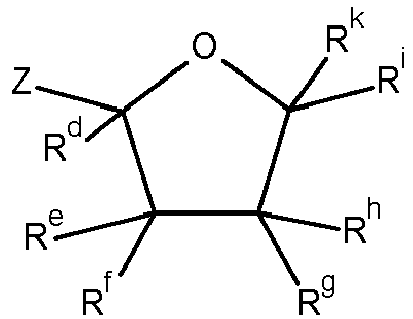
- wherein Rd to Rk represent hydrogen or a C1- to C4-alkyl group
- and wherein Z in both formulas II and III represents an organic group with 1 to 4 carbon atoms which is bonded to the nitrogen atom in formula I
- or R2 is a group of formula IV
R3-O-CH2CHR4-
wherein R3 represents a C1 to C4 alkyl group and R4 represents hydrogen or a C1 to C4 alkyl group. - Preferably, at least two of Ra to Rc in formula II represent hydrogen and at least 5 of Rd to Rk in formula III represent hydrogen.
- Most preferably, all of Ra to Rc represent hydrogen and all of Rd to Rk represent hydrogen.
- Preferably, Z is an alkylene group with 1 to 4 carbon atoms.
- Most preferably, Z is a methylene group.
- A preferred blocking agent with R2 being a group of formula IV is

- Particularly preferred blocking agents are
N-(furan-2-ylmethyl)-2-methylpropane-2-amine which has the formula


- Most preferred blocking agents are
N-(furan-2-ylmethyl)-2-methylpropane-2-amine,
2-methyl-N-((tetrahydrofuran-2-yl)methyl)propane-2-amine and
N-(tert-butyl)-1-methoxypropan-2-amine. - Blocking agents of formula I are commercially available. They may be synthesized, for example, by reductive amination of corresponding aldehydes with primary amines of formula R1-NH2.
- Compounds with at least one isocyanate group are herein shortly referred to as isocyanates.
- Compounds with at least two isocyanate group are herein shortly referred to as polyisocyanates.
- Isocyanates are preferably polyisocyanates, notably diisocyanates and oligomers of diisocyanates.
- Preferred diisocyanates are diisocyanates of formula X(NCO)2, where X is an aliphatic hydrocarbon radical having 4 to 12 carbon atoms, a cycloaliphatic or aromatic hydrocarbon radical having 6 to 15 carbon atoms, or an araliphatic hydrocarbon radical having 7 to 15 carbon atoms. Examples of such diisocyanates are tetramethylene diisocyanate, hexamethylene diisocyanate (HDI), dodecamethylene diisocyanate, 1,4-diisocyanatocyclohexane, 1-isocyanato-3,5,5-trimethyl-5-isocyanatomethylcyclohexane (IPDI), 2,2-bis(4-isocyanatocyclohexyl)-propane, trime-thylhexane diisocyanate, 1,4-diisocyanatobenzene, 2,4-diisocyanatotoluene, 2,6-diisocyanatotoluene (TDI), 4,4'-diisocyanato-diphenylmethane, 2,4'-diisocyanatodiphenylmethane (MDI), p-xylylene diisocyanate, tetramethylxylylene diisocyanate (TMXDI), the isomers of bis(4-isocyanatocyclohexyl)methane (HMDI), pentamethylene diisocyanate (PDI) such as any mixtures of these compounds.
- Diisocyanates include dimers of diisocyanates, notably dimers of the compounds listed above; such dimers are specifically uretdiones or allophanates.
- Further polyisocyanates are compounds obtained by trimerization of diisocyanates, such as isocyanurates or iminooxadiazindione and trimerization products with more than one isocyanurate ring system.
- Further polyisocyanates are also biurets.
- Further polyisocyanates are also oligomers that are obtained by reacting diisocyanates with polyols, notably polyols with 2 to 5 hydroxy groups or polyamines with primary or secondary amino groups, notably polyamines with 2 to 5 primary or secondary amino groups. The diisocyanates are used in molar excess, so that the desired number of isocyanate groups remains when the hydroxy, respectively amino groups are consumed in the reaction.
- Further isocyanates are compounds with one isocyanate group - hereinafter referred to as monoisocyanate. Monoisocyanates are used to limit the molecular weight of the obtained polymer.
- Hence, monoisocyanates may be used optionally and - if used - they are preferably used in low amounts, only.
- In a preferred embodiment, the isocyanates are aliphatic compounds.
- The blocked isocyanates may be prepared by reacting the isocyanate with the blocking agent at elevated temperature. The reaction of secondary amino groups with isocyanate groups is a well-known addition reaction which results in the formation of urea groups.
- The blocking agent may be used in molar excess or in molar deficit. In case of molar deficit some unblocked isocyanate groups will remain.
- Preferably, the blocking agent is used in an amount of at least 0.8 mols of the blocking agent per 1 mol of isocyanate groups.
- More preferably, the blocking agent is used in an amount of at least 1 mol of the blocking agent per 1 mol of isocyanate groups.
- Preferably, the blocking agent is used in an amount of at maximum 1.2 mol, more preferably of at maximum 1.1 mol, respectively at maximum 1.02 mol of the blocking agent per 1 mol of isocyanate groups to avoid high amounts of unreacted blocking agents in the product mixture.
- The reaction of the blocking agent with the isocyanates may be performed in presence of a solvent. A solvent may be used, for example, if the isocyanate is solid or has a high viscosity at the temperature of the reaction.
- The reaction is preferably performed at 50 to 150°C, more preferably at 60 to 100°C under normal pressure.
- Preferably, the reaction is performed in the presence of an inert gas, which is notably nitrogen.
- The reaction is preferably performed until 90 %, more preferably 98 %, most preferably 100 % of the isocyanate groups are blocked, in other words are masked with the blocking agent and have hence been transformed into urea groups.
- Any solvent used may be removed from the product mixture, for example by distillation. Often the solvent may remain in the mixture as it will be removed during the later application of the blocked isocyanate obtained.
- The blocked isocyanates are preferably used for the preparation of 1K compositions.
- 1K compositions are compositions comprising the blocked isocyanates and, in addition, at least one compound which is reactive with isocyanate groups, which are compounds with hydroxy groups or primary or secondary amino groups or mercapatane groups.
- To the compounds that are reactive with isocyanate groups.
- In a preferred embodiment of the invention, at least 50 mol%, in particular at least 80 mol %, most preferably at least 95 mol % of all compounds that react with isocyanates are compounds with at least two hydroxy groups. The obtained polymer is a polyurethane.
- In a further preferred embodiment of the invention, at least 50 mol%, in particular at least 80 mol %, most preferably at least 95 mol % of all compounds that react with isocyanates are compounds with at least two amino groups, selected from primary and secondary amino groups. The obtained polymer is a polyurea.
- Compounds with at least two hydroxy groups are preferably polyetherpolyols, polyesterpolyols, polymers with at least two hydroxy groups which are obtainable by radical polymerization of ethylenically unsaturated compounds herein referred to as monomers or hydrocarbons with at least two hydroxy groups.
- Preferred polyesterpolyols have two to eight, preferably two to five hydroxy groups, more preferably two or three, in particular two hydroxy groups and are obtainable by reacting polyols, which include notably diols, with polycarboxylic acids which include notably dicarboxylic acids.
- The polycarboxylic acids can be aliphatic, cycloaliphatic, araliphatic, aromatic or heterocyclic and can if appropriate be substituted, by halogen atoms for example, and/or unsaturated. Examples thereof include the following: suberic acid, azelaic acid, phthalic acid, isophthalic acid, phthalic anhydride, tetrahydrophthalic anhydride, hexahydrophthalic acid, hexahydrophthalic anhydride, tetrachlorophthalic anhydride, endomethylenetetrahydrophthalic anhydride, glutaric anhydride, maleic acid, maleic anhydride, fumaric acid, and dimeric fatty acids. Preferred dicarboxylic acids are those of the formula HOOC-(CH2)y-COOH, where y is a number from 1 to 20, preferably an even number from 2 to 20, examples being succinic acid, adipic acid, sebacic acid, and dodecanedicarboxylic acid.
- Examples of suitable polyols include ethylene glycol, propane-1,2- diol, propane-1,3-diol, butane-1,3-diol, butene-1,4-diol, pentane-1,5-diol, neopentyl glycol, bis (hydroxymethyl)cyclohexanes such as 1,4-bis(hydroxymethyl)cyclohexane, 2-methylpropane-1,3-diol, methylpentanediols, and diethylene glycol, triethylene glycol, tetraethylene glycol, polyethylene glycol, dipropylene glycol, polypropylene glycol, and dibutylene glycol and polybutylene glycols. Preferred polyols are those of the formula HO-(CH2)x-OH, where x is a number from 1 to 20, preferably an even number from 2 to 20. Examples of such include ethylene glycol, butane-1,4-diol, hexane-1,6-diol, octane-1,8-diol, and dodecane-1,12-diol. Preference is also given to neopentyl glycol.
- The number-average molecular weight Mn of the polyesterpolyol is preferably at least 500 g/mol, more preferably at least 700 g/mol. The upper limit of the molecular weight Mn is preferably 30 000 g/mol, more preferably 10 000 g/mol, very preferably 4000 g/mol. In a preferred embodiment, the polyesterpolyol has a molecular weight Mn being from 500 to 4000, more particularly from 700 to 2000 g/mol. The polydispersity Mw/Mn is preferably 1.1 - 50, more preferably less than or equal to 5, more particularly less than 3.5.
- Preferred polyetherpolyols have two to eight hydroxy groups, preferably two to five hydroxy groups, most preferably two hydroxy groups and are obtainable in particular by polymerizing ethylene oxide, propylene oxide, butylene oxide, tetrahydrofuran, styrene oxide or epichlorohydrin with itself, in the presence of a catalyst, which is, for example, BF3 and a starter component containing reactive hydrogen atoms, such as alcohols or amines, examples being water, ethylene glycol, propane-1,2-diol, propane-1,3-diol, 1,2-bis(4-hydroxydiphenyl)propane, and aniline. A preferred polyetherpolyol is polytetrahydrofuran with a molecular weight of from 240 to 5000, and notably of from 500 to 4500.
- A preferred polymer with at least two hydroxy groups is a polymer obtained by polymerization of acrylic or methacrylic compounds (herein referred to as (meth)acrylics) and optionally further monomers as e.g. styrene, whereby at least 50 mol %, more preferably at least 80 mol % of all monomers are (meth)acrylics. Such a polymer is hereinafter referred to as poly(meth)acrylate - polyol.
- Poly(meth)acrylate - polyols are usually copolymers of (meth)acrylic esters, examples being C1-C20 alkyl (meth)acrylates, with hydroxyalkyl (meth)acrylates, examples being the mono(meth)acrylic esters of 1,2-propanediol, ethylene glycol, 1,3-propanediol, 1,4-butanediol or 1,6-hexanediol and optionally other monomers such as vinylaromatic monomers, in particular styrene, vinyl ester, in particular vinyl acetate, ethylenically unsaturated nitriles, aliphatic hydrocarbons having 2 to 8 C atoms and 1 or 2 double bonds, vinyl ethers, aliphatic hydrocarbons having 2 to 8 C atoms and 1 or 2 double bonds and α,β-unsaturated carboxylic acids and their anhydrides which includes, for example (meth)acrylic acid, maleic acid and maleic anhydride.
- The poly(meth)acrylate - polyols preferably have a molecular weight Mn (number average), as determinable by gel permeation chromatography, of 500 to 50 000 D, more particularly 500 to 10 000 D or 500 to 5000 D. In one preferred embodiment, they have a molecular weight Mn of 800-2000 D. Such poly(meth)acrylate polyols are usually used for coating materials with low solids contents. Preferred poly(meth)acrylate - polyols have OH numbers, measured according to DIN 53240-2:2007-11, of 15-250 mg KOH/g resin solids, preferably 60-180 mg KOH/g, more preferably 80-160 mg KOH/g. The poly(meth)acrylate - polyols may additionally have an acid number to BS EN ISO 3682/BS 6782-3 of less than 100 mg KOH/g, preferably less than 30, and more preferably less than 20 mg KOH/g.
- Preferred hydrocarbons with at least two hydroxy groups are notably the polyols listed above for the preparation of the polyesterpolyols.
- Compounds with at least two amino groups, selected from primary or secondary amino groups may be low molecular compounds, oligomers or polymers.
- Compounds with at least two amino groups may have, for example, a molecular weight of up to 500.000 g/mol. Preferred compounds with at least two amino groups have a molecular weight of up to 1000 g/mol. Most preferred are compounds having a molecular weight of from 60 g/mol to 500 g/mol.
- Preferably, the compounds with at least two amino groups comprise 2 to 10 amino groups, preferably 2 or 3 amino groups and, in a most preferred embodiment the compound with at least two amino groups comprises 2 amino groups.
- In a preferred embodiment at least one of the amino groups is a primary amino group.
- In a most preferred embodiment the compound with at least two amino groups comprises two primary amino groups.
- Suitable compounds with at least two amino groups are, for example,
alkylendiamines or alkylenpolyamines such as ethylenediamine, propylenediamine, butylene diamine, pentamethylene diamine, hexamethylene diamine, neopentanediamine, octamethylendiamine, 1,3 diaminopentane, 2-Methylpentan-1,5-diamin,
alkylendiamines or alkylenpolyamines comprising ether groups (polyetheramine)such as such polyglycoldiamine, oxypropylene diamine or polyoxypropylene diamine,
cycloaliphatic diamines, such as cyclohexyldiamines, for example 1,2 diaminocyclohexane, 1-methyl-2,4- diaminocyclohexane, 1-methyl-2,6-diaminocyclohexane or mixtures thereof, isophorone diamine, bis(4-aminocyclohexyl)methane,
1,3-bis(aminomethyl)cyclohexane, 1,4-bis(aminomethyl)cyclohexane, 2,5-bisaminomethyl tetrahydrofuran, 3,3'-Dimethyl-4,4'diamino-dicyclohexylmethane
aromatic diamines such as 1,2-phenylendiamine or 1,4 phenylendiamine, toluene diamines, 4,4' diamino-diphenylmethane, 4,4' diaminodiphenylsulfone, 2,5-bisaminomethyl furan or
amino compounds with primary and secondary amino groups such as N-aminoethylpiperazine, dialkylentriamines or polyalkylentriamines, for example diethylenetriamine or triethylenetetramine, dipropylene triamine, N,N-Bis-(3-aminopropyl)methylamine, fatty diamines
Compounds with only one functional group that react with isocyanate are used to limit the molecular weight of the obtained polymer. Hence, such compounds are used only optionally in the 1K composition and - if used- they are used in low amounts, only. - Preferably, the 1K composition comprises compounds with blocked isocyanate groups and compounds that are reactive with isocyanate in an amount that the molar ratio of blocked isocyanate groups to isocyanate-reactive groups is from 0.5:1 to 2:1, preferably 0.7:1 to 1.3:1, more preferably 0.8:1 to 1.2:1, and especially 0.9:1 to 1.1:1.
- The 1K composition may comprise further compounds besides isocyanate compounds and isocyanate-reactive compounds. Such further compounds are, in particular, solvents, catalysts, in particular, catalysts for the formation of urethane, respectively urea groups and additives such as UV stabilizers, thickeners, thixotropic agents, surface-active agents, viscosity modifiers, plasticizers or chelating agents, fillers, dyes and pigments, drying agents, antistatic agents, antioxidants or flame retardants.
- Suitable organic solvents, are notably aromatic compounds including alkylated benzenes and naphthalenes, (cyclo)aliphatic hydrocarbons and mixtures thereof, chlorinated hydrocarbons, ketones, esters, alkoxylated alkyl alkanoates, ethers, and mixtures thereof.
- Preferred solvents are n-butyl acetate, ethyl acetate, 1-methoxyprop-2-yl acetate, 2-methoxyethyl acetate, xylene and Solvesso® 100.
- The 1K composition of this invention may be used as coating composition, ink, sealant or adhesive.
- The 1K composition is suitable in coatings applications as clearcoat, basecoat, topcoat, primer or surface materials, especially as clearcoat or topcoat materials.
- The 1K composition may be applied to substrates such as wood, wood veneer, paper, cardboard, paperboard, textile, film, leather, nonwoven, plastics surfaces, glass, ceramic, mineral building materials, such as molded cement blocks and fiber-cement slabs, or metals, which in each case may optionally have been precoated or pretreated. Preference is given to wood, metals and plastics, which may optionally have been precoated or pretreated. Particularly preferred are metals and plastics.
- Curing of the 1K composition occurs after the application of the 1K composition as coating composition, ink, sealant or adhesive.
The applied 1K composition may be cured by any method known to the skilled person. - Preferably curing occurs at elevated temperatures, notably to temperatures above the deblocking temperature of the blocked isocyanate. The deblocking temperature is the temperature at which the blocked isocyanate decomposes to the free isocyanate and the blocking agent. The deblocking temperature may be determined by DSC measurements as described in the examples. The deblocking temperature of the blocked isocyanates of this invention is preferably below 190°C and more preferably below 170°C, most preferably below 160°C (at normal pressure, 1 bar).
- After curing, coated substrates, adhesive bonds, sealed cracks, printed substrates with good performance properties are obtained.
- The secondary amines of formula I have high suitability as blocking agents for isocyanates. The blocked isocyanates may be used in 1K compositions with long term storage stability. The deblocking temperature of the blocked isocyanates is low so that curing of the 1K composition easily and completely occurs at moderate temperatures.
-

- A flask was charged with furan-2-carbaldehyde (250 g, 2,60 mol), and tert-butylamine (209 g, 2,86 mol) was added dropwise at ambient temperature over the course of 2 h. The reaction mixture was stirred vigorously during addition and the temperature was kept below 40 °C. After complete addition the mixture was stirred for another 3 h. The aqueous layer was separated and discarded to obtain crude N-tert-butyl-1-(furan-2-yl)methanimine in 96% purity according to gas chromatography. The N-tert-butyl-1-(furan-2-yl)methanimine was used as starting material for the preparation of blocking agents 1 and 2.
-

- A flask was charged with a solution of crude N-tert-butyl-1-(furan-2-yl)methanimine (100 g, 652 mmol) in ethanol (600 g) and the mixture was cooled to 7 °C. NaBH4 (12.5 g, 330 mmol) was added in portions over the course of 4 h and the temperature was kept between 5 °C and 15 °C. After complete addition, the mixture was warmed to ambient temperature and stirred overnight. Water (400 mL) was added carefully and the aqueous mixture was extracted with MTBE (4 x 200 mL). The combined organic layers were dried over MgSO4, filtered and the solvent was removed under reduced pressure. The residue was distilled under reduced pressure to obtain N-tert-butyl-1-(furan-2-yl)methanimine (72 g, 71 %).
-

- An autoclave is charged with crude N-tert-butyl-1-(furan-2-yl)methanimine (100 g, 652 mmol) and 10 g Raney Nickel (washed with THF to remove water). The autoclave is closed, pressurized with hydrogen to 150 bars and heated to 50 °C for 12 h. After 12 h, the temperature is raised to 100 °C and the reaction is continued for another 24 h. During the reaction, the mixture is heavily stirred and the pressure is kept at 150 bars by top-up of consumed hydrogen. After completion of the reaction, the autoclave is cooled to ambient temperature, depressurized and the reaction mixture is filtered. 2-methyl-N-((tetrahydrofuran-2-yl)methyl)propan-2-amine is obtained in 76% selectivity at 100 % conversion of the starting material according to gas chromatography. A sample of the product was obtained >98% purity by distillation under reduced pressure.
-

-

- A round bottomed flask was charged with 27,46g BASONAT® HI100 from BASF SE (polyisocyanate prepared by trimerizing some of the isocyanate groups of HDI, said polyisocyanate being composed substantially of tris(6-isocyanatohexyl) isocyanurate and its higher homologs, with an NCO content of 21.8%) and 42,61g n-butylacetate. The contents of the flask were then heated to 90°C under a nitrogen atmosphere. Consequently, 15,15 g diisopropylamine were added dropwise. The temperature is maintained at 90°C, until the free isocyanate content reached 0.0 % (app. 2 hours).
- A round bottomed flask was charged with 27,46g BASONAT® HI100 from BASF SE (polyisocyanate prepared by trimerizing some of the isocyanate groups of HDI, said polyisocyanate being composed substantially of tris(6-isocyanatohexyl) isocyanurate and its higher homologs, with an NCO content of 21.8%) and 42,64g n-butylacetate. The contents of the flask were then heated to 90°C under a nitrogen atmosphere. Consequently, 15,20 g N-tert-butyl-N-ethylamine were added dropwise. The temperature is maintained at 90°C, until the free isocyanate content reached 0.0 % (app. 2,5 hours).
- A round bottomed flask was charged with 27,46g BASONAT® HI100 from BASF SE (polyisocyanate prepared by trimerizing some of the isocyanate groups of HDI, said polyisocyanate being composed substantially of tris(6-isocyanatohexyl) isocyanurate and its higher homologs, with an NCO content of 21.8%) and 51,91g n-butylacetate.
- The contents of the flask were then heated to 90°C under a nitrogen atmosphere. Consequently, 24,45 g with tert-butylbenzylamine were added dropwise. The temperature is maintained at 90°C, until the free isocyanate content reached 0.0 % (app. 2,5 hours).
- A round bottomed flask was charged with 27,46g BASONAT® HI100 from BASF SE (polyisocyanate prepared by trimerizing some of the isocyanate groups of HDI, said polyisocyanate being composed substantially of tris(6-isocyanatohexyl) isocyanurate and its higher homologs, with an NCO content of 21.8%) and 50,56 g n-butylacetate. The contents of the flask were then heated to 90°C under a nitrogen atmosphere. Consequently, 23,10 g of blocking agent 1 were added dropwise. The temperature is maintained at 90°C, until the free isocyanate content reached 0.0 % (app. 2 hours).
- A round bottomed flask was charged with 27,46g BASONAT® HI100 from BASF SE (polyisocyanate prepared by trimerizing some of the isocyanate groups of HDI, said polyisocyanate being composed substantially of tris(6-isocyanatohexyl) isocyanurate and its higher homologs, with an NCO content of 21.8%) and 51,01g n-butylacetate. The contents of the flask were then heated to 90°C under a nitrogen atmosphere. Consequently, 23,55 g of blocking agent 2 were added dropwise. The temperature is maintained at 90°C, until the free isocyanate content reached 0.0 % (app. 2 hours).
- A round bottomed flask was charged with 27,46g BASONAT® HI100 from BASF SE (polyisocyanate prepared by trimerizing some of the isocyanate groups of HDI, said polyisocyanate being composed substantially of tris(6-isocyanatohexyl) isocyanurate and its higher homologs, with an NCO content of 21.8%) and 47,11g n-butylacetate. The contents of the flask were then heated to 90°C under a nitrogen atmosphere. Consequently, 19,65 g of blocking agent 3 were added dropwise. The temperature is maintained at 90°C, until the free isocyanate content reached 0.0 % (app. 3 hours).
- A round bottomed flask was charged with 27,46g BASONAT® HI100 from BASF SE (polyisocyanate prepared by trimerizing some of the isocyanate groups of HDI, said polyisocyanate being composed substantially of tris(6-isocyanatohexyl) isocyanurate and its higher homologs, with an NCO content of 21.8%) and 49,21g n-butylacetate. The contents of the flask were then heated to 90°C under a nitrogen atmosphere. Consequently, 21,75 g of blocking agent 4 were added dropwise. The temperature is maintained at 90°C, until the free isocyanate content reached 0.0 % (app. 3 hours).
- The deblocking temperature is the temperature at which the blocked isocyanate decomposes into the free, unblocked isocyanate and the blocking agent.
- The deblocking temperature was determined by differential scanning calorimetry (DSC). The DSC apparatus used was DSC 204 F1 of Netzsch.
- For each DSC run, 5 mg of the respective blocking agent were used. The DSC run was performed under nitrogen in a temperature range from 0 to 300°C and a heating rate of 10° C/minute. The temperature of the exothermic maximum corresponds to the deblocking temperature.
Blocked isocyanate from Deblocking agent Deblocking temperature Comparison example 1 diisopropylamine 190°C Comparison example 2 tert-butylethylamine 170°C Comparison example 3 tert-butylbenzylamine 170°C Example 1 blocking agent 1 150°C Example 2 blocking agent 2 140°C Example 3 blocking agent 3 160°C Example 4 blocking agent 4 130°C
Claims (10)
- Use of a secondary amine of formula I
R1-NH-R2
wherein R1 represents a branched alkyl group with 3 to 6 carbon atoms and R2 represents a hydrocarbon group comprising one or two ether groupsas blocking agent for compounds with at least one isocyanate group, hereinafter shortly referred to as isocyanates. - Use according to claim 1, wherein R1 is a tertiary butyl or an isopropyl group.
- Use according to claim 1 or 2, wherein R2 is a hydrocarbon group comprising a ring system with one or two ether groups or is a non-cyclic aliphatic group with one or two ether groups.
- Use according to any of claims 1 to 3, wherein R2 is a group of formula II

or of formula III wherein Rd to Rk represent hydrogen or a C1- to C4-alkyl groupand wherein Z in both formulas II and III represents an organic group with 1 to 4 carbon atoms which is bonded to the nitrogen atom in formula Ior R2 is a group of formula IV
R3-O-CH2CHR4-
wherein R3 represents a C1 to C4 alkyl group and R4 represents hydrogen or a C1 to C4 alkyl group. - Use according to claim 4, wherein Z is a methylene group.
- Use according to any of claims 1 to 5, wherein the blocking agent is N-(furan-2-ylmethyl)-2-methylpropane-2-amine of formula


- Use according to any of claims 1 to 6, wherein the isocyanates are compounds with at least two isocyanate groups, hereinafter shortly referred to as polyisocyanates.
- Blocked isocyanates obtainable by reacting isocyanates with a blocking agent according to any of claims 1 to 7
- Compositions comprising blocked isocyanates according to claim 8 and at least one compound with hydroxy groups or primary or secondary amino groups or mercaptane groups.
- Use of compositions according to claim 9 as coating materials, inks, sealants or adhesives.
Applications Claiming Priority (1)
| Application Number | Priority Date | Filing Date | Title |
|---|---|---|---|
| EP18202200 | 2018-10-24 |
Publications (1)
| Publication Number | Publication Date |
|---|---|
| EP3643733A1 true EP3643733A1 (en) | 2020-04-29 |
Family
ID=63965452
Family Applications (1)
| Application Number | Title | Priority Date | Filing Date |
|---|---|---|---|
| EP19202893.4A Withdrawn EP3643733A1 (en) | 2018-10-24 | 2019-10-14 | Blocking agents for isocyanates |
Country Status (1)
| Country | Link |
|---|---|
| EP (1) | EP3643733A1 (en) |
Cited By (3)
| Publication number | Priority date | Publication date | Assignee | Title |
|---|---|---|---|---|
| EP4282893A1 (en) | 2022-05-25 | 2023-11-29 | Covestro Deutschland AG | Blocked polyisocyanates |
| EP4282894A1 (en) | 2022-05-25 | 2023-11-29 | Covestro Deutschland AG | Single-component stoving system |
| EP4559946A1 (en) | 2023-11-21 | 2025-05-28 | Covestro Deutschland AG | Blocked polyisocyanates |
Citations (2)
| Publication number | Priority date | Publication date | Assignee | Title |
|---|---|---|---|---|
| EP0096210A1 (en) | 1982-06-08 | 1983-12-21 | Hüls Aktiengesellschaft | Storage-stable polyurethane one-component stoving lacquer |
| US20050020765A1 (en) * | 2003-07-24 | 2005-01-27 | Slack William E. | Stable liquid biuret modified and biuret allophanate modified toluene diisocyanates, prepolymers thereof, and processes for their preparation |
-
2019
- 2019-10-14 EP EP19202893.4A patent/EP3643733A1/en not_active Withdrawn
Patent Citations (2)
| Publication number | Priority date | Publication date | Assignee | Title |
|---|---|---|---|---|
| EP0096210A1 (en) | 1982-06-08 | 1983-12-21 | Hüls Aktiengesellschaft | Storage-stable polyurethane one-component stoving lacquer |
| US20050020765A1 (en) * | 2003-07-24 | 2005-01-27 | Slack William E. | Stable liquid biuret modified and biuret allophanate modified toluene diisocyanates, prepolymers thereof, and processes for their preparation |
Non-Patent Citations (2)
| Title |
|---|
| B BLASCHKE ET AL: "G Racemattrennung von Propafenon und Diprafenon, Konfiguration der pro pafenon-Enantiomeren Optical Resolution of Propafenone", LIEBIGS ANN. CHEM., 23 June 1987 (1987-06-23), XP055664041, Retrieved from the Internet <URL:https://onlinelibrary.wiley.com/doi/pdf/10.1002/jlac.198719870379> [retrieved on 20200131] * |
| CHALINA E G ET AL: "Synthesis, antiarrhythmic and hypotensive activity of some novel 1,3-disubstituted ureas and phenyl N-substituted carbamates", EUROPEAN JOURNAL OF MEDICINAL CHEMISTRY, ELSEVIER, AMSTERDAM, NL, vol. 33, no. 12, 1998, pages 985 - 990, XP004160904, ISSN: 0223-5234, DOI: 10.1016/S0223-5234(99)80023-3 * |
Cited By (5)
| Publication number | Priority date | Publication date | Assignee | Title |
|---|---|---|---|---|
| EP4282893A1 (en) | 2022-05-25 | 2023-11-29 | Covestro Deutschland AG | Blocked polyisocyanates |
| EP4282894A1 (en) | 2022-05-25 | 2023-11-29 | Covestro Deutschland AG | Single-component stoving system |
| WO2023227539A1 (en) | 2022-05-25 | 2023-11-30 | Covestro Deutschland Ag | One-component burn-in system |
| WO2023227540A1 (en) | 2022-05-25 | 2023-11-30 | Covestro Deutschland Ag | Blocked polyisocyanates |
| EP4559946A1 (en) | 2023-11-21 | 2025-05-28 | Covestro Deutschland AG | Blocked polyisocyanates |
Similar Documents
| Publication | Publication Date | Title |
|---|---|---|
| JP4069073B2 (en) | Aqueous polyurethane dispersion obtained by using cesium salt | |
| AU2021209384B2 (en) | Multi-aziridine compound | |
| CN104583191A (en) | Binder with cyclic carbonate structures | |
| CN101679576B (en) | Compositions based on modified (poly)isocyanates and solvents of the aliphatic ketone or acetal type and use of the compositions for the production of coatings | |
| US20240287241A1 (en) | Cover coating with good adhesion on polyurethane and polyurea membranes | |
| WO2021262845A1 (en) | Polyol compositions and methods | |
| EP2447294B1 (en) | Mixed Polycycloaliphatic Amines (MPCA) and MPCA Alkylates | |
| US10899866B2 (en) | Process for producing a ring-opening polymerization product | |
| JP5578061B2 (en) | Chain extender for polyurea (urethane) system | |
| JPH028613B2 (en) | ||
| JP2004315637A (en) | Polyurethane resin composition and cured product | |
| WO2006104094A1 (en) | Aqueous polyurethane resin composition and process for production thereof | |
| EP3118234A1 (en) | Coating compositions | |
| JP5887975B2 (en) | Polyurethane, method for producing the same and use thereof | |
| WO2026104544A1 (en) | Exo-vinylene carbonate compounds as precursors for isocyanate-free urethane-type polymers | |
| WO2023114013A1 (en) | Epoxy-urethane compounds and their thermosetting polymers | |
| HK1135422A1 (en) | Aqueous polyurethane/polyurea dispersions | |
| HK1135422B (en) | Aqueous polyurethane/polyurea dispersions |
Legal Events
| Date | Code | Title | Description |
|---|---|---|---|
| PUAI | Public reference made under article 153(3) epc to a published international application that has entered the european phase |
Free format text: ORIGINAL CODE: 0009012 |
|
| STAA | Information on the status of an ep patent application or granted ep patent |
Free format text: STATUS: THE APPLICATION HAS BEEN PUBLISHED |
|
| AK | Designated contracting states |
Kind code of ref document: A1 Designated state(s): AL AT BE BG CH CY CZ DE DK EE ES FI FR GB GR HR HU IE IS IT LI LT LU LV MC MK MT NL NO PL PT RO RS SE SI SK SM TR |
|
| AX | Request for extension of the european patent |
Extension state: BA ME |
|
| 18D | Application deemed to be withdrawn |
Effective date: 20201030 |