EP3641450A1 - Resource configuration method, base station, terminal, and computer readable storage medium - Google Patents
Resource configuration method, base station, terminal, and computer readable storage medium Download PDFInfo
- Publication number
- EP3641450A1 EP3641450A1 EP18817873.5A EP18817873A EP3641450A1 EP 3641450 A1 EP3641450 A1 EP 3641450A1 EP 18817873 A EP18817873 A EP 18817873A EP 3641450 A1 EP3641450 A1 EP 3641450A1
- Authority
- EP
- European Patent Office
- Prior art keywords
- resource
- pucch
- information
- acknowledgement
- frequency hopping
- Prior art date
- Legal status (The legal status is an assumption and is not a legal conclusion. Google has not performed a legal analysis and makes no representation as to the accuracy of the status listed.)
- Granted
Links
Images

Classifications
-
- H—ELECTRICITY
- H04—ELECTRIC COMMUNICATION TECHNIQUE
- H04W—WIRELESS COMMUNICATION NETWORKS
- H04W72/00—Local resource management
- H04W72/20—Control channels or signalling for resource management
- H04W72/21—Control channels or signalling for resource management in the uplink direction of a wireless link, i.e. towards the network
-
- H—ELECTRICITY
- H04—ELECTRIC COMMUNICATION TECHNIQUE
- H04W—WIRELESS COMMUNICATION NETWORKS
- H04W72/00—Local resource management
- H04W72/20—Control channels or signalling for resource management
- H04W72/23—Control channels or signalling for resource management in the downlink direction of a wireless link, i.e. towards a terminal
-
- H—ELECTRICITY
- H04—ELECTRIC COMMUNICATION TECHNIQUE
- H04L—TRANSMISSION OF DIGITAL INFORMATION, e.g. TELEGRAPHIC COMMUNICATION
- H04L1/00—Arrangements for detecting or preventing errors in the information received
- H04L1/12—Arrangements for detecting or preventing errors in the information received by using return channel
- H04L1/16—Arrangements for detecting or preventing errors in the information received by using return channel in which the return channel carries supervisory signals, e.g. repetition request signals
-
- H—ELECTRICITY
- H04—ELECTRIC COMMUNICATION TECHNIQUE
- H04L—TRANSMISSION OF DIGITAL INFORMATION, e.g. TELEGRAPHIC COMMUNICATION
- H04L1/00—Arrangements for detecting or preventing errors in the information received
- H04L1/12—Arrangements for detecting or preventing errors in the information received by using return channel
- H04L1/16—Arrangements for detecting or preventing errors in the information received by using return channel in which the return channel carries supervisory signals, e.g. repetition request signals
- H04L1/18—Automatic repetition systems, e.g. Van Duuren systems
- H04L1/1829—Arrangements specially adapted for the receiver end
- H04L1/1861—Physical mapping arrangements
Definitions
- the present disclosure relates to the field of communication technologies, and in particular to a resource configuration method, a base station, a terminal and a computer readable storage medium.
- the Physical Uplink Control Channel (PUCCH) resource of downlink traffic in LTE is implicitly determined by a minimum Control Channel Element (CCE) of Physical downlink Control Channel (PDCCH).
- CCE Control Channel Element
- PUCCH Physical downlink Control Channel
- the timing of the PUCCH (also referred to as timing sequence) is determined according to a fixed timing relationship.
- NR New Radio
- 5G Compared with the existing mobile communication systems, the future 5G mobile communication systems need to adapt to more diverse scenarios and business needs.
- the main scenarios of 5G include enhanced mobile broadband (eMBB), Ultra-Reliable Low Latency Communications (URLLC), and massive machine-type communications (mMTC), which require high reliability, low latency, large bandwidth and wide coverage.
- eMBB enhanced mobile broadband
- URLLC Ultra-Reliable Low Latency Communications
- mMTC massive machine-type communications
- higher bandwidth transmission is required to provide higher transmission rates.
- the existing PUCCH configuration mode in LTE cannot guarantee the reliability of 5G communication.
- An embodiment of the present disclosure provides a resource configuration method, including:
- An embodiment of the present disclosure provides a resource configuration method, including:
- An embodiment of the present disclosure provides a base station, including:
- An embodiment of the present disclosure provides a base station, including: a memory, a processor, and a computer program stored on the memory and executable on the processor; wherein the computer program is executed by the processor to implement steps of the above resource configuration method.
- An embodiment of the present disclosure provides a computer readable storage medium, including a computer program stored thereon; wherein the computer program is executed by a processor to implement steps of the above resource configuration method.
- An embodiment of the present disclosure provides a terminal, including:
- An embodiment of the present disclosure provides a terminal, including: a memory, a processor, and a computer program stored on the memory and executable on the processor; wherein the computer program is executed by the processor to implement steps of the above resource configuration method.
- An embodiment of the present disclosure provides a computer readable storage medium, including a computer program stored thereon; wherein the computer program is executed by a processor to implement steps of the above resource configuration method.
- the present disclosure provides a resource configuration method, a base station, a terminal and a computer readable storage medium.
- one embodiment of the present disclosure provides a resource configuration method, which is applied to a base station, and includes: Step 101: transmitting configuration information of a physical uplink control channel (PUCCH) resource to a terminal.
- PUCCH physical uplink control channel
- the configuration information includes at least one of a time interval from downlink data to feeding back PUCCH resource, waveform information employed for transmitting the PUCCH resource, acknowledgement/non-acknowledgement resource indication information, format information employed for feeding back the PUCCH resource, and frequency hopping identification information of the PUCCH resource.
- the base station usually transmits the configuration information to a terminal through downlink control information (DCI).
- DCI downlink control information
- the terminal When receiving by the terminal, the terminal first receives the DCI, and then extracts the configuration information of the PUCCH resource in the DCI.
- the time interval is one of a plurality of preset time intervals.
- the plurality of preset time intervals are set at equal intervals or unequal intervals.
- the time interval (k1) is a duration between after transmission of physical downlink shared channel (PDSCH) and before transmission of the PUCCH.
- the time interval may be expressed by a specific time or by a quantity of slots.
- the plurality of preset time intervals may be set at equal intervals, for example, (1, 2, 3, 4) slots.
- the plurality of preset time intervals may also be set at unequal intervals, for example, (1, 2, 3, 6) slots.
- the preset time interval is configured by a high layer.
- DFT-S-OFDM DFT-spread-orthogonal frequency division multiplexing
- CP-OFDM cyclic prefix orthogonal frequency division multiplexing
- the acknowledgement/non-acknowledgement resource indication information includes: a resource set comprised of at least one resource; or, the acknowledgement/non-acknowledgement resource indication information includes: a resource and at least one offset.
- the acknowledgment/non-acknowledgement (ACK/NACK) resource indication information includes a resource set comprised of at least one resource
- a resource available to the terminal for transmitting PUCCH is indicated by using the DCI to indicate one resource in the configured resource set.
- the acknowledgment/non-acknowledgement resource indication information includes a resource and at least one offset, a specific resource available to the terminal can be obtained through calculation based on the resource and the offset.
- the format information when the configuration information includes the format information employed for feeding back the PUCCH resource, if there are definite PUCCH formats and quantity in a slot, then the format information includes PUCCH identification information; if an uplink of a slot or an uplink slot includes dynamically variable PUCCH formats, then the format information includes a starting symbol position of the PUCCH and a length of the PUCCH.
- the PUCCH format may be implemented in the following two ways:
- the NR supports short PUCCH of 1 or 2 symbols, and the NR also supports long PUCCH of 4-14 symbols, thus multiple PUCCH formats can be defined and each PUCCH may correspond to a varied quantity of symbols or bearing capacity.
- the PUCCH resource may be implicitly determined.
- a time domain position (i.e., a starting OFDM symbol and a length) of a PUCCH channel in one slot may be configured by the upper layer, and an available resource may be implicitly determined (according to CCE and other information) or may be configured to the terminal. If UCI information that the terminal needs to feed back is small (i.e., smaller than or equal to a preset value), a small-capacity PUCCH is used.
- the PUCCH format indicated in the DCI may implicitly indicate uplink control information (UCI) sent by the terminal. For example, if the indicated PUCCH format has a capacity of 1-2 bits, then the terminal only transmits ACK/NACK information. If the indicated format is greater than or equal to a preset quantity of bits, ACK/NACK and Channel Quality Indicator (CQI) information are transmitted simultaneously.
- UCI uplink control information
- the frequency hopping identification information includes: frequency hopping indication information and/or a long-PUCCH resource frequency hopping division indication.
- the frequency hopping indication information includes: an intra-bandwidth part (BP) frequency hopping indication or an inter-BP frequency hopping indication.
- BP intra-bandwidth part
- the frequency hopping configuration may be activated for some PUCCH formats.
- the frequency hopping part may be divided into two parts, that is, PUCCH symbols may be divided into two parts, i.e., transmission in the bandwidth part (BP) or transmission outside the bandwidth part.
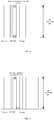
- Fig. 4 shows frequency hopping of a 1-symbol PUCCH in CP-OFDM format.
- Fig. 5 shows frequency hopping of 2 symbols within the bandwidth part.
- Fig. 6 shows frequency hopping of 2 symbols between the bandwidth parts.
- a 7-symbol PUCCH as shown in Fig. 7
- three or four symbols may be divided into a first part, as shown in Fig. 7 .
- the frequency hopping identification information may be indicated by a high-level signaling or DCI signaling.
- DL part represents a downlink part
- UL part represents an uplink part
- GP represent a slot
- the DCI when the base station sends the DCI of the downlink data to the terminal, the DCI carries the configuration information for indicating the PUCCH resource. This can flexibly allocate PUCCH formats and resources to the terminal according to the usage requirement, thereby effectively ensuring the reliability of 5G communication.
- one embodiment of the present disclosure provides a resource configuration method, which is applied to a terminal, including the following steps.
- Step 801 acquiring configuration information of a physical uplink control channel (PUCCH) resource sent by a base station.
- PUCCH physical uplink control channel
- the configuration information includes at least one of a time interval from downlink data to feeding back PUCCH resource, waveform information employed for transmitting the PUCCH resource, acknowledgement/non-acknowledgement resource indication information, format information employed for feeding back the PUCCH resource, and frequency hopping identification information of the PUCCH resource.
- step 801 includes:
- the time interval is one of a plurality of preset time intervals.
- the plurality of preset time intervals are set at equal intervals or unequal intervals.
- the acknowledgement/non-acknowledgement resource indication information includes: a resource set comprised of at least one resource; or, the acknowledgement/non-acknowledgement resource indication information includes: a resource and at least one offset.
- the format information when the configuration information includes the format information employed for feeding back the PUCCH resource, if there are definite PUCCH formats and quantity in a slot, then the format information includes PUCCH identification information; if an uplink of a slot or an uplink slot includes dynamically variable PUCCH formats, then the format information includes a starting symbol position of the PUCCH and a length of the PUCCH.
- the format information is implicitly notified by the base station.
- the format information is used to implicitly indicate uplink control information (UCI) sent by the terminal.
- UCI uplink control information
- the frequency hopping identification information includes: frequency hopping indication information and/or a long-PUCCH resource frequency hopping division indication.
- the frequency hopping indication information includes: an intra-bandwidth part (BP) frequency hopping indication or an inter-BP frequency hopping indication.
- BP intra-bandwidth part
- one embodiment of the present disclosure provides a base station, including: a transmission module 901 configured to transmit configuration information of a physical uplink control channel (PUCCH) resource to a terminal.
- a transmission module 901 configured to transmit configuration information of a physical uplink control channel (PUCCH) resource to a terminal.
- PUCCH physical uplink control channel
- the configuration information includes at least one of a time interval from downlink data to feeding back PUCCH resource, waveform information employed for transmitting the PUCCH resource, acknowledgement/non-acknowledgement resource indication information, format information employed for feeding back the PUCCH resource, and frequency hopping identification information of the PUCCH resource.
- the transmission module 901 is configured to: transmit downlink control information (DCI) carrying the configuration information of the PUCCH resource to the terminal.
- DCI downlink control information
- the time interval is one of a plurality of preset time intervals.
- the plurality of preset time intervals are set at equal intervals or unequal intervals.
- the acknowledgement/non-acknowledgement resource indication information includes: a resource set comprised of at least one resource; or, the acknowledgement/non-acknowledgement resource indication information includes: a resource and at least one offset.
- the format information when the configuration information includes the format information employed for feeding back the PUCCH resource, if there are definite PUCCH formats and quantity in a slot, then the format information includes PUCCH identification information; if an uplink of a slot or an uplink slot includes dynamically variable PUCCH formats, then the format information includes a starting symbol position of the PUCCH and a length of the PUCCH.
- the format information is implicitly notified to the terminal.
- the format information is used to implicitly indicate uplink control information (UCI) sent by the terminal.
- UCI uplink control information
- the frequency hopping identification information includes: frequency hopping indication information and/or a long-PUCCH resource frequency hopping division indication.
- the frequency hopping indication information includes: an intra-bandwidth part (BP) frequency hopping indication or an inter-BP frequency hopping indication.
- BP intra-bandwidth part
- the base station embodiment is a base station corresponding to the resource configuration method applied to the base station, and all implementation manners of the foregoing embodiments are applicable to the base station embodiment, and the same technical effects can be achieved.
- One embodiment of the present disclosure further provides a base station, including: a memory, a processor, and a computer program stored on the memory and executable on the processor.
- a base station including: a memory, a processor, and a computer program stored on the memory and executable on the processor.
- One embodiment of the present disclosure further provides a computer readable storage medium.
- the computer readable storage medium stores a computer program thereon.
- the computer program is executed by the processor, each step of the resource configuration method applied to the base station in the above embodiment can be implemented, and the same technical effects can be achieved, which will not elaborated herein.
- the computer readable storage medium may be a read-only memory (ROM), a random access memory (RAM), a magnetic disk, and an optical disk.
- Fig. 10 is a block diagram of a base station according to an embodiment of the present disclosure.
- the base station can implement details of the resource configuration method applied to the base station in the above embodiment, and the same technical effects can be achieved.
- the base station 1000 includes a processor 1001, a transceiver 1002, a memory 1003 and a bus interface.
- the processor 1001 is configured to read a program in the memory 1003 and perform the following process: transmitting configuration information of a physical uplink control channel (PUCCH) resource to a terminal through the transceiver 1002.
- PUCCH physical uplink control channel
- the configuration information includes at least one of a time interval from downlink data to feeding back PUCCH resource, waveform information employed for transmitting the PUCCH resource, acknowledgement/non-acknowledgement resource indication information, format information employed for feeding back the PUCCH resource, and frequency hopping identification information of the PUCCH resource.
- the bus architecture may include any number of interconnected buses and bridges. Specifically, one or more processors represented by the processor 1001 and various circuits of memory represented by the memory 1003 are linked together.
- the bus architecture can also link various other circuits, such as peripherals, voltage regulators, and power management circuits, as is known in the art. Therefore, it will not be further described.
- the bus interface provides an interface.
- the transceiver 1002 may be multiple components, including a transmitter and a receiver, providing units for communicating with various other devices on a transmission medium.
- the processor 1001 is in charge of managing bus architecture and general processing.
- the memory 1003 may store data used by the processor 1001 when performing operations.
- the processor 1001 is further configured to read the program in the memory 1003 and perform the following process: transmitting downlink control information (DCI) carrying the configuration information of the PUCCH resource to the terminal through the transceiver 1002.
- DCI downlink control information
- the time interval is one of a plurality of preset time intervals.
- the plurality of preset time intervals are set at equal intervals or unequal intervals.
- the acknowledgement/non-acknowledgement resource indication information includes: a resource set comprised of at least one resource; or, the acknowledgement/non-acknowledgement resource indication information includes: a resource and at least one offset.
- the format information when the configuration information includes the format information employed for feeding back the PUCCH resource, if there are definite PUCCH formats and quantity in a slot, then the format information includes PUCCH identification information; if an uplink of a slot or an uplink slot includes dynamically variable PUCCH formats, then the format information includes a starting symbol position of the PUCCH and a length of the PUCCH.
- the format information is implicitly notified to the terminal.
- the format information is used to implicitly indicate uplink control information (UCI) sent by the terminal.
- UCI uplink control information
- the frequency hopping identification information includes: frequency hopping indication information and/or a long-PUCCH resource frequency hopping division indication.
- the frequency hopping indication information includes: an intra-bandwidth part (BP) frequency hopping indication or an inter-BP frequency hopping indication.
- BP intra-bandwidth part
- the configuration information of the PUCCH resource is transmitted to the terminal, which can flexibly allocate PUCCH formats and resources to the terminal according to the usage requirement, thereby effectively ensuring the reliability of 5G communication.
- one embodiment of the present disclosure further provides a terminal, including: an acquiring module 1101 is configured to acquire configuration information of a physical uplink control channel (PUCCH) resource sent by a base station.
- PUCCH physical uplink control channel
- the configuration information includes at least one of a time interval from downlink data to feeding back PUCCH resource, waveform information employed for transmitting the PUCCH resource, acknowledgement/non-acknowledgement resource indication information, format information employed for feeding back the PUCCH resource, and frequency hopping identification information of the PUCCH resource.
- the acquiring module 1101 includes:
- the time interval is one of a plurality of preset time intervals.
- the plurality of preset time intervals are set at equal intervals or unequal intervals.
- the acknowledgement/non-acknowledgement resource indication information includes: a resource set comprised of at least one resource; or, the acknowledgement/non-acknowledgement resource indication information includes: a resource and at least one offset.
- the format information when the configuration information includes the format information employed for feeding back the PUCCH resource, if there are definite PUCCH formats and quantity in a slot, then the format information includes PUCCH identification information; if an uplink of a slot or an uplink slot includes dynamically variable PUCCH formats, then the format information includes a starting symbol position of the PUCCH and a length of the PUCCH.
- the format information is implicitly notified by the base station.
- the format information is used to implicitly indicate uplink control information (UCI) sent by the terminal.
- UCI uplink control information
- the frequency hopping identification information includes: frequency hopping indication information and/or a long-PUCCH resource frequency hopping division indication.
- the frequency hopping indication information includes: an intra-bandwidth part (BP) frequency hopping indication or an inter-BP frequency hopping indication.
- BP intra-bandwidth part
- the terminal embodiment is a terminal corresponding to the resource configuration method applied to the terminal, and all implementation manners of the foregoing embodiments are applicable to the terminal embodiment, and the same technical effects can be achieved.
- One embodiment of the present disclosure further provides a terminal, including: a memory, a processor, and a computer program stored on the memory and executable on the processor.
- a terminal including: a memory, a processor, and a computer program stored on the memory and executable on the processor.
- One embodiment of the present disclosure further provides a computer readable storage medium.
- the computer readable storage medium stores a computer program thereon.
- the computer program is executed by the processor, each step of the resource configuration method applied to the terminal in the above embodiment can be implemented, and the same technical effects can be achieved, which will not elaborated herein.
- the computer readable storage medium may be a read-only memory (ROM), a random access memory (RAM), a magnetic disk, and an optical disk.
- Fig. 12 is a block diagram of a terminal according to an embodiment of the present disclosure.
- the application entity of the resource configuration method applied to the terminal of the present disclosure will be described hereinafter in conjunction with the figure.
- the terminal 1200 shown in Fig. 12 includes at least one processor 1201, a memory 1202, at least one network interface 1204 and a user interface 1203.
- Various components in the terminal 1200 are coupled together by a bus system 1205.
- the bus system 1205 is configured to implement connection communication among these components.
- the bus system 1205 further includes power bus, control bus and status signal bus.
- various buses are labeled as the bus system 1205 in Fig. 12 .
- the user interface 1203 may include a display device, a keyboard, or a clicking device (e.g., a mouse, a trackball, a touchpad, or a touch screen, etc.).
- a clicking device e.g., a mouse, a trackball, a touchpad, or a touch screen, etc.
- the memory 1202 may be a transitory memory, or a non-transitory memory, or may include both of the transitory memory and the non-transitory memory.
- the non-transitory memory may be a Read-Only Memory (ROM), a Programmable ROM (PROM), an Erasable PROM (EPROM), an Electrically EPROM (EEPROM), or a flash memory.
- the transitory memory may be a Random Access Memory (RAM), which is used as an external cache.
- RAM Random Rambus RAM
- SRAM Static RAM
- DRAM Dynamic RAM
- SDRAM Synchronous DRAM
- DDRSDRAM Double Data Rate SDRAM
- ESDRAM Enhanced SDRAM
- SLDRAM Synchlink DRAM
- DRRAM Direct Rambus RAM
- the memory 1202 of the systems and methods described in the application is intended to include, without being limited to, these and any other suitable types of memory.
- the memory 1202 stores the following elements, executable modules, or data structures, or a subset thereof, or an extended set thereof: an Operating System (OS) 12021 and an application 12022.
- OS Operating System
- the OS 12021 includes various system programs, e.g., a frame layer, a core library layer, a driver layer, etc., are used to implement various basic services and to handle hardware-based tasks.
- the application 12022 includes various applications, such as a media player (Media Player), a browser, and so on, for implementing various application services.
- a program implementing the method of the embodiments in the present disclosure may be included in the application 12022.
- the mobile terminal 1200 further includes: a computer program stored on the memory 1202 and executable on the processor 1201.
- the computer program may be a computer control program in the application 12022.
- the computer program is executed by the processor 1201 to implement the following step of acquiring configuration information of a physical uplink control channel (PUCCH) resource sent by the base station.
- PUCCH physical uplink control channel
- the configuration information includes at least one of a time interval from downlink data to feeding back PUCCH resource, waveform information employed for transmitting the PUCCH resource, acknowledgement/non-acknowledgement resource indication information, format information employed for feeding back the PUCCH resource, and frequency hopping identification information of the PUCCH resource.
- the method provided by foregoing embodiments of the present disclosure may be applied to the processor 1201, or may be implemented by the processor 1201.
- the processor 1201 may be an integrated circuit chip with signal processing capability. During the implementation process, each step of the foregoing method may be completed by an integrated logic circuit of hardware in the processor 1201, or by an instruction in a form of software.
- the foregoing processor 1201 may be a general processor, a Digital Signal Processor (DSP), an Application Specific Integrated Circuit (ASIC), a Field Programmable Gate Array (FPGA), or other programmable logic devices, discrete gate or transistor logic device, discrete hardware components.
- DSP Digital Signal Processor
- ASIC Application Specific Integrated Circuit
- FPGA Field Programmable Gate Array
- Each method, step, and logic diagram provided by the embodiment of the present disclosure may be implemented, or executed.
- the general processor may be a microprocessor, or any conventional processor, and so on.
- the steps of the method provided by the embodiments of the present disclosure may be directly completed by the hardware decoding processor, or may be completed by a combination of hardware and software modules in the decoding processor.
- the software modules may be located in mature storage medium in the field, such as, the RAM, the flash memory, the ROM, the PROM, Electrically erasable programmable memory, and a register.
- the storage medium is located in the memory 1202.
- the processor 1201 reads information from the memory 1202, and completes steps of foregoing method in combination with the hardware.
- these embodiments described in the application may be implemented by hardware, software, firmware, middleware, microcode, or a combination thereof.
- DSPs DSP Device
- PLDs Programmable Logic Devices
- FPGAs general processors, controllers, microcontrollers, microprocessors
- a processing unit may be implemented in another electronic unit or a combination thereof, which is configured to implement the functions of the application.
- modules e.g., process, function, etc.
- Software codes may be stored in the memory, and executed by the processor.
- the memory may be implemented in the processor, or external to the processor.
- the computer program is executed by the processor 1201 to implement: receiving downlink control information (DCI) carrying the configuration information of the PUCCH resource, and acquiring the configuration information of the PUCCH resource in the DCI.
- DCI downlink control information
- the time interval is one of a plurality of preset time intervals.
- the plurality of preset time intervals are set at equal intervals or unequal intervals.
- the acknowledgement/non-acknowledgement resource indication information includes: a resource set comprised of at least one resource; or, the acknowledgement/non-acknowledgement resource indication information includes: a resource and at least one offset.
- the format information when the configuration information includes the format information employed for feeding back the PUCCH resource, if there are definite PUCCH formats and quantity in a slot, then the format information includes PUCCH identification information; if an uplink of a slot or an uplink slot includes dynamically variable PUCCH formats, then the format information includes a starting symbol position of the PUCCH and a length of the PUCCH.
- the format information is implicitly notified by the base station.
- the format information is used to implicitly indicate uplink control information (UCI) sent by the terminal.
- UCI uplink control information
- the frequency hopping identification information includes: frequency hopping indication information and/or a long-PUCCH resource frequency hopping division indication.
- the frequency hopping indication information includes: an intra-bandwidth part (BP) frequency hopping indication or an inter-BP frequency hopping indication.
- BP intra-bandwidth part
- the terminal 1200 can implement various processes implemented by the terminal in the foregoing embodiment. To avoid repetition, details are not described herein again.
- the terminal of the embodiment of the present disclosure can flexibly use the PUCCH formats and resources according to usage requirements, thereby improving communication efficiency and ensuring reliability of 5G communication.
- embodiments of the present disclosure can be provided as a method, an apparatus, or a computer program product.
- embodiments of the present disclosure may take the form of an entire hardware embodiment, an entire software embodiment, or a combination of software and hardware.
- the embodiments of the present disclosure may take the form of a computer program product embodied on one or more computer-usable storage media (including but not limited to a disk storage, CD-ROM, an optical storage, etc.) including computer usable program code.
- These computer program instructions may also be stored in a computer readable storage that may guide the computer or the other programmable data process devices to function in a certain way, so that the instructions stored in the computer readable storage may create a product including an instruction unit which achieves the functions assigned in one or more flows in the flow chart and/or one or more blocks in the block diagram.
- These computer program instructions may also be loaded in the computer or the other programmable data process devices, so that a series of operation steps are executed on the computer or the other programmable devices to create processes achieved by the computer. Therefore, the instructions executed in the computer or the other programmable devices provide the steps for achieving the function assigned in one or more flows in the flow chart and/or one or more blocks in the block diagram.
Landscapes
- Engineering & Computer Science (AREA)
- Computer Networks & Wireless Communication (AREA)
- Signal Processing (AREA)
- Mobile Radio Communication Systems (AREA)
Abstract
Description
- This application claims the priority of the Chinese patent application No.
201710454486.X filed on June 14, 2017 - The present disclosure relates to the field of communication technologies, and in particular to a resource configuration method, a base station, a terminal and a computer readable storage medium.
- Generally, the Physical Uplink Control Channel (PUCCH) resource of downlink traffic in LTE is implicitly determined by a minimum Control Channel Element (CCE) of Physical downlink Control Channel (PDCCH). The timing of the PUCCH (also referred to as timing sequence) is determined according to a fixed timing relationship. For New Radio (NR), there are different lengths of PUCCH formats due to the introduction of different numerologies. Different slot structures makes it difficult to determine the timing relationship of PUCCH.
- Compared with the existing mobile communication systems, the future 5G mobile communication systems need to adapt to more diverse scenarios and business needs. The main scenarios of 5G include enhanced mobile broadband (eMBB), Ultra-Reliable Low Latency Communications (URLLC), and massive machine-type communications (mMTC), which require high reliability, low latency, large bandwidth and wide coverage. For services in some scenarios, higher bandwidth transmission is required to provide higher transmission rates. However, the existing PUCCH configuration mode in LTE cannot guarantee the reliability of 5G communication.
- An embodiment of the present disclosure provides a resource configuration method, including:
- transmitting configuration information of a physical uplink control channel (PUCCH) resource to a terminal;
- wherein the configuration information includes at least one of a time interval from downlink data to feeding back PUCCH resource, waveform information employed for transmitting the PUCCH resource, acknowledgement/non-acknowledgement resource indication information, format information employed for feeding back the PUCCH resource, and frequency hopping identification information of the PUCCH resource.
- An embodiment of the present disclosure provides a resource configuration method, including:
- acquiring configuration information of a physical uplink control channel (PUCCH) resource sent by a base station;
- wherein the configuration information includes at least one of a time interval from downlink data to feeding back PUCCH resource, waveform information employed for transmitting the PUCCH resource, acknowledgement/non-acknowledgement resource indication information, format information employed for feeding back the PUCCH resource, and frequency hopping identification information of the PUCCH resource.
- An embodiment of the present disclosure provides a base station, including:
- a transmission module configured to transmit configuration information of a physical uplink control channel (PUCCH) resource to a terminal;
- wherein the configuration information includes at least one of a time interval from downlink data to feeding back PUCCH resource, waveform information employed for transmitting the PUCCH resource, acknowledgement/non-acknowledgement resource indication information, format information employed for feeding back the PUCCH resource, and frequency hopping identification information of the PUCCH resource.
- An embodiment of the present disclosure provides a base station, including: a memory, a processor, and a computer program stored on the memory and executable on the processor; wherein the computer program is executed by the processor to implement steps of the above resource configuration method.
- An embodiment of the present disclosure provides a computer readable storage medium, including a computer program stored thereon; wherein the computer program is executed by a processor to implement steps of the above resource configuration method.
- An embodiment of the present disclosure provides a terminal, including:
- an acquiring module configured to acquire configuration information of a physical uplink control channel (PUCCH) resource sent by a base station;
- wherein the configuration information includes at least one of a time interval from downlink data to feeding back PUCCH resource, waveform information employed for transmitting the PUCCH resource, acknowledgement/non-acknowledgement resource indication information, format information employed for feeding back the PUCCH resource, and frequency hopping identification information of the PUCCH resource.
- An embodiment of the present disclosure provides a terminal, including: a memory, a processor, and a computer program stored on the memory and executable on the processor; wherein the computer program is executed by the processor to implement steps of the above resource configuration method.
- An embodiment of the present disclosure provides a computer readable storage medium, including a computer program stored thereon; wherein the computer program is executed by a processor to implement steps of the above resource configuration method.
-
-
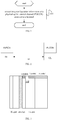
Fig. 1 is a first schematic flowchart of a resource configuration method according to an embodiment of the present disclosure; -
Fig. 2 is a schematic diagram showing positional relationship of a time interval; -
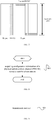
Fig. 3 is a schematic diagram showing a format division of a PUCCH; -
Fig. 4 is a schematic diagram showing CP-OFDM frequency hopping of 1 symbol within one bandwidth part; -
Fig. 5 is a schematic diagram showing frequency hopping of 2 symbols within one bandwidth part; -
Fig. 6 is a schematic diagram showing frequency hopping of 2 symbols between bandwidth parts; -
Fig. 7 is a schematic diagram showing frequency hopping of 7 symbols between bandwidth parts; -
Fig. 8 is a second schematic flowchart of a resource configuration method according to an embodiment of the present disclosure; -
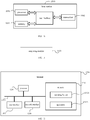
Fig. 9 is a block diagram of a base station according to an embodiment of the present disclosure ; -
Fig. 10 is a block diagram showing structure of a base station according to an embodiment of the present disclosure; -
Fig. 11 is a block diagram of a terminal according to an embodiment of the present disclosure ; and -
Fig. 12 is a block diagram showing structure of a terminal according to an embodiment of the present disclosure. - In order to make the objects, the technical solutions and the advantages of the present disclosure more apparent, the present disclosure will be described in details hereinafter in conjunction with the drawings and embodiments.
- In view of the problem that the PUCCH determination mode in the related art cannot guarantee the reliability of 5G communication, the present disclosure provides a resource configuration method, a base station, a terminal and a computer readable storage medium.
- As shown in
Fig. 1 , one embodiment of the present disclosure provides a resource configuration method, which is applied to a base station, and includes:
Step 101: transmitting configuration information of a physical uplink control channel (PUCCH) resource to a terminal. - The configuration information includes at least one of a time interval from downlink data to feeding back PUCCH resource, waveform information employed for transmitting the PUCCH resource, acknowledgement/non-acknowledgement resource indication information, format information employed for feeding back the PUCCH resource, and frequency hopping identification information of the PUCCH resource.
- It should be noted that, the base station usually transmits the configuration information to a terminal through downlink control information (DCI). When receiving by the terminal, the terminal first receives the DCI, and then extracts the configuration information of the PUCCH resource in the DCI.
- Specifically, when the configuration information includes the time interval from the downlink data to feeding back PUCCH resource, the time interval is one of a plurality of preset time intervals. The plurality of preset time intervals are set at equal intervals or unequal intervals.
- For example, as shown in
Fig. 2 , the time interval (k1) is a duration between after transmission of physical downlink shared channel (PDSCH) and before transmission of the PUCCH. - The time interval may be expressed by a specific time or by a quantity of slots. When setting the plurality of preset time intervals, the plurality of preset time intervals may be set at equal intervals, for example, (1, 2, 3, 4) slots. The plurality of preset time intervals may also be set at unequal intervals, for example, (1, 2, 3, 6) slots. Specifically, the preset time interval is configured by a high layer.
- It should be noted that two types of waveforms may be employed for transmission of the uplink PUCCH. One is DFT-spread-orthogonal frequency division multiplexing (DFT-S-OFDM)-based waveform, and the other is cyclic prefix orthogonal frequency division multiplexing (CP-OFDM)-based waveform. Then, a 1-bit waveform indication can be introduced to indicate which waveform is employed by the PUCCH channel, and two states of the bit represent two waveforms, respectively.
- Specifically, when the configuration information includes the acknowledgement/non-acknowledgement resource indication information, the acknowledgement/non-acknowledgement resource indication information includes: a resource set comprised of at least one resource; or, the acknowledgement/non-acknowledgement resource indication information includes: a resource and at least one offset.
- For PUCCH channel, it is usually shared by multiple terminals. If each terminal is allocated with a fixed PUCCH resource, when the terminal has no service, the resource may be idle and this reduces resource utilization efficiency. When the acknowledgment/non-acknowledgement (ACK/NACK) resource indication information includes a resource set comprised of at least one resource, a resource available to the terminal for transmitting PUCCH is indicated by using the DCI to indicate one resource in the configured resource set. When the acknowledgment/non-acknowledgement resource indication information includes a resource and at least one offset, a specific resource available to the terminal can be obtained through calculation based on the resource and the offset.
- Specifically, when the configuration information includes the format information employed for feeding back the PUCCH resource, if there are definite PUCCH formats and quantity in a slot, then the format information includes PUCCH identification information; if an uplink of a slot or an uplink slot includes dynamically variable PUCCH formats, then the format information includes a starting symbol position of the PUCCH and a length of the PUCCH.
- The PUCCH format may be implemented in the following two ways:
- 1. If there are definite PUCCH formats and quantity in a slot, then, a sequence number carrying PUCCH format in the DCI can indicate which PUCCH the terminal can use. As shown in
Fig. 3 , in an uplink (UL) part of a slot, there are four PUCCHs including two 1-symbol PUCCHs, one 2-symbol PUCCH and one 4-symbol PUCCH. The DCI can indicate which PUCCH format to use with 2 bits. - 2. If an uplink of a slot or an uplink slot includes dynamically variable PUCCH formats, then it is necessary to indicate format and location of which PUCCH the terminal specifically uses; a starting symbol of the PUCCH and a length of the PUCCH may be notified in the DCI.
- It should be noted that the NR supports short PUCCH of 1 or 2 symbols, and the NR also supports long PUCCH of 4-14 symbols, thus multiple PUCCH formats can be defined and each PUCCH may correspond to a varied quantity of symbols or bearing capacity. For configuration of the PUCCH transmission format of smaller bits, if there are many configuration parameters, the signaling overhead is too large and the resource utilization efficiency is not high. Therefore, for the PUCCH transmission format of smaller bits, the PUCCH resource may be implicitly determined. At this point, a time domain position (i.e., a starting OFDM symbol and a length) of a PUCCH channel in one slot may be configured by the upper layer, and an available resource may be implicitly determined (according to CCE and other information) or may be configured to the terminal. If UCI information that the terminal needs to feed back is small (i.e., smaller than or equal to a preset value), a small-capacity PUCCH is used.
- The PUCCH format indicated in the DCI may implicitly indicate uplink control information (UCI) sent by the terminal. For example, if the indicated PUCCH format has a capacity of 1-2 bits, then the terminal only transmits ACK/NACK information. If the indicated format is greater than or equal to a preset quantity of bits, ACK/NACK and Channel Quality Indicator (CQI) information are transmitted simultaneously.
- Specifically, when the configuration information includes the frequency hopping identification information of the PUCCH resource, the frequency hopping identification information includes: frequency hopping indication information and/or a long-PUCCH resource frequency hopping division indication.
- The frequency hopping indication information includes: an intra-bandwidth part (BP) frequency hopping indication or an inter-BP frequency hopping indication.
- It should be noted that, in order to obtain the frequency diversity gain, the frequency hopping configuration may be activated for some PUCCH formats. Considering the gain and design complexity, the frequency hopping part may be divided into two parts, that is, PUCCH symbols may be divided into two parts, i.e., transmission in the bandwidth part (BP) or transmission outside the bandwidth part. For example,
Fig. 4 shows frequency hopping of a 1-symbol PUCCH in CP-OFDM format. For a 2-symbol PUCCH and long-PUCCH,Fig. 5 shows frequency hopping of 2 symbols within the bandwidth part.Fig. 6 shows frequency hopping of 2 symbols between the bandwidth parts. For a PUCCH with a length of odd symbols, there may be two frequency hopping patterns. For example, for a 7-symbol PUCCH as shown inFig. 7 , when performing frequency hopped transmission, three or four symbols may be divided into a first part, as shown inFig. 7 . It should be noted that the frequency hopping identification information may be indicated by a high-level signaling or DCI signaling. - In the above figures, DL part represents a downlink part, UL part represents an uplink part, and GP represent a slot.
- According to the solution of determining the PUCCH resource configuration in the embodiment of the present disclosure, when the base station sends the DCI of the downlink data to the terminal, the DCI carries the configuration information for indicating the PUCCH resource. This can flexibly allocate PUCCH formats and resources to the terminal according to the usage requirement, thereby effectively ensuring the reliability of 5G communication.
- As shown in
Fig. 8 , one embodiment of the present disclosure provides a resource configuration method, which is applied to a terminal, including the following steps. - Step 801: acquiring configuration information of a physical uplink control channel (PUCCH) resource sent by a base station.
- The configuration information includes at least one of a time interval from downlink data to feeding back PUCCH resource, waveform information employed for transmitting the PUCCH resource, acknowledgement/non-acknowledgement resource indication information, format information employed for feeding back the PUCCH resource, and frequency hopping identification information of the PUCCH resource.
- Specifically, implementation of the
step 801 includes: - receiving downlink control information (DCI) carrying the configuration information of the PUCCH resource;
- acquiring the configuration information of the PUCCH resource in the DCI.
- Specifically, when the configuration information includes the time interval from the downlink data to feeding back PUCCH resource, the time interval is one of a plurality of preset time intervals. The plurality of preset time intervals are set at equal intervals or unequal intervals.
- Specifically, when the configuration information includes the acknowledgement/non-acknowledgement resource indication information, the acknowledgement/non-acknowledgement resource indication information includes: a resource set comprised of at least one resource; or, the acknowledgement/non-acknowledgement resource indication information includes: a resource and at least one offset.
- Specifically, when the configuration information includes the format information employed for feeding back the PUCCH resource, if there are definite PUCCH formats and quantity in a slot, then the format information includes PUCCH identification information; if an uplink of a slot or an uplink slot includes dynamically variable PUCCH formats, then the format information includes a starting symbol position of the PUCCH and a length of the PUCCH.
- Specifically, when a length of the transmission format of the PUCCH resource is smaller than or equal to a preset value, the format information is implicitly notified by the base station.
- Specifically, when the configuration information includes the format information employed for feeding back the PUCCH resource, the format information is used to implicitly indicate uplink control information (UCI) sent by the terminal.
- Specifically, when the configuration information includes the frequency hopping identification information of the PUCCH resource, the frequency hopping identification information includes: frequency hopping indication information and/or a long-PUCCH resource frequency hopping division indication.
- The frequency hopping indication information includes: an intra-bandwidth part (BP) frequency hopping indication or an inter-BP frequency hopping indication.
- It should be noted that all the descriptions on the terminal in the foregoing embodiments may be applied to the resource allocation method on the terminal, and the same technical effects can be achieved.
- As shown in
Fig. 9 , one embodiment of the present disclosure provides a base station, including:
atransmission module 901 configured to transmit configuration information of a physical uplink control channel (PUCCH) resource to a terminal. - The configuration information includes at least one of a time interval from downlink data to feeding back PUCCH resource, waveform information employed for transmitting the PUCCH resource, acknowledgement/non-acknowledgement resource indication information, format information employed for feeding back the PUCCH resource, and frequency hopping identification information of the PUCCH resource.
- Specifically, the
transmission module 901 is configured to: transmit downlink control information (DCI) carrying the configuration information of the PUCCH resource to the terminal. - Specifically, when the configuration information includes the time interval from the downlink data to feeding back PUCCH resource, the time interval is one of a plurality of preset time intervals. The plurality of preset time intervals are set at equal intervals or unequal intervals.
- Specifically, when the configuration information includes the acknowledgement/non-acknowledgement resource indication information, the acknowledgement/non-acknowledgement resource indication information includes: a resource set comprised of at least one resource; or, the acknowledgement/non-acknowledgement resource indication information includes: a resource and at least one offset.
- Specifically, when the configuration information includes the format information employed for feeding back the PUCCH resource, if there are definite PUCCH formats and quantity in a slot, then the format information includes PUCCH identification information; if an uplink of a slot or an uplink slot includes dynamically variable PUCCH formats, then the format information includes a starting symbol position of the PUCCH and a length of the PUCCH.
- Specifically, when a length of the transmission format of the PUCCH resource is smaller than or equal to a preset value, the format information is implicitly notified to the terminal.
- Specifically, when the configuration information includes the format information employed for feeding back the PUCCH resource, the format information is used to implicitly indicate uplink control information (UCI) sent by the terminal.
- Specifically, when the configuration information includes the frequency hopping identification information of the PUCCH resource, the frequency hopping identification information includes: frequency hopping indication information and/or a long-PUCCH resource frequency hopping division indication.
- The frequency hopping indication information includes: an intra-bandwidth part (BP) frequency hopping indication or an inter-BP frequency hopping indication.
- It should be noted that the base station embodiment is a base station corresponding to the resource configuration method applied to the base station, and all implementation manners of the foregoing embodiments are applicable to the base station embodiment, and the same technical effects can be achieved.
- One embodiment of the present disclosure further provides a base station, including: a memory, a processor, and a computer program stored on the memory and executable on the processor. When the computer program is executed by the processor, each step of the resource configuration method applied to the base station in the above embodiment can be implemented, and the same technical effects can be achieved, which will not elaborated herein.
- One embodiment of the present disclosure further provides a computer readable storage medium. The computer readable storage medium stores a computer program thereon. When the computer program is executed by the processor, each step of the resource configuration method applied to the base station in the above embodiment can be implemented, and the same technical effects can be achieved, which will not elaborated herein. The computer readable storage medium, for example, may be a read-only memory (ROM), a random access memory (RAM), a magnetic disk, and an optical disk.
-
Fig. 10 is a block diagram of a base station according to an embodiment of the present disclosure. The base station can implement details of the resource configuration method applied to the base station in the above embodiment, and the same technical effects can be achieved. As shown inFig. 10 , thebase station 1000 includes aprocessor 1001, atransceiver 1002, amemory 1003 and a bus interface. - The
processor 1001 is configured to read a program in thememory 1003 and perform the following process:
transmitting configuration information of a physical uplink control channel (PUCCH) resource to a terminal through thetransceiver 1002. - The configuration information includes at least one of a time interval from downlink data to feeding back PUCCH resource, waveform information employed for transmitting the PUCCH resource, acknowledgement/non-acknowledgement resource indication information, format information employed for feeding back the PUCCH resource, and frequency hopping identification information of the PUCCH resource.
- In
Fig. 10 , the bus architecture may include any number of interconnected buses and bridges. Specifically, one or more processors represented by theprocessor 1001 and various circuits of memory represented by thememory 1003 are linked together. The bus architecture can also link various other circuits, such as peripherals, voltage regulators, and power management circuits, as is known in the art. Therefore, it will not be further described. The bus interface provides an interface. Thetransceiver 1002 may be multiple components, including a transmitter and a receiver, providing units for communicating with various other devices on a transmission medium. - The
processor 1001 is in charge of managing bus architecture and general processing. Thememory 1003 may store data used by theprocessor 1001 when performing operations. - Optionally, the
processor 1001 is further configured to read the program in thememory 1003 and perform the following process:
transmitting downlink control information (DCI) carrying the configuration information of the PUCCH resource to the terminal through thetransceiver 1002. - Specifically, when the configuration information includes the time interval from the downlink data to feeding back PUCCH resource, the time interval is one of a plurality of preset time intervals. The plurality of preset time intervals are set at equal intervals or unequal intervals.
- Specifically, when the configuration information includes the acknowledgement/non-acknowledgement resource indication information, the acknowledgement/non-acknowledgement resource indication information includes: a resource set comprised of at least one resource; or, the acknowledgement/non-acknowledgement resource indication information includes: a resource and at least one offset.
- Specifically, when the configuration information includes the format information employed for feeding back the PUCCH resource, if there are definite PUCCH formats and quantity in a slot, then the format information includes PUCCH identification information; if an uplink of a slot or an uplink slot includes dynamically variable PUCCH formats, then the format information includes a starting symbol position of the PUCCH and a length of the PUCCH.
- Specifically, when a length of the transmission format of the PUCCH resource is smaller than or equal to a preset value, the format information is implicitly notified to the terminal.
- Specifically, when the configuration information includes the format information employed for feeding back the PUCCH resource, the format information is used to implicitly indicate uplink control information (UCI) sent by the terminal.
- Specifically, when the configuration information includes the frequency hopping identification information of the PUCCH resource, the frequency hopping identification information includes: frequency hopping indication information and/or a long-PUCCH resource frequency hopping division indication.
- The frequency hopping indication information includes: an intra-bandwidth part (BP) frequency hopping indication or an inter-BP frequency hopping indication.
- According to the base station in the embodiment of the present disclosure, the configuration information of the PUCCH resource is transmitted to the terminal, which can flexibly allocate PUCCH formats and resources to the terminal according to the usage requirement, thereby effectively ensuring the reliability of 5G communication.
- As shown in
Fig. 11 , one embodiment of the present disclosure further provides a terminal, including:
an acquiringmodule 1101 is configured to acquire configuration information of a physical uplink control channel (PUCCH) resource sent by a base station. - The configuration information includes at least one of a time interval from downlink data to feeding back PUCCH resource, waveform information employed for transmitting the PUCCH resource, acknowledgement/non-acknowledgement resource indication information, format information employed for feeding back the PUCCH resource, and frequency hopping identification information of the PUCCH resource.
- Specifically, the acquiring
module 1101 includes: - a receiving unit configured to receive downlink control information (DCI) carrying the configuration information of the PUCCH resource; and
- an acquiring unit configured to acquire the configuration information of the PUCCH resource in the DCI.
- Specifically, when the configuration information includes the time interval from the downlink data to feeding back PUCCH resource, the time interval is one of a plurality of preset time intervals. The plurality of preset time intervals are set at equal intervals or unequal intervals.
- Specifically, when the configuration information includes the acknowledgement/non-acknowledgement resource indication information, the acknowledgement/non-acknowledgement resource indication information includes: a resource set comprised of at least one resource; or, the acknowledgement/non-acknowledgement resource indication information includes: a resource and at least one offset.
- Specifically, when the configuration information includes the format information employed for feeding back the PUCCH resource, if there are definite PUCCH formats and quantity in a slot, then the format information includes PUCCH identification information; if an uplink of a slot or an uplink slot includes dynamically variable PUCCH formats, then the format information includes a starting symbol position of the PUCCH and a length of the PUCCH.
- Specifically, when a length of the transmission format of the PUCCH resource is smaller than or equal to a preset value, the format information is implicitly notified by the base station.
- Specifically, when the configuration information includes the format information employed for feeding back the PUCCH resource, the format information is used to implicitly indicate uplink control information (UCI) sent by the terminal.
- Specifically, when the configuration information includes the frequency hopping identification information of the PUCCH resource, the frequency hopping identification information includes: frequency hopping indication information and/or a long-PUCCH resource frequency hopping division indication.
- The frequency hopping indication information includes: an intra-bandwidth part (BP) frequency hopping indication or an inter-BP frequency hopping indication.
- It should be noted that the terminal embodiment is a terminal corresponding to the resource configuration method applied to the terminal, and all implementation manners of the foregoing embodiments are applicable to the terminal embodiment, and the same technical effects can be achieved.
- One embodiment of the present disclosure further provides a terminal, including: a memory, a processor, and a computer program stored on the memory and executable on the processor. When the computer program is executed by the processor, each steps of the resource configuration method applied to the terminal in the above embodiment can be implemented, and the same technical effects can be achieved, which will not elaborated herein.
- One embodiment of the present disclosure further provides a computer readable storage medium. The computer readable storage medium stores a computer program thereon. When the computer program is executed by the processor, each step of the resource configuration method applied to the terminal in the above embodiment can be implemented, and the same technical effects can be achieved, which will not elaborated herein. The computer readable storage medium, for example, may be a read-only memory (ROM), a random access memory (RAM), a magnetic disk, and an optical disk.
-
Fig. 12 is a block diagram of a terminal according to an embodiment of the present disclosure. The application entity of the resource configuration method applied to the terminal of the present disclosure will be described hereinafter in conjunction with the figure. - The terminal 1200 shown in
Fig. 12 includes at least oneprocessor 1201, amemory 1202, at least onenetwork interface 1204 and auser interface 1203. Various components in the terminal 1200 are coupled together by abus system 1205. It should be understood that, thebus system 1205 is configured to implement connection communication among these components. In addition to data bus, thebus system 1205 further includes power bus, control bus and status signal bus. However, for clarity of description, various buses are labeled as thebus system 1205 inFig. 12 . - The
user interface 1203 may include a display device, a keyboard, or a clicking device (e.g., a mouse, a trackball, a touchpad, or a touch screen, etc.). - It should be understood that, in the embodiment of the present disclosure, the
memory 1202 may be a transitory memory, or a non-transitory memory, or may include both of the transitory memory and the non-transitory memory. The non-transitory memory may be a Read-Only Memory (ROM), a Programmable ROM (PROM), an Erasable PROM (EPROM), an Electrically EPROM (EEPROM), or a flash memory. The transitory memory may be a Random Access Memory (RAM), which is used as an external cache. Many forms of RAM are available by way of illustration and not limitation, e.g., a Static RAM (SRAM), a Dynamic RAM (DRAM), a Synchronous DRAM (SDRAM), a Double Data Rate SDRAM (DDRSDRAM), an Enhanced SDRAM (ESDRAM), a Synchlink DRAM (SLDRAM) and a Direct Rambus RAM (DRRAM). Thememory 1202 of the systems and methods described in the application is intended to include, without being limited to, these and any other suitable types of memory. - In some implementations, the
memory 1202 stores the following elements, executable modules, or data structures, or a subset thereof, or an extended set thereof: an Operating System (OS) 12021 and anapplication 12022. - The
OS 12021 includes various system programs, e.g., a frame layer, a core library layer, a driver layer, etc., are used to implement various basic services and to handle hardware-based tasks. Theapplication 12022 includes various applications, such as a media player (Media Player), a browser, and so on, for implementing various application services. A program implementing the method of the embodiments in the present disclosure may be included in theapplication 12022. - In one embodiment of the present disclosure, the mobile terminal 1200 further includes: a computer program stored on the
memory 1202 and executable on theprocessor 1201. Specifically, the computer program may be a computer control program in theapplication 12022. The computer program is executed by theprocessor 1201 to implement the following step of acquiring configuration information of a physical uplink control channel (PUCCH) resource sent by the base station. - The configuration information includes at least one of a time interval from downlink data to feeding back PUCCH resource, waveform information employed for transmitting the PUCCH resource, acknowledgement/non-acknowledgement resource indication information, format information employed for feeding back the PUCCH resource, and frequency hopping identification information of the PUCCH resource.
- The method provided by foregoing embodiments of the present disclosure may be applied to the
processor 1201, or may be implemented by theprocessor 1201. Theprocessor 1201 may be an integrated circuit chip with signal processing capability. During the implementation process, each step of the foregoing method may be completed by an integrated logic circuit of hardware in theprocessor 1201, or by an instruction in a form of software. The foregoingprocessor 1201 may be a general processor, a Digital Signal Processor (DSP), an Application Specific Integrated Circuit (ASIC), a Field Programmable Gate Array (FPGA), or other programmable logic devices, discrete gate or transistor logic device, discrete hardware components. Each method, step, and logic diagram provided by the embodiment of the present disclosure may be implemented, or executed. The general processor may be a microprocessor, or any conventional processor, and so on. The steps of the method provided by the embodiments of the present disclosure may be directly completed by the hardware decoding processor, or may be completed by a combination of hardware and software modules in the decoding processor. The software modules may be located in mature storage medium in the field, such as, the RAM, the flash memory, the ROM, the PROM, Electrically erasable programmable memory, and a register. The storage medium is located in thememory 1202. Theprocessor 1201 reads information from thememory 1202, and completes steps of foregoing method in combination with the hardware. - It should be understood that, these embodiments described in the application may be implemented by hardware, software, firmware, middleware, microcode, or a combination thereof. For hardware implementation, in the one or more ASICs, DSPs, DSP Device (DSPDs), Programmable Logic Devices (PLDs), FPGAs, general processors, controllers, microcontrollers, microprocessors, a processing unit may be implemented in another electronic unit or a combination thereof, which is configured to implement the functions of the application.
- For software implementation, techniques described in the application may be implemented, by executing modules (e.g., process, function, etc.) with corresponding functions in the application. Software codes may be stored in the memory, and executed by the processor. The memory may be implemented in the processor, or external to the processor.
- Optionally, the computer program is executed by the
processor 1201 to implement: receiving downlink control information (DCI) carrying the configuration information of the PUCCH resource, and acquiring the configuration information of the PUCCH resource in the DCI. - Specifically, when the configuration information includes the time interval from the downlink data to feeding back PUCCH resource, the time interval is one of a plurality of preset time intervals. The plurality of preset time intervals are set at equal intervals or unequal intervals.
- Specifically, when the configuration information includes the acknowledgement/non-acknowledgement resource indication information, the acknowledgement/non-acknowledgement resource indication information includes: a resource set comprised of at least one resource; or, the acknowledgement/non-acknowledgement resource indication information includes: a resource and at least one offset.
- Specifically, when the configuration information includes the format information employed for feeding back the PUCCH resource, if there are definite PUCCH formats and quantity in a slot, then the format information includes PUCCH identification information; if an uplink of a slot or an uplink slot includes dynamically variable PUCCH formats, then the format information includes a starting symbol position of the PUCCH and a length of the PUCCH.
- Specifically, when a length of the transmission format of the PUCCH resource is smaller than or equal to a preset value, the format information is implicitly notified by the base station.
- Specifically, when the configuration information includes the format information employed for feeding back the PUCCH resource, the format information is used to implicitly indicate uplink control information (UCI) sent by the terminal.
- Specifically, when the configuration information includes the frequency hopping identification information of the PUCCH resource, the frequency hopping identification information includes: frequency hopping indication information and/or a long-PUCCH resource frequency hopping division indication.
- The frequency hopping indication information includes: an intra-bandwidth part (BP) frequency hopping indication or an inter-BP frequency hopping indication.
- The terminal 1200 can implement various processes implemented by the terminal in the foregoing embodiment. To avoid repetition, details are not described herein again.
- The terminal of the embodiment of the present disclosure can flexibly use the PUCCH formats and resources according to usage requirements, thereby improving communication efficiency and ensuring reliability of 5G communication.
- The various embodiments in the present specification are described in a progressive manner, and each embodiment focuses on differences from other embodiments, and the same similar parts between the various embodiments can be referred to each other.
- Those skilled in the art will appreciate that embodiments of the present disclosure can be provided as a method, an apparatus, or a computer program product. Thus, embodiments of the present disclosure may take the form of an entire hardware embodiment, an entire software embodiment, or a combination of software and hardware. Moreover, the embodiments of the present disclosure may take the form of a computer program product embodied on one or more computer-usable storage media (including but not limited to a disk storage, CD-ROM, an optical storage, etc.) including computer usable program code.
- The present disclosure has been described with reference to the flow charts and/or block diagrams of the method, device (system) and computer program product according to the embodiments of the present disclosure. It should be understood that computer program instructions may be used to implement each of the work flows and /or blocks in the flow charts and/or the block diagrams, and the combination of the work flows and/or blocks in the flow charts and/or the block diagrams. These computer program instructions may be provided to a processor of a common computer, a dedicate computer, an embedded processor or any other programmable data processing devices to create a machine, so that instructions executable by the processor of the computer or the other programmable data processing devices may create a device to achieve the functions assigned in one or more work flows in the flow chart and/or one or more blocks in the block diagram.
- These computer program instructions may also be stored in a computer readable storage that may guide the computer or the other programmable data process devices to function in a certain way, so that the instructions stored in the computer readable storage may create a product including an instruction unit which achieves the functions assigned in one or more flows in the flow chart and/or one or more blocks in the block diagram.
- These computer program instructions may also be loaded in the computer or the other programmable data process devices, so that a series of operation steps are executed on the computer or the other programmable devices to create processes achieved by the computer. Therefore, the instructions executed in the computer or the other programmable devices provide the steps for achieving the function assigned in one or more flows in the flow chart and/or one or more blocks in the block diagram.
- The above are merely the preferred embodiments of the present disclosure and shall not be used to limit the scope of the present disclosure. It should be noted that, a person skilled in the art may make improvements and modifications without departing from the principle of the present disclosure, and these improvements and modifications shall also fall within the scope of the present disclosure.
- It should also be noted that in this application, relational terms such as first and second are merely used to differentiate different components rather than to represent any order, number or importance. Further, the term "including", "include" or any variants thereof is intended to cover a non-exclusive contain, so that a process, a method, an article or a terminal device, which includes a series of elements, includes not only those elements, but also includes other elements which are not explicitly listed, or elements inherent in such a process, method, article or terminal device. In absence of any further restrictions, an element defined by the phrase "including one..." does not exclude the existence of additional identical elements in a process, method, article, or terminal device that includes the element.
- The above are merely the preferred embodiments of the present disclosure. It should be noted that, a person skilled in the art may make improvements and modifications without departing from the principle of the present disclosure, and these improvements and modifications shall also fall within the scope of the present disclosure.
Claims (36)
- A resource configuration method, comprising:transmitting configuration information of a physical uplink control channel (PUCCH) resource to a terminal;wherein the configuration information comprises at least one of a time interval from downlink data to feeding back PUCCH resource, waveform information employed for transmitting the PUCCH resource, acknowledgement/non-acknowledgement resource indication information, format information employed for feeding back the PUCCH resource, and frequency hopping identification information of the PUCCH resource.
- The resource configuration method according to claim 1, wherein the step of transmitting the configuration information of the PUCCH resource to the terminal, comprises:
transmitting downlink control information (DCI) carrying the configuration information of the PUCCH resource to the terminal. - The resource configuration method according to claim 1, wherein when the configuration information comprises the time interval from the downlink data to feeding back PUCCH resource, the time interval is one of a plurality of preset time intervals; and the plurality of preset time intervals are set at equal intervals or unequal intervals.
- The resource configuration method according to claim 1, wherein when the configuration information comprises the acknowledgement/non-acknowledgement resource indication information, the acknowledgement/non-acknowledgement resource indication information comprises a resource set comprising comprised of at least one resource; or, the acknowledgement/non-acknowledgement resource indication information comprises a resource and at least one offset.
- The resource configuration method according to claim 1, wherein when the configuration information comprises the format information employed for feeding back the PUCCH resource, if there are definite PUCCH formats and quantity in a slot, then the format information comprises PUCCH identification information; if an uplink of a slot or an uplink slot comprises dynamically variable PUCCH formats, then the format information comprises a starting symbol position of the PUCCH and a length of the PUCCH.
- The resource configuration method according to claim 5, wherein when a length of a transmission format of the PUCCH resource is smaller than or equal to a preset value, the format information is implicitly notified to the terminal.
- The resource configuration method according to claim 1, wherein when the configuration information comprises the format information employed for feeding back the PUCCH resource, the format information is used to implicitly indicate uplink control information (UCI) sent by the terminal.
- The resource configuration method according to claim 1, wherein when the configuration information comprises the frequency hopping identification information of the PUCCH resource, the frequency hopping identification information comprises:
frequency hopping indication information and/or a long-PUCCH resource frequency hopping division indication;
wherein the frequency hopping indication information comprises an intra-bandwidth part (BP) frequency hopping indication or an inter-BP frequency hopping indication. - A resource configuration method, comprising:acquiring configuration information of a physical uplink control channel (PUCCH) resource sent by a base station;wherein the configuration information comprises at least one of a time interval from downlink data to feeding back PUCCH resource, waveform information employed for transmitting the PUCCH resource, acknowledgement/non-acknowledgement resource indication information, format information employed for feeding back the PUCCH resource, and frequency hopping identification information of the PUCCH resource.
- The resource configuration method according to claim 9, wherein the step of acquiring the configuration information of the PUCCH resource sent by the base station, comprises:receiving downlink control information (DCI) carrying the configuration information of the PUCCH resource; andacquiring the configuration information of the PUCCH resource in the DCI.
- The resource configuration method according to claim 9, wherein when the configuration information comprises the time interval from the downlink data to feeding back PUCCH resource, the time interval is one of a plurality of preset time intervals; and the plurality of preset time intervals are set at equal intervals or unequal intervals.
- The resource configuration method according to claim 9, wherein when the configuration information comprises the acknowledgement/non-acknowledgement resource indication information, the acknowledgement/non-acknowledgement resource indication information comprises a resource set comprised of at least one resource; or, the acknowledgement/non-acknowledgement resource indication information comprises a resource and at least one offset.
- The resource configuration method according to claim 9, wherein when the configuration information comprises the format information employed for feeding back the PUCCH resource, if there are definite PUCCH formats and quantity in a slot, then the format information comprises PUCCH identification information; if an uplink of a slot or an uplink slot comprises dynamically variable PUCCH formats, then the format information comprises a starting symbol position of the PUCCH and a length of the PUCCH.
- The resource configuration method according to claim 13, wherein when a length of a transmission format of the PUCCH resource is smaller than or equal to a preset value, the format information is implicitly notified by the base station.
- The resource configuration method according to claim 9, wherein when the configuration information comprises the format information employed for feeding back the PUCCH resource, the format information is used to implicitly indicate uplink control information (UCI) sent by the terminal.
- The resource configuration method according to claim 9, wherein when the configuration information comprises the frequency hopping identification information of the PUCCH resource, the frequency hopping identification information comprises:
frequency hopping indication information and/or a long-PUCCH resource frequency hopping division indication;
wherein the frequency hopping indication information comprises an intra-bandwidth part (BP) frequency hopping indication or an inter-BP frequency hopping indication. - Abase station, comprising:a transmission module configured to transmit configuration information of a physical uplink control channel (PUCCH) resource to a terminal;wherein the configuration information comprises at least one of a time interval from downlink data to feeding back PUCCH resource, waveform information employed for transmitting the PUCCH resource, acknowledgement/non-acknowledgement resource indication information, format information employed for feeding back the PUCCH resource, and frequency hopping identification information of the PUCCH resource.
- The base station according to claim 17, wherein the transmission module is configured to transmit downlink control information (DCI) carrying the configuration information of the PUCCH resource to the terminal.
- The base station according to claim 17, wherein when the configuration information comprises the time interval from the downlink data to feeding back PUCCH resource, the time interval is one of a plurality of preset time intervals; and the plurality of preset time intervals are set at equal intervals or unequal intervals.
- The base station according to claim 17, wherein when the configuration information comprises the acknowledgement/non-acknowledgement resource indication information, the acknowledgement/non-acknowledgement resource indication information comprises a resource set comprised of at least one resource; or, the acknowledgement/non-acknowledgement resource indication information comprises a resource and at least one offset.
- The base station according to claim 17, wherein when the configuration information comprises the format information employed for feeding back the PUCCH resource, if there are definite PUCCH formats and quantity in a slot, then the format information comprises PUCCH identification information; if an uplink of a slot or an uplink slot comprises dynamically variable PUCCH formats, then the format information comprises a starting symbol position of the PUCCH and a length of the PUCCH.
- The base station according to claim 21, wherein when a length of a transmission format of the PUCCH resource is smaller than or equal to a preset value, the format information is implicitly notified to the terminal.
- The base station according to claim 17, wherein when the configuration information comprises the format information employed for feeding back the PUCCH resource, the format information is used to implicitly indicate uplink control information (UCI) sent by the terminal.
- The base station according to claim 17, wherein when the configuration information comprises the frequency hopping identification information of the PUCCH resource, the frequency hopping identification information comprises: frequency hopping indication information and/or a long-PUCCH resource frequency hopping division indication;
wherein the frequency hopping indication information comprises an intra-bandwidth part (BP) frequency hopping indication or an inter-BP frequency hopping indication. - A base station, comprising: a memory, a processor, and a computer program stored on the memory and executable on the processor; wherein the computer program is executed by the processor to implement steps of the resource configuration method according to any one of claims 1 to 8.
- A computer readable storage medium, comprising a computer program stored thereon; wherein the computer program is executed by a processor to implement steps of the resource configuration method according to any one of claims 1 to 8.
- A terminal, comprising:an acquiring module configured to acquire configuration information of a physical uplink control channel (PUCCH) resource sent by a base station;wherein the configuration information comprises at least one of a time interval from downlink data to feeding back PUCCH resource, waveform information employed for transmitting the PUCCH resource, acknowledgement/non-acknowledgement resource indication information, format information employed for feeding back the PUCCH resource, and frequency hopping identification information of the PUCCH resource.
- The terminal according to claim 27, wherein the acquiring module comprises:a receiving unit configured to receive downlink control information (DCI) carrying the configuration information of the PUCCH resource; andan acquiring unit configured to acquire the configuration information of the PUCCH resource in the DCI.
- The terminal according to claim 27, wherein when the configuration information comprises the time interval from the downlink data to feeding back PUCCH resource, the time interval is one of a plurality of preset time intervals; and the plurality of preset time intervals are set at equal intervals or unequal intervals.
- The terminal according to claim 27, wherein when the configuration information comprises the acknowledgement/non-acknowledgement resource indication information, the acknowledgement/non-acknowledgement resource indication information comprises a resource set comprised of at least one resource; or, the acknowledgement/non-acknowledgement resource indication information comprises a resource and at least one offset.
- The terminal according to claim 27, wherein when the configuration information comprises the format information employed for feeding back the PUCCH resource, if there are definite PUCCH formats and quantity in a slot, then the format information comprises PUCCH identification information; if an uplink of a slot or an uplink slot comprises dynamically variable PUCCH formats, then the format information comprises a starting symbol position of the PUCCH and a length of the PUCCH.
- The terminal according to claim 31, wherein when a length of a transmission format of the PUCCH resource is smaller than or equal to a preset value, the format information is implicitly notified by the base station.
- The terminal according to claim 27, wherein when the configuration information comprises the format information employed for feeding back the PUCCH resource, the format information is used to implicitly indicate uplink control information (UCI) sent by the terminal.
- The terminal according to claim 27, wherein when the configuration information comprises the frequency hopping identification information of the PUCCH resource, the frequency hopping identification information comprises: frequency hopping indication information and/or a long-PUCCH resource frequency hopping division indication;
wherein the frequency hopping indication information comprises an intra-bandwidth part (BP) frequency hopping indication or an inter-BP frequency hopping indication. - A terminal, comprising: a memory, a processor, and a computer program stored on the memory and executable on the processor; wherein the computer program is executed by the processor to implement steps of the resource configuration method according to any one of claims 9 to 16.
- A computer readable storage medium, comprising a computer program stored thereon; wherein the computer program is executed by a processor to implement steps of the resource configuration method according to any one of claims 9 to 16.
Applications Claiming Priority (2)
| Application Number | Priority Date | Filing Date | Title |
|---|---|---|---|
| CN201710454486.XA CN109152010B (en) | 2017-06-14 | 2017-06-14 | Resource allocation method, base station, terminal and computer readable storage medium |
| PCT/CN2018/090793 WO2018228363A1 (en) | 2017-06-14 | 2018-06-12 | Resource configuration method, base station, terminal, and computer readable storage medium |
Publications (3)
| Publication Number | Publication Date |
|---|---|
| EP3641450A1 true EP3641450A1 (en) | 2020-04-22 |
| EP3641450A4 EP3641450A4 (en) | 2020-05-20 |
| EP3641450B1 EP3641450B1 (en) | 2025-03-19 |
Family
ID=64660564
Family Applications (1)
| Application Number | Title | Priority Date | Filing Date |
|---|---|---|---|
| EP18817873.5A Active EP3641450B1 (en) | 2017-06-14 | 2018-06-12 | Resource configuration method, base station and terminal |
Country Status (5)
| Country | Link |
|---|---|
| US (1) | US20200213997A1 (en) |
| EP (1) | EP3641450B1 (en) |
| CN (1) | CN109152010B (en) |
| ES (1) | ES3018582T3 (en) |
| WO (1) | WO2018228363A1 (en) |
Families Citing this family (11)
| Publication number | Priority date | Publication date | Assignee | Title |
|---|---|---|---|---|
| WO2018227578A1 (en) * | 2017-06-16 | 2018-12-20 | Zte Corporation | System and method for allocating resource blocks |
| KR102439542B1 (en) * | 2017-06-23 | 2022-09-02 | 삼성전자 주식회사 | Method and apparatus for transmitting and receiving an uplink control channel in a wireless communication system |
| US12167368B2 (en) * | 2018-08-10 | 2024-12-10 | Telefonaktiebolaget Lm Ericsson (Publ) | Multi-source quasi collocation of reference signals |
| CN111435876B (en) * | 2019-01-11 | 2023-04-07 | 中国移动通信有限公司研究院 | Resource determination method, device, related equipment and storage medium |
| CN111565457B (en) * | 2019-02-14 | 2023-11-03 | 华为技术有限公司 | Methods and devices for transmitting data |
| CN111770572B (en) * | 2019-03-30 | 2023-08-04 | 华为技术有限公司 | Method for determining feedback information and communication device |
| US12155587B2 (en) * | 2019-04-29 | 2024-11-26 | Beijing Xiaomi Mobile Software Co., Ltd. | Uplink data transmission method and apparatus, and storage medium |
| CN112039642B (en) * | 2019-06-04 | 2022-06-07 | 大唐移动通信设备有限公司 | PUCCH resource allocation method and base station |
| CN111835489B (en) | 2019-08-16 | 2022-05-10 | 维沃移动通信有限公司 | A transmission method, configuration method, terminal and network side device |
| US12556323B2 (en) * | 2020-02-03 | 2026-02-17 | Qualcomm Incorporated | Bandwidth part (BWP) frequency hopping |
| CN113395714B (en) * | 2020-03-12 | 2023-10-31 | 中国电信股份有限公司 | Frequency hopping methods and systems, terminals and base stations |
Family Cites Families (7)
| Publication number | Priority date | Publication date | Assignee | Title |
|---|---|---|---|---|
| KR101165643B1 (en) * | 2010-12-20 | 2012-07-17 | 엘지전자 주식회사 | Method and user equipment for transmitting ack/nack information, and method and base station for receiving ack/nack information |
| CN103249147B (en) * | 2012-02-01 | 2018-07-24 | 中兴通讯股份有限公司 | The resource allocation method and system of Physical Uplink Control Channel |
| WO2016111582A1 (en) * | 2015-01-09 | 2016-07-14 | 삼성전자 주식회사 | Method and apparatus for transmitting control channel for terminal in wireless communication system |
| CN106162888B (en) * | 2015-04-10 | 2022-11-08 | 夏普株式会社 | PUCCH resource configuration method in carrier aggregation and equipment thereof |
| CN106559198B (en) * | 2015-09-25 | 2019-09-17 | 电信科学技术研究院 | A kind of uplink control information transmission method and device based on PUCCH |
| CN106357372A (en) * | 2016-11-15 | 2017-01-25 | 珠海市魅族科技有限公司 | Method and device for avoiding feedback message resource conflict as well as base station and terminal |
| US11147068B2 (en) * | 2017-04-28 | 2021-10-12 | Guangdong Oppo Mobile Telecommunications Corp., Ltd. | Channel location indication method and related product |
-
2017
- 2017-06-14 CN CN201710454486.XA patent/CN109152010B/en active Active
-
2018
- 2018-06-12 ES ES18817873T patent/ES3018582T3/en active Active
- 2018-06-12 US US16/622,522 patent/US20200213997A1/en not_active Abandoned
- 2018-06-12 EP EP18817873.5A patent/EP3641450B1/en active Active
- 2018-06-12 WO PCT/CN2018/090793 patent/WO2018228363A1/en not_active Ceased
Also Published As
| Publication number | Publication date |
|---|---|
| CN109152010A (en) | 2019-01-04 |
| EP3641450A4 (en) | 2020-05-20 |
| WO2018228363A1 (en) | 2018-12-20 |
| CN109152010B (en) | 2021-01-08 |
| ES3018582T3 (en) | 2025-05-16 |
| US20200213997A1 (en) | 2020-07-02 |
| EP3641450B1 (en) | 2025-03-19 |
Similar Documents
| Publication | Publication Date | Title |
|---|---|---|
| EP3641450B1 (en) | Resource configuration method, base station and terminal | |
| US12294549B2 (en) | Method and apparatus for transmitting HARQ-ACK information | |
| US11871411B2 (en) | Method and apparatus for downlink data transmissions | |
| US12581486B2 (en) | Method and apparatus for short PDCCH operation | |
| EP3627753B1 (en) | Method for transmitting uplink control information, terminal device, and network device | |
| CN110505697B (en) | Transmission method, terminal and base station for hybrid automatic repeat request | |
| CN109905211B (en) | Transmission and receiving method, terminal and base station | |
| EP3905573A1 (en) | Communication method, communication apparatus, and storage medium | |
| CN110785973B (en) | Method for channel transmission, terminal equipment and network equipment | |
| IL273027B1 (en) | A method for transmitting information and a related product | |
| CN116746269A (en) | Method for enhanced HARQ-ACK feedback in wireless communications | |
| WO2019105341A1 (en) | Data sending method and device, and data receiving method and device | |
| CN111034145A (en) | Method and apparatus for monitoring control candidates based on assignment of data packets with different reliability | |
| US11497024B2 (en) | Transmission method and device | |
| WO2021035611A1 (en) | Resource request method and communication device | |
| EP3595220A1 (en) | Method and apparatus for sending and receiving feedback information | |
| US20200163105A1 (en) | Communication method and device | |
| WO2019062153A1 (en) | Indication method and apparatus | |
| EP4311148A1 (en) | Harq information transmission method and device | |
| CN109586875A (en) | A kind of method and device for sending, receiving uplink control channel |
Legal Events
| Date | Code | Title | Description |
|---|---|---|---|
| STAA | Information on the status of an ep patent application or granted ep patent |
Free format text: STATUS: THE INTERNATIONAL PUBLICATION HAS BEEN MADE |
|
| PUAI | Public reference made under article 153(3) epc to a published international application that has entered the european phase |
Free format text: ORIGINAL CODE: 0009012 |
|
| STAA | Information on the status of an ep patent application or granted ep patent |
Free format text: STATUS: REQUEST FOR EXAMINATION WAS MADE |
|
| 17P | Request for examination filed |
Effective date: 20200102 |
|
| AK | Designated contracting states |
Kind code of ref document: A1 Designated state(s): AL AT BE BG CH CY CZ DE DK EE ES FI FR GB GR HR HU IE IS IT LI LT LU LV MC MK MT NL NO PL PT RO RS SE SI SK SM TR |
|
| AX | Request for extension of the european patent |
Extension state: BA ME |
|
| A4 | Supplementary search report drawn up and despatched |
Effective date: 20200420 |
|
| RIC1 | Information provided on ipc code assigned before grant |
Ipc: H04L 1/16 20060101ALI20200414BHEP Ipc: H04W 72/04 20090101AFI20200414BHEP |
|
| DAV | Request for validation of the european patent (deleted) | ||
| DAX | Request for extension of the european patent (deleted) | ||
| STAA | Information on the status of an ep patent application or granted ep patent |
Free format text: STATUS: EXAMINATION IS IN PROGRESS |
|
| 17Q | First examination report despatched |
Effective date: 20210317 |
|
| REG | Reference to a national code |
Ref country code: DE Ref legal event code: R079 Free format text: PREVIOUS MAIN CLASS: H04W0072040000 Ipc: H04W0072230000 Ref country code: DE Ref legal event code: R079 Ref document number: 602018080312 Country of ref document: DE Free format text: PREVIOUS MAIN CLASS: H04W0072040000 Ipc: H04W0072230000 |
|
| GRAP | Despatch of communication of intention to grant a patent |
Free format text: ORIGINAL CODE: EPIDOSNIGR1 |
|
| STAA | Information on the status of an ep patent application or granted ep patent |
Free format text: STATUS: GRANT OF PATENT IS INTENDED |
|
| RIC1 | Information provided on ipc code assigned before grant |
Ipc: H04W 72/23 20230101AFI20241108BHEP |
|
| INTG | Intention to grant announced |
Effective date: 20241126 |
|
| GRAS | Grant fee paid |
Free format text: ORIGINAL CODE: EPIDOSNIGR3 |
|
| GRAA | (expected) grant |
Free format text: ORIGINAL CODE: 0009210 |
|
| STAA | Information on the status of an ep patent application or granted ep patent |
Free format text: STATUS: THE PATENT HAS BEEN GRANTED |
|
| AK | Designated contracting states |
Kind code of ref document: B1 Designated state(s): AL AT BE BG CH CY CZ DE DK EE ES FI FR GB GR HR HU IE IS IT LI LT LU LV MC MK MT NL NO PL PT RO RS SE SI SK SM TR |
|
| REG | Reference to a national code |
Ref country code: GB Ref legal event code: FG4D |
|
| REG | Reference to a national code |
Ref country code: CH Ref legal event code: EP |
|
| REG | Reference to a national code |
Ref country code: DE Ref legal event code: R096 Ref document number: 602018080312 Country of ref document: DE |
|
| REG | Reference to a national code |
Ref country code: IE Ref legal event code: FG4D |
|
| REG | Reference to a national code |
Ref country code: NL Ref legal event code: FP |
|
| REG | Reference to a national code |
Ref country code: ES Ref legal event code: FG2A Ref document number: 3018582 Country of ref document: ES Kind code of ref document: T3 Effective date: 20250516 |
|
| PGFP | Annual fee paid to national office [announced via postgrant information from national office to epo] |
Ref country code: NL Payment date: 20250516 Year of fee payment: 8 |
|
| PG25 | Lapsed in a contracting state [announced via postgrant information from national office to epo] |
Ref country code: RS Free format text: LAPSE BECAUSE OF FAILURE TO SUBMIT A TRANSLATION OF THE DESCRIPTION OR TO PAY THE FEE WITHIN THE PRESCRIBED TIME-LIMIT Effective date: 20250619 |
|
| PG25 | Lapsed in a contracting state [announced via postgrant information from national office to epo] |
Ref country code: FI Free format text: LAPSE BECAUSE OF FAILURE TO SUBMIT A TRANSLATION OF THE DESCRIPTION OR TO PAY THE FEE WITHIN THE PRESCRIBED TIME-LIMIT Effective date: 20250319 |
|
| PGFP | Annual fee paid to national office [announced via postgrant information from national office to epo] |
Ref country code: DE Payment date: 20250429 Year of fee payment: 8 |
|
| PGFP | Annual fee paid to national office [announced via postgrant information from national office to epo] |
Ref country code: GB Payment date: 20250501 Year of fee payment: 8 |
|
| REG | Reference to a national code |
Ref country code: LT Ref legal event code: MG9D |
|
| PG25 | Lapsed in a contracting state [announced via postgrant information from national office to epo] |
Ref country code: NO Free format text: LAPSE BECAUSE OF FAILURE TO SUBMIT A TRANSLATION OF THE DESCRIPTION OR TO PAY THE FEE WITHIN THE PRESCRIBED TIME-LIMIT Effective date: 20250619 |
|
| PGFP | Annual fee paid to national office [announced via postgrant information from national office to epo] |
Ref country code: IT Payment date: 20250522 Year of fee payment: 8 |
|
| PG25 | Lapsed in a contracting state [announced via postgrant information from national office to epo] |
Ref country code: HR Free format text: LAPSE BECAUSE OF FAILURE TO SUBMIT A TRANSLATION OF THE DESCRIPTION OR TO PAY THE FEE WITHIN THE PRESCRIBED TIME-LIMIT Effective date: 20250319 |
|
| PG25 | Lapsed in a contracting state [announced via postgrant information from national office to epo] |
Ref country code: LV Free format text: LAPSE BECAUSE OF FAILURE TO SUBMIT A TRANSLATION OF THE DESCRIPTION OR TO PAY THE FEE WITHIN THE PRESCRIBED TIME-LIMIT Effective date: 20250319 |
|
| PGFP | Annual fee paid to national office [announced via postgrant information from national office to epo] |
Ref country code: FR Payment date: 20250508 Year of fee payment: 8 |
|
| PG25 | Lapsed in a contracting state [announced via postgrant information from national office to epo] |
Ref country code: BG Free format text: LAPSE BECAUSE OF FAILURE TO SUBMIT A TRANSLATION OF THE DESCRIPTION OR TO PAY THE FEE WITHIN THE PRESCRIBED TIME-LIMIT Effective date: 20250319 Ref country code: GR Free format text: LAPSE BECAUSE OF FAILURE TO SUBMIT A TRANSLATION OF THE DESCRIPTION OR TO PAY THE FEE WITHIN THE PRESCRIBED TIME-LIMIT Effective date: 20250620 |
|
| REG | Reference to a national code |
Ref country code: AT Ref legal event code: MK05 Ref document number: 1778037 Country of ref document: AT Kind code of ref document: T Effective date: 20250319 |
|
| PG25 | Lapsed in a contracting state [announced via postgrant information from national office to epo] |
Ref country code: SE Free format text: LAPSE BECAUSE OF FAILURE TO SUBMIT A TRANSLATION OF THE DESCRIPTION OR TO PAY THE FEE WITHIN THE PRESCRIBED TIME-LIMIT Effective date: 20250319 |
|
| PG25 | Lapsed in a contracting state [announced via postgrant information from national office to epo] |
Ref country code: SM Free format text: LAPSE BECAUSE OF FAILURE TO SUBMIT A TRANSLATION OF THE DESCRIPTION OR TO PAY THE FEE WITHIN THE PRESCRIBED TIME-LIMIT Effective date: 20250319 |
|
| PG25 | Lapsed in a contracting state [announced via postgrant information from national office to epo] |
Ref country code: PT Free format text: LAPSE BECAUSE OF FAILURE TO SUBMIT A TRANSLATION OF THE DESCRIPTION OR TO PAY THE FEE WITHIN THE PRESCRIBED TIME-LIMIT Effective date: 20250721 |
|
| PGFP | Annual fee paid to national office [announced via postgrant information from national office to epo] |
Ref country code: ES Payment date: 20250703 Year of fee payment: 8 |
|
| PG25 | Lapsed in a contracting state [announced via postgrant information from national office to epo] |
Ref country code: PL Free format text: LAPSE BECAUSE OF FAILURE TO SUBMIT A TRANSLATION OF THE DESCRIPTION OR TO PAY THE FEE WITHIN THE PRESCRIBED TIME-LIMIT Effective date: 20250319 |
|
| PG25 | Lapsed in a contracting state [announced via postgrant information from national office to epo] |
Ref country code: AT Free format text: LAPSE BECAUSE OF FAILURE TO SUBMIT A TRANSLATION OF THE DESCRIPTION OR TO PAY THE FEE WITHIN THE PRESCRIBED TIME-LIMIT Effective date: 20250319 |
|
| PG25 | Lapsed in a contracting state [announced via postgrant information from national office to epo] |
Ref country code: EE Free format text: LAPSE BECAUSE OF FAILURE TO SUBMIT A TRANSLATION OF THE DESCRIPTION OR TO PAY THE FEE WITHIN THE PRESCRIBED TIME-LIMIT Effective date: 20250319 Ref country code: CZ Free format text: LAPSE BECAUSE OF FAILURE TO SUBMIT A TRANSLATION OF THE DESCRIPTION OR TO PAY THE FEE WITHIN THE PRESCRIBED TIME-LIMIT Effective date: 20250319 |
|
| PG25 | Lapsed in a contracting state [announced via postgrant information from national office to epo] |
Ref country code: RO Free format text: LAPSE BECAUSE OF FAILURE TO SUBMIT A TRANSLATION OF THE DESCRIPTION OR TO PAY THE FEE WITHIN THE PRESCRIBED TIME-LIMIT Effective date: 20250319 |
|
| PG25 | Lapsed in a contracting state [announced via postgrant information from national office to epo] |
Ref country code: SK Free format text: LAPSE BECAUSE OF FAILURE TO SUBMIT A TRANSLATION OF THE DESCRIPTION OR TO PAY THE FEE WITHIN THE PRESCRIBED TIME-LIMIT Effective date: 20250319 |
|
| PG25 | Lapsed in a contracting state [announced via postgrant information from national office to epo] |
Ref country code: IS Free format text: LAPSE BECAUSE OF FAILURE TO SUBMIT A TRANSLATION OF THE DESCRIPTION OR TO PAY THE FEE WITHIN THE PRESCRIBED TIME-LIMIT Effective date: 20250719 |
|
| REG | Reference to a national code |
Ref country code: DE Ref legal event code: R097 Ref document number: 602018080312 Country of ref document: DE |
|
| PG25 | Lapsed in a contracting state [announced via postgrant information from national office to epo] |
Ref country code: DK Free format text: LAPSE BECAUSE OF FAILURE TO SUBMIT A TRANSLATION OF THE DESCRIPTION OR TO PAY THE FEE WITHIN THE PRESCRIBED TIME-LIMIT Effective date: 20250319 |
|
| PLBE | No opposition filed within time limit |
Free format text: ORIGINAL CODE: 0009261 |
|
| STAA | Information on the status of an ep patent application or granted ep patent |
Free format text: STATUS: NO OPPOSITION FILED WITHIN TIME LIMIT |
|
| REG | Reference to a national code |
Ref country code: CH Ref legal event code: H13 Free format text: ST27 STATUS EVENT CODE: U-0-0-H10-H13 (AS PROVIDED BY THE NATIONAL OFFICE) Effective date: 20260127 |
|
| REG | Reference to a national code |
Ref country code: CH Ref legal event code: L10 Free format text: ST27 STATUS EVENT CODE: U-0-0-L10-L00 (AS PROVIDED BY THE NATIONAL OFFICE) Effective date: 20260128 |
|
| PG25 | Lapsed in a contracting state [announced via postgrant information from national office to epo] |
Ref country code: MC Free format text: LAPSE BECAUSE OF FAILURE TO SUBMIT A TRANSLATION OF THE DESCRIPTION OR TO PAY THE FEE WITHIN THE PRESCRIBED TIME-LIMIT Effective date: 20250319 |
|
| PG25 | Lapsed in a contracting state [announced via postgrant information from national office to epo] |
Ref country code: LU Free format text: LAPSE BECAUSE OF NON-PAYMENT OF DUE FEES Effective date: 20250612 |
|
| 26N | No opposition filed |
Effective date: 20251222 |
|
| REG | Reference to a national code |
Ref country code: BE Ref legal event code: MM Effective date: 20250630 |
|
| PG25 | Lapsed in a contracting state [announced via postgrant information from national office to epo] |
Ref country code: IE Free format text: LAPSE BECAUSE OF NON-PAYMENT OF DUE FEES Effective date: 20250612 |
|
| PG25 | Lapsed in a contracting state [announced via postgrant information from national office to epo] |
Ref country code: BE Free format text: LAPSE BECAUSE OF NON-PAYMENT OF DUE FEES Effective date: 20250630 |
|
| PG25 | Lapsed in a contracting state [announced via postgrant information from national office to epo] |
Ref country code: CH Free format text: LAPSE BECAUSE OF NON-PAYMENT OF DUE FEES Effective date: 20250630 |