EP3640829A1 - Systems and methods for accessing a virtual desktop - Google Patents
Systems and methods for accessing a virtual desktop Download PDFInfo
- Publication number
- EP3640829A1 EP3640829A1 EP19205887.3A EP19205887A EP3640829A1 EP 3640829 A1 EP3640829 A1 EP 3640829A1 EP 19205887 A EP19205887 A EP 19205887A EP 3640829 A1 EP3640829 A1 EP 3640829A1
- Authority
- EP
- European Patent Office
- Prior art keywords
- authentication
- user
- virtual
- access
- smartcard
- Prior art date
- Legal status (The legal status is an assumption and is not a legal conclusion. Google has not performed a legal analysis and makes no representation as to the accuracy of the status listed.)
- Granted
Links
Images


Classifications
-
- H—ELECTRICITY
- H04—ELECTRIC COMMUNICATION TECHNIQUE
- H04L—TRANSMISSION OF DIGITAL INFORMATION, e.g. TELEGRAPHIC COMMUNICATION
- H04L63/00—Network architectures or network communication protocols for network security
- H04L63/08—Network architectures or network communication protocols for network security for authentication of entities
- H04L63/0815—Network architectures or network communication protocols for network security for authentication of entities providing single-sign-on or federations
-
- G—PHYSICS
- G06—COMPUTING OR CALCULATING; COUNTING
- G06F—ELECTRIC DIGITAL DATA PROCESSING
- G06F21/00—Security arrangements for protecting computers, components thereof, programs or data against unauthorised activity
- G06F21/30—Authentication, i.e. establishing the identity or authorisation of security principals
- G06F21/31—User authentication
- G06F21/33—User authentication using certificates
- G06F21/335—User authentication using certificates for accessing specific resources, e.g. using Kerberos tickets
-
- G—PHYSICS
- G06—COMPUTING OR CALCULATING; COUNTING
- G06F—ELECTRIC DIGITAL DATA PROCESSING
- G06F21/00—Security arrangements for protecting computers, components thereof, programs or data against unauthorised activity
- G06F21/30—Authentication, i.e. establishing the identity or authorisation of security principals
- G06F21/31—User authentication
- G06F21/34—User authentication involving the use of external additional devices, e.g. dongles or smart cards
-
- G—PHYSICS
- G06—COMPUTING OR CALCULATING; COUNTING
- G06F—ELECTRIC DIGITAL DATA PROCESSING
- G06F21/00—Security arrangements for protecting computers, components thereof, programs or data against unauthorised activity
- G06F21/30—Authentication, i.e. establishing the identity or authorisation of security principals
- G06F21/31—User authentication
- G06F21/41—User authentication where a single sign-on provides access to a plurality of computers
-
- G—PHYSICS
- G06—COMPUTING OR CALCULATING; COUNTING
- G06F—ELECTRIC DIGITAL DATA PROCESSING
- G06F21/00—Security arrangements for protecting computers, components thereof, programs or data against unauthorised activity
- G06F21/30—Authentication, i.e. establishing the identity or authorisation of security principals
- G06F21/31—User authentication
- G06F21/42—User authentication using separate channels for security data
-
- G—PHYSICS
- G06—COMPUTING OR CALCULATING; COUNTING
- G06F—ELECTRIC DIGITAL DATA PROCESSING
- G06F21/00—Security arrangements for protecting computers, components thereof, programs or data against unauthorised activity
- G06F21/30—Authentication, i.e. establishing the identity or authorisation of security principals
- G06F21/44—Program or device authentication
-
- H—ELECTRICITY
- H04—ELECTRIC COMMUNICATION TECHNIQUE
- H04L—TRANSMISSION OF DIGITAL INFORMATION, e.g. TELEGRAPHIC COMMUNICATION
- H04L63/00—Network architectures or network communication protocols for network security
- H04L63/02—Network architectures or network communication protocols for network security for separating internal from external traffic, e.g. firewalls
- H04L63/0272—Virtual private networks
-
- H—ELECTRICITY
- H04—ELECTRIC COMMUNICATION TECHNIQUE
- H04L—TRANSMISSION OF DIGITAL INFORMATION, e.g. TELEGRAPHIC COMMUNICATION
- H04L63/00—Network architectures or network communication protocols for network security
- H04L63/08—Network architectures or network communication protocols for network security for authentication of entities
- H04L63/0807—Network architectures or network communication protocols for network security for authentication of entities using tickets, e.g. Kerberos
-
- H—ELECTRICITY
- H04—ELECTRIC COMMUNICATION TECHNIQUE
- H04L—TRANSMISSION OF DIGITAL INFORMATION, e.g. TELEGRAPHIC COMMUNICATION
- H04L9/00—Cryptographic mechanisms or cryptographic arrangements for secret or secure communications; Network security protocols
- H04L9/32—Cryptographic mechanisms or cryptographic arrangements for secret or secure communications; Network security protocols including means for verifying the identity or authority of a user of the system or for message authentication, e.g. authorization, entity authentication, data integrity or data verification, non-repudiation, key authentication or verification of credentials
- H04L9/3247—Cryptographic mechanisms or cryptographic arrangements for secret or secure communications; Network security protocols including means for verifying the identity or authority of a user of the system or for message authentication, e.g. authorization, entity authentication, data integrity or data verification, non-repudiation, key authentication or verification of credentials involving digital signatures
Definitions
- Virtual machines may be executed by a group, or "cluster," of host computing devices.
- Each VM provides an abstraction of physical computing resources, such as a processor and memory, of the host executing the VM.
- the guest operating system and guest software applications executing within a VM may function in a manner consistent with how they would function when executing directly on physical resources.
- a VM may provide a virtual desktop that is accessible by one or more remote users through a network.
- a virtual desktop is a virtual machine configured with a guest operating system and productivity software intended for interaction with an end user.
- productivity applications such as word processors, spreadsheets, email, etc., provide a rich user interface for interaction with a particular user - the user for whom the desktop is configured and to whom the desktop is assigned.
- each virtual desktop may require a user to supply login credentials to enable the user to access the virtual desktop, however with virtual desktops, the user may be accessing their system remotely requiring the user to supply login credentials using a client computing device.
- the user may be required to maintain different access credentials (e.g., a username and password) for each virtual desktop and may be required to enter the access credentials for each virtual desktop that the user desires to access.
- the user's password expires for one or more virtual desktops, the user may not be able to log into the virtual desktops until the password is changed.
- US 2012/011,578A1 Hinton et al describes a cross-protocol federated single sign-on for cloud enablement.
- US2012/084,570 Kuzin et al describes an example of remote resources single sign on with user credentials being supplied to a broker server, encrypted by a host server of a virtual desktop or remote desktop session, allowing a client device to reach hosts which are dynamically added to the system.
- an authentication system receives one of an authentication token and a reference to the authentication token, wherein the authentication token is indicative of whether a user successfully logged into an authentication portal using a client computing device.
- the authentication system generates a private key, a digital certificate, and a personal identification number (PIN) for the user in response to receiving either the authentication token or the reference to the authentication token.
- the private key, the digital certificate, and the PIN are stored in a virtual smartcard, and the client computing device is authorized to log into a virtual desktop using the virtual smartcard.
- FIG. 1 is a block diagram of an exemplary system 100 for accessing a network resource, such as a remote or virtual desktop.
- System 100 includes a plurality of computing devices 102, such as a client computing device 104 (hereinafter referred to as “client 104") and a host computing device 106 (hereinafter referred to as “host 106”) communicatively coupled to client 104 by a network 108.
- client 104 client computing device 104
- host 106 hereinafter referred to as “host 106”
- a user employs client 104 to access resources of host 106, as described more fully herein.
- Each computing device 102 includes a processor 110 for executing instructions.
- Computing devices 102 may be heterogeneous and diverse.
- Client 104 may be, for example, a stateless or otherwise thin client, may be a tablet or mobile device, or an application running on a traditional computer system.
- Computer-executable instructions are stored in a memory 112 for performing one or more of the operations described herein.
- Memory 112 is any device allowing information, such as executable instructions, configuration options, and/or other data, to be stored and retrieved.
- memory 112 includes one or more computer-readable storage media, such as one or more random access memory (RAM) modules, flash memory modules, hard disks, solid state disks, and/or optical disks.
- RAM random access memory
- Client 104 includes processor 110 and memory 112.
- client 104 includes a client access program 114 that is stored within memory 112 as a plurality of computer-readable instructions that are executable by processor 110.
- Client access program 114 is executed to enable the user to connect to host 106 and to access the resources of host 106.
- Client 104 may be a desktop computer, a server, a smart phone, a tablet computer, a thin client, or any other computing device that enables system 100 to function as described herein.
- Host 106 includes processor 110 and memory 112.
- host 106 includes a virtualization software layer, such as a hypervisor 116, that is installed on a hardware platform of host 106, including processor 110 and memory 112.
- the virtualization software layer may supports a plurality of virtual machine execution spaces within each of which a virtual machines (VMs) 118 may be concurrently instantiated and executed.
- VMs virtual machines
- Hypervisor 116 maps physical resources of host 106 to virtual resources of each VM 118 and may enable each VM 118 to have dedicated execution space and resources.
- VMs 118 may be configured as, or may include, virtual desktops 120 that each includes a guest operating system 122 and a plurality of guest applications 124. Users may "log in” to (i.e., be authenticated by) virtual desktop 120 and/or host 106 to access the resources of desktop 120, such as applications 124 and operating system 122.
- a communication agent 126 may be included within virtual desktop 120 to facilitate authentication and communication between client 104 and virtual desktop 120.
- FIG. 2 is a block diagram of an exemplary authentication system 200 that may be used to enable access to a virtual desktop 120 by a client 104.
- Authentication system 200 includes a plurality of computing devices 102, such as client 104, one or more hosts 106, an authentication portal server 202, a connection server 204, a certificate server 206, and a directory server 208.
- connection server 204, certificate server 206, host 106, and directory server 208 are grouped within a domain 210.
- directory server 204 may be combined into a single server application or multiple server applications on a single physical system, or may reside on disparate virtual machines executing at arbitrary locations, on the same physical system or multiple different physical systems, or any combination of the above, within or accessible from, domain 210.
- Computing devices 102 within domain 210 may require a user to undergo separate authentication processes to enable access to computing devices 102.
- Authentication system 200 facilitates enabling a single sign-on (SSO) of client 104 (i.e., the user of client 104) to computing devices 102 of domain 210 such that the user of client 104 may only be required to enter authentication credentials, such as a username and password, once to enable authentication and access computing devices 102 of domain 210.
- SSO single sign-on
- Authentication portal server 202 is communicatively coupled to client 104 and to connection server 204.
- Authentication portal server 202 includes an authentication portal ("AP") 212 that is embodied as a plurality of computer-executable instructions stored within memory 112 and that is executed by processor 110 to perform the functions described herein.
- Authentication portal 212 operates as a trusted authority and facilitates establishing a level of trust within domain 210 for the user when the user is authenticated by authentication portal 212.
- authentication portal 212 includes a VMware Horizon Program Manager program suite that is commercially available from VMware, Inc., of Palo Alto, California.
- authentication portal 212 may be any other portal or gateway that enables authentication system 200 to function as described herein.
- Connection server 204 is communicatively coupled to client 104, authentication portal server 202, certificate server 206, host 106, and directory server 208. Connection server 204 facilitates the authentication of the user within domain 210, and specifically the authentication of the user with one or more virtual desktops 120, based on the trust level of the user that is established by authentication portal 212.
- Certificate server 206 is communicatively coupled to connection server 204 and to directory server 208. Certificate server 206 generates and validates cryptographic digital certificates for use in authenticating the user to computing devices 102 within domain 210.
- Directory server 208 is communicatively coupled to certificate server 206, connection server 204, and host 106.
- Directory server 208 includes a directory service ("DS") 214 that is embodied as a plurality of computer-executable instructions stored within memory 112 and that is executed by processor 110 to perform the functions described herein.
- directory service 214 configures and manages user accounts and permissions within domain 210.
- a user who desires to access a virtual desktop 120 first logs into authentication portal 212 by transmitting (via client 104) access credentials, such as a username and a password, to authentication portal 212.
- Authentication portal 212 authenticates the user by determining whether the access credentials are valid to enable access to portal 212. If the access credentials are valid, authentication portal 212 generates an authentication token indicative of the successful authentication.
- the authentication token is a security assertion markup language (SAML) assertion that the user was authenticated by authentication portal 212.
- SAML security assertion markup language
- connection server 204 verifies the user's access permissions with directory service 214, and uses the authentication token to determine whether the user is trusted. If the user is trusted, connection server 204 generates a private key, a digital certificate, and a personal identification number (PIN) for the user.
- the private key, the digital certificate, and the PIN are "one-off' credentials that are only valid for a single connection session with the user.
- the PIN is a random number that is associated with the digital certificate, i.e., that is associated with an ability to perform cryptographic operations using the private key associated with the digital certificate.
- connection server 204 stores the private key, the digital certificate, and the PIN in a virtual smartcard 216.
- Virtual smartcard 216 is stored within host 106 and is communicatively coupled to, or stored within, the virtual desktop 120 that the user is requesting access to.
- Virtual smartcard 216 is a software-based representation of a physical smartcard or authentication device that stores credentials, such as a private key, a digital certificate, and optionally, a PIN. The credentials are used to authenticate the user associated with virtual smartcard 216 and to enable the user to access resources within domain 210 without having to enter a username and a password.
- Client 104 connects to virtual desktop 120 and uses virtual smartcard 216 in lieu of providing access credentials, such as a username and password, to virtual desktop 120.
- Virtual desktop 120 authenticates the user via virtual smartcard 216 (e.g., using the private key, the digital certificate, and the PIN) with directory service 214 and certificate server 206. If the user is authenticated, the user is granted access to virtual desktop 120.
- authentication system 200 enables users to access virtual desktops 120 and/or other resources within domain 210 even if the user does not know a password to virtual desktop 120 and/or the other resources.
- authentication system 200 may be used to enable a user to access resources other than virtual desktops, such as one or more physical computing devices 102, session-instances of one or more terminal servers, and/or applications executing on one or more computing devices 102, such as desktop computers and/or servers, while only being required to enter access credentials once at authentication portal 212.
- resources other than virtual desktops such as one or more physical computing devices 102, session-instances of one or more terminal servers, and/or applications executing on one or more computing devices 102, such as desktop computers and/or servers, while only being required to enter access credentials once at authentication portal 212.
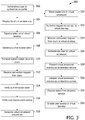
- FIG. 3 is a flowchart of an exemplary method 300 of accessing a virtual desktop of a host computing device ("host") from a client computing device ("client").
- Method 300 may be used with system 100 (shown in FIG. 1 ) and/or authentication system 200 (shown in FIG. 2 ).
- Method 300 is embodied within a plurality of computer-executable instructions stored in one or more memories, such as one or more computer-readable storage mediums. The instructions are executed by one or more processors to perform the functions described herein.
- Method 300 is executed or performed by an authentication system to enable access from a user, via the client, to an access-protected virtual desktop within a host.
- method 300 enables single sign-on access to the virtual desktop, and to other access-protected virtual desktops and/or resources of the authentication system, during a connection session of the user.
- Method 300 includes authenticating 302 the user at the authentication portal using access credentials supplied by the user via the client.
- the access credentials include, for example, a username and a password for the authentication portal. If the authentication portal determines that the access credentials are valid to enable access to the authentication portal, the portal displays 304 a list of virtual desktops that are accessible to the user based on user account settings and/or permissions, for example.
- the authentication portal receives 306 a selection, from the client, of a virtual desktop that the user desires to access.
- a client access program may be executed within the client to facilitate communication and authentication to the virtual desktop.
- the authentication portal generates 308 an authentication token indicative of the successful authentication of the user and transmits 310 the authentication token to the client (e.g., to the client access program).
- the authentication token is a SAML assertion that the user was authenticated by the authentication portal.
- a connection server within the authentication system receives 312 a request (i.e., a connection request) from the client to connect to the selected virtual desktop.
- the connection request includes the authentication token, or a reference to the authentication token.
- the connection server verifies 314 the authentication token by transmitting the token (or reference) to the authentication portal. If the authentication token is valid, the connection server receives a confirmation of the token from the authentication portal. The confirmation verifies that the user is trusted by the authentication portal, and the connection server therefore trusts the user as well.
- the connection server verifies 316 access permissions for the user, for example, by querying a directory service that contains user account permissions. If the user has sufficient permissions to access the virtual desktop, the connection server generates 318 credentials for a virtual smartcard.
- the virtual smartcard is used to facilitate SSO access to computing devices and/or virtual desktops that are otherwise access-restricted within a domain.
- the credentials for the virtual smartcard include a private key, a digital certificate, and a personal identification number (PIN) for the user.
- the connection server stores 320 the smartcard credentials in the virtual smartcard, and associates the virtual smartcard with the virtual desktop that the user is attempting to connect to.
- the virtual smartcard is stored within the host computing device of the virtual desktop and is communicatively coupled to the virtual desktop.
- the virtual smartcard is stored within the virtual desktop.
- the connection server authorizes 322 the user's request to connect to the virtual desktop (i.e., the connection request received 312 above) to enable the user to send, via the client, a connection request to the virtual desktop.
- the virtual desktop receives 324 the connection request from the client.
- the connection request uses the smartcard credentials, rather than providing a username and password, to obtain access to the virtual desktop.
- the virtual desktop authenticates 326 the user via the virtual smartcard credentials.
- the virtual smartcard credentials are presented 328 to the directory service to log the user into the domain in which the virtual desktop resides.
- the virtual smartcard credentials are validated 330 by the directory service and the user logs into the domain.
- the virtual desktop receives 332 a token from the directory service that is representative of the identity and/or successful login of the user into the domain.
- the user is enabled 334 to access the virtual desktop and/or the resources contained therein. It should be recognized that the client and/or the authentication system may use the virtual smartcard to log into other virtual desktops in the domain without entering a username or a password to the virtual desktops.
- the various embodiments described herein may employ various computer-implemented operations involving data stored in computer systems. For example, these operations may require physical manipulation of physical quantities--usually, though not necessarily, these quantities may take the form of electrical or magnetic signals, where they or representations of them are capable of being stored, transferred, combined, compared, or otherwise manipulated. Further, such manipulations are often referred to in terms, such as producing, identifying, determining, or comparing. Any operations described herein that form part of one or more embodiments of the invention may be useful machine operations.
- one or more embodiments of the invention also relate to a device or an apparatus for performing these operations.
- the apparatus may be specially constructed for specific required purposes, or it may be a general purpose computer selectively activated or configured by a computer program stored in the computer.
- various general purpose machines may be used with computer programs written in accordance with the teachings herein, or it may be more convenient to construct a more specialized apparatus to perform the required operations.
- One or more embodiments of the present invention may be implemented as one or more computer programs or as one or more computer program modules embodied in one or more computer readable media.
- the term computer readable medium refers to any data storage device that can store data which can thereafter be input to a computer system--computer readable media may be based on any existing or subsequently developed technology for embodying computer programs in a manner that enables them to be read by a computer.
- Examples of a computer readable medium include a hard drive, network attached storage (NAS), read-only memory, random-access memory (e.g., a flash memory device), a CD (Compact Discs) --CD-ROM, a CD-R, or a CD-RW, a DVD (Digital Versatile Disc), a magnetic tape, and other optical and non-optical data storage devices.
- the computer readable medium can also be distributed over a network coupled computer system so that the computer readable code is stored and executed in a distributed fashion.
- virtualization systems in accordance with the various embodiments, implemented as hosted embodiments, non-hosted embodiments or as embodiments that tend to blur distinctions between the two, are all envisioned.
- various virtualization operations may be wholly or partially implemented in hardware, or implemented with traditional virtualization or paravirtualization techniques. Many variations, modifications, additions, and improvements are possible, regardless the degree of virtualization.
- the virtualization software can therefore include components of a host, console, or guest operating system that performs virtualization functions.
- an authentication system comprising: network resource that is access-protected; a virtual smartcard coupled to the network resource; a first computing device comprising a first processor configured to: receive one of an authentication token and a reference to the authentication token, wherein the authentication token is indicative of whether a user was successfully authenticated based on user credentials; generate a private key and a digital certificate with a public key for the user based on receiving the one of the authentication token and the reference to the authentication token; and store the private key and the digital certificate in the virtual smartcard.
- the authentication token includes a security assertion markup language (SAML) assertion that the user was authenticated.
- the system further comprises a directory service, wherein the first processor is further configured to transmit a request to the directory service to validate a permission of the user to access the network resource.
- the system further comprises a second computing device comprising a second processor that is configured to: transmit a login request to an authentication portal; and receive the one of the authentication token and the reference to the authentication token from the authentication portal.
- the second processor is further configured to transmit, to the first computing device, the one of the authentication token and the reference to the authentication token.
- the first processor is further configured to validate the authentication token with an authentication portal.
- the network resource and the first computing device are included within a domain, and wherein the system further comprises a directory service included within the domain.
- the network resource is further configured to log a user into the directory service using the virtual smartcard.
- At least one computer-readable storage medium having computer-executable instructions embodied thereon, wherein, when executed by at least one processor, the computer-executable instructions cause the at least one processor to: receive one of an authentication token and a reference to the authentication token, wherein the authentication token is indicative of whether a user successfully logged in to an authentication portal using a client computing device; generate a private key, a digital certificate, and a personal identification number (PIN) for the user based on receiving the one of the authentication token and the reference to the authentication token; store the private key, the digital certificate, and the PIN in a virtual smartcard; and authorize the client computing device to log into a virtual desktop using the virtual smartcard.
- PIN personal identification number
- the computer-executable instructions further cause the at least one processor to transmit a request to a directory service to validate a permission of the user to access the virtual desktop. In one example, the computer-executable instructions further cause the at least one processor to log the user into the directory service using the virtual smartcard. In one example, the computer-executable instructions further cause the at least one processor to transmit a login request to the authentication portal, wherein the login request includes credentials associated with the user. In one example, the computer-executable instructions further cause the at least one processor to receive the one of the authentication token and the reference to the authentication token from the authentication portal in response to the login request.
- a method of accessing a virtual desktop of a host computing device comprising: receiving, by a first computing device, one of an authentication token and a reference to the authentication token; generating a private key, a digital certificate, and a personal identification number (PIN) for a user based on receiving the one of the authentication token and the reference to the authentication token; storing the private key, the digital certificate, and the PIN in a virtual smartcard; and coupling the virtual smartcard to a network resource.
- PIN personal identification number
- the method includes transmitting a request to a directory service to validate a permission of the user to access the virtual desktop.
- the method includes transmitting, by a second computing device, the login request to an authentication portal.
- the method includes receiving, by the second computing device, the one of the authentication token and the reference to the authentication token from the authentication portal.
- the method includes transmitting, from the second computing device to the first computing device, the one of the authentication token and the reference to the authentication token.
- the method includes logging the user into a directory service using the virtual smartcard.
- the network resource and the first computing device are included within a domain, the method further comprising logging the user into the domain such that the user is enabled to log into a plurality of virtual desktops within the domain using a login request.
Landscapes
- Engineering & Computer Science (AREA)
- Computer Security & Cryptography (AREA)
- Computer Hardware Design (AREA)
- Theoretical Computer Science (AREA)
- General Engineering & Computer Science (AREA)
- Physics & Mathematics (AREA)
- General Physics & Mathematics (AREA)
- Software Systems (AREA)
- Signal Processing (AREA)
- Computer Networks & Wireless Communication (AREA)
- Computing Systems (AREA)
- Information Transfer Between Computers (AREA)
- Stored Programmes (AREA)
Abstract
Description
- Virtual machines (VMs) may be executed by a group, or "cluster," of host computing devices. Each VM provides an abstraction of physical computing resources, such as a processor and memory, of the host executing the VM. The guest operating system and guest software applications executing within a VM may function in a manner consistent with how they would function when executing directly on physical resources.
- A VM may provide a virtual desktop that is accessible by one or more remote users through a network. A virtual desktop is a virtual machine configured with a guest operating system and productivity software intended for interaction with an end user. Typically, each virtual desktop is configured as a standard physical desktop computer system that, along with productivity applications such as word processors, spreadsheets, email, etc., provide a rich user interface for interaction with a particular user - the user for whom the desktop is configured and to whom the desktop is assigned.
- As with physical desktops, each virtual desktop may require a user to supply login credentials to enable the user to access the virtual desktop, however with virtual desktops, the user may be accessing their system remotely requiring the user to supply login credentials using a client computing device. As a plurality of virtual desktops may be accessible to the user, the user may be required to maintain different access credentials (e.g., a username and password) for each virtual desktop and may be required to enter the access credentials for each virtual desktop that the user desires to access. In addition, if the user's password expires for one or more virtual desktops, the user may not be able to log into the virtual desktops until the password is changed.
-
US 2012/011,578A1 Hinton et al describes a cross-protocol federated single sign-on for cloud enablement.US2012/084,570 Kuzin et al describes an example of remote resources single sign on with user credentials being supplied to a broker server, encrypted by a host server of a virtual desktop or remote desktop session, allowing a client device to reach hosts which are dynamically added to the system. - The present invention is defined according to the independent claims. Additional features will be appreciated from the dependent claims and the description herein. Any embodiments which are described but which do not fall within the scope of the claims are to be interpreted merely as examples useful for a better understanding of the invention.
- Methods, computer-readable storage medium, and systems described herein facilitate enabling access to a virtual desktop of a host computing device. In one example, an authentication system receives one of an authentication token and a reference to the authentication token, wherein the authentication token is indicative of whether a user successfully logged into an authentication portal using a client computing device. The authentication system generates a private key, a digital certificate, and a personal identification number (PIN) for the user in response to receiving either the authentication token or the reference to the authentication token. The private key, the digital certificate, and the PIN are stored in a virtual smartcard, and the client computing device is authorized to log into a virtual desktop using the virtual smartcard.
-
-
FIG. 1 is a block diagram of an exemplary system for accessing a virtual desktop of a computing device. -
FIG. 2 is a block diagram of an exemplary authentication system that includes a plurality of computing devices. -
FIG. 3 is a flowchart of an exemplary method for accessing a virtual desktop that may be used with the authentication system shown inFIG. 2 . -
FIG. 1 is a block diagram of anexemplary system 100 for accessing a network resource, such as a remote or virtual desktop.System 100 includes a plurality ofcomputing devices 102, such as a client computing device 104 (hereinafter referred to as "client 104") and a host computing device 106 (hereinafter referred to as "host 106") communicatively coupled toclient 104 by anetwork 108. A user employsclient 104 to access resources ofhost 106, as described more fully herein. - Each
computing device 102 includes aprocessor 110 for executing instructions.Computing devices 102 may be heterogeneous and diverse.Client 104 may be, for example, a stateless or otherwise thin client, may be a tablet or mobile device, or an application running on a traditional computer system. Computer-executable instructions are stored in amemory 112 for performing one or more of the operations described herein.Memory 112 is any device allowing information, such as executable instructions, configuration options, and/or other data, to be stored and retrieved. For example,memory 112 includes one or more computer-readable storage media, such as one or more random access memory (RAM) modules, flash memory modules, hard disks, solid state disks, and/or optical disks. -
Client 104 includesprocessor 110 andmemory 112. In addition,client 104 includes aclient access program 114 that is stored withinmemory 112 as a plurality of computer-readable instructions that are executable byprocessor 110.Client access program 114 is executed to enable the user to connect tohost 106 and to access the resources ofhost 106.Client 104 may be a desktop computer, a server, a smart phone, a tablet computer, a thin client, or any other computing device that enablessystem 100 to function as described herein. -
Host 106 includesprocessor 110 andmemory 112. In addition,host 106 includes a virtualization software layer, such as ahypervisor 116, that is installed on a hardware platform ofhost 106, includingprocessor 110 andmemory 112. The virtualization software layer may supports a plurality of virtual machine execution spaces within each of which a virtual machines (VMs) 118 may be concurrently instantiated and executed. Hypervisor 116 maps physical resources ofhost 106 to virtual resources of eachVM 118 and may enable eachVM 118 to have dedicated execution space and resources. - In addition, VMs 118 may be configured as, or may include,
virtual desktops 120 that each includes aguest operating system 122 and a plurality ofguest applications 124. Users may "log in" to (i.e., be authenticated by)virtual desktop 120 and/orhost 106 to access the resources ofdesktop 120, such asapplications 124 andoperating system 122. Acommunication agent 126 may be included withinvirtual desktop 120 to facilitate authentication and communication betweenclient 104 andvirtual desktop 120. -
FIG. 2 is a block diagram of anexemplary authentication system 200 that may be used to enable access to avirtual desktop 120 by aclient 104.Authentication system 200 includes a plurality ofcomputing devices 102, such asclient 104, one ormore hosts 106, an authentication portal server 202, aconnection server 204, a certificate server 206, and adirectory server 208. In an embodiment,connection server 204, certificate server 206,host 106, anddirectory server 208 are grouped within adomain 210. Although represented as being on correspondingphysical devices 102, it should be recognized that the functionality ofdirectory server 204, certificate server 206, andconnection server 204 may be combined into a single server application or multiple server applications on a single physical system, or may reside on disparate virtual machines executing at arbitrary locations, on the same physical system or multiple different physical systems, or any combination of the above, within or accessible from,domain 210. -
Computing devices 102 withindomain 210 may require a user to undergo separate authentication processes to enable access tocomputing devices 102.Authentication system 200 facilitates enabling a single sign-on (SSO) of client 104 (i.e., the user of client 104) to computingdevices 102 ofdomain 210 such that the user ofclient 104 may only be required to enter authentication credentials, such as a username and password, once to enable authentication andaccess computing devices 102 ofdomain 210. - Authentication portal server 202 is communicatively coupled to
client 104 and toconnection server 204. Authentication portal server 202 includes an authentication portal ("AP") 212 that is embodied as a plurality of computer-executable instructions stored withinmemory 112 and that is executed byprocessor 110 to perform the functions described herein.Authentication portal 212 operates as a trusted authority and facilitates establishing a level of trust withindomain 210 for the user when the user is authenticated byauthentication portal 212. In an embodiment,authentication portal 212 includes a VMware Horizon Program Manager program suite that is commercially available from VMware, Inc., of Palo Alto, California. Alternatively,authentication portal 212 may be any other portal or gateway that enablesauthentication system 200 to function as described herein. -
Connection server 204 is communicatively coupled toclient 104, authentication portal server 202, certificate server 206,host 106, anddirectory server 208.Connection server 204 facilitates the authentication of the user withindomain 210, and specifically the authentication of the user with one or morevirtual desktops 120, based on the trust level of the user that is established byauthentication portal 212. - Certificate server 206 is communicatively coupled to
connection server 204 and todirectory server 208. Certificate server 206 generates and validates cryptographic digital certificates for use in authenticating the user to computingdevices 102 withindomain 210. -
Directory server 208 is communicatively coupled to certificate server 206,connection server 204, andhost 106.Directory server 208 includes a directory service ("DS") 214 that is embodied as a plurality of computer-executable instructions stored withinmemory 112 and that is executed byprocessor 110 to perform the functions described herein. In an embodiment,directory service 214 configures and manages user accounts and permissions withindomain 210. - During operation, a user who desires to access a
virtual desktop 120 first logs intoauthentication portal 212 by transmitting (via client 104) access credentials, such as a username and a password, toauthentication portal 212.Authentication portal 212 authenticates the user by determining whether the access credentials are valid to enable access toportal 212. If the access credentials are valid,authentication portal 212 generates an authentication token indicative of the successful authentication. In an embodiment, the authentication token is a security assertion markup language (SAML) assertion that the user was authenticated byauthentication portal 212. - The user, through
client 104, requests access tovirtual desktop 120 by transmitting a connection request toconnection server 204.Connection server 204 verifies the user's access permissions withdirectory service 214, and uses the authentication token to determine whether the user is trusted. If the user is trusted,connection server 204 generates a private key, a digital certificate, and a personal identification number (PIN) for the user. In an embodiment, the private key, the digital certificate, and the PIN are "one-off' credentials that are only valid for a single connection session with the user. In addition, the PIN is a random number that is associated with the digital certificate, i.e., that is associated with an ability to perform cryptographic operations using the private key associated with the digital certificate. Alternatively, the PIN may include any other alphanumeric character, symbol, and/or entry that enablesauthentication system 200 to function as described herein. In an embodiment,connection server 204 stores the private key, the digital certificate, and the PIN in avirtual smartcard 216. -
Virtual smartcard 216 is stored withinhost 106 and is communicatively coupled to, or stored within, thevirtual desktop 120 that the user is requesting access to.Virtual smartcard 216 is a software-based representation of a physical smartcard or authentication device that stores credentials, such as a private key, a digital certificate, and optionally, a PIN. The credentials are used to authenticate the user associated withvirtual smartcard 216 and to enable the user to access resources withindomain 210 without having to enter a username and a password. -
Client 104 connects tovirtual desktop 120 and usesvirtual smartcard 216 in lieu of providing access credentials, such as a username and password, tovirtual desktop 120.Virtual desktop 120 authenticates the user via virtual smartcard 216 (e.g., using the private key, the digital certificate, and the PIN) withdirectory service 214 and certificate server 206. If the user is authenticated, the user is granted access tovirtual desktop 120. - It should be understood that the user may access a plurality of
virtual desktops 120, each having different access credential requirements, usingvirtual smartcard 216 andauthentication system 200 while only being required to enter access credentials (e.g., the username and password) once atauthentication portal 212. Accordingly,authentication system 200 enables users to accessvirtual desktops 120 and/or other resources withindomain 210 even if the user does not know a password tovirtual desktop 120 and/or the other resources. It should be understood thatauthentication system 200 may be used to enable a user to access resources other than virtual desktops, such as one or morephysical computing devices 102, session-instances of one or more terminal servers, and/or applications executing on one ormore computing devices 102, such as desktop computers and/or servers, while only being required to enter access credentials once atauthentication portal 212. -
FIG. 3 is a flowchart of anexemplary method 300 of accessing a virtual desktop of a host computing device ("host") from a client computing device ("client").Method 300 may be used with system 100 (shown inFIG. 1 ) and/or authentication system 200 (shown inFIG. 2 ).Method 300 is embodied within a plurality of computer-executable instructions stored in one or more memories, such as one or more computer-readable storage mediums. The instructions are executed by one or more processors to perform the functions described herein. -
Method 300 is executed or performed by an authentication system to enable access from a user, via the client, to an access-protected virtual desktop within a host. In addition,method 300 enables single sign-on access to the virtual desktop, and to other access-protected virtual desktops and/or resources of the authentication system, during a connection session of the user. - The connection session of the user is initiated when the user connects to an authentication portal.
Method 300 includes authenticating 302 the user at the authentication portal using access credentials supplied by the user via the client. The access credentials include, for example, a username and a password for the authentication portal. If the authentication portal determines that the access credentials are valid to enable access to the authentication portal, the portal displays 304 a list of virtual desktops that are accessible to the user based on user account settings and/or permissions, for example. - The authentication portal receives 306 a selection, from the client, of a virtual desktop that the user desires to access. A client access program may be executed within the client to facilitate communication and authentication to the virtual desktop. The authentication portal generates 308 an authentication token indicative of the successful authentication of the user and transmits 310 the authentication token to the client (e.g., to the client access program). In an embodiment, the authentication token is a SAML assertion that the user was authenticated by the authentication portal.
- A connection server within the authentication system receives 312 a request (i.e., a connection request) from the client to connect to the selected virtual desktop. The connection request includes the authentication token, or a reference to the authentication token. The connection server verifies 314 the authentication token by transmitting the token (or reference) to the authentication portal. If the authentication token is valid, the connection server receives a confirmation of the token from the authentication portal. The confirmation verifies that the user is trusted by the authentication portal, and the connection server therefore trusts the user as well.
- The connection server verifies 316 access permissions for the user, for example, by querying a directory service that contains user account permissions. If the user has sufficient permissions to access the virtual desktop, the connection server generates 318 credentials for a virtual smartcard. The virtual smartcard is used to facilitate SSO access to computing devices and/or virtual desktops that are otherwise access-restricted within a domain. The credentials for the virtual smartcard (also referred to as "smartcard credentials") include a private key, a digital certificate, and a personal identification number (PIN) for the user. The
connection server stores 320 the smartcard credentials in the virtual smartcard, and associates the virtual smartcard with the virtual desktop that the user is attempting to connect to. For example, the virtual smartcard is stored within the host computing device of the virtual desktop and is communicatively coupled to the virtual desktop. Alternatively, the virtual smartcard is stored within the virtual desktop. - The connection server authorizes 322 the user's request to connect to the virtual desktop (i.e., the connection request received 312 above) to enable the user to send, via the client, a connection request to the virtual desktop. The virtual desktop receives 324 the connection request from the client. The connection request uses the smartcard credentials, rather than providing a username and password, to obtain access to the virtual desktop.
- The virtual desktop authenticates 326 the user via the virtual smartcard credentials. As part of the authentication process, the virtual smartcard credentials are presented 328 to the directory service to log the user into the domain in which the virtual desktop resides. The virtual smartcard credentials are validated 330 by the directory service and the user logs into the domain. The virtual desktop receives 332 a token from the directory service that is representative of the identity and/or successful login of the user into the domain. The user is enabled 334 to access the virtual desktop and/or the resources contained therein. It should be recognized that the client and/or the authentication system may use the virtual smartcard to log into other virtual desktops in the domain without entering a username or a password to the virtual desktops.
- The various embodiments described herein may employ various computer-implemented operations involving data stored in computer systems. For example, these operations may require physical manipulation of physical quantities--usually, though not necessarily, these quantities may take the form of electrical or magnetic signals, where they or representations of them are capable of being stored, transferred, combined, compared, or otherwise manipulated. Further, such manipulations are often referred to in terms, such as producing, identifying, determining, or comparing. Any operations described herein that form part of one or more embodiments of the invention may be useful machine operations. In addition, one or more embodiments of the invention also relate to a device or an apparatus for performing these operations. The apparatus may be specially constructed for specific required purposes, or it may be a general purpose computer selectively activated or configured by a computer program stored in the computer. In particular, various general purpose machines may be used with computer programs written in accordance with the teachings herein, or it may be more convenient to construct a more specialized apparatus to perform the required operations.
- The various embodiments described herein may be practiced with other computer system configurations including hand-held devices, microprocessor systems, microprocessor-based or programmable consumer electronics, minicomputers, mainframe computers, and the like.
- One or more embodiments of the present invention may be implemented as one or more computer programs or as one or more computer program modules embodied in one or more computer readable media. The term computer readable medium refers to any data storage device that can store data which can thereafter be input to a computer system--computer readable media may be based on any existing or subsequently developed technology for embodying computer programs in a manner that enables them to be read by a computer. Examples of a computer readable medium include a hard drive, network attached storage (NAS), read-only memory, random-access memory (e.g., a flash memory device), a CD (Compact Discs) --CD-ROM, a CD-R, or a CD-RW, a DVD (Digital Versatile Disc), a magnetic tape, and other optical and non-optical data storage devices. The computer readable medium can also be distributed over a network coupled computer system so that the computer readable code is stored and executed in a distributed fashion.
- Although one or more embodiments of the present invention have been described in some detail for clarity of understanding, it will be apparent that certain changes and modifications may be made within the scope of the claims. Accordingly, the described embodiments are to be considered as illustrative and not restrictive, and the scope of the claims is not to be limited to details given herein, but may be modified within the scope and equivalents of the claims. In the claims, elements and/or steps do not imply any particular order of operation, unless explicitly stated in the claims.
- In addition, while described virtualization methods have generally assumed that virtual machines present interfaces consistent with a particular hardware system, persons of ordinary skill in the art will recognize that the methods described may be used in conjunction with virtualizations that do not correspond directly to any particular hardware system. Virtualization systems in accordance with the various embodiments, implemented as hosted embodiments, non-hosted embodiments or as embodiments that tend to blur distinctions between the two, are all envisioned. Furthermore, various virtualization operations may be wholly or partially implemented in hardware, or implemented with traditional virtualization or paravirtualization techniques. Many variations, modifications, additions, and improvements are possible, regardless the degree of virtualization. The virtualization software can therefore include components of a host, console, or guest operating system that performs virtualization functions. Plural instances may be provided for components, operations or structures described herein as a single instance. Finally, boundaries between various components, operations and data stores are somewhat arbitrary, and particular operations are illustrated in the context of specific illustrative configurations. Other allocations of functionality are envisioned and may fall within the scope of the invention(s). In general, structures and functionality presented as separate components in exemplary configurations may be implemented as a combined structure or component. Similarly, structures and functionality presented as a single component may be implemented as separate components. These and other variations, modifications, additions, and improvements may fall within the scope of the appended claims(s).
- In one example there has been described an authentication system comprising: network resource that is access-protected; a virtual smartcard coupled to the network resource; a first computing device comprising a first processor configured to: receive one of an authentication token and a reference to the authentication token, wherein the authentication token is indicative of whether a user was successfully authenticated based on user credentials; generate a private key and a digital certificate with a public key for the user based on receiving the one of the authentication token and the reference to the authentication token; and store the private key and the digital certificate in the virtual smartcard.
- In one example, the authentication token includes a security assertion markup language (SAML) assertion that the user was authenticated. In one example the system further comprises a directory service, wherein the first processor is further configured to transmit a request to the directory service to validate a permission of the user to access the network resource. In one example the system further comprises a second computing device comprising a second processor that is configured to: transmit a login request to an authentication portal; and receive the one of the authentication token and the reference to the authentication token from the authentication portal. In one example, the second processor is further configured to transmit, to the first computing device, the one of the authentication token and the reference to the authentication token. In one example, the first processor is further configured to validate the authentication token with an authentication portal. In one example, the network resource and the first computing device are included within a domain, and wherein the system further comprises a directory service included within the domain. In one example, the network resource is further configured to log a user into the directory service using the virtual smartcard.
- In one example there has been described at least one computer-readable storage medium having computer-executable instructions embodied thereon, wherein, when executed by at least one processor, the computer-executable instructions cause the at least one processor to: receive one of an authentication token and a reference to the authentication token, wherein the authentication token is indicative of whether a user successfully logged in to an authentication portal using a client computing device; generate a private key, a digital certificate, and a personal identification number (PIN) for the user based on receiving the one of the authentication token and the reference to the authentication token; store the private key, the digital certificate, and the PIN in a virtual smartcard; and authorize the client computing device to log into a virtual desktop using the virtual smartcard.
- In one example, the computer-executable instructions further cause the at least one processor to transmit a request to a directory service to validate a permission of the user to access the virtual desktop. In one example, the computer-executable instructions further cause the at least one processor to log the user into the directory service using the virtual smartcard. In one example, the computer-executable instructions further cause the at least one processor to transmit a login request to the authentication portal, wherein the login request includes credentials associated with the user. In one example, the computer-executable instructions further cause the at least one processor to receive the one of the authentication token and the reference to the authentication token from the authentication portal in response to the login request.
- In one example there has been described a method of accessing a virtual desktop of a host computing device, the method comprising: receiving, by a first computing device, one of an authentication token and a reference to the authentication token; generating a private key, a digital certificate, and a personal identification number (PIN) for a user based on receiving the one of the authentication token and the reference to the authentication token; storing the private key, the digital certificate, and the PIN in a virtual smartcard; and coupling the virtual smartcard to a network resource.
- In one example the method includes transmitting a request to a directory service to validate a permission of the user to access the virtual desktop. In one example the method includes transmitting, by a second computing device, the login request to an authentication portal. In one example the method includes receiving, by the second computing device, the one of the authentication token and the reference to the authentication token from the authentication portal. In one example the method includes transmitting, from the second computing device to the first computing device, the one of the authentication token and the reference to the authentication token. In one example the method includes logging the user into a directory service using the virtual smartcard. In one example the network resource and the first computing device are included within a domain, the method further comprising logging the user into the domain such that the user is enabled to log into a plurality of virtual desktops within the domain using a login request.
Claims (14)
- A method of accessing a virtual desktop (120) of a host computing device (106), the method comprising:
at a connection server (204) which is coupled to the host computing device (106):receiving a connection request from a client device (104) including an access token or a reference to the access token, wherein the authentication token is indicative that a user successfully logged in to an authentication portal (212);verifying access permissions of the user with a directory service (214) using the access token or the reference to the access token and, if verified, generating a virtual smartcard (216) with smartcard credentials including a digital certificate from a certificate server (206) coupled to the connection server (204) in a domain (210); andauthorizing the client device (104) to access otherwise access-restricted resources within the domain (210) using the smartcard credentials of the virtual smartcard (216), including facilitating single-sign-on access to one or more of a plurality of virtual desktops (120) within the domain (210) by associating the virtual smartcard (216) with the virtual desktop (120) or by storing the virtual smartcard (216) within the virtual desktop (120) - The method of claim 1, further comprising, at the connection server (204), validating the authentication token with the authentication portal (212).
- The method of claim 1 or 2, further comprising, at the connection server (204), transmitting a request to the directory service (214) to validate a permission of the user to access the virtual desktop (120).
- The method of any of claims 1-3, wherein associating the virtual smartcard (216) with the virtual desktop (120) comprises coupling the virtual smartcard (216) to the virtual desktop (120).
- The method of any of claims 1-4, further comprising, at the connection server (204), coupling the virtual smartcard (216) to one or more other network resources within the domain (210).
- The method of any of claims 1-5, further comprising, at the connection server (204), logging the user into the directory service (214) using the virtual smartcard (216).
- The method of any of claims 1-6, further comprising, at the certificate server (206), generating and validating the digital certificates for use in authenticating the user to the network resources within the domain (210).
- The method of any of claims 1-7, further comprising, at the directory service (214), configuring and managing a plurality of user accounts and permissions within the domain (210).
- The method of any of claims 1-8, further comprising, at the authentication portal (212), determining whether the received user credentials are valid and, if so, generating the authentication token and transmitting the authentication token, or a reference to the authentication token, to the client device (104).
- The method of any of claims 1-9, further comprising, at the authentication portal (212), receiving a selection from the client device (104) of a virtual desktop that the user desired to access,
- The method of any of claims 1-10, further comprising, at the client device (104):transmitting a login request to the authentication portal (212), wherein the login request includes user credentials associated with the user;receiving, in response to the login request, the access token or the reference to the access token from the authentication portal (212); andtransmitting the connection request to the connection server (204) to request access to the virtual desktop, wherein the connection request includes the access token or the reference to the access token received from the authentication portal (212).
- The method of any of claims 1-11, wherein the authentication token includes a security assertion markup language (SAML) assertion.
- An authentication system comprising a connection server (204) coupled to a client device (104) and configured to perform the method of any of claims 1-12.
- A computer-readable medium having instructions which when executed cause a computer system to operate according to the method of any of claims 1-12.
Applications Claiming Priority (3)
| Application Number | Priority Date | Filing Date | Title |
|---|---|---|---|
| US13/524,412 US8782768B2 (en) | 2012-06-15 | 2012-06-15 | Systems and methods for accessing a virtual desktop |
| PCT/US2013/045253 WO2013188455A1 (en) | 2012-06-15 | 2013-06-11 | Systems and methods for accessing a virtual desktop |
| EP13731587.5A EP2862118B1 (en) | 2012-06-15 | 2013-06-11 | Systems and methods for accessing a virtual desktop |
Related Parent Applications (1)
| Application Number | Title | Priority Date | Filing Date |
|---|---|---|---|
| EP13731587.5A Division EP2862118B1 (en) | 2012-06-15 | 2013-06-11 | Systems and methods for accessing a virtual desktop |
Publications (2)
| Publication Number | Publication Date |
|---|---|
| EP3640829A1 true EP3640829A1 (en) | 2020-04-22 |
| EP3640829B1 EP3640829B1 (en) | 2023-09-06 |
Family
ID=48699303
Family Applications (2)
| Application Number | Title | Priority Date | Filing Date |
|---|---|---|---|
| EP19205887.3A Active EP3640829B1 (en) | 2012-06-15 | 2013-06-11 | Systems and methods for accessing a virtual desktop |
| EP13731587.5A Active EP2862118B1 (en) | 2012-06-15 | 2013-06-11 | Systems and methods for accessing a virtual desktop |
Family Applications After (1)
| Application Number | Title | Priority Date | Filing Date |
|---|---|---|---|
| EP13731587.5A Active EP2862118B1 (en) | 2012-06-15 | 2013-06-11 | Systems and methods for accessing a virtual desktop |
Country Status (5)
| Country | Link |
|---|---|
| US (1) | US8782768B2 (en) |
| EP (2) | EP3640829B1 (en) |
| JP (1) | JP5877278B2 (en) |
| AU (1) | AU2013274350B2 (en) |
| WO (1) | WO2013188455A1 (en) |
Families Citing this family (22)
| Publication number | Priority date | Publication date | Assignee | Title |
|---|---|---|---|---|
| JP5968077B2 (en) * | 2012-05-22 | 2016-08-10 | キヤノン株式会社 | Information processing apparatus, control method therefor, program, and image processing apparatus |
| DK2973160T3 (en) * | 2013-03-15 | 2020-01-13 | Netop Solutions As | SYSTEM AND PROCEDURE FOR SECURE USE OF COMMUNICATION BETWEEN NETWORK PROCESSORS |
| KR101541591B1 (en) * | 2013-05-16 | 2015-08-03 | 삼성에스디에스 주식회사 | System and method for single-sign-on in virtual desktop infrastructure environment |
| GB2518367B (en) * | 2013-09-18 | 2020-07-22 | Ibm | Authorized remote access to an operating system hosted by a virtual machine |
| EP2953048B1 (en) * | 2014-06-03 | 2019-03-27 | Nxp B.V. | Mobile device, method of authenticating a user and computer program |
| US20160077685A1 (en) * | 2014-09-15 | 2016-03-17 | Microsoft Technology Licensing, Llc | Operating System Virtual Desktop Techniques |
| EP3201815B8 (en) * | 2014-09-30 | 2019-06-19 | Hewlett-Packard Development Company, L.P. | User authentication |
| JP2016095597A (en) * | 2014-11-12 | 2016-05-26 | 富士通株式会社 | Disposition control program, disposition controller and disposition control method |
| US11615199B1 (en) * | 2014-12-31 | 2023-03-28 | Idemia Identity & Security USA LLC | User authentication for digital identifications |
| US10073964B2 (en) * | 2015-09-25 | 2018-09-11 | Intel Corporation | Secure authentication protocol systems and methods |
| US10652247B2 (en) * | 2017-06-09 | 2020-05-12 | Dell Products, L.P. | System and method for user authorization in a virtual desktop access device using authentication and authorization subsystems of a virtual desktop environment |
| JP7059559B2 (en) * | 2017-10-11 | 2022-04-26 | 富士フイルムビジネスイノベーション株式会社 | Information processing equipment and programs |
| CN108710528B (en) * | 2018-05-09 | 2023-02-28 | 深圳安布斯网络科技有限公司 | Desktop cloud virtual machine access and control method, device, equipment and storage medium |
| US11362943B2 (en) * | 2019-05-20 | 2022-06-14 | Citrix Systems, Inc. | System and method for validating virtual session requests |
| US11469894B2 (en) * | 2019-05-20 | 2022-10-11 | Citrix Systems, Inc. | Computing system and methods providing session access based upon authentication token with different authentication credentials |
| US20220138283A1 (en) * | 2020-10-30 | 2022-05-05 | Comcast Cable Communications, Llc | Secure Content Access |
| US11983261B2 (en) * | 2021-04-23 | 2024-05-14 | Microsoft Technology Licensing, Llc | Enhance single sign-on flow for secure computing resources |
| US12592976B2 (en) | 2021-06-28 | 2026-03-31 | Hewlett-Packard Development Company, L.P. | Remote desktop connection communications |
| WO2023113821A1 (en) * | 2021-12-17 | 2023-06-22 | Hewlett-Packard Development Company, L.P. | Cryptographic devices and systems |
| US20230199000A1 (en) * | 2021-12-21 | 2023-06-22 | Dell Products L.P. | Authentication and access control for remote support system |
| CN116132135B (en) * | 2022-12-30 | 2025-04-01 | 中国人寿保险股份有限公司上海数据中心 | A unified control method and system for cloud desktops with different architectures |
| CN119155110A (en) * | 2024-11-13 | 2024-12-17 | 易迅通科技有限公司 | Virtual cloud desktop identity authentication quantum security enhancement method |
Citations (5)
| Publication number | Priority date | Publication date | Assignee | Title |
|---|---|---|---|---|
| WO2001018635A2 (en) * | 1999-09-03 | 2001-03-15 | Secure Computing Corporation | Virtual smart card system and method |
| US20070174429A1 (en) * | 2006-01-24 | 2007-07-26 | Citrix Systems, Inc. | Methods and servers for establishing a connection between a client system and a virtual machine hosting a requested computing environment |
| US20110107409A1 (en) * | 2009-11-05 | 2011-05-05 | Vmware, Inc. | Single Sign On For a Remote User Session |
| US20120011578A1 (en) | 2010-07-08 | 2012-01-12 | International Business Machines Corporation | Cross-protocol federated single sign-on (F-SSO) for cloud enablement |
| US20120084570A1 (en) | 2010-09-30 | 2012-04-05 | Microsoft Corporation | Remote Resources Single Sign On |
Family Cites Families (12)
| Publication number | Priority date | Publication date | Assignee | Title |
|---|---|---|---|---|
| US6275944B1 (en) | 1998-04-30 | 2001-08-14 | International Business Machines Corporation | Method and system for single sign on using configuration directives with respect to target types |
| EP1320006A1 (en) * | 2001-12-12 | 2003-06-18 | Canal+ Technologies Société Anonyme | Processing data |
| US7103771B2 (en) * | 2001-12-17 | 2006-09-05 | Intel Corporation | Connecting a virtual token to a physical token |
| US7793101B2 (en) * | 2006-10-19 | 2010-09-07 | Novell, Inc. | Verifiable virtualized storage port assignments for virtual machines |
| WO2009070430A2 (en) * | 2007-11-08 | 2009-06-04 | Suridx, Inc. | Apparatus and methods for providing scalable, dynamic, individualized credential services using mobile telephones |
| US9118462B2 (en) * | 2009-05-20 | 2015-08-25 | Nokia Corporation | Content sharing systems and methods |
| US10482254B2 (en) * | 2010-07-14 | 2019-11-19 | Intel Corporation | Domain-authenticated control of platform resources |
| US8607054B2 (en) * | 2010-10-15 | 2013-12-10 | Microsoft Corporation | Remote access to hosted virtual machines by enterprise users |
| US20130013727A1 (en) * | 2011-07-05 | 2013-01-10 | Robin Edward Walker | System and method for providing a mobile persona environment |
| US8474056B2 (en) * | 2011-08-15 | 2013-06-25 | Bank Of America Corporation | Method and apparatus for token-based virtual machine recycling |
| US8950002B2 (en) * | 2011-08-15 | 2015-02-03 | Bank Of America Corporation | Method and apparatus for token-based access of related resources |
| US9361443B2 (en) * | 2011-08-15 | 2016-06-07 | Bank Of America Corporation | Method and apparatus for token-based combining of authentication methods |
-
2012
- 2012-06-15 US US13/524,412 patent/US8782768B2/en active Active
-
2013
- 2013-06-11 AU AU2013274350A patent/AU2013274350B2/en active Active
- 2013-06-11 WO PCT/US2013/045253 patent/WO2013188455A1/en not_active Ceased
- 2013-06-11 JP JP2015517367A patent/JP5877278B2/en active Active
- 2013-06-11 EP EP19205887.3A patent/EP3640829B1/en active Active
- 2013-06-11 EP EP13731587.5A patent/EP2862118B1/en active Active
Patent Citations (5)
| Publication number | Priority date | Publication date | Assignee | Title |
|---|---|---|---|---|
| WO2001018635A2 (en) * | 1999-09-03 | 2001-03-15 | Secure Computing Corporation | Virtual smart card system and method |
| US20070174429A1 (en) * | 2006-01-24 | 2007-07-26 | Citrix Systems, Inc. | Methods and servers for establishing a connection between a client system and a virtual machine hosting a requested computing environment |
| US20110107409A1 (en) * | 2009-11-05 | 2011-05-05 | Vmware, Inc. | Single Sign On For a Remote User Session |
| US20120011578A1 (en) | 2010-07-08 | 2012-01-12 | International Business Machines Corporation | Cross-protocol federated single sign-on (F-SSO) for cloud enablement |
| US20120084570A1 (en) | 2010-09-30 | 2012-04-05 | Microsoft Corporation | Remote Resources Single Sign On |
Non-Patent Citations (1)
| Title |
|---|
| BASNEY J ET AL: "The myproxy online credential repository", SOFTWARE PRACTICE & EXPERIENCE, WILEY & SONS, BOGNOR REGIS, GB, vol. 35, no. 9, 25 July 2005 (2005-07-25), pages 801 - 816, XP001511152, ISSN: 0038-0644, DOI: 10.1002/SPE.688 * |
Also Published As
| Publication number | Publication date |
|---|---|
| US8782768B2 (en) | 2014-07-15 |
| US20130340063A1 (en) | 2013-12-19 |
| EP2862118A1 (en) | 2015-04-22 |
| AU2013274350B2 (en) | 2015-09-10 |
| WO2013188455A1 (en) | 2013-12-19 |
| EP3640829B1 (en) | 2023-09-06 |
| AU2013274350A1 (en) | 2014-11-27 |
| EP2862118B1 (en) | 2019-10-30 |
| JP5877278B2 (en) | 2016-03-02 |
| JP2015521766A (en) | 2015-07-30 |
Similar Documents
| Publication | Publication Date | Title |
|---|---|---|
| EP3640829B1 (en) | Systems and methods for accessing a virtual desktop | |
| US12107844B2 (en) | Single sign on for a remote user session | |
| US11818113B2 (en) | Techniques for simultaneously accessing multiple isolated systems while maintaining security boundaries | |
| EP3915026B1 (en) | Browser login sessions via non-extractable asymmetric keys | |
| EP3213487B1 (en) | Step-up authentication for single sign-on | |
| US11283789B2 (en) | Single sign-on techniques using client side encryption and decryption | |
| US11526620B2 (en) | Impersonation for a federated user | |
| US9769179B2 (en) | Password authentication | |
| US20220394027A1 (en) | Single Sign-On From Desktop to Network |
Legal Events
| Date | Code | Title | Description |
|---|---|---|---|
| PUAI | Public reference made under article 153(3) epc to a published international application that has entered the european phase |
Free format text: ORIGINAL CODE: 0009012 |
|
| STAA | Information on the status of an ep patent application or granted ep patent |
Free format text: STATUS: THE APPLICATION HAS BEEN PUBLISHED |
|
| AC | Divisional application: reference to earlier application |
Ref document number: 2862118 Country of ref document: EP Kind code of ref document: P |
|
| AK | Designated contracting states |
Kind code of ref document: A1 Designated state(s): AL AT BE BG CH CY CZ DE DK EE ES FI FR GB GR HR HU IE IS IT LI LT LU LV MC MK MT NL NO PL PT RO RS SE SI SK SM TR |
|
| STAA | Information on the status of an ep patent application or granted ep patent |
Free format text: STATUS: REQUEST FOR EXAMINATION WAS MADE |
|
| 17P | Request for examination filed |
Effective date: 20201022 |
|
| RBV | Designated contracting states (corrected) |
Designated state(s): AL AT BE BG CH CY CZ DE DK EE ES FI FR GB GR HR HU IE IS IT LI LT LU LV MC MK MT NL NO PL PT RO RS SE SI SK SM TR |
|
| STAA | Information on the status of an ep patent application or granted ep patent |
Free format text: STATUS: EXAMINATION IS IN PROGRESS |
|
| 17Q | First examination report despatched |
Effective date: 20211220 |
|
| GRAP | Despatch of communication of intention to grant a patent |
Free format text: ORIGINAL CODE: EPIDOSNIGR1 |
|
| STAA | Information on the status of an ep patent application or granted ep patent |
Free format text: STATUS: GRANT OF PATENT IS INTENDED |
|
| RIC1 | Information provided on ipc code assigned before grant |
Ipc: H04L 9/40 20220101ALI20230411BHEP Ipc: G06F 21/33 20130101ALI20230411BHEP Ipc: G06F 21/41 20130101AFI20230411BHEP |
|
| INTG | Intention to grant announced |
Effective date: 20230508 |
|
| GRAS | Grant fee paid |
Free format text: ORIGINAL CODE: EPIDOSNIGR3 |
|
| GRAA | (expected) grant |
Free format text: ORIGINAL CODE: 0009210 |
|
| STAA | Information on the status of an ep patent application or granted ep patent |
Free format text: STATUS: THE PATENT HAS BEEN GRANTED |
|
| AC | Divisional application: reference to earlier application |
Ref document number: 2862118 Country of ref document: EP Kind code of ref document: P |
|
| AK | Designated contracting states |
Kind code of ref document: B1 Designated state(s): AL AT BE BG CH CY CZ DE DK EE ES FI FR GB GR HR HU IE IS IT LI LT LU LV MC MK MT NL NO PL PT RO RS SE SI SK SM TR |
|
| REG | Reference to a national code |
Ref country code: GB Ref legal event code: FG4D |
|
| REG | Reference to a national code |
Ref country code: CH Ref legal event code: EP |
|
| REG | Reference to a national code |
Ref country code: DE Ref legal event code: R096 Ref document number: 602013084625 Country of ref document: DE |
|
| REG | Reference to a national code |
Ref country code: IE Ref legal event code: FG4D |
|
| REG | Reference to a national code |
Ref country code: NL Ref legal event code: FP |
|
| REG | Reference to a national code |
Ref country code: LT Ref legal event code: MG9D |
|
| PG25 | Lapsed in a contracting state [announced via postgrant information from national office to epo] |
Ref country code: GR Free format text: LAPSE BECAUSE OF FAILURE TO SUBMIT A TRANSLATION OF THE DESCRIPTION OR TO PAY THE FEE WITHIN THE PRESCRIBED TIME-LIMIT Effective date: 20231207 |
|
| PG25 | Lapsed in a contracting state [announced via postgrant information from national office to epo] |
Ref country code: SE Free format text: LAPSE BECAUSE OF FAILURE TO SUBMIT A TRANSLATION OF THE DESCRIPTION OR TO PAY THE FEE WITHIN THE PRESCRIBED TIME-LIMIT Effective date: 20230906 Ref country code: RS Free format text: LAPSE BECAUSE OF FAILURE TO SUBMIT A TRANSLATION OF THE DESCRIPTION OR TO PAY THE FEE WITHIN THE PRESCRIBED TIME-LIMIT Effective date: 20230906 Ref country code: NO Free format text: LAPSE BECAUSE OF FAILURE TO SUBMIT A TRANSLATION OF THE DESCRIPTION OR TO PAY THE FEE WITHIN THE PRESCRIBED TIME-LIMIT Effective date: 20231206 Ref country code: LV Free format text: LAPSE BECAUSE OF FAILURE TO SUBMIT A TRANSLATION OF THE DESCRIPTION OR TO PAY THE FEE WITHIN THE PRESCRIBED TIME-LIMIT Effective date: 20230906 Ref country code: LT Free format text: LAPSE BECAUSE OF FAILURE TO SUBMIT A TRANSLATION OF THE DESCRIPTION OR TO PAY THE FEE WITHIN THE PRESCRIBED TIME-LIMIT Effective date: 20230906 Ref country code: HR Free format text: LAPSE BECAUSE OF FAILURE TO SUBMIT A TRANSLATION OF THE DESCRIPTION OR TO PAY THE FEE WITHIN THE PRESCRIBED TIME-LIMIT Effective date: 20230906 Ref country code: GR Free format text: LAPSE BECAUSE OF FAILURE TO SUBMIT A TRANSLATION OF THE DESCRIPTION OR TO PAY THE FEE WITHIN THE PRESCRIBED TIME-LIMIT Effective date: 20231207 Ref country code: FI Free format text: LAPSE BECAUSE OF FAILURE TO SUBMIT A TRANSLATION OF THE DESCRIPTION OR TO PAY THE FEE WITHIN THE PRESCRIBED TIME-LIMIT Effective date: 20230906 |
|
| RAP4 | Party data changed (patent owner data changed or rights of a patent transferred) |
Owner name: VMWARE LLC |
|
| REG | Reference to a national code |
Ref country code: AT Ref legal event code: MK05 Ref document number: 1609477 Country of ref document: AT Kind code of ref document: T Effective date: 20230906 |
|
| PG25 | Lapsed in a contracting state [announced via postgrant information from national office to epo] |
Ref country code: IS Free format text: LAPSE BECAUSE OF FAILURE TO SUBMIT A TRANSLATION OF THE DESCRIPTION OR TO PAY THE FEE WITHIN THE PRESCRIBED TIME-LIMIT Effective date: 20240106 |
|
| PG25 | Lapsed in a contracting state [announced via postgrant information from national office to epo] |
Ref country code: AT Free format text: LAPSE BECAUSE OF FAILURE TO SUBMIT A TRANSLATION OF THE DESCRIPTION OR TO PAY THE FEE WITHIN THE PRESCRIBED TIME-LIMIT Effective date: 20230906 |
|
| PG25 | Lapsed in a contracting state [announced via postgrant information from national office to epo] |
Ref country code: ES Free format text: LAPSE BECAUSE OF FAILURE TO SUBMIT A TRANSLATION OF THE DESCRIPTION OR TO PAY THE FEE WITHIN THE PRESCRIBED TIME-LIMIT Effective date: 20230906 |
|
| PG25 | Lapsed in a contracting state [announced via postgrant information from national office to epo] |
Ref country code: SM Free format text: LAPSE BECAUSE OF FAILURE TO SUBMIT A TRANSLATION OF THE DESCRIPTION OR TO PAY THE FEE WITHIN THE PRESCRIBED TIME-LIMIT Effective date: 20230906 Ref country code: RO Free format text: LAPSE BECAUSE OF FAILURE TO SUBMIT A TRANSLATION OF THE DESCRIPTION OR TO PAY THE FEE WITHIN THE PRESCRIBED TIME-LIMIT Effective date: 20230906 Ref country code: IS Free format text: LAPSE BECAUSE OF FAILURE TO SUBMIT A TRANSLATION OF THE DESCRIPTION OR TO PAY THE FEE WITHIN THE PRESCRIBED TIME-LIMIT Effective date: 20240106 Ref country code: ES Free format text: LAPSE BECAUSE OF FAILURE TO SUBMIT A TRANSLATION OF THE DESCRIPTION OR TO PAY THE FEE WITHIN THE PRESCRIBED TIME-LIMIT Effective date: 20230906 Ref country code: EE Free format text: LAPSE BECAUSE OF FAILURE TO SUBMIT A TRANSLATION OF THE DESCRIPTION OR TO PAY THE FEE WITHIN THE PRESCRIBED TIME-LIMIT Effective date: 20230906 Ref country code: CZ Free format text: LAPSE BECAUSE OF FAILURE TO SUBMIT A TRANSLATION OF THE DESCRIPTION OR TO PAY THE FEE WITHIN THE PRESCRIBED TIME-LIMIT Effective date: 20230906 Ref country code: AT Free format text: LAPSE BECAUSE OF FAILURE TO SUBMIT A TRANSLATION OF THE DESCRIPTION OR TO PAY THE FEE WITHIN THE PRESCRIBED TIME-LIMIT Effective date: 20230906 Ref country code: SK Free format text: LAPSE BECAUSE OF FAILURE TO SUBMIT A TRANSLATION OF THE DESCRIPTION OR TO PAY THE FEE WITHIN THE PRESCRIBED TIME-LIMIT Effective date: 20230906 Ref country code: PT Free format text: LAPSE BECAUSE OF FAILURE TO SUBMIT A TRANSLATION OF THE DESCRIPTION OR TO PAY THE FEE WITHIN THE PRESCRIBED TIME-LIMIT Effective date: 20240108 |
|
| PG25 | Lapsed in a contracting state [announced via postgrant information from national office to epo] |
Ref country code: PL Free format text: LAPSE BECAUSE OF FAILURE TO SUBMIT A TRANSLATION OF THE DESCRIPTION OR TO PAY THE FEE WITHIN THE PRESCRIBED TIME-LIMIT Effective date: 20230906 Ref country code: IT Free format text: LAPSE BECAUSE OF FAILURE TO SUBMIT A TRANSLATION OF THE DESCRIPTION OR TO PAY THE FEE WITHIN THE PRESCRIBED TIME-LIMIT Effective date: 20230906 |
|
| REG | Reference to a national code |
Ref country code: NL Ref legal event code: PD Owner name: VMWARE LLC; US Free format text: DETAILS ASSIGNMENT: CHANGE OF OWNER(S), CHANGE OF LEGAL ENTITY; FORMER OWNER NAME: VMWARE, INC. Effective date: 20240529 |
|
| REG | Reference to a national code |
Ref country code: DE Ref legal event code: R097 Ref document number: 602013084625 Country of ref document: DE |
|
| REG | Reference to a national code |
Ref country code: DE Ref legal event code: R081 Ref document number: 602013084625 Country of ref document: DE Owner name: OMNISSA LLC, PALO ALTO, US Free format text: FORMER OWNER: VMWARE, INC., PALO ALTO, CA, US Ref country code: DE Ref legal event code: R081 Ref document number: 602013084625 Country of ref document: DE Owner name: VMWARE LLC, PALO ALTO, US Free format text: FORMER OWNER: VMWARE, INC., PALO ALTO, CA, US |
|
| PG25 | Lapsed in a contracting state [announced via postgrant information from national office to epo] |
Ref country code: DK Free format text: LAPSE BECAUSE OF FAILURE TO SUBMIT A TRANSLATION OF THE DESCRIPTION OR TO PAY THE FEE WITHIN THE PRESCRIBED TIME-LIMIT Effective date: 20230906 |
|
| PLBE | No opposition filed within time limit |
Free format text: ORIGINAL CODE: 0009261 |
|
| STAA | Information on the status of an ep patent application or granted ep patent |
Free format text: STATUS: NO OPPOSITION FILED WITHIN TIME LIMIT |
|
| PG25 | Lapsed in a contracting state [announced via postgrant information from national office to epo] |
Ref country code: DK Free format text: LAPSE BECAUSE OF FAILURE TO SUBMIT A TRANSLATION OF THE DESCRIPTION OR TO PAY THE FEE WITHIN THE PRESCRIBED TIME-LIMIT Effective date: 20230906 Ref country code: SI Free format text: LAPSE BECAUSE OF FAILURE TO SUBMIT A TRANSLATION OF THE DESCRIPTION OR TO PAY THE FEE WITHIN THE PRESCRIBED TIME-LIMIT Effective date: 20230906 |
|
| 26N | No opposition filed |
Effective date: 20240607 |
|
| PG25 | Lapsed in a contracting state [announced via postgrant information from national office to epo] |
Ref country code: BG Free format text: LAPSE BECAUSE OF FAILURE TO SUBMIT A TRANSLATION OF THE DESCRIPTION OR TO PAY THE FEE WITHIN THE PRESCRIBED TIME-LIMIT Effective date: 20230906 |
|
| PG25 | Lapsed in a contracting state [announced via postgrant information from national office to epo] |
Ref country code: BG Free format text: LAPSE BECAUSE OF FAILURE TO SUBMIT A TRANSLATION OF THE DESCRIPTION OR TO PAY THE FEE WITHIN THE PRESCRIBED TIME-LIMIT Effective date: 20230906 |
|
| REG | Reference to a national code |
Ref country code: DE Ref legal event code: R081 Ref document number: 602013084625 Country of ref document: DE Owner name: OMNISSA LLC, PALO ALTO, US Free format text: FORMER OWNER: VMWARE LLC, PALO ALTO, CA, US |
|
| REG | Reference to a national code |
Ref country code: NL Ref legal event code: PD Owner name: OMNISSA LLC; US Free format text: DETAILS ASSIGNMENT: CHANGE OF OWNER(S), ASSIGNMENT; FORMER OWNER NAME: VMWARE LLC Effective date: 20250117 |
|
| PG25 | Lapsed in a contracting state [announced via postgrant information from national office to epo] |
Ref country code: MC Free format text: LAPSE BECAUSE OF FAILURE TO SUBMIT A TRANSLATION OF THE DESCRIPTION OR TO PAY THE FEE WITHIN THE PRESCRIBED TIME-LIMIT Effective date: 20230906 |
|
| REG | Reference to a national code |
Ref country code: CH Ref legal event code: PL |
|
| PG25 | Lapsed in a contracting state [announced via postgrant information from national office to epo] |
Ref country code: LU Free format text: LAPSE BECAUSE OF NON-PAYMENT OF DUE FEES Effective date: 20240611 |
|
| REG | Reference to a national code |
Ref country code: GB Ref legal event code: 732E Free format text: REGISTERED BETWEEN 20250220 AND 20250226 |
|
| PG25 | Lapsed in a contracting state [announced via postgrant information from national office to epo] |
Ref country code: IE Free format text: LAPSE BECAUSE OF NON-PAYMENT OF DUE FEES Effective date: 20240611 |
|
| PG25 | Lapsed in a contracting state [announced via postgrant information from national office to epo] |
Ref country code: BE Free format text: LAPSE BECAUSE OF NON-PAYMENT OF DUE FEES Effective date: 20240630 Ref country code: CH Free format text: LAPSE BECAUSE OF NON-PAYMENT OF DUE FEES Effective date: 20240630 |
|
| REG | Reference to a national code |
Ref country code: BE Ref legal event code: MM Effective date: 20240630 |
|
| PG25 | Lapsed in a contracting state [announced via postgrant information from national office to epo] |
Ref country code: CY Free format text: LAPSE BECAUSE OF FAILURE TO SUBMIT A TRANSLATION OF THE DESCRIPTION OR TO PAY THE FEE WITHIN THE PRESCRIBED TIME-LIMIT; INVALID AB INITIO Effective date: 20130611 |
|
| PG25 | Lapsed in a contracting state [announced via postgrant information from national office to epo] |
Ref country code: HU Free format text: LAPSE BECAUSE OF FAILURE TO SUBMIT A TRANSLATION OF THE DESCRIPTION OR TO PAY THE FEE WITHIN THE PRESCRIBED TIME-LIMIT; INVALID AB INITIO Effective date: 20130611 |
|
| PG25 | Lapsed in a contracting state [announced via postgrant information from national office to epo] |
Ref country code: TR Free format text: LAPSE BECAUSE OF FAILURE TO SUBMIT A TRANSLATION OF THE DESCRIPTION OR TO PAY THE FEE WITHIN THE PRESCRIBED TIME-LIMIT Effective date: 20230906 |
|
| PGFP | Annual fee paid to national office [announced via postgrant information from national office to epo] |
Ref country code: GB Payment date: 20260622 Year of fee payment: 14 |
|
| PGFP | Annual fee paid to national office [announced via postgrant information from national office to epo] |
Ref country code: DE Payment date: 20260623 Year of fee payment: 14 |
|
| PGFP | Annual fee paid to national office [announced via postgrant information from national office to epo] |
Ref country code: NL Payment date: 20260622 Year of fee payment: 14 |
|
| PGFP | Annual fee paid to national office [announced via postgrant information from national office to epo] |
Ref country code: FR Payment date: 20260622 Year of fee payment: 14 |